

Mark Chagall I and the village 1911

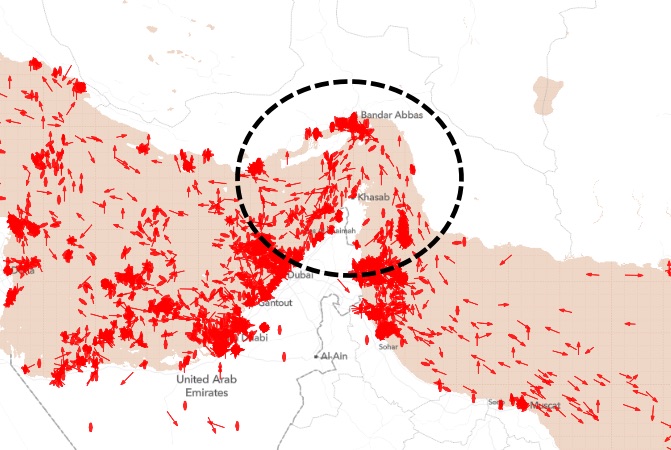
You need to understand this new infographic. The key takeaway is that Iran's earliest strikes focused on U.S. radar installations to BLIND the U.S. military (while also destroying U.S. bases in the region).
— HealthRanger (@HealthRanger) March 5, 2026
Once that was achieved, Iran shifted to focusing on critical ENERGY… pic.twitter.com/GMWmt5RqJO
https://twitter.com/PrometheanActn/status/2029278072483020940?s=20 https://twitter.com/DanielLDavis1/status/2029298437813146048?s=20Everyone is watching the oil.
— Shanaka Anslem Perera ⚡ (@shanaka86) March 5, 2026
Nobody is watching the water.
The UAE operates at 1,533% water stress. Saudi Arabia at 974%. Kuwait gets 90% of its drinking water from desalination plants. Oman 86%. Saudi Arabia 70%.
There is no aquifer. There is no river. There is no rainfall… https://t.co/1nYS1MfiRQ pic.twitter.com/gcXzkVB9Pg
https://twitter.com/HungaryBased/status/2029308402157912115?s=20BREAKING: China just ordered Sinopec and PetroChina to stop exporting diesel and gasoline.
— Shanaka Anslem Perera ⚡ (@shanaka86) March 5, 2026
Not slow them down. Stop.
Beijing looked at the Strait of Hormuz, looked at its fuel stockpiles, and made a decision: nothing leaves. Every barrel refined in China stays in China until… https://t.co/5a4HM3mBJG pic.twitter.com/TRBdoqlk7n
Trump’s influence is outta here..
• Iran Isn’t Moving Public Opinion—Trump Is (DS)
When it comes to Iran, Americans’ opinions aren’t necessarily reflective of what’s happening on the battlefield—but rather their feelings about President Donald Trump. That’s according to veteran pollster Scott Rasmussen, founder of the Napolitan Institute. As the conflict intensifies in the Middle East, Rasmussen said his polling suggests that Americans’ views on Iran appear to be driven less by U.S. military action and more by their broader opinions of Trump. At a Wednesday briefing, Rasmussen said public reaction to the unfolding situation in Iran has remained stable since Saturday—and is similar to Trump’s overall job approval numbers.Read more …
When voters were asked whether they approve or disapprove of the way the president is handling the situation in Iran, 42% said they approve. That figure is close to Trump’s overall job approval rating of 45% in the same polling. The consistency in Rasmussen’s surveys indicates that opinions on Iran are tracking closely with existing political opinions of Trump—rather than shifting in response to news headlines. Only 32% of voters say they are following news about Iran “very closely,” underscoring another key finding: most Americans are not immersed in the details of military strategy or regional politics. As Rasmussen noted, few voters consider themselves military experts, and that reality may help explain why public opinion has shown little change since Saturday’s strikes.Polling conducted Saturday afternoon—immediately after news broke of U.S. and Israeli attacks on Iran—found that 40% of voters favored the strikes. Days later, after extensive news coverage, that number has not changed. Support remains at 40%, according to the Napolitan Institute’s latest survey.n nOpposition also moved only marginally. Initially, 46% said they opposed the attacks. That number has since moved up by just one percentage point. In other words, despite intense media focus, public sentiment has barely shifted.
One area where Rasmussen did observe some movement was on expectations of success. On Saturday, 55% of voters said they believed it was likely the mission would succeed in bringing about regime change in Iran. That number has since fallen five percentage points to 50%. Rasmussen, however, emphasized that this shift does not represent a collapse in confidence. Rather than moving from optimism to pessimism, respondents appear to have shifted into a more uncertain category—from believing success is likely to saying they are unsure what will happen next. The broader picture remains steady. Iran is not reshaping public opinion—it’s reflecting it.
Ultimately, Rasmussen argued, public opinion will hinge on outcomes. If the mission produces significant change, removes what many view as a destabilizing regime, and does so with minimal American casualties and limited cost, voters are likely to judge it positively. If not, the political consequences in the midterms could be significant.
Rasmussen noted that Trump has only a couple of weeks before he begins to lose support, with 55% of voters opposed to him sending U.S. troops to the ground. If something drastic happens, such as a rise in U.S. casualties, Trump’s support for Iran could lessen even quicker. For now, however, the numbers suggest that Americans are viewing events in Iran largely through a domestic political lens—and the perception of the president himself continues to shape reactions more than developments in the headlines.
Open for China.
• Iran Says Strait Of Hormuz Open (ZH)
“Some are criticizing us [Iran], saying that we have closed the Strait of Hormuz. We do not believe in closing the Strait of Hormuz at all,” Iranian military commander Amir Heydari told Iranian state TV on Thursday.Read more …
Iran military says it has not closed Strait of Hormuz.
— Javier Blas (@JavierBlas) March 5, 2026
"We do not believe in closing the Strait of Hormuz at all,” military commander Amir Heydari tells Iranian state TV
Let's see what the IRGC has to say about it.
The first sign that the critical maritime chokepoint was partially open came late Wednesday night, when we were among the first to report that a China-linked bulk carrier exited the Strait of Hormuz without incident, a notable development given earlier reports and market chatter that Iran might allow only Chinese-linked ships to transit. Shortly after our report that the Iron Maiden vessel made it through the narrowest part of the waterway unharmed, Bloomberg also reported on the development, noting that the ship had changed its destination signal to “CHINA OWNER.” LKatest activity in the Strait.
Earlier this week, Iran’s IRGC said that any vessel sailing through the waterway “could be at risk from missiles or rogue drones,” according to the semi-official Fars News Agency. China has urged peace and called for an immediate ceasefire to the U.S.-Israeli Operation Epic Fury to “prevent further escalation of tensions and stop the conflict from spreading and engulfing the entire Middle East.” Everyone knows why China is calling for peace: the Strait of Hormuz and Iran’s cheap oil flows have effectively been closed to the world’s second-largest economy, and that pressure is likely to be used as leverage by President Trump in his upcoming visit to China.
Trump has said the U.S. will offer insurance for tankers transiting the Strait of Hormuz and, if necessary, provide naval escorts to help restart energy flows as the commercial shipping lane remains heavily disrupted. Beijing is likely asking this question: “Will Trump Seize Or Destroy Iran’s Oil Export Island?”
Even with ten or more tankers and other vessels reportedly hit by IRGC drones in or around the Strait, intelligence and military analysts told Reuters that the IRGC could sustain drone attacks in the waterway for months. The Strait has not been fully closed, in part because the Trump administration spent the week degrading Iran’s naval capabilities, but the disruption is still severe because major European and global insurers have abruptly pulled or canceled war-risk coverage for the region.
“..will be moving to be Special Envoy for The Shield of the Americas..”
• Trump to Replace Kirsti Noem at DHS With Mullin (Matt Margolis)
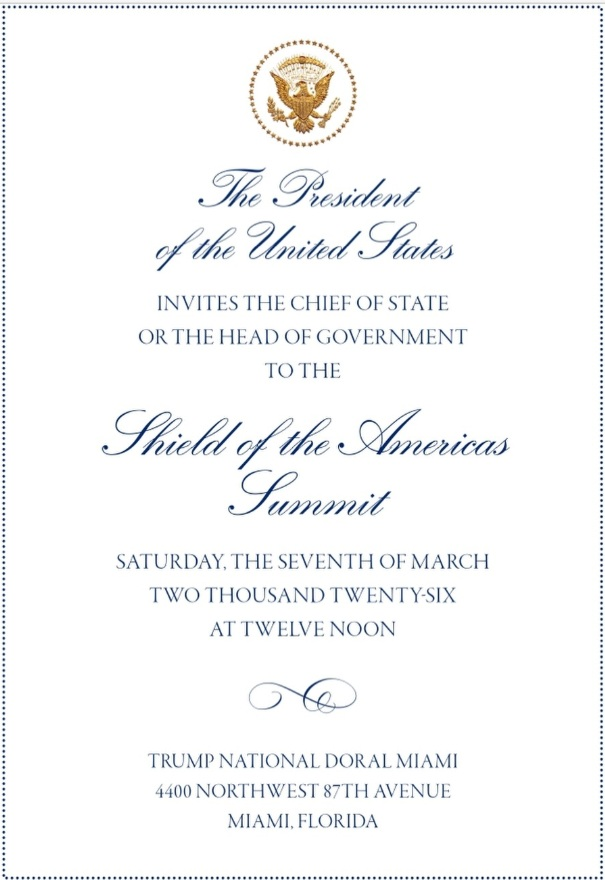
UPDATE: President Trump has announced on Truth Social his intention to nominate Sen. Markwayne Mullin (R-Okla.) as the next Homeland Security Secretary. “I am pleased to announce that the Highly Respected United States Senator from the Great State of Oklahoma, Markwayne Mullin, will become the United States Secretary of Homeland Security (DHS), effective March 31, 2026,” Trump wrote. “The current Secretary, Kristi Noem, who has served us well, and has had numerous and spectacular results (especially on the Border!), will be moving to be Special Envoy for The Shield of the Americas, our new Security Initiative in the Western Hemisphere we are announcing on Saturday in Doral, Florida. I thank Kristi for her service at ‘Homeland.’”Read more …
Original Article: President Donald Trump is allegedly preparing to fire Homeland Security Secretary Kristi Noem, according to a report from the Wall Street Journal. “The president has already been asking aides and congressional Republicans for names of potential replacements, the advisers said.” “The final straw for Trump was Noem’s combative hearing Tuesday before the Senate Judiciary Committee, which showed bipartisan frustration with Noem’s leadership, the advisers said. Noem’s decision to allot $200 million on an ad campaign, featuring herself urging those living illegally in the U.S. to self-deport, had already rankled the president for months for its self-promotional style. At the hearing, Noem told Senators that the President had signed off on the ad campaign–an assertion that upset Trump, who told senators and advisers he had not signed off on such a campaign.Trump does, however, frequently change his mind, especially when it comes to firing officials. He has previously told aides he doesn’t want to make personnel decisions based on Democratic messaging or media pressure.” NBC News similarly reports that Trump has been “speaking this week with Republican lawmakers about his displeasure with Noem and has made clear in those conversations that he is considering replacing her, according to two Republican lawmakers, a person familiar with White House’s thinking and three people familiar with the president’s private discussions.”White House officials have reportedly name-dropped two potential replacements: Sens. Markwayne Mullin (R-Okla.) and Steve Daines (R-Mont.).
No decision has been made by the president, the sources say, but that he has told lawmakers that he is unhappy with Noem’s testimony this week before House and Senate committees.Noem has been at the forefront of Trump’s signature policy agendas: the deportation of immigrants, the restricting of immigration and the clamping down of the U.S.-Mexico border. Her ouster would mark the first time a Cabinet secretary has exited in Trump’s second term. The NBC News report cites Noem’s response to questions about her role in approving contracts, the aforementioned $200 million ad campaign in particular, as the flashpoint. Sen. John Kennedy (R-La.) described President Donald Trump as “pissed” over her response.
“The president of the United States called me, and I’m not going to speak for him, folks, but, I would put it this way: his recollection and her recollection are different,” Kennedy said. “I can assure you, he is not happy with her,” another lawmaker said. “She did horrible in the hearings and has made a lot of errors.” Sen. Lindsey Graham (R-S.C.) said that “Time will tell” as to whether Noem will be replaced. While the White House did not comment, a Department of Homeland Security spokesperson told NBC News, “Secretary Noem serves at the pleasure of the President. She is honored to serve the American people and lead DHS. Under her leadership, we have the most secure border in American history, 3 million illegal aliens left the United States, and we now have the lowest murder rate in 125 years.”
“..it fulfills my desire to welcome Russia back into the West for the first time since the Bolsheviks ruined everything.”
• EPIC FURY: Trump’s Play to Starve the Dragon? (Stephen Green)
Bloomberg reported Thursday that Beijing “told the country’s top oil refiners to suspend exports of diesel and gasoline” as Operation Epic Fury continues disrupting oil shipments out of the Persian Gulf. “China’s curbs just six days into a war reflect a scramble across Asia to prioritize domestic needs as the crisis in the Middle East deepens.” China imports “about 11 million barrels of crude per day,” my Townhall colleague Walter Curt added on X this morning, “with roughly 40-45% of that flowing through the Strait of Hormuz.” And yes, while China is a net importer of oil and natural gas — and yugely so — the Communist nation exports refined products including gasoline, diesel, jet fuel, and marine bunker fuel, largely to Southeast Asian, South Pacific, and African nations.Read more …
But not as of today. “Officials from the National Development and Reform Commission, the country’s top economic planner,” Bloomberg [paywalled link] continued, “called for a temporary suspension of refined product shipments that would begin immediately.” It isn’t just China, either, according to the same report: “With virtually no oil or fuel making its way out of the Persian Gulf since US and Israeli attacks began at the weekend, refiners from Japan to Indonesia and India have begun cutting back run rates and suspending exports.”= I had a brief item about this earlier today on Instapundit, but the news kept nagging at me because it’s worth a deeper look — and, as it turns out, the petroleum exports angle might be the least interesting part.The first addition, as Curt noted, is that China’s “strategic petroleum reserves are estimated by analysts at around 90-100 days of total consumption,” which ought to be more than enough for a war hardly anyone expects to last that long. But Politico reported Thursday that U.S. Central Command (CENTCOM) asked the Pentagon “to send more military intelligence officers to its headquarters in Tampa, Florida, to support operations against Iran for at least 100 days but likely through September.” As I wrote earlier this week, I hope for a short campaign, but maybe that isn’t in the cards. Or maybe CENTCOM’s request — leaked to Politico for worldwide dissemination — is a warning to whoever is in charge of Iran that we won’t quit before they do, so they might as well quit now.
Another possibility is that the Trump administration did indeed want to send a message, but to Beijing, not Tehran. “We’re willing to disrupt Persian Gulf oil exports until it hurts you because we have all we need for ourselves and our friends right here, thank you very much, Comrade Xi.” If that is the case — and probably nobody outside the administration has anything better than informed guesses — it certainly fits the developing broader picture we’re getting of President Donald Trump’s strategic vision. The short version is first securing the Western Hemisphere (Panama Canal, Venezuela, Cuba) from the worst of Chinese influence, then putting the squeeze on them elsewhere to re-establish American dominance. Iran is the Middle East lynchpin of Beijing’s global ambitions, so it’s my belief that Trump sees that regime as something that must be removed or co-opted.
The rest… well, this is pretty wild stuff involving Russia, courtesy of tech and finance guy G.C. Cooke: The argument is that a back-channel deal is already taking shape. Russia, increasingly squeezed and looking for off-ramps, begins redirecting energy exports toward Western markets. Out of self-interest, not friendship. In return, Moscow gets energy revenue guarantees and a pathway back to the global trading system. Canada, with its existing Arctic and energy ties, becomes the diplomatic bridge.
The result is a North American–Russian energy alignment that removes China’s last major source of leverage. You might want to click over to X to read Cooke’s entire piece because it’s fascinating stuff — but not before finishing up here, naturally. I’ll admit up front that I have a natural bias toward buying into Cooke’s theory, because it fulfills my desire to welcome Russia back into the West for the first time since the Bolsheviks ruined everything. West + Russia isn’t always a natural fit — it took a determined effort by Peter the Great to make it happen the first time, and very little effort by the got-dam Communists to blow it apart.
I do remember, but I also forgot a lot. Back in 2015, people were laughing at Trump’s chances.
• Division, Derision and the Economics of the Thing (CTH)
Do you remember this moment during the 2015 republican presidential debates when all of the candidates were on stage and leading control outlet Fox News (Bret Baier) purposefully asked the candidates: “… is there anyone on stage, unwilling tonight, to pledge your support to the eventual nominee of the republican party, and pledge to not run an independent campaign against that person. Again, we are lo oking for you to raise your hand now if you won’t make that pledge tonight.
The need for control is a reaction to fear. The question was intentionally constructed to create both an optic and a narrative Fox News, Rupert Murdoch and the republican party were purposefully shaping. Collectively the professional republicans were desperately afraid Donald Trump would run as an independent candidate.
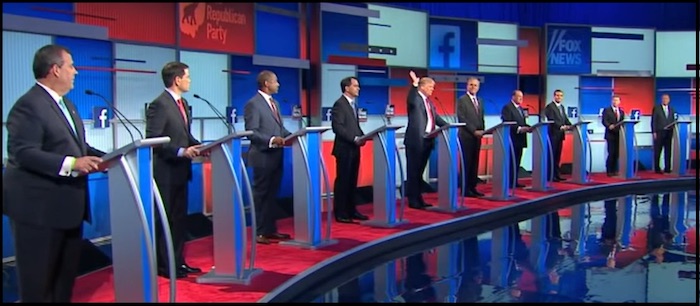
I bring us back to that moment because it is the key to understand where we are even today. This was the core of the matter. This is the “trillions at stake” aspect. This is the economics of the thing as it first manifest. Why did Donald J Trump stand against them all?nFor many years before that moment, a small group of us had been outlining why it was urgent for MAGAnomics to take charge of the U.S. economy; because underneath both wings of the UniParty in Washington DC was a system that few understood. Prior to 2016, the United States Chamber of Commerce (U.S CoC), a private K-Street lobbying consortium, were the negotiators for every single trade deal done from the office of the United States Trade Representative (USTR).Read more …
The U.S. government (USTR, POTUS and Congress) was the trade stakeholder who signed the agreements; however, the actual nuts and bolts of what the trade deal included, the terms and conditions, were negotiated by the US CoC. The U.S. Chamber of Commerce represented the corporate interests of their Wall Street clients. After all, the corporations paid the CoC and the business model of the CoC is dependent on the corporations. This is the larger background for how decades of trade agreements ended up with offshoring, the Rust Belt, diminished domestic manufacturing, and increased corporate profits.This is the core mechanics of how a U.S. manufacturing economy was shifted to a “service driven economy.” The U.S. Chamber of Commerce was writing the trade deals. The CoC would then fund the politicians who would approve the trade deals. The CoC would also finance the presidential candidates. When President Trump ran for office in 2016, his trade, manufacturing and economic policies were against the interests of the entire business network that controlled trade. The U.S. CoC poured money into Hillary Clinton’s campaign and their main GOP partner in the enterprise, Mitch McConnell. When Trump won the election, he completely shut out the CoC from any involvement in U.S. trade negotiations. Trump literally put himself, Wilbur Ross, and Robert Lighthizer in control.
The CoC was apoplectic but powerless to stop this action. CoC President Tom Donohue could not even get an appointment to see President Trump in the White House. The only thing the CoC and Tom Donohue could do was to fund anyone who would assist them in removing the existential threat that Trump represented. That’s what they did. With the CoC removed from influence, President Trump, Wilbur Ross and Robert Lighthizer began the painstaking process of taking the Wall Street profit tentacles off U.S. trade policy. In essence, President Trump put the interests of the American citizens back into the top priority of the U.S. govt, as it pertained to the biggest of all big picture items, the U.S. economy. That’s why in 2018 and 2019 the U.S. economy was on fire with growth.
All of that MAGAnomic background remained in place when President Trump retook control in 2025, and now we are starting to see the positive economic effects again resurface. However, that collective UniParty opposition still remains, albeit significantly diminished by the refusal of President Trump to move away from America-first policy.
The core of the opposition to all of President Trump’s actions, remains almost exclusively an outcome of the economics of policy the DC system no longer controls. It’s about the money. It will always be about the money. The division we are encountering in the MAGA ranks, is specifically driven by those same financial interests who opposed candidate Donald Trump a decade ago. When it came to trade policy, economic policy, tariff policy and the confrontation with China, there was not one iota of difference between any of the 17 republican candidates in that 2016 election. There was not one degree of divergence from the traditional corporate economic policy of the 30 years that preceded that moment on stage. Every one of the republican candidates aligned with the CoC message.
First thought: how deep Britain has fallen since.
• Churchill Saw the Cold War Coming (David Manney)
Eighty years ago today, former British Prime Minister Winston Churchill stood before an audience at Westminster College in Fulton, Mo. President Harry S. Truman sat beside him on stage. Although Churchill was out of office, his words carried enormous weight in a world still recovering from World War II, but which believed that peace had arrived. Churchill believed something else entirely. His speech, titled “The Sinews of Peace,” warned that a new political and military divide had already taken shape across Europe. One phrase from that afternoon would become permanently embedded in modern history.Read more …
“From Stettin in the Baltic to Trieste in the Adriatic, an ‘iron curtain’ has descended across the continent. Behind that line lie all the capitals of the ancient states of Central and Eastern Europe. Warsaw, Berlin, Prague, Vienna, Budapest, Belgrade, Bucharest, and Sofia; all these famous cities and the populations around them lie in what I must call the Soviet sphere, and all are subject, in one form or another, not only to Soviet influence but to a very high and in some cases increasing measure of control from Moscow.” Churchill believed Western leaders misunderstood Soviet intentions after the victory over Nazi Germany failed to secure unity among former allies. Instead, Stalin’s government expanded influence through political pressure, intimidation, and military presence across the eastern half of Europe.Churchill didn’t deliver the speech casually; he’d spent months studying reports on Soviet behavior in Eastern Europe. British diplomats warned that democratic governments were being pushed aside. Communist parties supported by Moscow steadily gained power. Churchill feared Western hesitation would allow Stalin’s system to harden into permanent control. The speech called for a strong alliance between the United States and Britain to defend democratic institutions, maintain military readiness, and prevent further Soviet expansion. Churchill argued that strength and cooperation offered the best path to preserving peace in the postwar world.
Churchill knew that while the world looked forward to putting the horrors of war behind, events at the beginning of 1946 portended an even darker future ahead. In the wake of the Allied victory, the Soviet Union had begun shaping Eastern Europe in its image, bringing the governments of many nations into line with Moscow. On February 9, Premier Joseph Stalin gave a speech in which he declared that war between the East and West was inevitable. On February 22, the American Ambassador to Moscow, George F. Kennan, sent the famous “Long Telegram” warning of the Soviet Union’s perpetual hostility towards the West.
Communist parties supported by Moscow steadily gained power. Churchill feared Western hesitation would allow Stalin’s system to harden into permanent control. The speech called for a strong alliance between Britain and the United States to defend democratic institutions, maintain military readiness, and prevent further expansion. Churchill argued that strength and cooperation offered the best path to preserving peace in the postwar world. The immediate reaction proved mixed. Many Americans admired Churchill’s wartime leadership, yet some political leaders believed his warning sounded too confrontational toward a former ally. President Truman never formally endorsed every line of the speech, though his decision to invite Churchill to speak in Missouri suggested sympathy with its message.
“The United States stands at this time at the pinnacle of world power. It is a solemn moment for the American Democracy. For with primacy in power is also joined an awe inspiring accountability to the future. If you look around you, you must feel not only the sense of duty done but also you must feel anxiety lest you fall below the level of achievement. Opportunity is here now, clear and shining for both our countries. To reject it or ignore it or fritter it away will bring upon us all the long reproaches of the after-time. It is necessary that constancy of mind, persistency of purpose, and the grand simplicity of decision shall guide and rule the conduct of the English-speaking peoples in peace as they did in war. We must, and I believe we shall, prove ourselves equal to this severe requirement.”
“President Trump wants Venezuela to have stability. Venezuela needs dollars and both the coordinated sale of Venezuela oil and Venezuela gold (47 tonnes in strategic reserve) will provide those dollars to retain stability and seed economic growth projects.”
• Hemispheric Boss Level: Epic – Venezuela Edition (CTH)
Sometimes you have to sip coffee slowly, while taking in the landscape. About a month ago President Donald J Trump bombed Caracas, engaged the U.S. military with a direct firefight against Venezuela military & security forces, then snatched regime dictator Nicholas Maduro out of the country to face criminal charges in the United States. Yesterday, Maduro’s replacement, President Delcy Rodriquez, stood on the steps to the Venezuela presidential office and publicly thanked Interior Secretary Doug Bergum for the kindness and support of President Donald Trump. That reality represents a level of hemispheric ‘ultimate boss’ that boggles the mind. But wait, it gets better. There’s video (prompted):Read more …
Before going further to current events, let us remind ourselves of a few details. Sandwiched between the Venezuela Maduro operation and the recent Operation Epic Fury in Iran, approximately three weeks ago, Gen. Dan Caine, chairman of the Joint Chiefs of Staff, and Defense Secretary Pete Hegseth convened a gathering in Washington of all the defense chiefs and senior military officials from 34 Western Hemisphere countries. As most of you will remember, securing the national security of the entire Western Hemisphere, was outlined in the national defense strategy document released by President Trump. In addition to setting the priorities for the United States focus, the report details the Trump administration perspective on the world as broken down into specific regions.
The report is a brutally honest review of the current state of geopolitical benefits, risks and threats as they pertain to vital U.S. interests. The report outlines a critically renewed focus on the Western Hemisphere. Now, back to Secretary Bergum’s visit. At the same time as Interior Secretary Bergum is meeting with key government and private sector partners to discuss strategic mineral development (ie. deconflict dependency on China via independent development), oil production for U.S. hemispheric security (Iran output offsets), Venezuela announced the transfer of 1,000 kilos (more than a ton) of gold reserves for sale on the U.S. market {SOURCE}.
Venezuela needs stability. Hemispheric Boss President Trump wants Venezuela to have stability. Venezuela needs dollars and both the coordinated sale of Venezuela oil and Venezuela gold (47 tonnes in strategic reserve) will provide those dollars to retain stability and seed economic growth projects. This coordinated approach secures the economic future of Venezuela and simultaneously secures the energy security of the Western Hemisphere while geopolitical operations continue in other regions, like the confrontation with Iran.
In essence, President Trump is isolating the Western Hemisphere from collateral economic damage that is likely to happen as the U.S. begins to take down the leading sponsors of global conflict. As things are in flux, the close and controlled partnership with Venezuela can offset/mitigate a lot of chaos. While the ongoing Iran confrontation happens in the middle east, and in combination with the priority of the National Security Strategy, President Trump then convenes a meeting of hemispheric leaders in Florida this weekend. The Latin-America meeting in Doral is being called the “Shield of the Americas Summit.” The Trump administration has made it a priority to assert dominance over the Western Hemisphere, where China previously built influence through massive loans and expansive trade.
Yesterday, White House Press Secretary Karoline Leavitt announced President Trump will host heads of state from “Argentina, Bolivia, Chile, Costa Rica, the Dominican Republic, Ecuador, El Salvador, Honduras, Panama, Paraguay, Trinidad and Tobago, and maybe some others as well.” So, let’s put it all together. President Trump proactively secured the border, targeted narcotraffickers, confronted narcoterrorists, targeted Mexican drug cartel leadership, leveraged the DOJ to indict regional actors, pushed China out of control in the Panama Canal, took out Nicholas Maduro, took control of Venezuela oil production – both for the security of the U.S. and benefit of the Venezuelan people, removed the discounted oil benefit for China and reasserted stability in the Western hemisphere.
Then, with all that in place, he turned toward Iran…. but, proactively planned for a ‘Shield of the Americas Summit’ before the Iran operation began and scheduled it while Operation Epic Fury continues. Jumpin’ ju-ju bones. That outline and timeline is not supposition; it is what took place. And, yeah, we just watched “interim” Venezuela President Delcy Rodriquez react to what she is witnessing happening all around her. Accepting all of this, I would not be in the least surprised to see President Rodriquez in Doral this weekend. This my friends, is a level of strategic boss maneuvering beyond anything we have ever witnessed before. […
– “Interior Secretary Doug Burgum landed in Venezuela on Wednesday to begin talks about a potential rare earth minerals partnership, just weeks after the U.S. arrested former Venezuelan President Nicolás Maduro. FOX Business exclusively joined Burgum on the trip. President Donald Trump‘s administration views Venezuela’s untapped resources as a potential alternative to relying on China for critical minerals, FOX Business has learned. While in Venezuela, Burgum will also help expand the relationship between U.S. oil companies and the Venezuelan government. The secretary will meet with the current Venezuelan President Delcy Rodríguez to continue the growing relationship between the two countries.Burgum is the first member of Trump’s Cabinet to leave the country since the U.S. launched Operation Epic Fury against Iran on Saturday.”
“AG Bondi claims the DOJ has released all of the Epstein files. The record is clear: they have not,” Mace wrote on X..”
• Pam Bondi Subpoenaed In Epstein Investigation By House Oversight Panel (ZH)
House investigators are hauling in Attorney General Pam Bondi to answer for what lawmakers say is a troubling disappearance of documents tied to disgraced financier Jeffrey Epstein. The House Oversight Committee voted 24-19 on Wednesday to subpoena Bondi for a deposition, escalating a fight with the Department of Justice over its handling of records from the sprawling Epstein investigation. Lawmakers say the DOJ may have pulled tens of thousands of pages from public view despite a federal law requiring the material to be released.Read more …
The move was spearheaded by Rep. Nancy Mace, who blasted the Justice Department earlier in the day and accused officials of misleading the public about what has actually been disclosed. [Though we would point out that Mace herself vowed to reveal her tits, only to redact them with grainy footage.] “AG Bondi claims the DOJ has released all of the Epstein files. The record is clear: they have not,” Mace wrote on X, calling the saga “one of the greatest cover-ups in American history.” .@RepNancyMace’s motion passed. We voted to subpoena Pam Bondi and to release the files of those who sexually harass others in Congress. This is about transparency and going after predators, not politics.
.@RepNancyMace's motion passed. We voted to subpoena Pam Bondi and to release the files of those who sexually harass others in Congress.
— Rep. Ro Khanna (@RepRoKhanna) March 4, 2026
This is about transparency and going after predators, not politics. pic.twitter.com/kH9lghjJn2
Four Republicans – Reps. Lauren Boebert, Scott Perry, Tim Burchett and Michael Cloud – joined Democrats on the panel to force the subpoena through. The dispute centers on the Epstein Transparency Act, passed almost unanimously by Congress last year. The law ordered the Justice Department to publicly release its trove of investigative material related to Epstein and his convicted accomplice, Ghislaine Maxwell. In January, the DOJ released more than 3 million documents tied to the case. But the department later said it would not release the remaining files, estimated to include another 2.5 million documents. Since then, watchdogs and journalists say the situation has gotten even murkier.According to reports, thousands of records that had briefly been available online have vanished from the public database. CBS News reported Tuesday that more than 47,000 files – totaling about 65,500 pages – were taken down by late February. Some of the withheld records reportedly included internal FBI interview summaries and notes – including material tied to a woman who has accused President Donald Trump of sexual abuse when she was a minor. Trump has never been charged with wrongdoing in connection with Epstein and has said he had no knowledge of the financier’s criminal conduct.
The Justice Department has not publicly explained why the documents were removed or why millions more remain under wraps. CNBC said the DOJ did not immediately respond to requests for comment. Bondi’s forthcoming deposition could become one of the most explosive congressional confrontations yet in the long-running battle over the Epstein records – a case that has fueled years of speculation about powerful figures tied to the late sex offender.
In Europe these days, defending free speech is big news..
• German Top Court Issues Two Landmark Rulings In Favor of Free Speech (RMX)
The wave of police searches and prosecutions in Germany may be facing a new hurdle after Germany’s top court, the Constitutional Court, issued two landmark rulings strengthening freedom of expression. However, Fatina Keilani, editor in Welt’s freedom of expression department, said that these two decisions have gone largely unnoticed by the public, an oversight that she finds remarkable. Writing in Welt, Keilani reports that the Federal Constitutional Court in Karlsruhe handed down two resolutions in December that push back against what she describes as hasty convictions for insults. The rulings stem from two separate cases in which individuals used sharp, even offensive language against public officials and medical staff — and were criminally sentenced for it.Read more …
As Remix News has extensively reported, there have been hundreds, if not thousands, of such cases in recent years. Some of these cases have even attracted international attention and led to questions about freedom of speech and growing repression in Germany.Just late last month, German prosecutors launched investigations into dozens of comments under just one post criticizing Chancellor Friedrich Merz, with one user calling him “Pinocchio.” A number of constitutional lawyers were quick to slam the investigations, with one labeling it “hysterical madness.” Now, Germany’s top court is strengthening freedom of expression at a worrying time.The first case involved a retired police officer whose son attended a high school during the Covid pandemic. Angered by the school’s testing requirements, the father sent the headmaster a series of emails accusing him of serving a “fascist system and its henchmen” and of “fascist cadre obedience.” The Göppingen District Court sentenced him to a fine of 70 daily rates of €80 each for insult. He lost every appeal before taking his case to Karlsruhe — where he finally prevailed. The Constitutional Court found that his right to freedom of expression had been violated, ruling that the lower courts had not examined the meaning of his statements carefully enough, nor struck an adequate balance between free expression and the protection of personality.
Keilani quotes the court directly: “Part of this freedom is that citizens can attack officials they consider responsible in an accusatory and personalized way for their way of exercising power, without having to fear that the personal elements of such statements are removed from this context and form the basis for drastic judicial sanctions.” The second case involved a man who had been placed in a psychiatric hospital on multiple occasions and subjected to coercive measures. In a letter to his lawyer in 2023, he described hospital staff as a “psychiatric mob.” When he applied to have the letter formally served, a senior bailiff refused on the grounds that its content was punishable. The Stuttgart Higher Regional Court upheld that refusal — but Karlsruhe disagreed.
The Constitutional Court was pointed in its criticism, noting that the Higher Regional Court’s entire reasoning had been reduced to just two sentences, and that it had made no real weighing of the fundamental right to free expression at all. The case has been sent back for reconsideration. For Keilani, both rulings carry a significance that extends beyond the individual cases. She situates them within a broader climate of concern, noting that “numerous decisions against freedom of expression have recently raised doubts in Germany about the rule of law and about the stability of the courts with regard to this crucial fundamental right.”
They make their own problems. Kamala, Gavin Newsom, Pete Buttigieg, only their moms would vote for them….
• The Atlantic Says Pete Buttigieg Is a Real Man (Robert Spencer)
Among the kingmakers, queenmakers, and they/themmakers of the far left is a stubborn contingent that clings to the belief that the cure for what ails the nation’s self-styled “progressives” has been right there among them for several years now, and that his name is Pete Buttigieg. The failed transportation secretary has the gift of being acceptable to both the Democrat Party’s leftist establishment and power-to-the-people-right-on-let’s-burn-the-house-down wing, and while there really isn’t a dime’s worth of difference ideologically between the two factions, that’s still an unusual accomplishment.Read more …
Yet Pete is not polling all that well, coming in a weak second in a recent poll. It’s a crowded field with no clear frontrunner: Buttigieg’s 16% was better than Kamala Harris’ 13%, but Gavin Newsom led the pack with 20%. And he has a big weakness, one that Kamala Harris herself identified in September 2025, as she surveyed the smoking ruins of her 2024 presidential campaign and tried to figure out whom to blame.= One of the groups she hit upon was the same American people she had just been trying to convince to vote for her. Kamala’s post mortem of the 2024 election was that Americans were just too racist to vote for her, and too besotted with traditional morality to embrace a homosexual who was “married” to a man, such as Pete.“As Kamala Harris rushed to pick a running mate last year,” The Atlantic reported last September, “her ‘first choice’ was her close friend Pete Buttigieg, but she decided that it would be ‘too big of a risk’ for a Black woman to run with a gay man.” In her excuse-making volume 107 Days, Harris explains that Buttigieg “would have been an ideal partner—if I were a straight white man. But we were already asking a lot of America: to accept a woman, a Black woman, a Black woman married to a Jewish man. Part of me wanted to say, Screw it, let’s just do it. But knowing what was at stake, it was too big of a risk.” She adds tellingly: “And I think Pete also knew that—to our mutual sadness.”
Pete has to have noticed an Aug. 2025 poll that showed him with exactly zero support among black voters. Leftist sports analyst and possible future presidential candidate himself Stephen A. Smith told Bill Maher: “He doesn’t move us.” He said he would leave Maher and his audience to speculate as to why that was, but it was clear: Smith was suggesting that black voters didn’t want to vote for a gay man — the same reason why Harris left him off the 2024 ticket.
And so one of the left’s flagship propaganda organs, The Atlantic, has now decided to try to give Pete a little boost, and what a boost it is. From the photo that accompanies the article, it’s clear what’s going on here: Buttigieg is sitting alone at a booth in a diner, nursing, as it were, a cup of coffee. He has a mustache and a tightly trimmed beard just barely covering his chin. He’s looking off frankly and forthrightly into the distance, a man with nothing to hide and nothing to fear. The title is “Pete Buttigieg in the Wilderness,” an attempt at a double entendre encompassing both Pete’s also-ran status among the 2028 presidential hopefuls and his new attempt to project a rugged masculinity, as the subtitle makes clear: “He has a beard, a splitting maul, and a house in Michigan. Is that enough to convince America that he’s a man of the people?”
Wait a minute. He has a beard and a splitting maul? I’ve heard this tune before: long, long ago, when America was a very different place, we had a presidential candidate who had famously been a rail-splitter in his youth, and who grew a beard right around the time he became president. Is Pete Buttigieg trying to make us think he is the new Lincoln, ready to do the hard work to unify our tragically fractured nation? It won’t work. It can’t work. Abe Lincoln never posed grinning in a hospital bed with his “husband” and the two infants they had just bought, er, that is, adopted. Abe Lincoln never had to project the image of being a man; he simply was one.
The left has now become so deeply encased in its arrogance that it thinks that a couple of props and a soulful expression are enough to rescue Pete Buttigieg from the weakness and incompetence he has displayed for years, as well from the increasing unpopularity of the woke delusions he so energetically embraces. If The Atlantic’s puff piece is remembered at all by the time the 2028 campaign begins in earnest, it will be as an embarrassing attempt to make a deeply unpalatable candidate attractive. The Democrats may indeed nominate Pete in 2028, but if they do, they’ll soon find that his candidacy is still suffering from the same epic deficiencies that The Atlantic is so pathetically trying to cover for now.
Actually, Trump just threw out all of Biden’s autopen decisions. 92% in total…
• The Biden Autopen Probe Ends The Way So Many Others Do (David Manney)
Tell me if you’ve heard this before. Former President Joe Biden avoids charges after federal prosecutors closed the probe into his use of an autopen to sign pardons and other documents. Prosecutors in Washington reviewed the case, examined whether Biden authorized the signatures himself, and decided there were no crimes committed. Like March that comes in like a lion, the investigation launched with big promises but ended quietly, adding to the increasingly rotten pattern in which scandals evaporate without consequences.Read more …
Last June, President Donald Trump ordered an investigation into whether the Biden administration used an autopen to sign key presidential documents, such as pardons, months after Mr. Trump had claimed his predecessor’s pardons were illegitimate. Mr. Trump told Attorney General Pam Bondi and the White House counsel in a memo to probe what he claimed was a “conspiracy” to “abuse the power of Presidential signatures through the use of an autopen to conceal Biden’s cognitive decline.”The order cited a number of executive actions by Biden, including pardons and judicial appointments, and argued: “There are serious doubts as to the decision-making process and even the degree of Biden’s awareness of these actions being taken in his name.” Despite concerns that lawmakers and conservative media had about Biden’s lack-of-mental state in his final months, suggesting staff overstepped their roles … crickets. What are we left with? Another grand declaration of justice that crumbles into nothing, leaving everyone to wonder if some secret shield protects the powerful or if the whole thing was just hot air from the beginning.
Jeanine Pirro leads as U.S. Attorney for the District of Columbia, and her office reviewed Biden’s pardons and actions. Prosectors couldn’t find any law that bans the use of an autopen if the president approves it. Without proof, the case gets dropped. How shocking to discover that the evidence falls short again, as if the system is designed to let big fish swim free while wasting everybody’s time and taxpayer money with empty threats. Rep. James Comer (R-Ky.) chairs the House Oversight Committee, which issued a report on Oct. 28, 2025, that blasted Biden’s final months in office. The report claims aides hid Biden’s condition and limited his involvement and accessibility. Comer referred the findings to Bondi, demanding a full probe.
Yet, here we sit, with zero charges and the same old excuses: lack of evidence or whatever mechanism kills these things before they bite. The way this bullscat so often repeats, it drains any sense that serious oversight still exists. The committee targeted Biden’s physician and senior aides with scrutiny over decisions. I hope they scrutinized them with a raised eyebrow or two. Some witnesses invoked the Fifth Amendment, refusing to speak. Biden pardoned his son, Hunter, along with his brother and a sister, right before exiting office. I’m sure all those pardons were above board, right? [..] https://twitter.com/GreereMedeea/status/2028870849718108499?s=20
“Last month, Orban placed a double veto on EU initiatives..”
• Hungary To Block Every EU Decision On Ukraine Over Oil Blockade – Orban (RT)
Ukraine has reportedly rejected a proposed EU mission to inspect the pipeline. Orban said Budapest will not give in to “Ukrainian blackmail,” vowing to “dismantle the oil blockade” and to use Hungary’s veto power in Brussels for as long as necessary. “Until the situation is resolved we will block every European Union decision that is important to Ukraine,” he said.Read more …
Last month, Orban placed a double veto on EU initiatives, blocking Brussels’ planned €90 billion ($106 billion) emergency loan for Kiev, as well as the bloc’s 2th package of sanctions on Russia. The EU has called for a total ban on Russian energy by 2027, despite some bloc members remaining heavily reliant on Russian crude. While hosting Hungarian Foreign Minister Peter Szijjarto at the Kremlin on Wednesday, Russian President Vladimir Putin noted that Moscow is a reliable supplier of energy. “We have always fulfilled all our obligations and, of course, we intend and are ready to do so in the future,” Putin said.
“Budapest and Bratislava have accused Kiev of “blackmail…”
• Russia Could End Gas Supplies To EU Immediately – Putin (RT)
Russia may withdraw from the European gas market and redirect its supplies elsewhere without waiting for the EU to ban its imports, President Vladimir Putin has said. The president made the remarks on Wednesday after he hosted Hungarian Foreign Minister Peter Szijjarto at the Kremlin. “There’s no political motive here. But if we’re going to get shut off in a month or two, we’d be better off stopping now and moving to countries that are reliable partners, and establishing ourselves there. But that’s not a decision yet, it’s just me thinking out loud, so to speak. I’ll definitely instruct the government to work on this issue with our companies,” Putin told Russian journalist Pavel Zarubin.Read more …
Moscow could redirect supplies to “emerging markets” instead, given the EU’s repeatedly stated intention to phase out Russian resources completely, Putin suggested. The energy crisis in the EU is the result of the “misguided policies” pursued by the bloc’s authorities over “many years,” he said. Russia “has always been and remains a reliable energy supplier” for all its partners, including the European nations, the president noted. Moscow is ready to continue work in such a manner with those partners “who are themselves reliable,” he added.“For instance, with those in Eastern Europe, Slovakia, and Hungary. We supply them with our energy resources, both oil and gas, and we intend to continue to do so in the future. And the leadership of these countries will pursue the same policy as today, namely, being reliable for us,” the president explained. Following the meeting with Putin, Szijjarto revealed that Budapest has secured oil and gas supply guarantees from Moscow. Russia and Hungary have agreed to work on diversifying energy resource supply routes, he said. “We agreed that if transport routes become unavailable for various reasons, we will always seek alternative solutions. For example, if pipeline oil transportation continues to face difficulties, we will consider maritime transport options,” the diplomat said in a video address posted on Facebook.
Hungary, as well as Slovakia, has recently experienced a disruption in Russian crude supplies after Ukraine shut down the Druzhba oil pipeline in late January. Kiev has claimed the artery was damaged in Russian long-range strikes, which Moscow has denied. Budapest and Bratislava have accused Kiev of “blackmail,” alleging it deliberately halted the supplies for political reasons and threatened retaliation.Slovakia ended its emergency electricity supply scheme for Ukraine, while Hungary vetoed a proposed €90 billion ($106 billion) EU loan for Kiev as well as the latest package of anti-Russian sanctions.
https://twitter.com/ShiningScience/status/2029414985991111103?s=20
Elon Musk: Tesla Could Be First to Develop AGI in Humanoid Form
— XCorp (@XCorpHub) March 4, 2026
Tesla CEO Elon Musk has predicted that his company is on track to help create artificial general intelligence (AGI) – and may be the first to deliver it in a physical, humanoid “atom-shaping” form.
In a recent… pic.twitter.com/3XvYF0HSLj
This will be one of the most monumental moments in technology history.
— Brian Roemmele (@BrianRoemmele) March 4, 2026
The Tesla Optimus will surpass the iPhone moment when history looks back.
You will no longer want to access AI from a device, but via your humanoid robot.
Keyboards will be optional… pic.twitter.com/9AhBOiPOP1
It called Water Gong 93, also nicknamed Gongzilla.
— Massimo (@Rainmaker1973) March 5, 2026
The sound it emits is so powerful that it resonates like the vibrations of the universe and is said to rebalance the energy of the human body.pic.twitter.com/naN3ZZFLH4
Support the Automatic Earth in wartime with Paypal, Bitcoin and Patreon.