
Raúl Ilargi Meijer

Aug 182018
 
 August 18, 2018  Posted by at 9:28 am Finance Tagged with: , , , , , , , , , , ,  


Vincent van Gogh Portrait of Doctor Félix Rey, Arles. Rey disliked his portrait and gave it away 1889


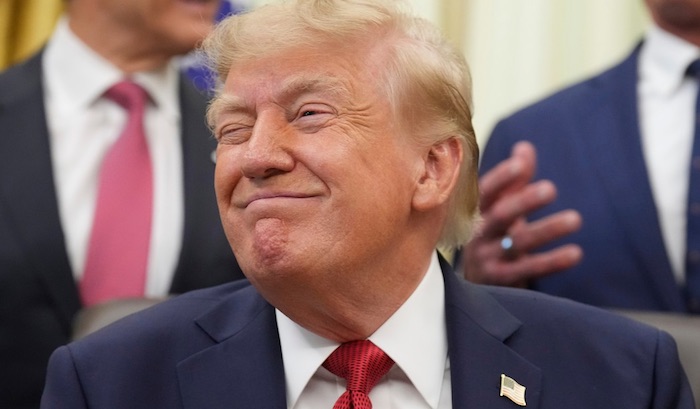
Furor Over Revoked Security Clearance Grows As Trump Said To Threaten More (G.)
What Was Bruce Ohr Doing? (Strassel)
US Special Counsel Recommends Six Months In Prison For Papadopoulos (R.)
CNN Sues Government To Get Names, Addresses Of Manafort Jurors (TF)
The Three-headed Monster (Kunstler)
Trump Pushes For SEC To End Quarterly Earnings Reports (G.)
You Should Fear the Emerging Market Debt Bubble (Nomi Prins)
Denmark Says Time Is Running Out To Avoid No-Deal Brexit (G.)
In The Country Of The Colosseum, Why Are 40-Year Old Structures Crumbling? (G.)
Censoring Alex Jones (Dmitry Orlov)
New Pesticides May Harm Bees As Much As Existing Ones (G.)
Glyphosate Found In Over 80% of Breast Milk Samples in Brazil (TeleSur)


Yeah, they’re not liking this one bit. But as I wrote yesterday, these people will be subjects in a 2nd special counsel. That doesn’t rhyme with security clearance.

Furor Over Revoked Security Clearance Grows As Trump Said To Threaten More (G.)

Amid mounting criticism after he revoked the former CIA director John Brennan’s security clearance, Donald Trump threatened to similarly punish a current official and is reportedly preparing to do the same to others who have criticized him. The president’s remarks and the report from the Washington Post escalated worsening tensions between the White House and the intelligence community. Trump discussed his intention to revoke security clearances while speaking to reporters Friday before he left the White House for a fundraiser on Long Island. The president suggested that his first target would be Bruce Ohr, a largely unknown justice department official who has become a frequent target of criticism by Trump and the rightwing media.

“I think Bruce Ohr is a disgrace,” Trump said. “I suspect I’ll be taking it away very quickly.” Ohr’s wife, Nellie, was employed during the 2016 campaign by Fusion GPS, the firm that commissioned an infamous dossier on Trump’s alleged ties to Russia that was authored by Christopher Steele, a former British spy. Also on Friday, the Washington Post, citing anonymous sources, reported that the the White House had already drafted documents to strip a number of other prominent intelligence community figures of their clearances.

The Post’s list of targets includes the former director of national intelligence James Clapper, the former FBI directors Michael Hayden and James Comey, the former national security adviser Susan Rice, the former acting attorney general Sally Yates, the former FBI deputy director Andrew McCabe, and the former FBI agents Lisa Page and Peter Strzok. [..] Senator Mark Warner, a Democrat from Virginia, announced Friday on Twitter that he planned to introduce an amendment “to block the president from punishing and intimidating his critics by arbitrarily revoking security clearances”.

Read more …

The Guardian, above, calls Ohr “a largely unknown justice department official who has become a frequent target of criticism by Trump and the rightwing media.”. Well, this is the Wall Street Journal. And Ohr and his wife have some explaining to do.

What Was Bruce Ohr Doing? (Strassel)

The Federal Bureau of Investigation and Justice Department have continued to insist they did nothing wrong in their Trump-Russia investigation. This week should finally bring an end to that claim, given the clear evidence of malfeasance via the use of Bruce Ohr. Mr. Ohr was until last year associate deputy attorney general. He began feeding information to the FBI from dossier author Christopher Steele in late 2016 – after the FBI had terminated Mr. Steele as a confidential informant for violating the bureau’s rules. He also collected dirt from Glenn Simpson, cofounder of Fusion GPS, the opposition-research firm that worked for Hillary Clinton’s campaign and employed Mr. Steele.
Altogether, the FBI pumped Mr. Ohr for information at least a dozen times, debriefs that remain in classified 302 forms. All the while, Mr. Ohr failed to disclose on financial forms that his wife, Nellie, worked alongside Mr. Steele in 2016, getting paid by Mr. Simpson for anti-Trump research. The Justice Department has now turned over Ohr documents to Congress that show how deeply tied up he was with the Clinton crew – with dozens of emails, calls, meetings and notes that describe his interactions and what he collected. Mr. Ohr’s conduct is itself deeply troubling. He was acting as a witness (via FBI interviews) in a case being overseen by a Justice Department in which he held a very senior position.
He appears to have concealed this role from at least some superiors, since Deputy Attorney General Rod Rosenstein testified that he’d been unaware of Mr. Ohr’s intermediary status. Lawyers meanwhile note that it is a crime for a federal official to participate in any government matter in which he has a financial interest. Fusion’s bank records presumably show Nellie Ohr, and by extension her husband, benefiting from the Trump opposition research that Mr. Ohr continued to pass to the FBI. The Justice Department declined to comment. But for all Mr. Ohr’s misdeeds, the worse misconduct is by the FBI and Justice Department.

Read more …

Unlike Ohr, Papadopoulos is an absolute nobody. But he once when he was drunk mentioned Russians. So Mueller wants his ass. He has to keep the collusion meme alive.

US Special Counsel Recommends Six Months In Prison For Papadopoulos (R.)

Special Counsel Robert Mueller recommended in a court filing on Friday that a judge sentence former Trump campaign aide George Papadopoulos to up to six months in prison for lying to federal agents investigating whether Russia interfered in the 2016 U.S. presidential election. Papadopoulos pleaded guilty in October to lying to FBI agents and is scheduled to be sentenced on Sept. 7. According to Mueller’s sentencing memorandum to the judge, Papadopoulos lied about his contacts with people who claimed to have ties to top Russian officials, including his meeting with a professor who said Russia had “dirt” on Democratic presidential candidate Hillary Clinton.

“The defendant’s crime was serious and caused damage to the government’s investigation into Russian interference in the 2016 presidential election,” Mueller’s memo said. “The defendant lied in order to conceal his contacts with Russians and Russian intermediaries during the campaign and made his false statements to investigators on January 27, 2017, early in the investigation, when key investigative decisions, including who to interview and when, were being made,” Mueller said. Mueller said the government believed a sentence of up to six months in prison was “appropriate and warranted” along with a fine of $9,500.

Papadopoulos unwittingly played a key role in triggering the FBI investigation into possible collusion between Trump’s campaign in Russia, which the president repeatedly has denounced as a “witch hunt.” While drinking at a London bar in May 2016, he told the Australian ambassador to Great Britain that the Russians had hacked thousands of emails that could damage Clinton’s presidential campaign. When the emails began appearing publicly two months later, the envoy, Alexander Downer, told U.S. diplomats about what Papadopoulos had said, according to U.S. officials familiar with the events.

Read more …

Mueller has Papadopoulos and Manafort. That’s all he has. By the way, the judge in this case says he’s been threatened and is under police protection. He doesn’t want that for the jurors. Neither should CNN, Washington Post, BuzzFeed, POLITICO, New York Times, NBC Universal, and the Associated Press.

CNN Sues Government To Get Names, Addresses Of Manafort Jurors (TF)

In a motion filed in federal court on Thursday, CNN and several other media outlets requested that the court release the names and home addresses of all jurors in the Paul Manafort fraud case. Jurors haven not yet rendered a verdict on any of the 18 charges against Manafort, who briefly served as President Donald Trump’s campaign manager in 2016. The motion — filed on behalf of CNN, Washington Post, BuzzFeed, POLITICO, New York Times, NBC Universal, and the Associated Press — asks the court to provide to the media organizations the full names and home addresses of the men and women who were summoned and selected by the federal government to serve as jurors in Manafort’s fraud case.

The media request for the names and home addresses of jurors comes a day after the jury began deliberating about the verdicts on 18 fraud and conspiracy counts against Manafort. [..] Early Thursday evening, members of the jury asked the judge a series of questions about the case and the legal threshold for proving guilt, including a definition of what “reasonable doubt” meant. Many outside legal experts interpreted the question as being good news for Manafort’s defense team and bad news for the prosecution.

Read more …

“Robert Mueller, is left looking ridiculous — and perhaps subject to malpractice charges — for trying to remove an appendix-like organ called the Manifort from the body politic instead of attending to the cancerous mess all around him. ”

The Three-headed Monster (Kunstler)

The faction that used to be the Democratic party can be described with some precision these days as a three-headed monster driving the nation toward danger, darkness, and incoherence. Anyone interested in defending what remains of the sane center of American politics take heed: The first head is the one infected with the toxic shock of losing the 2016 election. The illness took hold during the campaign that year when the bureaucracy under President Obama sent its lymphocytes and microphages in the “intel community” — especially the leadership of the FBI — to attack the perceived disease that the election of Donald Trump represented. The “doctors” of this Deep State diagnosed the condition as “Russian collusion.”

An overdue second opinion by doctors outside the Deep State adduced later that the malady was actually an auto-immune disease. The agents actually threatening the health of the state came from the intel community itself: Mr. Brennan, Mr. Clapper, Mr. Comey, Mr. Strzok, Mr. McCabe, Mr. Ohr, Ms. Yates. Ms. Page, et. al. who colluded with pathogens in the DNC, the Hillary campaign, and the British intel service to chew up and spit out Mr. Trump as expeditiously as possible. With the disease now revealed by hard evidence, the chief surgeon called into the case, Robert Mueller, is left looking ridiculous — and perhaps subject to malpractice charges — for trying to remove an appendix-like organ called the Manifort from the body politic instead of attending to the cancerous mess all around him.

Meanwhile, the Deep State can’t stop running its mouth — The New York Times, CNN, WashPo, et al — in an evermore hysterical reaction to the truth of the matter: the Deep State itself colluded with Russia (and perhaps hates itself for it, a sure recipe for mental illness).

Read more …

Let the SEC study it.

Trump Pushes For SEC To End Quarterly Earnings Reports (G.)

Donald Trump has told the US securities regulator to consider abandoning quarterly reporting – a practice criticised as too short-term by some businesses on both sides of the Atlantic. Trump said a leading company boss told him switching to twice-yearly disclosure of accounts would reduce costs and be good for business. If enacted by the Securities and Exchange Commission, the change could allow more UK companies to join a trend away from quarterly reports. The US president tweeted: “In speaking with some of the world’s top business leaders I asked what it is that would make business (jobs) even better in the U.S. “Stop quarterly reporting & go to a six month system,” said one. That would allow greater flexibility & save money. I have asked the SEC to study!”

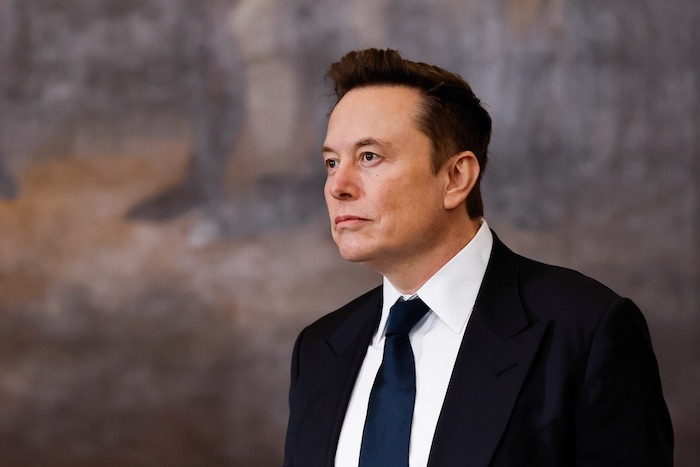
Elon Musk, the founder of Tesla, has criticised the short-term thinking of analysts and investors. Explaining earlier this month why he was considering taking the electric carmaker private, he told employees: “Being public … subjects us to the quarterly earnings cycle that puts enormous pressure on Tesla to make decisions that may be right for a given quarter but not necessarily right for the long-term.” JP Morgan’s boss, Jamie Dimon, and Warren Buffett, the world’s richest investor, argued earlier this year that companies should stop publishing quarterly earnings guidance that puts too much weight on hitting short-term targets. However, they said quarterly reporting should stay because it made companies accountable to the public.

Read more …

Oh, we do.

You Should Fear the Emerging Market Debt Bubble (Nomi Prins)

[..] what’s happening in Turkey right now shouldn’t be terribly surprising, given Fed chairman Jerome Powell’s attitudes towards emerging markets. Going back to last October, his words offer a glimpse of what was coming. Powell was then just the number two guy at the Fed when he publicly articulated his outlook on tightening interest rates, the rising dollar and the impact of both on emerging markets. He conceded that higher U.S. interest rates and weakening EM currencies “could cause capital to return to advanced economies.” But, unlike those that actually pay attention, Powell was not worried. He believed that the “most likely outcome” of that policy shift for emerging markets “will be manageable.”

Powell’s statement matters. He now commands the central bank with the largest influence on assets in the world. Powell seemed to deny that the Fed is, as Zero Hedge sums it up, the “major determinant of flows of capital into developing economies.” Later on as Fed chairman, Powell reemphasized that position at an IMF and Swiss National Bank gathering in Zurich. According to Powell: “There is good reason to think that the normalization of monetary policy in advanced economies should continue to prove manageable for EMEs. Markets should not be surprised by our actions if the economy evolves in line with expectations.” But Powell’s argument misses a central point. What he left out was that it was the Fed’s low interest rate policy to begin with that enabled countries to borrow as much as they did.

Read more …

Time is running out fast.

Denmark Says Time Is Running Out To Avoid No-Deal Brexit (G.)

Time is running out to strike a Brexit deal, according to the Danish finance minister, who has echoed warnings that there is a 50-50 chance of Britain crashing out of the European Union without an agreement in place. Kristian Jensen said the window of opportunity for striking a deal that was positive for both Britain and the EU was closing. Earlier, Latvia’s foreign minister, Edgars Rinkevics, claimed the chance of a no-deal Brexit was “50-50”. He said it was a “very considerable risk” but stressed he remained optimistic an agreement with Britain could be reached. Speaking on BBC Radio 4’s Today programme, Jensen was asked about Rinkevics’s remarks.

He said: “I also believe that 50-50 is a very good assessment because time is running out and we need to move really fast if we’ve got to strike a deal that is positive both for the UK and EU.” He said that everyone who wanted there to be a good deal “needs to put in some effort in the months to come, otherwise I’m afraid that time will run out”. He went on to describe Theresa May’s Chequers plan – which includes a pledge that the UK would apply domestic tariffs on goods intended for the UK, but charge EU tariffs on goods heading into the EU – as a “realistic proposal for good negotiations”. “We need to go into a lot of details but I think it’s a very positive step forward and a necessary step,” he said.

Read more …

Mafia.

In The Country Of The Colosseum, Why Are 40-Year Old Structures Crumbling? (G.)

The collapse of a bridge in Genoa on Tuesday, which killed 39 people, is the latest symptom of Italy’s infrastructure woes. More than 2m homes across the country are unstable, according to figures from the national statistics agency, Istat, and more than 156 school ceilings have fallen in over the last five years. The Morandi Bridge, considered an engineering jewel when it was inaugurated in 1967, was the 12th bridge to have collapsed in Italy since 2004. Five of those were in the last five years. Many of the problems can be traced back to the construction boom of the 1960s, when bridges, roads, buildings and schools were being built, often with weak or cheap material to increase profits, and ending up in the hands of the mafia.

“There’s no doubt that the building boom of the 1960s contributed to exacerbating the situation because so much was built then – everywhere and not always with adequate standards,” said Maurizio Carta, a professor of city planning at the University of Palermo. “We built in fragile areas, along riverbeds, in areas prone to landslides, along cliffs, and in high-risk hydrogeological and seismic areas, not to mention near heavy infrastructure, which increases the risk for people living there – in essence, where they shouldn’t be living in the first place.” [..] In the country of the Colosseum, Roman aqueducts and 1,000-year-old churches, it seems paradoxical that 40-year-old structures are crumbling.

“We have used materials which are destined to deteriorate quickly, like those of the bridge in Genoa,” said Prof Antonio Bercich, of the University of Genoa, who warned of the risks associated with the Morandi Bridge two years ago. “Engineering experts in previous decades believed that reinforced concrete would have permitted the construction of miniature colosseums that would have lasted forever. But that’s not the way it turned out. There are structures from those years that should now be demolished.” The Temple of Concordia, built in around 440BC, is considered one of the world’s best-preserved Greek temples. Located in Agrigento, western Sicily, it is just a few kilometres from a 4km bridge which was closed last year because it was at risk of collapse. The bridge was completed in 1970 by the engineer Riccardo Morandi.

Read more …

“Trump is a bull in a China shop while Clinton would have been a deer in the headlights.”

Censoring Alex Jones (Dmitry Orlov)

Something happened recently that made me feel like a bit of an endangered species. A set of transnational internet companies, including Google, Facebook, Apple and several others, all synchronously removed content belonging to infowars.com, which is run by Alex Jones. Such synchronicity is a sure sign of conspiracy—something that Alex Jones harps on a lot. I once appeared on a radio show run by Alex Jones, and he did manage to boil down what I had to say to “the USA is going to collapse like the USSR did,” which is pretty good, considering how poorly we managed to connect, having so little in common. He is a conservative and a libertarian whereas I think that conservatives don’t exist in the US.What have they “conserved” lately—other than the right to bear small arms?

As far as libertarianism, I consider proper historical libertarianism as a strain of socialism while its American cooptation is just plain funny: these ones remain libertarian only until they need the services of an ambulance or a fire engine, at which point they turn socialist. To boot, American libertarians like Ayn Rand, who to me was a relentlessly bad writer full of faulty thinking. However, I find her useful as a litmus test for mediocre minds. Moreover, Jones is political while I remain convinced that national politics in the US is a waste of time. It has been statistically proven that the US is not a democracy: popular will has precisely zero effect on public policy. It doesn’t matter who is president; the difference is a matter of style.

Trump is a bull in a China shop while Clinton would have been a deer in the headlights. The result is the same: the US is bankrupt and its empire is over. There is also the mismatch of genre between Jones and me. I am first of all an experimenter and an essayist, and to me personal experience and literary form are vitally important, while Jones is light on research and happy to work with hearsay, and is rather hackneyed and repetitive, but has the right instincts for a rabble-rouser.

Read more …

Just stop poisoning everything.

New Pesticides May Harm Bees As Much As Existing Ones (G.)

A new class of pesticides positioned to replace neonicotinoids may be just as harmful to crop-pollinating bees, researchers have warned. In experiments, the ability of bumblebees to reproduce, and the rate at which their colonies grow, were both compromised by the new sulfoximine-based insecticides, they reported in the journal Nature. Colonies exposed to low doses of the pesticide in the lab yielded significantly less workers and half as many reproductive males after the bees were transferred to a field setting. “Our results show that sulfoxaflor” – one of the new class of insecticide – “can have a negative impact on the reproductive output of bumblebee colonies,” said lead author Harry Siviter, a researcher at Royal Holloway University of London.

As with neonicotinoids, sulfoxaflor does not directly kill bees, but appears to affect the immune system or the ability to reproduce. Foraging behaviour, and the amount of pollen collected by individual bees remained unchanged in the experiment. The study has been published amid legal challenges and shifting national policies on neonicotinoids, among the most commonly used insecticides in the world. In April, European Union countries voted to ban three neonicotinoid-based products in open fields, restricting use to covered greenhouses. Earlier this month Canada followed suit, announcing the phase-out of two of the pesticides widely applied to canola, corn and soybean crops.

Neonicotinoids are based on the chemical structure of nicotine and attack insect nervous systems. Sulfoximine insecticides, while in a different class, act in a similar way. Unlike contact pesticides – which remain on the surface of foliage – neonicotinoids are absorbed by the plant from the seed phase and transported to leaves, flowers, roots and stems.

Read more …

“Brazil has become the primary consumer of pesticides on the planet..”

Glyphosate Found In Over 80% of Breast Milk Samples in Brazil (TeleSur)

Over 80 percent of breast milk samples examined in a recent study in Urucui, Brazil were found to contain agro-toxins. According to the study undertaken by Inacio Pereira Lima, a master’s student in Women’s Health at the Federal University of Piaui’s (UFPI) Center of Health and Sciences, 83.4 percent of the breast milk samples were found to contain glyphosate or aminomethylphosphonic acid (AMPA) or both substances. “The presence of glyphosate in breast milk indicates direct contamination by this agro-toxin or that the quantities utilized in agricultural activity in the region must be so high that the plant metabolism or microbiology did not degrade the excess,” Pereira Lima explained. “Nearby regions where agricultural activity is not present, we suspect that agro-toxins have contaminated the water.”

The samples were obtained from the maternity ward at the Dirceu Arcoverde Regional Hospital (HRDA) in the municipality of Urucui, located 450 kilometers from the capital city Teresina. It is the largest producer of soya in the state, and its crops are sprayed with large quantities of agro-toxins, according to Pragmatismo Politico In 2016, a total of 10.1 million kilos were consumed in the state. It is the equivalent of 3.18 kilos per person, a percentage that is comparable to the national average. Surprisingly, the same contamination level was detected in the municipality of Oeiras, roughly 750 kilometers from the Urucui, where agricultural activity is the least in the state. With a 20 percent stake in world’s total consumption since 2008, Brazil has become the primary consumer of pesticides on the planet, a new study has revealed.

Read more …

To make a prairie it takes a clover and one bee,
One clover, and a bee.
And revery.
The revery alone will do,
If bees are few.

– “To make a prairie”, Emily Dickinson

Aug 172018
 
 August 17, 2018  Posted by at 1:34 pm Finance Tagged with: , , , , , , , , , , , ,  


William Hogarth Humours of an Election, Plate 2 1754


Two thirds of Americans want the Mueller investigation (inquisition, someone called it) over by the midterm elections. Trump lawyer Rudy Giuliani has said that if Mueller wants to interview Trump, he’ll have to do so before September 1, because the Trump camp doesn’t want to be the one to unduly influence the elections. Mueller himself appears to lean towards prolonging the case, and that may well be with an eye on doing exactly that.

And there’s something else as well: as soon as the investigation wraps up, Trump will demand a second special counsel, this time to scrutinize the role the ‘other side’ has played in the 2016 presidential election and its aftermath. He’s determined to get it, and he’ll fire both Jeff Sessions and Rod Rosenstein if they try to stand in his way.

There have of course been tons of signs that it’s going to happen, but we got two significant ones just the past few days. The first is the termination of John Brennan’s security clearance. It looks impossible that no additional clearances will be revoked. There are more people who have them but would also be part of a second special counsel’s investigation. That doesn’t rhyme.

The second sign is Senator Rand Paul’s call for immunity for Julian Assange to come talk to the US senate about what he knows about Russian involvement in the 2016 election. Obviously, we know that he denies its very existence, and has offered to provide evidence to that end. But before he could do that, a potential deal with the DOJ to do so was torpedoed by then FBI chief James Comey and Senator Mark Warner.

Both will also be part of the second investigation. Rand Paul’s motivation is simple: Assange’s testimony could be a very significant part of the process of figuring out what actually happened. And that should be what everybody in Washington wants. Question is if they all really do. That’s -ostensibly- why there is the first, the Mueller Russian collusion, investigation. Truth finding.

But Mueller doesn’t appear to have found much of anything. At least, that we know of. He’s locked up Paul Manafort on charges unrelated to collusion, put him in isolation and dragged him before a jury. But don’t be surprised if Manafort is acquitted by that jury one of these days. The case against him seemed a lot more solid before than it does now. A jury that asks the judge to re-define ‘reasonable doubt’ already is in doubt, reasonable or not. And that is what reasonable doubt means.


But it wasn’t just Brennan and Comey and Peter Strzok and Lisa Page and all the rest of them in the intelligence community who played questionable roles around the election and the accusations of Russian meddling in it. The American media were also there, and very prominently. Which is why when 300 papers publish editorials pushing against Trump ‘attacking’ the media, you can’t help but -wryly- smile.

Why does Trump attack the press? Because they’ve been attacking him for two years, and they’re not letting go. So the press can attack the president, but he cannot fight back. That’s the rationale, but with the Mueller investigation not going anywhere it’s a hard one to keep alive.

There are three reasons for the behavior of the New York Times, WaPo, MSNBC, CNN et al. The first is political, they’re Democrat hornblowers. The second is their owners have a personal thing against Donald Trump. But these get trumped by the third reason: Trump is their golden goose. Their opposition makes them a fortune. All they need to do is publish articles 24/7 denouncing him. And they have for two years.

That puts the 300 papers’ editorials in a strange light. Many of them would have been fighting for their very lives if not for anti-Trump rhetoric. All 300 fit neatly and easily in one echo chamber. And, to put it mildly, inside that chamber, not everyone is always asking for evidence of everything that’s being said.

It’s not difficult to whoop up a storm there without crossing all your t’s. And after doing just that for 2 years and change, it seems perhaps a tad hypocritical to claim that you are honest journalists just trying to provide people with the news as it happened.

Because when you’ve published hundreds, thousands of articles about Russian meddling, and the special counsel that was named to a large degree because of those articles, fails to come up with any evidence of it, it will become obvious that you’ve not just, and honestly, been reporting the news ‘as it happened’. You have instead been making things up because you knew that would sell better.

And when the second special counsel starts, where will American media be? Sure, it may not happen before the midterms, and you may have hopes that the Democrats win those bigly, but even if that comes to pass (slim chance), Trump will still be president, and the hearings and interviews won’t be soft and mild. Also, there will be serious questions, under oath, about leaks to the press.


Still, whichever side of this particular fence you’re on, there’s one thing we should all be able to agree on. That is, when we get to count how many of the 300 editorials have actually mentioned, let alone defended, Julian Assange, and I’ll bet you that number is painfully close to zero, that is where we find out how honest this defense of the free press is.

If for you the free press means that you should be able to write and broadcast whatever you want, even if it’s lacking in evidence, as much of the Russiagate stuff obviously is, and you ‘forget’ to mention a man who has really been attacked and persecuted for years, for publishing files that are all about evidence, you are not honest, and therefore probably not worth saving.

Julian Assange and WikiLeaks are the essence of the free press. A press that is neutral, objective, fearless and determined to get the truth out. The New York Times and CNN simply don’t fit that description -anymore-. So when their editors publish calls to protect free press, but they leave out the one person who really represents free press, and the one person who’s been tortured for exactly that, you have zero credibility.

Sure, you may appear to have credibility in your echo chamber, but that’s not where real life takes place, where evidence is available and where people can make up their own minds based on objective facts provided by real journalists.

You guys just blew this big time. You don’t care about free press, you care about your own asses. And the second special counsel is coming. Good luck. Oh, and we won’t forget your silencing of Assange, or your attacks on him. If you refuse to do it, WE will free the press.


Aug 172018
 
 August 17, 2018  Posted by at 9:37 am Finance Tagged with: , , , , , , , , , , ,  


Pablo Picasso Brick factory at Tortosa 1909


Emerging Markets and US Treasuries (Albert Edwards)
Asia the Next Source of Downside Systemic Risk for Financial Markets (WS)
Trump Says US ‘Will Pay Nothing’ To Turkey For Release Of Detained Pastor (R.)
Lira Rallies As Turkey Pledges Spending Cuts To Avoid IMF Bailout (G.)
Turkish Tremors Will Cause Shocks In Britain (Times)
$125,000: The Pension Debt Each Chicago Household Is On The Hook For (WP)
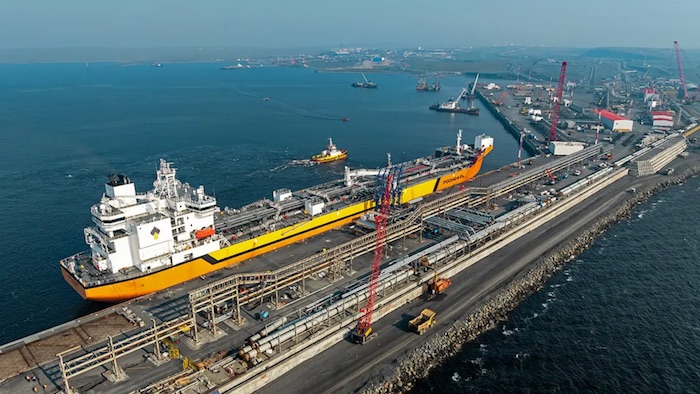
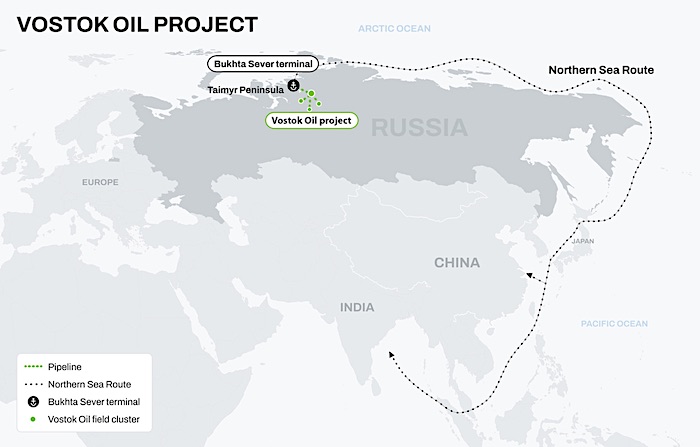
Russian Oil Industry Would Weather US ‘Bill From Hell’ (R.)
NATO Repeats the Great Mistake of the Warsaw Pact (SCF)
Italy’s NATO Racket… A Bridge Too Far (SCF)
Google Staff Tell Bosses China Censorship Is “Moral And Ethical” Crisis (IC)
Jury in Paul Manafort’s Case Asks Judge to Redefine ‘Reasonable Doubt’ (BBG)


From an email sent to Mish.

Emerging Markets and US Treasuries (Albert Edwards)

Turkey has discovered that high and rising foreign-denominated debt never sits well with a huge current account deficit and a reluctance to raise interest rates. The problem though is that this is not about Turkey or even EM. It is as always, about the Fed. When the most important person in the free world starts lobbing macro hand-grenades in an effort to drain the swamp, the financial markets will always eventually react badly. No, I am not talking about President Trump with his tweets about imposing tariffs on Turkey. I am actually talking about Fed Chair Jerome Powell draining the global liquidity swamp.

Make no mistake, whatever the macro-idiosyncrasies of Turkey, the key to the current turmoil that is spreading into EM generally, is Fed tightening and the strong dollar. As we have repeated ad infinitum, since 1950 there have been 13 Fed tightening cycles, 10 of them ended in recession and the others usually saw the EM blow up – such as the 1994 collapse in the Mexican peso. The Fed always tightens until something breaks. It is usually its own economy, but sometimes it is the EM’s. And when the liquidity tide goes out we always find out who is swimming naked. If it hadn’t been Turkey it would eventually have been someone else.

To be sure the unfolding EM crisis has been building for many years. And just as investors ignored the naysayers in the run-up to the Global Financial Crisis (GFC), they have ignored the IMF and BIS, who have been cautioning for some years about the explosive build-up in EM debt and especially dollar-denominated debt. According to the BIS, total dollar-denominated debt outside the U.S. reached $10.7 trillion in the first quarter of 2017, and about a third of this debt is owed by the EM nonfinancial sector. EM specialists, the Institute of International Finance (IIF), have also warned about this build-up in EM foreign-denominated debt. They too note that the EM corporate sector has been leading the explosion of debt, with Turkey standing out for the increase in its exposure since the GFC. Turkey has never managed to escape membership of ‘The Fragile Five’ EM country club.


Read more …

Dollar shortages.

Asia the Next Source of Downside Systemic Risk for Financial Markets (WS)

“Except for an expected short-term reprieve, we expect these tighter USD conditions to remain in place for the rest of the year,” the strategists write. “That is unless policy makers react soon to stimulate financial markets with liquidity.” “Southeast Asia stands out again as in 1997/8, with a large amount of USD denominated debt outstanding,” the write. “The only difference is then Asia had fixed exchange rates and now they are floating! We believe Asia will be the next source of downside systemic risk for financial markets.” The chart below shows dollar-denominated debt in the EMs, in trillion dollars. This does not include euro-denominated debt which plays a large role in Turkey. The fat gray area represents Asia without China:

Asia’s dollar-denominated debt, relative to its foreign exchange reserves and exports, has risen significantly since 2009, they note. The chart below shows the ratio between dollar-denominated debt and foreign exchange reserves in Asia, with China (green line) and without China (black dotted line). Values over 50% mean that there is more dollar-debt than foreign exchange reserves:

“This leaves these nations susceptible to a shortage in USDs,” they write: “Notably, the Asian nations that have amassed record amounts of USD debt are also home to the largest technology companies i.e. Tencent (China), Alibaba (China), TSNC (Taiwan), Samsung (South Korea). The tech sector is now 28% of the MSCI EM index. The rally in the US Dollar, dented global growth prospects, credit growth in China slowing down and escalating political tensions from the US leaves these nations very exposed to a shortage in USDs.”

Read more …

More sanctions. Yesterday’s relief is gone.

Trump Says US ‘Will Pay Nothing’ To Turkey For Release Of Detained Pastor (R.)

U.S. President Donald Trump said on Thursday the United States “will pay nothing” to Turkey for the release of detained American pastor Andrew Brunson, who he called “a great patriot hostage.” “We will pay nothing for the release of an innocent man, but we are cutting back on Turkey!” Trump said on Twitter. The U.S. warned Turkey on Thursday to expect more economic sanctions unless it hands over Brunson, as relations between the two countries took a further turn for the worse. U.S. Treasury Secretary Steven Mnuchin assured Trump at a Cabinet meeting that sanctions were ready to be put in place if Brunson was not freed. “We have more that we are planning to do if they don’t release him quickly,” Mnuchin said during the meeting.

The United States and Turkey have exchanged tit-for-tat tariffs in an escalating attempt by Trump to induce Turkish President Tayyip Erdogan into giving up Brunson, who denies charges that he was involved in a coup attempt against Erdogan two years ago. “They have not proven to be a good friend,” Trump said of Turkey during the Cabinet meeting. “They have a great Christian pastor there. He’s an innocent man.” Trump’s national security adviser, John Bolton, had issued a blunt warning to Turkish ambassador Serdar Kilic when he met him on Monday at the White House, an administration official said on Thursday. When Kilic sought to tie conditions to Brunson’s release, Bolton waved them aside and said there would be no negotiations.

Read more …

But that was yesterday. Today, the lira’s lost 4% already.

Lira Rallies As Turkey Pledges Spending Cuts To Avoid IMF Bailout (G.)

Turkey’s finance minister sparked a recovery in the lira after he addressed thousands of international investors, pledging to protect beleaguered local banks and cut public spending to prevent the country defaulting on its loans. Berat Albayrak, who has faced criticism for failing to tackle the country’s growing financial crisis, spoke to around 6,000 investors on a conference call to rebuff concerns that a funding squeeze on Turkey’s banks and a damaging trade war with the US would force him to seek a rescue bailout from the IMF. Albayrak, who was appointed as finance minister last month by his father-in-law, president Recep Tayyip Erdogan, said Turkey will not hesitate to provide support to the banking sector, which was capable of accessing funds itself during the current turmoil in financial markets.

He added that deposit withdrawals by panicked investors remained low and manageable. “We are experiencing unfavourable conditions but we will overcome,” he said. The Turkish lira was up 4% against the US dollar following the conference call and after reassuring words from the French president, Emmanuel Macron, and Germany’s chancellor, Angela Merkel, that Turkey’s stability was important. However, Albayrak’s attempt to shore up confidence in the lira was quickly undermined by the US Treasury secretary, Steve Mnuchin, who reportedly told president Donald Trump in a cabinet meeting that he was preparing further sanctions against Ankara. The lira slipped back to settle at just 1% up on the previous day.

Read more …

It’s not Spain or Italy. It’s Britain.

Turkish Tremors Will Cause Shocks In Britain (Times)

There are many strange things about Recep Tayyip Erdogan, but one of the oddest is his pet theory about interest rates. The Turkish president believes that high borrowing costs produce high inflation. “The interest rate is the cause and inflation is the result,” he said a few months ago. “The lower the interest rate is, the lower inflation will be.” No, you didn’t misread that. In defiance of economic orthodoxy (not to mention centuries of experience) which says that high interest rates tend to reduce inflation, President Erdogan believes the opposite. As one economist put it, this is a little like believing that umbrellas cause rain.

The Turkish president’s eccentric attitude towards monetary policy is not the only reason his country is now facing an economic crisis, but it is at least part of the explanation. Over the past decade or so, Turkey became one of the great bubbles of the modern era. Housing bubble? Check. Debt binge? Check. Yawning current account deficit? Check. Runaway inflation? Check. These traits alone qualified the Turkish economy for crisis candidacy some time ago. But as always, saying a country is due a crunch is far simpler than predicting when and how. And Turkey may well have muddled through a little longer were it not for four critical ingredients.

[..] Who is most exposed to this looming crisis? Conventional wisdom says Spain and Italy, whose banks have Turkish subsidiaries. However, this slightly misses the point, since much of that lending is in lira. Those banks should be able to survive even the loss of their stakes. The real question is: who has been lending Turkish companies all this foreign exchange debt? That brings us to the sting in the tail. For when you dig through Turkish treasury data, as the Deutsche Bank economist Oliver Harvey has, you discover that the country that lent most to Turkey, both short and long term, was the UK. That’s right: Britain, or more specifically the City of London, is by far the most exposed to a collapse in the Turkish economy.

Read more …

Creative accounting 101.

$125,000: The Pension Debt Each Chicago Household Is On The Hook For (WP)

Chicagoans have no idea how much pension debt Illinois politicians have saddled them with. Officially, Windy City residents are on the hook for $70 billion in total pension shortfalls from the city and its sister governments plus a share of Cook County and state pensions. But listen to Moody’s Investors Service, the rating agency that’s been most critical of Chicago’s finances, and you’ll get a different picture. Moody’s pegs the total pension debt burden for Chicagoans at $130 billion, nearly double the official numbers. (Yes, by chance the number is eerily similar to the official shortfall of $129 billion facing the five state-run pension funds. But don’t confuse the two.)

That’s scary news for Windy City residents. Barring real reforms, concessions from the unions or bankruptcy, Chicagoans can expect to be hit with whatever series of tax hikes politicians will try to enact to reduce that debt. That $130 billion is the total Moody’s calculates when adding up the direct pension debt owed by the city government, Chicago Public Schools, the park district and Chicago’s share of various Cook County governments and the five state pension funds. Moody’s takes a more realistic approach to investment assumptions than the city and county governments take.

Read more …

Russia’s had time to prepare.

Russian Oil Industry Would Weather US ‘Bill From Hell’ (R.)

Stiff new U.S. sanctions against Russia would only have a limited impact on its oil industry because it has drastically reduced its reliance on Western funding and foreign partnerships and is lessening its dependence on imported technology. Western sanctions imposed in 2014 over Russia’s annexation of Crimea have already made it extremely hard for many state oil firms such as Rosneft to borrow abroad or use Western technology to develop shale, offshore and Arctic deposits. While those measures have slowed down a number of challenging oil projects, they have done little to halt the Russian industry’s growth with production near a record high of 11.2 million barrels per day in July – and set to climb further.

Since 2014, the Russian oil industry has effectively halted borrowing from Western institutions, instead relying on its own cash flow and lending from state-owned banks while developing technology to replace services once supplied by Western firms. Analysts say this is partly why Russian oil stocks have been relatively unscathed since U.S. senators introduced legislation to impose new sanctions on Russia over its interference in U.S. elections and its activities in Syria and Ukraine. The measures introduced on Aug. 2, dubbed by the senators as the “bill from hell”, include potential curbs on the operations of state-owned Russian banks, restrictions on holding Russian sovereign debt as well as measures against Western involvement in Russian oil and gas projects.

Read more …

Too expensive.

NATO Repeats the Great Mistake of the Warsaw Pact (SCF)

Through the 1990s, during the terms of US President Bill Clinton, NATO relentlessly and inexorably expanded through Central Europe. Today, the expansion of that alliance eastward – encircling Russia with fiercely Russo-phobic regimes in one tiny country after another and in Ukraine, which is not tiny at all – continues. This NATO expansion – which the legendary George Kennan presciently warned against in vain – continues to drive the world the closer towards the threat of thermonuclear war. Far from bringing the United States and the Western NATO allies increased security, it strips them of the certainty of the peace and security they would enjoy if they instead sought a sincere, constructive and above all stable relationship with Russia.

It is argued that the addition of the old Warsaw Pact member states of Central Europe to NATO has dramatically strengthened NATO and gravely weakened Russia. This has been a universally-accepted assumption in the United States and throughout the West for the past quarter century. Yet it simply is not true. In reality, the United States and its Western European allies are now discovering the hard way the same lesson that drained and exhausted the Soviet Union from the creation of the Warsaw Pact in 1955 to its dissolution 36 years later. The tier of Central European nations has always lacked the coherence, the industrial base and the combined economic infrastructure to generate significant industrial, financial or most of all strategic and military power.

[..] When nations such as France, Germany, the Soviet Union or the United States are seen as rising powers in the world, the small countries of Central Europe always hasten to ally themselves accordingly. They therefore adopt and discard Ottoman Islamic imperialism. Austrian Christian imperialism, democracy, Nazism, Communism and again democracy as easily as putting on or off different costumes at a fancy dress ball in Vienna or Budapest. As Russia rises once again in global standing and national power, supported by its genuinely powerful allies China, India and Pakistan in the Shanghai Cooperation Organization, the nations of Central Europe can be anticipated to reorient their own loyalties accordingly once again.

Read more …

Case in point: the cost of NATO and Russiagate.

Italy’s NATO Racket… A Bridge Too Far (SCF)

What should be a matter of urgent public demand is why Italy is increasing its national spending on military upgrades and procurements instead of civilian amenities. As with all European members of the NATO alliance, Italy is being pressured by the United States to ramp up its military expenditure. US President Donald Trump has made the NATO budget a priority, haranguing European states to increase their military spending to a level of 2 per cent of GDP. Trump has even since doubled that figure to 4 per cent. Washington’s demand on European allies predates Trump. At a NATO summit in 2015, when Barack Obama was president, all members of the military alliance then acceded to US pressure for greater allocation of budgets to hit the 2 per cent target.

The alleged threat of Russian aggression has been cited over and over as the main reason for boosting NATO. Figures show that Italy, as with other European countries, has sharply increased its annual military spending every year since the 2015 summit. The upward trend reverses a decade-long decline. Currently, Italy spends about $28 billion annually on military. That equates to only about 1.15 per cent of GDP, way below the US-demanded target of 2 per cent of GDP. But the disturbing thing is that Italy’s defense minister Elisabetta Trenta reportedly gave assurances to Trump’s national security advisor John Bolton that her government was committed to hitting its NATO target in the coming years. On current figures that translates roughly into a doubling of Italy’s annual military budget. Meanwhile, the Italian public have had to endure years of economic austerity from cutbacks in social spending and civilian infrastructure.

Read more …

But the company’s become a secret service.

Google Staff Tell Bosses China Censorship Is “Moral And Ethical” Crisis (IC)

Google employees are demanding answers from the company’s leadership amid growing internal protests over plans to launch a censored search engine in China. Staff inside the internet giant’s offices have agreed that the censorship project raises “urgent moral and ethical issues” and have circulated a letter saying so, calling on bosses to disclose more about the company’s work in China, which they say is shrouded in too much secrecy, according to three sources with knowledge of the matter. The internal furor began after The Intercept earlier this month revealed details about the censored search engine, which would remove content that China’s authoritarian government views as sensitive, such as information about political dissidents, free speech, democracy, human rights, and peaceful protest.

It would “blacklist sensitive queries” so that “no results will be shown” at all when people enter certain words or phrases, leaked Google documents disclosed. The search platform is to be launched via an Android app, pending approval from Chinese officials. The censorship plan – code-named Dragonfly – was not widely known within Google. Prior to its public exposure, only a few hundred of Google’s 88,000 employees had been briefed about the project – around 0.35 percent of the total workforce. When the news spread through the company’s offices across the world, many employees expressed anger and confusion. Now, a letter has been circulated among staff calling for Google’s leadership to recognize that there is a “code yellow” situation – a kind of internal alert that signifies a crisis is unfolding.

The letter suggests that the Dragonfly initiative violates an internal Google artificial intelligence ethical code, which says that the company will not build or deploy technologies “whose purpose contravenes widely accepted principles of international law and human rights.” The letter says: “Currently we do not have the information required to make ethically-informed decisions about our work, our projects, and our employment. That the decision to build Dragonfly was made in secret, and progressed with the [artificial intelligence] Principles in place, makes clear that the Principles alone are not enough. We urgently need more transparency, a seat at the table, and a commitment to clear and open processes: Google employees need to know what we’re building.”

Read more …

Don’t be surprised if he’s aquitted.

Jury in Paul Manafort’s Case Asks Judge to Redefine ‘Reasonable Doubt’ (BBG)

A Virginia jury deliberating the fraud charges against President Donald Trump’s former campaign manager Paul Manafort sent a note with four questions to the judge in the case. Near the end of the first day of deliberations on Thursday, the jury asked whether a report of foreign bank and financial accounts, known as an FBAR, needed to be filed by a person with less than a 50 percent ownership. Manafort is charged with four counts of failing to file FBARs for offshore companies. The jury also asked about the definition of a shelf company.

U.S. District Judge T.S. Ellis III replied that the jurors should rely on their collective memory. The jury also requested that the judge redefine “reasonable doubt.” Ellis replied that the government wasn’t required to prove its case beyond “all doubt,” just to the extent that a person would consider reasonable. Finally, the jury asked if the exhibit list could be amended to include the indictment. The jury was excused for the day and is to return Friday to continue deliberations.

Read more …

Aug 162018
 
 August 16, 2018  Posted by at 8:51 am Finance Tagged with: , , , , , , , , , , , , ,  


Vasily Polenov Moscow courtyard 1878


Turkish Lira Rallies As Qatar Makes $15bn Loan Pledge (G.)
Turkey Slashes Capacity Of Banks To Bet Against Struggling Lira (CNBC)
Turkey Joins Russia In Liquidating US Treasuries (ZH)
Turkey Wants Its Share Of Syria’s Reconstruction (AlM)
Italy, Not Turkey, Is The Biggest Threat To European Banks (CNBC)
RBS Bankers Joked About Destroying The US Housing Market (G.)
Elizabeth Warren Unveils Bold New Plan To Reshape American Capitalism (G.)
Our “Prosperity” Is Now Dependent on Predatory Globalization (CHS)
EU Rebuffs Idea Of Escalating Brexit Talks To Leaders’ Summit (G.)
Trump Strikes Back at ‘Ringleader’ Brennan (Ray McGovern)
Trump Is Right: America Was ‘Built On Tariffs’ (MW)
Rand Paul Thinks Julian Assange Should Be Granted Immunity for Testimony (GP)
Australia’s Record Household Debt Is A Ticking Time Bomb (ZH)
SEC Serves Tesla With Subpoena (CNBC)
Monsanto’s Roundup Found In Wide Range Of Cereals Aimed At Children (G.)


$15 billion is chump change.

Turkish Lira Rallies As Qatar Makes $15bn Loan Pledge (G.)

Turkey’s beleagured currency has bounced back from record lows after Qatar pledged to shore up the banking sector’s shaky finances with loans worth $15bn. A week after a diplomatic spat with the US sent the lira into a tailspin, the agreement with Qatar was calculated to help Turkey avoid having to ask the IMF for emergency funding. Officials in Ankara said the Qatari money would be “channeled into Turkey’s financial markets and banks”, with the implication that the investment would be enough to head off a banking collapse. However, while the investment gave the Turkish lira much-needed respite, the US president Donald Trump’s announcement of further trade sanctions against Ankara, along with concerns about the rising value of the dollar and weak profits in Chinese tech firms, sent global financial markets into reverse.

[..] Mohamed A El-Erian, the chief economic adviser at the German insurer Allianz, tweeted that Erdogan’s policies, including the Qatari investment, would act like sticking plaster, leaving the possibility open for an IMF rescue. He said: “This is part of the Turkish government’s strategy to avoid the IMF by finding alternative external support. To be a sustainable stabilizer, funding needs to be larger and reach the central bank.” However, the lira rallied by 6% after the Qatari pledge and a separate move by Turkey’s central bank to boost the finances of the country’s banks. In an effort to defend the lira, Turkey’s central bank tightened its rules on currency swaps and other foreign exchange transactions, limiting the ability of banks to supply lira to foreign financial companies.

Read more …

It’s hardly ever a good sign when short sellers are curtailed. Question is why are they shorting?

Turkey Slashes Capacity Of Banks To Bet Against Struggling Lira (CNBC)

Action by Turkey’s banking regulator has stymied investor ability to buy and short the lira, helping the currency to gain value in overnight trade. The Banking Regulation and Supervision Agency (BRSA) has reduced the amount of swap market contracts that offshore banks can undertake, reducing their access to the beleaguered currency. A swap is where on flow of cash income, usually a fixed or steady rate, is swapped for a typically riskier flow of income. The derivative contract is set for a fixed period. The BRSA has stipulated that banks now cannot run swap contracts for no more than 25% of the equity that they hold. The figure was previously 50%.

BlueBay Asset Management strategist Timothy Ash said in a note Wednesday that Turkey’s central bankers had finally taken action to restrict international access to lira. “They are killing offshore TRY (lira) liquidity to stop foreigners shorting the lira,” he said before adding “why did they not do all this much earlier?” [..] This year the dollar has gained more than 60% in value versus the lira, and the Turkish currency has become the world’s worst performer this year.

Read more …

Maybe Turkey simply needs the money?!

Turkey Joins Russia In Liquidating US Treasuries (ZH)

Last month, when we reported that Russia had liquidated the bulk of its US Treasury holdings in just two months, we said that “we can’t help but wonder – as the Yuan-denominated oil futures were launched, trade wars were threatened, and as more sanctions were unleashed on Russia – if this wasn’t a dress-rehearsal, carefully coordinated with Beijing to field test what would happen if/when China also starts to liquidate its own Treasury holdings.” As it turns out, Russia did lead the way, but not for China. Instead, another recent US foreign nemesis, Turkey, was set to follow in Putin’s footsteps of “diversifying away from the dollar”, and in the June Treasury International Capital, Turkey completely dropped off the list of major holders of US Treasurys, which has a $30 billion floor to be classified as a “major holder.”

According to the US Treasury, Turkey’s holdings of bonds, bills and notes tumbled by 52% since the end of 2017, dropping to $28.8 billion in June from $32.6 billion in May and $61.2 billion at the recent high of November of 2016. [..] The selloffs took place well before a diplomatic fallout between the US and both Turkey and Russia resulted in new sets of sanctions and tariffs imposed on both nations. The Trump administration last week imposed new sanctions against Russia in response to the nerve agent poisoning in the U.K. of a former Russian spy and his daughter. Meanwhile, the Turkish selloff certainly continued into July and August as U.S. relations with Turkey deteriorated this week

Read more …

It‘s in Putin’s hands.

Turkey Wants Its Share Of Syria’s Reconstruction (AlM)

Although Turkey publicly appears to sustain its anti-Bashar al-Assad stance on Syria, it is actually getting ready for a new Syria that will allow Assad to stay on as the country’s president. While a termination of the de facto Kurdish autonomy in northern Syria seems to be the first precondition for a possible normalization between Ankara and Damascus, there is another unspoken condition as well: the allotment of a share in Syria’s reconstruction. Naturally, the Assad administration does not have the intention to allot any share to Turkey, which is accused of supporting anti-regime military groups that have destroyed the country and looted Aleppo’s industrial zones. However, Turkey’s control of a sizable territory in northern Syria and its cooperation with Russia make it difficult for Damascus to exclude Turkey from these calculations.

Turkey’s influence over opposition groups that could have a bearing on the Geneva process can not be dismissed. Turkey has been able to preserve its most important trading partner position with Syria despite the seven-year-old conflict. Its geographical proximity to Syria, logistical superiority and advanced capacity of its construction sector encourages Turkey to obtain a substantial part in the reconstruction process. Moreover, Turkey is currently organizing local entities in al-Bab, Jarablus, Azaz, Cobanbey and Afrin that are de facto under its control. It is also setting up systems for security, education, religion and even issuing ID cards to residents. In addition it has started building a road network.

Read more …

“The issues in Italy… in the next three months are going to dictate the whole European banking narrative for the next three to five years,”

Italy, Not Turkey, Is The Biggest Threat To European Banks (CNBC)

The European Central Bank (ECB) was reported Friday to be concerned that the ongoing currency crisis in Turkey could result in problems for the continent’s banks. However, the real problem for Europe’s banking industry is Italy and what happens in that country in the coming months, an analyst said Tuesday. “The issues in Italy… in the next three months are going to dictate the whole European banking narrative for the next three to five years,” Tom Kinmonth, fixed income strategist at ABN Amro, told CNBC’s “Squawk Box Europe.” Italy’s economy is the third largest in the European Union and the country’s new coalition government is currently working on next year’s budget.

Its financial plan will be closely scrutinized by European authorities and, more importantly, by market players, following promises to increase public spending. Investors are wary of rises in pensions and state benefits, given that Italy already has a significantly high public debt pile — the second largest in the euro zone, at about 130% of GDP. If market players do not approve of the next budget, due around October, then borrowing costs for Italy are likely to go up, which in turn could affect neighboring European countries. It could also create problems for certain European banks that hold Italian debt.

Read more …

And they’re still in business.

RBS Bankers Joked About Destroying The US Housing Market (G.)

RBS bankers joked about destroying the US housing market after making millions by trading loans that staff described as “total fucking garbage”, according to transcripts released as part of a $4.9bn (£3.8bn) settlement with US prosecutors. Details of internal conversations at the bank emerged just weeks before the 10-year anniversary of the financial crisis, which saw RBS rescued with a £45bn bailout from the UK government. The US Department of Justice (DoJ) criticised RBS over its trade in residential mortgage backed securities (RMBS) – financial instruments underwritten by risky home loans that are cited as pivotal in the global banking crash. It said the bank made “false and misleading representations” to investors in order to sell more of the RMBS, which are forecast to result in losses of $55bn to investors.

Transcripts published alongside the settlement reveal the attitude among senior bankers at RBS towards some of the products they sold. The bank’s chief credit officer in the US referred to selling investors products backed by “total fucking garbage” loans with “fraud [that] was so rampant … [and] all random”. He added that “the loans are all disguised to, you know, look okay kind of … in a data file.” The DoJ said senior RBS executives “showed little regard for their misconduct and, internally, made light of it”. In one exchange, as the extent of the contagion in the banking industry was becoming clear, RBS’ head trader received a call from a friend who said: “[I’m] sure your parents never imagine[d] they’d raise a son who [would] destroy the housing market in the richest nation on the planet.” He responded: “I take exception to the word ‘destroy.’ I am more comfortable with ‘severely damage.’”

Read more …

No chance until the whole thing collapses.

Elizabeth Warren Unveils Bold New Plan To Reshape American Capitalism (G.)

Elizabeth Warren, the Massachusetts senator tipped as a Democratic presidential candidate in 2020, has unveiled new plans for legislation aimed at reining in big corporations, redistributing wealth, and giving workers and local communities a bigger say. Warren will introduce the bill dubbed the Accountable Capitalism Act on Wednesday. The proposal aims to alter a model she says has caused corporations to chase profits for shareholders to the detriment of workers. Under the legislation, corporations with more than $1bn in annual revenue would be required to obtain a corporate charter from the federal government – and the document would mandate that companies not just consider the financial interests of shareholders.

Instead, businesses would have to consider all major corporate stakeholders – which could include workers, customers, and the cities and towns where those corporations operate. Anyone who owns shares in the company could sue if they believed corporate directors were not meeting their obligations. Employees at large corporations would be able to elect at least 40% of the board of directors. An estimated 3,500 public US companies and hundreds of other private companies would be covered by the mandates. [..] Large companies dedicated 93% of their earnings to shareholders between 2007 and 2016 – a shift from the early 1980s, when they sent less than half their revenue to shareholders and spent the rest on employees and other priorities, Warren said.

Read more …

Here’s what Warren wants to change.

Our “Prosperity” Is Now Dependent on Predatory Globalization (CHS)

So here’s the story explaining why “free” trade and globalization create so much wonderful prosperity for all of us: I find a nation with cheap labor and no environmental laws anxious to give me cheap land and tax credits, so I move my factory from my high-cost, highly regulated nation to the low-cost nation, and keep all the profits I reap from the move for myself. Yea for free trade, I’m now far wealthier than I was before. That’s the story. Feel better about “free” trade and globalization now? Oh wait a minute, there’s something missing–the part about “prosperity for all of us.” Here’s labor’s share of U.S. GDP, which includes imports and exports, i.e. trade:

Notice how labor’s share of the economy tanked once globalization / offshoring kicked into high gear? Now let’s see what happened to corporate profits at that same point in time:

Imagine that–corporate profits skyrocketed once globalization / offshoring kicked into high gear. Explain that part about “makes us all prosperous” again, because there’s no data to support that narrative. What’s interesting about all this is the way that politicians are openly threatening voters with recession if they vote against globalization. In other words, whatever “prosperity” is still being distributed to the bottom 80% is now dependent on a predatory version of globalization.

Read more …

Britain simply refuses to understand what the EU is. May can only get what she wants if the EU bends itself out of shape. Not going to happen.

EU Rebuffs Idea Of Escalating Brexit Talks To Leaders’ Summit (G.)

European officials have poured cold water on hopes that Theresa May could negotiate Brexit with other EU leaders in September to break the deadlock over Britain’s departure. Diplomatic sources have rejected suggestions that May could hold direct talks on Brexit with the 27 other EU heads of state and government at a summit in Salzburg next month. “That is completely ridiculous, that is complete overspin of Salzburg,” one senior source told the Guardian. “It would mean that we would ditch our negotiating approach of the last two years and discuss at 28 instead of 27 to one, and I don’t see why this would happen.” Brexit talks are due to resume in Brussels on Thursday and Friday, the start of a new intense phase of negotiations, with the aim of reaching a deal in the autumn.

Since the referendum, the EU has insisted that all formal talks are led by the chief negotiator, Michel Barnier. May is allowed to update EU leaders on her plans at quarterly EU summits but is not in the room for discussions. Officials expect this approach to be continued at Salzburg, an informal summit on 20 September officially dedicated to migration. The meeting has been organised by Austria, which currently holds the EU rotating presidency, but it will be for the European council president, Donald Tusk, to decide whether to add Brexit to the agenda. The Salzburg gathering comes four weeks before an EU summit in Brussels, pencilled in by Barnier as the moment to strike a deal. Many in Brussels expect the deadline to slip to November or even December, squeezing the time available to ratify the text ahead of the UK’s departure on 29 March 2019.

Read more …

The view of a CIA veteran.

Trump Strikes Back at ‘Ringleader’ Brennan (Ray McGovern)

There’s more than meets the eye to President Donald Trump’s decision to revoke the security clearances that ex-CIA Director John Brennan enjoyed as a courtesy customarily afforded former directors. The President’s move is the second major sign that Brennan is about to be hoist on his own petard. It is one embroidered with rhetoric charging Trump with treason and, far more important, with documents now in the hands of congressional investigators showing Brennan’s ringleader role in the so-far unsuccessful attempts to derail Trump both before and after the 2016 election.

Brennan will fight hard to avoid being put on trial but will need united support from from his Deep State co-conspirators — a dubious proposition. One of Brennan’s major concerns at this point has to be whether the “honor-among-thieves” ethos will prevail, or whether some or all of his former partners in crime will latch onto the opportunity to “confess” to investigators: “Brennan made me do it.” Well before Monday night, when Trump lawyer Rudy Giuliani let a small bomb drop on Brennan, there was strong evidence that Brennan had been quarterbacking illegal operations against Trump. Giuliani added fuel to the fire when he told Sean Hannity of Fox news:

“I’m going to tell you who orchestrated, who was the quarterback for all this … The guy running it is Brennan, and he should be in front of a grand jury. Brennan took … a dossier that, unless he’s the biggest idiot intelligence agent that ever lived … it’s false; you can look at it and laugh at it. And he peddled it to [then Senate Majority Leader] Harry Reid, and that led to the request for the investigation. So you take a false dossier, get Senators involved, and you get a couple of Republican Senators, and they demand an investigation — a totally phony investigation.”

Read more …

History lessons always good.

Trump Is Right: America Was ‘Built On Tariffs’ (MW)

President Trump defended his use of tariffs to force other countries to renegotiate “unfair” trade deals by claiming that “our country was built on tariffs.” He’s right. America was a staunchly protectionist country for most of its history before World War II. One of the very first bills new President George Washington signed, for instance, was the Tariff Act of 1789. He inked the bill on July 4 of that year. The tariff of 1789 was designed to raise money for the new federal government, slash Revolutionary War debt and protect early-stage American industries from foreign competition. Then, as now, some industries sought protection in Congress from a flood of imports. Most goods entering the U.S. were subjected to a 5% tariff, though in a few cases the rates ranged as high as 50%.

It was the first of many tariffs that Congress passed over a century and a half. They generated the vast majority of the federal government’s revenue until the U.S. adopted an income tax in 1913. Tariffs have always been a source of controversy, however, starting with that very first one. Early on, the North preferred higher tariffs to protect infant American industries such as textiles from established English manufacturers. Alexander Hamilton, the nation’s first Treasury secretary, feared the U.S. would remain a weakling unless it built its own industries and became economically independent of the mother country. Over time the arguments on behalf of protectionism became closely tied to the emerging Republican party.

“Give us a protective tariff and we will have the greatest nation on earth,” a young politician named Abraham Lincoln said in 1847. Later, as the country’s 16th president, Lincoln rejected free trade and jacked up tariffs during the Civil War to pay for the North’s military campaigns.

Read more …

Paul has already topped the Iran regime change cabal. Let’s hope he gets his way again. Assange can be a very important Russiagate witness.

Rand Paul Thinks Julian Assange Should Be Granted Immunity for Testimony (GP)

Senator Rand Paul believes that WikiLeaks founder Julian Assange should be given immunity in exchange for him testifying before the Senate Intelligence Committee. Speaking to the Gateway Pundit, Senator Paul asserted that Assange likely has important information about the hack and that it’s unlikely he would agree to testify without immunity. “I think that he should be given immunity from prosecution in exchange for coming to the United States and testifying,” Senator Paul told the Gateway Pundit. “I think he’s been someone who has released a lot of information, and you can debate whether or not any of that has caused harm, but I think really he has information that is probably pertinent to the hacking of the Democratic emails that would be nice to hear.” “It’s probably unlikely to happen unless he is given some type of immunity from prosecution,” Senator Paul added.

[..] Christine Assange, Julian’s mother, has a list of things that she would like to see happen before her son agrees to testify. She told the Gateway Pundit that her wishes include an end to the WikiLeaks grand jury, a dismissal of charges against all WikiLeaks staff, safe passage for him to a nation where he can receive medical care and an agreement that there will be no future US extradition requests. She would also like to see the testimony conducted publicly through Skype.

Read more …

Household debt. Mortal enemy no. 1. Check it where you live.

Australia’s Record Household Debt Is A Ticking Time Bomb (ZH)

The Australian household debt to income ratio has ballooned to shocking levels over the past three decades as Sydney is ranked as one of the most overvalued cities in the world. According to the Daily Mail Australia, credit card bills, home mortgages, and personal loans now account for 189% of an average Australian household income, compared with just 60% in 1988, as Callus Thomas, Head of Research of Topdown Charts, demonstrates that record high household debt is a ticking time bomb. The average Australian credit card bill is roughly $3,272.70 as average income earners spend at least $2,000 a month on mortgage repayments, which has contributed to the affordability crisis, said the Daily Mail Australia.

The average Australian holds about a $400,000 mortgage after they put down 20% deposit for a $500,000 property. The paper notes that the loan would barely buy a one-bedroom unit in most outer suburbs, as full-time workers take in about $82,000 salary per annum and spend an alarming 40% on mortgage repayments. With household debt at crisis levels, CoreLogic said Australian home prices experienced their sharpest monthly drops in July since late 2011 as declines gathered momentum in Sydney and Melbourne (Sydney and Melbourne cover about 60% of Australia’s housing market by value and 40% by number). Nationally, the index of home prices dropped .60% in July from June, leading to an annual fall of 1.6%.

Read more …

The board may have to get rid of Musk. But what is Tesla without him?

SEC Serves Tesla With Subpoena (CNBC)

The Securities and Exchange Commisison has served Tesla with a subpoena after CEO Elon Musk tweeted that he was considering taking the company private and that he had the necessary funding lined up, according to reports from The New York Times and other outlets published Wednesday. Earlier reports said the SEC had intensified scrutiny of the automaker after the controversial tweet. A subpoena would be one of the first steps in a formal inquiry. Shares of Tesla were down 3% in afternoon trading, though they moved only a fraction of 1% following the Times article.

Musk publicly floated the possibility of taking the company private in a tweet that sent shares seesawing and company leadership scrambling. His statement that he had the “funding secured” came under particular scrutiny, as it may have violated an SEC rule that essentially stipulates public statements made by company executives must be true. Musk explained earlier this week that the Saudi Arabia sovereign wealth fund had expressed interest in taking Tesla private.

Read more …

Will this get the EU to move?

Monsanto’s Roundup Found In Wide Range Of Cereals Aimed At Children (G.)

Significant levels of the weedkilling chemical glyphosate have been found in an array of popular breakfast cereals, oats and snack bars marketed to US children, a new study has found. Tests revealed glyphosate, the active ingredient in the popular weedkiller brand Roundup, present in all but two of the 45 oat-derived products that were sampled by the Environmental Working Group, a public health organization. Nearly three in four of the products exceeded what the EWG classes safe for children to consume. Products with some of the highest levels of glyphosate include granola, oats and snack bars made by leading industry names Quaker, Kellogg’s and General Mills, which makes Cheerios.

One sample of Quaker Old Fashioned Oats measured at more than 1,000 parts per billion of glyphosate. The Environmental Protection Agency has a range of safe levels for glyphosate on crops such as corn, soybeans, grains and some fruits, spanning 0.1 to 310 parts per million. “I grew up eating Cheerios and Quaker Oats long before they were tainted with glyphosate,” said EWG’s president, Ken Cook. “No one wants to eat a weedkiller for breakfast, and no one should have to do so.” Cook said EWG will urge the EPA to limit the use of glyphosate on food crops but said companies should “step up” because of the “lawless” nature of the regulator under the Trump administration.

Read more …

Aug 152018
 
 August 15, 2018  Posted by at 11:53 am Finance Tagged with: , , , , , , , , , , , , ,  


Salvador Dali The Madonna of Port Lligat 1950


On August 15, Greeks celebrate the “Dormition (or the Assumption) of the Virgin Mary (in Greek: Koimisis tis Theotokou). The holiday commemorates the “falling asleep” or death of the Theotokos (Mary, translated as “God-bearer”). August 15, one of the most important holidays in the Orthodox calendar, is celebrated across the country, and is a date when many Greeks leave the towns and cities where they live and work to return to their home villages.”

Stole that bit from the local Kathimerini paper. And I would add: while most Athenians leave for the islands, along with about 2 billion tourists. Thought I’d bring up the national holiday because in Turkey, they celebrate the same. The orthodox church is still going strong in both countries. Even if Turkey is leaning increasingly towards Islam. And even then: the House of the Virgin Mary shrine in Turkey, which the Apostle John is supposed to have built for her, on a mountain overlooking the Aegean, the place where Mary is said to have spent her last years, sees both Christian and Muslim pilgrims.

All this can’t be seen apart from some recent developments between the two countries. Turkey had been holding two Greek servicemen in jail after they crossed a border in bad weather early March. And then yesterday evening, this happened according to Kathimerini:

Greek Soldiers Released From Turkish Jail Pending Trial

Two Greek servicemen who had been detained in Turkey since early March for accidentally crossing the border in bad weather have been released from jail pending trial, Anadolu agency reported on Tuesday evening. According to Anadolu, a court examined the request for their release and ruled there are no reasons to keep them behind bars. The ruling does not mention any measures restricting their movement which means the soldiers can return to Greece.

Lieutenant Angelos Mitretodis and Sergeant Dimitris Kouklatzis had been held in a high security prison in Edirne for 167 days. It is not clear what charges they are facing. Prime Minister Alexis Tsipras said in a tweet the release of the servicemen “is an act of justice which will contribute in boosting friendship, good neighborly relations and stability in the region.” “I would like to congratulate and thank our two officers and their families for their courage, patience and confidence in our efforts, which were ultimately vindicated,” he added.

On Monday, Greece’s top military announced it was suspending some confidence-building activities with Turkey for the remainder of the year, as a response to the prolonged detention. The measures under suspension extend to the the exchange of military academy graduates as well as sporting and cultural activities, which have already been scaled down over the detention of the two soldiers, who were arrested after accidentally crossing a borderline between the two countries.

And mere hours later there was this:

Two Greek Soldiers Released From Turkish Jail Return Home

Two Greek soldiers freed after months in a Turkish prison returned to Greece by government jet early Wednesday after their unexpected release by a provincial court. Defense Minister Panos Kammenos said he phoned his Turkish counterpart to express his satisfaction with the soldiers’ release and invite him to visit Greece. “This is a great day for our motherland, the day of Our Lady, the day of Tinos in 1940,” Kammenos told reporters, referring to the Feast of the Dormation, which falls on August 15 and to the Italian torpedoing on a Greek warship on this day in 1940. “I hope that their release … will herald a new day in Greek-Turkish relations. We can live together peacefully, for the benefit of both our peoples.”

The soldiers [..] were met by Kammenos, the army chief of staff and an honor guard after their arrival at 3 a.m. at the airport in the northern city of Thessaloniki. “All I want to say is thank you,” Mitretodis told reporters. The men were arrested on March 1 for illegally entering Turkey after crossing the heavily militarized land border. Greece strongly protested their long detention in the western town of Edirne, arguing that they had strayed across during a patrol of a trail of suspected illegal immigration amid poor visibility due to bad weather.

[..] The men’s arrest had considerably strained Greek-Turkish relations. Kammenos had claimed that they were being held “hostage” by Turkey, which is trying to secure the extradition of eight Turkish servicemen who fled to Greece after the 2016 failed military coup in Turkey. Ankara accuses its servicemen of involvement in the coup, but Greek courts have refused to extradite them, arguing they would not get a fair trial in Turkey and their lives would be in danger there.

Athens got a phone call from Ankara, probably to Kammenos, not Tsipras, that said: you come get them. Whether that call was before or after the court decision we’ll probably never know. A bit of a shame, because it could tell us a lot of where the decisions are made in Turkey. Then again, we do have an idea. A mere provincial court that could make decisions that go completely against what Erdogan desires? What are the odds? But stick around.

Here’s what’s interesting about this: the two soldiers, who had been in detention for almost half a year, were released by a provincial court, and got back home on a joint Turkish/Greek national holiday. What’s not to like?

But then this: a few hours after they arrive home on PM Tsipras’ own government jet at 3pm, another Turkish court decides that an appeal for American pastor Brunson to be released, is denied. Brunson is the guy Trump wants freed. John Bolton has said there’ll be no more talks until that is done. But if one court takes a decision that at least on the face of it goes against supreme ruler Erdogan’s demands, and another decides differently, Erdogan can claim the pastor’s fate is out of his hands: it’s the court system that decides.

That victory over Trump, concerning not freeing the pastor, is apparently worth more to him than the defeat of not exchanging the soldiers for the 8 Turkish servicemen who have gotten asylum in Greece. Something Erdogan is allegedly very angry about, because he accuses them of being party to the 2016 ‘coup’. He’s trying to play chess with Trump. We can discuss how good of an idea that is. Here’s AFP:

Turkey Court Rejects New Appeal To Free Detained US Pastor

A Turkish court on Wednesday rejected a new appeal to free US pastor Andrew Brunson, whose detention has sparked a major row between Turkey and the United States, local media reported. The court in the western city of Izmir ruled that Brunson, who faces 35 years in jail over terror and espionage charges, will remain under house arrest, the state television TRT reported. Brunson’s jail term had been converted to house detention for health reasons.

His detention has soured relations with Washington, with US President Donald Trump doubling aluminium and steel tariffs for Turkey in punitive actions against Ankara’s refusal to release Brunson. The crisis has sent the Turkish currency into free fall since Friday. “The president has a great deal of frustration (about) the pastor not being released,” White House press secretary Sarah Sanders said Tuesday. The statement came after US embassy charge d’affaires Jeffrey Hovenier visited Brunson in Izmir.

Brunson’s lawyer Cem Halavurt told AFP that a higher court would also discuss his appeal for Brunson’s release. Turkey’s ambassador to Washington Serdar Kilic on Monday held private talks with US National Security Advisor John Bolton in a meeting to discuss the pastor’s status.

And then Reuters has this just now:

Erdogan Spokesman Says Problems With US Will Be Resolved

Turkish President Tayyip Erdogan’s spokesman said on Wednesday he expected problems with the United States, which helped drive the lira to record lows, to be resolved but Washington must stop trying to influence Turkey’s judiciary. Ibrahim Kalin also told a news conference that Turkey would exercise its rights if the U.S. does not deliver F-35 jets to Ankara. The lira, which has rallied after hitting a record low of 7.24 to the dollar, would continue to recover, he said.

A masterstroke? Did Erdogan just succeed in making everyone, including Trump, believe the Turkish judiciary system is impartial, and he’s not the one keeping Brunson from leaving the country? Sure looks like he tried. “Sorry, Mr. Trump, it’s out of my hands.. A judge let the Greek soldiers go, and I didn’t want that either..”

Problem is, everyone knows Erdogan fired half the judiciary system and 90% or so of the press, accusing them of being part of the same coup plot as Gülen and the pastor Brunson. It’s almost amusing. Almost, because innocent people’s lives are being played out on some primitive chess board and sacrificed against dreams of ever more power. Only a pawn in their game.

The lira is recovering a little today. Got to wonder how long that will last, and what it’s cost Turkey. To be continued.


Aug 152018
 
 August 15, 2018  Posted by at 9:11 am Finance Tagged with: , , , , , , , , , , , ,  


Paul Signac Maison de Van Gogh Arles 1933


Two Greek Soldiers Released From Turkish Jail Return Home (K.)
Turkey Shows Damage Of Fading World Order (R.)
Turkey Hikes Tariffs On Imports Of Selected US Products (AFP)
US Household Debt Rises To $13.3 Trillion In Second Quarter (R.)
Has Bezos Become More Powerful In DC Than Trump? (VF)
Trump Criticizes Some Russia Provisions Of Defense Bill (USAT)
Tonga PM Calls On China To Write Off Pacific Debt (AFP)
“Hothouse Earth” And Neoliberal Economics (IC)
We’re In A New Age Of Obesity. How Did It Happen? (Monbiot)
More Recycling Won’t Solve Plastic Pollution (SciAm)
Glyphosate Is Here To Stay In EU – At Least For Now (Pol.eu)
Help Me, My Prince: Guernsey Resident Halts Roadworks With Ancient Plea (G.)


Here’s what interesting about this: the two soldiers, who had been in detention for almost half a year for accidentally stepping across the border, were released by a provincial court, and get back home on a Greek national holiday (August 15). On that same day, another court decides that an appeal for pastor Brunson is denied. Ergo, Erdogan can claim the latter’s fate is out of his hands: it’s the court system that decides. That victory over Trump is worth more to him than the defeat of not exchanging the soldiers for the 8 Turkish servicemen who have aylum in Greece.

Two Greek Soldiers Released From Turkish Jail Return Home (K.)

Two Greek soldiers freed after months in a Turkish prison returned to Greece by government jet early Wednesday after their unexpected release by a provincial court. Defense Minister Panos Kammenos said he phoned his Turkish counterpart to express his satisfaction with the soldiers’ release and invite him to visit Greece. “This is a great day for our motherland, the day of Our Lady, the day of Tinos in 1940,” Kammenos told reporters, referring to the Feast of the Dormation, which falls on August 15 and to the Italian torpedoing on a Greek warship on this day in 1940. “I hope that their release … will herald a new day in Greek-Turkish relations. We can live together peacefully, for the benefit of both our peoples.”

The soldiers – 2nd Lieutenant Angelos Mitretodis and Sergeant Dimitris Kouklatzis – were met by Kammenos, the army chief of staff and an honor guard after their arrival at 3 a.m. at the airport in the northern city of Thessaloniki. “All I want to say is thank you,” Mitretodis told reporters. The men were arrested on March 1 for illegally entering Turkey after crossing the heavily militarized land border. Greece strongly protested their long detention in the western town of Edirne, arguing that they had strayed across during a patrol of a trail of suspected illegal immigration amid poor visibility due to bad weather.

[..] The men’s arrest had considerably strained Greek-Turkish relations. Kammenos had claimed that they were being held “hostage” by Turkey, which is trying to secure the extradition of eight Turkish servicemen who fled to Greece after the 2016 failed military coup in Turkey. Ankara accuses its servicemen of involvement in the coup, but Greek courts have refused to extradite them, arguing they would not get a fair trial in Turkey and their lives would be in danger there.

Read more …

The world order does too much damage. Just look at the IMF.

Turkey Shows Damage Of Fading World Order (R.)

Turkey’s currency crisis was easy to predict. What is more surprising is how weak the global response has been. The old world financial order is badly missed. A big mess was almost certain to arrive in a country that continually relied on short-term loans to finance a large current account deficit. That was not the only invitation to disaster. Heavy domestic borrowing denominated in foreign currencies and high inflation added to the strains. So did a government that spurned the counsel of the foreign financiers who help keep the economy afloat. President Tayyip Erdogan was lucky to avoid serious trouble so far. Now, though, he faces a disaster. The Turkish lira has fallen 42% against the dollar since the beginning of May. It will take a miracle or an international rescue to avoid a domestic banking crisis.

Much has changed since 2009 when the government, then led by Prime Minister Erdogan, announced that it no longer needed advice from the IMF. The country would “move forward without a walking stick”. Turkey had leaned heavily on the IMF crutch over preceding decades. The country had a standby arrangement with the global lender for more than half the period between 1970 and 2009. The IMF promised support if the government kept working on economic reforms. This time, however, the IMF is still waiting for a phone call from Ankara. The Washington-based institution has the expertise and probably the money needed to stabilise the lira, but Erdogan has cast it in the role of enemy of the Turkish people.

The antipathy fits with the president’s nationalist and authoritarian agenda, but it is also part of a distressing pattern. The traditional authority figures in global financial matters are crippled. The IMF’s reputation has been damaged by what was widely perceived as its blind allegiance to the doctrines of free trade, free capital movements and free markets. Though the multilateral institution’s approach has softened under Christine Lagarde, managing director since 2011, Turkey’s intransigence suggests the IMF lacks its former moral authority.

Read more …

And the lira is gaining.

Turkey Hikes Tariffs On Imports Of Selected US Products (AFP)

Turkey is hiking tariffs on imports of certain US products in response to American sanctions on Ankara that caused the value of the lira to plunge, a decree published Wednesday said. Turkish Vice President Fuat Oktay said that the rises were ordered “within the framework of reciprocity in retaliation for the conscious attacks on our economy by the US administration”. The hikes were published in Turkey’s Official Gazette in a decree signed by President Recep Tayyip Erdogan. The move comes after US President Donald Trump announced that the United States was doubling steel and aluminium tariffs on Turkey, as the two NATO allies row over the detention by Turkish authorities of American pastor Andrew Brunson.

The tensions and the tariff hike by the United States have caused the Turkish lira to bleed value, fanning fears the country is on the verge of an economic crisis that could spillover into Europe. Erdogan has repeatedly described the crisis as an “economic war” that Turkey will win. The tariff increases amount to a doubling of the existing rate, the state-run Anadolu news agency said, in an apparent parallel response to Trump’s move. The decree said the move brought tariffs to 50% on imports of US rice to 140% on hard alcoholic drinks like spirits, 60% in leaf tobacco and 60% on cosmetics. The tariffs on auto imports are now up to 120% depending on the type of vehicle.

Read more …

The rising debt is linked to a ‘solid labor market’. Well, if it were all that solid (as in higher wages etc.), people wouldn’t need to get into debt.

US Household Debt Rises To $13.3 Trillion In Second Quarter (R.)

Americans’ borrowing reached $13.29 trillion in the second quarter, up $454 billion from a year ago, marking a 16th consecutive quarter of increases, a New York Federal Reserve report released on Tuesday showed. The level of U.S. consumer debt was $618 billion higher than the previous peak of $12.68 trillion in the third quarter of 2008. It was 19.2% above a post global credit crisis low set in the second quarter of 2013, the New York Fed said. The ongoing growth in home, auto, student and credit loans has been linked with a solid labor market. The rise in indebtedness did not make it more difficult for borrowers to meet their monthly payments last quarter.

The rate on seriously delinquent loans, or those that are 90 days or more past due, was 2.3% in the second quarter, unchanged from the prior quarter. Notably, the pace of student loans turning seriously delinquent slowed to 8.6% from 8.9%, the N.Y. Fed survey showed. “While overall delinquency rates have remained stable at relatively low levels, transition rates into delinquency have fallen noticeably for student loan over the past year, reflecting an improved labor market and increased participation in various income-driven repayment plans,” Wilbert van der Klaauw, senior vice president at the New York Fed, said in a statement.

Read more …

The Big Tech mix with intelligence and military takes on scary forms.

Has Bezos Become More Powerful In DC Than Trump? (VF)

There’s a new scandal quietly unfolding in Washington. It’s far bigger than Housing Secretary Ben Carson buying a $31,000 dinette set for his office, or former EPA chief Scott Pruitt deploying an aide to hunt for a deal on a used mattress. It involves the world’s richest man, President Trump’s favorite general, and a $10 billion defense contract. And it may be a sign of how tech giants and Silicon Valley tycoons will dominate Washington for generations to come. The controversy involves a plan to move all of the Defense Department’s data—classified and unclassified—on to the cloud. The information is currently strewn across some 400 centers, and the Pentagon’s top brass believes that consolidating it into one cloud-based system, the way the CIA did in 2013, will make it more secure and accessible.

That’s why, on July 26, the Defense Department issued a request for proposals called JEDI, short for Joint Enterprise Defense Infrastructure. Whoever winds up landing the winner-take-all contract will be awarded $10 billion—instantly becoming one of America’s biggest federal contractors. But when JEDI was issued, on the day Congress recessed for the summer, the deal appeared to be rigged in favor of a single provider: Amazon. According to insiders familiar with the 1,375-page request for proposal, the language contains a host of technical stipulations that only Amazon can meet, making it hard for other leading cloud-services providers to win—or even apply for—the contract. One provision, for instance, stipulates that bidders must already generate more than $2 billion a year in commercial cloud revenues—a “bigger is better” requirement that rules out all but a few of Amazon’s rivals.

What’s more, the process of crafting JEDI bears all the hallmarks of the swamp that Trump has vowed to drain. Though there has long been talk about the Defense Department joining the cloud, the current call for bids was put together only after Defense Secretary James Mattis hired a D.C. lobbyist who had previously consulted for Amazon. The lobbyist, Sally Donnelly, served as a top advisor to Mattis while the details of JEDI were being hammered out. During her tenure, Mattis flew to Seattle to tour Amazon’s headquarters and meet with Jeff Bezos. Then, as the cloud-computing contract was being finalized, Donnelly’s former lobbying firm, SBD Advisors, was bought by an investment fund with ties to Amazon’s cloud-computing unit.

Read more …

Not enough. He should have refused to sign.

Trump Criticizes Some Russia Provisions Of Defense Bill (USAT)

At a bill signing ceremony in New York on Monday, President Donald Trump took credit for a $716 billion defense policy bill that he said would strengthen America’s military. “I am very proud to be a big, big part of it,” he said. “It was not very hard.” In a written statement hours later, Trump raised objections to 52 provisions of the law – including four of the eight provisions dealing specifically with Russia. The signing statement suggests he may not enforce provisions that he said raise constitutional concerns. As passed by Congress, the defense bill attempts to tie the president’s hands on Russia in a number of ways. It forbids him from using federal funds to recognize Russian control over Crimea and bans military cooperation with Russia until Russia pulls out of Ukraine.

It requires him to report back to Congress on steps he has taken to address Russian violations of the Open Skies Treaty, which allows reconnaissance flights over Russian territory, and the New START Treaty on nuclear weapons. Trump said those provisions undermine the president’s role “as the sole representative of the nation in foreign affairs.” Trump objected to a section requiring him to send to Congress a strategy to combat “malign foreign influence operations and campaigns.” That strategy, he said, is covered by executive privilege. Though presidential objections in signing statements are not uncommon, Trump’s pushback on Russia-related provisions is notable given his attempts to forge closer relations with Russian President Vladimir Putin [..]

Read more …

“If we fail to pay, the Chinese may come and take our assets, which are our buildings.”

Tonga PM Calls On China To Write Off Pacific Debt (AFP)

Tonga Prime Minister Akalisi Pohiva has called for China to write-off debts owed by Pacific island countries, warning that repayments impose a huge burden on the impoverished nations. Chinese aid in the Pacific has ballooned in recent years with much of the funds coming in the form of loans from Beijing’s state-run Exim Bank. Tonga has run-up enormous debts to China, estimated at more than US$100 million by Australia’s Lowy Institute think tank, and Pohiva said his country would struggle to repay them. He said the situation was common in the Oceania region and needed to be addressed at next month’s Pacific Island Forum summit in Nauru. “We need to discuss the issue,” he told the Samoa Observer in an interview published on Tuesday.

“All the Pacific Island countries should sign this submission asking the Chinese government to forgive their debts. “To me, that is the only way we can all move forward, if we just can’t pay off our debts.” Tonga took out the Chinese loans to rebuild in the wake of deadly 2006 riots that razed the centre of the capital Nuku’alofa. Beijing has previously refused to write-off the loans by turning them into aid grants but did give Tonga an amnesty on repayments. Pohiva said China now wanted the debts repaid. “By September 2018, we anticipate to pay $14 million, which cuts away a huge part of our budget,” he said. Tonga’s ability to pay has been further dented this year by another massive rebuilding effort in Nuku’alofa, this time after a category five cyclone slammed into the capital in February.

“If we fail to pay, the Chinese may come and take our assets, which are our buildings.” “That is why the only option is to sign a submission asking the Chinese government to forgive our debts.” His comments come as Australia and New Zealand ramp up aid efforts in the Pacific to counter China’s growing presence in the region. Australia has raised fears in recent months Pacific nations’ debts to China leaves them susceptible to Beijing’s influence.

Read more …

Not sure climate scientisis talking economics will be taken seriously.

“Hothouse Earth” And Neoliberal Economics (IC)

[..] embedded within the paper is a finding that’s just as stunning: that none of this is inevitable, and one of the main barriers between us and a stable planet — one that isn’t actively hostile to human civilization over the long term — is our economic system. Asked what could be done to prevent a hothouse earth scenario, co-author Will Steffen told The Intercept that the “obvious thing we have to do is to get greenhouse gas emissions down as fast as we can. That means that has to be the primary target of policy and economics. You have got to get away from the so-called neoliberal economics.” Instead, he suggests something “more like wartime footing” to roll out renewable energy and dramatically reimagine sectors like transportation and agriculture “at very fast rates.”

That “wartime footing” Steffen describes is a novel concept in 2018, but hasn’t been throughout American history when the nation has faced other existential threats. In the lead-up to World War II, the government played a heavy hand in industry, essentially shifting the U.S. to a centrally planned economy, rather than leaving things like prices and procurement of key resources up to market forces. By the end of World War II, about a quarter of all manufacturing in the United States had been nationalized. And while governments around the world continue to intervene heavily in the private sector — including in the U.S. — those interventions tend now to be on behalf of corporations, be it through subsidies to fossil fuel companies or zoning laws that favor luxury real estate developers.

Read more …

Who are you educating? A kindergarten?

We’re In A New Age Of Obesity. How Did It Happen? (Monbiot)

The light begins to dawn when you look at the nutrition figures in more detail. Yes, we ate more in 1976, but differently. Today, we buy half as much fresh milk per person, but five times more yoghurt, three times more ice cream and – wait for it – 39 times as many dairy desserts. We buy half as many eggs as in 1976, but a third more breakfast cereals and twice the cereal snacks; half the total potatoes, but three times the crisps. While our direct purchases of sugar have sharply declined, the sugar we consume in drinks and confectionery is likely to have rocketed (there are purchase numbers only from 1992, at which point they were rising rapidly. Perhaps, as we consumed just 9kcal a day in the form of drinks in 1976, no one thought the numbers were worth collecting.) In other words, the opportunities to load our food with sugar have boomed.

As some experts have long proposed, this seems to be the issue. The shift has not happened by accident. As Jacques Peretti argued in his film The Men Who Made Us Fat, food companies have invested heavily in designing products that use sugar to bypass our natural appetite control mechanisms, and in packaging and promoting these products to break down what remains of our defences, including through the use of subliminal scents. They employ an army of food scientists and psychologists to trick us into eating more than we need, while their advertisers use the latest findings in neuroscience to overcome our resistance.

They hire biddable scientists and thinktanks to confuse us about the causes of obesity. Above all, just as the tobacco companies did with smoking, they promote the idea that weight is a question of “personal responsibility”. After spending billions on overriding our willpower, they blame us for failing to exercise it.

Read more …

Stop making the stuff.

More Recycling Won’t Solve Plastic Pollution (SciAm)

The real problem is that single-use plastic—the very idea of producing plastic items like grocery bags, which we use for an average of 12 minutes but can persist in the environment for half a millennium—is an incredibly reckless abuse of technology. Encouraging individuals to recycle more will never solve the problem of a massive production of single-use plastic that should have been avoided in the first place. Beginning in the 1950s, big beverage companies like Coca-Cola and Anheuser-Busch, along with Phillip Morris and others, formed a non-profit called Keep America Beautiful. Its mission is/was to educate and encourage environmental stewardship in the public. Joining forces with the Ad Council (the public service announcement geniuses behind Smokey the Bear and McGruff the Crime Dog), one of their first and most lasting impacts was bringing “litterbug” into the American lexicon through their marketing campaigns against thoughtless individuals.

Two decades later, their “Crying Indian” PSA, would become hugely influential for the U.S. environmental movement. In the ad, a Native American man canoes up to a highway, where a motorist tosses a bag of trash. The camera pans up to show a tear rolling down the man’s cheek. By tapping into a shared national guilt for the history of mistreatment of Native Americans and the sins of a throwaway society, the PSA became a powerful symbol to motivate behavioral change. More recently, the Ad Council and Keep America Beautiful teams produced the “I Want to Be Recycled” campaign, which urges consumers to imagine the reincarnation of shampoo bottles and boxes, following the collection and processing of materials to the remolding of the next generation of products.

At face value, these efforts seem benevolent, but they obscure the real problem, which is the role that corporate polluters play in the plastic problem. This clever misdirection has led journalist and author Heather Rogers to describe Keep America Beautiful as the first corporate greenwashing front, as it has helped shift the public focus to consumer recycling behavior and actively thwarted legislation that would increase extended producer responsibility for waste management.

Read more …

EU inertia.

Glyphosate Is Here To Stay In EU – At Least For Now (Pol.eu)

Monsanto’s glyphosate-based weedkiller will be used in Europe for years to come, legal experts and campaigners say, despite a U.S. court ruling the company should pay $289 million in damages for causing cancer. The EU last year renewed use of the controversial weedkiller for another five years after a yearslong political debate over its safety and impact on the environment. That means Europe will have to wait until the end of 2022 at the earliest before making any attempt to ban the substance outright. Campaigners also say the mounting legal pressure Monsanto faces in the U.S. from thousands of other plaintiffs filing suits against the company is unlikely to be replicated in Europe, namely because Europe doesn’t have the same legal mechanism of a class action lawsuit as the U.S.

“I’m not very confident that the decision in the U.S. will expedite a ban in Europe as it’s a complicated legal process that takes time,” said Arnaud Apoteker, managing director of the NGO Justice Pesticides. “Countries could go back to the Commission to say that the proposal [to renew glyphosate] could be re-tabled, but this is a very lengthy process.” Apoteker has compiled all lawsuits involving pesticides into a single database and has so far only discovered two made against Monsanto in the EU. One dates back to 2007 and was filed by a farmer named Paul François, who alleged Monsanto’s Lasso herbicide caused his chronic illness and that the product was inadequately labeled. The other was filed at a court in Lyon last year by Sabine Grataloup, who accuses Monsanto’s Roundup weedkiller of causing severe malformations in her 11-year-old son Théo.

Read more …

What’s not to love?

Help Me, My Prince: Guernsey Resident Halts Roadworks With Ancient Plea (G.)

A woman has activated the ancient Norman rite of Clameur de Haro to protest against the narrowing of a road which she claims would endanger pedestrians and motorists. Rosie Henderson, from Guernsey, raised the clameur by kneeling and calling for help and reciting the Lord’s Prayer in Norman French. Fully enforceable in Guernsey and Jersey law, it means the construction work in St Peter Port must stop until a court decides the case. Henderson, a parish councillor, raised the clameur on Tuesday by the roads of Les Échelons and South Esplanade, near the construction site. The clameur states: “Haro! Haro! Haro! A l’aide, mon prince, on me fait tort”, translated as “Come to my aid, my prince, for someone does me wrong”.

Whoever calls the clameur has 24 hours to register it in court, but whoever it is called against must stop all work immediately. Legend says the raising of a clameur stretches back to the early Norman period in the Channel Islands and is thought to have been a plea to Rollo, the first Duke of Normandy. The feudal law dates back to the 10th century as a form of self-policing when there was no law enforcement. In 2016, plans to overhaul St Peter Port’s sunken gardens, by levelling the site with the street and moving the war memorial, were withdrawn after protesters pledged to use the Clameur de Haro to block the proposals.

Read more …

Aug 142018
 
 August 14, 2018  Posted by at 7:37 am Finance Tagged with: , , , , , , , , , , , ,  


Vincent van Gogh Vincent’s House in Arles (The Yellow House) 1888


Turkey Will Be The Largest EM Default Of All Time (Russell Napier)
‘What Happens In Turkey Won’t Stay In Turkey’ (CNBC)
Italy Expects Financial Market Attack In August (R.)
The Price of Cheap Dollar/Euro Debts: Local Currencies Come Unglued (WS)
Indian Rupee Drops To All-Time Low Against Dollar Over Turkish Crisis (Ind.)
Close Up and Long Shot (Kunstler)
Musk: “I Am Working With Silver Lake, Goldman On Taking Tesla Private” (ZH)
The Law As Weapon (Paul Craig Roberts)
Russia-Gate One Year After VIPS Showed a Leak, Not a Hack (CN)
Greek Fishermen Accuse Turkish Boats of Opening Fire off Leros Island (GR)
Turkish FM Accuses Greece Of Escalating Tensions In Aegean (K.)
Palm Oil A New Threat To Africa’s Primates (BBC)
Scotland’s Mountain Hare Population Is At Just 1% Of 1950s Level (G.)


Napier thinks Turkey will default on $500 billion in debt by imposing capital controls.

Turkey Will Be The Largest EM Default Of All Time (Russell Napier)

Regular readers of the Fortnightly will know that The Solid Ground has long forecast a major debt default in Turkey. More specifically, the forecast remains that the country will impose capital controls enforcing a near total loss of US$500bn of credit assets held by the global financial system. That is a large financial hole in a still highly leveraged system. That scale of loss will surpass the scale of loss suffered by the creditors of Bear Stearns and while Lehman’s did have liabilities of US$619bn, it has paid more than US$100bn to its unsecured creditors alone since its bankruptcy. It is the nature of EM lending that there is little in the way of liquid assets to realize; they are predominantly denominated in a currency different from the liability, and also title has to be pursued through the local legal system.

Turkey will almost certainly be the largest EM default of all time, should it resort to capital controls as your analyst expects, but it could also be the largest bankruptcy of all time given the difficulty of its creditors in recovering any assets. So the events of last Friday represent only the end of the beginning for Turkey. The true nature of the scale of its default and the global impacts of that default are very much still to come. Strong form capital controls produce a de facto debt moratorium, and very rapidly investors realize just how little their credit assets are worth. A de jure debt moratorium at the outbreak of The Great War in 1914 bankrupted almost the entire European banking system – it was saved by mass government intervention.

While the imposition of capital controls in recent years has hit selected investors hard, in Iceland, Cyprus, Greece and key emerging markets, there has been nothing of this size and it is to be fully borne by financial institutions who believe they hold not just valuable credit assets but actually liquid credit assets! The loss of hundreds of billions of assets recently considered liquid by global financial institutions, through the de facto debt moratorium of capital controls, will be a huge shock to the global financial system.

Read more …

Turkey=corporate debt. How do you bail that out?

‘What Happens In Turkey Won’t Stay In Turkey’ (CNBC)

The markets have seen much of this movie before: a heavily indebted country finds itself in crisis, the currency plunges and talk quickly turns to contagion and, ultimately, an expensive globally financed bailout. In Turkey’s case, the plot line is a little different, however. Where the other debt crises generally involved government borrowing, Turkey’s is mostly a corporate story, making the bailout mechanics more complicated and thus raising fears that what started in a small country with only marginal systemic importance on its face could quickly escalate. “How can a country where the entire market cap of Turkish equities traded on the Istanbul Stock exchange is less than the market cap of Netflix wreak such havoc? It is all about the direct and indirect impacts,” wrote Katie Nixon, chief investment officer for wealth management at Northern Trust.

“There are certain emerging market countries with relatively weak currencies and a heavy reliance on external (predominately dollar based) financing. The fear is that what happens in Turkey won’t stay in Turkey.” Nixon said that while the crisis does not appear to have major global implications, a strong U.S. dollar coupled with weakening emerging market currencies could fuel the problem. To date, the debt emergencies in Greece, Cyprus, Italy and other euro zone countries — not to mention Argentina, Malaysia and perhaps Pakistan before long — have had limited global spillovers. Several required bailout loans from the IMF, an organization that gets 17.5 percent of its funding from the U.S.

Read more …

Low market volumes in summer make an attack easier to execute.

Italy Expects Financial Market Attack In August (R.)

Speculators will probably attack Italian financial markets this month but the country has the resources to defend itself, a senior and highly influential government official said in a newspaper interview on Sunday. Giancarlo Giorgetti, undersecretary in the prime minister’s office and a leading light in the far-right League party, said thin summer trading volumes helped fuel market assaults. “I expect an attack (in August),” Giorgetti told Libero. “The markets are populated by hungry speculative funds that choose their prey and pounce … In the summer the market volumes are small, you can lay the groundwork for aggressive initiatives against countries. Look at Turkey.”

Turkish markets slumped last week on growing concerns over the country’s economy and political leadership. Italian assets have also come under strain in recent weeks, with investors concerned that the governing coalition, made up of the League and the anti-establishment 5-Star Movement, might tear up EU fiscal rules to pay for big-spending budget plans. “If the (market) storm comes, we will open our umbrella. Italy is a big country and has the resources to react, thanks in part to its large amount of private savings,” said Giorgetti, who is seen as a moderating force within the League. Quoting a report by bankers’ federation Fabi, Italian newspapers said on Sunday household savings in Italy totaled some 4.4 trillion euros against 2.2 trillion in 1998.

Read more …

The reason for all the trouble? Cheap central bank credit.

The Price of Cheap Dollar/Euro Debts: Local Currencies Come Unglued (WS)

Turkey has its own sets of problems and isn’t even seriously trying to prop up its currency. Now global bondholders are clamoring for the IMF to step in and calm the waters around the currency crisis in Turkey that has turned into a debt crisis that is now dragging some European banks through the dirt. Those global bondholders want the IMF to lend Turkey money to bail out Turkey’s bondholders to put an end to the turmoil and torture in emerging markets bonds that were so hot just eight months ago. In return for an IMF bailout of its bondholders, Turkey would have to follow the IMF’s program, slash its expenses, including social expenses, and curtail its crazy borrowing binge. But no go.

Instead of trying to address the problem, or beg the IMF for a bailout, the Turkish government has heaped scorn on the West. In return, the Turkish lira plunged another 8% against the dollar on Monday, to 7.04 lira to the dollar. Seen the other way around, as the chart below shows, the value of 1 lira has now dropped to 14.4 US cents, from 25 cents just four months ago, which, if nothing else, tells people to go figure out how to invest in gold and silver. Monday’s drop brings the grand collapse over the past three days to 24%, and over the past four months to 43%.

After nine years of experimental monetary policies in the US, Europe, Japan, and elsewhere, the Emerging Market economies have become addicted to this debt borrowed in a hard currency that they cannot inflate away. In Turkey, this cheap debt – cheap even for junk-rated issuers such as the government of Turkey – funded a construction boom in the property sector. This construction boom has been crucial to the economy – which is why the government is trying to ride this bull all the way. Turkey’s inflation is surging. In July, annual inflation reached 16%, the highest since January 2004. Inflation is what ultimately destroys a currency. But it’s not yet 30% as in Argentina, and perhaps the government thinks it still has some leeway.

Read more …

Are you calling New Zealand an emerging market?

Indian Rupee Drops To All-Time Low Against Dollar Over Turkish Crisis (Ind.)

The Indian currency has dropped to an all-time low against the dollar, while the New Zealand dollar has slumped to two-year lows as emerging markets feel the effects of the crisis in Turkey. Investors have instead moved towards safe haven currencies such as the yen, which surged to a six-week high, and the Swiss franc, which jumped close to a one-year high against the euro. The Indian central bank reportedly intervened to prevent a sharp drop in the rupee’s value, however, it did little to stem the decline, and the currency fell to 69.62 rupees per dollar. The New Zealand dollar has also felt the effects of the Turkish crisis, dropping below $0.66 for the first time in two years over the weekend. Meanwhile, the euro fell against the dollar to $1.14, as investors try to work out how badly European banks might be affected by the problems in Turkey, with the Spanish, French, and Italian in particular all hugely exposed to Turkish debt.

Read more …

“President Trump’s tariff monkeyshines are shoving the Chinese banking system up against a wall of utterly irresolvable insolvency problems..”

Close Up and Long Shot (Kunstler)

Who cares about the currency of a second-rate player in the global economy? A lot of SIFIs (“systemically important financial institutions”) otherwise known as Too-Big-To-Fail banks. That’s who. Deutsche Bank’s stock dropped over 6 percent when the Turkish Lira tanked on Friday. Turkey’s nickname since the collapse of the Ottoman Empire in the 1920s has been “the sick man of Europe” and Deutsche Bank in the post-2008-crash era is widely regarded as the sick man of SIFI banks. One analyst wag downgraded its status a year ago to “dead bank walking.” Its balance sheet was a Cave of Winds littered with the moldering skeletons of malinvestment.

If the European Central Bank (aka Germany) has to bail out DB, all bets are off for the Euro, which was showing serious signs of distress Friday. And who is going to bail out Turkey? If the IMF is your go-to vehicle, then you mean US taxpayers. Anyway, Turkey’s Lira is only one of several Emerging Market currencies whose hands have been called at the global poker table, where the four-flushers are getting flushed out. The Russian ruble was another one, ostensibly to the delight of America’s Destroy-Russia-at-All-Costs faction. China is also having to play a round of super Three Card Monte with its currency, the yuan.

President Trump’s tariff monkeyshines are shoving the Chinese banking system up against a wall of utterly irresolvable insolvency problems and threatening the stability of Xi Jinping’s one-party government. The Chinese export trade is at the heart of the world’s current economic arrangements. If you pull it out of the globalism machine, the machine will stop. It is going to stop one way or another anyway, but the gathering crisis of autumn 2018 will hasten that. All of this is happening because the whole world can’t handle the debts it has racked up, and the whole world knows it. And knowing it, they also know that their debt-based currencies are worthless. And knowing that, they also know that absolutely everybody else is broke and unable to meet their obligations. That is some dangerous knowledge.

Read more …

Will Musk get away with not following the rules?

Musk: “I Am Working With Silver Lake, Goldman On Taking Tesla Private” (ZH)

Update 2: And here things get bizarre because according to Reuters, Silver Lake is not currently discussing participating as an investor in Elon Musk’s proposed take-private deal for Tesla, citing an unidentified person. Reuters also adds that Silver Lake is offering assistance to Musk without compensation and hasn’t been hired as financial adviser in an official capacity.

Update: in a tweet sent out on Monday evening, Musk said the he was working with Silver Lake and Goldman Sachs as financial advisors, as well as Wachtell Lipton as legal advisors, on his “proposal” to take Tesla private.

It was not immediately clear why Silver Lake, an investor, is serving as a financial advisor, nor was it clear why Musk defined the “going private” transaction as merely a proposal when he previously classified it as a firm deal, with “secured funding.” The tweet followed a blog post by Musk in which he finally offered more details on his tweet that he had “funding secured” to take Tesla Inc. private, however as Bloomberg echoed our skepticism from earlier (see below) , “it’s unlikely to get U.S. regulators off his back.” Musk’s elaboration doesn’t wash away the investor confusion he triggered a week ago by failing to provide evidence that he had financing. Without more information, investors were left guessing at how far along negotiations on a bid had progressed.

Musk’s fresh disclosure might even help the Securities and Exchange Commission show that his initial tweet was misleading, lawyers said. Bloomberg quoted Keith Higgins, a Ropes & Gray lawyer who said that “a cautious lawyer would have said you shouldn’t have said ‘funding secured’ unless you had a commitment letter,” which Musk clearly did not have, and certainly not from the Saudi Wealth Fund which as Musk admitted, needed to do more due diligence and analysis and had yet to conduct an “internal review process for obtaining approvals.” John Coffee, director of the Center on Corporate Governance at Columbia Law School, agreed. He said Monday’s post indicates Musk was being overly bullish last week, potentially increasing his vulnerability in any SEC investigation. “He clearly had not secured funding at the time of his tweet – he concedes that obliquely,” Coffee said.

Read more …

How Mueller arrived at Manafort.

The Law As Weapon (Paul Craig Roberts)

Robert Mueller is supposed to be investigating Russiagate, which has been shown to be a hoax concocted by former CIA director John Brennan, former FBI director James Comey, and current deputy Attorney General Rod Rosenstein. As Russiagate is a hoax, Mueller has not been able to produce a shred of evidence of the alleged Trump/Putin plot to hack Hillary’s emails and influence the last presidential election. With his investigation unable to produce any evidence of the alleged Russiagate, Mueller concluded that he had to direct attention away from the failed hoax by bringing some sort of case against someone, knowing that the incompetent and corrupt US media and insouciant public would assume that the case had something to do with Russiagate.

Mueller chose Paul Manafort as a target, hoping that faced with fighting false charges, Manafort would make a deal and make up some lies about Trump and Putin in exchange for the case against him being dropped. But Manafort stood his ground, forcing Mueller to go forward with a false case. Manafort’s career is involved with Republican political campaigns. He is charged with such crimes as paying for NY Yankee baseball tickets with offshore funds not declared to tax authorities and with attempting to get bank loans on the basis of misrepresentation of his financial condition. In the prosecutors’ case, Manafort doesn’t have to have succeeded in getting a loan based on financial misrepresentation, only to be guilty of trying.

Two of the people testifying against him have been paid off with dropped charges. Mueller’s investigation is restricted to Russiagate. In other words, Mueller has no mandate to investigate or bring charges unrelated to Russiagate. In my opinion, Muller gets away with this only because the deputy Attorney General is in on the Russiagate plot against Trump. Mueller and Rosenstein know that they can count on the presstitutes to continue to deceive the public by presenting the Manafort trial as part of Russiagate.

Read more …

But people like Mueller still claim a hack, because otherwise they can’t involve Russia.

Russia-Gate One Year After VIPS Showed a Leak, Not a Hack (CN)

A year has passed since highly credentialed intelligence professionals produced the first hard evidence that allegations of mail theft and other crimes attributed to Russia rested on purposeful falsification and subterfuge. The initial reaction to these revelations—a firestorm of frantic denial—augured ill, and the time since has fulfilled one’s worst expectations. One year later we live within an institutionalized proscription of proven reality. Our discourse consists of a series of fence posts and taboos. By any detached measure, this lands us in deep, serious trouble. The sprawl of what we call “Russia-gate” now brings our republic and its institutions to a moment of great peril—the gravest since the McCarthy years and possibly since the Civil War. No, I do not consider this hyperbole.

Much has happened since Veteran Intelligence Professionals for Sanity published its report on intrusions into the Democratic Party’s mail servers on Consortium News on July 24 last year. Parts of the intelligence apparatus—by no means all or even most of it—have issued official “assessments” of Russian culpability. Media have produced countless multi-part “investigations,” “special reports,” and what-have-yous that amount to an orgy of faulty syllogisms. Robert Mueller’s special investigation has issued two sets of indictments that, on scrutiny, prove as wanting in evidence as the notoriously flimsy intelligence “assessment” of January 6, 2017. Indictments are not evidence and do not need to contain evidence. That is supposed to come out at trial, which is very unlikely to ever happen.

Nevertheless, the corporate media has treated the indictments as convictions. Numerous sets of sanctions against Russia, individual Russians, and Russian entities have been imposed on the basis of this great conjuring of assumption and presumption. The latest came last week, when the Trump administration announced measures in response to the alleged attempt to murder Sergei and Yulia Skripal, a former double agent and his daughter, in England last March. No evidence proving responsibility in the Skripal case has yet been produced. This amounts to our new standard. It prompted a reader with whom I am in regular contact to ask, “How far will we allow our government to escalate against others without proof of anything?” This is a very good question.

Read more …

I hinted at this in my article Sunday. Many Greek islands are off the Turkish coast, as per the 1923 Lausanne Treaty. If Erdogan wants to push nationalism -and he does-, this may be his best bet. In essence, the Treaty finally ended the Ottoman Empire, and a lot more territory was lost, but this part is what Turks will be receptive to. One other piece on the Treaty: Turkey ceded all claims to Cyprus. We know how that fared.

Greek Fishermen Accuse Turkish Boats of Opening Fire off Leros Island (GR)

Greek fishermen have reported that they were fired upon by Turkish fishing boats near Kalapodi islet, 300 meters off the coast of Leros island. Two Greek seamen, owners of fishing boats, spoke to Alpha television saying that the Turkish boats were inside Greece’s territorial waters on Sunday when their crews shot at them. They also said that, since July, Turkish fishing boats have repeatedly intruded upon Greek waters to fish in the area. The Greek fishermen said that usually they call the coast guard upon seeing the Turkish boats; the intruders are forced to exit Greek waters upon the arrival of coast guard ships. This time, however, Leros fisherman Kostas Tsiftis told Alpha, the crew of the Turkish boat fired gunshots at them. He also said that the gunfire was from an automatic weapon because some of the shots were repeated.

The Greek fishermen were forced to leave the area and called the Hellenic Coast Guard. Upon the arrival of two coast guard patrol vessels, the Turkish fishing boats moved towards international waters. The fishermen noted that even though they are used to provocative acts by Turkish fishermen, Sunday’s incident was unprecedented. “We heard six shots. The two of them, the third and the fourth, were repeated. The gun was neither a hunting rifle, nor a revolver,” said Lefteris Giannoukas, who was in one of the Greek boats. “The Turkish fishermen were about 200 meters away. This is the first time that the Turks shot at us. Of course we were afraid, we did not expect it,” Tsiftis said. The Greek fisherman noted that this is the first time the Turkish boats came this close.

Read more …

And there you go. For domestic consumption.

Turkish FM Accuses Greece Of Escalating Tensions In Aegean (K.)

Greece is responsible for escalating tension in Aegean and Mediterranean, even though Turkey has always stood by Greeks in their times of difficulty, Turkey’s foreign minister has told his country’s ambassadors. “In their difficult days, we are always at their side. But in the Aegean and the Mediterranean, they are again increasing tension. They do bizarre things, which are not acceptable. Don’t we all want the eastern Mediterranean to become a region of peace and prosperity?” Mevlut Cavusoglu told the 10th conference of Turkish ambassadors. He also called for a new process to resolve the Cyprus issue, blaming the Republic of Cyprus for the impasse. “In order to reach a solution in Cyprus, a new process must be launched. Greek Cypriots do not want to cooperate. And this we saw last year. We saw it in Geneva, we saw it in Crans-Montana,” Tsavousoglou said. And “Greece is no different,” he alleged.

Read more …

It’s devastated Borneo. Now it’s coming for Africa. Next up Amazon?

Palm Oil A New Threat To Africa’s Primates (BBC)

Endangered monkeys and apes will almost certainly face new risks if Africa becomes a big player in the palm oil industry. That is the message of a study looking at how large-scale expansion of the oil crop in Africa might affect the continent’s rich diversity of wildlife. Most areas suitable for growing palm oil are key habitats for primates, according to researchers. They say consumers can help by choosing sustainably-grown palm oil. Ultimately, this may mean paying more for food, cosmetics and cleaning products that contain the oil, or limiting their use. “If we are concerned about the environment, we have to pay for it,” said Serge Wich, professor of primate biology at Liverpool John Moores University, and leader of the study. “In the products that we buy, the cost to the environment has to be incorporated.”

[..] Many companies growing palm oil are looking to expand into Africa. This is a worry for conservationists, as potential plantation sites are in areas of rich biodiversity. They are particularly worried about Africa’s primates. Nearly 200 primate species are found in Africa, many of which are already under threat. Habitat destruction is one of the main reasons why all great apes are at the edge of extinction. The introduction of palm oil plantations to Africa is expected to accelerate the habitat loss. [..] The study found that while oil palm cultivation represents an important source of income for many tropical countries, there are few opportunities for compromise by growing palm oil in areas that are of low importance for primate conservation.

“We found that such areas of compromise are very rare throughout the continent (0.13 million hectares), and that large-scale expansion of oil palm cultivation in Africa will have unavoidable, negative effects on primates,” said the research team. To put that figure into context, 53 million hectares of land will be needed by 2050 to grow palm oil in order to meet global demand.

Read more …

An entire article without naming any numbers, only percentages. How many mountain hares are there in Scotland? 2, 20, 2 million?

Scotland’s Mountain Hare Population Is At Just 1% Of 1950s Level (G.)

The number of mountain hares on moorlands in the eastern Scottish Highlands has fallen to less than 1% of the level recorded more than 60 years ago, according to a long-term study. The Centre for Ecology & Hydrology and the RSPB teamed up to study counts of the animals over several decades on moorland managed for red grouse shooting and nearby mountain land. From 1954 to 1999, the mountain hare population on moorland sites decreased by almost 5% every year, the study found, saying the long-term decline was likely to be due to land use changes such as the loss of grouse moors to conifer forests. However, from 1999 to 2017 the scale of the “severe” moorland declines increased to over 30% every year, leading to counts last year of less than 1% of original levels in 1954, researchers said.

On higher, alpine sites, numbers of mountain hares fluctuated, but increased overall until 2007, and then declined, although not to the lows seen on the moorland sites, the study noted. The report stated: “The study found long-term declines in mountain hare densities on moorland, but not alpine, sites in the core area of UK mountain hare distribution in the eastern Highlands of Scotland. “These moorland declines were faster after 1999 at a time when hare culling by grouse moor managers with the specific aim of tick and LIV [Louping ill virus, which is spread by ticks] control has become more frequent.” Gamekeepers and estate managers claim culls limit the spread of ticks, protect trees and safeguard fragile environments, and a policy of voluntary restraint is in place. However, campaigners believe the practice is cruel and unnecessary.

Read more …

Aug 132018
 
 August 13, 2018  Posted by at 8:43 am Finance Tagged with: , , , , , , , , , , , ,  


Vincent van Gogh The yellow house (The Street), Arles 1888


Turkey Central Bank To Take ‘All Necessary Measures’ For Stability (AFP)
Turkey Pledges Action To Calm Markets (BBC)
Euro Drops To One-Year Low On Lira Crisis Contagion Fears (G.)
Beware the Dog Days of August (Pettifor)
Trump Gives Mueller Three Weeks For Sitdown (ZH)
Trump ‘Will Deny Under Oath’ Asking Comey For Flynn Leniency (AT)
Why Trump Cancelled the Iran Deal (Zuesse)
China Slashes Support For Solar Industry (R.)
Greek Bailout Drama ‘In Last Throes’ But The Hardship Is Not Over Yet (G.)
Those Who Think That They Will Break Julian Assange Are Mistaken (P.)


“Whatever it takes” is still popular. But there are limits. They’re cutting off FX trade and injecting liquidity. But what if they’re called on this? It’s only Monday… As I write this the lira has lost another 6.6% so far for the day.

Turkey Central Bank To Take ‘All Necessary Measures’ For Stability (AFP)

Turkey’s central bank on Monday announced it was ready to take “all necessary measures” to ensure financial stability after the collapse of the lira, promising to provide banks with liquidity. “The central bank will closely monitor the market depth and price formations, and take all necessary measures to maintain financial stability, if deemed necessary,” the bank said in a statement, vowing to provide “all the liquidity the banks need”. The statement came after the Turkish lira hit record lows against the dollar amid a widening diplomatic spat with the United States. The detention of US pastor Andrew Brunson since October 2016 on terrorism charges has sparked the most severe crisis in ties between the two NATO allies in years.

The central bank announced the series of measures on Monday, a day after Erdogan’s son-in-law Berat Albayrak, who is treasury and finance minister, announced an action plan was in the pipeline. “In the framework of intraday and overnight standing facilities, the Central Bank will provide all the liquidity the banks need,” the bank said. The bank also revised reserve requirement ratios for banks, in a move also aimed at staving off any liquidity issues. It said with the latest revision, approximately 10 billion lira, $6 billion, and $3 billion equivalent of gold liquidity will be provided to the financial system. The nominally independent central bank has defied pressure to hike interest rates which economists said would curb the fall of the lira.

Read more …

“I am specifically addressing our manufacturers: Do not rush to the banks to buy dollars… You should know that to keep this nation standing is… also the manufacturers’ duty..”

Turkey Pledges Action To Calm Markets (BBC)

Turkey has pledged it will take action to calm markets after the lira plunged to a new record low in Asian trading. The details would be unveiled shortly, the country’s finance minister told Turkish newspaper Hurriyet. “From Monday morning onwards our institutions will take the necessary steps and will share the announcements with the market,” Berat Albayrak said. The lira lost 20% of its value versus the dollar on Friday. It had already fallen more than 40% in the past year. The latest blow came on Friday, when US President Donald Trump said he had approved the doubling of tariffs on Turkish steel and aluminium. Concerns about contagion prompted investors to sell riskier assets on Monday including emerging market currencies and stocks in Asia.

Mr Albayrak said the country would “act in a speedy manner” and its plan included help for the banks and small and medium-sized businesses most affected by the dramatic volatility in the lira. His assurance came after Turkey’s president blamed the lira’s plunge on a plot against the country. “What is the reason for all this storm in a tea cup? There is no economic reason… This is called carrying out an operation against Turkey,” he said. Recep Tayyip Erdogan once again urged Turks to sell dollars and buy liras to help boost the currency. “I am specifically addressing our manufacturers: Do not rush to the banks to buy dollars… You should know that to keep this nation standing is… also the manufacturers’ duty,” he said.

Read more …

It’s starting to spread. And hurt.

Euro Drops To One-Year Low On Lira Crisis Contagion Fears (G.)

The Turkish lira fell almost 9% in early trading on Monday and the euro hit a one-year low as investors feared that the country’s financial crisis could spread to European markets. Despite defiant words by the Turkish president Erdogan over the weekend pledging as yet unspecified action to reverse the slide, the currency slipped alarmingly against the US dollar on Monday. In early trading it reached an all-time low of 7.24 before bouncing back after the country’s banking regulator announced late on Sunday night that it would limit the ability of Turkish banks to swap the battered lira for foreign currency. Asian stock markets were also down on Monday. The Nikkei in Japan lost 1.7%, Hong Kong was off 1.8%, Shanghai -1.7%, Sydney -0.5% and the Taiwanese bourse fell 3%.

The FTSE100 was expected to open down 0.4% later on Monday morning while Germany’s Dax 30 was set for a 0.65% fall. The euro dropped 0.3% to a one-year low against the US dollar on Monday as the falling lira fuelled demand for safe havens, including the greenback, Swiss franc and yen. The Vix volatility index measuring turbulence in financial markets – also known as the fear index – jumped 16% on Monday. There was also concern that other emerging market currencies – already under pressure from the rising US dollar – could be dragged into the lira’s downward spiral. The South African rand hit a low level not seen since mid-2016, the Russian rouble slumped again and the Indian rupee slid to an all-time trough. The lira has tumbled more than 40% this year on worries about Erdogan’s increasing control over the economy and deteriorating relations with the United States ..

Read more …

The Fed is to blame for Turkey.

Beware the Dog Days of August (Pettifor)

Today’s financial turbulence can be traced back to Fed decisions in June 2017 to begin the “normalisation” of its balance sheet, gradually shedding its bond holdings in monthly stages. This monthly “runoff” of $10bn of maturing assets on to capital markets causes bond prices to fall, and yields to rise. On some estimates the Fed’s bond portfolio is expected to shrink by $315bn in 2018 and $437bn in 2019. This process of “normalisation” is no simple and stable matter. In the words of market analyst Kristina Hooper, it’s like “defusing a bomb”. To add to the strains caused by the “runoff” of assets, in June 2018, the Fed raised rates for the seventh time in three years and Libor followed suit.

These rising rates of interest have led to the strengthening of the dollar and capital flight from emerging markets. But above all, interest rate rises pose a threat to the heavily indebted global economy. In 2000, the stock of global private and public debt amounted to $142 trillion – 260% of global GDP or income. Today, 10 years after, the credit bubble at the heart of the GFC has nearly doubled to $247 trillion, or 318% of global GDP. Much of that debt is a result of the Federal Reserve’s largesse. Thanks to capital mobility, quantitative easing enabled companies, like many based in Turkey, to borrow in dollars on the international capital markets at low rates of interest.

Now, as Turkey’s currency and those of other emerging markets fall, the cost of servicing debt denominated in dollars rises dramatically, threatening default. But while it is necessary to point to the Fed’s actions to understand tremors in world markets, and to warn of the threat of another financial crisis, the fact is that central bankers should never have alone been held responsible for the restoration of macroeconomic stability.

[..] After the 1929 financial crisis, Keynes in 1931 and Roosevelt in 1933 got a grip, and as Erich Rauchway explains in his book The Money Makers, jointly began the process of ending the gold standard, and radically restructuring the global financial system to restore not just macroeconomic stability but, after 1945, a “golden age” in economics. Today, we are once again threatened by global financial turmoil. This may be the time to ditch economic orthodoxy, and revive the radical and revolutionary monetary theory and policies of John Maynard Keynes. Or do we have to endure another global crisis before economists come to their senses?

Read more …

“..we’re not going to be the ones to interfere with the election..”

Trump Gives Mueller Three Weeks For Sitdown (ZH)

President Trump is giving special counsel Robert Mueller until September 1st for a sit-down interview under limited conditions, as an interview beyond that window “could interfere with the midterm elections,” reports the Wall Street Journal, citing Trump attorney Rudy Giuliani. Trump’s attorneys sent Mueller’s team a proposal indicating that the president would be willing to take questions on collusion with Russia in the 2016 elections, but not obstruction of justice alleged to have occurred after he took office – as Giuliani has previously said it could become a perjury trap. “We certainly won’t do [an interview] after Sept. 1, because we’re not going to be the ones to interfere with the election,” Mr. Giuliani told the Journal.

“Let him [Mr. Mueller] get all the bad publicity and the attacks for that.” “I think we made the offer we can live with,” said Giuliani. “Based on a prior meeting with Mr. Mueller, Mr. Giuliani said he had believed prosecutors wanted to wrap up the inquiry by September. “Now they’re not really rushing us,” he said. Mr. Mueller has made some moves that suggest the inquiry itself could stretch beyond the midterm elections and certainly past the September timeline Mr. Giuliani laid out.” -WSJ Last week the special counsel subpoenaed Roger Credico, comedian and radio host that former Trump adviser Roger Stone claims was a back channel to Wikileaks. Credico has denied this – instead calling himself a “confirming source” due to his contacts with WikiLeaks attorneys. He is set to testify in front of Mueller’s grand jury on September 7.

Read more …

Can we get Comey under oath too?

Trump ‘Will Deny Under Oath’ Asking Comey For Flynn Leniency (AT)

If he has to testify under oath, US President Donald Trump will deny he ever asked former FBI director James Comey to treat former national security adviser Michael Flynn leniently, his lawyer said on Sunday. “There was no conversation about Michael Flynn,” Rudy Giuliani said on CNN’s State of the Union program regarding the February 14, 2017, meeting in the Oval Office. The private chat figures prominently in Special Counsel Robert Mueller’s probe into possible obstruction of justice in the Russia election interference case.

Comey testified in Congress last year that Trump tried to persuade him to go easy on Flynn the day after the president sacked his national security adviser for lying about his contact with the Russian ambassador. “I hope you can see your way to letting Flynn go. He’s a good guy. I hope you can let this go,” Comey quoted Trump as saying. Trump sacked Comey in May 2017, later admitting on TV that the FBI’s Russia investigation was on his mind when he made the decision.

Read more …

Nice analysis by Eric Zuesse. h/t ZH

Why Trump Cancelled the Iran Deal (Zuesse)

[..] whereas Fox News, Forbes, National Review, The Weekly Standard, American Spectator, Wall Street Journal, Investors Business Daily, Breitbart News, InfoWars, Reuters, and AP, are propagandists for the Republican Party; NPR, CNN, NBC, CBS, ABC, Mother Jones, The Atlantic, The New Republic, New Yorker, New York Magazine, New York Times, Washington Post, USA Today, Huffington Post, The Daily Beast, and Salon, are propagandists for the Democratic Party; but, they all draw their chief sponsors from the same small list of donors who are America’s billionaires, since these few people control the top advertisers, investors, and charities, and thus control nearly all of the nation’s propaganda. The same people who control the Government control the public; but, America isn’t a one-Party dictatorship. America is, instead, a multi-Party dictatorship. And this is how it functions.

Trump cancelled the Iran deal because a different group of billionaires are now in control of the White House, and of the rest of the US Government. Trump’s group demonize especially Iran; Obama’s group demonize especially Russia. That’s it, short. That’s America’s aristocratic tug-of-war; but both sides of it are for invasion, and for war. Thus, we’re in the condition of ‘permanent war for permanent peace’ — to satisfy the military contractors and the billionaires who control them. Any US President who would resist that, would invite assassination; but, perhaps in Trump’s case, impeachment, or other removal-from-office, would be likelier. In any case, the sponsors need to be satisfied — or else — and Trump knows this.

Trump is doing what he thinks he has to be doing, for his own safety. He’s just a figurehead for a different faction of the US aristocracy, than Obama was. He’s doing what he thinks he needs to be doing, for his survival. Political leadership is an extremely dangerous business. Trump is playing a slightly different game of it than Obama did, because he represents a different faction than Obama did. These two factions of the US aristocracy are also now battling each other for political control over Europe.

Read more …

Too much debt.

China Slashes Support For Solar Industry (R.)

China’s solar stress could burn more dealmakers. The industry faces a glut of raw materials and panels after the Chinese government slashed support for the heavily indebted sector. The first victim of the switch is industry giant GCL-Poly Energy, which scrapped plans to flog assets to state-backed Shanghai Electric. It won’t be the last. The loss of official support has cast a shadow over the business. After Beijing in June limited the number of new projects and cut tariffs it pays to solar generators, analysts lowered their forecasts for new installations of solar capacity this year by as much as a third. That signals dark days ahead, as new projects drive growth for both power plant operators and manufacturers.

The industry’s dependence on hefty leverage – a legacy of hasty expansion and delayed subsidy payouts – makes its position more precarious. Some solar companies, such as Panda Green Energy, were already struggling with net borrowing of more than 10 times EBITDA. The squeeze is especially hard on manufacturers of solar materials and equipment, which must splash cash on research to stay competitive. Meanwhile, overcapacity has depressed prices: Chinese solar modules now trade at a 15% discount to the global average, according to Macquarie. Distress should spur consolidation. The Solactive China Solar Index has fallen nearly 20% since the policy shift. As valuations sink, less indebted players like LONGi Green Energy Technology can go bargain-hunting.

Read more …

Stop trying to make it look like a recovery. It is not possible under present conditions.

Greek Bailout Drama ‘In Last Throes’ But The Hardship Is Not Over Yet (G.)

In an economy that has contracted by 26%, a fifth of the working population – two-fifths of young people – have been left unemployed, while about 500,000 people have fled, mostly to EU member states in Europe’s wealthier north. And the hardship isn’t over. The leftist-led government has signed up to a staggering array of ambitious targets. Post–bailout Greece has committed to produce primary surpluses of 3.5 % of GDP until 2022, a feat achieved by only a handful of countries since the 1970s, and 2.2 % until 2060. For Kevin Featherstone, who heads the Hellenic Observatory at the London School of Economics, such obligations amount to perpetual purgatory.

“No other government in Europe would choose to follow this path,” he said. “Greece has been saved in the sense of avoiding the armageddon of euro exit but how it has been saved is so disadvantageous that one can’t talk of a rescue or exit from crisis.” Although Tsipras is at pains to play down outside supervision, Greece will still be subject to a regime of enhanced surveillance initially. Further pension cuts are in store. In May he had unveiled a 106-page post-bailout growth plan. But no amount of preparation can conceal the country’s acute vulnerability to turbulence beyond its borders. Only days before the programme’s end, global market jitters saw yields on Greek bonds soared.

It is accepted that Greece has enough resources to meet funding needs for the next two years, but the IMF is far from persuaded that Athens will be able to sustain market access “over the longer run without further debt relief”. If so, the fund is likely to clamour ever more loudly that the landmark deal, reached in June, easing Greek debt repayments (extending maturities on some loans and improving interest rates on others) just does not go far enough. The crisis has lasted so long that many Greeks can no longer recall their country being “normal” or their pockets full. The middle class has been hardest hit with taxes as high as 70% of income earned. Controversial property levies have added to the toll. “In reality this exit will be a formality because in truth it isn’t going to change a thing,” said Stratos Paradias, who leads the Hellenic Property Federation.

Read more …

Great interview with Ecuador’s former consul to the UK, who became a close friend of Assange.

Those Who Think That They Will Break Julian Assange Are Mistaken (P.)

[..] conditions in the Latin American country’s embassy in Knightsbridge are now very different to those that Assange experienced during the six years beginning 19 June 2012, when he arrived seeking political asylum. Ecuador’s government at the time, and its president Rafael Correa, openly accepted his request, believing Assange’s life to be in danger and admiring his fight to defend freedom of information and expression. At that time the Consul of Ecuador in the UK was Fidel Narváez, who was tasked with accompanying Assange from the day he first set foot in the embassy. Narváez had contacted Julian and Wikileaks in April 2011 to request that the organisation publish all the cables relating to Ecuador.

At that moment an amicable relationship was born, one which has continued to grow throughout the years. Fidel is no longer Consul. He was relieved of his duties for issuing a letter of safe-conduct for Edward Snowden without consulting his government. It was, he states, a completely personal decision, and one for which he feels absolutely no regret. “If I found myself in the same situation now, I would do the same thing again. It was the correct decision, the just decision. I knew who Snowden was, what he had done, why he was being pursued, and I knew how important it was to protect him. I do not regret it. I am proud of what I did.”

Read more …

Aug 122018
 
 August 12, 2018  Posted by at 1:21 pm Finance Tagged with: , , , , , , , , , , , , ,  


Henri Matisse View of Nôtre Dame 1914


Recep Tayyip Erdogan became Prime Minister of Turkey in 2003. His AKP party had won a major election victory in 2002, but Erdogan was banned from political office until his predecessor Gül annulled the ban. Which he had gotten in 1997 for reciting an old poem to which he had added the lines “The mosques are our barracks, the domes our helmets, the minarets our bayonets and the faithful our soldiers….”

The Turkish courts of the time saw this as “an incitement to violence and religious or racial hatred..” and sentenced him to ten months in prison (of which he served four in 1999). The courts saw Erdogan as a threat to the secular Turkish state as defined by Kemal Ataturk, the founder of modern Turkey in the 1920’s. Erdogan is trying to both turn the nation towards Islam and at the same time not appearing to insult Ataturk.

The reality is that many Turks today lean towards a religion-based society, and no longer understand why Ataturk insisted on a secular(ist) state. Which he did after many years of wars and conflicts as a result of religious -and other- struggles. Seeing how Turkey lies in the middle between Christian Europe and the Muslim world, it is not difficult to fathom why the ‘father’ of the country saw secularism as the best if not only option. But that was 90 years ago.

And it doesn’t serve Erdogan’s purposes. If he can appeal to the ‘silent’ religious crowd and gather their support, he has the power. To wit. In 2003, one of his first acts as prime minister was to have Turkey enter George W.’s coalition of the willing to invade Saddam Hussein’s Iraq. As a reward for that, negotiations for Turkey to join the EU started. These are officially still happening, but unofficially they’re dead.

In 2014 Erdogan finally got his dream job: president. Ironically, in order to get the job, Erdogan depended heavily on the movement of scholar and imam Fethullah Gülen, who, despite moving to Pennsylvania in 1999, still had (has?) considerable influence in Turkish society. Two years after becoming president, Erdogan accused Gülen of being the mastermind behind a ‘failed coup’ in 2016, after which tens of thousands of alleged Gülenists were arrested, fired, etc.


Fast forward to the past week. Donald Trump imposed tariffs on Turkey, ostensibly because Erdogan refuses to free an American pastor. The result was a god-almighty drop in the Turkish lira. Analysts at Goldman Sachs said if it reached 7:1 vs the USD, it would be game over for Turkish banks. It got to 6.8:1 before falling back to 6.4:1. And without support from China or the IMF, it would indeed appear the game’s up.

With a stronger dollar, investors’ urge to have their money in emerging markets fades away. And with Turkey being the ugliest horse in the EM factory (perhaps after Argentina, but that’s a whole different story), it’s only logical it would be the first emerging market to see foreign investment disappear. It’s the easiest thing in the world, and It looks something like this:

Here, Turkey’s the main outlier. Tyler Durden’s comment: “as JPMorgan showed 2 months ago, Turkey faces a secondary threat in addition to its gaping current account deficit: a massive and growing debt load. If foreign buyers of Turkish debt go on strike, or if Turkey is unable to rollover near-term maturities, watch how quickly the currency crisis transforms into a broad economic collapse.”


This next graph from the IIF shows how much debt Turkey has, and in which sectors. Not much household debt, which is positive, but a monster non-financial corporate debt, which is definitely not. NOTE: Hungary is no. 2 on this one, but look at the graph above, and you see that while Turkey has a current account DEFICIT and RISING external debt, Hungary has a current account SURPLUS and FALLING external debt. Don’t do the apples and oranges thing! Also note that Argentina’s debt is almost all government (bonds)

Along that same line, I saw Tom Luongo today compare Turkey anno now to Russia in 2014/15, but Moscow’s USD and EUR debt is about 25%, while Turkey’s is at 70%. it’s a very bad comparison. Russia has had sanctions for ages, and it’s and plenty time to adapt its economy to them. They have to hold some USD and Treasury’s, but they’re largely fine. Turkey is not.


The third graph is useful because it depicts what currencies countries’ non-financial sectors have borrowed in. Again, Turkey is an outlier, this time in its USD exposure.


And unsurprisingly, we have EU banks exposed to Turkey. What’s wrong with BBVA? What’s wrong with Draghi?


But this is easy stuff. We know all this, or we could have. Turkey has been splurging on debt at least ever since Erdogan became PM 15 years ago. He bought his popularity to a large extent with large scale infrastructure projects, without letting on the country -and its corporate sector- were financing the projects with money borrowed from abroad (he built a $100 million, 1000-room palace for himself as well).

Where I think it gets really interesting, and I’ve been keeping away a bit from what others have written the past few days, is in what Erdogan knows about this, and how long he’s known how dire the situation is, and what he’s planning to do next. Because if he knows how bad things are, and he has it for a while, he may well have orchestrated the recent fall-out with Trump et al, to use it as a political tool.

What Erdogan needs is someone to blame for his collapsing economy. And also, if he can get it, a bail-out from somewhere anywhere. Problem with the bail-out thing is, no matter what option might be available, and it’s only might be, he will be forced to relinquish a lot of the central control he’s carefully built up through constitution amendments etc.

His -maybe- options are the IMF, Russia and China. The IMF equals America, and even if they feel a loan to Istanbul is better than an outright collapse, they will take his control over the central bank away, and probably much more – austerity on steroids.

Russia might want to assist, if only to get Turkey away from NATO, which Putin sees as a growing threat now it keeps approaching his borders ever more. Greece is presently in an angry spat with Moscow because the latter is trying to frustrate the Macedonia name deal that the US has been encouraging, which would lead to Macedonia NATO membership, and even more NATO troops right on Russian borders.

But Putin hasn’t forgotten Erdogan shooting down a Russian jet fighter in 2015, and you can bet he will avenge that ‘incident’. He’s at best ambivalent about supporting Erdogan, but he recognizes the potential advantages. Then again, he also recognizes the pluses of letting Turkey slide into a position where Erdogan will be forced out and the secular state reinstated. Russia doesn’t want more Muslim states on its borders anymore than it wants more NATO. Suffice it to say Putin’s watching closely. And he’s got his moves ready.

China sees things differently; it can of course appreciate the potential of Turkey as a strategic gem, if only for its Belt and Road Initiative, but Beijing can also see the potential problems. It’s easier -and much cheaper- to buy up Greek assets for that same purpose -and for pennies on the dollar- now that the EU and US have forced the country’s economy to slide into third world territory. Still if Erdogan gets desperate enough, XI may yet jump in. But Erdogan will not be an independent actor anymore, in his own country. Xi does not dole out Christmas gifts.


On Saturday, Erdogan -again- summoned Turks to bring home their foreign funds and to change all dollars and euros and bonds for lira. That may seem strange -and it probably is- because the first reaction is for people to do the exact opposite as long as the lira is plunging. But it appeals to that same religious sentiment that he has founded his entire political power on. Without it, he’s done anyway.

His approach now is to blame someone else for Turkey’s economic problems. Which is nonsense for anyone who has the valid details, but remember, his gutting of the press after the alleged ‘coup’ two years ago has left precious little information available to the Turkish people.

Erdogan has said he will look for other friends than the US. As detailed above, that will not be easy unless he’s prepared to give up substantial amounts of his power. He’s not prepared for that. It’s much easier for him, let alone advantageous, to claim there’s an economic war against Turkey being leveled. And he wouldn’t even be 100% wrong.

Thing is, to prevent the latest escalation, all he would have had to do was to release an American pastor. The fact that he didn’t is perhaps more telling than anything in all this. He’s looking for someone, come country, some organization perhaps, to present as an enemy to the Turkish people.

Since I’ve spent a lot of time in Athens in the past few years, I wouldn’t be surprised if Turkey, whose jetfighters’ violations of Greek air space have become so routine not even the Greek press tries to keep track, would invade, and claim ownership of, some Greek islands in the Aegean Sea, even if they’re just some uninhabited rocks, to whip up nationalist sentiment back home.

Recep Tayyip has long seen this coming. His economy is collapsing, his currency is collapsing, so he’ll focus on what’s left: Turkey’s strategic position on the map, its NATO membership, the negotiations for EU membership, and most of all the support of the Muslim contingent in Turkey that solidifies his power.

I don’t really want to make any historical comparisons, they appear obvious enough. Suffice it to say this ain’t over by a long shot, and it could lead to big trouble.

And don’t let’s forget that Turkey presently hosts millions of Syrian refugees. Erdogan can just buy a bunch of dinghies (he can still afford that) and cause absolute chaos in Greece and the EU.

Who’s going to be buying lira’s on Monday?


Aug 122018
 
 August 12, 2018  Posted by at 9:06 am Finance Tagged with: , , , , , , , , , , , ,  


Salvador Dali Elephants 1948


Rand Paul Against the World (AC)
Saudi Arabia’s PIF and SoftBank Not Interested in Tesla Buyout (WS)
China Scrambles to Cool Overheated Real Estate Market (ET)
Beijing Struggles To Defuse Anger Over China’s P2P Lending Crisis (R.)
DNC Serves WikiLeaks With Lawsuit Via Twitter (CBS)
More Than 100 Constituencies That Backed Brexit Now Want To Stay In EU (G.)
Russia Defense Minister Warns Germany Against ‘Strength & Unity’ Strategy (RT)
New Zealand To Ban Foreigners From Buying Homes (SMH)
Crashed: How a Decade of Financial Crises Changed the World (Varoufakis)
Gene-Editing Startups Ignite The Next ‘Frankenfood’ Fight (R.)
UK Outlets Review Sale Of Monsanto’s Roundup After US Cancer Verdict (G.)
The Oceans’ Last Chance (G.)


’Rand Paul has persuaded the president that we are not for regime change in Iran..’

Rand Paul Against the World (AC)

President Trump has been known to be hawkish on Iran. Politico observed Wednesday: “Trump has drawn praise from the right-wing establishment for hammering the mullahs in Tehran, junking the Iran nuclear deal and responding to the regime’s saber rattling with aggressive rhetoric of his own….” There are also powerful factions in Congress and Washington with inroads to the president that have been itching for regime change for years. “The policy of the United States should be regime change in Iran,” says Senator Tom Cotton, once rumored to be Trump’s pick to head the CIA. So what, or who, is stopping the hawks?

Politico revealed Wednesday some interesting aspects of the relationship between Senator Rand Paul and the president, particularly on foreign policy: “While Trump tolerates his hawkish advisers, the [Trump] aide added, he shares a real bond with Paul: ‘He actually at gut level has the same instincts as Rand Paul…’.” On Iran, Politico notes, “Trump has stopped short of calling for regime change even though Secretary of State Mike Pompeo, Secretary of Defense James Mattis, and Bolton support it, aligning with Paul instead, according to a GOP foreign policy expert in frequent contact with the White House.”

But this part of the story was the most revelatory: “’Rand Paul has persuaded the president that we are not for regime change in Iran,’ this person said, because adopting that position would instigate another war in the Middle East.” This is significant, not because Trump couldn’t have arrived at the same position without Paul’s counsel, but because it’s easy to imagine him embracing regime change, what with virtually every major foreign policy advisor in his cabinet supporting something close to war with Iran. “Personnel is policy” is more than a cliché.

Read more …

Musk will have to clarify his ‘Funding Secured’, either to his board or the SEC. Preferably both.

Saudi Arabia’s PIF and SoftBank Not Interested in Tesla Buyout (WS)

The whole scheme kicked off when Tesla CEO Elon Musk tweeted during trading hours that he was “considering” taking Tesla private, “Funding secured,” which caused the already ludicrously overvalued shares to spike. Later he added, “Investor support is confirmed.” But no details, no names, no tidbits, not even a tease. Two days earlier, he’d tweeted that “even Hitler was shorting Tesla stock.” We can brush off the Hitler tweet as just one more Musk idiocy gone awry, but “Funding secured” and “Investor support is confirmed” are big-ass phrases for a public-company CEO discussing a buyout that would be valued at $72 billion. Now some folks, including those at the SEC’s San Francisco office, are wanting to know where exactly this money is going to come from – and if funding was even remotely “secured.”

The Tesla true believers instantly figured that a deal had already been worked out, either with SoftBank or with Saudi Arabia’s Public Investment Fund (PIF), or with both, or whatever. Turns out, it’s not going to be SoftBank, and it’s not going to be the Saudis, either. They’re not interested in creating the magic to pull this off. Reuters reported today that a source “familiar with PIF’s strategy,” said that the fund was not, as Reuters put it, “currently getting involved in any funding process for Tesla’s take-private deal.” PIF had made headlines recently when it came out that it had acquired a stake in Tesla of just below 5% by buying its shares (TSLA) in the market. None of this money went to Tesla. It went to Tesla shareholders that wanted to get out.

Read more …

They don’t seem to be getting it done.

China Scrambles to Cool Overheated Real Estate Market (ET)

The Chinese government went all out during the first half of 2018 to cool an overheated real estate market. Major cities in China have issued regulations for their local real estate markets more than 260 times through July of this year, according to data from Centaline Property Agency, one of the largest property agencies in Hong Kong. That’s an all-time high and marks an 80 percent increase in frequency compared to the same period in 2017. In July alone, more than 60 cities announced more than 70 revised sets of real estate regulatory policies. Chinese cities have sought to keep housing prices from skyrocketing by limiting the number of properties one can purchase and sell, raising the minimum down-payment ratio for homebuyers, and boosting the time period between a purchase and when a unit can be then listed on the market for resale.

The Chinese Communist Party has made it a political priority to “resolutely contain the rise of housing prices,” as discussed during a meeting of the Party’s powerful 25-member Politburo on July 31, according to state-run media Xinhua. While prices in the real estate markets of some first- and second-tier cities appear to have leveled off, prices in most third- and fourth-tier cities continue to soar. In June, among China’s designated 70 large and medium-sized cities, 63 experienced a price increase for newly built commodity housing units, or privately developed housing on leased land, compared with last year, according to official data released by China’s National Bureau of Statistics. Prices for new commodity housing and “second-hand housing”—units previously owned that are now on the market for sale—in 31 second-tier cities also increased, by 6.3 percent and 4.6 percent, respectively, in June.

Read more …

Shadow banks and P2P -there’s overlap- have been instrumental in China’s runaway growth.

Beijing Struggles To Defuse Anger Over China’s P2P Lending Crisis (R.)

Peter Wang was asleep at his home in Beijing last Monday when police officers arrived before dawn to detain him, saying he had helped organize a protest planned for later that day. Across the city, others who had lost money investing in China’s online peer-to-peer (P2P) lending platforms – including some who had traveled from as far away as Shandong and Shanxi provinces – got similar visits from police. By the time they were released, the demonstration they had planned using social media chat groups had fizzled amid a massive security response around the China Banking and Insurance Regulatory Commission (CBIRC) headquarters in the heart of Beijing’s financial district.

[..] The size of China’s P2P industry is far bigger than in the rest of the world combined, with outstanding loans of 1.49 trillion yuan ($217.96 billion), according to data tracker p2p001.com, run by the Shenzhen Qiancheng Internet Finance Research Institute. P2P, in which platforms gather funds from retail investors and loan the money to small corporate and individual borrowers, promising high returns, started flourishing nearly unregulated in China in 2011. At its peak in 2015, there were about 3,500 such businesses. But after Beijing began a campaign to defuse debt bubbles and reduce risks in the economy, including the country’s enormous non-bank lending sector, cracks began to appear as investors pulled their funds.

Since June, 243 online lending platforms have gone bust, according to wdzj.com, another P2P industry data provider. In that period, the industry saw its first monthly net fund outflows since at least 2014, the data provider said. The latest burst of anger, which led to the planned protests, flared up ahead of a June 30 deadline for companies to comply with new business practice standards, which are still being finalised but could include bank custodianship of investor funds and tougher disclosure requirements. Many of them shut down rather than do so, Zane Wang, chief executive of online micro-loan provider China Rapid Finance, told Reuters. That caused panic in the broader market. Investors tried to pull funds from P2P companies, causing liquidity problems for many smaller operators, Wang said, although larger ones are faring better.

Read more …

But who exactly has been served? Assange can’t read Twitter.

DNC Serves WikiLeaks With Lawsuit Via Twitter (CBS)

The Democratic National Committee on Friday officially served its lawsuit to WikiLeaks via Twitter, employing a rare method to serve its suit to the elusive group that has thus far been unresponsive. As CBS News first reported last month, the DNC filed a motion with a federal court in Manhattan requesting permission to serve its complaint to WikiLeaks on Twitter, a platform the DNC argued the website uses regularly. The DNC filed a lawsuit in April against the Trump campaign, Russian government and WikiLeaks, alleging a massive conspiracy to tilt the 2016 election in Donald Trump’s favor. All of the DNC’s attempts to serve the lawsuit via email failed, the DNC said in last month’s motion to the judge, which was ultimately approved.

The lawsuit was served through a tweet from a Twitter account established Friday by Cohen Milstein, the law firm representing the DNC in the suit, with the intent of serving the lawsuit. The DNC argued the unusual method of serving a lawsuit over Twitter was feasible because WikiLeaks, founded by Julian Assange, frequently uses Twitter and had even suggested it had read the DNC’s lawsuit. On April 21, the WikiLeaks Twitter account tweeted, “Democrats have gone all Scientology against @WikiLeaks. We read the DNC lawsuit. Its primary claim against @WikiLeaks is that we published their ‘trade secrets.’ Scientology infamously tried this trick when we published their secret bibles. Didn’t work out well for them.'”

The DNC also noted last month that there is some legal precedent for serving the lawsuit on Twitter. The U.S. District Court for the Northern District of California, the DNC notes, decided service by Twitter was a reasonable way to alert the defendant, who had an active Twitter account. “WikiLeaks seems to tweet daily,” the DNC said in the motion made to the judge last month.

Read more …

Cats in a sack.

More Than 100 Constituencies That Backed Brexit Now Want To Stay In EU (G.)

More than 100 Westminster constituencies that voted to leave the EU have now switched their support to Remain, according to a stark new analysis seen by the Observer. In findings that could have a significant impact on the parliamentary battle of Brexit later this year, the study concludes that most seats in Britain now contain a majority of voters who want to stay in the EU. The analysis, one of the most comprehensive assessments of Brexit sentiment since the referendum, suggests the shift has been driven by doubts among Labour voters who backed Leave. As a result, the trend is starkest in the north of England and Wales – Labour heartlands in which Brexit sentiment appears to be changing.

The development will heap further pressure on Jeremy Corbyn to soften the party’s opposition to reconsidering Britain’s EU departure. Researchers at the Focaldata consumer analytics company compiled the breakdown by modelling two YouGov polls of more than 15,000 people in total, conducted before and after Theresa May published her proposed Brexit deal on 6 July. It combined the polling with detailed census information and data from the Office for National Statistics. The study was jointly commissioned by Best for Britain, which is campaigning against Brexit, and the anti-racist Hope Not Hate group. The 632 seats in England, Scotland and Wales were examined for the study. It found that 112 had switched from Leave to Remain. The new analysis suggests there are now 341 seats with majority Remain support, up from 229 seats at the referendum.

Read more …

Russia remembers Germany 70 years ago.

Russia Defense Minister Warns Germany Against ‘Strength & Unity’ Strategy (RT)

The Russian defense minister has reminded his German counterpart that approaching Moscow from a “position of unity and strength” is not the wisest idea, citing the bitter history of WWII that should’ve made Berlin more prudent. “We are open for dialogue. We are ready for a normal cooperation, but not at all from a position of strength,” Sergey Shoigu told Rossiya 24 TV station. “I certainly hope that the time when we could be talked to, as someone once said, as a second- or third-class country has now irretrievably passed.”

Referring to the original question from the host, Yevgeniy Popov, who noted the recent call by the German Defense Minister, Ursula von der Leyen, to engage in dialogue with Moscow only from a “position of unity and strength,” Shoigu reminded his counterpart that, while Russia seeks peace, it will not tolerate being coerced. “After everything Germany has done to our country, I think, they should not talk on the issue for another two hundred years,” Shoigu said. “Ask your grandparents about their experience of talking to Russia from the position of strength. They will probably be able to tell you.” Shoigu explained that NATO, including Germany, cannot come to grips with the reality of seeing Russia return to the world stage as an independent actor with a strong and powerful military force.

“We are not going to threaten anyone. We’re not going to start a war with anyone,” Shoigu said, noting, however, that Russian President Vladimir Putin is taking unprecedented measures to make sure the military is fully ready for any untoward surprises. “We’re doing a massive job to restore our army. Yes, the time has passed when we had no funds or time for the army.” “We now have a totally different army. And if that frightens someone, do come visit to see how we live,” he added, in an interview recorded after the wrap-up of the Army Games in Russia, extending an invitation to the NATO militaries so far missing out on the biggest annual international military competition.

Read more …

But there are exceptions.

New Zealand To Ban Foreigners From Buying Homes (SMH)

Foreigners face a ban on buying homes in New Zealand after a spending splurge by millionaires seeking doomsday bolt-holes crowded out local buyers and pushed up property prices. Home purchases by tycoons such as tech billionaire Peter Thiel, the PayPal founder, and Matt Lauer, the former NBC host who lost his job after allegations of sexual misconduct, have led the New Zealand government to crack down on the trend. The country’s allure for the mega-rich planning a safe space to ride out the apocalypse has become almost a cliché in recent years. Reid Hoffman, LinkedIn co-founder, told The New Yorker last year: “Saying you’re buying a house in New Zealand is kind of a wink, wink, say no more”.

But the country’s centre-Left government, led by prime minister Jacinda Ardern, is blaming the apocalypse preppers for a major housing crisis, with rates of homelessness among the highest in the developed world. Ms Ardern’s Labour Party is adamant that a law change banning foreigners from buying most types of homes in the country – due to pass through parliament next week – will help damp down property prices. It also plans to build 100,000 affordable properties in a decade, resolve New Zealand’s zoning and infrastructure woes, and bolster its ailing construction industry. The bill will still allow foreigners to buy new apartments in large developments and multi-storey blocks. Existing homes remain off limits to non-residents, but people from Australia and Singapore will be exempt from the ban, due to free-trade rules.

Read more …

Yanis reviews a book by Adam Tooze.

Crashed: How a Decade of Financial Crises Changed the World (Varoufakis)

Every so often, humanity manages genuinely to surprise itself. Events to which we had previously assigned zero probability push us into what the ancient Greeks referred to as aporia: intense bafflement urgently demanding a new model of the world we live in. The financial crash of 2008 was such a moment. Suddenly the world ceased to make sense in terms of what, a few weeks before, passed as conventional wisdom – even McDonald’s, for goodness sake, could not secure an overdraft from Bank of America!

Moments of aporia produce collective efforts to respond to our bewilderment. In the late 18th century, the pains of the Industrial Revolution begat free-market economics. The crisis of 1848 brought us the Marxist tradition. The great depression produced both Keynes’s General Theory and Friedman’s monetarism. Over the past decade, the 2008 crash has given rise to a cottage industry of books, articles, documentaries, even films but not, so far, an overarching theory. Now, a compelling new book has arrived which deserves to be at the top of the reading list of anyone interested in the events of 2008 and eager to make sense of the aftermath .

Written by Adam Tooze, an English economic historian at Columbia University (and, in the interest of full disclosure, a colleague), Crashed: How a Decade of Financial Crisis Changed the World combines simple explanations of complex financial concepts with a majestic narrative tracing the prehistory and destructive path of the crisis across the planet (including long, apt and erudite chapters on Russia, the former Soviet satellites, China and south-east Asia). It also offers original insights into the nature of the wounded beast (financialised capitalism). Of the myriad unacknowledged truths that Tooze illuminates, some examples follow.

Read more …

Nowhere is mankind’s insanity more on display than here. If you can’t oversee the consequences of your actions, the precautionary principle applies. Not the profit principle.

Gene-Editing Startups Ignite The Next ‘Frankenfood’ Fight (R.)

In a suburban Minneapolis laboratory, a tiny company that has never turned a profit is poised to beat the world’s biggest agriculture firms to market with the next potential breakthrough in genetic engineering – a crop with “edited” DNA. Calyxt Inc, an eight-year-old firm co-founded by a genetics professor, altered the genes of a soybean plant to produce healthier oil using the cutting-edge editing technique rather than conventional genetic modification. Seventy-eight farmers planted those soybeans this spring across 17,000 acres in South Dakota and Minnesota, a crop expected to be the first gene-edited crop to sell commercially, beating out Fortune 500 companies.

Seed development giants such as Monsanto, Syngenta and DowDuPont have dominated genetically modified crop technology that emerged in the 1990s. But they face a wider field of competition from start-ups and other smaller competitors because gene-edited crops have drastically lower development costs and the U.S. Department of Agriculture (USDA) has decided not to regulate them. Relatively unknown firms including Calyxt, Cibus, and Benson Hill Biosystems are already advancing their own gene-edited projects in a race against Big Ag for dominance of the potentially transformational technology. “It’s a very exciting time for such a young company,” said Calyxt CEO Federico Tripodi, who oversees 45 people. “The fact a company so small and nimble can accomplish those things has picked up interest in the industry.”

Gene-editing technology involves targeting specific genes in a single organism and disrupting those linked to undesirable characteristics or altering them to make a positive change. Traditional genetic modification, by contrast, involves transferring a gene from one kind of organism to another, a process that still does not have full consumer acceptance. Gene-editing could mean bigger harvests of crops with a wide array of desirable traits – better-tasting tomatoes, low-gluten wheat, apples that don’t turn brown, drought-resistant soybeans or potatoes better suited for cold storage. The advances could also double the $15 billion global biotechnology seed market within a decade, said analyst Nick Anderson of investment bank Berenberg.

[..] Biotech firms hope the technology can avoid the “Frankenfood” label that critics have pinned on traditional genetically modified crops. But acceptance by regulators and the public globally remains uncertain. The Court of Justice of the European Union ruled on July 25 that gene-editing techniques are subject to regulations governing genetically modified crops. The ruling will limit gene-editing in Europe to research and make it illegal to grow commercial crops. The German chemical industry association called the decision “hostile to progress.”

Read more …

Afraid they’ll be sued too?

UK Outlets Review Sale Of Monsanto’s Roundup After US Cancer Verdict (G.)

One of the UK’s largest DIY retailers is reviewing the sale of Roundup weedkiller products amid mounting concerns about their use, after a US jury found that the herbicide had caused a terminally ill man’s cancer. The manufacturer of the weedkiller, Monsanto, has insisted that British consumers are safe to continue using Roundup products, which are widely sold at DIY stores and used by British farmers. But a spokesperson for Homebase said it would be reviewing its product range after the ruling in California. A spokesperson for B&Q said it had already been undertaking a broader review of all garden products in an attempt to manage the range responsibly.

[..] Monsanto’s vice-president, Scott Partridge, said on Friday that hundreds of studies had shown that glyphosate, one of the world’s most widely used herbicides and a key ingredient of Roundup, does not cause cancer. Monsanto would be appealing against the jury’s verdict, he added. “It is completely and totally safe, and the public should not be concerned about this verdict. It is one that we will work through the legal process to see if we can get the right result. The science is crystal-clear,” he said. “The jury made a decision, but the decision that a jury or a judge makes has to be based on the weight of the evidence, and the overwhelming weight of the evidence that went in the trial was that science demonstrates glyphosate is safe; there’s no credible evidence to the contrary.”

[..] The scientific world, however, has raised doubts about glyphosate. A ruling in 2015 by the World Health Organization’s international agency for research on cancer (IARC) classified glyphosate as “probably carcinogenic to humans”. Campaigners are now calling for a review of pesticide regulations in the UK after the case, saying that glyphosate poses a risk to public health, soils and the environment. More than 2m hectares (5m acres) of farmland across Britain are treated with glyphosate annually, according to a study of government data by Oxford Economics. Emma Hockridge, head of policy at the Soil Association, described the ruling as a “dramatic blow” to the pesticide industry. “This is a landmark case, which highlights not only the problems caused by glyphosate, but also the whole system of pesticide use. We need to urgently change our systems of weed control to stop relying on herbicides,” she said.

Read more …

“It has taken years of negotiations to set up this conference. If we miss this opportunity, we will probably not get another opportunity to save the high seas for another 40 years. By then, there will probably not be much left that is worth protecting.”

The Oceans’ Last Chance (G.)

The leatherback turtle is one of our planet’s most distinctive creatures. It can live for decades and grow to weigh up to two tonnes. It is the largest living reptile on Earth and its evolutionary roots reach back more than 100 million years. “Leatherbacks are living fossils,” says oceanographer Professor Callum Roberts, of York University. “But they are not flourishing. In fact, they are being wiped out at an extraordinary rate, particularly in the Pacific Ocean, where their numbers have declined by 97% over the past three decades. They are now critically endangered there.” Leatherbacks are suffering for several reasons. They have been hunted for their meat for centuries and the spread of tourist resorts disrupts turtles when they come ashore to lay their eggs on sandy beaches.

But the cause of the most recent, most massive decline in numbers of Dermochelys coriacea has a far more pernicious cause: long-line fishing in the high seas. Some trawlers now drag fishing lines that are more than 75 miles long, each bristling with hooks. Tens of thousands of sea turtles get snagged on these and drown every year. “It is tragic,” says Roberts. And this carnage goes unchecked – for the simple reason that there is no protection at all for species, endangered or otherwise, on seas outside national waters. The list includes fish and seabirds, plus fragile ecosystems such as deep-sea corals. “Outside national waters, in the high seas, it is essentially a no man’s land when it comes to protecting sensitive environments and their inhabitants,” says Paul Snelgrove, a deep-sea biologist at Memorial University in St John’s, Canada. “It is a highly unsatisfactory state of affairs.”

Read more …