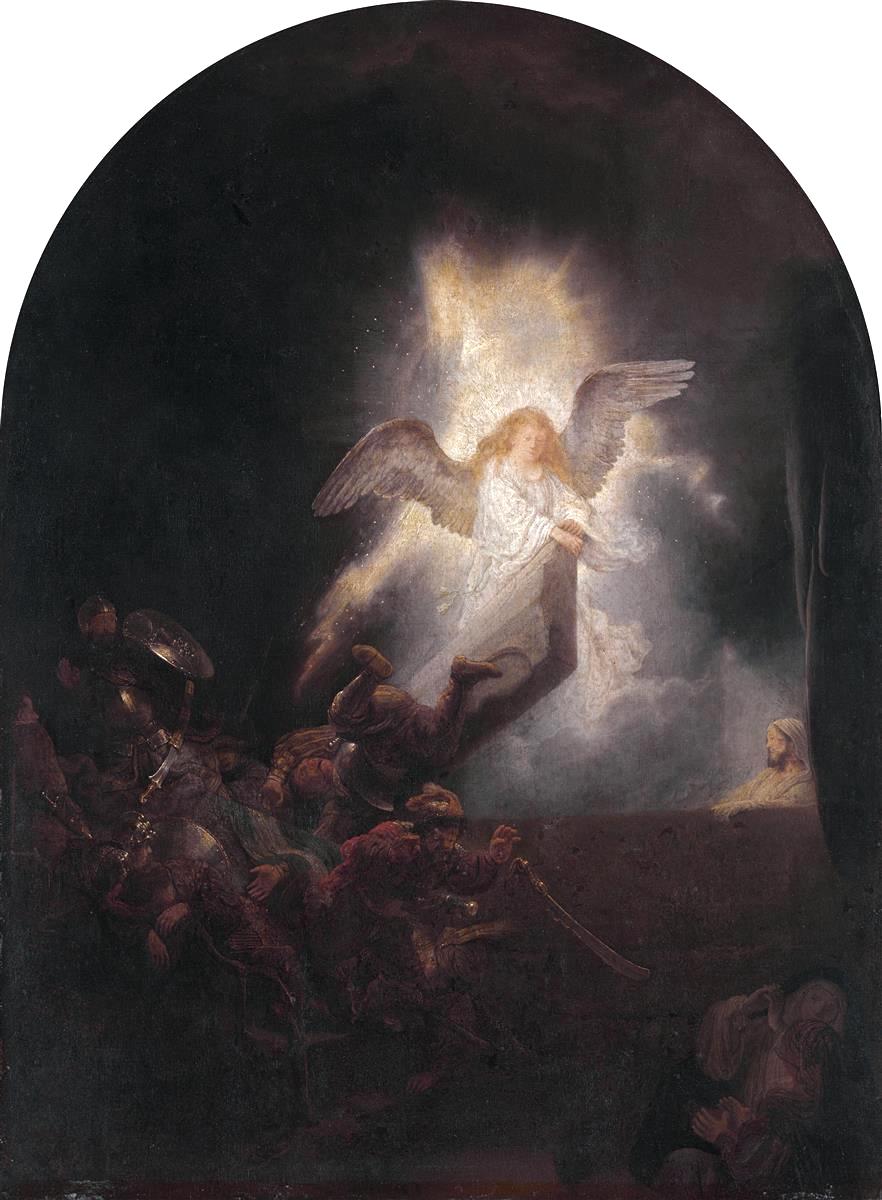

Rembrandt van Rijn The three trees 1643

ritter
An act of theater.
Trump’s big mouth had boxed him into a corner.
Iran wouldn’t play his game.
So he had to bomb Iran to save face.
He bombed two empty facilities that had been previously struck by Israel.
And he bounced six bombs off an indestructible facility (Firdos),…
— Scott Ritter (@RealScottRitter) June 22, 2025
s
MAGA is officially dead as a movement.
When a President wears a MAGA hat while conspiring to take America to war after promising that, as the leader of MAGA, he would pursue peace, MAGA stands for nothing.
If you’re MAGA, then you must disassociate yourself from this President…
— Scott Ritter (@RealScottRitter) June 22, 2025
https://twitter.com/imetatronink/status/1936799415148347406
bannon
BANNON: @POTUS’s got to talk to MAGA. There are a lot of MAGA that’s not happy about this. I’m telling you, a lot of ppl who are Israel supporters are going to say, “Why are we doing the heavy lift here? Why are we engaging in combat operations in a war that’s a war of choice?” pic.twitter.com/SVkz0nxcto
— Grace Chong, MBI (@gc22gc) June 22, 2025
BANNON: "I think (Mark Levin) and I think many people at Fox and that whole network and the Murdochs should be put under investigation…as, basically, agents for a foreign government."@Bannons_WarRoom pic.twitter.com/aUU7TcEmjN
— Real America's Voice (RAV) (@RealAmVoice) June 21, 2025
hormuz
https://twitter.com/DI313_/status/1936695758691950752
https://twitter.com/Rainmaker1973/status/1936787865704276247
flag
The new flag of America. pic.twitter.com/lUHPvMsUra
— ADAM (@AdameMedia) June 22, 2025
Yesterday, I said: “If the situation pans out the way it’s presented today, much of the criticism [..] will subside..” Well, it hasn’t and it won’t. Scott Ritter’s must-see talk with Judge Nap makes that very clear. He claims the US bombs only literally pounded sand, and reality differs greatly from the narrative. If Trump can say today that there’s no Iranian nuclear threat, that’s because there wasn’t one before. They bombed two abandoned desert sites, and one-Fordow- that they couldn’t hit. Q: what’s the next move?
Great example of the role Medvedev plays: he gets to say what Putin can’t, for reasons of statesmanship and diplomacy.
• Medvedev: Countries Now Ready To Supply Iran With Nuclear Warheads (ZH)
On Sunday morning Russia’s former president and current deputy chairman of the country’s Security Council Dmitry Medvedev issued his reaction to the major US overnight strike on Iran’s nuclear facilities, giving what’s essentially the view of where things stand from the Kremlin. Medvedev in a ten-point list of reactions characterized the attacks as ultimately ineffective, and that it will blow back on America and Israel in a way opposite than intended, especially as Tehran will now only push harder for a nuke, and allied countries might now simply be willing to supply them to the Iranians, he described.
Interestingly, Medvedev has also echoed Moscow’s stance on nuclear warheads in the Middle East, and has written over the weekend on his VKontakte page, “Does Iran have nuclear weapons? We don’t know, but we know that Israel has a secret nuclear program. Well, let them both renounce such programs under the supervision of the UN Security Council and the IAEA.” As for the ten-point critique of the brazen US heavy bombing of the Islamic Republic, Medvedev wrote on X as follows… “What have the Americans accomplished with their nighttime strikes on three nuclear sites in Iran?” he first posed, before listing:
1. Critical infrastructure of the nuclear fuel cycle appears to have been unaffected or sustained only minor damage.
2. The enrichment of nuclear material — and, now we can say it outright, the future production of nuclear weapons — will continue.
3. A number of countries are ready to directly supply Iran with their own nuclear warheads.
4. Israel is under attack, explosions are rocking the country, and people are panicking.
5. The US is now entangled in a new conflict, with prospects of a ground operation looming on the horizon.
6. Iran’s political regime has survived — and in all likelihood, has come out even stronger.
7. The people are rallying around the country’s spiritual leadership, including those who were previously indifferent or opposed to it.
8. Donald Trump, once hailed as ‘president of peace,’ has now pushed the US into another war.
9. The vast majority of countries around the world oppose the actions of Israel and the United States.
10. At this rate, Trump can forget about the Nobel Peace Prize — not even with how rigged it has become.Medvedev actually finished his point #10 with a sarcastic dig at the US leader, writing “What a way to kick things off, Mr. President. Congratulations!” This certainly complicates things in terms of Russia’s military operation in Ukraine. Moscow has long received its major supply of Shahed ‘Kamikaze’ drones from Iran, and has ongoing defense contracts and agreements, including possibly to receive mid-range missiles. Washington is ‘flexing’ in Moscow’s direction with this major long-range B-2 bomber military operation on the other side of the world.
Interesting viewpoint.
“..Former British Ambassador to Uzbekistan Craig Murray told RIA Novosti that Iran had shown incredible patience and peacefulness over the past few years..”
• US Intervened Because Israel Was on Brink of Defeat – Iranian Ex-Ambassador (Sp.)
The United States would not have intervened in the Middle East conflict if Israel had not been on the brink of defeat, former Iranian Ambassador to Germany Seyed Hossein Mousavian told RIA Novosti. “Israel not only failed in its ten-day military operation against Iran but was on the verge of defeat. Had Israel not been in a crisis, the U.S. would not have intervened,” Mousavian said. He pointed out that while Iran has suffered irreparable damage, the negative consequences of the US attack against it will also harm the United States and jeopardize regional peace and security. “US President Donald Trump’s national security team either failed to properly assess the consequences of a U.S. military attack on Iran, or they were unable to dissuade the President—or perhaps the majority of them actually supported the decision. In any case, this event has further revealed the extent of Israeli Prime Minister Benjamin Netanyahu’s influence over the White House,” he added.
The United States struck three Iranian nuclear sites in Natanz, Fordow and Isfahan on Sunday night. US President Donald Trump said that the strike aimed at crippling Iran’s nuclear capabilities. He said Tehran must agree to “end this war” or face far more serious consequences. Iran denies the military component of its nuclear project. As IAEA Director General Rafael Grossi said on June 18, the agency’s inspectors have not seen concrete evidence that Iran was pursuing a nuclear weapons program. The US intelligence community, contrary to statements by President Donald Trump and Israel, believed that Iran was not seeking to create nuclear weapons, as reported by CNN. Former British Ambassador to Uzbekistan Craig Murray told RIA Novosti that Iran had shown incredible patience and peacefulness over the past few years, despite Israel’s actions.
“..drastically increased the likelihood of a larger conflict in the Middle East.”
• Top Iranian Diplomat Expects ‘Critical’ Talks With Putin (RT)
Iranian Foreign Minister Abbas Araghchi is expecting to hold a “crucial” meeting with Russian President Vladimir Putin during his pre-arranged visit to Moscow, which coincided with US strikes on Iran’s nuclear facilities over the weekend. Israel launched an attack on Iran last week, claiming Tehran was on the brink of developing a nuclear weapon. Iranian officials rejected the accusation and responded with retaliatory strikes. On Sunday, the United States followed with what it described as “massive precision strikes” on nuclear facilities in Fordow, Natanz, and Esfahan. The attacks were widely condemned as violations of international law. International Atomic Energy Agency Director General Rafael Grossi said the strikes caused “a sharp degradation in nuclear safety and security.”
Speaking to reporters after arriving in Moscow early Monday, Araghchi said the situation demanded urgent coordination. “Given the current exceptional circumstances in the region, it is essential that Iran and Russia engage in closer, more precise, and more serious consultations,” he stated. Naturally, our talks this time will be more serious and cover broader dimensions. We will have important and serious discussions with President Putin, and I am confident that the outcomes will benefit both countries. The Kremlin has yet to confirm a meeting between Putin and Araghchi. Russian President Vladimir Putin has repeatedly stated that Iran has the right to use nuclear technology for peaceful purposes. In media appearances during the St. Petersburg International Economic Forum (SPIEF) last week, he emphasized that resolving the conflict should include mutual security guarantees – protecting both Iran’s right to peaceful nuclear development and Israel’s right to security.
Araghchi described Russia as a strategic ally and said the two countries have maintained regular dialogue on regional issues. He also noted that during recent nuclear negotiations with the US, Tehran “continuously consulted with our Russian friends, sharing every step of the progress with them.” Russia has strongly condemned the US strikes on Iran’s nuclear sites, calling them a flagrant breach of international law. In a statement on Saturday, the Russian Foreign Ministry described the attacks as “a reckless decision” and “a blatant violation of the UN Charter and relevant Security Council resolutions.” It warned that the strikes – carried out by a permanent member of the Security Council – could have caused a nuclear disaster and had “drastically increased the likelihood of a larger conflict in the Middle East.”
“..runs counter to international law, the UN Charter, the UN Security Council Resolution..”
• US Strikes on Iran Reckless Breach of Sovereignty – Russian FM (Sp.)
The Russian Foreign Ministry condemned the US bombing of Iranian nuclear sites as a reckless move that violates the Islamic Republic’s sovereignty, international law and the UN Charter. “The reckless decision to bomb the territory of a sovereign state, whatever the arguments, runs counter to international law, the UN Charter, the UN Security Council Resolution,” the ministry said. It is of particular concern that the attack was carried out by a permanent member of the UN Security Council, the ministry said, adding that the UN’s core body had to interfere.
“The UN Security Council should naturally take action. Confrontational behavior of the US and Israel has to be rejected collectively,” the statement read. “We call for an end of aggression and urge efforts that will create conditions for a return to a political and diplomatic path,” the statement said. The ministry also called on Rafael Grossi, the head of the International Atomic Energy Agency, to report impartially on the Iran attacks at the UN atomic agency’s board of governors’ meeting on Monday.
“Many today feel a strong sense of déjà vu,” he said. “The current situation is essentially no different: we are once again being urged to believe in fairy tales in order to once again bring suffering to millions of people living in the Middle East.”
• Moscow Blasts US Redo Of ‘Iraqi Weapons Of Mass Destruction’ Stunt (RT)
Russia has sharply condemned the United States for its airstrikes on Iranian nuclear facilities, calling the attacks “irresponsible, provocative and dangerous,” and warning they risk pushing the Middle East toward a large-scale war with potentially catastrophic nuclear consequences. Speaking at an emergency session of the UN Security Council on Sunday, Russian Ambassador Vassily Nebenzia accused Washington of violating the UN Charter, international law and the Nuclear Non-Proliferation Treaty (NPT). “The United States has opened a Pandora’s box, and no one knows what consequences may follow,” Nebenzia said, noting that by targeting IAEA-supervised nuclear sites, Washington has “once again demonstrated total disregard for the position of the international community.”
Nebenzia drew a pointed comparison to the lead-up to the 2003 Iraq War, when then-US Secretary of State Colin Powell presented false evidence to “justify the invasion of another sovereign state, only to plunge its people into chaos for decades and not find any weapons of mass destruction.” “Many today feel a strong sense of déjà vu,” he said. “The current situation is essentially no different: we are once again being urged to believe in fairy tales in order to once again bring suffering to millions of people living in the Middle East.” Russia argued that Tehran has not been proven to be pursuing a nuclear weapon, echoing earlier assessments by US intelligence that were dismissed by President Donald Trump as “wrong.” Nebenzia accused Washington of fabricating a narrative to justify the use of force and of undermining the decades-long diplomatic framework built around Iran’s peaceful nuclear program.
The Russian envoy also criticized what he described as the hypocrisy of Western nations that had for days called for “restraint” in the same Security Council chamber, yet failed to condemn Washington for joining Israeli strikes – and even blamed Iran for the escalation. “We are witnessing an astonishing example of double standards,” he said. “Iran has been and remains one of the most thoroughly inspected states under the NPT, but instead of encouraging such an attitude, it receives bombardments of its territory and civilians by a state that refuses, in principle, to sign the NPT.” Nebenzia warned that the US strikes undermine the authority of the IAEA and the global non-proliferation regime, and that continued escalation could return the world to an era of uncontrolled nuclear risk.
“This is an outrageous and cynical situation, and it is very strange that the Director General of the IAEA did not say a word about it. Neither has he ever called on Israel to join the NPT,” Nebenzia added. Calling for urgent action, Russia – joined by China and Pakistan – submitted a draft Security Council resolution demanding an immediate and unconditional ceasefire and a return to diplomatic talks on Iran’s nuclear program.
“The Horsemen of the Apocalypse.”
• America Again Crawls on Its Belly for Israel (Paul Craig Roberts)
The recklessness increases. President Trump committed an act of war for Israel. This comes on top of some fool green-lighting an attack on the Russian strategic triad, an attack that was played down even by Putin himself. What will Washington’s next reckless act be? Why did Putin green-light the attack on Iran by conveniently announcing that Russia’s treaty with Iran did not include military support, a claim that John Helmer says is disproved by secret provisions in the treaty? Russia and China could have prevented the attack, but did nothing. Peace in the Middle East could have been established with a Russian-Iranian-Chinese mutual security treaty. Why do Russia and China prefer war to peace in the Middle East? Where was Iran’s air defense? Why is Iran always a sitting duck devoid of initiative? Why are Muslims happy fighting one another instead of their real enemies?
Israel and Israel’s Western puppets have turned war into an ongoing activity that does not need declaration. For Israel’s reasons, not for America’s, President trump has militarily attacked a regional military power without Congress’ declaration of war as required by the US Constitution. Clearly, war has prevailed over the Constitution. This began with Bill Clinton’s presidency, and expanded with subsequent presidents. Israel has obtained the power where Israel can send America to war and we hapless Americans can do nothing about it.
Israel has undeclared nuclear weapons but can have Trump attack Iran’s peaceful use of atomic power. Israel can exterminate Palestinians and obliterate Gaza, without effective protest from any country. But Iran is evil and against America if Iran stands up for itself. Thanks to the US media and Israel’s bought-and-paid-for US Congress, many years of Israeli propaganda against Iran has been driven into the heads of the American public, which will simply accept another of their country’s acts of aggression against “Muslim terrorists” and “weapons of mass destruction.”
Perhaps the saddest part of this is it demonstrates once again that elections cannot change anything. America cannot be made great again without a new political party led by people independent of Israel and the corrupt American Establishment. These people would have to avoid being assassinated or arrested and prosecuted by the American Establishment. This would require militant supporters willing and able to use violence. Who is there to lead such a movement? The American Establishment will not permit any such force to appear. The American Establishment would not even permit Americans to protest a stolen presidential election.
Conspiracy theorists will see in Russia and China’s inaction their involvement in a globalist plot against any form of independence. How do we know they are not right? What else explains the world sitting on its butt while Israel commits genocide of Palestine, and Washington, without a declaration of war, overthrows 5 countries, and is now working on a sixth, for Israel. The seventh on the list is Saudi Arabia, and Netanyahu recently added Pakistan as the eighth. Turkey will be the ninth. The extraordinary aggression that Washington and Israel have unleashed on the world seems never ending. Putin and Xi seem to think that Russia and China can sit them out, but Russia and China are the two main targets. While Russia and China sit on their butts, they are being isolated from allies such as Iran and from one another.
Trump had just given Iran two weeks to come to terms with his demands, and then launched a surprise attack in advance of the two weeks. After such treachery, how can Putin possibly return to “peace negotiations?” As Putin is so averse to acknowledging reality that he dismisses Washington’s attack on Russia’s nuclear triad as “an act of terrorism, not of war,” what will Washington’s next attack on Russia be? What is Xi going to do when he finds he cannot wait out his adversary?
“And I looked, and behold a pale horse: and his name that sat upon him was Death, and Hell followed with him. And power was given unto them over the fourth part of the earth, to kill with the sword, and with hunger” — Revelation 6:8
“..the calls for impeachment are absurd given the prior actions of presidents in using this very authority. Once again, some Democrats appear intent on applying a different set of rules for impeaching Trump than any of his predecessors.”
• Democrats Denounce Iranian Attack as Unconstitutional (Turley)
Yesterday, I wrote a column in the Hill discussing how Trump is unlikely to go to Congress in launching an attack on Iran and how he has history on his side in acting unilaterally. The column noted that many Democratic politicians and pundits who were supportive of such unilateral actions by Democratic presidents such as Bill Clinton and Barack Obama are suddenly opposed to Trump using the same power. It is the Claude Rains School of Constitutional Law where politicians are “shocked, shocked” that Trump is using the authority that they accepted in Democratic predecessors. Democratic members are calling for impeachment, while others are declaring the attacks unconstitutional. Senate Minority Leader Chuck Schumer is particularly shocked that Trump took the action and is calling for a vote under the War Powers Act.
Schumer insisted that “no president should be allowed to unilaterally march this nation into something as consequential as war with erratic threats and no strategy.” House Minority Leader Hakeem Jeffries has issued a similar statement. Schumer is the same politician who was silent or supportive in earlier unilateral attacks by Democratic presidents. In 2011, Obama approved a massive military campaign against Libya. I represented a bipartisan group of members of Congress challenging that action. We were unsuccessful, as were such prior challenges. I have long criticized the abandonment of the clear language of the Constitution on the declaration of wars. Only eleven such declarations have been made in our history. That has not happened since World War II in 1942. Over 125 military campaigns have spanned from Korea to Vietnam, Afghanistan, and Iraq. It is not a rule honored solely in the breach.
Democrats were supportive when Clinton launched cruise missile attacks under Operation Infinite Reach on two continents on August 20, 1998. He ordered attacks in locations in Khartoum, Sudan, and Khost Province, Afghanistan. The War Powers Act has always been controversial and largely ineffectual. Presidents have long asserted the inherent powers to conduct such attacks under their Article II authority as the designated Commander-in-Chief of the Armed Forces. The WPA requires the President to inform Congress within 48 hours in a written notice to the Speaker of the House of Representatives and the President pro tempore of the Senate of the action.
The WPA further bars the use of armed forces in such a conflict for more than 60 days without congressional authorization for use of military force (AUMF) or a declaration of war by the United States. There is a further 30-day withdrawal period. President Trump reportedly did immediately notify Congress after the attack under the WPA . Presidents have routinely ignored the WPA when it limited their ability to conduct foreign military operations. In 1999, Clinton ignored the 60-day deadline and continued to bomb forces in Kosovo. His actions were also challenged, but the court in Campbell v. Clinton just shrugged off the violation and said it was a non-justiciable political question.
In responding to the current demands, Trump could look to a curious ally: Hillary Clinton. Secretary of State Hillary Clinton pushed for unilateral attacks during the Obama Administration. She dismissed the need to consult, let alone secure authorization, from Congress. In March 2011, Clinton testified that there was no need for such consultation and declared that the Administration would ignore a 60-day limit on unauthorized military actions. Obama also defied the War Powers resolution on Syria. He actually did ask for congressional authorization to take military action in that country in 2013, but Congress refused to approve it. He did it anyway. Despite Congress expressly denying”authorization for the introduction of United States Armed Forces,” both Obama and Trump did precisely that.
Trump was wise to notify Congress. However, what occurs after that is anyone’s guess. The WPA and the AUMF have been paper tigers for decades and most in Congress wanted it that way. Politicians long ago abandoned their responsibilities to declare war. What remains has been little more than political theater. Even under the WPA, Trump would have 60 days to prosecute this war and another 30 days to draw down forces without congressional approval. The court, in Campbell v. Clinton, noted that even if Clinton violated the WPA by continuing operations after the 60-day period, he was technically in compliance by withdrawing forces before the end of the 90-day period. Trump could likely prosecute this campaign in 90 days. Indeed, if it goes beyond 90 days, we will likely be facing a potential global war with retaliatory strikes on both sides. In such an environment, it is very unlikely that Congress would withhold support for our ongoing operations.
In the meantime, the calls for impeachment are absurd given the prior actions of presidents in using this very authority. Once again, some Democrats appear intent on applying a different set of rules for impeaching Trump than any of his predecessors. Trump can cite both history and case law in allowing presidents to take such actions. At most, the line over war powers is murky. The Framers wanted impeachments to be based on bright-line rules in establishing high crimes and misdemeanors. This is all part of the Claude Rains School of Constitutional Law. Members will once again express their shock and disgust in the use of the same authority that they once accepted in prior presidents. Trump has a great number of a risks in this action from global military and economic consequences. The War Powers Act is not one of them if history is any measure.
They all own it.
• Vance, Rubio Call For Peace With Iran, Say Regime Change Is Not The Goal (ZH)
Update (11:37ET): Following President Trump’s new foreign entanglement – bombing Iranian nuclear facilities (which may or may not have taken them out while causing a deep divide amongst MAGA), Vice President JD Vance says he believes their nuclear program has been set back “many years,” and that he feels “very confident that we’ve substantially delayed [Iran’s] development of a nuclear weapon,” adding that it was US intelligence, not Israeli intelligence assessments, that led to Trump’s decision. When asked if the United States is at war with Iran, he claimed “No, Kristen, we’re not at war with Iran. We’re at war with Iran’s nuclear program,” and called on Iranians to “give peace a chance”. “They can go down the path of peace, or they can go down the path of this ridiculous brinksmanship of funding terrorism, of trying to build a nuclear weapon – and that’s just not something the United States can accept.”
When asked if the US would support an Israeli assassination of Iran’s Supreme Leader Ayatollah Ali Khamenei, Vance said that it would be “up to the Israelis,” and that the US position is “we don’t want a regime change.” US Secretary of State Marco Rubio, meanwhile insisted to Fox News that “This is not a war against Iran,” adding “Not a shot was fired against us. They didn’t even know what had happened. By the time we left, the planes were out of their airspace before they finally started realizing they’d been hit. So it would be a terrible mistake if Iran retaliates. So but that’s not our goal.” He also warned against Iranian retaliation, saying: “If Iran retaliates, it will be the WORST mistake they’ve ever made.” Rubio then warned Iran not to close the strait of Hormuz after Iran’s parliament backed its closure, saying “If Iran closes the Strait of Hormuz, it will be another terrible mistake. It’s economic suicide for them if they do it and we retain options to deal with that.”
Everyone got the script? Iran, meanwhile in a statement through spox Esmail Baghaei, accused the Trump administration of sabotaging diplomatic efforts – saying “They cannot talk about diplomacy, they betrayed diplomacy,” adding that “diplomacy never ends.” Regarding the escalating conflict, Baghaei warned “No one knows what will happen next, but what is sure is that the responsibility of the consequences of this war must be borne by the United States and Israel.” The Iranian foreign ministry declined to elaborate on Tehran’s likely response to the attacks, or to detail the extent of the damage – only saying in a statement to CNN that Iran “is entitled … to exercise its right of self-defense,” adding “And we will do that for sure.”
* * *
In a Sunday morning press briefing, Trump’s Secretary of Defense Pete Hegseth declared that “Iran’s nuclear ambitions have been obliterated” – but also asserted that the attack did not target the Iranian people or civilians. He hailed the “incredible and overwhelming success” – following President Trump last night saying the same thing. “It’s worth noting the operation did not target Iranian troops or the Iranian people.” Hegseth said this is part of the commitment of this administration’s vision of “peace through strength”. He continued, “Many presidents have dreamed of delivering the final blow to Iran’s nuclear program, and none could, until President Trump.”For the “bold and brilliant” operation, there was weeks of preparation and precision logistics and “misdirection” at the highest level, involving B-2 bombers going to hit, Hegseth described. “No other country on planet earth” could have conducted this operation. He also underscored that the Massive Ordnance Penetrator (MOP) was used for the first time in US combat history – also that it was the longest bomber mission of its kind since 2001. “Just like [IRGC Quds Force General Qasem] Solemani found out in the first term, Iran found out when POTUS says ’60 days’ – that when he seeks peace and negotiation – he means 60 days of peace and negotiation, otherwise that nuclear program will not exist. He meant it.” Hegseth then read aloud Trump’s post to Truth Social last night, soon after the three nuclear sites were struck:
“Any retaliation by Iran against the United States of America will be met with force far greater than what was witnessed tonight.” That’s when the US Defense Secretary then warned, “Iran would be smart to heed those words. He said it before and he means it.” He tried to stress the ‘limited’ scope of the attack and urged the Iranians to come back to the negotiating table: There are both public and private messages being delivered to the Iranians in multiple channels, giving them every opportunity to come to the negotiation table, Defense Secretary Pete Hegseth says at a Pentagon press briefing. Scope of operation on Iran was “intentionally limited” Hegseth says he believes the US attack will have a clear psychological impact on how Iran views the future US strikes against Iran’s nuclear enrichment site at Fordow are believed to have destroyed capabilities there…
To review the details of what happened last night, the US deployed six B-2 bombers to drop 12 GBU-57 “bunker-buster” bombs on Iran’s heavily fortified Fordow nuclear site, marking the first time these massive 30,000-pound bombs were used in combat. The enrichment sites at Natanz and Isfahan were also attacked. The mission lasted about 37 hours with multiple refueling missions. While the White House is now claiming Iran’s nuclear facilities were “completely and totally obliterated,” officials say it’s too early to confirm the full extent of the damage. Iran, along with international nuclear agencies, reported no radiation leaks, prompting skepticism about the strike’s effectiveness—particularly at Fordow, which is buried deep underground. Iranian officials said damage was minimal and mostly above ground. Iran’s Atomic Energy Organization vowed to continue its nuclear program, referring to assassinated nuclear scientists as “martyrs.”
Some degree of political backlash has quickly emerged over the lack of Congressional approval for the strikes. Senate Minority Leader Chuck Schumer, despite previously mocking Trump’s diplomatic efforts with Iran, called for a War Powers vote, criticizing the president’s unilateral military action without a clear strategy.
“So after Israel unilaterally launched its hundred-target missile tantrum across Tehran – complete with residential hits and assassinations – maybe some strong words against that kind of thing are in order?”
• The EU’s Favorite War: The One Israel Starts (Marsden)
Israel flew over to Iran with fighter jets and has since gone totally ballistic — literally and figuratively. So what does the European Union’s insane clown posse have to say about it? Get yourself some popcorn. The Eurojokers are doing their best stand-up comedy again without even realizing it. First up: French President Emmanuel Macron, who took to social media to declare that “peace and security for all in the region must remain our guiding principle.” Aww, how sweet. Calling for peace while holding your buddy’s coat as he storms into the bar to punch someone on the face. So after Israel unilaterally launched its hundred-target missile tantrum across Tehran – complete with residential hits and assassinations – maybe some strong words against that kind of thing are in order?
“France has repeatedly condemned Iran’s ongoing nuclear program and has taken all appropriate diplomatic measures in response. In this context, France reaffirms Israel’s right to defend itself and ensure its security,” Macron posted as the conflict kicked off. Classic French parenting: ignore the kid setting the house on fire and scold the one who looked at him funny. Next up, Germany. Surely the new chancellor, Friedrich Merz, can inject some sober logic into the conversation about who just broke the fragile regional peace everyone’s pretending to care about. “Iran has subsequently threatened to accelerate uranium enrichment again. This nuclear programme violates the provisions of the Nuclear Non-Proliferation Treaty and poses a serious threat to the entire region, especially to the State of Israel. We reaffirm that Israel has the right to defend its existence and the security of its citizens. We call on both sides to refrain from steps that could lead to further escalation and destabilise the entire region,” wrote Merz.
Oh, so now that Israel has attacked Iran, it’s time for restraint? Not before. Not during. After. Like a guy who throws the first punch in a bar fight and then shouts, “Hey! Let’s all calm down!” Both Macron and Merz say that Iran brought this on itself by enriching uranium. That’s like this: you’ve got a neighbor who lifts weights in his home gym. You see him through the window with a squat rack, bench press, treadmill – getting jacked. And you’re like, “Wow, he’s getting so ripped I’m afraid he might beat me up someday. So I better go over there now and beat him up while I still can.” That’s basically what Israel did with its “preemptive” strike. And Macron and Merz are cheering it on like, “Totally! That guy was getting too buff. Definitely deserved a missile to the face.”
Then Merz added from the G7 summit in Canada: “This is the dirty work that Israel is doing for all of us. We are also victims of this regime.” Oh, sorry – didn’t realize the International Atomic Energy Agency (IAEA) had hired Israel as a global bouncer. And remind us, Friedrich: where exactly did Iran touch Germany on the map? Because Europe is far more likely to be “victimized” by waves of immigration facilitated by its own lax policies, and sparked by its own support for regime change wars – like this one is shaping up to be – than by any distant centrifuge. European Commission President Ursula von der Leyen, the EU’s de facto queen, is now cosplaying as global playground monitor, sending all the boys to their corners. “Europe urges all parties to exercise maximum restraint, de-escalate immediately and refrain from retaliation. A diplomatic resolution is now more urgent than ever, for the sake of the region’s stability and global security,” she wrote.
“This is more than hypocrisy; it’s a catastrophic failure of US policy. Trump’s administration has made a colossal mistake.”
• What Russian Experts And Politicians Are Saying About The US Strikes (RT)
Fyodor Lukyanov, editor-in-chief of Russia in Global Affairs: The trap awaiting Trump is simple – but highly effective. If Iran responds by targeting American assets, the US will be pulled deeper into a military confrontation almost by default. If on the other hand, Tehran holds back or offers only a token response, Israel’s leadership – backed by its neoconservative allies in Washington – will seize the moment to pressure the White House: now is the time to finish off a weakened regime and force a convenient replacement. Until that happens, they’ll argue the job isn’t done. Whether Trump is willing – or even able – to resist that pressure remains uncertain.
Most likely, Iran will avoid hitting US targets directly in an effort to prevent a point-of-no-return escalation with American forces. Instead, it will likely intensify its strikes on Israel. Netanyahu, in turn, will double down on his efforts to convince Washington that regime change in Tehran is the only viable path forward – something Trump, at least for now, remains instinctively opposed to. Still, the momentum of military entanglement has a logic of its own, and it’s rarely easy to resist.
Tigran Meloyan, analyst at the Center for Strategic Research, Higher School of Economics: If Iran does nothing, it risks appearing weak – both at home and abroad. That makes a carefully calibrated response almost inevitable: one designed not to escalate the conflict, but to preserve domestic legitimacy and project resolve. Tehran is unlikely to go much further than that. Meanwhile, by continuing to build up its military presence, Washington sends a clear deterrent message – signaling both readiness and resolve in case Tehran miscalculates.
Another option for Iran could be a dramatic symbolic move: withdrawing from the Nuclear Non-Proliferation Treaty (NPT). Such a step would be Tehran’s way of declaring that Trump, by striking nuclear infrastructure, has effectively dismantled the global nonproliferation regime. The NPT was supposed to guarantee Iran’s security; instead, it has delivered the opposite. Still, if Iran goes down that path, it risks damaging ties with Moscow and Beijing – neither of which wants to see a challenge to the existing nuclear order.
The bigger question now is whether Iran will even consider returning to talks with Washington after this attack. Why negotiate when American promises no longer mean anything? Tehran urgently needs a mediator who can restrain Trump from further escalation – and right now, the only credible candidate is Moscow. Iran’s foreign minister, [Abbas] Araghchi, is set to meet with President Putin on June 23. It’s hard to imagine that a potential NPT withdrawal won’t be on the table. If in the past an Iranian bomb was considered an existential threat to Israel, the calculus has now reversed: for Iran, nuclear capability is quickly becoming a question of survival.
Konstantin Kosachev, vice speaker of the Federation Council: Let’s state the obvious: Iraq, Libya – and now Iran – were bombed because they couldn’t hit back. They either didn’t have weapons of mass destruction or hadn’t yet developed them. In some cases, they never even intended to. Meanwhile, the West doesn’t touch the four countries that remain outside the Non-Proliferation Treaty: India, Pakistan, North Korea, and Israel. Why? Because unlike Iraq, Libya, and Iran, these states actually possess nuclear weapons. The message to so-called ‘threshold’ nations couldn’t be clearer: if you don’t want to be bombed by the West, arm yourself. Build deterrence. Go all the way – even to the point of developing weapons of mass destruction.
That’s the grim conclusion many countries will draw. It’s a dangerous lesson, and one that flies in the face of global security and the very idea of a rules-based international order. Yet it’s the West that keeps driving this logic. Iraq was invaded over a vial of powder. Libya gave up its nuclear program and was torn apart. Iran joined the NPT, worked with the IAEA, and didn’t attack Israel – unlike Israel, which just struck Iran while staying outside the NPT and refusing to cooperate with nuclear watchdogs. This is more than hypocrisy; it’s a catastrophic failure of US policy. Trump’s administration has made a colossal mistake. The pursuit of a Nobel Peace Prize has taken on grotesque and dangerous proportions.
Iran will not target LA. Why on earth should they?
• Major US Cities on Alert After US Airstrikes on Iranian Nuclear Facilities (ET)
Three major U.S. cities indicated that they’re on heightened alert following U.S. military airstrikes targeting Iranian nuclear facilities on June 21. In an announcement on the night of June 21, President Donald Trump confirmed that the U.S. military carried out bombing missions targeting three facilities, prompting threats from Iranian officials. “We’re tracking the situation unfolding in Iran,” the New York City Police Department stated in a post on X on the evening of June 21. “Out of an abundance of caution, we’re deploying additional resources to religious, cultural, and diplomatic sites across NYC [New York City] and coordinating with our federal partners. We’ll continue to monitor for any potential impact to NYC.”
Soon after that, the Metropolitan Police Department in Washington issued a similar statement about the Iran–U.S. situation and stated that it would increase police presence at religious institutions. The law enforcement agency noted that there are no known threats to the nation’s capital city. Also on June 22, Los Angeles Mayor Karen Bass wrote on X that her city is “monitoring any threats to public safety” that may arise. “There are no known credible threats at this time and out of an abundance of caution, LAPD is stepping up patrols near places of worship, community gathering spaces and other sensitive sites,” Bass wrote in a June 21 statement, referring to the Los Angeles Police Department. “We will remain vigilant in protecting our communities.”
Outside the United States, the State Department has ordered nonessential personnel and the families of staff at the U.S. Embassy in Lebanon to leave as concerns mount about Iranian retaliation. In a notice issued on June 22, the department stated that it had taken the step “due to the volatile and unpredictable security situation in the region.” The notice makes no mention of any potential evacuation flights or other assistance for private Americans wanting to leave Lebanon but states that they should try to use existing commercial services to depart. The United States has already organized several evacuations of American citizens from Israel and is advising American citizens in Iran on how to leave the country. After the U.S. airstrike that killed Iranian commander Qassem Soleimani in 2020, Iran launched multiple barrages of missiles at U.S. bases in the Middle East, doing minor damage and causing minor injuries to American troops.
Hours after the June 21 bombing, Trump administration officials signaled a willingness to renew talks with Iran and avoid a prolonged war in the Middle East. Defense Secretary Pete Hegseth told reporters late on June 21 that the United States isn’t seeking regime change in Iran, while Vice President JD Vance said during a June 22 interview that the Trump administration doesn’t want “boots on the ground” in Iran. Before the U.S. bombing mission, Iran and Israel had engaged in a weeklong aerial conflict, with both sides firing missiles at one another, after Israel struck a host of military and strategic sites in Iran a day after a 60-day negotiating period set in April by Trump expired. Israel has stated that it is seeking to dismantle Iran’s nuclear program, which both U.S. and Israeli officials say was intended to produce nuclear weapons.
”The equipment in question… was not destroyed, but damaged. It will be restored,”
• Zelensky Makes New Threats Against Russia (RT)
Ukraine’s Vladimir Zelensky has suggested that Kiev’s forces will conduct more long-range strikes targeting facilities deep inside Russian territory. Ukraine has significantly escalated drone attacks deep into Russia in recent weeks, despite ongoing diplomatic efforts to end the conflict. Russian Foreign Minister Sergey Lavrov has described the actions as an attempt to derail the peace process. In a post on his Telegram channel on Sunday, Zelensky wrote that he had held a meeting with the head of Ukraine’s military intelligence, Kirill Budanov, claiming that Kiev was keeping tabs on Russia’s “main pain points.” He pledged to “strike appropriate blows” with a view to “significantly reducing” Moscow’s military potential.
Zelensky also stated that Kiev was sharing its intelligence on Russia with its Western backers, with which it is “preparing joint defense solutions.” Speaking to reporters also on Sunday, Ukraine’s commander-in-chief, Aleksandr Syrsky, similarly said that Kiev “will increase the scale and depth” of its strikes on Russian military facilities deep inside the country. On June 1, Ukrainian intelligence conducted a coordinated attack on several Russian airbases across five regions, from Murmansk in the Arctic, to Irkutsk in Siberia. Ukrainian media later reported that the operation codenamed ‘Spiderweb’ involved dozens of first-person view (PFV) kamikaze drones. At least some of them were reportedly launched in close proximity to the targets, from commercial trucks that had been covertly brought into Russia.
The strikes were said to have been prepared for more than a year and a half and focused on Russia’s “strategic aviation.” The Defense Ministry in Moscow said that a number of aircraft in Murmansk and Irkutsk regions had caught fire as a result of the attack. Kiev claimed that the strikes had damaged or destroyed approximately 40 Russian military aircraft, including Tu-95 and Tu-22 long-range bombers. Russian Deputy Foreign Minister Sergey Ryabkov later dismissed these estimates as incorrect. ”The equipment in question… was not destroyed, but damaged. It will be restored,” the diplomat told TASS in early June. Around the same time, Keith Kellogg, US President Donald Trump’s special envoy, cautioned that “when you attack an opponent’s part of their national survival system, which is their nuclear triad… that means your risk level goes up because you don’t know what the other side’s going to do.”
The garden becomes the jungle.
• The European Garden On The Brink Of Ruin (SCF)
The war in Ukraine is entering a critical stage—not only for Kiev, but also for a Europe that, deluded by meaningless slogans and unrealistic promises, finds itself standing at a geopolitical precipice. Ignoring the clear signs of Ukraine’s military and societal exhaustion, European leaders persist in a suicidal escalation of militarization that, far from preventing Ukraine’s collapse, is dragging the continent into an economic, political, and strategic spiral of decline. The impasse worsened once the U.S. began to show signs of fatigue and a desire to end the conflict. Washington now pushes for a negotiated solution, while Brussels insists on keeping Zelensky afloat, offering not real solutions but false hope in the form of temporary ceasefires and new arms shipments. The goal is obvious: to buy time in hopes of rekindling Washington’s old appetite for war. It’s a dangerous—and fundamentally unrealistic—calculation.
The truth is that Ukraine has no strategic breath left. Since the failed counteroffensive of 2023, the country has plunged into a deep crisis of morale, cohesion, and combat capacity. The situation now resembles that of the Spanish Second Republic after its defeat at the Ebro in 1938: the end is in sight, and the continuation of war serves only to prolong suffering. Zelensky himself, now a deeply unpopular leader, would be politically defeated in any free election—consistently trailing behind military figures like Valeriy Zaluzhniy in every poll. An abrupt internal collapse, whether due to political rifts, military mutinies, or civil unrest, is a very plausible outcome. Such a scenario would not only seal Ukraine’s defeat but also trigger a catastrophic shift in the European balance of power.
Moscow could advance to Odessa, annex vast areas of Ukrainian territory, and reach the European Union’s borders. The consequences would be devastating: NATO demoralized, Brussels’ strategic credibility shattered, and the region permanently destabilized. Even so, the European continent seems unable to acknowledge its military impotence. Leaders like Macron, Starmer, and Kallas continue proposing unworkable peace plans based on illusions of European power—ignoring the fact that France and the UK can barely maintain even minimal operational forces. While Russia mobilizes thousands of tanks, Britain has only a few dozens. Germany, mired in political crisis, can’t even produce enough ammunition at scale. European rhetoric speaks of rearmament, but national budgets tell another story: ballooning deficits, public debt over 100% of GDP, and increasingly hostile populations unwilling to accept social cuts in the name of a war with no future.
The militarization of Europe, sold as a solution, is in fact a symptom of collapse. Lacking an industrial base, political capital, or social support, any attempt to rebuild a significant military force will result either in prolonged recession or the dismantling of the welfare state—two paths that will lead the so-called “European garden” to ruin. In this context, the war in Ukraine is not only the grave of the Atlanticist project, but the tombstone of a Europe that traded its stability for fantasies of power.
Ukraine’s collapse, therefore, will not be an isolated event. It will mirror Europe’s strategic collapse. The refusal to face reality – that a negotiated solution with concessions to Russia is better than total destruction—not only threatens the existence of the Ukrainian state but also drags Europe into an existential crisis. The continent that once saw itself as guardian of the liberal international order is transforming, before our very eyes, into a graveyard of its own illusions.
“In the West, they say, let’s pay for the reconstruction of Ukraine from the reserves. And they will draw up such a bill that even the reserves will not be enough,”
• Western Use of Interest From Russia’s Frozen Assets Is Theft – Top Banker (RT)
The use of the interest generated by Russian assets frozen in the West amounts to theft, Andrey Kostin, the CEO of major Russian lender VTB, told RT on Saturday on the sidelines of the St. Petersburg International Economic Forum. Kostin condemned the actions of the West, the EU in particular, in regard to Russian assets as “dangerous” games that could eventually be used by others against them. Western countries froze an estimated $300 billion worth of Russian sovereign funds following the escalation of the Ukraine conflict in February 2022. Some $213 billion of the assets are held by the Belgium-based settlement house Euroclear. “It is a very dangerous thing to play such games. You start against one – tomorrow someone will use it against you,” Kostin warned.
The use of proceeds from the assets, which have been repeatedly funneled for procurement of military aid for Ukraine, is grossly illegal and amounts to theft, Kostin noted. While various parties in the West have repeatedly mulled the possibility of seizing the assets themselves, they have failed to find a legal mechanism to do so because there is none, he added. “This is theft. They are using interest now, but interest is the same money of the owner as the principal debt,” he stressed. Moscow has repeatedly condemned the freezing of its assets and has hinted at possible retaliatory measures against Western investments and property in Russia.
Last October, Finance Minister Anton Siluanov warned that Moscow would retaliate in kind and start using the interest generated by the assets of “unfriendly” countries and organizations held in Russia for its own needs. Kostin has long been skeptical about the prospects of Russia ever seeing its frozen assets again. Late last year, he suggested that the funds will never be returned under the pretext of Ukraine’s purported “reconstruction.” “In the West, they say, let’s pay for the reconstruction of Ukraine from the reserves. And they will draw up such a bill that even the reserves will not be enough,” Kostin said at the time.

urso
Japanese government admits each mRNA vaccines wiped 10 years off life expectancy
— Dr. Urso (@richardursomd) June 21, 2025
1925
https://twitter.com/calvinfroedge/status/1936521743696535656
solar
https://twitter.com/onionweigher/status/1936630237208469898
goats
“Nachi Goats” which means dancing goats. They are found in Pakistan, and walk like this
— Science girl (@gunsnrosesgirl3) June 22, 2025
bob
https://twitter.com/FreewheelinMY/status/1936641632406794631
Support the Automatic Earth in wartime with Paypal, Bitcoin and Patreon.