
Apr 222026


Edward Hopper The Circle Theater, New York 1936


Trump Blinks Again, Unilaterally Extends Iran Ceasefire (ZH)
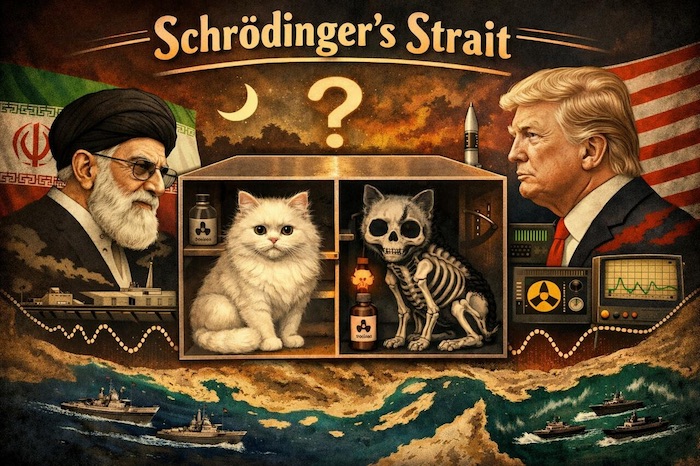
Schrödinger’s Strait (PA)
Trump Says Iran Can ‘Expect’ Bombs (ZH)
Iran Promises To ‘Reveal New Cards On The Battlefield’ (RT)
Iran: US Must Retract ‘Maximalist’ Nuclear Demands for Talks to Proceed (ET)
Are We Seeing the Makings of an Iranian Civil War? (Eric Florack)
Perspective on Iran Conflict and Latest Intel Efforts to Disrupt Trump (CTH)
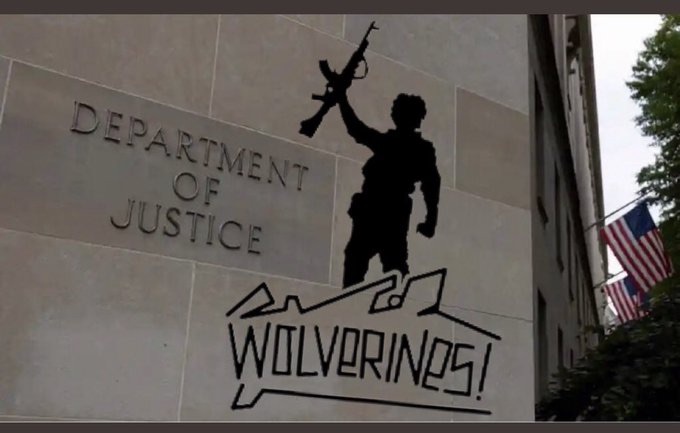
It Is, After All, the Department of Justice (CTH)
US Intel Secretly Flagged Major 2020 Election Vulnerabilities (JTN)
Spygate, Russiagate, IC Impeachment, Jack Smith Targeting and Lawfare (CTH)
US, Cuban Regime Confirm ‘Secret’ Talks in Havana (Sarah Anderson)
The Space Launch Industry Is in Big Trouble… Except for You-Know-Who (Green)
Hungary’s Magyar Warns Netanyahu of Arrest (RT)
Europe EV Sales Jump 51% As Iran War Sends Gasoline Prices Soaring (Paraskova)


https://twitter.com/elonmusk/status/2046308075947405581?s=20 https://twitter.com/Tironianae/status/2046175457201041457?s=20


No, Trump doesn’t blink. This is scripted.

Trump Blinks Again, Unilaterally Extends Iran Ceasefire (ZH)

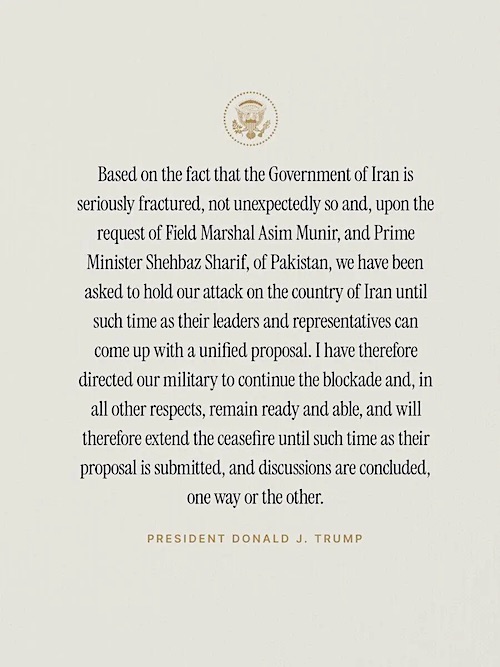
TACO Tuesday… Again: Ceasefire Extended in Trump TS Post. Can’t make this up… Trump unilaterally extends ceasefire, but says US Navy’s blockade of Iran’s ports will stay in place, after Islamabad talks collapse. Trump punts again… enjoy TACO Tuesday… we can say at least the bombing doesn’t look to resume, yet. To give more formality to it – or make it official, the White House also quickly put out Trump’s statement (and in a more presentable font) below. Initial reaction from Tehran:

IRAN NOT OFFICIALLY COMMENTING ON CEASEFIRE EXTENSION
IRAN’S POSITION WILL BE ANNOUNCED SUBSEQUENTLY


2nd Round Talks Collapse, Vance Not Traveling
Late afternoon headlines now confirm what was looking more and more inevitable as the hours passed but with no one side boarding planes to head to Islamabad: the Associated Press is reporting that Vice President Vance has called off the whole trip. This also as Tasnim is reporting Iran’s “final decision” to not be in Pakistan Wednesday – the same day the two-week ceasefire formally comes to a close. Pakistan sources are meanwhile reporting that key negotiating figures are absent on the ground, and officials are said to be urging the sides to join a second-round summit. And per Bloomberg: “Iran, for its part, told the mediators its delegation won’t leave Tehran before the blockade is lifted, according to officials familiar with the matter.”

US Delegation Trip for Talks ‘On Hold’
As VP Vance has been seen at the White House, clearly not en route to Pakistan for Iran talks, a hugely significant headline has sent oil up and stocks dumping more:

VP Vance’s Pakistan trip has been put on hold as Iran’s leadership remained divided over whether to participate in a new round of peace talks, via Axios
VANCE TRIP ON HOLD AS IRAN DIDN’T RESPOND TO US POSITIONS: NYT
VANCE TRIP TO PAKISTAN HAS NOT BEEN CANCLED: NYT
Newsquawk market reaction: Stocks see weakness, while oil and Dollar gain amid NYT reports that VP Vance’s diplomatic trip to Islamabad has been put on hold after Tehran failed to respond to American negotiating positions.

Read more …

“.. open and closed at the same time,.”

Schrödinger’s Strait (PA)

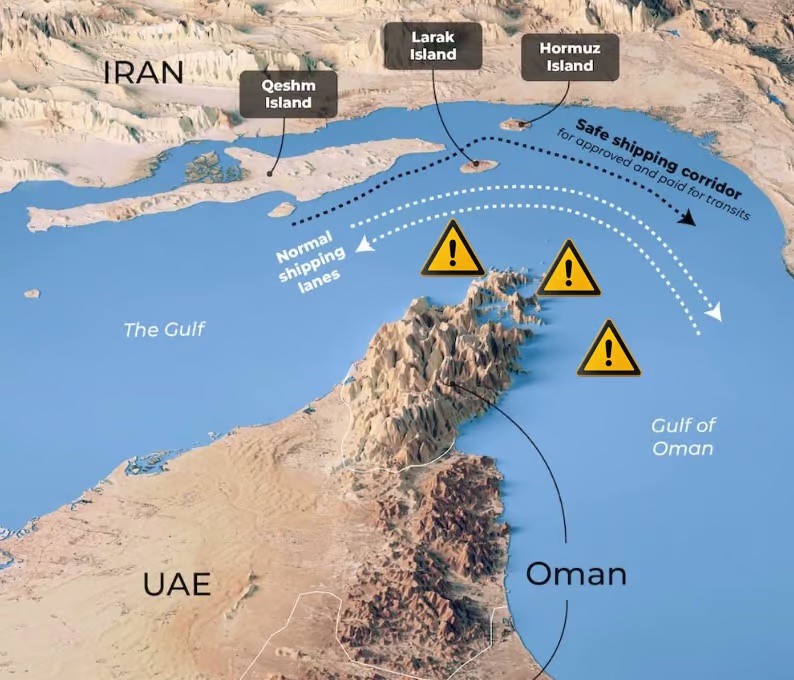
Over the weekend, the Strait of Hormuz became Schrödinger’s Strait: open and closed at the same time, depending on which headline you were reading. On Friday, markets traded as if the Iran war was winding down cleanly. Iran said the Strait was open to commercial shipping during the ceasefire, Trump said he expected a deal with Iran “soon,” oil fell, and stocks rallied. By Sunday evening, Brent was back up sharply and stock futures were lower, after new friction around the U.S. blockade and Iran’s threats to respond. Reuters reported over the weekend that U.S. forces had turned back vessels under the blockade rules, that Iran warned the Gulf and Gulf of Oman would not be secure if its ports were threatened, and that the U.S. enforcement zone extends east into the Gulf of Oman. That sounds like chaos, but there’s a logic to it.


Reflexivity With Warships
What Trump appears to be doing here—whether consciously or not—is something that looks a lot like George Soros’s principle of reflexivity. Soros’s basic idea was that markets don’t just passively reflect reality; they can also change it. Prices move, expectations shift, financing conditions tighten or loosen, and those moves feed back into the real economy and even into political decisions. That’s especially relevant in a war centered on oil flows, shipping lanes, and financial pressure.

Iran’s Lever
Iran’s preferred lever has been obvious for weeks: threaten the Strait of Hormuz, raise oil prices, spook global markets, and put pressure on Washington through the U.S. economy. Higher crude means higher gasoline prices, and higher gasoline prices are one of the fastest ways to create political pain for an American president.

That leverage is real, because oil is globally priced and higher crude still means higher gasoline prices for American consumers. But it is also less direct than it would be for countries more dependent on Gulf barrels. The U.S. imports about 30%-35% of its crude oil demand, but 60%-62% of those imports come from Canada. That doesn’t make Washington immune, but it does mean Tehran’s strongest market weapon is still blunter against the United States than against much of the rest of the world. That is Tehran’s most obvious form of reflexive pressure. It doesn’t need to destroy a U.S. carrier group to hurt Washington. It just needs to make markets believe supply is at risk.

Trump’s Lever
Trump’s pressure campaign has been different. Much more of it has been in the physical world. First, there’s the blockade itself. It’s not a general closure of the Strait. It’s a targeted effort to stop Iranian oil sales, block Iranian maritime commerce, and deny Tehran both export earnings and imports flowing through the Gulf. U.S. enforcement boundaries extend east into the Gulf of Oman, which means Washington can exert pressure without having to crowd all its ships into the narrow and dangerous Strait itself. Second, there’s the pressure that builds as time passes. A blockade doesn’t just reduce cash inflow. It also creates storage problems for a producer.

As Miad Maleki put it in an X post over the weekend, “the oil and gasoline clocks don’t negotiate.”

He wrote that Iran entered the blockade with about 15 million barrels in Kharg storage, roughly 51% full. At a flat production fill rate of 1.9 million barrels per day, that storage would max out in about 8 days. Even with aggressive upstream throttling, he said, the ceiling would still be hit in about 20 days. After that, wells may have to be shut in, risking permanent reservoir damage. nThat’s the point. As time passes, Tehran has to think not just about lost revenue, but about storage, field management, and what happens if production has to be curtailed under pressure.

The Market As Battlefield
And that’s where reflexivity comes in. If Iran can push oil high enough, long enough, it can create pressure on Trump through markets and through consumer prices. But if Trump can keep oil from rising too much—through his own rhetoric, through repeated hints of imminent talks, through confidence that the conflict will end soon—then he can blunt Iran’s pressure on the U.S. economy while continuing to squeeze Iran physically through the blockade.

In other words, the market itself becomes part of the battlefield. If crude stays lower than Tehran wants, Trump buys time. Lower oil prices mean less pressure from American drivers, less political pressure on the White House, and more room to keep the blockade in place. If crude spikes, the reverse happens: Tehran’s leverage rises, not because it has sunk the U.S. Navy, but because it has raised the domestic economic cost of continuing the campaign.

Read more …

Iran will delay wherever they can. They’ve done it for 50 years. It’s worked for 50 years. Trump will break that. But it will take some time.

Trump Says Iran Can ‘Expect’ Bombs (ZH)

President Trump on Tuesday said he expects a strong outcome from negotiations with Iran, telling CNBC that “they will end up with a great deal.” He added that “Iran has no choice, it is regime change no matter what you want to call it,” and emphasized that the US is in “a strong negotiating position.” He said the naval blockade “has been successful” and that US forces are “in control of the Strait.” Trump also stated he does not want to extend the ceasefire, saying “there is not that much time” – but added that “Iran can get itself onto good footing with a deal.”


He also acknowledged that Iran has likely continued to do missile restocking in the ceasefire interim period, and also moving its remaining missile arsenal around. But Trump also claimed the US is “much more powerful than it was a few weeks again” and that CENTCOM used the ceasefire to restock as well. Importantly he also said the US is “ready to go militarily” and that the world should “expect” bombing – in the instance there’s no Pakistan deal reached. And an interesting China reference:

Caught an Iranian ship with gifts from China, thought he had an understanding with China’s Xi, says “that’s alright”. Pakistan Talks: Timeline Still Up in the Air Who will fly to Islamabad first? Al Jazeera comments on the emerging diplomatic standoff before actual diplomacy even gets started, amid the continued tit-for-tat threats of potential escalation on the battlefield: Pakistan is ready to host the talks. They are planning for them to take place on Wednesday at the highest level. But the White House has been very tight-lipped about when JD Vance will be leaving Washington.

What appears to be going on is the US trying to protect itself from embarrassment. If it is to send its team, which ends up sitting here in Islamabad without Iran showing up, that would be a huge embarrassment. As a result, there now appears to be a game between the US and Iran over who is going to get on their plane and fly here first. Per Bloomberg at about 4am US time: “Iran s state-run TV denies unspecified media reports that an Iranian delegation has departed for or arrived in Pakistan for negotiations with the US.” Latest:

Al Jazeera reports: Mediators received confirmation of US VP Vance and Iran’s Ghalifab’s arrival in Islamabad at dawn Wednesday to lead talks.At the same time, per WSJ, Iran has informed regional mediators that it will send a delegation to Islamabad after for days of repeatedly refusing to commit to a new round of negotiations. However, there’s not been official confirmation, only signaling, with Pakistani officials insisting the Iranians will be there. And yet, it was only on Monday that Iran’s Foreign Ministry spokesman said that there was no plan for a second round of negotiations.

But if all goes well, Vice President Vance is expected to depart for Pakistan today, leading the delegation which includes Kushner and Witkoff. As a reminder, on Monday President Trump said “lots of bombs” will be unleased on Iran if there is no deal, and also given the White House doesn’t plan to extend the ceasefire. The key issues of Iran’s nuclear program and the Hormuz Strait loom large. Iranian parliament speaker Mohammad Bagher Ghalibaf has at the same time warned: “we do not accept negotiations under the shadow of threats, and over the past two weeks we have prepared to reveal new cards on the battlefield”.

Another Vessel Interdiction by US Navy
US forces boarded a sanctioned tanker without resistance in the Indo-Pacific as part of operations targeting vessels linked to Iran, the Pentagon said on X. Initial statements did not indicate a precise location, and clearly it did not occur in the Hormuz Strait. Washington recently announced it is ready to seize ‘illicit’ Iran-linked vessels anywhere on the high seas. The move follows Sunday’s major boarding of an Iranian-flagged vessel, when a US warship opened fire as it attempted to transit the strait, striking and damaging the engine room.

CENTCOM: Overnight, U.S. forces conducted a right-of-visit, maritime interdiction and boarding of the stateless sanctioned M/T Tifani without incident in the INDOPACOM area of responsibility.

Read more …

They have no new cards. But they can say they do.

Iran Promises To ‘Reveal New Cards On The Battlefield’ (RT)

Iranian officials have struck a defiant tone ahead of a possible new round of talks with Washington, warning that Tehran has prepared to “reveal new cards on the battlefield” while rejecting any negotiations conducted “under the shadow of threats.” Iranian parliament speaker Mohammad Bagher Ghalibaf accused US President Donald Trump of trying to turn negotiations into “a table of surrender” and said Iran had spent the past two weeks preparing new military options.


“Trump, by imposing a siege and violating the ceasefire, seeks to turn this negotiating table – in his own imagination – into a table of surrender or to justify renewed warmongering. We do not accept negotiations under the shadow of threats, and in the past two weeks, we have prepared to reveal new cards on the battlefield,” Ghalibaf wrote on X.] Iranian President Masoud Pezeshkian, meanwhile, said the “non-constructive and contradictory” conduct of US officials sent the message that Washington was seeking Iran’s surrender, adding that Iranians “will not bow to coercion.”

The temporary ceasefire, brokered by Pakistan, is set to expire on Wednesday, after the first round of talks in Islamabad last weekend failed to produce a breakthrough and Trump imposed a US military blockade of Iranian ports. Trump warned on Sunday that if Iran doesn’t accept Washington’s “fair and reasonable deal,” the US is going to “knock out every single power plant, and every single bridge, in Iran.”

The US president initially announced the second round of talks for Monday, and the White House reportedly spent the day waiting for confirmation that Tehran would send its negotiating team. Axios reported later in the day that US Vice President J.D. Vance, alongside Trump’s envoys Steve Witkoff and Jared Kushner, was expected to leave for Islamabad by Tuesday morning.

According to Axios, Iranian negotiators had been stalling amid reported pressure from the Islamic Revolutionary Guard Corps to take a harder line and refuse talks unless the US first ends its blockade. The report claimed that Pakistani, Egyptian, and Turkish mediators had urged Tehran to attend, and that Iran’s team allegedly received a green light from the supreme leader on Monday night.

Read more …

‘Maximalist’ demands means: NO nuclear activity. Trump will not give that up.

Iran: US Must Retract ‘Maximalist’ Nuclear Demands for Talks to Proceed (ET)

Iran is not ready to hold another set of peace talks with U.S. representatives until President Donald Trump backs off from his “maximalist” stance on Iran’s nuclear activity, Iranian Deputy Foreign Minister Saeed Khatibzadeh said on April 18. During a visit to Turkey on Saturday, Khatibzadeh told reporters that there needs to be a clear “framework of understanding” for peace talks to proceed. The Iranian official offered the comment with just days left on a two-week ceasefire that began on April 7.


Vice President JD Vance had led a U.S. delegation in a 21-hour round of talks with Iranian representatives on April 11, but the talks ended without a deal. At the time, Vance said the sticking point had been Iran’s refusal to clearly swear off the pursuit of nuclear weapons. Tehran has denied it’s pursuing nuclear weapons, however, the International Atomic Energy Agency (IAEA) said Iran has about 970 pounds of uranium enriched to 60 percent purity—a short, technical step from weapons-grade levels of 90 percent. As he spoke with reporters on Saturday, Khatibzadeh said Iran would not agree to stricter limits on nuclear activity than those expected of other countries under existing international standards.

“The other side should abandon its maximalist position and should respect international law, within which we can then secure diplomacy,” Khatibzadeh said. “I have to be very crystal clear that Iran would not accept to be an exception from the international law.” Earlier this week, Trump raised the prospect of a second round of weekend peace talks. As he spoke with reporters on Saturday, Khatibzadeh said no date would be set for such talks until there is a baseline agreement between Washington and Tehran. U.S. forces bombed three Iranian nuclear facilities in June 2025. Since then, there has been speculation about whether stockpiles of highly enriched uranium may still be trapped under the rubble at these damaged nuclear facilities.

Read more …

Not so far. Too deadly.

Are We Seeing the Makings of an Iranian Civil War? (Eric Florack)

Much has been made of the on-again, off-again negotiations over the Strait of Hormuz. The claim here in the States from a few under-informed individuals is that Donald Trump was lying to us about the status and that he doesn’t know what he’s doing, yada, yada, you know the drill. Of course, it’s untrue, but I want to take a few minutes this morning to explain why it’s untrue. The Islamic Regime in Iran is engineering its own destruction. The reason amounts to a civil war in Iran. To understand why, you must first understand what the Islamic Revolutionary Guard Corps (IRGC) actually is — and isn’t. Over the last few weeks, I’ve been studying the IRGC, its makeup, and its original purpose, as well as who controls it in the end.


With that understanding, we can have a better idea of the reason behind the on-again, off-again blockade situation we’ve seen over the last several days.Let’s bust a widely held misunderstanding right out of the gate. The IRGC is not a conventional military. Its founders did not build it to defend Iran’s borders. They built it in 1979 with a specific mandate: protect the Islamic Revolution and the clerical regime’s ideological order, suppress internal dissent, and project what they called “revolutionary power” across the region. The BBC called it a “business empire” back in 2010 — and that description still holds. The IRGC answers to no elected official. It reports directly to the Supreme Leader, bypassing the defense ministry and the civilian government entirely.

The IRGC commands land, naval, and missile forces, plus the Quds Force — the arm that funds, arms, and directs allied militias like Hezbollah and the Houthis. It also controls the Basij, a paramilitary force whose sole purpose is to keep Iran’s civilian population in line. The widespread killing of Iranian civilians over the past month is the Basij at work. As you may have picked up, the entire idea of the IRGC is permanent resistance and interference of the West, which, by the nature of the thing, includes the United States and Israel. That last point is the very reason for its existence. Absent that, the IRGC wouldn’t have any reason to exist at all.

Militarily, the IRGC is built for asymmetric warfare — an idea those of us who lived through Vietnam would recognize immediately. It is not designed for the swift, overwhelming force that conventional militaries such as our own pursue. It is designed to make any conflict long, painful, and costly. Threatening regional stability and choking energy flows isn’t a side effect of IRGC strategy — it is the strategy. The IRGC runs a parallel power structure inside Iran, and it answers to no one but the Supreme Leader. In that position and by design, it controls perhaps 40% of Iran’s economy. Say, construction companies, Telcom nets, and oil, to name a few items. I suppose that in some business sense, the IRGC is comparable to the East India Company.

With all that in mind, let’s turn to a piece in the Jerusalem Post from March 29: “Iran’s President Masoud Pezeshkian is reportedly clashing with the Islamic Revolutionary Guard Corps (IRGC) chief Ahmad Vahidi over the economic and social impact of the war with the United States and Israel, Iran International reported on Saturday, citing Iranian sources. According to the London-based Iranian opposition outlet, Pezeshkian criticized the IRGC’s approach of increasing tensions in the region and attacking neighbouring countries, warning of the long-term effects that these movements could cause on the Iranian economy.

The report also mentioned that Pezeshkian has been demanding that executive decisions regarding the war be made by the Iranian government rather than the IRGC, a demand Vahidi did not accept. In response, the IRGC criticized Pezeshkian’s inability to implement structural reforms in the Islamic Republic to address several problems within the system before the current war began. The report comes as Iran’s already dying economy keeps being pushed toward full collapse after several weeks of war.

So this tells us many things. Among them, the civilian government is, and has been bucking the IRGC, with somewhat less than complete success. So we see that when Iranian President Pezeshkian, who seems, as a rule, more pragmatic than the IRGC, signaled he’s ready to be reasonable and will negotiate, the IRGC didn’t follow along, but rather launched a war against Iran’s civilian government. It is the IRGC who have been working against every diplomatic channel that Pezeshkian has been trying to open.

He’s not hiding by any means. Within the last 72 hours, Pezeshkian has been seen delivering a speech at Iran’s Ministry of Sports and Youth in Tehran, where he addressed the ongoing conflict with the US and stated that Iran is seeking to end the war “with dignity.” He’s also been in conference with Pakistani Prime Minister Shehbaz Sharif, ostensibly to discuss the current war. Both Pezeshkian and Foreign Minister Abbas Araghchi have been at the center of reported internal tensions with the IRGC. It is the IRGC that’s been contradicting both Pezeshkian and Araghchi on the negotiations over Hormuz. Now, just because Pezeshkian seems more reasonable than the IRGC in some senses, doesn’t mean he’s not saying publicly things the IRGC wants him to say:

Iran is seeking to end the war with the US and Iran “with dignity,” the country’s President Masoud Pezeshkian said Sunday, arguing that US President Donald Trump has no right to deprive Tehran of its nuclear rights, Anadolu reports. “Trump says Iran should not use its nuclear rights, but does not explain what crime Iran has committed,” Pezeshkian said during a visit to Iran’s Sports and Youth Ministry, the ISNA news agency reported. He also called for the nation to stand “firm against a bloodthirsty and brutal enemy.”Iran must manage the current atmosphere in a way that “does not portray us as war-mongers” as “we are defending ourselves,” he added.

Read more …

“Promethean Action Provides..” The elderly ladies are becoming a force.

The photo I’ve seen 5 times now. so here it is…

Perspective on Iran Conflict and Latest Intel Efforts to Disrupt Trump (CTH)

Promethean Action – Barbara Boyd previews renewed Iran peace negotiations in Islamabad ahead of a ceasefire deadline, as Iran allegedly challenged a U.S. naval blockade, lost a ship, and again closed the Strait of Hormuz, with Trump warning “No More Mr. Nice guy” if peace fails and arguing Iran is bleeding $500 million a day. She shows a City of London–linked propaganda network is working to prolong the war and damage Trump before the midterms by targeting Vice President JD Vance, citing a Financial Times column by Edward Luce and post–Munich Security Conference smears portraying Vance as pro-Putin.

Boyd outlines three layers of Iran-linked messaging—Press TV in London, NIAC in Washington, and the “Iran Experts Initiative” infiltration of U.S. think tanks—and says justice is coming via prosecutions led by Joseph DiGenova, with Kash Patel promising arrests, while Vance leads talks and a National Fraud Task Force.

PRESIDENT TRUMP – “I’m winning a War, BY A LOT, things are going very well, our Military has been amazing and, if you read the Fake News, like The Failing New York Times, the absolutely horrendous and disgusting Wall Street Journal, or the now almost defunct, fortunately, Washington Post, you would actually think we are losing the War.

The enemy is confused, because they get these same Media “reports,” and yet they realize their Navy has been completely wiped out, their Air Force has gone onto darker runways, they have no Anti Missile or Anti Airplane Equipment, their former leaders are mostly gone (This has been, in addition to everything else, Regime Change!), and perhaps, most important of all, THE BLOCKADE, which we will not take off until there is a “DEAL,” is absolutely destroying Iran. They are losing $500 Million Dollars a day, an unsustainable number, even in the short run. The Anti-America Fake News Media is rooting for Iran to win, but it’s not going to happen, because I’m in charge! Just like these unpatriotic people used every ounce of their limited strength to fight me in the Election, they continue to do so with Iran. The result will be the same — It already is!” ~ President DONALD J. TRUMP.

Read more …

“Counsel to the Attorney General, has a nice ring to it.”

It Is, After All, the Department of Justice (CTH)

Joe diGenova sworn in.


“It is not the critic who counts, not the man who points out how the strong man stumbled, or where the doer of deeds could have done better. The credit belongs to the man who is actually in the arena; whose face is marred by the dust and sweat and blood; who strives valiantly; who errs and comes short again and again, because there is no effort without error or shortcoming; who knows the great enthusiasms, the great devotions and spends himself in a worthy cause; who at the best, knows in the end the triumph of high achievement, and who, at worst, if he fails, at least fails while daring greatly; so that his place shall never be with those cold and timid souls who know neither victory or defeat.”
~Theodore Roosevelt

Counsel to the Attorney General, has a nice ring to it.

Heavenly Father, strengthen us when we feel weak and weary. Grant us perseverance to face challenges with courage and determination. Help us to trust in Your guidance, remain steadfast in our faith, and overcome every obstacle that comes our way. Fill our heart with confidence and resilience, allowing us to stay focused on our goals. May Your power flow through us so that we may achieve success that honors You and fulfills the purpose You have established for our life and this mission. Lord of righteousness, strengthen our faith so that we do not become discouraged, nor act impulsively. Grant us focus, discipline and energy so that every accomplishment can be a reflection of Your guidance. May every step we take align with Your will, and may patience guide us to sustain success with honor, fidelity and stewardship. Amen

Read more …

Memo newly declassified by DNI Gabbard shows concerns about integrity of American voting were far greater than the public was told by previous administrations. Evidence emerged that China had gained access to voter registration data in multiple states and had even sent fake driver’s licenses to the United States in a bid to help Joe Biden win the election, officials said.

US Intel Secretly Flagged Major 2020 Election Vulnerabilities (JTN)

Months before the 2020 presidential election, U.S. intelligence issued a secret but stark warning that foreign adversaries had the capability to “compromise” America’s voting infrastructure and raised specific concerns about the vulnerability of voter registration databases that later would be penetrated by China and Iran, a newly declassified memo obtained by Just the News shows. The National Intelligence Council’s (NIC) concerns were so extensive that officials personally briefed President Donald Trump at the White House in February 2020, according to photos obtained by Just the News showing top CIA, FBI and Homeland Security officials joining with NIC analysts to inform the president.


But the American public was never fully alerted, even after evidence emerged that China had gained access to voter registration data in multiple states and had even sent fake driver’s licenses to the United States in a bid to help Joe Biden win the election, officials said. “We judge that US adversaries, including, at a minimum, Russia, China, Iran, and North Korea, as well as non-state groups, have the capability to compromise US election infrastructure for the 2020 presidential election,” the NIC wrote in the memo dated Jan. 15, 2020.

“Adversaries gaining access to US election-related systems could disrupt the voting process, steal sensitive data, or undermine confidence in the election results, but we do not know whether any of them have specific plans to manipulate election-related systems,” the memo added. The document was recently declassified by Director of National Intelligence Tulsi Gabbard, who continues to expose examples of the intelligence community suppressing or misusing intelligence. Though officials say that an ongoing second Trump administration investigation has found no evidence yet that vote-counting machines were directly compromised in the 2020 election, the memo shows how such machines could be vulnerable to intrusions in the future and made clear that the voter registration databases that were breached by China and Iran were easy targets.

American voting system more vulnerable to intrusion than acknowledged
The memo, prepared by then-NationaI Intelligence for Cyber Christopher Porter, has become part of a broader body of evidence showing America’s election systems are more vulnerable to hacks, breaches and manipulations than previously acknowledged.After the 2020 election, many senior Intelligence Community officials insisted on the historical security of the 2020 election and downplayed concerns about such vulnerabilities.

Krebs: “The 2020 election was the most secure in U.S. history.”
For example, the members of the Election Infrastructure Government Coordinating Council Executive Committee released a mid-November 2020 joint statement declaring that “the November 3rd election was the most secure in American history.” One of the officials who sat on that committee, Chris Krebs, the director of the Cybersecurity and Infrastructure Security Agency, testified to the Senate after the election that he “approved CISA’s publication of a joint statement from the election security community, reflecting that community’s consensus that the 2020 election was the most secure in U.S. history.”

Krebs has been accused by the Trump White House of being “a significant bad-faith actor who weaponized and abused his government authority. Krebs’ misconduct involved the censorship of disfavored speech implicating the 2020 election and COVID-19 pandemic.”

Porter: “It is no secret that China and Iran compromise election equipment for a variety of intelligence purposes”
But Porter told Just the News those assurances did not reflect the government’s assessment of just how vulnerable America’s election infrastructure was. Iran and China did gain access eventually to voter registration data, but those breaches were suppressed until November 2021, when Iranian hackers were indicted, and March 2026 when Just the News obtained the first declassified documents acknowledging Beijing’s penetration of voter registration data.

[..] Intelligence community had disdain for the “vulgarian” Trump
In January 2021, the Intelligence Community analytic ombudsman — tasked with ensuring objectivity in intelligence products — conducted a review of the spy community’s handling of Russian and Chinese meddling efforts during the 2020 election. He concluded that intelligence analysts downplayed China’s actions because they had disdain for the “vulgarian” Trump and did not want to support the policies and priorities of the Trump administration toward China with which they “personally disagree,” Just the News reported last month.

Read more …

“..the Obama-Clinton-Kerry Iranian deal likely included a mechanism for return payments to U.S. officials following the release of billions in frozen Iranian asset funds and the loosening of sanctions “

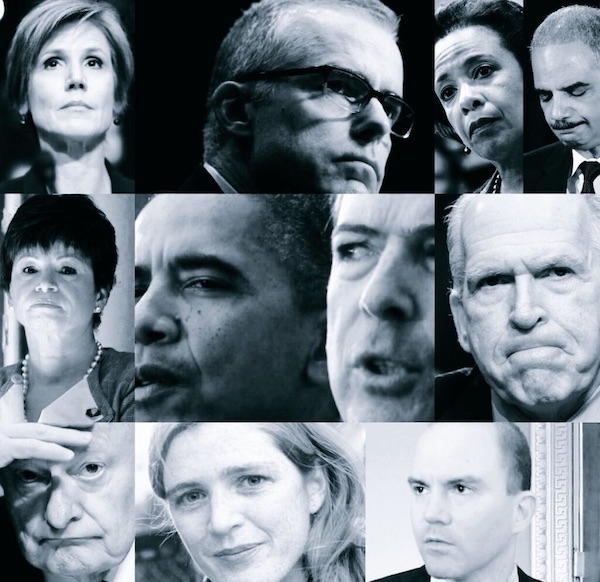
Spygate, Russiagate, IC Impeachment, Jack Smith Targeting and Lawfare (CTH)

In the next few days, much more about the overall investigative review underway in Florida will likely begin to surface. The review has been led by USAO Jason A. Reding Quiñones, a federal prosecutor for the Southern District of Florida. Quinones is now supported by Counsel to the AG, Joe diGenova. As with all investigations containing multiple players and actors, the first investigative information is extracted from testimony by those furthest away from the principals, yet closest to the granular details of the events being reviewed. The questioning then goes upstream, using information collected to assemble more specific questions as the principal players are approached.


The widest concentric circles are questioned first. Then, using the responses and investigative information from that circle, the questioning and inquiry goes to the next inner circle of participants. The information is assembled, and more pointed questions are then targeted to the next inner circle; the process continues until the core is questioned. Beginning with the end in mind, the biggest challenge is knowing what the correct questions are to ask of those who were closest to the corrupt activity (the outer circle). Background research then becomes critical. From those pointed questions you get answers. Then, next level of more specific questions get focus, and so on, and so on.

On March 20, 2026, James Comey was subpoenaed. Also remember, there are two distinct and different aspects to the overall conspiracy and timeline. nThere was surveillance of the 2016 Republican candidates by contractors working on behalf of the FBI who was institutionally collaborating with the Clinton campaign; that is known as “Spygate.” There was then an FBI operation to target and eliminate the threat represented by the 2016 GOP primary winner, Donald Trump; that is known as “Russiagate.” ‘Spygate’ and ‘Russiagate’ are two distinctly different corrupt pathways that eventually merged due to common interests.

The Mueller investigation, an extension of Crossfire Hurricane (Russiagate) was used by Obama-era politicians and internal government officials as a mechanism to block President Trump from executing a divergent foreign policy. The primary policy of focus was to protect the Obama era operations, including the Iran deal. Based on mounting evidence, a pattern in other international activities and U.S. participants, the Obama-Clinton-Kerry Iranian deal likely included a mechanism for return payments to U.S. officials following the release of billions in frozen Iranian asset funds and the loosening of sanctions – (ie. pallets of cash). Qatar was the mediator/broker.

However, it is speculated, perhaps being evidenced, that return payments to the Obama team contained a timing mechanism, and the quid-pro-quo payments were stopped after President Trump withdrew from the Iran deal and re-instituted sanctions. Thus, a much larger background context exists for why the totality of the U.S. government and Intelligence Community opposed President Donald Trump. Is it all about the money? Time will tell. Current events may not be coincidental.

Read more …

Where Marco has free rein.

US, Cuban Regime Confirm ‘Secret’ Talks in Havana (Sarah Anderson)

On April 10, something happened in Cuba that hasn’t happened in a decade: a U.S. government plane touched down outside of Guantánamo Bay. We have confirmation of this from the Cuban regime via their official Communist Party propaganda newspaper, Granma. Several media outlets, including Fox News, CNN, and the Miami Herald, are also confirming it, based on statements from unnamed senior State Department officials. The State Department delegation — supposedly made up of assistant or deputy-level officials but not Marco Rubio himself — reportedly warned the Cuban regime that it has a very short window in which to make a deal, which supposedly includes releasing political prisoners and making major economic and political reforms.


“As President [Donald] Trump has stated, a new dawn for Cuba is coming very soon. The Cuban regime should stop playing games as direct talks are occurring. They have a small window to make a deal,” a State Department official told the Miami Herald. Some outlets are reporting that the talks included compensation for U.S. citizens and companies whose properties were confiscated after the 1959 revolution, allowing Elon Musk’s Starlink into Cuba (it’s currently illegal to use there), and discussion of the threat of foreign military and terrorist groups being allowed to operate freely in the island nation.

Allegedly, a separate meeting was held with Raúl Guillermo Rodríguez Castro, Raúl Castro’s grandson who goes by “Raulito” or “El Cangrejo” (the crab). While Rubio has never confirmed it that I’m aware of, some media outlets report that this is not the first time a team from the State Department has met with the younger Castro. And, of course, the Cuban regime tells a different story. Deputy Director General for U.S. Affairs Alejandro García del Toro told Granma that the meeting was “respectful and professional,” but denies that were any conditions, like political prisoners, or deadlines set by the United States. He also called it a “delicate matter” that is being handled “discreetly.”

“Eliminating the energy blockade against the country was a matter of top priority for our delegation. This act of economic coercion is an unjustified punishment for the entire Cuban population,” he said. The Miami Herald reports that a U.S. Navy MQ-4C Triton surveillance drone was flying near Havana during the meeting, though I’ve noted that happening on other days last week, as well. Basically, the regime is attempting to paint this as normal diplomacy between two countries. But we all know it’s not. Regardless of what was actually discussed, Trump has made it pretty clear that he’s got his eye on making a change in Cuba soon. Assuming all of this is true, I believe he and Rubio are testing them to determine what the next steps are once we’re not so distracted with Iran.

As I reported over the weekend, on Friday, while speaking at a Turning Point USA rally, Trump said, “And very soon, this great strength will also bring about a day 70 years in waiting — it’s called a new dawn in Cuba. We’re going to help them out with Cuba. We have a lot of great Cuban-Americans… that were brutally treated, whose families were killed, and now, watch what happens.” Later, while aboard Air Force One, a reporter asked him about anonymous reports that the Pentagon is ramping up plans for military action against Cuba. “Well, it depends on what your definition of military action is,” the president said, not giving much away.

Read more …

“.. a “constellation that every smartphone, every ship, every aircraft and every missile guidance system on Earth depends on. SpaceX might just call it “Tuesday.”

The Space Launch Industry Is in Big Trouble… Except for You-Know-Who (Green)

“Early this morning, SpaceX launched the final GPS III satellite in our constellation, the most advanced GPS satellites ever built,” Space Force Gen. Chance Saltzman announced on Tuesday. It’s the finishing touch, as Chronos Intelligence explained, in a “constellation that every smartphone, every ship, every aircraft and every missile guidance system on Earth depends on. SpaceX might just call it “Tuesday.” Elon Musk’s launch company is about to raise tens of billions in the biggest-ever IPO on its way to easily top a $1 trillion valuation — and no wonder. This morning’s Space Force mission was its 48th Falcon 9 launch of the year (with a 100% success rate) and on track to roughly match last year’s record-breaking launch cadence.


Meanwhile, the company is making final preparations for the next flight test of the massive Starship rocket that will not only make the Falcon 9 obsolete, but every other rocket in the world. But I’m not here today to praise Musk or SpaceX. I just needed to set the stage to show you how the competition is performing. Or not. Because Blue Origin and United Launch Alliance (ULA) are having a rough time. Blue Origin whiffed a major New Glenn mission on Sunday, putting a $30 million AST SpaceMobile cellular satellite into the wrong orbit. Bluebird 7 is so low that it lacks enough onboard fuel to boost itself to its proper orbit, and will have to be de-orbited as a total loss. AST SpaceMobile shares were down sharply on Monday and have yet to fully recover.

BO touted the launch as a success — they did recover the booster, which is always impressive. And the booster was partially reused, which is even more impressive. But the mission was a failure, and celebrating that is not a good look. New Glenn is “likely grounded for four months” to investigate what went wrong with the upper stage, according to Next Big Future’s Brian Wang. Meanwhile, ULA’s Vulcan workhorse — well, sort of — is grounded following two Northrop Grumman solid rocket booster failures. Folks, space is too big and too important for the United States of America to have just one reliable launch provider. True story.

SpaceX successfully landed an orbital launch vehicle — the now-venerable Falcon 9 — in late 2015. Just 15 months later, in early 2017, the company successfully re-flew a “flight proven” Falcon 9. Here we are, more than nine years later, and Blue Origin is only now becoming the second company anywhere in the world to master reusable rockets. I watched those early SpaceX efforts in total amazement, and not just because one of my closest friends was an actual rocket surgeon at ULA. Ed was very good at his job and had the bonus checks for nailing satellite orbital placement to prove it. So I asked him one time why ULA wasn’t looking into reusability.

“We did look into it, we’re not idiots,” he said. “We’re good engineers. We could do it, but the economics didn’t work out.” Making a rocket reusable comes with tradeoffs, and ULA didn’t see enough demand for lift to make those compromises financially worthwhile. SpaceX created Starlink, which generates the demand and the cash flow to keep the company ahead of the competition. My friend was right that ULA had plenty of engineering talent, but the corporate management lacked imagination.

Because, as the country’s only major launch company for so long, ULA didn’t need imaginative management — they just needed the next NASA or Pentagon launch. And those were basically guaranteed at the slow-but-steady cadence that the company’s disposable Atlas and Delta rockets could deliver. For what it’s worth, not long after that conversation, ULA “voluntold” engineering graybeards like my friend — actually guys as young as their early 50s — to retire. I couldn’t tell you for sure that retiring the most experienced engineering talent is directly responsible for ULA’s current woes, but there’s more than enough room there for conjecture.

ULA’s busiest year was 2016 with a total of 16 launches. After that, the company began transitioning to the troubled Vulcan Centaur rocket, which launched just five times in 2025, and is currently “paused” while Northrop Grumman works out issues with the solid rocket boosters — after a decade of development and transition. SpaceX conducted 165 Falcon 9 launches in 2025 with a 100% success rate.

Read more …

“The incoming PM has pledged to stop Budapest’s withdrawal from the ICC, which has an active warrant for the Israeli leader..”

Hungary’s Magyar Warns Netanyahu of Arrest (RT)

Hungary’s incoming prime minister, Peter Magyar, has said he would order the arrest of Israeli Prime Minister Benjamin Netanyahu if he enters the country, marking a sharp reversal of predecessor Viktor Orban’s policy. Speaking at a press conference on Monday, Magyar said he would halt Hungary’s withdrawal from the International Criminal Court (ICC), initiated by Orban, and stressed that as a member state Budapest is legally obliged to enforce its arrest warrants. The ICC issued warrants for Netanyahu and former Israeli Defense Minister Yoav Gallant in 2024 over alleged war crimes and crimes against humanity in Gaza.


Israel claimed earlier this week that Magyar had spoken with Netanyahu and invited him to visit Hungary after his Tisza party’s landslide win on April 12. Asked to clarify, Magyar confirmed the call but downplayed the invitation, saying he had spoken with multiple leaders and broadly invited them to attend an upcoming anniversary of the 1956 popular uprising. He added that Netanyahu was informed Hungary would seek to remain in the ICC – and what that implies.

“I made it clear to the Israeli prime minister that we are not stepping back [from the ICC]. It is the Tisza government’s intention to stop this and for Hungary to remain a member,” Magyar said. “So I think I didn’t mislead anyone. If a country is a member of the ICC and if a person who is wanted enters that country’s territory, they must be taken into custody… I assume that every state and government leader is aware of these regulations.”

Magyar’s position marks a direct break with the stance of the outgoing government, which rejected the ICC’s jurisdiction and guaranteed Netanyahu safe passage. Orban dismissed the warrant as “brazen and cynical.” Last April, Budapest moved to withdraw from the ICC, arguing the court had become politicized. The country’s parliament approved the move in May, though under the Rome Statute withdrawal only takes effect a year after formal UN notification, currently set for June 2.

Magyar campaigned on repairing ties with Brussels and unlocking more than €16 billion ($19 billion) in EU funds for Hungary currently frozen due to rule-of-law and corruption allegations. Since his victory, Magyar has also pledged to reform state media, consider Eurozone membership, and end vetoes on Ukraine aid – though with caveats. He backed Hungary’s opt-out from the EU’s €90 billion loan package to Kiev, citing budget constraints, and said Ukraine’s EU accession within a decade is unrealistic.

At Monday’s press conference, he also urged Kiev to reopen the Russian Druzhba pipeline and said Hungary would not accept “any kind of blackmail” over energy supplies. He previously said Budapest would continue buying Russian energy, prioritize the cheapest oil, and signaled he would “pick up” if Russian President Vladimir Putin called.

Read more …

“Europe’s five largest countries — Germany, France, Spain, Italy, and Poland — all recorded BEV growth above 40% year-to-date.”

If the EVs were Peugeots and BMWs, easy peasy. But they’re Chinese and Tesla, I think.

Europe EV Sales Jump 51% As Iran War Sends Gasoline Prices Soaring (Paraskova)

Registrations of battery electric vehicles (BEVs) in Europe’s key automotive markets surged by 51% in March as the Iran war pushed gasoline prices to multi-year highs, data published by research firm New Automotive and trade association E-Mobility Europe showed on Monday. More than 224,000 new electric passenger cars were registered in March alone across 15 key EU + EFTA markets, the analysis found. These sales accounted for as much as 22% of all new passenger car sales across the key European markets.


In another sign that expensive gasoline is pushing drivers to EVs, European Union member states registered more than 500,000 new electric cars in the first quarter of 2026, a surge of 33.5% compared to the same period last year, the data showed. New BEV registrations accelerated across every major EU market in the first quarter of 2026. Europe’s five largest countries — Germany, France, Spain, Italy, and Poland — all recorded BEV growth above 40% year-to-date. Europe’s biggest car market, Germany, saw a rebound in EV sales after the introduction of new incentives, with around one in four cars registered in March fully electric – a 42% year-to-date jump, according to the data. Italy’s BEV registrations soared by 65% year-to-date, boosting the EV market share to 8.6% in March from about 5% as of the end of 2025.

France continued to lead among large markets with a 28% BEV share in March, underpinned by its social leasing scheme, and nearly 50% year-to-date growth. Energy security was the catalyst for change in driver choice in recent weeks, analysts at New Automotive and E-Mobility Europe say. “At a time when energy security has moved to the top of the political agenda, the EV transition is delivering real and measurable resilience,” commented Ben Nelmes, CEO of New Automotive. “The pace of change we’re now seeing across major European markets — including countries like Italy and Poland that were slower to start — suggests the transition has entered a new phase.”

Read more …


https://twitter.com/argosaki/status/2046475300960391255?s=20


Support the Automatic Earth in wartime with Paypal, Bitcoin and Patreon.



Apr 212026


George Bellows The Lone Tenement 1909


Iran Pushes Too Far in Hormuz, and the U.S. Pushes Back (David Manney)
US Navy Fires At and Boards Iranian-flagged Cargo Ship (RT)
Xi Urges Immediate Opening Of Hormuz Strait For First Time (ZH)
From Leverage To Liability: Hormuz Is Now Iran’s Biggest Weakness (Lacalle)
Things Get Interesting-er (James Howard Kunstler)
Kash Patel: Arrests Due In 2016 Russia Probe: Never Going To Let This Go (JTN)
Kash Patel Makes Promise: Arrests Are Coming Over 2020 Election (Margolis)
Maria Bartiromo Questions FBI Director Kash Patel About Ongoing Issues (CTH)
The Atlantic’s Kash Patel Hit Piece Is Backfiring – Badly (Brad Slager)
DOJ Moves In Florida Signals Major Escalation In Russiagate Criminal Probe (ZH)
AAG Todd Blanche Moves diGenova and DeLorenz to South Florida Group (CTH)
5 Stories Democrats Told During Trump’s 2019 Impeachment Have Crumbled (JTN)
‘Pandemic of Fascism’ Looming Over West – Moscow (RT)
‘Proud To Stand Alongside Elon Musk’ – Telegram’s Durov (RT)
The EU Moves to Destroy the Last Vestiges of National Sovereignty (Turley)
Europe Faces Summer Jet Fuel Crisis As Iran War Slashes Supply (Paraskova)


It takes forever because it’s so complex. and it’s the FBI probing the FBI. But they’re not sitting still. Not Trump either. https://twitter.com/MAGAVoice/status/2045810958048846076?s=20 https://twitter.com/robertdunlap947/status/2046186828462477568?s=20


“It’s a pattern that Iran has long perfected: probe, push, and see how far the other side tolerates their actions. That approach worked until it didn’t after Epic Fury ..”

Iran Pushes Too Far in Hormuz, and the U.S. Pushes Back (David Manney)

President Donald Trump authorized a direct response after an Iranian-flagged vessel moved into a restricted pattern of activity in the Strait of Hormuz.U.S. Navy forces intercepted and disabled the vessel after it failed to comply with repeated warnings. Secretary of War Pete Hegseth supported the operation, and the U.S. Central Command coordinated the response, stopping the vessel before it could continue its course through one of the world’s most contentious shipping lanes.It was the first interception since the U.S. blockade of Iranian ports began last week. Iran’s joint military command called the armed boarding an act of piracy and a ceasefire violation, the state broadcaster said.


With the U.S.-Iran standoff over the strait sharpening and the ceasefire expiring by Wednesday, it was not clear where President Donald Trump ’s earlier announcement on new talks with Iran now stood. He had said U.S. negotiators would head to Pakistan on Monday. The ship drew attention after it moved in a way that raised immediate concern among U.S. naval observers. The USS Spruance, an Arleigh-Burke-class destroyer, closed distance, issued warnings, and took action when the ship didn’t comply. Iran didn’t waste time pushing back. Foreign Ministry spokesman Nasser Kanaani accused the United States of violating international law and warned of a response.

U.S. National Security Advisor Mike Waltz pointed to Iran’s own behavior in the Straits of Hormuz, making clear that no single country controls that passage. Any attempt to treat it like private territory runs against established maritime law. That waterway accounts for the passage of roughly one-fifth of the world’s oil; it moves through that very narrow stretch between Iran and Oman. Until Operation Epic Fury, tankers passed through it daily, and as we’re finding out, disruptions send shockwaves through energy markets and shipping routes. The Strait of Hormuz isn’t some abstract geopolitical talking point; it’s a choke point that affects fuel prices, supply chains, and economic stability worldwide.

Iran has played games in that corridor before, where patrol boats crowded tankers, drones shadowed ships, and crews were pushed just far enough to test limits without crossing into open conflict. It’s a pattern that Iran has long perfected: probe, push, and see how far the other side tolerates their actions. That approach worked until it didn’t after Epic Fury. The U.S. response came fast and without hesitation: warnings went out, the ship didn’t adjust, and the U.S. Navy acted. That sequence shows a clear line that the United States isn’t guessing or reacting late; it’s setting expectations and enforcing them when challenged.

You’d figure that by now opponents of President Trump would’ve learned the lesson that he doesn’t leave room for misinterpretation when it comes to his America First belief, especially now in a region containing such an important strategic waterway. The United States has made it abundantly clear: the Strait of Hormuz stays open, traffic moves, and anybody trying to interfere finds out quickly where the boundary sits. That boundary claim goes even further than Iran’s routine posturing. Tehran doesn’t see the Strait of Hormuz as a neutral passage, arguing that the era of outside powers securing major waterways is over.

“Never.” That’s when a senior Iranian lawmaker says they’ll be ready to give up their control of the Strait of Hormuz. “It’s our inalienable right,” Ebrahim Azizi, a former commander in Iran’s Islamic Revolutionary Guards Corps (IRGC), tells the BBC in Tehran. “Iran will decide the right of passage, including permissions for vessels to pass through the Strait.” And he says that’s about to become enshrined in law. “We are introducing a bill in parliament, based on article 110 of the constitution, which includes the environment, maritime safety and national security – and the armed forces will implement the law,” says this member of parliament who heads the Committee for National Security and Foreign Policy.

He said Iran and its allies now hold that responsibility. He didn’t leave much room for interpretation. In his view, control of key routes like Hormuz belongs to regional forces, not international agreements. Iran is left with a decision to make: either keep testing that boundary and risk more confrontation or pull back and avoid escalating a tense situation that already drew a firm response. Either way, the tone has shifted.The message isn’t confusing: The United States will protect critical routes and won’t sit back while Iran tries controlling them by pressure or intimidation.

Read more …

“US Central Command (CENTCOM) has released a video showing a US warship firing at an Iranian-flagged cargo vessel that was later seized by US Marines.”

US Navy Fires At and Boards Iranian-flagged Cargo Ship (RT)

US Central Command (CENTCOM) has released a video showing a US warship firing at an Iranian-flagged cargo vessel that was later seized by US Marines. According to CENTCOM, the guided-missile destroyer USS Spruance intercepted the M/V Touska in the Gulf of Oman as it attempted to breach the US naval blockade and reach the Iranian port of Bandar Abbas through the Strait of Hormuz. “After Touska’s crew failed to comply with repeated warnings over a six-hour period, Spruance directed the vessel to evacuate its engine room. Spruance disabled Touska’s propulsion by firing several rounds from the destroyer’s 5-inch Mk 45 gun into the engine room,” CENTCOM said, adding that a team from the 31st Marine Expeditionary Unit later boarded the vessel.


The Touska was traveling from a Chinese chemical-storage port and was laden with cargo, the Washington Post reports, citing tracking data. The port is often used for transporting chemicals, including sodium perchlorate, a key precursor for producing solid rocket fuel, it added, noting that it is unclear what cargo the Touska was carrying. Later, CENTCOM also released a video of US forces boarding the disabled ship from a helicopter. Iranian officials denounced the blockade as illegal under international law, saying it violates the terms of a two-week ceasefire set to expire on Wednesday.

The Iranian military has vowed to retaliate for the seizure of the vessel. Iran’s Tasnim news agency later reported that the Iranian military launched a drone at US ships. The US has not confirmed whether any of its vessels came under attack.

Read more …

80% of Iran oil goes to China. Trump has weaponized that.

Xi Urges Immediate Opening Of Hormuz Strait For First Time (ZH)

China’s President Xi Jinping on Monday demanded the uninterrupted passage of vessels through the Strait of Hormuz in a phone call with Saudi Arabia’s Crown Prince Mohammed bin Salman, state news agency Xinhua reports. He urged the normalization of shipping traffic after about 50 days of disruption which obviously and significantly impacts Chinese oil imports. “Normal navigation through the Strait of Hormuz should be maintained, this is in the shared interests of regional countries and the international community,” Xi said, in the statement also carried by AFP. He called for an immediate, comprehensive ceasefire and insisted disputes be resolved through political and diplomatic means. He added that China will deepen strategic mutual trust with Saudi Arabia and expand practical cooperation.


South China Morning Post observes that it was “the first time the Chinese leader had called for the reopening of the strategically vital waterway, which has been repeatedly blockaded since US-Israeli strikes on Iran began on February 28.” China imported 5.86 million tons of crude oil from Saudi Arabia, down 10% from February, according to customs data released Monday. As for where things stand on the negotiations front, Iran hesitated over sending diplomats to Pakistan for a second round of peace talks after the US maintained a blockade of the Strait of Hormuz and seized an Iranian vessel, after apparently firing on it, undermining prospects for a breakthrough to end the war. Initially it appeared to shut the door on second talks, however per Associated Press Monday morning:

Iranian authorities have expressed willingness to send a delegation for a second round of talks in Islamabad this week, two Pakistani officials said Monday. The officials, who spoke on condition of anonymity because they were not authorized to brief the media, said there is cautious optimism that delegations from both Iran and the United States could travel to Islamabad. The US side would reportedly once again be headed up by Vice President JD Vance – who during the first round cut out early after a serious impasse was reached on the nuclear issue.

The tumultuous weekend events followed Iranian Foreign Minister Abbas Araghchi having posted on X on Friday that the Strait of Hormuz was “completely open”. By Sunday morning, Bloomberg ship tracking data had showed tanker traffic through the Strait of Hormuz was largely ground to a halt. Also, the prior 24 hours had seen multiple incidents of tankers making U-turns, and added to all this a senior Iranian official renewed threats to close the Bab al-Mandeb Strait.

According to a quick review of some other developments Monday morning and per emerging market data, China will import a record volume of US ethane this month as petrochemical producers switch feedstocks after the Middle East war disrupted critical supplies. Recall that by mid-March Trump was actually asking for China’s help to get the blocked Strait of Hormuz reopened…

And in the broader region, Singapore is securing additional liquefied natural gas from outside the Middle East as the conflict in Iran constrains regional supply, according to a government body. India authorized more Russian insurers to cover vessels calling at its ports and extended permits for others as the closure of the Strait of Hormuz disrupts energy shipments from the Persian Gulf. The International Energy Agency has meanwhile said that global power consumption rose 3% last year, driven in part by rapid demand growth from electric vehicles and data centers, according to the International Energy Agency.

Read more …

“The world is very different from what the Iran regime thought. In 2025, U.S. crude oil production hit a new annual record of 13.6 million barrels per day, making the United States the world’s largest producer but also the biggest exporter..“

From Leverage To Liability: Hormuz Is Now Iran’s Biggest Weakness (Lacalle)

For half a century, the Strait of Hormuz was Iran’s weapon. Today, it is its noose. The mathematics of energy have flipped, and with them the balance of coercive power in the Persian Gulf. Iran’s implicit deterrent was geographic, spanning from the tanker wars of the 1980s to the sanctions standoffs of the 2010s. Almost 20% of global seaborne oil, and a similar share of liquefied natural gas, passes through the Strait. The formula was simple: any military confrontation that threatened the Tehran regime risked a closure that would halt trade supplies, spike crude prices, bleed Western consumers, and, above all, inflict pain on the United States, who was the world’s largest oil importer.


The strait served as Tehran’s insurance policy and its most powerful bargaining tool. The threat was predicated on the regime’s belief that it could block everyone except its exports. The Iranian regime revealed its biggest weakness by constantly threatening to damage the global economy through a shutdown of the Strait. In reality, a total shutdown has the most severe impact on Iran. Almost 90 per cent of Iran’s crude exports, and about 80 per cent of its total exports, depend on the transit through Hormuz. Around 25 per cent of Iranian GDP and 60 per cent of government revenues depend completely on having the Strait open.

Before the war, Iran was exporting roughly 1.7 million barrels per day, receiving around $160 million in daily revenue from exports via the Strait. Thus, Trump’s full closure of the Strait costs Tehran hundreds of millions of dollars a day in losses, not accounting for the additional fiscal and currency consequences in a country already facing an economic disaster with 40–50% inflation. The complete dependence on the Strait of Hormuz also adds to another weakness: 95% of Iranian crude at sea is sold to a single buyer, China. Tehran is not selling into a diversified and open market. Its exports are sold to a monopsony that demands large discounts, between 10 and 11 dollars per barrel.

These weaknesses were visible long before the war. Capital flight reached $15 billion in the first half of 2025 alone; the rial collapsed against the dollar, and the government’s budget, which allocates 51 per cent of oil revenues to the Islamic Revolutionary Guard Corps, became even more dependent on a single export route it could not afford to close. When the war began, Iranian crude shipments collapsed by 94%. Then, the United States’ decision to block all Iran export vessels showed that Iran’s chokepoint had become self-choking. In the past 30 days, 80% of the essential volumes that moved through the Strait have been rerouted or offset by other oil producers, including US record exports.

The world is very different from what the Iran regime thought. In 2025, U.S. crude oil production hit a new annual record of 13.6 million barrels per day, making the United States the world’s largest producer but also the biggest exporter. The United States shipped 5.2 million barrels per day of crude and 7.2 million barrels per day of petroleum products in March 2026, both global records. For the first time, America exported more petroleum than it imported, by a net margin of almost 2.8 million barrels per day, according to the EIA. Total US liquids production now exceeds that of Saudi Arabia and Russia combined.

On the natural gas side, U.S. LNG exports reached well over 15 billion cubic feet per day, surpassing Qatar and Australia to make the United States the world’s largest liquefied natural gas exporter, while U.S. dry gas production exceeds the combined output of Russia, Iran, and China. Furthermore, the United States is also the world’s largest producer of nuclear electricity, at roughly 30 per cent of global generation, and a global leader in renewable energy.

When President Trump could say in April 2026 that the United States was “clearing the Strait as a favour to countries around the world, including China, Japan, Korea, and Germany,” the framing was an accurate description of who needs Hormuz open and who does not. Only 4% of the traffic through the Strait goes to the United States, according to SP Global. According to the International Energy Agency, throughput at Hormuz collapsed from its long-run average of about 20 million barrels per day to 3.8 million since the beginning of the war through the second week of April. Daily ship transits fell roughly 95 per cent. The Tehran regime, in a gesture more theatrical than realistic, attempted to levy a $2 million toll on each vessel crossing the strait, without understanding that the move showed desperation instead of leverage.

The US response has been the most important measure deployed against Iran in two decades of standoffs. Operation Economic Fury established a full naval blockade of Iranian ports. Iranian naval losses in the first 38 days of combat exceeded 150 vessels. The ceasefire framework under negotiation requires Iran to reopen Hormuz, but the US maintains control. Thus, negotiations revolve around Iranian dismantlement, not American concessions.

The lesson is not just that Iran miscalculated but that it massively underestimated its obvious weaknesses. The United States is not a hostage of the Gulf; it is the guarantee of its safe sea lanes. Europe is tied to U.S. LNG while keeping a substantial Russian dependence, which complicates its energy security and makes it vulnerable to fluctuations in supply and price from both sources. Asia’s largest economies, particularly China, are suffering the marginal cost of a Hormuz disruption, which has led to increased energy prices and supply chain uncertainties that further exacerbate their economic challenges. Iran’s economic nightmare has only started.

Three important factors must be considered. First, the traditional Hormuz risk premium in Brent, which refers to the additional cost added to oil prices due to geopolitical tensions in the Strait of Hormuz, is structurally smaller than in the 2010s because U.S. supply can absorb shocks that previously had no substitute. The Brent price is lower in real and nominal terms than in the 2008, 2018, or 2022 peaks. Second, the strength of American energy, including economics, export infrastructure, and LNG capacity, has become a key global geopolitical variable, influencing global energy prices and the strategic decisions of other nations.

Third, Iran’s economy has not only suffered damage; it has also been demolished, and its extremely weak fiscal position indicates that it cannot sustain the threat posture in Hormuz. The Strait of Hormuz remains the world’s most important chokepoint. However, a chokepoint hurts whoever depends on it most, and Iran relies on it completely. The United States does not. The geopolitical advantage that Tehran once held has now become its greatest weakness, likely leading to the disappearance of the regime’s effective bargaining power.

Read more …

“It is one thing for the people (of Iran) to be ruled by globally feared autocrats armed to the teeth, but quite another to be governed by humiliated, now impotent incompetents and buffoons.” —VDH

Things Get Interesting-er (James Howard Kunstler)

Wednesday the US / Iran ceasefire expires. It has been an interesting two weeks. The US used it to negotiate an end to hostilities, resupply our ships in the Arabian Sea, do maintenance on our ships and warplanes, dismantle Iran’s banking conduits, and blockade Hormuz to shut down the regime’s remaining income flow. The Iranians used it to jump up and down and go woo-woo-woo. They also tried to dig out the entrances of their bombed caves and tunnels to unearth whatever’s left of their hidden missile launchers. Our satellites watched everything they did and mapped the coordinates.


Negotiations? So far, not fruitful, if termination of hostilities and surrender of Iran’s uranium is the goal. We’re not even sure the Iranians we’re negotiating with have any real authority to make a deal. Iran’s government at this point is a hash of conflicting factions: the Revolutionary Guard (IRGC), which is a large Jihadi mafia that happens to own half of Iran’s economy and controls its advanced missile and drone weaponry; the regular Army (Artesh) which would theoretically defend against a ground invasion, but otherwise just stands by; and the civilian government represented by President Masoud Pezeshkian, Foreign Minister Abbas Araghchi, and Parliament Speaker Mohammad-Bagher Ghalibef — none of whom seem to hold any real decision-making power.

America’s negotiators, led by Veep Vance along with Messrs. Witkoff and Kushner, will land back in Islamabad, Pakistan, today (Monday, April 20). Our deal is still on the table. It’s pretty straightforward: the aforementioned uranium plus a twenty-year halt of nuclear activities with no path toward a weapon; full reopening of the Strait of Hormuz; an end to Iranian support for Hezbollah, Hamas, and the Houthis; phased-out sanctions and access to frozen assets; and cessation of hostilities.

Events over the weekend argue that Iran is not finished playing stupid games and winning stupid prizes. They tried to run the Hormuz blockade on Sunday with an incoming cargo ship, the Iranian-flagged M/V Touska. The USS destroyer Spruance, an Arleigh Burke-class guided-missile destroyer, blew a hole clean through its engine room and then seized the vessel. Its cargo remains undisclosed for now.

Iran claims that it has closed the Strait of Hormuz. The US said it was already closed via the US blockade (we closed it harder). Iran can’t surreptitiously move any oil out to sell to China or run supplies into the country. Iran will lose about $500-million a day and China will lose the majority of its oil imports. China will jump up and down and go woo-woo-woo over that, while the IRGC will lose its last remaining income stream, meaning no pay for anyone. Let’s see if that prompts an attitude change.

If Iran can’t move its oil, it will soon reach the limit of its oil storage capacity, meaning it will have to shut down its oil wells. If that happens, the hydrology is such that water invasion of the underground strata will permanently damage the oil fields. Iran is between a rock and a squishy place.

That might be enough to force a deal in the hours ahead. President Trump has made it clear that the time for Iran jerking-around the US is over. So then, it’s back to Power Station and Bridge Day (blowing them up). That would be extremely unfortunate for the ordinary Iranian people. They are unarmed and helpless to resist the maniacs of the IRGC who would allow Power Station and Bridge Day to happen, who, in effect, don’t really care about the ordinary people of Iran.

However, the regular Iranian army, the Artesh, does have weapons (they are the army and armies are generally armed). Perhaps they will use them to put the insane jihadi IRGC out of business. After all, the Artesh’s mission is defense on-the-ground of the Iranian homeland, and just now the biggest threat to Iran is the IRGC. I guess we’ll have to wait on that and watch..

Read more …

All the (well, 6) articles that follow can be put under the same topic: TDS.

While Trump is hardly mentioned in them.

“Maria Bartiromo asked Patel if the FBI has evidence of election fraud in 2020.”

FBI director says arrests are coming related to 2016 Russia probe: ‘Never going to let this go’

Kash Patel: Arrests Due In 2016 Russia Probe: Never Going To Let This Go (JTN)

FBI Director Kash Patel said on Sunday that “arrests” are coming related to the Russia investigation of potential collusion between Russia and the 2016 Trump campaign. “I am never going to let this go,” Patel said on “Mornings with Maria” on Fox News. “We’ve got all the evidence. I can announce on your show that we’ve got all the information we need. We’re working with our prosecutors at the Department of Justice under AG Todd Blanche, and we are going to be making arrests – and it’s coming and I promise, you, it’s coming soon,” he added.


Host Maria Bartiromo asked Patel if the FBI has evidence of election fraud in 2020. “So what we are doing is folding that into our entire conspiracy case,” Patel said. “But we have the information that backs President Trump’s claim (of the stolen election)…but I would say stay tuned this week. You might see a thing or two.” Patel also said he is going to sue The Atlantic on Monday.

Read more …

He was addressing 2016, 2019 and 2020.

Kash Patel Makes Promise: Arrests Are Coming Over 2020 Election (Margolis)

FBI Director Kash Patel dropped a bombshell Sunday morning that the legacy media will do everything to attack. Appearing on Fox News’ Sunday Morning Futures with Maria Bartiromo, Patel announced that arrests are coming over the coordinated effort to rig the 2020 election. “We are going to be making arrests, and it’s coming, and I promise you, it’s coming soon,” Patel said. That’s not a vague promise from a bureaucrat hedging his bets. That’s the sitting FBI director going on record, on camera, with a direct commitment to the American people that we’re finally going to see some accountability over the shenanigans that took place during the 2020 elections.


Bartiromo, for her part, wasn’t interested in vague assurances. In fact, she set the stage by noting what any honest observer already knows — President Donald Trump has been saying the 2020 election was rigged since, well, 2020. She pressed Patel directly on what he had actually done about it over the past 14 months. His answer was unambiguous. Patel reminded viewers that he wasn’t new to this fight. Long before he ran the FBI, he was in the trenches on the House Intelligence Committee alongside Trey Gowdy, John Ratcliffe, and Devin Nunes, exposing the FISA abuses that targeted Trump’s first presidential campaign. The media came after him then, too — something he clearly wears as a badge of honor.

“That just shows you that when you’re over the target, you keep pummeling the target because the media’s gonna try and pummel you,” Patel said. He wasn’t done. Patel revealed that when he took over the FBI, what he found inside the building went beyond anything that had been publicly reported. Hidden rooms. Restricted and prohibited case files are buried deep in computer systems, deliberately placed where investigators wouldn’t find them. This is the kind of institutional concealment that doesn’t happen by accident. “I had to come in here and find rooms that they hid from the world,” he said. “I had to come in here and find access on our computer systems in restricted and prohibited case files that they purposely put in places for no one to see and find.”

Think about that for a moment. The FBI — the nation’s top law enforcement agency — had evidence stashed away in places designed to keep it from ever seeing daylight. But, sure, the 2020 election was entirely above board. Seriously, if that doesn’t tell you everything you need to know about what the previous regime was up to, nothing will. Patel also confirmed that the FBI has already indicted former Director James Comey, and that the case is now working its way through the judicial process. But Sunday’s announcement made clear that Comey isn’t the end of the story — he may just be the beginning.

“I can announce on your show that we’ve got all the information we need,” Patel said. “We’re working with our prosecutors at Department of Justice and their Attorney General Todd Blanche.” He also offered some perspective on why this investigation has taken as long as it has. The corruption being dismantled wasn’t built overnight. “They built this disease temple over 20 and 30 years,” Patel said. Decades of entrenched rot don’t get cleaned up in a single news cycle. For years, conservatives have been told to wait—that accountability was just around the corner, that justice was coming. The promised reckoning never seemed to arrive. Patel is now staking his credibility on the claim that this time is different. He says arrests are coming. Faster, please. Faster.

Read more …

What can I say? Watch. A decade of Trump abuse gets answers.

Maria Bartiromo Questions FBI Director Kash Patel About Ongoing Issues (CTH)

FBI Director Kash Patel appears on Fox News Sunday to discuss ongoing FBI issues with Maria Bartiromo. Beginning with the issue of missing scientists, Kash Patel notes the FBI is “working with partners in various jurisdictions” to review each case and identify if something more nefarious is afoot. The questioning then shifts to an explosive accusation by The Atlantic about his drinking, partying and indulgences within his position. Patel notes he is going to sue the Atlantic for defamation. Maria Bartiromo also asks if Kash Patel has seen any evidence of the 2020 election fraud as outlined by President Trump for several years. Patel notes he cannot talk about ongoing investigations but hints that more information is likely to come out within the next few weeks.

.


From my personal perspective, Kash Patel does like the indulgences that come with the office. However, I think the accusations against him are likely spurred by disgruntled FBI agents and DOJ officials with an axe to grind. That said, it still doesn’t appear that Director Patel has his arms around the agency he leads, and it is not uncommon to find people within the Trump administration who are frustrated with ongoing dubious activity carried out by remnant FBI officials who are not being brought to heel.

Read more …

And as Kash Patel is moving into action, his targets are calling their press partners.

The Atlantic’s Kash Patel Hit Piece Is Backfiring – Badly (Brad Slager)

Official word has already come out today: A lawsuit has been filed against the media outlet The Atlantic and reporter Sarah Fitzpatrick. FBI Director Kash Patel has now filed the suit, delivering on his promise made over this weekend that he would do so in response to a hitpiece article published by the outlet on Friday, April 17.


In the article, Fitzpatrick alleged that Patel is frequently intoxicated on the job, has a horrific job performance, and that this has led to a morale problem throughout the Bureau. There has been word that this story was somewhat circulating around D.C., but that no outlet was willing to risk running such speculation. The Atlantic, however, was more than willing to do so, and as I will show in moments, this is in line with the character of that outlet.

The talk over the weekend that this had been a passed-around story that few outlets would touch is hinted at by Fitzpatrick’s teaming up with Jonathan Lemire from MS NOW for the piece. They claim they based this reporting on speaking with some White House officials, and as Sarah explained, it is “according to the more than two dozen people I interviewed about Patel’s conduct.” Who these people are and what their positions entail for them to deliver empirical wisdom on these matters is a complete mystery, for, as we have become more than accustomed to, this is all relying on anonymous sourcing. This is just the beginning of the flaws in this hit piece. How is it you speak to 25 or more people, and not one of them has the stones to admit to their status?

Let us take a look at these people Fitzpatrick and Lemire relied upon for their reporting. Those White House contacts? A complete mystery, as they are nameless. So too are all of the officials at the FBI slamming Patel’s character. But more than these ciphers are cited. We are also hearing from former FBI figures, staffers from different agencies (hardly high-placed sourcing), as well as political operatives (about the least valid of the lot), lobbyists (excuse me, but what?!), and hospitality-service work. So…bartenders and waitresses are part of your sourcing?!

Meanwhile, it was more than Kash Patel objecting to this report. White House Press Secretary Karoline Leavitt shot down these claims and touted Patel’s accomplishments. Ben Williamson from the FBI official public affairs office, the assistant to that office, Erika Knight, Patel’s legal counsel, and the man who worked alongside Patel during his confirmation, Clint Brown, each disputed the claims made. The difference? All of those people are named because they were on the record, yet those people are all discounted because we see how Fitzpatrick and Lemire were on an agenda. Williamson alluded to the common practice we see from the press these days, which I describe in my Townhall media column as The Deadline Gambit.

This is the tactic of a full report on an individual being worked on for weeks, with multiple sources and deep background established, and then the main focus of the piece is given a brief window to “respond” to the report. Try to conjure the amount of time spent by Fitzpatrick to craft this report, from over two dozen sources, then look at Williamson saying they had just two hours to respond to all of that before publication. They sent off the letter to The Atlantic, warning of impending litigation if they went forward, and this appeared to at least generate some changes. At The Daily Beast, they felt they had another “gotcha” moment, revealing a lack of cerebral processing heft when they breathlessly reported:

“Kash Patel’s legal team has revealed more allegations were leveled against him than were published in a bombshell report by The Atlantic—and said what they were. That means that the letter, which came from a personal attorney for Patel rather than from the FBI’s own counsel, effectively put what it describes as false and defamatory statements into public circulation.”Allow me to help you folks out here. You see, after the lawyer contacted them with this letter, it is clear that Fitzpatrick, and/or her editors, pulled some items from the piece out of fear of further litigation. This was not a case of mistakenly exposing something; they were being transparent in showing the flawed reporting taking place.

Sarah Fitzpatrick appeared with Jenn Psaki on Sunday, and she displayed a high level of false bravado when asked about her article and the lawsuit that was threatened at the time. It is unclear how she can say the White House did not refute things when, in her piece, she quotes Karoline Leavitt responding to her questions. And again, there were the complete blanket denials from Patel and his lawyer. But there is more amusement: As she holds up the reputation of The Atlantic, let’s remember what this outlet is all about. This is the same outlet whose managing editor, Jeffrey Goldberg, put out the slanderous stories of President Trump calling fallen soldiers “suckers and losers.”

Goldberg was also the one who claimed Trump insulted a fallen female Marine and reneged on paying for funeral expenses, as her family completely called the story a lie. Yep, just a sterling publication, that. Better still is how Fitzpatrick touts the mastery of their lawyers, as there is a small detail needed to be overlooked. It was just last September when that outlet settled a $1 million defamation case with a former writer. This was a rather clear case of guilt, as Ruth Shalit-Barrett asked for that very sum in her filing. So, for those rubbing their hands in glee over what may be exposed in discovery, this is not exactly a news outlet with a rock-solid reputation.

Read more …

Joseph diGenova is 81 years old. He’s a longtime Trump legal advisor floating to the top.

DOJ Moves In Florida Signals Major Escalation In Russiagate Criminal Probe (ZH)

The Department of Justice appears to be gaining fresh momentum in its criminal investigation into the 2016 Trump-Russia collusion narrative, with a significant overhaul of the team handling the case in southern Florida.


According to investigative journalist Julie Kelly’s reporting at Declassified.live, longtime Trump legal advisor Joe diGenova – a former U.S. Attorney and prominent commentator – will be sworn in Monday as counsel to the attorney general. He will assume leadership of the ongoing grand jury probe based in Fort Pierce, the district overseen by U.S. District Judge Aileen Cannon. That same courthouse was the site of Cannon’s landmark July 2024 ruling dismissing Special Counsel Jack Smith’s classified documents case against President Trump after she found Smith’s appointment unconstitutional. The grand jury has been active in Fort Pierce since January, Kelly reports.

DiGenova’s wife, Victoria Toensing, has also served as a key Trump legal counselor for years. In a notable earlier move, the Biden Justice Department seized Toensing’s cellphone in April 2021 during a separate inquiry tied to Rudy Giuliani’s efforts to examine the Biden family’s overseas dealings.

But wait, there’s more…

The addition of DiGenova isn’t the only retooling. Earlier this week, acting Attorney General Todd Blanche removed the career prosecutor previously in charge of the investigation into former CIA Director John Brennan, who played a key role in concocting the Trump-Russia collusion scheme in 2016. According to CNN, assistant U.S. Attorney Maria Medetis Long was ousted “after she resisted pressure to quickly bring charges against the former CIA director and prominent critic of President Donald Trump.” Meditis Long notified lawyers representing several individuals who have received subpoenas or interview requests related to the investigation that she was off the case, the New York Times reported on Friday. -Declassified Live

Blanche has also sent one of his senior aides, Christopher-James DeLorenz – who clerked for Judge Cannon during the documents litigation – to the Fort Pierce team.

These changes come shortly after President Trump dismissed former Attorney General Pam Bondi earlier this month, citing dissatisfaction with the pace of the Russiagate accountability effort. In a pointed press conference days later, Blanche—whom Trump immediately named acting attorney general—made clear the department’s direction. “The president has said time and time again that he wants justice,” Blanche told reporters. “If you look at what happened to him, his family, his administration, the agents who protected him, people who just happened to walk by him on a given day, they got subjected to…massive investigations by this department.”

Blanche speaks from direct experience: he defended Trump in both the Florida documents case and the Manhattan hush-money prosecution brought by District Attorney Alvin Bragg.

Earlier this year the Justice Department did secure indictments against a small number of figures tied to the lawfare campaign, including former FBI Director James Comey and New York Attorney General Letitia James. Those cases were later dismissed, however, after a judge ruled that the appointment of the acting U.S. Attorney who filed them, Lindsey Halligan, was improper. That decision is now under appeal in the Fourth Circuit.

Still, many Trump supporters are demanding deeper accountability. While the initial charges brought some satisfaction, the expectation is for more significant action. A potential indictment of Brennan – who many view as a top target – now looks increasingly likely. He was recently subpoenaed in connection with his 2023 congressional testimony, in which he denied that the discredited Steele dossier influenced his 2017 Intelligence Community Assessment alleging Russian election interference on Trump’s behalf.

Brennan’s legal team has reacted with alarm. In a highly unusual letter sent last December to the chief judge of the 11th Circuit, his attorneys urged the court to block the probe from proceeding in Fort Pierce—viewed as a more conservative venue than Miami—and to bar Judge Cannon from any involvement. The letter claimed that Cannon’s prior rulings created the appearance of favoritism toward Trump and accused prosecutors of deliberately steering the case to her courtroom in line with what they called the president’s political retribution agenda.

If diGenova’s role expands beyond Brennan to encompass a wider “grand conspiracy” review – potentially covering everything from the roots of Russiagate through January 6, the Mar-a-Lago raid, and the conduct of the now-disqualified special counsel – additional high-profile targets could come into focus. Among them are individuals already the subject of criminal referrals sitting with the DOJ, including Thomas Windom (referred by House Judiciary Chairman James Jordan for alleged obstruction during congressional depositions) and January 6 committee witness Cassidy Hutchinson, accused of fabricating testimony about an incident in the presidential vehicle. This week, Director of National Intelligence Tulsi Gabbard also referred two former officials—Intelligence Community Inspector General Michael Atkinson and analyst Eric Ciaramella – for their roles in advancing the 2019 Ukraine-related impeachment allegations against Trump. Both men have documented connections to the original Russiagate players.

Even Jack Smith may not be fully in the clear. Recent reporting from CBS News indicates that Florida prosecutors are examining documents linked to Smith’s prior investigation of the president. Smith could additionally face scrutiny for allegedly continuing to hold himself out as special counsel in court filings long after Cannon disqualified him, raising questions of contempt and potential false statements to Congress.

As Julie Kelly observed in her Declassified.live piece, diGenova—still energetic and far from retirement age—may be exactly the experienced, no-nonsense figure needed to bring decisive momentum to the Florida investigation and deliver the accountability many have long awaited.

Read more …

Sundance: “..diGenova sees the connective tissue -the actual characters- flowing from Spygate, through Russiagate, into the Mueller investigation, then into the impeachment effort and then into the Jack Smith operation. Seeing the big picture is the first step.”

AAG Todd Blanche Moves diGenova and DeLorenz to South Florida Group (CTH)

A formal announcement is likely tomorrow; however, leading information now affirms Acting AG Todd Blanche is moving Joe DiGenova and Christopher-James DeLorenz into positions in South Florida to assist U.S. Attorney Jason Quiñones in ongoing investigation of the Donald Trump targeting. The venue puts any grand jury information in the court orbit of Judge Aileen Cannon. Before getting into the substance, the alignment here is critical to understand. Judge Cannon saw firsthand exactly what the Lawfare constructs consist of when she had the Jack Smith operation in her court during the Mar-a-Lago documents case. Judge Cannon knows the context of weaponized justice and saw the techniques through first-hand experience. This cannot be emphasized enough.


There are a lot of people who want to see some form of accountability finally delivered for the decade-long corrupt Lawfare operation that took place against Donald Trump before he took office (Spygate), during his administration (Russiagate, Mueller, Impeachment), after he left office took office (Jack Smith and Mar-a-Lago) and even through today (Judicial Intervention). Many of those voices have concerns about 81-year-old Joe diGenova, so let me address that first by pointing out how the issues that frame the criticism are also a valuable asset.

Joe diGenova has a very rare current perspective; he completely sees the timeline of Trump targeting for what it is. This is immensely valuable because not enough people understand the complex continuum enough to stand back and see the bigger picture. diGenova sees the bigger picture. diGenova can see the 2015/2016 FBI contractor political spying operation (Spygate) and how it connects to the later Fusion GPS/Clinton construct of Russiagate. More importantly, diGenova sees the connective tissue -the actual characters- flowing from Spygate, through Russiagate, into the Mueller investigation, then into the impeachment effort and then into the Jack Smith operation. Seeing the big picture is the first step.

Now, critics point out that diGenova is a creature of DC. Yes, that is true. However, that’s also an asset given that he understands just how difficult it is to navigate through all of these ridiculous DC interests. diGenova is also a character, boisterous perhaps intemperate and easy to Alinsky (isolate, ridicule, marginalize). So what? It doesn’t matter who is involved in this effort, they are going to be Alinsky’d by the Lawfare operatives on the other side.

Joe diGenova and Victoria Toensing see the big picture and have a skillset to tell the story. They can assist brilliantly and direct the telling of the story by connecting the lead prosecutors to the background script of how everything unfolded over the past decade. If Quiñones is researching a “conspiracy” case, it is the primary job of the investigative researchers to connect each of the evidence dots to the larger conspiracy. Sounds perfect for diGenova.

diGenova can put the prior weaponization into a timeline and from that timeline extract the step-by-step evidence that proves it. This timeline of targeting and how it is all connected has been missing in every investigative review up to now. That’s the value of diGenova. This doesn’t mean diGenova is in the courtroom per se’, but rather he’s the one explaining the sequencing of witnesses for a grand jury and how the questioning of one might relate to the questioning of another. Christopher-James DeLorenz has the skillset of knowing Judge Aileen Cannon and the internal machinery of a modern Main Justice. Put them together and the lead prosecutor in Florida has a formidable team putting the details onto the table in front of him/her.

This could have been done in DC years ago by the House Select Subcommittee on Weaponization; however, they did not have the skillset nor the operational strength to push through the DC politics as a group. Former Representative Dan Bishop is a current U.S. Attorney in North Carolina, and he said it wasn’t fear that screwed up the subcommittee effort as it was republican political leadership stopping the subcommittee from aggressively investigating the whole matter, the big picture. There are rumors that Blanche has assigned diGenova because President Trump is frustrated with Main Justice on this issue. I don’t know if that is true, but jumping ju-ju-bones – could you blame Trump?

Read more …

In full, they call this: “Trump’s 2019 Ukraine Impeachment”.

Something to think about. Remember Biden firing the prosecutor?

5 Stories Democrats Told During Trump’s 2019 Impeachment Have Crumbled (JTN)

Several Republicans, including the influential House Judiciary Committee Chairman Jim Jordan, are throwing their weight behind an effort to repudiate or expunge the 2019 House impeachment vote against President Donald Trump after years of belated bombshells eroded most of the scandalous narrative Democrats sold to America seven years ago.


The latest evidence to boomerang on the 2019 Democrat House impeachment managers came last week when Just the News successfully persuaded Director of National Intelligence Tulsi Gabbard to release long-secret memos showing the intelligence community had raised red flags about the credibility and political motives of the CIA analyst who prompted the scandal with a tale that Trump had wrongly pressured Ukraine’s president to investigate the Biden family.

Exculpatory evidence withheld from the congressional proceedings in 2019 and 2020: Back in 2019, it was taboo to question anything about the CIA analyst or even to mention his name, now confirmed to be retired CIA analyst Eric Ciaramella. But it turns out Democrats like then-Rep. Adam Schiff as well as the intelligence community’s chief watchdog at the time, Michael Atkinson, withheld from the public some bombshell revelations, according to the memos that Gabbard released last Sunday. Those memos showed Atkinson’s investigators had flagged the CIA analyst for having “potential for bias,” noted he had provided false information in his initial complaint, had apologized for the falsehood and held animus toward conservatives inside Trump’s circles.

Gabbard blasted Atkinson’s work, suggesting the former watchdog had “weaponized the whistleblower process” and used his office to “manufacture a conspiracy that was used as the basis to impeach President Trump.” She referred both Atkinson and Ciaramella to the Justice Department for possible criminal investigation. The fact that such relevant information was kept from Trump’s defense team to use at the impeachment proceedings touched of a firestorm, with famed law professor Alan Dershowitz becoming the first to suggest it was evidence enough to warrant expunging the 2019 impeachment vote. Soon, many Republicans rallied around the idea, including Jordan, Rep. Claudia Tenney and Trump himself.

But the illusion of an untouchable, unimpeachable star “whistleblower” isn’t the only tenet of the Democrat impeachment narrative to crack. Here are four other major parts of the story that Democrats wove together seven years ago that have fallen apart.

The Biden firing of Ukraine’s chief prosecutor
The scandal began in March 2019 when this reporter uncovered evidence in a series of columns in The Hill newspaper that revealed then-Vice President Joe Biden withheld $1 billion in U.S. loan guarantees to Kyiv to force the firing in late 2015 of Ukraine Prosecutor General Viktor Shokin, who at the time just happened to be investigating Hunter Biden’s Ukrainian employer, the energy firm Burisma Holdings. Shortly after the story broke, Team Biden locked into an alternate story: Shokin wasn’t really investigating Burisma that much, and Joe Biden only took the action because career officials wanted Shokin out for his weak efforts to fight corruption and had recommended that the vice president withhold the loan guarantees.

State Department officials like George Kent backed up the narrative in their impeachment testimony, Kent, for instance, answered “he did” when he was asked during his impeachment testimony whether Joe Biden acted consistent with U.S. policy when he used the loan guarantee as leverage to force Shokin’s firing. That story held for three years until Just the News sued to win documents showing a far different tale. State Department officials, including Assistant Secretary of State Victoria Nuland, had actually praised Shokin’s work fighting corruption, even sending him a letter of congratulations. You can read that here.

And contrary to what Biden claimed, a task force of State, Treasury and Justice Department officials had decided in fall 2015 that Ukraine and specifically Shokin had made adequate progress on anti-corruption reforms and deserved a new $1 billion U.S. loan guarantee. “Ukraine has made sufficient progress on its reform agenda to justify a third guarantee,” reads an Oct. 1, 2015, memo summarizing the recommendation of the Interagency Policy Committee (IPC) – a task force created to advise the Obama White House on whether Ukraine was cleaning up its endemic corruption and deserved more Western foreign aid.

Read more …

“Some countries have embraced historical revanchism by seeking to revisit the Soviet victory over Nazism, Foreign Ministry spokeswoman Maria Zakharova has said..”

“They think… the Soviet victory in WWII was accidental and inadmissible. They think that now is the time to rectify this accident, or a mistake, as they see it..”

Russia watches how the west supports the nazis in Kiev.

‘Pandemic of Fascism’ Looming Over West – Moscow (RT)

The West is being swept by a “pandemic of historical revanchism” as it seeks to erase the memory of World War II and rewrite the Soviet victory over Nazi ideology, Russian Foreign Ministry spokeswoman Maria Zakharova has warned. Zakharova made the remarks in an interview with TASS on Sunday on the occasion of Russia’s Day of Remembrance of the Victims of the Genocide of the Soviet People, which is being observed for the first time this year. The spokeswoman said that while for a time Russia was absolutely certain that WWII was “a sacred topic for the whole world,” many Western countries adopted a different approach.


“They think… the Soviet victory in WWII was accidental and inadmissible. They think that now is the time to rectify this accident, or a mistake, as they see it,” Zakharova stated. She noted that Moscow used to regard revanchism as “some kind of small germ that would sit in the corner and not go anywhere.” Zakharova, however, said that even “from a small germ can then grow a huge, terrifying pandemic of historical revanchism,” adding that a similar warning could be found in the landmark 1965 Soviet film ‘Ordinary Fascism’ by Mikhail Romm, which became a cautionary tale about the rise and fall of the Nazi ideology as well as of its numerous crimes.

Some Western countries, Zakharova said, do not accept the results of WWII and the rulings of the Nuremberg Tribunal. “No, they do not want to give up the idea of taking over the Ukrainian black soil, Russian oil and gas,” she said, adding that Western ambitions extend to seizing the resources of Central Asia and the South Caucasus. She also cited an escalating war against monuments to those who fought Nazism, but said the most dangerous sign of revanchism was that “they want a revenge which would allow them to prevail in remaking the world order and seizing resources around the globe.”

Moscow has for years sounded the alarm about resurgent Nazi ideology in Europe, citing in particular marches in Baltic states honoring Waffen SS veterans. It has also pointed to torchlit marches celebrating the birthday of Ukrainian nationalist Stepan Bandera, whose Ukrainian Insurgent Army collaborated with Nazi Germany and killed tens of thousands of Jews and Poles during WWII. Moscow has said Ukraine’s denazification is one of the key goals of its military operation against the neighboring state.

Read more …

“Being investigated in France is “the new Legion d’honneur,” the Russian entrepreneur has said..”

‘Proud To Stand Alongside Elon Musk’ – Telegram’s Durov (RT)

France is weaponizing criminal prosecution in an attempt to suppress free speech, Telegram founder Pavel Durov has said, as he backed X owner Elon Musk in the social media platform’s legal case in the country. Durov made the remarks on Sunday after the Wall Street Journal reported that the US Department of Justice had rejected a French request for assistance in investigating X’s alleged role in distributing sexual deepfakes and unlawful data extraction. The DOJ letter stated that the French probe sought “to use the criminal legal system in France to regulate a public square for the free expression of ideas” and “to entangle the United States in a politically charged criminal proceeding.”


Musk has denied any wrongdoing and dismissed the probe as a “political attack.” Durov rallied behind the X owner, arguing that under President Emmanuel Macron, “France is losing legitimacy as it weaponizes criminal investigations to suppress free speech and privacy.” He also disputed the independence of French prosecutors, saying they “are hired, fired, and promoted by the government.” He added that “the judicial police – who provide often misleading reports to investigative judges – are also controlled by the government.” ”Proud to stand alongside Elon Musk and others targeted by Macron’s campaign against digital rights. In Macron’s France, being investigated is the new Legion d’honneur.”

The French investigation into X was first launched in January 2025, following allegations that the platform’s content algorithm showed bias and could constitute foreign interference. The case has since expanded to include scrutiny of anti-Semitic content, Holocaust denial, and AI-generated child sexual abuse material. Paris prosecutors raided X’s French offices in February 2026, and recently summoned Musk for a “voluntary” interview.

Durov – a citizen of France, Russia, the UAE, and St. Kitts and Nevis – has himself clashed with the French judicial system. He was arrested at a Paris airport in August 2024 and indicted on 12 charges, including alleged complicity in distributing child exploitation material and drug trafficking, after French prosecutors cited Telegram’s near-total failure to respond to legal requests.Durov’s travel ban was fully lifted in November 2025, though the formal investigation continues. Durov has called the arrest and probe “legally and logically absurd” and said its “only outcome” had been “massive damage to France’s image as a free country.”

Read more …

“If the American Republic is to survive another 250 years, it must preserve key rights that the EU has been systematically destroying in Europe ..”

The EU Moves to Destroy the Last Vestiges of National Sovereignty (Turley)

The defeat of Viktor Orban in Hungary last weekend was celebrated by many who saw the former president as establishing single-party rule in his central European nation. The irony is that this claimed victory for democracy may fuel the establishment of a global governance system that is neither democratic nor accountable to citizens. The European Union was criticized by many for taking sides in the Hungarian election and for undermining Orban, who asserted national priorities in disputes with the EU. No sooner had Orban conceded defeat than a jubilant European Commission President Ursula von der Leyen called for the final coup de grace for national identity and sovereignty: the elimination of the ability of nations to stand against EU policies.


Orban was controversial for his ties to Russian President Vladimir Putin and his lack of support for Ukraine. He was also accused of authoritarianism and corruption. I shared in some of those criticisms. However, the unintended consequence of this election could be the removal of a single autocrat in favor of a global bureaucracy. Van der Leyen helped elect the pro-EU Peter Magyar in order to remove a barrier to the EU’s ultimate exercise of power. The EU had been squeezing Hungary over its defiance by holding back billions in funds. Magyar is expected to be the perfect suppliant, willing to fall into line with the EU agenda.

The EU Chief has reportedly already given Magyar a list of 27 demands he must meet before she will turn the spigot back on. She did not try to hide the agenda, announcing that the EU needed to “use the momentum now” to consolidate its power. With Hungary out of the way, Von der Leyen is calling for the EU to finally do away with the last vestige of national sovereignty: the veto exercised by its member states. Under the plan, member states would lose control of their policy and could be forced to adhere to the priorities and values of the EU majority. The EU Chief celebrated the new day of global governance in the making: “Moving to qualified majority voting in foreign policy is an important way to avoid systemic blockages, as we have seen in the past.”

In “Rage and the Republic,” I discuss the dangers posed to the American republic this century by the rise of global governance systems like the EU. The book explores how globalists planned to gradually get nations to yield their authority to the EU — destroying national identity and sovereignty in favor of an EU bureaucracy in Brussels.As the EU moves to kill off national sovereignty, EU commissioners are calling for a single European military command, completing a longstanding globalist goal. The 250th anniversary of our republic is occurring as we face an unprecedented EU threat. Our revolution was fought against a foreign empire.

It now faces an even greater threat from a global government asserting the right to compel American companies to censor Americans and comply with environmental, social and governance or ESG policies. At the same time, American figures such as Hillary Clinton are encouraging the EU to deprive Americans of their First Amendment rights using the infamous Digital Services Act to restore speech controls to social media. Other Americans have testified before the EU, calling on it to fight the U.S. Banners are now flying in Europe declaring, “We are the Free World Now,” as the globalists attempt to supplant freedoms guaranteed by the U.S. Constitution.

If the American Republic is to survive another 250 years, it must preserve key rights that the EU has been systematically destroying in Europe — freedom of speech, division of powers and political accountability of decision-makers. That is why, I believe, the EU is inherently unstable and likely to ultimately collapse.

Read more …

“.. 28 refineries – more than 25% of the number of refineries and 16% of refining capacity – have been either shut or transformed since 2009 ..”

Europe Faces Summer Jet Fuel Crisis As Iran War Slashes Supply (Paraskova)

Europe faces an imminent jet fuel crisis as the Iran war and Hormuz disruption cut off key Middle Eastern supplies. Long-term refinery closures and rising import dependence have left Europe highly exposed, with limited alternatives and growing competition from Asia. Airlines are already cutting capacity and warning of higher fares, with potential flight cancellations looming as fuel shortages intensify. Accelerated refinery closures in the past decade and increased dependence on kerosene from the Middle East have exposed Europe’s energy supply vulnerability once again.


For years, European consumers have had to contend with last-minute strikes of ground personnel and cabin crew during peak summer travel. This year, strikes may be viewed as a minor nuisance compared to what’s coming within weeks—a jet fuel supply crisis that could ground flights and hike fares.The war in Iran has cut most of Europe’s imports of jet fuel, while local output has been falling for nearly two decades due to dozens of refineries closing permanently or being converted to biofuel production.

The war in Iran and the closure of the Strait of Hormuz have severely constrained Europe’s jet fuel supply, while jet fuel prices have spiked to over $200 per barrel. The last imports from the Middle East on tankers that had passed Hormuz before the war began have arrived, and there is only one alternative to source jet fuel—from the United States. These supplies are not only insufficient to replace the loss of Middle Eastern jet fuel. Europe faces increasingly fierce competition from Asia for these cargoes as the crisis first hit Asia with crude supply from the Middle East collapsing, Asian refiners cutting refinery runs, and countries imposing fuel export restrictions to preserve domestic supply.

Back in 2009, nearly 100 refineries were operating in Europe. Of these, 28 refineries – more than 25% of the number of refineries and 16% of refining capacity – have been either shut or transformed since 2009, according to data from the European Fuel Manufacturers Association. As refineries were closing, due to declining fuel demand in Europe and emission-reduction policies, the European dependence on imported supply has grown. The hit to supply from the Middle East caught Europe off guard regarding the security of energy supply for the second time in just four years, after natural gas deliveries from Russia crashed in 2022. This time, the jet fuel crisis could be imminent, analysts and forecasters warn.

Last year, Europe imported about a third of the jet fuel it consumed, with 75% of imports coming from the Middle East, the International Energy Agency (IEA) has said. Its executive director, Fatih Birol, this week warned that Europe has “maybe six weeks or so” of remaining jet fuel supply. “If we are not able to open the Strait of Hormuz … I can tell you soon we will hear the news that some of the flights from city A to city B might be canceled as a result of lack of jet fuel,” Birol told Associated Press in an interview.

Northwest Europe is one of the regions most exposed to the jet fuel crisis, as imports have dropped from historical norms this month, and the import decline is set to accelerate in the coming weeks as more U.S. jet fuel cargoes would go to Asia instead of Europe, Ernest Censier, market analyst at Vortexa, said in an analysis on Thursday. The 15% drop in European jet fuel imports so far in April “reflects structural dependence on Middle Eastern supply: approximately half of NWE’s jet fuel imports typically transit through the Strait of Hormuz,” Censier said.

In addition, relatively short voyage times of about 21 days from Mina Abdulla in Kuwait to Rotterdam mean that supply disruptions are transmitted quickly into regional imports, the analyst added. The U.S. has emerged as the key source of substitution for lost Middle Eastern supply, but this is unlikely to be sustained as U.S. jet/kerosene exports are increasingly being redirected toward the Pacific Basin, reaching a seven-year high this month, and now accounting for over 30% of total U.S. jet fuel exports. “This reallocation reflects a broader shift in US product exports toward the Pacific Basin,” Vortexa’s Censier noted. This leaves Europe highly exposed to the turbulence in the jet fuel markets.

Read more …


Support the Automatic Earth in wartime with Paypal, Bitcoin and Patreon.