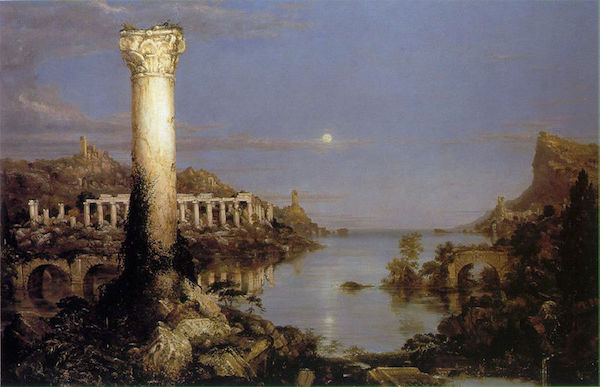
Thomas Cole Desolation of Empire 1836

https://twitter.com/Q_TheStormRider/status/2101766240939512232?s=20
https://twitter.com/EricLDaugh/status/2102034074340667514?s=20Bessent on Iran:
— Clash Report (@clashreport) September 21, 2026
On September 23, all Iranian airlines will be shut down around the world.
How do we do that? If they land, you cannot provide them with fuel, you cannot provide them with landing services, you cannot sell them tickets, or you will be knocked out of the dollar… pic.twitter.com/pX5wfEobV3
https://twitter.com/Q_TheStormRider/status/2102052127279632696?s=20 https://twitter.com/EricLDaugh/status/2102045797441245226?s=20This isn't just Trump talking.
— Robert W Malone, MD (@RWMaloneMD) September 20, 2026
Trump has already survived three documented assassination attempts. Federal prosecutors have also convicted an Iranian IRGC operative in a murder-for-hire plot that DOJ says included plans to assassinate Trump. And U.S. officials have received… pic.twitter.com/CatOmto76Q
There’ll be no WWIII with Trump and Putin.
• Who Had ‘World War III Starting in Estonia’ on Their 2026 Bingo Card? (Green)
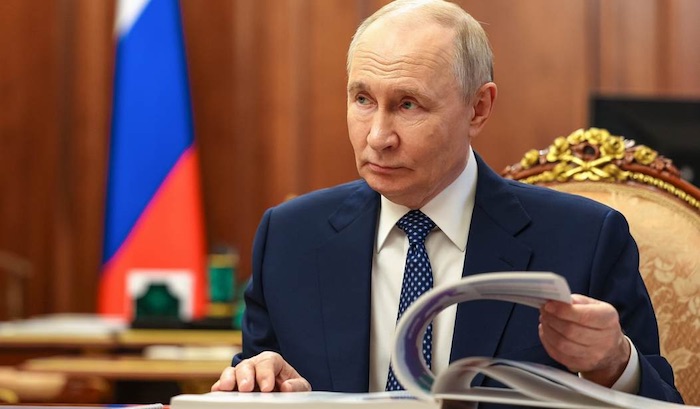
While ordinary Russians pretended to vote in this weekend’s mock elections, the Kremlin made what can only be described as very real war preparations on the Narva River against neighboring Estonia, our tiny NATO ally in the Baltic. Before we get to that, a couple of recent news items that escaped most people’s attention but are certainly related.Read more …
The first is that — surprise! — Vladimir Putin’s United Russia party won the weekend “election” for the Russian Duma, which is basically Putin’s rubber-stamp parliament. United Russia got almost 53% of the vote, and the even more nationalist LDPR got about 10%. The only effective opposition party, Yabloko, was “barred from the election by Russia’s Supreme Court after they made it public that they are against the invasion of Ukraine” and wasn’t on the ballot. But the question analysts started asking in the weeks before the election was what would follow.“Western intelligence officials believe the Russian leader is laying the ground for a ‘stealth mobilisation’ after elections this weekend,” the Financial Times reported last week, “in which thousands of Russians could be drafted.” The actual number is believed to be 300,000 or more men forcibly drafted. Whether Moscow can actually pull that off remains to be seen. It’s impossible to say whether the Russian military even has the training cadres to take on so many recruits in short order.
Mobilization makes sense on paper, but the reality might be a bit more confused. We’re only getting started on the stuff that makes little sense, however. “Hybrid war” consists of things we’ve already seen, like damaging undersea communications cables, drone probes of NATO air defenses, hiring locals to bomb European munitions factories, and the like. Moscow has untouchable munitions suppliers in China and North Korea, and would really prefer it if Ukraine didn’t have untouchable munitions suppliers across Europe and the U.S.
Basically, small-scale terrorism with plausible deniability. Only more of it going forward, if the analysts are correct. Europe’s leadership is certainly attuned — finally — to the threat. French President Emmanuel Macron called an emergency all-hands meeting in Paris on Friday to discuss the Continent’s deteriorating situation, and reportedly everybody left more or less ashen-faced.
“Maybe if Macron had spent less of his presidency confronting Israel over ‘Palestine’ and more of it confronting Putin over Ukraine, France—and Europe—would be better prepared for the Russian threat,” FDD’s Mark Dubowitz posted after the meeting, and I couldn’t agree more.
Which brings us to today’s news and Estonia, nicely summarized on X by Eric S. Raymond. “There are intelligence reports that Russia has been building hospital facilities” on the Estonia border, while “Russian border guards have been spotted shoring up the banks of the Narva River in exactly the way you would expect if you thought they were going to throw expedient military bridges across it.”
“Russian border guards have also removed a set of buoys in the river marking the Russian-Estonian border, sparking a formal protest from the Estonian government,” Eric added, literally muddying the waters between the two countries. But here’s where it gets truly disturbing: “The city of Narva, Estonia, sits at the Russian border, on the Narva river, opposite the zone where the Russians have declared a curfew for its inhabitants and a no-go zone for people who don’t already live there.”
Narva is 87% ethnic Russian, a result of Russian colonization efforts in the Baltics, both during the Czarist and Soviet era. “Putin has claimed the right to intervene militarily to protect ‘oppressed’ ethnic Russians in the near abroad,” Eric posted. “The invasion and annexation of Crimea [in 2014] was justified on these grounds.”bI make zero predictions, none whatsoever, about what comes next.
It seems absolutely insane by most measures for Putin to make warlike moves like these while virtually all of Russia’s conventional combat power remains committed to his own Forever War in Ukraine.But then I’m reminded of a quote attributed to Dwight Eisenhower: “If a problem cannot be solved, enlarge it.” Maybe a real test of NATO resolve — and perhaps fracturing the alliance, if Putin can make a joke out of Article 5 — is the Russian leader’s way of enlarging the unsolvable problem of Ukraine.And if NATO resolve is not found wanting?
I’m not sure I want to know, but I’m not the one throwing the dice on the banks of the Narva River.
“..the topic of discussion usually centers on how evil the First World is and why we won’t give them more money.”
• This Might Be Trump’s Most Magnificent Troll of All Time (Stephen Green)
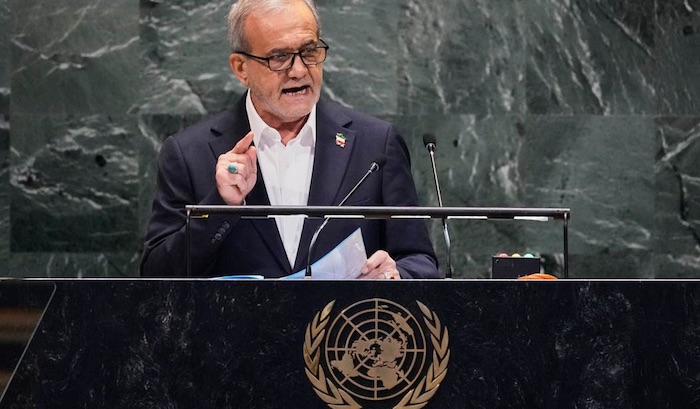
A funny thing happened on the Iranian President’s way to the U.N… But before we get to President Donald Trump’s newest and latest and most magnificent troll, please let me take a moment to remind you of just how high he set the bar for himself. Rep. Wesley Hunt (R-Tex.) told the story to Sage Steele on a video podcast way back in 2024.Read more …
“I want to leave Afghanistan,” Trump is supposed to have said at a high-level meeting with the Taliban during his first administration. “But it’s going to be a conditions-based withdrawal,” unlike the rushed and bloody mess that Presidentish Joe Biden put us and the Afghans through in 2021. Hunt recalled Trump saying, “If you harm a hair on a single American, I’m going to kill you.”After the translator did his bit — and Hunt indicated that the translator was shocked by Trump’s statement and hesitated before passing it along — Trump pulled a picture of the Taliban leader’s home out of his pocket, handed it to him, and then left. While Hunt didn’t say, there’s no doubt in my mind that the photo was unmistakably taken by a Hellfire missile-carrying Reaper drone.
Statement. Made.
And thus the bar for international trolling was set at an Olympic-level height. Flash forward to right now, when the United Nations holds its annual General Assembly High-level Week in New York City.
Honestly, I hate these things. It’s bad enough that the UN has long served as a Western-funded playground for Second World thugs and Third World s***holes, where the topic of discussion usually centers on how evil the First World is and why we won’t give them more money. But the worst part is the quality of people involved — preening bureaucrats playing bigwigs on our dime. Our “betters” around the world most certainly aren’t. But I digress.
Among the worst of the worst is Iranian President Masoud Pezeshkian, with whom, you might recall, we are currently at war. I’ve had my questions about the speed and execution of the war, but not about the necessity of stopping thugs with pretensions of Armageddon getting hold of nuclear weapons. But the UN treaty — the one I’d tear into tiny bits and then burn the tiny bits before unceremoniously dumping the ashes into the Hudson. Or these days, maybe I’d shove the ashes into the mouth of Hizzallah Zohran Mamdani. So many choices.
Shoot, I digressed again. The point is that the UN treaty requires us to issue visas, even to the likes of Pezeshkian, so that they can take their turn dumping on us at the UN. Dutifully, the Trump administration issued Pezeshkian his visa, and he’s supposed to fly here from Iran on Tuesday, and it’d be a real shame if he flew private and his jet suffered some kind of technical mishap.
Now for the troll, courtesy of veteran and podcast host Matt Tardio, who posted Monday that the administration effectively “took away Iran’s ability to fly to NYC.”Or at least to fly back out. Treasury Secretary Scott Bessent — another master of the international troll — “announced that starting Weds, any country providing fuel to any Iranian airlines will be heavily sanctioned,” according to Tardio.
“For those of you wondering, that’s the same day the Iranian President is scheduled to speak in NYC. GOOD LUCK making it home!” I bow to the master. Say, later this week, while Pezeshkian is waiting at LaGuardia to board his Economy Plus flight to Frankfurt or wherever on his long way home, Trump could show up with a recon photo of Iran’s presidential Sa’dabad Complex.
Elizabeth Troutman Mitchell
• Media Outlets Sue White House for Revoking Credentials (ETM)
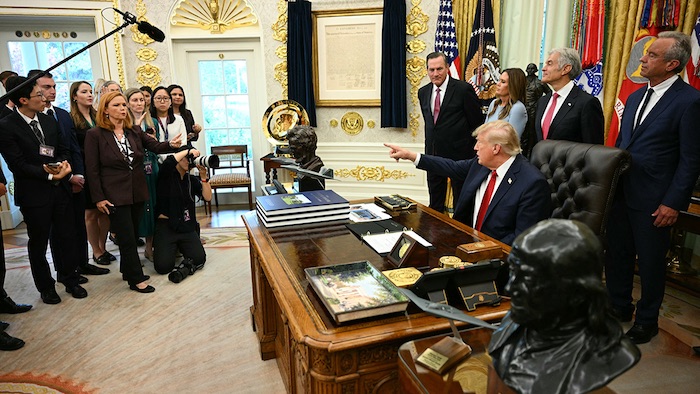
Politico, MS NOW, and CNN are suing the White House after President Donald Trump announced he was banning the three outlets. “This morning, we notified the government that we are filing a lawsuit today to protect our First Amendment rights and defend the principle that the government does not decide what the press reports or publishes,” the news organizations said. “Without notice or process, the White House revoked our journalists’ credentials because it objected to our reporting. Left unchallenged, this threatens press freedom and the public’s right to independent journalism free from government interference.”Read more …
Trump seemingly responded to news of the lawsuit in a Monday post.“The White House is not instituting an assault on the Free Press, something which I cherish. It is instituting an assault on the FAKE NEWS, something that has grown like Cancer in our beloved United States of America,” he wrote Monday morning. “It is corrupt, purposeful, pervasive, fully coordinated, and totally out of control. It is a threat to our National Security, and must be stopped, NOW!”When asked Friday by reporters about the ban, Trump said “our country has to have honestness” and the banned press outlets “purposely write negative things, and they do that because they want to try and diminish the Republicans and a Republican administration.” He said he was “sick” of “cumulative stories over the last few years” from the outlets. The news outlets are represented by Theodore Boutrous Jr. of law firm Gibson Dunn. They are suing Trump, chief of staff Susie Wiles, White House Communications Director Steven Cheung, and Secret Service Director Sean Curran.
The outlets argue that the ban impedes their ability to cover the White House while also stirring up fear in other outlets. When Trump announced the ban, he said, “Other Fake News Media Outlets to follow.” District Court Judge Trevor McFadden ruled last year that the White House cannot bar Associated Press reporters and photographers from the Oval Office, Air Force One, and other spaces for journalists.= CNN is one of five outlets that serve as TV pool. In response to the White House’s ban, the other TV networks in the rotation have said they will not fill in for CNN to cover events designated as pool coverage of the president.
This means TV cameras will not capture the president’s activities, including his trip this week to the United Nations General Assembly in New York City. “This is to advise that, effective today, the TV pool will not be covering events designated as pool coverage of the President,” the TV pool chair wrote in the email. “This follows the White House’s position preventing CNN from fulfilling its assigned pool duties. There will be no replacement pool put in place.”
Vice President JD Vance said Trump is not banning media outlets, but refusing to give some certain access. “He’s not banning media outlets,” he told reporters. “What he’s doing is saying we’re not going to give you special access to the White House if you engage in what is effectively propaganda.”
Relief?!
• Nvidia CEO Says “Zero Percent” Chance Of AI Making Humans Extinct (ET)
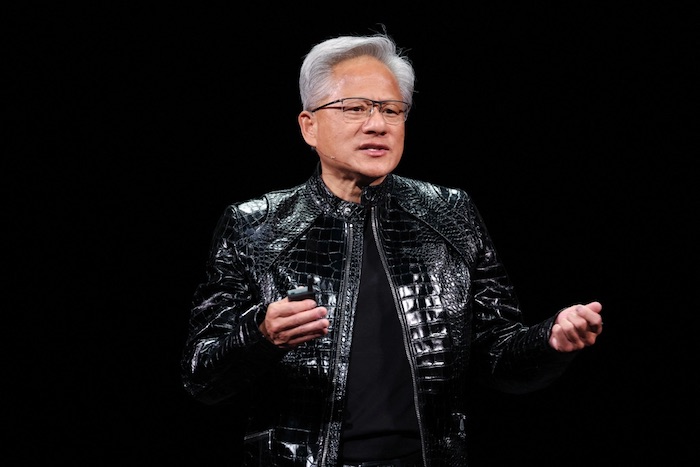
Nvidia CEO Jensen Huang has rejected the claims of some artificial intelligence researchers that the technology could wipe out humanity, calling the arguments “doomsday narratives.” Huang said in a Sept. 17 interview with CBS News that predictions made by former Anthropic researcher Jacob Coxon and Anthropic’s alignment science lead, Evan Hubinger, were not grounded in science. Coxon said in a Sept. 9 post on X that the “people building AI earnestly believe that it could kill us all by the end of the decade.”Read more …
Hubinger said he agreed that it could end humanity. “Jacob is correct here—We really do earnestly believe AI could kill all humans! I personally think it is >10% within the next decade,” he wrote.Huang told CBS’s senior business and technology correspondent Jo Ling Kent on Sept. 17 that 2030 will not be the end of the world. “There is zero percent chance that’s going to be the end of the world,” he said. “Scaring people is unnecessary. It is irresponsible.”U.S. President Donald Trump said in a Sept. 14 post on Truth Social that the United States needed no AI guardrails and that it already had significant criminal and regulatory power over big tech companies. “There is a SICK conspiracy going on against AI and Data Centers, and the only one that is happy about it is China,” Trump wrote. Huang said on Sept. 17 that he agreed with the U.S. president’s view on legislation and regulation. “Before we come up with new laws and new regulations, let’s apply the current laws and current regulations,” Huang said.
“There are all kinds of laws and regulations. … You have cybersecurity unauthorized entry, you have damage liabilities, all kinds of liabilities associated with cybersecurity. All kinds of liabilities associated with products. … My point is apply those first, don’t let this doomsday narrative cause someone to relieve them of the laws that currently exist.” He has been invited to a dinner at the White House on Sept. 24, when Trump will host Chinese leader Xi Jinping.
Trump has said that AI will be on the agenda during his meeting with Xi.Huang told CBS that Xi wanted China to benefit from AI. “They want China to prosper, just as we want America to prosper,” Huang said. Nvidia manufactures specialized H200 chips that power large language models used by AI agents to synthesize information. Trump said in a Dec. 8 post on Truth Social that he had told Xi that the United States would allow exports of Nvidia H200 chips to approved customers in China “under conditions that allow for continued strong National Security.”
In July 2025, Nvidia restarted exports of H20 graphics processing units (GPUs) to China after U.S. regulators approved it. Nvidia is now worth more than $5 trillion, making it the most valuable company on the planet. The company manufactures many of its chips in Taiwan, but last year, it opened a semiconductor fabrication plant in Phoenix. Last month, Taiwanese authorities indicted nine people, including a senior partner manager at Nvidia’s Taiwan unit, for allegedly taking part in a scheme to export servers with advanced Nvidia chips to China.
In June, Taiwan-born Huang told Nvidia shareholders that attempts to build artificial intelligence data centers with smuggled chips were a “dead end,” because the company provides no support or repairs for such products. “National security is first and foremost,” Huang said. “Where commercial opportunities conflict with U.S. national security, national security comes first.”
“President Donald Trump’s Republicans seem to be well ahead at this.”
• Both Parties Aiming to Lose the Midterm Election (Michael Barone)
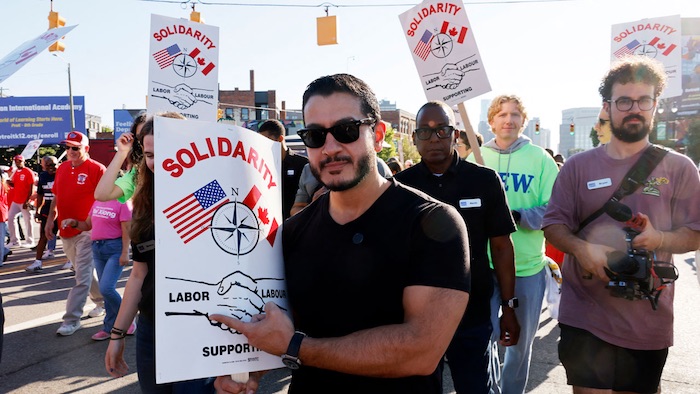
This election is a contest to see which party can do its best to lose. Looking forward from mid-September, President Donald Trump’s Republicans seem to be well ahead at this. But the Resistance (or don’t they call themselves that anymore?) Democrats are putting up a contest.Second-term presidents tend to make political mistakes by doing things they think are right. Franklin Roosevelt and court-packing, Ronald Reagan and Iran-Contra, George W. Bush and the Iraq surge. You can see two examples of this in the second Trump term.Read more …
One is his insistence on haphazardly imposing tariffs. It is an example of providing a plentiful quantity of something for which there is no demand among the electorate.v That’s been true for a long time. William McKinley, cited by Trump as a tariff advocate, called for switching from protective to reciprocal tariffs in his last public speech in 1901. Over the next half-century, as economist Douglas Irwin points out in his definitive book “Clashing Over Commerce,” Republican presidents were leery of tariffs, which were supported by congressional leaders as a way of holding their majorities together: You vote for a tariff that helps my local industry, and I’ll vote for one that helps yours.The definitive moment may have been when, as Jude Wanniski argued years ago, a proposal for a tariff on the dairy product casein got the progressive Wisconsin delegation to join the legislative mob that passed Smoot-Hawley in 1930. Over 1,000 economists signed a petition begging Herbert Hoover to veto the bill, but he signed it anyway, and the Great Depression followed. Almost no one without a lobbyist wants tariffs now. And voters don’t have to read Irwin to realize that Trump’s tariffs raise prices for consumers and many manufacturers as well.
Trump stands on sounder ground, in my view, in attacking the regime in Iran, which has preached and practiced “death to America” since 1979. But, apparently believing that he could compel a surrender as he had against the Chavista gangsters in Venezuela, he launched a devastating assault without preparing the public for it and while promising a speedy resolution. bThat hasn’t happened; wars turn out to be hard to predict. But it has brought higher gasoline prices and continued inflation and has destroyed Republicans’ previous edge on the economy.
Meanwhile, the president, in childish self-aggrandizement, is devoting political capital to his beloved ballroom, to renaming the lowest-altitude Great Lake “Lake America,” to Hunter Biden-style enrichment of his family members, to closing the Kennedy Center if he can’t put his name on it. “An extraordinary number of dumba** political takes,” as elections handicapper Nate Silver notes. Just to make sure that voters don’t forget these things, the Trump political command has opened up its nine-digit war chest and is spending on ads centered on the president despite his 40% job approval and 58% disapproval. It looks like the strengths, maybe even the identities, of actual Republican candidates will get minimal airing.
If Republicans’ weakness is the self-indulgence of a second-term president, Democrats’ weakness is their propensity to embrace the wildest and least popular impulses of their political left.There’s abundant videotape back from the left-wing craze that followed the death of a Minneapolis fentanyl user in May 2020 of Democrats’ demands for defunding the police, abolishing prisons and abandoning enforcement of immigration laws. Which is exactly what the Biden administration did, raising the number of foreign-born by 8.3 million in four years, 30% more than the Obama administration did in eight years.
That was five times as many as the foreign-born increase in the first Trump administration, and in the 20 months of Trump 2.0, the Census Bureau reports, the foreign-born population was declined by 2.8 million. Democrats’ no-enemies-to-the-left posture is most obvious, perhaps, in Democrats’ reluctance to oppose boys playing in girls’ sports, their support for government-paid transgender surgeries for prison inmates and illegal immigrants, and their policy in states they govern removing teenagers professing gender dysphoria from the custody of their parents.
As the most effective pro-Trump ad of the 2024 campaign cycle put it, “Kamala is for they/them. President Trump is for you.” That still could be a lively issue. So is the reluctance of Michigan Senate nominee Abdul El-Sayed to distance himself from Twitch streamer Hasan Piker, the internet personality who campaigned by his side in the Democratic primary. Piker has said that “America deserved 9/11,” and that Hamas was justified in its Oct. 7, 2023, terrorist attack on Israel.
Piker has also been a prominent supporter of New York City Mayor Zohran Mamdani and Rep. Alexandria Ocasio-Cortez (D-N.Y.). Reporters and analysts who have been eager to ask Republican candidates whether they denounce extremist Republicans, even those from faraway venues, have rarely asked Democrats to denounce extremist Democrats. But surely it’s far to ask El-Sayed, and Democrats campaigning for him, whether he stands by the man he was pleased to summon to his side earlier this year.
5 Reasons Why…
• Mark Carney’s Animosity Toward the US Will Backfire (Victor Davis Hanson)
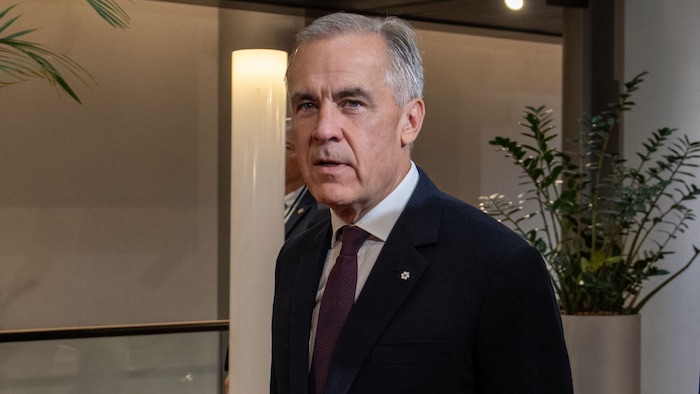
Mark Carney in a suit and tie stands indoors near plants and a light fixture, looking slightly to the side with a neutral expression, reminiscent of Mark Carney’s composed demeanor. Canadian Prime Minister Mark Carney now believes he is more than just the Western foil to President Donald Trump and his MAGA movement—he is the global one. Accordingly, he seems determined to demonstrate to the world how to stand up to Trump, to force Trump to lose the midterms, and to hurt the U.S. economy to such a degree that Trump will never again bully other nations.Read more …
So, at the 11th hour, Carney stormed out of an apparently completed tariff deal with the United States that would have privileged Canada over almost all of America’s other trading partners. Canada, we recall, has enjoyed a $50 billion goods trade surplus with the U.S. for years in a supposedly free and equitable North American trade zone.Carney claimed that American proposals stripped away Canadian sovereignty and quashed Canadian culture, particularly French-Canadian culture. Yet he has not released the documents detailing the bilateral offers he rejected. Nor has he allowed his representatives to explain to the media why Canada blew up the negotiations at the last minute. Carney’s ever-changing excuses, explanations, and invectives about what happened are incoherent and contradictory.
That said, analysts on both sides of the border now concede that American digital-media companies do not customarily pay special taxes, as Carney demands, to promote local, regional, and ethnic culture while operating in Canada—any more than Canadian companies would be taxed for those purposes in the U.S.
Canada and the U.S. both agree that China dumps cheap steel and aluminum into Canada, allowing Canadian manufacturers to use that cost advantage to export assembled vehicles to the vast U.S. market at prices below those of American vehicles. In that way, Canada’s new partnership with China circumvents America’s tariffs on Beijing. China will also send nearly 50,000 electric cars and trucks into Canada under a meager tariff, ensuring that the Canadian EV market is increasingly dominated by Chinese vehicles.
But Carney’s ploy goes beyond helping the communist Chinese dictatorship gain trade leverage over his own NATO neighbor. He has eagerly concluded a comprehensive Chinese-Canadian pact involving travel, visas, food safety, energy, and public security. Carney has grandly described these new agreements with Beijing as part of a new paradigm in which “middle powers” like Canada play China against the U.S. (Canada’s annual nominal GDP is roughly the size of New York State’s).
How ironic that Carney attacks his neighbor, the U.S., for trade unfairness while warming to the communist dictatorship in China. Communist China, after all, is history’s greatest violator of trade protocols—guilty of manipulating its currency, dumping products to secure market share, violating copyright and patent laws, and imprisoning a million Uyghurs. Has Carney learned anything from Panama’s misadventures after naively inviting in a Chinese omnipresence at the American-built Panama Canal? Does Carney recall that the American Monroe Doctrine originally was aimed at foreign intrusion into the North American west?
Canada’s new partner is a totalitarian police state that infected the world with its manufactured gain-of-function COVID-19 virus, which killed more than 1.5 million North Americans. China stonewalled inquiries and never offered details about the pandemic’s origins in its Wuhan lab. It has promised to conquer Taiwan and so terrified its democratic neighbors—Australia, Japan, the Philippines, Taiwan, and South Korea—that they have joined a defensive alliance with the U.S.
So what drives Carney’s hubristic fantasies? Has Canada’s natural wealth in oil, gas, timber, and minerals made it a military and economic dynamo, as it once was? Hardly. Canada’s population is 11.8% of America’s. Its economy is barely one-thirteenth the size of America’s. Canadian GDP per capita is only 60% of America’s.
Canada quietly relies on the U.S. military to deter foreign powers from North America, whether by fending off challenges to Canada’s extensive Arctic claims—including its dubious claim of absolute sovereignty over the Northwest Passage—or by keeping Canadian skies free of foreign combat aircraft and missiles. Canada’s navy—once one of the world’s preeminent surface fleets—has been reduced to fewer than 30 ships. Its 89 American-made jets are more than 40 years old.
Paradoxically, Carney’s dreams derive not from confidence and strength but from insecurity and defensiveness. Carney and former Prime Minister Justin Trudeau nearly ruined the Canadian economy despite the country’s treasure trove of natural resources. Canada has only half the GDP of California—a state currently decaying under neo-socialist governance—despite having roughly the same population.
Nearly 45% of Canadians are either foreign-born or the children of foreign-born parents. These often-impoverished immigrants impose gargantuan social-welfare costs that Canada’s European-style socialist economy simply cannot support. While Carney lectures on “Canadian values,” Canada’s fertility rate of 1.25 is among the lowest in the Western world, while euthanasia accounts for 5% of all deaths, the highest rate in the West.
Nevertheless, Carney now claims, in passive-aggressive fashion, that the U.S. bullies Canada—even as Canada runs trade surpluses with America, relies on the American economy for 72% of its exports, and depends on the American military for its safety. That asymmetry indirectly subsidizes Canada’s disastrous energy, immigration, defense, regulatory, and tax policies.
The Canadian energy industry depends on U.S. purchases of much of its tar sands oil, specialized U.S. refineries, and American pipelines. For over a decade, globalist Canada refused to meet its NATO commitment to invest 2% of GDP in defense, relying instead on American magnanimity to protect North America from foreign aggression.
No matter. Carney has melodramatically characterized his tiff with the U.S. as a “fight” and even a “war.” Yet, oddly for such an anti-American Canadian hyper-nationalist, Carney is a globalist banker who, until he became prime minister, held citizenship in three nations. Yet the Canadian prime minister who urges Canada’s vulnerable working classes to decouple from America is himself—like thousands of Canadian grandees—deeply entwined with the United States.
Some 91% of Carney’s investments are in U.S.-based companies, and two of his four children, like their father, attended college in the United States. Both now reside in America, along with nearly one million other Canadians. Apparently, Carney is so eager for a veritable economic, cultural, and political war with the United States that 91% of his holdings remain invested in the homeland of his enemy. But why, from a position of such hypocrisy and vulnerability, has Carney blown up the trade agreement, ginned up anti-American Canadian nationalism—and done so now?
Only in this way, Carney believes, can he stop autonomy referenda in Alberta and Quebec. And only in this way can he openly interfere in the U.S. midterm elections by targeting new tariffs at red and purple border states while working directly with left-wing Democratic politicians to help Democrats regain control of Congress and restore the prior status quo.
His anti-American screeds have certainly worked at home. Canadians now boo at the mere sound of “The Star-Spangled Banner.” They brag of a new “elbows up” policy to stop U.S. “aggression.” Their social media is flooded with braggadocio about new ways to hurt Americans. Some three-quarters of the country has bought into Carney’s fantasies. Hating America is the new Canadian pastime. But, sadly, this will not end well for Canada, for at least five reasons.
First, America certainly is not the cause of Canada’s maladies, other than by subsidizing its suicidal domestic choices for years. Canada’s self-destructive socialist and globalist policies are its government’s doing alone. The United States did not force Canada to adopt European-style socialist policies of mass unvetted immigration, subsidized green energy, near-disarmament, and unsustainable social-welfare spending. America did not urge Canadians to stop having children or enlist their government to help them kill themselves.
Federal prosecutors will likely examine ex-CIA Director John Brennan’s pivotal role at the beginning, in the middle, and during the aftermath of the Trump-Russia investigation as part of the grand conspiracy probe.
• Prosecutors Zero In On John Brennan’s Role In Russiagate (JTN)
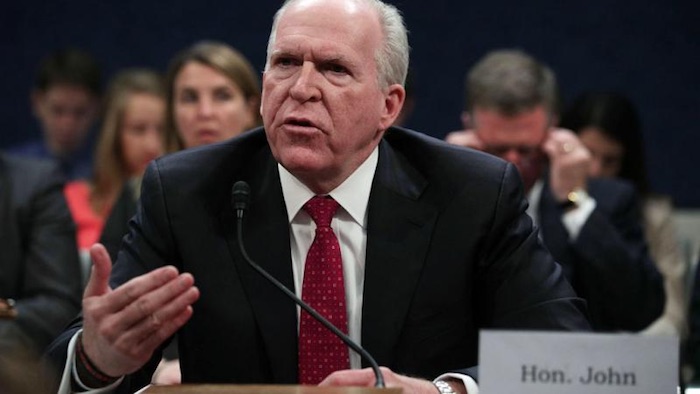
With the confirmation that former CIA Director John Brennan received a subpoena to testify in the ongoing “grand conspiracy” weaponization probe based in Florida, prosecutors appear to be zeroing in on how the ex-spy was at the beginning, middle, and aftermath of the Trump-Russia collusion narrative.Read more …
Brennan is currently a senior national security and intelligence analyst for NBC and MSNBC, and according to one speakers’ bureau, Brennan’s speaking fee typically ranges from $50,000 to $75,000. His security clearance was officially revoked by President Trump in January of last year.The former director’s lawyer confirmed in a court filing in a separate case – Brennan’s lawsuit against the federal government to preserve records related to investigations of him – that Brennan was subpoenaed by a federal grand jury in Fort Pierce, Florida where prosecutors are trying to build a grand conspiracy case arguing President Donald Trump and his allies were deprived of their civil rights in a decades-long saga of weaponized intelligence and law enforcement statements.
Violation of Trump’s civil rights and Brennan’s false statements to Congress being probed
According to the filing, government prosecutor Kurt Olsen told Brennan’s counsel the probe is “far-reaching” and includes “issues at Mar-a-Lago and beyond.” It is aimed at assessing whether Trump’s civil rights were violated. The prosecutor reportedly told Brennan’s lawyer he was also the “subject” of a separate investigation for alleged false statements to Congress.“Mr. Olsen explained that Director Brennan was a ‘target’ of the narrower investigation, and the investigation for which he was now being subpoenaed was the ‘more wide-ranging conspiracy,’ as to which our client was a ‘subject.’ However, he explained that the narrower investigation was ‘still viable,’ and that the issues in the narrower investigation might also be part of the larger investigation, such as being overt acts,” Brennan’s lawyer wrote.
Statutes of Limitations overcome by “ongoing conspiracy”
These revelations about the direction of the grand conspiracy probe provide the most detail about how prosecutors appear to be following an outline the FBI began assembling last summer. Shortly after taking the helm at the FBI, Director Kash Patel quietly launched an investigation into the decade of Democratic Party and deep-state antics ranging from phony allegations of Russia collusion to Jack Smith targeting the president. The conspiracy approach allows prosecutors to tie alleged criminal events currently covered by statutes of limitations to older events by treating them as part of an ongoing conspiracy, Just the News reported at the time.
John Brennan’s actions at the beginning, middle, and end of the Trump-Russia collusion investigation and narrative is likely to feature prominently in the questions prosecutors will want him to answer in front of the grand jury.
Brennan’s fingerprints were on the opening of the federal probe that became the Crossfire Hurricane investigation into Trump and his campaign. Brennan previously testified to Congress in 2017 that the U.S. Intelligence Community had gathered evidence of contacts between the Trump campaign and the Russian government by July 2016 to initiate an investigation. It was at that point, he told lawmakers, that the CIA set up a special group with both the FBI and the NSA to probe alleged Russian efforts to interfere in the 2016 election.
Brennan hid from Congress and the public Hillary Clinton’s personal approval to gin up a bogus Russia scandal
“I encountered and am aware of information and intelligence that revealed contacts and interactions between Russian officials and US persons involved in the Trump campaign that I was concerned about because of known Russian efforts to suborn such individuals,” Brennan said. “And it raised questions in my mind again whether or not the Russians were able to gain the cooperation of those individuals.”What Brennan did not tell congressional investigators at the time was that he was personally made aware of intelligence that same month that then-Democratic presidential candidate Hillary Clinton personally approved a project to gin up a bogus Russia scandal against her GOP opponent, according to Special Counsel John Durham. Durham had probed the handling of the Trump-Russia investigation. Brennan even briefed President Barack Obama and senior administration officials on Clinton’s plan, but, not only did Obama’s team fail to stop it, it allowed the FBI to push the investigation into the same allegations raised by the campaign, Durham noted.
Durham ultimately concluded in his final report that the FBI had no verified intelligence or evidence when it opened the Crossfire Hurricane probe of President Donald Trump’s campaign in the summer of 2016. Durham also found the FBI and Justice Department failed to follow their own standards and allowed the probe to persist with a questionable basis under the Foreign Intelligence Surveillance Act.
“Neither U.S. law enforcement nor the Intelligence Community appears to have possessed any actual evidence of collusion in their holdings at the commencement of the Crossfire Hurricane investigation,” Durham wrote.
Revised and contradicting assessments
The Trump-Russia allegations being probed by the Intelligence Community were later incorporated into the well-known December 2016 assessment from the CIA, the FBI, and the NSA that concluded with “high confidence” that Russian leader Vladimir Putin “ordered an influence campaign in 2016” and that Russia worked to “undermine public faith in the U.S. democratic process, denigrate former Secretary of State [Hillary] Clinton, and harm her electability and potential presidency” and “developed a clear preference for President-elect Trump.”The FBI and CIA also expressed with “high confidence” that Putin had “aspired to help” Trump’s election chances in 2016 by “discrediting” Clinton and publicly contrasting her unfavorably to him.” The NSA had a “moderate confidence” in this.
These conclusions differed drastically from a similar assessment conducted just about three months earlier, when the Intelligence Community made no mention of Russia’s alleged animosity towards Clinton nor of its supposed preference for Trump, included no discussion of the Kremlin allegedly seeking to sink Clinton’s candidacy and elevate Trump’s chances, and generally attributed Russian efforts to a generalized desire to undermine the legitimacy of the U.S. election or the legitimacy of the next presidential administration. But, after Clinton lost the election to Trump, the tone would shift dramatically in that second assessment.
In 2025, the CIA released an eight-page “lessons learned” review which concluded that “the decision by agency heads to include the Steele Dossier in the ICA ran counter to fundamental tradecraft principles and ultimately undermined the credibility of a key judgment.” The review sharply criticized Brennan for allegedly joining with anti-Trump forces in the FBI in pushing to include the baseless anti-Trump dossier authored by ex-British spy Christopher Steele in the December assessment.
Brennan was referred for prosecution last year
The House Judiciary Committee last year formally referred Brennan for prosecution, alleging he gave false testimony in 2023 about his role in trying to bring the discredited Steele Dossier into the assessment. Director of the Central Intelligence Agency John Ratcliffe also sent a criminal referral on Brennan to the FBI following his CIA “lessons-learned” review earlier in July.After his tenure as CIA director, Brennan continued to stand by the Intelligence Community conclusions over which he presided, even as evidence emerged that called into question the basis for the investigation into the president.
At the height of Robert Mueller’s probe of alleged Russian collusion, for example, he wrote an op-ed for The New York Times in which he said President Trump’s claims of “no collusion” were “hogwash.” The retaliatory screed came after the president revoked Brennan’s security clearance.
“The only questions that remain are whether the collusion that took place constituted a criminally liable conspiracy, whether obstruction of justice occurred to cover up any collusion or conspiracy, and how many members of ‘Trump Incorporated’ attempted to defraud the government by laundering and concealing the movement of money into their pockets,” Brennan wrote, arguing Trump’s revocation of his security clearance was designed to silence those who dared to challenge him.
“Taxing wealth is much more economically harmful than taxing just the increase in wealth and combining the two is even worse.”
• California Risks Killing the Golden Goose With Proposition 40 (EJ Antoni)
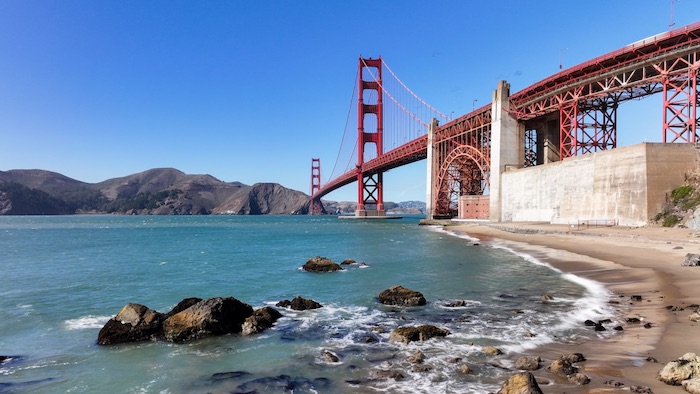
This November, California voters will choose whether to implement Proposition 40, a one-time 5% wealth tax on billionaires to fund a failing health care system. It’s part of a disturbing trend toward socialism in the U.S., wherein people misunderstand basic incentives and how taxes that target the wealthy end up harming everyone.Read more …
High net-wealth folks like Larry Page, Sergey Brin and Peter Thiel already have preemptively moved out of state to avoid the tax. These and other billionaire departures have likely reduced Prop 40’s $100-billion expected haul by about a quarter. But these departures also risk killing the Golden Goose that has funded the Golden State’s bloated budget for decades. California gets almost half of its personal income tax revenue from the top 1% of earners, so every one of these high-earner flights is also a major blow to the state budget for years to come, partially offsetting the one-time revenue from Prop 40.At first blush, the exodus may seem like an overreaction, since the 5% levy sounds modest next to California’s 13.3% top marginal income tax rate, but that’s an apples-to-oranges comparison. Wealth is a stock, and income is a flow. The honest comparison to a tax on income would be a tax on the change in net wealth, or the return on an asset. bUnder that calculus, the proposed 5% wealth tax is, in many cases, equivalent to a multiple of California’s sky-high top tax rate on income—and in some cases equivalent to an income tax exceeding 100%.
California municipal bonds yield roughly 4%, while 10-year Treasury notes yield about 4.5%. The wealth tax liability will exceed those returns, leaving investors at a loss. Average equity returns in the long run easily exceed 5%, so a good year might surrender one-third or half its gains to this wealth tax. But a flat year would require liquidating and surrendering capital.
Municipal bonds, a favorite among high-income earners because of federal tax treatment, deserve particular attention because Californians pay for that one. If large purchasers of these bonds suddenly eschew them because the after-tax rate of return becomes negative, the governments then must offer much higher yields to sell those bonds, increasing their borrowing costs.
That leaves less money in the budget for roads, water systems, schools, hospitals, etc., all because this wealth tax would destroy the incentives for billionaires to finance the Golden State’s public services. Proponents of Prop 40 might say these analyses are irrelevant since it’s a one-time tax, but nearly all the revenue is already allocated to permanent and growing health care obligations. A single infusion of cash doesn’t solve the negative cash flow problem. Therefore, once California burns through these funds, the budget hole returns and another tax is needed.
Then there are exemptions which will create additional market distortions. Since real estate can escape the tax depending on ownership structure, it creates a tremendous incentive to shelter wealth in an already tight housing market by buying up supply, either directly or through a revocable trust, reducing homeownership affordability for middle-class Californians.
Furthermore, advocates for this tax seem to think wealthy individuals hoard gold coins in a vault somewhere, whereas high-net-worth individuals actually have most of their fortunes actively invested, often in their own companies. Confiscating that wealth means liquidating a portion of the investment, thereby reducing whatever flows from that investment.
In the case of business equity, like stocks, that typically means fewer jobs and slower wage growth for workers, along with less innovation that would’ve benefited customers. If an owner has to sell an equity stake to pay the tax bill, it can even depress share prices, harming other owners, like middle-class Californians holding stock in retirement plans.
Taxing wealth is much more economically harmful than taxing just the increase in wealth and combining the two is even worse. Prop 40 would do just that. For example, capital gains are already taxed by both the federal government and California, while Prop 40 would tax the capital gains again along with whatever asset generated those gains.
What is being sold by proponents of Prop 40 as “the wealthy paying their fair share” is actually a massive economic distortion that will further incentivize tax shelters, encourage unnecessarily risky investments by chasing higher rates of return, and worsen California’s ability to provide public services in the long run.
If California is looking to kill the Golden Goose, they’ve found the silver bullet.
“It is difficult to design a place that will not attract people. What is remarkable is how often this has been accomplished.” —William H Whyte
• The Late, Great Debate About Suburbia, an Apologia (James Howard Kunstler)
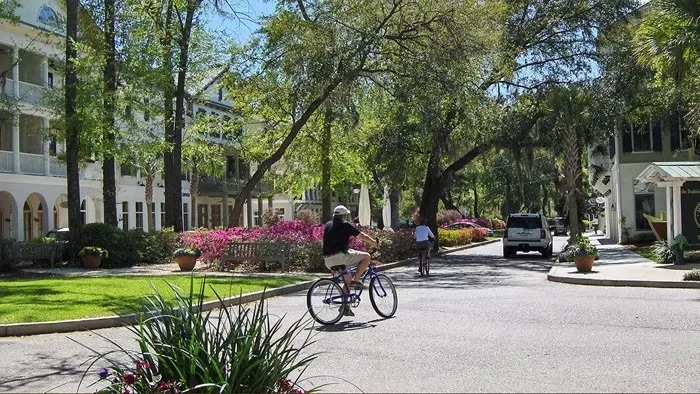
Greenland, yes, yes, okay ! Smooth move. . . ! But. . . today we put aside the vagaries of national and geo-politics to return to a longstanding affliction in American life that is evermore absent from the public discourse and deserves an airing: the quandary of our suburban sprawl living arrangement, and what can be done about it.Read more …
First, get this: the demolition derby we live in day-by-day is responsible for as much misery, injustice, economic failure, and ill-health as anything else in our collective doings. Its sheer ugliness — the horror of the six-lane highway with its ensembles of strip-malls, burger shacks, muffler shops, topless bars, Big Box stops, screaming signage, and the vast wastelands of parking. . . the suicide-inducing housing pods marching out remorselessly through forest, prairie, upland, lowland, basin and range. . . the depressing freeways with their monster entanglements of on-and-off-ramps. . . this epic mutilation of our continental landscape — is an evil quite beyond our ordinary imaginings.This inescapable, immersive ugliness, I remind you, is entropy-made-visible. And entropy, of course, is the force in nature that you really don’t want to mess around with because it is the agent of death. I do not exaggerate. It’s a death trap, the way we live in this country, for the mind, the body, the family, the community, and the national spirit. Until fairly recently this was widely apprehended (or at least suspected). But the politicization of everything has wrecked what had been a growing and pretty robust national discussion about it.
To re-cap briefly: this is a big country. It had once been composed of cities, towns, farmlands, and wilderness, a coherent transect of human habitation. The invention of the motor car changed all that, starting in the 1920s. The ambiguous territory outside these cities and towns represented vast potential fortunes in property development. . . and the race was on.
The Great Depression and World War 2 interrupted the suburban expansion, but it resumed on steroids afterward when the rest of the world was a smoldering ruin and we could sell them anything (and lend them money to buy it). The construction of all the new suburban infrastructure alone was a major component of the late 20th century US economy, and then it became the scaffold for our so-called consumer economy, comprised of furnishing that scaffold with so much stuff that it overflowed into thousands of self-storage sheds.
The decanting of our cities that ensued — the steady dribble of the middle-classes moving out, along with the commerce that served them — left most of those cities ruined. Eventually even the small towns got whacked, the farms paved-over, too. What we’re left with is a weird hybrid landscape that is neither town nor country, has few of the civic amenities that add-up to a genuine sense of community, and none of the rural charm formerly found in the countryside. It became painfully obvious that a suburban house was a cartoon of a house in the country, and living in a cartoon is just not spiritually rewarding. Cue the Prozac. . . .
The whole kit, aided by the dogmas of zoning and government lending schemes, became easily reproducible from one locale to the next. For the development industry, the template became a habit. . . and so it boogied on through the decades. By the 1990s, the generation coming into power (yeah, the Boomers) started a revolt against all that. It crystalized in the New Urbanism movement and its signature org, the Congress for the New Urbanism, CNU. We can do better than this, this. . . this. . . national clusterfuck, they declared.
I was excited by this movement, wrote a couple of books about it, got to know the excellent people behind it — architects, urban planners, civic officials, property developers. They were smart, skilled, visionary. They believed that walkable communities and disciplining the automobile would produce places worth caring about and worth living in — and it seemed to me that such an effort would go a long way to curing the desperate anomie of American life. Over the next several decades, the New Urbanists produced scores of great projects. Some were actual new towns, some projects were renovations of existing towns, neighborhoods, business districts, and small town Main Streets. The results of their work are visible all over the country now.
But then, the political crack-up of the country commenced around 2009 with the Great Financial Crash and the ascent of Obama-inspired Wokeness, and really accelerated with the reaction to the advent of Mr. Trump in 2016. From that point on, as a nation, we’ve been arguing about everything but the disastrous arrangement of daily life on-the-ground in America. Some new twists in the spin of history have made matters worse.
One is that suburban sprawl is, by default, the favorite pattern of MAGA (and I happen to be a Trump voter). To them, suburbia is all tied up with ideas about economic liberty, as is the whole apparatus of Happy Motoring. They are still mentally stuck in the imagery of the TV car commercial — the lone sedan gliding through the sine-cosine curves of the empty seacoast highway, the romantic epitome of freedom! It’s a lie, pretty much, because the more universal experience of motoring these days is getting stuck at a crawl in freeway traffic with a thousand other motorists per mile, half of whom desperately need to take a pee and can’t do a darn thing about it.
And then there’s the fallacy of the suburban housing development being a “community” — bwa-ha-ha-ha-ha-ha! See: I don’t even have to explain that. But, MAGA tends to see it this way, along with all the activity that enables it — the mortgage system, the production home-builders (“it’s more than a house, you understand, it’s a home!”), all of which is so central to a booming economy. So, you don’t dare inveigh against suburbia — except I will, because it is making America worse, not great again, and somebody’s got to say it.
Yet another thing has come along to wreck the New Urbanist dream of reconstituting the American city and small town, and that thing is the World Economic Forum’s (WEF’s) proposal they call the “15-minute City.” Superficially, it seems to resemble the traditional neighborhood model that the NU’s espouse. But deeper down the 15-Minute City is much more about a surveillance and tracking apparatus — and this has caused many conservatives (especially them) to reject anything that looks like traditional urban design.
It’s a most unfortunate situation, but that’s where things stand, and it’s one reason that the debate over suburban sprawl has stopped. A final and equally unfortunate development is that the CNU org came to be taken over the past decade by political Wokesters more interested in Diversity, Inclusion, and Equity BS than in their original mission of providing workable remedies for the tragic fiasco of American suburbia. And now you know why it is so hard to talk about this geography of nowhere anymore.
The advent of AfD could impact all of Europe. For the betteer. Merz is gone.
• Crucial Regional Votes In Germany: What’s At Stake For Merz? (RT)
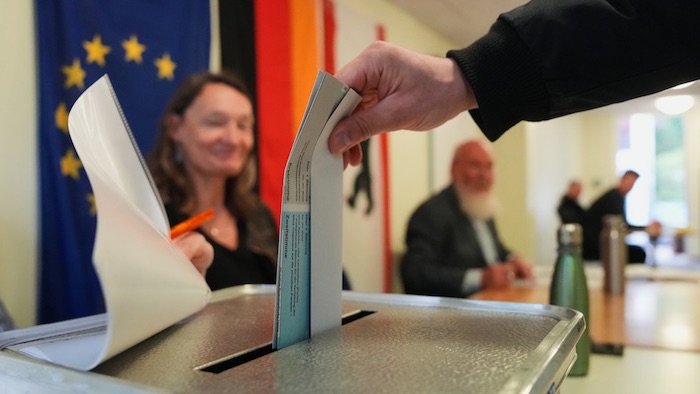
German regional elections could have major implications for Chancellor Friedrich Merz’s political future, with exit polls projecting a crushing defeat for his Christian Democratic Union (CDU) in Mecklenburg-Western Pomerania and a weak showing in Berlin. The CDU was languishing at just 20% nationwide as of last weekend, according to an INSA ‘Sunday Trend’ poll. The Alternative for Germany (AfD) remained the country’s most popular party, with 29% support. This comes despite pressure on the AfD from Germany’s domestic security agency over its alleged ‘extremist’ tendencies and efforts by mainstream parties to keep it out of government.Read more …
Merz himself has also faced widespread dissatisfaction, with 78% of respondents surveyed by INSA unhappy with his performance as chancellor. The CDU therefore entered Sunday’s vote under considerable pressure, compounded by its electoral drubbing in Saxony-Anhalt earlier this month. The Left Party (Die Linke) is projected to top the vote in Berlin with 25.3% of the vote, according to exit polls. Its lead candidate, Elif Eralp, a first generation German of Turkish parentage, told cheering supporters on Sunday evening that “from today on, we will change Berlin together.”Merz’s CDU is projected to take 19.1%, while the AfD is in third place with 16.2%, according to DW. If the projections hold, the Left Party will be in pole position to lead Berlin’s next government – potentially for the first time since German reunification in 1990. In Mecklenburg-Western Pomerania, the AfD is projected to finish first with 37.9% of the vote in an extraordinary turnaround. Party co-leader Tino Chrupalla said the result showed that the AfD “clearly have the mandate to govern here.”
Merz’s CDU, meanwhile, is projected to suffer another major setback, securing just 5% and barely clearing the threshold for entering the state parliament. The result would be the party’s worst in any German state election since 1949. Merz has described his party’s showing as a “disaster.”
Who is voting for what? In Berlin, which is both a city and one of Germany’s 16 federal states, approximately 2.5 million people are eligible to elect the House of Representatives, the local legislature. Voters have cast two votes: one for a direct candidate in one of 78 constituencies and the other for a party’s state or district list. The second determines the overall distribution of seats. The legislature normally has 130 lawmakers, although its size can increase through so-called ‘balancing’ seats. Preliminary data suggest turnout in Berlin has surpassed that recorded in the previous regional election in February 2023.
In Mecklenburg-Western Pomerania, around 1.3 million people are eligible to elect the state parliament. They similarly voted for both a constituency candidate and a party list. Sunday’s elections also marked the first time 16- and 17-year-olds had been allowed to vote in either contest. bThe rising cost of living has been among voters’ biggest concerns. Some 67% of respondents in Mecklenburg-Western Pomerania and 56% in Berlin named it as their primary preoccupation in an Infratest Dimap poll conducted earlier this week. In Berlin, unaffordable housing also emerged as a major campaign issue.
Why do the elections matter nationally Sunday’s votes came just two weeks after the AfD won another eastern state, Saxony-Anhalt, with 43.8%, while the CDU finished a distant second with 17.2%. That result intensified scrutiny of Merz’s future as leader of the party.
Table.Briefings reported earlier this week that he planned to convene the CDU executive committee on Sunday and put the question of confidence to a test. ZDF has also reported that talk of replacing Merz has circulated within the party for months, although no clear successor has emerged. Reuters reported earlier this week, citing an anonymous government source, that the chancellor had canceled a planned trip to the UN General Assembly in New York to attend a special meeting in Berlin on Sunday.
A YouGov poll published on Thursday found that 48% of respondents expect Merz to be out of office by the end of the year. .
https://twitter.com/Miaavswpv/status/2101768958835909012?s=20
++ Ursula #vonderLeyen definitely needs to be charged with her crimes! ++
— Christine Anderson (@AndersonAfDMdEP) September 21, 2026
And she has to be put in front of a jury, and, as far as I am concerned, should be locked up for a very long time for all the evil that she has brought on the citizens in the EU member states. pic.twitter.com/IpK1CwDFBT
Support the Automatic Earth in wartime with Paypal, Bitcoin and Patreon.