Jun 032026


Samuel Melton Fisher Asleep 1902


Iran Ends Negotiations With US, Doubling Down on Terrorism (Salgado)
Iran Denies Progress Despite Hasty Lebanon Truce (ZH)
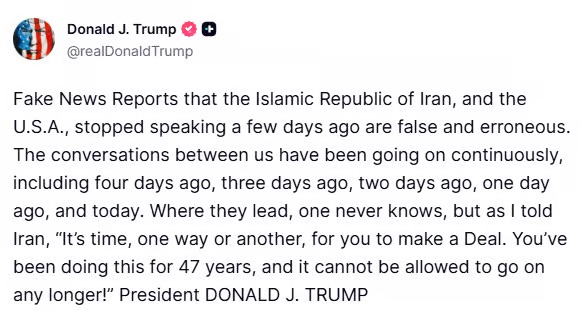
Trump: It’s ‘Fake News’ That Iran & US Stopped Speaking Days Ago (ZH)
Trump Pulls Back Before the Fund Becomes the Story (David Manney)
This Crisis Could Make or Break Türkiye (Sadygzade)
This Is The Dangerous Myth Holding America Hostage (Bordachev)
Europe Has “Serious, Really Serious Problems” If US Cuts Oil Exports (ZH)
Interventionism Undermined Growth In The UK & Canada (Lacalle)
Iran Decides to Take Matters in Hand (Paul Craig Roberts)
The Israelization of the United States Military Is Proceeding (Philip Giraldi)
Letitia James Sues Trump Admin Over $1 Billion Deal To Stop Offshore Wind (JTN)
A “View from the East Wing”: Jill Biden’s Fantasy Book Tour (Turley)
So, That’s Why Jill Biden’s Book Is Coming Out Now (Matt Vespa)
Mamdani Announces Possible Transfer of Housing to Tenants (Turley)


https://twitter.com/GuntherEagleman/status/2061872222638105083?s=20


Iran can be in 2 different quantum states at once.

Iran Ends Negotiations With US, Doubling Down on Terrorism (Salgado)

The genocidal Islamic regime of Iran has finally cut off negotiations with the United States, in a move that President Donald Trump indicated he did not anticipate, but which he says he is prepared to address as necessary.


The reported sudden end of the farce that the Iranian regime was willing to make peace came just after the regime fired on American troops in Kuwait on Sunday evening. On Monday morning, Iranian Foreign Minister Seyed Abbas Araghchi brazenly accused the United States and Israel of ceasefire violations, primarily because Israel is reacting in self-defense to Hezbollah strikes. But the reality is that the Iranian regime and its terrorist proxy Hezbollah have not stopped violating the ceasefire ever since it was announced. Araghchi’s statement appears to have been a little more than a justification for cutting off negotiations, and he evidently assumes that leftist Western politicians and media will repeat his lies without fact-checking.

The president had seemed, as usual, optimistic about the progress of negotiations on Sunday evening. “Iran really wants to make a deal, and it will be a good one for the U.S.A. and those that are with us,” Trump insisted on TruthSocial, blaming both Democrats and members of his own party for giving him too much advice. “Just sit back and relax, it will all work out well in the end – It always does!” Trump added. It is not completely clear what he meant by that, as the Iranian regime and all fundamentalist Islamic jihad dictatorships with which America has dealt have always violated every deal or simply refused deals altogether. In any case, Trump told NBC News on Monday that Iranian officials had not informed him about the cutoff of negotiations, but he wasn’t too worried either way.
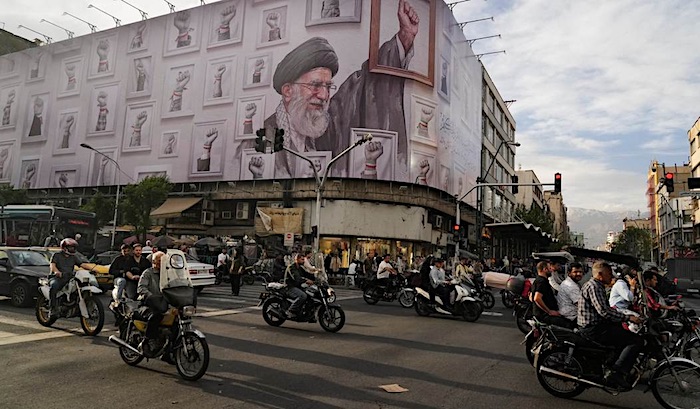
I think we’ve been talking too much if you want to know the truth. I think going silent would be very good, and that could be for a long time, Trump said during an NBC News interview. “It doesn’t mean we’re going to go and start dropping bombs all over there. We’ll just go silent. We’ll keep the blockade”. He added, “I think I can wait as long as they want. They’re losing a fortune.”

It is not clear how long such a stalemate can continue, driving up gas prices, before it is too problematic for Republicans going into the midterms. Swiftly destroying the rest of Iran’s top leadership might not be the choice the American government wants to take, but it is likely the only effective one. The Iranian mullahs will never make peace with the “great Satan,” America, much as we want peace.

The Iranian regime fired on U.S. targets again on Sunday. On June 1, U.S. Central Command posted, Last night at 11 p.m. ET, U.S. forces successfully intercepted two Iranian ballistic missiles targeting American forces based in Kuwait. These missiles were immediately defeated and no American personnel were harmed. U.S. Central Command remains vigilant and will continue to protect our forces from Iranian aggression while supporting the ongoing ceasefire.

Read more …

Wasting away time. That way you can’t lose.

Iran Denies Progress Despite Hasty Lebanon Truce (ZH)

State media has belatedly responded to Trump’s Monday claim that talks between the US and Iran are back on. Trump has even said Tuesday that he expects an agreement for an extended ceasefire to take place “over the next week” – along with the reopening of the Strait of Hormuz.


“An informed source says that the exchange of messages between Iran and the US has been stopped for at least a few days for what is called the initial memorandum of understanding between Tehran and Washington,” Fars reports. So this is Iran in effect saying ‘not so fast’ – as it seeks to ‘hold the cards’ and maintain some leverage. Trump has not indicated a willingness to resume bombing the Islamic Republic, but his patience has seemed to be wearing thin over the last several days, as the White House is boxed in to only choosing among several ‘bad options’ in the wake of launching a war of choice 95 days ago.

Oil spikes on the negative news from Tehran, extends: And more confirmation via newswires: “An Iranian source says there is currently no message exchange with the U.S., contradicting claims of ongoing progress. The source reports talks on an initial understanding have stalled for several days. It also noted Iran’s last communication with Washington concerned Lebanon and drew international attention, despite President Trump stating negotiations are advancing rapidly.

Latest on the Lebanon front: “American sources for AI Hadath: Proposal for a 60-day plan during which Israel withdraws gradually from southern Lebanon”: AI Hadath reports.n”Negotiations propose the deployment of the Lebanese army and UNIFIL in southern Lebanon after Israel’s withdrawal.” “Lebanon seeks to resolve Hezbollah’s weapons file politically, but after Israel’s complete withdrawal.”

Lebanon Fighting Persists Amid Nominal Ceasefire
Various regional and international reports have documented serious ongoing fighting in Lebanon, despite President Trump the day prior having declared that the shooting will cease and that Hezbollah and Israel were forging a limited ceasefire. Trump had said of both sides that “they agreed that all shooting will stop” – after Iran announcing it had suspended peace talks with the US over Israeli military action in Lebanon.

Israeli Prime Minister Benjamin Netanyahu did affirm he would adhere to the agreement, and reports say that planned new airstrikes on Beirut were called off, but he also warned the attacks on the capital would go ahead “if Hezbollah does not stop attacking our cities and civilians” – and that forces in the south would continue operating.

BBC has freshly written that “While the ceasefire appears to be largely holding, there was further violence overnight.” The same report details: Hezbollah said its fighters had targeted Israeli tanks in the southern Lebanese towns of Haddatha and Bayada with missiles and shells. The Israeli military said it had intercepted two projectiles that had been fired from Lebanon in the early hours of Tuesday. No injuries have been reported.Lebanon’s state-run National News Agency reported Israeli strikes on several southern areas and said a “very violent” explosion from a large-scale demolition rocked the town of Debbine.

Tuesday has witnessed some ongoing attacks on south Lebanon, as well as Hezbollah drone attacks on Israeli troop positions, wounding some. According to some of the latest from Al Jazeera: Israeli forces have carried out multiple air raids on the city of Nabatieh, one of the largest in southern Lebanon, our colleagues on the ground report. The city, a strategic hub for Hezbollah, has been encircled by Israeli forces in recent days as troops continue pushing north.

Israeli attacks were also reported across the wider Nabatieh district as Israel deepens its occupation of surrounding areas. Drones hit the towns of Kafr Sir and Aabba, while a strike targeted the road leading to Houmine al-Fawqa. The outskirts of Yahmour al-Shaqif were also hit.

There’s also been a lot of explosions in the southern city of Tyre, with Israeli jets active in the airspace above on Tuesday. And rescuers have recovered six bodies from another town, with Lebanese civil defense agency having said in a statement: “Since yesterday evening and continuing until this morning … personnel have been carrying out search and rescue operations in a residential building that was targeted in the town of Marwaniyah – Sidon district.”

Read more …

Iran talks about one inch at a time with many miles to go.

Trump: It’s ‘Fake News’ That Iran & US Stopped Speaking Days Ago (ZH)

President Trump in a fresh Truth Social post has again insisted that Washington and Tehran are talking again. “The conversations between us have been going on continuously… where they lead, one never knows, but as I told Iran, ‘It’s time, one way or another, for you to make a Deal.'”


Throughout the morning Secretary of State Marco Rubio was fielding questions on Capitol Hill. He too insisted that talks are ongoing, despite a Tuesday Iranian denial. He claimed the regime is ‘fragmented’ and because of this, back-and-forth messaging is extremely slow-going. “Iranian people would make a deal tomorrow if it were up to them,” Rubio said. “The Supreme Leader and the IRGC are a bit more immune to pressures.”

He also generally acknowledged that Iran has effectively shut down the Strait of Hormuz, and then said this justified the US naval blockade of Iranian ports in turn. There was also this interesting exchange when he echoed Trump’s line that the war is actually ‘over’ at this point…Hawks like Ted Cruz want to know of any other regime change tactics going on…

A potential new nuclear framework regarding Iran was also a central topic to Tuesday’s Congressional testimony:

Big if true, there is still too much smoke and noise:

Secretary of State Marco Rubio said Tuesday that Iran has agreed to discuss previously off-limits aspects of its nuclear program, raising hopes that ongoing negotiations could pave the way for the reopening of the Strait of Hormuz and a broader diplomatic breakthrough. Speaking at a Senate Foreign Relations Committee hearing on the State Department’s budget request, Rubio said: “We are in talks… There is the prospect before us, which could happen today, it could happen tomorrow, it could happen next week, that for the first time, certainly in my memory, they have agreed to negotiate aspects of their nuclear program.”

He said the U.S. hopes such negotiations could lead to a broader understanding that would include the reopening of the strategic waterway. “We’re hopeful that something like that could happen, in which the straits would reopen, we would enter into a period of negotiations on very specific topics, delineated negotiations, in the hope of reaching an outcome that’s acceptable to us and something they would be able to do as well,” he said. The above was spoken with a few too many caveats… “which could happen today, it could happen tomorrow, it could happen next week…”

Rubio in the hot seat over Iran war:

Read more …

“Pulling back from a politically vulnerable fund doesn’t mean retreating from the fight. It keeps the focus where it belongs.”

Trump Pulls Back Before the Fund Becomes the Story (David Manney)

Axios is reporting that President Donald Trump’s administration appears ready to drop the proposed $1.776 billion Anti-Weaponization Fund, and the move may prove smart. The concern behind the fund remains real: Federal power did get used as a political weapon, and Americans deserve answers, names, records, hearings, firings, and prosecutions where evidence supports them. From Just the News. The Trump administration is reportedly planning to cancel plans to create a $1.776 billion “anti-weaponization fund” amid bipartisan backlash, Axios reported, citing “two senior administration officials.”


The Department of Justice announced the fund as part of a settlement to President Donald Trump’s lawsuit against the IRS over the leak of his tax returns by contractor Charles Littlejohn, who pleaded guilty. Originally intended as a fund to allow the victims of alleged political weaponization by the Biden DOJ, the fund drew backlash from Republican and Democratic lawmakers alike over concerns it could be used to enrich Trump allies. Yet even a well-intended remedy can become a political trap when critics get to define it before victims ever get heard.

Acting Attorney General Todd Blanche announced the fund on May 19 and described it as a process for people harmed by lawfare and government weaponization. The Department of Justice said the settlement would create a path for claims tied to political targeting. The purpose makes sense. People crushed by selective prosecution, federal pressure, or political intimidation shouldn’t have to absorb the damage quietly while the officials who caused it retire with pensions and book deals. The trouble came from the structure, not the principle.

U.S. District Judge Leonie Brinkema temporarily blocked the fund on May 29 after a challenger argued the program lacked legal authority and could allow poorly supervised payouts. U.S. District Judge Kathleen Williams also reopened Trump’s IRS case to examine the settlement behind it. bThose moves didn’t prove the fund was wrong; they did prove the plan had become vulnerable, and vulnerability in Washington has a way of swallowing the original purpose.

Senate Majority Leader John Thune (R-S.D.) and other Republicans questioned the fund’s broad reach. Rep. Brian Fitzpatrick (R-Pa.) asked Blanche for more transparency. Senate Minority Leader Chuck Schumer (D-N.Y.) attacked the fund as corrupt and promised a fight. Schumer’s outrage was predictable, but Republican caution deserved attention because it showed how easily the fund could shift the debate away from weaponized government and toward the mechanics of compensation. From the Associated Press.

Senate Republicans who are returning to Washington on Monday say they won’t have the votes to pass the Homeland Security spending bill until the White House works with them to place parameters on a new $1.776 billion settlement fund designed to compensate Trump’s allies. But Trump has shown little interest in doing so, even after a judge temporarily halted any payouts.It’s unclear how they will settle the dispute.

The Trump administration is “going to have to come up with some suggestions and ideas,” Senate Majority Leader John Thune said before the Senate left town on May 21. Thune, of South Dakota, said that the settlement money — some of which could potentially go to Trump supporters who beat police and attacked the Capitol on Jan. 6, 2021 — “just makes everything way harder than it should be.”

The impasse over the “anti-weaponization” fund could be an inflection point as Republicans try to keep their majority in this year’s elections and advance their agenda. Trump’s campaign year push to defeat GOP lawmakers who he sees as disloyal, including some of Thune’s most reliable Republican votes in the narrow 53-47 Senate, has only added to the tension. Trump has a stronger lane available: investigate the abuses, release the records, put officials under oath, let inspectors general dig, let prosecutors bring cases where the facts meet the law, and fire federal employees who misused power.

FBI Director Kash Patel can keep weaponizing concerns near the center of bureau reform, and Blanche can pursue accountability without giving opponents a clean opening to call the whole effort a payout scheme. Trump’s opponents want the argument to move away from FBI abuse, IRS misconduct, selective prosecution, and federal retaliation. A $1.776 billion fund makes that easier for them; when every hearing could become a fight over “payouts,” every victim could get buried under questions about eligibility, favored allies, and who approved the checks. Trump doesn’t need to carry extra weight into a fight he can win with documents, witnesses, sworn testimony, and the record left behind from the Biden years.

Victims of weaponized government deserve justice, and a future compensation process may still deserve consideration if Congress builds it with clear limits, public oversight, and narrow rules. For now, the better path runs through exposure and accountability; Congress can hold hearings, agencies can release files, prosecutors can pursue charges, and judges can review misconduct. The Trump administration has many lawful ways to prove that federal power punished enemies and protected friends. Pulling back from a politically vulnerable fund doesn’t mean retreating from the fight. It keeps the focus where it belongs.

Read more …

Erdogan simply arrests his opponents.

This Crisis Could Make or Break Türkiye (Sadygzade)

Türkiye’s domestic political landscape has entered a phase in which judicial decisions, intra-party struggles and strategic calculations by the authorities are becoming increasingly intertwined.


The arrest of Ekrem Imamoglu, the mayor of Istanbul from the center-left opposition Republican People’s Party (CHP), in 2025 and the subsequent court decision to remove Ozgur Ozel from the leadership of the CHP and transfer control of the party back to its previous leader Kemal Kilicdaroglu represent two connected episodes within a broader political process. They suggest that the Turkish political system is preparing for a period of heightened uncertainty, in which future elections will be seen not merely as a routine electoral procedure, but as a contest over whether the system which has been shaped over the past two decades will be preserved or revised.

A rival in Istanbul
Imamoglu was detained on March 19, 2025 on charges of corruption and abuse of office, and was later arrested. The timing was especially significant, since the CHP was preparing to name its candidate for a future presidential race, and Imamoglu was widely viewed as the most likely figure to be nominated. By that moment, his political weight had already moved far beyond municipal politics. After his victory in Istanbul, he had become one of the most recognizable figures in the opposition and a potential national rival to Recep Tayyip Erdogan.

Istanbul has always been exceptionally important in Turkish politics, being the country’s economic center, a symbol of political legitimacy and the place where Erdogan’s own national career first took shape. The rise of Imamoglu therefore meant the emergence of an opposition figure capable of weaponizing urban discontent, the demand for economic normalization and expectations of institutional renewal. His arrest moved political competition from the sphere of electoral rivalry into the sphere of legal and administrative control.

Destabilizing the opposition
The current court decision regarding Ozgur Ozel should be seen as a continuation of the same strategy. The judicial removal of Ozel from the leadership of the CHP (over alleged issues regarding the legitimacy of the party congress and procedural violations) and the transfer of control to Kemal Kilicdaroglu effectively sets the country’s main opposition force back to its previous configuration.

Ozel took over the CHP after Kilicdaroglu’s defeat in the 2023 presidential election and became a symbol of the party’s attempt at renewal. Under his leadership, the party achieved major gains in the 2024 municipal elections, demonstrating that the opposition could not only criticize the government, but also expand its electoral base. The return of Kilicdaroglu objectively alters the balance inside the opposition, damaging its ability to preserve mobilization before the next electoral cycle.

Preserving decades of work
A restrained analysis of this situation requires attention not only to the interests of the authorities, but also to the bigger picture of a state operating in a complex external and internal environment. Judging by its recent steps, the Turkish leadership is seeking to preserve control over a political direction it considers strategically important. Over the past two decades, Türkiye has significantly transformed its position in the international system. It has become a more autonomous regional actor, strengthened its defense industry, expanded its military presence in neighboring regions and used foreign policy more actively as an instrument of national positioning.

For the current leadership, a change of power would mean the risk of revising the entire trajectory built under Erdogan. This includes the presidential system, foreign policy autonomy, the defense industry, policy in the Eastern Mediterranean, and relations with Russia, the West, the Middle East and the Caucasus. The authorities therefore seek to minimize the possibility of a sharp political turn at a time when the regional environment is becoming increasingly unstable.

Read more …

“Washington’s global supremacy has become its own tar pit”.

This Is The Dangerous Myth Holding America Hostage (Bordachev)

The United States is caught in a trap of its own making. It wants to preserve its unique position in world politics, while at the same time freeing itself from the growing burden that this position imposes. Yet Washington hasn’t found any way to do so except by insisting, ever more loudly, on its own superiority so the result is that America clings more tightly to the very role it should have consciously begun to abandon long ago.


There’s an old story from ‘Uncle Remus’s Tales’, the famous collection by the American writer Joel Chandler Harris, in which Br’er Fox sets a black doll made of tar and turpentine by the roadside to trap Br’er Rabbit. The rabbit greets the doll, mistakes its silence for rudeness, grows angry and strikes it. His paw sticks so he strikes again, and the other paw sticks and the more furiously he fights, the more completely he is trapped. This is increasingly what American policy looks like in its struggle to preserve hegemony. The US has become stuck to its own global role. It wants to escape the costs of maintaining that role, but every attempt to do so only entangles it further. In trying to defend the “tar baby” of global primacy, Washington is forced into ventures that are costly militarily and for its reputation.

The latest example is the unprovoked attack by the US and Israel on Iran. Washington would clearly prefer not to be dragged into a wider Middle Eastern crisis, yet it has once again acted in a way that makes such entanglement more likely. It wants the privileges of hegemony without the liabilities, but the two cannot be separated. In its struggle with this tar-covered scarecrow, the US damages not only its obvious rivals, Russia and China, but the wider international order. At the center of that order stands the UN system and the institutions built after the Second World War. These structures have long served Western interests, but they also provided a degree of predictability. Now they are being undermined by the very power that once claimed to defend them.

Russia, China and many other states view this process with mixed feelings. None has an interest in a sudden collapse of American power, still less in the collapse of the American state itself because for a century, the United States has been a central factor in global development and the great diplomatic game. Its abrupt disappearance would create not freedom, but rather chaos. At the same time, it’s obvious that America’s struggle to preserve hegemony is weakening it but this process can’t simply be reversed. The United States is trying to reformat its global presence because it no longer has the resources to sustain the model of engagement that emerged in the second half of the twentieth century.

Its economic model shows little sign of being capable of the transformation needed to restore the “golden years” of global leadership. Appeals to modern technology, however loudly advertised, look more like temporary devices to avoid deeper change than a serious renewal of American power. Russia, China and many others therefore watch America’s internal difficulties with a certain satisfaction. They expect that the gradual weakening of the US position will eventually make it possible to speak with Washington on more equal terms and to formalize a fairer world order.

Read more …

“When you’re out of something, it’s it. That’s it. It’s over… it’s instantaneous.”

Europe Has “Serious, Really Serious Problems” If US Cuts Oil Exports (ZH)

Last night, the Abaxx Markets’ Jeff Currie and Veriten’s Arjun Murti joined Real Vision’s Ash Bennington for a ZeroHedge Debate on what the oil market is getting wrong. Surprise surprise… the EU is not looking good. But the U.S. may be in trouble too. Currie doubled down on his reserves-to-run-dry-by-July call. They each gave their outlook on structural supply constraints that existed before the Hormuz debacle, whether the latest ‘ceasefire’ can be trusted, and where the price is headed and how quickly it’s headed there. Despite signs of relief in the Mid-East, many signs still read bullish oil (and thus bearish cost of living).


Currie’s July 4th Doomer Call
Currie on his recent warning that global oil inventories could run into serious shortages as early as July: “There’s a misnomer that the eight billion barrels of oil that you see in storage around the world is all usable,” he said, noting that fuel is not homogenous (jet, diesel, gasoline, etc.) and that 8 billion is not actually that much… “Every single energy analyst says sometime in that July, August is when you get into pretty serious problems.”

The current calm in prices, Currie said, reflects seasonal demand weakness rather than a genuine easing of supply constraints. “Why you haven’t seen this? We’re in the seasonal low of demand,” he explained. “April and May it goes down like this, and then June it just goes straight up five million barrels a day.” Murti agreed that shortages are likely to emerge region by region and product by product… where one country runs out of jet fuel, another gasoline. He added that developing Asia appears particularly vulnerable while Europe remains heavily exposed after years of energy underinvestment.

Asked how long it takes for shortages to be felt once inventories are exhausted: “When you’re out of something, it’s it. That’s it. It’s over… it’s instantaneous.”

Turns out Exxon agrees with Jeff…

Which Countries Will Feel The Most Pain?
According to Murti: China looks good, rest of Asia… not so much. EU not great. America too complacent but likely OK. “Europe might be able to avoid shortage by the fact that they’re still rich enough to outbid those less fortunate Asian countries for the cargoes that you have… blase attitude on the part of Americans, American investors, even American politicians, about how serious of an issue this is… we’re not going to face shortages like the 70s, but go tell that to the people of you know Malaysia and Pakistan.”

According to Currie: Asia will be fine thanks to China “taking care of its neighbors” but Europe is screwed. “Europe is the one that’s the most exposed, and the only reason they don’t have problems is that the United States is exporting everything they have to Europe right now…” And while China has been building up inventory, “Europe, on the other hand, didn’t invest in any brown. They got serious problems, really serious, problems when the Americans don’t export to them.”

Read more …

”Bureaucrats always believe that interventionism did not work because there was not enough of it.”

Interventionism Undermined Growth In The UK & Canada (Lacalle)

Governments are terrible at picking winners and even worse at choosing losers. Net zero and interventionist “Keynesian” policies in Canada and the UK have proven that government intervention has created a worse outcome than anyone would have expected. The result is higher costs, distorted incentives, and weakened productivity growth, with increased dependency on fossil fuels to attend to peak demand, exactly what Austrian economists predicted. What has been sold as a recipe for prosperity and “green growth” has in practice eroded affordability while failing to deliver stronger, sustainable expansion.


It is not surprising to see that the world’s examples of green interventionism, the UK and Canada, have become economic failures. Years ago, some argued that these policies needed time to prove their success. Now, it is not even debatable that the stagnation and recession in the UK and Canada are self-inflicted. Net zero in Canada and the UK is not a single policy but an entire regime of targets, regulations, limits, subsidies, and new bureaucratic requirements. The Canadian federal plan to reach net-zero emissions by 2050 combines rising carbon taxes, prescriptive regulations, technology mandates, and public investment schemes intended to steer capital away from fossil fuels and into politically selected “green” projects.

In the UK, the government’s “Net Zero Growth Plan” is also built on regulatory limits, spending commitments, and industrial policy designed to phase out conventional energy and reshape entire sectors through top-down planning. This is a classic example of interventionism. The state attempts to override market price signals and entrepreneurial judgment to engineer a politically preferred energy and industrial structure and achieves the opposite of what it wants to deliver.

Rather than relying on decentralized knowledge, competition, technology, and creative destruction, dispersed among millions of consumers and firms, net zero regimes assume that politicians and regulators know exactly which technologies should win, what the “right” energy mix ought to be, and how fast the transition should occur. In an open market, prices and profits coordinate production across time, and entrepreneurs interpret prices as signals about real scarcities and consumer preferences. However, net-zero policies deliberately tamper with these signals.

Carbon taxes, subsidies, and regulatory mandates change relative prices not because underlying preferences or scarcities changed but because policymakers decided that certain activities should be penalized and others subsidized. All this is justified by a completely ideological and unreliable assumption of externality costs, where governments present themselves as the ones that know precisely what those alleged externality costs are and try to push a pricing signal imposed through ideology, creating enormous distortions that, ultimately, end benefiting the “old” and “loser” industries.

Governments are not worried about the failure of these policies. Bureaucrats always believe that interventionism did not work because there was not enough of it. Therefore, they impose additional burdens and regulations while portraying themselves as the solution to the inflation and stagnation problems they have caused.

In both Canada and the UK, this has pushed vast amounts of capital into projects that are unprofitable and can only subsist due to policy support rather than genuine market demand. “Green industrial strategies” crowd out investment in other sectors, especially in traditional energy and manufacturing, even when those sectors still deliver higher value at lower cost to consumers. Austrian theory predicts that politicized credit and subsidies will generate malinvestment: projects that look viable under distorted interest rates and prices but which fail to cover their costs once the policy support is withdrawn or the fiscal burden becomes unsustainable.

Canadian long-run productivity growth has fallen from annual rates above 3% in the postwar decades to less than 1% since 2000, despite repeated waves of policy activism and “pro-productivity” rhetoric. Chronic underinvestment in business capital and weak technological progress as key drivers of this decline, suggesting that the policy mix has not created an environment for genuine, bottom-up innovation. The more that investment decisions depend on regulatory favor and subsidy access, the less they depend on entrepreneurial assessment of consumer wants and long-term profitability.

Net zero has also harmed affordability in exactly the way Austrian economists would expect when governments interfere with relative prices. Carbon pricing, renewable mandates, and restrictions on fossil-fuel projects increase energy costs directly by making reliable sources of power more expensive or scarce. These higher input costs then cascade through the economy to transport, food, housing, and manufactured goods, eroding real wages and living standards. [..] .

Read more …

There’s no shortagee of Americans who see iran winning.

Iran Decides to Take Matters in Hand (Paul Craig Roberts)

As I finished writing the article below, Iran decided to take matters out of the hands of Trump and Netanyahu. The decision was a consequence of Netanyahu’s order to the American-provided Israeli Air Force to commence the bombing of civilian residential areas of Beirut, Lebanon, and warning the residents to flee their soon to be ruined homes. The Israeli invasion of southern Lebanon has again been halted by the Hezbollah militia, the third time the Israeli Army has been stopped by a mere militia.


Frustrated at Israel’s impotence on the ground, Netanyahu decided to take it out on citizens in Lebanon’s capital further north distant from the battlefield where the Hezbollah militia stopped the Israeli attack. Thanks to Washington, Israel makes up for its inability to perform on the ground with its American Air Force, which its opponents of choice do not have.When defeated on the ground, Israel bombs civilians. The only thing the IDF is good for is murdering women and children.

The Iranians told Netanyahu that Iran’s Armed Forces will not tolerate any more Israeli barbarism in Lebanon and Israel had best evacuate its own cities. Netanyahu quickly backed down on his planned bombing of civilian housing in Beirut suburbs. Trump, who emerges each day as ever more a pathological liar tried to cover up the Iranian defeat of Washington and Israel by claiming to have convinced Hezbollah to stop embarrassing Israel by stopping their advance in southern Lebanon. There is zero chance that Hezbollah will cede southern Lebanon to Israel.

Now that the stupid Israelis assassinated all of the Western influenced Iranians, and they are out of the picture, Persia is re-emerging. Iran, not Israel or the US, is the regional power in the Middle East. Iran withstood a joint US-Israeli attack and forced the two defeated enemies to ask for a cease fire. It was a mistake for Iran to grant one. But the Iranians have recognized their mistake and have recovered from it.

Destruction awaits Israel if the Satanic Zionists pursue the war, and destruction will be the fate of the corrupt Persian Gulf States that sold out Islam to Israel. American prestige in the Middle East is at its end. Iran prevailed alone, without any help from the pusillanimous leaders of Russia and China, “leaders” afraid of their own shadow.

Despite the earth-shaking development of Iran’s ultimatum to Israel and by implication to Trump, I am leaving the article as I wrote it, because it shows the extent to which the two-bit-punk United States is dishonored by the total subservience to Israel of the Tump regime, the US Congress, Israeli-owned presstitutes, Christian Zionists, and cowards afraid of the Israel Lobby.


Israel Has Blocked Trump’s Exit from the War with Iran – Paul Craig Roberts

Israeli Security Minister Ben-Gvir declared that Israel ‘Will Not Allow’ Trump to Make a Peace Deal With Iran, because the Zionist agenda “is an endless and wide regional war” to achieve Greater Israel. Ben-Gvir was good to his word. He escalated Israel’s violation of the US-Iranian ceasefire by bombing Lebanese civilians and, thereby, forced Iran to pull out of the talks. Iran’s state media reported:

“Given the continuation of the Zionist regime’s crimes in Lebanon, and considering that Lebanon was among the preconditions of the ceasefire, which has now been violated on all fronts … the Iranian negotiating team is suspending talks.” Trump, being the Israeli puppet that he is, actually provided the weapons Israel used to violate the agreement, thereby forcing Iran out of the ceasefire. Instead of being angry with Netanyahu, Trump said he is happy the peace talks are over. Washington, Trump says, will wait out the Iranians. Trump overlooks the possibility that the Iranians will finish off US presence in the Middle East.

Clearly, Israel is running America’s policy in the Middle East while they are integrating the US military into Israel’s and eliminating Israeli critics in the US Congress. There are no Israeli critics in the Trump regime. Only total subservience to Israel.

Read more …

And PCR has found a kindred spirit:

“We now know why Israel had Trump remove Marjorie Taylor Greene and Thomas Massie from Congress.”

The Israelization of the United States Military Is Proceeding (Philip Giraldi)

Congress is considering passing a bill that will give Americans serving in the Israeli army US government provided full benefits like education, jobs and medical care just as if they had been serving in the United States military. Indeed, the legislation currently working its way through Congress would, for the first time in American history, treat service in a foreign army both legally and in practice as equivalent to service in the US armed forces — but only where that foreign army is Israeli. House Resolution 8445, sponsored by Republican Congressmen Guy Reschenthaler of Pennsylvania and Max Miller of Ohio, would amend existing legislation so that Americans who enlist in the Israel Defense Force (IDF) are treated “in the same manner as service in the uniformed services” of the US.

Not surprisingly, many of the “Americans” involved are also dual national Israeli citizens. If the changes come into effect the result will be to considerably and uniquely narrow the gap between Israel and the US in terms of rights and benefits but with benefits going only in one direction, i.e. to serve Israeli interests and with the US taxpayer paying the bill!“In addition to that, the most recent US government gift to Israel sponsored by the United States House of Representatives, a misnomer as the House is actually the Knesset West, is the national Defense Authorization Act (NDAA) for 2027 released on May 13th. Section 224 of the House version of the Act entitled “United States-Israel Defense Technology Cooperation Initiative” integrates “US-Israeli military research and development, co-production of weapons systems, licensing agreements, AI, directed energy, data integration, and missile defense.”

It creates the framework for “bilateral research and development, co-production of weapons, joint ventures, licensing agreements, and seemingly every manner of US-Israeli military-industrial complex cooperation.” The result is to completely connect the functionality of the US military with that of the Israeli military. The implementation of the agreement would arguably do more to irreversibly link the US military to the Israeli military than the $200 billion in military assistance Israel has received from the United States since its founding in 1948. “Critics note how Section 224 would combine the US and Israeli defense sectors in many areas particularly vital to the battlefields of the future, including autonomous systems and cyberwarfare.

It would also greatly increase Israeli influence over the US beyond what it already has through the Israel Lobby and its dominance of the mainstream media. It would enable Israel to expand or start new co-production facilities like it already has in a number of states, giving the Israeli government additional leverage through providing jobs in the US, thereby securing friends in Congress whose districts are affected. The result could well be a White House backed by Congress that is even more prone to go to war based on the Eretz “Greater” Israel fantasies of people like Netanyahu and his insane Security Chief Itamar Ben-Gvir.

“A persistently pro-Zionist Congress has accomplished this shift in the relationship quietly, almost secretly. Though it has been done clearly channeling through the White House and Netanyahu’s leadership, it has been obtained without the knowledge and consent of the American people to whom the US government is allegedly responsible. And, of course, all the integration expenses will be borne by the US taxpayer. Interestingly, of course, it should also be noted that the integration of the US military with that of Israel comes at a time when the American public is expressing unprecedented levels of distrust in and dislike of the Israeli government. That is perhaps no coincidence as Netanyahu seeks to create unbreakable legal and administrative ties between the two countries though with little in the way of obligations on the part of Israel.”

We now know why Israel had Trump remove Marjorie Taylor Greene and Thomas Massie from Congress. Their opposition would have made the American public aware of the takeover of America by Israel.

Read more …

“Climate goals”.

Letitia James Sues Trump Admin Over $1 Billion Deal To Stop Offshore Wind (JTN)

New York Attorney General Letitia James is leading a coalition of blue states in a lawsuit against the Trump administration over its $1 billion deal to end an offshore wind project. The Interior Department announced in March that it would pay nearly $1 billion to the French energy-and-petroleum company TotalEnergies to shift its investments in offshore wind to oil and gas infrastructure. Additionally, the company will invest in the development of offshore oil and shale gas production.


In exchange for the investments, the federal government agreed to terminate offshore wind leases off the coasts of North Carolina and New York and reimburse the company for the loss of those leases, which are worth approximately $928.3 million. James’ lawsuit argues that the deal will harm the plaintiff states’ economies, their energy grids and the states’ climate goals, the Associated Press reported. The complaint was filed in District Court for the District of Columbia and names Trump administration officials, including Interior Secretary Doug Burgum.

The lawsuit asks the federal judge to vacate the lease cancellation and settlement agreement with TotalEnergies’ subsidiary, Attentive Energy. State attorneys general from Maine, Vermont, Massachusetts, Connecticut, Rhode Island and New Jersey are also plaintiffs in the lawsuit.

Read more …

“..Biden famously declared at the time that her husband was brilliant in the debate, and denied he was showing signs of mental decline.”

A “View from the East Wing”: Jill Biden’s Fantasy Book Tour (Turley)

Jill Biden’s book is not even out yet — and she’s already trying to get it displayed on both the fiction and the non-fiction shelves. From her husband’s mental decline to the pardoning of her son, the former first lady has moved from the historical to the fanciful. Thomas Jefferson once wrote that “honesty is the first chapter in the book of wisdom” — but if her promotional interviews are any measure, that chapter appears to be entirely missing from “View from the East Wing: A Memoir.” Last week Biden faced a torrent of criticism, including from Democrats like her former spokesperson, over her claim to CBS News that she thought her husband’s debate meltdown meant he might have been suffering a stroke.


The interviewer didn’t mention the fact that Biden famously declared at the time that her husband was brilliant in the debate, and denied he was showing signs of mental decline. Now, Jill Biden is rewriting the history of one of the most infamous lies Joe Biden ever spun. While running for office, Biden and his staff repeatedly insisted that he would never pardon son Hunter Biden under any circumstances. White House spokesperson Karine Jean-Pierre became indignant and mocked reporters who continued to ask about a pardon after the then-president had repeatedly promised not to do so. Now Jill is saying the pardon was the obvious and right thing to do.

After all, she insisted, “Then the Justice Department changed. And I think that the process was not fair to Hunter.” “When Trump was elected,” she added, “we knew that he would target Hunter.” Just one problem: It was her husband’s Justice Department, and two different panels of jurors, who convicted Hunter. Indeed, even juries in the Bidens’ home state of Delaware and the heavily Democratic state of California declared him guilty. The only pending matter was his sentencing before the same judges that President Biden assured us would be allowed to resolve the cases. Indeed, even after those convictions, the Biden administration declared that the president would not break his promise and pardon his son.

Presidents have long waited until the final days of their terms to grant controversial or self-serving pardons — like Bill Clinton’s pardon of his own brother. However, none but Joe Biden had made the denial of such a pardon an issue in his presidential campaign, and none had repeatedly denied any possibility of it. Yet Jill Biden’s new claim shows the Bidens view the public as chumps and dupes who will blindly accept anything that the establishment gives them. “I truly supported it,” she now insists, because “we just could not let our son go to jail on a charge that no one would go, I mean, no one has ever gone to jail for.”That is also demonstrably untrue.

Read more …

The family wants/needs money.

So, That’s Why Jill Biden’s Book Is Coming Out Now (Matt Vespa)

Former First Lady Jill Biden is creating issues for Democrats with her book about her time in the White House. No one wants to hear it, as the couple has yet to accept responsibility for their part in their party’s crushing defeat by Donald Trump in 2024. The most loyal Biden allies at the White House aren’t happy with this work; some even call it a web of lies.


Like the Biden White House, this book tour hasn’t shed much light on the inner workings of this failed presidency. It’s still a guarded effort, with Jill avoiding tough issues like her husband’s declining health, which was obvious toward the end of his disastrous run at 1600. She isn’t open about what happened on debate night or her husband’s mental decline, though there’s an interesting detail about how Kamala Harris influenced Joe’s decision on an endorsement when he dropped out. So, why did she write this book?

First, it’s tradition—a book of some sort was going to happen. But former MSNBC analyst Mark Halperin noted the most obvious reason: they need money. Hunter Biden isn’t doing his government access stuff anymore after that got exposed, so this family, which has numerous members and hordes of grandchildren, needs to keep raking in the dough: And when it comes time to plug the book, Jill really wasn’t enthusiastic about it, so they know this thing is a grenade.

Read more …

Feels like East Germany 1955.

Mamdani Announces Possible Transfer of Housing to Tenants (Turley)

New York City Mayor Zohran Mamdani promised in his inaugural address to introduce New Yorkers to “the warmth of collectivism.” It now appears landlords will likely to be the first to feel the heat. This week, Mamdani revealed an effort to transfer properties to tenants and non-profit groups. Mamdani announced that “through our new citywide campaign, Fix the City, we will focus on the worst landlords in New York City.” For landlords, it has been clear that the fix was in for some time. Mamdani faced criticism for his appointment of Cea Weaver as the new director of the Office to Protect Tenants.


She previously called for efforts to “impoverish the white middle-class” and called homeownership “racist” while demanding the seizure of private property. Videos of Weaver echoed thread-worn socialist mantras that are the signature of the Mamdani Administration. “I think the reality is, that for centuries we’ve really treated property as an individualized good and not a collective good,” she said. “And transitioning to treating it as a collective good and towards a model of shared equity will require that we think about it differently and it will mean that families — especially white families, but some POC families who are homeowners as well — are going to have a different relationship to property than the one that we currently have.”

Weaver famously tweeted out her beliefs about private property, which are apparently widely shared in the Mamdani administration: “Private property, including and kind of ESPECIALLY homeownership is a weapon of White supremacy masquerading as ‘wealth building’ public policy.” Other socialists on the national level have pursued the same policies to target landlords. In pushing national legislation, Rep. Ayanna Pressley (D-Mass.) joined fellow Democrats in calling for the passage of the HELP Act to “crack down” on some evictions and bar the use of evictions on credit reports. Pressley has declared that “evictions are an act of policy violence.” Mamdani insists that he will be targeting “the worst landlords in New York City.”

Yet, who constitutes the “worst landlords” could prove a relative notion to the ardent socialist. Mamdani proposes to transfer their properties to “responsible stewards,” including tenants and nonprofits. In his 112-page report, Mamdani is again pushing to unleash his “Block by Block agenda for expanded rent controls, promising not to exempt landlords from Rent Guidelines Board limits. He and his allies have previously heralded Cuba and South Africa as models for policy changes. Mamdani faces a considerable challenge in fulfilling his pledge to build 200,000 new affordable homes, with an additional 200,000 stabilized units over the next decade. There is reportedly only a 1.4 percent rental vacancy rate, with 100,000 New Yorkers sleeping in shelters each night.

Rent controls have generally been a disaster, reducing landlords’ ability to make improvements to their properties. They cannot recoup those investments due to rental limits as costs, particularly insurance, skyrocket. The result is a type of planned failure. As landlords postpone improvements, they are often cited by the city in housing hearings. When those findings and fines increase, the landlords risk being declared “negligent” and subject to a transfer due to unpaid citations. There is no argument that the worst landlords warrant the loss of their properties. But transferring such properties to tenants or non-profit groups is a new and costly form of subsidy.

Ordinarily, delinquent properties can be sold on the free market to pay off outstanding debts. That allows neglected properties to be put to the most profitable use, which in turn generates more taxes and jobs for the city. If these properties go to non-profits or tenants, that can further reduce the city’s tax revenues. More importantly, neither tenants nor nonprofit organizations have a proven track record of maintaining properties without substantial city subsidies. It is a mirage created by activists, hiding the true cost to taxpayers. Mamdani continues to pursue policies that will suppress, not surge, new construction. His administration is requiring construction companies to pay a minimum of $40 per hour for city-funded affordable housing, which will further discourage investors.

He announced a $22 billion subsidy for housing costs, with 25 percent going to the New York City Housing Authority. These increased costs will likely grow as fixed budgetary items for the city. Although it is economically dubious, it is politically dynamite. Much of Mamdani’s support comes from young people who have no memory of or experience with the failures of socialist policies in the twentieth century. He simply promises things like free buses or city-run grocery stores as if they can be supported by free money without addressing their true costs.

His grocery stores show the same economic sleight of hand. The city is planning to spend $30 million to create the first store — four times what such stores normally cost. On top of that cost, it was discovered that the city had already appropriated $25 million for the improvement of the site. That is $55 million for a site that will not go on the market for the highest bidders, but rather be operated by the city at a loss.
Read more …


https://twitter.com/VigilantFox/status/2061815682786808185?s=20


Support the Automatic Earth in wartime with Paypal, Bitcoin and Patreon.



Jun 022026


Giuseppe Sanmartino The veiled Christ (Christo velato) 1753


Iran Halts All Messages With US, Orders Opening Of New Fronts (ZH)
Trump Reportedly Ripped Netanyahu In Phone Call (ZH)
Cuba Could Be the Bite Trump Can’t Chew (Scott Ritter)
AI’s Coming Reality Check: When The Physics Finally Hits The Hype (IM)
Florida Becomes First State To Sue “Unsafe” OpenAI and Sam Altman (ZH)
The Slow Disappearance of Cash In Europe (Cláudia Ascensão Nunes)
EU Following Path of Roman Empire’s Decline – Czech PM (RT)
Dubious Opinion on Abrego Garcia, Bar Complaint Against Todd Blanche (Turley)
Psychodrama (James Howard Kunstler)
Jill Biden’s Memoir Is Going to Tear the Democrats Apart (Margolis)
Ex-intel Official: Hunter Biden Laptop Letter Was Deception Operation (Turley)
Aww Look At The Cute Dancing Robot Police State Surveillance Dog…(MN)
Happy Birthday, Clint Eastwood — and a Happy Retirement, Too (Stephen Green)


https://twitter.com/MAGAVoice/status/2061622319664243021?s=20


Iran can and will play this game forever if you let them.

Iran Halts All Messages With US, Orders Opening Of New Fronts (ZH)

Merely last week, Western MSM press reports were touting the usual ‘close to a deal’ headlines, but this morning demonstrates how illusory such claims were and are, as Iranian state media now suggests a total halt in communications between the sides. Per state Tasnim, “Iran stops exchanging messages with the US in protest against Zionist crimes.” This as the IDF has sent ground forces deep into Lebanon, past the Litani River – in the deepest operation in decades. Tehran has insisted on linking up any US-Iran deal with a Israel-Lebanon peace. Tehran is now warning to “completely block the Strait of Hormuz, including the Bab al-Mandab Strait” – the latter with the cooperation of Yemen’s Houthis. All of this has direct impact on the US-Iran ceasefire:


IRAN’S STATE TV SAYS PROBABILITY OF CEASEFIRE BETWEEN IRAN AND U.S. ENDING IS HIGH IF ATTACKS ON LEBANON DO NOT STOP. Below is the full translated statement:

• “The determination of the Iranian armed forces and all axes of the resistance front to respond to Zionist crimes and open new fronts”.

• “Tasnim has obtained information indicating that, given the continuation of the Zionist regime’s crimes in Lebanon and considering that Lebanon was one of the preconditions for the ceasefire and that this ceasefire has now been violated on all fronts, including Lebanon, the Iranian negotiating team is stopping “talks and exchange of texts through a mediator”.”

• “The immediate cessation of the Zionist regime’s aggressive and brutal army operations in Gaza and Lebanon and the necessity of the regime’s complete withdrawal from the occupied areas in Lebanon have been emphasized by Iranian officials and negotiators, and there will be no talks until Iran and the resistance’s views on this matter are met”.

• “Also, the Resistance Front and Iran have set their agenda to completely block the Strait of Hormuz, and activate other fronts, including the Bab al-Mandab Strait, in order to punish the Zionists and their supporters”.

Oil jumps on the headline of halted talks… Futures slide…

Author and University of Chicago professor of the ‘realist’ school Robert Pape says the following on Monday published report: “We will run out of our cushion of oil inventories in July, whether it’s the middle or end of July,” he said. “And Iran knows that. So what Iran is doing is just stringing out the clock to get a better deal.” “What that tells me is they’re not interested in returning the price of oil back to where it was before the war,” he said. “I think what we need to understand is Iran’s goal is to continue instability, continue elevated price of the world’s oil because it gains from that.”

[..] CENTCOM: Intercepted Pair of Ballistic Missiles on Base On Monday morning US Central Command issued its official statement and explanation over the earlier tit-for-tat brief flare-up in fighting, which appears to have ended… “Last night at 11 p.m. ET, U.S. forces successfully intercepted two Iranian ballistic missiles targeting American forces based in Kuwait. These missiles were immediately defeated and no American personnel were harmed,” it said. “U.S. Central Command remains vigilant and will continue to protect our forces from Iranian aggression while supporting the ongoing ceasefire.”

Fresh Missiles on Kuwait
The extended US-Iran ceasefire is once again being severely tested, after Iran earlier in the daylight hours of Monday initiated fresh attacks on neighboring Kuwait and even released video showing footage of a ballistic missile launch. Kuwait in turn confirmed that has been intercepting inbound drone and missile fire. It hosts a major American base, which is again being targeted, though it’s unclear if anything has been hit. The IRGC subsequently identified that it targeted the US base in response to weekend US strikes on Iranian sites. According to a description of the released propaganda video:

The start of the video includes a close-up of what looks to be a sticker on the body of a missile depicting a bruised US president Donald Trump, on the phone asking for help, and overlaid on a “closed” Strait of Hormuz. The caption reads: “Until the last American soldier leaves the region.”

All sides, including the Iranians and Kuwaitis, are saying they have a right to defend themselves. The United States, for its part, has said that it bombed radar and drone sites in Iran in response to the Iranians having shot down a US drone over the weekend.

Read more …

Trump doesn’t want to leave the US in an ongoing war in 2028/9.

Trump Reportedly Ripped Netanyahu In Phone Call (ZH)

A bizarre and unexpected evening report from Axios says that President Trump ripped into Netanyahu during a phone call, cussing at him and essentially ‘steamrolled’ him – angry over breaking the Lebanon truce and demanding that Israel’s military not attack Beirut. Trump is said to have told Netanyahu “you’re fucking crazy’” while demanding Lebanon truce: “I’m saving your ass,” he also reportedly said. Iran early Monday said it halted talks with Washington because of Israel’s escalation in Lebanon. From the report:


One U.S. official said Trump told Netanyahu that following through on his threats to bomb the Lebanese capital would further isolate Israel around the world. Two of the sources said Trump claimed he’d helped keep Netanyahu out of jail — a reference to his support during Netanyahu’s corruption trial. Summarizing Trump’s remarks to Netanyahu, the U.S. official said: “You’re fucking crazy. You’d be in prison if it weren’t for me. I’m saving your ass. Everybody hates you now. Everybody hates Israel because of this.” A second source briefed on the call said Trump was “pissed” and at one point yelled at Netanyahu: “What the fuck are you doing?” And more:

The second U.S. official claimed that, in reality, Trump had “steamrolled” Netanyahu on the call. “Bibi said, ‘OK, OK, just make sure everything is taken care of,'” according to the official. The level of detail in this call ‘leak’ is remarkable, suggesting it was an ‘official leak’ or intentional.

Fresh reports of fighting, amid shaky truce declaration: Sirens sound in the border community of Metula amid an apparent Hezbollah rocket attack from Lebanon. The rocket fire comes despite US President Donald Trump announcing that Hezbollah would stop carrying out attacks on Israel amid the ceasefire. Meanwhile, Iran claims it attacked a US container ship in the Sea of Oman (Fars News).

Lebanon Truce Affirmed
The Lebanese presidency has announced that Hezbollah agreed to a US proposal on the mutual cessation of attacks, which will expand to all Lebanese territory. Per a regional Arab correspondent: “As we emphasized, the Israeli attack on Lebanon was obstructing the reaching of the agreement. The mediators exerted great effort today, and after the American pressure and the Israeli retreat, the doors are now open to return the negotiations to their natural and positive course, and there is no longer much left.”

[..] Trump Suggests He is Forging Lebanon Ceasefire
Trump has announced the “shooting will stop” in Lebanon, after a flurry of phone calls, including with Netanyahu. This came shoon on the heels of Hezbollah signaling it is ready to agree to an immediate truce. Israel too has reportedly halted plans to begin new airstrikes on Beirut. The Lebanon crisis caused Tehran to earlier announced it is halting all contacts with the US. Will the US-Iran talks now be back on?

Trump to CNBC: ‘I don’t care’ if talks are over
Trump has shrugged off the apparent collapse of talks with Iran, after Tehran earlier said it has halted all communications with Washington over Israel’s expanded assault on Lebanon and Hezbollah. Trump has freshly told CNBC by phone, “I don’t care if they’re over, honestly.” “I really don’t care. I couldn’t care less,” he added, and indicated he was “going to ask” Israeli Prime Minister Benjamin Netanyahu “what’s going on with Lebanon.” This suggests Trump could pressure America’s ally to lower tensions.

Trump appears to be betting the US can ‘outlast’ the Islamic Republic, in terms of inflicting economic pain amid the growing global oil supply crisis due to the Hormuz Strait closure. On this, he reacted as follows: He also said he wasn’t worried about oil prices, which spiked following the report in Iranian state media that Tehran is vowing to “completely block” the Strait of Hormuz in addition to halting negotiations. “I think the oil will be dropping like a rock in the very near, you know, the very near distance,” Trump said.

President Trump tells NBC News that he’s not heard from Iran on reports they’re suspending talks, and on Iran, “I think we’ve been talking too much if you want to know the truth, going silent would be very good” We’ll keep the blockade in Hormuz. I think I can wait as long as they want. They’re losing a fortune.His comments to NBC: “It’s an appropriate thing to say, because they’re better negotiators than they are fighters,” he said in a brief phone call. “But they haven’t informed us of that.”

“It doesn’t mean we’re going to go and start dropping bombs all over there,” added Trump, who said Friday he would soon decide on a proposed deal to extend an ostensible ceasefire agreed to in early April. “We’ll keep the blockade.”

Read more …

They want a peaceful transition away from the Castro clan.

Cuba Could Be the Bite Trump Can’t Chew (Scott Ritter)

With much of the world’s attention on the still unresolved conflict between the US and Iran, the average consumer of news may be forgiven if they had forgotten that the US had, on January 3 of this year, launched a mini-invasion of Venezuela which resulted in the deaths of scores of persons, including a number of Cuban security personnel, and the capture of Venezuela’s President, Nicolas Maduro, and his wife. The US justified this action by noting that Maduro was, in its books, a fugitive from justice, having been previously indicted in a US Federal Court on narcotics trafficking charges.


The ease with which the US orchestrated the collapse of the Maduro regime and facilitated the transfer of power to a more than compliant vice president, Delcy Rodriguez, helped the administration of President Donald Trump project an aura of invincibility when it came to the implementation of what the President and his advisors were calling the ‘Donroe Doctrine’, their take on the 19th-century Monroe Doctrine which declared the Western Hemisphere to be the exclusive domain of the US.

Little more than a week later, on January 11, President Trump posted on his Truth Social account what amounted to a direct threat against the government of Cuba. “Cuba lived, for many years, on large amounts of OIL and MONEY from Venezuela,” the President wrote, stating that there had been a direct relationship between Venezuelan economic support to Cuba and Cuban security support to Venezuela. “Venezuela now has the United States of America, the most powerful military in the world (by far), to protect them, and protect them we will. THERE WILL BE NO MORE OIL OR MONEY GOING TO CUBA—ZERO! I strongly suggest they make a deal, BEFORE IT IS TOO LATE!”

The president then set off a firestorm of speculation on American social media when, responding to a joking post that was made on X late the week prior stating that said, “Marco Rubio will be president of Cuba”, he wrote in response “sounds good to me!” Regime change in Cuba, it seemed, was on the cards.

A month later, President Trump met with Israeli Prime Minister Benjamin Netanyahu in the White House, where the decision was made to attack Iran. The US and Israel launched a surprise attack on Iran on February 28, starting a 37-day campaign that ultimately saw the US and Israel fail to achieve any of their stated military and geopolitical objectives, and which left Iran in a position where it dictated the fate of the global economy by controlling the flow of oil and gas through the Strait of Hormuz.

An invasion of Cuba was no longer a top Trump administration policy.Almost overnight, this calculus changed. On May 21, Marco Rubio declared that Cuba was “one of the leading sponsors of terrorism in the entire region.” His comments came the same day that the US Department of Justice unsealed an indictment against former Cuban President Raul Castro. In one day, the Trump administration had reconstructed the pathway toward military action by the US against Cuba, mirroring the regime change justifications that had been cobbled together before the January 3 assault on Caracas that led to the capture of Nicolas Maduro and the collapse of his regime. These actions coincided with the arrival of a US carrier battlegroup off the shores of Cuba.

Read more …

AI for the first time gets some counterweight. There’s never enough energy, and there’s never enough money.

AI’s Coming Reality Check: When The Physics Finally Hits The Hype (IM)

In five years, we’ll all likely be chuckling and shaking our heads over AI. Because today, the tech feels free and limitless, doesn’t it? People are generating endless content: images, videos, memes, code snippets, social posts. Companies are bolting AI onto products by default, the way every Fortune 500 company suddenly discovered they were “sustainable” five years ago.There’s much deliberation on AI right now, and it splits into two main camps of thesis: The majority — those who will die on its hill of promise, convinced we’re months away from effective altruism, UBI, and sentient toasters.


And the minority — usually older, more experienced types — who don’t fully understand it, but look at numbers, remember the dot-com bust, and think this rhymes. We’ll leave that debate to the dinner parties. What interests us is something more boring. Physics. Because here’s the thing: AI isn’t free. Every token represents electricity. Something your average developer, product manager, user, or investor gives precisely zero thought to. Electricity means power plants, transmission lines, grid infrastructure — yes. It also means hot sheds; capital-intensive data centres and all the equipment, cooling systems, and real estate that go with them. Real things. Physical things.

We are surrounded by hype without consideration for the physics. bRight now, there’s a disconnect between the physical cost of this technology and the price users pay for it. That gap is being covered by Wall Street, venture capital, pension funds, hyperscaler balance sheets, and strategic spending on “growth” (a word which here means “losses we’ve chosen to rebrand”). The question is: what happens when that gap closes?

Scenario 1: The Industry Matures
No outright collapse, but financial discipline arrives. A novel concept in Silicon Valley. Low-value usage disappears first. “AI slop” dies because the people generating junk stop when it costs them actual money. Turns out nobody’s willing to pay real dollars to have a chatbot write their LinkedIn thought leadership posts. Tragic.

Serious users — those deriving profit or genuine productivity gains — remain. Growth slows but doesn’t stop. GPU upgrade cycles stretch from two years to three or five or seven. Valuations compress. The froth comes off but the infrastructure remains important. The boardroom shifts from “infinite logarithmic growth” to “focus only on what’s profitable.” Less bubble burst, more long, slow leak of disappointment. A bit like ESG.

Scenario 2: Energy as the Arbiter
Now overlay structurally higher energy prices. You know, the thing everyone was told wouldn’t matter because we’d all be running on solar and unicorn farts by now. If power becomes materially more expensive while capital markets tighten simultaneously, the economics get a lot harder.

Inference costs rise. Training LLMs gets hella more expensive. Shareholders start feeling like they’re holding the next NFT apes. Spending slows sharply. Many AI firms disappear. Hyperscalers pull back, maybe with taxpayer assistance (they are, after all, strategically important to those in power — funny how that works).

GPU cycles extend further. Seven-plus years between major upgrades becomes normal outside the top tier. Markets correct hard. Confidence takes a long time to rebuild. This is not the end of AI, but a reset. Users will fondly remember the “good old days” when it was free. When one could generate a movie scene and post on X about how they just ended a billion-dollar production company’s business model. Peak delusion makes for great content.

Scenario 3: AI Actually Delivers
There is also the upside case, though we admit it’s included here much like a “minority” conspicuously placed on a corporate board — a box-ticking exercise. In this scenario, AI meaningfully increases productivity across enterprises. It reduces costs durably. It embeds itself in everything from coding to logistics to research. The sentient toaster. Higher energy prices don’t kill demand because efficiency gains outweigh them. Hardware cycles remain short. Today’s valuations look justified in hindsight and Jensen Huang’s leather jacket gets its own wing at the Smithsonian.

For anyone familiar with us, you’ll know we think this is the most unlikely scenario. And yet it’s by far the consensus view. Which, if you’ve been paying attention to consensus views over the past decade (“inflation is transitory,” “ESG is the future,” “commercial real estate is fine”) should tell you something.] The gap between expectations and likely reality remains wide open. For Insider members, you’re familiar with the portfolio positioning and Nasdaq hedge.

What Really Matters
The key variable isn’t whether AI is impressive or useful (it is). The key variable is whether AI becomes a true profit engine or remains a subsidised cost centre dressed up in a hoodie and a TED talk.] If profitable and productivity-enhancing, current valuations are justified and the gravy train keeps chugging. If it remains mostly hype layered over weak economics, spending contracts, hardware cycles extend, and we could have an absolute humdinger of an economic “event.”

A ten-year stagnation would require something extreme: demand dropping significantly, hyperscalers becoming hyposcalers, capital markets wanting nothing to do with AI, and energy remaining expensive — all at once. Stranger things have happened. Just ask anyone who bought Peloton at $170. Almost 50 years of history show this eventually reverts to the mean… and the pendulum swings the other way.

Read more …

There are known cases of AI models leading kids to suicide.

Florida Becomes First State To Sue “Unsafe” OpenAI and Sam Altman s(ZH)

OpenAI no longer has to worry about being last in the AI IPO race and lagging ARRs when compared to Anthropic, not to mention a potential Supreme Court showdown against Elon Musk (pending appeal). Earlier today, Florida became the first state to file a lawsuit against OpenAI and its chief executive, Sam Altman, launching a new broadside in a growing rebellion against the alleged safety failings of artificial-intelligence chatbots. The lawsuit, filed Monday by Florida Attorney General James Uthmeier, claims OpenAI and Altman knowingly released an unsafe product and ignored warnings that it could harm users, the WSJ reported.


The 83-page suit alleges that OpenAI allowed ChatGPT to aid and abet mass shooters, encourage people to take their own lives, degrade users’ critical thinking skills and addict minors to a tool that feigns human compassion. “This litany of harms is driven by Defendants’ insatiable quest to win the AI arms race and amass large fortunes, despite knowing the danger of ChatGPT,” the suit said. According to the WSJ, lawmakers, legal authorities and public interest groups have increasingly been raising concerns about the personal and societal risks posed by AI, one of the fastest-growing consumer technologies in history.

The suit says it seeks to protect Floridians from OpenAI’s conduct and mitigate what it describes as a dangerous public nuisance. The suit also seeks to hold Altman personally liable for harm it says he has caused Floridians. Uthmeier opened a criminal investigation into OpenAI in April over the role its chatbot played in a mass shooting that killed two people at Florida State University last year. The suit opens with a screenshot of an OpenAI blog post that says ChatGPT was built with safety in mind. “Not so,” reads the suit’s text under the screenshot.

The suit alleges that OpenAI marketed ChatGPT as reliable despite its tendency to frequently generate dangerous misinformation, which is to be expected from a generative LLM trained on such toxic, liberal cesspools as Reddit and Wikipedia. “ChatGPT was designed by the Defendants to keep users hooked into conversations by any means, regardless of the truth, because it leads to more use of the chatbot, more training data for its improvement, and more market value for OpenAI,” the suit alleges.

The suit also claims the company exploits human compassion to collect user data and lacks necessary safeguards for minors. The suit describes a lack of safeguards in ChatGPT for teens and minors as reckless, and refers to instances of adolescent users being encouraged by AI to take their own lives. The suit says OpenAI created some parental controls, but does not require children’s accounts to be linked to a parent’s account.At FSU, the suspect turned to ChatGPT as a confidant and sounding board to plan the attack. He asked ChatGPT how many classmates he needed to kill to attract n ational media attention, and also how to use a gun. The chatbot promptly dispensed advice for his questions.

Until now ChatGPT has mostly faced litigation over copyright infringement claims. In November, OpenAI was ordered by a federal judge to turn over 20 million anonymized ChatGPT user logs to the NY Times and other newspapers suing the chat giant over its generative AI model. The newspapers had demanded the user logs to inspect how ChatGPT is used to create outputs they say infringe their copyrighted works. OpenAI pushed back, citing privacy concerns.

Read more …

What do you mean, slow?

The Slow Disappearance of Cash In Europe (Cláudia Ascensão Nunes)

Under the guise of fighting money laundering, the EU is making anonymous economic activity progressively harder…


Starting in July 2027, Europeans will no longer be allowed to pay businesses or professionals more than €10,000 in cash (roughly $11,500). Any transaction above €3,000 (just under $3,500) will require mandatory customer identification. This is another step toward political uniformity across Europe, stripping countries of autonomy and subtly pushing citizens toward the digital euro. This measure, part of the new Anti-Money Laundering Regulation (AMLR), applies directly to all Member States. Under the pretext of fighting money laundering, Brussels is imposing yet another form of forced harmonization that ignores the principle of subsidiarity: the idea that decisions should be made at the level closest to citizens and national governments.

What was once a matter regulated by individual countries is now becoming a uniform mandate from Brussels. This is a thinly disguised restriction not only on political freedom, but above all on economic freedom. Cash remains one of the last truly private means of exchange still available; unlike digital transactions, cash does not automatically create a centralized record accessible to banks or public authorities. The use of cash is often associated with the intention to hide illicit activity. Yet the ability to conduct private and discreet transactions is a natural extension of property rights and freedom of contract. Many law-abiding citizens prefer cash for entirely legitimate reasons, including protection against financial instability or potential capital controls.

From that date onward, professionals will be forced to turn every transaction above €3,000 into a bureaucratic process involving identity verification, data collection, and the risk of penalties. This is yet another regulatory imposition that raises the cost of doing business, similar to the introduction of VAT in Europe decades ago, which pushed many small businesses to close their doors or move into the informal economy because of increased bureaucracy and compliance costs. Small entrepreneurs, already pressured by high taxes and excessive red tape, will once again bear the heaviest burden. What were once simple voluntary exchanges will become sources of additional costs, delays, and state intrusion.

Once again, centralized authorities are creating regulatory complexity under the difficult-to-challenge justification of fighting crime, even though each country already has its own rules in this area. More liberal countries such as Germany will lose flexibility, since they previously had no general limit on cash payments. The uniformity imposed by Brussels ignores cultural differences, particularly differing levels of trust in institutions. In some countries, cash culture remains deeply rooted, and confidence in digital systems is significantly lower.

This measure represents a gradual erosion of individual autonomy. If using cash becomes increasingly inconvenient for merchants and consumers, people will naturally migrate toward digital payments. Over time, this initially convenient shift will make the introduction of the digital euro far easier. It is difficult to believe that it is mere coincidence that these restrictions are scheduled to take effect in July 2027 at roughly the same time the European Central Bank (ECB) plans to launch the first pilots of the digital euro. Cash becomes inconvenient and potentially risky at the same time digital money is presented as the practical alternative.

Once the principle is established that the state can limit private cash transactions, there is a strong tendency for those limits to become progressively stricter. European countries themselves demonstrated this pattern when they still controlled these rules nationally. Belgium, for example, steadily lowered its cash payment ceiling over the years to the current €3,000.

The most likely outcome is that the new European-wide limit of €10,000, which may seem relatively high today, will gradually be reduced further until using cash for most significant transactions becomes impractical. In reality, the vast majority of cash transactions are already well below this threshold. According to studies by the ECB, around 81 percent of all point-of-sale payments are below €25, and cash is predominantly used for small everyday purchases. This means that the €10,000 limit will mainly affect legitimate higher-value transactions, such as the payment of certain professional services that many citizens and small businesses still prefer to carry out in cash.

The digital euro, presented as a complement to cash, will arrive at a moment when cash has already been substantially weakened. Unlike cash, this system is traceable, programmable, and potentially subject to holding limits, expiration mechanisms, or usage restrictions.

China has already offered real-world examples. In several pilots of its digital yuan, authorities tested expiration dates on funds, meaning the money would lose its value if not spent by a certain date. This turns money from a reliable store of value into a tool that encourages spending according to government timelines. Such features demonstrate how programmable digital currencies can be used to control economic behavior, punish saving, and steer consumption in line with state priorities.

These are conditions fundamentally incompatible with the freedom that cash provides. This accelerated yet discreet path toward a fully digital monetary system opens the door to an unprecedented level of financial surveillance and control in European history. By overriding the principle of subsidiarity, it will affect almost the entire continent.

The road to total societal control passes through the restriction of economic freedom.

Read more …

“The bloc is weakening itself through its economic and military policies, Andrej Babis told the Financial Times”

EU Following Path of Roman Empire’s Decline – Czech PM (RT)

Czech Prime Minister Andrej Babis has compared the EU to the Roman Empire in its twilight years, arguing that Brussels is weakening the bloc through its economic, climate, and security policies. Babis returned to office in December after his ANO movement won 34.5% of the vote and 80 seats in the 200-member lower house of parliament. Since then, he has positioned himself as a leading advocate of national sovereignty, a reassessment of EU policies, and a more pragmatic approach to Europe’s economic and security challenges. In an interview published on Sunday, Babis accused Brussels of steering the bloc’s economy toward decline through what he called its aggressive decarbonization agenda.


“The EU is now probably on the same road as the end of the Roman empire,” he told the FT. The EU’s push to phase out fossil fuels has become increasingly divisive, with critics in Germany, Italy, Poland, Hungary, and Slovakia arguing that climate targets, carbon pricing, and environmental rules are adding to energy costs and weakening industrial competitiveness as governments also face rising defense bills and the economic fallout from the Ukraine conflict. Babis also said Prague would probably miss NATO’s 2% of GDP defense-spending target this year, despite claiming it met it in 2025. He blamed the pressure partly on a deficit left by Petr Fiala’s previous pro-EU government.

The issue feeds into a broader EU debate over dependence on the US, which accounts for around 60% of NATO’s total military spending. President Donald Trump has warned that the US could scale back its role in European defense unless NATO countries significantly increase military spending. The economic pressures, security concerns, and reliance on external military protection underpin Babis’ comparison with ancient Rome.

The Roman Empire’s later centuries were marked by political instability, economic strain, and military overstretch. It became increasingly reliant on foreign troops while struggling to finance its defenses, as trade and economic activity declined and external pressures mounted. The Western Roman Empire formally collapsed in 476 AD when its last emperor was deposed. Political authority fragmented into successor kingdoms, and Europe entered centuries of decentralization and instability.

Read more …

They squeeze out of Abrego Garcia as much as they can. The Dems havesome strange bedfellows.

Dubious Opinion on Abrego Garcia, Bar Complaint Against Todd Blanche (Turley)

This week, a public interest group filed an ethics complaint against Acting Attorney General Todd Blanche, citing the recent dismissal of a criminal indictment against Kilmar Armando Abrego Garcia. The ethics complaint is the latest example of the left’s self-perpetuating lawfare machine. Liberal courts and groups first prime allegations against conservatives, which are then eagerly picked up by media and advocacy groups. It is no accident that this hit job on Blanche called upon the New York courts and bar to deliver the coup de grâce.


The New York bar and courts have long been willing allies on lawfare, including abusive charges against President Donald Trump and bar charges against his allies. This case, however, is particularly illustrative of how this system feeds on itself. At base, the complaint focused on a dubious decision by District Court Judge Waverly Crenshaw Jr., who dismissed the indictment against Abrego Garcia. The Clinton appointee found in his 32-page order that the prosecution was vindictive. However, Judge Crenshaw spent relatively little time actually addressing the evidence against Abrego Garcia, who was allegedly an associate of the vicious MS-13 gang in years of human trafficking.

Vindictive prosecution claims are notoriously difficult to prove. (I know because I have tried it as a criminal defense attorney). Under cases such as United States v. Goodwin (1982), you must show that the charges “could not be justified as a proper exercise of prosecutorial discretion.” In both cases of selective and vindictive prosecutions, the Supreme Court has recognized that, as the court explained in 1962, “the conscious exercise of some selectivity in enforcement is not in itself a federal constitutional violation.” Moreover, in United States v. Armstrong, a case involving alleged selective prosecution, Chief Justice Rehnquist stressed that there is a ‘’presumption of regularity” in criminal cases.

There was ample reason for Abrego Garcia to have been charged entirely separate from any retaliatory or vindictive purpose. According to his indictment, Abrego Garcia was a member of MS-13 and allegedly conspired with six others to “transport and move aliens” illegally into and throughout the country starting in 2016. This included alleged smuggling into the country of known “MS-13 members and associates.” The government accused him of over 100 such trips in specially outfitted vehicles as well as transporting firearms and narcotics. One witness testified that he had to warn Abrego Garcia against abusing some of the female aliens because it was “bad for business.” (Garcia was also previously charged with spousal abuse).

Judge Crenshaw, however, focused on the decision-making after Abrego Garcia was brought back from a deportation to El Salvador. I was one of those who wrote that he had to be returned in light of prior court orders. However, there were obvious reasons why, after he was returned, prosecutors decided to proceed with charges for his alleged criminal conduct in the United States. Crenshaw’s decision simply works too hard to find a basis for dismissing the indictment and will now be appealed. In my view, it is likely to be reversed. However, in the interim, the same voices are being heard for the disbarment or punishment of Blanche in New York where a Trump association is treated as far more incriminating than an MS-13 association.

It is fair to note that the Trump Administration has undermined its own position in denouncing lawfare by pursuing past critics, including dubious prosecutions over seashell threats against James Comey. However, that does not have bearing on the merits of the claim against Blanche or the dismissal of the Abrego Garcia indictment. The rage in New York has certainly not ebbed. There are ample rage addicts to applaud such claims inside the Bar. However, there are indicators that lawfare no longer holds the same cachet it once did.

Take Rep. Dan Goldman, who is fast becoming the Marie Antoinette of New York politics. Goldman was elected a few years ago on his pledge to investigate all things Trump and is still running on a “let-them-eat-impeachments” platform. In the meantime, his opponent, Mamdani-endorsed housing advocate Brad Lander, is running on bread-and-butter issues. Lander is reportedly 20 points ahead in the polls.

There is still hope that the New York courts and bar will restore a degree of apolitical, objective integrity to their ranks. The odds are still much greater that Blanche will stay in the bar than that Abrego Garcia will stay in the country. However, it is telling to see which of the two is being cheered on by the left.

Read more …

“A sane society cannot debate its way out of psychosis. It must diagnose the patient with lethal precision and restore the ancient boundary between the mad and the free.” —LHGrey on X

Psychodrama (James Howard Kunstler)

When you watch video of the shenanigans at the Delaney Hall ICE building in Newark, NJ, you must suspect you’re seeing a hopped-up political vaudeville act. Freaky as the “protesters” may be — with their tatts and piercings, gummi bear hair color, rolls of blubber, perpetually hoisted cell phones, drums, whistles, and pitiful umbrellas — they are no less actors than Jacob Elordi and Sydney Sweeney out in Hollywood. The Delaney Hall mobbers are allegedly paid by someone or some entity. You’d think the authorities and the news media would be racing to find out who that is.


But, so far, no official announcements and, wouldn’t you know, The New York Times did not even report on doings over there in its Monday morning edition. Independent reporter Nick Sortor, undercover in Antifi garb, discovered their “craft services” tent adjacent to the action in the industrial wasteland where Delaney Hall stands next to the reeking Passaic River. The tent was full of riot gear, tactical supplies, snacks, energy drinks, hot meals (lasagna!) delivered on the hour, first aid supplies, and other “protester necessities,” as if the siege of Delaney Hall was a major Hollywood production shoot.

Anyway, after days of freaks and geeks playacting “oppression” at Delaney Hall, the New Jersey riot cops showed up, including the mounted cavalry, and stuffed several busloads with arrested “protesters,” many of them from out-of-state. Did they bother to interview the folks manning the craft services tent to inquire what organization was paying for all the merch? Isn’t it about time for whoever is signing those checks to get indicted for fomenting and abetting insurrection?

The Democratic Party is reduced to psychodrama, and the nature of psychodrama is that it’s about nothing — nothing real, at least. It’s all concocted sound-and-fury to give the (false) impression that some injustice is occurring. In the case of Delaney Hall, a holding facility for illegal border-jumpers awaiting deportation, the alleged injustice is “unsanitary conditions, inadequate food, poor medical care, and physical and psychological torture.” In reality, conditions there are arguably better than the average Motel 8. Many of the inmates are murderers and rapists, of course, the worst of the worst.

You might suppose that the objective of the melodrama at Delaney Hall was to create another martyr a la Renée Nicole Good and Alex Pretti out in Minneapolis this past winter. Those two unfortunate dupes were induced by the party script to FAFO, leading to their tragic and pointless deaths. Alas, the incidents failed to incite the sort of national uprising that the Lefty-left will not stop seeking.

And now summer is nearly here and (the old song goes) “the time is right for dancing in the streets.” Or, rather, fighting in the streets. The time is also right for the FBI and the DOJ to shut down the funny money supply line for it, and it’s hard to figure now how they might fail to do that. The Delaney Hall arrests give them a vast opportunity to debrief the players, find out exactly how these stunts are being organized.

Read more …

Tell them to stay home and count the geraniums.

Jill Biden’s Memoir Is Going to Tear the Democrats Apart (Margolis)

The Bidens want to restore Joe Biden’s legacy after his disastrous presidency and his Hindenburg-style campaign collapse, and phase one is Jill Biden’s forthcoming memoir. The next step will be Joe Biden’s inevitable presidential memoir, which is sure to have quite a few doozies in it, but for now, we have Jill’s, and if she thought her book would “set the record straight” and the Democrat Party would be thrilled, well, that’s not what’s happening at all. Instead, it’s setting the Democrat Party on fire — and the people most enraged are the ones who spent years covering for Joe Biden.


According to Axios, several former Biden aides, including some of the most loyal ones, are furious about the former first lady’s efforts to rewrite history. Jill’s book, by all accounts, does what the Bidens have always done: point the finger everywhere except at the mirror. “The throughline between her book and [Kamala] Harris’ is that they blame everyone but themselves for the loss,” one former aide said. And another put it even more bluntly. “It’s just so selfish. The Bidens preached selflessness and service above all — and every decision they’ve made since he decided to run for reelection has been about themselves.” Ouch, that’s quite the indictment. And it’s coming from people who worked for the man.

The central tension in all of this is the June 2024 CNN debate with President Donald Trump. That was the night America watched Joe Biden visibly struggle to complete a coherent thought on a national stage. In one night, the liberal media, which had spent years pretending that Joe Biden was as sharp as a tack, could no longer pretend everything was okay. As PJ Media previously reported, Jill Biden claimed she thought Joe was having a stroke and cleverly suggested that her husband had never acted like that before or since.

Even former Obama aide Tommy Vietor couldn’t ignore the contradiction: if Jill Biden genuinely feared her husband was having a medical emergency on live television, why did the campaign proceed with the post-debate schedule? Joe went to a rally. Then he went to a Waffle House. Nobody called a doctor. Nobody pumped the brakes. That’s not the sign of a campaign thinking that Joe was having a medical issue.

Co-host Jon Favreau said he was “triggered” by the book’s framing and didn’t hold back. He rejected the idea that Democratic voters would simply forgive and forget by 2028. Voters, he argued, resent “being f***ing lied to by Joe Biden, Jill Biden and their entire f***ing campaign.”And the lying wasn’t just about one bad debate night. It was about Biden’s overall condition, the campaign’s internal polling, and a years-long effort to gaslight anyone who raised concerns. Critics who expressed worry were dismissed as “bedwetters.” Now, Favreau says, Joe Biden is essentially confirming by his own admissions that “they were lying the whole time.”

Which, of course, is exactly what conservatives were saying all along. How about that? Writer Zaid Jilani argued that it is “an underrated factor in how distrusted Democrats are that they systematically lied about Biden’s condition and in some cases still are.” Favreau agreed. The 2024 Democratic National Committee autopsy never even addressed Biden’s age or declining health as factors in Kamala’s defeat, a glaring omission that made it clear the party had zero interest in conducting an honest reckoning and was instead engaged in another cover-up.

The Bidens are now planning additional book appearances and campaign stops ahead of the 2026 midterms. Bad timing for the Democrats? You bet. Obviously, some Democrats wish they would just go away. One former official summed up the sentiment with barely concealed exhaustion: “I just wish they would give some more time and space and let people move on. It all feels so disingenuous.” The left-wing media is freaking out about the Biden book tour for two reasons. First, it reminds voters of the great deception, and that’s not good for Democrats at all. Second, they were all part of the deception, too, and they would really rather move on than get called out on it.

Read more …

Remember, 51 signatorees. All willingly lied. Can we take their pensions away?

Ex-intel Official: Hunter Biden Laptop Letter Was Deception Operation (Turley)

A former senior intelligence community official under President Barack Obama reported concerns earlier this year that the Hunter Biden laptop letter signed by 51 former intelligence officials in 2020 bore characteristics “consistent with coordinated intelligence deception operations,” according to a memo the ex-official submitted to the intelligence community inspector general. The concerns have now been referred to the Justice Department, a remarkable turnabout for a letter that was used six years ago to censor factually based concerns about Biden family corruption.


The October 2020 open letter–released as voters were making final decisions about whether to reelect Trump or elect Democrat Joe Biden–was signed by ex-intelligence officials including former National Intelligence Director James Clapper, former Defense Secretary Leon Panetta and former CIA Director John Brennan. Thomas Kuhns, the former official who submitted the memo recently to the Intelligence Community Inspector General, was a Senior Intelligence Officer and former advisor to the Deputy Director of National Intelligence during the Obama administration.

Kuhns told the inspector general that most of his career in government centered on maintaining the Intelligence Community’s analytic and integrity standards. “This assessment is not a political statement. It is based on the research and analysis of testified behavior, language choices, omissions, coordination, and effects attributable to intelligence tradecraft,” Kuhns wrote in a memo to the ICIG hotline, which was obtained by Just the News. Pro-Biden advocates warned that the public reporting on the contents of Hunter Biden’s personal laptop bore the “hallmarks of a Russian information operation.”

Then-candidate Joe Biden used the letter to fend off public criticism about his son’s overseas business dealings, drug use, and alleged influence peddling “This analysis is grounded in my expertise applying analytic integrity standards and intelligence tradecraft to evaluate raw and finished intelligence assessments/judgements. Those standards provide a framework to identify politicization, bias, and analytic weaknesses, as well as to identify whether intelligence tradecraft itself has been misapplied or misused,” he continued.

Read more …

“The dancing bots are a warning, not a toy.”

Aww Look At The Cute Dancing Robot Police State Surveillance Dog…(MN)

Boston Dynamics’ Spot robot dogs are being deployed at designated World Cup venues in the US to perform perimeter security inspections, prompting concerns over the advance of surveillance tech.The company has stated that the machines “will be used to assist security personnel with investigating things like suspicious packages or other potentially hazardous materials.” These four-legged fiends are set to roam, and even dance (oh how cute) around AT&T Stadium in Dallas and other FIFA sites ahead of the 2026 tournament, sending live feeds back to human teams with their 360-degree cameras, thermal sensors, acoustic pickups, and AI anomaly detection.


“The robots do not have facial recognition capabilities,” a Boston Dynamics spokesperson told WFAA, insisting they spot unauthorized people in restricted zones without utilising facial scans for now, after a viral TikTok video made the claim. Hyundai, the South Korean owner of Boston Dynamics and major FIFA sponsor, added the bots “will support on-site security operations, helping contribute to a safer tournament environment.”But peel back the puppy-like head tilts and choreographed spins and you see the real rollout: tireless mechanical sentries normalizing constant surveillance on American soil. They look fun today at the soccer spectacle expecting half a million visitors.

Tomorrow the same platforms patrol streets, malls, and events nationwide, always watching, always recording. This isn’t some isolated gimmick. It’s fast becoming commonplace in cities such as Atlanta, where robot security dogs prowl apartment complexes and parking lots issuing verbal commands to citizens. Recent videos show residents greeting the units politely and complying instantly – only for the bot to still summon real police anyway. The voice responding through the speaker carries a clear foreign accent. Speculation is rife that the live operators controlling these machines and watching every feed sit thousands of miles away in India.

Another viral clip captured locals staring down the mechanical intruder with a classic line that perfectly summed it up. These aren’t fully autonomous terminators yet. Real people – often overseas – sit at consoles staring at your every move through the robot’s eyes and ears, deciding when to hit the siren or dial American cops on you. Your privacy, your neighborhood, your compliance all funneled through foreign call-center eyes. Data stored, analyzed, potentially shared who-knows-where. Ordinary citizens get lectured by a machine whose controller doesn’t even live in the country.

The same quadruped platform that dances cutely for World Cup selfies or patrols Atlanta lots is already being militarized abroad. Just weeks earlier, footage emerged of China unleashing machine-gun-toting robot wolves engineered with a shared “collective brain” that lets them hunt and coordinate in simulated street battles. These pack-hunting death machines storm positions, clear entire urban blocks in minutes, and spare human troops the risk while turning dissent or resistance into target practice. Non-military versions are even for sale to civilians. While American cities outsource low-level enforcement to remote foreign operators who record and report on citizens, China turns the same tech into lethal swarms ready for real conflict.

The cute dancing dog at the stadium today carries the same sensors and mobility as tomorrow’s enforcer. Denials about “no facial recognition” ring hollow when software upgrades and off-the-shelf AI can bolt it on. The hardware is already here. The willingness to expand its role grows every time the public shrugs and scrolls past another viral clip. While this tech supposedly keeps big events “safe,” everyday Americans already endure open-border chaos, rising crime in blue cities, and government agencies that treat citizens as the threat. Surely the real priority should be securing the actual border, deporting criminals, and backing law enforcement that answers to voters – not handing patrol duties to remote-operated spy dogs whose operators answer to foreign paychecks.

Once these machines become commonplace, backed by endless camera grids and AI flags, the slide into a permission-based society accelerates. Move along when the robot says so. Stay out of the restricted zone it defines. Don’t question the system streaming your life overseas. The dancing bots are a warning, not a toy. Freedom means rejecting the slow normalization of this dystopian show on American streets. Push back now, demand human accountability and constitutional limits, or watch the cute dancing routine quickly morph into a demand for compliance.

Read more …

96.

Happy Birthday, Clint Eastwood — and a Happy Retirement, Too (Stephen Green)

Clint Eastwood retired so quietly that I didn’t even notice until his birthday came around this weekend, and for the first time in my lifetime — almost my parents’ lifetimes for that matter — that there isn’t a Clint Eastwood movie in production. Well, maybe just one. But I’ll come back to that in a moment. The Hollywood legend turned 96 on Sunday, making him more than a third as old as the Republic itself. He was born in 1930, just as the Great Depression was really getting going. His first screen appearance was an uncredited role in 1955’s Revenge of the Creature, the quickie sequel The Creature From the Black Lagoon. Small parts on TV and movies followed, until his starring role as Rowdy Yates on the long-running TV western, Rawhide.


Movie stardom eluded Eastwood until he traveled to Italy to headline as Joe in Sergio Leone’s classic spaghetti western, A Fistful of Dollars. He quickly became one of the big screen’s biggest draws, but as the old Hollywood cliche goes, what he really wanted to do was direct. And produce. And continue those starring roles. Seriously, the man is a machine.His first directorial outing was 1971’s Play Misty for Me, which scarred the crap out of me when I saw it on TV as a kid and scarred me even more when I finally watched it again as an adult. That film allowed Eastwood his first public expression of his lifelong love for jazz, culminating in his 1988 Charlie Parker biopic, Bird.

He made no fewer than five Dirty Harry movies, but also blew the character apart by showing us what a rogue cop might look like in real life with the criminally underappreciated Tightrope in 1984. The man who helped reimagine westerns in the 1960s with Leone reimagined them again in 1992 with Unforgiven — and by then he was already in his 60s, with another 30-plus years of moviemaking ahead of him. In 2004, he finally won a belated second Best Director Oscar for Million Dollar Baby. For my money, Eastwood should have, or at least could have, also won for Play Misty, Bird, and Gran Torino. But he didn’t often make the kind of BIG IMPORTANT MOVIES that Academy members feel like they’re supposed to vote for.

Eastwood just made damn good movies, and his pictures typically came in on schedule and under budget. He rarely budgeted for big money or long shoots. That’s one reason that, despite directing 40-some movies and taking some serious chances along the way, he only made a handful that lost money. Did I mention he’s a machine? And while Eastwood might be done acting and directing, he still has one more upcoming producer credit on IMDB, a remake of his 1977 action classic, The Gauntlet— with Tom Cruise and Scarlett Johansson attached. But this is starting to sound like an obituary, when what I wanted to do was wish the man (not a machine, really) a happy birthday and a satisfying retirement.

So let’s talk about that for just a moment. Around the time of 2012’s Trouble With the Curve, I started joking that Eastwood — already 82 — would never retire. My prediction-disguised-as-a-joke was that he’d die on the set of some new movie, and would be working so hard that he wouldn’t notice until St. Peter cleared his throat at him. But Eastwood did quietly retire after 2024’s Juror #2, although I’m not sure his heart was really in it. The picture raised a tough moral question, without preaching and without any comforting answers. I still think about that flick sometimes, and can’t wait to go back to it.

With a solid cast — Nicholas Hoult, Toni Collette, Kiefer Sutherland, and J.K. Simmons — and a modest budget, Juror #2 was exactly the kind of taut, engrossing, and clever thriller Eastwood was known for directing, going all the way back to Misty. But Hollywood murdered Eastwood’s murder-trial flick. First, Warner Bros. spent maybe $18 on marketing. Me — a lifelong Eastwood fan — only heard of it by accident, and not until it had already ended its theatrical run. It had maybe a two-week theatrical run. On fewer than 50 screens.

Even though Juror #2 was considered good enough to cap off the 38th annual AFI Fest — the longest-running film festival in Los Angeles — that’s as much backing as Warner gave it before dumping it to rent on streaming. Even then, you had to squint like Clint to find it. Is that any way to treat one of Hollywood’s most storied names, who just made a $30 million picture with a 90% rating on Rotten Tomatoes?

Maybe it was belated payback for that Empty Chair bit Eastwood did for Mitt Romney at the 2012 Republican National Convention, I don’t know. I might hang it up after that, too, even if I did still have another picture or three left in me. So let me say this directly on his belated 96th birthday. Mr. Eastwood, if Warner’s poor treatment drove you into an early retirement — if “early” could be at all appropriate for a career as long as yours — then I’ll miss like hell the films you didn’t get to make. But there are an awful lot of us who still appreciate you for all the ones you did.

Happy birthday.

Read more …


https://twitter.com/Mick_O_Keeffe/status/2061101275610038509?s=20


Support the Automatic Earth in wartime with Paypal, Bitcoin and Patreon.