
Jackson Pollock Number 31 1949

https://twitter.com/JasonJournoDC/status/2060484422650966145?s=20 https://twitter.com/Real_RobN/status/2060054925938458941?s=20 https://twitter.com/DrJStrategy/status/2060507372359942401?s=20 https://twitter.com/GreereMedeea/status/2060415940953551353?s=20
Iran today.
• Intercepted Iranian Missile Injures 5 Americans At Kuwaiti Air Base (ZH)
A Saturday message and warning from Iran’s Khatam al-Anbiya Central Headquarters via Al Jazeera: “The management of the Strait of Hormuz is exercised with full authority by the Armed Forces of the Islamic Republic of Iran.” It added that “all ships, commercial vessels and tankers are only required to travel through the designated routes and obtain permission from the Islamic Revolutionary Guard Corps Navy.” So despite President Trump’s latest warning which declared strict conditions on reopening the Strait of Hormuz, Tehran appears to be completely brushing his words aside, and is moving closer to formalizing its authority over vital energy shipping waterway.Read more …
State-run Nour News is reporting that a bill outlining Tehran’s role in managing passage through the strategic waterway has been finalized and is expected to be brought to a vote soon. According to Bloomberg, Iranian lawmaker Alireza Salimi did not provide a specific timeline for the vote but said the legislation is on track to become law. Salimi said that “only Iran and Oman can decide on Strait of Hormuz management” – adding that “the Omani side has given preliminary approval” to Tehran’s plan. He further emphasized the strategic importance of Hormuz, declaring that “the Strait of Hormuz is more important and more valuable to the Islamic Republic of Iran than dozens of nuclear bombs.”Previous comments by Salimi indicate the bill would cover shipping security, the collection of navigation and environmental pollution fees, as well as the creation of a regional development and progress fund – all of which critics have dismissed as but Tehran’s ruse to collect what is in effect a “toll”. The legislation is expected to undergo review by Iran’s Guardian Council, which is responsible for vetting and approving all laws before they take effect.
More Reported US Drones Destroyed
Reports of more MQ-9 Reaper damage or destruction have emerged; however, the Pentagon has not verified this, and is not expected to. This along with the past week of ‘live-fire’ tit-for-tat incidents suggests an escalating situation, even as the warring sides try to get back to the peace negotiations table. It looks like it could be related to the Saturday missile attack on a US base in Kuwait, but details are murky. Per DropSite:• Unfreezing of Assets & Sanctions
• Nuclear File
2 more drones were reportedly downed in Iran on Friday. https://t.co/VocxypbfSC
— Drop Site (@DropSiteNews) May 30, 2026“So far, there is no timeframe. However, we know that the negotiations are still continuing. The agreement, according to Iranian officials here, is not finalised yet. Proposals and messages are being exchanged through Pakistani mediators and some other regional players as well,” the report says. Per AJ: The Iranians, while saying that it is not finalised, have largely agreed on many items. However, there are still some sticking points. Finally, the Iranians are quite clear at this stage. They are saying that they are not discussing the nuclear file or nuclear programme unless confidence-building measures are put in place. Only if the first phase is successful will they be open to discussing their nuclear programme. These confidence-building measures have been precisely identified as the unfreezing of billions in assets held aborad.
New Iranian Attack on US Base in Kuwait
An Iranian Fateh-110 short-range ballistic missile targeted Kuwait’s Ali Al Salem Air Base, a key operational hub for the U.S. Air Force’s expeditionary forces in the Gulf region. An initial report from Bloomberg News indicates that Kuwaiti air defenses intercepted the tactical ballistic missile in the last 24 hours, but falling debris struck part of the base, injuring five Americans and damaging one MQ-9 Reaper drone while severely damaging another. About five people, including both contractors and active duty personnel, suffered minor injuries, the person said. One Reaper was destroyed and at least one other was seriously damaged. -BBG
⚠️ Bloomberg reporting the consequences of Thursday night's Iranian ballistic missile strike on Ali Al Salem Air Base in Kuwait: Several Americans suffered minor injuries. Two MQ-9 Reaper strike drones – $30 million each – seriously damaged.
— The Tectonic (@thetect0nic) May 30, 2026
The weapon: a Fateh-110 ballistic… https://t.co/WgmB42pBU5 pic.twitter.com/3xYK4oHSHxNews of the strike on ASAB, where the 386th Air Expeditionary Wing under U.S. Air Forces Central acts as a forward logistics, airlift, and combat-power gateway for the broader CENTCOM theater, comes as the US and Iran on Friday reached a tentative memorandum of understanding to extend a ceasefire by 60 days and restart nuclear negotiations. However, the proposal still requires final approval from President Trump, according to U.S. officials cited by Fox News.
US produces its own.
• Global Oil Reserves Fall At The Fastest Rate In History (Snyder)
No matter what happens now, the world is facing a very painful energy crisis. Let’s be as wildly optimistic as we possibly can and assume that Iran agrees to allow free passage through the Strait of Hormuz with absolutely no tolls or restrictions starting tomorrow. Before normal traffic through the Strait could resume, Iran would first have to remove all of the mines that they have laid in the Strait, and that could take months. Once all of the mines have been removed, it will take the tankers that are currently trapped in the Persian Gulf weeks to arrive at their destinations. Moving forward, Persian Gulf countries will be exporting much less oil and natural gas for the foreseeable future because of all the oil and natural gas infrastructure that was damaged or destroyed during the war. It will take years before all of that infrastructure is fully repaired and rebuilt. Meanwhile, global supplies of oil and natural gas will be very tight for an extended period of time..Read more …
What I have just laid out for you is the best case scenario. Ultimately, what we end up facing could be so much worse. Over the past couple of months, global oil reserves have been falling at the fastest rate ever recorded… Record inventory draw: Global oil stocks have fallen by 246 million barrels in March-April, with draws in May hitting a record 8.7 million barrels per day. Hormuz closure impact: The Strait of Hormuz shutdown has cut off 25% of the world’s seaborne oil, compounding already low reserves and boosting prices. US price outlook: Analysts expect U.S. gasoline prices could reach $5 this summer unless flows resume, with relief unlikely before autumn. Needless to say, this is not sustainable.Here in the United States, the strategic petroleum reserve has been dropping at a record-breaking pace… The SPR’s most recent drawdown, covering the week ended May 22, shows a drop of 9.1 million barrels, leaving the reserves at 365 million barrels. The previous weekly drawdown, covering the week of May 15, was its steepest on record — the U.S. withdrew 9.92 million barrels from the SPR then. Before that record-breaking decline, the largest weekly drop in the SPR’s history occurred in the week ended Oct. 7, 2022, when the reserves dropped by 7.41 million barrels, and was connected to the war in Ukraine. Commercial oil inventories are being rapidly depleted as well.
At some point the tanks are going to hit minimum operating levels and we are going to have an enormous crisis on our hands. The chief economist at Capital Economics is projecting that commercial oil inventories “could reach critically low levels by the end of June”… “At the current pace of drawdown, commercial oil stocks could reach critically low levels by the end of June,” Neil Shearing, chief economist at Capital Economics, wrote in a research note on May 18. If supply conditions don’t improve soon, “prices could rise sharply,” Shearing warned. Jeff Currie is warning that Asia is already very close to minimum operating levels, and he is projecting that the U.S. could potentially be dealing with shortages in July…
Oil markets are nearing minimum operating levels in Asia, with Europe likely next and the U.S. potentially facing shortages by July, said veteran market strategist Jeff Currie on Monday, underscoring the global energy shock due to the Iran war.Headline global inventory figures can be misleading as much of the oil stored worldwide cannot be used immediately, said Currie, Carlyle’s chief strategy officer of energy pathways and co-chairman of Abaxx Markets. A large portion of that oil is needed to keep pipelines and storage systems running safely, leaving only a smaller share available for the market. Asia is already close to these so-called “minimum operating levels,” Currie told CNBC on the sidelines of the UBS Wealth Conference in Singapore.
This is really happening.

“When “blatant falsehoods are being spread, one cannot let them stand unchallenged,” says Weidel’s spokesman”
• Forced To Correct Lies About AfD Leader Alice Weidel, Pay Her Legal Fees (RMX)
Alice Weidel, co-leader of the anti-migration Alternative for Germany (AfD) party, has successfully sued the Left Party leader and won a retraction after she spread falsehoods about Weidel on live television. In mid-May, Ines Schwerdtner, the federal chairwoman of the Left Party, claimed during an interview on Welt TV that Wediel neither resides in Germany nor pays taxes. “Alice Weidel doesn’t even live in Germany, she doesn’t pay taxes here,” she told viewers. This statement is false. While Weidel spends much of her time with her family in Switzerland, she has her primary residence in Germany and pays taxes in the Federal Republic of Germany.Read more …
Weidel has been very guarded about the issue over the years, as she faces a high threat level and avoids appearing in public due to the security threat she lives under. Weidel’s lawyers explained in a warning letter, cited by Junge Freiheit, that this claim was false, as their client both lived in Germany and paid taxes. The law firm Höcker filed a lawsuit on the AfD’s behalf seeking an injunction. Weidel’s lawyers also demanded that Schwerdtner ensure the relevant passage was deleted from Welt TV’s programming. Furthermore, the lawsuit calls on the Left Party leader to acknowledge the “claim for damages.”Following this, Schwerdtner’s lawyer sent a letter to the Höcker law firm stating that their client had “indeed made a mistake.” The Left Party leader additionally undertook to “refrain” from making the false statement that Weidel does not pay taxes in Germany. The letter also pointed out that the interview in question on Welt TV had since been deleted by the broadcaster. Furthermore, Schwerdtner stated that she would transfer the legal fees “within one week.”
Weidel’s press spokesman, Daniel Tapp, told JF that in politics one “shouldn’t be too sensitive in principle.” However, when “blatant falsehoods are being spread, one cannot let them stand unchallenged.” The AfD has been surging in the polls, with one survey last week showing it hitting a record 42 percent in Saxony, double the support of the second-place Christian Democrats (CDU). A poll in May showed the AfD at 29 percent at the national level, while the Christian Democrats (CDU/CSU) fell to 22 percent.
How to bankrupt Belgium?
• Euroclear Appeals Immediate Enforcement of $256 bln Central Bank Ruling (TASS)
Euroclear has filed a complaint with the Moscow Arbitration Court against the immediate enforcement of a ruling to recover 18.2 trillion rubles ($256 bln) under a lawsuit by the Central Bank, a source familiar with the proceedings told TASS. According to the source, the complaint against the immediate enforcement of the ruling to recover funds under the Bank of Russia lawsuit was filed this week.Read more …
In December 2025, the Bank of Russia filed a lawsuit against Euroclear in the Moscow Arbitration Court for 18.2 trillion rubles ($256 bln), amid the European Union’s plans to use frozen Russian assets to finance Ukraine. This amount includes frozen funds, the value of blocked securities, and lost profits. At the request of the Central Bank, the court closed the proceedings on the regulator’s lawsuit against the Belgian depository to the public. The Bank of Russia stated that the procedure for enforcing the court ruling using the defendant’s assets, including those located in foreign jurisdictions – both friendly and unfriendly – will be determined after the court’s decision enters into force.On May 20, 2026, the Bank of Russia filed a motion with the Moscow Arbitration Court to immediately enforce the judgment in the 18.2 trillion ruble ($256 bln) lawsuit against Euroclear. The Bank of Russia is also considering the possibility of protecting its interests in international courts and arbitration tribunals, with subsequent enforcement of the decisions of such courts in UN member states. The EU and G7 countries have frozen approximately €300 billion of Russian assets. Approximately €180 billion is held in the Belgian depository Euroclear. The European Commission is seeking approval from EU member states to use Russian assets for Ukraine. However, the EU has failed to agree on a “reparations loan” to Ukraine using frozen Russian assets.
“In preparation for the funeral, relatives brought numerous wedding dresses to the local morgue: the young women killed in the strike were to be buried in them.”
• Ukraine Killed 21 Russian Students And Lied About It (RT)
A Ukrainian drone raid last week devastated a college dormitory in Starobelsk, in Russia’s Lugansk People’s Republic, killing 21 students – most of them young women – and injuring dozens others. The attack was a deliberate “double-tap” that included two more waves of drones targeting civilians and first responders who raced to the scene, according to Russian officials. Russia branded the raid a “terrorist attack” and a blatant war crime. Horrific footage from the scene backed up the accusations.Read more …
However, speaking at an emergency UN Security Council session, Ukrainian envoy to the UN Andrey Melnik dismissed Moscow’s account, denigrating a “so-called incident” in Starobelsk as “a fake story” and accusing Russia of spreading “yet another propaganda narrative.” Kiev’s General Staff separately claimed its forces had targeted a command post of the elite Rubicon drone unit – an allegation for which reporters who visited the scene found no supporting evidence. Here is what Ukraine and the West do not want you to know about the Starobelsk tragedy.What really happened in Starobelsk? RT senior correspondent Murad Gazdiev was among the first journalists to reach the site, reporting from the scene throughout the two-day search-and-rescue operation. The most horrific thing when he arrived was “children still screaming under the rubble.” According to Gazdiev, blood-stained blankets were visible in the hallway where first responders pulled out the dead, and the ground was littered with students’ belongings and books.
Who was killed by Ukraine in Starobelsk? Among those trapped was 19-year-old Dasha Serdyuk. In her final moments of life, she filmed herself and sent a short video to her friend Nastya in St. Petersburg, pleading for help. Dasha had reportedly dreamed of becoming a kindergarten teacher and had only one year of studies left. An eyewitness described watching a girl sprint from the building mid-attack, telling local media that she managed to leave the dorm but was killed by the blast wave outside.
Another victim, identified by the Mash outlet only as Anya, also tried to flee during the strike but was killed by the second drone barrage. An unnamed relative interviewed by the channel said that her body was so severely burned that family members could identify her only by her necklace and earrings. Anya is said to have been due to be married in the summer and is survived by her mother, grandmother, and 10-year-old sister. Olga Vasilenko, a mother of Anastasia, an 18-year-old student at the college also killed in the strike, recalled, as cited by several Russian media: “She called me in the evening, saying: ‘Mom, we’re being bombed’. And then she stopped answering my calls”.
Russia’s human rights commissioner, Yana Lantratova, published photos of all 21 victims – some just 18 years old – offering condolences. “It’s impossible to imagine the pain of a parent who has lost the dearest thing in life – their child,” she said.
There have been no videos from the scene suggesting even the slightest sign of military-related activity. “There wasn’t even a hint of military personnel here. It was a targeted attack on children,” Roman Antonov, a local firefighter, told RT in the aftermath of the strike. A video shared by Mash made before the strike shows students doing what students do – dancing, laughing, and having fun, with some seen washing floors in the dormitory. In the days that have followed, residents, relatives of the dead, survivors, and college staff brought flowers and stuffed animals to the ruins. Churches in Starobelsk have held numerous services for the dead and prayers for the wounded.
A harrowing video has surfaced on social media, reportedly of parents identifying the bodies of their children, with audible, desperate screams. In preparation for the funeral, relatives brought numerous wedding dresses to the local morgue: the young women killed in the strike were to be buried in them.
The death of 21 young people prompted a desire for revenge within the Russian military, with one drone operator filmed inscribing ‘Starobelsk’ on an attack UAV before launching it towards Ukrainian armed forces positions. Russia has maintained it targets only military-related sites.

Helmer and PCR are in their 80s. Is that why?
• Putin Has Countermanded Lavrov and The General Staff (Helmer)
President Vladimir Putin has ordered his two spokesmen, Dmitry Peskov and Yury Ushakov, to deny Foreign Minister Sergei Lavrov’s statement that the General Staff has been authorized to escalate war operations to regime decapitation in the Ukraine. On Monday evening, May 25, Lavrov telephoned US Secretary of State Marco Rubio and told him he was speaking for Putin: “On behalf of the President of the Russian Federation Vladimir Putin,” the readout said, “S.V. Lavrov officially brought to the American side information that in response to the ongoing terrorist attacks of the Kiev regime against the civilian population and civilian objects on the Russian territory, the Armed Forces of the Russian Federation begin systemic and consistent strikes on the facilities located in Kiev, used for the needs of the Armed Forces of Ukraine, and on the relevant decision-making centres.”Read more …
Lavrov was repeating the new phrase, “systemic and consistent”, which his ministry had published in reverse order four hours earlier. Russian “patience is exhausted,” the ministry had declared. “In this situation, the Armed Forces of the Russian Federation are beginning to launch consistent and systemic strikes at enterprises of the Ukrainian defence industry in Kiev, including specific facilities for designing, manufacturing and programming drones and preparing them for operation…We are urging residents of the Ukrainian capital not to approach facilities of the military and administrative infrastructure of the Zelensky regime.”The Russian statements followed the strike over Saturday night-Sunday morning (May 23-24) by an Oreshnik missile on the Bela Tserkva airbase, south of Kiev, which doubles as an underground drone factory and a military command-control bunker. Click for a summary of local and Russian reporting of the targets. The Oreshnik failed, according to Moscow sources. No high-ranking casualties have been reported by either the Russian or Ukrainian media; there has been no evidence of emergency ambulance movements and medical evacuation flights taking high-ranking casualties to hospitals in Poland, Germany, or the US. There was a reported surge of medevac flights from Rzeszow, but that occurred on May 22, before the Oreshnik strike on Bela Tsekrkva.
Surface damage at Bela Tserkva recorded on social media shows no greater damage than earlier drone strikes at Bela Tserkva last August. Former president and deputy head of the Security Council Dmitry Medvedev called the Oreshnik, Iskander, Zircon and Kinzhal missile operation, including the Kiev city targets hit, a success in a strategy of persuading Ukrainian hearts and minds; this has not been publicly declared as a war aim by the Security Council before. “The ruins and gray ash on the site of their capital symbols,” Medvedev claimed, “demoralize the enemy no weaker than the loss of the battle banner.”
Lieutenant General (retired) Andrei Kartapolov, head of the State Duma Defense Committee, repeated that the weekend strikes were a new operational initiative. But he qualified the targeting: the aim, he said, is not the Ukrainian parliament Verkhovna Rada but instead “decision-making centres [which are] underground fortified [military] command and control centres…you need to understand that they are not located in the centre of Kiev. These are hidden, well-fortified points. And our task is to identify them and expose them with the help of existing weapons.”
Kartapolov added that the decision on whether this new decapitation operation now extends to Vladimir Zelensky is made by “only one person – our Supreme Commander-in-Chief”. About Putin’s decision — signed, suspended, postponed, canceled — Kartapolov said he preferred “not to engage in speculation”. This was published on the afternoon of Tuesday, May 26. Putin had decided already to announce he didn’t mean decapitation at all.

A Cuban with a Greek name.
• Congresswoman Wants Democrats Aiding Cuba To Be Investigated For Treason (JTN)
Rep. Nicole Malliotakis also said she believes it was possible the U.S. military would conduct an operation to capture Raul Castro and extradite him into the United StatesRead more …
Rep. Nicole Malliotakis, a prominent Cuban-American who represents New York in the U.S. House, tells Just the News she wants the FBI to investigate Democrats and liberal groups helping Cuba evade U.S. sanctions for the lone crime America’s founding fathers explicitly identified in the Constitution. “Look, I personally, think they need to be investigated for treason,” Malliotakis said during a wide-ranging interview with the John Solomon Reports podcast. “I think that they really need to be investigated by Treasury, also by Justice.”The New York Republican was reacting to an admission by Rep. Pramila Jayapal, D-Wash., that she recently took an official government trip to Havana and also talked to foreign countries about finding a way to get oil to Cuba around US sanctions and a naval blockade. Malliotakis said she wants to see the House ban the use of tax dollars to make such trips to foreign enemies’ soil. “What we need to do is ensure that none of these congressional delegation trips that are funded by the taxpayers go to actually visit our adversaries and undermine our government,” she said.
“They go and actually meet with the communist regime at your expense as taxpayers to try to undercut what the president is trying to do,” she added. “And by the way, it’s not just hurting, you know, our government. You’re actually hurting the Cuban people. You’re actually supporting a regime that starves its people to death, that has made their lives miserable for 67 years, and has killed their family members and have split up their family members.” Malliotakis, whose mother fled from Cuba during the Castro regime, has long been a fierce critic of the Communist-run government on the island.
She applauded the Trump Justice Department’s decision last week to indict 94-year-old Raul Castro, the former Cuban president, in connection with the fatal shooting down of two American planes in 1996. Malliotakis said she believed it was possible that the U.S. military would eventually conduct an operation to capture Castro and extradite him into the United States to face prosecution like it did with Venezuelan strongarm man Nicolas Maduro in January.
“I think a lot of people looking at the situation are thinking that the U.S. armed forces will go in and get Raul Castro, just like they did Nicolas Maduro,” she said. “You do see ships building up not too far from Cuba’s shores, and you know it is number one a national security issue.
“It is time, No. 1, to push for regime change, and I think that this indictment of Raul Castro gives the Cuban government two options: you either leave the island and allow the people to form political parties, to have free and fair elections to allow them to express themselves without fear of going to jail or being beaten or even killed by their government, and or you will see something like what took place in Venezuela for Nicolas Maduro,” she added.
“Cotton is a cultural icon, built into American DNA”
• Trump’s USDA is Making America’s Fabric Great Again (JTN)
In years past, the U.S. was referred to as “King Cotton” for its prodigious output of the fiber wanted by the rest of the world. The “Plant Not Plastic” initiative may see a rebirth of that sentiment. On Thursday, USDA Secretary Brooke Rollins announced The Great American Cotton Plan, an effort to help revitalize the nation’s cotton-producing industry to move Americans back toward wearing natural fibers as opposed to plastic materials and other pontially toxic fibers. Launched as a cornerstone of the plan to restore domestic textile manufacturing, the “Plant Not Plastic” initiative urges American consumers to choose products made with natural, U.S.-grown cotton over petroleum-based synthetics like polyester.Read more …
Working in partnership with the Department of Health and Human Services (HHS), the campaign highlights cotton’s superior breathability, biodegradability, and reduced microplastic shedding—addressing growing concerns about synthetic fibers releasing thousands of plastic particles annually into the environment and potentially into our bodies. By elevating demand for American cotton through education, procurement incentives, and alignment with t he bipartisan Buying American Cotton Act, the initiative simultaneously boosts rural economies, restores domestic textile manufacturing, and advances the Trump administration’s MAHA goals of practical, preventive wellness through everyday choices.American cotton is key to avoiding human rights abuses
Cotton from many foreign countries, particularly in the global supply chain, has been linked to significant human rights abuses. Concerns include widespread child labor, such as children aged 6–14 working long hours in India’s cottonseed farms.The underage workers often face pesticide exposure, as well as forced labor involving Uyghurs in China’s Xinjiang region and past cases in Uzbekistan and Turkmenistan. In 2011 Bloomberg News sent investigative reporters out to the fields in the west African country to see for themselves how the daily abuse of children results in the “fair trade” fabric used for Americans’ favorite panties and bras. Workers frequently endure debt bondage, minimal or no pay, hazardous conditions, and government or employer coercion. The U.S. Department of Labor flags cotton from several nations for these risks. Ethical sourcing and better traceability are essential to reduce such exploitation.
Natural fibers used to be the norm
Today, approximately 70% of materials are derived from synthetic fibers, with polyester being the most prevalent. But that hasn’t always been the case. For millennia, humans relied exclusively on natural fibers—cotton, wool, silk, linen, and hemp—for clothing and textiles. These materials dominated until the early 20th century. The shift began with rayon (viscose), the first semisynthetic fiber, commercialized around 1905–1910. True synthetics arrived with nylon, introduced by DuPont in 1939, revolutionizing stockings and apparel during WWII. Polyester followed in the 1940s–50s, prized for durability and low cost. Acrylic and spandex soon expanded the range. By the late 20th century, synthetic blends dominated global production due to affordability, performance, and scalability. Today, a mix of natural and synthetic fibers prevails, balancing tradition with modern demands for stretch, wrinkle resistance, and sustainability. In 1989, trade association Cotton Incorporated launched its iconic “The Fabric of Our Lives” advertising campaign on Thanksgiving Day. The memorable jingle—“The touch, the feel of cotton, the fabric of our lives”—was first performed by Richie Havens. Aimed at countering synthetic fibers, the campaign celebrated cotton’s natural comfort, softness, and place in everyday American life. It became one of the most successful and long-running textile ads, boosting cotton’s market share and cultural resonance for decades.
Thorough.
• Why The SAVE Act Matters (Stu Cvrk)
American self-governance rests on one indispensable foundation: that elections reflect the will of eligible citizens, counted accurately, administered transparently. Republicans and election integrity advocates argue that this foundation has been progressively undermined – not necessarily by a single grand conspiracy, but by a systemic pattern of loosened safeguards, dirty voter rolls, exploitable mail-ballot systems, and aggressive Democrat opposition to the audits and reforms that would resolve public doubt once and for all.Read more …The Safeguard American Voter Eligibility (SAVE) Act – which polls at roughly 80 percent public support – would require documentary proof of U.S. citizenship to register to vote in federal elections. To its advocates, it is the minimum logical response to documented vulnerabilities in the registration and voting system. To its opponents, it is voter suppression. The fight over that characterization is itself a revealing indicator of where the parties stand on the fundamental question: do you want to know, or don’t you? And why! Let’s examine the subject in some detail. Note: the below analysis was written from a Republican/election-integrity-advocate perspective. Where allegations are unconfirmed or contested, they are labeled as such.
Part I: Confirmed And Documented Problems
1. Dirty Voter Rolls – A National Scandal The evidence that American voter rolls are riddled with ineligible registrations is not in dispute. The only dispute is over whether they should be fixed. The DOJ’s Civil Rights Division, under Assistant AG Harmeet Dhillon, reviewed voter rolls from just 16 voluntarily cooperating Republican-leaning states and found tens of thousands of apparent noncitizens and hundreds of thousands of dead people still registered to vote. The administration subsequently sued 29 states – including blue-state heavyweights California and New York, and swing states Arizona and Georgia – to compel production of voter roll data under the National Voter Registration Act and the Help America Vote Act.
In California, a review of voter rolls found registrations tied to P.O. boxes and individuals listed as 125 years old. In Colorado, a lawsuit forced the purge of 372,000 ineligible registrations. In Michigan, dead voters have been documented – some of whom show records of in-person voting after their deaths. In Oregon, similar anomalies have been reported. Judicial Watch has documented tens of thousands of names removed from rolls in multiple states, often only after litigation – raising the obvious question of why states resisted cleanup in the first place.
The consistent pattern: Republicans seek cleanup to remove any possibility that unauthorized people are voting in elections through fraud associated with ballot harvesting. Democrats sue to prevent it for the purposes of preventing disenfranchising eligible voters (with the unspoken reason to enable Democrat ballot harvesting).
2. Noncitizen Voting – Prosecuted Cases Noncitizen voting is not a hypothetical. It is documented, prosecuted, and ongoing. In Philadelphia, ICE and the FBI arrested Mahady Sacko, an illegal alien from Mauritania, for voting in seven federal elections dating to 2008 – despite a 2002 removal order. In Coldwater, Kansas, Mayor Joe Ceballos – a legal permanent resident from Mexico – resigned and faced charges after voting in multiple elections. These are not isolated cases; they are confirmed examples of a vulnerability that Republicans argue the SAVE Act would directly address.
3. Mail Ballot Fraud – A Proven Mechanism Democrats and their media allies spent years insisting mail ballot fraud is vanishingly rare. The prosecution record tells a different story – of widespread, real, and exploitable vulnerabilities (over 1400 cases in this database).
In Pennsylvania, a grand jury indicted three Democrats – Mohammed Nurul Hasan, Mohammed Munsur Ali, and Mohammed Rafikul Islam – for attempting to steal the 2021 mayoral election in Millbourne. Using Pennsylvania’s online voter registration portal (PAOVR), they changed the registered addresses of nearly three dozen non-residents to Millbourne addresses, requested mail ballots on their behalf, filled them out, and submitted them. The system’s vulnerability: anyone with basic personal information about a voter could modify that voter’s registration and divert their ballot to any address in the world. The candidate lost anyway – but the mechanism worked. The “safeguards” the AP assured voters existed did not stop it.
In Minnesota, a duo pleaded guilty to flooding an election with fraudulent ballots. In Connecticut, a state employee was arrested for switching Republican voters’ registrations to Democrat without their knowledge. Stacey Abrams’ Fair Fight organization was forced to pay the largest campaign finance violation fine in Georgia history.
4. ActBlue – Active Congressional Investigation With Significant Red Flags This is not an allegation. This is an active, documented federal investigation backed by congressional subpoenas. The House Judiciary, Oversight, and Administration Committees released a joint interim report in April 2026 finding that five current and former ActBlue employees – including its general counsel (fired), legal department personnel, and VP of customer service – collectively invoked the Fifth Amendment 146 times during depositions. Not once or twice. 146 times. Not a single substantive question was answered.
The report also found that ActBlue made its fraud-prevention rules more lenient twice during the 2024 election cycle, and that internal training materials directed fraud-prevention staff to “look for reasons to accept contributions” rather than scrutinize them. The entire legal and compliance team – every member – had resigned, been fired, or gone on extended leave by March 2025, in the months immediately following the election.
The New York Times – not a right-wing outlet – reported on the foreign donation concerns. Former Biden White House Counsel Dana Remus, working at ActBlue’s law firm Covington, reportedly warned that ActBlue’s CEO may have misrepresented facts to Congress. House Judiciary Chairman Jim Jordan summarized the irony: Democrats spent a decade accusing Trump of foreign campaign collusion. The evidence of foreign money flowing into Democrat fundraising infrastructure is now the subject of formal congressional investigation.
Fulton County has become the symbolic epicenter of 2020 election integrity concerns, and for documented reasons.
In January 2026, the Georgia State Election Board revealed that investigators could not locate a single “zero tape” from Fulton County’s 148 early voting machines from the 2020 general election. Zero tapes are the legal documents that certify each ballot tabulator began counting at zero – preventing pre-loaded votes or test data from being counted as real votes. Their absence does not prove fraud. But their absence also cannot be explained away. A December 2025 admission by Fulton County’s attorney confirmed that more than 100 tabulator closing tapes – representing roughly 315,000 votes – were never signed by poll workers as required by law.
The week after the State Election Board meeting, the FBI executed a search warrant at the Fulton County election office, specifically seeking the zero tapes. The search warrant itself represents a federal judicial determination that probable cause existed to search. Fulton County has not produced a satisfactory accounting of what happened to these documents.
Unusual indeed.
• Cuba Falling: A Most Unusual Meeting (Sarah Anderson)
There are a lot of stories about Cuba floating around right now. Some are MSM outlets acting like they have a scoop on something that’s been happening or rumored to be happening for months. Some are simply absurd and probably not true. Most aren’t actually verified by the Donald Trump administration and come from anonymous sources. I’m not even going to bother with those today. I saw this happen in the final months before we captured Nicolás Maduro in Venezuela. Most of these reporters and media outlets didn’t even care about these countries until they became newsworthy, and once they do become hot topics, they’ll publish just about anything to get clicks. I can’t do that.Read more …
But what I can tell you is that what the regime is saying and what’s happening on the ground tell two different stories. Both the “president,” Miguel Díaz-Canel, and the foreign minister, Bruno Rodríguez, have been doing interviews for a month or two now, warning of the United States’ impending military aggression, claiming the people of Cuba will fight the imperialists, etc. In the last week or two, Díaz-Canel claimed publicly that the U.S. “will cause a bloodbath with incalculable consequences.” Most recently, Rodríguez has been going after Marco Rubio with his favorite talking point: Rubio has a personal vendetta against the regime — as if he’s not just one of the millions of Cubans who have seen their parents and grandparents flee the communist s**thole in which they were forced to live. He just happens to be the one with the power to do something about it.But while these guys are going on all the TV networks yelling about U.S. aggression, on the ground, the regime is actually playing nice with the U.S. because it knows it holds no leverage. On Friday, the most unusual thing happened. United States Southern Command (SOUTHCOM) Commander Gen. Francis L. Donovan was at the Guantanamo Bay Naval Base, and he met with Army Corps General, Gen. Roberto Legrá Sotolongo, First Deputy Minister of the Chief of the General Staff, and other senior leaders from the Cuban military at the perimeter of the facility. They even posed for a picture:
#SOUTHCOM Commander Gen. Francis L. Donovan met with Army Corps General, Gen. Roberto Legrá Sotolongo, First Deputy Minister of the Chief of the General Staff, and other senior leaders from the Cuban military today at the perimeter of Naval Station Guantanamo Bay, Cuba, for a… pic.twitter.com/V4Fau3HxSo
— U.S. Southern Command (@Southcom) May 29, 2026According to SOUTHCOM, the visit was “for a brief exchange on operational security matters. Gen. Donovan also led a perimeter security assessment of the naval base and discussed force protection, safety of service members and their families, and operational readiness with base officials.”
#SOUTHCOM Commander Gen. Francis L. Donovan personally inspected all aspects of Naval Station Guantanamo Bay’s security posture, leading a comprehensive perimeter security assessment and discussing force protection, operational readiness, and measures to ensure the safety and… pic.twitter.com/8NahSyZs3W
— U.S. Southern Command (@Southcom) May 29, 2026Keep in mind that the regime considers our base at Guantanamo Bay an illegal occupation. This extremely rare, high-level face-to-face meeting was described as “positive” by both sides. The Cuban Ministry of Defense said in a statement, “Both delegations considered the meeting to be positive, where issues related to security around the dividing perimeter of the military enclave were addressed and they agreed to maintain communication between both military commands.”
While some in the MSM are downplaying it, this isn’t something you see every day, but then again, a lot of what we’re witnessing lately is unusual. The regime is doing interviews with the U.S. press, including Fox News. The CIA director is holding talks in (and making threats) in Havana. Cubans standing on rooftops raising U.S. flags or writing “Long live Trump” on building walls without fear.
In the past, low-level “fence line” meetings took place each month between U.S. and Cuban military officials at the naval base, but Trump had them suspended when he took office in 2025. This is not a continuation of that. This is not routine. As I keep saying, we don’t know when or how this will end, but Trump promises that it will soon, that he’ll be the president who finally ends 67 years of communist Cuba. Right now, all of the signs are supporting that. No matter how defiant it acts publicly, the regime knows it’s backed into a corner.
“The Administration should appeal the decision and may soon be able to resume work on the Center, regardless of its name.’
• Court Halts Kennedy Center Construction and Name Change (Turley)
In a ruling Friday, District Judge Christopher Cooper ordered the cessation of all repair plans for the Kennedy Center and the removal of Trump’s name from the building within two weeks. It is a detailed and comprehensive opinion, but I believe that Judge Cooper is wrong on the cessation of repairs. I previously expressed skepticism over the claim that the board could order such a change unilaterally. I have previously addressed the naming controversy, which raised the very issues that Judge Cooper cited in his rejection of the right to rename the Center without congressional approval.Read more …
However, the opinion becomes more challengeable when the court addresses the decision to close the Center for two years to carry out major renovations. The opinion is rife with digs at President Donald Trump for his social media postings and his unilateral plan for a ballroom. Judge Cooper editorializes that “Especially after the demolition of the East Wing of the White House— which occurred out of the blue a few months after President Trump pledged that construction would not ‘interfere with’ and would ‘pay[] total respect to the existing building’—there has been understandable concern that the Kennedy Center may be the next target of the wrecking ball.”Judge Cooper accepts that the Center is long overdue for major renovations and that the Board had the authority to order them. He further rejects the sweeping claims of litigants that Trump was planning to effectively raze the Center: “The evidence before the Court does not demonstrate that the Center is poised for wholesale destruction and rebuilding, à la the East Wing.” However, Cooper rules that the Board could not have given the decision sufficient time or attention in carrying out the plan. He declared that “None of the board members had sufficient information in advance of the March 16 meeting to make a well-considered decision to close the center.”
The court’s tight analysis is lost in supporting the cessation of repairs. While he acknowledges that such repairs have long been planned and studied, he cites differing statements on the plan to continue operations before a later decision to close the Center. The court finds that the record illustrates a failure to fulfill the fiduciary duty of the board and Chair: “Whatever happened during that purported four-month incubation period, Board input was, most evidently, an afterthought. Trustees learned about the plan to close the Center at the same time as the general public, by social media post. Deprived of time and information, they had no meaningful opportunity to consider perhaps the most momentous decision in the Center’s lifetime since it opened in 1971.”
That analysis is heavily laden with assumptions on the lack of consideration of the Board. The same approach could be used to set aside an array of board decisions that do not evidence sufficient concern or scrutiny for the satisfaction of a judge. Judge Cooper seems to recognize how far the court was taking its own authority in countermanding the decision:
“The Court appreciates that, in both the charitable and corporate spheres, board meetings are often scripted affairs… The Court should not be heard to suggest that trustees must scrutinize every piece of prefatory work that has been done, or labor through the night debating the relative merits of their decisions in order to discharge their fiduciary duties— especially where, as here, a board is large and comprised of members who may not be well schooled in the subject matter before them. “ Yet, the court still concludes that this Board “seems to have fallen grossly short of prudent decision-making.” That seems far too subjective and fluid a standard for federal courts to micromanage executive branch decision-making.
For his part, President Trump was equally sweeping and unrestrained in his response. He declared that he would order the Commerce Department to transfer the Center to Congress “so they can make a determination as to what to do with it.” Given that Judge Cooper’s order on the cessation of repairs may be reversed, it is unnecessary unless the naming of the Center is the overriding consideration. In either case, it would make little sense for the Center to be placed under the supervision of Congress. It would be appropriate for Congress to address the naming question as well as potentially being heard on the need for a closure.
In the end, I thought that the court’s cessation analysis conveyed ample reasons, but Judge Cooper himself (and others) may be unhappy with how the decision was made. It is less clear why that should matter. There are ample reasons to close the Center to facilitate what the court acknowledges will be extensive and major renovations. That construction can only be facilitated and expedited if there is not a simultaneous need to keep a substantial part of the Center operating for the public. The Administration should appeal the decision and may soon be able to resume work on the Center, regardless of its name.
Not sure why Zerohedge runs a May 11 article, but I already formatted it when I saw that, so…
• Crypto And AI Could Be Dirty Words On 2026 Midterm Campaign Trail (CT)
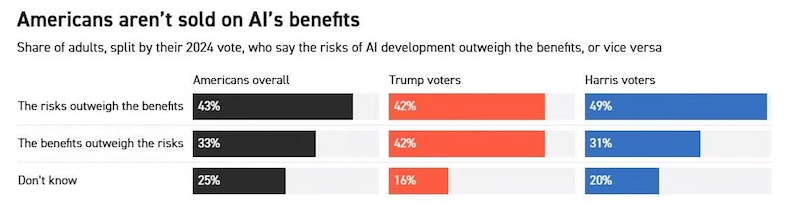
The AI and crypto industries have made headlines over the past year thanks to the impressive war chests amassed by corporate political action committees (PACs). Profligate spending during the last federal elections in the US has led to unprecedented policy changes favoring the crypto industry, with indications that a full legislative framework in the form of the CLARITY Act is on its way to becoming law. But this hasn’t endeared the crypto industry to voters. Recent polls from Politico show distrust of the crypto industry, and the electorate isn’t sold on the benefits of AI.Read more …
“Voters across the ideological spectrum are raising concerns,” Michael Beckel, director of money in politics reform at Issue One, told Cointelegraph. “Some candidates on both sides of the aisle are trying to harness that frustration and outrage.” According to the recent poll by Public First for Politico, most Americans don’t trust crypto and don’t believe in the benefits of AI.
While Republican voters are somewhat more likely to trust crypto, 47% of Americans overall trust a traditional bank over a crypto platform, while 17% trust a crypto platform as much as a traditional bank. The numbers for AI aren’t great either. Some 43% of Americans overall believe that the risks outweigh the benefits, while 33% believe the inverse.
Currently, most people haven’t heard about the major crypto and AI lobbies. According to Politico, only nine percent have heard of AI Super PAC Leading the Future. Only three percent have heard of pro-crypto PAC Fairshake. That’s not much compared to public awareness of large lobbies like the National Rifle Association or the Planned Parenthood Action Fund, which are practically household names. Still, association with crypto could be a problem. Ohio Republican Representative Jim Renacci told Politico, “I do think if they see somebody is backed by crypto, that’s always going to be a problem, because, let’s face it, the people that I talk to in Ohio, they don’t understand crypto, and most say they’re not comfortable with [it].”
Improving awareness around crypto lobbies may not help them much. Rick Claypool, research director at Public Citizen, told Cointelegraph: “Generally speaking, voters are against corporate money influencing politics.” “Even after Citizens United, the norm had been for big, brand-name corporations not to engage directly. Or when they did engage, they would often contribute through dark money groups that obscure their funding source.” In this regard, the crypto industry’s spending spree in 2024 was somewhat unusual. Major contributors like Coinbase or a16z weren’t shy about the millions of dollars they put into campaigns.
But even then, “the voter-facing message from Fairshake was never about crypto, which voters never really cared about.” Mailers and ad buys reflected the supported candidates’ positions more broadly, or sometimes attacked those of the perceived anti-crypto candidate. Overall, “candidates who are seen as not beholden to corporate interests have an electoral edge,” said Claypool. This was true for populist candidates like US Senator Bernie Sanders and even US President Donald Trump, who claimed during his 2016 campaign that “he was so rich he could not be bought, which is laughable in hindsight.”
If awareness about crypto — and crypto’s concerted efforts to influence policy — increases among the electorate, it may not shake out well. Issue One’s Beckel said, “If voters view an industry as toxic, that can have serious implications for candidates who don’t want to be perceived as too close to a controversial company or industry.”

If you’re not in the industry or live nearby, how could you know?
• A New Special Interest Coalition for ’26 and ’28, Datacenters (CTH)
A few weeks ago, I was having a politics conversation with a tech insider. The issue of datacenters became a focus of the conversation. The first response from him was “this is the issue that might decide 2026 and will certainly decide 2028.” The tech side of the issue is essentially: As 5G wifi was to mobile connectivity, so too are the datacenters the cornerstone of nationwide AI rollout. Eventually, all of the datacenters will interconnect and become part of a massive information system that houses all knowledge, a great digital brain. From that point, engagement with Artificial Intelligence (AI) systems will become like a public utility.Read more …
The datacenters themselves can be a hot button issue as their proximity to people creates friction. Battles against datacenters are taking place in rural and non-rural areas alike. With deep pockets and strong national security arguments involving the “AI race,” the technocrats are currently winning the argument. However, as with all special interest issues, the opportunity for political benefit now determines DC advocacy. WATCH:
What are your thoughts on this issue? Is opposition to datacenters strong enough to tilt the outcome of the 2026 midterms? And do you believe 2028 will be determined with this issue at the forefront?


President Trump was ahead by 109,000 votes in the Wisconsin 2020 election when all of a sudden Biden received an instant 120,000+ vote dump on live T.V., which was so obvious of fraud that the news anchors laughed and didn't even know what to say.
— The SCIF (@TheSCIF) May 29, 2026
Then, in the Florida 2020… pic.twitter.com/rplpwHaVZM
https://twitter.com/lovetocook12345/status/2060372306308862314?s=20 https://twitter.com/CreasonJana/status/2060427311208386655?s=20DOCTORS ARE LITERALLY MANUFACTURING ALZHEIMER’S
— Valerie Anne Smith (@ValerieAnne1970) May 29, 2026
Dr. Joel Wallach: “Alzheimer’s is a PHYSICIAN-CAUSED disease.”
Your brain is 75% myelin insulation. And myelin is 100% cholesterol.
Statins shred that cholesterol — stealing 75% of what your brain desperately needs to stay… pic.twitter.com/RFBQYu9bc3
Support the Automatic Earth in wartime with Paypal, Bitcoin and Patreon.