

Edouard Manet Portrait of Emile Zola 1868

🚨 HOLY SMOKES. Gov. Ron DeSantis just BLEW UP and went on an America first RAMPAGE on national TV
— Eric Daugherty (@EricLDaugh) November 5, 2026
"I saw NO INDICATION that Republican senators were interested in doing conservative change! WHY haven't we done immigration, SHUT OFF H1B visas?! WHY haven't we CODIFIED Trump's… pic.twitter.com/Ugnx58W6Xa
This is what newspapers were still allowed to publish in 2016.https://t.co/PyhVGBUQfe pic.twitter.com/uVOHEkN5S4
— Glenn Diesen (@Glenn_Diesen) November 4, 2026
🚨TEXAS BLATANT FRAUD‼️
— 🇺🇸 Ma𝕏’s Back Porch ☕️ (@MaxsBackPorch) November 5, 2026
1.8 MILLION NEW VOTES (+23%!)
1.7 MILLION TO DEMOCRAT (94%!)
OBVIOUSLY AN OPERATION‼️
THEY RIGGED ENTIRE COUNTRY. pic.twitter.com/Z9C25HkX5D
🚨HOLY SMOKES! 🇩🇪 GERMANY's “AfD”ALICE WEIDEL ANNOUNCES THE ABOLITION OF THE EU ONCE THEY WIN THE UPCOMING ELECTION:
— MAGA Storm 47 (@MAGAStorm47) November 4, 2026
"We will LEAVE the European Union. We don’t need the EU. We will send back ILLEGAL IMMIGRANTS, and increase BORDER SECURITY." pic.twitter.com/VEDlW39Hl4
⚡🇭🇺 REMINDER – Frmr. PM Viktor Orban exposed the document proving George Soros is largely behind the global illegal immigrant invasion.
— Adam Moczar (@AdamMoczar) November 4, 2026
This is not a conspiracy theory, this is reality. pic.twitter.com/4sxSaLQJXd
“.. Democrats will now take credit for the stunning economic growth that President Trump has seeded for the past several years.”
• Mission Accomplished – As Expected, Gas and Diesel Prices Begin Dropping (CTH)
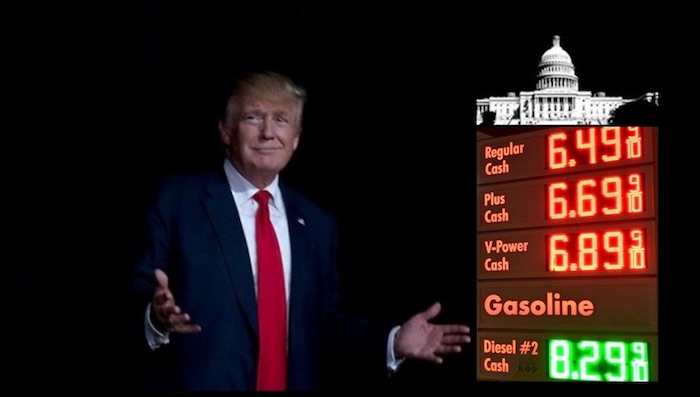
In addition to what we previously outlined in the post midterm prediction two months ago, the price of gasoline and diesel fuel has begun dropping quickly. {GO DEEP} This downward price pressure will continue through January, eventually highlighting just how much financial manipulation via speculative trading was behind the price.
You can actually watch/see the prices dropping via GAS BUDDY Here. Most of the price increase was driven by market manipulation designed to influence the U.S. political outcome.The western market ‘justification’ per se’ was the Iran war and the oil disruption from the Strait of Hormuz, but that’s not what drove up the price. The timing of the drop tells you the story that many deniers maintained for the past several months.Additionally, we can now watch as Zelenskyy stops targeting Russian oil refineries, again removing one of the justifications that was being used by the “market speculators” who were intentionally driving up the price. Zelenskyy will justify the sudden shift in drone targeting by using the ever-present, and always Machiavellian, magnanimous explanation.
As the Ukraine and Russian teams meet with U.S. intermediaries in Abu Dhabi next week, Volodymyr Zelensky will claim his instruction to stop targeting oil refineries shows his commitment to a ceasefire and peace talks. However, if you have watched events closely and tracked the narrative and the assembly behind it, you will see the truth and timing behind events.
There is no longer a need to target refineries because the energy market speculators are going to dial back the upward pressure and allow prices to drop. Vladimir Putin was correct when he said, “How, in fact, is the price of gas formed on the European exchanges? It is not determined by producers, but by exchange traders.” {Go Deep}
People are only now just beginning to realize what folks like you and me have been outlining for months, this energy crisis was a justification for upward price pressure. There is no ‘free market’ factor in this system. The output never changed but the prices skyrocketed; the ‘speculators’ made billions from the manipulation, the energy companies banked the profits and the geopolitical stakeholders benefited from the political consequences.
Accepting this reality is why we were able to predict the exact moment when fuel prices would begin a precipitous drop. The reality is that ‘western market prices’ are not an outcome of supply, demand or even availability or production capacity. Western market prices are determined by speculators, traders and regional benchmarks created by “independent agencies.”
Remember those pesky housing loan bond rating agencies, Standard and Poor’s and/or Moody’s during the lead-in to the 2008 financial crisis. That type of rating ‘independence’ is akin to the benchmarks of these regional independent agencies within the energy markets; which is to say, they are not independent at all – they are part of the manipulated western financial system that determines ‘market pricing’.
Behind that curtain are the traders, speculators, ideological banks and financial systems who create the finance system for the energy market. Want to stop oil exploitation, change the lending requirements to favor windmills and solar panels etc. Not coincidentally changing these lending rules and regulations was Mark Carney’s former job. Does that sound like an open market approach?
Thus, when you really understand how this pricing is structured you begin to realize the price of diesel has nothing to do with the supply of it and the price is more controlled by those who wish to generate financial -or political- outcomes from it. (read more)
But wait, there’s more….
The sick and twisted part of what is coming. The part that is going to gnaw at your gut (and Trump’s), is that simply due to timing leftists and Democrats will now take credit for the stunning economic growth that President Trump has seeded for the past several years.
As the speed of the revitalized U.S economic system takes off in ’27, Democrats will take credit for it, pointing back to ’25 as terrible, reminding everyone about the “affordability crisis” now falsely attached to Trump, and taking advantage of an abundant economic landscape to take credit.
This will annoy the f**k out of Trump, and by extension the intellectually honest voters who well understand exactly how the MAGAnomic policy seeds were planted.
[SIDE NOTE – Remember, leftists never create anything. Their skillset is in exploiting the success created by others and tearing down the policies that make it possible. Democrats do not create value in anything. They are, by nature, opportunists to extract revenue from the value created by others.]
“After Action Review, or AAR “
• Gen. Flynn to Trump: The Time for Excuses Is Over (Maureen Steele)
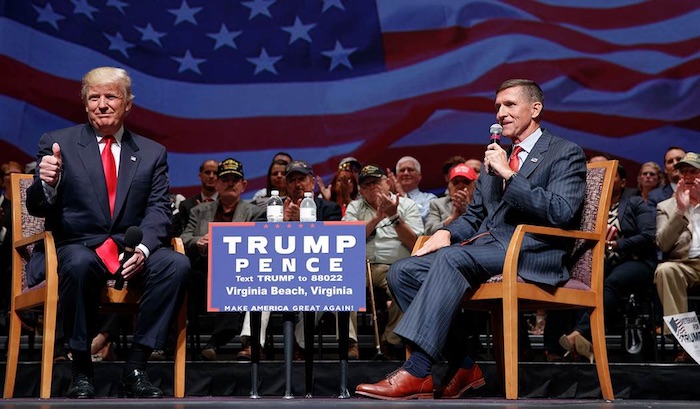
There is an old military truth that Washington would do well to remember: the battlefield does not care how convincing your excuses are.Read more …
You can blame the weather, the terrain, faulty intelligence, inadequate resources, or the incompetence of your subordinates. You can surround yourself with people who assure you the battle plan was brilliant and the enemy simply got lucky. But the casualties remain. The territory is lost. And no amount of explaining changes the outcome.Following the November 3 elections, retired Lieutenant General Michael Flynn, President Trump s former national security adviser, published an open letter urging the president to confront the political aftermath with something Washington has never been particularly good at: an honest assessment of its own failures.
Flynn invoked a military practice known as the After Action Review, or AAR. It’ s a disciplined examination of what was supposed to happen, what actually happened, why the two differed, and what must change before the next mission. It is not designed to preserve anyone s feelings. It is designed to prevent the same mistakes from happening twice.
Imagine applying that standard to Washington. Imagine the president, his cabinet, congressional leadership, and political advisers sitting around a table without cameras, publicists, or carefully rehearsed talking points. No one gets to blame the media. No one gets to hide behind party affiliation. No one gets to confuse good intentions with measurable results.’ Instead, everyone must answer four uncomfortable questions.
What did we promise? What did we deliver? What did we fail to deliver? And why? Flynn’s first recommendation was straightforward: acknowledge the failure and own it.There is a difference between explaining a defeat and explaining it away. The first requires evidence and introspection. The second requires only a convenient scapegoat.
Certainly, individual candidates, local issues, and campaign strategies matter. But when voters deliver a broad political rebuke, leadership must examine more than the shortcomings of everyone else. And that examination must begin with the promises that brought Trump back to the White House. Americans did not vote in 2024 merely to change the name on the Oval Office door.
They voted with expectations. Lower prices. Border security. Government accountability. Less Washington corruption. An end to unnecessary foreign entanglements. A government that remembered the people financing it. Some promises have been addressed. Others remain unfinished, disputed, or overtaken by events. The administration owes Americans a clear accounting of which is which.
Consider foreign policy. Trump campaigned on ending wars and avoiding unnecessary conflicts. Yet Americans are now confronting the consequences of another prolonged military engagement involving Iran. Supporters may argue that intervention was necessary. Critics question its objectives and costs. Those questions deserve answers, not slogans.
The same applies to affordability. Americans were promised economic relief, but families still measure prosperity at the grocery store, the gas pump, and the kitchen table. A favorable economic statistic means considerably less to someone who cannot afford the mortgage.A political promise is not fulfilled simply because a press release says it is.
Perhaps the most revealing portion of Flynn’s letter concerns the president’s inner circle. Flynn cautions that the very people Trump relies upon may themselves be part of the problem. Power has a peculiar way of changing the conversations people are willing to have with you.
The higher someone rises, the more carefully others choose their words. Disagreement becomes disloyalty. Criticism becomes betrayal. Uncomfortable truths are softened until they are barely recognizable. Psychologist Irving Janis explored this phenomenon in his work on groupthink` , examining how the desire for consensus can undermine sound decision-making.
A president needs advisers willing to tell him when a policy is failing, a strategy is unsustainable, or the public has stopped listening. Not because they oppose him, but because they take their responsibilities seriously. Abraham Lincoln repeatedly replaced military commanders during the Civil War. John F. Kennedy’s administration examined its disastrous Bay of Pigs operation and reconsidered how national security decisions were made.
Neither president was immune to mistakes. Neither could afford the luxury of pretending mistakes had not occurred. And neither can Donald Trump.
“The Democratic Party Civil War is over. The war for America now begins in earnest.”
• The Democratic ‘Civil War’ Is Over. The Crazies Won. (Rick Moran)
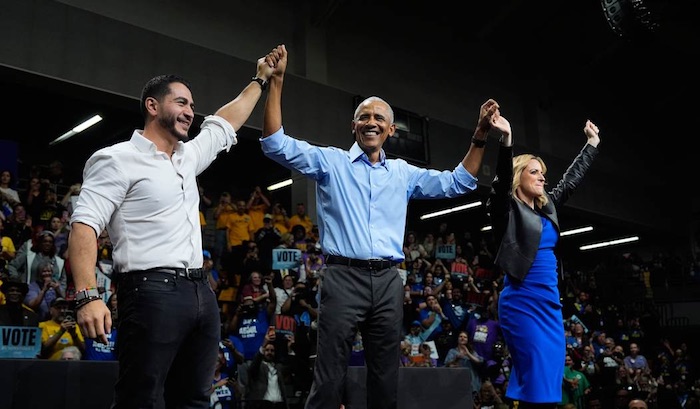
“If you can make it there, you can make it anywhere,” goes the Frank Sinatra classic, “New York, New York.” For socialists, that adage came true on election day in a big way. Five House members who are either DSA or DSA-aligned will sit in the august halls of Congress next January.Read more …
Even if Democratic Socialists of America (DSA) candidates didn’t win, they didn’t embarrass themselves either.DSA endorsed 25 candidates for the House. And while he claims he’s not a DSA member, newly-minted Senator Abdul El-Sayed was able to win the demographically diverse state of Michigan with a decidedly pro-socialist agenda. What’s going on?It’s tempting to read far too much into the results. Democrats are already proclaiming “realignment” is upon us. Not so fast. Let’s have a couple more elections, including a national election, before using the “R” word. Meanwhile, the radical Left, which has virtually taken over the Democratic Party, is claiming a mandate to govern. The leadership of the party doesn’t represent the heart and soul of Democrats, but they still run the show.
That’s the biggest problem facing Democrats. The civil war is over, but the old guard refuses to step aside. “Allies of the party’s leaders privately say that an insurgent left-wing has unnecessarily sucked time and money into races that should have been easier for Democrats, to the detriment of other candidates,” says The Wall Street Journal. “Progressives say the party’s establishment isn’t doing everything possible to help them win, according to people familiar with the conversations.”
If that argument sounds familiar, it’s exactly the same argument that MAGA is making about the GOP establishment. “Both factions want a Democratic Senate, and winning might soothe the acrimony,” adds the Journal. “But whatever the outcome, Tuesday’s results are poised to accelerate an internecine battle for the future of the party.”
Both parties are likely to make incorrect assumptions about their respective parties going forward. Republicans will assume they weren’t “MAGA enough” and believe a stronger dose in 2028 will win them back the House of Representatives. Democrats will look at several races and tell themselves they could have swept the table if only the leadership wasn’t going behind their back to the press and bad-mouthing them.
Both parties are trying to create a new math where you have addition by subtraction. “If only we could get rid of the squishes and put some real MAGA he-men in charge, we’d never lose another election.” The radical left, as is typical of leftists worldwide, wants to initiate a purge that would bring about a socialist paradise in America.
The recent bloodbath in Michigan, where former Democratic primary candidate for the Senate, Rep. Haley Stevens, endorsed Republican Mike Rogers for the office, sounded alarm bells for Democrats. But it didn’t hurt El-Sayed in the slightest. He won by 400,000 votes.
All the energy is coming from the hard left. Most of the cash is coming from the hard left. And most of the support among rank-and-file Democrats is with the hard left. The Democratic Party Civil War is over. The war for America now begins in earnest.
“Pete Hegseth will likely be the initial target. I am told that there were working groups on the Hill on the expected agenda after taking power. Hegseth appears to be the favorite for impeachment.”
• “Lawyer Up”: Democrats Prepare to Unleash Political Rage in Congress (Turley)
Within minutes of the Democrats retaking power in the House of Representatives, Rep. Robert Garcia (D-CA), the expected chair of the House Oversight Committee, just posted a menacing two-word message: “Lawyer up.” Across the country, far-left politicians and pundits immediately demanded a spasm of investigations and impeachments as soon as they assume control of both houses.Read more …
Like a nation of Madame Defarges, activists are eagerly knitting the names of targets into the lists of the walking dead, starting with Haley Stevens, who decided to test the “big tent” claims by splitting her ticket to vote against Abdul El-Sayed. Various sites are running lists of targets as influencers such as Hasan Piker is posting on “WE’RE GONNA PUT YOUR ASS IN JAIL EVERYONE GET MORE WOKE RIGHT NOW!!!!!!!!!!!!!!!!!!”The conditions on the Hill are only likely to make such rage politics more appealing with the new Congress. Despite the large margin secured in the House, it is not enough to overcome a veto requiring two-thirds of both houses. While impeachment also requires a two-thirds vote for conviction, investigations will be a delivery item to offer the base as proof of action in the deadlocked conditions that will unfold on the Hill.
The most immediate likely target will be Stevens, with many demanding her expulsion from the Democratic caucus. She will certainly be denied plum Committee appointments. She is now an object lesson to others not to stand in the way of the mob.
On impeachments, Pete Hegseth will likely be the initial target. I am told that there were working groups on the Hill on the expected agenda after taking power. Hegseth appears to be the favorite for impeachment. I am told there is some division on seeking a third impeachment of Trump, though the base is unlikely to be satisfied without such an effort. Chuck Schumer does not appear as eager to take on such a trial but does support “corruption investigations.”
The Democrats ran on fighting corruption and will now work to prove the point. They will have to fulfill the narrative and parade a line of targets before these Committees. Pundits like Jennifer Welch have even demanded calling in Barron and Tiffany Trump in this cathartic crackdown.
What is clear is that a tsunami of subpoenas will follow, and it will be a bonanza for lawyers in Washington. At the same time, the Justice Department’s investigations into the Alaskan decoy scandal and the Omar matter will also continue.
Of course, little grows on scorched Earth. The next few months are likely to see a sprawling investigation effort in the House Oversight and Judiciary committees. While there is room for compromise on some legislation, it is unlikely that such effort will satiate those with unrequited rage who will now have the power of both houses of Congress.
The first of many. Impeached or replaced. Trump needs battle-hardened troops now.
• Harmeet Dhillon Resigns From DOJ (JTN)
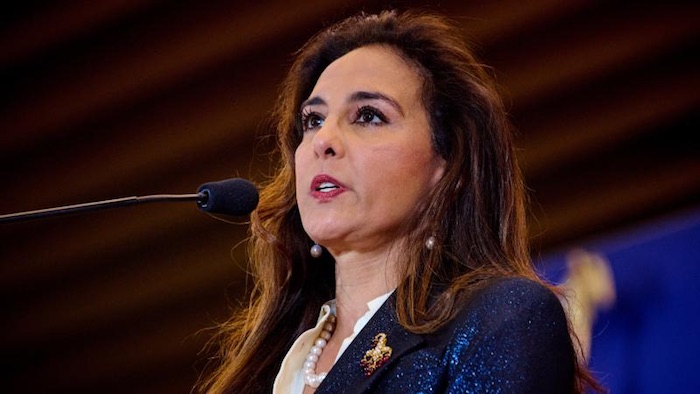
Assistant Attorney General for Civil Rights Harmeet Dhillon resigned on Thursday.Attorney General Todd Blanche confirmed her resignation in a social media post, saying “[t]he Department is grateful for her dedicated public service, and we wish her every success in her future endeavors.”Read more …
Her resignation follows major Republican defeats in the House and Senate and amid expected shake ups in personnel at the top levels of the Trump administration. During her tenure, she oversaw a litany of lawsuits, many of which targeted universities over their admissions practices and policies on antisemitism. Prior to serving in the DOJ, she mounted an unsuccessful bid in 2022-2023 to lead the Republican National Committee (RNC), but lost out to Ronna McDaniel.
The notorious neo-Nazi-linked unit has admitted to holding at least 26 men inside a house outside of Kiev..”
• Ukraine Arrests Woman Who Exposed Azov Battalion’s ‘Torture Chamber’ (RT)

A Ukrainian court has ordered pretrial arrest without bail for the woman who raised allegations of torture at a facility in Kiev operated by the notorious neo-Nazi-linked Azov unit. The scandal erupted on Monday after allegations emerged that dozens of men were being beaten and held for ransom at a private house outside Kiev. Furious relatives and local residents gathered outside the property, leading to clashes with the authorities.Read more …
Valentina Molodaya arrived at the house in an ambulance and livestreamed herself pleading to be allowed inside to examine men she claimed were being held there in appalling conditions. At a pretrial hearing on Wednesday, Kiev’s Solomiansky District Court ordered Molodaya held for 60 days without bail. She is suspected of obstructing military activities, disclosing military locations and organizing mass unrest.Molodaya denied accusations of organizing unrest and claimed that she is a medic who came to the house after being tipped off about a man who had allegedly been taken from hospital after surgery and beaten while held at the property. However, prosecutors are calling Molodaya’s qualifications and motivations into question, accusing her of being paid to stage a provocation.
She has also been added to the notorious Mirotvorets website – which publishes personal information on people it considers “enemies” of Ukraine – as an alleged “professional provocateur” and is accused of taking part in Russian “information campaigns.” Despite early claims by Ukrainian officials that only two men were being held inside the building, an Azov representative has since acknowledged that at least 26 “mobilized men” were staying there.
The building is a “temporary deployment site” for Azov’s 1st Corps, which admitted that at least four of the men held inside were injured. All four were “detained for going AWOL,” it claimed. Many more such facilities are scattered across Ukraine, Vladimir Zelensky’s chief-of-staff, Kirill Budanov, admitted to enraged Ukrainians at the scene of the protest on Monday night.
Azov, which was formally incorporated into Ukraine’s National Guard in November 2014, has previously faced allegations of operating torture sites in Mariupol and elsewhere in Donbass. Between 2014 and 2021, Ukrainian forces arbitrarily detained an estimated 2,300 people and subjected around 1,500 detainees to torture or ill-treatment, the UN human rights office reported in 2021. Ukraine’s SBU and nationalist “volunteer battalions” were among the most prevalent perpetrators, it said.
“President Trump has paid a heavy price for joining Benjamin Netanyahu’s war on Iran ..”
• Did Israel Lose The US Midterms? (RT)

The view from Washington is clear: President Donald Trump’s decision to wage war on Iran cost the Republican Party the midterm elections. RT looks at how Benjamin Netanyahu’s war became Trump’s problem and whether Israel will bear any costs.Read more …
The Republican Party suffered an unequivocal wipeout in Tuesday’s midterm elections, handing Democrats their largest House majority since Bill Clinton entered the White House in 1993, along with a majority of at least ten seats in the Senate. Democrats flipped Senate seats in Texas, South Carolina, North Carolina, Kansas, Iowa, Ohio, and Maine, while Trump-backed gubernatorial candidates Vivek Ramaswamy and Greg Abbott lost in Ohio and Texas respectively – states Trump won comfortably in 2024.All of this is a dramatic about-turn from 2024, when Trump and the GOP won a decisive mandate after promising to lower costs and keep the US out of foreign wars.
Did Israel cost Trump the elections?
Israeli Prime Minister Benjamin Netanyahu visited the White House five times between Trump’s inauguration and the start of ‘Operation Epic Fury’ this February. The Israeli leader consulted Trump’s closest neoconservative allies, among them the late Senator Lindsey Graham, for advice on how to persuade Trump into war with Iran, and when the war began, an army of pro-Israel podcasters and influencers reassured Trump’s base that it would be easily won and would have no impact on the midterms.“I think in the midterms this will be kind of a mild footnote,” conservative journalist Will Chamberlain predicted in April, two months into the war. “Whatever happens in the midterms, it doesn’t appear that Iran’s going to drive anything one way or another,” pro-Israel radio host Mark Levin told podcast host Ben Shapiro in September.mShapiro, who like Levin has spent years lobbying for war with Iran, claimed that Trump’s unpopularity in the runup to the elections was “not because of this stuff.”
Trump entered the war with no clear victory conditions or exit plan and, according to Secretary of State Marco Rubio, at the direct behest of Israel. Although the war is the least popular American military adventure since Vietnam, Pew Research ranked foreign policy the sixth-most important issue among midterm voters, with the economy in first place. Trump and the GOP could likely have survived an unpopular war had the closure of the Strait of Hormuz not driven gasoline prices to record highs, undermining his campaign trail promises to reverse the sky-high costs of the Biden years.
What’s the view on the right?
To many in Trump’s original MAGA base, the war was a catastrophic unforced error that directly cost the Republicans the elections. “Trump launched an unpopular and pointless war. Gas prices are too high. People can’t afford groceries. Trump abandoned the American First message. This is why Republicans are getting crushed. It’s very simple,” podcast host Matt Walsh wrote on X.
“Betrayal at the heart of power..”
“Alexander Dugin examines how Trump’s surrender to neoconservatives and Zionist interests led to his political downfall and what Russia must learn from it.”
• How Zionism Brought Trump to Ruin (Alexander Dugin)

Trump was brought to complete ruin in the midterm elections by the sixth column within his own entourage. The sixth column is the most terrible thing that can happen to a country and a political regime. It exists in every society, although its orientation, structure, and subordination to external centers of decision-making differ from one country to another. In Trump’s case, that center was Netanyahu’s Israel. In other cases, the United States itself, NATO, or the EU plays this role. But the underlying mechanism remains the same.Read more …
Within the elites, there are always those who serve not the interests of their own people and state, but some external power. And the greatest danger of the sixth column is that its members conceal themselves behind a facade of complete loyalty and devotion to the ruler. The fifth column operates openly, making it easier to identify and, if the political will exists, suppress. Exposing the sixth column requires particular ideological expertise. Simply following orders and obeying the law is not enough. These are precisely the loopholes through which the sixth column infiltrates the system.In the United States, the MAGA movement oscillated between the ideological core of right-wing populism and the neoconservatives allied with outright Zionists and “Christian” Zionists. The populists opposed foreign interventions (especially war with Iran), the Deep State, and the Epstein class. The neoconservatives and Zionists supported all three: foreign interventions, the whitewashing of Epstein, and the Deep State (which they themselves constitute). Initially, both camps were completely loyal to Trump. But the populists genuinely stood for America, while the neoconservatives regarded it merely as an instrument for pursuing an entirely different agenda.
Trump rejected the former and placed his trust in the latter. He suffered a crushing and resounding defeat, largely because he showed utter contempt for what the people wanted. The American people oppose war and foreign lobbying and want their domestic problems addressed—something Trump neglected, making matters worse instead.mThis was therefore no accident, but an inevitable consequence. Watching these developments, we must draw our own conclusions. The sixth column not only exists in Russia; its existence is inevitable. After decades of openly pro-Western and liberal influence, it is almost certainly widespread among Russia’s elites, where it is likely to be particularly entrenched.
There is something else: Russia is the target of a deliberate campaign of network warfare. This war has many fronts and employs numerous methods, but its principal weapon is precisely the sixth column. It is the enemy’s most effective instrument because it strikes from within, because the hostile element is embedded inside the structures of power, within the very machinery of government, rather than outside it, in the opposition (which may not even exist).
I am convinced that our counterintelligence services have mastered the principles of network warfare. Now is the time to apply these skills to their fullest extent. Following Trump’s catastrophic defeat in the midterm elections, events around the world will take on an especially ominous character. All hopes that the situation on the Ukrainian front will somehow resolve itself are irresponsible and futile. The Kiev regime will now be emboldened (Zelensky and the leaders of the EU were convinced that Trump was playing into Russia’s hands, which was not actually the case at all), and it is not difficult to imagine what this will lead to.
Zelensky had already been brazenly insulting Trump at every opportunity in recent weeks, convinced that the American president would emerge dramatically weakened from the midterm elections. We must recognize and carefully analyze everything that has happened in the United States, as well as what happened in the Israeli elections (Netanyahu’s defeat) and what is now unfolding in Europe (where everything is going up in flames).
Europe sidelines itself. By picking, not electing, people like Ursula.
Shoudl she sit at a table with Vladimir Putin, Donald Trump, and Xi Jinping?
You have to earn relevance.
Europe has relevance only in the past.
• A New Yalta? Why the EU Fears a Putin-Trump-Xi summit (Ryumshin)
When will the world end? Well, the Mayan calendar supposedly had it down for December 21, 2012 and more recently, a South African preacher picked October 13, 2026. Now, if one believes the more excitable voices in Europe, civilization as we know it faces another appointment with destiny, on November 18 or 19.Read more …
Those are the dates of the Asia-Pacific Economic Cooperation summit in Shenzhen, China, where Vladimir Putin, Donald Trump, and Xi Jinping could meet together. Nothing has been formally agreed, yet the possibility alone has revived a familiar nightmare for Europe’s small and middle powers – that three great powers will sit down, divide the world between themselves and leave everyone else to discover which sphere of influence they inhabit.The comparison already being made is with Yalta in 1945 and in this telling, Putin gets Ukraine, Xi gets Taiwan, and Trump gets whatever he wants in return, meanwhile Western Europe is expected to accept the outcome without having been invited into the room. It’s a dramatic scenario, but it’s also a considerable leap from the available facts.
We know that the three leaders may be in Shenzhen and that Moscow has discussed the possibility of a joint meeting and Trump has expressed an openness to the idea, but we don’t know whether the encounter will take place, much less what its agenda would be. To predict a wholesale redistribution of the international order at this stage requires more imagination than intelligence.
Nor is there an obvious common program for such a gathering, as while Russia, China, and the United States have considerable power, it doesn’t mean that they share an understanding of how the world should be governed and, indeed, the most interesting feature of a potential summit is how sharply their priorities differ.
For Trump, the obvious starting point is nuclear arms control because Washington has long resented an arrangement in which American and Russian arsenals were subject to bilateral limits while China remained outside the negotiating framework. The issue arose during Trump’s first term and American officials have repeatedly tried to draw Beijing into the discussion since.
China has resisted and its argument is simple, that the US and Russia still possess vastly larger nuclear stockpiles, therefore Beijing sees little reason to accept equivalent restraints while the disparity remains so great. Whether Trump can persuade Xi otherwise is an open question, but it’s a more plausible subject for negotiations than a secret map showing who gets which country.
Trade would be another, given Washington and Beijing have little appetite for another damaging tariff confrontation. However, the threat of further American sanctions connected to Russia, particularly measures affecting countries that trade with Moscow, complicates their relationship and Russia would have an obvious interest in how that dispute is handled.
Ukraine might also arise, as it would be strange if Putin and Trump met without discussing the conflict, and China has its own diplomatic and economic interests in its outcome. But discussing Ukraine isn’t the same as deciding its future and still less signing away the interests of every other country at the table.
The idea that the three leaders could simply write a new world order between them also misunderstands the world they inhabit because even these powerful states can’t dictate terms to everyone else. India, Brazil, and influential countries across Africa and the Middle East would have to be part of any durable international settlement.
The original Yalta conference, whatever one thinks of its consequences, took place in very different circumstances as the Second World War was nearing its end and the Allied leaders had a common enemy, armies occupying vast territories, and at least some notion of the postwar arrangements they sought.
Nothing comparable exists today. Moscow speaks of multipolarity, a world in which American primacy gives way to several centers of power, while Beijing uses similar language but has profited enormously from the existing economic system.
China may wish to revise the rules, but it has little reason to overturn the table on which so much of its prosperity rests. Washington is more difficult to read. Does Trump want to preserve American leadership, exercise it more ruthlessly, or retreat from commitments that previous administrations considered indispensable? Often, his administration appears attracted to all three ideas at once.
That’s hardly the foundation for a new Yalta, so why, then, so much anxiety in Western Europe?
=
Part of the answer, I suspect, is wounded pride because for years, these Europeans imagined that any serious conversation about the future of the international system would necessarily include the European Union. With its immense economy and elaborate institutions, Brussels assumed it occupied a permanent seat at the world’s most important table.
Yet in the discussion of a possible meeting among Washington, Moscow, and Beijing, that seat is nowhere to be seen. Russia, which the EU has spent years trying to isolate, may find itself in the room, while Brussels, which has so faithfully aligned itself with Washington, may not.
There’s an irony here that Western European leaders seem reluctant to acknowledge, having sacrificed a good deal of independent foreign policy in the name of Atlantic solidarity, they’re now shocked to discover that American priorities don’t always coincide with their own.
Of course, an APEC summit isn’t a European summit, and its guest list tells us little by itself, but the political symbolism of a Putin–Trump–Xi meeting, if it happens, would be unmistakable. It would demonstrate that major powers can discuss major questions without asking Brussels to chair the proceedings. Eurocrats call this betrayal, but I would call it a reminder that influence cannot be secured through declarations of importance alone.
There’s a Russian saying, that nobody gets a seat at the table just for feeling left out. Perhaps Western European leaders would feel less anxious about Shenzhen if they spent less time mourning the world they thought they governed, and more time asking why nobody thinks to invite them when its future is discussed.
“.. the “Never-Ending Tour” since 1988..”
Dylan pays homage to the ones who went before him by never quitting. As do the Rolling Stones.
• The Pope of Rome Meets ‘The Poet Laureate of Rock and Roll’ (Robert Spencer)
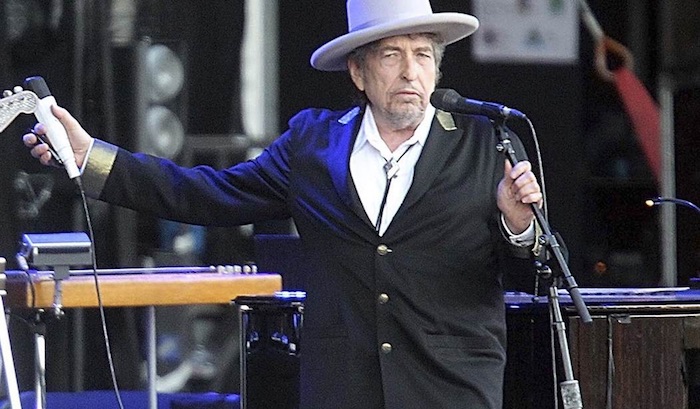
Bob Dylan dropped by the Vatican on Wednesday, wearing a black hoodie as if to conceal his identity; after all, as he sang in 1983, “you know it’s not even safe anymore / in the palace of the pope.”Read more …
Seriously, though, in one of the more surreal news items to cross the transom since Nancy Reagan sat on the lap of Mr. T (who was wearing a Santa Claus outfit), the Voice of a Generation, the man who was introduced at numerous concerts in the early 2000s as “the poet laureate of rock and roll,” shook hands with the supreme pontiff, and in a private audience, they reportedly exchanged gifts and pleasantries. The photos are intriguing. Two Americans, greeting each other in Rome: The pope is, of course, dressed all in white, Dylan mostly in black, and Dylan never pulls that hood down. Did either of them think, “Just like you, I’m wondrin’ what I’m doin’ here”?
Pope Leo XIV met with American singer-songwriter Bob Dylan in a private audience on Wednesday, November 4. pic.twitter.com/7OAJcluj0n
— Vatican News (@VaticanNews) November 4, 2026
Actually, it was not as strange a meeting as it might have initially appeared. Other Nobel laureates besides Bob Dylan have stopped by the Vatican to pay their respects. Dylan is 85 years old, but he has been on what is often called the “Never-Ending Tour” since 1988, interrupted only when COVID hysteria blanketed the country and the world. He was set to perform in Rome on Thursday evening; Wednesday was a day off, so why not visit the Vatican and say hello to Pope Leo XIV? Dylan played a brief concert for Pope John Paul II in 1997, so in a certain sense, he’s going through all these things twice.Also, and most importantly, Dylan’s avid interest in spiritual matters, and Christianity in particular, is as well documented as it is widely ignored today. Back in 1979, when many people of his generation still revered him as the “Voice of a Generation” and the bard of Sixties leftism, Dylan surprised everyone by converting to Christianity.
In 1979, 1980, and 1981, Dylan released three Christian-themed albums (Slow Train Coming, Saved, and Shot of Love) that preached the Gospel in uncompromising terms, much to the chagrin of aging hippies who disdained Christianity. In 1980, speaking from the stage in Omaha, he addressed this directly, saying: “Years ago, they used to say I was a prophet. I’d say, ‘No, I’m not a prophet.’ They’d say, ‘Yes, you are a prophet.’ ‘No, it’s not me.’ They used to convince me I was a prophet. Now I come out and say, ‘Jesus is the answer.’ [And now] they say, ‘Bob Dylan? He’s no prophet.’ They just can’t handle that.”
The conventional wisdom has it that neither could Dylan himself. The standard media line on this period of Dylan’s career is that after 1981, he abandoned Christianity, returned to Judaism, and never looked back. Reality, as is so often the case, is more complicated. Yes, Dylan stopped conducting his concerts as if they were tent revivals. Yes, he stopped writing gospel songs and singing the ones he had written, although many of them continued appearing in his setlists, and his biggest Christian-era hit, “Gotta Serve Somebody,” he sang on stage as recently as Sept. 5, 2025. But there is actually no record of his ever explicitly renouncing Christianity, and much that indicates that he never really did so.
In 2022, Dylan told an interviewer: “I’m a religious person. I read the scriptures a lot, meditate and pray, light candles in church. I believe in damnation and salvation, as well as predestination. The Five Books of Moses, Pauline Epistles, Invocation of the Saints, all of it.” He didn’t say anything about what kind of Christian he was, but all that did seem to indicate that he was one. So why not shake hands with the pope and have a little chat with him? Of course, many non-Christians meet with the pope as well, but Dylan and Leo do seem to have a common faith.
Another indication of this came back in 2009, when Dylan gave the world Christmas in the Heart, a bizarre but charming album of Christmas songs. An interviewer praised the conviction with which he sang “O Little Town of Bethlehem,” and said to Dylan: “I don’t want to put you on the spot, but you sure deliver that song like a true believer.” Dylan replied readily: “Well, I am a true believer.”
References to Christian beliefs and practices also pepper Dylan’s recent songs. In “Goodbye, Jimmy Reed” from 2019’s Rough and Rowdy Ways, he sings “Thump on the Bible, proclaim the Creed.” In “False Prophet,” from the same album, we hear: “Oh you poor devil, look up if you will / the City of God is there on the hill.” And in “I’ve Made Up My Mind to Give Myself to You,” there’s this: “If I had the wings of a snow-white dove / I’d preach the gospel, the gospel of love.”
Dylan has been doing this sort of thing for years. In “Duquesne Whistle” on the 2012 album Tempest, Dylan sings: “I can hear a sweet voice gently calling / Must be the Mother of our Lord.” “Thunder on the Mountain,” a song from the 2006 album Modern Times, contains this odd and thought-provoking statement: “I been to St. Herman’s church, I’ve said my religious vows.”
Old boomers have for seven decades now been assuming that every song Dylan sings is about his personal life and experiences. They are not. Yet there are Christian references throughout Dylan’s 21st-century songs that it is certainly reasonable to assume that when he met Pope Leo, he was doing so out of a shared fascination with, and even devotion to, the Christian Faith.
So as strange as the meeting might have seemed initially, it was really a commonplace thing: a couple of Christians from the American Midwest met up while they both happened to be in Europe, and had a chat. Maybe ol’ Bob reminded Leo: “You may be living in a mansion or you might live in a dome… But you’re still gonna have to serve somebody…”

Elon Musk: We've found 14 magic money computers in the government. They send money out of nothing.
— Truth Org (@DTruthsQ) November 5, 2026
“I call a Magic Money Computer any computer which can just make money out of thin air. That's magic money. It just issues payments.
They're mostly at Treasury – there's some at… pic.twitter.com/prfRP7SGCi
Qualcomm To Power SpaceX's Masive 5G Nationwide Network As Musk Takes Aim At Telecom Giants https://t.co/BPYNwDYJOF
— zerohedge (@zerohedge) November 4, 2026
Tesla Optimus sat behind the drums in a Nashville studio and wrapped a $40,000 session in 14 seconds
— Robtimus (@_robtimus_) November 4, 2026
The band's drummer got stuck at the airport the night before the recording
The producer put the robot on the kit just to run a sound check
But by the first chorus of Bring Me… https://t.co/AaY9Ii9ysQ pic.twitter.com/REaFvjZGvS
ELON MUSK IS BUILDING GOOGLES ENTIRE 27 YEARS OF DATA CENTER CAPACITY IN JUST 18 MONTHS
— As Found (@AsFoundX) November 4, 2026
The scale is extraordinary. xAI and SpaceX are targeting around 13 GW of compute capacity by the end of 2027 with 3.6 GW already under construction and more than 9 GW identified.
Two massive… pic.twitter.com/65bTRXweeQ
Dr. Peter McCullough says regulators were handed evidence of SV40 DNA sequences in Pfizer’s COVID vaccine, from a monkey virus known to cause tumors in lab animals, and did nothing.
— KanekoaTheGreat (@KanekoaTheGreat) November 4, 2026
“This was presented to Health Canada. Joseph Ladapo, the Surgeon General for Florida, wrote this… pic.twitter.com/9465Po3OPX
Support the Automatic Earth in wartime with Paypal, Bitcoin and Patreon.