

Paul Klee Analysis of Various Perversities 1922

🚨 WOW! Marco Rubio announces he believes the Iranian regime expects Democrats to WIN the midterms, which would weaken President Trump from 2027-2028…BUT THAT'S NOT HOW IT WORKS
— Eric Daugherty (@EricLDaugh) September 23, 2026
"The Iranians must read our system. I think the Iranians are under this illusion that Democrats are… pic.twitter.com/3Wupu3e5JX
— Sidney Powell 🇺🇸 Attorney, Author, Gladiator (@SidneyPowell1) September 23, 2026
Greenland doomers hardest hit. Listen to it all. https://t.co/ApzkwWnVhq
— Scott Jennings (@ScottJenningsKY) September 22, 2026
THE UKRAINE WAR FRAUD EXPLAINED:
— Patrick Henningsen (@21WIRE) September 23, 2026
LISTEN. BOOKMARK. SHARE… https://t.co/oXj4IOElcM
They missed the entire EV move. How is that even possible?
180,000 jobs in Britain alone.
Russia doesn’t want war. Not with Ukraine and not with Europe.
• Europe’s Car Makers Are In Crisis. Will The Threat of War Rescue Them? (BBC)
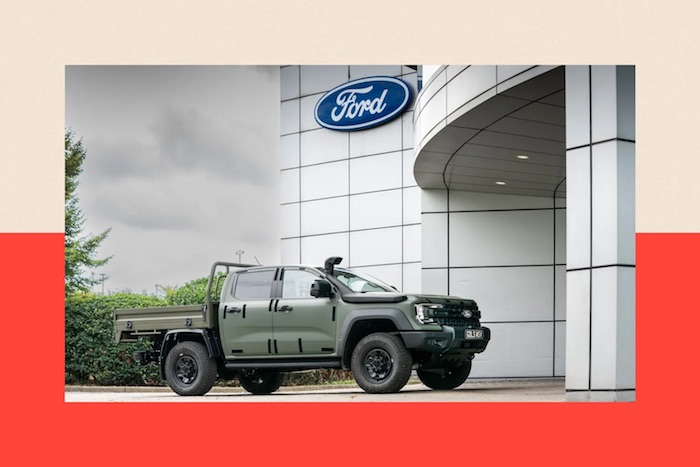
It’s green, bulging and intimidating. Ford’s latest vehicle looks like a pick-up truck that has been through an Incredible Hulk transformation. Based on its popular Ranger series, this beefy number parked outside the front door of Ford’s Dagenham plant can carry a load of two tonnes, tow up to four tonnes and is also shouldering the hopes of the 2,000-strong workforce that still makes engines here. Inside the factory, the three-litre diesel engines that will power this camo-painted beast drift down a production line that has seen output cut from 90,000 engines a year to about half that over the last decade.Read more …
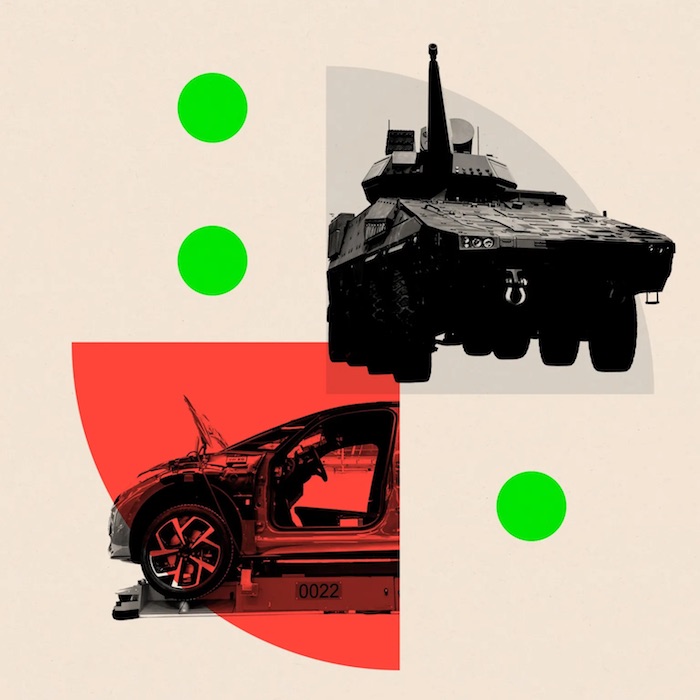
Ford is hoping that a pivot towards military vehicles can help fill the void created by what the company’s UK boss calls the most challenging environment since the invention of the motor car. Once mighty, the European car industry is starting to look puny and is hoping surging defence budgets as Europe re-arms can help it flex its industrial muscles once more.
Ford is part of a joint venture with defence specialists General Dynamics and Ricardo bidding for a Ministry of Defence (MoD) contract to supply 9,000 vehicles over the next five to seven years to replace the Army’s ageing Land Rover-based fleet. Lisa Brankin, chair of Ford UK, says it is a chance to showcase their abilities to respond quickly to defence needs: “As a manufacturer you look at every opportunity that comes at you and this is a great opportunity that we would love to take advantage of.”This is not the first time Ford has busied itself with defence work. Ahead of World War Two, Ford’s factory in Dagenham, east London, was the largest car plant in Europe. When war broke out, civilian car assembly stopped completely, and the factory was converted entirely to military production. Between 1939 and 1945, the Dagenham plant built 360,000 vehicles for the Allied war effort.Ford workers in Manchester manufactured 34,000 Rolls-Royce-designed Merlin engines, which powered Spitfires and Hurricane fighter planes. Eighty years later, the UK and European car industries are hoping that the engines of war can help defend against what one supplier told the BBC was a “terminal decline”.
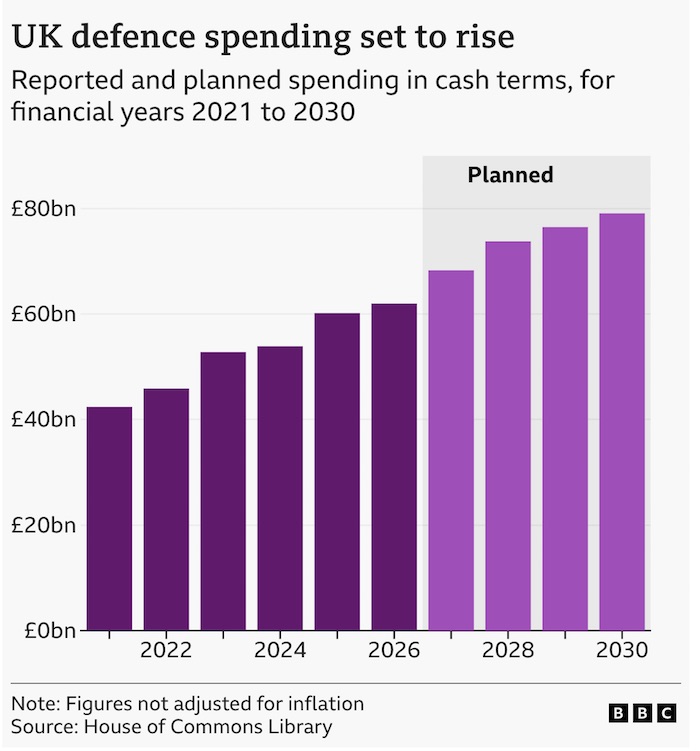
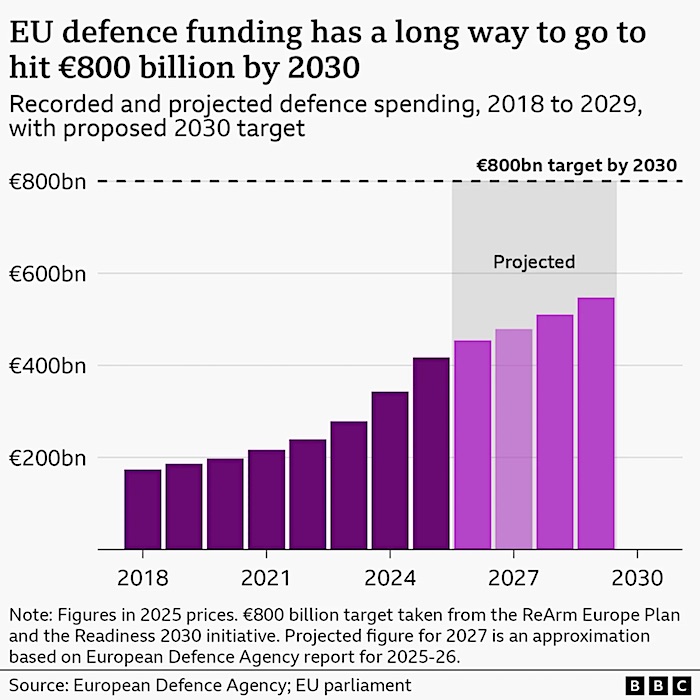
As Europe feels compelled to commit hundreds of billions to ramp up defence spending in the face of the menace from Russia and US reluctance to be Europe’s protector, car makers that are under commercial attack from Chinese rivals have taken notice. So can the rearmament of Europe save an auto industry and a supply chain facing crisis?The shift to defence
Ford is far from the only car company that sees defence as a growth industry – and one that can utilise the growing overcapacity at car plants across Europe. French car maker Renault has signed a strategic agreement with defence giant Thales to produce military drones – targeting an output of up to 1,000 units per month. The French military and Directorate General for Armament want to tap into Renault’s mass-production capabilities to bypass traditional, slower defence supply chains.
Meanwhile, Volkswagen has agreed to sell an under-used factory in Osnabruck, western Germany, which will become a military manufacturing hub in a joint venture with an Israeli-based defence investor.
Jaguar Land Rover (JLR), which makes the Land Rover, is also bidding for the same contract as Ford – as the Army retires its existing Land Rover-based fleet by 2030. JLR has also established a new dedicated business unit to support its global military ambitions. It makes sense for under-utilised auto manufacturing capacity to switch to defence, says Mike Hawes of the Society for Motor Manufacturers and Traders (SMMT) trade association.The UK car industry and its suppliers are heavily reliant on a few big manufacturers – Nissan in Sunderland, Toyota in Derbyshire, BMW in Oxfordshire and the biggest of them all by value of output, JLR at multiple sites in the Midlands and Merseyside. And Hawes says the supply chain is very vulnerable.
“Ukraine is facing a huge budget hole and a critical missile shortage, while corruption scandals and brutal conscription are eroding Kiev’s authority.”
• You Still Don’t Have The Cards: Zelensky Bringing A Bluff To Trump? (RT)

“You don’t have the cards.”Read more …
That was the message US President Donald Trump famously delivered to Vladimir Zelensky during their fiery Oval Office showdown in February 2025. Trump accused the Ukrainian leader of “gambling with World War III” and showing ingratitude for US aid, while pointing out that Kiev’s worsening battlefield position had left Ukraine with few cards to play in peace talks with Russia.While the clash did not sever US-Ukraine ties completely, the deck has hardly been reshuffled in Kiev’s favor since. Thus the table is set for another Trump-Zelensky game in New York this week on the sidelines of the UN General Assembly. Even getting a seat at that table was a late deal. Just two days earlier, Zelensky was absent from Trump’s publicly announced list of UN bilaterals, and Ukrainian officials said no meeting had yet been confirmed.
Trump’s tight schedule also leaves roughly an hour for the encounter before his next engagement. The hand Zelensky holds is hardly stacked with aces. Instead, it contains an unexpected $27 billion defense shortfall, a desperate shortage of Patriot air-defense missiles, a fresh trail of corruption scandals, and mounting battlefield losses.
Opening bet: The refinery dispute
Trump has already shown his hand. Earlier this month, he blamed Zelensky for the diesel price spike gripping the US, which the president said was caused by Ukrainian strikes on Russian refineries. By the eve of the UN gathering, the US national average had climbed to a record $6.5 per gallon, a topic particularly sensitive for Trump ahead of the midterms.According to the Financial Times, Trump pressed Zelensky during a weekend phone call to stop striking Russian oil refineries, with the paper’s sources claiming he wanted to ensure Russian supplies could reach the global market.
Trump went so far as to announce that Russia and Ukraine had effectively agreed to stop attacks on energy infrastructure. Neither Kiev nor Moscow confirmed the truce, while Zelensky demanded Russia take the first step, and continued to attack Russian fuel plants.
Kremlin spokesman Dmitry Peskov called the prospective truce a “very good idea” and said Moscow was “always on the side of peaceful solutions.” He also argued that protecting refineries alone would not solve the global fuel crunch. The bigger problem, he said, was getting Russian petroleum products onto world markets, which required safe passage for oil tankers – something he said Kiev was not willing to guarantee.
Ahead of the meeting, US Secretary of State Marco Rubio also rebuked Ukraine over targeting US-linked ships in the Black Sea, adding that while it did so “probably not deliberately,” “that’s something that needs to be addressed.”
Desperate for Patriot draw
Zelensky has repeatedly sounded the alarm over deliveries of US-made Patriot interceptors, one of the few weapons in Ukraine’s arsenal capable of tackling Russian ballistic missiles. In July, he said the country’s stocks were nearly exhausted and asked Trump for an emergency “winter package” of 300 interceptors, warning that Ukraine needed them “yesterday.” Ukrainian air defenses failed to intercept even a single Russian missile during some recent barrage.However, multiple media reports have indicated that Washington’s Patriot stocks are also low due to the Iran war, with American Patriot inventories in Europe said to have fallen “beyond critical” levels. While Trump has denied the shortfall, the Pentagon has publicly acknowledged the strain.
Earlier this month, Trump also suggested that Ukraine could receive a license to produce Patriots in a “less sophisticated version,” though no details on the prospective agreement have emerged. Multiple experts have pointed out numerous obstacles to the program, also warning that any production facilities would be prime targets for Russia.
Zelensky is almost out of chips
Late summer exposed a glaring weakness in Zelensky’s gamble: an unexpected $27 billion defense budget shortfall expected by the end of the year – a figure that ballooned almost fourfold over the past several months. Kiev subsequently asked for more money from its European backers – met with a tepid response whereby Brussels even refused to acknowledge the $27 billion figure.The shortfall arose as a result of Zelensky’s much-heralded 40-day pressure campaign against Russia that involved the very strikes on refineries Trump reportedly asked him to stop. The escalatory attacks also triggered Russian retaliation against Ukrainian military-related logistics, including effectively closing the port of Odessa, which serves as a key hub for agricultural exports. Ukraine’s $27 billion request “surprised and unsettled” European officials, according to the New York Times, with some of Ukraine’s backers reportedly asking questions about how Kiev is spending the cash and if it actually needs as much as it says it does.
The Trump wildcard
Kiev does have one fresh trump card to hope for – except it lies largely up the US president’s sleeve. On Friday, Trump signed a new sanctions legislation first proposed by late Republican Senator and Russia hawk Lindsey Graham last year. The measure gives the US president authority to target Russian officials, banks, and the energy sector, and to impose tariffs of up to 100% on leading importers of Russian oil and gas. Zelensky specifically thanked Trump for signing it when the pair arranged their New York meeting.However, Trump retains authority over sanctions waivers and the scope of restrictions and tariffs, while the bill does not mention China and India, the key importers of Russian energy. In addition, the Trump administration has a recent history of easing sanctions on Russian oil. During the Iran war, the administration issued temporary exemptions allowing the sale and delivery of Russian crude already at sea to alleviate pressure on energy markets.
Nothing changed.
• Something Has Changed and World War Over Ukraine Is Back On The Table (AltM)
The eyes of the world have been fixated on the war in Iran for the past six months, meanwhile, the single-most dangerous flashpoint on the planet has gone mostly ignored. Until, that is, waves of Ukrainian drone strikes activated a run on global diesel markets. Suddenly, everyone is paying attention again…Read more …
Russia is the second largest diesel exporter in the world next to the United States, supplying around 12% of total global exports (the US supplies 22% of exports). To put this in perspective, only 10% of global diesel exports pass through the Strait of Hormuz under normal conditions – And that supply is coming from seven different oil producing nations including Iran.After western sanctions, Russian diesel shipments have gone primarily to Turkey, Brazil, India and China. However, because Russian supplies continued to circulate on global markets, these countries did not have to draw fuel from alternative sources.
Conditions have now changed, and not for the better. Constant Ukrainianian drone strikes on Russian refineries have forced the Kremlin to stop all diesel exports and retain their existing supply for the population and the war effort.
If you want to know why diesel prices have been hit hard since July, Russian export cuts are the reason. Traffic through the Strait of Hormuz has steadily climbed since July according to independent satellite tracking confirmation (anyone using AIS transponder data alone will have a low and inaccurate count). It’s the Russian refinery issue that has inflated diesel prices in recent months.
With Russian sources completely cut off, multiple nations will have to draw from other producers. Meaning, the pie is shrinking, but everyone still wants the same size slice they’ve always had. If the US also stops diesel exports in response, it would be a disaster for foreign markets and result in true supply shortages (Europe would be hard hit; half of their diesel imports come from the US).
In 2024 I questioned why the Ukrainians kept going after odd targets such as nuclear early warning radar stations rather than key resources like oil refineries in order to stop Russia’s attrition strategy. Well, it looks like the Ukrainians finally figured it out.
Russia’s attrition strategy has been highly effective in grinding down Ukraine’s troop strength (to the point that they were recruiting mostly men over 40), but the key flaw of a slow moving front line and a protracted offensive is that it requires a large stockpile of resources. Ukraine’s drone attacks have a low success rate, but if they send a thousand UAVs to attack a refinery and a couple get through, then that’s still a win in the long run because it drags down Russia’s lumbering attrition-based operation.
The Trump Administration has asked Ukraine to stop hitting Russian refineries due to the instability to global markets, but Zelensky has ignored the request. It’s not surprising; they’ve finally found a tactic that works.
Of course, now the rest of the world is being affected by diesel supply shortages when this was not the case a year ago. One would think the Europeans, who have been particularly throttled by price hikes on fuel and energy, would be in a rush to end the war. And maybe they are about to intervene, but not in the way we might hope…
I think it’s fair to say that the Ukraine war would have ended a long time ago had it not been for the interference of European governments propping up Ukraine and encouraging them to NOT make a deal. Ultimately, Russia is going to keep the Donbas region whether Ukraine likes it or not. But Zelensky refuses to accept this outcome, so, the war rages on much longer than it needs to.
The situation gets much more dangerous, though,with the push by European elites to put boots on the ground. They seem to want to start a world war. Beyond the diesel resource problem which puts a timetable on the war for both sides, European governments have increased troop movements to eastern borders and it’s starting to look like they’re getting ready for something big.
Poland has been building extensive trenches and fortifications using German combat engineers on the border of Belarus. Germany has established a 5000-man armored brigade in Lithuania, the first time the Germans have stationed permanent combat troops abroad since 1945. NATO has launched a 9th multinational battle group with regular exercises in Finland near the Russian border. Multiple nations are sending rotating brigades to Latvia, Romania and Estonia. Even the Canadians are sending troops.
Recent weeks have seen repeated Polish and Baltic fighter activations due to alleged drone or aircraft activity near alliance airspace. Allies are pre-positioning equipment and planning much larger stockpiles of ammunition and resources in frontline states. NATO has also published extensive contingency planning for the eastern flank.
There has been a surge in political and civil-preparedness messaging for civilians. Polish warnings about possible disguised drone/missile incidents. French measures to protect critical infrastructure after hybrid-attack briefings. German military-hospital capacity planning. Lithuanian plans for evacuation routes. UK public preparedness bulletins including recommendations for civilians to stock up on food and supplies..
Even Switzerland has been posting security and preparedness messages for citizens, indicating a “deteriorating security situation” in relation to the military build up.
All of this could be viewed as a defensive posture and not necessarily planning for direct engagement with the Russians; but consider for a moment that Russia has not once threatened to attack European or NATO targets and has consistently said that their only interest is Ukraine. Yet, Europe has removed their “trip wire” defense strategy and replaced it with a permanent front. It sure does seem like they are getting ready for an event which might provoke the Russians to strike targets outside of Ukraine.
“Brussels is considering moving the funds out of Belgium’s Euroclear into a new supranational structure, the SVR has said..”
• EU Plotting New ‘Scheme’ To Steal Moscow’s Frozen Assets – Russian Intel (RT)
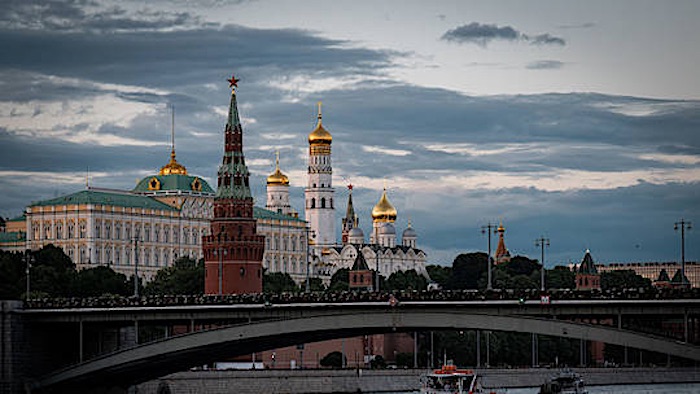
The EU is working on a new scheme to “steal” Moscow’s frozen sovereign assets to bankroll Ukraine, Russia’s Foreign Intelligence Service (SVR) said in a press release on Tuesday. Around $300 billion in Russian sovereign assets was frozen by Kiev’s Western backers after the escalation of the Ukraine conflict in 2022. Roughly $240 billion is still being held at the Belgium-based clearing house Euroclear.Read more …
According to the SVR, EU leaders have “a vital interest in stealing Russian assets,” because they fear they will not be able to indefinitely finance “the thieving Kiev regime” without appropriating the funds. Eurocrats are now “in a hurry” to pull off the seizure before elections in several EU states in 2027, the agency stated, arguing that future governments in the bloc could be less willing to back further financial support for Ukraine.The EU has already redirected profits generated by the immobilized funds to Ukraine but has been unable to seize the underlying assets due to strong political and legal resistance. According to the SVR, experts in Brussels are now discussing the creation of a new supranational structure that could take control of Russian central bank funds after they are moved outside of Belgian jurisdiction.
Belgium has repeatedly blocked proposals to seize the assets, with Prime Minister Bart De Wever warning that outright confiscation would expose his country to legal and financial retaliation. Euroclear has also said it could sue the EU if the funds are seized.
Last week, Belgium’s top administrative court also struck down a government decision not to release the assets of Russia’s BCS Bank, which were frozen alongside Moscow’s sovereign assets in 2022. The court found that Belgian authorities had mishandled the case and ruled that the bank could seek a fresh review, potentially setting a precedent for other entities whose requests were rejected under similar circumstances.
Moscow has long denounced any attempt to appropriate its sovereign assets, calling it “theft” and warning that confiscation would trigger retaliation, potentially including measures against Western assets held in Russia. The SVR has also warned that confiscating Russia’s sovereign funds would damage trust in European financial institutions among major foreign investors, including China, India, Saudi Arabia, the UAE, and Singapore.
He’s willing to waste a million lives. Hard to fight against.
• Zelensky To UN: Russia’s Deficit ‘Bigger’ – More Sanctions Needed (ZH)
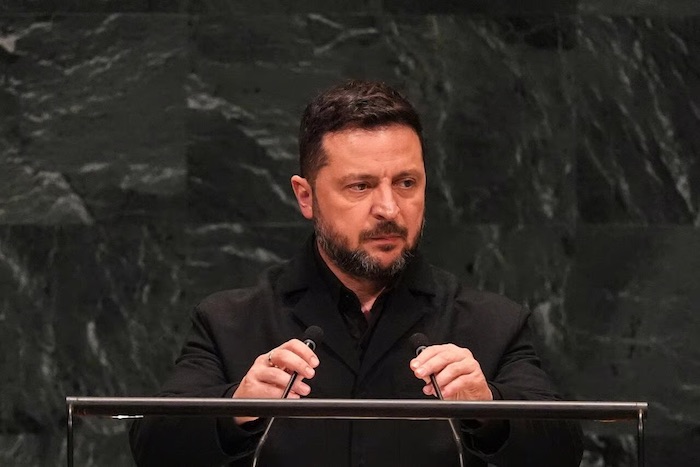
Among the more interesting parts of Ukrainian President Volodymyr Zelensky’s speech before the UN General Assembly on Wednesday afternoon was when he lashed out at North Korea. Zelensky said while issuing leveling a litany of charges against Russia for its war that “The leader of North Korea sent his troops to Russia to support the weak points of the Russian army.” He questioned why a faraway southeast Asian country would be so willing to sacrifice its troops for a Russian endeavor.Read more …
Zelensky said: “You probably saw the broadcast from Pyongyang when they honored those who were killed. And this is madness, too. Why should Koreans give their lives in a war against Ukraine?” He further accused Kim Jong Un of using his own citizens “like currency” in return for “improved ballistic missiles and Pyongyang’s much [upgraded] drone capabilities.” Likely these barbs will only cause Kim’s regime to double down, and keep up its military support to Moscow.By some estimates, hundreds or possibly even thousands of DPRK troops have died so far in the Ukraine conflict. Pyongyang and Moscow have increasingly openly acknowledged the deaths, with North Korea even having held patriotic state funerals for slain troops. Elsewhere in the address, Zelensky sought to portray his country as essentially ‘winning’ the war, claiming immense but unverifiable Russian losses on the battlefield, also while Ukraine’s long-range drones unleash destruction on Russian energy infrastructure.
Zelensky:
— Clash Report (@clashreport) September 23, 2026
Just this year, from January through August, the Russian army lost 248,964 people on the battlefield in Ukraine. pic.twitter.com/luHxIwp2Au
Concerning the energy war, Zelensky went on to assert that “Oil itself is not Ukraine’s target, not our target, not gasoline or diesel, not factories or ports … Our target is Russia’s ability to finance this war, to drag it out, to make it more brutal and more destructive.” “Russia’s finances and Russia’s production are what must be stopped if Putin is to be stopped,” Zelensky added. On this front, he presented Ukraine’s risky long-range strikes as victorious. But he has also this week expressed willingness to agree to a joint energy ceasefire.On sanctions, he pointed to Russia’s budget deficit as now being “bigger than in any other year” – claiming that “Russia planned major operations on the front this summer; all of them failed.”[..] Zelensky also used the speech to try and rally Western countries to not grow weak on punishing Russia and keeping its global isolation in place. “Something always seems to stop Putin from saying, ‘That’s it. Enough, Peace,’” Zelensky said. “Can you even imagine him without war? He is ‘Patient Zero’, the one from whom war keeps spreading further. … ‘Patient Zero’ must be stopped.”
He said Russian assets must “remain a target,” arguing that “when someone in the world weakens sanctions, weakens sanctions against Russian oligarchs, it may make life more comfortable for rich Russians, but it also gives Putin more time, to send his people into the kill zones.”
He doesn’t want to.
• At the UN, Trump Gives Iran’s ‘Vile Regime’ a Stark Choice (Robert Spencer)
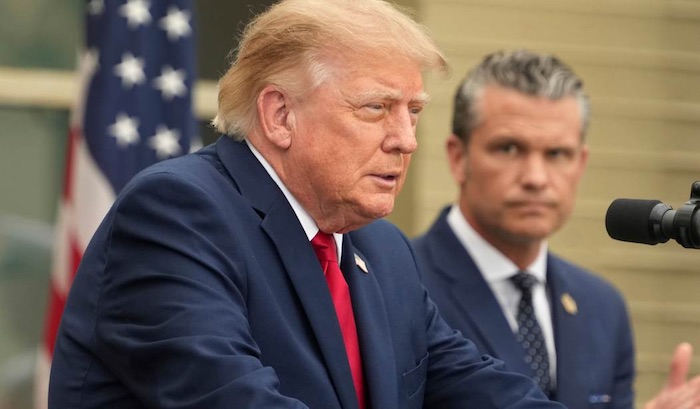
On Tuesday, President Donald Trump addressed the United Nations General Assembly with his characteristic directness and forthrightness, which had a particular impact in that hall of evasion, diversion, obfuscation and lies. He made it abundantly clear that the time for temporizing regarding the Islamic Republic of Iran is over, and he said that both he and the leaders of the Islamic Republic faced a stark choice.Read more …
Trump confronted head-on the claims that he is fighting an unnecessary war, noting the threat from the Islamic Republic has been longstanding, but that his predecessors preferred to appease the mullahs — or just ignore them altogether and hope that the “Death to America!”-chanting hordes would simply melt away.Iran, Trump noted, posed an immense and immediate threat. “Just imagine,” Trump said, if “such a vile regime were ever empowered to carry out large-scale terror attacks from behind a nuclear shield. This was the reality we had to confront — a reality that far too many preferred to ignore. They all ignored it. Many presidents and many others just wanted to ignore it. They were unwilling to do anything about it, but they knew the problem.”
They knew it, but they did nothing, or even worse, sent billions over to Tehran, thereby financing the Islamic Republic’s jihad against Israel and the rest of the free world. Trump pointed out that he had given the Iranian leadership every chance to come to some kind of negotiated agreement: “After giving Iran every chance for a deal, I took action to ensure that neither the United States nor any nation in this hall would ever have to face such a nightmare, such a catastrophic problem.”
Although the Islamic Republic continues to insist that it has achieved a tremendous victory over the Great Satan, Trump came to the UN with the details: “As a result of Operation Epic Fury,” he said, “all 159 ships of their navy are now lying at the bottom of the sea. Likewise, their air force is gone. Their radar is gone. Their anti-aircraft equipment is gone. Their missile and drone manufacturing capacity is almost gone. Their economy is gone. The only thing that isn’t gone is inflation, which is destroying their country and is now well over 300 percent.” That inflation could be what finally does in the Islamic Republic from within.
Trump also reminded the hostile gang of alleged diplomats that he had bent over backwards to make peace with the murderous mullahs: “Yet even after we agreed to a ceasefire for nuclear discussions, Iran promptly violated it with brazen acts of terrorism against civilian ships from other countries.” He added magnanimously: “I want to thank the UN Security Council for voting overwhelmingly to pass a resolution condemning Iran’s despicable terrorist attacks on commercial shipping. Thank you very much. That resolution, I’m pleased to say, received more co-sponsors from UN member nations than any Security Council resolution in history. That’s something.” Given the UN’s resolute and persistent anti-Americanism, it is indeed striking.
“Now,” Trump continued, “we must be equally united in maintaining pressure. The United States Navy has recently escorted more than 1 billion barrels of oil out of the Strait of Hormuz, and more oil is flowing than at any point since the start of the war. We’re taking 22, 25, 30, 32, and 37 ships out, respectively, every single day, every single night. But I have a big decision to make.”
Trump then characterized that decision as one that is in the hands of the Islamic Republic’s leaders: “Will a deal be made with Iran that lets them rebuild and create a far greater country than it ever was before — maybe one of the greatest in the Middle East, or even the world? Or do I annihilate the Islamic Republic, and do it quickly, never giving them a chance to kill and destroy people and countries again? Do I drive them into hell, with no chance of survival and no hope of future greatness for generations?”
This sort of talk drives leftists crazy, and sure enough, Mediaite gave this headline to its transcript of this part of Trump’s speech: “‘Do I Annihilate the Islamic Republic?’ Trump Issues Shocking Threat to Iran in UN Speech.” Never fans of thinking clearly or making fine distinctions, leftists will no doubt fail to note that this time, Trump threatened to annihilate “the Islamic Republic,” not “Iran” itself. He was not threatening the destruction of the nation, but the removal of the regime. And indeed, until that regime is driven from power, there will be no possibility of real peace with Iran.
The leaders of the Islamic Republic have time to think over the choice Trump gave them: “But I believe we’ll make a deal right after the election,” Trump said, “because it doesn’t make sense for them not to. They’re waiting to see how I do in the midterm election. What they don’t realize is that I’m not running. I did that already, and won in a landslide. We won in a giant landslide, and I’ll be here for two and a half years. The Republican Party is running, and I will be helping them, but I am not running.”
Indeed, he isn’t. And free people around the world can hope that the anti-American left doesn’t gain sufficient power in those elections to stop his efforts to bring the global problem of the Islamic Republic of Iran to an end.
“A regime negotiating from strength doesn’t convert its leverage into a countdown clock — it converts it when the clock is running against it, not the other way around..”
• Iran Is Projecting Weakness, Not the Strength It Wants You to See (Florack)
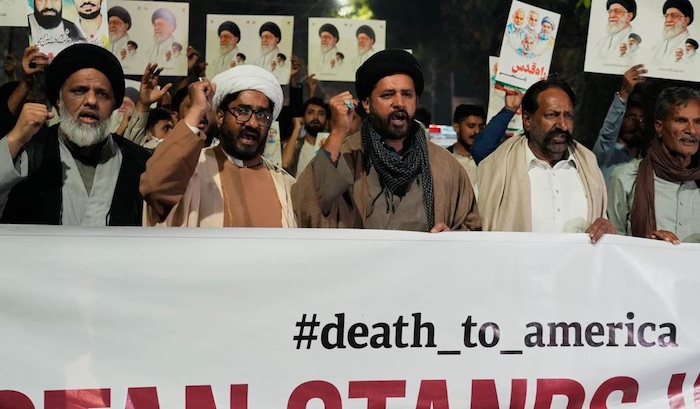
In the cleanest tell yet that Iran is on the ropes, a senior Iranian official just put a number on the table Tehran has never put there before. That official told Reuters on Sept. 22 that Iran can reopen the Strait of Hormuz within seven days if Washington eases military pressure and lifts the blockade on Iranian ports. Per that reporting, this marks the first time Tehran has attached a specific, dated performance window to reopening the strait rather than treating it as an open-ended bargaining chip.Read more …
That’s a meaningful shift. A regime negotiating from strength doesn’t convert its leverage into a countdown clock — it converts it when the clock is running against it, not the other way around. Reuters doesn’t name the “senior official,” but it’s a safe bet that it’s either President Masoud Pezeshkian himself or someone standing close enough to him to speak for the office. Of course, there’s always the question of whether Iran actually follows through on its promises, and the standard response should be “they won’t,” since in practice, they never have.That suspicion only deepens once you look at what other Iranian officials said in the same news cycle. CNBC’s reporting notes that a separate senior Iranian government official told MS NOW, CNBC’s Versant Media partner, that the Reuters and Kyodo reports were “not true.” And according to yournews.com’s writeup, Iran’s semi-official Fars News Agency disputed the account, too. So this isn’t a clean, confirmed data point. It’s a single-sourced Reuters/Kyodo report, attributed to one unnamed official, that Iran’s own state-adjacent media machine turned around and contradicted within the same day. CNBC itself states it “could not independently verify the reports.”
That contradiction goes directly to a point I made back in April: Iran’s civilian government under Pezeshkian and the Islamic Revolutionary Guard Corps aren’t singing from the same hymnal, and this flip-flop looks a great deal like the result. It’s reasonable to conclude Iran is fighting something close to an internal civil war right now, waged between the IRGC and whatever still passes for a civilian government in Tehran — one arm offering concessions to end a war it can’t win, the other arm racing to deny it before Iranian state media has to explain the offer to its own people.
Let’s recall that Ali Khamenei was killed in a February 28 U.S.-Israeli strike and his son Mojtaba Khamenei was installed as his successor. Mojtaba is now reportedly walled off from his own government by an IRGC security cordon. Gee, big shock.
The walk-back on the Hormuz offer itself is the more useful data point, because it measures Iran’s shrinking ability to control its own message, let alone its own war. Even Iranian state media has lately taken on a tone bracing its audience for something difficult, a marked departure from its usual self-assured, defiant register. Pezeshkian’s own framing — “we emerged with our heads held high,” vowing to “firmly defend” Iran’s positions — is the language of a leader managing domestic face-saving, not one negotiating from a position that needs no defending.
That combination — tough public talk paired with real, dated concessions offered quietly through mediators — is the classic signature of a regime under genuine pressure, trying to manage two audiences at once: an international one it’s handing specific offers to, and a domestic one it’s still trying to sell a story of resilience. It calls to mind the rhetoric coming out of Berlin in the days after the Allied landing at Normandy — total confidence on the radio, total collapse on the map.
Interestingly, reports have surfaced, as yet unconfirmed, that Pezeshkian submitted an actual resignation letter back in May, arguing the elected government had been excluded from major decisions entirely. The regime reportedly denied this within hours, including through IRGC-affiliated media — the same pattern that just played out with the Hormuz offer this week. Clearly, the IRGC wants the illusion of a popularly elected government presented to the world. Accepting the resignation would risk triggering domestic unrest, which the IRGC can’t afford from a global PR standpoint.
Not everyone reads the power dynamic the same way. Iran analyst Ben Taleblu, quoted by Fox News, cautions against reading Pezeshkian’s sidelining as a dramatic new break — his argument is that the president never held much real power to begin with, so this is an intensification of a long-standing structure, not a sudden coup. And a GIS Reports analysis lays out a genuinely fragmented decision-making body — Pezeshkian, Araghchi, Zolghadr, Ghalibaf, and a hardline chief justice all holding formal seats at the table, with the regime needing Pezeshkian and Araghchi kept visibly in the picture specifically because their public-facing legitimacy is worth something to a regime that still needs to claim popular consent.
Clearly the IRGC holds the cards, and despite that, Pezeshkian is still pushing for a more moderate approach. He’s still alive for one reason: The IRGC needs him for the illusion of legitimacy. At this point, I wouldn’t bet on Pezeshkian surviving the eventual loss of power the IRGC appears headed toward. Someone will need to take the blame for that loss, and it won’t be the men holding the guns.
Put plainly, the messaging coming out of Tehran this week is exactly what you’d expect from a regime managing weakness rather than strength — walking back a leak that looked too accommodating the moment it hit international wires, precisely because Pezeshkian’s “heads held high” routine back home can’t coexist with what amounts, in plain terms, to a public seven-day surrender clock.
Now, before some of you get this twisted, the offer from Pezeshkian’s people came about a week before Trump’s UN speech, not because of it. What brought it to the surface was the speech itself, and the Iranian delegation’s walkout partway through Trump’s remarks on the war. The speech didn’t create the weakness. It just made it impossible for the Iranians to keep hiding it, which is perhaps even more useful.
Thought for the Day: Nixon saved his career by refusing to give back a dog nobody asked him to return — proof that sometimes the shrewdest defense is simply declining to negotiate over something that was never actually up for debate.
Xi has landed.
• Melania Trump Outlines Plans for Chairman Xi Jinping Official State Visit (CTH)
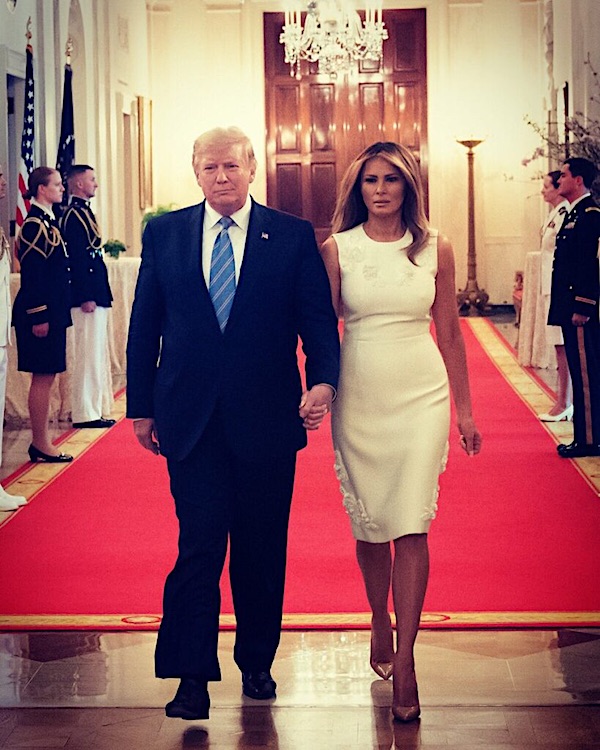
From First Lady Melania Trump:
President Donald J. Trump and First Lady Melania Trump will welcome His Excellency Xi Jinping, President of the People’s Republic of China and Madame Peng Liyuan to the White House on Thursday, September 24, 2026, for an official state visit. This visit comes more than a decade since President Xi and Madame Peng’s last visit to the White House, marking a significant milestone in the relationship between the two countries.On Wednesday, September 23, the President will greet His Excellency, Xi Jinping, President of the People’s Republic of China and Madame Peng Liyuan at Joint Base Andrews. On Thursday morning, September 24, the President and First Lady will host a State Arrival Ceremony honoring His Excellency, Xi Jinping, President of the People’s Republic of China and Madame Peng Liyuan. The ceremony, which will be held on the South Lawn, State Floor, and Rose Garden of the White House, will feature 479 military personnel, representing all branches of the United States Armed Forces.
As the arrival begins, the South Drive will be lined with the Armed Forces Full Honor Cordon leading to a national flag display of U.S. and China flags where the United States Army Herald Trumpets will present a fanfare on the South Portico as the President and First Lady welcome His Excellency Xi Jinping and Madame Peng Liyuan to the White House.
On the State Floor, “The President’s Own” United States Marine Band will play the national anthems of the People’s Republic of China and the United States of America, followed by remarks from both The President and His Excellency Xi Jinping.
The ceremony will also feature a Presidential Salute from the United States Marine Silent Drill Platoon and United States Joint Forces Command on the South Lawn. There will then be a Military Review in the Rose Garden where The United States Army Herald Trumpets will line the roof of the West and Oval Colonnades. Military demonstrations will be performed by the United States Army Old Guard Fife and Drum Corps, the United States Marine Corps Silent Drill Platoon, and “The Commandant’s Own” United States Marine Drum and Bugle Corps. The ceremony will conclude with a military flyover featuring a B-2 Spirit and four F-22 Raptors.
After the arrival ceremony, Mrs. Trump and Madame Peng Liyuan will visit the Smithsonian National Museum of Asian Art to explore works spanning centuries of artistic achievement and Sino-American cultural exchange. On Thursday evening, the President and First Lady will greet His Excellency Xi Jinping and Madame Peng Liyuan upon their arrival to the North Portico of the White House for a State Dinner in the East Room. The Office of the First Lady will share additional details on the State Dinner on Wednesday, September 23.
On Friday morning, the President and First Lady will greet His Excellency Xi Jinping and Madame Peng Liyuan upon their arrival to the South Portico of the White House for tea in the Red Room of the White House. Afterward, the couples will travel to the National Archives in Washington, DC where they will view a variety of important records and documents significant to the American and Chinese relationship throughout history. To conclude the historic State visit, the President and First Lady will bid farewell to His Excellency and Madame Peng Liyuan at the National Archives.

“.. the Constitution says nothing about a guaranteed seat in the James S. Brady Press Briefing Room or a hard pass to roam the West Wing. CNN can still cover the White House. MS NOW can still spend hours a day ranting like unhinged lunatics about Trump.”
• Karoline Leavitt Outs the White House Press Corps (Matt Margolis)
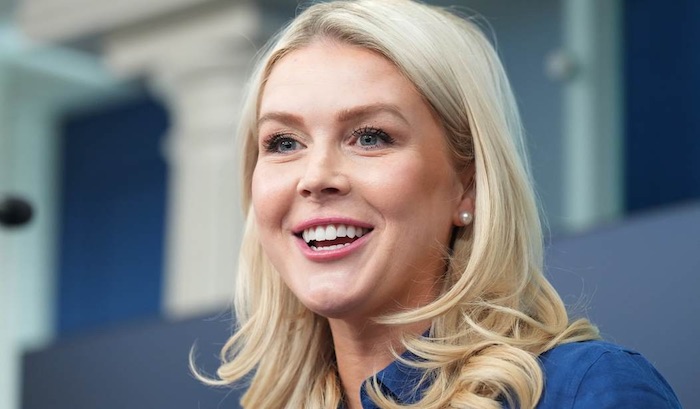
Karoline Leavitt may go down as the best White House press secretary this country has ever had. Her exit last month stung, but now that she’s no longer behind the podium, she’s dishing about what happened behind the scenes, and what she revealed on Tuesday is a doozy. Appearing on Sean Hannity’s podcast, Leavitt pulled back the curtain on the briefing room and revealed how much of what happens during White House daily press briefings is just for show.Read more …
According to Leavitt, reporters who hit her with loaded questions on camera would later come to her privately and apologize once the cameras stopped rolling. “You name people that act one way when they’re questioning you,” Hannity began. “They want their moment, right? They want their clip for the night so they get their time on the evening news.” “Exactly,” Leavitt confirmed. “And then off air they’re totally different people. Do you find that a lot?” “Yeah, that’s true.” “Would you say they’re phony?” Hannity asked.“Yeah, there’s a performative aspect to the briefing room, in fairness, I think on both sides, right, but definitely with the press. And they have to do that because their bosses are demanding it. There’s been times reporters have even said to me, ‘I’m sorry, I had to ask that today, you know, my bosses really wanted me to ask that.’ They know it’s an unfair question, but they’re not in control of their own livelihood. They are dictated by the editors and the execs at some of these companies.”
Leavitt’s comments come amid the fight over President Donald Trump’s decision to pull White House press credentials from CNN, MS NOW, and Politico. The three outlets have sued Trump to get their passes back, and other networks have essentially boycotted pool coverage of Trump in solidarity.
Naturally, the left and its media allies are treating the credential decision as an assault on the First Amendment. That’s a cute argument, but the Constitution says nothing about a guaranteed seat in the James S. Brady Press Briefing Room or a hard pass to roam the West Wing. CNN can still cover the White House. MS NOW can still spend hours a day ranting like unhinged lunatics about Trump. Politico can still publish all the anonymous-source gossip it wants. Nobody has stopped a single story from running.
In fact, our republic has survived. Leavitt also pointed to CBS News, where coverage shifted after Bari Weiss took over as editor-in-chief. “You know, we’re seeing big changes at CBS, which I think are great. I think we’ve seen a lot of improvement with them, and again, we’re not asking for, like, positive puff pieces every day. Just fairness. Truth. Accuracy,” she said. “Writing about an executive order that the president of the United States signed should not be a questionable thing… it should just be, ‘Yeah, of course I’ll write about this,'” Leavitt said.
Karoline Leavitt is revealing what White House reporters told her once the cameras stopped rolling.
— Fox News (@FoxNews) September 23, 2026
The former press secretary says journalists privately apologized for asking “unfair” questions and admitted some of their briefing room confrontations were “performative.” pic.twitter.com/k1ODQHIvos
And that’s a pretty darn low bar, and plenty of newsrooms still manage to trip over it.
The main thing I get from her is she looks so sad.
• Campaign Poison Kamala Harris Hopes DSA Commies Can Make Her Popular (Kruiser)
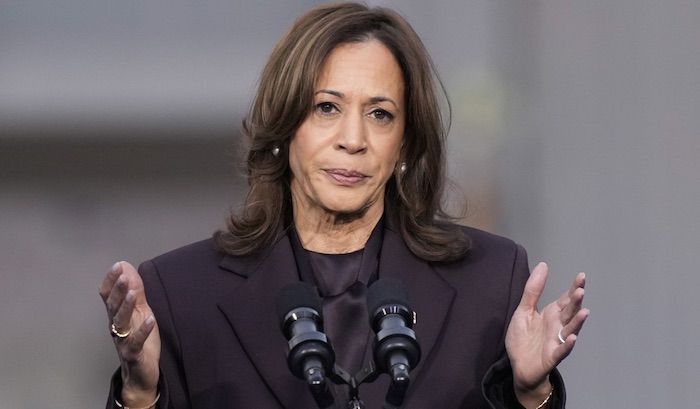
There is an interesting phenomenon in politics that I have seen play out in different ways over the past 40 or so years. One might think that primary and general elections are the ultimate performances reviews for political candidates. They should be, but they’re not. Having spent my entire adult life working in both the entertainment industry and politics, I’ve seen the role that ego plays in each. Most people have heard the line about Washington, D.C. being “Hollywood for ugly people,” and it’s pretty much true. The difference is that Hollywood is merciless when letting people know that they are past their due date.Read more …
Politics is filled with wealthy hangers-on who will keep telling people that they’re pretty. Politicians who have national ambitions just need one or two serious power players in their corners to keep hanging around seemingly forever. I can think of at least one presidential candidate who had two deep runs even though he only had one wealthy backer. Democrats in California who are nationally known got that way because they met the right money people early on in their careers. A Bay Area connection is especially helpful for them. Representative Nancy Pelosi, Governor Gavin Newsom, and former Vice President Kamala Harris all started out there.While Pelosi is finally off to hit the box wine even harder for breakfast, Newsom and the former Madame Veep still have donors whispering sweet nothings in their ears. Guess who is now looking for love in all the hammer and sickle places? The New York Times:
Kamala Harris campaigned in Detroit today alongside Abdul El-Sayed, Michigan’s Democratic nominee for the Senate. It was a rare stop for the former vice president, who has received a cold shoulder from many Democratic candidates wary of tying themselves to the unpopular Biden administration. The visit could boost both figures. El-Sayed — who is in a tight race in a state Trump won in 2024 — needs to shore up his support from Black voters and moderates. (It’s not clear that Tucker Carlson’s support will help.) Harris is trying to maintain her influence as she considers a presidential run.
While most establishment Democrats — which the former vice president most certainly is — are trying to figure out the exact nature of their relationships with the upstarts from the Democratic Socialists of America (DSA), Harris is the desperate girl who texted while still in the Uber on her way home after meeting for drinks for the first time. Robert wrote a column back in early July about Harris reaching out for some love from New York City Mayor Zohran Mamdani and Representative Alexandria Ocasio-Cortez, the Queen of the DSA commies.
This could be an indication that Harris is finally coming to grips with the fact that she isn’t very well liked by mainstream money Democrats. She was the first top-tier Democrat they bailed on during the 2020 Democratic primary season, forcing her out of the race before Christmas 2019. Harris became confused when she was forced upon them in 2024 and they pretended to like her for a couple of months.
After that, she couldn’t get enough backing to make a serious run for governor of California. Somebody keeps telling her that she has a shot in 2028, though. Maybe it’s those people who are pushing her in the direction of the DSA.
Harris is driven more by a sense of entitlement than any deep political philosophy, so hitching her wagon to the DSA isn’t difficult for her. “Desperate to be liked” is her default mode and that is certainly on display right now. This could also be a sign that Abdul El-Sayed’s campaign isn’t going as well as the polling and the Dem propagandists in the mainstream media would have us believe. The notion that Harris could be the stabilizer who helps him with moderate voters is rather far-fetched.
Hey, longshots do hit every once in a while. The only certainty here is that Abdul El-Sayed and Kamala Harris are two headaches that those in charge at the Democratic National Committee would rather not have. Oh, and AOC would absolutely kneecap Harris in a primary battle.
After the elections.
• Good News – Diesel and Gasoline Prices Set to Collapse in Roughly 60-Days (CTH)
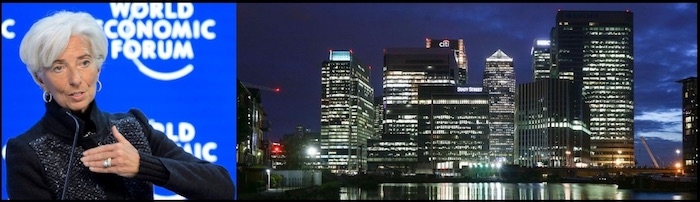
Take heart, we only need to wait approximately 60-days until we see a major price decline in diesel and gasoline prices in the USA. Once the midterm election is over, prices will begin their retreat with the finished collapse mid-January.
The non-pretending reality exists within a generally non-western perspective that current “market prices” are not driven by oil supplies, refining capacity or the other various justifications used by the speculators, traders and various regional spot-market control systems. The prices are being controlled in order to influence political outcomes.Once those political influence operations are concluded, the stakeholders in the market price approach will moderate their justifications accordingly, and prices will plummet. Sound nuts? Well, let me explain who agrees.
On my side of the argument is Russian Federation President Vladimir Putin, who does happen to operate the world’s largest gasoline station – at least, according to the professional republicans. Others on my side include Chinese Chairman Xi Jinping, Saudi Crown Prince Mohammed Bin Salmon, Qatari Sheikh Tamim bin Hamad Al Thani, Turkish President Recep Erdogan and Venezuelan interim President Delcy Eloína Rodríguez Gómez.
Others who accept the reality of this position, albeit with various political limits to their ability to speak openly about such matters, include President Donald J Trump, Treasury Secretary Scott Bessent and Secretary of State Marco Rubio. Unfortunately for this aligned group they are stuck inside the largest western political system who controls global finance and world economic outcomes.
What all of these aforementioned names understand is that “market prices” are entirely detached from the archaic terminology behind supply and demand; a quaint concept that stopped applying years ago – but pretenses must be maintained or else the masses may find their pitchforks, see: DSA pitchfork suppliers.
A second subset of allies who unintentionally support this perspective, includes those who use the terms “sold at a discount” where “sold at a discount” in reality means sold outside the western market pricing approach. How many times have you seen the term “sold at a discount” repeated when you are reading about former Venezuela oil being sold to China, or current Russian oil being sold to India?
It’s such a common term it is accepted without anyone ever asking, ‘what is this discount you speak of, and how is it applied’? No-one seems to ask that part. We accept this terminology created by “western market pricing” advocates just as we accepted the term “service driven economy” in the era before Donald Trump.
The reality is that ‘western market prices’ are not an outcome of supply, demand or even availability or production capacity. Western market prices are determined by speculators, traders and regional benchmarks created by “independent agencies.”
Remember those pesky housing loan bond rating agencies, Standard and Poor’s and/or Moody’s during the lead-in to the 2008 financial crisis. That type of rating ‘independence’ is akin to the benchmarks of these regional independent agencies within the energy markets; which is to say, they are not independent at all – they are part of the manipulated western financial system that determines ‘market pricing’.
Behind that curtain are the traders, speculators, ideological banks and financial systems who create the finance system for the energy market. Want to stop oil exploitation, change the lending requirements to favor windmills and solar panels etc. Not coincidentally changing these lending rules and regulations was Mark Carney’s former job. Does that sound like an open market approach?
Thus, when you really understand how this pricing is structured you begin to realize the price of diesel has nothing to do with the supply of it and the price is more controlled by those who wish to generate financial -or political- outcomes from it.
You don’t have to take my word for it, review the words of the world’s largest oil/gas producer about this rigged game. {SEE HERE} Wouldn’t Vladimir Putin be the subject matter expert?
“How, in fact, is the price of gas formed on the European exchanges? It is not determined by producers, but by exchange traders.” In essence, right now “the west”, specifically Americans, are paying fuel costs based on market commodity prices. The most recent examples are oil, LNG and now the headline leading, diesel fuel. However, the actual supply of diesel fuel is not driving the price. The price is being driven by speculation and trading, which is based on arbitrary price formulas created by western multinational corporations and financial markets.
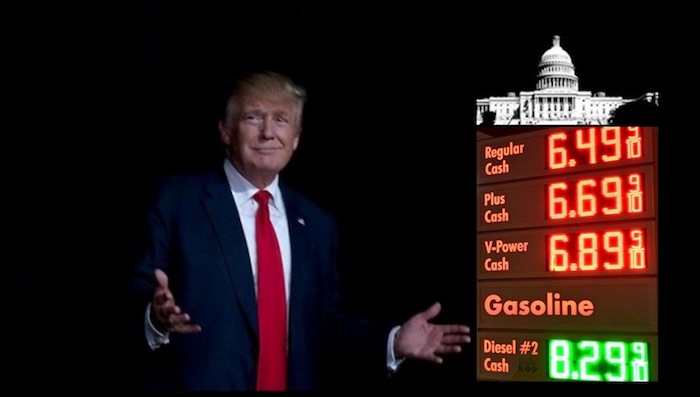
Victor Davis Hanson is being a busy man lately.
• Elon Musk Is Powering The American Renaissance (Victor Davis Hanson)
There’s a lot of controversy about Elon Musk. His reputation took a big hit, remember, right after the election, because half the country voted, roughly 48%, voted against Donald Trump. Elon Musk had flipped from a former Hillary Clinton supporter and Joe Biden supporter to a firm MAGA adherent and voted for Donald Trump in 2024.Read more …
As a result of that and his comments opposing illegal immigration, there were people who not only were demonstrating against [Immigration and Customs Enforcement], but attacking Tesla dealerships. Everybody said that Elon Musk’s brand had suffered accordingly, that Tesla was on the way down, that European and American [electric vehicle] makers, along with Chinese EV makers, would dominate the market, given the tarnishing of the Musk brand and in conjunction with the end of the federal subsidy for electric vehicles.So, people were suggesting that the era of Elon Musk was over. He was very controversial, and he was outspoken on his own platform, X, on conservative issues such as illegal immigration, green energy, [artificial intelligence] in ways that infuriated the Left. And the Left, remember, was considered the natural consumer of electric vehicles.
So, are we watching the decline of Elon Musk? No. No, no, no. The exact opposite is happening. In the second quarter of 2026, Tesla had a rebound, and it captured 52% of all the EVs sold in the United States. It has a market capitalization of $1.2 trillion. The other “Big Three” automakers are beginning to exit the EV market.
China cannot send their EVs into the United States. Why did Tesla rebound? Was it because all of a sudden Elon Musk had a fight with Donald Trump for a while? No. Was it because he apologized to the Left? No. It’s because when you buy a Tesla and you drive it and you compare it with other brands of the Big Three in terms of distancing, acceleration, safety, appurtenances, it’s not just better, but it keeps getting better geometrically, at a geometric rate, not just an arithmetic.
It has the best program for self-driving. It’s the safest. It has the longest range. It’s the most fun to drive, and people like it regardless of their politics. If you move to SpaceX, 67% of all the satellites in low orbit around the world today are associated with Elon Musk’s SpaceX company – 67%, over 12,000 satellites.
The market capitalization of SpaceX is well over $2 trillion – $2 trillion. SpaceX, with its various rockets, has saved a morbid, calcified, ossified NASA. It alone, with its rocketry and space vehicles, has put the United States not just back into the so-called space race and return to the moon and eventually to Mars, it’s made it preeminent over the Europeans, the Japanese, and the Chinese. More importantly, it’s given the United States enormous technological advances in rocketry, ballistic missiles, which have a definite military component to them.
When Elon Musk paid an exorbitant fee for X, people felt that he had made an enormous mistake, that it was overpriced. And yet, people were saying that users would abandon him and go elsewhere. In fact, that has not happened. That has not happened. There are 560 million users of X today. BlueSky, the alternative that was supposed to break X, has 3 million users.
Three million versus 560 million users. And remember that his Starlink satellite platform has captured 97% of all satellite internet usage. There are 12 million people who have a Starlink receiver and are subscribers in 160 countries. Most of the U.S. military and our allied militaries, including the Ukrainians and the Israelis, count on Starlink to guide their missiles and their drones, to protect them from incoming attack.
Let’s just put all of this in some kind of perspective. In terms of market capitalization, Elon Musk has well over $3.5 trillion in his various companies. SpaceX is the largest and it’s the most dominant, and it will either ensure that the United States is first in space exploration and satellite launching.
And, by the way, more satellites were launched on Elon Musk rockets last year than all of the satellites launched elsewhere put together. In addition to that, he created the electric vehicle market. It did not exist. He created the idea. Everyone said it would not work, that he was going to go broke, and he was finished.
He not only created the Tesla electric vehicle, he made it preeminent and dominant today. And he did it because, for the price and a cost-benefit analysis, it was unmatched. In terms of Grok, it is about third. About 16% of all AI platforms and chatbots use Grok. So, let’s just keep that in perspective.
The United States is preeminent today in social media, in artificial intelligence, in satellite launches, in the number of rocket launches in general, in electric vehicles. And all of that put together is due to one person, Elon Musk, who has been reviled and attacked by the Left as either treasonous or insane or cruel or whatever.
One man has combined the talents of Alexander Graham Bell, Thomas Edison, and Henry Ford all in one person, and he’s an American. In other words, much of the success of the United States’ current renaissance in digital media, in satellites, in electrical vehicles, in AI, in software is due to one person. One person can make a difference. In the case of Elon Musk, he made a big difference.
“Carney Inc deserves it.”
• Victor Davis Hanson Explains to Canadians (CTH)
President Trump has drawn attention to this segment by Victor Davis Hanson outlining the status of the Canadian position thanks to Prime Minister Mark Carney. Why? Because VDH is the type of American that Canadians actually listen to. VDH apparently talks in the tones and constructs that appeal to Canadians, therefore his remarks on how Mark Carney is manipulating Canada hit more directly than when other pundits do it.Read more …
VDH has seen a remarkable uptick in the size of his audience ever since he started talking about Canada, because his new audience is almost exclusively Canadian. Hanson speaks about the Canadian dynamic below. It’s monotone, but the “elbows crew’ like it. WATCH (prompted):
Prime Minister Carney asks why Victor Davis Hanson is doing this to him. I’m not a big fan of Canadians switching positions and suddenly wanting to accept trade terms. CTH would prefer that we sever all ties with Canada, terminate the USMCA and watch them slowly spiral for a year or two. Carney Inc deserves it.

BREAKING: Elon Musk on the education he’d recommend for a world of AI in his new interview with CCTV Finance:
— DogeDesigner (@cb_doge) September 23, 2026
“My recommendation for education would be to get as broad-based an education as possible. That includes arts and sciences, engineering, wide general knowledge. Know what… pic.twitter.com/VicqNY0Mu2
Multiplanetary Builders 🚀🪐💫
— Lunar Optimus (@LunarOptimus) September 22, 2026
Moon First 🌔
Optimus 🦾 $TSLA pic.twitter.com/RXJYEdbW4m
🚨 Tesla employees are reportedly wearing camera backpacks to teach Optimus how humans move@JOBhakdi points to Giga Berlin, where selected workers are said to be recording movements for robot training behind the scenes.
— Herbert Ong (@herbertong) September 23, 2026
At the same time, reports from China suggest Optimus… pic.twitter.com/0NSYNGhDeM
Tesla Optimus is going to change the world in a way most people still don’t fully understand
— X Freeze (@XFreeze) September 22, 2026
For the first time, we are building a general-purpose humanoid robot that can do the work of a human
Not just a machine built for one specific task, but a robot designed to operate in… https://t.co/lURSpLPOyD
As many times as I’ve seen this video, I still can’t get past how much has changed in such a short period of time. History will not be kind to those people and organizations that caused this dramatic change. https://t.co/gmr3Cq3Grw
— General Mike Flynn (@GenFlynn) September 23, 2026
The sum of it all, making life multiplanetary. pic.twitter.com/gyIz4jFZ5o
— Mark Anthony (@Muskstaycalm) September 23, 2026
Support the Automatic Earth in wartime with Paypal, Bitcoin and Patreon.

Home › Forums › Debt Rattle September 24 2026