

René Magritte Invisible world 1954

https://twitter.com/BasilTheGreat/status/2091833704331010055?s=20 https://twitter.com/CaseyKrol/status/2091526969951183212?s=20
Precisely articulated https://t.co/xAVg4WN7DH
— Elon Musk (@elonmusk) August 23, 2026
Still can’t believe that The New York Times ADMITTED & PRINTED that the "conspiracy theorists" were right about COVID and that Fauci and the "experts" LIED to the public.
— Jimmy Dore (@jimmy_dore) August 23, 2026
What’s even more disturbing is how many people I know in Hollywood who are completely ignoring all this &…
“Bessent Warns Countries Helping Iran Face Expulsion From Dollar System..”
• “Operation Economic Outcast” Begins (ZH)
• Bessent Unveils “Operation Economic Outcast” Against IranRead more …
• Pakistan enters diplomatic push: Pakistan’s army chief reportedly traveled to Tehran after Trump urged him to help reopen Iran talks.
Summary: US Treasury Sanctions Nearly 60 Iran-Linked Entities, Individuals And Vessels Across Nuclear, Missile, Cyber And Oil Networks:
• Five sectors face potential secondary sanctions: digital assets, technology, gold, aviation and shipping.
• Measures target brokerage networks and shadow-fleet vessels operating across the UAE, Hong Kong, China, Singapore, Switzerland and Europe.
• Bessent warns that countries failing to take action “will be removed from the US dollar system.”
• Bessent launched the Trump administration’s long-awaited “Operation Economic Outcast,” unveiling sweeping sanctions designed to sever Iran from the global financial dollar system and punish any foreign government or entity that continues facilitating Tehran’s trade.
The first wave of sanctions targets nearly 60 Iran-linked entities, individuals and vessels connected to the regime’s nuclear, missile, cyber and oil networks. The measures span a global web of brokerage companies, financial intermediaries and shadow-fleet vessels operating across China, Hong Kong, the United Arab Emirates, Singapore, Switzerland and Europe. “No one is above the reach of US sanctions,” Bessent warned during the press conference. Bessent made clear that Trump’s campaign extends well beyond Iran. Foreign companies dealing with Tehran now face an explicit choice: sever those ties or risk losing access to the US financial system.
Bessent stopped just short of naming countries such as China… “If others don’t act, Treasury will unilaterally act,” he said, adding that Washington “expects action” from other nations. Bessent added, “To those who enable Iran, don’t test US resolve.” The obvious pressure point here is China, which remains the largest buyer of Iranian crude. Washington has previously sanctioned independent Chinese refiners and trading companies.
Elizabeth Troutman Mitchell
• Treasury Sec to Unveil ‘Economic D-Day’ Against Iran (ETM)
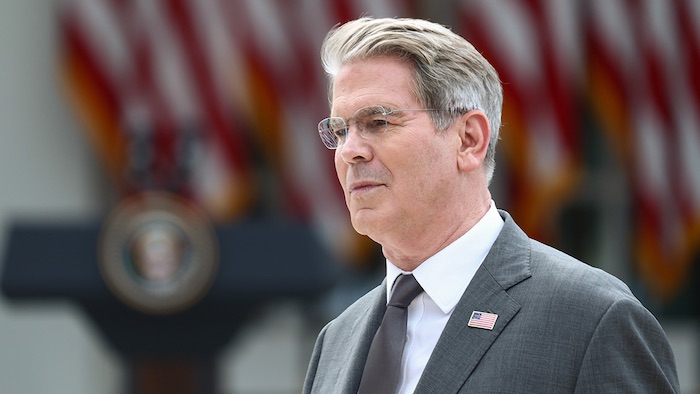
Treasury Secretary Scott Bessent will announce massive new sanctions against Iran on Monday, a move he likened to “economic D-Day.” In an op-ed published in the Financial Times, Bessent said he is launching the “single greatest financial offensive ever marshalled against an adversary.” He said any nation that associates with Iran will face isolation. “Iran’s enablers purchase and transport its petroleum,” Bessent wrote. “They facilitate the flow of its finances through exchange houses and free trade zones. They welcome Iran’s flights and maintain registries on its behalf. They turn a blind eye to seaborne fuel transfers and the illicit use of their banks, all while concealing the extent of their complicity.”Read more …
Those enablers should “consider the consequences” of continuing their relationships, Bessent said. “Those who sever Iran’s remaining financial and commercial connectivity will reinvigorate their own,” he wrote. “They will deepen their access to global capital, reinforce confidence in their markets and attain the standing they seek in the world economy.” But, Bessent continued, “the alternative for those who tether themselves to Tehran is the foreclosure of any path to lasting prosperity.” “To become a sanctuary for terror is to become, in the eyes of the United States, a global pariah,” he said.Iran’s head of national security, however, said the country will “retaliate in a seismic manner” to any sanctions and will consider any country supporting sanctions to be committing an act of war. Bessent compared the sanction strategy to the 1943 Tehran Conference, where Allied leaders planned the defeat of Nazi Germany. “As Roosevelt and Churchill weighed a campaign that would culminate in the Normandy landings, they asked themselves what could be done ‘to bring the greatest pressure to bear on the enemy,’” he wrote.
Split the country. Without killing another 40,000.
• Iran’s Civilian Leaders Call For Peace Amid Crippling U.S. Blockade (ZH)
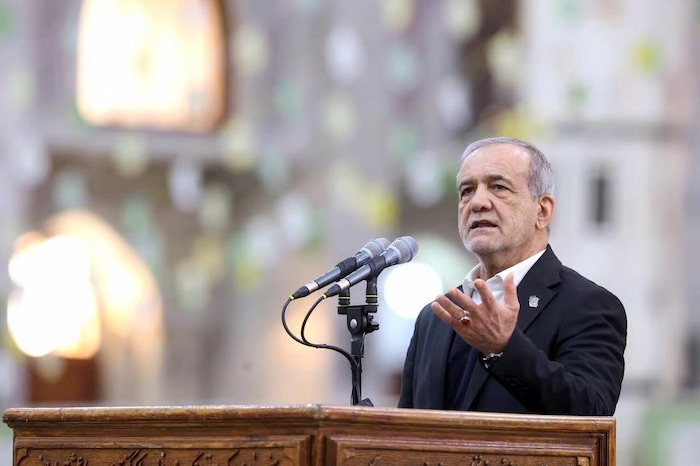 Iranian President Masoud Pezeshkian speaks during a visit to the shrine of the leader of Iran’s 1979 Islamic Revolution
Iran’s top civilian officials are publicly urging an end to the ongoing conflict with the United States, exposing a deepening internal rift as they attempt to rein in hardliners who champion continued resistance. The financial and social toll of the U.S. blockade is proving too severe to ignore – as Iranian President Masoud Pezeshkian recently declared that the country cannot endure a state of perpetual limbo, though he cautioned against making concessions that would appear humiliating on the global stage.Read more …
“The war must come to an end at some point,” Pezeshkian stated in a Friday address, according to state media. “It is better that we demonstrate our strength and dignity today and tell the world that we have won and that we are ending the war.” President Donald Trump has maintained a relentless blockade on the Islamic Republic after a previous memorandum of understanding imploded – effectively severing the regime’s ability to export oil – its primary source of income. This has plunged Iran into a domestic crisis characterized by skyrocketing inflation and an increasingly desperate cost-of-living crisis.The pressure is expected to intensify further this week, as U.S. Treasury Secretary Scott Bessent prepares to unveil what President Trump has characterized as an “economic D-Day.” While the exact nature of these punitive measures remains classified, Bessent has strongly signaled the implementation of sweeping secondary sanctions targeting any nation that continues to do business with Tehran.
A Regime Divided
The push for diplomacy from Iran’s civilian government stands in stark contrast to the shifting power dynamics among its clerics and military elite. Pezeshkian claims his diplomatic push aligns with the broader goals of the regime, referencing past speeches by Ayatollah Mojtaba Khamenei – who has conspicuously vanished from the public eye since the conflict escalated.”I was in the presence of the Supreme Leader, and in his speeches as well, he openly stated that we must move beyond this state of ‘neither war nor peace,'” Pezeshkian noted. “We are not going to humiliatingly back down before the enemy or bow our heads. We can sit down with strength, but also with logic, and resolve our problems.”Prior to his public absence, Khamenei had elevated hardline factions who favor military confrontation over the moderates seeking a renewed deal with Washington. Despite this, Parliament Speaker Mohammad Bagher Ghalibaf echoed the President’s warnings, underscoring the severe national security risks of a collapsing economy. “No matter how much military power we have, if our people are struggling and the country lacks financial circulation and economic growth, we will not achieve progress,” Ghalibaf stated. “As someone who has experienced war, I understand the true value of peace.”
Washington’s Stance: The “Right Deal”
The Trump administration’s distrust stems from the fraught history of recent negotiations, during which U.S. officials reported receiving deeply conflicting signals from Tehran. The previous agreement shattered after Iran launched a series of strikes on maritime vessels navigating the Strait of Hormuz. For the United States, the objectives remain twofold and uncompromising: Nuclear Prevention: Ensuring Iran permanently loses the capacity to develop or acquire a nuclear weapon. Maritime Security: The full reopening of the Strait of Hormuz to global trade.Currently, the Trump administration claims it’s securing the safe passage of 8 to 9 million barrels of oil through the strait daily – a steep decline from the roughly 20 million barrels that traversed the waterway before the conflict erupted. Washington is signaling that it will dictate the terms. Addressing reporters on Friday, President Trump summarized the diplomatic standoff: “They would love to make a deal, but they’re not ready to make the right deal.”
No Macron.
• Le Pen Poised To Win French Elections? New Poll Shows Commanding Lead (ZH)
France’s Le Pen Leads French Presidential Race Early Monday, we previewed a Nomura report that expects an 18-month election cycle across Europe, shifting the continent toward populism, with elections scheduled this year in Germany and Sweden, followed by France, Italy, Spain, Switzerland, and Poland in 2027. Shortly after we released the note, new polling data from France showed, as The Guardian put it:Read more …
France loves a battle-scarred survivor. Charles de Gaulle, François Mitterrand and Jacques Chirac clawed their way back from political failure to become presidents of the republic. There is a significant chance that Marine Le Pen will be next. The latest Toluna-Harris poll shows Marine Le Pen winning every tested 2027 French presidential runoff:
• Le Pen 68%, Jean-Luc Mélenchon 32%
• Le Pen 55%, Édouard Philippe 45%
• Le Pen 57%, Gabriel Attal 43%
• Le Pen’s advantage extends beyond a matchup with the far left. She also holds double-digit leads over two leading establishment candidates, indicating that her National Rally party would enter the election as the clear favorite under these scenarios.
France, Toluna-Harris poll:
— Europe Elects (@EuropeElects) August 24, 2026
Presidential run-off election
Le Pen (RN-PfE): 68% (+1)
Mélenchon (LFI-LEFT): 32% (-1)
Le Pen (RN-PfE): 55% (+3)
Philippe (HOR-RE): 45% (-3)
Le Pen (RN-PfE): 57% (+3)
Attal (RE-RE): 43% (-3)
+/- vs. 25-27 May 2026
Fieldwork: 18-19 August 2026… pic.twitter.com/vvUtpkIyiRPolymarket odds of Le Pen winning the French presidential election currently stand at 32%. Here’s more:
https://twitter.com/Cap2027_/status/2091775772906168809?ref_src=twsrc%5Etfw%7Ctwcamp%5Etweetembed%7Ctwterm%5E2091775772906168809%7Ctwgr%5E4665f81154ac257c311cf658bf28696f75baed80%7Ctwcon%5Es1_c10&ref_url=https%3A%2F%2Fwww.zerohedge.com%2Fpolitical%2Fseeds-political-change-nomura-sees-europe-lurching-right-and-markets-are-fine-it
Circling back to Nomura analyst Andrzej Szczepaniak’s note, he expects that right-wing parties are positioned to make significant gains across Germany, France, Spain, Switzerland, and the UK over the next 18 months. Szczepaniak noted, “Five years ago, financial markets would not have seemed so at ease with such a prospect. But then again, these populist right-wing political parties were previously not so fiscally prudent as they are perceived to be today.
He added, “Now, if anything, financial markets are much more concerned about populist left-wing parties being elected due to their desire to increase spending, often paid for through higher borrowing or higher taxes, which are likely to shut the engine off of already stuttering economies.” Europe is entering an 18-month election cycle that could accelerate the continent’s shift toward populism, with high-profile elections scheduled this year in Germany and Sweden, followed by France, Italy, Spain, Switzerland, and Poland in 2027.
The much-needed political realignment reflects mounting public backlash against progressives in Brussels after years of uncontrolled mass migration from the Third World, deteriorating social cohesion, elevated violent crime, and nation-killing domestic policies that have accelerated deindustrialization. At the same time, European manufacturers face intensifying pressure from China (the demise of VW Group), which is exploiting its cost advantages and state-supported industrial capacity to flood the struggling continent with cheap electric vehicles.
Andrzej Szczepaniak, a senior European economist and executive director at Nomura International in London, describes this combination of pressures as “the seeds of political change,” warning that “politics in Europe is lurching towards more populism.” Szczepaniak says right-wing parties are positioned to make significant gains across Germany, France, Spain, Switzerland, and the UK over the next 18 months.
“Establishment Democrats. They’re the ones who’ve either been holding the reins or doing everything in their power to obstruct the repair process for the better part of the last six decades.”
• The Democrats Are in a Trap of Their Own Making (Eric Florack)
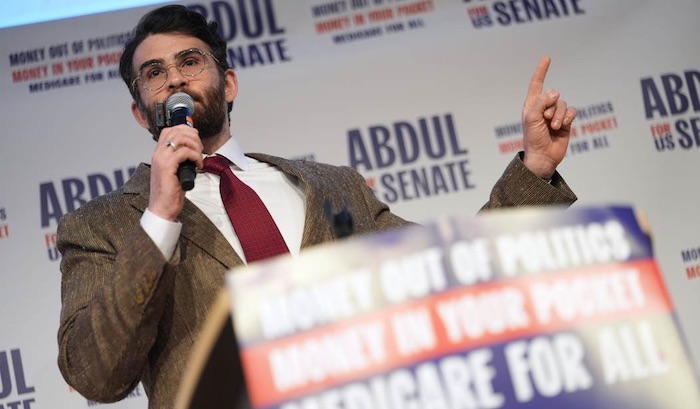
Tim Hains at Real Clear Politics, this morning:”Massachusetts Democrat Rep. Jake Auchincloss told “FOX News” that the Democratic Party will lose if the moderate party establishment picks a direct fight with the new Democratic Socialists. “What my faction of the party needs to do is to demonstrate to Americans what our positive, proactive agenda is to strengthen the middle class, how we are going to base that in freedom, not socialism, free enterprise, free minds, freedom from fear, and free elections,” he said. (Sound of muffled laughter. Shuffling in the seat while I smooth my professional commentator demeanor back into place.)Read more …
The comments are from an interview on Fox with Shannon Bream, which we’ll get back to in a second. Free enterprise. Free minds. Freedom from fear. Free elections. Gotta tell ya, Congressman, that’s a genuinely lovely word salad, and I mean that with the sincerest possible sarcasm — because you’re delivering it roughly 48 hours after your own party’s biggest streaming ally got caught with a framed newspaper commemorating 9/11 hanging on his studio wall like a hunting trophy. But we’ll get there.BREAM: So, there is a video of somebody who’s been campaigning a lot with Democratic candidates or Democratic Socialist candidates who say they belong in your party, Hasan Piker, he’s not disavowed this video that’s out there circulating this weekend where he’s singing a song that appears to be mocking the death of Charlie Kirk, of people who would, you know, be worshipped as Christians, worshipping Jesus. What’s your message to those within your party who are campaigning, fundraising, and appearing with Hasan Piker?
AUCHINCLOSS: I reject Hasan Piker’s ideology, whether it was seeming to celebrate or at least excuse 9/11, whether it is seeming to excuse the assassination of Charlie Kirk, which I condemned immediately. The Democratic Party does not stand for what Hasan Piker stands for. The Democratic Party also needs to be able to reach young voters from all walks of life who are angry at a status quo in which they cannot afford to buy a home, in which they do not believe Social Security will be there for them in their retirement, and in which they see corruption run rampant in Washington, D.C. Well, it seems to me that they’ve already identified who’s responsible for the status quo. Establishment Democrats.
They’re the ones who’ve either been holding the reins or doing everything in their power to obstruct the repair process for the better part of the last six decades. Young people can’t afford a home in large part because of Democrat-controlled cities and states stacking regulations, zoning restrictions, and tax burdens on top of housing supply until the whole market seizes up like an engine that’s never seen a drop of oil. Here’s the part Auchincloss conveniently glides past, though, and it’s worth dragging back into the light: While he’s on national television lecturing about “rejecting” Piker’s ideology, plenty of his own colleagues have been busy actively embracing it.
Fox News’s own reporting from just this month confirms Piker has framed, and proudly displayed on camera behind him during livestreams, the front page of the New York Times’ Sept. 12, 2001, edition — the “U.S. Attacked” issue — describing it to his audience as “the cutie Cinderella newspaper from 9/11.” A man decorating his broadcasting studio with a memorial to the deadliest terror attack in American history, treated as a cute keepsake. And he’s told CNN there’s “0% chance” the 2028 Democrat nominee will be pro-Israel, expressing total confidence his own party is drifting exactly where he wants it.
Meanwhile, Rep. Ro Khanna has publicly refused to apologize for appearing on Piker’s show, warning that distancing from him would signal “weakness.” House Democratic Caucus Chair Pete Aguilar went on MS NOW’s Morning Joe and insisted, with a straight face, that “the party isn’t lurching too far left.” Michigan Senate candidate Abdul El-Sayed told Meet the Press he cares about “reaching Piker’s audience,” not his actual comments — which is a genuinely remarkable sentence for a candidate to say out loud about a man who’s excused a terror attack that killed nearly 3,000 Americans.
“..after months of Democrat officials trying to bury the policy in court, the administration finally has room to breathe.”
• SCOTUS Gives Trump HUGE Win on Mail-In Voting (Matt Margolis)
The Supreme Court just handed President Trump a massive victory in the fight to secure America’s elections. The justices cleared the way for his executive order restricting mail-in voting to move forward, and after months of Democrat officials trying to bury the policy in court, the administration finally has room to breathe. This is a big deal.Read more …
The SAVE America Act is still stalled in the Senate, blocked by Democrats who aren’t even hiding the fact they have zero interest in verifying that voters are who they say they are. Trump’s executive order just got a green light from the nation’s highest court anyway. Election integrity doesn’t have to die in the legislative graveyard to make progress.Trump signed the executive order, called “Ensuring Citizenship Verification And Integrity In Federal Elections,” in March 2026. It directs his administration to build lists of eligible voters and orders the U.S. Postal Service to deliver mail ballots only to people on those lists. The Postal Service laid out its implementation plan last week, but the clock is ticking. Some states start sending mail ballots in just a few weeks, leaving the administration little time to get this right before the midterms. More court challenges remain possible.The victory is real, but it’s not the finish line.
Mail balloting has been a target of Trump’s for years, and for good reason. The Heritage Foundation has long argued that mail-in ballots are more susceptible to fraud, coercion, and chain-of-custody problems than in-person voting. Anyone who lived through the 2020 presidential election, one of the most disputed elections in history, watched that vulnerability play out in real time. In fact, a 2023 survey from Rasmussen Reports, conducted with the Heartland Institute, found that among the 30% of likely U.S. voters who cast an absentee or mail-in ballot in 2020, 19% admitted that a friend or family member filled out part or all of their ballot on their behalf. Another 17% admitted they voted in a state where they were no longer a permanent resident. Every one of those practices is illegal.
Think about that for a second: nearly a fifth of mail voters copped to letting someone else fill out their ballot. Democratic officials in 23 states and the District of Columbia sued to block the order, arguing that the Constitution gives states and Congress the power to run elections and that Trump’s changes could cause chaos and partisan abuse. Attorneys for the states wrote that “the consequences of allowing such transformative changes to take effect so close to this fall’s elections would be extreme.”
A judge in Massachusetts blocked the plan for the midterm elections in those states. An appeals court upheld her decision. She later granted a second order blocking it nationwide. The Trump administration appealed to the Supreme Court on procedural grounds in late July, arguing that the states sued too soon. They also pointed to another ruling out of Washington, where a judge allowed Trump’s order to proceed. An appeals court backed that decision, while still leaving room for future court action if the changes are implemented.
Federal attorneys argued that the Massachusetts order “blocks the government’s ability to finalize and implement the President’s proposed policies to promote election integrity for the upcoming federal elections in November.”A dozen Republican-leaning states supported the federal government in their own appeal before the high court, saying states would have input on the final voter lists.
Trump has been to the Supreme Court on mail ballots before this year. In June 2026, the justices ruled against a Trump-backed argument, finding that states can count ballots arriving after Election Day. That case went through full briefing rather than the emergency docket. This time, Trump came out on top. This is a huge win, but now comes the hard part: building the lists, getting our Postal Service ready, and, of course, surviving whatever legal challenges come next, all before voters start filling out ballots. Election integrity advocates should be celebrating today, but also watching the calendar.
“Assumptions that Moscow will lose the conflict and pay reparations are “just fairy tales,” Nikolay Azarov has told RT.”
• West Will Never Get Its ‘Loans’ Back From Kiev – ex-Ukrainian PM (RT)
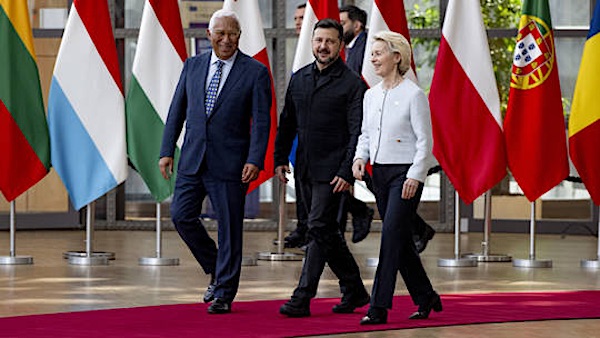
The EU keeps providing “loans” to Ukraine despite knowing that its government will never repay them, the country’s former prime minister, Nikolay Azarov, has said. In a post on X on Sunday, Vladimir Zelensky called funding the Ukrainian military one of the “major challenges” his government is currently facing. “A lot of money is needed,” he wrote. Making sure that the second tranche of a €90 billion ($105 billion) transfer approved by the EU earlier this year arrives in Ukraine is “an extremely difficult task,” but he is working on it with Germany and France, Zelensky stressed.Read more …
In an interview with RT on Saturday, Azarov said that “loans and Western assistance that amounts to about three-fourths of the state budget of Ukraine are covering the budget deficit, funding arms purchases and sponsoring the Nazi terrorist and corrupt regime.” When the European Commission and major EU countries, who have been the main supporters of Ukraine after US President Donald significantly reduced American aid to Kiev, “grant these loans, they know that they won’t get this money back,” he said.“And this causes some irritation among EU bureaucrats because they understand that the money of the American and European taxpayers is being embezzled in a very outrageous manner,” the former prime minister said. Inside the Ukrainian government, there is “an organized criminal group that embezzled the funds that Ukraine received as part of these loans,” he said. According to Azarov, that is the reason why EU ambassadors held a meeting in Kiev with the investigators of the Western-backed National Anti-Corruption Bureau of Ukraine (NABU) and “supported actions to expose corruption in the country,” particularly in Zelensky’s office.
Earlier this week, the Ukrainian leader sacked the deputy head of his office, Irina Mudraya, after her home was searched as part of a probe into efforts to raise and legalize $3.3 million in bail money for former Energy Minister Herman Galushchenko. Galushchenko is a key figure in a $100 million corruption case involving state nuclear operator Energoatom and linked to Zelensky’s longtime business associate Timur Mindich. The scandal led to the downfall of his highly influential chief of staff Andrey Yermak last November. Other recent corruption investigations have targeted former Ukrainian ministers, diplomats, and senior officials.
The claims that Kiev will reimburse the US and EU because “Russia will pay some kind of reparations someday… are just fairy tales. You have to be really short-sighted to believe these fairy tales,” Azarov stressed. “No one will give this money back to the West. There’s $275 billion of Ukrainian debt, you cannot pay it back,” he added. Azarov was the Ukrainian prime minister from 2010 to 2014, resigning during the Western-backed Euromaidan protests in Kiev and fleeing to Russia after the overthrow of democratically-elected President Viktor Yanukovich in February 2014.
“That Purported Bastion Of Democracy..”
• Zelensky Says Wartime Elections Would ‘Destroy’ Ukraine (ZH)
Ever since Russia invaded Ukraine in February 2022 with a goal of excising the Russian-speaking Donbas region, American and Western European officials have repeatedly said they and their countries are duty-bound to support Ukraine because, as Nancy Pelosi put it, “The battle for Ukraine is a battle for democracy itself.” That notion has been growing ever more farcical over time, as President Volodymyr Zelensky refuses to hold elections that were supposed to happen back in the spring of 2024. Over the weekend, Zelensky doubled down on his preference for martial law, telling journalists it would “destroy the country.”Read more …
Zelensky’s former defense minister Mykhailo Fedorov turned up the heat on his former boss by calling for wartime elections
Zelensky is now in the eighth year of his five-year term. His new remarks defending his overstay came after former defense minister Mykhailo Fedorov recently called for elections, after his controversial firing by Zelensky in July. “Democracy cannot be held hostage by Russia,” said Fedorov. “We are fighting precisely because we want to remain a free European state.” In his nine-minute speech, he also took a shot at Zelensky’s way of governing. “It is particularly dangerous when society develops the feeling that the main criterion for an appointment is not professionalism, results or the ability to transform the country, but personal loyalty to the system,” he said.Speaking to a group of journalists over the weekend, Zelensky firmly rejected calls for elections in his supposed bastion of democracy: “I believe that if we want to destroy the country, then during such a war we can move in the selection of elections… I believe that during such a war, elections in general are big risks. Elections right now are a tsunami for the state that will split Ukraine.” Zelensky pointed to the logistical and security challenges of balloting during wartime, noting that it would require “the participation of the military, in frontline territories, abroad, where millions of our citizens have gone, fleeing the war” and the risk of “strikes and shelling.”
He argued it could only begin to be conceivable if Russia were to agree to a ceasefire, which he preemptively ruled an impossibility. In December, President Trump said he was inclined to see Ukraine hold elections soon. “It’s been a long time. Hasn’t been doing particularly well. Yeah, I think it’s an important time to hold an election. They’re using war not to hold an election, but I would think the Ukrainian people should have that choice,” he told Politico. “You know, they talk about democracy, but it gets to a point where it’s not a democracy anymore.”
Skeptics of Zelensky’s reasoning might point to elections held in other war-torn countries. For example, Afghanistan held elections in 2004 and 2009, and Iraq held one in 2005. To be fair, violence affected turnout and the legitimacy of the results was questioned. Meanwhile, the UK was supposed to have an election in 1940 but put it off all the way until 1945. The Atlantic Council, which is a de facto NATO think tank, has pointed to the UK example in urging Zelensky to refuse elections during a war — a war that is happening because of NATO expansionism.
Time is marching on, however. Russia has thus far been content to pursue a slow-burn approach to the war, ever so gradually taking over more and more territory. If that pace continues and if Russia’s territorial ambitions widen — say, to include taking Odessa and creating a landlocked Ukrainian rump state — we could see Zelensky in charge for years more to come.
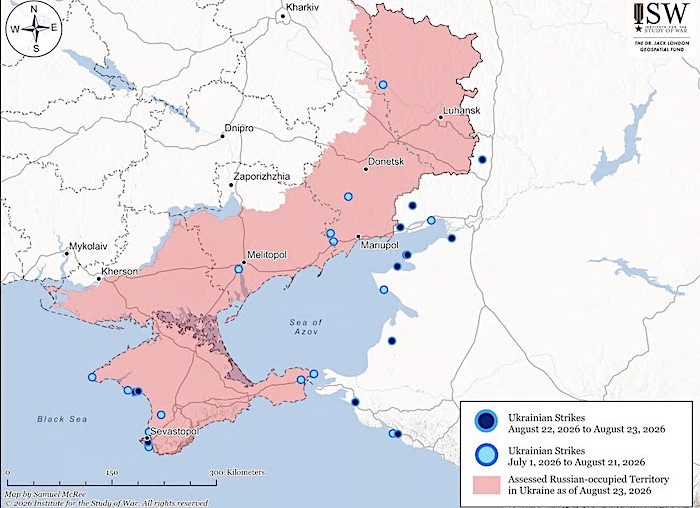
Don’t miss Mr. Shurk’s brilliant analysis.
• Canada Chooses Climate Change, Censorship, and China (J.B. Shurk)
Central banker Mark Carney is doing that peculiar Canadian thing again — acting tough while exuding weakness. Just before midnight on Friday, the former governor of the Bank of England and King Charles III’s current prime minister in North America announced that trade talks with the United States had collapsed. This was expected, even though the Canadian and American trade delegations had publicly expressed optimism on Wednesday that a mutually beneficial framework for future trade relations was within reach.Read more …
The British Empire’s “climate change”-obsessed central banker announced the official start of the U.S.-Canada Trade War on his X account. That’s ironic because the Canadian government considers Elon Musk an enemy, restricts what information Canadian citizens can see on social media platforms, and seeks to tax and regulate all online communication. Because of the Canadian government’s censorship/propaganda machine, most Canadian citizens have no idea how economically vulnerable their British vassal state really is. Carney’s public memorandum makes it sound as if Canada’s economy is the envy of the world, when it is nothing more than a plaything for Chinese smugglers and European bankers who use the country as an entry point into U.S. markets. The average Canadian is about to learn how dependent Canada has always been upon the unreciprocated generosity of the United States.Canada is a weigh station for moving products into the United States. Its value for other nations lies in its uniquely favorable trade agreements with the U.S. Canadian banks and manufacturers act as middlemen for foreign nations skirting American trade laws. For its trade- and money-laundering services, Canada receives a cut of the profits. China takes advantage of this arrangement by “snow-washing” their goods through Canadian shell corporations and hiding their commercial transactions within Canadian financial institutions. Over the decades, this “Trojan horse” operation — in which American adversaries use Canada as an economic workaround for hollowing out vital American industries — has greatly profited our neighbors up North.
In fact, the leftist-globalists running Canada have been able to generate enough revenue by stamping Chinese products, “Made in Canada,” that they have become emboldened to get on their “global warming” high horse and lecture the United States about the imaginary “climate apocalypse.” Even though the U.S. has actually reduced its so-called “climate emissions” by a larger percentage than Canada over the last twenty-five years (a feat accomplished through industrial innovation), the Canadian government pretends that the country’s poorly managed forest fires are the outcome of U.S. capitalism. (This is akin to blaming Thor for thunder.)
While sitting on some of the largest energy reserves on the entire planet, Canada has insisted upon throttling its own hydrocarbon output in the name of “fighting global warming.” By waging war against its own energy industry, Canada makes itself economically and militarily vulnerable. It cannot build things anymore. It is not self-sufficient. It depends upon kickbacks from communist China and military protection from the United States. These dual dependencies are mutually exclusive in a world in which China and the U.S. are already engaged in various forms of hybrid warfare.
Britain’s man in Canada, Mark Carney, is globalism personified. As the former governor of the Bank of England, he spoke regularly about a future in which central bankers managed the planet’s resources and economic activity. He has been a lifetime proponent of using the “global warming” bogeyman as a justification for controlling all human behavior. Carney is afflicted with the same narcissistic disease that grips all of Europe’s political and economic “elites”: He does not believe in the value of free markets, free speech, or human liberty. He is, at heart, a totalitarian committed to the proposition that a small cabal of central bank oligarchs and political aristocrats should exercise complete power over everyone else.
“We Don’t Need Canada”.
• Loonie Limps Lower As Trump Unleashes (More) Tariffs (ZH)
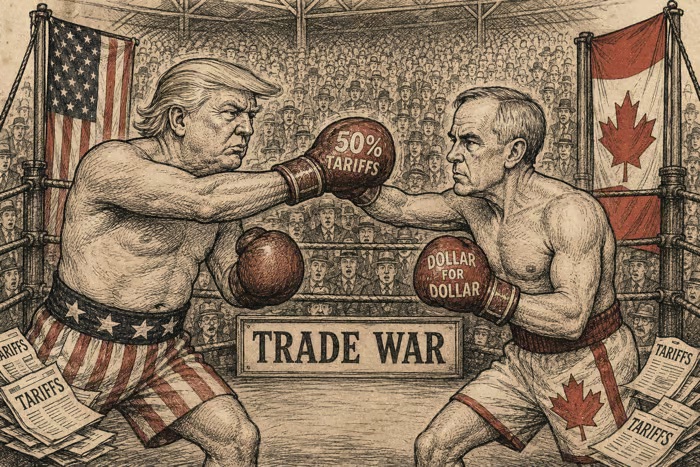
“Canada has been ripping off the United States of America for years,” wrote President Trump in his latest social media outburst, laying out his tariff torrent against Canada. “Their ridiculously high tariffs on our Farmers and farm products has made life impossible for these great American Patriots, and has long created a 60 Billion Dollar Deficit between our two Countries.nNot sustainable, and NOT ANYMORE!”= The US implemented a new 50% tax on imports of hundreds of Canadian items including furniture, plastics, plywood and electrical equipment on Saturday.Read more …
It’s such a high rate that it may cut off the world’s biggest market for some Canadian enterprises. And now this morning, Trump unveiled more products will face dramatic tariff increases come the start of next year… “On January First, 2027, Tariffs on all Cars, Trucks, both large and small. Automotive Parts, and Steel, will be increased to 50%.Build in the U.S. and there are ZERO TARIFFS. Canada will be treated like a State no longer!On Trade, and in other ways, also, they are among the worst Nations in the World to deal with. They feel entitled, and yet, WE DON’T NEED CANADA, THEY NEED US! They do 95% of their business with the U.S., with us, the exact opposite!” The Loonie was weaker ahead of Trump’s tweet…
Carney’s government has pledged financial help for businesses caught in the crossfire. That may prove more complicated than previous aid packages for industries like steel that have been facing US tariffs for more than a year. The new tariffs are “very diffuse, and they hit, in particular, small and many medium enterprises in various parts of the country and in radically different supply chains,” said Matthew Holmes, chief of public policy at the Canadian Chamber of Commerce.
Very difficult for the federal government especially to create a package of supports for them.” Canadians may have wanted their prime minister to stand tough and not sign a bad trade deal with the US; but the collapse of talks, and the escalation of the tariff war, will come at a price.
So says the Council on Foreign Relations President.
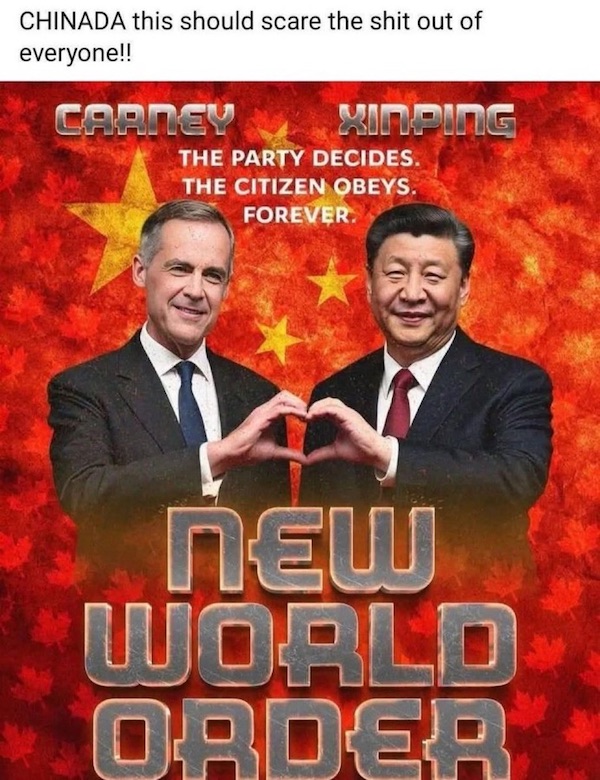
• Trump Gave Mark Carney an Ultimatum, USA or China? Carney Chose China (CTH)
Council on Foreign Relations President Says Trump Gave Mark Carney an Ultimatum, USA or China? Carney Chose ChinaRead more …
An interesting soundbin gave Canada an ultimatum within the deal proposed, us or them.If Mike Froman is correct, Mark Carney chose China. [X LINK] Video Below:te from Council on Foreign Relations (CFR) President Mike Froman who distills down the main point of contention. Essentially, the U.S. position is to demand a common trade approach toward China and the U.S. delegationn.
Mike Froman, former US Trade Rep on CNN yesterday afternoon "I think the new issue is that the Trump administration is pressing Canada, as well as other countries, to adopt a common approach vis a vis China, whether it's a common external tariff or export controls, or ensuring… pic.twitter.com/RoTIXMZs3k
— cbcwatcher (@cbcwatcher) August 23, 2026
“.. the immigration fraud investigation against a Democrat representative is ongoing and could lead to an arrest.”
• Trump Confirms ICE Investigating Ilhan Omar, ‘Enforcement’ Possible (Salgado)
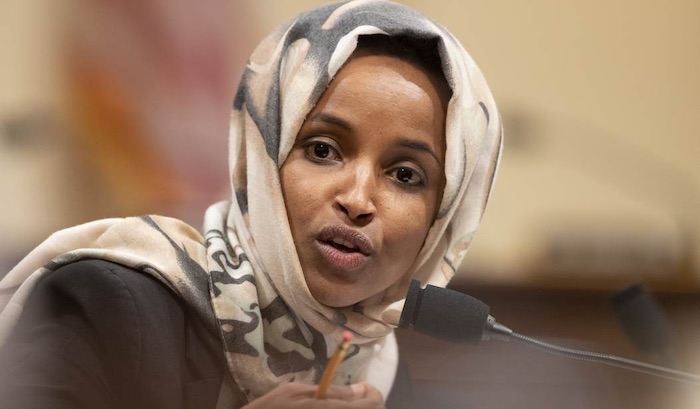
President Donald Trump indirectly confirmed that the immigration fraud investigation against a Democrat representative is ongoing and could lead to an arrest.Read more …
Trump did not comment in any detailed way on the investigation, but on Sunday afternoon, he shared an article from Just the News titled “ICE refuses to disclose records on Ilhan Omar fraud probe, cites ongoing ‘enforcement proceedings.’” By sharing this article on TruthSocial, the president verified its accuracy and immediately started a firestorm of speculation and controversy from other individuals and media outlets. The Trump administration had previously stated that they do have evidence that Minnesota’s Rep. Ilhan Omar (D-Somalia) committed immigration fraud, but voters had begun to wonder if that would lead to any actual penalties.Just the News is especially interested in the investigation because it filed a Freedom of Information Act request for the Omar immigration records in January, for all the details about her legally marrying her brother. ICE returned the following statement instead of the documents: “ICE has determined that the information you requested is being withheld in full pursuant to Title 5 U.S.C. § 552(b)(7)(A). Disclosure of any responsive records at this time could reasonably be expected to interfere with enforcement proceedings.”
No court admissible proof definitively proves that Omar’s legal ex-husband Ahmed Nur Said Elmi is her brother, Just the News said, although the government of the Republic of Somaliland, among others, has confirmed it. Somaliland, which is a breakaway nation from Somalia and hates Omar for her and her family’s connection to genocide, provided paperwork, apparently showing that Omar‘s name, like other members of her family, was originally Elmi before she altered it for the fraudulent marriage that helped her brother stay here.
Receipts: Ilhan Omar’s original last name was Elmi before it was changed. nThis evidence was available, but the Obama Justice Department refused to investigate. Her brother, Ahmed Nur Said Elmi, and their father, Nur Said Elmi (also known as Nur Omar), used multiple names… https://t.co/9sz3ZXVN3X pic.twitter.com/d16tAMCKrn — REPUBLIC OF SOMALILAND (@RepOfSomaliland) March 19, 2026
Omar has bragged about prioritizing Somalia‘s interests while serving as a congresswoman. In 2024, while furiously rejecting Somaliland’s longtime independence and maritime deals, she declared, “While I am in Congress, no one will take Somalia’s sea.” Somaliland continued to write about Omar:
Her true name? Ilhan Nur Said Elmi. Father? Nur Said Elmi (aka Nur Omar), Colonel in Siad Barre’s army. Soviet-trained. Part of the command that turned Hargeisa into rubble. Tens of thousands—up to 200,000 Isaaq civilians—bombed, executed, raped, starved in the late ’80s. We call it the Isaaq Genocide. The world still looks away.The mastermind? Major General Mohammed Said Hersi “Morgan”—”The Butcher of Hargeisa.” Barre’s son-in-law. And when Omar visited Somalia to a hero’s welcome in 2022, she attended an event where she sat only a few feet away from “the Butcher,” who has reportedly posed for photos with her relatives.
Can we choose who we serve?
• “This is My Place of Business” (Turley)

“This is my place of business.”Read more …
Those words from Jim Sheehan, owner of the Wydaho Roasters coffee shop in Driggs, Idaho, have sparked the latest controversy over the right of businesses to refuse service on the basis of religious or political views. Sheehan has drawn national attention after throwing out a group of pro-life teenagers, calling them the equivalent of a Ku Klux Klan meeting in his shop. Sheehan clearly caters to those who want their lattes with an added shot of rage.However, this and a number of other cases have exposed the hypocrisy of many regarding the service businesses must provide customers with opposing views. From cakes to coffee, shops remain ground zero for an age of rage. Years ago, politicians and pundits rallied around the effort to force Jack Phillips, a cakeshop owner, to create cakes celebrating same-sex marriages. Phillips objected that it violated his religious beliefs. The case went all the way to the Supreme Court in what many of us hoped would be a final resolution of this conflict.
I had long criticized the framing of the case (and other similar cases) under the religious clauses rather than treating it as a simple matter of free speech. In the end, the Supreme Court punted in a frustrating 2018 decision. In 2023, however, the Supreme Court delivered a major victory for free speech in 303 Creative v. Elenis. It ruled that Lorie Smith, a Christian website designer, could refuse to provide services for a same-sex marriage. Justice Neil Gorsuch wrote that “the framers designed the Free Speech Clause of the First Amendment to protect the ‘freedom to think as you will and to speak as you think.’ … They did so because they saw the freedom of speech ‘both as an end and as a means.’”
But notably, in cases like Masterpiece Cakeshop, Phillips insisted that he would always sell cakes to any couple, including same-sex couples. He only refused to make cakes specifically celebrating same-sex marriages, due to his religious views. The case of Wydaho is different. Sheehan refused the same general accommodation offered to all customers because he opposes pro-life causes. In the confrontation, Sheehan declared that “in my world” pro-lifers are no different from the Ku Klux Klan.
“This is my place of business,” he declared. “I did a lot of work to get people on the ballot so women would have the right to choose in the state of Idaho, and this is something I do not support, nor does my wife, and it’s our business. So we have that choice.” In my view, they do have that choice. Yet it must also be acknowledged what Sheehan is doing is far more extreme than what Phillips did in Masterpiece Cakeshop. He is not being asked to create a coffee concoction opposing abortion, like a Cafe Au Life specialty drink. He acknowledges that other groups might use the shop — he just does not want these teenagers to use it to support pro-life causes.
The same controversy arose the same week across the country in Virginia. In Alexandria, Fatana Karimi, owner of the Karimi Salon, threw out a woman after she revealed that she was Israeli. Jessica Walton posted an account of the encounter, and a video was later posted on social media.In the video, the person identified as Karimi says that she declared on Instagram that she would not serve those who support Israel. (She also adds that she got Walton to sign a release for the video.)
The Virginia Human Rights Act states that businesses cannot engage in “unlawful discrimination in employment because of race, color, religion, ethnic or national origin, sex, pregnancy, childbirth or related medical conditions, age, marital status, sexual orientation, gender identity, disability, or military status.” Karimi will likely argue she refused service not due to Walton’s religion or national origin, but due to her support for Israel — a political position.
The case is reminiscent of the abusive treatment afforded to Harvard Law Professor Alan Dershowitz at Martha’s Vineyard by a pierogi stand. He was also refused service over his political views.The line between national origin and religious discrimination versus political discrimination can be tenuous and unclear. However, in the video, the owner states that it is her national identity that is causing the action: “Get out of my shop. I can’t provide service to an Israeli. It’s against my political beliefs. You need to leave immediately.”
Back in Idaho, Sheehan’s bizarre analogy to the KKK outraged many, to the point that he later apologized for it. However, it is fascinating that liberals are now celebrating the right to exclude others for political or religious reasons, even when they are not asked to engage in any expressive act or make any creative product that contravenes their beliefs. If that is now the case, many owe individuals such as Phillips an apology for years of costly lawsuits, even after the Supreme Court gave him his first nominal victory.
Sheehan could be prosecuted if he were refusing general service or accommodations to the teenagers due to their race or religion. But he is refusing service on the basis of his own political views. Wydaho Roasters does not appear to want business from people who are pro-life, of whom there might be quite a few in Idaho. Karimi appears not to want either Israeli or possibly Jewish customers. It is a curious business plan to exclude such a large segment of the market, but some owners are sure to put their political views before their profits.
However, those on the left cannot have it both ways. They cannot reject the free speech rights of some owners to decline service while celebrating others’ refusal to do the same thing. None of this is likely to make society any more civil. No one wants a black eye to go with the red-eye espresso. Of course, recognizing the free speech rights of an unhinged coffee shop owner does not require patronizing his establishment. Sheehan clearly does not want to serve pro-life citizens, and I expect the feeling is mutual.
THE DEEP STATE
— General Mike Flynn (@GenFlynn) August 23, 2026
AND yet little executive branch reform has been taken to rip the guts of the deep state apart.
We cannot miss this fleeting opportunity. Otherwise, America will pay an even heavier price. @realDonaldTrump https://t.co/pevavt6Ho0
As foretold in the prophecy https://t.co/Y6fgfRZOta
— Elon Musk (@elonmusk) August 23, 2026
ELON MUSK telling you to load up $TSLA before it 2x-5x from here: pic.twitter.com/KqyZQtc7vb
— Esther & Michael (@SuperLuckeee) August 24, 2026
BREAKING: Elon Musk refused to let Ukraine use Starlink for attacks inside Russia. He prioritizes ending the war, not expanding it.
— DogeDesigner (@cb_doge) August 23, 2026
Zelensky himself confirmed the refusal, saying Trump informed him that Musk had rejected the request. pic.twitter.com/7Us47VUzIk
https://twitter.com/cb_doge/status/2091894100937347455?s=20Cybercab with no steering wheel or pedals driving around Austin
— Dalton Brewer (@daltonbrewer) August 23, 2026
TESLA HAS ACCOMPLISHED THE IMPOSSIBLE!!!$TSLA pic.twitter.com/UEF1PAbx9t
Support the Automatic Earth in wartime with Paypal, Bitcoin and Patreon.

Home › Forums › Debt Rattle August 25 2026