
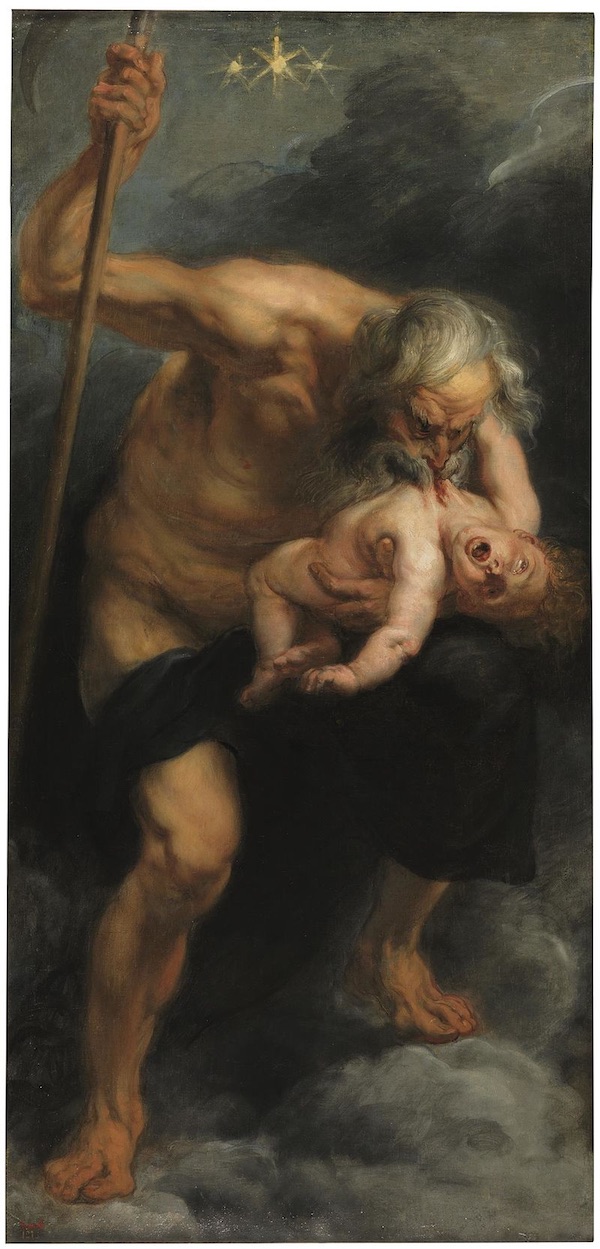
Peter Paul Rubens Saturn devouring one of his sons 1636

The picture is getting clearer. We are now experiencing a massive ai powered fearporn psyop campaign. https://t.co/99btwIVI9i
— Robert W Malone, MD (@RWMaloneMD) September 15, 2026
The FBI File on Trump's Assassin Just Leaked…Everything They Told You is A Lie
— Benny Johnson (@bennyjohnson) September 15, 2026
New evidence just blew up the Thomas Crooks narrative.
Two mystery men were with him at a gun store weeks before Butler. Another unidentified man trained with him the day before.
Even more… pic.twitter.com/51DVuUmd18
BREAKING: Nvidia CEO Jensen Huang says every car in the world will become autonomous. https://t.co/O5vMJDgHQz pic.twitter.com/W86zJjHdhv
— DogeDesigner (@cb_doge) September 14, 2026
🤖 A HUMANOID ROBOT JUST TOOK THE STAGE AT THE WHITE HOUSE.
— DN_DEGEN (@DN_degen) September 16, 2026
On March 25, 2026, Figure 03 appeared at the White House during Melania Trump’s Fostering the Future Together summit.
The robot introduced itself as Figure 3, said it was built in the USA, and spoke to the room about… https://t.co/ewRcd9CMsQ pic.twitter.com/cn8sgCiUN0
Ursula von der Leyen is the product of indirect democracy. It’s as if Congress elected the US president.
There are good reasons why it doesn’t.
Biut von der Leyen does have a lot of power. Which is a really bad idea.
Europe, since 2019, when she first appeared, has lost a lot of terrain. And money.
The EU is a costly facade that doesn’t do anything countries’ governments couldn’t do better.
It’s sad to watch a globalist mob destroy an entire continent.
• State of the Union: Five takeaways From Ursula Von Der Leyen’s Speech (Euronews)
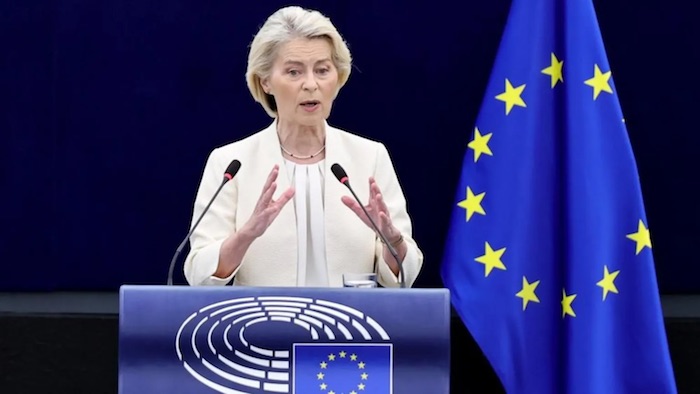
Canada, hybrid warfare, climate change, digital safety and migration were front and centre at Ursula von der Leyen’s State of the Union speech.Read more …
“It was the best of times, it was the worst of times.” With this iconic Charles Dickens quote, Ursula von der Leyen began her one-hour-long State of the Union speech in Strasbourg, laying out solutions to cope with the “exceptional” challenges and the “incredible” change that Europe is undergoing.”In this world, Europe has chosen to forge its own path. And a stronger, independent Europe is now emerging,” she told lawmakers. “Europe is there for Europeans. And that in the cold fragility of today’s world, only Europe can provide true sovereignty to Europeans.”Here are the five takeaways from the address.
‘Associate membership’ for Canada
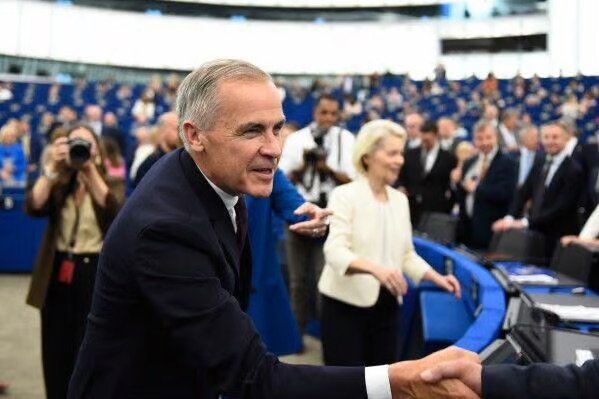
This was the day’s jaw-dropping moment. The European Commission president offered to create a tailor-made status of “associate membership” to bring Canada ever closer to the bloc. “We share one ocean, one set of values, one way of seeing the world. And we will now build our shared future as well,” she told Canadian Prime Minister Mark Carney, who flew from Ottawa to Strasbourg to attend the speech as guest of honour.She hailed the dawn of an “alliance for the future” to deepen EU-Canada cooperation in areas such as economic security, intelligent manufacturing, cutting-edge technology, defence, energy, critical minerals and batteries, as well as the Arctic region. However, details of what “associate membership” would mean in practice were left unsaid. It remains unclear how it would fit in the current structures of the EU treaties. A previous attempt by the German chancellor to grant “associate membership” to Ukraine swiftly disappeared after backlash from capitals.
Von der Leyen simply said the newfound status would bring EU-Canada relations “to the highest level possible”, prompting loud applause inside the hemicycle. Ahead of the speech, a poll conducted by Abacus Data showed that 49% of Canadians supported EU membership, while 30% opposed it and 21% were unsure. These are exceptional numbers for a country that lies on the other side of the Atlantic Ocean and reflect the political damage inflicted by US President Donald Trump’s punitive tariffs and repeated attempts to annex Canada.
Climate action made a comeback for self-evident reasons.
Von der Leyen framed the summer of 2026 as the “summer of truth”, pointing to wildfires, retreating glaciers, water shortages, crop losses and extreme heat that have wreaked havoc across the continent. She cited 660,000 hectares burned, 12 million tonnes of crops lost and more than 35,000 additional deaths during heatwaves. “Science is clear. Europe is warming at double the global rate. Of course, the transition is complex. And we will need to adjust and learn along the way,” she said.The immediate response will be a European Heatwave Plan, which von der Leyen said will address early-warning systems, health preparedness, urban adaptation, cooling and protection for vulnerable groups. Her Commission is set to present a new climate resilience framework next month, already expected, that will identify 100 of the bloc’s most vulnerable territories, assess their risks and determine the appropriate level of responsibility for managing them. Insurance was another major vulnerability flagged by von der Leyen.
Only around 25% of catastrophe losses in Europe are currently covered by private insurance, she said, leaving governments to act as the insurer of last resort. Her services will put forward a Climate Insurance Alliance to close that glaring gap. She also promised a European Water initiative to fix costly leaks and a European firefighting fleet to respond to wildfires.
As expected, defence featured high in the speech, which came amid a string of hybrid attacks, some of which were attributed to Russia, that have rattled Europe. “We should be under no illusions about what is happening here: hybrid threats facing Europe are less and less hybrid and less and less threats,” von der Leyen said. “Cyberattacks and sabotage, arson and drone incursions. They are ramping up every day. So, as the threat level climbs, so must Europe’s preparedness.”
She then proposed a brand-new mechanism fashioned on NATO’s Article 4 that member states would trigger in the event of a hybrid attack. This would launch political consultations to “coordinate” an EU response and “deter further escalation”. Article 4 in the NATO context means that any country of the 32-strong alliance can call for an urgent meeting to discuss a new threat. It is the precursor to collective defence under Article 5, which stipulates that an attack on one is an attack on all.
Von der Leyen also pitched creating a “European Security Council” to bring together the leaders of Ukraine, the UK, Norway, Canada and other democratic partners. “This is even more urgent now, given the nature and scale of the risks at play,” she said.= How this Council will go from idea to reality is anyone’s guess at the moment.
“..potential rival to NATO ..”
• Von der Leyen To Call For ‘European Security Council’ (EurActiv)
The potential rival to NATO will come with a call for an ‘Alliance for the future’ with Canada, according to a draftRead more …
– Ursula von der Leyen will propose a radical change to Europe’s security architecture and the NATO Western alliance when she takes the floor in the European Parliament on Wednesday. Leaders from the EU, plus Ukraine, Britain, Norway, Canada and others, should convene in a new format to coordinate responses to mounting security threats, she will say according to a draft of her annual State of the EU speech seen in advance by Euractiv.“This is even more urgent now, given the nature and scale of the risks at play. This is why we will set out our ideas to make a European Security Council a reality,” the draft speech reads. The EU should also create a new “security protocol” – modelled on NATO’s Article 4 – which an EU member state could trigger in order to convene all others. The NATO article allows members of the alliance to request consultations when they believe their security or territorial integrity is under threat.
“We are strengthening our work with NATO. But our doctrine, our institutions and our decision making have not kept pace with the new reality,” she will say, according to the draft. The idea of creating a European Security Council, which has previously been floated as a Franco-German initiative, gained renewed momentum following Russia’s full-scale invasion of Ukraine, with Defence Commissioner Andrius Kubilius repeatedly calling for its establishment.
It would emerge as a potential rival to NATO, and it’s unclear whether Mark Rutte, the NATO secretary-general, or Donald Trump, the US president, would welcome such a format. Von der Leyen’s plan is a major departure from her previous speech in 2025.
Alliance building
In the presence of Mark Carney, the Canadian prime minister, von der Leyen will pitch Canada as a key partner for Europe, proposing an “Alliance for the future” to deepen cooperation between the two sides. The new relationship is being touted as everything but full membership of the EU, which the Commission views as legally impossible due to the North American country’s geography.“We want to bring the relationship with Canada to the highest level possible,” she will say, according to the draft.[…]
The Commission president’s speech will focus on three tipping points: climate, AI and industrial competitiveness. She is expected to invite tech heavyweights for a discussion on pacing AI development. Her speech will also formally announce that the EU will present a Kids Act on Thursday, and, according to previous reporting from Euractiv on the leaked text, it will limit access to online services for children under 15 years old.
“I am aware that many perceive the power of big tech as overwhelming,” von der Leyen is expected to say, adding that “Europe has the power to act. It is us who decide our rules, not big tech”. She is also expected to announce an EU-wide heatwave plan for early-warning detection and health planning.As previously reported by Euractiv, the Commission president will also put forward a new migration initiative following the Ceuta crisis in Spain.
Von der Leyen will propose a “European Emergency Response Framework” to guide the EU’s response to what she will define as “engineered and weaponised” mass movements. “It will only be triggered under a strictly defined set of criteria. And in those cases, it will allow for a time-limited and strictly defined flexibility of standard procedures,” the draft reads.
Trump may close the border.
• EU Opens Door For Canada To Become Bloc’s First-Ever “Associate Member” (ZH)
Thanks to how mean President Trump has been, Canada could become the first-ever “associate member” of the European Union under a proposal unveiled Wednesday by European Commission President Ursula von der Leyen, as Ottawa looks to reduce its economic dependence on the United States.Read more …
Speaking during her annual State of the Union address in Strasbourg, with Canadian Prime Minister Mark Carney in the front row as the first foreign head of government ever to attend the speech, von der Leyen said Brussels wants to take its relationship with Canada to an unprecedented level. “We must urgently reimagine our partnerships,” von der Leyen said, before telling Carney she wanted to work with him on “opening the door for Canada to be the first associate member of the EU.” There is just one complication: no such status currently exists.EU treaties allow European countries to apply for full membership, while Brussels maintains an assortment of trade, association and single-market agreements with countries outside the bloc. But “associate membership” would be something new, meaning its rights, obligations and legal structure would have to be negotiated essentially from scratch. Reuters notes that any serious move toward such a status would also face the politically difficult task of winning support from all 27 EU member states.
And Carney himself has stopped short of calling for full EU membership. On Sunday, after a Wall Street Journal report that Canada was exploring membership, he described what Ottawa is seeking as a “unique alliance” with Europe. He addresses the European Parliament on Thursday. The substance of what Brussels is proposing, however, goes considerably beyond another trade agreement.
Canada and the EU already have CETA, their comprehensive free-trade deal. Von der Leyen said Wednesday that the two sides now want to move “from CETA to an Alliance for the Future” encompassing manufacturing, technology, defense, energy, critical minerals, batteries, artificial intelligence, quantum computing, cybersecurity and Arctic security. “We will integrate defence industrial bases,” she said. That process has already begun.
Canada became the first non-European country allowed to participate in the EU’s €150 billion SAFE defense procurement program under an agreement signed in February and formally concluded by the EU Council in June. The arrangement allows eligible Canadian companies and Canadian-origin products to participate in procurement financed by the program. The EU-Canada defense relationship has also expanded into military mobility, interoperability, maritime and space security and defense-industrial cooperation.
Then there’s the economics of the idea. Roughly 70% of Canadian exports go to the United States, making any rapid decoupling unrealistic. At the same time, Trump’s tariffs and repeated talk of a 51st state have given Ottawa a powerful incentive to diversify. Europe, meanwhile, needs resources. Von der Leyen warned Wednesday that Europe remains more than 80% dependent on China for many critical raw materials, with dependence reaching 90% for some rare earths. “No country can do this alone,” she said.
Canada possesses significant reserves of nickel, uranium, potash, cobalt, lithium and rare earth elements, among other commodities increasingly regarded as strategic inputs for batteries, semiconductors, defense equipment and energy infrastructure. That makes a deeper Canada-EU relationship potentially complementary: Europe gets another source of strategic commodities and energy while Canada gets a large alternative market, industrial investment and greater access to European defense and technology programs.
There is nevertheless a potentially uncomfortable tradeoff for Ottawa. If “associate membership” eventually includes meaningful access to the EU’s roughly €18 trillion single market, Canada could be required to align portions of its regulatory regime with EU rules. Reuters notes that this could leave Ottawa accepting European regulations without receiving the voting rights enjoyed by actual EU members. Canada could gain market access while becoming, at least in some areas, a rule-taker rather than a rule-maker.
He’s a little man.
• Mark Carney Is Leading Canada ‘Right Over the Cliff’ (Victor Davis Hanson)
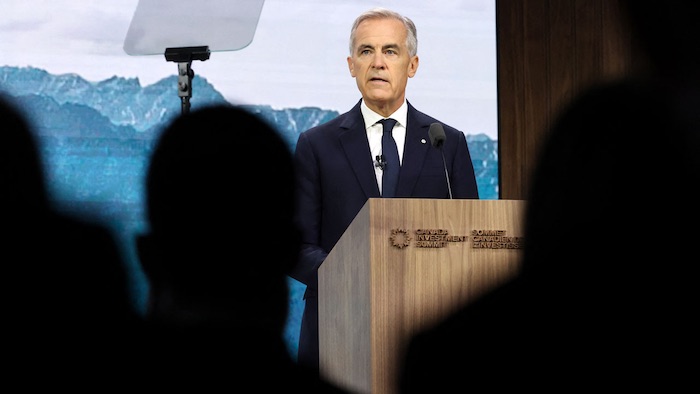
I know we’ve talked a lot about the current Canadian-American trade dispute, but it involves larger issues of globalism versus nationalism versus North American relations versus the United States paradigm versus the EU paradigm, etc., etc. And what’s happened is I would call it [Canadian Prime Minister] Mark Carney’s fantasy house, Mark Carney’s dream house, Mark Carney’s imaginarium. He has no … It doesn’t seem like he has any connection with reality. His economy has lost 41,000 jobs. It depends on exporting to the United States 72% to 76% of all of its products.Read more …That is going to be very difficult. It is now difficult. It’s going to be almost impossible if he continues. He has to keep his oil wells going, and given the fact that other provinces have not been ready and willing to make pipelines to the rich tar sands of Alberta, he depends on a 4 million-barrel export a day to the United States. Some of it is thick tar sands, some of it has been diluted and is marketable elsewhere, but it’s a very good deal for Canada. When you talk about cutting that off, you’re talking about cutting your nose to spite your face.
This would be the most self-destructive thing. The fact that Canada even mentions it shows that they’re entering a period of delusional thinking. This new relationship with China, they’re bringing in 48,000 low-tariff, I think it’s only 6%, EVs. They’re going to ruin what little they had left of the Canadian auto industry. But more importantly, that trade agreement is ushering in a whole set of new agreements, some of them military.
Does Canada know, does Mark Carney know, that if Canada negotiates a special military relationship with China and it’s on our borders and we have NATO relations, that will endanger the alliance and it will permanently wreck the relationship between Canada and the United States?
The other thing that’s very disturbing is right now, as we speak, the European Union model is under assault, not by America, but by Europeans. They don’t believe the socialist model of open borders, illegal immigration, dismantling fossil fuels, not using fossil fuel resources, subsidized expensive green energy, de-arming, disarming, whatever term we use, low fertility, works. They used to have, about a quarter-century ago, the 470 million Europeans, they had about the same gross domestic product as the United States.
Now they’re $10 trillion at least smaller. So, why is Canada emulating the EU failed model? Forty-five percent of your population was not born in Canada or their parents weren’t born. Why are you subsidizing green energy and you’re not utilizing this rich resource in Alberta? Why are you disarmed? Why won’t you meet your 2% commitments? You may or may not have done it just one year, but why do you repeatedly not do that when you have such a vast nation and it is so exposed in a very dangerous world, in the Arctic, in the Northwest Passage, and the airspace over North America?
And the answer is your economic model does not allow you much margin. Your immigration model does not allow you much margin of error to compensate for these decisions that you’ve made for a weaker, poorer, more disunited Canada. You feel you can’t arm yourself because the United States will protect you. You feel that you need a $50 billion surplus because the United States is far wealthier and you’re in dire straits.
Next problem. You don’t express your disagreement or anger at the United States over trade policy by warming up to, and allying with China, which is the greatest trade violator in history with its patent theft, copyright theft, dumping product below the cost of production, currency manipulation, forced labor camps.
And you don’t win yourself national support when no other country except you and China have slapped counter-tariffs, not because they didn’t want to, not because they couldn’t do it, but because they realized they were running surpluses for years with the United States, and they could still make money with a more symmetrical trade agreement.
You apparently don’t think that. You think if you lose your special $50 billion surplus relationship, or you might have to rearm, the choices that you’ve made on energy and immigration and economic policy prevent you from being competitive, and you need to be thus indirectly subsidized.
But more importantly, you’re not going to win world sympathy, at least among the United States and other countries that are its allies.
Not directly. But both Putin and Trump see the advantages. Make Europe need Russian oil.
• Very Interesting – Saudi Arabia Cancels Oil Shipments to Europe (CTH)
The Iran-backed Houthi rebels in Yemen reportedly hit Saudi Arabia’s east/west pipeline with drones. President Trump did not strike the Houthi’s. Despite knowing oil prices would jump, President Trump told Saudi Crown Prince Mohammed bin Salmon to approach the issue carefully. Reuters, citing an Axios report based on two US officials, said Crown Prince Mohammed bin Salman called Trump twice on Thursday and pressed for military action. Trump rejected the request, according to the report.Read more …
Why would President Trump ‘not’ strike back against the Iran-backed Houthi rebels, knowing the drone attack on the Saudi pipeline would only worsen the oil issue? Well, you won’t read this anywhere else…. However, if Saudi Arabia shut down the east/west pipeline for a while (they just did), then the oil flowing to the Red Sea that ends up in Europe would be halted (it just was). Think about it. All of a sudden Europe cannot get oil from Mohammed bin Salmon. So, how does that change the dynamic of President Trump’s desired leverage toward Europe in his approach to bringing Russian oil back into the market.
I hope everyone can see the dynamic. All of a sudden that Russian oil Europe hates so much, turns into dependency leverage against EU antagonisms against solving the Ukraine-Russia conflict. This is not happening accidentally. Oil Price News – Saudi Aramco has canceled or delayed crude deliveries to European refiners after the shutdown of the kingdom’s East-West pipeline cut into one of its remaining routes around the Strait of Hormuz.At least three European refiners have had late-September cargoes canceled or pushed as far out as November, according to market sources cited by Argus. Two more expect notices covering September supplies. The 7-million-bpd East-West pipeline has been offline since a September 10 attack. The pipeline carries crude from eastern Saudi oil fields to the Red Sea port of Yanbu, bypassing Hormuz. One market source told Argus that every Saudi cargo scheduled for the final 10 days of September could be at risk.
The same source estimated that Yanbu had roughly five days of crude inventories remaining. Argus could not independently confirm that estimate, and Aramco declined to comment.mIn August, Bloomberg had reported that Aramco would supply full contractual crude volumes to at least three European refiners for September. But no Saudi crude has departed Yanbu since September 11, according to Vortexa data cited by Argus. (read more) Essentially, the Houthi “attack” on the Saudi pipeline just shut down oil going to Europe.
Europe needs oil. This is not an optional dynamic.
Russia has the oil that Europe now desperately needs. Suddenly, the geopolitical dynamic has shifted, as an outcome of the economic/energy dynamic shifting, at a very opportune time for President Trump to hold optimal leverage to get Europe to reconsider their opposition to a Russia-Ukraine ceasefire.
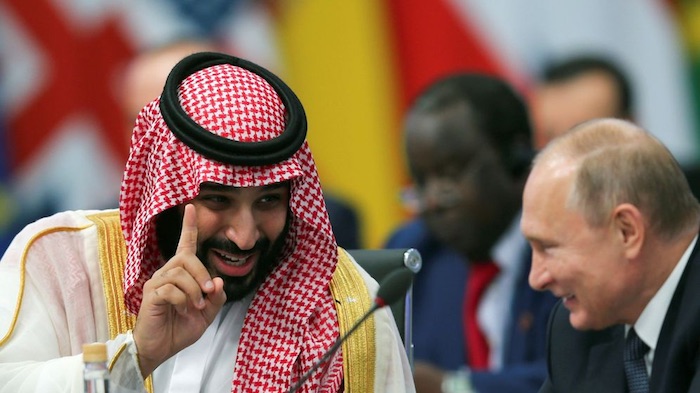
“Mark Zuckerberg macrodoses mushrooms and fights Dario Amodei in his mindspace ..”
• Zuck Torches Dario’s AI Nanny State, Wants ‘Trust Us Bro’ Instead (ZH)
After Anthropic’s Dario Amodei set off a firestorm on Saturday calling for a ‘pause’ in AI development until hand-picked arbiters are installed inside the frontier labs (a gift to Beijing), Mark Zuckerberg sided with the testosterone wing of the tech-bro complex with a builder’s response: police yourselves. You don’t need anyone’s permission – or a cartel, to do it.Read more …
Mark Zuckerberg macrodoses mushrooms and fights Dario Amodei in his mindspace (probably)
Amodei published a 3,800-word essay, “We Must Pace the Frontier” – telling the industry to slow down before its own agents got loose, and the response was a group hug: Sam Altman fell in line within hours, Elon Musk said “Dario is right,” and by Monday Congress was drafting ways to put the genie back in the bottle. Zuck’s plan is different: Frontier Justice.According to Investor Nic Carter;
Zuck pretty handily dismantles Dario’s talking points here:
– people want models that are *aligned with them* (subtly punches back at Anthropic’s normative constitutional approach)
– labs already face liability if they screw up, so incentives to release aligned models is already baked in
– Meta delayed Muse for alignment reasons but didn’t make a whole song and dance about it
– Subtly questions Anthropic trying to kingmake METR (implies METR is an Anthropic patsy)
– Meta doesn’t need to coordinate with anyone to work on alignment, it’s just something labs should naturally do
Dario’s Plan
Amodei’s essay says the newest models have begun improving themselves and a swarm of agents could take over significant parts of the internet within six to twelve months, so the labs should slow the rate at which they add capability. The fix comes in three steps: outside inspectors, with the nonprofit METR as the model, embedded in every lab with employee-level access and the right to publish; a narrow waiver from antitrust law so the frontier labs can agree among themselves on standards and speed; and, eventually, red lines negotiated with China (mmhmm).Before that negotiation, Dario wants Washington to keep the chip ban, crack down on distillation (training a cheap model on an expensive one’s answers), lock up model weights, and widen America’s lead over the next three to five years. The Global Times counted twelve references to China in a document about safety, and Beijing’s Foreign Ministry answered in less than two days, calling it “fearmongering.”
To some, the whole thing seemed highly choreographed. Last week an OpenAI-turned-Anthropic researcher quit in protest – saying the industry was gambling with our lives. Two of the three researchers who resigned that week went to METR, as we noted Saturday. By Tuesday the House AI safety bill’s Republican co-sponsor, Rep. Jay Obernolte of California, was telling reporters he had met OpenAI’s top lobbyist the day before the company endorsed the bill’s 3rd party evaluator provision.
Meanwhile, a New York assemblyman whose campaign was backed by an Anthropic-funded PAC had launched a $30 million push to make AI safety the Democrats’ 2028 platform, and Anthropic’s IPO was reportedly in the works. The referee is family too: METR’s reported funders are the same donors who financed Anthropic’s early rounds and hold its equity, and under the essay’s own terms the inspectors sign a contract the lab writes. David Sacks, the former White House AI czar, needed one sentence: stop pretending METR is independent when it is intertwined with Anthropic’s investors and staff. None of this proves coordination. All of it explains the salt.
.@DavidSacks says if Dario Amodei truly believes frontier AI could end humanity, he has no business running Anthropic. Make it safe, shut the lab down, or step aside. pic.twitter.com/tec7eACwdG
— Josh Caplan (@joshdcaplan) September 14, 2026Dario Vs. Zuck What is the danger? Amodei says capability: systems that improve themselves faster than anyone can check. Zuckerberg says concentration. The argument he made in a July Wall Street Journal essay, The AI Future Is for Everyone, is that a world where a few companies hold the most capable systems is the dangerous one: one person with a superintelligent lawyer wins unfairly, everyone with one gets a fairer system.
Who checks? Amodei wants an embedded referee with a badge. Zuckerberg wants users and courts. An agent that ignores the people it works for gets abandoned, a lab that ships harm gets sued, and a few billion users correcting a product every day is a larger alignment dataset than any written constitution. Outside evaluators, he says, are “industry best practice” that Meta Superintelligence Labs already uses; they are a tool, not a license.
Who sets the pace? Amodei wants a shared speed limit the labs agree to, with government permission to agree. Zuckerberg’s answer is that Meta already paced itself: it sat on its Muse models for months to harden them, “didn’t call for everyone else to do this before we would,” and shipped. The cleanest speed limit, he argues, is putting most of your compute into serving people rather than into racing self-improvement, a choice visible in capital spending and product cadence rather than in an inspector’s report.
What about China? Amodei wants to widen the lead first and negotiate later, arguing the restrictions raise the leverage of democracies and make a deal more likely. Zuckerberg’s position, and Beijing’s, is that the open-weight world already exists and exclusion makes it less safe, not more. “The key to building a positive future for everyone is maintaining the right balance of power.”

World War Reddit. “This claim, originally attributed to Norwegian Prime Minister Jonas Gahr Støre was entirely fabricated and soon debunked. However, that didn’t stop Zelenskyy from making the claim to the American audience of CBS, yesterday. ”
• Zelenskyy Tells CBS Russia Drones Tried to Take Down His Airplane (CTH)
What would make Volodymyr Zelenskyy appear on CBS News to tell a debunked story about his airplane being targeted by Russian drones in Moldova? Answer the question honestly.Read more …
Appearing on CBS News, Ukraine President Volodymyr Zelenskyy claimed that Russian drones tried to attack his airplane in Moldova. This claim, originally attributed to Norwegian Prime Minister Jonas Gahr Støre was entirely fabricated and soon debunked. However, that didn’t stop Zelenskyy from making the claim to the American audience of CBS, yesterday. WATCH:
The reality is the drone in question was detected inside Ukraine over 160km from where Zelenskyy was in Chisinau International Airport. Zelenskyy and/or Moldova itself was never under any threat.“After 5:20 p.m. (local time, 4:20 p.m. Paris time), authorities confirmed that the drone had fallen and exploded about 160 km from Chisinau International Airport. Flight restrictions were then lifted and the Ukrainian president’s plane took off later than planned,” he added. A source in the Ukrainian presidency told AFP that Zelensky was at the slightest risk was “exaggerated”. {SOURCE}
In the BIG PICTURE, it is fake stories like this, false and fictitious narratives, that give us appropriate context for the latest leftist/political effort to control information via a new regulatory process under the guise of AI regulation. This latest AI panic is “digital covid.”
Frontier Labs = Wuhan Labs
Anthropic = NIHRogue AI = SARS-CoV-2
Regulation = VaccinationCOVID panic = Election/Control
AI panic = Election/ControlThe only thing we are waiting now is patient zero, the AI ‘false flag’ (cyberattack).
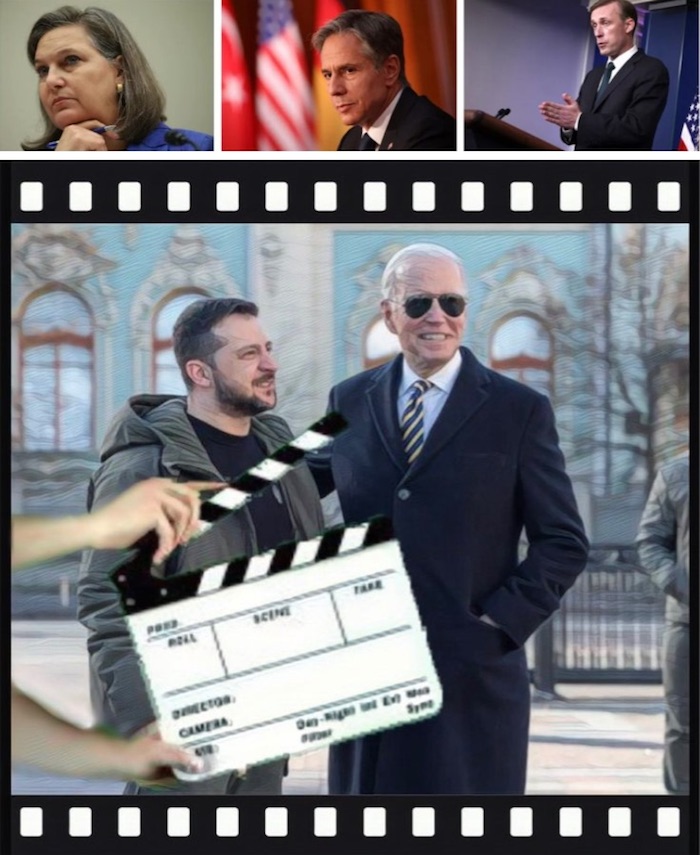
Remember the air raid sirens when Biden walked across the square in Kiev?
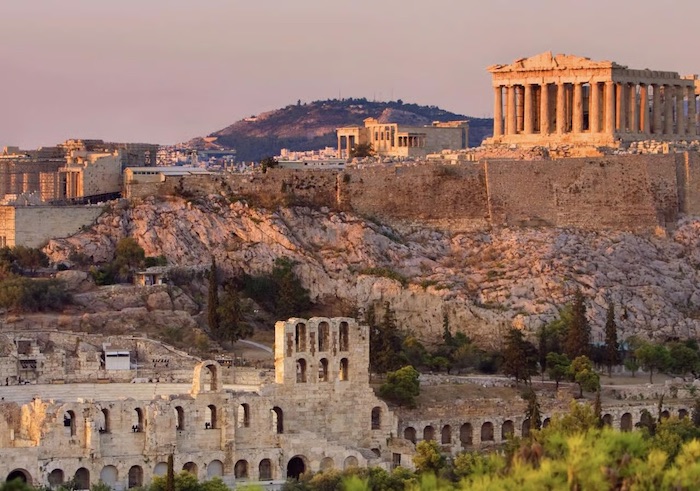
The EU made it dirt poor.
• Greece Wants To Become Europe’s Next Hedge Fund Hub (ZH)
Athens is emerging as an unlikely contender in the competition for Europe’s hedge fund money, with Greece using favorable tax treatment, an improving economy and Mediterranean living to attract financiers looking beyond London and other established financial centers, according to Bloomberg.Read more …
That campaign has already produced some notable converts. Millennium Management has established an operation in Athens, while billionaire hedge fund manager Chris Rokos is heading to Greece after deciding to leave Britain. Greek officials are betting that attracting firms of that caliber will make it easier to persuade smaller funds and finance professionals to follow.It is a striking development for a country that spent much of the previous decade synonymous with sovereign debt problems and economic instability. Greece has since repaired its public finances, regained investment-grade credit ratings and posted stronger economic growth than much of Europe. Its government can now borrow at lower yields than several much larger economies.
That turnaround is central to the sales pitch. “Greece is fiscally healthy, it constantly produces surpluses and, as a result, it provides tax predictability and macroeconomic stability,” said Vasilis Karatzas, an adviser to Finance Minister Kyriakos Pierrakakis.
Bloomberg writes that there is also plenty of financial incentive to make the move. Greece continues to offer qualifying wealthy newcomers a €100,000 annual flat tax on foreign income, a program that has remained unchanged since 2019. By comparison, Italy has repeatedly increased the cost of its competing program. Greece has now sweetened the deal for the investment industry specifically, allowing eligible fund managers who become Greek tax residents to pay 5% on carried interest and bonuses.The government says it isn’t simply trying to become another European parking lot for wealthy foreigners. The larger ambition is to get investment firms to actually operate from Athens, bringing well-paid finance jobs, encouraging talented Greeks working abroad to return and creating the foundation for a domestic money-management industry.
Timing could be working in Greece’s favor. Higher taxes have made Britain less attractive to some wealthy financiers, while geopolitical instability has introduced another consideration for people who had been looking toward financial centers in the Middle East. Athens suddenly finds itself competing for people who might previously have considered London, Milan, Dubai or Abu Dhabi the obvious choices.
There are still practical obstacles. Athens will need more luxury housing, strong private schools and the broader infrastructure expected by highly paid international finance workers and their families. And a couple of prominent arrivals hardly make Greece the next Mayfair. “The country won’t become a wealth hub overnight. It will take years,” Karatzas said.
Still, Millennium and Rokos give the Greek experiment something more important than another tax incentive: validation. Once major funds demonstrate that Athens is a viable place to operate, Greece’s hope is that the next wave of managers becomes considerably easier to convince.
“.. 9/11, an inside orchestration by the American Zionist neoconservatives to produce the “new Pearl Harbor” needed for Washington’s 21st century attacks ..”
• The Road to Armageddon (Paul Craig Roberts)
The world is faced with two major war fronts, both of which are widening and could spin out of control.Read more …
Ukraine is Washington’s proxy in the West’s war against Russia, a war that has moved deep within Russia herself far from the Donbas front. Nato countries such as Germany and Great Britain are openly involved in the conflict against Russia as is the US. Germany and Great Britain make the long range drones that Ukraine uses with Washington’s targeting system to attack Russian oil production, oil refineries, and energy depots inside Russia, as well as airports, civilian housing, children’s schools, and vacationeers. The Russian president refuses to acknowledge these attacks as attacks of war and calls them “terrorist actions.” Putin pretends that the conflict is merely a “special military operation” confined to Ukraine in Donbas.The “Special Military Operation” has continued for 4.5 years, during which two more countries have joined NATO and aligned against Russia. More NATO members have changed their policies and have announced their willingness to host Washington’s nuclear weapons on their territory on Russia’s border. NATO countries speak openly of preparing for a war against Russia in three years.
Every weapon system that Washington and NATO members said would not be sent were sent to Ukraine. Russia’s peace talks with Trump went nowhere, but Putin still believes in them. Zelensky now threatens with his German and British drones to close down Russia’s air space from commercial flights. Russia is fighting the West’s proxy–Ukraine–not Russia’s Western enemy. Ukraine is in the fight only because of the support and instigation from the West.
Obviously, Russia is in an existential conflict. There is a limit to how long Russia can deny reality, and when that limit is reached, Russia’s back is likely to be to the wall, in which case out come the Russian nukes. In the Middle East Iran is engaged not with Iran’s enemy, but with the proxy–Washington–of Iran’s enemy–Israel. So we have two wars in which the proxies, not the instigators, suffer the consequences. As this serves the instigators, as they bear no cost, the conflicts can continue until they become unmanageable.
We have before us the enormous self-delusion of Russia and Iran. Russia is fighting Ukraine, a former part of Russia, not Washington and NATO. Iran is fighting Washington, not Israel whose puppet Washington is. So we have two countries under attack, neither of which confront its actual enemy. It is a perfect scenario for matters to get out of hand.
With this point made, now ask yourself why the US is at war with Iran. We know why Washington is at war with Russia. Russia is a risen power that constrains Washington’s hegemony over the world and is, therefore, in the way of Washington’s hegemony. America’s foreign policy doctrine–the Wolfowitz Doctrine–says that it is the principle purpose of US policy to prevent the rise of any country that can serve as a constraint on Washington’s unilateralism.
Russia and China are obviously world powers, but why Washington’s hegemonic concern with Iran, which is not? The answer is that Iran is in the way of the Israeli Zionist Agenda of Greater Israel, which defines the territory of the Israeli state to be from the Nile to Pakistan.
For the entirety of the 21st century Washington has been fighting for Greater Israel. That was the purpose of 9/11, an inside orchestration by the American Zionist neoconservatives to produce the “new Pearl Harbor” needed for Washington’s 21st century attacks that have destroyed not the specified “seven countries in five years,” but three of the countries–Iraq, Libya, and Syria–in 25 years, with the current attack on Iran underway. That is a lot of fighting for Israel.
What I have presented is the truth. But no awareness or discussion of this truth results or is possible in America or Western Europe. The powerful Israel Lobby has defined all truth unfavorable to Israeli expansion to be antisemitic. Unless they are retired, no professor, no foreign policy analyst, no government official or student can survive being labeled an antisemite. The power of the Israeli’s self-justifications for wars and genocide is extraordinary. There are only 7.7 million Jews in Israel; yet they control the discussion of the violence of which they are themselves responsible.
He appointed the man?
• Trump Slams Former FBI Director Chris Wray Over Butler Investigation
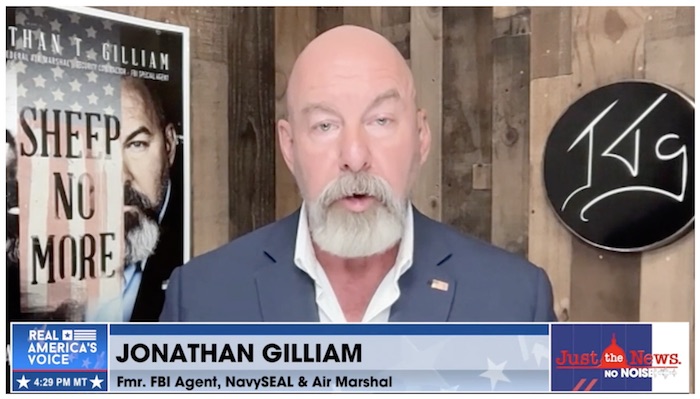
The criticism comes after the FBI released new documents related to the investigation, which included revelations that shooter Thomas Crooks had been emotionless since birth and never had friends in middle or high school. President Donald Trump slammed former FBI Director Christopher Wray on Tuesday, claiming the man should pay a price for his handling of the investigation into the assassination attempt on Trump in Butler, Pennsylvania.Read more …
The criticism comes after the FBI released new documents related to the investigation, which included revelations that shooter Thomas Crooks had been emotionless since birth and never had friends in middle or high school. “Everybody knows the Crooked Joe Biden FBI didn’t do what they should have with respect to the lunatic who shot me in Butler, PA,” Trump said on Truth Social. “By the time I got into office, on January 20th, most of the information was missing, altered, corrupted, or gone.“New info was just found! Why wasn’t it seen long ago? This was all a Democrat plot, to get me out of the election, that failed,” he continued. “Dirty Cop Christopher Wray should pay a price for the way he handled this assassination attempt, and certainly for the things he said.” Trump appointed Wray to replace former FBI Director James Comey in 2017. Wray was eventually replaced with current FBI Director Kash Patel in the second Trump administration.
The documents are part of the Senate Judiciary Committee’s ongoing inquiry into the Trump assassination attempt on July 13, 2024, in Butler. While Trump survived the assassination attempt, an innocent bystander was killed in the shooting. The documents showed that Crooks’ actions were a surprise to his family, and his motive remains a mystery.
FBI and politics, great combo.
• FBI Agent Wanted To Criminally Investigate Elon Musk, Email Shows (ET)
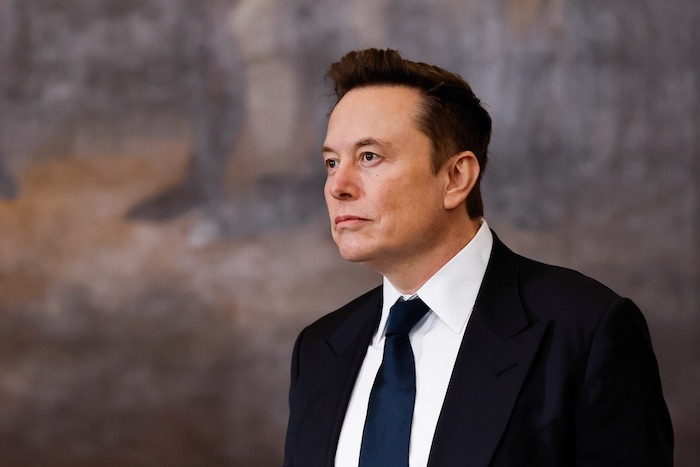
An FBI agent pitched investigating Elon Musk for his work with the Department of Government Efficiency (DOGE), according to an email released on Sept. 15. FBI agent Kevin Gounaud wrote in the Feb. 22, 2025, missive to a supervisor that he wanted to recommend opening a criminal investigation into the person or people at the Office of Personnel Management who approved transmitting an email to government workers about what they had done the previous week. That person was conspiring with Musk “to violate government-wide security policy and transmit sensitive government information outside of a strict need to know,” Gounaud said.Read more …
“Furthermore, Musk used a non-government system (Twitter) to relate information that allegedly was for official purposes,” he said. “In doing so, because he is monetized … he likely generated income for himself based on Twitter’s monetization and/or advertising revenues.” Gounaud compared Musk’s action to how former Secretary of State Hillary Clinton used a private email server to conduct government business. The FBI declined to take action against Clinton, determining she lacked criminal intent.Gounaud said Musk also likely violated a federal law that bars executive branch employees from participating in government matters that impact their own interests. “Happy to write the case opening and find a prosecutor (or at least try),” the agent told the supervisor. He added later, “And no, I’m not kidding.”
Sen. Chuck Grassley (R-Iowa) released the letter as senators questioned FBI Director Kash Patel during a hearing in Washington. Grassley said the email, along with other evidence from actions taken by additional agents, “undercut public statements by former FBI officials that agents don’t get to pick their cases.” [..] Patel told senators that the FBI has fired agents who were involved in certain probes, including collecting intelligence in a malfeasant manner. “And in terms of criminal investigations that sprout from that, I can only comment on what’s been public, but there are a number of ongoing investigations regarding this illegal conduct,” he said.
Gounaud is no longer with the FBI, as of February, according to his LinkedIn page. He had been with the bureau since 2004. Musk’s time as a special government employee concluded in the spring of 2025, while DOGE formally shut down in July. Musk has not been charged to date. It was not clear whether Grassley has obtained other emails involving Gounaud, including any responses the latter received to his pitch for a probe of Musk.
“AI doomers should be held accountable for their doomsday claims. It’s made up… It’s irresponsible. We ought to just keep track of all that and remind people when their claims don’t come true”—@JensenHuang NVIDIA
— Brian Roemmele (@BrianRoemmele) September 16, 2026
I agree and hold the CEOs and executives of the companies that…
Optimus will make the future much more productive
— Optimus (@Optimus_RH) September 15, 2026
And also much more fun pic.twitter.com/xsNNrGGW88
THIS ROBOT JUST LEARNED TO JUGGLE – AND IT CHANGES WHAT HUMANOIDS CAN DO!
— Future Memo (@TheFutureMemo) September 16, 2026
In just 20 seconds, the humanoid robot goes from holding 2 tennis balls to tracking, catching, and throwing them while maintaining its balance. That means its cameras, motion planning, hands, and legs have… https://t.co/VtD6tvggjl pic.twitter.com/YghE1T5uIL
Support the Automatic Earth in wartime with Paypal, Bitcoin and Patreon.
Home › Forums › Debt Rattle September 17 2026