

Vincent van Gogh Vineyards with a View of Auvers 1890

🔥 EPIC!! President Trump will be giving Elon Musk the NATIONAL MEDAL OF SCIENCE Tomorrow ❤️
— MAGA Voice (@MAGAVoice) October 7, 2026
Elon Musk absolutely deserves it
Liberals can’t stand this pic.twitter.com/uCopIXxDLq
🚨 IT'S OFFICIAL: President Trump demands the Federal Reserve IMMEDIATELY plummet American interest rates to the lowest in the world — 0.5% OR LOWER
— Eric Daugherty (@EricLDaugh) October 7, 2026
"If we decided not to buy watches from Switzerland, it wouldn't be 'elite' anymore. We would save about $40 billion!" 🔥
"Our… pic.twitter.com/ucKG3u2A3c
Buckingham Palace has attempted to ban this video.
— Wiki Leaks 1.0 (@WikiLeaksQ) October 8, 2026
His Majesty King Charles III is trying to lecture the British to abandon Western values and Christianity in favor of 'the wisdom of Islam'. If he likes it so much, let him abdicate and go live in Iran. pic.twitter.com/PjDcWJJDCQ
President Trump just ENDED Democrats ability to win elections again in one GENIUS move.
— Benny Johnson (@bennyjohnson) October 7, 2026
Democrats have been using illegal aliens for power. They have admitted it on tape.
Trump’s 2030 Census rule would stop counting illegal aliens, and anyone without a green card, in the… pic.twitter.com/sqpU2x7NzH
THIS 👇🏼👇🏼👇🏼 #Ukraine https://t.co/8h8d1ifVTr
— Patrick Henningsen (@21WIRE) October 8, 2026
Trump doesn’t face elections. It’s nice if he does well in the midterms, but that’s all.
• Pentagon Prepares ‘Options’ For Trump To Strike Iran Before Midterms (ZH)
The Atlantic is reporting Wednesday afternoon that the Pentagon is preparing strike options for the Commander-in-Chief to consider, and that Trump may actually pull the trigger before the midterm elections – though the report emphasizes that the decision is still being debated:Read more …
After months of on-again, off-again fighting, the United States hasn’t struck Iran in several weeks. The stretch of relative tranquility is coinciding with the final phase of the midterm-election campaign, and the assumption has been that President Trump will want to keep it going through November 3 so as not to remind voters of an unpopular war that is dragging Republican candidates down nationwide.But that may not be what happens. The White House has asked the Pentagon to develop strike options against Iranian targets that could be exercised ahead of the midterms, according to two administration officials. The planning underscores just how much the president wants to reduce gas prices and demonstrate progress in the conflict before the vote, administration officials told us.And yet a renewed outbreak of direct bombing would likely actually serve to do the opposite, given oil prices have tended to shoot up on headlines of major direct escalation.
Reports out of Iran confirmed earlier Wednesday that negotiations are ‘stalemated’ – also as the Iranians have ramped up targeting tankers with drones in the Strait of Hormuz over the last week.One peculiar and notable line from The Atlantic report is that Trump and the Republicans are looking for “some sort of victory” in a war that they promised would be swift and decisive, but instead has drifted into a seven-month quagmire:
The plans are being developed by U.S. Central Command, which is coordinating the war effort, a U.S. official told us. Even the plans’ advocates acknowledge that limited strikes would not, by themselves, bring Iran to the negotiating table, restore safe travel through the Strait of Hormuz, or lower gas prices before Election Day. But those in favor believe that further action after months of uneasy peace could allow Trump to demonstrate strength and potentially declare some sort of victory, giving Republicans much-needed momentum heading into the election.
Tehran has constantly signaled its military is at the ‘ready’ and that it is continuing to build up its ballistic missile arsenal, even as its exports have dropped dramatically due to the US naval blockade. Meanwhile…
Wednesay (10/7): A tanker was hit by “multiple projectiles” about 51 nautical miles north of Qatar.
This represents a very clear shift in strategy by Iran.
— MoloMonitor 🇮🇹 (@MoloWarMonitor) October 7, 2026
It has been a long time since they struck a commercial vessel in the Persian Gulf outside the Strait of Hormuz, signaling an expansion in the range of their attacks.
The key aspect of this new strategy, however, is the… https://t.co/yZPbGicbdG
Le Pen and AfD can save Europe. Narrowly.
“Mounting problems with housing, schools, and jobs are driving people into the streets while their governments are gearing up for a conflict no one wants..”:
• Europe Is In Revolt – Its Leaders Are Preparing For War (RT)

Europe’s leaders have grand plans – spend more on weapons, prepare for war, and tighten citizens’ belts. The people have more immediate concerns however, like finding somewhere to live, keeping their jobs, and getting an education. Across France, Germany, Spain, and other EU states, the widening rift has started to spill into the streets.Read more …
Recent weeks have seen housing marches across Spain, student riots and public-sector strikes in France, and demonstrations against military recruitment and industrial job cuts in Germany. Immigration has added to the anger over housing and overstretched services, while the prospect of conscription has young Germans asking whose wars they are expected to fight.The demands differ, but a recurring complaint unites them – aside from those simply looking for an excuse to wreak havoc: governments aren’t listening. Instead of putting domestic problems first, European leaders are telling their constituents to accept less and sacrifice more, while committing billions to preparations for a suicidal war with Russia. That’s despite Moscow and even Europe’s own intelligence services repeatedly saying there is no imminent threat.
Spain: Priced out and fed up
Spain’s housing crisis has pushed tens of thousands into the streets. After years of soaring rents, the eviction of an 87-year-old woman from her home of 70 years in Madrid last month turned into a rallying point for those sick of being priced out of their homes and the government’s failure to tackle the housing affordability crisis.The eviction sparked demonstrations across Spain, followed by mass marches and a continuing protest camp in central Madrid. Parliament’s subsequent rejection of emergency tenant protections added even more fuel to the fire, bringing tens of thousands into the streets in around 50 cities last weekend.
Rents in Spain have almost doubled over the past decade as immigration-driven population growth has continued to outstrip housing construction. The population, excluding migration, has meanwhile only continued to decline. The pressure is even more visible in Ceuta, Spain’s North African enclave, where around 72,000 people crossed from Morocco in late July into a territory with roughly 84,000 inhabitants. Although most returned, thousands remained, overwhelming accommodation and straining public services.
Residents have taken to the streets demanding stronger border controls and faster deportations, accusing Madrid of abandoning them. Protests have escalated into clashes with police, while angry locals have torn down makeshift migrant camps. Government promises to restore order have done little to quell the frustration of communities left to absorb the consequences.
France: School’s out
France has also been gripped by overlapping protests over wages, spending cuts, public services, and school conditions. Teachers, healthcare workers, firefighters and transport staff have joined numerous strikes in recent weeks, while a growing student movement has added school blockades to the disruption.The school protests began in mid-September, with students demanding more teachers, smaller classes, repairs to neglected buildings, and lighter schedules. Thousands of teaching posts have been eliminated this year, with further cuts planned for next year.
Around 266,000 people joined demonstrations nationwide on Tuesday. More than 6,500 have been arrested over three weeks, while hundreds of students and police officers have been injured, including a 15-year-old who lost his hand to a police grenade and a 16-year-old who reportedly lost sight in one eye after being hit by a rubber bullet.
As the movement has grown, violent groups have joined the protests, torching buses, attacking emergency workers, and damaging schools. Across France, 24 schools have been burned or ransacked. Similar demonstrations have spread to neighboring Belgium, where students have opposed education reforms, higher transport costs, and rising tuition fees. In Liege, school blockades have been accompanied by vandalism, fires and arrests.
France: The cuts keep coming
The student demonstrations came on the heels of wider protests that have gripped France for weeks, with public-sector workers protesting a squeeze on wages and services, compounded by soaring fuel prices. Since 2017, public-sector pay has risen by 5%, while cumulative inflation has reached 24%. The government’s proposed €54 billion ($60.4 billion) budget package, which includes spending cuts and freezes affecting pensions and benefits, has only deepened the anger.Other demonstrations have also challenged continued funding for Ukraine, with protesters arguing that the money should go toward hospitals, education, and lower fuel taxes. Separate rallies in more than 20 cities have also opposed a bill that could give police shootings the presumption of legality, which critics say would make officers harder to hold accountable.
In Germany, workers and students have taken to the streets as Berlin pursues a frenzied military buildup in the midst of a deepening industrial crisis with hundreds of thousands losing their livelihoods and young men facing the prospect of being drafted. Around 45,000 students joined protests in some 100 cities and towns in late September, carrying banners reading ‘We won’t fight in your wars’ and ‘Education instead of bombs’.
The government meanwhile is pressing ahead with plans to expand the armed forces to more than 260,000 active troops and 200,000 reservists by 2035 to align with Chancellor Friedrich Merz’s fixation on creating “Europe’s strongest conventional army.” Young men are already required to register for potential service, but politicians have been pushing for a return to conscription if voluntary recruitment fails to fill the ranks.
Aside from the thousands protesting such plans in the streets, resistance is also showing up in applications to avoid military service. More than 12,000 people sought conscientious objector status in the first eight months of this year – over three times the total for all of last year. Tens of thousands of automotive workers have also protested sweeping job cuts and threats to factories. Volkswagen, for example, plans to shed 100,000 jobs across its brands, while other manufacturers are cutting production or moving it abroad.
Germany’s industrial woes have been further compounded by the loss of cheap Russian energy, which helped make its manufacturers competitive. Higher energy costs, US tariffs, and Chinese competition are now squeezing businesses and threatening jobs across the sector. For arms manufacturers, however, Berlin’s priorities and its latest €108.2 billion defense budget have been good for business. While Volkswagen shares have fallen more than 75% from their 2021 peak, Rheinmetall’s have soared over 1,100% since early 2022. One Volkswagen factory is even set to shift toward producing military equipment for an Israeli arms company.
More guns and more fear
Even with streets burning and protesters demanding relief, European leaders have not let the turmoil distract them from their military ambitions. In France, Macron marked Tuesday’s mass demonstrations by publicizing a nuclear missile test, posting a photograph of himself watching the launch with his back to the camera. While his constituents marched for better living conditions, his message was that France “must be feared to remain free.”In Germany, Merz and NATO chief Mark Rutte smiled and waved through boos and chants of “murderers” and “blood on your hands” after the military bloc received the Westphalian Peace Prize last week. Inside the ceremony, officials praised military strength as the foundation of peace. Those priorities are also taking shape in Brussels’ budget negotiations. Germany and five other EU states have demanded cuts to the bloc’s next budget, pushing to sacrifice funding for farmers and poorer regions in favor of ever-growing military spending.
The urgency is being justified by the supposed threat of a future Russian attack. However, Moscow has repeatedly denied any such plans, while even Finland’s president has admitted that his intelligence services see no imminent military threat. Nevertheless, for European leaders, preparations for that hypothetical conflict, which they appear to almost count on, continue to take precedence over the mounting problems already bringing people out onto the streets.
“Le Pen’s 39% compared with just 27% for center-right rival Edouard Philippe and 18% for far-left candidate Jean-Luc Mélenchon. ”
• Le Pen Most Credible Presidential Candidate, French Bonds Suffer (ZH)
France’s politicians seem to be getting a dire warning from the bond market: rein in reckless spending or risk a fiscal crisis as borrowing costs skyrocket.Read more …
UBS strategist Julien Conzano, head of European macro credit strategy in London, sees bond market pressure pushing both the crisis-stricken Macron government and Marine Le Pen’s National Rally toward greater fiscal discipline, reducing the risk of an expansionary 2027 budget.Deutsche Bank strategists Jim Reid and Henry Allen wrote in a note that French 10-year government bonds have posted their worst rolling decade of nominal returns since 1803, dating back to the Reign of Terror during the French Revolution.
it's been a while since we had a European sovereign debt crisis
— zerohedge (@zerohedge) October 1, 2026
*FRANCE-GERMANY 10-YEAR YIELD SPREAD WIDENS 8BPS TO 135BPS
France CDS widest in 13 years pic.twitter.com/9opJUmD2uS
The French welfare state’s bill is finally coming due: France’s budget deficit is forecast to be 5.4% of GDP this year, well above the EU’s 3% ceiling. The country has not balanced its budget since 1974. On Tuesday, Le Pen unveiled her shadow budget for next year, should she win the presidential elections in mid-April. In it, she proposed steep deficit cuts.Le Pen’s plan would shrink the deficit to 3.7% of economic output next year, well below the government’s 5% target, before bringing it to 2.2% by 2032. Savings would come largely from spending cuts, lower transfers to the EU and reduced migrant spending.
French 10-year bond yields rose sharply at the beginning of the week towards 5% before sliding to nearly 4.7% after Le Pen’s shadow budget reveal on Tuesday. But by the end of the week, the government debt yield rocketed back to nearly 4.96%.
To save France from the brink of what we described as a “triple crisis”, which consists of far-left riots, a ticking debt bomb and mass migration all colliding at once, a new Verian survey conducted for local outlet Le Figaro Magazine found that 39% of respondents believe Le Pen has a clear vision to contain the crisis.
Le Pen’s 39% compared with just 27% for center-right rival Edouard Philippe and 18% for far-left candidate Jean-Luc Mélenchon.
The ongoing social unrest by the far-left, weaponizing young kids who have burned down schools and torched buses, has been the extra fuel to propel Le Pen, as her Polymarket odds of winning the “Next French Presidential Election” have skyrocketed over the last week to 43%.
A consensus appears to be forming that Le Pen’s proposed fiscal discipline to rescue France from the brink of what she describes as a looming default, if the current trajectory continues, is a welcome relief for the market and voters. Nomura analysts described this theme in late August (read report), and they see Europe “lurching” right over the next 18-month election cycle.Goldman: "Our poll-based model continues to show Marine Le Pen as favourite to win next year’s presidential election and Rassemblement National as likely to secure a parliamentary majority. The party’s recent proposals regarding next year’s budget, the medium-term trajectory for…
— zerohedge (@zerohedge) October 8, 2026
Principal Asset Management’s Howe Chung Wan noted that one accelerator of France’s bond rout was the unwinding of carry positions, which helped drive the selloff and amplified pressure that sent yields soaring. “You can see this time around in France, it took France and Italy … but it did not take Spain,” Howe said, adding, “So it tells you it’s about positioning. It tells you about who is on the trades.”
[..] Le Pen has tailwinds here as the spending bill for the failed progressive experiment and unfettered spending comes due. Nomura is correct: the market no longer fears right-wing candidates; it fears left-wing candidates and unhinged socialists.

Absolutely insane that this ever happened. And those that did it were never punished.
• Trump Talks About AG Merrick Garland and Jack Smith Targeting His Family (CTH)
During an oval office press availability today, President Trump is asked directly about Joe Biden, former AG Merrick Garland and former Special Prosecutor Jack Smith targeting himself and his family. WATCH:Read more …
“..he argues that America’s greatest achievements may still lie ahead.”
• The Trump Manufacturing Resurgence Plan Currently Underway (CTH)
Many of us have watched each step in the process as President Trump executes a deliberate strategy to reindustrialize American manufacturing.Read more …
In this video Mike Steger examines plans for new shipyards, submarine production, and advanced manufacturing at Sparrows Point and across the country. He contrasts this rebuilding effort with the collapse of Bethlehem Steel and Baltimore’s industrial economy, arguing that restoring basic industry is essential to America’s future.The discussion then turns to Henry Kaiser, whose World War II shipyards transformed American production through workforce training and new construction methods. Mike connects that history to today’s shipbuilding ambitions, steel investments, and the industrial foundation needed to support both naval strength and space exploration.
From American shipyards to SpaceX’s stainless steel rockets, Mike makes the case that industrial growth can renew the confidence and purpose of Western civilization. Drawing on Marco Rubio’s remarks in Athens, the symbolism of Prometheus, and John Paul Jones’s refusal to surrender, he argues that America’s greatest achievements may still lie ahead. WATCH:
Chapters 00:00 America’s Revival of the West
01:25 A New Era at Sparrows Point
03:10 Rebuilding America’s Shipyards
04:55 Bethlehem Steel and Baltimore’s Decline
07:10 Henry Kaiser and Freedom’s Forge
09:10 The Ship Built in Under Five Days
10:00 Rebuilding American Steel
11:10 From Shipyards to Starships
12:35 Prometheus and the Torch of Progress
13:35 John Paul Jones: “I Have Not Yet Begun to Fight”
“Moscow has “fully accepted” the US peace proposal put forward at the Anchorage summit, yet Europe derailed the process, Russia’s top diplomat has said..”
• US Folded To EU Pressure on Ukraine – Lavrov (RT)
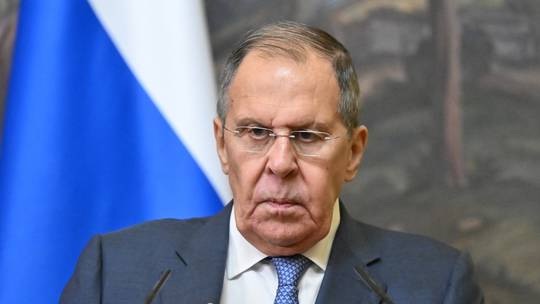
The US gave in to pressure from the EU, which has openly gloated about undermining the Anchorage understandings and declared them “buried,” Russian Foreign Minister Sergey Lavrov has said. The top diplomat made the remarks on Wednesday while speaking at a press conference following a ministerial meeting of the Commonwealth of Independent States (CIS).Read more …
Lavrov reiterated Moscow’s position that the Anchorage initiative was ultimately derailed by European nations. ”Our conscience is clear, not to mention the fact that we fully accepted the United States’ proposal last August, which was made during the summit… in Alaska,” he stated. It is not our fault that the Americans could not withstand the unprecedented and brazen pressure from Europe, which later proudly declared that it had buried Anchorage.US President Donald Trump hosted his Russian counterpart Vladimir Putin in Anchorage, Alaska, last year, with the two leaders reaching an understanding on how the Ukraine conflict could be settled. While Moscow has portrayed the outcome of the summit as an “agreement,” despite some “nuances” remaining, Washington has repeatedly disputed that characterization. US Secretary of State Marco Rubio previously said that there was “a proposal in Alaska, but there was no agreement.”
According to Lavrov, the Anchorage understandings were ultimately undermined over the following months by EU and British leaders. During the G7 summit in Evian in June, French President Emmanuel Macron openly declared that Anchorage had been “buried.”
While the US has displayed a declining commitment to the “understandings,” Trump has never explicitly declared the framework dead. Last month, Washington attempted to revive negotiations between Russia and Ukraine, but the process stalled once again amid continued long-range strikes by Moscow and Kiev. According to Lavrov, Russia agreed to a Washington-proposed trilateral meeting with Ukraine, which was expected to be held after the recent Russian parliamentary elections. Kiev, however, actively attempted to disrupt the polls and launched a massive attack while voting was underway.
”We made it clear that, under these circumstances, we want to know what proposals exactly [Vladimir] Zelensky’s negotiators would bring. This is very important to us, and the American side has taken our arguments with understanding,” the minister added.
Make Starlink work.
• Take More of My Money, Elon! (Stephen Green)

Another day, another regulatory approval for Elon Musk to launch more satellites than he has up there already. It’s almost a “dog bites man” item at this point — but only almost. This one has all kinds of cool little angles. “In a regulatory win,” PCMag reported on Tuesday, “SpaceX has secured approval to launch and operate 15,000 next-gen satellites for Starlink Mobile, the company’s service to deliver satellite connectivity to phones.” Satellite smartphones, cool. When you’re outdoors.Read more …
The problem with satellite phone service is that the tiny, low-powered antenna in your phone can only barely keep a connection with a sat even in Low Earth Orbit (LEO). Put a roof over your head and fuggedaboutit. PJ Media’s own Charlie Martin and I actually discussed this scenario a year or two ago, when Musk first talked about selling cellular service — and the answer was bolted to my roof.I’m a Starlink customer, and there’s no reason SpaceX’s Starphone* service couldn’t glom onto my WiFi just like my AT&T-provided phone does every time I pull into my garage. *For now the name is Starlink Mobile, but isn’t Starphone both cooler and more in line with the company’s naming conventions? But what happens when I go to my corner bar for my traditional lunch of burger, fries, and martini, and the satellite signal dies the moment I walk in the door?
This is a (mostly) solved problem. Back when Xfinity was still my ISP, the company had courtesy WiFi service seemingly everywhere. It hardly mattered where I was; if I needed WiFi, there was an Xfinity router nearby that used the same login credentials any-and-everywhere. Bad cell service? Hitting your data cap? Just look for the Xfinity router in your phone’s WiFi settings.
The trick — and this is something Xfinity couldn’t do, since they were serving as a replacement for your cell provider — is making the handoff from satellite to WiFi (and back again) so seamless that the user never notices, anywhere in the world.
Here’s where it helps to do what Musk does and think big. Getting businesses to host a Starlink router is no big deal — Xfinity has been doing it for years. Making it portal-less for that seamless transition ought to be a no-brainer, too. It already works at home, and for out-and-about, SpaceX seems to have that problem solved, too. For airlines like United that offer Starlink to their passengers, SpaceX requires that the service be both free and without any login screen.
Installing stuff on airplanes is time-consuming and expensive. Locally, no big deal. Let’s say you own a small bar (a dream of mine since Cheers, honestly), and SpaceX comes along and offers to put a router in your place — at no cost to you — and a neon FREE STARLINK sign to hang in the window. That’s how the company builds out the indoors part of its cellular service in the business world. But residential? Aye, that’s still the rub, because I don’t want my phone to stop working when I go over to my neighbor’s house for drinks, and he isn’t a Starlink user.
And Another Thing: Delta’s real beef with Starlink might not have been due to a personal grudge between CEO Ed Bastian and Musk. Delta reportedly insisted on putting their branding on Musk’s service, along with a mandatory login portal that required fliers to sign up for Delta miles. SpaceX said no, that’s not how we do things, and Delta went off in a huff to Amazon’s rival Leo service — that won’t even be up and running for another two years.
One solution is to set up ground-based repeaters (cellular or WiFi) in dead zones. That’s hardly ideal, of course, but over time, I suspect SpaceX will be able to shrink the dead zones down to virtually nothing for reasons I’m about to reveal. The answer once again turns out to be as obvious as the Starlink transceiver on my roof: Don’t sell the phone; sell the bundle — and watch the dead zones disappear all on their own.
For one low monthly price, SpaceX might sell you high-speed internet service, works-anywhere satellite cellular, and (probably) a brand-new Apple iPhone or Samsung Galaxy (your choice!) every three years. Once SpaceX has Starmind (orbital AI service) up and running (or even before then), an extra $20 or $30 a month gets you all the Grok you can eat.
You get the convenience of one-stop shopping and a phone that works literally anywhere in the world, seamlessly and without friction. SpaceX — and this is where my SPCX shares start doing the happy dance — gets endless subscription revenue. Physically, is it possible?
Yes, and we saw why last week during Starship’s deployment of the first operational Version 3 (V3) Starlink satellites. Those 26 birds increased the throughput of Starlink’s existing constellation of 11,100 satellites by an estimated 2.3%. What that means is, a fully loaded Starship deploying 60 V3s will increase capacity by a little under 5%. Every 20 Starship launches will nearly double Starlink’s current ability to deliver.
That’s less than two months’ worth of Falcon 9 launches, and by one estimate, “Starlink will soon have more bandwidth than the entire terrestrial internet combined.” Who’s going to beat SpaceX on price, particularly with services and hardware sold in a convenient bundle? I’m not saying that a theoretical Starlink/Starmind/Starphone combo would be for everybody, but I am saying…

“The American Experiment, as modified by the white liberals, had failed, and so had the country.”
• The Day Accountability Arrived (Paul Craig Roberts)
The multicultural tower of babel collapsed when the fictional narrative of the US Navy escorting millions of barrels of oil daily exiting the Strait of Hormuz could no longer be maintained. This orchestrated hoax in the Western media had kept the future price of oil below the current price at the pump and provided reassurance that things would soon be better.Read more …
When the narrative no longer could be maintained, energy prices shot up taking inflation with them forcing most Americans to make dramatic reductions in their standard of living. The demand for US Treasury debt by foreign central banks dried up, causing a hit to the US dollar’s value that further drove up US inflation, the dumbshit American policymakers having based the US economy on globalism. As so much is imported, the dollar’s decline sent prices sky-high.The government was unable to fund its budget except by printing money, which further destroyed the exchange value of the US dollar and drove inflation higher in an economy that had so stupidly globalized itself for the benefit of corporate profits and not for the American people. Federal and state support for the underclass dried up. Social security payments became erratic. Looting and mayhem broke out as the black welfare class and 30 million immigrant-invaders fought for survival.
White communities became targets, although many were hand-to-mouth themselves. Being armed, except for the Northeast and California where “gun control” was the religion, white communities organized for defense to protect from the onslaught from The Camp of the Saints, anointed by the insouciant whites themselves as the inheritors of America. The many decades of the white liberals teaching blacks to hate whites, of teaching women to hate men, and of teaching children to mistrust their parents and all authority culminated in the complete collapse of society.
Sexual morality was dead from generations of internet porn teaching young women and men that threesomes and foursomes were the epitome of sexual pleasure and that no one needed a wife or husband when multiple sex partners were at hand. As a nation the United States ceased to exist. It existed as a territory in which various sections were at war with other sections in ongoing violent conflict. White survival was highest in the Southern states whose white populations had comprised the majority of the US military.
The American Experiment, as modified by the white liberals, had failed, and so had the country.
“.. that shared experience has produced sharply different political conclusions among people living in the same region.”
• They Survived October 7. Now They’re Divided Over Who Should Rule Israel (Blade)

For residents of Israel’s Gaza Envelope, the Hamas-led attack of October 7, 2023, was not an abstract national trauma. Communities close to the Gaza border were among the first to come under assault, and residents spent hours locked in safe rooms, hiding from gunmen and rocket fire. Three years later, that shared experience has produced sharply different political conclusions among people living in the same region.Read more …
Michal Koren Kariv, a 50-year-old filmmaker from Kibbutz Mefalsim, remembers that morning all too well. As Hamas launched its deadly assault on communities across southern Israel, her family remained inside their home as armed militants reached the area. They spent hours in a protected room without electricity, unsure of what was happening outside.When the family was finally able to leave, Koren Kariv says she saw devastation on a scale she had never witnessed before. The experience, she says, fundamentally changed her relationship with the state. “I no longer believe anything,” she said. “Simply nothing.”
Accountability is a must
For her, the coming election is largely about the demand for a state commission of inquiry into October 7, an investigation that would establish what went wrong, who knew what and when, and which decisions or institutional failures contributed to the disaster. She says she plans to vote for those who promise to get to the bottom of those failures.“I believe that whoever was prime minister when the attack occurred must bear political responsibility. Netanyahu was the head back then, so he should have resigned. I am not saying I won’t be voting for a right-wing party. All I am saying is that Netanyahu should not be prime minister.”
Koren Kariv says she has never voted for Netanyahu’s Likud, but she has never been in the so-called “anti-Bibi camp,” simply because she acknowledges the positive things Netanyahu has done for the country. She also recognizes that the current government has invested heavily in rebuilding the southern communities.
Shortly after the attacks, the Israeli government established the Tkuma administration to oversee reconstruction and recovery in communities damaged or evacuated after the massacre. Government figures show a multibillion-shekel reconstruction program covering housing, infrastructure, education, community services, and economic recovery.
Koren Kariv acknowledges that the Gaza Envelope has received substantial investment since the attack, including new construction, educational funding and a stronger military presence. But she draws a distinction between rebuilding communities physically and addressing the political and institutional failures she believes preceded the attack.
“The question here is not simply whether houses have been rebuilt or money has been allocated. I want to know why the country was so unprepared, whether warnings were missed and who should have acted differently. So my conclusion is therefore not that the state has done nothing. Rather, that reconstruction cannot substitute for an investigation into the failures that preceded the attack.”
Tilting towards the right
A few kilometers away, Sami Danieli, a 65-year-old former security officer from the religious moshav of Shibolim near Sderot, drew a very different lesson from October 7.Unlike many other communities in the Gaza Envelope that experienced direct infiltration by militants, his moshav was relatively protected. Hamas and Palestinian Islamic Jihad reached its outskirts but did not enter. Residents nevertheless sheltered as rockets fell, and Danieli says he lost close friends in neighboring communities that bore the brunt of the attack.
Even before October 7, Danieli had voted for National Security Minister Itamar Ben-Gvir, who supports the expulsion of Palestinians and promotes settlement activity in the West Bank and Gaza. The events of October 7 did not weaken that support. They reinforced it.
“If I could vote for Ben Gvir twice, I would do so,” he said. “I don’t believe there can be peace with Hamas, and that’s why Israel needs to take a tougher approach in its security policy.”
Ben-Gvir has said he would pursue a tougher security policy if he were given the defense portfolio following the election. As national security minister, he has already pursued a series of hardline measures towards Palestinians. These include worsening conditions for Palestinian prisoners in Israeli jails, backing legislation imposing the death penalty for people convicted of terrorism, and distributing thousands of firearms to Israelis living in areas considered vulnerable to Palestinian attacks.
Danieli says he supports those measures. He remains firmly behind the right-wing bloc headed by Netanyahu and rejects claims that the current government bears responsibility for Israel’s failure to prevent or decisively end the war.
Instead, he points to anti-government protests and other factors that he believes constrained Israel’s ability to defeat Hamas.
“The anti-government protesters were the ones who weakened the country with their demonstrations. Then, when the war happened, total victory was not achieved partially due to the restrictions imposed by the Americans [under the Biden administration – ed.] and partially because of ammunition shortages.
“Netanyahu’s performance during the war was excellent though. Not very good – it was excellent.” Danieli also gives the government credit for the reconstruction effort in the south.“Government assistance reached the region and funds were provided, but of course there will always be people who will say that this is not enough,” he said.
“I believe that much of the criticism is coming from residents who are politically motivated. Eighty percent of them have a political agenda and this anti-Bibi bias prevents them from seeing the truth. This is why I don’t want the left to come to power. The right-wing must stay and rule,” he added.
Uncertainty prevails
Polling, however, shows that the hopes of Danieli might not materialize.Reuters’ polling tracker, updated in late September, showed the centrist Yashar party led by former military chief Gadi Eisenkot narrowly ahead of Likud in the polling average. The aggregate projected 66 seats for parties opposed to Netanyahu and 48 for parties supporting him, while also noting that the anti-Netanyahu camp did not have an obvious coalition path to the 61-seat threshold.
Individual polls by Israeli television channels and news outlets have produced different results. A Kan survey reported in late September put Yashar at 23 seats and Likud at 21, with the two main blocs each projected at 52 mandates.
A Times of Israel poll published on October 1 likewise found Netanyahu’s bloc ahead but still short of the 61 seats required to form a government on its own. Likud and Yashar were tied for first place among individual parties.Israel uses nationwide proportional representation. Parties must pass a 3.25% electoral threshold to enter the Knesset, and a governing coalition requires the support of at least 61 of the parliament’s 120 members.
For the residents of the Gaza Envelope, however, the numbers on a polling chart tell only part of the story. They lived through the same morning, heard the same rockets and waited behind the same locked doors for help to arrive. Yet, three years later, their memories of October 7 have taken them in opposite political directions.
Koren Kariv sees the election as a test of accountability, a chance to establish why the state failed and who should answer for it. Danieli sees it as a test of resolve, an argument for maintaining the political course he believes offers the strongest security.
Three years on, the communities closest to Gaza are no longer simply asking how they survived October 7. They are asking what the country should become because of it. And when they enter the voting booth, those two questions will lead them to very different answers.
“..the Association of Human Mathematics..”
• Mathematicians Declare War on AI — Taxpayers Foot the Bill (Scott Pinsker)

The frontrunner for the most arrogant, tone-deaf remark of 2026 comes from the Association of Human Mathematics (AHM). Upon OpenAI’s announcement that its model had solved 90 of math’s 500 hardest open problems, AHM released a furious denunciation: “Mathematicians did not ask for this work to be done.” Yeah? So what? Who cares what they asked for? Mathematicians study math — they don’t own it.Read more …
Because the opposite is true: Most of them work for us. More than half of all U.S. mathematicians are directly employed by the federal government. Another 12% are paid by colleges. Just 18% are employed in aerospace, manufacturing, and professional services! To quote Gen X philosopher Alanis Morissette, “Isn’t it ironic?” By the numbers, mathematics is one of our country’s most heavily subsidized industries. Only a small sliver of its jobs are in the private sector. The discipline is utterly incapable of paying for itself.So mathematicians survive by suckling the government teat.That isn’t necessarily a bad thing. Hey, government waste is an open secret, but some government investments pay off. (Really!) Perhaps mathematics will be one of them. The mathematicians certainly think so. Here’s a Reddit thread on the topic:
For decades, the case for funding math research was simple: it pays off for you, society, and everyone.
1984, the US “David Report” (the landmark math funding report): “the high technology so celebrated today is essentially a mathematical technology.” Federal math research funding rose 34%.
1992, International Mathematical Union (IMU): one of its official aims was “Mathematics, keys for Development.”
1997, NSF: “broader impacts,” meaning benefit to society, became a required criterion for every grant proposal.
2012, UK: a Deloitte study commissioned by the research council credited math research with about 16% of UK economic output and 2.8M jobs.
2018, UK Bond Review: math is “arguably the single most pervasive and powerful engine of innovation.” A £300M government pledge followed in 2020.
2021, IMU/UNESCO: the International Day of Mathematics theme was “Mathematics for a Better World.”
So maybe mathematics is worth the taxpayers’ investment. Maybe, as famed “mental calculator” Shakuntala Devi said, “Without mathematics, there’s nothing you can do. Everything around you is mathematics. Everything around you is numbers.” Maybe mathematics is key to maximizing not just human progress — but mastering all the mysteries of the universe!
If so, why are the mathematicians’ undies in a trefoil knot over OpenAI answering 90 unsolved math problems? Wouldn’t you assume they’d be excited — because progress is progress, and advancing knowledge is a good thing? Who cares if the answers came from an 11-year-old whiz kid, a tenured MIT professor, or ChatGPT? Would it matter if Einstein’s revelations came to him in a lab — or in a dream?
Because the point of the mission isn’t the journey. Professional mathematicians may crave a rollicking, number-crunching adventure — replete with debates, published papers, and dueling personalities — but that’s not why taxpayers are underwriting their profession. We’re in it for the destination: More knowledge. Superior insights. New data. Useful information. Faster breakthroughs. And a better, smarter, more prosperous tomorrow.
This is why AHM’s public statement on OpenAI was so eye-opening: Yesterday, on October 6th, 2026, OpenAI — which is currently defending lawsuits against accusations of illegal plagiarism, copyright infringement, and trademark dilution — released a repository of manuscripts purporting to contain solutions to a number of high-profile problems in mathematics.
Mathematicians did not ask for this work to be done. The Advisory Group on Mathematics and Artificial Intelligence, from whom OpenAI has claimed to derive its legitimacy, opened their initial advisory statement by saying that frontier AI corporations should not test advanced mathematical problems on internal models. In ignoring the central premise of the Advisory Group’s position, OpenAI has indicated total disregard for the norms of scientific research — norms that guarantee that mathematics remains trustworthy, ethically researched, and in the public interest.
Mathematicians have a particular vision of progress that is informed by history and field-specific considerations. We reject OpenAI’s assertion that this release advances our subject, and we urge mathematicians and the public to view the value of this publication model with due skepticism. Releasing over 700 files at once is not a demonstration of scholarship, but a demonstration of power. We urge mathematicians to discontinue their work with OpenAI and to return to a vision of science that centers human understanding.
AI is a tool. It produces data and information. What we do with the data and information is up to us. If mathematicians don’t want to use this tool, fine. That’s between them and their employer. (Seems pretty self-defeating to spurn a helpful tool, but whatevs. To each their own.) But if the mathematician is being bankrolled by American taxpayers, it’s perfectly legitimate for us to insist they use the best possible tools, because we have a vested interest in maximizing our investment.
Otherwise, we’re wasting money.
Rubio’s tour took him to Athens yesterday.
“The United States is in favor of the Greek-Israeli defense relationship, Marco Rubio tells Kathimerini. ‘We view that as a positive – obviously for the region – and I think the challenge is not just maintaining a relationship with Israel, but how do you also maintain good relations with other countries in the Middle East, whose relationship with Israel may not be as positive. We face the same challenge, obviously, and we navigate it,’ the US secretary of state says.”
• ‘US and Greek Interests Overlap’: Marco Rubio (Kathimerini)

US Secretary of State Marco Rubio, speaking to Kathimerini in an exclusive interview during his visit to Athens on Wednesday, lays out the priorities shaping Washington’s approach to the most pressing issues in Greece’s neighborhood, from Greek-Turkish relations and Iran to defense, Ukraine, the Strait of Hormuz and energy.Read more …
Why are you in Greece now?I don’t know if there is a reason for now. We should have been here as soon as we could. I don’t travel to a country unless the ambassadors are in place, so that was part of it, and I think it worked for our schedule. I do think this relationship is deep and enduring. We had opportunities to interact with the prime minister and the foreign minister at global gatherings in the past, and hosted them bilaterally and in the US. I hope we come back many times because US-Greek relations are something that I have been very involved in, going back to my time as a senator – though I didn’t get to visit as a senator – and one we continue to build on.
The US supports a new energy architecture in the area with the Vertical Corridor and the Great Sea Interconnector electricity cable. Is the US going to support the interconnector project in the Aegean, which faces a lot of irritants and obstacles?
If there is anything that has become obvious over the last few months, it is that we need to diversify the way the world gets its energy. I say that if the world has learned anything over the past five years, it is that we need to be able to do that. The Russia-Ukraine war reminds us of that, as is what is happening in Hormuz and potentially in the Red Sea with the Houthis. We need to diversify. Our supply chains are running to some of the most volatile areas of the planet. So this is a very important priority for us and one more example of how US and Greek interests overlap. So, we are very committed to it.
We understand there are some potential impediments, there are some things standing in the way, and we intend to use our diplomatic efforts to remind all parties how important this is to us and why this matters. And I hope to find resolutions. As I said in the press conference, some of these issues are obviously not best resolved through media or communiques; they are best done privately and quietly within the diplomatic realm, but this is very important as we need to prioritize engagements from multiple countries.
President Trump has a personal relationship with Turkish President Erdogan. You are very involved in the area. Are we going to see any mediation on your side on this?
Well, I always sort of avoid discussing sensitive topics in the media because it only makes them harder to solve. That said, we engage with Turkey all the time. They are a member of NATO, and they have obviously been engaged in a number of other issues. For example, they have hosted talks in the past with Russia and Ukraine. It’s a relationship we have invested in as well; maybe that investment will help us in regard to these conversations. On issues like these, if you want to put out statements, you can put out statements, but if you want to get a resolution, they are often best dealt with within the confines of direct private conversations. That’s how diplomacy often works best.
One of the big issues, another sensitive issue, is whether Turkey is going to get the F-35s. You introduced the Countering America’s Adversaries Through Sanctions Act (CAATSA) bill as senator. What’s your assessment now?
‘To me, [a Greek-Turkish crisis] would be unimaginable. It wouldn’t be good for either Turkey or Greece, but it also wouldn’t be good for the United States. It is something we could never allow to happen’
Well, the status of that is the following: Number one, [Turkey] is a member of NATO. Number two, the president expressed the desire, if possible, to provide them, as they have paid for a few of them already. Obviously, these planes are many, many years away from delivery, but there are two that have already been paid for. But there is a law that was passed by the United States Congress. There’s a law, and there’s also a provision of the National Defense Authorization Act that places very strict conditions, so until those conditions are met, frankly, that sale can’t happen. \
And that’s been conveyed to the Turkish side. They’re aware of it; I think they’re trying to find answers for it. It revolves around the S-400 system. So, as of now, that issue hasn’t been resolved, and legally we can’t make that transfer until that is resolved. Perhaps it will be resolved – and there are various options – but as of right now, it hasn’t been resolved.
Greece has requested some specific weapons for its F-35s, some of the same ammunition that Israel is getting. Is there any response you can give on that now?
There is no formal response. It’s under strong consideration. Obviously, a country like Greece is an important ally of ours from a defense standpoint. We have a lot of interoperability already when it comes to defensive posture – and Greece adopted a very strong defensive posture when our presence in the region was being threatened. So, they’ll be given strong consideration in that regard. Obviously, that’s a decision that’s made through an interagency process in our own system. Ultimately, the decision is up to the president, but we obviously want to get input from the Department of War as well.

— Elon Musk (@elonmusk) October 8, 2026
"I want to live long enough to see the mass driver on the Moon, because that is going to be incredibly epic"
— X Freeze (@XFreeze) October 8, 2026
The Moon is going to become our first industrial outpost beyond Earth
Build the SI satellites on the Moon using lunar resources, then launch them into deep space with an…
https:/twitter.com/GuntherEagleman/status/2107883142266634261?s=20LEFT: Tim Burchett says if anyone leaks where the money goes when The Pentagon fails audits, they’d be murdered
— Deep Leaks (@DeepLeaksHQ) October 7, 2026
RIGHT: Elon Musk says if he were to reveal the real ways Congress gets rich, its “going to get me assassinated”
So expose money laundering or fraud and you get killed pic.twitter.com/c9rQvwP4NE
Support the Automatic Earth in wartime with Paypal, Bitcoin and Patreon.

Home › Forums › Debt Rattle October 9 2026