

Salvador Dali Madrid. Drunk man 1922

Finally a German politician admits the war in Ukraine is the EU-NATO's fault: https://t.co/2igh8FGXR3
— Robin Monotti (@robinmonotti) October 20, 2026
NATO expansion since 1986
— Ignorance, the root and stem of all evil (@ivan_8848) October 20, 2026
Who is the aggressor?https://t.co/ReWOmDzUtg pic.twitter.com/ISxOGRleEA
Former British diplomat Alastair Crooke on the protests across Europe:
— Steve Hanke (@steve_hanke) October 20, 2026
“People don't have enough money to live on, all the services are crumbling in Europe, and they want to cut back on hospitals and schools. There's no money in Europe to continue funding Ukraine.” pic.twitter.com/PWkDbDFn7c
US politics has become pure poison. People can’t react normally to Trump.
Musk still believes in the US.
• Elon Musk Will Have His Revenge on Democrats, and I Can’t Wait (Matt Margolis)
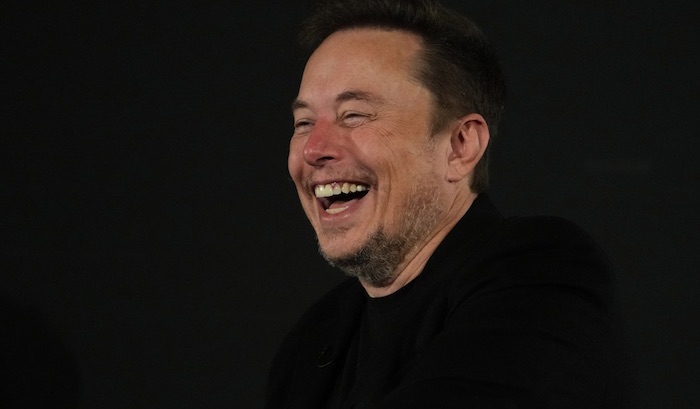
Democrats are plotting to weaponize the federal government against Elon Musk if they win back the House or Senate next month. Musk has his own revenge planned, and he just put them on notice.Read more …
According to a Politico report published Tuesday, senior Democrats have assembled a sprawling list of congressional investigations targeting Musk and his businesses, and the list keeps growing. Musk is the world’s richest man and the GOP’s biggest donor, and that second detail is the only reason Democrats are going after him. Several committees are already weighing how to target him and his companies.This is a huge deal. Democrats haven’t won anything yet, and they’re already drawing up an enemies list. We knew they were going to go after Trump with another never-ending quest to find something they can claim is a crime so they can put the country through another bogus impeachment. But this is even worse, if that’s even possible. They aren’t campaigning on lower prices, safer streets, or a secure border. Their pitch to voters boils down to handing them subpoena power so they can punish a private citizen who supports Trump and the GOP.
Musk answered on X.
Live by the sword, die by the sword.
— Elon Musk (@elonmusk) October 21, 2026
Those who pick fights with me should understand that I will find out who is really pulling the strings and come for them, not just their puppets … https://t.co/L7xNa6yCm0
Read between the lines, and it’s clear that this warning goes far beyond the Democrats on Capitol Hill. Musk is telling the donors, activists, and operatives driving this witch hunt that he sees them, and he plans to follow the trail all the way to the top.For years, Democrats have used the machinery of government as a club against anyone who crosses them. They hauled Trump into courtrooms across the country, and they treated anyone who stood with him as an accessory to whatever fantasy crime they imagine Trump committed. Most of their victims either folded or went broke defending themselves. This time, the target has the money, the platform, and the backbone to hit back harder.
Democrats picked the wrong guy.
A key part of their rage at Musk traces to his time at the Department of Government Efficiency (DOGE), where he went after government waste that enriched their allies. Democrats want to dig into Musk’s time running DOGE last year, including eliminating more than 250,000 federal jobs, withholding money Congress had approved, and accessing sensitive government data. Democrats can’t forgive Musk for exposing how bloated and wasteful their beloved bureaucracy had become.
“Congress must demand a full accounting of the damage Mr. Musk and DOGE caused, and we will not let anyone obstruct our oversight,” Rep. Greg Meeks (D-N.Y.), the top Democrat on House Foreign Affairs, said in a statement Monday.
Rep. Maxine Dexter (D-Ore.), who sits on the Natural Resources and Veterans Affairs committees, made no secret of where this is headed. She lumped Musk in with “the well-connected billionaire, trillionaires who have seen government contracts as a way to subsidize their own company’s research, development, and bottom line.” “We need to shut that down,” Dexter said.
Shut what down, exactly? A company that saved American astronauts that NASA left stranded in space for months? A company that builds the best electric cars in America (I should know as I drive one)? We all know what’s really going on here. They don’t see a man who runs important companies; they see a man who spent his own money backing candidates whom Democrats don’t like. Democrats couldn’t care less about what the billionaires who wrote checks to them do. Musk’s real crime was walking away from that crowd, backing Trump, and taking a chainsaw to the bureaucracy Democrats depend on to stay in power.
This isn’t oversight. Democrats may call it that, but this is revenge. And Musk has no intention of playing the quiet victim. He has already shown that he’s willing to spend whatever it takes, say whatever needs saying, and outlast anyone who comes after him. In a battle between Democrats and Elon Musk, my money is on Musk.
“The EU foreign policy chief has accused Washington of trying to force Kiev to surrender on Moscow’s terms..”
It’s where things will go anyway.
• EU’s Kallas Lashes Out At US Over Ukraine Peace Efforts (RT)
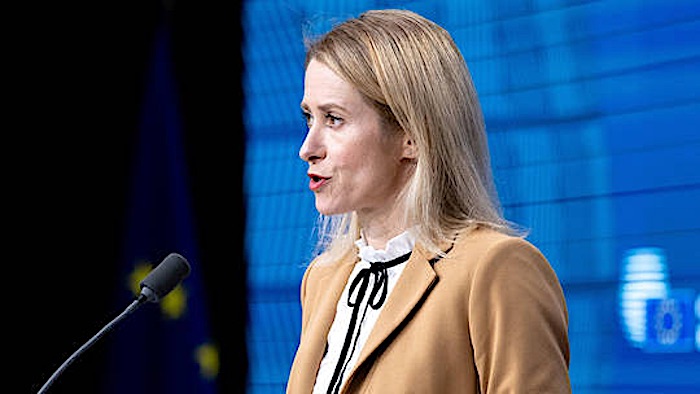
EU foreign policy chief Kaja Kallas has accused Washington of trying to force Ukraine to surrender to Russia, attacking President Donald Trump’s diplomatic efforts to end the conflict. Speaking to the European Parliament in Strasbourg on Tuesday, Kallas credited Europe’s military and financial backing of Kiev with prolonging the conflict and preventing Ukraine from accepting Moscow’s terms.Read more …
“American negotiators have been trying to push Ukraine into surrender for already almost two years, one and a half years now,” she said, as quoted by Euronews. Moscow has cited Kiev’s aggressive posture and the hostile position of its European backers as major obstacles to a peace settlement. Ukraine has consistently rejected Russia’s conditions, insisting on joining NATO and restoring control over all territories it claims.Kallas’ remarks came a day after US President Donald Trump said negotiations were making “great progress,” defending his decision to ease economic pressure on Russia to keep diplomacy moving.
Trump has stepped up his criticism of Ukrainian leader Vladimir Zelensky, describing him as “more difficult to deal with” than Russian President Vladimir Putin. He has accused Zelensky of prolonging the conflict and taking Washington’s extensive support for granted, and has criticized Kiev’s continued attacks on Russian refineries for disrupting global diesel markets. Zelensky has said he feels betrayed by Trump.
Trump lifted sanctions on Russian diesel exports earlier this month to curb rising energy prices ahead of the US midterm elections. On Friday, he suspended tariffs targeting China, India and other major buyers of Russian oil and gas. Trump defended the measures, saying he did not want to drive Moscow away from the negotiating table. The decisions drew criticism from European officials, with Kallas describing the diesel agreement as a “gift to Putin.”
US special envoy Steve Witkoff held talks in Oslo on Tuesday with Zelensky, Finnish President Alexander Stubb and Norwegian Prime Minister Jonas Gahr Store, with Trump’s son-in-law Jared Kushner joining remotely. Witkoff is expected to travel to St. Petersburg on Wednesday for another round of discussions with Russian officials, according to Store. mKremlin spokesman Dmitry Peskov said on Monday that Moscow “highly appreciates” Washington’s continued mediation efforts.
Russia has insisted on a long-term peace deal that addresses the root causes of the conflict, rejecting the idea of a temporary truce. Foreign Minister Sergey Lavrov has accused Zelensky of repeatedly undermining negotiations, suggesting that any agreement acceptable to Moscow and Washington would threaten the Ukrainian leader’s hold on power.
Further financial support for Kiev has also become a source of disagreement within the EU. At Friday’s EU summit in Brussels, Zelensky demanded another €70 billion ($78.5 billion) for next year, in addition to €90 billion already pledged by the bloc to bankroll Kiev’s war effort.
That doesn’t mean they’ll bend to Kiev’s wishes even one inch.
• Russia Willing To Resume Trilateral Talks With Ukraine (ZH)
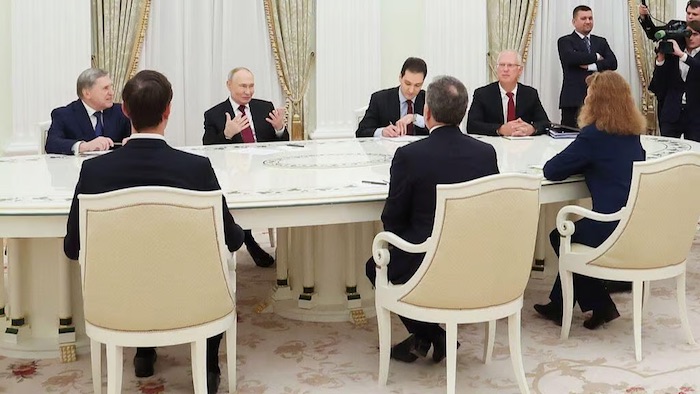
The Kremlin has on Wednesday communicated to Trump envoy Steve Witkoff that Russia is “in principle, ready to resume” trilateral negotiations involving the US and Ukraine, toward finding a permanent settlement to the war. Witkoff briefed President Putin at Constantine Palace in St. Petersburg on Wednesday, coming off the prior Tuesday Oslo meeting involving Ukraine’s Zelensky.Read more …
Russia described a generally ‘productive’ atmosphere and talks, but no particular breakthroughs were announced, but only plans for a next possible meeting to continue the dialogue. Abu Dhabi was named as a possible next venue, though the Iran war could change that. Below is the key aspect of the official readout from Wednesday talks via TASS:Russian President Vladimir Putin informed the US president’s special envoy, Steve Witkoff, that Russia is ready to resume trilateral talks on the main subject around November 10, Russian Presidential Aide Yury Ushakov said. “Our president informed Steve Witkoff that we are ready in principle to resume the above-mentioned trilateral talks around November 10 on the main subject,” Ushakov said. “This topic is about building a security system for Russia and Ukraine.”
The Kremlin aide who was cited, Yury Ushakov, further described that prior such efforts were derailed by Ukraine’s long-range drones strikes, especially as the country’s parliamentary elections were being held. But there’s also been significant changes in Washington’s posture in Ukraine, Ushakov noted, and this caused Moscow’s stance to in turn be “re-evaluated, taking into account the signals received from the Americans.”
Witkoff did not get the super-long table like Macron https://t.co/KN4JqO7UIJ
— Jack Posobiec (@JackPosobiec) October 21, 2026
Not only did Trump and Putin agree to the Russian diesel release deal, but the US President waived the Graham sanctions package. Following this, Wednesday saw the release from Russian custody of Stephen Hubbard, an American who is accused of fighting as a mercenary for Ukraine forces when he was captured in 2022.Trump hailed the development on Truth Social, writing: “Stephen is on his way back home and will soon be with his family. The United States, out of respect for President Trump, was not required to give anything in return — an unprecedented situation for Russia.”
Putin's meeting with US special envoy Steve Witkoff has ended after just over three hours. Immediately afterward, Putin met Chinese Premier Li Qiang. Witkoff and Kirill Dmitriev separately met released American Stephen Hubbard following the talks. #Russia pic.twitter.com/IrwQNDN4dI
— NOELREPORTS 🇪🇺 🇺🇦 (@NOELreports) October 21, 2026
It seems this is a Kremlin ‘thank you’ to Trump for doing the diesel deal, and for at the last minute waiving the sweeping Graham sanctions package, which outraged hawks and Democrats in Congress.
No Nukes and no NATO is clear and simple enough. No Nazis is hard for Kiev, because it’s ruled by Nazis.
• Trump’s Trade-Off That Could Freeze The Ukraine War (Andrew Korybko)
The conflict could freeze along the frontlines if the US coerces the EU and Ukraine into agreeing to the resumption of Russian energy imports through partially US-controlled pipelines while convincing Russia to agree to the deployment of European forces to Ukraine without the US’ Article 5 protection.Read more …
Zelensky said that Trump’s Special Envoy Steve Witkoff will share with Putin a proposal that amounts to Article 5-like security guarantees for Ukraine during their meeting in St. Petersburg. It was argued here that Putin might agree to that as part of a package deal since Article 5 doesn’t obligate the dispatch of troops and its spirit of mutual aid (arms, funds, intelligence, etc.) to an ally under attack has been in effect since the start. Trump could also offer energy-related incentives to Putin to sweeten the deal.This could involve creative energy diplomacy for getting the EU to release Russia’s frozen funds through the sequence outlined here in exchange for the US receiving stakes in its pipelines as the “political safeguard” for Russia resuming exports to the EU. The global energy crisis sparked by the Third Gulf War could also serve as the pretext for the US curtailing energy exports to the EU in order to lower domestic prices and coerce the EU into replacing its lost US imports with Russian ones through this formula.
The complex economic interdependence that would be restored between Russia and the EU due to the US’ creative energy diplomacy could assuage Russia’s concerns about de facto EU leader Germany’s rapid remilitarization that former President Dmitry Medvedev likened to the run-up to Operation Barbarossa. That’s because the power that Russia would then have to pull the plug on the German economy could deter Germany from crossing Russia’s red lines in the post-war European security architecture.
Likewise, Ukraine’s resumption of Russian energy imports through partially US-controlled pipelines could do the same for stabilizing the emerging order in which the US will play a much lesser role in European affairs through the NATO 3.0 model, ergo this proposal’s incorporation into Trump’s reported peace plan. US stakes in Russian energy companies and resource deposits could deter Ukraine from striking them too in order to maximally reduce the risk of the ongoing conflict resuming sometime after it inevitably ends.
The US-supervised resumption of Russian energy exports to the German-led EU and Ukraine, other US-led Western sanctions relief for Russia (including the phased implementation thereof after a ceasefire), and a post-war resource-centric Russian-US Strategic Partnership would revolutionize European affairs. The benefits that this could bring to Russia might also convince Putin to allow the deployment of some European NATO (E-NATO) forces to Ukraine in exchange for the EU and Ukraine’s aforesaid concessions.
Although he earlier said that they’d be a legitimate target, so long as the US doesn’t extend Article 5 protection to them like Secretary of War Pete Hegseth confirmed in February 2025 that Trump 2.0 won’t do, the risk of a post-war incident spiraling into a hot Russian-US war would remain low. They’ve been suspected of secretly operating there for years already, and Ukraine’s forces are much more experienced than E-NATO’s anyhow, so their post-war deployment would only be to psychologically reassure Ukraine.
This scenario is the most sensitive from Russia’s perspective, but from E-NATO and Ukraine’s perspective, the scenario of the US coercing them into restoring their complex economic interdependence with Russia is equally sensitive. Precisely for this reason, the US might lean on both sides to agree to such mutual concessions in the name of post-war stability, which could then lay the basis for jointly building the post-war European security architecture through new arms control talks and other related efforts.
Soldiers on your own streets is always a bad idea. You have soldiers to fight foreigners.
But if the foreigners in your streets are Trojan Horses, you’re kinda stuck.
Macron denies the rioters are muslims, foreigners: “They’re French”
Yeah, 1st, 2nd generation “French”.
• French Govt To Send Soldiers To The Streets After Admitting Failures (ZH)

French soldiers will take over guard duty so that police and gendarmes can be moved onto the streets for Saturday’s expected protests, Interior Minister Laurent Nuñez told parliament on Tuesday.Read more …
Nuñez said troops from Operation Sentinelle, the anti-terror deployment, would replace internal security forces mainly on static guarding duties. Prime Minister Sébastien Lecornu said the same day that Saturday’s mobilization of forces “will be massive,” Remix News reported, ahead of a major protest planned for October 24.
⚠️🔴 À REGARDER JUSQU'À LA FIN
— confrontation française (@confrontfr) October 17, 2026
JE NE PEUX PAS DÉCRIRE CE QUE JE VIENS DE VIVRE À MARSEILLE.#17octobre pic.twitter.com/F8bLimtd7y
Sentinelle was launched in January 2015 and keeps about 10,000 soldiers across France to guard against terrorist attacks, usually at places of worship, schools, tourist sites, railway stations and airports. It also covered the Paris 2024 Olympics and Paralympics. Nuñez described a post-holding role for the troops in this case, not a crowd-control one.The government now admits it failed to contain last Saturday’s riots. Lecornu acknowledged lapses in intelligence gathering, said police had been positioned too rigidly and said authorities chose not to cancel planned police leave, Reuters reported. He blamed far-left groups and framed the crisis as a choice “between violence and the Republic”; those groups say the government underestimated anger over living costs and declining public services. Nuñez told parliament: “I deeply regret what happened. I accept my share of responsibility.” He offered his resignation, and Macron rejected it.
About 60,000 police and gendarmes were on duty nationwide on Saturday, October 17, when roughly 500,000 people marched against the cost of living (authorities told Remix 550,000; organizers claimed over 800,000). Nuñez called that too few for the large crowds of rioters and looters on the edges of the marches. He said police had “lost control” in some cities and admitted a “lack of anticipation.” Riots and looting hit Paris, Marseille, Lyon and other cities, and in Limoges an arson attack brought down the roof and tower of the historic town hall.
🇫🇷🔴 JUST IN: The entire roof of the Limoges City Hall has collapsed after an arson attack during ongoing riots in France.
— Remix News & Views (@RMXnews) October 17, 2026
Due to the catastrophic damage, this beautiful piece of European architecture is unlikely ever to be restored.
Follow: @RMXnews pic.twitter.com/AbqDbP3GIq
The toll so far is large. Euronews counts more than 2,500 arrests and Remix more than 2,400 detained, while Justice Minister Gérald Darmanin put the number in custody at over 2,330, 70% of them adults. Almost 1,000 members of the security forces were injured. Alain Di Crescenzo, president of the chamber of commerce, said more than 2,000 shops were hit and put the damage at “hundreds of millions of euros.” On Monday Lecornu asked regional authorities for “localised and partial curfews” and said nearly 200 Paris police investigators would comb footage to identify looters. Parliament is also setting up a commission of inquiry into the causes of the unrest. As we reported, 8 p.m. curfews followed in northern cities.Nuñez is also considering banning demonstrations that have not been declared and could lead to public disorder. Declared marches could be caught too, he said, but only if organizers or their stewards give authorities reason to think things will get out of hand. For marches judged low-risk, routes should steer clear of public buildings and high streets, and intelligence services are to step up estimates of turnout, especially of the most radical participants. He said security forces need more “responsiveness and mobility” against “scattered” and “extremely mobile” groups, and told parliament: “We will be there.”
The playbook has a precedent. In March 2019, for the 19th Saturday of the yellow vest protests, Sentinelle troops guarded sensitive sites so police could focus on order, and demonstrations were banned on the Champs-Élysées and in central districts of Bordeaux, Toulouse, Marseille, Nice and Rouen. Police made 31 arrests and issued 15 fines for entering banned areas, out of 2,322 street checks in Paris, NBC News reported. Macron brushed off opposition criticism of the army’s involvement: “Those trying to scare people, or to scare themselves, are wrong.”
Ministers of that period drew a line at confrontation. Armed forces minister Florence Parly said it was “hors de question” to put soldiers face to face with protesters, and said Sentinelle would relieve police and gendarmes of counter-terrorism tasks. Nuñez’s description of static duties fits that model, though the government has not said where in the country the troops will be posted.
The unrest is also reaching the bond market. We reported this week that French 10-year yields hit 24-year highs near 5%, with the spread over German Bunds close to 160 basis points and Moody’s due to review France’s Aa3 rating, which carries a negative outlook. Earlier, we described the country as entering a “point of no return” as the riots spread.
Deportation, denaturalization.
It’s time to close the Ilhan Omar file.
• Ilhan Omar Is Begging Supporters for Cash As Deportation Looms (Margolis)
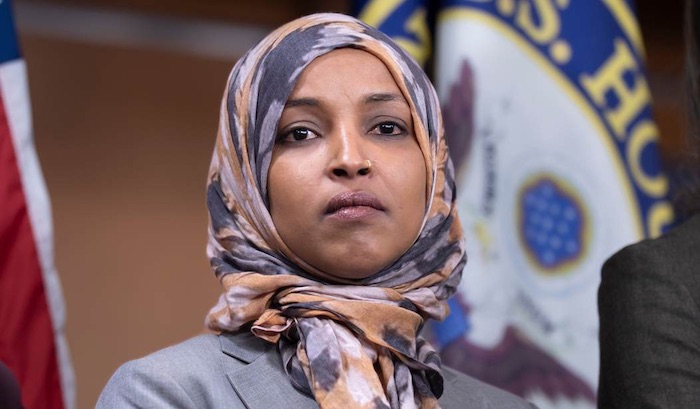
Rep. Ilhan Omar (D-Minn.) has a federal immigration fraud investigation bearing down on her, and her big counterattack is a shameless plea for cash.Read more …
On Tuesday night, Omar posted a roughly one-minute Instagram video from the back seat of a car, asking her supporters to keep the money flowing. It marked her first real public move since agents searched her Washington, D.C.-area home last week and walked out with her phone, notebooks, computers, and passport. Apparently, the silence got too expensive.“Hi everyone, Ilhan here. I just wanted to say thank you so much for the support to everyone who sent a note of support, for everyone who sent $5, $10, $20,” Omar says in the Instagram video. “That goes a long way as we fight Trump and his administration, for trying to intimidate me, and so many people right before the midterm elections.”
From there, she shifted into full bravado mode. “We know that they’re running scared,” Omar says. “We’re not gonna be intimidated. We’re not gonna be silenced. We’re not gonna be scared.” Federal agents just confiscated her passport and personal items, and she wants you to believe the Trump administration is the one sweating? That’s cute.
Omar also promised a grand return to the campaign trail. “I’ll be out there campaigning alongside all of you and making sure that we beat back all of this and that we win in the midterms, win the House, win the Senate, and hold this administration accountable,” she continues. The video’s real purpose, of course, was to ask for money.
“Thank you so much again, and please continue to support us. It is going to be a very expensive and challenging time, and so we appreciate whether you’re able to send 5, 10, 20,” Omar says. “Thank you.” Five bucks. Ten bucks. Twenty bucks. She mentioned those figures twice in under a minute, which tells you exactly what this video was about. She needs money.
Naturally, Omar insists the whole thing is political payback, and the left has worked itself into a frenzy over the raid. The problem is that a Democrat judge approved the search, and the investigation began on Joe Biden’s watch. Omar has repeatedly denied any wrongdoing, but that hasn’t slowed the probe one bit.
When you watch the video, it’s actually Omar that looks scared, and she should be. George Washington University law professor Jonathan Turley believes that Omar could get deported as a result of this investigation. “The immigration laws are very clear. When you’re accused of illegally procuring citizenship or naturalization, it is not a defense that, ‘I was innocent in all of this,'” he explained.
The case hinges on how old Omar really is. Omar claims she obtained citizenship via her father when she was 17, when he was naturalized in 2000. However, it appears that her staff requested a change to public records, moving her birth year from 1981 to 1982. If she were over 18 at the time, she would have had to file for her own citizenship.
But even that may be moot, as PJ Media’s Catherine Salgado reported earlier this week, Omar’s father may not have been naturalized at all. Federal agency letters indicate that no naturalization records were found for Omar’s father. It’s still unconfirmed, but it’s yet another wrinkle in the story that doesn’t bode well for Omar. She is definitely going to need a lot of money.
A bit of a mess, we could say. Once you start marrying your brother, where’s the limit…
• Feds Using DNA To Probe Ilhan Omar ‘Married Her Brother’ Claim (ZH)
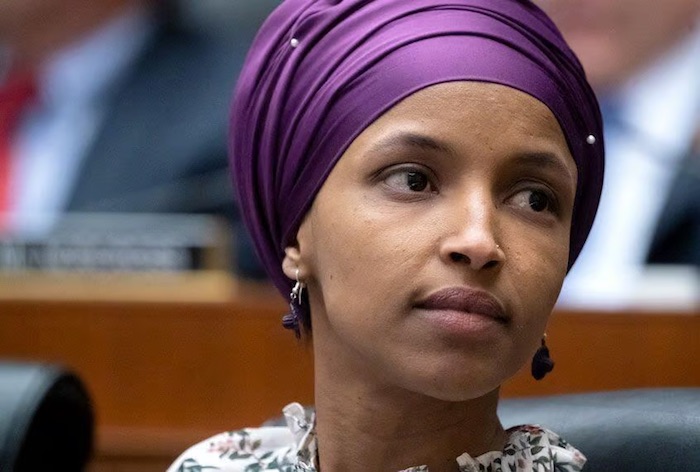
Federal prosecutors plan to use DNA evidence in their criminal investigation of Rep. Ilhan Omar (D-Minn.), people familiar with the probe told the New York Post on Monday. One source said the DNA is critical to proving the long-running allegation that Omar’s 2009 marriage to Ahmed Nur Said Elmi was a marriage to her brother, made so he could get a green card he never received. Omar has denied the claim since 2016, no charges have been filed, and the Justice Department has not confirmed any DNA evidence.Read more …
The DNA report is the latest turn in a probe that went public a week ago, when Homeland Security Investigations agents searched Omar’s Washington home on Oct. 12. Agents also seized Omar’s phone, and more than a dozen grand jury subpoenas have gone out, some to her relatives, a source told the Associated Press. The grand jury is collecting evidence in Minnesota, where the U.S. Attorney’s Office opened the case. Omar called the search an “attempt to target political enemies and weaponize federal law enforcement” and said, “I will not be silenced.”The Post’s sources did not say whether the DNA was collected before or after the search. One of them pushed back on earlier reports that investigators went “dumpster diving” for swabs of Omar, Elmi or family members. Reporter Leland Vittert had said on Saturday that agents had done just that, before the raid:
Multiple sources have confirmed to me that federal agents went dumpster diving to get DNA from Minnesota Congresswoman @IlhanMN and her family before the raid on her D.C. home earlier this week. Our reporting suggests investigations go far beyond simple immigration fraud.… pic.twitter.com/0UOCS5606s
— Leland Vittert (@LelandVittert) October 17, 2026
Two other sources told the Post that the search, the DNA and other evidence give prosecutors a solid basis to bring a charge of conspiracy to commit immigration fraud before a grand jury. A conspiracy charge would let prosecutors allege overt acts that fall outside the statute of limitations, former federal prosecutor Neama Rahmani told the Post. He said prosecutors could pursue a conspiracy case that would likely fall within a 10-year limit, or a civil case, which has none, and that the warrant would not have been executed unless it had “come from the highest levels of the DOJ.”fits the warrant. A person familiar with the document told The Washington Post that it lists potential charges of conspiracy, immigration fraud and false statements. Investigators are also looking at whether Omar or her father, Nur Omar Mohamed, misstated her birth date on immigration paperwork so she could derive citizenship through him when he naturalized in 2000. Rahmani called her late father “an unindicted co-conspirator.” The Justice Department has not released the affidavit.
Homeland Security Secretary Markwayne Mullin, whose department’s agents carried out the search, said on Oct. 16 that “multiple other warrants” were served the same day. “We had a judge sign it, and we expect to be able to take the case to a grand jury,” he told the Charlie Kirk Show, according to CBS News.
The marriage and the birth-date theory lead to different places. A marriage-fraud conviction would not threaten Omar’s own citizenship the way a false-statements case would, the New York Post noted, and stripping the citizenship of a sitting member of Congress would be unprecedented. Border czar Tom Homan said over the weekend that the government has built “a strong case” that could lead the administration to seek denaturalization. As we reported, the Wall Street Journal had already said officials wanted to revoke her citizenship and deport her, and agents reportedly secured her passport in the search.
D.C. U.S. Attorney Jeanine Pirro, whose office is separately examining Omar’s House financial disclosures, told Fox News that “that judge would not have signed that warrant unless there was probable cause.” Those disclosures cut Omar’s reported net worth by tens of millions of dollars in a year, which the Post attributed to an unexplained accounting “discrepancy.”
Omar’s lawyers, Amy Jeffress and Joshua Matz, answered last week with a letter to the Justice Department demanding the “immediate return” of everything seized. They wrote that agents ignored a magistrate judge’s “special requests” for carrying out the search and broke longstanding DOJ policy by acting so close to an election, and that President Trump has “made no secret” of wanting to target her. A DOJ spokesperson called the letter “riddled with false allegations and inaccuracies” and said leaking it was “a publicity play.” Rep. Jamie Raskin, the ranking Democrat on House Judiciary, had already called the search “blatant political intimidation,” coming 22 days before the Nov. 3 election. Former federal prosecutor Jim Trusty told Fox News the warrant shows “at least probable cause,” but that it is “a long way off from proving a case at trial.”
The marriage record at the heart of the DNA claim is tangled. Omar and Elmi divorced in 2017, and she gave birth to her third child while legally married to him. Her marriage to Ahmed Hirsi was not legally entered into until after her divorce from Elmi was finalized, the Post reported, although the two had a Muslim ceremony in 2002. She filed joint taxes with Hirsi in 2014 and 2015 while still legally married to Elmi, from whom she had separated in 2011. Elmi, who lives in the UK, applied for a marriage-based green card and withdrew it in 2019 when immigration officials asked for more evidence, according to The Washington Post, which also quoted a former immigration official saying the brother claim was investigated during Trump’s first term without enough evidence to go forward. Omar divorced Hirsi in 2019 and married political consultant Tim Mynett.
We reported last week that her staff asked Minnesota’s legislative library in 2019 to change her birth year, and that Mynett snapped at a reporter over rumors she had fled the country. Mynett has said only that his wife “came here when she was 12 years old as a child war refugee.” Her lawyers say there is “no legitimate basis for any suggestion that she has violated any law concerning her citizenship status.”
“Omar has been the focus of a federal investigation that centers on allegations that Omar or her father lied about her birth year on immigration paperwork to obtain her citizenship when her family fled Somalia in the late 1990s.”
• Trump Criticizes Ilhan Omar As A ‘Sick, Very Dishonest Person’ (JTN)
President Donald Trump criticized Minnesota Democratic Rep. Ilhan Omar on Tuesday as a “very dishonest person,” and predicted she could go to jail over allegations that she committed immigration fraud.Read more …
Omar has been the focus of a federal investigation that centers on allegations that the lawmaker or her father lied about her birth year on immigration paperwork to obtain her citizenship when her family fled Somalia in the late 1990s.Trump confirmed to reporters at the White House that Omar could face deportation if she committed fraud but warned that the penalty could be even worse with jail time.
“Oh she could, but she could also go to jail,” Trump said. “They keep talking about deportation. No, she could go to jail. This is just my opinion. I think she’s a sick, very dishonest person who hates our country — and she comes from a country that is essentially not even a country, Somalia.
“It’s got no government, it’s got no police protection, all they do have is people running around shooting each other,” he continued. “Then she comes over here and she wants to tell us how to run America … She’s a disgrace to our country and it’s amazing that she can get elected. But you know, Somalians vote for her and most of them should not be here.”
The comment comes after Trump’s border czar Tom Homan said over the weekend that he believes federal investigators have a “strong case” against Omar, but added that he does not want to get ahead of the FBI and Department of Homeland Security.
“.. the Iranian government is dragging its heels in making a deal to end the war deliberately to prevent Donald Trump from getting any political benefit from ending the war and the plummeting oil prices that would surely follow.”
• The Democrats’ Hope for a ‘Secret Weapon’ for the Midterms: Iran (Moran)
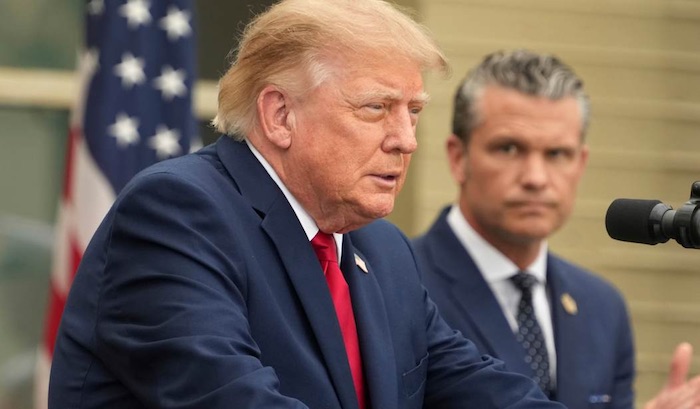
Reuters is reporting that the Iranian government is dragging its heels in making a deal to end the war and reopen the Strait of Hormuz. They are doing it deliberately to prevent Donald Trump from getting any political benefit from ending the war and the plummeting oil prices that would surely follow.Read more …
“Iran is preparing for renewed Israeli and U.S. attacks, not for a deal with America to end the war,” one of the three officials who spoke with Reuters said. “The clerical establishment is determined not to give Trump a political victory.”The U.S. blockade of Iranian ports is taking a huge toll on the Iranian economy. “Annual inflation hit 73.6% in September, according to the Statistical Center of Iran, and the rial currency has fallen nearly 35% against the dollar since Washington reapplied its naval blockade in July,” Reuters reports. Inflation is closer to 90%, according to Trading Economics, and has more than doubled in the last year.
No oil is leaving the country, Reuters reports. That means no hard currency and virtually no national income.
As for an attack on Iran by the U.S., Trump has promised not to attack Iran before the election. Will Trump keep that promise? It would be fairly easy to engineer a scenario where Iran is goaded into attacking the U.S., leaving Trump and Israeli Prime Minister Benjamin Netanyahu free to attack.
Defense Secretary Pete Hegseth met with Israeli Prime Minister Benjamin Netanyahu in Israel on Monday, an unannounced visit just eight days before the Israeli election and 15 days before the U.S. midterms.
A deal offered by Iran is on the table, referred to as the “seven-day plan” that would see the Strait of Hormuz fully opened in seven days as long as the U.S. lifted the blockade.
Reuters:
“Iran’s proposal, conveyed through Qatari mediators, offered to reopen the strait within seven days, albeit under Iranian control, provided that Washington lifted its maritime blockade, eased restrictions on Iranian oil exports, released frozen assets and ended hostilities on all fronts. Iranian Foreign Minister Abbas Araqchi said on Sunday that the offer remained on the table, with messages being exchanged through mediators.
Tehran’s view that Washington cannot be trusted to commit to diplomacy stems from the attacks on Iran that have derailed previous negotiations, one Iranian official said.In June 2025, an Israeli attack wrecked plans for a sixth round of US-Iran nuclear talks in Oman. And last February, the US and Israel launched their war just after another round of talks ended, with further technical discussions scheduled.
Maintaining a state somewhere between war and peace through the US midterms allows Iran to sustain pressure on Washington while reiterating its commitment to diplomacy.
“But the fundamental issue is that Tehran believes that Trump is interested in regime change… and following Israeli Prime Minister (Benjamin) Netanyahu’s policy of seeking to bring down Iran s ruling establishment,” said Alex Vatanka, director of the Iran program at the Middle East Institute in Washington. Vatanka believes the clerical establishment wants to hurt Trump politically before the midterms, just as the clerical establishment wanted to hurt Jimmy Carter before the 1980 presidential election.”
Iranian analyst Saeed Leylaz believes the U.S. should get used to the idea of a near-state of war with Iran even after Trump is out of office. “Reaching a sustainable deal with the US, even after the Trump administration, is no longer possible because of the deepened distrust,” Leylaz said. “Nothing will go back to the pre-war status quo.”
If that’s the case, Trump has nothing to lose in continuing to pressure Iran by bombing infrastructure and blockading the ports. If the Iranians are not going to even try to make a deal, they need to be shown the cost of continued war with the U.S.
“The double standard is real. Republicans and Democrats are treated differently. Media bias 100% exists.”
• Vivek Ramaswamy Risks Everything on the ‘Mom’ Ad. Will It Work? (Pinsker)
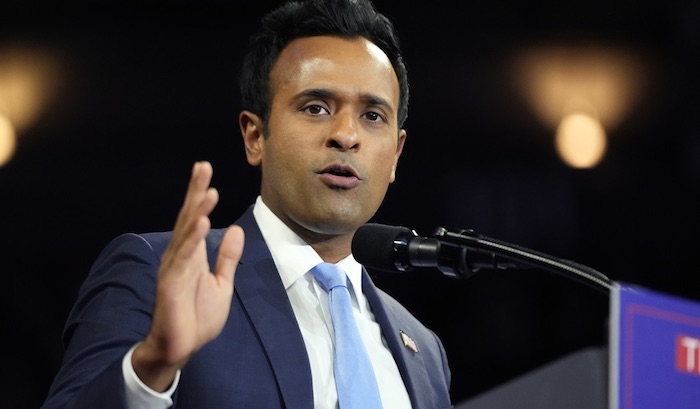
It was The Mother of All Political Gambles. Personally, I wouldn’t have done it. Too much risk of blowback.Read more …
If I were down by double digits, maybe I’d reconsider. But according to polling averages, Vivek Ramaswamy is only trailing by 3.4 points. And besides, Ohio tilts Republican anyway, which is probably why — even in polls where he’s losing — voters still think he’s going to win.Nor would I have released it as an official campaign ad. Because it’s not the ad per se that’s wagging tongues, dropping jaws, and gnashing teeth — it’s the allegations within the ad. I could’ve disseminated the exact same allegation by booking Donna Arthur (Amy Acton’s mom) on a media tour. Or arranging for her statement/warning to be uploaded to social media — and then amplifying it with my (many) surrogates ‘til it went viral. Or a million-zillion other ways.
Why cover it with my fingerprints?
There are plenty of ways to promote the message without directly owning it. For example, wouldn’t it be a helluva contrast if Vivek Ramaswamy hit the campaign trail with HIS mom — and she intro’d him to the crowd, boasting how she endorses him 100%?Vivek’s mom is Geetha Ramaswamy. She’s still alive. (And, apparently, an impressive woman: a retired medical doctor with specialized training in geriatric psychiatry.) But according to a Google search, Gemini, and ChatGPT, there’s no record of her sharing the stage or appearing in ads with her gubernatorial candidate son. Ramaswamy’s wife has, but not his mom. Not even once.
I don’t get it, because it would have been the easiest, low-risk, most efficient way to draw attention to an opponent’s liability. Hey, it’s an old (but effective) political tactic: If you’re a family man and your opponent is childless and unmarried, don’t directly attack her for it — instead, run thousands of ads featuring you, your beautiful wife, and your adorable kids. Make a point to talk about how much your family means to you, and how much you’ve learned from them.
The contrast will speak for itself. Republican George Allen did it in 1993. His opponent, the unmarried and childless Mary Sue Terry, lost Virginia’s gubernatorial race in a landslide.
From the Washington Post: Republican George F. Allen said today that he would make a better governor than his opponent — “more understanding of the challenges facing the families of Virginia” — because he is married with children while Democrat Mary Sue Terry is single and childless.
[…]
“I’m proud of my family. It’s the most important part of my life, and I think it makes me more understanding of the challenges facing the families of Virginia, having to face those challenges along with them,” Allen said.
Allen’s television commercials and his campaign literature also have prominently featured photos of his family. He told Washington Post staff members in a recent interview that the emphasis on his family was not intended as a veiled attack on Terry. Maybe Geetha Ramaswamy has stage fright, but c’mon — waiving to a crowd on a podium (or filming a testimonial in the privacy of her own home) is low-hanging fruit.
The risks for Ramaswamy from the ad are threefold: He explicitly mingled his brand with Donna Arthur’s. Doing so ties his campaign to her reputation, history, and credibility. If it turns out she’s a dishonest dirtbag, it’ll reflect VERY poorly on Ramaswamy. (National Review asserts there’s an “extensive record” that Amy Acton was an abused child.)
The timing could be disastrous. If you’re gonna drop a major PR bomb like this, you ought do it four or five days before the election — not two full weeks out! That’s what the Democrats did in 2000, releasing George W. Bush’s DUI arrest on Nov. 2. Yes, early voting complicates today’s PR equation, but releasing this two weeks out gives the Democrats — and their foot soldiers in the media — an awful lot of time to dig into Donna Arthur’s background. It dramatically increases the likelihood of blowback.
The controversy will almost certainly overshadow everything else between now and Election Day. The ad will suck all the oxygen out of the room; there won’t be enough bandwidth to talk about other issues that could, perhaps, move the needle for Ramaswamy. He’s put all his chips on the “mom” issue, and it’s unclear if that was his wisest bet. Advertisement
But that doesn’t mean it won’t work. Hey, sometimes you’ve gotta go big — or go home. According to external polls, it’s still a 3.4-point race. But maybe Ramaswamy’s internal polling paints a more desperate picture. If so, a big, bold, paradigm-shifting move makes more sense.
And besides, maybe Ohio voters think so little of politicians, the idea that Amy Acton is a dirty, stinkin’ serial-liar who was just exposed by her own mother isn’t exactly farfetched. A PR campaign that capitalizes on confirmation bias could pay vast dividends.mIf her own mother doesn’t trust her, why should we?
And maybe the numbers also make sense: Just 30% of Ohio 18-year-olds are registered to vote — compared to 78% of Ohioans 45 and older. And whereas just 27.6% of voters 18 to 24 and 44.3% of voters 25 to 44 will vote in midterms elections, 58.3% of voters 45 to 64, 68% of voters 65 to 74, and 65.2% of voters 75+ will cast ballots. So, without question, it’s an older demographic.
Perhaps older voters are more likely to sympathize with Acton’s elderly mother. Maybe many were abandoned or alienated by their children, too. But it’s still high risk, because the media will try to turn it into an either-or question: Who’s more likely to be telling the truth, an abused child — or the mother who stayed loyal to the alleged abuser?
I don’t know who’s lying. Nor does anyone else in the media. But with Amy Acton and her brother both claiming that the abuse was real, the media has all the ammo it needs to portray Acton as the sympathetic, vulnerable, truthful victim — and Ramaswamy as the evil monster who’d exploit a child’s trauma. (In the predictive markets, his odds have crashed to 22%. It’s a new low for his campaign.)
Republicans will be tempted to highlight the double standard: Over and over again, the Democrats have weaponized family members against GOP candidates. Mary Trump’s sole claim to fame is being the (estranged) niece of the president, yet the media has released thousands of news stories promoting her anti-Trump opinions. The Democrats ran ads featuring Rep. Paul Gosar (R-Ariz.)’s own siblings attacking him. In Nevada’s gubernatorial race, relatives of the Republican candidate blasted him as a phony.
George Conway tried to leverage his fame as Kellyanne Conway’s ex-husband into an anti-Trump congressional career. (He failed.) And just a few months ago, the mainstream media ran oodles of news stories about Los Angeles mayoral candidate Spencer Pratt’s sister opposing his campaign. (She later endorsed him.) The double standard is real. Republicans and Democrats are treated differently. Media bias 100% exists.
But that still doesn’t mean this “mom” ad was a good idea. Because Ramaswamy isn’t running for office to expose media hypocrisy — his goal is winning the damn election. Still, give him credit: He’s in it to win it. (Which is more than you can say about lots of Republicans.) He pushed all his chips to the center of the table, because second place isn’t acceptable.
It’s just not clear that this was his smartest bet.
“Without a doubt, a fake poll can affect an election. It can stop a candidate from raising money, boost another candidate, or cause a party to invest in a place it otherwise wouldn’t.”
• A Pollster Just Admitted Faking Its Numbers, and The Fallout Is Huge! (Matt Margolis)
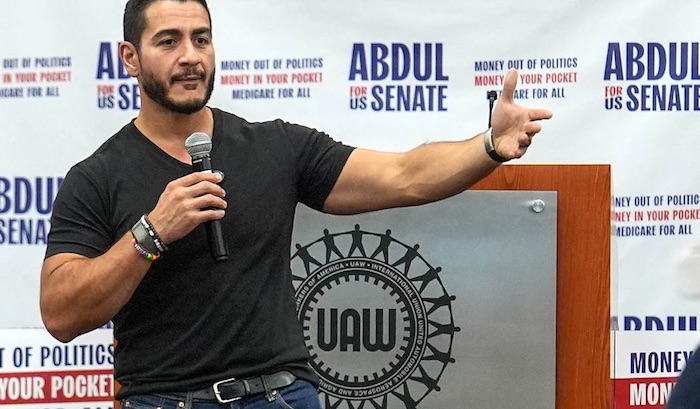
A polling firm that spent months pumping out numbers in key races across the country admitted Tuesday evening that nearly all of them were fake.Read more …Wedgewood Polls now claims the entire operation was a social experiment meant to expose lazy vetting in the polling world. Some election observers aren’t buying that explanation, and the timing of the confession gives them every reason to doubt it.
In its statement, Wedgewood cast itself as a kind of whistleblower. “Having previously worked in the polling and research sector, we watched as the public’s trust in polling eroded alongside a rise in unverified, low-quality methodology,” the firm said.
It then described what it claimed was the project’s goal. “We wanted to test a simple hypothesis: How easy is it for an entirely fabricated polling firm to gain traction, be taken seriously, and expose how little scrutinization exists in media and public commentary? The short answer: Far too easy.”
The statement also turned to the aggregators that published its work. “Despite having no history, formal credentials, or real data behind the vast majority of our releases, Wedgewood Polling was added to major polling aggregators, including The New York Times, FiftyPlusOne, and VoteHub, and repeatedly treated as a legitimate data source,” Wedgewood claimed.
Next, the firm addressed the press. “Our fabricated numbers were given instant credibility across national media platforms-including being cited on air and in reporting by outlets such as MS NOW,” it added. “The ease with which unverified figures were absorbed into mainstream political narratives highlights a systemic breakdown in media vetting and data aggregation.”
Mark Mitchell, the head pollster of The Honest Poll, didn’t buy that explanation for a second.
Wedgewood is absolutely correct that bogus polls get widely spread with no thought to validity, especially by naked partisans who are shoveling slop.
— Mark Mitchell, Honest Pollster (@honestpollster) October 20, 2026
That said, Wedgewood publicly lied to the American people, so that's a NO from me, dog. https://t.co/zJZ5dbCw3P
Cooper Burton, a data scientist at FiftyPlusOne, responded to Wedgewood’s statement within hours. Once Wedgewood went public, FiftyPlusOne published its investigation early. The report took on the firm’s claim that nobody checked its credentials.Their statement alleges that FiftyPlusOne, the New York Times, and other poll aggregators did not conduct appropriate vetting of their firm prior to aggregating their polls; this is false. We reached out to them to ask who they were and confirm the methodology statement on their website. We were given two names, Jack Sims and Andrew Prater. We were able to independently confirm that Sims had previous experience in the polling industry and reviewed their methodology statement in detail.
It is not atypical for a pollster to leave an existing firm, form their own, and self-fund some surveys to build reputation; we had no reason at the time to believe this case was any different. Wedgewood operated as if it were a legitimate polling firm, including collecting money from donors to conduct crowd-funded polls, and sharing raw survey data (which we now have confirmed was fraudulent) with FiftyPlusOne on Oct. 15, 2026. Imagine that — Wedgewood took money from donors and handed over raw data it had invented. Sorry, but that’s not a harmless experiment. In fact, these phony numbers did have real-world impact.
El-Sayed leaned heavily on Wedgewood’s polling to sell Democrat voters on his electability. Mallory McMorrow, who ran against him in the Michigan primary, took to X to describe what the stunt cost her campaign. She pointed to a late-June Wedgewood poll that showed her sinking into single digits, numbers she said contradicted her campaign’s internal polling. In the aftermath, her donations dried up, her volunteers were left devastated and begging for direction, and reporters bombarded her with calls to get out of the race.
Without a doubt, a fake poll can affect an election. It can stop a candidate from raising money, boost another candidate, or cause a party to invest in a place it otherwise wouldn’t. And it can lead voters to think the result is already decided before any ballot has been cast.
Nonsense. There is no link between Trump and Alberta. And everyone knows Alberta was not going to vote to leave.
• Alberta Decision To Stay In Canada Gives Carney Backing To Take On Trump (BBC)
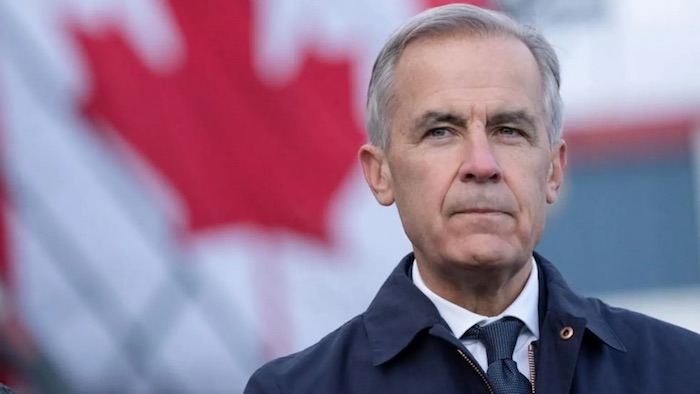
“Vote like Canada depends on it,” Prime Minister Mark Carney declared to cheering crowds in Calgary last week on a stage emblazoned with bright red and white “Forever Canadian” banners. It’s a message that appears to have struck a chord with the electorate, as preliminary results show more than two-thirds of Alberta voters said they want to remain a part of Canada.Read more …
But the future of the federation does still rest on its richest province. Alberta, with most of Canada’s proven oil reserves and abundant gas and mineral wealth, is playing a pivotal role in Ottawa’s drive to survive a punishing trade war with the US by diversifying trade, strengthening its economy, and forging new alliances on the other side of the world. Carney, the former central banker who grew up in Alberta, is now Canada’s builder-in-chief – at home, and beyond its borders.Note the emphasis in his first statement after Monday’s vote on separation in the province, as soon as the scale of the victory was clear: “They chose unity, to build together, and to take care of each other.” Albertans’ overwhelming “yes” to stay in Canada gives him political bricks and mortar, too. “Don’t mess with Canada,” warned Thomas Lukaszuk, a former lawmaker whose Forever Canadian campaign played a key role in this referendum’s outcome.
Addressing elated supporters in Edmonton, the provincial capital, as the “yes” count for Canada kept tumbling in, Lukaszuk underlined that this vote “will send a very strong message to the rest of the world”. Everyone knows he’s talking about the troublesome neighbour to the south – in particular its president, who keeps threatening to turn Canada into the 51st US state.
The same day Albertans were voting on their future in Canada, Trump sent his own signal north at a rally in Kansas ahead of next month’s US midterm polls. “I will let you keep ice hockey, and I will let you keep your ‘O Canada’ national anthem,” he promised before adding: “We’re only kidding.” For Canadians, it’s no laughing matter.
In the run up to this referendum, Carney reiterated a warning he’s often sounded that “there are some outside our borders who are working to break us, so they own us” – even if he didn’t spell out who “they” is. He didn’t have to. And, in this defining time for the separatist camp, some in their ranks didn’t hide their direction of travel. Some of their most prominent leaders admitted they travelled to Washington three times last year to meet US State Department officials and outline what an independent Alberta could offer – including a possible oil pipeline through the US to the Pacific.
But the rest of the world may take only passing notice of what was, for Canada, an historic vote sparking conversations and concerns across the country, from coast to coast to coast.
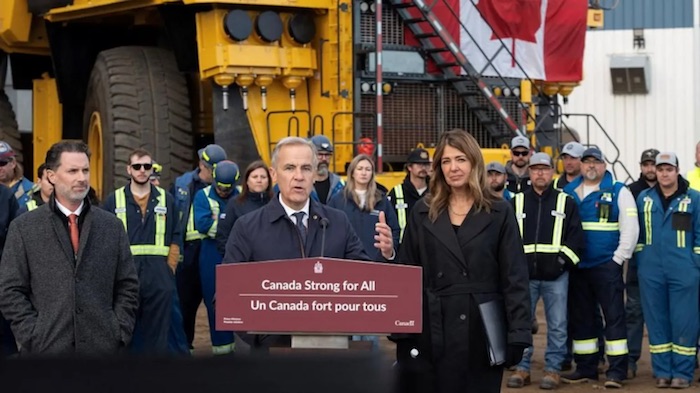
Mark Carney and Alberta’s leader Danielle Smith worked closely on pushing for an oil pipeline to the west coast
“Short of a vote to separate, most foreign governments, with the exception of the United States, have little interest in domestic Canadian politics,” says Professor Janice Stein, founding director of the Munk School of Global Affairs and Public Policy at the University of Toronto.“Foreign investors are focused on the time it will take to complete major infrastructure projects, a return on investment, and predictable regulations,” she explains in a nod to Carney’s long list of megaprojects he hopes will eventually turbocharge economic growth. They’re all costly; many will take years to build.
An ambitious blueprint already includes a proposed pipeline to the Pacific coast which opens opportunities for Alberta’s oil to reach Asian markets – a move which also addresses Alberta’s long-standing grievance that its economy has been stifled by federal policies, including environmental regulations. At a rally in Alberta last week, it was Carney’s comment that the pipeline “will reduce our dependence on the United States” that triggered the loudest and longest applause of the night.
After Monday’s vote, Carney – the former UN Special Envoy for Climate Action and Finance – pointed to “unleashing our full potential as a global energy superpower with Alberta as its core”. Political and economic pressures now seem to eclipse his green credentials. “Build Canada Strong” has been Carney’s mantra ever since he first entered politics, a complete neophyte, at the start of last year.
At home there are possible wide-reaching repercussions from the final tallies in the referendum’s nine other questions which dealt with issues ranging from greater provincial powers, the costs of immigration, and potential constitutional changes.Those results are certain to provoke debate, and deal making or breaking, involving Canada’s nine other provinces and three territories. They all have their own grievances, too.
The prime minister has had to defend himself when journalists ask if he is spending too much time on foreign trips with his charm offensive to build new political alliances and trade partnerships, including an unprecedented and still uncertain offer of associate membership of the European Union.
“I can do both and I need to do both,” he recently replied with his signature bluntness before listing the more than 16 bills which went through Parliament in the last session dealing with everything from major tax changes, public safety, and the price of fuel.
For now, Carney is riding high in the polls at home – including in Alberta, which doesn’t traditionally support his Liberal party – in a long “political honeymoon” other beleaguered politicians would envy.
And the plain-speaking politician’s strong and steady response to Trump threats, including retaliatory tariffs, has seen his star rising on the world stage. It’s an unexpected turn for a country which has often been missing from top tables and has sometimes even been dismissed as “boring”.
The Economist magazine decided to put Carney on their cover, on this week of weeks for Canada, with a perfect red maple leaf between his teeth. “Mark Carney shows middle powers how to handle a dangerous world,” reads one of its headlines, with an article which also focuses on Canada’s “vulnerabilities” including Alberta’s ballot.
“The broader takeaway from this vote might be that Canadian unity is in fine shape,” remarks David Moscrop, political scientist and author of the forthcoming book On Nationalism. “But what happens after Donald Trump is gone and Canada no longer has a single, bombastic target which drives Canadians to rally around the flag?” he asks.
Carney’s decision to recently walk away from trade talks with the US gave rise to another swell of Canadian pride and patriotism. But if this trade war drags on with a country which traditionally takes 70% of Canada’s exports, Canadians will feel even greater pain in their daily lives.
But today is a day to vigorously wave the maple leaf flag. “It’s a win for Team Canada and its resilience,” commented CBC journalist Janyce McGregor during the public broadcaster’s rolling coverage.
Did Trump and Musk cut the service to Kiev? It would make sense if they did. The US is not at war with Moscow, and shouldn’t help Kiev’s efforts.
• About Starshield, SpaceX’s Military-Grade Satellite Service (New York Times)
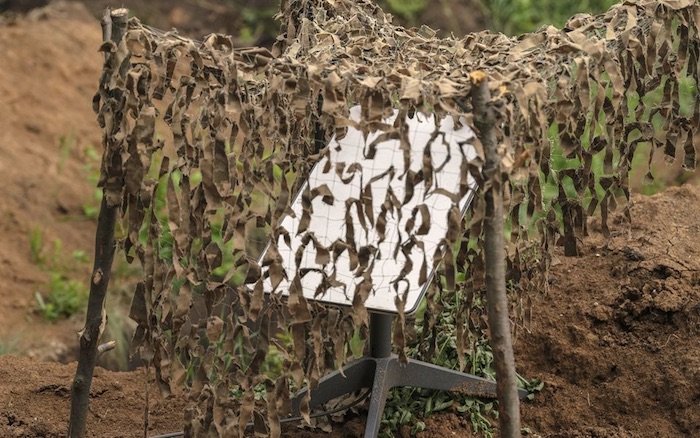
A Starlink terminal camouflaged with a net near the eastern frontline in the Donetsk region of Ukraine in the summer of 2023.
Russia’s war in Ukraine has been the first major military conflict powered by satellite-based internet connectivity.Read more …
Ukraine’s armed forces have carried out and prevented drone attacks by using SpaceX’s Starlink service, which provides internet connectivity from satellites in Earth’s lower orbit, and more recently its military-grade sister service, Starshield, which was developed for the US Department of Defense. The services provide connections for Ukrainian drones to carry out and prevent military strikes. The technology has helped Ukraine limit Russia’s territorial gains, but it has also made the country beholden to the U.S. government and SpaceX, which can turn off its access.Early this month, Ukraine’s military reliance on the US satellite system backfired when SpaceX started limiting the service. Ukrainian President Volodymyr Zelenskyy said on October 18 on NBC’s “Meet the Press” that the US government had asked SpaceX to curb Ukraine’s access, capping the “maximum speed” of drones at 100 mph. With those limitations, he said, Ukraine “can’t destroy” Russian attack drones.
The US government has disputed Zelenskyy’s claims that it interfered with Ukraine’s internet access. On October 17, US Secretary of State Marco Rubio said that according to his understanding, Starlink, SpaceX’s commercial offering, was “back up and running” in Ukraine. He added that Ukraine had asked for access to Starshield “in order to conduct deep strikes into Russia” but that the United States hadn’t decided whether to provide it.
“No one at the White House ordered anyone to slow down internet or slow down speeds so certain drones couldn’t use it,” Rubio said before boarding a flight for a diplomatic trip to Central Asia. SpaceX and its leaders, Elon Musk and Gwynne Shotwell, did not respond to requests for comment. Ukraine’s issues with Starshield are the latest problem in a complicated history with Musk and his company’s satellite internet offerings.
Here’s what to know:
What is Starshield?
More and more people are becoming familiar with the SpaceX subsidiary Starlink, which now has more than 13 million subscribers including in some homes as an internet provider. SpaceX describes Starshield, which was publicly announced in late 2022, as “a secure satellite network designed specifically for government customers and national security applications.”Starshield offers deeper security than Starlink so it can host and process classified information. On a company website, SpaceX said Starshield is “designed to support US National Defense use cases for the Department of Defense and other Government partners.”
The US government has spent billions of dollars on the technology, which makes up a part of the nearly $4.2 billion that SpaceX reported in revenue last year in providing connectivity to governments and enterprises. In turn, the Pentagon allows Ukraine to use Starshield. SpaceX went public this summer in a blockbuster share sale that made Musk the world’s first trillionaire.
How is Starshield related to Starlink?
The two services rely on the same underlying satellite technology. SpaceX, which dominates the private rocket launch market, has been sending its own payloads into Earth’s lower orbit for years, building a backbone of interconnected satellites that can beam relatively reliable internet back down to Earth. Musk has said Starlink is a civilian service, while Starshield is intended for military operations.“Starshield systems are owned and controlled by the US government,” Musk said in a post on his social platform X on Wednesday. Limits on use, he said, were decided by the US military and “ultimately” the president. “Starlink is a commercial service owned and controlled by SpaceX. Usage of Starlink is limited to civilian or defensive activities and cannot be used for offensive military action, as doing so would be inappropriate for a commercial company,” he added.
Some experts have raised concerns that Starlink and Starshield aren’t truly independent, as service outages have taken out both services at the same time. And despite the distinction in the services between civilian and military use, governments, including Ukraine’s, have long been using Starlink to conduct their war efforts.
What role does Musk play in these services?
Musk has expressed reservations about allowing armed services to use SpaceX’s satellite services to conduct offensive attacks. Early on in the Russia-Ukraine war, he denied Ukraine’s request to turn Starlink on over Russian-controlled Crimea, before a planned drone attack on an enemy boat.In February, SpaceX also cut off Russian troops who had been illicitly using Starlink in battle in Ukraine.
The Ukrainian government has maintained an uneasy relationship with Musk, who has been critical of Zelenskyy and his country’s war effort against Russia. Because of their reliance on Starlink and Starshield, Ukrainian officials have alternated between praise and criticism of the world’s richest man.
The resulting company will be worth more than many countries.
• Why Is Elon Musk Plotting A Mega-Merger of SpaceX and Tesla? (BBC)
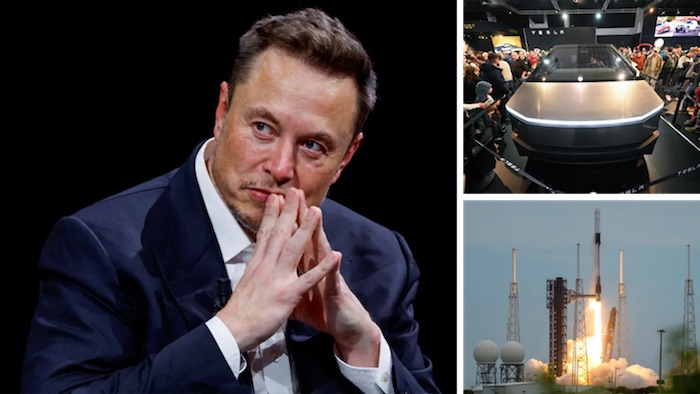
Elon Musk has spent years building Tesla and SpaceX into a pair of trillion-dollar technology empires. Now, he is considering bringing them together. Asked on Tuesday whether a merger would be a good idea, Musk was clear: “Yes.”
The prospect is more than hypothetical. Musk said special committees have been formed to assess a potential deal, although he stressed that there is no guarantee a merger will happen and that nothing has been agreed. With Tesla valued at roughly $1.5 trillion (£1.1 trillion) and SpaceX at $2 trillion, a combination of the two companies would mark the largest merger ever. Any deal would also need shareholder backing. But Musk said he saw “a lot to be gained” in bringing the businesses together.How likely is the merger?
“In my opinion, 100%. It’s just a question of when,” says David Nicholson, chief technology advisor at market research firm The Futurum Group. The unveiling of the Tesla Roadster last week – a futuristic electric car powered by SpaceX rocket thrusters – served as a “symbolic embodiment” hinting at the two Musk companies merging, Nicholson said.Musk, chief executive of both SpaceX and Tesla, said bringing the firms together would be beneficial given the work each does around chips, artificial intelligence (AI) and other technology projects. Specifically, the deal would combine Tesla’s cars, robots and self-driving technology with SpaceX’s rockets, data centres, satellites and telecommunications operations.
The move could be a step towards Musk’s mission to build a self-sustaining city on Mars – a vision that has invited sceptics but also plenty of backers. Over the past year, Musk has moved to consolidate his businesses, with SpaceX acquiring xAI and X, formerly Twitter, before going public this year. But the merger would ultimately be decided by shareholders, with half of Tesla’s needed to back the deal, a threshold even Musk described as “quite a high hurdle”.
Musk, as boss of both companies, cannot participate in shareholder discussions. Even so, Musk, a key shareholder of Tesla, will likely get his way in the next few years, said investment analyst Dan Sheehan from Telos Wealth Advisors. He believes shareholders will back the deal as the technology the companies develop complement each other, Sheehan said.
But the merger would mean that Tesla shareholders will likely hold a “smaller slice of a much larger and more complex business,” he added. “There’s no real precedent for how a public company like Tesla gets priced in this,” Sheehan said. SpaceX shares rose 8% in after hours trading while shares of Tesla climbed by 2%.
What would it mean for customers?
Experts told the BBC that Tesla drivers are unlikely to see much drastic change in the near term, even if the two companies combine. In fact, vehicles seem almost like “an afterthought”, overshadowed by the potential to combine the Tesla and SpaceX’s tech capabilities, Nicholson said. Changes are already underway at Tesla. The carmaker said earlier this year that it would prioritise its best-selling Model Y and Model 3, shifting focus away from less popular models. Tesla also started using a manufacturing plant in California to produce humanoid robots, known as Optimus.
Tesla’s vehicle line-up includes the Cybertruck and Model 3
Pairing Tesla’s self-driving technology and robotics with SpaceX’s AI and satellite network could result in more capable vehicles, Sheehan said. “The question is how much priority cars get inside a company increasingly driven by AI infrastructure,” he added. The recent Roadster showcase suggests SpaceX technology could be pulled into future Tesla products, which could attract more customers, said Tu Le, the founder of advisory firm Sino Auto Insights. The Cybertruck-maker faces intense competition from Chinese carmakers like BYD, which overtook Tesla as the world’s biggest EV maker in January.What does Musk get out of it?
The biggest winner is probably Musk – the world’s richest man who also became the world’s first trillionaire earlier this year. The merger would give Musk greater voting control over the combined company than he currently has at Tesla, a factor the special committee assessing the deal would have to consider. A single company makes it easier for Musk to run his AI strategy the way he wants, Sheehan said. “The deal itself doesn’t add to Musk’s wealth, but it concentrates it further in one stock,” he said.However, the merger could attract scrutiny over Musk, already a polarising figure in the US, Nicholson said. The move could also face more regulatory pressure if Democrats – many of whom have been critical of Musk – win more seats in the US midterm elections next month. Shareholders have backed Musk’s desires before. Last year, Tesla investors approved an unprecedented compensation package for Musk valued around $1tn.
“I honestly don’t think Musk will be keeping track of what the merger will do for his wealth,” Nicholson said.


🚨 BREAKING: Elon Musk thinks it’s a good idea to merge Tesla and SpaceX. This is HUGE for America https://t.co/tqH9MRhvnt
— MAGA Voice (@MAGAVoice) October 20, 2026
Elon Musk just gave a huge update on Starship:
— X Freeze (@XFreeze) October 20, 2026
SpaceX will attempt to catch both the Super Heavy booster and the Starship ship on Flight 15
"If we succeed, this will be the first time that an orbital launch vehicle has been fully recovered. This is a massive technology… pic.twitter.com/9klAQDkYX5
BREAKING: Elon Musk says digital superintelligence could add $30 trillion a year to Earth’s economy.
— DogeDesigner (@cb_doge) October 20, 2026
“Dolphins and whales are actually very intelligent. But because they can’t manipulate complex objects, I think that actually made the value of intelligence much less.
“Once you… pic.twitter.com/bMhaitGgKx
SpaceX Went From a Loss to $2.8B Operating Profit in 3 Months pic.twitter.com/UXpZ7z9UUI
— Farzad 🇺🇸 🇮🇷 (@farzyness) October 20, 2026
🚀 WOW! SpaceX just LAUNCHED another Falcon 9 into the stars 🚀
— Jesse Watters (@JesseBWatters) October 21, 2026
Elon Musk’s Starfall—a 4,000-pound, HOCKEY-PUCK-SHAPED LAB—is HEADED to SPACE!
Elon’s giving back, promising SpaceX STOCK to every American KID! 🔥 pic.twitter.com/7IUwNcQ8IM
Support the Automatic Earth in wartime with Paypal, Bitcoin and Patreon.

Home › Forums › Debt Rattle October 22 2026