

J.M.W. Turner Old London Bridge 1794

🇩🇪 Alice Weidel tells left wing politician:
— Casey Krol (@CaseyKrol) August 29, 2026
"If you support open-border policies, please take in the next large Afghan family into your home and see how that fits with your LGBT lifestyle."
Let politicians live with what they vote for. pic.twitter.com/L1hrzEVjno
🇪🇺 THE EU WILL FALL
— Basil the Great (@BasilTheGreat) August 30, 2026
🇮🇸 Iceland votes to reject the EU
🇬🇧 UK has already left
🇫🇷 Le Pen says she will hold referendum on EU powers
🇩🇪 The AfD say they will leave schengen and the EURO
Anti-EU sentiment is rising
We cannot be stopped pic.twitter.com/sXfutKlAh2
🔥 President Trump is spending his Sunday absolutely RIPPING Canada, calling on auto manufacturers to return to AMERICA
— Nick Sortor (@nicksortor) August 30, 2026
"I don’t want Canadian cars, I don’t want Canadian parts, I don’t want Canadian ANYTHING. They’ve been ripping us off for DECADES, and it’s going to STOP."… pic.twitter.com/k40QGjLfaB
🚨Actor & comedian Arsenio Hall says he finds it “interesting” how all of the top Black stars used to idolize Donald Trump, but stopped once he ran for President.
— Bo Loudon (@BoLoudon) August 29, 2026
“There were people who were HEROES to the roughnecks. Donald was one of them.”
We the People LOVE Trump. pic.twitter.com/jrSzZwc6sA
Must have taken some pain at CNN to admit this.
Brett McGurk is a CNN global affairs analyst who served in senior national security positions under Presidents George W. Bush, Barack Obama, Donald Trump and Joe Biden.
“..this new fourth act — a military embargo — is something that Iran has never confronted before.
He does maintain it’s a recent development. It’s not. Iran was never winning.
• No, Iran Is Not Winning: It’s Losing Its Leverage In Hormuz (CNN)
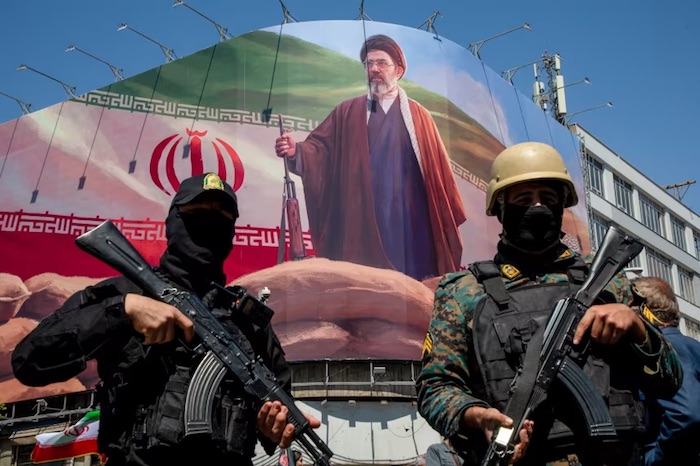
A conventional wisdom has begun to settle over the war with Iran: Iran won. The argument is straightforward. The US and Israel bombed Iran for weeks, inflicted enormous damage, and demanded major concessions. Iran refused to surrender. Its government remains in power. Its missiles remain a threat across the region. And most important, Tehran still has the ability to disrupt shipping through the Strait of Hormuz, imposing higher energy costs on the US and much of the world. Over the summer, Trump warned of a global depression if the Strait remained shut.Read more …
The fourth act
That’s a strong argument. But it may have proved premature. Wars are contests of leverage and endurance. And the contest now looks very different from even a few months ago. The arc of this six-month conflict has proceeded in four acts. Act One began with intensive airstrikes on February 28 and lasted through six weeks of high-intensity military operations. Act Two began with the April 7 ceasefire and negotiations, culminating with the June 17 MOU signed by Trump and Iran’s president, Masoud Pezeshkian. Act Three began weeks later when Iran chose once again to target commercial ships in the Strait of Hormuz, leading to another tit-for-tat military exchange.That was the moment calls rose for the US effectively to give up and cede control of the Strait to Iran. The United States appeared to be out of options. Not so fast.
Since mid-July, the US has reimposed its military blockade on Iranian ports and sanctions on Iran’s oil trade. In parallel, the U.S. military has worked tirelessly to clear shipping lanes and help protect commercial ships transiting the Strait. The result has been an effective blockade on Iranian oil shipments, with global shipments recovering and energy prices remaining remarkably stable. Bloomberg reported this week that oil flows through the Strait have recovered to 2/3 of pre-war levels. That means pressure is now compounding on Iran, and not the US. And if Iran loses its ability to hold the Strait hostage, its leverage dissipates rapidly.
A better US strategy
Iran entered the war weakened by years of sanctions and economic mismanagement. Its position today is considerably worse.mAccording to the International Monetary Fund, Iran’s economy is expected to contract by more than 5% this year, with inflation approaching 70%. The value of Iran’s currency has fallen sharply. Prices for basic goods have soared. An Iranian Labor Ministry official recently estimated that more than one million jobs disappeared during the first three months of the war alone.These statistics matter because Iran’s ability to sustain the conflict ultimately depends on more than its remaining missile arsenal. Before the war, the Iranian regime confronted unprecedented public pressure against its repressive rule and failing economy. Thousands of Iranians were reportedly killed in the streets.A better American strategy from the start may have been an economic campaign to support the Iranian people demanding change. The first act of the war — removing most of Iran’s leaders — resulted in consolidation by the Revolutionary Guards and further crackdowns against the majority of Iranians that oppose their rule.
But the Guards require resources to rule by force, and this new fourth act — a military embargo — is something that Iran has never confronted before. Indeed, this is the first time since the 1979 Revolution that Iran has faced a quarantine on its economic lifeline through Hormuz. Their way out is to stop threatening ships in the Strait and abandon what’s left of its mostly destroyed enrichment program. That’s a deal Trump would accept. Doing either, however, from the vantage point of the Guards would show weakness and threaten their rule.
Iran’s cards
Tehran may seek to fight its way out of this noose. Its strategy through the first three acts was clear: threaten commerce in the Strait, raise energy prices globally and gasoline prices in the US, increase global economic pressure and ultimately force Trump to back down, particularly with midterm elections approaching. Iran has also targeted the energy infrastructure of the Gulf states and could do so again. Its proxy force in Yemen, the Houthis, have threatened to shut down commerce through the Red Sea with Iranian missiles and drones.All that would mean resorting to the same tactics from the early acts of the war. Strategically, it has not worked for Iran. The Gulf states are not happy with the war, but most do not support giving in to Iran’s extortionist demands in the Strait. Iran’s attempts to close the Strait with drones and mines are also now — for the first time — failing.So, I would not discount the risk of an Iranian escalation as the economic pressure builds. But it may not be enough at this stage to reduce that pressure. Trump appears far more committed than Iranian leaders apparently presumed.
Breaking point
Iranian leaders and many Western analysts project immunity to pressure. Iran will never surrender its nuclear program or the Strait of Hormuz. Or its terrorist proxies around the region. That’s something we all must accept as a fact of life in the Middle East, according to Tehran.Foreign Minister Abbas Araghchi argued last week that the blockade and sanctions pressure are “bound to fail” just as all other campaigns, he said, had failed to change Iranian policy. I used to hear the same thing from experts about ISIS, when I was leading the campaign to defeat the group. And Hamas, when negotiating to free the hostages held in Gaza.Not the last act
In fact, everyone has a breaking point. Iran thought it had found Trump’s. Trump may yet find theirs. It’s too early to call. This contest in some form may last through the end of Trump’s presidency and beyond. It’s been ongoing for nearly five decades. The earlier acts in this war were mired from the US side by shifting and ill-defined objectives, widely careening positions, and inconsistent statements.But Act Four seems different. The US military has a clear objective as outlined this week by the commander of CENTCOM, Admiral Brad Cooper. It is enforcing the blockade on Iran and facilitating the movement of commercial traffic. The objective for the US should be similarly well-defined. Iran must abandon claims on the Strait and give up the nuclear enrichment program. Until then, this will be the new status quo. And that status quo — perhaps for the first time since the war began — now favors Washington, not Tehran.
“It’s not enough for the regime to survive if the economy they oversee dies.”:”
• Pentagon Strikes Iran Island Target, In First US Military Action In Weeks (ZH)
Things have been quiet for many days and weeks on the military front when it comes to the Iran war, but on Sunday there are some emerging reports of new but limited US strikes. According to the latest late Sunday from Axios:Read more …
Senior American official: Earlier today, American forces attacked two Iranian launchers on Larzac Island. Revolutionary Guard forces were observed preparing to launch rockets carrying sea mines toward the Strait of Hormuz. So despite the White House signaling a move away from military action and toward the economic warfare front, it’s also clear that more sporadic tit-for-tat blows could follow. But Trump has lately made clear that military options are still on the table, and strikes will be utilized as needed.
CENTCOM says that they attacked two Iranian missile launchers on Larak island. This is the first time that they have struck an Iranian target in weeks.
— barry with the NED (@bonzerbarry) August 30, 2026* * *
Propaganda has always been a problem when it comes to the fog of war. The internet and social media add a new dimension to the confusion as conflicting information is allowed to spread like wildfire using civilians and media outlets as tools for propagation. The lack of confirmation is exploited, often by both sides, and the truth becomes lost in the mire. That said, the facts on the ground will eventually see the light regardless of spin. In the case of the war in Iran, the facts on the ground do not bode well for the Islamic Regime.
Iranian leaders now openly admit that the US blockade has crippled around 35% of the nation’s exports and imports while domestic prices continue to skyrocket by 60% or more. This, however, is not the most immediate problem for the regime. It would appear that initial reports of gasoline shortages across Iran did not convey the true scope of the crisis. In the past week alone more evidence from within Iran has hit social media, showing mass lines at gas stations and panic among citizens as rationing is introduced.
Energy officials have acknowledged a gasoline deficit of roughly 15 million liters every day, warning that strategic reserves have reached “dark red” territory. Iran has ten main operating oil refineries plus the large Persian Gulf Star condensate refinery, which is the country’s biggest gasoline producer, meaning, they do have the capability to produce their own domestic gasoline supply. So, why the shortages?
Some refined products are shipped into Iran from foreign sources and the US blockade is stifling that supply. However, there is also the possibility that the blockade has forced Iran to shut down a number of oil wells due to lack of storage. Depending on the type of well, a shutdown can cause extensive damage and prevent new production for years to come. It’s likely that Iran’s crisis is rooted in an oil supply problem as much as a refining problem.
The Iranians have recently called for a return to the standards set by the MOU agreement with the US, and they have also accused the US of committing “war crimes”, arguing that the blockade is causing a humanitarian crisis.
The recent admissions of economic damage, the fuel shortages and the assertions of humanitarian crisis are a sharp tone shift from Iran’s posture only a month ago. Couple this with the 400% surge in ships traversing the Strait of Hormuz and it would seem that Iran is losing the war outright. If the blockade continues for another few months the financial damage could be irreversible and repairing resource flows could take years.
It’s not enough for the regime to survive if the economy they oversee dies.
“.. about 90% of the food-logistics infrastructure used by major retail chains [..] has been destroyed.”
Russia’s economy is much less centralized. Bread comes from the baker on the corner, not some factory 100 miles away.
• Moscow and Kiev Exchange Attacks, But Only One Side Feels Impact (CTH)

I mentioned this last night, and now more solid reports have emerged. Basically, Ukraine and Russia are taking turns striking each other’s warehouses and distribution centers with missiles and drones. However, the brunt of the damage and chaos is being felt only by one side—Ukraine. Zero Hedge has a solid article explaining the dynamics:
“A Russian drone struck a Ukrainian Defense Forces ammunition storage site in the village of Myla Friday evening, just west of Kiev. The resulting fire and hours of secondary detonations killed at least 37 people, injured dozens more, damaged around 50 residential buildings and a care home for the elderly and disabled, and forced the evacuation of hundreds. Among the dead was the local community head who had gone to help.In response, Ukrainian President Volodymyr Zelensky said the placement of a weapons depot next to civilians was “terrible negligence.” The first impact, he said, hit a depot storing shells, mines, other munitions, and drones that “definitely shouldn’t have been there” – while prosecutors in Kiev opened a criminal investigation into the legality of storing explosives next to civilian housing. This is the second such incident in two months. A July strike on a depot in nearby Vyshneve produced similar secondary blasts, deaths, and later detentions of state defense-company executives.
Russia’s Defense Ministry said the Myla site held components and launch boosters for long-range drones. It also claimed strikes on Flamingo cruise-missile related facilities in the Kiev region and on the ports of Mykolaiv and Izmail. Social-media claims that Patriots were stored there remain unconfirmed by official Ukrainian statements.” Here comes the fact that few in the west understand:
Friday night’s blast came amid a multi-day Russian campaign of jet-powered drones and missiles that has produced near-continuous air-raid alerts over Kiev and hit warehouses belonging to supermarket chains, postal operators, retailers, and logistics firms. Ukraine Agriculture Minister Taras Vysotskyi told reporters that, “roughly speaking,” about 90% of the food-logistics infrastructure used by major retail chains (large distribution centers serving networks such as Fora, Silpo, NOVUS, and Varus) has been destroyed.
[…] Both sides have been systematically striking each other’s logistics and dual-use commercial infrastructure. […] Zelensky’s government has framed its own long-range strikes as a way to force Russia to negotiate. You can hit centralized Russian distribution centers and not accomplish any material impact to the people of Russia. However, if you hit centralized Ukraine distribution centers, chaos and crisis quickly surfaces for Kiev residents. The why is not complicated.
Metropolitan Russia, home to more than 75% of the population, was set up around the concept of govt planned precincts. Each few buildings you will find a generally useful grocery store, a bakery, a coffee shop, a pharmacy, a utility store, tobacco, produce shop etc. all within immediate walking distance. EX. Bread is made in each bakery; made, not just taken out of a box. Actually made. They set it up that way a long time ago during the Soviet era. Now, over time stores are different, but the planning never changed. The people of Russia also operate Dacha Gardens all over the urban sprawl and suburban areas.
“Gardening as provided food for the people of Russia for over 1,000 years, starting as mainly subsistence or survival gardening and evolving into an independent, self-provisioning model between the Bolshevik Revolution and World War II and continues into today.” Ukraine, we are told – even by former Defense Minister Fedorov, was convinced by western intelligence analysis that destroying the roughly 200 online Wildberries distribution centers it would cripple the Russian consumer economy. Increased strikes did not yield the desired results.
Who in their right mind thought destroying regional Russian online warehouses would have some great impact? Russia is analog in a digital world. However, conversely in our westernized, centralized, corporate consumer structures and logistics, we built distribution economies on centralized production and cost-efficient distribution, vis-a-vis Kyiv or Brussels etc. Ex. The western bread for a hundred locations is made in one centralized or regional facility. Boxed, shipped and distributed for maximum efficiency and profit.
Bombing Russian distribution centers doesn’t have any impact on the precinct level operation. But taking out westernized regional hubs and distribution centers in Kiev can create immediate chaos. That’s what we are seeing now. Honestly, this is not complicated to analyze. These are two completely different economic and logistic models. One is centralized (Ukraine) and one is decentralized (Russia). Attacking the logistics of a decentralized system creates no substantive impact. Attacking the logistics of a centralized system creates major impact. I think part of the reason the western news doesn’t make sense is because western media doesn’t understand Russia or pretend not to know things. Apparently, the same applies to Western intelligence.

“Carney rode into power in 2025 on a wave of manufactured Canadian nationalism, casting himself as the last line of defense against American economic influence — “elbows up,”
• Renaming a Lake: A Surefire Way to Expose the Corrupt (Florack)
Watching the tussle between Canadian Prime Minister Mark Carney and President Donald Trump unfold — the former “Lake Ontario”/”Lake America,” ya know… Well, I’ve decided it’s about time I waded into this fight.Read more …
Carney rode into power in 2025 on a wave of manufactured Canadian nationalism, casting himself as the last line of defense against American economic influence — “elbows up,” as the slogan goes. Strip away the branding, though, and you find a man deeply, personally enmeshed in the very country he’s built his entire political persona around opposing. Grade-one hypocrisy, dressed up in a maple leaf.Start with his kids. Half of Carney’s children have lived and studied in the United States, at Harvard and Yale — the exact institutions you’d expect a man warning Canadians nightly about “American unreliability” to steer his family well clear of. Instead, he sent them straight into the belly of the beast. I don’t know. Perhaps there are no institutions that are blue-blooded enough in Canada to make Carney happy.
Then there’s the money, and this is where it gets genuinely rich, pun intended. An independent review of Carney’s own ethics-commissioner disclosure counted 515 American-headquartered companies among 567 total holdings — a staggering 90.8%, typically rounded to 91%. Canadian holdings amounted to just four companies, roughly 0.71%. Rebel News narrows it further: of his eight controlled assets, only three are Canadian — Canadian Natural Resources, Canadian Pacific Kansas City, and, amusingly, Lululemon.
The rest read like a highlight reel of American capitalism: Tesla, Alphabet, Amazon, Apple, Meta, Microsoft, Netflix, Bank of America, Morgan Stanley, Exxon Mobil, Chevron, Boeing, Lockheed Martin, Ford, and Walmart, according to Global News’s reporting on the disclosure. A man who built his brand warning Canadians away from American entanglement somehow forgot to warn his own portfolio manager.
Then there’s Brookfield, where this stops being merely embarrassing and starts looking like an actual conflict of interest. The Conservative Party of Canada points out Carney has actively championed Westinghouse, a nuclear firm his old employer, Brookfield Asset Management, helped acquire during his tenure. Brookfield manages over $1 trillion in assets and, unlike a typical bank, directly owns and operates real assets and businesses — real estate, power grids, renewable energy, and private equity investments. Canadian Conservatives have also flagged that Carney’s answer to the housing crisis leans on prefabricated housing, a sector dominated by Modulaire — another company tied directly to his old Brookfield portfolio.
The controversy around Carney’s blind trust stems from exactly this overlap: Brookfield is an active owner-operator across nuclear energy, housing infrastructure, and AI data centers — precisely the sectors Carney now subsidizes and deregulates as prime minister. Funny how that keeps lining up.
His defense, when pressed, is standard-issue: it’s all in a blind trust, so he can’t possibly know what’s in it. Sorry, no sale, Mark. A trust doesn’t erase ownership — it just moves it out of the spotlight. Democracy Watch’s Duff Conacher has called Canada’s blind trust laws effectively meaningless, riddled with loopholes wide enough to drive a transport truck through.
In fairness, that 91% figure describes the count of companies in the disclosed account, not the dollar value of Carney’s wealth and not a live snapshot of current holdings, since a third party now controls the trades. It’s an honest count of a real 2025 disclosure, not a measure of his net worth. That distinction doesn’t let him off the hook — it just means the sharpest version of this argument is the accurate one: the documented record shows a man whose investment instincts point overwhelmingly south of the border, whose signature company built its empire on the exact sectors he now legislates, and whose own family chose American classrooms over Canadian ones.
Carney wants Canadians to believe he’s fiercely guarding their national interests against American encroachment. Yet every bet he’s personally placed, with his own money and his own children’s futures, runs straight through the United States. Easy to play the nationalist from behind a podium when your actual wealth is anchored on the other side of the border — and there’s still Canadian tax revenue left over to toss around in the meantime. Now let’s talk about Ontario Premier Doug Ford.
Ontario’s premier stood up just yesterday, unveiling a sign insisting it would always be “Lake Ontario,” as though he’s got any actual say in the matter.
But as you might expect from one of Carney’s staunchest defenders, Ford’s own history is no shortage of scandal. I live within earshot of enough Canadian radio to have been entertained by most of it firsthand. A few highlights from my own notes:
His 2019 overhaul of the Ontario Autism Program was meant to clear a long waitlist but instead threatened to cut off access entirely for many families, sparking widespread protests before the government partially reversed course. That same year, his chief of staff, Dean French, resigned in a patronage scandal after lucrative foreign government postings — including one to a 26-year-old whose chief qualification was playing lacrosse with French’s son, at a $165,000 salary — went to people personally connected to French. Ford revoked the appointments but drew criticism for brushing off reporters’ follow-up questions.
Around the same time, Ford appointed longtime friend Ron Taverner, a Toronto police superintendent, to head the Ontario Provincial Police, only for it to emerge that the job’s qualifications had been quietly lowered specifically to make Taverner eligible; he eventually stepped down under pressure. Separately, retroactive public health funding cuts stripped roughly $177 million a year from Toronto Public Health and Paramedic Services, totaling close to $1 billion over a decade.
The biggest scandal by far is the Greenbelt affair. Video surfaced of Ford, before even winning office in 2018, promising to “open up a ‘big chunk'” of protected Greenbelt land to developers. Once in office, he did exactly that. Ontario’s own auditor general and integrity commissioner both investigated and found evidence pointing to corruption in how the land was selected and released. The RCMP opened a criminal investigation. Two staffers and two cabinet ministers resigned. Ford’s approval rating hit record lows, with a majority of poll respondents calling the deal outright corrupt — and after weeks of defending it publicly, he ultimately reversed course and canceled the whole plan.
There’s more. Breaking Ontario’s exclusive Beer Store contract to allow alcohol sales in convenience and grocery stores cost $225 million in compensation, with the province’s own Financial Accountability Office projecting total losses could reach $1.4 billion to $1.9 billion by 2030.
The Ontario Science Centre closure drew scrutiny after developers with ties to Ford’s family bought land adjacent to the site shortly before Ford announced a subway stop there that boosted nearby land values — the closure itself later justified by a disputed structural report.
Well, nobody seems to know what he did there.
• CIA Director Pushed Trump-Putin-Zelensky Summit During Moscow Visit (ZH)
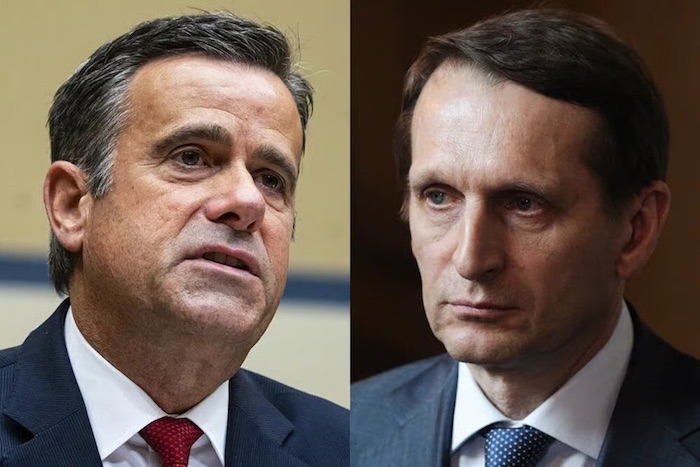 CIA Director John Ratcliffe, left, held talks in Moscow with Russia’s foreign intelligence chief, Sergey Naryshkin
Yet another take has been issued, and more alleged details, on CIA Director John Ratcliffe’s Tuesday trip to Moscow, which took place amid great secrecy and still even days later has only been subject of immense speculation. Axios is reporting over the weekend that the CIA chief proposed a trilateral meeting between Russian President Vladimir Putin, US President Donald Trump and Ukrainian President Volodymyr Zelensky – when he met with top Kremlin intelligence officials but was not granted a direct meeting with Putin himself.Read more …
“Of course, President Putin is immediately briefed on everything,” Kremlin spokesman Dmitry Peskov said, calling the meeting “a positive phenomenon” while not giving additional details. The war has quite obviously ramped up this summer, with tit-for-tat strikes expanding beyond just military and energy targets, to include food and retailing companies, and increasingly even civilian neighborhoods.According to some details via Axios:
• Ratcliffe’s visit was partly aimed at determining whether Russia’s heads of intelligence services could help convince Putin to move toward resuming U.S.-mediated negotiations with Ukraine, the sources said.
• On Friday, U.S. officials briefed Zelensky on Ratcliffe’s talks in Moscow and the proposal for a trilateral summit.
• The Trump administration has raised the idea in the past. Zelensky has been on board, but Putin has rejected it.
Over in the Middle East, the Iran war has not gone well for Washington, and so the White House has recently pivoted back to seeking a war forward toward peace in Ukraine, needing a foreign conflict ‘win’. However, US admin officials have signaled they are not ready to force Ukraine into a ‘bad’ peace deal. Also according to Axios, “Zelensky’s chief of staff, Kyrylo Budanov, told local media on Thursday that U.S.-mediated talks with Russia could resume in September.”
As for Trump, on Wednesday he told Glenn Beck in an interview: “We would like to see the Ukraine war end,” adding that his administration was “working very hard to get that war ended.” [..] Concerning the CIA chief’s visit to Moscow, some have said that it may have been focused on Iran, amid Washington warnings for Russia to cease helping Tehran, following prior widespread allegations that Russian intelligence provided targeting information of US bases and troops across the Mideast region.
Use visas to lower your labor costs. Some business model.
• U.S. Visa Restrictions, Reviews and Applicant Suspensions (CTH)
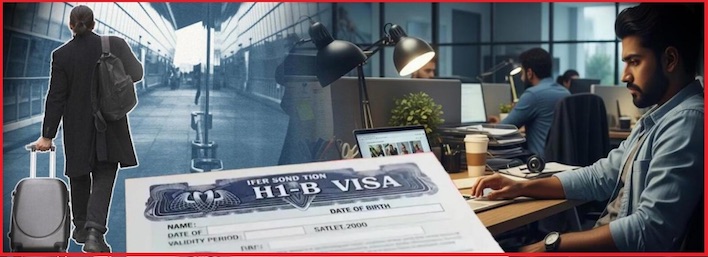
As noted by Amanda Louise on X: “[NASSCOM’s] concern wasn’t that jobs would go unfilled because America lacked skilled workers. It was that companies like Infosys would have to “hire many more local Americans, which would be expensive.” “Americans weren’t described as unavailable. Americans were described as the more expensive alternative. And they acknowledged the other half of the problem.. companies with a “strong local American presence” would have a competitive advantage if visa-dependent companies lost easy access to that labor.Read more …
That tells Americans exactly what this business model does. Use visa labor to lower costs. Compete against companies that hire more Americans. Win their contracts. And now those American-employing companies have fewer jobs to offer too.The American worker loses twice.
So why are we still debating what these visa programs are being used for? Their statements tell us the incentive. The immigration filings show us the scale. The layoffs show us who pays the price. How much more evidence does Congress need before it answers why U.S. immigration policy gives companies a competitive advantage for hiring visa workers instead of Americans?”
“Unpopular ‘Hostess'” of Meet the Fake Press..”
• Trump Nukes NBC’s Kristen Welker Again (Matt Margolis)

President Donald Trump has a history with NBC Meet the Press host Kristen Welker, and it isn’t a friendly one. Back in June, he sat down with her for an interview that fell apart before it even ended, with the president walking out mid-conversation. On Sunday morning, he went after her again, this time on Truth Social, and this time he wants the Federal Communications Commission involved.Read more …
The trigger was a simple line from Welker describing Trump’s 2026 midterm endorsement record as producing “mixed results.” He opened by mocking her outright, branding Welker the “Unpopular ‘Hostess'” of Meet the Fake Press. From there, Trump laid out his case.He pointed to two recent Republican wins as proof that his endorsement carries weight: Darline Graham winning the South Carolina Senate primary, and Mike Mazzei winning the Oklahoma governor’s race, both after Trump backed them. He pointed out that his overall endorsement success rate is roughly 99%, including 100% in Senate races and about 98% in House races. Those are not the numbers of a politician with “mixed results,” and Trump made sure everyone knew it.
“How can anyone be allowed to say this, working for freely given Public Airwaves?” Trump asked, before announcing his next move. “Because of this purposeful inaccuracy, she will be reported to the FCC for rebuke or punishment.”
He wasn’t finished with the media at large, either. “Unfortunately, she is not the only one. The Radical Left News is going out of their way to harass, demean, and libel anything ‘TRUMP,'” Trump wrote, framing Welker’s comment as part of a broader pattern rather than an isolated slight.
Trump went on to argue that his critics have settled on a new line of attack: recasting a historic winning streak as unremarkable. “Their new weapon is to say that my 99% SUCCESS Rate on Endorsements, 100% on Senatorial Endorsements (Many of whom were not even given a shot of winning until I Endorsed!), is either a mixed result, or not very good,” he wrote. He wasn’t buying it. “In actuality, it is, without question, the strongest Endorsement in the History of Politics,” he continued. “If it were not, I would be the first to admit it.”
He then made his case with specifics. Graham’s Senate run, Trump wrote, “was the biggest story in all of Politics” because she wasn’t expected to win, but once he endorsed her and she cruised to victory, “the story of her Victory was hardly covered by anybody.” He said much the same thing happened in Oklahoma, where Mazzei “was behind in every Poll” before Trump’s endorsement, and after Mazzei won, “the story was barely covered.”
Kristen Welker, the Unpopular “Hostess” of the once great Meet the Press, now considered Meet the Fake Press, just stated that Donald Trump has “mixed results” on his Endorsements of Candidates, when the recent WINS of Darline Graham and Mike Mazzei, stand at 100% for the U.S.… pic.twitter.com/0Xwt7Wiinv
— Commentary Donald J. Trump Truth Social Posts On X (@TrumpTruthOnX) August 30, 2026Trump closed by referring the matter directly to FCC Chairman Brendan Carr, writing that he hoped Carr “and the fine people of his Commission” would “take this Threat to our Country very seriously.” He signed off by calling the press “a Disgrace to our Nation” and thanking his followers for their “attention to this very important matter of Fake Polls and Commentary.”
“Alberta will never secede from Canada because Premier Danielle Smith is a gaslighting fibber and structurally in alignment with Mark Carney. “
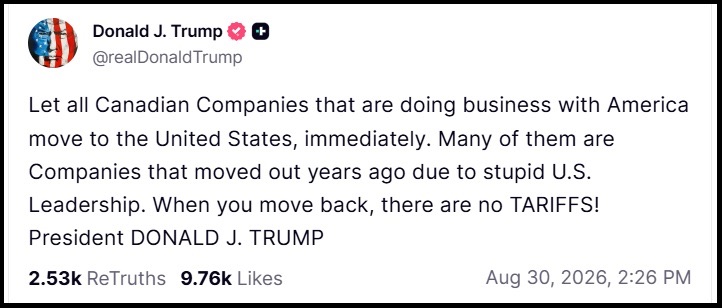
• Trump Advises Corporations to Depart Canada for Stability in USA (CTH)
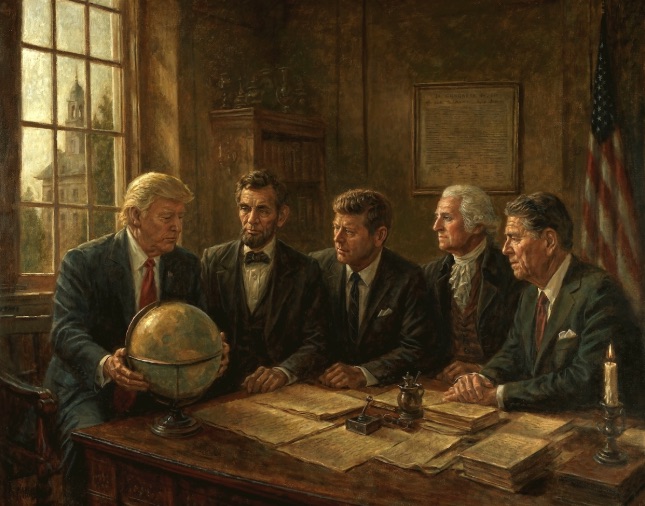
I think we have finally figured out President Trump’s long-term strategy here. Essentially, we have been flummoxed over why President Trump has not yet triggered the 6-month USMCA (CUSMA) termination notice yet. However, he appears to be intentionally drawing this out.Read more …
For the deniers, I simply request you to think about it in very simple and logical terms. Do you really foresee any possibility of President Trump or USTR Jamieson Greer renegotiating a USMCA agreement amid the divide Canada is creating? There’s no way terms will ever be discussed. Therefore, with an all-in perspective on termination, the moves President Trump is making now are all just to prolong economic pain and block investment while retaining the termination notice as the hidden ace. [VIA TRUTH SOCIAL]
Why this approach? Well, right now American communists and those with TPS status changes are fleeing to Canada; a human sedimentation tank. Bring back the corporations who set up shop in Canada and swap them for outbound, dependent leftists.Alberta will never secede from Canada because Premier Danielle Smith is a gaslighting fibber and structurally in alignment with Mark Carney. Additionally, if you look up “battered conservative syndrome” in the geopolitical library you will note that Alberta is the birthplace of the mindset, and Pierre Poilievre is their mascot. Alberta will never leave Canada.
Those who understand the pretense of the UniParty in the United States, likely understand that in Canada the pretending is exponentially more entrenched.
Black Biden?!
• James Clyburn Basically Says Clarence Thomas ‘Ain’t Black’ (Matt Margolis)
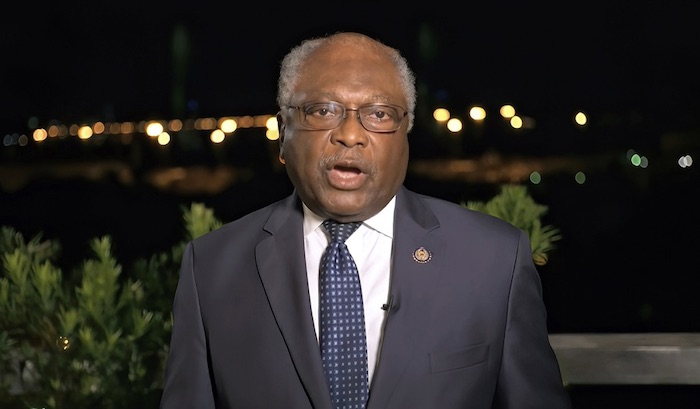
Rep. James Clyburn (D-S.C.) sat down with Kristen Welker on Meet the Press Sunday, and the segment on the Supreme Court went about as you’d expect from a Democrat these days. He’s on board with Kamala Harris’s push to expand the Court to 13 justices, because of course he is. I don’t care how many times Democrats swear this isn’t about seizing permanent power. Packing the bench only becomes a priority whenever they’re the ones stuck losing decisions, and something tells me Clyburn’s enthusiasm for a bigger bench is entirely dependent on which party gets to fill those seats.Read more …
But that’s not even the part of the interview that made me sit up. Welker brought up something I had no idea about: Clyburn testified in favor of Clarence Thomas’s Supreme Court confirmation back in 1991. Welker even played the tape. “It’s a pleasure for me to be here today to present testimony in favor of my good friend, Clarence Thomas,” Clyburn said in the old clip. “I have known Clarence for ten years and I consider him to be a personal and professional friend, in spite of the fact that he shares a conservative Republican philosophy.”I looked up his entire testimony, and I was floored. Clyburn praised him as “zealous in his pursuit of the facts and intellectually honest and objective.” Most significantly, Clyburn said civil-rights officials who worked with Thomas found him “highly compassionate, sensitive, judicious” and possessed of the “intellectual honesty that is required in this field.” Despite their disagreements, Clyburn said he had “never found anything in his philosophy of a nature to deny him this Supreme Court confirmation.” He concluded that Thomas was “deeply committed to an even-handed system of justice” and possessed “the integrity, the conscientious spirit, and the basic sense of fairness” required of a Supreme Court justice.
Welker asked the obvious follow-up. “Do you stand by your decision to make the case for Clarence Thomas’s confirmation?” Welker asked. “
Absolutely not,” Clyburn said. He explained that he had trusted Thomas’s background and life experience to guide him on the bench, and that he had expected Thomas to uphold precedents like Brown v. Board of Education and the Voting Rights Act. Then came the line that got my attention. “I had no idea that Clarence Thomas would rebel the way he has against his own background and experiences,” Clyburn said. He added that Thomas’s grandfather raised him in Pin Point, Ga., and accused Thomas of showing “very little sensitivity” to that upbringing.
Democrat Rep. Jim Clyburn agrees with Kamala Harris and calls to pack the Supreme Court.
— RNC Research (@RNCResearch) August 30, 2026
NBC: "Do you support adding 4 more seats?"
CLYBURN: “Yes, I do…13 is a pretty good number. A baker’s dozen would be a good number to have on the court.” pic.twitter.com/L2K5Paf9ZS“Rebelled against his own background.”
Sit with that phrase for a second. Clyburn frames Thomas’s judicial record as a betrayal of an obligation tied to where he came from, as if the Constitution should take a backseat to his childhood ZIP code. As far as I’m concerned, Clyburn accused Thomas of forgetting his roots… more specifically, his experience growing up poor and black.
From where I sit, there’s something familiar about Clyburn’s accusations. They remind me of Joe Biden, while campaigning in 2020, telling host Charlamagne that any black voters still deciding between him and Donald Trump “ain’t black.” The backlash was immediate, and rightly so, because the implication was that authentic blackness requires voting a certain way. Clyburn is making the same argument about Thomas, just dressed up in the language of a Sunday show instead of a campaign bus.
The question isn’t whether Clyburn respects Clarence Thomas’s legal record. It’s whether Clyburn believes black conservatives are allowed to exist at all without being accused of betraying themselves. Thomas has since spent three decades ruling as an actual constitutional originalist instead of the reliable liberal vote Clyburn apparently hoped he would be. Clyburn’s real complaint has nothing to do with constitutional interpretation. He expected Thomas to be a loyal black vote on the Court… which, in his view, means voting with the leftists.
“Gov. Gavin Newsom (D-Calif.) may soon receive a bill requiring major companies to swear, under penalty of perjury, that they searched generations of corporate records for ties to slavery.”
• California Lawmakers Keep Giving Businesses Reasons to Leave (David Manney)
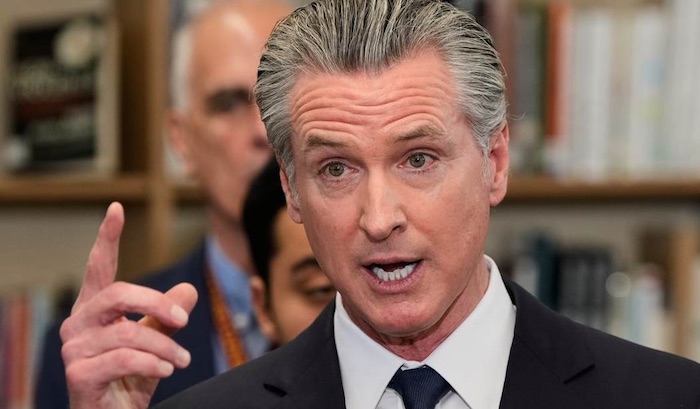
Gov. Gavin Newsom (D-Calif.) may soon receive a bill requiring major companies to swear, under penalty of perjury, that they searched generations of corporate records for ties to slavery.Read more …
“This bill, upon appropriation by the Legislature, would require any business or enterprise that is doing business in the state that was in existence or whose predecessor company was in existence on or before December 31, 1964 and has annual worldwide gross receipts that exceed $100,000,000 to complete an affidavit, under penalty of perjury, verifying that it has searched through any and all records in its and its related entities, as defined, possession, control, and knowledge for records that the in-state covered entity or its related entities bought or sold persons subjected to slavery, used persons subjected to slavery as collateral, provided loans to purchase persons subjected to slavery, insured such transactions or the persons subjected to slavery, or provided related or other services to aid or otherwise facilitate those transactions. The bill would set forth the contents of the affidavit, the timeline and manner of submission, and reporting requirements.This bill would require the Civil Rights Department to create a public, digital platform by January 3, 2028, within one year after an appropriation is made, that would make available affidavits and reports records made pursuant to the bill and disaggregated data, as described. The bill would additionally require the above-described business or entity, that submits a bid or proposal to, or otherwise proposes to enter into or renew a contract with, a state agency, as described above, to additionally certify, under penalty of perjury, that they have submitted the affidavit in compliance with the above-described provisions. By requiring an affidavit and to certify under penalty of perjury regarding compliance with the above-described affidavit requirements, and thus expanding the crime of perjury, the bill would impose a state-mandated local program.”
The California Constitution requires the state to reimburse local agencies and school districts for certain costs mandated by the state. Statutory provisions establish procedures for making that reimbursement. This bill would provide that no reimbursement is required by this act for a specified reason. Welcome to doing business in California in 2026.
Assemblyman Isaac Bryan’s AB 2599 has cleared both chambers of the California Legislature. If Newsom signs it and lawmakers provide funding, businesses operating in California with more than $100 million in worldwide annual revenue would fall under the mandate if they, or a predecessor company, existed on or before December 31, 1964.
Those companies would have to search their records and those of related entities for evidence involving the purchase or sale of enslaved people, use of slaves as collateral, loans financing their purchase, insurance transactions, or other business connected to slavery. The affidavit would be submitted under penalty of perjury, and California’s Civil Rights Department would eventually make the records publicly available.
Of course, slavery is evil; its history deserves to be preserved, studied, and truthfully taught. But California lawmakers have decided corporate compliance departments in 2026 should search records reaching back to 1849 for actions taken generations before anyone now running those companies was born. If Sacramento wants more historical research, California has universities, archives, historians, and an enormous state government. Lawmakers chose to put the burden on private businesses.
Meanwhile, Assemblyman Matt Haney’s AB 2017 is headed toward another Senate vote after being amended again on Aug. 27. It would add Eid al-Fitr and Eid al-Adha to California’s list of state holidays. Courts would remain open, and private businesses wouldn’t be required to close. Muslim Californians should be free to celebrate their holy days, just as every American should be free to practice their faith. AB 2017 carries far less economic weight than Bryan’s corporate mandate. Its relevance is Sacramento’s endless appetite for another designation, requirement, program, or government instruction.
Employers already have reasons to question whether California is worth the trouble. A corrected Public Policy Institute of California study found annual headquarters departures climbed from about 240 in 2011 to more than 400 in 2021. California lost 1,250 headquarters on net during the period studied. The researchers properly noted that relocations remained a small share of overall headquarters activity, but they also found departing companies tended to choose states with lower taxes and less regulation.
More recent data aren’t comforting. A 2026 analysis found California’s largest metro areas, including Los Angeles and the San Francisco-San Jose region, continuing to suffer net headquarters losses. High taxes, labor regulation, and the cost of living remain major pressures. California’s own Employment Development Department reported the state lost 20,500 nonfarm payroll jobs in July, even as unemployment improved to 5.1%. Meanwhile, the nonpartisan Legislative Analyst’s Office calculates an $18.5 billion operating deficit for the 2026-27 budget year.
California remains an economic giant with extraordinary workers, capital, technology, agriculture, ports, and universities. Sacramento seems determined to discover how many unnecessary burdens those advantages can carry. Companies don’t need another reason to leave. California lawmakers keep volunteering them.
I don’t really like playing on the man.
• Michelle Obama Proves Again She’s a Horrible Person (Matt Margolis)

Barack Obama’s wife, Michelle Obama, has spent years cultivating an image as America’s most relatable first lady, the warm, down-to-earth mom everybody loves. Yet, it seems like every time she opens her mouth, she proves what a horrible person she is. We’re talking Hillary Clinton-level bad.Read more …
Last month, we learned that Barack Obama’s wife reportedly made sure Cheryl Hines never got a role in Larry David’s new HBO series, Life, Larry and the Pursuit of Unhappiness: An Almost History of America, because Hines is married to Robert F. Kennedy Jr., President Donald Trump’s secretary of health and human services. Hines played Larry David’s wife on Curb Your Enthusiasm for years. Talk about going low.I’ve written about some of the lowlights of her post-White House life, from blatantly racist comments to complaining about the luxurious life she lived in the White House like it was a burden. Has anyone so privileged ever complained so much about her own life? Barack Obama’s wife might be the closest thing America has to an answer. But, perhaps even worse, she’s been joyful about not having to parent her own kids. That last one reared its ugly head again last week, on the latest episode of IMO, the podcast Barack Obama’s wife co-hosts with her brother, which aired Wednesday. She told guest Jon Stewart she’s thrilled that raising her children is finally behind her.
Stewart tried to give her a graceful opening, telling her, “You obviously miss the energy and excitement of the kids being around.” Barack Obama’s wife shot that down fast. “I don’t! I love them. I’m going to see them tonight for dinner. I love them. But Barack cried when they went to college. I was like, ‘Bye, goodbye!'” she said.
Stewart tried again, describing what he misses about his own daily grind. “The thing I miss, though, is the job. It gave meaning and a pattern to my life,” he said. Barack Obama’s wife simply replied, “I’m good…” She went on to gush about how “Friday nights aren’t wracked with terror and fear about, ‘Where are you, where are you?'” and said she’s enjoyed watching Malia and Sasha’s “growth” following their “emancipation.”
Emancipation. That’s the word a mother chose for her daughters growing up, as if raising kids is like being condemned to slavery. She insisted she’s still close with her girls, saying, “I’ve had so much quality time with my children, so much, I know them inside and out.” Then she delivered the real punchline: “I love my schedule,” and “I have a great schedule, and it’s all mine.”
Once again, it’s all about me, me, me, me.
Jon Stewart: “You obviously miss the energy and excitement of the kids being around is so incredible.”
— Townhall.com (@townhallcom) August 28, 2026
Michelle Obama: “I don’t! I love them. I’m going to see them tonight for dinner. I love them. But Barack cried when they went to college. I was like, ‘Bye, goodbye!’”
Stewart:…Now, let’s think about this for a minute. Malia was ten years old when Barack Obama took office and 18 when he left. Sasha went from seven to 15. That entire stretch of childhood happened inside the White House, where a full-time staff of roughly 90 people cooked, cleaned, and ran the household. Her mother, Marian Robinson, moved in and handled much of the actual parenting. Barack Obama’s wife was too busy jetting around the world with the largest entourage of any first lady in history to be bothered with carpool duty, parent-teacher meetings, booster clubs, etc., etc.
So why is she acting like she just wrapped up a decade of exhausting, hands-on motherhood? Parenthood isn’t easy; no one is saying it is. But her attitude about it is probably the worst I’ve heard from a parent. She sounds more like a childless person boasting about why not having kids is so liberating than an actual parent.
“There is a difference between a mother expressing exhaustion from the demands of motherhood — which is real and relatable — and expressing resentment,” California Republican Party delegate and mother Elizabeth Barcohana told Fox News Digital. “Resentment is what appears to come through in Michelle Obama’s remarks, and it is especially painful to hear amid the national conversation surrounding the Lindsay Clancy trial.” She added, “She seems happy that her daughters’ childhoods are over. That is not a relatable feeling for most mothers at all.”
Barack Obama’s wife doesn’t miss her daughters’ childhoods for a simple reason. She barely showed up for them in the first place.
🚨 It feels like a bunch of Elon’s “coming soon” projects are suddenly becoming real at the same time!
— Herbert Ong (@herbertong) August 29, 2026
Tesla’s Robotaxi fleet is now estimated at 900+ cars, Cybercab has its big Sept. 3 event, and the Semi rollout follows on Sept. 24.
Meanwhile, Tesla is building out Optimus… pic.twitter.com/Kg0i9TYzlK
NEWS: Elon Musk says SpaceX will build its own gas turbine parts to power AI faster.
— Muskonomy (@muskonomy) August 29, 2026
AI data centers need huge amounts of power right now. Solar is coming, but it takes years to build. So natural gas has to fill the gap for a while.
The holdup with gas power plants is the… https://t.co/ZrD8pdtvdf pic.twitter.com/Wu1MYzrFFf
ELON MUSK: “Turbines are sold out through 2030. In order to bring enough power online, SpaceX and Tesla will probably have to make the turbine blades and vanes internally. There are only three casting companies in the world that make these, and they’re massively backlogged.” pic.twitter.com/YlKHznBXhK
— DogeDesigner (@cb_doge) August 29, 2026
🚀 HAPPENING NOW: SpaceX and NASA launch the Roman Space Telescope. History’s been made
— MAGA Voice (@MAGAVoice) August 30, 2026
Roman will REPLACE the Hubble Telescope
Absolutely breathtaking ❤️ pic.twitter.com/IW21uImafL
Support the Automatic Earth in wartime with Paypal, Bitcoin and Patreon.

Home › Forums › Debt Rattle August 31 2026