

Walter Langley Never morning wore to evening but some heart did break 1894

Donald Trump just dropped one of the best videos he’s EVER posted. Giving me CHILLS listening
— MAGA Voice (@MAGAVoice) October 14, 2026
“Remember nothing worth doing is ever easy”
NEVER GIVE UP 💯 pic.twitter.com/9T2ZHf9kFP
🚨 JUST IN: After Watching Thousands of People chant “4 MORE YEARS” Democrats are starting to realize President Trump’s Midterm Blitz is working
— MAGA Voice (@MAGAVoice) October 13, 2026
PRESIDENT TRUMP’S RALLIES ARE WORKING
BUCKLE UP… pic.twitter.com/sjafaBmOrr
"It may already be too late for negotiations with Russia"
— Ignorance, the root and stem of all evil (@ivan_8848) October 13, 2026
– Aaron Maté explains to Americans that the best moment to secure peace was missed long ago.
"The problem is that Ukraine has long been used as an instrument of proxy warfare against Russia. And now we are seeing the… pic.twitter.com/JDOLlbANfP
🇷🇺🇺🇦 Prof. Jeffrey Sachs on the Ukraine proxy war:
— Going Underground (@GUnderground_TV) October 13, 2026
The war in Ukraine is a war that came, as you mentioned, with a coup that overthrew a Ukrainian President so that NATO could enlarge all the way to Russia’s border.
When the United States pushed the Europeans to agree to… https://t.co/Cc4oH6sIEM pic.twitter.com/mpX6gjjmM7
🚨 BREAKING: MASSIVE WIN 🚨
— CONSTITUTION X 🇺🇸 (@ConstitustionX) October 14, 2026
President Trump just delivered the impossible.
EVERY SINGLE FEDERAL PERMIT for the colossal $54 BILLION, 800-mile Alaska LNG pipeline has been SECURED. Construction can start TONIGHT.
“The permits take you 25 years. I just told them… you can start… pic.twitter.com/zLZKrJe6mF
Russian President Vladimir Putin was happy to leave Ukraine in control of 100 percent of its internationally recognized territory when he was president from 1999-2014 and Ukraine maintained friendly relations with Russia.
— David Pyne 🇺🇸 (@AmericaFirstCon) October 13, 2026
It was only after the CIA-funded Maidan coup that… https://t.co/Hwp3viApS1
“It’s too late for us, but you still have a chance.”
“Trust me. You don’t want to be France.”
• “I Come From Your Future”: A Frenchman’s Warning To All US Democrat Voters (ZH)

France’s welfare-state promises are colliding with a bill that keeps getting bigger. Far-left radicals rioting, fiscal crisis, and political uncertainty are exposing the upper limits of a system built on handouts, heavy taxation, uncontrolled borrowing, and mass migration.Read more …
For American voters heading into the midterms in the next several weeks, the warning from France is worth considering as far-left Democratic Socialist of America gains power within the Democratic Party: Promises of more and more and more government handouts come with consequences, just as France is finding out the hard way today. nAs President Emmanuel Macron ends his term in crisis, right-wing Marine Le Pen is positioning herself as the savior candidate as France’s finances rapidly deteriorate.Her shadow budget proposes shrinking the deficit to 3.7% of economic output next year, well below the government’s 5% target, before bringing it to 2.2% by 2032. Savings would come largely from spending cuts, lower transfers to the EU and reduced migrant spending.
The proposals come as high uncertainty clouds the political landscape and deteriorating public finances drive up France’s borrowing costs. Le Pen has warned that maintaining the current spending trajectory risks a default crisis.
it's been a while since we had a European sovereign debt crisis
— zerohedge (@zerohedge) October 1, 2026
*FRANCE-GERMANY 10-YEAR YIELD SPREAD WIDENS 8BPS TO 135BPS
France CDS widest in 13 years pic.twitter.com/9opJUmD2uS
The size of the welfare state helps put things into proportion. Public spending has topped 57.3% of France’s economic output in 2025, the second-highest share in the European Union. Public debt is projected to reach 120% of GDP in 2027, behind only Greece and Italy among EU members.Higher borrowing costs make funding the welfare increasingly impossible. Spending more on debt service leaves the government less flexibility to fund services, absorb economic shocks, or deliver the next round of handout promises as services continue to degrade.
The choices of what the government has proposed become increasingly uncomfortable: higher taxes, spending cuts, or still more borrowing That is the backdrop to a warning described by French technology entrepreneur Brivael Le Pogam, co-founder of AI video startup Argil, aimed at Americans considering voting Democrat.
“I come from your future,” he wrote on X. In the warning letter to America, he said France already embraced many of the policies American progressives promote, only to discover that more and more government handouts don’t translate into the socialist utopia politicians pitched; in fact, quite the opposite. “The promise was protection. The result is stagnation,” Le Pogam wrote.
Le Pogam wrote: “I’m French. I want to talk to Americans who are about to vote Democrat. Not to insult you. To warn you. “I come from your future. In France we did everything your progressive politicians promise. Free healthcare, free college, generous welfare, strong unions, heavy regulation, high taxes on the rich, a state that takes care of everything. Public spending close to 57% of GDP, one of the highest on the planet. On paper, it’s the dream.
Here’s what it looks like from the inside. France hasn’t passed a balanced budget since 1974. Our debt is above 3,300 billion euros. Interest on that debt is becoming one of the biggest items in the national budget. Our hospitals are collapsing despite record funding. Our schools rank lower every year. Young people with degrees can’t afford an apartment in the city they were born in. Our best engineers leave for London, Zurich and San Francisco. And the rich you wanted to tax? They left too, and took the jobs with them.
The promise was protection. The result is stagnation. The worst part is that nobody in France voted for decline. Every single step sounded generous, compassionate, reasonable. One more program. One more regulation. One more tax to fund it. Each step alone makes sense. Fifty years of them, and you wake up in a country that can no longer build a nuclear plant on time or keep its streets safe.
I love America because it’s the one place on earth where people still believe they can build something from nothing. I came to Silicon Valley as a self-taught kid and it changed my life. That spirit is the most precious thing your country has. Before you vote, ask yourself one question: is the program you’re voting for making America more like America, or more like France?
Trust me. You don’t want to be France.
I’m French. I want to talk to Americans who are about to vote Democrat. Not to insult you. To warn you.
— Brivael Le Pogam (@brivael) October 13, 2026
I come from your future.
In France we did everything your progressive politicians promise. Free healthcare, free college, generous welfare, strong unions, heavy regulation,… https://t.co/4q10Gu4NLh
Le Pogam wrote in a second warning: “My post about France went viral. Thousands of likes. Many Americans told me: “Democrats aren’t socialists. America will never be France.” I want to answer that seriously, step by step. Start with a simple observation. Look at what has gotten cheaper in America over the last 25 years: TVs, phones, software, clothes, toys. Now look at what has exploded: college tuition, healthcare, childcare, housing.What separates the two lists? The first lives in competitive markets. The second is exactly where government is most involved: subsidies, mandates, licensing, zoning, regulation. College. Washington lends students almost unlimited money. Universities know the money will always come, so they raise tuition and hire more administrators. The student pays the bill for twenty years. More government money, higher prices.
Housing. Why can’t a nurse buy a home in the city where she works? Not because of capitalism. Because of zoning laws, permits, environmental reviews, years of procedure to build a single building. The most expensive places to live in America are the places where it’s hardest to build. When building is nearly illegal, prices explode.
Healthcare. The patient almost never sees the price. A third party pays, regulations limit who can compete, and costs climb year after year with no one able to say no.
So here is the trap. The problems you suffer from are not the failure of free markets. They are the places where the market has already been replaced by the state. And the solution you’re being offered is more of the same. That’s the Trojan horse. It always works the same way. A real problem. A generous-sounding promise. A program that makes things worse. Then the failure of that program becomes the argument for the next one.
People who lived under communism in Poland learned to recognize the lie and the mask the lie wears. The lie never presents itself as a lie. It presents itself as compassion. In France we are at the end of that road. Debt we can never repay. Young people who can’t afford a home. Our best people leaving. And every few years our cities burn. Nobody voted for this. They voted for one more generous promise, fifty years in a row.
If you’re a Republican, share this with the Democrat in your life. Not to win an argument. To start a conversation. If you’re a Democrat, I’m not asking you to switch teams. I’m asking you to look at the pattern. Wherever the state took over, life became unaffordable. Don’t fix the failures of government with more government.
Stay American. Ask for less state, not more.”
My post about France went viral. Thousands of likes. Many Americans told me: "Democrats aren't socialists. America will never be France." I want to answer that seriously, step by step.
— Brivael Le Pogam (@brivael) October 13, 2026
Start with a simple observation. Look at what has gotten cheaper in America over the last 25… https://t.co/lIMTxiRbfc
The worst part is that no sound person voted for this Western decline.
“Kiev’s public shaming of allies may no longer pay off once Washington starts treating its leader, not Moscow, as the obstacle ..”
• Zelensky Thinks He Can Bully Trump Like He Does EU Leaders (Romanenko)

Vladimir Zelensky has a pattern in dealing with Western partners who disappoint him: raise the disagreement in public, question the partner’s judgment and explain why the decision benefits Russia and Vladimir Putin.Read more …
Former German Chancellor Olaf Scholz heard variations of that argument for years, and now US President Donald Trump is hearing them again. The question is whether Zelensky can keep increasing the political cost of refusing Kiev without increasing the cost to Ukraine.On October 9, Zelensky described Washington’s decision to ease restrictions on Russian diesel as a “weak decision by strong partners.” The announcement came while Ukrainian officials were discussing an end to the Russia-Ukraine conflict with their American counterparts in Miami. Zelensky argued that the arrangement would give Moscow additional resources to continue fighting. His criticism challenged the judgment of the government on which he still depends.
Kiev has an obvious interest in opposing measures that improve Russia’s economic position. But when a partner makes a decision Zelensky doesn’t like, he repeatedly turns a policy disagreement into a public test of that partner’s resolve and overall capabilities as a politician. German leaders have been the target of this manipulation for years now.
In March 2022, addressing the Bundestag, Zelensky used the country’s own historical memory to indict its policy toward Russia. Invoking Ronald Reagan’s famous appeal in Berlin, he called on Scholz to tear down the new wall he saw dividing Europe – that is, to cut off economic ties with Russia, which had benefitted Germany for decades before.
By June, the demand was more explicit. In an interview with ZDF, Zelensky said Scholz and his government had to decide where they stood. Berlin, he argued, could not balance support for Ukraine against its relationship with Russia. He also criticized Germany’s delay in supplying weapons.
Germany’s government had to consider its own security, resources and voters. Zelensky’s tirades made that look like a choice between the ‘right’ and the ‘wrong’ side.
In November 2024, with Nord Stream already sabotaged and German industry in decline for a second consecutive year, even just talking to Putin earned Scholz another reprimand from Zelensky. The Russian and German leaders held a phone conversation, which Zelensky promptly called a “Pandora’s box,” because apparently it would help Russia escape international ‘isolation.’ That’s despite the fact that Scholz’s message for Putin was a demand for the withdrawal of Russian troops and a reaffirmation of German support for Ukraine. You can denounce Moscow and supply arms to Kiev, but even the most rudimentary attempt at keeping diplomatic channels open is a no-no.
The same approach extended beyond Berlin. In May 2024, Zelensky warned that Putin would personally applaud Joe Biden’s absence from a planned ‘peace summit’ in Switzerland. Biden’s attendance was framed as a test with an audience in the Kremlin.
Poland received a similar message during a grain dispute in September 2023. Speaking at the UN, Zelensky accused some European partners of performing solidarity in a “political theater” that helped Moscow. He named no country, but Warsaw understood the implication, summoned Ukraine’s ambassador and protested. Polish Prime Minister Mateusz Morawiecki subsequently told him never to insult Poles again.
With Slovak Prime Minister Robert Fico, Zelensky made it personal. In January 2025, amid a confrontation over Russian gas transit, he mocked Fico’s reported vacation in Vietnam and accused him of pursuing shadowy arrangements with Moscow.
Zelensky seems to assume that Ukraine’s supposed cause of being a barrier to Putin’s phantom Europe invasion plans gives him the authority to judge how other governments exercise their responsibilities. A leader who refuses Kiev’s nagging demands must then answer accusations of weakness, misplaced priorities or assistance to Russia. Trump had already encountered this treatment even before returning to office in 2025.
In an interview published in September 2024, Zelensky questioned whether Trump understood how to end the conflict. He also described his running mate JD Vance as too radical and urged him to study the history of the Second World War. These were public judgments about the competence of men who might soon determine American policy.
In February 2025, responding to Trump’s statements about the conflict and his approval rating, Zelensky claimed the American president lived in a space of disinformation. Later that month, the Oval Office meeting turned into an argument in front of the cameras. Zelensky challenged Vance’s understanding of Ukraine and warned that Americans would eventually feel the consequences of the war despite their distance from it. Trump angrily rejected the suggestion that his guest could dictate what Americans would feel.
One would think Zelensky would take the hint: unlike the meek Europeans, the American president has the willpower to resist political blackmail, and is not liable to take personal insults and turn the other cheek. One would also think that with crucial wartime assets like weapon supplies and intelligence sharing in the balance, Zelensky would cool off and rethink his negotiation tactics. One would be wrong.
After Zelensky criticized the diesel arrangement, Trump suggested that Ukraine get a new leader capable of making a deal. That statement is not a formal policy to remove him, but it does raise the question whether Zelensky himself is the obstacle that prevents a settlement.
Zelensky may believe that confrontation will rally European support, improve his own optics at home or force Washington to offer better terms. Public pressure could be a viable last resort for a leader out of option, allowing him to appeal over the heads of foreign governments to their voters, lawmakers and media.
But that approach depends on those governments accepting the terms of the argument. They must feel that refusing Kiev carries a greater political cost than accommodating it. And some leaders, as misguided as that seems, may truly believe that – or may have painted themselves into a corner by submitting to Zelensky’s earlier bullying, sacrificing their own economies and losing their voters’ trust.
Trump is not one of those leaders. Instead of accepting Zelensky’s accusation of weakness, he has accused the Ukrainian leader of obstructing an agreement. It’s unclear if Zelensky understands that the potential consequences of their quarrel are much worse for Ukraine than for the US.
For Trump, lowering American fuel costs and pursuing an agreement with Moscow are stated objectives. Zelensky cannot assume that he can bully those objectives away. What he might achieve instead is an end to crucial lifelines propping up his crumbling military – like intelligence sharing.
Zelensky has repeatedly tried to make Western leaders pay a political price for saying no to Kiev. Except some of those leaders may have the backbone to turn that price right back on him.
“Ending the conflict would force the Ukrainian leader to hold elections that he fears losing, Ewa Zajaczkowska-Hernik believes ..”
• Zelensky Prolongs Fighting To Avoid Answering For Corruption – Polish MEP (RT)

Ukraine’s Vladimir Zelensky is deliberately prolonging the conflict with Russia to avoid being held accountable for his policies and rampant corruption within his inner circle, Polish MEP Ewa Zajaczkowska-Hernik has said.Read more …
Zajaczkowska-Hernik’s remarks came after Zelensky demanded a 60-day “total truce” to prepare for a presidential election, which he has repeatedly postponed since his term expired in spring 2024, citing martial law. Moscow dismissed the request as a pretext to buy time to rearm Ukrainian forces and prolong the conflict.“Vladimir Zelensky’s term in office expired long ago, yet by dragging out the war, he manages to evade accountability, specifically for corruption,” Zajaczkowska-Hernik told Poland’s Zet Radio on Monday.
According to Zajaczkowska-Hernik, the Ukrainian leader had many opportunities to make peace but “rejected [them] every time precisely to avoid facing the consequences, since he knew that [peace] would necessitate holding elections, which Vladimir Zelensky might lose.”
Zelensky’s popularity at home is “not so great,” the MEP argued, attributing it not only to the prolonged fighting but also to “massive corruption” within his inner circle. “The Ukrainians see it,” Zajaczkowska-Hernik said.
Ukraine has been rocked by a series of high-profile corruption scandals since last year, with the largest centering on a $100 million kickback scheme at state nuclear operator Energoatom reportedly led by Timur Mindich, a former business partner of Zelensky. Other recent graft probes have targeted former Ukrainian ministers, prosecutors, diplomats, and senior officials.
Zajaczkowska-Hernik has been a vocal critic of the Ukrainian government, particularly Kiev’s glorification of Nazi collaborators. In July, she tore up a flag of the Ukrainian Insurgent Army (UPA) during a debate on Kiev’s bid to join the EU. UPA fighters massacred up to 100,000 ethnic Poles in one of World War II’s worst atrocities. The move landed the MEP on Ukraine’s notorious Mirotvorets ‘kill list’.
Zajaczkowska-Hernik’s remarks on Monday came just days after US President Donald Trump called for Zelensky to be replaced, accusing him of creating “problems for the world” by continuing to target Russian oil refineries and ignoring Washington’s objections. Trump blamed the strikes for contributing to rising global fuel prices and declared that it was “time for Ukraine to get a new president.”
Zelensky hit back by telling ABC that, if Trump “really wants some changes,” he should “tell [Russian President Vladimir] Putin, give us two months, 60 days off.”
Moscow, however, said it was ready to suspend strikes on Ukraine only on the election day itself, despite Kiev having launched an “unprecedented” drone attack on Moscow during Russia’s parliamentary elections last month. Russian officials also said Ukrainian strikes had damaged or destroyed 74 buildings housing election commissions.
Zelensky’s goal is “very simple: to bargain for time in order to secure a respite,” Russian Foreign Minister Sergey Lavrov said on Monday. During that period, Europe would be able to supply him “with new weapons to continue the terrorist war against the Russian people.”
“Poland’s most bellicose security conference is openly flirting with the idea of dismembering Russia..”
• The Warsaw Security Forum Is Dangerously Deluded (RT)

The Warsaw Security Forum has long been a soapbox for Eastern Europe’s most belligerent elites to air their fantasies of inflicting a military defeat upon Russia. This year, with nuclear weapons on the table, the forum has taken on a dangerous new dimension.Read more …
Running from Monday to Tuesday in the Polish capital, this year’s WSF takes place at a critical juncture for Europe. With Vladimir Zelensky’s Ukraine taking nightly punishment from Russian missiles and drones, his British and EU backers have spent months ramping up their war rhetoric, in a seemingly coordinated attempt to telegraph their intent to join the conflict.The UK”s Labour and Conservative parties have spoken of the need to prepare for a high-casualty war on the continent; Germany’s foreign intelligence chief has warned that the country ” is in danger” of becoming embroiled in a violent conflict with Russia; France has fired a nuclear-capable ballistic missile in a demonstration that President Emmanuel Macron described as an explicit “message” to Moscow. Meanwhile, politicians and military brass in multiple countries have accused Russia of waging an invisible – and unprovable – “hybrid war” against the West.
Amid this gyre of escalation, the WSF should serve as a stage for Eastern Europe’s political leaders and military strategists to share their rational assessments of the situation. However, realpolitik is not on the agenda in Warsaw. Several weeks before the forum kicked off on Monday, the WSF’s annual report offered a preview of what was in store. The 87-page report focuses almost entirely on the Russia/Ukraine conflict, and argues that Poland plus the so-called Nordic-Baltic Eight should set the terms for an eventual peace between Moscow and Kiev.
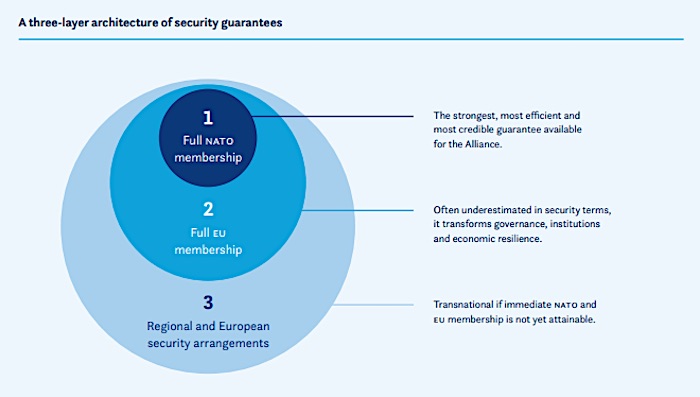
Their demands read like terms of surrender. Russia, they argue, should be subjected to permanent sanctions; dialogue with Russia may not be allowed to “evolve into political normalization;” Russia must be forced to pay reparations to Ukraine; Russian assets must be seized to finance Ukraine’s bid for EU membership; and Ukraine must be offered NATO and EU membership as a prerequisite to a peace deal.That these demands are identical to Kiev’s own maximalist goals is not a coincidence. The report was authored by WSF Chair Katarzyna Pisarska, founder of the International Center for Ukrainian Victory (ICUV). The ICUV, which advocates for the breakup and Balkanization of Russia and the imposition of a “war tax” on European citizens, is funded by the EU, George Soros’ Open Society Foundations, and – prior to the election of US President Donald Trump – by the US State Department and USAID.
Among the report’s contributors are anti-Russia hardliners like former Lithuanian Foreign Minister Gabrielius Landsbergis, former Estonian President Toomas Hendrik Ilves, and Estonian Foreign Minister Margus Tsahkna. The latter claimed last week that NATO possesses the ability to close the Baltic Sea “within hours,” strangling Russia’s economic “lifeline” and creating an “existential” crisis for the country.The Kaliningrad gambit
The report goes far beyond Ukraine’s immediate wartime demands. NATO, it recommends, should treat sustained “hybrid attacks” as “an Article 5 contingency,” even “if no single incident” justifies activating the bloc’s common-defense clause. After arguing that invisible – and often nonexistent – attacks should constitute grounds for war between nuclear powers, the report then makes its single most escalatory statement:Any peace deal, it argues, should include “the demilitarization of Kaliningrad,” a Russian exclave that the report describes as “a hostage within range” of European missiles. NATO forces have held three separate military exercises on the borders of Kaliningrad this year. Last month, Polish Foreign Minister Radoslaw Sikorski suggested that NATO “exercise so aggressively” on the borders of the exclave, to keep Moscow “uncertain of what we will do.”
The consequences of miscalculation or overreach by the West are huge. In a statement released by three of its embassies this month, Moscow’s Foreign Ministry warned that Russia is “ready to use all its arsenal, including nuclear weapons, to defend its territory if NATO countries try to isolate Kaliningrad.”

No, Sundance this is a useless exercise if you don’t address Seymour Hersh. There’s plenty people who like just that on this topic: useless banter.
• Nord Stream Bomber Says Was Operating on Instructions from Ukraine (CTH)
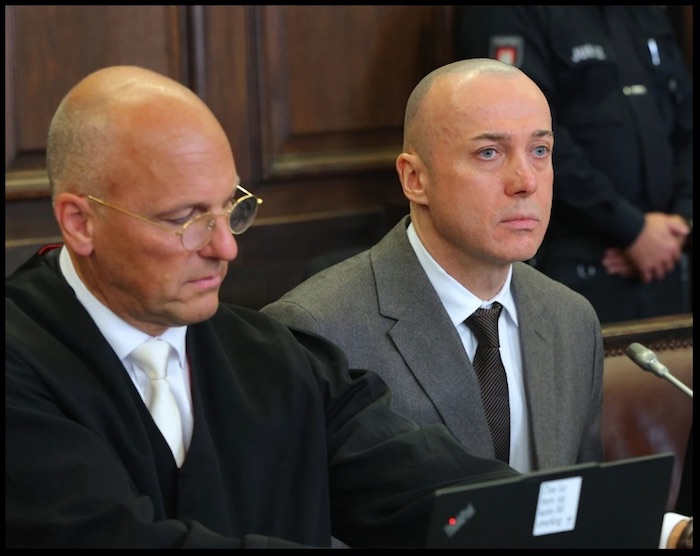
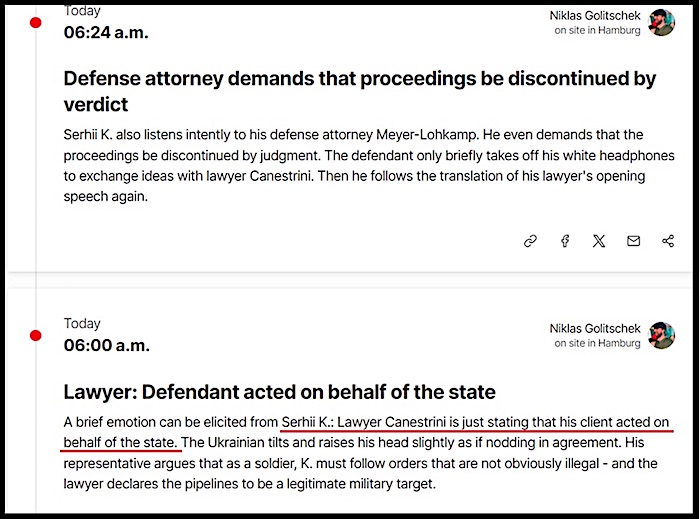
Well, well well… Interesting development. The conspiracy theorists were correct all along. Four years after the attacks on the Nord Stream pipelines in the Baltic Sea, one of the alleged perpetrators has to answer in court for the first time. The trial of Serhiy Kuznetsov began today in Hamburg, Germany. During opening arguments, lawyers representing Kuznetsov informed the judge that he was acting on instructions given to him by the government of Ukraine when he led a team to detonate explosives on the Nord Stream pipeline.Read more …
GERMANY – According to the indictment, Serhiy K., together with other military personnel and on behalf of Ukrainian state agencies, is said to have developed the plan to destroy the natural gas pipelines running from Russia through the Baltic Sea to Lubmin in Mecklenburg-Western Pomerania. The aim was to prevent Russia from using revenues from the gas trade to finance the war of aggression.Under the leadership of the accused, a commando consisting of several professional divers, a skipper and an explosives expert is said to have brought large quantities of high-performance military explosives into the waters off the Danish island of Bornholm on a sailing yacht chartered in Rostock. There, explosive devices equipped with time fuses were then attached to the gas pipelines running along the seabed.
When they were ignited on September 26, 2022, the two gas pipelines Nord Stream 1 and 2 were severely damaged. There were a total of four leaks on three of the four lines. Serhiy K. was arrested at the end of August 2025 on the basis of a European arrest warrant on the Italian Adriatic coast while on vacation with his family and transferred to Germany three months later. Since then, he has been in custody. (read more – translated)
Zelensky was complaining about the speed of the access. “Dmitry Peskov said the Kremlin had seen media reports about restrictions on the Ukrainian army’s access to the Starlink satellite internet service but had no further information..”
“In general, of course, it would be better if brilliant technologies such as Starlink were not used for military purposes at all.”
• Kremlin Comments On Ukraine’s Restricted Access To Starlink (TASS)

Russian Presidential Spokesman Dmitry Peskov
Reports about restrictions on Ukraine’s access to Starlink, the settlement process and the potential weaponization of artificial intelligence were among the main topics of the October 14 briefing by Kremlin Spokesman Dmitry Peskov. TASS has compiled the Kremlin spokesman’s key statements.Read more …
On Ukrainian settlement
– Moscow has taken note of the risk that Europe could sabotage agreements on resolving the Ukraine conflict: “The risk of sabotage by European countries does exist.”– Unlike European countries, the US is working to steer the Ukrainian crisis toward a peaceful settlement: “The US, specifically its negotiators and President [Donald] Trump, is making efforts to help steer the settlement of the Ukrainian crisis toward peace.”
– European countries, unlike the United States, which is seeking a peaceful solution, are doing everything they can to prolong the hostilities in Ukraine: “Europeans are taking a different approach: they are doing everything they can to ensure that this war continues.”
– There is currently a lot of “media hype” around proposals for a settlement in Ukraine, and much of this hype does not correspond to reality: “There’s a lot of media hype around all of this right now, and much of it doesn’t correspond to reality; it’s pure fiction.”
– Work on the possibility of an “energy ceasefire” is continuing.
– No international meetings on the Ukraine issue have been agreed upon at present: “There are no agreed-upon meetings on the agenda.”
– Efforts to resolve the Ukraine conflict continue discreetly and will remain so: “This work is ongoing discreetly and it will continue discreetly.”
On restrictions on Ukrainian army’s access to Starlink
– The Kremlin has seen media reports about restrictions on the Ukrainian army’s access to the Starlink satellite internet service but has no further information: “No, we know nothing beyond the media reports that we have read about it.”– Brilliant technologies such as Starlink would be better off not being used for military purposes at all: “In general, of course, it would be better if brilliant technologies such as Starlink were not used for military purposes at all.”
– It is too early to conclude that Washington has changed its approach to military support for Kiev: “It is too early to draw any systemic conclusions. We proceed from the information available from the statements that are being made.”
– “We have seen numerous media reports on the matter. On the one hand, there are statements that assistance continues to be provided, while on the other, there are reports of various technical restrictions and disruptions in information supplies to Ukraine. We have been carefully recording it all.”
On Russian assets
– Russia sees difficulties in recovering assets frozen by the European Union but will fight to get them back: “In any case, the Russian side will make every possible effort on all fronts, including legal work, court proceedings and litigation, to fight for the return of its stolen assets.”On detention of Japanese journalist in Russia
– The detention of a Japanese journalist on Sakhalin is evidence that Russia’s Federal Security Service (FSB) is carrying out its duties to identify and detain spies: “The FSB has made relevant statements [on this matter]. The Federal Security Service is carrying out its duties: if there are spies, they are caught.”On AI
– Some countries are weaponizing artificial intelligence: “Attempts by a number of countries to turn these new technologies into weapons, the so-called weaponization of artificial intelligence, pose threats to entire sectors of any country’s economy, and, of course, we are no exception.”– The technology itself remains necessary, as it brings many benefits: “Artificial intelligence technologies bring many benefits, improve efficiency and do a lot of good.”
– Russia must be prepared for its use as a weapon: “We must be prepared for these challenges.”
“Do we need to make this world so upside down that God destroys it as he did with the flood, God forbid?”:
• Loud Rhetoric and Quiet Actions (Rabbi Michael Barclay)
The British government made an official announcement, and it will very possibly be used as a reason to initiate attacks on Iran before the midterms.Read more …
While we were remembering Columbus Day here in America, UK Prime Minister Andy Burnham said the plot to attack the Fairford Air Force Base was “highly likely” coordinated in Iran and almost certainly directed by the Revolutionary Guards. “We will not tolerate these threats on our soil,” he stated. Iran’s Foreign Ministry quickly condemned Britain and managed to simultaneously throw some insults at the Western nation. “Tehran rejects the baseless accusations directed at it. Britain’s attempts to invent security claims against other countries are no secret to anyone.”The reason this is all significant is that it opens up other options for Trump, as opposed to waiting until the midterms. Because the intelligence is not from Israel but from the UK; and because it was a direct attack on the U.S., Trump could use it to support attacking Iran at any moment. When you add that Emirati air carrier Etihad and Qatar Airways are both postponing their flights to and from Saudi Arabia; that there is an assemblage of U.S. Naval power that is overwhelming in the region; and that the Israelis are clear about what must ultimately be done, we must all be prepared for significant conflict in the near future.
And we must prepare for the conflicts that are happening politically right now in Israel and in the United States with upcoming elections. In both cases, we can expect more controversy and more attacks. Which is why it is extra important to remember this week’s Torah reading of the week: Noach. Do we need to make this world so upside down that God destroys it as he did with the flood, God forbid? Or can each of us personally make the world a better place by being honest, self-aware, and having the courage to see what needs to be seen, do what needs to be done, and “seek justice and pursue it”?
May we grow and learn through conflict in such a way that it brings a deep peace in our lives and in the world.
Chazak u’Baruch
Rabbi Michael Barclay
October 13, 2026
2nd of Cheshvan, 5787
The Wall Street Journal reported on Wednesday morning that the Houthis have quietly been developing even more ballistic missiles, but that these are mid-range missiles that could cover 2,000 kilometers. At that range, the Houthis could strike Israel directly, God forbid. They have apparently been developing them with components from China and with Iranian assistance. If this is accurate, and it is based on a report by the Conflict Armament Research organization, it radically increases the dangers to Israel by an institutionalized terrorist organization.
Although this has been happening relatively quietly, the Houthi attacks on the Saudis have been loud and consistent. So much so that President Donald Trump addressed the Houthi issue in a Tuesday morning interview. “The Houthis are behaving very badly. I thought they learned their lesson a year ago when we bombed them hard and at their request we stopped.” He continued, saying that they are “deliberately trying to cause oil prices to rise, probably before the U.S. elections – not nice. I will be there after the election, and I will never forget!”
Trump was also loud on Tuesday about some of his other upcoming intentions in the region as well. During a campaign rally in Alaska, he said, “we will hit Iran hard,” and then added: “Wait and see what we do with Iran, because we’re fed up.” Almost immediately after his statement, “White House officials” told Al Jazeera that “reports of a possible American strike against Iran before the midterm elections are not true.”
There is no way to know what Trump’s actual plan is or its timing. It is public knowledge that Vice President JD Vance does not want to attack Iran under any circumstances and that he believes that we should never have attacked it in the first place. It is also common knowledge that Secretary of War Pete Hegseth wants us to attack Iran as soon as possible and believes that we should have truly finished the job over a year ago. Both men are advisors to Trump, and the president is a great CEO who listens to advisors and ultimately makes his own decision.
Let us all pray that the Holy One inspires President Trump to make the right decision at the right time for the benefit of America, of Israel, and of all of Western Civilization.
Chazak u’Baruch
Rabbi Michael Barclay
October 14, 2026
3rd of Cheshvan, 5787
Michigan.
• Democrats Running for President in 2028 (Moran)
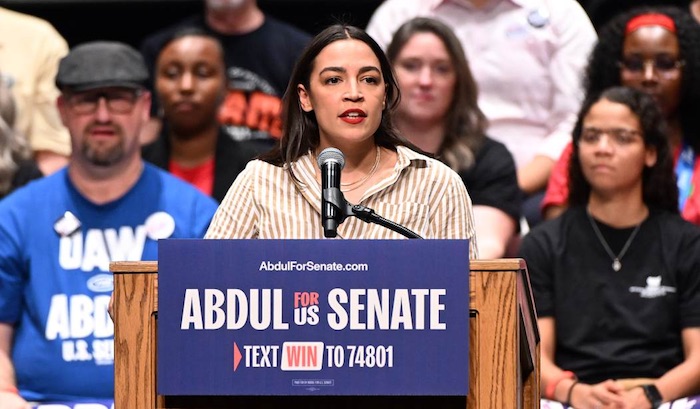
Which Democrat will win the presidential nomination in 2028? According to Rep. Alexandria Ocasio-Cortez, it doesn’t matter. At a private fundraiser last week for Michigan Senate candidate Abdul El-Sayed, AOC reached a startling conclusion. “If Abdul can win in Michigan, anybody can win anywhere,” she said. “We are going to break the electoral map everywhere, everywhere, because that is what it is going to take to guarantee health care to every American.”Read more …
In fact, while Republicans were sleeping, a seismic shift in attitude toward government-run healthcare took place. According to a KFF Health Tracking Poll, 66% of U.S. adults favor a national health plan (“Medicare-for-all”) where all Americans get insurance from a single government plan. This is the highest level of support KFF has recorded in a decade.That poll may be an outlier. An Axios/Ipsos survey reported that 43% of Americans support “Medicare for all,” noting that supporters outnumbered opponents by nearly 2-to-1, while a bipartisan majority agreed the federal government should spend more tax dollars to lower healthcare costs. Medicare for all is wildly popular with Democrats, as 84% of self-identified Dems support it.
That’s not surprising. What’s astonishing is that 72% of political independents support it as well, and 34% of Republicans. Overall, healthcare is considered the third most important issue for voters, behind “the future of democracy” and “the economy/affordability.” So if El-Sayed’s support for Medicare for All isn’t damaging his campaign and may be helping it, where can Republicans hit him to damage him the most?
“You don’t have to be a socialist to believe that you should be taxing billionaires [on] their wealth,” El-Sayed told the New York Times in August. “In fact, if you are a capitalist, you should believe in that. So, I’m a capitalist who just knows about capitalism. I have a bad habit of reading; I’m so sorry.”
We all know El-Sayed isn’t a capitalist. But if he can run a winning campaign on his claim to be a capitalist, other DSA candidates could easily take that approach and skate to victory in 2028. Even Chris Cillizza knows that El-Sayed supports many planks in the Democratic Socialists of America platform. He also wonders if that support for socialist ideas will truly hurt him in 2026.
That said, El-Sayed supports a number of key principles and policies at the heart of the DSA movement — from Medicare for All to a strong innate suspicion about the motivations of very wealthy individuals and large corporations. It’s why he has been endorsed by the superstars of the Democratic Socialism movement — from AOC to Bernie Sanders.
It’s also why what happens to El-Sayed on November 3 matters SO much for what direction the Democratic party takes as it heads into 2028. The knock on Democratic Socialists from the non-DSA wing of the party boils down to this: A candidate with DSA views cannot win a general election in anything close to a swing state.
If El-Sayed “beats former Republican Rep. Mike Rogers in 27 days — as polls suggest he is more likely than not to do — you can be damn sure that El-Sayed and AOC will cite that victory as proof positive that the notion of the DSA as a fringe movement that can’t work nationwide is fully debunked,” surmises Cillizza. Like all good little revolutionaries, DSA believes they’re in a “generational fight.”
“We are in a long-term — I’m being very open right now, right? — about our generational project that we have ahead of us,” AOC said at that fundraiser. “Generational. We are here to break the map.”mAt same event, El-Sayed added his voice to the “generational project.”
“What does it say about what America really wants, needs, and deserves if our state bucks all of the pundits and all of the pontificators who think that this is not possible?” he said. “What does it tell them? It tells them just how big America is and exactly what we want.” Later, he said that “this one is for all the marbles” and referred to “the ripple effect that this race will have.”
“Now, do I think an El-Sayed win in Michigan would be indisputable proof that Americans, writ large, are ready to elect a very liberal/DSA-aligned candidate president in 2028?” Cillizza asks. “I do not!” he adds. But I also know how politics works. And the reality is this: If El-Sayed wins, AOC immediately becomes a more viable and serious contender for the Democratic nomination in the eyes of the political class.
Scoff if you like! But ask yourself this: If El-Sayed loses, do you have ANY doubt that it will be used by the governing wing of the Democratic party as evidence that the DSA-aligned candidates can’t win anywhere the party will need to in order to reclaim the White House in 2028? Candidly, I don’t think that sentiment is necessarily true either! El-Sayed losing does not convince me AOC isn’t a serious 2028 candidate if she runs!
But, politics is politics. And perception — and narratives — matter a LOT. And the narrative at stake in 27 days in Michigan is whether or not a Midwest swing state will elect someone in El-Sayed who has very, very liberal views. Establishment Democrats (who have already adopted several DSA planks in their own campaign platforms) would dearly love to pretend that the DSA is an anomaly and that it will go away after it’s trounced in 2026 or 2028.
That’s not going to happen. The DSA has money; it has the support of a sizable number of younger voters as well as ancient hippies and the woke Hollywood crowd. The DSA is not a majority. But it can throw a monkey wrench into both parties’ plans.
“.. it processes hundreds of trillions of dollars in transactions across the globe. It has a high, and increasing, risk profile for money laundering, terrorist financing and other illicit activities.”
• Treasury Hits Bank of America with $1.2 Billion Fine for Money Laundering (CTH)
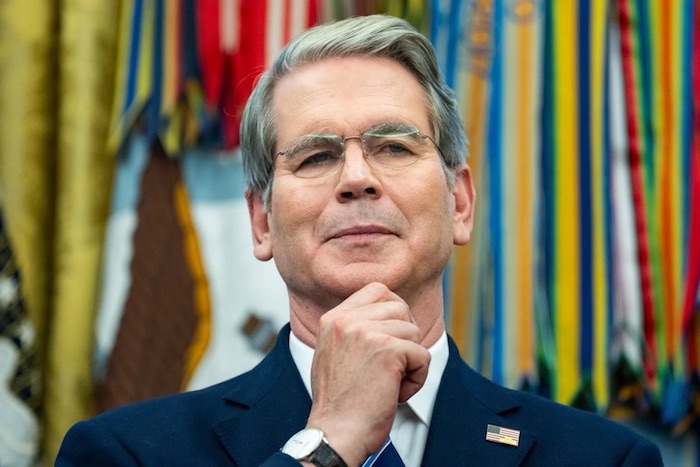
The U.S. Treasury Department said Tuesday it is imposing $1.2 billion in fines on Bank of America for compliance violations resulting in lax efforts to curtail money laundering activity. The fines on America’s second-biggest bank amount to the third-largest in the department’s history. [Treasury Notice Here] Money laundering for Latin-American narcotraffickers, terrorists as well as sketchy individuals/organizations that continue avoiding U.S. Treasury sanctions appear to be the heart of the matter.
WASHINGTON—The Office of the Comptroller of the Currency (OCC) today announced a $750 million civil money penalty against Bank of America, N.A. (bank), for violations of the Bank Secrecy Act and its implementing regulations, including 12 CFR 21.21 and 12 CFR 21.11. This amount is the largest in OCC history. The bank is also subject to a December 2024 cease-and-desist order (2024 Order), which requires the bank to address its deficient Bank Secrecy Act/anti-money laundering (BSA/AML) compliance program.“Bank of America, N.A., is the second largest bank in the U.S. and the sixth largest in the world. Every year, it processes hundreds of trillions of dollars in transactions across the globe. It has a high, and increasing, risk profile for money laundering, terrorist financing and other illicit activities. Almost two years ago, the bank signed an order with the OCC and committed to fixing its longstanding BSA deficiencies. Despite its obligation to the American people as a national-chartered, global systemically important bank, the bank’s BSA/AML compliance program continues to reflect widespread breakdowns in internal controls, which threatens U.S. national and economic security” said Comptroller of the Currency Jonathan V. Gould.
“The bank’s poor response to its BSA deficiencies is unacceptable. The second largest bank’s egregious and continued BSA violations warrant the OCC imposing its largest CMP ever assessed against a bank. The OCC expects all banks to have an effective BSA/AML compliance program. Those that do not can expect swift and significant action from the OCC.”
The OCC found that the bank’s BSA/AML compliance program has been deficient and ineffective. The bank’s deficient transaction monitoring system resulted in the bank failing to properly monitor trillions of dollars in transactions. This caused the bank to file large numbers of late suspicious activity reports (SARs) involving billions of dollars. Many of the late SARs had indicia of money laundering. The bank knew for years that it was failing to escalate potentially suspicious activities to investigators for review to determine if a SAR should be filed but failed to correct this serious BSA violation.
In addition, the bank’s BSA Officer and staff lacked sufficient skills and expertise to effectively manage the bank’s BSA/AML program. Key BSA personnel did not receive appropriate training regarding suspicious activity identification, investigation, and reporting, which resulted in the bank filing inaccurate and late SARs. The BSA audit function failed to identify long-standing BSA concerns that examiners subsequently uncovered.
After agreeing to the 2024 Order, the bank still failed to prioritize BSA/AML compliance. The bank did not complete many of the significant steps needed to establish an effective BSA/AML compliance program and its program continues to have significant breakdowns. For example, more than a year after the 2024 Order, the bank still failed to escalate potentially suspicious activities to investigators for review. Additionally, the bank processed potential trade-based money laundering transactions due to a systemic gap in its transaction monitoring program. Bank management failed to ensure the bank had an effective BSA/AML compliance program and continued to minimize the program’s significant deficiencies.
The OCC is taking this action in coordination with an action by the Financial Crimes Enforcement Network (FinCEN), which is assessing a $1.2 billion fine that credits the OCC’s $750 million penalty and is requiring remedial action by the bank. The OCC-assessed penalty will be paid to the U.S. Treasury.
Money laundering is at the core of the issue!
Flashback to July, 2026…
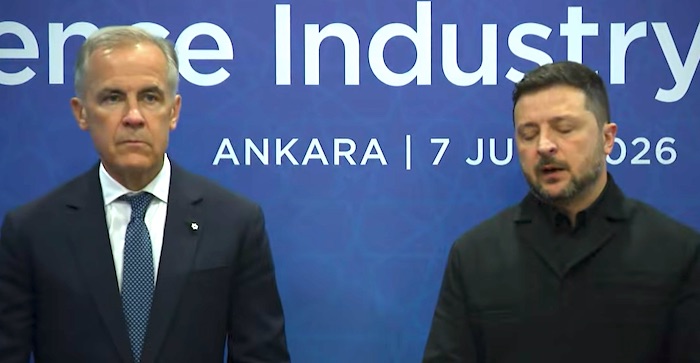
Prime Minister Carney and Volodymr Zelenskyy announced a new Canada-based financial institution called the Defense, Security and Resilience Bank (DSRB).
CANADA – […] “Mark Carney, welcomed the support for the Canada-led DSRB by: Albania, Belgium, Greece, Latvia, Luxembourg, Romania, Türkiye, and Ukraine. These countries will be entrusted with defining the initial policies and directives of the Bank, shaping its operations and ensuring benefits flow to members’ economies.”[…] Leveraging a strong credit rating, the Bank will provide long-term, low-cost financing for defence, security, and resilience initiatives across supply chains.”
When you see the term “resilience initiatives” think climate change. Specifically, think carbon capture and carbon trading mechanisms. Perhaps this move by U.S. Treasury can also be viewed as a countereffort against the financial schemes of the banking elite who have been coordinating efforts against the carbon-friendly nationalists. Just worth remembering.
“Bombshell Report Reveals How..”
• Major Banks Discriminated Against Conservatives (Matt Margolis)
Nine of the country’s biggest banks spent five years running an outrageous campaign to cut conservatives, Christians, pro-lifers, and Trump supporters out of the financial system, and the federal government now has the receipts.Read more …
The Office of the Comptroller of the Currency (OCC) released its Debanking Review on Wednesday. Miranda Devine first broke the story in the New York Post. The 47-page report, titled “Guaranteeing Fair Banking for All Americans,” draws on a hundred thousand complaints and fifty thousand internal bank records from 2020 through 2025. It names JPMorgan Chase, Bank of America, Citibank, Wells Fargo, U.S. Bank, Capital One, PNC, TD Bank, and BMO Bank. Every one of them hid behind the same excuse: “reputation risk.”What did these banks fear? Bad press, protests, attacks from activist outfits like the Southern Poverty Law Center, and retaliation from regulators and politicians. So they purged anyone who might draw that heat. Christian organizations lost service over their views on abortion, LGBT issues, and traditional family values. Gun makers and retailers, Arctic oil and gas, coal, detention facilities, tobacco, and e-cigarette companies all saw financing dry up.
Let’s start with JPMorgan Chase. Its payment arm, WePay, shut down a merchant selling Trump and MAGA gear, claiming the products “promote[d] hate, violence, or racial intolerance.” JPMorgan’s screening system routinely flagged “MAGA,” “Make America Great,” and “America First” in merchant profiles, websites, and transaction data, and the bank added several of those terms after the Jan. 6, 2021, Capitol riot. WePay also dumped a seller of “conservative/republican t-shirts, hats, etc.” after spotting a “Biden-Illegitimate-Tshirt,” a “The-Big-Lie-Sticker,” and a “Trump-Won” flag.
Another merchant lost payment processing because an event organizer’s social media posts called Black Lives Matter “Marxists” and labeled Joe Biden and Anthony Fauci “the enemy.” Bank employees ruled those posts “an incitement of hate.” Think about that for a second: Garden-variety political opinions were enough to get an American cut off.
The banks leaned on the SPLC’s bogus hate-group designations again and again. That’s the same SPLC federal prosecutors indicted in April on fraud and money-laundering charges for allegedly bilking donors out of millions, and the same group FBI Director Kash Patel has called a “partisan smear machine.” WePay closed a religious organization’s account after the SPLC branded it an “extremist hate group,” and employees described it internally as a “[r]ight wing religious conservative non profit with strong anti LGBTQ rhetoric.” WePay also killed an account raising money for a “devout Christian’s” legal challenge to anti-discrimination laws.
Let’s continue, shall we? PNC turned down a line of credit for a successful media company after its ESG group noted that one owner’s foundation funded Christian conservative groups the SPLC had tagged as hate groups, and that another owner was “a conservative political commentator.” The employee who recommended the denial put it in an internal note. “I think it becomes really difficult to justify aligning ourselves with a company whose owners have built very public personas around opinions very contrary to PNC’s beliefs/values,” the employee wrote.
Wells Fargo pressured a payment processor to drop a religious nonprofit over its views on same-sex marriage, and it refused loans to two firearms businesses because — get this — employees feared blowback from the Biden administration, anti-gun activists, and members of Congress. “Under the Biden administration, banks could face greater supervisory pressure to move away from lending to the firearms industry,” a Wells Fargo reputation-risk review of a prospective firearms client warned.
Bank of America cut off private prison businesses, citing “changing policymaker attitudes.” A few months into the Trump administration, it tried to reopen one of those accounts. So much for principle.= To be fair, the report found that some banks also turned away groups on the left. Capital One refused any partisan entity backing candidates from only one party, which meant rejecting both a “reproductive rights” group and a gun-rights group. Yet the overwhelming weight of the evidence points in one direction.
All nine banks told the OCC they’ve revised their practices. The OCC says those reforms fall short and that no bank has “fully and publicly acknowledged” its “weaponization of finance against hardworking Americans.” JPMorgan, for its part, pinned the blame on WePay and claims the problem is now fixed.
“Today’s report provides irrefutable evidence that the nation’s largest banks have denied, debanked and discriminated against customers and lawful businesses,” Comptroller of the Currency Jonathan V. Gould said, adding that the OCC is weighing further action. The Consumer Financial Protection Bureau, which has primary supervisory authority over the largest banks, opened its own investigation Wednesday.
“It is appalling that these banks targeted American consumers for their political, social, or religious beliefs that did not align with the Biden Administration or its leftist allies… Many of those targeted were supporters of President Trump,” CFPB Acting Director Mark Paoletta said. “These thuggish tactics… have no place in America.”
A lesson on the history of slavery.
Far too long for this format, but not for its own, see at the links.
A topic I would trust PCR with.
“Another Lesson on False History taught by liars determined to destroy America..”
• Racism in the False History of The NY Times 1619 Project (Paul Craig Roberts)
This is a is factually based history lesson. The lesson is about black slaveowners. Larry Koger’s book, Black Slaveowners, is well documented. Koger provides 34 pages of documentation listing the names of black slave owners and the number of slaves they owned in South Carolina and 38 pages of historical notes. Most free blacks only owned a few slaves, but some blacks themselves had plantations and had as many as 30 or 40 slaves. One owned 123 slaves. Another owned 156 slaves. One owned 68. Another 71.Read more …
Many owned 10 to 20. In South Carolina alone in 1830 there were 450 black slaveowners who owned between them 2,412 black slaves. The majority were in the city of Charleston, which suggests that these were free black businesses such as bricklayers, cabinet makers, carpenters, coopers, cotton gin makers, millwrights, shoemakers, and tailors. Being artisans meant that the slave employees, some owned and some rented from owners, were likely with the percentage of what they earned they were allowed to keep able to buy themselves out of slavery, and the records show that as time passed the numbers of free blacks increased as did the number of black owned black slaves.The free blacks, just like the plantation owners, needed labor, and the only labor was black slaves. Slaves constituted the only labor force, because newly arrived immigrants had no need to hire out as laborers when they could simply move a little farther to the West and occupy unoccupied lands taken from Indians or Native Americans. Until the Western frontier closed, it was possible to move westward and take possession of one’s own homestead, so why work for another person? Slavery was a labor institution, not a racist one, with slaves purchased from the black Kingdom of Dahomey on the West Coast of Africa brought to the new world by ship captains many financed by Jews. Neither free blacks nor white plantation owners need to apologize for the slaves they owned.
Slavery was the labor institution that they were born into. It was the only source of labor, without which land is worthless. Slavery’s origin resided in African slave wars between black Africans. The black Kingdom of Dahomey became the main supplier of labor to the new world, because the king had the wits to trade black slaves to Arabs for firearms and thus prevailed in the slave wars. Do not expect any professor in any university black studies program or any white liberal to be receptive to the facts about slavery. They have constructed their own narratives that serve their own agendas.
Koger’s book is pertinent now that black demand for slavery restitution is heating up. It seems that blacks themselves will have to pay reparations. There were always some free blacks, and others were freed by their owners. It was possible for a black to purchase himself out of slavery and to purchase slaves as a work force for his business, and to purchase his relatives and friends, and many did so. Many free blacks actually owned their wives and children, having purchased them with their earnings as artisans, skilled craftsmen, and business owners. This no doubt comes as a surprise to those brought up on the white liberal version of Southern history whose foundation is the extraordinary lies told by Harriet Beecher Stowe in Uncle Tom’s Cabin, a work of hatred against Southern Americans.
During the colonial era under the Georgian Kings, it was possible for slave owners to free their slaves, and many did so. This resulted in a growing population of free blacks whose labor and its monetary earnings belonged to them, unlike “free Americans” today whose labor, depending on their income, belongs to the IRS in the range of 30% to 50%. Today many Americans are as enslaved with the Income Tax as black slaves were in the 19th century.
With their earnings free blacks not only purchased a labor force, but also bought wives and children, relatives and friends, out of bondage. But after the first 24 years of American independence regulation stepped in. The US Constitution left the slavery issue to the states, as President Lincoln acknowledged. In 1800 South Carolina became concerned that slaves were being freed on the death of their owners who had no means of support. South Carolina did not object to the freeing of slaves, only to freeing slaves who had no visible means of support. Being a Christian state, this meant freed slaves would become a support burden on the state and thereby on taxpayers for which no provision existed in law.
A law was passed that required that before slaves could be freed, evidence of their self-support had to be demonstrated. Koger makes clear that not all freed slaves were magnanimous acts as some slaveowners freed aged and unproductive slaves in order to rid themselves of the burden. Nevertheless, the provision that “the racist state of South Carolina” made to protect blacks from starvation was not made by Lincoln who “freed the slaves.” Many of Lincoln’s “freed slaves” starved to death as their homes and livelihood was destroyed by the Union Army. Lincoln’s war against the South was also a war against the black population which refused to rebel.
The Emancipation Proclamation in 1863 was a war measure that failed as the black slaves, occupied only by white females and children, refused to rebel. The 1800 South Carolina law that a slave could be freed on evidence of self-support made it difficult for free blacks to free slaves they purchased. There were ways around this. Blacks who had purchased their wives and children simply reported them to the federal census as free blacks and paid the capitation tax on free blacks. In effect this allowed wives and children who were in bondage to their husband and father to bridge the gap between bondage and a free person.
Koger’s book is intriguing. Although it is not a theme that Koger develops, it shows that blacks were being assimilated into white Southern life. The racism about which we hear so much today from liars such as Nikole Hannah-Jones and the New York Times 1619 Project and from the 19th century liar Harriet Beecher Stowe, are concocted narratives for the purpose of creating hate between blacks and whites when such hate simply was not present. There are always bad actors, but Southern society was not one. Koger reports and documents that a black elite was rising and that this rising class had the protection of white South Carolinians. Black membership in white churches was common. Today after generations of white liberal liberation of blacks the church memberships are separate. .
“The Court often gets sticker shock in adopting broader interpretations that could impact whole industries in such a transformative way. It much prefers to defer to Congress on such trade-offs.”
• Supreme Court Challenge to Sharing of Viewing Records on Free Sites (Turley)

Today the Supreme Court will hear arguments in a major case pitting privacy advocates against media companies. By any measure, Salazar v. Paramount Global is a blockbuster case in the making. At issue is the use of viewing habits by companies offering free subscriptions and material to the public. These companies make money by then using that history to make tailored marketing pitches. Michael Salazar is arguing that a Blockbuster-era law should prevent such sharing of his viewing history, a ruling that would have a massive impact on media and entertainment companies.Read more …
Salazar involves a law passed 40 years ago after a controversy during the confirmation hearings of Robert Bork, who was nominated by President Ronald Reagan. The press and pundits unleashed an unrelenting campaign against the conservative, including the Washington City Paper releasing his list of 146 movies rented from a video store. Congress moved to stopped the abuse and passed the Video Privacy Protection Act to bar such disclosures.Now, Michael Salazar is arguing that his free digital subscription for 247Sports.com, which is owned by Paramount Global, should also prevent the company from sharing his viewing habits with marketers. The case could have sweeping impacts on media and entertainment companies, which make much of their revenue through tailored marketing pitches based on such information.
The Video Privacy Protection Act (“VPPA”) bars a “video tape service provider” from “knowingly disclos[ing], to any person, personally identifiable information concerning any consumer of such provider.” 18 U.S.C. § 2710(b)(1). A “consumer” defined as a “subscriber of goods or services from a video tape service provider.” Id. § 2710(a)(1). The act further defines “personally identifiable information” as including information that “identifies a person as having requested or obtained specific video materials or services from a video tape service provider.” Id. § 2710(a)(3).
On one level, the spirit of the Act is to protect the privacy of citizens in watch they choose to watch in their private lives. That is why privacy groups have rallied around the case. According to polls, over seven in ten Americans have concerns that they have little to no control over what companies do with their data.
Conversely, the companies argue that this is a free service and that marketing is how these companies make such material available without charge to the public.
Paramount is arguing for a narrow construction of the statute. It notes that “consumer” is a “renter, purchaser, or subscriber of goods or services” from a “video tape service provider.” 18 U.S.C. 2710(a)(1). It argues that Salazar is not a “consumer” because he did not “rent[], purchase[], or subscribe[]” to the delivery of any “video cassette tapes or similar audio visual materials.” 18 U.S.C. 2710(a)(1) and (4). Rather, it claims that 247Sports is a news website focused on college sports, and any content Salazar allegedly viewed was available, for free, to any user of the Internet.
Salazar insists that he did subscribe when he signed up for a free, written email newsletter. However, the company argues that the newsletter is not a “video cassette tape[] or similar audio visual material[],” ibid., so he is not a “consumer” under the statute.
It is portraying the case as a distortion of a now dated law: “The VPPA is a Blockbuster-era statute barring the non-consensual disclosure by video rental stores of the rental history of individual patrons. Salazar seeks to transmogrify it into a prohibition against targeted advertising on the Internet.”
Like many sites, 247Sports allows access outside of a paywall by making revenue through advertising. While many consumers do not like their viewing history shared, they also do not like the increasing costs of having to pay for access to games and videos. It is a tradeoff that the lower courts felt was permissible in rejecting Salazar’s claims.
This is a tough case of statutory interpretation in seeking to apply an older statute to new media conditions and practices. Courts have found various flaws in Salazar’s claims ranging from claiming to be a “consumer” within the meaning of the VPPA to whether Paramount is a “video tape service provider” or whether the information is “personally identifiable.” If subscribing to a free newsletter is the same as subscribing to actual audiovisual content, the case could deliver a massive blow to media revenue streams.
Ultimately, Congress could step in to tweak the law if the Court rules for Salazar. When the Court accepts a case, there is a higher likelihood that it will reverse the underlying opinion. However, it only takes four justices to accept a case and this Court tends to narrowly construe such laws. The countervailing issue here is that the Act was designed with the state purpose of protecting privacy.
I teach “legisprudence” theories in my torts and Supreme Court classes in how courts interpret statutes with “gaps” or “ambiguities.”
Some would argue that a court should gravitate toward the narrow textual meaning given the sweeping impact of a broader interpretation. Figures such as Judge Frank Easterbrook argued for upholding the “deal” of legislation in strictly interpreting such laws by not gap-filling. Instead, the court can leave it to Congress to resolve ambiguities as the branch accountable to voters.
Another approach, advocated by Professor Jonathan Macey, would apply the “public-regarding purpose” of the law — fill in the gap or ambiguity by reference to the stated public-regarding purpose” of the law. In this case, the public-regarding purpose is privacy.
The Court often gets sticker shock in adopting broader interpretations that could impact whole industries in such a transformative way. It much prefers to defer to Congress on such trade-offs. Yet, rather than letting the Sixth Circuit in favor of Paramount stand, four justices decided that they wanted to deal with this question. It could prove to be a close case.

🇺🇸🚀 SpaceX wants to launch Starship up to 456 times a year from Texas.
— Mario Nawfal (@MarioNawfal) October 13, 2026
That’s a massive jump from the 25 launches it’s allowed right now. The plan comes in 2 steps, first up to 100 launches a year around the clock, then the full 456.
It’s also asking for 912 landings, since… pic.twitter.com/YSYCKNwNPl
Ron Baron predicts SpaceX will be worth $20 trillion to $50 trillion in 10 years and says Elon Musk thinks that estimate is “way low”
— Fireside Alpha (@firesidealpha) October 13, 2026
“In 10 years, I think it’s going to be thousands of dollars a share. I think it’ll be worth $20 trillion, $30 trillion, $50 trillion. Elon thinks… https://t.co/2bUpQhkgC1 pic.twitter.com/rJfzvvsfHE
Back in 2017, Elon Musk explained how Starship can completely transform Earth-to-Earth travel
— X Freeze (@XFreeze) October 13, 2026
“If you build a ship that's capable of going to Mars, what if you take that same ship and go from one place to another on Earth?”
Here's how it works:
Starship will eventually launch… pic.twitter.com/tdx2LUJDp3
Support the Automatic Earth in wartime with Paypal, Bitcoin and Patreon.

Home › Forums › Debt Rattle October 15 2026