Jun 062017
 
 June 6, 2017  Posted by at 9:32 am Finance Tagged with: , , , , , , , , , , ,  1 Response »


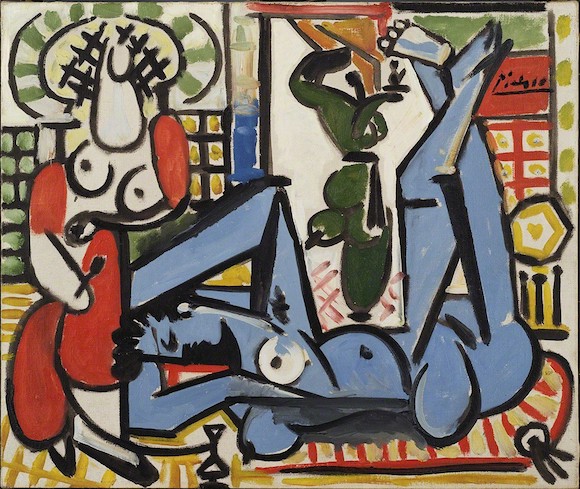
Pablo Picasso Les femmes d’Alger 1955

 

Trump Set To Make First Moves At Completely Revamping The Fed (CNBC)
Trump’s ‘Been Clear To Me’ To Try To Rebuild Russia Ties: Tillerson (R.)
Contractor Charged With Leaking Document About US Election Hacking (R.)
How The Intercept Outed Reality Winner (ErrataS)
China’s Biggest Bank Is Wall Street’s Go-To Shadow Lender (BBG)
One Belt, One Road, and One Debt Hangover (Rickards)
Qatar Stocks Tumble 7% As Six Arab Nations Cut Diplomatic Ties (CNBC)
Qatar’s Real Power Is As The World’s Largest LNG Exporter (BBG)
Britain’s Economic Model Is Broken: This Is Our First Post-Crash Election (G>)
Simple Numbers Tell Story Of Police Cuts Under Theresa May (G.)
Earnings vs. Profits & The Bull Market (Roberts)
US M&A: One Of The Scariest Charts To Look At – Citi (BI)
IMF’s Lagarde Offers Eurozone Greek Debt Compromise, Handelsblatt Says (R.)
The Euro’s Future Demands Trust (K.)
An Occupied Hotel In Greece Models How To Welcome Refugees (WNV)


Well, it’ll be different alright. Given the Fed’s actions over the past decade, it can hardly get wrose.

Trump Set To Make First Moves At Completely Revamping The Fed (CNBC)

President Donald Trump appears ready to remake the Federal Reserve in an image that will be considerably different than what investors have known for many years. The president is prepared to nominate Randal Quarles and Marvin Goodfriend to two of three vacancies at the central bank, according to multiple press accounts that have not been disputed by the administration. Quarles likely would assume the role vacated by Daniel Tarullo to oversee the nation’s banking system. White House officials did not respond to a CNBC request for comment. Should Trump nominate the two men and they receive confirmation, it will represent the first steps in a possible substantial remaking of a Fed that has practiced ultra-loose monetary policy for the past decade but has been tight on banking regulations.

Trump will have the opportunity to name one more person now, then can fill two even more critical vacancies in 2018 — that of Chair Janet Yellen and Vice Chair Stanley Fischer. If the Quarles and Goodfriend moves are indicators of what’s to come, things could start getting less comfortable for Yellen. Both are considered solidly conservative, in line with the Republican president and Congress but perhaps not with Yellen. “Clearly, these appointees are a significant departure from the crowd that we’ve had on the board,” said Christopher Whalen, head of Whalen Global Advisors and a former investment banker and long-time financial analyst. “Yellen is probably the most left-wing Fed chair we’ve ever had. I also think both Quarles and Goodfriend have much better grounding in the financial markets. That would be refreshing.”

Yellen, however, may not think so, particularly if the coalition she has carefully crafted since taking the chair’s seat in 2014 starts to unravel. “I welcome these additions,” Whalen said. “Hopefully they put a banker in the third slot. Then eventually Yellen’s going to leave because she’s going to start losing votes.”

Read more …

Kiwis flipping birds.

Trump’s ‘Been Clear To Me’ To Try To Rebuild Russia Ties: Tillerson (R.)

U.S. President Donald Trump told his top diplomat that the dispute over probes into links between his inner circle and Russia should not undermine U.S. efforts to rebuild relations with Moscow, Secretary of State Rex Tillerson said on Tuesday. Speaking in New Zealand after a trip to Australia, Tillerson reiterated the U.S. commitment to the Asia-Pacific region as global leaders have expressed growing mistrust over the Trump administration, which has withdrawn from key international agreements since taking office. At home, Trump’s administration has been plagued by questions over links to the Russian government. Tillerson said Trump told him to try to improve ties with Russia regardless of the U.S. political backdrop.

“I can’t really comment on any of that because I don’t have any direct knowledge,” Tillerson told a news conference in Wellington, when asked how worried he was that the U.S. political crisis could take down the Trump administration. “The president’s been clear to me: do not let what’s happened over here in the political realm prevent you from the work that you need to do on this relationship and he’s been quite clear with me… that we might make progress. I’m really not involved in any of these other issues,” he said after a meeting with New Zealand Prime Minister Bill English.

Read more …

This is another very curious story, and it’s not just the girl’s name, Reality Leigh Winner. Still, even The Intercept jumps to conclusions:

“Russian military intelligence executed a cyberattack on at least one U.S. voting software supplier and sent spear-phishing emails to more than 100 local election officials just days before last November’s presidential election, according to a highly classified intelligence report obtained by The Intercept.”

Even though they know that when signs point to Russia, it’s probably not Russial, the caveat only come later:

“While the document provides a rare window into the NSA’s understanding of the mechanics of Russian hacking, it does not show the underlying “raw” intelligence on which the analysis is based. A U.S. intelligence officer who declined to be identified cautioned against drawing too big a conclusion from the document because a single analysis is not necessarily definitive.”

If the raw intelligence is not available, how can one draw the Russia conclusions? The Intercept now blindly trusts US intelligence agents? And that’s not all, see next article…

Contractor Charged With Leaking Document About US Election Hacking (R.)

The U.S. Department of Justice on Monday charged a federal contractor with sending classified material to a news organization that sources identified to Reuters as The Intercept, marking one of the first concrete efforts by the Trump administration to crack down on leaks to the media. Reality Leigh Winner, 25, was charged with removing classified material from a government facility located in Georgia. She was arrested on June 3, the Justice Department said. The charges were announced less than an hour after The Intercept published a top-secret document from the U.S. National Security Agency that described Russian efforts to launch cyber attacks on at least one U.S. voting software supplier and send “spear-phishing” emails, or targeted emails that try to trick a recipient into clicking on a malicious link to steal data, to more than 100 local election officials days before the presidential election last November.

While the charges do not name the publication, a U.S. official with knowledge of the case said Winner was charged with leaking the NSA report to The Intercept. A second official confirmed The Intercept document was authentic and did not dispute that the charges against Winner were directly tied to it. The Intercept’s reporting reveals new details behind the conclusion of U.S. intelligence agencies that Russian intelligence services were seeking to infiltrate state voter registration systems as part of a broader effort to interfere in the election, discredit Democratic presidential candidate Hillary Clinton and help then Republican candidate Donald Trump win the election. The new material does not, however, suggest that actual votes were manipulated.

Read more …

… but it gets weirder. Soon after the Intercept published the story and docs, the leaker was arrested. How? She could easily be traced back to these docs. Was the Intercept not aware of this? That’s hard to believe, leaked documents is what they do. Was someone careless? We haven’t seen any excuses made. Did they knowingly give her up? Is this then the end of the Intercept?

How The Intercept Outed Reality Winner (ErrataS)

Today, The Intercept released documents on election tampering from an NSA leaker. Later, the arrest warrant request for an NSA contractor named “Reality Winner” was published, showing how they tracked her down because she had printed out the documents and sent them to The Intercept. The document posted by the Intercept isn’t the original PDF file, but a PDF containing the pictures of the printed version that was then later scanned in. The problem is that most new printers print nearly invisibly yellow dots that track down exactly when and where documents, any document, is printed. Because the NSA logs all printing jobs on its printers, it can use this to match up precisely who printed the document. In this post, I show how.

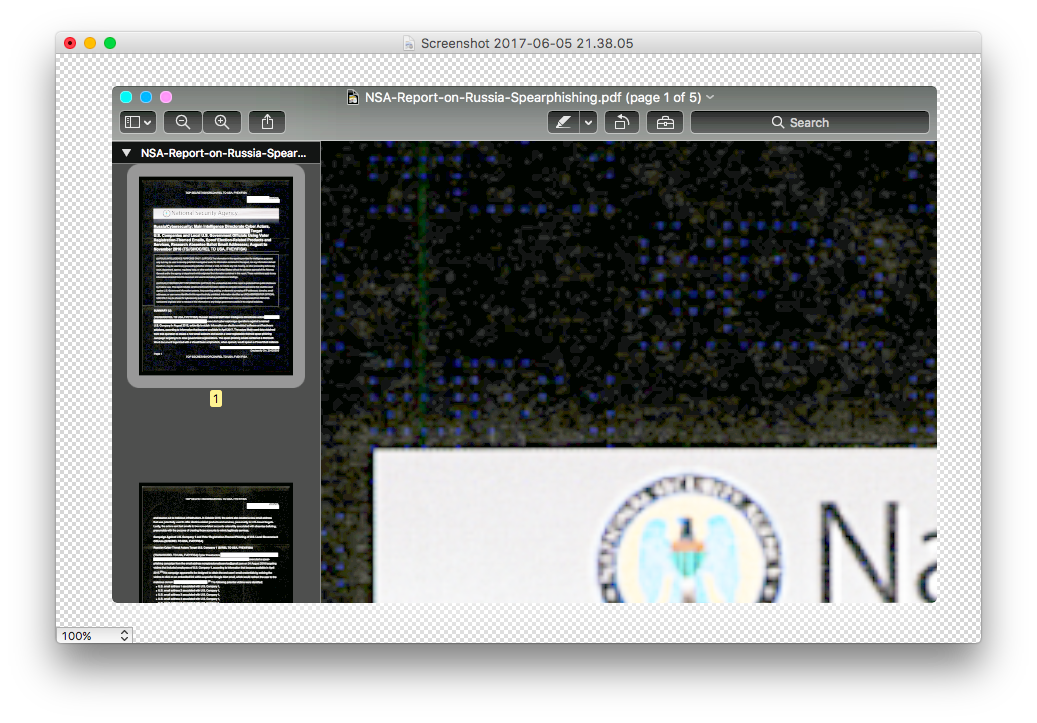
You can download the document from the original article here. You can then open it in a PDF viewer, such as the normal “Preview” app on macOS. Zoom into some whitespace on the document, and take a screenshot of this. On macOS, hit [Command-Shift-3] to take a screenshot of a window. There are yellow dots in this image, but you can barely see them, especially if your screen is dirty.

We need to highlight the yellow dots. Open the screenshot in an image editor, such as the “Paintbrush” program built into macOS. Now use the option to “Invert Colors” in the image, to get something like this. You should see a roughly rectangular pattern checkerboard in the whitespace.

It’s upside down, so we need to rotate it 180 degrees, or flip-horizontal and flip-vertical:

Now we go to the EFF page and manually click on the pattern so that their tool can decode the meaning:

This produces the following result:

The document leaked by the Intercept was from a printer with model number 54, serial number 29535218. The document was printed on May 9, 2017 at 6:20. The NSA almost certainly has a record of who used the printer at that time.

Read more …

“With 260-to-1 Leverage A Chinese Giant Takes On Goldman In US Repo”

China’s Biggest Bank Is Wall Street’s Go-To Shadow Lender (BBG)

High up in a New York City skyscraper, China’s biggest bank is playing in the shadows of American finance. The prize for Industrial & Commercial Bank of China isn’t stocks, bonds or currencies. It’s the grease in the wheels of all those markets: repurchase agreements. By exploiting a loophole in rules intended to keep U.S. banks from getting “too big to fail,” the state-owned ICBC has become a go-to dealer in repos in just a few short years, alongside longtime powerhouses like Goldman Sachs Group Inc. The short-term loans allow investors to borrow money by lending securities, serving a vital role in day-to-day trading on Wall Street. ICBC’s rise reflects not only China’s global ambitions in high finance, but also how post-crisis rules have let a whole host of new players profit from the murky world of shadow banking, largely beyond the reach of bank regulators.

As big banks face tougher standards, they’re being replaced by brokers, asset managers and foreign firms like ICBC, which can use more leverage and take greater risks. That has some regulators worried non-bank lenders are once again emerging as a threat to financial stability, less than a decade after panic in the repo market wiped out Lehman Brothers. “The concern is that non-bank dealers are becoming a larger part of the repo market,” said Benjamin Munyan, who specializes in shadow banking and regulation at Vanderbilt University’s Owen Graduate School of Management. “These intermediaries are outside the scope of our traditional Federal Reserve safety net.” In some ways, the development is emblematic of how steps taken to stamp out financial risk-taking in one area have created unforeseen risks in another. But it also highlights the willingness and ability of firms to jump through whatever holes regulators leave or create.

In a repo, firms borrow money by putting up securities like Treasuries as collateral. The cash can then be used to buy higher-yielding assets, something hedge funds often do. When the agreement expires, the borrower “repurchases” the collateral, paying interest to the lender. The process can be repeated over and over, boosting a firm’s leverage, as long as the assets backing the repo maintain their value. During the credit crisis, reliance on such short-term funding helped bankrupt Lehman and imperiled the financial system. Bailouts put the biggest securities firms under Fed supervision as banks, and Dodd-Frank regulations forced them to shrink their assets. A key provision has been the enhanced capital requirements, which made it prohibitively expensive for large U.S. banks to warehouse low-yielding Treasuries and finance repos.

Read more …

China runs out of collateral.

One Belt, One Road, and One Debt Hangover (Rickards)

China is not only one of the world’s largest debtors, it is one of the world’s largest creditors. China uses debt not in the customary financial manner, but as a political tool to generate employment and maintain social stability. Likewise China uses loans and investment as a tool to advance its strategic interests. This may be good geopolitics in the short run, but it will be a disaster economically in the long run. Just as Chinese state owned enterprises (SOEs) can’t repay debts to Chinese banks, China’s foreign partners will not be able to repay debts to China itself. These twin disasters-in-the-making may converge in such a way that China’s assets disappear or become illiquid at exactly the time they are most needed to bail-out its own banking system.

China has launched four major overseas investment initiatives in the past ten years. The oldest is their sovereign wealth fund, China Investment Corporation, or CIC, established in 2007. Sovereign wealth funds are a way for countries to invest their reserves in securities other than safe instruments such as U.S. Treasury notes. CIC today has assets of over $800 billion, spread among stocks, corporate bonds, hedge funds, private equity, commodities, and commercial real estate. Some of CIC’s investments are directly-owned enterprises, including gold mines in Zimbabwe. While these assets may outperform Treasury notes over time, they are also illiquid, and would tend to decline in value during a financial panic. This means that about 20%, of China’s reserves are unavailable for critical tasks such as bailing out the banking system or defending the currency.

[..] The problem with One Belt, One Road is that many of the potential recipients of development loans are not highly creditworthy or have a track record of defaulting on debts or requiring substantial debt restructuring in order to stay current. As with Chinese bank loans to SOEs, the NDB, AIIB, and One Belt, One Road efforts are not primarily economic but political. China is seeking to use its economic clout to create jobs and control critical infrastructure. [..] As with its other policies, China will turn liquid assets into illiquid assets in order to pursue its ambitions. This could make sense if nothing goes wrong. But, things will go wrong. China will face a monumental liquidity crisis sooner than later and find that its liquid assets have been turned into bridges to nowhere.

Read more …

This thing has been developing over decades.

Qatar Stocks Tumble 7% As Six Arab Nations Cut Diplomatic Ties (CNBC)

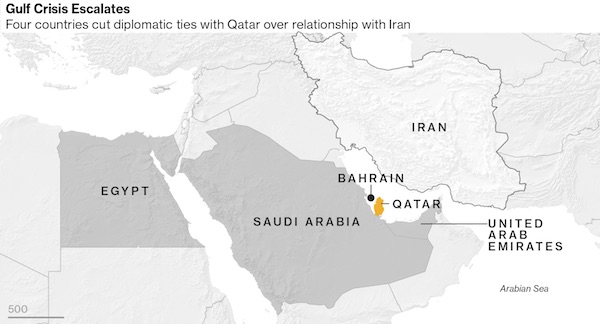
Qatar’s stock market tumbled more than 7% on Monday as six of the Middle Eastern country’s neighbors reportedly severed diplomatic relations with Doha for allegedly supporting terrorism. The key stock index in Doha slipped shortly after Monday’s open – the benchmark’s sharpest fall in more than seven years – before paring some its losses to trade down 7.2% at around 3:00 p.m. local time. Six countries, including Saudi Arabia and Egypt, had all coordinated on Monday to accuse the wealthy Gulf state of supporting terrorism, which Qatar has denied. Investors viewed the diplomatic withdrawal as a major breakdown between powerful Gulf nations, who are also close U.S. allies. While Saudi Arabia – the world’s leading crude oil exporter – said Qatar had supported “Iranian-backed terrorist groups,” Qatar described the joint decision as having “no basis in fact” and was therefore “unjustified”.

Political tensions in the region had been building in recent weeks as Egypt, Saudi Arabia, Bahrain and the United Arab Emirates – all countries to have cut relations with Doha on Monday – had blocked Qatari-based news sites in May. However, Monday’s decision was reported to be based on Qatar’s alleged role in supporting Islamist groups and its stance concerning Iran – a regional rival to Saudi Arabia. Qatar, a member of the U.S. coalition against the so-called Islamic State, has frequently and consistently rejected accusations from Iraq’s Shia leaders that it has provided financial backing to ISIS. “Whilst Qatar is the member of the U.S. coalition against IS, wealthy individuals have reportedly made donations to extremist groups and the government is also accused of supporting extremists – allegations that Qatar vehemently deny,” Tamas Varga, oil associates analyst at PVM, said in an email on Monday.

Read more …

If I remember, the UK gets 90% of its LNG from Qatar.

Qatar’s Real Power Is As The World’s Largest LNG Exporter (BBG)

Oil markets seem impervious to geopolitical risk. As four Arab neighbors imposed an unprecedented embargo on Qatar on Monday, oil prices briefly jumped 1.6 percent before falling back. The fuel to watch, though, is not oil, but gas. If this dispute is not resolved quickly, it may mean a hot summer in the Gulf. The problem has been simmering for a long time, with three of Qatar’s Gulf Cooperation Council colleagues blaming it for backing Islamist groups including the Muslim Brotherhood, and being too friendly with Iran. But in a dramatic escalation shortly after U.S. President Donald Trump’s visit to Saudi Arabia, the United Arab Emirates and Bahrain, along with Egypt, the shaky official government of Yemen and Libya’s contested eastern government broke relations with Doha and imposed a ban on air, land and sea travel.

Much of Qatar’s food and key equipment comes by land from Saudi Arabia, or reshipments through Dubai’s Jebel Ali port. Qatar is one of the smallest oil producers in OPEC, at 618,000 barrels per day, but condensate (light oil) and natural gas liquids – byproducts of its giant North Field – add about another 1.3 million barrels per day. It will stay in the OPEC production cuts deal, and even if it does not, its contribution is small. Its real power comes from being the world’s largest liquefied natural gas exporter. Qatar’s liquefied natural gas and oil exports should not be affected, even if Saudi and Emirati waters are barred to its ships. They can sail via Iranian waters and then pass the Strait of Hormuz via the usual shipping lane in Omani territory, or stay in the Iranian sector if Oman joins its GCC colleagues in the blockade. Any attempt to stop Qatari exports would be a major crisis, and would invite a serious response from major LNG customers Japan, South Korea, China and India.

Read more …

So is Britain’s political model.

Britain’s Economic Model Is Broken: This Is Our First Post-Crash Election (G>)

Mayism could mean Brexit Britain renaming itself Poundland – cheap goods and cheap workers – or it might mean a reversion to some kind of one-nation Toryism. Her party just doesn’t know. Were it not for the Tories’ slim majority, their crisis would be far more exposed. The sofa class don’t do political economy, more’s the pity, but if they did they’d see the contradictions of Conservatism in 2017. The party of capital is now pursuing a policy – hard Brexit – hated by capital. The political arm of the City is about to rip a hole through the City. All these paradoxes are given almost physical representation on our tellies every night by May herself – a populist who doesn’t actually like people.

As a non-believer in New Labour, Corbyn has no such ideological awkwardness, while John McDonnell is one of the few people in the Labour party who didn’t subcontract out their economic thinking to Brown and Ed Balls. But still, their team admit they have a way to go in rethinking Britain’s economy – and they are having to do so against a famously hostile parliamentary party. The result is Corbyn’s manifesto, which is chiefly remarkable for its unabashed defence of basic social democratic values. It’s the programme you imagine Brown would like to have delivered – if only he hadn’t been so busy triangulating.

But behind the scenes, the party is doing much deeper thinking. I have seen an internal Labour report commissioned by McDonnell. It forms one part of what could be a far more radical programme after Thursday night. Some of the lines in it will give the Daily Mail stories for days – such as calling for a overhaul of the BBC trust (which is “dominated by appointees from the corporate and financial sectors”) and hundreds of millions in public money to be spent on establishing workers co-ops. For the sympathetic reader, however, it contains some of the most imaginative thinking around economic democracy to come out of the party in decades (not saying much, sadly). In that, it sits alongside the speeches made by Corbyn’s team last week about the need for “industrial patriotism”, and to give public backing to new sectors.

Read more …

More cuts are being prepared.

Simple Numbers Tell Story Of Police Cuts Under Theresa May (G.)

Police numbers, including the number of armed police officers, have fallen sharply under Theresa May’s watch first as home secretary between 2010 and 2016 and then as prime minister. The simple numbers tell the story. In 2010 May as home secretary made the mistake that Margaret Thatcher never made in the 1980s and agreed to a Treasury demand to cut police budgets by 18%. Over the next five years the number of police officers in England and Wales fell from a peak of 144,353 in 2009 to 122,859 in 2016. At the same time the number of specialist armed police officers has fallen from a peak of 6,796 in 2010 to 5,639 in 2016. As the graph shows it would appear to be an open and shut case that cuts in police officer numbers have had an impact on the capacity of the police to respond.
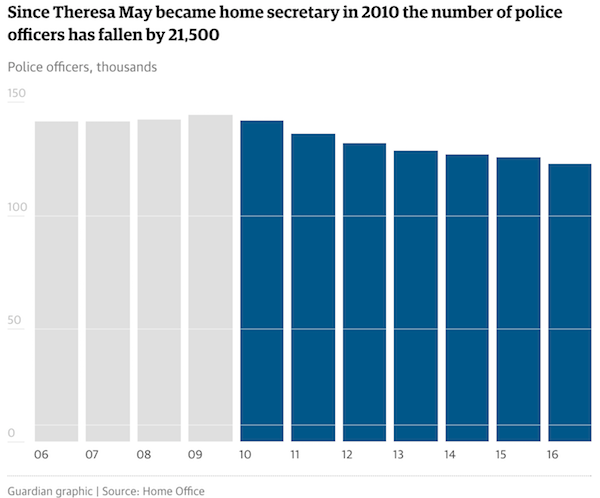
May was told in 2010 that in cutting police funding she was making a mistake that Thatcher never made when she instinctively realised that there would come a crucial moment when the country, and her premiership, would depend entirely on the resilience of the thin blue line. May took a different approach as home secretary that was not without foundation. She argued that with the big continuing falls in crime that had been seen since the mid-1990s it was not necessary to maintain such a large police force. Anyway, it was argued, there was no direct link between the number of officers and the level of crime.

Read more …

What you get after years of having zero price discovery. It gets worse as we go along.

Earnings vs. Profits & The Bull Market (Roberts)

As I have discussed previously, the operating and reported earnings per share are heavily manipulated by accounting gimmicks, share buybacks, and cost suppression. To wit: “The tricks are well-known: A difficult quarter can be made easier by releasing reserves set aside for a rainy day or recognizing revenues before sales are made, while a good quarter is often the time to hide a big ‘restructuring charge’ that would otherwise stand out like a sore thumb. What is more surprising though is CFOs’ belief that these practices leave a significant mark on companies’ reported profits and losses. When asked about the magnitude of the earnings misrepresentation, the study’s respondents said it was around 10% of earnings per share.“ However, if we analyze corporate profits (adjusted for taxes and inventory valuations) we find a very different story. Since the lows following the financial crisis, the S&P 500 has grown by 266% versus corporate profit growth of just 98%.
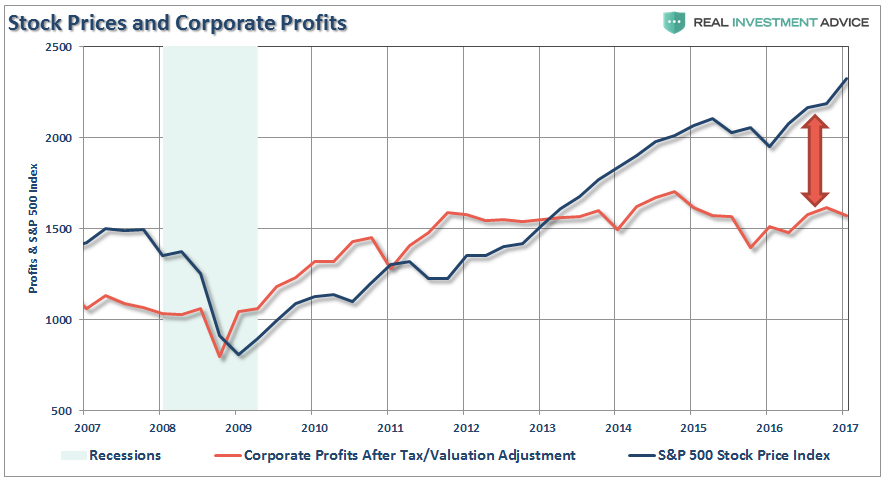
Important Note: The profits generated by the Federal Reserve’s balance sheet are included in the corporate profits discussed here. As shown below, actual corporate profitability is weaker if you extract the Fed’s profits from the analysis. As a comparison, in the first quarter of 2017, Apple reported a net income of just over $17 billion for the quarter. The Fed reported a $109 billion profit.
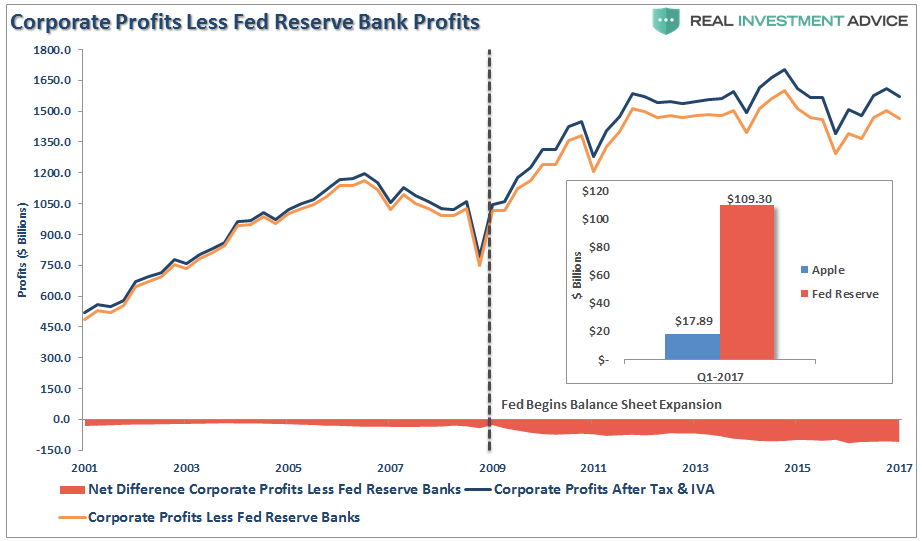
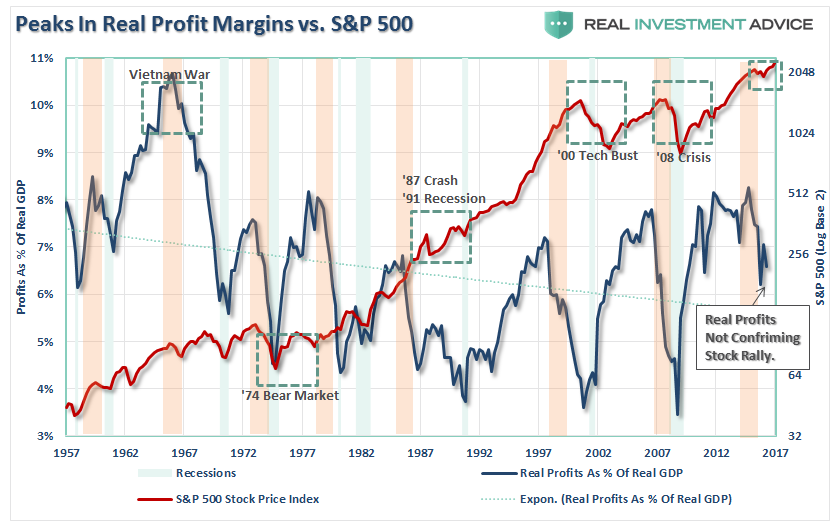
With corporate profits still at the same level as they were in 2011, there is little argument the market has gotten a bit ahead of itself. Sure, this time could be different, but it usually isn’t. The detachment of the stock market from underlying profitability suggests the reward for investors is grossly outweighed by the risk. But, as has always been the case, the markets can certainly seem to “remain irrational longer than logic would predict.” This was something Jeremy Grantham once noted: “Profit margins are probably the most mean-reverting series in finance, and if profit margins do not mean-revert, then something has gone badly wrong with capitalism. If high profits do not attract competition, there is something wrong with the system, and it is not functioning properly.” Grantham is correct. As shown, when we look at inflation-adjusted profit margins as a percentage of inflation-adjusted GDP we see a clear process of mean reverting activity over time. Of course, those mean reverting events are always coupled with a recession, crisis, or stock market crash.
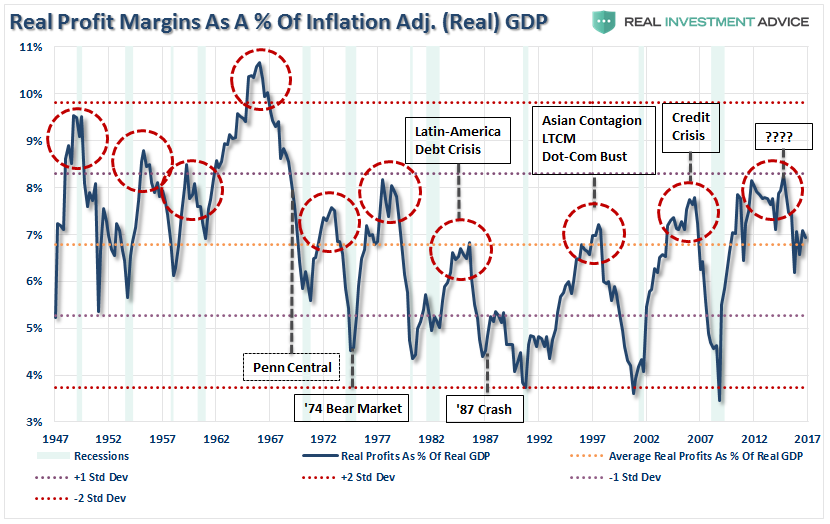
More importantly, corporate profit margins have physical constraints. Out of each dollar of revenue created there are costs such as infrastructure, R&D, wages, etc. Currently, one of the biggest beneficiaries to expanding profit margins has been the suppression of employment, wage growth, and artificially suppressed interest rates which have significantly lowered borrowing costs. Should either of the issues change in the future, the impact to profit margins will likely be significant. The chart below shows the ratio overlaid against the S&P 500 index.
Read more …

Well, if you don’t know what something’s worth, how are you going to justify purchasing it? At some point that stops.

US M&A: One Of The Scariest Charts To Look At – Citi (BI)

The slowdown in US dealmaking since 2015 is cause for concern, Citi’s equity strategists say. “In some respects, one of the scariest charts to look at currently is the number of announced mergers & acquisition deals over the past year or two,” Tobias Levkovich, the chief US equity strategist at Citi, said in a note on Friday. “M&A lawyers argue the ‘uncertainty’ factor, which has come about recently, given some unpredictable aspects of the new Trump administration, has been the issue. It only may explain the last six months, but the trend has been poor for about two years or more. In the past, there has been some correlation with the S&P 500 and thus it could generate more legitimate fears than some of the other excuses that are put forth for not wanting to buy American equities.”
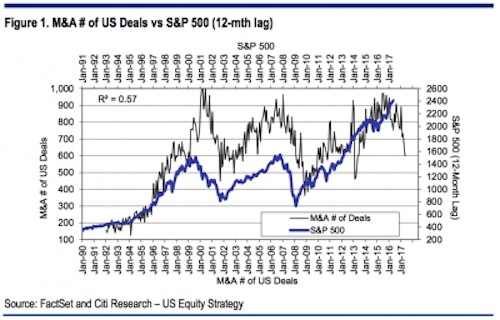
This year through June 5, 7,561 deals were announced, the lowest count since 2013, according to S&P Global Market Intelligence. M&A volume reached a record $2.055 trillion that year, the firm’s data show, slipping in 2016 to $1.7 trillion. More dealmaking signals, in part, that companies are placing big bets on the long-term growth of certain pockets of the market. Levkovich said tough antitrust measures from European authorities and the Department of Justice antitrust division may be slowing dealmaking.

Read more …

Please let it stop.

IMF’s Lagarde Offers Eurozone Greek Debt Compromise, Handelsblatt Says (R.)

IMF Managing Director Christine Lagarde has offered Greece’s European creditors a way out of their impasse over Athens’s debts that would allow the eurozone to release a tranche of aid later this month. The IMF believes Greece needs a debt haircut, which Germany rejects. Lagarde suggested agreeing a deal whereby the IMF would stay on board in the bailout, as Berlin wants, but not pay out further aid until debt relief measures are clarified. “There can therefore be a program in which the disbursement only takes place when the debt measures have been clearly outlined by the creditors,” she told Handelsblatt in pre-released comments to run in its Tuesday edition. The compromise could allow eurozone finance ministers to give the go-ahead for their next payment of their tranche of aid at their meeting on June 15, Handelsblatt said.

“It is a possibility for an agreement,” Lagarde said. Greece has about €7 billion of debt maturing in July, a sum it will not be able to repay unless it gets new loans out of its current bailout worth up to 86 billion euros, the third aid program since its debt crisis began. Eurozone finance ministers failed to agree with the IMF last month on debt relief terms for Greece. They did not release new loans to Athens but recognized it had made significant progress with reforms. Greece hopes that eurozone finance ministers will offer enough clarity in June on debt relief measures that could be carried out after its bailout ends in 2018, to show investors that its debt – now at 197% of GDP – will be sustainable and help it return to bond markets as early as this summer.

Read more …

Trust in the Troika has proven to be a very expensive mistake.

The Euro’s Future Demands Trust (K.)

The European Commission presented its proposal for possible ways to deepen Europe’s Economic and Monetary Union a few days ago, as part of the public debate on the EU’s future. It went unnoticed in Greece, which is a pity, because if all that is proposed is adopted, the Greek problem will be overcome; also, if the mechanisms and procedures now in place had existed from the start, our country would not have hit a dead end. The question now is how Greece will be part of a system that was established because of the Greek crisis but from which our country is still excluded.

For the Greeks – sinking in recession, insecurity and isolation – the ironies are many. Presenting the proposals in Brussels on Wednesday, Commission Vice President Valdis Dombrovskis said: “The euro is one of Europe’s most significant achievements. It is much more than just a currency. It was conceived as a promise of prosperity. To keep that promise for future generations, we need the political courage to work on strengthening and completing Europe’s Economic and Monetary Union now.” Pierre Moscovici, commissioner for economic and financial affairs, added: “The euro is already a symbol of unity and a guarantee of stability for Europeans. We now need to make it a vehicle for shared prosperity. Only by reversing economic and social divergence in the euro area will we be able to defeat the dangerous populism that this fuels.”

The indirect references to Greece are clear. This is where the euro’s weaknesses first appeared, this is where the political center was torn apart and fringe groups gained power, this is where confidence in the common currency and in solidarity is being tested. The Commission’s proposals focus on completing a genuine financial union, achieving a more integrated economic and fiscal union, on greater democratic accountability and strengthening euro-area institutions (including a full-time Eurogroup chair and a European Monetary Fund). The Commission noted the euro’s successes, adding, “And yet it is only 25 years since the Treaty of Maastricht paved the way for the single currency and only 15 years since the first coin was used.” So we ask: As the currency is so new, and as the necessary mechanisms and procedures are only now being instituted, why is Greece continually an outcast? How can we pretend all is well with the euro? .

Read more …

Nice thing is the City Plaza is not really occupied, nor a squat. The former employees own everyhting inside the building.

An Occupied Hotel In Greece Models How To Welcome Refugees (WNV)

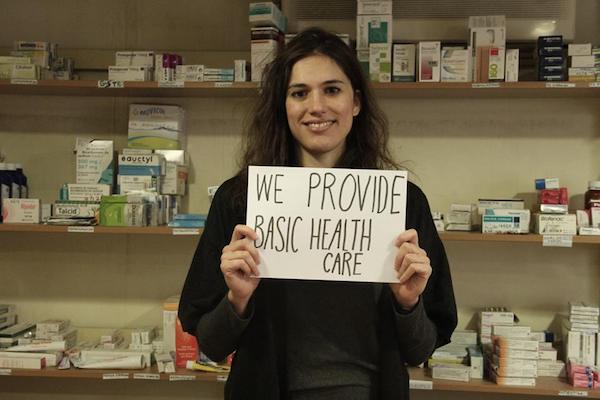
It is almost summer in Europe. Temperatures are rising, and many are preparing for vacations somewhere in the Mediterranean, which means searching for accommodation online. “No pool, no minibar, no room service, and nonetheless: the best hotel in Europe” reads the City Plaza Hotel’s homepage. A joke? Yes. A lie? Not at all. While this hotel in Athens, Greece might not offer those conventional services, it provides something far better: Free housing, medical care and meals for hundreds of people who have had to flee their countries. [..] Over the course of the year, the hotel has provided decent housing for over 1,500 refugees — 400 at any one time — in times of undignified detention camps. It is a model of self-organization and solidarity with refugees — who share living quarters with locals — in times of rising racism and nationalism.

[..] Thousands of homeless refugees are living in the streets of Athens, including families with small children. In response to this crisis, the Greek state set up more than 49 detention centers and camps. Activists and refugees had another idea of how to respond. On April 22, 2016 they took over the City Plaza — which, like many businesses since the economic collapse, had been abandoned for six years. Along with eight other self-organized shelters occupied by refugees and activists around the city, the hotel offers displaced people a safe and dignified alternative to the miserable, unhygienic and cruel conditions of the detention facilities. When the City Plaza went bankrupt in 2010, the management failed to pay the employees their final salaries. According to a court ruling, since they were unable to pay the workers monetarily, everything that is inside the building belongs to the workers.

However, the owner prevented auctioning the hotel for years. When the seven-story building was finally occupied last year, the former hotel employees declared that they were happy to offer and share everything. And the activists running City Plaza now support the workers and are planning common efforts to meet the demands of both the former workers and the refugees. The refugees’ demands include access to housing, education and employment. By providing everything that is needed themselves, the project proves that decent living conditions for everyone is possible, even in a country as burdened by crisis as Greece. And the warm reception that the refugees have received by those living near the hotel demonstrate that poverty is not an obstacle to welcoming people with open arms. “The neighbors bring some clothes, some food — you know, they are warm. Although their lives are also ruined, they see in the ruins of their lives, the ruins of the lives of other people,” said Maria, one of the Greek activists running the hotel.
Read more …

Jun 052017
 
 June 5, 2017  Posted by at 10:22 am Finance Tagged with: , , , , , , , , , ,  1 Response »


Banksy Girl with a balloon 2002/2017


Gulf Countries Cut Ties With Qatar, Oil Price Jumps (CNBC/R.)
Saudi Arabia, Egypt, UAE, & Bahrain Cut Ties, Shut Borders With Qatar (ZH)
Theresa May Urged Not To Suppress Report Into Funding Of Jihadi Groups (G.)
Top Cameron Aide: Theresa May ‘Responsible’ For London Terror Attack (BI)
Against Terror, Is London Pride Enough? (NYT)
Nearly 10 Million Britons Are In Insecure Work (G.)
Banksy Offers Free Art To People Who Vote Against The Tories (Ind.)
World Bank Economist: Risks To World Economy Receded (AFP)
Italy Faces Borrowing Shock When ECB Removes Support – Pimco (Tel.)
Joe Biden Boasts of US Role in ‘Saving’ Greece (K.)


It’s not about Qatar. US neocons are testing a new way to get to Iran.

Gulf Countries Cut Ties With Qatar, Oil Price Jumps (CNBC/R.)

The governments in Saudi Arabia, Egypt and the UAE are all wary of the Muslim Brotherhood because it enjoys support as an Islamist party among a broad base, Sluglett said. In the case of Iran, he added, a key factor is the Trump administration’s threat to review a landmark deal that lifted most economic sanctions against Iran in return for curbing its nuclear and missile programs. “The Americans cannot unilaterally back out of the deal as it is the P5+1 [permanent five members of the U.N. security council and Germany], so they are using the GCC and Egypt to put pressure on any countries supporting Iran,” Sluglett said, referring to the Gulf Cooperation Council, which counts Qatar, Saudi Arabia, Kuwait, the United Arab Emirates, Bahrain and Oman as members.

Charles Lister, a senior fellow at the Middle East Institute, responded on Twitter to the news by pointing out that Qatar “is very heavily reliant on food supplies accessed” through Saudi Arabia, so a closing of the borders poses a “very” serious challenge to Doha. For its part, Saudi Arabia accused Qatar of backing militant groups and spreading their violent ideology, in an apparent reference to its influential state-owned satellite channel al Jazeera. “(Qatar) embraces multiple terrorist and sectarian groups aimed at disturbing stability in the region, including the Muslim Brotherhood, ISIS (Islamic State) and al-Qaeda, and promotes the message and schemes of these groups through their media constantly,” state news agency SPA said. The statement went on to accuse Qatar of supporting what it described as Iranian-backed militants in its restive and largely Shi’ite Muslim-populated Eastern region of Qatif and in Bahrain.

Qatar said in May that hackers had faked remarks by its emir, Sheikh Tamim bin Hamad al-Thani, criticizing some leaders of fellow Gulf Arab states and calling for an easing of tensions with Iran, a regional adversary. But several Gulf Cooperation Council states rejected Qatar’s explanation, leaving local media to unleash a barrage of attacks accusing the emir of cozying up to Tehran. Qatar shares the world’s largest gas field, South Pars, with Iran. The commercial and business ties have irritated Saudi Arabia and other Gulf Cooperation Council countries at odds with Iran over Tehran’s support for Shia-linked militants. Sluglett noted that Qatar’s dealings with Iran center on the gas field and that Doha is uncomfortable at times with a hard push against Tehran: “They find it quite ridiculous to blindly follow U.S. views on Iran.”

Read more …

Saudi Arabia pointing to Iran as terror source is rich…

Saudi Arabia, Egypt, UAE, & Bahrain Cut Ties, Shut Borders With Qatar (ZH)

Just days after president Trump left the region, a geopolitical earthquake is taking place in the Middle East tonight as the rift between Qatar and other members of the (likely extinct) Gulf Cooperation Council explodes with Bahrain, UAE, Saudi Arabia, and Egypt cutting all diplomatic ties with Qatar accusing it of “speading chaos,” by funding terrorism and supporting Iran. The dispute between Qatar and the Gulf’s Arab countries started over a purported hack of Qatar’s state-run news agency. It has spiraled since, and appears to be climaxing now… just days after President Trump left the region. As Al Arabiya reports, Bahrain has announced it is cutting diplomatic ties with Qatar, according to a statement carried on Bahrain News Agency.

The statement on Monday morning said Bahrain decided to sever ties with its neighbor “on the insistence of the State of Qatar to continue destabilizing the security and stability of the Kingdom of Bahrain and to intervene in its affairs”. The statement also said Qatar’s incitement of the media and supporting of terrorist activities and financing groups linked to Iran were reasons behind the decision. “(Qatar has) spread chaos in Bahrain in flagrant violation of all agreements and covenants and principles of international law Without regard to values, law or morals or consideration of the principles of good neighborliness or commitment to the constants of Gulf relations and the denial of all previous commitments,” the statement read. Qatari citizens have 14 days to leave Bahraini territories while Qatari diplomats were given 48 hours to leave the country after being expelled.

Meanwhile, Bahrain has also banned all of its citizens from visiting or residing in Qatar after the severance of ties. Additionally, Bahrain has has closed both air and sea borders with Qatar. Saudi Arabia then confirmed the same – cutting ties and shutting down all sea, airspace, and land crossings with Qatar as well as dissolving Qatar’s role in the Saudi-led coalition fighting against Yemen. Emirates, Etihad, Saudia, Gulf Air, and Egypt Air are no longer allowed to fly to Qatar and Saudi Arabia is providing facilities, services to Qatari pilgrims. Egypt then followed, confirming it was cutting diplomatic ties. Then UAE confirmed it would cut ties, shut down all sky, water, and land crossings, and expel all Qataris within 48 hours. The Maldives also just cut diplomatic ties with Qatar.

All of this happens within 24 hours of Iran calling out ‘The West’ for ignoring the real sponsors of terrorism around the world and UK’s Labor party leader outright name-shaming Saudi Arabia’s funding of terrorism. As a reminder, documents obtained by Middle East Eye show strategic alliance includes pledge by Ankara to protect Gulf state from external threats… “In December 2015, Turkey announced, to the surprise of many, that it planned to establish a military base in Qatar. Behind the scenes, the agreement was about forming a major strategic alliance. After a 100-year hiatus, Turkey is militarily back in the Gulf and ramping up its presence overseas. In January, Ankara announced that it would also establish a military base in Somalia. Specific details about the Qatar agreement, which Turkey described as an alliance in the face of “common enemies”, remain scant, but Middle East Eye has acquired copies of the agreements, as well as further details, which include a secret pledge by Ankara to protect Qatar from external threats.

Did Qatar just get scapegoated in the ‘war on terror’? One thing seems clear, support for a Syrian gas pipeline will be dwindling and with it the need for a Syrian war. Notably, this raises further doubts about OPEC’s stability. As Bloomberg notes, while Middle East ructions have historically added risk premia to oil prices, discord here could theoretically put downward pressure on prices as OPEC members struggle to maintain unity and compliance on production cuts.

Read more …

Too late now. It’s not like she’ll volunteer to publish the report before June 8.

Theresa May Urged Not To Suppress Report Into Funding Of Jihadi Groups (G.)

Jeremy Corbyn and Tim Farron have challenged Theresa May over a long-delayed inquiry into foreign funding and support of jihadi groups in the UK, after the Home Office suggested the investigation may not be published. The inquiry into revenue streams for extremist groups was commissioned by David Cameron when he was prime minister and is thought to focus on Saudi Arabia. But the Guardian revealed last week that the report was still incomplete and its contents may not be published. The Labour leader used a speech in Carlisle on Sunday evening to challenge the prime minister over the delayed report. Corbyn referenced May’s speech after the London Bridge attack on Saturday, in which she said challenging terrorism would “require some difficult and often embarrassing conversations”.

In a speech that also criticised May for ignoring warnings about the impact of police cuts, he said: “Yes, we do need to have some difficult conversations, starting with Saudi Arabia and other Gulf states that have funded and fuelled extremist ideology. “It is no good Theresa May suppressing a report into the foreign funding of extremist groups. We have to get serious about cutting off the funding to these terror networks, including Isis here and in the Middle East.” The Liberal Democrat foreign affairs spokesman, Tom Brake, wrote to May last week asking her to commit to not shelving the report. Writing in the Guardian on Monday, the Lib Dem leader, Tim Farron, said it was essential the report was not suppressed. “Theresa May now has a choice. Does she publish that report or keep it hidden?” Farron said.

“Theresa May talks of the need to have some difficult and sometimes embarrassing conversations. That should include exposing and rooting out the source funding of terror, even it means difficult and embarrassing conversations with those like Saudi Arabia that the government claims are our allies.” The Conservatives were criticised last year for selling billions of pounds of arms to the Saudis. Cameron ordered the investigation as part of a deal with the Lib Dems in exchange for the party supporting the extension of British airstrikes against Islamic State into Syria in December 2015. The Home Office’s extremism analysis unit was directed by Downing Street in January 2016 to investigate overseas funding of extremist groups in the UK, with findings to be shown to the then home secretary May and Cameron. Eighteen months on, the Home Office said the report, originally due to be published in spring 2016, had not yet been completed and publication was not guaranteed, given the sensitive nature of the content. .

Read more …

May the cannabalism begin.

Top Cameron Aide: Theresa May ‘Responsible’ For London Terror Attack (BI)

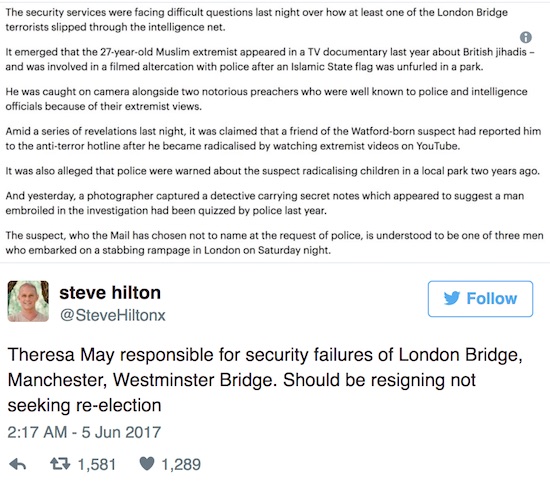
The Prime Minister should resign over her alleged failure to prevent the London Bridge terror attack, a former senior aide to the last Conservative Prime Minister David Cameron has said. Former Downing Street director of Strategy, Steve Hilton, on Monday claimed the Theresa May was “responsible” for the attack that left seven people dead and many more injured, and called for her to resign rather than seek re-election. “Theresa May responsible for security failures of London Bridge, Manchester, Westminster Bridge,” he tweeted. “Should be resigning not seeking re-election.” Hilton posted an excerpt from a Daily Mail report, suggesting that security services had been warned about at least one of the terrorists behind the attack on Saturday.

The Mail reported that one of the attackers had featured in a documentary about extremists and been reported to the security services by friends concerned that he had been radicalised. The paper also reported evidence that the suspect had been quizzed by police last year. Previous reports have indicated that the terrorists behind the Manchester and Westminster attacks earlier this year were also known to security services. May is also under pressure to release a suppressed report Home Office report into the international funding of terror groups in the UK. The report was commissioned by the last coalition government in 2015 and due to be published last year but has never been emerged. The Home Office admitted last week that it may never be published due to the “very sensitive” nature of the report.

The report is expected to reveal links between Saudi Arabia and extremist groups in the UK. Critics of the government believe it has been suppressed due to the UK government’s ongoing trade relationships with the country. The UK recently approved £3.5bn worth of arms export licences to Saudi Arabia, despite criticisms over its involvement in the bombing campaign in Yemen.

Read more …

Keep calm as a myth.

Against Terror, Is London Pride Enough? (NYT)

Cultures live by myths. These create their own reality. Britons may not know much history, but they all know about the spirit of the Blitz, and many lived through the bombing campaigns of the Irish Republican Army of the 1970s and ’80s. Many will remember that, in 1984, on the day Prime Minister Margaret Thatcher and half her cabinet team were blown out of their beds in the early morning by the Brighton bomb, in which five people died, she insisted that the Conservative Party conference should still start as scheduled at 9.30 a.m. Terrorism, she said, would never cripple democracy. The country is proud of that stoicism, and on the whole, wishes to live up to it. And yet. Today, there is a ripple of unease spreading through Britain, after the third brutal and unexpected attack in three months. It is the chilling realization that whatever the antiterror strategy has been so far, it clearly hasn’t worked.

However many plots are being foiled, now that anyone with the access to a car or van, a kitchen knife or the internet can choose to kill, some will succeed. This is a bleak and, frankly, unbearable prospect, and it’s concentrating minds. My 25-year-old son says that what terrifies him and his friends is their impotence. If this were indeed the Blitz, they could join up. If it was the ’70s they could either fight the I.R.A. or lobby for peace talks. But here, they have no idea how to combat this, whom to talk to, how to do anything other than wait for the next atrocity to happen, and then send sympathy and hashtags in the aftermath. Others, seeing that good will and candlelit vigils have their limits, are demanding radical action. On social media and phone-ins, and in private conversations, some people are calling for the immediate internment of the 3,000 suspected radicals on the terrorist watch lists, or their deportation, or for mass aerial bombing of the Islamic States abroad.

None of these will be solutions, but everyone is beginning to understand that savagery may become a regular occurrence, rather than an exceptional one — unless whoever is in government can offer a different and more successful approach. That is why Prime Minister Theresa May, only days away from a general election where she is fighting to keep her parliamentary majority, announced this morning that “enough is enough” in the war against terrorism, and that “things need to change.” There had been too much tolerance of extremism in Britain. The police and security services should have all the powers they needed. The internet giants, Facebook and Google, must be held responsible for radicalizing material that appeared on their sites.

Mrs. May knows just how vulnerable she is on these issues. She is already performing unexpectedly badly in the election campaign, appearing wooden and uneasy in comparison to her Labour challenger. Normally, she and the Tories could count on scoring high for law and order, but Mrs. May is in the uncomfortable position of denouncing counterterror policies for which she herself has been responsible over the past six years (in five years as home secretary and one as prime minister).

Read more …

The result of what is it, 10 year, Tories?! That’s one in every three jobs? Or is it four? Talk about a gutted society… And then Brexit surprised?

Nearly 10 Million Britons Are In Insecure Work (G.)

Up to 10 million Britons or nearly a third of the UK workforce do not have secure employment, according to the GMB union, which has warned of a heavy impact on health and family life. The union’s research, unveiled at its 100th annual congress in Plymouth on Monday, attempts to quantify people in what it calls precarious employment – those in the gig economy, on zero- or short-hours contracts, temporary workers, the underemployed and those at risk of false self-employment. The data, based on a survey of nearly 3,500 people of working age, emerged before the publication this month of recommendations from Matthew Taylor, a former adviser to Tony Blair who was appointed by the current prime minister to lead a review into the gig economy. He is expected to recommend changes to the rights of self-employed workers.

Tim Roache, the GMB’s general secretary, said: “This paints a shocking picture of the modern world of work. Up to 10 million people go to work either not knowing what their hours are, if they’ll be able to pay the bills, or what their long-term prospects are. That’s a sorry state of affairs in the 21st century and a product of government’s failure to tackle bogus self-employment, the use of agency contracts as a business model and point-blank refusal to ban zero-hours contracts.” Further interviews of those who identified themselves as insecure workers found that 61% had suffered stress or anxiety as a result of their current job and the same proportion said they had been to work while unwell for fear of not being paid, losing their job or missing out on future hours. The rapid change in employment practices was highlighted by more than three-quarters of those interviewed who said they had previously been in permanent employment.

Read more …

Not sure it’s entirely legal.

Banksy Offers Free Art To People Who Vote Against The Tories (Ind.)

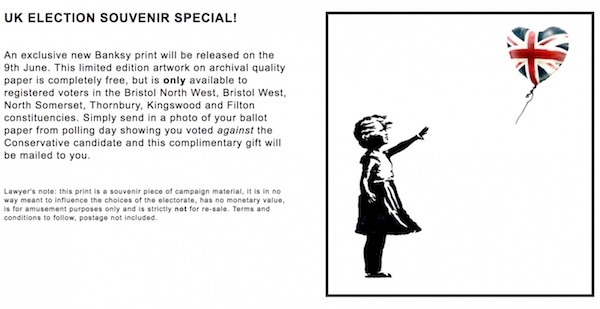
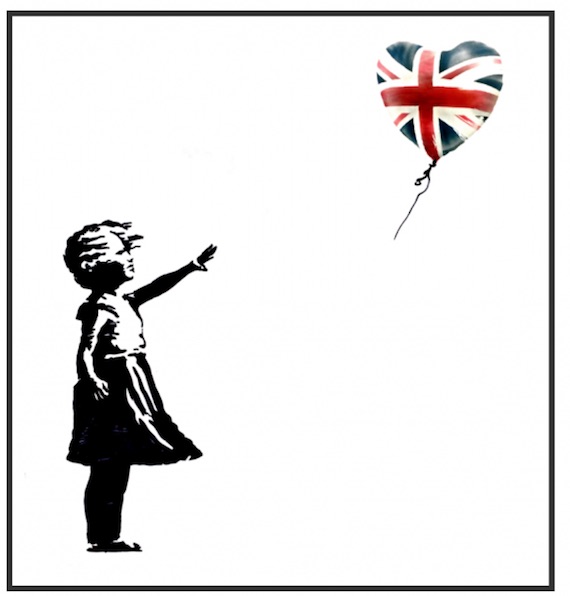
Banksy has offered fans an exclusive free print if they vote against the Conservatives in the general election. The artist posted on his website asking voters in six Bristol-area constituencies to send him a photo of their ballot paper showing that they voted against the Tories to receive a limited-edition work. He wrote: “Simply send in a photo of your ballot paper from polling day showing you voted against the Conservative candidate and this complimentary gift will be mailed to you.” The artwork is taken from his iconic “girl with a balloon” motif but now features a Union Jack flag in the balloon. Banksy said that it will be released on 9 June. However, critics have pointed out that this would contravene laws designed to ensure votes remain secret, and could also break rules against bribery.

In a “lawyer’s note” disclaimer, Banksy’s post added: “This print is a souvenir piece of campaign material, it is in no way meant to influence the choices of the electorate, has no monetary value, is for amusement purposes only and is strictly not for resale. “Terms and conditions to follow, postage not included.” Under Section 66 of the Representation of the People’s Act, it is a criminal offence to “induce a voter to display his ballot paper after he has marked it so as to make known to any person the name of the candidate for whom he has or has not voted”. It is also illegal to show the paper’s unique identification number. An Electoral Commission spokesman told the BBC: “Given the risk that someone taking a photo inside a polling station may be in breach of the law, whether intentionally or not, the commission’s advice is against taking any photos inside polling stations.”

Read more …

At the World Bank they get to smoke the good stuff.

World Bank Economist: Risks To World Economy Receded (AFP)

The World Bank is keeping its forecast for global growth in 2017 unchanged, because for the first time in years, no new risks have arisen to threaten the outlook. “Over the past four years this is the first time we didn’t have a downgrade and I think that’s very good sign. Growth is firming,” World Bank economist Ayhan Kose told AFP. The World Bank expects the global economy to grow by 2.7% this year, and 2.9% in 2018 and 2019, the same as the January forecast. And after 10 years of crisis and tepid recovery, keeping a stable growth forecast is news. Kose, who heads the World Bank’s Development Prospects Group, which twice a year prepares the global economic forecasts, attributes the good news to the fact the risks, while still present, have receded.

The issues that had the potential to derail the incipient recovery included stress in financial markets as they adapt to rising US interest rates, uncertainty over the stability of oil prices, and concerns about election outcomes in Europe. But after the Federal Reserve’s two rate increases in recent months, markets have reacted “very well,” European political uncertainty “has receded quite a bit” – French voters rejected the anti-EU candidate – and oil prices while still low, have stabilized after OPEC and non-OPEC oil producers extended the agreement to limit output. “All in all, we still think that risks are tilted to the downside but the risk profile is a little bit more improved today versus six months ago,” Kose said.

However, uncertainty over policies, especially US trade protectionism and immigration restrictions under the Trump administration, is having immediate, real impacts on conditions that could dampen growth, Kose cautioned. Companies may delay business decisions and postpone investments in the absence of “well-defined policies,” for example in a case where companies have cross-border operations impacted by the North American Free Trade Agreement which President Donald Trump has opened to renegotiation. Kose noted the “serious slowdown” in investment in emerging markets and developing economy already seen over the past six years. “We are of course worried about how policy uncertainty impacts investment growth and then ultimately impacts growth in the real economy,” he said.

Read more …

They won’t let Italy fall unless Beppe Grillo wins the next elections. Which by the way is quite possible.

Italy Faces Borrowing Shock When ECB Removes Support – Pimco (Tel.)

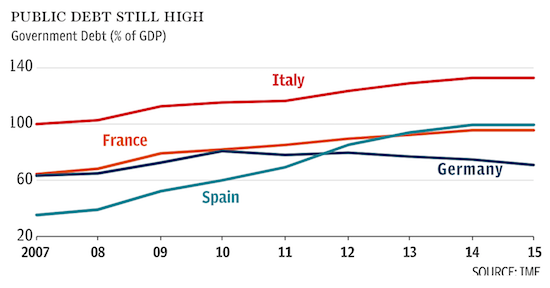
Italy faces a “horror” scenario when the ECB winds down its bond buying programme in a move that risks sparking a surge in the country’s borrowing costs, according to one of the world’s largest bond managers. The Pacific Investment Management Company (Pimco) said the ECB’s €60bn-a-month QE programme was “very supportive” for countries such as Italy and Portugal and had helped to limit volatility in these countries. Andrew Balls, chief investment officer for global fixed income, said removing that support was likely to push up bond yields in a country that has struggled to implement reforms and reduce its massive debt pile amid weak growth. Italian 10-year benchmark borrowing costs currently stand at around 2.2pc, compared with 0.2pc in Germany and close to 3pc in Portugal.

Mr Balls said funding Italy at these rates “doesn’t look particularly attractive” considering the risks facing the eurozone’s third largest economy. He said removal of ECB support raised the risk that Italy could be forced into a bail-out programme if its borrowing costs rose to unsustainable levels, even though the country has long lived within its means excluding debt interest costs. “The thing which fills me with horror is an environment where the ECB has finished QE, Italy does need support, and the message is you need to go to the European Stability Mechanism [the eurozone’s bail-out fund],” said Mr Balls. “Replaying the events of a few years ago with Portugal, Greece and others in the case of Italy would be an event that would raise an awful lot of risk – and you’d want to get paid a lot more than a 2pc return over 10 years to take that risk.”

While Pimco believes an Italian exit from the eurozone is “not our baseline”, Mr Balls added: “It doesn’t seem terribly unlikely either”. “Italy can’t grow,” he said. “You have limited political will to implement reform …In contrast to Portugal it’s big and systemic, but its not clear how Italy improves the situation. “In the event of a recession or shock it’s not clear how the policy apparatus deals with something as large as Italy.”

Read more …

In a piece on Cyprus, and Biden’s visit to Athens this week. Biden only cares about the impact of the Greek crisis abroad, not inside the country.

Joe Biden Boasts of US Role in ‘Saving’ Greece (K.)

President Obama and I were engaged with all parties in the Greek financial crisis, because we wanted to prevent Greece from experiencing financial collapse. Grexit would have had very serious long-term consequences for Greece and Europe – and could potentially have triggered a wider crisis of confidence in the global economy. We were concerned that in the high-stakes negotiation between Greece and its creditors, failure to reach a sensible agreement would have made all parties much worse off in the end. But because of each side’s desire to secure the best possible terms, this worst-case scenario was a real possibility.

While the ultimate decision was up to the leaders of Greece, the IMF, and the eurozone countries, I think we helped steer the conversation in a more pragmatic direction because of the credibility we had in Athens, Brussels and Berlin. We argued with the creditor countries that Greece had been saddled with an unsustainably high debt burden and that reform would only go so far with such a large debt overhang. At the same time, we encouraged the Greek leadership to think about how to demonstrate to its creditors that it had a credible roadmap for systemic economic reform, which was necessary. While a deal was reached and the worst of the crisis is behind us, we are not yet completely out of the woods. I believe the United States continues to have a role to play in supporting the parties as they move forward with discussions on Greece’s economic future.

Read more …

Nov 052016
 
 November 5, 2016  Posted by at 10:36 am Finance Tagged with: , , , , , , , , ,  2 Responses »


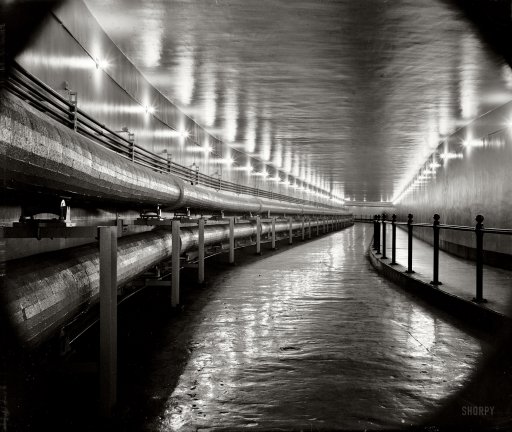
Harris&Ewing House-Capitol tunnel, Washington, DC Feb 3 1939

S&P 500 Down For 9th Straight Day; Longest Losing Streak In 36 Years (R.)
FB, AMZN, NFLX, GOOGL Stocks Lose Over $100 Billion In A Week (ZH)
Americans Not In Labor Force Surge By 425,000 To 94,609,000 (ZH)
Theresa May Told To Act To Calm Brexit ‘Mob’ Anger (G.)
Assange: ‘Clinton and ISIS Funded By Same Money’ (Ind.)
Many More Voters Think Hillary Actions Illegal, Trump Unethical (McC.)
Clinton Charity Confirms $1 Million Qatar Gift While She Was At State Dept (R.)
Clinton Foundation Being Investigated by IRS, FBI & Intelligence (Armstrong)
Chelsea Manning Attempts Suicide In Prison For Second Time This Year (AP)
3 New Scandals Show Pervasive and Dangerous Mass Surveillance in West (GG)


Still a shallow loss. But 1980 seems a distant memory.

S&P 500 Down For 9th Straight Day; Longest Losing Streak In 36 Years (R.)

The S&P 500 ended lower on Friday for a ninth straight day, the longest losing streak for the benchmark index in more than 35 years, as investors stayed on edge ahead of an uncertain U.S. election. The Nasdaq also ended lower for a ninth-consecutive session, while the Dow industrials closed down for a seventh straight day. Investors have been unnerved by signs of a tightening presidential race between Clinton and Trump. Clinton had been thought to have a clear lead until the re-emergence last week of a controversy over her use of a private email server while secretary of state. “Investors are uncertain about the outcome of the election, and they have grown more uncertain since last Friday,” said Walter Todd, CIO with Greenwood Capital.

The Dow Jones industrial average fell 42.39 points, or 0.24%, to 17,888.28, the S&P 500 lost 3.48 points, or 0.17%, to 2,085.18 and the Nasdaq Composite dropped 12.04 points, or 0.24%, to 5,046.37. Despite the historic run, the S&P has pulled back by only about 3.1% over that time. For the year, the index is up 2%. It was the 14th time since 1928 that the S&P 500 had declined for nine sessions in a row, according to S&P Dow Jones Indices. On Friday, Wall Street had posted solid gains as of the afternoon, spurred by a strong U.S. employment report, but then lost steam and sold off into the close.

“Obviously the big concern this week has been the shift in the polls in the election. We did have a bounce for a period of time, but when it didn’t hold and people just decided to liquidate going into the close to reduce exposure in case any more news hits over the weekend,” said Michael O’Rourke, chief market strategist at JonesTrading in Greenwich, Connecticut. “There’s a lot of headline risk out there.”

Read more …

“..the four horsemen of the Fed’s wealth creation bubble…”

FB, AMZN, NFLX, GOOGL Stocks Lose Over $100 Billion In A Week (ZH)

In the last week the so-called FANG stocks (FB, AMZN, NFLX, GOOGL) have stumbled. As earnings and outlooks disappointed, shareholders have awoken to the new normal low growth world and wiped over $100 bilion in market capitalization of the four horsemen of the Fed’s wealth creation bubble. FANGs are now down 8 days in a row…


Losing a massive $108 billion in that time…


This is the biggest drop since the February growth scare – which was only saved by massive coordinated global central bank money-printing… which is simply not about to happen this time.

Read more …

The only stat from the BLS report that tells a real story.

Americans Not In Labor Force Surge By 425,000 To 94,609,000 (ZH)

On the surface, the establishment survey print of 161K jobs was just good enough when taking into account the 44,000 in upward revisions to August and September jobs. However, the household survey was less impressive, with the number of workers employed declining by 43,000 to 151,925 even as the number of persons unemployed declined from 7,939K to 7,787K.

So how did the unemployment rate drop? Because contrary to expectations that people are rushing back into the labor force, in October the number of Americans who were not in the labor force rose by a substantial 425,000 to 94,609, the highest print in the series since May, and suggests that the exodus of Americans out of the labor force has resumed.

Read more …

Civilized society attacked from all sides.

Theresa May Told To Act To Calm Brexit ‘Mob’ Anger (G.)

Theresa May’s government has been accused of failing to restrain the furious backlash against this week’s high court judgment about article 50, as one of her own MPs resigned, stepping up the political pressure as she battles to stick to her Brexit timetable. Stephen Phillips, the MP for Sleaford and North Hykeham in Lincolnshire, stepped down on Friday with immediate effect. He was unhappy that the government had not planned to consult parliament before triggering article 50 – the issue that led to Thursday’s ruling. Former ministers warned that the febrile tone of media coverage, which included the judges who ruled against the government being condemned as “enemies of the people” by the Daily Mail, risked poisoning public debate.

Dominic Grieve, the Conservative former attorney general, said reading hostile coverage in the Mail and the Daily Telegraph “started to make one think that one was living in Robert Mugabe’s Zimbabwe .. I think there’s a danger of a sort of mob psyche developing – and mature democracies should take sensible steps to avoid that”. Labour also raised concerns about the absence of a ministerial response to the media coverage. Lord Falconer, who was lord chancellor under Labour between 2003 and 2007, said faith in the “independence and quality” of the judiciary was being undermined “by this Brexit-inspired media vitriol” in an article written for the Guardian. Jeremy Corbyn will accuse the government of opposing democratic scrutiny because “frankly, there aren’t any plans, beyond the hollow rhetoric of Brexit means Brexit”.

In a speech on Saturday, the Labour leader will say: “Thursday’s high court decision underlines the necessity that the prime minister brings the government’s negotiating terms for Brexit to parliament without delay. “Labour accepts and respects the decision of the British people to leave the European Union. But there must be transparency and accountability to parliament about the government’s plans.” May called European leaders to tell them again that she would meet her self-imposed deadline and trigger article 50 by the end of March 2017, despite losing the high court case. The prime minister otherwise refused to be drawn into the row. Her spokesman refused to condemn the media coverage on Friday, saying: “I don’t think the British judiciary is being undermined.” But the pro-remain former business minister Anna Soubry told the Guardian: “I think we have to call this out and say ‘not in my name’.”

Read more …

“..Trump will not be permitted to win..”

Assange: ‘Clinton and ISIS Funded By Same Money’ (Ind.)

Wealthy officials from Qatar and Saudi Arabia who donated money to Hillary Clinton’s charitable foundation also provided financial support to Isis, WikiLeaks founder Julian Assange has claimed. In an extended interview at the Ecuadorian embassy in London with documentary maker John Pilger for RT, Mr Assange said the same Saudi and Qatari officials could be seen to be supporting both the Clinton Foundation – founded by Mrs Clinton’s husband Bill – and funding the activities of Isis. Mr Pilger asked if Mr Assange believed that “this notorious jihadist group, called Isil or Isis, is created largely with money from people who are giving money to the Clinton Foundation” “Yes,” Mr Assange replied.

The WikiLeaks founder pointed to an email exchange between presidential hopeful Ms Clinton and her campaign manager John Podesta, leaked by his organisation last month, which he believes “is the most significant email in the whole collection”. In the email sent on August 17 2014, Ms Clinton asked Mr Podesta, who at that time worked under president Barack Obama, to help put “pressure” on Qatar and Saudi Arabia regarding the countries’ alleged support for the terrorist group Isis. “We need to use our diplomatic and more traditional intelligence assets to bring pressure on the governments of Qatar and Saudi Arabia, which are providing clandestine financial and logistic support to Isil and other radical Sunni groups in the region,” Ms Clinton wrote.

Mr Assange noted the US government had never acknowledged governments of Middle East nations had financially supported Isis, instead arguing such support was isolated to “some rogue princes using their cut of the oil money to do whatever they like, although the government disapproves”, according to the WikiLeaks founder. According to the Clinton Foundation, the Saudi Arabian government has donated between $10m (£8m) and $25million since the foundation was set up in 1997. Last month it was reported the government of Qatar offered to donate $1m to the foundation in celebration of Bill Clinton’s birthday. Representatives from the Clinton Foundation have repeatedly denied accusations Ms Clinton has solicited funds and used donations to boost her campaign.

There were no donations from Saudi Arabia while she was acting as secretary of state between 2009 and 2013. Mr Assange also used the interview to dismiss the prospect of a Donald Trump victory in next week’s election, which the polls show will be close. “My analysis is that Trump will not be permitted to win. Why do I say that? Because he has had every establishment against him. Trump does not have one establishment, maybe with the exception of the Evangelicals, if you can call them an establishment. “Banks, intelligence, arms companies, foreign money, etc are all united behind Hillary Clinton. And the media as well. Media owners, and the journalists themselves.”

Read more …

“..51% saying she did something illegal..” “..Just 26% think he’s done something illegal..”

Many More Voters Think Hillary Actions Illegal, Trump Unethical (McC.)

A majority of voters believe Hillary Clinton has done something illegal, according to a new McClatchy-Marist Poll days before the presidential election. A total of 83% of likely voters believe that Clinton did something wrong – 51% saying she did something illegal and 32% saying she something unethical but not illegal. Just 14% said she’s done nothing wrong. By comparison, 79% think Donald Trump did something wrong, though not nearly as many think he did something illegal. Just 26% think he’s done something illegal, while 53% think he’s dome something unethical but not illegal. Just 17% think he’s done nothing wrong. The deep suspicion of Clinton is likely a top reason she’s lost much of her lead and the race for the White House has tightened in the race’s closing days.

In a four-way race, the two are neck and neck with Clinton supported by 44% and Trump by 43%. Libertarian Gary Johnson has 6%, and the Green Party’s Jill Stein has 2%. In a two-way match up, Clinton has 46%, Trump 44%. Both candidates are disliked. Clinton gets a favorable rating from just 40% while 57% have unfavorable views of her. Voters have a 61% to 36% unfavorable-favorable rating of Trump. “This is practically off the charts,” said Lee Miringoff, the director of the Marist Institute for Public Opinion in New York, which conducted the nationwide survey. “You have candidates coming before the electorate with enormous baggage.”

Even 57% of those who are supporting Trump and 58% of Republicans think he acted unethically. 55% of voters said the accusations against Trump would make a difference in how they vote. At the same time stories about the FBI inquiry may have raised more suspicion about Clinton, they also may have energized the vote for Trump. The poll shows Trump gaining support among Republicans, as running mate Mike Pence and others have urged GOP voters in recent weeks to “come home.” Trump enters the final weekend with the support of 92% of Republicans. That’s more than Clinton, who has 89% support of Democrats.

Read more …

The irony of people voting for her because Hillary’s a woman is dazzling given how Qatar thinks about women.

Clinton Charity Confirms $1 Million Qatar Gift While She Was At State Dept (R.)

The Clinton Foundation has confirmed it accepted a $1 million gift from Qatar while Hillary Clinton was U.S. secretary of state without informing the State Department, even though she had promised to let the agency review new or significantly increased support from foreign governments. Qatari officials pledged the money in 2011 to mark the 65th birthday of Bill Clinton, Hillary Clinton’s husband, and sought to meet the former U.S. president in person the following year to present him the check, according to an email from a foundation official to Hillary Clinton’s presidential campaign chairman, John Podesta. The email, among thousands hacked from Podesta’s account, was published last month by WikiLeaks. Clinton signed an ethics agreement governing her family’s globe-straddling foundation in order to become secretary of state in 2009.

The agreement was designed to increase transparency to avoid appearances that U.S. foreign policy could be swayed by wealthy donors. If a new foreign government wished to donate or if an existing foreign-government donor, such as Qatar, wanted to “increase materially” its support of ongoing programs, Clinton promised that the State Department’s ethics official would be notified and given a chance to raise any concerns. Clinton Foundation officials last month declined to confirm the Qatar donation. In response to additional questions, a foundation spokesman, Brian Cookstra, this week said that it accepted the $1 million gift from Qatar, but this did not amount to a “material increase” in the Gulf country’s support for the charity. Cookstra declined to say whether Qatari officials received their requested meeting with Bill Clinton.

[..] At least eight other countries besides Qatar gave new or increased funding to the foundation, in most cases to fund its health project, without the State Department being informed, according to foundation and agency records. They include Algeria, which gave for the first time in 2010, and the United Kingdom, which nearly tripled its support for the foundation’s health project to $11.2 million between 2009 and 2012. Foundation officials have said some of those donations, including Algeria, were oversights and should have been flagged, while others, such as the UK increase, did not qualify as material increases. The foundation has declined to describe what sort of increase in funding by a foreign government would have triggered notification of the State Department for review.

Read more …

IRS. New kid on the block.

Clinton Foundation Being Investigated by IRS, FBI & Intelligence (Armstrong)

The internal war we have warned is unfolding with Intelligence and Law Enforcement standing against Obama and the corrupt DOJ under Lynch is really heating up. The FBI realizes that Lynch’s DOJ will protect Hillary at all costs and will never allow her to be criminally charged. They have no choice now but to leak everything they can to show the corruption going on in the Department of Justice (see Daily Mail). There are 650,000+ emails on Weiner’s laptop. Meanwhile, Huma Abedin is preparing for her own criminal changes of obstruction of justice. She did not turn over that laptop when ordered to do so. She is now crying “she doesn’t know how her emails wound up on her husband’s computer” according to the Washington Post. She is saying that and it is not plausible. She had to be using that computer.

Oh she may try to claim that her husband hacked her emails to escape the criminal charges. But that will get really messy. It would also mean there was a MAJOR breach of security. Now the FBI is letting the press know that Clinton’s server was hacked by at least five foreign intelligence agencies. There are now also two addition investigations into Hillary on that score. State Department has revealed there were 10 attempts to hack Hillary in just 2 days. Let’s face it, if Hillary is elected, she will most likely be IMPEACHED as was her husband, but this time she would be removed. This is not a Monica deal. This election is going down in history as the tipping point for the United States. It has revealed how corrupt Congress really is. We have even former Bush Sr saying he will vote for Hillary.

He just lost all my respect for he has chosen the status quo to save the politicians rather than his country. This is just over the top. Even Podesta began a lobbying firm with his brother, which now collects $120,000 PER MONTH in a fee from Saudi Arabia. Hillary has tried to slander Assange saying all these hacks came from Russia. Assange has come out and bluntly said the hacked Clinton emails didn’t come from Russia government. They may be coming from sources inside the USA. Do not forget, to my surprise, there is one source that has EVERYTHING. Hello – NSA! Anyone remember they are storing everyone’s emails, text messages, and phone calls? Nobody want to order the NSA to turn it all over because it will reveal treason, where Hillary took money from foreign government and they approved arms deals.

If Hillary is elected, it will be by rigging the election. Our computer has NEVER been wrong on this score. So if she takes office, this will be the worst administration in history and may very will set in motion the phase transition where capital flees to bonds and we see a significant rise in civil unrest.

Read more …

Say a prayer, light a candle.

Chelsea Manning Attempts Suicide In Prison For Second Time This Year (AP)

An attorney for Chelsea Manning says the transgender soldier imprisoned in Kansas has tried to kill herself for the second time in recent months. Vincent Ward said Friday that Manning attempted suicide last month at the military prison at Fort Leavenworth, though the attorney declined to divulge specifics. Manning also tried to take her own life in July. Wayne Hall, an Army spokesman, on Friday would not discuss the latest attempt, citing medical privacy laws. Manning is serving a 35-year sentence. She was arrested in 2010 as Bradley Manning and was convicted in 2013 in military court of leaking more than 700,000 secret military and State Department documents to WikiLeaks. Manning was an intelligence analyst in Iraq at the time.

Read more …

Everyday practices.

3 New Scandals Show Pervasive and Dangerous Mass Surveillance in West (GG)

[..] three major events prove how widespread, and dangerous, mass surveillance has become in the west. Standing alone, each event highlights exactly the severe threats which motivated Edward Snowden to blow his whistle; taken together, they constitute full-scale vindication of everything he’s done. Earlier this month, a special British court that rules on secret spying activities issued an emphatic denunciation of the nation’s domestic mass surveillance programs. The court found that “British security agencies have secretly and unlawfully collected massive volumes of confidential personal data, including financial information, on citizens for more than a decade.” Those agencies, the court found, “operated an illegal regime to collect vast amounts of communications data, tracking individual phone and web use and other confidential personal information, without adequate safeguards or supervision for 17 years.”

On Thursday, an even more scathing condemnation of mass surveillance was issued by the Federal Court of Canada. The ruling “faulted Canada’s domestic spy agency for unlawfully retaining data and for not being truthful with judges who authorize its intelligence programs.” Most remarkable was that these domestic, mass surveillance activities were not only illegal, but completely unknown to virtually the entire population in Canadian democracy, even though their scope has indescribable implications for core liberties: “the centre in question appears to be the Canadian Security Intelligence Service’s equivalent of a crystal ball – a place where intelligence analysts attempt to deduce future threats by examining, and re-examining, volumes of data.”

The third scandal also comes from Canada – a critical partner in the Five Eyes spying alliance along with the U.S. and UK – where law enforcement officials in Montreal are now defending “a highly controversial decision to spy on a La Presse columnist [Patrick Lagacé] by tracking his cellphone calls and texts and monitoring his whereabouts as part of a necessary internal police investigation.” The targeted journalist, Lagacé, had enraged police officials by investigating their abusive conduct, and they then used surveillance technology to track his calls and movements to unearth the identity of his sources. Just as that scandal was exploding, it went, in the words of the Montreal Gazette, “from bad to worse” as the ensuing scrutiny revealed that police had actually “tracked the calls and movements of six journalists that year after news reports based on leaks revealed Michel Arsenault, then president of Quebec’s largest labour federation, had his phone tapped.”

Read more …