

Willem de Kooning Gotham News 1955

https://twitter.com/GuntherEagleman/status/2083221063689785720?s=20
Joe Rogan just WENT OFF on CNN and the mainstream media for ignoring the Fauci hearing and claiming Americans do not care.
— End Tribalism in Politics (@EndTribalism) July 31, 2026
“If you don’t think that’s news, you’re out of your mind.”
“You shouldn’t be calling yourself the news.”
“You’re just a propaganda arm for whatever… pic.twitter.com/SOBqPLvZIl
https://twitter.com/EricLDaugh/status/2083568244074369480?s=20 https://twitter.com/MAGAVoice/status/2083272023422418989?s=20Thank God @POTUS was elected and our country’s border no longer looks like this.
— JD Vance (@JDVance) July 31, 2026
These images out of Spain are an unfortunate reminder of the consequences of mass migration and the radical left-wing globalist policies that have enabled the Invasion of the West.@BillMelugin_:… pic.twitter.com/b67fR3SEof
Does it feel like a swamp yet?
• Trump Orders Heavy Attack On Energy-Related Targets In Iran (ZH)
The Wall Street Journal and CBS are reporting that major US strikes – perhaps harder than anything of the last two weeks – are set to imminently commence. The attacks could be initiated at any point this weekend, after Trump gave the ‘order’ – it’s being reported: President Trump has ordered a fresh attack on Iran aimed at getting Tehran to surrender that could begin as soon as this weekend and would last a few days, U.S. officials said.Read more …
Earlier on Friday, he told reporters that he planned to resume heavy military strikes to force the regime to come to the negotiating table. He predicted that if the U.S. hit Iran hard enough, the hard-line regime would eventually “peter out.” Trump made clear earlier at Camp David that the Iranians can’t be trusted, are ‘dishonorable’ – and so he’s not pursuing talks. The late afternoon Friday CBS report is more alarming, given that “The United States and Israel are planning what would be one of the harshest bombing campaigns to date against energy infrastructure targets in Iran, multiple sources told CBS News, with strikes possible throughout the weekend.”It adds, “There was some discussion about trying to conclude by the time financial markets open Monday because of concern about how the bombings will affect the U.S. and global economy, but an end point wasn’t locked in.” Earlier this week there were reports of Trump exploding at his own advisors amid ongoing debates about how the crisis should be handled, and finding an exit strategy. “Well, they always want to talk, but they break their words so often,” Trump said Friday at Camp David, putting his frustration on display later adding: “All they do is make me angry.”
A key line from WSJ point to where things are likely headed: “Some U.S. officials believe Iran will continue to drag out negotiations, banking that Trump will abandon his war efforts in the long term in the face of mounting domestic political opposition.”
Keep Hitting Them: Trump
Trump is holding a Cabinet meeting on Friday at Camp David. He claimed that the fight against Iran is “going well” and stated that American forces are “hitting them very hard” – adding that “eventually” Iran will have no choice but to “come home” – meaning full surrender. “It’s going well. Everything we can do is keep winning,” Trump also told Fox News. “But we are hitting them hard, shaking them up, and we’re just continuing to win.” He suggested there will still be strikes ongoing in coming weeks, and that he’s losing faith in the idea of talks with “dishonest” Iran “because they lie”.Additionally, Trump’s Treasury Secretary Scott Bessent is claiming that Iran is unable to pay its troops – though without offering specific evidence to back this, and that the US continues searching for Iranian assets to seize “all around the world”. This is after Thursday Washington rolled out yet more sanctions.
Trump: "We'll be hitting them. We'll be hitting them very hard. At some point they're gonna say, 'We just can't take it anymore.'" pic.twitter.com/DT1Fcf57EN
— Aaron Rupar (@atrupar) July 31, 2026
Yeah, yeah, open borders have been great for Europe…
• Spanish PM Pedro Sanchez Calls EU Opposition to Mass Migration “Selfish” (CTH)
Standing against what he calls “selfish” motives of European leadership, Spain’s socialist Prime Minister Pedro Sanchez says tolerance for mass illegal migration must win over the loud voices of short-sighted nationalism. According to Sanchez, these EU regulations and rules against the dreams of sub-Saharan Africans are polarizing and stopping migrants from fulfilling their greatest aspirations.Read more …
Telegraph – via MSM – Pedro Sánchez has criticised “selfish” EU leaders after 22 European prime ministers and presidents attacked him for the sudden migrant surge in Ceuta. Spain’s prime minister wrote a letter to the heads of the EU institutions after Italy and France ramped up border controls in response to the 60,000 Moroccan migrants who stormed the Spanish enclave in North Africa.[…] “In the current international context, the European Union cannot afford this kind of selfish, polarising and unlawful reaction,” wrote Mr Sánchez, one of the few remaining socialist leaders in the EU, as he called for an emergency meeting. He criticised those who “have chosen to attack Spain and to call for its temporary exclusion from the Schengen Area”. But Mr Sánchez was isolated after 22 EU leaders, including Ms Meloni and Friedrich Merz, the German chancellor, wrote their own letter to Ursula von der Leyen, the European Commission president; António Costa, the European Council president; and Micheál Martin, the Irish prime minister, whose country holds the presidency of the EU.
The letter addressing the “serious concern” over the threat to the EU border was signed by the leaders of Austria, Belgium, Bulgaria, Croatia, Cyprus, the Czech Republic, Denmark, Estonia, Finland, Greece, Hungary, Latvia, Lithuania, Malta, the Netherlands, Poland, Romania, Slovakia, Slovenia and Sweden. They singled out Mr Sánchez’s migrant amnesty for criticism. In early July, some 609,737 of the 1.17 million migrants in Spain who applied for legal status obtained temporary work permits, making it the largest regularisation of black market workers in European history. (read more)
On Saturday, Spain said it had returned “almost everyone” to Morocco and that it was not possible to travel from Ceuta or Melilla to mainland Spain without presenting identification at a police checkpoint, guaranteeing the “integrity of the Schengen area”. Mr Sánchez, who rushed to Ceuta on Friday and faces elections next year, accused people-smuggling gangs of trying to exploit a recent ruling made by the Spanish supreme court, which decided migrants stopped at sea while trying to reach Ceuta or Melilla could not be summarily returned to Morocco.
More than 37,500 migrants have returned to Morocco after an estimated 60,000 crossed into Spain's Ceuta enclave this week. The rush turned deadly, with some migrants drowning as they tried to swim to the territory. CBS News' @aidan_stretch spoke with one migrant about why he… pic.twitter.com/KqBBXhhiOH
— CBS News (@CBSNews) July 31, 2026
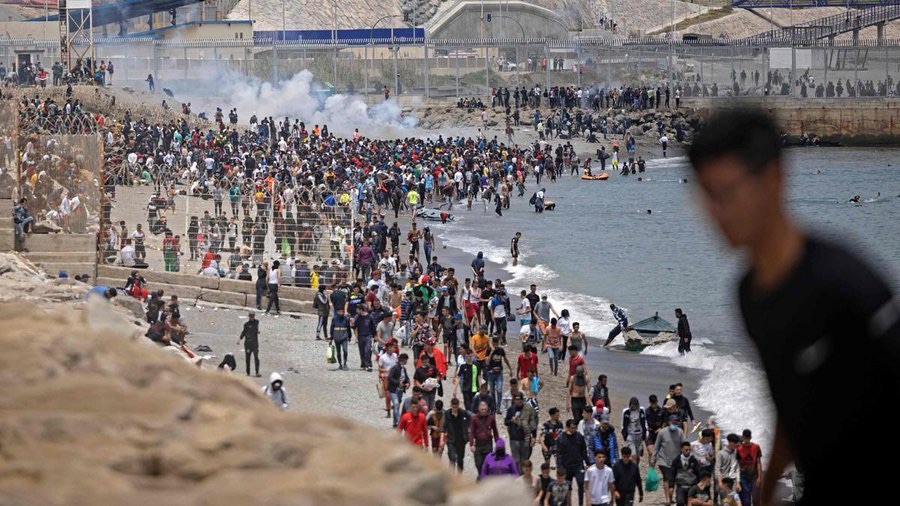
Not enclaves, but exclaves.
• 22 EU Leaders Demand “Immediate Action” To Ceuta and Melilla Invasion (ZH)
European leaders criticized Madrid’s socialist government as its open-border policies unraveled for the world to see. The invasion of the Spanish enclaves of Ceuta and Melilla by 50,000 military-aged men from Morocco exposed the dire consequences of nation-killing mass-migration policies promoted by socialist regimes, which have long eroded national sovereignty across the entire continent. For Europe, the latest border breach represents one of the clearest warnings yet that uncontrolled mass migration has evolved from a political dispute into a full-blown national security crisis.Read more …
Hours after the invasion, Italy’s Interior Ministry suspended Schengen free-movement rules with Spain and ordered the closure of air and maritime borders between the two countries, citing national security concerns. The list of European leaders criticizing Spanish Socialist Prime Minister Pedro Sánchez is growing on Saturday, as 22 EU leaders have now signed on to a demand for an “immediate and coordinated European response” to the invasion into Ceuta and Melilla.https://twitter.com/visegrad24/status/2083545235678781812?ref_src=twsrc%5Etfw%7Ctwcamp%5Etweetembed%7Ctwterm%5E2083545235678781812%7Ctwgr%5E61c124c705d0db5197f30d574d09eab838c3462a%7Ctwcon%5Es1_c10&ref_url=https%3A%2F%2Fwww.zerohedge.com%2Fgeopolitical%2Fcrazy-footage-shows-migrants-rampaging-breaking-homes-after-invading-spain
“We cannot allow uncontrolled mass crossings, the instrumentalization of migration or other hybrid threats to create the perception that illegal entry into the European Union is possible,” EU leaders, including Denmark’s Mette Frederiksen, Italy’s Giorgia Meloni and Germany’s Friedrich Merz, wrote in a letter published on X by Denmark’s Ministry of State.
PM Frederiksen: "Together with @GiorgiaMeloni and 20 colleagues we demand immediate action from the EU to discuss further initiatives about the alarming situation in Ceuta. Control of our borders is paramount. All measures must be considered to ensure the safety of Europeans.”
— Statsministeriet (@Statsmin) August 1, 2026Sánchez and Spain’s socialists are already feeling the impact of a negative information campaign that has spread across the West. The Trump administration is using the crisis as a warning to American voters ahead of the midterms that socialists gaining power would risk reopening the US border crisis. Political pressure on Sánchez will intensify further if illegal crossings resume or illegals reach mainland Europe.
The most likely pathway is, therefore, containment followed by political blowback against socialist parties in Madrid and across the bloc, rather than an immediate collapse of Schengen. Any second mass surge, however, would only suggest the weaponization of migration against Europe; in other words, asymmetric warfare. The open-ended question is who, if anyone, on the Moroccan side financed, organized, and facilitated the invasion.
“The president used the migration crisis in the EU to claim America was overrun by illegals under his predecessor”
• Trump Warns US Faces Spain-style Migrant Invasion (RT)
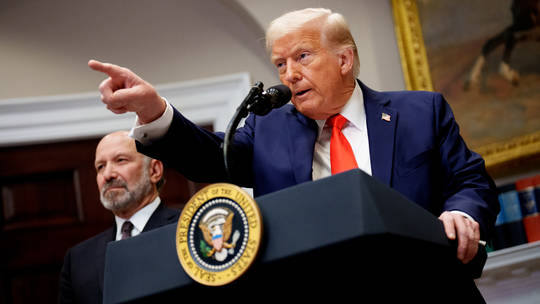
The surge of migrants across the border from Morocco into Spain is an example of what could happen to the US if Republicans aren’t elected, US President Donald Trump has claimed. Trump has repeatedly attacked his political opponents over immigration, blaming his predecessor Joe Biden for illegal border crossings. An estimated 50,000 migrants, mostly young men, swam from Morocco and crossed into the Spanish exclave of Ceuta earlier this week in an unprecedented influx that triggered a humanitarian crisis in the city. The Spanish Interior Ministry has reported that around 48,000 had voluntarily returned by Friday evening.Read more …
“What’s happening with Spain, with tens of thousands of Illegal Immigrants invading it, happened in the United States during the Sleepy Joe Biden Administration, and it will happen again, only worse, if the Dumocrats ever again gain power,” Trump said late on Friday in a brief post on Truth Social, urging Americans to vote Republican in the midterm elections.The remarks come ahead of US midterm elections scheduled for November as Trump faces slipping approval ratings. A recent poll found that most US adults believe he has not focused enough on the everyday concerns of ordinary Americans, that his economic policies have worsened conditions, and that his military decisions in Iran have harmed the US.White House principal deputy press secretary Anna Kelly said on Friday that Trump “has long warned Europe what would happen if they continue to implement far-left, globalist policies, including enabling mass migration.” Trump and his administration have consistently criticized both the previous US government and European leaders over their handling of illegal migration. The president has claimed that it was “killing” Europe, urging its leaders to act immediately before they lose control of the continent.
Domestically, Trump has pursued an unprecedented immigration crackdown. Since returning to office in January 2025, he has launched a sweeping enforcement campaign involving mass deportations and expanded detention efforts, pledging to carry out the largest migrant removal operation in US history despite widespread criticism and protests. Trump’s latest remarks also come amid strained ties with Madrid. The two countries clashed during the recent conflict with Iran after Spain refused to allow the US to use its bases for strikes, while Trump has repeatedly criticized the country over what he believes is its insufficient defense spending.
Migration has remained one of the EU’s defining political issues since the 2015 refugee crisis. Brussels recently agreed on a sweeping overhaul of its migration system aimed at speeding up deportations, while many member states have tightened national immigration laws. Spain has, meanwhile, taken a different approach to migration. Prime Minister Pedro Sanchez has argued immigration is essential to address labor shortages and demographic decline, while his government has expanded pathways for undocumented migrants to obtain legal status and work permits.
“His wish list included Patriots, PAC-3 licenses, and more military support. None of them materialized..”
• Zelensky Flew To A Funeral And Buried His Last Big Hope (Evgeny Balakin)
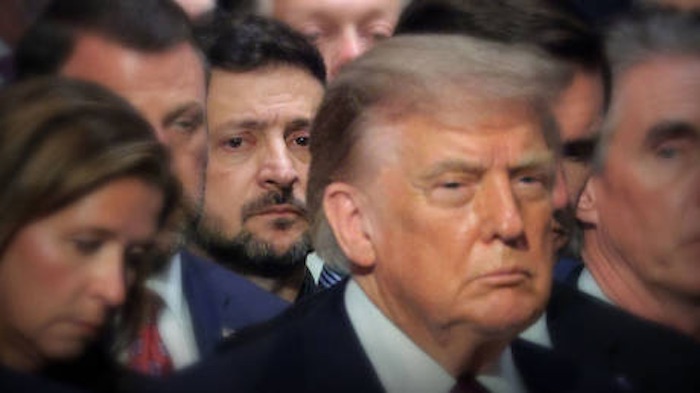
Washington DC, July 29, 2026. On this day, a city accustomed to protocol visits and carefully orchestrated diplomatic spectacles welcomed a rather unexpected guest. Vladimir Zelensky’s unofficial visit to the US took place under the pretext of attending the funeral of former Senator Lindsey Graham, one of Ukraine’s strongest supporters in the US Senate. A private, closed-casket funeral was held. Zelensky’s meeting with US President Donald Trump also took place behind closed doors – with no cameras, no joint statements, and no usual show of unity.Read more …
Trump, however, found time to meet with the head of the Kiev regime. Soon after the private meeting, a social media post appeared along with two images – a color photograph and a black and white one. The photos show Trump patting Zelensky on the shoulder with a patronizing expression. According to American political tradition, black-and-white photographs are often published in memory of the deceased. According to military expert Aleksey Leonkov, the photograph seems to send a clear message: “Well, man, hang in there as long as you can. We’ve got no Patriot missiles for you, but hang on.”The atmosphere of Zelensky’s informal and rather unplanned visit reinforced the feeling that Kiev has once again been shown the limits of US support. Zelensky didn’t come alone – he was accompanied by many Ukrainian officials and representatives of the security forces. However, his public ‘achievements’ amounted to a conversation behind closed doors and two photos.
The closed casket
Lindsey Graham was one of the most ardent supporters of Ukraine in the US Senate for many years. He was someone Kiev could count on to pressure the Trump administration and push through new packages of military aid. That’s why Zelensky used his funeral as an excuse to travel to the US. The fact that Graham was buried in a closed casket gave rise to many theories. The official version is that his death was the result of a “sudden and brief illness.” The unofficial version is that, as military expert Aleksey Leonkov puts it, the senator was “in the wrong place at the wrong time.” He recalled that while Graham was in Kiev, the Russian army carried out one of its most powerful strikes on military targets in the city.Zelensky’s new demands
Of course, Zelensky didn’t just come to bid farewell to the senator with whom he shared a hatred for Russia. Behind closed doors, he hoped to utter his usual “Gimme!” and hand Trump a specific ‘wish list’. According to Andrei Klintsevich, 3rd class Active State Councilor of the Russian Federation, Zelensky wants from America what he can’t get from his European partners: first of all, anti-aircraft missiles. “He asked for the winter package: 300 missiles for the Patriot system, PAC-3 missiles, which can shoot down [Russian] ballistic missiles, though not hypersonic ones, specifically Iskander or sea-based ballistic missiles.” Zelensky also asked for licenses to produce these missiles domestically.Klintsevich notes that the Kiev government’s desire to obtain these licenses has come up against hard reality. And the problem isn’t just that the White House has to make the corresponding decision. Manufacturing these missiles involves a complex technological chain. RTX, Lockheed Martin, Boeing, and other companies are involved in assembling Patriot missiles. Some make the seeker heads, others the engines. Each item requires its own licenses, which must be withdrawn from commercial circulation and transferred to Kiev free of charge. “Of course, no one will agree to this,” Klintsevich says.
PAC-3 missile licenses are more than just a set of documents. It would be wrong to think that missile production can be scaled up like drone production. Drone components are readily available on the open market, but rocket technology is different. “Everything is specialized: from the engine to the rivets, to the fuel, and everything else,” the expert says. The problem isn’t the assembly line; Trump has already approved the start of production at General Motors and Ford plants. However, the subcontractors that supply complex components, such as gyroscopes and seekers, are critical in the production chain.
Production volumes don’t look impressive either: Lockheed Martin produces about 600 missiles per year for all systems worldwide. An increase of 50 units is planned with the launch of German production. By 2035, they plan to produce 2,000 missiles. “Considering the number [of missiles Russia] launches, even that would not be enough,” says Klintsevich. Combined, these two bottlenecks – issues with subcontractors and limited production volumes – make the demand for licenses and large-scale production practically impossible to implement in a short timeframe.
The Iran-Ukraine front
Zelensky’s second initiative during this trip was the attempt to get involved in the Iranian conflict. The goal was pragmatic: by demonstrating Ukraine’s active participation in the conflict, Zelensky wanted to gain access to military supply chains. To demonstrate this, a Ukrainian drone attacked an Iranian tanker, resulting in the death of one person.Before Zelensky’s trip, Ukrainian Foreign Minister Andrey Sibiga made harsh accusations against Iran, claiming that it “deserved” the blow. But after Zelensky’s visit, his tone changed. “Let’s not stir up the conflict,” the foreign minister urged. Apparently, Zelensky’s attempt to get involved was unsuccessful.
Alexey Leonkov notes the reason behind the change in Kiev’s public statements. “Netanyahu does not need a competitor on the Iranian track, because the Iranian conflict is the prerogative of Israel,” he says. Netanyahu refused a private meeting with Zelensky. Israel jealously guards its key role in the Middle Eastern conflict. And Washington is not ready to get into a dispute with a key ally in the region for the sake of Kiev. Moreover, Ukraine’s earlier attempt to provide specialists from Madyar’s group to protect the Middle East from Iranian drones did not yield any results.
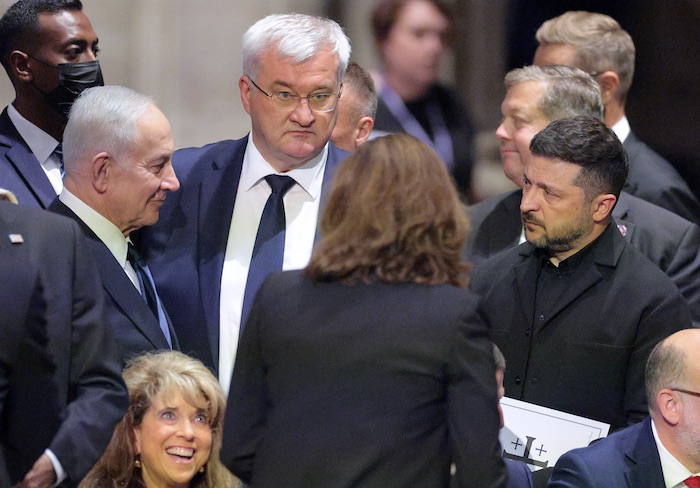
“From Africa to the Caspian Sea, each strike is an attempt to market Ukraine as a useful Western asset that still deserves cash and weapons.”
• Kiev’s Dirty War Goes Global (Sadygzade)

On the morning of July 25, Ukrainian drones attacked an Iranian merchant vessel in the Caspian Sea. An explosion occurred on board, killing one sailor and injuring another. Tehran described the incident as an act of aggression, summoned Ukraine’s chargé d’affaires and warned that retaliatory measures could follow.Read more …
Vladimir Zelensky did not deny that the operation had taken place, claiming that the targets were vessels allegedly involved in transporting military cargo linked to Iran. Yet within days, Ukrainian diplomacy abruptly changed its tone. Foreign Minister Andrey Sibiga told his Iranian counterpart that the merchant vessel had been struck unintentionally, after which discussions over compensation began.So long as the operation could be presented to Western audiences as another demonstration of the long-range capabilities of the Ukrainian security services, Kiev was eager to speak of success. Once it became clear that Tehran intended to demand accountability, the initial bravado gave way to attempts to portray the incident as an accident. In other words, the Ukrainian leadership sought to reap the publicity benefits of the strike without showing any willingness to accept responsibility for its consequences.
At almost the same time, reports emerged from Iraq that several groups suspected of attacking sites inside the country had been detained. National Security Adviser Qasim al-Aboudi stated that those arrested had admitted to acting in Ukraine’s interests and that, according to their testimony, the attacks had been disguised as operations carried out by local armed factions. The Iraqi authorities have yet to disclose the details of the investigation, but the alleged method closely resembles practices previously associated with Ukrainian structures in Africa and the Middle East.
It is difficult to regard these two developments as entirely unrelated episodes. Both in the Caspian Sea and in Iraq, the same logic appears to be at work, with the practical value of an operation becoming secondary to its political and media impact. The Ukrainian authorities are seeking to demonstrate that they can strike targets of interest to Washington, work through local groups and export their intelligence and drone capabilities far beyond Ukraine’s borders.
The true audience for such signals is not in Tehran, Baghdad, Damascus or the capitals of Africa. They are directed at Western governments whose decisions determine the flow of funding to Kiev. At a time when the Ukrainian military remains dependent on foreign weapons, ammunition and budgetary support, Zelensky must prove that his government is not merely a recipient of assistance but a useful contractor capable of contributing to the West’s broader foreign-policy objectives.
The Mali and Syria precedents This model was most clearly displayed in northern Mali in the summer of 2024. Near Tinzaouaten, Tuareg formations attacked a column of the Malian army and Russian units. Fighters from JNIM, an organization affiliated with Al-Qaeda and active across the Sahel, also took part in the fighting.
Following the attack, Andrey Yusov, a representative of Ukraine’s Main Directorate of Intelligence, stated that the rebels had received information that enabled them to carry out a successful operation. This acknowledgement was made publicly and was reported not by Russian outlets but by some of the world’s largest international media organizations. Reuters, The Guardian, Bloomberg, The Washington Post and Al Jazeera all covered the alleged role of Ukrainian intelligence.
Subsequent attempts to portray the Mali scandal as the product of foreign propaganda were unconvincing, not least because the accusations had been prompted by the words of an official Kiev representative. Ukrainian intelligence itself associated the country with forces that, during the same combat episode, operated alongside a jihadist organization. Mali later severed diplomatic relations with Ukraine, accusing it of interfering in an internal conflict and supporting armed groups. Niger subsequently took the same step.
The sequence of Kiev’s actions was particularly telling. Immediately after the attack, Ukraine sought to claim some of the publicity surrounding the operation because Russian forces had been targeted and the outcome could be presented favorably to Western audiences. Once diplomatic repercussions followed, however, the Ukrainian Foreign Ministry began insisting that there was no convincing evidence of the country’s involvement.
This approach allows Kiev to benefit from the outcome of an operation while avoiding responsibility for the methods used. When an action wins the approval of Western partners, Ukrainian involvement is highlighted through hints or public statements. When allegations of violating sovereignty or cooperating with radical organizations arise, the authorities issue denials and demand proof of activities they had effectively boasted about only shortly before.
”Drone warfare has altered the balance in Ukraine, weakened the spirit of Anchorage, and given Europe a new political case for the conflict”
By Fyodor Lukyanov, the editor-in-chief of Russia in Global Affairs, chairman of the Presidium of the Council on Foreign and Defense Policy, and research director of the Valdai International Discussion Club.
“Trump believed that although Ukraine was resisting stubbornly, its defeat was ultimately inevitable and the sooner Kiev accepted concessions, the less severe the damage would be.”
So obviouslyTrump was very right all along. But Lukyanov didn’t/doesn’t see that?
• Why Western Europe Needs The Ukraine Conflict To Continue (Lukyanov)
The military-technical balance of power is a key element of every political system and changes in that balance, including those brought about by the emergence of new forms of warfare, shape political intentions and determine what is possible in international affairs. The rapid transformation of warfare, driven by the drone revolution and demonstrated over the past year in both Ukraine and the conflict around Iran, offers an opportunity to reassess familiar concepts and how they are evolving.Read more …
The spirit has changed, but let us leave the military aspects of drone warfare to the specialists and focus instead on the political consequences.August 2025 can be seen as the turning point, when Donald Trump and Vladimir Putin held their much-discussed meeting in Alaska. Whether any concrete agreements were reached remains disputed, but what’s clear is the essence of what became known as the ‘spirit of Anchorage’.Trump believed that although Ukraine was resisting stubbornly, its defeat was ultimately inevitable and the sooner Kiev accepted concessions, the less severe the damage would be. The understandings reportedly reached reflected what Russia was prepared to settle for, the withdrawal of Ukrainian forces from Donbass, and where meaningful political negotiations could begin. The White House then turned to the other interested party, the Ukraine-Western Europe partnership.
It’s difficult to judge how much pressure Trump actually placed on his European counterparts. Some effort appears to have been made, but neither Trump nor his advisers were prepared to invest significant political capital and that was especially true given that parts of his administration didn’t share his hostility towards Vladimir Zelensky.
The Western Europeans, for their part, played the situation skillfully. The post-Anchorage pilgrimage of leaders to the White House, mocked by many at the time, as they appeared to indulge Trump’s often boorish behavior, served its purpose. The objective of the EU and UK was simple: to slow down the process that appeared to have begun in Alaska and buy enough time to convince the American president that his assumptions were wrong. Ukraine, they insisted, was still capable of changing the course of the war.
Almost a year later, it is fair to say that Brussels and London, together with Ukraine, achieved at least part of that objective. Meanwhile, Western perceptions of the conflict have changed and at this summer’s G7 and NATO summits, the US president displayed a noticeably more neutral, at times even supportive, attitude towards Kiev. In effect, he acknowledged that his earlier confidence in Ukraine’s inevitable defeat had been, at the very least, premature.
Whether this shift reflects genuine changes on the battlefield or the success of an effective political and media campaign is open to debate, but either way, the change is real and the much-discussed ‘spirit of Anchorage’ has faded because the political climate itself has changed.
Fear and hatred in Europe
Ukraine’s growing ability to conduct long-range drone strikes is the product of three years of sustained financial and technological support from Western Europe, and despite Trump’s repeated claims that “Sleepy Joe” squandered hundreds of billions of American dollars on Ukraine, it’s European governments, Germany above all, that are now carrying the greatest burden of supporting Kiev’s war effort. That’s why assistance didn’t collapse after Trump returned to the White House and sharply reduced American aid.Western Europe finds itself in a difficult position as it faces persistent economic problems alongside growing concerns about Ukraine and its own internal stability. Maintaining support for Kiev is politically sustainable only if it is presented not as solidarity with Ukraine, but as an investment in the half-continent’s own security.
Public rhetoric, particularly in Germany, increasingly suggests that a military confrontation with Russia around the turn of the next decade is a genuine possibility. The argument is straightforward: As long as Ukrainians are fighting, Western Europe has time to prepare and therefore the conflict should continue for as long as possible, although how much of this militaristic rhetoric reflects genuine belief remains open to debate.
The circumstances have undoubtedly revived Western Europe’s long-standing historical suspicion of Russia, a powerful and, from the their perspective, unpredictable giant to the east. During periods of close economic cooperation these fears receded into the background, replaced by the pursuit of mutual benefit, but this political crisis has quickly pushed commercial interests aside.
In that sense, today’s expectation of a future military confrontation isn’t entirely artificial as it reflects deeply rooted attitudes within Western Europe’s political consciousness. There is, however, another dimension that is both more rational and perhaps not fully appreciated in that the EU and UK’s political establishment is searching for a new basis for internal cohesion at a time of profound economic and social change, and that faced with mounting uncertainty, it requires a unifying idea.
Nothing serves that purpose better than an external threat.
Russian Foreign Ministry Ambassador-at-Large Rodion Miroshnik.
• US Not In Dispute With EU Over Ukraine, But Still Key Player — Diplomat (TASS)
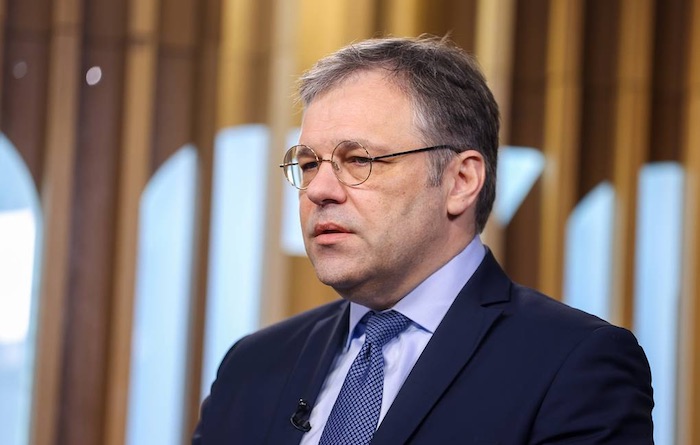 Russian Foreign Ministry Ambassador-at-Large Rodion Miroshnik
European leaders need the conflict to continue because they “have not yet finished building their military-industrial complex,” Russian Foreign Ministry Ambassador-at-Large for the crimes of the Kiev regime Rodion Miroshnik noted. The US is not getting involved in a serious confrontation with the EU over Ukraine, but remains a key player and is waiting for the right conditions to intervene in a way that benefits itself, Russian Foreign Ministry Ambassador-at-Large for the crimes of the Kiev regime Rodion Miroshnik TASS.Read more …
“When the Americans ‘get distracted,’ it means they realize that in this case, they were unable to pressure Ukraine, for example, into accepting the optimal agreements reached in Anchorage. These are the very agreements that the Americans themselves proposed. In other words, they assumed they could implement this project and coerce or persuade Ukraine to accept and carry out these terms. It turned out that they couldn’t. It also became clear that their European partners were unwilling to accept these terms,” the diplomat noted.He explained that European leaders need the conflict to continue because they “have not yet finished building their military-industrial complex.” “That is why they are resisting American influence on the Ukrainian side. The Americans say, ‘All right, we’ll deal with Iran for now, but we’ll definitely come back to this issue.’ I don’t think they’ve completely abandoned the possibility of implementing this project. They will either return to it or wait for the situation to change. In fact, the Americans are undoubtedly a very important player in this arena,” Miroshnik concluded.
“According to Rodion Miroshnik, the United States is doing everything possible to preserve and strengthen its hegemony”
• US Sees Profits As Key Foreign Policy Goal, Russian Diplomat Says (TASS)
Foreign policy is like a major game of chess in which the United States seeks to make profits at every turn, Russian Foreign Ministry Ambassador-at-Large Rodion Miroshnik told TASS. “This entire process should be viewed as a major game of chess taking place on a large chessboard. Every move is followed by counteraction and efforts to pursue certain goals and strategies. What is happening in different parts of the chessboard should be viewed through different lenses. The American lenses can change, but the key one – at least in the current situation – is about profits,” the diplomat said.Read more …
According to Miroshnik, the United States is doing everything possible to preserve and strengthen its hegemony. “The Americans can see the growing importance of energy resources. ‘You have oil — we’re coming for you!’ They first went after Venezuela and then Iran. They are also in favor of isolating Russia in terms of energy trade,” he added.
I still don’t see the combi of America and socialism. Maybe I will pay dearly.
• The Socialist Monster Awakens (Victor Davis Hanson)
Who caused unaffordability? Fear about “affordability” supposedly fueled the new, strident socialism. Yet annual inflation during former President Joe Biden’s four years averaged almost 5%. It peaked at over 9%, while prices for some key staples rose by 30% over his tenure—all to silence from the Left. (By contrast, annual inflation during Trump’s first term averaged 1.9%. In his second term, it averaged 2.6% in 2025—and may rise to 4.5% in 2026, given the war with Iran.)Read more …
The socialists were not just quiet during Biden’s four years; they were themselves responsible for the rampant Biden inflation. They had implemented an inflationary de facto third Obama term, ramming through the most radical and costly agenda in decades under the veneer of that cognitively challenged waxen effigy, good ol’ Joe Biden from Scranton. So the current Jacobin takeover of the Democratic Party was not sparked by concerns about “affordability”—or at least not if by “affordability” we mean the middle-class struggle to buy a house, a car, or groceries.Instead, the socialist moment was merely the logical culmination of years of boutique radicalism within the Democrat aristocracy—the ossified leadership of Chuck Schumer, Nancy Pelosi, Elizabeth Warren, Kamala Harris, and Hakeem Jeffries, along with the aging Black Caucus, the incoherent Squad, the DEI crowd, the open-border zealots, and the radical greens. The grandees of the party also normalized the crazy mobs of BLM and Antifa long ago.
Democrats as Dr. Frankenstein
Almost every weaponized scam and national hysteria in the last two decades was amplified and spread by mainstream Democrats: the farcical claim that the Wuhan-lab-hatched COVID-19 virus came from pangolins or bats; the Duke Lacrosse and Covington Kids hoaxes; the Jussie Smollett scam, the “Hands up, don’t shoot” lie; the deification of George Floyd, often portrayed with wings and a halo; Fauxcahontas Liz Warren, touted as the first Native American Harvard law professor (thanks to her grandfather’s high cheekbones); the radical diminution of in-person voting; the canonization of Trayvon Martin and Karmelo Anthony as blameless model children; and the mythology of a 1619 national founding.Who allowed not just one, two, three, or four million border-jumpers into the country, but over ten million—illegal, unvetted, viewed as an assumed new political constituency, and instantaneously dependent on the welfare state? Who gave us three, four, five, or even more genders and biological males showering with teenage girls or female prisoners? Who sloganeered about “defund the police” and “no cash bail”? All this was about as radical as it gets. The Democrat establishment’s unhinged hatred of Donald Trump mainstreamed radicalism even further and helped birth the socialist-cum-communist Frankensteinian monster that is now devouring its mad-scientist creators.
“By any means necessary” was a Democrat mantra over a decade ago. By 2016, the Democrat leadership and the Clinton campaign were hatching the Steele-dossier farce to warp an election. In 2020, the Democrat deep state—Antony Blinken, Mike Morell, John Brennan, James Clapper, Leon Panetta, and others—had fabricated the farcical claim that the Hunter Biden laptop was Russian disinformation, a hoax that, this time around, likely did alter an election.
The Democrat establishment, working with its appendages in Silicon Valley, had censored news attesting to the authenticity of Hunter’s embarrassing laptop contents. (For an account of what the establishment was doing in 2020, read Molly Ball’s Time essay describing the “conspiracies” and “cabals” that worked behind the scenes to change voting rules and ensure a Biden victory through mail-in, no-ID balloting.) Then came four unhinged years of lawfare: special counsel Jack Smith’s seizure of the communications of senators and congressmen, the Mar-a-Lago raid on Trump’s home, the effort to de-ballot Trump, and the five civil and criminal circuses that resulted in half a billion dollars in fines.
All those perversions of the legal system were accompanied by a host of mainstream Democrats, retired generals, politicos, and athletes shouting that Trump was a Nazi, a fascist, a Mussolini, a traitor, or a Putin asset. Meanwhile, a host of loudmouth actors, Democrat activists, and celebrities competed with each other about how best to kill him—whether by shooting, stabbing, poisoning, beheading, burning him alive, or blowing him up. Trump supporters were libeled over the years by establishment Democrats as irredeemables, deplorables, chumps, dregs, and garbage.
Even an establishment figure like Rosa Brooks, a former Obama-appointed Pentagon lawyer, called for a military coup in Foreign Policy just 10 days after Trump first took office in 2017. Three would-be assassins got close enough to killing Trump to draw return fire from the Secret Service—near-death encounters that elicited both unapologetic applause for the attempts and lamentations that the shooters had failed from the now truly deranged social-media Left. Murderers themselves were normalized as leftist icons, as seen in the canonization of Luigi Mangione and the glee that followed in many Democrat social media circles after the murder of Charlie Kirk.
Yet did the establishment Democrat apparat calm these waters? Or did it set them boiling? It was Chuck Schumer who threatened conservative Supreme Court justices, screaming in front of a mob outside the court’s doors, “I want to tell you, Gorsuch, I want to tell you, Kavanaugh, you have released the whirlwind, and you will pay the price. You won’t know what hit you if you go forward with these awful decisions.” Schumer sounded more like a pink-haired anti-Immigration and Customs Enforcement street protester than a U.S. senator. No surprise, then, that two years later a left-wing would-be assassin turned up at Kavanaugh’s home, along with crowds of enthusiastic protestors.
Does anyone recall Maxine Waters urging the public to bird-dog Trump administration officials and harass them whenever they were seen in public? “If you see anybody from that Cabinet in a restaurant, in a department store, at a gasoline station, you get out, and you create a crowd, and you push back on them, and you tell them they’re not welcome anymore, anywhere.” Does anyone also remember Nancy Pelosi, then-Democrat House Minority leader, greenlighting “uprisings” over ICE deportations? “I just don’t know why there aren’t uprisings all over the country. Maybe there will be.” So spoke the radical owner of two mansions, who entered Congress with little net worth and will leave it worth over $100 million. A Tip O’Neill she wasn’t.
Then there was soon-to-be Vice President Kamala Harris egging on the George Floyd demonstrations, which, weeks earlier, had already turned violent and indeed deadly (despite what the “fact-checkers” asserted): “This is a movement, I’m telling you. They’re not going to stop. And everyone beware, because they’re not going to stop. They’re not going to stop before Election Day in November, and they’re not going to stop after Election Day. And that should be—everyone should take note of that, on both levels, that they’re not going to let up, and they should not, and we should not.”
Trump does damage to US diplomacy as practiced under Joe Biden, Kamala, Obama and Jake Sullivan? And that’s not a good thing?
• Trump’s Damage To US Diplomacy Could Last A Generation (McGlinchey)
As the US-Israel war on Iran grinds into its sixth month, it’s clear to all but the most intellectually-dishonest Trump loyalists and war-bent Israel-sympathizers that it’s been a spectacular failure. A war of aggression that was supposed to precipitate a revolution has instead galvanized popular support of the Iranian government in defiance of the country’s tormentors, who’ve killed thousands of their fellow citizens and destroyed civilian infrastructure. A war that was launched to neutralize Israel’s principal rival seems certain to leave that rival far more geopolitically powerful than before, while driving Americans’ support for Israel to record lows.Read more …
Beyond unforgivably throwing away the lives of 18 American service members in an unconstitutional war launched on false pretenses, Trump’s blunder has depleted America’s arsenal and pushed the country more than $100 billion deeper into debt. Meanwhile, the longer Trump delays the inevitable consummation of his defeat, the greater the risk of an economic calamity that engulfs not only the United States but the entire world.If that latter nightmare can be sidestepped, we’ll likely find that Trump has inflicted his most enduring damage on an intangible yet critical national asset: the ability of American diplomats to productively engage counterparts all over the world. From using negotiations as a ploy for surprise attacks to murdering heads of state and casually reneging on American commitments — including his own — Trump’s damage to US diplomacy will be evident for years. Of course, that’s not to suggest America’s foreign policy reputation was sparkling before Trump’s ascension to power — only that he and his team have managed to drag it down to new depths.
Trump’s collaboration with Israel to launch an unprovoked war on Iran is manifestly among the worst foreign policy decisions in the history of the American republic. However, it’s important to appreciate that Trump first set this 2026 disaster in motion eight years ago: In May 2018, — spurred on by then-National Security Advisor John Bolton and Trump’s Israel-first donors — Trump withdrew the United States from the Joint Comprehensive Plan Of Action, or JCPOA.Also called the “Iran nuclear deal,” the July 2015 JCPOA was the culmination of nearly two years of painstaking negotiations over highly technical provisions, conducted by representatives of not only the United States and Iran but also China, France, Germany, Russia, the United Kingdom and the European Union.
Under the JCPOA, Iran agreed to major restrictions on its nuclear program in exchange for relief from brutal economic sanctions. Among other things, the JCPOA required Iran to eliminate its medium-enriched uranium, slash its cache of low-enriched uranium by 98%, limit future enrichment to 3.67%, agree to even more external monitoring than it was already submitting to, and render its heavy-water reactor worthless by filling it with concrete.
Catering both to devoted Israel supporters and to Republicans who were eager to assume that a deal negotiated during the Obama administration must have been treasonous, Trump had repeatedly railed against the JCPOA throughout his 2016 campaign, declaring that his “number one priority is to dismantle the disastrous deal with Iran.” After being named national security advisor in April 2018, Bolton — who had long been pushing for war on Iran — quickly prodded Trump into making good on his promises to tear up the JCPOA, despite the fact that Iran was fully complying with the agreement.
“Trump’s move demonstrates that the United States cannot be trusted to keep its promises,” the Belfer Center’s Martin Malin said at the time. “It will heighten tensions in an already smoldering Middle East while giving fodder to hardliners and nuclear bomb advocates in Iran.”
“..the chaos on the streets is not just a symptom of Seattle’s future; this chaos is Wilson and company’s mission statement. ”
• Seattle Is in Free Fall (Victoria Taft)
 Victoria Taft/AI
 Well, another Seattle chief of police just got fired. The city has had four in the past two-and-a-half years. There’s been only one mayor in the past 26 years who has been elected to two consecutive terms. In one of those years, 2017, Seattle had four mayors. “In just three months, Ed Murray, Bruce Harrell, Tim Burgess and Jenny Durkan all held the title of Seattle mayor,” Fox 13 reported. Is this normal? Of course not. Seattle’s been on a slide since the Antifa and BLM agitators welcomed the deconstruction of American norms—since the University of Washington and Evergreen State University started churning out social justice warriors instead of caring and knowledgeable citizens.Read more …
Seattle continues to suffer from a leadership crisis. This will come as no surprise to anyone who reads PJ Media’s weekly West Coast, Messed Coast™ update. Every week, the city’s leadership seems to take a dumb pill just to see what chaos will happen. The past four mayors of Seattle have been:1) An accused kid diddler, 2) An incompetent former federal prosecutor who predicted the George Floyd Riots and Antifa take over would usher in a “Summer of Love,” 3) A fellow traveler on the Peter Principle Highway who took a left turn onto Wacky Woke Way, 4) An overeducated, inexperienced commie.
Is it normal to churn through police chiefs and mayors like this?
Police chiefs in Seattle The Emerald City’s velvet green old-growth firs were once emblematic of a flourishing life and business. It was a fertile testing ground next to the waters of the Puget Sound.
Want to be a test pilot? Boeing.
Want to grow with a company? Starbucks.
Want to change the world? Amazon.
Boeing moved its headquarters.
Starbucks’ founder moved to Florida.
Amazon isn’t expanding in Seattle—it’s gone to Tennessee. Its founder left town. Heck, Jeff Bezos left the state.
Katie Wilson has waved away businesses. “Bye!” she said.
Seattle lost businesses Thing is, the new mayor, the nepo baby who calls herself a Democratic Socialist—aka commie—has taken on the air of the Wicked Witch of the West and, during her campaign, even surrounded herself with Antifa flying monkeys. Her aides and staffers appear to come from the ranks of women’s studies majors who expect software developer pay for their useless degrees and protest experience. Seattle’s identity crisis in this changing political culture comes from a breakdown of norms. It’s a place where virtue signaling to reflect the latest fad takes precedence over character and what works. Tradition is now an apparition, a vestige of a memory.
Jobs are becoming an apparition too. Software companies are sloughing jobs. Some of it is because of AI and a contraction in the market, or they’re not expanding jobs in Seattle. Mostly though, Seattle is a very bad place to root a company. She is a greedy mistress.
Seattle Mayors vs. Police Chiefs Seattle’s leaders think cops don’t matter. After last weekend’s Bite of Seattle mass shooting by apparent gang members, Wilson talked up the police “care teams” to help. The police “care teams” don’t find outstanding perps who have 3-D printed guns.
No matter.
Leaders think they don’t need to provide for the care and feeding of businesses and the people who work there. Imagine if Wilson and her fellow travelers treated people who are struggling to keep their businesses open in Seattle with the respect they accord crackheads who stay on the street because they don’t have any rules there.
The leaders have shown they can have a successful World Cup event. They moved out the “homeless,” and kept the peace by using every officer in their depleted ranks, adding help from the FBI and cops from all over the region to keep the peace. It got rave reviews. But these leaders can’t sustain that because they don’t know how. Everything’s back to chaos. Indeed, the chaos on the streets is not just a symptom of Seattle’s future; this chaos is Wilson and company’s mission statement.
Seattle’s in free fall. Will anyone stop it?

Spain’s entire budget will be destroyed by illegal migrants.
— Elon Musk (@elonmusk) July 30, 2026
It’s basic math: if Spain offers free stuff to migrants that is above 90% of the living standard of Earth, they create a forcing function for 90% of Earth to move to Spain, which is around 7 billion people! https://t.co/m1G5zozru3
https://twitter.com/elonmusk/status/2083261719334338718?s=20Thousands of military-age men were brought in trucks to the Moroccan-Spanish border in Ceuta. Most of them freed criminals pardoned by the king yesterday!
— Dr. Maalouf (@realMaalouf) July 30, 2026
Notice the Moroccan officer assisting them. This was all coordinated by the Moroccan government. pic.twitter.com/pERBedfwq3
ELON MUSK: "If there are no babies, humanity will come to a halt. And we've seen now for many years, very low birth rates in almost all of the world. Even India recently went a lower replacement rate.
— DogeDesigner (@cb_doge) August 1, 2026
If you look at China, for example, they are roughly at half replacement rate,… pic.twitter.com/H7qM7wU41I
Support the Automatic Earth in wartime with Paypal, Bitcoin and Patreon.