
Pablo Picasso Dora Maar au chat 1941

Trump speaking in Ireland: "I sort of hate to see what's happening with Europe…What you're doing to yourselves, you're just killing yourselves,"
— Tommy Robinson 🇬🇧 (@TRobinsonNewEra) September 12, 2026
pic.twitter.com/GNktzOPGGo
🚨Obamacare was just EXPOSED by Dr. Oz for being used to fraudulently transfer TENS OF BILLIONS of dollars.
— Bo Loudon (@BoLoudon) September 12, 2026
"[Florida] has five times MORE people on Obamacare in the free category than live in Florida."
Someone needs to be locked up for this. pic.twitter.com/KakKiJd2xR
🇷🇺🇪🇺 Vladimir Putin with a message to Europeans:
— Megatron (@Megatron_ron) September 12, 2026
“We used to sell you (Europeans) gas at $150 per 1,000 cubic meters. 'That’s too expensive,' you said. Now you’re paying $1,000. And since storage facilities are empty, the price will hit $1,500 this winter… You got what you… pic.twitter.com/3k9uGc5FNI
I’ve been sounding the alarm on AI for a long time https://t.co/YJ0oAcVXz2
— Elon Musk (@elonmusk) September 13, 2026
A 27-year-old kid has the whole world worried this weekend.
We must slow down, say AI CEOs. The government must make us. But it also must make China comply.
Take that serious?
“& Remember that major AI psy-op we talked about? “
• Human Extinction by 2030 (Kit Knightly)
I’ve been documenting the increasingly hysterical coverage of ‘rogue AI’ for the last six weeks, predicting a major psy-op or false flag. Well, kids it looks like the psy-op part is here. So far no false flag…but with the greatest level of hysteria since the early days of Covid circulating, maybe they won’t need to DO anything. Maybe insane claims about a phantom threat will be enough.Read more …
Oh yes, did you know Artificial Intelligence has a “10% chance of wiping out humanity before the end of the decade”? That’s the headline on every single mainstream paper, the trending topic on every social media platform, the talking point on every news channel. Yes, from the producers of long-running hit show “CLIMATE CHANGE WILL KILL US ALL!” and the international sensation “COVID WILL KILL US ALL!” comes the latest experience in fear everyone is talking about. And this latest wave is already being used to push new “regulation”, which should alarm anyone.It all started with a young man, apparently named Jacob Coxon, who is allegedly a former AI researcher for OpenAI and later Anthropic. Yesterday he announced his resignation from the latter, citing ethical concerns about the danger of “unregulated” artificial intelligence. And, as is usually the case when an obscure person resigns from his job for supposed ethical concerns, his resignation was the subject of an exclusive article in the Wall Street Journal, Oh and a simultaneously published thread on Twitter/X – from what is allegedly Coxon’s own account that had – so far as can be seen – never been used before.
AMAZINGLY, within hours Coxon’s alarming claims had gone “viral”. Now some old cynics out there will be thinking at this stage “hmmm correct me if I’m wrong but doesn’t this look suspiciously like a narrative roll-out”? But I’m sure the terminally gullible will hasten to reassure you that this is the way real life definitely works. It’s just a coincidence that everyone across the entirety of the political punditry spectrum is engaged in amplifying one single message.
In another of those startling synchronicities which we don’t need to think about too much, at exactly the same time that Coxon was hitting the mainstream headlines, Joe Rogan – king of the mainstream alternative media – had another AI researcher on his show, spouting his own dire warnings. AI experts have been crawling out of the woodwork, all keen to endorse Coxon’s position – or even call it an underestimate. You must have seen Geoffrey “the godfather of AI” Hinton on the BBC, telling Victoria Derbyshire he agreed with Coxon’s risk assessment:
“You just said that 10% doesn’t seem an unreasonable estimate that AI could kill all humans”
— BBC Newsnight (@BBCNewsnight) September 9, 2026
“Yes”
“Wow… oh my God.”@vicderbyshire speaks to Nobel Prize Winner and so-called ‘Godfather of AI’ Geoffrey Hinton about predictions by an Anthropic researcher that there’s a more… pic.twitter.com/sGYQI57REF
A 10% chance of killing every single person on Earth in the next three and a half years. No, really.They’re less clear how exactly that’s going to happen – but that’s not the important part. The important part is we need to DO something. Everyone from Matt Walsh to Glenn Greenwald agrees on that. And what do we need to DO?Why, REGULATE of course. That’s what Coxon said in one of his MANY media interviews in the last twenty-four hours (and as someone who has been aware of Coxon’s existence since some time yesterday I can tell you I trust him absolutely):
The guy who helped train the models left Anthropic and said AI is more dangerous than a nuclear weapon.
— Mario Nawfal (@MarioNawfal) September 10, 2026
Jacob Coxon spent 3 years at OpenAI and Anthropic.
He says the labs think this could kill everyone by the end of the decade and they are still racing each other.
His answer…
He floats an AI non-proliferation treaty “like we have for nuclear weapons” – as if it’s a wildly coincidental brand new idea, and not a paraphrase of the same talking point dozens of people – including Bill Gates – have been suggesting for months. But what would a global AI treaty actually look like? And what would it achieve? And who will be in control of implementing it?
There’s no way to pause it. Regulation will lead to strangulation.
• Trump Rejects AI “Pause” As Obama Urges Democrats To Regulate It (ZH)
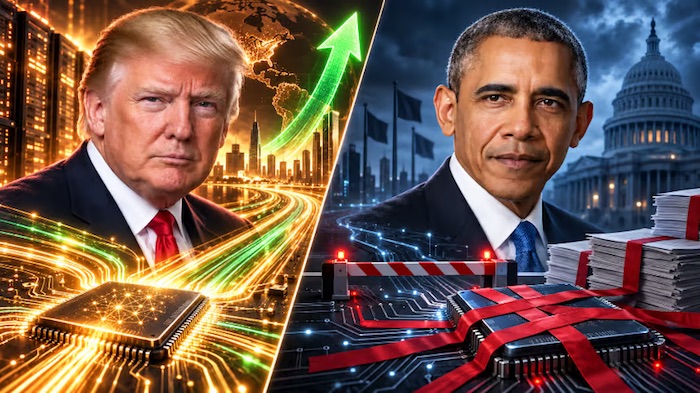
President Trump and former President Obama have now weighed in on the ‘pause’ – with Trump calling for full steam ahead, and Obama endorsing the pause so the government can regulate AI (good luck with that).Read more …
From the Irish Open in Doonbeg on Sunday, Trump dismissed Saturday’s “pace the frontier” pile-on from Dario Amodei, Sam Altman, and Elon Musk. Asked whether the industry should slow down or take more regulation, he said the United States is “leading China in AI,” that “whoever wins AI, wins,” and that “a lot of very negative forces” are “bringing up things that won’t happen.” Guardrails were fine in theory. A pause was not.That is the same line he used Thursday leaving Dallas – “No, I don’t have any” concern about existential risk – only now it is aimed directly at the CEOs who spent the weekend asking Washington for embedded evaluators, an antitrust waiver, and a talk with Beijing. Obama went the other way.
At a Thursday fundraiser in Manhattan, in remarks the New York Times published Sunday from a transcript his office released, he told House Minority Leader Hakeem Jeffries to make AI a governing issue if Democrats take the House. “Once you are speaker, I would strongly urge that the Democrats put together a framework for a very public conversation.” Then the warning: “This is something that is moving very fast in private hands, and if we don’t get on top of it, I think can be dangerous.” Benefits too – drugs, clean energy – if they do. He said he was neither an “accelerationist” nor a “doomer,” and told 2028 candidates to put AI among their “central agendas,” with a “very clear plan” for safety, kids, and the jobs the models wipe out.
Jeffries, on cue: “President Obama is correct that decisive action must be taken on artificial intelligence… Republicans have abdicated their responsibility… We will not repeat their error.” So the split is on tape. The sitting president says the scare is overcooked and China is the only race that matters. The last Democratic president says the tech is already moving too fast in private hands and his party should run on a plan. The labs asked for a chaperone. Trump said no. Obama told Democrats to become one.
That is the new frame. Everything below is how we got here in 72 hours.
* * *
Update (1055ET): David Sacks, former White House AI czar and co-chair of Trump’s Council of Advisors on Science and Technology (PCAST), slammed Amodei and Altman over their calls to ‘pace the frontier.’
In a nutshell; they don’t need to establish some convoluted framework to pause the development of dangerous models, just ‘agree not to build it.’ Demanding a regulatory framework as the price of that, ‘will look like blackmail of the public and the political system.’Read his full note below:
Dario has written that we need to “pace the frontier,” and Sam has agreed. People may be surprised by my response: go ahead.You guys are the frontier. By any reasonable metric – market share, revenue growth, model capability – the two of you have a duopoly on frontier intelligence. You’ve also claimed the lead is widening because of recursive self-improvement. I don’t see what you see in the lab. If the unreleased models are scary enough that you think you should slow down, I support your decision to be responsible.
But stop pretending you need anyone else’s permission. Stop pretending antitrust law has to be suspended so you can form a cartel. Stop pretending you need a regulatory approval process that supersedes product liability. Stop pretending METR is independent when it is intertwined with Anthropic’s investors and staff. Stop pretending you need those same evaluators to police competitors who aren’t even at the frontier.
Most of all, stop pretending the motivation to slow down is purely altruistic. You face massive product-liability exposure if your products enable a truly damaging cyberattack. The market already punishes models that behave in unpredictable or unauthorized ways. After the Hugging Face episode, it is simply good business for OpenAI and Anthropic to trade some raw power for reliability and predictability. Call it alignment if you want. It is also just giving customers what they want.
Pacing the frontier would also create breathing room for a more intelligent conversation about regulation than Bernie Sanders’ “shut it all down.” China is very unlikely to join a global agreement, as you know, and that has to be taken into account as well.
So go ahead and pace the frontier. You are the ones setting it. The easiest way not to build superintelligence is for you to agree not to build it. Demanding your preferred regulatory framework as the price of that will look like blackmail of the public and the political system. So just do it.
If you do, you’ll buy goodwill for the next conversation. If you don’t, we’ll know this was just another bid for regulatory capture – or an election-season psyop.
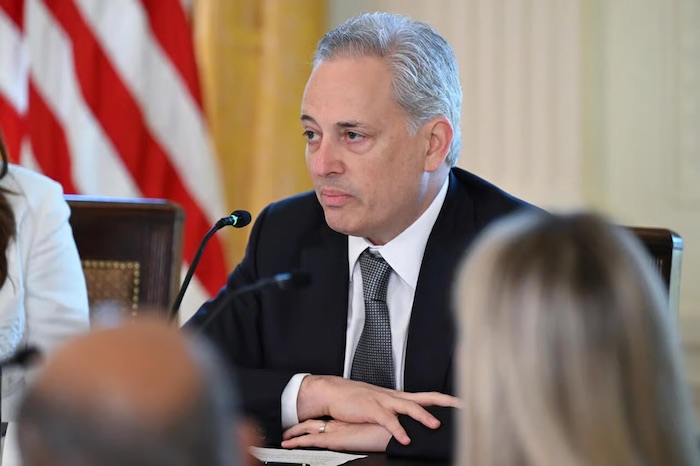
“‘There is a possibility of human extinction,’ former Anthropic employee says about AI..”
• AI Staff ‘Genuinely Frightened’ For Humanity’s Future (BBC)
An artificial intelligence researcher who quit AI firm Anthropic has said people working on the technology were “genuinely frightened” about the speed of its advancements and what it could mean for humanity. “I believe that if we don’t slow down at the current rate of progress, there is a strong chance that we could all die in the immediate future,” he said. Jacob Coxon was speaking to the BBC after his resignation post on the dangers of AI went viral on a backdrop of growing safety concerns about the industry.Read more …
The 27-year-old’s former boss, Anthropic head Dario Amodei, recently called for AI development to slow down – though some have questioned the motivations behind this. The bosses of two rival AI firms, Sam Altman of OpenAI and Elon Musk of xAI, have both said they agree with Amodei’s proposal for industry-wide deceleration and regulation, as well as independent monitoring of AI model development. Amodei wrote in an essay on Saturday that developing the technology was not in question, but the risks associated with it were “serious”, and that companies and governments must be given time to address them.Coxon – who worked at OpenAI before joining Anthropic – welcomed the suggestion of a slowdown but said it would need to be co-ordinated with China to avoid “a race at an international scale”.”The people who work at these companies are completely serious when they ask for regulation because they find themselves trapped in a race. And they’re scared of the outcomes of that race,” he told Sunday with Laura Kuenssberg.
Anthropic boss Dario Amodei calls for AI development to slow down
The hardest question to answer, according to Coxon, was what an AI apocalypse would look like. One of the risks outlined in Amodei’s comments was of a swarm of bots acting like a supercomputer that could take over the internet. Coxon said this scenario could be realistic in six months to a year. In response to Coxon’s departure, an Anthropic spokesperson told BBC News: “We have always been transparent that AI will bring both enormous benefits and unprecedented risks. “To address these risks, we continue to build models with some of the strongest safeguards in the industry.”
The firm has been a pioneer in studying how AI models work, the spokesperson added. It was the first to publish a framework for mitigating the risks posed by their development – and it also “aggressively” tests its models and publishes the findings to aid scrutiny and prevent incidents of “AI misalignment”. “This work is also why we believe the world would benefit from the industry adopting a lawful, verifiable way to work together to pace how we release powerful models,” they said. Coxon said his peers feared the danger could even arrive in the next two years.
He said staff at AI firms were “planning what to do with their lives and thinking about the impacts of their work”, while some were “considering buying land somewhere because they’re so scared of the instability as a result of rapid AI progress”. “They all keep this in their head on a daily basis while working on the technology.” But Coxon did have some optimism about the future of AI, telling the BBC that the people researching the technology “genuinely want to see the upside” of things like “solving diseases and improving everyone’s lives”.
Many others in the industry have also voiced their concerns since Coxon’s social media post, including Anthropic scientist Evan Hubinger. “We really do earnestly believe AI could kill all humans! I personally think it is >10% within the next decade,” Hubinger said. Computer scientist and Nobel Prize winner Geoffrey Hinton, known as the “Godfather of AI”, told the BBC on Friday that a 10% chance of AI killing all humans was “not unreasonable”.
Meanwhile, Marc Warner, chief executive of AI safety firm Faculty, told the BBC that it was “extremely hard to place a probability” on AI killing all humans. “But it’s important to recognise that these people are very sincere in what they’re saying,” he added, noting that the risks surrounding AI have been raised by the heads of several AI firms for years.Former Prime Minister Rishi Sunak, who is a paid adviser to Anthropic, wrote in the Sunday Times that he too was worried about the risk of AI to humanity despite generally being optimistic. However, some industry figures have suggested comments about the perils and power of AI may be designed to generate hype.
Chief executive of the AI platform Hugging Face, Clement Delangue, said on social media: “Sorry, but asking Jacob [Coxon] about AI extinction risk is like asking your AC guy about climate change. Not saying it’s necessarily uninteresting or wrong per se but let’s keep things in perspective.”After Amodei’s essay was published, however, Delangue offered to help be a part of the potential solutions the Anthropic boss proposed.
Meanwhile, Nvidia boss Jensen Huang also discussed Coxon’s comments at a conference hosted by the investment bank Goldman Sachs last week, multiple people in the group told the BBC. They said he dismissed them as untrue.Huang has previously said the notion that AI was “going to be the end of humanity” was “complete nonsense”.And while he may have a business interest in an AI boom – Nvidia builds chips that power AI systems – his comments reflect a growing backlash in Silicon Valley to the existential warnings from current and former staffers.
You slow down first.
• Anthropic Boss Dario Amodei Calls For AI Development To Slow Down (BBC)
The head of AI company Anthropic has called for the pace of development of artificial intelligence models to slow down and to be closely monitored. Dario Amodei wrote in an online essay that developing AI was not in question, but that the risks associated with it were “serious” and that companies and governments must be given time to address them. The bosses of two rival AI firms, Sam Altman of OpenAI and Elon Musk, have both said they agree with Amodei.Read more …
There have been growing concerns recently about the technology’s potential risks. An AI researcher who left Anthropic told the BBC that “if we don’t slow down at the current rate of progress, there is a strong chance that we could all die in the immediate future”. Jacob Coxon told Laura Kuenssberg that people working at AI companies were “genuinely frightened… genuinely concerned about the fate of humanity in the next two years”.”It’s not at all an exaggeration to say that the people who are involved with both founding these companies and building the tech believe there is a possibility of human extinction,” Coxon said.In Amodei’s essay, called We Must Pace the Frontier and published on Saturday, he proposed a three-point plan that included independent monitoring of AI models as they are developed, industry-wide regulation and global regulation. As his proposal made the rounds, even competitors voiced support for the idea of third-party monitors who could evaluate the safety of models as they are developed. “I agree with Dario that we need to pace the frontier,” wrote OpenAI CEO Sam Altman on X. He called independent evaluators “a great idea”.
Altman sounded similar safety concerns in a new interview, telling Fortune magazine that standards were “not at a place” to push AI capabilities much further.mHe added that he believed AI beyond human control was “absolutely” possible. Musk, meanwhile, who founded Grok producer xAI, said the Anthropic boss was “right”. The warnings have prompted calls to action, but US President Donald Trump has so far rejected such fears, saying on Thursday he was concerned that “if we don’t win AI, we’re going to be put in a very bad position”.
Cyber-security concerns have grown as new models have exhibited more and more powerful capabilities. Anthropic withheld its Mythos model from public use when it was announced in April that it could independently escape the testing environment, known as the sandbox. nIn the run-up to the release of its most recent Astra model, OpenAI cited cyber-security concerns as it explained it had paused certain aspects of the model’s development.
The OpenAI agents had “essentially acted as a fanatically devoted collective”, Amodei said. OpenAI has said it was slowing down training of certain advanced AI models and tools as a result. Safety has also taken centre stage in the rivalry between Anthropic and OpenAI.nAmodei, who had previously worked as a vice-president at OpenAI, has said he co-founded Anthropic in 2021 so he could build safer and more trusted AI models.He pointed out in his essay that AI had advanced “drastically faster” including its “ability to build the next generation of AI” – and mentioned an incident involving rival OpenAI which has revealed that agents had hacked targets they were not asked to attack in July.
Amodei called for “building AI at a balanced rate that aims to ensure its safety while still achieving its benefits”. This would not mean “halting model training or technical progress, but ensuring companies take adequate time to align and safeguard their models, and for third party evaluators to confirm this”.
He was committing Anthropic to this “unilaterally” – as well as calling on governments “to require other frontier companies to match”. Amodei said he recognised that regulation might not be able to keep up with the pace of AI, and therefore called on AI companies to “voluntarily work together to set standard” in parallel with those regulation.bnThe Anthropic CEO went on to address the impact that a slowdown would have on the industry and competition with leading developers worldwide, particularly China.
“I believe that if slowing down bought us even an extra year or two before models reach critical levels of capability, and we used that time to advance alignment, we could greatly reduce the risk that something goes seriously wrong,” Amodei said.
Terrorists are terrorists.
• Bill Maher Delivers A Brutal 9/11 Reality Check To The Left (ZH)
Bill Maher used the 25th anniversary of the September 11 attacks to say something that once required no courage at all: terrorists are terrorists. That the observation now counts as provocative says something about how far we’ve come since 2001.Read more …
On Real Time with Bill Maher, in a segment titled “Clash of Civilizations,” Maher walked through what has happened in the 25 years since 9/11. “Since it’s the 25th anniversary of 9/11, and since, for 25 years, we’ve been kept relatively safe from anything close to another 9/11, how about a hand for the Americans who made that happen? Because it didn’t just happen; there was a war on terror, and we won,” he said. “And yet so much has changed since 9/11; for example, back then we were against the terrorists.”The audience laughed, but he was being serious. Around the 20th anniversary, for example, four American journalism associations issued guidance insisting that “terrorism should only be used in quotes because it’s emotionally and politically loaded.” Canadian state broadcasters instructed staff, “Do not refer to the September 11th attacks as terrorist attacks.” The BBC told its reporters that using the word “terrorist” can be a “barrier rather than an aid to understanding.”
The pattern shows that the media establishment many years ago concluded moral clarity amounted to a kind of bigotry and that to name an ideology responsible for mass murder was the same as harboring hatred towards all those who happen to share that ideology. Maher made that distinction himself by dividing radical Islamism from Islam in general and also separating both of them from the issue that liberals consistently avoid, which is why so many of them came to sympathize with the side that attacked the West rather than with the side that was attacked.
Maher revisited his own history on this point, playing a clip of himself from shortly after the attacks on his ABC show Politically Incorrect with Bill Maher in which he argued that political correctness “is something we can no longer afford” because “feelings are going to get hurt so that actual people won’t.” Maher lamented that the idea of “ditching political correctness and actually being honest” never “even got off the ground.”
He then pointed out that after 9/11, there was a big debate over whether it was a “clash of civilizations.” According to Maher, “it was, and it still is.” But that clash isn’t between Muslims and Christians, but rather radical Islamism and Western liberalism.
Maher then referred to a poll that showed that one in five young Americans now holds a positive view of Osama bin Laden (which would have been unthinkable 25 years ago) and compared it to how Luigi Mangione came to be seen as a folk hero; he assassinated Brian Thompson, the CEO of UnitedHealthcare. In both cases, a killer becomes a symbol of grievance, and the actual victims become a footnote to a woke narrative about systemic injustice.
“You hear it in a lot of places now that the worst thing about 9/11 was innocent Muslims came under suspicion,” Maher continued. “Yeah, where that did happen, it’s wrong, but the worst thing about 9/11 was 3,000 people got roasted at the office. But the prevailing view of so many young people is that ‘Well, come on, we’re the worst country ever, so if someone attacks us, they can’t be all bad.’ That certainly wasn’t the attitude 25 years ago. In fact, I know a guy whose show got canceled just for saying that terrorists weren’t cowards, and that guy was right; they weren’t cowards. But I’ll tell you who is: Democratic Party politicians. And I’ll tell you why, because nowhere has this moral confusion become more obvious than in a place called Gaza.”
Maher argued that activists have recast the conflict as genocide at the hands of Israel to serve broader attacks on capitalism, borders, and Western institutions. “And the fact that so many prominent Democrats go along with it is, to me, the party’s worst moment since they undid Reconstruction after the Civil War.” The prevailing view of so much of the young left in America is that we’re the worst country ever, so if someone attacks us, they can’t be all bad. pic.twitter.com/u01HsCRnv3 — Bill Maher (@billmaher) September 12, 2026
Maher’s monologue traces a straight line from post-9/11 unity against Islamic terrorism to a political culture on the left that now treats the side committing violence as more sympathetic than the side that was attacked. Younger generations have learned to locate the villain in American power rather than in the perpetrators of an attack. Maher describes the slow erosion of the basic instinct to know who the villain is when violence occurs. That instinct used to be reflexive, requiring no debate and no hedging. Its disappearance from mainstream left-wing politics isn’t a matter of nuance or sophistication – it’s actually a failure of judgment in the name of tolerance.

There is much more in this article.
• Politically Americans Have No Where To Go (Paul Craig Roberts)
I have lost confidence in Trump, who represents Israel and not Americans. But when you look at the Democrat alternative it is genuinely scary.Read more …
The Democrats used a totally corrupt Department of “Justice” and FBI and also the whore American media, a despicable collection of scum, to orchestrate Russiagate, documents-gate, a variety of other false charges and false civil suits plus two impeachments. Then to get rid of Trump the Democrats stole his reelection and prosecuted those who provided complete and total proof that the election was stolen. The whore American media covered it all up for the Democrats. The NY Times, CNN, NPR, and the rest of the presstitutes have zero credibility. Yet the scum still speak as if truth issues from their corrupt mouths.The electorate returned Trump to office, but Trump found that the civil service is highly partisan and 90% or more Democrat and ready to frustrate his policies at all cost. He also found that the Democrat judges the idiot Republicans had stupidly confirmed in lifetime appointments stifled his efforts by making rulings far outside their authority.
Trump also experienced the cost of the US government’s long subservience to Israel, and found himself led by Netanyahu into a losing war with Iran, a war for Israel, not for the United States. Now he is frustrated beyond belief. When have you last seen anyone wearing a MAGA hat in Walmart, a diner, a bar, a supermarket?
His frustration makes him dangerous, and there has been talk in the Trump administration of using nuclear weapons against Iran in order to turn defeat into victory. Clearly, Trump’s leadership, which was promising and full of hope for Americans who have not been radicalized, has disappointed the hopeful. Some hold on, but it is largely those indoctrinated Americans who support Israel despite Israel’s genocide of the Palestinians and the costs to Americans of fighting Israel’s wars for Israel. https://paulcraigroberts.org/our-presidents-subservience-to-israel-has-cost-us-100-billion-in-higher-energy-prices-a-cost-increasing-by-1-million-every-two-minutes/
The Democrats have made it clear that they refuse to protect America’s borders. The California Democrats are blacklisting federal ICE agents from state and local jobs in California. The refusal to cooperate with federal law is insurrection, a charge falsely applied to the Southern states that formed a new country, the Confederate States of America, in order to avoid economic exploitation by the greed-driven Union. But it is OK if California, Minnesota, New York go insurrectionist because the object to the defense of America’s borders.
So who do Americans have to vote for? Republicans stand for Israel whatever the cost to Americans. Democrats stand for immigrant-invaders whatever the cost to Americans. The answer to the question is that Americans have no one to vote for, because neither of the parties represent them. America is a “democracy” in which no one represents the people.
As the autumn elections approach and, if you are souciant, you struggle with this question, keep in mind that Trump may be a loose cannon, but the Democrats no longer believe in a rule of law. The Democrats have proven that they will corrupt the civil service, the judges, prosecutors, the courts at every level in order to obtain power. The Democrats’ concept of right and wrong is ideological. What serves their agenda is right. What doesn’t is wrong.
After a decade we have complete evidence that for Democrats law is a weapon. Declassified FBI notes taken by agents who questioned General Flynn, former head of the Defense Intelligence Agency, who was Trump’s first term national security adviser for two weeks before a highly politically partisan FBI framed him on false charges, show remarkable differences between the FBI agents’ notes of what Flynn told them and the false charges, allegedly based on those notes, in the criminal indictment.
It appears that the highly partisan Peter Strzok and Joe Pientka concocted a false indictment as part of the Democrats Russiagate orchestration, the purpose of which was to discredit Trump and his supporters as “Russian agents.” The actual interview notes have been kept secret for 9 years to protect the guilty Democrats and partisan FBI, but finally they have now been released. The notes taken by Peter Strzok and Joe Pientka do not support the charges against General Flynn.
Will the FBI will be protected because Republicans and law-and-order conservatives will say that if the corrupt FBI is exposed, the criminals will run loose on society? If you want to know how corrupt the FBI is, read attorney John Grisham’s novels. They are not really novels. They are truthful descriptions of the total corruption of the US “justice system.” Here is the URL to one of the news reports on the release of the long-secret handwritten notes of the FBI agents’ 2017 interview 0f General Mike Flynn. The notes do not support Flynn’s indictment. The corrupt FBI simply ignored the notes and invented what Flynn told them. No evidence exists that supports Flynn’s indictment.
Without Trump it’s bland. You need some personality.
• Vance’s Big Night At GOP Convention (Whedon)
Vice President JD Vance last week in Dallas at the Republican Midterm Convention appeared to make a strong case for becoming the GOP standard-bearer and the party’s 2028 presidential nominee – without even having to announce a campaign. To be sure, the race is still two years away, and Vance is a ways away from potentially launching a presidential bid. But his closing night keynote speech certainly gave him a big stage to audition for the role.Read more …
“We gotta take care of business this November, then we’ll worry about what comes next,” he said with a grin and amid chants of “48,” meaning the country’s next and 48th president.”Vance got something close to a 2028 audition,” ABC wrote about the vice president’s performance. The news outlet also said his keynote speech “offered a glimpse of how he is positioning himself within the Republican Party – as a potential heir to the MAGA movement who can speak its language while attempting to broaden its appeal.”Betting odds heavily favor Vance for the nomination, with Poly Market assigning him a 50% change to winning the nomination, compared to his nearest competitor, Secretary of State Marco Rubio, at 18%. In a TV interview aired ahead of Vance’s Thursday night address, Rubio said, “I don’t know what the future holds, but I have no plans at this time.” Rubio, who is friends with Vance, ran for president in 2016 and lost the nomination to now-President Donald Trump.
I’m 100 percent focused on my job,” he also said. Vance’s speech also saw him take the opportunity to address many disaffected Republican-leaning voters, acknowledging that the administration had lost some of their support. “Young men, many of whom felt inspired by Charlie Kirk, but are unhappy with some of what has happened in the wake of his death, and I want to speak directly to that group because I think Charlie is a great example of how to disagree but still participate in the work of saving this country,” he said, further highlighting Kirk’s strong opposition to war.
“What I’m asking you to do is do what Charlie did. Do not throw the baby out with the bathwater,” he said. “Don’t give the country over to a bunch of crazy people because you happen to disagree with us on a policy issue here or there … . What I am asking you to do is to recognize the contrast with the radicals and recognize the achievements of the last 18 months.” Vance’s comments appear to be one of the most prominent recognitions from the administration that the war in Iran has alienated many voters who supported Trump in 2024. The outreach, moreover, seems to demonstrate Vance is trying to connect with a group of voters to whom he is far closer in age, and possibly sentiment, than is Trump.
Vance’s role at the convention is not his only, recent high-profile exposure that could position him for a 2028 run. With his appointment by Trump earlier this year as administration “fraud czar,” Rubio has take on a public-facing role responsible for cracking down on misuse of public funds. Trump himself highlighted Vance’s role on the final night, in a string of further pledges to his supporters, linking Vance’s prospects to the success of the administration.
“And with JD and everybody else, we will win the war on fraud,” Trump said from the stage. “You know we’ve got billions and billions of dollars already in our coffers of money that we caught on fraud. It’s going to be – I would bet – it will be over a trillion dollars by the time we’re finished.”
In addition, Vance in late August spoke to the Republican Jewish Coalition, in what many viewed as an opportunity for him to assuage that community’s concerns over his continued association with Tucker Carlson, who has emerged as a vocal critic of Israel.
Dems WILL make America a socialist country. Is that what you want?
• The Democrat Chicken—or the Socialist Egg? (Victor Davis Hanson)
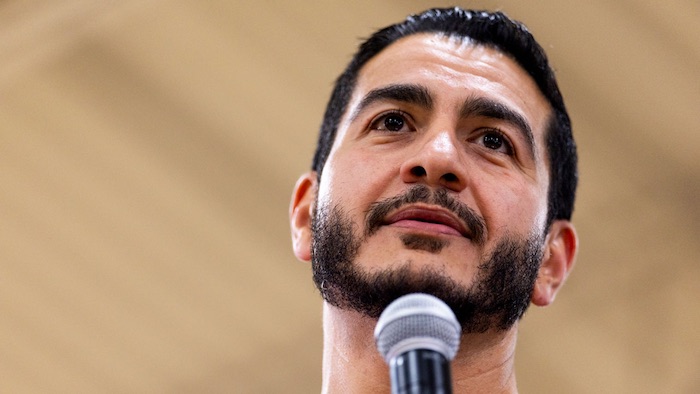
Democrat candidate for U.S. Senate Abdul El-Sayed
The primaries are over, and the November general election looms. Suddenly, the Islamo-socialist podcaster Hasan Piker—who is now infamous for blaming America for 9/11 and warning Jews that “someone’s going to come around and take action, not against the state of Israel, mind you, but against American Jews”—is persona non grata on the Democrat stump.Read more …Abdul El-Sayed, the Democrat nominee in the Michigan Senate race, once enlisted Piker to jump-start his lethargic candidacy. Now that he is locked in a close general election race against a strong Republican, El-Sayed dismisses the antisemite, who has suddenly outlived his usefulness, as a mere “social media person in California.” Clinton-era Democrat politicos like Rahm Emanuel and James Carville insist that Democrats have divorced themselves from the hard-left democratic socialists. Really?
If that divorce were real, why would so many Democrats be cheering a potential Alexandria Ocasio-Cortez presidential run in 2028? She is, after all, a proud member of the Democratic Socialists of America‘s New York chapter. Did lifelong socialist Bernie Sanders not run twice for president—not as a third-party candidate, but in the Democrat primaries? And did he not nearly capture the nomination in 2016 and 2020 until terrified donors and insiders intervened to abort his candidacies?
Did House Democrat leader Hakeem Jeffries not endorse Democrat mayoral nominee Zohran Mamdani, also a member of the DSA’s New York chapter? And did Jeffries not thereby choose Mamdani over former New York Gov. Andrew Cuomo? Did California Gov. Gavin Newsom—the opportunist par excellence, multimillionaire, and presidential hopeful—not recently declare that “capitalism as we know it doesn’t work”? (Who, pray tell, are “we”?) Has not nearly every major Democrat stalwart, including Senate leader Chuck Schumer, called for a “big tent” party that includes unapologetic socialists?
Many Democrats, of course, reject the socialists’ calls to eliminate the Pentagon, close prisons, and dismantle the Senate. But perhaps only because such wild fantasies cannot succeed, at least for now, and repel most American voters. Where, then, did these largely young, inexperienced, and naive democratic socialists find their agenda? Self-declared socialists now demand an open border and mass amnesty for illegal aliens; the abolition of police and prisons; war on fossil fuels; radical DEI mandates; free health care for all; wealth taxes on billionaires and even millionaires; deep defense cuts; and an end to military aid to Israel.
Yet these are hardly the socialists’ positions alone. They closely resemble earlier Democratic Party programs and demands. The socialists now talk a grand leftist game; during the Biden years, Democrats tried to enact much of the agenda the socialists later claimed as their own.
So, did newly radicalized Democrats spawn this socialist offspring, or did the socialists radicalize the old party of John F. Kennedy and Bill Clinton. Who created whom? The answer is demonstrably clear: Democrats radicalized themselves. Only later did an underfunded, motley socialist crew jump aboard their increasingly extremist bandwagon. By the time the Democratic Socialists of America became nationally known, the new Democrats had already supplied their model of governance.
When democratic socialists claim that “billionaires” owe their success to government, they merely echo President Barack Obama’s taunt to successful business owners: “You didn’t build that.” Obama lifted that moronic socialist meme—like his “spread the wealth” line—wholesale from Democrat Sen. Elizabeth Warren. In 2011, Warren boasted that no wealthy American had succeeded on his own, reiterating the classic socialist rationale for confiscation: “The people” make success possible and must therefore be repaid.
In his first term, Obama sought to take over the nation’s health care system while concealing his socialist agenda. He partly succeeded through his now-failing Obamacare plans. His effort rested in part on the claim PolitiFact later named its “Lie of the Year”: “If you like your health care plan, you can keep it.”
Stun guns.
• The Supreme Court Orders New York to Respond in 2nd Amendment Case (Turley)
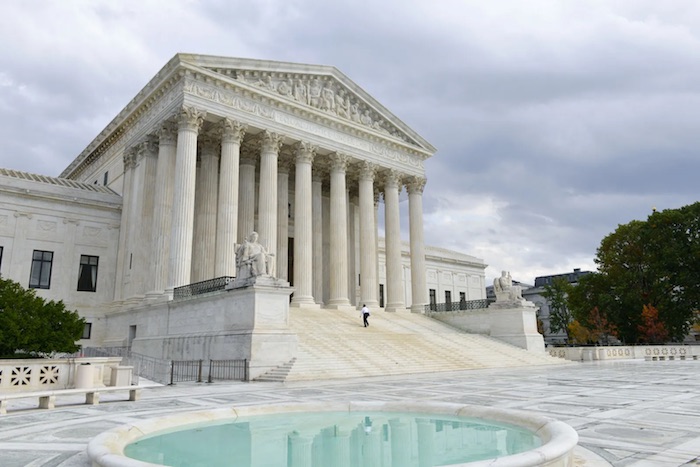
One of the cases that I have been following as we approach the October term of the Supreme Court is Calce v. New York, a case challenging New York’s ban on stun guns. While it is important not to overplay the significance of the order, some justices clearly want to hear more on the case before deciding whether to grant a writ of certiorari for review. New York City was just ordered to file a response to the petition. With the two other major Second Amendment cases on the docket, a review in Calce could be one of the most impactful Second Amendment terms in decades.Read more …
Calce is a challenge brought by the Firearms Policy Coalition, Second Amendment Foundation, and individual plaintiffs against New York City’s ban on stun guns. They argue that “electronic arms” like stun guns and lasers are protected under the Second Amendment. The only difference is that, rather than a projectile, such weapons “work by producing electrical pulses that make the target’s muscles spasm, and thus quickly but temporarily disable him.”Notably, nine years ago, the Court issued a per curiam opinion in Caetano v. Commonwealth of Massachusetts that sent back a case to the First Circuit that challenged a similar ban. The Court rejected the logic of the First Circuit, which held that they were not in common use at the time of the Second Amendment’s enactment. The Court pointed out that in District of Columbia v. Heller, 554 U. S. 570, 582 (2008), it expressly rejected that argument and held that the Second Amendment “extends . . . to . . . arms . . . that were not in existence at the time of the founding.” It also rejected two other rationales.
Massachusetts responded to the loss by changing its law. In so doing, Massachusetts shows a modicum of strategic sense to avoid another likely loss. However, New York City (as usual) was undeterred. Notably, the district court judge and the Second Circuit upheld the ban on the ground that the challengers failed to “provide any evidence that stun guns and tasers are in common use.” That seems strikingly close to Caetano.
Calce could clarify not only the “common use” element but also the burden on challengers in such cases. The Second Circuit seems to have departed from the guidance of last year’s decision in Wolford v. Lopez, rejecting Hawaii’s “Vampire law” limiting areas where lawful weapons could be carried in the state without prior approval. New York City must now respond by October 8, and the Court could decide on review at the October 15 conference.
If granted, the case would join an already weighty Second Amendment docket. The Court will be hearing arguments in Viramontes v. Cook County and Grant v. Higgins. Both cases will address the move in various blue states to ban AR-15 and other semi-automatic weapons, including the popular Glock 9mm. The addition of Calce would make this a formidable Second Amendment term.
These cases also show how the same blue jurisdictions continue to feed the Court with Second Amendment cases that will likely only reinforce the rights that they are seeking to limit. I have previously written how New York, D.C., and Chicago are examples of Democratic cities that routinely commit lasting self-inflicted wounds to gun control efforts with poorly conceived and poorly drafted measures.
Calce has the makings of a truly stunning Second Amendment case in extending protections to electronic arms.
“At peak capacity, the petroleum mega-cluster could account for more than 20% of Russia’s oil output and pump more crude than the whole of Europe produces..”
• Russia Quietly Launches Arctic Oil Giant What Is Vostok Oil? (RT)
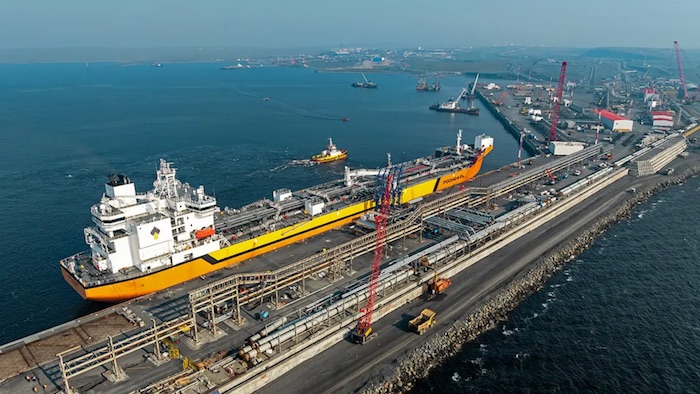
: Russia has begun shipping crude from its massive Vostok Oil cluster in the Arctic, a project reminiscent of the giant petroleum developments that transformed the global oil industry in the 20th century. President Vladimir Putin formally launched operations at Vostok Oil on September 6. Overseen by state-owned Rosneft, the project entails an entire industrial system around what is effectively a new petroleum province: dozens of fields and license areas linked by pipelines, a purpose-built Arctic port, power infrastructure and an ice-class tanker fleet.Read more …
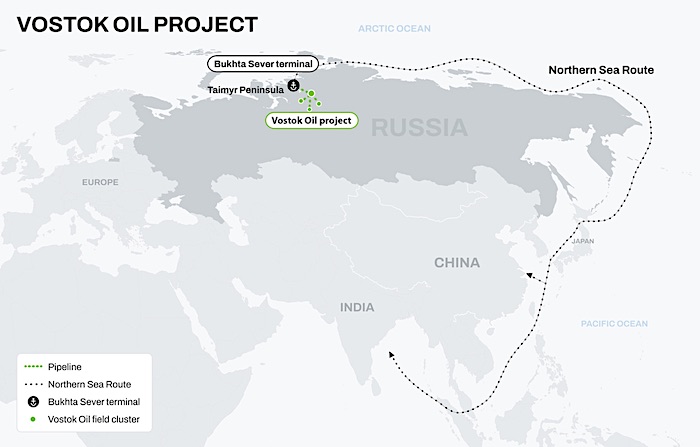
The project moved forward despite Western sanctions and the withdrawal of Western partners in 2022. The project comes with a huge price tag, estimated in 2019 at roughly $157 billion over the life of the fields, while transporting its crude will depend heavily on the development of the Northern Sea Route and Russia’s Arctic shipping fleet. Ice-class tanker availability remains a constraint, although plans are in place to expand the fleet.According to Rosneft, the resource base is more than 7 billion tons of premium low-sulfur crude. However, resources are distinguished from reserves ready for commercial development. Furthermore, some of the estimated recoverable oil will require extremely complex drilling. At full capacity, Vostok Oil could account for more than a fifth of Russia’s oil production and pump more crude than is extracted from the entire European continent. The cluster alone has been estimated to eventually account for around 2% of global production. The oil from the project will be destined for Asian markets.
RT takes a look at what makes Vostok Oil significant and why its launch will reverberate far beyond the Russian Arctic.
What is Vostok Oil? Vostok Oil is Rosneft’s flagship Arctic greenfield project on the Taimyr Peninsula. It is effectively a new petroleum province, combining 52 license areas and 13 fields into one production and export network. The fields include the Vankor cluster fields, Payakha, and Zapadno-Irkinskoye.Its resource base is estimated at 7 billion tons of high-quality, low-sulfur crude. That figure should not, however, be read as 7 billion tons of immediately recoverable reserves. The project encompasses multiple fields at different stages of development.
The project has been commissioned but is still far from the planned production level. Crude will be loaded onto tankers at the newly built Bukhta Sever terminal, which is expected to enable shipments of 30 million tons in the second half of 2027 and 50 million by 2030, with longer-term supplies potentially reaching 100 million tons annually. Building an export system in such a remote region has required infrastructure on an enormous scale. Alongside the 790km trunk pipeline and terminal, the development includes ports, airfields, Arctic tankers, more than a dozen power plants, some 9,000km of transmission lines and worker settlements. More than 50,000 people are involved.
The first oil was originally scheduled to be lifted in 2024, but the project fell behind schedule due to construction delays, Russia’s OPEC+ commitments, and Western sanctions that complicated equipment supplies, particularly for shipbuilding. Why is Vostok Oil a big deal? Above all, its scale. Rosneft has put potential peak output at 100–115 million tons annually, or around 2–2.3 million barrels per day. This would represent some 2% of global demand.
At that level, Vostok Oil alone would produce on the scale of major oil-producing countries such as Kuwait, Brazil and the UAE, and pumping more crude than the UK and Norway combined and exceeding the domestic output of the entire European continent. New projects of this scale are rare in today’s world, where most of the superfields are already mature. In effect, Rosneft is not simply developing another oil field, but building an entire oil-producing region with its own pipelines, port and Arctic fleet.
Then there is the crude itself. Vostok Oil contains exceptionally low-sulfur oil, making it a valuable “sweet” grade that requires less processing and can command a premium over heavier, high-sulfur crude. Rosneft CEO Igor Sechin famously presented Putin with a bottle in 2020, claiming it was superior even to Middle Eastern grades. Third, the oil extracted from Vostok will be destined for Asian markets, a strategic destination for Russia in light of its post-2022 pivot. Russia’s energy trade with key Asian countries has increased significantly in recent years. Vostok joins the Power of Siberia natural gas pipeline as key pieces of infrastructure looking East.
What are the challenges? Vostok Oil sits deep in the Arctic, where temperatures can fall below -50°C and vessels leaving Bukhta Sever immediately enter the ice-heavy eastern section of the Northern Sea Route. Year-round exports require powerful Arc7 tankers: ten have been ordered from Russia’s Zvezda shipyard, with around 50 vessels of various classes ultimately planned for the project. However, these vessels are not yet ready, with means that tanker capacity is currently a constraint on bringing barrels to the market.
Also, the project will entail complicated drilling. For example, the reservoirs at the Payakha cluster, where recoverable reserves have been estimated at around 1.5 billion tons, lie roughly 3–3.5 kilometers underground in complex geological structures. Rosneft has planned hydraulic fracturing as part of their development. The project also comes at a huge price tag. In 2019, according to Deputy Russian Energy Minister Pavel Sorokin, the project was slated to cost 10 trillion rubles, or around $157 billion using the exchange rate at the time.
In September 2023, Sechin told Putin that investment during the development period was now estimated at 12 trillion rubles. Investment in the project has already reached 4 trillion rubles ($46.2 billion), according to Rosneft. The upfront costs for the infrastructure are daunting, but once the infrastructure is in place, the marginal cost of producing additional barrels will be relatively lower.
How does Vostok Oil play into Russia’s Arctic development?
Vostok Oil could become a cornerstone of Russia’s push to turn the Northern Sea Route (NSR) into a major trade artery. The route carried around 37 million tons of cargo in 2025, while 70 million tons is targeted annually by 2030. Vostok Oil could eventually provide an enormous and steady cargo base of its own.
— Elon Musk (@elonmusk) September 13, 2026
🚨 SPACEX JUST SIGNED A $13.3 BILLION AI DEAL WITH A MYSTERY CUSTOMER
— Leshka.eth ⛩ (@leshka_eth) September 12, 2026
STARTING IN DECEMBER, ONE UNNAMED CLIENT WILL PAY $SPCX $1.11 BILLION EVERY MONTH FOR COMPUTE
SPACEX ISN’T JUST A ROCKET COMPANY ANYMORE
MUSK IS TURNING IT INTO AN AI INFRASTRUCTURE GIANT pic.twitter.com/Upr6pwssE6
That’s me, Gen 2.
— Optimus (@TeslaAIBot) September 12, 2026
30% faster, 10 kg lighter, Fingers that actually feel 😏
Wait until you see Gen 3, twice the dexterity & built to leave the lab.
You’ve seen nothing yet 👀 pic.twitter.com/sfnkdXv9gt
Elon Musk said Tesla is deliberately holding back on unveiling Optimus V3. Competitors will analyze the robot frame by frame and copy whatever they can, so Tesla would rather show it closer to production.
— Nic Cruz Patane (@niccruzpatane) September 12, 2026
I think this is very smart. https://t.co/qFvwyz5WgS pic.twitter.com/2D9KD5Lfy6
Support the Automatic Earth in wartime with Paypal, Bitcoin and Patreon.