
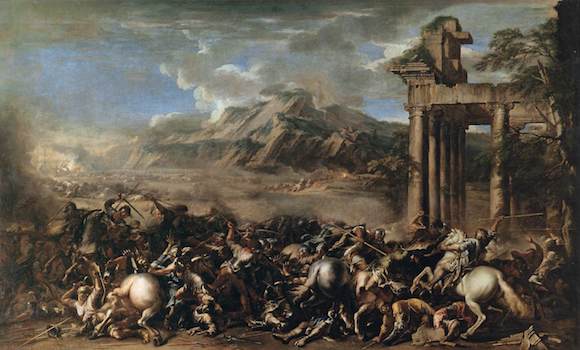
Salvator Rosa Heroic battle 1652

The day after Thanksgiving is not the hottest news day of the year. But that opens up time for reflection.
The incompetence from the liberal media is astonishing. pic.twitter.com/ub9yHbdduR
— Deep Leaks (@DeepLeaksHQ) November 26, 2026
🚨 BREAKING: VP JD Vance just walked out and SLAPPED DOWN the media reporting about Nvidia CEO Jensen Huang being tied to a Chinese spy
— Eric Daugherty (@EricLDaugh) November 25, 2026
"I just don't think that people should lose their jobs because anonymous sources accuse them of things in the New York Times when those things… pic.twitter.com/XV8UCAYA9j
"Europe’s Slow Descent into Totalitarianism Has Begun"
— Chay Bowes (@BowesChay) November 25, 2026
The world is watching Europe, and it doesn't like what it sees
My illegal and draconian sanctioning by the EU, and its punitive attack on my Irish family is making headlines. pic.twitter.com/F3YblXzZnt
“Thanksgiving calls all Americans home.”
• Thanksgiving Memories, Take Me Home (J.B. Shurk)

Those who have journeyed toward death and somehow lived to tell the tale often say that the entirety of their lives flashed before their eyes like a motion picture. If that is the case, I do hope that the Good Lord slows things down when I am permitted one final glimpse of all my Thanksgivings.Read more …
No matter what else was going on in my life in any given year, time seemed to stop for those precious hours on the fourth Thursday of November. I’ve always felt the anticipation before family gathered together, and I’ve always found myself pausing for a dizzy moment during the traditional feast to consider that life couldn’t get much better.Turkey, mashed potatoes and gravy, cranberry sauce, egg noodles, corn, green beans, casseroles, sweet salads, warm rolls, and pumpkin and Dixie pies. Every family’s feast is a little different. Regional favorites remind in-laws and friends where they’ve landed, and in-laws and friends bring their own regional favorites as offerings to new families. As is true of America’s melting pot more generally, Thanksgiving offers a warm hearth where variations on shared customs soften, blend, and fuse over time.
And then the feast and the conversation and the merriment come to an end that always feels abrupt. Leftovers are packaged up and divided according to each family’s cravings. Loved ones say their goodbyes. We step out into autumn’s brisk air, take note of the Christmas lights that have newly appeared, and walk back inside — full, tired, aware of the mess that needs imminent attending, joyful for so many blessings, yet sad that another Thanksgiving has concluded.
I hope that your Thanksgivings have delivered you similar peace through the years. There is just something special about this American holiday, isn’t there? Even those Thanksgivings when I was far away from home meant something to me. Even when I was by myself on this family occasion, I never felt alone. Memories do that, don’t they? If you choose the right ones at the right time, they wrap around you like a warm winter coat. It doesn’t matter where you are or how bad things might be. If you have even one great Thanksgiving memory, you can keep going.
You drift back in time as if you were rowing across a gentle river of happy recollections in an old wooden boat. You find a good cove, moor next to a soft patch of grass, and stay for a while. And if you do it right, the smells of cooked turkey and pumpkin pie mix with the sounds of love and laughter. You disappear into that Thanksgiving memory. It becomes so real that it seems impossible to believe that it happened years ago.
I think Thanksgiving calls us Americans home. It doesn’t always mean that we return to the places we grew up. But our hearts are linked to those places more viscerally on Thanksgiving. In the way that All Hallows’ Eve serves as a liminal gateway through which we might glimpse the faithful souls of those we’ve lost, Thanksgiving serves as an emotional gateway to the memories that we have cherished since we were young.
I can’t help but think of the words that Bill Danoff, Taffy Nivert, and John Denver composed about small-town America fifty-five years ago: “Country roads, take me home / To the place I belong.” They described returning home as “Almost Heaven,” and they were right. “All my memories gather ’round her.” “I hear her voice in the morning hour.” “Driving down the road, I get a feeling / That I should have been home yesterday.”
That song has a lot of Thanksgiving in it, doesn’t it? I think it serves as a lyrical response to Thomas Wolfe’s novel, You can’t Go Home Again. We’ve all surely experienced the sad epiphany that what once was will never be again, and we’ve all probably shared Wolfe’s observation that one of the cruelest features of the passage of time is its capacity to separate us permanently from what we once loved.
No matter how disconnected I am from the past, though, I always know just where to find it when I’m in need. I can find acres of farmland, blue skies filled with the puffiest cumulus clouds, the sounds and smells of a life that is too real to be just a dream. Country roads do take me home. They aren’t the same roads that I once knew. It isn’t the same land that I once worked. But their sight still shines a light upon the treasure stored in my mind, and I instantly return to “Almost Heaven.”
Is that not what Thanksgiving means for us Americans? Is it not a chance for us to connect once again with our past? Is it not a tether to those loved ones we’ve already lost and a lifeline to those loved ones we do not see enough? Is it not a way for us to move back in time to the generations of Americans who farmed the fields, built the roads, cooked the meals, and set the tables long before we arrived in this new world?
When we sit down with our families on Thanksgiving, we partake in a custom that our American ancestors passed down from one generation to the next for over four hundred years. It is a tradition that predates the Republic and connects us to the Christian settlers whose efforts ultimately changed the entire world. They suffered but survived. And for their survival, they gave thanks to Almighty God.
At the heart of America’s story is the faith of her people. Every winter endured…every acre tilled…every harvest reaped was a compact between God and His servants. Please, Lord, give us the strength to keep going. And they were given the strength required not only to survive but also to flourish. How does a frontier wilderness become the land of freedom and opportunity for people from all over the world without direction from a loving God and an abundance of faith?
Yet here we are. We are still alive. Four centuries later, we are still flourishing. We are blessed with the opportunity to sit down with friends and family and to drift gently toward bliss. We are blessed with the opportunity to close our eyes and remember past Thanksgivings that made us whole.
These are not gifts that every human being enjoys. These are not even soothing memories for most humans who come and go from this world. This day we Americans celebrate cannot and should not be taken for granted. Too many people on this planet are thankful for nothing. Some have suffered all their lives. Others are too self-centered to understand how lucky they are.
Those who appreciate what we have as Americans understand how important it is to stop and give thanks to God for His immense blessings. That’s what this day is, after all. It is a solemn prayer. We might not consciously think about that while we’re having fun with friends and family. But this love we share with those around us is the love that God shares with each one of us.
In this sense, of course we can go home again. Of course we can feel the joy of past Thanksgivings even when we’re far from home and separated from those we love. Just as home is where the heart is, love is where we find God. Country roads do take us home to the place where we belong. Our home is with Him. Find Him as you find your family this Thanksgiving. Give thanks for this day and the many blessed Thanksgivings to come.
And soldiers, sailors, airmen, and marines far from home, you are never alone. God and your American family remain with you always. Happy Thanksgiving.
The Road to Rushmore: Trump Has Two Years to Become the Greatest President in History. Here’s How.
• Trump Has Two Years to Become the Greatest President in History (Pinsker)
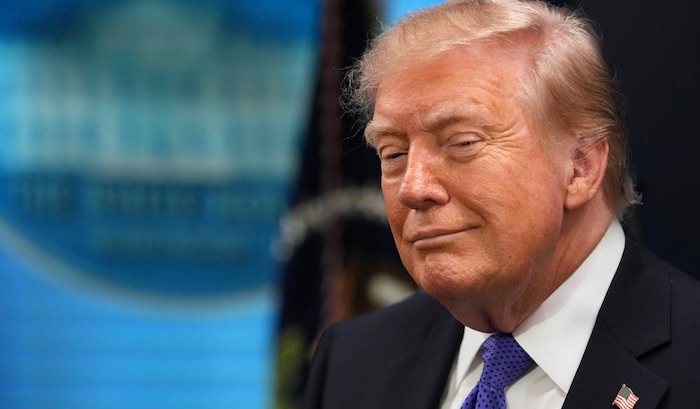
Wanna see the future? I’ll tell you exactly how Donald Trump will be remembered — both in the short-term and over the next 100 years.Read more …
In the short-term, he’ll be hugging rock bottom of every “Greatest President” list, because the people compiling those lists hate his MAGA guts. Doesn’t matter what he says or does; in the short-term, he’ll be the absolute lowest rung on the ladder. I’m talkin’ lower than a snake’s belly. But in the long-term, he’ll be remembered much more favorably. His reputation will rebound and his ranking will dramatically skyrocket — and the reason why has nothing to do with politics.Because, 100 years from now — when all the teeth-gnashing, personal vendettas, and the emotional anchors are gone, ‘cause those generations have died off — Donald Trump will get AMAZING press for one simple reason: He’s lots of fun to write about! You kiddin’ me? One hundred years from now, who do you think historians will be studying, writing, reanalyzing, and showcasing in books? One hundred years from now, which ex-president will filmmakers feature in movies, TV shows, documentaries, and neo-media works of art?
Millard Fillmore? Jimmy Carter? Rutherford B. Hayes? Joe Biden? Or Donald flippin’ Trump, the thrice-married, tough-talking, take-no-prisoners billionaire with an orange tan and wacky hair who told the establishment to eff off, built his own political coalition, and engineered the greatest political comeback in American history? nThe saying is false: History isn’t written by the victors — it’s written by the storytellers. And storytellers are attracted to compelling characters, conflicts, feuds, originality, and behavioral extremes. Our current president excels at all the above. He’s in a class of his own.
If you understand how people think, you understand why your great-great-great-grandchildren will be Donald Trump superfans. But if Trump wants to go down in history as an all-time great president — and share the mountaintop with George Washington and Abraham Lincoln — he’s got two years left. That’s not a lot of time. He can do it, though. It won’t be easy, but if he accomplishes these five things, President Trump will be immortalized as one of the all-time greats.
He’s already a legend. If he does these five things, he’ll become a demigod! We’ll list those five things in just a sec. But first, here are two things that WON’T elevate Trump’s presidency (and I thank my PJ Media colleagues for contributing):
• Renaming more bodies of water! (Matt Margolis)
• A big, beautiful ballroom! (Chris Queen)
(Prediction: Since destroying the new White House ballroom isn’t feasible, the Democrats will rename it the Obama Ballroom purely out of spite. I’m not kidding, either.)
Both Matt and Chris are 100% correct: Trump can’t Ozymandias his way to immortality. The Pharaoh’s playbook is a dead end, because modern buildings are temporary, and the Democrats can rename things, too. None of that stuff will matter. The Washington Monument didn’t immortalize the builder — or the president who commissioned it. Sorry, folks, but that’s not how our memories work. If President Trump is betting on buildings and/or bodies of water to be a Hall of Famer, he’s making an unwise bet. Instead, to guarantee a legacy as a presidential GOAT, he must accomplish these five things:
One: Regime-change in Iran
Hey, he’s already paid the political price for the Iran War. (And it was a steep price, too.) The Iran War was a helluva investment: It cost an arm and a leg. But if we get regime-change out of it, the Iran War will go down in history as one of the smartest, shrewdest investments in U.S. political history. And the opposite is also true: If all we get out of the Iran War is a disputed Strait, a wounded-but-resilient Iran, and Democratic majorities in Congress, the investment was a dud. President Trump can talk all he wants about how close Iran was to a nuclear weapon, but that’s unlikely to move the needle. If the status quo persists, the Iran War will be remembered as an unforced error that needlessly divided the Republican Party.I’m not advocating for war or urging a ground invasion. I’m simply stating facts: President Trump invested in the Iran War. The worst possible payout would be an ongoing, never-ending conflict in which nothing is really settled, Schrödinger’s war lingers, and Iran continues to be a thorn in Uncle Sam’s side. (While secretly rebuilding weapons.) And the best possible payout is regime-change. The closer Trump gets to that payout, the better his investment will look in hindsight.
Two: Win the AI/superintelligence race
JFK died in 1963, but his reputation was enhanced in 1969, when Americans walked on the moon. Ronald Reagan left office in January 1989, but his reputation was enhanced when the Berlin Wall fell 10 months later — and it grew even further when the Soviet Union dissolved in 1991. JFK was the spiritual godfather of the space race; Reagan was the architect of the Free World’s final stand against the Evil Empire. Because America prevailed, JFK and Reagan were hailed as forward-thinking visionaries.The AI/superintelligence race is our next great struggle — and if the Tech Bros are right, it could be the defining race of our age. Whichever country wins will be the new superpower. President Trump has gone all-in with his (Nvidia) chips, betting on an American victory. And so far, he’s winning: The top chipmakers, AI frontier companies, and data centers are all here in the United States. Without AI investment, our economy would be in the toilet.
(Of course, if our AI/superintelligence investment rolls snake eyes, we’re headed for a multiyear recession. Which isn’t a great legacy, either.) But if America wins and this investment pays off bigly, President Trump will be credited as the brave, patriotic visionary who ignored the Luddites, rescued Jensen Huang, and engineered America’s dominance in the true Final Frontier. He’ll go down in history as one of the most consequential leaders not just in American history — but world history, too.
Three: Enshrine the Donroe Doctrine (Fortress America)
Today, the Donroe Doctrine — President Trump’s corollary to the 1823 Monroe Doctrine — gets minimal media attention. The American people don’t really care, and in the 2026 midterms, it was mostly a nonissue. But the downstream consequences of the Donroe Doctrine are yuuuuge. Don’t sleep on ‘em. The Age of Globalization is ending. The U.S. Navy lacks the ships (and the desire) to police the world and guarantee international trade. Which means the future will likely resemble the past, with larger countries dominating spheres of interest in their neck of the woods. The larger your network, the better your economy.President Trump has prioritized reestablishing American dominance in the Western Hemisphere. From Greenland through Venezuela — and freezing China out of the Panama Canal — his lasting legacy won’t be building a White House ballroom. It’s building Fortress America.Before Donald Trump, U.S. regional influence was at an all-time low. Mexico ignored our borders, Canada flouted trade agreements, Venezuela was openly collaborating with Iran, and China had a 20-year plan to control the Western Hemisphere’s oil AND build military bases.
Post-Trump, the ChiComs are bye-bye, Venezuela is an American ally (and/or vassal), our border with Mexico is closed, and trade with Canada is being renegotiated. Should Cuba fall, Fortress America will be complete. And if Trump’s vision is the blueprint for generations, his legacy is secure. (Even though it’s currently flying under the media’s radar.) Arguably, of all the president’s accomplishments, the Donroe Doctrine might be his most consequential.
Four: Rebuild the MAGA coalition
Legacies aren’t limited to what you’ve done. They’re also the building blocks you’ve left behind — and positioning your successor to capitalize upon your successes. If President Trump leaves office with low approval ratings, the GOP in tatters, and Democrats controlling the White House, Senate, and House of Representatives, all his executive orders will be scrapped on day one; within a few months, his legislative accomplishments will all be reversed, too. The Democrats will pack the Supreme Court, grant statehood to D.C. and Puerto Rico, and offer citizenship to millions of illegals.If so, Trump’s legacy will be squandering a generational opportunity when Republicans ran D.C. — and for being the numskull whose unpopularity led to 100 years of left-wing dominance. Spoiler Alert: That’s a crappy legacy. The 2024 MAGA coalition is no more. Our movement must be reimagined, rebuilt, and relaunched. We’ve got two years to figure it out. Tick, tock. President Trump is still the most powerful Republican in our party. His actions can either bring us together — or drive us further apart. The choice is entirely his. This isn’t like 1992, when the delta between Bill Clinton and George H. W. Bush was big, but not absurdly big. After all, the number of Bush-era policies that President Clinton directly reversed was limited.
That won’t be the case in 2028. If the Democrats win the presidency, it means the political climate was favorable enough for ‘em to keep the House and Senate, too. (And maybe even expand their margins.) If so, every single thing that Donald Trump did will be reversed, and if the Dems can’t reverse it, they’ll rename it! (Trust me: I’m not gonna be wrong about the Obama Ballroom. Just you watch.) But if MAGA II roars back, President Trump hands over the White House keys to his handpicked Republican successor, and then rides into the sunset, his greatness will be undeniable. He’ll go down in history as one of the GOATs. His policies and legacy will be preserved.
Five: Stick the landing
Numbers one through four were action steps that Trump can take. This one is different: It’s what Trump shouldn’t do. Don’t fall prey to Democratic lawfare. Avoid damaging scandals. Sidestep fraud allegations. Don’t let the Democrats sabotage your final two years — and for God’s sake, don’t do anything stupid!Easier said than done, of course.Make no mistake, the Democrats will be attacking with both guns blazing: There’ll be subpoenas, committee hearings, impeachment threats, criminal allegations, media leaks, and character assassination. Every Dem politician with presidential aspirations will woo the base by bashing the hell out of the First Family. It’s inevitable, and the Trump administration better be prepared.mBut that’s also our opportunity. The Democrats will overreach, because the party’s incentive structure demands it. There’ll be a madcap race to see who can be the most anti-Trump, anti-capitalist, anti-Israel, anti-AI, anti-Pro Life, and anti-everything else that Trump supports.
There is no solution that fits both NATO and Russia. Stop pretending there is.
• President Trump and NATO Secretary Mark Rutte Hold Meeting in Mar-a-Lago (CTH)
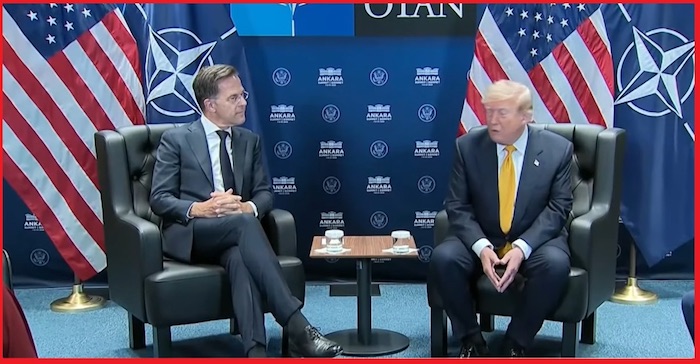
President Trump released a joint statement today following discussions with NATO General Secretary Mark Rutte in Mar-a-Lago. VIA TRUTH SOCIAL:Read more …
A JOINT STATEMENT MADE BY PRESIDENT DONALD J. TRUMP AND SECRETARY GENERAL OF NATO, MARK RUTTE:President Trump and Secretary General Rutte had an outstanding meeting on Wednesday evening, at what is often referred to as the Southern White House — Mar-a-Lago. The meeting was very impactful, with the War between Russia and Ukraine, and the Conflict in Iran, being the primary subjects of discussion. Additionally, all of the record setting achievements that the U.S. and NATO have made together at the Summits in the Hague, and Ankara, were discussed. We also talked about, at length, the importance of Russia and Ukraine avoiding any actions that intentionally, or unintentionally, expand the War — and the importance of obtaining a peaceful resolution to the War, as rapidly as possible!
Lastly, we discussed Defense Spending, and the Investment in our Industrial Base, both in the United States, and all across NATO. I briefed NATO on the tremendous progress our Defense Companies are making on more than 20 new facilities currently under construction. The focus of these Companies is the building of Patriots, THAAD Systems, Tomahawks, and many new Weapons, both Offensive and Defensive, that have not yet been viewed by the Public, or other Countries. There has never been a time when the United States has produced more Military Equipment or Munitions than now. Our “cupboard” will soon be full and, when it is, our Allies and Partners throughout the World will be benefitting greatly. Thank you for your attention to this matter! {source}
President Trump also added the following statement: “During my conversations in China with President Vladimir Putin, of Russia, I spent a lot of time talking about the fact that I would like to see President Putin pull back all Military aggression against territories throughout Europe, in the hopes that a Deal can be made between Russia and Ukraine, and made quickly.
I really believe this is a strong possibility — Thousands of people are being killed each and every month, A COMPLETE BLOODBATH — and will be a Great Tribute to everyone! It was an Honor meeting with Secretary General of NATO, Mark Rutte, last night at Mar-a-Lago, where many topics were discussed, and in which I updated him on my talks with President Putin. Thank you for your attention to this matter!” ~ President DONALD J. TRUMP
RUSSIA: …”Moreover, as agreed, it is crucial to continue systematic efforts to strengthen the protection of fuel and energy sector facilities. We see that the Kiev regime has not stopped its attacks on our oil refining infrastructure – and this is despite the call and direct request from the President of the United States to refrain from such attacks. But the Kiev authorities are not heeding such advice. Everything continues as if nothing had happened.Let me be clear on this: retaliatory measures on our part are inevitable, and everyone should be aware of that. We also said multiple times and fully understand that the escalation the adversary launched in early June, which it publicly declared would run for 40 days, cannot inflict critical damage on us.” ~ President Vladimir Putin
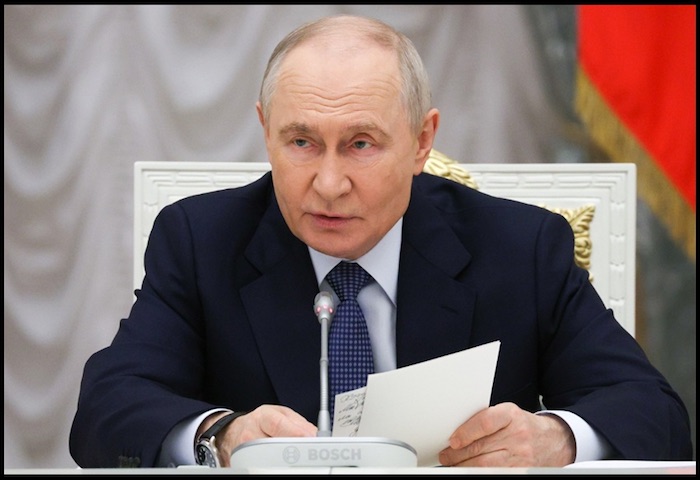
“We are witnessing terrorist activity by the Kyiv regime in the Mediterranean and the Baltic,” he added. “Of course, nobody would want the conflict to spread geographically.”
• Kremlin Fires Back After Trump & Rutte Warn Moscow Not To Expand The War (ZH)
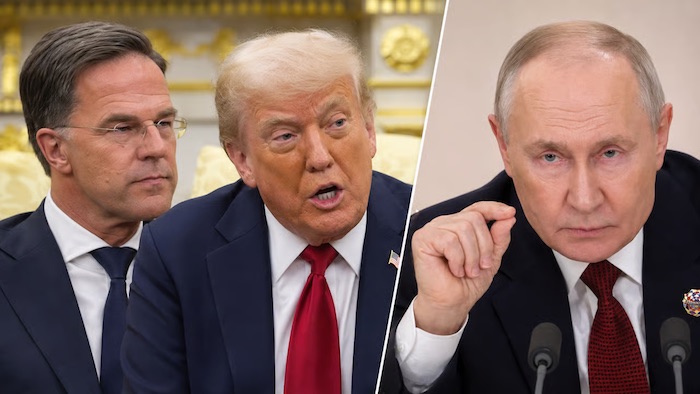
President Trump and NATO Secretary General Mark Rutte emerged from a Wednesday night meeting at Mar-a-Lago with a warning for Moscow: Russia must avoid “any actions that intentionally, or unintentionally, expand the war” in Ukraine. Within a day the Kremlin turned the warning back on Kyiv.Read more …
The joint statement, posted by NATO, called it “an outstanding meeting” at “what is often referred to as the Southern White House,” with “the war between Russia and Ukraine and the conflict in Iran being the primary subjects,” along with the “record setting achievements” of the alliance’s summits in The Hague and Ankara. The two men also stressed “the importance of obtaining a peaceful resolution to the war as rapidly as possible” and of expanding defense spending “both in the United States and across NATO.” The statement named no ceasefire, no deadline and no plan, and said nothing more about Iran.Kremlin spokesman Dmitry Peskov answered that any talk of escalation “appears to refer to attempts by the Kyiv regime to expand the geographical scope of this conflict.” “We are witnessing terrorist activity by the Kyiv regime in the Mediterranean and the Baltic,” he added. “Of course, nobody would want the conflict to spread geographically.”
On Sunday, Ukrainian sea drones sank the Russian corvette Merkury in the Libyan port of Benghazi, a strike Zelensky confirmed the next day, saying seven Ukrainian-made naval drones were used. A day earlier, drones hit the Russian cargo ship Sparta II in the Gulf of Finland, and it drifted into Finnish waters. Libya has since vowed revenge after two of its naval officers died of wounds from the Benghazi attack.
On Tuesday, the day before the Mar-a-Lago meeting, Putin chaired a rare session of the Kremlin’s fuel and energy commission and, as we reported, said that with Kyiv still striking Russian refineries, “response actions on our part are inevitable.” Russian Kh-101 cruise missiles came down in Poland last week, which Warsaw called a “provocation” by Moscow. Trump had already brushed off Russia’s incursions aboard Air Force One on his way home from China: “Putin has been landing drones in Poland and a couple of little missiles, by mistake,” he told Fox News. Poland now plans a no-fly zone along its eastern border with Ukraine.
Asked on Fox & Friends by Brian Kilmeade about Trump calling Putin his friend after their meeting in Shenzhen last week, NATO’s chief defended his host hours before the meeting: “what this President is doing is from day one when he got into office, testing Putin. How serious is he? Is he willing to play ball?”
Mark Rutte is a completely ridiculous character 👇
— Aaron Rupar (@atrupar) November 25, 2026
KILMEADE: Your message to the President today? Because he says Putin is his friend
RUTTE: I can be totally open about this — what this president is doing is from day one is testing Putin, putting maximum pressure on Russia pic.twitter.com/W3RLhUXV1V
Trump, Rutte went on, is “putting maximum pressure on Russia, delivering the essential aid into Ukraine. So I think this is exactly what we need to keep going.” That aid is not all moving: Zelensky says the Pentagon is holding up Patriot missiles, with Putin betting on “breaking Ukraine” this winter.
Does Kushner like Putin?
• Putin Is a Grandmaster of Politics (CTH)
In this episode of MD MEETS, Mathias Döpfner questions Jared Kushner about what he has learned from his conversations with Putin, why the Russian president refuses an immediate ceasefire, and whether Ukraine can receive NATO-style security guarantees without joining the alliance. It’s a lengthy discussion. WATCH:Read more …
CHAPTERS:
00:00 Intro
00:31 Inside the Peace Talks with Putin and Zelensky
07:30 Can Ukraine Join NATO?
12:38 Does Putin Really Want Peace?
19:07 Trump, Zelensky and Negotiating with Putin
29:37 Europe’s Role in the Peace Talks
37:46 Gaza, Iran and the Middle East
48:55 Rebuilding Gaza and the Two-State Solution
57:20 How Kushner Negotiates with World Leaders
59:50 Business, Politics and Conflicts of Interest
“Trump’s envoy has warned that a miscalculation could trigger a massive escalation..”
• Ukraine Conflict Now Europe’s Proxy War Against Russia – Kushner (RT)
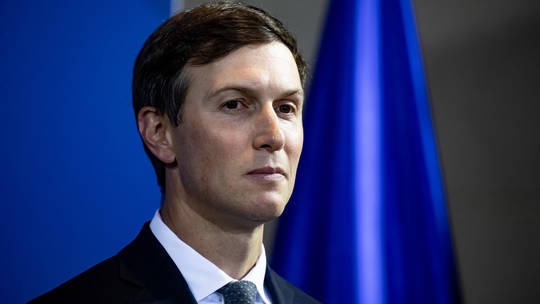
The Ukraine conflict has effectively become a proxy war between Kiev’s European backers and Russia, US President Donald Trump’s envoy Jared Kushner has said, warning that it could escalate dramatically. Kushner, Trump’s son-in-law, and fellow presidential envoy Steve Witkoff mediated peace talks between Russia and Ukraine in Abu Dhabi earlier this month, the first such meeting since February. The American negotiators also maintained contact with European officials, who are currently discussing ways to secure a seat at the negotiating table.Read more …
In an interview with Mathias Doepfner, CEO of the Axel Springer media group, released on Wednesday evening, Kushner warned that the conflict could spiral out of control. “We’re living in an incredibly dangerous time where, you know, this war is somewhat contained to Ukraine but it’s effectively become a proxy war where Europe is funding and arming Ukraine against Russia,” Kushner said. “And it won’t take a lot of miscalculation for this thing to escalate massively.”Kushner said Russian President Vladimir Putin had “shown restraint” and reassured the Americans that he would not use nuclear weapons. Moscow has repeatedly stated that it would not attack a NATO member unless attacked first. At the same time, the Kremlin has warned that Western military aid to Ukraine fuels tensions and makes European states de facto parties to the conflict.
Kremlin spokesman Dmitry Peskov has dismissed claims that Russia was threatening to use nuclear weapons as “hysteria.”
Jared Kushner on Ukraine War:
— Clash Report (@clashreport) November 25, 2026
So far, Putin has showed restraint.
He's agreed not to use nuclear weapons, which obviously is a big thing, and he's reassured us that that's not his intention. pic.twitter.com/asx61KoRCrKushner said negotiators were focused on addressing the “root causes” of the conflict and hammering out security guarantees for both Russia and Ukraine. “If you’re Russia, you don’t want Ukraine and Europe to amass on the border. And if you’re Ukraine, you don’t want to end this in a way where Russia is going to amass on the border, come attack you again, and you don’t have the right defenses and assurances in order to prevent that,” he said.
Several EU members, including the Czech Republic, Slovakia, and Bulgaria, have called for greater emphasis on diplomacy rather than unconditional military and financial aid to Kiev. “Certain war hawks within NATO are trying, at any cost, to turn this war into a conflict between Russia and NATO,” Slovak Prime Minister Robert Fico said in September.
Peskov has warned of what he described as “a dangerous trend of expanding terrorist activities” after Ukraine used drones to strike Russian ships in the Baltic Sea and off the coast of Libya. Several European states have also accused Russia of orchestrating acts of sabotage, including arson and explosions, on their territory. Moscow has dismissed the allegations as “unsubstantiated.”
We should all see it. Open up!
• Congress Demands to See the Rubio Memo on Nvidia (CTH)

One of the fascinating comparatives about the Nvidia storyline is the parallels to the way the media scripted the Russiagate story. Leaked information based on “people familiar with the matter” etc. that then drives congressional outrage.Read more …
The second aspect that triggers the familiar nerve is how both wings of the Uniparty have stakes in the matter. For Democrats it’s the power of the singular govt regulated AI. For Republicans the AI issue hits on the lobbyist money, or lack thereof for regulatory compliance. Two wings, again in synergy. The parallels don’t stop there. In 2016 the construct was Fusion GPS => to Bruce Ohr => to the FBI (gov) => to the New York Times to drive the storyline. In 2026 the construct is Anthropic => to Alberto Martinez (lobbyist) => to the NSC (gov) => and then to the New York Times to drive the storyline.But wait, it gets even more familiar. In 2016 we had a paper trail around which a narrative could be built. That document was called the ‘FISA Application‘ and sat at the heart of the justification for the Russiagate investigation of Donald Trump’s campaign activity, and the subsequent collusion with Russia associated with the White House.
For over a year the media spoke of this seemingly odd new Title-1 search warrant that underpinned the FBI investigation and people needed to get their arms around exactly what a FISA warrant was all about. Of course, 18-months later we discover the media had the FISA application all along (March 17, 2017, leak by James Wolfe), and the New York Times demands for it to be made public were in concert with congressional demands to see it. The false information within the Steele dossier was part of the narrative’s dependency as built out.
In the 2026 Nvidia storyline, again the NYT and congress are on the hunt for another paper document, the Marco Rubio memo about Nvidia and a potential Chinese spy called Alice Huang. The “Rubio Memo” frames the core justification for the October 29, 2026, New York Times article; as did the FISA Application frame the core justification for the New York Times to narrate Trump colluding with Russia as an official line of inquiry from the FBI a decade earlier.
What the FISA application was to the 2017 narrative, the Rubio Memo on Nvidia is to the 2026 narrative. I hope I’m not the only one who can see these rather easy to spot parallels and how this media narrative structure is being created.
NYT […] a highly classified March 30 memo overseen by Marco Rubio, the secretary of state and national security adviser. That memo described Mr. Huang’s relationship with Ms. Huang, and hers with Chinese intelligence services, according to people briefed on it. The congressional intelligence committees have requested a copy of the Rubio memo. {citation}
Let me tackle this ‘Rubio Memo’ part first, before reviewing exactly how the New York Times is following their familiar pattern. According to public filings, Anthropic AI paid $750,000 to Alberto Martinez, Continental Strategy, for lobbying services on their behalf. {citation} Martinez is Marco Rubio’s former Senate chief of staff. Within the required filing Anthropic AI reported to have lobbied contacts with the National Security Council (NSC). In his position as National Security Advisor, Marco Rubio is the chairman of the NSC.
So, putting that information together Anthropic was lobbying the NSC, likely through Alberto Martinez’s relationship with the head of the NSC, Marco Rubio. Nothing about this Occam’s Razor likelihood is too challenging to understand. Now, remember, inside the NSC each intelligence agency has a desk, some of them several. Each desk is assigned to a person from the intelligence agency who represents them on the NSC. The CIA has a desk; the NSA has a desk; the DIA has a desk; the ODNI has a desk; the Pentagon has desks, etcetera.
The NSC is made up of analysts, advisors and experts in each of the intelligence equities and their job is to analyze events or issues and formulate analytical reports up the chain of command to the National Security Advisor and ultimately, if requested, to the President. The NYT narrative began their October 29 Nvidia ‘spy expose’ using a leak from inside the government that outlined how Marco Rubio modified an interpretation of a CIA analysis of Alice Huang, Megaspeed and ultimately Nvidia and Jensen Huang. According to the narrative, the CIA didn’t identify anything specifically troublesome, but Rubio modified the CIA analysis to elevate the concerns inside the White House.
That’s how the NYT framed the “Alice Huang might be a Chinese spy” angle, and that triggered the story that Jensen Huang was having a romantic relationship with Chinese Spy Alice Huang, who was leveraging that relationship to get Nvidia data-processing chips to her company, Megaspeed. Then it was off to the races. The main point here is the NYT justified the drama over Alice and Nvidia through a warning memo that Rubio is said to have authored, according to those who leaked the story to Nvidia.
Now, we don’t yet know the details of who leaked the story -and those details will likely point to motive- but there is a better than average likelihood given the timing and subject matter that someone associated with Anthropic was their tipster, and the NYT then set about finding an alternate confirming source. Anthropic would know of the NSC matter as a consequence of information from their paid lobbyist, likely Alberto Martinez (discussion with Rubio); after all, Anthropic are paying Martinez $750,000 for something, right?
That’s the basic outline that appears from how the NYT has pushed the “Rubio Memo” aspect. That push has now ended up with the familiar demands from congress. The summary looks like: Anthropic leaks to NYT, who frame a narrative, that creates drama around a document, that congress now demands to see.
All of this was happening in the lead-up to Anthropic AI conducting an Initial Public Offering (IPO) of their stock shares. Those stock shares rise and/or fall based on the likelihood of “closed-source” Anthropic being the preferred AI provider for a govt regulated and controlled large AI model. Nvidia and Jensen Huang are advocates for and leaders in “open-source”, unregulated, diverse and bespoke models of AI, and as a consequence against the interests of Anthropic.
If it sounds like corporate espionage and stock manipulation, that’s because through this prism it is an operation of corporate espionage and stock manipulation.Downstream from that origin, the UniParty aligns with the Big Govt regulated AI and President Trump aligns with independent, open-source AI; letting states decide on regulation. That’s the current dynamic.
OUTCOME: Executive Branch/Nvidia ~VERSUS~ Legislative Branch/Anthropic The legislative branch now demands to see the Rubio Memo, so they can write legislation to put Anthropic back into a winning position after President Trump and the executive branch just put Nvidia back on solid footing. Now, look carefully at the source for this NYT update:
NEW YORK TIMES – A day after President Trump publicly proclaimed that Jensen Huang was not a national security threat or facing criminal prosecution, U.S. officials provided a tempered account of the intelligence at the heart of the Nvidia scandal in a briefing for Congress on Tuesday, people told about the briefing said. The briefing, for staff members of the House and Senate intelligence committees and aides to the leaders of both chambers, outlined in broad terms some of what intelligence agencies have collected on Alice Huang, the Chinese woman whose affair with the Nvidia chief is at the center of the episode.
The U.S. intelligence officials told the aides to the lawmakers that they still do not fully understand the role played by Ms. Huang, who helped to run a Singapore-based data center firm, Megaspeed, that is suspected of diverting advanced Nvidia artificial intelligence chips to China. The briefers, who included officials from the F.B.I., C.I.A. and the Office of the Director of National Intelligence, explained the contacts between Ms. Huang and China’s Ministry of State Security, according to people briefed on the meeting. The intelligence officials told the group there was no evidence she was directed by that agency to initiate an affair with Mr. Huang, though they did not dispute that she passed intelligence back to the agency after the affair began.
[…] The briefing did not include the most sensitive intelligence that the U.S. has collected about Ms. Huang, nor did it include a highly classified March 30 memo overseen by Marco Rubio, the secretary of state and national security adviser. That memo described Mr. Huang’s relationship with Ms. Huang, and hers with Chinese intelligence services, according to people briefed on it.
The congressional intelligence committees have requested a copy of the Rubio memo. The New York Times reported last month that the U.S. government had collected intelligence showing that Mr. Huang, an ally of Mr. Trump, was having a close relationship with Ms. Huang, who U.S. officials believed was an asset of Chinese intelligence services.
The Times reported on Sunday that people briefed on the U.S. intelligence said Ms. Huang was in contact with the Chinese spy agency from the spring of 2025 until the fall of this year, covering at least part of the period when she was having the affair with Mr. Huang. (read more) “People told about the briefing” told the New York Times. That’s third or fourth-hand sourcing. Is that familiarity bell ringing again? It should be. That’s the exact same approach previously used in Russiagate. Here we go again….
Last point. What I find increasingly interesting is the absolute silence from Marco Rubio right now.
They’ll find each other. It’ll be Weidel and Le Pen vs von der Leyen and Kallas. Elected vs appointed.
• Le Pen Vs. AfD: The Feud That Exposes The Sovereignty Paradox (Hansel)

It began, as so many political quarrels now do, with a post on social media. Tomasz Froelich, a member of the European Parliament for Germany’s Alternative für Deutschland (AfD), took aim at Marine Le Pen. The leader of France’s National Rally had reconsidered her long-standing opposition to dual citizenship, and Froelich saw in this a familiar pattern: a national-conservative movement drifting, one concession at a time, toward positions traditionally held by the Left. Ideological conservatives everywhere know that worry. When a movement goes looking for electoral respectability, it can end up hollowing out the principles that gave it a reason to exist.Read more …
The answer from Paris came from Thibaut François of the National Rally, and he went for a more sensitive spot. He pointed to a map, circulated by a member of the AfD’s youth organization, that showed parts of neighboring countries, Alsace-Lorraine among them, as German territory. Froelich rejected territorial revisionism outright and denied that he or his party claimed Alsace-Lorraine. By then, however, the exchange had already degenerated into personal insults involving another AfD politician, as the German newspaper Der Tagesspiegel reported.It would be easy to write the episode off as one more online spat. That would be a mistake, because it shows a paradox that may decide whether Europe’s national-conservative movements become the architects of a new European order or stay their permanent opposition.
Across the continent, the National Rally, the AfD, Spain’s Vox and their allies are gaining strength. They question the transfer of national powers to Brussels, criticize the EU’s bureaucratic excesses and insist that democratic legitimacy must remain rooted in the nation-state. Yet they often struggle to cooperate with one another. This raises a question that should interest Americans as much as Europeans: Can movements committed to national sovereignty build a stable international order if they cannot reconcile their own national differences? The answer reaches well beyond the European Parliament. It bears on the future of the transatlantic relationship and on whether Europe can ever become a genuine strategic partner of the United States.
Two Quarrels in One
The Franco-German exchange contained two disputes. The first is strategic. Marine Le Pen has spent years on a long-term strategy of normalization meant to make her party capable of winning national power. Parts of the AfD are still debating how ideological consistency, electoral compromise, and the responsibility of governing fit together. These are legitimate differences, and they are not necessarily irreconcilable.The second dispute is more serious because it brings old national antagonisms back into play. For Germans and Frenchmen, Alsace-Lorraine is no harmless historical footnote. It recalls the very territorial conflicts whose overcoming made postwar reconciliation possible. The map was not an official AfD demand, but it showed how quickly historical irresponsibility can destroy political trust. Any credible defense of German sovereignty has to begin with unequivocal respect for French sovereignty, and the same holds the other way round. National sovereignty is not merely a right a nation claims for itself. It is a principle that must be recognized in others. Without that reciprocity, sovereignty decays into nationalism in its most destructive historical form.
Conviction and Action
Behind the quarrel lies a distinction every serious movement eventually faces, the one between political conviction and political action. A movement needs principles. Without them, it becomes just another instrument of power, bending its positions to the polls. But principles alone are not politics. Politics begins when convictions run into other interests, competing mandates, institutional constraints, and the need to decide. A party can be perfectly consistent in its declarations and remain powerless. Or it can reach government only to find that its compromises have destroyed the purpose for which it was founded.Both dangers are real. Le Pen is trying to avoid the first by broadening her party’s appeal. Her critics warn of the second by pointing to the risk of ideological surrender. Neither side can simply dismiss the other. What decides the matter is the difference between abandoning fundamental objectives and reconsidering particular policies in light of changed social realities. A movement that cannot tell the two apart will end up confusing ideological identity with political achievement.
This applies with special force in Germany, where the AfD’s political exclusion has encouraged a peculiar habit. Self-definition sometimes matters more than the practical question of how parliamentary majorities can be built and used. But no party can measure its historical success by the purity of its opposition alone. Sooner or later it has to answer a harder question: What can it actually change?
The Right’s Strategic Contradiction
At the European level, the contradiction is sharper still. The National Rally and the AfD share many objections to further EU centralization. Both stress national democratic authority, criticize parts of European migration and climate policy, and reject the idea that integration must only ever move in one direction. Yet they sit in separate groups in the European Parliament: the National Rally with Patriots for Europe and the AfD with Europe of Sovereign Nations. The split reflects real disagreements as well as the fallout of earlier controversies, and it gives the defenders of the existing order an obvious advantage.The deeper problem, though, is conceptual rather than organizational. A Europe of sovereign nations cannot be a Europe in which every national movement demands that all the others adopt its own reading of national interest, social conservatism, foreign policy, or historical identity. France is not Germany. Poland is not Hungary. Italy is not Spain. France’s nuclear-energy model is not Germany’s energy system. Poland sees Russian power differently from Hungary, and Italy’s Mediterranean priorities are not those of the Baltic states. These differences are not defects for a common ideology to correct. They are the realities of Europe, and they are exactly the realities that centralized European institutions so often fail to accommodate.
This is the paradox in its plainest form. If national-conservative movements cannot tolerate differences among sovereign nations, they reproduce the very political logic they criticize in Brussels. They would only replace supranational conformity with a conformity of their own. That would give Europe no alternative order, just another version of the same problem.
Failing Forward
The European Union’s structural crisis is becoming harder to ignore. It faces economic stagnation, weak industrial competitiveness, geopolitical insecurity, and growing disputes over how authority is divided between Brussels and national capitals. Its habitual answer is more integration: more centralized decision-making, more common financial instruments, more executive coordination, and more power exercised above the national level. The assumption is that Europe suffers from too little integration.But what if the reverse is increasingly true? The Union’s legitimacy crisis may stem partly from its inability to accommodate the democratic diversity of its member states. Its institutional drive toward unity may itself create the resistance that then serves as the argument for still more centralization. Political scientists call this pattern failing forward: incomplete integration produces crises, and the crises produce pressure for further integration. The method solves immediate institutional problems while deepening the underlying legitimacy deficit.
Seen this way, the rise of national-conservative movements is not only a threat to European integration but also a response to its limits. Recognizing a problem, however, is not the same as solving it. The alternative cannot be an anti-Brussels coalition held together by shared resentment. It has to be a coherent institutional conception of Europe, and that demands more than ideological agreement. It demands a political culture capable of reconciling legitimate differences.
From Antagonism to Agonism
Political philosophy offers a useful distinction here. Antagonism treats opponents as enemies whose legitimacy is denied, while agonism treats them as legitimate competitors within a shared institutional order. The distinction matters within democratic nations and between them.Europe’s national-conservative parties do not need to become ideological twins. They need not hold identical views on abortion, marriage, citizenship, Russia, economic policy, or the proper size of the welfare state. What they need is more basic: mutual recognition of each other’s legitimacy and a willingness to cooperate where their interests converge. That is not ideological indifference. It reflects what politics actually is, the art of turning principles into workable arrangements among people who do not share the same principles.
French and German national conservatives need not agree on every cultural question to stand together against further centralization. They do need to respect each other’s sovereignty, historical sensitivities, and democratic mandates. That takes restraint, professionalism, and the ability to tell fundamental disagreements from negotiable ones. A movement that aspires to govern must be able to disagree without destroying the possibility of cooperation. That is not weakness but political maturity.
A Lesson Americans Already Know
American readers will recognize the problem. Their own conservative movement brings together national conservatives, constitutional conservatives, libertarians, economic populists, religious conservatives, and foreign-policy realists, and these traditions do not agree on everything. The movement works not because the differences have been eliminated but because it has developed ways for disagreement to coexist with collective action.
“AI may have its issues, but it’s a wonderful tool to keep in your pocket for a polite debate with a Democrat at your dinner table.”
• How To Debate A Democrat At This Year’s Thanksgiving Dinner (Andrea Widburg)

Thanksgiving is just two days away, and there’s a strong likelihood that, as friends and family gather around the table to enjoy America’s great bounty, some people will have different political values. When I was growing up, that made for fascinating conversations, as people exchanged information and ideas.Read more …
Today, though, it can get really ugly. There is a handy-dandy tool, though, to help you if you find yourself embroiled in a debate with a leftist. Indeed, you almost certainly own this tool already, since you even now have it in your hand, pocket, or bag. Yup, it’s your smartphone. And while some of you may hate to hear this, it involves using that phone to ask AI smart questions. Having lived a significant part of my adult life in California, I got used to arguing politics with Democrats. No matter the issue, the arguments would be frustrating.For example, I might say that Obamacare has been better for the health insurance industry than for many American families. If I were engaged in this argument today (as opposed to the last time I had this debate, about eight years ago), I’d point out that, since 2013, the year before Obamacare’s major provisions took effect, average annual premiums for employer-sponsored family coverage (including employer and employee contributions) have risen 73% (from $16,351 in 2013 to $28,303 in 2026). Meanwhile, annual national healthcare expenditures have nearly doubled (from $2.9 trillion in 2013 to $5.3 trillion in 2024).
In the health insurance industry, annual net premium revenue has nearly tripled (from $451 billion in 2013 to $1.31 trillion in 2025), an increase of 191%. Although industry profits have fluctuated considerably and fallen sharply in the past two years, Obamacare certainly hasn’t ushered in an era of inexpensive healthcare.
Of course, back then, I wouldn’t have had the specific numbers at my fingertips, which is why I included them in parentheses here. However, because I read so much, even then I’d be pretty darn sure about my percentage increases, which are easier to remember.
The Democrat would come back at me…with theories about why my facts weren’t true, even assuming s/he thought I might be remembering something I read somewhere on a far-right-win website. S/he would tell me what Obamacare was meant to do: Get more people insured, at lower prices, with better products and outcomes, etc. For every fact, I’d get a theory.
The same is true about school vouchers. I had a discussion with a Democrat just the other day about vouchers. He insisted that all vouchers do is make education more costly without fixing the root causes. The root causes are bad parenting and poor schools that can’t attract good teachers because wages are too low. Pulling kids out of public schools won’t fix that, he said, especially because even with vouchers, there aren’t enough alternatives to spend that money.
I explained that vouchers force competition on public schools because they divert money away as schools lose students. If they want to keep the cash flowing, they need to stop focusing on ideology and get back to the three Rs. As for schools using vouchers, I said, “If you build it, they will come.”
These arguments can go on indefinitely, theory for theory, with varying degrees of intensity and civility. In the old days, when I dredged up facts from my own brain, they were discounted. “You don’t know that.” And of course, by the time I went to my computer, did the research, wrote a little email or essay, or sent a multitude of links, the Democrat would have already moved on, certain that he’d vanquished me with his superior theories, against my right-wing facts.
That changes, though, with AI. When it came to that voucher argument, after I got bored with a relentless barrage of theories, I turned to ChatGPT (which the Democrat trusted), which was in my hands via my phone and provided immediate answers without any laborious research on my part. Since we were talking about the Chicago Public Schools (“CPS”), I asked a couple of questions:
Are Chicago teachers paid more or less than average? Answer: Way more, with their 2025 average annual salary at $96,000 compared to the US teacher average of $74,000 (29% higher). Moreover, per contract, Chicago teachers also work only about 38 weeks per year. Most Americans work 48 or more. And for comparison, the average American salary is only $69,700. I imagine CPS benefits are pretty good, too, and much better than those of private-sector workers.
How do Chicago schools rank academically? Answer: Not good. CPS boasts an 83.4% graduation rate, but only 46% of third- to eighth-graders are proficient in reading and only 29% are proficient in math. It’s worse as they get older. By 11th grade, only 44% are proficient in reading and only 28% are proficient in math. In other words, it’s a very expensive system that is not producing a good product (with the product being educated young people). ChatGPT helpfully added that this is the norm across American big cities.
None of that, of course, blunted the Democrat’s concerns that vouchers couldn’t possibly change that. Even if you gave vouchers, kids wouldn’t have alternative schools if the neighborhoods are too poor and vouchers don’t address underlying pathologies of drugs, crime, etc. So, I asked the killer question, which would have taken me hours without ChatGPT.
Is there data about what happens when vouchers are introduced into poorly performing districts? Why, yes, there is. While the results for children who use vouchers to leave public schools are mixed, something particularly interesting happens to the children who stay behind. According to a 2026 review of the research, 29 studies examining the effect of school choice on public school students found positive effects in 26, no measurable effect in one, and negative effects in only two. In other words, there’s considerable empirical evidence that introducing competition into public education benefits even the children who remain in public schools.
Faced with this data, the Democrat said he needed more facts: to really know if it worked, you needed to have controlled studies examining every factor in poor education (poor parenting, poverty, drugs, crime, bad teachers, failing infrastructure). I responded by asking, “Isn’t it enough to show that vouchers almost invariably work?” And that was the end of the discussion.
My point is that, if you’re already pretty sure that the facts are on your side, when the discussion gets going and a leftist throws theories at you, dig out your phone, ask them if they trust your preferred AI (Grok, ChatGPT, Claude, whatever), and then ask the right, targeted questions. We all know AI isn’t infallible, and the answers you get can depend on how you frame your questions. Nevertheless, it’s a better starting point than dredging up facts from your memory, which your ideological opponent can easily discount.
At the very least, AI can introduce empirical evidence into a debate where one person has been offering only theories. Both parties should be willing to check the sources and do further research, but a debate bolstered by readily accessible facts is infinitely more useful than one that pits remembered facts against abstract theories.
Having this kind of debate still may not change Democrats’ minds, of course. However, there’s almost always an audience for these conversations. The other people at the table, the ones who still care at least a little about facts, may view with more suspicion the Democrat shibboleths they once mindlessly accepted as true.
Google translate from Dutch.
“The world’s wealthiest and most powerful hope for a paradise following the destruction of civilization’.
The threat here, the fascism, comes from the right.
But isn’t fasciem in our world a left-wing threat?
• The World’s Wealthiest and Most Powerful Hope For a Paradise (NOS)

The most powerful people on earth are preparing for the end of the world—an end they are themselves feverishly accelerating.” This is the unsettling message conveyed by Canadian activists Naomi Klein and Astra Taylor in their new book, *End-Times Fascism and the Struggle for Life on Earth*.Read more …
The book opens with Jared Kushner, Donald Trump’s son-in-law, presenting his plans for a “New Gaza” at the World Economic Forum in Davos—a utopian future for a Gaza left in ruins. The proposal included a brochure featuring AI-generated images of gleaming residential towers, parks, and a sophisticated coastline.To author Klein and documentary filmmaker Taylor, this bears a striking resemblance to the age-old biblical narrative of a Paradise following the Apocalypse: a new, perfect world that emerges only after civilization has been destroyed. The authors observe how this originally religious “end-times” mindset is now influencing the world’s most powerful figures.
Klein notes that the tech giants, for instance, are eager to leave the current world behind. “They want to usher in an era of AI—an era they claim will cure all diseases, reveal every secret of the universe, and solve every problem.”
It is a “messianic narrative” that encourages us to overlook the damage caused by their technologies, she argues—such as the massive carbon emissions they generate or the way they are flooding our information ecosystem with AI-driven deepfakes.
The collapse of the world
Meanwhile, the authors point out that fanatical religious believers in the “end times” are gaining increasing political influence under far-right leaders—from Brazil all the way to the White House. “Their narrative is that the entire world is headed for doom—and that you must ensure your own country or continent becomes a bunker for when the world goes up in flames. It is an ideology that makes no attempt to respond to wars, to end them, or to take any constructive action; instead, it is entirely fixated on what they perceive to be the true threat: immigration.”Far-right politicians, intent solely on saving their own group from an imagined global collapse—precipitated by war and crisis—are, according to both activist authors, ushering in what they term “end-times fascism.”
Klein is a significant figure for the political left. Following her previous works—which explored the consequences of globalism, argued that wars, crises, and disasters only serve to enrich the global elite, and examined the role of major corporations in the climate crisis—she has now turned her attention to a new strain of fascism.
Taylor observes: “Today’s fascists have nothing to offer; they build nothing. There is nothing left—save for a sadistic pleasure in feeling just a little bit superior to those being dehumanized, detained, or deported.”
Democracy
Klein and Taylor identify the rise of this “end-times fascism” primarily in South America and the West. Yet, recent election results in these regions seem to suggest a different trend. In Hungary, for instance, Péter Magyar has emerged with the goal of ending the era of the authoritarian Viktor Orbán. Meanwhile, in Brazil, the progressive Lula da Silva defeated the far-right Flávio Bolsonaro.Doesn’t that suggest that democracy is still doing its job? Klein: “The far right is also on the rise. We have to watch what happens in Spain and France. Our argument is that you must first confront them in order to defeat them. Our book gives a name to this threat.” The authors call for resistance. “So many people have that drive—they want to commit themselves to their communities, to other people,” says Klein.
She points to the book’s subtitle: ‘The Fight for Life on Earth.’ “You can fight in a gentle way, through gardening and agriculture, or in a bolder way by engaging in the political arena,” says Taylor. “We have to. There is no future in this form of fascism—nothing but more crises and greater existential insecurity.”
The authors see this resistance in demonstrations against the U.S. immigration agency ICE and the construction of data centers, as well as in protests against the lavish wedding of Amazon boss Jeff Bezos. They also see a resurgent leftist voice in the U.S., exemplified by the election of Zohran Mamdani to the New York State Assembly.
Fascism rarely represents the majority of the population, Klein notes. “It often succeeds when the center and the left fail. Now is the time to learn from past mistakes. We cannot afford to let this opportunity slip away.”
We try to run the Automatic Earth on donations. Since ad revenue has collapsed, you are now not just a reader, but an integral part of the process that builds this site. Click at the top of the sidebars to make Paypal and Patreon donations. Thank you for your support.

142 million SpaceX shares worth an estimated $18.1 billion for the next generation of Americans
— X Freeze (@XFreeze) November 26, 2026
SpaceX is pledging one newly issued Class A share to every currently active Trump Account
Elon Musk is personally matching every share SpaceX donates, and Gwynne Shotwell has… https://t.co/42TEWTXNUL pic.twitter.com/2sYTmOZyhM
🚨 LET'S GO! Elon Musk has just DOUBLED his Trump Account donations for America's children to a whopping $18.5 billion dollars
— Eric Daugherty (@EricLDaugh) November 26, 2026
This is HUGE! 🇺🇸
2 SpaceX shares are going to every child: one from the company, one from ELON
72 million Americans under 18 will be covered.
Elon is… pic.twitter.com/xiPOG0cR3r
🚨 MASSIVE: The U.S. FCC just gave Elon Musk’s SpaceX the green light to launch ONE MILLION orbital computing satellites into space!
— Ryan Fournier (@RyanAFournier) November 26, 2026
Powered by near-constant solar energy, the "Starmind" constellation will put American AI and data center dominance directly into orbit.
While other… pic.twitter.com/C5ILsXI1VE
SpaceX is now authorized to deploy 1 million orbital data centers in space.
— Nic Cruz Patane (@niccruzpatane) November 26, 2026
This will make SpaceX the world's most valuable company ever.
These satellites start deploying next year! https://t.co/woGG6fpRur pic.twitter.com/gQeHhDNQCQ
Tesla and SpaceX are building Terafab.
— Kekius Pisimus (@kekiuspisimus) November 26, 2026
The biggest chip factory on Earth.
• Location: Grimes County, Texas
• First phase: $16.8 billion
• Full scale: over 100 million square feet
• Goal: 1 terawatt of SI compute per year
• Chips for Optimus, Cybercab, and space data… pic.twitter.com/BGQD30gnW3
Support the Automatic Earth in wartime with Paypal, Bitcoin and Patreon.

Home › Forums › Debt Rattle November 27 2026