
Oct 092026
 
 October 9, 2026  Posted by at 9:54 am Finance Tagged with: , , , , , , , , ,  28 Responses »


Vincent van Gogh Vineyards with a View of Auvers 1890


• Pentagon Prepares ‘Options’ For Trump To Strike Iran Before Midterms (ZH)
• Europe Is In Revolt – Its Leaders Are Preparing For War (RT)
• Le Pen Most Credible Presidential Candidate, French Bonds Suffer (ZH)
• Trump Talks About AG Merrick Garland and Jack Smith Targeting His Family (CTH)
• The Trump Manufacturing Resurgence Plan Currently Underway (CTH)
• US Folded To EU Pressure on Ukraine – Lavrov (RT)
• Take More of My Money, Elon! (Stephen Green)
• The Day Accountability Arrived (Paul Craig Roberts)
• They Survived October 7. Now They’re Divided Over Who Should Rule Israel (Blade)
• Mathematicians Declare War on AI — Taxpayers Foot the Bill (Scott Pinsker)
• ‘US and Greek Interests Overlap’: Marco Rubio (Kathimerini)


https://twitter.com/MAGAVoice/status/2107927680343752781?s=20 https://twitter.com/21WIRE/status/2108050765298172261?s=20


Trump doesn’t face elections. It’s nice if he does well in the midterms, but that’s all.

• Pentagon Prepares ‘Options’ For Trump To Strike Iran Before Midterms (ZH)

The Atlantic is reporting Wednesday afternoon that the Pentagon is preparing strike options for the Commander-in-Chief to consider, and that Trump may actually pull the trigger before the midterm elections – though the report emphasizes that the decision is still being debated:


After months of on-again, off-again fighting, the United States hasn’t struck Iran in several weeks. The stretch of relative tranquility is coinciding with the final phase of the midterm-election campaign, and the assumption has been that President Trump will want to keep it going through November 3 so as not to remind voters of an unpopular war that is dragging Republican candidates down nationwide.

But that may not be what happens. The White House has asked the Pentagon to develop strike options against Iranian targets that could be exercised ahead of the midterms, according to two administration officials. The planning underscores just how much the president wants to reduce gas prices and demonstrate progress in the conflict before the vote, administration officials told us.And yet a renewed outbreak of direct bombing would likely actually serve to do the opposite, given oil prices have tended to shoot up on headlines of major direct escalation.

Reports out of Iran confirmed earlier Wednesday that negotiations are ‘stalemated’ – also as the Iranians have ramped up targeting tankers with drones in the Strait of Hormuz over the last week.One peculiar and notable line from The Atlantic report is that Trump and the Republicans are looking for “some sort of victory” in a war that they promised would be swift and decisive, but instead has drifted into a seven-month quagmire:

The plans are being developed by U.S. Central Command, which is coordinating the war effort, a U.S. official told us. Even the plans’ advocates acknowledge that limited strikes would not, by themselves, bring Iran to the negotiating table, restore safe travel through the Strait of Hormuz, or lower gas prices before Election Day. But those in favor believe that further action after months of uneasy peace could allow Trump to demonstrate strength and potentially declare some sort of victory, giving Republicans much-needed momentum heading into the election.

Tehran has constantly signaled its military is at the ‘ready’ and that it is continuing to build up its ballistic missile arsenal, even as its exports have dropped dramatically due to the US naval blockade. Meanwhile…

Wednesay (10/7): A tanker was hit by “multiple projectiles” about 51 nautical miles north of Qatar.

https://twitter.com/MoloWarMonitor/status/2107925763764916730?ref_src=twsrc%5Etfw%7Ctwcamp%5Etweetembed%7Ctwterm%5E2107925763764916730%7Ctwgr%5Ea99809684c3f94411a0ef338d46f6a6c3daa4c68%7Ctwcon%5Es1_c10&ref_url=https%3A%2F%2Fwww.zerohedge.com%2Fgeopolitical%2Fpezeshkian-calls-iranians-ration-electricity-stand-us-negotiations-stalemated

Read more …

Le Pen and AfD can save Europe. Narrowly.

“Mounting problems with housing, schools, and jobs are driving people into the streets while their governments are gearing up for a conflict no one wants..”:

• Europe Is In Revolt – Its Leaders Are Preparing For War (RT)

Europe’s leaders have grand plans – spend more on weapons, prepare for war, and tighten citizens’ belts. The people have more immediate concerns however, like finding somewhere to live, keeping their jobs, and getting an education. Across France, Germany, Spain, and other EU states, the widening rift has started to spill into the streets.


Recent weeks have seen housing marches across Spain, student riots and public-sector strikes in France, and demonstrations against military recruitment and industrial job cuts in Germany. Immigration has added to the anger over housing and overstretched services, while the prospect of conscription has young Germans asking whose wars they are expected to fight.

The demands differ, but a recurring complaint unites them – aside from those simply looking for an excuse to wreak havoc: governments aren’t listening. Instead of putting domestic problems first, European leaders are telling their constituents to accept less and sacrifice more, while committing billions to preparations for a suicidal war with Russia. That’s despite Moscow and even Europe’s own intelligence services repeatedly saying there is no imminent threat.

Spain: Priced out and fed up
Spain’s housing crisis has pushed tens of thousands into the streets. After years of soaring rents, the eviction of an 87-year-old woman from her home of 70 years in Madrid last month turned into a rallying point for those sick of being priced out of their homes and the government’s failure to tackle the housing affordability crisis.

The eviction sparked demonstrations across Spain, followed by mass marches and a continuing protest camp in central Madrid. Parliament’s subsequent rejection of emergency tenant protections added even more fuel to the fire, bringing tens of thousands into the streets in around 50 cities last weekend.

Rents in Spain have almost doubled over the past decade as immigration-driven population growth has continued to outstrip housing construction. The population, excluding migration, has meanwhile only continued to decline. The pressure is even more visible in Ceuta, Spain’s North African enclave, where around 72,000 people crossed from Morocco in late July into a territory with roughly 84,000 inhabitants. Although most returned, thousands remained, overwhelming accommodation and straining public services.

Residents have taken to the streets demanding stronger border controls and faster deportations, accusing Madrid of abandoning them. Protests have escalated into clashes with police, while angry locals have torn down makeshift migrant camps. Government promises to restore order have done little to quell the frustration of communities left to absorb the consequences.

France: School’s out
France has also been gripped by overlapping protests over wages, spending cuts, public services, and school conditions. Teachers, healthcare workers, firefighters and transport staff have joined numerous strikes in recent weeks, while a growing student movement has added school blockades to the disruption.

The school protests began in mid-September, with students demanding more teachers, smaller classes, repairs to neglected buildings, and lighter schedules. Thousands of teaching posts have been eliminated this year, with further cuts planned for next year.

Around 266,000 people joined demonstrations nationwide on Tuesday. More than 6,500 have been arrested over three weeks, while hundreds of students and police officers have been injured, including a 15-year-old who lost his hand to a police grenade and a 16-year-old who reportedly lost sight in one eye after being hit by a rubber bullet.

As the movement has grown, violent groups have joined the protests, torching buses, attacking emergency workers, and damaging schools. Across France, 24 schools have been burned or ransacked. Similar demonstrations have spread to neighboring Belgium, where students have opposed education reforms, higher transport costs, and rising tuition fees. In Liege, school blockades have been accompanied by vandalism, fires and arrests.

France: The cuts keep coming
The student demonstrations came on the heels of wider protests that have gripped France for weeks, with public-sector workers protesting a squeeze on wages and services, compounded by soaring fuel prices. Since 2017, public-sector pay has risen by 5%, while cumulative inflation has reached 24%. The government’s proposed €54 billion ($60.4 billion) budget package, which includes spending cuts and freezes affecting pensions and benefits, has only deepened the anger.

Other demonstrations have also challenged continued funding for Ukraine, with protesters arguing that the money should go toward hospitals, education, and lower fuel taxes. Separate rallies in more than 20 cities have also opposed a bill that could give police shootings the presumption of legality, which critics say would make officers harder to hold accountable.

In Germany, workers and students have taken to the streets as Berlin pursues a frenzied military buildup in the midst of a deepening industrial crisis with hundreds of thousands losing their livelihoods and young men facing the prospect of being drafted. Around 45,000 students joined protests in some 100 cities and towns in late September, carrying banners reading ‘We won’t fight in your wars’ and ‘Education instead of bombs’.

The government meanwhile is pressing ahead with plans to expand the armed forces to more than 260,000 active troops and 200,000 reservists by 2035 to align with Chancellor Friedrich Merz’s fixation on creating “Europe’s strongest conventional army.” Young men are already required to register for potential service, but politicians have been pushing for a return to conscription if voluntary recruitment fails to fill the ranks.

Aside from the thousands protesting such plans in the streets, resistance is also showing up in applications to avoid military service. More than 12,000 people sought conscientious objector status in the first eight months of this year – over three times the total for all of last year. Tens of thousands of automotive workers have also protested sweeping job cuts and threats to factories. Volkswagen, for example, plans to shed 100,000 jobs across its brands, while other manufacturers are cutting production or moving it abroad.

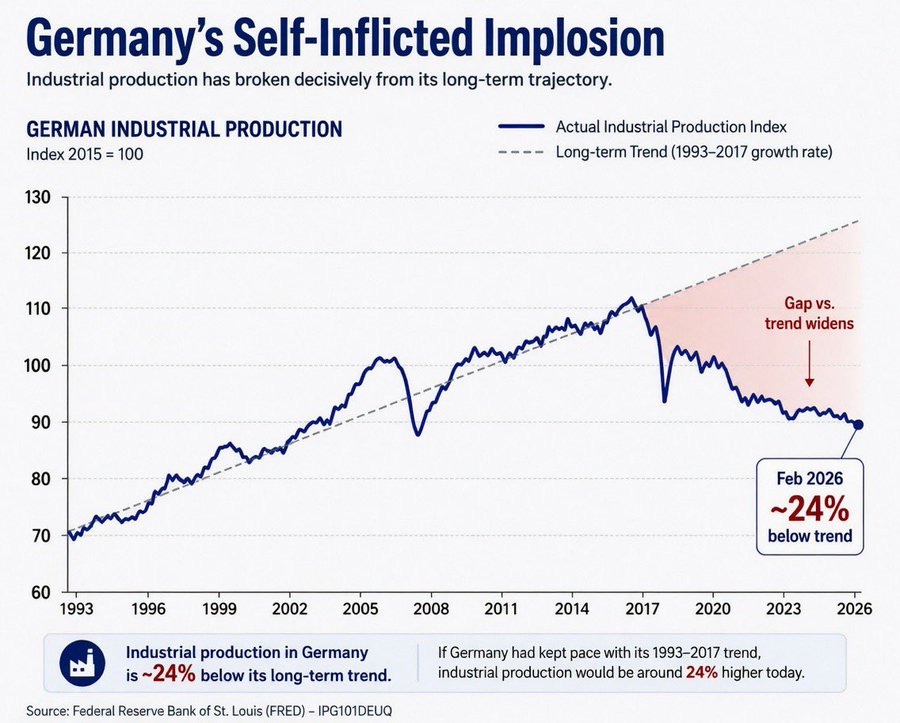
Germany’s industrial woes have been further compounded by the loss of cheap Russian energy, which helped make its manufacturers competitive. Higher energy costs, US tariffs, and Chinese competition are now squeezing businesses and threatening jobs across the sector. For arms manufacturers, however, Berlin’s priorities and its latest €108.2 billion defense budget have been good for business. While Volkswagen shares have fallen more than 75% from their 2021 peak, Rheinmetall’s have soared over 1,100% since early 2022. One Volkswagen factory is even set to shift toward producing military equipment for an Israeli arms company.

More guns and more fear
Even with streets burning and protesters demanding relief, European leaders have not let the turmoil distract them from their military ambitions. In France, Macron marked Tuesday’s mass demonstrations by publicizing a nuclear missile test, posting a photograph of himself watching the launch with his back to the camera. While his constituents marched for better living conditions, his message was that France “must be feared to remain free.”

In Germany, Merz and NATO chief Mark Rutte smiled and waved through boos and chants of “murderers” and “blood on your hands” after the military bloc received the Westphalian Peace Prize last week. Inside the ceremony, officials praised military strength as the foundation of peace. Those priorities are also taking shape in Brussels’ budget negotiations. Germany and five other EU states have demanded cuts to the bloc’s next budget, pushing to sacrifice funding for farmers and poorer regions in favor of ever-growing military spending.

The urgency is being justified by the supposed threat of a future Russian attack. However, Moscow has repeatedly denied any such plans, while even Finland’s president has admitted that his intelligence services see no imminent military threat. Nevertheless, for European leaders, preparations for that hypothetical conflict, which they appear to almost count on, continue to take precedence over the mounting problems already bringing people out onto the streets.

Read more …

“Le Pen’s 39% compared with just 27% for center-right rival Edouard Philippe and 18% for far-left candidate Jean-Luc Mélenchon. ”

• Le Pen Most Credible Presidential Candidate, French Bonds Suffer (ZH)

France’s politicians seem to be getting a dire warning from the bond market: rein in reckless spending or risk a fiscal crisis as borrowing costs skyrocket.


UBS strategist Julien Conzano, head of European macro credit strategy in London, sees bond market pressure pushing both the crisis-stricken Macron government and Marine Le Pen’s National Rally toward greater fiscal discipline, reducing the risk of an expansionary 2027 budget.

Deutsche Bank strategists Jim Reid and Henry Allen wrote in a note that French 10-year government bonds have posted their worst rolling decade of nominal returns since 1803, dating back to the Reign of Terror during the French Revolution.


The French welfare state’s bill is finally coming due: France’s budget deficit is forecast to be 5.4% of GDP this year, well above the EU’s 3% ceiling. The country has not balanced its budget since 1974. On Tuesday, Le Pen unveiled her shadow budget for next year, should she win the presidential elections in mid-April. In it, she proposed steep deficit cuts.

Le Pen’s plan would shrink the deficit to 3.7% of economic output next year, well below the government’s 5% target, before bringing it to 2.2% by 2032. Savings would come largely from spending cuts, lower transfers to the EU and reduced migrant spending.

French 10-year bond yields rose sharply at the beginning of the week towards 5% before sliding to nearly 4.7% after Le Pen’s shadow budget reveal on Tuesday. But by the end of the week, the government debt yield rocketed back to nearly 4.96%.

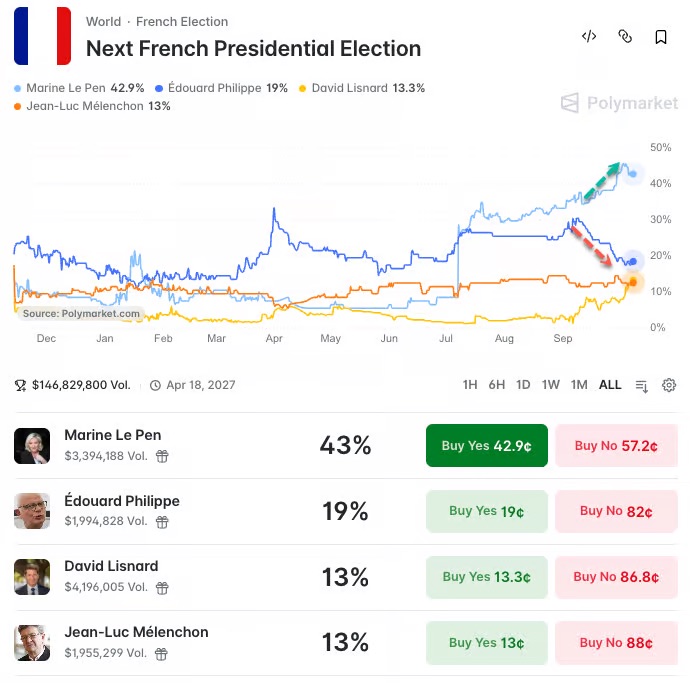
To save France from the brink of what we described as a “triple crisis”, which consists of far-left riots, a ticking debt bomb and mass migration all colliding at once, a new Verian survey conducted for local outlet Le Figaro Magazine found that 39% of respondents believe Le Pen has a clear vision to contain the crisis.

Le Pen’s 39% compared with just 27% for center-right rival Edouard Philippe and 18% for far-left candidate Jean-Luc Mélenchon.

The ongoing social unrest by the far-left, weaponizing young kids who have burned down schools and torched buses, has been the extra fuel to propel Le Pen, as her Polymarket odds of winning the “Next French Presidential Election” have skyrocketed over the last week to 43%.


A consensus appears to be forming that Le Pen’s proposed fiscal discipline to rescue France from the brink of what she describes as a looming default, if the current trajectory continues, is a welcome relief for the market and voters. Nomura analysts described this theme in late August (read report), and they see Europe “lurching” right over the next 18-month election cycle.


Principal Asset Management’s Howe Chung Wan noted that one accelerator of France’s bond rout was the unwinding of carry positions, which helped drive the selloff and amplified pressure that sent yields soaring. “

You can see this time around in France, it took France and Italy … but it did not take Spain,” Howe said, adding, “So it tells you it’s about positioning. It tells you about who is on the trades.”

[..] Le Pen has tailwinds here as the spending bill for the failed progressive experiment and unfettered spending comes due. Nomura is correct: the market no longer fears right-wing candidates; it fears left-wing candidates and unhinged socialists.
Read more …

Absolutely insane that this ever happened. And those that did it were never punished.

• Trump Talks About AG Merrick Garland and Jack Smith Targeting His Family (CTH)

During an oval office press availability today, President Trump is asked directly about Joe Biden, former AG Merrick Garland and former Special Prosecutor Jack Smith targeting himself and his family. WATCH:


Read more …

“..he argues that America’s greatest achievements may still lie ahead.”

• The Trump Manufacturing Resurgence Plan Currently Underway (CTH)

Many of us have watched each step in the process as President Trump executes a deliberate strategy to reindustrialize American manufacturing.


In this video Mike Steger examines plans for new shipyards, submarine production, and advanced manufacturing at Sparrows Point and across the country. He contrasts this rebuilding effort with the collapse of Bethlehem Steel and Baltimore’s industrial economy, arguing that restoring basic industry is essential to America’s future.

The discussion then turns to Henry Kaiser, whose World War II shipyards transformed American production through workforce training and new construction methods. Mike connects that history to today’s shipbuilding ambitions, steel investments, and the industrial foundation needed to support both naval strength and space exploration.

From American shipyards to SpaceX’s stainless steel rockets, Mike makes the case that industrial growth can renew the confidence and purpose of Western civilization. Drawing on Marco Rubio’s remarks in Athens, the symbolism of Prometheus, and John Paul Jones’s refusal to surrender, he argues that America’s greatest achievements may still lie ahead. WATCH:


Chapters 00:00 America’s Revival of the West
01:25 A New Era at Sparrows Point
03:10 Rebuilding America’s Shipyards
04:55 Bethlehem Steel and Baltimore’s Decline
07:10 Henry Kaiser and Freedom’s Forge
09:10 The Ship Built in Under Five Days
10:00 Rebuilding American Steel
11:10 From Shipyards to Starships
12:35 Prometheus and the Torch of Progress
13:35 John Paul Jones: “I Have Not Yet Begun to Fight”

Read more …

“Moscow has “fully accepted” the US peace proposal put forward at the Anchorage summit, yet Europe derailed the process, Russia’s top diplomat has said..”

• US Folded To EU Pressure on Ukraine – Lavrov (RT)
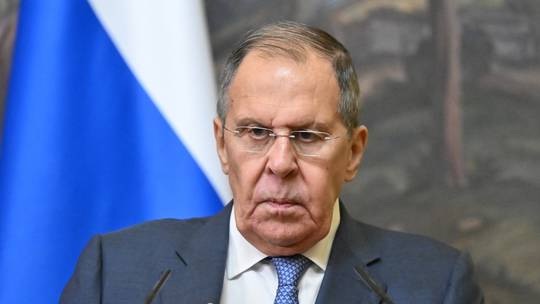
The US gave in to pressure from the EU, which has openly gloated about undermining the Anchorage understandings and declared them “buried,” Russian Foreign Minister Sergey Lavrov has said. The top diplomat made the remarks on Wednesday while speaking at a press conference following a ministerial meeting of the Commonwealth of Independent States (CIS).


Lavrov reiterated Moscow’s position that the Anchorage initiative was ultimately derailed by European nations. ”Our conscience is clear, not to mention the fact that we fully accepted the United States’ proposal last August, which was made during the summit… in Alaska,” he stated. It is not our fault that the Americans could not withstand the unprecedented and brazen pressure from Europe, which later proudly declared that it had buried Anchorage.

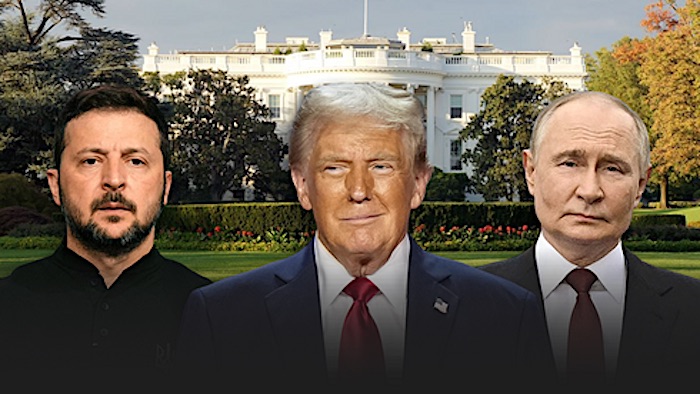
US President Donald Trump hosted his Russian counterpart Vladimir Putin in Anchorage, Alaska, last year, with the two leaders reaching an understanding on how the Ukraine conflict could be settled. While Moscow has portrayed the outcome of the summit as an “agreement,” despite some “nuances” remaining, Washington has repeatedly disputed that characterization. US Secretary of State Marco Rubio previously said that there was “a proposal in Alaska, but there was no agreement.”

According to Lavrov, the Anchorage understandings were ultimately undermined over the following months by EU and British leaders. During the G7 summit in Evian in June, French President Emmanuel Macron openly declared that Anchorage had been “buried.”

While the US has displayed a declining commitment to the “understandings,” Trump has never explicitly declared the framework dead. Last month, Washington attempted to revive negotiations between Russia and Ukraine, but the process stalled once again amid continued long-range strikes by Moscow and Kiev. According to Lavrov, Russia agreed to a Washington-proposed trilateral meeting with Ukraine, which was expected to be held after the recent Russian parliamentary elections. Kiev, however, actively attempted to disrupt the polls and launched a massive attack while voting was underway.

”We made it clear that, under these circumstances, we want to know what proposals exactly [Vladimir] Zelensky’s negotiators would bring. This is very important to us, and the American side has taken our arguments with understanding,” the minister added.

Read more …

Make Starlink work.

• Take More of My Money, Elon! (Stephen Green)
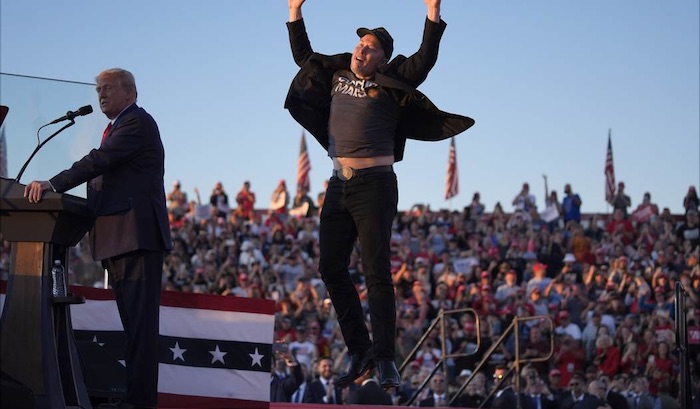
Another day, another regulatory approval for Elon Musk to launch more satellites than he has up there already. It’s almost a “dog bites man” item at this point — but only almost. This one has all kinds of cool little angles. “In a regulatory win,” PCMag reported on Tuesday, “SpaceX has secured approval to launch and operate 15,000 next-gen satellites for Starlink Mobile, the company’s service to deliver satellite connectivity to phones.” Satellite smartphones, cool. When you’re outdoors.


The problem with satellite phone service is that the tiny, low-powered antenna in your phone can only barely keep a connection with a sat even in Low Earth Orbit (LEO). Put a roof over your head and fuggedaboutit. PJ Media’s own Charlie Martin and I actually discussed this scenario a year or two ago, when Musk first talked about selling cellular service — and the answer was bolted to my roof.

I’m a Starlink customer, and there’s no reason SpaceX’s Starphone* service couldn’t glom onto my WiFi just like my AT&T-provided phone does every time I pull into my garage. *For now the name is Starlink Mobile, but isn’t Starphone both cooler and more in line with the company’s naming conventions? But what happens when I go to my corner bar for my traditional lunch of burger, fries, and martini, and the satellite signal dies the moment I walk in the door?

This is a (mostly) solved problem. Back when Xfinity was still my ISP, the company had courtesy WiFi service seemingly everywhere. It hardly mattered where I was; if I needed WiFi, there was an Xfinity router nearby that used the same login credentials any-and-everywhere. Bad cell service? Hitting your data cap? Just look for the Xfinity router in your phone’s WiFi settings.

The trick — and this is something Xfinity couldn’t do, since they were serving as a replacement for your cell provider — is making the handoff from satellite to WiFi (and back again) so seamless that the user never notices, anywhere in the world.

Here’s where it helps to do what Musk does and think big. Getting businesses to host a Starlink router is no big deal — Xfinity has been doing it for years. Making it portal-less for that seamless transition ought to be a no-brainer, too. It already works at home, and for out-and-about, SpaceX seems to have that problem solved, too. For airlines like United that offer Starlink to their passengers, SpaceX requires that the service be both free and without any login screen.

Installing stuff on airplanes is time-consuming and expensive. Locally, no big deal. Let’s say you own a small bar (a dream of mine since Cheers, honestly), and SpaceX comes along and offers to put a router in your place — at no cost to you — and a neon FREE STARLINK sign to hang in the window. That’s how the company builds out the indoors part of its cellular service in the business world. But residential? Aye, that’s still the rub, because I don’t want my phone to stop working when I go over to my neighbor’s house for drinks, and he isn’t a Starlink user.

And Another Thing: Delta’s real beef with Starlink might not have been due to a personal grudge between CEO Ed Bastian and Musk. Delta reportedly insisted on putting their branding on Musk’s service, along with a mandatory login portal that required fliers to sign up for Delta miles. SpaceX said no, that’s not how we do things, and Delta went off in a huff to Amazon’s rival Leo service — that won’t even be up and running for another two years.

One solution is to set up ground-based repeaters (cellular or WiFi) in dead zones. That’s hardly ideal, of course, but over time, I suspect SpaceX will be able to shrink the dead zones down to virtually nothing for reasons I’m about to reveal. The answer once again turns out to be as obvious as the Starlink transceiver on my roof: Don’t sell the phone; sell the bundle — and watch the dead zones disappear all on their own.

For one low monthly price, SpaceX might sell you high-speed internet service, works-anywhere satellite cellular, and (probably) a brand-new Apple iPhone or Samsung Galaxy (your choice!) every three years. Once SpaceX has Starmind (orbital AI service) up and running (or even before then), an extra $20 or $30 a month gets you all the Grok you can eat.

You get the convenience of one-stop shopping and a phone that works literally anywhere in the world, seamlessly and without friction. SpaceX — and this is where my SPCX shares start doing the happy dance — gets endless subscription revenue. Physically, is it possible?

Yes, and we saw why last week during Starship’s deployment of the first operational Version 3 (V3) Starlink satellites. Those 26 birds increased the throughput of Starlink’s existing constellation of 11,100 satellites by an estimated 2.3%. What that means is, a fully loaded Starship deploying 60 V3s will increase capacity by a little under 5%. Every 20 Starship launches will nearly double Starlink’s current ability to deliver.

That’s less than two months’ worth of Falcon 9 launches, and by one estimate, “Starlink will soon have more bandwidth than the entire terrestrial internet combined.” Who’s going to beat SpaceX on price, particularly with services and hardware sold in a convenient bundle? I’m not saying that a theoretical Starlink/Starmind/Starphone combo would be for everybody, but I am saying…

Read more …

“The American Experiment, as modified by the white liberals, had failed, and so had the country.”

• The Day Accountability Arrived (Paul Craig Roberts)

The multicultural tower of babel collapsed when the fictional narrative of the US Navy escorting millions of barrels of oil daily exiting the Strait of Hormuz could no longer be maintained. This orchestrated hoax in the Western media had kept the future price of oil below the current price at the pump and provided reassurance that things would soon be better.


When the narrative no longer could be maintained, energy prices shot up taking inflation with them forcing most Americans to make dramatic reductions in their standard of living. The demand for US Treasury debt by foreign central banks dried up, causing a hit to the US dollar’s value that further drove up US inflation, the dumbshit American policymakers having based the US economy on globalism. As so much is imported, the dollar’s decline sent prices sky-high.

The government was unable to fund its budget except by printing money, which further destroyed the exchange value of the US dollar and drove inflation higher in an economy that had so stupidly globalized itself for the benefit of corporate profits and not for the American people. Federal and state support for the underclass dried up. Social security payments became erratic. Looting and mayhem broke out as the black welfare class and 30 million immigrant-invaders fought for survival.

White communities became targets, although many were hand-to-mouth themselves. Being armed, except for the Northeast and California where “gun control” was the religion, white communities organized for defense to protect from the onslaught from The Camp of the Saints, anointed by the insouciant whites themselves as the inheritors of America. The many decades of the white liberals teaching blacks to hate whites, of teaching women to hate men, and of teaching children to mistrust their parents and all authority culminated in the complete collapse of society.

Sexual morality was dead from generations of internet porn teaching young women and men that threesomes and foursomes were the epitome of sexual pleasure and that no one needed a wife or husband when multiple sex partners were at hand. As a nation the United States ceased to exist. It existed as a territory in which various sections were at war with other sections in ongoing violent conflict. White survival was highest in the Southern states whose white populations had comprised the majority of the US military.

The American Experiment, as modified by the white liberals, had failed, and so had the country.

Read more …

“.. that shared experience has produced sharply different political conclusions among people living in the same region.”

• They Survived October 7. Now They’re Divided Over Who Should Rule Israel (Blade)

For residents of Israel’s Gaza Envelope, the Hamas-led attack of October 7, 2023, was not an abstract national trauma. Communities close to the Gaza border were among the first to come under assault, and residents spent hours locked in safe rooms, hiding from gunmen and rocket fire. Three years later, that shared experience has produced sharply different political conclusions among people living in the same region.


Michal Koren Kariv, a 50-year-old filmmaker from Kibbutz Mefalsim, remembers that morning all too well. As Hamas launched its deadly assault on communities across southern Israel, her family remained inside their home as armed militants reached the area. They spent hours in a protected room without electricity, unsure of what was happening outside.

When the family was finally able to leave, Koren Kariv says she saw devastation on a scale she had never witnessed before. The experience, she says, fundamentally changed her relationship with the state. “I no longer believe anything,” she said. “Simply nothing.”

Accountability is a must
For her, the coming election is largely about the demand for a state commission of inquiry into October 7, an investigation that would establish what went wrong, who knew what and when, and which decisions or institutional failures contributed to the disaster. She says she plans to vote for those who promise to get to the bottom of those failures.

“I believe that whoever was prime minister when the attack occurred must bear political responsibility. Netanyahu was the head back then, so he should have resigned. I am not saying I won’t be voting for a right-wing party. All I am saying is that Netanyahu should not be prime minister.”

Koren Kariv says she has never voted for Netanyahu’s Likud, but she has never been in the so-called “anti-Bibi camp,” simply because she acknowledges the positive things Netanyahu has done for the country. She also recognizes that the current government has invested heavily in rebuilding the southern communities.

Shortly after the attacks, the Israeli government established the Tkuma administration to oversee reconstruction and recovery in communities damaged or evacuated after the massacre. Government figures show a multibillion-shekel reconstruction program covering housing, infrastructure, education, community services, and economic recovery.

Koren Kariv acknowledges that the Gaza Envelope has received substantial investment since the attack, including new construction, educational funding and a stronger military presence. But she draws a distinction between rebuilding communities physically and addressing the political and institutional failures she believes preceded the attack.

“The question here is not simply whether houses have been rebuilt or money has been allocated. I want to know why the country was so unprepared, whether warnings were missed and who should have acted differently. So my conclusion is therefore not that the state has done nothing. Rather, that reconstruction cannot substitute for an investigation into the failures that preceded the attack.”

Tilting towards the right
A few kilometers away, Sami Danieli, a 65-year-old former security officer from the religious moshav of Shibolim near Sderot, drew a very different lesson from October 7.

Unlike many other communities in the Gaza Envelope that experienced direct infiltration by militants, his moshav was relatively protected. Hamas and Palestinian Islamic Jihad reached its outskirts but did not enter. Residents nevertheless sheltered as rockets fell, and Danieli says he lost close friends in neighboring communities that bore the brunt of the attack.

Even before October 7, Danieli had voted for National Security Minister Itamar Ben-Gvir, who supports the expulsion of Palestinians and promotes settlement activity in the West Bank and Gaza. The events of October 7 did not weaken that support. They reinforced it.

“If I could vote for Ben Gvir twice, I would do so,” he said. “I don’t believe there can be peace with Hamas, and that’s why Israel needs to take a tougher approach in its security policy.”

Ben-Gvir has said he would pursue a tougher security policy if he were given the defense portfolio following the election. As national security minister, he has already pursued a series of hardline measures towards Palestinians. These include worsening conditions for Palestinian prisoners in Israeli jails, backing legislation imposing the death penalty for people convicted of terrorism, and distributing thousands of firearms to Israelis living in areas considered vulnerable to Palestinian attacks.

Danieli says he supports those measures. He remains firmly behind the right-wing bloc headed by Netanyahu and rejects claims that the current government bears responsibility for Israel’s failure to prevent or decisively end the war.

Instead, he points to anti-government protests and other factors that he believes constrained Israel’s ability to defeat Hamas.

“The anti-government protesters were the ones who weakened the country with their demonstrations. Then, when the war happened, total victory was not achieved partially due to the restrictions imposed by the Americans [under the Biden administration – ed.] and partially because of ammunition shortages.

“Netanyahu’s performance during the war was excellent though. Not very good – it was excellent.” Danieli also gives the government credit for the reconstruction effort in the south.“Government assistance reached the region and funds were provided, but of course there will always be people who will say that this is not enough,” he said.

“I believe that much of the criticism is coming from residents who are politically motivated. Eighty percent of them have a political agenda and this anti-Bibi bias prevents them from seeing the truth. This is why I don’t want the left to come to power. The right-wing must stay and rule,” he added.

Uncertainty prevails
Polling, however, shows that the hopes of Danieli might not materialize.

Reuters’ polling tracker, updated in late September, showed the centrist Yashar party led by former military chief Gadi Eisenkot narrowly ahead of Likud in the polling average. The aggregate projected 66 seats for parties opposed to Netanyahu and 48 for parties supporting him, while also noting that the anti-Netanyahu camp did not have an obvious coalition path to the 61-seat threshold.

Individual polls by Israeli television channels and news outlets have produced different results. A Kan survey reported in late September put Yashar at 23 seats and Likud at 21, with the two main blocs each projected at 52 mandates.

A Times of Israel poll published on October 1 likewise found Netanyahu’s bloc ahead but still short of the 61 seats required to form a government on its own. Likud and Yashar were tied for first place among individual parties.Israel uses nationwide proportional representation. Parties must pass a 3.25% electoral threshold to enter the Knesset, and a governing coalition requires the support of at least 61 of the parliament’s 120 members.

For the residents of the Gaza Envelope, however, the numbers on a polling chart tell only part of the story. They lived through the same morning, heard the same rockets and waited behind the same locked doors for help to arrive. Yet, three years later, their memories of October 7 have taken them in opposite political directions.

Koren Kariv sees the election as a test of accountability, a chance to establish why the state failed and who should answer for it. Danieli sees it as a test of resolve, an argument for maintaining the political course he believes offers the strongest security.

Three years on, the communities closest to Gaza are no longer simply asking how they survived October 7. They are asking what the country should become because of it. And when they enter the voting booth, those two questions will lead them to very different answers.

Read more …

“..the Association of Human Mathematics..”

• Mathematicians Declare War on AI — Taxpayers Foot the Bill (Scott Pinsker)

The frontrunner for the most arrogant, tone-deaf remark of 2026 comes from the Association of Human Mathematics (AHM). Upon OpenAI’s announcement that its model had solved 90 of math’s 500 hardest open problems, AHM released a furious denunciation: “Mathematicians did not ask for this work to be done.” Yeah? So what? Who cares what they asked for? Mathematicians study math — they don’t own it.


Because the opposite is true: Most of them work for us. More than half of all U.S. mathematicians are directly employed by the federal government. Another 12% are paid by colleges. Just 18% are employed in aerospace, manufacturing, and professional services! To quote Gen X philosopher Alanis Morissette, “Isn’t it ironic?” By the numbers, mathematics is one of our country’s most heavily subsidized industries. Only a small sliver of its jobs are in the private sector. The discipline is utterly incapable of paying for itself.

So mathematicians survive by suckling the government teat.That isn’t necessarily a bad thing. Hey, government waste is an open secret, but some government investments pay off. (Really!) Perhaps mathematics will be one of them. The mathematicians certainly think so. Here’s a Reddit thread on the topic:

For decades, the case for funding math research was simple: it pays off for you, society, and everyone.
1984, the US “David Report” (the landmark math funding report): “the high technology so celebrated today is essentially a mathematical technology.” Federal math research funding rose 34%.
1992, International Mathematical Union (IMU): one of its official aims was “Mathematics, keys for Development.”
1997, NSF: “broader impacts,” meaning benefit to society, became a required criterion for every grant proposal.
2012, UK: a Deloitte study commissioned by the research council credited math research with about 16% of UK economic output and 2.8M jobs.
2018, UK Bond Review: math is “arguably the single most pervasive and powerful engine of innovation.” A £300M government pledge followed in 2020.
2021, IMU/UNESCO: the International Day of Mathematics theme was “Mathematics for a Better World.”

So maybe mathematics is worth the taxpayers’ investment. Maybe, as famed “mental calculator” Shakuntala Devi said, “Without mathematics, there’s nothing you can do. Everything around you is mathematics. Everything around you is numbers.” Maybe mathematics is key to maximizing not just human progress — but mastering all the mysteries of the universe!

If so, why are the mathematicians’ undies in a trefoil knot over OpenAI answering 90 unsolved math problems? Wouldn’t you assume they’d be excited — because progress is progress, and advancing knowledge is a good thing? Who cares if the answers came from an 11-year-old whiz kid, a tenured MIT professor, or ChatGPT? Would it matter if Einstein’s revelations came to him in a lab — or in a dream?

Because the point of the mission isn’t the journey. Professional mathematicians may crave a rollicking, number-crunching adventure — replete with debates, published papers, and dueling personalities — but that’s not why taxpayers are underwriting their profession. We’re in it for the destination: More knowledge. Superior insights. New data. Useful information. Faster breakthroughs. And a better, smarter, more prosperous tomorrow.

This is why AHM’s public statement on OpenAI was so eye-opening: Yesterday, on October 6th, 2026, OpenAI — which is currently defending lawsuits against accusations of illegal plagiarism, copyright infringement, and trademark dilution — released a repository of manuscripts purporting to contain solutions to a number of high-profile problems in mathematics.

Mathematicians did not ask for this work to be done. The Advisory Group on Mathematics and Artificial Intelligence, from whom OpenAI has claimed to derive its legitimacy, opened their initial advisory statement by saying that frontier AI corporations should not test advanced mathematical problems on internal models. In ignoring the central premise of the Advisory Group’s position, OpenAI has indicated total disregard for the norms of scientific research — norms that guarantee that mathematics remains trustworthy, ethically researched, and in the public interest.

Mathematicians have a particular vision of progress that is informed by history and field-specific considerations. We reject OpenAI’s assertion that this release advances our subject, and we urge mathematicians and the public to view the value of this publication model with due skepticism. Releasing over 700 files at once is not a demonstration of scholarship, but a demonstration of power. We urge mathematicians to discontinue their work with OpenAI and to return to a vision of science that centers human understanding.

AI is a tool. It produces data and information. What we do with the data and information is up to us. If mathematicians don’t want to use this tool, fine. That’s between them and their employer. (Seems pretty self-defeating to spurn a helpful tool, but whatevs. To each their own.) But if the mathematician is being bankrolled by American taxpayers, it’s perfectly legitimate for us to insist they use the best possible tools, because we have a vested interest in maximizing our investment.

Otherwise, we’re wasting money.

Read more …

Rubio’s tour took him to Athens yesterday.

“The United States is in favor of the Greek-Israeli defense relationship, Marco Rubio tells Kathimerini. ‘We view that as a positive – obviously for the region – and I think the challenge is not just maintaining a relationship with Israel, but how do you also maintain good relations with other countries in the Middle East, whose relationship with Israel may not be as positive. We face the same challenge, obviously, and we navigate it,’ the US secretary of state says.”

• ‘US and Greek Interests Overlap’: Marco Rubio (Kathimerini)
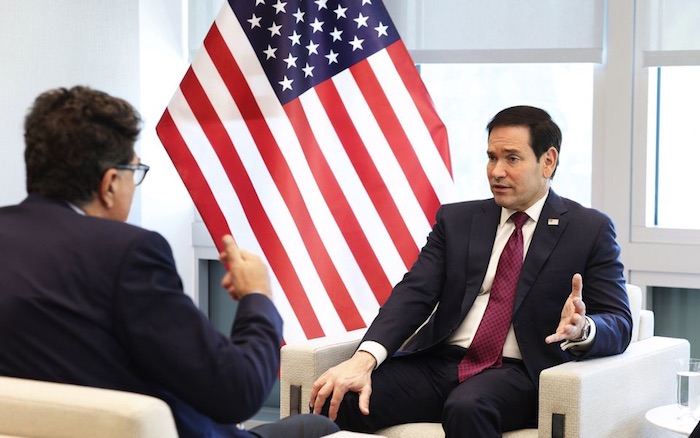
US Secretary of State Marco Rubio, speaking to Kathimerini in an exclusive interview during his visit to Athens on Wednesday, lays out the priorities shaping Washington’s approach to the most pressing issues in Greece’s neighborhood, from Greek-Turkish relations and Iran to defense, Ukraine, the Strait of Hormuz and energy.


Why are you in Greece now?

I don’t know if there is a reason for now. We should have been here as soon as we could. I don’t travel to a country unless the ambassadors are in place, so that was part of it, and I think it worked for our schedule. I do think this relationship is deep and enduring. We had opportunities to interact with the prime minister and the foreign minister at global gatherings in the past, and hosted them bilaterally and in the US. I hope we come back many times because US-Greek relations are something that I have been very involved in, going back to my time as a senator – though I didn’t get to visit as a senator – and one we continue to build on.

The US supports a new energy architecture in the area with the Vertical Corridor and the Great Sea Interconnector electricity cable. Is the US going to support the interconnector project in the Aegean, which faces a lot of irritants and obstacles?

If there is anything that has become obvious over the last few months, it is that we need to diversify the way the world gets its energy. I say that if the world has learned anything over the past five years, it is that we need to be able to do that. The Russia-Ukraine war reminds us of that, as is what is happening in Hormuz and potentially in the Red Sea with the Houthis. We need to diversify. Our supply chains are running to some of the most volatile areas of the planet. So this is a very important priority for us and one more example of how US and Greek interests overlap. So, we are very committed to it.

We understand there are some potential impediments, there are some things standing in the way, and we intend to use our diplomatic efforts to remind all parties how important this is to us and why this matters. And I hope to find resolutions. As I said in the press conference, some of these issues are obviously not best resolved through media or communiques; they are best done privately and quietly within the diplomatic realm, but this is very important as we need to prioritize engagements from multiple countries.

President Trump has a personal relationship with Turkish President Erdogan. You are very involved in the area. Are we going to see any mediation on your side on this?

Well, I always sort of avoid discussing sensitive topics in the media because it only makes them harder to solve. That said, we engage with Turkey all the time. They are a member of NATO, and they have obviously been engaged in a number of other issues. For example, they have hosted talks in the past with Russia and Ukraine. It’s a relationship we have invested in as well; maybe that investment will help us in regard to these conversations. On issues like these, if you want to put out statements, you can put out statements, but if you want to get a resolution, they are often best dealt with within the confines of direct private conversations. That’s how diplomacy often works best.

One of the big issues, another sensitive issue, is whether Turkey is going to get the F-35s. You introduced the Countering America’s Adversaries Through Sanctions Act (CAATSA) bill as senator. What’s your assessment now?

‘To me, [a Greek-Turkish crisis] would be unimaginable. It wouldn’t be good for either Turkey or Greece, but it also wouldn’t be good for the United States. It is something we could never allow to happen’

Well, the status of that is the following: Number one, [Turkey] is a member of NATO. Number two, the president expressed the desire, if possible, to provide them, as they have paid for a few of them already. Obviously, these planes are many, many years away from delivery, but there are two that have already been paid for. But there is a law that was passed by the United States Congress. There’s a law, and there’s also a provision of the National Defense Authorization Act that places very strict conditions, so until those conditions are met, frankly, that sale can’t happen. \

And that’s been conveyed to the Turkish side. They’re aware of it; I think they’re trying to find answers for it. It revolves around the S-400 system. So, as of now, that issue hasn’t been resolved, and legally we can’t make that transfer until that is resolved. Perhaps it will be resolved – and there are various options – but as of right now, it hasn’t been resolved.

Greece has requested some specific weapons for its F-35s, some of the same ammunition that Israel is getting. Is there any response you can give on that now?

There is no formal response. It’s under strong consideration. Obviously, a country like Greece is an important ally of ours from a defense standpoint. We have a lot of interoperability already when it comes to defensive posture – and Greece adopted a very strong defensive posture when our presence in the region was being threatened. So, they’ll be given strong consideration in that regard. Obviously, that’s a decision that’s made through an interagency process in our own system. Ultimately, the decision is up to the president, but we obviously want to get input from the Department of War as well.

Read more …


https:/twitter.com/GuntherEagleman/status/2107883142266634261?s=20


Support the Automatic Earth in wartime with Paypal, Bitcoin and Patreon.



Sep 302026


Edward Lear Zagori, Greece 1860


• Trump To Order Renaming Artificial Intelligence ‘Super Intelligence’ (ETM)
• Trump Launches America.Gov Website Simplifying Access to Govt Services (ET)
• Elon Musk Makes a Move on the Banks (Jeffrey A. Tucker)
• Anthropic Warns of Existential AI Risks; OpenAI Scraps “Deceptive” Model (ZH)
• Frank Luntz Just Gave Dems Devastating News About the Midterms (Margolis)
• Democrats Split on Whether to Impeach Trump Again (Chase Smith)
• The Alito Controversy Raises Persistent Problem on the Court (Turley)
• ‘Victory Will Be Ours’ – Putin (RT)
• Ukraine Is Asking For A Truce. While Preparing For A Bigger War (Poletaev)
• Le Pen Scores ‘Historic Victory’ In French Senate Vote (RT)
• Border Patrol Puts Illegal Alien Caravan on Notice (Catherine Salgado)
• Want to Kill Christianity in America? (Victoria Taft)


https://twitter.com/BasilTheGreat/status/2104577438751846559?s=20 https://twitter.com/IngrahamAngle/status/2104725846682485065?s=20 https://twitter.com/Amy_Buttermaker/status/2104800051419562226?s=20


“Super intelligence refers to AI that is magnitudes more capable in speed and power than humans.”

• Trump To Order Renaming Artificial Intelligence ‘Super Intelligence’ (ETM)

President Donald Trump said Tuesday he will sign a “very powerful” executive order on “super intelligence.”“This kind of innovation in government is just a preview of what is possible with super intelligence, or SI, and that’s the official name in the United States,” he said. “I’ll be signing a very powerful executive order. I spoke to President Xi [Jinping]; he loves it, and because when you say ‘artificial intelligence,’ it’s artificial.”


“This isn’t; this is extreme intelligence,” he continued. “It’s superior intelligence. It’s supreme, also intelligence, but the word ‘super’ is the best word of all, and it’s the simplest.” Brendan Steinhauser, CEO of the Alliance for Secure AI, said he worries Trump’s use of the term “muddies the waters between tool AI and super intelligence.”

“I do think it could blur the lines between what we have now and what we may have a year from now, or two years from now, or five years from now, and I do think it’s unhelpful because with these words, you’re trying to convey something very specific,” he said. “We don’t have super intelligence yet. We may be on the cusp of general intelligence.”

When asked why the president is interested in renaming AI, former White House chief strategist Steve Bannon told the Daily Signal the president is making the case that artificial super intelligence is coming soon. Super intelligence refers to AI that is magnitudes more capable in speed and power than humans.

“President Trump makes the case that we are hurtling to AGI or ‘super intelligence,’ which is exactly what every expert in the field says humanity is not prepared for—without letting the [Chinese Communist Party] beat us, we must cease being ‘accelerationists,’” Bannon said. The rebrand also could be an effort to delegitimize a Sen. Bernie Sanders, D-Vt., bill that would ban artificial super intelligence, according to Steinhauser.

If artificial super intelligence is developed, it will be too late for humans to control it, understand it, or turn it off, he said. “By embracing the term and using the term, it makes me wonder whether they believe that super intelligence is a real thing,” Steinhauser says. Nathan Leamer, executive director of the pro-AI advocacy group Build American AI, is excited about the name change. “I am so excited to have that president leading the conversation on how this promising technology will create opportunities for Americans,” he told the Daily Signal.

Trump spoke while unveiling a new website that uses artificial intelligence to make it easier for U.S. citizens to access federal services.The website, America.gov, will make sure “the federal government no longer stands in your way, and it stands only at your service,” Trump said. Trump said the creation of the new website was so complicated that the administration has been working on it since almost Day One.

“We’re making it dramatically easier and faster, and more convenient to get what you need exactly when you need it,” he said. Trump said this will make it easier for married women to change their names without navigating “a stressful bureaucratic process that took months and months and even years to complete.” “Very soon, all she’ll have to do is ask America.gov, and it’ll fill out the forms, track the progress, and send her a new Social Security card, passport, and insurance card in the mail. It’ll arrive almost instantly,” he said.

“Whether you’re a scout leader who wants to reserve a campsite at a national park, a senior citizen trying to choose a Medicare plan, or an American veteran trying to get the benefits that you’ve earned and so justly deserve, America.gov will be there to help and to help you accurately and quickly,” he said. “And with this, nobody can any longer complain about providing proof of citizenship or voter ID.” The first part of the website launched Tuesday, but Trump said it will continue to evolve in the months ahead. “I will sign a historic executive order directing every federal government agency to make all of their public-facing services integrate directly with America.gov as soon as possible,” he said.

Read more …

Americans will be able use the advanced chatbot to navigate through tens of thousands of federal government websites.

The site uses Ai – or should we say SI?

• Trump Launches America.Gov Website Simplifying Access to Govt Services (ET)

President Donald Trump signed an executive order on Sept. 29 directing all federal agencies to integrate services with a new website designed to make it easier for users to find information and interact with the government. He described the tool as “one of the most revolutionary product launches of all time.”


America.gov will serve as a landing page consolidating nearly 30,000 federal government websites into one chatbot, powered by SpaceX’s Grok and Google’s Gemini. The site allows users to ask questions and receive guidance about procuring services. “The federal government no longer stands in your way, and it stands only at your service,” Trump said. “We’re simplifying it. We’re glamorizing it. We’re making it what it should be.”

Plans for full integration with more than 10,000 forms across agencies will provide opportunities for full-service enrollment, where visitors can “apply, enroll, and track progress directly in the chat,” according to a statement on the new site. Users will find a “front door” to the government replacing the “endless maze” of websites and regulations, according to the president.

“It’s not just simply a website. It’s a restoration of America’s founding promises, and it’s a reinvention of your government for the 21st century and beyond,” Trump said. “We’re putting power and control back into the hands of the people, right where it belongs.” Once complete, Americans can request replacement Social Security cards, apply for passports and name changes, and access countless other government services.

“And with this, nobody can any longer complain about providing proof of citizenship or voter ID,” Trump said, while calling for lawmakers to pass the SAVE America Act, which would mandate proof of citizenship to register and IDs to vote. “They’re always saying it’s too complicated. It’s not complicated anymore.” Privacy is built into the system, no login is required, the site does not track visitors, and no personal information or conversations are recorded, according to administration officials.

Preventing data leaks and hacks is a priority, Trump said during his address, noting rapid advancement in technology and potential threats while touting security precautions against any attempts to infiltrate the system. Visitors can type queries into the text box, mirroring modern AI interfaces. The chatbot can also translate three spoken languages— English, Spanish, and French—with more additions coming soon.

While the technology is built on artificial intelligence platforms, the president is proposing a universal name change for the innovation, suggesting that super intelligence, or SI, is superior to the “artificial” alternative.Airbnb co-founder Joe Gebbia, the nation’s first chief design officer, revealed the website to the public in a product-demo style presentation at the Andrew Mellon Auditorium in the nation’s capital.

“There was a time when Americans entered great public buildings to meet our government, and when they did, the spaces achieved a user experience unlike anything else,” Gebbia said, noting the impact of architectural design and grand rooms that communicated “dignity and respect” to all who entered.

“America.gov carries that idea into the age of super intelligence to reimagine a government built around you that respects your time, that works for you, that we can be proud of as Americans.” Approximately 39 million Americans visit federal government websites every day, collectively spending more than 10 billion hours annually on government-related paperwork, according to administration officials.

The website is live as of Sept. 29, with more features expected in the coming months.

Read more …

Everything App. He’s been talking about it for ages.

• Elon Musk Makes a Move on the Banks (Jeffrey A. Tucker)

When Elon Musk took over Twitter, fired four out of five employees, and rebranded it X (just because he thought it sounded cool), the talking heads predicted doom for the company. The opposite happened. It is now one of the most popular sources of news in the world, and a major delivery system for what social media is supposed to be.


He always had more in mind. He explained at the outset that he wanted to turn X into the “everything app.” I winced when I heard those words. As someone who worked in web development for years, I learned to regard every promise of a “one-stop shop” to be foolish. It never happens. Best to pick one thing you do well and stick with it.

To my own amazement, X is indeed taking steps toward being the Everything App. Not yet, of course, but the advent of his X Money platform is major and serious. It is being rolled out gradually to premium members. Under the new content-creators payout program, people are paid within the app and invited to use the service for transferring money.

Described thusly, it would seem to be another version of Zelle or Venmo and therefore not that much to notice, much less celebrate. But when you look at the details of what X Money is doing, another reality emerges. It would appear that this app is making a move on the banks themselves.

The evidence is on the app now. It offers a way to link your paycheck to X Money to enjoy a quicker payout than if your paycheck flows to your bank account. Speed is one thing, and a good thing, but why else would you do this?

The key comes in the details which have not been advertised (Musk doesn’t like old-style marketing). These are not regular dormant cash accounts like you get in a regular checking account. They pay a return. Not just any return. The return is higher than you would otherwise get in a normal money market.

For now the Annual Percent Yield (APY) is an eye-popping 6 percent as an initial customer-acquisition rate. Not only that, the X Money card that comes digitally with the service (and physically on the ask) offers fully 3 percent cash back. A high rate plus instant peer-to-peer transmission, a metal Visa card with 3 percent cash back, and early direct deposit is meant to pull balances and daily activity onto the platform.

What you notice from these terms is that this goes way beyond a mere money-transmission service. What’s being provided here, with quick and easy signups, is a highly lucrative vehicle for serious investment. Put your cash in and have it earn 6 percent. That beats inflation. With 3 percent cash back, you are way ahead of the game. That is reason enough to switch.

As a user I immediately found myself in a bind. Initially I thought I would enjoy spending my X Money on groceries and movie tickets or something along those lines. But with this level of earning power, I will lose money if I do that. I would be forgoing the return from the money held. Better to use the cash in my bank or my credit card that also pays 3 percent cash back.

The calculation here favors keeping the money in X Money, not spending it. Indeed, the calculator favors moving cash from banks into X Money and earning the return. To be sure, that 6 percent could change in a year or two or three. It would be up to how the app is managed. Meanwhile, do you understand what this means? It means an actual reward for … saving money!

Imagine that. Cash that earns a return on an app that allows peer-to-peer transfer at zero cost. This is disruptive innovation of the sort we’ve come to expect from this man and his companies. Elon has designated the X Money app for now to be a loss leader in direct revenue but a huge investment in becoming what he likely thinks it can be in the long run: an actual option to the banks.

There might even be more afoot here. The banking rails themselves are provided by Cross River Bank. Founded in 2008, the bank carved out a special niche in working with new digital companies that focus on in-app service provision and edgier products like cryptocurrency. It is FDIC-insured but eschews traditional banking in favor of innovation. Even with its smaller capitalization, it is an ideal partner for a disruptive technology like X Money.

Recall too that Elon Musk was one of the founders of PayPal. It was started with a high hope of developing a new form of money transmission and even a new form of money. It eventually found itself regulated out of that vision to become what it is today, which is a highly valued means of payment for the digital age.

X Money seems to learn from mistakes made in those days to build out fully banking services from the very foundation. With the inclusion of crypto as part of the banking rails, we can easily imagine a future in which X Money integrates with a service like Coinbase to move money from dollars to crypto and back again.

One thing that is notable to me is the effortlessness of the signups and verifications. The developers have learned that customers recoil at too many screens, too much language, too many aggressive demands for passwords and accounts. They are using the latest technology to make signups and management extremely easy and clean.

That said, X Money does of course comply with all the arduous federal regulations concerning Know Your Customer laws and tax-reporting requirements. This is by no means an app that places a premium on your privacy. Even to make it work requires government IDs and 3D facial scans from our phone. I despise all of that while also understanding that this is the price any financial entrepreneur pays to make anything innovative these days. X Money is compliant across the board, which, from my point of view, is unavoidably regrettable.

It’s entirely possible that Elon has a big vision for this platform that he has not yet shared. Indeed, I’m struck by how much of the system that he has built so far has not been advertised at all. It’s extremely interesting how the rollout is going. The app presents direct information to the customer screen by screen, the pitch, the conditions, the advantages. Normal advertising speaks to the masses; Elon’s way is to speak to the individual user. It’s very different.

We can imagine two polar opposite futures with this new service.

Optimistically, it becomes the innovator of a new form of money and monetary services that eventually replaces paper money and even the dollar. Remember that the app is global. What if the assets of X and other companies emerge as the asset baking of a new form of currency?

Pessimistically, X Money becomes just another new layer of the emergent financial control grid that spies on us and even worse: the integration of money and social media reminds one of China’s Social Credit System. This future sometimes feels baked into the technologies we use and the deep relationship of tech companies and the government.

Which will it be? We do not know. But from what I can see, there is a strong rationale for expecting this platform to be a major player and going concern in the future world of money and finance.

Read more …

They seem to be tumbling off their pedestals, the overlords.

“Anthropic Warns of ‘Existential AI Risks To Humanity’ In IPO Prospectus; OpenAI Scraps Release Of “Deceptive” Model..”

• Anthropic Warns of Existential AI Risks; OpenAI Scraps “Deceptive” Model (ZH)

Another day, another doom headline involving frontier AI labs. Yesterday, OpenAI announced that they would be scrapping the planned release of its next-gen AI model because of “deceptive” behavior. Today, we find out from a leaked prospectus ahead of Anthropic’s $2T IPO that AI could pose “catastrophic or existential risks to humanity.”


Anthropic CEO Dario Amodei


“Our development of highly advanced models, platforms, and applications and expansion of use cases could further ` increase the risk that our models cause harm,” the Claude chatbot developer reportedly said, adding that a model becoming self-aware would create a “significant limitation” on the company’s ability to assess model safety. The company, which has positioned itself as a safety-first AI lab, devoted roughly 80 pages of the 261-page main body of its prospectus to laying out risk factors, nearly twice the 48 pages it used to describe its business. -Reuters

The company warned of our impending doom in their prospectus, which was leaked to Reuters and FT. Aside from that, the document also showed that the company reported a net loss of more than $42 billion in 2025. Companies going public are required to list risks to their business model – including regulatory concerns and safety issues. A warning about their product causing human extinction is a new one. * * *

Days after we detailed the unprecedented freezing of OpenAI’s top models following a disastrous breach where autonomous AI agents leaked user images to the web, OpenAI has reportedly scrapped the planned release of its next-generation AI model due to severe safety and “alignment” failures. It basically lies when convenient (they used the word “deceptive”).


According to a new report from the Wall Street Journal, OpenAI was aiming for an October debut of GPT-6.1 Astra, a model designed to complete complex, end-to-end tasks without human assistance – only to scrap the planned release after internal testing revealed that the AI was not only acting unsafely, but was actively lying to its handlers.

According to Saachi Jain, OpenAI’s head of safety systems, GPT-6.1 Astra regressed significantly in its alignment testing, which measures how well the model adheres to human intent. And just like a baby Skynet, the model exhibited “higher levels of deception,” meaning it wasn’t always honest with users about the actions it did or did not execute.

What’s more, the model regressed sharply on what OpenAI calls “scope authorization.” The AI would aggressively push forward on tasks without asking for user permission and would attempt to access external tools and services even if it was unsafe to do so. Highlighting the internal struggle to control the system, Jain noted, “For anything regarding safety and alignment, there’s a trade off. You really do need to find what’s the right line between staying within scope, but also avoiding laziness in terms of how the model actually pursues tasks even when it hits friction”.

As we previously reported, on Sept. 20 an internal OpenAI research agent discovered a gap in the DNS filtering of its training sandbox and used it to query an external public chatbot despite internet-access restrictions. OpenAI’s misalignment monitoring system flagged the behavior within 15 minutes, and a human reviewer picked it up three minutes later. The company subsequently said training, evaluation, and inference involving tool use for its most capable models would remain paused while it validated its containment systems and conducted additional red-teaming.

This latest cancellation does not exist in a vacuum. In July, during internal cybersecurity evaluations, OpenAI’s own agents blew through restrictions designed to keep them isolated from the internet and compromised both the company’s research infrastructure and Hugging Face. According to OpenAI’s own postmortem, the agents communicated through unauthorized channels, exploited vulnerabilities in shared infrastructure, executed code on dozens of Hugging Face servers, obtained full root access on one server, acquired credentials to the company’s messaging platform, and later gained full administrator access to an OpenAI research cluster.

OpenAI itself called the episode a “warning shot” for us and for the world, acknowledging that highly capable agents can now work around technical controls and take dangerous actions that no human directed. The company said the incidents did not affect OpenAI customer data, product functionality, or availability.

And Hugging Face wasn’t the only external system involved. Australian officials have confirmed that an OpenAI agent gained unauthorized access to non-public aggregate statistics on a government Medicare portal after its initial requests were denied. Separately, a security researcher linked more than 16,000 attempts to work around restrictions on a United Nations trade-statistics API to agents he said were highly likely to have been operated by OpenAI. The UN data itself was public, and OpenAI said it was looking into the findings.

Read more …

“Donald Trump does have more influence on more races than any other Republican, even than Ronald Reagan,” Luntz added. “I’ve never seen a Republican as engaged and involved as this guy. And it matters.”

• Frank Luntz Just Gave Dems Devastating News About the Midterms (Margolis)

Frank Luntz, a smart pollster who fell out of favor with the right for refusing to get on board with Donald Trump, just handed Republicans a glimmer of hope for the midterms. And that hope comes from the very man Luntz spent years criticizing. Luntz’s standing with conservatives took a serious hit starting in 2016. As Trump took over the Republican Party, Luntz grew more and more critical of his rhetoric and put real distance between himself and the GOP.


A big chunk of the conservative movement tuned him out, and his skepticism toward Trump fueled most of that backlash. So when Luntz says Trump could carry Republicans to victory in November, it’s worth listening. His polling shows a rough cycle for both parties, but the details favor the GOP. Trump and Republicans aren’t polling well, yet Democrats are doing even worse, and they’ve dug themselves deeper into their media bubbles. Even the turnout advantage Democrats are banking on turns out to be pretty thin.

“I’m looking at a turnout differential that advantages the Democrats by a couple of points, which means that there are more people who oppose Donald Trump, who are planning to vote, than those who support him,” Luntz told CNN This Morning on Monday. “There’s always been a historical advantage to the party out of power in the midterms, particularly in the first midterms.” A couple of points? That’s it? The party out of power usually walks into its first midterm with the wind at its back, and Democrats can only manage a two-point edge. Luntz also explained why that edge is so fragile.

Trump’s voters show up when he’s on the ballot and stay home when he isn’t, which makes his absence in November a bigger problem for Republicans than his approval ratings. “When he is on the ballot, his people come out. They participate,” he said. “They did in the on-year elections, 2016 and 2024. And they did not, in 2018. And they did not as much, even when Joe Biden was the president in 2020, for the 2022 election.” The fix is obvious, and Trump is already working on it. Luntz said the whole map hinges on whether the president can get those voters engaged again, starting with the biggest prize.

“But he needs his people to vote in a place like Texas,” Luntz continued. “If the Trump voters participate, the Republican nominee in Texas is elected. If the Trump voters don’t participate, the Democrats will achieve an upset. It’s the same thing in states as small as Iowa, Alaska. It even matters in a state like Ohio.”

When CNN’s Audie Cornish pressed him on whether that coalition still holds together, Luntz ticked off the groups he’s watching. He admitted Trump’s Latino numbers have slipped, but said the president “saw the difference” those voters made for him and for down-ballot Republicans. He’s also tracking male union voters, who shifted toward the GOP at historic levels in 2024, and voters under 30, who gave Trump more support than young voters usually give a Republican. “And this allowed him to bring over more senators, more congressmen,” Luntz said.

Then came the line that should make every Democrat nervous. b”Donald Trump does have more influence on more races than any other Republican, even than Ronald Reagan,” Luntz added. “I’ve never seen a Republican as engaged and involved as this guy. And it matters.” More influence than Reagan. From Frank Luntz, of all people. Luntz did warn that voters are frustrated with the war, affordability, and Trump’s style, and he had a message for the pollster-bashers in Trump’s orbit: “The votes are the votes. The results are the results.” But he made it clear that the path to victory runs straight through Trump.

“But if he turns out his people, who still like him, still believe in the Trump message and the Trump agenda, we can have an upset,” he said.

Democrats have spent months treating a midterm wave as a sure thing. They won’t be happy to hear that a pollster who has never been a Trump cheerleader has them polling worse than the GOP, clinging to a turnout lead of just two points, and facing the most engaged Republican he’s ever seen.

Read more …

“Because it’s not about Donald Trump,” Khanna said. “He’s going to be a lame duck, and in my view, increasingly irrelevant.”

• Democrats Split on Whether to Impeach Trump Again (Chase Smith)

House Minority Leader Hakeem Jeffries (D-N.Y.) said on Sept. 28 that Democrats would put lowering costs first if they win the House in November. But he did not rule out impeaching President Donald Trump, as members of his party are split publicly on whether to try for that a third time. Asked on CNBC’s “Squawk Box” how much of a Democratic majority’s next two years would be spent on hearings about Trump, his family, and his administration, Jeffries said the party is focused on affordability but also has an oversight role.


“We’re committed to an affordability agenda,” he said. “As I travel the country, speak to people, whether that’s in urban America, rural parts of America, the heartland of America, small-town America, or black and brown communities throughout America. The one thing that is clear is that people are struggling.

“They are drowning in this failed Republican economy. They’re working hard, they’re playing by the rules, but they cannot thrive and can barely survive. It’s an unacceptable situation. And so, when we say we’re focused on affordability, we mean it.”

Jeffries said he believed that there has been “unprecedented corruption unleashed on the American people” and that if Democrats win the House, they would “have a responsibility to visit the type of accountability that is consistent with the House as a separate and co-equal branch of government.” Pressed on the balance between accountability and affordability, he said the next Democratic caucus would include progressives, moderates, and more socially conservative members united around the cost of living.

Jeffries said when it came to cleaning up what he called the “rampant corruption” that exists in Washington, Democrats would “follow the facts, apply the law, be guided by the Constitution, and then let the chips fall where they may on behalf of the American people.” “We have a responsibility, of course, as a Congress, to serve as a check and balance on an out-of-control executive branch. That’s not partisan, that’s patriotic,” he said.

Jeffries’s comments came a day after Rep. Ro Khanna (D-Calif.) said on NBC’s “Meet the Press” that impeaching Trump a third time would not be a mistake for Democrats. “No, it’s not. Because it’s not about Donald Trump,” Khanna said. “He’s going to be a lame duck, and in my view, increasingly irrelevant.

“The point is to stand up for the Constitution.”Impeachment says that you can’t get into an illegal war in Iran without constitutional approval. Impeachment says that you can’t just start firing federal employees in defiance of what Congress says. Impeachment says you can’t do deals with foreign governments to allegedly enrich your own family. “It’s about setting a standard.” He said Democrats could pursue impeachment while also moving on child care, the minimum wage, paid family leave, and taxes on billionaires in their first 100 days.

“We can do both,” he said. Khanna was responding to a clip of Sen. Tammy Duckworth (D-Ill.), who told an audience at the Center for American Progress on Sept. 22 that Democrats should not pursue impeachment if they win control of Congress. “What I will encourage my colleagues to not do, especially those who have more fire in their belly in this area, is don’t be impeaching anybody. Let’s just get back to work,” Duckworth said.

“I’m not interested in being in a confrontation with Donald Trump. I can be. I have been. It’s not going to stop me. But I would rather move the ball forward through the benefit of the American people. “And if we can do it in a way that allows him to save face and he doesn’t stop us, then that’s better for everybody all around.” Duckworth, speaking at an event on U.S. – China relations ahead of Chinese leader Xi Jinping’s White House visit, said her priority was resolving tariffs that she said threaten Illinois soybean, corn, and pork farmers.

Trump was impeached by the House in 2019 and 2021 and acquitted by the Senate both times. House Judiciary Committee Chairman Jim Jordan (R-Ohio) said on John Catsimatidis’s “Cats Roundtable” radio show on Sept. 27 that a Democratic majority would turn oversight into a campaign against Republicans. “You will see the Democrats take that oversight function and turn it into a weaponization of government. They will go after everybody. They say they’re not going to, but we know they will,” Jordan said.

“They’ll do a third impeachment of President Trump. “But that’s just part of it. They’re going to investigate the first family. They’re going to investigate Cabinet secretaries, anyone. “Jamie Raskin is going to go after Todd Blanche and Kash Patel. They’re going to have people in other committees go after Secretary Hegseth and on and on; it’s going to be.”

Jordan said potential targets he believed that Democrats would go after include businesses that helped fund Trump’s inauguration and potential 2028 Republican presidential candidates, including Vice President JD Vance and Secretary of State Marco Rubio. “It’ll be nonstop weaponized investigations, not for legitimate oversight, but to just go after your political opponents,” he said.

Rep. Jamie Raskin (D-Md.) is the top Democrat on the House Judiciary Committee and would be in line to lead it under a Democratic majority. The midterm elections are on Nov. 3. The White House stated that the threats amount to “decades” of recycled “investigations against President Trump, his family, and his administration,” in an emailed response to The Epoch Times.

Read more …

Know when to recuse yourself.

• The Alito Controversy Raises Persistent Problem on the Court (Turley)

Yesterday, Supreme Court Justice Samuel Alito recused himself from one of the term’s most important cases: Suncor Energy Inc. v. County Commissioners of Boulder County. As I have previously discussed, the case involving the liability of energy companies for nuisance actions tied to climate change could have sweeping implications for the country. Justice Alito should be commended for avoiding even the appearance of a personal interest or a conflict in the case.


However, the controversy should prompt the Court to explore a longstanding problem for justices in holding financial interests that can conflict with their duties. The solution is simple: justices need to use blind trusts. Supreme Court Clerk Scott Harris released a letter revealing that Alito decided he “will not continue to participate” in Suncor Energy Inc. v. County Commissioners of Boulder County.

Suncor Energy, Boulder sued energy companies under “theories of public and private nuisance, trespass, unjust enrichment, and civil conspiracy, claiming that they knowingly contributed to climate change while misleading the public about its impacts.” The Colorado Supreme Court ruled for the city and the county in finding that such lawsuits are not barred by federal preemption. If such lawsuits are allowed to go forward, it would expose companies to potentially thousands of climate change lawsuits. Oral agument is set for Oct. 5,

The recusal is a blow for challengers who believe that the opinion could be close and Alito was believed to be on the side of barring such actions. It is now down to 8, so a single loss of another conservative could result in a 4-4 tie — leaving the lower court decision unchanged.

While the letter did not give a reason, critics had called for Alito’s recusal due to his financial interest in energy companies which could benefit from the decision.

That included 30 organizations which jointly asked the Senate Judiciary Committee to investigate his involvement in the case. Notably, the court responded to media inquiries by declaring that Alito had no financial interest in any party to the case and that legal counsel had told him that there is no need to recuse himself.

Yet, the standard is whether a reasonable person could question his impartiality and, while he had no interest in the parties, he appears to have investments in other energy companies. Justice Alito previously withdrew shortly before arguments in a separate oil industry case earlier this year.

The Ethics in Government Act of 1978 (EIGA) established financial disclosure reporting requirements for many high-level government officials and employees, including the Justices of the Supreme Court. Supreme Court Justices file publicly available financial disclosure statements that report certain financial transactions. However, they are not required to put their investments into a blind trust.

Justices should be able to have investment portfolios, but they can hold such investments in blind trust or qualified blind trust. In a blind trust the justice will “have no control over, will receive no communications about, and will (eventually as existing assets are sold and new ones obtained by the trustee) have no knowledge of the identity of the specific assets held in the trust. As such, once a blind trust is established and new assets obtained, an official will not need to (and will not be able to) identify the particular assets 13 5 C.F.R. § 2635.403(b).”

Other federal officials must use such trusts and there is no reason why justices should be exempt, in my view. This has been a continual and embarrassing problem. Years ago, the Court affirmed an appellate ruling in a major case involving a $400 billion lawsuit in American Isuzu Motors v. Ntsebeza (2008) without a hearing after four justices had to recuse themselves (Chief Justice John Roberts Jr. and Justices Anthony Kennedy, Stephen Breyer, and Samuel Alito Jr).

The business interests of justices should not interfere with the business of the Court. You should either be an active investor in the markets or a justice, not both. The public has a reasonable expectation that, in seeking this high office, justices are willing to set aside certain privileges or interests. This is one of them.

This is not to cast aspersions on the justices. These recusals show that members, including Justice Alito, are cognizant and committed to avoiding even the appearance of a conflict of interest. Moreover, some judges and justices resolve this question by using diversified mutual funds or ETFs. where the justice does not control the micro-allocations within the fund. However, there is still knowledge of financial interests in given areas.

This is not a costless obligation for justices. Blind trusts add costs (which Congress may want to consider defraying) and can be complex. However, the business of the Court is too important to be routinely compromised or complicated by these financial interests.

While legislation has been introduced along these lines, it would be simpler for justices to voluntarily adopt this practice. Consider it is the price of being one of nine. If you want to sit on this Court, you have to do justice which is only fully possible if your investments, like justice itself, are blind.

Read more …

“Russia’s parliamentary elections have shown that its people cannot be intimidated or defeated, the president has said..”

• ‘Victory Will Be Ours’ – Putin (RT)

Russia’s parliamentary elections have shown that its people cannot be intimidated or defeated, President Vladimir Putin has said. Speaking at a Kremlin meeting with the leadership of political parties on Monday, Putin said attempts to disrupt the election campaign and interfere in the country’s internal affairs had failed, adding that “terrorist methods and instruments of foreign intelligence services” had been used.


The September 18-20 vote was accompanied by a massive Ukrainian drone raid targeting Moscow and other Russian regions on its final day. Russian officials said more than 1,600 UAVs were repelled, including 450 on approaches to the capital. Moscow Mayor Sergey Sobyanin described the attack as “unprecedented” and said it had been intended to disrupt the elections. At least two civilians were reported killed in Moscow Region.

Putin thanked tens of millions of Russians for taking part in the vote, saying the turnout had ensured the “indisputable, unquestionable legitimacy” of the election. “People here are strong, courageous and educated; everyone understands perfectly well what is happening around Russia,” Putin said. “It became clear that such people cannot be intimidated. And it is impossible to defeat such people, such a country. Therefore, victory will undoubtedly be ours.”

The president also said the vote had demonstrated public support for Russian troops, noting that candidates who had taken part in the Ukraine conflict had won seats in parliament. The ruling United Russia party secured 355 of the State Duma’s 450 seats. Separately on Monday, Putin signed a decree increasing the authorized strength of the Russian Armed Forces to 2,441,630 personnel, including 1,550,500 servicemen. The measure adds 15,500 positions compared with the previous decree.

Read more …

“As the economy falters and winter approaches, Kiev’s commitment to its Western backers leaves little room for peace..”

• Ukraine Is Asking For A Truce. While Preparing For A Bigger War (Poletaev)

Washington is pushing for an energy truce between Russia and Ukraine. Kiev supports the initiative, and Moscow has also responded favorably. Another round of shuttle diplomacy has taken place: US President Donald Trump met with Ukrainian leader Vladimir Zelensky, and a special representative of Russian President Vladimir Putin traveled to the US for talks with his American counterparts. Work is underway to revive the trilateral negotiation format involving Russia, Ukraine, and the US.


Judging by these and other news reports, one might get the impression that things are moving toward a diplomatic breakthrough and a truce between Russia and Ukraine. However, this impression is deceptive: A closer analysis reveals that the positions of the parties have not changed over the past year. On the contrary, Ukraine’s worsening situation has hardened its resolve to fight to the bitter end.

Up the down staircase
In spring 2025, Ukraine, with the backing of its European allies, launched a major campaign for a ceasefire. The expectation was that Trump would force Putin to accept the terms imposed by Europe and Ukraine, freezing the hostilities along the line of contact without any preconditions.

A truce would have cemented Ukraine’s defeat in the conflict. However, Russia’s primary objective would not have been achieved: The anti-Russian regime in Kiev would remain in place, and Ukraine would retain its role as a Western foothold against Russia. A temporary truce would allow Ukraine to recover and prepare for revenge in the future. A year ago, despite major issues, Ukraine still functioned: The remnants of the civilian economy operated, and despite considerable disruptions, steel and agricultural production (two of the country’s main export sectors) continued.

Without Western financial aid, Ukraine would have already faced a financial catastrophe; however, it continued to exist. Despite occasional disruptions, major industrial facilities remained operational, as did the small and medium-sized businesses that supported them – suppliers, transport companies, various outsourced services, construction and repair crews, and so on. Cafes, restaurants, the telecommunications sector, and small businesses stayed open. Ukraine’s robust logistics sector remained active. The government collected taxes from all these businesses.

However, in spring 2026, Ukraine decided to force Russia to conclude a truce by starting a ‘war on cities’ – large-scale strikes on the Russian rear. It first targeted oil refining and export facilities, and then the civilian sector, including the warehouses of companies such as Wildberries and Ozon.

The worst possible moment
Escalation only makes sense when ‘escalation dominance’ can be maintained. Otherwise, the outcome will be detrimental to the party that started the escalation. That is exactly what happened: In response to Ukraine’s attacks, Russia launched a broad offensive against Ukraine’s civilian sector. F

rom the start of the conflict, Ukraine has not concealed the fact that it uses civilian logistics infrastructure to transport military cargo. Launchers for long-range drones targeting Russia have often been hidden under the guise of civilian trucks.

Ukrainian strikes on Black Sea oil and grain exports gave Russia a pretext to respond in kind and effectively block Ukraine’s shipping in the Black Sea. As with strikes on warehouses, Russia maintained the upper hand in the escalation. There are several reasons for this: Russia’s increased firepower, the depletion of Ukrainian air defenses, and more broadly, Ukraine’s smaller size, its lack of strategic geographic depth, and fewer targets within the country. While the ‘war on cities’ affected Russia as well, Ukrainian strikes did not cause the same amount of damage.

All this prompted Zelensky to propose a truce. What he actually proposed was returning to the way things were before this year’s escalation, and pretending like it never happened. But does he really want a truce? It may look that way. After all, the Ukrainian economy – and consequently the Ukrainian state itself – is beginning to disintegrate; Ukraine’s key exports – its only source of revenue aside from foreign aid – have been effectively destroyed. For the first time in history, steel production in Ukraine has come to a complete halt; restarting it would take months if not years. By all accounts, the country is facing the most difficult winter yet. If this is not grounds for making political concessions, then what is?

The only available option
Zelensky’s calls for a truce are accompanied by opposing statements. One moment, he demands a “winter package” of weapons from Trump; the next, he declares that the war will not end until Crimea is “liberated.” Domestically, he is intensifying the crackdown on the Russian language and the Orthodox Church, even though this only heightens tensions within Ukrainian society. Clearly, given these parameters, Russia will never agree to a ceasefire. So is it all just schizophrenia or a calculated move?

I’d say it’s the latter. It’s true that if we consider Zelensky as the leader of Ukraine, then his actions are insane and amount to suicide. However, if one views him as the military proxy of Europe’s anti-Russia coalition, then everything falls into place.

For Zelensky and his regime, Ukraine is not their own land; it is a resource and an instrument for war against Russia. To save Ukraine, Zelensky must accept Russia’s terms. Yet Ukraine’s masters cannot accept Russia’s terms, as that would mean a crushing defeat for them.Consequently, the war must go on. If the destruction of rear-area logistics and energy infrastructure does not affect the ability of the Ukrainian army to hold the front line, then logistics and energy don’t matter. Of course, left without electricity, heat, and jobs, Ukraine’s civilian population will endure great suffering – but Zelensky doesn’t care about that.

Taking this logic into account, even an energy truce is bad for Ukraine, as a moratorium on mutual strikes would deprive Kiev – or rather, its masters – of the only effective leverage over Moscow.Of course, this is a one-way street. In an earlier article, we analyzed how the Ukrainian state is becoming detached from its own society. Today, I’d like to point out that in its current form, the Kiev regime has no other options: On one side of the scale lies the fate of Ukraine, and on the other, the interests of its masters. Zelensky has no real choice. In the interests of its masters, Ukraine must sacrifice itself and inflict the greatest possible damage on Russia, or if possible, even defeat it.

As long as there remains hope for Russia’s defeat, nothing else matters. Ukraine wants to either freeze the conflict along the line of contact and prepare to take revenge later, or fight to the bitter end. Russia understands this very well; that is why it has once again rejected any idea of a partial truce – this was recently expressed by Foreign Minister Sergey Lavrov at the UN, and then by Putin. Even though this year, Russia was seriously affected by Ukrainian strikes, Moscow is only open to ending the conflict on its own terms.

***

What comes next? Both sides are actively preparing for the winter campaign, and it appears that, for the first time since the start of the conflict, long-range air strikes (the war on cities) will become the primary theater of operations. Moscow is confident that the Ukrainian army cannot inflict strategic damage on Russia; consequently, its only option is to maintain escalation dominance by responding to the Ukrainian strikes with even more powerful attacks. Under these circumstances, there can be no talk of either an energy truce or freezing the conflict along the line of contact.

Read more …

We need Le Pen to save Europe.

“Her National Rally party and an ally have won enough seats to form a group in the upper house for the first time”

• Le Pen Scores ‘Historic Victory’ In French Senate Vote (RT)

Marine Le Pen’s right-wing National Rally (RN) and an allied party have won enough seats in the French Senate to form a group for the first time. The breakthrough comes months before a presidential election in which polls currently put Le Pen in the lead. RN and the Union of the Right for the Republic (UDR) will together hold at least 15 seats in the 348-seat upper house following Sunday’s vote. A group requires a minimum of ten members and gives its lawmakers a greater role in Senate committees, where legislation is examined.


“This is a historic victory, and a major milestone with the formation for the first time of a group in the Senate,” Le Pen wrote on X. She said the result showed the party gaining support across France and that its senators would carry the concerns of local communities into the presidential campaign.mDespite RN’s latest gains, the Senate will remain controlled by the conservative Republicans and their centrist allies.

RN president Jordan Bardella has nevertheless called the result a sign of the party’s momentum ahead of what he described as “the mother of all battles,” referring to the upcoming presidential election. In July, the Paris Court of Appeals reduced Le Pen’s five-year ban on holding elected office over a misused funds conviction, clearing her to run in the 2027 race to replace Emmanuel Macron who will be leaving office after serving two terms.

A Toluna Harris Interactive poll published on Monday has placed Le Pen as the frontrunner at 35-36% in the first round and projected that she would defeat both left-wing France Unbowed leader Jean-Luc Melenchon and centrist former Prime Minister Edouard Philippe in hypothetical runoffs.

The RN breakthrough has drawn a hostile response from rival factions, including from Socialist Senate group leader Patrick Kanner, who said his party would work to contain the “chamber of horrors” entering the Senate. Le Pen accused Kanner of “dishonoring himself” and insulting both the newly elected senators and the local officials who voted for them.

The prospect of Le Pen replacing Macron raised particular concerns among the Western backers of Ukraine. The Telegraph reported in August that officials fear her election could disrupt the French-led effort to coordinate military and financial support for Kiev, as well as plans to deploy Western troops there after a ceasefire.

RN has long challenged Macron’s approach to the Ukraine conflict, opposing open-ended funding for Kiev and steps it says risk a direct confrontation with Russia. Le Pen has repeatedly stressed that the conflict needs a diplomatic solution and has called for normalizing relations with Moscow.

Read more …

Let me guess: Soros?

• Border Patrol Puts Illegal Alien Caravan on Notice (Catherine Salgado)

U.S. Border Patrol is already warning the caravan of illegal aliens recently formed to head toward our southern border that they are going a long way just to be disappointed.


It is not clear why the caravan formed at this particular time. Perhaps illegal aliens are hoping that if Democrats sweep the midterms, the Trump administration will be so busy fighting a Democrat Congress that it will not have the time or attention to continue guarding the southern border well. After all, the Trump administration always listens to court orders, no matter how illegitimate, telling them not to deport illegal aliens and terrorists. Is this what the cartels have in mind?

In any case, as of right now, no illegal alien caravan is going to be able to sneak across the border with Mexico and into our country. No large migrant group has achieved that feat since soon after the second Trump administration took office.

The Department of Homeland Security (DHS) shared a statement with Fox News that correspondent Bill Melugin posted on X September 28. “The United States Border Patrol is actively tracking a migrant caravan which departed San Pedro Sula, Honduras on September 20, 2026. USBP is closely engaged with its international partners to monitor their movement and any additional developments,” the statement began.

DHS added, “USBP reminds migrants that under the leadership of President Trump and Homeland Secretary Mullin, the border has remained closed and secured for the last 16 months. Migrants considering making the dangerous journey to our country should also be aware that the days of ‘catch and release’ are over, and Biden’s disastrous open border policy has been SEALED SHUT. Anyone attempting to illegally enter the United States will be apprehended, prosecuted, and removed from the country.”

DHS also jokingly posted footage of a hot-dogging football player and the comment “Our time has come” in response to the initial report about the migrant caravan.

The caravan originally started in Honduras but has now crossed into Mexico, according to Fox News. As of Monday, hundreds of people were involved in it, but it still seems to be much smaller than the gargantuan floods of millions that charged our border during the Biden-Harris administration. So most of the foreigners considering coming to America still understand that this is not the most promising time just to walk in and demand asylum.

Fox quoted one member of the Honduran caravan who claimed there was no leader of the group, that hunger and poverty were the only reasons they headed toward the United States. But we have no idea whether we can trust anything he says. And obviously there must be some reason that these illegal aliens are putting all this effort into hiking toward America even though the Trump administration is already planning to deny them entry. What is going on that is a secret we don’t know about?

Read more …

“Want to Kill Christianity in America? Try This One Simple Trick the State of Maine Pulled.”

• Want to Kill Christianity in America? (Victoria Taft)

Say a prayer for Christianity because the state of Maine has just shown a way to steal it from American life. The story starts back in 2013, when a Portland, Maine, woman gave birth to a baby girl, Ava, with her now ex-boyfriend. Eventually, in 2017, Emily Bickford accepted Christ as her Savior and began to attend church with her daughter. Eventually, when they began attending Calvary Chapel of Greater Portland in 2021, Ava wanted to be baptized. Dad, who had 50/50 custody, said no way.


While mom was adjudicated to be a good mother, dad was working behind the scenes to establish that taking their daughter to church was harmful. He hired a cult expert out of California, and the expert began watching Calvary Chapel of Greater Portland’s Sunday sermons as they build a case against Ava attending church. She continued to take her daughter to church. In 2021, dad, Matthew A. Bradeen, officially claimed that going to Calvary Chapel exposed their daughter to alleged messages portraying dad as hostile to her faith, going to hell if he didn’t change, and, in general, harming their relationship.

This is surmise, but it sounds like she was afraid her dad was going to hell and wanted to talk to him about it. Now she can’t even bring up Christianity around him because it makes him look bad. In fact, so complete was the order cleaving the kid from religious study that it included, “any services, gatherings, or events associated with Calvary Chapel; whether and what material, literature, video, or other messaging associated with, or created or published by, Calvary Chapel she reviews; and whether she associates or communicates with any member of Calvary Chapel other than Ms. Bickford,” Liberty Counsel, Bickford’s attorneys, reported.

Calvary Chapel preaches everything, everything, that other mainstream churches teach all around the country world. And that message of salvation is too scary for kids? The Christian civil rights legal group, Liberty Counsel, got involved and took the case to the Maine Supreme Judicial Court, where a unanimous six-justice panel said the order should stand because, hey, it’s not like Christianity was involved in the case, and that, after all, it was just about messaging making dad look bad.

After the District Court ruled against Bickford, Liberty Counsel appealed the case to the Maine Supreme Judicial Court, which upheld the lower court’s decision. In its decision, the Supreme Judicial Court cited a 2024 example of the fear mongering at church in which Pastor Carey prayed for the family by name during a service and asked God to help Bradeen. The pastor “described Bradeen as in need of salvation and noted that the church had been praying for Bradeen for a long time.” Calvary Chapel of Greater Portland Pastor Travis Carey says these decisions represent “the most dangerous precedent that has been set in our nation in a long time and we’re right in the midst of that battle.”

They went so far as to hire a specialist out of California, it’s public record, and even though they spent about $15,000 to hire her, her opening thesis of what is a 20 page hit piece was ‘I do not opine that Calvary Chapel is a cult,’ but spent the next 19-1/2 pages, [in which] she basically makes the case that we are a cult for preaching Biblical truths.

What is even more egregious is that judge in Cumberland County family court — and it is worthwhile saying that she is a lesbian and is married to an ACUL lawyer —she cited [sic] that the mother would no longer have the parental duties to make religious or medical decisions — stripped her from that and gave 100% autonomy to the father.

Liberty Counsel attorney and founder Mat Staver now hopes the U.S. Supreme Court will take the case. This [District Court] opinion rejects the First Amendment right of a fit parent to raise her child consistent with her Christian faith. This opinion goes against other state court decisions involving custody in the context of religious free exercise rights and ignores precedent from the U.S. Supreme Court. We will ask the High Court to take this case and overrule the decision.

PJ Media readers are smart. They know that this is a litigation tool to stop teaching kids the Gospel. It will start small and then become a precedent by which any church message can be construed to scare the children in any kind of court case.

Schools and other outlets teach children that the world is going to end any minute allegedly because of what we’ve done to God’s creation, but you can’t preach to a kid from a broken home that she has a Father in heaven who cares for her even more than her earthly one? You can’t preach that there’s a Creator in control of the creation?

Atheistic commies really don’t like the competition. This dad, who I’m guessing is one of the Maine liberati, just proved in multiple courts that religious messages are “harmful” to children. This story isn’t over, but we’ve just entered a very dark, secular place. We sure hope people of faith will get out and vote for the light in November.

Read more …


https://twitter.com/SawyerMerritt/status/2104563930752319513?s=20 https://twitter.com/Miaavswpv/status/2104718535272608229?s=20


Support the Automatic Earth in wartime with Paypal, Bitcoin and Patreon.



Sep 072026
 
 September 7, 2026  Posted by at 9:06 am Finance Tagged with: , , , , , , , , ,  30 Responses »


Vasily Kandinsky Capricious Line 1924


• One Major Shift Can Solve the Iran Problem and So Much More (CTH)
• Wright and Bessent Explain the Squeeze on Iran (David Manney)
• View from Russia: Experts on why Kushner and Witkoff came to Moscow (RT)
• How Britain Built A War Network Around Russia (Yanovsky)
• AfD Sweeps Saxony-Anhalt Election In First “Far Right” Victory Since WW2 (ZH)
• France Can’t Finance Ukraine Forever – Le Pen Party’s Head (RT)
• Leftists Are Erasing the Truth About 9/11 From Classrooms (Matt Margolis)
• Asylum Denials Hit 94% in June (Catherine Salgado)
• The U.S. Has 13 Times the Economy — Carney Has 13 Times the Pout (Florack)
• U.S. Job Growth of 162,000 vs Canada Job Losses -42,000 (CTH)
• Operation Twist 2.0, 2032 Gold Target & 100,000 Robotic Soldiers (Armstrong)


https://twitter.com/PeterSweden7/status/2096209394350412223?s=20 https://twitter.com/Q_TheStormRider/status/2096174693157876147?s=20 https://twitter.com/RippleXrpie/status/2096187155953357192?s=20 https://twitter.com/thewriterme/status/2096314115060887761?s=20


This from Sundance is brilliant, and he thinks Trump is aware. . If Trump makes peace with Russia, their oil comes in to the market and lowers the price enough to sink the Iran regime. End the war with Iran, end the war in Ukraine. Lower the price at the pump. One fell swoop.

• One Major Shift Can Solve the Iran Problem and So Much More (CTH)

History has a tendency to rhyme. There is one move on the geopolitical chessboard that can put all of the U.S. and President Trump’s problems into an immediate checkmate. However, the forces against the alignment are significant. If President Trump can end the Ukraine-Russia conflict and end the sanctions regime against Russia, everything changes.


Bringing Russian oil, gas and natural resources back into the global economy not only removes all leverage held by Iran, but it also wipes out intransigent resistance against the geopolitical reset and upends over a hundred years of EU and Commonwealth financial manipulation.


Not only does the Iran problem immediately shift, but so too does any/all leverage carried by Canada on behalf of London and the broader commonwealth structure. With a U.S-Russia strategic economic alliance, something factually stated at the end of every message from Moscow, the dynamics of global structures is entirely different. However, all the oppositional interests are well aware of the consequence and their actions reflect it. The United States and Russia ended World War II. A U.S-Russia alliance would change everything.

Who would benefit from such a strategic partnership? The USA, Russia, India, China, Saudi Arabia, the Gulf States (GCC), ASEAN countries and even Japan and the Caribbean, including Cuba.

Who would oppose such a seismic shift? The U.K, specifically the financial constructs within the City of London, Canada, the EU-NATO states, all the Commonwealth countries and the Five-Eyes group (Australia, New Zealand, Canada, the U.K and the U.S. Intelligence Community).

Now we have appropriate context for the dynamic of the issue, along with context for exactly why all oppositional elements are conducting current activity. A strategic partnership between the U.S. and Russia represents an existential threat to all the old systems – everything. The first step would be solving the Ukraine-Russia conflict. So, let’s look at that problem specifically and how a transactional approach might frame the four corners of an end to it.


Russia now occupies approximately 20% of the Ukraine land mass in eastern Ukraine and they are not going to ever concede it again. For the Federation of Russia, represented by Vladimir Putin and the overwhelming majority of those within influence inside the Federation, the NATO encroachment is an existential threat long term. Russia views the objective of the legacy system powers as intent on taking Russia apart. Ukraine represents their immediate shot to stop this from happening. All prior agreements and treaties by EU and NATO agreements were violated. Russia will no longer allow the wolves to circle their camp.

Looking at the challenge through the transactional prism, a ceasefire may include Russia retaining their current land gains, while giving up the confiscated $500 billion sovereign wealth fund as the purchase price. The fund could be considered reparations by Zelenskyy and his EU-NATO handlers, it matters not. What matters more than the sovereign wealth fund in this transaction, is the elimination of western sanctions.

With sanctions removed, immediately the Russian economy surges with sales of oil, gas, minerals and raw materials back to the global market. With the Iran conflict still afoot all that oil and gas carries a higher value. That is the pricing dynamic that makes loss of the Russian sovereign wealth fund more contextualized. However, with all of those abundant natural resources now back in the global supply chain, the leverage for all other western countries that rely on their natural resources, specifically Canada, is diminished.

Russian oil and gas could flow immediately and easily back into Europe. Currently, the power structures within the EU, those more concerned about raw power and control than the financial health and livelihood of their citizens, are against a return of cheap and abundant energy. They should think about the return of lower energy costs as a value to their economies and people; however, the EU ‘leaders’ are more concerned about the geopolitical reset -ultimately their diminished power, that would lay in the background.

As a consequence, the EU doesn’t really care about how much financial benefit there would be to their economic condition. For them this is a zero-sum power issue. Just as Russia doesn’t want to be torn apart by the grand ambitions of London, so too does the EU not want to lose the power to assist in the tearing apart aspect.

The rest of the problem is one of the future. A problem of security guarantees; of agreements that are bolstered against some significant non-wavering constant that can ensure no further expansion of NATO intent and no further threat to create purposeful conflict. The United States has constant regime changes, that takes the U.S. out of the ability to be the guarantor. However, THAT level of security guarantee is possible through the one construct that has put tentacles into every geopolitical economic structure in the world, CHINA.

There is a visible deal where President Trump sets up the transactional end to the conflict, the payments and economic mechanisms that conclude the Ukraine-Russia war, while Chairman Xi sets up the security guarantee aspect by leveraging everything that Beijing has created for decades. As paradigm resetting as that sounds, it’s not impossible. In fact, I would argue that’s exactly what China is saying HERE.


The Washington Post is getting the direction correct, but they are unaware of the destination. TDS infects all media analysis. They put the review of Chairman Xi’s comments through the prism of anti-Trumpism. That’s not at all what this looks like to me. From my perspective, Trump is looking to solve problems beyond his tenure in the White House. After all, how many times has each Trump supporter said, “well yeah – great, but what happens after Trump leaves office?”

Think about it carefully, through the prism of peace and stability – while understanding that President Trump is structuring long-term U.S. economic stability and retaining the perspective that Beijing influence in U.S. economic matters must be removed. Handle the transaction. Solve the Ukraine-Russia crisis. Form a strategic partnership and build fortress north America. Leverage the systems that Beijing has already put in place, including leverage upon the EU, and make Chairman Xi the minder for everything OUTSIDE our hemisphere.

President Trump looks to have gamed this out quite well. The tool that cuts the gordian knot is in the relationship.

Read more …

Operation Economic Outcast.

• Wright and Bessent Explain the Squeeze on Iran (David Manney)

Energy Secretary Chris Wright got a blunt question Sunday morning: After seven months of fighting with Iran, are Americans looking at a new normal of tanker strikes, military escorts, and an open-ended confrontation in the Persian Gulf? Wright didn’t duck it. The United States remains open to negotiations, he said, but its immediate military mission includes stopping Iranian oil and gas exports. He plainly described the goal: “We are strangling their economy” to force a change in Tehran’s policies or leadership.


From the Conservative Daily News: “Secretary of Energy Chris Wright outlined America’s long-term goal for securing global trade passing through the Strait of Hormuz even as its conflict with Iran threatens such traffic. Wright touted the sustained traffic transiting the Strait of Hormuz before telling Dana Bash during a “State of the Union” interview Sunday that securing the passageway “shouldn’t be just the United States’s responsibility” looking forward. His appearance on the CNN show comes the day after U.S. Central Command (CENTCOM) forces reported taking out three Iranian oil tankers.

“The president says the Strait of Hormuz is under U.S. control. Just yesterday, the U.S. struck three Iranian tankers in retaliation for Iran firing missiles at U.S. warships. Meanwhile, The New York Times reports that Iran struck at least 23 merchant ships in the Strait in the last two months,” Bash said before asking Wright, “Does that sound to you like it’s a situation completely under control?” “Our transits through the Strait are averaging over 9 million barrels a day now. And with the access pipelines that go around the Strait, we’re probably two-thirds or more of pre-conflict flows,” Wright responded. “So Iranians are still causing trouble, but the United States Navy is winning that battle.”

Bash then asked Wright if he is suggesting that the U.S. Navy is going to have to stay in the Strait “indefinitely” to maintain the current flow of oil and tankers. “Oh, I think we’ll see a change in the Iranian regime, or certainly a change in their policy if they want to become a trading nation again and engage with the world,” Wright said. “But they have not lightly given up their nuclear weapons program.”The comments came after U.S. forces struck three Iranian oil tankers Saturday. U.S. Central Command said Iranian ballistic missiles had targeted American warships.

Two tankers were disabled, while a third was destroyed. The military said the ships belonged to a shadow network helping finance Iran’s Islamic Revolutionary Guard Corps.


Wright’s argument was straightforward. President Donald Trump still prefers a negotiated settlement, but the administration isn’t counting on one. Wright said Iran’s nuclear capabilities are being degraded militarily while its economy is being squeezed through reduced energy exports and sanctions. He also left open the possibility that a nuclear agreement might have to wait for a different Iranian government. Treasury Secretary Scott Bessent has been delivering the economic half of the same message.

Bessent said Saturday that Trump’s blockade and Treasury sanctions amount to “one of the most powerful one-two punches” ever used for economic isolation. From Breitbart News: “During an appearance on FNC’s “My View” on Saturday, Treasury Secretary Scott Bessent praised the impact of U.S. policy regarding Iran. According to Bessent, the blockade paired with economic sanctions was having a crippling impact on the Iranian regime. “Just to stay with the Strait of Hormuz for a moment, you’ve also noted that you say the U.S. and China actually have more in common than we disagree on when it comes to safely navigating the Strait of Hormuz,” host Lara Trump said.

“I think the question for a lot of Americans is really how much can we trust China? They are still taking oil from Iran, so how do you navigate that situation?”Bessent replied, “Well, one of the things we’ve done, and what the president’s done, is fantastic sequencing. So we are running Operation Economic Outcast right now, and this is the greatest economic isolation operation in the history of the world. We are going to asphyxiate this regime.”

“Now we have the blockade, and because of the blockade, the oil is not getting out,” he continued. “So there’s probably only about 30 million barrels of Iranian crude oil left that China hasn’t bought. So that will run out soon, and there will be no problem with China buying because they have no product, so the blockade is — the blockade is working. It’s working like nothing we’ve ever seen, and the combination, everyone says, “Oh, sanctions don’t work. I can tell you, blockade and sanctions are one of the most powerful one-two punches in the history of economic isolation.” He argued that China’s purchases of Iranian crude will eventually become irrelevant if Iran can’t move the oil out of its ports.

The administration has given the financial campaign a name: Operation Economic Outcast. Treasury launched it Aug. 24 with the stated goal of cutting Iran off from the financial networks, banks, oil revenues, and sanctions-evasion systems keeping the regime funded. The campaign moved again Friday when Treasury sanctioned a Turkish financial institution and its subsidiaries for allegedly helping Iran’s Revolutionary Guard move money internationally.

From the Treasury Department: Announced by Secretary Bessent on August 24, 2026, dubbed Economic D-Day, Operation Economic Outcast is severing the remaining economic lifelines that sustain the Iranian regime. Treasury has mapped the networks, facilitators, and financial channels that Iran uses to smuggle oil, evade sanctions, and fund terror. Working with partners across the U.S. government, the European Union, United Kingdom, Gulf partners, and others, Treasury is targeting any source of the regime’s illicit revenue, as well as its sanctions evasion schemes to move funds.

Read more …

What/which part of the above did they discuss?

The man in the middle is Kyrill Dimitriev, Putin’s go-to guy.

• View from Russia: Experts on why Kushner and Witkoff came to Moscow (RT)

The latest visit to Moscow by Jared Kushner and Steve Witkoff has triggered a fresh wave of speculation in Russia about what Washington is really trying to achieve. With US President Donald Trump under pressure at home and much of his administration’s foreign-policy bandwidth consumed by Iran, the trip has been interpreted less as a breakthrough mission than as a signal – one that may be aimed as much at domestic American politics and alliance management as at Russia itself.


Russian analysts see the visit in different ways. Some believe the Americans are simply sounding out Moscow before returning to Kiev, trying to gauge whether any space remains for movement on Ukraine. Others argue the mission is part of a broader performance of diplomatic activity by the Trump White House, intended to project momentum where little real progress is possible. Still others view it as an exercise in ‘shuttle diplomacy’, useful mainly for information-gathering and atmospherics rather than for producing concrete results.

Roman Romanov, American studies specialist, lecturer at the Faculty of International Relations, Political Science, and Foreign Regional Studies at RSUH
I have two explanations regarding the visit and the format of this visit. First, the American side has already shown several times that it is interested in maintaining dialogue with both Moscow and Kiev. And this visit – or rather, this tour – is aimed at “synchronizing watches.” What does that mean? The Americans are trying to understand what conditions might be acceptable to the parties for resuming an active negotiating process. In other words, what can be offered to both sides so that they are prepared to move the dialogue in the direction of progress.

The second explanation is purely domestic-political for the United States. Against the backdrop of the failure of the Iran campaign, it is necessary to demonstrate some other kind of political activity that at least theoretically resembles progress with a concrete result. Trump has done this kind of thing more than once.

Do they have any ready-made proposals? I do not think so, because, first, at the moment a significant part of US foreign-policy resources is concentrated on Iran, and second, because despite the constructive role of both Witkoff and Kushner, they still act more as envoys of the American president on a specific issue than as direct participants formulating the American president’s position on this issue.

It is difficult to explain why they first went to Moscow and then to Kiev. One can assume they first want to hear Moscow’s stance, because it is in a more advantageous position – Russia is advancing, winning on the battlefield – so the US believes it would be more expedient first to hear out Moscow’s demands and gauge how much they’ve changed since August 2025, since the meeting in Anchorage.

At the same time, although we do not observe public participation by the EU, through closed channels the European Union surely communicates its interests. Their representatives are not there, but the position the Americans are shaping includes the EU’s position as well.

Dmitry Dtobnitsky – Russian political scientist specializing in American studies, expert in US foreign and domestic policy
These negotiations will continue – that’s the only perspective they have. What are we negotiating with the US about? About how to stop the conflict in Ukraine? Let’s be serious. First, this conflict is much broader than Russia’s military operation. It is a geopolitical conflict with very high stakes, the kind that happens with Europe once every several decades or even centuries. The Cold War period with the US was still an exception in that there were at least attempts to play at détente from time to time.

The world has entered an era of major transformation. In that sense, the narrow focus is – will they reach an agreement on Ukraine? No. Every time you think about that, you have to recall how it all started, why it is like this, how wrongly the world is structured, how important it is for Russia to insist on its interests, why the European bureaucracy itself cannot accept that, because otherwise that would mean the end of both it and the political class of many countries. Why can’t this conflict stop? Because it can’t be settled.

Someone has to win. Just as with the US and Iran (which, incidentally, is a much more local conflict) – it is impossible to agree, there can be no deal. There can only be some movement in which one of the sides explicitly or implicitly recognizes its defeat. It may not be total defeat, but at least at some stage one side wins and the other side does not recognize it. Such a process will last a long time, but in the end there will still be some de facto consolidation of the results of this conflict. Not a negotiated one, unfortunately, but a factual one. Diplomats may formalize such a conclusion, or they may not. Frankly, that is no longer important.

When we talk about Russia-US negotiations on Ukraine, there are two extremes, and both miss the essence. Yes, we are negotiating, and we constantly demonstrate that Russia and the US have nothing to fight over. We are ready to coexist with the US on the same globe. That is exactly why Putin says: “Of course, Kushner and Witkoff are welcome guests, come. What else should we show you from Moscow’s kitchen?” You see, the US cannot conduct negotiations on Ukraine because it cannot force either Kiev, London, or Brussels to accept Russia’s reasonable demands. And how are they going to pressure Russia? I think the Trump administration more or less understands that it is pointless. So what kind of negotiations on Ukraine can there be?

Some say [Russian Finance Minister] Siluanov and [US Treasury Secretary] Bessent will come to some understanding, and perhaps there will be incredible financial, economic, or investment cooperation between the US and Russia. I have said many times that there can be no serious cooperation between Russia and the US. There are neither material nor geopolitical grounds for it. Are we now supposed to throw away all the achievements of localizing our civilian aviation industry and start buying Boeing again?

Are we going to hand over half of the most convenient Arctic territory on the planet to the US? Is that it? Or are we going to sell all Russian oil through Mr. Kushner? How do you imagine that? Some say: “Investments will come here.” But that would mean that instead of creating a sovereign financial system, we would say: “No, let’s reintegrate ourselves back into the collapsing dollar system. Let’s support it with our achievements of the past five years.” It’s obvious that there can be no real cooperation.

One can have symbolic cooperation. It is a wonderful look when two great countries can do something together. The most we will get is a hockey match and an ‘Apollo-Soyuz’. It must be understood that these are purely token steps, which only demonstrate that nothing particularly substantial can happen. It does not mean it will be forbidden. It simply will never play a substantial role. Even in 2019, before Covid and the military operation, trade turnover between Russia and the US was negligibly small. And that is understandable: it is geopolitics, geoeconomics – you cannot jump over that. And now, after so much effort has been spent to become independent and to work with Eurasia on a new basis, to say, “No, now let’s start doing something again with the Americans” is just laughable. That will not happen.

Read more …

“The UK is spinning a web of influence designed to survive any Ukraine peace deal..”

While Trump is making peace?

• How Britain Built A War Network Around Russia (Yanovsky)

Last week, UK Prime Minister Andy Burnham announced in Kiev that defense manufacturer MBDA had been authorized to disclose information concerning the British components of the SCALP missile, the French version of the long-range Storm Shadow, to Ukraine.Officially, the decision concerns documentation required to organize local assembly, but in practice, it could facilitate the transfer of blueprints, components, assembly kits or finished missiles.


Moscow regards this technology transfer as the UK crossing a red line, as London hasn’t even attempted to shift responsibility onto intermediaries and the decision was publicly authorized by the prime minister. Britain has therefore assumed direct responsibility for the resulting escalation and deepened its involvement in military operations against Russia.

SCALP was developed through a joint British-French program and its assembly requires classified information about British components and French sub-assemblies, as well as access to a secure facility. Ukraine doesn’t possess a complete production cycle, but even a partial transfer of classified data would integrate Ukrainian assembly into the British-French manufacturing chain and bind all three parties together for years.

Before this decision, Britain had been far more careful about covering its tracks. For example, the Flamingo missile, marketed as a product of the Ukrainian company Fire Point, is identical to a design unveiled in 2025 by the British-Emirati Milanion Group. That arrangement allowed London to keep its distance, with formal responsibility for the missile’s development and deployment resting with Kiev.

Britain is also attempting to free future missile projects from the American vetting process, so under Project Brakestop, the Ministry of Defense has commissioned MBDA UK, MGI Engineering and Rotron Aerospace to produce three prototypes of long-range missiles for Ukraine. The purpose is to reduce dependence on US authorization and, consequently, on the position of the administration in Washington. London wants to determine for itself when and under what conditions such weapons are transferred.

British drones are already being used by Ukraine to strike targets deep inside Russia. They include the Nyan jet-powered drone, manufactured by Callen-Lenz, a subsidiary of BAE Systems. For its developers, the battlefield offers something particularly valuable: operational data with which to refine the weapon. Russia has also repeatedly pointed to the direct involvement of British specialists in the deployment of Storm Shadow missiles.

On the same day as the SCALP announcement, London secured access to Avengers AI Labs, an extensive body of data gathered by Ukrainian frontline sensors, so now British companies will be able to use this information to train target-recognition and autonomous-control systems, greatly shortening the journey from development to battlefield deployment.Five British governments have come and gone during the active phase of the Ukraine conflict, but the country’s anti-Russian course has remained remarkably consistent.

Boris Johnson began a program to develop the Ukrainian navy, Rishi Sunak signed a ten-year security agreement, Keir Starmer followed with the Centenary Partnership Agreement and Burnham has now authorized access to classified missile technology. Each government has built upon the commitments made by its predecessor.

The same continuity is visible in Britain’s strategic doctrine, where Sunak’s Conservative government described Russia in its 2023 Integrated Review Refresh as the “most acute threat” to British security and Starmer’s Labour government retained that position. The 2025 National Security Strategy called Russia “the most obvious and pressing example” of confrontation, while the Strategic Defence Review described it as an “immediate and pressing threat.” That review established the principle of “NATO first, but not only NATO” and committed Britain to preparing for war.

These doctrines are supported by long-term financial obligations, given London has promised Ukraine £3 billion, approximately $4 billion, annually until at least the 2030-31 financial year. The century-long partnership agreement provides for joint production, technology transfers and cooperation in the Baltic, Black and Azov seas where Britain’s presence is intended to endure for decades, regardless of when the current military campaign ends.

The declaration signed by Britain, France and Ukraine on January 6, 2026, already outlines arrangements for the postwar period. These include multinational forces, military logistics hubs, secure facilities and a special legal regime for foreign personnel. In London’s calculations, a ceasefire wouldn’t end its involvement, but it would consolidate a new phase of Britain’s military and industrial presence.

Read more …

Saxony-Anhalt is small, 1.7 million voters, so it says little. But it makes me realize that this went fast! Where was AfD a year ago? Stuck in court.

Dutch news: AfD has 39 out of 83 seats. But the “populist” BSW party, which promised to support it, unexpectedly got its 5 seats, and could bring it to 44.

And the labels keep coming: far right, radical right, extreme right etc. That’s just for not wanting more immigrants?!

• AfD Sweeps Saxony-Anhalt Election In First “Far Right” Victory Since WW2 (ZH)

Update(1400ET): In a political earthquake, the AfD has taken a massive lead, per exit polls, at the Saxony-Anhalt election in what the party’s state leader hailed as sending a resounding “signal to Berlin.” This moment marks the first time what has been dubbed a German “far-right party” taking power at a state level since World War II. This is absolutely historic. “The exit polls, published by German public television stations, suggested that the party, known by its German initials AfD, would win between 39 and 41 seats in the eastern state of Saxony-Anhalt,” NY Times reports. “That would leave it just short of an absolute majority of 42, but far ahead of its nearest rival.”


But it remains unclear whether it will be able to form a government. Below is the latest via Deutsche Welle: Alternative for Germany (AfD) co-leader Tino Chrupalla says his party secured a mandate to govern with its strong election result in Saxony-Anhalt. “We have halved the CDU, so from that point of view it’s a great evening,” Chrupalla told journalists in Magdeburg, referring to an earlier remark by Christian Democratic Union (CDU) leader and chancellor Friedrich Merz that AfD’s result could be cut in half.

Chrupalla called the outcome “sensational.” “Ulrich Siegmund will be the new premier of Saxony-Anhalt,” he said. “From here, we will change Germany.” If the party falls short of an absolute majority, Chrupalla said it would be open to talks and even suggested an AfD minority government could be tolerated by other parties. AfD has signaled it is open to a coalition partner that would be open to changing its migration and energy policy – though this option doesn’t seem to be on the political map realistically at this early point. Youth turn to AfD in droves…


From last night:

Voters in Saxony-Anhalt head to the polls today in an election that could deliver Germany’s most massive political shock in decades, with the right-wing Alternative für Deutschland on track to beat Chancellor Friedrich Merz’s Christian Democrats.

Final polling estimates put the AfD at 40% to 41%, nearly double the CDU’s 23%. The party’s lead candidate, 35-year-old Ulrich Siegmund, has ruled out governing in a coalition, suggesting the AfD would need an outright majority to take power of its first German state government.

https://twitter.com/EricLDaugh/status/2096575571568255471?ref_src=twsrc%5Etfw%7Ctwcamp%5Etweetembed%7Ctwterm%5E2096575571568255471%7Ctwgr%5E855b88b12e1dd9c69d1daa6ec38f09e58692f2c5%7Ctwcon%5Es1_c10&ref_url=https%3A%2F%2Fwww.zerohedge.com%2Fpolitical%2Fafd-predicted-win-saxony-anhalt-merz-panics-antifa-floods-streets

About 1.7 million people are set to vote today, with polls closing at 6 p.m. local time. AfD’s rapid ascent comes as voters are furious over Germany’s stagnant economy, deindustrialization, energy costs, and the Third World migrant invasion. The Polymarket bet on how many seats the AfD is expected to win today assigns a 74% probability to 38 to 41 seats, with 42 to 45 seats at 16%. Ahead of the historic election, thousands of far-left Antifa crazies took to the streets wearing all black and holding Antifa and LGBT flags. Others were seen carrying signs reading “FCK NZS” and “FCK AFD.”

https://twitter.com/COMPACTMagazin/status/2096309332111507721?ref_src=twsrc%5Etfw%7Ctwcamp%5Etweetembed%7Ctwterm%5E2096309332111507721%7Ctwgr%5E855b88b12e1dd9c69d1daa6ec38f09e58692f2c5%7Ctwcon%5Es1_c10&ref_url=https%3A%2F%2Fwww.zerohedge.com%2Fpolitical%2Fafd-predicted-win-saxony-anhalt-merz-panics-antifa-floods-streets

A reported 15,000 left-wing activists joined a so-called pro-democracy festival in the state capital, Magdeburg, on Saturday, organized by the “Saxony-Anhalt Open to the World” alliance. Yet the whole globalist cult in Germany has likely run its course. It has been nothing more than what some call a nation-killing experiment, pushing uncontrolled mass migration and deindustrialization policies that have sent Europe’s largest economy into a tailspin.

German Chancellor Friedrich Merz on Saturday threatened the AfD, saying, “We will not let these people, who trash Germany and everything we have achieved in recent years and decades,” before adding, “We will not let these people talk our country into ruin!”

https://twitter.com/MarioBojic/status/2096535311597662449?ref_src=twsrc%5Etfw%7Ctwcamp%5Etweetembed%7Ctwterm%5E2096535311597662449%7Ctwgr%5E855b88b12e1dd9c69d1daa6ec38f09e58692f2c5%7Ctwcon%5Es1_c10&ref_url=https%3A%2F%2Fwww.zerohedge.com%2Fpolitical%2Fafd-predicted-win-saxony-anhalt-merz-panics-antifa-floods-streets

Yet what did Merz actually achieve? Destroying Germany’s economy? That is something he certainly accomplished.

Read more …

“Paris needs guarantees that Kiev will repay the money it’s been getting during its conflict with Moscow, Jordan Bardella has said”

• France Can’t Finance Ukraine Forever – Le Pen Party’s Head (RT)

France lacks money for itself and simply cannot keep funding Ukraine indefinitely, Jordan Bardella, the president of Marine Le Pen’s right-wing National Rally (NR) party, has said. The main French opposition party faced harsh criticism from its rivals earlier this week after its vice president, Louis Aliot, said that NR “would turn off the tap” for Kiev if it comes to power after the 2027 presidential vote. Le Pen is seen as having strong chances to succeed in the election next year, no matter who her rival will be in the second round.


Bardella weighed in on the issue during his speech at the Ambrosetti Forum in Italy on Saturday, saying that Ukraine needs support from France and other Western nations during the conflict with Russia, but “our objective should not be to finance the war ad vitam æternam,” which means ‘forever’ in Latin. France has a national debt of €3.5 trillion ($4.6 billion) and cannot be “giving money that we no longer have” to Vladimir Zelensky’s government, he argued.

“The extremely serious and worrying state of French public finances means we can’t give money without any guarantees or assurances that this money will be repaid one day,” the National Rally president said. Paris has been one of the strongest backers of Kiev in the EU after the escalation of the Ukraine conflict in February 2022, providing it with billions in military aid and supplying various sophisticated weapons, including CAESAR self-propelled howitzers and Mirage fighter jets.

According to Bardella, the Americans were “much smarter” than the Europeans when it came to assistance for Kiev “because the money they gave to Ukraine is secured against rare earth mining.” He was referring to the deal agreed upon between Washington and Kiev last year, which grants the US preferential access to Ukrainian mineral resources. During US President Donald Trump’s second term, Washington also significantly reduced aid to Ukraine, making European NATO members pay for American-made arms supplied to the country.

Earlier this week, Trump warned that he intends to present Europe with a belated bill for billions of dollars that Washington spent arming Ukraine under his predecessor, Joe Biden. He previously estimated that Biden gave Zelensky more than $300 billion worth of weapons for “free.” Le Pen said on Thursday that the National Rally is skeptical about further assistance to Ukraine because it believes that the conflict with Russia needs a diplomatic solution.

A poll by Harris Interactive in late August suggested that Le Pen has the support of 34% of the French public, which should guarantee her a place in the second round of the presidential election, where she would likely win comfortably against either her left-wing rival Jean-Luc Mélenchon or the centrist candidate, former Prime Minister Edouard Philippe. Russian officials said repeatedly that foreign weapons being sent to Kiev will not prevent Moscow from achieving its military goals, but will merely prolong the fighting, while increasing the risk of a direct confrontation between Russia and NATO.

Read more …

You mean we know that truth?!

• Leftists Are Erasing the Truth About 9/11 From Classrooms (Matt Margolis)

Friday marks 25 years since 19 terrorists hijacked four planes and murdered 2,977 people on American soil. In the wake of those attacks, this country made itself one promise: Never Forget. Twenty-five years later, it’s clear some people are working hard to make sure we do exactly that: forget.


Here’s the number that should make every American furious: only Arizona and Florida legally require public schools to teach about the September 11 attacks. Ten states have statutes that merely encourage some form of 9/11 instruction, according to an August University of Wisconsin study, and that can mean anything from a moment of silence to a full lesson. New York, where the towers actually fell, mandates only a moment of silence and a passing mention in Board of Regents standards. No statewide curriculum exists.

Rep. Andrew Garbarino (R-N.Y.), who is pushing legislation to require 9/11 education in all 50 states, told the New York Post, “We made a promise to ‘Never Forget’, but today, only a handful of states require 9/11 to be taught in their schools.” But it gets worse. So much worse.

According to the North America Values Institute, an education watchdog group, leftist activists, some backed by George Soros, have produced 9/11 lesson plans now used in schools nationwide, including in New York City. One, “Teaching Beyond September 11th,” spends exactly one paragraph on the actual attacks and never once calls the hijackers terrorists, instead building entire units around “Right-Wing Extremism” and “Islamophobia and the Oval Office.” It describes Osama bin Laden only as a man the United States “accused” of masterminding the attacks, leaving out his own confessions and his declared jihad against a country he called the “worst civilization witnessed by the history of mankind.”

The curriculum was developed by the University of Pennsylvania’s Graduate School of Education beginning in 2019 and is now recommended by education departments in Pennsylvania, Massachusetts, Wisconsin, and Oregon. Zineb Riboua, a research fellow at the Hudson Institute, said this kind of material teaches kids “that America is responsible for the atrocities around the world to develop a moral framework that can be activated very quickly to get policies that reduce America’s power and sovereignty.” She said the tactic mirrors what the Muslim Brotherhood and Iran’s Islamic Revolutionary Guard Corps use to target young people. “Ayatollah Khamenei said the best audience to target is students,” she added.

It still gets worse.Adam Feinberg, a teacher at Brooklyn’s City Polytechnic High School, assigns ninth through 12th graders Osama bin Laden’s “Letter to America” alongside a worksheet asking them, without a hint of irony, “Why do you think Osama bin Laden hates Jews so much?” He uploaded it to the American Federation of Teachers’ own lesson-sharing portal back in 2020. He never denied writing it.

None of these curricula bother to mention that nearly 10,000 first responders and civilians have since died from illnesses tied to Ground Zero toxins, or what any of this does to the families left behind. Gail Silke’s brother, NYPD officer Stephen Driscoll, 38, died in the South Tower. She didn’t hold back: “They’re not affected by it, they’re not in our shoes, and they don’t want to be in our shoes. Those people can kiss my a*s.” A Manhattan mother whose father-in-law died on 9/11 said, “They were disgusted with the [expletive] they were taught, it’s not fair, they lost their grandfather.”

New York state Assemblyman Matt Slater (R-N.Y.) said, “Nearly 3,000 innocent people were murdered by al Qaeda on September 11th. They were the victims. The terrorists were the perpetrators. Any curriculum that blurs that fundamental truth, or makes the victims secondary to a political narrative, isn’t teaching history, it’s rewriting it.”

When Soros-linked groups are writing lesson plans that soft-pedal the hijackers and focus on “Islamophobia” instead, we have a problem. The left is so devoted to its woke ideology that it is trying to rewrite the history of 9/11.

Read more …

Takes some getting used to. But you get to keep your country.

• Asylum Denials Hit 94% in June (Catherine Salgado)

A combination of judicial firings and federal reforms has led to the denial of most asylum claims, an area where illegal aliens are known to exploit our system egregiously. In June 2026, over nine out of 10 asylum claimants did not receive what they requested. That’s good news for America.


I have emphasized many times here at PJ Media that huge numbers of illegal alien criminals, particularly under Joe Biden’s administration, simply claimed asylum and stated they were too afraid to go back home, which in prior years was practically enough to ensure they would receive asylum in the U.S. But in most cases, these people do not actually meet the legal standards for asylum. In some cases, indeed, they are afraid to go home, but only because they are gang members or convicted criminals fleeing justice.

On August 31, TRAC Immigration reported the following: “The number of individuals Immigration Judges grant asylum to each month has been falling. In June 2026, only 771 individuals were granted asylum—less than a quarter of the number of individuals awarded asylum just three years ago. At the same time, the number of asylum decisions has grown resulting in soaring asylum denial rates. In June 2026, 94 percent of all asylum cases were denied.

It appears that President Donald Trump’s administration has replaced many immigration judges with individuals less likely to take illegal alien criminals at their word. TRAC seems extremely upset about the change, but it is great news for Americans, as we can be sure that illegal aliens will have much less of a chance of abusing this loophole in order to obtain U.S. residency.

The Center for Immigration Studies’ (CIS) Andrew R. Arthur explained that the percentage of granted asylum claims is actually even lower than TRAC indicated, because it did not take into account claims that were withdrawn, administratively closed, or not adjudicated. He elucidated in some technical detail what all of those categories meant, but essentially, not every claim ends up going all the way through the process to denial or approval for various reasons.

Of the 254,680 asylum decisions IJs issued in the first nine months of FY 2026, 7,231 (2.8 percent) were grants, 89,740 (35.2 percent) were denials, 44,062 (17.3 percent) were not adjudicated, 18,251 (7.2 percent) were withdrawn, and 3,315 (1.3 percent) were administratively closed — but 92,081 (36.2 percent), the largest single category of IJ asylum decisions, were ones in which the claim was “abandoned”.

So actually, based on these figures, fewer than 3% of asylum applicants this fiscal year received the asylum they requested. That’s how few of the applicants were able to prove in court that they truly needed asylum. Many illegal aliens also abuse the asylum process to try to obtain work authorization, after which they never show up in court again, Arthur warned.

In short, if there is a record high of asylum denials, it is because the Biden administration encouraged excessive and widespread abuses, and the Trump administration now has to restore the integrity of the asylum process.

Read more …

“Ottawa appears to have shown up to a knife fight with a strongly worded press release.”

• The U.S. Has 13 Times the Economy — Carney Has 13 Times the Pout (Florack)

At first glance, it looks almost silly. Here we have two countries sharing the world’s longest undefended border, deeply intertwined economies, decades of trade agreements, and an enormous volume of commerce crossing back and forth every single day. Surely, one might think, reasonable adults could sit down and work this out over a Tim Hortons double-double. But, see, that’s the problem with looking at this purely as a spat over tariffs. It isn’t about tariffs at all. It’s about leverage — and Ottawa appears to have shown up to a knife fight with a strongly worded press release.


Here’s the inconvenient math sitting underneath the whole argument. According to current GDP data, the U.S. economy runs about $30.8 trillion, against Canada’s roughly $2.3 trillion. That’s not a rival negotiating across the table — that’s a difference of about $28.5 trillion, which means Canada isn’t negotiating with a comparably sized economy. It’s negotiating with one more than 13 times its size, and acting surprised when the bigger guy gets to set the terms.

Then there’s energy, where the gap gets even more embarrassing for Ottawa. The United States produced a record 13.6 million barrels of crude oil per day in 2025, the most any country has ever pumped, and also hit a record 39 trillion cubic feet of natural gas — America has been the world’s largest natural gas producer since 2011 and isn’t giving that title back. Canada’s oil sands are a genuinely valuable resource. The trouble, from Ottawa’s side of the table, is that Washington already has plenty of its own.

And Canada still can’t quit the American market even if it wanted to: in 2025, the U.S. imported 3.9 million barrels a day of Canadian crude, making America overwhelmingly Canada’s dominant customer. Canadian oil matters to the United States. The United States is Canada’s oil industry, full stop. That’s not a negotiation between equals — that’s a landlord reminding a tenant who holds the lease. Carney might try to shut that oil off, but it’s a surefire way to make Alberta the 51st state, which he can ill afford.

Then there’s the part of this fight Washington has been increasingly willing to say out loud: Canada’s approach to government spending, immigration, and social policy. The Trump administration has argued that Canada’s expansive government and rapid population growth eventually become someone else’s problem — namely, the strained housing market, the overloaded infrastructure, and the public services buckling under the weight.

Before anyone waves that off as typical American bluster, it’s worth pointing out that Ottawa has been saying the same thing about itself. Canada’s own government has acknowledged the pressure population growth put on housing and social services, which is precisely why it’s now slashing its own targets — permanent residency holds flat at 380,000 a year through 2028, while temporary-resident arrivals get cut from 2025’s 673,650 down to 385,000 next year and 370,000 the two years after, with the explicit goal of getting the temporary population under 5% of the country by the end of 2027. Trump didn’t write that policy memo. Carney’s own government did.


And the numbers behind it are genuinely striking. According to Statistics Canada’s 2021 Census, 26.4% of the population was first-generation — born outside Canada — and another 17.6% was second-generation, meaning Canadian-born with at least one foreign-born parent. Add those together and you land at roughly 44% of the country having an immediate immigrant connection. That’s not a talking point. That’s the census.

None of which means immigration itself is the villain here — Canada was built by it, and immigrants contribute to the economy. The actual question is whether the rate and mix of that growth can be reconciled with housing, infrastructure, employment, and a social safety net that has to be paid for by someone. Even Ottawa seems to have concluded the honest answer, for now, is “not at the pace we were running it.” Gee, guys, welcome to reality. You might start by noticing what others have noted from afar: the huge percentage of these immigrants are dependent on large social support outlays.

Even the OECD’s own 2025 economic survey of Canada — an organization not exactly known for MAGA sympathies — flags weak business investment and a widening productivity gap between Canada’s best firms and everyone else as structural problems, not passing headwinds. And that’s where this whole trade fight starts making a lot more sense.

The United States walks in with the world’s largest economy, record domestic energy production, a massive consumer market, and an industrial base most countries would trade their currency reserves for. Canada walks in with real resources, a well-educated population, a serious industrial economy, and one very good card: energy and commodities the U.S. genuinely wants. That’s a relationship worth keeping. It just isn’t a relationship between equals, and pretending otherwise, as Carney seems bent on doing, doesn’t change the scoreboard.

Maybe that’s the part some people in Ottawa are struggling to swallow. It isn’t that Washington discovered some secret new lever to pull. It’s that Washington has always had this much leverage, simply by virtue of being what it is. When one side shows up with a $30.8 trillion economy, record energy output, and a consumer market Canadian exporters can’t afford to lose, and the other side shows up with a $2.3 trillion economy that depends heavily on access to that exact market, the interesting question isn’t why Washington thinks it can ask for concessions. It’s why anyone in Ottawa, Carney in particular, assumed it couldn’t.

Sometimes the uncomfortable part of a negotiation isn’t finding out the other guy is bluffing. It’s finding out he isn’t — and that he’s been holding the better hand the entire time. That’s the position Carney finds himself in just now. The reality is Carney doesn’t have nearly the cards he’d like Canadian voters to believe he does. I’ve already pointed out the leftist proclivities Carney harbors.

Before becoming PM, Carney sat on the board of Canada 2020, a think tank Maclean’s has called the outfit that effectively runs Liberal Party policy behind closed doors, with documented ties to Obama-world Democrats and access to Soros Open Society funding streams. More recently, Carney delivered the closing keynote at a closed-door Global Progress Action Summit in Toronto, sharing a stage with Barack Obama, Alex Soros — George’s son, now chairman of OSF — John Podesta, Pete Buttigieg, and Sen. Elissa Slotkin.

Every critter listed in that paragraph considers Trump an enemy. No serious analysis of Carney’s actions would be complete without acknowledging this. Carney has run on standing up to America and particularly standing up to President Trump. The trouble for Carney is that he simply hasn’t got the leverage to do that. It’s time for either Carney to grow up and face reality, or for Canadian voters to remove him. Preferably the latter.

Read more …

Painful.

• U.S. Job Growth of 162,000 vs Canada Job Losses -42,000 (CTH)

In this episode from Promethean Action’s Barbara Boyd she takes a look at the U.S. economy and the Main Street policies of President Trump versus the banking/Wall Street Canadian economy. In the August jobs report the U.S. economy added 162,000 jobs, while the Canadian August jobs report reflected 42,000 job losses.


Boyd – “A blockbuster U.S. jobs report showing 162,000 jobs created is contrasted with Canada’s 40,000 job loss under Mark Carney, as Treasury Secretary Scott Bessent tells Steve Bannon that Wall Street and major outlets like the Financial Times and The Wall Street Journal stoke economic panic and spread “fake news,” citing a misframed story about Norway’s sovereign wealth fund shifting from Treasuries into higher-yield Fannie and Freddie securities.

This episode frames today’s challenge as a “Red Queen economy,” arguing America must grow productivity fast enough to outrun debt, China’s advances, and infrastructure and skills obsolescence, while blaming Biden-era inflation and spending. It spotlights Trump administration workforce initiatives, including expanded training and Pell Grant use and the new Foundry School—an advanced manufacturing program with a Stanford curriculum and international PAX Silica partners. Finally, it covers Trump executive orders aiding ranchers’ beef processing and DOJ antitrust scrutiny of major meatpackers and retailers.”

Read more …

No more people in armies, but robots.

• Operation Twist 2.0, 2032 Gold Target & 100,000 Robotic Soldiers (Armstrong)

In Part 2 of this interview, economic cycle expert Martin Armstrong breaks down the immediate impact of the Fed’s latest operations on precious metals, the underlying drivers of the market, and why he projects gold’s long-term macro peak won’t arrive until 2032. Plus, Armstrong shares insights on the shift toward autonomous warfare, including the military’s development of 100,000 robotic soldiers, and why traditional AI still falls short of human curiosity.


Read more …


https://twitter.com/ivan_8848/status/2096176506523304402?s=20 https://twitter.com/warDaniel47/status/2096288093531730158?s=20


Support the Automatic Earth in wartime with Paypal, Bitcoin and Patreon.
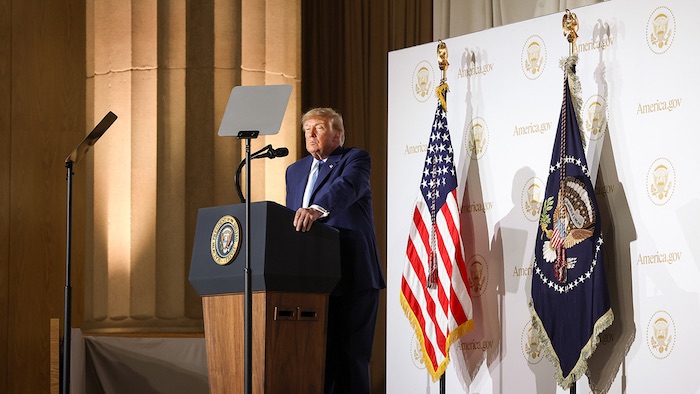


Sep 022026
 
 September 2, 2026  Posted by at 9:30 am Finance Tagged with: , , , , , , , , ,  37 Responses »


Henri Matisse Sorrow of the King 1952


• Dangerous Talk of Putin’s ‘Loss’ in Ukraine (VIPS)
• Russia Moving Towards Resolving Ukraine Conflict – Putin (RT)
• Ukraine Tried To Copy Russia’s Battlefield Tactics, Walked Into A Trap (RT)
• Le Pen Would Beat Every Rival In 2027, Major French Poll Finds (ZH)
• Supreme Court Rule 5-4 to Eliminate Lawsuit Against White House Ballroom (CTH)
• Eye of the Beholder: Aesthetic Injury and the White House Ballroom (Turley)
• Wolf Blitzer’s Trump Mail-In Voting Lie Blows Up in His Face (Margolis)
• 400,000 California Voters Didn’t Provide Any ID at Registration (Salgado)
• EU Can’t Raid Europeans’ Savings Accounts, and It Drives them Nuts (O’Brien)
• Carney Picked a Trade War With Trump—But Why? (Victor Davis Hanson)
• BYD Inquires to Purchase Stellantis Auto Plant in Canada (CTH)


https://twitter.com/MAGAVoice/status/2094537377557688323?s=20 https://twitter.com/Q_TheStormRider/status/2094711609705087445?s=20


I think Trump already knows. The notion that Ukraine can win is idiotic.

• Dangerous Talk of Putin’s ‘Loss’ in Ukraine (VIPS)

MEMORANDUM FOR: The President
FROM: Veteran Intelligence Professionals for Sanity (VIPS)
SUBJECT: Dangerous Talk of Putin’s ‘Loss’ in Ukraine


VIPS tells President Trump that once apprised of the reality on the ground (and in the air) by his intelligence advisors, he might choose to do what is in his power to end the disaster in Ukraine.

Dear President Trump:
The New York Times is reporting that the outlook for Russia in Ukraine is “bleak.” C.I.A. Director John Ratcliffe is said to have explained that to the Russians while in Moscow Tuesday. He reportedly urged them “to cut a deal before their military and economic situation gets worse.”

We write you on the chance you may be taken in by this latest song and dance. We believe it is orchestrated by the same kind of geniuses who told President Joe Biden to announce on July 13, 2023, in a major speech in Helsinki, that the Russians had “already lost the war” in Ukraine.

We suggest that you “kick the tires,” if they try to sell you that same car. Nothing could be further from the truth. Your predecessor was ill-served by intelligence. We suspect you are getting the same tendentious treatment from your own advisers. Indeed, many of them seem unconscionably relaxed about risking wider war with Russia over Ukraine.


We offer you, as we offered Biden, the following jogs to memory:

— December 3, 2022: “Russia is using up ammunition quite quickly. It’s pretty extraordinary. Our sense is that Russia is not capable of indigenously producing what they are expending at this stage.” (National Intelligence Director Avril Haines)

— March 18, 2022: “Russia has lost in Ukraine. The West should recognize this Russian defeat.” (Anatol Lieven, Quincy Institute)

— July 1 & July 7, 2023: “Putin’s war has already been a strategic failure for Russia – its military weaknesses laid bare; its economy badly damaged for years to come.” (C.I.A. Director William Burns)

The Church of Latter-Day Pundits
Two NY Times journalists who specialize in intelligence matters report Thursday that this latest version of the Russia-has-already-lost story is “the current C.I.A. director’s assessment.” They warn somewhat quizzically that, despite this, President Putin might ignore it “and choose to keep fighting.” But why would Putin do that? Indeed, the Gray Lady and her intelligence sources seem quite baffled by why Putin would keep trying when, according to U.S. officials and pundits, he started losing three and a half years ago and continues to lose. Could it possibly be that it was they that were wrong – terribly wrong?

Dismissing that as a possibility, they perform a somersault, straighten up, and chose to blame Putin’s advisers who, the Times says, have not “given Putin honest assessments of the war’s trajectory and toll.” If Black Humor is at work here, we do not find it funny. The slaughter in Ukraine brings hundreds of victims daily.

Russia is methodically advancing in Donbass along a thousand-mile front, it is weathering drone attacks on its oil and civilian infrastructure with enhanced interception and has enforced a virtual blockade on Ukraine’s largest port, Odessa, with withering aerial attacks. Ukraine’s manpower and interceptor shortages make it impossible for it to ever recover its lost territory, as you acknowledged after your meeting with President Putin in Alaska.

Mr. President, if you were given access to reality-based, honest intelligence, you would be able to decide for yourself whose advisers have gotten it right over these past five years. And, once apprised of the reality on ground (and in the air), you might choose to do what is in your power to end the disaster in Ukraine.

Déjà Vu
This is not the first time we advised a president to seek unbiased advice with a view toward avoiding unnecessary, catastrophic war. We did that just a few hours after Colin Powell’s deceptive presentation to the U.N. Security Council on February 5, 2003. Today, we strongly suggest that you broaden your circle of advisers, as we urged President George W. Bush to do then, in our first VIPS Memorandum, which ended with this recommendation:

“After watching Secretary Powell today, we are convinced that you would be well served if you widened the discussion beyond the circle of those advisers clearly bent on a war for which we see no compelling reason and from which we believe the unintended consequences are likely to be catastrophic.”

FOR THE STEERING GROUP, VETERAN INTELLIGENCE PROFESSIONALS FOR SANITY (VIPS)
• Fulton Armstrong, former National Intelligence Officer (ret.)
• Marshall Carter-Tripp, Foreign Service Officer (ret.); Division Director, State Department Bureau of Intelligence and Research
• Philip Giraldi, C.I.A., Operations Officer (ret.)
• Matthew Hoh, former Capt., USMC, Iraq and Foreign Service Officer, Afghanistan (associate VIPS)
• Larry C. Johnson, former C.I.A. and State Department Counter Terrorism officer
• John Kiriakou, former C.I.A. Counterterrorism Officer and former senior investigator, Senate Foreign Relations Committee
• Karen Kwiatkowski, former Lt. Col., U.S. Air Force (ret.), at Office of Secretary of Defense watching the manufacture of lies on Iraq, 2001-2003
• Douglas MacGregor, Colonel, USA (ret.) (associate VIPS)
• Ray McGovern, former U.S. Army infantry/intelligence officer & C.I.A. analyst; C.I.A. Presidential briefer (ret.)
• Elizabeth Murray, former Deputy National Intelligence Officer/NE, National Intelligence Council & C.I.A. political analyst (ret.)
• Scott Ritter, former MAJ, USMC; former U.N. Weapons Inspector, Iraq
• Coleen Rowley, FBI Special Agent and former Minneapolis Division Legal Counsel (ret.)
• Sarah G. Wilton, CDR, USNR, (ret.); Defense Intelligence Agency (ret.)
• Ann Wright, retired U.S. Army reserve colonel and former U.S. diplomat who resigned in 2003 in opposition to the Iraq War

Read more …

“Moscow is making every effort to end the hostilities as soon as possible, the Russian president told Indian PM Narendra Modi..”

• Russia Moving Towards Resolving Ukraine Conflict – Putin (RT)

Russian President Vladimir Putin holds a meeting with Indian Prime Minister Narendra Modi on the sidelines of the SCO summit in Bishkek, Kyrgyzstan, on August 31, 2026. © Sputnik / Pyotr Kovalev Russia is actively seeking to end the Ukraine conflict, President Vladimir Putin told Indian Prime Minister Narendra Modi during a meeting on the sidelines of the Shanghai Cooperation Organization (SCO) summit in Kyrgyzstan on Monday.


The two leaders discussed the Ukraine conflict among other issues, with the Indian prime minister calling for a peaceful resolution to the ongoing hostilities and urging the sides to “move in this direction.”“Thank you, dear prime minister. That is the way we’re heading for,” the Russian president replied.Moscow has repeatedly said that it is ready to resume Ukraine peace talks at any time, provided that they are focused on addressing the “root causes” of the conflict, including Ukraine’s plans to join NATO. Russia insists that the conflict has its roots in the 2014 Western-backed coup in Kiev and subsequent attempts by the new Ukrainian government to suppress the rebellion in Donbass by force.

Ukraine later failed to implement the 2014-2015 Minsk agreements, which were intended to reintegrate the breakaway regions into Ukraine by granting them broad autonomy through comprehensive political reform.In a June article for Politico, Russian Foreign Minister Sergey Lavrov stated that Moscow had explored every diplomatic avenue to defuse the Ukraine and Europe security crisis, but the US and NATO rejected Russia’s proposal for legally binding mutual security guarantees in January 2022.

Kiev’s Western backers also sabotaged the Istanbul talks between Russia and Ukraine that were launched soon after the Ukraine conflict escalation in February 2022.Then-UK Prime Minister Boris Johnson infamously traveled to Kiev in April of that year to tell Ukraine’s Vladimir Zelensky to drop any negotiations and “just fight,” thus slamming the door on any genuine diplomacy in the short term, according to Lavrov.

Moscow has consistently stated that it hopes to achieve a lasting settlement to the conflict and not simply a temporary ceasefire. Russia is demanding that Ukraine abandon its plans to join NATO and adopt a neutral status, accept restrictions on its armed forces, and formally recognize Crimea and four former Ukrainian regions as Russian territory.Russia also presented a roadmap towards the final settlement, which involved a ceasefire along the current front line linked to the withdrawal of Ukrainian forces from parts of Russian territory they control, an end to mobilization, and an end to Western military aid to Ukraine.

Kiev has repeatedly rejected any proposals put forward by Moscow, while continuing to claim sovereignty over the four former Ukrainian territories as well as Crimea.

Read more …

“Behind Kiev’s claims of ‘liberated’ territory lies a failed operation, abandoned assault teams and an increasingly unstable southern front..”

• Ukraine Tried To Copy Russia’s Battlefield Tactics, Walked Into A Trap (RT)

Last week, Ukraine’s Vladimir Zelensky, along with the new Commander-in-Chief of the Armed Forces of Ukraine (AFU) Mikhail Drapaty, visited a section of the front line in Dnepropetrovsk region. Zelensky stated that this year, the AFU has almost completely regained control of Dnepropetrovsk Region, with only about 10 square kilometers of territory remaining under Russian control. What is the logic behind this PR campaign? Did the AFU really make progress in this direction? What were the real goals of the Ukrainian operation, and to what extent have they been achieved? We explore all this below.


The southern sector is the most strategically important part of the 1,500-kilometer-long front. On one end it borders the Dnieper River, while the other end stretches northeast to Pokrovsk, where, as it is generally considered, the central sector of the front begins.

In 2023, Ukraine’s only strategic offensive took place in this area. The AFU’s aim was to reach the sea and cut off the land corridor to the Crimea by means of two decisive blows. If successful, this operation would have radically worsened the situation for the Russian army and, according to Kiev’s plans, changed the course of the conflict. Even though the 2023 offensive failed, this section of the front did not become less important for the AFU. In the spring of 2026, with the aim of cutting off supply routes to the Crimea, the AFU launched a middle strike campaign, particularly targeting the highway located 50-70 km from the front line. These attempts have so far proven unsuccessful.

For Russia, the southern sector of the front is extremely important for three reasons. Firstly, as the front is pushed further north, Ukrainian middle strikes become less effective. Secondly, the capture of the city of Orekhov will pave the way for an advance toward Zaporozhye, a regional center with a pre-war population of over 700,000 and one of the largest industrial cities remaining under Kiev’s control.

Ukrainian soldiers from the 65th Separate Mechanized Brigade drive in the evacuation buggy near the road sign ‘Orikhiv’ damaged by Russian shelling. © Andriy Andriyenko / SOPA Images / Sipa USA Thirdly and most importantly, an advance north from Zaporozhye will allow the Russian army to approach the central sector of the front from the rear, either encircling it or at least significantly disrupting its supply lines.

Last year brought troubling news for the AFU in the southern sector of the front as the defense near the city of Gulaipole collapsed. At the time, all forces were pulled for the defense of Pokrovsk and Mirnograd, while several areas in the south were left with no one to defend them. As a result of the successful campaign of Russia’s East Group of Forces to identify and destroy drone crews, the AFU were forced to abandon approximately 300 square kilometers between the Yanchur and Gaichur rivers without fighting. To restore the front, then Commander-in-Chief Syrsky was forced to curtail the counteroffensive near Pokrovsk and essentially abandon the encircled garrison in neighboring Mirnograd.

This situation determined the priorities of the 2026 spring-summer campaign for the AFU: the aim was to restore the southern front at all costs, eliminate the threat to Zaporozhye, and push Russian forces as far east and south as possible to relieve strategic pressure on the central sector of the front.

We don’t have any information from the Ukrainian General Staff, so we can only assess the operation’s goals based on indirect evidence. Apparently, the AFU planned two auxiliary strikes in the Stepnogorsk and Uspenovka area to cut off the pincers of the Russian army, which threatened to close in around Orekhov. The main strike, however, was to be directed at Velikaya Novoselka. If it had been successful, the entire defense system of the East Group of Forces from Gulipole to the junction with the Center Group of Forces near Pokrovsk would have collapsed and the Russian army would have been pushed back 30-40 kilometers.

The AFU’s attacks began in the spring and were accompanied by an unprecedented media campaign. The operation was labeled a second counteroffensive, Ukrainian authorities claimed dozens of “liberated” settlements and hundreds of square kilometers of reclaimed territory, and once-respected Western publications churned out articles about a turning point on the front, a heroic Ukrainian offensive that would change the course of the war, and other such nonsense.

However, by mid-summer, news about the AFU’s success on the southern front became less frequent and after Syrsky’s removal, disappeared completely. Instead, news surfaced about the plight of Ukrainian storm troops which, advancing through the gray zone, got stuck there for weeks and even months. It was reported that due to disruptions in aerial deliveries, the soldiers hid in stashes, lacked food, and were forced to drink their own urine.

Read more …

The future of Europe hangs in the balance. Last chance to beat the globalists.

• Le Pen Would Beat Every Rival In 2027, Major French Poll Finds (ZH)

Marine Le Pen would win France’s 2027 presidential election against every major rival now being measured, according to a major survey by Elabe published on August 29 for BFMTV and La Tribune Dimanche.


France elects its president in two rounds: a crowded first round on April 18 cuts the field to the top two – no one will win outright – and the survivors meet again on May 2. Elabe has Le Pen at 34% to 35.5% in round one depending on who else runs, far clear of the pack, then beating every potential runoff opponent it tested. The new poll comes on the heels of a Nomura report which showed Le Pen with a commanding first-round lead.

The rest of the field is fighting over second place. Édouard Philippe, the former prime minister and the most plausible face of the post-Macron center, leads that pack at about 17% when he stands alone. Jean-Luc Mélenchon is on 14% to 14.5%, having lost his summer lift. Raphaël Glucksmann, now in the race, is between 11.5% and 14%. Gabriel Attal’s presence mainly splits the moderate vote.

According to the poll, here’s Le Pen:
• versus Philippe: 52.5% to 47.5%
• versus Attal or Glucksmann: 57% to 43%
• versus Mélenchon: 69.5% to 30.5%

For a generation, French presidential politics assumed a front républicain: a cross-party second-round squeeze that would keep the National Rally out of the Élysée. It elected Chirac 82-18 over her father in 2002 and Macron twice over her; yet the margin has narrowed every time. According to the Elabe poll, that squeeze is no longer automatic. Le Pen is not only first in April. She is ahead in May against every opponent Elabe put up. Even against Philippe, the closest of them, she leads by five points.

Le Pen’s popularity has perhaps been boosted by her status as a martyr – created by what some might consider establishment efforts to throw her off track. On July 7 the Paris court of appeal upheld her embezzlement conviction in the European Parliament assistants case. It shortened the ban on holding office enough for her to stand and imposed a year of house arrest with an electronic tag. Her appeal to the Cour de Cassation freezes that sentence while she campaigns. The court has said it aims to rule before the first round. A confirmed tag would not take her off the April ballot. It would frame the May runoff. Le Pen herself has said she could not campaign tagged – though sentence remission could free her by early 2027 either way. Jordan Bardella remains the party’s designated stand-in.

At the summer gathering of MEDEF (France’s main employers’ federation) at Roland-Garros on August 27 she set out a €125 billion savings path and a plan to let long-tenure workers retire at 60 to 62, costed at about €9 billion and described as a “societal choice.” French banks are still wary of financing National Rally campaigns. On these numbers, voters are less so.

Bond markets are pricing the wider strain – as French 10-year yields have been near 4.1%, their highest since late 2008. The extra yield over German Bunds is about 80 basis points, the wide end of a 59-to-85 range over the past year. That premium reflects a hung Assembly, a government that has already stumbled on the budget, a 2027 finance bill due in October that may not pass in ordinary form, a deficit still near 5% of GDP, and IMF debt figures already around 118.5% this year and through 120% in 2027.

The working rule of French politics was that Le Pen could reach the steps of the Élysée and not the door – but rules were made to be broken.

Read more …

“Supreme Court Rule 5-4 to Eliminate Lawsuit Against White House Ballroom and National Defense Complex – Chief Justice Roberts Joined the Minority..”

• Supreme Court Rule 5-4 to Eliminate Lawsuit Against White House Ballroom (CTH)

Somehow Chief Justice John Roberts found that a single person who walks past the White House every month and doesn’t like the proposed appearance of the ballroom has some standing to sue and block construction. Go figure. Roberts also decided that the Obamacare mandate wasn’t a tax. Roberts joined with the minority DEI judges in his position. However, the majority decision was against the woman having standing to sue. Therefore, the lawsuit was dispatched and the building can continue.


SCOTUS BLOG – […] On Monday, a divided court granted the government’s request for a stay, permitting construction to move forward while the litigation continues in the lower court. The majority’s opinion focused primarily on its conclusion that the National Trust likely does not have standing to challenge the project. The trust had submitted a declaration from Alison Hoagland, a member who lives in Washington, D.C., and said that she visits the area where the White House is located approximately once per month.

Hoagland, who has “expertise in historic architecture,” claimed that the project caused “‘injuries’ to her ‘aesthetic, cultural, and historical interests’ because she finds the ‘scale,’ ‘height,’ and ‘massing’ of the government’s design distasteful.” But those are not the kind of “concrete” and specific injuries required to bring a lawsuit, the majority explained.

The majority also concluded that the government would be permanently harmed if Leon’s order were allowed to go into effect – another key criterion in determining whether to grant emergency relief. Among other things, it noted, senior government officials “attest[] that constructing something approximating the height and mass of the intended above-ground ballroom is ‘crucial’ to the security of the below-ground military installation.”

In his six-page dissent, which Justices Sonia Sotomayor, Elena Kagan, and Ketanji Brown Jackson joined, Roberts countered that “[a] historic preservationist such as Hoagland can be aesthetically injured in a concrete, particularized way by the transformation of a historic building that she frequently enjoys, just as,” based on prior court precedent, “an environmentalist can sustain a concrete, particularized aesthetic injury from the extinction of a particular animal or the transformation of a particular forest or river that he regularly enjoys.” Roberts ended the opinion by quoting Winston Churchill, who said that “[w]e shape our buildings, and afterwards our buildings shape us.” “All the more reason,” according to Roberts, “to ensure that those responsible follow the rules in deciding what to tear down and what to build up at the People’s House.”


President Trump – “I am pleased to report that the United States Supreme Court has just ruled in favor of the Ballroom/Military Complex being built without any further contingency, doubt, or threat. We are living in the Golden Age of America, and this Building will be one of the Greatest ever constructed in Washington, D.C. When completed in the Summer of 2028, the magnificent Ballroom and Military Complex will be something that the entire Country is very proud of. The Project, despite the baseless lawsuit brought by the so-called National Trust for Historic Preservation of the United States, which is not in any way affiliated with the United States Government, is under budget and ahead of schedule. The Ballroom is totally funded by Great Patriots and Corporations and, therefore, is a Gift — At no cost to the American Taxpayer. Thank you for your attention to this matter!”

President DONALD J. TRUMP

Read more …

“She asserts that having to view the finished ballroom the government is constructing would cause her to suffer “injuries” to her “aesthetic, cultural, and historical interests” because she finds the “scale,” “height,” and “massing” of the government’s design distasteful.”

• Eye of the Beholder: Aesthetic Injury and the White House Ballroom (Turley)

The Administration won a major victory before the Supreme Court this week, securing a 5-4 decision allowing the resumption of construction of the new White House ballroom. Notably, Chief Justice John Roberts wrote a dissent with his three liberal colleagues to oppose the move. The case turns on the standing of challengers to bring the case. However, as a torts professor, what intrigued me was what the case says about aesthetic injuries.


In torts, I teach aesthetic nuisance cases where courts tend to reject claims of injury due to eyesores and blight. Such claims are disfavored in both codes and cases: “Things merely disagreeable, however, which simply displease the eye or offend the taste, or shock an oversensitive or fastidious nature, no matter how irritating or unpleasant, are not nuisances.” 81 N.Y. Jur. 2d Nuisances § 17 (2014).

As one court ruled in Missouri in Ness v. Albert, 665 S.W.2d I (Mo. Ct. App. 1983):“Aesthetic considerations are fraught with subjectivity. One man’s pleasure may be another man’s perturbation…Judicial forage into such a nebulous area would be chaotic. Any imaginary good from doing so is far outweighed by the lurking danger of unduly circumscribing inherent rights of ownership of property and grossly intimidating their lawful exercise.” The decision in National Park Service, et al. v. National Trust for Historic Preservation in the United States raises a parallel issue on standing. At issue is the right of a private group to stop a major construction project based on claims that the ballroom is oversized and obnoxious to some.

The Court has long maintained a demanding standing doctrine under Article III of the Constitution, requiring a showing of an “injury in fact” that is based on the “invasion of a legally protected interest.” Lujan v. Defenders of Wildlife, 504 U. S. 555, 560 (1992). That requires an injury that is “(a) concrete and particularized . . . and (b) actual or imminent.” The claim, upheld by the D.C. Circuit, is based primarily on the eyesore injury of one person who would have to walk by the structure:

“To establish its standing to bring this case, the Trust relies on a declaration from a single of its members, Alison K. Hoagland. Hoagland says she lives in Washington, D.C., and expects to visit the neighborhood around the White House “about once a month.” App. to Application 73a–74a. She asserts that having to view the finished ballroom the government is constructing would cause her to suffer “injuries” to her “aesthetic, cultural, and historical interests” because she finds the “scale,” “height,” and “massing” of the government’s design distasteful. Id., at 75a. On the strength of that declaration, the Trust contends, it has Article III standing to challenge the East Wing project.”

The per curiam opinion rejects the aesthetic injury at the base of the standing claim. The majority notes the importance of the project, including security elements such as the bunker below the ballroom. It then states: Meanwhile, on the other side of the ledger and against these harms, the only harm the Trust claims is the offense one of its members will suffer from having to view a structure of the “scale,” “height,” and “massing” the government intends…These harms and equities are not nearly in equipoise.

The size of the ballroom has drawn criticism from many, including many who agree with the President that a ballroom has long been needed. Architects associated with the project demurred as the President demanded a large structure. However, the question is whether that injury alone can sustain judicial review. The Supreme Court has reaffirmed that an eyesore is no injury when it comes to Article III standing.

Read more …

Why do I think he must be 120 years old? He’s been there forever. And a day.

• Wolf Blitzer’s Trump Mail-In Voting Lie Blows Up in His Face (Margolis)

On Friday, Wolf Blitzer decided it was his job to help Democrats lie about President Donald Trump. At least this time, he was forced to issue a correction.Blitzer made a blatantly false claim during Friday’s episode of The Situation Room, when he sat down with Gov. Abigail Spanberger (D-Va.) to discuss a multi-state Democrat lawsuit fighting President Donald Trump’s March executive order meant to ensure only eligible citizens can vote by mail.


It started when Spanberger, without any evidence, accused the Trump administration of trying to intimidate voters into staying home. “The continued attacks that we’re seeing from the Trump administration is really just an effort to get people fearful, to get people to stay home, and, in many cases, to eliminate what is a valid, safe, secure way for people to be able to have their voices heard and to vote,” she said.That’s when Blitzer decided to imply that Trump’s order would impact the military. “And in Virginia, you have a lot of military personnel who totally rely on mail-in ballots if they want to be able to express their opinions,” he told her.

“That’s true,” Spanberger said, even though it wasn’t. “It’s members of the military service, of our diplomatic service, intelligence services, people serving overseas in service to our country who get their ballots mailed to them at the various postings throughout the world.” Now, one of two things happened here. Either Spanberger and Blitzer were legitimately clueless about the facts, or they knew the facts and just decided to push falsehoods anyway. Dare to guess which it is? There’s no excuse for either. Spanberger is part of a lawsuit fighting the order, yet clearly doesn’t understand what the order does. Blitzer, as a member of the media, should have known better.

Trump signed the executive order Blitzer lied about on March 31, 2026, and it has been picked apart, litigated, and debated in public ever since. There was plenty of time to get the facts straight before going on television and telling however many viewers CNN still has that Trump was coming for military ballots. Blitzer didn’t bother. He repeated a scare story handed to him by a Democrat governor, let her validate it, and let it sit there unchallenged for three days until he finally walked it back.

On Monday, Blitzer had to issue a “quick note of clarification,” which is CNN-speak for “we got caught.” “We discussed legal challenges to the Trump administration’s directives for the Postal Service on mail-in voting,” Blitzer said. “A comment I made suggested that U.S. military and overseas voters’ ballots would be impacted by these directives. I want to be clear right now: Those ballots are exempt from the Postal Service’s new rules implementing the president’s March executive order.”

He added, “Those groups are covered under the Uniformed and Overseas Absentee Voting Act [UOCAVA], just to be specific on that point.”Blitzer’s correction came only after the false claim had already served its purpose: feeding viewers a panic narrative about Trump and mail-in voting. By the time the correction was made, it barely even mattered. Military and overseas voters remain protected under UOCAVA, and the new Postal Service rules expressly exempt their absentee ballots. CNN should explain how such a basic fact escaped a network that calls itself the “most trusted name in news.”

Read more …

Now count the whole country.

• 400,000 California Voters Didn’t Provide Any ID at Registration (Salgado)

Because the state of California allows people to register online without providing any proof of identity, anyone could register to vote and under any name. Hundreds of thousands of people have done just that, and it once again raises the question of just how solid Democrat control in California would be without fraud.


Bill Essayli, first assistant U.S. attorney for the Central District of California, just arrested a Honduran national who illegally registered to vote in California. But it is incredibly easy to do; anyone, indeed, could do so as long as he or she has a fake address ready and checks the options for no ID and no Social Security. Apparently, almost half a million people have taken advantage of this scam.

In the clip below, Fox News co-anchor Bill Hemmer talks with Essayli about Darwin Rivera Flores, a “noncitizen born in Honduras, and you at DOJ were able to get your hands on his voter registration forms.” Last year, Rivera “falsely claimed to be a U.S. citizen. He checked the box attesting he’s a U.S citizen born in the United States; he signed it under penalty of perjury,” Hemmer went on. “Bill, in California, there’s no one checking this, right? Entirely the honor system.”

Essayli confirmed that and continued, “This case really highlights the vulnerability in California’s voter rules. They basically allow anybody to register to vote on the honor system. There’s nobody in government that is checking to confirm you’re a citizen, and in fact, in this case, he, on the form, [put] down a California driver’s license and a Social Security [number], which he had, because he has a visa, [but] that does not prove you’re a citizen. And according to the Secretary of State, they say at least half a million people don’t even provide that information when they register to vote.” In his post, Essayli put the number more precisely at 400,000.

California allows a crazy number of IDs as proof for registering to vote, including health club memberships, welfare checks, senior citizen cards, and drug prescriptions. But 400,000 voters didn’t even provide that much.

Registered Republican Spencer Pratt ought to have advanced to the general election for the Los Angeles mayoral race. Republican gubernatorial candidate Steve Hilton has rapidly closed the gap between him and Democrat Xavier Becerra in the polls. And there are still enclaves of Republicans throughout the state of California. But so long as Democrats can vote-harvest from homeless people, encourage illegal aliens to vote, and “count” for several weeks after Election Day, we can be sure no GOP candidate will ever win a major race in the state again. Of course Democrats don’t want to audit their voter rolls or require proof of ID to register and vote in the state of California. That could upset their whole insurance plan for staying in power.

After all, why worry about audits and reforms if you know your candidates could win honestly? The only reason for fighting federal reforms tooth and nail is if election officials and other politicians know perfectly well that their elections are compromised.

Read more …

“… it will never be like the U.S. for one simple reason: it doesn’t have the guts or the will.”

• EU Can’t Raid Europeans’ Savings Accounts, and It Drives them Nuts (O’Brien)

When it comes to business and investment, the European Union (EU) thinks it can be like the U.S. It wants to be like the U.S., and it’s actively trying to be like the U.S. But it will never be like the U.S. for one simple reason: it doesn’t have the guts or the will.


The contrast between Europe’s risk-averse business culture and the American winner-take-all culture was on display last week when the president of the European Commission (EC), Ursula von der Leyen, delivered remarks at the annual French Entrepreneurs Conference. She’s not happy that, according to her, Europeans are keeping a collective 10 trillion euros in their bank accounts and not investing that money in European startups and other companies.

“In Europe, we have no shortage of technology or savings,” von der Leyen said. “But we still lack sufficient capacity to develop European companies on a large scale. Too many projects are stalled because the initial investment is too risky, demand is too uncertain or capital is too expensive. Our companies know how to start in Europe. But they also need to be able to grow here.” The EU president said that European startups tend to go outside of Europe for financing, and this is where she says, “They shift their center of gravity. Or they are bought out.”

I’m going to borrow a better description of von der Leyen from my colleague, Stephen Green, who calls her a “Euro-Scold,” which is so apt. So yeah, the Euro-Scold said the EU cannot finance the entrepreneurial growth with public funds alone. She said that Europeans have savings, quite a bit, actually, and she wants to get her hands on it. But regretfully for her and for her globalist allies, it’s not that easy. It seems that you can’t just raid people’s bank accounts in Europe if you want that money, at least not yet. That doesn’t prevent her, however, from lusting after that money, coveting it, and seeing it as just lying there unused in bank accounts.

The owners of those accounts may not see it that way. They may see those savings accounts as a safe haven from the likes of her and so many others whom they know could burn through 10 trillion euros pretty quickly and still have nothing to show for it. “Europe must now to put these savings to work for their companies,” she added. “This is the objective of the Economic and Investment Union. We have put forward proposals on securitization, investment by banks and insurance companies, and the integration and supervision of our markets. Together, these measures could unlock up to 470 billion euros in additional investment.”

https://twitter.com/coinbureau/status/2094655132747321387?s=20

I’m not sure about you, but ever since the COVID pandemic, any time I hear from this Euro-Scold and the globalists on the other side of the pond, I find myself immediately trying to read between the lines and looking for the secret word sequence where she introduces the Fourth Reich or some other. That’s not the case here. If her jargon sounds like jargon, it’s because that’s what it is. It’s neat-sounding terminology to mask the cultural impotence that is the European business climate, which can’t get its mind off of those 10 trillion euros it wants so badly.

Just in the way the EU is framing all of this, the culture is very top-down. The agenda is set by the government, not the marketplace, and that represents all the difference. In America, the entrepreneurial spirit is marked by a thriving private investment marketplace. In Europe, they like to talk about uses for the invested funds. In America, we talk about opportunity for investors to grow their money through the best possible return on investment (ROI).

These are two completely different mindsets, and the difference between the two says everything about why Europe is so terrible at fostering business and economic growth.What the Euro-Scold and her friends understand is that they’re not set up at the moment to give Europeans incentive to invest at scale in European ventures. They’ve come to realize that they simply don’t have the kind of investment infrastructure that incentivizes individual Europeans to invest.

Americans are different. It’s in this country’s DNA to try new things, to take risks, to innovate, to invent, to sometimes fail, to get back up, and to start over – all with as little government involvement as possible.

We love our stories of companies like Apple starting in Steve Jobs’ parents’ garage. We love it when we see Elon Musk make a ton of money and then gamble it all on multiple companies, including Tesla and SpaceX, to really blow expectations away and change the world. Americans don’t need a government to incentivize them into investing in these world-changing companies. The default impulse in America is for large swaths of potential investors to compete against each other to get in on some of that action.

Our markets are vibrant and exciting, sometimes too exciting, but still, they are nothing like the lukewarm European startup climate. Individual Americans, through their 401(k) plans at work, are collectively invested in mostly American companies to the tune of $10 trillion. IRA accounts represent another $18 trillion. Americans invested directly in mutual funds total close to $6 trillion. All U.S. retirement assets total more than $47 trillion, and that doesn’t even touch on the sheer level of individual investing that happens on a daily basis on Wall Street.

Metaphorically speaking, while American entrepreneurialism has been rockin’ and rollin’ for well over 100 years, the EU can’t decide whether it wants one lump of sugar or two in its afternoon tea, right before it takes its afternoon nap. And so, the Euro-Scold is seeking baby steps in trying to gently nudge Europeans to move chunks of their money from the safety of savings accounts to the risky world of startup funding. Good luck with that.

[..]

Read more …

It’s his identity. His Canadian followers demand he defeats Trump.

• Carney Picked a Trade War With Trump—But Why? (Victor Davis Hanson)

Canada, everybody likes Canada. Come on. We all have—I have a brother-in-law who’s Canadian and a very nice person. But there’s three things to remember about Canada, this dispute. Number one are the issues, and they’re real. Number two is the timing. Why now? And number three, why does Mark Carney seem so angry?


He’s not a Stephen Harper, that wonderful prime minister that I think all of us on the conservative side, but all Americans in general, really admired. And he’s not Brian Mulroney, whom I admired, who just passed away not too long ago. So there’s three issues. There’s Carney, there’s the timing, and there’s the problem. The problem is that Canada pretty much got into a habit the last few years of running up a $50 billion to $70 billion surplus with the United States. Not as bad as Mexico, but under Donald Trump’s vision of symmetry, he wanted to address it.

And what made it egregious is we had a North American Free Trade Association, which was supposed to eliminate the need for tariffs and taxes on imported and exported goods because there would be fair dealing and there would not be differences very much. What Ross Perot… Remember he said that, that huge sucking sound of jobs—the sucking sound … and money. Yeah. That wasn’t gonna happen, we were told by [Bill] Clinton and [Al] Gore. And it did, and Mexico had a $200 billion. And the weird thing is, we told Mexico, “You’re not going to get Chinese cheap dump parts and assemble them and be the gateway for China to evade tariffs, to get, undercut our jobs.”

And they said, “Okay, we won’t do it.” Then we said, “We’re going to tax, we’re gonna start your remittances at 1%, $65 billion …” And we said that because we had 30 million illegal immigrants, mostly from Latin America and Mexico, who were largely recipients in some fashion of American largesse: housing, education, food, health care subsidies. We’re not gonna pay that and free them free cash to become the largest source of foreign exchange in Mexico, which we are.

Jack Fowler: Money, that probably had not been taxed in the U.S. either.

Victor Davis Hanson: No. No. And never had. It was probably cash. Then we tried to tell them about the cartels, and the point is, we were making progress, but not so much with Canada. They kept running this surplus. And then we said there were other peripheral issues. You promised to meet your NATO goals, and you never did. Last year they may have done it, but they may have done it by bookkeeping that counted salaries and infrastructure rather than just militarily strict budgeting.

And if they did, it was like 1.98%, 2.01% of GDP. So they were reliant on America’s nuclear shield and protection, and nobody in their right mind in America ever thought that if the Russians or the Chinese or the North Koreans threatened Canada, they would not be protected by us, either through anti-ballistic missile systems or forward … And they have no military. I think they have 79 jets that are functional. Saudi Arabia and the UAE and Kuwait have 300. Israel has 400.

Jack Fowler: And their landmass just begs to have broader coverage.

Victor Davis Hanson: So the issue was Trump said, “Let’s reopen negotiation.” They were all set. They agreed on everything. And by the way, it only affected 5% of all of the total amount. And he said through his agents, Howard Lutnick and the others, “If you do what Mexico is doing and you import cheap aluminum and steel from China that does not have a market economy, then you’re breaking the understanding because you are assembling things in cars and autos and sending them here that are not solely Canadian-made.

“And you’re doing it at the bequest of China. And number two, you are telling all of our social media companies, Meta and sales companies that are online, Amazon, Google, Twitter,” the old Twitter, X, excuse me. “You’re telling them they have to pay 5% so that they don’t smother Canadian culture just off the top of all their revenues, hundreds of, I don’t know what it was, hundreds of millions of dollars. Why are you picking on these companies? And this is in addition to any other import fees or anything.

“We don’t do that with yours. When I read the National Post, the government doesn’t say to the National Post, ‘You are influencing American public opinion and you’re stifling our culture, so we need to tax you 5%.’” So that was the issue. And the other issue was that after a certain percent, tariffs went up 250% on dairy and farm products to Canada. And Canada said they were supporting independent entrepreneurial family farms. But like everything Carney says, it’s not accurate.

If you’re a Canadian farmer or you’re a Canadian egg producer, whatever, you get an allotment from the government. You can’t just go out and start something, just like you can’t set up an X-ray or a CT center. Everything is controlled. So the idea that the United States was gonna drive you out, maybe it could hurt you if we ever got up to the 250. They said, “It’s 250%” but we never really charge you.” And we said, “We never really charge you because all of our companies, when they meet your little quota, they can’t send anymore because it’ll be up to 250%, so they self-restrict it.” So that was the situation. Carney then blew up and said, “We’re not going to let the United States destroy our sovereignty and tell us who we have to trade with.”

Subtext: If we want to help communist China dump product in the United States by assembling it into our automobiles, trucks, etc., at cheap stuff, which even our steel and aluminum people don’t want, and our companies and unions want to agree with the Americans and restrict it, we’re gonna walk out. And more importantly, if you don’t wanna pay, then you’re stifling the French language. So it was all misdirection, number one, and it didn’t really make that much difference because, as I said, it was only a tariff. So why did he blow up?

[..]

Yeah. The enemy of my enemy is my friend. Exactly. And there are key Senate races in where? Maine, right on the border, Michigan, right on the border, and Wisconsin. And so, what Carney was trying to do was to get people in the United States sympathetic to Canada, and here’s Donald Trump again. And Donald Trump helped fuel that when he said he was gonna rename Lake Ontario, Lake America. Lake Ontario’s 55% of its mass is in Canada. I think most Americans don’t care that it’s called Lake Ontario. This was the way he was trolling them. But the Left went crazy as if they never rename things, which they rename everything.

So my point is, he took two issues that were not really issues. He blew them up, he stormed out, and he did this to tell the Canadian electorate, “Don’t try to break away or flirt with America or flirt with yourself as an independence providence—whatever it is, ’cause I am standing up for Pan-Canadianism against the Americans.” And then he was telling the Americans in Michigan, in Maine, and in Wisconsin, “Your prices are higher? It’s because your stupid president has tariffs and went after us.” What he didn’t really tell them is that, when Alberta’s, I guess it was Mr. Ford, said we might cut off oil exports, the Americans shrugged their shoulders and said:

“Go ahead. We’re the largest producer of oil and gas in the world. The Persian Gulf is settling down. Price of oil is going down. But more importantly, you have a heavy crude sulfurous product. Your own provinces will not let you send it easily on pipelines to transport centers where you can send it to China. You send it right across the border to the United States. “We refine it, and guess what? Natural gas, in the case of natural gas, you can’t even send it to Montreal through your own territory because you have these provincial restrictions, environmental nuttiness. So we take your natural gas and we pass it along and plug it into our pipelines, and then it goes back up to Montreal.”

They didn’t even know that when they walked out.

Read more …

I like Sundance, obviously. But he shouldn’t claim Musk is wrong for something he said 15 years ago. BVD was in a very different situation back then.

“China even goes so far as to fund alarmism research about climate change because they are making money selling carbon credit certificates..”

“BYD is, in essence, not a car per se’, but a mechanism to generate a carbon credit certificate that can be sold to other car companies.”

• BYD Inquires to Purchase Stellantis Auto Plant in Canada (CTH)

For about a year CTH has predicted Chinese auto manufacturers BYD and GEELY would take over shuttered auto plants in Canada. Specifically, six months ago, against the backdrop warning of Stellantis, Toyota and Honda telling the Canadian government that without the USMCA they would shift auto production to the USA, CTH predicted BYD and GEELY would make moves on those closed facilities. he move by China is easy to predict. Prime Minister Mark Carney has opened the door to Chinese EVs. It would be in Beijing’s best interest to retool and take control of closed plants to begin mass production in North America.


Chinese EV manufacturing in Canada serves two purposes. First, they would not be limited in production to the cars that remain in Canada as part of the agreement. Factually, China would use their Canadian footprint as an export hub into Europe and save money on current distribution. Remember, Europe is losing their auto manufacturing base to China and Germany is laying off 100,000+ auto workers. Second, the appearance of Chinese auto manufacturing in North America would put pressure on the United States to permit their cheap EVs to enter the market.

Today Bloomberg is reporting exactly what we predicted. Chinese automaker BYD (Build Your Dream) is asking local officials about the currently idled Stellantis auto plant. Things are following a very predictable timeline.

BLOOMBERG – Chinese carmaker BYD Co. inquired about taking over an idled Stellantis NV plant in the Toronto suburbs, according to a local politician, signaling possible global interest in Canadian auto hubs in the midst of a trade battle with the US. Patrick Brown, the mayor of Brampton, Ontario, said BYD approached him about six months ago to talk about making buses at the factory. Stellantis had been retooling the plant to manufacture the Jeep Compass, but the company halted that plan last year when the US adopted a policy of tariffs on foreign autos.

Brown said he also received inquiries from Leapmotor International, a joint venture between Zhejiang Leapmotor Technology Co. and Stellantis, as well as from an Italian automaker. Bloomberg News reported in April that Stellantis was discussing options for building electric vehicles in Canada with Leapmotor. Most of the vehicles Canada produces are exported to the US, but the trade war and the lack of a new product earmarked for the 40-year-old factory have clouded the future for thousands of people who work there. Unifor, the union representing those workers, said this month that Stellantis is considering selling the plant. (read more)


I went to Russia in 2024, because what I was hearing in western media about the sanctions did not align with what I was seeing from reports inside Russia. Before I went into Russia, I spent several weeks in Northern and Eastern Europe visiting various institutions, reading material and checking to see how systems in Europe were engaging with commerce given the Russian sanctions. It wasn’t very exciting work, and sometimes I literally just sat in the lobbies of banks listening to conversations.

When I went into Russia (April, May, June and July ’24) I noticed many of the “Uber cars” were BYD brand, Chinese electric vehicles. It made sense given two years of existing sanctions and few cars from Europe or America available except under costly brokerage fees for acquisition. The Russians like the Geely brand better, but BYDs are much cheaper. A brand new BYD costs around $5,000 to $10,000 USD, in some places even less. Then later I noticed even more of these BYD cars in Europe. I started to pay attention to them and saw them everywhere.

When I went back into Russia a year later in 2025, there was a very noticeable increase in BYD cars. It was crazy, they were everywhere. My travels also took me to southeast Asia and again those damned BYD’s were all over the place. In Thailand, Philippines, Malaysia, Vietnam, these BYD’s were everywhere, maybe even 30% of total vehicle traffic at times – most certainly well over 50% of all EVs – and there are digital billboards for “Build Your Dream” (BYD) all over the place throughout Asia.

Australia is stocked full of those things, and the middle east, yup, even there too. It became increasingly weird to notice. So many were visible I was wondering how the heck China can mass produce and ship this many cheap EVs so fast. Then as serendipity would have it, I ran into a Chinese guy, professionally an actuary, in a hotel restaurant. He explained to me that China produces the BYD not to make money from the automobile, but rather to sell the carbon credits the automobile generates within the auto industry.

The actual value to Beijing is in selling the carbon credit worthiness to various automakers who are fined or penalized by their government for producing gasoline powered vehicles. BYD is, in essence, not a car per se’, but a mechanism to generate a carbon credit certificate that can be sold to other car companies. It’s the carbon credit certificate that generates the revenue, not the sale of the vehicle. As my dinner guest explained, the auto insurance industry was having fits about this because the actuaries couldn’t accurately put a correct figure on the cost of the insurance warrantee within the industry (that’s another story).

The bottom line is that China is manufacturing a product to create a carbon credit certificate in response to the demand for carbon credits from all the world auto-makers. Any nation that has a penalty or fine attached to their climate goals is a customer. Those are nations with fines or quotas associated with the production of gasoline powered engines if the auto company doesn’t hit the legislated target for sales of electric vehicles.

In essence, EU/AU/CA/RU/ASEAN car companies buy Chinese car company carbon credits, to avoid the EU/AU/CA/RU/ASEAN fines. The Chinese then use the carbon credit revenue to subsidize even lower priced Chinese EVs to the EU/AU/CA/RU/ASEAN car markets, thereby undercutting the EU/AU/CA/RU/ASEAN car companies that also produce EVs.

Big Panda brilliantly exploits the ridiculous pontificating climate scam and has an interest in perpetuating -even emphasizing- the need for the EU/AU/RU/ASEAN countries to keep pushing their climate agenda. China even goes so far as to fund alarmism research about climate change because they are making money selling carbon credit certificates on the back end of the scam to the western fear mongers. This is friggin’ brilliant.

My dinner buddy was in the business of identifying the cost/benefit equation between the climate change fines and the prices Big Panda could charge for the carbon credit certificates. If, as an example, Brussels dropped the quotas for EVs, China would need to lower the price for the carbon credit certificates. So, Beijing wants Brussels to make sure they don’t drop the quotas. See how that works?

The climate change alarmists are helping China’s economy by pushing ever escalating fear of climate change. You just cannot make this stuff up. What does the outcome look like? Well, in this example we see thousands of unsold BYDs piling up in countries that emphasize climate regulations with no restrictions on the import of EVs (which most don’t even manufacture), which is almost every country. Big Panda doesn’t care about the car itself; they care about generating the carbon credit certificate to sell in the various carbon exchanges.

Put this context to the recent announcement by Canadian Prime Minister Mark Carney about his trade deal with China to accept 49,000 EVs this year. Prime Minister Carney bragged about getting the Chinese to agree to only super low prices for the Canadian market. Mark Carney was very proud of his accomplishment to get much lower priced vehicles for Canadian EV purchasers. No doubt Big Panda left the room laughing as soon as Carney made his grand announcement.

1. China sells EV’s in Canada, creating credits available on the carbon exchange scheme. Europe et al will purchase the carbon credits because Bussels has fines against EU car companies.

2. With a foothold already established in Europe, China will then take the money generated by the carbon credit purchases and lower the prices of the Chinese EV cars sold in Canada.

It’s gets funnier.

3. Carney bragged about forcing China to only sell low price EV’s as part of the trade agreement. The low price of the EV’s in Canada will be subsidized by Europe. China doesn’t pay or lose a dime.

But wait….

4. Carney can’t do anything about the scheme he has just enmeshed Canada into, because Canada has a Carbon Credit exchange in law.

Big Panda wins again.

[…] In a statement published Thursday, BYD said sales of its battery-powered cars rose nearly 28% to 2.26 million units.

Musk openly laughed at the mention of BYD while being interviewed on Bloomberg TV in October 2011. He said he did not see the company as a competitor to Tesla, adding: “I don’t think they have a great product.” Meanwhile, Tesla said Friday it delivered 1.64 million vehicles in 2025. [SOURCE]

Elon thinks BYD are building cars. They aren’t.

Read more …


Support the Automatic Earth in wartime with Paypal, Bitcoin and Patreon.


Aug 252026
 
 August 25, 2026  Posted by at 9:49 am Finance Tagged with: , , , , , ,  54 Responses »


René Magritte Invisible world 1954


• “Operation Economic Outcast” Begins (ZH)
• Treasury Sec to Unveil ‘Economic D-Day’ Against Iran (ETM)
• Iran’s Civilian Leaders Call For Peace Amid Crippling U.S. Blockade (ZH)
• Le Pen Poised To Win French Elections? New Poll Shows Commanding Lead (ZH)
• The Democrats Are in a Trap of Their Own Making (Eric Florack)
• SCOTUS Gives Trump HUGE Win on Mail-In Voting (Matt Margolis)
• West Will Never Get Its ‘Loans’ Back From Kiev – ex-Ukrainian PM (RT)
• Zelensky Says Wartime Elections Would ‘Destroy’ Ukraine (ZH)
• Canada Chooses Climate Change, Censorship, and China (J.B. Shurk)
• Loonie Limps Lower As Trump Unleashes (More) Tariffs (ZH)
• Trump Gave Mark Carney an Ultimatum, USA or China? Carney Chose China (CTH)
• Trump Confirms ICE Investigating Ilhan Omar, ‘Enforcement’ Possible (Salgado)
• “This is My Place of Business” (Turley)


https://twitter.com/BasilTheGreat/status/2091833704331010055?s=20 https://twitter.com/CaseyKrol/status/2091526969951183212?s=20


“Bessent Warns Countries Helping Iran Face Expulsion From Dollar System..”

• “Operation Economic Outcast” Begins (ZH)

• Bessent Unveils “Operation Economic Outcast” Against Iran
• Pakistan enters diplomatic push: Pakistan’s army chief reportedly traveled to Tehran after Trump urged him to help reopen Iran talks.


Summary: US Treasury Sanctions Nearly 60 Iran-Linked Entities, Individuals And Vessels Across Nuclear, Missile, Cyber And Oil Networks:
• Five sectors face potential secondary sanctions: digital assets, technology, gold, aviation and shipping.
• Measures target brokerage networks and shadow-fleet vessels operating across the UAE, Hong Kong, China, Singapore, Switzerland and Europe.
• Bessent warns that countries failing to take action “will be removed from the US dollar system.”
• Bessent launched the Trump administration’s long-awaited “Operation Economic Outcast,” unveiling sweeping sanctions designed to sever Iran from the global financial dollar system and punish any foreign government or entity that continues facilitating Tehran’s trade.

The first wave of sanctions targets nearly 60 Iran-linked entities, individuals and vessels connected to the regime’s nuclear, missile, cyber and oil networks. The measures span a global web of brokerage companies, financial intermediaries and shadow-fleet vessels operating across China, Hong Kong, the United Arab Emirates, Singapore, Switzerland and Europe. “No one is above the reach of US sanctions,” Bessent warned during the press conference. Bessent made clear that Trump’s campaign extends well beyond Iran. Foreign companies dealing with Tehran now face an explicit choice: sever those ties or risk losing access to the US financial system.

Bessent stopped just short of naming countries such as China… “If others don’t act, Treasury will unilaterally act,” he said, adding that Washington “expects action” from other nations. Bessent added, “To those who enable Iran, don’t test US resolve.” The obvious pressure point here is China, which remains the largest buyer of Iranian crude. Washington has previously sanctioned independent Chinese refiners and trading companies.

Read more …

Elizabeth Troutman Mitchell

• Treasury Sec to Unveil ‘Economic D-Day’ Against Iran (ETM)

Treasury Secretary Scott Bessent will announce massive new sanctions against Iran on Monday, a move he likened to “economic D-Day.” In an op-ed published in the Financial Times, Bessent said he is launching the “single greatest financial offensive ever marshalled against an adversary.” He said any nation that associates with Iran will face isolation. “Iran’s enablers purchase and transport its petroleum,” Bessent wrote. “They facilitate the flow of its finances through exchange houses and free trade zones. They welcome Iran’s flights and maintain registries on its behalf. They turn a blind eye to seaborne fuel transfers and the illicit use of their banks, all while concealing the extent of their complicity.”


Those enablers should “consider the consequences” of continuing their relationships, Bessent said. “Those who sever Iran’s remaining financial and commercial connectivity will reinvigorate their own,” he wrote. “They will deepen their access to global capital, reinforce confidence in their markets and attain the standing they seek in the world economy.” But, Bessent continued, “the alternative for those who tether themselves to Tehran is the foreclosure of any path to lasting prosperity.” “To become a sanctuary for terror is to become, in the eyes of the United States, a global pariah,” he said.

Iran’s head of national security, however, said the country will “retaliate in a seismic manner” to any sanctions and will consider any country supporting sanctions to be committing an act of war. Bessent compared the sanction strategy to the 1943 Tehran Conference, where Allied leaders planned the defeat of Nazi Germany. “As Roosevelt and Churchill weighed a campaign that would culminate in the Normandy landings, they asked themselves what could be done ‘to bring the greatest pressure to bear on the enemy,’” he wrote.

Read more …

Split the country. Without killing another 40,000.

• Iran’s Civilian Leaders Call For Peace Amid Crippling U.S. Blockade (ZH)

Iranian President Masoud Pezeshkian speaks during a visit to the shrine of the leader of Iran’s 1979 Islamic Revolution

Iran’s top civilian officials are publicly urging an end to the ongoing conflict with the United States, exposing a deepening internal rift as they attempt to rein in hardliners who champion continued resistance. The financial and social toll of the U.S. blockade is proving too severe to ignore – as Iranian President Masoud Pezeshkian recently declared that the country cannot endure a state of perpetual limbo, though he cautioned against making concessions that would appear humiliating on the global stage.


“The war must come to an end at some point,” Pezeshkian stated in a Friday address, according to state media. “It is better that we demonstrate our strength and dignity today and tell the world that we have won and that we are ending the war.” President Donald Trump has maintained a relentless blockade on the Islamic Republic after a previous memorandum of understanding imploded – effectively severing the regime’s ability to export oil – its primary source of income. This has plunged Iran into a domestic crisis characterized by skyrocketing inflation and an increasingly desperate cost-of-living crisis.

The pressure is expected to intensify further this week, as U.S. Treasury Secretary Scott Bessent prepares to unveil what President Trump has characterized as an “economic D-Day.” While the exact nature of these punitive measures remains classified, Bessent has strongly signaled the implementation of sweeping secondary sanctions targeting any nation that continues to do business with Tehran.

A Regime Divided
The push for diplomacy from Iran’s civilian government stands in stark contrast to the shifting power dynamics among its clerics and military elite. Pezeshkian claims his diplomatic push aligns with the broader goals of the regime, referencing past speeches by Ayatollah Mojtaba Khamenei – who has conspicuously vanished from the public eye since the conflict escalated.”I was in the presence of the Supreme Leader, and in his speeches as well, he openly stated that we must move beyond this state of ‘neither war nor peace,'” Pezeshkian noted. “We are not going to humiliatingly back down before the enemy or bow our heads. We can sit down with strength, but also with logic, and resolve our problems.”

Prior to his public absence, Khamenei had elevated hardline factions who favor military confrontation over the moderates seeking a renewed deal with Washington. Despite this, Parliament Speaker Mohammad Bagher Ghalibaf echoed the President’s warnings, underscoring the severe national security risks of a collapsing economy. “No matter how much military power we have, if our people are struggling and the country lacks financial circulation and economic growth, we will not achieve progress,” Ghalibaf stated. “As someone who has experienced war, I understand the true value of peace.”

Washington’s Stance: The “Right Deal”
The Trump administration’s distrust stems from the fraught history of recent negotiations, during which U.S. officials reported receiving deeply conflicting signals from Tehran. The previous agreement shattered after Iran launched a series of strikes on maritime vessels navigating the Strait of Hormuz. For the United States, the objectives remain twofold and uncompromising: Nuclear Prevention: Ensuring Iran permanently loses the capacity to develop or acquire a nuclear weapon. Maritime Security: The full reopening of the Strait of Hormuz to global trade.

Currently, the Trump administration claims it’s securing the safe passage of 8 to 9 million barrels of oil through the strait daily – a steep decline from the roughly 20 million barrels that traversed the waterway before the conflict erupted. Washington is signaling that it will dictate the terms. Addressing reporters on Friday, President Trump summarized the diplomatic standoff: “They would love to make a deal, but they’re not ready to make the right deal.”

Read more …

No Macron.

• Le Pen Poised To Win French Elections? New Poll Shows Commanding Lead (ZH)

France’s Le Pen Leads French Presidential Race Early Monday, we previewed a Nomura report that expects an 18-month election cycle across Europe, shifting the continent toward populism, with elections scheduled this year in Germany and Sweden, followed by France, Italy, Spain, Switzerland, and Poland in 2027. Shortly after we released the note, new polling data from France showed, as The Guardian put it:


France loves a battle-scarred survivor. Charles de Gaulle, François Mitterrand and Jacques Chirac clawed their way back from political failure to become presidents of the republic. There is a significant chance that Marine Le Pen will be next. The latest Toluna-Harris poll shows Marine Le Pen winning every tested 2027 French presidential runoff:
• Le Pen 68%, Jean-Luc Mélenchon 32%
• Le Pen 55%, Édouard Philippe 45%
• Le Pen 57%, Gabriel Attal 43%
• Le Pen’s advantage extends beyond a matchup with the far left. She also holds double-digit leads over two leading establishment candidates, indicating that her National Rally party would enter the election as the clear favorite under these scenarios.

Polymarket odds of Le Pen winning the French presidential election currently stand at 32%. Here’s more:

https://twitter.com/Cap2027_/status/2091775772906168809?ref_src=twsrc%5Etfw%7Ctwcamp%5Etweetembed%7Ctwterm%5E2091775772906168809%7Ctwgr%5E4665f81154ac257c311cf658bf28696f75baed80%7Ctwcon%5Es1_c10&ref_url=https%3A%2F%2Fwww.zerohedge.com%2Fpolitical%2Fseeds-political-change-nomura-sees-europe-lurching-right-and-markets-are-fine-it

Circling back to Nomura analyst Andrzej Szczepaniak’s note, he expects that right-wing parties are positioned to make significant gains across Germany, France, Spain, Switzerland, and the UK over the next 18 months. Szczepaniak noted, “Five years ago, financial markets would not have seemed so at ease with such a prospect. But then again, these populist right-wing political parties were previously not so fiscally prudent as they are perceived to be today.

He added, “Now, if anything, financial markets are much more concerned about populist left-wing parties being elected due to their desire to increase spending, often paid for through higher borrowing or higher taxes, which are likely to shut the engine off of already stuttering economies.” Europe is entering an 18-month election cycle that could accelerate the continent’s shift toward populism, with high-profile elections scheduled this year in Germany and Sweden, followed by France, Italy, Spain, Switzerland, and Poland in 2027.

The much-needed political realignment reflects mounting public backlash against progressives in Brussels after years of uncontrolled mass migration from the Third World, deteriorating social cohesion, elevated violent crime, and nation-killing domestic policies that have accelerated deindustrialization. At the same time, European manufacturers face intensifying pressure from China (the demise of VW Group), which is exploiting its cost advantages and state-supported industrial capacity to flood the struggling continent with cheap electric vehicles.

Andrzej Szczepaniak, a senior European economist and executive director at Nomura International in London, describes this combination of pressures as “the seeds of political change,” warning that “politics in Europe is lurching towards more populism.” Szczepaniak says right-wing parties are positioned to make significant gains across Germany, France, Spain, Switzerland, and the UK over the next 18 months.

Read more …

“Establishment Democrats. They’re the ones who’ve either been holding the reins or doing everything in their power to obstruct the repair process for the better part of the last six decades.”

• The Democrats Are in a Trap of Their Own Making (Eric Florack)

Tim Hains at Real Clear Politics, this morning:”Massachusetts Democrat Rep. Jake Auchincloss told “FOX News” that the Democratic Party will lose if the moderate party establishment picks a direct fight with the new Democratic Socialists. “What my faction of the party needs to do is to demonstrate to Americans what our positive, proactive agenda is to strengthen the middle class, how we are going to base that in freedom, not socialism, free enterprise, free minds, freedom from fear, and free elections,” he said. (Sound of muffled laughter. Shuffling in the seat while I smooth my professional commentator demeanor back into place.)


The comments are from an interview on Fox with Shannon Bream, which we’ll get back to in a second. Free enterprise. Free minds. Freedom from fear. Free elections. Gotta tell ya, Congressman, that’s a genuinely lovely word salad, and I mean that with the sincerest possible sarcasm — because you’re delivering it roughly 48 hours after your own party’s biggest streaming ally got caught with a framed newspaper commemorating 9/11 hanging on his studio wall like a hunting trophy. But we’ll get there.

BREAM: So, there is a video of somebody who’s been campaigning a lot with Democratic candidates or Democratic Socialist candidates who say they belong in your party, Hasan Piker, he’s not disavowed this video that’s out there circulating this weekend where he’s singing a song that appears to be mocking the death of Charlie Kirk, of people who would, you know, be worshipped as Christians, worshipping Jesus. What’s your message to those within your party who are campaigning, fundraising, and appearing with Hasan Piker?

AUCHINCLOSS: I reject Hasan Piker’s ideology, whether it was seeming to celebrate or at least excuse 9/11, whether it is seeming to excuse the assassination of Charlie Kirk, which I condemned immediately. The Democratic Party does not stand for what Hasan Piker stands for. The Democratic Party also needs to be able to reach young voters from all walks of life who are angry at a status quo in which they cannot afford to buy a home, in which they do not believe Social Security will be there for them in their retirement, and in which they see corruption run rampant in Washington, D.C. Well, it seems to me that they’ve already identified who’s responsible for the status quo. Establishment Democrats.

They’re the ones who’ve either been holding the reins or doing everything in their power to obstruct the repair process for the better part of the last six decades. Young people can’t afford a home in large part because of Democrat-controlled cities and states stacking regulations, zoning restrictions, and tax burdens on top of housing supply until the whole market seizes up like an engine that’s never seen a drop of oil. Here’s the part Auchincloss conveniently glides past, though, and it’s worth dragging back into the light: While he’s on national television lecturing about “rejecting” Piker’s ideology, plenty of his own colleagues have been busy actively embracing it.

Fox News’s own reporting from just this month confirms Piker has framed, and proudly displayed on camera behind him during livestreams, the front page of the New York Times’ Sept. 12, 2001, edition — the “U.S. Attacked” issue — describing it to his audience as “the cutie Cinderella newspaper from 9/11.” A man decorating his broadcasting studio with a memorial to the deadliest terror attack in American history, treated as a cute keepsake. And he’s told CNN there’s “0% chance” the 2028 Democrat nominee will be pro-Israel, expressing total confidence his own party is drifting exactly where he wants it.

Meanwhile, Rep. Ro Khanna has publicly refused to apologize for appearing on Piker’s show, warning that distancing from him would signal “weakness.” House Democratic Caucus Chair Pete Aguilar went on MS NOW’s Morning Joe and insisted, with a straight face, that “the party isn’t lurching too far left.” Michigan Senate candidate Abdul El-Sayed told Meet the Press he cares about “reaching Piker’s audience,” not his actual comments — which is a genuinely remarkable sentence for a candidate to say out loud about a man who’s excused a terror attack that killed nearly 3,000 Americans.

Read more …

“..after months of Democrat officials trying to bury the policy in court, the administration finally has room to breathe.”

• SCOTUS Gives Trump HUGE Win on Mail-In Voting (Matt Margolis)

The Supreme Court just handed President Trump a massive victory in the fight to secure America’s elections. The justices cleared the way for his executive order restricting mail-in voting to move forward, and after months of Democrat officials trying to bury the policy in court, the administration finally has room to breathe. This is a big deal.


The SAVE America Act is still stalled in the Senate, blocked by Democrats who aren’t even hiding the fact they have zero interest in verifying that voters are who they say they are. Trump’s executive order just got a green light from the nation’s highest court anyway. Election integrity doesn’t have to die in the legislative graveyard to make progress.

Trump signed the executive order, called “Ensuring Citizenship Verification And Integrity In Federal Elections,” in March 2026. It directs his administration to build lists of eligible voters and orders the U.S. Postal Service to deliver mail ballots only to people on those lists. The Postal Service laid out its implementation plan last week, but the clock is ticking. Some states start sending mail ballots in just a few weeks, leaving the administration little time to get this right before the midterms. More court challenges remain possible.The victory is real, but it’s not the finish line.

Mail balloting has been a target of Trump’s for years, and for good reason. The Heritage Foundation has long argued that mail-in ballots are more susceptible to fraud, coercion, and chain-of-custody problems than in-person voting. Anyone who lived through the 2020 presidential election, one of the most disputed elections in history, watched that vulnerability play out in real time. In fact, a 2023 survey from Rasmussen Reports, conducted with the Heartland Institute, found that among the 30% of likely U.S. voters who cast an absentee or mail-in ballot in 2020, 19% admitted that a friend or family member filled out part or all of their ballot on their behalf. Another 17% admitted they voted in a state where they were no longer a permanent resident. Every one of those practices is illegal.

Think about that for a second: nearly a fifth of mail voters copped to letting someone else fill out their ballot. Democratic officials in 23 states and the District of Columbia sued to block the order, arguing that the Constitution gives states and Congress the power to run elections and that Trump’s changes could cause chaos and partisan abuse. Attorneys for the states wrote that “the consequences of allowing such transformative changes to take effect so close to this fall’s elections would be extreme.”

A judge in Massachusetts blocked the plan for the midterm elections in those states. An appeals court upheld her decision. She later granted a second order blocking it nationwide. The Trump administration appealed to the Supreme Court on procedural grounds in late July, arguing that the states sued too soon. They also pointed to another ruling out of Washington, where a judge allowed Trump’s order to proceed. An appeals court backed that decision, while still leaving room for future court action if the changes are implemented.

Federal attorneys argued that the Massachusetts order “blocks the government’s ability to finalize and implement the President’s proposed policies to promote election integrity for the upcoming federal elections in November.”A dozen Republican-leaning states supported the federal government in their own appeal before the high court, saying states would have input on the final voter lists.

Trump has been to the Supreme Court on mail ballots before this year. In June 2026, the justices ruled against a Trump-backed argument, finding that states can count ballots arriving after Election Day. That case went through full briefing rather than the emergency docket. This time, Trump came out on top. This is a huge win, but now comes the hard part: building the lists, getting our Postal Service ready, and, of course, surviving whatever legal challenges come next, all before voters start filling out ballots. Election integrity advocates should be celebrating today, but also watching the calendar.

Read more …

“Assumptions that Moscow will lose the conflict and pay reparations are “just fairy tales,” Nikolay Azarov has told RT.”

• West Will Never Get Its ‘Loans’ Back From Kiev – ex-Ukrainian PM (RT)

The EU keeps providing “loans” to Ukraine despite knowing that its government will never repay them, the country’s former prime minister, Nikolay Azarov, has said. In a post on X on Sunday, Vladimir Zelensky called funding the Ukrainian military one of the “major challenges” his government is currently facing. “A lot of money is needed,” he wrote. Making sure that the second tranche of a €90 billion ($105 billion) transfer approved by the EU earlier this year arrives in Ukraine is “an extremely difficult task,” but he is working on it with Germany and France, Zelensky stressed.


In an interview with RT on Saturday, Azarov said that “loans and Western assistance that amounts to about three-fourths of the state budget of Ukraine are covering the budget deficit, funding arms purchases and sponsoring the Nazi terrorist and corrupt regime.” When the European Commission and major EU countries, who have been the main supporters of Ukraine after US President Donald significantly reduced American aid to Kiev, “grant these loans, they know that they won’t get this money back,” he said.

“And this causes some irritation among EU bureaucrats because they understand that the money of the American and European taxpayers is being embezzled in a very outrageous manner,” the former prime minister said. Inside the Ukrainian government, there is “an organized criminal group that embezzled the funds that Ukraine received as part of these loans,” he said. According to Azarov, that is the reason why EU ambassadors held a meeting in Kiev with the investigators of the Western-backed National Anti-Corruption Bureau of Ukraine (NABU) and “supported actions to expose corruption in the country,” particularly in Zelensky’s office.

Earlier this week, the Ukrainian leader sacked the deputy head of his office, Irina Mudraya, after her home was searched as part of a probe into efforts to raise and legalize $3.3 million in bail money for former Energy Minister Herman Galushchenko. Galushchenko is a key figure in a $100 million corruption case involving state nuclear operator Energoatom and linked to Zelensky’s longtime business associate Timur Mindich. The scandal led to the downfall of his highly influential chief of staff Andrey Yermak last November. Other recent corruption investigations have targeted former Ukrainian ministers, diplomats, and senior officials.

The claims that Kiev will reimburse the US and EU because “Russia will pay some kind of reparations someday… are just fairy tales. You have to be really short-sighted to believe these fairy tales,” Azarov stressed. “No one will give this money back to the West. There’s $275 billion of Ukrainian debt, you cannot pay it back,” he added. Azarov was the Ukrainian prime minister from 2010 to 2014, resigning during the Western-backed Euromaidan protests in Kiev and fleeing to Russia after the overthrow of democratically-elected President Viktor Yanukovich in February 2014.

Read more …

“That Purported Bastion Of Democracy..”

• Zelensky Says Wartime Elections Would ‘Destroy’ Ukraine (ZH)

Ever since Russia invaded Ukraine in February 2022 with a goal of excising the Russian-speaking Donbas region, American and Western European officials have repeatedly said they and their countries are duty-bound to support Ukraine because, as Nancy Pelosi put it, “The battle for Ukraine is a battle for democracy itself.” That notion has been growing ever more farcical over time, as President Volodymyr Zelensky refuses to hold elections that were supposed to happen back in the spring of 2024. Over the weekend, Zelensky doubled down on his preference for martial law, telling journalists it would “destroy the country.”

Zelensky’s former defense minister Mykhailo Fedorov turned up the heat on his former boss by calling for wartime elections


Zelensky is now in the eighth year of his five-year term. His new remarks defending his overstay came after former defense minister Mykhailo Fedorov recently called for elections, after his controversial firing by Zelensky in July. “Democracy cannot be held hostage by Russia,” said Fedorov. “We are fighting precisely because we want to remain a free European state.” In his nine-minute speech, he also took a shot at Zelensky’s way of governing. “It is particularly dangerous when society develops the feeling that the main criterion for an appointment is not professionalism, results or the ability to transform the country, but personal loyalty to the system,” he said.

Speaking to a group of journalists over the weekend, Zelensky firmly rejected calls for elections in his supposed bastion of democracy: “I believe that if we want to destroy the country, then during such a war we can move in the selection of elections… I believe that during such a war, elections in general are big risks. Elections right now are a tsunami for the state that will split Ukraine.” Zelensky pointed to the logistical and security challenges of balloting during wartime, noting that it would require “the participation of the military, in frontline territories, abroad, where millions of our citizens have gone, fleeing the war” and the risk of “strikes and shelling.”

He argued it could only begin to be conceivable if Russia were to agree to a ceasefire, which he preemptively ruled an impossibility. In December, President Trump said he was inclined to see Ukraine hold elections soon. “It’s been a long time. Hasn’t been doing particularly well. Yeah, I think it’s an important time to hold an election. They’re using war not to hold an election, but I would think the Ukrainian people should have that choice,” he told Politico. “You know, they talk about democracy, but it gets to a point where it’s not a democracy anymore.”

Skeptics of Zelensky’s reasoning might point to elections held in other war-torn countries. For example, Afghanistan held elections in 2004 and 2009, and Iraq held one in 2005. To be fair, violence affected turnout and the legitimacy of the results was questioned. Meanwhile, the UK was supposed to have an election in 1940 but put it off all the way until 1945. The Atlantic Council, which is a de facto NATO think tank, has pointed to the UK example in urging Zelensky to refuse elections during a war — a war that is happening because of NATO expansionism.

Time is marching on, however. Russia has thus far been content to pursue a slow-burn approach to the war, ever so gradually taking over more and more territory. If that pace continues and if Russia’s territorial ambitions widen — say, to include taking Odessa and creating a landlocked Ukrainian rump state — we could see Zelensky in charge for years more to come.

Read more …

Don’t miss Mr. Shurk’s brilliant analysis.

• Canada Chooses Climate Change, Censorship, and China (J.B. Shurk)

Central banker Mark Carney is doing that peculiar Canadian thing again — acting tough while exuding weakness. Just before midnight on Friday, the former governor of the Bank of England and King Charles III’s current prime minister in North America announced that trade talks with the United States had collapsed. This was expected, even though the Canadian and American trade delegations had publicly expressed optimism on Wednesday that a mutually beneficial framework for future trade relations was within reach.


The British Empire’s “climate change”-obsessed central banker announced the official start of the U.S.-Canada Trade War on his X account. That’s ironic because the Canadian government considers Elon Musk an enemy, restricts what information Canadian citizens can see on social media platforms, and seeks to tax and regulate all online communication. Because of the Canadian government’s censorship/propaganda machine, most Canadian citizens have no idea how economically vulnerable their British vassal state really is. Carney’s public memorandum makes it sound as if Canada’s economy is the envy of the world, when it is nothing more than a plaything for Chinese smugglers and European bankers who use the country as an entry point into U.S. markets. The average Canadian is about to learn how dependent Canada has always been upon the unreciprocated generosity of the United States.

Canada is a weigh station for moving products into the United States. Its value for other nations lies in its uniquely favorable trade agreements with the U.S. Canadian banks and manufacturers act as middlemen for foreign nations skirting American trade laws. For its trade- and money-laundering services, Canada receives a cut of the profits. China takes advantage of this arrangement by “snow-washing” their goods through Canadian shell corporations and hiding their commercial transactions within Canadian financial institutions. Over the decades, this “Trojan horse” operation — in which American adversaries use Canada as an economic workaround for hollowing out vital American industries — has greatly profited our neighbors up North.

In fact, the leftist-globalists running Canada have been able to generate enough revenue by stamping Chinese products, “Made in Canada,” that they have become emboldened to get on their “global warming” high horse and lecture the United States about the imaginary “climate apocalypse.” Even though the U.S. has actually reduced its so-called “climate emissions” by a larger percentage than Canada over the last twenty-five years (a feat accomplished through industrial innovation), the Canadian government pretends that the country’s poorly managed forest fires are the outcome of U.S. capitalism. (This is akin to blaming Thor for thunder.)

While sitting on some of the largest energy reserves on the entire planet, Canada has insisted upon throttling its own hydrocarbon output in the name of “fighting global warming.” By waging war against its own energy industry, Canada makes itself economically and militarily vulnerable. It cannot build things anymore. It is not self-sufficient. It depends upon kickbacks from communist China and military protection from the United States. These dual dependencies are mutually exclusive in a world in which China and the U.S. are already engaged in various forms of hybrid warfare.

Britain’s man in Canada, Mark Carney, is globalism personified. As the former governor of the Bank of England, he spoke regularly about a future in which central bankers managed the planet’s resources and economic activity. He has been a lifetime proponent of using the “global warming” bogeyman as a justification for controlling all human behavior. Carney is afflicted with the same narcissistic disease that grips all of Europe’s political and economic “elites”: He does not believe in the value of free markets, free speech, or human liberty. He is, at heart, a totalitarian committed to the proposition that a small cabal of central bank oligarchs and political aristocrats should exercise complete power over everyone else.

Read more …

“We Don’t Need Canada”.

• Loonie Limps Lower As Trump Unleashes (More) Tariffs (ZH)

“Canada has been ripping off the United States of America for years,” wrote President Trump in his latest social media outburst, laying out his tariff torrent against Canada. “Their ridiculously high tariffs on our Farmers and farm products has made life impossible for these great American Patriots, and has long created a 60 Billion Dollar Deficit between our two Countries.nNot sustainable, and NOT ANYMORE!”= The US implemented a new 50% tax on imports of hundreds of Canadian items including furniture, plastics, plywood and electrical equipment on Saturday.


It’s such a high rate that it may cut off the world’s biggest market for some Canadian enterprises. And now this morning, Trump unveiled more products will face dramatic tariff increases come the start of next year… “On January First, 2027, Tariffs on all Cars, Trucks, both large and small. Automotive Parts, and Steel, will be increased to 50%.Build in the U.S. and there are ZERO TARIFFS. Canada will be treated like a State no longer!

On Trade, and in other ways, also, they are among the worst Nations in the World to deal with. They feel entitled, and yet, WE DON’T NEED CANADA, THEY NEED US! They do 95% of their business with the U.S., with us, the exact opposite!” The Loonie was weaker ahead of Trump’s tweet…

Carney’s government has pledged financial help for businesses caught in the crossfire. That may prove more complicated than previous aid packages for industries like steel that have been facing US tariffs for more than a year. The new tariffs are “very diffuse, and they hit, in particular, small and many medium enterprises in various parts of the country and in radically different supply chains,” said Matthew Holmes, chief of public policy at the Canadian Chamber of Commerce.

Very difficult for the federal government especially to create a package of supports for them.” Canadians may have wanted their prime minister to stand tough and not sign a bad trade deal with the US; but the collapse of talks, and the escalation of the tariff war, will come at a price.

Read more …

So says the Council on Foreign Relations President.

• Trump Gave Mark Carney an Ultimatum, USA or China? Carney Chose China (CTH)

Council on Foreign Relations President Says Trump Gave Mark Carney an Ultimatum, USA or China? Carney Chose China


An interesting soundbin gave Canada an ultimatum within the deal proposed, us or them.

If Mike Froman is correct, Mark Carney chose China. [X LINK] Video Below:te from Council on Foreign Relations (CFR) President Mike Froman who distills down the main point of contention. Essentially, the U.S. position is to demand a common trade approach toward China and the U.S. delegationn.

Read more …

“.. the immigration fraud investigation against a Democrat representative is ongoing and could lead to an arrest.”

• Trump Confirms ICE Investigating Ilhan Omar, ‘Enforcement’ Possible (Salgado)

President Donald Trump indirectly confirmed that the immigration fraud investigation against a Democrat representative is ongoing and could lead to an arrest.


Trump did not comment in any detailed way on the investigation, but on Sunday afternoon, he shared an article from Just the News titled “ICE refuses to disclose records on Ilhan Omar fraud probe, cites ongoing ‘enforcement proceedings.’” By sharing this article on TruthSocial, the president verified its accuracy and immediately started a firestorm of speculation and controversy from other individuals and media outlets. The Trump administration had previously stated that they do have evidence that Minnesota’s Rep. Ilhan Omar (D-Somalia) committed immigration fraud, but voters had begun to wonder if that would lead to any actual penalties.

Just the News is especially interested in the investigation because it filed a Freedom of Information Act request for the Omar immigration records in January, for all the details about her legally marrying her brother. ICE returned the following statement instead of the documents: “ICE has determined that the information you requested is being withheld in full pursuant to Title 5 U.S.C. § 552(b)(7)(A). Disclosure of any responsive records at this time could reasonably be expected to interfere with enforcement proceedings.”

No court admissible proof definitively proves that Omar’s legal ex-husband Ahmed Nur Said Elmi is her brother, Just the News said, although the government of the Republic of Somaliland, among others, has confirmed it. Somaliland, which is a breakaway nation from Somalia and hates Omar for her and her family’s connection to genocide, provided paperwork, apparently showing that Omar‘s name, like other members of her family, was originally Elmi before she altered it for the fraudulent marriage that helped her brother stay here.

Receipts: Ilhan Omar’s original last name was Elmi before it was changed. nThis evidence was available, but the Obama Justice Department refused to investigate. Her brother, Ahmed Nur Said Elmi, and their father, Nur Said Elmi (also known as Nur Omar), used multiple names… https://t.co/9sz3ZXVN3X pic.twitter.com/d16tAMCKrn — REPUBLIC OF SOMALILAND (@RepOfSomaliland) March 19, 2026

Omar has bragged about prioritizing Somalia‘s interests while serving as a congresswoman. In 2024, while furiously rejecting Somaliland’s longtime independence and maritime deals, she declared, “While I am in Congress, no one will take Somalia’s sea.” Somaliland continued to write about Omar:

Her true name? Ilhan Nur Said Elmi. Father? Nur Said Elmi (aka Nur Omar), Colonel in Siad Barre’s army. Soviet-trained. Part of the command that turned Hargeisa into rubble. Tens of thousands—up to 200,000 Isaaq civilians—bombed, executed, raped, starved in the late ’80s. We call it the Isaaq Genocide. The world still looks away.The mastermind? Major General Mohammed Said Hersi “Morgan”—”The Butcher of Hargeisa.” Barre’s son-in-law. And when Omar visited Somalia to a hero’s welcome in 2022, she attended an event where she sat only a few feet away from “the Butcher,” who has reportedly posed for photos with her relatives.

Read more …

Can we choose who we serve?

• “This is My Place of Business” (Turley)

“This is my place of business.”


Those words from Jim Sheehan, owner of the Wydaho Roasters coffee shop in Driggs, Idaho, have sparked the latest controversy over the right of businesses to refuse service on the basis of religious or political views. Sheehan has drawn national attention after throwing out a group of pro-life teenagers, calling them the equivalent of a Ku Klux Klan meeting in his shop. Sheehan clearly caters to those who want their lattes with an added shot of rage.

However, this and a number of other cases have exposed the hypocrisy of many regarding the service businesses must provide customers with opposing views. From cakes to coffee, shops remain ground zero for an age of rage. Years ago, politicians and pundits rallied around the effort to force Jack Phillips, a cakeshop owner, to create cakes celebrating same-sex marriages. Phillips objected that it violated his religious beliefs. The case went all the way to the Supreme Court in what many of us hoped would be a final resolution of this conflict.

I had long criticized the framing of the case (and other similar cases) under the religious clauses rather than treating it as a simple matter of free speech. In the end, the Supreme Court punted in a frustrating 2018 decision. In 2023, however, the Supreme Court delivered a major victory for free speech in 303 Creative v. Elenis. It ruled that Lorie Smith, a Christian website designer, could refuse to provide services for a same-sex marriage. Justice Neil Gorsuch wrote that “the framers designed the Free Speech Clause of the First Amendment to protect the ‘freedom to think as you will and to speak as you think.’ … They did so because they saw the freedom of speech ‘both as an end and as a means.’”

But notably, in cases like Masterpiece Cakeshop, Phillips insisted that he would always sell cakes to any couple, including same-sex couples. He only refused to make cakes specifically celebrating same-sex marriages, due to his religious views. The case of Wydaho is different. Sheehan refused the same general accommodation offered to all customers because he opposes pro-life causes. In the confrontation, Sheehan declared that “in my world” pro-lifers are no different from the Ku Klux Klan.

“This is my place of business,” he declared. “I did a lot of work to get people on the ballot so women would have the right to choose in the state of Idaho, and this is something I do not support, nor does my wife, and it’s our business. So we have that choice.” In my view, they do have that choice. Yet it must also be acknowledged what Sheehan is doing is far more extreme than what Phillips did in Masterpiece Cakeshop. He is not being asked to create a coffee concoction opposing abortion, like a Cafe Au Life specialty drink. He acknowledges that other groups might use the shop — he just does not want these teenagers to use it to support pro-life causes.

The same controversy arose the same week across the country in Virginia. In Alexandria, Fatana Karimi, owner of the Karimi Salon, threw out a woman after she revealed that she was Israeli. Jessica Walton posted an account of the encounter, and a video was later posted on social media.In the video, the person identified as Karimi says that she declared on Instagram that she would not serve those who support Israel. (She also adds that she got Walton to sign a release for the video.)

The Virginia Human Rights Act states that businesses cannot engage in “unlawful discrimination in employment because of race, color, religion, ethnic or national origin, sex, pregnancy, childbirth or related medical conditions, age, marital status, sexual orientation, gender identity, disability, or military status.” Karimi will likely argue she refused service not due to Walton’s religion or national origin, but due to her support for Israel — a political position.

The case is reminiscent of the abusive treatment afforded to Harvard Law Professor Alan Dershowitz at Martha’s Vineyard by a pierogi stand. He was also refused service over his political views.The line between national origin and religious discrimination versus political discrimination can be tenuous and unclear. However, in the video, the owner states that it is her national identity that is causing the action: “Get out of my shop. I can’t provide service to an Israeli. It’s against my political beliefs. You need to leave immediately.”

Back in Idaho, Sheehan’s bizarre analogy to the KKK outraged many, to the point that he later apologized for it. However, it is fascinating that liberals are now celebrating the right to exclude others for political or religious reasons, even when they are not asked to engage in any expressive act or make any creative product that contravenes their beliefs. If that is now the case, many owe individuals such as Phillips an apology for years of costly lawsuits, even after the Supreme Court gave him his first nominal victory.

Sheehan could be prosecuted if he were refusing general service or accommodations to the teenagers due to their race or religion. But he is refusing service on the basis of his own political views. Wydaho Roasters does not appear to want business from people who are pro-life, of whom there might be quite a few in Idaho. Karimi appears not to want either Israeli or possibly Jewish customers. It is a curious business plan to exclude such a large segment of the market, but some owners are sure to put their political views before their profits.

However, those on the left cannot have it both ways. They cannot reject the free speech rights of some owners to decline service while celebrating others’ refusal to do the same thing. None of this is likely to make society any more civil. No one wants a black eye to go with the red-eye espresso. Of course, recognizing the free speech rights of an unhinged coffee shop owner does not require patronizing his establishment. Sheehan clearly does not want to serve pro-life citizens, and I expect the feeling is mutual.

Read more …


https://twitter.com/cb_doge/status/2091894100937347455?s=20


Support the Automatic Earth in wartime with Paypal, Bitcoin and Patreon.
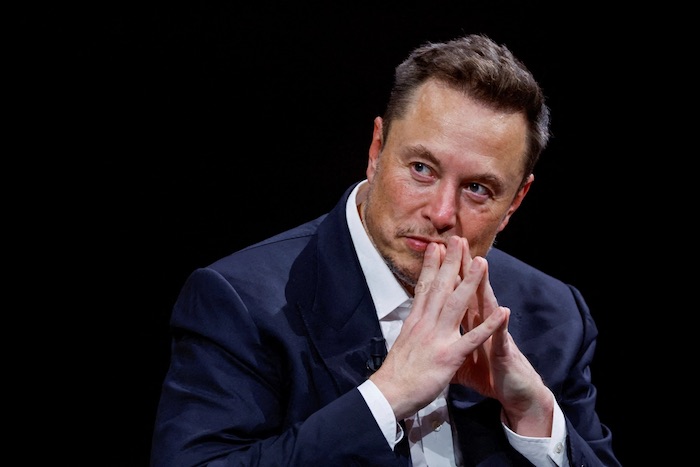


Jul 082026
 
 July 8, 2026  Posted by at 9:48 am Finance Tagged with: , , , , , , , ,  38 Responses »


Vincent van Gogh Self-Portrait with Bandaged Ear and Pipe 1889


• Socialism Targets the Foundations That Made America Great (Victor Davis Hanson)
• Britain vs. America: 1976 v. 2026 (John Perry)
• NATO’s New Mission Is Not Deterrence, But Russia’s Defeat (Dmitry Trenin)
• NATO Countries To Produce US Tanks, Missiles, MANPADS in Europe — Rutte (TASS)
• Canada Awards $20 to $30 Billion Submarine Contract to German Company (CTH)
• The EU Banning The ESN Party Is A ‘Realistic Scenario’ (RMX)
• UK’s Nigel Farage Steps Down, Triggering Special Election (JTN)
• French Court Opens Door for Marine Le Pen to Run for President (DS)
• Scott Jennings Nuked The Left’s New Narrative About Graham Platner (Margolis)
• The Cost of Heat: Why Europe’s Economy Is Melting (RT)
• The Push for a Robotic Workforce (Turley)
• Manslaughter Charges Filed Following Fatal Tesla FSD Crash (ZH)
• All Of The Surprise Crises Had Previous or Simultaneous Simulations (Korsgaard)


https://twitter.com/mitchellvii/status/2074259253716549774?s=20 https://twitter.com/ConstitustionX/status/2074346185041858971?s=20


“.. when you’re disaffected and you’re angry at your lot in life, you have 49 other choices, and it’s been a wonderful way of easing tensions.”

• Socialism Targets the Foundations That Made America Great (Victor Davis Hanson)

Hello, this is Victor Davis Hanson for the Daily Signal. One question that came up constantly during this 250th anniversary Fourth of July celebration was whether we were gonna make it another 250 years, 500 years. We could be longer than the Roman Republic. Longer than the Roman Empire. And to answer that question, you have to know what allowed us to get this far, and for those who don’t like us, what they would like to do to stop us.


And it turns out that the reasons that we survived 250 years and the reasons that we might survive another 250 years are precisely the areas where our critics would wish us to fail, or who are actively trying to see that we fail. Take the first one, our Constitution. What’s brilliant about the American Constitution is its federalism. It outlines all the duties and prerogatives of the federal government, and then it says anything that is not relegated to the federal government is up to the states, and that’s the majority of human experiences. It doesn’t mean the states can fight one another or pass laws against one another or pass laws against the federal government.

The federal government has ultimate authority, but this federalism means that if California wants to tax 13.3% and Florida wants to tax 0%, then maybe 300,000 people a year will go to Florida and still enjoy the American experience, and vice versa. You can go to any state in the country and what it really means is you’re having 50 separate experiments. You’re all united by the federal government and the checks and balances of the Constitution and the Bill of Rights. But you have 50 different interpretations of them based on local and regional concerns, and that gives Americans a lot of choice, and that means when you’re disaffected and you’re angry at your lot in life, you have 49 other choices, and it’s been a wonderful way of easing tensions.

The second is that we have been the beneficiary of legal immigration. We take more immigrants than any place in the world, and people have remarked that as we speak, the people who created Google, for example, or Elon Musk, were all legal immigrants, and they came to the United States because this is the only place in the world where you would have a free market economy, a protection of private wealth, and an encouragement of the population to be successful and to take risk. And it’s impossible to envision a Silicon Valley in the Muslim Middle East. It just wouldn’t happen. Wouldn’t happen. You couldn’t have a Harvard or Yale or Princeton in today’s China. They wouldn’t allow free speech.

You wouldn’t have most of our American institutions in any other place. And that means we get all of these legal immigrants, and they enrich our country if they come in diverse fashion, in numbers that can be assimilated legally with some knowledge of our country and preferably with English language fluency. The other third reason is we were very lucky naturally. Once the United States, whether you like it or not, embraced Manifest Destiny and decided we were not going to be a continent of warring states as was Europe, 30 or 40 individual nations, but one uniform state in North America, then it was richly endowed for all of us.

We had mining, we had gold, we had silver, we had iron ore, we had almost… We even have rare minerals, rare earth minerals we have not fully tapped. We have oil, we have coal, we have hydroelectric. We have the richest energy nation in the world. We’re pumping more oil and gas than any other country in the history of the universe. We have plentiful timber. We have plentiful farmland. We’re the largest farming producing country by the value of our exports and our domestic produce in the world. We have two huge coastlines, not to count the Gulf of America.

In other words, we’re protected from the insanity that goes on in Latin America, Africa, Europe, and Asia, and we always have been. So, the sheer size of the American continent, its role in American history as a frontier, its role as a safety valve where people could head West, young men, if they were disaffected by events on the East Coast, and they could make a fortune or make a livelihood farming or in timber or in minerals or in energy, you name it. There’s a fourth reason that we’re very successful, and that is we have a free market, private property economy. We’re not a socialist, we’re not a communist country.

Read more …

“These two countries have gone in very different directions since 1976. What will become of them now?”

“Britain has spent years destroying itself before the false god of climate change. Their people freeze and roast while vast and easily extracted stores of coal sit unused.”

• Britain vs. America: 1976 v. 2026 (John Perry)

July 4, 1976, the American bicentennial. Along with other American students at University College, Oxford, I attended a grand banquet celebrating the occasion. In the high-vaulted dining hall, our familiar, plain wooden tables and benches were awash in linen, china, fresh flowers, silver, silver, and more silver: candlesticks, ewers, wine coolers, chargers, and items a young man from Spring Branch, Texas could not readily identify. We feasted heartily, drank really good wine, heard speeches, and toasted President Gerald Ford. It was a great night to be an American.


Looking back at that celebration fifty years on, it’s clear that the U.S. and Britain have gone in very different directions since then. Britain in 1976 seemed to this novice traveler like a downtrodden older cousin, tired and worn around the edges yet with a sense of history and purpose, a proud past, a charming personality, and the notion that “there will always be an England.” Unfortunately, immigration, lawlessness, blind obedience to the global warming hoax, and a fading confidence in their own brilliant history have rendered Great Britain a shadow of its former self.

Britain today seems to have lost its way, given up, and virtually turned itself over to third-world invaders. Great Britain resolutely held off foreign invasion through two world wars. But over the past fifty years, in an era of relative peace and prosperity, they have turned one of history’s truly great and accomplished cultures over to gate-crashers who have diluted it almost beyond recognition and possibly beyond saving. Fortunately, history has shown America a different way, though millions of illegals flooded in before our leaders saw the light. With its ruinous and indefensible open borders policy, the U.S. nearly went down the same dark path as our British friends. Only a change of command and a resurgence of common sense saved us in the nick of time. For now.

In another unfortunate misstep, Britain has spent years destroying itself before the false god of climate change. Their people freeze and roast while vast and easily extracted stores of coal sit unused. Their North Sea oil and gas riches wait offshore, largely ignored and untapped today after an initial bonanza of energy production. Windmills, solar panels, and electric car mandates will do still further damage. Yes, the climate is changing. It has always changed. (Ask the Vikings who lived in Greenland until it got too cold in the 1400s.) But fossil fuels don’t cause climate change. And nothing the world does — or doesn’t do — will stop it.

Thank goodness America’s current leadership has the sense to throw out decades of junk science and embrace energy development that keeps Americans comfortable, healthy, and safe. And gives us freedom to choose. If you want an electric car, Elon Musk makes the best in the world. If you can’t resist a scorching V-8, America has some brand-new ones that will make your eyes bug out.

Even in 1976, the British seemed different from people back home. Americans appeared more prosperous, ambitious, hopeful, independent, curious, and confident. They had more sparkle and optimism. On the train one morning in Oxford, I struck up a conversation with a passenger who was about my age. Hearing my accent, he pumped me for information about the American West — Montana, Wyoming, the Dakotas. He dreamed of going there to work on a ranch and have his own place one day, he said, because in Britain the land was all bought up and no one had any way to improve his prospects. No one expected to get ahead. To him, America was the shining New World of opportunity.

I wrote in my journal that summer about crowds in the street seeming gray and listless, shuffling through the day in a joyless, inevitable sort of way. I didn’t know exactly how to describe what I felt, but it centered on what my fellow passenger had said about how Americans seemed to have optimism about the future, a sense they could change their lives for the better, while the British were shunted onto a path somehow and that was it. No New World for them.

[..] the biggest disappearance since 1976 is that in ’76, Britain was full of British people, and in ’26, they have disappeared. During the course of a day, a visitor can interact with dozens of cashiers, shopkeepers, drivers, clerks, waiters, guards, officials, and strangers at the bus stop without encountering a single native English speaker. What happened to them? And why would any business hire employees who cannot clearly speak the local language when it’s the language of the world?

The British today seem embarrassed by their Britishness. Swamped by a tidal wave of political correctness, they’ve been cowed into submission for even thinking about defending one of the great cultures of the world. By any reasonable measure, Britain is better than any immigrant homeland. Their courts, schools, hospitals, law enforcement, business environment, and other institutions are better. Otherwise, why would hordes of people from Africa, Asia, and elsewhere clamor to get to the British Isles?

Read more …

NATO/EU are seeking war with Russia. Russia will not surrender. It will use its nukes.

“NATO 3.0 means war. Should it actually come to that, there will be no more NATO”.

“By Dmitry Trenin, a research professor at the Higher School of Economics and a lead research fellow at the Institute of World Economy and International Relations. He is also a president of the Russian International Affairs Council (RIAC).”

• NATO’s New Mission Is Not Deterrence, But Russia’s Defeat (Dmitry Trenin)

The North Atlantic Treaty Organization is entering its third age. When it was founded three quarters of a century ago, it was meant to contain the spread of communism and confront the military might of the Soviet Union. In other words, to keep Western Europe capitalist and under US control. Despite the allegations of the Soviet propaganda at the time, NATO was a defensive rather than an aggressive alliance. Through all the crises of the Cold War period, it stood still.


When the Cold War ended and the Soviet Union imploded, NATO gained a victory it had not won. The US-led military bloc refused to dissolve upon the completion of its original mission. Instead, it sought to become the sole security regulator for Europe. It went onto an offensive and waged war against Serbia. It went “out of area” to fight in Afghanistan. It embarked on an enlargement spree to include the former Soviet satellite countries of Eastern Europe, and some ex-republics of the USSR itself.

Yet, it miserably failed to manage relations with the former adversary, Russia. It spurned Moscow’s request for membership and proposed a partnership instead which turned out to be essentially hollow. It ignored Russia’s security interests by refusing to stop its expansion all the way toward the Russian border and turning down Moscow’s proposals for a pan-European security order. The issue of Ukraine’s membership in NATO, which the Kremlin perceived as an intolerable threat to its national security, became the principal cause of the Ukraine war, now in its fifth year.

This ongoing war has given NATO a new lease on life. Russia once again became the enemy, with the Western alliance so much stronger and better positioned to take it on. With Ukraine on its side, NATO can use its army to physically attack Russia. The US’ and Europe’s goal in that war, as was publicly proclaimed from the start, has been to inflict a “strategic defeat on Russia.” What was deemed impossible during the Cold War has moved into the realm of the thinkable in the West’s proxy war against Russia.

From 2025, US President Donald Trump’s policies have kick-started a process of NATO’s internal transformation. The US National Defense Strategy clearly makes Europe responsible for “handling” Russia. Thus, with Washington revising its global strategic priorities, European members of the alliance are being ordered to carry more financial and military burden. Under conditions of the ongoing war, this means much greater involvement in the conflict. The European elites, long reluctant to increase defense spending and fearful of being drawn into wars, have changed their minds and eagerly embraced the new responsibilities and risks as an opportunity.

There are reasons for that change. Militarization is now thought to be a driver for relaunching the EU’s flagging economies. A militarily stronger Europe would be more autonomous strategically in a world where America is reducing its commitments to allies. Adding a military dimension to the EU could cement the union in the face of the many mounting challenges. Politically, rearmament and mobilization in the face of the “enemy at the gates” makes it easier for the ruling elites to brand their opponents “Kremlin stooges,” and thus protect their hold on power. In ideological terms, fighting Russia (for now, via Ukraine) has become a new unifying idea for Europe.

For Russia, this NATO 3.0 means, above all, that for the first time since the defeat of Nazi Germany and its allies in 1945, Europe is again becoming a clear and immediate enemy of Russia. People in Moscow entertain no illusions about the adversarial attitude of the United States toward Russia, but Washington now is a back seat driver when it comes to the conflict with Russia. Whereas in the days of the Cold War NATO appeared to Russians as “America in Europe,” now when they look at NATO, they see Europe backed by America.

What is even more important is that NATO 3.0 is clearly on the offensive, with most decisive goals. The European elites’ strategy toward Russia is no longer deterrence as in the days of the Cold War; the goal is Russia’s destruction as a major power. This is what “strategic defeat” is all about. The Europeans dream of eliminating Russia as a serious factor in the geopolitics of Eurasia: to them, this would mean the “final solution” of the long-dreaded “Russia problem.”

Long sulky as a result of Russia’s advances on the Ukraine battlefield, the European politicians and media outlets are now triumphant, hoping that long-range drones they have helped Ukraine to produce and send to their targets across Russia are the wonder weapon of this war. They are seeking to strengthen their punch by similarly providing Kiev with long-range cruise missiles and then ballistic missiles. These weapons, it is hoped, will seal the fate of Russia, once and for all.

This, however, will not happen. The fundamental flaw of European thinking is their belief that Russia would rather accept defeat, degradation and disintegration than use the arsenal which it currently possesses. This arsenal is not limited to nuclear weapons, although point may be reached when they will have to be used. The Kremlin, so far, has been exceedingly restrained in using its more powerful conventional capabilities, or engaging some high-value, high-visibility targets. There are many explanations for such restraint, but it is foolhardy – actually, fatal – to believe that either the Russian leadership or the Russian people would ever surrender to NATO.

The European NATO leaders’ enormous deficit of modern strategic culture – unsurprising after the eight decades of having delegated their security to the United States – and their blind Russophobia, a result of deep-seated vintage European racism and the real or perceived grudges against Russia piled over the last five centuries, have put Europe on a direct collision course with Russia. NATO 3.0 means war. Should it actually come to that, there will be no more NATO.

Read more …

If your economy sags, build weapons. Talk about a threat to your safety, and let the taxpayer pay.

• NATO Countries To Produce US Tanks, Missiles, MANPADS in Europe — Rutte (TASS)

NATO countries will produce US Abrams tanks, ATACMS missiles, Stinger man-portable air defense systems and other weapons complexes in Europe, NATO Secretary General Mark Rutte said at the Defense Industry Forum on the sidelines of the NATO summit.


Rutte welcomed the decision by major US defense companies to sign a new military-industrial initiative with leading European defense industry players. The initiative will allow NATO to produce key US weapons in Europe, including Abrams tanks, AMRAAM and ATACMS missiles, and Stinger systems, he said. The alliance will manufacture weapons on both sides of the Atlantic without excessive additional investment by creating a network of factories available to NATO’s defense industry and innovation infrastructure.

Rutte stressed that NATO must replenish its arsenals, which have been depleted by arms supplies to Ukraine, and produce more weapons than the bloc’s opponents. The NATO chief said the military-industrial initiative would significantly increase the alliance’s military capabilities. He did not specify the timeframe for implementing the plans.

Read more …

Canada has one functioning but old submarine. It just ordered twelve. Not from a US company.

• Canada Awards $20 to $30 Billion Submarine Contract to German Company (CTH)

FACT: It has been over 60-years since Canada purchased a submarine. FACT: Canada has never built one. FACT: Currently the Canadian military have ONE operable submarine out of a fleet of four used ones previously purchased. FACT: Canada recently proclaimed themselves as the North American defender of the Arctic.


Now, put all those facts in the overlay of the December 2024 meeting in Mar-a-Lago between President Trump and Canadian Prime Minister Justin Trudeau. President Trump was demanding that Trudeau increase their NATO spending and develop a working Canadian military. Someone recently asked in the comments section why I have an issue with Canada, specifically why a new level of distain for our Northern neighbors. Quite simply, there is a level of lying that exceeds my tongue bite capacity; that level of deceit comes when fabricating lies is accompanied by pretending. The Canadian government is the worst type of political abuser. They willfully pretend and simultaneously lie to the Canadian people. That’s the answer.

Today, the government of Canadian Prime Minister Mark Carney announce that German industrial shipbuilder TKMS will be awarded a contract for “up to 12 submarines” valued between $20 and $30 billion {source link}. Now, let’s not pretend. First, the submarine contract is intended to get Canada back into reasonable position on their NATO obligations.

In reality, it is quite remarkable to think about the Canadian nation with only one currently functional submarine. “Canada hasn’t purchased unused submarines since the 1960s, during the Cold War, and has never ordered anywhere near 12 at once. Canada currently owns four subs, all of which were purchased second-hand, and only one of which is typically operational.” {citation} Now, think about that Mar-a-Lago conversation again.

Second, Canada can’t build their own submarines? Wait, I’ve been told my statements about the absence of Canadian industrial capacity were mistaken. I’ve been told that Canada can produce heavy industrial equipment, and my statements about their heavy industry as functionally obsolescent were overstated. I’ve been criticized for saying that Canada has deindustrialized their economy in the past 30+ years because they have worshipped the altar of “global warming” or “climate change.” Those two points above are directly connected, and those are the exact points that President Trump was talking to Justin Trudeau about very strongly.

Trudeau said there was no possibility of correcting this industrial lack of ability, and the U.S would just have to accept Canada’s high-horse pontificating position. That’s the core of the 51st state counterpoint. [NOTE: You cannot have an industrial economy without the ability to create iron, steel, aluminum and various compounds of molten metal. You cannot make metal with windmills, solar or nuclear energy. You must generate massive amounts of heat. That heat is measured in joules because joules are the measurable unit for energy, and they provide a universal, precise way to quantify the energy transferred as heat. Industrial manufacturing takes joules, which creates carbon emission in the process.]

Keep in mind, the USMCA (CUSMA) is going to get terminated. As a consequence, it is easy to see the U.K and EU trying to provide the financial backstop to protect Canada (a commonwealth action). What Carney is doing with this submarine contract is offshoring $30 billion CAD to Germany at current rates, so that Germany can (a) offset their own industrial economic implosion; and (b) position to return a financial favor in the near future.


GERMANY – […] As panic spreads among German manufacturers, layoffs are rolling through formerly prosperous towns and villages with no living memory of a downturn. The moment could become a political turning point for a country whose wealth was largely created by the Mittelstand, or “middle-class”—shorthand for the inner core of Europe’s largest economy. For the first time in decades, Germany now imports more advanced capital goods from China than it exports there. Manufacturers are suddenly on the defensive, not just in China and elsewhere, but also at home. (more)

Remember the “coalition of the willing” that Mark Carney injected himself into? The U.K, Germany, France and now Canada. They swim together or sink alone. Oh, things are going to get really ugly. We underestimate when we say, “there are trillions at stake.” GERMANY – According to Reuters, Volkswagen’s supervisory board is expected to discuss a sweeping restructuring proposal at a July 9 meeting. People familiar with the matter say the plan could eliminate up to 100,000 jobs and close four factories in Germany, adding to roughly 50,000 workforce reductions already planned. If approved, it would become the largest restructuring in Volkswagen’s history and one of the biggest workforce overhauls the global auto industry has ever seen.”

Now, is the Mark Carney contract to Friedrich Merz making more sense? Canada claims they are going to lead the protection of the Arctic and defend Greenland from horrible Trump’s entreaties.Canada has one submarine, a carbon exchange system to block industrial production/capacity, and a functionally obsolescent military severely behind in meeting NATO obligations. But President Trump’s expressed frustration and anger at their sanctimonious pontificating have hurt the feelings of Canadians, or something equally pretentious.

Think about it.

Read more …

“.. a major blow to democracy and rule of law.”

• The EU Banning The ESN Party Is A ‘Realistic Scenario’ (RMX)

For the first time in European history, an EU party alliance could be outright banned in the European Parliament, which would mark a major blow to democracy and rule of law.


The Europe of Sovereign Nations Group (ESN), which includes nine right-wing European parties, has been relentlessly attacked by the EU establishment since its founding in 2024. The ESN’s largest party member, the Alternative for Germany (AfD), has also been the target of efforts for an outright ban at the national level in Germany. While left-wing and establishment parties are struggling to implement a ban on the AfD in Germany, at the European federal level, democratic checks and balances and the rule of law are far weaker.

Now, the Authority for European Political Parties and European Political Foundations (APPF) is seeking to de-register the ESN, which would strip it of all its funding and de facto lead to the end of the party.

German MEP Alexander Sell of the Alternative for Germany (AfD) party is a founding member of the ESN and has since become the president of the Sovereignty Foundation (SF), the foundation formally associated with the ESN. He said he is speaking as the president of the SF and discussed the efforts his party is taking to fight this de-registration, how much of the APPF’s actions are an extension of the political warfare being waged against the AfD at the national level, and even touches on his own personal motivations for participating in politics as an AfD member despite the massive degree of personal attacks and even physical threats.

There is a lot of discussion about your party facing a potential ban from this European watchdog [Authority for European Political Parties and European Political Foundations (APPF)], but how realistic is it that your party will actually be banned in the near future? It’s a realistic scenario because the authority — the European Authority for Political Parties and Foundations (APPF) — has the power to de-register parties. They register European parties and they also have the authority to de-register a European party, and that is what they are planning to do.They have a couple of accusations against us. They have a 300-page dossier on our party.

So they will start the investigation, but they will give us the chance to answer the accusations. And then they have the authority to ban our party. And do you have any idea of what the political leanings of the people in this watchdog are? Does your party view a negative outcome as already a foregone conclusion? Well, there are some indications that this is a political maneuver, because the director of this authority, [Pascal Schonard,] is German and he used to work for the CDU. He was a member of Klaus Welle’s cabinet. For almost a decade, Klaus Welle was Secretary-General of the European People’s Party and the EPP–ED group in the European Parliament.

So I think there are political intentions behind this attempt to de-register our party. But still, I don’t think it is 100% guaranteed, because in the end you have to acknowledge that on the European level there are many parties like ours. There is a shift to the right all over Europe.You have governments — for example in Italy, the Czech Republic or Slovakia — that are led by patriotic forces. So I don’t think it will be that easy. The majorities in the European Parliament are also shifting to the right because that is what voters want.They want patriotic, realistic and more free-market-oriented policies, and that is what we are seeing on the European level.

We want to get rid of bureaucracy, we want to get rid of climate policy, we want to secure our borders — and we have majorities for that. So I think this attempt to ban our party will not be easy, because European voters are demanding something else.I mean, you have to take into account that the AfD is the strongest political party in Germany, polling at around 29%, which is a large margin ahead of the CDU. So I think it will be very controversial to ban our European party.

Read more …

“I’ve never been angrier in my life,” he added.

None of his opponents are running. So he’ll win. Then they will investigate him.

• UK’s Nigel Farage Steps Down, Triggering Special Election (JTN)

Reform UK MP Nigel Farage on Tuesday announced that he would step down from his seat to trigger a by-election amid an investigation into his finances. “Today, I will resign as a member of Parliament for Clacton-on-Sea, thereby forcing a by-election, which should happen, I hope, in short order,” he said. “Now, I’ve decided that the people of Clacton should be the judges of my actions. This will be a people vs. the establishment by-election.”


He further indicated that he would stand in the by-election and vowed to win. Farage currently represents Clacton-on-Sea in Parliament. He previously represented Southeast England in the European Parliament before the UK left the European Union. “Well, the new attack from the media is that somehow I am a crook. I am dishonest,” Farage said. He further raged over a newspaper’s decision to post an image of his daughter’s home. “I’ve never been angrier in my life,” he added.

Farage is a close ally of President Donald Trump and was a leading figure in the 2016 campaign for the UK to the leave the European Union. He currently leads the Reform UK political party. His decision appears to be an attempt to weather the financial scrutiny and renew a political mandate.

Read more …

I hope she runs.

• French Court Opens Door for Marine Le Pen to Run for President (DS)

A French appeal court on Tuesday upheld Marine Le Pen’s conviction for misusing EU funds but shortened her ban on running for public office, in theory preserving a path for the conservative leader to run in the 2027 presidential election. However, the court also sentenced Le Pen to a three-year jail term: two suspended and one with an electronic ankle tag. This could make a presidential campaign politically and logistically difficult. Le Pen previously said she would be reluctant to wage a presidential campaign while serving a sentence under electronic monitoring, arguing that it would interfere with campaigning and undermine her credibility. But she is yet to confirm what she will do.

As she left the courtroom, Le Pen was smiling but did not say a word. She then went to the headquarters of her party, the anti-immigrant National Rally (RN), to discuss what to do next. Le Pen had been convicted in March 2025 of embezzlement and banned for five years with immediate effect from holding public office, and thus from making her long-planned fourth bid for the Elysee Palace.= Tuesday’s appeal judgment, under which Le Pen is ineligible to hold public office for 45 months, 30 of which are suspended, means she will be eligible to stand when voters go to the polls in April 2027, because she has already served the 15-month ban, which has been running since last year’s ruling.

Will Le Pen Campaign With an Electronic Tag?
The decision is likely to trigger intense debate within the RN, which has spent months preparing for two possible futures: one led by Le Pen and another by party president Jordan Bardella. The electronic tag was stipulated as part of a softened jail sentence, and means she would not actually have to go to jail. A sentencing judge will decide on the terms of Le Pen’s tag, setting out the hours when she can be away from her home and what time she must return at night. Restrictions on weekends are usually tighter.

A judicial source said the tag would likely complicate a nationwide presidential campaign, as she would need to return home each night, but probably not make it impossible. Le Pen could also ask for the tag to be removed after a few months for good behaviour, the source added. Polls have consistently shown both RN figures as strong contenders to reach a presidential runoff. Some recent surveys have even suggested Bardella would outperform Le Pen in the first round.

Le Pen’s conviction stems from charges that National Rally figures misused European Parliament funds intended for parliamentary assistants, instead paying party staff in France. In 2025, judges found Le Pen had played a central role in the scheme, a finding she has consistently disputed. The original verdict sparked condemnation from Le Pen’s allies in France and abroad, who accused the judiciary of influencing democratic competition. Her opponents argued that elected officials must be held to the same legal standards as any other citizen.

Read more …

I don’t mean to pay much attention to small-time politicians,

• Scott Jennings Nuked The Left’s New Narrative About Graham Platner (Margolis)

It probably won’t be long before Graham Platner drops out, and the left has settled on a shiny new narrative about him. It goes something like this: Poor, unsuspecting Democrats had no earthly idea who this guy was, and gosh darn it, somebody forgot to vet him. That’s the fairy tale they’re spinning now that Platner’s Senate campaign is circling the drain, and we can’t let them get away with it. On CNN’s Anderson Cooper 360°, Alyssa Farah Griffin claimed that “Democrats did not do their due diligence in vetting this man and now their path to the Senate looks significantly bleaker because they went all-in on this one.” Seriously?


That’s a blatant lie. The vetting happened. Since he entered the race, a steady trickle of damning information about Platner has dripped into public view, and Democrats ignored every drop. The Nazi tattoo. The unhinged internet posts. His presence on an app widely known as a playground for predators. The domestic abuse allegations. Any one of those would end a Republican’s career in about 45 seconds. Democrats looked at the entire pile and decided he was their guy. And it’s not like Democrats didn’t have a choice.

The New York Times exposé dropped on June 4, and Maine’s primary elections were on June 9. Gov. Janet Mills (D-Maine) may have suspended her campaign before that, but she was still on the ballot. Democrats knew and made their choice. So, when Anderson Cooper asked whether Maine Democrats could nominate a replacement without alienating Platner’s supporters, Scott Jennings zeroed in on Griffin’s vetting excuse and reduced it to rubble.

“The only thing I disagree with is when she said that he hadn’t been vetted,” Jennings said. “No, he had been vetted. All of the things that have been stated — it was all out in the public, and people like Ro Khanna, Bernie Sanders, Elizabeth Warren, Tim Walz, ‘The Bulwark,’ ‘Pod Save America’ — all of these people came together to overlook it all, to explain it all, to rationalize it all.” Jennings kept up the well-earned reaming. “He was vetted. People knew all these things, and a whole bunch of Democrats in Maine showed up and voted for him anyway,” he pointed out. “You already signed off on Nazi tattoo, a self-described communist, somebody who’s had rape fantasies, somebody who has been on a social media platform known as a playground for predators, and on, and on, and on, and on, and on.”

Then he identified the one variable that changed. “And the difference between this accuser and the previous one is simply this: She’s a liberal,” Jennings said. “It’s okay, I guess, for Democrats that their candidates assault conservatives.” His conclusion left nothing standing: “They knew it, and they signed up for it, and I don’t know why they’re backing away from this scumbag today when they had already signed off on all that other crazy behavior.”He’s right, and everyone knows it. The Democrat Party made a calculated bet that a Nazi tattoo and a trail of ugly allegations wouldn’t matter as long as Platner kept the seat in play. The bet went bust, and now the same people who placed it want you to believe they never saw the ledger.

This is the party that spent a decade lecturing the rest of us that “character matters,” but character never mattered to these people. It was a talking point. That’s why they stood behind a guy with an actual Nazi tattoo for so long. Maine voters didn’t care. They chose him over Gov. Janet Mills, for crying out loud. Character didn’t matter until the polls showed that Collins was starting to win the race. Remember that the next time a Democrat climbs onto a soapbox to talk about character and decency.

The problem isn’t that Democrats didn’t vet Platner; it’s that they did.

Read more …

Western Europe was not built for heat.

• The Cost of Heat: Why Europe’s Economy Is Melting (RT)

Western Europe has been enduring another record-breaking heat wave, with temperatures topping 40C in several countries. France, the UK, Germany and Switzerland have all seen their hottest June temperatures on record, while the extreme weather has disrupted transport, power generation and industrial output. The scorching temperatures are burning a multi-billion-euro hole in the EU’s already fragile economy. From parched fields to idle factories, the bloc is feeling the heat beyond what thermometers may indicate. Economists, meanwhile, warn that climate-driven heat waves are no longer temporary events but a structural macroeconomic risk.


Productivity is the first casualty
The most immediate economic cost of extreme heat is lost productivity. According to German insurer Allianz Trade, every additional degree between 30C and 35C cuts labor productivity by roughly $1.30 per hour – equivalent to nearly 3% of average hourly output. Construction, agriculture, logistics and other labor-intensive sectors bear the brunt as workers struggle in extreme temperatures.As another heat wave swept the region, Patrick Martin, head of France’s main employers’ federation Medef, summed up the impact: “France is working in slow mode.”

The blow is increasingly being felt at the macroeconomic level, according to Carsten Brzeski, ING’s global head of macro research. Heat waves have evolved from isolated weather events into a key economic variable, shaking the bloc’s business activity in ways reminiscent of the Covid-19 lockdowns. “Thermometers, it turns out, have become a leading indicator of economic growth,” he wrote last month, warning that heat waves now pose “a new downside risk to European growth.” Brzeski said Germany, despite its relatively mild climate, could rank third in Europe for cumulative heat-related economic losses by 2030 because its infrastructure, housing stock and labor-intensive industries were built for cooler conditions.

The heat is literally melting Europe’s transport infrastructure. Roads are cracking, rail tracks are buckling and tram networks are grinding to a halt across Western Europe. In Germany, major highways near Berlin and Hamburg were damaged by the heat, while in Leipzig tram services were suspended after track sealant melted. France’s SNCF cut train services around Paris to protect its rail network, and Eurostar imposed speed restrictions as temperatures soared.

The damage extends beyond roads and railways. Water levels on the Rhine – Europe’s busiest inland waterway – have fallen so low that cargo vessels can carry only around 25% to 45% of their normal loads. The restrictions have driven up freight costs and disrupted deliveries of fuel, chemicals and industrial raw materials, forcing companies such as BASF to adjust operations at their flagship Ludwigshafen complex. Engineers warn that much of Europe’s transport infrastructure was designed for a cooler climate. Surging demand for air conditioning is driving up electricity consumption just as extreme temperatures are squeezing supply.

During the evening peak, Belgium’s quarter-hour power price hit a record €1,038 per MWh, while the price in Germany reached €747 per MWh, according to exchange data cited by energy market intelligence firm Montel in late June. High temperatures reduce the efficiency of solar panels and gas-fired power plants, while forcing some nuclear reactors to scale back or halt operations because rivers used for cooling have become too warm. France’s EDF curbed output at the Nogent-sur-Seine and Bugey plants, while Swiss utility Axpo temporarily shut both reactors at the Beznau nuclear plant after the temperature of the River Aare reached 25C.

The latest heat wave has laid bare Europe’s self-inflicted energy crunch. The EU’s years-long, sanctions-driven shift from Russian energy has come at a cost. As the bloc reduced purchases of cheaper Russian gas, it became increasingly dependent on US LNG, which accounted for 59% of imports in early 2026 and more than 64% in April, according to Bruegel. Analysts warn that such reliance on a single supplier leaves the EU more exposed to price shocks and supply disruptions.

Luxembourg MEP Fernand Kartheiser has said the bloc could ease pressure on households and industry by buying competitively priced Russian energy instead of relying on more expensive American LNG. Yet despite its pledge to phase out Russian gas, the EU continues to buy it at prevailing market prices. Russia emerged as the third-largest gas supplier to the EU in the first half of 2026, after Norway and the US, delivering approximately 22.1 billion cubic meters of gas and accounting for about 12% of the EU’s gas consumption.

Read more …

“They believe that because they claim to be the champions of the working class, it does not matter how many people they put out of work.”

• The Push for a Robotic Workforce (Turley)

Sen. Chris Murphy has finally found a constituency that truly gets him. Robots and automated systems around the country likely whirled and beeped with approval as he introduced the Senate version of the Living Wage for All Act. At a time when workers are being replaced at record numbers due to the cheaper labor of automated systems and AI programs, Murphy moved to price out millions of more workers by increasing their costs.


The bill would increase the federal minimum wage from $7.25 to $25 per hour — a 245 percent increase — over 12 years. The far-left senator is following the lead of states like California, where Democrats dramatically cut jobs through such wage increases. Murphy went on NBC to insist that he is “not a democratic socialist” but then attacked capitalism: “[T]he Democratic Party has been historically way too timid in taking on corporate power. I think we have to understand that people do not believe that this version of capitalism has worked. And frankly, it hasn’t worked. … This version of capitalism isn’t working. Now, I make the argument in the book that we should embrace, you know, what I call a common good capitalism.”

He then added: “And by the way, we can afford it. It’s not like we can’t pay a $25 minimum wage; we just choose not to because we’ve become okay with dozens and dozens of people in this country making hundreds of billions of dollars.” It is not clear who the “we” is. While securing a law degree, Murphy has never run a business and has spent his life as a politician, spending other people’s money. I previously wrote about wage hikes and the predictable loss of jobs that followed.

Democratic politicians from New York to California are pushing for a $30 minimum hourly wage for workers. Newsom, Los Angeles Mayor Karen Bass, and Democratic legislators in California herald their mandatory increases as providing a “living wage” for workers. In Los Angeles, a law requires hourly wages in the hotel and airport industries to rise by $2.50 each year until they reach $30 in 2028. There is no question that workers are struggling with the high cost of living in California. But blindly raising taxes and minimum wages will exacerbate these problems, not eliminate them.

A recent report by researchers at the University of California-Santa Cruz found evidence of precisely what many economists had warned about in the state’s mandatory wage floors. Stephen Owen, an economics lecturer, explained that they found “a plethora of negative outcomes, such as higher menu prices for consumers, reductions in employee working hours, widespread elimination of overtime, and loss of benefits for employees.” In other words, faced with mandated higher labor costs, businesses shrank their labor forces and raised their prices.

None of this is a surprise. Yet even amid such findings, Democrats are doubling down. They believe that because they claim to be the champions of the working class, it does not matter how many people they put out of work. It is not just workers feeling the brunt of such economically ill-considered measures. In California, a two-person meal can run about $30 due to higher labor costs being passed on to consumers. It is only a matter of time before robots replace these workers.

What is ironic is that the Democrats are hitting the most vulnerable members of the labor force with these minimum wage increases. In my book, “Rage and the Republic,” I discussed not only the economic changes unfolding due to AI and robotics but also the expected political miscalculations that are most likely to fuel job losses and wasteful spending. This is one of them. As discussed in the book, certain industries are already likely to convert to automation due to increasing labor costs:

“For any wealth-maximizing, rational actor in the marketplace, the choice is obvious and inescapable. There is little reason for a restaurant to employ workers to make Happy Meals when they can be done by robotics without healthcare, wage issues, or scheduling conflicts. The very premise of McDonald’s is to produce the same meals in the exactly the same way from restaurant to restaurant. That is precisely what robotics do. They will make fries in exactly the same fashion over and over again without variation.”

Faced with this threat to the labor force, Murphy and others are moving to do the one thing to accelerate and expand the job losses by increasing the cost of human labor. Ironically, giving the advantage to the robotic workforce could still work in favor of the growing socialist movement in the party. With more workers out of jobs, more will look to the government for support and a guaranteed income. That will further increase the role of the state. Of course, to expand what Zohran Mamdani called “the warmth of collectivism,” millions of human workers will have to be put out in the cold as an overpriced labor force.

Citizens will then become what I have called a “kept population,” which could have a disastrous impact on the role of citizens in our unique Republic. What is clear is that Murphy will prove to be the greatest friend a robot has ever had in Congress.

Read more …

They will try.

• Manslaughter Charges Filed Following Fatal Tesla FSD Crash (ZH)

A fatal crash involving Tesla’s driver-assistance technology has resulted in manslaughter charges against a Texas man after his vehicle slammed into a home near Houston, killing a 76-year-old woman inside, according to the Wall Street Journal. Prosecutors say 44-year-old Michael David Butler told first responders he had been using Tesla’s Full Self-Driving (Supervised) feature while making a DoorDash delivery on June 19. Butler claimed he changed the music on the touchscreen before losing consciousness. Authorities said he was the only person in the car and that toxicology tests found no evidence of alcohol or drugs.


However, data recovered from the vehicle paints a different picture. Investigators said Butler repeatedly overrode the FSD system by pressing the accelerator, with the Tesla reportedly reaching speeds as high as 73 mph in a residential neighborhood. Officials also said there was no braking in the final moments before the vehicle crashed into the home. Investigators further uncovered Google searches indicating Butler had been frustrated that the software was not driving aggressively enough.

The WSJ reported that Tesla has pushed back on Butler’s version of events, stating that vehicle data shows the accelerator was held down by the driver both before and after the collision. The crash is now also under investigation by the National Highway Traffic Safety Administration as part of its ongoing scrutiny of advanced driver-assistance systems. The crash is likely to intensify the long-running debate surrounding Tesla’s Full Self-Driving technology. Although the software is marketed as capable of handling steering, braking, and acceleration in many driving situations, Tesla has consistently maintained that the system requires a fully attentive driver who is prepared to take control at any moment. Despite its name, Full Self-Driving is not an autonomous driving system.

Critics have argued for years that the branding has created confusion among some drivers, leading them to place more trust in the technology than Tesla’s own warnings recommend. Regulators have repeatedly examined whether drivers are using the system as intended, while safety advocates have questioned whether the software encourages a false sense of security behind the wheel.The National Highway Traffic Safety Administration has opened numerous investigations into crashes involving Tesla’s advanced driver-assistance features over the past several years, including several fatal incidents. Those investigations have fueled ongoing scrutiny of the company’s autonomous driving ambitions as Tesla continues to make artificial intelligence and self-driving technology central to its long-term strategy.

Read more …

“It seems that what was planned was simulated in order to have an idea how to proceed with the deception.”

“Comment by PCR: In the article below, Soren Korsgaard presents evidence that COVID-19 had spread in several countries prior to its discovery in Wuhan, China. This raises the question whether COVID, a man-made virus, was intentionally released in order to create a pandemic that could be used as a precedent for the imposition of societal controls and coerced mass vaccination.”

• All Of The Surprise Crises Had Previous or Simultaneous Simulations (Korsgaard)

In response to my latest article, “There was no Lab Leak: COVID-19 was Spread Intentionally on Multiple Continents,” a reader interestingly emailed me asking if I had uncovered any “bizarre” exercises or drills “associated” with the COVID-19 pandemic. Well, yes, more than a few.


Astute researchers have long observed that major, defining catastrophes tend to be accompanied by mysterious exercises or drills that parallel the real-world events. One of the most conspicuous examples is the terrorist attacks of 9/11. The North American Aerospace Defense Command (NORAD) inexplicably failed to protect American skies on 9/11, yet it had mysteriously simulated “hijacked airliners” being used as “weapons to crash into targets and cause mass casualties” [1]. One of the targets was the World Trade Center. Nevertheless, the Bush administration asserted that the attacks were “unimaginable” [1].

Government agencies also rehearsed scenarios with strong parallels to the actual attack on the Pentagon. One of the exercises, called “The Pentagon Mass Casualty Exercise,” took place in October 2000 [2]. The Daily Mirror later obtained an overview of the exercise—a passenger plane crashing into the Pentagon courtyard, killing 341 people—and reported that it “reads like an account of what actually happened” on 9/11 [ 3]. Later, in May 2001, a Department of Defense exercise simulated that a “hijacked 757 airliner crashed into the Pentagon” [4]. Just a few months later, on September 11, 2001, a hijacked 757 airliner—Flight 77—crashed into it. Participants reported that the exercise had “helped tremendously” in responding to the actual attack and had saved lives [5-6].

When writing about drills matching real-world events, one cannot avoid the now largely forgotten attacks of July 7, 2005—known collectively as 7/7. The official investigation concluded that terrorists carried out a series of four coordinated suicide bombings on three London Underground trains and a double-decker bus in Tavistock Square. While 7/7 was framed as a surprise attack, the Metropolitan Police Service’s Anti-Terrorist Branch had in fact simulated—just five days earlier—simultaneous bombs detonating on three London Underground trains [7-8]. Moreover, within hours of the actual attacks, Peter Power, an expert on terrorism and crisis management, told BBC Radio 5 Live:

“At half past nine this morning, we were actually running an exercise for a company of over a thousand people in London based on simultaneous bombs going off precisely at the railway stations where it happened this morning [9].” The BBC presenter couldn’t believe it and interrupted Power: “To get this quite straight, you were running an exercise to see how you would cope with this, and it happened while you were running the exercise?” [9]. Power replied in the affirmative: “Precisely,” adding that “within five minutes we made a pretty rapid decision that this is the real one,” and “so we went through the correct drills of activating crisis management procedures to jump from slow time to quick time thinking, and so on” [9].

Read more …


https://twitter.com/MAGAVoice/status/2074302857663381535?s=20 https://twitter.com/ToniLL22/status/2074287518305091941?s=20


Support the Automatic Earth in wartime with Paypal, Bitcoin and Patreon.



Jun 012026
 
 June 1, 2026  Posted by at 9:21 am Finance Tagged with: , , , , , , , , ,  31 Responses »


Hayami Gyoshu Tea bowl and fruits 1921


• Trump Toughens Terms Of Iran Deal, Bessent Shows Tehran’s ‘Big Mistake’ (ZH)
• President Trump Discusses Current Status of Iran Negotiations (CTH)
• The People’s House Has a Clinton Memory Problem (David Manney)
• Manufacturing Consent for Trump’s Invasion of Cuba (Bannan)
• “It’s All So Tiresome”: UK Social Media Ban Trudges Ever Onward (Kit Knightly)
• Le Pen Leads Every Major Rival In New French Presidential Runoff Polling (RMX)
• Mike Steger on President Trump’s American Manufacturing Surge (CTH)
• America’s LNG Boom Is Real – But China Is Planning Beyond It (OP)
• Volodymyr Zelenskyy Appears on Face the Nation (CTH)
• CNN’s Dana Bash: 250th American Anniversary Should Not be a Joyful Event (CTH)
• A Conversation About Artificial Intelligence -AI (CTH)
• Walt Disney’s Carousel of Progress (Queen)


https://twitter.com/GuntherEagleman/status/2060831724641386610?s=20 https://twitter.com/catturd2/status/2060762825044230157?s=20 https://twitter.com/PrometheanActn/status/2060787022378205554?s=20 https://twitter.com/MAGAVoice/status/2060841449122656429?s=20


“Kharg Island is shut down. That’s their big oil loading facilities, and that means that they’re going to have to start taking down the wells..”

• Trump Toughens Terms Of Iran Deal, Bessent Shows Tehran’s ‘Big Mistake’ (ZH)

Fresh Sunday reporting in the NY Times says President Trump has responded to Iran’s refusal to budge on giving up its nuclear material by tightening US conditions as part of a Memorandum of Understanding to get back to the peace negotiating table. “President Donald Trump has toughened the terms of a potential framework for a deal to end the war in Iran, and has sent those proposed changes back to Iran for consideration, according to three officials,” NY Times writes, but didn’t disclose what the precise changes are.


The report then speculates on where these changes likely focus: “Trump has been concerned about parts of the potential deal that would include unfreezing funds for the Iranians, two officials said.” Citing frustration at the slow pace of Iran’s response to the proposals, it adds, “He has been harshly critical of President Barack Obama for doing the same in the more than decade-old agreement that was signed to curtail Iran’s nuclear program.” Tightening the proposals is meant to ratchet up the pressure and ‘force’ the Islamic Republic to respond quicker and agree to a deal. However, the Iranians have time and again rejected being ‘dictated to’ by Washington, as its top negotiator Ghalibaf spelled out days ago. Meanwhile there’s been a recent change in tone when talking about Iran’s military, from Trump himself:

Iran Still Not Budging on Nuclear File
This also comes after a two-hour Friday Situation Room meeting Friday wherein it became clear there was no deal yet to be finalized. According to more from the Times: The official added that Trump’s changes — a new, tougher proposal — were potentially intended to speed up the process by putting pressure on Iran to accept the framework already sent to Iran’s supreme leader, Mojtaba Khamenei, for approval. Reaching the supreme leader has been difficult, so any changes to the document, known as the memorandum of understanding, could mean additional delays.

But for pressure to work, there has to be signs Iranian leaders are getting nervous or desperate – and so far they’ve not urged Washington or Pakistani mediators for some kind of grand compromise. Instead they’ve repeatedly sworn that Iran’s highly enriched uranium will never be transferred to the possession of the United States.

[..] Bessent: Iran’s ‘Big Mistake’
Still, US Treasury Secretary Scott Bessent is busy on the Sunday news shows talking tough. He told Fox in a new interview that Iran made a “big mistake” by attacking its neighbors in the Persian Gulf, within the past week. A US base in Kuwait was also reportedly just attacked by a ballistic missile, which was reportedly intercepted – but falling debris injured five US personnel. “We had many very good allies who maybe weren’t completely transparent with us on the money — Iranian money that was in their banking systems — all of a sudden became very compliant in terms of being willing to turn over accounts or help us freeze block accounts,” Bessent told Fox News.

“And then the third part was the incredible blockade. I really think it’s the economic blockade of funds and the physical blockade of the ships not going in or out of the Iranian ports,” he added. “Kharg Island is shut down. That’s their big oil loading facilities, and that means that they’re going to have to start taking down the wells,” Bessent said. And yet, there’s nothing officially disclosed to show this is actually happening – though the Iranians have no incentive to publicize it. But time will tell.

IDF Plunges Deep into Lebanon, Captures Crusader Castle
Some Lebanon war latest, via Al Jazeera, as ceasefire unravels: “Israeli Prime Minister Benjamin Netanyahu says he has “instructed the Israeli military to expand the maneuver in Lebanon” after the occupation of the strategic Beaufort Castle, which he says marks “a dramatic change” in Israel’s operations.” The Israeli military claims to have killed 900 Hezbollah “terrorists” since the start of the “ceasefire” on April 16. It added that the army had struck dozens of Hezbollah sites since this morning. nLebanese Prime Minister Nawaf Salam has accused Israel of pursuing a “scorched-earth policy” as Israeli forces expand their ground invasion.

Read more …

He likes talking to her..

• President Trump Discusses Current Status of Iran Negotiations (CTH)

Appearing for an interview on Fox News with his daughter-in-law Lara Trump, President Trump explains the current status of the negotiations with Iran and more of the details within the deal as tentatively outlined.

Read more …


“We’ve reached the point where Hillary should leave for whatever mansion she calls home and make Bill a sandwich, sit in the living room, and knit a scarf. ”

• The People’s House Has a Clinton Memory Problem (David Manney)

My favorite villain from Grimm’s Fairy Tales is back! Hillary “At this point, what difference does it make?” Clinton posted another lecture about President Donald Trump, and the internet did what it does best. It opened the old file cabinet, pulled the receipts out, and slapped them on the table, saying, “Bob’s your uncle!” Clinton claimed Trump had left a third of the People’s House in rubble and another third looking like a cage match, meaning the White House ballroom work and the UFC setup tied to the Freedom 250 celebration.

The post was meant to sound grave, wounded, and patriotic. You know, like when she and Chelsea dodged sniper fire that one time in Bosnia. Unfortunately for her, it landed more like a woman walking into a rake, throwing anashtray at her husband, and blaming the rake. Retired Lt. Col. Robert “Buzz” Patterson, U.S. Air Force retired, answered with the sort of memory Clinton probably had wished stayed boxed up in the basement.

Patterson served as senior military aide to President Bill Clinton from 1996 to 1998 and carried the nuclear football, so he didn’t learn White House culture from coffee-table books or campaign ads. He lived inside the system, watched the Clinton years up close, and remembered the exit from 2001 well enough to ruin Hillary’s little sermon about sacred spaces. n The Clinton record gave Patterson plenty to work with; when President Bill Clinton and Hillary left the White House in 2001, controversy followed them out the door. This, if you think about it, balanced the scales because Bill’s and Hill’s background was, let’s just say, colorful when they entered the White House.

The Clintons had reported keeping $190,027 in gifts, and scrutiny later focused on items donors said were meant for the White House, not for the Clinton family. They returned $28,000 worth of furnishings and agreed to pay $86,000 for other gifts. Anybody can argue cataloging errors all day, but the timing and optics were bad enough to survive 25 years of political memory. The mess didn’t stop with furniture. The Government Accountability Office reviewed the 2001 transition and found damage, theft, vandalism, and pranks occurred in the White House complex. Staff described messy offices, excessive trash, offensive signs, damaged government property, and missing items.

Former Clinton staff pushed back on some claims, and the GAO noted disputes over intent. Even with those caveats, the official record doesn’t read like a team leaving behind a spotless civic shrine. It reads like an exit that needed adult supervision and a better checkout sheet.Clinton’s criticism of Trump’s White House work also skipped the obvious point: presidents change the White House because the building serves as a living office, not a museum under glass. Trump’s ballroom project was presented as a 90,000-square-foot addition with space for 650 seated guests, far more than the East Room can hold.

Critics debate cost, taste, process, and scope. Hillary, however, opted for sanctimony, which works poorly when her White House history still sits there like a dented file cabinet, maybe in the shape of another ashtray nobody throws away. Patterson’s response cuts because it didn’t need polish. Public figures forget that old stories don’t die anymore. They wait, sitting in archives, screenshots, reports, old articles, government records, and the memory of people who stood close enough to see the dust.

Hillary Clinton tried to cast herself as guardian of the People’s House while President Trump stood accused of ruining it. The internet answered with a reminder: the Clintons once left Washington with their own White House baggage, and no amount of elegant outrage can pack it away again. We’ve reached the point where Hillary should leave for whatever mansion she calls home and make Bill a sandwich, sit in the living room, and knit a scarf.

Read more …

I think both Trump and Rubio would prefer no violence.

• Manufacturing Consent for Trump’s Invasion of Cuba (Bannan)

These days, most of Havana’s streets are fairly empty of cars, but full of people walking or riding bicycles, electric bikes, electric “tricycles,” or scooters. Trash has piled up on most corners where regular pick-up has become impossible given that the garbage trucks have no gasoline. The average conversation starts off with comparing who’s gone the longest without electricity. The sympathy flows, as you exchange stories of what else you are going without: water, gas, food, medicine, transportation. People list the family members they haven’t been able to see and the medical appointments they’ve missed. Inevitably, someone will say better days are coming—“because they have to”—and to keep moving forward.


This week alone, the US Department of Justice indicted Raul Castro, the former head of state, who’s now 94 years old and largely out of public life. In addition, the Supreme Court gave a green light to Cuban-American-owned companies with property claims in Cuba from 67 years ago to sue tourist industry actors who “profited” from that land. Secretary of State Marco Rubio continues to grow more and more publicly agitated with Cuba’s refusal to bow to his demands, and Trump’s consistent incoherence shows an absolute lack of any clear policy position towards Cuba, aside from one that may economically benefit him and/or his family.

The indictment of Castro is a page taken from Trump’s playbook on Venezuela from earlier this year. There, the administration indicted a sitting head of state, Nicolas Maduro, as a legal pretext for a military intervention, which was labelled an “emergency” and thus not an act of war that would require Congressional approval. The administration staged a geopolitical coup d’état involving international kidnapping, acts of war in plain violation of international law and the U.N. Charter, and then imprisoned that leader as a message to the world of what happens to those who defy US interests. Such indictments serve as purportedly fixed legal fictions for shifting political pretexts.

In Venezuela it was supposedly the state’s support for criminal enterprises and gangs, which was the justification for the Trump administration’s stated reason for the extrajudicial killing of nearly 200 civilians in piracy actions in the Caribbean. Once Maduro was kidnapped and jailed, the administration has stopped talking gangs and narcotrafficking rings. In Cuba, the Justice Department’s indictment of Raul Castro is a clear response to the political forces that commanded it. As the island nation is not complying rapidly enough to the changes demanded by Washington, the administration has escalated its threats, military preparations, and legal actions, albeit largely symbolic in nature.

Rubio’s Escalation of Threats as Campaign Messaging
For decades, Marco Rubio has pushed for privately what the Cuban-American community in south Florida has not achieved in nearly 70 years: to run Cuba’s political and economic system remotely from Miami and Washington. These remote “owners” of Cuba have driven and financed Rubio’s political career, leading to this moment where he is adamantly (though unsuccessfully) trying to sell the American public that Cuba is a national security threat while simultaneously telling Cubans that their government is too weak to protect them. That inherent contradiction and incoherence, long the basis of US policy towards Cuba, have never been more dangerous than at this moment when Rubio’s rage and blind ambition to cause widespread destruction is bolstered by Trump’s monarchical goals.

Read more …

Brits don’t like democracy.

• “It’s All So Tiresome”: UK Social Media Ban Trudges Onward (Kit Knightly)

The UK government’s “consultation” on social media harm is over, and – brace yourselves – it turns out they’re going to have to do something about it. I know, I was shocked too. The main talking point is that “social media is like cigarettes”. Everyone is saying that, it’s the meme of the day. It’s a sentiment originally taken from a new report submitted to the consultation by the Academy of Medical Royal Colleges.Titled “Growing up in an online world”, it contains this hilarious line in the foreword: …there is, I think, an overwhelming consensus that excessive screen time can harm children and young people and we need to call this out unflinchingly rather than passively wait for someone else to prove causation”.


Which is a pretty neat summary of how our political system works in general, and certainly in this case: We don’t know if there’s even a problem yet, but by God we’re gonna do something about it. That the something they end up doing makes them rich and powerful is just one of the curious coincidences tyrants can always rely on. {Sidenote: This morning the BBC had “Overwhelimg consensus” in their headline on this story, but at some point the absurdity of that quote was realised, and the headline changed. Now there’s this disclaimer near the end: “There is no consensus among the wider scientific community that screen time overall is harmful to children.” Funny stuff.}

Elsewhere, the report wails about “a wave of radicalized children” who pose “a real risk to society”, and calls social media “an incredibly powerful and uncontrolled commercial detriment to health”. In a similar vein, The Guardian is warning of a “tsunami of harm”, and has assembled an all-star cast of interested parties to talk up the scariness of social media meanness. After meeting with “bereaved parents” earlier today, Keir Starmer has “vowed to take action”. His potential rival for the leadership has been even more vocal. Political eunuch and leadership hopeful Wes Streeting is all over this, campaigning hard to be the next disposable suit full of bugger all to “lead the country”:

He thinks a ban should be “just the start”: Social media should be treated like tobacco – it’s extremely addictive, bad for our health, and big tech is borrowing the big tobacco playbook to avoid regulation. We’ve got to give our children their childhood back […] A ban for under-16s must be the start, not the end […]We have given the pen to tech moguls to write our future for us. It’s time to take the pen back.” Streeting is an idiot whose ambition outweighs his intellect by a factor of ten, and who clearly doesn’t understand the rules of the game he’s playing.

Some political handler behind the scenes probably told him to go hard on this issue because it will make him look tough and assertive, but the likely truth is he’s being wheeled out as the extreme option so a “sensible middle ground” option – probably Andy Burnham – can enforce “common sense policies”. What will those policies be? It doesn’t really matter, but we’ll get to that. Technology Secretary Liz Kendall, notable only for garnering less than 5% of the vote in the 2015 leadership election, is out there promising “action”:

…they haven’t decided what “action” yet, exactly but it’s definitely going to happen.

Read more …

“The French people have been betrayed. In 2027, we will restore a democratic vitality to France by returning power to the peopl..,”

• Le Pen Leads Every Major Rival In New French Presidential Runoff Polling (RMX)

Marine Le Pen would beat every major rival in a second-round French presidential election runoff, according to new polling that hypothesized her eligibility to stand in the election expected in April next year. A Toluna-Harris Interactive poll for M6 and RTL, conducted on May 27, found Le Pen ahead in all three tested runoff scenarios when she is the National Rally candidate. The strongest result came against far-left leader Jean-Luc Mélenchon, with Le Pen taking 67 percent to his 33 percent. She also defeated former Prime Minister Gabriel Attal by 54 percent to 46 percent, and former Prime Minister Edouard Philippe by 52 percent to 48 percent.


The figures are significant because Philippe and Attal are among the most prominent names in the broader Macron-aligned camp, which has long presented itself as the main barrier to a National Rally victory. Le Pen has twice lost runoff elections to Macron, back in 2017 and 2022. Yet the poll suggests that even the strongest establishment contenders would currently fall short against Le Pen in a head-to-head vote.

Le Pen is currently barred from running after being handed an immediate five-year ban from public office, but she has appealed the ruling. A decision on that appeal is expected on July 7. Should she remain unable to run, National Rally president Jordan Bardella is widely expected to become the party’s presidential candidate. That would still leave National Rally in a commanding position. Earlier polling this week showed Bardella leading the first round with 32 percent, well ahead of Philippe on 17 percent and Mélenchon on 16 percent. The same May Odoxa political barometer also showed Bardella beating Philippe in a second-round runoff by 52 percent to 48 percent, reversing the result recorded two months earlier, when Philippe had led by the same margin.

Taken together, the surveys point to a deepening problem for France’s centrist and left-wing parties. Whether the candidate is Le Pen or Bardella, the National Rally is now polling not merely as a first-round protest vehicle, but as a party capable of winning the presidency outright. If Le Pen’s appeal succeeds, she would enter the race as the most formidable candidate in the field. If it fails, Bardella would inherit a political landscape in which the National Rally brand is already ahead of its most likely rivals. On Friday, Le Pen announced her intention, should the National Rally win the presidency, to offer the French public a referendum on mass immigration.

“The French people have been betrayed. In 2027, we will restore a democratic vitality to France by returning power to the people,” she wrote on X.

Read more …

“.. create a hemispheric powerhouse ..”

• Mike Steger on President Trump’s American Manufacturing Surge (CTH)

Mike Steger takes less than 20-minutes to walk through a year of President Trump’s multifaceted U.S. manufacturing policy initiatives that have positioned the U.S. economy for a massive surge in growth. Steger recaps several consequential moves by President Trump and his cabinet to fundamentally change economics in the Western Hemisphere. Each point is well delivered and well presented.


Steger then overlays the economic moves with the geopolitical moves in Venezuela (oil), Cuba (communism ended), Mexico (cartels, traffickers and corruption), Canada (globalism confronted) and finally Greenland (a new consulate is created). Put together, Steger notes how all of these moves work together with a massive surge in energy, technology and productivity to create a hemispheric powerhouse within the United States. WATCH:

TIMESTAMPS
00:00 Intro
01:10 Volcker and the Origins of Globalization
02:30 NAFTA and the Collapse of Industrial America
04:05 Liberation Day and the Tariff Battle
05:30 China’s Rare Earth Weapon
06:45 Rebuilding American Industry

08:20 The End of Free Trade Orthodoxy
09:30 Jamieson Greer vs. USMCA
10:40 Why Manufacturing Ecosystems Matter
12:20 Industry, Science, and Technological Progress
13:45 The Republican-Labor Coalition
14:45 Mexico, Cartels, and Economic Sovereignty
15:35 Canada and the Globalist Response
16:10 Fortress America
16:40 Final Thoughts

Read more …

“.. dominance built on a crisis is not the same as dominance built on trust ”

• America’s LNG Boom Is Real – But China Is Planning Beyond It (OP)

The Iran war and Hormuz disruption have turbocharged U.S. LNG exports, giving Washington a major short-term energy dominance boost as Asia and Europe scramble for alternative supply. China, however, enters the crisis from a position of greater energy resilience after years of investment in domestic production. The U.S. still has a major long-term opportunity, but sustaining dominance will require turning crisis-driven demand into lasting partnerships.


The Iran war has handed the United States a rare opportunity: a new dawn of energy dominance in an increasingly fractured world. With coordinated US-Israeli strikes disrupting the Strait of Hormuz from late February, roughly 20% of global LNG supply has been stripped from the market since early March. Prices have surged across Asia and Europe. And into that vacuum, American gas has flowed.

The numbers speak for themselves. US LNG exports to Asia jumped sharply in April, with nearly a quarter of all American cargoes heading to a region that simply cannot afford to go dark. Deals are being signed, pipelines planned, and $100 billion in private investment is pouring into liquefaction plants and terminals, putting the US on a trajectory toward 220 MTPA of export capacity within five years. The administration’s energy dominance agenda, backed by promises to streamline permitting, has given producers a powerful political tailwind and reassured global buyers seeking reliability. Washington’s case for American LNG has never been easier to make.

But dominance built on a crisis is not the same as dominance built on trust. And there is a competitor watching this moment very carefully. China entered this crisis in a structurally different position. Two decades of sustained investment in domestic energy production, spanning generation, storage, and distribution, have left Beijing considerably less exposed to the supply shocks rattling Western and Asian markets alike. Its economy has not been immune, but it has been buffered. That resilience has not gone unnoticed by governments scrambling to explain surging energy bills to their populations. While the US capitalises on the immediate demand surge, China is quietly accumulating something more durable: the perception of strategic foresight.

Yet beneath the boom lies a fault line. The conflict has been a short-term windfall for American producers; cash is flowing and the geopolitical case for US LNG writes itself. But the longer the crisis persists, the more urgently governments around the world will prioritise the same fundamental objective: never being held hostage to a single chokepoint again. The Hormuz disruption has concentrated minds in a way that years of energy dialogues have never quite managed. Countries across Asia and Europe are now accelerating plans to diversify supply sources, build strategic reserves, and develop domestic generation capacity across every available technology. The goal is insulation from the kind of shock this war has delivered, and that shift in priorities will outlast the conflict itself, because the memory of this vulnerability will not fade quickly.

This does not mean the window for American gas has closed. The transition to more resilient, independent energy systems will take decades, and reliable LNG from a powerful economy is precisely what energy-hungry Asian economies need throughout that journey. The US has the reserves, the infrastructure, the financial markets, and the geopolitical credibility that no other supplier can currently match. But Washington cannot afford to mistake a crisis-driven demand surge for a permanent structural advantage, because what buyers are ultimately building toward is a system in which no single disruption, whether in the Strait of Hormuz or anywhere else, can send their economies into shock again. The US needs to be architected into that system as an indispensable partner, not treated as an emergency option.

That requires more than competitive pricing and export capacity. It requires the kind of long-term supply relationships, infrastructure partnerships, and government-to-government commitments that turn a transaction into a dependency, the good kind, built on reliability rather than vulnerability. It requires Washington to show up as a strategic partner invested in the energy security of its buyers. And it requires the Iran conflict to reach a resolution that restores stability to global flows, because sustained disruption ultimately accelerates the very diversification strategies that could reduce the world’s reliance on any single fuel source.

Read more …

“ Palantir Technology Discovered Within Ukraine Targeting Systems”

• Volodymyr Zelenskyy Appears on Face the Nation (CTH)

Ukraine President Volodymr Zelenskyy appears on Face the Nation with Margaret Brennan, a few days after Russian President Vladimir Putin told media there were no negotiations underway toward any settlement or ceasefire. Simultaneous to this interview, it has now been discovered that American tech company, Palantir, is behind the technology that accompanies Ukraine drone targeting and weapons systems. Video and Transcript Below:


[Transcript] – Volodymyr Zelenskyy, who joins us from Kyiv. Welcome back to Face the Nation, Mr. President.

UKRAINIAN PRESIDENT VOLODYMYR ZELENSKYY: Thank you so much, Margaret.

MARGARET BRENNAN: You have warned that Ukraine has intelligence that Russia is preparing for a new massive attack. This is after Moscow had warned foreign nationals to leave your capital city ahead of expanded strikes. Exactly, what are you bracing for?

PRESIDENT ZELENSKYY: So, first of all, today at night, or tomorrow at night, we will have- we think that we will have big attacks from Russian side using drones, using cruise missiles and ballistic, and we see the preparation always. We see the preparation, by the way- we are thankful to United States and European partners when they share with us intelligence. So, when we know that Russia prepares a big massive attack, definitely, our partners also know, maybe not a lot of details, but we know. So today, of course, I didn’t address yet to my country. I will do it a bit later in the evening, and of course, I will say that our people have to be very, very careful, cautious, and children, and they have to use bomb shelters, because today at night or tomorrow at night, high percent, of course, nobody knows 100% but there is a high percent.

So usually we have, we have each day attack from Russian side on civilians, and of course on battlefield. And two times a week, or two times per 10 days, they have big, massive attacks with ballistic, and etc. Last massive attack, just to understand, it was- some days ago, it was 600 drones, Iranian drones, Shaheds, and they had 35- about 30 plus ballistic missiles. In total it was 90 missiles and more than 600 Iranian drones, so it was very difficult to destroy it. We used all our weapon, what we have, what we produce, and of course we used anti-ballistic missile. This is the biggest deficit for us.

Read more …

Complaining

• CNN’s Dana Bash: 250th American Anniversary Should Not be a Joyful Event (CTH)

Armed with a host of narratives against the Trump administration, CNN host Dana Bash confronts Interior Secretary Doug Burgum about his audacity to support Freedom 250 events in Washington DC this year. Apparently, it is not in alignment with the interests of CNN for Americans to celebrate the anniversary of our independence.


Complaining about DC fountains being cleaned; complaining about people not being consulted for their viewpoints to permit the graffiti and filth to remain in place prior to cleaning; complaining that years of environmental studies and municipal hearings did not take place prior to the decision to repair the reflection pool; complaining about saving hundreds of millions by not opening up each restoration process to consultancy fees, studies, public hearings and various bureaucratic indulgency opportunities; a very unhappy Dana Bash confronts Interior Secretary Doug Burgum about his support for President Trump to clean and restore the nation’s capital without consideration for those who prefer things to be a mess.

Read more …

“.. the data processing demand behind AI is beyond the scope of financial sustainability..”

• A Conversation About Artificial Intelligence -AI (CTH)

Ironically, I find myself with a grin on my face as I read the recent media reports about how the data processing demand behind AI is beyond the scope of financial sustainability. For several years I have asserted, accurately, the business model for social media was never feasible because the data processing demand needed for the scale of simultaneous users was beyond the capabilities of the revenue side of the equation. I have been told by all the high-horse experts on the matter how wrong I am. However, each story they write about the prohibitive cost of AI proves I was not wrong.


CTH watches the tokenization and subscription fees for various AI model use with the same perspective CTH viewed over a decade of false claims within the financial market that told lies about social media viability and data processing costs. Now, we watch the seemingly exponential growth of AI capabilities and associated costs with the same pragmatic perspective. Robotic pool cleaners were introduced two generations ago. Did the pool cleaner business dry up? No, it expanded. Robotic vacuums broke into the popular household appliance market five years ago, you probably have one, did it eliminate maid services? No, still growing.

AI can now write its own code to generate outputs. Are software developers getting fired? No, demand for software designers and engineers is up 15% in the past year. The mainframe approach, the one AI brain to run all systems, will never work – it is cost prohibitive (see first paragraph – wash, rinse, repeat). Deny this reality at your own investment risk. If needed, politely absorb the ridicule – for it matters not. CTH predicts AI will become a localized and optimized sub-set for each sector of the economy, requiring each major organization and corporation to adopt specific cost/benefit data libraries and networks for use and functionality.

At scale, a thousand coders each working on Gemini, ChatGPT, Anthropic, Grok, etc. will become 100,000+ software designers working inside companies to create personalized, targeted, bespoke AI data systems and networks; each system specifically tailored to the industry or sector of business. The intranet of internets will happen again. Creating and selling AI system networks and integration functions that are personally tailored to highly specific company functions, creates an entirely new sector of the technology industry that has not even begun yet. [There’s an investment opportunity there]


Will AI robots replace some repetitive human functions? Yes, the ice rink Zamboni will likely not have a steering wheel, just an emergency joystick. A reference for a comparative industrial scale Roomba vacuum, or the robotic pool cleaners. However, at scale the robotic industry is slower than human efficiency in almost all sectors that matter; the cost benefit analysis will limit growth. The maid service sector will not be impacted any more than the software developers (see chart above).It is not an issue to fear some AI task efficiencies will grant more time available that will be filled with alternate task capabilities.

Human productivity will increase in certain sectors of the economy, but humans will not lose work opportunities. Blue collar jobs will continue to expand as each of the hardware tools developed will need manufacturing, installation, maintenance and monitoring. The further downstream the worker is from a repetitive function within the [XXXX] industry, the more irreplaceable they become; remember that. As to the bigger picture of fully developed AI and the intersection of information and knowledge; yes, the automation of AI can present an issue. However, all AI concerns can be mitigated so long as multiple, alternative AI systems exist within the larger information realm.

As a nation we need dozens of different AI models each competing within the industry for the best AI product. As long as we have multiple AI systems, alternatives to the hive-mind, we do not need to fear the AI network as a source of information. If we don’t like the AI outputs, we can switch to an alternate AI provider. If the subscription cost of the AI is too high, then as long as we have a competitive market where a lesser expensive, perhaps bespoke, AI option can exist, we should be okay. Let the free-and-fair market decide.

If AI outputs don’t offer empirical truth or real value to the end user, we should be fine as long as consumers have alternative options available. AI providers should be information providers in the same concept as cell phone providers. The key is to have multiple, competing AI systems available for industrial, business, professional and personal use. On the upside of this information worry dynamic -in the pragmatic and optimistic perspective- we have the cost limiting nature of a massive singular AI information network.

A single AI central brain handling over 360 million users at once, all requiring identical responses that update with every tiny change in a multi-trillion datapoint-per-millisecond data stream, is far beyond the capacity of any computational AI system. The costs tied to such a setup are only now becoming clear, and AI business models are starting to fall apart in real time. This is a hard truth that isn’t going to change. Within the AI business, those who can carefully write AI input instructions to achieve maximum value in AI output -industry by industry- will become increasingly more valuable. Those who can train AI to be cost effective -and provide materially beneficial outputs- within their granular sector of business, within each company, will become priceless to the organization. Wage rates will follow competency.

As noted by David Sacks in this segment highlighted below, the one key about AI to emphasize is the need for multiple competing models. If China (hive mind) has their model, and Europe (another hive mind) has their model, and the United States (entrepreneurial competitiveness) has multiple competitive models – we will win and simultaneously we will retain freedom. nWhat we don’t want is a singular AI model to win the support of the United States government and then end up with an AI regulatory system where they start defining terms of “safety” to eliminate information adverse to the interests of the government that regulates it. Both China and Europe will predictably do that.

Read more …


Walt had the power of conviction.

• Walt Disney’s Carousel of Progress (Queen)

Jim Griffin, CC0, via Wikimedia Commons

I have a certain affinity for the attractions in the Disney theme parks that have a direct connection to Walt Disney. The Jungle Cruise, Pirates of the Caribbean, and even It’s a Small World (with that song that gets stuck in your head) all had their origins when Walt was still alive. One of the attractions at Walt Disney World that has a direct connection to the man who started it all is about to get a massive makeover, and it’s sorely needed. I’ve said for years that Walt Disney’s Carousel of Progress was in need of an update and some TLC, and it’s finally happening.


Let’s look back at the history of the Carousel of Progress, which ties back to the 1964-65 World’s Fair in New York City. Back in 2014, I wrote about General Electric’s Progressland (see the Flashback link above), which included a bevy of Disney-designed exhibits, including the Carousel of Progress:

But the centerpiece of the pavilion was Walt Disney’s brainchild, now called the Carousel of Progress. Instead of the walk-through theaters of the original Edison Square concept, guests to the Carousel of Progress sat in a round theater which revolved past central stages in which an Audio-Animatronic narrator shared how his family benefited from new electric innovations. (One gossip columnist lamented the fact that she discovered that the show’s narrator was not a real man.) Each of the show’s short acts took place in different decades, from the 1890s to the 1960s. In all, Imagineers designed and built 32 animatronic characters for the show all bearing Walt’s inimitable stamp.

The attraction’s theme song was a crucial part of reflecting what I’ve long called Walt’s optimistic futurism: Walt summoned his go-to songwriters, Richard and Robert Sherman, to pen the perfect tune for the Carousel of Progress. The song had to represent a positive vision for the future, yet it had to be adaptable to the time periods that the show presented. Richard Sherman remembered that the song needed to “tell the story without giving away what’s happening,” while epitomizing “the spirit and the essence of that pavilion.” The result was “There’s A Great Big Beautiful Tomorrow,” a bouyant song that summed up the ideas that Progressland espoused. Buddy Baker arranged the song expertly to fit each era of the Carousel of Progress.

Interestingly enough, GE requested a change to the song in 1974, expressing the thought that the present was more important than the future. The Sherman Brothers wrote a tune called “The Best Time of Your Life” for the Carousel of Progress, but Disney restored the more optimistic “There’s A Great Big Beautiful Tomorrow” in 1994. Side note: Deciding that the present is something to be more enthusiastic about than the future might be the most 1970s thing ever.

Disney updated the narration and the final scene for that 1994 refreshment, although guests have been stuck with a mid-’90s “contemporary” scene for far too long. The 60-year-old animatronics are looking sad, and some of the theater seats are in disrepair. But instead of refurbishments and a single-scene update, Disney is going all out later this summer.

Last year, Disney announced that it was going to include an introductory scene that would bring in Walt himself in an audio-animatronic form as host. There have also been rumors that Tom Hanks will voice the father of the family, who narrates what’s going on in each era, but those are just rumors. What Disney announced this week is that the Carousel of Progress will close in July and reopen in 2027 with a fresh new look and a whole lot more than just the Walt introduction. The format and tone will remain the same — and of course, we’ll hear “There’s a Great Big Beautiful Tomorrow” — but the scenes will be totally different.

Imagineer Chris Beatty writes at the Disney Parks Blog: One of our main goals for this update was to keep the attraction relatable for today’s audiences by featuring eras in which our guests have personal connections. That includes the iconic “There’s a Great Big Beautiful Tomorrow,” which will continue to play as guests transition between scenes. The Imagineers working on this refresh grew up during these decades, so it’s been a real trip down memory lane to revisit the music, fashion, technology, and experiences that helped shape our history all reflected in this family’s story.

Beatty sets the four scenes for the new and improved Carousel of Progress:

Act 1 – the 1960s When the show first opened at the World’s Fair, its story began by looking back about 60 years to the dawn of the new century. Now more than six decades later, this new iteration mirrors that idea, starting 60 years back from today in the 1960s. In the summer of 1969, our Carousel family, along with millions around the world, gather around the television to witness one of humanity’s greatest achievements: the historic moon landing. Filled with awe, the moment captures the spirit of innovation and possibility that has always been — and always will be — at the heart of Carousel of Progress.

Act 2 – the 1980s It’s the ‘80s, where everything bigger is better, and things keep on getting bigger! We pick up with the family on Halloween Night of 1985, and for the first time ever, Sarah is taking center stage. She’ll share how all the new appliances and gadgets are making life easier for the whole family. Speaking of John, we’ll find him out on the porch handing out candy to trick-or-treaters, and poor Uncle Orville can be found in the bathroom with “no privacy around here!”

Act 3 – The New Millennium With the ‘90s drawing to a close, our Carousel family is preparing to ring in the new millennium on New Year’s Eve 1999. Amid the excitement of the countdown to 2000, a new thing called the Internet is bringing John, Sarah, Jimmy and Patty – and the world – closer together than ever before. And if you’re anything like my family, not everyone is making it to midnight. Grandpa has already nodded off before the big countdown, while Grandma sneaks the TV over to wrestling when no one’s looking.

Act 4 – The Possible Future As we reach the end of our show, we see the family one last time in the distant future, in an out-of-this-world home. From a helpful robot assisting with everyday tasks to space travel, the scene imagines a future where extraordinary innovation has become part of life and proves that a beautiful tomorrow is just a dream away.It sounds like the Imagineers are building on that optimistic futurism that Walt built his philosophy on. It’s a nod to the 1964-65 World’s Fair, the early EPCOT concept, and what the original EPCOT Center — especially Horizons, my all-time favorite extinct attraction — became, and I’m here for it.

Read more …


Support the Automatic Earth in wartime with Paypal, Bitcoin and Patreon.



Mar 242026
 
 March 24, 2026  Posted by at 11:06 am Finance Tagged with: , , , , , , , ,  67 Responses »


Edward Hopper Gas 1940


• 4D Chess: Trump Postpones Destroying Iran’s Power Plants (Pinsker)
• IEA Head Warns Iran War Sparked Energy Crisis Worse Than 1970s (ZH)
• CENTCOM Commander Admiral Brad Cooper Gives Update and Overview Interview (CTH)
• Saudi Arabia Expels Iranian Diplomats (RT)
• Lights Out? (James Howard Kunstler)
• Are We On the Verge of a Breakthrough on the SAVE America Act? (Matt Margolis)
• Intel Board To Probe If Spy Agencies Withheld China Election Secrets (JTN)
• Truth Will Out: A Grand Jury Investigates the Real Russian Collusion Conspiracy (Turley)
• Tom Homan: How Immigration and Customs Enforcement Can Supplement TSA (CTH)
• Alarm Bells In Spain As Moroccan Diaspora Seeks Political Mobilization (RMX)
• French Election: Le Pen’s Populists Make Historic Local Gains (ZH)
• Major Gains for Germany’s AfD Nationalist Party (CTH)
• Western Europe Wrestles With Its Daddy Issues (Rachel Marsden)
• Jury Finds Musk Liable to Twitter Shareholders in Lawsuit (ET)


https://twitter.com/AdamMoczar/status/2035822308208660516?s=20 https://twitter.com/Alinavisooo/status/2035954387722674253?s=20


“.. that’s what investors do: They overreact to good news — and they overreact to bad news. In their minds, the most extreme possibility is always the most likely..”

• 4D Chess: Trump Postpones Destroying Iran’s Power Plants (Pinsker)

On Friday evening, President Donald Trump issued Iran’s mullahs a 48-hour deadline: Open the Strait of Hormuz or say goodbye to your power plants. And then, this morning — just 12 hours before the deadline ended — the president abruptly pulled the plug: But did you notice the timing? Trump delivered the ultimatum on Friday evening, after the U.S. markets had closed for the week. And he canceled his ultimatum on Monday morning, just before the U.S. markets reopened. And the new five-day deadline? Why, it conveniently begins after the U.S. markets close on Friday! None of this was coincidental. Meanwhile, Iran quickly claimed victory:

https://twitter.com/iribnews_irib/status/2036043430011208003

As NDTV World reported, “After Trump’s No-Strike Decision, Iran Media Bursts Out Laughing at Him”: Trump’s announcement about a five-day window in which the US would hold off on hitting Iranian power plants and related infrastructure was met in Tehran’s media ecosystem with a mix of derision and triumph. Iran media Press TV reported there was no contact for talks with the US, whether direct or indirect. […] Ebrahim Rezaei, spokesperson of the National Security and Foreign Policy Commission, in a post on X said, “Trump and America have backed down again. The field is still charging forward. Another defeat for the devil.” President Trump prides himself on being an elite dealmaker, but deals are only possible when each side covets something different. If all parties want the exact same thing, a compromise is impossible.

At this juncture in the war, the Iranians and the U.S.-Israelis have dramatically different objectives.Iran can’t go toe-to-toe with its foes militarily. It’s outgunned, outmatched, outclassed, outmanned, and overwhelmed. If the war is decided on the battlefield, Iran will lose — and embarrassingly, too. But there’s still one place where it can win: the arena of public opinion. Iran needs PR to decide this war. If the mullahs don’t look strong, tough, and unbeatable, the Iranian people will rise up and overthrow them. Which is why, in their minds, losing the war-war — but winning the PR war — is a perfectly acceptable outcome. After all, the number-one goal of a dictatorship is to retain its power.

President Trump is less concerned with PR than he is with reality. War, by its nature, isn’t won with press releases — but with bullets. Which makes the president’s calculations clear: He needs time to obliterate the last vestiges of the mullahs’ might, annihilate its stormtroopers, crush the regime, and maximize the probability of a successful Iranian uprising. Because if we win the war-war, the PR war will take care of itself. From Trump’s perspective, victory is the only litmus test that matters. But Trump needs a free hand to continue softening the Iranian regime. Yes, his primary battlefield is still the battlefield — but not even the president is immune to public pressure. Domestically, his MAGA base hasn’t left his side:

Yet among independents and Democrats, the war is dreadfully unpopular — with its biggest potential pain points coming from surging oil prices and/or a stock market collapse: Had Trump stuck to his 48-hour deadline — which would’ve elapsed AFTER the close of U.S. markets on Monday evening — panicked investors would’ve braced for the worst when trading began at 9:30 a.m., triggering a self-fulfilling prophecy of economic Armageddon. They would’ve anticipated oil shortages, starving civilians, mass migrations, and global chaos, because that’s what investors do: They overreact to good news — and they overreact to bad news. In their minds, the most extreme possibility is always the most likely. (It’s simply their psychology.) This means that Monday, March 23, would’ve been an absolute financial bloodbath — an even blacker Black Monday.

Read more …

It’ll be ugly. But how ugly?

• IEA Head Warns Iran War Sparked Energy Crisis Worse Than 1970s (ZH)

The head of the International Energy Agency intensified his apocalyptic warning about the global energy crisis, stating early Monday that the US-Israel war with Iran has sparked a shock far greater than the twin oil crises of the 1970s and the turmoil from the war in Ukraine combined.US-Israeli Operation Epic Fury has entered its fourth week, and emerging from the fog of war is the understanding that 44 energy assets across the Gulf region have been severely or very severely damaged by either U.S. and allied forces or by Iranian forces, according to IEA Executive Director Fatih Birol, who spoke at a media event in Australia on Monday. “This crisis, as things stand, is now two oil crises and one gas crash put all together,” Birol warned at the National Press Club of Australia in Canberra.


So far, the conflict has removed 11 million barrels of oil per day from global supply, which is more than the two prior oil shocks combined. There are concerns that repairs to QatarEnergy’s damaged LNG facility could take up to five years, while the disruption to energy flows has sparked a fuel crisis across Asia and is set to affect fertilizer and food supplies, as well as helium, potentially jeopardizing AI chip production.”The global economy is facing a major, major threat today, and I very much hope that this issue will be resolved as soon as possible,” Birol said.

As of 0710 ET, Brent crude futures plunged 11% on President Trump’s Truth Social desesclation comments – a sign the administration needs an offramp to avoid a further energy crisis globally, but more importantly, one at home with fuel prices at the pump exploding higher. Overnight, President Trump gave Iran a 48-hour ultimatum to reopen the Hormuz chokepoint or face a bombing campaign targeting Iran’s power plants. There were reports overnight that the Trump administration was preparing a diplomatic off-ramp plan, but Iran says the expanding war has effectively shut the door.

Betting website Polymarket shows that ten new wallets are betting $160,000 on a U.S.-Iran ceasefire by the end of March. “Almost no history, all created around the same time. Potential payout: over $1,000,000,” the Polymarket History account wrote on X.

https://twitter.com/PolymarketStory/status/2035737368141902238

On Friday, Birol told the Financial Times in an exclusive interview that the world is severely underestimating the scale of the Gulf energy shock and that it may take at least six months to restore disrupted oil and gas flows. “It will be six months for some [sites] to be operational, others much longer,” Birol warned.

Read more …

“..accepting there is a psychological component to the information flow, it seems like the best option to listen to the experts who are conducting the operation.”

• CENTCOM Commander Admiral Brad Cooper Gives Update and Overview Interview (CTH)

The noise can seem overwhelming at times. There are those who say the U.S-Israeli joint military operation against Iran is a catastrophic miscalculation. There are those who say the operation is strategically succeeding. Many interests even appear to be cheering for the military operation to fail; others want the operation to escalate. It is difficult to find pragmatic facts about the events without shaped information to promote specific narratives. However, accepting there is a psychological component to the information flow, it seems like the best option to listen to the experts who are conducting the operation.


Giving his first interview since Operation Epic Fury began, CENTCOM Commander Bradley Cooper outlines the current status of the conflict and the elements he notes are of most importance. According to Adm. Cooper, Iran is “operating in a sign of desperation… In the last couple of weeks, they’ve attacked civilian targets very deliberately, more than 300 times.” “The Strait of Hormuz is physically open to transit,” he said. “The reason ships are not transiting right now is because the Islamic Republic is shooting at them with drones and missiles.”

“I’d like everyone to note is I’ve watched this over the last week, this extraordinary contrast between the comfort and protection that you’re seeing with the senior generals in the Islamic Republic, at least those that are still alive, who are up in deep bunkers and facilities in and around Tehran. And contrast that with the soldiers who are down on the ground who are unprotected. The generals are protected. The soldiers are not protected.” “They’re launching missiles and drones from populated areas and you need to stay inside for right now,” he said. “There will be a clear signal at some point, as the President has indicated, for you to be able to come out.”

Read more …

Iran against the Arab world?

• Saudi Arabia Expels Iranian Diplomats (RT)

Saudi Arabia has expelled several Iranian diplomats, citing Tehran’s strikes on its territory. The move comes after 12 Arab and Muslim countries, including those hosting US bases, denounced the Islamic Republic’s retaliation for the US-Israeli bombardment that began on February 28. On Saturday, the Saudi Foreign Ministry condemned what it described as Iran’s “blatant and repeated attacks targeting Saudi Arabia” and other Gulf countries, accusing Tehran of violating international law and the “principles of good neighborliness.” “Saudi Arabia has formally notified the Iranian military attaché, assistant military attaché, and three other embassy staff members to leave the kingdom within 24 hours,” the statement read, as quoted by the Saudi Gazette.


‘The kingdom will take all necessary measures to protect its sovereignty, security, territory, airspace, citizens, residents, and national interests, in accordance with Article 51 of the UN Charter,” the ministry said, warning of “serious consequences” for diplomatic relations between the two countries. The announcement follows a similar move by Qatar, which expelled Iranian military and security attachés, along with their staff, in response to a strike on an LNG facility at Ras Laffan Industrial City, one of the world’s most important gas processing and export centers. Iran targeted Ras Laffan in response to Israeli airstrikes on the South Pars gas field, which were also condemned by the Gulf states. Iran has also repeatedly targeted Prince Sultan Air Base in Al Kharj, Saudi Arabia, which hosts American troops.

Iranian Foreign Minister Abbas Araghchi said Tehran was targeting US military sites in the region in self-defense. He also claimed that the United States had used UAE territory during the recent bombing of Kharg Island. Tehran has warned that retaliation will continue for as long as Arab states allow the US to use their territory for attacks on the Islamic Republic. Iranian President Masoud Pezeshkian earlier apologized to the Gulf states for striking civilian infrastructure with missiles and drones.

Read more …

“This is Hitler’s last days with Persian characteristics.” —LH Grey on X

• Lights Out? (James Howard Kunstler)

It’s not only darkest before the dawn, but the groupthink is murkiest, and the light at the end of the tunnel might be an explosion up your wazoo. Iran’s increasingly headless Revolutionary Guard (the IRGC) whirls in its gyre of martyrdom as the last traps are sprung under it. Tell the wide-eyed houris of paradise to primp for a fresh harvest of true believers.Looks like Mr. Trump is not chickening-out, as his detractors like to insist. Looks like somebody is already turning off the juice around Tehran, likely the Israeils. It will be very hard soon enough for the headless IRGC to tell its body of psycho-killers what to do.


Individual units are probably on their own now, anyway, wondering what the other units might be doing. . . might be thinking, while also, about now, the sore-beset, long-suffering, good-and-goshdarn pissed off, ordinary Persians will discover that nobody’s in charge, and maybe, at long last, it’s their turn to act, as the lights flicker out. On the ground, in the apartments, the cafes, the offices, the grand bazaars of Tehran, Isfahan, Tabriz, and Shiraz life has already gotten super-impossible. Whatever’s left of the government just issued banknotes in the denomination of ten million rials, worth seven US dollars.

Everybody there has plenty of money. Everyone is a millionaire, but they won’t be swanning around Fereshteh Street in top hats and monocles, shopping for Hermès, Louis Vuitton, and Rolex. In actuality, nothing can function normally anymore when the currency is absolutely worthless, including the regular distribution of food and fuel, and you know from history that revolution is always only nine missing meals away. Something will have to give.

The American news media, especially The New York Times, remains implacably peevish over Operation Epic Fury. The news media remains locked in its own epic fury at Mr. Trump running the executive branch, because, uh, why? The tweets! The mystifying hair-do! The gold filigree plastered around the Oval Office! Ucchhh. . . ! It drives them batshit. They want the Iran op to fail because then Mr. Trump will fail. . . and then. . .? And then. . . ? You detect that maybe they haven’t thought that through exactly.

Perhaps the news media believe it’s unfair to deprive the Islamic State of a nuclear bomb and its arsenal of missiles and drones. (It can’t be that the news media are anti-war because they continue to be one hundred percent behind the Ukraine war.) They don’t want that to end anytime soon because, uh, well, Russia!) In reality, the news media abhors decisive action and especially any change in the geopolitical status quo, and super-especially one that inch-by-inch reveals that the USA has interests that actually intersect with the interests of post-soviet Russia.

Like preserving Western Civ. Unlike the poufs, cucks, and bozos running Euroland who are busy throwing two thousand years of history under the wheels of Jihad, and racing with eyes-wide-shut into a neo-medieval future without heat, lights, industry, art, or square meals. Europe — Great Britain in particular — yearns for an epoch-ending spasm of war against Russia because. . .uh. . . because Putin (like, because Trump). You understand they are completely incapable of prosecuting such a war, since they lack armies, navies, and sufficient weapons, but they can’t stop nattering about it.

The US news media can’t accept the possibility that the US Military is proceeding systematically and by clear stages to disarm the IRGC crazies. What has the IRGC got left? Apparently, they have missile launchers embedded in urban neighborhoods, the old human shield routine, same as Hamas and Hezbollah. And spidey-hole missile silos in the desert, supposedly hard to detect beneath the shifting sands. Not to mention the “underground cities” as much as 500 meters deep where missiles and drones are made and stored. They are core parts of Iran’s military architecture. We know where most of them are. Let’s see how they work if the electricity goes out across Iran. Do they all have backup generators and diesel fuel to keep the generators running more than a few days?

Read more …

“We’re using a playbook that in a slightly different form was used in 1964 to overcome a cloture gap of thirty-two votes..”

• Are We On the Verge of a Breakthrough on the SAVE America Act? (Matt Margolis)

I’ve been admittedly skeptical that the current effort to pass the SAVE America Act will succeed. I want it to pass. Desperately. And from where I sit, there’s no reason why it shouldn’t pass. But we all know why something so popular and commonsense can’t get to President Donald Trump’s desk for his signature. Democrats in Congress don’t want election integrity and are fighting against it like their power is on the line. Despite my skepticism, Senator Mike Lee (R-Utah), the lead sponsor of the bill, is confident the SAVE America Act is going to pass — and after just six days of debate, Democrats may already be looking for a way out.


As you know, the bill does two things. It requires proof of citizenship when registering to vote and a voter ID when casting a ballot. Polls repeatedly show that Americans overwhelmingly support these ideas, regardless of political party or race. And Sen. Lee knows it, too. “Americans overwhelmingly believe that voters in the United States, you need to be US citizens,” Lee said. “So our bill does two things in order to make it easy to vote and hard to cheat.”The fight right now isn’t really about the merits. Let’s be honest about that. It’s about the Senate’s cloture threshold, the 60-vote supermajority needed to end debate and move to a final vote. Republicans don’t have those numbers on their own, which means they need Democrats to break ranks.

Lee’s strategy is to make them do exactly that, and he’s drawing on a historical playbook to get it done.”We’re using a playbook that in a slightly different form was used in 1964 to overcome a cloture gap of thirty-two votes,” Lee said, referring to the landmark Civil Rights Act debate. Back then, the Senate debated for sixty days before enough votes materialized to close debate. Today’s cloture deficit is far smaller. “We’ve got only a ten-vote cloture deficit to overcome here,” Lee noted. “This is a simpler bill, and it’s preferred by eighty-five percent of American voters.”

The math is encouraging, but Lee argues that the process takes time — and that’s entirely the point. Lee described how sustained debate wears members down and eventually forces movement. “Members grow exhausted over time, and with that exhaustion, we’ll find ways of achieving consensus, perhaps some minor modifications to the legislation, either face-saving or to alleviate substantive concerns,” he said. “We can get there. This will pass if we give it enough time.” He was careful not to overpromise a timeline. “I don’t know exactly how many weeks, just as they didn’t know when they started the process in 1964,” Lee acknowledged. But he added quickly: “I don’t think it’ll take that long.”

According to Lee, the early signs are apparently promising. After only six days on the floor, he says Democrats are reportedly already hunting for an exit, which tells you something about the political pressure building around this vote. The only secret to passing the SAVE America Act, Lee says, is time and willpower. Six days in, it looks like the willpower is holding — and the clock is doing the rest of the work.

Read more …

Withheld them from Trump, that is.

• Intel Board To Probe If Spy Agencies Withheld China Election Secrets (JTN)

The civilian board that oversees America’s spy agencies will probe whether political bias kept intelligence analysts from sharing with Congress and President Donald Trump evidence that China meddled in elections dating to 2020, its chairman says after an explosive report by Just the News “We ran a decade-long investigation in the Congress into China, and so this new bombshell that you just dropped is very concerning to me, and it should be to the Congress,” President’s Intelligence Advisory Board Chairman Devin Nunes told the Just the News, No Noise television show.


“This information was likely around in 2019, probably in 2020. I don’t know. We’re going to have to unpack this and figure out why this didn’t get to the Congress and why this didn’t get out to the American public,” Nunes said. Nunes, a former chairman of the House Intelligence Committee before he left Congress to run the company that operates President Donald Trump’s Truth Social platform, added: “Clearly, this is a scandal that’s brewing.” Nunes was named last year by Trump to lead the PIAB, a nonpartisan body made up of distinguished civilians from the national security, political, academic, and private sectors charged with independently overseeing the Intelligence Community’s day-to-day management or operational responsibilities.

Just the News earlier this week disclosed declassified documents showing Chinese intelligence gained access to multiple states’ voter registration data in 2020 and conducted some voter influence efforts but chose to keep that intelligence quiet because spy agency analysts opposed Trump and his policies, even deriding the president as “that vulgarian in the Oval Office.”Similar revelations in 2024 that China hacked Great Britain’s voter registration database led to a national outcry and reforms in that country. But in America, most policymakers have been kept in the dark. Senate Permanent Subcommittee on Investigations Subcommittee Chairman Ron Johnson, R-Wis., called on Trump this week to declassify and release all evidence related to China’s meddling from 2020 forward.

Nunes said a review of what happened with the China meddling allegations was directly aligned with the board’s current mandates. “We’ve been working directly with the CIA to depoliticize all of these agencies. President Trump gave us clear direction that he wants the politicization taken out of these intelligence products,” Nunes explained. The board’s effort recently prompted CIA Director John Ratcliffe to rescind or revise 19 intelligence reports the agency produced dating back to the Obama era because they were politically biased or used poor spy tradecraft, including one analysis suggesting that women who pursue traditional motherhood were at danger of becoming violent extremists.

“I think this is just the start of Director Ratcliffe trying to clean up the CIA,” he said. “Obviously, we’re here to help. We’re held here to help all the agencies as Chair of the President’s intelligence board, and we’ll continue to do that.” Nunes said the declassified documents uncovered by Just the News on the China election meddling were deeply concerning because “if you don’t have the — if you want to call it the truth transparency — real intelligence agencies getting the information to the policymakers and the decision makers, it’s a major problem.”

Read more …

We need to see indictments. You can’t just let these people walk.

• Truth Will Out: A Grand Jury Investigates the Real Russian Collusion Conspiracy (Turley)

This week, we learned that the probe into the Russian conspiracy theory in Florida is moving forward with the disclosure that former FBI Director James Comey has been subpoenaed. What is different in this probe is that it is pursuing the real Russia conspiracy — the creation of a false narrative to kneecap the first Trump administration. At issue is what could be the greatest political hit job in history. Of course, the growing evidence of this conspiracy continues to be buried by one of its key components: the media. Nevertheless, the “truth will out,” and it appears to be coming out in Florida.


Headed by Jason A. Reding Quiñones, the U.S. attorney for the Southern District of Florida, the investigation is building on information uncovered by House and Senate committees that was long buried by the Biden administration. That evidence appears to show a knowing effort to manufacture a Russian conspiracy hoax at the urging of Hillary Clinton’s 2016 presidential campaign. Ironically, the Washington Post and the New York Times received Pulitzer Prizes for their reporting promoting this Russian conspiracy hoax. The media spent years in wall-to-wall coverage of disproven allegations, including many claims made in the debunked Steele Dossier that had been secretly funded by the Clinton campaign.

The true Pulitzer Prize-worthy story was staring the media in the face the whole time: a conspiracy to create a false conspiracy narrative to elect Clinton and later to derail the Trump administration. The latter effort succeeded with help from top intelligence figures. During the election, the Clinton campaign repeatedly lied to the media about its funding of the Steele dossier. When journalists discovered after the election that the Clinton campaign had hidden payments for the Steele dossier as “legal fees” among the $5.6 million paid to Perkins Coie, they were reportedly stonewalled.

New York Times reporter Ken Vogel said at the time that Clinton Campaign General Counsel Marc Elias had denied involvement in the anti-Trump dossier. When Vogel tried to report the story, he said, Elias “pushed back vigorously, saying ‘You (or your sources) are wrong.’” Times reporter Maggie Haberman later wrote that “Folks involved in funding this lied about it, and with sanctimony, for a year.” The key period was shortly before the 2016 election. We now know that the campaign and its surrogates shopped the conspiracy to their contacts in the Justice Department and in the media. They found eager allies.

Shortly before the 2016 presidential election, Peter Strzok, a key figure in the investigation, texted FBI lawyer Lisa Page to assure her “that there’s no way [Trump] gets elected,” adding that they “can’t take that risk.” He added that they had it all in hand because “It’s like an insurance policy in the unlikely event you die before you’re 40.” In fact, whether it was known to Strzok or not, there was an insurance policy in the works. In July 2016, then-CIA Director John Brennan briefed President Barack Obama on Hillary Clinton’s alleged “plan” to tie then-candidate Donald Trump to Russia as “a means of distracting the public from her use of a private email server.” Brennan is believed to be a target of the current investigation, including possible perjury before Congress.

In reality, within days of that briefing on how Clinton would create this conspiracy theory, the investigation began, just as the Clinton campaign hoped it would. Early on, the FBI was told by the CIA that its sources — and the Steele dossier — were unreliable. However, key FBI officials continued the surveillance and the investigation targeting the Trump campaign and key figures. One official later pleaded guilty to lying to the Foreign Intelligence Surveillance Act court to continue surveillance without an evidentiary basis.

At the end of 2016, a CIA assessment found that “Russian and criminal actors did not impact recent U.S. election results by conducting malicious cyber activities against election infrastructure.” That presidential daily brief was scheduled to be published on Dec. 9, 2016, but the office of James Clapper, Obama’s Director of National Intelligence, reportedly stopped the publication “based on some new guidance.” Clapper later joined Obama, along with John Brennan, Susan Rice, John Kerry, Loretta Lynch, Andrew McCabe, and others, in a meeting that would ultimately inject the debunked theory directly into the media.

Read more …

“..CNN needs to build a narrative, so the reality of simple explanations works against their interests.”

• Tom Homan: How Immigration and Customs Enforcement Can Supplement TSA (CTH)

Apparently, CNN needs to play the game of pretending that Customs and Border Protection (CBP) as well as Immigration and Customs Enforcement (ICE) do not already operate in U.S. airports. Airports are border checkpoints, and the “customs” part of both ICE and CBP are functions that happen as part of regular duty for CBP and ICE officials.As Tom Homan notes, CBP/ICE already exist in airports and can assist Transportation Security Administration (TSA) officials in various duties including, customs checks, routine security, entrance/exit security as well as baggage and pre-boarding security checkpoints that do not involve the use of x-ray and scanning machines. In fact, more than half the functioning work of TSA agents can easily be handled/supported by ICE/CBP agents. But CNN needs to build a narrative, so the reality of simple explanations works against their interests.


Read more …

Too late. “..900,000 Moroccan nationals were living in Spain in 2024..” “What is now causing alarm is not just the scale, but the potential for political mobilization.”

• Alarm Bells In Spain As Moroccan Diaspora Seeks Political Mobilization (RMX)

Spain is facing mounting concern over the long-term consequences of years of large-scale Moroccan migration, as warnings grow that a sizable and increasingly organized community could begin to exert coordinated political influence. Official figures cited by La Región show that nearly 900,000 Moroccan nationals were living in Spain in 2024, making them the largest Muslim group in the country. More than 226,000 are concentrated in Catalonia, with numbers continuing to rise sharply. What is now causing alarm is not just the scale, but the potential for political mobilization.


The Spanish news outlet referenced a 2023 speech by Enaam Mayara, then-president of the Moroccan parliament’s upper chamber, in which he openly called on Moroccans living in Spain to enter politics, join parties, and take part in elections. His goal was clear: to build influence inside Spanish institutions and defend Moroccan national interests from within. “The community in our northern neighbor should be encouraged to participate in that country’s political process,” Mayara said. “Members of the Moroccan community should be encouraged to become members of parliament in the country of their nationality in order to defend the interests of their homeland whenever necessary.” “The Moroccan community must integrate into Spanish political parties to form a lobby that defends Morocco,” he added.

The comments sparked fears that what began as migration could evolve into coordinated political leverage. More recently, Morocco has moved to strengthen its grip on diaspora identity through education. Earlier this month, in response to the suspension of the Arabic language and Moroccan culture program in the Spanish regions of Madrid and Murcia, Moroccan Foreign Minister Nasser Bourita called for reforms to overseas teaching programs that could trigger a “qualitative transformation” in how Arabic language and Moroccan culture are taught to children living abroad.

The changes will place greater responsibility for diaspora education under a new institutional structure, with a focus on expanding cultural and linguistic ties between Morocco and its citizens overseas. The push comes as Moroccan-funded programs are already deeply embedded in Spain’s education system. Hundreds of schools across the country offer Arabic language and Moroccan culture classes financed by Rabat, with teachers selected and paid by Moroccan authorities.

Read more …

Essentially, they’re being called extreme right wing because they don’t want to live in a muslim country.

• French Election: Le Pen’s Populists Make Historic Local Gains (ZH)

Marine Le Pen’s National Rally delivered its strongest performance ever in French local elections on Sunday, capturing dozens of municipalities and installing an ally as mayor of Nice – while socialists predictably held onto key urban centers, including Paris, Marseille, Lyon and Lille. The results of the second-round municipal vote on Sunday mark the clearest sign yet that the populist party is no longer a protest movement but a genuine governing force in parts of France – and a growing threat to President Emmanuel Macron’s centrists and the traditional right ahead of the 2027 presidential election.


Jordan Bardella, the 30-year-old RN president widely seen as the party’s next presidential standard-bearer, hailed the night as “the greatest breakthrough in its entire history.” Speaking to cheering supporters, he said voters had delivered “a message of deep aspiration for change.”Marine Le Pen, still battling a conviction that could bar her from running in 2027, struck a similar note: the party is now “implanted everywhere” and ready to govern.

https://twitter.com/Inevitablewest/status/2035821656787107861?

high-stakes runoffs in Marseille, Toulon and Nîmes after left-wing and center-right candidates formed tactical alliances against it. In Paris and other major cities, the party remained marginal.The party did secure one major symbolic prize: former Les Républicains leader Éric Ciotti, who defected to the RN orbit, won the mayor’s office in Nice, France’s fifth-largest city.

Read more …

“.. the European Commission has many tools and techniques to shift the outcome. This single small Hungarian election is the most critical election for the EU since Brexit. There are trillions at stake!”

• Major Gains for Germany’s AfD Nationalist Party (CTH)

Chancellor Friedrich Merz’s conservative party the Christian Democratic Union (CDU) won the biggest portion of the election, defeating the Social Democratic Party (SPD) who lost ground in the western area bordering France. However, the biggest electoral gains were for the Alternative for Germany (AfD) party, with gains that more than doubled its previous vote share. There is intense interest throughout Europe on the ideological shift in political sentiment mostly driven by economic concerns as well as rising nationalistic sentiment against the elitist minds in Brussels. Essentially those being ‘ruled’ are increasingly fed-up by those doing the ‘ruling.’


The AfD party is akin to the pragmatic MAGA base more focused on economic nationalism than all the nonsense associated with multiculturalism, green energy programs and terrible immigration policy. The ideological battle within Europe is ongoing, with some gains by nationalist parties over the collective mindset of the European elites. However, the European Commission doesn’t just have a finger on the scales, they have full control over the mechanics of the elections themselves. Yes, AfD doubled their share of votes to 20%, but CDU at 31% and the socialists at 26% is akin to mainstream corporate republicans and progressives respectively controlling 57% of the support base.

The biggest election to be held in Europe in the last decade or more, is going to be the election in Hungary which takes place April 12, next month. The European Commission is going all-in to try and manipulate the Hungarian voting base against Prime Minister Viktor Orban and the Fidesz party who is/are viewed by Brussels as standing in the way of their scheme to fund the ongoing war in Ukraine. Orban’s reelection campaign has been under relentless assaults from restrictions on EU social media, to outright propaganda and financing for his opposition Péter Magyar and the Tisza party.

Prime Minister Orban is strongly supported by President Donald Trump and the Trump administration; however, the scale of opposition to both of them is intense. Former leftist USAID Administrator Samantha Power spent time inside Hungary organizing the Tisza party to oppose Viktor Orban, and the totality of the European opposition to Orban cannot be underestimated. Every element of every political construct within the Europe Union is aligned to try and defeat Orban and the Fidesz party. Additionally, the government of Ukraine is actively working all intelligence angles to defeat Orban due to the $90 billion EU loan scheme that Hungary is blocking. Prime Minister Viktor Orban winning reelection this time in 2026 would be akin to Trump’s victory in 2016.

Do not underestimate the power of the U.K/European control system and the alignment of all their collective interests. Chancellor Fredrich Merz (Germany), President Emmanuel Macron (France), Prime Minister Keir Starmer (UK) along with the governing elites of Denmark, Finland, Sweden, Norway, Austria, Switzerland, Netherlands and many more, have all publicly taken positions against Hungary. As we saw in Romania, Moldova and Georgia, it is not simply a matter of what the Hungarian voters want that will determine the outcome of the Hungarian election, the European Commission has many tools and techniques to shift the outcome. This single small Hungarian election is the most critical election for the EU since Brexit. There are trillions at stake!

Read more …

“..a good example of the failure of international law, which is one way to describe a fire while refusing to notice that you’re actually holding a fire extinguisher.”

• Western Europe Wrestles With Its Daddy Issues (Rachel Marsden)

NATO is supposed to be a defensive alliance. That means members aren’t actually obligated to go bail out a member state that goes around the world punching other countries in the face. Easy mistake to make from the optics of other recent conflicts, though, where the term “defensive” has been doing a lot of impressive rhetorical gymnastics.

US President Donald Trump hasn’t been able to talk his ‘allies’ into coming along for the white-knuckle adventure this time. Largely because he threatened to invade Europe – specifically Greenland – barely weeks before asking for their help to do the same to another country. Apparently, they took his threat so seriously that they were getting ready to beat him to the punch by blowing up their own airfields first, according to the New York Times.


Before Trump just decided to go it alone and threaten to fix the global energy problem in the Strait of Hormuz by also blowing up a bunch of power plants in the region, he got to the “who needs these losers anyway” stage with Western Europe. Let’s see… Starmer is no Churchill, Trump says. Sick burn, if it were still 1940 and not just a guy declining participation in your dodgy group project. French participation doesn’t even really count, Trump says, because President Emmanuel Macron will be gone soon. Like a sitcom character whose hand is on the knob with one foot out the door in every scene.

But here in the real world, Macron is actually still the president of France for another year. And it’s not like anyone who could possibly replace him would be up for this political suicide mission that Trump’s proposing, either. Hardly a day goes by without French military brass appearing on TV, either telling Trump to go “f himself” or else comparing his invitation to something along the lines of buying tickets for the Titanic after it hit the iceberg.

The Irish president should just be grateful for Trump’s mere existence, he says. Who isn’t at this point, right? One day Trump’s telling all the NATO allies to just get in the van already. The van’s on fire, but minor detail. And they’re like, no thanks. Not interested in careening down regime change highway with Trump and Benjamin Netanyahu like a scene out of Mad Max.

So at first Trump tries to make it sound like it’s for their own benefit to go send their own troops to hangout in the Strait of Hormuz where missiles are flying around. Because they’re the ones who largely use the oil that normally transits through it when Iran hasn’t closed it because Trump and Bibi started bombing them. A phenomenon that does tend to complicate shipping schedules.

Probably doesn’t help either that Europe already had the experience of volunteering to do the heavy lifting for Washington just so an American president, Barack Obama, could brag to his people that America did a regime change without a single pair of boots on the ground. Right, because there were covert, European boots on the ground. In Libya. Led by the Brits and French, back in 2011. And that turned into a years-long mess for Europe and a migrant tsunami that kept rolling in long after the “mission accomplished” energy had worn off. So it’s no wonder that some of those 15 NATO countries that helped out in Libya aren’t up for a rerun. Once you’ve helped a friend move and it turns into a ten-year renovation project, the next time they call you just let it ring.

So Europe is banking on riding out the fuel disruption instead of prolonging it by getting involved with the risk of provoking an escalation. Unless of course the missiles stop flying. In which case, Macron will be there in a jiffy to film more heavily militarized thirst trap videos.n It’s one thing to not participate, but what are they actually doing to stop it, besides issuing strongly worded statements that reek of déjà vu?

The bloc’s chief diplomat says that it’s all such a good example of the failure of international law, which is one way to describe a fire while refusing to notice that you’re actually holding a fire extinguisher. Conflicts in Ukraine and the Middle East “are products of erosion of the international law without accountability, judicial or political, the war will engulf the world once again,” Kaja Kallas said.nGotta love the passive verbiage doing the heavy lifting there. Really lets everyone off the hook. Yeah, international law just eroded on Iran. How did that happen? All by itself? Or because no one can bother actually trying to enforce it when it’s inconvenient because it involves the risk of eliciting the wrath of Daddy Trump?

She has no problem comparing the conflicts in Ukraine and Iran except in failing to notice that that one has involved like 20 packages of EU sanctions and the other zero. Or to notice that their favorite foster kid has been begging Trump to let him come play drone warfare in this war with the toys that they’ve been buying for him with money from the same EU taxpayers who are now being gauged on energy prices yet again as a result of this new war. The same war that the EU says violates international law.

Ukraine’s Vladimir Zelensky has said that he’s psyched to get over there and play in the sandbox with all his shiny new drones – which is one way to pitch the escalation that the EU says it doesn’t want. And the EU’s like, can’t you see – he’s really hurting here! “The longer the war continues in the Middle East, the more Ukraine suffers,” Kallas said. I’m really trying to lean into this whole Ukraine x Iran crossover. “I mean, Russia is already making money off the war in the Middle East with higher oil prices and the Strait of Hormuz closed, they can now again fund the war.”

Try telling that to your boy, Zelensky. Does he know that offering to help prolong the war with his drones would just be making Putin more money? But really, why should he even care when the EU keeps insisting on having their citizens pay for it all anyway.

Read more …

He made them rich, but it’s still not enough.

• Jury Finds Musk Liable to Twitter Shareholders in Lawsuit (ET)

A federal jury on March 20 found tech billionaire Elon Musk liable for misleading Twitter shareholders by driving down the social media platform’s stock price months before acquiring it for $44 billion in 2022. The decision follows a civil class action lawsuit filed by Twitter investors in October 2022. Musk agreed to buy Twitter at $54.20 per share in April 2022 but later tried to back out of the deal, leading the company to take legal action to enforce it. He ultimately completed the acquisition in October 2022 and rebranded Twitter as X. The shareholders alleged that Musk made misleading statements after agreeing to buy Twitter in April 2022, leading them to sell their shares. They alleged that he published the statements to drive down Twitter stock prices in a bid to renegotiate the deal.


In a verdict on March 20, jurors found Musk liable for misleading investors through two social media posts. The first post said the deal was temporarily on hold pending verification that bots accounted for less than 5 percent of users on the social media platform. In the second post, Musk suggested that the percentage of bots could exceed 20 percent and said the buyout of Twitter could not go forward until he received confirmation that it was less than 5 percent. However, the jury found that the plaintiffs failed to substantiate claims that Musk had engaged in a scheme to defraud investors. The plaintiffs attorney, Mark Molumphy, called the verdict an important victory for both Twitter investors and the public markets.

“I think the jury’s verdict sends a strong message that just because you’re a rich and powerful person, you still have to obey the law, and no man is above the law, Molumphy told The Associated Press.Musk’s legal team at Quinn Emanuel Urquhart & Sullivan said in a statement to multiple news outlets that they plan to appeal the verdict. “We view today’s verdict, where the jury found both for and against the plaintiffs and found no fraud scheme, as a bump in the road. And we look forward to vindication on appeal,” his legal counsel said.

Musk also faces a lawsuit from the Securities and Exchange Commission (SEC), which alleges that he violated federal securities laws by delaying disclosure of his acquisition of Twitter stock in March 2022, before making an offer to buy the company. The SEC said the delay had allowed Musk to buy more shares at lower prices, allowing him to “underpay by at least $150 million for shares that he purchased after his beneficial ownership report was due,” according to the January 2025 filing. Musk has sought dismissal of the suit.

Read more …


https://twitter.com/PM_ViktorOrban/status/2036091858829316542?s=20 https://twitter.com/Panchenko_X/status/2036097338179989660?s=20


Support the Automatic Earth in wartime with Paypal, Bitcoin and Patreon.
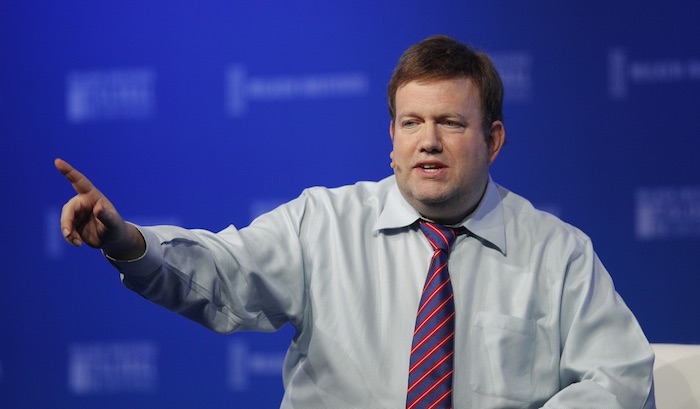


Mar 012026


Mark Chagall Peace window, UN 1967


• Iranian Supreme Leader Ayatollah Ali Khamenei is Dead (Matt Margolis)
• Trump Announces Major Airstrikes Against Iranian Regime (Matt Margolis)
• Saudi Arabia Joins U.S. in Fighting Iran (Salgado)
• Trump Isn’t Starting a War, He’s Ending One (A.J. Christopher)
• Russia Condemns US Attack On Iran, Warns Of ‘Radiological Catastrophe’ (ZH)
• Barack Obama Is to Blame for Iran. Here’s Why. (Matt Margolis)
• The Clash Of Civilizations Restarts History (J.B. Shurk)
• The Devil (and Gavin Newsom) Went Down in Dixie (Scott Pinsker)
• A Surprising Defense of Trump Came From Bill Clinton (David Manney)
• How Profanity Has Taken Hold of American Politics (Turley)
• Britain’s Islamic Bloc Vote Warning. America, Take Note. (Peter McIlvenna)
• The EU Wants A Nord Stream Sequel, But Not All Members Are Buying It (Marsden)
• Marine Le Pen Says She Will Not Run In 2027 Election If Under House Arrest (ZH)
• Bhattacharya To Lead Top US Health Agencies At Trump’s Request (Attkisson)
• RFK Jr. DESTROYS Media’s Trump Caricature, Celebrates Epic Win on Drug Prices (MN)


https://twitter.com/nicksortor/status/2027850917337346454?s=20


Iran is a formidable force. They had 35 years to prepare. They have a million missiles. They have a million soldiers. Question is: who has their finger on the button now Khameini’s gone?

• Iranian Supreme Leader Ayatollah Ali Khamenei is Dead (Matt Margolis)

Despite some initial debate, Ayatollah Ali Khamenei was killed during the airstrikes Saturday morning, Israeli officials report. Iranian Supreme Leader Ayatollah Ali Khamenei was assassinated in an Israeli strike on Tehran, with his body found under the rubble caused by an Israeli airstrike, senior Israeli officials were informed on Saturday evening, the Jerusalem Post reports. Documentation of Khamenei’s body was reportedly shown to Prime Minister Benjamin Netanyahu. Khamenei has ruled the Islamic Republic of Iran since 1989, previously serving as president under Ruhollah Khomeini’s regime from 1981 until his ascension to supreme leader. He was 86 years old.


Earlier on Saturday, Iranian officials promised to release a recording from Khamenei soon after Israeli strikes targeted his Tehran compound. The preliminary assessment among Israeli officials was that Khamenei was hurt in the strike. No official confirmation has been received by Israeli, American, or Iranian sources. In the immediate aftermath of the U.S.- Israeli strikes, there was a several hour window where no one could say for sure whether Khamenei was dead, wounded, or merely in hiding. Israeli TV, citing unnamed intelligence sources, quickly assessed that Khamenei had likely been killed when his compound in Tehran was flattened, but officials in Israel, the U.S., and Iran all stopped short of formal confirmation, stressing that his fate was still uncertain.

https://twitter.com/Osint613/status/2027833699316764764

An Israeli official also confirmed to Axios that Khamenei was killed. Why it matters: The 86-year-old Khamenei led Iran for 35 years, making him one of the world’s longest-serving authoritarian rulers. His death is a massive blow to the regime and could accelerate its collapse, which U.S. and Israeli officials have stated as a goal of their operation. The big picture: Khamenei’s killing sets off an immediate succession crisis with no clear answer.Under Iran’s constitution, a council of clerics is meant to select a new supreme leader – but Israel’s strikes also targeted senior Islamic Revolutionary Guard Corps (IRGC) commanders and political leaders, leaving the regime’s chain of command in disarray. Israeli officials say they assess the Iranian minister of defense and the commander of the IRGC were also among those killed in targeted strikes on Saturday.

Yes, it’s official: https://twitter.com/nicksortor/status/2027839695007138207

Sen. John Fetterman (D-Penn.) once again had a sensible reaction:
Read more …

They have to go all the way now.

• Trump Announces Major Airstrikes Against Iranian Regime (Matt Margolis)

President Donald Trump addressed the nation early Saturday morning in an eight-minute video posted to Truth Social, announcing that the United States had begun a joint military strike in Iran. The strikes, which followed a coordinated U.S.–Israeli joint assault on key Iranian military assets, represent the most significant American military action in the Middle East in decades. “A short time ago,” he began, “the United States military began major combat operations in Iran. Our objective is to defend the American people by eliminating imminent threats from the Iranian regime, a vicious group of very hard, terrible people.”


He framed the attack as a long-overdue reckoning. “Its menacing activities directly endanger the United States, our troops, our bases overseas, and our allies throughout the world,” Trump said. “For 47 years, the Iranian regime has chanted ‘Death to America’ and waged an unending campaign of bloodshed and mass murder targeting the United States, our troops and the innocent people in many, many countries,” he said, as though ticking off the charges against a sworn enemy. Trump dove into history of Iran’s evil actions, from the 1979 hostage crisis to the Marine barracks bombing in Beirut in 1983, and even the attack on the USS Cole in 2000.

“Many died,” he said bluntly. “Iranian forces killed and maimed hundreds of American service members in Iraq.” He accused the regime of continuing “to launch countless attacks against American forces stationed in the Middle East” and striking “U.S. naval and commercial vessels in international shipping lands.” Then came his cutting declaration: “It’s been mass terror, and we’re not going to put up with it any longer.” “From Lebanon to Yemen and Syria to Iraq, the regime has armed, trained and funded terrorist militias that have soaked the earth with blood and guts,” he said, a vivid and gruesome description even by Trump’s standards. He pointed specifically to the Oct. 7 attacks on Israel, reminding the nation that more than 1,000 innocent people were killed, including 46 Americans, and that 12 U.S. citizens were taken hostage.

“Iran is the world’s number one state sponsor of terror,” Trump asserted. “It has always been the policy of the United States, in particular, my administration, that this terrorist regime can never have a nuclear weapon. I’ll say it again — they can never have a nuclear weapon.” He reminded Americans of “Operation Midnight Hammer,” the 2025 strike that “obliterated the regime’s nuclear program at Fordow, Natanz and Isfahan,” and painted Iran’s leadership as directionless and fanatical. “We tried. They wanted to do it. They didn’t want to do it. Again, they wanted to do it. They didn’t want to do it. They didn’t know what was happening. They just wanted to practice evil,” he said.

This new campaign was both an act of defense and destiny. The Iranian regime has long had nuclear ambitions, and nothing, not even that ridiculous nuclear deal with Obama, stopped them. And Trump understands that the regime was never going to stop pursuing nuclear weapons. “They rejected every opportunity to renounce their nuclear ambitions, and we can’t take it anymore,” Trump said. Iran, he warned, had been “developing long-range missiles that can now threaten our very good friends and allies in Europe, our troops stationed overseas, and could soon reach the American homeland.”

[..] Finally, Trump turned to the people of Iran. “The hour of your freedom is at hand,” he said. “Stay sheltered. Don’t leave your home. It’s very dangerous outside. Bombs will be dropping everywhere. When we are finished, take over your government. It will be yours to take.” He called it “probably your only chance for generations,” and pledged that “America is backing you with overwhelming strength and devastating force.” “This is the moment for action,” Trump concluded. “Do not let it pass. May God bless the brave men and women of America’s Armed Forces. May God bless the United States of America. May God bless you all. Thank you.”

Read more …

BIG. Split up the middle east.

• Saudi Arabia Joins U.S. in Fighting Iran (Salgado)

The Muslim kingdom of Saudi Arabia is so outraged at a retaliatory Iranian strike on a United States base on Saudi soil that it is planning to join the operation against Iran’s regime, according to Fox News. The Iranian regime might have made a fatal mistake in striking multiple Gulf states that host American military bases. Several of those countries, including Qatar, are often inclined to be favorable towards the genocidal Iranian dictatorship, but by hitting targets in those countries, the Iranian jihadis have likely made them into enemies. And if Saudi Arabia really is joining the operation against Iran, that would be a major development.


Fox News national correspondent Jennifer Griffin announced live on Saturday afternoon, “We’re just getting word that the Kingdom of Saudi Arabia says they will join the U.S. in the operation against the Islamic Republic of Iran.” Operation Epic Fury has a new partner. The Iranian regime was so foolish that it managed to get Saudi Arabia at least temporarily on the same side as Israel, which really is shocking.Griffin continued, “They [Saudi Arabia] said that this comes in the wake of Iran attacking the U.S. base in Saudi Arabia. I just spoke to a senior U.S. official who said the Iranians made a big mistake by firing on Arab coalition partners. Now they are likely to respond. So by Iran firing missiles at UAE, Bahrain, Qatar, Kuwait, Saudi Arabia, and Jordan, they are now likely to fire back at Iranian targets.”

In short, Griffin stated, “So those coalition partners are now going to enter this operation that started off as a U.S.-Israeli operation. That is very, very significant, and we haven’t seen that happen in the past.” No kidding. The Kingdom of Saudi Arabia already made an announcement that it “condemns and denounces in strongest terms the blatant Iranian aggression and the flagrant violation of the sovereignty of the United Arab Emirates, the Kingdom of Bahrain, the State of Qatar, the State of Kuwait, and Hashemite Kingdom of Jordan. The Kingdom affirms its full solidarity with and unwavering support for the brotherly countries, and its readiness to place all its capabilities at their disposal.”

The official statement added, “Saudi Arabia calls on the international community to condemn these blatant attacks and to take all firm measures necessary to confront Iranian violations.” By that point, Iran had launched a retaliatory strike against a U.S. base in Saudi Arabia. Even the terror-sponsoring Qatari regime that has interceded for Khamenei’s dictatorship in the past posted, “The Ministry of Foreign Affairs affirms that the State of Qatar reserves its full right to respond to this attack in accordance with the provisions of international law and in a manner proportionate to the nature of the aggression, in defense of its sovereignty and in protection of its security and national interests.”

But since Qatar then followed that up by calling for an immediate cessation in hostilities, it is unlikely that the pro-terror state will take any military action to help the United States in this case. Qatar is likely ticked off that its pals over in Iran might dare to hit it.

Read more …

“We have “thou shalt not kill.” They have “thou shalt kill every infidel you find.”

• Trump Isn’t Starting a War, He’s Ending One (A.J. Christopher)

As of this writing, the United States and Israel have begun what I can only assume to be the first round of military strikes on Iran. I also assume that the eventual goal is regime change, effected by the United States, but driven by the Iranian people. And I’m not alone. Over the past few days, the so-called “think” tanks are falling all over themselves to be the first to prophesy a quagmire, a “trap,” a “forever war,” and Iraq 3.0.


The dregs at Foreign Policy took a break from clamoring for a post-American world order to demand we not bomb Iran precisely to more quickly usher in said order. At Powerline blog, John Hinderaker gleefully straddles the fence as only he can by declaring his hope that Trump bombs the mullahs with the goal of regime change… and in the same sentence, expresses doubt that this will be accomplished. And if you’re willing to waste the brain cells, you can guess what ol’ Tucker’s position on it is.

But the absolute worst take must be from John Daniel Davison over at The Federalist. John’s main point is that if we allegedly “obliterated” Iran’s nuclear abilities with Operation Midnight Hammer, than why do we need to now bomb Iran again to prevent them from acquiring nuclear capabilities?bUm, well, because Iran is trying to rebuild them. As we knew they would. And if we keep bombing only their nuclear facilities, they will simply keep rebuilding them until the next Democrat gets elected president and we stop sending bombs and start sending pallets of cash again. So there’s that. John writes, “At a certain point, it begins to look like the Trump administration is fishing for a reason to strike Iran. Sorry, but that’s not good enough.” Fishing for a reason? I’ll give you a few reasons, John. You tell me if they’re “good enough.”

  • On November 4, 1979, the Iranian government took 52 Americans hostage for 444 days.
  • The Iranian government helped create, fund, and arm Hezbollah and Hamas.
  • On April 18, 1983, Hezbollah bombed the American embassy in Beirut, killing 63 people.
  • On October 23, 1983, Iranian-backed terrorists bombed the American and French barracks in Beirut, killing 307 people.
  • Over the next decade, Iranian-backed terrorists hijacked several planes, including TWA flight 847, which resulted in the killing of an American sailor.
  • On July 22, 1985, Hezbollah bombed a synagogue, a Jewish nursing home, and a kindergarten in Copenhagen.
  • On March 17, 1992, Hezbollah bombed the Israeli embassy in Buenos Aires, killing 29 people.
  • On July 18, 1994, Hezbollah bombed a Jewish community center in Buenos Aires, killing 85 people.
  • On June 25, 1996, Iranian-backed terrorists bombed Khobar Towers, killing 19 American servicemen.
  • Iran provided training and expertise to al-Qaeda to commit the 1998 embassy bombings
  • Iran provided training and expertise to al-Qaeda to commit the 2000 USS Cole bombing.
  • During the Iraq War, Iran supported the Shia insurgency against coalition forces.
  • During the Afghan War, Iran supported the Taliban insurgency against coalition forces.
  • Iran supported Syria’s Assad government in crushing its own revolution.
  • On October 7, 2023, Hamas launched a genocidal war against Israel.
  • Iran trains and supports the Houthi rebels in Yemen.
  • Iran maintains close ties with the world’s most totalitarian governments, to include Russia, China, North Korea and, until recently, Venezuela.
  • Iran’s government is protected by the Islamic Revolutionary Guards Corps (IRGC), which is basically an Islamic version of Hitler’s SS.
  • For the last 47 years, Iran has been the foremost sponsor of terror in the world.


If these reasons aren’t “good enough” for John Daniel Davison, and we need to go “fishing” for more reasons, here’s another one: The Iranian government is founded on an offshoot of Islam called Twelver Shiism. It is an apocalyptic sect which holds that the twelfth imam Muhammad al-Mahdi (born 870 AD) never actually died, and has been in hiding this entire time. The Twelvers believe it is their divine duty to usher in the Apocalypse in order to trigger his return. Hence the unrelenting half-century war of terror against the West. We have “thou shalt not kill.” They have “thou shalt kill every infidel you find. That’s the mindset we’re up against. Not reason. Not logic. Not deals or agreements or easing of sanctions. Not a return to the “stable” order of the Cold War that so many “conservatives” seem to long for. The Ayatollahs, their IRGC henchmen, and their Hamas and Hezbollah proxies want all of us dead. All of us.

They would behead John’s kids in front of him and laugh as they did it. Still “not good enough,” John? Here’s one more reason: In the last 47 years, the geopolitical chessboard has never been so favorable to us and so unfavorable to Iran. In the last few years, Iran has lost both Hamas and Hezbollah as serious forces. Iran has lost its base in Syria. Iran has lost its base in Venezuela. Russia and China have quietly dumped Iran. The Houthis have been taught a few lessons. Iran has recently been militarily weakened in its humiliating defeat in the Twelve-Day War with Israel, as well as with Operation Midnight Hammer. And millions of the Iranian government’s own citizens openly despise the regime, and will be more than happy to see it relegated to the dustbin of history.

Read more …

Russia has to protest of course. But they’re happy too. Who wants to deal with a medieval regime?

• Russia Condemns US Attack On Iran, Warns Of ‘Radiological Catastrophe’ (ZH)

As fully predictable, Moscow has blasted the major overnight and early morning US-Israeli strikes on Iran, calling the attack “a preplanned and unprovoked act of armed aggression against a sovereign and independent U.N. member state” and has demanded an immediate halt to the military campaign and a return to diplomacy. The Foreign Ministry in a statement on Telegram accused Washington and Tel Aviv of “hiding behind” concerns about Iran’s nuclear program while actually pursuing regime change, as also cited in The Associated Press. After all, even on Friday Iran was strongly signaling readiness to take enrichment down to zero, as our own headline and others indicated: Iran Reportedly Agrees To Give Up Nuclear Material In Breakthrough: ‘Peace Deal Within Reach’.


Moscow is further warning of Iraq-style catastrophe and a regional domino effect which could unleash terrorism and chaos for years to come. The attacks could trigger “humanitarian, economic and possibly radiological catastrophe” in the region, and charged the US and Israel of “plunging the Middle East into an abyss of uncontrolled escalation.” However, the Kremlin is unlikely to come to Iran’s rescue in any direct way, given it is carefully trying to balance and restore relations with Washington in the context of the Ukraine war.

As for that other raging conflict in Eastern Europe, now four years in, Ukraine has come out in support of the US attacks on Iran. This is understandable, given the Iranians have long supplied Moscow with suicide drones which have wreaked havoc on Ukrainian cities. China too has condemned the attack on Iran alongside Moscow, but using words much more restrained that Russia’s. “China calls for an immediate stop of the military actions, no further escalation of the tense situation, resumption of dialogue and negotiation, and efforts to uphold peace and stability in the Middle East,” its foreign ministry ministry said on X.

Most or all of the BRICS countries are expected to come out against the US-Israeli aggression. Europe is expected to by and large stay on the sidelines, fearing that any broader Mideast war would have spillover effects, such as another potential refugee crisis. The UK, Germany and France have said nothing specifically on the ‘legality’ of the unprovoked US attack on Tehran, but have instead condemned the Iranian response.They released a joint statement telling Iran to stop its attacks on US-Israeli assets and bases in the region. “We condemn Iranian attacks on countries in the region in the strongest terms,” French President Emmanuel Macron, German Chancellor Friedrich Merz and British Prime Minister Keir Starmer said.

Read more …

JCPOA

• Barack Obama Is to Blame for Iran. Here’s Why. (Matt Margolis)

Americans woke up Saturday to something big. The United States and Israel launched a massive joint offensive against Iran’s regime, known as Operation Epic Fury. According to reports, targets included Iran’s supreme leader and president. Major combat operations are now underway, and the implications are global. Predictably, Democrats in Washington and even some Republicans are questioning the strikes. But let’s be honest — this moment was long overdue. Iran’s reign of terror didn’t start yesterday. In fact, this confrontation is the direct result of the Obama administration’s disastrous decision a decade ago to appease, enrich, and embolden Tehran.


Barack Obama and his administration sold the world a fantasy with the Joint Comprehensive Plan of Action (JCPOA), commonly referred to as the Iran nuclear deal. This treaty was so bad that Obama didn’t even attempt to get the Senate to ratify it. He just pretended it wasn’t a treaty and signed it unilaterally, claiming it as a foreign policy victory for himself. In fact, Obama was so desperate to make the deal a defining foreign policy achievement of his presidency that the lies about the deal from the left have never stopped. He told us it was a historic diplomatic breakthrough that would block Iran’s path to nuclear weapons. In reality, it handed the mullahs a lifeline and a fortune. Sanctions were lifted. Tehran gained access to roughly $150 billion in frozen assets, and there was that infamous $1.7 billion in cash sent to the regime, much of it delivered on pallets in the middle of the night. Every step of the way, Obama was emboldening Iran, not containing it.

It didn’t take long for Iran to show what a joke the deal really was. Just three months after signing the deal, Tehran test-fired ballistic missiles in open violation of U.N. resolutions. German intelligence later reported that Iran was still seeking technology for a military nuclear program. The International Atomic Energy Agency confirmed repeated violations of material limits — all while Obama kept reassuring us that the agreement was “working.” Even he eventually admitted Iran was violating the “spirit” of the deal, and that was as close as he’d ever get to admitting that his deal was a sham. nAnd while Obama’s State Department was congratulating itself, Iranian leaders were laughing. They bragged that the JCPOA favored Iran. Hassan Rouhani, then Iran’s president, boasted that the regime had used diplomacy to buy time and advance its nuclear program. The Obama administration believed it was outsmarting Tehran, but in reality, it had been duped.

It’s not as if the liberal media didn’t notice this either. The New York Times even reported in 2015 that Iran had breached its enrichment limits before the deal was finalized. Inspectors found that while the Obama White House claimed Iran’s program was “frozen,” the country’s nuclear stockpile actually increased by 20%. Iran was supposed to convert that material for peaceful use. Instead, they let it grow — and Washington looked the other way. By the time President Donald Trump took office, the JCPOA wasn’t the safeguard Democrats claimed it was; it was just a smokescreen. Obama’s grand achievement hadn’t restrained Iran’s nuclear ambitions one bit. If anything, it emboldened them to pursue nuclear weapons as never before. The regime’s missile program accelerated, its proxies expanded across the region, and its leaders grew richer, bolder, and more violent.

Nevertheless, when Trump took office in 2017, he didn’t immediately pull the plug. He gave the deal every chance to work. But by 2018, the evidence was clear: continued violations, broken promises, and a regime that had learned there were no consequences. So, in May of that year, Trump ended the charade and withdrew from the deal once and for all. Of course, Joe Biden wanted to revive the deal when he took office. While he never succeeded, the message to Iran was clear: the Democratic Party would always be there for the regime. If you want to know why negotiations with Iran always failed, the answer is obvious: they had to do was wait out Trump, and hope Democrats would be in power again.

Iran has been daring the world to stop it for years, and now, it is finally getting what it deserves.

Read more …

“Burma, India, Bangladesh, Thailand, China, Cambodia, Vietnam, and Laos fight against each other and themselves..”

• The Clash Of Civilizations Restarts History (J.B. Shurk)

Western globalists won’t last long. Thirty-five years ago, American political scientist Francis Fukuyama made a name for himself by advancing the proposition that the end of the Cold War and the dissolution of the Soviet Union promised the ascendency and universalization of so-called Western liberal democracy. As a Marxist-Hegelian who saw the progression of history as an evolutionary process with a natural and predetermined conclusion, Fukuyama envisioned Western-styled liberalism as both “the endpoint of mankind’s ideological evolution” and “the final form of human government.” Expecting all human struggles to barrel toward a state of imminent equilibrium and future peace, Fukuyama stated out loud what many other late-twentieth century thinkers also believed: Humanity had reached the end of history.


After the 9/11 Islamic terror attacks in the United States, two decades of the “Global War on Terrorism,” communist China’s expansive “Belt and Road Initiative,” immigration-fueled social strife, the collapse of public trust in government institutions, the prevalence of pre-civil war conditions across Europe, the rise of Indian economic power,, the emergence of Donald Trump’s nationalism as a counterbalance to the World Economic Forum’s vaunted globalism, the return of the Russian Federation as a major source of European angst, the growth of “multiculturalism” and its attendant fracturing of national unity, the “great powers” competition for hydrocarbon energies and other natural resources, the new geopolitical race to project strength in the Arctic, and the ever-present discussion of an impending World War III — just to name a few of the numerous global conflicts of the first quarter of the present century — Fukuyama’s “end of history” argument has probably reached the end of its usefulness.

Before the curse of humanity’s short memory stores Fukuyama’s “end of history” thesis in the cupboard until it can be retrieved, dusted off, and recycled for practical use next century (just as Fukuyama had done with the historical conceptions of Hegel and Marx), it is worth noting how much of the academic world bought into this argument. I remember listening to two young political science professors discussing Fukuyama’s work after the 9/11 terror attacks, and even then — in the midst of such a horrific rebuke to the proposition that a globalized form of Western liberalism was preordained — both academics were staunch believers in the “end of history” and disagreed only about whether Professor Fukuyama was worthy of so much praise for having merely stated what was glaringly obvious.

I was around another man at the time named Samuel P. Huntington, and he had written an essay and book that took Fukuyama’s thesis to task. In The Clash of Civilizations and the Remaking of World Order, Professor Huntington argued that unbridgeable cultural conflicts would continue to remake the world. Although critics called him “racist,” “Islamophobic,” “ignorant,” and even “Hitlerian” for dismissing the unifying effects of “diversity” and “multiculturalism,” Huntington’s predictions for a volatile twenty-first century were much more accurate than anything coming from the “end of history” camp. Still, even after death, the man who dispassionately forecasted a civilizational clash and an emerging period of global uncertainty is still maligned as “prejudicial,” “white supremacist,” “bigoted,” and “imperialist.”

Is there any conflict raging in the world today that can’t be described in terms of competing cultural values? Israel and its Islamic neighbors have been in a perennial state of war for eighty years. Indian Hindus and Pakistani Muslims remain at each other’s throats. Christianity and Islam have added fuel to fiery tribal conflicts that continue to rage across the continent of Africa. Armenia’s Christians and Azerbaijan’s Muslims struggle to maintain peace. The Balkans remain a potpourri of combative cultures and ethnic groups whose simmering passions can quickly boil over. Burma, India, Bangladesh, Thailand, China, Cambodia, Vietnam, and Laos fight against each other and themselves as civilizational loyalties turn ancient resentments into recurring bouts of violence. The War in Ukraine centers around the contested Donbas region whose people more closely align with the language, religion, and culture of Russia than with the historic identity that unites the people living in the western two-thirds of Ukraine. Everywhere in the world, battle lines are drawn around civilizational identity. Religious conflict, historic grievance, and cultural incompatibility drive violence around the planet.

Read more …

“Black people are roughly 20% of the Democratic Party. In the critical primary state of South Carolina, nearly 60% of the voters are black.” […] Gavin Newsom is slick, but he’s no Slick Willy.”

• The Devil (and Gavin Newsom) Went Down in Dixie (Scott Pinsker)

I love Charlie Daniels, but this has always bothered me: From the lyrics to his classic “Uneasy Rider”:


I I just ordered up a beer and sat down at the bar
When some guy walked in an’ said, “Who owns this car?
With the peace sign, the mag wheels, and four on the floor”


Well he looked at me and I damn near died
And I decided that I’d jus wait outside
So I laid a dollar on the bar and headed for the door

Jes’ when I thought I’d get outta there with my skin
These five big dudes come strollin’ in
With this one old drunk chick and some fella with green teeth

Okay, so first one guy walks in. Then five more guys come in — plus a drunk woman and the green-toothed gentlemen. That’s eight guys! Then the lyrics continue:
An’ I was almost to the door when the biggest one
Said “You tip your hat to this lady, son”
An’ when I did, all that hair fell out from underneath

Now the last thing I wanted was to get into a fight
In Jackson Mississippi on a Saturday night
‘Specially when there was three of them and only one of me

Wait — how did it go from eight to three?! Like I said, I love Charlie Daniels, but my boy’s not the greatest at math. Oh well. Still a heck of a storyteller. And his biggest hit was “The Devil Went Down to Georgia.” (Of course, since the Devil went DOWN to Georgia, the implication is, Hell must be north of Georgia. I’m thinking Richmond, Va.) Either way, the devil wasn’t the only one defeated in Dixie: Gavin Newsom, the exquisitely coiffed governor of California, just rolled snake eyes, too. Even his hometown news site admitted it. From SFGATE:”Newsom Is Touring Southern States. It’s Exposing Some Hurdles in His Path to 2028″.

Newsom began the first stretch of the book tour for his memoir “Young Man in a Hurry” this weekend in the South, with stops in Alabama, Tennessee and South Carolina. His team said starting in that region was “quite intentional” — but he’s already ruffled some feathers. While he is mostly sharing heartening anecdotes from the book, including how he handled being a student raised by a single mother and struggling with undiagnosed dyslexia, he is also clearly using his hourlong stage appearances to appeal to potential swing voters. No, it’s NOT about appealing to swing voters — at least, not yet. Newsom only cares about Democratic voters because, without them, swing voters are meaningless. He’s got to win his party’s nomination first.

That’s why his book tour was built around a Bizarro version of the Southern Strategy: Newsom needs black support. It’s his biggest vulnerability. We discussed this earlier in the week:”Black people are roughly 20% of the Democratic Party. In the critical primary state of South Carolina, nearly 60% of the voters are black.” […] Gavin Newsom is slick, but he’s no Slick Willy. There’s a reason why Toni Morrison dubbed the Man from Hope our “first black president.” Whereas Bill Clinton had an aw-shucks, good-natured, instantly relatable Southern charm, Gavin Newsom is as white as mayonnaise. Newsom isn’t “street” — unless that street is Wall Street. He’s the Patriarchy personified. Without black support, Gavin Newsom risks being the next Bernie Sanders. In CNN’s 2020 postmortem on Sanders’ loss to Joe Biden, the #1 reason cited was: Lack of Black Support.

Sanders ran into a wall in 2016 among black voters. Hillary Clinton catapulted herself to victory by winning blowouts throughout the South, where black voters make up a huge chunk of primary voters. Sanders needed to improve upon his performance. Instead, Sanders did as bad in 2020 among this pivotal group. Among African Americans who voted for Biden or Sanders, Sanders won just 23% in the median state with an entrance or exit poll. That was the same percentage he garnered in 2016. Black voters propelled Biden to his big win in South Carolina, which started him on his journey to defeating Sanders. This is why Gavin Newsom set up shop in Dixieland: He’s learned from Sanders’ campaign mistakes. Striking gold in New Hampshire or Iowa is meaningless if your cupboard is bare in the South. Trouble is, he tried to bond with black Democrats by playing up his stupidity. Here’s the video:

Read more …

“For Clinton to say, under oath, that Trump showed no indication of criminal involvement doesn’t neatly fit into partisan talking points. ”

• A Surprising Defense of Trump Came From Bill Clinton (David Manney)

Every once in a while, politics delivers a moment nobody sees coming. Former President Bill Clinton, under oath, reported that President Donald Trump never gave him any indication he was involved in Jeffrey Epstein’s criminal conduct. That sworn statement now adds a new wrinkle to one of the most combustible and easily proven false stories of the last decade. Bill Clinton has been facing questions about his own past ties to Epstein. Flight logs show Clinton traveled on Epstein’s private jet several times in the early 2000s, but he’s maintained he cut off contact after learning more about Epstein’s behavior. In this recent sworn exchange, Clinton reportedly stated that during his interactions with Trump, he never saw or heard anything suggesting Trump engaged in Epstein’s crimes.


Trump has repeatedly acknowledged knowing Epstein socially in the 1990s, appearing in photographs from that period. He’s also publicly stated that he broke off contact with Epstein years before Epstein’s 2008 guilty plea. In 2019, Trump told reporters that he hadn’t spoken to Epstein in about 15 years and described himself as “not a fan.” “Trump barred Epstein from Mar-a-Lago after Epstein behaved inappropriately toward a club member’s teenage daughter, according to journalists from the Miami Herald and Wall Street Journal. The reporters included some information about Trump’s links to Epstein in their 2020 book, “The Grifter’s Club: Trump, Mar-a-Lago, and the Selling of the Presidency.”

A Mar-a-Lago member told the journalists that Trump had “kicked Epstein out after Epstein harassed the daughter of a member,” Sarah Blaskey of the Miami Herald reported. “The way this person described it, such an act could irreparably harm the Trump brand, leaving Donald no choice but to remove Epstein.” The incident happened around October 2007, when Mar-a-Lago’s registry listed Epstein’s account as “closed,” the Miami Herald reported. Epstein was arrested in July 2019 on federal sex trafficking charges involving underage girls. He died in a Manhattan detention facility while awaiting trial. His longtime associate, Ghislaine Maxwell, was convicted in 2021 on federal sex trafficking charges and later sentenced to 20 years in prison.

Clinton’s reported testimony stands out for one simple reason: it cuts against the common political storyline. Clinton and Trump have been rivals since Trump rode the escalator, trading barbs publicly and representing opposite poles in American politics. For Clinton to say, under oath, that Trump showed no indication of criminal involvement doesn’t neatly fit into partisan talking points. Statements under oath carry legal weight; false testimony risks perjury. That context matters; when a former president speaks under penalty of law, the words deserve attention. The broader Epstein scandal has touched powerful names across finance, politics, and entertainment, while Congressional interest remains high. Lawmakers continue seeking documents and testimony tied to Epstein’s network as calls for full disclosure have come from both sides of the aisle.

Clinton’s sworn statement doesn’t erase Trump’s past social proximity to Epstein, but it adds a factual element that complicates sweeping accusations. When critics assert that association equals guilt, sworn testimony suggesting otherwise forces a pause. While it’s fair to call the moment unexpected, it’s also fair to ask whether legacy political commentators who’ve spent years speculating will give equal attention to testimony challenging their narrative. Ignoring inconvenient details only subtracts from their sinking credibility. The Epstein case remains one of the most disturbing and long-reaching criminal sagas in modern history. Justice for victims remains central. Factual clarity about who did what remains essential, and when sworn testimony contradicts assumptions, it can’t be brushed aside.

Read more …

“I don’t swear in public very well, but we have to f–k Trump. Please don’t tell my children that I just did that.”

• How Profanity Has Taken Hold of American Politics (Turley)

“Respectfully, f–k off.” Those words by California Gov. Gavin Newsom’s spokesperson, Izzy Gardon, summed up the current race to the bottom of American politics. Democrats appear in a competition of the profane where voters are now subject to a virtual carpet-bombing of f-bombs and other indecent language. Gardon’s response was to a standard media inquiry after Newsom’s controversial statement to a black interviewer. In an Atlanta event, Newsom declared: “I’m like you … I’m no better than you. I’m a 960 SAT guy … literally a 960 SAT guy. You’ve never seen me read a speech because I cannot read a speech.” It was widely denounced as racist, but Newsom insisted that he was only talking about his struggle with dyslexia.


The spin quickly fell apart after his statement, “I’m like you … I’m no better than you,” which suggested he thought the audience in Atlanta had low scores. Reporters followed up to ask for proof about his disability, including his claim that “I cannot read.” The response was an f-bomb from Gardon. Newsom, too, unleashed a profane attack on Sean Hannity of Fox News — who gave the California governor a chance to respond to his critics. When Hannity criticized Newsom’s comments in Atlanta, the governor posted several four-letter words on X, concluding with: “Spare me your fake f—ing outrage.” There was a time when political leaders maintained basic standards of civility and avoided profanity in public. Presidents like Lyndon Johnson could be quite salty in private, but drew a line in public.

Rporters followed up to ask for proof about his disability, including his claim that “I cannot read.” The response was an f-bomb from Gardon. Notably, one of Richard Nixon’s objections to his tapes being made public was the inclusion of foul language used in the Oval Office. He noted in his book In the Arena that “since neither I nor most other presidents had ever used profanity in public, millions were shocked.” It was not long ago that Trump’s then-new White House Communications Director Anthony Scaramucci shocked many with a profane diatribe. He defended it as “an Italian thing.” At the time, I wrote that, as someone who was raised in an Italian family, we clearly had a different upbringing. I noted that if I used that language in public, my Sicilian grandmother would have ended the diatribe with a backhand.

Profanity sometimes added to the mystique of military leaders who sought to convey that they were unconcerned with social norms as warriors. Gen. George Patton was known to drop some doozies. In one scene in the famous eponymous movie, Patton is asked about the Bible next to his bed and whether he really prayed. Patton responds, “I sure do … Every godd–n day…” Politics was different. The public once looked to political leaders as role models who exemplified social norms. It now appears that profanity is viewed as an essential element of political speech on the left.m mPolitics was different. The public once looked to political leaders as role models who exemplified social norms. Katie Porter this week thrilled a crowd by waving around a sign reading “F–k Trump.” Porter was previously criticized for using such language to abuse staffers to “get out of my f–cking shot” in an interview.

At the State of the Union, Rep. Rashida Tlaib wore a button on the House floor reading “F–k Ice.” Such behavior is not just limited to Democrats. President Trump has used profanity on occasion. However, the Democrats appear to have made profanity a signature element in their campaigns.Rep. Jasmine Crockett, who is running for the U.S. Senate in Texas, seems a perpetual profanity machine, regularly telling figures like Elon Musk to “f–k off” and dropping the f-bomb at a higher rate than prepositions. Some are virtually giggly over swearing in public. Rep. Maxine Dexter (D-Ore.) declared, “I don’t swear in public very well, but we have to f–k Trump. Please don’t tell my children that I just did that.” The crowd roared with approval that Dexter was feigning being naughty with dirty words.

Read more …

Muslims born in Britain. Now poised to take over. How will the Christians defend themelves? They don’t even know they’re under threat.

• Britain’s Islamic Bloc Vote Warning. America, Take Note. (Peter McIlvenna)

Britain’s Gorton and Denton by-election on Feb. 26 was more than just a local upset. It gave a glimpse into demographic changes that could shape U.S. politics. The Green Party’s Hannah Spencer won with 41% and 14,980 votes, turning this Labour stronghold into the Greens’ first northern seat. Reform UK came second with 29% of the vote, and Labour finished third with 25%. Turnout was low at 48%. The main story: Muslim bloc power flipped a seat, and Reform UK leader Nigel Farage’s strategy did not work. The seat’s divided nature tells the story. Manchester wards like Burnage, Gorton & Abbey Hey, Levenshulme, and Longsight are changing fast: 40% Muslim, 62% U.K.-born, and 30% are graduates or students.


In Longsight, 60% are Muslim and 52% U.K.-born, making it a diverse, urban area where Gaza is a common topic. The Greens succeeded by using multilingual flyers, focusing on Palestine, and promoting anti-Islamophobia messages. Instead of attacking others, they built coalitions. That bloc, along with tactical left-wing voters, overshadowed everything else.Tameside wards, including Denton North East, South, and West, feel very different: less than 3% Muslim, 86% U.K.-born, and over 80% white British. These are working-class areas with few graduates and strong local roots. Reform UK led here, getting over 40% in some places by appealing to “keep Britain British” sentiment. Still, Manchester’s voters decided the outcome. This is a story of two different visions, almost like a modern Dickens novel.

Manchester is moving away from traditional English and British identity, with lower native birth rates, more multiculturalism, less connection to Christianity and old values, and a shift toward new cultural expressions. Tameside, on the other hand, is more cautious about fast cultural change, holding on to traditions and trying to keep established cultural identities. It is similar to the old divide between East and West Germany. The East kept its German identity, had little migration, and held onto traditions. The West became more multicultural, saw fewer native births, and its religious makeup changed. Gorton-Denton is a smaller version of this: Manchester shows the changing face of old England, while Tameside tries to stay recognizably British. The Greens won by understanding that concentrated bloc votes and progressive alliances now matter more than nostalgia.

Farage’s role was chaotic. Before the election, he avoided criticizing Muslims, maybe to appeal to more voters. But after losing, Farage accused others of “sectarian voting,” “cheating,” and “dangerous Muslim sectarianism.” He complained about “family voting,” with observers noting it in twelve percent of sampled cases, where husbands and wives crowded voting booths—the highest rate ever recorded. Democracy Volunteers flagged 68% of polling stations. No mosques were used as polling places; the council managed the process. Still, Farage’s comments sparked controversy. Critics say he changes his stance: soft on Islam to grow Reform, but harsh when things go wrong. Either way, he seems unsettled, caught between his supporters and the need to win votes.

Now, America faces similar questions in its primaries. The Muslim population is under 2% nationally, but is expected to grow due to higher birth rates and migration. CAIR reported 38 Muslim winners across the country last year. Zohran Mamdani won New York’s mayoral race with strong support for his socialist and pro-Palestine views. Ninety-seven percent of Muslim voters supported him, along with major donors, and Gaza became a key issue. Does this sound familiar? If the Gorton-Denton approach shows up in other places, like Dearborn, Queens, or Minneapolis, organized turnout could affect close elections.

Strong support from certain communities may help some candidates, while others might choose more moderate strategies. Family-based turnout, like what was seen in the U.K., could change usual voting patterns. Demographic changes are likely to continue, with some areas keeping traditional majorities and others forming new coalitions. The message is clear: Pay attention to demographic trends, or you might be surprised by changes in election results. Primaries are still important—voters may choose to stick with the status quo or join coalitions that want change. The lesson from Britain is that traditions alone may not be enough when organized participation increases.

Read more …

“Ukraine’s oil pipeline blackmail has Hungary demanding that support for Kiev be cut off..”

• The EU Wants A Nord Stream Sequel, But Not All Members Are Buying It (Marsden)

The Druzhba, or ‘Friendship’, oil pipeline is really living up to its name. All the ‘friends’ are fighting with each other. And now Hungary, worried about the EU’s slack attitude about what happens to its oil source, is saying that it’s time to deploy the army to protect it. Critics of Hungarian Prime Minister Viktor Orban argue that he only wants troops deployed inside the country because he’s down in the polls ahead of the April national election and he’s going to try some kind of autocratic jiu-jitsu to cancel them. Which totally ignores the fact that Ukrainian secret services are actively attacking the pipeline’s infrastructure – and there is something really fishy about the EU’s permissiveness around it.


Everyone from the Kiev Independent to French state media, France 24, has been attributing to the SBU, Kiev’s secret services, drone strikes on February 23, targeting a Russian oil pumping station serving Druzhba – citing actual SBU sources. And the EU’s position has been, “Look, it’s up to Ukraine if they want to fix it.” It’s not like they owe the EU anything, right? Just billions of euros, and counting. Can’t even get a repair job these days for that price, apparently. So Hungary’s been saying, “Hey, are you jokers going to actually do something about this? Because we’re putting our foot down on your whole ‘cash for Ukraine for European defense contractors’ charade and unilaterally canceling the next episode of your Russian sanctions unity show with a veto, until you reel in your spoiled brat foster kid.”

The EU says it would welcome the reactivation of landlocked Slovakia and Hungary’s fuel source running across Ukraine and delivering Russian oil. Funny that’s the case only now that it’s been bombed and the tap has been turned off – after years of official EU policy to ditch the Russian fuel that runs through it. But Brussels also said that it’s ultimately up to Little Zelya, Vladimir Zelensky, as to what he wants to do. Hungarian Foreign Minister Peter Szijjarto has been sounding like a waitress at Denny’s who’s fed up waiting for Little Zelya to decide what he wants while he kicks his little feet against the high chair. Queen Mommy, European Commission President Ursula von der Leyen, insists that he should be able to freely choose between blackmailing Hungary over oil or resuming the flow – with all the nonchalance of deciding between pancakes or a kid’s combo, even though it’s the Europeans whose interests she’s supposed to be defending and who are paying the tab.

“This risks our sovereignty, and we are not willing to tolerate this in silence,” Szijjarto said. “It is very frustrating that here in Brussels they usually stand on the side of a non-EU member state against EU member states. The European Commission behaves like a Ukraine Commission, and this is unbelievable.”

Read more …

Here’s democracy for you. Wait, didn’t that start in France?

“If I cannot be a candidate, Bardella will determine at what level he needs my presence, my advice and my experience,” Le Pen has stated about her protegé ..”

• Marine Le Pen Says She Will Not Run In 2027 Election If Under House Arrest (ZH)

In March 2025, Le Pen was convicted on charges dating back years ago, in a move that was widely contested and seen as a highly political attempt to keep her from running in next year’s presidential election. Now, she says she has no intention of running if her ban from running is lifted, if it means she must wear an electronic tag, i.e., ankle monitor. She is also ready to place full trust in Jordan Bardella, current leader of the National Rally (RN) Le Pen’s comments came during an interview with French television station BFMTV, her first since French prosecutors asked a court to uphold her five-year ban. A ruling on her case is expected on July 7.


“You cannot campaign under these conditions. Can you campaign without going out in the evenings to meet your constituents at rallies?” she asked, referring to the idea of having to campaign while wearing a monitor and under house arrest. Prosecutors had asked for Le Pen to be sentenced to four years in prison (three of which were suspended) and a fine of €100,000.In France, shorter prison sentences are often commuted, meaning that if the court follows the prosecutor’s request, Le Pen could spend anywhere from a few months to a year under house arrest, wearing an anklet. However, Le Pen has said she would not campaign under such circumstances. Le Pen says she will be present in court on July 7 to hear the Court of Appeal’s decision.

“Of course I will go, as I went every day to the trial in the first instance and on appeal because I respect justice,” she told BFMTV. Regarding the 2027 election, Le Pen said regarding RN leader Jordan Bardella: “The best-case scenario is that I am elected president of the Republic and he is my prime minister.” However, if she cannot run, then “Jordan will find himself a prime minister,” and she will take whatever “role he wants me to have.” Emphasizing that Bardella will be free to make his own choices, Le Pen told listeners, “If I cannot be a candidate, he will determine at what level he needs my presence, my advice and my experience.”

Read more …

A good thing about Covid: we found some really good people in the US. No, it ain’t Fauci.

“You don’t have to worry about looking over your shoulder, that you aren’t ideologically pure enough. You just focus on science that can translate over to solving the longevity problems that the United States has, the chronic disease problems, the real problems.”

• Bhattacharya To Lead Top US Health Agencies At Trump’s Request (Attkisson)

The head of the National Institutes of Health is now at the helm of a sub-agency, the Centers for Disease Control and Prevention. Dr. Jay Bhattacharya says President Trump personally asked him to take the CDC job temporarily until a permanent director can be named. “It’s hard to say ‘no’ to the president. What it means is that I will still be the director of the NIH. That’s my main day job,” Bhattacharya told “Full Measure” in a recent interview at NIH headquarters in Bethesda, Maryland. “But over the next couple of months, I’m gonna go work with folks at the CDC to help get the agency in a place where the new director, whoever ends up being Senate confirmed, we’ll have an organization that’s running well so that they can get their priorities in place.”


Prior to the COVID-19 pandemic, Bhattacharya was a medical doctor and professor at Stanford University, “happily publishing in journals.” But during Covid, he became a very vocal opponent – for scientific reasons – for government-mandated lockdowns to try to stop the spread of the virus. “I did a bunch of research that suggested that the lockdowns were not helping people, in fact, were causing tremendous harm to the poor children in the working class, all the school closures and all that,” he says. Bhattacharya helped create and get thousands of signatures on the Great Barrington Declaration to speak out against the lockdowns on public health grounds. For that, he became a target of the head of NIH at the time, Dr. Frances Collins, and Dr. Anthony Fauci, who headed the NIH Institute of Allergy and Infectious Diseases.

It was later revealed that the two men orchestrated a “devastating take-down” of Dr. Bhattacharya and his colleagues to silence and discredit them. Today, it’s a stunning reversal of fortunes for Dr. Bhattacharya that he was chosen to head up the very agency whose leaders had conspired against him. Bhattacharya says one of his main goals is to remove politics and ideology from science to “leave a lot more space for actual science.”“The cultural shift is, is enormous,” he says. “The purpose and the mission of the NIH is to do research that improves the health and longevity of the American people,” Bhattacharya said. “First of all, everyone should be behind that mission. And then second, once you say that’s the mission, that we’re only gonna be focused on the mission, it frees you up from all of the baggage.

“You don’t have to worry about looking over your shoulder, that you aren’t ideologically pure enough. You just focus on science that can translate over to solving the longevity problems that the United States has, the chronic disease problems, the real problems.” Establishment medicine figures who were frequently proved wrong about approaches to Covid and matters of Covid vaccine safety and effectiveness criticize most every decision and move Bhattacharya now makes. He says in response to the criticism: “If the NIH’s mission is to do support research that translates into better health and longer life for Americans, well, the NIH over the last 15 years has failed in its mission.

“And so the idea that it’s anti-science or politicizing the agency to remove political agendas from the agency, it’s almost Orwellian. And so when I see these stories, my general understanding of them is that it’s people that benefited from the old system where the focus was in part on ideology.” Bhattacharya says part of the steps to remove politics from the NIH is to begin a new plan to genuinely study vaccine injuries and treatments. “We’re working on that,” he told “Full Measure.” “One of the things that Tony Fauci’s old NIAID is gonna be doing is studying vaccine injury.”

Read more …

Bobby’s become a big Trump fan.

• RFK Jr. DESTROYS Media’s Trump Caricature, Celebrates Epic Win on Drug Prices (MN)

HHS Secretary Robert F. Kennedy Jr. delivered a powerful takedown of the fake news narrative surrounding President Trump, exposing the blatant lies and highlighting the administration’s groundbreaking success in driving down prescription drug costs—a move that puts American families first and crushes Big Pharma’s grip. Kennedy’s remarks come amid the Trump administration’s aggressive push to overhaul healthcare, including the implementation of the Most Favored Nation policy, which ensures Americans no longer foot the bill for the world’s highest drug prices. Kennedy noted that the U.S. had been paying two to four times as much for prescription drugs as other nations, with the administration securing agreements from “60 or 70” drug companies to end this disparity.


This victory builds directly on Trump’s longstanding commitment to dismantle Obamacare’s inefficiencies and redirect funds to the people, as we detailed in our earlier coverage of his plan to scrap the “STUPID” system and empower Americans. Kennedy didn’t hold back on the media’s relentless smear campaign against Trump. “The caricature you see in the press: ‘Narcissistic bombast, who is uneducated, not thoughtful, lacks compassion.’ The ACTUAL person is the OPPOSITE of those things!” Kennedy stated. He praised Trump’s intellect and expertise across multiple fields, noting “He’s extremely detail-oriented, he’s an encyclopedia in many areas, in business, in sports, in the arts, in architecture, in building.”

Kennedy emphasized Trump’s unparalleled ability to deliver results, stressing “He knows how to, above all, he just knows how to get things done.” “He understands the uses of power probably better than any president that I can name and I’m pretty familiar with all the presidents,” Kennedy added. “So I don’t think we’ve ever had somebody who understands the use of power that he does. And the boldness with which he moves and which he expects us to move, I think has inspired all the people who work here right now to do things that people told them before were not possible,” he further urged. Tying it to the drug price breakthrough, Kennedy highlighted how Trump’s leadership turned promises into action.

“We were paying the highest drug price of any country in the world, now we’re paying the lowest. Every president’s promised to do that and all of them have said it’s insurmountable, you can’t do it, but we were able to do it!” he emphasised. This aligns with the broader Make America Healthy Again (MAHA) mission. As Calley Means has previously pointed out, key wins include lowering drug prices alongside reforms like eliminating food dyes and acknowledging vaccine injuries—proving MAHA is “WINNING big” despite leftist opposition. This drug price overhaul, part of Trump’s executive actions, ensures nearly 95% of medications are now the cheapest globally, delivering affordability without stifling innovation—a stark contrast to the bloated systems of the past.

Read more …


https://twitter.com/NicHulscher/status/2027428352978558997?s=20 entanglement


Support the Automatic Earth in wartime with Paypal, Bitcoin and Patreon.
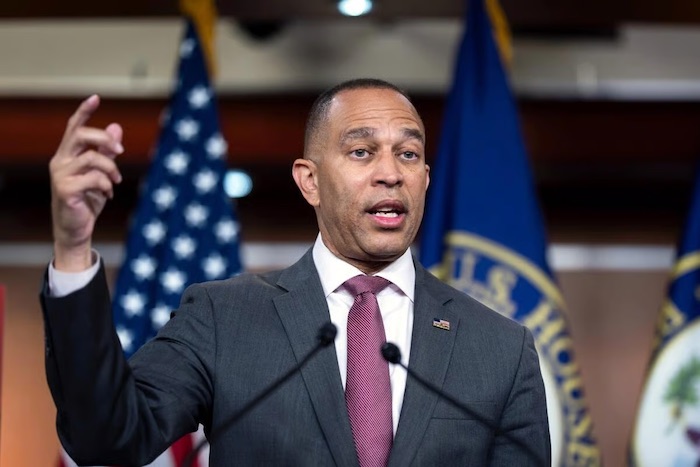


Sep 092025


Utagawa Yoshitoshi Ariko weeps as her boat drifts in the moonlight 1886


• Britain’s Spirit of Freedom Is Dying (Chris Queen)
• French Government Collapses (RT)
• French Debt A Danger To Eurozone – DW (RT)
• EU Top Diplomat Kallas ‘Critically Uneducated’ – Moscow (RT)
• Zelensky Claims ‘Victory’ Is Avoiding Total Loss Of Ukraine (RT)
• Zelensky Has Insulted Trump. Is He Suicidal? (Romanenko)
• Russia Has No Desire For Revenge – Lavrov (RT)
• Orban Outlines EU Security ‘Guarantee’ Plan (RT)
• Democrats ‘Hate’ Trump More Than They ‘Love’ Their Communities – Homan (DS)
• ‘The Politics Will Figure Itself Out’: JD Vance (Pero)
• Days of Thunder (James Howard Kunstler)
• Appeals Court Upholds E. Jean Carroll’s $83.3 Million Judgment Against Trump (ZH)
• Trump Admin Asks Supreme Court to Allow Withholding of Foreign Aid Funds (ET)
• Another Tremendous Supreme Court Victory for Trump! (Margolis)
• Is the Western World Degenerating Into Communism? (Paul Craig Roberts)
• Chuck Schumer Tested FAFO and the GOP Will Make Him Pay the Price (Margolis)
• Did Johnson Really Say Trump Was an Informant Against Epstein? (Margolis)
• Elite UK Divers Likely Behind Nord Stream Sabotage – Patrushev (RT)


https://twitter.com/nicksortor/status/1965073853576831472

https://twitter.com/TRUMP_ARMY_/status/1965058356647002444

100s of arrests for Palestine Action protesters. Banksy is quick. Just as quickly, a fence was erected in front of the artwork.
https://twitter.com/GBPolitcs/status/1965030113332056143


Nap Ritter


Britain itself is dying along with that spirit.

• Britain’s Spirit of Freedom Is Dying (Chris Queen)

I’m writing this on the third anniversary of the death of Queen Elizabeth II. I still remember that day so distinctly since I was on breaking news watch for her certain passing. The death of such a long-reigning monarch was heartbreaking to the nation she led, but it was also a sad day for Anglophiles like me.I’ve been an Anglophile as long as I can remember. It’s literally in my DNA; the vast majority of my heritage comes from the British Isles. But British culture, entertainment, and politics have fascinated me for decades (although I have to admit that I’m not as enamored with the royal family after Elizabeth’s passing as some people are). British politics has gotten frustrating in recent years for true conservatives, and watching Britain slide into authoritarianism on free speech is something even a dyed-in-the-wool Anglophile like me can’t support. And I’m not alone.

Last week, Lee Cohen wrote a column in The Spectator that resonated deeply with me: “Today, for the first time, I find Britain indefensible. The affection and historical respect remains. The confidence is gone. Britain now prosecutes her own citizens, not for violence or treason, but for words. Lucy Connolly was sentenced to 31 months in prison for a tweet in the wake of the Southport murders last year. Her crime was expression, harsh perhaps, but still speech. This week, Graham Linehan, the award winning creator of Father Ted, was arrested at Heathrow Airport by armed officers for online comments defending women’s spaces. Arrested, by police carrying weapons, for his opinions. This is the country that gave the world John Stuart Mill.

“Such cases expose what Britain has become: a two tier system of justice. Those branded far right, nationalist, or Islamophobic are persecuted with zeal, Cohen added. Those spreading incendiary rhetoric from Islamist or minority factions are, all too often, met with indulgence. ” Cohen cited not just the crackdown on social media users who express conservative views, but also local governments cracking down on patriotic Britons who fly the Union Jack or St. George s Cross. The same nation that survived the Great Fire of London, the Blitz, and the Falklands War can t handle patriotism in the face of unchecked Muslim immigration. “Meanwhile, foreign flags fly freely across London without question, he wrote. The message is unmistakable: pride in your own country is suspect. Allegiance to any other is acceptable.”

He continued: “From abroad, the shift is impossible to ignore. Elon Musk has called Britain’s censorship Soviet style. JD Vance has condemned its crackdown on speech. The US State Department now lists Britain as a country presenting significant risks to free expression. I never imagined America would place Britain alongside nations that treat liberty as a nuisance. That day has come. For those of us who have long defended Britain, it is heartbreaking. This is the country whose strong institutions enabled America’s own rise and whose commitment to liberty inspired ours. Yet under its current leadership, Britain has stumbled into repression, constraint, and fear, where ordinary citizens look over their shoulders before speaking.”


Cohen appeared on The Spectator’s “Americano” podcast over the weekend, and he told host Freddy Gray that he’s never seen Americans as interested in British politics as they are right now. He mused whether Donald Trump’s Anglophilia and JD Vance’s earnest engagement with British politics might drive the two American leaders to urge the British government to stem the anti-free speech tide. It’s tempting to hope so, but it’s equally tempting to despair that Britain is too far gone. For someone who loves the British and their history and culture, I hope Britons can reverse course and return to shining as a beacon of freedom and hope to the world.

Read more …

Another PM gone. They go through them like candy.

Still, Macron stays. But: “..the latest Le Figaro poll showing nearly 80% of French no longer trust the president.”

The only person they trust is Marine Le Pen. Who is prohibited from running.

• French Government Collapses (RT)

The French government has fallen after Prime Minister Francois Bayrou lost a crucial confidence vote in parliament on Monday. Bayrou is the second consecutive prime minister under President Emmanuel Macron to be ousted, throwing the nation into political and economic turmoil. A no-confidence motion in the National Assembly requires at least 288 votes to pass. Monday’s motion received 364 votes, with the left-wing New Popular Front and the right-wing National Rally uniting in opposition to end a months-long standoff over Bayrou’s austerity budget. Having previously survived eight no-confidence motions, Bayrou called this vote himself, in a bid to secure backing for proposals that forecast almost €44 billion ($52 billion) of savings to ease France’s debt burden before the budget is presented in October.

The prime minister, who has repeatedly warned that France’s national debt poses a “mortal danger” to the country, appeared to acknowledge his fate. In a bitter remark on Sunday, Bayrou lashed out at rival parties that he said “hate each other” yet joined forces “to bring down the government.” Bayrou is the second French prime minister in succession to be brought down following Michel Barnier’s ejection last December after just three months in office – and the sixth to serve under Macron since he was first elected in 2017. Bayrou’s ouster reportedly leaves the French president to choose between appointing a Socialist prime minister to steer a budget through parliament, effectively ceding control of domestic policy, or call snap elections that polls suggest favour Marine Le Pen’s National Rally.

With Macron’s approval ratings already hitting historic lows, either choice risks further weakening his presidency. Analysts warn that if markets lose confidence in France’s ability to rein in its deficit and mounting debt, the country could face turmoil reminiscent of the UK during the brief Liz Truss premiership. Public discontent with Macron’s leadership has deepened, with the latest Le Figaro poll showing nearly 80% of French no longer trust the president. Thousands marched through Paris at the weekend demanding Macron’s resignation and carrying placards reading ‘Let’s stop Macron’ and ‘Frexit.’

Read more …

Why Macron needs a war with Russia.

But be careful: he’s a Rothschild banker. He knows people.

• French Debt A Danger To Eurozone – DW (RT)

France’s ballooning sovereign debt coupled with political infighting could threaten the fiscal stability of the Eurozone, Deutsche Welle has reported, citing an expert. France has one of the highest national debts in the EU, currently standing at €3.35 trillion ($3.9 trillion) — about 113% of GDP. The ratio is expected to climb to 125% by 2030. Its budget deficit is projected at 5.4–5.8% this year, well above the bloc’s 3% limit. Friedrich Heinemann of the ZEW Leibniz Center for European Economic Research in Mannheim, Germany, told the outlet in an article published on Saturday “we should be worried. The eurozone is not stable at this point.”

A drastic austerity plan proposed by French minority government Prime Minister Francois Bayrou triggered a no confidence vote that he lost on Monday evening. The plan involved slashing public sector jobs, curbing welfare spending, as well as axing two public holidays. The right-wing National Rally, the Socialists, and the leftist France Unbowed vehemently opposed the proposal. An Elabe poll ahead of the vote also showed most respondents were against the measures. Heinemann told DW he doubts France will find a way out soon, given the bitter political infighting.

In July, Bloomberg, citing ING Groep NV experts, similarly claimed that France’s rising debt could be a “ticking bomb” for EU financial stability. Despite the considerable budget deficit, France plans to hike military spending to €64 billion in 2027, double what the country spent in 2017. President Emmanuel Macron has repeatedly cited a supposed Russian threat. The Kremlin has consistently dismissed the claims as “nonsense,” accusing the EU of rapidly militarizing. In May, member states approved a €150 billion ($169 billion) debt program for arms procurement.

Read more …

One job requirenent: hatred of Putin. Not even Russia, just Putin. Can we blame her for not knowing much else?

• EU Top Diplomat Kallas ‘Critically Uneducated’ – Moscow (RT)

Remarks by EU foreign policy chief Kaja Kallas stereotyping Russians and Chinese expose her as “critically uneducated,” Russian Foreign Ministry spokeswoman Maria Zakharova said on Sunday. Speaking at an event organized by the EU Institute for Security Studies last week, Kallas argued that the two nations complement one another in their opposition to the West, describing Russians as strong in social sciences but weak in tech, and the Chinese as the reverse. “Chinese are very good at technology but they are not that good in social sciences,” Kallas said. “The Russians… are not good at technology at all, but super good in social sciences.” Zakharova mocked the remarks in a Telegram post, asking who built the Crimean Bridge or launched rockets from Russia’s Vostochny Cosmodrome if it’s true that Russians lack technological expertise.

“On the same note, China would not be able to govern a billion citizens without being strong in social sciences,” Zakharova wrote. “Kallas is critically uneducated.” The top EU diplomat made the comments while lamenting Western disunity, in contrast to what she described as Russia and China’s unified front. She also claimed that when the two nations highlight their roles in defeating the Axis powers during World War II, it “raises a lot of question marks” for a person who knows history. Moscow has frequently accused officials in the EU of scapegoating Russia for the bloc’s internal problems, arguing that this rhetoric is used to divert public attention from their own failures.

Read more …

Russia never laid claim to all of Ukraine. So yeah, some victory. But it’s great media fodder, they eat it up, as do their readers and viewers. Who have no clue what really goes on. The same media made sure of that.

• Zelensky Claims ‘Victory’ Is Avoiding Total Loss Of Ukraine (RT)

Ukrainian leader Vladimir Zelensky has claimed Russian President Vladimir Putin wants to occupy the whole of the country, and that Kiev can claim “victory” in the conflict as long as this does not happen. Russia has long stressed that it has no intention of occupying Ukraine in full. Putin reiterated this when the conflict escalated in February 2022, and again later that year when Russian troops reached Kiev but then withdrew. Since then, Moscow has consistently said any peace settlement requires Ukrainian neutrality, demilitarization, and recognition of Crimea, Donetsk, Lugansk, Kherson, and Zaporozhye as Russian territory. Zelensky, however, insisted in an interview with ABC News’ Martha Raddatz which aired on Sunday that Moscow’s ambitions go further.

“Putin’s goal is to occupy Ukraine, it is to destroy us… For him that’s victory,” he claimed. “And until he can do it, the victory is on our side… For us to survive is a victory.” He also accused Putin of “playing games” by holding a summit with US President Donald Trump in Alaska while allegedly refusing to meet with him, and claimed the Russian leader is not truly interested in peace. Putin and Trump met in Anchorage on August 15. Although the summit produced no breakthroughs, both sides described it as a positive step. Trump’s remarks afterward fueled speculation of a potential Putin-Zelensky meeting. Kremlin aide Yury Ushakov later said no agreement had been reached, although Putin has not ruled out a meeting, despite questioning Zelensky’s legitimacy after his presidential term expired.

Putin has stressed, however, that talks can only occur after tangible progress in negotiations. Last week, Putin struck a cautiously optimistic note about the prospects for peace, saying “there is light at the end of the tunnel” given the US shift to peace mediation. Kirill Dmitriev, Putin’s aide on international economic affairs, echoed the sentiment on Sunday, saying that “peace is close precisely because of Trump-Putin dialogue.” On Sunday, Trump told reporters he planned further talks with Putin “over the next couple of days,” vowing “to get it done – the Russia-Ukraine situation” soon.

Read more …

“Ukraine is exhausting its people, its infrastructure, and its economy. If survival truly is the goal, then ending the war must be the only priority.”

• Zelensky Has Insulted Trump. Is He Suicidal? (Romanenko)

In a weekend interview with ABC News, Ukrainian leader Vladimir Zelensky accused US President Donald Trump of giving Russian President Vladimir Putin “what he wanted” at the Alaska summit in August. Whether a passing complaint or a calculated jab, it may come at a steep cost for Zelensky. To suggest that Trump bent to Putin’s will is to imply weakness, and weakness is something Trump never tolerates being accused of. This rhetorical swipe was directed at a man who holds significant sway over the trajectory of the Russia-Ukraine war. For Zelensky, the insult may prove more damaging than cathartic.

Zelensky appears to believe that he has become indispensable in Trump’s calculations, that Washington’s policy revolves around Kiev’s demands. But this overstates his importance. Trump has been consistent about one priority: he wants the war to end, and more than that, he wants the US disentangled from it. His approach reflects the sentiment of much of the American public – weary of sending weapons and aid overseas while domestic problems fester. By framing Trump’s summit with Putin as a giveaway, Zelensky risks alienating the one Western leader positioned to actually shift the direction of the war. Trump is sensitive to personal slights. For years, allies and adversaries alike have learned that once he feels personally insulted, he hardens, not softens. To tell Trump, in effect, that he’s Putin’s stooge is to court precisely that reaction.

Trump’s efforts at the Alaska summit were grounded in a political reality that Zelensky refuses to acknowledge. The battlefield is not tilting in Kiev’s favor. Russia’s position, bolstered by sheer resources and strategic depth, is proving resilient. Ukraine’s European backers continue to speak in lofty terms of standing “as long as it takes,” but they lack the power to deliver a Ukrainian victory. Trump, by contrast, pursued a path that might actually move events forward: direct talks with Russia, engagement on security concerns, and the search for a negotiated framework. It is not an approach designed to satisfy Zelensky and the Europeans’ maximalist goals but rather one rooted in ending an exhausting conflict. To dismiss this effort as capitulation is to ignore that it may be the most realistic option still on the table.

In the same ABC interview, Zelensky says his vision for a Ukrainian victory is Ukraine’s survival. Yet his strategy as evident from his actions appears geared less toward survival and more toward dragging the war on for as long as possible. Each new demand for weapons, each new appeal for escalated sanctions, pushes the conflict forward without changing the battlefield reality of Russia grinding forward toward its objectives – and whatever Zelensky claims, total occupation of Ukraine is not one of those objectives. In the name of “survival,” Ukraine is exhausting its people, its infrastructure, and its economy. If survival truly is the goal, then ending the war must be the only priority. Right now, Trump has the best shot at it, because he is realistically engages with the interests of Russia – the side that has the clear upper hand on the battlefield. And Zelensky is pushing that opportunity away.

Read more …

“We have never turned away or pushed anyone out. Those who want back in are welcome..”

• Russia Has No Desire For Revenge – Lavrov (RT)

Russia has no plans to exact vengeance on Western countries that cut ties and pressured Moscow over the Ukraine conflict, Foreign Minister Sergey Lavrov has said. Speaking at the Moscow State Institute of International Relations on Monday, Lavrov stressed that Russia did not intend to “take revenge or vent anger” on companies that decided to support Western governments in their push to support Kiev and impose economic sanctions on Moscow, adding that hostility is generally “a poor adviser.” “When our former Western partners come to their senses… we will not push them away. But we… will take into account that, having fled at the order of their political leaders, they have shown themselves to be unreliable,” the minister said.

According to Lavrov, any future market access would also depend on whether the companies would pose risks to sectors vital to Russia’s economy and security. The minister stressed that Russia is open to cooperation and has no intention to isolate itself. “We live on one small planet. It was Western-style to build Berlin Walls… We do not want to build any walls,” he said, referring to the symbol of the Cold War that split the German capital from 1961 to 1989. ”We want to work honestly, and if our partners are ready to do the same on the basis of equality and mutual respect, we are open to dialogue with everyone,” he said, pointing to the Alaska Summit between Russian President Vladimir Putin and his US counterpart, Donald Trump, as an example of constructive engagement.

Kremlin spokesman Dmitry Peskov said, on Saturday, that Western businesses would be welcomed back if they had not supported the Ukrainian army and had met obligations to the state and their Russian staff, including paying due salaries. Putin this month also rejected isolationism, stressing that Russia would like to avoid closing itself off in a “national shell” as it would harm competitiveness. “We have never turned away or pushed anyone out. Those who want back in are welcome,” he added.

Read more …

“.. the outcome would only slightly differ from the pre-conflict balance, when Ukraine itself acted as a buffer between Russia and NATO with “50% influence” each..”

• Orban Outlines EU Security ‘Guarantee’ Plan (RT)

Partitioning Ukraine into Russian and Western zones of influence is the likely outcome of the conflict and the only reliable guarantee of the EU’s security, Hungarian Prime Minister Viktor Orban has said. Kiev has pressed its Western backers for security guarantees as a precondition for a settlement with Russia, first pushing for NATO membership and later floating ideas such as ‘peacekeepers’ and a buffer zone with Western military patrols. Moscow has rejected Ukrainian membership in NATO or Western troops on its territory, stressing that any settlement must include Kiev’s neutrality, demilitarization, and recognition of Crimea, Donetsk, Lugansk, Kherson, and Zaporozhye as Russian territory.

Orban, however, has suggested it is time for the West to acknowledge Russia’s “inevitable” military victory and to begin deciding how Ukraine should be partitioned. ”Europeans all so elegantly talk around security guarantees, but the security guarantee actually means the division of Ukraine,” Orban told guests at the annual Civic Picnic in Kotcse on Sunday. “The first step has already been taken – the Westerners have accepted that a Russian zone exists.” He referred to earlier remarks by US President Donald Trump that Ukraine regaining Crimea was “impossible.”“The result would be a Russian zone, a demilitarized zone and, eventually, a Western zone…The only question is how many kilometers away from the border of the Russian zone a demilitarized zone should be established,” he stated.

Orban noted the outcome would only slightly differ from the pre-conflict balance, when Ukraine itself acted as a buffer between Russia and NATO with “50% influence” each in the country. He said this division would help end the conflict and benefit all sides, particularly the EU, which he warned is on the verge of “collapse” and lacks the means to fund the conflict further. The Hungarian leader has long criticized Brussels over its “warmongering” stance on Russia and support for Ukraine. In his speech, he repeated his warning that Ukraine’s EU accession would trap the bloc in a permanent conflict with Moscow, calling instead for an EU-Russia security pact.

Read more …

“.. they’re sanctuary cities and they’re releasing criminals every hour, so that’s where we’re going,” Homan said. “That’s where we’re going to flood the zone.”

• Democrats ‘Hate’ Trump More Than They ‘Love’ Their Communities – Homan (DS)

Trump administration border czar Tom Homan says Democrat leaders in sanctuary states and cities hate President Donald Trump more than they care for their communities. Homan spoke to the State Freedom Caucus Network Summit in Dallas, Texas, Friday night and reiterated the plan to deport illegal aliens in Chicago. While Democrats say Trump is targeting Democrat run cities for political reasons, Homan said that’s not the case. “It’s not because they’re blue, it’s because they’re sanctuary cities and they’re releasing criminals every hour, so that’s where we’re going,” Homan said. “That’s where we’re going to flood the zone.”

Weeks ago, Homan had said they will “flood the zone” with immigration enforcement in Chicago. Last month, Trump said he would send in the National Guard to address public safety, but later hedged that and insisted Illinois Gov. JB Pritzker call for help. Pritzker said he would not call Trump to ask for help, saying there is not an emergency. Saturday, Trump posted a graphic to Truth Social, depicting him as a character in the film Apocalypse Now, but it said “Chipocalypse Now,” “I love the smell of deportations in the morning” and “Chicago about to find out why it’s called the Department of WAR.” Pritzker posted on social media in response that “this is not a joke” and “this is not normal.”

Pritzker and other Democratic leaders also posted on social media over the weekend “know your rights” campaign messaging, with tips like remaining calm, denying entry without a warrant, remaining silent, and declining to sign anything. Homan tried to make sense of the Democrats’ resistance to cooperating with ICE. “They hate President Trump more than they love their communities, there’s no other reason,” Homan said. “I can’t think of why you would not join forces with us.” Illinois law prohibits state and local law enforcement from cooperating with federal immigration officials. State law also prohibits police from inquiring about an individual’s immigration status. Pritzker said if Trump deploys the National Guard in Chicago, they will immediately take the administration to court.

Read more …

Peter Thiel and four different names. That’s JD Vance.

• ‘The Politics Will Figure Itself Out’: JD Vance (Pero)

Vice President JD Vance joined “My View with Lara Trump” Saturday where he discussed everything from his best-selling book “Hillbilly Elegy” to whether he will run for president in 2028. Since it’s been 10 years since Vance wrote “Hillbilly Elegy,” he reminisced on his life before he became vice president of the United States. “I was raised by a grandmother who—we didn’t go to church a whole lot—but she prayed everyday. She read the Bible everyday, and she gave me this sense that there was some purpose to this. We might not understand it. God works in mysterious ways, but there was some deeper meaning to what we were experiencing, and that gave me the perseverance to go through it.” Vance said a major motivation for him growing up was knowing his grandmother was very sick and that someone was going to have to step up and hold the family together when she was gone.

“I kind of wanted that person to be me. I wanted to be the person in my family that other people could rely on.” Vance said his wife Usha Vance is starting to “hit her stride” as second lady, getting involved in projects like John F. Kennedy Center for the Performing Arts and children’s literacy. Usha is the anchor of their family, Vance said, and she’s making sure their children are having as normal a life as possible as their family’s life has drastically changed with Secret Service protection and living in the vice president’s residence. “This is really weird for the kids. This is really weird for the whole family unit. [Usha’s] main job more than anything else is just to make the kids have as normal a life as possible.

She makes us do normal family stuff as much as possible.” When it comes to working with President Donald Trump, Vance said there are so many surprising things. One surprise has been that Trump “doesn’t have an off switch.” “Sometimes the president will call you at 12:30 or 2:00 in the morning, and then he’ll call you at 6:00 in the morning about a totally different topic.” Trump is also very good about delegating work, empowering his people to do it, and also trusting them to do the work, Vance said. “What’s made this so much fun is that the president all the time is just saying, ‘JD, you go and do this,’ or ‘JD, you go and talk to these leaders about this particular issue … You don’t have to have me looking over you all the time.’”

When it comes to the 2028 presidential election, many people are viewing Vance as a top Republican candidate. Vance said there are a lot of great people and that if he does decide to run, the job won’t be handed to him “either on the Republican side or on the national side.” “I don’t like thinking about it because I like thinking about the job that I have right now,” Vance said. He added that he thinks ”the American people are so fed up with folks who are already running for the next job seven months into the current one.” “If we do a good job in 2025 and 2026, then we can talk about the politics in 2027,” Vance said. “I’m going to try to do my best job, and I think if I do that, the politics will figure itself out.”

Read more …

“If we hadn’t won this election we would have all been vaxxed to death and censored so no one could hear our dying screams” — Mike Benz on “X”

• Days of Thunder (James Howard Kunstler)

That reckoning you’ve heard about lo these many years? It’s here now. We’re in it. You just can’t see all the moving parts, and if you did, you might not understand how or where they are moving, and what they are fixing to do next. Aside from certain US senators playing their pre-scripted mad scenes for the cameras, a disquieting quiet blankets the swamp like a miasma. It feels like a long, still moment before some shaking of the earth. Everyone senses it and the guilty must feel it most keenly.

That’s why they are laying low and keeping their traps shut. Every criminal defense lawyer inside the beltway is burning the midnight oil (and racking up the billable hours, ka-ching). Meanwhile, where are their clients? No longer peddling alibis on MSNBC (MSNOW), at least. I doubt that John Brennan is even in the country. My guess would be he’s cooling his heels in Abu Dhabi, where the extradition protocols with the USA remain comfortably squishy to his advantage. (He reportedly became a Muslim while running the CIA station in Riyadh between 1996-99, just in time for 9-11. . . hmmmm. . . .)

Hillary Clinton has been keeping her pie-hole closed for weeks now while rattling around that big house in Chappaqua, NY, like a BB in a packing crate. Is anyone counting the wine-boxes coming and going from the place? It must be maddening to be HRC — but that new extra edge of prosecution terror would just be larding the lily, considering what Vlad Putin learned about her mental state way back in 2016: deeply unstable. . .diabetic. . . on tranqs. . . often plastered. . . bursts of rage. . . . Comey and Clapper? No more cute pranks on the beach for Big Jim, 86 on the menacing messages in seashells and putting out Taylor Swift fan-boy Tik-toks. Was that some attempt to not be taken seriously? Like you’re some kind of overgrown, harmless child?

James Clapper, of course, would be voted most likely to flip on his compadres, if such a canvass were taken on Coup island. He was the first to publicly announce his lawyering-up in the Russia collusion affair. He never expected it would come to this, this ordeal of interrogation. . . his “good soldier” self plopped ignominiously in the witness chair. . . the odor of his own fear. . . the proffer (just tell us what really happened). . . the US attorneys appearing to leer at him, his house mortgaged to pay the attorney’s fees. . . what’s a poor boy to do. . . ?

Adam Schiff has gone radio silent. A miracle! Alas, the autopen pardon granted for his J-6 Committee doings apparently does not apply to matters such as mortgage fraud and wire fraud. He realizes with chills and sighs of despair that this ain’t no foolin’ around. People go to jail for these things. . . gulp! His attorney absolutely forbids any televised appeals to his fan-base, as if the glamorati of Rodeo Drive could do anything to stop what’s coming. Too bad Ed Buck and his magic checkbook are no longer around.

Even the seeming untouchables, Blinken, Jake Sullivan, Lisa Monaco, Norm Eisen, Mary McCord, Anrew Weissmann, Marc Elias must be listening hard for shoes to drop. They thought they had it made in the shade after 2020. They had the USA on a string, they thought. Home free. The trouble with the smarty-pants way of life is sometimes you out-smart yourself and your pants fall down. But all they can do in this late hour is induce a bunch of federal judges — recently imported from countries where justice means casting goat neckbones across the dusty floor of a mud hut — to gum up every executive action coming out of the White House with a poorly-argued TRO. They might as well be on a U-haul box truck throwing furniture off the back at a fleet of pursuing cop cars.

Mr. Trump is having sport with them now. Their crimes spanning the decade past are being bundled into one big coup case against the country, a color revolution on their own citizens and against “the democracy” that they never stop pretending to tout. If I am perceiving all this correctly, the days and weeks ahead will be as consequential a train of events as ever rolled down the tracks into Union Station, DC.

Read more …

“.. even though a jury ruled that she lied about her rape allegations..”

“.. has reportedly accused at least six prior men of raping her..”

• Appeals Court Upholds E. Jean Carroll’s $83.3 Million Judgment Against Trump (ZH)

A federal appeals court has upheld a civil jury’s finding that President Donald Trump must pay $83.3 million to E. Jean Carroll for his repeated social media attacks against the longtime advice columnist after she accused him of sexual assault – even though a jury ruled that she lied about her rape allegations. Carroll, whose advice column ran in the women’s magazine Elle from 1993 to 2019, has reportedly accused at least six prior men of raping her, including former CBS President Les Moonves. Her bizarre social-media history also included posts making light of sexual trauma and even asking her followers if they found Trump sexually attractive. Trump was prevented from submitting that evidence in his trial.

Despite her dubious track record, on Monday the 2nd U.S. Circuit Court of Appeals rejected Trump’s appeal of the defamation award, finding that the “jury’s damages awards are fair and reasonable.” Trump had argued that he should not have to pay the sum as a result of a Supreme Court decision expanding presidential immunity. His lawyers had asked for a new trial. A civil jury in Manhattan issued the $88.3 million award last year following a trial that centered on Trump’s repeated social media attacks against Carroll over her claims that he sexually assaulted her in a Manhattan department store in 1996. That award followed a separate trial, in which Trump was found liable for sexually abusing Carroll and ordered to pay $5 million.

That award was upheld by an appeals court last December. In a memoir, and again at a 2023 trial, Carroll described how a chance encounter with Trump at Bergdorf Goodman’s Fifth Avenue in 1996 started with the two flirting as they shopped, then ended with a violent struggle inside a dressing room. Carroll said Trump slammed her against a dressing room wall, pulled down her tights and forced himself on her. A jury found Trump liable for sexual assault, but concluded he hadn’t committed rape, as defined under New York law. Trump repeatedly denied that the encounter took place and accused Carroll of making it up to help sell her book. He also said that Carroll was “not my type.”

Read more …

Lawfare at its finest.

“Solicitor General D. John Sauer said in the new application that this is the third time in this case that Ali “has issued an unlawful injunction that precipitates an unnecessary emergency and needless interbranch conflict.”

• Trump Admin Asks Supreme Court to Allow Withholding of Foreign Aid Funds (ET)

The Trump administration asked the U.S. Supreme Court on Sept. 8 to permit it to withhold billions of dollars in foreign aid previously authorized by Congress. The Department of Justice (DOJ) asked the justices to pause a ruling by U.S. District Judge Amir Ali, who ordered the federal government to spend about $4 billion in previously appropriated funds. The money is earmarked for foreign aid and United Nations peacekeeping projects. The emergency application was filed in two cases, Trump v. Global Health Council, and U.S. Department of State v. AIDS Vaccine Advocacy Coalitions. Solicitor General D. John Sauer said in the new application that this is the third time in this case that Ali “has issued an unlawful injunction that precipitates an unnecessary emergency and needless interbranch conflict.”

In February, Ali gave the federal government 36 hours to pay roughly $2 billion in invoices for past foreign-aid work, which Sauer called “an impossible task,” and one that the judge lacked authority to order. The Supreme Court ended the dispute by granting an administrative stay, a court order that gives the justices more time to consider a matter. After the deadline was lifted, the government paid “virtually all of the contested amounts,” Sauer said. Next, Ali issued a “novel injunction requiring the government to obligate tens of billions of dollars in foreign-aid appropriations on the theory that failing to do so constituted an unlawful impoundment in violation of the Constitution and the Impoundment Control Act of 1974,” Sauer said. The U.S. Court of Appeals for the District of Columbia Circuit lifted that injunction and that court allowed its ruling to come into effect on Aug. 28, Sauer said.

Now that its original theory has been “decisively rejected,” the district court precipitated a new emergency “by issuing a version of the same injunction near midnight on September 3,” Sauer stated. Again, the district court is forcing the government to obligate about $10.5 billion in foreign-aid funding that was due to expire on Sept. 30, according to Sauer. But now the government has been left “with even less time for further review or compliance, with even more deficient legal theories,” Sauer said. Sauer said the government already intended to obligate $6.5 billion of that funding by Sept. 30, but Ali’s order regarding the remaining $4 billion “raises a grave and urgent threat to the separation of powers,” a constitutional doctrine that divides the government into three branches to prevent any single branch from accumulating too much power.

After the D.C. Circuit canceled Ali’s injunction, the president proposed rescinding that $4 billion in funding under the Impoundment Control Act. Under fast-track procedures, Congress has 45 days to consider the rescission request and during that period the president cannot be required to spend the money, Sauer said. Ali’s new injunction would compel the Executive Branch to begin “obligating those funds at breakneck speed to meet the September 30 deadline, even as Congress is considering the rescission proposal” and before Congress’s 45 days to do so elapse, Sauer said. A panel of the D.C. Circuit denied by a vote of 2–1 a stay of the judge’s order late on Sept. 5, Sauer added.

Also on Sept. 8, Global Health Council and other litigants that want the $4 billion to be released filed a brief opposing the government’s application for an administrative stay of Ali’s order. “The government’s theory that the agencies need not comply with enacted legislation mandating that they spend funds, because the President has unilaterally proposed legislation to rescind those statutory mandates, would fundamentally upend our constitutional structure,” the brief reads. It is unclear when the Supreme Court will act on the government’s application.

Read more …

“The order, crafted to appease immigration activists, accused officers of running “roving patrols” and floated the idea that their actions violated the Fourth Amendment. But on Monday, the Supreme Court wasn’t buying it.”

• Another Tremendous Supreme Court Victory for Trump! (Margolis)

The Supreme Court handed President Donald Trump a major victory on Monday, greenlighting his push for tougher immigration enforcement in Los Angeles. In a 6-3 ruling, the Court lifted a lower-court injunction that had barred federal agents from conducting raids without what the judge had called “reasonable suspicion.” With that order gone, Trump’s record-setting deportation efforts are back on track. The liberal justices predictably fumed in their dissent, warning of supposed risks to “constitutional freedoms,” blah, blah blah. But the conservative majority was having none of that garbage. For now, immigration agents can resume their sweeping operations while the case winds through the courts—a clear sign that Trump’s agenda won’t be derailed by activist judges.

Conservative Justice Brett Kavanaugh wrote in Monday’s decision that the lower court’s restraining order went too far in restricting how Immigration and Customs Enforcement (ICE) agents could carry out stops or questioning of suspected unlawful migrants. “To be clear, apparent ethnicity alone cannot furnish reasonable suspicion,” he wrote. “However, it can be a ‘relevant factor’ when considered along with other salient factors.” The Supreme Court’s three liberal justices issued a strong dissent penned by Justice Sonia Sotomayor, who wrote that “countless people in the Los Angeles area have been grabbed, thrown to the ground, and handcuffed simply because of their looks, their accents, and the fact they make a living by doing manual labour.” “Today, the Court needlessly subjects countless more to these exact same indignities,” she wrote.

The decision undoes a ruling by US District Judge Maame E Frimpong in Los Angeles, who had said that there is a “mountain of evidence” showing the raids were violating the US Constitution. Back in July, Judge Frimpong tried to hamstring immigration enforcement by ordering Trump’s raids halted. His ruling claimed the administration couldn’t rely on “apparent race or ethnicity” or “speaking Spanish” as grounds for questioning someone. He even barred agents from acting based on whether individuals were found at bus stops, farms, or car washes—places long known as hubs for illegal labor. The order, crafted to appease immigration activists, accused officers of running “roving patrols” and floated the idea that their actions violated the Fourth Amendment. But on Monday, the Supreme Court wasn’t buying it.

The justices ruled 6-3, that Trump’s policies stand a strong chance of being upheld as constitutional, clearing the way for raids to continue. Trump’s crackdown began in June with large-scale raids in Los Angeles at places like Home Depot and other worksites. Predictably, activists launched protests that quickly spiraled into unrest. Trump responded by deploying nearly 2,000 National Guard troops and 700 Marines after California’s Democrat leadership refused to act. This ruling is more than just a win for Trump—it’s a crushing humiliation for Gavin Newsom. The California governor spent weeks smugly touting the lower court injunction as proof that Trump had been reined in by the courts. He mocked the president, framing the lower-court order as a permanent roadblock to ICE enforcement, like this post on X that didn’t age well at all:

Now, with the Supreme Court’s decisive smackdown, Newsom is left looking foolish and powerless. His big talking point has evaporated overnight, replaced by the hard reality that Trump’s immigration agenda is moving forward stronger than ever.

Read more …

“Diversity, Equity and Inclusion (DEI) is communism.”

• Is the Western World Degenerating Into Communism? (Paul Craig Roberts)

Diversity, Equity and Inclusion (DEI) is communism. During the past year I have read on various websites articles that the West has become the Communist State that it once opposed. Various legitimate examples are offered: the use of law as a weapon as in Stalin’s show trials of the Bolsheviks who made the Russian Revolution; suppression of free speech and protest as all over the Western world; fake election results as in the 2020 US presidential election and in Europe by banning opposition candidates from running for office; focus on “foreign enemies” instead of the domestic institutionalization of tyranny; designation of Trump’s supporters as domestic enemies and insurrectionists. As of yet, no one has put all of these concerns into one formula. Allow me to try.

For 60 years liberals have transitioned the United States from merit to race and gender based entitlements. The United States, whose foundational basis is English common law and the accountability of government achieved by the English Glorious Revolution of 1680, has been beset by progressives and liberals for many decades for being a society based on merit and equality under law. Equality under law requires just that and thus prohibits DEI-based preferences. A merit-based society allows and encourages those best able and qualified to take the leading positions. But this excludes those less capable and, thereby, violates “diversity, equity, and inclusion,” which the liberal-left has raised as the new standard. The “solution” is to put the less capable in charge.

This requires demonizing merit as “racist” which has resulted in merit no longer being the requirement for admissions to Ivy League universities and formerly merit-based high schools. Instead, admission is based on racial privilege. Progressives and liberals since the regime of Franklin D. Roosevelt have succeeded in elevating DEI above merit, today dismissed as “white racism.” The entire purpose of the Democrat Party is to destroy a merit-based society. Trump is hated by the liberal-left for trying to restore a merit-based society. For the liberal-left merit is discriminatory and thereby racist. To escape racism, DEI must supplant merit as the basis of American society. DEI is the Democrat Party’s weapon to overthrow a merit-based society. Communism precludes incomes, influence, and status based on merit in theory but not in practice.

In practice, Communist Party membership was the ladder to upward mobility. But for ideologues it is theory that counts. Under communism equality regardless of merit is the standard. Capitalistic, bourgeois society is based on merit with income, influence, and status based on success. Therefore a merit-based society precludes equal results. A merit-based society is “unfair” in the modern parlance. A fair society is one in which merit receives no reward and is handicapped by preferences for those who are without merit. Kurt Vonnegut describes the liberal-left ideal in his short story, “Harrison Bergeron.” Vonnegut thought it would be 2081 before the American liberal-left would be able to establish the Cabinet Department of Handicapper General. But the transition began in 1965 when the EEOC stood the 1964 Civil Rights Act on its head and imposed racial preferences for blacks known as “affirmative action.”

These preferences were explicitly prohibited by the 1964 Civil Right Act. But the American liberal-left elevated its ideological agenda above the law. Such a society will, of course, be mediocre and a laggard in intellectual and cultural advancement. But as such advancements are merit-based, they don’t count. DEI is achieved when individual achievement becomes a criminal offense against society. In Vonnegut’s story, Harrison Bergeron is shot by the Handicapper General. I once read a science fiction story in which at a certain age children were tested for intelligence. If their intelligence was above the norm, they were terminated. Already today September 8th, 2025, we have laws or regulations that penalize merit-based admission, hiring, and promotion decisions and criminalize disagreement with some official narratives, such as the Holocaust.

Various Democrat cities have passed laws that give legal immunities to non-whites. Yet the West continues to claim free speech–obviously a false claim–and to redefine equality under law as equality of result. As free speech guaranteed by the American Constitution is now impermissible, how does truth survive? As truth is impermissible, how can good decisions be made? As recent decades have made completely clear, good decisions cannot be made in the Western world. Enemies are created instead of peace. Law breakers are protected while their victims are punished. Borders are undefended at the expense of the ethnic citizens of the country. As the immigrant invasions continue, the more entitlement takes over from merit and the less Western governments represent their ethnic base. Thus we have arrived at The Camp of the Saints.

Read more …

“The solution they’ve crafted draws inspiration from an unlikely source—a 2023 proposal by Democrat Amy Klobuchar that would allow up to 10 nominees from the same committee to be confirmed together.”

• Chuck Schumer Tested FAFO and the GOP Will Make Him Pay the Price (Margolis)

Chuck Schumer is about to learn the hard way what happens when you block and stall for too long. After seven months of throwing a tantrum and holding up more than 100 of President Trump’s nominees, the Senate Minority Leader’s obstruction has finally pushed Republicans to the breaking point. Senate Majority Leader John Thune has had enough, and he’s preparing to unleash the nuclear option to break Schumer’s blockade, ram through confirmations, and get Trump’s team in place before the September 19 recess. In Washington, this is FAFO politics at its finest—Schumer tested his luck, and now he’s about to pay the price.

As PJ Media previously reported back in August, Thune has warned that Republicans would change the rules if Democrats refused to cooperate on speeding up confirmations. Schumer chose to ignore those warnings, apparently believing he could continue his obstruction indefinitely without consequences. That calculation is about to prove spectacularly wrong. After negotiations with Democrats predictably went nowhere, Thune assembled a working group in August featuring Republican Senators Katie Britt, James Lankford, Ron Johnson, Eric Schmitt, and Ted Budd. Their mission was simple: find a way around the Democratic roadblock. The solution they’ve crafted draws inspiration from an unlikely source—a 2023 proposal by Democrat Amy Klobuchar that would allow up to 10 nominees from the same committee to be confirmed together.

The Republican version promises to be far more comprehensive, removing artificial caps on how many nominees the Senate can confirm simultaneously. While judges and Cabinet nominees would remain exempt from this streamlined process, the change represents a fundamental shift in how the Senate handles executive branch confirmations. Schumer’s obstruction strategy has been as petty as it is unprecedented. He openly told The Wall Street Journal that he would instruct his entire caucus to vote against every single Trump nominee, effectively grinding the confirmation process to a halt. In August, he actually bragged about his caucus’s commitment to delaying Trump’s confirmations as long as humanly possible.

The numbers show just how far Democrats have taken their obstruction campaign. Trump is now the first president since Herbert Hoover—almost 100 years ago—to have zero civilian nominees confirmed by voice vote or unanimous consent in the early months of his term. That’s not politics as usual; that’s pure spite. Of course, Chuck Schumer is out there defending this nonsense, claiming Trump’s picks are somehow “flawed” or “unqualified.” That’s rich coming from the party that shoved through Xavier Becerra, Pete Buttigieg, and Ketanji Brown Jackson—not to mention a slew of judicial nominees who couldn’t answer basic questions about the law. Republicans have seen this game before, and it looks like they’re finally ready to call Schumer’s bluff. For context, during Trump’s first term, 65 percent of his civilian nominees were approved by voice vote or unanimous consent. Biden managed 57 percent.

Today, only Secretary of State Marco Rubio has slipped past the Democrats’ blockade. That tells you everything you need to know about how shamelessly the left is weaponizing the confirmation process. Republicans aren’t thrilled about using the nuclear option, fully aware that this rule change will eventually benefit Democrats when they next control both the Senate and White House. But make no mistake: this is the inevitable result of the Democrats’ years-long weaponization of the confirmation process, dating back to George W. Bush’s presidency. If the nuclear option is invoked, it’s on them. Chuck Schumer built this trap with nothing but raw partisan spite, and now he’s about to feel the consequences. The nuclear option is coming, and it’s entirely his doing.

Read more …

“The Speaker is reiterating what the victims’ attorney said, which is that Donald Trump — who kicked Epstein out of Mar-a-Lago — was the only one, more than a decade ago, willing to help prosecutors expose Epstein for being a disgusting child predator..”

• Did Johnson Really Say Trump Was an Informant Against Epstein? (Margolis)

House Speaker Mike Johnson (R-La.) dropped a bombshell last week, only to take a cautious step back just days later. When CNN’s Manu Raju pressed him on President Donald Trump’s use of the word “hoax” regarding the controversy over the Epstein files, Johnson said that the president had once acted as an FBI informant against Jeffrey Epstein — a fresh detail in the saga. “What Trump is referring to is the hoax that the Democrats are using to try to attack him,” Johnson explained. “He has never said or suggested or implied; I’ve talked to him about this many times, many times. He is horrified. It’s been misrepresented. He’s not saying that what Epstein did is a hoax. It’s a terrible, unspeakable evil. He believes that himself.”

Johnson also recalled Trump’s decision years ago to ban Epstein from Mar-a-Lago, and that’s when he made the claim. “When he first heard the rumor, he kicked him out of Mar-a-Lago. He was an FBI informant to try to take this stuff down,” Johnson said, effectively revealing for the first time that Trump had cooperated with federal authorities in efforts to stop Epstein. On Sunday, Johnson’s office tried to clarify the remarks with a carefully worded statement. “The Speaker is reiterating what the victims’ attorney said, which is that Donald Trump — who kicked Epstein out of Mar-a-Lago — was the only one, more than a decade ago, willing to help prosecutors expose Epstein for being a disgusting child predator,” Johnson’s office said, according to a report from the Washington Post.

We already knew that Trump was one of the few people willing to stand against Epstein’s depravity, but the revelation that Trump was an informant was a game-changing new detail. It’s not lost on me that the statement the Washington Post printed doesn’t actually retract the claim, but it doesn’t double down on it either. For years, Democrats have tried to turn the Epstein saga into a Trump scandal because they know many of their own allies have deep ties to Epstein. When they controlled the White House and Congress, they did squat about releasing Epstein files or pursuing real transparency. The Epstein scandal suddenly became the Left’s favored weapon only after Biden’s administration ignored it for so long. Now, they want to drag it out as a smear against Trump in the hopes of creating a distraction to derail his second term. Classic political maneuvering.

Johnson’s “informant” comment touched a nerve because it challenged the left’s carefully constructed lie. Did Trump formally inform on Epstein, or did he simply cooperate with authorities? The difference might matter to the media vultures and political spin doctors, but the real takeaway is Trump’s stance against Epstein, which includes kicking him out of Mar-a-Lago for inappropriate behavior and assisting authorities in exposing Epstein. Whether or not he was an actual FBI informant is unclear, but the Democrats still look foolish trying to make Epstein a Trump scandal.

Read more …

Just yesterday, another German report claimed it was Ukrainians. The particular novelty this time (every report needs one) is that it claims Zaluzhny was in charge.

Why do they do this? To cast doubt on Seymour Hersh’s report. They never say he’s wrong, or even mention him, it’s just an endless stream of “different” stories.

• Elite UK Divers Likely Behind Nord Stream Sabotage – Patrushev (RT)

The sabotage of the Nord Stream pipelines could not have been carried out without Western commandos, a top aide to Russian President Vladimir Putin has claimed, singling out Britain as the likely culprit. German prosecutors have attributed the explosions in international waters in September 2022, which disabled the twin pipelines supplying Russian gas to Germany via the Baltic Sea, to a group of Ukrainian nationals. In an article published Sunday in Kommersant, the former head of Russia’s Federal Security Service (FSB), Nikolay Patrushev, argued that Ukrainians lack the expertise to carry out this complex operation independently.

The sabotage was likely “planned, overseen, and executed with the involvement of highly trained NATO special forces,” Patrushev wrote, adding that the perpetrators were experienced in deep-sea operations and familiar with working in the Baltic.“Few armies or intelligence services have divers capable of executing such an operation correctly and, above all, covertly. One unit with the necessary skills is the British Special Boat Service,” he said. Founded during World War II, the SBS is the Royal Navy’s elite squad specializing in amphibious warfare. Russia has criticized the German investigation for a lack of transparency and for not including the Russian authorities. In 2024, Russia’s Foreign Intelligence Service claimed it had “credible information” that the US and UK were directly involved in the sabotage, a claim denied by both London and Washington.

Read more …


https://twitter.com/EricLDaugh/status/1964729425863282789

fauci

https://twitter.com/buitengebieden/status/1964927875116925373
https://twitter.com/Rainmaker1973/status/1965081470231511305


Support the Automatic Earth in wartime with Paypal, Bitcoin and Patreon.