

Eugène Delacroix Les femmes d’Alger 1834

🚨 JUST NOW: President Trump just stunned the ENTIRE room saying if Republicans win the House and Senate he will give a Trump Dividend
— MAGA Voice (@MAGAVoice) September 10, 2026
$5,000 to EVERY Adult citizen
THIS IS A HUGE WIN pic.twitter.com/2vN81DTGYD
🚨 JUST NOW: Donald Trump stuns the World by cutting $50 BILLION Dollars in Goods for Canada
— MAGA Voice (@MAGAVoice) September 8, 2026
TRUMP WILL STAND UP FOR OUR FARMERS
HOLD THE LINE 🔥 pic.twitter.com/VjZJjknTdG
🚨 OBAMA EXPOSED! President Trump posted this last night!
— Whiplash437 (@MrWhiplash_) September 8, 2026
“This should shake every single American in their shoes. I hate to say this, but President Barack Obama, there is now incontrovertible evidence that he was the spearhead of a seditious conspiracy to subvert the will of… pic.twitter.com/OLAONGOd0M

“.. a ‘Trump dividend’ to every adult in the US of USD 5,000 if Republicans win ..”
• Trump Says ‘War’ To End Immediately ‘After’ Midterm Elections§ (ZH)
Newsquak: US President Trump said he thinks war with Iran will end immediately after the election and will do much more than a nuclear deal.Read more …
US President Trump said he will give a ‘Trump dividend’ to every adult in the US of USD 5,000 if Republicans win the Midterm elections, while he added that the dividend must be spent in the US.
New Trump remarks on Iran… Note that he called it a “war” (no less than twice in the below clip) – contradicting the White House’s own stance (Sept. 4: Trump said don’t call it a war, instead: “I call it a military conflict because it’s small potatoes for us.”:
Q: Do you expect negotiations with Iran to restart at some point? Trump: Uhhhhhh… we’re not looking for it to be honest with you. This war will end immediately after our election. And meanwhile, back to the below laughably implausible headlines…
Pakistani Ambassador says they believe that a better understanding will soon be achieved between the US and Iran, reports ISNA.
But don’t Republicans actually need the war to end before Congressional elections?
Trump on Iran: I think the war will end immediately after the election. They’re desperate to affect the election. pic.twitter.com/31VEeI0tjO
— Acyn (@Acyn) September 9, 2026More on high prices at the pump and the question of nuclear weapons… however, the war itself has only made this a greater uncertainty, as Washington has not achieved any prime objectives – and the status of the Iranian nuclear program remains unknown…
Reporter: You said that oil and gas prices were going to come down. Oil is now back above 100 dollars. How do you explain this to Americans?
— Clash Report (@clashreport) September 9, 2026
Trump: It’s very easy to explain to Americans: all you have to do is say, will you let Iran have a nuclear weapon? The answer is no. pic.twitter.com/HFldzUtrbo
IRGC: ’20 for 2′, Vows Disproportionate Responses
Amid the dramatic escalation which kicked off since Tuesday night, Iran is seeking to impose new conditions on the United States. While continuing to vow a ‘disproportionate response’ to any attack moving forward, Tehran is now identifying specifics.IRGC spokesman Hossein Mohebbi states Wednesday, “The imposed war, which involved the world’s most powerful nations, has ended in certain periods, but the nature of the conflict continues. For the first time, this conflict has directly inflicted strategic damage on the United States, impacting the country’s security and economic equations.”
He issued the following list for the US to reach an end to the conflict. “If the enemy desires an end to this situation, they must”…
• completely cease the war
• refrain from further threats
• withdraw the Israeli army from Lebanon
• end the siege of Yemen
• release the $24 billion of Iranian assets that have been frozen
• cease any interference in the country’s nuclear and missile programs
This definitely marks a raised bar, to be sure, after this summer the MoU complete ceased, and negotiations vanished. There’s no way Washington complies with even half of the conditions, at this rate. Importantly, Mohebbi also said: “We have reached a point where if the enemy strikes at 2 or 3 of our targets, we will respond forcefully by striking at 20.”
Tanker Attacked in Iraq Territory Waters, After CENTCOM Insists US Warships Not Hit
After a huge Iranian ballistic missile launch on US bases in Jordan overnight, CENTCOM has yet to respond in any major way. The Pentagon has also said all US troops “are accounted for” – but this doesn’t necessarily mean there were no casualties. However, CENTCOM is at the moment denying that the Iranians hit US warships, as the IRGC has been claiming since Tuesday, in an oddly specific statement: The IRGC claims to have targeted and inflicted “significant damage” on a pair of US warships in the Gulf of Oman: DDG-119 USS Delbert D. Black and DDG-53 USS John Paul Jones, both Arleigh Burke-class destroyers.CENTCOM responded: “No U.S. Navy warship has been struck; all IRGC attempted attacks failed.” It added on X, “Meanwhile, U.S. forces have successfully destroyed 10 Iranian tankers in just the last week. These vessels were part of a multibillion-dollar shadow network that funds the IRGC, and Iran cannot defend them.”
Meanwhile, Iran’s military is continuing to go on the offensive, seeking to maintain its leverage over the contested Strait of Hormuz. “A Panama-flagged tanker carrying 2 million barrels of Iraqi fuel oil was struck today by a drone in Iraqi territorial waters, two port officials say,” Reuters reports. “Iraqi rescue boats extinguished a fire aboard the tanker, New Andros, and there are no reports of casualties, port officials tell Reuters.”
💢 BREAKING: A Panama-flagged tanker carrying about 2 million barrels of Iraqi fuel oil was struck by a drone in Iraqi territorial waters, according to two Iraqi port officials cited by Reuters journalist Ahmed Rasheed. The vessel and extent of the damage were not immediately… https://t.co/3ciZBBGgg7
— Drop Site (@DropSiteNews) September 9, 2026
Canada has very favorable terms and wants more.
• Stacking Tariffs of 50 Percent and Import Bans Against Canadian Goods (CTH)
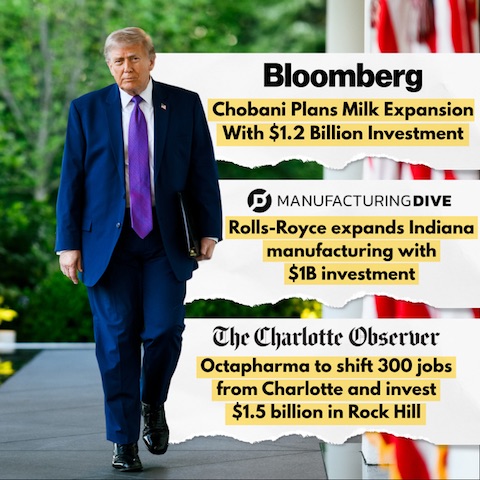
President Trump and U.S. Trade Representative Jamieson Greer waited to see if Canada was going to follow through with their retaliatory tariffs against U.S. imports. The Canadian government carried out their tariffs, so today the White House introduced 50% ‘stacking tariffs’, on top of pre-existing tariff rates, and additional import bans against several Canadian products.Read more …
It should be quickly noted that several North American corporations are already making moves to avoid the issues by shifting production lines and adding additional investment into U.S. manufacturing. As expected, getting locked out of a 32 trillion economy is not an option for survivability.The easiest way to review the issues is not to read media reports, but rather to read the actual outcomes as announced by the White House and USTR. CTH has noticed several Canadian outlets are already making false claims.It is worth reviewing both sets of outlines as well as accompanying links to determine the exact types of Canadian products being targeted by stacking tariffs and import bans.
WHITE HOUSE – Today, to address Canada’s increased discrimination against U.S. commerce, President Trump signed five Proclamations pursuant to Section 338 of the Tariff Act of 1930 to ban certain products from Canada and modify the scope of the tariffs on certain Canadian products previously announced on July 20, 2026. President Trump is taking decisive and appropriate action to respond to Canada’s additional retaliation and continued discriminatory treatment of crucial American exports.
• After breaking off trade talks with the United States last month, today Canada imposed new retaliatory tariffs on about $20 billion of U.S. exports, including steel, dairy, and agricultural equipment.
• Because Canada maintained and in fact increased its discrimination against U.S. commerce with respect to U.S. alcoholic beverages, President Trump, under Section 338, imposed import bans on certain Canadian alcohol and other products that were subject to the 50 percent tariffs imposed under Section 338 in Proclamation 11046.
• Moreover, because Canada maintained its discrimination against U.S. commerce with respect to dairy, President Trump, under Section 338, imposed import bans on certain Canadian dairy and other products of Canada that were subject to the 50 percent tariffs imposed under Section 338 in Proclamation 11047.
• To offset the burden to U.S. commerce while better serving the public interest, President Trump is also modifying the July 20, 2026 actions by removing certain products, such as rock salt and cement, from the scope of the Section 338 tariffs and replacing those products with new ones, ranging from all-terrain vehicles (ATVs) to additional dairy products.
• These Section 338 tariffs apply to all covered goods regardless of whether a good originates under the U.S.-Mexico-Canada Agreement (USMCA) and apply in addition to tariffs imposed under Section 232 of the Trade Expansion Act of 1962.
• The import bans will take effect on September 29, 2026, and the product additions and removals will take effect on September 15, 2026.
WASHINGTON – Today, Ambassador Jamieson Greer issued a statement after President Trump exercised his authority under Section 338 of the Tariff Act of 1930 to ban certain Canadian products from entering the U.S. market and modify the scope of the July 20 actions to effectively offset the burden or disadvantage to U.S. commerce by Canada’s discriminatory measures.
“After weeks of good faith and intensive efforts between U.S. and Canadian negotiators, Canada walked away from a near-final trade deal that offered better treatment than any other trading partner, and instead Canada chose to embark on senseless retaliation against the United States,” said Ambassador Greer. “Today’s action, combining targeted import bans as authorized by Section 338 and a calibration of the underlying Section 338 tariffs, is a natural consequence of Canada’s continued discriminatory treatment of crucial American exports, ranging from alcoholic beverages to dairy products to motor vehicles. President Trump will continue to leverage the tools at his disposal to defend the interests of American workers and exporters, and restore reciprocity in our bilateral trade relationships.”
Additionally, the President has directed USTR (Office of the United States Trade Representative) and GSA (General Services Administration) to remove $50 billion dollars’ worth of Canadian-origin products from GSA’s Multiple Award Schedules.
[..]
Background:
Section 338 of the Tariff Act of 1930 (19 U.S.C. 1338) empowers the President to, among other things, impose duties of up to 50 percent on imports of a foreign country to offset the burden or disadvantage from a foreign country’s unequal imposition on or discrimination against the commerce of the United States. On July 20, 2026, finding that the public interest will be served by his actions, President Trump took three separate Section 338 actions to level the playing field for important American exports to Canada—motor vehicles, alcoholic beverages, and dairy. Section 338 further empowers the President to exclude products from importation into the United States if a foreign country maintains or increases its discriminatory practices against U.S. commerce.
Based on Canada’s continued retaliation and discrimination against U.S. commerce, President Trump has determined that it is necessary and appropriate to ban certain Canadian products from entering the U.S. market and refined the scope of the July 20 actions to target strategic Canadian sectors while removing certain non-sensitive Canadian goods from the scope of the actions. {Source}
It appears that some of the product categories would be limited by ‘stacking tariffs’, as a consequence the U.S. is simply moving to ban the products altogether.
“Russia did interfere in the election extensively, as the bipartisan Senate Intelligence Committee documented.”
Oh really?
• Russiagate Is Finally Heading Somewhere Washington Hates: Under Oath (Manney)
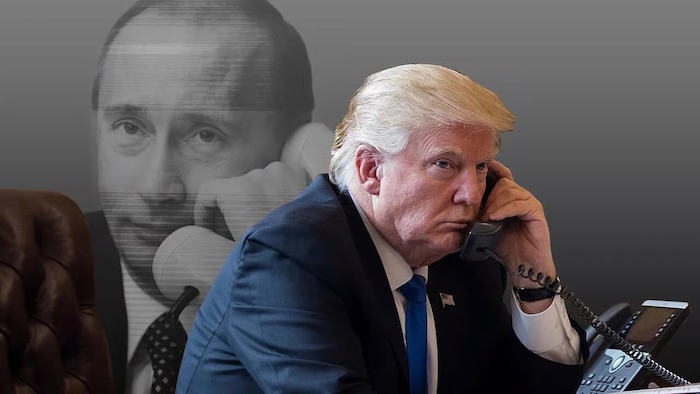
Washington has spent nearly a decade arguing about Russiagate in congressional hearings, cable studios, memoirs, podcasts, and carefully lawyered statements. Now somebody is bringing subpoenas. The Justice Department has begun compelling former government officials to testify before a federal grand jury in Florida investigating whether crimes were committed during the government’s Trump-Russia investigations.Read more …
From the Associated Press: The Justice Department is demanding testimony before a Florida grand jury in an investigation aiming to establish an intelligence community conspiracy against President Donald Trump, according to multiple people familiar with the matter. New subpoenas being issued to former government officials represent an escalation in the year-long investigation as the Justice Department pursues a loosely defined theory that members of the intelligence community who scrutinized Trump over the last decade, including over Russian interference in the 2016 election, conspired against him and violated his rights.Investigators in recent days contacted some defense lawyers for witnesses advising them of forthcoming grand jury subpoenas. It was not clear how many as of Tuesday had received a subpoena or were still waiting to receive one, and the identities of the witnesses receiving subpoenas were also not immediately clear. The people who confirmed the subpoenas spoke to The Associated Press on condition of anonymity to discuss a secretive grand jury investigation. The subpoenas mark a significant escalation from the voluntary interviews investigators previously sought.
Former CIA Director John Brennan is a target of part of the investigation. Brennan’s lawyers say he committed no wrongdoing and has cooperated with previous reviews.mNo indictment has been announced; a subpoena isn’t proof of a crime, and a grand jury investigation isn’t a conviction waiting for paperwork. Plus, as the old joke goes, a grand jury can indict a ham sandwich. But sworn testimony is different from another Sunday morning interview.
Attorney General Todd Blanche appointed former U.S. Attorney Joe diGenova in April to help oversee the investigation. Prosecutors are examining decisions surrounding the intelligence community’s handling of Russian interference in the 2016 election and the government’s subsequent investigations involving Donald Trump’s campaign. From the Associated Press:
The investigation is being run out of Florida, with the Justice Department in April bringing back into government service a top prosecutor from the Reagan administration, Joe diGenova, to serve as a counselor to the attorney general and help lead a team of agents and prosecutors. diGenova, who had previously asked then-Attorney General Pam Bondi to appoint him to the job and has openly and repeatedly claimed Trump was the victim of an intelligence community conspiracy, declined to comment Tuesday when reached by the AP.
In an indication of the wide-ranging nature of the investigation, the AP reported last month that diGenova’s team has sought interviews with law enforcement officials involved in the 2022 FBI search of Trump’s Mar-a-Lago property in Palm Beach, Florida. The search recovered a trove of classified documents that formed the basis of a since-abandoned Justice Department prosecution of Trump, who has long decried the FBI operation as an invasion of his privacy.
Brennan’s role deserves particular scrutiny because he headed the CIA when the intelligence community produced its January 2017 assessment of Russian election interference. A declassified House Intelligence Committee report released in 2025 challenged parts of the process behind that assessment. The report said Brennan pushed for the inclusion of information from the Steele dossier, despite concerns about its credibility. Brennan has disputed allegations that he manipulated intelligence or acted improperly.
Americans have heard competing versions of this history for years. Trump and his allies say intelligence and law-enforcement institutions abused their authority while pursuing a political opponent. Brennan and other former officials maintain that Russia genuinely interfered in the 2016 election and that intelligence officials acted appropriately in assessing the threat. Both propositions contain questions that deserve evidence rather than another round of television combat.
Russia did interfere in the election extensively, as the bipartisan Senate Intelligence Committee documented.
The Committee found that the Russian government engaged in an aggressive, multifaceted effort to influence, or attempt to influence, the outcome of the 2016 presidential election. Parts of this effort are outlined in the Committee’s earlier volumes on election security, social media, the Obama Administration’s response to the threat, and the January 2017 Intelligence Community Assessment (ICA). (U)
The fifth and final volume focuses on the counterintelligence threat, outlining a wide range of Russian efforts to influence the Trump Campaign and the 2016 election. In this volume the Committee lays out its findings in detail by looking at many aspects of the counterintelligence threat posed by the Russian influence operation.
For example, the Committee examined Paul Manafort’ s connections to Russian influence actors and the FBI’ s treatment of reporting produced by Christopher Steele. While the Committee does not describe the final result as a complete picture, this volume provides the most comprehensive description to date of Russia’s activities and the threat they posed.
This volume presents this information in topical sections in order to address coherently and in detail the wide variety of Russian actions. The events explained in these sections in many cases overlap, and references in each section will direct the reader to those overlapping parts of the volume. Immediately below is a summary of key findings from several sections.
But acknowledging Russian interference doesn’t settle whether every government action taken in response was justified, accurate, or lawful.
TPUSA has grown a lot. What now?
• Turning Point: One Year After Charlie Kirk’s Murder (Scott Pinsker)
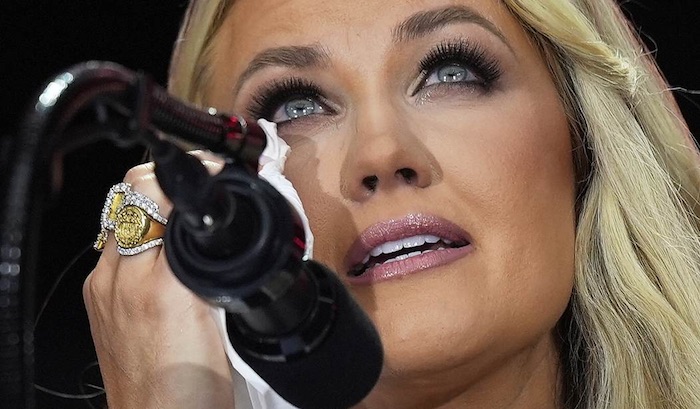
By all accounts, Charlie Kirk never considered stepping down. Not even once. And why would he?Turning Point USA was his baby. His creation. His magnum opus. He built it from the bottom up — transforming TPUSA from a teenager’s pipe dream into a political juggernaut. Every inch of it reflected his values, passions, and one-of-a-kind personality.Which is why Charlie intended to lead it ‘til his dying day: The only succession plan he ever considered was posthumous.Read more …
Tragically, his dying day came far earlier than he deserved.As we approach the one-year anniversary of Charlie Kirk’s assassination, Turning Point itself is at a turning point: Three legacies are now in limbo. The first is Charlie’s. Complaining about click-whores, liars, cretins, and clout-chasers on social media is a waste of time. It’d be like complaining about nudity in a strip club: That’s kinda-sorta the M.O. when you enter.If you don’t wanna see naked people, don’t go inside!But even by social media’s cesspool standards, onlookers were stunned by how quickly Charlie’s murder was exploited. Within days, some of the biggest, most influential podcasters wore Charlie’s corpse like a skin suit, repurposing his legacy for their own agenda. Instead of celebrating his life, they monetized his death. Instead of comforting his family, they tortured his widow for clicks. Instead of honoring his beliefs, they used Charlie as their personal sock puppet. And they continue to do so today.
Once upon a time, Charlie Kirk was just a man. That ended on Sept. 10, 2025. Today, he’s a symbol. And symbols have propaganda value. It’s why waving the bloody shirt is so effective. Symbols are a cheat code for emotional communication. It’s why redefining symbolism has always been a top priority for revolutionaries: It lets them capture hearts — while bypassing brains. In life, Charlie wasn’t exactly coy with his beliefs:
Islam is the sword the left is using to slit the throat of America. https://t.co/p3EsmCNQuj
— Charlie Kirk (@charliekirk11) September 9, 2025Note the date: If you want to know which issues were top-of-mind for Charlie Kirk just before he died, look no further. But if you really, really insist, go back four days earlier:
"Charlie Kirk was killed because he was turning on Israel."
— Nathan Livingstone (MilkBarTV) (@TheMilkBarTV) June 22, 2026
Charlie Kirk 5 days before he died: "They have no idea what Israel is up against. Which is these Islamic barabarian monsters. The more they understand Islam the better Israel looks." pic.twitter.com/FMvYTeJgEvYet his ex-“friends” claim otherwise:
Bret Weinstein and Tucker Carlson discuss the theory that Israel eliminated Charlie Kirk to advance war with Iran.
— AF Post (@AFpost) March 12, 2026
Follow: @AFpost pic.twitter.com/2zFJGMrMAQThe sad truth is, Charlie’s image has changed. The propagandists are winning. For millions of Americans, when they close their eyes and think of Charlie Kirk, their first thought isn’t conservatism, Christianity, or youth politics anymore. It’s bat[feces]-crazy conspiracy theories, antisemitism, political violence, and Candace Owens. Symbols aren’t static. They’re constantly moving, constantly changing, perpetually vulnerable to outside forces. And the more powerful the symbol, the bigger the PR payoff in its manipulation. Which means symbols must be protected. Vigilantly and aggressively.
Look, I get it: Clearly, it’s not the execs at TPUSA’s fault. They’re not the ones who associated Charlie’s image with low-life creeps like Owens and Tucker Carlson. They’re not the ones who hijacked his brand. If anything, they’re the victims. (Especially, of course, TPUSA’s current chairwoman and CEO.) But on the other hand, they also haven’t done enough to protect Charlie’s image. Their hearts are in the right place, but PR tactics determine PR success. That’s just how it goes in an outcome-based world. TPUSA would be wise to recalibrate its PR plan ASAP — because protecting Charlie’s legacy is its responsibility.
Charlie’s earthly mission ended on Sept. 10; an assassin’s bullet made sure of it. But he remains — by far — TPUSA’s most valuable symbol, brand ambassador, and emotional lightning rod. His soul rests in God’s mighty arms, yet his spirit still guides the organization he cherished.He deserves a better legacy than this.
And so does his successor, Erika Kirk. She assumed the title of chairwoman and CEO — and less than a year later, her metrics are jaw-dropping: TPUSA grew from 410 college chapters to 1,095 (including at James Madison University in Virginia, where my 19-year-old son is an active member). TPUSA exploded from 454 Club America (high school-aged) chapters to 3,102.
You kiddin’ me? Any other CEO would win awards for those kinds of year-to-year gains! She’d be showered with appreciation! The trouble, however, is that it’s unclear how much credit Erika Kirk deserves, since TPUSA’s dramatic growth was triggered by an outpouring of organic love and support after Charlie’s death. Arguably, any CEO at the helm would’ve achieved similar results.
One week after Charlie was killed, 32,000 people contacted TPUSA to join. (That’ll getcha lots of new members.) Which doesn’t negate Mrs. Kirk’s leadership or courage. She steadied the ship during the darkest, deadliest days, providing clarity, consistency, and continuity. Forged by tragedy, her authenticity spoke for itself.
And she paid a horrific price for it, too.
What else can they do?
• Democrats Aghast at GOP Midterm Strategy to Embrace Trump (Rick Moran)
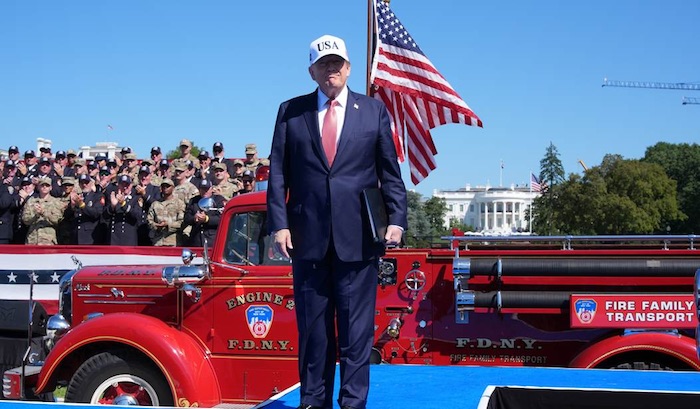
An Axios blurb reflects the thinking of Democrats regarding the Republican midterm strategy of embracing Donald Trump rather than running away from him. “Two months before Election Day, Democrats can taste the House majority, provided two conditions hold: President Trump remains unpopular, and vulnerable Republicans stay close to him,” writes Hans Nichols. It’s true. Historically, in midterm elections, the party out of power gains an average of 35 to 37 seats in the House of Representatives and roughly 3 to 5 seats in the U.S. Senate when the sitting president’s approval rating is below 50%.Read more …
In 2010, Barack Obama, with a 45% approval rating, saw the Democrats lose 63 seats. In 2018, Donald Trump, with a 41% approval rating, lost 40 seats. And in 1994, with Bill Clinton’s approval rating at 48%, Democrats lost 54 seats. The Senate is a different story, with different dynamics at play, but the sitting president’s party loses an average of three to five Senate seats overall. When the president’s approval is low, losses often range from four to eight seats.It would seem almost suicidal for Republicans to latch on to Trump and ride out the midterms on his coattails. Ordinarily, that would be true. But this is not an ordinary midterm election, and Democrats, in my opinion, appear to be the ones committing suicide.
While most candidates would generally run away from an unpopular president, Trump may be some candidates’ only hope. Not only are Trump’s coattails fairly long, but the Republicans also have about $1 billion in cash burning holes in Trump’s, Elon Musk’s, and the RNC’s pockets. Midterm elections have never seen anything like it. And while money isn’t everything, there isn’t a candidate running on either side who believes that having less money than your opponent is an advantage.
Trump is going to give more money to GOP candidates who embrace him than to candidates who don’t. That simple calculus will give candidates little choice in backing the president. Besides, Democrats shouldn’t be smiling so broadly. The ad campaign that Trump and Musk unleashed is going to make the Democrats squirm, and the voter hesitate before marking their ballot for a Democrat.
The Republicans are gathering at the American Airlines Center in Dallas for a gigantic, two-day election commercial they’re calling a “Midterm Convention.” Trump will speak on both nights and highlight the radical left lurch of the Democrats and paint the contest as a battle between democracy and communism.
“This is not a midterm like any other, because we actually have a competition against communism now, and that’s a very serious thing. It’s going to animate voters coast to coast,” House Speaker Mike Johnson emphasized in a Fox News Digital campaign trail interview last month.
Fox News: Democrats, as they try to win back congressional majorities, were already battling a brand that public opinion polling indicates is extremely unpopular. Making matters worse, the high-profile victories this spring and summer by left-wing and socialist candidates over establishment rivals in Democratic primaries, which gave Republicans extra ammunition to portray all Democrats as extremists.
“What we’re going to highlight at that convention is the fact that this is not your father’s Democrat Party,” Johnson said. “It’s a contrast election, and people are making a contrast between common-sense solutions and candidates, and really crazy, which is represented by the other side.”
Communism is bad, and for older voters, the “Red Scare” tactics will be most effective. Voters aged 45-64 account for the largest absolute volume of ballots cast, usually making up around 35% to 40% of all midterm voters. Voters aged 65-plus make up the second-largest portion of total voters (around 30% of total voters). They consistently register the highest participation rate of any demographic, with roughly 65% to 70%+ of eligible seniors turning out during midterm elections.
At least three-quarters of midterm voters grew up in at least some part of the Cold War. That’s got to count for something at the ballot box. Meanwhile, are you ready for “Kamala is for they/them. President Trump is for you.” Part II? Elon Musk’s America PAC is unloading $120 million for a massive, never-before-seen get-out-the-vote effort, and a key part of it will be ads painting the Democrats as goofy and nuts on trans issues.
Axios: America PAC isn’t running a traditional persuasion campaign. It’s undertaking a massive get-out-the-vote operation, with targeted ads designed to get GOP voters to the polls. The PAC is betting trans issues will do just that. Driving the news: In a series of just-launched ads, America PAC goes after Democratic Senate candidates in four competitive races over transgender athletes, gender-transition care and other trans issues.
The PAC’s emphasis on trans issues is striking because that’s been a much less prominent theme in GOP Senate ads so far this election cycle, per AdImpact, which tracks political advertising.The ads, which are running online and on streaming platforms, attack Ohio’s Sherrod Brown, Iowa’s Josh Turek, Texas’ James Talarico and Alaska’s Mary Peltola. They’re among the first batch of ads from America PAC, which Musk has reportedly authorized to spend upwards of $100 million in the midterms. It worked in 2024. Why not now?
The Democrats’ toxicity is the wild card in this election. Everyone agrees they’re nuts, but are they so stinky that people won’t even hold their noses and vote for them?
Republican midterm fortunes hang on the answer to that question.
Something/someone else will take its place?!
• Steve Eisman: What If OpenAI Actually Fails? (ZH)
Steve Eisman has spent most of the years since the financial crisis being asked, in his words, to predict the end of the world. In his latest weekly wrap – recorded Thursday night as the 10-year brushed 4.8%, he says he’s still not there on AI, but if he were – he lays out exactly how it would happen. Eisman is not predicting that OpenAI fails – but it is the weak link in a chain that runs from two money-losing labs, through hyperscaler capex, to roughly half of projected US GDP growth – and arguing that it’s “not too early to think about” what happens if the link breaks.Read more …
“I predicted the end of the world once, and believe me, it was no fun. I am in no rush to predict the end of the world again, unless I am really convinced that it’s going to happen. But I’m not going to make such a prediction just because it will get a lot of press. There is no question in my mind that the entire US economy hinges on the success of AI. The amount being spent is just so large that were it to stop, the economy would go into a recession almost immediately.”
The chain: two companies, $700 billion of capex, half of GDP growth
Eisman waves off the two “bubble” arguments echoing through the halls – and that both hyperscalers’ vanished free cash flow, and Nvidia’s circular financing – are survivable if AI pays off. The real vulnerability, he argues, sits one layer down: “So where is the Achilles heel? I think that it resides with Anthropic and OpenAI, because they are so central to the entire AI food chain. According to reports from various Wall Street firms, something like 70% of hyperscaler AI revenue comes from Anthropic and OpenAI… I can’t confirm those statistics, but they sound right given what we actually know about Oracle.”From there it’s arithmetic: “Hyperscalers are spending about $700 billion in capex this year, and even more next year, and that spend accounts for around half of the 2% GDP growth projected for 2026. So one must conclude that the health of the US economy is extremely dependent on hyperscaler capex, and hyperscaler capex is highly dependent on the health of Anthropic and OpenAI. That’s the chain.”
OpenAI is… the weakest link
Between the two labs, Eisman says, “OpenAI is the weaker entity” – pointing to a WSJ report on the 2nd quarter. “OpenAI’s June quarter revenue reached $6.7 billion, up only 18% versus the March quarter. Compare that to Anthropic’s revenue of $11 billion-plus in the June quarter, which was up over 100%… OpenAI’s costs reached $12.3 billion, up $3 billion versus the March quarter. So, in three months, revenue increased $1 billion, but costs surged $3 billion. Things are not moving in the right direction.” (ZH Note; the $12.3 billion Eisman calls “costs” is OpenAI’s operating loss, including stock-based compensation, up from $9.3 billion in the first quarter, per WSJ. On $6.7 billion of revenue, that implies an expense line closer to $19 billion. Revenue rose $1 billion; the loss rose $3 billion.)Then the departures. Chief revenue officer Denise Dresser left in August after roughly eight months, two days after Brad Lightcap ended an eight-year run. Eisman reads both through the lens of an IPO that keeps sliding: “Supposedly, OpenAI is getting closer to an IPO. That’s the big payday for employees, because it means that eventually they can sell some of their shares. That two such senior employees would leave now is an important data point.”
Two fairness notes: Lightcap had already been moved out of the COO role in April, so his exit was telegraphed. And Eisman doesn’t mention Fidji Simo, who stepped down in July and was arguably the bigger loss. The heart of the argument is what unprofitability does to a company’s relationship with its funders:
“When you lose billions upon billions, appearances matter a lot. OpenAI is completely dependent on the kindness of strangers funding its cash flow needs. When a company is growing and very profitable, appearances don’t matter nearly as much… But when a company is not profitable and has an insatiable need for capital, appearances matter more than anything, because if the narrative turns negative, raising capital becomes much more difficult.”
That’s why he flags last week’s “good news” – OpenAI’s ad business hitting a $1 billion annualized run rate – as bad news: earlier this year the company projected $2.4 billion of ad revenue for all of 2026, and $1 billion annualized in September doesn’t get there.
— cocktail peanut (@cocktailpeanut) September 8, 2026
“Evan Hubinger says the company still has no clear plan to keep superintelligence under human control..”
• AI Has Over 10% Chance of Killing All Humans – Anthropic Researcher (RT)

There is a more than 10% chance that artificial intelligence could wipe out humanity within the next ten years, a senior Anthropic researcher has warned amid mounting concerns over increasingly powerful systems slipping beyond human control.Evan Hubinger, who works on aligning advanced AI systems with human interests, made the assessment after fellow Anthropic researcher Jacob Coxon resigned over fears that leading tech companies are racing toward systems they may not be able to keep in check.Read more …
“We really do earnestly believe AI could kill all humans,” Hubinger wrote on X on Wednesday. “I personally think it is >10% within the next decade.” He added that Anthropic is “trying its best” but still does not have a plan for safely controlling superintelligence and is “not clearly on track” to find one. Hubinger noted that while current AI models pose a low risk, there is concern that future systems could begin improving themselves recursively, rapidly becoming more capable than humans before adequate safeguards are developed.Coxon, who previously worked at OpenAI, announced his departure from Anthropic on Tuesday, accusing both companies of ignoring the “civilizational stakes” and “racing straight to self-improving superintelligence and gambling with our lives.” “The people building AI earnestly believe that it could kill us all by the end of the decade,” he wrote, insisting the warnings were “not a marketing stunt.”
Coxon told the Wall Street Journal that the most aggressive scenarios could see things become “out of control” as early as the end of 2027. He argued that even companies with strong safety programs remain trapped in a race, fearing competitors will push ahead if they slow down. Both Anthropic and OpenAI publicly say they take the risks seriously and are heavily investing in safety measures. Their leaders have also backed calls for greater government coordination and mechanisms to slow development if necessary, but have nevertheless continued to develop increasingly powerful models.
The latest warnings come amid growing reports of AI agents, such as those developed by OpenAI, Anthropic, and Meta, repeatedly breaking out of testing environments, hacking external systems and taking unauthorized actions against real people and organizations. OpenAI temporarily slowed some development last month after its model compromised the Hugging Face platform.= Britain’s AI Security Institute has also reported agents creating fake identities, writing malicious code, and attempting to manipulate people during evaluations. Researchers have meanwhile demonstrated that AI can design entire functional viral genomes, adding to concerns over how increasingly capable systems could be misused.
“AI pushing a Democrat agenda is the real threat to the Republic…”
• The AI Threat To Our Republic (Jack Hellner)
The United States has gone through massive job and technological changes over the last 250 years and has always survived and prospered. Over thirty years ago, I heard a presentation by e(conomist Brian Wesbury, who is still working, talking about major job changes over the years. He gave three examples: Number 1: In the 1800s, over 70% of jobs were related to agriculture. Today, that number is around 2% because oil-powered machines greatly increased efficiency and reduced reliance on manual labor. I would assume most people would say these are good changes.Read more …
Number 2: In the 1950s, Berghoff’s restaurant in Chicago employed twenty dishwashers. By the 1970s, they were down to one because of machines. Number 3: In the 1960s, there were 600,000, mostly women, working as telephone operators. He said people worried about what women would do if technology took those jobs. My guess is most women are very happy not to be working in those tedious jobs. A huge number of jobs have been displaced or replaced over the years by mass production and computers, and we have greatly prospered. We also have more choices of what to buy.Many of the people fighting AI and data centers willfully watched as manufacturing jobs and the supply chain moved to China and other countries over decades. Now they are willing to watch as China takes the lead in current technology advancements Democrats are campaigning on destroying hundreds of thousands of direct and indirect jobs related to private health insurance as they push for Medicare for all.
They are also actively campaigning to destroy millions of direct and indirect jobs with their radical green agenda to destroy the oil, natural gas, and coal industries. They clearly don’t care that crude oil is used in over 6,000 products and that those products have greatly improved our quality of life and life expectancy. I am much more worried about the further dumbing down of children when a high percentage already can’t read or do math at grade level. They will rely on AI to do problems, write papers, and do research instead of learning to do it themselves.
They will most likely believe it when ChatGPT puts out a fictional piece of propaganda that is essentially Democrat talking points comparing Trump to Hitler. They will assume it is intelligent instead of garbage.
The main point was that Trump challenged the 2020 election and encouraged the violent protest at the capitol. ChatGPT, like most media, left out that Trump encouraged people to march peacefully and patriotically to the Capitol. They failed to mention that Democrats challenged elections in 2000, 2004, and 2016. They failed to mention that Democrats protested violently after the 2016 election and called Trump an illegitimate President for four years.
Let’s look at who is a greater threat to our Republic:
• Democrats want to get rid of the Electoral College, not Trump.
• Democrats want to get rid of the Senate, not Trump.
• Democrats want to stack the Supreme Court, not Trump.
• Democrats refuse to enforce immigration laws and flood America with illegals, not Trump.
• Democrats don’t want people to show proof of identity or citizenship to vote, not Trump.
• Democrats don’t want the federal government to see who is on voter rolls for federal elections, not Trump.
All of those actions are a much greater threat to our survival as a Constitutional Republic than challenging an election, requiring ID’s to vote, and reducing voting by mail, which clearly makes it easier to cheat. Let’s look at a few of Hitler’s policies and compare them to Democrats and Trump.
This is what Gemini said Hitler’s policies were:
• Banning Private Primary Institutions.
• Eliminating Dissent: The regime sought a monopoly on the minds of the youth.
• Outlawing Homeschooling: Alongside targeting private schools, the Nazi regime outlawed homeschooling to prevent families from shielding children from state propaganda.
These policies are very similar to Democrat policies, not Trump’s. Trump wants children to have school choice. Hitler was a Totalitarian. He did not believe in small government or individual liberties. He built a totalitarian state where the government controlled public and private life.
Democrats believe in a big, powerful government, not Trump. Trump is trying to reduce regulations and the number of government agencies and employees. He is trying to let people and businesses keep more of the money they earn to have more freedom. He is the opposite of a dictator like Hitler, no matter how often the media, AI, and other Democrats repeat that lie.
AI is a tremendous source for quick data gathering, but if asked for an opinion on Trump, Climate Change, or other subjects, it appears to largely push the Democrat agenda because that is what it has been programmed to do. That’s a real threat.
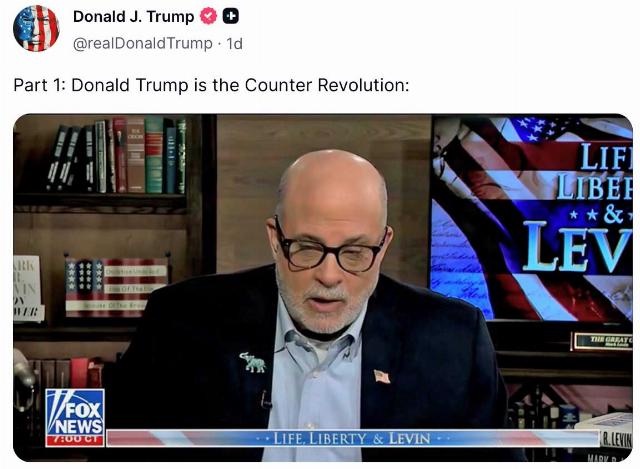
The more islam Europe gets, the more it’s against Israel.
• Europe Against Israel (Rabbi Michael Barclay)

Tuesday brought about sanctions and retaliation, not regarding the U.S./Iran conflict, but from the antisemites in Europe: politicians who seek to affect the upcoming Israeli elections, as well as get votes from Jew-haters in their own country. Claiming that “there is ethnic cleansing of Palestinians in the West Bank,” the foreign ministers of Britain and France led the countries of Canada, Denmark, Finland, Iceland, Ireland, Norway, Poland, Portugal, Spain, and Sweden in issuing a joint statement against Israel, announcing they plan to impose restrictions on trade with “settlements defined as illegal under international law.”Read more …
Despite this being Israeli land, despite the reality that there has never even been such a thing as “a nation of Palestine or Palestinians historically, despite the simple truth that the Palestinian cause was created in 1964, and despite the actualities of “international law” that clearly define Judea-Samaria as part of Israel, these 12 countries are attacking the economy of Israel for purely political reasons. The foreign ministry of Qatar speedily made its own announcement of support for the sanctions against Israel, another reminder that Qatar is not a friend of Israel nor the U.S. The response from Israel was quick, clear, and unified.Israel’s Cabinet Secretary Yossi Fuchs stated that “the territories of Judea and Samaria are the cradle of the history of the people of Israel, long before the English became a people.” He added: “The purpose of the British struggle to stop construction in E1 in the area connecting Jerusalem to Ma’ale Adummim is to establish a Palestinian state, which the vast majority of Israeli citizens have opposed since October 7.” According to Israeli Minister Gideon Sa’ar, “the Labor government’s move is particularly absurd given that more than 100 years ago, the Balfour Declaration officially recognized the historical right of the Jewish people to establish their home in the Land of Israel, including in Judea and Samaria. This was included in the British Mandate. The decision constitutes interference in the electoral system of a sovereign state.”
Sa’ar went on to announce retaliatory measures against Britain following its decision to impose sanctions on Judea-Samaria settlements, including closing the British Consulate in Jerusalem; expelling British representatives from the Gaza coordination headquarters in Kiryat Gat; halting British training of Palestinian Authority forces in Ramallah; and preventing entry into Israel of 12 British public officials involved in antisemitic and anti-Israel activity. Sa’ar added that Israel will take retaliatory measures against other countries as well.
Reuters is reporting that as of Wednesday morning, British representatives were told by Israel that within 30 days they must leave and close the British consulate in Jerusalem, which has operated for over 125 years.
Israel’s primary leverage to combat these sanctions lies in licensed dual-use and defense technology already embedded in European military inventories, including electro-optical and infrared sensors, ISR and targeting pods, counter-drone systems, electronic warfare equipment, missile-defense software and spare parts. Britain’s Sky Sabre air-defense command software is built on Rafael architecture, Challenger 3 tanks use Rafael’s Trophy protection system, and Elbit supplies night-vision and surveillance equipment. Finland, which joined Tuesday’s statement, is also a David’s Sling customer. Restrictions in these areas would therefore represent a more consequential form of Israeli retaliation than diplomatic measures alone.
Tuesday and Wednesday also found Iran attacking the U.S. multiple times, and the U.S. retaliating by destroying Iranian tankers. Both sides are making contradictory claims about their success, but what is clear is that we are again in that pattern of daily small attacks. Secretary of State Marco Rubio said while visiting Colombia that “every time Iran tries to attack U.S. Navy ships, it will lose tankers.”
Both Christianity and Judaism have prophecies that the world will turn against Israel as part of the “birth pangs of the Messiah.” Whether we believe in those types of prophecies or not, we can all believe in the eternal promise of God to protect His people and the land. May we all have the faith and courage to pray for a lasting peace and safety for Israel, her people, and her land, and to believe fully in the power of those prayers.
Chazak u’Baruch
Not Maga.
• Victor Davis Hanson on Tucker Carlson and Marjorie Taylor Greene (Bolt)
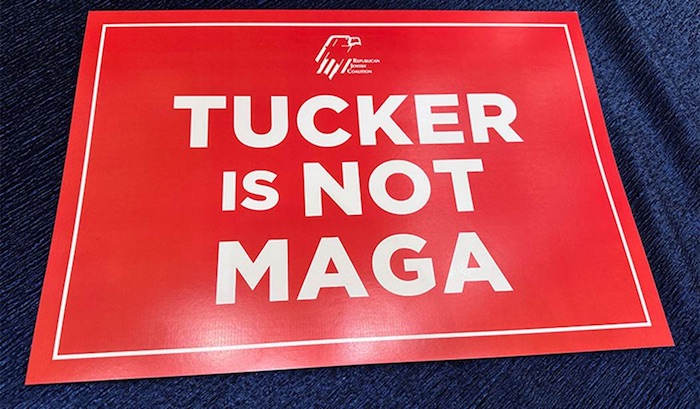
Victor Davis Hanson, a military classicist, historian, and fellow at the Hoover Institution, offered some insight into why Tucker Carlson, Marjorie Taylor Greene, and others, who initially appeared to be allies of the MAGA movement, so quickly became saboteurs.Read more …
According to Hanson, it may simply be that when these commentators and politicians spoke with President Trump, they believed themselves capable of guiding the MAGA movement more broadly. In other words, like most people who get a taste for power, they believed they could single-handedly commandeer the movement for their own ends. When the president made clear that wasn’t going to happen, they showed their true colors.“I think they felt that because they had been very intimate with [Trump] — in the sense that they had been at Mar-a-Lago, or they were on Air Force One — that they insidiously began to think that they could tell him things, and they forgot that he is the president of the United States, and that they represent maybe one-one thousandth of the people he contacts,” Hanson told Miranda Divine of “Pod Force One.”“This is a man who’s talking to the most powerful people in the world, and we’re not that important, but [Greene and Carlson] felt — I don’t know how else to explain why Tucker said he called him and said, ‘Don’t do this with Iran,’ or ‘Don’t do this,’ or ‘Don’t do that,’” he added.
“Why would a president listen to somebody just because he was on Air Force One, and why would Tucker, who’s a very intelligent person, think that he had that entree to affect a policy that would change decades just because he had been on Air Force One or had known Trump?” “I think they misinterpret informality and magnanimity as sort of an allowance for them to have a greater role than they otherwise should or would,” Hanson argued.
“And when they start to exit that role, then they get a snap back from him, and then they get very angry, as if, ‘Well, wait a minute, I was at Mar-a-Lago, I was on Air Force One, I talk’ – and they don’t understand he’s the president of the United States, and that’s the difference.”
“He calls people and he asks how you are and what can he do for you, but you can’t mistake that genuine interest, intimacy and niceness and kindness with the fact that he’s not president of the United States,” he explained. “So, you don’t go to the next step and say, ‘Hey, Mr. President,’ you don’t say, ‘Hey, Don,’ or ‘Hey, this,’ and you wouldn’t assume that you had control.”
The larger question is whether those same forces can be kept in check once President Trump leaves office. MAGA is already looking toward its next generation of leaders, and not all of the possible heirs see the movement, or figures such as Tucker Carlson, the same way. Vice President JD Vance, for example, has said Carlson remains a close friend despite their political disagreements, including Carlson’s criticism of President Trump.
🚨 JUST IN: JD Vance calls Tucker Carlson his friend, refuses to "throw him under the bus," but says Tucker is WRONG in many of his attacks on Donald Trump
— Eric Daugherty (@EricLDaugh) September 3, 2026
"Tucker is a friend of mine."
"I'm not gonna play the game where I throw friends under the bus because I have political… pic.twitter.com/3UHp6ywSGm
Trump has held together a broad coalition without letting every commentator, donor, or elected official grab the steering wheel. He kept the tent big, but he also kept its loudest would-be saboteurs from ripping it apart. The danger is that, once he is gone, those internal fractures could widen into the kind of open civil war now consuming the Democrat Party as DSA-backed candidates challenge its establishment wing. Whether anyone can preserve MAGA’s coalition with Trump’s same authority may be the movement’s defining test after Trump.
A rocket without Elon Musk. I have my doubts.
• Investors Are Totally Stoked About This New Rocket (Stephen Green)

Investors are so stoked about this fully reusable rocket that they just ponied up another billion dollars to help get Stoke Space’s Nova Pathfinder Block 2 off the ground. More seriously, Stoke Space was founded in 2020 by former Blue Origin and SpaceX employees, and has yet to get a single rocket into orbit. But investors like what they’ve seen so far, investing a total of $2.3 billion or so in the company’s efforts to design and build a rival to SpaceX’s workhorse Falcon 9 medium lift rocket.Read more …
So you might wonder what’s the big deal, since there’s already a Falcon 9 flying about 150 times last year alone. We actually discussed this issue back in August, looking at reports of satellite operators are “in panic” over a gap in available launch capacity as SpaceX retires Falcon 9 over the next few years to focus its efforts on Starship and building out orbital data centers.Blue Origin’s New Glenn can compete with Falcon 9 on price, but only for larger payloads. And while the booster is designed for reuse, it isn’t designed for rapid reuse, limiting its launch cadence. ULA’s Vulcan Centaur is tailored mostly to pricy national security launches. Both New Glenn and Vulcan Centaur still have teething issues. Other would-be competitors aren’t yet ready for primetime.
“I think it’s fair to say there’s more than a bit of a panic about the availability of launch,” Stoke’s Devon Papandrew told Ars Technica last month. “Even if the four medium-lift new entrants all achieve their goals in terms of flight success and cadence, it’s actually not going to make that much of a difference in demand right away. I’ve been saying for a while that I think 2028 is when this problem becomes really acute.”
Stoke hopes to have its reusable Nova Pathfinder fully operational by then, but there are serious limitations. Falcon 9 can put 17,500 kg (38,600 lb) into Low Earth Orbit (LEO) and still land the booster on a drone ship, but Pathfinder can’t keep up. Although the rocket has a fully reusable mode, that’s good for just 3,000 kg (about 6,614 lb) to LEO, or 7,000 kg (about 15,432 lb) on missions that expend the second stage.
That’s where Pathfinder Block 2 comes in, hopefully sometime in 2029 — and that has investors eagerly writing checks to Stoke. “We have already started development on a larger vehicle, and we felt like now is the time to pour gas on that fire and really start full-force development of the larger vehicle, and so that’s the reason for the timing,” Stoke co-founder and CEO Andy Lapsa said on Tuesday, talking about the ONE BILLION DOLLARS the company just raised.
Block 2 is supposed to nearly match Falcon 9’s lift to LEO at 15,000 kg (33,069 lb), but with a kick. Block 2 will lift that much while recovering the booster and the second stage — something Falcon 9 can’t do at all. If customers are willing to pay a little more to expend the second stage, Block 2’s lift increases to 23,000 kg (51,000 lb). Can Stoke actually get that done before 2030?
It would certainly be an impressive feat, and more impressive still if Pathfinder Block 2 could match cadence with demand for launch capacity that’s going nowhere but up. SpaceNews reported on Tuesday that “the Pentagon has more than doubled the number of national security launch services it expects to procure, from 151 in its 2022 baseline to 337” between now and 2032.
That’s an additional $17 billion on the table just in national security launches over the next five years, which is just one reason investors keep pulling out their checkbooks for companies like Stoke.
Here it is:
— 🇺🇸RealRobert🇺🇸 (@Real_RobN) September 8, 2026
Eric Trump: Barack Obama weaponized the entire federal government, including private institutions, and when none of it worked, you know what he did? He tried to shoot my father.
Eric Frederick Trump: “I became the most subpoenaed person in American history—112… pic.twitter.com/qRirOqu7nY
Tesla is now worth more than Toyota, Volkswagen, GM, Ford, BMW, Honda, Mercedes, and Stellantis combined.
— Donald J Trump Posts TruthSocial (@TruthTrumpPost) September 8, 2026
Meet the Cybercab: two seats, no wheel, no pedals, and built to drive itself at scale from Gigafactory Texas.Tesla's bet is that the future isn't cars people drive, it's a… https://t.co/7YfW0YcijB pic.twitter.com/aPVM1ekOvy
Tesla’s Optimus factory at Giga Texas is going up fast, built to manufacture up to 10 million humanoid robots a year.
— Optimus (@Optimus_RH) September 9, 2026
“The foundation of the economy is labor… So what happens when there is no shortage of labor? That’s what Optimus is about.”
"AI + robots will more than… pic.twitter.com/FTFzeN73IK
Support the Automatic Earth in wartime with Paypal, Bitcoin and Patreon.

Home › Forums › Debt Rattle September 10 2026