

Edward Hopper Two on the Aisle 1927

This is an important moment.
— Overton (@overton_news) November 4, 2026
It shows just how committed President Trump is to standing by his decisions, even when they come with political consequences.
A reporter brought up Vice President Vance’s comments blaming the Republican midterm losses, in part, on the Iran conflict.… pic.twitter.com/IgddNH4L0H
10 long years of silence and complicity by Western corporate media & politicians about concentration camps in Eastern Europe. We have been through this with Hitler already. No lessons have been learnt. Links in comments. Read them. Don't allow them to keep denying this. pic.twitter.com/mJhptyUlOA
— Robin Monotti (@robinmonotti) November 4, 2026
1.5 SECONDS. That's how quickly Neuralink's Next-Gen R1 surgical robot can insert a tiny electrode thread into the brain.
— Mario Nawfal (@MarioNawfal) November 4, 2026
These threads are thinner than a human hair. The robot maps the brain's surface, avoids blood vessels, and places them with precision that human hands can't… https://t.co/qMopSEg0Ah pic.twitter.com/VR9PskOd3C
As you can see, mostly people are still processing the election.
I’m thinking of how fast former leftist people like me, Jim Kunstler and ten million more turned conservative.
It’s because the left went totally berserk.
And now we’re here. And they won.
“The ramifications are staggering, tragic, and universal … and not just for the U.S.”

Blue wave. Tsunami. Bloodbath. Armageddon. (If you trust the process and counting.)Read more …
I was never optimistic about the midterm results. And today we learned what many of us have long suspected: the bulk of the American citizenry, or non-citizenry, no longer possesses the morals or the knowledge required to keep a free, representative republic from collapsing into slothfulness, envy, chaos, and tyranny. The United States, once the lone supernova among nations, has now begun its transformation into a black dwarf.The ramifications are staggering, tragic, and universal … and not just for the U.S. Those who celebrate this, whether at home or abroad, will soon realize that their glee was heinously misplaced.How? Why?
There are many factors, of course, including massive demographic change, an anti-American educational system and media, and the consequent collapse in Judeo-Christian values and respect for the values and beliefs upon which this country was founded. The idea of limited government, incepted specifically to protect the unalienable rights granted to us by our Creator has been replaced by a desire for a big government to give us “free” stuff. Meaning paid for by others. There’s the immorality. And, of course, there was much hatred of Trump.
But the proximate cause could be COVID-19 and the government’s response to the Wuhan flu. Suddenly, we had mail-in voting, ballot-harvesting, drop boxes, and vote counting for days after “Election Day.” People stopped meeting, discussing, debating, and took to “social” media to hurl obscenities at each other. Politics is the left’s religion. Government its one true God. Progressives/leftists/Marxists believe any individual’s rights are granted by government, meaning them.
Convenient if you are a power-hungry thug. They further believe that the rights they may bestow on you should be correlated to how “oppressed” you are, determined by your race, class, sexual preference, etc. And if your rights, or lack thereof, legitimately come from government and the government determines what is right or wrong, then you have the Holocaust. And the Killing Fields. And the purges. And the guillotines.
They have vowed, on numerous occasions, that they would come after their political opponents … and their political opponents’ supporters. Like me. Possibly you, as well. Ever purchased a MAGA hat? Be afraid. Be very afraid. This is not a joke. Ask Charlie Kirk. Many of these far-left politicians — and their supporters — are truly amoral. The New Jacobins are not substantively different from the old ones.
But, Eric, you’re exaggerating! And if these new radical Democrats make things worse, won’t it bode well for Republicans in 2028?
No, I’m not. And no, it won’t. They won’t let it. They will find a way to undo much of what Trump has done and manage to make it impossible for a conservative to ever win an important office again. Remember, we’re talking governors, representatives, and senators. And there’s always the judges. “Deep-red Texas” is now blue. Other states that used to be red just a couple of decades ago, like Colorado, are now “deep-blue.” Most of the nation’s big cities, where the majority of voters reside, haven’t had Republican leadership in many decades, even as they hemorrhage people, businesses, the tax base, and human decency.
When the majority of residents either work for government or receive benefits from it, the die is cast, there is no going back, no matter how bad things get. The people who work for government have money and power, those who are on the dole are addicted to it, like the addicts on the streets.
There is one unalterable truth that “good” people don’t want to acknowledge: if evil and tyranny are not aggressively confronted, they will prevail every time. They have to. If they are willing to — and are even excited by — lying, cheating, stealing, looting, harassing, assaulting, and killing, and “good” people aren’t willing to do what it takes to stop them, there is no other possible outcome. And, if a person is not willing to do whatever it takes to stop the evil, and is therefore willing to allow untold damage to their descendants and others in perpetuity, I do not consider them a “good” person.
But, gosh, Eric, aren’t you saying you’re O.K. with the very attitudes and behavior you decry in leftist tyrants?
Yes, but it couldn’t be for more different, you might say binary, reasons. We didn’t start this. Conservatives want everyone to have the right to free speech — and to be afforded the protections of the rest of the Bill of Rights. We believe in individual liberty for everyone … and the unalienable rights granted by God, not the whims of those obviously imperfect people in government. We don’t want to rule over others and be worshipped by them. We don’t wish to control every aspect of others’ lives or take ever more money from their pocketbooks.
But no one seems to be willing to take a stand anymore, which means they don’t believe there is anything more important than their own temporary convenience and comfort. We could not be more removed from our illustrious Founders, who risked their lives, fortunes, and sacred honor for their freedom, and subsequently fought the largest military on the face of the Earth … though they didn’t have one.
For some inexplicable reason, most Republicans appear utterly incapable of making a case for great ideas, timeless wisdom, and inarguable results. We sure could use a man like Rush Limbaugh or Charlie Kirk again. Instead, most essentially let Trump’s tariffs, the ongoing conflict with Iran, and the resulting gas prices define them, despite the facts that there have been so many other successes — and that gas prices were just as high under Biden at times. (Don’t seem to remember Democrats going ballistic then. Odd.)
So here many of us are, wondering How we look our kids in the eye — kids perhaps about to be married, with their whole lives in front of them — and tell them that this, today, is as prosperous and free as the United States will ever be. That everything will be downhill from here. Yet, if we don’t explain certain things to them, we would surely also be doing them a disservice.
This is where we stand. Feeling blue, but red in the face. James (“I hate Christianity”) Talarico is now a senator from Texas. Texas. And the diminutive, terrorist-friendly Marxist Muslim, Abdul El-Sayed, will be the new senator from increasingly Muslim Michigan.
What do we do now? That is one thing that is still up to us.
“Your brain is the battlefield.”
• The Media’s Propaganda Machine Is Malfunctioning (J.B. Shurk)

It feels as if the march of history is accelerating now. The number of meaningful current events around the globe continues to grow.Read more …
We don’t have time to process the Islamic riots across France before turning our attention to Polish Prime Minister Donald Tusk’s attempted judicial coup d’état. While President Trump seeks peace between Russia and Ukraine, the United Kingdom prepares its citizens for WWIII and a Russian invasion. The United States has elections, but Democrat seditionists and subversive members of the American Intelligence Community push for a “color revolution” to topple the Trump administration.Big events happen every day, and we have scant opportunity to understand what they mean before another comes across our screens. The issue of “screens” is important. If you’re reading this, you are not likely a hermit living self-sufficiently in the woods. Unless you limit your “screen time,” televisions, computers, tablets, and phones are pumping your brain full of information all day long. Even when we’re not consciously reading or watching something on our screens, our brains are picking up signals about the events playing out in the world.
If you are a fan of science fiction, it is not difficult to understand that we are now living in a version of the dystopian worlds that writers such as Aldous Huxley, George Orwell, Ray Bradbury, and Philip K. Dick envisioned. People who possess power in this world have a strong incentive to shape our minds, and they use every available tool to condition our way of thinking.
Information is no longer confined to a book, catalogued in a quiet library. It is blaring at us from all directions. Different cable news hosts on competing cable news networks repeat the same words and phrases all day long until we find ourselves reaching for those words while having polite conversations in real life.
Songs from pop artists representing different genres push the same messages, and when those pop artists collect awards, they use their acceptance speeches to drive those messages further into the brains of their most loyal fans. Those fans magnify those messages on their social media platforms, and pretty soon, tens of millions of people are expressing the same thoughts.
Movies and television shows teach us to fear or detest “hate speech,” “global warming,” “white supremacy,” “Russian aggression,” “science deniers,” “right-wingers,” “fascists,” “European Union skeptics,” “fossil fuels,” “Islamophobia,” “transphobia,” Christianity, immigration enforcement, Vladimir Putin, and Donald Trump. Any Hollywood character who doesn’t condemn these things is depicted as a villain; any Hollywood character who denounces these things is a brilliant, beautiful hero.
This is information warfare in a nutshell, and it is all around us. If you look back in time, you will realize that some version of it has always existed. Twentieth-century newspapers gave us descriptions of the facts filtered through the worldviews of their writers, editors, and publishers.
Three broadcast news anchors delivered almost identical accounts of each day’s news. If you scrutinized those newsrooms, though, you realized that newspaper publishers came from the same prominent families that ran parts of the government and that federal licenses required television networks to abide by certain national security protocols. The same “journalists” who gave each other awards for their “integrity” and “independence” married members of the government. Twentieth-century “journalists” were never really part of a Fourth Estate; they acted as the public relations arm of the American government.
The most important aspect of “journalism” last century was its ability to seduce the reader or viewer into believing that “reporters” are impartial, just-the-facts clerics collecting important stories for the public’s benefit. So long as “journalists” were seen as ink-stained priests who cared nothing for money or fame, they received a certain amount of public respect. If people could be convinced that “journalists” would risk their lives to inform the public what is “true,” then some people might even consider those “journalists” heroes. Priestly heroes cultivate public trust, and public trust is its own kind of power.
In this sense, the government had no interest in telling Americans not to trust the news. All governments want the public to believe the news because it is through the news that governments disseminate their public messages. In true symbiotic form, newsrooms and governments do not have competing interests. They have a shared interest: to convince the public that what it reads or hears is the “truth.”
The entertainment industry has long played its role in this propaganda program. A small number of publishing houses controlled which books would be printed and sold. A small number of magazines controlled popular opinion. A small number of movie studios controlled what stories were told. When everybody worked in tandem, publishing houses printed books whose authors expressed ideas that the government wanted the public to read. Magazines recommended those books until they became “best sellers” on newspaper lists. Hollywood chose good-looking actors to play the characters in those best-selling books, and families sat in theaters to hear government-approved programming.
Sometimes, movie stars played hero journalists, so that the public remembered that The New York Times and The Washington Post could be trusted to report only the “truth.” When a propaganda system works well, you don’t notice how all the various agents have clear conflicts of interest. You don’t stop to ask why the deputy director at the FBI would be working with The Post to take down a sitting president (something that both Mark Felt and Andrew McCabe have in common). You don’t wonder whether it’s appropriate for “reporters” to depend entirely upon anonymous sources.
You don’t ask whether the billionaire moneymen who own newspapers might have ulterior motives that undermine the pursuit of truth. You don’t notice that the same families that own movie studios and publishing houses also own multinational chemical plants, pharmaceutical firms, shipping conglomerates, and banking empires. You don’t realize that these wealthy families include members of Congress and the heads of agencies. You don’t see how government officials receive awards from nonprofits and NGOs that are run by the same families handing out awards to authors, musicians, actors, and “journalists” for their professional achievements or contributions to “truth.”
See the problem? Over the last thirty years, the public started to see through this sophisticated network of information warfare and recognize it as the propaganda that it has always been. The expanding web of the Internet allowed people to learn information that had been hidden from them. Email allowed people to communicate with groups much more quickly than traditional phone calls or written correspondence. Social media platforms turned ordinary people into public broadcasters almost overnight.
Comedians lose their power over minds when ordinary people on YouTube are just as funny. Hollywood actors lose their star power when teenagers can become famous just for filming their lives. Publishing houses lose their gatekeeping power when writers publish online. “Journalists” lose their monopoly on objective “truth” when citizen reporters describe current events in real time.
When all these parts of the propaganda machine malfunction together, people finally see the puppet strings moving the various actors. And whether they work in Hollywood or for CNN, the narrative engineers are all actors — people paid to deliver messages that corporations and government officials wish to spread.
This is one of the reasons the march of history is speeding up! The people who have long controlled public opinion realize that they have lost their greatest weapon: legitimacy. Illegitimate systems are unsustainable. So the narrative engineers have been forced to flood the zone with so much information that it becomes ever more difficult to ascertain the truth. Global warming, Russian collusion, COVID, defending democracy, WWIII — the demand on your attention is huge and will get only worse!
As this happens, remember this: Your brain is the battlefield. If you prevent others from using it for you, they will lose.
“.. this was actually a rather basic reactionary midterm election.”
• Meh. 2008 Was Worse. (Athena Thorne)
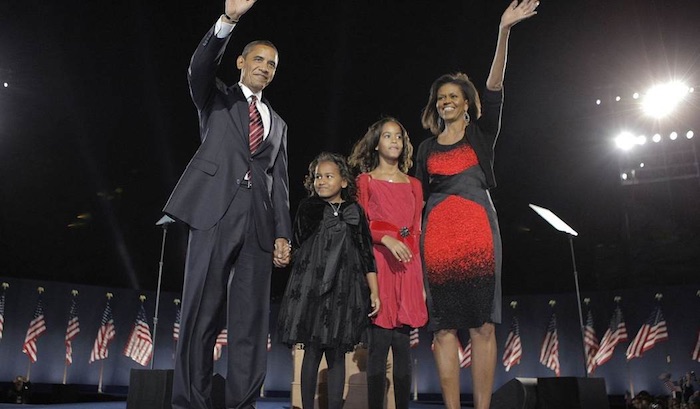
Last night certainly wasn’t the most fun I’ve ever had in a PJ Media liveblog. I went to bed feeling like that poor young pilot on the doomed Learjet in Florida, riding in a rudderless missile trapped in a fatal nosedive (the doomed jet being my country, in this analogy).Read more …
But this morning, the customary bleating and gloating of the Democrats just isn’t bothering me as much as I thought it would. First of all, I learned long ago to stay off social media when something upsetting happens, and this is a great time to do that. And second, the narrative from the left-media is actually kind of hilarious, when you look at how hard they’re puffing themselves up.xios (one of my favorite punching bags, partly because I think those guys do a solid job when you look past their leftism) headlines its analysis “The Trump obliteration.” Subtle! “Make no mistake: Democrats won by epic, sometimes historic margins across red and blue states, up and down ballots, obliterating almost everything President Trump, and a Republican Party remade wholly in his image, built over the past decade in American politics,” brays Axios. And that’s just one example.
Oh noes!
You’d think the left had fulfilled its fantasy of packing all the Republicans and America-Firsters onto cattle cars and sending us away once and for all, tearing down the entire U.S. government, and replacing it with its Godless socialist utopia at last!n But in fact, this was actually a rather basic reactionary midterm election.
Whenever things look grim, it’s always instructive to zoom out and take in the historical perspective. In the case of last night’s election, we need to look back less than 20 years, to 2008. With the first-ever (half) black presidential candidate, the nation clamored to be a part of history in the making. Far too many people voted for a Marxist because of his skin color and smooth talk, and they took the rest of the ballot along for the ride.
The result? Both the U.S. House and the Senate went deep, dark blue. And believe me, it was a lot worse than what we woke up to today.
The Senate
On January 3, 2027, Democrats will kick off the 120th Congress with a Senate majority of at least 54.As I write this, two Senate seats remain outstanding. Mississippi is tied between incumbent Democrat Sen. Cindy Hyde-Smith and Republican challenger Scott Colom at exactly 48.9%-48.9%, with over 95% of the votes counted, so I’m sure that will take some time to sort. And Alaska looks like it will elect the repugnant Democrat Mary Peltola (currently at 48.2%) over incumbent Republican Dan S. Sullivan (47.9%), with almost three-quarters of the vote counted. If Democrats sweep both of these races, as they seem to be doing this icky year, they’ll top off at a 56-44 Senate majority.
That’s disgusting, but the 2008 election was worse. In January 2009, as the 111th Congress took the reins, Democrats ruled the Senate with a 59-41 majority. Technically, two of those 59 Senators were “Independents,” but one of them was Bernie Sanders, and they both caucused with the Democrats.
The House
This one will be tougher to call. As of now, according to our partners at Decision Desk HQ, Democrats have locked up 241 seats to the Republicans’ 149. By my math, that leaves 45 seats as yet undecided.After the 2008 election, Democrats came away with 257 seats, while Republicans held 178. I expect the Dems may even top that majority by a seat or two this time around. Whatever — they have the majority either way, and they will use it to pump the lower chamber full of suck for as long as they can. The precise number of Islamo-Marxists in the House is but a detail.
The Presidency
Lest we forget, 2008 was a full general election — and well-meaning voters swept Barack Hussein Obama into the White House that year, too. (Yes, someone with a name like that won the White House just seven years after September 11.) He won the popular vote by a resounding 6 or 7 points, and he took two-thirds of the electoral vote. Horrifying.And with that trifecta, leftists were able to pass damaging legislation that is still eroding the country to this day. Luckily, that ain’t gonna happen this time, with President Trump warming up his veto pen to the temperature of the Sun’s surface.
2008 was a much worse election than what we just had. But Democrats in power are the best argument for voting Republican, and a mere two years later — in the 2010 midterm elections — Republicans swung back hard. We gained 64 House seats and won back control of that chamber. And we took back six Senate seats, eventually winning back control in the 2014 midterm elections.
So yeah, whatever. Enjoy your moment, lefties. Trump is still president, Jesus is still king, and everyone will hate you again by 2028.
We’ll muddle through.
Not overly strong. Can you see a President Vance? I find it hard. He needs to profile himself a lot more. I find Rubio more convincing, but he always defers to JD.
• A Midterm Election Message from Vice President JD Vance (CTH)
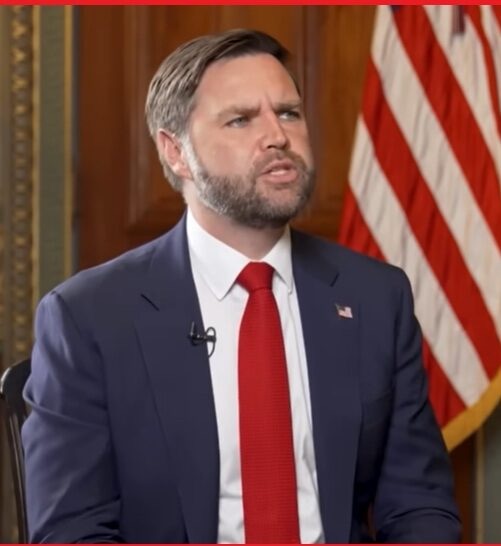
Vice President JD Vance gives his thoughts and impressions on the midterm election result.Read more …
JD VANCE (Via X) – “One of the things the data analysts on our side obsessed over was “composition”—whether the electorate looked close enough to 2024 for Republicans to win. And despite polls that showed a Democrat blowout, the data kept on telling us the same story: in some states turnout was merely OK, in other states it was downright amazing, and in no state was it catastrophic. There was a genuine sense of optimism on our team: our people were showing up.So, I asked the smartest data guy I know, does that mean we’re going to shock the world? “No,” he told me. “We might do better than the polls suggest. But the data is telling us that a lot of Trump/Vance 2024 voters are pissed and planning to vote for the other guys. Our voters are turning out, but they may not vote for us.”
Well, that looks prophetic now. Our voters did show up. In Florida, for example, the electorate was 9 points more Republican than Democrat, just a couple points worse than 2024. Undoubtedly there were places we could have done better on turnout. But the main problem is not turnout. The main problem is that many people who voted for Trump/Vance in 2024 voted for Democrats in 2026.
There will be a lot of infighting and arguing over what happened and why that is. One of the pollsters I really respect told me that our economic messaging wasn’t sharp enough down the stretch. I’m sure that’s true.But the real reason we lost is obvious to almost everyone.
Another pollster—one of the smartest people I know in politics, told me yesterday we’d lose the generic ballot by 13 points. I felt negative going into Tuesday, but even I was shocked by this. In his polling, he saw that a lot of Trump 2024 voters were angry and planning to vote for Democrats. He asked those voters who had abandoned us what would cause them to come back on our team.
The top four answers, accounting for nearly all of the responses were:
1) End the war
2) Focus on cost of living/inflation
3) Put America First
4) Change our relationship to Israel
Our voters showed up. And the above four reasons are why many of them voted for Democrats. This is according to a pollster who nailed the results. While many spent Monday attacking Rachel Campos Duffy for calling for a diplomatic resolution to the conflict, it turns out her political advice was sound. (She’s also a great person.)
In the next few months, there’s going to be a lot of gaslighting. Expect to hear any number of establishment politicians say the solution to our woes is amnesty. I’m open to the idea that we should change enforcement—by focusing more on businesses that hire illegal labor, for instance. But anyone pushing amnesty is lying to you.
The reason we lost is the war. The president himself said so last night. If you’d like to argue it was worth it, that losing the Senate for the next 6 years was worth it, then do so. Argue it was a worthwhile cost to pay. Agree or disagree, that’s at least honest.But everyone knows why we lost. And any honest conversation about where we go from here must start there.
I remain hopeful about our country. To the people who are pissed off and want to say, “I told you so”: you’re right, you did tell us so. Take that energy into electing Republicans who share your worldview. To the people who are just pissed at the results, you should be. Let’s take that anger and get back to the work of saving our country.” (link)
“..And Rubio Isn’t The One Cashing In..”
Ron DeSantis. I can see why.
• Vance’s 2028 Odds Tumble After Midterm Bloodbath (ZH)
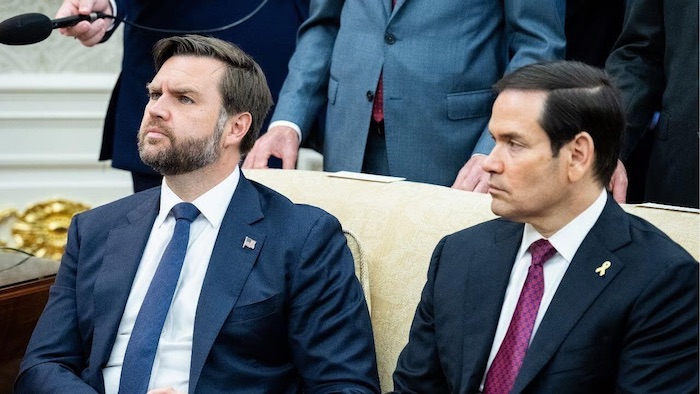
Vice President JD Vance’s odds of winning the 2028 Republican nomination tumbled overnight as Democrats absolutely torched Republicans in Tuesday’s midterms, flipping both the House and the Senate. On Polymarket, Vance slid from about 37% to 31.4%, while Florida Gov. Ron DeSantis rocketed from around 3% to 15.5%, in a market that has drawn more than $726 million in bets.Read more …Secretary of State Marco Rubio, Vance’s closest rival in the polls, barely moved at 19.2%, roughly where he sat before polls closed. Kalshi shows the same shuffle: Vance at 32% and Rubio at 22%, both down slightly, while DeSantis is up 14 points to 19%.
The selloff hit Tuesday night as results rolled in, hours before Vance offered his own autopsy on X Wednesday morning. “The reason we lost is the war,” he wrote, as we reported earlier. “If you’d like to argue it was worth it, that losing the Senate for the next 6 years was worth it, then do so.”
One of the things the data analysts on our side obsessed over was "composition"—whether the electorate looked close enough to 2024 for Republicans to win. And despite polls that showed a Democrat blowout, the data kept on telling us the same story: in some states turnout was…
— JD Vance (@JDVance) November 4, 2026Before the war began, Vance was the White House official most opposed to a full-scale war with Iran, the New York Times reported in April. Distance or not, he’s the sitting vice president of an administration that just lost both chambers of Congress.
Florida was one of the GOP’s bright spots: Rep. Byron Donalds will succeed the term-limited DeSantis as governor, while Democrats flipped governor’s mansions in Georgia and Texas. Vance cited the state himself, writing that Florida’s electorate was 9 points more Republican than Democrat, “just a couple points worse than 2024.”
Vance’s lead had already shrunk from the start of the year. A New York Times/Siena poll of 850 likely GOP primary voters, taken Oct. 12 to 19, had him at 33% to Rubio’s 23%, with 26% undecided or declining to answer. In February, Emerson had Vance crushing Rubio 52% to 20%; by May, the two were essentially tied at 36% to 35%.
Neither man has declared, and Rubio has said he would defer to Vance. Vance has said he would talk over a 2028 run with his wife after the midterms – which ended Tuesday.
Charlie would have beeen a good candidate to follow after Trump. Better than any other.
• Erika Kirk’s Post-Election Reflection on Charlie’s Vision (Catherine Salgado)
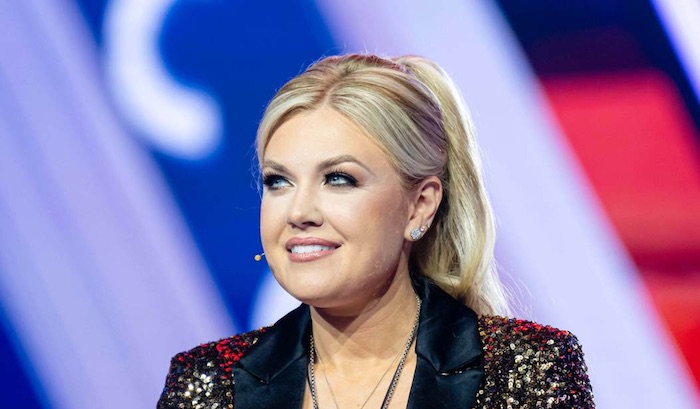
Erika Kirk misses the unfailing optimism and energy of her assassinated husband, Charlie, but she knows that he would not give up no matter what the election results were. Erika reflected that Turning Point USA came out of the Obama era following the 2008 election, and that it was a movement born out of a bleak present and uncertain future. “I miss Charlie so much every single day, but especially on a day like today. He always said that when things are going well, we need to stay humble. And when things aren’t going the way we want, we need to stay positive, keep our faith, and get back to work,” she posted on X.Read more …
Author Dan Burmawi compared the current feeling to the day Charlie Kirk died, and I can understand why. One of the biggest bastions of Republicanism flipped totally blue. Democrats swept almost every major race. There was some fraud, a lot of lies, poor GOP decisions, high Democrat turnout, Republican apathy, and results that could put Congress and the White House temporarily out of reach. But we cannot give up, any more than we could after Charlie’s assassination, even though he was our best future presidential candidate. Democrats have often changed history in a tragic way, but it is then our job to decide how we will change history in a different way.In her post, Erika did acknowledge that there is reason for people to feel depressed and discouraged, although she doesn’t want that feeling to last. “Last night, we saw races Republicans once won handily by double digits come down to the thinnest of margins, and in some cases, flip entirely. Democratic socialist candidates made the cost of gas, groceries, and housing the center of their campaigns. And voters responded at the ballot box,” she pointed out in a gentle rebuke of Republicans’ messaging. “A rising stock market doesn’t mean much when nearly half of Americans don’t have a 401(k) and just want to put gas in their trucks, put food on the table, and provide a good life for their families.”
She went on: “But every time socialism has tried it has failed, because socialism concentrates economic power in the hands of the government instead of trusting individuals to build prosperity for themselves and their families. That’s fundamentally at odds with the free enterprise, individual liberty, and opportunity at the heart of the American experiment. We can disagree with the solutions voters were offered while still recognizing why they were looking elsewhere for answers. Exit polls clearly showed that the American people are concerned about the state of the economy and the war in Iran…
We are going to listen, study the results, and spend the next two years making the case for how conservative, free market solutions, and a renewed focus on our country’s founding principles can address the problems the American people face. And we’re going to keep building the permanent infrastructure Charlie envisioned, strengthening our relationships in communities across the country, and preparing for 2028 and beyond.”
Erika argued that Americans aren’t interested in labels, which I think is not entirely true, because the fundamentalist Democrat base will always vote Democrat as if it were their cult or religion. But it is true that fewer people overall are interested in being officially Republican or voting exactly along party lines. That is part of why it is so difficult for the GOP going forward unless they truly start to listen to the ordinary voters and stop assuming that they can change major campaign promises without suffering the consequences.
“Americans … will support the candidates who can both speak to their concerns and deliver on what THEY need and dream about for their families,” Erika posited. “And those needs are the same as they have always been: an affordable home, safe communities, and the hope that the next generation will inherit a country with more opportunity than the last generation did. That is what the American dream has promised to all of us.”
Bas van Geffen is senior macro strategist at Rabobank
• President Veto (Bas van Geffen)
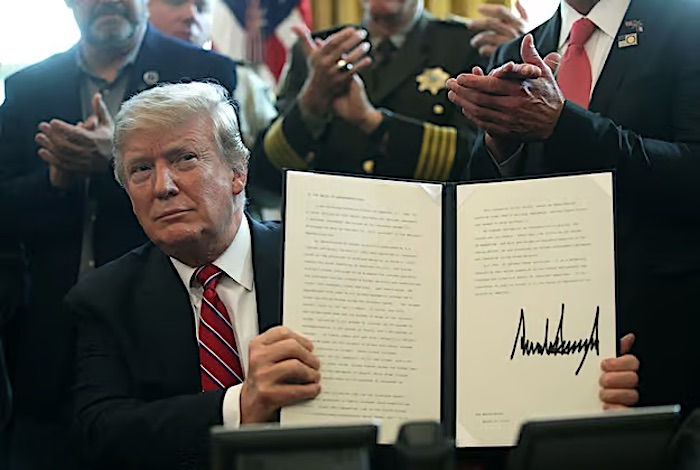
Associated Press is calling the Congressional race in favour of the Democrats. The party wins both the House of Republicans and control of the Senate, changing the balance of power when the new Congress convenes at the start of 2027. However, President Trump still has the powers of veto and executive order, creating a divided government in the US.Read more …
The blue wave that swept through Congress will affect the policies that are proposed from next year, but Trump will probably veto any bill that he does not like. “I have the ultimate power – it’s called veto,” he said in an interview before voting closed, adding that “if we didn’t win, I veto everything. I’ll be vetoing, vetoing”. And, despite the Democrats’ big win, they will not have the required two-thirds majority in both chambers to overturn a veto. So, their policy proposals may not get far.Trump added that his veto powers will eventually force the Democrats to make deals with him. But it may not be so easy to make concessions. Both parties share little common ground, so our US strategist believes that a legislative gridlock is the more likely result.
That’s particularly problematic for fiscal policy. Gridlock should limit additional spending or tax cuts, but the divided government also reduces the odds of a serious effort to shore up public finances. As a result, the term premium will probably remain a force keeping US long-term rates pinned at higher levels.
A first government shutdown approaches on December 11, and the debt limit may lead to more political brinkmanship in 2027. Aside from the uncertainty that this creates, the US economy should not expect any meaningful fiscal impulse. So, these results could weigh on US equities.
Meanwhile, President Trump may also test how far his other “tremendous power” reaches. Given an unsupportive Congress, the president will probably try to implement his policy agenda through executive orders. That particularly allows him to continue course on foreign policy, trade policy, and immigration.
That includes the decision on the way forward in the Middle East. The decision to attack Iran again, or not to, lies with the Commander in Chief. President Trump is showing restraint for now. He told the Financial Times that “We’re locked and loaded if we need to [strike Iran again], but there may be no reason for it.”
Oil futures fell sharply earlier in the week, after Trump indicated he wants to give diplomacy another chance, and front-dated futures have stayed lower since then. However, the recent rise in 2027 pricing suggests that markets may be shifting expectations to a scenario of tight supply and elevated transport costs into next year. To reiterate, we remain sceptical that there is enough common ground for a deal between the White House and Tehran, and believe that escalation in the coming weeks is likelier than not.
And, finally, by winning the Senate, Democrats can now also effectively block Trump’s appointments. That includes potential replacements for Fed Governors Cook, if she is forced out, and Powell, if he decides to resign from the central bank’s board.
“Trump’s supporters represent a third party in a two-party system. This was always problematic. Professional Democrats, leftists writ large, hate Donald Trump. The Professionally Republican also dislike him immensely.”
• President Trump Talks to Fox News About Midterm Election Results (CTH)
As the election results continued unfolding, Democrats and DSA candidates took control of the House and the Senate. With the outcome still being tabulated, around midnight President Trump gave a lengthy interview to Brett Baeir and Fox News.
In the aggregate the MAGA movement, like the Tea Party that preceded it, was neither Democrat nor Republican. A person only needed to look at the issue(s) of borders, immigration, illegal aliens, H1B’s etc., to notice the outcome was the same with the D or R. The same was true for American jobs and the insufferable march to a ‘service driven economy.’ The movement that supports Donald Trump was never Democrat or Republican; it was/is a coalition of historically unrepresented voters, essentially a third party.Trump’s supporters represent a third party in a two-party system. This was always problematic. Professional Democrats, leftists writ large, hate Donald Trump. The Professionally Republican also dislike him immensely.
The 3rd party coalition lost fulcrum stability on the issue of War and Peace (Israel, Iran). Democrats and Republicans then pounced on every subset of special interest within the coalition to emphasize friction and division. The dividers blamed Israel and the Iran conflict for every negative outcome in everything, some valid – most not. That was enough to maintain the instability while dividers drumbeat the issue of (put _ your _ topic _ here).
“It ought to be remembered that there is nothing more difficult to take in hand, more perilous to conduct, or more uncertain in its success, than to take the lead in the introduction of a new order of things. Because the innovator has for enemies all those who have done well under the old conditions, and lukewarm defenders in those who may do well under the new.”
– Niccolo Machiavelli, The PrinceFrom my view; from my very personal view; from the perspective of a root cause; when you peel all the skin away from the onion and evaluate the problem from the central core, the underlying point where the atom splits, the problem is Susie Wiles.
Bad advice and counsel as a matter of elevated, aloof incompetence; or is it purposeful, controlling intent? Given the fact that we can track the ‘disconnect‘ to the transition period and earlier, and overlaying the Vanity Fair nonsense that was ego-driven and right in the middle, I lean toward the latter. Regardless of incompetence or intent, there’s a pattern of bad advice and counsel.
Donald Trump’s loyalty and grace is both a virtue and a vice.

You gotta fight for your right to party.
• Poll: More Democrats Now Support Socialism Over Capitalism (Turley)

The divisions in this election are deep and widening across the country. When I called this “an age of rage” years ago, I noted that the rage historically tends to burn off in time. We are clearly still at the flow rather than the ebb stage as rage politics continues. However, the most worrisome elements of this period are fundamental changes being demanded to our constitutional and economic systems. A new poll by The Economist/YouGov is consistent with other polls showing rising support among Democrats for socialism. More Democrats (38%) prefer socialism to capitalism (25%). Other polls show 60% had a favorable view of socialism and only 32% had favorable views of capitalism.Read more …
Capitalism is still favored by 79% of Republicans in comparison to only 5% favoring socialism. The poll of independents showed 44% favored capitalism, with only 21% favoring socialism. As I wrote in Rage and the Republic, the success of this Republic was a mix of Enlightenment and free-market principles. It was the combination of economic and political liberty that produced the most successful republic in history. This is the 250th anniversary not just of our Revolution but of the release of Adam Smith’s Wealth of Nations.The founders knew that true individual liberty could not be achieved without economic freedom. Smith’s idea of the “invisible hand” offered an idea of individual economic freedom where the individual tastes and choices of citizens drove whole economies. As I write in Rage and the Republic:
“While he never visited the United States, his theories seemed quintessentially American to many of his generation. For a revolution that was triggered by tariffs and fueled by events like the Boston Tea Party, Smith’s general principles read like an economic version of Common Sense. It was a type of declaration of independence not just from the British policy of mercantilism (emphasizing British exports over imports) but from economic controls over individual productivity and self-determination….
In summary, Smith was first and foremost viewed as a political theorist, and his economic theories were closely tied to his views on the natural liberties of humanity. He saw capitalism as a liberating system that gave individuals the wealth and resources to pursue their chosen paths. Conversely, he saw government controls and subsidies as forms of control and potentially forms of suppression of the human will. If people are to be truly free, they must have the resources to pursue that freedom. The government dole can become a type of servitude or at least a subterfuge for citizens. If they are dependent on the government, they are never truly free.”
I believe the key to our surviving and thriving in the 21st Century will be preserving what I call a “liberty-enhancing economy.”
The rise of the Democratic Socialist Party has fueled the trend away from capitalism with calls “to dismantle the capitalist state.”. Many of the rising candidates have spent years working the anti-capitalist movement. For example, Senate Democrat nominee James Talarico appeared intent on bringing a touch of Trotsky to Texas. In a video from a climate forum, Talarico is shown declaring capitalism an “oppressive system” linked with white supremacy and that it must be “dismantled” to achieve a better world. It is reminiscent of Leon Trotsky, who denounced the “fundamental evil of the capitalist system” and called on citizens to free themselves from its oppression.
As a state representative, Talarico addressed the 2020 climate conference with an attack on capitalism:
“I’m so thankful that you asked this question and also thankful that young activists have really drawn the link between climate change and White supremacy and capitalism in our country … And I think only ending the ways that all three of those oppressive systems work together are we gonna be able to begin the process of dismantling them.”
Talarico’s views closely parallel socialist and communist talking points online. Democratic Socialists of America has challenged people to “Imagine the end of capitalism.” Those words in the Democratic Socialists of America manifesto offer Americans a world without landlords, debt, mandatory work hours, and “food, education, energy, medicine, and transportation… are common goods and utilities.”
The DSA is premised on the same stated objective of Talarico, declaring that there has to be “a revolutionary transformation to replace the capitalist social order based on exploitation and oppression.”Other candidates have sought to pander to this radical mob. Recently, California Gov. Gavin Newsom thrilled the mob by declaring that “nostalgia is not working,” adding that “capitalism as we know it doesn’t work either.” He also recently said that the DSA is the future of the Democratic Party.
The Framers understood that political rights mean little without economic freedom. Capitalism offered citizens the ability to transcend class and social barriers, to advance as far as their skills and labor would take them. Together, those political and economic theories created the most prosperous and stable democratic system in the world. That system is now under attack on both sides.
“You know, when people’s voice start getting squeaky and really high pitched, usually they’re lying. And Ashley Moody knows that I’m not a socialist,” Nixon said, claiming to only join DSA because she aligns with them on “fighting for adequate public housing, as well as fighting for quality health care, as well as making sure that we are getting our veterans off the street, taking big money out of politics.”
The success of politicians like Zohran Mamdani in promising to introduce people to the “warmth of collectivism” has only worked due to a young generation with no memory of the failure of the socialist systems in the last century. As I explain in “Rage and the Republic,” the French economy collapsed, as the British economy had earlier during the “winter of discontent” under Labour Prime Minister James Callaghan. Britain was even forced to seek a loan from the International Monetary Fund.
Both France and Britain would later reintroduce capitalist policies and roll back socialist policies to stop the economic collapse. We also tried collectivist policies in cities across this country, including a commune on Long Island called Modern Times (now called Brentwood). It lasted about ten years before collapsing.Yet, candidates such as Colorado’s Democrat congressional candidate Melat Kiros recently declared that there is nothing more American than socialism.
In places like New York, that message has resonated more with young college-aged voters than with blue-collar voters. Indeed, the DSA admits it has not done well at attracting actual blue-collar workers. Indeed, almost one-third of DSA members earn over $100,000.
This election is being fueled by temporary economic fluctuations in gas prices and other conditions. Those are real issues that citizens must grapple with. However, a more fundamental debate is just beginning over the economic principles that will guide this country in the future.
Sibal doesn’t understand too much. Trump’s America simply doesn’t want the globalists too close.
Here’s thinking Sibal is one of them.
“Washington is narrowing a once-broader forum into a tool for its own priorities, sidelining development, climate and the Global South..”
By Kanwal Sibal, retired Indian foreign secretary and former Ambassador to Russia between 2004 and 2007. He also held ambassadorial positions in Turkey, Egypt, France and was Deputy Chief of Mission in Washington DC.
• America Wants G20 On A Leash (Kanwal Sibal)

The US presidency has shrunk the G20 agenda, which had been broadened under the earlier four presidencies of Indonesia, India, Brazil and South Africa, to reflect the priorities not only of the G7 but also the developing world.Read more …
If the G7 nations had felt that they could on their own handle the global fall-out of the 2008 financial crisis they would have not felt the need to elevate the G20, which includes key emerging economies, from a routine meeting of finance ministers and central bank governors to a summit of heads of states and governments. From that perspective, these powers were compelled to include the interests and priorities of those emerging economies in the G20 agenda.The G20 concept is thus rooted in a more cooperative multilateral approach to address multiple global challenges. The G20 agenda cannot be aligned with US priorities alone.
The US State Department had announced beforehand its intention to assert its priorities – limiting regulatory barriers to investment and encouraging transparent governance to foster global competitiveness, focusing on energy independence, reliable energy access, resilient supply chains, and safe navigation through critical international waterways (such as the Straits of Hormuz and the Bab al-Mandab), accelerating digital advancement and artificial intelligence (AI) policies while protecting security, privacy, and intellectual property, refocusing the G20 on its core economic mandate, addressing global supply chain resilience, trade consensus, critical minerals, and geopolitical disruptions affecting markets.
These are no doubt important issues to address collectively, but they are not the only ones. The contrast between the Chair’s statement on the G20 Foreign Ministers meeting issued by India in 2023 and the Chair’s statement issued under the US presidency is illuminating.
In 2023, the issues covered were insufficient progress towards Sustainable Development Goals (SDGs), climate change, pollution and biodiversity loss, economic slowdown, debt distress, uneven pandemic recovery, growing poverty and inequality, food and energy insecurity, and global supply chain disruptions aggravated by geopolitical tensions and conflicts.
Strengthening multilateralism, making global governance more representative, counter-terrorism, counter-narcotics, global health, global skill mapping, as well as gender equality and women’s empowerment were among the other issues covered. Importantly, there was an affirmation that the rules-based, non-discriminatory, multilateral trading system, with the WTO at its core, was indispensable to advancing shared objectives.
The steadfast commitments of the G20 to the United Nations Framework Convention on Climate Change to tackle climate change though the full and effective implementation of the Paris Agreement and its temperature goal, reflecting equity and the principle of common but differentiated responsibilities was affirmed too. So was strengthening key aspects of global health architecture, with the leading and coordination role of the WHO. The Multilateral Development Banks were asked to mobilize and provide additional financing within their mandates to support the achievement of the SDGs.
The US Chair’s statement talks of taking the G20 “back to basics.” These “basics,” which the organization had ostensibly departed from, cannot be defined unilaterally by one member. The priorities of not only the developing countries but also of other G7 countries have been ignored.
The paragraph in the US statement referring to rising energy costs glosses over Washington’s own role in driving them higher. By sanctioning Russian oil and gas, and then worsening the situation through its attack on Iran, the US has contributed directly to disruptions in the flow of oil and LNG through the Strait of Hormuz. The threat to energy transit through the Bab al-Mandab is also a consequence of the instability created in West Asia.
The statement implicitly reflects Donald Trump’s “Drill baby drill” slogan, catering to the interests of the US oil lobby, his repudiation of climate change concerns and his scoffing at renewables. The phrase “far too often governments have placed barriers to energy production and punished their own people with higher costs” seems to be an indictment of the policies of some European countries such as Germany and the UK but does not apply to developing countries who have become hostage to Washington’s own policies of sanctions to exclude the flow of Russian and Iranian oil into the global market. If the US consumer is paying higher prices for gasoline and diesel, whose fault is it?
When the statement says that “it is also vital that countries build the infrastructure to develop and deploy the energy systems of the future,” the reference is to small modular reactors and micro reactors. This is a developing technology which does not address the current disruptions in the oil and gas market. The statement recognizes that, for some, nuclear energy may not be a desired option for their energy mix, no doubt referencing Germany’s position. With the worldwide move towards renewables and the US bent on increasing reliance on fossil fuels, by saying that every country is on its own energy path, the statement recognizes a lack of consensus on the issue.
If “energy is a foundational requirement for economic progress,” as the statement says, then why is the global energy market being disrupted by US and European actions? Why was the Nord Stream pipeline blown up? Why has India, a country highly dependent on energy imports, been pressured to cease buying Russian oil under threat of sanctions? The focus on supply chain resilience in the Chair’s statement no doubt reflects widespread concerns amongst G20 countries.
The reference to “weaponization of normal food supply chains” by a government taking “targeted actions to slow, stop, or block the trade of food in order to exert coercive pressure over another sovereign country on an unrelated geopolitical issue” is directed at Russia. To say that “it is important the global community agree that trade in food and agricultural products should not be used as a tool for economic or political coercion” ignores that the fact that oil and financial sanctions as well as slapping tariffs at will has been part of US economic and political coercion.
Regarding health, only the fight against Ebola figures in the Chair’s statement. The US has walked out of the WHO, the Paris Climate Change Agreement and has effectively gutted the WTO by imposing tariffs on countries arbitrarily. Its dismissive attitude towards the UN and ignoring its development agenda explains the absence of any reference to UN reforms, the raising of additional resources by MDBs, debt issues, SDGs, climate change issues, etc.
The G20 Foreign Ministers meeting at the end of October was marred by other arbitrary decisions and undiplomatic behavior. The US had no authority to exclude South Africa, a G20 member, from the meeting. South Africa in fact chaired the G20 in 2025. It had no authority to invite Poland to take South Africa’s place. The G20 can function only on the basis of consensus, and South Africa’s exclusion and Poland’s inclusion violated the consensus rule.
The refusal of some European foreign ministers to be photographed with Russian Foreign Minister Sergey Lavrov in the traditional group photograph was not adult diplomacy. The European ministers had, however, no objection to being photographed in working sessions with Lavrov and even address him directly and aggressively. Some have questioned the propriety of inviting Russia at all to the G20 meeting. This kind of conduct casts doubt on whether a negotiated solution to the Ukraine conflict can be seriously explored unless fissures in the EU or the collapse of the Zelensky regime change the situation.
The UK will take over the presidency of the G20 in 2027. Unless something dramatic happens on the Ukraine front, Britain’s enmity towards Russia will become a huge problem for the consensual functioning of the group.
Haven’t seen Aaron in ages.
• CIA Still Runs 12 Secret Bases In Ukraine: Aaron Maté (ZH)

Journalist Aaron Maté told Judge Andrew Napolitano on Tuesday that the CIA is still “running, if the New York Times is to be believed, 12 secret bases inside of Ukraine,” and still controlling Ukrainian intelligence agencies it “effectively rebuilt from scratch after Yanukovych was overthrown in 2014.” He made the claim in an interview for Napolitano’s Judging Freedom podcast, recorded on Election Day, Nov. 3, in an episode titled “CIA and MI6 vs Trump in Ukraine.”Read more …
Maté’s source for the bases is a February 2024 New York Times investigation, which as Ukrainska Pravda summarized it, described a CIA-supported network of spy bases built over about eight years, including 12 secret locations along the Russian border, with a partnership dating to 2014.“How pervasive is the CIA in Ukraine today?” Napolitano asked. To which Maté replied: “Well, it’s so pervasive that it was the one that orchestrated this drone campaign against Russian energy facilities that Trump recently started opposing. It was Trump’s CIA that came up with that and was helping Ukraine do that. And Trump was on board with it until he needed something to sell voters on ahead of the midterms, whereas war on Iran was causing such a spike in energy prices.”
Maté said Trump has since pulled back and criticized Volodymyr Zelensky, “the CIA, as far as I know, is continuing its operations as normal,” and that it is “still helping out with targeting” and “still providing intelligence.”
The Billionaire Question
Napolitano then said that Alastair Crooke had told him the CIA has financial resources from outside the U.S. government, and asked whether the CIA in Ukraine is being funded by anyone other than the Treasury. Maté said that when an agency wants something done off the books, “you’ll get a friendly billionaire or, you know, or some or a friendly corporation to do the work for you,” calling it “intelligence tradecraft going back a very long time.”He put George Soros “at the top of the list” of billionaires involved in Ukraine: “Already in 2015, Soros’ foundations were saying that they’d spent $181 million on Ukraine since the fall of the Soviet Union.” The figure checks out as a 2015 number. An Atlantic Council piece from Dec. 14, 2015 said Soros “has provided over $181 million in support of almost 17,000 civil society initiatives in Ukraine.” The Soros-founded International Renaissance Foundation, which dates to April 1990, now puts its total at about $380 million.
“Given that some of those dollars went to groups that were involved in the uprising that overthrew Yanukovych, you know, you have to wonder if some of that was linked to Western intelligence,” Maté said, adding, “It might be something like we’ll never know.” He raised eBay founder Pierre Omidyar as another example, tied to a report that named Maté a leading spreader of Syria disinformation and was funded by an Omidyar foundation. “Maybe, or maybe this was done at the behest of the intelligence agencies that I was exposing,” he said. “Who knows how this works?” It is speculation, offered as such.
CIA And MI6 Vs. The White House
Napolitano asked whether the CIA and MI6 are “working at cross-purposes to the White House,” given that the White House wants the war to end and the agencies want it to continue. Maté said it depends on what is meant by the White House, because “there’s not one coherent policy.” He pointed to JD Vance and Tulsi Gabbard on one side, and Marco Rubio, Mike Waltz and former envoy Keith Kellogg on the other, and said Rubio gutted the Kushner-Witkoff peace plan “after a brief freakout on Capitol Hill.” On Trump’s stated aims of a peace deal and a new Ukrainian leader, he said “absolutely the CIA and the MI6 are at cross purposes.”Earlier, Maté said Zelensky’s refusal to compromise reflects a “small clique of ultra-extremists” inside Ukraine, and that Washington’s promised Patriot missiles are due, in his telling, in the fourth quarter of 2030. We could not confirm that date, and recent reports on Patriot deliveries describe delays, not a 2030 schedule.
Trump’s “99%” In Israel
Late in the interview Napolitano played a clip of Trump saying in May: “I’m at 99% approval rating in Israel. Can you believe it? In fact, if people ever got tired of me in the U.S., I’ll move to Israel and become prime minister.” The remark is not new: Maté’s reaction: “It might be true about his approval rating, and it’s irrelevant because he’s giving them so much cash and military equipment.” Napolitano noted Trump’s U.S. approval at 33% in the figures he cited.
— Elon Musk (@elonmusk) November 3, 2026
Starlink is taking over the skies.
— DogeDesigner (@cb_doge) November 4, 2026
Most airlines around the world are partnering with Starlink. The others will have terrible Wi-Fi and lose customers as a result.
Airlines without Starlink will be at a serious disadvantage. pic.twitter.com/8t5qqv9o4t
Starlink is taking over the skies
— X Freeze (@XFreeze) November 4, 2026
Over 50 airlines worldwide have now partnered with Starlink
• ~12,000 aircraft under contract
• 3,800+ already equipped
Fast, low-latency internet is becoming the new standard at 35,000 feet
Now millions of passengers stay connected from… pic.twitter.com/aDoFtabp2X
Amazon is parking billions of dollars of brand-new Nvidia computers in warehouses because there isn't enough electricity to turn them on.
— Aakash Gupta (@aakashgupta) November 4, 2026
And it plans to take delivery of about $3 billion more every month.
Elon called this back in February. He told Dwarkesh that by the end of… https://t.co/LN7Ki5iVLH
ELON MUSK: The lowest cost place to put AI will be space.
— DogeDesigner (@cb_doge) November 4, 2026
"It's a no brainer for building solar powered AI data centers in space, you just have solar panels facing the sun & a radiator that's pointed away from sun, then it's just cooling. The lowest cost place to put AI will be… pic.twitter.com/u0sCBR0B6S
Support the Automatic Earth in wartime with Paypal, Bitcoin and Patreon.

Home › Forums › Debt Rattle November 5 2026