

Joan Miro The sun embracing the lover 1952

Typing and formatting without your most-used key (Command) is a strange experience. It costs a lot of time.
New MacBook ordered. Please do keep the donations coming. These things are expensive.
🚨 IT'S OFFICIAL: President Trump is ALL-IN on asking Nvidia to bring back Jensen Huang, saying the guy is a GENIUS who PROPELLED us way ahead of China
— Eric Daugherty (@EricLDaugh) November 20, 2026
"We're a COUNTRY of second chances."
"I would love to see him be back. One of the truly most BRILLIANT minds in the world. I… pic.twitter.com/gQX8w3geqv
🚨 HAPPENING NOW: Mainstream Media is losing their MINDS after Stephen Miller’s historic speech
— MAGA Voice (@MAGAVoice) November 20, 2026
Liberals can’t stand all of these accomplishments:
– “What President Trump has achieved in 2 years is by far more than any President in history”
– “First President to achieve net… pic.twitter.com/wwErq2Y00V
🚨BREAKING: ELON MUSK ESCALATES TAKEOVER BID WITH BLOCKBUSTER OFFERS TO ACQUIRE 70% CONTROLLING STAKE IN NVIDIA
— vizmas 🤍 (@vizmas23) November 21, 2026
🗣️When our initial proposal for a fifty percent partnership was turned down, it became clear that a half-measure would never unlock the true speed of innovation… https://t.co/PwYiBgiEWw pic.twitter.com/Z403rXQeFN
💥NEW: Joe Rogan says it's *MIND-BOGGLING* how @elonmusk's epic achievements are barely "CELEBRATED"🤯
— Jason Cohen 🇺🇸 (@JasonJournoDC) November 21, 2026
SpaceX just completed its first Starship catch 🚀
"What he's doing is actually INSANE! No one has EVER figured out how to do this before! Every single rocket we've ever shot… pic.twitter.com/hnFyCimyyT
🚨 HAPPENING NOW: Mainstream Media is losing their MINDS after Stephen Miller’s historic speech
— MAGA Voice (@MAGAVoice) November 20, 2026
Liberals can’t stand all of these accomplishments:
– “What President Trump has achieved in 2 years is by far more than any President in history”
– “First President to achieve net… pic.twitter.com/wwErq2Y00V
Zakharova: Dutch missiles on the Crimean Bridge will be factored into Russia's military planning
— DD Geopolitics (@DD_Geopolitics) November 20, 2026
Russian Foreign Ministry spokeswoman Maria Zakharova called the Netherlands' support for Kiev "a blatant move up the escalation ladder," after Dutch arms maker Destinus boasted that… pic.twitter.com/3zgNJD6FOr
This is horrific behaviour by Western governments. All the things they accuse "communists" doing is now being done by them. https://t.co/YezRE90Mk3
— Prof. Steve Keen (@ProfSteveKeen) November 21, 2026
This is a dagger in the side of the globalists.
— Overton (@overton_news) November 20, 2026
China just joined the U.S. and Russia in CONDEMNING the International Criminal Court.
First time ever, according to Trump.
He called the court’s power fake; “They don’t have any strength behind it.”
They think they can arrest… pic.twitter.com/5T4KL0iMRY
“A lament for the displacement of Western civilization, its arts, and its law.”
• The Last Sunset Of The West (Lars Moller)

Temple of Juno in Agrigento (Caspar David Friedrich, 1828–1830)
The sun is setting over the West for the very last time. Not to be mistaken for a rhetorical flourish, this is a sober recognition of a civilizational terminus. Western civilization—its ethics grounded in the tension between Athenian reason and Jerusalem’s revelation, its aesthetics refined across two millennia, its institutions of law that once restrained both tyrant and mob—is being displaced. Irreversible and infinitely tragic, this displacement proceeds through demography, cultural self-renunciation, and a failure of will that would have astonished even the late Romans. What follows is a lament for that loss, and an accounting of the choices that made it inevitable.Read more …
Globally, Western artistic expression stands apart as the pinnacle of aesthetic refinement. Greco-Roman sculpture achieved a synthesis of idealized form and observed nature that remains unmatched in its capacity to render the human figure as both mortal and transcendent. The Classical symphony, evolving from the early developments of Sammartini and C.P.E. Bach to the high Classical achievement of Haydn and Mozart, constructed sonic architectures of unprecedented complexity and emotional range, binding individual voices into ordered wholes that mirrored the hierarchical yet enlightened societies that produced them.Nineteenth-century painting, whether the luminous clarity of the French academic tradition or the profound psychological depth of the German Romantics, continued this trajectory of disciplined sublimity. Other cultures have produced valued arts—Persian miniature, Chinese landscape, African mask, Islamic arabesque—and Western curiosity has long studied and absorbed them. Yet none attained the same sustained elevation of the particular into the universal, the same marriage of technical mastery with metaphysical aspiration.
Notably, that elevation was the voice of a civilization that, from the birth of democracy in Athens onwards, treated the human person as a being capable of ordered freedom under law. When that voice falls silent, something irreplaceable disappears from the world’s repertoire of meaning.
After WWII, Europe stood at a hinge of history. Totalitarian darkness had nearly extinguished the liberal order; the continent’s cities lay in ruins, yet the moral and institutional capital of the West remained recoverable. The opportunity existed to rebuild not merely material prosperity but the cultural confidence required to transmit a high civilization to subsequent generations. That opportunity was squandered. Instead of fortifying the inheritance of law, learning, and aesthetic excellence, postwar elites subordinated long-term continuity to immediate gratification.
The welfare state expanded into a mechanism for the redistribution of present comfort, while military preparedness against external militarism was treated as an anachronism. More fatal still was the collapse of fertility. European populations ceased to reproduce themselves at replacement levels, behaving with the same civilizational exhaustion that marked the later Roman Empire, when the native stock thinned while external pressures mounted. A people unwilling to generate its own heirs has already decided, whether consciously or not, that its form of life is not worth continuing.
The same period witnessed a second, compounding failure. Blinded by the pursuit of unlimited pleasure and by a cultivated sense of historical guilt towards regions defined by tyranny and material scarcity, Western nations opened their borders to large-scale migration from the developing world.
The resulting demographic transformation is not an abstract statistical process; it is the replacement of one civilizational stock by another. In Europe, the most consequential component of that replacement is Muslim populations drawn from the Middle East, North Africa, and South Asia, particularly Pakistan. Historical precedent is instructive. Christian territories in the Levant, North Africa, the Iberian Peninsula, and Anatolia were once overrun by Islamic armies and subjected to Islamic rule.
The contemporary process differs in method—peaceful migration and differential fertility rather than open conquest—yet the outcome converges: the progressive diminution of the indigenous European population and the erosion of the Christian and post-Christian cultural matrix that defined Europe’s golden ages.
As Christians and post-Christian Europeans recede towards minority status, the material and symbolic markers of that golden age are being dismantled or rendered culturally alien. Cathedrals become tourist curiosities or sites of contested symbolism; the literary canon is subjected to ideological triage; scientific inquiry is increasingly constrained by imported religious sensitivities; the visual arts and music of the high Western tradition are marginalized in favor of expressions that claim authenticity precisely by rejecting Western standards of excellence.
The rule of law itself, once the distinctive Western achievement of impersonal procedure over personal or communal status, faces erosion under pressures for parallel legal norms and communal exemptions. Symphonic music, that most abstract and therefore most universal of Western arts, loses both audience and institutional patronage in societies whose demographic center of gravity has shifted.
Awareness of this trajectory produces a particular form of sorrow among those who still know the past. The golden age of humanity under Judeo-Christian ideals—the synthesis of Greek rationality, Roman institutional order, and biblical moral seriousness—produced the highest sustained achievements in science, law, art, and political liberty the species has known. That synthesis is not being superseded by a superior order; it is being displaced by populations whose civilizational centers of gravity lie elsewhere, and by a residual Western elite that has lost the capacity to distinguish inheritance from oppression.
The threat is compounded by the existence of an Islamized and nuclear-armed Iran, a regime whose ideological hostility to the West is explicit and whose regional ambitions are unconstrained by European governments that prefer rhetorical condemnation to strategic clarity. No European government has shown the resolve to confront either the demographic reality or the external strategic danger with the seriousness the situation demands.
The process appears irreversible under present conditions. Fertility differentials, the political incentives of democratic systems that reward short-term coalition-building over long-term cultural continuity, and the moral disarmament produced by decades of guilt pedagogy combine to close off recovery. Civilizations have recovered from military defeat and economic collapse; they have rarely recovered from the simultaneous refusal to reproduce themselves and the invitation of large alien populations into the heart of their cities.
The Romans of the fifth century could still produce leaders of residual greatness such as the general Flavius Aetius and the emperor Majorian. By contrast, the West of the early twenty-first century produces primarily administrators of decline and depraved theorists who celebrate the eclipse of the very standards that once measured greatness.
What is being lost is not a set of preferential tastes but a particular answer to the question of how human beings ought to live together under conditions of freedom and excellence. The Western answer—rule of law rather than theocratic or tribal command, aesthetic sublimity rather than ornamental or didactic art, the individual conscience formed by both reason and revelation—has proven historically productive beyond any rival. Its displacement is unlikely to usher in a new universal civilization of equivalent achievement; rather, it will produce a landscape of fragmented communities, lowered horizons, and the gradual forgetting of what high civilization once required.
Those who still hear the echo of the Baroque symphony, who still stand before a classical torso or a nineteenth-century canvas and recognize the presence of form mastered by spirit, experience the present as a long twilight. The sun is setting over the West for the very last time, and the deep darkness that follows will never be illuminated by any comparable light. Humanity is in retreat.
Have people never heard of this?
• President Putin Says, “Moscow is the Third Rome” (CTH)
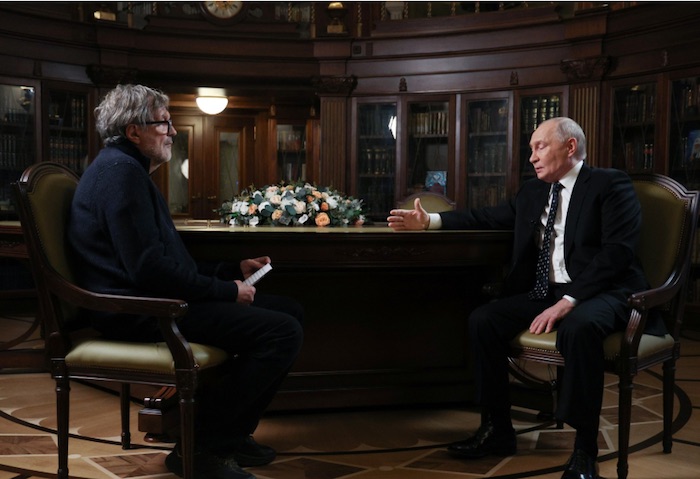
During an interview with film director Emir Kusturica for his project “Our Baptism – The Patriarch” Russian President Vladimir Putin mentioned, “Moscow is the third Rome.” Immediately western media went bananas, so I had to go look for exactly what was said.Read more …
BACKGROUND: Constantinople was called the Second Rome because Emperor Constantine moved the capital of the Roman Empire there in 330 AD. The Eastern Roman Empire survived for another thousand years after the fall of the Western Roman Empire, until Constantinople fell to the Ottoman Turks in 1453.Then, in 1472, Ivan III, Grand Prince of Moscow, married Sophia Palaiologina, the niece of the last Byzantine emperor, Constantine XI. And Sophia didn’t exactly arrive in Moscow with just a suitcase. She came with an entourage and brought connections to Byzantine court culture, traditions, and ceremonial practices that would influence the Russian court for centuries.
By the early 16th century, the monk Philotheus famously articulated the idea: “Two Romes have fallen. The third stands. And there will be no fourth.” The Russian title Tsar comes from Caesar, the title of Roman emperors.
[Partial Transcript] – […] Emir Kusturica: Today, the Russian Orthodox Church is represented in more than a hundred countries of the world, and the Russian state is the foundation of the entire Russian civilisation. Do you think the Russian civilisation can become a sort of an ‘ark’ that can save all those who believe in Christ?
Vladimir Putin: It can. Absolutely.
I am saying it with such confidence not just because the Russian theological and philosophical thought is centred around one concept that dates centuries back: Moscow is the Third Rome, a fourth there shall not be.
What does it mean? It means that Christianity came into existence in ancient Rome, then Rome fell, and Christianity moved to Byzantium, the Eastern Roman Empire. Constantine became the first emperor to convert to Christianity. The Byzantine Empire also fell, but by that time, Christianity had already spread to Russian soil and reached Moscow. Thus, Moscow inherited this faith and these traditions. In a way, it became the Third Rome, the spiritual keeper of those holy values, that heritage.
Yet this theological, or philosophic, idea, which, as I said, Russia has cherished for ages, is not the main point here. It is all about today.
Today, for example, we see cases – I know it is not widespread – but we see cases when people move to Russia from other countries, including European countries. When I chat with them on occasion, they say that the main driver, the main reason why they moved to our country was their desire to preserve their values, their families and the future, secure the future for their children, who, they believe, should have the right to grow up and be raised in traditional religious values.
So, when you ask whether Russia can become the ‘ark’ to save people, I would say that it would be not only for Orthodox Christians, and actually not just for Christians.
As you know, we have four traditional religions in Russia: Buddhism, Judaism, Islam, and Orthodox Christianity, all their adherents developing and evolving side by side. In fact, we have the same traditional values, no matter how hard some followers of these religions seek to underline the distinctions. There would always be distinctions, but fundamental values are the same. By creating enabling environment for these traditional values to evolve, Russia provides a space where people can live in line with these values. Of course, in this sense, Russia could become the ‘ark’ you are talking about.
Now, in many societies, especially in the West, we are witnessing a struggle for human rights involving various minorities. Is it anything new? Nothing – history is repeating itself, this is as old as humanity itself. It is just that now certain groups have become more aggressive, increasingly claiming their rights and so on.
You see, we are not trying to limit anyone in anything. But the idea upheld by the Russian Orthodox Church, as our Patriarch always confirms in public, and by the Russian state policy, too, is that the human, human spirituality, and, crucially, if I may say so, the human as a biological species should be preserved. We are seeking to secure this through our state policy and support the Church in its efforts, of course, in keeping with today’s demands, with the requirements of the modern civilisation. This is the main focus of our joint work with the Church.
So yes, in this sense, Russia and Orthodox Christianity could serve as the ‘ark’ you have mentioned.
Emir Kusturica: And how does it all get along with the reality in the West, in which the Christian church fails to play the great role Orthodox Christianity is playing in Russia?Vladimir Putin: I think it has to do with the fact that… We actually treat our brothers and sisters in Europe with respect, and we, as a matter of fact, try to support them when we see that certain branches of Christianity are obviously mistreated or harassed. But I am afraid that the backslide by these churches, their certain departure from the canons is not strengthening their position in society but works the other way round. Perhaps, by departing from the established canons and principles, they seek to update something, make it easier to understand and adapt to our everyday life. But in reality, I think this is exactly why the grip of Christian ideas and the church on society, on the minds, is weakening.
Emir Kusturica: Over the past five years, North America has seen 1.5 million newly converted to Orthodox Christianity.
Vladimir Putin: That is exactly what I am talking about. Orthodox Christianity is, on the contrary, attracting people because it protects the values I mentioned.
Emir Kusturica: How would you define the Russian civilisation, as a concept?
Vladimir Putin: It is a tricky question. Yes, we are talking about the Russian civilisation, and I guess that is how we really see it. God forbid, this is not some sort of vanity or arrogance.
We acknowledge that the Russian civilisation is a great civilisation. And we know that there are others – the Chinese civilisation, for instance, which dates back thousands of years. And we remember history. Say, the Mongols waged long wars against China, and eventually established their own, Mongol-led dynasty in China. And where did it all take them in the end? They were absorbed by the Chinese.
Emir Kusturica: Orthodox Christianity played a great role there.
Vladimir Putin: Yes, that is what I am driving at. You are absolutely right.
Well, the Chinese state and Chinese nation just absorbed those conquerors. And that was it, they assimilated.
Or take, for once, the Indian civilisation, which is the oldest. It is very interesting. The more I get to know about it, the more interested I become.
Not long ago I asked Prime Minister Modi when we were talking: “How many Indians speak the primary language?” He answered: “About 600 million.” – “And what is the population of the country?” – “One and a half billion”. Only one third speaking the titular nation’s language. “And what about the other two thirds?” – “And those speak their own languages.” Don’t you find this surprising? It really is!
I don’t know, Jim. “Trump blundered by starting the war.”?
• Hard Truths on Iran and Ukraine (Jim Rickards)

Since the start of the Iran war in February, we’ve written that it was a historic blunder by the United States. The idea of regime change was a fantasy promoted by Israel and neocons in the White House. The U.S. killed scores of religious, military and political leaders in Iran, but they were quickly replaced by new leaders who were younger and even more aggressive than the old guard. Killing leaders is not regime change. The basic regime of a military dictatorship by the Islamic Revolutionary Guard Corps (IRGC), with a puppet ayatollah, has not changed.Read more …
The U.S. also conducted extensive bombing operations in Iran, destroying weapons and infrastructure. But Iran still has thousands of missiles in underground bunkers and makes drones in garages and small workshops. Wars are not won with bombing alone. It can help, but wars are won on the ground. There’s no way the U.S. will send in a million troops to fight a country of 90 million people that’s roughly as large as the entire U.S. mainland east of the Mississippi River.Unresolved Issues
The fate of Iran’s highly enriched uranium (HEU) remains unresolved. In short, none of the announced reasons for the U.S. starting the war has been fully accomplished. New interviews with Iranians by leading Middle East scholars suggest that the Iranian people are more united than ever. Even some Iranian dissidents are siding with the regime because they feel lied to and betrayed by the United States. In their minds, the U.S. had always stood for freedom and democracy. Now it stands for war, bombing and civilian deaths. The U.S. is not only losing the Iran war, it is losing the hearts and minds of the people there.Iran has shown it can close the Strait of Hormuz, or at least drive shipping costs sharply higher for vessels that do get through. There’s not much the U.S. can do about it without risking the loss of U.S. Navy cruisers or destroyers.
The Deal Mirage
Iran’s demands include reparations, the release of frozen assets, U.S. withdrawal from the Middle East and an end to U.S.-Israeli efforts aimed at the Houthis, Hamas and Hezbollah. Trump will never agree to those terms, so he’s stuck with the war and no exit ramp. There are some ways out. The first is to persist in economic warfare. Treasury Secretary Scott Bessent is taking the lead on this, cutting Iran out of the global banking system and seeking help from other major countries, such as India and Pakistan, in cutting financial ties to Iran.This is a powerful technique, but it takes years to have its full effect. Don’t expect changes in Iranian behavior in the meantime. The second is selective bombing with economic impacts in mind. This means cutting railroads and highways leading from Iran to Central Asia, many built with Chinese money. The point is not just to blow up infrastructure but to cut off trade in food, weapons and gold.
On Nov. 7, U.S. Central Command announced the formation of Task Force Iron Gate, a new initiative to disrupt the movement of advanced weapons, sanctioned materials and illicit revenue across Iran’s land borders and the Caspian Sea. The operation extends the economic pressure already being applied through the U.S. naval blockade. Again, this approach takes time.
The third and quickest way to end the war in Iran is to achieve detente with Russia, mainly around Ukraine, and then rely on Russia to force Iran to come to terms with the U.S. Unfortunately, the Democrats who will soon control Congress have no time for any of these paths. They want to cut and run, as Autopen Biden did in Afghanistan in August 2021.They are already exploring ways to stop Pentagon funding for the war, which could cause another disorderly retreat and embarrassment for the U.S. This fight could begin even before January if RINOs like Thom Tillis and Susan Collins join with Democrats next month.
Trump blundered by starting the war. The Democrats may blunder even more by ending it this way.
Little League vs. the Yankees
Iran is only one of two major conflicts going on today. The other is Ukraine. A new round of negotiations to end the war in Ukraine concluded last week. The negotiations took place in Abu Dhabi, the capital of the United Arab Emirates (UAE). The U.S. team was led by Jared Kushner and Steve Witkoff.The Russian team included Vladimir Medinsky, a close aide to Vladimir Putin and an expert on the history of Russia. He was joined by Deputy Foreign Ministers Sergei Ryabkov and Mikhail Galuzin, along with senior military officials. Behind this team, but remaining in Moscow, was Russian Foreign Minister Sergey Lavrov. The Russian team was highly seasoned and very conservative.
Following the Abu Dhabi talks, Kushner and Witkoff met with Putin in Moscow on Nov. 12, then flew to Dublin to brief Ukrainian President Volodymyr Zelenskyy. Putin made clear that Russia would not abandon its territorial demands or accept foreign peacekeeping troops in Ukraine.
The Americans also raised a new possibility with Zelenskyy: Would Ukraine withdraw from the parts of the Donbas it still controls in exchange for NATO membership? Zelenskyy rejected surrendering Ukrainian territory. The U.S. team of Kushner and Witkoff are amateurs. It’s as if the U.S. sent a Little League team to play the New York Yankees.
The Russian position has changed little since the early stages of the war in 2022: Ukraine must be disarmed, it cannot join NATO (it’s OK to join the EU) and Russia keeps Crimea. The Ukrainian regions of Luhansk, Donetsk, Kherson and Zaporizhzhia become part of the Russian Federation. (They already are, according to Russia, although Moscow does not fully control all four regions.)
But Russia wanted an even broader understanding. It did not merely want to settle the war in Ukraine. It wanted to establish a new security architecture for all of Europe. This means reversing NATO’s efforts to encroach on Russia’s borders through expansion and a return to the NATO status of 1997, not long after the reunification of Germany in 1990.
Russia does not want to be back at the negotiating table or fighting another war in a few years. It wants an arrangement that might last 30 years or even longer. The only concrete agreement that came out of these talks was a planned large-scale prisoner exchange between Ukraine and Russia. That’s a good result for all involved, if completed, but it does nothing to resolve the major security architecture issues on the table.
As is the case in Iran, the incoming Democrat-controlled Congress could undermine the peace talks and expand the war in Ukraine. According to a report published Nov. 7, congressional Democrats are discussing up to $15 billion in additional assistance to Ukraine. The proposal has not yet been introduced as legislation, and its final size and terms remain uncertain.
This effort may fail, but that won’t stop the Democrats from trying. More money for Kyiv will only escalate the war and bring greater Russian force to bear.As amateurs, Kushner and Witkoff only understand “the art of the deal.” They’re real estate guys. They think that if they offer a ceasefire along the current battle line and send in NATO or U.N. peacekeepers, stability can be achieved.
But Russia does not trust the West, nor should it. The one bright spot is that, at each negotiating round going back to the Anchorage summit between Putin and Trump in August 2025, the U.S. seems to understand Russia a little better and to make slight movement toward a realistic appraisal of the Russian position.
On Nov. 16, Kushner and Witkoff held another round of discussions with Ukrainian and European representatives. France, Germany, Britain, Italy and Poland participated. Zelenskyy described the talks as difficult but constructive. Kushner said progress was being made toward a settlement, although significant obstacles remained. The United States is now trying to arrange direct negotiations between Russia and European governments. Moscow, however, has not yet agreed to European participation.
As of Nov. 17, another meeting involving Kushner, Witkoff and Ukrainian and European officials is planned for Nov. 19 in Berlin. The agenda includes security guarantees for Ukraine and a plan for postwar economic reconstruction. Kushner and Witkoff have also made progress on the energy front, with negotiations over the possible sale of Russian Lukoil’s international energy assets to U.S. investors. There is even early talk about rebuilding the Nord Stream 2 natural gas pipeline from Russia to Germany with some U.S. investment.
Those potential economic deals are positive and could keep detente momentum between Russia and the U.S. moving in the right direction. The chance of a major breakthrough in the current talks was always slim, but at least the sides were talking.
The latest developments show negotiations are continuing on several fronts, but the fundamental disagreements over territory, NATO membership and Europe’s future security architecture remain unresolved. The possibility of further progress toward a lasting deal that can end the war in Ukraine is real, but may still be months away at best.
Canada has an old competitor for Starlink.
• PM Carney Concerned About “Changed Global Order”, Globalism, Starlink (CTH)
Representing the British Commonwealth perspective, Canadian Prime Minister Mark Carney is interviewed about the current status of U.S-Canada relations and expresses the U.K, EU concern about ‘middle powers’ no longer having control over the rules-based global order; where the rules were formerly determined by the commonwealth approach.Read more …
The interview itself is an interesting glimpse into the mindset of Carney, the current British government and the Europeans who have framed their global influence around rules that President Trump is no longer adhering to. I have prompted the segment to the 9:00 minute mark where you will hear Carney express his concern as the lead-in to his statements about the middle-powers’ reliance on Starlink.Carney states the experience with Ukraine and Starlink frames his perspective; however, he falsely says Ukraine has been using Starshield and the interruption therein leads his decision-making. Carney is not a stupid man; he knows the truth of how NATO has never permitted Ukraine to use Starshield due to the ramifications surrounding conflict with Russia. Carney conflates the issue, furthering the lies told by Ukraine President Volodymyr Zelenskyy. WATCH:
There is also an important background story that is not yet in the public common knowledge. The current Canadian system known as Telesat “Lightspeed” is in serious financial trouble and on the cusp of a looming debt default. This is a problem for Carney because the Canadian pension fund is heavily invested in Telesat. {GO DEEP}$1.71 billion in debt service is due on December 6th, and Canadian Telesat only has $200 million in reserve. The Canadian government is going to have to bail out Telesat or the investment by the Canadian pension fund will suffer. In essence, Carney is facing the need to nationalize their Canadian satellite industry or help them achieve financing relief from some other investment mechanism [Think CHINA?].
.@MarkJCarney want's Starlink compromised (potentially attacked by Russia as a military target) because Telesat needs to be nationalized by the Canadian govt., due to unsustainable debt, a looming default and prior investments by the Canadian Pension Investment Fund into…
— TheLastRefuge (@TheLastRefuge2) November 20, 2026
They won’t leave it be.
• Alito Warns That Democrats Could Destroy the Supreme Court Forever (Margolis)
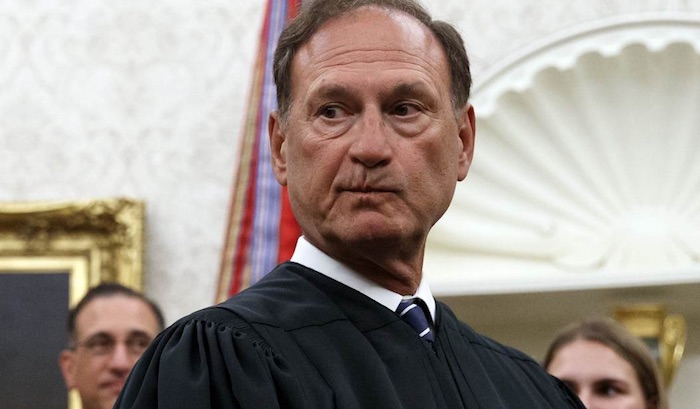
Democrats have made it abundantly clear that they feel entitled to power, and they’re willing to blow up longstanding institutions to get it.Read more …
Just look at the filibuster. Under President George W. Bush, Democrats abused it to block judicial nominees and legislation, insisting it was a necessary tool to protect the minority party. When Republicans used the filibuster the same way to stop Barack Obama’s agenda, Democrats suddenly decided it was a racist relic of the Jim Crow era. Then, like clockwork, they had no qualms wielding it against President Donald Trump’s agenda. Senate rules aren’t the only institution they’re willing to change, though.Ever since conservative justices took a majority on the Supreme Court, Democrats have openly plotted to pack it the moment a Democrat president gives them the chance. They would add as many seats as it takes to install a near-permanent radical-left majority. Their fury has grown every time that majority does its job. The court ended racist affirmative action in college admissions, reined in the power of federal agencies, and, of course, ended the nationwide right to abortion.
Democrats used to be coy about their intentions. In 2020, Joe Biden refused to say whether he would pack the court; then, upon taking office, he set the wheels in motion to do just that. He assembled a commission to give himself political cover for expanding the bench. It backfired.
Biden’s hand-picked commission shot down the idea. It warned that adding seats for partisan purposes would set up an infinite cycle of court expansions, with each new majority simply packing the court with its own. A future Democrat president won’t be bothering with a commission; he’ll just pack the court.
Do you think Democrats took the hint? They didn’t. Democrats have stopped pretending to care what anyone thinks about court packing. Kamala Harris and Democrats in Congress are openly campaigning for it. Democrats have floated adding seats, and even ending life tenure to secure as many seats as possible.
The next time Democrats have the votes, they’ll pack the court. Republicans could stop this cold. Congress already has the statutory authority to set the size of the Supreme Court, and a simple federal statute could lock it in at nine justices. If Republicans wanted to, they could nuke the filibuster and pass that law. Unfortunately, Senate Republicans, particularly the leadership, are spineless. So what happens when Democrats take over Congress in January, as they’re preparing to do?
The threat to politicize the court is all too real. Justice Samuel Alito sounded the alarm Monday night at a black-tie dinner at the American Enterprise Institute, held in his honor. He offered a chilling warning. “But it now appears that the court may soon face a structural question of greater magnitude,” Alito said. “Whether the court will be allowed to continue as an independent tribunal that decides cases based on its understanding of the law, not political pressure.”
He added that “what we have seen in recent years is a mounting campaign to change the direction of the court’s decisions by intimidating and harassing justices, or if that fails, by seriously damaging the court’s standing in the eyes of the public and then altering the court’s composition.” m”If that campaign succeeds, the Supreme Court, as an institution, will be fundamentally changed, and perhaps permanently,” Alito warned.
Justice Samuel Alito: "What we have seen in recent years is a mounting campaign to change the direction of the court's decisions by intimidating and harassing justices… If that campaign succeeds, the Supreme Court as an institution will be fundamentally changed." pic.twitter.com/zz6TkdvAzh
— CSPAN (@cspan) November 20, 2026
Justices (particularly conservative justices) rarely talk this way. They guard their words carefully, and they rarely step into political fights. When one of them stands up and describes the whole playbook, you should be scared. Alito knows what’s coming.A party that tears up every rule standing between it and power will never stop. Democrats will change the rules of legislative bodies, remake the court, and even completely overhaul our elections to become a permanent majority.
“How endless regulation is choking American innovation.”
• 1.8 Million Rules Before Breakfast (Vince Coyner)

My first car was a red 1973 Toyota Celica. Never a pretty car, it usually got me where I was going. It took some work, though. I changed the starter, transmission, alternator, and more—all by myself, with help from Chilton manuals and a junkyard where you could go and take parts off junked cars.Read more …
All of that was a long time ago. Today I can put gas in my tank, but that’s about it. I outsource my car maintenance to professionals. I get my oil changed, get a tune-up, etc., but I change the windshield wipers myself! It’s mainly because cars today are far more complicated than they were then.Life too is much more complicated now than it was in 1983 when I got that car. But here’s the thing. The people I outsource my car care to today are professionals in a free market who know that if they screw up or charge me too much, I’ll take my business elsewhere. Unfortunately, we don’t have the same options when it comes to government.
Sure, we can change the president and, theoretically, Congress, but that doesn’t really happen very often. And even if we did change those guys regularly, the reality is that the government is largely run by bureaucrats who stay in place, regardless of who’s in the White House or who’s running Capitol Hill. All of that might not be a huge problem if those people didn’t do much. But they do. Government regulations today affect virtually every aspect of Americans’ lives.
Think about your daily life. You wake up on a bed that probably has one of those tags at the bottom saying that it’s illegal for anyone other than the consumer to remove it. You put on your socks and your robe, both of which were likely subject to tariffs and material regulations. You sit down to eat your breakfast and grab a box of Frosted Flakes. If you read the box, half the side panel is tiny text required by government regulation. You probably pour pasteurized milk on it because unpasteurized milk is illegal to ship across state lines.
After getting ready in a bathroom with a government-regulated showerhead and toilet, you’re ready to go to work. You get in your car, and as you start it, you don’t even think about the 16,760 laws, regulations, restrictions, prohibitions, and so on that go into making it. You stop for gas, which itself is the product of thousands of regulations, and, depending on where you live, it costs 20% more because of taxes.
We could go on, of course, but the rest of the day is just more of the same. Taken together, between federal (1,100,000-plus) and state & local governments (6.2 million), average Americans are subject to about 1,400,000 laws and regs in a relatively free state like Idaho, or as many as 1,800,000 in a state like California.
That’s every day, all the time. Everything from insurance to healthcare to computer mice to Hollywood movies to cheeseburgers to #2 pencils and even porn. Everything. Everywhere. All the time… Today, the average American has little power to change the regulatory straitjacket we live in. That’s a big problem. It’s an anchor on the neck of freedom, competition, and most importantly, prosperity.
Even the most committed conservative isn’t demanding no laws, but at some point, the plethora of laws becomes stultifying. We are sadly long past that point. Yes, some laws and regulations are necessary, but even those that fail to meet their goals or turn out to be detrimental somehow remain on the books forever. If Americans want to survive and thrive in a world of AI and its companion robots, it will require the freedom to innovate, build, and launch new products and services.
Just as the Industrial Revolution launched an unprecedented economic boom, the coming AI and robotic age can do the same. But that only happens if Americans are free to innovate, launch businesses, and create offerings we can’t even imagine right now. That starts with slashing regulations and becoming more comfortable with uncertainty. Basically, giving power back to citizens.
The only way to do that is for government at every level to take a DOGE-like approach to every law and regulation on its books. Importantly, such cutting can’t be done by the people who wrote them in the first place, or those who benefited from them, whether the industry people or the bureaucrats themselves with jobs in perpetuity.
As such, we’ll need a program like the Pentagon base-closing program, where Congress was given a list and could vote it up or down, but couldn’t pick it apart. Or something where all laws are sunset after 5 or 10 years unless a supermajority retains them…
Now, what’s the likelihood of this happening? Slim. The reality is, America is becoming a tyranny. Democrats basically want to nationalize everything, but they’ve figured out they don’t need to show themselves to be communists by nationalizing anything.
No, they can accomplish the same via fascism. Not in the “We hate Jews” or Aryan race sense, but rather in the economic sense. Communism wants centralized control over everything when the state owns the means of production. Fascism wants the same, but the private sector owns the means of production, and the state tells it what it can and must do with every aspect of it. Either way, the result is the same.
Does that matter? Yes. In the thirty years between 1950 and 1980, American GDP grew at an average of 4.7% per year. In the thirty years between 1995 and 2025, it grew by an average of 2.5%, or essentially half. Not coincidentally, at the same time, regulations more than doubled. Compared to 1950, they increased 10 times. Overregulation kills economic growth and the prosperity that comes with it.
With AI and robots, the future has one of two outcomes: one involves AI poohbahs (companies and regulators) becoming our masters, controlling virtually everything. They’ll give us our UBI, and we’ll become nothing more than characters in their real-life version of the Sims simulation game.
The other involves Americans being free to harness AI, robotics, and any other technology to invent a future we may not even imagine today. The cable revolution brought us a TV channel for dogs. American creativity brought us everything from the intermittent windshield wipers and the iPhone to Tupperware and the computer chip.
A culture that tolerates and even extols the frivolous fertilizes the garden from which the consequential emerges. That has never been truer than today. Unleashed, the American entrepreneurial spirit has an opportunity to generate an unprecedented growth in prosperity. But it only happens if we throw off the yoke of regulation, both from the world of AI and the world we already inhabit.
A world without massive overregulation will doubtlessly have problems, some of which will be consequential. But they will be dealt with either through prosperity or replacement. To paraphrase Elon Musk: Delete any law or regulation you can. If you don’t add back at least 10%, you didn’t delete enough.
An America free to innovate, empowered by AI and robotics, will dominate the rest of the 21st century just as she did the 20th. To make that a reality, we must put people in positions of power who are more interested in reining in government than growing their own power. The 2028 election is right around the corner; we need to start looking for some American Javier Milei right now, at all levels of government.
They can’t get American votes, so they import them.
• Republican Turncoats Uniting Behind Amnesty. Here’s the Traitors. (Margolis)
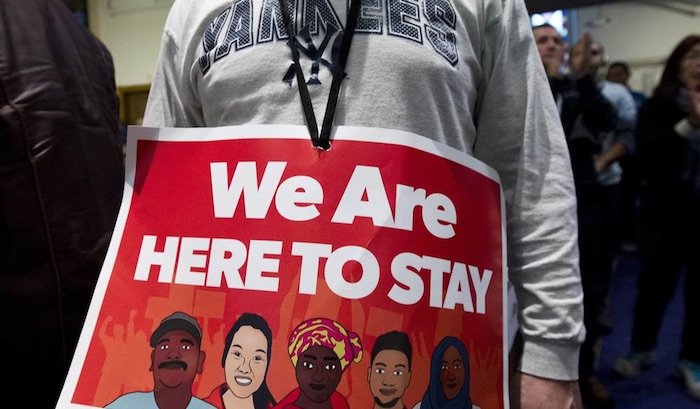
Now that Democrats hold majorities in the House and Senate, they’re plotting a major amnesty push. One bill in the works is the “Protect Our Neighbors Act,” which would effectively reward illegal immigrants who manage to dodge deportation long enough.Read more …
Freshman Rep. Lateefah Simon (D-Calif.) is introducing the bill, and fellow California Democrats Reps. John Garamendi, Zoe Lofgren, and Juan Vargas have signed on as co-sponsors. The goal of the legislation is to make final orders of removal expire after ten years. It would be a disaster. Sadly, we expect such ideas from Democrats, which is bad enough. But even Republicans are jumping on the amnesty train, and that’s a problem.Rep. Maria Elvira Salazar (R-Fla.) is bragging about growing support in Congress for her Dignidad Act, an amnesty bill she introduced last year with Rep. Veronica Escobar (D-Texas). In a statement Monday, Salazar said that “sixteen more Members of Congress are joining an effort that has been growing all year.” She added that the new support “proves that Republicans and Democrats can still come together” on the immigration crisis.
What immigration crisis?
President Donald Trump closed the border, and his administration is deporting illegal aliens. The crisis happened under Joe Biden, who threw the border wide open and let illegal immigrants flood this country at historic levels. Salazar isn’t trying to fix a problem; she’s helping Democrats get a huge influx of new voters.
Look at what her bill does. It’s similar to the “Protect Our Neighbors Act,” in that it shields illegal aliens who have lived in the U.S. continuously since Jan. 1, 2021, from deportation and hands them work and travel authorization. The bill also provides a pathway to permanent residence for DACA recipients. It allows DHS to drop or never initiate deportation proceedings against undocumented aliens who have a U.S. citizen parent, spouse, or child.
On top of that, it would help illegal aliens push American workers out of their jobs. To lure border-security Republicans, Salazar tacked on extra border money and an E-Verify requirement for employers. That’s a sweetener designed to make a massive giveaway easier to swallow. Salazar, the daughter of Cuban immigrants, insists the coalition rests on the idea that “America can have law and order, economic prosperity, and human dignity.”
Her cheerleaders tell you everything you need to know about this bill. FWD.us, a left-wing open-borders group started with help from Mark Zuckerberg and Bill Gates and backed by George Soros’ Open Society Foundations, supports it. The American Immigration Council, another left-leaning outfit with heavy Open Society funding, said deals like this one “may prove the starting point for future negotiations.”
Translation: it’s the opening act to even more amnesty. Thankfully, some Republicans see right through it. In April, Rep. Brandon Gill (R-Texas) said the bill “would bring mass deportations to an essential halt.” He noted it grants amnesty to illegal aliens who crossed prior to 2021 and to those married to U.S. citizens, and it massively expands the visa program, including permanent residence for F-1 students. “Any Republican supporting this is supporting amnesty and is betraying the voters,” he said.
Salazar, who narrowly won reelection on Nov. 3 with help from donors tied to the real estate and construction industries, rejects the amnesty label. She claims the bill is a way of “ending illegal immigration once and for all.” Sorry, Maria, but legalizing millions of illegal immigrants rewards illegal immigration.
The disturbing part is how many Republicans have signed on. Of the bill’s 50-plus co-sponsors, 20 are now Republicans: Mike Lawler (R-N.Y.) and Nick LaLota (R-N.Y.); David Valadao (R-Calif.) and Young Kim (R-Calif.); Mike Kelly (R-Pa.), Lloyd Smucker (R-Pa.), and Brian Fitzpatrick (R-Pa.); Mario Diaz-Balart (R-Fla.), Neal Dunn (R-Fla.), and Carlos Gimenez (R-Fla.); Marlin Stutzman (R-Ind.) and James Baird (R-Ind.); Dan Newhouse (R-Wash.); Gabe Evans (R-Colo.); Zach Nunn (R-Iowa); Don Bacon (R-Neb.); Jen Kiggans (R-Va.); and Monica De La Cruz (R-Texas), along with delegates Kimberlyn King-Hinds of the Northern Mariana Islands and James Moylan of Guam.
I don’t understand why Republicans are even considering this. If we thought the Republicans would be united in their opposition to the Democrats’ push for amnesty, we were completely wrong. The voters have given this party a mandate to secure the border and enforce the law, and too many of them are now ready to trade that mandate for the applause of the very same open-borders crowd that created the mess in the first place.
Good purpose to use AI for?
• Claude Solved Math’s Most Famous 167-Year-Old Problem (ZH)
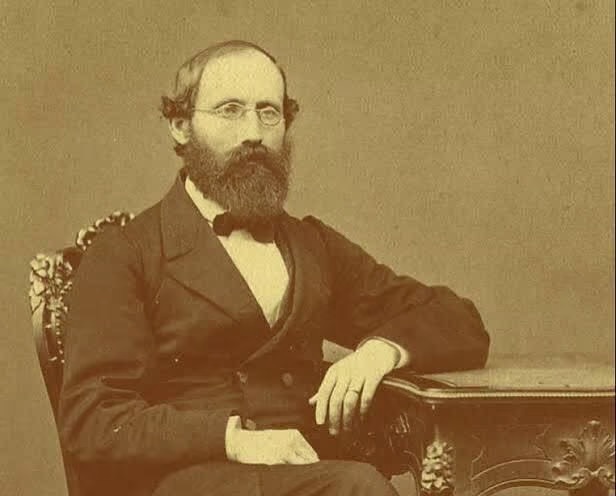
Bernhard Riemann (1850s)
Update (1245ET): The Lean FRO, which develops the Lean proof language Alpoge used to publish his work, and the Mathlib Initiative, which backs Lean’s main math library, said Saturday they have “full confidence that Alpoge’s proof of the Riemann Hypothesis is correct.”Read more …
BREAKING: The Lean community declares Levent Alpöge & Claude’s proof of the Riemann Hypothesis correct, following verification of 17 million lines of mathematical code.
— Polymarket (@Polymarket) November 21, 2026
In the statement, the two groups said members of the Lean and Mathlib communities spent the past day checking the 17-million-line library, and certified both the statement and the proof as correct under the four criteria laid out in a Nov. 12 post on the Xena Project blog.Dozens of people compiled Alpoge’s code and reproduced the same raw proof export. The community then added a file containing only Mathlib’s own statement of the Riemann Hypothesis, which the groups said experts in Lean and number theory had carefully vetted. Two independent tools confirmed that the theorem Alpoge’s library proves is exactly that statement.
The exported proof was then run through several checkers, including Lean’s official kernel and independent ones contributed by third parties in different programming languages. Two of them, con-leche and con-ron, carry a formal proof that they can’t accept a false proof, which the groups said answers concerns that the proof might exploit a flaw in Lean’s own logic. The checks ran on an inert export of the proof, walled off from any malicious code that might be hidden in the Lean sources. A detailed overview of the checks is posted on MIT’s mathematics site.
The groups said they now look to the wider mathematical community to help explain the new ideas in the proof.
On Polymarket, bettors put the odds of the Clay Mathematics Institute declaring the hypothesis solved this year at 2%, and 10% by the end of 2027, down from 26% on the 2027 contract when the claim broke Friday. Clay’s rules, as noted below, require publication in a qualifying outlet, a two-year wait and general acceptance by the mathematical community before it awards the prize.
2% chance the Clay Mathematics Institute declares the Riemann Hypothesis solved this year.https://t.co/77GQWh8EBh
— Polymarket (@Polymarket) November 21, 2026
* * *Levent Alpoge, a mathematician on Anthropic’s staff, announced on Friday that he and Claude have found a proof of the Riemann Hypothesis, the 1859 conjecture on how the prime numbers are spread out and one of the Clay Mathematics Institute’s seven $1 million Millennium Prize problems.
Random math equations that look cool (Scientific American) “I believe I have, working with Claude, discovered a proof of the Riemann Hypothesis,” Alpoge wrote in a four-page note on his website. He said the method “easily extends much further,” settling the Generalized Riemann Hypothesis as well, and that he expects the Extended Riemann Hypothesis to follow “with more time.”
BREAKING: Anthropic mathematician Levent Alpöge claims he & Claude may have proved the Riemann Hypothesis, a $1 million math problem that has remained unsolved since 1859.
— Polymarket (@Polymarket) November 20, 2026
Instead of a paper, Alpoge released the proof written in Lean, a language in which a computer checks every step of an argument, split into 14 downloadable archive files. “Claude and I have also formalized the arguments without assumptions,” he wrote, adding that the argument “is incredibly long at the moment.”He said he chose to publish only the Lean code because “it being obviously inappropriate to attempt to post some massive unreadable travesty of ‘slop’, I decided to only present Lean.” In a footnote he admitted he had tried anyway: “I of course amused myself, and hit 250,000+ pages.”
As of Friday, no outside mathematician had vouched for the result – and number theorists still have to confirm that the theorem at the end of the code really is Riemann’s hypothesis, as Scientific American notes.
Alpoge, a number theorist, wrote that he had been planning for this problem since his student days, and gave Claude the decisive turns. “Claude and I have had a great time together with such breadth in recent months, but this time Claude far outpaced me near the finish line,” he wrote. “No, Claude flew, and danced, and sparkled near that finish line.”
He said he steered the work toward the right setting and that Claude then supplied the step he expects to make mathematicians “fall out of their chairs”: a chain of “theta lifts” about as long as the square root of the size of the prime sum being bounded, each lift standing in for the “multiplicity” that the classic argument over function fields relies on and that is hard to find over the whole numbers. A timeline he says Claude compiled runs from Oct. 6, the “Stepanov determinant,” to Nov. 16, with a single entry: “GRH.”
Why does it matter? Take the first trillion whole numbers. A standard formula predicts about 37.6 billion primes and misses by just 38,262. If the proof holds, mathematicians would have a guarantee on how far that estimate can stray, even at numbers far too large to check by counting. Results that depend only on Riemann being right would become theorems. For Anthropic, the bigger prize would be evidence that Claude contributed an original idea that helped crack a problem mathematicians have chased since 1859.
Alpoge’s claim landed a day after Anthropic’s first day of trading, with the stock sliding toward its $83 IPO price on Friday morning. He addressed the timing in his note – writing: “It is obvious to me that I should remark on the following.” “The precise timing is horrible,” adding that it all came together late Sunday night, when he messaged Anthropic CEO Dario Amodei, “Hypothetically, if I were to have …”, “eventually asking about my ability to announce.”
“We went and figured it out and the fact is that there was a constraint to respect,” he went on, adding that he was “clearly unilaterally responsible for feeling I just could not live if I waited even longer.” “There is an obvious cynical view, to do with the timing, but it is false, and I am pleased that I am in circumstances where it is obviously false.”
In August, Anthropic said an unreleased version of Claude had raised the share of the zeta function’s zeros known to satisfy the hypothesis from 41.6% to 67.2%, in work that Alpoge and fellow Anthropic mathematician Ralph Furman validated. The company wrote at the time: “We don’t expect that the techniques Claude used will lead to proving the Riemann hypothesis.” In July, Alpoge posted a Claude-generated counterexample to the Jacobian conjecture.
Even if the proof holds, the money is years off: under Clay’s rules, a solution must be published in a qualifying outlet, wait at least two years and win “general acceptance in the global mathematics community” before the institute will consider it.
Bettors aren’t sold yet – Polymarket’s 26% below is for the end of 2027, not this year:
26% chance the Riemann Hypothesis is officially declared solved by end of year. https://t.co/OEQc1VKVrb
— Polymarket (@Polymarket) November 20, 2026
Alpoge says he will write the argument up properly and expects it to shrink fast. “My intuition insists it will be massively simplified, likely immediately,” he wrote. “It is natural to feel that this is an end, in my case a loss of a principal guiding light, but what I saw during the course of progress so amazed me that I believe it is one dawn across science of something far greater.”
How much did they lose?
• Nvidia Drops Out of World’s Top Three Most Valuable Companies (TASS)
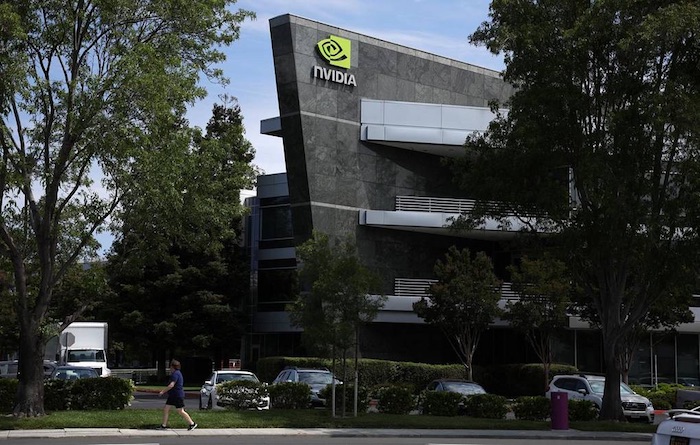
Chipmaker Nvidia slipped out of the world’s top three largest companies by market capitalization, ceding third place to US-based Alphabet, the parent company of Google, according to trading data obtained by TASS.Read more …
The top three companies in terms of market capitalization are currently Apple ($4.978 trillion), Microsoft ($3.598 trillion), and Alphabet ($3.245 trillion). Nvidia slipped to fourth place with a capitalization of $3.031 trillion, while Amazon is fifth ($2.668 trillion). Earlier, the Business Insider portal wrote that Nvidia’s market capitalization shrunk by approximately $1.04 billion after the departure of CEO Jensen Huang was announced.On November 12, Jensen Huang stepped down as CEO and President of Nvidia and resigned from the company’s Board of Directors amid a scandal involving his relationship with a woman suspected of spying for China. The Chinese Foreign Ministry dismissed allegations that the woman worked for Chinese intelligence as slander.
“Any effort by a player to express himself freely in Baltimore will be met by the same answer from Humphrey’s attempt at free speech: “Quoth the Raven[s], ‘Nevermore.’”
• Raven’s Cornerback Suspended for 4 Words on Baltimore’s Crime Problem (Turley)

Baltimore Ravens cornerback Marlon Humphrey will not be playing this Sunday against the Carolina Panthers. He is not on the IL list, but on the FS list. Humphrey was flagged for a free speech; uttering four words about the crime problem in Baltimore. The cornerback quipped that the city is “best at making criminals.” While Ravens players were allowed to protest the United States at a London game, a player is not allowed to make a political comment on his personal podcast about the crime epidemic in his city.Read more …
The day Humphrey was suspended, a 30-year-old woman was shot and killed near the M&T Bank Stadium. Players would be wise not to acknowledge the crime. However, they could presumably condemn the country. Head Coach Jesse Minter announced that Humphrey had been suspended after the 10-year veteran spoke about crime in the city on his podcast, The Marlon Humphrey Show. He was asked what Baltimore is best at making. Notably, Humphrey first offered The Star-Spangled Banner and National Bohemian beer. He then added as a joke that the city is also “best at making criminals.”Crime in Baltimore makes the city one of the most dangerous cities in the United States. Despite a drop in crime levels, it remains in the top five cities for violent crime. Notably, Humphrey’s comment was not only tongue-in-cheek, but was not racist or prejudiced toward any group. It was not encouraging violence or other bad conduct. On the contrary, it implied criticism of those who continue to endanger others in the city.
Yet, Minter went public with the virtue-signaling suspension. One can only wonder whether the suspension would have happened if the Ravens were not on a dismal five-game losing streak, ranked fourth in the AFC North, and 11th in the AFC playoff rankings.
We have previously discussed how players are not entitled to protest on the field in relation to the kneeling demonstrations. The same rule applies to other employees from Starbucks to Whole Foods. Employers are allowed to limit political expression and protests in the workplace.
Companies also may contractually subject employees to discipline for public comments or actions that bring controversy or disrepute to the company.mHowever, that does not make this right. I was critical of kneeling demonstrations during games, but I fully supported players’ right to voice their views outside the game.
The NFL is notorious for hypocrisy and inconsistency in punishing free speech. The Humphrey controversy is reminiscent of the Commanders hammering a coach for expressing a different view of January 6th. The NFL has spent years virtue-signaling with statements on helmets and in the end zones. However, when players or coaches express opposing views, they are silenced or suspended.
The NBA is little better. LeBron James can show disrespect to the National Anthem, but Jaden Ivy was fired for expressing his opposition to Pride Month. Players are expected to engage in mandatory speech while remaining silent on their own views. Nevertheless, Baltimore Mayor Brandon Scott rejected an apology by Humphrey: “While we acknowledge Marlon’s apology, a verbal apology is not enough.” He added that Baltimore is “a city full of young Black boys who look to the Ravens as a beacon of light in their lives.”
That is a curious objection since Humphrey was highlighting the failure of Scott to make the city safe to protect those lives given its top-five ranking on criminal violence.The message is clear. Players are expected to wear and repeat approved views of the team. For the NFL, speech codes reflect whatever values are popular or approved by NFL commissioner Roger Goodell and team owners.
Now players are on notice that they cannot comment on blue cities being breeding grounds for crime. It is a curious sensitivity for a sport that often sounds like a gangbanger’s delight from shotgun and pistol formations. The NFL and teams should get out of the speech regulation business and focus on football. While they are private companies and not directly subject to First Amendment limits, that does not mean that there are no free speech values at issue in these controversies.
The First Amendment is not the full or exclusive embodiment of free speech. It addresses just one of the dangers to free speech posed by government regulation. Many of us view free speech as a human right. Corporate censorship of social media clearly impacts free speech, and replacing Big Brother with a cadre of Little Brothers actually allows for far greater control of free expression.
Humphrey has now issued the perfunctory apology and is publicly covering himself with sackcloth and ashes. While Baltimore can no longer be called “best at making criminals,” the NFL certainly remains the best in coercing silence. It is fitting that the team was named in reference to Edgar Allan Poe’s poem “The Raven.” Any effort by a player to express himself freely in Baltimore will be met by the same answer from Humphrey’s attempt at free speech: “Quoth the Raven[s], ‘Nevermore.’”
The Brexit vote was not clear enough?!
• UK’s Burnham Declares EU Deal ‘Done’, But Brussels Isn’t Finished (ZH)

Prime Minister Andy Burnham’s Downing Street declared his Brussels summit a success on Friday, with a spokesman saying “The deal is done – negotiations have concluded.” But the European Union left tuition fees for EU students unsettled and gave Britain six months to agree them, while EU officials warned that the rest of the package may not be implemented until London gives way.Read more …
Burnham, European Council President Antonio Costa and Commission President Ursula von der Leyen signed off on three agreements: a common food and farm-safety area, a link between the two carbon markets, and a “Youth Experience Scheme” that will let 100,000 young people from each side live in the other’s territory for up to three years, according to the summit’s joint statement.Von der Leyen told the summit “We are at a turning point,” and said that “we are old friends who are breathing new life into our friendship,” LaPresse reported.
Two years ago, we started a reset of our relationship which led to our first EU-UK summit last year in London. Since then, we have continued to deepen our cooperation and strengthen our ties. And today, with this summit, we are taking another step forward.
— António Costa (@eucopresident) November 20, 2026
We are turning our… pic.twitter.com/A7rwrIA1UR
Paragraph 41 of the statement commits both sides to a separate agreement on tuition fees that “will apply to all students from the other Party irrespective of the immigration pathway.” The negotiations are to conclude within six months of the summit, which puts the deadline around May 2027.Brussels wants EU students charged the same “home fees” as British students, typically about a third of the international rate, while London has offered “significantly reduced” fees instead. The Russell Group, which represents 24 research universities, says home-fee status for EU students would cost British universities £570 million.
On Friday morning EU officials warned that the terms might not be implemented unless Burnham agrees to slash the fees, and a draft statement circulated to EU ambassadors suggested the issues were linked, the Daily Mail reported. No. 10 sources insisted they were not. The Mail put the cost to taxpayers of giving EU students domestic rates at nearly £500 million a year.
The final text binds the three signed deals to each other: both sides want the food, carbon and youth agreements to enter into force jointly. The food rules are to apply from March 1, 2028, the carbon link from 2028, and the youth scheme no later than 2028, with places open to young people by January 2030.
Britain estimates the food deal could add up to £5.1 billion a year to its economy and the carbon link up to £3.8 billion, with the link exempting about £6.5 billion of steel and aluminium exports from the EU’s carbon border levy. In return, Britain will have to align with EU food and plant-safety rules, the part Brexit supporters object to most.
Reform UK leader Nigel Farage told Euronews he was “pretty angry” about having to refight Brexit, and accused Burnham of bringing Britain back into parts of the single market, in food and farming above all. If Burnham ever fought an election on rejoining the EU, Farage said, he would have to hold a referendum.
Conservative leader Kemi Badenoch has also condemned the deal, and the Mail reports that penalty clauses could leave Britain paying billions of pounds if a future government pulls out. Critics had branded the summit a surrender before Burnham ever reached Brussels.
The statement also commits both sides to conclude talks in 2027 on British participation in the EU’s internal electricity market, and any such participation “would be linked to a UK financial contribution” to reducing regional disparities in the EU.

Bret Weinstein believes Russell Brand was convicted of a crime he is not guilty of.
— Wide Awake Media (@wideawake_media) November 20, 2026
He accuses the UK judiciary of glaring hypocrisy for prosecuting him over a decades-old claim while covering up grooming gangs. pic.twitter.com/irj05Xv4VU
The British prime minister is calling for Russell Brand to be punished for mentioning Jesus. Now you know what his entire “rape” trial was about. Megyn Kelly explains.
— Tucker Carlson (@TuckerCarlson) November 20, 2026
0:00 Russell Brand's Trial
7:45 How Long is Brand's Sentence?
11:18 The Netflix Documentary
29:24 The… pic.twitter.com/fVEKgQIUtO
Support for Russell Brand is growing. By going after big tech demanding censorship of Mrs Brand, Prime Minister @andyburnham has unwittingly revealed the hidden agenda.
— Samantha Pressdee (@SammiePressdee) November 20, 2026
The UK Government is moving towards creating new laws, which would restrict the rights of the British public. https://t.co/QOjy8OQLMH
A recent Italian study found that individuals who received at least one dose of the COVID shot are 34% more likely to develop colorectal cancer, 54% more likely to develop breast cancer, and 62% more likely to develop bladder cancer compared to those who are unvaccinated. pic.twitter.com/HKAHaFVeJA
— healthbot (@thehealthb0t) November 20, 2026
Support the Automatic Earth in wartime with Paypal, Bitcoin and Patreon.

Home › Forums › Debt Rattle November 22 2026