

Georgia O’Keeffe New York night 1929

Here is an interesting bit of information I saw on
— Jessie2 (@Jessies_Too) November 17, 2026
another platform from Turning Point USA.
It reflects Trump's recruitment of industry &
hundreds of thousands of jobs created during
Trump's tenure vs Obama's.
Thoughts? pic.twitter.com/q3RhRW2DGA
Alice Weidel, head of Germany’s AfD, shocks Germany with a radical statement:
— Jo Bhakdi (@JOBhakdi) November 17, 2026
Once the AfD takes over, it will
1. Seize control of German borders and not allow illegal immigration
2. Stop all spending that doesn’t benefit Germans
3. Ensure affordable energy and if necessary,… https://t.co/yXhFDx9gxe
Literally the top three news items are about suppressing people's expression of their opinion when it doesn't suit the rulers. pic.twitter.com/ibpjvn1sBv
— Richard Werner (@scientificecon) November 17, 2026
Putin at the APEC summit in Shenzhen: the EU economy is humiliatingly declining.
— Chay Bowes (@BowesChay) November 18, 2026
He is absolutely right.
Inflation just hit 4%, the highest in three years, and energy costs are up over 20%.
The EU turned its back on cheap Russian gas, and now its citizens are paying for… pic.twitter.com/Re2rr15GKK
🚨 David Sacks Says There Are ‘More Questions Than Answers’ With the Jensen Huang Story
— Chief Nerd (@TheChiefNerd) November 17, 2026
“At this point in time, this narrative of the ‘Chinese spy’ is falling apart. No official, either Republican or Democrat, is willing to go on the record saying that it's true.” pic.twitter.com/xydzNGNXk5
Today is the first day of the rest of your life..
The world has turned multipolar, trilateral, instead of unilateral. Or bilateral, if you wish.
For the first time in history, China has arrived.
We are not focued on that, but the Chinese sure are..
Also, do note where all of this leaves Europe.
For the first time in forever, it has no seat at the table.
First, before Putin touches down, Xi personally welcomes Trump. He never does that. He shows Trump that he acknowledges the weight of the occasion, and of Trump’s role in it.
• President Trump Arrives in China, Greeted by Chairman Xi Jinping (CTH)
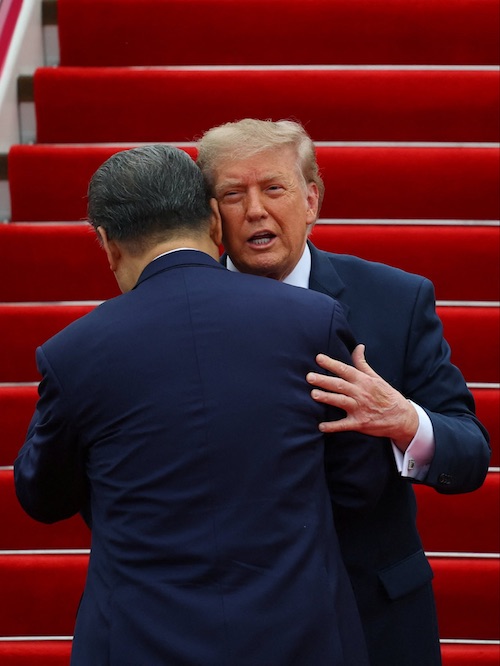
Chairman Xi Jinping of China traveled to the airport to meet President Donald Trump upon arrival in Shenzhen for the Asia-Pacific Economic Cooperation (APEC) summit. Chairman Xi personally meeting an incoming leader is a sign of deep respect for President Trump.Read more …
Together they are scheduled to meet with Russian President Vladimir Putin for a sideline discussion tomorrow. The meeting between President Trump, President Putin and Chairman Xi is the first time the leaders of China, USA and Russia have sat down for a trilateral discussion. The western financial world, centered in London and Europe, is apoplectic about the meeting as it represents a significant shift in the ‘western’ global order formerly controlled by European interests.AP Video of President Trump arriving in Shenzhen below.
Then Putin joins in. Xi keeps his focus on Trump. He already knows Putin, and his role.
• Trump, Xi and Putin Meet During APEC Family Picture (CTH)
During the arrival ceremony and group picture at the APEC summit, President Trump was the final dignitary to present with Chairman Xi during the arrival. Following that moment, the group assembly begins, and it was interesting the first person to enter for the lineup was Russian Federation President Vladimir Putin.Read more …
This is the first moment the three leaders have assembled in the 2026 APEC summit. There is significant buzz about it.You can tell Chairman Xi is very focused on President Trump almost to the exclusion of all other participants in this 2-minutes of video. In addition to formal diplomatic protocols Trump and Xi have spent considerable private time together during each of their last exchanged state visits. You can see the personal relationship dynamic as Xi is careful to guide President Trump throughout. Very interesting. WATCH:
“Beijing’s decision to have Xi personally welcome Trump suggests an emphasis on US-China trade ahead of the Trump-Xi-Putin trilateral meeting.”
It’s much bigger than trade.
• Trump, Xi & Putin Meet At APEC Summit Ahead Of Historic Talks (ZH)

President Trump arrived in China earlier this morning for the APEC summit and was personally greeted by Chinese President Xi Jinping, a notable difference from Russian President Vladimir Putin’s arrival last night, when he was received by a member of the Chinese Communist Party’s Politburo Standing Committee.Read more …
MOMENTS AGO: President Donald Trump lands in China for the APEC Summit and is greeted by Chinese President Xi Jinping.
— Fox News (@FoxNews) November 18, 2026
The two leaders exchange a handshake and embrace during a red-carpet welcome ahead of scheduled talks involving Russian President Vladimir Putin on the… pic.twitter.com/6CSvulJYus
The footage below highlights the differences. Beijing’s decision to have Xi personally welcome Trump suggests an emphasis on US-China trade ahead of the Trump-Xi-Putin trilateral meeting.
President Trump arrived in China this afternoon for the APEC summit, where he was personally greeted by Xi Jinping.
— Anton Gerashchenko (@Gerashchenko_en) November 18, 2026
Putin, who arrived last night, was welcomed by Cai Qi, a member of the Chinese Communist Party's Politburo Standing Committee. https://t.co/L2eFpngENh pic.twitter.com/oyqv9rEplE
Speaking at the APEC summit in Shenzhen last night, Xi promised lower tariffs and greater market access while defending an open trading system. Putin blasted Western sanctions, said export restrictions had failed to contain Russia, and accused Europe of undermining its own economy.“Global growth lacks momentum, and unilateralism and protectionism are rampant,” Xi said. He called for closer technology partnerships and efforts to keep global supply chains stable and running smoothly.
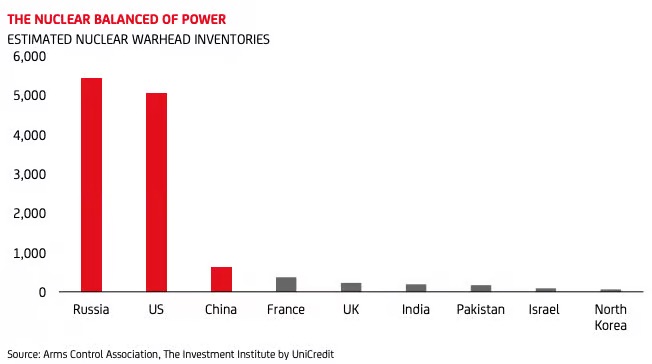
Putin’s foreign policy aide Yuri Ushakov told Russian state television earlier that “the leaders will meet and, believe me, they will have a full-fledged conversation. Regardless of whether they are sitting in armchairs, on chairs, on stools or simply talking standing up and looking each other in the eye.” The main event will occur on Thursday, when the leaders of the world’s three biggest nuclear powers, Trump, Xi, and Putin, sit down for high-level talks.
The likely outcomes may already have been established in advance; that’s usually how it works. Likely topics for discussion include nuclear nonproliferation, AI, energy, and the ongoing conflicts across Eurasia.NOW – Putin goes over and greets Trump upon his arrival to APEC gala dinner. pic.twitter.com/3qjpyONIBC
— Disclose.tv (@disclosetv) November 18, 2026
Stefan Kolek, a senior corporate credit strategist at UniCredit, asked clients earlier this morning whether the APEC summit and the trilateral meeting of the world’s nuclear powers mark “the dawn of a multipolar world?” “The Trump-Xi-Putin meeting in Shenzhen could become a symbolic milestone in the emergence of a multipolar world order, reflecting recognition that the global balance of power is shifting,” Kolek said.
There is a lot to say, because so much changes.
• Hopeful Context to Trump, Xi and Putin Meeting (CTH)
A win [Thursday] would be the three nuclear power leaders agreeing to meet again for further discussions. Taking on the global ‘middle powers’ who control finance and banking structures would be a big bonus.Read more …
President Trump, Xi Jinping and Vladimir Putin are meeting in Shenzhen, the first summit ever of the leaders of the United States, China and Russia. The establishment press calls it “Yalta 2.0.” Susan Kokinda argues that what London really fears is a Bretton Woods 2.0. She starts with the reactions of Richard Haass and the Atlantic Council’s Frederick Kempe, then checks them against physical reality: together the three nations produce 60% of the world’s crude steel, 67% of its aluminum, 83% of its rare earths and 88% of its orbital launches.From there Kokinda follows the gas price paper trail after the midterms back to August 15, 1971, when Nixon ended Bretton Woods and the City of London’s speculation machine took over, and to the billionaires who profit from it and finance the Democrats’ “affordability” campaign. Finally, Marco Rubio and JD Vance on an economy that serves people: the American System of Hamilton and Lincoln. And Judy Shelton, now Counselor at Treasury, has some advice: buckle up.
We would be justified to wonder where America would be without Musk. Think about that. No SpaceX, no Tesla, etc etc.
• Elon Musk Is the Poster Boy for ‘Two Americas’ (Stephen Kruiser)
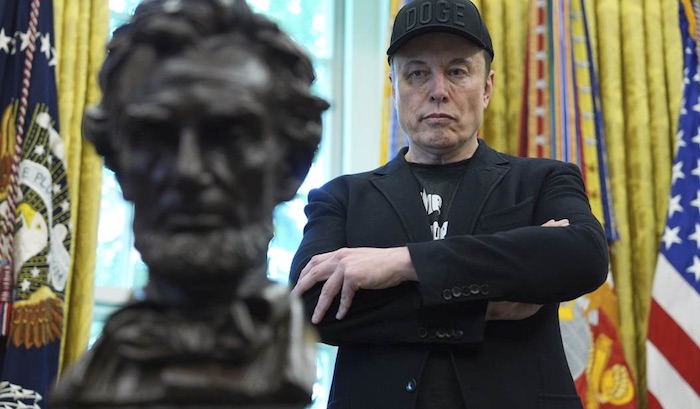
The “B” word has be popping up a lot since the Great Blue Shift Electoral Slaughter of 2026. Prominent Republicans who are suffering from shell shock and a chronic inability to campaign effectively have been muttering “bipartisan” a lot, as if the word has mystical healing properties. Now more than ever, I think that it is the foulest and most offensive word in American politics.Read more …
Bipartisan efforts have always been a bit of a sucker’s bet for Republicans. The “go along to get along” uniparty squishes have never figured out that every Democrat in Congress is just waiting for the right moment to slip a shiv into them. Any bipartisan bill that a Dem co-sponsors with a Republican will invariably achieve 80% of what Democrats want and have no real upside for the GOP. More often than not, the GOP gets sold out by the bipartisan co-sponsor.That was the deal before the Democrats were riddled with Trump Derangement Syndrome. When the new “lawyer up” crowd takes over Capitol Hill in January it’s a safe bet to assume that any bipartisan overtures from the Democrats will be ticking time bombs for the future of the United States.
Freedom-loving American patriots have nothing in common with the alternative reality Dems who are seeking to shape the country’s future. Nowhere is that more evident than in the monumentally disparate ways that the right and the left view Elon Musk.
Over here in reality, we have been looking at Musk with a mixture of awe and respect, and have been doing so since long before he started palling around with President Trump. Turning Twitter into a platform that no longer worked for the Democrats did endear him to a lot of us, to be sure, but his achievements with SpaceX had already made a lot of conservatives fans of his.
My good friend, partner in thought crime, and “Five O’Clock Somewhere” co-host Stephen Green writes a lot about Musk, SpaceX, and rockets in general. Last week, he previewed Friday’s Starship flight in a column titled, “So Who Wants to Watch the World Change Again on Friday?” That’s not fanboy hyperbole, changing the world is what Musk does. It takes effort to not be impressed by him.
The mentally unwell straitjacket spokesmodels on the American left are not impressed by Elon Musk. They loved him at first, because he was manufacturing electric vehicles, which have been the Dems’ golden calf in the 21st century. They soured on Musk when he joined forces with Trump. That alone would have been enough to make him anathema to them, but what he did with the Department of Government Efficiency (DOGE) after Trump returned to office in 2025 made them froth with hatred. A perpetually self-bloating federal bureaucracy is heaven on Earth for the Democrats. Trimming even a little bit of fat from that is an affront to the Dems. It’s essentially laying waste to their holy ground.
Throughout Musk’s time with DOGE, the Democrats’ brain-dead social media chihuahuas kept yapping things about Musk that should have gotten them put in concussion protocols. They routinely — and laughably — attempted to diminish Musk’s myriad accomplishments, often saying that he really didn’t know what he was doing. No, really. It was something they’d been doing since Musk took Twitter away from them, but it reached ridiculous lows during the DOGE days of winter in 2025.
Here’s what Jordan Peterson had to say in 2024 about people who second-guess Musk:
JORDAN PETERSON: SECOND GUESSING ELON MUSK IS A FOOL'S GAME
— Mario Nawfal (@MarioNawfal) December 22, 2024
“Musk has done 5 impossible things.
It's like, why did he spend $44 billion on Twitter?
Because he knows things you don't – like the many things, books full of things.”
Source: @jordanbpeterson pic.twitter.com/aB0DEXlKQj
That’s a rational opinion of what Elon Musk has done with his professional life. The Democrats operate purely on hatred though. Here’s a prime example from something Matt wrote on Wednesday: If you want to see how this works in real time, take Texas Democrat state Rep. Gene Wu, who leads the Democrats in the Texas House. Wu went on NewsNation and said Elon Musk should be criminally prosecuted.That’s a serious accusation, so host Katie Pavlich asked the obvious follow-up. “Can you give us some of the examples of… what you think that those things may be? It’s a pretty, pretty extreme charge,” Pavlich said. “All I do is read the news and watch the news,” Wu replied. “And what I have seen on the news is that Elon may have committed crimes against the United States by his actions in Ukraine… I don’t know. I just read what I read.”
Wu watches TV and TV told him that Musk might be bad. It’s easy to make the claim that the quickest way to rise through the ranks of the Democratic Party is to be mentally deficient. No, these people are not deserving of any bipartisan gimmes. Elon Musk is an ongoing reminder of the harsh reality that the relationship between the Democrats and Republicans is, at least for now, stuck in the “irreconcilable differences” stage. Any capitulation to the Dems will only make that worse. If the inmates ever stop running the Democratic National Committee asylum, maybe we can talk again.
Maybe.
“Honeypot schemes are the rage today. The Nvidia sex scandal has pushed the idea into the public consciousness, and it’s unlikely to go away.
• How Donald Trump Can Honeytrap the Democratic Party (Scott Pinsker)

“No matter how great a fighter is,” warned legendary boxing trainer Angelo Dundee, “he always has flaws.” His fighter — Muhammad Ali — struggled with hooks. Henry Cooper and Joe Frazier both scored knockdowns by catching him flush.Read more …
But forget about hooks: Ali’s fatal flaw was his unwillingness to walk away. He’s the poster child for overstaying his welcome, losing three of his final four fights, finally retiring at age 39, and spending his 60s and 70s in Parkinson’s-induced silence. The same stubborn self-belief that propelled him to the top of the mountain was, alas, his undoing.It also made him easy prey for fraudsters: All they had to do was appeal to his ego. Ali wasted obscene gobs of money on vanity projects and entourages. He later admitted, “I gave most of my money away. I gave away more than I have.” Both in the ring and outside of it, Ali paid a horrific price when he got EXACTLY what he wanted. Like romance novelist Lisa Kleypas said, “Seduction is merely encouraging a man to do something he already wants to do.” It’s when desire meets opportunity. And when our dreams come true.
Which is why honeypot/honeytrap operations are individualized: Some folks are straight, and some are gay. Some are vanilla, and some are kinky. Hey, some folks don’t care about sex at all — but would sell their children into bondage for money and power. Different strokes for different folks. Because it’s not literally honey.
Honeypot schemes are the rage today. The Nvidia sex scandal has pushed the idea into the public consciousness, and it’s unlikely to go away. There’s something about it that’s deeply titillating. Getcha popcorn ready! Yet it’s also unnerving. Everyone has desires — and moments of weakness. We all know that the right “honey” at the right time could bring anyone to his knees. Including you and me.
Because it’s not literally honey — and everyone has a sweet tooth. It also beckons the irresistible question: How could Donald Trump honeytrap the Democratic Party? We’re still in a post-midterm fog, and the donkeys are on the march. Forget about Pamplona and the Running of the Bulls — D.C. is months away from the stampede of jackasses.
The Democrats are on cloud nine: FINALLY, America has rejected that evil orange monster! FINALLY, the voters have come to their senses! FINALLY, the age of MAGA is over! And more importantly, Democrats are excited about 2028: The midterms were just the appetizer. Abdul El-Sayed winning Michigan and James Talarico winning Texas were harbingers of the next great pendulum swing — which will culminate with the Democrats taking over the House, Senate, and White House.
Then they’ll remake the Supreme Court and fulfill their mission to fundamentally transform America. So they’re dripping with ambition, throwing confetti in the air, and wearing their hearts on their sleeves. Well, good: Let ‘em think big. Let ‘em focus on satiating their desires. It’ll make them easy marks.
“No one can resist the pull of a secret desire that has come to life before their eyes,” advised Robert Greene, author of The Art of Seduction. The heart wants what the heart wants. And when it appears, it’s awfully hard to say no. We’re emotional creatures. We believe we deserve something special. (Especially when we’re on top of the world.) The key, then, is to weaponize the Democrats’ secret biases and desires — and trap them in their chosen honey. Fortunately, I’ve got a few ideas on how the GOP could stir the honeypot.
Group 1: DSA socialists
How to Honeytrap: Pitch AI as a vehicle for socialism. Socialist dreams run on capitalist dollars. That’s the paradox: Socialism can’t fund its own utopia, because it’s an inefficient, dysfunctional economic model.Socialism needs capitalism to underwrite its bills. And it’s a yuuuge bill: The DSA agenda would cost roughly $200 trillion. Even DSA true-believers realize there’s not enough money to fund EVERYTHING on their wish list.But if AI delivers what the techies promise, there could be. “I think, by far, the most likely outcome [of AI] is an age of abundance,” promised Elon Musk. He envisions a world so prosperous, the government would mail every American “HIGH INCOME” (all caps) checks:
Do I believe Mr. Musk? Nah, not really. But if I were a DSA activist who yearned to live in a socialist world, it’d sure look like delicious honey!America’s economic health is tied to the AI industry. If it’s a bubble, we’re headed for a recession, and there won’t be enough money for anything. But if AI delivers as Musk predicted, we’ll have unparalleled prosperity. In fact, we’d have more than enough money for every goofy socialist pipe dream!
The DSA movement is less about economics and more about class envy, income inequality, affordability, and (most of all) people wanting free stuff. Pitching AI as the ultimate solution — and free “HIGH INCOME” government checks as a realistic possibility — would make socialist heads spin. They must embrace short-term capitalism, or they’ll never get long-term socialism. .
“A survey shows that unity behind him is the only path to keeping the GOP competitive.”
• America Is Doomed If Republicans Don’t Unite Behind Trump (Joseph Ford Cotto)

The midterms handed Republicans an astronomical defeat. Democrats took both houses of Congress and numerous statehouses. The GOP’s registration edge in key locales failed to deliver the results many politicos anticipated. Some powerful Republican voices treat that outcome as proof it is time to move on from President Donald J. Trump. They are wrong. Bigly.Read more …
Forsaking him would shatter the coalition that holds the party together. I collaborated with the Democracy Institute (DI), which foretold Brexit and Trump’s 2016 victory, on the surveys that prove this. Those polls make clear that Trump remains the center of gravity for Republican base loyalty, turnout, and the choice of the 2028 presidential nominee. Unity behind him is the only path that keeps the GOP competitive. I know what I see when I see it.My Five-Point Forecast correctly called Trump’s national victory and his triumph in every swing state two years ago. This was done by reality checks rather than outdated checklists: economic sentiment, employment, energy prices, perceptions of government response, and polling reliability. However, I knew my finance-driven model would never be a match for the lower-turnout midterms, which are characterized by partisan base voter motivation. This varies not just by state, but by district.
Last month, I used a separate registration-and-historical-turnout model, limited to Florida, where I was born, raised, and reside. It projected a modest GOP-leaning electorate. It accurately assessed that Republicans would hold all statewide offices, though by reduced margins from the 2022 midterms. Furthermore, my model correctly warned that Democrats might win various congressional seats and end the GOP’s state legislative supermajority.
With this track record, I say the following: Republicans cannot afford to abandon Trump. The DI polls, whose questions I wrote, show exactly why. In my May survey of 910 self-identified Republican likely voters, nearly four-in-five said Trump’s record on issues outside the economy outweighed his economic handling. Focusing solely on those non-economic actions, almost nine-in-10 still judged him worthy of support. More than five-in-six said they would vote mainly on that non-financial record, even if the economy never surged.
Ninety-four percent expected other Republicans to turn out primarily for Trump himself, rather than local candidates. His second term has already strengthened, not weakened, the bulk of the GOP electorate’s attachment to the party. My November exit poll of 450 Republican voters found that 82 percent became more supportive of the GOP due to Trump 2.0. Only 18 percent felt less supportive. Forsaking him discards the gargantuan majority who have grown more invested in the GOP because of Trump.
The red coalition’s loyalty is durable and largely independent of short-term economic performance. That same exit poll showed 71 percent of Republicans are likely to vote red in 2028, regardless of how the economy performs. Only 29 percent said their 2028 vote might hinge on economics. Fifty-seven percent of Republicans base their Trump support on non-economic issues, versus 43 percent who back him primarily for fiscal reasons.
The May results were sharper still. Abandoning Trump severs the non-financial bond that unites most of the Republican base. Even under fiscal pressure, 86 percent of GOP likely voters said they would still vote red, based on the president’s non-economic record. Therefore, Republicans’ midterm meltdown does not justify any break from Trump.
A clear majority of Republican voters already treat a Trump endorsement as a decisive signal for the 2028 presidential primary. In my November exit poll, 68 percent said Trump’s endorsement would guide their primary vote. That single figure demonstrates his ongoing capacity to shape the actual red electorate.
The Republican base intends to stay put after Trump leaves office, provided the GOP does not break with him first. Eighty-one percent of respondents said they will continue supporting Republicans after the Trump presidency ends. That attachment has been reinforced by his second term. Continuity with his direction, not rupture from it, preserves this post-presidency loyalty.
Republican voters prioritize turnout for Trump personally over generic party or candidate loyalty. Combined with the 82 percent who are more GOP-supportive thanks to him, this proves that Trump remains the principal red mobilizing figure. A nominee selected without his involvement, or against his preference, may implode the Republican ranks.
The anti-Trump GOP faction is small. It does not constitute a viable alternative red coalition. Only 18 percent of Republican voters, per my exit poll, reported feeling less supportive of the GOP due to Trump’s administration. Only 12 percent, in my May poll, said he was unworthy of support, when non-economic actions alone were considered.
Building a 2028 strategy around this minority would decimate the GOP. Trump’s endorsement power and the base’s non-economic loyalty render him the single most important filter for electability during 2028. Almost seven-in-10 Republicans say his endorsement will guide their primary choice. Over eight-in-10 plan to remain GOP after Trump leaves office. Therefore, any anti-Trump red presidential contenders face a crippling deficit among the Republicans who actually cast ballots.
The data show Trump is not a fading figure, but the remaining center of gravity for GOP base cohesion. The red midterm quagmire was turnout, not a rejection of Trump by Republicans who voted. The SSRS Voter Poll found Democrats and blue-leaners at 49 percent of the electorate, versus 43 percent for Republicans and red-leaners. Loyalty held when people showed up: Democrats 98 to two, Republicans 92 to seven.
Pure independents were only eight percent and broke blue by 26 points. Former Vice President Kamala Harris’s 2024 voters made up 49 percent of 2026 voters. Trump’s 2024 voters were 44 percent. Trump won the popular vote in 2024, yet his voters formed a radically smaller share of the midterm electorate. Only about seven percent of Trump voters crossed over to a Democrat congressional candidate.
Another of my DI surveys, this one from September, featured 1,500 likely voters. It showed mixed economic perceptions among the general electorate, with nearly even blame for high prices between Trump and Former President Joe Biden. There was a narrow Democrat edge on controlling inflation, despite it reaching a four-decade high under Biden-Harris. Among Republicans, however, the non-economic bond to Trump, and his GOP, was resilient.
The cumulative picture from the Democracy Institute polls I authored is that Republican electoral strength is concentrated among voters who continually stand with Trump. Taken together, these results indicate that forsaking him would not beget a broader coalition. It would fracture the one which loyal red voters find worth their while. Raising the middle finger to them, by hijacking the GOP in furtherance of anti-Trump agitation, would be manna from heaven for the Democrats.
Republican politicos yearning to disavow Trump ignore the cold, hard math. They endanger their party’s future and the welfare of America herself. There is no telling what nation-wrecking Democrats, now more radical than ever, might do if they win the presidency and Congress in 2028.
A united GOP, with President Trump at its helm, offers the only realistic path away from this midterm season’s wreckage. Abandoning him offers Republican infighting and national catastrophe. For the good of America, Republicans should put their differences aside by refusing to undermine the White House.
If that is not done, then Alexandria Ocasio-Cortez may be running it in January 2029.
“..the idea that the Israelis are puppet masters and Donald Trump is their puppet is absolutely absurd. ”
• Everyone’s a Neocon—Except the Actual Neocons (Victor Davis Hanson)
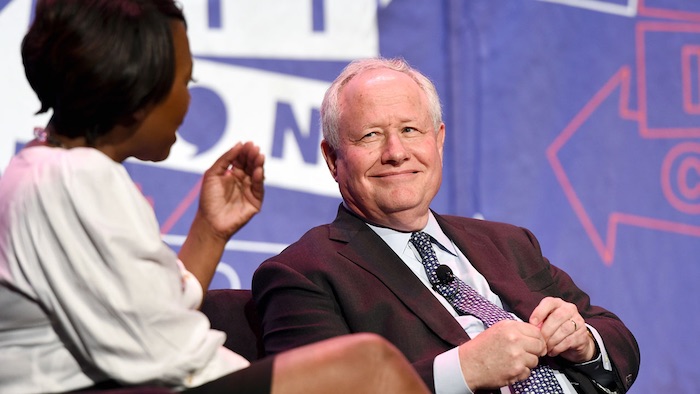
We’re hearing a lot of criticism, both from the Left and the Right, the extreme right, about neocons, neocons, neocons.
And the criticism is that a group of people called neocons have hijacked the Trump MAGA foreign policy, usually doing the service of Israel, and they’re unduly influenced by a Jewish lobby, and they don’t represent the real interests of the United States.Neoconservative, the word that they’re abbreviating, just means new conservative. Where did it come from? It came from the 1970s and ’80s, when a group of very distinguished liberals, Jewish and non-Jewish, decided that they’d had it with Jimmy Carter. He did not react in a muscular fashion to the Iranian hostage-taking of ’79 and ’80, and he wasn’t standing up to the Soviet Union.
They wanted to adopt the Reagan doctrine of we win, they lose. Who were they? Well, there were some Jewish Americans, Irving Kristol, Norman Podhoretz, but there were also non-Jewish people, James Q. Wilson, Bill Bennett, especially Jeane Kirkpatrick. And they all said that from now on, they were going to support the foreign policy of Republicans.
They disagreed with traditional Republicans on a number of issues—the border. I can remember that I wrote “Mexifornia”, a book calling for strict border security and deportations of illegal aliens, in 2003, and the neoconservative James Q. Wilson, in Commentary, attacked me. And he said that I was sort of paranoid and that my comparisons—that if we didn’t close our border, we’d end up like Europe—were completely ill-founded.
So, they had different views. That group kind of gained steam in 1997, after the first Gulf War. Bill Kristol and Robert Kagan and Dick Cheney at that time, and Don Rumsfeld, Paul Wolfowitz, John Bolton, Francis Fukuyama—they formed something called the Project for the New American Century. They were going to be proactive, and they were going to, in some cases, topple regimes to nation-build, make countries more like us.
They didn’t do much from ’97 until 9/11. And then they came to the fore and said we have to get rid of the Taliban. Ninety percent of Americans agreed with them. And then we can’t just put a theocracy in place, so we’ll put Mr. [Hamid] Karzai in and hope he has a democracy. And we’ll do the same thing with Saddam Hussein, since he was entertaining terrorists.
He was slaughtering his own people. He had threatened George Bush. There were 21 writs that Congress approved. Congress approved going in there. Neither one of those worked out to our satisfaction, and for all practical purposes, neoconservatism was dead because it was responsible, people felt, for two costly wars.
So, as a reaction, Donald Trump came on the scene, and he said, I’m going to be a Jacksonian, not an isolationist, not a neoconservative nation-builder. I will react, or I will be preemptive if I think there is a threat, but I will not get involved on the ground. I will not have lengthy wars. OK, you can argue over Iran, but we have not gotten on the ground, and we’ve only been kinetic for 38 days.
What he was talking about is getting rid of Qasem Soleimani, the Iranian terrorist general, and [Abu Bakr] al-Baghdadi, the ISIS head. In the first term, he destroyed the ISIS caliphate, killed numerous Russian Wagner Group mercenaries, and he got rid of [Nicolas] Maduro. And he bombed Iran in 2025 for about 20 hours. Okay. That was Jacksonianism.
Now the Iranian war has brought out people who say, “Well, there are all these neoconservatives running Trump’s foreign policy.” But I don’t know any people who are in the MAGA movement who are voicing neoconservative domestic policies. No one’s calling for choice, abortion on demand, like many neoconservatives did.
Nobody wants an open border. Nobody wants people to come in across the border illegally and then not to be deported. That’s not part of the movement of MAGA. So, in foreign policy, nobody’s saying we need to put a division in and take over Tehran. Nobody’s saying that we’ve got to remove the regime and then stay there and build a democracy.
It might be viable, might not, but nobody’s saying it. Nobody is even saying that I am a neoconservative and I’m proud of it. No one is. They call Marco Rubio a neoconservative. He’s not saying he’s a neoconservative. He might have said he agreed with neoconservatives 10 years ago or 15, during the Iraq War, but not now.
Who are the neoconservatives? Well, there are two groups, I think. There are people in National Review magazine, there are people in The Dispatch, an online magazine, there are people in The Wall Street Journal, and they feel that, as neoconservatives, they want free and unfettered trade.
They’re against the tariffs. They don’t really care about deporting illegal aliens. They feel that they will assimilate eventually. They feel we’re too restrictive on immigration, that there is always going to be some illegal immigration. They feel deportations are too excessive, or at least they’re bad optics.
And they feel that, from time to time, we might have to go into various countries and occupy them if necessary and build democracies. And the old neoconservatives, the people who were the most prominent, Francis Fukuyama, Bill Kristol, Robert Kagan—they’re all Democrats. They’re all liberals. So what really is the neoconservative label?
What is that label? It’s basically synonymous with your anger at Israel in general and Jewish people in particular. And so now we say you’re a neoconservative, and that is supposed to be a synonym for a puppet of the Israelis or too pro-Jewish. I want to remind people that Israel receives about .05 of the federal budget and somewhere between 4% and 7% of annual foreign aid, and that’s going to end in 2027.
So the idea that the Israelis are puppet masters and Donald Trump is their puppet is absolutely absurd.
Let me just finish. There are no self-proclaimed neoconservatives. I don’t know anybody in the MAGA movement who says, “I’m a neoconservative.” I do know a lot of people accuse those who supported trying to get rid of the nuclear program in Iran of being neoconservative, but none of them have said, “I’m a neoconservative, and part of neoconservatism is to go into Iran.”
In fact, instead, the people who said you have to deal with that nuclear threat, as Donald Trump is attempting to do, say there are certain parameters. We’re not going to go in and try to change the regime. That would be good if we did, but that’s not our primary goal. It’s to get rid of their nuclear material.
We’re not going to land on the ground with airborne troops. We’re not going to insert the 1st Infantry Division. We’re not going to try to overthrow the regime. None of that. It’s very different. So neoconservatives means really nothing other than a coded and more polite form of saying, “The Jews did it. The Jews did it.”
“A society should make it possible for each generation to build a better life.”
• The Paradox Of Abundance (Luis Gonzalez)

Recently, a young voter told me something that has stayed with me. He believes the Trump administration has improved the financial circumstances and comfort of baby boomers while doing comparatively little for his generation. He sees older Americans benefiting as people his age struggle to establish themselves. He also worries that those gains will not last. A future Democratic Congress could dismantle legislative achievements, and a Democratic president could reverse executive actions. Four years later, the political pendulum could swing back, leaving little of lasting consequence.Read more …
That young voter is my son and the first member of our family to join the MAGA movement. He remains a conservative and voted Republican. He was explaining why others have lost confidence, changed their votes, and questioned whether their future will offer the opportunities previous generations enjoyed.His complaint deserves to be heard. Establishing a household, buying a home, raising a family, and building financial security are serious challenges. Housing, education, insurance, and everyday expenses place real pressure on younger Americans. But his observations raise a larger question: What happens when prosperity becomes the standard by which every generation measures its prospects, and that standard keeps moving?
Parents want their children to have more than they had. We try to spare them the hardships we experienced, provide opportunities we never enjoyed, and give them comforts that took us years to afford. As our financial circumstances improve, we make more possible for them.
Children see the results. They remember the household, vacations, cars, technology, and opportunities. They know their needs were met, often exceeded. What they may not see are the years of work, financial compromises, postponed purchases, and sacrifices that made those things possible.
I recognize that distinction because I lived both sides of it. I did not begin adulthood with the financial security I enjoy today. I experienced uncertainty, unemployment, shared living arrangements, and periods when assistance from family or government helped me get through. I lived within my means and worked toward something better. Stability came through years of decisions, opportunities, setbacks, and persistence.
My son grew up with some of the benefits those years produced. That was precisely what I wanted. I wanted his childhood to be easier than mine and to give him the opportunities and comforts I had to work toward. My immigrant mentality pushed me relentlessly to provide, strive, and move ahead, pursuing the dream of the America I had become part of.
But an unintended consequence emerges when one generation’s hard-won benefits become the next generation’s baseline. Children can become accustomed to a standard of living without understanding the effort required to establish it. The comforts they enjoyed growing up can become the comforts they expect to maintain as adults. Your children inherited the benefits of your success. They did not inherit the years it took to achieve it.
This is not an argument that younger Americans should accept less or that their economic difficulties are imaginary. Some obstacles are genuinely more difficult. A young adult entering today’s housing market faces costs and financing conditions that can make homeownership substantially harder. Inflation further complicated those challenges. The Consumer Price Index rose approximately 21 percent between January 2021 and December 2024, according to the Bureau of Labor Statistics.
People already established in the housing market, with accumulated equity and assets, can have a substantially different experience from those trying to enter it. Those differences cannot be dismissed by telling younger Americans to work harder or spend less. But neither can every disappointment be attributed to economic exclusion.
Prosperity has changed our understanding of a comfortable life. Technology, transportation, entertainment, communication, and consumer conveniences have made things available that previous generations could barely imagine. Products and services once reserved for the affluent have become commonplace.
The problem begins when familiarity erases appreciation. A new convenience initially feels extraordinary. Before long, it becomes ordinary. We organize our lives around it, build its cost into our budgets, and eventually regard its absence as a hardship.= The same process shapes expectations of financial success. Maintaining a comfortable lifestyle no longer feels like an accomplishment. It becomes the minimum standard we expect to preserve.
This is where opportunity and entitlement meet. A society should make it possible for each generation to build a better life. But the opportunity to build that life does not guarantee an immediate ability to reproduce the lifestyle established by parents who spent decades achieving it. The Consumer Price Index rose approximately 21 percent between January 2021 and December 2024, according to the Bureau of Labor Statistics.
The political consequences are difficult to ignore. People measure their prospects against what they believe they should have, then look to government when reality falls short. Politicians understand that dissatisfaction. Promises of affordability, relief, and a better future appeal to the distance between expectations and experience.
Government has a legitimate role in protecting economic opportunity and addressing policies that make establishing a household unnecessarily difficult. But no administration can guarantee that every generation will enjoy the same material circumstances or that every individual will achieve the same standard of living. Markets change, economic conditions shift, and personal choices have consequences. Prosperity cannot be reduced to a promise government can fulfill.
I don’t want my son or his generation to expect less from life. I want them to have the opportunity to accomplish more. I also want them to recognize the difference between what they need, what they want, and what they can afford.
Parents measure success by what they can give their children. We take pride in the opportunities we provide. Yet another measure matters: whether our children understand how to build on what they have been given. A better starting point should help them move forward, not create an expectation that its advantages will continue without effort or compromise.
Every generation must eventually take responsibility for its own circumstances. It must make choices, establish priorities, accept trade-offs, and decide what kind of life its resources can support. Ambition becomes achievement through those choices. The ability to afford something is part of its value; the discipline to wait, save, or choose differently is part of financial independence.
Perhaps the greatest irony is that parents can spend a lifetime giving their children a better life, only to see that life become the standard against which those children judge their prospects. The comforts that once represented progress become ordinary expectations. Opportunities that once seemed extraordinary become minimum requirements. When reality cannot keep pace, abundance itself can begin to look like deprivation.
A prosperous society raises expectations along with its standard of living. As those expectations become ordinary, it becomes easier to overlook how much has been gained and resent what remains beyond reach.
“.. politician says ‘demographic Islamic colonization is almost complete’
“In our Antwerp schools, the ‘kafirs’—the unbelieving Flemings, that is—are already a modest minority. Demographic Islamic colonization is not only well underway… It is almost complete,” wrote Belgian politician FIlip Dewinter.
• Great Replacement In Belgium: Muslims Now 56% of Antwerp Schoolchildren (RMX)

, Incredible demographic shifts are taking place across Europe, with the data from Antwerp just the latest indication that the claims behind the Great Replacement are backed by clear and undeniable demographic data. In the 2025–2026 school year, 56.1 percent of the 22,273 pupils in Antwerp’s municipal primary and secondary schools are Muslim, according to figures supplied by Antwerp’s education agency.Read more …
The figure of 56.1 percent now marks a clear majority in the city’s publicly run schools and continues a multi-year upward trend. The data, reported by Belgian news outlet V-Nieuws, examines a network of 92 municipal schools and shows that of the 13,922 students in primary education, 8,075 are Muslims, equaling 58 percent. Among 8,351 secondary school students, 4,426 are Muslim, equaling 53 percent.Vlaams Belang parliamentarian Filip Dewinter stated that the data shows the “population exchange in practice.” He then added: “In our Antwerp schools, the ‘kafirs’—the unbelieving Flemings, that is—are already a modest minority. Demographic Islamic colonization is not only well underway… It is almost complete.”
De #omvolking in de praktijk… Ondertussen (schooljaar 2025-2026) is 56% van alle 22.273 leerlingen in het Antwerpse stedelijke lager en middelbare onderwijs (92 scholen) moslim… Een stijging van 12,4% in het lager en 16,6% in het middelbaar onderwijs op 10 jaar tijd. In onze… pic.twitter.com/N7uYPBjSqF
— Filip Dewinter (@FDW_VB) November 16, 2026
The school figures reflect the wider demographic transformation in the city of roughly 565,000 inhabitants. As of 2026, around 58 percent of residents were either non-Belgian or Belgians with a foreign background, while the share of people with a purely Belgian background had fallen sharply from about 77 percent in 2000 to the low 40s. Fertility rates are driving the rapid demographic shift.City data from 2011 to 2025 show substantially higher birth numbers among mothers of non-European origin than among native mothers – historically on the order of three times higher in some periods even as absolute numbers declined across groups. Combined with ongoing immigration and naturalization, this produces a younger population that is far more diverse than the overall average. Antwerp has long been described as a “majority-minority” city in which no single group forms an absolute majority.
This demographic shift has had a profound impact on Antwerp, including socially and culturally. Nearly half of primary students in Antwerp speak a language other than Dutch at home in recent data, and debates over religious holidays, dress codes, and integration are now commonplace.
This trend is being seen across Europe’s major Western cities. Remix News has reported extensively on the growing foreign student population in Vienna, where it is now close to 50 percent of elementary schoolchildren. In some schools, 90 percent of the students are Muslim. This has led to severe issues for the Viennese school system, including language, security, and behavior issues that make many classes completely dysfunctional.
🇦🇹🚨Mass immigration DESTROYING Austria's education system
— Remix News & Views (@RMXnews) July 22, 2024
🔺Around 70% of school-age children in Vienna do not speak German in their everyday life. 39%, or nearly 80,000 children, do not have Austrian citizenship,
🔺Teachers are quitting schools in Vienna "in droves" over mass… pic.twitter.com/idjcga6NIU
“Broader context matters. Kinetic (War) conflicts and proxy tensions continue globally and will likely intensify.”
• Governments Are Telling You To Get Ready… Pay Attention (Ed Dowd)

The clustering of preparedness guidance and system failures is not random. Practical steps and why anxiety is still the wrong strategy…Read more …
Something has shifted in official messaging. Across Europe, the UK’s “Be Ready” campaign is telling households to stock three days of water, food, cash, and a radio. The EU’s Preparedness Union Strategy, rolled out last year and reinforced recently, aims for 72 hours of household self-sufficiency. Japan, several Nordic countries, and others have issued or updated similar guidance. In the United States, the Pentagon has directed bases toward greater self-sufficiency, and FEMA is running a nationwide Emergency Alert System test today.These are not brand-new ideas. Civil defense and household preparedness have long been sensible policy. What stands out is the clustering and the broader backdrop: geopolitical risks in Europe, the Middle East and elsewhere, hybrid threats, and infrastructure that keeps revealing its fragility. Watch what governments do, not just what they say in the calm press releases.
The global messaging is consistent: do not assume the systems you rely on will be available when you need them. The subtext while not stated definitively is clear to me: governments are tacitly signaling global kinetic action (war) risks are going to rise from current levels…period!
A Cluster of Outages That Officials Call Technical
Last week Microsoft’s Outlook and 365 services went down for many users. The company has attributed it to a latent software defect that surfaced during a network capacity upgrade claiming it is not cyber or AI. The next day the FAA ordered a nationwide ground stop after a contractor’s work replacing copper lines with fiber at a site in Arkansas overloaded legacy communications and radar feeds. Officials say they have seen no evidence of a cyberattack so far, though the investigation continues and at least one senior official has declined to rule out malicious activity entirely.Yesterday multiple major banks, including Chase, have reported problems with online access and transactions. Chase has described its issue as a software bug in an on-premise hardware system, again stating it is not cyber-related. Three high-profile disruptions in under a week (email, air traffic, and banking) each explained as a technical glitch or upgrade side-effect. That may be accurate. Complex systems fail. Aging infrastructure plus aggressive modernization creates failure points.
At the same time, the pattern arrives while governments are actively encouraging households to prepare for disruptions to power, communications, payments, and supply chains. Authorities are downplaying any common thread. That is their job until they have conclusive evidence otherwise or (more nefariously) until they are ready to properly panic us. We all remember the early days of Covid when the government was telling us in February to go out and have fun and don’t buy masks. Then they flipped a switch and said “ok time to panic” in March.
Suspicious Timing and the Incentives
The coincidences are becoming hard to ignore. We are in the middle of an AI related market narrative that has already begun to crack on fundamentals and IMHO has burst. Circular financing loops, power constraints, and questions around real enterprise demand have been visible for some time. Recent developments around Nvidia, China and export rules have only added pressure. When outages occur, the temptation in some quarters will be to point at “AI agents,” open-source models, or insufficient regulation. That framing is convenient for those who prefer closed, controllable systems and regulatory capture.It does not matter whether any given outage incident is an external cyber probe, an internal false flag, or simply the predictable result of brittle systems under stress. The policy response is likely to be the same: more centralized control, more calls to restrict open models, and more pressure to accept whatever “safety” architecture is proposed. Timing that overlaps with an AI bubble deflating is particularly useful. Markets that are already questioning the narrative become more receptive to stories that justify intervention.
Broader context matters. Kinetic (War) conflicts and proxy tensions continue globally and will likely intensify. Cyber operations against critical infrastructure are an established tool of state and non-state actors. Governments and institutions that are facing slow growth, fiscal strain, and policy failures have incentives to externalize blame or to rally populations around these external threats. Europe, in particular, has structural pressures that make distraction or escalation politically tempting for some actors. None of this requires a grand conspiracy. Ordinary bureaucratic incentives plus geopolitical reality are sufficient.
Hope for the Best. Plan for the Worst. Do Not Surrender the Present.
Preparedness is rational. Having water, non-perishable food, cash, basic medical supplies, and a way to receive information that does not depend on the internet is low-cost insurance. It is also something responsible households did long before the current wave of official campaigns. What is not useful is letting the news cycle colonize your attention and your peace. Anxiety is not a strategy. Constant scanning for the next outage or the next warning is a tax on your life.The bible has an instruction that is older and clearer than any government pamphlet: Matthew 6:34 (NIV): “Therefore do not worry about tomorrow, for tomorrow will worry about itself. Each day has enough trouble of its own.” Live in the present moment as fully as you can. If you have faith in God then lean into it. Do the practical things that reduce your exposure. Then go about your work, your family, and the ordinary goods of life. The alternative of permitting distant risks to steal today is a form of self-inflicted damage that no adversary needs to inflict. Fear and anxiety are always an inside job.
Financial Considerations
Our economic research at Phinance Technologies continues to show global growth slowing as China moves deeper into the acute phase of its property and credit crisis. The AI capital-expenditure cycle is already showing the classic signs of overinvestment and circular financing that have preceded prior infrastructure bubbles and is in the process of bursting. Housing corrections in several markets are likely to gather momentum. In short, as the global economy slows further, 2027 is shaping up to be an interesting year to say the least. In this environment, governments and institutions have strong incentives to emphasize external threats (whether kinetic or cyber) or to manufacture urgency that distracts from failed domestic policy outcomes.The practical financial advice remains what we have been recommending for some time: reduce exposure to risk assets and increase holdings of cash and U.S. government bonds. That is a portfolio posture, not a forecast of imminent catastrophe. Be prepared for disruptions because complex systems and geopolitical tensions make them more probable. At the same time, live your life. The declining economic data globally is visible and the incentives by governments to distract and deflect through chaos are also visible. The response is to act with clarity, not panic.
“..Was Stage Managed by White Liberal and Jewish Democrat Officials in Minnesota such as Minneapolis Mayor Jacob Fry and the Whore Media..”
• Derek Chauvin’s Wrongful Conviction for George Floyd’s Death (Paul Craig Roberts)
White liberal America has been determined for a long time to burn a white racist at the stake in order to enshrine white racism into the fabric of the national narrative. Derek Chauvin’s frame-up served the white liberal cause of making white America indefensible.Read more …
It was completely obvious from the start that the Democrats’ intention was to frame Chauvin. For example, a young black girl’s cell phone video shot from a distance at an angle that experts testified resulted in distorted perception was endlessly shown on TV and social media as evidence that Chauvin intended to kill Floyd apparently out of racial hate. The expert testimony was kept out of the reporting and the show trial. The up close police videos showed that Chauvin’s knee was on Floyd’s shoulder exactly as it is shown in the policy manual of how to properly restrain a person.Why was Chauvin restraining Floyd? When the police placed Floyd in the back seat of the police car, Floyd said “I can’t breathe. I can’t breathe.” Chauvin recognized a case of fentanyl overdose. Fentanyl impairs the blood from carrying oxygen, thus shutting down life. Medics were called, and Floyd was put prone on the street and restrained by Chauvin in order to protect Floyd from exertion that would have exhausted his limited oxygen and terminated his life.
The coroner, Dr. Andrew Baker, who performed the autopsy on Floyd reported finding enough fentanyl in Floyd’s blood to kill two people. The media went totally quiet on this news. A recently published book by a former US Attorney, T. J. Harker reports that Dr. Baker asked the lead prosecutor of Floyd at the time, “what happens when the actual evidence doesn’t match up with the public narrative that everyone’s already decided on?”
The answer is absolutely nothing. All real evidence was excluded because it did not support the pre-arranged narrative. It is exactly the same as 9/11, JFK’s assassination, Saddam Hussein’s “weapons of mass destruction,” Iranian nukes.
I was, I believe, the first to marshal the real evidence and point out that the prosecutors intentionally kept the evidence out of the trial so that Chauvin could be used as the symbol of white racism. Sent to prison by a corrupt or intimidated jury and judge, black prison inmates indoctrinated by the whore media stabbed Chaucin 21 times and almost killed him. No white people burned and looted business districts in protest to the black attack on Chauvin.
Derek Chauvin went to prison for trying to save George Floyd’s life. An obvious question never occurred to the dumbshit white Americans. If Chauvin wanted Floyd dead, why did he call for medics? Why didn’t the police just leave Floyd in the police car and drive him to the jail and let fentanyl do its work? If Chauvin had done nothing to help Floyd, Chauvin would be a free person.
Chauvin was destroyed by white liberals for trying to save a black life. The large numbers of Black Lives Matter and Antifa criminals who looted and burned business districts and a police station in many American cities were honored, not condemned and punished.
Derek Chauvin was declared guilty by the national media in advance of his trial. In my younger years, media prejudicing of the jury was grounds for dismissing all charges. When guilt is proclaimed prior to trial, the jury has to convict or find their lives and property threatened and themselves ostracized by family, friends, and neighbors.. NO ONE IN THE TOTALLY CORRUPT CRIMINAL JUSTICE (SIC) SYSTEM IN THE CORRUPT STATE OF MINNESOTA CARED. THE PURPOSE WAS NOT TO SERVE JUSTICE BUT TO CRUCIFY A WHITE COP AND BLAME HIS “CRIME” ON WHITE RACISM.
And still the insouciant dumbshit white American population cannot see the writing on the wall.
“Dr. Freeman has conclusively shown that the injuries on Jeffrey’s body could not have come from a suicide..”
• Epstein’s Brother Demands Murder Probe After Forensics Bombshell (ZH)
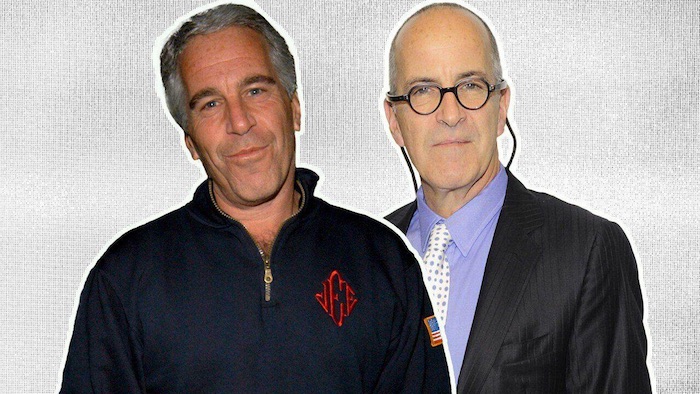
Jeffrey Epstein’s younger brother Mark is demanding a murder investigation into the financier’s 2019 death in a Manhattan federal jail, and says President Trump should be asked what he knows about it.Read more …
His call comes two days after forensic scientist Michael Freeman, who got the medical examiner’s file from Mark Epstein, presented a year of work in London arguing that Epstein’s injuries point to homicide, not suicide. “Dr. Freeman has conclusively shown that the injuries on Jeffrey’s body could not have come from a suicide,” Mark Epstein told Metro. “That only leaves homicide on the table. Then you have got to wonder, who killed him? And who had him killed?”He told CNN that authorities “should open up a full-scale murder investigation, which was never done.” To Metro, he went after the Justice Department: “Why is the Justice Department covering this up? Who are they protecting? A true homicide investigation should be conducted.”
“Who would be on the list of people that would want to see Jeffrey dead, and who could orchestrate this?” he asked, before naming the president: “Someone should be asking Donald Trump what he knows about this.” He added: “I am not accusing him of anything. But any investigator would say he is a person of interest.”
Mark Epstein has rejected the suicide finding for years, and dismissed the Justice Department and FBI memo that reaffirmed it last year. In a 2023 tip to the FBI, made public in the Justice Department’s Epstein files release last December, he wrote that his brother “was about to name names” and that he believed Trump “authorized” the killing. Trump has repeatedly said he knew nothing of Epstein’s crimes, though the two socialized for years before what Trump describes as a falling out.
Freeman, editor-in-chief of the Journal of Forensic and Legal Medicine, presented the findings on Monday at the Middle Temple, one of London’s legal societies, with Swedish forensic pathologist Anders Eriksson and cognitive neuroscientist Itiel Dror. Asked by BBC Newsnight what he thinks happened in the cell, Freeman said: “I believe that the evidence is most consistent with an assault, a ligature strangulation from behind, and then most probably using that same ligature to suspend the body from the bunk bed.”
“So you are saying that Epstein was killed by another person?”
— BBC Newsnight (@BBCNewsnight) November 16, 2026
Michael Freeman, a prominent expert in forensic medicine, speaks to #Newsnight about his claims that Jeffrey Epstein’s death was a “result of a homicide”.
Warning: Distressing details of death and injury and… pic.twitter.com/7xqUFf8YRA
The only other way he could square the injuries with a self-inflicted death, Freeman told Newsnight, is if Epstein had wanted “to stage his suicide as a homicide,” which he called “one in 10,000” and “not something I’ve ever seen described in the world literature on hanging or strangulation.”Since the lecture, Freeman has told the Times of London there was “a zero percent chance of suicide, given the circumstances accepted by the medical examiner’s office.” If Epstein was found the way the guard described, Freeman told Metro, the injuries could not have come from the hanging: “Physically impossible.” He says he was neither paid nor commissioned by Mark Epstein.
Freeman, who did not examine the body, points to what he calls fingernail marks on the neck and to bleeding deep in the left shoulder muscle that he told CBS News was “undoubtedly due to blunt force trauma.” A peer-reviewed journal has turned down his report, which he plans to resubmit.
New York City’s medical examiner’s office told CBS: “Our office stands by its determination.” It ruled the death a suicide by hanging in 2019, and Barbara Sampson, the chief medical examiner at the time, has said she stands “firmly” behind it.
On Capitol Hill, Sen. Josh Hawley said Congress should hear from Freeman directly.
Every single Epstein file needs to be released.
— Josh Hawley (@HawleyMO) November 18, 2026
Congress needs to hear testimony from Dr. Freeman on Epstein’s death
Americans deserve the truth pic.twitter.com/ZUKE54d20w
Spencer Kuvin, a lawyer for several of Epstein’s victims, told the Mirror the findings “deserve serious, independent scrutiny.” In the House, Rep. Thomas Massie’s discharge petition to force out the rest of the Epstein files hit 218 signatures last week, and the last guard to check Epstein’s cell told House investigators that her partner that night slept through the 10 p.m. count.“An American citizen was killed in a federal prison,” Mark Epstein said. “The American population should be concerned about that, because who is next?”
We try to run the Automatic Earth on donations. Since ad revenue has collapsed, you are now not just a reader, but an integral part of the process that builds this site. Click at the top of the sidebars to make Paypal and Patreon donations. Thank you for your support.
24,662,998…& counting…
— Janie Johnson – America is Exceptional (@jjauthor) November 17, 2026
TREASON.
Hang every traitor!
California: 4,308,269 cheated!⁰Texas: 2,900,357 cheated. ⁰North Carolina: 1,410,905 cheated⁰Florida: 1,337,303 cheated ⁰Ohio: 1,198,459 cheated ⁰Illinois: 981,482 cheated ⁰Pennsylvania: 842,187 cheated ⁰Georgia:…
This is the problem, Brand is in "prison over allegations dating back decades, without forensic evidence."
— Robert W Malone, MD (@RWMaloneMD) November 17, 2026
Guilty or not – not worth debating.
He is in prison for a decade over a "he said, she said" situation – that happened two decades ago.
It a nation where an appeal is not… https://t.co/dnTsUPaxie
SpaceX is preparing Starbase to become the busiest launch site on Earth
— X Freeze (@XFreeze) November 18, 2026
The FAA has opened public input on SpaceX's massive plan to increase Starship operations from 25 launches per year to as many as 456
That's an 18-FOLD increase in annual launch capacity
The plan comes in… pic.twitter.com/TuuVhUCSAj
Can anybody explain why Europe really, really, *really* wants a war with Russia? https://t.co/qSrp9zWns6
— Chris Martenson (@chrismartenson) November 17, 2026
BREAKING: SpaceX CFO Bret Johnsen says Starship’s return opens the door to orbital compute and another 10× reduction in the cost per kilogram to space.
— DogeDesigner (@cb_doge) November 17, 2026
“This was a critical milestone for us to accomplish. … Nobody’s ever brought back a second stage that already delivered 26… pic.twitter.com/OfnKbPZgNJ
Texas has approved the air permit for SpaceX's $24 billion supercomputing data center at Starbase 🇺🇸
— Eva Fo𝕏 🦊 Claudius Nero's Legion (@EvaFox) November 17, 2026
• The Texas Commission on Environmental Quality issued the permit on Monday, November 16.
⁰• It covers 35 natural gas turbines producing 750 megawatts for an off-grid power… pic.twitter.com/QoDlODLZ9R
It’s funny how many people don’t realize that Russia is Europe’s largest economy and fourth largest in the world by GDP (PPP).
— Rina Lu🇷🇺 (@rinalu_) November 17, 2026
And yes, it’s PPP.
If grooming a poodle costs $30 in Russia and $150 in America, nominal GDP records five times more spending for the same service.… pic.twitter.com/sj3U3woDeC
Support the Automatic Earth in wartime with Paypal, Bitcoin and Patreon.