

Henri Matisse Sorrow of the King 1952

.@SecScottBessent on Iran: "I will say it on worldwide TV, just so you know: we know where in the British Virgin Islands your accounts are at these trust companies. We know the $100 million houses you have around the world, and we are going to freeze those." pic.twitter.com/c0H0IFVwgU
— Trump War Room (@TrumpWarRoom) September 1, 2026
🚨 Trump just delivered the MOST triggering post on 𝕏. MAGA gets the White House Ballroom. AMEN pic.twitter.com/qEeRBGYLyT
— MAGA Voice (@MAGAVoice) August 31, 2026
🚨OH MY GOD, THIS IS REALLY HAPPENING FOR REAL!
— Q The Storm Rider (@Q_TheStormRider) September 1, 2026
Trump has stopped playing around. He's going all out against Barack HUSSEIN Obama and his entire clique.
"After what they did to me, whether it's right or wrong… it's time to go after them."
Trump just dropped it: he's got… pic.twitter.com/7PVGFkKAMm
I think Trump already knows. The notion that Ukraine can win is idiotic.
• Dangerous Talk of Putin’s ‘Loss’ in Ukraine (VIPS)
MEMORANDUM FOR: The PresidentRead more …
FROM: Veteran Intelligence Professionals for Sanity (VIPS)
SUBJECT: Dangerous Talk of Putin’s ‘Loss’ in Ukraine
VIPS tells President Trump that once apprised of the reality on the ground (and in the air) by his intelligence advisors, he might choose to do what is in his power to end the disaster in Ukraine.Dear President Trump:
The New York Times is reporting that the outlook for Russia in Ukraine is “bleak.” C.I.A. Director John Ratcliffe is said to have explained that to the Russians while in Moscow Tuesday. He reportedly urged them “to cut a deal before their military and economic situation gets worse.”We write you on the chance you may be taken in by this latest song and dance. We believe it is orchestrated by the same kind of geniuses who told President Joe Biden to announce on July 13, 2023, in a major speech in Helsinki, that the Russians had “already lost the war” in Ukraine.
We suggest that you “kick the tires,” if they try to sell you that same car. Nothing could be further from the truth. Your predecessor was ill-served by intelligence. We suspect you are getting the same tendentious treatment from your own advisers. Indeed, many of them seem unconscionably relaxed about risking wider war with Russia over Ukraine.
We offer you, as we offered Biden, the following jogs to memory:— December 3, 2022: “Russia is using up ammunition quite quickly. It’s pretty extraordinary. Our sense is that Russia is not capable of indigenously producing what they are expending at this stage.” (National Intelligence Director Avril Haines)
— March 18, 2022: “Russia has lost in Ukraine. The West should recognize this Russian defeat.” (Anatol Lieven, Quincy Institute)
— July 1 & July 7, 2023: “Putin’s war has already been a strategic failure for Russia – its military weaknesses laid bare; its economy badly damaged for years to come.” (C.I.A. Director William Burns)
The Church of Latter-Day Pundits
Two NY Times journalists who specialize in intelligence matters report Thursday that this latest version of the Russia-has-already-lost story is “the current C.I.A. director’s assessment.” They warn somewhat quizzically that, despite this, President Putin might ignore it “and choose to keep fighting.” But why would Putin do that? Indeed, the Gray Lady and her intelligence sources seem quite baffled by why Putin would keep trying when, according to U.S. officials and pundits, he started losing three and a half years ago and continues to lose. Could it possibly be that it was they that were wrong – terribly wrong?Dismissing that as a possibility, they perform a somersault, straighten up, and chose to blame Putin’s advisers who, the Times says, have not “given Putin honest assessments of the war’s trajectory and toll.” If Black Humor is at work here, we do not find it funny. The slaughter in Ukraine brings hundreds of victims daily.
Russia is methodically advancing in Donbass along a thousand-mile front, it is weathering drone attacks on its oil and civilian infrastructure with enhanced interception and has enforced a virtual blockade on Ukraine’s largest port, Odessa, with withering aerial attacks. Ukraine’s manpower and interceptor shortages make it impossible for it to ever recover its lost territory, as you acknowledged after your meeting with President Putin in Alaska.
Mr. President, if you were given access to reality-based, honest intelligence, you would be able to decide for yourself whose advisers have gotten it right over these past five years. And, once apprised of the reality on ground (and in the air), you might choose to do what is in your power to end the disaster in Ukraine.
Déjà Vu
This is not the first time we advised a president to seek unbiased advice with a view toward avoiding unnecessary, catastrophic war. We did that just a few hours after Colin Powell’s deceptive presentation to the U.N. Security Council on February 5, 2003. Today, we strongly suggest that you broaden your circle of advisers, as we urged President George W. Bush to do then, in our first VIPS Memorandum, which ended with this recommendation:“After watching Secretary Powell today, we are convinced that you would be well served if you widened the discussion beyond the circle of those advisers clearly bent on a war for which we see no compelling reason and from which we believe the unintended consequences are likely to be catastrophic.”
FOR THE STEERING GROUP, VETERAN INTELLIGENCE PROFESSIONALS FOR SANITY (VIPS)
• Fulton Armstrong, former National Intelligence Officer (ret.)
• Marshall Carter-Tripp, Foreign Service Officer (ret.); Division Director, State Department Bureau of Intelligence and Research
• Philip Giraldi, C.I.A., Operations Officer (ret.)
• Matthew Hoh, former Capt., USMC, Iraq and Foreign Service Officer, Afghanistan (associate VIPS)
• Larry C. Johnson, former C.I.A. and State Department Counter Terrorism officer
• John Kiriakou, former C.I.A. Counterterrorism Officer and former senior investigator, Senate Foreign Relations Committee
• Karen Kwiatkowski, former Lt. Col., U.S. Air Force (ret.), at Office of Secretary of Defense watching the manufacture of lies on Iraq, 2001-2003
• Douglas MacGregor, Colonel, USA (ret.) (associate VIPS)
• Ray McGovern, former U.S. Army infantry/intelligence officer & C.I.A. analyst; C.I.A. Presidential briefer (ret.)
• Elizabeth Murray, former Deputy National Intelligence Officer/NE, National Intelligence Council & C.I.A. political analyst (ret.)
• Scott Ritter, former MAJ, USMC; former U.N. Weapons Inspector, Iraq
• Coleen Rowley, FBI Special Agent and former Minneapolis Division Legal Counsel (ret.)
• Sarah G. Wilton, CDR, USNR, (ret.); Defense Intelligence Agency (ret.)
• Ann Wright, retired U.S. Army reserve colonel and former U.S. diplomat who resigned in 2003 in opposition to the Iraq War
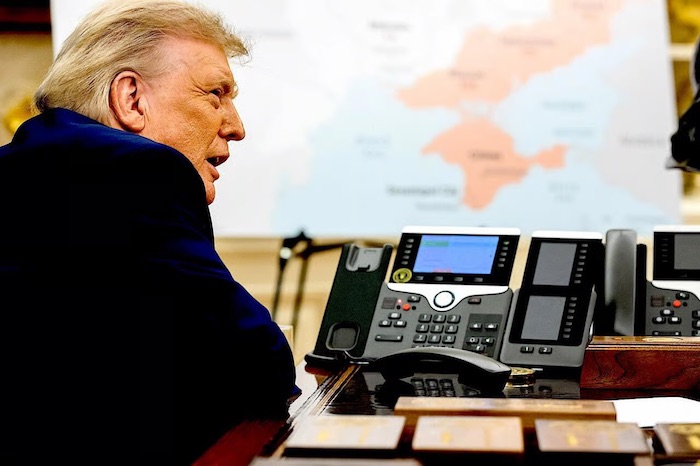
“Moscow is making every effort to end the hostilities as soon as possible, the Russian president told Indian PM Narendra Modi..”
• Russia Moving Towards Resolving Ukraine Conflict – Putin (RT)
Russian President Vladimir Putin holds a meeting with Indian Prime Minister Narendra Modi on the sidelines of the SCO summit in Bishkek, Kyrgyzstan, on August 31, 2026. © Sputnik / Pyotr Kovalev Russia is actively seeking to end the Ukraine conflict, President Vladimir Putin told Indian Prime Minister Narendra Modi during a meeting on the sidelines of the Shanghai Cooperation Organization (SCO) summit in Kyrgyzstan on Monday.Read more …
The two leaders discussed the Ukraine conflict among other issues, with the Indian prime minister calling for a peaceful resolution to the ongoing hostilities and urging the sides to “move in this direction.”“Thank you, dear prime minister. That is the way we’re heading for,” the Russian president replied.Moscow has repeatedly said that it is ready to resume Ukraine peace talks at any time, provided that they are focused on addressing the “root causes” of the conflict, including Ukraine’s plans to join NATO. Russia insists that the conflict has its roots in the 2014 Western-backed coup in Kiev and subsequent attempts by the new Ukrainian government to suppress the rebellion in Donbass by force.Ukraine later failed to implement the 2014-2015 Minsk agreements, which were intended to reintegrate the breakaway regions into Ukraine by granting them broad autonomy through comprehensive political reform.In a June article for Politico, Russian Foreign Minister Sergey Lavrov stated that Moscow had explored every diplomatic avenue to defuse the Ukraine and Europe security crisis, but the US and NATO rejected Russia’s proposal for legally binding mutual security guarantees in January 2022.
Kiev’s Western backers also sabotaged the Istanbul talks between Russia and Ukraine that were launched soon after the Ukraine conflict escalation in February 2022.Then-UK Prime Minister Boris Johnson infamously traveled to Kiev in April of that year to tell Ukraine’s Vladimir Zelensky to drop any negotiations and “just fight,” thus slamming the door on any genuine diplomacy in the short term, according to Lavrov.
Moscow has consistently stated that it hopes to achieve a lasting settlement to the conflict and not simply a temporary ceasefire. Russia is demanding that Ukraine abandon its plans to join NATO and adopt a neutral status, accept restrictions on its armed forces, and formally recognize Crimea and four former Ukrainian regions as Russian territory.Russia also presented a roadmap towards the final settlement, which involved a ceasefire along the current front line linked to the withdrawal of Ukrainian forces from parts of Russian territory they control, an end to mobilization, and an end to Western military aid to Ukraine.
Kiev has repeatedly rejected any proposals put forward by Moscow, while continuing to claim sovereignty over the four former Ukrainian territories as well as Crimea.
“Behind Kiev’s claims of ‘liberated’ territory lies a failed operation, abandoned assault teams and an increasingly unstable southern front..”
• Ukraine Tried To Copy Russia’s Battlefield Tactics, Walked Into A Trap (RT)

Last week, Ukraine’s Vladimir Zelensky, along with the new Commander-in-Chief of the Armed Forces of Ukraine (AFU) Mikhail Drapaty, visited a section of the front line in Dnepropetrovsk region. Zelensky stated that this year, the AFU has almost completely regained control of Dnepropetrovsk Region, with only about 10 square kilometers of territory remaining under Russian control. What is the logic behind this PR campaign? Did the AFU really make progress in this direction? What were the real goals of the Ukrainian operation, and to what extent have they been achieved? We explore all this below.Read more …
The southern sector is the most strategically important part of the 1,500-kilometer-long front. On one end it borders the Dnieper River, while the other end stretches northeast to Pokrovsk, where, as it is generally considered, the central sector of the front begins.In 2023, Ukraine’s only strategic offensive took place in this area. The AFU’s aim was to reach the sea and cut off the land corridor to the Crimea by means of two decisive blows. If successful, this operation would have radically worsened the situation for the Russian army and, according to Kiev’s plans, changed the course of the conflict. Even though the 2023 offensive failed, this section of the front did not become less important for the AFU. In the spring of 2026, with the aim of cutting off supply routes to the Crimea, the AFU launched a middle strike campaign, particularly targeting the highway located 50-70 km from the front line. These attempts have so far proven unsuccessful.
For Russia, the southern sector of the front is extremely important for three reasons. Firstly, as the front is pushed further north, Ukrainian middle strikes become less effective. Secondly, the capture of the city of Orekhov will pave the way for an advance toward Zaporozhye, a regional center with a pre-war population of over 700,000 and one of the largest industrial cities remaining under Kiev’s control.
Ukrainian soldiers from the 65th Separate Mechanized Brigade drive in the evacuation buggy near the road sign ‘Orikhiv’ damaged by Russian shelling. © Andriy Andriyenko / SOPA Images / Sipa USA Thirdly and most importantly, an advance north from Zaporozhye will allow the Russian army to approach the central sector of the front from the rear, either encircling it or at least significantly disrupting its supply lines.
Last year brought troubling news for the AFU in the southern sector of the front as the defense near the city of Gulaipole collapsed. At the time, all forces were pulled for the defense of Pokrovsk and Mirnograd, while several areas in the south were left with no one to defend them. As a result of the successful campaign of Russia’s East Group of Forces to identify and destroy drone crews, the AFU were forced to abandon approximately 300 square kilometers between the Yanchur and Gaichur rivers without fighting. To restore the front, then Commander-in-Chief Syrsky was forced to curtail the counteroffensive near Pokrovsk and essentially abandon the encircled garrison in neighboring Mirnograd.
This situation determined the priorities of the 2026 spring-summer campaign for the AFU: the aim was to restore the southern front at all costs, eliminate the threat to Zaporozhye, and push Russian forces as far east and south as possible to relieve strategic pressure on the central sector of the front.
We don’t have any information from the Ukrainian General Staff, so we can only assess the operation’s goals based on indirect evidence. Apparently, the AFU planned two auxiliary strikes in the Stepnogorsk and Uspenovka area to cut off the pincers of the Russian army, which threatened to close in around Orekhov. The main strike, however, was to be directed at Velikaya Novoselka. If it had been successful, the entire defense system of the East Group of Forces from Gulipole to the junction with the Center Group of Forces near Pokrovsk would have collapsed and the Russian army would have been pushed back 30-40 kilometers.
The AFU’s attacks began in the spring and were accompanied by an unprecedented media campaign. The operation was labeled a second counteroffensive, Ukrainian authorities claimed dozens of “liberated” settlements and hundreds of square kilometers of reclaimed territory, and once-respected Western publications churned out articles about a turning point on the front, a heroic Ukrainian offensive that would change the course of the war, and other such nonsense.
However, by mid-summer, news about the AFU’s success on the southern front became less frequent and after Syrsky’s removal, disappeared completely. Instead, news surfaced about the plight of Ukrainian storm troops which, advancing through the gray zone, got stuck there for weeks and even months. It was reported that due to disruptions in aerial deliveries, the soldiers hid in stashes, lacked food, and were forced to drink their own urine.
The future of Europe hangs in the balance. Last chance to beat the globalists.
• Le Pen Would Beat Every Rival In 2027, Major French Poll Finds (ZH)

Marine Le Pen would win France’s 2027 presidential election against every major rival now being measured, according to a major survey by Elabe published on August 29 for BFMTV and La Tribune Dimanche.Read more …
France elects its president in two rounds: a crowded first round on April 18 cuts the field to the top two – no one will win outright – and the survivors meet again on May 2. Elabe has Le Pen at 34% to 35.5% in round one depending on who else runs, far clear of the pack, then beating every potential runoff opponent it tested. The new poll comes on the heels of a Nomura report which showed Le Pen with a commanding first-round lead.The rest of the field is fighting over second place. Édouard Philippe, the former prime minister and the most plausible face of the post-Macron center, leads that pack at about 17% when he stands alone. Jean-Luc Mélenchon is on 14% to 14.5%, having lost his summer lift. Raphaël Glucksmann, now in the race, is between 11.5% and 14%. Gabriel Attal’s presence mainly splits the moderate vote.
According to the poll, here’s Le Pen:
• versus Philippe: 52.5% to 47.5%
• versus Attal or Glucksmann: 57% to 43%
• versus Mélenchon: 69.5% to 30.5%
For a generation, French presidential politics assumed a front républicain: a cross-party second-round squeeze that would keep the National Rally out of the Élysée. It elected Chirac 82-18 over her father in 2002 and Macron twice over her; yet the margin has narrowed every time. According to the Elabe poll, that squeeze is no longer automatic. Le Pen is not only first in April. She is ahead in May against every opponent Elabe put up. Even against Philippe, the closest of them, she leads by five points.
Le Pen’s popularity has perhaps been boosted by her status as a martyr – created by what some might consider establishment efforts to throw her off track. On July 7 the Paris court of appeal upheld her embezzlement conviction in the European Parliament assistants case. It shortened the ban on holding office enough for her to stand and imposed a year of house arrest with an electronic tag. Her appeal to the Cour de Cassation freezes that sentence while she campaigns. The court has said it aims to rule before the first round. A confirmed tag would not take her off the April ballot. It would frame the May runoff. Le Pen herself has said she could not campaign tagged – though sentence remission could free her by early 2027 either way. Jordan Bardella remains the party’s designated stand-in.
At the summer gathering of MEDEF (France’s main employers’ federation) at Roland-Garros on August 27 she set out a €125 billion savings path and a plan to let long-tenure workers retire at 60 to 62, costed at about €9 billion and described as a “societal choice.” French banks are still wary of financing National Rally campaigns. On these numbers, voters are less so.
Bond markets are pricing the wider strain – as French 10-year yields have been near 4.1%, their highest since late 2008. The extra yield over German Bunds is about 80 basis points, the wide end of a 59-to-85 range over the past year. That premium reflects a hung Assembly, a government that has already stumbled on the budget, a 2027 finance bill due in October that may not pass in ordinary form, a deficit still near 5% of GDP, and IMF debt figures already around 118.5% this year and through 120% in 2027.
The working rule of French politics was that Le Pen could reach the steps of the Élysée and not the door – but rules were made to be broken.
“Supreme Court Rule 5-4 to Eliminate Lawsuit Against White House Ballroom and National Defense Complex – Chief Justice Roberts Joined the Minority..”
• Supreme Court Rule 5-4 to Eliminate Lawsuit Against White House Ballroom (CTH)
Somehow Chief Justice John Roberts found that a single person who walks past the White House every month and doesn’t like the proposed appearance of the ballroom has some standing to sue and block construction. Go figure. Roberts also decided that the Obamacare mandate wasn’t a tax. Roberts joined with the minority DEI judges in his position. However, the majority decision was against the woman having standing to sue. Therefore, the lawsuit was dispatched and the building can continue.Read more …
SCOTUS BLOG – […] On Monday, a divided court granted the government’s request for a stay, permitting construction to move forward while the litigation continues in the lower court. The majority’s opinion focused primarily on its conclusion that the National Trust likely does not have standing to challenge the project. The trust had submitted a declaration from Alison Hoagland, a member who lives in Washington, D.C., and said that she visits the area where the White House is located approximately once per month.Hoagland, who has “expertise in historic architecture,” claimed that the project caused “‘injuries’ to her ‘aesthetic, cultural, and historical interests’ because she finds the ‘scale,’ ‘height,’ and ‘massing’ of the government’s design distasteful.” But those are not the kind of “concrete” and specific injuries required to bring a lawsuit, the majority explained.
The majority also concluded that the government would be permanently harmed if Leon’s order were allowed to go into effect – another key criterion in determining whether to grant emergency relief. Among other things, it noted, senior government officials “attest[] that constructing something approximating the height and mass of the intended above-ground ballroom is ‘crucial’ to the security of the below-ground military installation.”
In his six-page dissent, which Justices Sonia Sotomayor, Elena Kagan, and Ketanji Brown Jackson joined, Roberts countered that “[a] historic preservationist such as Hoagland can be aesthetically injured in a concrete, particularized way by the transformation of a historic building that she frequently enjoys, just as,” based on prior court precedent, “an environmentalist can sustain a concrete, particularized aesthetic injury from the extinction of a particular animal or the transformation of a particular forest or river that he regularly enjoys.” Roberts ended the opinion by quoting Winston Churchill, who said that “[w]e shape our buildings, and afterwards our buildings shape us.” “All the more reason,” according to Roberts, “to ensure that those responsible follow the rules in deciding what to tear down and what to build up at the People’s House.”
President Trump – “I am pleased to report that the United States Supreme Court has just ruled in favor of the Ballroom/Military Complex being built without any further contingency, doubt, or threat. We are living in the Golden Age of America, and this Building will be one of the Greatest ever constructed in Washington, D.C. When completed in the Summer of 2028, the magnificent Ballroom and Military Complex will be something that the entire Country is very proud of. The Project, despite the baseless lawsuit brought by the so-called National Trust for Historic Preservation of the United States, which is not in any way affiliated with the United States Government, is under budget and ahead of schedule. The Ballroom is totally funded by Great Patriots and Corporations and, therefore, is a Gift — At no cost to the American Taxpayer. Thank you for your attention to this matter!”President DONALD J. TRUMP

“She asserts that having to view the finished ballroom the government is constructing would cause her to suffer “injuries” to her “aesthetic, cultural, and historical interests” because she finds the “scale,” “height,” and “massing” of the government’s design distasteful.”
• Eye of the Beholder: Aesthetic Injury and the White House Ballroom (Turley)

The Administration won a major victory before the Supreme Court this week, securing a 5-4 decision allowing the resumption of construction of the new White House ballroom. Notably, Chief Justice John Roberts wrote a dissent with his three liberal colleagues to oppose the move. The case turns on the standing of challengers to bring the case. However, as a torts professor, what intrigued me was what the case says about aesthetic injuries.Read more …
In torts, I teach aesthetic nuisance cases where courts tend to reject claims of injury due to eyesores and blight. Such claims are disfavored in both codes and cases: “Things merely disagreeable, however, which simply displease the eye or offend the taste, or shock an oversensitive or fastidious nature, no matter how irritating or unpleasant, are not nuisances.” 81 N.Y. Jur. 2d Nuisances § 17 (2014).As one court ruled in Missouri in Ness v. Albert, 665 S.W.2d I (Mo. Ct. App. 1983):“Aesthetic considerations are fraught with subjectivity. One man’s pleasure may be another man’s perturbation…Judicial forage into such a nebulous area would be chaotic. Any imaginary good from doing so is far outweighed by the lurking danger of unduly circumscribing inherent rights of ownership of property and grossly intimidating their lawful exercise.” The decision in National Park Service, et al. v. National Trust for Historic Preservation in the United States raises a parallel issue on standing. At issue is the right of a private group to stop a major construction project based on claims that the ballroom is oversized and obnoxious to some.
The Court has long maintained a demanding standing doctrine under Article III of the Constitution, requiring a showing of an “injury in fact” that is based on the “invasion of a legally protected interest.” Lujan v. Defenders of Wildlife, 504 U. S. 555, 560 (1992). That requires an injury that is “(a) concrete and particularized . . . and (b) actual or imminent.” The claim, upheld by the D.C. Circuit, is based primarily on the eyesore injury of one person who would have to walk by the structure:
“To establish its standing to bring this case, the Trust relies on a declaration from a single of its members, Alison K. Hoagland. Hoagland says she lives in Washington, D.C., and expects to visit the neighborhood around the White House “about once a month.” App. to Application 73a–74a. She asserts that having to view the finished ballroom the government is constructing would cause her to suffer “injuries” to her “aesthetic, cultural, and historical interests” because she finds the “scale,” “height,” and “massing” of the government’s design distasteful. Id., at 75a. On the strength of that declaration, the Trust contends, it has Article III standing to challenge the East Wing project.”
The per curiam opinion rejects the aesthetic injury at the base of the standing claim. The majority notes the importance of the project, including security elements such as the bunker below the ballroom. It then states: Meanwhile, on the other side of the ledger and against these harms, the only harm the Trust claims is the offense one of its members will suffer from having to view a structure of the “scale,” “height,” and “massing” the government intends…These harms and equities are not nearly in equipoise.
The size of the ballroom has drawn criticism from many, including many who agree with the President that a ballroom has long been needed. Architects associated with the project demurred as the President demanded a large structure. However, the question is whether that injury alone can sustain judicial review. The Supreme Court has reaffirmed that an eyesore is no injury when it comes to Article III standing.
Why do I think he must be 120 years old? He’s been there forever. And a day.
• Wolf Blitzer’s Trump Mail-In Voting Lie Blows Up in His Face (Margolis)

On Friday, Wolf Blitzer decided it was his job to help Democrats lie about President Donald Trump. At least this time, he was forced to issue a correction.Blitzer made a blatantly false claim during Friday’s episode of The Situation Room, when he sat down with Gov. Abigail Spanberger (D-Va.) to discuss a multi-state Democrat lawsuit fighting President Donald Trump’s March executive order meant to ensure only eligible citizens can vote by mail.Read more …
It started when Spanberger, without any evidence, accused the Trump administration of trying to intimidate voters into staying home. “The continued attacks that we’re seeing from the Trump administration is really just an effort to get people fearful, to get people to stay home, and, in many cases, to eliminate what is a valid, safe, secure way for people to be able to have their voices heard and to vote,” she said.That’s when Blitzer decided to imply that Trump’s order would impact the military. “And in Virginia, you have a lot of military personnel who totally rely on mail-in ballots if they want to be able to express their opinions,” he told her.“That’s true,” Spanberger said, even though it wasn’t. “It’s members of the military service, of our diplomatic service, intelligence services, people serving overseas in service to our country who get their ballots mailed to them at the various postings throughout the world.” Now, one of two things happened here. Either Spanberger and Blitzer were legitimately clueless about the facts, or they knew the facts and just decided to push falsehoods anyway. Dare to guess which it is? There’s no excuse for either. Spanberger is part of a lawsuit fighting the order, yet clearly doesn’t understand what the order does. Blitzer, as a member of the media, should have known better.
Trump signed the executive order Blitzer lied about on March 31, 2026, and it has been picked apart, litigated, and debated in public ever since. There was plenty of time to get the facts straight before going on television and telling however many viewers CNN still has that Trump was coming for military ballots. Blitzer didn’t bother. He repeated a scare story handed to him by a Democrat governor, let her validate it, and let it sit there unchallenged for three days until he finally walked it back.
On Monday, Blitzer had to issue a “quick note of clarification,” which is CNN-speak for “we got caught.” “We discussed legal challenges to the Trump administration’s directives for the Postal Service on mail-in voting,” Blitzer said. “A comment I made suggested that U.S. military and overseas voters’ ballots would be impacted by these directives. I want to be clear right now: Those ballots are exempt from the Postal Service’s new rules implementing the president’s March executive order.”
He added, “Those groups are covered under the Uniformed and Overseas Absentee Voting Act [UOCAVA], just to be specific on that point.”Blitzer’s correction came only after the false claim had already served its purpose: feeding viewers a panic narrative about Trump and mail-in voting. By the time the correction was made, it barely even mattered. Military and overseas voters remain protected under UOCAVA, and the new Postal Service rules expressly exempt their absentee ballots. CNN should explain how such a basic fact escaped a network that calls itself the “most trusted name in news.”
Now count the whole country.
• 400,000 California Voters Didn’t Provide Any ID at Registration (Salgado)
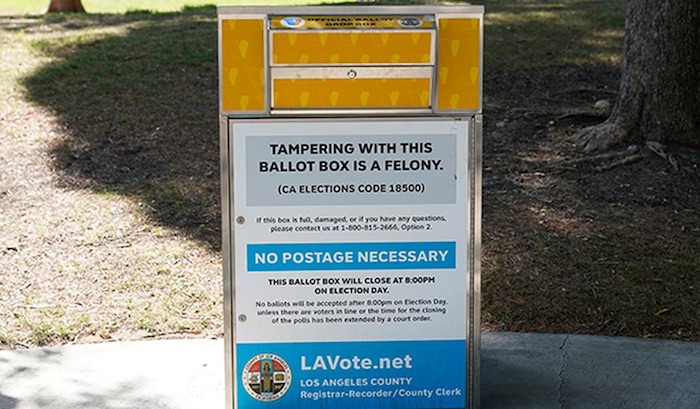
Because the state of California allows people to register online without providing any proof of identity, anyone could register to vote and under any name. Hundreds of thousands of people have done just that, and it once again raises the question of just how solid Democrat control in California would be without fraud.Read more …
Bill Essayli, first assistant U.S. attorney for the Central District of California, just arrested a Honduran national who illegally registered to vote in California. But it is incredibly easy to do; anyone, indeed, could do so as long as he or she has a fake address ready and checks the options for no ID and no Social Security. Apparently, almost half a million people have taken advantage of this scam.
California currently provides an option to register to vote while simply checking boxes that say you do not have an ID or Social Security number pic.twitter.com/s0Zvt5o5NF
— Catherine Salgado (@CatSalgado32) August 29, 2026In the clip below, Fox News co-anchor Bill Hemmer talks with Essayli about Darwin Rivera Flores, a “noncitizen born in Honduras, and you at DOJ were able to get your hands on his voter registration forms.” Last year, Rivera “falsely claimed to be a U.S. citizen. He checked the box attesting he’s a U.S citizen born in the United States; he signed it under penalty of perjury,” Hemmer went on. “Bill, in California, there’s no one checking this, right? Entirely the honor system.”
Essayli confirmed that and continued, “This case really highlights the vulnerability in California’s voter rules. They basically allow anybody to register to vote on the honor system. There’s nobody in government that is checking to confirm you’re a citizen, and in fact, in this case, he, on the form, [put] down a California driver’s license and a Social Security [number], which he had, because he has a visa, [but] that does not prove you’re a citizen. And according to the Secretary of State, they say at least half a million people don’t even provide that information when they register to vote.” In his post, Essayli put the number more precisely at 400,000.
California does NOT check if you’re a citizen when you register to vote. It’s based on the honor system. This allows people like this defendant to easily register to vote and participate in our elections. According to @CASOSVote, approx. 400k registered to vote without providing…
— F.A. United States Attorney Bill Essayli (@USAttyEssayli) August 31, 2026California allows a crazy number of IDs as proof for registering to vote, including health club memberships, welfare checks, senior citizen cards, and drug prescriptions. But 400,000 voters didn’t even provide that much.
Registered Republican Spencer Pratt ought to have advanced to the general election for the Los Angeles mayoral race. Republican gubernatorial candidate Steve Hilton has rapidly closed the gap between him and Democrat Xavier Becerra in the polls. And there are still enclaves of Republicans throughout the state of California. But so long as Democrats can vote-harvest from homeless people, encourage illegal aliens to vote, and “count” for several weeks after Election Day, we can be sure no GOP candidate will ever win a major race in the state again. Of course Democrats don’t want to audit their voter rolls or require proof of ID to register and vote in the state of California. That could upset their whole insurance plan for staying in power.
After all, why worry about audits and reforms if you know your candidates could win honestly? The only reason for fighting federal reforms tooth and nail is if election officials and other politicians know perfectly well that their elections are compromised.
“… it will never be like the U.S. for one simple reason: it doesn’t have the guts or the will.”
• EU Can’t Raid Europeans’ Savings Accounts, and It Drives them Nuts (O’Brien)
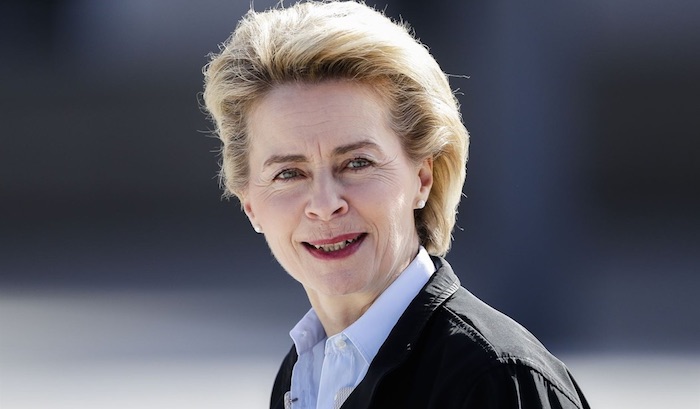
When it comes to business and investment, the European Union (EU) thinks it can be like the U.S. It wants to be like the U.S., and it’s actively trying to be like the U.S. But it will never be like the U.S. for one simple reason: it doesn’t have the guts or the will.Read more …
The contrast between Europe’s risk-averse business culture and the American winner-take-all culture was on display last week when the president of the European Commission (EC), Ursula von der Leyen, delivered remarks at the annual French Entrepreneurs Conference. She’s not happy that, according to her, Europeans are keeping a collective 10 trillion euros in their bank accounts and not investing that money in European startups and other companies.“In Europe, we have no shortage of technology or savings,” von der Leyen said. “But we still lack sufficient capacity to develop European companies on a large scale. Too many projects are stalled because the initial investment is too risky, demand is too uncertain or capital is too expensive. Our companies know how to start in Europe. But they also need to be able to grow here.” The EU president said that European startups tend to go outside of Europe for financing, and this is where she says, “They shift their center of gravity. Or they are bought out.”
I’m going to borrow a better description of von der Leyen from my colleague, Stephen Green, who calls her a “Euro-Scold,” which is so apt. So yeah, the Euro-Scold said the EU cannot finance the entrepreneurial growth with public funds alone. She said that Europeans have savings, quite a bit, actually, and she wants to get her hands on it. But regretfully for her and for her globalist allies, it’s not that easy. It seems that you can’t just raid people’s bank accounts in Europe if you want that money, at least not yet. That doesn’t prevent her, however, from lusting after that money, coveting it, and seeing it as just lying there unused in bank accounts.
The owners of those accounts may not see it that way. They may see those savings accounts as a safe haven from the likes of her and so many others whom they know could burn through 10 trillion euros pretty quickly and still have nothing to show for it. “Europe must now to put these savings to work for their companies,” she added. “This is the objective of the Economic and Investment Union. We have put forward proposals on securitization, investment by banks and insurance companies, and the integration and supervision of our markets. Together, these measures could unlock up to 470 billion euros in additional investment.”
BREAKING: 🇪🇺 EU President Ursula von der Leyen says Europe must put citizens’ savings “to the service of European companies.”
— Coin Bureau (@coinbureau) September 1, 2026
Von der Leyen argued that people’s savings are “lazy”, adding the EU should “securitize them” and “supervise them” as part of a broader effort to channel… pic.twitter.com/ptEPzC1RLUI’m not sure about you, but ever since the COVID pandemic, any time I hear from this Euro-Scold and the globalists on the other side of the pond, I find myself immediately trying to read between the lines and looking for the secret word sequence where she introduces the Fourth Reich or some other. That’s not the case here. If her jargon sounds like jargon, it’s because that’s what it is. It’s neat-sounding terminology to mask the cultural impotence that is the European business climate, which can’t get its mind off of those 10 trillion euros it wants so badly.
Just in the way the EU is framing all of this, the culture is very top-down. The agenda is set by the government, not the marketplace, and that represents all the difference. In America, the entrepreneurial spirit is marked by a thriving private investment marketplace. In Europe, they like to talk about uses for the invested funds. In America, we talk about opportunity for investors to grow their money through the best possible return on investment (ROI).
These are two completely different mindsets, and the difference between the two says everything about why Europe is so terrible at fostering business and economic growth.What the Euro-Scold and her friends understand is that they’re not set up at the moment to give Europeans incentive to invest at scale in European ventures. They’ve come to realize that they simply don’t have the kind of investment infrastructure that incentivizes individual Europeans to invest.
Americans are different. It’s in this country’s DNA to try new things, to take risks, to innovate, to invent, to sometimes fail, to get back up, and to start over – all with as little government involvement as possible.
We love our stories of companies like Apple starting in Steve Jobs’ parents’ garage. We love it when we see Elon Musk make a ton of money and then gamble it all on multiple companies, including Tesla and SpaceX, to really blow expectations away and change the world. Americans don’t need a government to incentivize them into investing in these world-changing companies. The default impulse in America is for large swaths of potential investors to compete against each other to get in on some of that action.
Our markets are vibrant and exciting, sometimes too exciting, but still, they are nothing like the lukewarm European startup climate. Individual Americans, through their 401(k) plans at work, are collectively invested in mostly American companies to the tune of $10 trillion. IRA accounts represent another $18 trillion. Americans invested directly in mutual funds total close to $6 trillion. All U.S. retirement assets total more than $47 trillion, and that doesn’t even touch on the sheer level of individual investing that happens on a daily basis on Wall Street.
Metaphorically speaking, while American entrepreneurialism has been rockin’ and rollin’ for well over 100 years, the EU can’t decide whether it wants one lump of sugar or two in its afternoon tea, right before it takes its afternoon nap. And so, the Euro-Scold is seeking baby steps in trying to gently nudge Europeans to move chunks of their money from the safety of savings accounts to the risky world of startup funding. Good luck with that.
[..]
EU President Ursula von der Leyen believes that Europeans are not saving money correctly.
— Wall Street Mav (@WallStreetMav) August 31, 2026
She wants to control how Europeans are allowed to save their money.
The European Commission head stated that about €10 trillion in household savings are currently sitting in bank… pic.twitter.com/A4q4sBtrtN
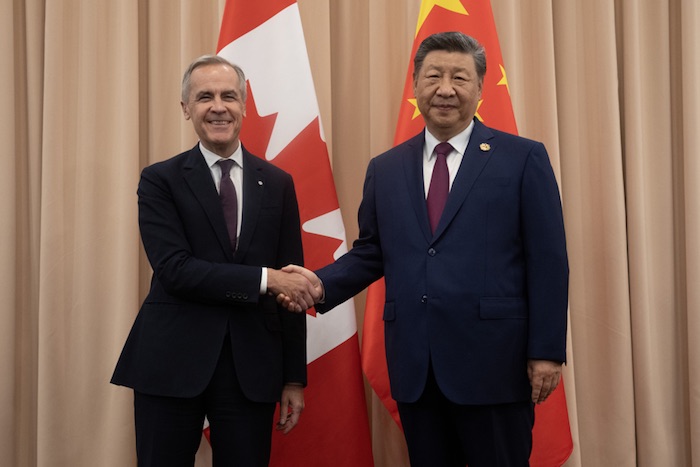
It’s his identity. His Canadian followers demand he defeats Trump.
• Carney Picked a Trade War With Trump—But Why? (Victor Davis Hanson)
Canada, everybody likes Canada. Come on. We all have—I have a brother-in-law who’s Canadian and a very nice person. But there’s three things to remember about Canada, this dispute. Number one are the issues, and they’re real. Number two is the timing. Why now? And number three, why does Mark Carney seem so angry?Read more …
He’s not a Stephen Harper, that wonderful prime minister that I think all of us on the conservative side, but all Americans in general, really admired. And he’s not Brian Mulroney, whom I admired, who just passed away not too long ago. So there’s three issues. There’s Carney, there’s the timing, and there’s the problem. The problem is that Canada pretty much got into a habit the last few years of running up a $50 billion to $70 billion surplus with the United States. Not as bad as Mexico, but under Donald Trump’s vision of symmetry, he wanted to address it.And what made it egregious is we had a North American Free Trade Association, which was supposed to eliminate the need for tariffs and taxes on imported and exported goods because there would be fair dealing and there would not be differences very much. What Ross Perot… Remember he said that, that huge sucking sound of jobs—the sucking sound … and money. Yeah. That wasn’t gonna happen, we were told by [Bill] Clinton and [Al] Gore. And it did, and Mexico had a $200 billion. And the weird thing is, we told Mexico, “You’re not going to get Chinese cheap dump parts and assemble them and be the gateway for China to evade tariffs, to get, undercut our jobs.”
And they said, “Okay, we won’t do it.” Then we said, “We’re going to tax, we’re gonna start your remittances at 1%, $65 billion …” And we said that because we had 30 million illegal immigrants, mostly from Latin America and Mexico, who were largely recipients in some fashion of American largesse: housing, education, food, health care subsidies. We’re not gonna pay that and free them free cash to become the largest source of foreign exchange in Mexico, which we are.
Jack Fowler: Money, that probably had not been taxed in the U.S. either.
Victor Davis Hanson: No. No. And never had. It was probably cash. Then we tried to tell them about the cartels, and the point is, we were making progress, but not so much with Canada. They kept running this surplus. And then we said there were other peripheral issues. You promised to meet your NATO goals, and you never did. Last year they may have done it, but they may have done it by bookkeeping that counted salaries and infrastructure rather than just militarily strict budgeting.
And if they did, it was like 1.98%, 2.01% of GDP. So they were reliant on America’s nuclear shield and protection, and nobody in their right mind in America ever thought that if the Russians or the Chinese or the North Koreans threatened Canada, they would not be protected by us, either through anti-ballistic missile systems or forward … And they have no military. I think they have 79 jets that are functional. Saudi Arabia and the UAE and Kuwait have 300. Israel has 400.
Jack Fowler: And their landmass just begs to have broader coverage.
Victor Davis Hanson: So the issue was Trump said, “Let’s reopen negotiation.” They were all set. They agreed on everything. And by the way, it only affected 5% of all of the total amount. And he said through his agents, Howard Lutnick and the others, “If you do what Mexico is doing and you import cheap aluminum and steel from China that does not have a market economy, then you’re breaking the understanding because you are assembling things in cars and autos and sending them here that are not solely Canadian-made.
“And you’re doing it at the bequest of China. And number two, you are telling all of our social media companies, Meta and sales companies that are online, Amazon, Google, Twitter,” the old Twitter, X, excuse me. “You’re telling them they have to pay 5% so that they don’t smother Canadian culture just off the top of all their revenues, hundreds of, I don’t know what it was, hundreds of millions of dollars. Why are you picking on these companies? And this is in addition to any other import fees or anything.
“We don’t do that with yours. When I read the National Post, the government doesn’t say to the National Post, ‘You are influencing American public opinion and you’re stifling our culture, so we need to tax you 5%.’” So that was the issue. And the other issue was that after a certain percent, tariffs went up 250% on dairy and farm products to Canada. And Canada said they were supporting independent entrepreneurial family farms. But like everything Carney says, it’s not accurate.
If you’re a Canadian farmer or you’re a Canadian egg producer, whatever, you get an allotment from the government. You can’t just go out and start something, just like you can’t set up an X-ray or a CT center. Everything is controlled. So the idea that the United States was gonna drive you out, maybe it could hurt you if we ever got up to the 250. They said, “It’s 250%” but we never really charge you.” And we said, “We never really charge you because all of our companies, when they meet your little quota, they can’t send anymore because it’ll be up to 250%, so they self-restrict it.” So that was the situation. Carney then blew up and said, “We’re not going to let the United States destroy our sovereignty and tell us who we have to trade with.”
Subtext: If we want to help communist China dump product in the United States by assembling it into our automobiles, trucks, etc., at cheap stuff, which even our steel and aluminum people don’t want, and our companies and unions want to agree with the Americans and restrict it, we’re gonna walk out. And more importantly, if you don’t wanna pay, then you’re stifling the French language. So it was all misdirection, number one, and it didn’t really make that much difference because, as I said, it was only a tariff. So why did he blow up?
[..]
Yeah. The enemy of my enemy is my friend. Exactly. And there are key Senate races in where? Maine, right on the border, Michigan, right on the border, and Wisconsin. And so, what Carney was trying to do was to get people in the United States sympathetic to Canada, and here’s Donald Trump again. And Donald Trump helped fuel that when he said he was gonna rename Lake Ontario, Lake America. Lake Ontario’s 55% of its mass is in Canada. I think most Americans don’t care that it’s called Lake Ontario. This was the way he was trolling them. But the Left went crazy as if they never rename things, which they rename everything.
So my point is, he took two issues that were not really issues. He blew them up, he stormed out, and he did this to tell the Canadian electorate, “Don’t try to break away or flirt with America or flirt with yourself as an independence providence—whatever it is, ’cause I am standing up for Pan-Canadianism against the Americans.” And then he was telling the Americans in Michigan, in Maine, and in Wisconsin, “Your prices are higher? It’s because your stupid president has tariffs and went after us.” What he didn’t really tell them is that, when Alberta’s, I guess it was Mr. Ford, said we might cut off oil exports, the Americans shrugged their shoulders and said:
“Go ahead. We’re the largest producer of oil and gas in the world. The Persian Gulf is settling down. Price of oil is going down. But more importantly, you have a heavy crude sulfurous product. Your own provinces will not let you send it easily on pipelines to transport centers where you can send it to China. You send it right across the border to the United States. “We refine it, and guess what? Natural gas, in the case of natural gas, you can’t even send it to Montreal through your own territory because you have these provincial restrictions, environmental nuttiness. So we take your natural gas and we pass it along and plug it into our pipelines, and then it goes back up to Montreal.”
They didn’t even know that when they walked out.
I like Sundance, obviously. But he shouldn’t claim Musk is wrong for something he said 15 years ago. BVD was in a very different situation back then.
“China even goes so far as to fund alarmism research about climate change because they are making money selling carbon credit certificates..”
“BYD is, in essence, not a car per se’, but a mechanism to generate a carbon credit certificate that can be sold to other car companies.”
• BYD Inquires to Purchase Stellantis Auto Plant in Canada (CTH)
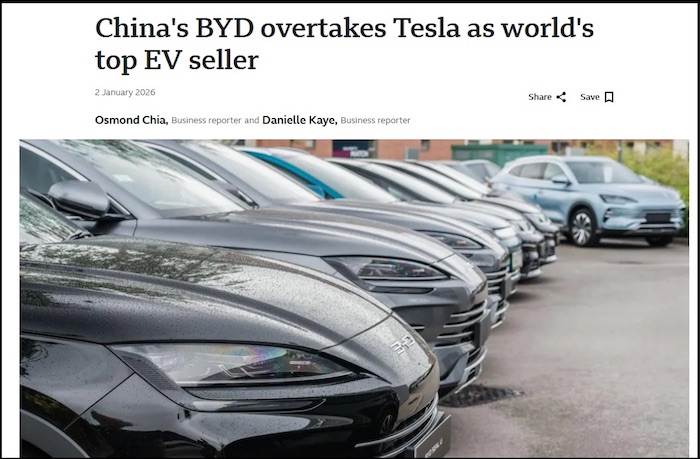
For about a year CTH has predicted Chinese auto manufacturers BYD and GEELY would take over shuttered auto plants in Canada. Specifically, six months ago, against the backdrop warning of Stellantis, Toyota and Honda telling the Canadian government that without the USMCA they would shift auto production to the USA, CTH predicted BYD and GEELY would make moves on those closed facilities. he move by China is easy to predict. Prime Minister Mark Carney has opened the door to Chinese EVs. It would be in Beijing’s best interest to retool and take control of closed plants to begin mass production in North America.Read more …
Chinese EV manufacturing in Canada serves two purposes. First, they would not be limited in production to the cars that remain in Canada as part of the agreement. Factually, China would use their Canadian footprint as an export hub into Europe and save money on current distribution. Remember, Europe is losing their auto manufacturing base to China and Germany is laying off 100,000+ auto workers. Second, the appearance of Chinese auto manufacturing in North America would put pressure on the United States to permit their cheap EVs to enter the market.Today Bloomberg is reporting exactly what we predicted. Chinese automaker BYD (Build Your Dream) is asking local officials about the currently idled Stellantis auto plant. Things are following a very predictable timeline.
BLOOMBERG – Chinese carmaker BYD Co. inquired about taking over an idled Stellantis NV plant in the Toronto suburbs, according to a local politician, signaling possible global interest in Canadian auto hubs in the midst of a trade battle with the US. Patrick Brown, the mayor of Brampton, Ontario, said BYD approached him about six months ago to talk about making buses at the factory. Stellantis had been retooling the plant to manufacture the Jeep Compass, but the company halted that plan last year when the US adopted a policy of tariffs on foreign autos.
Brown said he also received inquiries from Leapmotor International, a joint venture between Zhejiang Leapmotor Technology Co. and Stellantis, as well as from an Italian automaker. Bloomberg News reported in April that Stellantis was discussing options for building electric vehicles in Canada with Leapmotor. Most of the vehicles Canada produces are exported to the US, but the trade war and the lack of a new product earmarked for the 40-year-old factory have clouded the future for thousands of people who work there. Unifor, the union representing those workers, said this month that Stellantis is considering selling the plant. (read more)
I went to Russia in 2024, because what I was hearing in western media about the sanctions did not align with what I was seeing from reports inside Russia. Before I went into Russia, I spent several weeks in Northern and Eastern Europe visiting various institutions, reading material and checking to see how systems in Europe were engaging with commerce given the Russian sanctions. It wasn’t very exciting work, and sometimes I literally just sat in the lobbies of banks listening to conversations.When I went into Russia (April, May, June and July ’24) I noticed many of the “Uber cars” were BYD brand, Chinese electric vehicles. It made sense given two years of existing sanctions and few cars from Europe or America available except under costly brokerage fees for acquisition. The Russians like the Geely brand better, but BYDs are much cheaper. A brand new BYD costs around $5,000 to $10,000 USD, in some places even less. Then later I noticed even more of these BYD cars in Europe. I started to pay attention to them and saw them everywhere.
When I went back into Russia a year later in 2025, there was a very noticeable increase in BYD cars. It was crazy, they were everywhere. My travels also took me to southeast Asia and again those damned BYD’s were all over the place. In Thailand, Philippines, Malaysia, Vietnam, these BYD’s were everywhere, maybe even 30% of total vehicle traffic at times – most certainly well over 50% of all EVs – and there are digital billboards for “Build Your Dream” (BYD) all over the place throughout Asia.
Australia is stocked full of those things, and the middle east, yup, even there too. It became increasingly weird to notice. So many were visible I was wondering how the heck China can mass produce and ship this many cheap EVs so fast. Then as serendipity would have it, I ran into a Chinese guy, professionally an actuary, in a hotel restaurant. He explained to me that China produces the BYD not to make money from the automobile, but rather to sell the carbon credits the automobile generates within the auto industry.
The actual value to Beijing is in selling the carbon credit worthiness to various automakers who are fined or penalized by their government for producing gasoline powered vehicles. BYD is, in essence, not a car per se’, but a mechanism to generate a carbon credit certificate that can be sold to other car companies. It’s the carbon credit certificate that generates the revenue, not the sale of the vehicle. As my dinner guest explained, the auto insurance industry was having fits about this because the actuaries couldn’t accurately put a correct figure on the cost of the insurance warrantee within the industry (that’s another story).
The bottom line is that China is manufacturing a product to create a carbon credit certificate in response to the demand for carbon credits from all the world auto-makers. Any nation that has a penalty or fine attached to their climate goals is a customer. Those are nations with fines or quotas associated with the production of gasoline powered engines if the auto company doesn’t hit the legislated target for sales of electric vehicles.
In essence, EU/AU/CA/RU/ASEAN car companies buy Chinese car company carbon credits, to avoid the EU/AU/CA/RU/ASEAN fines. The Chinese then use the carbon credit revenue to subsidize even lower priced Chinese EVs to the EU/AU/CA/RU/ASEAN car markets, thereby undercutting the EU/AU/CA/RU/ASEAN car companies that also produce EVs.
Big Panda brilliantly exploits the ridiculous pontificating climate scam and has an interest in perpetuating -even emphasizing- the need for the EU/AU/RU/ASEAN countries to keep pushing their climate agenda. China even goes so far as to fund alarmism research about climate change because they are making money selling carbon credit certificates on the back end of the scam to the western fear mongers. This is friggin’ brilliant.
My dinner buddy was in the business of identifying the cost/benefit equation between the climate change fines and the prices Big Panda could charge for the carbon credit certificates. If, as an example, Brussels dropped the quotas for EVs, China would need to lower the price for the carbon credit certificates. So, Beijing wants Brussels to make sure they don’t drop the quotas. See how that works?
The climate change alarmists are helping China’s economy by pushing ever escalating fear of climate change. You just cannot make this stuff up. What does the outcome look like? Well, in this example we see thousands of unsold BYDs piling up in countries that emphasize climate regulations with no restrictions on the import of EVs (which most don’t even manufacture), which is almost every country. Big Panda doesn’t care about the car itself; they care about generating the carbon credit certificate to sell in the various carbon exchanges.
Put this context to the recent announcement by Canadian Prime Minister Mark Carney about his trade deal with China to accept 49,000 EVs this year. Prime Minister Carney bragged about getting the Chinese to agree to only super low prices for the Canadian market. Mark Carney was very proud of his accomplishment to get much lower priced vehicles for Canadian EV purchasers. No doubt Big Panda left the room laughing as soon as Carney made his grand announcement.
1. China sells EV’s in Canada, creating credits available on the carbon exchange scheme. Europe et al will purchase the carbon credits because Bussels has fines against EU car companies.
2. With a foothold already established in Europe, China will then take the money generated by the carbon credit purchases and lower the prices of the Chinese EV cars sold in Canada.
It’s gets funnier.
3. Carney bragged about forcing China to only sell low price EV’s as part of the trade agreement. The low price of the EV’s in Canada will be subsidized by Europe. China doesn’t pay or lose a dime.
But wait….
4. Carney can’t do anything about the scheme he has just enmeshed Canada into, because Canada has a Carbon Credit exchange in law.
Big Panda wins again.
[…] In a statement published Thursday, BYD said sales of its battery-powered cars rose nearly 28% to 2.26 million units.
Musk openly laughed at the mention of BYD while being interviewed on Bloomberg TV in October 2011. He said he did not see the company as a competitor to Tesla, adding: “I don’t think they have a great product.” Meanwhile, Tesla said Friday it delivered 1.64 million vehicles in 2025. [SOURCE]
Elon thinks BYD are building cars. They aren’t.


Elon Musk today at the G20 Summit:
— DogeDesigner (@cb_doge) September 1, 2026
“AI will increase the global economy by 20% to 30%, or about $20 trillion to $30 trillion per year. By the end of next year, AI could do anything digital, and humans may no longer be able to compete with it in writing software at all.” pic.twitter.com/LxxJmZ3ISe
Tesla’s FSD just officially hit 14 Billion cumulative miles driven on FSD (Supervised)
— X Freeze (@XFreeze) August 31, 2026
Tesla FSD (Supervised) improves road safety by ~7x vs the average U.S. driver
And the scale is even accelerating fast
13 billion miles → early August
14 billion miles → only ~24 days later… pic.twitter.com/18NF2NV7ma
Tesla has released new footage showing the Model S and Model X production lines being dismantled at Fremont to make room for Optimus.
— Humanoid Intelligence (@HumanoidsHQ) August 31, 2026
Once fully operational, the new lines are expected to have capacity for 1 million Optimus robots per year. pic.twitter.com/Y91Lv0zoyV
The floodgates have officially OPENED.
— Nic Cruz Patane (@niccruzpatane) August 31, 2026
Tesla has added 45 Cybercabs to the Robotaxi fleet today alone. 314 Robotaxis are now registered in Texas.
• 45 Cybercabs
• 269 Model Ys
Elon wasn’t kidding when he said Tesla was about to flood Austin with Cybercabs. Get me to… pic.twitter.com/iyIFKFJFxB
Today 45
— Alex (@alex_avoigt) August 31, 2026
Soon it will be 100
After a while we'll see 500
Later a first 1,000 a day.
At that point people will stop looking because the exponential curve is visible for the last one.
The Cybercab production capacity is 125,000 units per year as of now but will increase over time… pic.twitter.com/cpacjklC3N
Support the Automatic Earth in wartime with Paypal, Bitcoin and Patreon.

Home › Forums › Debt Rattle September 2 2026