

Jackson Pollock Reflection of the Big Dipper 1947

President Trump looks directly at Elon Musk telling him he’s our Modern Day Thomas Edison saying:
— MAGA Voice (@MAGAVoice) October 8, 2026
“You’re my friend and all of that, but you are a very very special guy”
This warms my heart ❤️ pic.twitter.com/1kALhGcKgK
🇺🇸🇷🇺US President Donald J. Trump just crushed the dreams of the warmongering EU, NATO and Zelensky.
— Mario ZNA (@MarioBojic) October 9, 2026
"The oil deal with Russia is a big deal. That's massive amounts of oil coming into our country.'
"I want to thank President Putin." pic.twitter.com/Yi8AkQXDpZ
Congratulations to Sergey, Jensen, Lisa, Michael and Satya! https://t.co/m495Nwiz7W
— Elon Musk (@elonmusk) October 8, 2026
New poll show Republicans leading in nine key Senate races https://t.co/nApoTQ56QZ
— John Solomon (@jsolomonReports) October 9, 2026
🚨 JUST IN: Treasury Sec. Scott Bessent is issuing an IMMEDIATE license to get Russian diesel onto the global market, carrying out President Trump's deal with Vladimir Putin to plummet prices
— Eric Daugherty (@EricLDaugh) October 9, 2026
HUGE.
"Today, at President Trump's direction, the Office of Foreign Assets Control… pic.twitter.com/eKzEND7n9h
This could break open the whole case.
When it started 6 months or so ago, I said they (Iran and US) needed to find the right words to save each other’s face.
But that can also be a “third face”. Back then, I never thought of it.
And you know, Iran might listen. Everybody listens when Putin speaks.
But we still don’t know who’s listening for Iran.
• In First, Putin Conveys High Level Message To Trump On Ending Iran War (ZH)
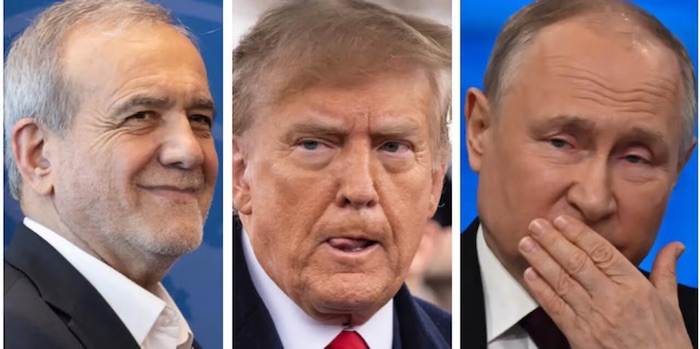
In a significant first of the seven-month long Iran war, Russian President Vladimir Putin has relayed to US President ` Donald Trump Tehran’s position on a possible resolution to the US-Iran war, according to the Kremlin. So far it is only the Kremlin readout of the two leaders’ Friday call which mentions the Iran proposal was conveyed, however it didn’t specify what they discussed in particular.Read more …
“During the October 9 telephone conversation with U.S. President Donald Trump, considerable focus was on prospects for settling the Ukraine crisis, while the situation surrounding Iran and various aspects of bilateral relations were touched upon as well,” Putin said in the statement. While the big news of the weekend is the major Trump-Putin diesel deal, if it is confirmed that Putin has begun directly mediating on behalf of Tehran, this marks a huge precedent and possible turning point in the Iran conflict.According to more on the call as it pertains to the Iran situation: Russia’s Interfax news agency quoted Kremlin spokesman Dmitry Peskov as saying Putin sent the message to Trump “in agreement with Iranian President Masoud Pezeshkian,” according to a Google translation. Other Russian media reports said Putin spoke to Trump by phone after the Russian leader met Pezeshkian on the sidelines of a summit in Turkmenistan.
Interfax didn’t elaborate on the specifics of how Iran sees the war — which began on Feb. 28 with U.S. and Israeli airstrikes on Iranian targets — coming to an end. There were reports early after Trump launching Operation Epic Fury that Moscow was willing to help negotiate peace between Moscow and Tehran; however, Moscow has largely been on the sidelines – and Qatar and Pakistan in particular have been the lead mediators.
Given Trump just did the controversial Russian diesel deal, this could be a real opening to finally bring the Hormuz Strait crisis to an end. Iran’s military has been flexing, even as the US Navy has boasted of record numbers of tankers having gotten through Hormuz. In just October alone, the Iranians have attacked eleven ships trying to traverse the strait.
President Trump continues to act as if all is well, writing in his latest Truth Social: “I settled 8 WARS, am close to ending or settling 2 more, got all of the Israeli hostages back, including the final 28, both living and dead, had hundreds of hostages, from countries all over the World, released and sent back home, won a war in Venezuela, and captured the violent dictator who so viciously ran that country, and stopped the number one state sponsor of terror, the Islamic Republic of Iran, from obtaining a Nuclear Weapon — AND MUCH MORE!”
🇷🇺🇺🇸 Putin has delivered Iran's position on ending the U.S.-Iran war directly to Trump, according to the Kremlin.
— Mario Nawfal (@MarioNawfal) October 10, 2026
It follows Putin's meeting with Iranian President Masoud Pezeshkian in Turkmenistan on Thursday, where the two leaders held talks during a regional summit.
Kremlin… pic.twitter.com/EhP5c34YeZ
“Yet, with all of that I, or the United States of America, did not get the Noble Peace Prize. WOW!” he added. But the Iran war, which the White House in the opening days kept promising would be swift and decisive, has devolved into a quagmire and Trump needs an acceptable exit before it limps on indefinitely, threatening to become his own Mideast ‘forever war’ legacy.
“The leaders discussed a major diesel deal, Ukraine peace negotiations, Iran diplomacy, and closer bilateral contacts during a 90-minute phone call ..”
• Putin and Trump Hold ‘Successful’ Talks (RT)
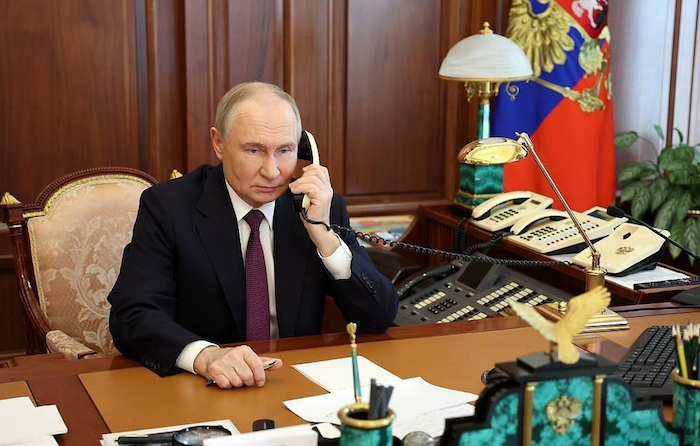
Russian President Vladimir Putin and his US counterpart Donald Trump held a 90-minute phone conversation on Friday, discussing the Ukraine conflict, a major agreement on Russian diesel supplies, the crisis surrounding Iran, and prospects for broader cooperation between Moscow and Washington.Read more …
Trump described the exchange as “highly successful,” announcing that Russia had agreed to supply millions of tons of diesel fuel to American and global markets in an effort to ease soaring energy prices. Kremlin foreign policy aide Yury Ushakov said the conversation was friendly and substantive, revealing that Trump had rearranged his schedule to speak with Putin following the Russian leader’s 74th birthday. Here are the key takeaways from the conversation, according to statements by both leaders and the Kremlin’s detailed readout.Millions of tons of Russian diesel for the US
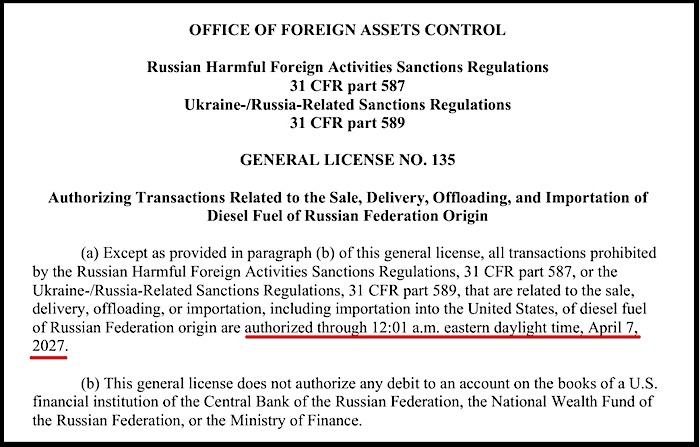
The most immediate result of the talks was a major energy agreement under which Russia will increase diesel exports to the US and global markets, potentially helping alleviate an international fuel shortage. Trump announced that Russia would immediately supply more than 300,000 tons of diesel, followed by another 500,000 tons in November and 1 million tons shortly thereafter. He also suggested that Russia could deliver an additional 3 million tons, depending on the condition of its refineries.Russian Deputy Prime Minister Alexander Novak subsequently confirmed that Moscow would begin lifting its diesel export restrictions ahead of schedule, reiterating the announced volumes and clarifying that exports could eventually reach 3 million tons per month, while assuring that Russia’s domestic market would remain fully supplied. The US Treasury also issued a temporary sanctions waiver covering Russian diesel shipments until April 7, 2027.
Trump predicted that the agreement, together with Washington’s claimed control of the Strait of Hormuz, would bring diesel prices down rapidly, particularly benefiting American farmers, truckers and consumers.
Kiev ‘derailed’ peace talks
The Ukraine conflict dominated much of the discussion, with Putin briefing Trump on the situation along the front line and Moscow’s response to Ukrainian “terrorist strikes” on infrastructure and civilian targets deep inside Russian territory. The Russian leader stressed that Moscow retained the initiative and remained committed to its objectives, while expressing readiness for a lasting diplomatic settlement.However, Putin said that Kiev had effectively sabotaged plans for the immediate resumption of trilateral negotiations involving Russia, Ukraine and the United States. During their previous conversation, the two leaders had discussed restarting the talks shortly after Russia’s State Duma elections. Ushakov said that Ukrainian drone attacks, including strikes targeting polling stations and election-related personnel, had fundamentally changed the situation.
Moscow would now reconsider when negotiations could resume, according to the Kremlin aide. Trump reportedly promised to convey Russia’s position to Ukrainian representatives meeting with US envoys Steve Witkoff and Jared Kushner in Miami.
Iran diplomacy ‘not exhausted’
Putin stressed that a negotiated settlement with Tehran remained possible, citing his October 8 meeting with Iranian President Masoud Pezeshkian in Turkmenistan.According to Ushakov, Putin noted that Washington and Tehran continued indirect contacts through Qatar despite their confrontational rhetoric. Moscow also reiterated its offer to accept highly enriched Iranian uranium as a potential way out of the nuclear deadlock. Trump welcomed Russia’s involvement in diplomatic efforts to resolve the crisis, Ushakov added.Melania’s humanitarian mission
Putin personally thanked First Lady Melania Trump for her efforts to reunite children separated from their families during the Ukraine conflict. The leaders also discussed the humanitarian situation in the town of Aleshki in Russia’s Kherson Region, agreeing that Russian human rights official Yana Lantratova would maintain direct contact with Melania’s office.Closer ties – and another summit?
The leaders expressed satisfaction with existing communication channels between their administrations, intelligence services and other government agencies, agreeing to maintain cooperation. Putin emphasized that Moscow appreciated the attention Trump and his team continued to devote to relations with Russia despite Washington’s domestic and Middle Eastern priorities.Asked whether the two presidents had agreed to meet in person, Ushakov said no specific summit had been discussed. However, he suggested that the upcoming APEC summit in China could provide an opportunity for another encounter if both leaders attended. The Kremlin aide also declined to disclose whether Washington had offered any concessions in exchange for Russia’s agreement to supply diesel, suggesting that American officials might provide further clarification.
Birthday wishes and hockey diplomacy
The conversation was initially proposed by the American side as an opportunity for Trump to personally congratulate Putin on his October 7 birthday. According to Ushakov, Witkoff contacted the Kremlin that day to convey greetings from Trump, as well as personal wishes from himself and Kushner, who expressed hope of meeting the Russian leader again soon.Officials subsequently arranged the call around Putin’s trip to Turkmenistan and the time difference between Moscow and Washington, with Trump postponing some previously scheduled engagements.The US president opened the conversation with birthday wishes and greetings from Melania. The leaders also found time to discuss sports, with Trump praising Russian hockey star Alexander Ovechkin’s contribution to the game.
Wrong move.
• Zelenskyy Urgently Attacks Russian Oil/Fuel Export Terminal (CTH)
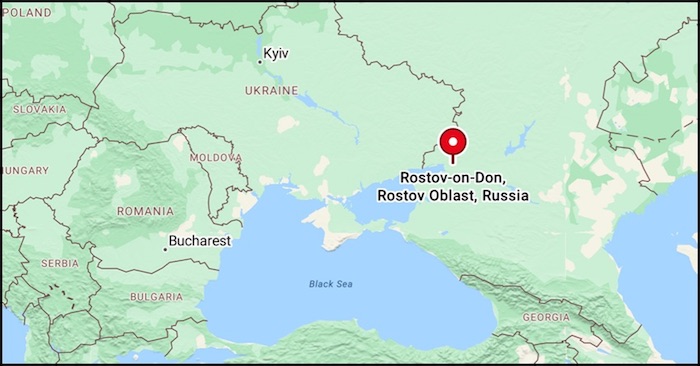
Immediately after President Trump announced a strategic energy supply deal with Russian Federation President Vladimir Putin, Ukraine President Zelenskyy ordered drone strikes against the Russian oil/fuel export terminal NZNP. The targeted terminal is located in the Zheleznodorozhny district of Rostov-on-Don, and it is used to transship petroleum products including diesel fuel for exports toward the west.Read more …
The intention of Zelenskyy’s targeting is obvious to anyone who has followed the conflict between Russia-Ukraine and the involvement of EU-NATO countries in keeping maximum conflict at the forefront. They do not want a strategic agreement between Putin and Trump. Hours before the Ukraine targeting of the NZNP export terminal, President Trump announced a strategic agreement with President Putin for refined diesel exports over the next six months.This Trump-Putin agreement was against the interests of Zelenskyy and specifically against the interests of his benefactors in London, because Putin and Trump are working outside the “western market pricing system”. To fully understand what is happening, I strongly suggest you spend the time to read my previous articles on the dynamic as outlined below in sequence.
• First, start with understanding why Europe’s financial system is in conflict with Russia. In his own words Vladimir Putin explains why EU-NATO must have an expanded war with Russia. It has nothing to do with political ideology, and everything to do with control of money.
• Second, understand how the western control of the “market price” of commodities is used to manipulate political outcomes. This ties directly into the first article about why London must control the money and combat Russia. In this second article three weeks ago, CTH outlined a very predictable path that was most likely. The Trump-Putin strategic alliance is EXACTLY what we expected to happen.
• Third, you can actually move beyond the current moment into the future by looking at the Lukoil story. When you combine what Putin has said with the strategic agreement with Trump now in place you can clearly see how Lukoil is going to end up being a wedge to drive out London financial influence and free the USA from this corrupt market control system.
Once you understand those three previous outlines, then you understand exactly why the U.K. needs Zelenskyy to stop this agreement between President Donald Trump and Russian President Vladimir Putin. London’s entire market control system is at risk. It’s all connected.
º Discounted potash from Belarus, sold to the U.S. at discount (non-market) prices. [Canada smacked.]
º Discounted diesel fuel from Russia, sold to the U.S. at discount (non-market) prices. [London smacked.]
These are two recent examples of Trump working around the traditional western system of financial control within the “market system”. These are also two transactions that cut out the middlemen completely. In essence, stand back and look at what Trump is doing here, it’s the same reason BRICS exists; it’s the BRICS argument against western financial control.
Trump is aligned ideologically with the BRICS position on energy exploitation. However, it’s actually more consequential than just an alignment of interests. The biggest economy in the world, the economy that establishes the currency used in most global trade, is now aligning in common purpose against the financial schemes of London, while RETAINING the dollar as the central trade currency.
Trump is telling BRICS there’s no reason to replace the dollar, we can just replace the manipulation.
London must be going bananas, and Zelenskyy is their tool to stop Trump.
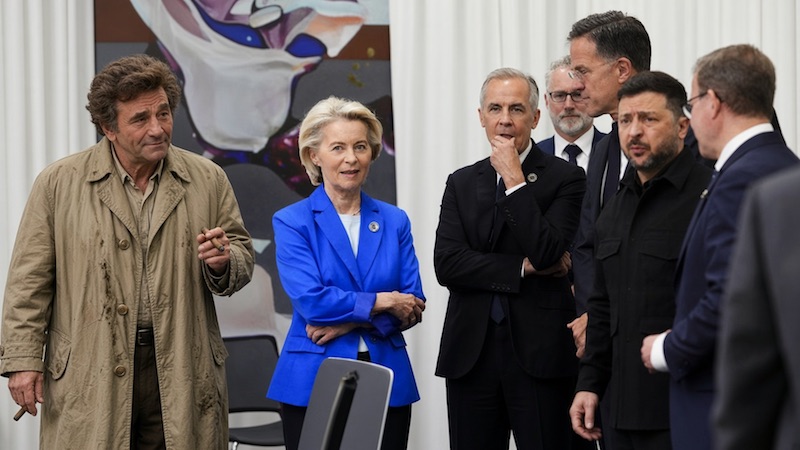
“After Zelensky Ignored Six Pleas To Stop Refinery Strikes..”
• Trump Says “Time For Ukraine To Get A New Leader” (ZH)
As he was boarding Air Force One on the way to Tennessee this morning, President Trump made his feelings clear over how he feels about Ukrainian President Zelensky. President Trump stated that “it’s time for Ukraine to get a new president”, criticizing Zelensky for bombing Russian oil refineries and accusing him of failing to end the war. “I suggest they get a new leader who can make a deal.”Read more …
One day after announcing plans to buy more than a million tonnes of diesel from Russia, Trump said the Ukrainian strikes were driving up global fuel prices and creating “problems for the world”. “He wants to make problems for our farmers, our ranchers with diesel fuel because Russia supplies a large portion of the diesel fuel throughout the world. And we told them ‘Do whatever you want, but don’t hit the diesel fuel, because this is a big problem, a big shortage’.”“And what does he do? He goes and hits the diesel fuel.” Asked about the strikes, he said of Zelensky: “He’d better damn well stop.”
.@POTUS on Ukraine: "You know what I suggest? I suggest they get a new leader who could make a deal because he could've made many deals and for some reason he never does… I think it's time for Ukraine to get a new President." https://t.co/pyBAmq9E7o pic.twitter.com/WoVG0HUazA
— Rapid Response 47 (@RapidResponse47) October 10, 2026
* * *Friday’s diesel deal between Trump and Putin wasn’t only about diesel. It was also about Kyiv.
Hours after Zelensky accused Washington of using Ukraine’s negotiators as a “smokescreen” for a backroom deal with Moscow, Axios reported that Trump decided to let Russia sell diesel after Zelensky ignored half a dozen US requests to stop attacking Russian oil refineries. The alleged source was a US official with direct knowledge, who did not hold back:
“Zelensky is misreading the room. By continuing to hit refineries, he is eroding the good will that he has built with Trump over the last six months.” In other words, the sanctions waiver was as much a message to Kyiv as a gift to Moscow. So how did we get to this latest geopolitical twist, what is Trump actually got for lifting sanctions (spoiler: less than nine days of fuel), and why is the deal is on a collision course with the one Ukrainian policy Kyiv says it won’t give up. Let’s dig in.
“Half A Dozen” Requests The backstory is familiar to regular readers. One month ago, Trump – freaking out about soaring diesel prices – told reporters that Zelensky “has to stop knocking out diesel fuel in Russia,” and a day later he announced a truce that never really happened:
A few hours later, Kyiv kept hitting refineries anyway. Just last weekend Zelensky vowed to hammer more of them, and on Thursday Ukrainian drones set Russia’s largest refinery at Omsk ablaze, more than 1,500 miles from the border. Axios notes the strikes were “highly effective and caused an energy crisis in Russia,” prompting Moscow’s diesel export ban, which then “added more pressure to global diesel markets under strain from the war in Iran.”
The core disagreement is about symmetry. Zelensky told Trump, Witkoff and Kushner that he would stop hitting Russian refineries if Russia stopped hitting Ukrainian power plants. Trump wanted Ukraine to stop unilaterally, according to the official, and “didn’t see the attacks on refineries as equivalent to Russian strikes on Ukraine’s power grid.” Or, as the official put it: “The attacks on the refineries cause pain in Russia, but it causes pain for the U.S., too.”
Then there is what happened in Miami. During eight hours of talks on Friday, Witkoff and Kushner told the Ukrainian delegation that Trump was expected to call Putin and lift sanctions on Russian diesel, because Kyiv had ignored repeated requests on strikes “which were directly affecting U.S. consumers.” A Ukrainian official claimed the envoys also threatened that Trump could cut Ukraine off from US intelligence if it kept ignoring him. The US official denied that, saying the envoys merely reminded Kyiv that the US provides munitions and intelligence, so Ukraine “shouldn’t take actions that hurt American consumers.” That is a fine distinction, and Kyiv is unlikely to see the difference.
“There is no shame in armistice when the alternative is Armageddon.”
• Europe and Russia Flirt with Nuclear War (J.B. Shurk)
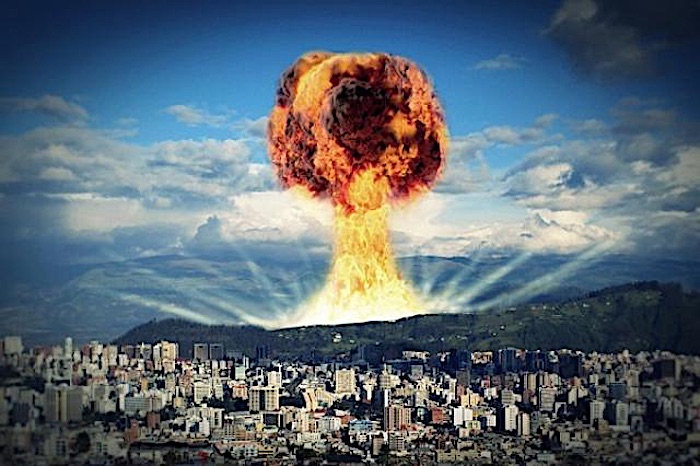
War is ugly and awful. People who experience it generally detest it. In movies, soaring soundtracks make falling buildings and gunfights seem exciting. In real life, people feel excruciating physical and emotional pains that never really fade. It’s Hell on Earth.Read more …
After WWI, nations around the world celebrated Armistice Day on November 11, which later became known as Remembrance Day in many countries. Remembering the dead was only half of the holiday’s purpose; it was equally important for the survivors of the Great War to remember the costs of total war, so that mankind would never unleash such cataclysm again.We did not sufficiently remember the costs of global war, and twenty years later, humanity endured a Second World War far more deadly than the First. After WWII, there was a movement in the United States to honor all veterans — both living and dead — on Armistice Day. President Eisenhower signed into law a bill renaming Armistice Day as Veterans Day, and we Americans have observed the holiday ever since.
We should honor our military veterans every day. By forgetting about Armistice Day, though, we stopped remembering the horrors of war. November 11 was once a day for survivors to say, “Never again.” It transformed into a holiday that celebrates heroes and sacrifice, while often burying the most important warning from past generations to the present: Do not repeat our folly.
War is tragedy, not entertainment. Although I wish that we humans had longer memories when it comes to the psychological toll of mass killing, we barely know peace for half-a-generation before descending into Hell once again. Wars between belligerents who see no alternative to either victory or death are cruel, bloody affairs.
Despite historical revisionism that often casts the use of nuclear weapons on Hiroshima and Nagasaki as indefensible, the enormous loss of American marines, sailors, and soldiers on scattered Pacific islands proved that the Japanese would continue fighting to the last man before entertaining any notion of surrender. Both the Balkan Wars before WWI and the Yugoslav Wars following the Cold War were marked by ethnic cleansing, rape, and mass murder. Every Islamic war against Israel seeks the Jewish state’s eradication; therefore, every war Israel fights is life or death for the nation.
The war in Ukraine has taken on a similar zero-sum seriousness. Ukraine’s wartime president, Volodymyr Zelenskyy, has repeatedly insisted that there can be no peace until all formerly Ukrainian territory now claimed by the Russian Federation — including Crimea, which Russia has controlled since 2014 — is returned to Ukraine. Russian President Vladimir Putin has said this demand is an impossibility.
Ukraine desires membership in the European Union and the U.S.-led North Atlantic Treaty Organization; Russia went to war in Ukraine, in part, to keep NATO’s thirty-year encroachment from reaching the entirety of its western borders. Ukraine and European members of NATO have described the war as an existential threat to all of Europe. Russian politicians, academics, and pundits similarly describe the war as an existential threat to Russia’s future survival.
Both sides seek what the other refuses to give. A dangerous stalemate now exists. Although accurate numbers are difficult to obtain, both Russia and Ukraine claim to have inflicted hundreds of thousands of casualties upon the other. Millions of Ukrainians have been displaced, and Russia’s border regions have endured sustained attacks.
Ukrainian authorities continue to press-gang young men into military service. European Union countries that welcomed hundreds of thousands of fleeing Ukrainians back in 2022 are beginning to insist that young Ukrainian men be sent back home to fight. European and American politicians have suggested that Ukraine’s legal age for conscription should be lowered and that Ukrainian women should be forced into combat, too. Martial-law-President Zelenskyy has admitted that his country is struggling to replenish lost troops.
In Russia, there is less concern about fielding troops for what the government calls its “special military operation” in Ukraine. There is widespread concern, however, that the military will have considerable difficulty defending the country effectively should E.U.-NATO expand the conflict beyond Ukraine — especially if Russia is forced to defend its Kaliningrad exclave situated between Lithuania and Poland.
European politicians and military personnel have argued that taking Kaliningrad would effectively cut Russia off from the Baltic Sea and tighten the noose of a cordon sanitaire formed around Russia’s European flank. Although the largest country in the world by territory, Russia’s moderate population of one-hundred-fifty-million puts it at a disadvantage against a European population three times its size.
With real troop losses and the threat of future troop losses weighing heavily on the minds of decision-makers in Europe and Russia, what once was unthinkable has become more openly discussed: the use of nuclear weapons on the continent. For eighty years, the taboo against atomic warfare has been so great that the United States and the Soviet Union fought a half-century Cold War in the shadows in an effort to avoid direct confrontation. However, as Russia, Ukraine, and E.U.-NATO struggle for leverage and deterrence, the likelihood of nuclear conflict is growing.
Despite the fact that Ukraine is not a part of NATO, military representatives from all of NATO’s thirty-two members gathered in Kyiv this week. Admiral Giuseppe Cavo Dragone, the chair of the NATO Military Committee, announced, “We are here in full strength with a clear message: The bond between NATO and Ukraine is stronger and stronger.”
“His policy cupboard is bare, his legacy shredded. Nothing “miraculous” happened! Younger worshippers are (gasp) doubting his divinity!”
• The Last Revolution of Barack Obama (Scott Pinsker)
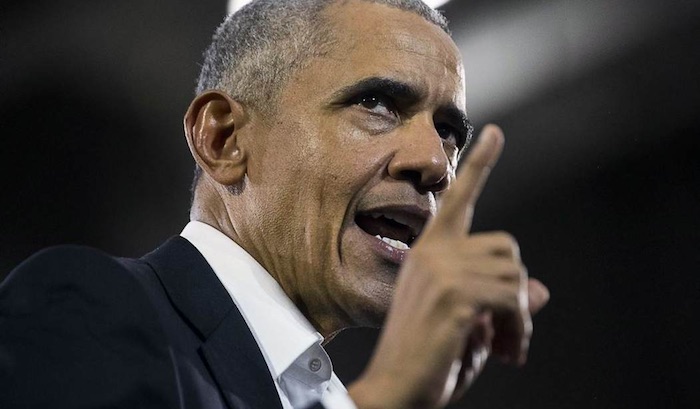
Well, of course he has a gargantuan ego. All presidents have gargantuan egos. But even by presidential standards, his loomed like the Goodyear blimp. Nor was it a secret. Politico wrote about it. So did the LA Times. Outlets from Germany to South Korea wrote about it, too. His messianic aspirations — and unshakeable faith in his own divinity — gained him millions of converts.Read more …
For a while, at least. At the height of their zealotry, his worshipers expected the literal moon and stars. Because he was their Lightworker — a Christ-like figure who’d correct the crooked, heal the sick, and fundamentally transform America. So yeah, their expectations were pretty frickin’ high. How high? This painting was proposed to hang in New York City’s Union Square to celebrate the 100th day of his blessed presidency:
I guess the hypocrites on the left forgot about this 2012 painting by
— Hatton, America is back (@jnottah) April 14, 2026
Michael D’Antuono, featured an exhibit called " Artists on the stump – the road to the White House 2012" pic.twitter.com/wj4NokXATm
In the beginning, his worshipers groveled in homage before him. “This is bigger than Kennedy. [Obama] comes along, and he seems to have the answers. This is the New Testament,” gushed Chris Matthews. “He is not the Word made flesh, but the triumph of word over flesh,” wrote Ezra Klein. “The event itself is so extraordinary that another chapter could be added to the Bible to chronicle its significance,” fawned Jesse Jackson, Jr.And to be fair, the Lightworker wasn’t exactly understated when it came to setting expectations. Remember what he predicted for his glorious reign: “I am absolutely certain that generations from now, we will be able to look back and tell our children that this was the moment when we began to provide care for the sick and good jobs to the jobless. This was the moment when the rise of the oceans began to slow and our planet began to heal.”
Yet today, Barack Obama’s prophecies remain unfulfilled. Our planet didn’t heal — it’s worse than ever! Even his signature legislation, Obamacare, is teetering on the brink of insolvency, and our healthcare system is still an ungodly mess. Why do you think handsome left-wing activists are murdering healthcare execs in the streets? It’s certainly not because Saint Obama solved the problem.
He promised us the Land of Milk and Honey — and led us to the land of cow feces and bee stings. Curiously, the one social problem he seemed ideally equipped to help, America’s lingering racial discord, got a whole lot worse. Instead of bridging our racial divide, Obama pushed us farther apart. From The New York Times:
“Seven years ago, in the gauzy afterglow of a stirring election night in Chicago, commentators dared ask whether the United States had finally begun to heal its divisions over race and atone for the original sin of slavery by electing its first black president. It has not. Not even close.
“A New York Times/CBS News poll conducted last week reveals that nearly six in 10 Americans, including heavy majorities of both whites and blacks, think race relations are generally bad, and that nearly four in 10 think the situation is getting worse. By comparison, two-thirds of Americans surveyed shortly after President Obama took office said they believed that race relations were generally good.
“The swings in attitude have been particularly striking among African-Americans. During Mr. Obama’s 2008 campaign, nearly 60 percent of blacks said race relations were generally bad, but that number was cut in half shortly after he won. It has now soared to 68 percent, the highest level of discontent among blacks during the Obama years and close to the numbers recorded in the aftermath of the riots that followed the 1992 acquittal of Los Angeles police officers charged in the beating of Rodney King. ”
Donald Trump is now a two-term president. All of Obama’s executive orders have been undone. His Iran deal was scrapped, his Green Energy policies vacated. His vice president, Joe Biden, was humiliated and exiled from politics. Every promise he made — all of his hallowed prophecies — has collapsed like the walls of Jericho. He has a nice, shiny Nobel Peace Prize to look at — and not much else.
His policy cupboard is bare, his legacy shredded. Nothing “miraculous” happened! Younger worshippers are (gasp) doubting his divinity! So what’s a would-be messiah to do when his prophecies fail? He finds a new prophecy to fulfill. Welcome to the last revolution of Barack Obama.
The ex-president’s decision to campaign with Abdul El-Sayed, the DSA-aligned Senate candidate in Michigan, raised plenty of eyebrows. Why El-Sayed? Why spend your political capital on the most controversial, polarizing candidate of the 2026 midterms? Why not someone else? Why not Troy Jackson in Maine? Why not tour the other must-win states? Those candidates would love to schedule rallies and fundraisers with the ex-president, too.
What’s so special about Abdul El-Sayed? He can do what the others cannot: El-Sayed represents the fulfillment of the Lightbringer’s legacy. Obama is, was, and will forever be a left-wing revolutionary — but he’s a realistic revolutionary. Everything he does is calculated; every move is deliberate.
Earlier this week, we outlined how shrewdly Obama triangulated on gay marriage — opposing it for religious reasons in 2008, then supporting it for religious reasons in 2012. He proceeds with caution, is mindful of political minefields, and is deathly afraid of blowback.
Take what’s given. Don’t overreach. Strike when the iron is hot. Because “The arc of history is long, but it bends towards justice.” Which means time is always on Obama’s side. Call it destiny, call it fate, but as long as the Democrats don’t self-destruct, the future is theirs. Obama believes in the eventual superiority of his beliefs just as much as he believes in himself.
As a realist, Obama knew his presidency wouldn’t take us to the Promised Land — and so, he didn’t really try. Instead, he used his presidential platform to mainstream racial grievances. He had to, because America is a flawed, racist, evil country — and a reckoning was long overdue. Before, these racial ideas were on the periphery; post-Obama, they were Democratic Party orthodoxy. Today, even the moderates believe it.
It’s too bad.
“If Democrats have everything going for them this cycle, they should be rolling in cash, not begging for it. This doesn’t jibe with the polling that shows them ahead.”
• House Dems’ Dire Donor Warning Hints at Trouble Before Midterms (Margolis)
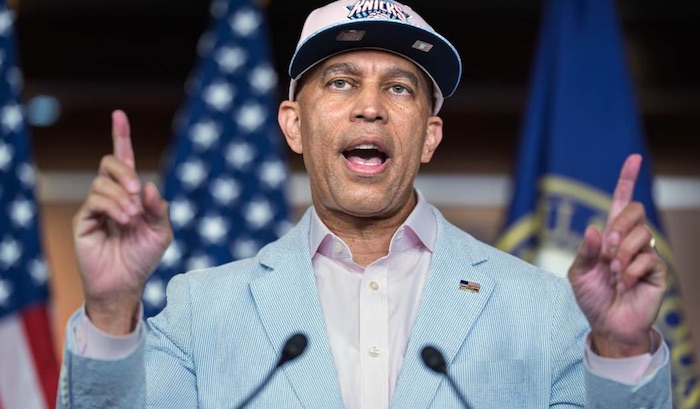
With less than a month to go before the midterms, the Democratic Congressional Campaign Committee is begging donors for money. That’s a strange place to be for a party that supposedly has everything going its way. If the polls are right, and Democrats have all the energy and momentum heading into November, the checks should be writing themselves. So why is the party struggling to raise money?Read more …
According to a Politico report, DCCC Executive Director Julie Merz sent a memo to donors on Friday, setting a hard deadline for them to cough up $17 million. The committee wants the cash in hand by October 22 so it can compete in a handful of districts that Republicans carried easily in 2024. Merz told donors the money is needed “to take advantage of the opportunities we have” outside of the core battlefield. And if the donors don’t deliver? Merz warned that the party “could be leaving winnable races on the table.”Democrats have admitted all cycle that Republicans are outraising them, but until now they’ve refused to attach a dollar figure to the hole they’re in. That makes Friday’s memo a surprising outlier, and a revealing one. Merz assured donors that committee members “remain confident that we will win back the majority in 25 days,” and then promptly explained why they should be nervous. “Here’s the tough reality though: the Republican ecosystem has amassed a massive war chest that is significantly greater than ours and is spending it,” Merz wrote.
Confident parties don’t usually send out memos like that. Merz spent significant portions of hers on four districts where the committee is desperate for more money, and President Donald Trump won every one of them by double digits in 2024. He carried Florida’s 27th District by 14.6 points, Nevada’s 2nd District by 13.9, and South Carolina’s 1st District by 13. In New York’s 21st District, he won by 20.7.
The DCCC insists its internal polling shows all four races within reach. It also concedes that the GOP’s cash advantage, especially the money sitting in the Trump-aligned super PAC MAGA Inc., will make it harder to win those seats and other long shots. Merz even name-dropped a few more deep-red districts she called “worthy of additional investment in this environment,” including the seats held by Rep. French Hill (R-Ark.) and Rep. Richard Hudson (R-N.C.), who happens to chair the National Republican Congressional Committee.
Meanwhile, the money gap has created headaches for both House and Senate Democrats, who can’t agree on where to spend the limited resources they do have. A party riding a wave doesn’t have that problem. The NRCC wasted no time mocking the memo.”No amount of money fixes candidates voters don’t want,” NRCC spokesperson Mike Marinella said in a statement. “These seats are staying red, and Republicans are on offense across the map.”
Still, something doesn’t make sense to me. If Democrats have everything going for them this cycle, they should be rolling in cash, not begging for it. This doesn’t jibe with the polling that shows them ahead. On top of that, the GOP is registering more new voters in swing states. Something isn’t adding up.
Blond woman. Modeled after Leavitt.
• Trump Picks New Press Secretary (Elizabeth Troutman Mitchell)
The job of White House press secretary has been offered to Katie Zacharia, a White House official confirmed to the Daily Signal Friday. Zacharia will replace Karoline Leavitt, who left the position in August to spend more time with her two children. Trump confirmed that Zacharia would fill the post Friday afternoon.Read more …
“It is my Great Honor to have just appointed, as Press Secretary, Katie Zacharia,” he said. “Katie currently serves as Senior Communications Advisor to Truth Social (Trump Media & Technology Group), where she has been outstanding! A native of California, Katie previously served as Spokesperson and Deputy Assistant Secretary for Public Affairs at the Department of Homeland Security.”
The job of White House press secretary has been offered to Katie Zacharia, a White House official confirmed to the Daily Signal Friday.
— Daily Signal (@DailySignal) October 9, 2026
If she accepts, Zacharia will replace Karoline Leavitt, who left the position in August to spend more time with her two children.… pic.twitter.com/Q5mRigJk79
“Katie is a distinguished Graduate of Pepperdine University, and the Pepperdine Caruso School of Law, an attorney, and a frequent Commentator on outlets, including Fox News and Newsmax,” he continued. “She was previously involved in my Campaigns, assisting in key Swing States, where we won 7 out of 7.” Trump praised her “unblemished record of support.”“She is, likewise, a devoted fan and member of MAGA!” he said. “I am confident that Katie will deliver strong results for our Country as the next White House Press Secretary, as she has the respect of, and will work fantastically with, the Media, the American People, and my Administration. Katie is replacing the fabulous Karoline Leavitt, who did a fantastic job as Press Secretary.” Zacharia will play an important role in speaking for the administration in the weeks leading up to midterm elections. Zacharia briefly served as spokeswoman at the Department of Homeland Security in early 2026.
“I joined DHS with a genuine passion for supporting POTUS in his decisive and effective policies to secure our homeland, be a voice for the precious Angel Families, and an advocate for the men and women of ICE,” she said on X at the time of her departure. “I look forward to continuing that work in other capacities. God bless America, God Bless President Trump, and I am grateful to be alive during the presidencies of @realDonaldTrump!”
I joined @DHSgov with a genuine passion for supporting @realDonaldTrump @POTUS in his decisive and effective policies to secure our homeland, be a voice for the precious Angel Families, and an advocate for the men and women of @ICEgov.
— Katie Zacharia (@KatieZacharia) March 31, 2026
I look forward to continuing that work in… pic.twitter.com/Zitf36crsE
She is general counsel at Fix California, an organization founded by Richard Grenell to promote conservatism in the state. She regularly appears on Fox News. Zacharia also serves as senior communications advisor at Trump Media and Technology Group and Truth Social. She is a graduate of Pepperdine University and Pepperdine Caruso Law School. She is a mother of four.Zacharia interned for the White House and the Republican National Committee in 2006.
Not their society.
• Germany: 87% of Suspects With An Arrest Warrant Are Foreigners (RMX)
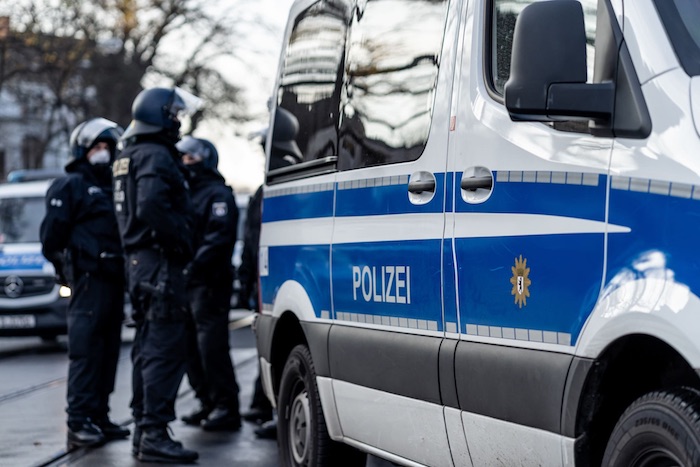
“The figures speak for themselves: The overwhelming majority of criminals wanted on arrest warrants do not have a German passport.” More than 148,000 people remain subject to outstanding arrest warrants in Germany, and only 11.2 percent of them hold exclusively German citizenship, and overall, 87 percent of arrest warrant suspects are foreigners, according to figures the Federal Ministry of the Interior provided in response to a parliamentary inquiry.Read more …
Foreign nationals account for 87.3 percent of the total of suspects wanted for arrests, while another 1.5 percent are German citizens who also hold a second nationality. The data is already adding to the debate about mass immigration and criminality, especially in a country where the amount of violence, rape, and serious offenses are disproportionately committed by its foreign population. Welt newspaper obtained the ministry’s reply to a question from Alternative for Germany (AfD) lawmaker Sebastian Münzenmaier.Münzenmaier told Welt am Sonntag: “The figures speak for themselves: The overwhelming majority of criminals wanted on arrest warrants do not have a German passport.” He called for a “rigorous change of course” that would include permanent and complete border controls, the immediate termination of the stay of foreign criminals, and the enforcement of prison sentences in the country of origin.
While German citizens form the single largest group, at 16,671, Germany also features a population where 81 percent of people hold exclusively German citizenship. Romanian nationals follow closely with 16,123, then Polish nationals with 12,721, Georgian nationals with 6,869 and Turkish nationals with 6,696.
Alexander Throm, the domestic-policy spokesman for the Christian Democratic Union (CDU) parliamentary group, said: “Every open arrest warrant poses a security risk.” He added that “the high proportion of foreign offenders, including many from other EU countries, shows that action must be taken.”
Throm also noted that border controls introduced in September 2024 have done more than limit illegal migration: “They have not only curbed illegal migration. Since their start in September 2024, over 17,500 people have also been apprehended at our borders with outstanding arrest warrants.”
Heiko Teggatz, chairman of the German Police Union, called the total worrying and said it “of course, represents a security policy problem.” State police forces, he told the paper, rarely have the staffing to mount dedicated searches; most arrests occur as a “chance hit or bycatch.” The union has long cited personnel shortages as a central obstacle to improved public safety.
Marcel Emmerich, the Greens’ domestic-policy spokesman, agreed that the volume of open warrants constitutes a serious problem, “especially when it comes to dangerous persons, extremists, violent or sex offenders.” However, Emmerich rejected broader border checks, noting: “Instead of hoping for random hits at border controls, targeted searches are needed, especially for dangerous perpetrators of violence, threats and people from the field of politically motivated crime.”
Sebastian Fiedler, the Social Democratic Party’s domestic-policy spokesman in the Bundestag, cautioned against reading the aggregate figure as evidence of 148,000 undetected dangerous offenders still inside the country. “A significant portion of this is due to substitute prison sentences for unpaid fines. In North Rhine-Westphalia, more than half of all outstanding arrest warrants in total were such cases, he said. Warrants can also remain active against people who have already left Germany or been deported, so that any remaining sentence can be enforced if they return.
“For example, they will continue to be put out to tender for a search so that if they re-enter the country, a remaining prison sentence can be enforced,” Fiedler said. While the crimes may include many petty offenses, the totals are stark. German nationals represent a minuscule share of the open arrest warrants in a country where 81 percent of the country is made up of German nationals.
“Tulsi explains why Islamic theology is antithetical to freedom and completely against American values.”
• Tulsi Gabbard Warns About Modern Surveillance State and Islamic Extremism (CTH)
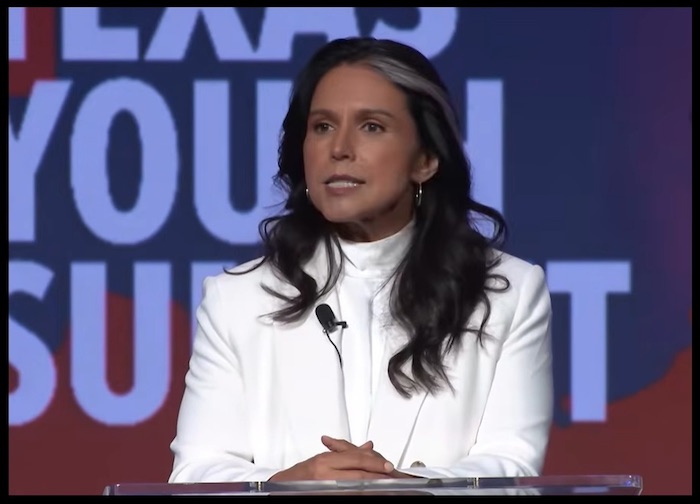
Former Director of National Intelligence Tulsi Gabbard delivered a very strong speech to the audience of the Texas Youth Summit about the growing surveillance state. As DNI Tulsi Gabbard has direct personal knowledge of this issue. It is very well worth listening to this speech in full.Read more …
The second half of the speech touches upon the second concern noted by Gabbard, the spread of Islamist ideology and how it is against the core foundation of our constitutional republic. Tulsi explains why Islamic theology is antithetical to freedom and completely against American values. Again, exceptionally strong remarks from the former head of the entire U.S. intelligence apparatus about the threat of Islamic extremism. WATCH:
“Make no mistake about it, this is what a party does when it knows its candidate can’t win on the merits.”
• Are Democrats Trying to Steal the Election for El-Sayed? (Matt Margolis)
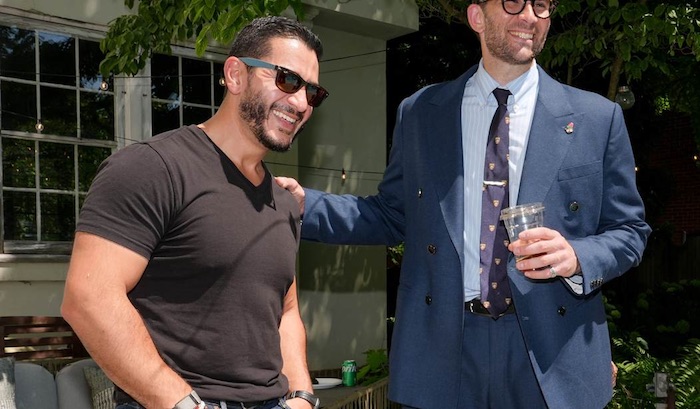
Michigan is a prime flip opportunity for the GOP, and it looks as if the Democrats are engaging in shenanigans to try to steal it.Read more …
Start with the motive. Republican Mike Rogers and Democrat Abdul El-Sayed are fighting to replace retiring two-term Sen. Gary Peters (D-Mich.), and recent polling shows the contest in a dead heat. The last two surveys that RealClearPolitics tracked put El-Sayed ahead by a single point, well inside the margin of error. Cook Political Report rates Michigan as the only Democrat-held seat in the toss-up column, in a state President Donald Trump carried in two of his three runs.
Democrats did this to themselves, frankly. The seat became a pickup opportunity the moment Michigan Democrats passed over the more electable candidate, Haley Stevens, and nominated a socialist radical instead. Senate Minority Leader Chuck Schumer (D-N.Y.) obviously doubted his party could hold Michigan with El-Sayed on the ticket. Then came Thursday night’s debate, and it did not go well for El-Sayed.Rogers dominated, exposing his opponent’s hypocrisy and dishonesty on Israel, terror ties, his foreign property, and health care. El-Sayed faced questions about his ties to terrorist groups, about supporters who cheer Hamas, Hezbollah, and al-Qaeda, and about his mother’s role in wiring money to Osama bin Laden. Social media reaction overwhelmingly scored it for Rogers, and the verdict wasn’t limited to Republicans.
“Rogers showed up tonight and exceeded expectations,” wrote Michael LaRosa, a former spokesman for Jill Biden. “He spoke with absolute moral clarity about who Abdul El-Sayed actually is, he hit the right notes clearly and forcefully, and he didn’t flinch when going in on the attack.”
There’s more evidence of a campaign in trouble. El-Sayed plans to campaign with Barack Obama later this month, a sign of desperation and an acknowledgment that black voters aren’t sold on him. A candidate cruising to victory in a state Democrats have held for years doesn’t need that kind of rescue mission four weeks out.
Naturally, Democrats are panicking and resorting to rigging. On Friday, the Republican National Committee sued Lansing election officials, accusing them of illegally packing poll worker positions with Democrats, shutting Republicans out, and hiding election records from the public.
The law here leaves no room for creative interpretation. Under subsection (2) of MCL 168.674, “The board of election commissioners shall appoint at least 1 election inspector from each major political party and shall appoint an equal number, as nearly as possible, of election inspectors in each election precinct from each major political party.” Now look at what Lansing did.
The city appointed 140 Democrats and just 71 Republicans to Election Day poll worker slots, handing Democrats a nearly two-to-one edge. Officials can’t claim they had nobody to pick from, because Republicans gave the city a list of qualified candidates. When Republicans asked to review the poll worker records, which should be open to the public, Lansing officials refused. The GOP tried repeatedly to resolve the problem with the city before going to court, and got nowhere.
“Democrats stacked the deck, pushed Republicans aside, and then tried to hide the paper trail,” RNC Chairman Joe Gruters said. “That’s exactly why voters are losing confidence in our elections. Michigan has become ground zero for election integrity violations, and the RNC is watching this state like a hawk. When left-wing officials break the rules, we’ll take them to court and stop them.” The RNC says it wants transparency restored, bipartisan oversight guaranteed, and Michigan election officials held to the statute as written.
Beyond the poll workers scheme, Democrat Secretary of State Jocelyn Benson is fighting to uphold a rule requiring electronic poll-book files to be deleted within seven days after an election is canvassed and certified — a policy Republicans argue could erase evidence needed to investigate suspected voter fraud. Republicans joining the court challenge contend that federal law requires covered election records to be preserved for 22 months, raising questions about whether Michigan’s deletion rule would undermine scrutiny of disputed elections.
“Why is Jocelyn Benson fighting to delete election records after just seven days when federal law requires them to be preserved for 22 months?” asked Gruters. “The RNC has been fighting this election record purge from the start, and now we’re taking that fight directly into court. Michigan voters deserve transparency and accountability, not secrecy and less oversight.”
Make no mistake about it, this is what a party does when it knows its candidate can’t win on the merits. It stops trying to persuade voters and starts managing the process instead. Republicans are right to fight this in court now, because once the election is over, the damage is done and the evidence is gone.
“The lower courts held that Trump waited too long to file it under the RICO Act’s time limit.”
• Trump Petitions Supreme Court to Reinstate Lawsuit Against Clinton, DNC (ET)
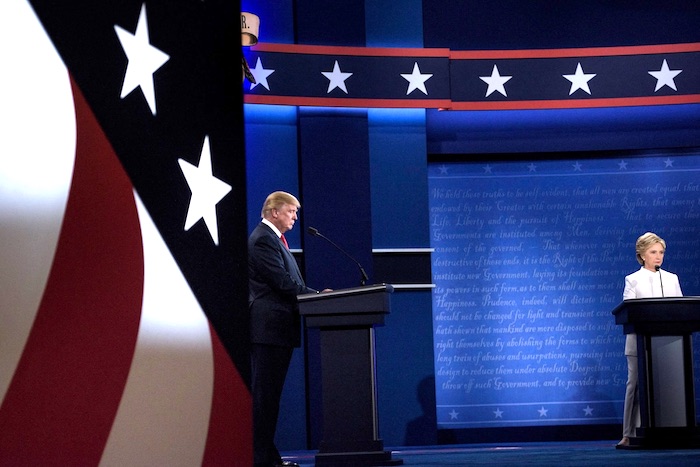
President Donald Trump asked the Supreme Court on Oct. 9 to revive his dismissed civil lawsuit against Hillary Clinton, the Democratic National Committee (DNC), and others. The president alleges they conspired to create and spread a false story that his 2016 campaign colluded with Russia.Read more …
Lower courts rejected the case and ordered Trump and one of his attorneys, Alina Habba, to pay almost $1 million in sanctions. The trial judge and the appeals court called the lawsuit “frivolous,” saying it had no legal merit and appeared aimed at political grievance rather than a valid claim. Trump is now asking the nation’s highest court to review the appeals court’s decision upholding both the dismissal and the sanctions.While he was out of office after losing the 2020 election, Trump initiated the lawsuit in federal court in Florida in March 2022, under a federal racketeering law known as civil RICO. That law allows private individuals to seek damages when they claim someone engaged in a pattern of illegal activities, such as fraud or conspiracy.
The lawsuit targeted Clinton, the DNC, former British spy Christopher Steele, former FBI Director James Comey, and more than two dozen other people. It centered on the so-called Steele dossier, which was opposition research funded by Clinton’s campaign that alleged the Russian government had compromising material on Trump.
Trump’s lawsuit touches on topics covered by two earlier government investigations. Former special counsel Robert Mueller’s 2019 report found no criminal conspiracy between the Trump campaign and Russia. Former special counsel John Durham’s 2023 report criticized the FBI’s handling of its 2016 counterintelligence investigation—codenamed Crossfire Hurricane—into possible Trump campaign contacts with Russia. Durham said the FBI relied too much on uncorroborated tips, including material connected to the Clinton campaign.
Those government reports dealt with criminal and counterintelligence questions. By contrast, Trump’s civil lawsuit is a private damages case governed by different rules. The lower courts held that Trump waited too long to file it under the RICO Act’s time limit.
Dossier Source Scrutiny
Steele’s dossier included claims that the Russian government possessed a salacious video of Trump at a hotel in Moscow. His main source was later revealed to be Igor Danchenko, who was based in the United States and has been investigated by federal agents over possible ties to Russian intelligence.Attorneys for Trump and Habba wrote in the new petition that Supreme Court review of the case is necessary to protect the institution of the presidency. They said that the decisions by the lower courts reflect “a deeply troubling trend of federal courts using sanctions and disciplinary threats to punish the president and his lawyers for legitimate legal positions that those courts (erroneously) reject.” “Treating contested advocacy as misconduct corrodes our legal culture, deters representation of controversial clients, and makes constitutional adjudication depend on counsel’s willingness to risk personal liability,” they said.
They alleged in the lawsuit that in the months leading up to the 2016 election, Clinton conspired with allies to discredit him with a “false narrative” that he and his campaign engaged in collusion with Russia, according to the petition. The suit alleged several claims, including racketeering and a “conspiracy to commit injurious falsehood.”
“Instead, the Nobel Committee gave the award to a soapbox preaching nepo baby who made a fifth grade-level PowerPoint presentation about how the world was going to melt if we didn’t purchase the indulgences (i.e. carbon credits) he was peddling ..”
• The Nobel Peace Prize: An Exercise In Moral Depravity (A.J. Christopher)
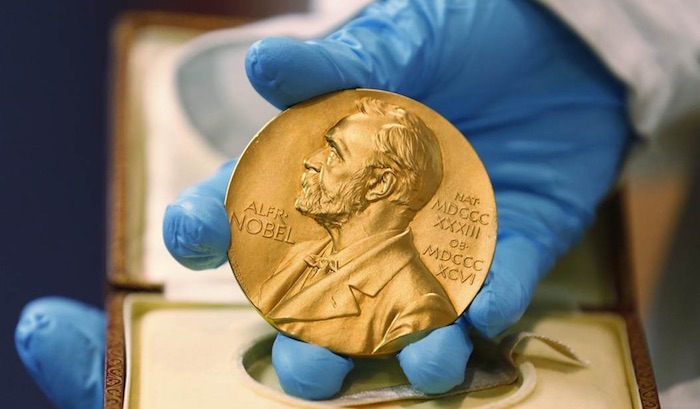
Who was Irena Sendler? If you don’t know, don’t worry. Most people don’t know who she was. And that’s a problem. I myself didn’t know who she was until very recently, and when I found out why I didn’t know, the reasons made me angry. Because my ignorance was a result of what we value as a society. Irena Sendler was a Polish nurse who lived in Warsaw during the German occupation. Unlike almost all Muslims, most contemporary Europeans, and half of contemporary Americans, Sendler witnessed the antisemitic genocide occurring all around her and knew that it was wrong.Read more …
As a nurse whom the Department of Social Welfare and Public Health employed, she had special access to the Jewish ghetto that most people didn’t. She used that access to smuggle food and medicine in, and to smuggle people out. She conspired with the Polish Underground to forge identity documents for Jews, and to help find them hiding places outside of the ghetto.She found homes for Jewish children and orphans with Polish families, Catholic parishes, and nuns’ convents. The children were given Christian names and taught Christian prayers, in case the Germans questioned them. Though a practicing Catholic herself, Sendler didn’t want the children’s Jewish identities erased. She kept meticulous records of each child and orphan who was given a new identity and hidden with a new family, to include the children’s original names and family origins. She kept these documents in jars, buried in the ground, so that after the war, there was a possibility of reunification.
Whenever she was working in the ghetto, she would wear a yellow Star of David to show solidarity with the people she was trying to help.Giving assistance to Jews in the Warsaw ghetto was a crime punishable by death, not only to the perpetrator but to their entire family. Sendler and her friends risked this on a daily basis. In October 1943, the Gestapo arrested her on suspicion of insurrectionary activity. Despite being brutally and repeatedly beaten and tortured, Sendler betrayed not a single Polish comrade or Jewish refugee. She was scheduled to be executed, but managed to escape after the Polish Underground bribed one of her German guards.
A month later, she was back to helping smuggle Jewish children out of the ghetto. By the end of the war, it is estimated she saved over 2500 Jewish children from extermination. Sendler survived the war, and continued to help children. She dug up the jars with the children’s information and gave it to the Jewish Committee, which did what it could to reunite the shattered families. During her life, she never once asked for recognition or compensation of any kind. People like her never do. Sadly, the world doesn’t know about Irena Sendler.
The world almost knew about Irena Sendler. Almost two decades ago, the Israeli and Polish governments nominated Sendler for the Nobel Peace Prize. It would seem like a no-brainer that a young, unarmed nurse who saved thousands of children from Nazi extermination, and who endured torture and imprisonment for her efforts, would be a shoo-in.
Instead, the Nobel Committee gave the award to a soapbox preaching nepo baby who made a fifth grade-level PowerPoint presentation about how the world was going to melt if we didn’t purchase the indulgences (i.e. carbon credits) he was peddling, which made him richer than he already was.
He owns a 400-acre farm and a 10000 square foot mansion, along with additional coastal property. His homes consume 20 times more electricity than the average American home. But he thinks you and I consume too much. As a result of green policies he advocated for, tens of millions of people in places such as South Africa and Indonesia were pushed back into absolute poverty. None of his apocalyptic prophecies ever came to fruition, and he has never apologized for them. That grinning snake oil salesman accepted his Nobel Prize in December 2007.
Irena Sendler died five months later.
Nearly twenty years on, nothing has changed. The Nobel Committee just awarded this year’s prize to former UN High Commissioner for Human Rights Navi Pillay, an antisemitic, anti-American globalist and terrorist apologist. She has supported butchers such as Zimbabwe’s Robert Mugabe, so long as his victims were the right color, and would have been only too happy to have seen people such as Irena Sendler fail in their efforts.
What a sick, sick society we live in.
“But the problem is we’re in the Old Testament right now, and the Old Testament has no forgiveness..”
• Chris Rock Makes an Excellent Point About Wokeness (Anderson)
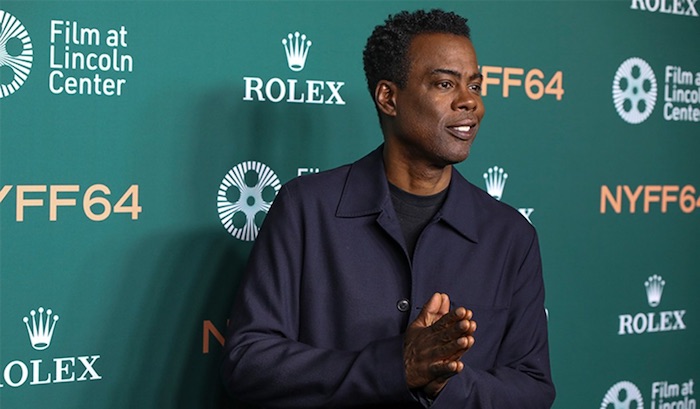
I have to confess that I have a huge crush on Chris Rock.Read more …
That said, I really wasn’t even a fan of his until I saw his Selective Outrage Netflix special a few years ago. It came about at a time in my life when I needed some laughs, and I felt it delivered. I’ve since gone back and watched most of his body of work from over the decades, including his Saturday Night Live appearances, most of his movies, his old talk show, his older stand-up specials, and even a lot of past interviews.For what it’s worth, he’s matured beautifully through the years, and I love how he isn’t trying to impress anyone these days, or so it seems. He calls things as he sees them. And while I doubt he and I would see eye-to-eye on all things politics, he’s the kind of Democrat I don’t mind having a conversation with because he comes across as fairly honest and isn’t afraid of criticizing his own side of the aisle or admitting when it’s defeated. He also sees people as people… not elephants and donkeys.
That’s exactly what he did last week in an interview with David Marchese of The New York Times. Rock has a new movie, which actually comes out today — Friday, October 9 — called Misty Green. He wrote, directed, and starred in it, and the previews look excellent. He’s also been making the media rounds, promoting it. During this particular interview, he described exactly what’s wrong with wokeness today.
“The problem with quote, unquote, wokeness — and don’t get me wrong, it is great that marginalized people have a voice; it is great to advocate for anybody that feels marginalized,” Rock began, admitting that he’s not against the concept in general. “But the problem is we’re in the Old Testament right now, and the Old Testament has no forgiveness. The Old Testament didn’t work, so they had to write a remix called the New Testament.”
I didn’t quite understand the biblical analogy — either that or he’s not getting the relationship between the Old and New Testaments wrong — but I fully understood what he said next: “The problem is when you institutionalize it.” He used the Salem Witch Trials as an example.
“The Salem witch hunts. I’m sure the first three witches they caught were actually f***ing witches,” he said. “But then you open up a witch office and now you’ve got to start lying. Now you’ve gotta f***ing make s*** up because you’ve got overhead. You’ve got to justify the witch hunters’ f***ing pensions.” His point is that this country didn’t just go woke in recent years. We went woke and then turned it into bureaucracy. And now we have to create more targets to keep those offices open and fully staffed.
Again, Rock said he’s glad some of it happened because some deserving people did get some good things out of it, but he basically suggested that this should have happened from ordinary accountability, not permanent enforcement. He likened it to faith and friendship. The comedian said he has a friend who he wasn’t going to name who “might have gotten canceled.” He said people ask him all the time why he’s still friends with that person. His response to that? “If you’re only friends with your friends when they’re good, they’re not your friends.” He also reminded us that God forgives.
Again, Rock is a liberal Democrat who doesn’t like Donald Trump and does see some value in efforts we, on this side of the aisle, might consider woke. But he’s not afraid to admit that his side took it, institutionalized it, and made it so that it runs on outrage. If we must share the country with leftists, I’ll take more like him.
I’ll leave you with the trailer for Misty Green. I hope to check it out soon.
ELON MUSK IS ABOUT TO BREAK THE BIG THREE CARRIERS.
— Gunther Eagleman™ (@GuntherEagleman) October 9, 2026
SpaceX is making an estimated $8 billion move on low-band wireless spectrum that could turn Starlink Mobile into a real nationwide carrier. That kind of spectrum goes through walls, which means dead zones and dropped calls… pic.twitter.com/qK5ipsPlVD
Ukraine just bombed the export terminal that would have lowered diesel prices in America after Trump’s new deal with Russia.
— Tom Renz (@RenzTom) October 10, 2026
I think that instead of funding Ukraine we should consider bombing Zelensky. https://t.co/12C4zIZCuM
🚨 ELON MUSK ON STARSHIP COST AND PAYLOAD
— As Found (@AsFoundX) October 9, 2026
Elon said Starship 3 will cost less per flight than Falcon 1 but carry about 400 times more payload.
The difference comes from full reusability, low-cost propellant, and autogenous pressurization.
Falcon 1 could put roughly half a ton…
This is Liège (Luik), Belgium.
— Eva Vlaardingerbroek (@EvaVlaar) October 9, 2026
Note how the French migrant “school riots” are spreading.
Of course they are. Because they are not about the school system.
They are ethnoculturally motivated attacks against Europe and its native peoples. pic.twitter.com/WmdduaxIrP
Support the Automatic Earth in wartime with Paypal, Bitcoin and Patreon.