
Andrei Rublev Trinity 1411

https://twitter.com/EricLDaugh/status/2091310119309242825?s=20 https://twitter.com/ConstitustionX/status/2091321196436705568?s=20
https://twitter.com/RippleXrpie/status/2091183404649795886?s=20FYI: AMERICA CONTROLS THE STRAIT OF HORMUZ.
— Gunther Eagleman™ (@GuntherEagleman) August 23, 2026
Not Iran.
Marc Thiessen just dropped the numbers:
We’ve escorted over 1,000 ships through the Strait of Hormuz.
Quietly. Effectively. Night after night.
While the media pretended oil was completely cut off and prices would… pic.twitter.com/VgudcH46UT
“Nearly 200 ships navigated the strait last week, up from about 150 the previous week and just 40 two weeks earlier..”
• “Iran Is Losing Its Grip On Hormuz”: Strait Traffic Explodes Nearly 400% (ZH)
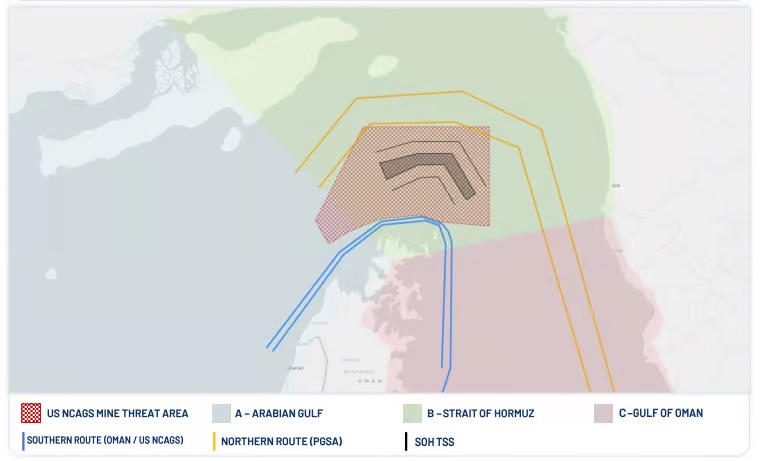
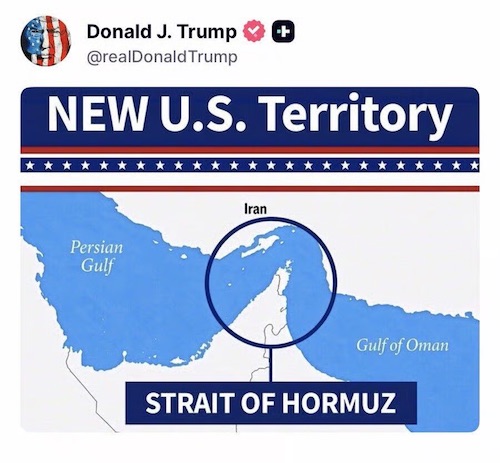
Shortly after President Trump declared the Strait of Hormuz “an American territory” on Friday evening, the New York Post published a new report citing UK Maritime Trade Operations data showing that commercial traffic through the critical waterway has rebounded sharply as more vessels use a US-backed route along Oman’s coast. This suggests that the US military presence and offensive operations in the region have degraded Tehran’s ability to fully control the waterway.Read more …
Nearly 200 ships navigated the strait last week, up from about 150 the previous week and just 40 two weeks earlier, according to UKMTO data. Traffic has recovered to roughly 20% of prewar levels, when the waterway carried about one-fifth of the world’s seaborne oil. “It increasingly looks like Iran has at least partially lost control of the strait,” Homayoun Falakshahi, head of crude oil analysis at Kpler, told CNN. “The Oman route absolutely makes the most sense,” added Dan Pickering, founder of Pickering Energy Partners, noting that it allows vessels to avoid the possibility of paying a toll to Tehran. President Trump told a crowd in South Carolina late Friday, “We don’t even know if we won, because I view the Strait of Hormuz as an American territory right now.”
BREAKING: Trump says he view Strait of Hormuz as an American territory pic.twitter.com/NBKGGBgvWu
— Insider Paper (@TheInsiderPaper) August 21, 2026Let’s revisit a mid-March note from Ex Uno Plures’ Zoltan Pozsar, who explained at the time that Trump was “methodically building a portfolio of assets” to pressure China, centered on strategic energy-supply nodes and maritime chokepoints that have historically supported Beijing’s access to cheap crude imports. His note highlighted the Panama Canal, Venezuelan oil flows, and the broader significance of Iran and the Strait of Hormuz.
Axios: 40 Tankers Transited Hormuz Friday Night, But Real Crisis Is Diesel
Axios political reporter and Middle East correspondent Barak Ravid reported early Saturday that 40 tankers transited the Strait of Hormuz on Friday night, citing three unnamed US officials. “Around 16 million barrels of oil moved out of the strait through the southern channel on Friday night,” Ravid wrote on X.https://twitter.com/BarakRavid/status/2091159212587917391?ref_src=twsrc%5Etfw%7Ctwcamp%5Etweetembed%7Ctwterm%5E2091159212587917391%7Ctwgr%5E00e4da20ec21f610f45b22fbc487bac4b37b007f%7Ctwcon%5Es1_c10&ref_url=https%3A%2F%2Fwww.zerohedge.com%2Fenergy%2Faxios-40-tankers-transited-hormuz-friday-night-real-crisis-diesel
The latest Bloomberg vessel-tracking data show that 13 ships transited the critical waterway on Saturday, with seven traveling east to west and six moving west to east. Traffic remains well below the levels recorded during the brief memorandum-of-understanding period from June 15 through mid-July. On Friday, President Trump called the Hormuz chokepoint “an American territory”… “We don’t even know if we won, because I view the Strait of Hormuz as an American territory right now,” Trump said, addressing a crowd in South Carolina.
Trump joked about bombing Iran during the speech, saying, “It’s a Friday night. We have plenty of time… and what the hell do I have to do? Go back and bomb Iran a little bit more?” Axios reported Wednesday that the US military had established a shipping corridor in the critical waterway, which carries millions of barrels of oil each day. There was no word from Ravid on whether the 40 tankers sailed through the new shipping corridor. Even with these transits, the emerging energy crisis is not centered on crude availability, as SPRs around the world are being tapped to offset lost production in the Gulf region. Instead, the real crisis is materializing in the refined-products market.
The focus emerged at the start of the week when Bloomberg’s front-month US diesel crack spread (HOCL1 Index) topped $100 a barrel, as we warned: “Industrial economy either grinds to a halt or consumers about to be hit with the biggest energy pass-through in history.”
Diesel crack hits record $102. This is absolutely unprecedented.
— zerohedge (@zerohedge) August 17, 2026
Industrial economy either grinds to a halt or consumers about to be hit with the biggest energy pass through in history pic.twitter.com/OtAdgrCvb3Then, by Wednesday, Jeff Currie, the former Goldman Sachs commodities chief and now co-chair of Abaxx Markets, appeared on CNBC to explain that the real crisis is not in crude but in diesel markets. “Nobody on the planet Earth consumes crude oil,” Currie told CNBC. “Refineries do. Everyone else consumes gasoline, diesel and jet fuel, and those markets look considerably uglier.” By Thursday, Currie explained that the convergence of tight physical markets, currency debasement and policy intervention represents the hallmark of a structural commodity bull cycle.
“Stop looking at crude. Nobody consumes it but refineries. The economy runs on gasoline and diesel, and that consumption-weighted basket costs $165 against $85 WTI,” Currie wrote on X. Read the report. The US diesel crack spread closed below $100 on Friday, but the Hormuz disruption, compounded by Ukraine’s decimation of Russia’s refining capabilities, is creating a perfect storm for global diesel markets ahead of the Northern Hemisphere winter.
“The issue of Beijing’s support for Iran during the war remains sensitive ahead of Chinese President Xi Jinping’s planned visit to the United States in September.”
• Trump Eyes ‘Crushing’ Economic Blockade To Bring Iran To Its Knees (JTN)
The Trump administration plans to escalate its strategy to economically isolate the Islamic Republic by targeting its international enablers and financial networks, and sends a warning shot to Beijing. As the conflict with Iran nears its six-month anniversary, President Donald Trump has traded bombs for a comprehensive economic blockade of the Islamic Republic, hoping to strangle the regime by cutting off its economic lifelines. This week, the president — frustrated with the Iranian leaders’ failure to agree to a deal to settle the conflict that includes ending the country’s illicit nuclear program — vowed to significantly ramp up the United States’ campaign to crush the Iranian economy.Read more …
Trump: “Tremendous economic circumstances”
On Wednesday, Trump announced the “most crushing economic operation ever taken” against the Iranian regime that would target Iranian enablers, or any country “that allows its financial institutions, businesses, airports, or government entities to provide any type of lifeline to Iran.” “Those countries will face TREMENDOUS Economic Consequences,” the president said in a post to Truth Social. “Oil smuggling, swap lines, cash transfers, exchange houses, ship registries, front companies — It all needs to stop NOW. You know who you are,” Trump warned. Treasury Secretary Scott Bessent elaborated further on the president’s goal. “[W]e are going to collapse this regime,” he said on Thursday in an interview with CNBC.Victoria Coates, Vice President of Heritage’s Kathryn and Shelby Cullom Davis Institute for National Security and Foreign Policy at the Heritage Foundation, told Just the News that the president’s self-described “Economic D-Day” strategy began to take shape in April, when he first imposed a naval blockade on Iran’s ports and in the Strait of Hormuz, seeking to strip Iran of smuggled oil revenues it was using to fund its fight against the U.S. military.
“There was a major shift in April when the president decided, you know what, we’re going to blockade them. We’re not going to let them hold us hostage over the Strait of Hormuz. We’re going to hold the Strait of Hormuz hostage. We’re going to see who comes in and out,” Victoria Coates told the Just the News, No Noise TV show. “And Iran wasn’t prepared for that. So, they were expecting they could still get out about 750,000 barrels [of oil] a day, they could still get in their critical imports, and that’s really important. Most people don’t appreciate this because Iran hasn’t invested anything in their own economy. They’re heavily dependent on imports. We cut all that off, and so slowly over the summer, … we’re just strangling them,” Coates said.
UAE cuts trade with Iran
The president’s latest announcement outlines a plan to go even further by targeting the countries that are supplying so-called lifelines to Iran. Just a day before the president’s announcement, the United Arab Emirates announced that it would suspend all trade and financial transactions with Iran after the regime allegedly fired a missile at the UAE. The United States has for weeks been encouraging the UAE, which is a close ally, to crack down on the Iranian finance networks in the country. Tehran has long used the UAE as a conduit for financial and trading networks designed to circumvent international sanctions.“The big move […] by the UAE to cut them off from Dubai, from any kind of commerce with the international financial markets, is huge, and I think that’s just going to continue on, and nature will take its course,” Coates said.
Aside from being a major trade partner of Iran before the war, the UAE has served as an intermediary for Iranian exports and financial exchanges in the global market, to which Iran’s access has been heavily restricted under sanctions regimes. U.S. government sanctions on Iranian regime-linked targets frequently include individuals based in Dubai, the UAE’s largest city. For example, the U.S. sanctioned companies and individuals in the UAE for their roles in a petroleum smuggling network linked to the Yemen-based Iranian proxy group, the Houthis.
Widespread effects of “Economic D-Day”
In June, the U.S. Treasury Department unveiled sanctions on the personal banker of Iran’s new Supreme Leader Mojtaba Khamenei, targeting his network of assets abroad that benefit the country’s most senior leadership, Just the News previously reported. The banker, Ali Ansari, is an Iranian national who lives abroad in Dubai, where he has used his ties to the Iranian regime to embezzle government funds and amass “a global network of investment properties and financial holdings,” according to the U.S. government.China, Iran’s largest trading partner, would also face actions from the United States if President Trump imposes his “Economic D-Day.” China has purchased the vast majority of Iranian oil for years, even while its exports are under international sanctions. Chinese banks and front companies help Iran with oil transactions to avoid the sanctions and operate ships in a shadow fleet to transport the sanctioned oil, according to the U.S.-China Economic and Security Review Commission. China has also sold Iran the technology and inputs required to construct its fleet of attack drones and missiles.
[US] Treasury Secretary Bessent on Thursday urged Beijing to “get with the program” and support the United States’ planned economic blockade. He cited China’s dependence on Middle East oil imports as a reason to get behind ending the conflict, indicating that the Chinese could face consequences if they continue to back Tehran. The issue of Beijing’s support for Iran during the war remains sensitive ahead of Chinese President Xi Jinping’s planned visit to the United States in September.
” .. the Canadian position is based on lies, fraud and political denial. Canada is playing politics hoping to retain their one-sided benefits..”
• Carney Talking A Lot, President Trump Remains Quiet (CTH)
Canadian Prime Minister Mark Carney is delivering speeches, holding press conferences and trying to justify his position following the collapse of negotiations between the USA and Canada. Meanwhile, President Trump and his trade team are intentionally quiet. In all high-stakes negotiations, deals and financial issues, the apex predators always know you make your point clearly and without reservation, you establish your terms and then you don’t say anything. Total silence. The first person to break the silence is the losing hand. Once your terms are established you stay quiet and then let the other party talk, talk, and talk themselves to yes. Silence is the power.Read more …
Mark Carney is telling everyone his position and trying to justify what has taken place. Mark Carney is in a very weak position on both structure and substance of the issues. [I wrote a lengthy explanation HERE] Within this segment Carney tries to explain what the USA requests were that Canada would not agree to. He notes the U.S. wanted strict control over Canada’s free trade agreements (FTAs) with other countries. What Carney fails to note is that this exists already, right now in the USMCA [Article 32:10 of the USMCA]. The U.S. has termination rights to both Canada and Mexico FTAs with other countries. This is an example of Carney gaslighting Canadians.In reality, Canada wants unlimited and unrestricted access to the U.S. market as if they were a 51st state. However, Canada will not permit unlimited and unrestricted access to their market for U.S. companies. This, Carney says, compromises the sovereignty of Canada. WATCH:
I was confident the discussions would collapse because the Canadian position is based on lies, fraud and political denial. Canada is playing politics hoping to retain their one-sided benefits and outlast President Trump into the midterm election. Trump, however, has already executed the tariffs and the only thing remaining for him and Greer to do is trigger the six-month USMCA withdrawal.
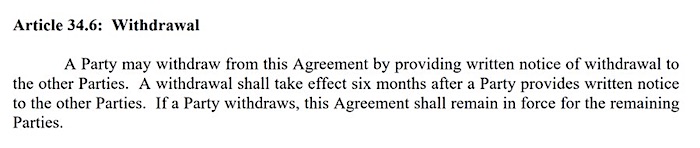
“According to the article, the pressure directed at Ottawa has not proven effective..”
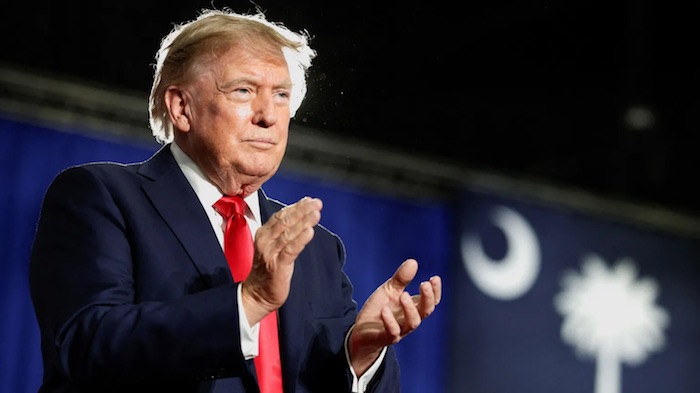
The Atlantic doesn’t like Trump.
• Trump Loses Trade War With Canada — The Atlantic (TASS)
US President Donald Trump is failing in the trade conflict with Canada as the threats and pressure directed at Ottawa have not proven effective, according to The Atlantic magazine. It said that although Canada’s economy is significantly smaller than that of the United States, its government is more rational and can protect national interests during the trade conflict. Canadian Prime Minister Mark Carney is more popular than Trump, and the Canadians have united around their distrust of Washington.Read more …
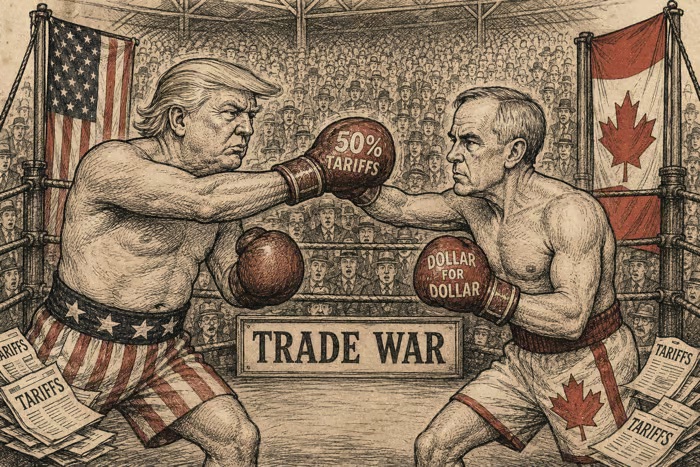
At the same time, the American public is facing a growing national debt, high interest rates, and an energy crisis. As The Atlantic points out, Trump’s inability to accept the fact that in wars not only strength but also endurance plays a role led to his defeat in the war with Iran and is the main reason for his loss in trade conflicts.Trade Representative Jamieson Greer previously said that the Canadian government had rejected what Washington considered to be a beneficial deal with the US, and the US 50-percent customs duties on some Canadian goods came into effect on Saturday. Carney, in a widely circulated statement, confirmed that he had suspended the trade negotiations with the US. He said that Ottawa would impose retaliatory tariffs to protect workers and businesses from September 8.
If they insist on being all wokey, Trump doesn’t want to give it to them. In that regard, Carney is just like Trudeau. A bunch of wokeys.
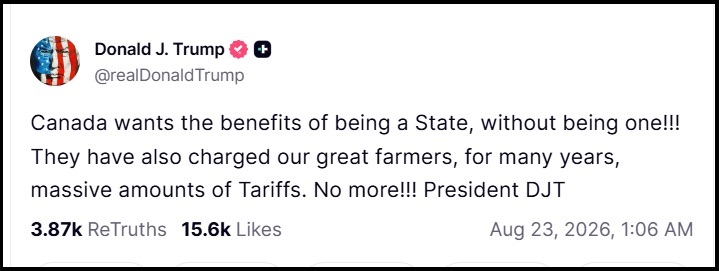
• Trump: Canada Wants ‘Benefits’ of Being US State (BBC)
US President Donald Trump has said Canada wants “the benefits of being a State, without being one” after trade talks between the two countries collapsed late on Friday. In his first comments since negotiations broke down, triggering new 50% US tariffs on a range of Canadian goods, Trump also said American farmers had been charged “massive amounts of Tariffs” for years. It comes after Canadian Prime Minister Mark Carney called the fresh tariffs a “miscalculation” designed to “hurt and divide us”.Read more …
Carney confirmed he would match Trump’s tariffs “dollar-for-dollar” from 8 September, including levies on steel, dairy, appliances and electronics. The US and Canada are now in a trade “war”, he said. “They asked too much and they offered too little,” Carney said on Saturday. “You’re at war when you get attacked. We got attacked,” he added. Trump’s latest comments echo his repeated references to making Canada the “51st state” of America since returning to office, sparking frustration among its leaders and residents. The collapse of the trade talks upended a deeply integrated trading relationship, with no clear path to resolution.“We cannot accept what they’ve offered, and we will not give what they’ve asked,” Carney said. Both countries were optimistic of a deal earlier in the week, but talks fell apart after both sides accused the other of making last-minute changes. The new 50% US tariffs will apply to a range of Canadian goods, in addition to existing US tariffs on Canadian steel, aluminium, automobiles and lumber. They are limited in scope, covering about $20bn (£15bn; C$28bn) of Canadian imports, or about 5% in total, including wine, dairy, cement, clothing and hockey equipment.
Carney faces crucial test after walking away from Trump’s deal
The prime minister said Canada was retaliating “reluctantly” to protect its interests. Details of the counter-measures will be released in the coming days, he said. Leaders of other federal parties in Canada, including the Conservative opposition, voiced support for the prime minister, as have the leaders of some Canadian provinces. Tariffs – a tax placed on imports from other countries – have been a key component of Trump’s trade policy, with the US president arguing they will boost American manufacturing and create jobs at home. Critics, however, say tariffs have raised prices for American consumers and have disrupted and damaged the global economy.Carney’s speech on Saturday was his first address to Canadians after he announced late on Friday night that a deal would not be reached, accusing the Americans of making “last-minute changes” that were “unfair” and “uneconomic”. US negotiators, meanwhile, accused Canada of making “new demands and walk backs” on terms which had been previously agreed. On Saturday, US trade representative Jamieson Greer told Fox News there were no plans to resume talks. He added that the US had been prepared to cut some of its tariffs on Canada as part of the ill-fated deal.
Carney, however, said the US presented “unacceptable” terms that were too restrictive, including curbing Canada’s ability to strike new trade deals with other countries. He also rejected the assertion that Canada had made last-minute requests: “We clarified what was on offer and were continually disappointed by the answers.” Doug Ford, the leader of Canada’s most populous province Ontario, backed Carney and said Trump “can’t be trusted”. British Columbia Premier David Eby said the US demand for restrictions on Canada’s ability to have other trade deals “would reduce us to the economic equivalent of the 51st state”.
“It was never acceptable to Canadians,” Eby said. The Conservative opposition leader Pierre Poilievre also appeared to support Carney, calling the latest US levies “unjustified”. Quebec’s premier, Christine Fréchette, warned jobs would likely be lost as a result of the new US tariffs. “Behind these numbers are real people,” she said, vowing to introduce measures to support impacted sectors. Alberta Premier Danielle Smith, whose oil-rich province has worked to make inroads with the Trump administration, urged both sides to resume talks. The collapse comes after more than a year of on-again, off-again trade talks, which intensified in recent weeks after a US-imposed deadline to strike a deal or face further tariffs.
The two countries were also engaged in a mandatory review of an existing North American free trade agreement, known as USMCA, with Mexico. The pact was signed by Trump during his first term to replace the 1994 North American Free Trade Agreement. It underpins $1.6tn (£1.2tn) in annual trilateral trade across Canada, the US and Mexico. Earlier this summer, Canada and Mexico had formally requested for USMCA to be renewed for another 16 years. The US, however, declined to renew it in its current form. Asked how Friday’s trade talk collapse would impact the North American free trade pact, Carney said it was “certainly not good news”.
Musk chose the side of the nazis. That does not feel good.
• Zelensky Has ‘Questions To Answer’ – Fedorov (BBC)
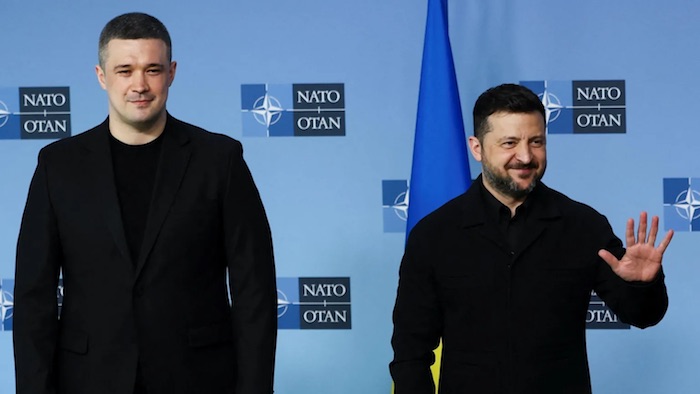
Ukrainian President Volodymyr Zelensky has “questions to answer” about corruption in his government, his sacked defence minister Mykhailo Fedorov has told the BBC. Fedorov, a popular minister who modernised the armed forces and pioneered drone warfare, was fired last month after reportedly falling out with the head of Ukraine’s armed forces. He told the BBC a money laundering investigation announced last week raised questions about Zelensky’s awareness of potential corruption in his inner circle.Read more …
Fedorov also reiterated that “democracy should not be the hostage of Putin” – but stopped short of declaring his own political ambitions days after he posted a video calling for elections in Ukraine. There were angry protests over his sacking but his support dwindled and demonstrations ended on Wednesday, after Fedorov’s replacement was confirmed. His call for a wartime vote has been largely rejected. Asked whether he missed his old job, the 35-year-old replied “No”, citing the relentless stress of managing Ukraine’s war with Russia while transforming its defence ministry.Ukraine has been under martial law since Russia’s full-scale invasion in 2022, meaning elections are suspended. But Fedorov said it was his “moral right” to start the conversation about elections. “We should not be afraid of discussing it. That’s what democracy is all about. If I cannot share my ideas and be open about them with my own society, then what are we fighting for?” If elections were never held, he said, “then we are no longer a democracy”. In his earlier video statement Fedorov had argued that “people cannot endlessly live in a state where they do not understand why certain decisions are made”.
He shied away from criticising the president directly and declined to answer whether he backs Zelensky to win any election. Zelensky said he believed wartime elections would currently be too dangerous for Ukraine in remarks released on Sunday. “I believe that in a war like this, elections as such are a huge risk,” he said. “Elections right now are a tsunami for the country that will split Ukraine.” Experts have cited a number of obstacles to holding such a vote, including how soldiers, millions of Ukrainian refugees and people from occupied territories would vote, as well as disinformation threats from Russia.
Fedorov’s video highlighting political corruption last week came the day before a money laundering investigation was announced into lawmakers and bankers. Ukraine’s anti-corruption bureau said it had uncovered a scheme to misappropriate more than $3m (£2.2m) in Ukrainian currency to pay bail for a former energy minister accused of money laundering. A senior official in Zelensky’s office, alleged to be involved, was sacked. Fedorov said the case raised questions about the president’s awareness of potential corruption in his inner circle.
“Let him answer this question… I believe that he’s ready for such questions. It’s his responsibility to tell us all whether he was aware of all that or not… I don’t want to make any assumptions.” A spokesperson for the president had earlier told BBC News: “Since the former minister was part of every government since 2019, it’s strange that he phrases it as though these were somehow different governments without him. As everyone remembers, we didn’t hear any strong statements from him back then.”
Fedorov claimed he had rooted out elements of corruption from defence procurement but warned it was still affecting Ukraine’s frontline capacity. The former minister said he’d had no contact with the president for “a couple of weeks”, and had no evidence the president was personally corrupt. “In all the time that I worked with him, not a single time have I received from him any task or assignment that would go against law or my sense of integrity. So that’s my personal experience with him.”
As defence minister and previously digital transformation minister, Fedorov is credited with innovating to replace soldiers with an “army of drones”, saving lives on the battlefield and enabling long-range Ukrainian strikes on Russian military targets, oil refineries and distribution warehouses – thousands of kilometres over the border. He said he would continue to promote new ways to fight the war and confirmed a visit to the United States in the coming weeks, where he hopes to meet Elon Musk.
The billionaire businessman’s Starlink satellite communications system has been key in Ukraine’s success. Fedorov aims to convince Musk to extend the technology into Russian airspace to assist Ukrainian strikes, without the Kremlin benefiting from access. “The best tech companies in the world are supporting us and they will be investing in our victory, in ending this war. And we need to stay in touch with them regardless of my position. I have a previous successful track record of working with them and I need to stay in touch with them for my country,” he said.
Fedorov criticised bureaucracy in the UK and other countries supporting Ukraine for delays in supplying weapons. The UK is a longstanding supporter of Ukraine, spending £16bn supplying weapons since the war began. It was confirmed last week that British-made drones have been used to attack Russian targets. Fedorov said he was grateful for British support but blamed “bureaucracy and red tape” for delays in receiving promised equipment. “Governments are lagging behind the realities on the ground. It’s not only the issue for UK, but for other countries as well that announce some assistance and we are not getting it until the end of the year.”
“Kiev “let the genie out of the bottle” by striking economic infrastructure, and is now reaping the retaliation, the Russian president has said..”
• Putin Hints At ‘Catastrophic Scenario’ For Ukraine (RT)
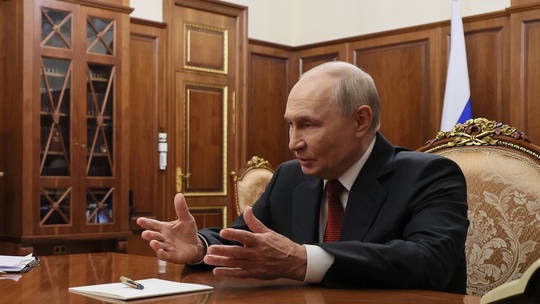
Ukraine is facing a “catastrophic scenario” from Russian retaliatory strikes after it “opened Pandora’s box” with its attacks on economic and civilian infrastructure, President Vladimir Putin said on Saturday. In spring, Kiev sharply escalated its long-range drone attacks on Russia’s oil and gas infrastructure, thereafter extending the strikes to e-commerce warehouses and civilian logistics facilities. Russia retaliated by targeting Black Sea shipping and key port facilities it said were handling Ukraine’s military-related imports, effectively severing the country’s main export route.Read more …
Kiev is now reaching out through intermediaries to try to “prevent this situation from developing into a catastrophic scenario,” Putin said in an interview with Russia 1. However, their trajectory is apparent, he added. Ukraine initiated this with its “massive missile and drone strikes on our civilian targets and logistics,” the president stated. It has opened Pandora’s box itself. Russia’s retaliation struck Ukraine’s “most sensitive economic sectors,” including agricultural exports, which are its main source of revenue, Putin said.He added that the diplomatic proposals Moscow is now receiving are sometimes “exotic and unacceptable.” We are always ready for dialogue on peace, but only on the basis of the realities unfolding on the ground. Moscow has long stressed that it prefers a diplomatic settlement to the Ukraine conflict, but will only accept a long-term and stable peace that removes its underlying causes. Russia will continue to push toward its goals via military means as long as Kiev refuses to compromise, the Kremlin has said.
“Run that equation long enough, and you don’t get a bigger tent. You get an empty one.”
• Gutfeld Delivers an Epic Takedown of the Democrats’ Big Tent Myth (Margolis)
Greg Gutfeld laid out a simple equation on Friday’s The Five that the Democrat Party is turning a blind eye to: welcoming radicals in gains you a handful of true believers, but it costs you a much larger group of people who just wanted a normal party to vote for. Run that equation long enough, and you don’t get a bigger tent. You get an empty one.Read more …
Gutfeld built the case by looking back at what actually worked for Donald Trump. “He had a lot of weird and odd people who backed him, and we called it a pirate ship,” Gutfeld said. “Because even though everybody was different, they all rode in the same direction.” Democrats, he argued, have the opposite problem. “They aren’t rowing in the same direction at all because they don’t have ideas. They just have identities.” That distinction is the whole ballgame. A coalition built around ideas can absorb a lot of different personalities and still move forward together. A coalition built around identity groups eventually runs out of room, because every new identity welcomed in has to be balanced against the people who feel replaced by it.Gutfeld walked through the actual arithmetic. “You got a small group of super far-left fanatics who want to tear down everything, but there’s a much bigger group of regular Democrats who don’t,” he said. “So if you welcome the radicals into your tent, some will join, but then some normies, they’re going to leave.” The net change, as he put it, is the radicals who join minus the normies who leave, and normies vastly outnumber radicals. “Even a small percentage who leave, the party’s going to end up smaller,” he said. “And it will end up smaller. Trust me.”
“It’s like somebody deciding to add Ex-Lax to the office candy bowl,” he said. “Pretty soon, everybody’s going to start bringing their own snacks from home.” A key example, of course, is women’s sports, where fair competition based on biological sex gave way to policies that pushed female athletes out. He also mentioned churches that traded tradition for far-left positions and watched membership dwindle as a result, all while traditional congregations grew. The pattern holds because mainstream institutions survive on boundaries. Erase the boundaries to please the fringe, and the mainstream stops showing up.
Nobody has proven that point better than the Democrat Party’s own leadership. Party leaders have spent the past few months dismissing concerns about the rise of socialists inside their coalition, arguing that it is evidence the party is big enough for everybody. At the same time, plenty of the same leaders have spent those months working to sideline Sen. John Fetterman (D-Pa.), a man who votes with his own party 95% of the time. His real offense was refusing to fall in line on Israel, Iran, the border, and socialism, the handful of issues on which the activist wing has decided disagreement is disqualifying.
“The Big Tent pretends to be this enrichment when it’s actually an erosion,” Gutfeld added. “The inclusion benefits only the outliers, but in the end, it destroys the institutions.”
The Democrats' "big tent" is actually pushing out the normies.pic.twitter.com/oSsVcCSP4R
— Matt Margolis (@mattmargolis) August 23, 2026The worst part is that the signs that this a problem for their party have been there, but Democrat leaders just refuse to acknowledge them.
Pro-Muslim is anti-semitic.
• Bill Maher Admits Democrat Party Is Antisemitic (Matt Margolis)
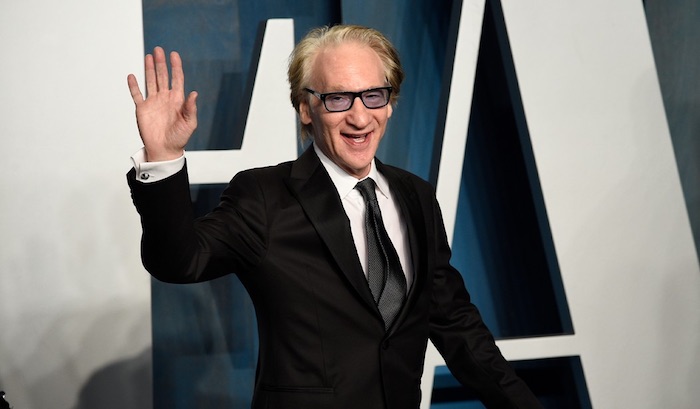
On Saturday’s episode of HBO’s Real Time with Bill Maher, the host said the quiet part out loud about his own party’s relationship with Judaism. The exchange came after CNN anchor Dana Bash raised the case of Texas Democrat James Talarico, whose outspoken “Christianity,” she noted, means he “wears his faith on his sleeve” in a way Talarico believes could help him politically. Maher wasn’t buying the idea that all faith gets an equally warm welcome in the Democrat Party.Read more …
“Well, in the Democratic Party, as long as that faith isn’t Jewish, you’re good,” Maher said. Bash, clearly caught off guard, replied, “Well, you said it.” Maher wasn’t backing down. “Yeah, I said it because it’s true!” he shot back.
Bill Maher admits the Democrat Party isn't fond of Jews.
— Matt Margolis (@mattmargolis) August 23, 2026
pic.twitter.com/IrTvUmEgpVHe’s right. As far as I’m concerned, when a lifelong liberal like Maher admits that the Democrat Party’s tolerance for public faith excludes Jews, that tells you how big the problem really is. What Maher admitted here is something Republicans have been calling out for years.And we got the receipts.According to Pew Research Center polling, 80% of Democrats and Democratic-leaning independents now hold an unfavorable view of Israel, up sharply from 53% in 2022. Compare that to Republicans, of whom only 41% hold a negative view of Israel and 58% hold a positive one.
That gap didn’t exist a few years ago, and it opened up almost entirely on one side of the aisle. The Democrat Party didn’t get here by accident. And the fallout is impossible to ignore. It gave an audience to antisemitic influencers like Hasan Piker, and voted for Michigan Senate candidate Abdul El-Sayed and New York City Mayor Zohran Mamdani, both of whom built political careers on anti-Israel rhetoric. This isn’t a fringe problem. This is the base.
Sam Markstein, national political director and spokesman for the Republican Jewish Coalition, told Fox News Digital on Saturday that Maher got it right. “It’s a rare occasion when we agree with Bill Maher, but he’s right: there is only one party where American Jews can be proudly Jewish and loudly pro-Israel, and it’s the Republican Party,” Markstein said. “Democrats prove it again and again — from Kamala Harris passing over Josh Shapiro in 2024 to the rise of communist elected officials who traffic in antisemitism in halls of power across the country.” He didn’t stop there. “The Democratic Party is being remade by its radicalized base, and party leadership continues to fecklessly whistle past the political graveyard as American Jews flee,” Markstein said.
As far as I’m concerned, there’s a clear period when this shift began. Barack Obama’s eight years in office normalized antisemitism and anti-Israel sentiment inside his own party, and that shouldn’t surprise anyone who remembers his background. Before he ever ran for president, Obama spent 20 years in the pews of Jeremiah Wright’s congregation, absorbing anti-American and antisemitic rhetoric that became a real liability in 2008. He only quit the church once the cameras got too close. He never actually changed course, and his antisemitic record speaks for itself. This problem continued under Joe Biden. Essentially, Obama built the road, and Biden paved over it.
The results speak for themselves. A 2025 Gallup poll found American sympathy for Israel has collapsed to a 25-year low of 46%, while support for the Palestinians has climbed to 33%. Democrats now favor Palestinians over Israelis by a 59%-21% margin. They hold that position even though Hamas terrorists killed 1,200 Israelis on Oct. 7, including babies and Holocaust survivors, raped and tortured civilians, and took roughly 250 hostages.
The Democrat Party can keep pretending it’s still the party of religious tolerance and Jewish support. Even Bill Maher isn’t buying it anymore.
Not exactly the best of America.
• Hasan Piker Mocks the Murdered Charlie Kirk to Cheering Crowd (Turley)
We have seen protesters on the left around the country mocking the assassination of Charlie Kirk, even reenacting his murder. Hate traffickers like Jennifer Welch have even justified his assassination. It is all shocking and depressing, but none reached the level of Hasan Piker leading a huge crowd in mocking Kirk and his faith. Before he was murdered, Kirk debated Piker and called him a “socialist hypocrite.” What is shocking is not the utter depravity and cruelty of Piker, but the ecstasy of the crowd in relishing the death of someone with opposing views. It is part of the conditioning in what I have previously called an “age of rage.”Read more …
In the video, Piker leads the crowd in the meme song “We Are Charlie Kirk” at a stop of his “Fear& LIVE” tour, including such lines as “We are Charlie Kirk, we carry the flame. We’ll fight for the Gospel, we’ll honor his name.” His co-hosts and the crowd seem to be laughing with joy. Joining him at this hatefest at the Golden Gate Theatre in San Francisco on August 21 were reportedly Will Neff, QTCinderella, and AustinShow. Hasan is wearing his now-signature Mao jacket as the young crowd and his co-hosts laugh hysterically. It is the very essence of this movement to desensitize people, particularly young people, to violence and hate.In Rage and the Republic, I wrote about this national ragefest. It allows people to hate completely and without thought to the humanity of those being hurt. What people will not admit is that they like it. Rage is addictive, and it is contagious. Just look at the crowd in San Francisco, and you will see the addictive quality of uncut, undiluted hate:
Piker, Will Neff, QTCinderella, AustinShow, and these fans have every right to spread hate. It is protected speech just as KKK and neo-Nazi groups are allowed to promulgate their own hateful values.
What is exasperating is how hatemongers on the left want to enjoy hate speech while accusing others of hate and intolerance. They do so by excusing their actions or views by demonizing those who disagree. Democratic leaders continue the false claim that democracy is dying in America and that this may be our last free election. While made over multiple elections, the claim of the imminent death of democracy (unless they are elected) does not appear to register with their supporters.
Recently the rhetoric has reached hysterical levels. Florida Democratic Senate candidate Angie Nixon has compared Immigration and Customs Enforcement agents to “modern-day slave catchers” and the government is “literally trying to kill us.” It is a narrative that allows you to speak like a Nazi while claiming to be fighting Nazis. Piker thrilled the crowd by mocking a murdered man over his faith and his death. It is more than being simply classless. It is commodifying rage. Piker is reportedly raking in a fortune as are other hatemongers like Jennifer Welch. They traffic in rage to a nation of rage addicts.
It is a scene that only reaffirms the work of Kirk who sought to expose the hate and intolerance of the left, particularly on our campuses. Kirk infuriated many by challenging them to debate. There is no room for reason in an age of rage. Those who try to introduce opposing views on campuses are cancelled or attacked. Recently, a group of pro-life teenagers were kicked out of the Wydaho Roasters coffee shop in Idaho by an owner who found their presence intolerable. At universities, faculty members have attacked displays and even students in righteous rage.
One professor who pleaded guilty to assaulting pro-life students was not only attained on the faculty but even honored by another school.Civility, and even humanity, become signs of weakness in these times. They gravitate to figures like Abdul El-Sayed who has campaigned with Piker and promises to “choke out” Republicans and refers to moderates like Pennsylvania Sen. John Fetterman (D) as ogres to have their heads cut off and put on pikes.
The American left has found their berserkers, the old Norse warriors who were known to fight in a virtual violent trance. The new berserkers offer the chance to hate completely and without remorse or reflection. Over time, supporters are conditioned to disregard even the murder of those with opposing views. As shown in San Francisco, assassination becomes nothing more than a sing-a-long in an age of rage.
“The clash over sanctions on judges reveals a fading order in which neither moral monopoly nor financial coercion can claim legitimacy ..”
Constantin von Hoffmeister, a political and cultural commentator from Germany, author of the book The Fate of White America and director of Multipolar Press
• The New World Won’t Be Ruled By The ICC’s Bias (von Hoffmeister)
Washington’s clash with the International Criminal Court exposes the contradictions between supranational legal claims, American exceptionalism, and the rise of multipolar sovereignty.Read more …
The latest clash between Washington and the International Criminal Court says more about the structure of the present world order than about Tomoko Akane or Abdoulaye Seye. On August 18, 2026, the United States imposed sanctions on Akane, the Japanese president of the ICC, and Seye, a Senegalese senior trial lawyer in the Office of the Prosecutor. The measures freeze assets subject to American jurisdiction and restrict access to the American financial system. The ICC answered by calling the sanctions a “flagrant attack” on the independence of the court. Nine of its 18 judges, both deputy prosecutors, a former prosecutor, and another staff member now face American sanctions.Washington says the court has exceeded its mandate by pursuing officials from states that never accepted its authority, above all the US and Israel. This dispute raises the oldest political question in a new form: who has the right to judge whom? The liberal international order promised an answer based on universal law. The American response supplies another answer based on sovereign power. A multipolar view has reason to distrust both claims when either seeks authority over civilizations and states that never freely granted it.
The American position contains a genuine question of sovereignty, even when Washington applies that principle selectively. The US never became a party to the Rome Statute. Israel also remains outside the court. From the American perspective, an international tribunal created by a treaty cannot simply acquire authority over American soldiers, officials, or allied leaders without American consent. The ICC answers that its jurisdiction can arise through the territory on which alleged crimes occurred, including territory belonging to states that accepted the Rome Statute. This is the legal basis behind some proceedings involving nationals of countries outside the court.
Lawyers can argue over jurisdiction, territorial consent, complementarity, admissibility, and treaty interpretation, but that us beside the point of the political issue in question here. A multipolar order begins from the existence of several sovereign centers of power, each possessing its own history, institutions, political traditions, and conception of justice. Any institution claiming authority above these centers carries an immense burden of legitimacy.
A tribunal with universal ambitions must either possess genuine universal consent or depend upon political power to enforce its judgments. The ICC possesses neither a world state behind it nor universal membership. The US, China, Russia, India, Israel, and several other important powers stand outside its system. Such a court can aspire to universality, yet aspiration alone cannot create a universal political community.
Yet Washington weakens its own argument whenever it converts sovereignty into a privilege reserved for itself and its allies. Sovereign equality means that American sovereignty deserves respect because every sovereign state deserves respect. American exceptionalism follows another principle: Washington claims freedoms that it frequently refuses to extend to others. The US objects when an institution beyond its control threatens American officials, while successive American governments have used sanctions, financial restrictions, diplomatic pressure, military power, and extraterritorial legislation to pressure individuals and companies far beyond American territory into complying with American policy.
Washington rejects the ICC because the court supposedly projects authority beyond the consent of sovereign states; Washington then answers that alleged violation by using the global reach of the dollar and the American financial system against foreign judges and prosecutors. Sovereignty becomes both the defense and the weapon. An international institution may pursue justice until its work touches the protected sphere of American power. At that point, financial coercion begins. For advocates of multipolarity, this episode illustrates why the concentration of global finance, sanctions power, communications infrastructure, and legal influence inside one geopolitical center creates political dependence even for institutions that describe themselves as independent.
The ICC itself deserves scrutiny from the same multipolar standpoint. The answer to American domination cannot consist of transferring ultimate authority from Washington to The Hague. The court arose during the high tide of the post-Cold War order, when Western political ideas increasingly appeared under universal names. Liberal democracy became “democracy.” Western doctrines of rights became “human rights.” Western political assumptions became “international norms.” Institutions created within that historical climate often inherited the same universal language. The moral appeal is easy to understand. Genocide, mass killing, torture, and deliberate attacks upon civilians are terrible acts, and societies naturally seek ways to punish those responsible.
The difficulty begins when moral judgment becomes a permanent supranational machinery claiming jurisdiction across radically different political worlds. International criminal law then enters the sphere of geopolitics. Prosecutors depend upon evidence supplied by states. Courts depend upon governments to arrest suspects. International bodies depend upon funding, diplomatic backing, banking systems, travel access, and political cooperation. Enforcement follows the distribution of power. A defendant from a weak state may find himself in The Hague. A leader protected by a great power may remain beyond its reach. The language remains universal while the ability to enforce it remains unequal. That gap between universal principle and political reality has haunted international justice from its beginning.
https://twitter.com/17QStorm/status/2091133294159303085?s=20 https://twitter.com/dave_aldrine/status/2091202610808103090?s=20 https://twitter.com/DOGEQEEN/status/2091303969649775013?s=20 https://twitter.com/joehansen/status/2091204488853954683?s=20 https://twitter.com/JeebsTX/status/2091045886847586589?s=20
Support the Automatic Earth in wartime with Paypal, Bitcoin and Patreon.