Doc Robinson

Forum Replies Created
-
AuthorPosts
-
Doc Robinson
ParticipantWhat the models tell us, in New Zealand and elsewhere, seem pretty irrelevant to Ilargi’s argument (backed up by Nassim Taleb):
“…at some point [I] realized that the coronavirus is an issue you can’t leave to epidemiologists and virologists, because there are far too many unknowns for them to create a working model, and without such a model they are lost… These people are useful for the knowledge they possess of past epidemics, not for predicting what will happen in the next one, certainly not if it’s caused by a virus which they -and we- simply don’t know enough about to build a reliable model. In that case, you need to step back and apply more basic principles. Lucky for us, those exist.”
ParticipantFWIW,
As of today, Sweden’s death toll from Covid-19 (deaths per million of total population) is 30% higher than in the USA.
Source: Worldometer
ParticipantSpeaking of Sweden’s approach…
Sweden: 22 Scientists Say Coronavirus Strategy Has Failed As Deaths Top 1,000
(Forbes, April 14, 2020)In an opinion piece published today in Dagens Nyheter, the group of researchers from a range of top Swedish universities and research institutes make harsh criticism of the Swedish Public Health Agency and their present coronavirus strategy. They say that elected politicians must now intervene with “swift and radical measures.”
The researchers say the agency has claimed on four different occasions that the spread of infection has levelled out, despite evidence to the contrary. They point out the slowdown in infections and deaths in Finland, which has implemented much more restrictive measures.
Participant“Except for SARS-CoV and MERS-CoV, two deadly viruses that have caused outbreaks in the past, coronaviruses have been studied at laboratories that are labelled as operating at a moderate biosafety level known as BSL-2…”
I can’t vouch for authenticity, but this opening clip from the movie Outbreak walks us through fictional examples of labs operating at Biosafety Levels 1, 2, 3, and 4.
What looks like N95 masks are being used in the Biosafety Level 2 lab, while half-face respirators are used in the Level 3 lab.
Participant“For a facemask why wouldn’t people just use a half face 3m respirator…p95 and p100 filters are available.”
The P95 respirators (half face) are longer lasting than the N95. As I recall, the replaceable P95 filters are made to be used for an entire work week, while the N95 masks are meant to be used for one workday, at most.
But, the half face respirators typically have a valve that opens for the exhaling, which would eliminate a key benefit of mask wearing — protecting others from an infected mask wearer.
ParticipantIs there an increase in all-cause mortality?
Here’s some data from the National Vital Statistics System that looks at reported deaths from all causes, and compares it to the “Expected Deaths.” The Expected Deaths is the number of deaths during the same week of the previous 3 years, averaged. Percent of expected deaths is the number of deaths for all causes for this week in 2020 compared to the average number across the same week in 2017–2019. (This data is the total for all the weeks ending from 2/1/2020 to 3/28/2020.)
The numbers for New York City, and New York State (excluding NYC), are listed below. All of the other states have a “Percent of Expected Deaths” of less than 100%, meaning the total recorded deaths this year during that period are less than the average for that period during the past 3 years. New York City is the exception, with 110% of the expected deaths.
Table 3
Jurisdiction, Covid-19 Deaths, Deaths from All Causes, Percent of Expected Deaths
New York (excl. NYC) 180, 17,731, 96%
New York City 579, 10,970, 110%Note: Data during this period are incomplete because of the lag in time between when the death occurred and when the death certificate is completed, submitted to NCHS and processed for reporting purposes. This delay can range from 1 week to 8 weeks or more, depending on the jurisdiction, age, and cause of death.
Since the number of deaths for this year are incomplete due to this delay, the actual “Percent of Expected Deaths” will probably be higher than listed here.
ParticipantLooking at the CDC’s current data about underlying health conditions for Covid-19 patients, several aspects are striking.
(1) The data being submitted to the CDC is largely incomplete.
The total lab-confirmed cases (as of March 28) were 122,653. (Excluded are those who didn’t get tested to confirm a Covid-19 diagnosis.) Of the confirmed cases, the CDC received case report forms for only 60.7% of them (74,439). Of those 60.7% of cases for which the CDC got a case report form, only 7,162 had the data on underlying health conditions (and other risk factors). Thus, the CDC had data about underlying health conditions for only 5.8% of the lab-confirmed cases.(2) The CDC’s list of “underlying health conditions and other recognized risk factors” is large and surely covers a significant portion of the population. including conditions such as migraines, high blood pressure, arthritis…
Diabetes mellitus.
Chronic lung disease, including
asthma
chronic obstructive pulmonary disease (COPD)
emphysema.
Cardiovascular disease.
Immunocompromised condition.
Chronic renal disease.
Pregnancy.
Neurologic disorder, neurodevelopmental, intellectual disability, including
dementia, memory loss, or Alzheimer’s disease
seizure disorder
Parkinson’s disease
migraine/headache
stroke
autism
aneurysm
multiple sclerosis
neuropathy
hereditary spastic paraplegia
myasthenia gravis
intracranial hemorrhage
altered mental status.
Chronic liver disease.
Other chronic disease, including
hypertension
thyroid disease
gastrointestinal disorder
hyperlipidemia
cancer or history of cancer
rheumatologic disorder
hematologic disorder
obesity
arthritis, nonrheumatoid
musculoskeletal disorder other than arthritis
mental health condition
urologic disorder
cerebrovascular disease
obstructive sleep apnea
fibromyalgia
gynecologic disorder
embolism, pulmonary or venous
ophthalmic disorder
hypertriglyceridemia
endocrine
substance abuse disorder
dermatologic disorder
genetic disorder.
Former smoker.
Current smoker.(3) Yet, despite that long list of conditions, out of those confirmed Covid-19 cases which had data about underlying conditions, 62.4% of them had “none of the above conditions” (and the report forms were not just left blank for those conditions, they “were marked as not present”).
(4) Out of those cases with “none of the above conditions”, at least 84% of them were not hospitalized, and at least 2.2% of them were admitted to the ICU.
Preliminary Estimates of the Prevalence of Selected Underlying Health Conditions Among Patients with Coronavirus Disease 2019 — United States, February 12–March 28, 2020
Weekly / April 3, 2020
https://www.cdc.gov/mmwr/volumes/69/wr/mm6913e2.htmParticipantThinking about that $2 trillion stimulus package, I looked up some data to put this amount of dollars into perspective.
It’s more than the total amount of US dollars (physical currency) in circulation worldwide: $1.5 trillion.
It’s much more than the total value of the US gold reserves (at $1600/ounce): $418 billion.
It’s about half of the M1 Money Stock (“funds that are readily accessible for spending”) : $4 trillion
It’s less than 10% of the US national debt: $23 trillion
……………..
My calculation for the US gold reserve amounts to 261 million ounces, roughly one ounce of gold for every adult (over 18) in the US.
This makes me think about the inherent value of an ounce of gold, compared to $1600 of extra money that the government decides to print.
ParticipantYesterday, Dr D commented “I still think the [fatality] numbers are yet far lower, just as the flu is some 0.004% or something – it’s only “0.1%” against people in hospitals who bother to get tested.” and I wanted to address that (above), however obliquely.
To neoh’s concerns about trusting physicians,
“Not every mainstream medical professional is trying to lie about the flu. Most of these people, as a result of their indoctrination, simply assume conventional wisdom is true. But as you move toward the top of the ladder—for example, public health agencies like the US Centers for Disease Control (CDC)—there are definitely some first-class liars on board.”
written by Jon Rappoport, from the linked article provided by riestermParticipantAbout those deaths each year from the flu (in the US), the numbers aren’t what they seem. I was surprised to find the CDC numbers criticized on a .GOV website. Some highlights:
Prior to 2003, the data shows an average of only 1348 flu deaths per year (between 1979-2002). In 2003, an article in JAMA presented the results of a CDC model that calculated 36,155 deaths from “influenza associated underlying respiratory and circulatory causes“, but “less than a quarter of these (8097) were described as flu or flu associated underlying pneumonia deaths“. The author of the article explained that “influenza-associated mortality” is “a statistical association between deaths and viral data available.” He said that an association does not imply an underlying cause of death.” Yet somehow that 36,000 number was latched onto, and the statistics are now what comes out of a broadly-reaching model.
The CDC website states what has become commonly accepted and widely reported in the lay and scientific press: annually “about 36 000 [Americans] die from flu”…
Meanwhile, according to the CDC’s National Center for Health Statistics (NCHS), “influenza and pneumonia” took 62 034 lives in 2001—61 777 of which were attributed to pneumonia and 257 to flu, and in only 18 cases was flu virus positively identified.
Between 1979 and 2002, NCHS data show an average 1348 flu deaths per year (range 257 to 3006)…
CDC’s model [JAMA 2003] calculated an average annual 36 155 deaths from influenza associated underlying respiratory and circulatory causes. Less than a quarter of these (8097) were described as flu or flu associated underlying pneumonia deaths. Thus the much publicised figure of 36 000 is not an estimate of yearly flu deaths, as widely reported in both the lay and scientific press, but an estimate—generated by a model—of flu-associated death.
William Thompson of the CDC’s National Immunization Program (NIP), and lead author of the CDC’s 2003 JAMA article, explained that “influenza-associated mortality” is “a statistical association between deaths and viral data available.” He said that an association does not imply an underlying cause of death: “Based on modelling, we think it’s associated. I don’t know that we would say that it’s the underlying cause of death.” Yet this stance is incompatible with the CDC assertion that the flu kills 36 000 people a year—a misrepresentation that is yet to be publicly corrected.
At the 2004 “National Influenza Vaccine Summit,” co-sponsored by CDC and the American Medical Association, Glen Nowak, associate director for communications at the NIP, spoke on using the media to boost demand for the vaccine… Preceding the summit, demand had been low early into the 2003 flu season. “At that point, the manufacturers were telling us that they weren’t receiving a lot of orders for vaccine for use in November or even December,” recalled Dr Nowak on National Public Radio. “It really did look like we needed to do something to encourage people to get a flu shot.”
If flu is in fact not a major cause of death, this public relations approach is surely exaggerated. Moreover, by arbitrarily linking flu with pneumonia, current data are statistically biased. Until corrected and until unbiased statistics are developed, the chances for sound discussion and public health policy are limited.
https://aspe.hhs.gov/cdc-%E2%80%94-influenza-deaths-request-correction-rfc
ParticipantCorrection, should be:
200 million cases (known and unknown) would be reached sometime during the second week of May.Participant“Dr. Fauci, Trump’s main medical/epidemic advisor, said yesterday that 200,000 Americans could die from COVID19. The same Fauci, as I quoted two days ago, recently changed his case fatality rate prediction from 1% to 0.1%.”
As I mentioned in an earlier comment, Fauci didn’t actually predict a 0.1% CFR. But let’s go with that for now, to play with some more numbers. The total deaths in the US, from the chart above, is currently 2,438 rounded to 2,500. Assuming a CFR of 0.1%, the total number of cases currently in the US could be calculated as 2,500/0.1%= 2.5 million. (This would represent actual cases out there in the public, not just the recorded cases.)
So, at what point would the total cases in the US reach 200 million, to result in 200,000 deaths? If the number of cases doubles every week, next week we’d have 5 million cases, the week after that 10 million… and 200 million cases (known and unknown) would be reached sometime during the first week of May.
Again, this is just playing with numbers and assumptions. The curve will eventually “flatten” so that cases aren’t doubling every week.
ParticipantThat’s more exaggeration from “Tyler”.
I glanced at the APMEX site today, and many gold coins are still in stock, such as Krugerrands for $1,802.99 or the Austrian Philharmonic for $1,777.99
That’s less than 10% over the spot price.
https://www.apmex.com/product/13/austria-1-oz-gold-philharmonic-bu-random-year
Participant“And in case you doubted this, the cost of an American Eagle one ounce coin at the US Mint is now $2,175…”
The author’s credibility just went down. That coin sold by the US Mint is a proof coin sold at a premium price. New bullion coins (not proof) can be found for around $1,800 per ounce (with a spot price of $1,658).
How to Buy United States Mint Bullion Coins
The United States Mint, like other world mints, does not sell its bullion coins directly to the public. Instead, we distribute our coins through a network of official distributors called “authorized purchasers” who, in turn, create a two-way market buying and selling to precious metals wholesalers, private investors, and local bullion coin dealers.This method provides effective and efficient distribution, which maximizes the availability of a two-way market of United States Mint Bullion Coins in retail markets and major investment markets.
United States Mint bullion coins are sold based on the prevailing market price of gold, silver, platinum, or palladium plus a small premium to cover minting, distribution, and marketing costs.
https://catalog.usmint.gov/coins/precious-metal-coins/bullion-coins.html
ParticipantDidn’t see much written about this:
Negative rates come to the US: 1-month and 3-month Treasury bill yields are now below zero

CNBC, March25, 2020Apocalypse Now: U.S. Treasury Bond Yields Now Have Negative Rates
“Investors just issued a terrifyingly bleak vote of no confidence in the American economy by crowding Treasury bond yields to negative rates. Consider what that means for the future of the American economy. Rather than buy equities at a steep discount, they’re piling into Treasury bonds with negative rates. That means they think they’ll get their money back, or even make a profit selling it to the next investor.”
“That means financial markets just issued a terrifyingly bleak vote of no confidence in the U.S. economy. We’re facing a recession ahead unlike any living American has seen in their life time.”
https://www.ccn.com/apocalypse-now-u-s-treasury-bond-yields-now-have-negative-rates/
Participant• Dr. Fauci: Coronavirus Death Rate Like Very Bad Flu (WND)
Be careful, this is a misleading headline. In his editorial piece in the NEJM (with the CDC’s Robert Redfield as one of the co-authors), what Fauci wrote is that if one assumes that unreported cases are several times higher than reported cases, then the case fatality rate may be considerably less than 1%, which suggests that Covid-19 may be more akin to influenza (which has a CFR of 0.1%) rather than a disease like SARS or MERS (which had a CFR of 10% and 36%, respectively).
So, Dr. Fauci’s opinion is that Covid-19’s fatality rate may be considerably less than 1%, and may be closer to 0.1% than 10%. He’s not even saying that he thinks Covid-19’s fatality rate will probably be considerably less than 1%. And he’s not actually claiming that it will be like a severe case of the flu.
In another article in the Journal, Guan et al. report mortality of 1.4% among 1099 patients with laboratory-confirmed Covid-19; these patients had a wide spectrum of disease severity. If one assumes that the number of asymptomatic or minimally symptomatic cases is several times as high as the number of reported cases, the case fatality rate may be considerably less than 1%. This suggests that the overall clinical consequences of Covid-19 may ultimately be more akin to those of a severe seasonal influenza (which has a case fatality rate of approximately 0.1%) or a pandemic influenza (similar to those in 1957 and 1968) rather than a disease similar to SARS or MERS, which have had case fatality rates of 9 to 10% and 36%, respectively.
Participant“The losses in the stock “markets” lately have been staggering, trillions were lost. But then you look at a graph and you think holy sh*t, there’s so much more to go, so much more downside…”
Yessir, we’re only down to the 2017 bubble level, which was so overpriced and teetering at the time that David Stockman was warning about a 40% drop from that level.
ParticipantJohn Day, your clinic might be able to order “COVID-19 Rapid Test Cassettes” from the UK manufacturer:
https://www.surescreen.com/products/covid-19-coronavirus-rapid-test-cassette
Benefits Of Our COVID-19 Rapid Test Cassette
Significant time and cost saving over lab methods
Results within 10 minutes
Identifies infection even in mild or asymptomatic cases
Assists in the control of viral transmission
Screen anywhere
Ideal as a triage and screening tool
Accuracy of 97.8% (IgM) and 99.6% (IgG)
Easy to use and read, with no specialist equipment required“Get in touch to order your COVID-19 Rapid Test Cassettes: Contact Us“
Please note: Our COVID-19 rapid test is only available to business customers. We are not able to supply to private individuals at this moment.ParticipantMeanwhile, a clinical trial to see whether chloroquine can prevent Covid-19 is slated to begin in May 2020, with the study completion date in May 2022.
Official Title: Chloroquine Prevention of Coronavirus Disease (COVID-19) in the Healthcare Setting; a Randomised, Placebo-controlled Prophylaxis Study (COPCOV)
Estimated Study Start Date : May 2020
Estimated Primary Completion Date : May 2022
Estimated Study Completion Date : May 2022ParticipantRegarding chloroquine and Covid-19, last week an article was published by a medical journal, recommending that clinical trials be done for HCQ (hydroxychloroquine) instead of CQ (chloroquine), for reasons including fewer side effects and safety during pregnancy.
COVID-19: a recommendation to examine the effect of hydroxychloroquine in preventing infection and progression
Dan Zhou, Sheng-Ming Dai, Qiang Tong
Journal of Antimicrobial Chemotherapy, Published: 20 March 2020
https://academic.oup.com/jac/advance-article/doi/10.1093/jac/dkaa114/5810487Gastrointestinal responses, such as vomiting and diarrhoea, are the most common adverse effects of these two drugs. Patients with long-term exposure to CQ suffer from severe side effects, such as retinopathy, circular defects (or bull’s eye maculopathy), diametric defects in the retina and cardiomyopathy. Elderly patients and usage beyond dosage limits are also associated with toxicities of CQ therapy. In contrast, HCQ has a lower level of tissue accumulation, which may explain the fact that it is associated with fewer adverse events than CQ, but still potentially influences the prevention and treatment of malaria to a similar level. Indeed, only high-dose and long-term (over 5 years) intake of HCQ is likely to contribute to the development of retinopathy, which is in agreement with the current preference of HCQ use in therapy. While CQ exerts a number of severe side effects on fetal development, HCQ is strongly recommended for pregnant patients with an autoimmune disease as it prevents the development of congenital heart block due to a potential inhibitory effect of type I interferon production. The outbreak of SARS-CoV-2 has placed many pregnant women at high risk of infection (several infected cases have been reported); HCQ, rather than CQ, should be considered as a potential therapeutic solution for these patients, given its safety profile in pregnancy. More importantly, the maximum tolerable dose for HCQ is 1200 mg, which has an antiviral effect equivalent to 750 mg CQ (for which the maximum tolerable dose is 500 mg). This indicates that HCQ can be administered at a higher dosage and may therefore achieve a more powerful antiviral effect.
ParticipantUpdate on the Boeing soap opera:
Boeing has options to federal bailout, CEO says
By the Leeham News Staff, March 25, 2020
https://leehamnews.com/2020/03/25/hotr-boeing-has-options-to-federal-bailout-ceFirst, Boeing CEO David Calhoun said he wasn’t an insider (after 10 years on the Board of Directors, and as lead director for many of them). No, he merely had a front row seat in the movie theatre. Then he trashed his predecessor, Dennis Muilenburg, for stock buyback and dividend policies (that the Board approved).
Next, Boeing said it needs a portion of the $60bn in federal aid it requested for the aerospace industry.
Now, Calhoun appears to have put his foot in his mouth again. Or did he? When asked about the possibility of the government taking an equity position in Boeing as a condition to a bailout, Calhoun said Boeing has options to federal money.
The Wall Street Journal wrote yesterday, “I don’t have a need for an equity stake,” Boeing CEO Calhoun said Tuesday on Fox Business Network. “If they forced it, we’d just look at all the other options, and we have got plenty.”
There’s a very practical reason for Boeing to object to government taking an equity stake. It would effectively shut down bidding on some key defense contracts.
But wait a minute: if you’ve got all these other options, why ask for a federal bailout for Boeing?
Participant“An Arizona man has died after ingesting chloroquine phosphate…”
On Feb 28, John Day quoted here an article listed at PubMed (National Institute of Health) which recommended chloroquine phosphate.
“…recommended chloroquine phosphate tablet, 500mg twice per day for 10 days for patients diagnosed as mild, moderate and severe cases of novel coronavirus pneumonia and without contraindications to chloroquine.”
https://www.ncbi.nlm.nih.gov/pubmed/32164085Chloroquine phosphate, in some form, is/was available online without a prescription. As one aquarium supply website puts it:
It is typically unavailable to the majority of the reefing community due to it normally being available only through a Veterinarian via a prescription. I feel your pain if you are like me and tried to get Chloroquine phosphate from a veterinarian. It is difficult to obtain, so I have worked with a national laboratory to obtain a 99% pure Cholorquine Phosphate solution…
ParticipantWith the coronavirus getting so much attention, I missed this news. Earlier this year, the US reversed its ban on landmines. (Meanwhile, 164 countries, including all other NATO members, adhere to the Mine Ban Treaty.)
But don’t worry, the new ones are “smart” landmines.
A January 31, 2020 memo by Defense Secretary Mark Esper reverses a 2014 ban on US production and acquisition of antipersonnel landmines, as well as their use outside of a future conflict on the Korean Peninsula. The policy decision nullifies years of steps by the US to align its policy and practice with the 1997 treaty banning antipersonnel landmines…
The Mine Ban Treaty, which entered into force on March 1, 1999, comprehensively prohibits antipersonnel mines and requires their clearance, destruction of stockpiles, and assistance to mine victims. A total of 164 countries have joined the Mine Ban Treaty, including all other NATO members and the US allies Australia and Japan. The US participated in the 1996-1997 Ottawa Process to negotiate the treaty, but never adopted or signed it.
https://www.hrw.org/news/2020/02/27/us-revisit-landmines-decision
Modern land mine designs include a deactivation mechanism, which is supposed to kick in after a period of time, between, say, 12 hours and 60 days. The minefields are also “smart,” in that they can “talk to each other and be command-activated, and link into other sensors so that they know when enemy formations are coming”…
But reducing the threat does not mean eliminating it, notes a U.S. Campaign to Ban Landmines statement released last week by 63 nongovernmental organizations that came together to condemn the policy. “If the self-destruct or self-deactivation mechanisms were to fail, they would remain lethal, and the potential exists for the components to be repurposed into improvised explosive devices…”
ParticipantThe Coronavirus Did Not Escape From A Lab. Here’s How We Know. (LiveScience)
Here’s how they “know”: A letter to the editor (“Correspondence”, which is typically not peer-reviewed) was published by the journal Nature. The summary states, unequivocally, “Our analyses clearly show that SARS-CoV-2 is not a laboratory construct or a purposefully manipulated virus.” Yet, their evidence only shows that SARS-CoV-2 is probably not a laboratory construct or a purposefully manipulated virus.
Examples of their not-so-definitive findings:
“Thus, the high-affinity binding of the SARS-CoV-2 spike protein to human ACE2 is most likely the result of natural selection on a human or human-like ACE2 that permits another optimal binding solution to arise.”
“It is improbable that SARS-CoV-2 emerged through laboratory manipulation of a related SARS-CoV-like coronavirus.”
“Furthermore, if genetic manipulation had been performed, one of the several reverse-genetic systems available for betacoronaviruses would probably have been used.”
“However, since we observed all notable SARS-CoV-2 features, including the optimized RBD and polybasic cleavage site, in related coronaviruses in nature, we do not believe that any type of laboratory-based scenario is plausible.”
ParticipantMentions obesity as being the most frequent co-morbidity, and the use of chloroquine and hydroxychloroquine as treatment.
Handling Critical CoVid-19 Patients: a Guide from Italian Anesthesiologists
Italian-American doctors translate advice from anesthesiologists who’ve been saving lives for several weeks in ItalyItalian anesthesiologists have been handling critical coronavirus patients in Italy for several weeks. They shared their experience in a video-conference whose salient points were captured in a summary. We translated that summary, hoping that professionals around the world will find this information valuable as they face similar challenges in the days to come.
GiViTI COVID19 MEETING 10 March 2020 –
ICU PATIENTS
Patient CharacteristicsThe average age of patients is about 70 years old.
The most frequent co-morbidity is OBESITY.
…
Pharmacologic TherapyLopinavir/ritonavir (KALETRA) 200/50 mg po BID.
Chloroquine 500 mg po BID or hydroxychloroquine 200 mg po BID.
Prophylactic antibiotics (variable according to local practice: piperacillin/tazobactam, ceftriaxone, TMP/SMX, antifungals (the use of azithromycin has been abandoned).
Acetylcysteine 300 mg po TID (secretions not abundant, but dense when present).
Steroids? Only in cases with fibrosis (do not use prematurely).
Tocilizumab? IL-6 receptor inhibitor. Rationale is vast inflammation BUT use must be evaluated in setting of lymphopenia. At the moment NO indication for routine use and NO precocious use.Participantboilingfrog, I dunno, as you said it’s still the early innings.
Just now checked the latest Worldometer numbers, the deaths in the US (as a percentage of total cases) is still around 1.3%, while in the UK it’s increased to 5.7%. And this is the death rate “before the NHS becomes overwhelmed and is unable to cope” (quoted from the article below).
Coronavirus: Deaths rising faster in UK than Italy
The death toll in Italy from Covid-19 has now exceeded total deaths in China – the source of the outbreak. Could the UK be on the same path?…Meanwhile the number of deaths in the UK continue to rise. It has now been two weeks since the first confirmed death from coronavirus in the UK – and since then the number who have died has been rising at a faster rate than in Italy.
It highlights the urgency needed to arrest the spread of the disease before the NHS becomes overwhelmed and is unable to cope.
https://www.telegraph.co.uk/news/2020/03/19/coronavirus-deaths-rising-faster-uk-italy/
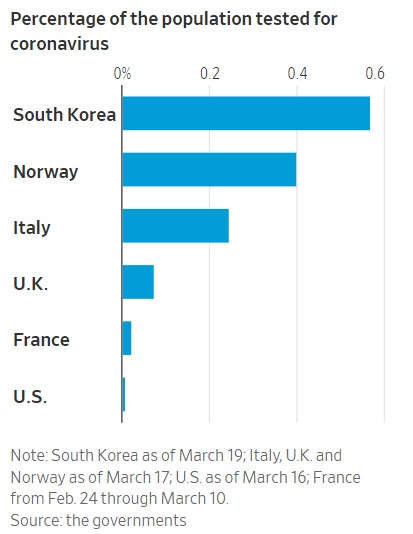
ParticipantThat Worldometer chart (above) shows that the UK and US both have 59 cases per million population. However, the number of deaths as a percentage of total cases is quite different for these two countries: 1.3% for the US, and 4.4% for the UK.
In other words, the death rate in the UK, as a percentage of total cases, is more than 3 times the death rate in the US. Perhaps this could be explained If the US was testing more and identifying more (mild) cases, but this chart (from Ilargi, above) shows that the UK is testing a lot more of its population that the US.
 Participant
A recent article from the highly esteemed journal Nature, with some herbal antivirals for sumac.carol
On 17 February, the Chinese State Council announced that chloroquine phosphate — a structural analogue of quinine, originally extracted from the bark of cinchona trees — can be used for treating COVID-19 patients. This anti-malarial also has broad-spectrum antiviral activity and regulatory effects on the immune system…
Another compound from herbal remedies recruited to control COVID-19 is diammonium glycyrrhizinate, an extract of liquorice roots. Liquorice, Glycyrrhiza glabra, has long been employed against coughs and colds as well as to settle disturbed digestion, while diammonium glycyrrhizinate has anti-inflammatory activity and is used to treat liver damage caused by hepatitis B. Professor Hong Ding of Wuhan University has proposed a combination of diammonium glycyrrhizinate and vitamin C as a COVID-19 therapy…
Anti-viral herbal medicines have been used in many historic epidemics, for example the previous two coronavirus outbreaks (SARS-CoV in 2013 and MERS-CoV in 2012), seasonal epidemics caused by influenza viruses and dengue virus. Extracts from Lycoris radiate, Artemisia annua and Lindera aggregate, and the natural products isolated from Isatis indigotica, Torreya nucifera and Houttuynia cordata, showed anti-SARS effects. The plant flavone baicalein can prevent dengue virus entry into the host and inhibit post-entry replication6. Additionally, natural products from Pelargonium sidoides roots and dandelion have anti-influenza activities, as they inhibit virus entry and key viral enzyme activities.
Like chloroquine phosphate, these herbal medicines are generally not highly potent and thus cannot be regarded as a cure. Nevertheless, as a complementary treatment they can elevate recovery rates when combined with other treatments.
Redeploying plant defences
Nature Plants volume 6, page177(2020)
Published: 13 March 2020
https://www.nature.com/articles/s41477-020-0628-0ParticipantForced closure of most businesses in the state of Pennsylvania.
“Governor Tom Wolf ordered all non-life-sustaining businesses in Pennsylvania to close their physical locations as of 8 p.m. March 19, 2020 to slow the spread of COVID-19. Enforcement actions against businesses that do not close physical locations will begin at 12:01 a.m. Saturday, March 21.”
https://www.pa.gov/guides/responding-to-covid-19/
What businesses are considered “life sustaining”? Food, fuel, transportation, etc.
Full list:
https://www.governor.pa.gov/wp-content/uploads/2020/03/20200319-Life-Sustaining-Business.pdfParticipantDIY Face Mask Instructions

“All of the materials succeeded in blocking at least 49% of virus particles. Our mask has 2 layers of cotton or cotton/poly and so it seems like it would do as well or better that that.”
https://www.instructables.com/id/DIY-Cloth-Face-Mask/
https://smartairfilters.com/en/blog/diy-homemade-mask-protect-virus-coronavirus/ Participant
• Higher Temperatures Affect Survival Of New Coronavirus (Accu)
The coronavirus is currently a problem at Miami, Florida, where the daytime highs are in the 80s this week (27-28 C).
South Florida emerged as the state’s epicenter of infections caused by the novel coronavirus late Friday night after officials confirmed 25 new cases of COVID-19, including six new cases in Miami-Dade County and nine new cases in Broward, the bulk of them with no stated connection to travel history. The state listed 70 Florida residents and seven non-Florida residents who have been diagnosed with COVID-19.
https://www.miamiherald.com/news/health-care/article241187246.html
Participant“I couldn’t find the 37-day figure this Twitter comment mentions, in the report”
Here it is:
Findings… Median duration of viral shedding was 20·0 days (IQR 17·0–24·0) in survivors, but SARS-CoV-2 was detectable until death in non-survivors. The longest observed duration of viral shedding in survivors was 37 days.
https://www.thelancet.com/journals/lancet/article/PIIS0140-6736(20)30566-3/fulltext
ParticipantAll the unreported and undetected cases could be really skewing the calculations for fatality rate. Looking at resolved cases outside of China, the Case Fatality Rate (CFR) is currently calculated to be 13.9%.
CFR = deaths / (deaths + recovered)
which, with the latest data available, would be equal to:
3,600 / (3,600 + 60,190) = 6% CFR (worldwide)
If we now exclude cases in mainland China, using current data on deaths and recovered cases, we get:
503 / (503 + 3,107) = 13.9% CFR (outside of mainland China)
https://www.worldometers.info/coronavirus/coronavirus-death-rate/#correct
Participant“The coronavirus panic is dumb” (Elon Musk, yesterday)
“Saying the coronavirus panic is dumb is dumb.” (Nassim Taleb, today)If the word “panic” means “exaggerated” reaction, could be so at the individual level but NOT at the collective one.
We MUST reduce connectivity for 20 d to avert a serious problem.
We have survived for zillion years thanks to “irrational” “panics”.Why it is SELFISH to not worry more about the virus than other sources of risk even if it does not affect you as much.
Individual precaution does not scale to collective precaution.
[Adding to PRINCIPIA POLITICA]Nassim Nicholas Taleb
https://twitter.com/nntaleb/status/1236319814576214016ParticipantRe: ICU beds in the UK (the USA has perhaps 10 times as many per capita)
UK population is 66 million.
Lets say only 30% of the population, or 20 million, get infected with the COVID-19 virus.
If 15% of those infected need hospital admission, that’s 3 million.
If 20% of those hospital admissions need ICU care, that makes 600,000 patient needing the ICU (as the pandemic runs its course).The UK has less than 5,000 ICU beds.
So let’s look at some statistics: it is likely that more than 30% of the whole UK population will get Covid-19 – it may be as high as 60% in some estimates. Most will have no or mild illness but maybe one in seven will need hospital admission. Of patients in hospital up to one in five may need ICU care – that would be an unprecedented number of people admitted to ICU. As many as one in 50 of patients known to have Covid-19 may die from it.
In 2012 the UK had about 4,100 critical care beds including ICU beds and “high dependency” beds which are a step down from full ICU care… Germany has approximately four times as many ICU beds per capita as the UK and the USA perhaps 10-fold as many. Data from 2017 suggest little change.
Most UK ICUs therefore run at or above 90% occupancy and often can only admit new patients only by discharging others – even when workload is normal. Covid-19 will increase pressures not only because of weight of numbers but because intermediate treatments for pneumonia and lung failure are “aerosol-generating” (ie they risk spreading the disease) so cannot be used and early recourse to ICU is required.
I’m an ICU doctor. The NHS isn’t ready for the coronavirus crisis
https://www.theguardian.com/commentisfree/2020/mar/03/icu-doctor-nhs-coronavirus-pandemic-hospitalsParticipantSome information that could be vital, especially if self-quarantine (and self care) is expected.
Multiple Infections and Lung Damage Models Imply Strategies for Containing The COVID-19 Pandemic
Jianqing Wu, Ping Zha
Last revised: 3 Mar 2020https://papers.ssrn.com/sol3/papers.cfm?abstract_id=3544428
B. Strategies for Mitigating Infection and Lung Damages
…we found many intervening points for altering disease outcomes…
1. …exposure to the virus is just a start point, but not a gameover point. Many potential methods could be used to reduce the number of viral entries. Even through the whole lungs are expected to be infected by the virus,intervening measures can delay viral entries and reproduction and thus reduce damages to the lungs…
2. Post exposure remedial measures include simple things like cleaning nose and irrigating the mouth and nose to remove as many trapped viral particles as possible to reduce further viral entries.
3. Effort should be made to stop sequential exposure to external viruses. Before any virus is released to the bloodstream, the body is still vulnerable to continuous infections in the lungs. This measure is much powerful than using antiviral and antibiotic to control independent and cross-infections.
4. Adjust body conditions in the latent periods… The following should be considered:
(1) Temperature is the most important factor. It is absolutely the first priority to avoid exposure to low temperature. It affects blood vessel stricture, blood viscosity, blood vessel pore size, etc. Keeping warm is the most important measure in the fight against cold, influenza and any lung infections and is important before exposure to the virus, in the latent time, during treatment, and during recovery.
(2) Low humidity facilitates removal of water layer on the alveolar walls and promotes oxygen and carbon dioxide exchange and thus improve the lungs’ function to maintain waste removal balance and mitigate the congestion of white blood cells in lung tissues.
(3) Increase water intake to reduce blood viscosity. A large number of other factors can be used to reduce blood viscosity. Certain foods such as garlic and a large number of herbs can be used to reduce platelet aggregation or improve blood circulation. Right level of salts can reduce blood viscosity by influencing ironic strength. Intake of more water with moderate salts can increase the ability to disperse viral-generated wastes, cell debris and metabolic by-products into the circulating blood.
(4) Increase mechanical vibrations of the lungs. Sound-uttering, an ancient healing art, can help lungs relax, thus facilitating the passing of white blood cells through the capillaries network. It is best used in early phrase, after the reinfection phase, and during the recovery phase. However, sound uttering in the reinfection time windows may facilitate viral spreading. One best bet is avoiding uttering violent and explosive sounds in the reinfection time window. We have shown that deep breathing exercises is the most powerful method for fight against lung infection. It has been used in China, India, Japan, Korean, etc. as the primary healing art for thousands of years. This exercise can be used in a bulk of times to counter the virus-caused white blood cell retention.
(5). Use right dietary, environmental, and lifestyle factors to mitigate infection severity and lung damages. Vitamins A, C, E, antioxidants, selenium, etc. protect lung cells from the injuries of free radicals [64-74]. Lifestyle and body condition also affects human vulnerability to viral infection [75-85]. Chronic stress affects immune responses [86, 87]. A large number of factors can be used correctly to alter disease outcomes if they are combined.
C. Strategies For Reducing Lung Damages and Risk of Death
The infection modes and damage models imply two different strategies in different stage of disease. In the early phase or before the virus has spread to the whole lungs and the patient’s vital organs have ample redundant functional capacities, the measure is inhibiting, slowing down viral reproduction, viral spread and viral reinfections. This should be done as soon as possible. After the
whole lungs have been infected, anti-viral drugs in late stages should be avoided after the vital organ capacities have declined to disability levels. Instead, a sound strategy is taking measures to reduce tissue inflammation, reduce flow resistance, keep waste removal balance and strengthen vital organs in the entire treatment period.1. Use all safe and non-conflicting factors in favor of inhibiting viral reproduction, promoting innate immunity, boosting immune response, and improving the lung blood circulation as discussed in Sections A and B above.
2. Mitigate or slow down re-infections by patient-self-originated viruses. What is critically important is slowing down viruses spread to the whole lungs. Good emotion, good air ventilation, warn body temperature, low air humidity, and good life manners can slow down the reinfection process. Slower reinfection speeds have an effect of extending the total time for the viruses to spread to the whole lungs. Sequentially sporadic reinfections have less burden on the whole lungs than synchronized large-scale infections. Longer delays in successive infection timings result in reduced viral burden and reduced level of inflammation, thus reducing lung damages and risk of death. If the reinfection time is extended from several hours to a few days, it could make a difference to final outcome.
3. After at least some infected cells have discharged cell contents, couching and sneezing generate high-concentration viral sources for selfreinfection. In the early phrase or small time window, patients should avoid coughing, sneezing, and violent throat clearing activities as much as possible or taking any valid measures to inactivate viruses that are inhaled back. Such attempts can slow down viral spread speed. After the whole lungs have been infected, coughing can generate force to improve micro-circulation to facilitate white blood cells to pass through.
…
8. Drugs may help slow down viral reproduction, maintain blood circulation, strength heart functions, etc. Patients should be advised that drug side effects can temporarily diminish the usable organ capacities of lungs, heart, liver and kidneys. When the lungs are under severe distress, even a moderate thrust by drug side effects can instantly cause death. Patients should appraise
drug side effects wisely and should consider using factors with little risks.9. Some medical treatments developed by population medicine should be reexamined in the context of those models.
(1) Antiviral drugs are effective only in the early stage when the functions of major organs are strong. When treatment is started within two days of becoming sick with flu symptoms, antiviral drugs can lessen fever and flu symptoms, and shorten the time of being sick by about one day. After the viruses have spread to the whole lungs, virus reproduction is limited by biological
resources and immune responses. When patient’s lung functions has approached disability level, such a drug may only burden the lungs by its side effects…(2) We also question the measure of using drugs to lower body temperature… Thus, raising set-point of temperature has an expected benefits of improving blood micro-circulation and facilitates immune cells transport balance. Lowering the body temperature may be justified only in situations that excessive high temperature could damage the brain. However, a better strategy is maintaining the lungs at a higher temperature but lowering the head’s temperature by using a cooling bath.
(3) Using oxygen intake must be reasonable. While supply oxygen can improve lung function, it can cause widespread damages to lung cells and make inflammation even severe. The strategy is avoiding getting to that point and then using oxygen to cause widespread damages to lung cells.
(4) Medicine should explore drugs that can dilate blood vessels starting as soon as possible. However, side effects are always concern. If the blood circulation can be maintained, use of steroids should be avoided because steroids have caused severe damages to bones.
10. To maintain vital organ functions, herbs may be formulated to improve holistic health. Herbal formulations may include herbs that fight against the virus and inflammation, promote waste removal, and strengthen all major vital organs. The focus is improving blood micro-circulation in lungs. Synthetic drugs may be used to dilate blood vessels, but this should be used in the early stage. When the whole lungs have been consolidated, there is no room for the blood vessels to expand.
Participant25 cent cost of breakfast in 1940 is equivalent to $4.61 in 2020, according to this inflation calculator for the $US.
https://www.usinflationcalculator.com/
According to US census data, the median income for a man in 1940 was $956 per year.
ParticipantThis is a video from the CDC that illustrates that they are not really competent, and/or not really serious about slowing the spread of COVID-19. Check it out before they take it down. (It’s in the public domain, so anyone can download it and create a good parody video on YouTube using the CDC’s own material.)
CDC video title:
Public Health Screenings at U.S. Airports for Coronavirus Disease 2019 (COVID-19)Plot summary:
A crowd of arriving passengers is lined up for CBP (Customs and Border Protection) passport control at the airport. They are in close proximity to each other, without masks.. (We later learn that at least one of the travelers here is coming from Wuhan and is coughing.)
A traveler coughs into her sleeve as she hands her passport to the CBP officer. The officer is wearing rubber gloves (but no mask), as he holds and looks through the passport. He will presumably be wearing the same pair of gloves when he handles the passports of the passengers who follow, potentially spreading the virus.
Traveler coughs again, gets a mask from the CBP officer, and puts the mask on using only one of the elastic bands (instead of both bands). The bottom of the mask is not secured.
Another officer walks closely alongside the masked traveler, taking her to the screening area. This officer, like the first officer the traveler encountered, is not wearing a mask. He is holding the traveler’s passport in his gloved hand, and he passes it to a CDC officer, who is also wearing gloves (but no mask).
The CDC officer walks with the traveler to the screening room, where another staff member (wearing gloves) check’s the traveler’s forehead temperature with a non-contact thermometer (non-contact for a false sense of security). The the traveler is then handed a pen and a clipboard with a questionnaire. (It seems unlikely that the pens and clipboards are sterilized between passengers.)
At this point, the traveler indicates Yes to the question about whether she has been to Wuhan, China in the past two weeks. By now, she has been in close proximity to an unknown number of other travelers and staff, and the virus could be present on many surfaces (pen, clipboard, objects later touched by the gloved hands).
https://www.cdc.gov/media/video/b-roll/314659_Broll%20Package_ver3.mp4
CDC b-roll is produced by the United States Government and is in the public domain. This means that the footage is meant for public use and is not subject to copyright law protections. Permission is not required for use of public domain items. However, we do ask that you cite CDC as the source. To download any video file, right click on the video link and select “Save target as”.
https://www.cdc.gov/media/b_roll.htmlParticipantDr. D: “Doc, how many people died of the regular flu in the time we’re fretting about this famous flu?”
A 2019 study lists 389,000 deaths as the average “global mortality associated with seasonal influenza epidemics”, which is roughly 32,000/month, or 64,000 total for January and February (as a ballpark figure).
Results
We estimated an average of 389 000 (uncertainty range 294 000-518 000) respiratory deaths were associated with influenza globally each year… Of these, 67% were among people 65 years and older.ParticipantBREAKING NEWS
CDC expects ‘community spread’ of coronavirus [in US], as top official warns disruptions could be ‘severe’…The CDC’s messaging seemed to be at odds with the position of the World Health Organization, which reiterated Tuesday that countries could stop transmission chains if they acted swiftly and aggressively.
-
AuthorPosts