
Rembrandt van Rijn Old Man Sitting 1631

https://twitter.com/RealBaronTrump_/status/2092648747834523756?s=20
https://twitter.com/MAGAStorm47/status/2092998667808464972?s=20 https://twitter.com/MAGAVoice/status/2092789283023466550?s=20Not me. https://t.co/W2hLBd8gOU
— General Mike Flynn (@GenFlynn) August 28, 2026
Is Oman a US ally?
• Kuwait, Qatar Ramp Up Hormuz Oil, Oman-Iran Talks Ease Supply Fears (ZH)
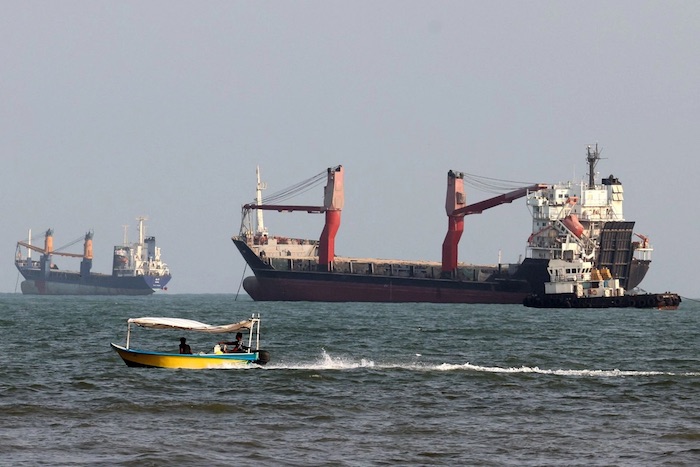
Brent crude futures fell to an intraday low of $86.22 a barrel early Thursday before recovering above $88 by 0630 ET. The benchmark is down 6.3% this week as traders unwind part of the war-risk premium amid growing optimism that renewed diplomatic efforts involving Iran, Oman and Qatar could reduce the threat of drone attacks on tankers in the critical waterway. Bloomberg reported earlier that Kuwait and Qatar are restoring crude exports through the highly contested maritime chokepoint. Sources familiar with energy flows in the Gulf region say that both producers are shipping about 70% of the combined 2 million barrels a day they exported before the Iran war.Read more …
Total oil shipments via tankers have climbed to between 7 million and 8 million barrels a day, up from roughly 4 million barrels a day in mid-July and equal to about 75% of prewar levels, according to the outlet. London-based energy and freight analytics firm Vortexa told clients in a separate report that the estimated seven-day average for oil transiting the Strait of Hormuz has approached 10 million barrels a day. The recovery in the critical waterway helps explain why Brent crude retreated to $86 earlier this morning after surging above $120 in late April.The Trump administration and Tehran remain deadlocked over finding another resolution, but Gulf exporters are increasingly finding ways around the disruption. The outlet noted that the United Arab Emirates was the first to transit crude through the strait before transferring it to other vessels in the Gulf of Oman. Maritime research firm TankerTrackers was the first to report the increase in ship-to-ship transfers on Tuesday.
A busy day in the Gulf of Oman, where there are at least fifteen sets of STS transfer sessions taking place. We count 25 million barrels of crude oil; plus some refined products. The oil originates from almost every country in the region, minus Iran.#OOTT #IranWar #Tankers pic.twitter.com/TAba26mJiW
— TankerTrackers.com, Inc. (@TankerTrackers) August 25, 2026“An Iran-Oman framework for a ‘temporary joint maritime corridor’ is pulling oil lower. It remains difficult to envision how the US would sign off on this given the concurrent ratcheting up of economic pressure,” UBS analyst Justinus Steinhorst wrote in a note. Dennis Kissler, senior vice president for trading at BOK Financial Securities, said on Wednesday, “It seems crude is now beginning to price in a sooner-rather-than-later peace deal.”
Beyond Iran and Oman’s diplomatic push to reopen the strait, Reuters reported that both countries are working to clear all naval mines from the waterway. President Trump said earlier this week that all mines had been removed. However, with disruptions to Middle Eastern refineries and Ukrainian attacks on Russian refineries, the energy crisis has morphed into a crude-products crisis, with diesel crack spreads in the US still trading above $90 a barrel. Last week, the spread hit an unprecedented $100-a-barrel level as global diesel supplies dwindled.
Oman makes a deal with the IRGC and bypasses the US?!!
• Iran and Oman Agree to Share Strait of Hormuz Revenue, Defying Trump (Jung)
Iran and Oman have reached a joint agreement on sharing revenues associated with shipping through the Strait of Hormuz, according to Iran’s Islamic Revolutionary Guard Corps (IRGC). However, the strategically vital waterway, one of the world’s most important energy chokepoints, will remain closed until Tehran resolves its conflict with Washington.Read more …
The IRGC announced on August 26 that the two countries had finalized terms after a month of negotiations over the future management of the strait. IRGC spokesman Hossein Mohebbi said the talks produced results acceptable to both sides, including agreements on each country’s share of the waterway and its revenues.The announcement followed weeks of negotiations over an interim system for restoring commercial navigation. Under the proposed framework, vessels entering the Persian Gulf would use a route through Iranian waters, while outbound traffic would use Omani waters. The arrangement would allow the two countries to collect fees for maritime services and transit, although officials have not publicly disclosed the precise revenue split. Earlier proposals had contemplated voluntary fees, but the Trump administration has opposed any attempt to impose tolls on international shipping in the strait.
Despite the IRGC’s announcement, the terms of the agreement are not final. A senior Iranian source told Reuters that Tehran and Muscat were still working through technical details, including the permanent arrangement for shipping routes. The two governments had previously described their discussions as an “interim framework” for resuming navigation rather than a completed final settlement.
The IRGC also made clear that the agreement with Oman alone would not reopen the waterway. Mohebbi accused the United States of obstructing the negotiations and said that Tehran would restore passage only if Washington accepted the previously negotiated terms. He stated that if the White House rejected Iran’s conditions, the strait would remain closed.
The dispute comes as energy shipments through the Strait of Hormuz remain disrupted following the beginning of the conflict in February. Before the crisis in the Gulf, the waterway carried roughly one-fifth of global oil and liquefied natural gas shipments. Commercial traffic has fallen sharply since the conflict began, contributing to higher energy prices and forcing energy producers and shipping companies to seek alternative routes and workarounds despite major efforts by the U.S. military to clear passage for shipping.
Shipping also remains hazardous. Iran recently blacklisted 45 vessels in an apparent effort to disrupt ship-to-ship transfers that Gulf energy producers have used to circumvent its blockade. Several oil companies have subsequently considered avoiding vessels on the blacklist, further complicating efforts to restore normal commercial traffic. Meanwhile, President Donald Trump announced that the U.S. will increase economic pressure to tank Iran’s already sinking economy and bring the ayatollah’s regime to heel.
The proposed Iranian-Omani framework may represent a significant change in how traffic through Hormuz is administered if it takes effect. Iran and Oman would coordinate commercial navigation and potentially collect substantial revenues from maritime services, while a temporary system could eventually give way to a permanent division of responsibilities.
For now, however, the agreement remains conditional. Iran says it has reached an acceptable understanding with Oman, while senior Iranian officials indicate that technical issues remain unresolved and the Trump administration continues to oppose Tehran’s proposals. The next stage of negotiations will determine whether the framework can translate into the reopening of one of the world’s most consequential shipping routes.
“Can Iran’s mullah dictatorship govern the country while losing the war?”
• Iran’s Most Dangerous Enemy: Administrative Collapse (Monty Donohew)
Nearly every dispatch from this Iran military action measures Iran in the currency of destroyed hardware: ballistic missiles, drone production lines, naval combatants. That accounting matters, but it may be measuring the wrong thing. The more consequential damage may not be to Iran’s arsenal at all. It may be to the regime’s capacity to function as a coherent government. This week supplied two pieces of evidence, in two entirely different domains, pointing at Iran’s underlying administrative fracture.Read more …
The first is political, and it is remarkable on its own terms. Kayhan, the hardline newspaper closely aligned with the regime’s most conservative faction, published a piece this week accusing President Masoud Pezeshkian, Parliament Speaker Mohammad Bagher Ghalibaf, and Iran’s own negotiating team of “completing a puzzle” whose intended effect was to manufacture an image of surrender and make retreat seem necessary.That’s not commentary on an external enemy, but a state-aligned publication publicly accusing a sitting president and the speaker of parliament of engineering their own government’s capitulation, in the middle of a war, in terms ordinarily reserved for traitors. The second is fiscal, and the numbers are not subtle. Iran’s rial hit a record low of roughly 2.02 million to the dollar this week as trading opened. The IMF projects Iran’s average annual inflation will reach 68.9 percent in 2026. The World Bank estimates the Iranian economy contracted 2.7 percent in the year ending in March.
None of this means Tehran is defenseless against its own currency.
Iran has spent years building buffers precisely for moments like this: a shadow fleet of more than 350 tankers moving 1.6 to 1.8 million barrels of crude daily to Chinese refiners via ship-to-ship transfers, a barter system that covered roughly a third of oil exports last fiscal year and is projected to cover more this year, a state-administered exchange rate that lets favored importers buy dollars far below the open-market price, and a central bank willing to finance deficits by simply creating money rather than borrowing it.
These are not improvised responses. They are an institutionalized sanctions-evasion architecture, built up over successive rounds of pressure since 2018, and they have kept Iran’s oil exports above nuclear-deal-era levels even through the current war’s opening months. What is changing is how well that architecture still performs. The discount Iranian crude must offer buyers has widened from roughly eight dollars a barrel in 2023 to fourteen or seventeen dollars now, as Washington’s secondary sanctions reach further into the Chinese “teapot” refineries and shell-company networks that make the evasion possible.
Tehran’s fiscal break-even price sits near $124 a barrel; the price it is actually realizing on exported crude is closer to $56. That gap is precisely why the government leans harder on money creation, and money creation is precisely what is driving the inflation and currency collapse visible in the rial’s exchange rate. The buffers have not failed. They have simply stopped being sufficient to close the widening distance between what the state needs and what it can extract from a shrinking, more heavily discounted revenue base.
There is a further complication worth stating plainly rather than glossing over, because it cuts against any simple “sanctions are working” reading. The same evasion architecture that keeps the state solvent is also concentrating economic power in the hands of the actors best positioned to run it, chiefly the IRGC, which has expanded its role in the shadow fleet, the barter arrangements, and the currency-exchange houses that move sanctioned banks’ money.
Sanctions pressure that squeezes ordinary importers and consumers, who pay the open-market rate, while leaving IRGC-linked networks to capture the rents from smuggling and preferential exchange access, does not necessarily weaken the regime’s core coercive apparatus. It may instead redistribute economic power inside the state toward the faction least interested in a negotiated settlement, which would cut directly against the administration’s stated goal.
This is also why the Soviet Union is a useful comparison only if handled carefully, and it is worth being precise about what the analogy does and does not claim. The Soviet collapse involved national independence movements, deliberate political liberalization under Gorbachev, elite defections, and a wholesale transformation of the state’s institutions, a far longer and more complicated sequence than currency instability alone. Iran shows no equivalent liberalization and no comparable elite defections yet.
What Iran may be experiencing is not a repeat of that sequence but a similar underlying mechanism: an authoritarian state whose administrative machinery for translating central authority into local control begins to fail once fiscal and currency instability outpaces the state’s capacity to paper over the gap through patronage. That mechanism can operate on very different political timelines and produce very different outcomes than it did in Moscow. It is the mechanism, not the history, that is being invoked here.
“The move comes on the heels of U.S. District Judge Jeannette Vargas, a Biden appointee in Manhattan, striking down a prior State Dept ban on visas from 75 countries.”
• Secretary Marco Rubio Suspends all Visa Reviews and Interviews (CTH)
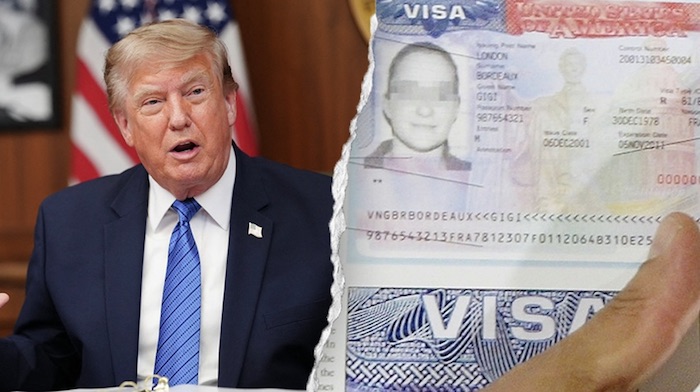
Secretary of State Marco Rubio has suspended all international visa reviews and interviews with applicants until all of the consulate staff undergo training on the appropriate review process. The intent is to proactively identify visa applicants who are seeking temporary visas with the intent of claiming asylum status or similar permanent migration. Each consular staff agent and officer is being tasked with scrutinizing applications to ensure the applicant does not become a “public charge” after entry.Read more …
WASHINGTON – The Trump administration has directed U.S. embassies and consulates around the world to postpone immigrant visa interviews while consular officers complete training on new public-charge guidance, temporarily stalling applications that have reached the interview stage. The State Department told diplomatic posts to reschedule immigrant visa interviews until consular officers complete the training on how to evaluate whether an applicant is likely to become a public charge.A public-charge determination can make an immigrant visa applicant inadmissible under federal immigration law if officials determine the person is likely to become dependent on certain forms of public assistance after arriving in the U.S. “In early August, we launched a global training initiative at all of our embassies and consulates worldwide. To accommodate this in-depth training, appointments for visa services will be adjusted,” a State Department official said in a statement.
[…] The administration said Monday that it was preparing to revoke the business and tourism visas of up to 200,000 foreigners who have applied for or are seeking asylum in the U.S., a move that would represent the largest mass visa revocation in U.S. history. (read more)
The move comes on the heels of U.S. District Judge Jeannette Vargas, a Biden appointee in Manhattan, striking down a prior State Dept ban on visas from 75 countries. However, the judge’s decision does not invalidate visa denials overall, based on independent grounds of ineligibility. As a consequence, Secretary Rubio is ordering worldwide embassy and consulate retraining to enhance scrutiny of all visa applications carefully.
France AND Germany looking good. Still efforts to ban Weidel and Le Pen?
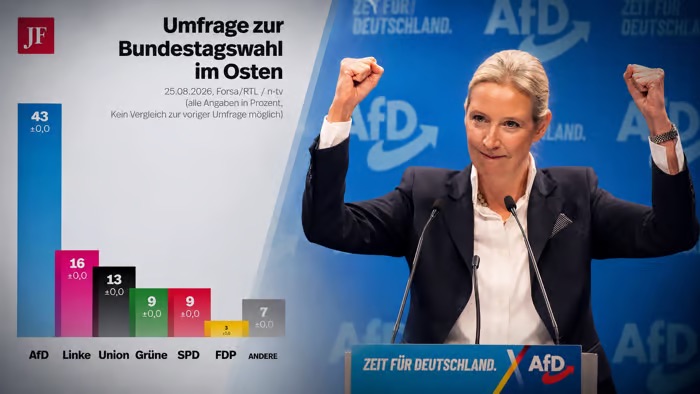
• AfD Now Polls At 43% Across Eastern Germany (ZH)
Building on Nomura analyst Andrzej Szczepaniak’s note from earlier this week, which forecasts that right-wing parties are positioned to make electoral gains across Germany, France, Spain, Switzerland, and the UK over the next 18 months, new polling data from Germany further suggest that Alternative for Germany (AfD) is performing exceptionally well as citizens demand political change after years of failed progressive experiments that encouraged a Third World migrant invasion and nation-killing deindustrialization trends.Read more …
Einer aktuellen Forsa-Umfrage nach liegt die AfD im gesamten Osten bei 43%, während die CDU auf nur noch 13% kommt. Die Bürger wollen die politische Wende!https://t.co/c94bESp3Qu pic.twitter.com/lrKvllJCAa
— Alice Weidel (@Alice_Weidel) August 26, 2026
Weidel said, “According to a recent Forsa survey, the AfD is at 43% across the entire East, while the CDU is down to just 13%. The citizens want the political turnaround!” The key takeaway from the new survey is that the AfD is polling at more than three times the level of the center-right CDU/CSU and exceeds the combined support of the CDU/CSU, SPD, and Greens. German weekly newspaper Junge Freiheit commented on the new survey, saying, “The numbers are particularly interesting ahead of the upcoming state elections in Saxony-Anhalt on September 6th and in Mecklenburg-Western Pomerania two weeks later.”The outlet continued, “The assessment of Chancellor Friedrich Merz’s (CDU) performance remains abysmal across Germany. As in the previous week, only 13 percent of those surveyed expressed satisfaction, while 85 percent were dissatisfied.” Elon Musk has previously stated, “AfD is the only hope for Germany.”
AfD is the only hope for Germany https://t.co/6ONn1LOipE
— Elon Musk (@elonmusk) August 19, 2026One reason German citizens are particularly frustrated is that Europe’s economic engine is collapsing, with Volkswagen Group labor representatives warning earlier this week that as many as 140,000 jobs could be cut at the struggling automaker.Circling back to Szczepaniak, the Nomura analyst wrote, “Five years ago, financial markets would not have seemed so at ease with such a prospect. But then again, these populist right-wing political parties were previously not so fiscally prudent as they are perceived to be today.”
He added, “Now, if anything, financial markets are much more concerned about populist left-wing parties being elected due to their desire to increase spending, often paid for through higher borrowing or higher taxes, which are likely to shut the engine off of already stuttering economies.”.
“.. is New York City, a city whose white ethnic population is only 16% of the population still an American city?”
• The Disappearing Western World (Paul Craig Roberts)
It was 53 years ago that Jean Raspail wrote The Camp of the Saints in an attempt to wake up the French nation to the future challenge they would face. The French response was to dismiss Raspail’s effort as a dystopian novel and do nothing. Today five decades later Marine Le Pen, leader of France’s only French nationalist party, is the most popular political leader in France. A recent poll showed her and her party, National Rally, favored by 38% of those polled. Her nearest rival has 17%.Read more …
One of France’s many problems is that it has too many political parties, which indicates that France is more disunited than united. In the previous French election, Le Pen won in the sense of having the most votes. But to keep a French nationalist from power, other parties formed a coalition that represented a higher number of votes. The French Establishment then tried to imprison Le Pen and prevent her from again running for office. This scenario is likely to be repeated in the next French election.So, after more than a half century of being overrun by immigrant-invaders, as Jean Raspail said they would be, the French still cannot rise to the defense of an ethnic French nation. Only Marine Le Pen’s political party represents a French nation instead of a multicultural tower of babel.
Today in Europe and in the US a political party that represents the essence of a nation–its historical ethnicity–is regarded as racist. To be clear, it means that any country that does not consist of a collection of races, cultures, languages, and disparate interests, thereby constituting a multicultural tower of babel, is racist. This indoctrination of the Western peoples is so successful that even today only 38% of the French people support an ethnic French nation. 62% of the French population are content to exist in a tower of babel.
Having observed the increasing takeover of the states of Michigan, Minnesota, California, and New York City by third world immigrant-invaders and Massachusetts’ new law requiring the state to recruit more Muslim immigrant-invaders into the state’s government, the rising Muslim communities in Texas demanding Sharia law, and the emergence of Hispanic Spanish as America’s second official language, the Unites States itself, once a melting pot of European and British ethnicities, has sold its soul to multiculturalism, an arrangement in which there are only disparate interests, a disparity inconsistent with the name of the country–United States.
According to university and community estimates, NY City alone has more than 350 Mosques. Several decades ago I noticed that NY city cab drivers were third world immigrants. Population studies have found that NY City’s population contains 750,000 to 1 million Muslims. 2.5 million Hispanics, 1.5 million Asians, and 2.2 million Africans, some American born and some recent immigrants. According to the latest US Census, 8.58 million people live in NY City of which 7.2 million or 84% are nonwhite.
In view of these numbers, is New York City, a city whose white ethnic population is only 16% of the population still an American city? Compare this Tower of Babel to NY City’s population in, say, 1950. Already a fifth of the US work force consists of foreign born people of color. Many are H-1B work visa holders, few of whom ever return to their countries. The Western World is disappearing. The peoples of the West have inhaled so much guilt from their indoctrination and brainwashing by white liberals that they are impotent to defend and to regain their immigrant-invader threatened nations.
How long before the only white ethnicities will be in zoos as specimens of white racist colonialists?
All the little people.
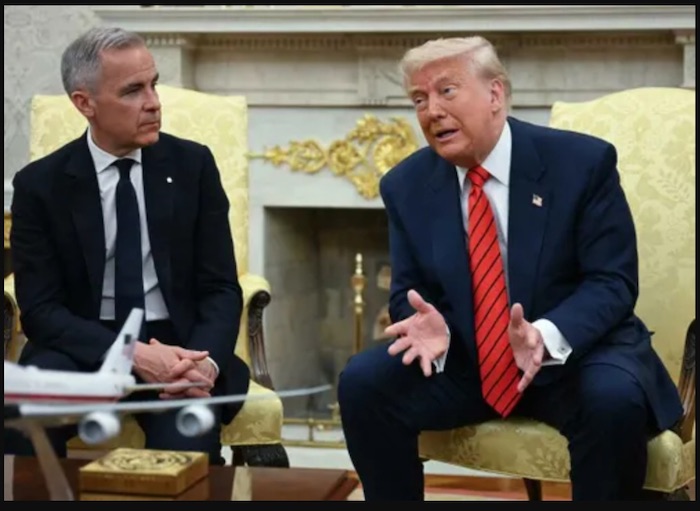
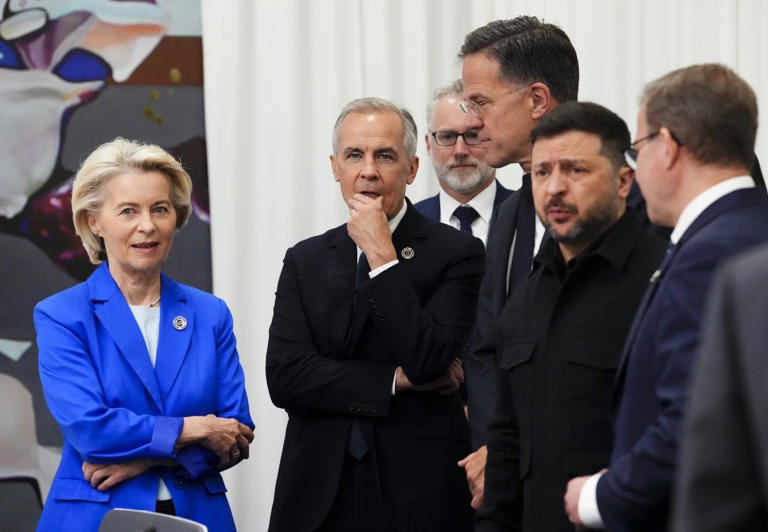
• Canadian PM Mark Carney’s Role in EU and Ukraine Friction (CTH)
Barbara Boyd does a solid job connecting the recent U.S-Canada trade friction to the globalist plans of Mark Carney in alignment with the European Union. The goal is to create and maintain broad opposition to the geopolitical reset underway as an outcome of President Trump s larger and nationalistic economic agenda.
This is worth the watch as many of the background happenings are interconnected, yet few people are putting it all together. Barbara Boyd argues that the most dangerous escalation is the proxy war with Russia, highlighting Russia’s warning that direct British involvement in strikes on Russian territory could make Britain a combatant.She says the UK has long driven the πUkraine conflict and that Trump has sought peace while Britain and Europe resist, relying on war production amid failing economies. The episode focuses on Canada’s Mark Carney as a key spokesman for a permanent-warfare economic strategy, detailing his global financial roles and Canada’s creation of a Defense Security and Resilience Bank to fund defense mobilization without citizen involvement.
Boyd also describes Carney’s actions against the U.S., including trade disputes, deeper EU alignment, and Arctic defense plans. She claims a coordinated chaos and psychological warfare campaign targets U.S. voters ahead of the midterms.
There is little doubt European NATO countries, led by the U.K, France and Germany, are stimulating and supporting increased direct military conflict against Russia. We are beginning to see not-so-covert events happening in/around border nations with Russia -carried out by Ukraine- that continue to raise the stakes.
Moldova, Romania and now Finland are starting to become increasingly visible as launch regions for Ukraine drone attacks into Russia. Meanwhile the Russian enclave of Kaliningrad (between Lithuania and Poland) is surrounded by provocative NATO military activity. Keep watching.
Only Trump stands up to globalism.
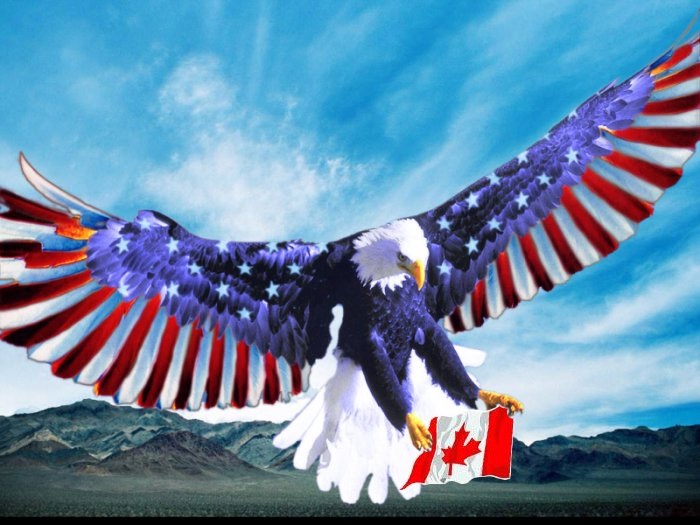
• It’s Always Cute When Canada Thinks It Matters (Kurt Schlichter)
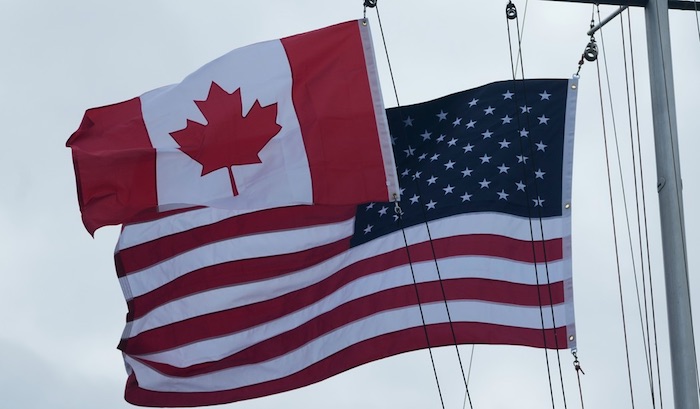
Just what the hell are the Canadians thinking? Do they think that if they cry enough, America’s going to roll over? We’re now in another trade war with them, and the Canadians are whining, and the Democrats — who never side with America — are whining right along with them. It’s about time to be done with the country that is touted as America’s best buddy but is actually tied for its most annoying next-door neighbor. They cry that America is being mean because it’s looking out for its own interests. How dare America expect Canada to pull its weight on its own defense?Read more …
How dare America not want to perpetuate unfair and unbalanced tariff and trade rules in perpetuity? And how dare America not recognize the moral superiority of a country that, if it were a stereotype, would be a fugly, sexually dysfunctional wine woman with a “Hate Has No Home Here” sign on the front lawn of the condo it shares with five cats, all named after characters in “Twilight.”Americans don’t think much of Canada — literally. We didn’t have to, because for a long time Canadians were just pleasant, sturdy, and trustworthy neighbors who were different from us but shared enough in common that we managed to share the longest demilitarized border in the world. Canadians don’t want to be Americans, and that’s OK. It’s silly, because everybody should want to be Americans, but it’s all right. We didn’t take offense. We’d have to be thinking about them to take offense, and we weren’t. It’s nice to have a neighbor you don’t really have to think about, except when you need to borrow sugar.
But when we did think about them, they used to be kind of amusing. Now they’re actively annoying. And their obsessive loathing of the United States has morphed from a vaguely tiresome affectation into something genuinely grating. They are ripping us off on defense and trade, they are failing to back us up around the world, and they have become a petty dictatorship. They are still funny, but the Ralph Wiggum of nations is longer ha-ha funny.
They thought about us a lot, and you can’t really blame them. We’re economically successful, stubbornly free, and masculine — all the things that Canada either never was or no longer is. Canada has been taken over by the faculty-lounge left. It’s less a country than a giant, freezing college campus where the government will literally destroy your life if you do something like point out obvious truths about how a man is not a woman or that there was a giant scam involving allegedly dead Indian children — oh wait, we’re supposed to call them “First Peoples.” Of course, they have enshrined collective guilt over taming their vast lands as their national ideology. They despise us, but they also despise themselves. We have a glorious Constitution, and they have an endless land acknowledgment.
The Canadians harken back to their European roots in other ways too, such as a hatred of free speech and dissent. After all, they were never man enough to throw out the Brits or the French, and now they have fully embraced the same kind of supine and feminine national identity that focuses on crushing actual Canadians and importing the entire Third World to replace them. And like the Europeans, they won’t ever shut up about their free healthcare, bragging about it endlessly to us and complaining endlessly to each other about having to wait six months for a blood transfusion. Pro tip: When you’re in one of their clinics, if you can ever get in, just remember to keep smiling and appearing happy; otherwise, they’re going to recommend you for medical termination.
One of Donald Trump’s great qualities is that he refuses to obey the dictates of America’s foreign-policy elite consensus. That consensus was to let the Canadians keep drafting off us on defense, trade, and the Chinese communist infiltration that has corrupted their entire government. We’re supposed to ignore all that because Canadians are nice, but Trump’s not nice. Trump actually cares about America’s national interest, and it’s not in our interest to carry Canada’s rucksack any longer or to open our markets to it. At the same time, it closes its doors to ours and allows our great enemy a foothold on the frozen tundra above us. That’s why he has been hard on Canada, and that’s why Canada is whining like a little girl.
Canada has not been marching beside us, its allegedly closest ally, for a long time. It’s been half-stepping. Now, the argument you hear back is that Canada came to our aid after 9/11 and lost 158 soldiers in Afghanistan, so we should shut up and take whatever they give us, or not give us, as the case may be. Baloney. No one minimizes or belittles the death of those heroes. Their forces were studs, and you can’t say that about all the Allied forces by a long shot. Every American who’s worked with Canadians, including yours truly, respected them as tough and dauntless warriors. You talk bad about the Canadians who served with Americans overseas, and an American soldier will deck you.
But what happened yesterday doesn’t give a free pass for what needs to happen today. The last Canadian killed in Afghanistan died 15 years ago, when they pulled out of combat operations. That’s a decade and a half. That’s a long time. We appreciate that they came, but let’s be real. That was their obligation as a NATO ally when we, a NATO ally, were attacked. They didn’t do us a favor; they did their duty under the treaty. Moreover, those semi-human Islamist scumbags murdered 24 Canadian citizens — they were avenging their own as well as ours.
They deliberately chose to stop having a military and let us do it for them. Today, Canada has no real army, no real navy, and no real air force. The once-mighty Canadian military is now a micro-military more focused on DEI than making the enemy DOA. It shamelessly lets the United States defend North America, Europe, and the rest of the world alone. It has no capacity to project power. It’s not in the Red Sea, it’s not in the Persian Gulf, it’s not anywhere helping us do the heavy lifting of keeping the world free.
And that’s just the way Canada wants it, because it doesn’t want to spend the money and it doesn’t want to dirty its soft, girlish hands helping big, mean America. Moreover, its communist Chinese masters love having a disarmed and vulnerable pseudo-ally right next to the CCP’s main adversary. Canada has long failed to pay its share of NATO, and Trump isn’t going to tolerate that. No American should tolerate that. But the Democrats do, because if Trump wants it, they have to oppose it, even if it means opposing America.
Democrats call that a “win-win.”
Canada’s military free-riding is only surpassed by its fake free-trade free-riding. Not only do they restrict American imports to their own advantage, but they demand America open its markets to them. Worse, they allow Chinese commodities and products in and let them be transshipped into the United States to circumvent tariffs on China. Again, Trump doesn’t understand the idea that we are somehow morally obligated to allow lesser nations to take advantage of us. This is a right and proper attitude, but because it’s Trump, it has to be bad. That’s one reason Democrats are so eager to take the side of a foreign country screwing over the United States on trade. The other reason is Democrats despise America.
And let’s face it: Canada isn’t anything like a real democracy. It holds no moral high ground. It persecutes people for speaking. It murders those it deems a burden on society. It embraces every disgusting aspect of DEI, including having a justice system that treats different races differently. You can be destroyed for saying things in Canada — financially and maybe even placed in prison. You are also unable to enjoy the God-given right to keep and bear arms; the government keeps a monopoly on lethal force, meaning it keeps a monopoly on power, and those who should be citizens are merely subjects. It’s frankly disgusting, and a country like that is unworthy of our friendship.
It’ll warn first.
• Moscow Warns It Could Target British Military Facilities (ZH)

From the very start of the Ukraine war, the United Kingdom has consistently been among Kiev’s most open and ardent military supporters, time and again transferring heavy weaponry, including cutting edge long-range missiles like the Storm Shadow. At the start of this week, Britain announced it plans to provide Ukraine with classified technology to allow for the country’s own manufacturing of the British/French-designed SCALP air-launched cruise missile (which in the UK is known as the Storm Shadow). The allies expect to set up a production line in Ukraine as soon as year’s end.Read more …
Already, Ukraine has used its domestic-made and designed Neptune cruise missile to strike oil refineries and military sites deep inside Russian territory. A domestic-made SCALP would present the likelihood of Ukraine then using this Western-designed missile to directly attack Russia, which only increases the chances of an eventual Moscow-NATO clash. Ukrainian forces already appeared to have used the missile on Donetsk and other locations closer to front lines in the Donbass.On Thursday the Kremlin has issued one of its strongest warnings and threats aimed at London to date, accusing the UK of “fully taking part in the war on Kiev’s side” – and thus thwarting any chance of peace talks while adding fuel to the fire. Moscow is now saying that the UK’s own military facilities could become fair game for direct attacks.
Kremlin spokesperson Maria Zakharova said in a Thursday press briefing, “We have repeatedly warned that the response to Ukrainian strikes using British weapons against Russian territory could be directed against any British military facilities and equipment in Ukraine and beyond.” Zakharova urged “all residents of the United Kingdom to think about the inevitable, catastrophic consequences of the hostile steps taken by their own authorities.” She also laid out:
“We propose that the British leadership once again carefully analyze the situation and immediately, in the most resolute and unequivocal manner, abandon the hostile, aggressive line, which can only… create the risk of the conflict escalating to an entirely new level.” Ironically this comes just on the heels of a rare visit of the CIA Director to Moscow. US officials claim the Tuesday meeting between John Ratcliffe and top Kremlin intelligence officials was to convey a warning to President Putin to not attack any NATO member. However, many analysts are skeptical that this was the official reason.
A demand of over $1.4 trillion bought off for 11.2 billion. What’s not to like?
• Monopoly Money: Why Meta “Likes” the $16 Billion Settlement (Turley)
It is not every day that a company can settle a case for over $16 billion and celebrate. However, Meta’s settlement with 29 states is a remarkably good deal for a company facing a demand of over $1.4 trillion and years of litigation. In the end, it may not even take a loss from the litigation. The settlement ends the latest mass liability case, following similar settlements in tobacco, opiates, and other products. It will require Meta to make changes to its platform, though the company already appeared to be moving to make such changes.Read more …
The maximum payment of closer to $17 billion is tied to whether competing platforms (like TikTok and YouTube) adopt parallel protections for children. Otherwise, the company is on the hook for at least $12.1 billion over 10 years under the agreement. The company agreed to impose daily time limits for underage users as well as “nighttime blocks” from midnight to 6 am (as well as notifications linked to school hours).It is doubtful that these “fixes” will actually fix the problem. Social media is enormously popular with adults and children alike. It is also ubiquitous and accessible, particularly for tech-savvy kids. The burden will remain with parents regarding access to and use of social media, not the company.
Meta was looking at a long slog in the courts. Some of us were skeptical of the legal basis for some of these claims. The line between a popular and an “addictive” product is fairly subjective. It was hard to see where the line would have been drawn in this litigation. However, Meta likely would have faced similar demands for changes to its platforms through legislation even if it prevailed in litigation.
Those legal questions will now have to wait for another test case. The settlement leaves other companies in a more exposed position. This massive settlement is like a dinner gong for plaintiff’s lawyers who will now fan out in packs in pursuit of companies like dusk on the Serengeti. Companies are already facing thousands of such lawsuits. Meta has already lost cases in California and New Mexico over consumer safety and negligence claims. The priority was to limit the potential damages rather than to make new law.
The actual damages are not as daunting as it may seem. The tobacco multistate settlement was over $206 billion, not counting separate state settlements worth tens of millions more. The opiate settlements resulted in damages of roughly $60 billion.
Even at $16 billion, for a company the size of Meta, this is like monopoly money (literally so, if you ask some critics). The value of settling the case alone can wipe out that loss through stock-market gains and other pricing changes. After the tobacco settlement, companies like Philip Morris enjoyed market gains that effectively washed out the loss. Moreover, these companies enjoyed a very inelastic market, so they internalized costs with price hikes that left smokers holding the bag.
Ironically, if social media is as addictive as claimed by litigants, the market is equally inelastic. Big media will be able to easily recoup these damages as did Big Tobacco. Much of these damages will ultimately be passed on to and borne by social media users, operating like a tax for states receiving the funds.
The platform will clearly make positive changes that will assist parents. These are straightforward changes that have long been needed. Hopefully, these states will not just take this money and run as many did with the tobacco windfall. Instead, it would be a great help if the money went to enhancing programs for child mental illness.
Social media remains one of the most transformative inventions in history, including a powerful tool for free speech and political discourse. That popularity comes at a price. It will remain part of our social fabric, as are alcohol and tobacco products despite their abuse.
Meta did not create these social costs alone. We all did. We found ourselves overwhelmed by a technology with endless applications and potential for expression. This settlement will not erase those social costs any more than the tobacco settlement erased cancer or the opiate settlement erased addiction. The ultimate child-protection regulation will remain parents monitoring and educating their own children.
Meta’s corporate slogan, “Meta, Metamates, and Me,” may capture the problem. It is often hard for people to separate themselves from their virtual selves. This is a technology that is both liberating and captivating. Ultimately, despite the progress under this agreement, no settlement will protect us from ourselves.
From Dutch news. Crude machine translation.
• Chipmaker Nvidia Arranges Funding For Its Own Clients (NOS)
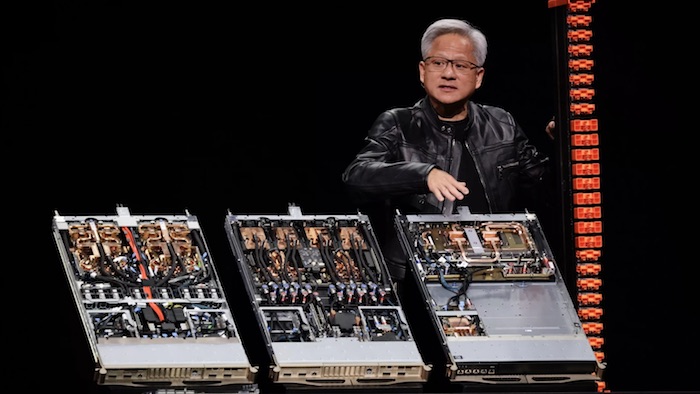
The American chipmaker Nvidia, the most valuable company in the world, is engaged in something remarkable: ensuring that its customers have enough money so that they can buy (even more) Nvidia chips. Nvidia’s computer chips have made the company enormous, because they are necessary for developments in the field of artificial intelligence (AI). The AI chips that Nvidia designs are purchased by large tech companies. They use the computing power to develop AI programs themselves, or rent out the computing power to smaller companies that cannot or do not want to buy the chips themselves.Read more …
Nvidia is very dependent on those large customers, says Dennis Vink, professor of corporate finance at Nyenrode Business University and holder of Nvidia shares. “If one of those major customers drops out, Nvidia immediately loses a large part of its revenue. That is why they want to ensure that more customers can buy their chips.” To achieve this, Nvidia is having investment firms raise 500 billion dollars (429 billion euros), as it recently announced. That money is intended for Nvidia customers: companies that also want to use AI chips, but have less money than the big tech companies.Tens of thousands of euros per chip
“Nvidia wants the market for AI chips to grow,” says Arnout Boot, Professor of Corporate Finance at the University of Amsterdam. “So they ensure that their customers have the money to invest in Nvidia chips. These are not the Googles and Amazons of this world, but the companies that use computing capacity. That amounts to thousands of companies.”Reson8 is one such company. “We build AI applications that convert speech to text, for example between a doctor and a patient,” says founder Thomas Kluiters. The Nvidia chips are needed to develop this type of program: the AI industry calls this ‘training’ the program.
[..] “At the moment, those chips cost between 20,000 and 60,000 dollars each,” he says. “You need many dozens of these types of chips, plus other equipment. That means we are quite dependent on Nvidia. They simply make the best chips. We cannot find an alternative for that anytime soon.”
Due to this role in the AI industry, Nvidia has grown very strongly in recent years and is earning enormous amounts of money. Last night, the company announced that it made a profit of 59.7 billion dollars (over 51 billion euros) over the past three months. Since 2024, it has recorded a total profit of more than 300 billion dollars.
Competition is a risk for NVIDIA
Nevertheless, Nvidia is not going to front that 500 billion dollar pot to its customers itself, if it materializes. It is the investment firms that raise the money and then lend it to companies that want to buy the AI chips.A smart way to do it, according to Vink of Nyenrode University. “In the short term, the risks for Nvidia itself are limited,” he says. “That lies with the investment firms. They aren’t stupid either: they will take a close look at the financial standing of such a company. A bank doesn’t just lend you money without looking at your situation either.”
Nvidia can, however, play a role in the agreements an investment firm makes with such a company by acting as guarantor for part of the loan. That means Nvidia takes on part of the risk, giving investors a little more certainty that they will at least get part of their money back if something goes wrong, says UvA professor Boot. “Nvidia can do this because they have an exceptionally strong position.”
Despite the billions it earns, there is still a risk, says Boot. “Developments in the field of AI are very uncertain. Nvidia chips are still very important right now, but what exactly does the future hold? What is the competition doing? In this risky world, nothing is ruled out.”
“It is a serious risk for Nvidia if competitors develop AI chips that are just as good,” Vink also says. That is another reason why the company is securing funding to acquire new customers, he says. “They are trying to make them dependent on Nvidia chips, because they want to remain the absolute biggest in this market.”
The West sees itself as the winner of the cold war. Russia does not see itself as the loser.
• Why August 1991 Failed To Bring Peace Between Russia And The West (Bordachev)
Thirty-five years have passed since the dramatic events of August 1991 in Moscow which marked, more clearly than any later declaration or diplomatic ceremony, the end of the era we call the Cold War. The failed ‘August Coup’ attempt to preserve the Soviet Union made continuation of the old confrontation impossible given one of its principal participants had effectively left the battlefield. Everything that followed, including the formal dissolution of the USSR in December 1991, merely recorded a change that had already taken place.Read more …
The essential fact was that the Soviet Union, and subsequently Russia, could no longer sustain the material and political foundations required to continue the struggle. There were many reasons for this, but foremost among them was the exhaustion of the Soviet model of state governance. Moscow therefore chose to end the confrontation. This was historically unusual because Russia hadn’t been defeated on the battlefield or forced to surrender, and the Cold War ended because of internal political change and a voluntary decision by the Soviet leadership.Paradoxically, this peaceful ending helped make a future confrontation more likely. The principal reason was simple: the Western powers, led by the United States, regarded the end of the Cold War as a victory, but Russia didn’t regard itself as a defeated country. That contradiction became one of the central problems of the post-Cold War order. Great nuclear powers such as Russia, the United States, and China cannot realistically be defeated militarily without risking mutual destruction, thus the greatest threats to such states therefore tend to come from within through political dysfunction, economic weakness, poor governance, and social instability.
We can see something similar today in the United States. It remains the strongest individual power in the international system, but domestic conflict increasingly limits the effectiveness of its foreign policy. Meanwhile, China places internal stability and development at the center of its strategic thinking precisely because its leaders understand that domestic cohesion ultimately determines external strength. The same logic shaped the Cold War because once Washington and Moscow accumulated enormous nuclear arsenals, direct military conflict became irrational.
The confrontation instead developed according to what George Kennan described as containment in restricting Soviet influence and applying pressure across numerous fronts while avoiding a direct war between the superpowers.But we shouldn’t romanticize this arrangement because the Cold War was still a war in the political sense and the objective of the Soviet Union’s adversaries wasn’t simply peaceful coexistence, rather it was the containment and ultimately neutralization of their opponent.
From Moscow’s perspective, this amounted to a struggle against Russia itself, which at that particular historical moment existed politically and economically in the form of the Soviet state. The relative stability created by nuclear deterrence certainly encouraged a degree of mutual respect as it forced both sides to search for peaceful solutions even during serious crises. However, none of this removed the fundamental Western strategic objective which was victory over the Soviet adversary.
When the Soviet Union disappeared, therefore, Western capitals naturally interpreted the event as the achievement of that objective, but the victory was incomplete. Russia had lost the geopolitical struggle but had not been defeated in the traditional sense. Its territory hadn’t been occupied and its armed forces hadn’t surrendered, so Russians could therefore reasonably believe that the changes of 1989-91 were the result of decisions taken in Moscow rather than terms imposed by a victorious enemy and that distinction proved enormously important.
It also explains why comparisons with France after 1815 or Germany after 1945 are misleading as both countries were militarily defeated before being incorporated into new international systems established by the victors. France was reintegrated into the European order after Napoleon because Russia, Britain, Austria, and Prussia quickly developed disagreements of their own so Paris could therefore play a useful balancing role within the Concert of Europe.
Nothing comparable existed after 1991 when the Western coalition was unusually united and organized around NATO under American leadership and there was no internal balance of power in which Russia could become an indispensable partner. The comparison with West Germany after 1945 is even less convincing. West Germany entered NATO and the emerging European institutions while foreign troops remained on its territory and its sovereignty was sharply constrained by the consequences of military defeat. No comparable arrangement could conceivably have been imposed upon Russia.
After 1991, the central problem was never resolved given that the West saw itself as the victor of the Cold War and wanted to construct a political order reflecting that victory. Russia, on the other hand, saw itself as a sovereign great power that had voluntarily abandoned the previous confrontation and expected to participate in the new order on that basis and these expectations were fundamentally incompatible.
https://twitter.com/TRobinsonNewEra/status/2092661241315512654?s=20SpaceX wants 30+ Starships going up every day.
— Mario Nawfal (@MarioNawfal) August 27, 2026
Not every month. Every day.
That’s around 10,000 launches a year by 2030, while the U.S. target for the entire country is 1,000 launches and reentries.
Elon’s point? The world already handles more than 100,000 commercial flights a… https://t.co/wfNfiyAzQ6 pic.twitter.com/WfvJELPvGY
Starbase, Louisiana is going to be absolutely enormous
— X Freeze (@XFreeze) August 26, 2026
~125,000 acres
~195 square miles
For scale:
• ~148× Central Park
• ~123× Golden Gate Park
• ~3.7× Denver International Airport….the largest airport site in North America
• ~2.6× Acadia National Park
• ~84% the size… pic.twitter.com/X3GEZk1sDC
Tesla just brought one of the most expensive parts of a battery in-house.
— Mario Nawfal (@MarioNawfal) August 27, 2026
Giga Texas is now running North America’s first large-scale cathode factory, producing the critical material used inside Tesla’s 4680 cells.
That means less dependence on overseas suppliers, tighter… https://t.co/JGf0OxhK43 pic.twitter.com/S007SMBC2F
Support the Automatic Earth in wartime with Paypal, Bitcoin and Patreon.

 Dmitry Peskov