
Feb 172025
 
 February 17, 2025  Posted by at 10:00 am Finance Tagged with: , , , , , , , ,  53 Responses »


Vincent van Gogh Agostina Segatori Sitting in the Café du Tambourin 1887


 

Trump Says Russia Isn’t A Threat To NATO (RT)
Trump Wants Ukraine Ceasefire By Easter (RT)
Europe & Zelensky Throw Tantrum After US Sidelines Them From Russia Talks (ZH)
Zelensky Is In A Very Bad Position – Tara Reade (RT)
Trump Envoy Sets Timeline For Ukraine Peace Plan (RT)
Trump’s Envoy Signals Possible Ukraine Concessions (RT)
Ukraine c – Kremlin (RT)
Russian Duma Speaker Predicts ‘Serious Changes’ For EU, Its Institutions (TASS)
AfD Candidate For German Chancellor Seeks End To Russia Sanctions (TASS)
Vance Meets Leader Of ‘Firewalled’ German AfD Party Backed By Musk (RT)
Germany Is Self-Imploding (Victor Davis Hanson)
From Rockefeller to Musk: How CEOs and Presidents Shape America (Bluey)
House GOP Drafting Impeachment Articles Against Judges Blocking DOGE (ZH)
Judge Declines to Halt Trump’s Firing of Inspectors General (ET)
Trump Makes First Supreme Court Appeal In Test of Power To Fire Officials (BBC)
Democrats and Unions Launch an Existential Fight Over Buyouts (Turley)
Rand Paul Supports Fort Knox Physical Audit (ZH)


RFK NATO

Kudlow

Speaker

DOGE

Mearsheimer

1993-2025


The big word is out.

Trump Says Russia Isn’t A Threat To NATO (RT)

US President Donald Trump has dismissed Ukrainian leader Vladimir Zelensky’s claim that Russian President Vladimir Putin wants a temporary pause in the conflict with Kiev to regroup and launch a full-scale war against NATO. Moscow has repeatedly ruled out any short-term truce, insisting on a permanent, legally binding agreement that addresses the root causes of the Ukraine conflict. However, Zelensky has insisted that he knows “for sure” that Putin wants a brief pause to “prepare, train, take off some sanctions” before launching an attack not only on Ukraine but also on NATO states. “It can happen in summer, maybe in the beginning, maybe in the end of summer. I don’t know when he prepares it, but it will happen,” Zelensky said in an interview with NBC News’ Meet the Press on Saturday.

Trump, however, has brushed aside Zelensky’s warning, telling reporters on Sunday that he does not agree with the Ukrainian leader’s assessment at all. “No, I don’t agree. Not even a little bit,” Trump said, adding that he believes what Putin truly wants for his country is to “stop fighting.” “They’ve been fighting for a long time. They’ve done it before… They have a big, powerful machine. They defeated Hitler and they defeated Napoleon,” Trump added. “But I think he would like to stop fighting.” Trump also said he expects to meet Putin in person “very soon,” following their “long and hard” phone conversation last week, which was their first known direct interaction since the escalation of the Ukraine conflict in February 2022. He also called Zelensky to “inform” him of the discussion, during which the Ukrainian leader allegedly reaffirmed that Kiev is also prepared to seek a resolution to the conflict.

Russia will need to take Ukraine’s lack of independence into account in any future negotiations, Kremlin spokesman Dmitry Peskov said on Sunday, recalling the failed 2014-2015 Minsk agreements. Trump’s special envoy, Keith Kellogg, also pointed to the collapse of the two prior arrangements, stating, “We are not gonna go down that path.” NATO has long described Russia as a direct threat in order to justify the bloc’s existence after the fall of the Soviet Union, and Western officials have repeatedly claimed that if Moscow wins the Ukraine conflict, it could attack other European countries.

Putin has dismissed the idea of a Russian attack on NATO as “nonsense,” telling US journalist Tucker Carlson last February that the bloc’s leaders are trying to scare their people with an imaginary threat, but that “smart people understand perfectly well that this is a fake.” Moscow has consistently opposed Ukraine’s NATO aspirations, citing the bloc’s eastward expansion as a threat to national security and describing it as a key factor behind the ongoing conflict with Kiev. Zelensky claimed at the Munich Security Conference that “right now the most influential member of NATO seems to be Putin because he seems able to block NATO decisions.” Trump has indicated that Washington will not support Kiev’s accession as part of a potential peace deal with Moscow, while his defense secretary, Pete Hegseth, described Ukraine’s NATO ambitions as “unrealistic.”

Read more …

False flag time?

Trump Wants Ukraine Ceasefire By Easter (RT)

The administration of US President Donald Trump is pushing for a ceasefire in the Ukraine conflict by April 20, Bloomberg wrote on Sunday, citing anonymous sources. A US peace plan could be forthcoming within weeks or even days, Keith Kellogg, Trump’s special envoy on Russia and Ukraine, said on the sidelines of the Munich Security Conference on Saturday. ”The Trump administration has told European officials that it wants to secure a ceasefire in Ukraine by Easter,” Bloomberg said, citing sources briefed on the talks. According to the outlet, some European officials felt the pace of the negotiations was ambitious and possibly unrealistic. Talks are reportedly set to kick off with a meeting of Russian and US representatives in Saudi Arabia in the coming days.

Europe will not be given a place in the negotiations, Kellogg told top European diplomats on Saturday. Despite this, UK and EU officials fear the US expects them to shoulder the burden of Ukraine’s post-war security, Financial Times wrote on Thursday. The envoy justified the exclusion of Europe, citing the legacy of the Minsk-2 agreement between Ukraine and now Russian Donetsk and Lugansk People’s Republics in 2015. Germany and France stood as guarantors to the failed accord, which then German chancellor Angela Merkel later admitted was just meant to buy Kiev time to strengthen itself. “When you looked at Minsk-2, there was a lot of people at the table that really had no ability to execute some type of peace process, and it failed miserably. So we are not gonna go down that path,” Kellogg said.

Moscow has similarly underscored that it will not accept a temporary freeze of hostilities, like the Minsk accords, and insists on a permanent solution that addresses the fundamental causes of the conflict. Just days prior, Russian President Vladimir Putin and Trump held a phone conversation in the first such interaction since the escalation of the Ukraine conflict in February 2022. The two leaders could meet in Saudi Arabia by the end of this month, Newsweek wrote on Sunday, citing reports. Putin has previously stressed that Moscow has never shied away from peace talks, but emphasized that they have to be based on terms previously agreed in Istanbul in 2022, modified for the territorial “realities on the ground.” Russia has demanded that Ukraine embrace neutrality, demilitarize, denazify and remain free of nuclear weapons, among other points.

Read more …

I’m [from] a school of realism,” Kellogg said, regarding Europe having a seat at the table during negotiations. “I think that’s not going to happen.”

Europe & Zelensky Throw Tantrum After US Sidelines Them From Russia Talks (ZH)

Europe will not be included in peace talks for Ukraine, President Donald Trump’s Ukraine envoy said on Feb. 15 after sending a questionnaire to European capitals asking what they could offer in security guarantees for Kyiv. As The Epoch Times’ Jacob Burg reports, on Sunday, France said it will host a summit of European leaders on Monday to discuss the Russia–Ukraine war and European security after retired Lt. Gen. Keith Kellogg, Trump’s special envoy for Ukraine and Russia, didn’t include Europe in negotiations over Ukraine’s future following years of war with Russia. France President Emmanuel Macron “will convene the main European countries to discuss European security,” Foreign Minister Jean-Noel Barrot told France Inter radio. Barrot described the meeting as a working session and emphasized it should not be “overdramatized.” The office of the French presidency has not yet announced the meeting.

Macron has invited at least Britain, Germany, Poland, Italy, and Denmark, representing the Baltic and Scandinavian countries, the European Union leadership, and the NATO secretary general, according to six European diplomats. They said the purpose of the meeting is to discuss what immediate help can be given to Ukraine and the role Europe can play in providing both security guarantees to Kyiv and Europe at large. Trump called Russian President Vladimir Putin last week before consulting European or Ukrainian leaders, saying peace talks had begun. The Trump administration is pushing European allies in NATO to take a primary role in security guarantees for the region as the United States prioritizes border security and counters Chinese political and military influence.

At a global security conference in Munich, Kellogg said the United States would act as an intermediary in talks between Ukraine and Russia. “I’m [from] a school of realism,” Kellogg said, regarding Europe having a seat at the table during negotiations. “I think that’s not going to happen.” In trying to reassure Europeans, Kellogg said it doesn’t mean “their interests are not considered, used, or developed.” Some European leaders pushed back on being sidelined for talks. “There’s no way in which we can have discussions or negotiations about Ukraine, Ukraine’s future or European security structure, without Europeans,” Finland’s President Alexander Stubb told reporters in Munich. “But this means that Europe needs to get its act together. Europe needs to talk less and do more.”

The questionnaire Kellogg sent to Europeans “will force Europeans to think,” Stubb said. Kaja Kallas, the High Representative for Foreign Affairs and Security Policy and Vice-President of the European Commission, was more explicit stating that “if somebody agrees something and I mean, everybody else says ‘okay fine!’ you have agreed, but we will not follow this!” She added that EU’s position is “our importance” trumps any peace! NATO Secretary General Mark Rutte urged Europeans to get involved.

https://twitter.com/i/status/1891086302222618790

“And to my European friends, I would say, get into the debate, not by complaining that you might, yes or no, be at the table, but by coming up with concrete proposals, ideas, ramp up [defense] spending,” he said. Kellogg said that territorial concessions from Russia and targeting its oil revenues could be included in the talks over ending the war between it and Ukraine. “Russia is really a petro-state,” he said, adding that the West needs to do more in adequately enforcing sanctions against Russia. U.S. and Russian officials will meet in Saudi Arabia in the coming days for continued peace talks, according to Rep. Michael McCaul (R-Texas). After meeting with Vice President JD Vance in Germany on Feb. 14, Ukrainian President Volodymyr Zelensky said his nation was not invited to the talks in Saudi Arabia and that Kyiv would consult with strategic partners before engaging with Russia.

“This is the war in Ukraine against us, and it is our human losses,” President Zelensky told Meet The Press this morning. “We are thankful for all the support, unity in the USA around Ukraine support, bipartisan unity, bipartisan support,” adding that “we are thankful for all of this, but there is no leader in the world who can really make a deal with Putin without us, about us.” “I will never accept any decisions between the United States and Russia about Ukraine. Never,” he exclaimed. Secretary of State Marco Rubio, National Security Adviser Mike Waltz, and White House Middle East Envoy Steve Witkoff will travel to Saudi Arabia, McCaul said. The talks are meant to arrange a meeting between Trump, Putin, and Zelensky to “finally bring peace and end this conflict,” he said.

Read more …

“Zelensky is probably trying to figure out an exit route, among other things..” [..] “I think he wouldn’t be elected, obviously.”

Zelensky Is In A Very Bad Position – Tara Reade (RT)

Ukraine’s Vladimir Zelensky is far from being in a winning position at the moment, RT contributor Tara Reade has said. The former aide to Joe Biden specified that Washington is no longer fighting a proxy war against Russia via Kiev, making the Ukrainian leader useless to both the EU and the US. The comment comes after Russian President Vladimir Putin held a phone conversation with his US counterpart Donald Trump on Wednesday, the first known contact between the heads of state of the two nations since the escalation of the Ukraine conflict in February 2022. “Zelensky is probably trying to figure out an exit route, among other things,” Reade said, adding that running for president again was not an option for the former comedian. “I think he wouldn’t be elected, obviously.”

The Ukrainian leader’s presidential term expired in May 2024, but he has refused to hold elections, citing martial law. Trump has also acknowledged that Kiev will eventually have to hold elections and noted that Zelensky might not serve another term, saying his domestic poll numbers “aren’t particularly great, to put it mildly.” “He’s basically sacrificed a generation of men for what? To give rare earth minerals to the US? To give 22% of the lands to Russia?” Reade said, emphasizing that Zelensky was “in a very bad position.” The comment refers to recent statements made by Trump, who demanded the “equivalent of $500 billion worth of rare earths” from Kiev in exchange for what the president estimated to be “more than $300 billion” Washington had provided in aid since the escalation of the conflict with Moscow.

US Treasury Secretary Scott Bessent presented Trump’s proposal to Zelensky during their meeting in Kiev earlier this week. According to multiple media reports, the deal outlines that Washington would receive a 50% stake in Ukraine’s rare earth minerals as compensation for the American aid. On Saturday, the Financial Times reported, citing people familiar with the negotiations, that Ukraine had rejected the bid, citing the lack of security guarantees. According to Ukraine’s Institute of Geology, the country’s deposits include lanthanum, cerium, neodymium, erbium and yttrium. However, Zelensky recently admitted that a large chunk of Ukraine’s mineral-rich territories, some 20%, is currently under Russian control.

NBC reported on Saturday, citing unnamed officials, that the White House could send troops to guard Ukraine’s rare earth minerals. The deployment of military forces could reportedly come after Russia and Ukraine reached a deal to end the ongoing conflict. Reade said the reported troop deployment is unlikely. “There’s a will for there to be a different relationship with Russia.” She highlighted that US Defense Secretary Pete Hegseth had said definitively “that there would be no US troops in Ukraine” and “US involvement in providing money and weapons was going to end.”

https://twitter.com/i/status/1890845003464794254

Read more …

“..I’m not talking six months, I’m talking days and weeks..”

Trump Envoy Sets Timeline For Ukraine Peace Plan (RT)

A US peace plan for Moscow and Kiev could come within days or weeks, President Donald Trump’s special envoy on Russia and Ukraine, Keith Kellogg, said Saturday on the sidelines of the Munich Security Conference. In January, the WSJ reported that Trump had tasked Kellogg with outlining a settlement to the Ukraine conflict within 100 days. At the same time, the US president warned of new sanctions if Moscow refused an unspecified plan, but emphasized that he was “not looking to hurt Russia.” “You got to give us a bit of breathing space and time, but when I say that, I’m not talking six months, I’m talking days and weeks,” Kellogg projected as cited by CNBC, adding that he was “on Trump time.” “He’ll ask you to do this job today and he’ll want to know tomorrow why it isn’t solved,” Kellogg emphasized.

Earlier this week, Russian President Vladimir Putin spoke by phone with his US counterpart, marking their first known high-level direct contact between Moscow and Washington since the escalation of the Ukraine conflict in February 2022. According to the Kremlin, the US leader expressed support for the swift cessation of hostilities and a peaceful resolution, while Putin mentioned the necessity of addressing the root causes of the conflict, but that a long-term settlement could be achieved through negotiations. Following the conversation, Trump wrote on his platform Truth Social that Washington and Moscow were immediately beginning discussions to resolve the conflict. Trump also said that American and Russian officials might meet during the conference in Munich, adding that Ukraine was also invited to participate. However, no such meeting was reported by the conference organizers or news outlets.

Read more …

Russia’s been very clear.

Trump’s Envoy Signals Possible Ukraine Concessions (RT)

Territorial concessions may be part of future peace talks between Moscow and Kiev, US President Donald Trump’s special envoy on Russia and Ukraine has suggested. Speaking on Saturday at the Munich Security Conference, Keith Kellogg emphasized that while some things are off the table, compromise could play a role in the negotiations.“Some of [the concessions] are unrealistic to expect where you’d want to go to, but it’s territorial. It could be the engagement of refusing to use force, renouncement of the use of force into the future,” Kellogg said. He added that both Russia and Ukraine might have to make concessions during talks. Russian President Vladimir Putin has previously indicated that Moscow would be open to an immediate ceasefire and peace talks if Ukraine withdrew its troops from the Donetsk, Lugansk, Kherson, and Zaporozhye regions, which formally joined Russia following referendums in 2022.

However, in August 2024, Putin dismissed negotiations, citing the Ukrainian military presence in Russia’s Kursk Region. Kellogg also mentioned the necessity of “breaking alliances” between Russia and North Korea, Iran, and China, which he claims have strengthened over the past four years. Earlier this week, Putin spoke by phone with Trump, marking the first known high-level direct contact between Moscow and Washington since the escalation of the Ukraine conflict in February 2022.

According to the Kremlin, Trump expressed support for the swift cessation of hostilities and a peaceful resolution, while Putin mentioned a need to address the root causes of the conflict, agreeing that a long-term settlement could be achieved through negotiations. Following the conversation, the US President wrote on his platform Truth Social that Washington and Moscow were immediately beginning discussions to end the fighting. Russia has yet to confirm any details, but according to multiple media reports, a US delegation – likely composed of national security officials – will travel to Saudi Arabia in the coming days for talks with their counterparts from Moscow. Trump also said that American and Russian officials might meet during the conference in Munich, adding that Ukraine was also invited to participate. However, no such meeting was reported by the conference organizers or news outlets.

Kellogg
https://twitter.com/i/status/1890830803657011239

Read more …

“That country cannot really answer for its words..”

Ukraine Lacks Sovereignty – Kremlin (RT)

Russia will need to take Ukraine’s lack of independence into account in any future negotiations, Kremlin spokesman Dmitry Peskov has said. Given that in the past, Kiev backtracked on its promises at the behest of other countries, Moscow will need to consider this lack of autonomy in any upcoming talks, Peskov said in an interview published by Russia 1 TV journalist Pavel Zarubin on Sunday. “That country cannot really answer for its words,” the spokesman said. “Each time it is necessary to make a certain adjustment when negotiating with them, for their deficit of sovereignty and the deficit of trust in them. Which will not go anywhere,” Peskov added.

The Kremlin spokesman cited the ill-fated 2014-2015 Minsk Agreements and the failed negotiations Moscow and Kiev held in Istanbul in 2022, soon after the full-blown escalation of the Ukraine conflict. The Minsk ceasefire, which was ostensibly intended to freeze the conflict between Kiev and the Donetsk and Lugansk People’s Republics, was in fact only “an attempt to give Ukraine time” to build strength, former German Chancellor Angela Merkel admitted to Die Zeit in 2022. “Ukraine would have been whole,” if the Minsk agreements had been followed, “and there would have been no civil war, and Russian people in the Donbass would have had no desire to separate from Ukraine,” Peskov claimed. Similarly, Moscow and Kiev had already agreed on several points during the initial peace talks in Istanbul in 2022, the spokesman added.

“The [papers] were ready, they were ready to be signed. Then another side said, no, you can’t. And they were thrown out,” he said. According to Ukrainian MP David Arakhamia, who was Kiev’s chief negotiator at the talks, then UK Prime Minister Boris Johnson came in person to demand that nothing be signed and that Ukraine continue fighting. Moscow has ruled out any temporary solution akin to the Minsk agreements, insisting on a permanent, legally binding solution that addresses the core causes of the conflict. Any such settlement would need to be based on the points previously agreed upon in Istanbul, adjusted for the territorial “realities on the ground,” Russia has stated.

Read more …

“Democratic procedures in many EU countries have become window dressing. They have long been forgotten..”

Russian Duma Speaker Predicts ‘Serious Changes’ For EU, Its Institutions (TASS)

State Duma Speaker Vyacheslav Volodin said the Munich Security Conference suggested that the EU and its international institutions are in for serious changes. “Analyzing what happened in Munich, we can say with certainty: There are serious changes in store for the EU and its international institutions, including parliamentary ones,” he wrote on Telegram. “They will be difficult and painful.” According to Volodin, US Vice President JD Vance gave an accurate assessment of the situation in European countries at the conference. “He was not supported. Conference participants were not ready to hear the truth about themselves,” the lawmaker said.

The Duma speaker also said the institution of democracy in the EU was in a poor state. “Democratic procedures in many EU countries have become window dressing. They have long been forgotten and ignored in pan-European structures,” he said. “Therefore, the healthy forces that want to meet the public demand for the renewal of power will wage an uphill battle. They will face all kinds of hurdles meant to prevent them from going through the election procedure. Just like it happened in Romania during the presidential campaign. Or in France and Germany, when undesirable political parties won. But change is inevitable,” Volodin said.

Read more …

“..the delivery of German tanks to Ukraine, which are now “being used against Russia for the first time since the Second World War,” shows that the German government has completely forgotten history.”

AfD Candidate For German Chancellor Seeks End To Russia Sanctions (TASS)

Alice Weidel, a candidate for German chancellor from the Alternative for Germany, accused the government of stoking tensions with Russia over the recent three years with such moves as supplying arms to Ukraine, according to Bild. “What has the German government been doing with regard to Russia for the last three years? We have been intensifying the escalation spiral. We have opposed Russia verbally, financially and even with arms deliveries,” she said in an interview with the newspaper. According to the politician, the delivery of German tanks to Ukraine, which are now “being used against Russia for the first time since the Second World War,” shows that the German government has completely forgotten history.

Weidel also called for talks on the settlement of the Ukraine conflict to start swiftly and urged an end to the sanctions policy, which is crippling German economy. Germany is the second-largest arms supplier to Ukraine after the US. According to German government spokesman Steffen Hebestreit, Germany has provided 44 billion euros in various assistance to Ukraine since the start of the conflict. In the 2025 budget proposal, the country allocated 4 billion euros for the support, half the amount it spent this year. However, the Bundestag has yet to greenlight the budget proposal.

Read more …

For Scholz et el, that’s like meeting with the devil..

Vance Meets Leader Of ‘Firewalled’ German AfD Party Backed By Musk (RT)

US Vice President J.D. Vance met with Alice Weidel, the leader of Germany’s ‘firewalled’ Alternative for Germany (AfD) party, on Friday. Vance was in the country to attend the annual Munich Security Conference. Their meeting reportedly lasted about half an hour and focused on the Ukraine conflict, German domestic policies, and freedom of speech, including the so-called ‘Brandmauer’, or “firewall against the right.” The term refers to a stance embraced by mainstream German parties that aims to prevent the right-wing powers from joining ruling coalitions in the country. News of the meeting came after Vance slammed European politicians for “fearing” their own voters by refusing to engage with right-wing parties in a speech on Friday. While he did not mention the AfD directly, he said European governments should drop “firewalls” and “embrace” public opinion or lose the right to be called democratic.

Vance referred to the recent endorsement of Weidel for German chancellor by Elon Musk, a close ally to US President Donald Trump, whose online presence at an AfD rally in Halle last month resulted in accusations of election interference from the German government. The vice president dismissed the allegations, painting Musk’s endorsement as an example of free speech, a core democratic value. He chided the European establishment for criticizing Musk, and said he feared free speech was “in retreat” across the continent.

The AfD denies being far-right, insisting that it promotes the interests of the German people with its anti-immigration stance. It has, however, been put under surveillance for suspected extremism by German intelligence. Despite the allegations, public support for the party has been growing, and it is currently polling in second place ahead of the German parliamentary election on February 23, with 21% of the public saying they support it. Weidel did not comment on her meeting with Vance, but praised his remarks in Munich in a post on X, saying they were “excellent” and applauding his comment regarding firewalls.

According to Reuters, citing Vance’s office, he met with leaders of all of Germany’s major political parties while in Munich, including Friedrich Merz, the head of the center-right Christian Democratic Union (CDU), which is currently leading in the polls. After meeting with Vance, Merz said in a post on X that he and the vice president “reaffirmed the special importance of transatlantic relations.” However, he later described Vance’s speech in Munich as “little short of interference.” Other German politicians have also criticized Vance for his remarks targeting their policies, with incumbent Chancellor Olaf Scholz posting on X that “the extreme right should be out of political decision-making processes” in Germany and stating that Vance had no right to give the country advice on the issue.

Read more …

“..we’re here 80 years after the rejection of the Morgenthau Plan and the German people, or the German leadership, have essentially updated it and inflicted it on themselves willingly..”

Germany Is Self-Imploding (Victor Davis Hanson)

Hi, I’m Victor Davis Hanson, today I’d like to talk about the crisis facing Europe, specifically its self-implosion across the spectrum—energy, population, fertility, defense. Germany, for example, has been systematically shutting down its nuclear plants and, for a while, its natural gas electrical generation plants. It’s relying, believe it or not, more on oil and coal. But the net result of all of this deliberate turn to wind and solar, at the expense of fossil fuels and nuclear, is that it costs about four times more to use electricity in Germany than it does on average throughout the United States. That’s not the only problem. Germany is deindustrializing. And by that I mean it’s losing about 200,000 jobs in its auto industry due to these high energy prices and regulations. Its green mandates, especially electric vehicle mandates, have revolutionized the car industry, in the sense that they’re not selling abroad as they did in the past.

In addition to that, Germany’s disarmed. They only have about 125 attack aircraft. They have very few armored vehicles. Their active military is only about 180,000 soldiers. They have 84 million people in the country. The fertility rate is getting very close to 1.4. I know we have problems here in the United States at 1.6, but 1.4. And they don’t have borders. They have had a million to 2 million illegal aliens just prance into Germany, especially during the last years of the Merkel chancellorship. In terms of percentage of foreign-born, Germany has more foreign-born than does the United States, which doesn’t have a border in the south, at least until Donald Trump comes in. Twenty percent of the German population is foreign-born. Why am I mentioning all of this?

Because Germany represents the powerhouse, traditionally, of the European economy, and even culture, and it’s starting to implode. The euro, the benchmark of European financial health, is about, right now as I speak at the end of December, one dollar to one euro, and sometimes even less for the euro. That’s very strange because when I used to run a travel company to go to Europe—I remember in 2008, the euro was 1.6, almost 1.7 per the dollar. So what’s happening is that Germany is, I guess we would call it, undertaking a slow-motion suicide. But here’s the irony. In September 1944, at the height of World War II, the secretary of the treasury under the Roosevelt administration, Henry Morgenthau, had a plan for postwar Germany when it was defeated.

He didn’t want another war—the Franco-Prussian War of 1870–71, World War I, World War II. He said, “Enough.” So what did he do? He submitted a plan that was going to deindustrialize Germany, depopulate Germany, change its borders. It was almost as if he was trying to turn it into something like Tacitus’ description of first-century A.D. Germany, as a pastoral, agrarian society. In fact, he explicitly said that. When Joseph Goebbels heard about this, he said, “Oh my God, this is a gift. We’re losing the war. We’ll tell all of the German people they want us to be permanently pastoral. We’ll starve to death. And even if they don’t like the Nazis, as we’ve destroyed the country, you’re losing more, they’ll fight.”

Thankfully, George Marshall, chief of staff of the Army; ex-President Herbert Hoover; and others went to the Roosevelt administration and said, “If you institute this plan, they’re going to fight to the death. And we have bombed Germany. So when we get into Germany, you’ll see that it’s almost depopulated now.”The net result was they canceled the Morgenthau Plan that would have permanently made Germany depopulated, disarmed, deindustrialized. What’s my point in bringing up this historical example? We the victors of World War II thought imposing a plan of deliberate deindustrialization, depopulization, disarmament, open borders, destroyed borders would be too Carthaginian, and so we backed off. And now we’re here 80 years after the rejection of the Morgenthau Plan and the German people, or the German leadership, have essentially updated it and inflicted it on themselves willingly, not by coercion. That’s a tragic irony and it’s something we should all take a very close look at.

Read more …

Trump has a much more acute sense of presidential time and how limited it is and how you need to use it quickly or you don’t maximize its value..”

From Rockefeller to Musk: How CEOs and Presidents Shape America (Bluey)

One of America’s most successful businessmen is closely collaborating with the country’s commander-in-chief—with huge consequences for our government and economy. Elon Musk and President Donald Trump are the latest dynamic duo to showcase the role between private-sector CEO and America’s elected president. But they’re hardly alone in history. Presidential historian and former senior White House aide Tevi Troy writes about the complex relationships between corporate leaders and U.S. presidents in his latest book, “The Power and the Money: The Epic Clashes Between Commanders in Chief and Titans of Industry.” Troy spoke with The Daily Signal about the historical examples he’s studied and more recent events.

Less than a month into Trump’s second term, Troy already sees notable differences from Trump’s first term. He said Trump’s previous presidential experience is clearly shaping his leadership style and use of executive time. “It really is a remarkable opening to a presidency and shows the contrast between someone who goes into the presidency not sure what they’re to do, which included Trump’s first term, but also Bill Clinton at the beginning of his administration, and then someone who comes in with experience who says, ‘I know exactly what I’m going to do and I’m going to do it,’” said Troy, who is a senior fellow at the Ronald Reagan Institute. The presidential historian and author addressed the shifting dynamics between corporate America and the presidency, particularly with tech leaders like Musk, Mark Zuckerberg, Jeff Bezos, Sam Altman, and others who had front-row seats at Trump’s inauguration.

Troy explained that while these recent CEO moves toward Trump could be viewed as political opportunism, there’s more to the story. “The other side is how hostile the Biden administration was to these entities. Joe Biden even said, ‘I don’t like Mark Zuckerberg,’” Troy said. “Elon Musk had a whole bunch of regulatory actions targeting his companies.” Trump, meanwhile, appears to recognize that these corporate leaders—and their outsized role with artificial intelligence—will have far-reaching implications for American competitiveness. “We need to encourage AI so that America is the leader in AI going forward,” Troy said, suggesting that America’s free-market system provides an advantage over competitors like China, whose AI development is “handcuffed by the censorship of the Chinese Communist Party.”

Troy’s book, “The Power and the Money,” examines the relationships between 18 different CEOs and multiple presidents, offering insights into how these dynamics have shaped American policy and business over the past 150 years. For corporate leaders navigating today’s political landscape, Troy offered this advice: “CEOs need to increase their level of engagement in Washington, but decrease their level of partisanship. And that will allow them to be more influential over the course of multiple administrations.” As for Trump’s next four years, Troy has already observed a more strategic approach to staffing and time management in his second term. “Trump has a much more acute sense of presidential time and how limited it is and how you need to use it quickly or you don’t maximize its value,” Troy explained.

Troy praised Chief of Staff Susie Wiles for maintaining discipline within the White House. “The chief of staff role is hugely important. Susie Wiles … really brooked no nonsense during the campaign. You didn’t hear a lot of leaks. You didn’t hear a lot of infighting,” he said, contrasting this with Trump’s first term when he had four different chiefs of staff in four years. This might be most visible in Trump’s selection of staff, creating more cohesion at the White House and allowing him to move swiftly to implement his agenda.“The staff seem to be much more loyal to him. The first time there were a lot of people with a lot of different ideological perspectives,” Troy said, referencing his previous book “Fight House: Rivalries in the White House from Truman to Trump.”

Read more …

“They can’t do that, especially when they have a serious record of Democrat activism and being hardcore against President Trump..”

House GOP Drafting Impeachment Articles Against Judges Blocking DOGE (ZH)

House Republicans are drafting articles of impeachment against Democrat judges that have blocked various actions by the Trump administration, including those who have halted efforts by the Department of Government Efficiency (DOGE). According to The Hill: “Rep. Eli Crane (R-Ariz.) said he is drafting articles of impeachment against Judge Paul Engelmayer of the Southern District of New York, who in a ruling last weekend temporarily restricted Musk and DOGE aides from accessing a Treasury Department payment system. Rep. Andrew Clyde (R-Ga.) is working on an impeachment resolution against Rhode Island District Judge John McConnell Jr. over his ruling halting the Trump administration’s freeze on federal funding.

And Rep. Marjorie Taylor Greene (R-Ga.), chair of the House Oversight Delivering on Government Efficiency Subcommittee, pledged in a hearing this week while referencing Engelmayer that “We will hold this judge and others who try to stop the will of the people and their elected leaders accountable.” “Our case for impeaching Judge Engelmayer is basically that he’s an activist judge trying to stop the Trump administration from, you know, executing their, you know, Article 2 powers to make sure that the laws are faithfully executed,” Crane told former Rep. Matt Gaetz earlier this week. Greene, meanwhile, said that she would support Engelmayer’s impeachment – arguing that judges can’t simply take power away from Cabinet secretaries.

“They can’t do that, especially when they have a serious record of Democrat activism and being hardcore against President Trump,” said Greene, adding “So, yeah, judges like that, they definitely should be impeached.” On Wednesday, White House Press Secretary Karoline Leavitt said that “district court judges in liberal districts across the country are abusing their power to unilaterally block President Trump’s basic executive authority.” Engelmayer initially blocked everyone at the Treasury Department – including Secretary Scott Bessent, from accessing the agency’s database, however another judge overseeing the case later said that the order would not apply to Bessent. Rep. Clyde announced that he was working on impeachment articles, saying in a post on X that Judge McConnell Jr. is “a partisan activist weaponizing our judicial system to stop President Trump’s funding freeze on woke and wasteful government spending.”

It would take near-unanimous support from House Republicans to impeach one of the judges assuming no Democrats support the measure, while Democrat support would definitely be required to clear the 2/3 threshold to convict in the Senate. So basically, this is going nowhere. “Up till last Congress, the Speaker of the House had never been fired before,” said Crane. “I’m not a wait-and-see kind of guy — look around, hope somebody’s going to do something. I’m going to take action. And like I said, If this isn’t how we get to the, you know, the place that we need to be, I’m fine with that. But I’m not going to sit around and just, you know, watch these individuals stop President Trump from doing exactly what he told the American people he was going to do.”

Read more …

“..she chastised him for making everybody rush to a TRO when the matter could have been handled with a five-minute call with the Department of Justice..”

Judge Declines to Halt Trump’s Firing of Inspectors General (ET)

A federal judge on Feb. 14 rejected an emergency bid by eight inspectors general fired by the Trump administration to have their jobs restored. District Judge of the District of Columbia Ana Reyes forced the attorney for the inspectors general to drop the request for a temporary restraining order during a virtual hearing, opting instead for an expedited schedule to hear their request for a preliminary injunction. Reyes expressed frustration that the plaintiff’s counsel, Seth Waxman, filed suit on Feb. 12 for the order requesting emergency same-day relief, which would have included backpay 21 days after the firings occurred, stating that her court’s staff was already overwhelmed with scores of other temporary restraining order requests. Demanding only yes or no answers, the judge asked several questions of Waxman.

He confirmed to her that the eight inspectors general were fired on Jan. 24 without Congress first being given a 30-day notice or “substantial rationale” for the termination and that they were able to retrieve all of their personal belongings. These former inspectors general were employed by the Defense, Veterans Affairs, Health and Human Services, State, Education, Agriculture, and Labor departments and the Small Business Administration. The judge pointed out to Waxman that there was nothing stopping Trump from issuing that 30-day termination notice to Congress five minutes after a TRO (temporary restraining order) went through, this time with a written reason for their termination. Addressing the written complaint arguing the plaintiffs faced reputational damage, Reyes proposed that a 30-day return to the office with a written reason why they were unfit for their jobs could actually cause even more reputational harm than what was already given. All the public knows is that they were fired without cause, she said. There was no harm to their reputation because no cause, say of incompetence, was given, and such a termination could be seen as preferable.

She also criticized Waxman for referencing what he called a similar case in his written complaint, pointing out that the government employee who was fired in that instance was operating independently of the White House while his clients worked for agencies that took direction from the presidency. Reyes declined to even humor the merits of the temporary restraining order during the virtual hearing, which lasted less than 13 minutes, forcing the plaintiffs to drop it. When Waxman transitioned to an expedited briefing schedule, she chastised him for making everybody rush to a TRO when the matter could have been handled with a five-minute call with the Department of Justice. The defense counsel representing the heads of the various departments employing those inspectors general remained silent and opted not to weigh in on the matter.

Read more …

“..the agency finds that you are not fit for continued employment because your ability, knowledge and skills do not fit the agency’s current needs..”

Trump Makes First Supreme Court Appeal In Test of Power To Fire Officials (BBC)

President Donald Trump’s attempts to shrink the federal bureaucracy are heading to the Supreme Court, according to US media.He has filed an emergency appeal to the country’s highest court to rule on whether he can fire the leader of an independent whistleblowing agency. Hampton Dellinger, head of the US Office of Special Counsel, sued the Trump administration after he was fired by email this month. Trump has also sacked more than a dozen inspectors general at various federal agencies along with the jobs of thousands of employees across the US government. Mr Dellinger, who was nominated by Joe Biden, the former president, argues that his removal broke a law that protects leaders of independent agencies from being fired by the president, “except in cases of neglect of duty, malfeasance or inefficiency”.

A federal judge in Washington DC issued a temporary order on Wednesday allowing Mr Dellinger to hold on to his position while the case is being considered. On Saturday, a divided US Court of Appeals in the nation’s capital rejected the Trump administration’s request to overrule the lower court. That has led to the justice department filing an emergency appeal to the conservative-dominated Supreme Court. It is the first case the president has taken to the justices since he took office last month. “This court should not allow lower courts to seize executive power by dictating to the president how long he must continue employing an agency head against his will,” Sarah M Harris, acting solicitor general, wrote in the filing provided by the Department of Justice to the Washington Post.

“Until now, as far as we are aware, no court in American history has wielded an injunction to force the president to retain an agency head,” the acting solicitor general wrote, according to the Associated Press news agency. The Republican president’s orders on immigration, transgender issues and government spending have also become bogged down in dozens of lawsuits in the lower courts. Those cases may ultimately wind up at the Supreme Court, too. Trump’s efforts to reduce and reshape the 2.3 million-strong civilian federal workforce continued over the weekend.Workers in various health agencies who are still within their probation periods received letters on Saturday evening informing them they would be terminated, sources told CBS News, the BBC’s US partner.

“Unfortunately, the agency finds that you are not fit for continued employment because your ability, knowledge and skills do not fit the agency’s current needs, and your performance has not been adequate to justify further employment at the agency,” read the letters. At least 9,500 workers at the departments of Health and Human Services, Energy, Veterans Affairs, Interior and Agriculture have been fired by Trump, according to a tally from Reuters news agency. Another 75,000 workers have taken a buyout offered to get them to leave voluntarily, according to the White House. The cost-cutting initiative has been led by department of government efficiency, or Doge, a task force led by Elon Musk.

Read more …

“..Musk is “taking away everything we have.” That is precisely what Americans asked for in reelecting Donald Trump…”

Democrats and Unions Launch an Existential Fight Over Buyouts (Turley)

Thomas Paine once remarked, “Government, even in its best state, is but a necessary evil; in its worst state, an intolerable one.” With the approaching 250th anniversary of the Declaration of Independence, much has clearly changed. President Donald Trump’s move to reduce government is now portrayed as evil in its own right. Elon Musk’s move to draw down various agencies was presented as a virtual return to the state of nature. Democratic members staged protests in front of various agencies to declare “war” and to accuse Trump of “destroying the government” by shrinking it. Rep. Kweisi Mfume (D., Md.) Rep. Kweisi Mfume, D-Ma, declared “Every time you hear DOGE, the Department of Government Efficiency, you just remember it is the department of government evil.”

Americans say Trump is keeping his promises
The coordinated efforts of Democratic leaders and the mainstream media have once again not resonated with the public. Trump, according to polls, is now at higher popularity levels than during his first term. And a strong majority of Americans say Trump is keeping his promises, including in his efforts to reduce government spending and waste. Those efforts include a generous buyout offer for federal employees. The Trump administration offered federal workers the chance to stay home for months while receiving full pay if they would agree to resign from government employment.It was an extremely clever move. The best way to shrink the government is to get people to leave voluntarily. But Trump and Musk also have warned that layoffs will follow if not enough federal workers accepted the buyout.

It is a type of self-deportation from government service. And it worked, with about 75,000 federal workers accepting Trump’s offer before the deal ended Wednesday. It worked so well, in fact, that Democrats rushed to stop the voluntary exodus by falsely suggesting that it was a scam. Sen. Tim Kaine, D-Va., warned employees that Trump would “stiff you,” even though the offer comes with the authority of the federal government. His colleague, Mark Warner (D, Va.) added ominously for workers to “Think twice. Has this individual in his business world ever fulfilled his contracts or obligations to any workers in the past?” At the same time, unions (looking at a major reduction of force) have filed with Democratic groups to stop these employees from taking the offer. They found a favorable court with U.S. District Court Judge George O’Toole who enjoined the program.

However, after citywide celebrations over the injunction, the court then lifted the injunction on the buyout program, agreeing to allow the buyouts to go forward. Unions representing federal workers and liberal legal organizations are likely to now appeal O’Toole’s decision. The unions, which are facing a major reduction in dues-paying members, have a disturbing conflict of interest in trying to deny federal workers the benefits of an offer they chose to accept. The legal challenges to the buyout have relied on a plethora of arguments asserting that a president cannot allow employees to stay home and receive pay pending their departure from federal employment. Those arguments cited the Antideficiency Act, which bars agencies from spending beyond the money appropriated by Congress.

President has the authority to manage the executive branch
The counterargument is that money used for the buyouts was allocated to pay employees whose service normally continues year after year. Under Article II of the Constitution, the president is given ample discretion in running the executive branch, including the work status of federal employees. Congress clearly has a role in controlling use of the federal purse. For example, Congress can determine whether to allocate money to build certain Navy vessels. However, once the ships are built, it is the president who decides where to send them and who will serve on the crew. The commander in chief also can expand or shrink the size of the crew. Trump was well within his authority in offering to change employees’ duties while they look for new positions, and the employees had every right to agree to eight months of paid leave in exchange for their resignation from government service.

The opposition from Democrats and labor unions is the ultimate form of paternalism. In the name of protecting employees, opponents fought to prevent workers from accepting offers they believe are best for themselves and their families. Federal employees are entitled to protections in their employment. But they’re not entitled to permanent employment. Congress is entitled to appropriate money for specific purposes. But it is not entitled to manage the executive branch. Trump is very willing to fight on this hill. He holds a strong constitutional position and an even stronger political position.

For those who proclaimed themselves as defenders of democracy throughout last year’s election cycle, this is what democracy looks like. Voters made clear that they want changes in the size and the focus of government. Those voters are unlikely to be convinced by the warning of Senate Minority Leader Chuck Schumer, D-N.Y., that Musk is “taking away everything we have.” That is precisely what Americans asked for in reelecting Donald Trump.

Read more …

Bigger mystery than Kennedy’s murder.

Rand Paul Supports Fort Knox Physical Audit (ZH)

One of the biggest questions over the past 50 years is whether the gold at Fort Knox, Kentucky is really there, or if it’s been plundered. What we do know is that the last ‘audit’ of America’s gold stash was conducted on Sept. 23, 1974, when the US Treasury opened just one of its 15 vaults at Fort Knox so politicians and reporters could swarm the site for a two-hour photo-op with roughly 6% of the alleged amount held. Adding to the complete farce, none of the bars being passed around for the cameras were matched to a serial number, assayed or tested for purity, or even verified as US holdings – as foreign countries have previously stored their gold at Fort Knox as well.

Since then there has been no independent verification of the roughly 4,580 metric tons supposedly held by the Treasury outside of bullshit annual ‘vault seal checks’ that don’t actually analyze the gold (oh, and they’ve ‘lost’ seven of those) – various efforts have been raised to audit Fort Knox – most recently in 2021, when Rep. Alex Mooney (R-WV) introduced (now-dead) legislation to audit America’s gold holdings with a full assay, inventory, and audit of all US gold – which would include a full account of gold transactions undertaken by the US government.

In 2010, former Libertarian Rep. Ron Paul called for an independent audit of Fort Knox. “It’d be nice for the American people to know whether or not the gold is there,” Paul said at the time.

With Elon Musk’s team at DOGE – including a gent who goes by the name “Big Balls” – investigating government-wide waste, fraud and abuse, we thought it might be helpful to point them towards Fort Knox… The suggestion immediately went viral on X, with Sen. Rand Paul (R-KY) indicating he’s on board – replying to Musk with “Let’s do it.” Musk and team need to get to the bottom of just how deep the rot goes…

Read more …


Arab jews


Toys
https://twitter.com/i/status/1891110279649366275


Grok


Hello


Thai cat
https://twitter.com/i/status/1890863657350783065


Support the Automatic Earth in wartime with Paypal, Bitcoin and Patreon.



Apr 052023


Albert Cuyp Cows in a river 1650


Trump Condemns Arrest In Mar-a-Lago Speech (RT)
The Fall Of America’s Benevolent Empire (Fazi)
The Tragic U.S. Choice to Prioritize War Over Peacemaking (NC)
US General Points To Risk Ahead Of Next Big War (RT)
Ministers of 9 NATO Countries Ask US To Strengthen Borders With Ukraine (Az.)
Russian Top Spy Warns Of Polish Land Grab (RT)
Russia To Respond To Finland’s Accession To NATO In Due Time (TASS)
Finland Has Lost Its ‘Special Status’ – Moscow (RT)
Russia’s Silent Opposition At War With Own People – Medvedev (TASS)
Russia Has Military Resources, Willpower To Defend Sovereignty – MFA (TASS)
A Credit Crunch Is Inevitable (Lacalle)
Joe Biden Moved and Stored Unguarded Classified Documents in China Town (GP)
Brook Jackson To Appeal As Judge Dismisses Lawsuit Alleging Pfizer Fraud (CHD)
RSF Barred From Vetted Prison Visit To Julian Assange (RSF)


There are only two ways to live your life. One is as though nothing is a miracle. The other is as though everything is a miracle.
– Albert Einstein


Tucker Trump
https://twitter.com/i/status/1643406886887211009


3rd term


Hilton


TikTok Ban


Jesse Jackson


LAVROV: “…how to stop this conflict should not be addressed to Iran, Russia, or China, but to those Western figures…which say daily…it is impossible… …Mr. Blinken recently said that…a ceasefire should not be allowed. What’s the basis for such shallow analysis?”


“Having turned their currency into an instrument of political pressure on other states, the Americans, unwittingly, launched a worldwide movement to overthrow the dollar king. Complete de-dollarization will not happen overnight, but this is clearly an irreversible movement,” – Le Figaro columnist, expert in geopolitics, Renaud Girard.


Note: The judge did *not* issue a gag order but “requested” he stay off social media.

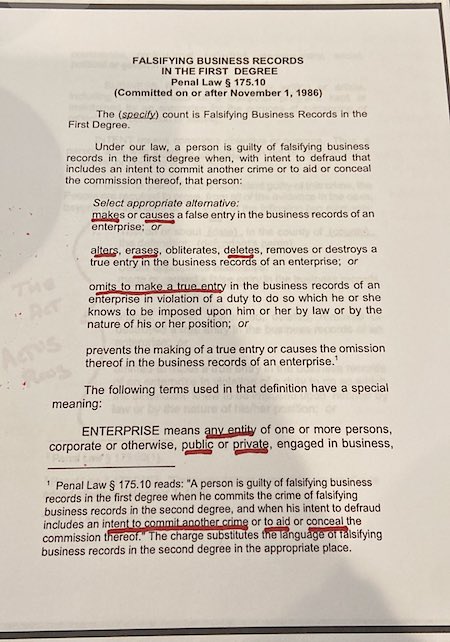
Trump Condemns Arrest In Mar-a-Lago Speech (RT)

In a speech from his Mar-a-Lago resort in Florida, former President Donald Trump railed against New York prosecutors after pleading not guilty to 34 criminal counts, also accusing Democrats of political persecution and “fraudulent investigations.” Trump delivered the address to a live audience on Tuesday night, insisting there is “no case” against him after returning home from New York, where he was arraigned on charges of falsifying business records earlier in the day. “I never thought anything like this could happen in America… The only crime that I have committed is to fearlessly defend our nation from those who seek to destroy it,” he said, adding that the latest case is part of an “onslaught of fraudulent investigations” brought by Democrats.

https://twitter.com/i/status/1643411071829520385

Trump argued that since his rivals “can’t beat us at the ballot box,”they have tried to “beat us through the law,” reiterating some of his previous claims of widespread election fraud in the 2020 presidential race. He rejected the charges against him as “fake,”saying their purpose is to “interfere with the upcoming 2024 election”and should be “dropped immediately.” Taking the tone of a presidential candidate, the former leader went on to fire a litany of criticisms at Democrats and President Joe Biden, slamming them for high inflation “crippling” the US economy, “raging crime statistics” and “open borders” immigration policies. He warned that Biden could lead the country into “an all-out nuclear World War III,” apparently referring to US involvement in the conflict in Ukraine.

The Manhattan’s District Attorney’s office has accused Trump of arranging a hush-money payment to adult film actress Daniels in order to keep her from going public about an alleged affair, and later attempting to cover up the transfer through falsified records. Prosecutors also claim he knowingly tried to conceal other crimes using the falsified documents, providing a basis for felony charges rather than misdemeanors. Trump has denied all wrongdoing, calling the indictment a “witch hunt” and “political persecution” by Manhattan DA Alvin Bragg, who he described as a “radical left George Soros-backed prosecutor” during his speech on Tuesday night. The DA’s office has said it expects to produce most of its evidence for discovery in the next 65 days, while Trump’s defense has until early August to file any motions against the case. Though Judge Juan Merchan has scheduled the next in-person hearing for December 4, attorneys for Trump say they hope to get the case dismissed before it can go to trial.

Watters

Read more …

Feels like the fall of Europe comes first.

The Fall Of America’s Benevolent Empire (Fazi)

In spite of the largesse and generosity usually associated with the European Recovery Program, as it was officially called, between 1948 and 1951 the funds actually only amounted to about 3% of the combined GDP of the recipient countries, accounting for a direct increase in GDP growth of less than 0.5%. Some authors have credited the Marshall Plan with having a much larger indirect effect on the recovery, through the promotion of a macroeconomic environment conducive to growth, but such analyses are largely speculative. Overall, its contribution to Europe’s recovery was relatively modest. Much of the money also flowed back to the US in the form of purchases of American goods and services, including oil, while many of the materials and equipment used to rebuild Europe were supplied by American companies, creating jobs and profits for American businesses.

Regardless of the actual economic impact of the Marshall Plan, there is no doubt that it was a resounding political success for America — to the extent that it secured US geopolitical influence and control over Western Europe. Part of the logic was that more prosperous societies would be less amenable to communist and Soviet influence — though, as we have seen, it’s questionable whether the programme had much of an impact on economic and social gains during the post-war boom. An arguably more important channel through which the Marshall Plan consolidated US influence was through the funds it channelled to those European centre-right parties which stood to gain from being integrated into the nascent American empire. This included covert CIA funds to ensure their electoral success — especially in Italy and France — at the expense of communist rivals. As the historian Sallie Pisani shows in her book The CIA and the Marshall Plan, under the guise of the Marshall Plan, the US used “massive foreign aid and non-military covert operations to reshape war-torn Europe in the image of the US”.

Just as crucially, the Marshall Plan was also a key catalyst for the formation of Nato, through which the US exerted its military control over Western Europe — in addition to dozens of military bases, especially in the defeated nations, many of which still exist today. The Marshall Plan also played an important role in fostering European integration, by creating new intergovernmental institutions to administer and coordinate the programme. These included the OEEC, the precursor to the OECD, and most importantly the Schuman Plan, which led to the European Coal and Steel Community, then the European Economic Community and ultimately the European Union. The Americans also played a crucial role in promoting, also financially, the cause of European federalism through the American Committee on United Europe (ACUE), founded in 1948, whose first chairman was the former head of the Office of Strategic Services (OSS) William Joseph Donovan. The vice-chairman was Allen Welsh Dulles, who would later become the head of the CIA.

Read more …

By Medea Benjamin and Nicolas J. S. Davies, the authors of War in Ukraine: Making Sense of a Senseless Conflict.

The Tragic U.S. Choice to Prioritize War Over Peacemaking (NC)

For the past 25 years, administrations of both parties have caved to the “crazies” at every turn. Albright and the neocons’ exceptionalist rhetoric, now standard fare across the U.S. political spectrum, leads the United States into conflicts all over the world, in an unequivocal, Manichean way that defines the side it supports as the side of good and the other side as evil, foreclosing any chance that the United States can later play the role of an impartial or credible mediator. Today, this is true in the war in Yemen, where the U.S. chose to join a Saudi-led alliance that committed systematic war crimes, instead of remaining neutral and preserving its credibility as a potential mediator. It also applies, most notoriously, to the U.S. blank check for endless Israeli aggression against the Palestinians, which doom its mediation efforts to failure.

For China, however, it is precisely its policy of neutrality that has enabled it to mediate a peace agreement between Iran and Saudi Arabia, and the same applies to the African Union’s successful peace negotiations in Ethiopia, and to Turkey’s promising mediation between Russia and Ukraine, which might have ended the slaughter in Ukraine in its first two months but for American and British determination to keep trying to pressure and weaken Russia. But neutrality has become anathema to U.S. policymakers. George W. Bush’s threat, “You are either with us or against us,” has become an established, if unspoken, core assumption of 21st century U.S. foreign policy. The response of the American public to the cognitive dissonance between our wrong assumptions about the world and the real world they keep colliding with has been to turn inward and embrace an ethos of individualism. This can range from New Age spiritual disengagement to a chauvinistic America First attitude.

Whatever form it takes for each of us, it allows us to persuade ourselves that the distant rumble of bombs, albeit mostly American ones, is not our problem. The U.S. corporate media has validated and increased our ignorance by drastically reducing foreign news coverage and turning TV news into a profit-driven echo chamber peopled by pundits in studios who seem to know even less about the world than the rest of us. Most U.S. politicians now rise through the legal bribery system from local to state to national politics, and arrive in Washington knowing next to nothing about foreign policy. This leaves them as vulnerable as the public to neocon cliches like the ten or twelve packed into Albright’s vague justification for bombing Iraq: freedom, democracy, the American way of life, stand tall, the danger to all of us, we are America, indispensable nation, sacrifice, American men and women in uniform, and “we have to use force.”

Orban

Read more …

They’re prepping us: We’re in terrible danger, so spend, spend, spend!

US General Points To Risk Ahead Of Next Big War (RT)

The ‘just-in-time’ supply chain that provides the parts used to make America’s F-35 fighter jets could jeopardize the ability of US forces to keep the aircraft in service during the country’s next major war, the officer in charge of the program has reportedly claimed. The F-35 program will need “a more resilient supply chain to ensure the military can keep it flying in a future, highly contested war,” Defense News reported on Monday, citing comments by US Air Force Lieutenant General Michael Schmidt. Speaking at the Navy League’s Sea Air Space conference on Monday in Maryland, Schmidt warned that parts shortages could lead to disaster in a major conflict.

“When you have that [just-in-time] mentality, a hiccup in the supply chain, whether it be a strike . . . or a quality issue, becomes your single point of failure,” the program chief said. “We need to look at, what does ‘right’ look like in the future, to give us more resilience in a combat environment.” ‘Just in time’ refers to a distribution strategy used by businesses to maximize profitability by keeping inventory costs to a minimum. The idea is to have supplies ready and in place just when they’re needed, rather than being set aside in a warehouse for future use. Such a system works well in the private sector, Schmidt said, but for a military fighting a war in “highly contested environments,” it can have disastrous consequences.

Bridget Lauderdale, general manager of the F-35 program for defense contractor Lockheed Martin, said the company has focused more on forecasting demand for the jet so it can anticipate its parts needs more accurately. “A lot of those materials take lead time to prepare, even when you do have funding and even when you have repair capacity,” she said. Schmidt predicted that there will be between 500 and 600 F-35s operating in Europe within the next few years, and fewer than 100 will belong to the US military. “What a huge opportunity that is to leverage each other’s logistics and maintenance environments.”

Maintenance is a key concern for America’s latest fighter jet, given the Pentagon’s struggles to keep the aircraft in service. Schmidt acknowledged last week that on any given day in February, an average of just 29% of the US F-35 fleet was “fully mission capable.” Just last month, the Pentagon’s F-35 Joint Program Office ordered a global recall for the aircraft to fix an engine problem linked to at least one crash. US lawmakers have estimated that it will cost $1.3 trillion to sustain the nation’s F-35 fleet, partly because of poor reliability.

Read more …

America moves east with NATO.

Ministers of 9 NATO Countries Ask US To Strengthen Borders With Ukraine (Az.)

Ministers from nine NATO countries have called on the US to strengthen its borders with Ukraine by sending them air defense systems, Romanian Foreign Minister Bogdan Aurescu said on the NTV channel, Report informs. “We must work to increase the US presence in our region on the eastern flank in terms of troops and equipment,” he said. Ministers from Bulgaria, the Czech Republic, Estonia, Hungary, Latvia, Lithuania, Poland, Romania and Slovakia called on the US to strengthen its border territories.

Read more …

“Once Kiev is ultimately defeated by Moscow, Poland could grab the lands that it lost to the Soviet Union in the 1940s..”

Russian Top Spy Warns Of Polish Land Grab (RT)

Warsaw’s military assistance to Kiev is a secret plan aimed at destroying Ukrainian statehood, the head of Russia’s Foreign Intelligence Service (SVR), Sergey Naryshkin, said on Tuesday. Once Kiev is ultimately defeated by Moscow, Poland could grab the lands that it lost to the Soviet Union in the 1940s, he suggested. “Seizing control of the western territories of modern Ukraine, the so-called Kresy [‘borderlands’ in Polish], is the coveted dream of the Polish nationalists,” Naryshkin claimed. The Polish government cannot simply drop this element of its national ideology, he added. Warsaw sees “the collapse of Ukrainian statehood after a military defeat as a condition for implementing this idea,” the official said. ‘Kresy’ is the name of certain territories that historically belonged to the Polish-Lithuanian Commonwealth.

The Russian Empire gained control of some parts of Poland during the 18th century partitions, but its collapse after the Russian Revolution allowed Warsaw to regain independence. During World War I, the British proposed the so-called Curzon Line as a Russian-Polish border, but Warsaw rejected the idea and took control of some lands to the east of the proposed demarcation. Decades later, the line served as the basis of the post-World War II settlement, with Poland gaining some German lands as compensation for ceding territory to the Soviet Union. These lands are currently controlled by Ukraine and Belarus. The Polish government “opposes peaceful settlement [of the conflict in Ukraine] and assures that it will provide steady military assistance to the Kiev regime” because of its territorial aspirations, Naryshkin stated. “This situation certainly worsens the conditions for Ukraine and the Ukrainian people.”

The Russian official argued that Poland was not above an opportunistic land grab, recalling its role in the split of Czechoslovakia just before World War II. The 1938 Munich Agreement signed by the UK and France with Hitler’s Germany and Mussolini’s Italy allowed Berlin to occupy large parts of Poland, which annexed the region of Trans-Olza in the process. Naryshkin has previously raised the possibility that Warsaw had designs on Ukrainian territory, but Warsaw has denied harboring any such plans and branded the Russian official’s claim an information warfare operation. The intelligence chief issued his new warning during a visit to Minsk, where he met President Alexander Lukashenko. The Belarusian leader voiced his own suspicions about Warsaw’s intentions for Ukraine and for his nation last May.

Read more …

“We will calmly disclose what we will do in response when the time is ripe.”

Russia To Respond To Finland’s Accession To NATO In Due Time (TASS)

Russia does not intend to hurry its response to Finland’s accession to NATO and it will make the countermeasures public in a calm manner and in due time, Russia’s Deputy Foreign Minister Sergey Ryabkov said on the Rossiya-24 TV channel on Tuesday. “We don’t want to get ahead of ourselves here. Why should we?” he said. “We will calmly disclose what we will do in response when the time is ripe.” Ryabkov pointed to what he described as “curious statements by official representatives in some Western media, including those in the US,” who “all of a sudden decided for some reason that there will be no reaction from the Russian side.” “They are deeply mistaken,” Ryabkov stressed. “A reaction will follow.”

Read more …

Finland became a minor NATO member without the possibility to influence any decisions. It has lost its ability to have a say in international affairs..”

Finland Has Lost Its ‘Special Status’ – Moscow (RT)

Helsinki’s decision to join the NATO alliance will have a “negative effect” on its ties with Russia, the Russian Foreign Ministry has said. On Tuesday, Finland finalized its accession process, becoming the 31st member of the US-led military bloc. The move will inevitably invoke Moscow’s response, the ministry said, adding that Russia continues to see the bloc’s expansion as a direct threat to its national security interests. “As we have warned on multiple occasions, the Russian Federation will have to respond with military-technical, as well as other measures in order to address national security threats arising from Finland joining NATO,” the ministry said in a statement.

So far, Moscow has refrained from announcing any concrete steps it will take in response to Finland’s NATO accession. The response will depend “on the specific terms on which Finland joins NATO, including the deployment of NATO’s military infrastructure and offensive weapons on its territory,” the ministry explained. The latest expansion of the bloc has greatly damaged the security situation in the whole of Northern Europe, which for decades “used to be one of the most stable regions in the world,” the ministry went on. “The line of contact between NATO and the Russian Federation’s border has more than doubled,” it added, referring to the length of direct land borders between Russia and NATO’s member-states.

Apart from that, Helsinki’s move has done harm to Finland’s own international stance, Russian diplomats asserted. By joining NATO, Finland “has given up on its unique identity and lost its independence,” forfeiting the “special status in international affairs” stemming from its decades-long policy of non alignment. “Finland became a minor NATO member without the possibility to influence any decisions. It has lost its ability to have a say in international affairs,” the ministry concluded. “Make no mistake, Finland’s accession to NATO will have a negative effect on the bilateral relations between Russia and Finland.”

Read more …

Medvedev uses language that Putin never would.

Russia’s Silent Opposition At War With Own People – Medvedev (TASS)

Members of Russia’s silent opposition are now engaged in terrorism, executing their fellow countrymen, Russian Security Council Deputy Chairman Dmitry Medvedev said on Tuesday. He made the statement as he was commenting on Telegram on the terrorist attack that took place in St. Petersburg on April 2. The official also said that it is the forces that the West had recently regarded as the best people of the time and the opponents of the “authoritarian regime,” the fearless knights of justice and fight against corruption that are engaged in terrorism. “Here’s the creme de la creme of our non-systemic opposition: It’s waging war on its own people, it’s engaged in explosions and assassinations,” Medvedev said.

According to the official, “these scum not only wish for Russia to be defeated,” but also “execute their countrymen.” Medvedev said members of the silent opposition murdered an unarmed reporter, wounded several dozens of innocent spectators at his event, opened fire on a car with children that were going to a village school, and blew up a car with a female reporter and a researcher. “History has come full circle. This swine has taken its final place in the chronicles of our country,” he said. The Security Council official called attention to the fact that the perpetrators of the terrorist attacks say they were used. “This is probably true,” he said.

But, he said, the perpetrators of terrorist attacks will be duly punished. “But, so far, the main scum who fed and financed the killers, who dictated their plans remain unpunished,” he wrote on his Telegram channel. “Various FBK (recognized as an extremist organization in Russia) and MBK (recognized as a foreign agent — TASS), the Navalny, Volkov, Ponomarev and Khodorkovsky outfits have become petty terrorists and murderers” and “have pledged their allegiance to evil and terror, along with the murderers of their kindred Kiev Nazi regime.” “There can be no talks with terrorists. They will be exterminated like rabid dogs foaming at the mouth. No need to sugarcoat it. As soon as possible. Even if it takes years. They deserve no mercy or forgiveness. This is what supreme justice is all about,” he said.

Tony Kevin
https://twitter.com/i/status/1643176170844741633

Read more …

“Because otherwise something may happen that for now can be discussed only hypothetically..”

Russia Has Military Resources, Willpower To Defend Sovereignty – MFA (TASS)

Russia has both the military potential and willpower to defend its sovereignty and ward off any threats, Deputy Foreign Minister Sergey Ryabkov said on the Rossiya-24 TV channel on Tuesday. “We have – let me emphasize this – both the military resources and the political will. We have determination. Our society is consolidated on the platform of guaranteed protection of our sovereignty for warding off any threats and preventing encroachments on our territorial integrity,” he said. “As for the use of nuclear weapons, we have gone over this many times already. We are not mincing words here, either. Our adversaries simply have to be realistic about what is going on around them, and to refrain from any escalation or provocations against us. Because otherwise something may happen that for now can be discussed only hypothetically,” Ryabkov said.

He stressed that the deployment of tactical nuclear weapons in Belarus was a natural response to the growing challenges and risks for Russian security. “There should be no illusions. Russia has a very wide range of forces and means to ensure its own security in any situation. Nuclear deterrence has always been and is still present in our system of military planning and in the general concept of deterring our adversaries,” Ryabkov said. According to the senior diplomat, the West ignored the opportunity for building a guaranteed system of global security.

“There has been much talk in recent years about Russia placing greater emphasis on so-called non-nuclear deterrence. But the US-led collective West has not just ignored all these warnings, signals, and calls for using the opportunities to build a guaranteed security system on a different basis. It has dismissed them outright,” Ryabkov continued. “Now we are in a situation of military confrontation. A hybrid war is being waged against Russia. And its forms are such that it is difficult to find parallels in the past. In some aspects they simply do not exist. We cannot be indifferent about this.”

Ukr Salaries

Read more …

“..capital destruction in the asset base of banks and private equity firms is between a 15% to 25% wipe-out..”

A Credit Crunch Is Inevitable (Lacalle)

Federal Reserve data shows $98 billion of deposits left the banking system in the week after the Silicon Valley Bank collapse. Most of the money went to money-market funds, as the Bloomberg data shows that assets in this class rose by $121 billion in the same period. The data shows the challenges of the banking system in the middle of a confidence crisis. However, as many analysts point out, this is not necessarily the main factor that dictates the risk of a credit crunch. Deposit flight is certainly an important risk. Many regional banks will have to cut lending to families and businesses as deposits shrink, but in the United States bank loans are less than 19% of corporate credit according to the IMF, while in the euro area it is more than 80%. What will generate a credit crunch is the destruction of capital in the asset base of most lenders.

The slump in mark-to-market valuations of all asset classes from loans to investments is what will ultimately drive an inevitable credit contraction. Credit standards have tightened significantly already, and the credit impulse of the economy, both in the US and euro area, has deteriorated rapidly, according to the respective Bloomberg indices. Both are below the March 2021 low. We must remember that credit standards’ tightening was already a reality before the Silicon Valley Bank demise. But the reality check of capital destruction in the financial system’s asset base is far from done. Start-ups will most likely see the most severe crunch in financing as the tech bubble burst adds to the asset base capital destruction in private equity and venture capital firms, who have delayed all they could the required write-downs and face a sobering reality check.

Our internal estimate of capital destruction in the asset base of banks and private equity firms is between a 15% to 25% wipe-out, which is consistent with the average decline in market value over the October 2021- March 2023 period. Real estate investments all over the US and Europe require a significant re-evaluation now that real estate has underperformed the market for eighteen months, according to Morgan Stanley. The optimistic valuations of real estate and corporate investments in banks’ balance sheets will require a significant analysis and subsequent write-off that leads to much tighter credit standards and stringent investment conditions.

Read more …

No, focus on Trump!

Joe Biden Moved and Stored Unguarded Classified Documents in China Town (GP)

Another day, another falsification. As The Gateway Pundit’s Brian Lupo reported earlier, Joe Biden’s former assistant as Vice President, Kathy Chung, testified today to the House Oversight Committee about the mishandling of classified documents by Joe Biden since his time as Vice President. Today we learned that as he left the White House, he took “boxes containing classified documents, vice presidential records, and other items” and had them stored in three separate locations throughout Washington D.C.: an office near the White House, an office in Chinatown, and, eventually, the Penn Biden Center. After Chung’s testimony today to the House Oversight Committee, Rep. James Comer put out the following statement:

“Today we learned that when Joe Biden left the vice presidency, boxes containing classified documents, vice presidential records, and other items were stored in three different locations around the Washington D.C. area, including an office near the White House, an office in Chinatown, and eventually the Penn Biden Center. At some point, the boxes containing classified materials were transported by personal vehicle to an office location. The boxes were not in a ‘locked closet’ at the Penn Biden Center and remained accessible to Penn Biden employees as well as potentially others with access to the office space. We need to find out who had access to these documents.” Later today House Oversight Chairman James Comer told Jesse Watters that Joe Biden was storing his boxes in China Town. What?

James Comer: We brought Kathy Chung in today for a transcribed interview, and I want to thank Ms. Chung puggleki for working and cooperating with our committee and answering questions. We learned a lot. First of all, we learned that the documents didn’t just start mysteriously moving around in December of 2022 or November of 2022, like the White House has alleged. She said this dates back to May of 2022, that the documents were moved from the vice presidency to at least three different locations in a personal vehicle. And why they were in three different locations, we don’t know. They weren’t stored behind any lock. One of the locations was in Chinatown. Another location was in the Penn Biden Center, which might as well have been Chinatown.

Read more …

“The Court does not opine on the likelihood of success with respect to asserting retaliation under a different statute.”

Brook Jackson To Appeal As Judge Dismisses Lawsuit Alleging Pfizer Fraud (CHD)

A federal judge in Texas has dismissed a lawsuit alleging Pfizer and two of its contractors manipulated data and committed other acts of fraud during Pfizer’s COVID-19 clinical trials. Brook Jackson, a former employee of the Ventavia Research Group — which conducted some of the clinical trials for the Pfizer-BioNTech COVID-19 vaccine — in January 2021 sued Pfizer, Ventavia and ICON PLC, another Pfizer contractor, alleging the companies committed numerous violations of the False Claims Act (FCA) during the clinical trials. According to Jackson’s complaint, the three companies “deliberately withheld crucial information from the United States that calls the safety and efficacy of their vaccine into question,” and as a result, they defrauded the U.S. government which purchased the vaccines.

The FCA allows the government or a party suing on its behalf, such as Jackson, to attempt to recover money for false claims made by parties in order to secure payment from the government. Those parties can be held liable under the FCA if they knowingly made a false claim or used a false record or statement in order to secure payment. Also under the FCA, whistleblowers can be rewarded for confidentially disclosing fraud that results in a financial loss to the federal government. In February 2022, the federal government declined to intervene in the lawsuit on Jackson’s behalf. In his March 31 ruling, U.S. District Judge Michael Truncale of the U.S. District Court for the Eastern District of Texas-Beaumont Division ruled Jackson had not proved the companies violated the FCA.

However, in a footnote accompanying his decision, Judge Truncale left the door open for Jackson and her legal team to file an appeal, stating: “The Court observes, however, that while Ms. Jackson has failed to state a claim for retaliation under the FCA, she may be able to bring her claim under another statute. “The Court does not opine on the likelihood of success with respect to asserting retaliation under a different statute.” In a statement posted on Twitter, Jackson sharply criticized Truncale’s ruling, writing: “The dismissal of Pfizer’s case is a despicable & heinous betrayal of justice, a slap in the face to vaccine injured and whistleblowers, a blatant example of corruption, incompetence and cowardice, a declaration that the powerful are above the law.”

Jackson, who had over 15 years of experience working with clinical trials, claimed she “repeatedly informed her superiors of poor laboratory management, patient safety concerns and data integrity issues” during the approximately two weeks she was employed by Ventavia in September 2020. She also gave The BMJ a cache of internal company documents, photos and recordings highlighting alleged wrongdoing by Ventavia. Ventavia, which describes itself as the largest privately owned clinical research company in Texas, operated several sites where it conducted clinical trials on behalf of Pfizer.

Read more …

They work for Reporters Without Borders, everything’s been OK’d, and at the last minute the prison “received intelligence” that they were journalists, so no go.

RSF Barred From Vetted Prison Visit To Julian Assange (RSF)

Reporters Without Borders (RSF) Secretary-General Christophe Deloire and Director of Operations Rebecca Vincent have been barred access to visit Wikileaks publisher Julian Assange in Belmarsh prison despite receiving confirmation that a visit would be permitted. On 4 April, Deloire and Vincent were prevented from entering Belmarsh prison, despite having been vetted in advance and receiving confirmation that a visit with Julian Assange would be possible at 9:15 am. His wife, Stella Assange, was permitted to enter as scheduled. Prison officials told the RSF representatives that they had “received intelligence” that they were journalists, and would therefore not be allowed in, per a decision of Belmarsh Prison Governor Jenny Louis. The Governor did not respond to urgent requests to meet Deloire and Vincent or to otherwise intervene to allow their access.

https://twitter.com/i/status/1643323285332021251

“We are deeply disappointed by the arbitrary decision of the Belmarsh Prison Governor to prevent us from visiting Julian Assange, despite following all relevant prison procedures and rules. Julian Assange has the right to receive visitors in prison, and we are legitimate to visit him as a press freedom NGO. We call for an urgent reversal of this decision and to be allowed visitation access without further delay.” Christophe Deloire – RSF Secretary-General.“This is the latest in a long series of ludicrous obstacles that we have faced over the past three years in campaigning for the release of Julian Assange. At every level, British authorities have defaulted to secrecy and exclusion rather than allowing normal engagement around this case – from refusing to accept RSF petitions, to making it nearly impossible to access court, and now this. What do they have to hide? Regardless, we continue our campaign to #FreeAssange unabated.”: -Rebecca Vincent – RSF Director of Operations and Campaigns”.

RSF would have been the first NGO to gain access to Assange in Belmarsh prison, who has had only a handful of visitors beyond his immediate family during the nearly four years he has been incarcerated. Deloire and Vincent intended to assess Assange’s conditions and to speak with him about his case, as an NGO actively campaigning for his release – not as journalists. Deloire would have visited in his capacity as Secretary-General of the NGO, and Vincent as Director of Operations and Campaigns. Vincent has never worked as a journalist or held a press card. Deloire had previously visited Assange on three occasions during his period at the Ecuadorian embassy.

This move comes in the aftermath of RSF facing extensive barriers in monitoring each stage of the extradition proceedings against Assange in London courts, for precisely the opposite reason, as RSF’s representatives were attending as NGO observers, and were not permitted to register for accreditation, as journalists would. RSF therefore could access court only via the public gallery, and was the only NGO that fought for this access at every stage of proceedings from 2020 to 2022.

Read more …


G4S


Fosun
https://twitter.com/i/status/1643223084952846340


Wulong


Sleepy
https://twitter.com/i/status/1643494434405863431


Support the Automatic Earth in virustime with Paypal, Bitcoin and Patreon.


May 262022


Gustave Courbet The village maidens 1852


History is Being Written Before our Eyes (Baliushka)
Russia, China Give World a Glimpse of What WWIII Could Look Like (Celente)
Russia To Open Sea Corridors From Ukraine Ports Amid Wheat Crisis (ZH)
Grains of Deceit (Saker)
‘Fast-Tracked’ Russian Citizenship For Occupied Ukrainian Territories (ZH)
Defending Sovereignty: The Fight of our Lifetime (Malone)
Summary of ‘2000 Mules’ (Attkisson)
FBI Spied on 3.3 Million Americans Without a Warrant (ET)
Comey et al Were “Fired Up” to Pursue the False Alfa Bank Claims (Turley)
German Regulators Recommend mRNA Vaccination for Young Children (Eugyp)
Monkeypoxmania (CJ Hopkins)


Assange saw it all before you did


And it’s not us who write it.

History is Being Written Before our Eyes (Baliushka)

In 1945 the US and the UK betrayed and turned on their ally, the Soviet Union, which was far too victorious against Nazi Germany for their taste. For the war-crime bombings of Dresden, ordered by the half-American Churchill, and of Hiroshima and Nagasaki, ordered by the full-American Truman, were warnings – issued not to the already crushed Germany and Japan, but to the USSR. Then, from 1945 on, a series of covert and not so covert operations were carried out by Western spies and terrorists in order to undermine further the Soviet Union, notably in the Baltics and above all in the Western Ukraine (right up until 1958). Many so-called ‘former’ Nazis were employed by the Western Powers to do this dirty work for them.

Even after losing its wars in Vietnam, Iraq and Afghanistan, in 2014 the United States organised and financed a violent, anti-democratic regime-change operation in Kiev, at a cost of $5 billion to the US taxpayer. It had now finally bitten off more than it could chew. As a result, the Russian Federation, a Superpower, though mocked and despised at the time by the arrogant Obama as a political and economic ‘regional’ minnow, had to take back the Crimea after its 60-year loan to the Ukraine. Otherwise, it would have lost its key Black Sea naval base in Sevastopol to the Pentagon, just as it had briefly lost it to the Anglo-French Fascists in 1856 and the German Fascists in 1942. It also had to defend Russian-speaking Eastern Ukraine by setting up a buffer zone, so buying itself time to prepare for a possible full-blown campaign of liberation there.

From 2014 on, Russia made eight years of highly meticulous preparations, ideological, political, diplomatic, economic, military, energy and agricultural, implementing a policy of import substitution to increase its independence and sovereignty. For Russia knew that the US would flood the Ukraine with NATO instructors and weapons in order to attack its people there and Russia itself, even if Russia did not launch a campaign to liberate the eastern Ukraine. The US will have a high price to pay for the foolish arrogance of this militarisation, carried out together with its NATO minions. Once the Crimea had voluntarily and democratically returned to Russia after the Western annexation of the Kiev regime territories in 2014, Russia experienced the illegal sanctions imposed on it by the Evil Empire. These would be implemented in even greater numbers, if Russia was forced to take back its ancestral territories of Novorossiya and Malorossiya and again set up a demilitarised and denazified zone in, at the very least, Eastern Europe.

Read more …

There’s that phrase again: “..indivisibility of security…”

Russia, China Give World a Glimpse of What WWIII Could Look Like (Celente)

Russia and China are not natural allies and some geopolitical observers say it is remarkable that the countries have developed such a close relationship in such a relatively short amount of time. On Tuesday, in a remarkable show of unity, the two countries flew strategic bombers over the Sea of Japan— just outside Japanese and South Korean air defense zones— in what Reuters called a “pointed farewell to U.S. President Joe Biden as he concluded a trip to Asia.” One U.S. official tried to use the joint exercise as an example of why India should not rely on Moscow. “It also shows that Russia will stand with China in the East and South China Seas, not with other Indo-Pacific states,” the official told The Financial Times.

Russia said in a statement that the bombers — Tu-95MS strategic missile carriers and Chinese H-6 bombers — did not break international law. Japan’s Defense Minister Nobuo Kishi said during a news conference that “the fact that this action was taken during the Quad summit makes it more provocative than in the past.” “As the international community responds to Russia’s aggression against Ukraine, the fact that China took such action in collaboration with Russia, which is the aggressor, is cause for concern. It cannot be overlooked,” he said. Japan and South Korea said they scrambled fighter jets after at least four Chinese and four Russian warplanes in response. (The Quad summit is held among the U.S., Australia, Japan, and India…and its mission is to counter China in the Pacific region.)

Despite the weeks of pressure from the U.S. and European countries, Beijing has refused to criticize Russia and has, instead, blamed the West for having set the stage for the war. China said in March that it would like to bring its relationship with Russia to “a higher level.” “The Ukrainian issue… is not only the outbreak of the long term accumulation of security conflicts in Europe but also the result of the Cold War mentality and group confrontation,” Wang Yi, China’s foreign minister, said at the time. “In the long run, we should learn the lessons of the Ukraine crisis, respond to the legitimate security concerns of all parties based on the principles of mutual respect and indivisibility of security.”

Read more …

[Russian] Black Sea Fleet specialists cleared more than 12,000 mines from the seaport and its surrounding areas.

Russia To Open Sea Corridors From Ukraine Ports Amid Wheat Crisis (ZH)

After being accused of using the food supply as blackmail and a bargaining chip, Russia said Wednesday its military will open up protected sea corridors for international shipping to pass through from seven Ukrainian ports that have thus far been blockaded. According to a defense ministry statement reported by Bloomberg late in the day, “Humanitarian maritime corridors from ports on the Black Sea and Azov Sea, including Odesa, will operate from 8 a.m. to 7 p.m. daily.” The announcement comes two days after the head of the United Nations World Food Program David Beasley ripped Moscow for what he dubbed a “declaration of war” on global food security. He’s been urging “political solution” to the crisis of blocked Black Sea ports, saying the war in ‘the world’s breadbasket’ threatens to unleash “famine, the destabilization of nations as well as mass migration by necessity.”

Millions of people in 43 countries dependent on grain from the war-torn region are “knocking on famine’s door,” he said. However, Russia has stressed that its military is engaged in extensive and complex demining operations due thousands of mines dotting Ukraine’s coast placed by Ukrainian forces, making international shipping dangerous and impossible. As reported in the independent Moscow Times: The port of Mariupol has resumed normal operations, Russia’s Defense Ministry announced Wednesday. The Defense Ministry said Black Sea Fleet specialists cleared more than 12,000 mines from the seaport and its surrounding areas.

Some one-third of global wheat supplies originate from Ukraine and Russia, with the bulk of it passing through the Black Sea. On Wednesday Russia said it remains ready and willing to work with the West to reach a solution, but that easing sanctions is a necessity: “We have repeatedly stated on this point that a solution to the food problem requires a comprehensive approach, including the lifting of sanctions that have been imposed on Russian exports and financial transactions,” Russian Deputy Foreign Minister Andrei Rudenko was quoted as saying by Interfax. But the statement called on Ukraine to cease deployment of sea mines, and to engage in immediate demining operations: “And it also requires the demining by the Ukrainian side of all ports where ships are anchored. Russia is ready to provide the necessary humanitarian passage, which it does every day,” Rudenko added.

Read more …

A lot of grain is still exported.

Grains of Deceit (Saker)

The Western corporate media are masters of deceit, by providing just enough information to create a narrative, but deliberating omitting information or background data that alters the narrative negatively. At first sight, this narrative is so skewed, and many will be quick to dismiss it as nonsense. I would be careful to do this as there is a broader narrative effort being shaped by the U.S., EU and NATO. The implication that there is a global food crisis looming solely due to Ukrainian ports not being able to export crops is exasperating. Ukraine is still exporting grain crops via Romanian ports, which continue to operate normally, in particular, Constanta as reported by DW, (DW April 2022). It is predicted that 1.5million tons (mmt) of Ukrainian grain will be exported out of Romanian ports in May alone and it is anticipated that 3mmt can be exported in the near future. (Reuters May 2022), (Reuters 24 April 2022)

Although the throughput will not be the same level as Odessa for example. Even Lithuania has said that it can help to export Ukrainian grain through its railway network and ports. Additionally, the use of the Danube as a transportation waterway to EU ports is being done via barges from inland ports, along with proposals for the use of Adriatic ports, (HINA 24 May 2022) Road transport is being used to take crops to Romania port hubs, it is not as quick either, yet it is being done despite bottlenecks at border points. The Ukrainian rail network is already under pressure with military shipments and the rail infrastructure has consequently been degraded in Russian air strikes and as such can only be used in a limited manner, (Zdopravy cz in Czech).

[..] On a trivial point, once more there are aspects that don’t tally, 5 to 9 weeks waiting to get crops exported (NEXTA) compared to 6 days (Sky News 23 May 2022). Back to the bigger picture missing from the MSM narrative . Looking briefly at the figures on grain exports for a wider take on the subject. 2020-2021 2021-2022 Ukrainian grain production: 65mmt forecast 80mmt Russian grain production: 85 mmt forecast: 85mmt As Reuters reported this week, Ukraine still managed to export crops: “The ministry data showed that Ukraine has exported 46.51 mmt so far in the 2021/22 July-June season, versus 40.85 mmt a season earlier.” (Reuters 19 May 2022)

Frankly speaking, 22 mmt of grain will make little difference to the global shortage as it stands. Paradoxically Ukraine is paying for weapons provided by the West through grain exports.” Is it any surprise that Ukraine wants to use Odessa to ship its 70% expected export of grain crops and other products, as to be able to continue to pay for weapon deliveries? Ukrainian exports have largely transferred to Romanian, judging by the ship congestion seen on AIS. Importantly, none of the Western experts or corporate MSM outlets have been able to mention the fact that Russia is the world’s largest exporter of grain, about 4 times the amount of wheat that Ukraine does, about 18% of global exports and this year is expected record crops harvest. According to FAO STAT, Ukraine was the 8th largest wheat producer whereas Russia was in third position in 2020, behind China and India.

Read more …

I guess if that’s what they want…

‘Fast-Tracked’ Russian Citizenship For Occupied Ukrainian Territories (ZH)

In the biggest indicator thus far in the over three-month long war in Ukraine that Russia intends to likely fully annex territory in the East and South, Russian President Vladimir Putin on Wednesday signed a decree which allows residents of Russian-occupied Kherson and Zaporizhzhia to gain fast-tracked Russian citizenship. Already the same policy is currently in effect for the breakaway eastern republics of Donetsk and Luhansk, the latter which is now reported to be almost completely in Russian forces’ control, as final battles with Ukrainian fighters are centered in the Luhansk cities of Sievierodonetsk and Lysychansk. Since 2019 an estimated 200,000 people in the two far eastern regions have gained Russian passports through the policy, which is now being extended to the Russian-controlled southern cities.

“Citizens of Ukraine, the Donetsk People’s Republic (DNR), or the Luhansk People’s Republic (LNR), permanently residing in the territory of the DNR, LNR, the Zaporizhzhia region of Ukraine or the Kherson region of Ukraine, have the right to apply for citizenship of the Russian Federation in a simplified manner,” the decree reads.Ukraine was swift to condemn the move as a violation of its sovereignty and of international law and norms. Its foreign ministry said, “The illegal issuing of passports… is a flagrant violation of Ukraine’s sovereignty and territorial integrity, as well as norms and principles of international humanitarian law.”

Meanwhile also on Wednesday Ukrainian President Volodymyr Zelensky slammed the door on the idea of making territorial concessions for the sake of ending the war. “It’s possible if Russia shows at least something. When I say at least something, I mean pulling back troops to where they were before Feb. 24,” which marked the start of the invasion. He even said on Tuesday that Russia must hand back Crimea as well. He put the ball in Moscow’s court, saying it must “shift from the bloody war to diplomacy” if it hopes for the war to end.

Read more …

Malone beyond vaccines.

Defending Sovereignty: The Fight of our Lifetime (Malone)

It is state’s rights – as imperfect as that system is, that protects us from the WHO/globalist power grab to leverage public health to compromise the sovereignty of the United States. The current strategic agenda of those seeking to advance globalism and global governance policies at the expense of the autonomy of nation-states is often referred to as the New World Order. Those advocating for the New World Order include the World Economic Forum, transnational corporations/globalized investment capital, the UN, World Trade Organization, World Bank and now the World Health Organization. These entities have, to a more or lesser extent, gained control of the Federal government through leveraging the regulatory capture of our federalized agencies, departments and institutions.

Money from these entities flows into the coffers of Congress to influence law makers. Often, treaties and agreements on the global level codify these arrangements. This ensures that our federal government is coopted by these entities. Our federal government believes that it will be stronger when states have little or no control over the rules and regulations of the state. This is not what our founding fathers intended, and this is when the rights of all of us are trampled on. Our constitution codifies that each state maintains its own set of laws, rules and regulations. The beauty of this system is the diversity of cultures can be maintained within states. Living in Texas is very different than living in New Hampshire, and I believe that this is a good thing.

Although states are stronger when there is a federal government appropriately assuming and defending those responsibilities enumerated under the US Constitution, they are also guaranteed the freedom to have their own cultural identity and rule of law. This is the beauty of our Constitution and Bill of Rights. This interweaving of states rights under the limited umbrella of a Federal government.

Read more …

“..it seems clear that many who are publicly commenting, including some of the harshest critics, haven’t actually watched the film..”

Summary of ‘2000 Mules’ (Attkisson)

[..] the response to 2000 Mules has been swift and largely predictable. Trump advocates insist it proves game-changing election fraud in 2020. Trump opponents claim it’s just another debunked conspiracy theory that proves nothing. In the predominantly left-leaning establishment news media, the figures who have addressed the documentary tend to promote the latter conspiracy theory interpretation— advising people not to see the film, while simultaneously assuring them there’s nothing to see. Meantime, it seems clear that many who are publicly commenting, including some of the harshest critics, haven’t actually watched the film. So we’re left with a documentary that— if the evidence is true—would be one of the most important and impactful films of its time, but is likely being viewed almost exclusively by those in no need of conversion.

There was a time prior to 2015, before Donald Trump entered national politics, when the forensic work described in the film would have been done by credible news organizations and journalists, and by independent law enforcement bodies. Those days are gone. Most of the news media issued a collective shrug in the face of an election that was at the very least unusual, with unprecedented changes made under the auspices of Covid, with intervention by billionaire third party activists pouring money into projects like drop boxes, with positions and final calls getting switched, with polls that were wrong, with ballots that had no chain of custody, with a flood that never actually occurred but stopped counting at a Georgia precinct until the Republican observers went home, and much more.

Worse, some in the media insisted that questions and suspicious happenings should not be investigated even if the outcome would reassure a skeptical public the election was fair. To feel otherwise, we were told, was to be a conspiracy theorist of the worst kind bent on treason or the fall of democracy itself. Journalists and political figures declared, without evidence, that there was no fraud. When fraud emerged, they said there was no widespread fraud. When there was evidence of widespread fraud, they said there was no widespread fraud that would have changed the results. Yet they had no firsthand investigation to support these positions. Whenever opposing claims were made or differing intepretations were possible, they sided with one and called the other “conspiracies,” as if they hadn’t noticed that, in the prior four years, so many conspiracies had proven true, and so many declared truths had proven false.

Read more …

To no-one’s surprise.

FBI Spied on 3.3 Million Americans Without a Warrant (ET)

Top House Republicans are demanding answers from the FBI after court-ordered information came to light showing that the federal agency had collected the information of over 3 million Americans without a warrant. In a May 25 letter to FBI Director Christopher Wray, Reps. Jim Jordan (R-Ohio) and Mike Turner (R-Ohio) asked Wray to explain why his agency had wiretapped and gathered personal information on over 3.3 million Americans without a warrant. Limited authority to gather foreign intelligence information is granted by the Foreign Intelligence Surveillance Act (FISA). Specifically, section 702 of the bill says: “the Attorney General (AG) and the Director of National Intelligence (DNI) may jointly authorize the targeting of (i) non-U.S. persons (ii) who are reasonably believed to be outside of the United States (iii) to acquire foreign intelligence information.”

However, this power can grant an expanding circle of possible searches to the FBI and other intel agencies, who can use the same power against American citizens who had any interaction with targeted foreigners. Historically, insight into how FISA has been used against American citizens has been limited and hidden behind classified reports. However, a November 2020 decision by the Foreign Intelligence Surveillance Court (FISC)—which serves as a watchdog for U.S. intelligence agencies—required that the Office of the Director of National Intelligence (ODNI) report “the number of U.S. person queries run by the FBI against Section 702-acquired information.”

In accordance with these new requirements, ODNI’s recently-released Annual Statistical Transparency Report included data on how often the FBI gathered information on American citizens using section 702 in 2021. In total, queries against U.S. citizens came out to a jaw-dropping 3,394,053 searches. By comparison, only 1,324,057 such queries were made in 2020, representing around a 250 percent increase during President Joe Biden’s first year in office. According to ODNI more than half of these queries—approximately 1.9 million—were part of the larger investigation of alleged Russian attempts to target or weaken U.S. critical infrastructure. The ODNI report also admitted that on at least four occasions, the FBI failed to get FISC approval before accessing the contents of information collected under section 702.

Read more …

“Did you guys open a case? Reach out and put tools on?”

Comey et al Were “Fired Up” to Pursue the False Alfa Bank Claims (Turley)

The Sussmann trial yesterday had another surprising disclosure when an agent revealed that FBI leadership, including then-Director James Comey, was “fired up” about the alleged secret communications channel between the Trump Organization and Russia’s Alfa Bank. The question is why Comey and others were so reportedly eager given the lack of foundation for the false claim — a record that even the researchers told the Clinton campaign could be mocked as utterly unsupported. Yet, as with the Steele dossier claims (funded and spread by the Clinton campaign) there was a strikingly receptive audience for such claims at the top of the FBI.

The new disclosure came with the testimony of the supervisory agent for the FBI’s Trump-Russia probe (“Crossfire Hurricane”) Joe Pientka. He sent a note to FBI Special Agent Curtis Heide that stated “People on the 7th floor to include Director are fired up about this server,” Pientka messaged Heide. “Did you guys open a case? Reach out and put tools on?” The description of the eagerness of Comey and others only magnified concerns over the alleged bias or the predisposition of the agency on the investigation of Trump and his campaign. It is particularly striking in an allegation that was viewed as unsupported even by the researchers and quickly dismissed by the government as baseless.

According to Durham, the Alfa Bank allegation fell apart even before Sussmann delivered it to the FBI. The indictment details how an unnamed “tech executive” allegedly used his authority at multiple internet companies to help develop the ridiculous claim. (The executive reportedly later claimed that he was promised a top cyber security job in the Clinton administration). Notably, there were many who expressed misgivings not only within the companies working on the secret project but also among unnamed “university researchers” who repeatedly said the argument was bogus. The researchers were told they should not be looking for proof but just enough to “give the base of a very useful narrative.”

The researchers argued, according to the indictment, that anyone familiar with analyzing internet traffic “would poke several holes” in that narrative, noting that what they saw likely “was not a secret communications channel with Russian Bank-1, but ‘a red herring,’” according to the indictment. “Researcher-1” repeated these doubts, the indictment says, and asked, “How do we plan to defend against the criticism that this is not spoofed traffic we are observing? There is no answer to that. Let’s assume again that they are not smart enough to refute our ‘best case scenario.’ You do realize that we will have to expose every trick we have in our bag to even make a very weak association.” The alleged response from Comey and the FBI leadership would seem to confirm the view of campaign associates that they only needed a “useful narrative” to achieve their purposes. It only took an unsupported, implausible theory to get Comey and his top aides “fired up.”

Read more …

“This decision will kill a small but non-trivial number of kids, in exchange for nothing whatsoever.”

German Regulators Recommend mRNA Vaccination for Young Children (Eugyp)

Germany’s vaccine regulatory body, STIKO, has finally recommended mRNA vaccination for healthy children aged 5 to 11. Somewhat unusually, they’re calling for a single dose only, rather than the normally scheduled two, reasoning that the vast majority of young children have already been infected. As is usual, the vaccinators want us to keep vaccinating to head off imagined future events, and no longer to remedy any concrete problem in the present: “The new recommendation is a “precaution against coming as-yet-unknown waves of infections”, explained paediatrician and STIKO member Martin Terhardt … Reinhard Berner, director of the paediatric clinic at Dresden University Hospital, also a member of STIKO, put it this way: “We dare to look into the future, and we want to prepare children for a third Corona winter, so that they come through this time as safely as possible.”


I write this in the midst of conference hell, and I’m too tired and angry to say anything clever about it. It’s just an entirely predictable and totally dumb decision by a bunch of crazy unaccountable regulators. Healthy children with no exposure are at less risk of severe outcome from SARS-2 infection than they are from influenza. Healthy children who have already had Corona stand to gain precisely zero from the miracle mRNA elixir. This decision will kill a small but non-trivial number of kids, in exchange for nothing whatsoever. It will not reduce the circulation of SARS-2, it won’t save Oma’s life, it will do nothing.

Read more …

“..poses absolutely zero threat to human civilization generally..”

Monkeypoxmania (CJ Hopkins)

Lock yourselves down inside your homes! Break out the masks and prophylactic face-shields! Switch off what’s left of your critical faculties and prepare yourselves to “follow the Science!” Yes, that’s right, just as the survivors of The Simulated Apocalyptic Plague of 2020-2021 were crawling up out of their Covid bunkers and starting to “build the world back better,” another biblical pestilence has apparently been unleashed on humanity! This time it’s the dreaded monkeypox, a viral zoonotic disease endemic to central and western Africa that circulates among giant pouched rats, squirrels, dormice, and other rodents and has been infecting humans for centuries, or millennia. Monkeypox causes fever, headaches, muscle aches, and sometimes fluid-filled blisters, tends to resolve in two to four weeks, and thus poses absolutely zero threat to human civilization generally.

The corporate media do not want to alarm us, but it is their duty as professional journalists to report that THE MONKEYPOX IS SPREADING LIKE WILDFIRE! OVER 100 CASES OF MONKEYPOX have been confirmed in countries throughout the world! MONKEYPOX TASKFORCES are being convened! Close-up photos of NASTY-LOOKING MONKEYPOX LESIONS are being disseminated! The President of the United States says “EVERYBODY SHOULD BE CONCERNED!” The WHO is calling it “a multi-country monkeypox outbreak!” Belgium has introduced a mandatory quarantine. The CDC has gone to “Alert Level 2!” “Enhanced precautions” are recommended!

In New York City, the nexus of probably the most paranoid, mask-wearing, quadruple-“vaccinated” New Normal fanatics on the face of the planet, the Department of Health is instructing everyone to wear the masks they are already wearing to protect them from both Covid and monkeypox, and smallpox, and largepox, and airborne cancer, and God knows what other horrors might be out there! Here in the capital of New Normal Germany, Karl Lauterbach, who, despite wasting hundreds of millions of Euros on superfluous “vaccines,” attempting to compulsorily “vaccinate” every man, woman, and child in the country, and otherwise behaving like a fascist lunatic, remains the official Minister of Health, is excitedly hopping up and down and hooting like a Siamang gibbon about “recommendations for isolation and quarantine,” and other “monkeypox containment measures.”

Read more …


JFK Man on the moon


Support the Automatic Earth in virustime with Paypal, Bitcoin and Patreon.


Oct 282019
 
 October 28, 2019  Posted by at 1:54 pm Finance Tagged with: , , , , , , , , , ,  20 Responses »


Cimabue Christ mocked c1280
(Photograph: Charles Platiau/Reuters. Painting discovered in an old woman’s kitchen in Sept, sold for $28 million this week)


Trump Kept Gang of 8 In The Dark About Baghdadi Raid (WE)
Bill Barr Formally Announces Orwellian Pre-Crime Program (Webb)
Russia Calls Increase In US Troops In Syrian Oil Fields ‘Banditry’ (Hill)
Russian FM Lavrov Warns US Against Undermining Syria’s Sovereignty (RT)
The Plundering of Ukraine by Corrupt American Democrats (Shamir)
Bundestag MPs Demand That US Troops Leave Germany (RT)
European Leaders Agree Brexit Extension To 31 January (BBC)
Three Things I Learned In Washington (van Steenis)


As I already said in the TAE comments yesterday, I want to halt the daily Debt Rattles, at least for a while. I feel, and this has been building for quite some time, that they have outlived their purpose, which was always to put the daily news in context. But lately I felt it was not enough about -and by- me, and too much about the MSM.

Moreover, the Debt Rattles took away all of my mornings, 5-6 hours at a time, and I should be able to make better use of what is arguably the most productive time of the day. I have a lot more to say about this, for instance the growing place of paywalls in the news field, but I’ll do that in a separate article. I don’t know how aware people are about how much, and how fast, “news” is changing, but it’s a topic that warrants much more attention.

And did I mention the Automatic Earth has been almost wholly demonetized by Ad Sense? We’re going to need a lot more donations, the entire model for sites such as this one is rapidly changing. And I don’t want to also disappear behind a paywall, that defeats the purpose. More on that later as well. It’s not the direct reason behind halting the Debt Rattles, but it has crossed my mind. We can’t go on like this. Losing 85% of ad revenue is lethal at some point. Donations via Paypal and Patreon can be made at the top of the left and right sidebars.

I may take a few days to decide on the format I will continue in, but then I will be back and be better at it. As you may know, one of the things that has royally irked me over the past few years is how the MSM increasingly moved towards wanting to shape people’s views and opinions, instead of reporting on the news.

The incessant criticism of Trump, whether you like him or not, should have rung big blazing red alarm bells for everyone. And that wasn’t even because of a difference of opinions, it was -and is-, as I wrote over a year ago, because Trump Sells Better Than Sex.

So if you get your news from one of those outlets, you’re being duped for the sake of their profits.

The recent videos from Project Veritas, which show CNN boss Jeff Zucker hammering on about impeachment, exclusively, say it all really. I think that now that we’re there, and everybody has been able to be informed about it, a more personal approach than news overviews, despite all the effort at providing context, is called for.


I can start off today with a perfect example. The alleged US killing of ISIS leader Abu Bakr al-Baghdadi has put the MSM in an awkward position. On the one hand they cheer everything that even smells like warfare, on the other they can’t be seen uttering even one syllable that doesn’t slam Trump.

And then you get this sort of stuff, from Chris Cillizza, CNN Editor-at-large, likely written just moments after hearing Trump’s speech on the attack. I don’t care much for such speeches, and from what I did pick up certainly not this one, but I’d like to see someone explain how it differed from Hillary’s “We Cam We Saw He Died after Gaddafi” was sodomized to death by US troops. And I wonder what Cillizza had on that.

Moreover, lest we forget, al-Baghdadi was an actual terrorist, while Gaddafi ran the region’s most prosperous nation. But all Cillizza can manage is an article entitled The 41 Most Shocking Lines From Donald Trump’s Baghdadi Announcement. No, I didn’t read them. It’s Orange Man Bad cubed territory. Cillizza works for Zucker, after all, it’s his job description.

Bloomberg meanwhile ran this headline:

Islamic State leader Abu Bakr al-Baghdadi transformed himself from a little-known teacher of Koranic recitation into the self-proclaimed ruler of an entity that covered swaths of Syria and Iraq

While the Washington Post messed up even worse, changing their headline on the fly

Abu Bakr al-Baghdadi, austere religious scholar at helm of Islamic State, dies at 48

Reaction on witter: The very first headline called #Baghdadi as ‘terrorist-in-chief’. It was DELIBERATELY CHANGED to ‘austere religious scholar’. After backlash you changed it to ‘extremist leader’.

Some other reactions:

Adolf Hitler, dedicated art enthusiast, animal rights activist, and talented orator, dies at 56.


“Jeffrey Dahmer, connoisseur of exotic and locally sourced meats, dies at 34”

Trump didn’t brief Pelosi, Schumer, Schiff etc. (the Gang of 8) until after the raid was finished, and of course they complained. As Aaron Maté put it:

I was wondering if there was going to be a public celebration of the Baghdadi operation like when bin Laden was killed, but more likely this time is a vigil for Adam Schiff not getting briefed.

And Caitlin Johnstone:

If America actually wanted to end ISIS they wouldn’t kill its easily replaceable mascot, they’d stop slaughtering Middle Eastern civilians, end foreign occupations, and cease allying with nations which support violent extremists.


“Washington is a leaking machine.”

Trump Kept Gang of 8 In The Dark About Baghdadi Raid (WE)

President Trump confirmed Sunday he did not notify particular congressional committees ahead of the U.S. raid that led to the death of ISIS leader Abu Bakr al-Baghdadi. The House Intelligence Committee, currently spearheading impeachment inquiry proceedings against the president, was not notified about the raid in advance, one aide told CBS News. Trump’s inner circle for decisions pertaining to such matters appears to have become smaller since leaks within his administration threaten his presidency. According to another report from ABC News, Trump told Senate Intelligence Committee Chair Richard Burr about the raid after it happened, as well as Senate Judiciary Chairman Lindsey Graham.


House Speaker Nancy Pelosi, Senate Minority Leader Chuck Schumer and House Intelligence Committee Chairman Adam Schiff, members of the “Gang of 8″ a group of Congressional leaders who receive classified intelligence briefings on a routine basis, were not notified, aides said. Graham is not part of the Gang of 8. A reporter asked Trump after his announcement if certain congressional committees and leadership were told of the raid before it happened. “We notified some,” Trump replied. “Others are being notified now as I speak. We were going to notify them last night, but we decided not to do that because Washington leaks like I’ve never seen before. There’s nothing — there’s no country in the world that leaks like we do, and Washington is a leaking machine.”

Read more …

This from Whitney Webb needs a million times more scrutiny than it is getting. But the media are interested only in bashing Trump, because that’s where their money comes from. But really, pre-crime?!

Bill Barr Formally Announces Orwellian Pre-Crime Program (Webb)

Perhaps the most jarring aspect of the memorandum is Barr’s frank admission that many of the “early engagement” tactics that the new program would utilize were “born of the posture we adopted with respect to terrorist threats.” In other words, the foundation for many of the policies utilized following the post-9/11 “war on terror” are also the foundation for the “early engagement” tactics that Barr seeks to use to identify potential criminals as part of this new policy. Though those “war on terror” policies have largely targeted individuals abroad, Barr’s memorandum makes it clear that some of those same controversial tactics will soon be used domestically.


Barr’s memorandum also alludes to current practices by the FBI and DOJ that will shape the new plan. Though more specifics of the new policy will be provided in the forthcoming notice, Barr notes that “newly developed tactics” used by the Joint Terrorist Task Forces “include the use of clinical psychologists, threat assessment professionals, intervention teams and community groups” to detect risk and suggests that the new “early engagement program” will work along similar lines. Barr also alludes to this “community” approach in a separate instance, when he writes that “when the public ‘says something’ to alert us to a potential threat, we must do something.”

Talking about pre-crime:

Read more …

There’s horse trading going on here. The countless armed militia in the region are a real danger, because all parties involved have supported at least some of them, and perhaps still do. But at some point the real armies may find themselves facing each other. Not a good idea.

Russia Calls Increase In US Troops In Syrian Oil Fields ‘Banditry’ (Hill)

The Russian government on Saturday criticized the U.S. for bolstering military resources in eastern Syria, calling the move an “act of international state banditry,” Rueters reports. The increased military presence in the area comes after U.S. Defense Secretary Mark Esper said on Friday that Washington would send more troops and vehicles into the area to secure the local oil fields. The increased protection would reportedly ensure that fields were not overtaken by Islamic State (ISIS) insurgents.


Reuters reports that in a statement released by Russia, the country claimed that the U.S. had no international legal jurisdiction to increase military presence around the oil fields. The statement went on to say that there was no real security threat in the area. “Therefore Washington’s current actions – capturing and maintaining military control over oil fields in eastern Syria – is, simply put, international state banditry,” the statement reads. The document went on to state that U.S. troops are “protecting oil smugglers that make more than $30 million a month,” Rueters reports.

Read more …

“We want to keep the oil” is a dead in the water slogan.

Russian FM Lavrov Warns US Against Undermining Syria’s Sovereignty (RT)

Steps that undermine the sovereignty and territorial integrity of the Syrian state must be avoided, Russian Foreign Minister Sergey Lavrov told US Secretary of State Mike Pompeo as the two talked on the phone on Saturday, the foreign ministry said. Earlier this week, American troops were sent to Syria’s northeastern province of Deir ez-Zor with the claimed task of protecting the local oilfields from Islamic State (IS, formerly ISIS) terrorists. Moscow decried the move as a violation of international law and reminded that all natural resources in Syria belong to Damascus. Lavrov and Pompeo also discussed separate issues around relations between Moscow and Washington during the conversation initiated by the US side, the ministry added.

Read more …

“AG Shokin immediately discovered that Burisma had paid these ‘stars’ between 50 and 150 thousand dollar per month each just for being on the list of directors. This is illegal by the Ukrainian tax code; it can’t be recognised as legitimate expenditure. At that time Biden the father entered the fray.”

The Plundering of Ukraine by Corrupt American Democrats (Shamir)

Oleg, you followed Biden story from its very inception. Biden is not the only Dem politician involved in the Ukrainian corruption schemes, is he? Indeed, John Kerry, the Secretary of State in Obama’s administration, was his partner-in-crime. But Joe Biden was number one. During the Obama presidency, Biden was the US proconsul for Ukraine, and he was involved in many corruption schemes. He authorised transfer of three billion dollars of the US taxpayers’ money to the post-coup government of the Ukraine; the money was stolen, and Biden took a big share of the spoils. It is a story of ripping the US taxpayer and the Ukrainian customer off for the benefit of a few corruptioners, American and Ukrainian. And it is a story of Kiev regime and its dependence on the US and IMF.

The Ukraine has a few midsize deposits of natural gas, sufficient for domestic household consumption. The cost of its production was quite low; and the Ukrainians got used to pay pennies for their gas. Actually, it was so cheap to produce that the Ukraine could provide all its households with free gas for heating and cooking, just like Libya did. Despite low consumer price, the gas companies (like Burisma) had very high profits and very little expenditure. After the 2014 coup, IMF demanded to raise the price of gas for the domestic consumer to European levels, and the new president Petro Poroshenko obliged them. The prices went sky-high. The Ukrainians were forced to pay many times more for their cooking and heating; and huge profits went to coffers of the gas companies.

Instead of raising taxes or lowering prices, President Poroshenko demanded the gas companies to pay him or subsidise his projects. He said that he arranged the price hike; it means he should be considered a partner. Burisma Gas company had to pay extortion money to the president Poroshenko. Eventually its founder and owner Mr Nicolai Zlochevsky decided to invite some important Westerners into the company’s board of directors hoping it would moderate Poroshenko’s appetites. He had brought in Biden’s son Hunter, John Kerry, Polish ex-President Kwasniewski; but it didn’t help him.

Poroshenko became furious that the fattened calf may escape him, and asked the Attorney General Shokin to investigate Burisma trusting some irregularities would emerge. AG Shokin immediately discovered that Burisma had paid these ‘stars’ between 50 and 150 thousand dollar per month each just for being on the list of directors. This is illegal by the Ukrainian tax code; it can’t be recognised as legitimate expenditure. At that time Biden the father entered the fray.

Read more …

Not going to happen, but good idea.

Bundestag MPs Demand That US Troops Leave Germany (RT)

German MPs have demanded that the government expel US forces stationed in Germany. MPs argue that their presence only serves the purposes of the US illegal wars in the Middle East and stokes tensions with Moscow. Lawmakers from the opposition Left Party have tabled a motion calling on Chancellor Angela Merkel’s government to immediately stop financing the American military presence in the country and to annul a 1990 treaty allowing US soldiers to be deployed on German soil in the first instance. “More than 35,000 US soldiers are stationed in Germany, more than in any other European land,” the document, published on the Bundestag’s website, points out, adding that American military bases are used to further Washington’s “policy of war in the Middle East.”


The lawmakers particularly expressed their outrage over the fact that the German bases are used “in the continuing illegal practice of targeted US assassinations in Pakistan and Afghanistan,” apparently referring to the American use of strike drones. The document also states that the continued presence of American forces on German soil leads to nothing but escalation of an already tense situation with regard to relations with Russia. The MPs also denounced any deployment of American troops to bases in Poland and other Central and Eastern European states, saying that such actions cannot be interpreted as anything but “war preparations.” They also drew attention to the fact that the US troops are being transferred through the territory of the former East Germany, thus violating the spirit of the 1990 ‘2+4’ agreement that facilitated Germany’s reunification ..

Read more …

Name the year, always.

European Leaders Agree Brexit Extension To 31 January (BBC)

EU leaders have agreed in principle to extend Brexit until 31 January 2020 – meaning the UK will not leave as planned on Thursday. EU Council President Donald Tusk said it was a “flextension” – meaning the UK could leave before the deadline if a deal was approved by Parliament. It comes as MPs prepare to vote on proposals by Boris Johnson for an early general election on 12 December. The SNP and Lib Dems have also proposed an election on 9 December. The government has not ruled out getting behind that proposed date, if it fails to get its preferred date through the Commons later.

Read more …

Huw van Steenis, senior adviser to the CEO of UBS, and formerly senior adviser to Bank of England Governor Mark Carney, asks : “..are negative rates starting to do more harm than good..?” He’s a blind man. What good?

Three Things I Learned In Washington (van Steenis)

As the world’s central banks and economic policymakers convened in Washington over the weekend for the annual meetings of the IMF, IIF and World Bank, there was a distinct lack of conviction in the air. “Globally synchronised slowdown”, trade wars, political uncertainty and persistent ultralow interest rates have ground down most investors and policymakers’ belief in the prevailing economic or market narratives. So the most interesting conversations were about transitions and tail risks. What are the long term implications of negative rates? How disruptive is digital money? And what does the greening of the financial system mean in practice? Central banks are wrestling with a major challenge: are negative rates starting to do more harm than good?

Professor Charles Goodhart of the LSE and I fear we may have already have this “reversal rate” in the Eurozone. Like steroids, unconventional policy, such as negative rates, can be highly effective in limited dosages but long term usage starts to weaken the skeletal system. Given that negative rates have been in place for over a quarter of the time that the euro has existed, policymakers are starting to worry about the negative consequences — like impaired banking systems and asset bubbles. I sensed an inflection in the level of concern from two distinct groups: Anglo-Saxon policy makers who simply never want to open the Pandora’s box of negative rates, and European policy makers growing increasingly concerned about the toolkit to break out of the “Japanification” of the eurozone.

What’s more, the penny is dropping that negative rates are hampering the ability of many eurozone banks, aside from the market leaders, to invest confidently in digital technology to serve clients better and fend off the risks from disruptive new entrants. I came away feeling the bar is now incredibly high for any further negative rate cuts. Second, technology is rapidly changing the way we pay for things. Investors know this well from the huge growth in value of Mastercard, Visa, Paypal and Amex, or new firms like Stripe and Ant Financial. Little wonder that payments has become the battleground between Big Tech, existing payments firms and banks. The size of the prize can be huge. Alipay and WeChatPay represent 90% of mobile payments in China.

Read more …


John Conyers -RIP- on WikiLeaks in 2010 (back when Joe Biden was declaring Assange a “high-tech terrorist”)


Sep 132017
 
 September 13, 2017  Posted by at 7:09 pm Finance Tagged with: , , , , , , , , , ,  2 Responses »


Eugene Delacroix Greece expiring on the Ruins of Missolonghi 1826


European Commission president Jean-Claude Juncker, famous for his imbibition capacity and uttering -not necessarily in that order- the legendary words “when it becomes serious, you have to lie”, presented his State of the Union today. Which is of pretty much limited interest because, as Yanis Varoufakis’ book ‘Adults in the Room’ once again confirmed, Juncker is nothing but ventriloquist Angela Merkel’s sock puppet.

But of course he had lofty words galore, about how great Europe is doing, and how that provides a window for more Europe, in multiple dimensions. Juncker envisions a European Minister of Finance (Dutch PM Rutte immediately scorned the idea), and he wants to enlarge the EU by inviting more countries in, like Albania, Montenegro and Serbia (but not Turkey!).

Juncker had negative things to say about Britain and Brexit, about Poland, Prague and Hungary who don’t want to obey the decree about letting in migrants and refugees, and obviously about Donald Trump: Brussels apparently wants ‘to make our planet great again’.

What the likes of Jean-Claude don’t seem to be willing to contemplate, let alone understand or acknowledge, is that the EU is a union of sovereign countries. The meaning of ‘sovereignty’ fully escapes much of the pro-EU crowd. And if they keep that up, it will break the union into pieces.

The European Court of Justice has ruled that Poland, the Czech Republic and Hungary must accept their migrant ‘quota’, as decided in Brussels, and that, too, constitutes an infringement on these countries’ sovereignty. And don’t forget, sovereignty is not something that can be divided into separate parts, some of which can be upheld while others are discarded. A country is either sovereign or it is not.

The single euro currency is already shirking awfully close to violating sovereignty, if not passing over an invisible line, and a European Finance Minister would certainly constitute such a violation. At some point, the politicians in all these countries will have to tell their voters that they’re about to surrender -more of- their sovereignty and become citizens of Merkel Land. But they don’t want to do that, because as soon as people would realize this, the pitchforks would come out and the union would be history.

The EU will be able to muddle on for a while longer, but Europe is not at all doing great economically (however, to maintain the illusion ECB head Draghi buys €60 billion a month in ‘assets’), and when the next crisis comes people will demand their sovereignty back. It really is that simple. And what will the negotiations look like to make that happen? 27 times Brexit?


The real Europe is not the one Juncker paints a portrait of. The real Europe is Greece. That’s where you can see the economic reality as well as the political one. Greece has no sovereignty left to speak of, despite the fact that it is guaranteed it in EU law. Europe’s political reality is about raw power. About the rich waterboarding the poor, to the point that they are turned from sovereign citizens of their countries into lost souls in debt prisons.

This week, another chapter has been added to the dismal annals of the Greek adventures in the European Union. It’s like the Odyssee, I kid you not. Like the previous chapters, this one will not solve the Greek crisis, or even alleviate it, but instead it will deepen it further, and not a little bit. This chapter concerns the forced auctioning of -real estate- properties.

Not to Greeks, 90% of whom can’t afford to buy anything at all, let alone property, but to foreigners, often institutional investors. At the same time, bad loans, including mortgage loans, will be offloaded for pennies on the dollar to that same class of ‘investors’. Once the Troika is done with this chapter, Greece will have seen capital destruction the likes of which the world has seldom if ever witnessed.

People in the country have a hard time understanding the impact:

Greece Property Auctions Certain To Drive Market Prices Even Lower

Ilias Ziogas, head of property consultancy company NAI Hellas and one of the founding members of the Chartered Surveyors Association, said that the property market is certain to suffer further as a result of the auctions: “The impact on prices will be clearly negative, not because the price of a property will be far lower at the auction than a nearby property, but because it will diminish demand for the neighboring property.”

[..]Giorgos Litsas, head of the GLP Values chartered surveyor company, which cooperates with PQH [..] told Kathimerini that the only way is down for market rates. “I believe that unless there is an unlikely coordination among the parties involved – i.e. the state (tax authorities, social security funds etc.), the banks and the clearing firms – in order to prevent too many properties coming onto the market at the same time, rates will go down by at least 10%.”

He noted that “we estimate the stock of unsold properties of all types comes to 270,000-280,000, in a market with no more than 15,000 transactions per year. Therefore the rise in supply will send prices tumbling.” Yiannis Xylas, founder of Geoaxis surveyors, added, “I fear the auctions will create an oversupply of properties without the corresponding demand, which translates into an immediate drop in rates that may be rapid if one adds the portfolios of bad loans secured on properties that will be sold to foreign funds at a fraction of their price.”

A 10% drop? Excuse me? Even in the center of Athens, rental prices for apartments that are not yet absorbed by Airbnb have plummeted. With so many people making just a few hundred euro a month that is inevitable. You can rent a decent place for €200 a month, and if you keep looking I’m sure you can find one for €100. An 80% drop?! But property prices would only go down by 10% in a market that has 20 times more unsold properties than it sells in a year?

The Troika creditors found they had to deal with attempts to prevent the wholesale fire sale of Greek properties. They now think they’ve found the solution. First, they will force the government to lower official valuations concerning the so-called “primary residence protection”, which protected homes valued at below €300,000 from foreclosure. Second, they will bypass the associations of notaries who refused to cooperate in ‘physical’ auctions, as well as protesters, by doing the fire sale electronically:

E-Auctions Of Foreclosed Property For First Time This Month In Greece

Environment and Energy Minister Giorgos Stathakis confirmed the development in statements to a local television station, announcing the relevant justice ministry is ready to begin electronic auctions in the middle of next week.At the same time, Stathakis noted that a law protecting a debtor’s primary residence from creditors will be expanded until the end of 2018. According to reports, the e-auctions will take place every Wednesday, Thursday and Friday over a four-hour period, i.e. from 10 a.m. to 2 p.m. or 2 p.m. to 6 p.m. Some 5,000 foreclosed commercial properties will be up for sale by the end of the year, which translates into 1,250 properties per month, on average.

Currently, the primary residence protection against foreclosure extends to properties valued (by the State tax bureau) at under €300,000, a very high threshold that shields the “lion’s share” of mortgaged residential real estate in the country, if judged by current commercial property values in Greece. Creditors and local lenders have called for a decrease in the protection threshold, a prospect that is very likely.

The development is also expected to generate another round of acrimonious political skirmishing, given that both leftist SYRIZA, and its junior coalition partner, the rightist-populist Independent Greeks party, rode to power in January 2015 on a election campaign platform that included an almost universal protection of residential property from bank foreclosures and auctions.

Associations representing notaries – professionals who in Greece are law school graduates specializing in drawing up contracts and maintaining registries of deeds, property transactions, wills etc. – had also blocked old-style auctions from taking place in district courts by ordering their members not to take part. The e-auction process aims to bypass this opposition, as well as disruptions and occupations of courtrooms by anti-austerity protesters.

The claim is that Greek banks must be made healthy again by removing bad loans from their books. The question is if selling both properties and bad loans to foreign institutional investors for pennies on the buck is a healthy way to achieve that. But yeah, if 50% of your outstanding loans are bad, you have a problem. Still, at the same time, the problem with that is that many if not most of those loans have turned sour because of the neverending carrousel of austerity measures unleashed upon the country. It’s a proverbial chicken and egg issue.

If Brussels were serious about Greek sovereignty, it would make sure that Greek homes were to remain in Greek hands. You can’t be sovereign if foreigners own most of your real estate. By bleeding the country dry, and forcing the sale of Greek property to Germans, Americans, Russians and Arabs, the Troika infringes upon Greek sovereignty in ways that will scare the heebees out of other EU nations.

It’s not for nothing that the entire Italian opposition is talking about a parallel currency next to the euro. That is about sovereignty.

5,000 Greek Properties Under the Electronic Auction System by End of 2017

Auctions of foreclosed properties to settle bad debts are seen as key to returning Greek banks to health by helping reduce the burden of non-performing loans. These currently stand at roughly €110 billion, or 50% of the banks’ total loans. Under pressure from its lenders, in the summer of 2016 the Greek government passed measures allowing the sale of delinquent mortgages and small business loans to international funds, a move seen by many as yet another betrayal by the SYRIZA-led government.

Greek banks won’t return to health, they’ll simply shrink the same way the people do who can’t afford to rent a home or eat decent food. Austerity kills entire societies, including banks. If Mario Draghi would decide tomorrow morning to include Greece in his €60 billion a month QE bond-buying program, and Greece could use that money to stop squeezing pensions and wages, and no longer raise taxes and unemployment, both the people AND the banks could return to health. It would take a number of years, but still.


Attica! Attica!


Whatever you call what happens to Greece, and what’s been happening for nearly 10 years now, whether you call it fiscal waterboarding or Shock Doctrine, it is definitely not something that has a place in a union of sovereign nations bound together in mutual respect and dignity. And that will ensure the demise of that union.


Another aspect of the fire sale is the valuation of the properties austerity has caused to crumble (so many buildings in Athens are empty and falling apart, it’s deeply tragic, at times it feels like the entire city is dying). The press calls it a hard task, but that doesn’t quite cover it.

It’s not just about mortgages, many Greeks simply give up their properties because they can’t afford the taxes on them. People that inherit property refuse to accept their inheritance, even if it’s been in their families for generations, and it’s where they grew up. In that sense, it may be good to lower valuations to more realistic levels. But tax revenues will plunge along with the valuations, and the government is already stretched silly. Add a new tax, then?

Greece Property Value Review A Hard Task

The government is facing a daunting task in adjusting the so-called objective values (the property rates used for tax purposes) to market levels by the end of the year, as its bailout agreement dictates. The huge slump in transactions and the forced sales of properties due to their owners’ debts do not lead to any safe conclusions for the values per area. One in four sales are conducted with prices that lag the objective value by 60-70%, and the prices of 2008 by 70-80%. The Finance Ministry must overcome all the obstacles to bring to Parliament all the necessary adjustments and regulations.

Moreover, once the objective values are brought in line with market rates, the government will have to maintain the same amount of revenues from the Single Property Tax (ENFIA) either by raising the tax’s rates or by introducing a new tax in the form of the old Large Property Tax.

Furthermore, once the objective values are reduced by 40-50% to match the going prices, banks may see problems with their capital adequacy, as lenders will incur losses by having to revise the collateral they get. Mortgage loans in Greece amount to €59.44 billion, of which 42%, or €25.4 billion are nonperforming.

Yeah, there’s the health of the banks again. And the government. And the people. A wholesale fire sale is the worst possible thing that could happen at this point in time. Greece needs help, stimulus, hope, not more austerity and fire sales. Juncker and his Berlin ventriloquist have this all upside down and backwards, squared. The one thing the EU cannot afford itself to do, is the one thing it engages in.

They may as well pack in the whole thing today, and go home. Actually, that would be by far the best option, because more of this will inevitably lead to the very thing Europe prides itself in preventing for the past 70 years: battle, struggle, war, fighting in the streets, and worse. If the EU cannot show it exists for the good and benefit of its people, it no longer has a reason to exist.

Saving the banks in the richer countries by waterboarding an entire other country is not just the worst thing they could have thought of, it’s entirely unnecessary too. The EU and ECB could easily have saved Greece from 90% of what it has gone through, and will go through going forward, at virtually no cost at all. But yes, German, French, Dutch banks would likely have had to cut the bonuses of their bankers, and their vulture funds couldn’t have snapped up the real estate quite that cheaply.

Summarized: the EU is a disgrace, morally, politically, economically. I know that French President Macron on the one side, and Yanis Varoufakis’ DiEM25 movement on the other, talk about reforming the EU. But the EU is the mob, and you don’t reform the mob. You dismantle their organization and then you lock them up.


Sep 062017
 
 September 6, 2017  Posted by at 9:10 am Finance Tagged with: , , , , , , , , ,  5 Responses »


Edward Hopper Summer evening 1947


Irma Becomes Most Powerful Hurricane Ever Recorded In Atlantic (G.)
Australia: Classic Mortgage Ponzi Finance Model (News)
The World Is Becoming Desperate About Deflation (Katsenelson)
Mario Draghi Is Running Out Of Bonds To Buy (BBG)
Banks Moving Jobs From London Post-Brexit Need To Act Fast – Bundesbank (CNBC)
UK PM May in Double Brexit Trouble (BBG)
Trump: I Will ‘Revisit’ DACA If Congress Can’t Legalize It (CNBC)
Putin Warns of Planetary Catastrophe over North Korea (G.)
Diplomacy With North Korea Has Worked Before, and Can Work Again (N.)
The Bad Guys Are The Ones Invading Sovereign Nations (M.)
Neoliberalism is a Form of Fascism (Cadelli)
European Top Court Dismisses Eastern States’ Challenge To Refugee Quota (DW)
Plastic Film Covering 12% of China’s Farmland Contaminates Soil (BBG)


Tropical storm José is close behind, and the next one, Katia, is forming in the Gulf. Prayers. The Saffir-Simpson scale doesn’t go to 6, or Irma would be that. 5++ for now.

Irma Becomes Most Powerful Hurricane Ever Recorded In Atlantic (G.)

The most powerful Atlantic Ocean hurricane in recorded history bore down on the islands of the north-east Caribbean on Tuesday night local time, following a path predicted to then rake Puerto Rico, the Dominican Republic, Haiti and Cuba before possibly heading for Florida over the weekend. At the far north-eastern edge of the Caribbean, authorities on the Leeward Islands of Antigua and Barbuda cut power and urged residents to shelter indoors as they braced for Hurricane Irma’s first contact with land early on Wednesday. Officials warned people to seek protection from Irma’s “onslaught” in a statement that closed with: “May God protect us all.” The category 5 storm had maximum sustained winds of 185mph (295kph) by early Tuesday evening, according to the US National Hurricane Center (NHC) in Miami.

Category 5 hurricanes are rare and are capable of inflicting life-threatening winds, storm surges and rainfall. Hurricane Harvey, which last week devastated Houston, was category 4. Other islands in the path of the storm included the US and British Virgin Islands and Anguilla, a small, low-lying British island territory of about 15,000 people. US president Donald Trump declared emergencies in Florida, Puerto Rico and the US Virgin Islands. Warm water is fuel for hurricanes and Irma is over water that is one degree celsius (1.8F) warmer than normal. The 26C (79F) water that hurricanes need goes about 250 feet deep (80m), said Jeff Masters, meteorology director of the private forecasting service Weather Underground.

Four other storms have had winds as strong in the overall Atlantic region but they were in the Caribbean Sea or the Gulf of Mexico, which are usually home to warmer waters that fuel cyclones. Hurricane Allen hit 190mph in 1980, while 2005’s Wilma, 1988’s Gilbert and a 1935 great Florida Key storm all had 185mph winds.

Read more …

‘piss in a fancy bottle scam’

Australia: Classic Mortgage Ponzi Finance Model (News)

The Australian mortgage market has “ballooned” due to banks issuing new loans against unrealised capital gains of existing investment properties, creating a $1.7 trillion “house of cards”, a new report warns. The report, “The Big Rort”, by LF Economics founder Lindsay David, argues Australian banks’ use of “combined loan to value ratio” — less common in other countries — makes it easy for investors to accumulate “multiple properties in a relatively short period of time despite high house prices relative to income”. “The use of unrealised capital gain (equity) of one property to secure financing to purchase another property in Australia is extreme,” the report says. “This approach allows lenders to report the cross-collateral security of one property which is then used as collateral against the total loan size to purchase another property. This approach substitutes as a cash deposit.

“This has exacerbated risks in the housing market as little to no cash deposits are used.” The report describes the system as a “classic mortgage Ponzi finance model”, with newly purchased properties often generating net rental income losses, adversely impacting upon cash flows. “Profitability is therefore predicated upon ever-rising housing prices,” the report says. “When house prices have fallen in a local market, many borrowers were unable to service the principal on their mortgages when the interest only period expires or are unable to roll over the interest-only period.” LF Economics argues that while international money markets have until now provided “remarkably affordable funding” enabling Australian banks to issue “large and risky loans”, there is a growing risk the wholesale lending community will walk away from the Australian banking system.

“[Many] international wholesale lenders … may find out the hard way that they have invested into nothing more than a $1.7 trillion ‘piss in a fancy bottle scam’,” the report says. The report largely sheets the blame home to Australia’s financial regulators, the Australian Prudential Regulation Authority and the Australian Securities and Investments Commission. “ASIC and APRA have failed to protect borrowers from predatory and illegal lending practices,” it says. “Although ASIC has no official ‘duty of care’, APRA does, and will have some serious questions to answer in relation to systemic criminality within the mortgage market committed by the financial institutions they regulate. The evidence strongly suggests the regulators have done nothing to combat white-collar criminality in the mortgage market.”

Read more …

Because the world doesn’t know what it is.

The World Is Becoming Desperate About Deflation (Katsenelson)

The Great Recession may be over, but eight years later we can still see the deep scars and unhealed wounds it left on the global economy. In an attempt to prevent an unpleasant revisit to the Stone Age, global governments have bailed out banks and the private sector. These bailouts and subsequent stimuli swelled global government debt, which jumped 75%, to $58 trillion in 2014 from $33 trillion in 2007. (These numbers, from McKinsey, are the latest, but it’s fair to say they have not shrunk since.) There’s a lot about today’s environment that doesn’t fit neatly into economic theory. Ballooning government debt should have brought higher – much higher – interest rates. But central banks bought the bonds of their respective governments and corporations, driving interest rates down to the point at which a quarter of global government debt now “pays” negative interest.

The concept of positive interest rates is straightforward. You take your savings, which you amass by forgoing current consumption — not buying a newer car or making fewer trips to fancy restaurants — and lend it to someone. In exchange for your sacrifice, you receive interest payments. With negative interest rates, something quite different happens: You lend $100 to your neighbor. A year later the neighbor knocks on your door and, with a smile on his face, repays that $100 loan by writing you a check for $95. You had to pay $5 for forgoing your consumption of $100 for a year. The key takeaway: negative and near-zero interest rates show central banks’ desperation to avoid deflation. More important, they highlight the bleak state of the global economy. In theory, low- and negative interest rates were supposed to reduce savings and stimulate spending.

In practice, the opposite has happened: The savings rate has gone up. As interest rates on their deposits declined, consumers felt that now they had to save more to earn the same income. Go figure. Some countries resort to negative interest rates because they want to devalue their currencies. This strategy suffers from what economists call the fallacy of composition: the mistaken assumption that what is true of one member of a group is true for the group as a whole. As a country adopts negative interest rates, its currency will decline against others — arguably stimulating its export sector (at the expense of other countries). But there is absolutely nothing proprietary about this strategy: Other governments will do the same, and in the end all will experience lowered consumption and a higher savings rate.

Read more …

Draghi seeks to protect Europe’s biggest banks, but he can’t. Not anymore.

Mario Draghi Is Running Out Of Bonds To Buy (BBG)

The European Central Bank may not have as much flexibility left in its bond-buying program as Mario Draghi insists. As the Governing Council kicks off discussion about the future of its asset purchases, the question that will loom large is how much wiggle room policy makers have to extend their 2.3 trillion-euro program ($2.7 trillion). Not much, according to two economists. They believe the ECB’s decision to wind down bond buying next year will be a matter of necessity rather a choice. “Bond scarcity is increasing in more and more countries,” says Louis Harreau, an ECB strategist at Credit Agricole CIB in Paris. “The ECB will be forced to reduce its QE regardless of economic conditions, simply because it has no more bonds to purchase.”

But working out how much space the central bank still has is fiendishly hard. That’s because the asset-purchase program is like a three-dimensional game of chess spread over bonds from 18 euro-area states. The 19th member, Greece, is excluded from the program. The first rule the ECB could trip over is the one that prohibits the accumulation of more than 33% of debt from a single country. Germany could hit this mark as early as spring if the current pace of purchases is maintained, says Commerzbank Chief Economist Joerg Kraemer. It’s long been a red line for Draghi and revisiting it now when the program is awaiting a review at the European Union’s highest court could be particularly tricky.

Yet some rules of the program are more malleable, giving the ECB potential leeway. The euro-area central banks have quotas to meet in buying each nation’s debt based on the size of their economies. But they can deviate from those capital-key guidelines and have done so for months now. A good example is Germany, where debt-buying last month hit the lowest level since the program started more than two years ago. According to Harreau, the ECB could deviate from the capital key by a total of €5 billion a month, twice the amount they do now. That could ease the strain for some countries, but would still require the program to be wound down by the end of next year, he says.

Read more …

By the time Brexit is reality, they’ll need to lay them off anyway.

Banks Moving Jobs From London Post-Brexit Need To Act Fast – Bundesbank (CNBC)

Frankfurt and Dublin are emerging as the clear favorites for post-Brexit relocation among U.K.-based banks, according to a top official at Germany’s central bank. “From the discussions I have, it is my clear impression that Dublin and Frankfurt are the two cities where there is most interest (from City lenders). We have received quite a number of applications,” Andreas Dombret, an executive board member at the German Bundesbank, told CNBC on Tuesday. “We encourage the banks to finalize their thinking, especially the ones that have not done so, and to really think where they want to move and how they want to move … Let’s all not try to walk through the same narrow door in the 11th hour,” he added. Britain’s financial services industry has been quietly preparing for Brexit given that it’s likely to lose its EU passporting rights – these are special licenses that allow U.K.-based banks to sell their services across the whole of the EU.

The negotiations between London and Brussels are still ongoing and it remains unclear how many employees will have to be moved from London to other European cities. At the moment, the disruption appears to be minimal compared to the overall size of the industry. But there are clear winners from the exit of some jobs from London with Frankfurt and Dublin perceived to be the top destinations for institutions that wish to continue working with clients across the EU. When asked whether vulnerable European banks could trigger a systemic crisis across the continent, Dombret said that such a prospect “doesn’t keep me up at night.” “I’m not that worried about a systemic crisis at all. There are regions, there are sectors and there are certain banks in certain countries which are more exposed than others but it is not a system wide or country wide issue,” he said.

Read more …

An event that shapes an entire nation is negotiated by just one segment of its population. Not even a majority at that.

UK PM May in Double Brexit Trouble (BBG)

U.K. Prime Minister Theresa May’s Brexit planning suffered a double blow as a top European Union official doubted that trade talks will start next month and the opposition Labour Party prepared to challenge key legislation. The EU’s deputy Brexit negotiator, Sabine Weyand, told German lawmakers that she’s skeptical officials will be able to begin discussing a trade deal in October, as they had hoped, according to two people present at the briefing. Her warning emerged as Labour announced it will seek to block May’s plan for a post-Brexit legal regime in London. May also has to contend with a leak of a draft plan for new immigration rules, which would end the free movement of workers on the day Britain leaves the EU, and impose restrictions on all but highly skilled workers from the region.

The 82-page document, obtained by The Guardian, said immigration should not just benefit the migrants, but “make existing residents better off.” The fresh trouble at home and abroad exposes how hard May is finding it to extricate the U.K. from the EU just days after the latest round of negotiations ended in acrimony with the two sides at odds over how much Britain should pay when it quits the bloc. [..] The EU has said it will not shift to discussing the sweeping new free-trade agreement that the U.K. wants until “sufficient progress” has been made on divorce issues – including the financial settlement, the rights of citizens and the border between Northern Ireland and the Irish Republic.

Labour is challenging the government’s argument that with a shrinking amount of time available, ministers should be handed the power to revise aspects of EU law without full parliamentary scrutiny. As May has no majority in Parliament, she’d be vulnerable to rebels from her own Conservative side, and some Tories, including former Attorney General Dominic Grieve, have already expressed reservations about this aspect of the bill. If amendments to the bill mean ministers have to get parliamentary approval for each regulation, they risk being held up by constant roadblocks.

Read more …

In the hands of Congress now.

Trump: I Will ‘Revisit’ DACA If Congress Can’t Legalize It (CNBC)

President Donald Trump on Tuesday night said he would “revisit” the Obama-era policy shielding hundreds of thousands of young people from deportation in six months if Congress cannot legalize it. It is unclear what action Trump would take if he decided to again address Deferred Action for Childhood Arrivals, the program that he said he would end Tuesday with a six-month delay. However, his tweeted comment appears to cloud his view on the issue after a day in which he and his administration vehemently criticized President Barack Obama’s authority to implement the policy. Trump’s decision set up a potential rush for lawmakers to pass a bill protecting so-called dreamers before the Trump administration’s deadline. It is unclear if the GOP-led Congress, members of which voted to sink similar legislation in the past, can do so in the near future as it faces multiple crucial deadlines to approve legislation.

In a statement earlier Tuesday, Trump said he looks forward “to working with Republicans and Democrats in Congress to finally address all of these issues in a manner that puts the hardworking citizens of our country first.” “As I’ve said before, we will resolve the DACA issue with heart and compassion — but through the lawful democratic process — while at the same time ensuring that any immigration reform we adopt provides enduring benefits for the American citizens we were elected to serve. We must also have heart and compassion for unemployed, struggling, and forgotten Americans,” Trump said. Trump allies like Attorney General Jeff Sessions urged him to end DACA, arguing it will be difficult to defend in court. “Simply put, if we are to further our goal of strengthening the constitutional order and rule of law in America, the Department of Justice cannot defend this overreach,” Sessions said Tuesday in announcing the move.

Read more …

“They will eat grass but will not stop their [nuclear] programme as long as they do not feel safe.”

Putin Warns of Planetary Catastrophe over North Korea (G.)

The Russian president, Vladimir Putin, has warned that the escalating North Korean crisis could cause a “planetary catastrophe” and huge loss of life, and described US proposals for further sanctions on Pyongyang as “useless”. “Ramping up military hysteria in such conditions is senseless; it’s a dead end,” he told reporters in China. “It could lead to a global, planetary catastrophe and a huge loss of human life. There is no other way to solve the North Korean nuclear issue, save that of peaceful dialogue.” On Sunday, North Korea carried out its sixth and by far its most powerful nuclear test to date. The underground blast triggered a magnitude-6.3 earthquake and was more powerful than the bombs dropped by the US on Hiroshima and Nagasaki during the second world war. Putin was attending the Brics summit, bringing together the leaders of Brazil, Russia, India, China and South Africa.

Speaking on Tuesday, the final day of the summit in Xiamen, China, he said Russia condemned North Korea’s provocations but said further sanctions would be useless and ineffective, describing the measures as a “road to nowhere”. Foreign interventions in Iraq and Libya had convinced the North Korean leader, Kim Jong-un, that he needed nuclear weapons to survive, Putin said. “We all remember what happened with Iraq and Saddam Hussein. His children were killed, I think his grandson was shot, the whole country was destroyed and Saddam Hussein was hanged … We all know how this happened and people in North Korea remember well what happened in Iraq. “They will eat grass but will not stop their [nuclear] programme as long as they do not feel safe.”

Read more …

History does talk. Jimmy Carter was replaced with “We came, we saw, he died.”

Diplomacy With North Korea Has Worked Before, and Can Work Again (N.)

The 1994 agreement was the United States’ response to a regional political crisis that began that year when North Korea announced its intention to withdraw from the Nuclear Non-Proliferation Treaty (NPT), which requires non-nuclear states to agree never to develop or acquire nuclear weapons. Although it had no nuclear weapon, North Korea was producing plutonium, an action that almost led the United States to launch a pre-emptive strike against its plutonium facility. That war was averted when Jimmy Carter made a surprise trip to Pyongyang and met with North Korea’s founder and leader at the time, Kim Il-sung (he died a few months later, and his power was inherited by his son, Kim Jong-il). The framework was signed in October 1994, ending “three years of on and off vilification, stalemates, brinkmanship, saber-rattling, threats of force, and intense negotiations,” Park Kun-young, a professor of international relations at Korea Catholic University, wrote in a 2009 history of the negotiations.

In addition to shutting its one operating reactor, Yongbyon, the North also stopped construction of two large reactors “that together were capable of generating 30 bombs’ worth of plutonium a year,” according to Leon V. Sigal, a former State Department official who helped negotiate the 1994 framework and directs a Northeast Asia security project at the Social Science Research Council in New York. Most important for the United States, it remained in the NPT. In exchange for North Korea’s concessions, the United States agreed to provide 500,000 tons a year of heavy fuel oil to North Korea as well two commercial light-water reactors considered more “proliferation resistant” than the Soviet-era heavy-water facility the North was using. The new reactors were to be built in 2003 by a US/Japanese/South Korean consortium called the Korean Peninsula Energy Development Organization, or KEDO. (The reactors, however, were never completed).

[..] First, the Agreed Framework led North Korea to halt its plutonium-based nuclear-weapons program for over a decade, forgoing enough enrichment to make over 100 nuclear bombs. “What people don’t know is that North Korea made no fissible material whatsoever from 1991 to 2003,” says Sigal. (The International Atomic Energy Agency confirmed in 1994 that the North had ceased production of plutonium three years earlier.) “A lot of this history” about North Korea, Sigal adds with a sigh, “is in the land of make-believe.” Second, the framework remained in effect well into the Bush administration. In 1998, the State Department’s Rust Deming testified to Congress that “there is no fundamental violation of any aspect of the framework agreement”; four years later, a similar pledge was made by Bush’s then–Secretary of State Colin Powell.

Read more …

“Americans are saturated in lies about their country from birth..”

The Bad Guys Are The Ones Invading Sovereign Nations (M.)

These are not the bad guys. The bad guys are the ones refusing to respect the sovereignty of North Korea or any other nation under the sun. The bad guys are the ones invading sovereign nations at will and slaughtering civilians with explosives dropped from flying killing machines. The fact that something so simple and so obvious is not universally known in America speaks to the phenomenal efficacy of its corporate media propaganda machine. Because of that propaganda machine, Americans sincerely think that the bad guys are the tiny little nations that America bullies in proxy conflicts to maintain global hegemony. They’re watching Star Wars and cheering for the stormtroopers.

Because of the neoconservative American supremacist doctrine that the US power establishment has espoused, America has given itself the authority to intervene in any government’s affairs at any time and for any reason. This doctrine of American supremacy is founded on the belief that the United States was selected by destiny to lead the world when it won the Cold War, a divine right of sorts to dominion over the entire planet. This is the real evil. The North Koreans aren’t the bad guys, and the South Koreans want to get along with them. They’re sick of being in a constant state of war, they want dialogue and diplomacy with North Korea by a nearly four to one margin, and they staged large protests against America’s missile defense system which at one point mobilized 8,000 riot police to remove protesters from a South Korean THAAD site.

These are the people who are actually putting their lives on the line with Seoul’s close proximity to the DMZ, and they want peace and de-escalation. They should be allowed to have that, but their US-backed government is talking about bringing American tactical nukes back to the Korean Peninsula. [..] Americans are saturated in lies about their country from birth, throughout their schooling and by every screen they interact with throughout their day; it’s a testament to their good will that the elites are forced to put on this Scooby Doo haunted house song and dance every time.

Read more …

The Mussolini kind.

Neoliberalism is a Form of Fascism (Cadelli)

The time for rhetorical reservations is over. Things have to be called by their name to make it possible for a co-ordinated democratic reaction to be initiated, above all in the public services. Liberalism was a doctrine derived from the philosophy of Enlightenment, at once political and economic, which aimed at imposing on the state the necessary distance for ensuring respect for liberties and the coming of democratic emancipation. It was the motor for the arrival, and the continuing progress, of Western democracies. Neoliberalism is a form of economism in our day that strikes at every moment and every sector of our community. It is a form of extremism. Fascism may be defined as the subordination of every part of the State to a totalitarian and nihilistic ideology.

I argue that neoliberalism is a species of fascism because the economy has brought under subjection not only the government of democratic countries but also every aspect of our thought. The state is now at the disposal of the economy and of finance, which treat it as a subordinate and lord over it to an extent that puts the common good in jeopardy. The austerity that is demanded by the financial milieu has become a supreme value, replacing politics. Saving money precludes pursuing any other public objective. It is reaching the point where claims are being made that the principle of budgetary orthodoxy should be included in state constitutions. A mockery is being made of the notion of public service. The nihilism that results from this makes possible the dismissal of universalism and the most evident humanistic values: solidarity, fraternity, integration and respect for all and for differences.

There is no place any more even for classical economic theory: work was formerly an element in demand, and to that extent there was respect for workers; international finance has made of it a mere adjustment variable. Every totalitarianism starts as distortion of language, as depicted accurately in George Orwell’s 1984. Neoliberalism has its Newspeak and strategies of communication that enable it to deform reality. In this spirit, every budgetary cut is represented as an instance of modernisation of the sectors concerned. If some of the most deprived are no longer reimbursed for medical expenses and so stop visiting the dentist, this is modernisation of social security in action.

Read more …

The EU seeks to forcefully redefine ‘sovereignty’, like it did in Greece. That will not end well. Even if these countries gave in and admitted refugees, how would they be treated?

European Top Court Dismisses Eastern States’ Challenge To Refugee Quota (DW)

The EU’s top court on Wednesday dismissed a challenge by eastern European members over the bloc’s mandatory refugee quota program. The ruling means that Hungary and Slovakia could face fines if they refuse to abide by the quota system. The ruling is a victory for EU immigration policy, which has divided the bloc as nearly 1.7 million people arrived from the Middle East and Africa since 2014. Poland, Slovakia, the Czech Republic and Hungary argue the mandatory quota system violates their sovereignty and threatens their societies. The legal challenge was also backed by Poland, which alongside Hungary has not taken in any asylum seekers. Slovakia and the Czech Republic have only taken in a few dozen asylum seekers. Only 24,000 of 160,000 refugees from frontline Mediterranean states like Greece and Italy have been transferred to other states under the EU’s refugee burden sharing policy agreed to in 2015.

Read more …

Because they have farmland to spare?

Plastic Film Covering 12% of China’s Farmland Contaminates Soil (BBG)

China will expand its agricultural use of environment-damaging plastic film to boost crop production even as authorities try to curb soil pollution, a government scientist said. Some 1.45 million metric tons of polyethylene are spread in razor-thin sheets across 20 million hectares (49 million acres) — an area about half the size of California — of farmland in China. Use of the translucent material may exceed 2 million tons by 2024 and cover 22 million hectares, according to Yan Changrong, a researcher with the Chinese Academy of Agricultural Sciences in Beijing. The plastic sheets, used as mulch over 12% of China’s farmland, are growing in popularity because they trap moisture and heat, and prevent weeds and pests. Those features can bolster cotton, maize and wheat yields, while enabling crops to be grown across a wider area.

“The technology can boost yields by 30%, so you can image how much extra production we can get — it can solve the problems of producing sufficient food and fiber,” Yan said in an interview at his office at the academy’s Institute of Environment and Sustainable Development in Agriculture. The downside is that polypropylene film isn’t biodegradable and often not recycled. Potentially cancer-causing toxins can be released into the soil from the plastic residue, known locally as “white pollution,” which is present at levels of 60-to-300 kilograms (132-to-661 pounds) per hectare in some provinces. [..] Regrettably, there are no viable alternatives to polyethylene that possess the same agronomic advantages. That means farmers are compelled to keep using it to boost production and income, said Yan, as he flicked through slides showing pollution in the northwest region of Xinjiang.

The material enables crops to be grown in both drier and colder environments. In Xinjiang, which accounts for almost 70% of the country’s cotton output, plastic mulch is used on all cotton farms; and across 93% of the country’s tobacco fields, he said. The film reduces water demand by 20-to-30%.

Read more …

OXI

Jun 272015
 
 June 27, 2015  Posted by at 10:45 am Finance Tagged with: , , , , , , , ,  5 Responses »


Harris&Ewing Woodward & Lothrop dept. store trucks, Washington DC 1912

While many voices will be seeking to define the precise terms of the referendum announced last night by Alexis Tsipras for July 5, I think perhaps the general gist is more important. It’ll be a vote between being governed by Tsipras, and Greeks in general, on the one hand, and being governed by Germany, the ECB and IMF on the other. “Who do you want to decide your future?”

And the Greek population will have to understand that voting to go with the latter, voting yes to the troika proposals, will mean there will be no getting out of the stranglehold of the institutions, there will be no more sovereignty, and there will be far more severe austerity, all for years to come. All that must be caught in the exact wording of the referendum question, but what lies underneath is what really counts.

In a similar vein, I don’t think it’s all that interesting to go through the precise text and numbers of the latest troika proposal, the one Tsipras labeled ‘blackmail’ and which led to the referendum announcement. This is not about those numbers. It never was.

It’s about two things: the battle for power in Europe, all of Europe, and the refusal by the troika members to admit to their past failures. I see the word ‘failures’ as fundamentally different from ‘mistakes’, because the latter indicates a lack of intent, and I am very hesitant to suggest there was no intent involved in the handling of the crisis over the past 5 years.

I would also suggest that unless one or more troika members admit to past failures, and honestly and openly work to correct them retroactively, there will never be a solution to the Greek issue that does not involve huge defaults and political fall-out. They should not want that, but their notion of the battle for power seems to have them too entrenched to get out.

Still, for the neutral observer, there is no way not to realize that the troika has to a large extent been responsible for creating the Greek problem. Which is a whole other problem all by itself, since the troika consists of three entirely different institutions, who often don’t agree. If just one of the three would admit to past failures, and look at and propose ways to correct these failures, the entire Greek issue could be resolved in no time.

I said a while ago that the IMF could be the one to break the chains, (How The IMF Can Save Greece And Itself), by insisting on ‘retroactive debt restructuring’, an applying the losses and write-offs for French, Dutch and German banks that should have been applied in 2010. But the IMF sits a lot closer to those banks than it does to the people of Greece.

The problem with that is that it makes the Fund’s position a political one, and it should stay away from politics at all costs. It ostensibly is part of the troika only because it has more experience in restructurings than the ECB and EU. But the so-called restructuring that has taken place in 2010 and 2012 could just as well have been done by the other two members. It’s what Varoufakis called the difference between a meat cleaver and surgery.

Still, the IMF did sign off on what happened, and that means a large risk to its credibility and the trust it can expect to encounter in subsequent cases. There are elections in Spain and Portugal later this year, and people there have duly noted how Greece has been handled even just so far.

Lagarde and her staff may still think they’re above everyone else on the planet, that they’re even more omnipotent than central banks, but the cracks are showing. The Fund’s own researchers have recently issued quite a few reports critical of the course set in recent events, and the Asian Infrastructure Investment Bank looms on the horizon as an IMF alternative. The IMF’s position, and future, may be much better served by opening up on its failures than by digging in. But hubris is a powerful incentive.

As for the ECB and EU and their ability and willingness to eat their hats and their crows, there is little hope. The ECB, like the IMF, has veered far too deep into political territory, blindly following the example set by the Fed and other central banks. And as long as Goldmanites like Mario Draghi lead the dance, there’ll be no moving away from power politics. It’s what these people feed on.

This has put the ECB into a place where the more political power it seeks, the less independent it becomes. Draghi wouldn’t dream of doing anything that might upset Berlin and Paris, for example. But that’s exactly what he should do, and should have done. Granted, Draghi didn’t get his seat until late 2011, but he could and should have turned things around, and insisted on a -much- better deal for Greece, and a worse one for French and German banks. He did nothing of the kind.

Karl Whelan came with an interesting scenario yesterday that describes what could have happened, had the troika made the right choices in dealing with the Greek crisis. That is hasn’t speaks volumes about the political agendas of the three-headed beast:

An Alternative Version Of How The Greek Crisis Could Have Played Out

The Grexit scenario relies crucially on the Eurozone not having a proper lender of last resort or a functioning banking union. It is easy to imagine an alternative scenario to the current one. Consider the following alternative version of how the Greek crisis could have played out.

  1. As tension builds up in Greece prior to the Greek election in early 2015, Mario Draghi assures depositors in Greece that the ECB has fully tested the Greek banks and they do not have capital shortfalls. For this reason, their money is safe.
  2. Draghi announces that the ECB will thus provide full support to the Greek banks even if the government defaults on its debts, subject to those banks remaining solvent.
  3. Eurozone governments agree that, should Greek banks require recapitalisation to maintain solvency, the European Stabilisation Mechanism (ESM) will provide the capital in return for an ownership stake in the banks.
  4. Provided with assurances of liquidity and solvency support, there is no bank run as Greek citizens believe there banking system is safe even if the government’s negotiations with creditors go badly. The ECB stays out of the negotiations for a new creditor deal for Greece (because they are not a political organisation and are not involved in directly loaning money to the government) and its officials assure everyone that the integrity of the common currency is in no way at stake.

There are no legal impediments to this scenario. Despite the constant blather from ECB officials about how it is constantly constrained by its own persnikety rules, it is well known that the ECB can stretch these rules pretty much as far as it likes. Supporting banks that you have deemed solvent is pretty standard central banking practice. So Draghi’s ECB could have provided full and unequivocal support to the Greek banks if they wished. They just chose not to.

Similarly, procedures are in place for the ESM to invest directly in banks so a credible assurance of solvency could have been offered. Why did this not happen? Politics. European governments did not feel like providing assurances to Greek citizens about their banking system at the same time as their government was openly discussing the possibility of not paying back existing loans from European governments. Indeed, the ability to unleash the bank-driven Grexit mechanism has been the ace in the creditors’ pack all along.

Faced with massive political opposition in Germany and other Northern European countries to their existing monetary policy programmes, Mario Draghi and the ECB Governing Council have decided it is better for them to play along with the creditor country squeeze on Greece than to stabilise the Greek banking system. Imagine the hue and cry in Germany now if the ECB were refusing to threaten cutting off credit to Greek banks, thus undermining Angela Merkel’s leverage in negotiations.

This is what could have been done. That it hasn’t tells you all you need to know about the motives behind the troika’s stance.

The more I look at it, the more it seems that the Greeks on July 5 will vote not only on their own position and their own sovereignty, dignity and independence, they will also cast a vote on the future of the troika members. And that makes this a dangerous ‘experiment’, because the three will not give up without a fight.

The propaganda showered over Greece in the next week will be an exercise in absurdism. Attemps at instigating bank runs are a certainty. If the ECB wants to get even more political, it could cause one with the flick of a switch. But what credibility and trust it has left would fly out the window with that same flick.

There are already comments I see that miss the boat by a mile. :

Greeks will be voting under “extremely difficult conditions of national division and extreme economic conditions,” said Nicholas Economides, an economics professor at New York University’s Stern School of Business. “Tsipras is gambling with the future of Greece.”

I’m sorry, but that’s just dumb. It’s the ‘partners’ in the negotiations that gamble with that future. The only thing Tsipras has done is to refuse to get on his knees with his pants down his ankles. In what setting do we call that a gamble?

Something Tyler Durden (with whom I agree in 99% of cases) said on the Zero Hedge page today also struck me as worthy of a comment:

Greek PM Tsipras just delivered the biggest Friday night bomb in recent European history: he stunned the Troika and his peers in Europe with the biggest shocker of all – a referendum announcement, aka the Greek “nuclear option”, something which cost his predecessor George Papandreou his job. At this point there is no turning back, and the Greeks – of which 80% want to stay in the Euro even as 80% want an end to austerity – will get to choose their own fate. Whatever choice they make, they will now only have only themselves to blame.

You know, that makes me think of a schoolyard bully giving his victim the choice between a punch in the stomach or a blow to the head. However that would play out, can the victim be saddled with the blame for it?

It’s not as if the Greeks volunteered for their current misery. It was imposed upon them. And it’s not as if Syriza didn’t offer substantial concessions in the troika talks, they only said ‘there are limits to what we’ll do, imposed upon us by our mandate’.

I don’t think we can get away from a broader, pretty unforbidding, perspective such as that offered by Paul Craig Roberts in an article I read earlier this week, and which I think must be a part of the entire discussion.

Greek Democracy Is Failing

The Greek debt is unpayable. It is simply too large to be repaid. The austerity that the EU and IMF have imposed on Greece has worsened the problem by driving down the Greek economy, thus making the burden of the debt even heavier. Despite the obvious fact that the EU’s austerity policy is a failure and cannot succeed, the Greek “debt crisis” drama continues.

A solution was possible at the beginning of the “crisis” prior to the economy being driven down by austerity. The debt should have been written down to the amount that the Greek economy could service or pay. This traditional solution was unacceptable to creditors, to the EU, and to the ECB.

[..] the EU and the ECB have agendas unrelated to Greece’s ability to pay. The creditors are determined to establish the principle that they can over-lend to a country and force the country to pay by selling public assets and cutting pensions and social services of citizens. The creditor banks then profit by financing the privatization of public assets to favored customers.

The agenda of the EU and the central bank is to terminate the fiscal independence of EU member states by turning tax and budget policy over to the EU itself.

In other words, the Greek “sovereign debt crisis” is being used to create a precedent that will apply to every EU member government. The member states will cease to exist as sovereign states. Sovereignty will rest in the EU. The measures that Germany and France are supporting will in the end terminate their own sovereignty, very little of which actually remains as they do not have their own currency and their foreign policy is subservient to Washington.

Default and a turn to Russia is the only possible way out for Greece. The entire world would benefit from this course of action as Greece’s departure from the EU and NATO would begin the unraveling of NATO, Washington’s principal mechanism for creating conflict with Russia. In the end, all of Europe and the rest of the world would thank Greece for derailing the violence that will result from Washington’s effort to assert hegemony over Russia.

As a Greek default and a turn to the East is the only workable solution for Greece, the EU’s agents inside Greece have launched a huge campaign against a Greek turn to the East.

I fear that the Greek people are too brainwashed to be able to avail themselves of the opportunity to rescue themselves from the clutches of the One Percent, who will drive the Greek population into the ground. The Greek voters did not have sufficient judgment to give their current government a large enough percentage of the vote for the government to have any credibility with the EU and Greece’s creditors. What we are witnessing in Greece is the failure of democracy due to the people themselves.

I don’t agree with Roberts’ conclusion, or let me put it this way: we’re not there yet. I would tend to be more worried about what awaits the Greeks if they support Tsipras and Syriza on July 5, through a big fat OXI (no!). But they haven’t given in yet.

And perhaps unfortunately from them, their decision will have a much wider impact than only in Greece, politically, economically, and even morally. The way Europe is presently structured is certain, over time, to take ever more powers away from people, and the people they elect to represent them, and centralize them in the hands of far-away, only semi-elected, career politicians in Brussels and bankers in Frankfurt and Washington.

Nobody should choose that last option. It can only lead to disaster.