Aug 122015
 
 August 12, 2015  Posted by at 9:15 am Finance Tagged with: , , , , , , , , ,  Comments Off on Debt Rattle August 12 2015


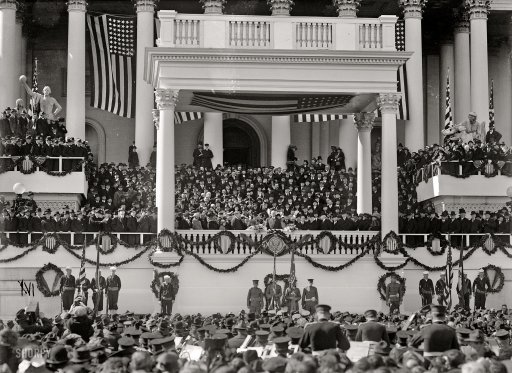
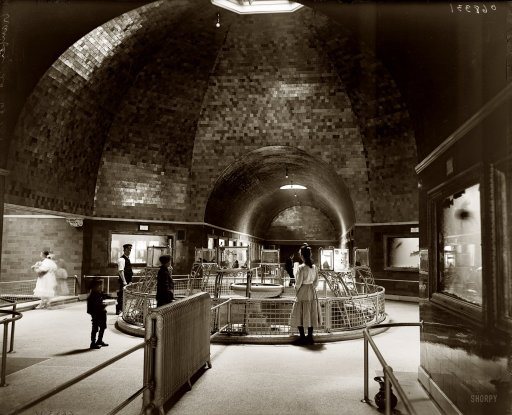
DPC Belle Isle Park Aquarium, Detroit 1905


Greek Debt Deal Reached But Targets Branded ‘Utterly Unachievable’ (Telegraph)
Dow Death Cross Is A Bearish Omen For The Stock Market (MarketWatch)
China Stuns Financial Markets By Devaluing Yuan For Second Day Running (Guardian)
China Roils Markets Second Day as Yuan Cut by 1.6%; Bonds Rally (Bloomberg)
How The Dollar’s Rise Led To China’s Yuan Devaluation (MarketWatch)
Roach Sees Currency Wars Just Getting Worse After Yuan Decision (Bloomberg)
China’s Devaluation And The Impossible Trinity (Beckworth)
Yuan Move Threatens to Add $10 Billion to China Inc.’s Debt Costs (Bloomberg)
One of China’s Most Popular Trades May Be Coming to an End (Tracy Alloway)
Goldman Says China Yuan Move Is Attempt to Get Ahead of the Fed (Bloomberg)
The Fed Is In A Bind (Haselmann)
An Economic Earthquake Is Rumbling (Livingston)
The Social Cost of Capitalism (Paul Craig Roberts)
Yanis Varoufakis Backs Wikileaks Bounty To Crack TTIP (Telegraph)
Euromaniacs: An Addiction To Euroin (Diego Fusaro)
PKK Leader: Turkey Is Protecting Islamic State By Attacking Kurds (BBC)
50,000: More Migrants Reached Greece In July Than During All Of 2014 (Quartz)
Greece Sends Police Reinforcements To Kos In Migrant Crisis (Kathimerini)
United Nations Failing To Represent Vulnerable People, Warn NGOs (Guardian)

Bill submitted to Greek parliament, vote due on Friday morning. Chances of a split in SYRIZA are large.

Greek Debt Deal Reached But Targets Branded ‘Utterly Unachievable’ (Telegraph)

Greece has agreed the broad terms of a new three-year bail-out deal with its international creditors, though experts warned that severe austerity demands mean the country’s fiscal targets remained “utterly unachievable”. Technical details of the deal were finalised in the early hours of Tuesday morning, paving the way for Greece to unlock around €85bn in new loans. The measures include increases in the retirement age, opening up the energy and pharmaceutical industries and new taxes on shipping firms. More measures will follow in October. While Euclid Tsakalotos, Greece’s finance minister, said there were just “two or three” details remaining to reach an accord, Germany, the country’s biggest creditor, has called for more time to complete a deal.

Angela Merkel, the German Chancellor, is understood to have told Greek prime minister Alexis Tsipras that she would prefer to give Greece a second bridging loan rather than rush a deal through. Mr Tsipras rejected the idea, arguing that it would ride roughshod over an agreement with the eurozone that had been struck after marathon talks on July 12 and implemented by the Greek government. Under the terms of Greece’s third rescue package, the country will be required to post a primary deficit no larger than 0.25pc of GDP this year. In 2016, the country is required to post a surplus of 0.5pc of GDP rising to 1.75pc in 2017 and 3.5pc in 2018. Greece had previously proposed a primary surplus target of 1pc of GDP this year and 2pc in 2016.

Officials claimed the deal would reduce Greece’s obligations with regards to primary surpluses by 11pc of GDP over the next three years, meaning Greece would avoid austerity measures worth around €20bn over that period. The Greek parliament must now pass the reforms agreed with creditors, ahead of a meeting of eurozone finance ministers expected on Friday. However, Costas Lapavitsas, a Syriza MP and professor of economics at SOAS university in London, criticised the package, and suggested he would vote against it. “To lower the targets because the economy is in recession is one thing. To present this as lightening the recessionary burden is quite another and wrong. Nothing has been lightened because the tax rises have already been voted in,” he said.

Capital Economics described the fiscal targets as “fantasy” and “utterly unachievable”, while Raoul Ruparel, co-director at the think-tank Open Europe, said: “The new targets have not been so much negotiated as made inevitable by the recent economic destruction – claiming savings thanks to significant economic downturn has a touch of claiming success in cutting off your nose to spite your face,” he said.

Read more …

Moving averages intersect.

Dow Death Cross Is A Bearish Omen For The Stock Market (MarketWatch)

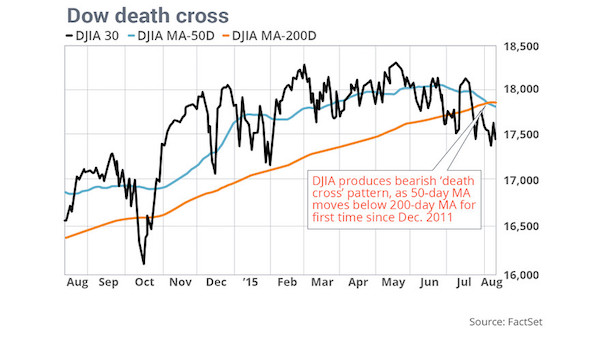
A rare “death cross” appeared Tuesday in the chart of the Dow Jones Industrial Average, suggesting the stock market may have already begun a new long-term downtrend. Although chart watchers have seen the bearish technical pattern coming for some time, it can still send a chill down bulls’ spines when it is finally confirmed. The fact that the Dow industrials’ death cross follows the appearance of one in its sister index, the Dow Jones Transportation Average, warns that this one is more than a one-off event. A death cross is said to have occurred when the 50-day simple moving average, which many use to track the short-term trend, crosses below the 200-day moving average, which is widely used to gauge the health of the longer-term trend.

For the Dow industrials, it marked the first time the 50-day moving average, which ended Tuesday at 17,806.99, was below the 200-day moving average, at 17,813.42, since Dec. 30, 2011, according to FactSet. Therefore, many technicians see the death cross as marking the spot that a shorter-term pullback morphs into a longer-term downtrend. The Dow closed down 1.2% suffer an eighth loss in the past nine sessions. It has lost 5% since its record close of 18,312.39 on May 19. Some argue that death crosses have very little predictive value, since some previous ones have appeared right around market bottoms. For example, a death cross appeared on July 7, 2010, when the Dow closed at 10,018.28. The Dow’s closing low for the year had actually been hit two sessions earlier, at 9,686.48.
Read more …

One day after claiming it was a one-off.

China Stuns Financial Markets By Devaluing Yuan For Second Day Running (Guardian)

China stunned the world’s financial markets on Wednesday by devaluing the yuan for the second day running, sparking fears that the world’s second largest economy is in worse shape than investors believed. The currency hit a four-year low on Wednesday after the People’s Bank of China set the yuan’s daily midpoint even weaker than in Tuesday’s devaluation. With the bank having said that Tuesday’s move was a “one-off depreciation”, the rapid drop in the value of China’s currency – around 4% in the last two days – dealt a blow to appetite for risky assets, and markets across the region plunged amid concerns that Beijing has embarked on a damaging currency war. Stocks, currencies and commodities came under heavy pressure as money managers feared it could ignite a currency war that would destabilise the global economy.

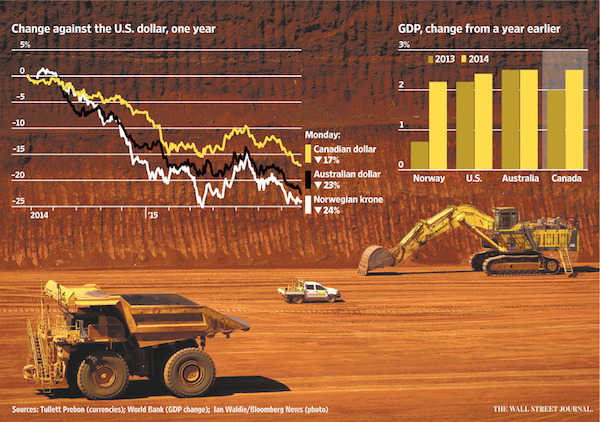
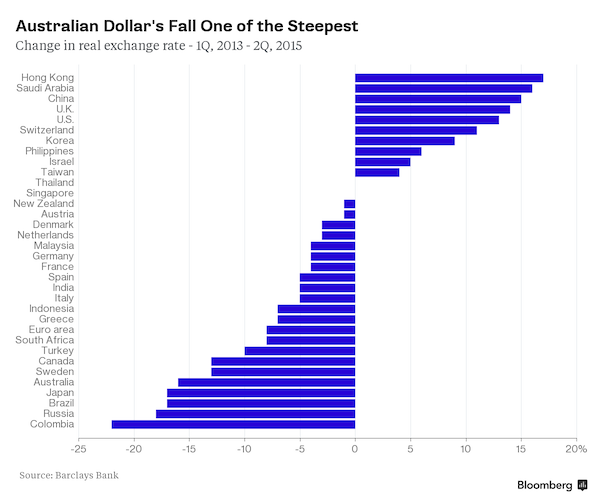
The Nikkei stock market index in Japan was down more than 1% while the Hang Seng in Hong Kong was down 1.64%. The Australian dollar, often seen as a proxy for the Chinese economy, fell again to a fresh six-year low of US$72.25c, having been sold off heavily on Tuesday. The US dollar, on the other hand, rose strongly again against all Asian currencies. Oil was hit, too, with Brent futures were down 31c at $48.87 per barrel at 0251 GMT. US crude was trading at $43.02 per barrel, down 6 cents from Tuesday when it marked its lowest settlement since March 2009. Key industrial and construction materials nickel, copper and aluminium also hit six-year lows. “China’s currency moves will hurt appetite for risky assets such as equities and commodities,” said Rajeev De Mello, head of Asian fixed income at Schroders in Singapore.

Read more …

Well, the IMF says they like it.

China Roils Markets Second Day as Yuan Cut by 1.6%; Bonds Rally (Bloomberg)

China’s unexpected decision on Tuesday to devalue the yuan and shift to a more market-determined rate sparked concern that the world’s second-largest economy is faltering. Vietnam widened the trading band on its currency Wednesday, underscoring the risk of competitive devaluations. Traders are seeking safety in government debt as China’s move reduces inflation expectations and eases pressure on the Federal Reserve to raise interest rates. China’s government “is focused on domestic issues rather than global implications at the moment, employing all the possible means to stabilize the economy,” said Ronald Wan at Partners Capital in Hong Kong. “A weaker yuan means weaker consumption power and Chinese demand for foreign products and commodities will weaken.”

The yuan is heading for its biggest two-day drop since 1994 and has returned to levels last seen in August 2011. There’s no economic or financial “basis” for the exchange rate to fall continuously, the PBOC said in a statement Wednesday. Traders increased bets on further movement in the currency, with options volume surging to more than triple the 5-day average for the time of day, Depository Trust & Clearing Corp. data showed. China’s central bank said Tuesday that market-makers who submit prices for the reference rate will have to consider the previous day’s closing spot rate, foreign-exchange demand and supply, as well as changes in major currency rates. Previous guidelines made no mention of those criteria.

The IMF welcomed China’s move to devalue the yuan and said it doesn’t directly impact the country’s push to win reserve-currency status. The devaluation is aimed at buying China some flexibility against continued dollar appreciation as the Fed prepares to lift rates, according to Goldman Sachs.

Read more …

Beijing is way behind the ball.

How The Dollar’s Rise Led To China’s Yuan Devaluation (MarketWatch)

The Obama administration, like many U.S. administrations before it, has long pushed China to allow the market to play a greater role in setting the exchange rate. U.S. officials have long argued that China’s currency is undervalued, giving the country’s exporters an unfair advantage over manufacturers in the U.S. and elsewhere. As recently as April, the Treasury Department praised China’s decision to allow the yuan to appreciate over recent years, but maintained the currency was still undervalued. But forex analysts note Beijing’s willingness to allow the yuan to appreciate over recent years, taking its cue from a rising U.S. currency. That’s made the yuan the second-best-performing emerging-market currency over the past 12 months, noted Jane Foley at Rabobank. China’s real effective exchange rate has been rising at the same time.
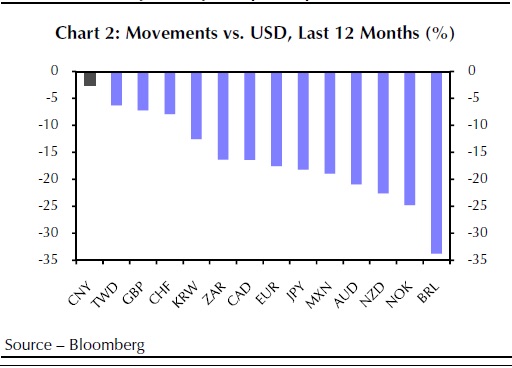
Kit Juckes, global macro strategist at Société Générale, noted that since the taper tantrum during the summer of 2013, the yuan has fallen 3% versus the dollar. But over the same time, the yen is down 23%, the euro is down 18% and other Asian currencies have dropped between 5% and 25%. Against the other so-called BRIC emerging market currencies—Brazil, Russia and India—the yuan has gained more than 50% over the last decade, Juckes said, in a note. The yuan’s valuation “has looked increasingly unsustainable as the others have seen their currencies tumble, and the 1.9% adjustment today is far too small to change that,” he said. “Via the dollar-yuan peg, China is in effective importing the Fed’s tighter policy bias at a time when its own economy is struggling,” said Rabobank’s Foley.

Much will depend on whether the devaluation is, as China says, a one-time move or if Beijing takes further action to weaken the yuan. “The renminbi will presumably come under additional downward pressure and a new gap has already opened up between the reference and market rates. But we expect the PBOC to resist this pressure—it has done over most of the past year—rather than continue to ratchet the reference rate lower,” said Julian Jessop at Capital Markets. “As well as the political sensitivities, allowing further big falls would encourage ‘one-way’ speculation and undermine the credibility of the description of today’s move as a one-time correction.” Nonetheless, China’s move is unwelcome news for its Asian neighbors, who saw their currencies knocked lower in the wake of the move. In that regard, China’s move is seen as a belated salvo in the so-called currency wars.

Read more …

No doubt.

Roach Sees Currency Wars Just Getting Worse After Yuan Decision (Bloomberg)

China’s shock move to devalue the yuan risks opening a new front in a currency war that stretches from the euro zone to Japan as nations look to energize their economies. The People’s Bank of China slashed the yuan’s fixing by a record 1.9% on Tuesday, sparking the currency’s biggest one-day loss since the official and market exchange rates were united in 1994. It triggered the steepest selloff among Asian currencies in almost seven years, led by slides in South Korea’s won and the Taiwan and Singapore dollars. The euro and the yen tumbled 18% against the greenback in the past 12 months as monetary policies diverged in the U.S., Europe and Japan.

“In a weak global economy, it will take a lot more than a 1.9% devaluation to jump-start Chinese exports,” said Stephen Roach, a senior fellow at Yale University and former Morgan Stanley chairman in Asia. “That raises the distinct possibility of a new and increasingly destabilizing skirmish in the ever-widening global currency war. The race to the bottom just became a good deal more treacherous.” China’s devaluation shook global markets just as the currency war appeared to be losing steam in Asia, with Australia and New Zealand toning down calls for weaker rates and Japan refraining from expanding stimulus this quarter.

Even with almost all major currencies losing ground against the dollar this year amid rising expectations for increased borrowing costs in the U.S., China maintained a de facto peg since March amid a push for the yuan to win reserve status at the International Monetary Fund. “They built into the market an expectation that they were keeping the currency stable,” said Ray Farris at Credit Suisse. “Then all of a sudden they blinked. Because they blinked today, markets will continue to look for similar conditions in the future. If exports are falling off a cliff, then against the background of this development, markets will expect more” depreciation, he said.

Read more …

It’s like when you say you want a job done good, cheap and fast: pick two.

China’s Devaluation And The Impossible Trinity (Beckworth)

So China devalued its currency peg almost 2% against the dollar. It happened just as I was wrapping up a twitter debate on this very possibility, a very surreal experience. Many more twitter discussions erupted after the announcement of this policy change and I got sucked into a few of them. My key takeaways from these discussions on the yuan devaluation are as follows. First, this devaluation was almost inevitable: the economic outlook in China had been worsening. The question is why? As I explained in my last post, the proximate cause is the Fed’s tightening of monetary conditions. China’s currency is quasi-pegged to the dollar and that means U.S. monetary policy gets imported into China.

The gradual tightening of U.S. monetary conditions since the end of QE3 has therefore meant a gradual tightening of Chinese monetary conditions. Recently, it has intensified with the Fed signalling its plans to tighten monetary policy with a rate hike. U.S. markets have priced in this anticipated rate hike and caused U.S. monetary conditions to further tighten. Through the dollar peg this tightening has also been felt in China and can explain the slowdown in economic activity. Consequently, China had to loosen the dollar choke hold on its economy via a devaluation of its currency.

There is, however, a more fundamental reason for the devaluation. China has been violating the impossible trinity. This notion says a country can only do on a sustained basis two of three potentially desired objectives: maintain a fixed exchange rate, exercise discretionary monetary policy, and allow free capital flows. If a country tries all three objectives then economic imbalances will build and eventually give way to some kind of painful adjustment. China was attempting all three objectives to varying degrees. It quasi-pegged its currency to the dollar, it manipulated domestic monetary conditions through adjustment of interest rates and banks’ require reserve ratio, and it allowed some capital flows. This arrangement could not last forever, especially given the Federal Reserve’s passive tightening of monetary policy.

Read more …

Talk about lowballing…

Yuan Move Threatens to Add $10 Billion to China Inc.’s Debt Costs (Bloomberg)

The biggest offshore borrowers in Asia are about to understand the costs of a devaluation. Chinese companies, which have $529 billion in dollar and euro bonds and loans outstanding, could see their debt costs jump by $10 billion after the People’s Bank of China devalued the yuan by 1.9%, according to Bloomberg-compiled data. The weaker yuan increases expenses for firms that have to exchange it into those currencies to pay interest and principal on offshore borrowings. Chinese corporations have sold bonds and gotten bank loans offshore at a record pace and now are the biggest component of major fixed-income indexes in the region. A narrow trading band for their home currency meant that many did not hedge against exchange losses that Tuesday’s devaluation, the biggest in two decades, now threatens.

“Most Chinese companies don’t hedge their forex exposure,” said Ivan Chung, an analyst at Moody’s Investors Service. “The sudden devaluation in the currency will add pressure to those with offshore dollar debt, especially the property sector that relies heavily on offshore debt.” The central bank cut its daily reference rate for the currency by a record, triggering the yuan’s biggest one-day loss since China unified official and market exchange rates in January 1994. “Chinese property developers have lots of offshore debt outstanding – more than 20% of their total debt for some – and the majority of them have high leverage and weak cash flow,” said Christopher Lee at Standard & Poor’s in Hong Kong. “If the yuan depreciation sustains, they will face pressure on servicing their debt.”

Read more …

Carry me Carry.

One of China’s Most Popular Trades May Be Coming to an End (Tracy Alloway)

Years of the Chinese yuan practically pegged to the U.S. dollar gave succor to a massive carry trade that involved mainland speculators borrowing from overseas banks at relatively low rates and then investing in higher-yielding renminbi-denominated assets. Pocketing the spread between the two netted hefty returns, but the era of “peak” China carry looks to be coming to an end following China’s move to devalue its currency. While the exact size of the carry trade is unknown, the Bank for International Settlements estimates that dollar borrowing in China jumped five-fold since 2008 to reach more than $1.1 trillion.

Global dollar borrowing is something like $6 trillion to $9 trillion, according to the BIS, thanks largely to an emerging market borrowing spree. The speed and nature of the China carry trade unwind will now depend largely on the pace of the dollar’s appreciation. It’s doubtful that Chinese authorities want to see a disorderly unwind of any sort. Still, the flipside is that China still has some pretty impressive foreign exchange reserves, which could soften the blow from an unwind of the carry trade. The devaluation may also have the added benefit of taking some of the froth out of a Chinese market that has arguably been overheated by foreign borrowing.

Read more …

Duh..

Goldman Says China Yuan Move Is Attempt to Get Ahead of the Fed (Bloomberg)

China’s shock devaluation of its currency is designed to cushion it from rising along with the dollar after a projected interest-rate increase from the Federal Reserve, according to Goldman Sachs. “This is about Fed liftoff most obviously and further dollar strength,” Goldman Sachs chief currency strategist Robin Brooks wrote in a note to clients. “It certainly makes sense for China’s policy makers to buy some flexibility ahead of Fed liftoff, in particular since the fix had become very peg-like in its stability in recent months.” Goldman Sachs projects the dollar strengthening 20% on a trade-weighted basis by the end of 2017. The yuan fell the most Tuesday since China ended a dual-currency system in January 1994 after the central bank cut its daily reference rate by 1.9%.

China has stepped up efforts to boost old growth drivers as new ones fail to offset slowing investment and trade. Developing markets are feeling the strain as domestic growth slows while the U.S. nears its first interest-rate increase in almost a decade. Until Tuesday, China had kept the yuan steady against the dollar, effectively pushing it higher against other emerging-market currencies and hurting its exporters. While the change is reminiscent of Swiss abandonment of the franc’s ceiling versus the euro in January, which anticipated quantitative easing from the ECB, China isn’t looking to push the currency significantly lower, according to Brooks. The change is a one-time correction, a spokesman for the People’s Bank of China said Tuesday. “Our bias is that the move overnight was more about buying flexibility as opposed to the beginning of a large devaluation trend,” New York-based Brooks wrote.

Read more …

“..total credit outstanding (household, corporate, government and financial) has expanded by over $50 trillion in the past 30 years, while GDP has expanded by only $13 trillion.”

The Fed Is In A Bind (Haselmann)

The intention of Fed policy over the past 30 years has been to self-correct business cycles into a ‘steadier state’ by easing interest rates into weakness and hiking them into strength. Unfortunately, there is political-asymmetry between easing and hiking which has resulted in the stair-stepping of official interest rates down to the zero lower bound. Interest rates that are held lower than the ‘natural or normal rate’ (discussed in a moment) may have short-term benefits, yet there are longer-term costs that aggregate and eventually need to be addressed. These costs are then typically dealt with by lowering interest rates even farther away from the normal or natural rate. Eventually the Fed ends up worsening the very business cycles they intended to smooth out.

The fact that rates today have reached zero means that the day of reckoning is quickly approaching, because monetary policy has reached the practical limits of what it can do. Thus, the multi-decade credit era is coming to an end. Credit-based consumption is unsustainable. US corporate issuance has broken a new record in four successive years. According to David Stockman, the amount of total credit outstanding (household, corporate, government and financial) has expanded by over $50 trillion in the past 30 years, while GDP has expanded by only $13 trillion. In addition, while the whole world has gotten significantly more indebted, it also has terrible demographics to contend with. The S&P over this same 30-year period has returned just over 6% adjusted for inflation, while real GDP has been just above 2%.

The market has risen 3 times faster than national output in real terms. A sizable equity market correction could happen merely because the bubble-blowing machine is losing its wind. Certainly, the magnitude of the monetary and debt-based fuel that has powered equities in the past will not be available going forward. An economy runs most efficiently in the long-run when the price of money, i.e., the official interest rate, does not veer too far from the level where savings and investment can find a clearing price (i.e., the natural rate of interest). This is called the Wicksellian Differential, i.e., the difference between the money rate and natural rate of interest. It postulates that when the natural rate is higher than the money rate, the disequilibrium will drive credit expansion.

Read more …

Debts have shifted but not disappeared.

An Economic Earthquake Is Rumbling (Livingston)

While the people sleep, an economic earthquake rumbles underneath. The day that they begin to feel the quake draws near. History will record that in this decade more people will lose more money (forget about the trillions of dollars already lost) than at any time in our history, including during the Great Depression. At the same time, a very small group has made and will make huge sums of money. During the Y2K scare (a real hoax) many people stored food. Then, after Y2K, many people wanted to dump their cache; and some did. We advised readers at the time to store food simply because of the crisis world we live in, but to store those foods that you could rotate and consume. Stored food is a hedge against inflation. It’s a hedge against natural disaster. It’s a hedge against economic collapse.

It was our advice before, and it has been our advice since. This advice is still valid. People who don’t have some stored food don’t realize how dependent they are on the system and government. Of course, the system was designed and created to make the people dependent on government. That makes them easier to control. Many people have been in hard times since 2008, thanks to bursting housing and derivatives bubbles — both fueled by the Federal Reserve’s money printing and both predicted by meand by many other writers. For those of us who are not well-connected (those of us who are not in the 1%), there has been no relief. While the banksters got bailouts and Wall Street and the banksters benefited from the money printers, the middle class was impoverished. Savings were wiped out.

More working-age people than ever before are not working. More young workers than ever before are still living with their parents because they are either out of work or working at low-paying jobs. More people than ever before are on the government dole. Welfare pays more than most jobs. Retirement funds have been cashed out and spent on living expenses. [..] The default rate of companies with the lowest credit rating is at its highest level since 2013. The auto loan debt bubble is at $900 billion, fueled by easy credit and long-term loans (more than 60 months on even used cars) that put the car buyer upside down as he drives off the lot and keeps him there. U.S. mortgage holders are carrying the most non-mortgage debt they’ve had in more than 10 years; 81% of that is automobile debt. Student loan debt held by mortgage holders is the highest it’s ever been, with the average balance owed at nearly $35,000. Almost 5.7 million homeowners remain underwater on their mortgages.

Read more …

Externalities. Our economic systems’ highly destructive 800 pound gorilla.

The Social Cost of Capitalism (Paul Craig Roberts)

Few, if any, corporations absorb the full cost of their operations. Corporations shove many of their costs onto the environment, the public sector, and distant third parties. For example, currently 3 million gallons of toxic waste water from a Colorado mine has escaped and is working its way down two rivers into Utah and Lake Powell. At least seven city water systems dependent on the rivers have been shut down. The waste was left by private enterprise, and the waste was accidentally released by the Environmental Protection Agency, which might be true or might be a coverup for the mine. If the Lake Powell reservoir ends up polluted, it is likely that the cost of the mine imposed on third parties exceeds the total value of the mine’s output over its entire life.

Economists call these costs “external costs” or “social costs.” The mine made its profits by creating pollutants, the cost of which is born by those who had no share in the profits. As this is the way regulated capitalism works, you can imagine how bad unregulated capitalism would be. Just think about the unregulated financial system, the consequences we are still suffering with more to come. Despite massive evidence to the contrary, libertarians hold tight to their romantic concept of capitalism, which, freed from government interference, serves the consumer with the best products at the lowest prices. If only. Progressives have their own counterpart to the libertarians’ romanticism. Progressives regard government as the white knight that protects the public from the greed of capitalists. If only.

[..] The two largest reservoirs, Lake Mead and Lake Powell, are at 39% and 52% of capacity. The massive lakes on which the Western United States is dependent are drying up. And now Lake Powell is faced with receiving 3 million gallons of waste water containing arsenic, lead, copper, aluminum and cadmium. Wells in the flood plains of the polluted rivers are also endangered. The pollutants, which turned the rivers orange, flowed down the Animas River from Silverton, Colorado through Durango into the San Juan River in Farmington, New Mexico, a river that flows into the Colorado River that feeds Lake Powell and Lake Mead. All of this damage from one capitalist mine.

Read more …

Makes a lot of sense.

Yanis Varoufakis Backs Wikileaks Bounty To Crack TTIP (Telegraph)

Yanis Varoufakis, the former Greek finance minister, has donated to a $110,000 bounty to reward whoever leaks the text of a major EU-US trade deal. Mr Varoufakis was named yesterday as one of a number of public figures said to have donated to a fund set up by Wikileaks, the secret-sharing website, to encourage the leaks of documents surrounding Transatlantic Trade and Investment Partnership (TTIP). Others said to have donated to the fund include Vivienne Westwood, the fashion designer; Daniel Ellsberg, the Pentagon papers leaker; Slavoj Zizek, the philosopher; and Evgeny Morozov, the journalist. Julian Assange, the Wikileaks founder, was also named as a donor. So far some $24,000 dollars has been raised of the target.

Wikileaks wants the text of the proposed deal to be leaked. It is not clear whether such a single text exists. The deal will break down tariff and regulatory barriers between the EU and US, adding around £94 billion to the European economy and cutting the price of goods such as jeans and cars. David Cameron is a major advocate, seeing it as essential to save the EU s economies from decline, and has pledged to put rocket boosters under the deal. It has met stiff opposition from the left and radical right in Britain and the continent, who argue it will allow corporations to sue the Government for market access and force greater private provision in the NHS.

Some French farmers claim it will allow the spread of US “Frankenfoods”, such as chlorine-washed chicken, genetically modified crops and hormone-treated beef. Advocates say most controversial element the ability of companies to challenge governments in the courts is commonplace in global trade deals. Mr Assange said: “The secrecy of the TTIP casts a shadow on the future of European democracy. Under this cover, special interests are running wild, much as we saw with the recent financial siege against the people of Greece. The TTIP affects the life of every European and draws Europe into long term conflict with Asia. The time for its secrecy to end is now. Mr Varoufakis, an economist, had a toxic relationship with EU officials and European leaders, and he left office before a bailout deal could be signed. I shall wear the creditors loathing with pride, he said on resigning in July.

Read more …

Word of the week: Euroin.

Euromaniacs: An Addiction To Euroin (Diego Fusaro)

Italy, and not only Italy but indeed all of the Eurozone countries should get out of the Euro as soon as possible because the Euro has proven to be a real financial coup d’état that has enabled the imposition of a neoliberal regime and the removal of all forms of social rights and the removal of any form of guaranteed healthcare and public ownership, all in favour of privatisation. The Euro has been the Trojan Horse with which neoliberalism has imposed its wishes and it’s a bit like a charging rhinoceros that is impossible to stop, to appease or for that matter to control in any way. You simply have to move out of its way before it tramples you! We simply have to get out of the Euro as soon as possible!

Generally speaking, and I use Gramsci’s words here, the Euro is a sort of Passive Revolution, in other words a revolution by which the dominant capitalist power after 1989 strengthened itself, strengthening its own structure and ridding itself of the ties and restrictions of the State and the public, of the Sovereign National Government, in order to impose the power of the unfettered economy, in other words the power of the banks and the Financial world no longer disciplined by the State and by what Hegel’s Philosophy would refer to as Ethical forces, i.e. those powers that are capable of disciplining the Economy and to place it at the service of the community. The Euromaniacs, and I am using this term that I have borrowed from my journalist friend Alessandro Montanari, are those people that are totally unable to overcome their absolute addiction to the Euro.

Just like drug addicts, these guys keeping on wanting more Euro and more Europe, even though the Euro continues to cause social and political catastrophes, including the end of public ownership, the end of social security and the downward spiral towards poverty here in Italy. They resort to using oracle-like, almost theological terminology such as: “What we need is more Europe! It’s paradoxical. No less paradoxical in fact than if someone were faced with the tragedy of a drug addict and said: “What we need are more drugs!Nowadays, anyone looking at the twin tragedies of Europe and the Euro and obsessively and compulsively repeats: “What we need is more Euro, more Europe!”is no more and no less than an addiction to Euroin.

Read more …

A huge powderkeg.

PKK Leader: Turkey Is Protecting Islamic State By Attacking Kurds (BBC)

The man leading the Kurdistan Workers’ Party (PKK) has accused Turkey of trying to protect the Islamic State group by attacking Kurdish fighters. Cemil Bayik told the BBC he believed President Recep Tayyip Erdogan wanted IS to succeed to prevent Kurdish gains. Kurdish fighters – among them the PKK – have secured significant victories against IS militants in Syria and Iraq. But Turkey, like a number of Western countries, considers the PKK a terrorist organisation. A ceasefire in the long-running conflict with the group appeared to disintegrate in July, when Turkey began bombing PKK camps in northern Iraq, at the same time as launching air strikes on IS militants. Observers say PKK fighters have been on the receiving end of far more attacks than IS.

But Turkish officials deny that the campaign against IS group is a cover to prevent Kurdish gains. On Wednesday, Turkey said it was planning a “comprehensive battle” against IS. “The Turkish claim they are fighting Islamic State… but in fact they are fighting the PKK,” Cemil Bayik told BBC’s Jiyar Gol. “They are doing it to limit the PKK’s fight against IS. Turkey is protecting IS. “[President] Erdogan is behind IS massacres. His aim is to stop the Kurdish advance against them, thus advancing his aim of Turkishness in Turkey.”

Read more …

A 12-fold increase. And even now, where is the EU? This is sufficient reason NOT to remain a member: moral degenerancy.

50,000: More Migrants Reached Greece In July Than During All Of 2014 (Quartz)

It is a “crisis within a crisis.” That’s how prime minister Alexis Tsipras describes the massive influx of migrants to Greece, straining the resources of a country that is already strapped for cash. Nearly 50,000 migrants came to Greece in July—more than the whole of 2014. So far this year, more than 130,000 illegal border crossings have been made in Greece, according to Frontex, the EU’s border agency. The vast majority of migrants come from Syria and Afghanistan, seeking asylum in the EU after a treacherous journey in overcrowded, makeshift boats across the eastern Mediterranean—now the busiest route for people seeking a better life in Europe.

Even Greece’s shattered economy is better than what Afghans, Syrians, and others leave behind. But most migrants hope to travel further into Europe in search of jobs, stability, and states more receptive to asylum claims. But if they’re caught or rescued in Greece, in most cases they must be processed there. The UN recently described conditions for migrants in popular Greek landing spots as “total chaos,” with a severe lack of food, sanitation, and shelter. But an EU plan to distribute migrants more evenly across the bloc has stalled, with many countries rejecting proposed quotas. This weekend alone, the Greek coast guard pulled another 1,400 people out of the sea, according to reports. Tsipras recently called for urgent assistance from the rest of the EU: “This problem surpasses us,” he said.

Read more …

Better instruct them well.

Greece Sends Police Reinforcements To Kos In Migrant Crisis (Kathimerini)

The Greek Police (ELAS) has sent additional officers to the eastern Aegean island of Kos to help deal with a burgeoning migrant crisis there which escalated into violent clashes Tuesday. ELAS chief Dimitris Tsaknakis has dispatched 12 officers from the force’s immigration unit to the island, including one Arab-speaking employee, to help accelerate the process of identifying some 7,000 immigrants there, most believed to be Syrian. Local authorities allocated a municipal gymnasium and an old soccer field for officers to interview the immigrants and issue them with documents allowing them to remain in the country for six months. The officers arrived on the island on Monday and had interviewed around 750 migrants by late last night, a police source told Kathimerini.

The process of identifying the arrivals was brusquely interrupted Tuesday when a fracas broke out between migrants and police officers as the former were being transferred to the old soccer stadium. Police used truncheons and even fire extinguishers to keep back the immigrants in an apparent bid to avert a stampede amid a crush to enter the stadium. Responding to the rising tensions, ELAS ordered two riot police units to be flown to the island on a C-130 military transport aircraft. Tsaknakis also ordered the transfer of some 250 additional officers to be stationed on Kos and other islands in the eastern Aegean such as Lesvos and Samos which have been besieged by large numbers of immigrants. Kos Mayor Giorgos Kyritsis said local authorities were overwhelmed and warned of “bloodshed if the situation degenerates.”

Read more …

UN equals special interests.

United Nations Failing To Represent Vulnerable People, Warn NGOs (Guardian)

Vulnerable people are prevented from gaining representation at the United Nations by a committee dominated by countries with repressive regimes, according to concerned NGOs. Organisations have told the Guardian how they face lengthy hold-ups, bizarre questioning and intimidation as they negotiate with the UN committee on non-governmental organisations, the group which decides which organisations get official UN status, and is currently made up of countries including Cuba, China, Russia, Pakistan and Qatar. Last month, Freedom Now, which works with prisoners of conscience around the world, finally won a six year battle to get official status, in the face of fierce opposition from China.

It took an intervention from US ambassador Samantha Power, who said she was determined “to put an end to the inexcusable attempt to deny Freedom Now’s official NGO status”. But this case is far from unique, with NGO workers from around the world warning that vulnerable people are being denied representation at the UN by the dysfunctional nature of the NGO committee and its parent body the Economic and Social Council (Ecosoc), which produces policy and makes recommendations on economic, social and environmental issues at the UN. In order to work at the UN, make speeches and gain access to important officials, organisations need to submit applications for special consultative status to the NGO committee.

The UN offers no guidance or time limit on how long it takes for applications to be processed by the committee. The 19 members of the committee are elected by other states every four years. The committee must always contain a set number of countries from each region; with four from Asian states and five from African states, for example. Jessica Stern, from the International Gay and Lesbian Human Rights Commission which took three years to get special consultative status, told the Guardian that it is “almost impossible” for NGOs to operate in the UN as without this official status. She added that negotiating with the committee can be both costly and time-consuming, meaning that many organisations simply give up.

Read more …

Aug 102015
 
 August 10, 2015  Posted by at 11:25 am Finance Tagged with: , , , , , , , ,  3 Responses »


NPC Congressman John C. Schafer of Wisconsin 1924

Why Commodities Are Dying The Death Of 1,000 Cuts (CNBC)
The Canaries Continue To Drop Like Flies (Mark St.Cyr)
China’s Hard Landing Suddenly Gets a Lot Rougher (WolfStreet)
Quantitative Easing With Chinese Characteristics Takes Shape (Bloomberg)
China Slashes U.S. Debt Stake by $180 Billion – and Bonds Shrug (Bloomberg)
The Monetary Superpower Strikes Again (David Beckworth)
Greece Hopes to End Bailout Talks by Tuesday (Bloomberg)
Finland Throws Support Behind Greek Bailout It Says Won’t Work (Bloomberg)
Berlln Faces Isolation As Athens And Creditors Near €86 Billion Accord (FT)
Democracy At The Heart Of Fight For Greece (FT)
Analysis: Varoufakis Vs Media Manipulation (Press Project)
Portugal Cautioned By IMF Over Debt Sustainability (FT)
In Southern Europe, Bank Share Sales Can Hit Depositors Hard (WSJ)
Scotland To Issue Formal Ban On GMO Crops (Guardian)
Good For Migrants, Good For Britain (Philippe Legrain)
‘Marauding’ Migrants Threaten Standard Of Living: Foreign Secretary (Guardian)
Germany Has a Refugee Problem, and the Problem Is the Germans (FP)

“..Carlyle Group saw the holdings of a commodities fund it owns plummet from $2 billion to $50 million, due to bullish bets on a host of commodities.”

Why Commodities Are Dying The Death Of 1,000 Cuts (CNBC)

Commodities are the gift that keep on not giving. The sector is in the throes of an ‘annus horribilis’, having gotten wrecked over the past few years despite massive liquidity that should have boosted their value. Bullish investor after bullish investor has tried to call a bottom, in a set of calls that now appear ill-conceived and money losing. In the past week, the S&P GSCI Commodity Index has dropped 3.4 in the past week, as crude oil plunged 7% to hit multi-month lows, and a host of metals fell alongside it. That, of course, hardly marks the first big drop for the alternative investment group. That widely watched commodity index has fallen 17% the last three months, and a whopping 42% in the past two years. It’s not just an energy issue, either.

Copper, platinum, lumber, coffee, sugar, wheat, oats and lean hogs are all down double-digit percentages this year. While each specific commodity obviously responds to its own distinct supply-and-demand dynamics, a few fundamental factors appear to be weighing on commodities as a whole. First of all, the U.S. dollar has risen nearly 8% this year against a basket of major currencies, and has rediscovered some of its strength in the past three months. A strong dollar tends to be bad for commodities, as it should mean that it takes fewer dollars to buy the same amount of a given fixed asset. And in fact, many investors bought commodities to get protection from a Federal Reserve stimulus-stoked rise in inflation that never came.

As the Fed ended its QE program—and now appears months away from raising rates—what now appears to have been a massive bubble in commodities like gold has slowly popped. But Fed fears didn’t form the only bull case for commodities. Others maintained that the global economy would heat up, leading to greater demand for industrial commodities like oil and copper. Instead, Europe has been a mess, and that great commodity consumer China has seen its economy continue to slow. The losses in the complex have been dramatic indeed. The Astenbeck commodities fund managed by famed trader Andy Hall tumbled 17% in July. And the WSJ said last week that private equity firm Carlyle Group saw the holdings of a commodities fund it owns plummet from $2 billion to $50 million, due to bullish bets on a host of commodities.

Read more …

“That was not a “canary” but rather a “dodo.”

The Canaries Continue To Drop Like Flies (Mark St.Cyr)

One would think as “canary” after “canary” falls silent either sickened with laryngitis, or worse – completely comatose, that those on Wall Street as well as the financial media itself would not only have seen, but heard, many of the warning calls that have been obvious for quite some time. Yet, history always shows; not only do they not see, but more often than not – they don’t want to see, nor hear the warning calls. Even when all the warning signs are screaming danger – not only are they ignored, they’re explained away as if those which saw or heard them, should be ignored as they’ll contend not only did one not see; but couldn’t see. What they’ll propose is: “That was not a “canary” but rather a “dodo.” After all, with a Fed that’s as interactive as this one currently is, surely what they believe they heard, or saw is impossible.

For people say they’ve spotted warning signs in these ‘markets’ for years, and none have yet produced a crisis because – they’re now extinct!” Yet, the wheezing sounds of many a Wall Street songbird has been apparent for quite a while. Again: If only one would care to look or listen. Back in April of 2014 in an article titled “The Scarlet Absence Of A Letter of Credit” I opined a few scenarios as to why this seemingly dismissed revelation by the so-called “smart crowd” should not go unnoticed. For the implications may very well portend far greater reasons too worry in the coming future. Let’s not forget this is some 16 months ago. When the financial media et al were still reciting in unison the wonders to which, “China will be the economy that leads us out of this current malaise.”

“Over the last few years since the financial melt down of 2008, we have seen what many have believed are precursors that may tip the hand of markets as to show just how unhealthy this levitating act fueled by free money has become. And yes there are always false indicators, and we all know correlation doesn’t equal causation. And even more may shrug and think, “No letter of credit, so what.” However, if there were ever a canary in a coalmine worth noting this is one not to let one’s eyes to divert from.

The issue at hand is not just the foolishness of the absence contained in a one-off LOC gamble some company would take. Far from it. It’s the desperation that could be hidden that’s a precursor one has to watch for. For the amount of desperation, or the degree that might be hidden beneath the surface to which a commodity will be sent overseas to another country, a country for all intents and purposes is using that very product as a pseudo currency to back other financial obligations without the requisite document to be paid. Is mind numbingly dangerous in its implications in my view.”

Read more …

“..568 strikes and worker protests in the second quarter, raising this year’s tally to 1,218 incidents as of June..”

China’s Hard Landing Suddenly Gets a Lot Rougher (WolfStreet)

This has become a sign of the times: Foxconn, with 1.3 million employees the world’s largest contract electronics manufacturer, making gadgets for Apple and many others, and with mega-production facilities in China, inked a memorandum of understanding on Saturday under which it would invest $5 billion over the next five years in India! In part to alleviate the impact of soaring wages in China. Meanwhile in the city of Dongguan in China, workers at toy manufacturer Ever Force Toys & Electronics were protesting angrily, demanding three months of unpaid wages. The company, which supplied Mattel, had shut down and told workers on August 3 that it was insolvent. The protests ended on Thursday; local officials offered to come up with some of the money owed these 700 folks, and police put down the labor unrest by force.

These manufacturing plant shutdowns and claims of unpaid wages are percolating through the Chinese economy. The Wall Street Journal: The number of labor protests and strikes tracked on the mainland by China Labour Bulletin, a Hong Kong-based watchdog, more than doubled in the April-June quarter from a year earlier, partly fueled by factory closures and wage arrears in the manufacturing sector. The group logged 568 strikes and worker protests in the second quarter, raising this year’s tally to 1,218 incidents as of June, compared with 1,379 incidents recorded for all of last year. The manufacturing sector is responsible for much of China’s economic growth. It accounted for 31% of GDP, according to the World Bank. And a good part of this production is exported. But that plan has now been obviated by events.

Exports plunged 8.3% in July from a year ago, disappointing once again the soothsayers surveyed by Reuters that had predicted a 1% drop. Exports to Japan plunged 13%, to Europe 12.3%. And exports to the US, which is supposed to pull the world economy out of its mire, fell 1.3%. So far this year, in yuan terms, exports are down 0.9% from the same period last year. As important as manufacturing is to China, this debacle is not exactly conducive to economic growth. The General Administration of Customs, which issued the report, added: “We could see relatively strong downward pressure on exports in the third quarter.”

Read more …

Qe with an extra step built in.

Quantitative Easing With Chinese Characteristics Takes Shape (Bloomberg)

China’s leaders are increasingly relying on the central bank to help implement government programs aimed at shoring up growth, in an adaptation of the quantitative easing policies executed by counterparts abroad. Rather than bankroll projects directly, the People’s Bank of China is pumping funds into state lenders known as policy banks to finance government-backed programs. Instead of buying shares to prop up a faltering stock market, it’s aiding a government fund that’s seeking to stabilize prices. And instead of purchasing municipal bonds in the market, it’s accepting such notes as collateral and encouraging banks to buy the debt.

QE – a monetary policy tool first deployed in modern times by Japan a decade and a half ago and since adopted by the U.S. and Europe – is being echoed in China as Premier Li Keqiang seeks to cushion a slowdown without full-blooded monetary easing that would risk spurring yet another debt surge. While the official line is a firm “no” to Federal Reserve-style QE, the PBOC is using its balance sheet as a backstop rather than a checkbook in efforts to target stimulus toward the real economy. “It’s Chinese-style quantitative easing,” said Shen Jianguang, chief Asia economist at Mizuho in Hong Kong. “But it’s not a direct central bank asset-purchase plan. China’s easing is indirect and more subtle compared with the U.S. or Japan.”[..]

While there’s been no public unveiling of the strategy, China’s leaders are putting in place plans for the central bank to finance, indirectly, a fiscal stimulus program to put a floor under the nation’s slowdown. China will sell “special” financial bonds worth trillions of yuan to fund construction projects, and the PBOC will provide funds to state banks to buy the bonds, people familiar with the matter said this month. China Development Bank and the Agricultural Development Bank of China – known as policy banks because they carry out government objectives – will issue bonds, people told Bloomberg earlier.

The Postal Savings Bank of China will buy the debt, aided by liquidity from the central bank, according to one of the people. It’s unclear whether by taking on bonds as collateral and delivering cash in return the PBOC’s official balance sheet will expand. In the U.S., the euro region and Japan, central banks have bought securities outright in secondary markets, making the quantitative easing transparent on their books.

Read more …

Dollars flowing back home.

China Slashes U.S. Debt Stake by $180 Billion – and Bonds Shrug (Bloomberg)

To get a sense of how robust demand is for U.S. Treasuries, consider that China has reduced its holdings by about $180 billion and the market barely reacted. Benchmark 10-year yields fell 0.6 percentage point even though the largest foreign holder of U.S. debt pared its stake between March 2014 and May of this year, based on the most recent data available from the Treasury Department. That’s not the doomsday scenario portrayed by those who said the size of the holdings – which peaked at $1.65 trillion in 2014 – would leave the U.S. vulnerable to China’s whims. Instead, other sources of demand are filling the void. Regulations designed to prevent another financial crisis have caused banks and similar firms to stockpile highly rated assets.

Also, mutual funds have been scooping up government debt, flush with cash from savers who are wary of stocks and want an alternative to bank deposits that pay almost nothing. It all adds up to a market in fine fettle as the Federal Reserve moves closer to raising interest rates as soon as next month. “China may be stepping away, but there is such a deep and broad buyer base for Treasuries, particularly when you have times of uncertainty,” Brandon Swensen at RBC Global Asset Management said. America has relied on foreign buyers as the Treasury market swelled to $12.7 trillion in order to finance stimulus that helped pull the economy out of recession and bail out the banking system.

Overseas investors and official institutions hold $6.13 trillion of Treasuries, up from about $2 trillion in 2006, government data show. China was a particularly voracious participant, boosting its holdings from less than $350 billion as its economy boomed and the nation bought dollars to keep the yuan from soaring. Now, the Asian nation is stepping back as it raises money to support flagging growth and a crumbling stock market, and allows its currency to trade more freely. The latest update of Treasury data and estimates by strategists suggest that China controls $1.47 trillion of Treasuries. That includes about $200 billion held through Belgium, which Nomura says is home to Chinese custodial accounts.

Read more …

Da Fed.

The Monetary Superpower Strikes Again (David Beckworth)

China’s economy has been slowing down for the past few years and many observers are worried. The conventional wisdom for why this is happening is that China’s demographic problems, its credit binge, and the related malinvestment have all come home to roost. While there is a certain appeal to these arguments, there is another explanation that I was recently reminded of by Michael T. Darda and JP Koning: the Fed’s passive tightening of monetary policy is getting exported to China via its quasi-peg to the dollar. Or, as I would put it, the monetary superpower has struck again.

The Fed as a monetary superpower is based on the fact that it controls the world’s main reserve currency and many emerging markets are formally or informally pegged to dollar. Therefore, its monetary policy is exported across the globe and makes the other two monetary powers, the ECB and Japan, mindful of U.S. monetary policy lest their currencies becomes too expensive relative to the dollar. As as result, the Fed’s monetary policy also gets exported to some degree to Japan and the Euro. This understanding lead Chris Crowe and I to call the Fed a monetary superpower, and idea further developed by Collin Gray. Interestingly, Janet Yellen implicitly endorsed this idea in a 2010 speech:

For all practical purposes, Hong Kong delegated the determination of its monetary policy to the Federal Reserve through its unilateral decision in 1983 to peg the Hong Kong dollar to the U.S. dollar in an arrangement known as a currency board. As the economist Robert Mundell showed, this delegation arises because it is impossible for any country to simultaneously have a fixed exchange rate, completely open capital markets, and an independent monetary policy. One of these must go. In Hong Kong, the choice was to forgo an independent monetary policy.

The original context of the monetary superpower argument was that the Fed was exporting its easy monetary policy to the rest of the world in the early-to-mid 2000s. Now the argument is that its normalization of monetary policy is creating a passive tightening of monetary conditions for the rest of the world, especially the dollar peggers like China.

Read more …

And then the Troika can start stalling again.

Greece Hopes to End Bailout Talks by Tuesday (Bloomberg)

The Greek government is seeking to conclude talks on a rescue program by Tuesday, leaving enough time for national parliaments to assess the deal so funds can be disbursed for an Aug. 20 payment to the ECB. The four institutions representing Greece’s creditors – the ECB, the IMF, the EC and the European Stability Mechanism – made progress over the weekend on the details of a plan that would make as much as €86 billion available to Greece, according to three people with knowledge of the discussions. Officials are optimistic an agreement will be reached, allowing Greece’s parliament to pass any new required reforms in the middle of the week and paving the way for a meeting of euro-area finance ministers at the end of the week.

The indebted nation needs a quick release of about €20 billion to create a buffer for its banks and to make loan payments. “We are trying to make swift progress in order to have a deal preferably before the 20th of August so the disbursement can be made under the new ESM program,” EC spokeswoman Mina Andreeva told reporters on Aug. 7 in Brussels. Greece and its creditors still need to decide exactly how much money will be required for the bailout, which will be the nation’s third in five years, as well as what reforms will have to be concluded before any money is released, one of the people said. The headway comes as some members of the 19-nation common currency express skepticism that a deal can work.

Finnish Foreign Minister Timo Soini said over the weekend that his government is ready to discuss a new aid plan for Greece but that “we should admit that this isn’t going to work.” Last week, Hans Michelbach, a Bavarian lawmaker who has argued against a deal with Greece, said he didn’t believe a rescue program could be reached in time and other financing arrangements would be needed. Even as the European governments are racing to cinch an agreement before Greece needs to pay €3.2 billion to the ECB on Aug. 20, the situation isn’t as dire as it was earlier this summer; if the leaders fail to disburse the funds in time, Greece could still request a short-term loan from a European fund that has about €5 billion available.

Read more …

They have that in common with Tsipras. Just make sure to lay the blame where it belongs.

Finland Throws Support Behind Greek Bailout It Says Won’t Work (Bloomberg)

A third Greek bailout won’t work and will only prolong the difficulties plaguing the euro area, according to Finnish Foreign Minister Timo Soini. But his party, the euro-skeptic the Finns, is ready to discuss another rescue package because allowing Greece to fail would only add to Europe’s costs, he said. “Truth is the strongest force,” Soini said in an interview on Saturday. “We should admit that this isn’t going to work.” Soini shares the skepticism of Greece’s ruling Syriza party, which despite its opposition to further austerity measures, is seeking €86 billion in international loans to stay afloat. Greece is struggling to strike a deal with its creditors as €3.2 billion in debt to the ECB falls due on Aug. 20.

The Finns party, which in April became part of a ruling coalition for the first time, has no choice but to support a bailout since not doing so would cause the three-party government to collapse. That would only open the door for the left-wing opposition, Soini said. “I kept my party in the opposition for four years because of this subject,” he said. “But with this government structure we can’t block the program alone and we’d be replaced.” While Finland drove a hard bargain during Greece’s second bailout, it may no longer have the clout to block a deal. Finland has already made its 1.44 billion-euro contribution to the permanent European Stability Mechanism. Should Europe decide that the future of the euro zone is at stake, a bailout won’t require unanimous backing from members; 85% is enough.

Even without an imminent bailout agreement, a European fund deployed in July to help Greece clear arrears contains about €5 billion and could be tapped again for a bridge loan. According to Soini, bridge financing will do little to solve the long-term fiscal plight Greece faces. “This bridge funding isn’t going to be final solution,” he said. “There’s no solution for this particular problem that doesn’t cost Finnish taxpayers. If Greece collapsed and Grexit would be tomorrow’s reality, we would lose €3-4 billion more or less at once. So I hope that the EU and euro zone, that in due course, we can face the facts and say enough is enough and that we must do something else.”

Read more …

Replace Schäuble.

Berlln Faces Isolation As Athens And Creditors Near €86 Billion Accord (FT)

Greece and its creditors are close to reaching an outline deal this week on the debt-laden country’s €86bn rescue programme, amid signs of growing German isolation over its tough stance towards Athens. Significant concessions by Alexis Tsipras and his negotiators in the past month have encouraged other hawkish eurozone members such as Finland to break with Berlin, which wants to hold out longer to squeeze more reforms from Athens. Even previously sceptical EU diplomats now say that a full agreement could be reached by the August 20 deadline, when Athens must make a €3.2bn debt repayment to the ECB. The cautious optimism contrasts sharply with the acrimony at last month’s eurozone summit, which came close to ushering Greece out of the currency bloc before agreeing to negotiate a deal.

The main elements of the proposed deal include spending cuts, administrative reform and privatisations. Remaining sticking points between Athens and its creditors include details of a €50bn privatisation plan and proposals for raising the planned budget surplus, excluding debt interest, to 3.5 per cent of gross domestic product in 2018 from zero this year. Officials in Brussels said an early deal was “ambitious but feasible”. But they emphasised that while this was the “preferable” way forward, the option of a €5bn bridging loan to give negotiators more time, championed by Berlin, was still on the table. As often in the past, Greek officials were the most positive about the likelihood of a breakthrough, expressing confidence that an outline deal could come by Tuesday and be approved by the Athens parliament later this week, despite political divisions and public anger over the terms.

Eurogroup finance ministers would then meet on Friday to approve the deal, leaving time next week for national parliaments in Germany, and the other creditor countries which must vote on the plan, to do so before August 20. One Greek official said: ”If there aren’t any last-minute obstacles raised by our partners, we can wrap up a deal this week.” However, Germany, the biggest creditor, was late last week still holding out for more reforms from Athens, arguing that a two- or three-week bridging loan was better than hurriedly striking an inadequate three-year deal. Jens Spahn, deputy finance minister, tweeted on Friday: “It is better done thoroughly than hastily.” An EU official said that even if Wolfgang Schäuble, Berlin’s hawkish finance minister, dug in his heels, chancellor Angela Merkel would not want Berlin isolated.

Read more …

Didn’t we pass that point a while back?

Democracy At The Heart Of Fight For Greece (FT)

The biggest question raised by Syriza’s election victory last January was not about Greece. It was whether any national population that has adopted the euro can meaningfully express a democratic choice. This is a test case of the euro itself. If monetary union and democracy are incompatible, even the euro’s most committed friends need to choose the latter. Fortunately, they are not incompatible. But European policy is premised on the opposite view. Without a change in approach, it must lead to failure. The list of pressures on Greeks’ self-determination is uniquely long. It includes, first, the extraordinary micromanagement of policy by creditors.

Second, the shameless intervention in Greek elections by European leaders who both in 2012 and in 2015 made abundantly clear they wanted Greeks to re-elect the same discredited elites. Third, the huge efforts made to avoid any plebiscitary upset, or even support, of the eurozone’s policy programme. In November 2011, Angela Merkel, the German chancellor, and Nicolas Sarkozy, France’s then-president, bullied Prime Minister George Papandreou out of an attempt to establish Greek ownership of the second rescue loan (and the attached conditions) through a referendum. While the eurozone failed to scare Syriza off from holding a ballot this June, it was not for the lack of trying. Why this astonishingly prickly attitude to letting people make a choice?

The answer is as obvious as it is worrying: Europe’s leaders fear that the people will make the wrong choice. In Greece, opinion polls have been remarkably consistent about two things: most Greeks want to keep the euro as their currency, and most also reject the policies imposed by the creditor institutions previously known as the troika. That is what the “no” landslide this summer meant; and it is what Mr Papandreou’s referendum would also have shown had it not been aborted. It is the expression of this particular preference — keep the euro, but with different policies — that the eurozone political elite has done everything it can to prevent.

Read more …

Nice study. Translation could be better. The Press Project tries to give Greece an actual news outlet.

Analysis: Varoufakis Vs Media Manipulation (Press Project)

There comes a point in any crisis where we have to look at all the players involved and ask who ultimately is responsible, in other words, where does the buck stop? In the case of Greece it’s rather muddled, there are more villains than a Tarantino movie. But it appears that the former Finance minister, Yiannis Varoufakis, has found himself with the finger of blame pointing squarely at him. The “revelation” that Varoufakis had a contingency plan for Grexit after all has led to the filing of two lawsuits, one by the Mayor of Stylida and the other by the head of a new political party Teleia – which translates as ‘full-stop’ (yes really). At the moment Varoufakis is protected by political immunity and will not have to face trial unless the Greek Parliament decrees otherwise.

But as talk of ‘treason’ gains traction it’s important to remember what our frame of reference for all of these events is – the media. Everything we think we know about this crisis, every opinion we have formed and our knowledge of the people involved, including Varoufakis, starts with what we read and watch and how we then process that narrative or ‘story.’ It’s important to grasp that news narratives come with an array of potential variables that might influence how we see them, the cultural experiences of the author for example or the pre held-prejudices of the reader. The question then is how those involved, whether it’s the IMF, Greece or the EU, can push the public to accept their version of the narrative because capturing the public’s much coveted validation provides a cloak of legitimization for decisions.

The answer is media manipulation. The systematic warping of news narratives happens everyday almost everywhere. To demonstrate this we can start by doing what governments and institutions such as the EU do daily – analyze the media output. In the run-up to the Greek elections in January, when it was looking likely that Syriza would win, global news related to ‘corruption’ in Greece skyrocketed and has maintained relatively high levels until now. Yet, during the same period no major corruption scandals came to light. Syriza as a virgin government can claim to be untainted at that time. So why with the arrival of Syriza is there a corruption narrative flooding the airwaves and printing presses and sticking there? The media monitoring software reveals that this ‘corruption related to Greece’ news is present overwhelmingly in the IMF’s homeland – America. It’s important to point out here that stories starting in the US impact massively because they are regurgitated far and wide.

Read more …

Calling Troika!

Portugal Cautioned By IMF Over Debt Sustainability (FT)

Even if they had been compiled by his own spin-doctors, Portugal’s latest unemployment figures could hardly have been better for Pedro Passos Coelho, the country’s centre-right prime minister. The last batch of labour market numbers to be published before a general election in October showed the biggest quarterly drop in the country’s jobless rate for at least 17 years — falling by 1.8 percentage points in the second quarter to 11.9%. This is the lowest level since 2010, before painful austerity measures imposed under an international bailout saw unemployment soar to a record 17.5% in 2013.

Mr Passos Coelho’s ruling coalition welcomed the figures as “historic” – trumpeting them as proof that punishing spending cuts and tax increases have turned around a struggling economy and put Portugal definitively on a path towards export-led growth and sustained debt-reduction. But the day after the National Statistics Institute released the jobless figures last week, the euphoria was dashed by a series of sobering warnings from the IMF over the country’s heavy debt burden and a slackening pace of reform. Particularly stinging for the prime minister’s two-party coalition, which is neck-and-neck in the polls with the moderately anti-austerity opposition Socialists, was the IMF’s view that the government faced a “tangible risk” of failing to bring this year’s budget deficit below 3% of national output, as required under EU rules.

Government election pledges to ease austerity, partly by phasing out extraordinary tax charges introduced during the €78bn bailout, would have to be postponed or partially cancelled if insufficient spending cuts were put in place or revenues fell lower than forecast, the IMF warned. João Galamba, a Socialist politician, said that despite Mr Passos Coelho’s “long romance” with the IMF, the Fund’s latest assessment of the Portuguese economy showed that it no longer trusted the government’s forecasts and had been “surprised by its electioneering”.

Read more …

Why Spain still has bankcs that are going concerns?!

In Southern Europe, Bank Share Sales Can Hit Depositors Hard (WSJ)

When Spain’s Banco de Sabadell needed to raise nearly $2 billion for its takeover of a British bank this year, it instructed branch employees to sell shares directly to retail customers. One customer said his banker called him several times to entice him to purchase shares. Later, at the branch, the banker placed a 10-by-10-inch box of Nestlé chocolates next to a document and urged him to sign, ceding to Sabadell’s management the right to vote his shares at the annual meeting. The customer, who declined to be named, said he signed and took the chocolates. In southern Europe, which has a tradition of mutually owned or unlisted savings banks, it is a legal and long-standing practice for branch employees to sell stocks and bonds issued by the bank to people who have deposits and loans with the bank.

Sometimes, customers are encouraged to cede their shareholder voting rights to the bank, too. But the practice cost customers dearly during Europe’s financial crisis and is coming under fire anew as an inherent conflict of interest that prioritizes banks’ balance sheets over investors’ pocketbooks. In Portugal, clerks of the now collapsed Banco Espírito Santo sold €550 million ($603 million) in debt from the bank’s parent to retail customers in late 2013. The parent was already in trouble and has since gone bankrupt. Many clients have lost their entire savings. Spanish bank customers were saddled with around €3 billion of paper losses after they bought €7 billion of complex bonds from Banco Santander in 2007. Five years later, the bonds converted into shares that had plummeted in value.

Around 300,000 Bankia depositors also lost millions after they purchased shares in the lender’s ill-fated 2011 initial public offering. Bankia was bailed out in 2012. “The bank should always act in good faith and in the interest of the client,” said Fernando Herrero, spokesman for Spanish consumer association Adicae. But when a bank sells its own securities, he said, “the interest that is going to take priority is the bank’s interest in obtaining financing.”

Read more …

Might want to hold that next independence vote soon.

Scotland To Issue Formal Ban On GMO Crops (Guardian)

Scottish ministers are planning to formally ban genetically modified crops from being grown in Scotland, widening a policy divide with the Tory government in London. Ministers in Edinburgh are to apply to use recent EU powers which allow devolved administrations to opt out entirely from a more relaxed regime which is expected to see far more commercial use of GM crops around the EU. The move will reinforce a long-standing moratorium on planting GM crops in Scotland and allow the Scottish National party to further distance itself from the UK government.

Backed by agribusiness, scientific bodies and the National Farmers Union, ministers in London have already signalled that they plan to allow commercial cultivation of GM crops such as maize and oilseed rape in England, despite significant consumer resistance and opposition from environmental groups. The Scottish government announcement on Sunday was silent on whether this new legal power would extend to a ban on scientific and experimental research, but a spokeswoman confirmed that laboratory research on GMOs would continue. Scottish scientists, including those at the James Hutton Institute and the Rowett Institute, have taken a leading role in GM research. The Scottish government’s former chief scientific officer, Dame Anne Glover, who became the EC’s chief scientific adviser before the position was abolished, is a keen advocate of GM crops.[..]

Richard Dixon, director of Friends of the Earth Scotland, said: “The Scottish government has been making anti-GM noises for some time, but the new Tory government has been trying to take us in the direction of GM being used in the UK, so it is very good news that Scottish ministers are taking that stance. “If you are a whisky producer or breeding high-quality beef, you ought to be worried if you don’t want GM but it is going to come to a field near you and you were worried that there was going to be some contamination. It is certainly in Scotland’s interests to keep GM out of Scotland.”

Read more …

This has long ceased being a rational discussion. Not sure trying to make it one will fly.

Good For Migrants, Good For Britain (Philippe Legrain)

The chaos in Calais is a nightmare, not least for the 3,000 or so migrants scraping by in makeshift camps. It’s not fun for the 75,000 people of Calais either. And it’s a big disruption for British hauliers and holidaymakers who are delayed, and for people in Kent whose roads are jammed. With £200 billion worth of UK trade transiting between Dover and Calais each year, the Financial Times estimates that the lost trade, including wider costs such as retailers having to write off spoiled food and manufacturers not receiving crucial goods in time, amounts to (a surprisingly large) £250 million a day. Perhaps it would be cheaper to let the migrants come work here instead.

The poor people squatting in squalid conditions in the Jungle outside Calais have risked life and limb to get there from war-torn and repressive places such as Syria, Afghanistan and Eritrea. Now they are again risking death to try to reach Britain through the Channel Tunnel. Such brave, enterprising people are surely just the kind that an open, dynamic country would want to welcome. While the disruption they are causing is large, their numbers are small. The 3,000 in Calais are a tiny fraction of the 219,000 migrants who crossed the Mediterranean Sea to Europe last year. They pale into insignificance compared to the 1.2 million Syrian refugees in Lebanon (local population: 4.4 million). Overall, Britain received only 31,400 asylum applications last year – and most are rejected.

Sweden, with a seventh of our population, received 75,100. The total number of refugees in the UK at the end of 2014 was 117,161: 0.18% of the population. What attracts desperate people to Britain is not the measly benefits for asylum seekers. People don’t spend thousands of pounds risking their lives crossing the Mediterranean to get £36.95 a week in benefits. If welfare was their priority, they’d stay in France. Most asylum seekers wouldn’t need to claim benefits at all if they were allowed to work. But in a futile attempt to deter “economic migrants”, Britain bans asylum seekers from working.

Read more …

Not a rational discussion, but a sliding scale into dark days not unlik the 1930s.

‘Marauding’ Migrants Threaten Standard Of Living: Foreign Secretary (Guardian)

The foreign secretary, Philip Hammond, has weighed in to the debate over migration with some of the government’s strongest language yet, claiming millions of marauding African migrants pose a threat to the EU’s standard of living and social structure. Senior Labour figures responded by accusing Hammond of scaremongering after he claimed Europe “can’t protect itself” if it has to take in millions of migrants from Africa. Speaking to the BBC while visiting Singapore on Sunday, Hammond said: “The gap in standards of living between Europe and Africa means there will always be millions of Africans with the economic motivation to try to get to Europe.”

He said: “So long as there are large numbers of pretty desperate migrants marauding around the area, there always will be a threat to the tunnel security. We’ve got to resolve this problem ultimately by being able to return those who are not entitled to claim asylum back to their countries of origin.” Hammond said EU laws meant migrants could be “pretty confident” that after setting foot on EU soil they would not be returned to their country of origin. “Now that is not a sustainable situation because Europe can’t protect itself, preserve its standard of living and social infrastructure if it has to absorb millions of migrants from Africa.”

Three of the candidates to be Labour’s next leader condemned Hammond’s use of language. Shadow home secretary, Yvette Cooper, described it as “alarmist and unhelpful”, and Liz Kendall said there should be no place for dehumanising language in the debate. Jeremy Corbyn said Hammond’s comments were part of a pattern of language designed to whip up prejudice and hostility.

Read more …

Or do we think that sliding scale is scarier when it applies to Germany?

Germany Has a Refugee Problem, and the Problem Is the Germans (FP)

Anti-refugee sentiment has touched a nerve at a time when record numbers of people are seeking shelter in Germany. The government received nearly 203,000 asylum applications last year – more than twice as many as any other country in the EU.The government received nearly 203,000 asylum applications last year – more than twice as many as any other country in the EU. And that number is expected to double by the end of this year. Hundreds of thousands of people fleeing war and persecution, from Syria to Eritrea, are appealing to Berlin for protection. Many receive it. Of the more than 34,000 Syrians who submitted asylum applications in the first half of this year, only seven were denied permission to stay according to data from the Federal Office for Migration and Refugees.

That comes as the European Union is wrangling over a contentious plan to overhaul its immigration system. A recent proposal would see Europe distribute asylum-seekers according to a quota system, based on a country’s size, economy, and other factors. Britain and a host of Eastern European nations have refused. Germany, which stands to take in the most asylum-seekers under the new proposal (18.4%), supports the plan: It would help regulate how many migrants Berlin is expected to shelter as waves of asylum-seekers continue to arrive. Authorities here have been unprepared for the influx. Aydan Özoguz, the Federal Commissioner for Migration, Refugees and Integration, said the government has just approved 2,000 new positions to help work through a backlog of over 240,000 asylum applications.

The responsibility for housing refugees falls on states, and they have hastily arranged makeshift reception facilities in gyms and tents. Chancellor Angela Merkel’s government committed an additional 1 billion euros for support. But refugee groups say Berlin has consistently underestimated the amount of time and funds needed. “The [federal] government has reacted far too slowly in allocating more money towards shelters for asylum-seekers — that would help relieve the burden on states,” said Marei Pelzer of Pro Asyl, a refugee organization based in Frankfurt. “A lot has been discussed and announced but very little has been implemented.” “It’s still not a lot of people for such a large and rich country like Germany,” she added.

The commissioner, Aydan Özoguz, says the government has instituted some important changes – freeing up asylum-seekers to find jobs while they wait for their applications to be processed, for example. The rest takes time. “I find it a bit dishonest when people say we could have been better prepared — you can’t just create an apartment building in one year, not in the amount we need,” she said. “I think we’re doing a really good job.”

Read more …

Aug 032015
 
 August 3, 2015  Posted by at 9:47 am Finance Tagged with: , , , , , , , , , ,  2 Responses »


Alexander Gardner Ruins of Gallego Mills after Great Fire, Richmond, VA 1865

Asian Stocks Selloff Deepens To 2015 Lows On China Worry (Reuters)
Greek Stock Market Opens 23% Down After Five-Week Shutdown (Reuters, AFP)
Banks Lead Greek Stock Slump In First Day Of Trading After Closure (Bloomberg)
Greek Shares ‘Set To Plunge 20%’ As Stock Exchange Reopens (BBC)
Greek Manufacturing Slumps at Record Pace as Crisis Takes Toll (Bloomberg)
French Finance Minister Takes Aim At Schäuble Over Grexit Idea (Reuters)
Germans Fret Over Europe’s Future But Still Believe (Reuters)
Head Of Greek Statistics Office ELSTAT Steps Down (Reuters)
In Conversation With El Pais (Varoufakis)
Varoufakis Warns Spain Could ‘Become Greece’ (AFP)
“They Bury The Values Of Democracy”- Varoufakis (Stern)
Debt Traders Flee Junkyard’s Dogs as Oil Rout Extends Yield Gap (Bloomberg)
Galbraith Denies Being Part Of Plan B For Greece ‘Criminal Gang’ (Telegraph)
Emerging Markets’ Material Difficulties (Economist)
Puerto Rico Set For Debt Default (FT)
Harper Calls October 19 Election With Canada’s Economy On The Ropes (Bloomberg)
Training Officers to Shoot First, and He Will Answer Questions Later (NY Times)
They Are Not Migrant Hordes, But People, And Probably Nicer Than Us (Mirror)

All gains are gone. And they were big.

Asian Stocks Selloff Deepens To 2015 Lows On China Worry (Reuters)

An index of Asian shares outside Japan fell close to this year’s lows on Monday thanks to a deepening selloff in commodities and fresh concerns over slowing growth in China, while the dollar held its ground against a basket of currencies. In line with weaker Asian stocks, financial spreadbetters expected a slightly lower open for Britain’s FTSE, Germany’s DAX and France’s CAC. In a blow to risk sentiment, a private survey showed China’s factory activity shrank more than initially estimated in July, contracting by the most in two years as new orders fell. “We believe the stock market panic in early July chilled economic activity, which is what the manufacturing PMIs picked up,” ING economist Tim Condon said in a research note ahead of the Caixin PMI release.

MSCI’s broadest index of Asia-Pacific shares outside Japan fell more than 1% before paring losses to be down 0.9%. The biggest losers were financials and cyclicals. The index’s low for this year was on July 8. Closely-watched Shanghai shares shed 1.9%. Japan’s Nikkei slid 0.3% and South Korea’s Kospi fell 1%. Australian stocks dropped 0.4%. “We believe the macro environment remains challenging for emerging market assets amid headwinds of low commodity prices, concerns over China and a looming Fed tightening cycle,” Barclays strategists wrote in a daily note in clients. Recent flows data confirmed that trend. Net foreign selling from emerging Asia has reached nearly $10 billion over the past two months with only India seeing some tiny inflows. Although outflows have pummeled stock markets from Korea to Taiwan, valuations suggest more downside is likely.

Read more …

No surprises here.

Greek Stock Market Opens 23% Down After Five-Week Shutdown (Reuters, AFP)

Greece’s stock market fell sharply on Monday after being shut down for five weeks under capital controls imposed by the government in Athens to stop a flight of euros from the country. The main index was down nearly 23% in early trading. National Bank of Greece, the country’s largest commercial bank, was down 30%, the daily limit. The overall banking index was also down its limit. “Naturally, pressure is expected, markets will not fail to comment on such an extensive shutdown,” Constantine Botopoulos, head of the capital markets commission, told Skai radio. “But we must not get carried away. We must wait until the end of the week to see how the reopening will begin to be dealt with more coolly.” The bourse was last open for trading on June 26.

Read more …

The rest of the week is more interesting: will they recover?

Banks Lead Greek Stock Slump In First Day Of Trading After Closure (Bloomberg)

Lenders led a record plunge in Greek equities as the Athens Stock Exchange reopened after a five-week shutdown, with restrictions in place due to capital controls. Piraeus Bank and National Bank of Greece sank 30%, the maximum allowed by the Athens bourse. The benchmark ASE Index slumped a record 22% to 622.6 at 11:09 a.m. in Athens. “The situation in Greek equity markets will have to get a lot worse before it gets better,” said Luca Paolini, Pictet Asset Management’s chief strategist in London. “There are still critical risks to be resolved.” The exchange suspension came as Greek stocks had begun enjoying some renewed optimism after losing 85% of their value since 2007. The ASE rebounded 17% from its almost three-year low in June through the suspension.

That trimmed its loss to 3.5% this year until June 26, the last day the exchange was open. The Greek market came to a halt in June as Prime Minister Alexis Tsipras ended bailout talks with creditors by asking voters to decide in a referendum whether to accept the terms offered in exchange for emergency loans. The nation was forced to shut banks and impose capital controls. The stock exchange remained closed, recording its longest halt since the 1970s, even after lenders reopened on July 20 with limited services, as Greek officials worked on rules to reopen the bourse with capital controls in place.

With bank withdrawals limited, Greek traders will only be able to buy stocks, bonds, derivatives and warrants with new money such as funds transferred from abroad, cash-only deposits, money earned from the future sale of shares or from existing investment account balances held at Greek brokerages, the Finance Ministry said in a decree on Friday. No such constraints will apply to foreign investors, provided they were already active in the market before the imposition of capital controls. During the shutdown, investors used a U.S.-listed exchange- traded fund as a proxy for Greek stocks. The Global X FTSE Greece 20 ETF fell 17% from June 26 through Friday. The fund plunged a record 19% the first day stocks in Athens were suspended. It advanced 2.6% on Friday.

Read more …

The BBC predicted it last night.

Greek Shares ‘Set To Plunge 20%’ As Stock Exchange Reopens (BBC)

The Athens Stock Exchange is set to plunge by as much as 20% on Monday when trading finally resumes after a five-week closure, traders have predicted. The bourse was shut just before the Greek government imposed capital controls at the height of the debt crisis. Traders said they expect sharp losses as a result of pent-up trading and fears about Greece’s worsening economy. Takis Zamanis, chief trader at Beta Securities, is among the pessimists. “The possibility of seeing even a single share rise in tomorrow’s session is almost zero,” he said. “There is a lot of uncertainty about the government’s ability to sign the… bailout on time and for possible snap elections.” Shares in banks are likely to be particularly hard-hit because Greece’s financial sector needs to be recapitalised.

A report in Avgi newspaper, which is close to the government of Prime Minister Alexis Tsipras, suggested Athens was asking for about 10 billion euros (£7bn) this month for bank recapitalisation. Banks account for about a fifth of the main Athens index. National Bank of Greece’s US-listed stock has fallen about 20% while the Athens exchange has been closed. One asset manager at a Greek fund said: “The focus will be in the bank shares – they will suffer more because their investors have to face a dilution from the [expected] recapitalisation of the sector.” Greek banks will not be make a profit this year and are suffering from an increase in bad loans due to the crisis, the manager said. “It would be realistic to expect a decline of about 15-20% at the opening of the market on Monday,” he added.

Read more …

Part of suffocating an economy.

Greek Manufacturing Slumps at Record Pace as Crisis Takes Toll (Bloomberg)

Greece’s manufacturing industry shrank at a record pace last month as demand collapsed amid capital controls introduced in an attempt to contain the nation’s crisis. Markit Economics said its factory Purchasing Managers’ Index fell to 30.2 from 46.9 in June. A reading below 50 indicates contraction. A gauge of new orders plunged to 17.9 from 43.2, also a record low. Markit said survey respondents blamed capital controls and a “generally uncertain operating environment” for the loss of business. The plunge in the index reflects heightened concerns last month about Greece’s future in the euro area after a temporary breakdown in negotiations on a bailout deal.

“Although manufacturing represents only a small proportion of Greece’s total productive output, the sheer magnitude of the downturn sends a worrying signal for the health of the economy as a whole,” said Phil Smith, an economist at Markit in London. “Bank closures and capital restrictions badly hampered normal business activity.” The weak factory reading highlights the challenge Prime Minister Alexis Tsipras faces in reviving the shattered Greek economy, which has shrunk by about a quarter in the past six years. The country has already fallen back into a recession and the economy is forecast to contract this year.

Read more …

France should grow a pair.

French Finance Minister Takes Aim At Schäuble Over Grexit Idea (Reuters)

French finance minister Michel Sapin has criticized his German counterpart Wolfgang Schaeuble for suggesting that Greece could temporarily leave the euro zone, but said the Franco-German relationship is “not broken”. In an interview with German business daily Handelsblatt, Sapin said Schaeuble was wrong to suggest the euro zone “time-out” – an idea the German finance minister floated last month during talks to clinch a deal to keep Greece in the bloc. “I think that Wolfgang Schaeuble is wrong and is even getting into conflict with his deep European volition,” Sapin said in an interview to run in Handelsblatt’s Monday edition.

“This volition, and it is also mine, involves strengthening the euro zone,” he said, adding that this ruled out the possibility of a temporary exit from the 19-member currency union. “If you allow a temporary departure, that means: every other country that finds itself in difficulties will want to get out of the affair via an adjustment of its currency,” Sapin added. The French minister said he nonetheless wanted to work with Schaeuble to foster closer euro zone integration by strengthening economic policy governance. However, treaty changes to introduce a European finance minister and a budget for the euro zone would not be possible before 2017, the paper reported Sapin as saying.

Read more …

How democratic is Europe? It just takes the first sentence of this article to know: “The battle for Europe will be won or lost in Germany.” A useless discussion from there on in.

Germans Fret Over Europe’s Future But Still Believe (Reuters)

The battle for Europe will be won or lost in Germany. On some days recently, it has looked like it might be lost. But that is to underestimate the deep German commitment to the success of European integration based on the rule of law. If the EU falls apart, it will likely be due to a return of nationalism and a refusal by the French, British and Dutch to share more sovereignty, rather than to German insistence on fiscal discipline and respect for the rules. “If the euro fails, then Europe fails,” Chancellor Angela Merkel has repeatedly warned parliament. The aftermath of the euro zone’s ugly all-night summit on the Greek debt crisis that ended on July 13 with a deal on stringent, intrusive terms for negotiating a third bailout has sent shockwaves across Europe, especially in Germany.

It was the second time in weeks that EU leaders had clashed over fundamental problems they seem unable to solve, after an acrimonious June summit on how to cope with a wave of migrants – many of them refugees from conflict – desperate to enter Europe. And it has prompted intensive head-scratching in Berlin about how to strengthen European institutions and underpin the euro more durably – an intellectual ferment unmatched in most other EU capitals. “When you tour European countries, there aren’t many that are thinking as hard as Germany about how to make an integrated Europe work better,” says a senior German official. Perhaps due to its World War Two history, Berlin is more open than most EU nations to offering shelter to war victims and accepted the largest quota of asylum seekers.

Nor was Merkel as tough as creditors such as Finland, the Netherlands, Latvia, Lithuania and Slovakia in insisting on humiliating conditions for any further assistance to Greece. Yet like all leaders, Germany cops most of the blame. And due to its past, that is often laced with references to the Nazi tyranny that make present-day Germans cringe. That outcry was compounded when German Finance Minister Wolfgang Schaeuble breached a taboo by suggesting that Greece should leave the euro zone, at least temporarily, if it could not meet the conditions. After decades of trying to be an unobtrusive team player in Europe or co-steering integration through the Franco-German tandem, Berlin was catapulted into an unwelcome solo leadership role by the euro zone debt crisis that began in 2010.

That extra burden of responsibility, due more to French weakness and British indifference than Teutonic ambition, has weighed heavily on Germans who fear it means others trying to pick their pockets without doing their own fair share.

Read more …

Curious to say the least.

Head Of Greek Statistics Office ELSTAT Steps Down (Reuters)

The head of the Greek statistics office stepped down on Sunday, adding new complexity to Greece’s bailout negotiations with its EU partners. A veteran IMF statistician, Andreas Georgiou was appointed head of ELSTAT in 2010 in an effort to restore the credibility of Greek statistics a few months after the country’s debt crisis erupted. “I have informed the finance minister of my decision not to accept the extension of my term … that ends today,” Georgiou told Reuters. Georgiou could have stayed on until a replacement was appointed, but he said he was not interested in having the finance minister renew his term and that it was a personal choice to leave.

He said he and his team had worked to make the statistics office independent, impartial, objective and transparent, sometimes against a series of “unsubstantiated and totally unfounded accusations”. In 2013, a prosecutor brought felony charges against Georgiou and two other agency employees, accusing them of falsifying 2009 fiscal data. A former ELSTAT employee had claimed that Georgiou had inflated the deficit numbers to justify austerity measures. He denied the accusation and the charge was dropped last month. In the run-up to joining the eurozone, which it did as a founder member in 2001, Greece under-reported its budget deficit for years.

Since then, unreliable statistics with frequent revisions were blamed in part for pushing the country to a financial crisis. Since Georgiou took over, however, the EU’s statistics office Eurostat has fully accepted the debt figures provided by Greece. The independence of ELSTAT remains a key concern as Greece seeks a new bailout from its EU partners. Prime Minister Alexis Tsipras agreed last Monday to the “safeguarding of the full legal independence of ELSTAT” as one of the conditions to achieve a third bailout.

Read more …

“Closing down the banks of a monetized economy is the worst form of monetary terrorism. It instills fear in people.”

In Conversation With El Pais (Varoufakis)

Fiscal waterboarding: I am very proud of this term. It is a precise, an accurate description of what has been happening for years now. What is waterboarding? You take a subject, you push his head in the water until he suffocates but, at some point, before death comes you stop. You pull the head out just in time, before asphyxiation is complete, you allow the subject to take a few deep breaths, and then you push the head again in the water. You repeat until he… confesses. Fiscal waterboarding, on the other hand, is obviously not physical, it’s fiscal. But the idea is the same and it is exactly what happened to successive Greek governments since 2010. Instead of air, Greek governments nursing unsustainable debts were starved of liquidity.

Facing payments to their creditors, or meeting its obligations, they were denied liquidity till the very last moment just before formal bankruptcy, until they ‘confessed’’; until they signed on agreements they knew to add new impetus on the real economy’s crisis. At that moment, the troika would provide enough liquidity, like they did now with the 7 billion the Greek government received in order to repay the… ECB and the IMF. Just like waterboarding, this liquidity, or ‘oxygen’, is calculated to be barely enough to keep the ‘subject’ going, without defaulting formally, but never more than that. And so the torture continues with the effect that the government remains completely under the troika’s control. This is how fiscal waterboarding functions and I cannot imagine a better and more accurate term to describe what has been going on.

On my use of the word ‘terror’, take the case of the referendum. On the 25th of June we were presented with a comprehensive proposal by the troika. We studied it with an open mind and concluded that it was a non-viable proposal. If we signed it, we would have definitely failed within 4-5 months and then Dr. Schäuble would say “See, you accepted conditions you could not fulfill”. The Greek government cannot afford to do this anymore. We need to reclaim our credibility by only signing agreements we can fulfill. So I said to my colleagues in the Eurogroup, on the 27th, that our team convened and decided that we could not accept this proposal, because it wouldn’t work. But at the same time, we are Europeanists and we don’t have a mandate, nor the will or interest, to clash with Europe. So we decided to put their proposal to the Greek people to decide.

And what did the Eurogroup do? It refused us an extension of a few weeks in order to hold this referendum in peace and instead they closed down our banks. Closing down the banks of a monetized economy is the worst form of monetary terrorism. It instills fear in people. Imagine if in Spain tomorrow morning the banks didn’t open because of a Eurogroup decision with which to force your government to agree to something untenable. Spaniards would be caught up in a vortex of monetary terror. What is terrorism? Terrorism is to pursue a political agenda through the spread of generalized fear. That is what they did. Meanwhile the Greek systemic media were terrorizing people to think that, if they voted No in the referendum, Armageddon would come. This was also a fear-based campaign. And this is what I said. Maybe people in Brussels don’t like it to hear the truth. If they refrained from trying to scare the Greek, then I would have refrained from using this term.

Read more …

Just vote Podemos.

Varoufakis Warns Spain Could ‘Become Greece’ (AFP)

Spain could become like Greece if the same austerity policies are imposed on the country, former Greek finance minister Yanis Varoufakis said in an interview published Sunday. “Spaniards need to look at their own economic and social situation and based on that evaluate what their country needs, independently of what happens in Greece or wherever,” he told center-left daily El Pais. “The danger of becoming Greece is always there and it will become reality if the same mistakes that were imposed on Greece are repeated,” he added. Varoufakis, an economist with unorthodox ideas about the euro and Greece’s debt restructuring, resigned the day after Greeks voted against creditor bailout terms in a July 5 referendum.

The Greek government later accepted even harsher terms in a deal at an all-night eurozone summit on July 12-13. With a general election looming later this year, Spanish Prime Minister Mariano Rajoy has used the economic turbulence in Greece as a chilling backdrop to promote his own government’s crisis management. Rajoy’s conservative Popular Party says that if new far-left party Podemos – a close ally of Greece’s ruling Syriza – forces a change of course on the economy after the election, Spain could plunge back into crisis. Asked about the Spanish government’s statements, Varoufakis said Greece “has become a sort of football for right-wing politicians, who insist on using Greece to frighten their population.”

Read more …

They have already.

“They Bury The Values Of Democracy”- Varoufakis (Stern)

We tried to implement an emergency food programme for the poor – but the troika disallowed it. We tried to take action against the wealthy, the oligarchs and the sharks – that was also disallowed. I’ve asked for help in these issues from my dialogue partners in Berlin, Brussels and Paris. But that wasn’t forthcoming. Instead, the Eurogroup told us unceremoniously that we shouldn’t do anything on our own initiative. If we did, they would punish us. We didn’t have a chance. They wanted to stonewall us. When we nevertheless took action against the oligarchs, the troika simply protected them. From the very beginning the aim was to cause our government to collapse or to overthrow it.

You’re talking about a country in 21st century Europe?
Yes. I had high expectations when I first entered politics. But then the big surprise for me was how little the concept of democracy means to the most important players. How indifferent they are to the tangible impact of their policies. When I wanted to address the issue in the Eurogroup, Dijsselbloem just snapped at me, saying: “We don’t talk about that. It’s too political!”

You sound bitter.
No. Throughout this euro-crisis, the question is never whether the structure of the eurozone is the reason why everything has become unstable. The fact that surplus countries have been forced into the straitjacket of a common currency with importing countries. All one hears is that the lazy Mediterraneans have lived beyond their means and that they should simply be as hardworking and frugal as the Germans. That is the mantra.

And what’s wrong with that?
It’s all about the balance of power. Who was responsible for awarding all those loans? The BMW Bank. The Mercedes-Benz Bank. Purchase! Enjoy! Here’s a loan, you don’t need your own money! But every reckless borrower is faced with a ruthless lender. The bankers were fully aware that they were taking an immense gamble – but they were driven by wanton greed.

For the past five years, hundreds of experts, economists and politicians have been busy tinkering with the Greek crisis, repeatedly promising that things were going uphill. But the situation is worse than ever.
The fundamental question remains: are the powers that be really interested in ending this crisis? I beg your pardon? This crisis of the century is too good to leave it unexploited. Right at the outset, Schäuble told me that we could no longer afford our welfare state. In this sense, they are unashamedly taking advantage of the humanitarian catastrophe. Thanks to this crisis, they can now implement all these painful things – wage cuts, pension cuts, privatisation – that would never win them any votes at an election.

Read more …

Beware the junk bond: “Spreads got insanely tight because of that reach for yield a lot of people were going for regardless of ratings..”

Debt Traders Flee Junkyard’s Dogs as Oil Rout Extends Yield Gap (Bloomberg)

Debt investors are abandoning the bottom rungs of the speculative-grade market as commodity prices at their lowest level in more than a decade pummel borrowers in the energy and mining industries. The yield gap between higher- and lower-rated junk bonds expanded to the widest in more than three years, with the large number of energy and mining companies ranked CCC and lower – the riskiest bets – driving the dichotomy, said Martin Fridson at Lehmann Livian Fridson When removing those companies, the yield on CCC bonds barely changed in July, creating “an industry effect in disguise,” he said. “When you see the index, you think you’re buying all the CCCs cheaper,” New York-based Fridson said. “But outside of energy and metals, which look too scary to buy, the others are trading where they were.”

The yield gap between BB-rated bonds – the top of the junk pile – and those ranked CCC and lower expanded to 7.91 percentage points, the most since December 2011, according to Bank of America Merrill Lynch index data. The yield premium for energy companies rated junk versus all high-yielders expanded to 3.61 percentage points after touching the highest ever last week. The gaps have widened as the price of oil plunged by more than 50% in the past year. The plight of these high-yield energy companies may next be seen in default rates, which could reach 25% in the next year in the B and CCC categories, assuming current commodity prices, according to a UBS research report Thursday. “In a troublesome environment, there’s going to be a few companies that fall off the wagon,” said Jody Lurie, a corporate-credit analyst at Janney Montgomery Scott.

“Their ability to withstand such pressures in a longer period of time is low compared to the higher-rated peers.” The crude drop has caused losses for investors who just a few months ago bought bonds from petroleum companies such as Energy XXI and Comstock Resources that flooded the market. The yield gap reached its narrowest point this year March 3 as oil prices recovered in February. “Spreads got insanely tight because of that reach for yield a lot of people were going for regardless of ratings,” said Zach Jonson at Icon Advisers. Now, with oil prices mired by a global glut, investors are intent on moving toward the lower-risk level of higher-rated junk bonds.

Read more …

No need for him to defend himself.

Galbraith Denies Being Part Of Plan B For Greece ‘Criminal Gang’ (Telegraph)

A world-renowned US economist who was part of a secret “Plan B” team devised by Greece’s former finance minister, has denied being involved in a “criminal gang” intent on bringing the drachma back to the country. James K. Galbraith, a professor of government at the University of Texas and long-time friend of Yanis Varoufakis, co-ordinated a five-man effort which advised Athens on the emergency measures it could take if Greece was forced out of the eurozone. The clandestine plans were made public last week following the airing of a private coversation between Mr Varoufakis and international investors in London. Greece’s supreme court has since lodged two private lawsuits against the former minister with the to the country’s parliament. They are said to be related to charges of treason and the formation of a “criminal gang”.

But speaking to The Telegraph, Mr Galbraith said he has received no official communication from Greek authorities about his own involvement and does not expect an extradition order to face trial in the country. “If questions come my way I’ll be happy to answer them” said Mr Galbraith. “We will see what happens, but I would be surprised if there is anything more than a fact finding mission [from Greek authorities] at this stage.” The US economist spent five months working on the plans until May and was not paid for his efforts. The identity of the other three members has not been revealed, but Mr Varoufakis currently enjoys parliamentary immunity from criminal prosecution. “We were content to stay completely out of view” said Mr Galbraith, who described his work as “precautionary troubleshooting” as Greece was threatened with a collapse of its banking system by Europe’s creditors.

“It was a situation where any leaks would have done harm, and so we proceeded carefully with that very much in mind. No leaks occurred, we were not involved in any policy discussions and we had no role in the negotiating strategy.” Mr Galbraith also distanced himself from a separate finance ministry operation to devise a system of “parallel liquidity” allowing the government to continue paying its suppliers in the face of the cash squeeze. Mr Varoufakis courted controversy after telling investors he asked a childhood friend and professor at Columbia University to “hack” into the computer system of the equivalent of Greece’s inland revenue body, to set up the payments network. Varoufakis said the system could be denominated in drachma at the “flick of a button”.

The revelation that he sought access to private taxpayer information has sparked fury among opposition parties in Greece, who have called for an inquiry into the operation. Mr Varoufakis said the system, which was denominated in euros, could be switched to drachmas at the “flick of a button”. But Mr Galbraith, who has never met the Columbia professor, downplayed the implications of the plan as an “administrative” matter for the finance ministry. “It could have been implemented within the eurozone, and had no implications for the exit strategy”, he said. “It would have facilitated payments between the state and its counterparties and possibly could have been extended to private sector liquidity”.

Read more …

Something tells me the Economist doesn’t quite get it yet.: “The big question is whether this weakness tells us anything about the global economy.”

Emerging Markets’ Material Difficulties (Economist)

Five years ago, two views were fairly common. The future belonged not to the sluggish, ageing advanced economies but to the emerging markets. Furthermore, those economies had such demand for raw materials that a “commodity supercycle” was well under way and would last for years. Commodity prices peaked in 2011, and have been heading remorselessly downwards ever since. Their decline of more than 40% so far is a huge bear market; had it happened in equities, the talk would be of calamity and collapse. News coverage in the Western media tends to view the decline in commodity prices as a benign phenomenon, as indeed it is for countries that are net importers. But it is not good for commodity exporters, many of which are emerging markets.

That helps explain why emerging-market equities have had only one positive year since 2011, and have underperformed their rich-country counterparts by a significant margin in recent years (see chart). The latest sign of trouble came in China, where the Shanghai Composite fell by 8.5% on July 27th. The growth rate of emerging economies is likely to slow in 2015 for the fifth consecutive year, according to the IMF. Of the BRICs, Brazil and Russia will see their output decline this year, while China is slowing. Only the Indian economy is set to accelerate. Developing economies were boosted in the first decade of the 21st century by the rapid expansion of Chinese demand, as the world’s most populous country underwent an investment boom. This was good news for commodity exporters; China comprises almost half of global demand for industrial metals.

But the fall in commodity prices indicates that Chinese demand has slowed in recent years. It also shows that high prices did their job, by bringing forth new sources of supply, such as shale oil and gas. At the same time, China has shifted its manufacturing industry from the assembly of components made abroad to the creation of finished products from scratch. This has hit other Asian economies. Emerging-market exports are down 14% over the past year in dollar terms. In terms of volume, they continued to grow, but only by 1.1%, according to Capital Economics. Such anaemic growth is becoming a trend. World trade, which was expanding faster than global GDP before the financial crisis, is no longer even keeping pace: last year, it grew by 3.2% while GDP advanced 3.4%.

Read more …

“The reason is simple: they don’t have it. Investors were warned in the documents that were issued with the bonds, so their claim may be a weak one.”

Puerto Rico Set For Debt Default (FT)

Puerto Rico defaulted on some of its debts this weekend after years of battling to stay current on its obligations, signalling the start of a long and contentious restructuring process for the US commonwealth’s $72bn debt pile. The territory, which successfully scrambled to make a $169m payment on debts owed by the Government Development Bank on Friday, did not make a $58m payment on Public Finance Corporation bonds, according to Victor Suarez, chief of staff for Puerto Rico’s governor. “We don’t have the money,” he said on Friday, according to newswire reports. “The PFC payment will not be made this weekend.” The missed payment will push Puerto Rico formally into default after the close of business on Monday said credit rating agency analysts.

The PFC bonds are the first to fall into arrears, and a government “working group” is racing to come up with a plan to restructure the territory’s debts and overhaul its economy. Puerto Rico governor Alejandro Garcia Padilla startled investors earlier this year when he said the commonwealth would not be able to pay off all of its debts and required a restructuring, a move many bondholders – especially creditors to the government itself –are loath to accept. The PFC bonds hold fewer protections than “general obligation” bonds issued by the Puerto Rican government. The US commonwealth is likely to prioritise which bond payments it makes over the remainder of the year, said traders and portfolio managers. Peter Hayes at BlackRock said the missed payment would be an “awakening” for investors who were holding Puerto Rican debt to generate income.

“It gives you an indication of how [Puerto Rico] is going to proceed going forward,” he said. “They will have some interruption to debt payments, potentially a moratorium of debt service. It is indicative of their solvency situation.”Mr Hayes added that economic activity would have to grow “substantially” in a very short time to avoid a haircut of $30bn to $40bn, which is necessary to get Puerto Rico “out from underneath this debt”. Nonetheless, litigation may start as early as next week, predicted David Kotok, CIO of Cumberland Advisors. “A moral obligation requires an appropriation, and the Puerto Rican legislature failed to appropriate the money,” he said. “The reason is simple: they don’t have it. Investors were warned in the documents that were issued with the bonds, so their claim may be a weak one.”

Read more …

Harper’s still the only game in town after 9 years. Canada’s a country in a coma.

Harper Calls October 19 Election With Canada’s Economy On The Ropes (Bloomberg)

Prime Minister Stephen Harper fired the starting gun early on Canada’s election campaign amid polls showing his Conservative government’s nine-year reign is threatened by a leftist party that’s never held power nationally. Harper, 56, met with Governor General David Johnston, Queen Elizabeth II’s representative in Canada, on Sunday morning. He requested the dissolution of parliament and formally began campaigning for an Oct. 19 vote, making it the longest electoral contest since 1872. “Now is most certainly not the time for higher taxes, reckless spending and permanent deficits,” Harper told reporters at Ottawa’s Rideau Hall. “Now is the time to stay on track, now is the time to stick to our plan.”

The incumbent prime minister faces the toughest fight of his political life after almost a decade in power, as an oil shock ransacks the economy and voters grow increasingly weary of his government. Polls show Harper’s Conservatives in a tight three-way race with the left-leaning New Democratic Party and the centrist Liberals. The narrow contest suggests Canada is poised return to a minority government, in which no party can unilaterally push through its agenda and elections are more frequent. It would be the country’s fourth minority government in the past five elections. However by starting the campaign early, Harper – whose Conservatives have continued to easily outpace their opponents in fundraising – may tilt the scale in his favor.

“The government is trying at this stage to line up clearly as many advantage touch points as possible,” said John Wright, managing director of polling firm Ipsos Reid. Polling suggests Harper’s biggest challenge will come from the New Democrats, Canada’s official opposition party with the second highest number of seats in the House of Commons. The NDP was averaging 32.6% of popular support, ahead of the Conservatives at 31.6% and the Liberals at 25.6%, according to national averages compiled July 28 by polling aggregator ThreeHundredEight.com for the Canadian Broadcasting Corp.

Read more …

Psychos rule.

Training Officers to Shoot First, and He Will Answer Questions Later (NY Times)

The shooting looked bad. But that is when the professor is at his best. A black motorist, pulled to the side of the road for a turn-signal violation, had stuffed his hand into his pocket. The white officer yelled for him to take it out. When the driver started to comply, the officer shot him dead. The driver was unarmed. Taking the stand at a public inquest, William J. Lewinski, the psychology professor, explained that the officer had no choice but to act. “In simple terms,” the district attorney in Portland, Ore., asked, “if I see the gun, I’m dead?” “In simple terms, that’s it,” Dr. Lewinski replied.

When police officers shoot people under questionable circumstances, Dr. Lewinski is often there to defend their actions. Among the most influential voices on the subject, he has testified in or consulted in nearly 200 cases over the last decade or so and has helped justify countless shootings around the country. His conclusions are consistent: The officer acted appropriately, even when shooting an unarmed person. Even when shooting someone in the back. Even when witness testimony, forensic evidence or video footage contradicts the officer’s story. He has appeared as an expert witness in criminal trials, civil cases and disciplinary hearings, and before grand juries, where such testimony is given in secret and goes unchallenged.

In addition, his company, the Force Science Institute, has trained tens of thousands of police officers on how to think differently about police shootings that might appear excessive. A string of deadly police encounters in Ferguson, Mo.; North Charleston, S.C.; and most recently in Cincinnati, have prompted a national reconsideration of how officers use force and provoked calls for them to slow down and defuse conflicts. But the debate has also left many police officers feeling unfairly maligned and suspicious of new policies that they say could put them at risk. Dr. Lewinski says his research clearly shows that officers often cannot wait to act. “We’re telling officers, ‘Look for cover and then read the threat,’ ” he told a class of Los Angeles County deputy sheriffs recently. “Sorry, too damn late.”

Read more …

“There was a building in Calais where asylum seeker claims could be processed. Health was checked, children were fed, women were protected from rape [..] In 2002, we told the French to close it.”

They Are Not Migrant Hordes, But People, And Probably Nicer Than Us (Mirror)

They do not have names. They do not have needs, or rights, or jobs, or a tax code, or a passport. They are your choice of collective noun: a swarm, a flood, a tide, a horde. They are not Bob, or Sue, or David or Kate or Charlotte or Adrian. They are not like us. They are Them. They are stateless and helpless, foodless and friendless. Why should we share? The migrant crisis sounds so much more threatening than the humanitarian crisis . The need for usterity sounds more important than the need for common sense . Let’s put to one side for a moment any arguments about space and what we ll do if the entire population of the world wants to move to these few cold, wet, paedophile-producing square miles of rock. Let’s look at the facts.

1) There are about 5,000 stateless people in Calais. And 64.1 million people in the UK. That means if we let in every single person who’d currently like us to, the population would explode by 0.000078%. That’s not a flood. It’s barely a drip.

2) They would not cost very much . Total UK welfare spending is expected to be £217 billion this year, 29% of our overall budget. It includes benefits, tax credits, and pensions. That works out to £3,385 per head of current population, or £7,406 per taxpayer. If we let in those 5,000 extra people, and we assume they get benefits and pay taxes at the same rates as everyone else, we’d turn a profit. They’d cost us about £17m, but make us at the current rate of GDP £100m extra. Divide that, carry the one… Even if they didn’t work, that £17m divided by all the taxpayers is an extra 57p each. That’s not a drain on resources. And when you consider that over their lifetimes those immigrants are more likely than those born here to work harder for longer while taking less out of the system, it might even turn into a plus.

3) Most people don’t want to come here The argument that letting these people in would mean everyone else would do the same is common, but unreasonable. Yes, each immigrant may have family members who would join them but if you multiplied their numbers by five, 10, or 20, they still have virtually no impact on our population or finances. Most of those trying to come to Britain are from Syria, Libya, Somalia and Eritrea, which have a combined population of 45m. Those 5,000 immigrants represent 0.01% of them. That s not a horde. [..]

5) It’s our fault. There was a building in Calais where asylum seeker claims could be processed. Health was checked, children were fed, women were protected from rape. No-one had to die under trains or drown in the world s busiest shipping lane. Unworthy claims were thrown out before they set foot on British soil, and the ones who genuinely needed help got it. In 2002, we told the French to close it. And we put up a fence. Then we bombed Libya, were unable to pick a side in Syria, complained about Somalia, did nothing at all about Eritrea while mining it of resources and watched the Arab Spring install schismatic warlords all over the Middle East. It’s hardly a surprise some of them want to come here, if only to lodge a formal complaint.

Read more …

Aug 012015
 
 August 1, 2015  Posted by at 11:22 am Finance Tagged with: , , , , , , , , , , ,  Comments Off on Debt Rattle August 1 2015


Harris&Ewing “Congressional baseball game. President and Mrs. Wilson.” 1917

Coal Mine Worth $624 Million Three Years Ago Sold for $1 (Bloomberg)
Carlyle Fund Walloped in Commodities Rout (WSJ)
Raoul Pal, Who Called Dollar Rally, Sees -German- Catastrophe Ahead (CNBC)
Why 99% Of Trading, Worth $32 Trillion, Is Pointless (MarketWatch)
OPEC Shale War Leaves Big Oil Companies as Surprise Victims (Bloomberg)
Who Really Benefits From Bailouts? (Ritholtz)
The Euro, Like The Gold Standard, Is Doomed To Fail (Ann Pettifor)
Tsipras Survives for Now as Party Rebels Blast Greece Rescue (Bloomberg)
Greek PM Defends Varoufakis and Controversial ‘Plan B’ (Reuters)
Alexis Tsipras: I Ordered Varoufakis To ‘Defend Greece’ (Telegraph)
Greek Stock Market To Reopen Monday, With Restrictions (CNN)
Greek Bailout Is Far From Being A Done Deal (Andrew Lilico)
Unaccompanied Refugee Minors Find A Home Away From Home in Athens (Kath.)
Prosecutor Summons Ex-PM Samaras’ Aide Over €5.5million HSCB Bank Account (KTG)
Italian Youth Unemployment Rises to its Highest Level Ever (Bloomberg)
People Smuggling: How It Works, Who Benefits, How It Can Be Stopped (Guardian)
David Cameron To Send Dogs And Fences To Quell Calais Migrant Crisis (Guardian)
We Can’t Stop The Flow Of Migrants To Europe, Only Rehouse Them (Guardian)
As World Mourned Cecil The Lion, 5 Endangered Elephants Slain in Kenya (WaPo)
Climate Models Are Even More Accurate Than You Thought (Guardian)

“Alpha Natural Resources Inc., the biggest U.S. producer, plans to file for bankruptcy protection in Virginia as soon as Monday [..] It was valued at $7.3 billion in 2008.”

Coal Mine Worth $624 Million Three Years Ago Sold for $1 (Bloomberg)

The destructive force of a collapse in world coal prices has been underscored by the sale of a mine valued at A$860 million ($631 million) three years ago for just a dollar. Brazilian miner Vale and Japan’s Sumitomo sold the Isaac Plains coking-coal mine in Australia to Stanmore Coal Ltd., the Brisbane-based company said Thursday in a statement. Sumitomo bought a half stake for A$430 million in 2012. A slump in the price of coking coal, used to make steel, to a decade low is forcing mines to close across the world and bankrupting some producers. Alpha Natural Resources Inc., the biggest U.S. producer, plans to file for bankruptcy protection in Virginia as soon as Monday, said three people with direct knowledge of the matter. It was valued at $7.3 billion in 2008.

Isaac Plains in Queensland “was one of the most exciting coal projects in Australia,” Investec Plc analysts said in a note to investors on Friday. The site has a resource of 30 million metric tons, according to Stanmore. “The outlook for coal is still very difficult,” Roger Downey, Vale’s executive director for fertilizers and coal, said on Thursday after Stanmore announced the sale. “We see even in Australia mines that are still in the red and at some point that has to change. We have quite adverse and challenging markets.” Coal’s demise is just part of a broader slump in commodity prices, which fell to the lowest in 13 years this month. The benchmark price for coking coal exported from Australia has slumped 24% this year to $85.40 a ton on Friday, according to prices from Steel Business Briefing. The quarterly benchmark price peaked at $330 a ton in 2011.

Read more …

More Poof! Now you see it….

Carlyle Fund Walloped in Commodities Rout (WSJ)

Three years after private-equity giant Carlyle Group touted its purchase of a hedge-fund firm, a rout in raw materials has helped drive down holdings in its flagship fund from about $2 billion to less than $50 million, according to people familiar with the matter. The firm, Vermillion Asset Management, suffered steep losses and a wave of client redemptions in its commodity fund after a string of bad bets, including one tied to the price of shipping of dry goods, such as iron ore, coal or grains. At one point, two of Carlyle’s co-founders, David Rubenstein and William Conway, put tens of millions of dollars of their own money in the fund and left it in amid the losses and redemptions, according to people familiar with the matter.

Vermillion is in the midst of a restructuring, its co-founders left at the end of June, and it is pulling back from trading in several markets. A collapsing market for raw materials is spreading pain well beyond commodities specialists to some of the heaviest hitters on Wall Street. This week alone, commodity-trading firms Armajaro Asset Management and Black River Asset Managemen, a unit of agricultural conglomerate Cargill, said they are closing funds. Several other firms that managed billions of dollars already have closed their doors, including London-based Clive Capital and BlueGold Capital Management. Large money managers including Brevan Howard Asset Management and Fortress Investment Group have wound down commodity strategies.

Assets under management at commodity hedge funds have fallen 15%, to $24.1 billion, since their peak in 2012, and nearly 30 firms out of 250 have shut down since that year, according to industry consultant HFR Inc. Commodity firms lost money for three years in a row before 2014, HFR said. Commodities are one of the most challenging markets to invest in, because of their complexities and penchant for volatility. Some of the biggest hedge-fund blowups have involved commodity trading, such as the 2006 collapse of Amaranth Advisors after sustaining more than $5 billion in losses on natural-gas trades.

Read more …

As the US economy weakens, the USD will come home, leaving the rest of the world a lot poorer.

Raoul Pal, Who Called Dollar Rally, Sees -German- Catastrophe Ahead (CNBC)

Former hedge fund manager and Goldman Sachs alumnus Raoul Pal isn’t one to shy away from making bold predictions. Back in November 2014, Pal, who is currently the publisher of the Global Macro Investor newsletter and the founder of Real Vision TV, said the U.S. dollar index was poised to make a move the likes of which hadn’t been seen in “many, many years.” Now, after the dollar index surged 10%, Pal is out with a new prediction, and it could spell trouble for global equities. “I think the dollar will go up for another few years from here, so I’m expecting to see, by the end of this year, the dollar up maybe 20%,” said Pal on CNBC’s “Fast Money” this week. “So we’ve got another 10-12% or so to go this year alone, and then next year something similar,” he added.

If true, those predictions could have dire consequences for the global market. According to Pal, a rapidly accelerating bull market for the dollar could lead oil prices to “come back down into the 20s” in the not-so-distant future. “As the dollar gets stronger, global growth is falling and global export growth is falling, and that means generally that commodity prices should fall as well,” he explained. Pal said the slowdown in global growth, spurred by an ever-strengthening dollar, could have deleterious effects on one country in particular. “Germany is the big exporting nation of Europe, and I see them slowing down,” he said. Pal explained that a weaker U.S. economy will bleed into Europe and further impact German growth.

“The first half of this year is the weakest first half since the recession” for the United States, he said. “Europe lags the U.S, so I think that won’t help Germany at all because obviously the U.S. is buying less goods from Germany.” By Pal’s logic, a slowdown in Germany could eventually put all of Europe in harm’s way. “I think Germany is at risk of leading Europe into a recession, which is against everybody else’s opinion.”

Read more …

Circle jerk keeps brokers alive.

Why 99% Of Trading, Worth $32 Trillion, Is Pointless (MarketWatch)

An astonishing $32 trillion in securities changes hands every year with no net positive impact for investors, charges Vanguard Group Founder John Bogle. Meanwhile, corporate finance — the reason Wall Street exists — is just a tiny slice of the total business. The nation’s big investment banks probably could work for less than a week and take the rest of the year off with no real effect on the economy. “The job of finance is to provide capital to companies. We do it to the tune of $250 billion a year in IPOs and secondary offerings,” Bogle told Time in an interview. “What else do we do? We encourage investors to trade about $32 trillion a year. So the way I calculate it, 99% of what we do in this industry is people trading with one another, with a gain only to the middleman. It’s a waste of resources.”

It’s a lot of money, $32 trillion. Nearly double the entire U.S. economy moving from one pocket to another, with a toll-taker in the middle. Most people refer to them as “stock brokers,” but let’s call them what they are — toll-takers and rent-seekers. Rent-seeking as an occupation is as old as the hills. In exchange for working to build up credentials and relative fluency in the arcane rules of an industry, one gets to stand back from actual work and just collect money. Ostensibly, the job of a financial adviser is to provide advice. Do you actually get that from your broker? It is worth anything? Research shows, over and over, that stock brokers can’t do much of anything demonstrably valuable. They don’t know which stocks will go up or down and when.

They don’t know which asset classes will outperform this year or next. Nobody knows. That’s the point. If you’re among that small cadre of extremely high-level traders who can throw loads of cash at a short-term fluke, fantastic. If you have a mind for numbers like Warren Buffett that allows you to buy companies on the cheap and hold them forever, excellent. If you’re a normal retirement investor trying to get from A to B and retire on time, well, you have a really big problem to face: The toll-taker wants your money.

Read more …

Surprise? Really?

OPEC Shale War Leaves Big Oil Companies as Surprise Victims (Bloomberg)

When OPEC started a price war last November, driving oil down to its current $65 a barrel, U.S. shale drillers looked doomed. Six months later, it’s the world’s largest oil companies that are emerging as the unexpected casualties. The reason: the multibillion-dollar projects at the heart of the oil majors’ strategy need prices closer to $100 to make them economically feasible. “Big Oil is today squeezed by two low-cost producers: OPEC and U.S. shale,” said Michele Della Vigna at Goldman Sachs. “Big Oil needs to re-invent itself.” The new period of cheap oil and ample supplies raises a prospect unthinkable as recently as a few months ago – that the world no longer needs all the big, expensive projects planned by companies such as Shell, Chevron. and Total.

Rising supplies from Saudi Arabia, Iraq and perhaps Iran combined with a more efficient shale industry could deliver the bulk of new production. Big Oil will continue to play a significant role, particularly as field developments sanctioned in the era of $100 a barrel come to fruition – but new projects will suffer. Only six months ago, the industry’s thinking was very different. The view then was that shale firms could only survive with $100 oil. The expected wave of bankruptcies never came about, however, and shale output has continued growing as drillers cut costs in response to low prices. Ryan Lance, CEO of ConocoPhillips, said in Vienna on Wednesday that the industry now accepted that the U.S. shale drillers were far more resilient than expected. “They are reducing the cost and restoring the margins that we enjoy at $80 to $90 to get those at $60 to $70,” Lance said in an interview. “That is how resilient the opportunity set is.”

Read more …

“Our moral compass informs us that bailouts shouldn’t work to the benefit of the reckless and irresponsible. Reality teaches us a very different lesson.”

Who Really Benefits From Bailouts? (Ritholtz)

I always find it amusing whenever someone expresses surprise that the financial bailouts for Greece haven’t benefitted Greek citizens. “Bailout Money Goes to Greece, Only to Flow Out Again” in the New York Times is just the latest example. “The cash exodus is a small piece of a bigger puzzle over why – despite two major international bailouts — the Greek economy is in worse shape and more deeply in debt.” Unfortunately, this is a feature of bailout, not a bug. A plethora of financial rescues during the past decades has proven quite convincingly that this isn’t an aberration. Follow the money instead of following the headlines. That’s how you learn who profits from a bailout.

Look around the world – Japan, Sweden, Brazil, Mexico, Ireland, the U.S. and now Greece to learn who is and isn’t helped by these enormous government-backed bailouts. No, it isn’t the Greek people, nor even their banks. They never were the intended beneficiaries of the bailouts, nor were Irish citizens in that bailout. Indeed, homeowners in the U.S. were little more that incidental recipients of aid as a%age of total rescue spending. You probably learned the phrase “moral hazard” during the financial crisis. In short, what it means is that the bailouts rescued leveraged, reckless speculators from the results of their unwise professional folly and gave them an incentive to do it all over again. They were and the intended rescuees.

Do you think I am exaggerating? Consider the U.S. bailout in its manifold forms, from TARP to ZIRP to QE. How many bondholders suffered losses from their poor investment decisions? With the exception of holders of Lehman Brothers’ debt and a handful of banks that weren’t deemed too big to fail, just about every other bondholder was made whole, 100 cents on the dollar. Thanks to rescue plans such as the Trouble Asset Relief Program, holders of bonds from a diverse assortment of failed and failing companies suffered literally no losses. AIG? Zero losses. Fannie Mae and Freddie Mac? Zero losses. Citigroup and Bank of America? Zero losses. Morgan Stanley, Merrill Lynch, Goldman Sachs, Bear Stearns? Zero losses.

History teaches us that when companies fail, they file either a reorganization or liquidation in a bankruptcy court. The exceptions are when well-placed executives are friendly with Congress (Chrysler 1980) or members of the Joint Chiefs of Staff (Lockheed 1972) or Treasury secretaries (all of Wall Street except Dick Fuld in 2008-09). Having well-connected corporate executives on your board or in senior management sure comes in handy during an emergency.

[..] In the case of Greece, the money flows in large part from European governments and the IMF through Greece, and then to various private-sector lenders. We all call it a Greek bailout, because if it were called the “Rescue of German bankers from the results of their Athenian lending folly,” who would support it? Our moral compass informs us that bailouts shouldn’t work to the benefit of the reckless and irresponsible. Reality teaches us a very different lesson.

Read more …

A fetish.

The Euro, Like The Gold Standard, Is Doomed To Fail (Ann Pettifor)

Pierre Werner was appointed by the EU Council of Ministers on 6 March 1970, to chair a committee of experts to design a monetary system for the EU. The key elements of his committee’s recommendations was to be developed subsequently by the Delors Committee of twelve central bankers, which reported in 1989. Both sets of proposals – the Werner Report and the Delors Report – replicated the financial architecture of the nineteenth century gold standard. The parallels between the two systems include the abandonment by governments of control over exchange rates; the loss of a central bank accountable to the state; the initial euphoria as an over-valued exchanged rate cheapens imports & capital mobility encourages reckless lending; subsequent deflationary pressures; the absence of a co-ordinating body to check imbalances across the zone, and finally growing political resistance to the monetary system.

However it is important to note also just how much the two systems differ. The genius of those who designed the European Monetary Union (EMU) was this: unlike the architects of the gold standard, which attempted to remove central bank and state control over the exchange rate – Delors’s bankers simply abolished all European currencies, and replaced them with a new, shared currency, the euro – well beyond the reach of any state. That currency – the euro – not only acts as a store of value and facilitates financial transactions across borders – it also acts as a powerful symbol of European unity.

So in addition to serving the interests of Luxembourg bankers and European financiers – the euro was in part created, and heavily sold to citizens, as a perceived way and a symbol for bringing Europe and Europeans together. Like gold under the gold standard, the currency acquired the status of a fetish for many, both amongst the European elites in Brussels and Frankfurt, but also amongst those in periphery countries.

Read more …

Tsipras needs the discord. Apparently that is hard to fathom.

Tsipras Survives for Now as Party Rebels Blast Greece Rescue (Bloomberg)

Greek Prime Minister Alexis Tsipras staved off an immediate challenge to his premiership, though failure to appease his party’s hard-left fringe brought early elections into view. After 12 hours of talks, the central committee of the anti-austerity Syriza party decided in the early hours of Friday to hold an emergency congress in September, in which Tsipras’ move to accept a strings-attached rescue program from international creditors will be put to the vote. Leaders of the party’s Left Platform protested that will be too late to stop the bailout, but failed in their bid to force a party congress this weekend. “We opted for a difficult compromise and a recessionary program, we admit it”

With the government vulnerable, Finance Minister Euclid Tsakalotos meets representatives from international creditors on Friday to discuss the austerity measures his party has long opposed. The quarrel within Syriza, in power since January, means that Tsipras will have to rely on opposition parties’ support to approve measures attached to Greece’s emergency loans, a situation he has said isn’t sustainable. “Tsipras might call an early election as a way to reinforce his mandate,” Roubini analysts wrote in a note to clients. “It cannot yet be known if a new government – or Tsipras’s second mandate – would lead to stronger compliance with the creditors’ terms or would merely be a sign of Tsipras’s intention to push for better terms, including debt reduction.”

Former Energy Minister Panagiotis Lafazanis, who leads the Left Platform, opposed the September confidence vote, arguing the government will have signed a new bailout with creditors by then, and it will be all but impossible to annul bilateral agreements ratified by parliament. Lafazanis led a revolt of more than 30 Syriza lawmakers this month against the upfront actions demanded by European states and the IMF, effectively stripping Tsipras of his parliamentary majority. The central committee’s decision to hold a congress in September, approving a motion by Tsipras, “is a parody,” the Platform said in a statement. In a separate statement posted on the website of government-affiliated Avgi newspaper, 17 members of the central committee said they are resigning from the body, protesting the “transformation” of Syriza into a pro-austerity party.

Read more …

“If our partners and lenders had prepared a Grexit plan, shouldn’t we as a government have prepared our defense?”

Greek PM Defends Varoufakis and Controversial ‘Plan B’ (Reuters)

Prime Minister Alexis Tsipras acknowledged on Friday that his government had made covert contingency plans in case Greece was forced out of the euro, but rejected accusations that he had plotted a return to the drachma. Tsipras was forced to respond to the issue in parliament after former finance minister Yanis Varoufakis this week revealed efforts to hack into citizens’ tax codes to create a parallel payment system, prompting shock and outrage in Greece. The disclosure heaped new pressure on Tsipras, who is also battling a rebellion within his Syriza party and starting tough talks with the European Union and International Monetary Fund to seal a third bailout program in less than three weeks.

“We didn’t design or have a plan to pull the country out of the euro, but we did have emergency plans,” Tsipras told parliament. “If our partners and lenders had prepared a Grexit plan, shouldn’t we as a government have prepared our defense?” He compared the plan to a country preparing its defenses ahead of war, saying it was the obligation of a responsible government to have contingency arrangements in place. He did not directly refer to Varoufakis’ disclosure of plans to hack into his ministry’s software to obtain tax codes. But Tspiras said the idea of a database giving Greeks passwords to make payments to settle arrears was hardly “a covert and satanic plan to take the country out of the euro”.

Tsipras also defended his embattled former finance minister, who has continued to create headaches for the government since being ousted earlier this month. “Mr. Varoufakis might have made mistakes, as all of us have … You can blame him as much as you want for his political plan, his statements, for his taste in shirts, for vacations in Aegina,” Tsipras said. “But you cannot accuse him of stealing the money of Greek people or having a covert plan to take Greece to the precipice.”

Read more …

What about this is not clear?

Alexis Tsipras: I Ordered Varoufakis To ‘Defend Greece’ (Telegraph)

Greek prime minister Alexis Tsipras launched a staunch defence of his embattled former finance minister on Friday, as he spoke for the first time about the secret “Plan B” he ordered from Yanis Varoufakis. Following almost a week of silence, Mr Tsipras told his parliament he had authorised preparations for a system of “parallel liquidity” should the ECB pull the plug on the Greek banking system. “I personally gave the order to prepare a team to prepare a defence plan in case of emergency,” said Mr Tsipras, who compared Greece’s situation with being on a war footing. “If our creditors were preparing a Grexit plan, should we not have prepared our defences?” But the prime minister said he “did not have, and never prepared, plans to take the country out of the euro”.

Since the airing of the “Plan B” talks, in a recorded conversation between Mr Varoufakis and city investors, two private lawsuits have been brought against the divisive politician, raising the prospect of a criminal prosecution over charges relating to treason. Opposition parties in Greece have also called for the former Essex University economist to have his parliamentary immunity from criminal charges revoked over his role in the clandestine plans. However, the prime minister rejected accusations from some that the blueprint amounted to a “coup d’etat” against his government. “You can blame him as much as you want for his political plan, his statements, for his taste in shirts, for vacations in Aegina.” “But you cannot accuse him of stealing the money of Greek people or having a covert plan to take Greece to the precipice”, said Mr Tsipras.

The four main heads of Greece’s creditor powers met with current finance minister Euclid Tskalatos on Friday, as both sides race to secure an agreement by the second week of August. Greece’s institutions are said to be demanding the government scrap a “solidarity tax” of 8pc on incomes of more than €500,000, a levy which only affects 350 people but which lenders want to abolish to deter tax evasion. They also want Athens’ Leftist government to scrap fuel subsidies and liberalise professions such as ship-building before an agreement for a new €86bn bail-out can proceed. Progress on securing a third international bail-out for Greece hit the rocks on Wednesday night after the IMF said it was unwilling to consider providing any more money until the reforms were agreed and Europe finally granted a programme of debt relief to Greece.

Read more …

Casino.

Greek Stock Market To Reopen Monday, With Restrictions (CNN)

The Athens stock exchange will reopen Monday, more than a month after Greece’s financial crisis forced the authorities to suspend all trading. But there will be some restrictions for local investors, the Greek finance ministry said, to prevent more money flooding out of the banking system. They will only be allowed to buy shares with existing holdings of cash, and won’t be able to draw on their Greek bank accounts. Greece’s banks were bleeding cash at a furious pace on fears the country’s debt crisis would force it to abandon the euro. Capital controls were introduced on June 29, including the closure of banks and financial markets. ATM withdrawals were limited to €60 per day.

The banks reopened on July 20, after Europe agreed in principle to a new bailout, but withdrawals remain limited to €420 a week. Some capital controls have been relaxed, so Greek companies could make payments abroad. Shares in the biggest Greek banks were tanking before the market closure – Piraeus Bank lost 57% this year, while Alpha Bank is down 29%. The benchmark Athens index has dropped 32% over the last 12 months. The European Central Bank has approved the reopening of the exchange. The ECB doesn’t control the stock market, but its opinion is crucial because it is keeping the Greek banking system afloat with regular injections of cash.

Read more …

Getting more undone by the minute.

Greek Bailout Is Far From Being A Done Deal (Andrew Lilico)

Yesterday everyone learned what those who had been watching closely had realised for some time: the IMF won’t (at least for now) be offering a third loan to Greece. The IMF believes that Greece has not sufficiently stuck to the conditions of previous loans and that its debts after a third bailout would be unsustainably high. That means an IMF loan would not enable Greece to return to financial markets to fund itself (a normal requirement for an IMF loan). It might be added that the IMF would not be confident, either, that Greece could obtain further financing from alternative sources – ie its Eurozone partners, whose patience is clearly spent.

Given that Greece defaulted on an IMF payment only a few weeks ago – an action which placed it in a not-so-elite group of international pariah states that had ever done so – the IMF not wanting to lend to it again should hardly be a surprise. Many commentators appear to assume the Eurozone will simply shrug off IMF non-involvement and cover the difference themselves. After all, back in 2009/2010 when the first Greek bailout was initially mooted, many EU Member States and institutions would have preferred the IMF not to be involved. But the country that was most adamant the IMF had to be in was Germany. And again for the current discussions about a third bailout to be given authority to proceed, the German government promised the Bundestag that the IMF would be in.

So now we have the following stand-off. The Germans insist the IMF must be part of a third bailout; the IMF says it cannot be in unless Greece’s debts are forgiven on a scale that would make them sustainable; the Germans refuse even to contemplate debt forgiveness whilst Greece remains in the euro. Could this derail the whole deal? Yes. Indeed I would assume that this scenario was so obviously likely that some parties to the mid-July talks probably only ever agreed to what they did because they expected it to fall apart in just this way.

Read more …

Bless you: “The center is a response to intolerance, to the “migrants go home” attitude..”

Unaccompanied Refugee Minors Find A Home Away From Home in Athens (Kath.)

Next-door neighbor Katerina comes over to the house almost every day to have a coffee in the garden and bring a “little something for the kids.” The Hospitality Center for Unaccompanied Minors in the Athenian neighborhood of Ano Petralona, which went into operation in late May, is currently home to 18 children aged 13-17, and is a hub of social activity. The hostel for young migrants who crossed Greek borders without a guardian is run by the nongovernmental organization Praksis, which took on the responsibility of housing dozens of young refugees from countries including Syria, Afghanistan and Pakistan who were being held at migrant detention centers such as Amygdaleza, north of Athens.

The detention centers were closed down by the then new government as one of its first orders of business, citing “inhuman” living conditions. However, one of the first issues then to rise was what was to happen to the minors. The government was short of cash, prompting Alternate Minister for Immigration Policy Tasia Christodoulopoulou to reach out to the Latsis Foundation for help. “Surprisingly fast for a public organization,” says Latsis Foundation Executive Board secretary Dimitris Afendoulis, the ministry and the foundation created the hostel, which can take in 24 guests at a time, in a house in Ano Petralona within just a few months. There are currently 99 minors still waiting to be placed in similar facilities, while authorities estimate that some 2,500 children make their way through Greece alone every year.

“This center may provide just a small amount of relief for the thousands of children waiting to find shelter in this country but on a symbolic level it is an amazing initiative, particularly as it happened thanks to funding from a private foundation,” says Christodoulopoulou. “We have a funding gap as far as European Union funds are concerned and such initiatives contribute to social solidarity and awareness.” “Caring for and protecting unaccompanied minors brings together all those people who have the capability to contribute,” says Afendoulis, adding that the foundation has also undertaken to cover the hostel’s operating costs until EU funding becomes available.

The center is a response to intolerance, to the “migrants go home” attitude, says Antypas Tzanetos, president of the Praksis board. “It is a response with actions, not words,” he adds.

Read more …

Lagarde list years later.

Prosecutor Summons Ex-PM Samaras’ Aide Over €5.5 Million HSCB Bank Account (KTG)

“I wish we had ten Papastavrou!” It was former Prime Minister Antonis Samaras who had praised the morals of his close aide Stavros Papastravou, a lawyer consultant at the Prime Ministry, during a speech in the Greek Parliament. Now, one of the ‘ten’ the real Stavros Papastavrou has been summoned by an Athens financial crimes prosecutor to give explanation about €5.5 million in his accounts at the HSBC Geneva branch. Papastavrou’s name was one of more than 2,000 Greek names on the so-called Lagarde list of wealthy Greek depositors with accounts at HSBC Geneva branch that was ‘stolen’ by former bank employee Herve Falciani in 2009. The Lagarde-List has been in the hands of the Greek authorities since 2010.

“Prosecutor Yiannis Dragatsis called lawyer Stavros Papastavrou to answer questions regarding his suspected involvement in tax evasion and money laundering through an account containing 5.5 million euros that was among hundreds on a list submitted to the Greek authorities in 2010 by then-French Finance Minister Christine Lagarde, currently managing director of the IMF. Papastavrou’s legal counsel requested an extension so that the former prime minister’s adviser can prepare his defense. A new date will be set for his deposition after the August 15th break.” (ekathimerini)

According to several Greek media, Papastavrou claims that the money does not belong to him but to Israeli businessman Sabi Mioni. Papastavrou is reportedly co-holder of the account together with his mother and his father who deceased some years ago. Papastavrou had alleged that he was just managing the bank account. The former aide has to prove through documents that he is telling the truth, but also Mioni has to testify in the case. In his testimony in 2013, Mioni had claimed that he had given access to one of his corporate bank accounts to Papastavrou.

Read more …

Recovery.

Italian Youth Unemployment Rises to its Highest Level Ever (Bloomberg)

Italy’s jobless rate unexpectedly rose in June as businesses continue to dimiss workers amid concerns that the country’s exit from recession may not be sustainable. Youth unemployment jumped to a record-high 44.2%. Unemployment increased to 12.7% from a revised 12.5% in May, statistics agency Istat said in a preliminary report in Rome on Friday. The median estimate in a survey of nine analysts called for a rate of 12.3%. Youth unemployment in June rose to the highest rate since the series began in 2004, from 42.4% in May. Employment dropped for a second month in a row, with about 22,000 jobs lost in June alone, according to the report.

Joblessness in the euro area’s third-largest economy has been at 12% or above for more than two years as the record slump deepened before GDP started to rise again at the end of 2014. On Monday, the IMF said in a report that “without a significant pick-up in growth,” it would take Italy “nearly 20 years to reduce the unemployment rate to pre-crisis” levels of about half the current one. Prime Minister Matteo Renzi’s changes to Italy’s labor code showed early results as the number of open-ended contracts taking effect in the first half increased, the government said. Still, executives’ confidence declined this month amid doubts on the outlook for economic recovery and employment.

Read more …

Bad idea to focus on smuggling. The refugees need the attention.

People Smuggling: How It Works, Who Benefits, How It Can Be Stopped (Guardian)

One of the most distressing elements of the worldwide migrant crisis is that people who have risked all for a better life should be held to ransom by smugglers. The lines between migration and human trafficking all too easily converge. While migration implies a level of individual choice, migrants are sometimes detained and even tortured by the people they pay to lead them across borders. Following the cash across borders – through a network of kingpins, spotters, drivers and enforcers – is central to understanding how this opaque and complex business works. Everyone agrees there is not enough data. No one knows how many migrants are smuggled. However, enough is known about the money paid – by Eritreans, Syrians, Rohingya, and Afghans, among others – to demonstrate it is a multimillion-dollar business.

As Europe debates measures ranging from military attacks to destroying smugglers’ boats to increasing asylum places, what more can be done to prosecute those profiting at the crossroads of dreams and despair? How much do migrants pay? The cost varies depending on the distance, destination, level of difficulty, method of transport (air travel is dearer and requires fake documents) and whether the migrant has personal links to the smugglers, or decides to work for them. The UN Office on Drugs and Crime (UNODC) says journeys in Asia can cost from a few hundred dollars up to $10,000 (£6,422) or more. For Mexicans wanting to enter the US, fees can run to $3,500, while Africans trying to cross the Mediterranean can pay up to $1,000, and Syrians up to $2,500.

Abu Hamada, 62, a Syrian-Palestinian refugee, reckons he has earned about £1.5m ($2.3m) over six months by smuggling people across the Mediterranean from Egypt. A place on a boat from Turkey to Greece costs between €1,000 and €1,200(£700 and £840), say migrants. Afghans pay between €10,000 and €11,000 to get to Hungary, which includes help from smugglers. The UNODC says smugglers operating from Africa to Europe earn about $150m annually, while those from Latin America to North America are believed to earn roughly $6.6bn a year. Money is often paid in instalments as a migrant moves from one group of smugglers to the next. For example, migrants from Afghanistan often use informal remittance systems, such as hawala. Funds are deposited with a hawaladar in Afghanistan, and on each stage of the journey the migrant will contact that person to release money to other hawaladars in transit countries.

Read more …

Morons.

David Cameron To Send Dogs And Fences To Quell Calais Migrant Crisis (Guardian)

Extra sniffer dogs and fencing will be sent to France to help deal with the Calais migrant crisis, and Ministry of Defence land will be used to ease congestion on the UK side of the Channel tunnel, David Cameron has said. Speaking in Downing Street after chairing a meeting of the Cobra emergency committee, the prime minister said the situation was “unacceptable” and that he would be speaking to the French president, François Hollande, later on Friday. Cameron said: “This is going to be a difficult issue right across the summer. “I will have a team of senior ministers who will be working to deal with it, and we rule nothing out in taking action to deal with this very serious problem. “We are absolutely on it. We know it needs more work.”

The Cobra meeting came after another night during which police in France blocked people from reaching the Channel tunnel. About 3,000 people from countries including Syria and Eritrea are camping out in Calais and trying to cross into Britain illegally by climbing on board lorries and trains. France bolstered its police presence. The tunnel was temporarily closed on Friday morning while officials carried out an inspection after more migrants attempted to enter overnight at the entrance in Coquelles. French police attempted to form a ring of steel around the tunnel on Thursday night, prompting an evening of scuffles and standoffs with migrants attempting to breach the terminal in Calais. Up to a hundred migrants attempted to overrun police lines at a petrol station near the Eurostar terminal but were held back by baton-wielding gendarmes and riot vans.

Read more …

It’ll take a long time and a lot of deaths before people accept this.

We Can’t Stop The Flow Of Migrants To Europe, Only Rehouse Them (Guardian)

Rarely since 1558, when Queen Mary lost the town to the French, can Calais have ruffled as many British feathers as it has this July. British lorry-drivers, British holidaymakers, and British booze-runners – they’ve all had their journeys wrecked by a recent rise in refugees attempting to break into the Calais end of the Channel tunnel. Without wanting to entirely dismiss their experiences, it is nevertheless useful to remember that the Calais crisis is just a tiny part of a wider one. Of the nearly 200,000 refugees and migrants who have reached Europe via the Mediterranean this year, only 3,000 have made their way to Calais. This means that the migrants at Calais constitute between 1% and 2% of the total number of arrivals in Italy and Greece in 2015.

Far from the UK being a primary target for refugees, the country is much less sought-after than several of its northern European neighbours, notably Sweden and Germany. And while the chaos at Calais may seem unique, many more migrants arrive every week on the shores of Italy and Greece than will reach northern France all year. Debunking this Anglo-centrism is not an academic exercise. It is crucial to understanding how the Calais crisis can be better managed. Britain’s responses to the phenomenon are based on the assumption that it is a local problem. They include building more fences (Theresa May’s proposed recourse), sending in the army (Nigel Farage’s), or clearing the camp entirely (the default reaction in years gone by).

Such solutions presuppose that the crisis is a one-off event peculiar to the British-French border, and that these migrants – once cordoned-off and forgotten about – won’t come back and try again. But such short-termism ignores a vital fact: the migrants at Calais are merely the crest of the biggest global wave of mass migration since the second world war. Others will keep coming in their wake, whether we like it or not. Previous camp clearances over the past decade have ultimately not stopped the flow at Calais. Why would they work now?

[..] For many, the implications of this will be hard to swallow. But the reality is clear: the only logical, long-term response to the Calais crisis is to create a legal means for vast numbers of refugees to reach Europe in safety. This may sound counter-intuitive. But at the current rate, whether we like it or not, 1 million refugees will arrive on European shores within the next four or five years. Whether they set up camps at Calais depends on how orderly we make that process of resettlement.

Read more …

Time to act?!

As World Mourned Cecil The Lion, 5 Endangered Elephants Slain in Kenya (WaPo)

While the world mourned Cecil, the 13-year-old lion that was allegedly shot by an American hunter in Zimbabwe, an even more devastating poaching incident was quietly carried out in Kenya. Poachers killed five elephants in Tsavo West National Park on Monday night. The carcasses were recovered by rangers on Tuesday morning — what appeared to be an adult female and her four offspring, their tusks hacked off. While the killing of the lion in Zimbabwe has attracted the world’s attention, the death of the five elephants has received almost no coverage, even though elephants are under a far greater threat from poachers than lions. Their tusks can be sold in Asia for more than $1,000 per pound.

“It’s just devastating,” said Paul Gathitu, a spokesman for Kenya Wildlife Service. “It took us completely by surprise.” Kenyan investigators say the poachers crossed the border from neighboring Tanzania, slaughtered the elephants and then quickly returned to their base, making them difficult to track. Tsavo stretches along the border for more than 50 miles. Rangers heard gunshots ring out on Monday evening. They searched all night through the vast park and discovered the carnage the next morning. There was blood and loose skin where the tusks were cut off. Kenyan authorities say the poachers escaped on motorcycles, carrying their loot.

Read more …

“..sea surface temperatures haven’t been warming fast as marine air temperatures, so this comparison introduces a bias that makes the observations look cooler than the model simulations.”

Climate Models Are Even More Accurate Than You Thought (Guardian)

Global climate models aren’t given nearly enough credit for their accurate global temperature change projections. As the 2014 IPCC report showed, observed global surface temperature changes have been within the range of climate model simulations. Now a new study shows that the models were even more accurate than previously thought. In previous evaluations like the one done by the IPCC, climate model simulations of global surface air temperature were compared to global surface temperature observational records like HadCRUT4. However, over the oceans, HadCRUT4 uses sea surface temperatures rather than air temperatures. Thus looking at modeled air temperatures and HadCRUT4 observations isn’t quite an apples-to-apples comparison for the oceans.

As it turns out, sea surface temperatures haven’t been warming fast as marine air temperatures, so this comparison introduces a bias that makes the observations look cooler than the model simulations. In reality, the comparisons weren’t quite correct. As lead author Kevin Cowtan told me,

“We have highlighted the fact that the planet does not warm uniformly. Air temperatures warm faster than the oceans, air temperatures over land warm faster than global air temperatures. When you put a number on global warming, that number always depends on what you are measuring. And when you do a comparison, you need to ensure you are comparing the same things.

The model projections have generally reported global air temperatures. That’s quite helpful, because we generally live in the air rather than the water. The observations, by mixing air and water temperatures, are expected to slightly underestimate the warming of the atmosphere.

The new study addresses this problem by instead blending the modeled air temperatures over land with the modeled sea surface temperatures to allow for an apples-to-apples comparison. The authors also identified another challenging issue for these model-data comparisons in the Arctic. Over sea ice, surface air temperature measurements are used, but for open ocean, sea surface temperatures are used. As co-author Michael Mann notes, as Arctic sea ice continues to melt away, this is another factor that accurate model-data comparisons must account for.

Read more …

Jul 312015
 
 July 31, 2015  Posted by at 10:15 am Finance Tagged with: , , , , , , , , , , ,  4 Responses »


Harris&Ewing Preparations for inauguration of Woodrow Wilson 1913

September Is Looking Likelier for Fed’s First Rate Increase (NY Times)
SYRIZA To Hold ‘Emergency’ Congress In September (DW)
China’s Stocks Extend Slump in Worst Monthly Decline Since 2009
Corporate Giants Sound Profits Alarm Over China Slowdown (FT)
“The Virtuous Emerging Market Cycle Is Turning Vicious” (Albert Edwards)
Italy Is The Most Likely Country To Leave The Euro (WaPo)
The Greek Coup: Liquidity as a Weapon of Coercion (Ellen Brown)
Greece Crisis Escalates As IMF Witholds Support For New Bail-Out (Telegraph)
IMF Won’t Help Finance Greece Without Debt Relief (Bloomberg)
Will The IMF Throw The Spanner In The Works? (Varoufakis)
The Lethal Deferral of Greek Debt Restructuring (Varoufakis)
A Most Peculiar Friendship (Varoufakis)
The Defeat of Europe – my piece in Le Monde Diplomatique (Varoufakis)
The Last Thing the Eurozone Needs Is an Ever Closer Union (Legrain)
Bailout Money Goes to Greece, Only to Flow Out Again (NY Times)
German FinMin Schäuble Wants To Reduce European Commission Remit (DW)
The IMF’s Euro Crisis (Ngaire Woods)
Deutsche Bank’s Hard Road Ahead (WSJ)
Deutsche Bank Didn’t Archive Chats Used by Employees Tied to Libor Probe (WSJ)
US Spied On Japan Government, Companies: WikiLeaks (AFP)
Europe Could Solve The Migrant Crisis – If It Wanted (Guardian)
Why The Language We Use To Talk About Refugees Matters So Much (WaPo)

Two big events in September?!

September Is Looking Likelier for Fed’s First Rate Increase (NY Times)

The Federal Reserve remains on track to raise interest rates later this year, and perhaps as soon as its next policy meeting in mid-September, as economic growth continues to meet its expectations. The Fed issued an upbeat assessment of economic conditions on Wednesday after a two-day meeting of its policy-making committee. While growth remains disappointing by past standards, the Fed said the economy continued to expand at a “moderate” pace, which is driving “solid job gains and declining unemployment.” The statement suggested officials didn’t need to see much more progress before they started to increase their benchmark rate, which they have held near zero since December 2008.

The Fed, which said after the last meeting, in June, of the Federal Open Market Committee that it wanted to see “further improvement” in labor markets, said on Wednesday that “some further improvement” would now suffice. “The addition of the word ‘some’ may appear minor, but the Fed doesn’t add words willy-nilly to the F.O.M.C. statement,” wrote Michael Feroli at JPMorgan Chase. “It leaves the door wide open to a September liftoff, but still retains the optionality to delay hiking if the jobs reports disappoint between now and mid-September.” The decision to keep rates near zero for at least a few more weeks was unanimous, supported by all 10 voting members of the committee. But a number of those officials have said in recent months that they do not think the Fed should wait much longer.

The Fed’s policy committee next meets Sept. 16 and 17. Surveys of economic forecasters show that most expect the Fed to start raising interest rates at that September meeting. But measures of market expectations point to a December liftoff.[..] The Fed has kept its benchmark interest rate near zero as the main element in its campaign to revive economic growth and increase employment after the Great Recession. And it has repeatedly extended that stimulus campaign in the face of disappointing economic news, to avoid raising rates too soon. In recent months, however, officials including Janet L. Yellen, the Fed’s chairwoman, have suggested they are growing more worried about waiting too long. Economic growth has increased after a rough winter, and employment expanded by an average of 208,000 jobs a month during the first half of the year, dropping the unemployment rate to 5.3%.

Read more …

Number 2.

SYRIZA To Hold ‘Emergency’ Congress In September (DW)

The SYRIZA party is seen as sliding toward a split prompted by a rebellion by about a quarter of the party’s Left Platform legislators who voted against austerity measures that were part of the conditions agreed on July 13 in Brussels to secure up to €86 billion in new financing. According to analysts the party differences challenge Tsipras’ authority and complicate Greece’s bailout negotiations. It began when a faction of left wing SYRIZA legislators turned against Tsipras when Parliament voted on the bailout, which passed only with support from opposition parties. Thus the party congress that has been proposed by Prime Minister Tsipras is seen as a test of his leadership.

In a televised address to the central committee, Tsipras warned that the government could fall if it was not supported by its leftist deputies. “The first leftist government in Europe after the Second World War is either supported by leftist deputies, or it is brought down by them because it is not considered leftist,” he said. As conflicts arose in the central committee, a meeting was called to attempt to settle those differences over whether Tsipras should have accepted Greece’s third bailout from international creditors. The central committee meeting coincided with the arrival in Athens of the IMF’s head of mission, Delia Velculescu. According to a report in Thursday’s Financial Times, an internal document showed the IMF board had been told that Greece’s levels of debt and past record of slow or non-existent reform disqualify it for a third.

According to the leaked IMF document, the Washington based lender could take months to decide whether it will take part in a fresh bailout. The IMF’s Velculescu was due to join the other international creditors: the EC, the ECB and the European Stability Mechanism. The four institutions are due to meet Friday with Finance Minister Euclid Tsakalotos and Economy Minister Giorgos Stathakis.

Read more …

..and drag everything down with them..

China’s Stocks Extend Slump in Worst Monthly Decline Since 2009

China’s stocks fell, with the benchmark index heading for its worst monthly drop in almost six years, as the government struggles to rekindle investor interest amid a $3.5 trillion rout. The Shanghai Composite Index slid 0.8% to 3,677.83 at 1:02 p.m., dragged down by energy and industrial companies. The gauge has tumbled 14% this month, the biggest loss among 93 global benchmark gauges tracked by Bloomberg, as margin traders cashed out and new equity-account openings tumbled amid concern valuations are unsustainable. While unprecedented state intervention spurred a 18% rebound by the Shanghai Composite from its July 8 low, volatility returned on Monday when the gauge plunged 8.5%.

Outstanding margin debt on mainland bourses has fallen about 40% since mid-June, while the number of new stock investors shrank last week to the smallest since the government started releasing figures in May. Individuals account for more than 80% of stock trading in China. “The support measures may have been less effective than what Beijing imagined,” said Bernard Aw, a strategist at IG Asia. The Hang Seng China Enterprises Index of mainland shares in Hong Kong has tumbled 14% this month, poised for its worst loss since September 2011. The gauge rose 0.4% Friday, while the Hang Seng Index advanced 0.4%. The CSI 300 Index added 0.1%. Industrial & Commercial Bank of China has been the biggest drag on the Shanghai Composite this month, sinking 9.9%. China Petroleum & Chemical has tumbled 14%, while Ping An Insurance plunged 18%.

Turnover has fallen as volatility surged. The value of shares traded on the Shanghai exchange on Thursday was 53% below the June 8 peak, while a 100-day measure of price swings on the Shanghai Composite climbed to its highest in six years on Friday. Valuations remain elevated after a 29% drop by the benchmark equity gauge. The median stock on mainland bourses trades at 66 times reported earnings, higher than in any of the world’s 10 largest markets, according to data compiled by Bloomberg. That compares with a multiple of 13 in Hong Kong. “The volatility in A-share markets, which was boosted by the surge in margin financing, has made share price performance deviate from the value of stocks in unpredictable ways,” said June Lui, portfolio manager at LGM Investments. “We have been cautious on investing in A shares.”

Read more …

“Companies thought that China was the land of opportunity, but it’s not living up to that promise..”

Corporate Giants Sound Profits Alarm Over China Slowdown (FT)

Some of the world’s largest companies have sounded the alarm about the slowdown in the Chinese economy, warning that weaker growth would hit profits in the second half of the year. Car companies such as PSA Peugeot Citroën, Audi and Ford have slashed growth forecasts while industrial goods groups such as Caterpillar and Siemens have all spoken out on the negative impact of China. The warnings are a sign that China’s weaker growth and its stock market rout this month are creating a headache for global corporates that have long relied heavily on the world’s second-largest economy to drive revenues. Audi and France’s Renault both cited China as they cut their global sales targets on Thursday, with Christian Klingler at Audi parent Volkswagen, predicting “a bumpy road” in the country this year.

Peugeot slashed its growth forecast for China from 7% to 3% while earlier this week Ford predicted the first full-year sales fall for the Chinese car market since 1990. US companies have also been affected. “In Asia, the China market has clearly slowed,” said Akhil Johri, chief financial officer at United Technologies, the US industrial group at the company’s earnings call last week. “Real estate investment, new construction starts and floor space sold are all under pressure.” “Companies thought that China was the land of opportunity, but it’s not living up to that promise,” says Ludovic Subran, chief economist at Euler Hermes. “They realise the business environment is changing for the worse.”

China’s slowdown, which follows years of extraordinary growth, has been particularly startling in recent months, with figures last week showing that the country’s factory activity contracted by the most in 15 months in July. The poor figures coincide with a time of turbulence on the Chinese stock market. The Shanghai Composite shed 8.5% on Monday, its steepest drop since 2007. The fall came despite a string of interventions by Beijing to stem the slide in equities, including a ban on short selling and an interest-rate cut. In the consumer goods sector, brewer Anheuser-Busch InBev said on Thursday that volumes fell 6.5% in China as a result of “poor weather across the country and economic headwinds”. Among industrial goods companies, Schneider Electric, one of the world’s largest electrical equipment makers, reported a 12% fall in first-half profit and cut guidance because of “weak construction and industrial markets” in China.

Read more …

As predicted here.

“The Virtuous Emerging Market Cycle Is Turning Vicious” (Albert Edwards)

Investors are right to feel that the recent rout in commodity prices differs from that seen in the second half of last year. Back then there was more of a feeling that the decline in the oil price was just partly a catch-up with the weakness seen in other commodities earlier in the year and partly due to a very sharp rise in the dollar, most notably against the euro. Indeed the excellent Gerard Minack in his Downunder Daily points out that US$ strength and expanding supply have been headwinds over the past four years. But the recent sharp decline in prices has been noteworthy for its breadth: prices have fallen in all major currencies, and across all major commodity groups. This suggests that global growth has slowed.” But why?

One theme that has played out as we expected over the last year has been the rapidly deteriorating balance of payments (BoP) situation of emerging market (EM) countries, as reflected in sharply declining foreign exchange (FX) reserves (the BoP is the sum of the current account balance and private sector capital flows). We like to stress the causal relationship between swings in EM FX reserves and their boom and bust cycle. The 1997 Asian crisis demonstrated that there is no free lunch for EM in fixing a currency at an undervalued exchange rate. After a few years of export-led boom, market forces are set in train to destroy that artificial prosperity. Boom turns into bust as the BoP swings from surplus to deficit. Why?

When an exchange rate is initially set at an undervalued level, surpluses typically result in both the current account (as exports boom) and capital account (as foreign investors pour into the country attracted by fast growth). The resultant BoP surplus means that EM authorities intervene heavily in the FX markets to hold their currency down. We saw that both in the mid-1990s and before and after the 2008 financial crisis. Heavy foreign exchange intervention to hold an EM currency down creates money and is QE in all but name and underpins boom-like conditions on a pro-cyclical basis. Eventually this boom leads to a relative rise in inflation and a chronically rising real exchange rate even though the nominal rate might be fixed.

EM competitiveness is lost and the trade surplus declines or in extremis swings to large deficit. The capital account can also swing to deficit as fixed direct investment flows reverse as EM countries are no longer cost effective locations for plant. Ultimately as the BoP swings to deficit and FX reserves fall, QE goes into reverse, slowing the economy and exacerbating capital flight. As a virtuous EM cycle turns vicious (like now), commodity prices, EM asset prices and currencies come under heavy downward pressure – at which point it is difficult to discern any longer the chicken from the egg. In my view the egg was definitely laid a few years back as EM real exchange rates rose sharply and the rapid rises of FX reserves began to stall.

Read more …

The MSM sets the tone of the debate by calling refugees ‘migrants’, and by calling SYRIZA and M5S ‘populist’. And no, Matt, Greece did not get to choose between Grexit and austerity, but obliteration and austerity.

Italy Is The Most Likely Country To Leave The Euro (WaPo)

What do you call a country that has grown 4.6%—in total—since it joined the euro 16 years ago? Well, probably the one most likely to leave the common currency. Or Italy, for short. It’s hard to say what went wrong with Italy, because nothing ever went right. It grew 4% its first year or so in the euro, but almost not at all in the 15 years since. Now, that’s not to say that it’s been flat the whole time. It hasn’t. It got as much as 14% bigger as it was when it joined the euro, before the 2008 recession and 2011 double-dip erased most of that progress. But unlike, say, Greece, there was never much of a boom. There has only been a bust. The result, though, has been the same. As you can see below, Greece and Italy have both grown a meager 4.6% the past 16 years, although they took drastically different paths to get there.

Part of it is that Italy, as the IMF points out, has real structural problems. It’s hard to start a business, hard to expand one, and hard to fire people, which makes employers wary about hiring them in the first place. That’s led to a small business dystopia, where nobody can achieve the kind of economies of scale that would make them more productive. But, at the same time, Italy had these problems even before it had the euro, and it still managed to grow back then. So part of the problem is the euro itself. It’s too expensive for Italian exporters, and too restrictive for the government that’s had to cut its budget even more than it otherwise would have. This doesn’t make Italy unique—the euro has hurt even the best-run countries—but what does is that Italy’s populists have noticed.

Why is that? Well, more than anything else, the common currency has given Europe a severe case of cognitive dissonance. People hate austerity, but they love the euro even more—they have an emotional attachment to everything it stands for. The problem, though, is that the euro is the reason they have to slash their budgets so much in the first place (at least as long as the ECB will force their banks shut if they don’t). So anti-austerity parties have felt like they have to promise the impossible if they want any hope of gaining power: that they can end the budget cuts without ending the country’s euro membership.

But as Greece’s Syriza party found out, that strategy, if you want to call it one, only gives your people unrealistic expectations and Europe no reason to help you out. The other countries, after all, don’t want to reward what, in their view, is bad budgetary behavior, if not blackmail. And so Greece was all but given an ultimatum: either leave the euro or do even more austerity than it was originally told to do. It chose austerity.

Read more …

Good piece by Ellen, and certainly not only because she quotes me.

The Greek Coup: Liquidity as a Weapon of Coercion (Ellen Brown)

In the modern global banking system, all banks need a credit line with the central bank in order to be part of the payments system. Choking off that credit line was a form of blackmail the Greek government couldn’t refuse. Former Greek finance minister Yanis Varoufakis is now being charged with treason for exploring the possibility of an alternative payment system in the event of a Greek exit from the euro. The irony of it all was underscored by Raúl Ilargi Meijer, who opined in a July 27th blog:

The fact that these things were taken into consideration doesn’t mean Syriza was planning a coup . . . . If you want a coup, look instead at the Troika having wrestled control over Greek domestic finances. That’s a coup if you ever saw one. Let’s have an independent commission look into how on earth it is possible that a cabal of unelected movers and shakers gets full control over the entire financial structure of a democratically elected eurozone member government. By all means, let’s see the legal arguments for this.

So how was that coup pulled off? The answer seems to be through extortion. The ECB threatened to turn off the liquidity that all banks – even solvent ones – need to maintain their day-to-day accounting balances. That threat was made good in the run-up to the Greek referendum, when the ECB did turn off the liquidity tap and Greek banks had to close their doors. Businesses were left without supplies and pensioners without food. How was that apparently criminal act justified? Here is the rather tortured reasoning of ECB President Mario Draghi at a press conference on July 16:

There is an article in the [Maastricht] Treaty that says that basically the ECB has the responsibility to promote the smooth functioning of the payment system. But this has to do with . . . the distribution of notes, coins. So not with the provision of liquidity, which actually is regulated by a different provision, in Article 18.1 in the ECB Statute: “In order to achieve the objectives of the ESCB [European System of Central Banks], the ECB and the national central banks may conduct credit operations with credit institutions and other market participants, with lending based on adequate collateral.” This is the Treaty provision. But our operations were not monetary policy operations, but ELA [Emergency Liquidity Assistance] operations, and so they are regulated by a separate agreement, which makes explicit reference to the necessity to have sufficient collateral. So, all in all, liquidity provision has never been unconditional and unlimited.

Read more …

Don’t forget there is a fourth ‘institution’ that’s party to the talks now, the ESM. It really is a quadriga.

Greece Crisis Escalates As IMF Witholds Support For New Bail-Out (Telegraph)

Talks over an €86bn bail-out for Greece have been thrown into turmoil after just four days as the IMF said it would have no involvement in the country until it receives explicit assurances over debt sustainability. An IMF official said the fund would withhold financial support unless it has guarantees Greece can carry out a “comprehensive” set of reforms and will be the beneficiary of debt relief from its European creditors. The comments came after the IMF’s executive board was told that the institution could no longer continue pumping more money into the debtor nation, according to a leaked document seen by the Financial Times. The Washington-based Fund has been torn over its involvement in Greece – its largest ever recipient country.

The world’s “lender of last resort’ said it would continue talks with its creditor partners and the Leftist government of Athens, but made it clear the onus of keeping Greece in the eurozone now fell on Europe’s reluctant member states. “There is a need for difficult decisions on both sides… difficult decisions in Greece regarding reforms, and difficult decisions among Greece’s European partners about debt relief,” said the official. “One should not be under the illusion that one side of it can fix the problem.” The delay could last well into next year, forcing the other two-thirds of the Troika – the ECB abd EC – to bear the full costs of keeping Greece afloat.

Athens was forced to request a new IMF rescue package last week after its existing programme – which expired in March 2016 – no longer satisfied IMF conditions to ensure growth and a return to the financial markets for the crisis-ridden economy. IMF managing director Christine Lagarde escalated calls for a “significant debt restructuring” this week. Debt forgiveness has long been the institution’s key condition for extending its involvement in the country after five years of bail-outs. But Europe’s creditor powers – led by Germany – have resisted write-offs, insisting that talks on debt relief can only proceed once the Greek government has satisfied demands to raise taxes, cut pensions spending and privatise assets.

Read more …

I’m wondering how much of this was preconceived.

IMF Won’t Help Finance Greece Without Debt Relief (Bloomberg)

The IMF reiterated its unwillingness to provide more financing to Greece without debt relief by euro-member states and further reforms from the Greek government. The Washington-based lender’s management won’t support a new loan program unless Greece’s debt is sustainable in the medium term and the country’s budget is fully financed for 12 months, an IMF official told reporters Thursday on a conference call. The official spoke on condition of anonymity. The IMF will require an explicit, concrete commitment of debt relief from euro-member countries before moving forward with a new loan, the official said. European countries haven’t had detailed discussions with the IMF on a debt restructuring, according to the official.

Greek Finance Minister Euclid Tsakalotos asked the IMF for a new loan in a letter dated July 23 addressed to fund Managing Director Christine Lagarde. Greece has an active loan program with the IMF that expires in March and has about €17 billion that could still be disbursed. In agreeing to a bailout this month that could give Greece as much as €86 billion, most of it financed by euro-zone countries, Greece agreed to seek continued IMF financing beyond March. IMF staff told the fund’s executive board on Wednesday that Greece doesn’t currently qualify for a loan, the Financial Times reported Thursday, citing a confidential summary of the meeting.

Read more …

And did it know this when Tsipras signed the latest agreement? Moreover, what does that mean legally?

Will The IMF Throw The Spanner In The Works? (Varoufakis)

“IMF cannot join Greek rescue, board told”… reports Peter Spiegel from Brussels in today’s Financial Times. He adds:“Some Greek officials suspect the IMF and Wolfgang Schäuble, the hardline German finance minister, are determined to scupper a Greek rescue despite this month’s agreement to move forward with a third bailout. In a private teleconference made public this week, Yanis Varoufakis, the former finance minister, said he feared the Greek government would pass new rounds of economic reforms only for the IMF to pull the plug on the programme later this year. “According to its own rules, the IMF cannot participate in any new bailout. I mean, they’ve already violated their rules twice to do so, but I don’t think they will do it a third time,” Mr Varoufakis said. “Dr Schäuble and the IMF have a common interest: they don’t want this deal to go ahead.”

The key issue, of course, is not so much whether the IMF will be part of the deal – a typical fudge could, for instance, be concocted with the IMF providing ‘technical assistance’ to an ESM-only program. The issue is whether the promised debt relief which, astonishingly will be discussed only after the new loan agreement is signed and sealed, will prove adequate – assuming it is granted at all. Or whether, as I very much fear, the debt relief will be too little while the austerity involved proves catastrophically large.

Read more …

4 different articles by Yanis today; he’s getting very prolific.

The Lethal Deferral of Greek Debt Restructuring (Varoufakis)

The point of restructuring debt is to reduce the volume of new loans needed to salvage an insolvent entity. Creditors offer debt relief to get more value back and to extend as little new finance to the insolvent entity as possible. Remarkably, Greece’s creditors seem unable to appreciate this sound financial principle. Where Greek debt is concerned, a clear pattern has emerged over the past five years. It remains unbroken to this day. In 2010, Europe and the International Monetary Fund extended loans to the insolvent Greek state equal to 44% of the country’s GDP. The very mention of debt restructuring was considered inadmissible and a cause for ridiculing those of us who dared suggest its inevitability. In 2012, as the debt-to-GDP ratio skyrocketed, Greece’s private creditors were given a significant 34% haircut.

At the same time, however, new loans worth 63% of GDP were added to Greece’s national debt. A few months later, in November, the Eurogroup (comprising eurozone members’ finance ministers) indicated that debt relief would be finalized by December 2014, once the 2012 program was “successfully” completed and the Greek government’s budget had attained a primary surplus (which excludes interest payments). In 2015, however, with the primary surplus achieved, Greece’s creditors refused even to discuss debt relief. For five months, negotiations remained at an impasse, culminating in the July 5 referendum in Greece, in which voters overwhelmingly rejected further austerity, and the Greek government’s subsequent surrender, formalized in the July 12 Euro Summit agreement.

That agreement, which is now the blueprint for Greece’s relationship with the eurozone, perpetuates the five-year-long pattern of placing debt restructuring at the end of a sorry sequence of fiscal tightening, economic contraction, and program failure. Indeed, the sequence of the new “bailout” envisaged in the July 12 agreement predictably begins with the adoption – before the end of the month – of harsh tax measures and medium-term fiscal targets equivalent to another bout of stringent austerity. Then comes a mid-summer negotiation of another large loan, equivalent to 48% of GDP (the debt-to-GDP ratio is already above 180%). Finally, in November, at the earliest, and after the first review of the new program is completed, “the Eurogroup stands ready to consider, if necessary, possible additional measures… aiming at ensuring that gross financing needs remain at a sustainable level.”

Read more …

Funny story.

A Most Peculiar Friendship (Varoufakis)

Crises sever old bonds. But they also forge splendid new friendships. Over the past months one such friendship has struck me as a marvellous reflection of the new possibilities that Europe’s crisis has spawned. When I was living in Britain, between 1978 and 1988, Lord (then Norman) Lamont represented everything that I opposed. Even though I appreciated Margaret Thatcher’s candour, her regime stood for everything I resisted. Indeed, there was hardly a demonstration against her government that I failed to join; the pinnacle being the 1984 miners’ strike that engulfed me on a daily basis, in all its bitterness and glory.

For Lord Lamont, a stalwart conservative politician, an investment banker, and long standing Treasury and cabinet minister under both Margaret Thatcher and John Major, my ilk surely represented everything that was objectionable in the youth of the day. And yet since I became minister, and especially after my resignation, Lord Lamont has been steadfast in his support and extremely generous with his counsel. Indeed, I would be honoured if he allowed me to count him as a good friend. Fascinatingly, neither Lord Lamont nor I have changed our political spots much. He remains a solid conservative thinker and politician. And I continue to hold on to my erratic Marxism. Which brings me to the fascinating question: How is such a friendship possible?

The answer is simple: A common commitment to democracy and to the indispensability of Parliament’s sovereignty. Tories like Lord Lamont and lefties of my sort may disagree strongly on society’s ends. But we agree that rules and markets are means to social ends that can only be determined by a sovereign people through a Parliament in which that sovereignty is vested. We may disagree on the functioning, capacity and limits of markets, or even on the precise meaning of freedom in a social context. But we are as one in the conviction that monetary policy cannot de-politicised, not be allowed to determine the limits of a nation’s sovereignty. The notion that a people’s sovereignty ends when insolvency beckons is anathema to both.

Read more …

Posted this yesterday as a pic, and awkward format. Here’s the text as Varoufakis posted it.

The Defeat of Europe – my piece in Le Monde Diplomatique (Varoufakis)

Perhaps the most dispiriting experience was to be an eyewitness to the humiliation of the Commission and of the few friendly, well-meaning finance ministers. To be told by good people holding high office in the Commission and in the French government that “the Commission must defer to the Eurogroup’s President”, or that “France is not what it used to be”, made me almost weep. To hear the German finance minister say, on 8th June, in his office, that he had no advice for me on how to prevent an accident that would be tremendously costly for Europe as a whole, disappointed me. By the end of June, we had given ground on most of the troika’s demands, the exception being that we insisted on a mild debt restructure involving no haircuts and smart debt swaps.

On 25th June I attended my penultimate Eurogroup meeting where I was presented with the troika’s ‘take it or leave it’ offer. Having met the troika nine tenths of the way, we were expecting them to move towards us a little, to allow for something resembling an honourable agreement. Instead, they backtracked in relation to their own, previous position (e.g. on VAT). Clearly they were demanding that we capitulate in a manner that demonstrates our humiliation to the whole world, offering us a deal that, even if we had accepted, would destroy what is left of Greece’s social economy. On the following day, Prime Minister Tsipras announced that the troika’s ultimatum would be put to the Greek people in a referendum. A day later, on Friday 27th June, I attended my last Eurogroup meeting.

It was the meeting which put in train the foretold closure of Greece’s banks; a form of punishment for our audacity to consult our people. In that meeting, President Dijsselbloem announced that he was about to convene a second meeting later that evening without me; without Greece being represented. I protested that he cannot, of his own accord, exclude the finance minister of a Eurozone member-state and I asked for legal advice on the matter. After a short break, the advice came from the Secretariat: “The Eurogroup does not exist in European law. It is an informal group and, therefore, there are no written rules to constrain its President.” In my mind, that was the epitaph of the Europe that Adenauer, De Gaulle, Brandt, Giscard, Schmidt, Kohl, Mitterrand etc. had worked towards. Of the Europe that I had always thought of, ever since I was a teenager, as my point of reference, my compass.

Read more …

It may be the best recipe for blowing up the Union, though.

The Last Thing the Eurozone Needs Is an Ever Closer Union (Legrain)

‘Fuite en avant’ is a wonderful French expression that is hard to translate into English. Literally, it means “forward flight.” Better approximations include “headlong rush,” “panicky compulsion to exacerbate a crisis,” or even “unconsciously throwing oneself into a dreaded danger.” Faced with Berlin’s power grab to reshape the eurozone along German lines, Paris’s response has been quintessential fuite en avant: proposing even closer ties with Germany in order to try to mitigate the damage done by existing ones. But if a marriage is miserable and divorce is not yet in the cards, might it not be better to have separate bedrooms? To be fair to France’s president, François Hollande, a headlong rush toward greater intimacy has been the default response to previous crises thrown up by European integration, so it is the most common prescription now.

If a fiscal and political union is truly necessary for the eurozone to survive, as many argue, his proposal of a democratically elected eurozone government that would act as a fiscal counterpart to the ECB and – whisper it softly – curb German power may make sense. Italy’s finance minister has suggested something similar. But creating a eurozone government to bridge the economic and political divisions exacerbated by the crisis would be putting the cart before the horse. Or to put it differently, it would be seeking an institutional fix to a much deeper political conflict. Yes, well-functioning common institutions would make Europe’s dysfunctional monetary union work better: Federalism works fine in the United States and elsewhere.

But that is because there is broad political acceptance of those federal institutions’ legitimacy — which, in turn, is because the United States is a nation-state with enough of a sense of shared political community to accept majoritarian democratic rule. Unlike the eurozone. Germany and France sharing a government? Hard to imagine. Germany and Greece? Impossible. Huge numbers of Europeans are unhappy with how the eurozone works. Many don’t trust national elites, let alone European ones. Regrettably, the crisis has revived old stereotypes, such as lazy southerners, and has created new grievances, notably the Troika’s usurping national democracy. Is the solution really to concentrate more powers in Brussels, with France and others giving up even more control over their economic destiny? Is that what French people are clamoring for? Eurozone governance isn’t working, so let’s have more of it. Brilliant.

Read more …

Even the NYT wakes up to reality.

Bailout Money Goes to Greece, Only to Flow Out Again (NY Times)

Since 2010 other eurozone countries and the IMF have given Greece about €230 billion in bailout funds. In addition, the ECB has lent about €130 billion to Greek banks. The latest financial aid package is following a similar pattern to the previous ones. Only a fraction of the money, should Greece get it, will go toward healing the economy. Nearly 90% would go toward debts, interest and supporting Greece’s ailing banks. The European Commission has offered to set aside an additional €35 billion development aid package to jump-start the economy. But the funds are difficult to obtain and will become available only in small trickles later in the year. Greeks understandably feel that the latest bailout package is not likely to benefit them very much.

[..] Growth was never the primary consideration when Greece first started receiving bailouts. Back in 2010, political leaders in the eurozone as well as top officials of the IMF were terrified that Greece would default on its debts, imposing huge losses on banks and other investors and threatening a renewed financial crisis. The debt was largely held by Greek and international banks. And Greece, officials feared, could be another Lehman Brothers, the investment bank that collapsed in 2008, setting off a global panic. Forcing banks to take losses on Greek debt “would have had immediate and devastating implications for the Greek banking system, not to mention the broader spillover effects,” said John Lipsky, first deputy managing director of the I.M.F. at the time, during a contentious meeting of the organization’s executive board in May 2010, according to recently disclosed minutes.

To prevent Greece from defaulting on debts, creditors granted Athens a €110 billion bailout in May 2010. But that did not calm fears that other heavily indebted countries might also default. The Greek lifeline was soon followed by bailouts for Ireland and Portugal. When Greece again veered toward a default in summer of 2011, it got a second bailout worth €130 billion, not all of which has been disbursed. Instead of writing off those countries’ debts — standard practice when a country borrows more than it can pay — other eurozone countries and the I.M.F. effectively lent them more money. One of the main goals was to protect European banks that had bought Greek, Irish and Portuguese bonds in hopes of making a tidy profit.

The banks and investors did not escape the pain. In 2012, when Greece was again at risk of default, investors accepted a deal that paid them only about half the face value of their holdings. Much of the aid dispensed to Greece has revolved around banks. Since 2010, Greece has received €227 billion from other eurozone countries and the I.M.F. Of that, €48.2 billion went to replenish the capital of Greek banks. More than €120 billion went to pay debt and interest, and around €35 billion went to commercial banks that had taken losses on Greek debt.

Read more …

Whether he said it or not, surely no FinMin should have any say in such matters. it’s utterly ridiculous that at least Merkel doesn’t tell him to shut up.

German FinMin Schäuble Wants To Reduce European Commission Remit (DW)

German Finance Minister Wolfgang Schäuble wants to see the executive body of the EU, the European Commission (EC), lose some of the core fields of responsibility it has previously borne, such as the legal supervision of the EU domestic market, a newspaper reported on Thursday. The “Frankfurter Allgemeine Zeitung” quoted Brussels diplomats as saying that at a meeting of EU finance ministers two weeks ago, Schäuble had called for a quick discussion between EU states about how the EC could fulfil its original functions, which also include monitoring competition within the EU. Schäuble was concerned that the body’s increasing political activities made it incapable of carrying out its function of watching over the correct implementation of the European treaties, according to the report.

The paper said Schäuble has proposed setting up new, politically independent bodies to take over monitoring tasks in view of the EC’s increasing political activity as a “European government.” According to the paper’s report, Schäuble feels that EC president Jean-Claude Juncker exceeded the body’s remit in recent negotiations over new loans for Greece. The German finance minister has often stated that the EC was not empowered to negotiate over Greek loans, but that this was the task of the Eurogroup – made up of eurozone finance ministers – as the representative of European creditors, the paper said. Schäuble attracted much criticism during the recent negotiations on a third bailout for Greece because of his proposal for Greece to temporarily leave the common euro currency.

Juncker has often emphasized that he wants to lead a “political commission.” The German Finance Ministry has dismissed the report, saying that Schäuble merely thought it “important for the Commission to find the right balance between its political function and its role as guardian of the treaties.” This had nothing to do with a “disempowerment of the Commission,” the ministry said.

Read more …

Having no morals eventually comes back to haunt.

The IMF’s Euro Crisis (Ngaire Woods)

Over the last few decades, the IMF has learned six important lessons about how to manage government debt crises. In its response to the crisis in Greece, however, each of these lessons has been ignored. The Fund’s participation in the effort to rescue the eurozone may have raised its profile and gained it favor in Europe. But its failure, and the failure of its European shareholders, to adhere to its own best practices may eventually prove to have been a fatal misstep. One key lesson ignored in the Greece debacle is that when a bailout becomes necessary, it should be done once and definitively. The IMF learned this in 1997, when an inadequate bailout of South Korea forced a second round of negotiations. In Greece, the problem is even worse, as the €86 billion ($94 billion) plan now under discussion follows a €110 billion bailout in 2010 and a €130 billion rescue in 2012.

The IMF is, on its own, highly constrained. Its loans are limited to a multiple of a country’s contributions to its capital, and by this measure its loans to Greece are higher than any in its history. Eurozone governments, however, face no such constraints, and were thus free to put in place a program that would have been sustainable. Another lesson that was ignored is not to bail out the banks. The IMF learned this the hard way in the 1980s, when it transferred bad bank loans to Latin American governments onto its own books and those of other governments. In Greece, bad loans issued by French and German banks were moved onto the public books, transferring the exposure not only to European taxpayers, but to the entire membership of the IMF.

The third lesson that the IMF was unable to apply in Greece is that austerity often leads to a vicious cycle, as spending cuts cause the economy to contract far more than it would have otherwise. Because the IMF lends money on a short-term basis, there was an incentive to ignore the effects of austerity in order to arrive at growth projections that imply an ability to repay. Meanwhile, the other eurozone members, seeking to justify less financing, also found it convenient to overlook the calamitous impact of austerity. Fourth, the IMF has learned that reforms are most likely to be implemented when they are few in number and carefully focused. When a country requires assistance, it is tempting for lenders to insist on a long list of reforms. But a crisis-wracked government will struggle to manage multiple demands.

Read more …

Split it up already.

Deutsche Bank’s Hard Road Ahead (WSJ)

There’s an old joke in which a tourist asks the way to some pleasant town and gets the answer: “Well, I wouldn’t start from here.” Deutsche Bank’s new leadership should appreciate that more than most. John Cryan, the new chief executive, and the equally new chief financial officer, Marcus Schenck, have one of the biggest jobs among global banks in terms of the cuts needed to both its balance sheet and its cost base. They also, like many other big, global banks must wrestle with a business model in which investors seemingly have lost faith—Deutsche’s stock hasn’t traded above book value since the financial crisis.

Investors will be updated in late October on how these two think they can reshape the bank. Investors will hope for something better than a return on tangible equity of more than 10% in the medium term, which was the miserable target announced before the leadership change in April. One thing investors were told by Mr. Cryan in his first results briefing Thursday is that they shouldn’t have to stump up yet more equity following the bank’s €8 billion rights issue last year. This could prove a challenge to fulfill, though, despite the healthier activity seen in the first half. This pushed Deutsche’s revenues up 20% from a year earlier. Unfortunately, the bank’s costs remain stubbornly high. In the first half, these were equal to 70% of revenue, even excluding hefty legal charges related to the interbank lending rate scandal.

Meanwhile, cutting the bank’s complexity and inefficiencies could take years by Mr. Cryan’s admission. Until this is done, Deutsche will struggle to generate much capital. The bank is actually in a reasonable position on the risk-based capital measure: its core equity tier one capital ratio is 11.4%. However, its leverage ratio is just 3.6% against a target of 5%. And in its largest unit, the investment bank, the leverage ratio is even worse at less than 3%. Changing that will still require a big cut in the investment bank’s assets and liabilities. Mr. Cryan says he will change the bank’s fortunes by weaning it off an overreliance on the balance sheet to generate revenues.

Read more …

Fine it $100 billion, see what’s left after that.

Deutsche Bank Didn’t Archive Chats Used by Employees Tied to Libor Probe (WSJ)

A month after reaching a $2.5 billion settlement over interest rate rigging, Deutsche Bank AG told regulators its disclosures may have been incomplete because it accidentally failed to archive electronic chats involving its employees, people familiar with the matter said. The bank is working to recover the records from its systems but might have permanently lost an unknown number of chats dating back to 2005, the people said. The disclosure poses a new regulatory headache for the German lender. Deutsche Bank already has been criticized by regulators for shortcomings in retaining data, including the destruction of hundreds of audiotapes that U.K. regulators said could have been relevant to their investigation into manipulation of the London interbank offered rate, or Libor.

Deutsche Bank disclosed the problem to regulators, including the New York Department of Financial Services, in May, a month after the bank entered into the settlement with a handful of authorities in the U.S. and the U.K., the people familiar with the matter said. “After we discovered this software defect in one of our internal messaging systems, we reported it to our regulators and are presently working with them to rectify it,” the bank said in an emailed statement. “We have been able to recover a majority of the chats via a backup system.” The bank expects the recovery process to be complete in about a month, one of the people familiar with the matter said.

Deutsche Bank so far hasn’t found any communications the bank considers new or relevant to the Libor investigation, one of the people said. The Department of Financial Services, New York state’s top banking regulator, has begun a probe of the incident. It is examining whether potential violations that should have been covered by the Libor settlement weren’t reported because of the error, according to one of the people familiar with the matter. The office is also investigating whether or not the error was intentional and when the bank discovered it.

Read more …

Think Abe was surprised to see this?

US Spied On Japan Government, Companies: WikiLeaks (AFP)

The US spied on senior Japanese politicians, its top central banker and major companies including conglomerate Mitsubishi, according to documents released Friday by WikiLeaks, which published a list of at least 35 targets. The latest claim of US National Security Agency espionage follows other documents that showed snooping on allies including Germany and France. There is no specific mention of wiretapping Prime Minister Shinzo Abe but senior members of his government, including Trade Minister Yoichi Miyazawa and Bank of Japan governor Haruhiko Kuroda were targets of the bugging by US intelligence, WikiLeaks said.

Japan is one of Washington’s key allies in the Asia-Pacific region and they regularly consult on defence, economic and trade issues. The spying goes back at least as far as Abe’s brief first term, which began in 2006, WikiLeaks said. Abe swept to power again in late 2012. “The reports demonstrate the depth of US surveillance of the Japanese government, indicating that intelligence was gathered and processed from numerous Japanese government ministries and offices,” it said. “The documents demonstrate intimate knowledge of internal Japanese deliberations” on trade issues, nuclear and climate change policy, among others, it added.

Read more …

Europe has no morals.

Europe Could Solve The Migrant Crisis – If It Wanted (Guardian)

Refugees from many countries – not just Sudan but Syria, Eritrea, Afghanistan and beyond – are taking clandestine journeys across Europe in search of a country that will give them the chance to rebuild their lives. Living in Britain and watching what unfolds in Calais – such as the revelation that in recent days there have been 1,500 attempts by migrants to enter the Channel tunnel – it can seem as if they’re all heading here, but in reality Britain ranks mid-table in the proportion of asylum claims it receives relative to population. The number of refugees at Calais has grown because the number of refugees in Europe as a whole has grown. For the most part, their journeys pass unseen, until they hit a barrier – the English Channel; the lines of police at Ventimiglia on the Italy-France border; the forests of Macedonia – that creates a bottleneck and leads to scenes of destitution and chaos.

The political rhetoric that surrounds these migrants makes it harder to understand why they take such journeys. Often when government ministers are called on to comment, they will try to make a distinction between refugees (good) and “economic migrants” (bad). But a refugee needs to think about more than mere survival – like the rest of us, they’re still faced with the question of how to live. What they find when they reach Europe is a system best described as a “lottery”. In theory the EU has a common asylum system; in reality it varies hugely, with different countries more or less likely to accept different nationalities and with provisions for asylum seekers ranging from decent homes and training to support integration in some countries, to tent camps or detention centres, or being left to starve on the street, in others.

Countries that bear the brunt of new waves of migration, such as Italy, Bulgaria or Greece, find little solidarity from their richer neighbours. The EU spends far more on surveillance and deterrence than on improving reception conditions. For as long as these inequalities continue, refugees will keep on moving. This is a crisis of politics as much as it is one of migration, and I think it will develop in one of two ways. Either Europe will continue to militarise its borders and squabble over resettlement quotas of refugees as if they were toxic waste; or we will find the courage and leadership to create a just asylum system where member states pull together to ensure that refugees are offered a basic standard of living wherever they arrive.

The first option, though alluring to many, will only intensify the chaos it’s supposed to protect us from: we put up a fence at Greece’s land border with Turkey, so refugees take to the Mediterranean instead. Britain and France accuse each other of being a soft touch on asylum seekers, so they allow the situation in Calais to fester. For as long as refugees are treated as a burden, they will be the target of racism and violence.

Read more …

I repeat: the MSM sets the tone of the debate by calling refugees ‘migrants’, and by calling SYRIZA and M5S ‘populist’.

Why The Language We Use To Talk About Refugees Matters So Much (WaPo)

In an interview with British news station ITV on Thursday, David Cameron told viewers that the French port of Calais was safe and secure, despite a “swarm” of migrants trying to gain access to Britain. Rival politicians soon rushed to criticize the British prime minister’s language: Even Nigel Farage, leader of the anti-immigration UKIP party, jumped in to say he was not “seeking to use language like that” (though he has in the past). Cameron clearly chose his words poorly. As Lisa Doyle, head of advocacy for the Refugee Council puts it, the use of the word swarm was “dehumanizing” – migrants are not insects. It was also badly timed, coming as France deployed riot police to Calais after a Sudanese man became the ninth person in less than two months to die while trying to enter the Channel Tunnel, an underground train line that runs from France to Britain.

Much of the outrage over the British leader’s comments misses an important point, however: Cameron is far from alone when it comes to troubling use of language to describe the world’s current migration crisis. Language is inherently political, and the language used to describe migrants and refugees is politicized. The way we talk about migrants in turn influences the way we deal with them, with sometimes worrying consequences. Consider even the most basic elements of the language about migration. Writing in the Guardian earlier this year, Mawuna Remarque Koutonin asked why white people were often referred to as expatriates. “Top African professionals going to work in Europe are not considered expats,” Koutonin wrote. “They are immigrants.” [..]

There are worries that even “migrant,” perhaps the broadest and most neutral term we have, could become politicized. Trilling pointed out that Katie Hopkins, a controversial British writer and public figure, likened migrants to “cockroaches” in a column published in the Sun. “As both government policy and political rhetoric casts these people as undesirables — a threat to security; a criminal element; a drain on resources — the word used to describe them takes on a new, negative meaning,” Trilling says. Words such as “swarm” or “invasion” can also have implications just as negative when used in connection to refugees. James Hathaway at the University of Michigan Law School, says that these words are “clearly meant to instill fear.” That’s dangerous because the situation in Calais is already inflamed and full of fear: British tabloids are even calling for Cameron to send in the army, as if the migrants represented a foreign power preparing to invade.

Read more …

Jul 302015
 
 July 30, 2015  Posted by at 9:41 am Finance Tagged with: , , , , , , ,  7 Responses »


Harris&Ewing Harding inauguration 1921

The Great Reset – Act II (Russell Napier)
Treason Charges: What Lurks Behind The Bizarre Allegations (Varoufakis)
This Is A Recipe For A European Civil War (AEP)
The Defeat Of Europe (Yanis Varoufakis)
If Varoufakis Is Charged With Treason, Then Dijsselbloem Should Be As Well (ZH)
In Defence Of Yanis Varoufakis (El-Erian)
Yanis Varoufakis Is Being Pilloried For Doing What Had To Be Done (Legrain)
After Greece, Everyone Will Want A Plan B To Leave The Euro (MarketWatch)
Bulgaria, Greece’s New Treasury (Novinite)
Hay For Cheese? Barter Booms in Cash-Squeezed Rural Greece (Reuters)
Tsipras Faces New Challenge From Syriza Hardliners Over Greek Bailout (FT)
‘Iron Lady’ To Play Central Role In Next Act Of Greek Bailout Drama (Guardian)
Spain Thinks Its Workers Are Not Really As Unemployed As They Say (Economist)
Nigel Farage On EU Referendum And The Mess In Dover-Calais (BBCBreakfast)

The Automatic Earth has been warning of deflation since its inception. There is no other possible outcome once deleveraging starts. And deleveraging has been postponed, and postponed only, through QE programs. Which are a bottomless pit.

The Great Reset – Act II (Russell Napier)

In May 2011 this analyst changed his mind about the impact of the monetary love being spread around the world by developed world central bankers. He stopped forecasting higher inflation and instead foresaw the return of deflation. Fresh from the battering in the deflationary storm of 2007-2009 investors did not want to hear that such monetary love would be in vain. They counted on central bankers then, just as they are counting on them now, to restore a level of nominal GDP growth that can prevent the severe burning of another painful deleveraging through default. Central bankers, the argument goes, need to boost financial asset prices to achieve higher nominal growth and that higher growth, when finally achieved, will be good for asset prices anyway.

So while their love may be for higher nominal GDP growth, the goodwill this spreads to asset prices should be priced in if it succeeds in creating inflation. However, a list of some prices that have been falling from last year – gold, steel, iron ore, copper, crude, coffee, cocoa, live cattle, hogs, orange juice, wheat, sugar, cotton, natural gas, silver, platinum, palladium, aluminium and tin – must raise questions as to whether there is reflation or whether this monetary love is in vain. This analyst is told that such major decline in prices across a broad spectrum of commodities and products represents a supply shock and not the failure of central banks to spur demand! Such supply side synchronicity is highly unlikely. This is nothing less than a failure to reflate and it is due to the growing crisis in Emerging Markets.

It was in a report called The Great Reset, in May 2011, that this analyst suggested the world was more likely to move towards deflation rather than higher inflation. There were many reasons for this change of mind, but key to it was a realisation that EM external surpluses had peaked. That sounds like a rather esoteric reason to change from an inflationist to deflationist stance, and it was not one that was of any concern to investors. However, the end of a long period (1998-2011) when external surpluses, combined with exchange-rate intervention policies, forced EM to create more domestic high-powered money, while simultaneously depressing the yields on US Treasuries, seemed both important and deflationary. Crucially, The Great Reset predicted this decline in EM external surpluses would produce tighter monetary policy in both EM and the developed world despite the efforts of central bankers to prevent it.

Read more …

Smear.

Treason Charges: What Lurks Behind The Bizarre Allegations (Varoufakis)

The bizarre attempt to have me indicted me on… treason charges, allegedly for conspiring to push Greece out of the Eurozone, reflects something much broader. It reflects a determined effort to de-legitimise our five-month long (25th January to 5th July 2015) negotiation with a troika incensed that we had the audacity to dispute the wisdom and efficacy of its failed program for Greece. The aim of my self-styled persecutors is to characterise our defiant negotiating stance as an aberration, an error or, even better from the perspective of Greece’s troika-friendly oligarchic establishment, as a ‘crime’ against Greece’s national interest. My dastardly ‘crime’ was that, expressing the collective will of our government, I personified the sins of:

• Facing down the Eurogroup’s leaders as an equal that has the right to say ‘NO’ and to present powerful analytical reasons for rebuffing the catastrophic illogicality of huge loans to an insolvent state in condirion of self-defeating austerity

• Demonstrating that one can be a committed Europeanist, strive to keep one’s nation in the Eurozone, and, at the very same time, reject Eurogroup policies which damage Europe, deconstruct the euro and, crucially, trap one’s country in austerity-driven debt-bondage

• Planning for contingencies that leading Eurogroup colleagues, and high ranking troika officials, were threatening me with in face-to-face discussions

• Unveiling how previous Greek governments turned crucial government departments, such as the General Secretariat of Public Revenues and the Hellenic Statistical Office, into departments effectively controlled by the troika and reliably pressed into the service of undermining the elected government.

It is amply clear that the Greek government has a duty to recover national and democratic sovereignty over all departments of state, and in particular those of the Finance Ministry. If it does not, it will continue to forfeit the instruments of policy making that voters expect it to utilise in pursuit of the mandate they bestowed upon it. In my ministerial endeavours, my team and I devised innovative methods for developing the Finance Ministry’s tools to deal efficiently with the troika-induced liquidity crunch while recouping executive powers previously usurped by the troika with the consent of previous governments.

Instead of indicting, and persecuting, those who, to this day, function within the public sector as the troika’s minions and lieutenants (while receiving their substantial salaries from the long-suffering Greek taxpayers), politicians and parties whom the electorate condemned for their efforts to turn Greece into a protectorate are now persecuting me, aided and abetted by the oligarchs’ media. I wear their accusations as badges of honour. The proud and honest negotiation that the SYRIZA government conducted from the first day we were elected has already changed Europe’s public debates for the better. The debate about the democratic deficit afflicting the Eurozone is now unstoppable. Alas, the troika’s domestic cheerleaders do not seem able to bear this historic success. Their efforts to criminalise it will crash of the same shoals that wrecked their blatant propaganda campaign against the ‘No’ vote in the 5th July referendum: the great majority of the fearless Greek people.

Read more …

“So we now have a Europe where the political temperature is rising to boiling point: where the EMU elites are refusing to shift course; and where mischievous lawyers are concocting criminal charges against anybody daring to explore a way out of the trap.”

This Is A Recipe For A European Civil War (AEP)

It has come to this. The first finance minister of a eurozone country to draw up contingency plans for a possible euro exit is under investigation for treason. Greece’s chief prosecutor is examining criminal charges against a five-man “working group” in the country’s finance ministry for the sin of designing a “Plan B”, a parallel system of euro liquidity and bank payments that could – in extremis – lead to a return of the drachma. It is hard to see how a monetary union held together by judicial power, coercion and fear in this way can have a future in any of Europe’s ancient nation states. The criminalisation of any Grexit debate shuts off the option of an orderly return to the drachma, even though there is a high probability – some say a near certainty – that the latest EMU loan package for Greece will prove unworkable and precipitate the country’s exit from the single currency within a year.

As a matter of practical statecraft, this is sheer madness. The Greek newspaper Kathimerini – the voice of the oligarchy – reported that the charges would include “breach of duty, violation of currency laws and belonging to a criminal organisation”, as well as violating data privacy by hacking into the Greek tax base. The prosecutor appears to have latched onto a legal suit by a private lawyer accusing Yanis Varoufakis of treason. It is nothing less than an attempt to destroy the mercurial former finance minister, lest he return as an avenging political force. The Greek “Plan B” was approved from the outset by prime minister Alexis Tsipras. It was designed originally to create an alternative source of euro liquidity if the ECB cut off emergency funding for the Greek banking system.

The ECB did in fact do exactly that – arguably violating the ECB’s Treaty to uphold financial stability, and acting ultra vires in a purely political move as the enforcer of the creditors – when the Syriza government threw down the gauntlet with an anti-austerity referendum. Mr Varoufakis insists that his plan was based on California’s IOU scheme in 2009 to cover tax rebates and to pay contractors when liquidity dried up after the Lehman crisis. His purpose was to reflate the economy within the eurozone, not to leave it. Yet it had a double function, and there lies the alleged treason. “At the drop of a hat it could be converted to a new drachma,” he said.

Pablo Iglesias, the pony-tailed leader of Spain’s Podemos movement, has drawn his own conclusions after watching Europe’s first radical-Left government in modern times brought to its knees by liquidity asphyxiation, and then further crushed by internal forces within Greece. He accused Germany of imposing a Carthaginian settlement as punishment for daring to call a referendum, and warned that the “limits of democracy in Europe” are now brutally clear. The lesson to be learned is that if Podemos is elected in Spain it must expect a trial of strength (“medir fuerzas”) and make sure it takes power in the fullest sense. You can interpret this how you will, but there is a hint of Leninist defiance in these words, a warning that Podemos may feel compelled to launch pre-emptive strikes against the entreched positions of the Spanish establisment, in the media, the judiciary, the security forces and the commanding heights of the economy.

The fate of Syriza has clearly tainted the radical-Left brand. The EMU creditor powers have shown all too clearly that if you buck the system, your country will pay a bitter price. It is hard to explain to Spanish voters – or indeed to anybody – how Mr Tsipras could accept a package of draconian demands rejected by the Greek people in a landslide vote just a week earlier. Podemos has lost its electoral lead and has dropped to 17pc in the polls, trailing the Socialists by a wide margin. But it would be premature to conclude that this is the end of the story. The deeper message – still entering the collective consciousness – is that no Leftist government can pursue sovereign policies within the constraints of EMU.

Read more …

Le Monde Diplomatique has posted the article in picture format. Click the link to read.

The Defeat Of Europe (Yanis Varoufakis)

Le Monde Diplomatique has posted the article in picture format. Click the link to read.

Read more …

And Schäuble. And many others.

If Varoufakis Is Charged With Treason, Then Dijsselbloem Should Be As Well (ZH)

What makes matters confusing, is that the core allegation made by Varoufakis, namely that the Troika controls Greece tax revenues and had to be sabotaged, was strictly denied: European Commission spokeswoman Mina Andreeva on Tuesday described as “false and unfounded” Varoufakis’s claims that Greece’s General Secretariat for Public Revenues is controlled by the country’s creditors. In other words, if Andreeva is right, then Varoufakis’ transgression of threatening to hijack the Greek tax system was merely hot air, and the former finmin is guilty of nothing more than self-aggrandizement.

On the other hand, if Greece does find it has a legal basis to criminally charge Varoufakis with treason merely for preparing for a Plan B, then it brings up an interesting question: if Varoufakis was a criminal merely for preparing for existing the Euro, then comparable treason charges should also be lobbed against none other than Varoufakis’ nemesis – Eurogroup president and Dutch finance minister Jeroen Dijsselbloem. Recall from the November 28 post that “Netherlands, Germany Have Euro Disaster Plan – Possible Return to Guilder and Mark”, to wit:

The Dutch finance ministry prepared for a scenario in which the Netherlands could return to its former currency – the guilder. They hosted meetings with a team of legal, economic and foreign affairs experts to discuss the possibility of returning to the Dutch guilder in early 2012. At the time the Euro was in crisis, Greece was on the verge of leaving or being pushed out of the Euro and the debt crisis was hitting Spain and Italy hard. The Greek prime minister Georgios Papandreou and his Italian counterpart Silvio Berlusconi had resigned and there were concerns that the eurozone debt crisis was spinning out of control – leading to contagion and the risk of a systemic collapse.

A TV documentary broke the story last Tuesday. The rumours were confirmed on Thursday by the current Dutch minister of finance, Jeroen Dijsselbloem, and the current President of the Eurogroup of finance ministers in a television interview which was covered by EU Observer and Bloomberg. “It is true that [the ministry of] finance and the then government had also prepared themselves for the worst scenario”, said Dijsselbloem.

This is precisely what Varoufakis was doing too.

“Government leaders, including the Dutch government, have always said: we want to keep that eurozone together. But [the Dutch government] also looked at: what if that fails. And it prepared for that.” While Dijsselbloem said there was no need to be “secretive” about the plans now, such discussions were shrouded in secrecy at the time to avoid spreading panic on the financial markets.

Again, precisely like in the Greek scenario. In fact, if throwing people in jail, may round up Wolfi Schauble as well:

Jan Kees de Jager, finance minister from February 2010 to November 2012, acknowledged that a team of legal experts, economists and foreign affairs specialists often met at his ministry on Fridays to discuss possible scenarios. “The fact that in Europe multiple scenarios were discussed was something some countries found rather scary. They did not do that at all, strikingly enough”, said De Jager in the TV documentary. “We were one of the few countries, together with Germany. We even had a team together that discussed scenarios, Germany-Netherlands.”

When the EU Observer requested confirmation from Germany, the German ministry of finance did not officially deny that it had drawn up similar plans, stating simply: “We and our partners in the euro zone, including the Netherlands, were and still are determined to do everything possible to prevent a breakup of the eurozone.” [..] This is quite a revelation. At that time the German finance minister Wolfgang Schauble had said that the Euro could survive without Greece. Whether it could survive without the Dutch is another matter entirely.

Fast forward 3 years when Greece, too, was making preparations for “preventing the breakup of the eurozone” in doing precisely what Schauble wanted as recently as three weeks ago: implementing a parallel currency which would enable Greece to take its “temporary” sabbatical from the Eurozone. So one wonders: where are the legal suits accusing Dijsselbloem and Schauble of the same “treason” that Varoufakis may have to vigorously defend himself in a kangaroo court designed to be nothing but a spectacle showing what happens to anyone in Europe who dares to give Germany the finger, either literally or metaphorically.

Read more …

El-Erian comes laden with salt.

In Defence Of Yanis Varoufakis (El-Erian)

From blaming him for the renewed collapse of the Greek economy to accusing him of illegally plotting Greece’s exit from the eurozone, it has become fashionable to disparage Yanis Varoufakis, the country’s former finance minister. While I have never met or spoken to him, I believe that he is getting a bad rap (and increasingly so). In the process, attention is being diverted away from the issues that are central to Greece’s ability to recover and prosper – whether it stays in the eurozone or decides to leave. That is why it is important to take note of the ideas that Varoufakis continues to espouse. Greeks and others may fault him for pursuing his agenda with too little politesse while in office. But the essence of that agenda was – and remains – largely correct.

Following an impressive election victory by his Syriza party in January, Greece’s prime minister, Alexis Tsipras, appointed Varoufakis to lead the delicate negotiations with the country’s creditors. His mandate was to recast the relationship in two important ways: render its terms more amenable to economic growth and job creation; and restore balance and dignity to the treatment of Greece by its European partners and the IMF. These objectives reflected Greece’s frustrating and disappointing experience under two previous bailout packages administered by “the institutions”. In pursuing them, Varoufakis felt empowered by the scale of Syriza’s electoral win and compelled by economic logic to press three issues that many economists believe must be addressed if sustained growth is to be restored: less and more intelligent austerity; structural reforms that better meet social objectives; and debt reduction.

These issues remain as relevant today, with Varoufakis out of government, as they were when he was tirelessly advocating for them during visits to European capitals and in tense late-night negotiations in Brussels. Indeed, many observers view the agreement on a third bailout programme that Greece reached with its creditors – barely a week after Varoufakis resigned – as simply more of the same. At best, the deal will bring a respite – one that is likely to prove both short and shallow. [..] Now that he is out of office, Varoufakis is being blamed for much more than failing to adapt his approach to political reality. Some hold him responsible for the renewed collapse of the Greek economy, the unprecedented shuttering of the banking system, and the imposition of stifling capital controls.

Others are calling for criminal investigations, characterising the work he led on a plan B (whereby Greece would introduce a new payments system either in parallel or instead of the euro) as tantamount to treason. But, love him or hate him (and, it seems, very few people who have encountered him feel indifferent), Varoufakis was never the arbiter of Greece’s fate. Yes, he should have adopted a more conciliatory style and shown greater appreciation for the norms of European negotiations; and, yes, he overestimated Greece’s bargaining power, wrongly assuming that pressing the threat of Grexit would compel his European partners to reconsider their long-entrenched positions. But, relative to the macro situation, these are minor issues.

Read more …

Another thing I said days ago. Surprise me, tell me something new. Alternatively: read me.

Yanis Varoufakis Is Being Pilloried For Doing What Had To Be Done (Legrain)

Yanis Varoufakis has few friends in official circles these days. Greece’s outspoken former finance minister has long been loathed by his erstwhile eurozone counterparts, on whom he counterproductively impressed their mediocrity. Since he has been jettisoned by his prime minister, Alexis Tsipras, and criticised Greece’s capitulation to Germany’s iniquitous demands, his former Syriza colleagues are losing patience with him too. He is becoming the perfect fall guy for having devised a daring escape plan in the event that Greece’s creditors shut down its banking system and severed its international economic ties – as they eventually did. While Varoufakis’s plan to create a parallel payments system based on the country’s tax register was certainly unorthodox, it was completely understandable.

Until the recent revelations, Varoufakis was being criticised for standing up to Greece’s eurozone creditors without preparing a Plan B in case negotiations failed. As many experts and commentators, including me, advised, the Greek government needed to prepare for a parallel currency to provide liquidity to the economy in case eurozone authorities turned off the taps. That way it could credibly threaten to default on its debts while remaining in the eurozone – and thus, it hoped, convince its creditors to offer the debt relief that the depressed Greek economy desperately needed to recover.

But now it turns out Varoufakis did have a plan B, he is being attacked for that too. Some criticise the supposed recklessness and duplicity of preparing for a parallel currency that could have become a new drachma, given the government’s official commitment to staying in the euro. But that is disingenuous. Governments should and do prepare for all sorts of eventualities. The Bank of England is right to prepare for the possibility of Brexit, which may happen even though it is not government policy. One hopes that Whitehall has plans for dealing with a nuclear winter or a catastrophic epidemic. Varoufakis was right to prepare for how to cope with an outcome that wasn’t just possible, but likely.

Others object that the plan wouldn’t have worked. But why not? In principle, the idea of setting up a parallel payments system involving people’s tax numbers is ingenious. Since the value of the parallel currency would derive from the fact that the Greek government accepted it as payment for overdue, current and future taxes, it makes a lot of sense. Given that it takes time to print and distribute banknotes, starting with a purely electronic system is also sensible.

Read more …

Part of why the tapes were leaked?!

After Greece, Everyone Will Want A Plan B To Leave The Euro (MarketWatch)

Surely now every finance minister in Europe is going to be continually asked whether they, like the Greeks, have put in place a contingency plan for an alternative currency. It will be a very hard question to answer. If they say no, then they look irresponsible — after all, one of the key tasks of any government is to prepare for all kinds of terrible things that might happen. If they say yes, however, then they undermine their membership in the single currency. It is lose-lose — but that does not mean it is not going to happen. The Irish? They will certainly be expected to have a plan in place, given the underlying strength of their economy, and what happened to them last time around. The Spanish? With the rise of their own anti-austerity parties, they will certainly need to prepare for all eventualities.

The same is true of the Italians and the Portuguese. Once the questions start, they will be impossible to stop. The trouble is, that is now how a currency is mean to work. No one ever asks the governor of Virginia what plans he has put in place should the state decide to pull out of the dollar. No one asks the leader of Manchester Council whether they have prepared for leaving the sterling zone, or the leaders of Osaka whether they might replace the yen. It would be like asking whether they planned to colonize Mars — – the question would be too far-fetched to even be put. It simply wouldn’t happen. That is because properly functioning currency systems are permanent.

The Greeks and the German have changed that. Varoufakis’s legacy is, in truth, a reversible euro. A country might be a member, but only for the moment, and only so long as it works. It will always have a Plan B stored away somewhere, just in case. And yet, that is not a currency. It is fixed-exchange-rate system. The problem is that fixed-currency systems don’t often survive an economic shock. The euro is staggering on for now. But the chances of it surviving the next big wave or turmoil in the markets have just been dramatically reduced.

Read more …

Hilarious in its tragedy.

Bulgaria, Greece’s New Treasury (Novinite)

A short trip to Bulgaria is the only thing Greeks have to do to circumvent capital controls, German weekly Der Spiegel says. “Strict controls which actually had to save Greece’s banks from collapse, are leading to a mass exodus to the poorest EU member state,” it reports in a Tuesday article. Up to €14,000 are successfully transferred to Bulgaria every week despite capital controls. Something not only “normal citizens” do (with thousands having opened bank accounts there), but also companies which open branch offices or move their headquarters to the country, Der Spiegel argues. This is partly owned to the fact that one is allowed to have €2000 daily (or €14,000 weekly) transferred from their account for a trip abroad.

A bank employee in Bulgaria is quoted as saying that for Greek citizens it is quite easy to have accounts set up in her bank in either leva (the Bulgarian currency, BGN) or euro – all it takes is an ID document and wait for two hours. “We have many foreign clients. Of course, Greeks too,” she told the author of the article. Greeks are fearing that a return to the drachma might cost much of their wealth. “In the months when Greece’s crisis peaked they have withdrawn around EUR 45 B from their bank accounts. Now they are bringing the money abroad.” For companies, low corporate and personal taxes in Bulgaria turn out attractive, being at 10% compared to Greece’s 29% of corporate tax. The latter rate was introduced to comply with the demands of international lenders.

Lower minimum wage and levels of red tape add to Bulgaria’s appeal, and Greek entrepreneurs are able to set up a Bulgaria-based subsidiary normally in just a week. As a result, there were 11 500 entities with Greek participation in Bulgaria, 2500 more than the year before. Krasen Stanchev, an economist with the Institute for Market Economy, is quoted as saying that some EUR 4.5-5 B have been invested by Greek companies into Bulgaria since the crisis began. “Until a few years ago Greece was still a beacon of hope and a role model for other countries in the Balkans. We were a developed economy, integrated into the West, part of the center of Europe… Now even Albania looks more attractive,” an entrepreneur is quoted as saying.

Read more …

Something tells me the Greeks will come out of this in good shape.

Hay For Cheese? Barter Booms in Cash-Squeezed Rural Greece (Reuters)

Panagiotis Koutras, a cattle herder and farmer, recalls how he sold clover for animal feed worth 2,000 euros to a farmer who did not have cash and paid him in wheat. Another farmer offered his heavy equipment to cover €4,000 of a €6,000 bill for products Koutras had supplied him. Kostas Zavlagas, who produces cotton, wheat, and clover recounted how he gave bales of hay and machine parts to another farmer who did not have cash to pay him. “He is going to pay me back in some sort of product when he is able to, maybe in cheese,” says 47-year-old Zavlagas. “It’s representative of the daily issues that farmers face and why they turn to barter trading to resolve them.”

Still, for the country’s tax inspectors, the practice raises questions about whether it is fuelling endemic tax dodging since it is difficult to monitor whether receipts are issued to ensure value-added-tax is paid. “Barter is not illegal as long as the relevant legal documents are issued for every transaction,” said Christos Kyriazopoulos, research director at the finance ministry’s anti-corruption unit. “But we are closely monitoring the phenomenon, it’s something that we have our eyes on.” Many Greeks are reluctant to encourage the use of barter or to talk about it openly, fearing it symbolizes a society moving in reverse after seven years of economic crisis.

“Of course, a barter economy is something that we shouldn’t aspire to and should be a thing of the past – the last time we had it on a large scale was when we were under occupation,” says Stamatis of the Mermix platform, referring to Nazi German rule during World War Two. “But aren’t capital controls a financial form of occupation?”

Read more …

“The IMF is part of the so-called “quadriga” of bailout monitors that also includes the EC, the ECB and, for the first time, the European Stability Mechanism, the EU’s own bailout fund.”

Tsipras Faces New Challenge From Syriza Hardliners Over Greek Bailout (FT)

Alexis Tsipras will on Thursday face an unprecedented challenge to his authority, as the central committee of his governing Syriza party meets to discuss the prime minister’s plan to hold a snap election as soon as Greece signs up to a €86bn third bailout. After abandoning its earlier vows of unity, Left Platform, an anti-bailout faction of the party led by Panayotis Lafazanis, the former energy minister, appeared to be preparing for a showdown that could split Syriza and deprive Mr Tsipras of his parliamentary majority. The development was a reminder of the threats facing Greece’s prime minister as he tries to finalise a bailout deal with international creditors that is deeply unpopular within his own leftwing party.

Mr Tsipras has so far succeeded at winning parliamentary support for two packages of reforms connected to the bailout even as he has expressed his own misgivings about them. In the process, he appears to have energised Mr Lafazanis, a former Communist party official who has advocated a return to the drachma. The prime minister is expected to propose an extraordinary party congress for September, provided his government can meet its own tight deadline of August 12 to strike a deal with creditors. The central committee meeting also coincides with the arrival in Athens of Delia Valesescu, the IMF’s new head of mission. The IMF is part of the so-called “quadriga” of bailout monitors that also includes the EC, the ECB and, for the first time, the European Stability Mechanism, the EU’s own bailout fund.

Earlier this week technical experts from the EU and IMF gained access to the national accounting office at the finance ministry for the first time since Syriza came to power in January, reflecting a more accommodating attitude towards the creditors since Yanis Varoufakis, the combative finance minister, stepped down earlier this month. Mr Tsipras’s newfound willingness to negotiate tough economic reforms with the deeply unpopular bailout monitors in order to keep Greece in the euro has left Mr Lafazanis sounding disappointed and increasingly angry.

Read more …

Maybe Romanians are good with diktats?

‘Iron Lady’ To Play Central Role In Next Act Of Greek Bailout Drama (Guardian)

Delia Velculescu, the Romanian economist chosen to lead the International Monetary Fund’s negotiating team in Greece, was dubbed the “iron lady” during the fraught talks over Cyprus’s bailout. Given the poor relationship between Athens and its creditors, her toughness will be tested anew in the coming days. Velculescu arrives in Athens on Thursday amid uncertainty over the IMF’s willingness to throw its weight behind a third bailout for the stricken eurozone state. Alexis Tsipras, the Greek prime minister, hopes to negotiate a deal before 20 August, but the IMF will subject any agreement to rigorous examination. The IMF has indicated that it regards Greece’s debt burden as unsustainable, and any new deal must include debt relief.

It is far from clear whether Athens’ eurozone creditors are ready to offer this. Velculescu will have to decide what role the Washington-based lender is willing to play in any new rescue – and what should be expected of Greece in return. Velculescu is not well known in her native Romania, having left for the US to attend university and later joined the IMF. “Inside Romanian financial institutions, she’s known due to her position at the IMF, but among journalists and the general public she is mostly unknown,” said Cristian Pantazi, editor-in-chief of Hotnews, an online Romanian news agency. “People who do know her here characterise her as a very serious and dedicated professional.”

Velculescu holds a masters and PhD in economics from Johns Hopkins University in Maryland, and has been at the IMF since 2002. She co-authored an earlier IMF review of the Greek economy in 2009, and this, coupled with her time in Cyprus as the IMF’s chief representative between 2012 and 2014, has led to her securing a prominent role in trying to resolve the ongoing crisis in Greece. [..] it was the Cyprus bailout in 2013 that made her name. It was the Cypriot media who portrayed Velculescu as an “iron lady” who was very tough and demanding in terms of fiscal consolidation and the requirements she made on the country. However, those who dealt with her during Cyprus’s bailout talks have a different viewpoint.

“She had a reputation for being tough, but I didn’t experience the toughness in my dealings with her,” said Marios Clerides, general manager at the Cooperative Central Bank in Cyprus. “She and the troika came across as resolved rather than aggressive,” he added. “She has quite a negative reputation in Cyprus,” said Alexander Apostolides, an economics historian at the European University Cyprus, who was a presidential adviser during the negotiations. “We are a male-dominated society and the fact that she was a woman caused some issues,” he said, but added that in his experience she was “a person willing to listen to other ideas and alternatives, more ready than others to hear other approaches”.

Read more …

Good work. Steve will be able to point out tons of erroneous assumptions in mainstream economics.

Help Make Minsky Easier To Use (Steve Keen)

Minsky has been programmed almost exclusively by Dr Russell Standish, and $10,000 will buy 100 hours of Russell’s programming time. About A$230,000 has been spent on it so far-with US$128,000 coming from an initial INET grant (when the US$ was worth less than the A$), US$78,000 from a Kickstarter campaign, and sundry other amounts from supporters like Bruce Ramsay, who runs the Ending Overlending page that is linked to from this blog. This funding enabled Russell to build the basic functionality Minsky needed, along with a lot of innovative smarts that set it apart from its much more established rivals in system dynamics programs like Matlab’s Simulink, Vensim, Stella and Vissim that cost thousands of dollars a copy and have been around for decades.

For example, Minsky is the only system dynamics program that lets you use Greek characters and symbols, superscripts and subscripts; it runs plots dynamically while a simulation is running (which only Vissim also does in the system dynamics product space), it s the only program that lets you insert variables and operators by typing directly onto the canvas rather than having to use the mouse and toolbox palettes; and of course it s the only program that supports double-entry bookkeeping to allow complex inter-related financial accounts to be simulated dynamically. But the program is still incomplete.

Some basic things like an IF/THEN/ELSE block are missing; some aspects of grouping don’t work properly yet, you can’t save part of a Minsky file as a toolkit, and so on. I’m putting $10,000 of my own cash in to get these things done now and there are many other features that should be added. These range from simple things like adding shortcut keys for Save As to the final ambitions I have for the program enabling it to model multiple sectors and multiple economies at once. If we can raise another $30,000 or so, we can also address one of the main complaints that I hear about Minsky: to quote my good friend Tom Ferguson, INET’s Research Director, from our dinner together in London last month, “Why is Minsky so hard to use?”

Read more …

Crack down on the poor.

Spain Thinks Its Workers Are Not Really As Unemployed As They Say (Economist)

He had the dishevelled air of a bon vivant, someone who enjoyed his food and cared little for appearances. When he showed up in the tiny hillside village of Gaucin at the beginning of the year, driving an old car and asking for directions, no one knew who he was, or cared. But he eased into village life, gossiping with the locals in the bars, mostly about who owned what in the area. He had done his homework on Owners Direct and Airbnb, two home-rental websites, and had a list of a hundred houses that were being rented out to holidaymakers. Next he began asking about villagers who were working part-time for cash as cleaners, gardeners or handymen, some of them officially claiming to be unemployed. Soon the word spread: the taxman had come to town.

The inspectors have come to villages like Gaucin to tackle the Spanish government’s difficulties in collecting revenue, in the face of economic problems that have driven much of the country’s business activity into the shadows. Spain’s economy has been growing lately, creating 411,000 net jobs in the second quarter according to figures released on July 23rd by the national statistics agency. But while unemployment fell 1.4 %age points, it is still an agonising 22.4%, having remained above 20% for five years. As elsewhere in southern Europe, this prolonged stagnation has encouraged workers and businesses to dodge taxes by shifting to the black market.

While northern European countries now promote electronic transactions, shopkeepers and housecleaners in Spain are happy to accept cash in order to dodge value-added tax of 21%. The grey economy is estimated to make up between a fifth and a quarter of Spain’s GDP. The government’s tax crackdown has netted almost €35 billion extra for the state’s coffers in the past three years. But the tax agency (or Agencia Tributaria) sees scope to improve that take. It plans to step up surveillance of social media and e-commerce sites, as well as of businesses such as hotels and restaurants which it suspects of keeping two sets of accounts to under-report income. Members of the public are encouraged to blow the whistle, and to report any payments of €2,500 or more in cash. Tax inspectors are offered financial incentives to meet ambitious targets.

Read more …

Go Nigel go.

Nigel Farage On EU Referendum And The Mess In Dover-Calais (BBCBreakfast)

UKIPs Nigel Farage on the EU referendum campaign, and moving it forward as all the other Eurosceptics are lazy bastards, and the immigration mess on Dover-Calais route with illegal immigrants smuggling themselves onto Eurotunnel trains.

Read more …

Jul 292015
 
 July 29, 2015  Posted by at 9:34 am Finance Tagged with: , , , , , , , , , ,  5 Responses »


DPC Near Lewiston, Minnesota – The Pulpit. 1899

Varoufakis Faces Criminal Prosecution Over ‘Plan B’ Currency Plot (Telegraph)
Greek Supreme Court Prosecutor Takes Action Over Varoufakis Affair (Kath.)
One Veteran FX Trader: ‘Greece Is Playing It Correctly’ (Zero Hedge)
Why Greece’s Lenders Need to Suffer (NYT Magazine)
Something Is Rotten In The Eurozone Kingdom (Yanis Varoufakis)
Fed Expected To Push Ahead With Rate Hike Plan (Reuters)
“Fed Rate Hike Would ‘Crush’ US Housing” (CNBC)
How Long Can China’s ‘Rescue Squad’ Keep Intervening? (CNBC)
Explainer: Key Factors Behind China’s Investment Rout (FT)
Greek Creditors Seek Third Wave Of Reforms Before Loan (Reuters)
Greek Doctors and Nurses Looking for Jobs Abroad (GR)
Denials Fly In War Of Nerves Over Greek Debt Talks (Reuters)
Greece Isn’t a Morality Tale (Buchanan)
When A Threat Becomes A Possibility (Kostis Fafoutis)
Corbyn, Tsipras, Maggie And TINA (Andreou)
Madrid’s Podemos-Backed Mayor Saves 70 Families From Eviction (TeleSur)
British Prosperity Will Drive Ireland’s Recovery (David McWilliams)
Imposing Losses On Hypo Bond Holders Illegal, Says Austrian Court (FT)
The Costly, Deadly Dangers of Traffic Stops in America’s Police State (Whitehead)
1 Dead After 1,500 Migrants Storm Eurotunnel In France For 2nd Night (RT)
Northern White Rhino Closer to Extinction With Czech Zoo Death (Bloomberg)

Is the mood changing? This just in from a Greek friend: “Varoufakis has to shut up, now, not at some point; it turned out that he is a narcissist and an idiot as well”

Varoufakis Faces Criminal Prosecution Over ‘Plan B’ Currency Plot (Telegraph)

Greece’s state prosecutors have set their sights on former finance minister Yanis Varoufakis who faces possible criminal charges over plans to set up a parallel payments system inside the monetary union. The Greek parliament received two sets of legal complaints about the economist’s “surreptitious” blueprint to introduce a euro-denominated alternative currency as a precursor to an exit from the eurozone. The cases were bought to the parliament by the Supreme Court following complaints from a Greek lawyer and mayor, and separately by a group of opposition conservative parliamentarians. As an MP, Mr Varoufakis has immunity over criminal prosecution. But this could now be overturned by the Greek parliament which is set to review the allegations.

The self-styled “erratic Marxist” convened a five-man team to oversee clandestine plans to introduce “parallel liquidity” in Greece in order ease the credit strangulation imposed by the ECB. Mr Varoufakis’ team included respected US economist James K. Galbraith, and touted the use of smartphone apps to allow the state to continue making its domestic obligations to suppliers and collecting tax revenues. Mr Galbraith could also be facing a criminal trial over his involvement. Controversy centres over whether or not the finance minister ordered a childhood friend and now professor at Columbia University to “hack” into government computer systems to gain access to sensitive taxpayer information and duplicate files for use under the parallel system.

In a recorded phone conversation to private investors, the finance minister is heard saying his team “decided to hack into my minister’s own software programme” to make the copies of taxpayer files and pin codes. Mr Varoufakis has since said the nascent plans were all carried out within “the laws of the land, and at keeping the country in the eurozone”. Following the news, Mr Varoufakis told The Telegraph he feared being hung up on charges of “treason” by political forces in the country. “It is all part of an attempt to annul the first five months of this government and put it in the dustbin of history,” he said on Sunday. The former minister said he was tasked with the responsibility to devise the contingency plan by prime minister Alexis Tsipras as early as December.

He maintains the “Plan B” was fully disclosed to finance ministry officials and journalists when he resigned from office earlier this month. Nevertheless, the airing of a private audio recording has caused a fresh political storm in the country. Brussels has been forced to deny accusations it controls of Greece’s public revenues body, the equivalent of Britain’s Inland Revenue. During the conversation held by the Official Monetary and Financial Institutions Forum and co-hosted by former Tory chancellor Norman Lamont, Mr Varoufakis said the Troika was “fully and directly” in charge of the country’s Secretariat of Public Revenues, forcing him to devise a way to access its computer network. But the European Commission denied the allegations as “false and unfounded”.

Read more …

I’m curious to see how far they think they can take this.

Greek Supreme Court Prosecutor Takes Action Over Varoufakis Affair (Kath.)

Supreme Court prosecutor Efterpi Koutzamani on Tuesday took two initiatives in the wake of revelations by former Finance Minister Yanis Varoufakis that he had planned a parallel banking system: she forwarded to Parliament two suits filed against the former minister last week by private citizens and she appointed a colleague to determine whether any non-political figures should face criminal charges in connection with the affair. The legal suits were filed last week by Apostolos Gletsos, the mayor of Stylida in central Greece and head of the Teleia party, and Panayiotis Giannopoulos, a lawyer. Giannopoulos is suing Varoufakis for treason over his handling of talks with Greece’s creditors. Gletsos, for his part, accuses Varoufakis of exposing the Greek state to the risk of reprisals.

As there is a law protecting ministers, the judiciary cannot move directly against Varoufakis. It is up to Parliament to decide whether his immunity should be lifted so he can stand trial. The first step would be to set up an investigative committee. A third suit was expected to go to Parliament after a group of five lawyers said they were seeking an investigation into whether any non-political figures should face criminal charges in connection with the Varoufakis affair. The charges would involve violation of privacy data, breach of duty, violation of currency laws and belonging to a criminal organization. It was the lawyers’ move that prompted Koutzamani to order an investigation.

In a telephone call with investors, during which Varoufakis detailed his plan for a parallel banking system, he said he recruited a childhood friend, a professor at Columbia University, to hack into the ministry’s online tax system. Varoufakis did not name the head of the General Secretariat for Information Systems, Michalis Hatzitheodorou, but the description of his role at the ministry and his background suggested he was referring to him. In a statement on Tuesday, Hatzitheodorou rebuffed as “absolutely false” reports regarding any type of intervention in the ministry’s information systems. The GSIS, and the current general secratary, have not planned much less attempted any type of intervention in its systems, the statement said.

It added that the GSIS has enacted procedures with strict specifications which guarantee the security of personal data and make such interventions by anyone impossible. In a related development, European Commission spokeswoman Mina Andreeva on Tuesday described as “false and unfounded” Varoufakis’s claims that Greece’s General Secretariat for Public Revenues is controlled by the country’s creditors.

Read more …

“Greece is playing it correctly. Agree to everything. Give Germany no excuse to do what they want. Get the money.”

One Veteran FX Trader: ‘Greece Is Playing It Correctly’ (Zero Hedge)

Some interesting, and contrarian, observations from former FX trader and fund manager, and current Bloomberg commentator, Richard Breslow on Greece – which for all the bashing, may be doing just what it is supposed to be doing. From Breslow:

Greece Has More Friends Than You Think

As frustrating as trading the EUR has been over the last four months, traders in fact are the lucky ones. We can play the range. We can stop out, improve our average, buy options protection or change our minds. We can go trade something that is easier at the moment and decide to come back to the EUR later. Most of Europe has no such luxury. They are stuck in the trade. They are stuck with unemployment rates that are destroying their social fabric. They are stuck with aggregated euro-zone numbers that hide a recession in Finland or a depression in Greece. Every time the EUR rallies, true economic recovery remains merely a projection on an economist’s drawing board. The only way to save the EUR is to devalue it. Everyone is trying in their own way to tell the Germans this reality. So far with little effect.

Economist after Nobel-winning economist apoplectically argue that the conditions being imposed on Greece are unrealistic (how’s that for being diplomatic.) What is playing out is a charade. Most Europeans and the IMF know this as well. Marek Belka in the Sunday Telegraph offered the politician’s solution of dealing with debt relief, “I would call it a debt reprofiling, rather than debt relief which is the same but sounds better and politically more acceptable.” He did go on to agree that “Either way, I think at one point sooner or later Greece needs it.” Greece is playing it correctly. Agree to everything. Give Germany no excuse to do what they want. Get the money.

This is why France, among others, want this all agreed as quickly as possible, because they know this deal is not how it will end, but an end that keeps the EUR together must be found. The Germans know it too. They also know that they have been had and it is their own fault. Too many times in post French Revolution European history, they have opted for injustice over what they perceived as disorder. But Greece is no revolution, yet. It is a long series of mistakes by many actors across the continent and the viable solution won’t be found here without an admission of mutual culpability.

Read more …

They bet on Germany paying Greek debt.

Why Greece’s Lenders Need to Suffer (NYT Magazine)

There is definitive proof, for anyone willing to look, that Greece is not solely or even primarily responsible for its own financial crisis. The proof is not especially exciting: It is a single bond, with the identification code GR0133004177. But a consideration of this bond should end, permanently, any discussion of Greece’s crisis as a moral failing on the part of the Greeks. GR0133004177 is the technical name for a bond the Greek government sold on Nov. 10, 2009, in a public auction. Every business day, governments and companies hold auctions like this; it is how they borrow money. Bond auctions, though, are not at all like the auctions we’re used to seeing in movies, with the fast talkers and the loud hammers. They happen silently, electronically.

Investors all over the world type a number on their keyboards and submit it as their bid: the amount of interest they would insist on receiving in exchange for the loan. Just as with mortgages and credit cards, the riskier a loan is, the higher the rate would need to be, compensating the lender for the chance that the borrower in question will fail to pay it back. [..] On that day in 2009 when GR0133004177 was issued, investors had every reason to assume that this was an especially risky loan. The Greek government wanted 7 billion euros, or $10.5 billion, which would not be paid back in full until 2026. These were all sophisticated investors, who were expected to think very carefully about the number they typed, because that number had to reflect their belief in the Greek government’s ability to continually pay its debts for the next 17 years.

I was shocked, looking back, to see the winning number: 5.3%. That is a very low interest rate, only a couple of percentage points above the rate at which Germany, Europe’s most creditworthy nation, was borrowing money. This was a rate that expressed a near certainty that Greece would never miss a payment. In hindsight, of course, we know that the investors should not have lent Greece anything at all, or, if they did, should have demanded something like 100% interest. But this is not a case of retrospective genius. At the time, investors had all the information they needed to make a smarter decision. Greece, then as now, was a small, poor, largely agrarian economy, with a spotty track record for adhering to globally recognized financial controls. Just three weeks earlier, a newly elected Greek prime minister revealed that the previous government had scrupulously hidden billions of dollars in debt from the rest of the world. In fact, the new leader revealed, Greece owed considerably more money than the size of its entire annual economy.

Within a month of the bond sale, faced with essentially the same information the investors had, Moody’s and the other ratings agencies downgraded the country’s credit rating. In less than six months, Greece was negotiating a bailout package from the IMF. The original sin of the Greek crisis did not happen in Athens. It happened on those computer terminals, in Frankfurt and London and Shanghai and New York. Yes, the Greeks took the money. But if I offered you €7 billion at 5.3% interest, you would probably take the money, too. I would be the one who looked nuts. And if I didn’t even own that money – if I was just watching over it for someone else, as most large investors do – I might even go to jail.

Read more …

“..our simple idea was to allow the multilateral cancellation of arrears between the state and the private sector using the tax office’s existing payments platform.”

Something Is Rotten In The Eurozone Kingdom (Yanis Varoufakis)

A paradox lurks in the foundations of the eurozone. Governments in the monetary union lack a central bank that has their back, while the central bank lacks a government to support it.\ This paradox cannot be eliminated without fundamental institutional changes. But there are steps member states can take to ameliorate some of its negative effects. One such step that we contemplated during my tenure at the Greek ministry of finance focused on the chronic liquidity shortage of a stressed public sector and its impact on the long-suffering private sector. In Greece, where the central bank is unable to support the state’s endeavours, government arrears to the private sector — both companies and individuals — have been a drag on the economy, adding to deflationary pressures since as far back as 2008.

Such arrears consistently exceeded 3%t of GDP for five years. The phenomenon is both the cause and consequence of delayed tax payments to the state, reinforcing the cycle of generalised illiquidity. To address this problem, our simple idea was to allow the multilateral cancellation of arrears between the state and the private sector using the tax office’s existing payments platform. Taxpayers, whether individuals or organisations, would be able to create reserve accounts that would be credited with arrears owed to them by the state. They would then be able to transfer credits from their reserve account either to the state (in lieu of tax payments) or to any other reserve account. Suppose, for example, Company A is owed €1m by the state; and it owes €30,000 to an employee — plus another €500,000 to Company B, which provided it with goods and services.

The employee and Company B also owe, respectively, €10,000 and €200,000 in taxes to the state. In this case the proposed system would allow for the immediate cancellation of at least €210,000 in arrears. Suddenly, an economy such as Greece’s would acquire important degrees of freedom within the existing European monetary union. In a second phase of development, which we did not have time to consider properly, the system would be made accessible through smartphone apps and identity cards, guaranteeing that it would be widely adopted. The envisaged payments system could be developed to create a substitute for fully functioning public debt markets, especially during a credit crunch such as the one that has afflicted Greece since 2010.

Organisations or individuals could buy credits from the tax office online using their normal bank accounts, and add them to their reserve account. These credits could be used after, say, a year to pay future taxes at a discount (for example, 10%). As long as the total level of tax credits was capped, and fully transparent, the result would be a fiscally responsible increase in government liquidity and a quicker path back to the money markets. Handing over the reins of the finance ministry to my friend, Euclid Tsakalotos, on July 6, I presented a full account of the ministry’s projects, priorities and achievements during my five months in office. The new payments system outlined here was part of that presentation. No member of the press took any notice.

But when a subsequent telephone discussion with a large number of international investors, organised by my friend Norman Lamont, and David Marsh of the London-based Official Monetary and Financial Institutions Forum, was leaked — despite the Chatham House rule we agreed with listeners, under which speakers are not identified — the press had a field day. Committed to unlimited openness and full transparency, I granted OMFIF permission to release the tapes. While I understand press excitement about elements of that exchange, such as having to consider unorthodox means of gaining access to my own ministry’s systems, only one matter is of significance from a public interest perspective. There is a hideous restriction of national sovereignty imposed by the “troika” of lenders on Greek ministers, who are denied access to departments of their ministries pivotal in implementing innovative policies. When a loss of sovereignty, arising from unsustainable official debt, yields suboptimal policies in already stressed nations, one knows that there is something rotten in the euro’s kingdom.

Read more …

You can find as many different opinions on this as you like.

Fed Expected To Push Ahead With Rate Hike Plan (Reuters)

The Federal Reserve is expected on Wednesday to point to a growing U.S. economy and stronger job market as it sets the stage for a possible interest rate hike in September. The U.S. central bank is scheduled to issue its latest policy statement at 2 p.m. EDT following a two-day meeting, spelling out how policymakers feel the economy has progressed since they last met in June. Earlier this year the Fed embraced a meeting-by-meeting approach on the timing of what will be its first rate hike since June 2006, making such a decision solely dependent on incoming economic data. With a slew of employment, inflation and GDP reports to come before its September meeting, the Fed is unlikely to hint too strongly about its plans, Barclays economists Michael Gapen and Rob Martin wrote in a preview of this week’s meeting.

But simply hewing to the language of the June policy statement, when the Fed said the economy was expanding moderately, or even strengthening the outlook a bit, “leaves the door wide open for September,” they wrote. Despite a dovish reputation, Fed Chair Janet Yellen has been among those pulling on the door handle in recent public statements, saying she felt a rate hike would be appropriate sometime this year absent a negative shock to the economy. Although another collapse in energy prices and growing economic uncertainty in China is clouding the global economic outlook, the Fed has largely looked beyond recent turmoil overseas. Instead, it has focused on the steady growth in the U.S. job market and on policymakers’ expectations that inflation will eventually rise to the central bank’s medium-term objective of 2%.

Read more …

It would lead to widespread chaos.

“Fed Rate Hike Would ‘Crush’ US Housing” (CNBC)

Demand for U.S. housing in the second half of 2015 looks so weak that the Federal Reserve will not be comfortable starting its interest rate tightening cycle, independent real estate analyst Mark Hanson said Tuesday. “Having rates at zero hasn’t done much if you take a look at the numbers, but having rates 200 basis points higher or 100 basis points higher would crush housing. I don’t think they can take that chance,” the founder of M Hanson Advisors told CNBC’s “Squawk on the Street.” Hanson said last week’s new home sales data from the Commerce Department was a sign of a lingering stimulus hangover and a “huge miss.”

The Commerce Department reported new home sales fell 6.8% to a seasonally adjusted annual rate of 482,000 units. Analysts had expected a 0.7% increase to 550,000 units. With respect to homebuilder’s pricing power, he said new home prices have been down for the last seven months. The picture in 2015 looks worse when compared with 2013, he added, noting that comparisons with 2014 data are misleading because an interest rate plunge and the stimulus cycle boosted demand that year. “When you do that, you’ll see new home sales are only up 4.65% and prices are relatively flat,” he said.

Read more …

Better question: how many Chinese investors still believe in stock markets, and in governemt control over them?

How Long Can China’s ‘Rescue Squad’ Keep Intervening? (CNBC)

One month after mainland equities started their sharp selloff, Chinese investors continue to look to the government to help stabilize markets—but just how long can officials maintain their support? Volatility in Shanghai and Shenzhen stocks subsided on Wednesday after a rough start to the week. Tuesday saw markets swing wildly between gains and losses following a precipitous 8% drop on Monday. This week’s declines has been put down to local media reports that the government may withdraw the market support measures it announced in the last bout of seesaw trading in June. But fresh confirmation that officials would remain accommodative has calmed investors down.

The China Securities Regulatory Commission announced late on Monday that local governments will increase stock purchases while the central bank injected $8 billion into money markets on Tuesday and hinted at further monetary easing. “Confidence in China’s Rescue Squad was quick to rise this time around because market-boosting measures were already in place, compared to last month when it took a while for markets to believe in the government’s defense,” said Bernard Aw, IG’s market strategist, during a phone interview. Aw expects the official support program to last for another few months at least, thanks to Beijing’s substantial war chest. Capital outflows have been on the rise with June foreign exchange reserves $299 billion lower than last year but that’s still a drop in the water of Beijing’s total $3.7 trillion reserves.

He believes Beijing is willing to tolerate a modest correction but certainly not the extent of 8% crashes. But for others, the government’s program has no end in sight. “The government entered the market when it was at high levels, around 30 times price-earnings ratio. There is no exit strategy for them; I think they’ve become long-term shareholders,” Francis Cheung, head of China and Hong Kong strategy at CLSA, told CNBC. Unless Beijing allows the market to correct to fundamentally supported levels or wait until earnings grow enough to support valuation, the government cannot stop, he warned. “Until then, we expect the market will trade between the government prescribed range of 3,400 to 4,500, the level that they intervened at the low end and the level brokers are allowed to sell stock at the high-end.”

Read more …

“.. the magnitude of China’s investment slump this year is likely to have been much greater than official figures show. ”

Explainer: Key Factors Behind China’s Investment Rout (FT)

Much of the economic weakness rippling through emerging markets is “made in China”. A slump in Chinese investment growth has hammered global demand for commodities and some manufactured products, triggering a chain reaction that is depressing EM exports, deepening deflationary pressures and even sapping consumer demand. The key questions, therefore, are: what lies behind the Chinese investment rout and how long is it likely to last? First, the magnitude of China’s investment slump this year is likely to have been much greater than official figures show. Beijing’s official monthly data series tracks “fixed asset investment” (FAI), which grew by 11.4% year on year in June — not the sort of figure that might be expected to elicit alarm.

But FAI readings are inflated by several elements – such as sales of land and other assets — that do not add to the country’s productive capital stock. A cleaner measure of how much companies are investing in boosting their productive capacities – and therefore in their futures – is gross fixed capital formation (GFCF), which strips out extraneous items to capture capital goods deployment. By this yardstick, investment is tanking. Annual real growth in gross capital formation hit 6.6% in 2014, down from 10.2% in 2013 and a peak of 25% in 2009. Thomas Gatley, China corporate analyst at Gavekal Dragonomics, a research firm, estimates that so far this year GFCF may be running at around 4 to 5%. On a net basis, stripping out depreciation costs, “it is very likely that so far in 2015 net capital formation growth is at or below zero”, Mr Gatley said.

When viewed from this perspective, China’s slumping demand for iron ore, copper, alumina and other commodity imports from Latin America, Africa and elsewhere is easier to comprehend. But what are the main causes of China’s investment slump? Investment demand derives from three key sources — the property sector (25%), infrastructure (22%) and manufacturing (33%), with the remaining 20% made up of various smaller items, according to research by China Everbright Securities. Property investments have been subdued. New residential property investment rose 2.8% in the first half of this year, down from 5.9% in the first quarter, revealing a flagging momentum.

Read more …

“The genie of euro zone exit has escaped in the Greek crisis and won’t easily get back in the bottle..”

Greek Creditors Seek Third Wave Of Reforms Before Loan (Reuters)

EU officials played down the latest outbreak of logistical and security issues that have dogged talks between the creditors and Greece since Tsipras’s government took office in January, promising to free Greeks from humiliation and imposed austerity. An EU official said access for the negotiators to ministries and all relevant government bodies had been agreed. An ECB aide said some talks would take place at the Athens Hilton Hotel. The talks will mostly cover a reform programme Greece must implement to receive phased disbursements of loans, money it needs to meet its debt service obligations and help recapitalise the banks. However, an ECB policymaker said they would also cover debt relief for Athens.

ECB Executive Board member Benoit Coeure told French daily le Monde that the euro zone no longer questioned whether to restructure Greece’s debt but rather how best to go about it. “That’s why it’s important to make this restructuring, whatever form it takes, conditional on the application of measures that reinforce the economy and ensure the sustainability of Greek public finances,” he said. Coeure said five months of wrangling had caused huge economic and financial costs for Greece, and exposed how deeply flawed the euro zone’s decision-making was. He called for more integration in order to take tough decisions effectively. Germany’s Schaeuble proposed at the height of the crisis that Greece take a five-year “time out” from the currency bloc if it could not meet the conditions. “The genie of euro zone exit has escaped in the Greek crisis and won’t easily get back in the bottle,” Coeure said.

Read more …

All part of the intentional gutting of an entire society.

Greek Doctors and Nurses Looking for Jobs Abroad (GR)

The Athens Medical Association (ISA) warned about major shortages in medical staff over the next years, since an increasing number of Greek doctors, especially those working in highly specialized fields, and nurses are looking for jobs abroad and leaving the country. According to the association’s figures, more than 7,500 doctors have migrated to other countries since 2010. It was reported that in the first six months of 2015, ISA issued 790 certificates of competence, an official document required for medical sector employees who wish to work abroad. However, the report also noted that up until 2009, on average, 550 doctor were taking jobs abroad each year.

“One of the biggest losses in the crisis has been that of great minds,” ISA chief Giorgos Patoulis stated to Greek newspaper Kathimerini. “In a short time, the national healthcare system will have an aged personnel and will be unable to staff services.” Furthermore, the data showed that a total of 8,000 unemployed Greeks have been forced to look for job opportunities abroad. The Greek Nurses Union announced that it issued 349 certificates just last year, 357 in 2012 and 74 certificates in 2010.

Read more …

How Reuters would like you to see the world: “former finance minister Yanis Varoufakis, who continues to heap abuse on the creditors in his blog..”

Denials Fly In War Of Nerves Over Greek Debt Talks (Reuters)

Conflicting statements and denials flew between Athens and Brussels on Tuesday in a war of nerves highlighting the depth of mutual mistrust over a new round of negotiations on an €86 billion bailout that started this week. Any hope of a fresh start in fraught relations between Greece’s leftist government, purged of its most radical members, and the institutions representing its creditors, appeared to be dashed by the flurry of assertions and rebuttals. Differences included the pace and conduct of bailout talks, whether or not Greece needs to enact further laws before a deal, the reopening of the Athens stock exchange, and the activities of former finance minister Yanis Varoufakis, who continues to heap abuse on the creditors in his blog. [..]

Greek officials were at pains to play down what they see as the humiliating and intrusive aspects of the talks – access to ministries, the right to examine accounts and question civil servants, and the visible presence of the negotiators in Athens. The Finance Ministry official said there had been no organizational issues and all discussions were taking place at the institutions’ residence. When required, creditors’ representatives had met with Greek officials at the Bank of Greece and the State General Accounting Office. EU officials said security and logistical issues had delayed the start of the talks, originally planned for last Friday.

Also hanging over the talks is the growing disarray within Prime Minister Alexis Tsipras’s Syriza party, whose policy-setting central committee will meet on Thursday to decide whether to hold an emergency congress in September to overhaul the party or hold a referendum on the way forward. In a sign of the deepening rift within the party, three far-left members of the 11 officials on Syriza’s political committee that met on Tuesday demanded the government break off negotiations with EU/IMF creditors and return to its anti-bailout roots. Panagiotis Lafazanis, the leader of the far-left Left Platform wing of Syriza, also stepped up his attack against the pro-bailout Greek establishment, saying they were trying to “criminalize” any alternative to the bailout.

A day earlier, Lafazanis pledged in a defiant public speech that those who voted “No” to the bailout in a referendum this month would not be forgotten. On the negotiations front, the Greek official said suggestions that Greece needed to pass further reform legislation before a bailout deal were not justified by the euro summit statement or subsequent exchanges. However, euro zone officials made clear that Athens must enact measures to curb early retirement and close tax loopholes for farmers before any new aid is disbursed. Greece needs more finance by Aug. 20, when it owes a €3.5 billion payment to the ECB.

Read more …

“Why, they wondered, do some things like education, medical care and live musical performances get more expensive with time, while so many other things, like manufactured goods, get cheaper?”

Greece Isn’t a Morality Tale (Buchanan)

One of the more troubling elements of the recent drama over Greece’s debt was the urge by many to see a deficiency of national character, rather than euro-zone economics, as the problem. Right-leaning opinion, not only in Germany but around the world, put the trouble down to Greek corruption and, worse, laziness: The bad people of Greece retire too early and produce less per capita than the European average, despite working longer hours. We shouldn’t conclude much of anything from such comparisons. It’s a complete myth that economic productivity somehow reflects the average ability of people to work hard. It has far more to do with the nature of industries in different nations, and how technology has changed their productivity over time.

Nearly 20% of Greek economic output comes from tourism, which is natural enough, given the nation’s surpassing beauty. Aside from the Internet making it easier to book and advertise trips, however, tourism remains a labor-intensive activity not that different from 30 years ago. People take planes and taxis, stay in hotels, eat meals, listen to music and take excursions on boats. All of that requires a large number of people to cook and serve, entertain, clean rooms and drive taxis for long hours. The amount of these things that can be produced per hour and per person hasn’t changed a lot with time. Compare that with, say, the German automobile industry.

According to Eurostat data, the total output of the European motor-vehicle industry – German companies account for about half of it – grew in the decade before the financial crisis by about 4.4% a year. That corresponds to a doubling of output in 15 years. Much of this increase came from gains in manufacturing productivity – value created per hour of work – which in Germany, according to OECD numbers, grew by 40% over the same period. In other words, rapid economic growth in Germany and other fast-growing, developed nations has come mostly from improvements in industrial efficiency, not from some morally superior character of the workers in those nations. All this links up with a notion that economists call Baumol’s cost disease, originally proposed by William Baumol and William Bowen in the 1960s.

Why, they wondered, do some things like education, medical care and live musical performances get more expensive with time, while so many other things, like manufactured goods, get cheaper? The answer is simply that productivity improves faster in some industries than in others. As auto manufacturers make ever more and better cars – faster and with fewer workers – they can sell them more cheaply and still afford to raise wages. In contrast, a live orchestral performance today takes as long and demands as much skilled labor as it did two centuries ago. Getting good musicians requires wages that rise as fast as elsewhere in the economy, and so prices in “stagnant” sectors of this sort go up relative to others.

Read more …

“..almost six years after the crisis began, the country’s European acquis is no longer a given and the European accomplishments of the last 35 years are being challenged.”

When A Threat Becomes A Possibility (Kostis Fafoutis)

“The memorandum, whether we like it or not, is the only political text which set out specific targets, which were binding to the Greek state as a whole,” noted Yannis Stournaras in October 11, 2013, during his tenure as finance minister. Currently Bank of Greece Governor, Stournaras is still systematically taunted by those obsessed with a Greek rift with the eurozone, people whose behavior and actions, nevertheless, reaffirm his evaluation. Back in 2009, the country’s entry in the European Stability Mechanism and its guardianship was caused by the sensational collapse of Greece’s entire economic and social model developed after the fall of the military dictatorship in 1974.

The system was based on the idea of a partisan state, clientelism, under-the-table transactions and choices guided by the desire to impress or benefit certain closed, special interest groups. The structure survived either by transferring the weight onto the next generation or by taking advantage of conscientious taxpayers – salaried employees and pensioners – through a system based on tolerating and rewarding tax evasion. This was rooted in a kind of parallel economy which existed within the framework of a strange perception of democracy, where everyone enjoyed sacred rights but very few had obligations. The memorandum – for all its mistakes and weaknesses – forced the Greek state to adopt obvious changes.

These should have been implemented years ago but the political leadership did not have the willpower or strength to carry them out. Unfortunately, the memorandum was essentially decided by the lenders, and all those who had to implement it presented it as an onus imposed by the “evil” partners. Not only did they fail to present a plan of their own to exit the crisis but they never spoke of the country’s obligation – given that Greece had willingly decided to take part in a supranational organization such as the European Union and the monetary union – to undertake the cost implied by this choice. They never spoke about the fact that we have to decide whether or not we wish to become a modern western European state – which in a globalized world must constantly strive to strengthen in terms of competitiveness – or remain a democracy of cronies.

As a result, almost six years after the crisis began, the country’s European acquis is no longer a given and the European accomplishments of the last 35 years are being challenged. What’s more, a return to the drachma is no longer a threat but an openly supported possibility weighted with ideological tension, populism and the idea that it can be subverted. This position is adopted SYRIZA’s radical left wing, the extraparliamentary left and Golden Dawn. It remains to be seen whether or not it will develop into a new dividing line which will replace the equally handy, but highly confusing, memorandum-anti-memorandum dipole.

Read more …

British politics has been pre-empted by an elite.

Corbyn, Tsipras, Maggie And TINA (Andreou)

It is not a coincidence that Corbyn has been likened to Alexis Tsipras and the Syriza movement, by friend and foe alike. It is not a coincidence that Syriza has already expressed its support for him, or that he was the only one of the leadership candidates to voice his disgust at the treatment of Greece in the hands of the EU. A network is forming. Last week Tsipras, according to some commentators, was a class traitor for not pushing the nuclear button of Grexit. Now, in some cases the very same people, are suggesting Corbyn is far too radical. It confirms my instinctive conclusion: Most of the left want revolution. Most of the left would like it to happen somewhere else first, please, thanks.

Some friends, fairly, ask: How can you excuse Tsipras for signing an agreement, for compromising his principles and election promises, and at the same time criticise the other Labour candidates for proposing the same in order to get elected? I have wrestled with this issue. It makes a big difference, on the one hand, going into an election with the right ideals and motives and having to compromise, faced with powerful opposing forces and realpolitik, and on the other, selling out before you even try, because all that matters to you is getting your claws on the throne. Actually, it makes all the difference. Be careful, warns former leadership hopeful Tristram Hunt: “Britain is not Greece or Spain”.

Strange; for years, all those wishing to strengthen the notion that There Is No Alternative to neoliberal austerity, have been telling us ad nauseam that we are just like Greece and Spain. Or at least we will be, unless we happily accept the shrinking of the welfare state, the demise of free health and education, the lowering of salaries, the cruelty to migrants, the disintegration of social cohesion. And shaking this TINA narrative is precisely the point. Neoliberal austerity has become impenetrable dogma, evangelical in its fervour. All that is left to those of us who oppose it, is political guerrilla warfare; seeing the opportunity to hijack processes, like leadership elections, and make unexpected choices, like Corbyn. Greece has shown that such courses of action are the only ones that surprise elites and cause them to reveal themselves and make panicked choices.

Read more …

What politics in Europe SHOULD look like, if the EU is to survive: people first.

Madrid’s Podemos-Backed Mayor Saves 70 Families From Eviction (TeleSur)

Madrid’s recently elected left-wing mayor announced Tuesday she had annuled eviction orders for 70 families living in social housing, while preserving over 2,000 similar rental contracts. Manuela Carmena was elected earlier in May under the banner of a local coalition Ahora Madrid, which included anti-austerity party Podemos, with a program focused on protecting housing, as the aftermath of the 2008 financial crisis in Spain led to tens of thousands of families evicted from their homes. The ruling conservative Popular Party (PP) had been governing the capital for the past 24 years. “There were 70 processes under way, but today those families have recovered their homes. Nobody is going to be thrown out on the street,” said Carmena.

The evictions followed a 2012 deal made by the Madrid social housing body EMVS to sell five blocks of public housing to the Spanish real estate developer Renta Corporación for about US$24 million. RELATED: Interview with Podemos Founder: Spain’s 2-Party System Is Dying The deal eventually fell apart, although tenants claimed they were asked by EMVS to sign new contracts including a sell-by date on their subsidized terms in the event of a sale, in order to make the flats more attractive to sell to investment funds. The city council confirmed the mayor’s decision in a statement: “The EMVS will no longer pressure the 220 families that live in five blocks owned by them in the center to leave, and it will stop the eviction processes for the 70 homes.”

It said a further 2,086 similar social rental contracts around the city would be safeguarded. Alberto Romeral, a pensioner who benefited from the measure and leader of the “Yo no me voy” (“I’m not going”) group told Reuters: “We are grateful that [Carmena] looks out for the people of the city and their problems and does not want to crush them.”

Read more …

“We are the only eurozone country that actually does more trade outside the eurozone than within it…”

British Prosperity Will Drive Ireland’s Recovery (David McWilliams)

I am on Shaftesbury Avenue in London, quite shocked. I have just put my card into an ATM to get £200 and realise that it has cost me nearly €300. I was aware that the British currency was rocketing, but this exchange rate difference is extraordinary and is brilliant news for Irish exporters. We should do a deal with the British, fix the exchange rate here and simply transport Britain’s industrial base to Ireland and hit the restart button. Of course, I am joking, but there is a startling divergence between the British economy, our biggest trading partner, and the eurozone economy that Official Ireland pretends is our biggest trading partner. Employment in Britain is growing for a start. As George Osborne claimed in his recent budget, Yorkshire has created more jobs than France.

Thankfully, the Irish economy is not a European economy in any meaningful sense. We are an Anglo-American economy with a Franco-German currency grafted onto us. Despite politicians and senior civil servants going over and back to Brussels all the time, we are actually part of the Anglosphere which maps a giant global arch from Dublin to London, across the Atlantic through North America and down to Australia and New Zealand. This is our world. This is where we trade, where our investments come from, where our people live. It is an interlinked web of culture, language and family. Granted, there are some significant differences, but if we are honest, these differences are dwarfed by commonalities. Economically, when the Anglosphere does well, we do well. Period.

In the past five years, Ireland’s economy has been dragged upwards by Britain and the US. Ireland’s youth have sought opportunities in booming Australia, Britain, Canada and the US. We head to Boston or Birmingham, not Brussels to look for work. These are the facts. We are the only eurozone country that actually does more trade outside the eurozone than within it. But this type of anomaly describes much of Irish economic policy – it’s an economic policy made up without much reference to the actual economy. However, thankfully for us, our major trading partners – Britain and the US – are motoring and they have dragged Ireland out of the mire and put us on the road to recovery.

Read more …

Government sounds like amateurs.

Imposing Losses On Hypo Bond Holders Illegal, Says Austrian Court (FT)

An attempt by Austria to slash the cost to taxpayers of Hypo Alpe Adria bank, a high-profile European casualty of the financial crisis, by imposing losses on some bondholders has been thrown out by the country’s top judges. In a ruling that came as relief for investors who feared a precedent would be set for other European bank failures, Austria’s constitutional court on Tuesday declared illegal a law that would have “bailed in” €890m in subordinated debt. The act would have breached the constitution by reversing guarantees given to bondholders by the province of Carinthia as well as treating investors unfairly, the court ruled. The law would be “repealed in its entirety”, the judges said in a statement.

Introduced last year by Michael Spindelegger, then finance minister, the law created alarm in Austria and elsewhere in Europe amid fears investors would question the value of guarantees given by other regional governments – for instance in Germany. However, investors’ relief could prove shortlived as Austria’s authorities press ahead with plans to wind up the bank under recently introduced national legislation, which has become a trial run for as-yet untested EU rules that set out who should foot the bill when banks go bust. Hypo Alpe Adria was nationalised in 2009 after ambitious international expansion plans went badly wrong. When in March it was revealed that Heta, the “bad bank” created to dispose of non-performing parts, would need a further €7.6bn in state aid, the government in Vienna refused to provide additional funding.

The bank was put into resolution, and Heta suspended bond payments. The Austrian law highlighted the pressures on European politicians to limit the impact of bank failures on stretched government finances. Mr Spindelegger “needed something to show the electorate he would prevent taxpayers bearing the cost”, said Josef Christl at Macro-Consult, a Vienna-based financial consultancy. “It was a political decision, not economically or legally based.” Tuesday’s constitutional court reversal was “a good decision for bondholders but it’s embarrassing for the government. This was not a law you would have expected from Austria and a lot of PR damage has been done,” added Franz Schellhorn, director of the Agenda Austria think-tank.

Read more …

Think this insanity can last much longer?

The Costly, Deadly Dangers of Traffic Stops in America’s Police State (Whitehead)

Incredibly, a federal appeals court actually ruled unanimously in 2014 that acne scars and driving with a stiff upright posture are reasonable grounds for being pulled over. More recently, the Fifth Circuit Court of Appeals ruled that driving a vehicle that has a couple air fresheners, rosaries and pro-police bumper stickers at 2 MPH over the speed limit is suspicious, meriting a traffic stop. Unfortunately for drivers, not only have traffic stops become potentially deadly encounters, they have also turned into a profitable form of highway robbery for the police departments involved. As The Washington Post reports, “traffic stops for minor infractions such as speeding or equipment violations are increasingly used as a pretext for officers to seize cash from drivers.”

Relying on federal and state asset forfeiture laws, police set up “stings” on public roads that enable them to stop drivers for a variety of so-called “suspicious” behavior, search their vehicles and seize anything of value that could be suspected of being connected to criminal activity. Since 2001, police have seized $2.5 billion from people who were not charged with a crime and without a warrant being issued. “In case after case,” notes The Washington Post, “highway interdictors appeared to follow a similar script. Police set up what amounted to rolling checkpoints on busy highways and pulled over motorists for minor violations, such as following too closely or improper signaling. They quickly issued warnings or tickets.

They studied drivers for signs of nervousness, including pulsing carotid arteries, clenched jaws and perspiration. They also looked for supposed ‘indicators’ of criminal activity, which can include such things as trash on the floor of a vehicle, abundant energy drinks or air fresheners hanging from rearview mirrors.” If you’re starting to feel somewhat overwhelmed, intimidated and fearful for your life and your property, you should be. Never before have “we the people” been so seemingly defenseless in the face of police misconduct, lacking advocates in the courts and in the legislatures. So how do you survive a police encounter with your life and wallet intact? The courts have already given police the green light to pull anyone over for a variety of reasons.

In an 8-1 ruling in Heien v. North Carolina, the U.S. Supreme Court affirmed that police officers can pull someone over based on a “reasonable” but mistaken belief about the law. Of course, what’s reasonable to agents of the police state may be completely unreasonable to the populace. Nevertheless, the moment those lights start flashing and that siren goes off, we’re all in the same boat: we must pull over. However, it’s what happens after you’ve been pulled over that’s critical. Survival is the key.

Read more …

No, Greece is not even Europe’s biggest -moral- failure.

1 Dead After 1,500 Migrants Storm Eurotunnel In France For 2nd Night (RT)

At least one migrant has died when he tried to enter Eurotunnel’s French terminal near Calais on Tuesday night as about 1,500 refugees attempted to break through fences in a bid to reach UK for a second straight night. “Our teams have found a body this morning and firefighters have confirmed the person’s death,” a spokesman for Eurotunnel told France Info. BMFTV reported that the migrant of was Sudanese origin. The man was run over by a truck from the UK, Francetvinfo website reported. A police spokesman told BFMTV that they were “completely clueless” about the situation, adding that 60 officers are currently working at the scene of the incident.

According to police sources cited by Francetvinfo, migrants were attempting to break into Eurotunnel “at least three times” on Tuesday night. On Monday night about 2,000 migrants tried to breach the fences of the Calais terminal trying to get into UK. A Eurotunnel spokesman, who described the situation as “the biggest incursion effort in the past month and a half.” This is not the first migrant death in recent months. July 7 a man reportedly of Eritrean origin attempting to reach the UK from Calais was found dead on a freight shuttle, Channel Tunnel operator Eurotunnel has said. Overall, with the latest fatality, the number of deaths in Eurotunnel stands at nine, according to French media.

Read more …

And we call ourselves a successful species?! (I don’t even want to go into Cecil the lion’s death)…

Northern White Rhino Closer to Extinction With Czech Zoo Death (Bloomberg)

One of the world’s most endangered animals, the northern white rhinoceros, edged closer to extinction when one of the last five of its kind known to exist died in a Czech zoo. The 31-year-old female Nabire, who lived her life at the Dvur Kralove zoo, about 140 kilometers northeast of Prague, died on Monday of a ruptured cyst, the zoo said on its website Tuesday. Nabire’s death “brought another species closer to complete extinction,” zoo director Premysl Rabas said. He blamed the plight of the northern white rhinoceros on “meaningless human greed.” Northern white rhinos were last seen in the wild in central Africa in 2007. Their disappearance stemmed from demand for their horns, which are used for medical and cultural purposes in some parts of Asia and the Arab world. The last surviving male lives in Kenya with two females, and the other female lives in San Diego, according to the Czech zoo.

Read more …

Jul 282015
 
 July 28, 2015  Posted by at 6:38 pm Finance Tagged with: , , , , , , , ,  6 Responses »


Jack Delano Chicago & North Western Railroad locomotive shops 1942

As the “Varoufakis Files” provide everyone interested in the Greek tragi-comedy with an additional million pages of intriguing fodder -we all really needed that added layer of murky conspiracy, re: the Watergate tapes-, a different question has been playing in my head. Again. That is: Why are economists discussing politics?

Why are the now 6 month long Greece vs Troika discussions being conducted by the people who conduct them? All parties involved are apparently free to send to the table whoever they want, and while that seems nice and democratic, it doesn’t necessarily make it the best possible idea. To, in our view, put it mildly.

For perspective, please allow me to go back to something I wrote 3,5 months ago, May 12 2015:

Greece Is Now Just A Political Issue

[..] the EU/troika anno 2010 decided to bail out German and French and Wall Street banks (I know there’s an overlap) – instead of restructuring the debts they incurred with insane bets on Greece and its EU membership- and put the costs squarely on the shoulders of the Greek population.

This, as I said many times before, was not an economic decision; it was always entirely political. It’s also, by the way, therefore a decision the ECB should have fiercely protested, since it’s independent and a-political and it can’t afford to be dragged into such situations. But the ECB didn’t protest. [..]

The troika wants the Syriza government to execute things that run counter to their election promises. No matter how many people point out the failures of austerity measures as they are currently being implemented in various countries, the troika insists on more austerity. Even as they know full well Syriza can’t give them that because of its mandate. Let alone its morals.

It’s a power game. It’s a political game. It always was. But still it has invariably been presented by both the –international- press and the troika as an economic problem. Which has us wondering why this statement by ECB member and Austrian central bank head Ewald Nowotny yesterday, hasn’t invited more attention and scrutiny:

ECB’s Nowotny: Greece’s Problem Isn’t Economic

The Greek problem is more a political question than an economic one, a member of the European Central Bank said Monday. Discussions with political parties such as Greece’s left-wing Syriza and Spain’s Podemos may be refreshing by bringing in new ideas, “but at the end of the day, they must [end in] results,” ECB member Ewald Nowotny said, adding discussions are “not about playing games.”

The central banker declined to speculate on how to solve Greece’s financial problem saying the issue “is much more a political question than an economic question.” Mr. Nowotny also doesn’t see the ECB’s role as creating a federalized financial government inside the euro zone. “We cannot substitute the political sphere,” he said.

That seems, from where we’re located, to change the discussion quite a bit. Starting with the role of the ECB itself. Because, for one thing, and this doesn’t seem to be clear yet, if the Greek problem is all politics, as the central bank member himself says, there is no role for a central bank in the discussions. If Greece is a political question, the ECB should take its hands off the whole Greek issue, because as a central bank, it’s independent and that means it’s a-political.

The ECB should provide money for Greece when it asks for it, since there is no other central bank to provide the lender of last resort function for the country. Until perhaps Brussels calls a stop to this, but that in itself is problematic because it would be a political decision forced on an independent central bank once again. It would be better if the ‘union’, i.e. the other members, would make available what Greece needs, but they -seem to- think they’re just not that much of a union.

In their view, they’re a union only when times are good. And/or when all major banks have been bailed out; the people can then fight over the leftover scraps.

The IMF has stated they don’t want to be part of a third Greek bailout. Hardly anyone seems to notice anymore, but that makes the IMF a party to political decisions too. Lagarde et al claim they can’t loan to countries that don’t take the ‘right’ measures, but who decides which measures are the right ones? [..] Moreover, if we take Mr. Nowotny on his word, why are there still finance ministers and economists involved in the Greek issue negotiations? Doesn’t that only simply lead to confusion and delay?

It seemed crystal clear to me then, and does even more so today, but nothing has really changed, other than Greece having replaced one economist with another as finance minister. Which never really could help discussions in the eurogroup alone, because, as Ian Parker writes in his long must read “V” (for Vendetta) portrait, the rest of them are still not economists, and therefore have no appetite for discussing matters from that angle:

The Greek Warrior

At the level of the Eurogroup, Varoufakis told me, the conversation was “all about the rules.” It was not a forum in which to discuss debt unsustainability, or the rarity of economic growth under austerity conditions. Varoufakis told me that he was “accused of talking about economics.” Once, Varoufakis was asked what Greece’s target surplus should be, if not 4.5% of GDP. He “had to give a lecture” about the variables that made the question unanswerable in that form. “They’re not economists,” Varoufakis said. “Most of them are lawyers.”

At a certain point, it’s hard to escape the idea that it’s all like if you have a politically volatile discussion about building an airport, or ‘just’ a runway (commonplace issues), and the entire discussion is controlled by architects, or builders, instead of politicians. It makes no sense, and it can only possibly lead to undesirable outcomes. Because you got the wrong people in the wrong venue.

Moreover, unlike architecture, economics has huge credibility issues to begin with. Which is why politicians need to provide very specific instructions to their economists, or the entire exercise risks being watered down in no time to a battle between one economic stream of faith vs another. Keynes vs Mises, that kind of thing.

If we can agree with Nowotny (and I very much do) that this is a political issue, it’s the politicians who should make the decisions, on political grounds, and the economists should fill in the specifics after the fact.

Economists, and eventually lawyers, should fill in the details, but lawyers and economists posing as finance ministers should not be left in charge of the political decisions.

And no, here’s looking at Athens, naming an economist as finance minister does not make him a politician. Nor should it. An economist has his/her own place in the proceedings. But then, that’s where we hit upon the major conundrum: what makes a body a politician?

Turns out, that’s a hard one to answer. Because anyone can pretend to be a politician, and many do pretend just that. But how then, when we can agree that a certain issue is a political rather than an economical one, do we select the proper people to make decisions on the issue?

The simplest bit of deduction teaches us that putting economist Yanis Varoufakis on opposite ends of the same table with eurogroup finance ministers who are lawyers and don’t know diddly-squat about economics, doesn’t work. All a lawyer knows how to do is point to pre-conceived rules and regulations. It’s what lawyers do, it’s what enabled them to get their law degree.

But you might as well put a Chinese farmer and a West Virginia gun dealer together. They don’t speak the same language. Other then perhaps possibly that of compassion, but that’s the one quality lawyers are sure to lack once they get to be finance ministers.

Still, once you acknowledge that something is a political issue, you must make sure that only political arguments drive the talks, not economic ones, not even legal ones. And that’s what seems to be the little big 800-pound thingy, doesn’t it? They all just choose to pretend they speak the same language even if they know they don’t.

So all the eurogroup only possibly can do is to vent as little flexibility as possible. If they veer even an inch off the prescribed path, they would be instantly lost. Lawyers…

But that also, and very much so, means we need to wonder why Syriza insisted on prolonging the eurogroup talks all this time. The eurogroup, whatever it may be, and whatever we may think of it, is not a political forum. It’s evidently not an economic one, either, but that’s another story altogether.

Why did Varoufakis go back into that forum time after time, even after Nowotny said what he did? He must have known from that moment, and long before, that as an economist he had nothing to gain there. He might as well have sent his cleaning lady. And she might have come up with a better result to boot.

Why did Syriza never insist that the people involved be changed, and the venue, to be limited to Merkel and Hollande and Tsipras?

The question that lingers is why these talks are set up the way they are, where failure is all but certain. Is that intentional, as in where the lawyers are sent in because they are supposed to halt all sensible discussion no matter what?

Or, arguably more interesting, is it that when it comes to purely political issues, nobody really knows who to put forward? Who can really discuss exclusively political issues other than actual political leaders?

Well, we know it’s not economists, and we can count out cleaning ladies (though we could get lucky). We also know we shouldn’t let lawyers do the trick. They’re too narrow in their range. So who? I would almost say there’s no-one, but that automatically leads to the only possible option: the highest political ‘functionaries’.

Which in the case of the Troika vs Greece means Merkel, Hollande, perhaps Renzi, and Tsipras. The people who’ve been elected (or quasi) to be their nations’ top-notch political leaders. No Dijsselbloem, or Schäuble, or any of those guys. No Varoufakis either.

The ECB is both a participant in the talks and a creditor, a stakeholder. That pushes it painfully close to being a political participant, something a central bank should never ever be.

But the breaching of red lines and grey areas has become so ubiquitous in the whole ‘discussion’ that nobody seems to notice anymore, or wants to notice, for that matter.

The same goes for the role of the IMF. What do they think they’re doing? The Fund should stay far away from any political discussion, or it loses its credibility.

Both the ECB and the IMF try to keep up the illusion that their decisions are a-political and within their respective mandates, but that idea can only be maintained if and when the Greece issue were an economical one. We’ve already seen it’s not.

We end up concluding that the entire process has been a disaster, unless one’s aim from the get-go was to gut the Greek economy even more, and the outcome is -therefore- a disaster too.

But it’s still economists who keep holding the talks. The “technical experts” from the Troika that re-enter Athens as we speak may be a bit more knowledgeable when it comes to economics that the EU finance ministers, but still, they are loaded with their own issues.

If I were Tsipras I’d refuse to have any of my people talk to any Troika ‘negotiators’ from here on in, and insist on direct talks with Merkel and Hollande only (I’d have done that a long time ago, too). See what the real intentions are amongst those that have real power, and only after that, have staff, like economists and lawyers, discuss specifics and fill in details.

Things have been moving the 180º other way around now, and it could never even possibly have led to a positive result. You can’t start with the details.

Here’s still wondering why they all insist on doing things that way. Isn’t it obvious? Or has the whole thing simply been intentional all along?

Oh, and before I forget, most commentaries on the Greek issue in the media also come from economists. Some of those are palatable, even smart. But at the same time, they haven’t yet gotten the message either: it’s all about politics. If it were just economics, Greece would be solved in 2 seconds flat.

But it’s not. And there’s a reason for that which lies way beyond economics.

Jul 282015
 
 July 28, 2015  Posted by at 9:02 am Finance Tagged with: , , , , , , , ,  Comments Off on Debt Rattle July 28 2015


John Collier FSA housing project for Martin aircraft workers, Middle RIver, MD 1943

Weakness in Asia Batters Currencies Abroad (WSJ)
Wealth Doesn’t Trickle Down, It Just Floods Offshore -$32 Trillion (Guardian)
Hong Kong Is Feeling China’s Pain (Bloomberg)
The Good News in China’s Stock Plunge (Pesek)
How Much Worse Can the Junk-Bond Sell-Off Get? (WolfStreet)
The Few Who Won’t Say ‘Sorry’ for Financial Crisis (Ritholtz)
Varoufakis Unplugged: The London Call Transcript (FT)
Statement on the FinMin’s Plan B Working Group (Yanis Varoufakis’ office)
Varoufakis: It Would Be Irresponsible Not To Have Drawn Up Contingency Plans (E)
Yanis Varoufakis Admits ‘Contingency Plan’ For Euro Exit (Guardian) /td>
Contingency Plans (Paul Krugman)
Greece’s Headache: How To Lift Capital Controls (AFP)
Germany Rides Into Its Greek Colony On The “Quadriga” (Zero Hedge)
IMF Paints Dim Europe Picture, Says More Money Printing May Be Needed (Reuters)
How the Greek Deal Could Destroy the Euro (NY Times)
The Way To Fix Greece Is To Fix The Banks (Coppola)
France Wants To Outlaw Discrimination Against The Poor (Guardian)
Dutch Journalist, MH17 Expert: ‘UN Tribunal Attempt to Hide Kiev’s Role’ (RI)
Potemkin Party (Jim Kunstler)
It’s Really Very Simple (Dmitry Orlov)

Any country heavily dependent on commodities trade must suffer the inevitable.

Weakness in Asia Batters Currencies Abroad (WSJ)

The global commodities slump is testing the resilience of resource-driven economies, pushing currencies from Australia, Canada and Norway to lows not seen since the financial crisis. Weakening energy and metals prices are punishing investors, companies and governments. Slumping demand from China, the world’s biggest purchaser of many materials, is rippling through foreign-exchange markets, reflecting expectations that a valuable source of export growth is drying up. But few countries are being battered as badly as Canada, due to its dependence on the hard-hit energy industry and its central bank’s decision this month to cut its key overnight interest rate for the second time this year.

The Bank of Canada expects Canada’s gross domestic product to rise a paltry 1.1% this year, down from previous forecasts of 1.9% made earlier in the year, as a persistent decline in oil prices and a drop in exports that the central bank described as “puzzling” hampered growth. The decision to reduce rates is adding to the woes of the Canadian dollar, which is called the loonie, underscoring the delicate balance that policy makers must strike at a time of uneven global growth and whipsaw trading in currency markets. At the same time, a boost in exports—often billed as one of the silver linings of a currency’s decline—has yet to arrive.

“My gut feeling is that it’s going to be bad for some time to come,” said Thomas Laskey at Aberdeen Asset Management, which has US$483 billion under management. Mr. Laskey said he is shorting the Canadian dollar—a bet that the currency will fall—until he sees an improvement in Canadian oil-and-gas companies’ investment spending. The loonie is down 8.1% against the U.S. dollar since May 14 in New York trading, making it one of the biggest victims of the steep decline in global commodity prices since then. In that same period, the Australian dollar is down 10% and the Norwegian krone, which is pegged to the euro, has dropped 9.8% against its U.S. counterpart.

Plunging commodity prices and the end of a mining investment boom have pushed the Reserve Bank of Australia to cut interest rates twice this year. The central bank said that while it is open to further easing monetary policy, it is also wary of some of the unintended consequences of lower rates, such as burgeoning real-estate prices in Sydney. Norway’s central bank cut interest rates in June in a bid to boost its flagging economy, which is closely tied to oil exports. Norges Bank said more reductions are likely before the end of the year.

Read more …

“Inequality is much, much worse than official statistics show, but politicians are still relying on trickle-down to transfer wealth to poorer people. “This new data shows the exact opposite has happened..”

Wealth Doesn’t Trickle Down, It Just Floods Offshore -$32 Trillion (Guardian)

The world’s super-rich have taken advantage of lax tax rules to siphon off at least $21 trillion, and possibly as much as $32tn, from their home countries and hide it abroad – a sum larger than the entire American economy. James Henry, a former chief economist at consultancy McKinsey and an expert on tax havens, has conducted groundbreaking new research for the Tax Justice Network campaign group – sifting through data from the Bank for International Settlements (BIS), the IMF and private sector analysts to construct an alarming picture that shows capital flooding out of countries across the world and disappearing into the cracks in the financial system.

Comedian Jimmy Carr became the public face of tax-dodging in the UK earlier this year when it emerged that he had made use of a Cayman Islands-based trust to slash his income tax bill. But the kind of scheme Carr took part in is the tip of the iceberg, according to Henry’s report, entitled The Price of Offshore Revisited. Despite the professed determination of the G20 group of leading economies to tackle tax secrecy, investors in scores of countries – including the US and the UK – are still able to hide some or all of their assets from the taxman. “This offshore economy is large enough to have a major impact on estimates of inequality of wealth and income; on estimates of national income and debt ratios; and – most importantly – to have very significant negative impacts on the domestic tax bases of ‘source’ countries,” Henry says.

Using the BIS’s measure of “offshore deposits” – cash held outside the depositor’s home country – and scaling it up according to the proportion of their portfolio large investors usually hold in cash, he estimates that between $21tn and $32tn in financial assets has been hidden from the world’s tax authorities. “These estimates reveal a staggering failure,” says John Christensen of the Tax Justice Network. “Inequality is much, much worse than official statistics show, but politicians are still relying on trickle-down to transfer wealth to poorer people. “This new data shows the exact opposite has happened: for three decades extraordinary wealth has been cascading into the offshore accounts of a tiny number of super-rich.”

In total, 10 million individuals around the world hold assets offshore, according to Henry’s analysis; but almost half of the minimum estimate of $21tn – $9.8tn – is owned by just 92,000 people. And that does not include the non-financial assets – art, yachts, mansions in Kensington – that many of the world’s movers and shakers like to use as homes for their immense riches.

Read more …

“Chinese tour group visitors to Hong Kong plunged 40% in the first two weeks of July compared with the same period a year earlier..”

Hong Kong Is Feeling China’s Pain (Bloomberg)

For Hong Kong, it’s been one thing after another when it comes to China. A series of anti-China and pro-democracy protests last year prompted stores to close and mainland tour groups to cancel bookings. Meanwhile, a slowing Chinese economy and President Xi Jinping’s anti-corruption and austerity campaigns have also made the Chinese more wary of buying pricey cognac and Gucci bags in the city. While the biggest outbound destination for Chinese tour groups last year, Hong Kong is in danger of losing its lead to regional rivals such as Thailand and South Korea, as well as mainland alternatives including Shenzhen and Shanghai. Mainland Chinese travelers to Hong Kong last year grew by the slowest pace since 2009, Bloomberg Intelligence data show.

Chinese tour group visitors to Hong Kong plunged 40% in the first two weeks of July compared with the same period a year earlier, the Hong Kong Economic Times reported Monday, citing Michael Wu, head of the city’s Travel Industry Council. With fewer mainland Chinese staying overnight, average daily rates at Hong Kong’s hotels fell for a ninth straight month through June. In addition, China slashed tariffs on products such as face creams and imported sneakers from June 1, reducing Hong Kong’s draw as a cheaper shopping destination. The effect on Hong Kong’s retailers has been immediate and painful. Retail sales fell in four of the five months through May, with jewelry, watches and other high-end gifts the worst hit.

Burberry Group Plc, whose stores in Hong Kong’s Causeway Bay and Tsim Sha Tsui shopping districts sell HK$18,500 ($2,400) handbags and HK$24,000 dresses, has said it may try and lower its rent bill to offset a worsening slump in Hong Kong, while Emperor Watch & Jewellery, which sells Cartier and Montblanc watches, said it may shut one or two of its Hong Kong stores when their leases end this year. And the news out of China doesn’t inspire much confidence. French distiller Remy Cointreau reported first-quarter sales that missed analyst estimates as Chinese wholesalers continued to hold back on cognac orders. Prada also reported first-quarter profit that trailed analyst estimates on slumping sales in China, while foreign carmakers including Audi have stepped up discounts to woo buyers.

So there’s no relief in sight for Hong Kong. The tourism board forecasts overall visitor arrival growth to slow to 6.4% in 2015 from 12% last year, with mainland Chinese tourist arrivals expected to drop by half to 8%. Hong Kong’s economy expanded 2.1% in the first quarter from a year earlier, weaker than a revised 2.4% expansion in October through December. “We’re just too exposed to China,” said Silvia Liu at UBS. “Structurally, until the tourism sector consolidates and Hong Kong finds new growth engines, I don’t see the way out yet.”

Read more …

It will force a free market?!

The Good News in China’s Stock Plunge (Pesek)

Panic is in the air as China suffers its biggest one-day stock plunge since 2007. It shouldn’t be. The 8.5% slide in the Shanghai Composite Index is actually a development that could leave China better off eight years from now. I’m focusing on eight both because it’s an auspicious number in Chinese folklore (the Beijing Olympics didn’t begin on 8/8/08 by accident) and Beijing’s idea of nirvana. Growth returning to 8% (relative to this year’s 7% target) would buttress President Xi Jinping’s reformist bona fides. Instead, stocks fell by that much Monday as Xi’s magic has lost potency. Why is that a good thing? It’s at once a reminder that rationality is returning to mainland markets and a message to Xi to stop putting the financial cart before the proverbial horse.

Since mid-June, when shares began sliding, Xi’s market-rescue squad has tried everything imaginable: interest-rate cuts, margin-lending increases, bans on short selling, a moratorium on initial public offerings, hauling supposedly rogue traders in for a talking to, ordering state-run institutions to buy shares, halting trading in at least half of listed companies, you name it. What Xi hasn’t tried is upgrading the economy and financial system in such a way as to help the stock market thrive. To find out what he should do next, Xi could do worse than to check in with Henry Paulson. Even though Paulson might regard with scorn China’s love of the number eight, it was on his watch as Treasury secretary in 2008 that the U.S. had its own brush with financial collapse.

Paulson has been merciless in his all-hype-and-no-fundamentals critique of Xi’s government. “China is especially vulnerable at this point because while its economy has grown and matured, its capital markets have lagged behind,” he wrote in the Financial Times. “It is no surprise that those ideologically opposed to markets would use recent events to make the opposite argument — that to prevent market instability, Beijing should slow the pace of financial liberalisation or perhaps even abandon market-based reforms altogether.” Yet, he argued, “while Beijing’s instinct to protect investors is understandable, the best way of doing so is to create a modern capital market.”

That’s why ambivalence toward Xi’s titanically large market interventions could be a positive. It refocuses Beijing on what’s needed to re-create the vibrant markets that prevail in New York and Hong Kong. Xi’s Communist Party has tried and failed to stabilize things by edict. In fact, heavy-handed manipulation has set back Beijing’s designs on making the yuan a global reserve currency and getting Shanghai shares included in MSCI’s indexes.

Read more …

Junk bonds dive with commodities.

How Much Worse Can the Junk-Bond Sell-Off Get? (WolfStreet)

Commodities had once again an ugly week. Copper hit the lowest level since June 2009. Gold dropped below $1,100 an ounce. Other metals dropped too. Agricultural commodities fell; corn plunged nearly 7% for the week. Crude oil swooned, with West Texas Intermediate dropping nearly 7% to $47.97 a barrel, a true debacle for energy junk-bond investors. It was the kind of rout that bottom fishers a few months ago apparently didn’t think was possible. For example, in March, coal miner Peabody Energy had issued 10% second-lien notes due 2022 at 97.5 cents on the dollar. Now, these junk bonds are trading at around 49 cents on the dollar, having lost half their value in four months, and 17% in July alone, according to S&P Capital IQ’s LCD HY Weekly.

Yield-hungry fund managers that bought them at issuance and stuffed them into their bond funds that people hold in their retirement accounts should be sued for malpractice. Among the bonds: Cliffs Natural Resources down 27.6%, SandBridge down 30%, Murray Energy down 21.2%, and Linn Energy down 22.3%, according to Bloomberg. For example, Linn Energy 6.25% notes due in 2019 were trading at 78 cents on the dollar at the beginning of July and at 58 on Friday, according to LCD. There was bloodshed beyond energy, such as AK Steel’s 7.625% notes due in 2021. They were trading at 62 cents on the dollar, down 22% from the beginning of July. “The performance is a disappointment to investors who purchased about $40 billion of junk-rated bonds from energy companies this year, thinking that the worst of the slump was over,” Bloomberg noted.

The riskiest junk bonds, tracked by the BofA Merrill Lynch US High Yield CCC or Below Effective Yield Index, have been hit hard, with yields jumping from the ludicrous levels below 8% of last summer to 12.19% as of Thursday, the highest since July 2012. Note the spike in yield during the “Taper Tantrum” in the summer of 2013 when the Fed discussed ending “QE Infinity.” After which bonds soared once again and yields descended to record lows, until the oil panic set in, as investors in the permanently cash-flow negative shale oil revolution were coming to grips with the plunging price of oil. But in the spring, bottom fishers stepped in and jostled for position as energy companies sold them $40 billion in new bonds, including coal producer Peabody. Now a lot of people who touched these misbegotten bonds are scrutinizing their burned fingers.

Read more …

“..the Gramm-Leach-Bliley Act of 1999..”

The Few Who Won’t Say ‘Sorry’ for Financial Crisis (Ritholtz)

“Some people look at subprime lending and see evil. I look at subprime lending and I see the American dream in action. My mother lived it as a result of a finance company making a mortgage loan that a bank would not make. – Former U.S. Senator Phil Gramm”

Many elected or appointed officials have a specific belief system that they may act upon in the implementation of policies. When the policies that flow from those beliefs go terribly wrong, it is natural to want to learn why. As is so often the case, that underlying ideology is usually a good place to begin looking. In the aftermath of the great credit crisis, we have seen all manner of contrition from responsible parties. Most notably, Alan Greenspan admitted error, saying as much in Congressional testimony. Greenspan was unintentionally ironic when he answered a question about whether ideology led him down the wrong path when it came to preventing irresponsible lending practices in subprime mortgages: “Yes, I’ve found a flaw. I don’t know how significant or permanent it is. But I’ve been very distressed by that fact.”

Other contributors to the crisis have been similarly humbled. In “Bailout Nation,” I held former President Bill Clinton, and his two Treasury secretaries, Robert Rubin and Larry Summers, responsible for signing the ruinous Commodity Futures Modernization Act that exempted derivatives from regulation and oversight. The CFMA was passed as part of a larger bill by unanimous consent, and that Clinton signed on Dec. 21, 2000. Clinton joined Greenspan in admitting his contribution to the credit crisis, as well as saying the advice he received from his Treasury secretaries – Rubin and Summers – was wrong. The CFMA removed the standard regulations that all other financial instruments follow: reserve requirements, counter-party disclosures and exchange listings.

Bloomberg reported that Clinton said his advisers argued that derivatives didn’t need transparency because they were “expensive and sophisticated and only a handful of people will buy them and they don’t need any extra protection. The flaw in that argument was that first of all, sometimes people with a lot of money make stupid decisions and make it without transparency.” Even the American Enterprise Institute changed the name of its “Financial Deregulation Project” to the more benign “program on financial policy studies.” That is as close to an apology as we can expect for its part in pushing for market deregulation.

The exception to any post-crisis self-reflection is former Senator Phil Gramm. Although he was one of the chief architects of the radical gutting of financial regulations and oversight rules during the two decades that preceded the financial crisis, the former senator remains a stubborn believer that banks and markets can regulate themselves. Perhaps more than anyone else, Gramm drove the legislation that allowed banks to get much bigger and derivatives to run wild. His name is on the law – the Gramm-Leach-Bliley Act of 1999 – that overturned the Glass-Steagall Act, a Depression-era law that forced commercial banks to get out of the risky investment-banking business.

Read more …

It really is very revealing. How about: “Marsh wraps up the teleconference [..], reminding everyone Varoufakis’ remarks were under the so-called Chatham House rules, which means the information can be passed on but Varoufakis should not be cited as the source of the information.

Varoufakis Unplugged: The London Call Transcript (FT)

The London-based Official Monetary and Financial Institutions Forum, headed by two ex-Financial Times scribes – chairman John Plender and managing director David Marsh – on Monday released a 24-minute audiotape of a teleconference they held nearly two weeks ago with Yanis Varoufakis, the former Greek finance minister. Details of the call were first revealed by the Greek daily Kathimerini, and much of most sensational revelations Varoufakis made were about a surreptitious project he and a small team of aides worked on to set up a parallel payments system that could be activated if the European Central Bank forced the shutdown of the Greek financial system.

But Varoufakis also made some other interesting allegations, including claims the IMF believes the Greek bailout is doomed and that Alexis Tsipras, the Greek prime minister, offered him another ministry shortly after he was relieved as finance minister. We’ve had a listen to the entire call, and transcribed most of it – excluding some inconsequential asides to the teleconference’s hosts, Messrs Marsh and Norman Lamont, the former UK finance minister.

Read more …

Have the tapes taken Plan B off the table for good?

Statement on the FinMin’s Plan B Working Group (Yanis Varoufakis’ office)

During the Greek government’s negotiations with the Eurogroup, Minister Varoufakis oversaw a Working Group with a remit to prepare contingency plans against the creditors’ efforts to undermine the Greek government and in view of forces at work within the Eurozone to have Greece expelled from the euro. The Working Group was convened by the Minister, at the behest of the Prime Minister, and was coordinated by Professor James K. Galbraith. It is worth noting that, prior to Mr Varoufakis’ comfirmation of the existence of the said Working Group, the Minister was criticized widely for having neglected to make such contingency plans. The Bank of Greece, the ECB, treasuries of EU member-states, banks, international organisations etc. had all drawn up such plans since 2012.

Greece’s Ministry of Finance would have been remiss had it made no attempt to draw up contingency plans. Ever since Mr Varoufakis announced the existence of the Working Group, the media have indulged in far-fetched articles that damage the quality of public debate. The Ministry of Finance’s Working Group worked exclusively within the framework of government policy and its recommendations were always aimed at serving the public interest, at respecting the laws of the land, and at keeping the country in the Eurozone. Regarding the recent article by “Kathimerini” newspaper entitled “Plan B involving highjacking and hacking”, Kathimerini’s failure to contact Mr Varoufakis for comment and its reporter’s erroneous references to “highjacking tax file numbers of all taxpayers” sowed confusion and contributed to the media-induced disinformation.

The article refers to the Ministry’s project as described by Minister Varoufakis in his 6th July farewell speech during the handover ceremony in the Ministry of Finance. In that speech Mr Varoufakis clearly stated: “The General Secretariat of Information Systems had begun investigating means by which Taxisnet (Nb. the Ministry’s Tax Web Interface) could become something more than it currently is, to become a payments system for third parties, a system that improves efficiency and minimises the arrears of the state to citizens and vice versa.” That project was not part of the Working Group’s remit, was presented in full by Minister Varoufakis to Cabinet, and should, in Minister Varoufakis’ view, be implemented independently of the negotiations with Greece’s creditors, as it will contribute considerable efficiency gains in transactions between the state and taxpayers as well as between taxpayers.

Read more …

What I said yesterday.

Varoufakis: It Would Be Irresponsible Not To Have Drawn Up Contingency Plans (E)

Google Translate: Official statement issued by Yanis Varoufakis to be placed in relation to what came to light during the last two days after the publication of “Kathimerini” leaving clear spikes in the newspaper, noting that it would be irresponsible not to have alternative plans the Ministry of Finance . In its notification, the former Minister of Finance notes that “During the negotiations, and until the day of the Referendum, the t. Finance Minister. Yanis Varoufakis, as required, and at the behest of Prime Minister, oversaw working group which, coordinator Professor James K. Galbraith , elaborating emergency plan and response of the government to undermine plans by lenders , including the country known extrusion projects outside the eurozone. ”

Former Finance Minister points out that before the announcement that there was such a group accept continuous and intense criticism for the lack of response plan in the country to undermine plans by lenders. He adds, in fact, that “The Bank of Greece (which had, for example, ready PNP plan for a bank holiday), the ECB, the EU country governments, banks and international organizations have such groups and design by 2012. Indeed, it would be of utmost irresponsibility not drafted such plans the Ministry of Finance . ” “Since the t. Minister of Finance, announced the existence of that working group, the media inundated with imaginative “story” that affect the quality of public debate by trying to delineate as a group “conspiring” to restore national currency. This is pure slander.

The working group of the Ministry of Finance has always worked in the government policy and recommendations had as a permanent reference to the public interest, compliance with legality and stay in the country in the eurozone, “noted the statement of Yanis Varoufakis press office. In response to the “Daily report” leaves clear spikes in the newspaper stating that ” the pension “neglected” to request explanations and commentary by Mr. Varoufakis Before publishing inaccurate references to “tapping AFM of all taxpayers.” So, deliberately or not, sowed confusion contributed to widespread misinformation of SMEs “.

“In substance, the report appears to refer to plans of the Ministry of Finance that section. Minister stated boldly in the account at the ministry handover ceremony on July 6 with the following reference: The General Secretariat of Information Systems has started to process how whom taxisnet can become something more than what it is, be a payment system and to third parties, a system that increases efficiency and minimizes arrears of government to citizens and to businesses “noted the statement.

Read more …

What I said.

Yanis Varoufakis Admits ‘Contingency Plan’ For Euro Exit (Guardian)

Greece’s former finance minister, Yanis Varoufakis, has been thrust back in the spotlight as he vigorously defended plans to launch a parallel payment system in the event of the country being ejected from the euro. Saying it would have been “remiss” of him not to have a “plan B” if negotiations with the country’s creditors had collapsed, the outspoken politician admitted that a small team under his control had devised a parallel payment system. The secret scheme would have eased the way to the return of the nation’s former currency, the drachma. “Greece’s ministry of finance would have been remiss had it made no attempt to draw up contingency plans,” he said in a statement.

But Varoufakis, who resigned this month to facilitate talks between Athens’ left-led government and its creditors, denied that the group had worked as a rogue element outside government policy or beyond the confines of the law. “The ministry of finance’s working group worked exclusively within the framework of government policy and its recommendations were always aimed at serving the public interest, at respecting the laws of the land, and at keeping the country in the Eurozone,” the statement said. Earlier on Monday the Official Monetary and Financial Institutions Forum, which had organized a conference call between Varoufakis and investors, released a recording of the conversation held between the former minister and financial professionals on 16 July .

Varoufakis is heard saying that he ordered the ministry’s own software programme to be hacked so that online tax codes could be copied to “work out” how the payment system could be designed. “We were planning to create, surrepticiously, reserve accounts attached to every tax file number, without telling anyone, just to have this system in a function under wraps,” he says, adding that he had appointed a childhood friend to help him carry out the plan. “We were ready to get the green light from the PM when the banks closed.” The plan was denounced by Greek opposition parties, which in recent weeks have called for Varoufakis to be put on trial for treason. The academic-turned-politician has been blamed heavily for the handling of negotiations with Greece’s creditors which saw Greece come close to leaving the eurozone.

Read more …

” I think he called it wrong, but God knows it was an awesome responsibility – and we may never know who was right.”

Contingency Plans (Paul Krugman)

People are apparently shocked, shocked to learn that Greece did indeed have plans to introduce a parallel currency if necessary. I mean, really: it would have been shocking if there weren’t contingency plans. Preparing for something you know might happen doesn’t show that you want it to happen. Someday, maybe, we’ll know what kind of contingency plans the United States has had over the years. Plans to invade Canada? Probably. Plans to declare martial law in the event of a white supremacist uprising? Maybe. The issue now becomes whether Tsipras was right to decide not to invoke this plan in the face of what amounted to extortion from the creditors. I think he called it wrong, but God knows it was an awesome responsibility – and we may never know who was right.

Read more …

Be its own master?!

Greece’s Headache: How To Lift Capital Controls (AFP)

It is just the headache Greece’s government does not need right now: How can it loosen the capital controls that are shielding its banks, but strangling the rest of the economy? For the past month, Greece has been financially cut off from the rest of the world. It is almost impossible for most Greeks to take money out of the country, thanks to a raft of capital control measures put in place on June 29 amid fears of a catastrophic bank run. For companies, the capital controls have meant waiting for a government commission to sign off on large bills owed to foreign firms – a process that has slowed payments so much that distrustful suppliers started asking to be paid in advance.

Bank of Greece chief Yannis Stournaras on Friday loosened the restrictions to allow banks to greenlight companies’ foreign payments up to €100,000 But people remain unable to open new foreign bank accounts, buy shares, or transfer large sums of money. Athens is tolerating two main exceptions to the rules: Greek students abroad can receive €5,000 per quarter, while citizens having medical treatment in other countries can receive up to €2,000. Cash withdrawals were limited to €60 per day after Greeks emptied ATMs, worried for the safety of their savings. Greek Economy Minister Giorgos Stathakis warned on July 12 that it could be “several months” before it is deemed safe to lift the measures completely.

Announced in the throes of the crisis, when Greece appeared to be teetering on the brink of a chaotic eurozone exit, the capital controls were brought in with just one immediate concern in mind: protect the banks. Some €40 billion euros have left the banks’ coffers since December. As the world waits to see whether Greece and its creditors can hammer out a bailout worth up to €86 billion, staving off a panicked outpouring of the country’s cash remains a paramount concern. According to Diego Iscaro, an economist at consultancy IHS, the problem with capital controls is that they are “easy to implement but very difficult to lift.” Or as Moody’s analyst Dietmar Hornung put it: “Confidence (in the banks) is lost quickly, but it takes time to restore it.”

Read more …

“Apparently (and unfortunately), this is not a joke.”

Germany Rides Into Its Greek Colony On The “Quadriga” (Zero Hedge)

With creditors’ motorcades having officially returned to the streets of Athens in the wake of Greek lawmakers’ approval of the second set of bailout prior actions last Wednesday, tensions are understandably high. After all, these are the same “institutions” which Yanis Varoufakis famously booted from Greece after Syriza swept to power in January, and they’ve come to represent the oppression of the Greek people and are now a symbol of the country’s debt servitude. Although an absurd attempt was made to rebrand the dreaded “troika” earlier this year, the new and rather amorphous moniker – “the institutions” – never really stuck and perhaps because everyone involved felt the need to put a new name to the group that Greeks regard as the scourge of the Aegean in order to make negotiators feel safer on their trips to Athens, creditors have now added the ESM to their collective and rebranded themselves “The Quadriga.” Apparently (and unfortunately), this is not a joke. Here’s MNI:

The source from the Commission also noted that the group formerly known as Troika is now being renamed as “Quadriga”, to note the inclusion of the ESM in the talks. “Quadriga is the name inspired by Commission President, Jean-Claude Juncker for the new Greek project” the Commission source said, adding that “the EU side is a bit nervous of not knowing the IMF stance.”

We assume the reference to the IMF’s “stance” there refers to the size of the bailout and the prospects for debt relief and not to the new nickname choice, but whatever the case, here’s the definition of “quadriga” from Wikipedia:

A quadriga (Latin quadri-, four, and iugum, yoke) is a car or chariot drawn by four horses abreast (the Roman Empire’s equivalent of Ancient Greek tethrippon). It was raced in the Ancient Olympic Games and other contests. It is represented in profile as the chariot of gods and heroes on Greek vases and in bas-relief. The quadriga was adopted in ancient Roman chariot racing. Quadrigas were emblems of triumph; Victory and Fame often are depicted as the triumphant woman driving it. In classical mythology, the quadriga is the chariot of the gods; Apollo was depicted driving his quadriga across the heavens, delivering daylight and dispersing the night.

We’re not sure what’s more ironic there, the fact that an image which once appeared on Greek ceramics is now the symbol of serfdom or the fact that it’s the “chariot of the gods”, who in this case would be eurocrats and IMF officials. As amusing – and somewhat sad – as this is, perhaps the most tragically ironic part of the entire rebranding effort is that one of the most significant representations of a quadriga the world over sits atop the Brandenburg Gate in Berlin.

Read more …

IMF tells China central bank to cool it down, and at the same time tells ECB to turn up the heat. Vested interests?!

IMF Paints Dim Europe Picture, Says More Money Printing May Be Needed (Reuters)

The IMF warned on Monday that the euro zone’s prospects were modest and that more money printing than planned may be needed. Contrasting the IMF’s relative gloom, however, German think tank Ifo reported improving confidence the 19-country bloc’s largest economy. The IMF, saying medium-term growth would be subdued, urged the ECB to keep its money presses rolling, perhaps beyond the target late next year. “The important thing is that the ECB intends to stay the course until September 2016 and that, we think, will be necessary,” said Mahmood Pradhan, deputy director of the IMF’s European department, referring to QE. Letting the €1 trillion plus scheme to buy chiefly government bonds run longer could be better still, he suggested. “It may need to go beyond that,” he said.

Worries about the global economy, prompted by a slowdown in China where shares slid more than 8% on Monday , are weighing on many countries in Europe. Manufacturing confidence in the Netherlands, with huge exposure to international trade though several of Europe’s largest ports, slipped back in July, reflecting pessimism among companies over the prospects for the coming three months. Finnish consumer and industry confidence also weakened in July compared to the previous month. But the data was mixed, with the positive Ifo report on German business confidence after two monthly drops and the ECB reporting a boom in lending for home buyers, which could bolster the bloc’s economy.

The ECB also said is M3 measure of money circulating in the euro zone, which is often an early indicator of future economic activity, grew by 5.0% in June, in line with the previous month. But lending to companies fell by 0.2% in June. This was a slower pace of decline for the 11th month in a row, but still suggested most of the ECB’s largest is going to consumers not companies. In its report on the euro zone, the IMF said that the bloc was getting stronger thanks to lower oil prices, a weaker euro and central bank action, but that medium-term prospects were for an average potential growth of just 1%. The IMF said euro area GDP should accelerate to 1.7% next year from 1.5% in 2015, with inflation of 1.1% from zero.

Read more …

“In essence, Germany established that some democracies are more equal than others.”

How the Greek Deal Could Destroy the Euro (NY Times)

Indeed, the European institutions led by Germany seem to have decided that waging an ideological battle against a recalcitrant and amateurish far-left government in Greece should take precedence over 60 years of European consensus built painstakingly by leaders across the political spectrum. By imposing a further socially regressive fiscal adjustment, the recent agreement confirmed fears on the left that the EU could choose to impose a particular brand of neoliberal conservatism by any means necessary. In practice, it used what amounted to an economic embargo — far more brutal than the sanctions regime imposed on Russia since its annexation of Crimea — to provoke either regime change or capitulation in Greece. It has succeeded in obtaining capitulation.

Through its actions, Germany has made a broader political point about the governance of the euro. It has confirmed its belief that federalism by exception — the complete annihilation of a member state’s sovereignty and national democracy — is in order whenever a eurozone member is perceived to challenge the rules-based functioning of the monetary union. In essence, Germany established that some democracies are more equal than others. By doing so, the agreement has sought to remove politics and discretion from the functioning of the monetary union, an idea that has long been very dear to the French.

The negotiations leading to the Greek agreement also destroyed the constructive ambiguity created by the Maastricht Treaty by making it absolutely clear that Germany is prepared to amputate and obliterate one of its members rather than make concessions. Germany appears to believe that the single currency ought to be a fixed exchange-rate regime or not exist at all in its current form, even if this means abandoning the underlying project of political integration that it was always meant to serve. Finally, and perhaps most importantly, Germany signaled to France that it was prepared to go ahead alone and take a clear contradictory stand on a critical political issue.

This forceful attitude and the several taboos it broke reveal that the currency union that Germany wants is probably fundamentally incompatible with the one that the French elite can sell and the French public can subscribe to. The choice will soon be whether Germany can build the euro it wants with France or whether the common currency falls apart. Germany could undoubtedly build a very successful monetary union with the Baltic countries, the Netherlands and a few other nations, but it must understand that it will never build an economically successful and politically stable monetary union with France and the rest of Europe on these terms.

Over the long run, France, Italy and Spain, to name just a few, would not take part in such a union, not because they can’t, but because they wouldn’t want to. The collective GDP and population of these countries is twice that of Germany; eventually, a confrontation is inevitable.

Read more …

Yeah, but which banks? Only the Greek ones? Would that suffice? How about the rest of Europe?

The Way To Fix Greece Is To Fix The Banks (Coppola)

Successive bailout strategies for Greece have failed to grasp the nettle of the zombie banks. The banking sector is highly concentrated, with 90% of banking assets held by four players — Alpha Bank, Eurobank, Piraeus Bank and National Bank of Greece (not to be confused with Bank of Greece, which is the central bank). All four required recapitalisation in 2012 when the “public sector involvement” restructuring impaired their holdings of Greek sovereign debt. The funds to do this were provided by eurozone and IMF creditors via the Hellenic Financial Stability Fund, the entity created in 2010 to channel bailout funds to banks. The HFSF now holds majority stakes in all four. However, recapitalising did not mean restructuring them. Nor did it mean ensuring good practice in balance sheet management.

Although the proximate cause of the 2012 bailout was the PSI, their performance had declined sharply since 2008 and they have been persistently lossmaking since about 2010. The biggest single-year loss was in 2012, but the underlying decline in profitability is actually far more damaging both to the banks themselves and to the Greek economy. The headline explanation for the banks’ problems is lack of liquidity. From 2009, successive credit rating downgrades of their own bonds and Greek sovereign debt increased their cost of funding at the same time as deposit flight increased their need of it. They lost market access in 2009 and have since relied entirely on eurosystem aid, both funding from the ECB and emergency liquidity assistance from Bank of Greece. Since March 2015, only ELA has been available, and this is currently capped by the ECB.

The banks’ dependence on official sector liquidity makes it easy to claim that their problems are caused by the restriction of it — what the former Greek finance minister Yanis Varoufakis called “asphyxiation”. Although providing liquidity beyond their credit appetite does not increase lending, restricting liquidity does force them to avoid activities that could create funding gaps. Lending, by its very nature, creates a funding gap: if banks are not confident of being able to obtain the funding to settle loan drawdowns, they will not lend. But liquidity restriction is not the whole story. The other side of the banks’ balance sheets is also to blame for the credit crunch. Since 2009, non-performing loans have risen considerably and now make up at least a third of Greek bank assets: some estimates put the figure as high as 50%.

Read more …

They can start with Greece then.

France Wants To Outlaw Discrimination Against The Poor (Guardian)

In France it could soon be illegal to discriminate against people in poverty. Under proposed legislation – already approved by the senate and likely to be passed by the chamber of deputies – it would be an offence in France to “insult the poor” or to refuse them jobs, healthcare or housing. Similar laws banning discrimination on the grounds of social and economic origin already exist in Belgium and Bolivia, but the French version is said to be the most far-reaching. Anyone found guilty of discrimination against those suffering from “vulnerability resulting from an apparent or known economic situation” would face a maximum sentence of three years in prison and a fine of €45,000.

It is easy to judge the proposed French law as showing the worst excesses of the state, or to bemoan the practicalities of how difficult it could be to implement. But most of us are content to outlaw discrimination on the grounds of race, religion, or sex. Is it so ridiculous to add poverty to that list? And if it does feel ridiculous, why is that? Whether it’s the discrimination of people in poverty or how government should respond to it, this is not a problem just for other countries. “People think that because we are poor, we must be stupid,” Oréane Chapelle, an unemployed 31-year-old from Nancy told Le Nouvel Observateur. Micheline Adobati, 58, her neighbour, who is a single mother with no job and five children, said: “I can’t stand social workers who tell me that they’re going to teach me how to have a weekly budget.”

One study reported by The Times found that 9% of GPs, 32% of dentists and 33% of opticians in Paris refused to treat benefit claimants who lacked private medical insurance. Doctors say they are “reluctant to take on such patients for fear that they will not get paid”. Does any of this sound familiar? These are attitudes – and even outright discrimination – that have been growing in Britain for some time. You can hear it in stories about local authorities monitoring how much people drink or smoke before awarding emergency housing payments. Or when politicians respond to a national food bank crisis by saying the poor are going hungry because they don’t know how to cook. It is there in the fact that it’s now all too common for landlords to refuse to rent flats to people on benefits. Britain is front and centre of its own discrimination of the poor – whether that’s low-income workers, benefit claimants, or the recurring myth that these are two separate species.

Read more …

Another farce that keeps on giving.

Dutch Journalist, MH17 Expert: ‘UN Tribunal Attempt to Hide Kiev’s Role’ (RI)

The proposed UN-backed MH17 tribunal is a “desperate attempt to hide Kiev’s responsibility”, Dutch journalist and blogger Joost Niemoller argues in his post “How Chess Player Putin Wins the MH17 Game”. Niemoller is no layman. In October 2014 he published a book on the MH17 disaster whose title De Doofpotdeal (“The Cover Up Deal”) summarizes its key argument. The inside flap explains what the author means:

“The Netherlands took charge of the investigation into the cause of the disaster, but agreed to grant a covert deal to Kiev. It thus became a pawn in an international political chess game. Unvarnished Cold War rhetoric is making a comeback. Putin here is the ultimate bad guy. What he says is labeled as poisonous propaganda in the West. Meanwhile, it seems, all those concerned suffer from tunnel vision. Can we still be assured that the investigators do their work independently and objectively?”

In his piece, Niemoller laments the shortcomings of the Dutch Safety Board, the body charged with conducting the investigations on the MH17 disaster. The ever-postponed deadline – the final report might be released at the end of the year, hence one and a half year after the crash, but that too is still uncertain – he finds perplexing:

“When the co-operating countries, the JIT (Joint Investigation Team), intend to complete their probe, is not known. Then, something gets leaked to the press: ‘At the end of this year’. With which legal framework? It is not yet known. Under which conditions? No idea. How will the co-operation between the Ukrainian, the JIT and Dutch Safety Board unfold?” “Everything is vague and secret. That is not the way it should be for such an important study.”

Niemoller contrasts this with the approach taken by Moscow:

“Russia proposed last year to conduct an international study based on research carried out by the UN – and not by means of a secret deal of countries, where one of the possible culprits, namely Ukraine, has veto power.”

Niemoller, a Dutchman, laments the dubious role of his country, especially when considering that it was the one affected most by the MH17 tragedy: 193 of the 298 victims were Dutch. And yet, Niemoller says:

“What we know for sure is that the Netherlands from day zero intensely cooperates with Kiev. What we know is that the Russians are kept out and that there is a blame game played against Putin.”

Now Niemoller focuses his attention on the role Russia is about to play. He argues that Moscow holds all the cards, and that Kiev & co apparently hold none:

“When the Russians said that if a BUK had been fired by the separatists, they would have certainly seen it on their radar, the Russians indicated that they know much more”. “After a year, there is still no evidence of that alleged separatist Buk on the table. Kindergarten-level work from Bellingcat has been dismissed. And there was no ‘Buk-track’ through the Donbas region.”

Read more …

“..1) our society faces a crisis, and 2) the existing political parties are not up to the task of comprehending what society faces.”

Potemkin Party (Jim Kunstler)

The “to do” list for rearranging the basic systems of daily life in America is long and loaded with opportunity. Every system that is retooled contains jobs and social roles for people who have been shut out of the economy for two generations. If we do everything we can to promote smaller-scaled local farming, there will be plenty of work for lesser-skilled people to do and get paid for. Saying goodbye to the tyranny of Big Box commerce would open up vast vocational opportunities in reconstructed local and regional networks of commerce, especially for young people interested in running their own business.

We need to prepare for localized clinic-style medicine (in opposition to the continuing amalgamation and gigantization of hospitals, with its handmaidens of Big Pharma and the insurance rackets). The train system has got to be reborn as a true public utility. Just about every other civilized country is already demonstrating how that is done — it’s not that difficult and it would employ a lot of people at every level. That is what the agenda of a truly progressive political party should be at this moment in history. That Democrats even tolerate the existence of evil entities like WalMart is an argument for ideological bankruptcy of the party. Democratic Presidents from Carter to Clinton to Obama could have used the Department of Justice and the existing anti-trust statutes to at least discourage the pernicious monopolization of commerce that Big Boxes represented.

By the same token, President Obama could have used existing federal law to break up the banking oligarchy starting in 2009, not to mention backing legislation to more crisply define alleged corporate “personhood” in the wake of the ruinous “Citizens United” Supreme Court decision of 2010. They don’t even talk about it because Wall Street owns them. So, you fellow disaffected Democrats — those of you who can’t go over to the other side, but feel you have no place in your country’s politics — look around and tell me who you see casting a shadow on the Democratic landscape. Nobody. Just tired, corrupt, devious old Hillary and her nemesis Bernie the Union Hall Champion out of a Pete Seeger marching song.

I’ve been saying for a while that this period of history resembles the 1850s in America in two big ways: 1) our society faces a crisis, and 2) the existing political parties are not up to the task of comprehending what society faces. In the 1850s it was the Whigs that dried up and blew away (virtually overnight), while the old Democratic party just entered a 75-year wilderness of irrelevancy. God help us if Trump-o-mania turns out to be the only alternative. Oh, by the way, notice that the lead editorial in Monday’s New York Times is a plea for transgender bathrooms in schools. What could be more important?

Read more …

The western model has died.

It’s Really Very Simple (Dmitry Orlov)

The old world order, to which we became accustomed over the course of the 1990s and the 2000s, its crises and its problems detailed in numerous authoritative publications on both sides of the Atlantic—it is no more. It is not out sick and it is not on vacation. It is deceased. It has passed on, gone to meet its maker, bought the farm, kicked the bucket and joined the crowd invisible. It is an ex-world order. If we rewind back to the early 1980s, we can easily remember how the USSR was still running half of Europe and exerting major influence on a sizable chunk of the world. World socialist revolution was still sputtering along, with pro-Soviet regimes coming in to power here and there in different parts of the globe, the chorus of their leaders’ official pronouncements sounding more or less in unison.

The leaders made their pilgrimages to Moscow as if it were Mecca, and they sent their promising young people there to learn how to do things the Soviet way. Soviet technology continued to make impressive advances: in the mid-1980s the Soviets launched into orbit a miracle of technology—the space station Mir, while Vega space probes were being dispatched to study Venus. But alongside all of this business-as-usual the rules and principles according which the “red” half of the globe operated were already in an advanced state of decay, and a completely different system was starting to emerge both at the center and along the periphery. Seven years later the USSR collapsed and the world order was transformed, but many people simply couldn’t believe in the reality of this change.

In the early 1990s many political scientists were self-assuredly claiming that what is happening is the realization of a clever Kremlin plan to modernize the Soviet system and that, after a quick rebranding, it will again start taking over the world. People like to talk about what they think they can understand, never mind whether it still exists. And what do we see today? The realm that self-identifies itself as “The West” is still claiming to be leading economically, technologically, and to be dominant militarily, but it has suffered a moral defeat, and, strictly as a consequence of this moral defeat, a profound ideological defeat as well. It’s simple.

Read more …

Jul 272015
 
 July 27, 2015  Posted by at 10:19 am Finance Tagged with: , , , , , , , , ,  4 Responses »


DPC Maumee River waterfront, Toledo, OH 1910

China Stocks Suffer Biggest One-Day Loss In Eight Years (Reuters)
China Stocks Post Biggest Plunge Since 2007 (Bloomberg)
Varoufakis Reveals Cloak And Dagger Greece ‘Plan B’, Awaits Treason Charges (AEP)
Tsipras Under Pressure Over Covert Syriza Drachma Plan Reports (Reuters)
Greece Rocked By Alleged Secret Plan To Raid Banks For Drachma Return (Guardian)
The Politics of Coercion in Greece (Zoe Konstantopoulou, Speaker)
The Make Believe World Of Eurozone Rules (Wolfgang Münchau)
Capitalism, Engineered Dependencies and the Eurozone (Urie)
Debt Conundrum To Keep Greek Banks In Months-Long Freeze (Reuters)
Escaping the Greek Debt Trap (Eichengreen et al)
Tsipras’s Paradox Is Six Months of Pain and Enduring Popularity (Bloomberg)
The Greek Warrior: “Molon Labe” (New Yorker)
Troika Technical Teams Return To Athens, New Prior Actions On Agenda (Kath.)
Migrants Left Looking For Shelter As Greece Struggles In Crisis (Reuters)
French Farmers Block Spanish and German Borders In Foreign Food Protest (AFP)
The Italian Job Market Is So Bad That Workers Are Giving Up in Droves
Spain Mayors Spin Tale of Two Cities With Anti-Austerity Stance (Bloomberg)
Draghi Sets Sights On Reviving Economy With Greece On Back Seat (Bloomberg)
What Does Australia Have in Common With Colombia and Russia? (Bloomberg)
Oil Groups Have Shelved $200 Billion In New Projects As Low Prices Bite (FT)

It’s still just the start. If you’re a mom and pop investor in China, the only way to go is out.

China Stocks Suffer Biggest One-Day Loss In Eight Years (Reuters)

Chinese shares tumbled more than 8% on Monday amid renewed fears about the outlook for the world’s No. 2 economy, reviving the specter of a full-blown market crash that prompted unprecedented government intervention earlier this month. Major indexes suffered their largest one-day drop since 2007, shattering a period of relative calm in China’s volatile stock markets since Beijing unleashed a barrage of support measures to arrest a slump that began in mid-June. The CSI300 index .CSI300 of the largest listed companies in Shanghai and Shenzhen plunged 8.6%, to 3,818.73, while the Shanghai Composite Index .SSEC lost 8.5%, to 3,725.56 points. While the falls followed lackluster data on profit at Chinese industrial firms on Monday and a disappointing private factory sector survey on Friday, there was little to explain the scale of the sell-off.

Some analysts said fears that China may hold off from further loosening of monetary policy had contributed to souring investor sentiment. “The recent rebound had been swift and strong, so there’s need for a technical correction,” said Yang Hai, strategist at Kaiyuan Securities. He said the trigger was “a sluggish U.S. market amid stronger expectations of a Fed rate rise in the fourth quarter. That, coupled with China’s rising pork prices, fuels concerns that China would refrain from loosening monetary policies further.” In late June and early July, Chinese authorities cut interest rates, suspended initial public offerings, relaxed margin-lending and collateral rules and enlisted brokerages to buy stocks, backed by central bank cash, to support share prices.

The battery of stabilization measures followed a peak-to-trough slump of more than 30% in China’s benchmark indexes, which had more than doubled over the preceding year. Chinese share markets had recovered around 15% since then, before Monday’s renewed sell-off. Stocks fell across the board on Monday, with 2,247 companies falling, leaving only 77 gainers.

Read more …

Blood. Bath.

China Stocks Post Biggest Plunge Since 2007 (Bloomberg)

The biggest slump in Chinese shares in eight years led equities lower worldwide and selling spread to the dollar as the turmoil bolstered the case for keeping U.S. interest rates lower for longer. Stocks fell in Europe for a fifth day after the Shanghai Composite Index tumbled 8.5% as Chinese industrial company profits decreased in June. The dollar weakened 0.8% to $1.1069 per euro at 10:22 a.m. in London while Italian and Spanish bonds pared losses. Gold futures rose the most in a month as the drop in equities spurred haven demand and investors speculated that recent losses have been overdone. “Today’s rout in China poured cold water on investor sentiment,” said Mari Oshidari at Okasan Securities. “This also revealed the market is still too fragile without government support.”

The profit decline is the latest evidence of a deteriorating economic outlook for China, while the slump in stocks will be a blow to policy makers who enacted unprecedented measures to stem a $4 trillion rout. A gauge of Chinese stocks in Hong Kong slumped 3.8% Monday, while the city’s benchmark Hang Seng Index slid 3.1%. The report on industrial profits from the statistics bureau followed data Friday showing a private manufacturing gauge unexpectedly declined in July to a 15-month low. Chinese officials allowed more than 1,400 companies to halt trading, banned major shareholders from selling stakes, restricted short selling and suspended initial public offerings, spurring a 16% rebound on the Shanghai measure through last week from a low on July 8.

The IMF has urged the nation to eventually unwind the support measures, according to a person familiar with the matter.

Read more …

“I have a strong suspicion that there will be no deal on August 20..”

Varoufakis Reveals Cloak And Dagger Greece ‘Plan B’, Awaits Treason Charges (AEP)

A secret cell at the Greek finance ministry hacked into the government computers and drew up elaborate plans for a system of parallel payments that could be switched from euros to the drachma at the “flick of a button” . The revelations have caused a political storm in Greece and confirm just how close the country came to drastic measures before premier Alexis Tsipras gave in to demands from Europe’s creditor powers, acknowledging that his own cabinet would not support such a dangerous confrontation.

Yanis Varoufakis, the former finance minister, told a group of investors in London that a five-man team under his control had been working for months on a contingency plan to create euro liquidity if the ECB cut off emergency funding to the Greek financial system, as it in fact did after talks broke down and Syriza called a referendum. The transcripts were leaked to the Greek newspaper Kathimerini. The telephone call took place a week after he stepped down as finance minister. “The prime minister, before we won the election in January, had given me the green light to come up with a Plan B. And I assembled a very able team, a small team as it had to be because that had to be kept completely under wraps for obvious reasons,” he said.

“The context of all this is that they want to present me as a rogue finance minister, and have me indicted for treason. It is all part of an attempt to annul the first five months of this government and put it in the dustbin of history,” he said. “It totally distorts my purpose for wanting parallel liquidity. I have always been completely against dismantling the euro because we never know what dark forces that might unleash in Europe,” he said. The goal of the computer hacking was to enable the finance ministry to make digital transfers at “the touch of a button”. The payments would be ‘IOUs’ based on an experiment by California after the Lehman crisis. A parallel banking system of this kind would allow the government to create euro liquidity and circumvent what Syriza called “financial strangulation” by the ECB.

“This was very well developed. Very soon we could have extended it, using apps on smartphones, and it could become a functioning parallel system. Of course this would be euro denominated but at the drop of a hat it could be converted to a new drachma,” he said. Mr Varoufakis claimed the cloak and dagger methods were necessary since the Troika had taken charge of the public revenue office within the finance ministry. “It’s like the Inland Revenue in the UK being controlled by Brussels. I am sure as you are hearing these words your hair is standing on end,” he said in the leaked transcripts. Mr Varoufakis said any request for permission would have tipped off the Troika immediately that he was planning a counter-attack.

Mr Varoufakis said that Mr Schauble has made up his mind that Greece must be ejected from the euro, and is merely biding his time, knowing that the latest bail-out plan is doomed to failure. “Everybody knows the IMF does not want to take part in a new programme but Schauble is insisting that it does as a condition for new loans. I have a strong suspicion that there will be no deal on August 20,” he said. He said the EU authorities may have to dip further into the European Commission’s stabilisation fund (EFSM), drawing Britain deeper into the controversy since it is a contributor. By the end of the year it will be clear that tax revenues are falling badly short of targets – he said – and the Greek public ratio will be shooting up towards 210pc of GDP. “Schauble will then say it is yet another failure. He is just stringing us along. he has not given up his plan to push Greece out of the euro,” he said.

Read more …

Lafazanis is part of the picture too.

Tsipras Under Pressure Over Covert Syriza Drachma Plan Reports (Reuters)

Some members of Greece’s leftist government wanted to raid central bank reserves and hack taxpayer accounts to prepare a return to the drachma, according to reports on Sunday that highlighted the chaos in the ruling Syriza party. It is not clear how seriously the plans, attributed to former Energy Minister Panagiotis Lafazanis and former Finance Minister Yanis Varoufakis, were considered by the government and both ministers were sacked earlier this month. However the reports have been seized on by opposition parties who have demanded an explanation. The reports came at the end of a week of fevered speculation over what Syriza hardliners had in mind as an alternative to the tough bailout terms that Tsipras reluctantly accepted to keep Greece in the euro.

Around a quarter of the party’s 149 lawmakers rebelled over the plan to pass sweeping austerity measures in exchange for up to €86 billion euros in fresh loans and Tsipras has struggled to hold the divided party together In an interview with Sunday’s edition of the RealNews daily, Panagiotis Lafazanis, the hardline former energy minister who lost his job after rebelling over the bailout plans, said he had urged the government to tap the reserves of the Bank of Greece in defiance of the ECB. Lafazanis, leader of a hardline faction in the ruling Syriza party that has argued for a return to the drachma, said the move would have allowed pensions and public sector wages to be paid if Greece were forced out of the euro.

“The main reason for that was for the Greek economy and Greek people to survive, which is the utmost duty every government has under the constitution,” he said. However he denied a report in the Financial Times that he wanted Bank of Greece Governor Yannis Stouranaras to be arrested if he had opposed a move to empty the central bank vaults. In comments to the semi-official Athens News Agency, he called the report a mixture of “lies, fantasy, fear-mongering, speculation and old-fashioned anti-communism”.

Read more …

The Guardian seems to be sitting on the fence. Has any western press eevr before referred to Kathimerini as a “conservative newspaper”?

Greece Rocked By Alleged Secret Plan To Raid Banks For Drachma Return (Guardian)

Some members of Greece’s leftist-led government wanted to raid central bank reserves and hack taxpayer accounts to prepare a return to the drachma, according to reports that highlighted the chaos in the ruling Syriza party. It is not clear how seriously the government considered the plans, attributed to former energy minister Panagiotis Lafazanis and ex-finance minister Yanis Varoufakis. Both ministers were sacked earlier this month, however, the revelations have been seized on by opposition parties who are demanding an explanation. The reports on Sunday came at the end of a week of fevered speculation over what Syriza hardliners had in mind as an alternative to the tough bailout terms Tsipras has reluctantly accepted to keep Greece in the eurozone.

About a quarter of the party’s 149 lawmakers rebelled over proposals to pass sweeping austerity measures in exchange for up to €86bn in fresh loans. Tsipras has been struggling to hold the party together. In an interview with Sunday’s edition of the RealNews daily, Lafazanis said he had urged the government to tap the reserves of the Bank of Greece in defiance of the ECB. Lafazanis, the leader of a hardline Syriza faction that has argued for a return to the drachma, said the move would have allowed pensions and public sector wages to be paid if Greece were forced out of the euro. “The main reason for that was for the Greek economy and Greek people to survive, which is the utmost duty every government has under the constitution,” he said.

In a separate report in the conservative Kathimerini newspaper, Varoufakis was quoted as saying that a small team in Syriza had prepared plans to secretly copy online tax codes. It said the “plan b” was devised to allow the government to introduce a parallel payment system if the banks were closed down. In remarks the newspaper said were made at an investors’ conference on 16 July, Varoufakis said passwords used by Greeks to access their online tax accounts were to have been duplicated secretly and used to issue new PIN numbers for every taxpayer to be used in transactions with the state. “This would have created a parallel banking system, which would have given us some breathing space, while the banks would have been shut due to the ECB’s aggressive policy,” Varoufakis was quoted as saying.

Read more …

A woman to watch.

The Politics of Coercion in Greece (Zoe Konstantopoulou)

This is a transcript of Speaker Zoe Konstantopoulou’s important July 22nd speech in the Hellenic Parliament.

I confess that the consciously, politically and personally painful moments which we are being called on to experience in parliament during this parliamentary term are multiplying. From my capacity as Speaker of the House, I have just sent a letter to the President, Mr. Prokopis Pavlopoulos and to Prime Minister Alexis Tsipras noting that it is my institutional responsibility to emphasize and underline that the conditions this bill is being introduced under allow no guarantees of compliance with the constitution, no protection of the democratic process or the exercise of legislative power of parliament, nor a conscience vote by members of parliament, under conditions of blatant blackmail, which is aimed by foreign government of EU member States at this government and the members of parliament and which is in fact introduced without any possibility of amendment by the parliament as was confessed by the Minister, whom I honor and respect deeply, as he knows, a statute through which a major intervention in the functioning of justice and the exercise of the fundamental rights of the citizens is being attempted, in a manner that tears down both the functioning of Greek democracy as a social state under the rule of law and in which there is a separation of powers according to the constitution, as well as the preservation of the principle of fair trial.

Ministers are being coerced to introduce a legislation whose content they do not agree with, and the statement made by the Justice Minister was characteristic, but who are directly opposed to it and members of parliament are being coerced to vote for it who are also opposed to its content, and the statements made by members of parliament in the two parliamentary groups, which make up the parliamentary majority were also characteristic, every one of them. All this is happening under the direct threat of a disorderly default and reveal that, in truth, this bill which foreign governments and not the Greek government have chosen as a prerequisite, is an attempt at the completion of a dissolution. Because this bill contains a major intervention into the third independent function, which is justice. This bill attempts to undermine the functioning of justice and is lifting basic guarantees to a fair trial and basic and fundamental rights of citizens.

Read more …

Münchau wakes up: “If so many important people say it, then surely it must be true, mustn’t it? Actually, as it turns out, there is no such rule.”

The Make Believe World Of Eurozone Rules (Wolfgang Münchau)

Whenever you are in a room with European officials and discuss the euro, there is usually somebody who raises his finger and says: “This is all well and good, but it is ‘against the rules’.” It then gets very quiet. “Against the rules” is a big thing in Europe. Most people do not really know what the rules are. But they do know that rules have to be followed. The situation reminds me of a short story by Franz Kafka, Before the Law, where a man tries to seek entrance to a courthouse. A door keeper tells him that this is possible in principle, but not at the moment. The man spends his entire life in front of the court waiting to be admitted. At the end of his life he was told that he could have gone through the door at any time. That man followed the wrong set of rules — rules of the mind, not of the law.

Rules of the mind is what we are dealing with in the European debate about the single currency. Many of these rules either do not exist, or they constitute some rather far-fetched interpretation of existing rules. During the recent Greek crisis, I came across a completely new rule. I first heard it from Wolfgang Schäuble, the German finance minister. It says that countries are not allowed to default inside the eurozone. But a default was perfectly fine once they leave the euro, on the other hand. I later read that Otmar Issing, the former chief economist of the European Central Bank, used almost exactly the same phrase as Mr Schäuble in an Italian newspaper interview. If so many important people say it, then surely it must be true, mustn’t it? Actually, as it turns out, there is no such rule.

There is only Article 125 of the European Treaty on the Functioning of the European Union. Article 125 says that countries should not take on the debt of other countries. This is also known as the “no-bailout” clause — though that, as it turns out, is a rather loaded interpretation. In its landmark Pringle ruling — relating to an Irish case in 2012 — the European Court of Justice said bailouts are fine, even under Article 125, as long as the purpose of the bailout is to render the fiscal position of the recipient country sustainable in the long run. In another landmark ruling, from June this year, the ECJ supported Mario Draghi’s promise to do whatever it takes to help a country subject to a speculative attack.

The ECB president’s pledge had previously been challenged by the German constitutional court. In both cases, the ECJ did not support the predominant German legal interpretation. So what then can we infer from the previous ECJ rulings in the absence of an explicit ruling from the court on debt relief? An interesting article by three authors from Bruegel, a European think-tank, concludes that debt relief is almost certainly consistent with current law. The argument goes as follows: in the Pringle case, the court gave the go-ahead for bailouts in principle as long as they are intended to stabilise public finances. In the ruling on the ECB’s backstop, the court accepted the principle that the ECB could incur a loss on its asset purchases, as long as the bank follows its own mandate.

What is really happening is that Germany does not want to grant Greece debt relief for political reasons, and is using European law as a pretext. Likewise, when Mr Schäuble proposes a Greek exit from the euro, ask yourself what rule that is consistent with. The fact is they are making up the rules as they go along to suit their own political purposes.

Read more …

View from the left.

Capitalism, Engineered Dependencies and the Eurozone (Urie)

Near-term technological considerations aside, the question that the Greeks and other peoples of the West may wish to ask is why banks and bankers whose livelihoods derive from the public grant to create and allocate money should be allowed to use it to rule the world? The quote from economist Joan Robinson that ‘The only thing worse than being exploited by capitalism is not being exploited by capitalism’ refers to precisely this type of engineered dependency, not to a natural state of the world. Was the intent of the European Union a partnership of equals then Syriza would have been granted a distinctive voice. With its mandate to remain within the union it is but another set of bodies warming the chairs at ‘negotiation’ tables listening to the dictates of the Troika.

The pragmatic difficulties of following the democratic mandate from the July 5th referendum derive from complexities that were sold as simplifications. Instead of multiple currencies the EMU would have only one— a simplification. However, any exit from the currency union will require the rapid constitution / reconstitution of a monetary infrastructure now rendered infinitely more complex through the broader project of joining finance capital’s ways of conducting business. A long-term exit plan assumes that Syriza can either stay in, or regain, power when political control has already been acceded to the Troika through economic control. An unplanned exit that allows the engineered complexity of monetary integration to quickly destroy the Greek economy would most likely find desperation leading to restoration of a compliant Greek government in dramatically worsened economic conditions.

What isn’t being put forward in the present, as best I can determine, is a left vision of possible economic organization either after a well-planned exit from the monetary union has been accomplished or after the broader EMU project has imploded from its own capitalist / banker-friendly design. The Western criticism that the European periphery is destined for permanent second-class status grants primacy to the wholly unsustainable political economy of the Western ‘center’ and to ‘first-world’ capitalism as a habitable form of social organization. Economic complexity is being used as a tool of social repression leaving either simplification or complexity that serves a social purpose as alternatives.

Read more …

Real relief in any form is not on the agenda.

Debt Conundrum To Keep Greek Banks In Months-Long Freeze (Reuters)

Greek banks are set to keep broad cash controls in place for months, until fresh money arrives from Europe and with it a sweeping restructuring, officials believe. Rehabilitating the country’s banks poses a difficult question. Should the euro zone take a stake in the lenders, first requiring bondholders and even big depositors to shoulder a loss, or should the bill for fixing the banks instead be added to Greece’s debt mountain? Answering this could hold up agreement on a third bailout deal for Greece that negotiators want to conclude within weeks. The longer it takes, the more critical the banks’ condition becomes as a €420 weekly limit on cash withdrawals chokes the economy and borrowers’ ability to repay loans.

“The banks are in deep freeze but the economy is getting weaker,” said one official, pointing to a steady rise in loans that are not being repaid. This cash ‘freeze’ is unlikely to thaw soon, although capital controls may be slightly softened, such as the loosening on Friday of restrictions on foreign transfers by businesses. “Ultimately, you can only lift the capital controls when the banks are sufficiently capitalized,” said Jens Weidmann, the head of Germany’s Bundesbank, which pushed the ECB to pare back bank funding, leading to their three-week closure. The debate is interlinked with a wrangle over reforms, about Greek sovereignty in the face of European controls and whether the country can recover with ever rising debts that have topped €300 billion, far bigger than its economy.

Were another €25 billion to be piled on top – the amount foreseen for the recapitalization of Greek lenders – it would add to debts that the IMF has argued are excessive. Greek officials, alarmed by a downward spiral in the economy, want an urgent release of funds for their banks. Four big banks dominate Greece. Of those, National Bank of Greece, Eurobank and Piraeus fell short in an ECB health check last year, when their restructuring plans were not taken into account. The situation is now dramatically worse. “We want, if possible, an initial amount to be ready for the first needs of the banks,” said one official at the Greek finance ministry, who spoke on condition of anonymity. “That should be about €10 billion.”

Others, including Germany, however, are lukewarm and could push for losses for large depositors with more than 100,000 euros on their accounts, or bondholders. There are more than €20 billion of such deposits in Greece’s four main banks, dwarfing the roughly €3 billion of bonds the banks have issued. Imposing a loss, something the Greek government has repeatedly denied any planning for, would be controversial, not least because much of this money is held by small Greek companies rather than wealthy individuals. “This is not like Cyprus where you can say these are just Russian oligarchs,” said an insolvency lawyer familiar with Greece. “It’s the very community everyone is hoping will resuscitate Greece, namely the corporates. You’ll end up depriving them of their cash.”

Read more …

Eichengreen proves incapable of solving the issues. Writedowns are inevitable. A poorly structured workaround won’t do the trick.

Escaping the Greek Debt Trap (Eichengreen et al)

Greece’s debt is unsustainable. The IMF has said so, and it’s hard to find anyone who disagrees. The Greek government sees structural reform without debt reduction as politically and economically toxic. The main governing party, Syriza, has made debt reduction a central plank of its electoral platform and will find it hard to hold on to power – much less implement painful structural measures – absent this achievement. Moreover, tax increases and spending cuts by themselves will only deepen the Greek slump. Other measures are needed to attract the investment required to jump-start growth. Reducing the debt and its implicit claim on future incomes is an obvious first step. But Wolfgang Schaeuble and Chancellor Angela Merkel refuse to consider any cut in the nominal stock of Greece’s debt to the EU.

They refuse to agree to debt-service reductions without prior structural reforms. In their view, lower interest rates, grace periods and more generous amortization terms should be a reward for prior action on the structural front. If they are offered now, Greece will only be let off the hook. There’s an obvious way of squaring this circle: Greece and the EU should contractually link changes in the terms of the country’s EU loans to milestones in structural reform. Think of the result as structural-reform-indexed (SRI) loans, akin to former Greek Finance Minister Yanis Varoufakis’s gross-domestic- product-indexed bonds. Under the new loan terms, if Greece implements more reforms, future interest payments would be permanently lower and principal payments would be extended indefinitely.

Full implementation of the specified reforms would turn Greece’s debt into the equivalent of zero-coupon, infinitely lived bonds that drain little if anything from the public purse. Greece should welcome this arrangement, because it would receive a guarantee of debt reduction, not just vague reassurances. The German government and other creditors should welcome it as well, because debt reduction would only be conferred if Greece follows through with structural reform. Both sides would appreciate that Greece’s incentive to push ahead with reforms would be heightened insofar as successful reform conferred an additional reward. Even better, Euro-group members could convert their bilateral loans and European Financial Stability Facility/European Stability Mechanism funding for Greece into SRI bonds.

Read more …

Pundits don’t understand how Greece works. Tsipras’ popularity is actually growing, but that’s too much for them to report. They go instead for ‘enduring’.

Tsipras’s Paradox Is Six Months of Pain and Enduring Popularity (Bloomberg)

His party is split, government undermined and the economy lies in tatters. Yet in the rubble of Greece, Prime Minister Alexis Tsipras reigns supreme. In the six months since he became prime minister, Tsipras breezed past challengers at home, new and old, as he followed an election victory with backing for his anti-bailout message in a referendum. After yielding to his European peers, next month he may be signing a third financial rescue that he opposed, while capital controls keeping money in Greece remain. The paradox reflects how punch-drunk Greece has become after years of spending cuts and tax increases by successive governments allied to the euro region’s austerity hawks.

For all his doomed brinkmanship, Tsipras’s popularity is unblemished as Greeks blame Europe for their financial punishment, or others in his Coalition of the Radical Left. “His rhetoric of defiance, resistance and regaining sovereignty flies well with Greek public opinion,” said Wolfango Piccoli, of consulting company Teneo Intelligence “He is by far the most popular politician across the whole spectrum.” A poll by Kapa Research published on July 14 showed 51.5% of Greeks backed the new terms Tsipras agreed to in return for staying in the euro. The blame for the pension cuts and higher taxes rested with the Europeans, 49% said, while 68% said Tsipras should lead the country. For now, he has to deal with the party that he brought to power.

Tsipras, who turns 41 this week, purged his government of dissenters after bringing home the deal that promised the exact opposite of what he pledged to voters in January. Even as he clawed back some supporters in last week’s parliament vote, Syriza officials publicly worried about the chasm growing between dissident leftists and the more pragmatic group Tsipras leads, fearing a breakup of the party. “The question is whether Tsipras will remain the leader of Syriza or he will form his own party with those who support him in Syriza,” said George Tzogopoulos at the Athens-based Hellenic Foundation. “It is probably easier for him to purge Syriza.” For now, the focus is on filling in the outlines of the deal agreed with creditors on July 13. Tsipras could then move to consolidate his position by holding elections. [..]

Yanis Varoufakis, the former finance minister and face of successive failures to reach an accord with the euro region, garnered the most votes of any party candidate in the Jan. 25 election. He now has a popularity rating of 28%, compared with 59% for Tsipras in the Kapa poll. Comrades causing Tsipras headaches, such as former Energy Minister Panagiotis Lafanzanis and Speaker of Parliament Zoe Konstantopoulou, both polled lower than Varoufakis. “It is more and more a Tsipras government and party,” said Piccoli. “His U-turn has been justified with a narrative that argues that there was no other option.”

Read more …

Long portrait.

The Greek Warrior: “Molon Labe” (New Yorker)

After months at the center of a global political spectacle, Varoufakis still carried himself as an outsider: informal, ironic, somehow alone on the stage. This demeanor had sometimes given his tenure the air of a five-month-long TED talk. At the restaurant, Varoufakis’s commentary on the recent tumult, and on the likely catastrophic events to come, sometimes seemed amused almost to the point of blitheness. He asked after Galbraith’s children, then noted that, a few hours earlier, a member of Germany’s parliament had visited his apartment, confessing, “I don’t believe in what we’re doing to you.” The legislator was a Christian Democrat—the party led by Angela Merkel, the German Chancellor, who had it in her power to ease Greece’s crisis. On departing, the legislator said, “I know you’re an atheist, but I’m going to pray for you.”

Varoufakis made a call. Speaking Greek, he greeted Euclid Tsakalotos, a colleague and friend, as “comrade,” then speculated about Tsipras’s behavior in the event of a “yes” vote: “The wise guys in Maximos”—the Prime Minister’s residence—“have become nicely settled in their seats of power, and they don’t want to leave them.” Varoufakis seemed to be suggesting that Tsipras would not resign after losing the referendum. There would be a “strategic restructuring,” Varoufakis said, and then elections. As for himself, he said, “After tomorrow, I’m going to be riding into the sunset.” He spoke the last four words in English. A Roma boy came to the table, selling roses. “Varoufakis!” he said, amazed. “I saw you on the news.”

Varoufakis allowed himself to be teased for his habit of carrying a backpack, which, he was told, made him look like a schoolboy. He laughed and paid five euros for a rose, which he gave to Stratou. As the boy left, he shouted “Varoufakis! Varoufakis!” at a vender’s volume, and, a few tables away, the minister’s plainclothes security detail—two chic young men who bore a resemblance to George Michael at the time of “Faith”—turned around. Galbraith told Varoufakis that his instinct was wrong about the referendum results. “No” would prevail, despite the bank closures. Many Greeks had nothing left to lose, and many others had hedged their financial assets, perhaps by buying a car. “Maybe,” Varoufakis said.

Stratou glanced at her phone. “Jamie, you might be right,” she said. She showed Varoufakis her screen. A survey was showing “no” with a lead. “Don’t underestimate your countrymen—the most utterly fearless group of people,” Galbraith said. Although a “no” victory would complicate Varoufakis’s immediate political future, he allowed himself to marvel at the Greek electorate’s willingness to accept immediate economic hardship. Syriza had given Greeks no palpable relief since taking power, yet the party’s positions still had popular support. “What the hell is going on?” Varoufakis asked. The waiter brought a metal jug of wine. Galbraith raised his glass and, freighting an old shared joke with new emotion, quoted Che Guevara: “Hasta la victoria siempre?!?” (“Ever onward to victory!”) Varoufakis laughed.

Read more …

Think they are capable of discussing actual economics?

Troika Technical Teams Return To Athens, New Prior Actions On Agenda (Kath.)

Technical teams representing Greece’s lenders began arriving in Athens on Sunday, with the aim of talks with the government beginning on Tuesday. The mission heads are not expected in Athens until Wednesday or Thursday. The visiting officials have asked to have access to ministries, ministers and general secretaries. So far, the Greek side has only agreed for the meetings to take place in a hotel and for the visitors to be allowed access to the General State Accounting Office. One of the potential stumbling blocks is that the lenders are expecting the government to draft another bill with prior actions so it can be passed through Parliament in the next two or three weeks, despite already adopting two pieces of legislation with new measures in the past two weeks.

Read more …

And still Europe hasn’t acted. Repugnant.

Migrants Left Looking For Shelter As Greece Struggles In Crisis (Reuters)

Aid workers called for emergency accommodation for hundreds of migrants who are camped out in the streets of the Greek capital as it struggles back from the brink of financial collapse. Hundreds of refugees from Afghanistan and Syria have set up temporary camps in central Athens while waiting to move on to what they hope will be a more permanent home in Europe. There are two chemical toilets in the park for the migrants and they wash themselves by using a garden hose attachment at the park’s taps. Stagnant water and human waste attract mosquitoes, and some of the children who walk barefoot in the park are covered in insect bites. Strewn with old clothes, garbage and waste and with summer temperatures reaching as high as 38 degrees Celsius (100.4°F), the sites are unfit for habitation but remain because there is no alternative.

“We need a campus because more and more people are coming so they cannot live like this in the center of the city,” said Nikitas Kanakis, president of the Greek section of medical charity Doctors of the World. “It’s not good for them, it’s not safe for them, and it’s not good for the city,” he said. [..] “It’s a huge problem because there are families with young children in a really bad situation with no water, with no food,” Kanakis said, adding that his organisation tried to provide basic medical care but more was needed. “We need a place, a center where they can stay,” he said. Along with Italy, which has faced a massive influx of African migrants arriving by boat from Libya, Greece is at the front lines of a crisis that has threatened to overwhelm public services already worn down by years of recession.

According to figures from the United Nations High Commissioner for Refugees, migrant arrivals in Greece have leapt almost tenfold in the first six months of the year, jumping from 3,452 in the first six months of 2014 to 31,037 this year. A coordinated response from Europe has been slow in coming however, caught up by wrangling over how to distribute the arrivals among countries where anti-immigration parties have seen a steady rise in support. “This is an emergency for Europe not to tell that they will help, to help. Otherwise, the situation will become worse and worse and we will see in the middle of Athens pictures that the humanitarian doctors have seen back in the east or back in Africa,” Kanakis said.

Read more …

TTIP, anyone?

French Farmers Block Spanish and German Borders In Foreign Food Protest (AFP)

French farmers blocked roads from Spain and Germany on Sunday to stop foreign products entering the country, the latest protest against a fall in food prices that has brought them to the brink of bankruptcy. Farmers in the north-eastern Alsace region used tractors to obstruct six routes from Germany in a bid to stop trucks crossing the Rhine carrying agricultural goods, in a blockage that is expected to last until at least Monday afternoon. “We let the cars and everything that comes from France pass,” Franck Sander, president of the local branch of the powerful FDSEA union said, adding that more than a thousand agricultural workers were taking part in the roadblocks. A dozen trucks have been forced to turn back at the border since the blockage started at about 10pm on Sunday night.

Meanwhile, about 100 farmers ransacked dozens of trucks from Spain on a highway in the south-western Haute-Garonne region, threatening to unload any meat or fruit destined for the French market. They used 10 tractors to block the A645 motorway, not far from the Spanish border, causing traffic jams that stretched up to four kilometres, Guillaume Darrouy, secretary general of the Young Farmers of Haute-Garonne, told AFP. The action comes after a week that has seen farmers block cities, roads and tourist sites across France in protest at falling food prices, which they blame on foreign competition, as well as supermarkets and distributors. Farmers have dumped manure in cities, blocked access roads and motorways and hindered tourists from reaching Mont St-Michel in northern France, one of the country’s most visited sites.

Fearful of France’s powerful agricultural lobby, the government on Wednesday unveiled an emergency package worth €600m in tax relief and loan guarantees, but the aid has done little to stop the unrest. “The measures announced by the government … none of them deal with the distortion of competition” with farmers from other countries, said Sander, saying French farmers face higher labour costs and quality standards. A combination of factors, including changing dietary habits, slowing Chinese demand and a Russian embargo on western products over Ukraine, has pushed down prices for staples like beef, pork and milk. Paris has estimated that about 10% of farms in France – approximately 22,000 operations – are on the brink of bankruptcy with a combined debt of €1bn.

Read more …

“The problem is that without work you stop living, you can’t start a family, you can’t have kids..”

The Italian Job Market Is So Bad That Workers Are Giving Up in Droves

Seven years of economic setbacks can break one’s spirit. At least that seems to be the case in Italy, where many unemployed are losing hope of finding a job The International Labour Organization gives unemployment status only to people who made at least one job-seeking effort in the last 30 days. According to the European Union’s statistics agency, almost 4.5 million Italians who are willing to work failed to make such an effort in the first quarter. That’s the most since the series started in 1998. For every 100 working Italians there are 15 persons seeking a job and another 20 willing to work but not actively searching, the highest level among the 28 EU countries, according to statistics agency Eurostat.

Driven by survival necessity, Greeks are much more active compared to Italians, with a willing-to-work-but-not-seeking aggregate totaling only 3.1 percent of the extended labor force. That compares with 15 percent of Italians, as shown in the following chart, which covers the first three months of 2015. The main reason pushing up the Italian number seems to be discouragement: after seeking and not finding work, many Italians lose hope of securing a decent occupation and retreat toward family tasks or activities in the informal economy. Italy surpasses formerly communist Bulgaria in this discouragement tendency while Danes are the least discouraged based on numbers for 2014, the most recent figures available for this category.

Read more …

Spain is getting set to boil.

Spain Mayors Spin Tale of Two Cities With Anti-Austerity Stance (Bloomberg)

Ruling Madrid and Barcelona is a tale of two cities as their new mayors forge their own styles of government even though both emerged from the same anti-austerity movement as Podemos. In Barcelona, Ada Colau has frozen hotel openings in a bid to prevent the city from becoming overrun by hordes that afflict tourist hot spots like Venice. In Madrid, Manuela Carmena has ruled out a plan put forward by her own finance chief to levy a charge on visitors to the city and has said she welcomes investment in tourism.
Colau and Carmena swept to power in Spain’s two biggest cities in local elections held in May as voters gave their verdict on three years of austerity imposed by the pro-business People’s Party of Prime Minister Mariano Rajoy.

The way they run their cities will help investors parse the political climate in Spain, with polls showing that Podemos, an ally of Greece’s Syriza, may have a chance to shape national policy after general elections due by the end of the year. “A leader needs to be an example to follow to all,” Ismael Clemente, CEO of Merlin Properties, Spain’s largest real estate trust, said in Madrid. “We met with some of Carmena’s team and they were open minded, ready to listen and reasonable.” Colau, 41, who rose to prominence in Spain leading protests against evictions, won power as head of the Barcelona en Comu movement which includes Podemos. Podemos also backed the Ahora Madrid campaign of Carmena, a 71-year-old labor-rights lawyer, who ended 24 years of rule by Rajoy’s PP in the capital.

With the general election set to redraw Spain’s political map and Greece ravaged by Syriza’s failed attempt to overturn European austerity demands, the paths taken by Madrid and Barcelona may have ramifications for the rest of Europe. Both cities are under scrutiny from voters as the nation prepares to go to the polls, Antonio Barroso at Teneo Intelligence, said by phone. Colau’s decree freezing new investment threatens projects including the conversion for hotel use of the Agbar Tower operated by Hyatt Hotels and Deutsche Bank’s headquarters in the upscale Passeig de Gracia avenue. She said in a June 1 interview with El Pais that she wanted to put a moratorium on new hotels and tourist apartments to stop mass tourism getting out of control.

Read more …

Not his job.

Draghi Sets Sights On Reviving Economy With Greece On Back Seat (Bloomberg)

Mario Draghi can take a break from being a full-time Greek crisis firefighter and get back to the job of fostering economic recovery across the euro area. Although the 19-nation currency bloc has avoided losing a member and the market upheaval that might have entailed, reports this week will probably show the economy is hardly firing on all cylinders. Three years after Draghi promised to do “whatever it takes” to keep the union together, the ECB has its work cut out to speed up the pace of growth and inflation. A weaker euro and the ECB’s quantitative-easing program are helping the economy find its feet, with the second quarter forecast to show a ninth quarter of expansion. Consumer-price growth remains too low, however, and unemployment, particularly in southern European states, is stubbornly high.

“The Greek issue moves from page 1 to 2 or 3 in the minds of traders and economists,” said Holger Sandte, chief European analyst at Nordea in Copenhagen. “Now attention turns to more classic macro style things.” The euro-area jobless rate was little changed at 11% in June, while inflation held at 0.2% in July, according to surveys of economists before data this week. Economic confidence probably dipped this month, as did Germany’s Ifo business climate index. Due at 10 a.m. Frankfurt time, economists predict it fell to a five-month low of 107.2 from 107.4. The euro-area economy maintained its growth at the start of the third quarter, weathering strains on confidence from the crisis in Greece, judging by a closely watched manufacturing and services index.

Still, that barometer also showed German factory growth weakened, with exports falling for the first time in six months. In France, manufacturing has shrunk in all but one of the last 15 months. “It’s better but not good — we are improving from an extremely low level and have awful lot of catch-up to do,” especially on investment spending, said David Milleker, chief economist at Union Investment Privatfonds GmbH in Frankfurt. The ECB sees the economy growing 1.5% this year, picking up to 1.9% in 2016. Price growth will be almost non-existent this year, at 0.3%, though the ECB expects its bond buying to help push that to 1.5% in 2016.

Read more …

Commodity currencies.

What Does Australia Have in Common With Colombia and Russia? (Bloomberg)

Australia’s currency has had one of the most rapid depreciations of its real exchange rate, only beaten by a ragged bunch of troubled economies. Kieran Davies of Barclays Plc estimates that the Aussie’s 16% fall from 2013 to the end of the second quarter is the fastest after Colombia — where growth has halved; Russia, which is in recession; Brazil, which is also in a slump, and Japan. All these economies bar Japan are struggling with plunging oil and commodity prices as China’s economy slows. “Excluding the brief fall at the worst point of the global financial crisis, this is the lowest level since 2007” for the Australian dollar, said Davies, chief economist at Barclays in Australia, who reckons the real exchange rate has fallen a further 3% so far this quarter.

The depreciation should add half a %age point to growth this year and next, he said. Still, Davies, using the Reserve Bank of Australia’s fair value model, estimates the real exchange rate remains 6% overvalued this quarter given the larger fall in commodity prices over the period. The central bank’s own commodity price index has dropped 37% since the start of 2013 in U.S. dollar terms. As a result, he thinks the RBA is unlikely to alter its negative language on the currency. “I think they’d be comfortable with it still going lower,” said Davies, a former Treasury official. “Sometimes the RBA has dropped the reference to the currency drop being necessary and the market’s read too much into it and the RBA has then had to backtrack.”

Read more …

TEXT

Oil Groups Have Shelved $200 Billion In New Projects As Low Prices Bite (FT)

The world’s big energy groups have shelved $200bn of spending on new projects in an urgent round of cost-cutting aimed at protecting investors’ dividends as the oil price slumps for a second time this year. The sell-off in oil has been matched by a broader slump in copper, gold and other raw materials, pushing the Bloomberg commodities index to a six-year low over concerns of weaker Chinese growth and rising supplies across the board. The plunge in crude prices since last summer has resulted in the deferral of 46 big oil and gas projects with 20bn barrels of oil equivalent in reserves — more than Mexico’s entire proven holdings — according to consultancy Wood Mackenzie.

Among companies postponing big production plans while they wait for costs to come down are UK-listed BP, Anglo-Dutch Royal Dutch Shell, US-based Chevron, Norway’s Statoil, and Australia’s Woodside Petroleum. Research from Rystad Energy, a Norwegian consultancy, found in May that $118bn of projects had been put on hold, but the Wood Mackenzie study shows the toll is now much greater. The decline in Brent crude, which has more than halved in the past year, was triggered by Opec’s decision not to cut output in the face of a US supply glut and weaker than expected demand. After stabilising in March, oil prices have faced renewed pressure, with Brent falling below $55 a barrel this month — a 20% decline from a five-month high reached in early May.

More than half the reserves put on hold lie thousands of feet under the sea, including in the Gulf of Mexico and off west Africa, where the technical demands of extracting crude and earlier inflation have pushed up the cost of projects. Deepwater drilling rigs cost hundreds of thousands of dollars a day to hire and these projects could yet proceed if contractors’ costs fall far enough. Canada is the biggest single region affected, with the development of some 5.6bn barrels of reserves, almost all oil sands, having been deferred.

Read more …