
Mar 102026


Rufino Tamayo The Dance of Joy 1950


From Redcoats to Robots: AI is Challenging our Republic’s Future (Turley)
Trump Makes A Huge Move to Get The SAVE Act Passed (Matt Margolis)
Farther Along (James Howard Kunstler)
‘Wagging the dog’: Putin Mocks EU-Ukraine rRelationship (RT)
Has Trump Made a Bad Choice of War? ((Paul Craig Roberts)
Israel, Netanyahu and Trump Preparing the World for the Anti-Christ? (PCR)
Pentagon Officials Saying Iran War ‘God’s Divine Plan’ (Cradle)
Is Iran’s Regime Trying to Trigger Sleeper Cells in the USA? (Catherine Salgado)
Bondi Charges Muslim Terrorists Who Tried to Bomb NYC Protest (Sarah Anderson)
Meloni Slams Italian Judges For Blocking Expulsion of Foreign Criminals (RMX)
In A Sane World, Zelensky’s Mafia Regime Would Be Isolated (Amar)
Hungary Detains Ukrainians Transporting 10s Of Millions In Cash, Gold (Brooke)
Vance Vs. Rubio? Trump’s Pals Have a Preference. (Sarah Anderson)
Why the Left Suddenly Hates Gwen Stefani (Queen)


https://twitter.com/OCOCReport/status/2030661064761774364?s=20 https://twitter.com/robertdunlap947/status/2030960465799532639?s=20 https://twitter.com/jackprandelli/status/2030598639559540917?s=20 https://twitter.com/SeongWooIQ300/status/2030682138589454625?s=20


“This republic will survive so long as it does not die by our own hand.”

From Redcoats to Robots: AI is Challenging our Republic’s Future (Turley)

This week, thousands of workers are receiving pink slips. They are not being let go due to inflation or outsourcing to foreign countries. To the contrary, they are being fired because booming sectors of the economy no longer need them. Indeed, it is an economy that may need fewer and fewer humans. Amazon this week announced further job cuts due to robotics and AI. Recently, Jack Dorsey, the co-founder of Twitter, announced that his company Block would be laying off 40 percent of its employees. He cited AI as reducing the need for human employees. In my book, “Rage and the Republic: The Unfinished Story of the American Revolution,” I discuss not just the economic changes unfolding due to AI and robotics but also the political implications of those changes for the American republic.


These economic changes are unfolding all around us. We are looking at one of the greatest job losses in history. In a free-market system, such technological changes tend to offset losses with new jobs in emerging industries. And there will be such growth with the AI and robotic revolutions. But it is also likely that we are looking at a static class of unemployed and practically unemployable citizens as this new revolution unfolds. “Low-skill jobs are the most likely to be replaced by a robotic workforce,” I write in the book. “Amazon warehouses are now entirely mechanized with twelve different types of over seven thousand robots moving rapidly to collect and direct goods where hundreds of people were once employed.”

But what is most notable about the Amazon announcement is that these were white-collar jobs. The impact of AI is not confined to factory workers and truck drivers. The danger is that politicians will react predictably and try to subsidize jobs that are no longer viable and industries that are being dramatically downsized. At the same time, they are likely to expand model programs in Democratic cities for universal basic or guaranteed income. Democrats have moved forward with more than 60 bills creating such programs, and this week, Cook County, Ill. (the second-largest county in the U.S.) made permanent the universal basic income program it had originally launched with federal COVID-19 relief funds.

The problem is the creation of what I call a “kept citizenship” in a republic designed for people who are economically and politically independent from the government. That system is seriously undermined by a large percentage of citizens living off the government dole. The solution cannot be an “arts-and-crafts” population kept entertained by government programs to learn glassblowing and pottery-making. A different type of citizen would emerge that is unlikely to be sufficiently free of the government to counter its excesses or failures.] “Rage and the Republic” lays out what I call a “liberty-enhancing economy.” It notes that this is not just the 250th anniversary of the Declaration of Independence but the 250th anniversary of the release of Adam Smith’s Wealth of Nations.

The founders immediately embraced Smith’s economic theories as the perfect companion for their political theories. They believed that true freedom requires economic independence from government. That means accepting the economic changes and the loss of certain jobs. AI and robotics will largely wipe out certain jobs from taxi drivers to radiologists to warehouse workers. Meanwhile, we need to focus on homocentric jobs. In the book, I called these “Guinan jobs” after the bartender on the starship Enterprise in “Star Trek: The Next Generation.” As a kid, I was always confused by Guinan (played by Whoopi Goldberg), who would mix a drink next to a replicator that could produce the perfect Romulan cocktail every time without fail or variation. Customers clearly wanted Guinan to make the cocktail, even if it is not perfect every time.

The question I ask is, how many “Guinan jobs” are out there. There are many, including teachers, psychiatrists and lawyers, who will be affected but likely not eliminated by AI. We will still want humans in these positions. All governments will face this existential crisis in the 21st Century. It will create growing instability globally. Although AI and robotics will make goods cheaper and more widely available, they are also likely to have a dramatic effect on populations. For example, as production costs drop with the new technology, there will be less advantage to moving factories to other countries with cheaper labor forces, such as China and Mexico.

Companies may choose to build near consumer markets to save on transportation costs while utilizing higher-skilled worker populations to maintain robotic and AI systems. That could produce massive unemployment in certain countries with low-educated, low-income populations. That in turn could destabilize governments and increase the chances of war in countries with large populations of unemployed young men. I also do not feel great optimism for global governance systems like the European Union. The EU has largely eviscerated the elements I identify in the American Revolution as producing the oldest and most stable democratic system. Although global governance is likely to increase, it could fail spectacularly due to its inherent instabilities.

In the U.S., this period of economic change is likely to fuel calls for socialist policies. Socialism has always thrived on economic upheavals. Indeed, socialists often use their own failures to further collectivize or centralize economies. Our republic is uniquely situated to not only survive but to thrive in the 21st Century. It was conceived in and designed for changing economic conditions. But if we are to survive, we must remain faithful to the constitutional structure that has afforded us stability for more than two centuries. Despite calls to trash the Constitution, pack the Supreme Court and change our political system, these protections are the very things that can get us through this century intact.

The Founders designed our Republic to prevent the tendency of democracies to become what one called a “mobocracy.” They knew that political and economic instability could create a form of “democratic despotism” in which democracies devoured themselves. We have a system that has overcome challenges — from redcoats to robots — that have crushed other countries. However, we must remember who we are. Our nation, created in the winds of change by a free and industrious people, need not fear change. It is a system designed for bad times, not good times. The true crisis is a crisis of faith being fueled by some in academia and in the media. This republic will survive so long as it does not die by our own hand.

Read more …

“He’s flat-out refusing to sign any other legislation until the Senate passes the Safeguard American Voter Eligibility (SAVE) Act.”

Trump Makes A Huge Move to Get The SAVE Act Passed (Matt Margolis)

President Donald Trump dropped a bombshell on Truth Social on Sunday. He’s flat-out refusing to sign any other legislation until the Senate passes the Safeguard American Voter Eligibility (SAVE) Act. With midterms looming this year, Trump calls it his absolute top priority, demanding it “must be done immediately” because it “supersedes everything else.”Trump couldn’t be clearer. “I, as President, will not sign other Bills until this is passed,” he wrote, rejecting any watered-down compromise. The SAVE Act, which has already passed the House, has the votes for passage in the Senate, but not enough to overcome the 60-vote threshold to overcome the filibuster. The SAVE Act is overwhelmingly powerful because it requires real proof of U.S. citizenship to register to vote and enforces photo ID to vote.


This isn’t some radical idea. A photo ID is required for so many routine things that most people barely think about. You need one to buy alcohol or cigarettes, board a plane, rent a car, check into a hotel, open a bank account, purchase certain prescriptions, or enter many federal buildings. There are plenty of bars and clubs that won’t let you in without one, but nobody calls those policies racist. Nobody claims they suppress civil rights. Yet somehow, the moment the same basic form of identification is required to prove you are who you say you are when you vote, Democrats insist it’s a sinister plot to disenfranchise voters.The truth is far simpler: requiring ID to vote is common sense, and the hysterical comparisons to Jim Crow say far more about the weakness of the argument than the policy itself.

And Americans support it overwhelmingly. A Pew Research poll recently showed that 83% of Americans favor requiring government-issued photo ID to vote, with support cutting across political and demographic lines. That includes 71% of Democrats, 76% of black Americans, and 82% of Hispanics. Despite this, Democrats are playing hardball. “The SAVE Act is Jim Crow 2.0. It would disenfranchise tens of millions of people,” Chuck Schumer wrote on X. “If Trump is saying he won’t sign any bills until the SAVE Act is passed, then so be it: there will be total gridlock in the Senate. Senate Democrats will not help pass the SAVE Act under any circumstances.”

Well, the good news is that Trump’s threat really isn’t about forcing Democrats to pass the SAVE Act; it’s about getting wobbly Republicans on board to enforce a talking filibuster. Democrats are in the minority, of course; they have everything to gain by gridlock. Republicans, however, do not, and Trump is attempting to force their hand, not the Democrats’. And make no mistake about it, Trump’s not negotiating. He wants the gold standard: ID, proof of citizenship, minimal mail-ins. This forces accountability on a system Democrats have rigged for years. I know that Senate Majority Leader John Thune isn’t exactly a fan of tinkering with the filibuster, but Democrats will nuke it completely the second they have they control the House, Senate, and White House again, so from where I sit, it makes perfect sense to enforce a talking filibuster now because at least that’s what the filibuster is supposed to be.

Read more …

“Lead me, follow me, or get out of my way.” — General George S. Patton, Jr.

Farther Along (James Howard Kunstler)

Don’t lose the plot. Embrace the suck. This is the world’s hard time, for now. The birth of anything can be a bloody horror. It can even look like death. Don’t be too afraid to see what comes on the other side of this awful spectacle. So many Americans are rooting and wishing for the Iran war to turn out badly for Western Civ. And why? Because Trump. And why? Because at the same time he is ending Iran’s long-running nuclear blackmail game, he is terminating the rackets of the Democratic Party. The incipient changes in operational order create new categories of winners and losers.


Now you know why Hamas and Hezbollah terrorists run on the same track as America’s Woke-Jacobin-Marxists, including the pitifully deluded wine ladies of posh West LA, Grosse Point, Beacon Hill, Fairfax County, et cetera, whose brains have been hijacked by the cable news demon factory (and their sponsors). Chaos does everything possible to avoid meeting order. And this is why passing the SAVE Act is as consequential as ridding the Middle East of its chief chaos agent. Do you realize how perfectly insane our country’s election procedure has become? The fraud is titanic and right in your face, and the remedy is so plain and simple. What possible excuse is there to thwart it?

Non-citizens have no right to vote. Mail-in ballots are patently subject to chicanery. Vote tabulation machines are demonstrably hackable. 80-percent of Americans know this is the truth. How is there controversy over this? How? Because among all the broken institutions in our country, Congress is the worst. The Congress of our time is demonstrating that we might not be worthy of governing ourselves. We are at a cycle-low for public rectitude. Anything goes and nothing matters as long as the campaign contributions keep rolling in. You see how this has been going.

But mark this: we are going to get election reform one way or another. It’s that urgent, and failure to accomplish it by legislation will warrant a national emergency. And when the election machinery has been fixed, we had better do something about the plague of corporate money that runs like poison through our politics because of the Supreme Court’s foolish decision in the 2010 Citizens United case. They decided (by a slim 5-4 majority) that limitless campaign contributions by corporations amounted to free speech under the Constitution.

I will tell you concisely why this was tragically fallacious. Free speech in our country is a God-given right of sovereign citizens. Corporations are not citizens. Corporations don’t have obligations, duties, and responsibilities to the public interest (a.k.a. the common good). Corporations explicitly, by law, have obligations, duties, and responsibilities solely to their share-holders. The interests of corporate share-holders and the nation’s public interest are manifestly oppositional. Perhaps now you can see why this was such a dreadful invitation to political chaos.

So, Mr. Trump, for all his flaws, attempts to bring order out of chaos at home and in global relations, and the agents of chaos mightily resent the shut-down of their precious chaos. With Iran, it has come to fighting fire with fire. It’s unlikely that most of the people in that country seek to become martyrs. The cult of martyrdom is strictly the business of the maniacs who seized power there in 1979, a reign of terror, extended by proxy around the whole Middle East and beyond.

Read more …

” Budapest and Bratislava have repeatedly accused Kiev of blackmail. They also say Brussels has sided with Ukraine instead of backing two EU member states.”

‘Wagging the dog’: Putin Mocks EU-Ukraine rRelationship (RT)

Russian President Vladimir Putin has likened the relationship between Ukraine and the European Union to “the tail wagging the dog,” saying that despite the aggressive behavior of the government in Kiev, Brussels keeps supporting it.The Ukrainian authorities are preventing vital Russian oil from reaching Hungary and Slovakia via the Druzhba pipeline, which runs through Ukraine, claiming it was damaged by Russian strikes – claims Moscow rejects. Budapest and Bratislava have repeatedly accused Kiev of blackmail. They also say Brussels has sided with Ukraine instead of backing two EU member states.


“The situation is very strange,” Putin said on Sunday in an interview with Vesti. “I get the impression that we are dealing with a case where ‘the tail is wagging the dog’, and not the other way around.” The Russian president called the stance taken by Kiev dangerous and aggressive. He stressed that Brussels is continuing to provide Ukraine with endless support, both in weapons and financial aid. Commenting on the energy market, Putin emphasized that halting transit could further undermine the energy security of EU member states, as happened after the sabotage of the Nord Stream pipelines.

“Yet the EU prefers to continue the supply, effectively indulging the Kiev regime,” Putin added. Putin criticized Western countries for the ongoing crisis in Ukraine, describing it as a “systemic mistake.” The president said the conflict began with Western support for a coup in Kiev, followed by the reunification of Crimea with Russia and unrest in southeastern Ukraine, including Donbass and Novorossiya. “These are not our actions,” Putin asserted, adding that European countries were now “reaping what they have sown.”

Read more …

There is no good choice for war.

Has Trump Made a Bad Choice of War? ((Paul Craig Roberts)

The propaganda that Americans are receiving about how hard Washington and Israel are hitting Iran does not seem to be backed up with evidence. It seems that the US Navy that Trump was going to use to escort oil tankers through the Strait of Hormuz has had to be moved away outside of the range of Iranian missiles. It seems that the American bases in the oil city states are no longer functioning and that the US will be operating out of far away Italy. Moreover Trump’s rhetoric doesn’t support the war propaganda. He is now speaking of the war in terms of months instead of a few days, but the US and Israel, stupidly expecting Iran’s quick collapse, did not inventory enough missiles for a war that last months. So Trump has started mentioning “troops on the ground” which he previously said was not in the picture.


Considering Iran’s large size– Iran is larger than France, Germany, Spain, and the United Kingdom combined–the United States hasn’t sufficient troops, and it is doubtful that Israel would risk any of its own. The Israelis cleverly used western gentile troops against Iraq and Libya and Arab forces to overthrow Syria. Even the few commentators, many of them experienced military men, speak of Russia, China, or India mediating the conflict and bringing it to end with mediation. Apparently, they have never considered how a conflict can be mediated when one side, the Israeli American side, intends the destruction of the other side. How does Iran go about mediating its destruction? This is for Iran an existential conflict.

The survival of Iran as a sovereign nation rest entirely on an Iranian victory. An Iranian government that submitted to mediation would be submitting to the erasure of Iran as a country. It would be a government of traitors. I have never understood how the Iranian government could be so completely misinformed as to think that the issue was whether or not Iran enriched uranium to make nuclear weapons. The nuclear issue was never more than a pretext to be used to destroy Iran. The real issue has always been to clear Iran out of the way of Greater Israel. The previous pretext was the “war on terror” that the Zionist Bush and Obama regimes used to destroy Iraq and Libya and that was used to destroy Syria. Zionists have been extremely clear that their agenda is Greater Israel. Netanyahu himself and several Israeli ministers have held up maps on television of Greater Israel, a territory that encompasses the Muslim Middle East.

This new phrase of the 21st century American war for Greater Israel has been launched by the Zionist regime of Donald Trump. How is it possible that the Iranian government thought Washington had any interest in negotiating a non-nuclear weapon agreement with Iran? Just as Russia and China seem incapable of comprehending the Wolfowitz Doctrine, Iran seems incapable of comprehending the agenda of Greater Israel. There is no possibility whatsoever of any Iranian government negotiating its way out of Greater Israel. But watch Iran again give up a winning hand and return to negotiation. According to information I have, the chairman of the US Joint Chiefs of Staff warned President Trump not to initiate a war for which sufficient stockpiles of weapons had not been accumulated.

But Trump convinced by someone, perhaps Netanyahu, that it would only take a few missiles and bombs and the collapse of the Iranian government would allow the imposition of a puppet ruler such as the son of the former American puppet ruler of Iran. As my faithful readers know, my concern has always been that the Zionist neoconservatives allied with Israel, who have been in control of American foreign policy since the regime of George W. Bush, are pushing too hard against Russia, against China and against Iran. The Zionist American neoconservatives’ agenda of American world hegemony and Israeli hegemony in the Middle East are roads to nuclear Armageddon.

It is my opinion that Russia, China and Iran have been poorly led by leaders who prefer their hopes to reality, and therefore have failed to understand that they are targets in the way of American and Israeli hegemony. It is almost as if they have never read the Wolfowitz Doctrine or have any awareness of the Zionist doctrine of Greater Israel.

I try to hold onto optimism. But Russia and China, which are supposed to constrain American neoconservative aggression, have totally failed their responsibility. Consequently, Putin is at war that he refuses to win in Ukraine. China pretends that it can avoid war even as its oil imports are reduced 50% by war that China could have prevented. The Iranian government trying to avoid a war, which was obvious to any intelligent person was unavoidable, submitted a second time to American “negotiations” and was again deceived and surprise attacked. Russia, China and Iran do not seem to be led by competent people in touch with reality. By the time Russia and China wake up to reality, will their only option be nuclear?

[..] the “Peace President” has become the “War President.” It is losing Trump supporters. Trump’s base is split. Trump has lost Marjorie Taylor Green and Thomas Massey, his most effective supporters in Congress. Trump has lost Tucker Carlson, his most effective support in the media. If it turns out that Trump has allowed the satanic Israeli Prime Minister to goad him to start a war that Trump loses in a midterm election year, there is no one to defend Trump from impeachment. You tell me if this is a sign of an intelligent president of the United States.This war that Trump has started for Israel has many risks, one of which is that to avoid defeat Trump and or Israel might use nuclear weapons.

[..] Perhaps Donald Trump, Israel’s tried and true wartime operative, will be removed from office after the midterm elections. If so, the prospect of nuclear war lessens in the intermediate term. If not and Iran has staying power, the United States for the second time in history is likely to resort to the use of nuclear weapons. This, I think would finish America.

Read more …

“Netanyahu is the dominant force in the world today, not Trump, not Putin, not Xi. They are not even players.”

Israel, Netanyahu and Trump Preparing the World for the Anti-Christ? (PCR)

It seems that neither governments (with the exception of Israel), media, nor commentators understand what is transpiring in the Middle East. Governments are offering to mediate the conflict. Russia and China, either of which could have prevented the conflict, are calling for peace. An Iranian government official has apologized for attacking the Arab oil city-states that serve the US as air and naval bases for the Israeli-American attack on Iran. It seems that the Putin disease of never attacking those who facilitate attacks on Russia has spread to Iran. It is not clear, even to Iran it seems, that Iranians are in an existential fight for their existence, a fight that can only end in their victory or defeat. Israel and Israel’s American puppet will have it no other way.


Do Russia and China not understand that their calls for peace are ridiculous and suggest that the governments of both countries have no comprehension whatsoever of reality? And the same goes for the rest of the world and for all of the media and the many commentators. The bloviating is unbearable. I have read so many totally absurd explanations of what the Israeli American initiated war on Iran is about. Apparently, fewer Middle Eastern commentators have heard of the Zionist agenda of Greater Israel than Russian and Chinese commentators have heard of the Wolfowitz Doctrine. We are experiencing the foreign policy of countries that have no clue to the two agendas determining world events.

Just as Putin is unrealistic beyond belief by thinking that he can obtain a mutual security agreement with Washington prior to Washington abandoning hegemony over the world as the principal goal of its foreign policy, the governments of the world including Iran and the talking heads are unrealistic beyond belief in ignoring that Iran’s existence is incompatible with Greater Israel. War propaganda has 100% prevailed over facts since 9/11. The result is a completely mindless media that merely follows along whatever the official narrative is at the moment. The western media long ago ceased to be capable of any intelligent explanation or analysis or truthful reporting. Mainly the whore Western media is focused on getting whoever is the target of the moment.

So, where are we today? The world has yet again turned a blind eye to an Israeli-American war crime. A country engaged in peace negotiations was secretly attacked. This obvious war crime has been ignored by governments, except for one member of one European government. What will the consequences be? As far as I can tell, none of Israel and Washington’s targets are sufficiently aware that they are targets and continue to believe in negotiations, despite what has twice happened to Iran. The unrealism will encourage more provocations from Israel and their White House puppet.

It seems to me that a case can be made, perhaps it has been, that Zionists are Satan’s agents and from the Zionists ranks will arise the Anti-Christ. Perhaps it is Netanyahu. Netanyahu is the dominant force in the world today, not Trump, not Putin, not Xi. They are not even players. Netanyahu has used the Americans to destroy for Israel, Iraq, Libya, Syria, Sudan Somalia, and now the targets are Iran, Saudi Arabia, Lebanon, and Turkey. True to form these countries will not unite to protect themselves anymore than have Russia, Iran, and China. It seems that the world is at the risk of governments incapable of comprehending reality. Perhaps they are too busy appropriating taxpayers money, taking bribes, and making trade deals. Try and find serious people in the world. They are the ones you most hate. They disturb you in your comfortable world of official narrative in which others are evil, but not us, in which others have difficulties, but not us –except those caused by anti-semites, and racists, and homophobes, and right-to-lifers. Governments that cause wars are bringing democracy and freedom. As George Orwell said, “war is peace.”

Read more …

“Hundreds of complaints from US service members report that commanders told them the war on Iran is part of biblical prophecy for Armageddon ..”

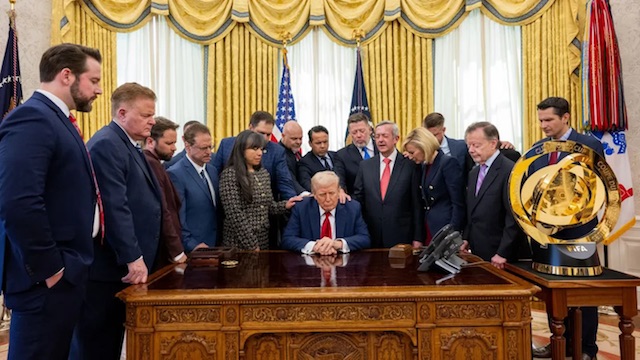
I saw this a few days ago, the prayer session in the Oval Office, and asked myself: how is this different from the religious crazies in Tehran?

Pentagon Officials Saying Iran War ‘God’s Divine Plan’ (Cradle)

Dozens of US Democratic lawmakers have called for an investigation into allegations that military commanders are portraying the war on Iran as part of biblical prophecy, according to reporting by Military.com, citing complaints from service members and a letter sent to the Department of War inspector general on 6 March. The request follows hundreds of reports that officers told troops the campaign against Iran is “divinely ordained” and that President Donald Trump has been “anointed by Jesus.” Lawmakers warned that invoking religious prophecy to justify military operations could violate constitutional protections and War Department rules requiring religious neutrality.


The controversy began after an anonymous non-commissioned officer contacted the Military Religious Freedom Foundation (MRFF) on behalf of several soldiers in a unit stationed outside the Iran combat zone. The individual wrote that a commander urged personnel to view the war as “all part of God’s divine plan,” while citing passages from the Book of Revelation. According to the complaint, the officer told troops that “President Trump has been anointed by Jesus to light the signal fire in Iran to cause Armageddon and mark his return to Earth.” MRFF founder Mikey Weinstein told Military.com that the organization logged more than 200 similar complaints between Saturday and Tuesday afternoon, with reports coming from personnel stationed at 50 military installations across all branches of the US armed forces.

In a letter sent to Inspector General Platte B. Moring III, members of the Congressional Freethought Caucus and other lawmakers warned that “justifying a war based on interpretations of biblical prophecies” and telling troops they are risking their lives to advance a religious vision raises serious constitutional concerns. The lawmakers also asked investigators to determine whether statements by War Secretary Pete Hegseth or other officials have contributed to the spread of biblical rhetoric within military ranks, warning that such public remarks could promote similar messaging in operational briefings. Lawmakers asked investigators to determine if troops who reported the issue faced retaliation and whether additional safeguards are necessary to maintain religious neutrality in the military chain of command.

Independent journalist Jonathan Larsen initially reported over a hundred complaints from soldiers to the MRFF, claiming that commanders are describing the Iran war as divinely ordained and connected to biblical prophecy. One non-commissioned officer said the rhetoric was “so toxic and over the line” that it shocked troops and “destroy[s] morale and unit cohesion.” Weinstein warned the reports show commanders treating the war as “biblically sanctioned” and linked to the approaching “End Times,” while noting similar religious rhetoric has appeared in remarks by US political figures discussing West Asia.
Read more …

“This is precisely why we need to cut off the head of the snake in Iran, because they do have terrorist proxies in dozens of countries..”

Is Iran’s Regime Trying to Trigger Sleeper Cells in the USA? (Catherine Salgado)

A new report claims that the United States has intercepted communications from the Iranian regime attempting to activate terrorist sleeper cells within the United States. We have to take anything ABC News reports with a grain, or perhaps a shaker, of salt, but its report that the Iranian regime is hoping its terrorist proxies around the world are going to rise up and help it as they have been doing for so many years would almost be predictable rather than surprising. This is precisely why we need to cut off the head of the snake in Iran, because they do have terrorist proxies in dozens of countries. Fortunately, if there was such an encrypted message, the United States has intercepted it and is aware.


We know for a fact that tens of thousands of terrorists came into the United States under the Biden administration, including jihadis from Iranian-backed Hamas and Hezbollah. Almost as soon as the United States and Israel launched Operation Epic Fury, an immigrant from Senegal wearing a sweatshirt that said “property of Allah” and who had an Iranian flag and a Quran, murdered three young people in Austin, Texas. And last week, two Muslims with ISIS sympathies attempted to attack a crowd of New York City protesters with improvised explosive devices. The Islamic Iranian regime has built up a massive international network, and even many terrorists not directly connected to it are in sympathy with it.

But as for the new report from ABC News, it claimed the following: “The U.S. has intercepted encrypted communications believed to have originated in Iran that may serve as “an operational trigger” for “sleeper assets” outside the country, according to a federal government alert sent to law enforcement agencies. The alert, reviewed by ABC News, cites “preliminary signals analysis” of a transmission “likely of Iranian origin” that was relayed across multiple countries shortly after the death of Ayatollah Ali Khamenei. Khamenei, the supreme leader of Iran, was killed in a U.S.-Israeli attack on Feb. 28.

The transmission was encoded, the outlet added, and was supposedly going to “clandestine recipients” who would know how to decipher it. Such messages do not require the internet to reach “covert operatives or sleeper assets.”The federal government alert cautiously predicted that the encrypted message could “be intended to activate or provide instructions to prepositioned sleeper assets operating outside the originating country.”

Read more …

“..The charges include providing material support to a terrorist organization and using a weapon of mass destruction.”

Bondi Charges Muslim Terrorists Who Tried to Bomb NYC Protest (Sarah Anderson)

In case you missed it, on Saturday, March 7, an anti-Islam protest gathered outside Gracie Mansion — the official residence of New York City Mayor Zohran Mamdani — when two homemade improvised explosive devices (IEDs) were thrown toward the protesters. The devices contained triacetone triperoxide or TATP, a volatile homemade explosive often called “mother of Satan,” as well as nuts, bolts, and screws. They were ignited but failed to fully detonate, creating smoke and chaos. Thankfully, no one was injured. A third device was later found near a vehicle the alleged terrorists drove, sparking evacuations at nearby apartment buildings.


The suspects are 18-year-old Emir Balat and 19-year-old Ibrahim Kayumi, both of whom are from Pennsylvania. They were arrested shortly after the incident. Both the New York City Police Department (NYPD) and FBI’s Joint Terrorism Task Force called it “ISIS-inspired terrorism.” According to Balat’s statement to law enforcement, he wanted to carry out an attack that was bigger than the Boston Marathon bombing. Here’s more from the official statement: =In the NYPD vehicle en route to the NYPD precinct, BALAT, without being questioned by the NYPD officers transporting him, made the following spontaneous utterances, in part and as captured on the transporting NYPD officers’ body-worn camera footage:

[..] ‘this isn’t a religion that just stands when people talk about the blessed name of the prophet… We take action! We take action!’; and “‘I didn’t do it someone else will come and do it.’ After arriving at the precinct and being advised of, and waiving, his Miranda rights, BALAT requested a piece of paper and, after being given a paper and pen, wrote the following: ‘All praise is due to Allah lord of all worlds! I pledge my allegience [sic] to the Islamic State. Die in your rage yu [sic] kuffar! Emir B.’ Based on my training and experience, I know that “kuffar” is an Arabic term that refers to ‘non-believers’ or ‘infidels,’ and that ‘Die in your rage’ is a slogan used by ISIS and based on a verse in the Quran.

Law enforcement officers later asked BALAT if he was familiar with the Boston Marathon bombing, and if that was what BALAT had hoped to accomplish. BALAT responded: ‘No, even bigger. It was only three deaths.’ According to the New York Post, “[Balat] defiantly flashed an ISIS salute as he was led away in shackles during his perp walk. Wearing a black t-shirt and beige pants, Balat made the gesture before one of the officers detaining him slapped his hand down. Balat, whose parents are reportedly from Turkey but who became naturalized citizens in 2017, was arrested Saturday along with 19-year-old Ibrahim Kayumi after a homemade ‘Mother of Satan’ bomb was allegedly thrown at protesters outside New York Mayor Zohran Mamdani’s Upper East Side residence.”

Read more …

US, Britain and now Italy?

Meloni Slams Italian Judges For Blocking Expulsion of Foreign Criminals (RMX)

Italian Prime Minister Giorgia Meloni has sharply criticized judicial decisions blocking the detention of migrants transferred to Albania, citing the case of a Moroccan rapist with a long criminal record whom authorities say they cannot detain or deport after he applied for international protection. Speaking to RTL 102.5, Meloni said some court rulings preventing the continued detention of migrants transferred to Italian processing centers in Albania were “surreal” and undermined public safety. “I also wonder where the feminists are in the face of these events,” Meloni said during the interview, referring to the case of one of the migrants, Moroccan national Fathallah Ouardi, who had been transferred to Albania but was later returned to Italy after judges refused to validate his detention.


Meloni said the man had a lengthy criminal record. “The record of one of these migrants includes convictions for drug dealing, resisting a public official, conspiracy to commit sexual assault, and gang rape,” she said, as cited by Secolo d’Italia. According to the prime minister, the court rejected the detention order after the migrant applied for international protection. “This is someone who entered Italy illegally, started dealing drugs, and gang-raped a woman — we can’t detain him, we can’t send him to Albania, we can’t repatriate him, and we’re almost forced to grant him international protection,” she said, adding that such decisions raise serious questions about the protection of victims and public confidence in the justice system.

“How can we guarantee the safety of citizens like this?” she asked. “These decisions are surreal; they affect not the government’s work but citizens’ rights, first and foremost, the right to safety.”m“What trust can a woman who has been gang-raped have in the system if her rapist can’t even be deported?” she added. “I also wonder where the feminists of ‘Non una di meno’ are on these issues.”The Italian leader also defended her government’s migration policies, including the controversial use of offshore migrant processing centers in Albania. “I am determined to do what the citizens have asked me to do: a tough policy on irregular immigration, including with new tools like the centers in Albania,” Meloni said.

“Even though some are trying everything they can to prevent it, I am determined on this and am willing to work three times, four times, ten times harder if necessary.”Remix News provided reporting this week on another Moroccan national accused of raping a 26-year-old woman in Bottanuco in what was a sustained attack over the course of an evening. The suspect was born in 1987 and has accumulated a series of criminal charges and convictions in Italy over more than a decade. Authorities say he was investigated for drug trafficking between 2014 and 2015 and charged with illegal immigration in 2015. Records also list illegal entry and residence in Trentino in 2016 and theft in 2017.

Court documents further list convictions including resisting a public official and drug trafficking in 2014, as well as participation in sexual assault and gang sexual assault in 2018. A further drug trafficking conviction was recorded in 2025.

Read more …

“..the Hungarian authorities see things very differently. Their customs agency says that the transport is suspected of being part of a money laundering operation. They also maintain that among those detained was a former high-ranking general of Ukraine’s combined intelligence service and secret police, the SBU. ”

In A Sane World, Zelensky’s Mafia Regime Would Be Isolated (Amar)

Politics can be very rough. Yet, usually, as long as they don’t collapse into war, at least in public a certain minimum pretense of decorum is maintained. Especially by governments vitally dependent on others’ support. Ukraine under the rule of never-reelected Vladimir Zelensky, however, has anything but a normal political system.


It is in this context that Vladimir Zelensky’s latest folly needs to be seen: Zelensky has threatened Hungary’s leader Viktor Orban, telling him he will hand the prime minister’s address over to “our guys” in the military so that they could “communicate with him in their own language.” Obviously, this is not even a hint of violence anymore, but the equivalent of a mafia godfather placing a dead horse’s head on your pillow or leaving a bullet on your doormat. The reason: Orban is exercising his right within the EU not to agree to yet another insane “loan” – the kind that will never be paid back, at least not by anyone in Ukraine – for Zelensky’s astronomically corrupt regime.

Orban is right about that “loan,” of course. Yet that isn’t even the core of this particular scandal. That is the fact that Zelensky feels he can issue a direct, mafia-style threat against the leader of an EU member state. Regarding Zelensky, though, there is no surprise here. He has been at the top of a regime that combines a bizarre sense of entitlement, shameless demands, outrageously greedy corruption, and a repulsive record of sabotage and assassination operations, very much even against its Western backers. Ask Germans who still have a spine about the Nord Stream attack, for instance. Or, if you can’t find a German with a spine, ask Viktor Orban, who has correctly called it “state terrorism.”

What needs more emphasis than Zelensky’s depraved sense of impunity is that he has reason to feel that way. It is true that, in this instance, the EU Commission has publicly protested against his barbaric behavior. But let’s be realistic, that is a formality, nothing but a gentle slap on the wrist for appearances’ sake. What really matters is that first the West as a whole and recently the EU “elites” on their own have spent years emboldening Zelensky and his regime by feeding Ukraine’s corruption, accepting and spreading Kiev’s lies, and suppressing any criticism of this policy as “Russian talking points.”

Indeed, in the EU, Hungary and Slovakia as well have been harassed and treated as pariahs for their resistance to this coddling of the Zelensky regime. It is all the more remarkable that both countries have principally stuck to their guns, even while having to concede ground repeatedly.

Thus, it may be a coincidence, but it is a remarkable fact that just one day after Zelensky’s open mafia boss fit, Hungary hit his ultra-sleazy regime where it hurts by striking at its money: In a certainly deliberately spectacular operation – balaklavas, body armor and assault rifles included, and all carefully caught on camera – Hungarian anti-terrorism forces stopped a Ukrainian currency and gold shipment that was crossing their country in two armored transporters. Arresting and temporarily detaining seven Ukrainians, the Hungarian officials found $40 million, €35 million, and about nine kilograms of gold. While the detained have been released and are back in Ukraine, the money and gold as well as the transporters have stayed in Hungary.

Kiev has called the Hungarian measures “state terrorism,” which is as absurd as Orban’s assessment of the Nord Stream attack is compelling. The Ukrainian government and Oshchad Bank, that had organized the transport, claim that everything about it was perfectly legal, but the Hungarian authorities see things very differently. Their customs agency says that the transport is suspected of being part of a money laundering operation. They also maintain that among those detained was a former high-ranking general of Ukraine’s combined intelligence service and secret police, the SBU. Ukrainian journalists, in turn, have even named the general as Genady Kuznetsov, the former head of Kiev’s Center for Anti-Terrorist Special Operations.

Budapest’s customs agency has also made public some intriguing figures: In the first two months of this year, the total of currency and gold shipped to Ukraine via Hungary has already amounted to over $900 million dollars, more than €420 million, and 146 kilograms of gold. Clearly, the amounts finally stopped and, it seems, seized were only a small part of a much larger, ongoing flow.According to Hungarian Foreign Minister Peter Szijjarto, these funds may be linked to the “mafia,” here obviously meaning not just organized crime in Ukraine but Zelensky’s circles themselves, which may be one and the same thing, of course. Also, Szijjarto is a smart man; he may well have sent an implied message to Kiev as well: If you talk like the mafia, we will treat you as mafia. Rest of Europe: Watch and learn.

Read more …

““Since January, a total of $900 million and €420 million in cash has been transported through Hungary, and 146 kilograms of gold bars..”

Hungary Detains Ukrainians Transporting 10s Of Millions In Cash, Gold (Brooke)

Hungarian authorities have detained seven Ukrainian citizens and seized tens of millions of dollars, euros, and gold that were being transported through the country in armored vehicles, triggering the latest diplomatic dispute between Budapest and Kyiv. Hungary’s National Tax and Customs Administration (NAV) confirmed on Friday that criminal proceedings had been launched on suspicion of money laundering following an operation carried out on March 5. Authorities intercepted two armored cash-transport vehicles traveling through Hungary from Austria toward Ukraine. According to the Hungarian authorities, the vehicles were carrying approximately $40 million, €35 million in cash, and 9 kilograms of gold.


Hungarian Foreign Minister Péter Szijjártó said the case raised serious questions about the movement of large quantities of physical cash through the country. “Since January, a total of $900 million and €420 million in cash has been transported through Hungary, and 146 kilograms of gold bars have also been transported through the country,” he said, as cited by Magyar Hírlap.“We have a number of serious questions about this. First of all, this is a huge amount of cash, and we wonder why Ukrainians need to transport such a large amount of cash. If it is true that this is a transaction between banks, then the question rightly arises as to why the banks do not settle this between themselves by bank transfer, why it is necessary to transport such a large amount of cash, and why it has to be transported through Hungary,” Szijjártó added.

“These questions arise mainly because these cash shipments are accompanied by people who have clear ties to Ukrainian secret services.” Hungarian Prime Minister Viktor Orbán’s political director, Balázs Orbán, also commented on the case, raising concerns about the purpose of the funds. “Hundreds of millions in cash and gold moving through Hungary toward Ukraine — escorted by people linked to Ukrainian intelligence. Armored vehicles, suitcases full of money, staggering sums,” he wrote on X. “Whose money is this? What was it meant to finance? Who benefits from it? And why must such enormous amounts of cash travel across our country instead of being transferred through normal banking channels?”

He added that authorities would conduct a full investigation and argued that the Hungarian public had a right to know where such funds were coming from and what they were intended for. Ukraine, however, has strongly rejected the allegations and accused Hungary of illegally detaining its citizens and confiscating bank property. Ukrainian Foreign Minister Andrii Sybiha said the seven individuals were employees of the state-owned Oschadbank who were conducting a routine cash transfer between financial institutions. “Today in Budapest, Hungarian authorities took seven Ukrainian citizens hostage. The reasons are still unknown, as well as their current well-being, or the possibility of contacting them,” Sybiha said in a social media post cited by Ukrinform.

According to Kyiv, the vehicles were transporting currency and precious metals between Raiffeisen Bank Austria and Oschadbank Ukraine as part of standard banking operations. Sybiha accused Hungary of acting unlawfully. “If this is the ‘force’ announced earlier today by Mr. Orban, then this is the force of a criminal gang. This is state terrorism and racketeering,” he said. Oschadbank also confirmed that two of its armored vehicles and a seven-member transport team had been detained in Hungary while carrying out what it described as a routine transfer of funds and banking metals. “The value of the assets in the seized vehicles amounted to $40 million, EUR 35 million, and 9 kg of gold,” the bank said in a statement, adding that the transport had been documented in accordance with international banking and customs procedures.

According to GPS tracking data cited by the bank, the vehicles were last located in central Budapest near one of Hungary’s law enforcement agencies. Ukrainian officials said the whereabouts of the bank employees were not immediately known. Ukraine’s foreign ministry has also issued a warning advising Ukrainian citizens to avoid traveling through Hungary following what it described as the “kidnapping” of the bank employees and seizure of state bank assets. The incident marks the latest escalation in already strained relations between the two countries.

On Thursday, Ukrainian President Volodymyr Zelensky sparked outrage among European nationalist politicians by suggesting that Hungarian Prime Minister Viktor Orbán’s address could be given to Ukrainian armed forces so they could “speak to him in their own language.” Hungarian officials interpreted the remark as a threat directed at Orbán amid ongoing disputes over Hungary’s opposition to a proposed €90 billion EU loan package for Ukraine.

Read more …

Good battle.

Vance Vs. Rubio? Trump’s Pals Have a Preference. (Sarah Anderson)

It feels like we’ve been talking about who the 2028 GOP nominee will be from the moment Donald Trump was inaugurated in 2025. Even Trump himself has thrown his opinions out in multiple interviews. Ultimately, it seems to come down to either Vice President JD Vance or Secretary of State Marco Rubio, possibly even a combination of the two. Vance feels like the natural MAGA heir, and he performs best in polls by a mile. He’s extremely intelligent, he’s a veteran, and he has major relatable Middle America appeal. His story is the ultimate proof that you can pull yourself out of any bad situation, and he’s been a great advocate for people of faith and family values. But he’s also young, and some say he needs more experience under his belt, plus some of his ties to certain right-wing influencers come across as unappealing to certain voters.


Rubio definitely has the experience, and his star has risen in his current position as secretary of State, National Security advisor, and pretty much head of everything. He’s proven his competence on foreign policy 100 times over in just one year, he’s made the case for American exceptionalism most eloquently, and he’s the subject of what may be the most popular meme on the internet — I know that sounds silly, but it matters. He also appeals to Hispanic voters, which the GOP needs desperately, and could pull in some moderates and independents.

But he doesn’t poll nearly as well — though he’s gaining some momentum in 2026 after Venezuela and Iran — and many voters still focus on his past and file him under labels like “neocon,” “establishment,” and “RINO.” Based on his 2016 presidential run, they don’t think he’d be a good candidate. According to NBC, Trump has been polling his pals and donors at Mar-a-Lago dinners in recent weeks, and they have pretty strong opinions about who they want to see as the nominee. On the night before the conflict in Iran began, Trump was actually hosting a dinner at his home base in Florida “with a group of roughly 25 GOP donors, including New England Patriots owner Robert Kraft and billionaire Georgia gubernatorial candidate Rick Jackson.”

Trump asked the crowd who he should support in 2028, and according to someone who was there, the crowd shouted “Rubio” and cheered almost unanimously. However, another person in attendance told NBC that the room was more evenly split. (And these are not named sources, so, as usual, take that with a grain of salt…) NBC also reports that another former Trump official said that you have to remember that Mar-a-Lago crowd is not all that representative of the United States. The Mar-a-Lago donor crew are not JD people. He did not get picked [to be vice president] because of the Mar-a-Lago crowd. If you remember, that crowd was lobbying the president to pick Marco.

White House spokesman Steven Cheung responded and said this isn’t the administration’s current priority: “The president has assembled an all-star team that has achieved unprecedented success in just over one year. No amount of crazed media speculation about Vice President Vance and Secretary Rubio will deter this Administration’s mission of fighting for the American people.” A lot of people have made a big fuss over the fact that JD Vance was in Washington, D.C. when we struck Iran, while Trump was with Rubio in Florida, believing it was proof of some sort of favoritism. But a White House spokesperson said this the reality is that it was a matter of security — it’s probably best not to have the president and vice president in the same place when you’re militarily going after one of the country’s biggest enemies.

Vance hasn’t announced whether or not he plans to run, but I can’t imagine he won’t. Rubio has said that if Vance does run, he’ll step aside and support him. Many have floated a Vance-Rubio ticket. My personal opinion on that is that Rubio is much more useful where he is — being the vice president almost feels like a step down. Then again, maybe he can make history again and be the vice president and secretary of State and National Security advisor and head of everything else.

Read more …

Because she’s conservative.

Why the Left Suddenly Hates Gwen Stefani (Queen)

At the tail end of my college years, a band from Orange County, Calif., burst onto the national scene. MTV News called this group a “ska-punk band” — it seemed like a lot of new bands in that era received that moniker — but No Doubt’s music was a true fusion of ska (along with rocksteady and reggae) and rock with more of a punk edge than a punch sound and a sparkling pop melodic sensibility. But what set No Doubt apart was its charismatic frontwoman, Gwen Stefani. She had a unique combination of that aforementioned punk edge and SoCal glamor. Add her boundless energy and truly unique voice into the mix, and a rockstar was born. “Just a Girl” was a fun hit, but No Doubt won me over with “Spiderwebs.” And then “Don’t Speak” launched them into the stratosphere; somebody (I don’t remember who) said several years later that if the record label had released a physical single for “Don’t Speak,” it would’ve become the biggest number one hit of all time.


No Doubt had a few more years of success, and Stefani began a massively successful solo career. Additionally, she married Gavin Rossdale of the band Bush and had three kids. When they divorced, she married country singer Blake Shelton. Side note: After she divorced Rossdale, she was supposed to marry me. I guess she didn’t get the memo.In recent years, Stefani has been more out front about her Catholic faith. She has been a practicing Catholic for years, but she currently partners with Hallow, a Catholic prayer and Bible study app that also markets to non-Catholic Christians. She and Shelton also lead traditional lives, which is unusual for a pair of longtime professional musicians.

Stefani’s openly faithful life and loyalty to her marriage have apparently made her a target of leftist ire. The Telegraph, the center-right (or should I say centre-right?) UK news outlet, published a feature over the weekend about how Stefani has become “an enemy of the left.” Of course, part of this stems from Stefani’s faith and her partnership with Hallow, which is — GASP! — pro-life. The Telegraph’s Poppie Platt writes of how Stefani is wadding panties everywhere: Stefani recently found herself in hot water over her decision to partner with the popular American “prayer and Bible study” app Hallow, which is anti-abortion and counts major Trump donor – and PayPal founder – Peter Thiel among its investors. Its other prominent celebrity backers include two of Hollywood’s most famous Christians, Mark Wahlberg and Chris Pratt.

After Stefani shared a video encouraging her fans to download the app and join its Lent prayer challenge – “Hey everyone, I just got my ashes, and I’m ready for Lent… Check it out. God bless,” she gushed – her more liberally minded followers went into meltdown. “This ‘Maga makeover’ thing is really gross,” one wrote on Instagram, while another said Stefani’s “pandering to the racist rednecks in this country is really disappointing to see.”Platt points out that Stefani has engaged in what the left would consider “cultural appropriation” for years: hip-hop affectations, nods to Latin culture, the Harajuku girls. Yet Stefani has never uttered the first mealy-mouthed apology for any of it.

And while Stefani hasn’t made any overt political statements that I can find, she did share an interview that Tucker Carlson did before he went full antisemitic Qatari stooge with The Chosen star Jonathan Roumie, another devoted Catholic. That was a problem for leftist pearl clutchers. Stefani has traded the Los Angeles-area life for something more settled with Shelton. My friend and colleague Sarah Anderson sent me a video Shelton made of the garden that he and Stefani are planting. He refers to her as “my wife — her name’s Gwen.” Her desire for a more traditional life is nothing new. After all, she wrote No Doubt’s single “Simple Kind of Life,” in which she contrasted settling down with a family against the nomadic life of a musician. But living that simple kind of life in reality is too much for leftists.

Platt writes: In 2024, she released the country-influenced album Bouquet, filled with songs that swapped the feminist-friendly, girl-boss messaging No Doubt was famous for – on angsty hits such as Just A Girl – for odes to marriage and settling down; it was duly slammed by critics. The fact it was recorded in Nashville with help from her country star husband Shelton only added further fuel to the fire for her liberal former fans, who felt like she had replaced independence with subservience. In response to the fuss over the Hallow advert, one X user said: “She’s married to a God-loving Southern country singer, what do you expect?”

Here’s what it all boils down to: the left despises normalcy. The kind of people who faithfully worship, plant gardens, and live quiet lives with spouses and kids are the kind of people leftists hate. Stefani is part of this segment of Americans who become targets of left-wing vitriol — whether she’s actually MAGA or not. And that tells you far more about the left than it ever tells you about Stefani. If you’ve noticed that faith, family, and living a normal life increasingly make you a target of the cultural elites, you’re not imagining it. At PJ Media, we’re committed to calling that out and defending the values that built this country.
Read more …


https://twitter.com/NightSkyNow/status/2030799359621890279?s=20


Support the Automatic Earth in wartime with Paypal, Bitcoin and Patreon.



Aug 132023
 
 August 13, 2023  Posted by at 9:25 am Finance Tagged with: , , , , , , , , , ,  48 Responses »


Vincent van Gogh Beach at Scheveningen in Stormy Weather 1882


Comer Ready To Subpoena Bidens’ Phone, Bank Records, Grant Immunity (JTN)
Prosecutors Want To Interview Joe Biden In Classified Memos Case (JTN)
Comer, Jordan Slam Hunter Biden Special Counsel ‘Coverup’ (ZH)
Now THAT Is Ridiculous (Denninger)
Appeals Court Judges Compare Biden Social Media Pressure To Mafia (JTN)
Congress Probing FBI Collection Of J6 Phone Location Data (JTN)
F-16 Training For Ukrainian Pilots Barely Getting Off the Runway (Sp.)
Russia Committed To Principle Of Inadmissibility Of Nuclear War (TASS)
Ray McGovern Has Never Been More Scared of Nuclear Catastrophe (SP)
US-Led NATO Drowns Ukraine in a Bloodbath (SCF)
US and NATO Arms Industries Hit Record $400 Billion in Sales (SCF)
Italy Launches $550 Million Airbnb Case (RT)


Greenwald


Devine


Schweizer


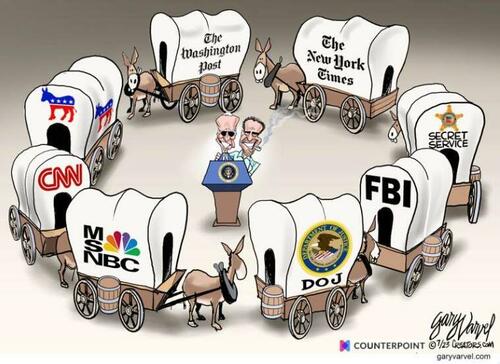
How much longer can the wagons protect them?


Event 201


“We’re getting closer every day to showing that Joe Biden was the ringleader in this, not Hunter Biden..”

Comer Ready To Subpoena Bidens’ Phone, Bank Records, Grant Immunity (JTN)

House Oversight Committee Chairman James Comer on Friday night pointedly dismissed the appointment of a special counsel in the Hunter Biden criminal probe as “another maneuver… to obstruct” Congress and vowed to escalate his investigation by subpoenaing Hunter and Joe Biden’s phone and bank records and offering witnesses immunity. “We’re getting closer every day to showing that Joe Biden was the ringleader in this, not Hunter Biden,” Comer said in an exclusive interview with the “Just the News, No Noise” television show just hours after Attorney General Merrick Garland shocked Washington by announcing that he was upgrading Delaware U.S. Attorney David Weiss to a special counsel after four years of investigating the Biden family finances.

Comer dismissed Garland’s decision as ineffective, noting Weiss had years to bring serious charges and instead managed to construct a plea deal that spared Hunter Biden prison for tax evasion and gun charges that even the trial judge could not accept. “It’s another maneuver by the Justice Department to obstruct our investigation. I find it odd that, the day after I announced that we had put together a case that would win in court to subpoena Joe Biden’s personal bank records, then lo and behold, Merrick Garland strikes again,” Comer said.

“I assumed he would try to indict Trump or something. But no, he appoints a special counsel and he appoint the same person who had supposedly been investigating Hunter Biden for years, who let the statute of limitations expire on all of his obvious tax crimes, who tried to negotiate a sweetheart plea deal that led him off scot free. And less than two weeks later, after a judge rejects that sweetheart plea deal, Merrick Garland appointed special counsel for the sole purpose to obstruct our credible, effective oversight House investigation of Biden corruption.” Comer said he is now prepared to subpoena the credit card and bank records of the president and his son as well as their phone records to check witness allegations that Joe Biden got financial benefit from Hunter Biden’s clients and talked and met with them at various times.

“We’re at the point to where we put together a case where we have emails, we have text messages, we have pictures, we have bank records. Now we have sworn testimony from associates like Devon Archer. We are ready now to be able to subpoena the personal bank records of the Bidens,” he said. “What we’ve got now are their shady shell company. Now, we need the personal records,” he said. “Because when we show… that chart that shows China and Romania and Russia and the arrows go into shell companies and into the Biden’s family, we think there may be another arrow beyond the Biden family. And that would go to Joe Biden himself. And that’s what people have told us. That’s what the emails suggest. And that’s what we’re trying to determine now. And that’s where our investigation is headed.”

[..] “We’re going to continue to exercise our subpoena power. Hopefully, when we move to impeachment inquiry, that’ll be able to give us tools like granting immunity,” he explained. “If we could grant immunity. I think people like Devon Archer would have would have said a whole lot more. I think people like Eric Sherwood would tell a lot of things that that the Bidens have done that we know they’ve done, that everyone in America knows they’ve done.”

Read more …

Robert Hur? Almost forgot about him.

Prosecutors Want To Interview Joe Biden In Classified Memos Case (JTN)

Special Counsel Robert Hur wants to interview Joe Biden in his classified memos investigation, and the president’s attorneys have been in negotiations for about a month. Hur was appointed last January, two months after special counsel Jack Smith was appointed to investigate former President Donald Trump’s handling of classified documents, according to NBC News. The issues being negotiated include the time and place of the interview, as well as the scope of the questions. The reporting on this suggests that the investigation has a way to go before wrapping up, but “an interview with the person at the center of an investigation typically takes place near the end of the process,” according to NBC.


While most of the classified documents found starting in November of last year were related to Biden’s time as vice president, some went as far back as when he was a U.S. senator from Delaware. They were found in his office in Washington at the Penn Biden Center, at a second office of the Penn Biden Center in the Chinatown area of Washington, D.C. and at his home in Wilmington, Del. Trump was indicted on 37 counts based on seven charges in June in his classified documents investigation. One such charge was for a violation of the Espionage Act. Based on current polling, both Trump and Biden are well ahead in their races to be the nominees of their respective parties, setting up a 2024 rematch of the 2020 election for president.

Read more …

When the Weiss-negotiated Hunter plea deal was thrown out, Garland made Weiss a special counsel. What links the two moves is that both are designed to keep all information under wraps.

Garland and Weiss must know this will not be accepted -it’s against the law-, but they entered it on Friday, so they have a whole weekend in which Weiss is able to manipulate even more files than in his previous position.

Paul SPERRY: “By suddenly acquiring special counsel status, Hill investigators say embattled prosecutor David Weiss can now avoid testifying next month before the House Judiciary Committee and face grilling over reports he helped obstruct a broader investigation into Hunter Biden..”

Jack Posobiec: “The appointment of Weiss as a ‘Special Counsel’ allows the Biden DOJ to keep the investigation open indefinitely and stall all House requests for information to coverup the Biden family corruption ring..”

Comer, Jordan Slam Hunter Biden Special Counsel ‘Coverup’ (ZH)

The Chairman of the House Committee on Oversight and Accountability, James Comer (R-KY) said in a Friday statement that the announcement of a special counsel in the Hunter Biden investigation is a DOJ “coverup.” “This move by Attorney General Garland is part of the Justice Department’s efforts to attempt a Biden family coverup in light of the House Oversight Committee’s mounting evidence of President Joe Biden’s role in his family’s schemes selling ‘the brand’ for millions of dollars to foreign nationals,” Comer said in a lengthy statement shortly after Attorney General Merrick Garland announced the appointment of US Attorney David Weiss as special counsel, the Daily Caller reports.

“The Justice Department’s misconduct and politicization in the Biden criminal investigation already allowed the statute of limitations to run with respect to egregious felonies committed by Hunter Biden. Justice Department officials refused to follow evidence that could have led to Joe Biden, tipped off the Biden transition team and Hunter Biden’s lawyers about planned interviews and searches, and attempted to sneakily place Hunter Biden on the path to a sweetheart plea deal,” the statement continues.

“Let’s be clear what today’s move is really about. The Biden Justice Department is trying to stonewall congressional oversight as we have presented evidence to the American people about the Biden family’s corruption. The House Oversight Committee will continue to follow the Biden family’s money trail and interview witnesses to determine whether foreign actors targeted the Bidens, President Biden is compromised and corrupt, and our national security is threatened. We will also continue to work with the House Committees on Judiciary and Ways and Means to root out misconduct at the Justice Department and hold bad actors accountable for weaponizing law enforcement powers,” Comer continued.

House Judiciary Committee Jim Jordan (R-OH) conveyed similar sentiments, telling the Caller: “David Weiss can’t be trusted and this is just a new way to whitewash the Biden family’s corruption. Weiss has already signed off on a sweetheart plea deal that was so awful and unfair that a federal judge rejected it. We will continue to pursue facts brought to light by brave whistleblowers as well as Weiss’s inconsistent statements to Congress.” According to Garland, “The appointment of Mr. Weiss reinforces for the American people the department’s commitment to both independence and accountability in particularly sensitive matters,” adding “I am confident that Mr. Weiss will carry out his responsibility in an even-handed and urgent manner, and in accordance with the highest traditions of this department.” We’re sure he’s quite confident.

Read more …

Denninger’s not the only one who noticed this bit: “Durham’s appointment was invalid for the same reason — remember that? Where was the screaming then?”

NOTE: Durham’s probe also took 5 years or so. And what was the result?

Now THAT Is Ridiculous (Denninger)

There is a point that the in-your-face fraud reaches where one must that there is no longer a functional law enforcement capacity within a part of the government. In this case that’s the entire Federal government, as this is the DOJ itself and the AG of the nation, Garland: “Attorney General Merrick Garland on Friday appointed U.S. Attorney David Weiss a special counsel in the Hunter Biden probe, as well as any other matters that arose or may arise from that investigation.” Weiss is the US Attorney who presented a negotiated plea agreement to the judge over Hunter’s conduct that the judge rejected as it appeared to have included terms intended to mislead both the court and the justice system generally. She sent that back, correctly flagging two provisions including an apparent undisclosed immunity deal that was out-of-scope of the charges that were negotiated.

This is flat-out improper and what’s worse is that it appeared both Weiss and Biden’s defense counsel colluded to place said terms in an addendum that was not disclosed in advance of the hearing to the judge which was clearly intended to keep her from knowing about it until, they hoped, she’s signed off on it. Further there are allegations that Biden’s counsel attempted to tamper with the evidentiary chain by trying to represent themselves as being related to counsel for parties that filed other briefs and have them either sealed or stricken from the record entirely. There was quite a tap-dance around that (as its a crazy-level breach of ethics, a violation of the duties of an officer of the court, as all counsel are, and also arguably criminal fraudulent misrepresentation) but as far as I know there hasn’t (yet anyway) been any serious consequences — although the judge was clearly inclined to hammer the responsible parties for very good cause.

That alone is enough to drag Garland out of office by his hair. But there’s more: The appointment appears to be facially-illegal and Garland knows damn well that it is. “(a) An individual named as Special Counsel shall be a lawyer with a reputation for integrity and impartial decision making, and with appropriate experience to ensure both that the investigation will be conducted ably, expeditiously and thoroughly, and that investigative and prosecutorial decisions will be supported by an informed understanding of the criminal law and Department of Justice policies. The Special Counsel shall be selected from outside the United States Government.”

Weiss cannot be appointed to this position as he is a sitting US Attorney! It is explicitly unlawful under the CFRs for Garland to appoint him — or any other sitting US Attorney. By definition a “Special Counsel” must not be a person inside the US Government; that’s the entire point of a Special Counsel! This act by Garland is not only impeachable it is void as Weiss is not qualified and thus the appointment is an open, public, in-your-face fraud. Where does this leave us as Americans? Nowhere good — and at some point we, as Americans, are going to have to deal with this problem whether we like it or not. PS: BTW Durham’s appointment was invalid for the same reason — remember that? Where was the screaming then?

Read more …

“..this is a really nice social media platform you’ve got there, would be a shame if something happened to it..”

Appeals Court Judges Compare Biden Social Media Pressure To Mafia (JTN)

Fifth U.S. Circuit Court of Appeals Judge Jennifer Walker Elrod declared in court that the Biden administration’s efforts to persuade social media companies to remove, throttle and suppress purported misinformation on COVID-19, Hunter Biden’s laptop and elections reminded her of a mafia movie. That was just one of the most memorable examples of the frosty reception Justice Department Civil Division lawyer Daniel Tenny received Thursday from the three-judge panel considering whether to lift or modify last month’s ban on several forms of contact between the feds and companies — currently stayed by the 5th Circuit — as the First Amendment lawsuit led by Missouri and Louisiana proceeds. The back-and-forth at Thursday’s hearing resembled that between 6th Circuit judges and DOJ’s lawyer at a June hearing in a related social media censorship lawsuit against federal officials by users of X, formerly known as Twitter.

Both panels were appointed by Republican presidents. Echoing the injunction issued by U.S. District Judge Terry Doughty, the 5th Circuit judges repeatedly cited specific conversations from the factual record that suggest social media companies feared legal consequences for not complying with White House and agency requests to censor or diminish the reach of websites or social media postings of which the Biden administration disapproved. When Tenny claimed the injunction’s wording was so broad and vague it could ban the government from alerting the public about “untrue statements” about a natural disaster, Judge Don Willett countered that documented private conversations were the issue. Federal officials appeared to practice “fairly unsubtle strong-arming” and make “not-so-veiled threats” in the vein of “this is a really nice social media platform you’ve got there, would be a shame if something happened to it,” Willett said.

Tenny, upon hearing what the judges appeared to be interpreting as coercive pressure, tried to soft pedal the severity of that pressure. “The government is generically going to be angry” when companies resist taking action, but the communications show officials and companies alternating between “friendly” and “testy” conversations, not specific orders to comply “or else.” Judge Elrod didn’t seem particularly convinced, telling Tenny that “Or else” isn’t required when the government and companies have a “very close working relationship” that resembles a supervisor addressing a subordinate. The “irate messages” actually show high-ranking officials badgering counterparts about why they hadn’t taken action against specific accounts as requested, Judge Elrod said: “It’s like ‘jump and how high.'”

Read more …

“..you can’t just have the government sweep up everything about you trying to find out if you did something wrong.”

Congress Probing FBI Collection Of J6 Phone Location Data (JTN)

The House Judiciary Committee on Thursday launched a broad inquiry into the FBI’s use of “geofence warrants” to sweep up large buckets of Americans cell phone location data, a relatively new tool that is raising questions about search and seizure powers that date all the way back to the country’s founding, The tactic came to prominence during the Jan. 6 riot investigation when it was revealed more than 5,000 American phone devices had location data gathered by the FBI in a digital dragnet designed to identify anyone who was in or near the U.S. Capitol that fateful day. That geofence warrant plus revelations that the FBI accepted bank records volunteered by a major bank without seeking a warrant or subpoena have trigged concerns of both liberals and conservatives of a modern-day end run around the 4th Amendment.

“The use of geofence warrants raises serious Constitutional concerns,” House Judiciary Committee Chairman James Jordan wrote Attorney General Merrick Garland in a letter Thursday announcing the congressional inquiry. “First, location history data is not an exact science as the geo-location data represents only a probable estimation of a device’s location within a given radius and margin of error. Second, a geofence warrant is inherently tied to a specific location—not a known suspect, user, account, or crime. “For that reason, among others, courts have wavered on whether searches pursuant to geofence warrants comply with the Fourth Amendment’s requirements of probable cause and particularity,” Jordan added.

In an interview with Just the News, Jordan said the geofence warrant inquiry was part of a larger effort to help Congress modernize civil liberty protections in an era of unprecedented digital surveillance and technological data gathering that also includes bank records and the Foreign Intelligence Surveillance Act that was abused during the Russia collusion scandal. “We know that regarding Jan. 6, a couple years ago that the FBI was looking to get your your phone data location, where you were in relation to the Capitol, were you around the Capitol,” Jordan told the John Solomon Reports podcast. “And it was just sort of this blanket approach No predicate to say you know Sally Smith, or John Jones was here. We have reasonable belief they did this. We’d like to know we want to double check that. Nothing like that. Just a blanket.

“And then you couple this with what we learned from a testimony from a whistleblower at the FBI, a few months back, where Bank of America just turned over their customers debit card and credit card purchases in the DC area around Jan. 6 2021. I mean, this is scary stuff,” he added. “It’s so contrary to the principles that our country was founded on. Like, you can’t just have the government sweep up everything about you trying to find out if you did something wrong. That’s not how our system works. “But it sure looks like that’s what’s happening in modern day America, particularly with this Biden administration.”

Jordan’s letter raised a second concern that geo-fence warrants may have been “weaponized for political ends” by the Justice Department, approved against conservatives and Trump protesters but not against liberal activists from the 2020 George Floyd riots. “Federal law enforcement’s interest in geofenced data appears selective,” he wrote. “For example, in 2020, Minnesota police sought a geofence warrant to investigate violent rioting in Minneapolis and the Bureau of Alcohol, Tobacco, Firearms and Explosives (ATF) used geofence warrants to investigate arson throughout Kenosha, Wisconsin. However, it seems that the FBI did not pursue geofenced data to investigate the violent crime occurring at federal facilities during a similar time frame. “In contrast, the FBI readily used geofencing at an unprecedented scope and scale as a part of its investigation and prosecution of the events of January 6, 2021,” he added.

Read more …

They need to learn English first.

F-16 Training For Ukrainian Pilots Barely Getting Off the Runway (Sp.)

Kiev might be clamoring for American-made F-16s amid its faltering counteroffensive, but the first Ukrainian pilots to undergo training on the fighter jets most likely will not be ready to fly them until next summer, according to a US report. A mere handful of six pilots will undergo the first round of instruction, with two other pilots picked as reserve candidates, according to cited senior Ukrainian government and military officials. However, this first group of pilots is not expected to wrap up training anytime soon, sources acknowledged to the outlet. The officials reportedly bemoaned delays by their Western patrons in implementing the instruction program. None of the previously touted “game-changing weapons” funneled from the West have made much impact on the catastrophically slow pace of Ukraine’s ground forces fighting in the ongoing NATO-Russia proxy war.

So begging for the multi-role US fighters to be added to the mix has become Ukrainian President Volodymyr Zelensky’s mantra of late. While Kiev may have banked on its pilots being ready to fly the single-engine craft, which debuted in the 1970s and has been updated repeatedly, by as early as September, that appears to have been wishful thinking. While sending Patriot missile system, NASAMS, HIMARS, Bradley fighting vehicles, Leopard II tanks, depleted uranium shells, and, more recently, cluster bombs, to Ukraine, President Joe Biden spent close to a year denying Ukrainian appeals for F-16s. He backtracked as the special military operation continued, saying in May that he would green light training Ukrainian pilots on US-made jets, and supported the transfer of the combat planes by other countries. Eleven NATO countries pledged to support the training, expected to primarily take place in Denmark, Romania, and the Netherlands.

After the start of training was pushed back several times, officials were now cited as saying the effort was only gradually getting off the ground. There had previously been reports that the training had hit a major snag due to the language barrier. Now, the outlet said that even though the selected Ukrainian pilots were already fluent in English, at least four months of special English lessons in Britain were required for them to grasp the terminology associated with the F-16s. To complicate matters further, the language instruction for pilots is to take place simultaneously with lessons for Ukraine’s ground staff – suggested as being less proficient in English. The reason for this was because Denmark had allegedly demanded that entire crews be sent together to train.

The language hurdle is believed to have pushed back the beginning of actual combat training, anticipated to take six months, as far as to January, sources said. As for the second batch of pilots, ostensibly of the same size, they might be nowhere near ready to fly F-16s until the end of next year. It was added that 20 more Ukrainian pilots were currently ready for English-language training. “This is called dragging it out,” a Ukrainian official was quoted as fuming. However, the sources revealed that they feared railing openly against their US and European “benefactors” lest they “appear ungrateful.”

Read more …

“Our opponents know these provisions perfectly well..”

Russia Committed To Principle Of Inadmissibility Of Nuclear War (TASS)

Russia is taking all necessary measures to guarantee national security but is firmly committed to the principle of the inadmissibility of a nuclear war, the Russian foreign ministry said on Friday, commenting on the decisions made by Russia, the United Kingdom and the United States to not target strategic nuclear missiles. “The leadership of our country is firmly committed to the principle of the inadmissibility of a nuclear war. We proceed from the fact that there can be no winner in such a war and that it must not be unleashed,” the ministry said. “Russia is taking all necessary measures to ensure its national security, territorial integrity and sovereignty. And it will continue to do so.” According to the ministry, preventing a potential act of aggression against Russia and its allies “is among its highest state priorities.”

The ministry noted that the situation in the sphere of international security and strategic stability is degrading and “discussions about the expediency of measures on not targeting strategic nuclear forces, which have been in place between Russia, the United Kingdom, and the United States since the early 1990s, have visibly invigorated.” “Calls are being heard to denounce the relevant agreements in which Russia takes part, “trigger a mechanism of nuclear deterrence,” and aim Russian missiles at the United States and the United Kingdom,” the ministry said. It recalled that on January 14, 1994, Russia and the United States signed the Moscow declaration, where the sides agreed not to aim strategic nuclear missiles at each other. A similar agreement with London was signed on February 15, 1994.

“These are political agreements and impose no legal obligations on the sides. Since they are not international treaties as defined in the Vienna Convention of the Law of Treaties of 1969, the procedure of their termination of denunciation is not regulated by international law,” the ministry said. “As for triggering the nuclear deterrence mechanism, in line with the provisions of the fundamentals of Russia’s state policy in the sphere of nuclear deterrence that were endorsed by the Russian presidential decree of June 2, 2020 No355, nuclear deterrence is carried out permanently with respect to certain states and military coalitions (blocs, unions) which view Russia as a potential enemy and possess nuclear weapons and/or other types of weapons of mass destruction or a considerable combat potential of conventional forces. One of the principles of nuclear deterrence is maintaining a certain part of forces and nuclear deterrence means on permanent combat alert. Our opponents know these provisions perfectly well,” the ministry stressed.

Read more …

“Sullivan, Blinken, Nuland… They have the reins of power and they’re telling Biden what to do. They have a sense of unreality that they can prevail. ”

Ray McGovern Has Never Been More Scared of Nuclear Catastrophe (SP)

A retired CIA expert on Russia and rare voice of reason coming from the bowels of the American deep state, Ray McGovern joins host Robert Scheer on another edition of the Scheer Intelligence podcast. With world peace, nuclear weapon prudence and film critique on the agenda, McGovern and Scheer delve into a host of relevant issues stemming from the war in Ukraine and the history behind it. From Christopher Nolan’s “Oppenheimer,” to CNN’s strange truthful broadcast on Ukraine’s counteroffensive, the old boys from the Bronx prod each other’s encyclopedic minds to try and make sense of the state of the world.

While mixed opinions over the atomic bomb film fill the first segment of the episode, the conversation seems to always make its way back to the importance of potential nuclear war on the horizon. As McGovern said, “I spent six decades, count them, six decades following Soviet and now Russian policy. Most of that time professionally and now… really just as intently and I have never, never had so much fear that we are on the cusp of a nuclear catastrophe.” McGovern, an adviser to seven presidents, also dives into the motivations and ramifications of such reckless foreign policy decisions, made by people who supposedly check all the qualification boxes:

“Sullivan, Blinken, Nuland… They have the reins of power and they’re telling Biden what to do. They have a sense of unreality that they can prevail. That was very clear at their first major foreign policy adventure, where the Chinese were kind enough to come to Anchorage, Alaska and they were treated like the British imperialists treated the Chinese on the Yangtze River two centuries ago!” In the end, it is the citizens back home as well as the soldiers on the front lines who get dealt a bad hand from these decisions. McGovern points out the bleak realities of what these aid packages to countries like Ukraine really mean to all parties involved. The most sinister part being how it happens in front of people without them even knowing and that is by design, courtesy of McGovern’s famously coined military, industrial, congressional, intelligence, media, academia, think tank (MICIMATT) complex.

Read more …

SCF op-ed last week.

US-Led NATO Drowns Ukraine in a Bloodbath (SCF)

New figures indicate the Ukrainian military death toll is at least 400,000 after 500 days of conflict. The real figure may actually surpass 500,000. This is much greater than previously estimated, which was already dreadful. Yet, Washington incoherently keeps pushing the failed counteroffensive to the “last Ukrainian”. This bloodbath is an obscenity, a vast imperial crime, with no effort at all by the U.S. and European leaders to sue for peace. Crudely put, war is a racket and the warmongers make a packet. Not surprisingly, the actual casualty figures suffered by the Kiev regime’s military are a closely guarded secret. The NATO sponsors are also keeping a tight lip on the ghoulish losses because to do so would be an admission of the abysmal failure of their proxy war against Russia, and that would entail incurring an almighty political backlash from the Western public. Therein lies a diabolical Catch-22.

Nevertheless, despite the best efforts to conceal the carnage, up to recently several independent observers had estimated the death toll for the Ukrainian forces to be around 250,000 to 300,000 since the conflict erupted on February 24, 2022. Russian military casualties have been put at about 10 percent of those inflicted on the Ukrainian side. New data this week, however, indicate the scale of losses for the NATO-backed Kiev regime to be much higher. Satellite imagery cited by Intel Republic’s Telegram channel of newly dug cemeteries in Ukrainian territory suggests that at least 400,000 military personnel have died in battles with Russian forces. The graves presume individual bodies buried. In addition, not recorded are the countless dead who have been obliterated on battlefields or left to rot by Kiev regime commanders.

Another measure is gleaned from grim reports this week in the U.S. media that there have been 50,000 amputees among Ukrainian soldiers, according to the supply of prosthetic limbs from German manufacturers. Extrapolation from that figure of casualties corroborates the far higher estimate of war dead. Consequently, in light of the amputee numbers, comparisons have been made even by the U.S. media with the level of attrition seen during World War One. The latter is notorious for its horrendous and senseless slaughter of men. The comparisons are correct but strangely glided over by the U.S. media without dwelling on what should be compelling abhorrence towards the violence. If the battles in Ukraine have been previously called a “meat grinder”, then it would be accurate to refer to the country more as a bloodbath.

Read more …

SCF op-ed this week.

US and NATO Arms Industries Hit Record $400 Billion in Sales (SCF)

Western weapons manufacturers are popping champagne corks over record sales with total revenues hitting $400 billion for last year. According to media reports, this coming year-end will see that record figure exceeded by another salivating $50 billion. Ukraine may be resembling a bloodbath, as we noted in last week’s editorial. But apparently, Western military corporations are swimming in a bonanza of profits and stock market investments. Most of this lucrative new business stems from NATO’s proxy war with Russia in Ukraine, which is heading toward its second year. There is no sign of a diplomatic effort from the West or the Kiev regime it sponsors to end the bloodshed.

The main corporate beneficiaries making a financial killing from Ukraine are by far the American firms. They include such behemoths as Lockheed Martin, Boeing and RTX (formerly Raytheon). But also enjoying soaring profits are arms makers in other NATO countries: BAE in the United Kingdom, Airbus in France, Netherlands and Spain, Leonardo in Italy, and Germany’s Rheinmetall. This week the Joe Biden administration requested another $24 billion in U.S. taxpayer-funded aid to Ukraine. It’s hard to keep track of the money flowing from NATO countries to prop up the Nazi regime in Kiev. Even the NATO authorities don’t seem to know the precise figures, such is the rampant corruption that is inevitably associated with the vast doling of funds. But estimates of total U.S. and NATO aid to Ukraine range from $150 billion to $200 billion over the past year alone.

What we are seeing is an audacious racket whereby the American and European public are subsidizing the funneling of their own taxpayers’ money into the coffers of weapons firms. And there is no democratic choice in the matter. It’s a fait accompli. Or, put another way, extortion. Of course, too, part of this huge scam is the hefty financial cuts for the inner circle of the Kiev regime, including its puppet president, Vladimir Zelensky, and the brazenly sleazy defense chief Aleksy Reznikov. It is reckoned that at least $400 million has been grafted by the top members of the regime from the arms bazaar flowing into Ukraine. Reznikov has even boasted that his country serves as a testing ground for NATO weaponry.

Read more …

“.. the company will have the right to sue hosts who have not paid the tax, and thus raise the funds to pay the government bill..”

Italy Launches $550 Million Airbnb Case (RT)

Italian authorities have accused US-based online accommodation booking firm Airbnb of not paying roughly €500 million ($547 million) in taxes, national news outlet Il Sole 24 Ore reported on Friday. A probe has been launched by Italy’s Revenue Agency (Agenzia delle Entrate), a government body that enforces financial laws and collects taxes, according to the outlet. Italian legislation governing short-term rental platforms states that professional landlords that lease accommodation must pay a 21% flat-rate tax on income they receive from rentals. In cases with non-professional hosts, or property owners for whom rentals are not the main source of income, platforms such as Airbnb have to act as agents and withhold the tax from transactions, before turning it over to the authorities.

Non-professional hosts make up the majority of Airbnb offers. The platform has repeatedly tried to contest the Italian legislation, but has so far failed. The EU Court of Justice ruled in December last year that the Italian law does not contradict broader EU legislation, effectively giving Italy the green light to demand the tax from the platform. According to the report, Airbnb has been negotiating with the Italian Revenue Agency for months to identify the exact group of hosts for whom the company should act as a tax agent. The final bill will depend on the number of non-professional hosts that Airbnb represents, the news outlet noted. Analysts have warned that after Airbnb and Italy’s tax authorities come to an understanding, the company will have the right to sue hosts who have not paid the tax, and thus raise the funds to pay the government bill.

If the estimations are correct, the €500 million settlement will be the second-highest figure ever requested by Italy from an internet company, following the €870 million it demanded from Meta platforms. The multinational owner of Facebook and Instagram was accused of failing to pay VAT in the country earlier this year. In the last ten years, Italy’s authorities have stepped up efforts to battle tax evasion and have collected nearly €3 billion from multinationals that initially failed to pay tax, according to Il Sole 24 Ore. Over €800 million was collectively paid by internet giants Apple, Google, Meta, PayPal, and Netflix.

Read more …


3D


Draco


Mandarin duck
https://twitter.com/i/status/1690472670700175361


Support the Automatic Earth in wartime with Paypal, Bitcoin and Patreon.
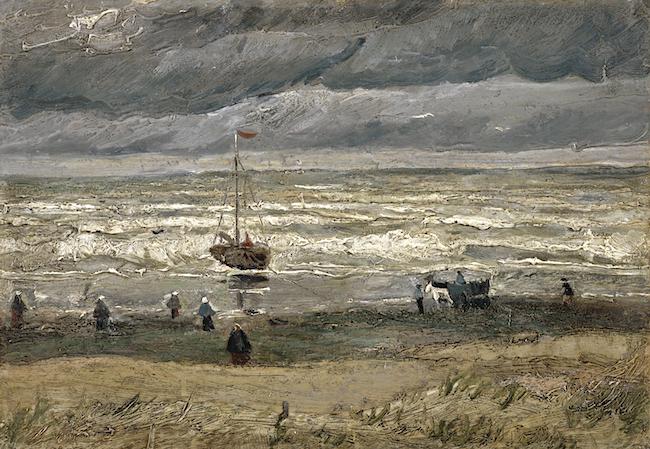


Aug 182018


Vincent van Gogh Portrait of Doctor Félix Rey, Arles. Rey disliked his portrait and gave it away 1889


Furor Over Revoked Security Clearance Grows As Trump Said To Threaten More (G.)
What Was Bruce Ohr Doing? (Strassel)
US Special Counsel Recommends Six Months In Prison For Papadopoulos (R.)
CNN Sues Government To Get Names, Addresses Of Manafort Jurors (TF)
The Three-headed Monster (Kunstler)
Trump Pushes For SEC To End Quarterly Earnings Reports (G.)
You Should Fear the Emerging Market Debt Bubble (Nomi Prins)
Denmark Says Time Is Running Out To Avoid No-Deal Brexit (G.)
In The Country Of The Colosseum, Why Are 40-Year Old Structures Crumbling? (G.)
Censoring Alex Jones (Dmitry Orlov)
New Pesticides May Harm Bees As Much As Existing Ones (G.)
Glyphosate Found In Over 80% of Breast Milk Samples in Brazil (TeleSur)


Yeah, they’re not liking this one bit. But as I wrote yesterday, these people will be subjects in a 2nd special counsel. That doesn’t rhyme with security clearance.

Furor Over Revoked Security Clearance Grows As Trump Said To Threaten More (G.)

Amid mounting criticism after he revoked the former CIA director John Brennan’s security clearance, Donald Trump threatened to similarly punish a current official and is reportedly preparing to do the same to others who have criticized him. The president’s remarks and the report from the Washington Post escalated worsening tensions between the White House and the intelligence community. Trump discussed his intention to revoke security clearances while speaking to reporters Friday before he left the White House for a fundraiser on Long Island. The president suggested that his first target would be Bruce Ohr, a largely unknown justice department official who has become a frequent target of criticism by Trump and the rightwing media.

“I think Bruce Ohr is a disgrace,” Trump said. “I suspect I’ll be taking it away very quickly.” Ohr’s wife, Nellie, was employed during the 2016 campaign by Fusion GPS, the firm that commissioned an infamous dossier on Trump’s alleged ties to Russia that was authored by Christopher Steele, a former British spy. Also on Friday, the Washington Post, citing anonymous sources, reported that the the White House had already drafted documents to strip a number of other prominent intelligence community figures of their clearances.

The Post’s list of targets includes the former director of national intelligence James Clapper, the former FBI directors Michael Hayden and James Comey, the former national security adviser Susan Rice, the former acting attorney general Sally Yates, the former FBI deputy director Andrew McCabe, and the former FBI agents Lisa Page and Peter Strzok. [..] Senator Mark Warner, a Democrat from Virginia, announced Friday on Twitter that he planned to introduce an amendment “to block the president from punishing and intimidating his critics by arbitrarily revoking security clearances”.

Read more …

The Guardian, above, calls Ohr “a largely unknown justice department official who has become a frequent target of criticism by Trump and the rightwing media.”. Well, this is the Wall Street Journal. And Ohr and his wife have some explaining to do.

What Was Bruce Ohr Doing? (Strassel)

The Federal Bureau of Investigation and Justice Department have continued to insist they did nothing wrong in their Trump-Russia investigation. This week should finally bring an end to that claim, given the clear evidence of malfeasance via the use of Bruce Ohr. Mr. Ohr was until last year associate deputy attorney general. He began feeding information to the FBI from dossier author Christopher Steele in late 2016 – after the FBI had terminated Mr. Steele as a confidential informant for violating the bureau’s rules. He also collected dirt from Glenn Simpson, cofounder of Fusion GPS, the opposition-research firm that worked for Hillary Clinton’s campaign and employed Mr. Steele.

Altogether, the FBI pumped Mr. Ohr for information at least a dozen times, debriefs that remain in classified 302 forms. All the while, Mr. Ohr failed to disclose on financial forms that his wife, Nellie, worked alongside Mr. Steele in 2016, getting paid by Mr. Simpson for anti-Trump research. The Justice Department has now turned over Ohr documents to Congress that show how deeply tied up he was with the Clinton crew – with dozens of emails, calls, meetings and notes that describe his interactions and what he collected. Mr. Ohr’s conduct is itself deeply troubling. He was acting as a witness (via FBI interviews) in a case being overseen by a Justice Department in which he held a very senior position.

He appears to have concealed this role from at least some superiors, since Deputy Attorney General Rod Rosenstein testified that he’d been unaware of Mr. Ohr’s intermediary status. Lawyers meanwhile note that it is a crime for a federal official to participate in any government matter in which he has a financial interest. Fusion’s bank records presumably show Nellie Ohr, and by extension her husband, benefiting from the Trump opposition research that Mr. Ohr continued to pass to the FBI. The Justice Department declined to comment. But for all Mr. Ohr’s misdeeds, the worse misconduct is by the FBI and Justice Department.

Read more …

Unlike Ohr, Papadopoulos is an absolute nobody. But he once when he was drunk mentioned Russians. So Mueller wants his ass. He has to keep the collusion meme alive.

US Special Counsel Recommends Six Months In Prison For Papadopoulos (R.)

Special Counsel Robert Mueller recommended in a court filing on Friday that a judge sentence former Trump campaign aide George Papadopoulos to up to six months in prison for lying to federal agents investigating whether Russia interfered in the 2016 U.S. presidential election. Papadopoulos pleaded guilty in October to lying to FBI agents and is scheduled to be sentenced on Sept. 7. According to Mueller’s sentencing memorandum to the judge, Papadopoulos lied about his contacts with people who claimed to have ties to top Russian officials, including his meeting with a professor who said Russia had “dirt” on Democratic presidential candidate Hillary Clinton.

“The defendant’s crime was serious and caused damage to the government’s investigation into Russian interference in the 2016 presidential election,” Mueller’s memo said. “The defendant lied in order to conceal his contacts with Russians and Russian intermediaries during the campaign and made his false statements to investigators on January 27, 2017, early in the investigation, when key investigative decisions, including who to interview and when, were being made,” Mueller said. Mueller said the government believed a sentence of up to six months in prison was “appropriate and warranted” along with a fine of $9,500.

Papadopoulos unwittingly played a key role in triggering the FBI investigation into possible collusion between Trump’s campaign in Russia, which the president repeatedly has denounced as a “witch hunt.” While drinking at a London bar in May 2016, he told the Australian ambassador to Great Britain that the Russians had hacked thousands of emails that could damage Clinton’s presidential campaign. When the emails began appearing publicly two months later, the envoy, Alexander Downer, told U.S. diplomats about what Papadopoulos had said, according to U.S. officials familiar with the events.

Read more …

Mueller has Papadopoulos and Manafort. That’s all he has. By the way, the judge in this case says he’s been threatened and is under police protection. He doesn’t want that for the jurors. Neither should CNN, Washington Post, BuzzFeed, POLITICO, New York Times, NBC Universal, and the Associated Press.

CNN Sues Government To Get Names, Addresses Of Manafort Jurors (TF)

In a motion filed in federal court on Thursday, CNN and several other media outlets requested that the court release the names and home addresses of all jurors in the Paul Manafort fraud case. Jurors haven not yet rendered a verdict on any of the 18 charges against Manafort, who briefly served as President Donald Trump’s campaign manager in 2016. The motion — filed on behalf of CNN, Washington Post, BuzzFeed, POLITICO, New York Times, NBC Universal, and the Associated Press — asks the court to provide to the media organizations the full names and home addresses of the men and women who were summoned and selected by the federal government to serve as jurors in Manafort’s fraud case.

The media request for the names and home addresses of jurors comes a day after the jury began deliberating about the verdicts on 18 fraud and conspiracy counts against Manafort. [..] Early Thursday evening, members of the jury asked the judge a series of questions about the case and the legal threshold for proving guilt, including a definition of what “reasonable doubt” meant. Many outside legal experts interpreted the question as being good news for Manafort’s defense team and bad news for the prosecution.

Read more …

“Robert Mueller, is left looking ridiculous — and perhaps subject to malpractice charges — for trying to remove an appendix-like organ called the Manifort from the body politic instead of attending to the cancerous mess all around him. ”

The Three-headed Monster (Kunstler)

The faction that used to be the Democratic party can be described with some precision these days as a three-headed monster driving the nation toward danger, darkness, and incoherence. Anyone interested in defending what remains of the sane center of American politics take heed: The first head is the one infected with the toxic shock of losing the 2016 election. The illness took hold during the campaign that year when the bureaucracy under President Obama sent its lymphocytes and microphages in the “intel community” — especially the leadership of the FBI — to attack the perceived disease that the election of Donald Trump represented. The “doctors” of this Deep State diagnosed the condition as “Russian collusion.”

An overdue second opinion by doctors outside the Deep State adduced later that the malady was actually an auto-immune disease. The agents actually threatening the health of the state came from the intel community itself: Mr. Brennan, Mr. Clapper, Mr. Comey, Mr. Strzok, Mr. McCabe, Mr. Ohr, Ms. Yates. Ms. Page, et. al. who colluded with pathogens in the DNC, the Hillary campaign, and the British intel service to chew up and spit out Mr. Trump as expeditiously as possible. With the disease now revealed by hard evidence, the chief surgeon called into the case, Robert Mueller, is left looking ridiculous — and perhaps subject to malpractice charges — for trying to remove an appendix-like organ called the Manifort from the body politic instead of attending to the cancerous mess all around him.

Meanwhile, the Deep State can’t stop running its mouth — The New York Times, CNN, WashPo, et al — in an evermore hysterical reaction to the truth of the matter: the Deep State itself colluded with Russia (and perhaps hates itself for it, a sure recipe for mental illness).

Read more …

Let the SEC study it.

Trump Pushes For SEC To End Quarterly Earnings Reports (G.)

Donald Trump has told the US securities regulator to consider abandoning quarterly reporting – a practice criticised as too short-term by some businesses on both sides of the Atlantic. Trump said a leading company boss told him switching to twice-yearly disclosure of accounts would reduce costs and be good for business. If enacted by the Securities and Exchange Commission, the change could allow more UK companies to join a trend away from quarterly reports. The US president tweeted: “In speaking with some of the world’s top business leaders I asked what it is that would make business (jobs) even better in the U.S. “Stop quarterly reporting & go to a six month system,” said one. That would allow greater flexibility & save money. I have asked the SEC to study!”

Elon Musk, the founder of Tesla, has criticised the short-term thinking of analysts and investors. Explaining earlier this month why he was considering taking the electric carmaker private, he told employees: “Being public … subjects us to the quarterly earnings cycle that puts enormous pressure on Tesla to make decisions that may be right for a given quarter but not necessarily right for the long-term.” JP Morgan’s boss, Jamie Dimon, and Warren Buffett, the world’s richest investor, argued earlier this year that companies should stop publishing quarterly earnings guidance that puts too much weight on hitting short-term targets. However, they said quarterly reporting should stay because it made companies accountable to the public.

Read more …

Oh, we do.

You Should Fear the Emerging Market Debt Bubble (Nomi Prins)

[..] what’s happening in Turkey right now shouldn’t be terribly surprising, given Fed chairman Jerome Powell’s attitudes towards emerging markets. Going back to last October, his words offer a glimpse of what was coming. Powell was then just the number two guy at the Fed when he publicly articulated his outlook on tightening interest rates, the rising dollar and the impact of both on emerging markets. He conceded that higher U.S. interest rates and weakening EM currencies “could cause capital to return to advanced economies.” But, unlike those that actually pay attention, Powell was not worried. He believed that the “most likely outcome” of that policy shift for emerging markets “will be manageable.”

Powell’s statement matters. He now commands the central bank with the largest influence on assets in the world. Powell seemed to deny that the Fed is, as Zero Hedge sums it up, the “major determinant of flows of capital into developing economies.” Later on as Fed chairman, Powell reemphasized that position at an IMF and Swiss National Bank gathering in Zurich. According to Powell: “There is good reason to think that the normalization of monetary policy in advanced economies should continue to prove manageable for EMEs. Markets should not be surprised by our actions if the economy evolves in line with expectations.” But Powell’s argument misses a central point. What he left out was that it was the Fed’s low interest rate policy to begin with that enabled countries to borrow as much as they did.

Read more …

Time is running out fast.

Denmark Says Time Is Running Out To Avoid No-Deal Brexit (G.)

Time is running out to strike a Brexit deal, according to the Danish finance minister, who has echoed warnings that there is a 50-50 chance of Britain crashing out of the European Union without an agreement in place. Kristian Jensen said the window of opportunity for striking a deal that was positive for both Britain and the EU was closing. Earlier, Latvia’s foreign minister, Edgars Rinkevics, claimed the chance of a no-deal Brexit was “50-50”. He said it was a “very considerable risk” but stressed he remained optimistic an agreement with Britain could be reached. Speaking on BBC Radio 4’s Today programme, Jensen was asked about Rinkevics’s remarks.

He said: “I also believe that 50-50 is a very good assessment because time is running out and we need to move really fast if we’ve got to strike a deal that is positive both for the UK and EU.” He said that everyone who wanted there to be a good deal “needs to put in some effort in the months to come, otherwise I’m afraid that time will run out”. He went on to describe Theresa May’s Chequers plan – which includes a pledge that the UK would apply domestic tariffs on goods intended for the UK, but charge EU tariffs on goods heading into the EU – as a “realistic proposal for good negotiations”. “We need to go into a lot of details but I think it’s a very positive step forward and a necessary step,” he said.

Read more …

Mafia.

In The Country Of The Colosseum, Why Are 40-Year Old Structures Crumbling? (G.)

The collapse of a bridge in Genoa on Tuesday, which killed 39 people, is the latest symptom of Italy’s infrastructure woes. More than 2m homes across the country are unstable, according to figures from the national statistics agency, Istat, and more than 156 school ceilings have fallen in over the last five years. The Morandi Bridge, considered an engineering jewel when it was inaugurated in 1967, was the 12th bridge to have collapsed in Italy since 2004. Five of those were in the last five years. Many of the problems can be traced back to the construction boom of the 1960s, when bridges, roads, buildings and schools were being built, often with weak or cheap material to increase profits, and ending up in the hands of the mafia.

“There’s no doubt that the building boom of the 1960s contributed to exacerbating the situation because so much was built then – everywhere and not always with adequate standards,” said Maurizio Carta, a professor of city planning at the University of Palermo. “We built in fragile areas, along riverbeds, in areas prone to landslides, along cliffs, and in high-risk hydrogeological and seismic areas, not to mention near heavy infrastructure, which increases the risk for people living there – in essence, where they shouldn’t be living in the first place.” [..] In the country of the Colosseum, Roman aqueducts and 1,000-year-old churches, it seems paradoxical that 40-year-old structures are crumbling.

“We have used materials which are destined to deteriorate quickly, like those of the bridge in Genoa,” said Prof Antonio Bercich, of the University of Genoa, who warned of the risks associated with the Morandi Bridge two years ago. “Engineering experts in previous decades believed that reinforced concrete would have permitted the construction of miniature colosseums that would have lasted forever. But that’s not the way it turned out. There are structures from those years that should now be demolished.” The Temple of Concordia, built in around 440BC, is considered one of the world’s best-preserved Greek temples. Located in Agrigento, western Sicily, it is just a few kilometres from a 4km bridge which was closed last year because it was at risk of collapse. The bridge was completed in 1970 by the engineer Riccardo Morandi.

Read more …

“Trump is a bull in a China shop while Clinton would have been a deer in the headlights.”

Censoring Alex Jones (Dmitry Orlov)

Something happened recently that made me feel like a bit of an endangered species. A set of transnational internet companies, including Google, Facebook, Apple and several others, all synchronously removed content belonging to infowars.com, which is run by Alex Jones. Such synchronicity is a sure sign of conspiracy—something that Alex Jones harps on a lot. I once appeared on a radio show run by Alex Jones, and he did manage to boil down what I had to say to “the USA is going to collapse like the USSR did,” which is pretty good, considering how poorly we managed to connect, having so little in common. He is a conservative and a libertarian whereas I think that conservatives don’t exist in the US.What have they “conserved” lately—other than the right to bear small arms?

As far as libertarianism, I consider proper historical libertarianism as a strain of socialism while its American cooptation is just plain funny: these ones remain libertarian only until they need the services of an ambulance or a fire engine, at which point they turn socialist. To boot, American libertarians like Ayn Rand, who to me was a relentlessly bad writer full of faulty thinking. However, I find her useful as a litmus test for mediocre minds. Moreover, Jones is political while I remain convinced that national politics in the US is a waste of time. It has been statistically proven that the US is not a democracy: popular will has precisely zero effect on public policy. It doesn’t matter who is president; the difference is a matter of style.

Trump is a bull in a China shop while Clinton would have been a deer in the headlights. The result is the same: the US is bankrupt and its empire is over. There is also the mismatch of genre between Jones and me. I am first of all an experimenter and an essayist, and to me personal experience and literary form are vitally important, while Jones is light on research and happy to work with hearsay, and is rather hackneyed and repetitive, but has the right instincts for a rabble-rouser.

Read more …

Just stop poisoning everything.

New Pesticides May Harm Bees As Much As Existing Ones (G.)

A new class of pesticides positioned to replace neonicotinoids may be just as harmful to crop-pollinating bees, researchers have warned. In experiments, the ability of bumblebees to reproduce, and the rate at which their colonies grow, were both compromised by the new sulfoximine-based insecticides, they reported in the journal Nature. Colonies exposed to low doses of the pesticide in the lab yielded significantly less workers and half as many reproductive males after the bees were transferred to a field setting. “Our results show that sulfoxaflor” – one of the new class of insecticide – “can have a negative impact on the reproductive output of bumblebee colonies,” said lead author Harry Siviter, a researcher at Royal Holloway University of London.

As with neonicotinoids, sulfoxaflor does not directly kill bees, but appears to affect the immune system or the ability to reproduce. Foraging behaviour, and the amount of pollen collected by individual bees remained unchanged in the experiment. The study has been published amid legal challenges and shifting national policies on neonicotinoids, among the most commonly used insecticides in the world. In April, European Union countries voted to ban three neonicotinoid-based products in open fields, restricting use to covered greenhouses. Earlier this month Canada followed suit, announcing the phase-out of two of the pesticides widely applied to canola, corn and soybean crops.

Neonicotinoids are based on the chemical structure of nicotine and attack insect nervous systems. Sulfoximine insecticides, while in a different class, act in a similar way. Unlike contact pesticides – which remain on the surface of foliage – neonicotinoids are absorbed by the plant from the seed phase and transported to leaves, flowers, roots and stems.

Read more …

“Brazil has become the primary consumer of pesticides on the planet..”

Glyphosate Found In Over 80% of Breast Milk Samples in Brazil (TeleSur)

Over 80 percent of breast milk samples examined in a recent study in Urucui, Brazil were found to contain agro-toxins. According to the study undertaken by Inacio Pereira Lima, a master’s student in Women’s Health at the Federal University of Piaui’s (UFPI) Center of Health and Sciences, 83.4 percent of the breast milk samples were found to contain glyphosate or aminomethylphosphonic acid (AMPA) or both substances. “The presence of glyphosate in breast milk indicates direct contamination by this agro-toxin or that the quantities utilized in agricultural activity in the region must be so high that the plant metabolism or microbiology did not degrade the excess,” Pereira Lima explained. “Nearby regions where agricultural activity is not present, we suspect that agro-toxins have contaminated the water.”

The samples were obtained from the maternity ward at the Dirceu Arcoverde Regional Hospital (HRDA) in the municipality of Urucui, located 450 kilometers from the capital city Teresina. It is the largest producer of soya in the state, and its crops are sprayed with large quantities of agro-toxins, according to Pragmatismo Politico In 2016, a total of 10.1 million kilos were consumed in the state. It is the equivalent of 3.18 kilos per person, a percentage that is comparable to the national average. Surprisingly, the same contamination level was detected in the municipality of Oeiras, roughly 750 kilometers from the Urucui, where agricultural activity is the least in the state. With a 20 percent stake in world’s total consumption since 2008, Brazil has become the primary consumer of pesticides on the planet, a new study has revealed.

Read more …

To make a prairie it takes a clover and one bee,
One clover, and a bee.
And revery.
The revery alone will do,
If bees are few.

– “To make a prairie”, Emily Dickinson

Sep 042017
 
 September 4, 2017  Posted by at 3:34 pm Finance Tagged with: , , , , , , , , ,  2 Responses »


Detail of a fresco from the House of the Tragic Poet, Pompeii, 2nd century BC


About a month ago, I finished reading former Greek finance minister Yanis Varoufakis’ book “Adults in the Room”, subtitled “My Battle With Europe’s Deep Establishment”, and published by The Bodley Head. I started writing about it right away, but noticed I was writing more about my personal ideas and experiences related to Greece than about the book. So I let it rest a bit.

I read the book in, of all places, Athens, sitting outside various old-style cafés. That got me a lot of reactions from Greeks seeing the cover of the book, most of them negative, somewhat to my surprise. Many Greeks apparently do not like Varoufakis. Of course I asked all the time why that is. “He’s arrogant” was/is a frequent one.

That’s not very helpful, I find, since first of all, it’s a purely subjective judgment, and second, I’m convinced their views come to a large extent from Greek media coverage, not only during Yanis’ term as finance minister from January to July 2015, but also in the years leading up to it. And Greek media are all controlled by ‘oligarchs’ et al, who certainly do not like either Yanis or the Syriza party he represented as minister.

The irony is that Varoufakis received more -individual- votes in the January 2015 election that brought Syriza to power than any other party member. And in the July 5 referendum 61.3% of Greeks voted against -yet- another bailout, very much in line with what Varoufakis had proposed. So there was a time when he was popular.

One guy said: ”he should be in jail”. When I asked why, the response was something like “they should all be in jail”, meaning politicians. Which is a bit curious, because whatever Varoufakis may be, a politician he is not. And the Greeks know that. They are very disappointed, and often depressed, by what has happened to them, of course they are. But why they would think Yanis is responsible for that is much less clear. Other then: “they’re all responsible”.

The best line in my opinion came from someone who said he thought Varoufakis was wrong for getting involved with Greek politics in the first place, a pit -as is the EU- replete with slithering venomous snakes. That I understand. That he should never have become minister since it could only have ended badly because of the corruption and backstabbing at all levels. I’m guessing Yanis himself has thought that too at times.

But at the same time, I remain convinced, as I’m sure he does, that he genuinely did it to help his people -who were already in terrible shape in late 2014 when he decided to run, and are much worse off now. And that’s not all. He would never have done it if he hadn’t had a plan to make things better. He did. If anything, that’s the key to his story.

And if his one-time friend, PM Tsipras, had not been paralyzed with fear at the last moment, that plan might well have worked. Yanis is an economist, and a game theorist at that. And though he has always insisted game theory was not the basis of what he did as minister, and rightly so because it’s not a game, there’s one aspect of what happened that comes straight from that field.

That is, before he agreed to run for finance minister, as he writes in the book, he tells Tsipras and his closest Syriza confidants that because Greece is very weak vs the Troika, they are not in any position to bluff. Meaning, if they are going to follow ‘the plan’, they must follow it to the end, in other words, they must be willing to walk away from the Troika, from the EU.

Not because they want to, but because the rules of the game demand it. When you’re weak, you cannot afford to blink. Yanis based his plan on letting the other side blink first, as he felt they would have to if only Greece did not. That’s what the whole thing was based on. And then, after -or rather, even before- winning the NO referendum, Tsipras blinked.

And yes, you can blame Varoufakis for that: for not making sure that would not happen. For putting trust where none was warranted. But the alternative would have been to stay in Texas and see his country perish. He was asked to join, he had a plan he believed in, what was he supposed to do?


“[The book] reads like a train”, says a Dutch review of Adults in the Room. And it does. Yanis proves a talented writer in the ‘genre’, which is not his by trade -so to speak-, of a day-to-day description of a series of events, conversations, confrontations with Greek, European and global political elites -with the occasional economist thrown in here and there-. The fact that he recorded many of the conversations on his iPhone, and undoubtedly made notes of many things as they happened, makes it a very compelling read. It’s obvious he’s not making it up, that he wrote down what actually happened -much of it word for word-. Seen through his eyes, of course.

As much as it reads like a train though, it also reads like a trainwreck. The portraits Yanis paints of many of the individuals he encounters, as well as of the institutions they represent, are often as painful as they are damning. Still, that is not what he sets out to do, as many of those who find their names in the book will undoubtedly claim. They are simply the portraits that emerge as events unfold.

In the world of power politics, this should not be a great surprise. But the picture of the dynamics that ‘control’ the European Union and it representatives, as well as the Troika institutions, the IMF, ECB, Eurogroup and European Commission, becomes, as we read along, more and more that of one familiar to us through the Godfather and the Sopranos. For many of the ‘players’ that appear on the scene, a comparison to ‘made men’ in the mafia is hard to avoid. Only, without a proper code of honor. A conversation Yanis describes in the introduction of the book makes this ‘analogy’ even more striking. He’s talking to Larry Summers, former US Treasury Secretary, who talks about insiders and outsiders.

“I had a choice. I could be an insider or I could be an outsider. Outsiders can say whatever they want. But people on the inside don’t listen to them. Insiders, however, get lots of access and a chance to push their ideas. People – powerful people – listen to what they have to say. But insiders also understand one unbreakable rule: They don’t criticize other insiders.”

That’s obvious stuff. Except that this quote is from another book, US Senator Elizabeth Warren’s “A Fighting Chance”, and it’s almost verbatim the same as the one in Yanis’ book. It’s just politics. In the same way that Vito Corleone says: “it’s not personal, Sonny, it’s strictly business”. And Larry Summers is a consiglieri who spreads the gospel. Like it was once spread to him.

How do you become an insider, a made man? By committing to ‘the cause’, the family, through performing acts, initiation rituals. In the mob, that act is mostly murder, in the EU it’s something else, like obliterating the Greek economy. Or, in the case of European Council president Donald Tusk or First Vice-President of the European Commission Frans Timmermans, incessantly badmouthing Vladimir Putin. That gets you in. We know this because neither Tusk nor Timmermans had any other outstanding achievements to their names before they landed their top jobs.

So that gets you in. But into what, exactly? That’s a very opaque issue, and Varoufakis’ book doesn’t shine much light on it. Which is not a criticism, that’s not what he set out to do. Still, when he writes that in many occasions, as he tries to talk to for instance the assembled Eurogroup (all EU finance ministers plus -often- ECB head Mario Draghi and IMF head Christine Lagarde) about actual policies and plans, he “might as well have been singing the Swedish national anthem”, the opaqueness is the only thing that does ‘shine’.

A question that occurred to me, repeatedly, was how many of the people he tries to discuss issues with, actually understand what he’s talking about. For instance, once you delve into the specifics of debt swaps, what the benefits of one sort of bond are over others, you need a specific kind of knowledge, something an experienced investment banker or economist would have.

Schäuble’s a lawyer. Dijsselbloem’s an ‘agricultural economist’, whatever that may be. If you want to prevent any discussion on issues, what better than to put people in place who are -by education, by intelligence- simply not able to discuss them?


Not even Yanis, in my view, condemns Merkel and Schäuble and Dijsselbloem and a whole host of other characters in Brussels, Athens and beyond, strongly enough. Because the mob truly resides in Brussels -and Athens is truly corrupt. And Berlin. No matter how many times you may hear, or say, that something is simply politics, or it’s simply business, and nothing personal, it is very much personal and we should never accept it as normal human behavior.

That is the most damning issue Varoufakis brings up, but he doesn’t do that strong enough. When he seals a deal with China’s ambassador to Greece for Beijing to invest in Greece’s ports and railways, Angela Merkel calls the Chinese to tell them to back off; Germany’s not done with Greece yet. When current French President Emmanuel Macron, who was Economy Minister in 2015, sought to help Greece, Merkel called then-President Hollande to order him to get Macron ‘off the case’.

The European Union is undemocratic in myriad ways. What Varoufakis lays bare in his book, and then fails to utterly condemn, is that it is also undemocratic in the ‘ultimate’ way. That is, no country has anything to say except Germany. The EU’s largest member country decides everything. Not that Berlin sweats the small stuff, mind you, others are allowed to keep the illusion of democracy alive there.

But as soon as big decisions are made, finance, defense, there is one voice only that counts. That is the final nail in Europe’s coffin, even if it remains hidden very well. But spell that out loud and clear to the French people, or the Italians, that they have nothing at all to say about their own country and their own laws anymore, that the Germans decide FOR them, and what do you think they will say?

The very concept of a sovereign country, and the Union officially has 27 of them left, has turned into a joke inside the EU. Plus, Merkel and Macron and Brussels are calling for more Europe. Go to a supreme court in any EU country and tell them their own governments have lost all power over money and economics, and what do you think their constitutions will say? Care to define sovereignty?

So tell people that. Tell them that in reality Angela Merkel is their ‘leader’, not the people they have voted for. Ironically and unfortunately, the right wing regimes in eastern Europe may prove to be the ones who point this out first. Which is in line with how Brexit came about, and Trump, but in the end what all this really exposes is that we are all lied to three ways to Sunday, every day of the week.

Perhaps just as ironically, Varoufakis now leads a movement, named DiEM 25, that seeks to democratize the EU. I wish him all the good and then some with that, but I don’t see it. Because you would have to ‘overthrow’ Germany’s dictatorship of Europe, and get Germany to agree to being voluntarily ‘overthrown’. Why would Berlin ever agree to that? That’s even less likely than them agreeing to Varoufakis’ ideas about saving the Greek economy.

I’ve said it many times before, Europe’s nations can work together in many different ways, and the EU is just one of them, and it’s a very bad option. But reforming the EU from within does not look to me to be the way to go. It’s like reforming the US Republican or Democratic parties: they’re rotten to the core; why not start something new that doesn’t come with the whole deep-state-style burden?


You will hear and see a lot about how Yanis is naive and/or didn’t know what he was doing and proposing. But the only way in which he may have been naive is that he believed common sense would ultimately rule Europe. He might still have been right, if Tsipras et al had not choked. Which he told them repeatedly before he became Finance Minister would be fatal for Greece. He was right on that too, but he’ll find no pleasure in it.

His fault is that he didn’t – and doesn’t- want to ‘play the game’. That game is the only one in town, and it consists of keeping the established order in charge of everything, and of enhancing that power. It’s about politics, not economics. Or rather, the prevalent economic models suit the power elite just fine, so much so that their very faults help them stay in power, and nobody wants better models.

For trying to swim against that stream, you can blame Yanis, but that is the world turned upside down. Because if you look just a little bit closer, you can see that the present model is not only riddled with nonsensical assumptions, it is, because it is, destroying formerly sovereign nations.

For trying to prevent his country, Greece, from becoming the first nation in the formerly rich world to fall prey to that new-fangled colonialist model, Varoufakis deserves praise, not scorn. Do remember that when you see yet another ‘serious’ reviewer ridicule him for being naive. As in: who’s naive, you or Yanis? Is one naive for not kneeling before dictatorship disguised as democracy?


One last issue. It is often mentioned that the reason Brussels acts the way it does towards Greece is to scare off other EU members from ‘trying the same’, i.e. go against the rules set by the EU -which we, thanks to Yanis, know means Germany, and Germany only. But I don’t think that is true. It’s not about going against the EU; it’s doing anything. whatever it is, that would endanger the banks.

What the -scandalous- treatment of EU member and sovereign country Greece reveals is that it’s in the end not even Angela Merkel who calls the shots, but the main German, French, Dutch banks. Why the British would want to remain members of that kind of cabal will never cease to amaze me, but why their banks would does not in the least.

But yeah, so, the banks. That’s where it all started. Europe’s main banks lent Greek banks and corporations, all as corrupt as can be, money ‘up the wazoo’. When that could not be paid back this debt was not restructured, as it would be in any normal bankruptcy case, it was transferred first to the EU and then directly to Greek pensioners and other citizens. That is why Greece is in such a deplorable state.

The banks who made the loans were made whole, through a trick that hadn’t been tried before -and may not have been 100% legal but who cares about law in the EU?- and the entire mess was unloaded upon Greek society. Which is now in an even much bigger mess, with no end in sight, than when Varoufakis became finance minister. He knew that was coming and tried to prevent it.

What Merkel et al have done is to make sure that this ‘salvation’ of Deutsche Bank, Crédit Agricole et al will not be in peril. That’s more important to the system than Portugal or Italy questioning the powers of Berlin or Brussels. It’s not about scaring off other countries, it’s about safe-guarding the banks. It’s not about economics, it’s about raw political power.

In the next economic downfall, watch that dynamic. I’ve often said that the general principle of globalization/centralization, of which the EU is a good example, cannot stand in times of negative growth, because people won’t accept decisions about their lives being taken by far-away ‘leaders’ unless they think they can profit from it.

Wait till the realization dawns that Europe, like the rest of the world, only looks sort of okay because debt levels are rising everywhere. Mario Draghi still buys tens of billions of euros in ‘paper assets’ every month. That’s the European economy, that’s all that keeps it looking good, that’s the pig and that’s the lipstick, right there.

But forst and foremost, read the book. Yanis Varoufakis: “Adults in the Room”, subtitled “My Battle With Europe’s Deep Establishment”, published by The Bodley Head. If you’re at all interested in Greece, politics, economics, Michael Corleone, the EU, the IMF and/or the Sopranos. It reads like a train.

And it tells you a lot about how the world does (not) work. From the inside, and you don’t get to have a lot of views from the inside. “Adults in the Room” is a rare chance. The ruling powers will keep trying to discredit Yanis, but the more they do, the more you should be alerted.


Apr 122016
 
 April 12, 2016  Posted by at 9:38 am Finance Tagged with: , , , , , , , , , ,  5 Responses »


Gottscho-Schleisner Fulton Market pier, view to Manhattan over East River, NY 1934

US Bank Stocks Are Having A Terrible 2016 (WSJ)
BofA Warns “Europe Looks Frightening” (ZH)
The Party’s Over (BBG)
Olivier Blanchard Eyes Ugly ‘End Game’ For Japan On Debt Spiral (AEP)
Smash The Mafia Elite, Treat Offshore Wealth As Terrorist Finance (Mason)
Aussie Hazards From Mortgages to Mines Lift Bond Risk (BBG)
Australia’s Housing Bubble And The Road To Private Serfdom (Soos)
Scientists Unveil New ‘Tree of Life’ (NY Times)
How Kim Kardashian Gets Elected President (Jim Kunstler)
Greece, Troika Adjourn Bailout Review Till After IMF Spring Meet (R.)
Ten Billion Risks in Greece’s Summer of Discontent (BBG)
‘Europe Has To Change Course’: Greece and Portugal Unite To Lambast EU (Tel.)
Tsipras Aiming For Debt Relief But Slams IMF (Kath.)
Greece Hopes To Move Refugees From Piraeus, But Tension At Elliniko (Kath.)
95,000 Unaccompanied Children Applied For Asylum In Europe In 2015 (EUO)
Italy Rescues 1,850 Migrants In Strait Of Sicily (AFP)

Luckily they’re TBTF. They don’t have to worry. We do.

US Bank Stocks Are Having A Terrible 2016 (WSJ)

Bank stocks are having a terrible 2016, as central-bank policies, which for years lifted asset prices, are hurting the financial sector. The impact of economic stimulus efforts on lenders will get a fresh airing this week, as big U.S. banks begin reporting their earnings for the first quarter. Trading revenue is expected to have taken a hit, but the more enduring problem will be visible in the lenders’ net interest margins, the basic measure of bank profitability that gets flattened by low interest rates. The broader U.S. stock market has shaken off a steep slump at the beginning of the year and is back in positive territory. But banks and other financial companies are lagging far behind. The divergence highlights the dilemma facing central banks. Easy-money policies have fueled a rally in risky assets.

They are also squeezing profits at financial companies, inflicting pain on a sector that is fundamental to the health of the economy. Earnings for S&P 500 financial companies during the quarter ended March are expected to be down 8.5% from the same period last year, according to FactSet. Analysts have cut their projections for almost three-quarters of the companies in the financial sector, including J.P. Morgan Chase and Bank of America, both of which are scheduled to release earnings this week. “At the end of the day, it’s just a more difficult earnings environment for financials,” said Jeremy Zirin at UBS Wealth Management Americas. Bank shares face an array of challenges. Low and in some cases negative interest rates globally have eroded banks earnings, while a steep decline in commodity prices at the start of the year raised concerns over lenders exposure to soured loans in the energy and mining sectors.

In Europe, the picture has been complicated further by concerns over nonperforming loans broadly, particularly in economically stressed Southern Europe. Financial companies are the worst performers in the S&P 500, down 7.6% in 2016 as the broader index has risen 0.2%. The KBW Nasdaq Bank Index of large U.S. commercial lenders has fallen 15% this year. Some big banks have done even worse. Morgan Stanley has fallen 25% this year, giving up roughly three years of stock-price gains in the process. Bank of America is in a similar position, with its shares down 23%. Citigroup shares have dropped 22%.

Read more …

Very scary graph.

BofA Warns “Europe Looks Frightening” (ZH)

"Europe looks concerning" warns BofAML's Stephen Suttmeier, pointing out, rather ominously that the broad European index – STOXX 600 – is trading like it did in 2001 & 2008.


The STOXX Europe 600 (SXXP) is trending below declining and bearishly positioned 26 and 40-week moving averages. ECB quantitative easing has not reversed this bearish trend. The 2016 set-up is similar to early 2001 and early 2008 with 350 important resistance and 300 important support. Both 2001 and 2008 saw rebounds into bearishly positioned and falling 26/40-week MAs that formed important lower tops in May.

We think this pattern could repeat or at least rhyme moving into May 2016. The breaks below 300 in September 2011 and June 2008 led to much deeper weakness and a similar break in 2016 could see the SXXP trend down toward 200.

Source: BofAML

Read more …

“Some of the more exotic activities from major corporations of late make much more sense when considered against a landscape of deteriorating returns.”

The Party’s Over (BBG)

It’s when a party’s been going on too long that it’s most at risk of getting out of hand. The more interesting guests fade away, leaving the field dominated by a sketchier crowd. Behavior considered beyond the pale earlier in the evening is excused to inject more vigor into flagging spirits.Financial markets, which former Federal Reserve Chairman William McChesney Martin once likened to a drunken debauch, exhibit similar dynamics. Seven years into the current global economic recovery, the punch bowl is almost drained. The remaining revelers are starting to raid the cupboards for stronger stuff. For evidence that the balloons are bursting and the dance-floor lights are coming up, take a look at the return on equity of the S&P 500 Index.

The measure dropped below 12% on March 21 – the first time it’s crossed the line in that direction since June 2008. The occasions prior to that were May 2001 and April 1991, and all three instances coincided closely with U.S. recessions. You see a similar pattern in the FTSE 100 Index. Just 11 trading days during the 2009 nadir of global markets saw returns on equity slip below the current level of 5.5%. In Asia, the Hang Seng Index, Shanghai Composite and CSI 300 have all touched their lowest levels since 2009 this year, and remain just a sliver above their rock-bottom points.Among major equity indexes, only the Nikkei, which is not far below its highest levels since 2008, and Europe’s Stoxx 50, which has been bumping along at low levels since 2011, break the pattern.

Some of the more exotic activities from major corporations of late make much more sense when considered against a landscape of deteriorating returns. Take inversions, where U.S. companies carry out reverse takeovers of foreign businesses in order to benefit from low corporate tax rates overseas.Such deals, which activist investor Carl Icahn estimates have exceeded half a trillion dollars in recent years, don’t come cheap. Pfizer, the global pharmaceutical giant that dropped its $160 billion attempt to hop into bed with Allergan after the U.S. Treasury promised to claw back the lost revenue, will pay a $400 million break fee to its spurned partner, people familiar with the matter said last week. There’s also an estimated $120 million to $150 million Pfizer will have to shell out for the work its own bankers and lawyers have done.

Read more …

“The BoJ is soaking up the entire budget deficit under Governor Haruhiko Kuroda as he pursues QE a l’outrance.”

Olivier Blanchard Eyes Ugly ‘End Game’ For Japan On Debt Spiral (AEP)

Japan is heading for a full-blown solvency crisis as the country runs out of local investors and may ultimately be forced to inflate away its debt in a desperate end-game, one of the world’s most influential economists has warned. Olivier Blanchard, former chief economist at the IMF, said zero interest rates have disguised the underlying danger posed by Japan’s public debt, likely to reach 250pc of GDP this year and spiralling upwards on an unsustainable trajectory. “To our surprise, Japanese retirees have been willing to hold government debt at zero rates, but the marginal investor will soon not be a Japanese retiree,” he said. Prof Blanchard said the Japanese treasury will have to tap foreign funds to plug the gap and this will prove far more costly, threatening to bring the long-feared funding crisis to a head.

“If and when US hedge funds become the marginal Japanese debt, they are going to ask for a substantial spread,” he told the Telegraph, speaking at the Ambrosetti forum of world policy-makers on Lake Como. Analysts say this would transform the country’s debt dynamics and kill the illusion of solvency, possibly in a sudden, non-linear fashion. Prof Blanchard, now at the Peterson Institute in Washington, said the Bank of Japan will come under mounting political pressure to fund the budget directly, at which point the country risks lurching from deflation to an inflationary denouement. “One day the BoJ may well get a call from the finance ministry saying please think about us – it is a life or death question – and keep rates at zero for a bit longer,” he said.

“The risk of fiscal dominance, leading eventually to high inflation, is definitely present. I would not be surprised if this were to happen sometime in the next five to ten years.” Arguably, this is already starting to happen. The BoJ is soaking up the entire budget deficit under Governor Haruhiko Kuroda as he pursues quantitative easing a l’outrance. The central bank owned 34.5pc of the Japanese government bond market as of February, and this is expected to reach 50pc by 2017.

Read more …

But the mob owns the house..

Smash The Mafia Elite, Treat Offshore Wealth As Terrorist Finance (Mason)

Amid the cobbled passageways and tumbling tenements of the Italian city of Perugia, it’s possible to daydream you are in the middle ages. You are surrounded by medieval art and architecture. And then you think: hold on, what happened to the Renaissance? Sure, there are some imposing private palaces from the period 1300-1500, and sure Raphael left half a fresco in a tiny chapel. But it’s not Florence. The money was clearly here at some point but, some time after 1300, the artistic, cultural and scientific riches moved somewhere else. By 1500, the city was “smaller, poorer and politically narrower” than 200 years before, writes historian Sarah Rubin Blanshei. Why? Because the rich did not pay their taxes.

The Perugian elite became a closed stratum of mafiosi, earning their money from mercenary work abroad, jealously guarding their family inheritance, stifling social mobility. Sound familiar? As David Cameron’s fiasco over the Panama Papers collides with George Osborne’s over the budget, the danger is that we frame these merely as political scandals. In fact, the Panama Papers point to a deeper sickness. Globalised capitalism has become an organised and legalised form of corruption, in which the work of the manager, the inventor and the entrepreneur come second to that of people whose wealth “works for them” – preferably in a jurisdiction nobody can see. If you listen to Cameron’s defenders, their logic follows three contours: he did nothing illegal, nothing unparliamentary and nothing wrong.

I do not doubt his decision to invest in an offshore fund was legal. That he failed to register his shares in Blairmore on becoming an MP, and lobbied for the protection of offshore trusts while being an undeclared beneficiary of one, does merit investigation by Parliament. But it’s the insistence by the apopleptic right that he should not be criticised over tax avoidance – that “everybody does it” – that we should register as a kind of collective Marie Antoinette moment for the UK’s social elite.

Read more …

MO: “..the acquisition of defaulted debt at a discount..”

Aussie Hazards From Mortgages to Mines Lift Bond Risk (BBG)

Those Australians struggling with mortgage payments and the possibility of damage from the global commodity price slump are helping to inflate bond risk for Macquarie Group’s banking unit. The cost of insuring Macquarie Bank notes against non-payment climbed to as much as 172 basis points last month, the highest since June 2013, after the lender flagged a rise in overdue home loans. The Sydney-based bank’s credit-default swaps have increased 39 basis points in 2016, the second most in the benchmark Markit iTraxx Australia index, and were at 155 basis points April 8. While Macquarie Group is predicted to post a record full-year profit, there’s increasing speculation about how well Australia’s lenders will cope with a mining downturn that’s already causing some resource-related firms to default on loans.

Large gyrations in global markets in the first quarter helped drive out credit spreads for banks, and there’s concern that home-loan books will be hurt by a stuttering Australian housing market. “Macquarie’s CDS was caught up in the February selloff with the big four banks and whilst the latter have regained ground in March, Macquarie remains at wides,” said Simon Fletcherat National Australia Bank. “This is likely to be in part due to some market nerves” after Macquarie revealed an increase in overdue loans in one of its recent regulatory filings, he said. While Macquarie’s total impaired mortgages fell in the final three months of 2015 compared with the previous quarter, the lender on Feb. 19 flagged an increase in overdue loans over the same timeframe. The bank’s 90-days-plus overdue residential mortgages almost doubled to A$476 million ($360 million) in the quarter ended Dec. 31. The main “driver” of the increase was due to the acquisition of defaulted debt at a discount, the lender said in a statement on its website last month.

Read more …

Do let it sink in: “With total household sector liabilities at $2.2 trillion dollars as of 2015, Q4, Australians are so indebted that the majority of principal will never be repaid.”

Australia’s Housing Bubble And The Road To Private Serfdom (Soos)

Over the last 20 years, housing has developed a reputation as a risk-free and high-gain asset. Property remains a coveted asset and can now be purchased with a small deposit; the rest borrowed from banks. It certainly is an attractive investment: since 1996, housing prices, adjusted for inflation and quality, have soared by 141% through to 2015.

Many global housing markets corrected after the GFC, but Australia’s continued to boom, especially in Sydney and Melbourne. This resilience is attributable to the vested interests: the FIRE (finance, insurance and real estate) sector, numerous Federal and state government interventions, and leveraged home owners and investors, who believe housing price inflation benefits them.Almost every residential owner wants the gravy train to continue running to escape the drudgery of wage labour and achieve the coveted status of property baron.

Australia has one of the world’s most expensive housing markets, but unlike an Olympic gold medal, the nation should feel shame rather than pride in achieving this dubious feat. Residential property is so highly leveraged that even a small fall in its value would have adverse consequences, placing heavily-geared owners in the position of negative equity. Falling prices and credit defaults can reverberate throughout the economy, leading to a recession or worse. After all, a real estate slump drove other wealthy economies into a major downturn during the GFC, not the other way around.

The largest and most important purchase the average person will make is not even financed with their own money. Relative to GDP, the Australian household sector vies with Switzerland for accumulating the largest debt burden globally. As of 2015, Q4, this amounts to 124%, which is much higher than what many other nations peaked at before the bursting of their housing bubbles.

This massive indebtedness is ignored by both political parties, who endlessly claim we need to transition the Federal Government budget back to surplus as this represents “fiscal responsibility”. The reason is because nobody wants the value of their properties to sink and, instead, is supposed to repeat the hysteria about the “budget emergency”, “runaway public debt”, “record deficit” and so on. Public debt peaked in 1932 at 173% of GDP, when the economy was far less productive. Today, it is low compared to historical and global trends. With total household sector liabilities at $2.2 trillion dollars as of 2015, Q4, Australians are so indebted that the majority of principal will never be repaid. With nominal rent growth now turning negative and wage growth at record lows, it will become increasingly difficult to finance repayments, especially for first home buyers.

Read more …

“The “great Tree of Life,” he said, “fills with its dead and broken branches the crust of the earth, and covers the surface with its ever branching and beautiful ramifications.”

Scientists Unveil New ‘Tree of Life’ (NY Times)

A team of scientists unveiled a new tree of life on Monday, a diagram outlining the evolution of all living things. The researchers found that bacteria make up most of life’s branches. And they found that much of that diversity has been waiting in plain sight to be discovered, dwelling in river mud and meadow soils. “It is a momentous discovery – an entire continent of life-forms,” said Eugene V. Koonin of the National Center for Biotechnology Information, who was not involved in the study. The study was published in the journal Nature Microbiology. In his 1859 book “On the Origin of Species,” Charles Darwin envisioned evolution like a branching tree. The “great Tree of Life,” he said, “fills with its dead and broken branches the crust of the earth, and covers the surface with its ever branching and beautiful ramifications.”

Ever since, biologists have sought to draw the tree of life. The invention of DNA sequencing revolutionized that project, because scientists could find the relationship among species encoded in their genes. In the 1970s, Carl Woese of the University of Illinois and his colleagues published the first “universal tree of life” based on this approach. They presented the tree as three great trunks. Our own trunk, known as eukaryotes, includes animals, plants, fungi and protozoans. A second trunk included many familiar bacteria like Escherichia coli. The third trunk that Woese and his colleagues identified included little-known microbes that live in extreme places like hot springs and oxygen-free wetlands. Woese and his colleagues called this third trunk Archaea.

[..] The scientists needed a supercomputer to evaluate a vast number of possible trees. Eventually, they found one best supported by the evidence. It’s a humbling thing to behold. All the eukaryotes, from humans to flowers to amoebae, fit on a slender twig. The new study supported previous findings that eukaryotes and archaea are closely related. But overshadowing those lineages is a sprawling menagerie of bacteria. Remarkably, the scientists didn’t have to go to extreme places to find many of their new lineages. “Meadow soil is one of the most microbially complex environments on the planet,” Dr. Hug said.

Read more …

How crazy it can get is anybody’s guess.

How Kim Kardashian Gets Elected President (Jim Kunstler)

[..] It must be obvious that the next occupant of the White House will preside over the implosion of all these arrangements since, in the immortal words of economist Herb Stein, if something can’t go on forever, it will stop. So the only individuals left seeking the position are 1) An inarticulate reality TV buffoon; 2) a war-happy evangelical maniac; 3) a narcissistic monster of entitlement whose “turn” it is to hold the country’s highest office; and 4) a valiant but quixotic self-proclaimed socialist altacocker who might have walked off the set of Welcome Back Kotter, 40th Reunion Special. These are the ones left standing halfway to the conventions. Nobody else in his, her, it, xe, or they right mind wants to be handed this schwag-bag of doom.

On Saturday, the unstoppable Democratic shoo-in Hillary lost her 7th straight contest to the only theoretically electable Vermont Don Quixote, Bernie Sanders. This was a week after it was reported in The Huff-Po that her campaign crew literally bought-and-paid for the entire 50-state smorgasbord of super-delegates who will supposedly compensate for Hillary’s inability to otherwise win votes the old-fashioned way, by ballots cast. Wonder why that didn’t make nary a ripple in the media afterward? Because this is the land where anything goes and nothing matters, and that’s really all you need to know about how things work in the USA these days.

The Republican mandarins are apparently delirious over loose cannon Donald Trump’s flagging poll numbers in the remaining primary states. Should Trump fall on his face, do you think they’ll just hand Ted Cruz the Ronald Reagan Crown-and-Scepter set. (They’d rather lock Ted in the back of a Chevy cargo van with five Mexican narcos and a chain saw.) The GOP establishment insiders are already lighting cigars in preparation for the biggest smoke-filled room in US political history, Cleveland, July 20. But what poor shmo will they have to drag to the podium to get this odious thing done? Who wants to be the guy in the Oval Office when Janet Yellen comes in some muggy DC morning and says, “Uh, sir (ma’am)… that sucker you heard was gonna go down…? Well, uh, it just did.”

As for the Dems: they are about to anoint the most unpopular candidate of our lifetimes. The BLM mobs have promised to deliver mayhem to the streets of the party conventions and don’t think they will spare Hillary in Philary, no matter how many chitlins she scarfed down last month in Carolina. The action in Philly will unleash and reveal all the deadly power of President Obama’s NSA goon squads when the militarized police put down the riots, and Hillary will be tagged guilty by association. And that is how Kim Kardashian gets elected president.

Read more …

The Troika always only intended to hang Greece out to dry.

Greece, Troika Adjourn Bailout Review Till After IMF Spring Meet (R.)

Greece and its international lenders adjourned talks on a crucial bailout review early on Tuesday and will resume them immediately after this week’s IMF spring meeting, the Greek finance minister said. Lenders, who had been in Athens for just over a week, will return next Monday after the IMF spring meeting in Washington with a view to concluding an agreement by April 22, when eurozone finance ministers are scheduled to meet, Finance Minister Euclid Tsakalotos told reporters. “The Greek government and the four institutions agreed there was progress,” Tsakalotos said, referring to European institutions and the IMF.

Greece’s review of progress, under a bailout deal reached in July, has dragged on for months mainly because of differences among the lenders over its projected fiscal shortfall by 2018 – initially seen at 3% by the EU and 4.5% by the IMF – and resistance from Athens on unpopular measures. The differences among the lenders themselves remained. With Athens, divergences hinged on the depth of pension reform and regulating non-performing loans, particularly those involving primary home mortgages, sources close to the talks have said. “It would have been good to conclude on a deal today … we have made many concessions until now,” a Greek government official participating in the Athens-based talks said. A source close to the talks said ‘most issues’ remained open. A positive review will unlock up to €5 billion in aid. Athens needs the money to repay €3.5 billion to the IMF and the ECB in July, as well as unpaid domestic bills.

Read more …

June 23: UK referendum.

Ten Billion Risks in Greece’s Summer of Discontent (BBG)

Europe is gearing up for a summer of discontent. There’s the U.K. referendum on EU membership, a simmering refugee crisis and an increasingly desperate ECB. Taken together, this list gives reason enough to be fearful about the health of the European project in the coming months. But there is also Greece, which is caught in a spat between Germany and the IMF over debt relief as it seeks yet more bailout money. Greece – whose economic crisis already threatened to destroy the irrevocable nature of euro membership – still seems to be dragging its feet over state asset sales and pension reform. It is hemorrhaging cash from its banking system. Athens has to find more than €5 billion to meet its debts in June – and another €5 billion in July.

That’s €10 billion Greece doesn’t have; not, perhaps, a princely sum for a larger, healthier European state but that’s 20% of Greece’s annual tax income. Now, there’s an argument that with so much else going on in the European theatre, Brussels will be keen to fudge a solution just to get Greece off the agenda. IMF may not be so willing to oblige, however. If May comes and goes without a deal – be it because of German intransigence on debt relief, IMF stubbornness on budget targets, or Greek brinksmanship — Greece and its creditors may run out of time to avoid default. As Greece’s debt repayment deadlines approach, EU officials may be busy fighting fires kindled by Britain’s June 23 referendum on EU membership. The outcome of that vote is far from certain.

Bloomberg’s composite tracker of opinion polls puts votes to remain in the EU at 39 points, those wanting to leave at 38, with “don’t knows” holding the balance of power at 23. With Prime Minister David Cameron embroiled in a domestic row about his personal taxes in the wake of the so-called Panama Papers, government popularity is likely to take a hit. That can only help the anti-EU campaign; it won’t take many undecided voters to swing the outcome. The European Commission’s regular survey of attitudes to the EU, known as the eurobarometer, has already taken a turn for the worse, with the most recent poll showing rising discontent: The proportion of Europeans for whom the EU conjures up a negative image has risen to 23% (+4); before this, it had declined continuously in the four previous surveys.

Renewed concern about the European project is just starting to surface in the bond market. Investors are now charging Portugal 3.3 percentage points more for 10-year money than they demand from Germany, a spread that’s well above its six-month average of 2.2 points. Italy’s risk premium rose to 1.3 points last week, up from December’s low of 0.9 points, while Spain is at 1.4 points, up from 1.2 points a month ago. That’s not enough to ring alarm bells; but it’s odd at a time when the ECB is increasing its sovereign bond purchases.

Read more …

But Europe won’t. So what’s next?

‘Europe Has To Change Course’: Greece and Portugal Unite To Lambast EU (Tel.)

Europe must move away from “self-defeating” austerity and embrace “progressive” reform, the prime ministers of Greece and Portugal have declared. Europe is at “a critical crossroads” and needs to decide whether to embrace “closer political, fiscal and social integration” or pursue fragmentation and “narrow national interest”, Greek prime minister Alexis Tsipras and his Portuguese counterpart António Costa said in a joint statement. Both Portugal and Greece have received bail-outs from the European Union following the crash of 2008. Portugal exited its €78bn bail-out programme in May 2014, while Greece is struggling to close a crucial review of its third bail-out in five years.

“We, as prime ministers of two countries with a similar policy experience in the context of their respective adjustment programmes, share the conviction that austerity-only policies are wrong and insufficient to overcome the existing challenges,” said Mr Tsipras and Mr Costa. They added: “Europe has to change course. Instead of merely adjusting to self-defeating competitiveness and austerity measures, our two countries take the decision to closely co-operate at all levels, bilateral and European, to put forward a progressive programme of democratic Eurozone Governance, economic revival, employment creation, centered on quality jobs, and socially just and environmentally responsible growth in Europe and in our countries.”

The prime ministers also criticised the response of some EU member states to the migrant crisis, with Mr Tsipras saying that the use of teargas and plastic bullets by Macedonian police during clashes with refugees at the Idomeni makeshift camp was a disgrace to European civilisation. The Portuguese prime minister is in Athens on an official visit. Speaking after his meeting with Mr Costa, the Greek prime minister slammed the role of the IMF in Greece’s bail-out talks. “In Greece wrong policies were applied and it is a paradox that those who recognized that there were wrong policies, admitting their mistake, insist on applying the mistake,” said Mr Tsipras.

Read more …

Does Tsipras still have meaning?

Tsipras Aiming For Debt Relief But Slams IMF (Kath.)

As negotiations between Greece and its quartet of lenders dragged on into Monday night, Prime Minister Alexis Tsipras again took aim at the International Monetary Fund for its “mistaken policies,” saying it was “time to get serious as the livelihoods of millions of people were at stake.” His remarks follow similar comments made by government officials last week to the effect that the IMF’s demands for more reforms were an obstacle to a deal. Tsipras said the Fund’s policies were damaging not only Greece but Europe as well. The stakes, he said, are too high for the third bailout program not to succeed, otherwise not just Greece but Europe will suffer as well – at a time when it is faced with three parallel crises – financial, security and refugees.

“And right before a crucial referendum [in Britain], I think what is most important is stability and recovery and the prospects of its [Europe’s] people.” But IMF chief Christine Lagarde was adamant on Monday that Greece must implement more reforms, even though she admitted that the Fund had made mistakes in its handling of the Greek crisis. “Greece cannot just continuously tag along and expect that things will be sorted out. The Greek leaders will need to take more ownership of re-establishing their country,” she said. The government is racing against time to complete the first review of its third bailout package by Easter so as to push for debt relief discussions at the IMF’s Spring Meeting in Washington this weekend.

According to the Greek government, last July’s bailout deal clearly stipulates that debt relief would be on the table for discussion once the first review was concluded. “[The deal] is absolutely clear: It says that after the successful conclusion of the first review, the discussion on the debt will begin without terms and preconditions,” Tsipras said during a joint press conference with his Portuguese counterpart Antonio Costa, who is on an official visit to Athens.

Read more …

Our friend Kostas and his Social Kitchen crew serve a lot of meals at Ellliniko, among other sites. The situation is fluent and volatile, but they keep trying every day.

Greece Hopes To Move Refugees From Piraeus, But Tension At Elliniko (Kath.)

Authorities are hoping to convince hundreds of refugees and migrants to leave the unofficial camps at Idomeni and Piraeus in the coming days, as tension builds up at other facilities. The government aims to transport around 1,500 people from the camp at the Piraeus passenger terminal by the end of the week and said that four buses full of migrants had left Idomeni in northern Greece on Monday. The refugees from Piraeus will be taken to Skaramagas, west of Athens, where the army has created another temporary facility to house the migrants who have found themselves trapped in Greece. Officials are hoping the fact that some refugees have already moved to the camp and found conditions to be good will help them persuade others to leave the overcrowded site at Piraeus, where more than 4,100 people are currently camped.

However, concerns mounted on Monday over the situation at a reception center for refugees and migrants at the site of the capital’s old airport in Elliniko, southern Athens, where thousands of desperate people are living in cramped and tense conditions. In a letter to the Interior, Immigration and Defense ministries, the head of the real estate company designated to oversee the management of the Elliniko plot described the situation at the site as “out of control and harboring serious risks.” In the letter, Soultana Spyropoulou noted that a three-month agreement to host migrants at the site expired at the end of March and had envisaged 700 people, not the approximately 6,000 currently residing there. Police officers who have been assigned to guard the site report daily brawls between groups of migrants as well as thefts and even cases of rape.

Read more …

Some 10% of whom are already lost. European values.

95,000 Unaccompanied Children Applied For Asylum In Europe In 2015 (EUO)

At least 95,000 unaccompanied children applied for asylum in Europe last year, four times the numbers for 2014. The huge increase was discovered by the Bureau of Investigative Journalism during an investigation into the level of migration among unaccompanied children, defined as those under 18 years old, in Europe and the stark inconsistencies in the way they are treated. From approaching 29 different governments for statistics, the investigators found that at least 95,070 applied for asylum in Europe in 2015, up from 23,572 in 2014. The figure is much higher than previous estimates, and provides the clearest picture yet of the actual scale of migration among unaccompanied minors during last year’s refugee crisis. Only 17 of the 29 countries provided data. Spain refused to cooperate, while France said publication of official data would be later this year.

Eurostat will also complete its own figures later this year. The children are treated very differently by national authorities, with some using controversial methods such as wrist bone X-rays to determine age. The numbers raise serious questions, not only for the ability of countries to cope with the influx, but also around the children’s welfare and their uncertain future. The UK-based Bureau of Investigative Journalism has been investigating the issues faced by unaccompanied minors for two years. The focus had been on the UK but was expanded to continental Europe late last year. It approached 27 EU member states for numbers, plus Norway and Switzerland. Almost all of the larger countries were among the 17 that provided details. Of those 17, Sweden registered the most asylum applications by lone children in 2015 – 35,369. This was followed by 14,439 in Germany, 9,331 in Austria and 8,804 in Hungary.

Read more …

The Big Shift.

Italy Rescues 1,850 Migrants In Strait Of Sicily (AFP)

The Italian coastguard Monday rescued 1,850 migrants in eight operations in the Strait of Sicily, as a wave of boats departing from the Libyan coast intensifies. Two small boats carrying a total of 740 people were intercepted by the coastguard ship Diciotti, while Italian Navy vessel Cigala Fulgosi came to the aid of two inflatable dinghies with 255 people on board, a coastguard statement said. A merchant ship was diverted to help another 117 people, while an EU naval force vessel picked up 738 migrants trying to cross on two barges and a small boat.

According to UN refugee agency data at the end of March, some 17,500 people have arrived in Italy since the start of the year. Two weeks ago nearly 1,600 migrants were rescued in the same area, adding to fears that calmer seas at the onset of spring are encouraging greater numbers of migrants to attempt the perilous crossing after a winter lull. There are also concerns that European efforts to shut down the migrant sea crossing from Turkey to Greece will encourage more people to attempt the more dangerous Mediterranean passage from Libya to Italy.

Read more …

Sep 092015
 
 September 9, 2015  Posted by at 9:00 am Finance Tagged with: , , , , , , , , , ,  2 Responses »


DPC St. Catherine Street, Montréal, Québec 1916

Japan Shares Jump Most in Seven Years (WSJ)
Bond Market Sends Fed All-Clear to Raise Interest Rates (Bloomberg)
World Bank Economist Warns Fed Hike Could Harm Emerging Economies (WSJ)
Deutsche Bank: The U.S. Dollar Rally Is “Rotating, not Ending” (Bloomberg)
Market Volatility Has Changed Immensely (Tracy Alloway)
China Just Killed the World’s Biggest Stock-Index Futures Market (Bloomberg)
Perfect Storm Continues To Hammer EM Currencies (BNE)
China Slowdown Hits Major African Economies Hard (WSJ)
Boom, Bust And Broken Trust Mark The Ages Of Finance (John Kay)
Germany To Receive More Than 800,000 Refugees This Year (Reuters)
Europe’s Alarming Lack Of Unity Over Refugees Could Break Up The EU (Ind.)
Concern Over Burgeoning Trade In Fake And Stolen Syrian Passports (Guardian)
Citi: Capital Markets Now Control Oil Prices (Tracy Alloway)
China Intends To Oust Dollar From Oil Trade (RT)
Obscure Hedge Fund Is Buying Tens of Billions of Dollars of US Treasurys (WSJ)
Yet Another Measure Of Risk In Junk-Bond Market Flashing Red (MarketWatch)
The City’s Stranglehold Makes Britain An Oh-So-Civilised Mafia State (Monbiot)
Majority of Greeks Say Adopting Euro Has Harmed Country (Gallup)
EU Nations Must Support UN Sovereign Debt Restructuring Proposals (19 Economists)
Russia Demands Answers As Bulgaria, Greece Deny Syria Flights (AFP)
How Europe Crushed Greece (Yanis Varoufakis)
Can Hobbits Save New Zealand? (CNBC)

With a graph that offers perspective.

Japan Shares Jump Most in Seven Years (WSJ)

Stocks in Japan jumped the most in more than seven years on Wednesday, shaking off unease about slowing growth in China amid a tentative rebound in Chinese stocks. The Nikkei Stock Average jumped 7.7%, or 1343.43, to 18770.51, marking the benchmark’s biggest daily percentage gain since October 2008. In point terms, it was the biggest gain since January 1994. A broad rally for shares and currencies comes after markets in the region fell Tuesday on weak Chinese trade data that had stoked concerns about a further slowdown in the world’s second-largest economy. Japanese stocks hit a seven-month low Tuesday. But on Wednesday, investor sentiment toward China took a positive turn.

China’s finance ministry said Tuesday evening that the country would roll out a “more forceful” fiscal policy to stimulate economic growth, which it said faced downward pressure. The Ministry of Finance said in a statement that it would allocate more funds to support some infrastructure projects and implement tax cuts for small businesses. It also said it would accelerate the approval process for duty-free stores to boost construction. “Authorities [have] released a slew of policies aimed at rebuilding investor confidence by introducing mid-to-long term market-regulating measures,” said Jacky Zhang, an analyst at BOC International.

Optimism that China was taking steps to help its economy gave the Shanghai Composite Index a 1.7% boost and sent the Hang Seng Index 3% higher. “Any signal that [China’s] government is going to do more to support growth is going to help sentiment,” especially measures on top of monetary easing, added Bernard Aw, market analyst at IG. Beijing has approved nearly 200 billion yuan of infrastructure projects since July, according to an article by state-owned Securities Daily Wednesday.

Read more …

The Fed is in a bind. Not hiking rates would mean losing credibility after all the talk about it, and it would signal they don’t think the US economy is all that strong, after all the talk about that. Mind you, if it does raise rates, it will be on the back of made-up numbers, but that’s all we have left for the US, as for China.

Bond Market Sends Fed All-Clear to Raise Interest Rates (Bloomberg)

Janet Yellen has the fixed-income market just where she wants it: ripe for the first increase in U.S. interest rates since 2006. Just about every indicator is telling the Federal Reserve Chair a move at next week’s policy meeting would cause government bonds little disruption. Her guidance has money markets pricing an extraordinarily slow pace of tightening, volatility metrics show no signs of panic, and forwards indicate benchmark rates will remain contained. Differences between shorter- and longer-term yields are flashing a positive signal for the economy. A green light from Treasuries is vital to avoid derailing the recovery that Yellen has nurtured because they help determine borrowing costs for businesses and consumers. Acting decisively now may even lend investors greater confidence in the outlook for growth.

“The debt markets have priced in a lot and it’s now time for the Fed to take advantage of that,” said Peter Tchir at Brean Capital, which has clients ranging from hedge funds and pension funds to money managers specializing in fixed-income markets. “The 10-year Treasury is at a very comfortable point, with forwards showing even a Fed hike won’t move yields much higher,” Tchir said. “Once we get through the first increase, and see the economy can do fine, it will remove the looming worry.” Bond investors have had plenty of time to get comfortable with the idea that interest rates are going to rise from near zero. As long ago as March, the Fed introduced the possibility of a move in 2015.

Policy makers said more recently they intended to act before year-end, assuming continued improvement in the labor market, as they were confident inflation would move back toward their 2% goal. With the unemployment rate at a seven-year low, futures trades are pricing in a 30% likelihood of an increase this month and 59% odds of a tightening before Dec. 31. The Fed will announce its next policy decision on Sept. 17. Even when the Fed does move, communication tools such as officials’ estimates for the future evolution of interest rates and Yellen’s own press conference may help assuage market nerves. “It’s not only about the move itself, it’s also about the statement,” said Christoph Kind at Frankfurt Trust. If “the Fed makes clear that there is a lot of time until the next hike, then there might be some relief and that could be good news.”

Read more …

But does the Fed care? Surely emerging markets are not part of its mandate?!

World Bank Economist Warns Fed Hike Could Harm Emerging Economies (WSJ)

The Federal Reserve should hold off raising rates at its policy-setting meeting later this month until global economies are stronger, Kaushik Basu, chief economist at the World Bank, said in a newspaper interview published Tuesday. An increase in rates at the Fed’s meeting next week would risk creating “panic and turmoil” in emerging markets, and would lead to “fear capital” leaving those nations along with swings in their currencies, Mr. Basu told the Financial Times. “I don’t think the Fed lift-off itself is going to create a major crisis but it will cause some immediate turbulence,” he told the newspaper. With the world economies “looking so troubled,” he said, “if the U.S. goes in for a very quick move in the middle of this, I feel it is going to affect countries quite badly.”

Read more …

Where the Fed can find fodder to raise rates despite all predictions that it won’t.

Deutsche Bank: The U.S. Dollar Rally Is “Rotating, not Ending” (Bloomberg)

Depending on which index you look at, King Dollar either gave back ground in August’s market turmoil or continued to grind higher. The most commonly cited U.S. dollar index, the DXY, retreated over the course of the month, while the Federal Reserve’s broad trade-weighted dollar index rose to its highest level since September 2003. The euro and the yen account for more than a 70% weighting in the DXY, while the broad trade-weighted dollar index, as the name suggests, tracks the greenback’s value relative to a greater array of foreign currencies. The yen and euro both gained, while stock markets tumbled, as investors unwound the popular bets made against these currencies, which also benefited from safe-haven flows.

“Fed rate expectations adjusted more than [European Central Bank] and [Bank of Japan] QE expectations (markets delayed Fed hikes but didn’t price-in more ECB/BoJ easing),” wrote researchers at Deutsche Bank, who expect the U.S. dollar to recoup its recent losses against those currencies over the next six months. The Chinese yuan, which is included in the trade-weighted dollar index but not the DXY, was devalued during the month. These two factors are at the heart of the gap between the two dollar indexes in August. And this divergence, according to Deutsche, reinforces that the U.S. dollar “upcycle” that began in 2011 is “rotating, not ending: from developed markets, to commodity foreign exchange, and now to China and Asia foreign exchange.”

Meanwhile, Goldman Sachs’s Aleksandar Timcenko and Kamakshya Trivedi have pointed out that the broad gains made by the U.S. dollar were much more a function of weakness in the other part of the currency pairs. They looked at emerging market currencies more generally, seeking to isolate how much of those foreign exchange moves over the past month could be attributed only to a U.S. dollar factor. They found that “the degree of focus on the USD factor in emerging market foreign exchange markets has waned substantially over the past month, and is near the lowest levels of the year.” Issues specific to emerging markets, they concluded, have been in the driving seat for the past month.

Read more …

“..the explosion in the popularity of volatility trading is now feeding on itself..”

Market Volatility Has Changed Immensely (Tracy Alloway)

On Aug. 24, as global markets fell precipitously, one thing was shooting up. The Chicago Board Options Exchange’s Volatility Index, the VIX, briefly jumped to a level not seen since the depths of the financial crisis. Behind the scenes, however, its esoteric cousin, the VVIX, did one better. For years, the VIX has been Wall Street’s go-to measure for expected stock market volatility. Derived from the price of options on the S&P 500, the volatility index has evolved into an asset class of its own and now acts as a benchmark for a host of futures, derivatives and exchange-traded products to be enjoyed by both big, professional fund managers and ‘mom and pop’ retail investors.

The dramatic events of last month underscore the degree to which the explosion in the popularity of volatility trading is now feeding on itself, creating booms and busts in implied volatility. Even as the VIX reached a post-crisis intraday high, the VVIX, which looks at the price of options on the VIX to gauge the implied volatility of the index itself, easily surpassed the levels it reached in 2008. Analysts, investors and traders point to two market developments that have arguably increased volatility in the world’s most famous volatility index, beginning with the rise of systematic strategies.

Such strategies fall under a host of names including commodity trading advisers (CTAs), volatility overlays, dynamic hedging and risk parity*, though it’s worth noting that many types of buy-side players have been dabbling in such techniques as they seek to boost returns in an era of historically low interest rates and suppressed market moves. When there’s a sudden spike in volatility, as there was last month, the price of near-term VIX futures rises. Meanwhile, volatility players – notably hedge funds and CTAs – scramble to buy protection as they either seek to hedge or cover short positions, causing a feedback loop that encourages near-term futures to rise even more.

Read more …

A biggie.

China Just Killed the World’s Biggest Stock-Index Futures Market (Bloomberg)

Add the world’s biggest stock-index futures market to the list of casualties from China’s interventionist campaign to stop a $5 trillion equity rout. Volumes in the country’s CSI 300 Index and CSI 500 Index futures sank to record lows on Tuesday after falling 99% from their June highs. Ranked by the World Federation of Exchanges as the most active market for index futures as recently as July, liquidity in China has dried up as authorities raised margin requirements, tightened position limits and started a police probe into bearish wagers. While trading in Chinese equities has also slumped amid curbs on short sales and an investigation into computer-driven orders, the tumble in futures volumes may cause even greater damage because of their central role in the investment strategies of domestic hedge funds and other institutional money managers.

A failure to revive the market would undercut the government’s own efforts to attract professional investors to local stock exchanges, where individuals still account for more than 80% of trades. “It is further evidence that the Chinese authorities are not yet ready to commit to freely trading markets,” said Tony Hann at Blackfriars Asset Management. “Fully functioning developed financial markets in China will take many years.” Chinese policy makers, intent on ending a selloff that has eroded confidence in their management of the economy, are targeting the futures market because selling the contracts is one of the easiest ways for investors to make large wagers against stocks.

It’s also a favored product for short-term speculators because the exchange allows participants to buy and sell the same contract in a single day. In the cash equities market, there’s a ban on same-day trading. Yet futures are also a popular tool among sophisticated investors with longer-term horizons. For hedge funds, they provide an easy way to adjust exposure to market swings. And large institutions use them to make cost-effective asset-allocation changes. As an example, selling index futures might be cheaper than unloading a large block of shares – an order that could put downward pressure on prices. A sustained slump in liquidity may spur some institutional investors to “give up hedging in futures, unwind futures positions and reduce their stock positions,” said Dai Shenshen at SWS Futures in Shanghai.

Read more …

There are lots of them.

Perfect Storm Continues To Hammer EM Currencies (BNE)

The Belarusian ruble was the world’s worst performing currency last week, hitting a record low against the dollar on August 28. A combination of market jitters over China’s economy and rising geopolitical tensions has had damaging consequences for many emerging market (EM) currencies, with the Turkish lira also hitting historic lows against the dollar. The Belarusian currency has been following the Russian ruble’s downward spiral, hit by a slump in oil prices and emerging market sell-offs. The Turkish lira also weakened to an all-time low and Turkish stocks fell on September 7 after the Kurdistan Workers’ Party (PKK) killed 16 soldiers in a single attack on September 6 in the conflict-riven southeast of the country.

The teetering Turkish currency combined with the unrest has rattled investors, causing more concerns over security ahead of the November snap election. The political uncertainty emerged after June’s inconclusive parliamentary elections kept the local currency under pressure. Falling as much as 1.29% in early trading following news of the attack on September 7, the lira weakened beyond the psychological barrier of TRY3 to the dollar. Shares dropped 1.28% on the back of the sharp decline in the lira. The lira has tumbled more than 20% this year against the dollar, making it one of the worst performing currencies on the EM landscape.

Concerns about the local currency are amplified by the prospects of a US interest rate increase later this year. Investors are also unnerved by the Turkish central bank’s reluctance to raise interest rates to defend the currency. Falling commodity prices and economic slowdowns in trading partner nations mean that Belarus and Turkey are not alone in their currency crises, with nearly all currencies in the former Soviet space taking a hit over the last month. China’s renminbi devaluation and the resultant crash in commodity prices have had a huge impact in emerging market sentiment across the globe, breeding anxiety in investors and hitting currency markets hard.

Read more …

“The country hasn’t prepared itself by developing in other areas.” Channel New Zealand, Australia et al.

China Slowdown Hits Major African Economies Hard (WSJ)

As the global oil-price slump passed its one-year anniversary in June, Angola’s President José Eduardo dos Santos booked a trip to Beijing. The long-serving autocrat hoped fresh loans and investment from China, Angola’s top trading partner, would buoy his country’s oil-dependent economy through choppy waters, according to financiers who do business with his government. On a weeklong visit, he signed a deal for China to build a $4.5 billion hydroelectric dam and a series of other projects. “China and Angola are good brothers and long-lasting strategic partners,” China’s President Xi Jinping said during meetings with Mr. dos Santos at the Chinese capital’s Great Hall of the People.

Now, Angola’s economic links to Beijing illustrate a broader problem across Africa: Nations that tied their fortunes to China find themselves hostage to its economy’s turbulence. President Xi is straining to arrest an economic slowdown in China, and that is aggravating a painful correction for oil-rich Angola, Beijing’s top African trading partner. Angolan importers are struggling to pay for critical items like medicine and grain. Moody’s Investors Service last week said rising government debt has put Angola at risk of a rating downgrade. Since January, the country’s kwanza currency has shed a quarter of its value against the U.S. dollar.

“Without the Chinese, there’s no money,” said one Angola-based financier, who said he feared retribution from Mr. dos Santos, whose family controls much of the economy. “The country hasn’t prepared itself by developing in other areas.” While forging closer economic ties with China, Angola and others also sought to consolidate their political power and aspire to Beijing’s state-led growth model. But those that bet on China’s demand for their oil and iron ore are realizing Beijing might not always be buying—and might not be able to teach them how to hang on to power indefinitely, either.

Read more …

History rhymes.

Boom, Bust And Broken Trust Mark The Ages Of Finance (John Kay)

In 1776, Adam Smith warned of the dangers of limited liability. Company directors were “the managers of other people’s money”. They could not be expected to watch over it with the “anxious vigilance” that partners would apply to their own cash. “Negligence and profusion,” Smith concluded, “must always prevail.” The South Sea bubble and other scandals of the early 18th century provided the background to Smith’s observation. For the next 150 years, corporate organisation was viewed with deep suspicion. But the huge capital requirements of rail transport paved the way for the extension of the limited liability model, which capped shareholders’ losses when their companies could not pay their debts. Still, partnership (which offers no such protection) remained the norm in finance.

The failure in 1866 of Overend Gurney, the iconic British banking collapse of the 19th century, happened just a year after its incorporation. When the House of Baring faced collapse in 1890, the Bank of England co-ordinated a rescue, but the partners were ruined. Louis Brandeis, a progressive lawyer who became a distinguished Supreme Court Justice, borrowed Smith’s “other people’s money” as the title of his excoriation of American finance sector at the beginning of the 20th century. Brandeis’s concern was the intermingling of industry and finance that was characteristic of America’s “gilded age”. It had allowed JP Morgan and Andrew Carnegie, Henry Clay Frick and John D Rockefeller to create a self-reinforcing cycle of economic and political power.

That power, Brandeis stressed, was acquired with the savings of the American public. The progressive backlash led by Brandeis and hostile journalists — the “muckrakers”, such as Ida Tarbell and Upton Sinclair — enjoyed some success in exposing the excesses of capitalism. The great industrialists of the interwar era, such as Alfred Sloan and Henry Ford, treated finance with disdain. Smith was not alone in warning that those who staked other people’s money would not treat it as carefully as their own: “When I speak of high finance as a harmful factor in recent years, I am speaking about a minority which includes the type of individual who speculates with other people’s money.” This was President Franklin Roosevelt in 1936.

The Wall Street crash and the introduction of securities regulation imposed new discipline on finance and its relationship to business. That worked for 50 years. But when Barings failed again in 1995, the organisation had become a limited company. The wealth of managers who supervised “rogue trader” Nick Leeson survived the crash; their business did not.

Read more …

“I think it’s clear to all of us that the number won’t stay at 800,000..”

Germany To Receive More Than 800,000 Refugees This Year (Reuters)

More than 800,000 refugees will come to Germany this year, the state premier of Germany’s biggest state, North Rhine-Westphalia, said on Tuesday. “I think it’s clear to all of us that the number won’t stay at 800,000,” Hannelore Kraft said, adding that this government forecast was three weeks old. She also pointed to an influx of 20,000 over the weekend. “So that the number will need to be revised upwards,” she said.

Read more …

Germany says it can take in 500,000 refugees per year for years (and it will have taken closer to a million by the end of this year – 100,000 in August alone). On the other hand, France has announced it will take 24,000 refugees, and Britain 20,000 over five years (20,000 arrived in Europe just over the weekend). Other European nations refuse any refugees, and Finland, just to name an example, has so far put its quota at 800. Meanwhile, EC president Juncker prepares a grand plan to ‘resettle’ 160,000 refugees, which can’t be far from the number that arrive in one single month.

How long do you think the EU will continue to exist?

Europe’s Alarming Lack Of Unity Over Refugees Could Break Up The EU (Ind.)

A three-year-old refugee child drowns while trying to reach the safety of a muddled and largely unwelcoming EU. Syrian refugee families are herded on and off trains in Budapest. Other refugees have their arms marked with identity numbers by Czech police. Razor-wire fences are built in Hungary – and in Calais. Germany (stiff, unyielding Germany) says: “Never mind the rules. Let them all come in.” So does Sweden. Some East European countries say: “Only Christian refugees are welcome; and not too many of those please.” Italy and Greece, swamped by refugees, demand more help from their partners. France and Austria vacillate. Spain says that it has problems enough. Britain tries, as usual, to make and play by its own rules. North vs south; east vs west; Britain vs the rest; German leadership or German dominance.

The refugee crisis is like a diabolical stress test devised to expose simultaneously all the moral and political fault lines of the European Union. The EU was born out of calamity. Over the last six decades, its policies have often been forged by resolving conflicts between member states. And yet this crisis seems more profound, more acute, more tangled, more poisonous, than any that has gone before. It is not about currencies or net contributions or farm subsidies but about the core issues of common humanity and solidarity that the EU claims to epitomise. The refugee crisis coincides with, and threatens to complicate, other existential challenges: Greek debt and the survival of the eurozone; EU reform and Britain’s in/out referendum next year. “The world is watching us,” the German Chancellor Angela Merkel said last week.

“If Europe fails on the refugee question, its close bond with universal human rights will be destroyed, and it will no longer be the Europe we dreamed of.” Open continental borders, one of the greatest of EU achievements, may be destroyed, Chancellor Merkel warned, unless the crisis is rapidly resolved. It is absurd to blame the EU for being “divided”. All the countries in Europe, and many political parties and many families, are split on how we should respond to the greatest refugee crisis on our continent for 70 years. There are no easy answers. The problem will grow even larger in the months and maybe years ahead. How could the EU not also be divided? Some of the divisions reflect genuine and honourable divergences in analysis and strategy, in geography or economic strength. Other statements hint at darker forces of extreme nationalism and racial intolerance. Disagreement is one thing. Irreconcilable differences are another.

Read more …

Brilliant side effect.

Concern Over Burgeoning Trade In Fake And Stolen Syrian Passports (Guardian)

When Mohamed paid an Afghan smuggler several hundred euros to drive him and his friends from Thessaloniki to the Greek-Macedonian border in July, he thought the money was all the smuggler would want. Instead, once on road the driver feigned a problem with the engine and persuaded the Syrians to leave the car on the pretext of avoiding detection by the police. “And then he stole our passports,” said Mohamed. Mohamed and his friends are the latest victims of a burgeoning trade in Syrian identity documents. Though most European nations have been slow to welcome more than a few Syrian refugees, the well-known preferential treatment Syrians receive within the German and Swedish asylum system has turned their passports into desired accessories for other immigrants who otherwise would not be likely qualify as refugees.

The head of the European border agency, Frontex, said this week that Arabs from outside Syria were buying counterfeit Syrian passports. Fabrice Leggeri told a French television channel that the appeal to buyers lay in how “they know Syrians get the right to asylum in all the member states of the European Union”. It’s a trade that is concerning not just Frontex, but Syrian refugees themselves, who feel that it may harm their own chances of asylum or at least slow their applications down. Hashem Alsouki, whose quest for refuge in Sweden was profiled by the Guardian earlier this year, said: “The situation with the passports is very worrying, and it might be the reason why my application for asylum is taking a long time. The officials have to spend more time working out if someone is a genuinely a Syrian citizen.”

Read more …

Shale can only survive on credit.

Citi: Capital Markets Now Control Oil Prices (Tracy Alloway)

From the concrete canyons of Lower Manhattan to the shale basins of West Texas, a new report from Citigroup underscores the degree to which Wall Street has financed the U.S. oil boom, with analysts warning that the slow grind of lower oil prices could spell tough times ahead for shale producers and their creditors. Cash-hungry shale producers have relied on a mix of bond sales and loans to finance capital-intensive gas explorations, with the interplay between the two types of financings now under the spotlight as oil companies face an intensifying credit crunch. “The shale sector is now being financially stress-tested by low prices, exposing shale’s dirty secret: many shale producers outspend cash flow and thus depend on capital market injections to fund ongoing activity,” Citi analysts wrote in research published on Tuesday.

Shale financing has zoomed into focus as U.S. oil companies embark on the latest round of semiannual discussions with lenders, known as the “redetermination of the borrowing base.” The discussions take place twice a year, in April and October, and involve shale producers and banks renegotiating the worth of oil assets securing credit facilities. With the price of crude now down 59% from its 2013 peak of $110 a barrel, October redeterminations are likely to crimp the amount of funding available to shale companies. The Citi analysts expect this year’s redeterminations to result in a 5% to 15% reduction in the borrowing base, which could in theory help spur the long-awaited shakeout in U.S. shale as producers either have to find fresh capital, merge with competitors, or simply shutter their businesses.

When it comes to the latter option, Citi argues that capital markets now wield unrivaled influence on who lives and who dies as investors choose how and at what price to fund shale producers. The wrinkle, however, is that shale companies may hang on for dear life as long as possible, thanks to perverse incentives in their corporate structure. “In an additional twist of capital markets’ influence on supply, incentives created by the capital markets may actually slow the supply rationalization for some producers in a classic case of ‘risk shifting,'” said the Citi analysts.

Read more …

Brent is grossly overrated as a benchmark.

China Intends To Oust Dollar From Oil Trade (RT)

China is planning to launch its own oil benchmark in October, similar to Brent and WTI, striving for a more important role in establishing crude prices. Unlike the Western benchmarks, the Chinese contracts will be nominated in the yuan, not the US dollar. Shanghai International Energy Exchange sent a draft futures contract to market players in August, Reuters reported quoting sources. Oil futures will be the first Chinese contract to permit direct participation of foreign investors. However, this is not the first step for greater oil market openness in China. In July, Beijing allowed private companies to import crude.

Previously importing was only done by state-run majors such as Sinopec, China National Petroleum Corporation and China National Offshore Oil Corporation, the Xinhua news agency reported. A Shanghai-based contract will compete in the crude futures market, which is worth of trillions of dollars and is dominated by two contracts, London’s Brent, seen as the global benchmark, and WTI, the key U.S. price. North Sea, Brent oil was first developed in the 1970s. The ICE Brent futures contract was developed in 1988. With an approximate output of only 1 million barrels per day, this blend is considered a benchmark and its contracts are now used to set prices for roughly 2/3 of the world’s oil. China is one of the world’s largest oil buyers. Nearly 60% of its oil consumption comes from imports.

Read more …

Casino.

Obscure Hedge Fund Is Buying Tens of Billions of Dollars of US Treasurys (WSJ)

A little-known New York hedge fund run by a former Yale University math whiz has been buying tens of billions of dollars of U.S. Treasury debt at recent auctions, drawing attention from the Treasury Department and Wall Street. Element Capital Management, led by trader Jeffrey Talpins, has been the largest purchaser in dozens of government-bond auctions over the past 10 months, people familiar with the matter said. The buying is part of an apparent effort by the fund to use borrowed money to exploit small inefficiencies in the world’s most liquid securities market, a strategy that is delivering sizable profits, said people close to the matter. Mr. Talpins is an intense and reserved trader formerly at Citigroup and Goldman Sachs.

He is known for a tenacious style that can grate on rivals and once tested the patience of former Federal Reserve Chairman Ben Bernanke. Element has been the largest bidder in many of the 62 Treasury note and bond auctions between last November and July, these people said. At many recent auctions, some of which involved sales of more than $30 billion of debt, Element purchased about 10% of the issue, these people said. That is an unusually large figure, analysts said. Element’s activity has raised questions because the cumulative purchases far exceed the hedge fund’s $6 billion in assets under management.

Treasury officials, who frequently meet with large auction participants, have asked Element about its activity, said someone close to the matter. “Their buying is eyebrow-raising,” said a trader who once worked for a firm that deals in government securities and witnessed Element’s bidding. These primary dealers often know the identity of other auction bidders. Element “never shared its strategy, but we often asked,” the trader said.

Read more …

More casino.

Yet Another Measure Of Risk In Junk-Bond Market Flashing Red (MarketWatch)

Yet another measure of risk in the U.S. junk-bond market is flashing an alarming signal. Moody’s Investors Service said its Covenant Quality Index deteriorated to its worst level on record in August from July, blowing past the previous record low set in November 2014. The index measures the degree of protection afforded to holders of junk, or high-yield, bonds sold by North American issuers. Covenants are provisions that aim to protect the credit quality of an issuer over time as a way to safeguard the bondholder’s investment. For the issuer, they are the strings attached to a deal that regulate its behavior and prevent it from further increasing its risk profile.

The Moody’s index uses a three-month rolling average covenant quality score that is weighted by each month’s total bond issuance. The scale runs from 1.0 to 5.0, where a lower score is a sign of stronger covenant quality, and a higher score is the opposite. The index rose to 4.53 in August from 4.37 in July and 4.42 in November 2014. It is now a full 116 basis points weaker than its best-ever score of 3.37 set in April 2011. “Single-month record weak scores in June and July drove the CQI to 4.53 in August for its worst score to date,” Moody’s analysts wrote in a report.

Read more …

No doubt about it.

The City’s Stranglehold Makes Britain An Oh-So-Civilised Mafia State (Monbiot)

It is not just that the very rich no longer fall while the very poor no longer rise. It’s that the system itself is protected from risk. Through bailouts, quantitative easing and delays in interest-rate rises, speculative investment has been so well cushioned that – as the Guardian economics editor, Larry Elliott, puts it – financial markets are “one of the last bastions of socialism left on Earth”. Public services, infrastructure, the very fabric of the nation: these too are being converted into risk-free investments. Social cleansing is transforming central London into an exclusive economic zone for property speculation. From a dozen directions, government policy converges on this objective. The benefits cap and the bedroom tax drive the poor out of their homes.

The forced sale of high-value council houses creates a new asset pool. An uncapped and scarcely regulated private rental market turns these assets into gold. The freeze on council-tax banding since 1991, the lifting of the inheritance tax threshold, and £14bn a year in tax breaks for private landlords all help to guarantee stupendous returns. And for those who wish simply to sit on their assets, the government can help here too, by ensuring there are no penalties for leaving buildings empty. As a result, great tracts of housing are removed from occupation. Agricultural land has proved an even better punt for City money: with the help of capital gains, inheritance and income tax exemptions, as well as farm subsidies, its price has quadrupled in 12 years.

Property in this country is a haven for the proceeds of international crime. The head of the National Crime Agency, Donald Toon, notes that “the London property market has been skewed by laundered money. Prices are being artificially driven up by overseas criminals who want to sequester their assets here in the UK.” It’s hardly surprising, given the degree of oversight. Private Eye has produced a map of British land owned by companies registered in offshore tax havens. The holdings amount to 1.2m acres, including much of the country’s prime real estate. Among those it names as beneficiaries are a cast of Russian oligarchs, oil sheikhs, British aristocrats and newspaper proprietors. These are the people for whom government policy works – and the less regulated the system that enriches them, the happier they are.

Read more …

Offer Greece a safe way out and people will vote for it.

Majority of Greeks Say Adopting Euro Has Harmed Country (Gallup)

As the Greek debt crisis came to a head again earlier this summer, it’s no surprise that leaders in more solvent eurozone countries expressed doubts about Greece’s participation in the monetary union — but these doubts are also widespread among Greeks themselves. A majority of adults in the country -55%- said in a poll conducted May 14-June 16 that they think converting from the Greek drachma to the euro in 2001 has harmed Greece, while one-third (34%) said the common currency has benefited the country. The situation in Greece reached a critical point on June 30 -shortly after the survey was completed- when Greece became the first developed country to default on a loan payment to the IMF. In a July 5 referendum, Greeks resolutely voted against an extension of the country’s second eurozone bailout, in protest against the new austerity measures it would have carried.

Greeks’ doubts about the euro reflect the effects of austerity measures over the past five years, including higher taxes and deep cuts in public spending, that many economists say have contributed to the country’s sharp economic contraction and soaring unemployment. Whether Greece would have been better off had it never joined the euro remains a matter of debate, however, as the country saw increased economic growth and a much-improved inflation rate through most of the 2000s. Greeks are less likely to harbor doubts about their country’s membership in the European Union. In fact, responses to this question are essentially the inverse of those regarding eurozone participation: 54% of Greeks say EU membership benefits the country, while 35% believe the opposite.

The EU has a much longer history than the euro, and Greece has been a member since 1981; thus, a much larger proportion of the Greek population is too young to remember a time when the country wasn’t an EU member. That generational difference may be reflected in the finding that the Greeks aged 60 and older are somewhat less likely to feel EU membership is a benefit (48%) than those younger than 60 (56%). While Greeks are less likely to say EU membership harms the country than they are to say the same about participation in the euro, the finding that about one-third overall feel this way is remarkable in light of the fervor with which many southern and eastern European countries have pursued membership over the past 20 years.

Read more …

Piketty, Varoufakis, Steve Keen etc. And yes, the world is in dire need of international restructuring laws. They could protect Greece from Brussels, for one thing.

EU Nations Must Support UN Sovereign Debt Restructuring Proposals (19 Economists)

On September 10, the United Nations General Assembly will vote on nine principles concerning the restructuring of sovereign debts. Abiding by such principles would have avoided the pitfalls of the Greek crisis, in which political representatives gave in to creditor demands despite their lack of economic sense and their disastrous social impact. This public interest resolution must be supported by all European states and brought into the public debate. The Greek crisis has made clear that individual states acting alone cannot negotiate reasonable conditions for the restructuring of their debt within the current political framework, even though these debts are often unsustainable over the long term.

Throughout its negotiations with creditor institutions, Greece faced a stubborn refusal to consider any debt restructuring, even though this refusal stood in contradiction to the IMF’s own recommendations. At the UN in New York exactly one year ago, Argentina, with the support of the 134 countries of the G77, proposed creating a committee aimed at establishing an international legal framework for the restructuring of sovereign debts. This committee, backed up by experts of the UNCTAD, today submits to vote nine principles that should be respected when restructuring sovereign debt: sovereignty, good faith, transparency, impartiality, equitable treatment, sovereign immunity, legitimacy, sustainability and majority restructuring.

In recent decades, a debt market has emerged that states are constrained to submit to. Argentina, standing at the forefront of these efforts, has been fending off “vulture funds” ever since it restructured its debt. These funds recently succeeded in freezing Argentina’s assets in the United States through the intervention of the American courts. Yesterday Argentina, today Greece, and tomorrow perhaps France as well: any indebted country can be blocked from restructuring its debt in spite of all common sense. Establishing a legal framework for debt restructuring, allowing each state to solve its debt problems without risking financial collapse or the loss of its sovereignty, is a matter of great urgency in promoting financial stability.

Read more …

Key qeustion: could Russia mess up Syria even worse than “we” have done?

Russia Demands Answers As Bulgaria, Greece Deny Syria Flights (AFP)

Moscow on Tuesday demanded answers from Greece and Bulgaria after Sofia banned Russian supply flights to Syria from its airspace and Athens said it had been asked by Washington to do the same. “If anyone – in this case our Greek and Bulgarian partners – has any doubts, then they, of course, should explain what the problem is,” deputy foreign minister Mikhail Bogdanov told the Interfax news agency. “If we are talking about them taking some sort of restrictive or prohibitive measures on the Americans’ request, then this raises questions about their sovereign right to take decisions about planes from other countries – Russia in particular – crossing their air space,” he said. “We explain where our planes are flying to, and what their purpose and their cargo is,” he added.

He said that ferrying cargo, which included humanitarian and military aid, through the airspace of a third party – as well as obtaining permission to do so – should be a routine procedure. “We’ve never had any problems before,” he said. Washington has expressed concern following reports suggesting Moscow may be boosting military support to Syrian President Bashar al-Assad and had sent a military advance team to the war-torn country. Earlier on Tuesday, NATO member Bulgaria confirmed it had refused permission late last night for an unspecified number of Russian aircraft to cross its airspace. Greece said on Monday that Washington had asked it to ban Russian supply flights to Syria from its airspace. It said it was examining the US request but gave no further details. Moscow has dismissed US concerns about its alleged Syria buildup, saying its military aid to the Assad regime was nothing out of the ordinary.

Read more …

Advice from Larry Summers? C’mon, Yanis…

How Europe Crushed Greece (Yanis Varoufakis)

[..] Mr. Schäuble felt that accepting an alternative plan for Greece’s recovery, in place of the troika’s program, would weaken Germany’s hand vis-à-vis the French. Thus little Greece was crushed while the elephants tussled. We had such a plan. In March, I undertook the task of compiling an alternative program for Greece’s recovery, with advice from the economist Jeffrey Sachs and input from a host of experts, including the former American Treasury Secretary Larry Summers, and the former British chancellor of the Exchequer Norman Lamont. Our proposals began with a strategy for debt swaps to reduce the public debt’s burden on state finances. This measure would allow for sustainable budget surpluses (net of debt and interest repayments) from 2018 onward.

We set a target for those surpluses of no more than 2% of national income (the troika program’s target is 3.5%). With less pressure on the government to depress demand in the economy by cutting public spending, the Greek economy would attract investors of productive capital. As well as making this possible, the debt swaps would also render Greek sovereign debt eligible for the European Central Bank’s quantitative easing program. This in turn would speed up Greece’s return to the money markets, reducing its reliance on loans from European institutions. To generate homegrown investment, we proposed a development bank to take over public assets from the state, collateralize them and so create an income stream for reinvestment.

We also planned to set up a “bad bank” that would use financial engineering techniques to clear the Greek commercial banks’ mountain of nonperforming loans. A series of other reforms, including a new, independent I.R.S.-like tax authority, rounded out our proposals. The document was ready on May 11. Although I presented it to key European finance ministers, including Mr. Schäuble, as the Greek Finance Ministry’s official plan, it never received the endorsement of our own prime minister. The reason? Because the troika made it abundantly clear to Mr. Tsipras that any such document would be seen as a hostile attempt to backtrack from the conditions of the troika’s existing program. That program, of course, had made no provision for debt restructuring and therefore demanded cripplingly high budget surpluses.

Read more …

No. Sorry.

Can Hobbits Save New Zealand? (CNBC)

As New Zealand’s dairy industry – a key pillar of the economy – crumbles under the pressure of a supply glut and slowing demand out of China, tourism in the land of hobbits is picking up some of the slack. But, this won’t be sufficient to reverse the slowdown in growth in the once “rock star” economy, say analysts, flagging the likelihood of further monetary easing as soon as this week. “With very low dairy prices and confidence falling sharply, New Zealand’s economy is slowing from the rapid pace of growth recorded in 2014,” said Paul Bloxham and Daniel Smith, economists at HSBC. Dairy products are the country’s biggest export earner, totaling 12 billion New Zealand dollars ($7.5 billion) in the year to June 30. However, this was down almost a quarter compared to the same period a year earlier, reflecting the slump in global diary prices.

Dairy prices sank to a 12-1/2-year low in August as the slowdown in China, the Middle East and other emerging markets damped on demand for protein and other producers stepped up production. [..] Weakness in the dairy sector not only hurts farm incomes, it has implications for the broader economy, say economists. “Low prices will reduce farm incomes, with many farmers facing negative cash-flow for the second season in a row. More worryingly, the malaise in the dairy sector appears to be spreading to other sectors,” said Bloxham and Smith. “Confidence has fallen sharply in the agricultural sector, but has also declined to varying degrees across all other business sectors.”

Lucky for New Zealand, as demand for its milk product cools, it is enjoying an uptick in inbound tourists, many of them inspired by the highly successful The Lord of Rings films trilogy shot in the country. Arrivals have also flocked from China – the country’s second largest visitor market after Australia. Over 315,000 mainland tourists traveled to the country between August 2014 and July 2015, up 30% on year, according to Tourism New Zealand. [..] tourism is set to overtake dairy as New Zealand’s biggest export earner as visitor arrivals continue to set new records, according to analysts.

Read more …

Nov 152014
 
 November 15, 2014  Posted by at 9:16 pm Finance Tagged with: , , , , , , ,  3 Responses »


Harris & Ewing Gettysburg reunion: G.A.R. & U.C.V. veterans at the encampment July 1913

Because it’s Saturday, and because I‘ve been asked to provide more info on the man, but most of all because I think Beppe Grillo could well hold in his hands the dividing line between a Europe torn to bits and a Europe that may ride the waves of crisis in a more or less civilized way, by all means, let’s do some more, after yesterday’s The Only Man In Europe Who Makes Any Sense.

As you may know by now, I want for the eurozone and the EU to blow up ASAP, because Brussels is a cabal that may have started out from benevolent ideals but has gone completely off the tracks since, and is now inhabited by exactly the sort of people you wouldn’t want to buy a second hand car or home from, nor take care of your grandma, let alone your pre-teen kids. The EU, like NATO, IMF etc, are entities that attract the very wrong kind of people in ‘leading positions’, and that’s no accident.

They’re the sort of positions that have very little in the way of democratic accountability. Democracy in Brussels is like your third cousin twice removed. Not exactly a big deal. Sorry for you non-native English speakers, I know you guys have no idea what ‘third cousin twice removed’ even means. Let’s just say it’s not anything important. But that doesn’t mean it’s not a serious issue. And Beppe Grillo is acutely aware of this. After all, he grew up in the land where organized crime grew up too, Which is why he said in March 2014 in an interview with TIME magazine:

If we fail, [Italy] is headed for violence in the streets. But if we crumble, then they come. Everything started in Italy. Fascism was born here. The banks were born here. We invented debt. The mafia, us too. Everything started here. If violence doesn’t start here, it’s because of the movement. If we fail, we’re headed for violence in the street. Half the population can’t take it anymore.

He wasn’t kidding, and he still isn’t. A few days ago, the Gazzetta Del Sud ran this:

Grillo Says If M5S Fails, ‘The Nazis Are Coming’

Beppe Grillo, leader of the 5-Star Movement (M5S) said his party has brought about a “revolution” in Italy but if his party falls, “the Nazis are coming”. The head of the anti-establishment M5S was in Brussels to drum up support for a public referendum on the single currency euro.

“If we fall, the Nazis are coming,” said Grillo. “Some say that we are the Nazis, but I say ‘remember who they were’?” We have already made a revolution, the (political) parties have disappeared thanks to us”. He also complained that the leadership of multinational companies were no better than criminals, calling them the “sons of mafiosi” in the way they control the world.

“Now we have the sons of mobsters, those with a master’s degree and the multinational companies, these hold the real power in the world,” said Grillo. He also repeated his call for the impeachment of Italian President Giorgio Napolitano, blaming the 89-year-old for Italy’s loss of “economic and social dignity”.

Look, Portugal’s being sold to the Chinese, as Tyler Durden pointed out again – belatedly – today, Greece has tons of islands for sale because the troika told them to, before you know it the US will be up for grabs at wholesale prices to the Chinese whose only advantage is they print virtual money at faster rates than us, and the trained accountant Grillo says selling off your nations’ treasures, including its real esate, is a really stupid idea.

Anybody not in Washington or Brussels want to call him on that? Southern Europe has been squeezed by the north ever since they entered the euro, and the squeeze can only get worse, now they can’t devaluate their currencies anymore. Ergo: Japan and the US and China and any other money printing nation gets to buy up Italy’s treasures and Italy’s just supposed to let that happen? Get a life, says Beppe.

Here’s what I wrote one month after the February 2013 piece I quoted yesterday. For all those who want to get to know Beppe. Who may be Europe’s only hope, the only barrier between slavery and freedom, between kow-towing and being your own boss. And no, I ain’t kidding there. Europe as it is in in huge danger, and Italy would be much better off alone, as would most other nations.

But the rest of those guys are just politicians. Nigel Farage is a nincompoop (I like that word), and Tsipras in Greece is doing talks in Brussels already just in case he gets elected. They won’t blow up the EU, not if they get a cushy seat somewhere. Beppe already has a cushy seat, and he’s not running for office to begin with.

Here goes me, March 11 2013:

What’s More Important To You, Italy or the Dow?

During the Italian election weekend two weeks ago, I watched all three Godfather films on a local station. Very convenient, since they can teach you quite a bit about Italy, even if you’ve seen them a dozen times already in the past. The abdication of the pope sort of rounded off the history lesson, and I was thinking: OK, now I’m good to go.

After the results came in and Beppe Grillo and the Five Star movement (M5S) became the single biggest “party”, I was going to simply repost my February 10 article Beppe Grillo Wants To Give Italy Democracy, in which I wrote about my meeting with Beppe and the ideas we talked about which I took away from that. He had won big, but it was clear that most people still had no idea who he is.

But after reading through the lazy sloppy “journalism” in the international press in the days following the elections, it was obvious that wouldn’t have been sufficient anymore. Hardly anyone seems to know who Beppe Grillo is, and more importantly, they don’t seem to care. In their minds, because everybody else does it, they are fine calling him a clown, a dictator and (Italian paper Gazzetta Del Sud) a “foul-mouthed rabble rouser”. Much easier, because it doesn’t require any research.

At the very least, whether you work for a major international news organization or a national paper, if you want to stay on the safe side, since deep down you know you haven’t done your homework, “populist” looks like an acceptable sort of name-calling. Now, one of the definitions of populist is someone who opposes elites, which certainly applies to Grillo, but these days you can’t use the term without implying someone who appeals to the base instincts of the IQ challenged part of the population. And that definitely does not apply. If only because in Italy, Berlusconi’s got that demographic covered.

The name of the game seems to be that Grillo is bad news because he “unnerves” markets and investors. For one thing, he himself would be only too happy with that. Not because he wants mayhem, but because he thinks that what there is now is not working. Grillo’s first and main objective is to rid Italy of the corruption it has been suffering from for ages (which is why the Godfather series is enlightening), so if you want to understand or perhaps even judge him you will first need to look at that whole chapter. And yes, it’s true, he sees the entire political system in Rome as an integral part of that corruption, and so it will have to go. As he put it:

“Who makes up a criminal conspiracy? If you go and look, [you’ll find] they are made up of bankers, politicians, judges and, just perhaps, once in a while, a criminal.”

What is happening in Italy as a consequence of its relationship with the EU and the Eurozone is in Grillo’s eyes also the result of the corrupt system (since it’s all been agreed to by the career politicians who sit in parliament, for all sides of the spectrum). Therefore, he questions the benefits for the Italian people of the existing situation. That’s all. And that’s enough for both Brussels and Rome to vilify him. Nobody is supposed to question the glory of Europe and the Euro, and hardly anyone does, certainly not the press, presumably because nobody wants to unnerve the markets. But if you ask me, if anything needs to be questioned, it’s that one-dimensional religion that says the Euro is the only way to achieve fulfillment.

Grillo, who’s been given the anti-Euro label by the press, puts it this way in a Time Magazine interview:

Do you think Italy should leave the euro?

I’ve never said I want to be in or out of the euro. I said I want correct information. I want a Plan B for survival for the next 10 years. And then, with a referendum we decide. The costs and benefits, let’s know what are they are. But first you need to inform.

If you just hint that you want to leave the euro, you’re crazy. There’s no dialogue. Just hint, and you’re a demagogue, you’re crazy, you want to drag Italy to default, you’re irresponsible. Just because you say, let’s think about this, what would really happen?

For the Europhiles, the Merkel Monti Draghi Van Rompuy clan, there is no Plan B. Or perhaps I should say it’s the plan whose name shall not be mentioned. And that’s untenable; you can do that sort of thing as long as you throw enough bling at people, but when you start taking it away from them, they’ll come looking for answers and explanations. There simply comes a point when unnerving the people will trump unnerving the markets.

First, let’s get up to date with Italy’s economy, to get a better idea of the backdrop against which the Five Stars have risen. On Friday, Fitch downgraded Italian debt. President Napolitano has until March 15, the new parliament, to start pressuring for a new government. Since he’s about to resign, he can’t call new elections. Beppe Grillo has called for his long term supporter, Nobel literature laureate Dario Fo, to be appointed the new president.

Grillo has rejected calls to close a deal with Bersani’s existing left wing coalition, as he always said he would. Napolitano could try to get a new technocrat government in place (Corrado Passera, Monti’s industry minister is named as a new PM), or he could call on Bersani and Berlusconi to work together. Ironically, the main reason for Italy to have a government would be to make sure the Troika austerity demands keep being met, and if that doesn’t work, to file for a new bailout. Whichever choice Napolitano makes, it appears certain it will be short-lived.

“Italy is a nation of tricksters. Yesterday I was in Rome. I got on a bus and stamped my ticket: ‘Click. Clack.’ The driver turned round and said: ‘What the fuck’s that noise?!'”

The Italian economy contracted 2.4% in 2012, almost twice as much as Spain. Italy’s public debt is €2 trillion, or $2.6 trillion, predicted to rise to 130% of GDP this year, the highest level in 100 years. Also in 2012, more than 360,000 Italian businesses folded as a result of what business lobbying group Confindustria labeled a “credit crunch”: on the one hand banks refuse loans, on the other Monti’s tax increases and spending cuts squeeze like a vice. Italy’s official unemployment rate hit a 11.7% record in January, the government said last week, with youth unemployment rising to 38.7%. And that’s just the macro numbers; the real story lies beneath the surface. Like here:

More than 65% of Italian families struggling

More than 65% of Italian families cannot make it to the end of the month with their current salaries, a report by the Bank of Italy said on Tuesday. The alarm launched by the country’s central bank said that those hardest hit are young families and renters whose monthly income is not sufficient to cover living expenses.

Also, in Italy a huge number of young adults live with their parents, like for instance over 70% of men and 50% of women between 25 and 29 years old, and more than half between 18 and 34, lived “at home” in 2010. While part of that is due to stronger family bonds than in other countries, it’s much more importantly an indication of just how poorly the economy is doing. In comparison, in France just 10% of the same age group live with their parents.

Of course you can glaze over these numbers, they’re just more of the same. Where it gets interesting is when you try to see what’s comings next. The Italian economy is bad and getting worse, and the only answer the troika has ever had is double or nothing, in other words: more austerity, more cuts and higher taxes. And that will have to stop somewhere; it should certainly not come as a surprise that Italians vote for someone who says it can be done differently.

It seems clear that no matter what government is tinkered together, Italy will have new elections relatively soon, perhaps late this year. But even before then, Beppe Grillo will demand changes. He will demand a clean-up of parliament, prosecution of the corrupt part of society, and a clean and clear vote of the people in issues like the Euro.

More ominously for the Italian and European status quo, he will launch a nationwide discussion about what to do with the 130% of GDP, $2.6 trillion debt. He’s made clear that in his (accountant) mind, restructuring and default should be on the agenda, in correlation with large scale nationalization of the banking industry. That is the time bomb that has started ticking in Europe when the election results came in. The idea is simply what I’ve said earlier about Greece: if you know you’re going to be miserable whatever you do, you might as well make sure it’s your own misery, and under your own control.

At this point it’s hard to say what’s more likely, Grillo being murdered and renditioned or more Grillo’s raising their heads in other European countries. The more time he gets, the more he will get done. And others will see that and try to copy it. And he’s right, the internet does open a whole new set of democratic opportunities. That may be perceived as more urgent in Italy’s corruption-rotten state, but why would Spain, Greece and Portugal not follow? Because they have no angry comedians?

The EU meanwhile needs to deal with Cyprus, a hard nut to crack, since Dutch, German and Finnish taxpayers must be forced to bail out Russian oligarchs who have billions in funds stashed in bankrupt Cypriot banks. What’s been below the surface thus far is that Brussels has a next case to contend with: Slovenia’s government fell last week over economic issues, and it’s a – small – Eurozone country. Bulgaria’s government is also gone, but they’re “only” EU, not Eurozone.

Nothing like a perfect storm to unnerve financial markets. Which brings me to the Dow. Which is setting records. And I find that peculiar: while pundits try to make us believe these records stem from an economic recovery stateside, when I look at this graph, part of a presentation by Jim Boswell, I just don’t see it:

As is obvious from this graph, trading volume on the NYSE is so low it feels like some kind of singularity is upon us. It’s down at least 50% from the average of the preceding years, and last year doesn’t even have a temporary peak anymore. But prices set records? Really? What other assets are there for which prices go up as trade goes down? Well, yeah, scarcity can do that perhaps, but that’s not the case here. It all looks very volatile to me. It’s easier to prop up prices at low volumes, but they can fall much faster too when whoever it is that still remains in the market goes away. Because he’s found out to hold mainly zombie money, for instance.

So to answer the question what’s more important to you: I sure wouldn’t pick the Dow. That records thing could be over tomorrow. Beppe Grillo’s new democracy, though, has a long way to go. The more the owning class tries to squeeze, the more the debt slaves will demand a vote. They don’t even need to gather in streets and squares anymore, they have representation in parliament. From that same Time interview:

Are you afraid that if you don’t succeed, the same energy that pushed you up could push up darker forces?

If we fail, [Italy] is headed for violence in the streets. But if we crumble, then they come. Everything started in Italy. Fascism was born here. The banks were born here. We invented debt. The mafia, us too. Everything started here. If violence doesn’t start here, it’s because of the movement. If we fail, we’re headed for violence in the street. Half the population can’t take it anymore.

I think he may just be right. That movements like this are the only remaining chance at solving this peacefully. That alone should be worth a lot more than keeping a contraption like the Eurozone together. The problem is, it’s not the ruling religion. Anyone know any German comedians? Do they even have any?

Life has become a show at which we are the audience – and have to buy a ticket.
Beppe Grillo