Mar 162015
 
 March 16, 2015  Posted by at 12:09 am Finance Tagged with: , , ,  20 Responses »


Jack Delano Atchison, Topeka and Santa Fe, Sibley, Missouri 1943

Let me give you a quick update on our adventures down under: it’s already a month ago that Nicole was a key speaker at the Great Debate during the Melbourne Sustainable Living Festival. Time flies ever faster. I arrived a week later, and we spent two weeks in Melbourne in the granny flat of our friends Daryl, Lucy, Maggie and fierce border collie Sirius (Serious?) Black. Nicole and I hadn’t seen each other in almost two years, and that’s a long time when you try and run a company together.

Then, 10 days ago, we flew to Tasmania for the Australasian Permaculture Convergence, where Nicole was one of the keynote speakers, along with the very gracious David Holmgren and oldtimer permaculture pioneer Stuart Hill, whom I managed to squeeze a tap dance out of.

The Convergence took place in a little town named Penguin, on Tasmania’s north coast, which of course has a big statue of a penguin on the main road along its beach. It’s also sort of the birthplace of permaculture. Lovely part of the world. Do go see it when you get a chance. Great place to live too! We were invited to stay for the whole week with the very kind and generous Tom and Jerry (no, Jenny) in Burnie, a somewhat larger town half an hour away. Tasmania is quite a large island, with its own indigenous plants and animals, where only half a million people live in total.

The Convergence was a jam-packed 5 days with 200 people attending, with the everlasting challenge to find internet connection, much of which had to be done by tethering my phone. It is occasions like this that allow us to meet lots of people we would never otherwise have the opportunity to talk to, and there’s a lot of bright ideas in the permaculture movement. They just mostly need to be updated on the finance aspect of their world, and its consequences for everyone involved, and that’s sort of where we come in. Because David Holmgren, the guru of permaculture, is such a big fan of both Nicole’s message and my writing, people in the movement pay close attention to what we have to say.

It’s always a fantastic and at the same time humbling experience to arrive somewhere in the middle of nowhere at (for me) the other side of the world, and be invited to come stay with people who then tell you they’ve been reading you for years and consider themselves your biggest fans. That’s what happened when after the Convergence we were invited to spend two days with Phil and Lyn and stonedeaf Irish setter Rosie.

Wonderful people, and it’s at moments like this that you fully realize that the flipside of meeting all these fantastic people on your travels is that you have to leave them behind again at some point. In this case two days was definitely way too short. Traveling the way we do would not be possible if we had to stay in hotels etc., that would be a big energy drain. Staying with readers, with real people, on the other hand, keeps that energy flowing.

We flew back to Melbourne yesterday, where right now, as I write this, Nicole is doing an interview in the back yard of Sam, Helen and Laurie’s home for a documentary Sam and his cameraman Jordan are shooting on the theme: ‘What Can One Do In The Face Of The Crash?’. Tomorrow, we’re back on the road, or rather the air, to go to New Zealand, Nicole’s new home country. She’s moving soon to Wellington on the north island, so we need to get her stuff there from the south island. It looked for a while as if cyclone Pam, which devastated Vanuatu and other south Pacific islands, was perhaps going to disrupt plane traffic tomorrow, the 17th (it’s 15 hours later here than EDT), but the latest is that it’ll be alright. Not for all those who lost their homes on the islands, mind you.

We know there will be talks in the Bay of Islands area (details to follow), but other than that nothing’s carved in stone. So if you’re in New Zealand and you want to meet us or you want to organize events, drop us a line either by email or in the comments section. The internet (I like saying the Interwebs) is a great means of communication, and it allows us to do what we do, but meeting our readers face to face adds a whole, and very gratifying, dimension to the whole thing. So don’t be shy! We want to meet you too!

Mar 082015
 
 March 8, 2015  Posted by at 1:21 pm Finance Tagged with: , , , , , , , , ,  1 Response »


DPC Sternwheeler Falls City, the levee, Vicksburg, Mississippi 1900

• Austria Is Fast Becoming Europe’s Latest Debt Nightmare (Telegraph)
• Tsipras: ‘We Don’t Want to Go on Borrowing Forever’ (Spiegel)
• Eurogroup To Consider Greek Reform Proposals Amid Scramble For Funding (Kath.)
• The ECB’s Lunatic Full Monty Treatment (Tenebrarum)
• 7 Things To Know About The ECB’s QE Game Plan (MarketWatch)
• 30 Years Of A Polarised Economy Have Squeezed Out The Middle Class (Observer)
• Foreign Banks Tighten Lending Rules For China State-Backed Firms (Reuters)
• China’s February Exports Surge 48.3% (CNBC)
• Azerbaijan Should Be Very Afraid of Victoria Nuland (GR)
• EU Won’t Be Pushed Into Confrontation Over Ukraine – Foreign Policy Chief (RT)
• Why Do Russians Still Support Vladimir Putin? (New Statesman)
• The Dark Undercurrents Of The War In The Ukraine (Saker)
• ‘Give Peace A Chance, Decide Sanctions Later’: EU Rethinks Russia (RT)
• Layoffs And Empty Streets As Australia’s Boom Towns Go Bust (Reuters)
• Venezuela To Get South American Help For Food Crisis (BBC)
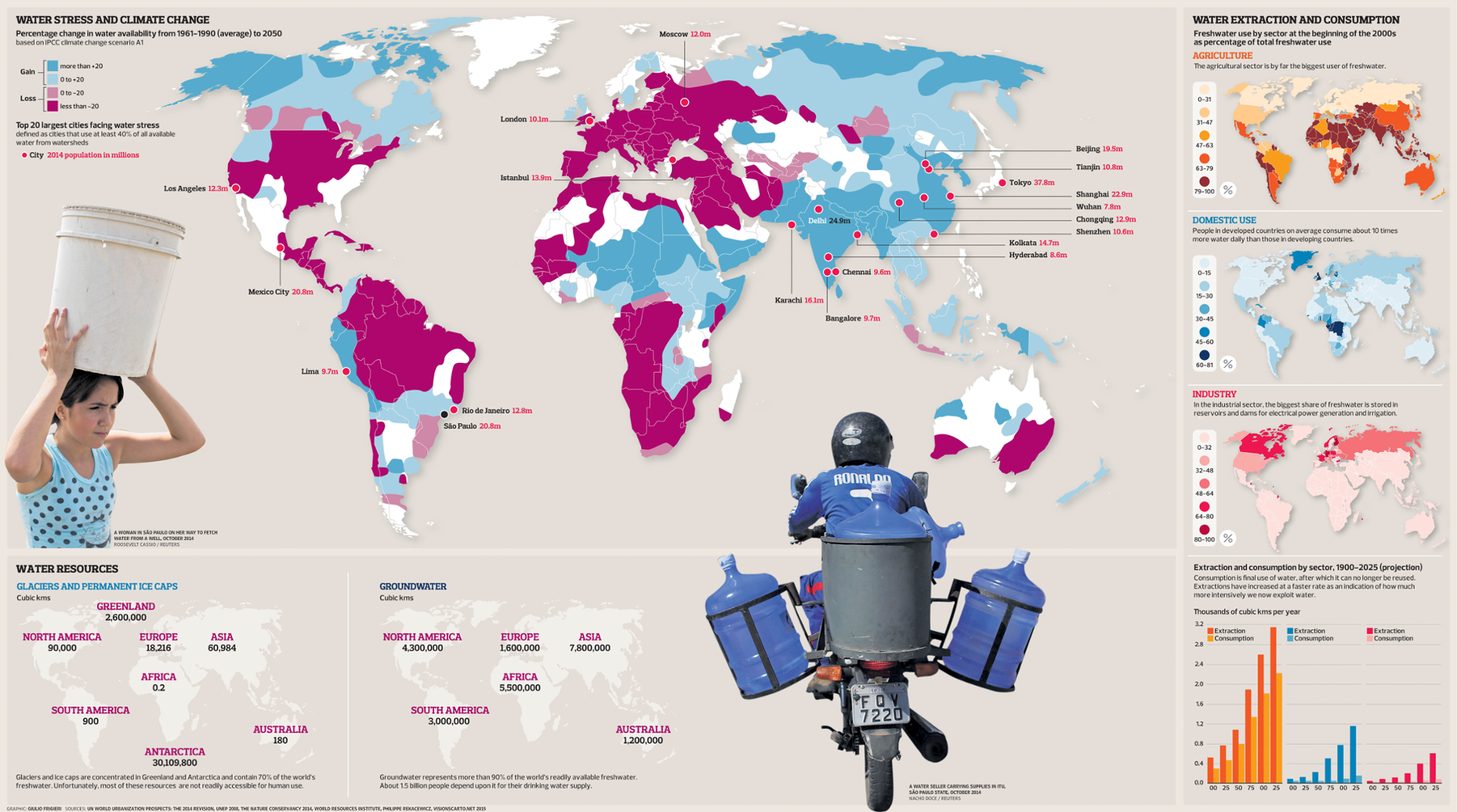
• Why Fresh Water Shortages Will Cause The Next Great Global Crisis (Guardian)
• The Francis Miracle: Inside The Transformation Of The Pope And The Church (TIME)

The hills are alive with the sound of too little money.

• Austria Is Fast Becoming Europe’s Latest Debt Nightmare (Telegraph)

Ah Austria, land of schnitzel, lederhosen, Mozart, alpine meadows and beer drinking. Less widely appreciated is its special place in the history of catastrophic banking crises. It was the failure of Creditanstalt, a Viennese bank founded in 1855 by Anselm von Rothschild, that arguably sparked the Great Depression, setting off an unstoppable chain reaction of bankruptcies throughout Europe and America. No-one would think that what happened last week at Austria’s failed Hypo Alpe-Adria Bank International falls into quite the same category; we are meant to be in the recovery phase of the latest global banking crisis, so this is more about re-setting the system than again bringing it to its knees, right? Well, make up your own mind. I suspect neither financial markets nor policymakers have yet caught onto the full significance of the latest turn of events.

In a nutshell, the Austrian government has had enough of funding the bank’s losses, and announced plans to “bail-in” external creditors to the tune of €7.6bn instead. As such, this marks a test case of new European rules to make creditors pay for failing banks. About time too, you might say. What took them so long? Only in this case, the bonds are notionally guaranteed by the Austrian state of Carinthia, which now theoretically becomes liable for the bail-in. It’s an echo of the mess Ireland got itself into at the height of the banking crisis, when it foolishly attempted to stem the panic by underwriting all Irish banking liabilities; the move very nearly ended up bankrupting the entire country. Hypo will bankrupt Carinthia. Essentially, what the Austrian government is doing is cutting loose an entire region, rather in the way the federal authorities in the US allowed Detroit to go bust a number of years ago.

It’s a mini-Greece going off in the heartlands of Europe. In Hypo’s case, the bail-in also threatens knock-on consequences for public bodies elsewhere, including Bayern Landesbank, a big holder of Hypo bonds which is owned by the German state of Bavaria, and the Munich based FMSW, which is again publicly underwritten. All this is just the tip of the iceberg; Europe is awash with interlinked banking and public liabilities, many of which will never be repaid and basically need to be written off. Massive creditor losses are in prospect. The European authorities had us all half convinced that Europe’s debt crisis was over. In truth, it may have barely begun.

Read more …

Good interview. Read.

• Tsipras: ‘We Don’t Want to Go on Borrowing Forever’ (Spiegel)

SPIEGEL: Mr. Prime Minister, most of your European partners are indignant. They accuse you of saying one thing in Brussels and then saying something completely different back home in Athens. Do you understand where such accusations come from?
Tsipras: We say the same things in Germany as we do in Greece. But sometimes, problems can be viewed differently, depending on the perspective. (He points to his water glass.) This glass here can be described as being half full or half empty. The reality is that it is a glass filled half-way with water.

SPIEGEL: In Brussels, you have given up your demands for a debt haircut. But back home in Athens, you continue talking about a haircut. What does that have to do with perspective?
Tsipras: At the summit meeting, I used the language of reality. I said: Prior to the bailout program, Greece had a sovereign debt that was 129% of its economic output. Now, it is 176%. No matter how you look at that, it’s not possible to service that debt. But there are different ways to solve this problem: via a debt cut, debt restructuring or bonds whose payback is tied to growth. The most important thing, though, is solving the true problem: the austerity which has driven debt way up.

SPIEGEL: Are you a linguist or a politician? You told the Greeks that you got rid of the troika and sold it as a victory. But the European Commission, the International Monetary Fund (IMF) and the European Central Bank (ECB) are still monitoring your reforms. Now, they are simply called “the institutions.”
Tsipras: No, it isn’t a question of terminology. It has to do with the core of the issue. Every country in Europe has to work together with these institutions. But that is something very different than a troika that is beholden to nobody. Its officials came to Greece to strictly monitor us. Now, we are again speaking directly with the institutions. Europe has become more democratic because of this change.

SPIEGEL: What change? You still have to submit your reform plans to three “institutions” for approval.
Tsipras: The reforms won’t be approved by the institutions. They have a say in the process and establish a framework that applies to all in Europe. Previously, the situation was such that the troika would send an email telling the Greek government what it had to do. Our planned reforms are necessary, but we are deciding on them ourselves. They aren’t being forced onto us by anyone. We want to stop large-scale tax evasion and tax fraud more than anybody. Thus far, it has only been the low earners and not the wealthy that paid. We also want to make the state more efficient.

Read more …

Lots of emptiness.

• Eurogroup To Consider Greek Reform Proposals Amid Scramble For Funding (Kath.)

Greece faces another tough Eurogroup summit Monday when a slew of reform proposals from Athens are to come under the microscope in Brussels, with the two sides apparently far from a compromise even as state coffers in Athens are close to emptying. Finance Minister Yanis Varoufakis is expected to face a barrage of questions from his eurozone counterparts on a series of proposals set out in an 11-page letter he sent to Eurogroup President Jeroen Dijsselbloem, which include the creation of a so-called fiscal council to generate budget savings, the revision of licensing for gaming and lotteries and the hiring of non-professionals, including students and tourists, as tax agents to help a foundering crackdown on tax evasion.

Sources suggested over the weekend that the proposals had met with skepticism from eurozone officials. In comments on Saturday on the sidelines of a conference in Venice, Varoufakis said he had received a response from Dijsselbloem. He added that Greece was keen to move forward with reforms but that the two sides must agree on “the process by which the reforms will be made more specific, implemented and evaluated so that they can be reviewed by the Eurogroup.” Varoufakis added that Greece’s reform program would be “discussed by technical teams that will convene shortly in Brussels.” Some eurozone officials appeared to be running out of patience. ECB governing council member Luc Coene said in an interview on Saturday that Greece must realize “there is no other way than to reform,” noting that Greeks had been sold “false promises.”

Read more …

“Perhaps the cupboards of the monetary bureaucrats are short a few plates and in need of a little pharmacological fine-tuning. Just saying.”

• The ECB’s Lunatic Full Monty Treatment (Tenebrarum)

The belief that the market economy requires “steering” by altruistic central bankers, who make decisions influencing the entire economy based on their personal epiphanies, has rarely been more pronounced than today. Most probably it has actually never been stronger. It is both highly amusing and disconcerting that so many economists who would probably almost to a man agree that it would be a very bad idea if the government were to e.g. take over the computer industry and begin designing PCs and smart phones by committee, think that government bureaucrats should determine the height of interest rates and the size of the money supply.

We know of course that central banks are the major income source for many of today’s macro-economists, so it is in their own interest not to make any impolitic noises about these central planning institutions and their activities. Besides, most Western economists have not exactly covered themselves with glory back when the old Soviet Union still existed. Even in the late 1980s, Über-Keynesian Alan Blinder for instance still remarked that the question was not whether we should follow its example and adopt socialism, but rather how much of it we should adopt. The recent ECB announcement detailing its new “QE” program once again confirms though that there is nothing even remotely “scientific” about what these planners are doing. Common sense doesn’t seem to play any discernible role either. [..]

Leaving for the moment aside how sensible it is for the bond yields of virtually insolvent governments mired in “debt trap” dynamics to trade at less than 1.3%, one must wonder: what can possibly be gained by pushing them even lower? Does this make any sense whatsoever? Meanwhile, the ECB let it be known that it wouldn’t buy any bonds with a negative yield-to-maturity exceeding 20 basis points – the level its negative deposit rate currently inhabits as well. What a relief! What makes just as little sense is that the economic outlook presented by Mr. Draghi on occasion of his press conference was actually quite upbeat. To summarize: yields are at record lows, with about €2 trillion in European government bonds sporting negative yields to maturity. The economic outlook is said to be good.

The current slightly negative HICP rate is held to be a transitory phenomenon (it very likely will be). Needless to say, the arbitrary 2% target for “price inflation” makes absolutely no sense anyway. Not a single iota of wealth can be created by pushing prices up. Last but certainly not least, year-on-year money supply growth in the euro area has soared into double digits recently. And the conclusion from all this is that the central bank needs to boost its balance sheet by €1 trillion with a massive debt monetization program? Are these people on drugs? If not, then they should perhaps see a shrink. Perhaps the cupboards of the monetary bureaucrats are short a few plates and in need of a little pharmacological fine-tuning. Just saying.

Read more …

It’s no longer useful to view this from an investor point of view.

• 7 Things To Know About The ECB’s QE Game Plan (MarketWatch)

After years of discussion, months of urgent calls and weeks of preparation, the European Central Bank is about to write history—on Monday it will kick of its €1.1 trillion-euro, quantitative-easing program. Unlike its U.S., U.K. and Japanese central-bank peers, the ECB never resorted to sovereign QE at the height of the global financial crisis. Instead, it’s attempted an array of other extraordinary policy measures, including a negative deposit rate, programs to provide cheap funding to eurozone banks, and a less-powerful bond-buying program, often called “private QE,” focused on purchasing asset-backed securities and covered bonds. Now, as investors prepare for the launch of full-blown QE on March 9, here’s what we know about the program so far.

What’s the aim of the QE? Under quantitative easing, a central bank creates money electronically, which it then uses to buy securities, such as government bonds, from banks and other institutions. It’s hoped that these institutions will then use the new bank reserves to buy other assets, lowering interest rates and encouraging spending. The ECB hopes QE will revive growth and inflation in the eurozone. Despite repeated attempts to spur an economic recovery, the currency bloc is still grappling with painfully high unemployment, slow growth and negative inflation among its members.

Will the ECB buy government bonds with negative yields?Yes, but nothing that carries a yield below the ECB’s own deposit rate, which currently stands at negative 0.2%. The limit means that bonds currently yielding more than the deposit rate have room to fall further. Even before the big QE bazooka has been fired, yields for most eurozone countries have tanked. For Germany, France, Austria, Belgium, Holland and Finland borrowing costs for shorter-dated debt are now negative, meaning that bondholders essentially agree to pay issuers to hold their debt.

What will QE do to bond yields? Initially, sovereign QE and lower bond yields should march together hand in hand. As the ECB buys large quantities of government debt, bond prices should go up, which will send yields lower. On Friday, borrowing costs for Italy, Spain and Portugal dropped to record lows in anticipation of QE takeoff. However, big moves in the bond markets show much of the impact may have already been priced in. Longer-term, as the QE liquidity injection begins to work on the eurozone economy, and likely boost inflation and growth, bond yields should start to rise to reflect the stronger economy. The latest eurozone data indicate that the region may be turning a corner, leaving room for higher borrowing costs.

Read more …

London is a wasteland. It may be rich, but it’s still a wasteland. No there there.

• 30 Years Of A Polarised Economy Have Squeezed Out The Middle Class (Observer)

London has always been a city of extremes but the extent to which it has become polarised between rich and poor is laid bare in research that reveals a 43% decrease in middle-income households between 1980 and 2010. England is increasingly divided between the rich and the poor, with a 60% increase in poor households and a 33% increase in wealthy households. This has come at a time – 1980 to 2010 – when the number of middle-income households went down by 27%. But the trend is most marked in London, according to an analysis of census data by Benjamin Hennig and Danny Dorling of the School of Geography and the Environment at the University of Oxford.

Over the three decades, the capital has seen an 80% increase in poor households, an 80% increase in wealthy households – and a 43% decrease in middle households. Around 36% of London households are now classified as poor (up from 20% in 1980), while 37% are middle income (down from 65%). The largest%age point fall in households in the middle has been in Westminster, which saw its middle reduce from nearly three-quarters of all households to just one-third. The largest%age-point increase in wealthy households has been in Richmond-upon-Thames, where more than half of households are now wealthy, compared with a fifth in 1980. In contrast, in Newham, almost one in two households is now poor.

The researchers have drawn up maps of England according to wealth, described by Dorling as “fancy pie charts”. The polarising of wealth has been exacerbated in recent years, with economic growth having been slower than had been hoped, and wages in the middle failing to rise in parallel with the recovery. The economic divide between the beneficiaries of the property bubble and non-homeowners also continues to widen in the country as a whole, with upward pressure on land values. Dorling said: “This analysis shows that England is becoming more polarised, with an increase in households that are poor and those that are wealthy. The number of households in poverty has jumped by 60% since 1980, meaning that now almost three in 10 are poor.

Read more …

So more PBOC QE too?

• Foreign Banks Tighten Lending Rules For China State-Backed Firms (Reuters)

Some banks are adopting stricter lending criteria for China’s state-owned enterprises (SOEs), demanding collateral from some companies they used to deem as safe as government debt, as Beijing tries to reform its bloated firms and the economy slows. Singapore’s DBS Group, which recently suffered a loss on a bad loan to an SOE-related firm it had assessed as risk-free, plans to launch a “decision grid” to assess the creditworthiness of SOEs, according to draft internal risk guidelines reviewed by Reuters. A banker at Taiwan’s Chang Hwa Commercial Bank said that from the beginning of this year his bank would only lend to state-owned Chinese companies that provide collateral, in recognition that SOEs were no longer risk free.

Such changes in policy suggest some foreign banks are preparing for a rise in defaults in the world’s second-largest economy, which is growing at its slowest pace in a quarter of a century and where the government is trying to make the state sector more efficient.
DBS will now lend more conservatively to SOEs seen as receiving less government support, as China plans to prioritize SOEs in strategic sectors. The January-dated DBS document said: “Not all SOEs receive the same degree of government support. It is our further belief that the differentiation of such support will widen in the future as the government continues to pursue market economy.” DBS will now divide SOEs into tiers according to their likely level of government support, with subsidiaries considered more risky than top-level holding companies.

Group companies that are not consolidated into the parent SOE’s financial statements will be evaluated as an ordinary borrower, the decision grid shows. DBS effectively acknowledges that lenders can no longer take for granted implicit support from above. “Compared to ordinary corporates, implicit support obtained from the parents of SOEs are subject to higher risks because of the risk of policy and people changes,” the document said. A DBS spokeswoman said: “It is still business as usual for us in China. With slower regional economic growth, we continue to be disciplined and watchful of risks in all the markets we operate in..”

Read more …

C’mon, admit it, you were due for a good laugh.

• China’s February Exports Surge 48.3% (CNBC)

China’s exports surged 48.3% on year in February, sharply above analysts’ forecasts, potentially signaling stronger economic growth for its trade partners. Imports fell 20.5% for the period, according to data from China’s customs department. A Reuters poll had forecast exports would rise 14.2% and imports would fall 10%. For January and February combined – a common metric to help smoothe distortions from the Lunar New Year holiday period – exports rose 15% from a year earlier, while imports declined 20.2%. “The demand from the advanced economies bodes well,” ANZ said in a note Sunday, citing data showing shipments to the U.S. and European Union rose 40.3% and 36.6% on-year respectively.

But the bank noted that the jump in exports could be due to a base effect. “The February 2014 figures were extremely low as Chinese authorities cracked down the round-tripping trade flows,” it said. “We still see strong headwinds facing China’s exports this year,” ANZ said, citing weak export order PMI data. ANZ attributed the decline in imports to weak commodity demand compounded by sharp drops in commodity prices, citing as an example the 45.4% on year drop in the value of iron-ore imports, although the iron-ore import volume only fell 0.9%. As well, “Chinese commercial banks have significantly tightened the trade financing facilities for commodity traders,” ANZ said.

Read more …

“..it is not likely that she came to Baku with positive intentions, or even with a positive image of the country in her mind.”

• Azerbaijan Should Be Very Afraid of Victoria Nuland (GR)

The US’ Assistant Secretary of State for European and Eurasian Affairs, Victoria Nuland, visited Baku on 16 February as part of her trip to the Caucasus, which also saw her paying stops in Georgia and Armenia. While Azerbaijan has had positive relations with the US since independence, they’ve lately been complicated by Washington’s ‘pro-democracy’ rhetoric and subversive actions in the country. Nuland’s visit, despite her warm words of friendship, must be look at with maximum suspicion, since it’s not known what larger ulterior motives she represents on behalf of the US government. [..]

Given the ideological context in which Nuland likely sees eye-to-eye on with her husband, plus her experience in instigating the Color Revolution in Ukraine, it is not likely that she came to Baku with positive intentions, or even with a positive image of the country in her mind. This is all the more so due to the recent scandal over Radio Free Europe/Radio Liberty. The US-government-sponsored information agency was closed down at the end of December under accusations that it was operating as a foreign agent. While the US has harshly chided the Azeri government for this, at the end of the day, it remains the country’s sovereign decision and right to handle suspected foreign agents as it sees fit. Azerbaijan’s law is similar to Russia’s, in that entities receiving foreign funds must register as foreign agents, and interestingly enough, both of these laws parallel the US’ own 1938 Foreign Agents Registration Act (FARA).

So why does the US feel that it reserves the sole right to register foreign agents and entities, and if need be, identify and punish those that are acting in the country illegally, but Azerbaijan is deprived of this exercise of sovereignty? The reason is rather simple, actually – it’s the US that is the most likely to use these foreign agents to destabilize and potentially overthrow governments (as in Ukraine most recently), whereas Azeri agents in America, should they even exist, are nothing more than an administrative nuisance incapable of inflicting any real harm on the authorities. This double standard is at the core of the US’ relations with all countries in the world, not just Azerbaijan, but it’s a telling example of the power and leverage Washington attempts to hold over Baku, which is seen most visibly by the blistering criticism leveled on the government after Radio Free Europe/Radio Liberty’s closing in compliance with the law.

Read more …

Too little too late. Fait accompli.

• EU Won’t Be Pushed Into Confrontation Over Ukraine – Foreign Policy Chief (RT)

The EU is resisting calls from hotheads to supply arms to Ukraine, saying it won’t be pulled into a confrontation with Russia. Europeans cite the progress in implementing a ceasefire in eastern Ukraine between Kiev and local rebels. The idea of providing lethal aid to Kiev is popular among many NATO officials and American politicians. US House Speaker John Boehner and a bipartisan group of top lawmakers called on President Barack Obama to deliver the weapons. But Europeans are opposing the move, which would likely escalate tensions with Russia. “The European Union today is extremely realistic about developments in Russia. But we will never be trapped or forced or pushed or pulled into a confrontative [sic] attitude,” the EU’s Foreign Policy Chief Federica Mogherini told the media on Friday, following an informal meeting of EU foreign ministers in Riga, Latvia.

“We still believe that around our continent – not only in but around – cooperation is far better than confrontation. We still argue for that,” she added. Austrian Foreign Minister Sebastian Kurz said the EU’s goal in Ukraine is “a ceasefire, not an escalation.” Germany has been among the most vocal critics of sending arms to Ukraine and now German officials question the assessment of the situation in the country voiced by Kiev armament pundits. “The statements [on Ukraine] from our source do not fully coincide with the statements made by NATO and the US,” German FM Frank-Walter Steinmeier said after the conference. “We are interested in not allowing it to grow into a misunderstanding.” The German Spiegel magazine reported on Saturday that Chancellor Angela Merkel’s government suspects the US and NATO of trying to derail the EU’s mediation effort in Ukraine.

The Minsk ceasefire agreement between Kiev and rebels in eastern Ukraine was brokered last month by Germany, France and Russia. So far, it’s mostly holding, with both parties pulling some of their heavy weapons back from the front line, and OSCE monitors reporting a significant reduction in violence. The EU says it wants to increase the number of OSCE observers on the ground, doubling its current ceiling of 500. “The main point is obviously working to increase the number of selected and skilled people that can do the job,” Mogherini said. The more observers the tougher it would be to violate the conditions of the Minsk agreement with impunity. Kiev and its foreign backers, particularly in Washington, accuse Russia of propping up the rebel forces with weapons and troops. Moscow insists that it has no involvement in the armed conflict and has only delivered humanitarian aid to the ravaged areas.

Read more …

“86% of the respondents approve of Vladimir Putin as Russia’s president. When asked to name five or six politicians or government officials they trust, 59% responded: ”Putin”.”

• Why Do Russians Still Support Vladimir Putin? (New Statesman)

The news of the assassination of Boris Nemtsov, a Russian opposition politician, dominated the news this weekend. It was possible to imagine – just for a day or two – that the charismatic Boris Nemtsov, who first entered the national political arena in Russia back in the Yeltsin days, had been a prominent figure without whom the opposition would struggle to have a say against Kremlin. Unfortunately, the truth is that Nemtsov was hardly a force to be reckoned with. However open his position on Putin was and however brave his last interview to the Moscow radio station Echo Moskvy was, just hours before his death, Boris Nemtsov was not important. Like any other opposition leader in Russia, he was a scribble on the margin of current affairs. The overwhelming majority of the Russian population supports the country’s president, Vladimir Putin.

A recent poll, conducted between 20-23 February 2015 among 1,600 Russians aged 18 or more in 46 different regions of Russia by an independent Russian not-for-profit market research agency Levada Centre for Echo Moskvy radio station, found that 54% of the population agreed that “[Russia] is moving in the right direction”. 86% of the respondents approve of Vladimir Putin as Russia’s president. When asked to name five or six politicians or government officials they trust, 59% responded: ”Putin”.

Let’s put aside the possibility of rigged polls because there is little to suggest Putin’s popularity is fake. Putin is respected, if not revered. He is referred to as batyushka, the holy father. Many Russians are particularly upset and angry about Nemtsov’s murder because western fingers are pointing at Putin. In their opinion, Nemtsov was most likely killed as a provocation to destabilise Russia and fuel hostility between Kremlin and the west. “With all due respect to the memory of Boris Nemtsov, in political terms he did not pose any threat to the current Russian leadership or Vladimir Putin, said presidential press secretary Dmitriy Peskov. “If we compare popularity levels, Putin’s and the government’s ratings and so on, in general Boris Nemtsov was just a little bit more than an average citizen.”

Read more …

Who’s “our son of a bitch“?

• The Dark Undercurrents Of The War In The Ukraine (Saker)

The situation in the Ukraine is more or less calm right now, and this might be the time to step back from the flow of daily reports and look at the deeper, underlying currents. The question I want to raise today is one I will readily admit not having an answer to. What I want to ask is this: could it be that one of the key factors motivating the West’s apparently illogical and self-defeating desire to constantly confront Russia is simply revanchism for WWII? We are, of course, talking about perceptions here so it is hard to establish anything for sure, but I wonder if the Stalin’s victory against Hitler was really perceived as such by the western elites, or if it was perceived as a victory against somebody FDR could also have called “our son of a bitch“. After all, there is plenty of evidence that both the US and the UK were key backers of Hitler’s rise to power (read Starikov about that) and that most (continental) Europeans were rather sympathetic to Herr Hitler.

Then, of course and as it often happens, Hitler turned against his masters or, at least, his supporters, and they had to fight against him. But there is strictly nothing new about that. This is also what happened with Saddam, Noriega, Gaddafi, al-Qaeda and so many other “bad guy” who began their careers as the AngloZionists’ “good guys”. Is it that unreasonable to ask whether the western elites were truly happy when the USSR beat Nazi Germany, or if they were rather horrified by what Stalin had done to what was at that time the single most powerful western military – Germany’s? [..] for the western elites, [..] they must have known that their entire war effort was, at most, 20% of what it took to defeat Nazi Germany and that those who had shouldered 80%+ were of an ideology diametrically opposed to capitalism. Is there any evidence of that fear? I think there is and I already mentioned them in the past:

Plan Totality (1945): earmarked 20 Soviet cities for obliteration in a first strike: Moscow, Gorki, Kuybyshev, Sverdlovsk, Novosibirsk, Omsk, Saratov, Kazan, Leningrad, Baku, Tashkent, Chelyabinsk, Nizhny Tagil, Magnitogorsk, Molotov, Tbilisi, Stalinsk, Grozny, Irkutsk, and Yaroslavl.

Operation Unthinkable (1945) assumed a surprise attack by up to 47 British and American divisions in the area of Dresden, in the middle of Soviet lines.This represented almost a half of roughly 100 divisions (ca. 2.5 million men) available to the British, American and Canadian headquarters at that time. (…) The majority of any offensive operation would have been undertaken by American and British forces, as well as Polish forces and up to 100,000 German Wehrmacht soldiers.

Operation Dropshot (1949): included mission profiles that would have used 300 nuclear bombs and 29,000 high-explosive bombs on 200 targets in 100 cities and towns to wipe out 85% of the Soviet Union’s industrial potential at a single stroke. Between 75 and 100 of the 300 nuclear weapons were targeted to destroy Soviet combat aircraft on the ground.

But the biggest proof is, I think, the fact that none of these plans was executed, even though at the time the Anglosphere was safely hidden behind its monopoly on nuclear weapons (and have Hiroshima and Nagasaki not been destroyed in part to “scare the Russians”?). And is it not true that the Anglos did engage in secret negotiations with Hitler’s envoys on several occasions? (The notion of uniting forces against the “Soviet threat” was in fact contemplated by both Nazi and Anglo officials, but they did not find a way to make that happen.) So could it be that Hitler was, really, their “son of a bitch”?

Read more …

“We support sanctions that bring the other side to the negotiation table.. But we are against sanctions that are imposed simply because someone is angry.”

• ‘Give Peace A Chance, Decide Sanctions Later’: EU Rethinks Russia (RT)

The latest EU meeting has shown that many of its members are in no rush to extend the sanctions which were imposed on Russia last year following a US example, or to exert any more pressure on Moscow, as long as the Minsk ceasefire agreement is holding. Most foreign ministers at the EU two-day meeting in the Latvian capital expressed hopes that the latest Minsk agreement would be a success, and there would be no need to impose further sanctions on Russia. The meeting had a format of an informal discussion, where the ministers touched the topics of the Minsk agreements and the OSCE mission in Ukraine, as well as the possible stepping up of pressure on Russia to “promote peace.”

Scheduled ten days before an official summit in Brussels, the meeting has shown that the EU can’t yet agree even on the automatic extension of existing sanctions – a move that some of the hawkish states have been actively promoting. “In my opinion, we must not make any other steps, we have to give peace a chance. The extension could take place, but only if there is no improvement of the situation,” Spanish FM Jose Manuel Garcia-Margallo said, expressing his views after the meeting , according to Russian news agency RIA Novosti. The Spanish FM is heading to Moscow, during which he will not only discuss the Ukrainian crisis, but will also meet with the Russian Energy minister.

Meanwhile, Italian FM Paolo Gentiloni told reporters the he sees “encouraging signals” on the ground in eastern Ukraine, and so “at the moment we don’t need either new sanctions or automatic renewals.” Austrian Foreign Minister Sebastian Kurz shared the views of his Italian counterpart, saying that there is a “glimpse of hope” following the Minsk agreements: “We should do everything now to improve the situation and decide later whether that improvement really happened and we can reduce the sanctions, or, if we have to, extend them,” Kurz said. Greece has also spoke out against any new sanctions as long as Russia supports the Minsk agreements, with Greek Foreign Minister Nikos Kotzias saying the Greek experience suggests that “not every sanction is constructive” and can succeed. “We support sanctions that bring the other side to the negotiation table,” Kotzias told German ARD. “But we are against sanctions that are imposed simply because someone is angry.”

Read more …

Wait! Where have we heard this before? “Owner will throw in a brand new car..” “Just pick your favorite colour.”

• Layoffs And Empty Streets As Australia’s Boom Towns Go Bust (Reuters)

When Probo Junio got a visa to work in Australia, he thought he had won a ticket to the good life. In 2013, the 45-year-old boilermaker left his hometown of Cebu in the Philippines, where he was getting paid about $10 a day, to work in Karratha in Western Australia for $30 an hour. Enough to support his relatives and build a new life Down Under. What Junio didn’t expect was that Australia’s booming resources industry would go bust less than two years later, taking his job, and leaving him just 60 days to find work or go home. “It’s very difficult because most of the companies don’t want 457 visa holders,” he said, referring to temporary permits for skilled workers.Across the country, people like Junio are falling victim to downsizing. Jobs, once plentiful and well paid, are scarce.

Real estate prices in boom towns are sinking and even the notoriously high coffee prices in mining capital Perth have levelled off at under $4. Prices of iron ore and coal, the country’s two biggest export earners, have plunged during the last two years amid falling demand from China, in the wake of its economic slowdown. Just a few years ago, foreign workers were flooding into Australia, lured by huge pay as the resources industry scrambled to fill positions. Truck driving and cooking jobs offering $100,000 a year made headlines abroad. But those workers, like Junio, are now hard-pressed to find work, especially if they are on temporary visas. Even permanent residents have to take lower pay. “There is reality coming into the marketplace about salaries,” said John Downing, who runs global resources recruiting firm Downing Teal, adding that salary expectations have fallen 10% to 25%.

“For Lease” signs are everywhere in West Perth, the headquarters of many mining, oil and gas companies. “You could shoot a cannon down those streets,” said resources analyst Peter Strachan. “There’s nobody there.”Commercial vacancy rates in the city are near a 20-year high of 15% as resources companies downsize or shut down, said Joe Lenzo, of the Property Council of Australia. The real estate market has also been hit in the coal country of Queensland, across the continent. “Owner will throw in a brand new car,” read advertisements for houses in the coal-mining town of Moranbah. “Just pick your favorite colour.”

Read more …

There’s something very positive about South America.

• Venezuela To Get South American Help For Food Crisis (BBC)

Foreign ministers from 12 South American nations gathering in Caracas have promised to help Venezuela overcome an ongoing shortage of food, medicine and other products. The regional Unasur bloc agreed with President Nicolas Maduro to provide items that have gone missing from many Venezuelan supermarkets. The shortage of staples has contributed to popular discontent. Unasur highlighted the importance of safeguarding democratic stability. “The idea is to get all the countries to support the distribution of staples,” said Ernesto Samper, Secretary-General of Unasur (Union of South American Nations). “We will work together with the Venezuelan authorities to strengthen the distribution networks in our countries so they help Venezuela,” said Mr Samper.

He criticised recent anti-government protests in Venezuela that descended into violence. The opposition must “express its opinions in a democratic, peaceful and lawful manner,” said Mr Samper. The Unasur ministers will meet opposition leaders and government officials in the next few days to seek guarantees that Venezuela will be able to hold free and fair elections later this year. Opposition leader Henrique Capriles told the AFP news agency on Tuesday that Mr Maduro could cancel the vote, which is scheduled for the second half of this year. “The government had never had such a large deficit [in the polls] heading into an election. Now it does. How does it change that? It rigs the game,” said Mr Capriles. Mr Maduro said the elections would go ahead as planned.

Read more …

“For us, water is [now] more important than oil.”

• Why Fresh Water Shortages Will Cause The Next Great Global Crisis (Guardian)

Water is the driving force of all nature, Leonardo da Vinci claimed. Unfortunately for our planet, supplies are now running dry – at an alarming rate. The world’s population continues to soar but that rise in numbers has not been matched by an accompanying increase in supplies of fresh water. The consequences are proving to be profound. Across the globe, reports reveal huge areas in crisis today as reservoirs and aquifers dry up. More than a billion individuals – one in seven people on the planet – now lack access to safe drinking water. Last week in the Brazilian city of São Paulo, home to 20 million people, and once known as the City of Drizzle, drought got so bad that residents began drilling through basement floors and car parks to try to reach groundwater.

City officials warned last week that rationing of supplies was likely soon. Citizens might have access to water for only two days a week, they added. In California, officials have revealed that the state has entered its fourth year of drought with January this year becoming the driest since meteorological records began. At the same time, per capita water use has continued to rise. In the Middle East, swaths of countryside have been reduced to desert because of overuse of water. Iran is one of the most severely affected. Heavy overconsumption, coupled with poor rainfall, have ravaged its water resources and devastated its agricultural output. Similarly, the United Arab Emirates is now investing in desalination plants and waste water treatment units because it lacks fresh water.

As crown prince General Sheikh Mohammed bin Zayed al-Nahyan admitted: “For us, water is [now] more important than oil.” The global nature of the crisis is underlined in similar reports from other regions. In south Asia, for example, there have been massive losses of groundwater, which has been pumped up with reckless lack of control over the past decade. About 600 million people live on the 2,000km area that extends from eastern Pakistan, across the hot dry plains of northern India and into Bangladesh, and the land is the most intensely irrigated in the world. Up to 75% of farmers rely on pumped groundwater to water their crops and water use is intensifying – at the same time that satellite images shows supplies are shrinking alarmingly.

Read more …

“I look at . . . so many forests, all cut, that have become land . . . that can [no] longer give life..”

• The Francis Miracle: Inside The Transformation Of The Pope And The Church (TIME)

It was probably inevitable that the first pope named Francis—inspired by a saint who preached to birds and gave pet names to the sun and the moon—has turned out to be a strong environmentalist. In fact, Francis has said that concern for the environment is a defining Christian virtue. (The young Jorge Bergoglio trained as a chemist, so he has a foundation to appreciate the scientific issues involved.) This element of the social gospel bubbled to the surface as early as his inaugural mass, when Francis issued a plea to “let us be ‘protectors’ of creation, protectors of God’s plan inscribed in nature, protectors of one another and of the environment.” St. Francis’s imprint on this pope is clearly strong. In unscripted comments during a meeting with the president of Ecuador in April 2013, he said, “Take good care of creation. St. Francis wanted that.

People occasionally forgive, but nature never does. If we don’t take care of the environment, there’s no way of getting around it.” The two previous popes were also environmentalists. The mountain-climbing, kayaking John Paul II was a strong apostle for ecology, once issuing an almost apocalyptic warning that humans “must finally stop before the abyss” and take better care of nature. Benedict XVI’s ecological streak was so strong that he earned a reputation as “the Green Pope” because of his repeated calls for stronger environmental protection, as well as gestures such as installing solar panels atop a Vatican audience hall and signing an agreement to make the Vatican Europe’s first carbon-neutral state. Francis is carrying that tradition forward.

Among other things, he told French President François Hollande during a January 2014 meeting that he is working on an encyclical on the environment. (An encyclical is considered the most developed and authoritative form of papal teaching.) The Vatican has since confirmed that Francis indeed intends to deliver the first encyclical ever devoted entirely to environmental issues. In a July 2014 talk at the Italian university of Molise, Francis described harm to the environment as “one of the greatest challenges of our times.” It’s a challenge, he said, that’s theological as well as political in nature. “I look at . . . so many forests, all cut, that have become land . . . that can [no] longer give life,” the pope continued, citing South American woodlands in particular. “This is our sin, exploiting the Earth. . . . This is one of the greatest challenges of our time: to convert ourselves to a type of development that knows how to respect creation.”

Read more …

Feb 032015
 
 February 3, 2015  Posted by at 11:56 am Finance Tagged with: , , , , , , , , ,  10 Responses »


DPC City Hall subway station, New York 1904

• US Consumer Spending Declined in December by Most in Five Years (Bloomberg)
• US Household Spending Tumbles Most Since 2009 (Zero Hedge)
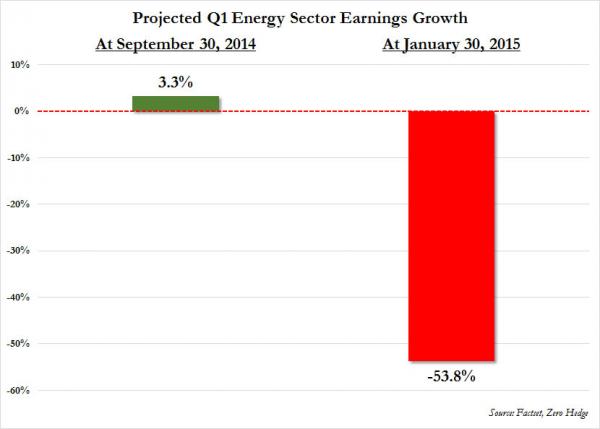
• Q1 Energy Earnings Shocker: Then And Now (Zero Hedge)
• Exxon Revenue, Earnings Down 21% From YoY, Sales Miss By $5 Billion (Zero Hedge)
• BP Hit By $3.6 Billion Charge, Cuts Capex On Oil Prices (CNBC)
• Greece Finance Minister Varoufakis Unveils Plan To End Debt Stand-Off (FT)
• Germany Will Have To Yield In Dangerous Game Of Chicken With Greece (AEP)
• The Truth About Greek Debt Is Far More Nuanced Than You Think (Telegraph)
• Greece Standoff Sparks Ire From US, UK Over Economic Risks (Bloomberg)
• Varoufakis Is Brilliant. So Why Does He Make Everyone So Nervous? (Bloomberg)
• Greece’s Damage Control Fails to Budge Euro Officials (Bloomberg)
• What is Plan B for Greece? (Kenneth Rogoff)
• Why The Bank Of England Must Watch Its Words (CNBC)
• More Than 25% Of Euro Bond Yields Are Negative, But … (MarketWatch)
• Draghi’s Negative-Yield Vortex Draws in Corporate Bonds (Bloomberg)
• China Debt Party Nears The End Of The Road (MarketWatch)
• Global Deflation Risk Deepens As China Economy Slows (Guardian)
• Canada Mauled by Oil Bust, Job Losses Pile Up (WolfStreet)
• Aussie Gets Crushed – How Much More Pain Lies Ahead? (CNBC)

But don’t worry: nothing Bloomberg can’t spin: “Consumers are in a good mood coming into 2015, and we think that’s likely to continue..”

• US Consumer Spending Declined in December by Most in Five Years (Bloomberg)

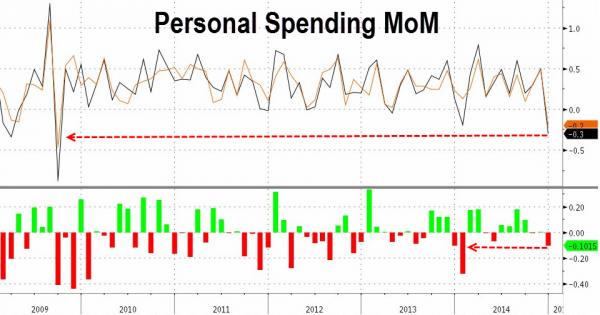
Consumer spending fell in December as households took a breather following a surge in buying over the previous two months. Household purchases declined 0.3%, the biggest decline since September 2009, after a 0.5% November gain, Commerce Department figures showed Monday in Washington. The median forecast of 68 economists in a Bloomberg survey called for a 0.2% drop. Incomes and the saving rate rose. Consumers responded to early promotions by doing most of their holiday shopping in October and November, leading to the biggest jump in consumer spending last quarter in almost nine years. For 2015, a pick-up in wage growth will be needed to ensure households remain a mainstay of the expansion as the economy tries to ward off succumbing to a global slowdown.

“Consumers are in a good mood coming into 2015, and we think that’s likely to continue,” said Russell Price, a senior economist at Ameriprise, who correctly forecast the drop in outlays. “The prospects for 2015 look very encouraging.” Stock-index futures held earlier gains after the report. Projections for spending ranged from a decline of 0.6% to a 0.2% gain. The previously month’s reading was initially reported as an increase of 0.6%. For all of 2014, consumer spending adjusted for inflation climbed 2.5%, the most since 2006. Incomes climbed 0.3% in December for a second month, the Commerce Department’s report showed. The Bloomberg survey median called for a 0.2% increase. November’s income reading was revised down from a 0.4% gain previously reported. While growth in the world’s largest economy slowed in the fourth quarter, consumption surged, with household spending rising at the fastest pace since early 2006, a report from the Commerce Department last week showed.

Read more …

Recovery.

• US Household Spending Tumbles Most Since 2009 (Zero Hedge)

After last month’s epic Personal Income and Spending data manipulation revision by the BEA, when, as we explained in detail, the household saving rate (i.e., income less spending ) was revised lower not once but twice, in the process eliminating $140 billion, or some 20% in household savings… there was only one possible thing for household spending to do in December: tumble. And tumble it did, when as moments ago we learned that Personal Spending dropped in the month of December by a whopping 0.3%, the biggest miss of expectations since January 2014 and the biggest monthly drop since September 2009!

Read more …

“By December 31, the estimated growth rate fell to -28.9%. Today, it stands at -53.8%.” Just a little off.”

• Q1 Energy Earnings Shocker: Then And Now (Zero Hedge)

Here is what Factset has to say about forecast Q1 energy earnings: “On September 30, the estimated earnings growth rate for the Energy sector for Q1 2015 was 3.3%. By December 31, the estimated growth rate fell to -28.9%. Today, it stands at -53.8%.” Just a little off. This is what a difference 4 months makes.

Read more …

“XOM did the best with margins and accounting gimmickry it could under the circumstances..”

• Exxon Revenue, Earnings Down 21% From YoY, Sales Miss By $5 Billion (Zero Hedge)

Moments ago, following our chart showing the devastation in Q1 earning forecasts, Exxon Mobil came out with its Q4 earnings, and – as tends to happen when analysts take a butcher knife to estimates – beat EPS handily, when it reported $1.56 in EPS, above the $1.34 expected, if still 18% below the $1.91 Q4 EPS print from a year earlier. A primary contributing factor to this beat was surely the $3 billion in Q4 stock buybacks, with another $2.9 billion distributed to shareholders mostly in the form of dividends. Overall, XOM distributed $23.6 billion to shareholders in 2014 through dividends and share purchases to reduce shares outstanding.

This number masks the 29% plunge in upstream non-US earnings which were smashed by the perfect storm double whammy of not only plunging oil prices but also by the strong dollar. Curiously, all this happened even as XOM actually saw its Q4 worldwide CapEx rise from $9.9 billion a year ago to $10.5 billion, even though capital and exploration expenditures were $38.5 billion in the full year, down 9% from 2013. However, while XOM did the best with margins and accounting gimmickry it could under the circumstances, there was little it could do to halt the collapse in revenues, which printed at $87.3 billion, well below the $92.7 billion expected, and down a whopping 21% from a year ago. And this is just in Q4 – the Q1 slaughter has yet to be unveiled!

Read more …

Set to get much worse.

• BP Hit By $3.6 Billion Charge, Cuts Capex On Oil Prices (CNBC)

BP revealed plans to cut capital expenditure (capex) on Tuesday, after it was hit by tumbling oil prices and an impairment charge of $3.6 billion. “We have now entered a new and challenging phase of low oil prices through the near- and medium-term,” said CEO Bob Dudley in a news release. “Our focus must now be on resetting BP: managing and rebalancing our capital program and cost base for the new reality of lower prices while always maintaining safe, reliable and efficient operations.” BP reported a replacement-cost loss of $969 million for the fourth quarter of 2014, after taking a $3.6-billion post-tax net charge relating to impairments of upstream assets given the fall in oil prices. On an underlying basis, replacement cost profit came in at $2.2 billion, above analyst expectations of $1.5 billion.

In the news release, BP said it was “taking action to respond to the likelihood of oil prices remaining low into the medium-term, and to rebalance its sources and uses of cash accordingly.” The company said that organic capex was set to be around $20 billion in 2015, significantly lower than previous guidance of $24-26 billion. Capex for 2014 came in at $22.9 billion, lower than initial guidance of $24-25 billion. “In 2015, BP plans to reduce exploration expenditure and postpone marginal projects in the Upstream, and not advance selected projects in the Downstream and other areas,” said the company.

Read more …

“Attempting to sound an emollient note, Mr Varoufakis told the Financial Times the government would no longer call for a headline write-off of Greece’s €315bn foreign debt. Rather it would request a “menu of debt swaps..”

• Greece Finance Minister Varoufakis Unveils Plan To End Debt Stand-Off (FT)

Greece’s radical new government unveiled proposals on Monday for ending the confrontation with its creditors by swapping outstanding debt for new growth-linked bonds, running a permanent budget surplus and targeting wealthy tax-evaders. Yanis Varoufakis, the new finance minister, outlined the plan in the wake of a dramatic week in which the government’s first moves rattled its eurozone partners and rekindled fears about the country’s chances of staying in the currency union. After meeting Mr Varoufakis in London, George Osborne, the UK chancellor of the exchequer, described the stand-off between Greece and the eurozone as the “greatest risk to the global economy”.

Attempting to sound an emollient note, Mr Varoufakis told the Financial Times the government would no longer call for a headline write-off of Greece’s €315bn foreign debt. Rather it would request a “menu of debt swaps” to ease the burden, including two types of new bonds. The first type, indexed to nominal economic growth, would replace European rescue loans, and the second, which he termed “perpetual bonds”, would replace European Central Bank-owned Greek bonds. He said his proposal for a debt swap would be a form of “smart debt engineering” that would avoid the need to use a term such as a debt “haircut”, politically unacceptable in Germany and other creditor countries because it sounds to taxpayers like an outright loss. But there is still deep scepticism in many European capitals, in particular Berlin, about the new government’s brinkmanship and its calls for an end to austerity policies.

“What I’ll say to our partners is that we are putting together a combination of a primary budget surplus and a reform agenda,” Mr Varoufakis, a leftwing academic economist and prolific blogger, said. “I’ll say, ‘Help us to reform our country and give us some fiscal space to do this, otherwise we shall continue to suffocate and become a deformed rather than a reformed Greece’.” [..] Mr Varoufakis said the government would maintain a primary budget surplus — after interest payments — of 1 to 1.5% of gross domestic product, even if this meant Syriza, the leftwing party that dominates the ruling coalition, would not fulfil all the public spending promises on which it was elected. Mr Varoufakis also said the government would target wealthy Greeks who had not paid their fair share of taxes during the nation’s six-year economic slump. “We want to prioritise going for the head of the fish, then go down to the tail,” he said.

Read more …

“The creation of the euro was a terrible mistake but breaking it up would be an even bigger mistake. We would be in a world where anything could happen:”

• Germany Will Have To Yield In Dangerous Game Of Chicken With Greece (AEP)

Finland’s governor, Erkki Liikanen, was categorical. “Some kind of solution must be found, otherwise we can’t continue lending.” So was the ECB’s vice-president Vitor Constancio. Greece currently enjoys a “waiver”, allowing its banks to swap Greek government bonds or guaranteed debt for ECB liquidity even though these are junk grade and would not normally qualify. This covers at least €30bn of Greek collateral at the ECB window. “If we find out that a country is below that rating – and there’s no longer a (Troika) programme – that waiver disappears,” he said. These esteemed gentlemen are sailing close to the wind. The waiver rules are not a legal requirement. They are decided by the ECB’s governing council on a discretionary basis. Frankfurt can ignore the rating agencies if it wishes. It has changed the rules before whenever it suited them.

The ECB may or may not have good reasons to cut off Greece – depending on your point of view – but let us all be clear that such a move would be political. A central bank that is supposed to be the lender of last resort and guardian of financial stability would be taking a deliberate and calculated decision to destroy the Greek banking system. Even if this were to be contained to Greece – and how could it be given the links to Cyprus, Bulgaria, and Romania? – this would be a remarkable act of financial high-handedness. But it may not be contained quite so easily in any case, as Mr Osborne clearly fears. I reported over the weekend that there is no precedent for such action by a modern central bank. “I have never heard of such outlandish threats before,” said Ashoka Mody, a former top IMF official in Europe and bail-out expert. “The EU authorities have no idea what the consequences of Grexit might be, or what unknown tremors might hit the global payments system. They are playing with fire.

The creation of the euro was a terrible mistake but breaking it up would be an even bigger mistake. We would be in a world where anything could happen. “What they ignore at their peril is the huge political contagion. It would be slower-moving than a financial crisis but the effects on Europe would be devastating. I doubt whether the EU would be able to act in a meaningful way as a union after that.” In reality, the ECB cannot easily act on this threat. They do not have the political authority or unanimous support to do so, and historians would tar and feather them if they did. The ground is shifting in Paris, Rome and indeed Brussels already. Jean-Claude Juncker, the European Commission’s president, yielded on Sunday, accepting (perhaps with secret delight) that the Troika is dead. French finance minister Michel Sapin bent over backwards to be accommodating at a meeting with Mr Varoufakis. There is no unified front against Greece. It is variable geometry, as they say in EU parlance.

Read more …

“if Greece were to measure its debt using corporate accounting standards, which take account of interest rates and maturities, its debt burden could be lower than 70pc of GDP.”

• The Truth About Greek Debt Is Far More Nuanced Than You Think (Telegraph)

“Greek debts are unsustainable” Greece’s debts are, as a proportion of GDP, higher than most countries in the eurozone. But, by the same measure, the interest rates it pays on those debts are among the lowest in the currency bloc; the maturities on its loans are the longest. Eurozone countries calculate their debt according to the Maastricht definition, which means that a liability is valued in the same way whether it is due to repaid tomorrow or in 50 years’ time. Greece’s debts are 175pc of GDP under this definition. Some people have calculated that if Greece were to measure its debt using corporate accounting standards, which take account of interest rates and maturities, its debt burden could be lower than 70pc of GDP.

Greece’s debts might actually be a distraction from bigger issues. One is the requirement that, under the bailout conditions, Greece must run a primary surplus of 4.5pc of GDP. Another is the so-called fiscal compact, which requires EU governments with debts of more than 60pc of GDP to reduce the excess by one-twentieth a year. Are Greece’s debts unsustainable? Maybe and maybe not. Are these targets unattainable? Probably.

“The eurozone can withstand ‘Grexit’ now” This rather depends on what you mean by “withstand”. It is certainly true that the eurozone is in a better financial position to deal with Greece quitting or being ejected from the euro than when the last crisis flared up in 2012. It now has a rescue fund and has embarked on a quantitative easing programme. Even as yields on Greek sovereign debt have shot up in recent weeks, those in Spain, Portugal and Italy have stayed at or near record lows, suggesting the markets believe the potential fallout from Greece won’t spread to other southern European countries.

It is less clear that the eurozone could handle the existential threat posed by a Grexit. Membership of the currency bloc would no longer by irrevocable. The markets would scent blood. And the political and diplomatic repercussions are almost impossible to predict: Would it subdue or embolden the various anti-austerity and anti-euro factions that are gaining ground elsewhere in the region? Would it help foster an Orthodox alliance between Greece and Russia? Does Brussels really want to find out?

Read more …

“Calling the meeting with Osborne a “breath of fresh air,” Varoufakis said: “we are highly tuned into finding common ground and we already have found it.”

• Greece Standoff Sparks Ire From US, UK Over Economic Risks (Bloomberg)

U.S. and British leaders are expressing frustration at Europe’s failure to stamp out financial distress in Greece and the risk it poses to the global economy. U.K. Chancellor of the Exchequer George Osborne, whose government faces voters in three months, became the latest critics, following comments by Britain’s central banker, Mark Carney, and U.S. President Barack Obama. “It’s clear that the standoff between Greece and the euro zone is fast becoming the biggest risk to the global economy,” Osborne said after meeting Greek Finance Minister Yanis Varoufakis in London. “It’s a rising threat to our economy at home. Varoufakis travels to Rome Tuesday, along with Prime Minister Alexis Tsipras, in a political offensive geared to building support for an end to German-led austerity demands, a lightening of their debt load and freedom to increase domestic spending even as they rely on bailout loans.

Tsipras, who went to Cyprus on Monday, also heads to Brussels and Paris. Calling the meeting with Osborne a “breath of fresh air,” Varoufakis said, “we are highly tuned into finding common ground and we already have found it.” Osborne’s comment came a day after Obama questioned further austerity. “You cannot keep on squeezing countries that are in the midst of depression,” he said on CNN. “When you have an economy that is in freefall there has to be a growth strategy and not simply an effort to squeeze more and more out of a population that is hurting worse and worse.” Greece’s economy has shrunk by about a quarter since its first bailout package in 2010. Tsipras was elected Jan. 25 promising the end the restrictions that have accompanied the aid that has kept it afloat.

The premier issued a conciliatory statement on Jan. 31, promising to abide by financial obligations after Varoufakis said the country won’t take more aid under its current bailout and wanted a new deal by the end of May. Before his appointment as finance minister, he advocated defaulting on the country’s debt while remaining in the euro. The Greek finance minister told bankers in London he wants the country’s “European Union-related” loans to be restructured, leaving debt to the IMF and the private sector intact. “A priority for them is to address the high level of debt,” said Sarah Hewin, head of research at Standard Chartered, who was at the meeting. “They’re looking to restructure EU bilateral loans and ECB loans and leave IMF and private-sector debt alone. At the moment, they’re working at a broad case without being specific on how this restructuring will take place.”

Read more …

“Varoufakis knows as much about this subject “as anyone on the planet,” Galbraith says. “He will be thinking more than a few steps ahead” in any interactions with the troika.”

• Varoufakis Is Brilliant. So Why Does He Make Everyone So Nervous? (Bloomberg)

Yanis Varoufakis, Greece’s new finance minister, is a brilliant economist. His first steps onto the political stage, though, didn’t seem to go very smoothly. Before joining the Syriza-led government, Varoufakis taught at the University of Texas and attracted a global following for his blistering critiques of the austerity imposed on Greece by its international creditors. Among his memorable zingers: Describing the Greek bailout deal as “fiscal waterboarding” and comparing the euro currency to the Hotel California, as in, “You can check out any time you like, but you can never leave.” His social-media followers seem to love the fiery rhetoric—but investors and European Union leaders are clearly less enthusiastic. Greek stock and bond markets tanked on Jan. 30 after Varoufakis said the new government would no longer cooperate with representatives of the troika of international lenders who’ve been enforcing the bailout deal.

At an awkward Jan. 30 meeting with Jeroen Dijsselbloem, head of the Eurogroup of EU finance ministers, Varoufakis appeared to make things worse by calling for a conference on European debt. “This conference already exists, and it’s called the Eurogroup,” an obviously irritated Dijsselbloem told reporters afterwards. The reaction from Berlin was even frostier, with Finance Minister Wolfgang Schaeuble saying Germany “cannot be blackmailed” by Greece. Prime Minister Alexis Tsipras appeared to be scrambling to contain the damage. “Despite the fact that there are differences in perspective, I am absolutely confident that we will soon manage to reach a mutually beneficial agreement, both for Greece and for Europe as a whole,” he said on Jan. 31. But Varoufakis stayed on the offensive, with blog posts accusing news media organizations of inaccurate reporting and a BBC interview in which he blasted an anchorwoman for “rudely” interrupting him. “He may need some tips on how to handle himself on TV,” Steen Jakobsen, chief investment officer at Denmark’s Saxo Bank, wrote.

Is this really the guy Greece is counting on to negotiate a better deal with its creditors? Yes—and Varoufakis’s admirers say he shouldn’t be underestimated. “Yanis is the most intense and deep intellectual figure I’ve met in my generation,” says James K. Galbraith, an economist at the University of Texas who has worked closely with him. “Yanis knows far more about the current situation than some of the people he will be negotiating with,” adds Stuart Holland, an economist and former British Labour Party politician who has co-authored a series of papers with Varoufakis on the euro zone debt crisis. What’s more, Varoufakis’s academic specialty is game theory, the study of strategic decision-making in situations where people with differing interests try to maximize their gains and minimize their losses. Varoufakis knows as much about this subject “as anyone on the planet,” Galbraith says. “He will be thinking more than a few steps ahead” in any interactions with the troika.

Read more …

“It’s clear that the stand-off between Greece and the euro zone is fast becoming the biggest risk to the global economy..”

• Greece’s Damage Control Fails to Budge Euro Officials (Bloomberg)

Greek Prime Minister Alexis Tsipras’s damage-control efforts calmed investors while failing to budge European policy makers on his week-old government’s key demands. Officials in Berlin, Paris and Madrid rejected the possibility of a debt writedown raised by Greece’s anti-bailout coalition, as they held out the prospect of easier repayment terms, an offer that has been on the table since November 2012. Greek stocks and bonds rebounded following a conciliatory statement issued by the premier Saturday. He promised to abide by financial obligations, a prelude to a tour of European capitals, after Finance Minister Yanis Varoufakis had prompted concern of a looming cash crunch by saying the country won’t take more aid under its current bailout and wanted a new deal by the end of May.

“The weekend statements sound less absurd than the noises from Athens last week,” Holger Schmieding, chief economist at Berenberg Bank in London, wrote in a note today. “However, the ideas of the new Greek government remain far removed from reality.” The Athens Stock Exchange index jumped 4.6%, led by Eurobank Ergasias. The yield on 10-year notes fell 22 basis points to 10.9% at 5:30 p.m. in Athens. Varoufakis was in London today, meeting Chancellor of the Exchequer George Osborne and then investors in sessions organized by Bank of America and Deutsche Bank.

“It’s clear that the stand-off between Greece and the euro zone is fast becoming the biggest risk to the global economy,” Osborne said in a statement after their talks. “It’s a rising threat to our economy at home.” Tsipras was in Cyprus before trips to Rome, Paris and Brussels, with Berlin not yet on the agenda. German Chancellor Angela Merkel wants to duck a direct confrontation and isolate him, a German government official said. In Nicosia, Tsipras repeated his finance chief’s call for an end to the committee that oversees the Greek economy. Dismantling the troika, which includes representatives of the European Commission, ECB and IMF, is “timely and necessary,” Tsipras said.

Read more …

“They might be right; then again, back in 2008, US policy makers thought that the collapse of one investment house, Bear Stearns, had prepared markets for the bankruptcy of another, Lehman Brothers. We know how that turned out.”

• What is Plan B for Greece? (Kenneth Rogoff)

Financial markets have greeted the election of Greece’s new far-left government in predictable fashion. But, though the Syriza party’s victory sent Greek equities and bonds plummeting, there is little sign of contagion to other distressed countries on the eurozone periphery. Spanish 10-year bonds for example, are still trading at interest rates below those of U.S. Treasuries. The question is how long this relative calm will prevail. Greece’s fire-breathing new government, it is generally assumed, will have little choice but to stick to its predecessor’s program of structural reform, perhaps in return for a modest relaxation of fiscal austerity.

Nonetheless, the political, social, and economic dimensions of Syriza’s victory are too significant to be ignored. Indeed, it is impossible to rule out completely a hard Greek exit from the euro (“Grexit”), much less capital controls that effectively make a euro inside Greece worth less elsewhere. Some eurozone policy makers seem to be confident that a Greek exit from the euro, hard or soft, will no longer pose a threat to the other periphery countries. They might be right; then again, back in 2008, US policy makers thought that the collapse of one investment house, Bear Stearns, had prepared markets for the bankruptcy of another, Lehman Brothers. We know how that turned out.

True, there have been some important policy and institutional advances since early 2010, when the Greek crisis first began to unfold. The new banking union, however imperfect, and the European Central Bank’s vow to save the euro by doing “whatever it takes,” are essential to sustaining the monetary union. Another crucial innovation has been the development of the European Stability Mechanism, which, like the International Monetary Fund, has the capacity to execute vast financial bailouts, subject to conditionality. And yet, even with these new institutional backstops, the global financial risks of Greece’s instability remain profound. It is not hard to imagine Greece’s brash new leaders underestimating Germany’s intransigence on debt relief or renegotiation of structural-reform packages. It is also not hard to imagine eurocrats miscalculating political dynamics in Greece.

Read more …

“‘The question’ said Humpty Dumpty, ‘is which is to be master? The words or the girl?”

• Why The Bank Of England Must Watch Its Words (CNBC)

Once upon a time, it was only Alice who vanished down a rabbit hole into Wonderland. Nowadays, we’re all falling in head-first – thanks to a bunch of central bankers. But as we’re down here, in this inverted quantitative easing (QE) world, Mark Carney, governor of Britain’s central bank, should probably heed the words of Humpty Dumpty who warned Alice that she’d only gain control of reality if she became “master of words.” In Alice’s looking-glass reality, and maybe ours too, sense has become nonsense and nonsense sense – and not just because of asset bubbles. “‘The question’ said Humpty Dumpty, ‘is which is to be master?'” The words or the girl?

All central bankers worry about being imprisoned by their own words. But it will be preoccupying Carney’s thoughts more than ever as the Bank of England prepares its historic move to publish the minutes alongside the rate setting committee’s decision, due to begin in August. The frenzied over-analysis of the U.S. Federal Reserve’s choice of words could not have escaped his attention, with its decision to drop the phrase “considerable time” dominating newspaper columns and analysts notes. One economist complained privately that his job had morphed from monetary policy to structural linguistics.

Back in March 2011, Jean-Claude Trichet, the then president of the ECB got hemmed in by his own verbal signaling. Ironically, it was one of his favourite catch phrases: “strong vigilance”. It eventually forced his hand into making an ill-advised rate hike from 1% to 1.25% despite a deteriorating economic climate, duly sending the euro zone into recession. Of course, the ECB’s current boss, Mario Draghi, understands Humpty Dumpty’s lesson about making words perform the exact meaning one wants, though €1.1 trillion of QE and a crisis in Greece might now fully test “whatever it takes”.

Read more …

“Government bond yields typically fall near the beginning of central-bank led programs intended to boost shaky economies, like the ECB’s bond-buying program, due to a shortage of bonds available to meet the central bank’s demand.”

• More Than 25% Of Euro Bond Yields Are Negative, But … (MarketWatch)

More than a quarter of eurozone bonds have negative yields — meaning investors are essentially paying for the privilege of lending money to a European sovereign government — but several analysts are betting that those yields will soon return to normal. The exact number of negative yielding sovereign bonds is 27%, according to Tradeweb data based on Monday’s closing rates. “We’re hoping that this is roughly the peak,” said David Keeble, head of fixed-income strategy at Crédit Agricole. “There’s certainly no reason to keep them in negative territory after five year [bonds].” So why are sovereign bond yields negative? Government bond yields typically fall near the beginning of central-bank led programs intended to boost shaky economies, like the ECB’s bond-buying program, due to a shortage of bonds available to meet the central bank’s demand.

But after two or three weeks, the effects of this stimulus programs should begin to take hold, Keeble said, resulting in stronger economic data. This in turn should whet the market’s appetite for risky assets like equities while safe investments like bonds fall out of favor. Keeble added that his prediction is contingent on the European Central Bank keeping monetary policy steady. “We’re not going to get any more rate cuts from ECB and i don’t think we’re going to see anymore QE,” Keeble added. In its latest forecast on eurozone bond yields, published Monday, Bank of America Merrill Lynch said they expect the yield on five-year eurozone bonds to fall from negative 0.05% to negative 0.10% in the second quarter, before rising in the third and fourth quarters.

Read more …

Price discovery urgently needed.

• Draghi’s Negative-Yield Vortex Draws in Corporate Bonds (Bloomberg)

Credit markets are being so distorted by the European Central Bank’s record stimulus that investors are poised to pay for the privilege of parking their cash with Nestle. The Swiss chocolate maker’s securities, which have the third-highest credit ranking at Aa2, may be among the first corporate bonds to trade with a negative yield, according to Bank of America strategist Barnaby Martin. Covered bonds, which are bank securities backed by loans, started trading with yields below zero at the end of September. With the growing threat of falling prices menacing the euro-area’s fragile economy, some investors are calculating it’s worth owning Nestle bonds, even with little or no return. That’s because yields on more than $2 trillion of the developed world’s sovereign debt, including German bunds, have turned negative and the ECB charges 0.2% interest for cash deposits.

“In the same way that bunds went negative, there’s nothing, in theory, to stop short-dated corporate bond yields going slightly negative as well,” Martin said. “If investors want to park some cash, the problem with putting it in a bank or money market fund is potential negative returns, because of the negative deposit rate policy of the ECB.” Vevey-based Nestle SA’s 0.75% notes due October 2016 were quoted to yield 0.05% today, according to data compiled by Bloomberg. It isn’t the only company with short-dated bond yields verging on turning negative. Roche, the world’s largest seller of cancer drugs, issued €2.75 billion of bonds with a coupon of 5.625% in 2009. The notes, which mature in March 2016, pay 0.09%, Bloomberg data show. “The current yield is market-driven,” Nicolas Dunant, head of media relations at Basel, Switzerland-based Roche, said in an e-mail. “The bond has traded up because it has become increasingly attractive for investors in the current low-rate environment.”

Read more …

The end of omnipotence.

• China Debt Party Nears The End Of The Road (MarketWatch)

Despite an interest-rate cut late last year, China’s economy has got off to a slow start, with weak factory and service-sector readings. The typical response to such data is to expect more monetary stimulus. But have we reached the point where rate cuts are no longer able to lift China’s debt-heavy economy? As China enters its third year of slowing growth, there is growing concern the debt reckoning cannot be kicked down the road any longer. Credit has been growing faster than the economy for six years, and there has always been a recognition this cannot continue indefinitely. Experience elsewhere would suggest countries coming off a multi-year, debt-fueled expansion could expect an inevitable hangover.

This would include everything from bad debts, bankruptcies and asset write-downs, together with currency weakness and perhaps a dose of austerity to restore order to finances. For China, however, we are led to expect a different economy — one where, even in a down cycle, you don’t get recessions but growth that only changes gear from double-digit to “just” 7%. While naysayers warn China’s debt binge is an accident waiting to happen, it never quite does: The bond market and shadow-banking sector have not experienced any meaningful defaults, nor has the banking system seen anything more than a limited increase in non-performing loans. China’s property market might look a lot like bubbles in the U.S., Spain or Japan at different times in history, yet here the ending is again benign, with a gentle plateauing of prices.

But elsewhere, it is possible to find evidence that an abrupt China slowdown is underway. In various global hard-commodity markets – where Chinese demand was widely acknowledged to have lifted prices in everything from iron ore to copper in the boom years — a major reversal is underway. A collection of industrial commodities has now reached multi-year lows. This suggests a lot of folk in China are already facing a hard landing. Signs are accumulating that the financial economy is now getting to a moment of reckoning. At home, slower growth puts added pressure on servicing corporate debt as profitability weakens. Overseas, tighter credit as the Federal Reserve retreats from quantitative easing means hot-money flows are no longer providing a boost to liquidity and are instead reversing.

Read more …

“The slide in global oil prices and inflation has turned out to be even bigger than anticipated..”

• Global Deflation Risk Deepens As China Economy Slows (Guardian)

The risk of global deflation looms large for 2015 as surveys of China’s mammoth manufacturing sector showed excess supply and insufficient demand in January drove down prices and production. While the pulse of activity was livelier in Japan, India and South Korea, they shared a common condition of slowing inflation. “The slide in global oil prices and inflation has turned out to be even bigger than anticipated,” said David Hensley, an economist at JP Morgan, and central banks from Europe to Canada to India have responded by easing policy. “What is now in the pipeline will help extend the near-term impulse from energy to economic growth into the second half of the year.” A fillip was clearly necessary in China where two surveys showed manufacturing struggling at the start of the year.

The HSBC/Markit Purchasing Managers’ Index (PMI) inched a up a fraction to 49.7 in January, but stayed under the 50.0 level that separates growth from contraction. More worryingly, the official PMI – which is biased towards large Chinese factories – unexpectedly showed that activity fell for the first time in nearly 30 months. The reading of 49.8 in January was down from 50.1 in December and missed forecasts of 50.2. The report showed input costs sliding at their fastest rate since March 2009, with lower prices for oil and steel playing major roles. Ordinarily, cheaper energy prices would be good for China, one of the world’s most intensive energy consumers, but most economists believe the phenomenon is a net negative for Chinese firms because of its impact on ultimate demand.

Read more …

Canada joins the currency war: “The Bank of Canada surprised the dickens out of everyone by cutting the overnight interest rate by 25 basis points.”

• Canada Mauled by Oil Bust, Job Losses Pile Up (WolfStreet)

Ratings agency Fitch had already warned about Canada’s magnificent housing bubble that is even more magnificent than the housing bubble in the US that blew up so spectacularly. “High household debt relative to disposable income” – at the time hovering near a record 164% – “has made the market more susceptible to market stresses like unemployment or interest rate increases,” it wrote back in July. On September 30, the Bank of Canada warned about the housing bubble and what an implosion would do to the banks: It’s so enormous and encumbered with so much debt that a “sharp correction in house prices” would pose a risk to the “stability of the financial system”.

Then in early January, oil-and-gas data provider CanOils found that “less than 20%” of the leading 50 Canadian oil and gas companies would be able to sustain their operations long-term with oil at US$50 per barrel. “A significant number of companies with high-debt ratios were particularly vulnerable right now,” it said. “The inevitable write-downs of assets that will accompany the falling oil price could harm companies’ ability to borrow,” and “low share prices” may prevent them from raising more money by issuing equity. In other words, these companies, if the price of oil stays low for a while, are going to lose a lot of money, and the capital markets are going to turn off the spigot just when these companies need that new money the most. Fewer than 20% of them would make it through the bust.

To hang on a little longer without running out of money, these companies are going on an all-out campaign to slash operating costs and capital expenditures. The Canadian Association of Petroleum Producers estimated that oil companies in Western Canada would cut capital expenditures by C$23 billion in 2015, with C$8 billion getting cut from oil-sands projects and C$15 billion from conventional oil and gas projects. However, despite these cuts, CAPP expected oil production to rise, thus prolonging the very glut that has weighed so heavily on prices (a somewhat ironic, but ultimately logical phenomenon also taking place in the US). Then on January 21 – plot twist. The Bank of Canada surprised the dickens out of everyone by cutting the overnight interest rate by 25 basis points. So what did it see that freaked it out?

A crashing oil-and-gas sector, deteriorating employment, and weakness in housing. A triple shock rippling through the economy – and creating the very risks that it had fretted about in September. “After four years of scolding Canadians about taking on too much debt, the Bank has pretty much said, ‘Oh, never mind, we’ve got your back’, despite the fact that the debt/income ratio is at an all-time high of 163 per cent,” wrote Bank of Montreal Chief Economist Doug Porter in a research note after the rate-cut announcement. Clearly the Bank of Canada, which is helplessly observing the oil bust and the job losses, wants to re-fuel the housing bubble and encourage consumers to drive their debt-to-income ratio to new heights by spending money they don’t have.

Read more …

As predicted, Australia joins the currency race to the bottom.

• Aussie Gets Crushed – How Much More Pain Lies Ahead? (CNBC)

With the Reserve Bank of Australia (RBA) leaving the door open to further rate cuts, the only way forward for the Australian dollar is down, say strategists. The Aussie plunged 1.9% against the U.S. dollar to $0.7655 on Tuesday after the central bank cut its benchmark cash rate by 25 basis points to a fresh record low of 2.25%. It was the currency’s biggest once-day loss since mid-2013, according to Reuters. “75 cents seems the natural progression point from here – I would expect that over the next two weeks if not sooner,” Jonathan Cavenagh, a currency strategist at Westpac told CNBC. “Beyond that, we’ll see how things unfold. If we see another rate cut, the Aussie could definitely be trading in the low-70 cent range,” he said.

The central bank struck a dovish tone in its policy statement highlighting below-trend growth and weak domestic demand in the economy, giving rise to expectations of additional easing. It also said the Aussie remained above fundamental value and that a lower exchange rate is needed to achieve balanced growth. In December, RBA Governor Glenn Stevens told local media that he would prefer to see the currency at $0.75 – levels not seen since early 2009. The Austrian dollar has already suffered a 26% decline against the U.S. dollar over the past two years, weighed by weak commodity prices and a stronger greenback. Paul Bloxham, chief economist for Australia and New Zealand at HSBC also expects the currency to come under further selling pressure. He forecasts the currency will head towards $0.70 going into 2016.

Read more …

Oct 122014
 
 October 12, 2014  Posted by at 12:09 pm Finance Tagged with: , , , , , , , , , , , ,  1 Response »


John Vachon Michigan Avenue, Chicago July 1941

• IMF: Get Bold On Economy, Ease Up On Budget Cuts (Reuters)
• Financial Storm Clouds Cast A Deep Shadow Over IMF Summit (Observer)
• Fed’s Evans: Stronger Dollar Will Hurt Growth, Inflation Fight (MarketWatch)
• Fed’s Williams: What Emerging Markets Should Fear (MarketWatch)
• Fed’s Tarullo: Banking Scandals More Than Just A Few Bad Apples (MarketWatch)
• Europe Growth Pact Floated As Euro Zone Recession Fears Mount (Reuters)
• Italy’s Beppe Grillo Prepares Referendum On Leaving The Eurozone (RT)
• Italian PM Stakes His Credibility On Passage Of Big Reforms (Economist)
• Grillo’s M5S Stages 3-Day Gathering In Rome To Protest Reform Bill (PressTV)
• Irish Voters Take To The Streets In Anti-Austerity Protests (Reuters)
• US Seeks ‘Total Cooperation’ From Swiss On Tax Dodging (Reuters)
• An ISIS/Al-Qaeda Merger Could Cripple the Civilized World (Fiscal Times)
• IMF: Price Drop Shouldn’t Disrupt Oil Producers’ Government Spending (Reuters)
• Hackers Plan $1 Billion ‘Cyber-Heist’ On Global Bank (ES)
• Banks Accept Derivatives Rule Change To End ‘Too Big To Fail’ (Reuters)
• New China Import Tariffs Mean ‘Game Is Over For Australian Coal’ (Reuters)
• One In Seven Australians Living Below The Poverty Line (Guardian)
• Fracking Firms Get Tested by Oil’s Price Drop (WSJ)
• ‘The Overnighters’ Shows Dark Side Of North Dakota Oil Boom (Reuters)
• Health Care Worker Who Treated Texas Victim Tests Positive For Ebola (BBC)
• Second Leaker In US intelligence, Says Glenn Greenwald (Guardian)

We should dissolve the IMF. They’ve become even more dangerous than they are useless.

• IMF: Get Bold On Economy, Ease Up On Budget Cuts (Reuters)

The IMF’s member countries on Saturday said bold action was needed to bolster the global economic recovery, and they urged governments to take care not to squelch growth by tightening budgets too drastically. With Japan’s economy floundering, the euro zone at risk of recession and the U.S. recovery too weak to generate a rise in incomes, the IMF’s steering committee said focusing on growth was the priority. “A number of countries face the prospect of low or slowing growth, with unemployment remaining unacceptably high,” the International Monetary and Financial Committee said on behalf of the Fund’s 188 member countries. The Fund this week cut its 2014 global growth forecast to 3.3% from 3.4%, the third reduction this year as the prospects for a sustainable recovery from the 2007-2009 global financial crisis have ebbed, despite hefty injections of cash by the world’s central banks.

The IMF has flagged Europe’s weakness as the top concern, a sentiment echoed by many policymakers, economists and investors gathered in Washington for the Fund’s fall meetings, which wrap up on Sunday. European officials have sought to dispel the gloom, with European Central Bank President Mario Draghi on Saturday talking about a delay, not an end, to the region’s recovery. But efforts to provide more room for France to meet its European Union deficit target looked set to founder on Germany’s insistence that the agreement on fiscal rectitude was set in stone. The IMF panel urged countries to carry out politically tough reforms to labor markets and social security to free up government money to invest in infrastructure to create jobs and lift growth. It called on central banks to be careful when communicating changes in policy in order to avoid financial market shocks. While not naming any central banks, the warning appeared aimed at the U.S. Federal Reserve, which will end its quantitative easing policy this month and appears poised to begin raising interest rates around the middle of next year.

Read more …

And dissolve the World Bank, too. These institutions serve only special interests, they’re an insurance policy for a world order gone haywire.

• Financial Storm Clouds Cast A Deep Shadow Over IMF Summit (Observer)

Six years ago, finance ministers and central bank governors gathered in Washington for the annual meeting of the International Monetary Fund with the global financial system teetering on the brink. It was less than a month since the collapse of the US investment bank Lehman Brothers and in the aftermath no institution, however big and powerful, looked safe. After staring into the abyss, they put together a co-ordinated plan to rescue ailing banks. This was followed by further joint moves when the drying up of credit flows plunged the world economy into recession. A second Great Depression was averted, but only just – and at a price. Last week, the IMF and World Bank celebrated their 70th birthdays, but there was a distinct lack of party atmosphere in Washington. While not as tense as during the dark days of October 2008, the mood was distinctly sombre as the two organisations –created at the 1944 Bretton Woods conference – worked their way through a packed agenda that was dominated by six big themes.

Ever since the global economy bottomed out in the spring of 2009, the hope has been that the world would return to the robust levels of growth seen in the years leading up to the financial crash. Time and again, the optimism has proved misplaced, with the IMF repeatedly revising down its forecasts. This year was no exception. “The recovery continues but it is weak and uneven,” said the IMF’s economic counsellor, Olivier Blanchard, as he announced that at 3.3%, growth rates would be 0.4 points lower than anticipated in the spring. What concerns the IMF is that the slowdown – particularly in the advanced countries of the west – may be permanent. The phrase being bandied around in Washington was “secular stagnation”, the notion that there has been a structural decline in potential growth rates. Blanchard said it was entirely possible that developed countries would never return to their pre-crisis growth levels, and that even achieving the lower rates of expansion now expected would require interest rates to be maintained at historically low levels.

Having failed spectacularly to spot the last financial crisis coming, the IMF is now alert to the possibility that a long period of ultra-low interest rates is storing up problems for the future. José Viñals, the IMF’s financial counsellor, said: “Policymakers are facing a new global imbalance: not enough economic risk-taking in support of growth, but increasing excesses in financial risk-taking posing stability challenges.” This is not what the central banks intended when they cut the cost of borrowing and cranked up the electronic-money printing presses in the process known as quantitative easing. They expected cheap and plentiful money to rouse the animal spirits of entrepreneurs, encouraging them to invest. Instead, they have provided the casino chips for speculators.

Read more …

Part of a carefully planned spin.

• Fed’s Evans: Stronger Dollar Will Hurt Growth, Inflation Fight (MarketWatch)

A stronger U.S. dollar is an obstacle to the Federal Reserve’s ability to meet its inflation mandate and will impede growth, Charles Evans, the president of the Chicago Fed, said on Saturday. “It’s a headwind,” Evans told reporters after giving a speech on the sidelines of the International Monetary Fund’s annual meeting. “[A] Higher dollar is going to have an effect on our net exports, it is going to reduce it a bit. And it is also going to lead to lower import prices and likely have an effect that our inflation data will be lower,” Evans said. Earlier, in his speech, Evans said there is “more uncertainty” in the global economic outlook than the Fed had expected. Evans said he was restricting his comments to the effects of the stronger dollar on the U.S. economy and had no comment on U.S. dollar policy. Evans said that he expects the economy to growth at a 3% pace, but because housing isn’t acting as its typical engine of growth, a lot of things have to go right to get that growth rate.

“It is in that context that as I see the global uncertainties at a fairly high level it makes me a little concerned about the forecast,” he said. “It is much too soon to take on any headwinds from around the world,” he added. Experts said the U.S. government would only tolerate a stronger dollar versus the euro as long as European officials follow through with structural reforms. Evans is one of the most dovish of the regional Fed presidents, and said the Fed should wait until early 2016 to raise interest rates. He will be a voting member of the Fed policy committee next year. Evans suggested he would support altering the Fed’s guidance to give some quantitative sense that the central bank would tolerate inflation above 2% for some time, as long as projections did not show prices spiking higher.

Read more …

‘It’s not only rising rates’ …

• Fed’s Williams: What Emerging Markets Should Fear (MarketWatch)

Emerging markets face more risks than from the Federal Reserve, John Williams, the president of the San Francisco Fed, said on Saturday. Many experts, including Reserve Bank of India Governor Raghuram Rajan, have urged the Fed to be sensitive to the impact that the timing of its increase in interest rates will have on the developing world. Williams said that market volatility may stem more from the fact that major global central banks are moving in different directions. “Everyone is talking about the Federal Reserve. quite honestly, unconventional policy is going on in Japan and the European Central Bank, so to me it is really the cross currents that really, to my mind, drive the uncertainty and some of that risk out there in global markets.

It is not just what the Fed is doing, it is that fact that different central banks are moving in different directions for appropriate reasons,” Williams said at the Institute of International Finance meeting, taking place on the sideline of the International Monetary Fund’s annual meeting. Higher interest rates are expected to draw back money from riskier markets. Last year, just the suggestion by the Fed that it was thinking about ending its quantitative easing program sparked a selloff in currencies and assets in emerging markets. Andrew Colquhoun, head of Asia Pacific Sovereigns at Fitch Ratings, said recent research by his firm shows that Indonesia, India, Turkey and Brazil might be vulnerable if there were a shock to financial market conditions as a result of the Fed raising rates.

Read more …

So what are you going to do about it?

• Fed’s Tarullo: Banking Scandals More Than Just A Few Bad Apples (MarketWatch)

The plethora of banking scandals cannot be written off as just the work of a few bad actors, Federal Reserve Governor Daniel Tarullo said Saturday. In remarks to the Institute of International Finance, Tarullo said that the average U.S. citizen reading the newspaper would be understandably upset after reading stories about bank mortgage fraud, and more recent scandals involving efforts to manipulate the Libor reference rate and allegations of manipulation of foreign exchange rates. “The problem at this juncture is that there are so many problems,” Tarullo said. The institute is meeting on the sidelines of the annual meeting of the International Monetary Fund.

“You can’t just be telling yourself that there are a few apples. There is something about the structure of incentives and expectations within firms that needs to be addressed,” Tarullo said. “ I think a lot of boards, and management, know it needs to be addressed.” Tarullo is the Fed’s point man on bank regulation. In other remarks, Tarullo said it was premature to declare that the problem of too-big-to-fail banks has been solved, noting that cross-border complications remain. As the Fed puts higher liquidity and capital standards on the biggest banks, Tarullo said the central bank will be watching closely to see if any activities move into the shadow banking sector. “That is something we are all going to need to keep a watch on and make sure risk is not building up in other places in the system.”

Read more …

Could have been a headline in any of the past 8 years. The more things change …

• Europe Growth Pact Floated As Euro Zone Recession Fears Mount (Reuters)

Heeding global calls for action to shore up Europe’s sagging economy, euro zone’s top finance official proposed a new growth pact on Friday to break a policy logjam and spur reforms by rewarding countries with cheap funds and leeway on budget targets. The International Monetary Fund, which cut its global growth forecasts for the third time this year this week, flagged Europe’s weakness as the top concern, a sentiment echoed by many policymakers, economists and investors. European officials in Washington for the IMF and World Bank annual meetings sought to dispel the gloom, with European Central Bank President Mario Draghi talking about a delay, not an end, to the region’s recovery. Jeroen Dijsselbloem, the chairman of euro zone’s finance ministers, used the forum to propose a new “growth deal” for Europe offering nations embarking on ambitious economic reforms more fiscal wiggle room and low-interest EU funds.

“There is no reason for this gloominess about Europe,” Dijsselbloem told Reuters. “Those countries that have actually implemented the strategy and done the reforms, have returned to growth, in southern Europe, in the Baltics, in Ireland. Which once again proves that reforms do not hurt growth, but help recovery quite quickly.” It would take months of political negotiations for the proposed pact to take shape. In the meantime, a steady stream of poor economic data looks set to keep Europe’s partners on edge. “The biggest risk to the global economy at the moment … is the risk of the euro zone falling back into recession and into crisis,” British finance minister George Osborne told reporters.

Read more …

It’s been three years since Nicole and I went to visit Beppe. Good to see he’s still at it. Best chance Italians have.

• Italy’s Beppe Grillo Prepares Referendum On Leaving The Eurozone (RT)

The leader of an influential Italian Eurosceptic political party, the Five Star Movement (M5S), says he will collect one million signatures required to petition the Parliament to conduct a referendum on Italy leaving the Eurozone as soon as possible. The Italian government is not effective in restoring jobs and helping people, said Beppe Grillo, the leader of Italy’s anti-establishment M5S, which burst onto the political scene last year winning 25% of the vote in its first parliamentary election in 2013. “Leave the euro and defend the sovereignty of the Italian people from the European Central Bank,” Grillo told his supporters at a M5S event in Rome. “We have to leave the euro as soon as possible,” he said. “We will collect one million signatures in six months and bring them to the Parliament to ask for a referendum to express our opinion.” Grillo hopes his party’s recent success and growing support will allow them to gather enough signatures and push the idea through the Parliament by December 2015.

“This time, we have 150 parliamentarians and senators, and we have time to submit [the signatures] to the Parliament and adopt a law on the referendum,” Grillo said referring to 109 seats out of 630 in the Chamber of Deputies and 54 seats out of 315 in the Senate that his party holds. The constitution of Italy prohibits popular referendums on financial laws and ratifications of international treaties, but in any case the move will send a clear message to the government, Grillo believes. The Five Star Movement was started by Grillo in 2010 and has made a splash at local elections, receiving the third highest number of votes overall and winning the mayoral election for Parma before the success in general election. In the 2014 European election, M5S came in second place nationally, taking 17 of Italy’s seats in the European Parliament.

Beppe Grillo was a popular comedian on Italian television in 80s, but he disappeared from the screen in the 90s, with many suggesting that his harsh satire was too much to handle for Italian politicians. After that he mainly performed in theatres and staged a series of mass rallies, protesting against the criminal activities of the Italian political elite. At a time when unemployment in the Eurozone’s third largest economy is running above 12% and all-time high of 44% for Italians under the age of 25, Grillo’s belief in direct participation through forms of digital democracy might be the only way to get Italian frustration across. Although the IMF predicts Italy’s recession will break in 2015, when the growth is expected to reach 1.1%, the country is struggling to keep its budget deficit below the EU’s cap of 3% of GDP.

Read more …

Renzi resorts to sneaky methods to push his ‘reforms’ through. Never a good sign.

• Italian PM Stakes His Credibility On Passage Of Big Reforms (Economist)

THE Sala Verde (green room) in the prime minister’s official residence, Palazzo Chigi, in Rome has in the past been the scene of three-way talks between the government, the unions and employers that lasted for days. It was to this chamber that Matteo Renzi, the present prime minister, invited representatives of both sides on October 7th to discuss a revamped employment bill crucial to his government’s credibility as a liberalising administration. He gave them each 60 minutes, starting at 8am. “Only once before has [such] an absence of social dialogue been seen in Europe,” spluttered Susanna Camusso, leader of the biggest trade union federation. “With Thatcher.” But in Italy, where “face” can be as important as it is in several East Asian countries, appearances are one thing and substance another. The employment bill, which passed its first test in the Senate a day later, is far from Thatcherite. It aims to give most new employees gradually increasing job security, potentially improving the lot of young Italians who now often work only on short-term contracts.

But it leaves to enabling legislation the fate of Article 18, an emblematic provision in Italian labour law that makes it almost impossible for companies with more than 15 staff to dismiss workers on open-ended contracts (even if, in practice, most employees are willing to negotiate a settlement). It is too early to assess the likely impact of the bill. It will be heavily conditioned by further legislation, some of it not due for approval until next year. But it is nevertheless Mr Renzi’s first big structural economic reform, and as such it is a much-needed prize for the euro zone’s austerity hawks. With Italy mired yet again in recession and GDP in real terms below its level in 2000, never mind 2008 (see chart), Mr Renzi is desperate for the hawks to take a more flexible view of his budget deficit so as to sustain demand. “Either we promote growth, or the euro is finished,” he says.

This week the IMF reduced its forecast for Italian GDP growth this year to minus 0.2%, from plus 0.3% previously. Not even Italy’s innately optimistic prime minister expects it to get above 1% in 2015. His country’s public debt, already 135% of GDP, continues to grow despite relatively tight fiscal policy. One reason for the brevity of Mr Renzi’s talks with the unions and employers was that he wanted them out of the way before racing his employment bill into the Senate so as to coincide with a one-day European Union jobs summit that he was hosting in Milan on October 8th (Italy occupies the rotating EU presidency until the end of the year). To get the bill approved in the face of misgivings on the left of his Democratic Party (PD) and in other parties, Mr Renzi staked the fate of his government, turning the vote into one of confidence. The result was a tumultuous session in the upper house. No fewer than 26 PD senators put their names to a document criticising the lack of detail in the bill.

Beppe Grillo’s Five Star Movement (M5S) also objected to the government’s being given such wide powers to frame the enabling legislation. Some M5S senators threw coins at the government benches; their leader was expelled from the chamber. A lengthy break in the proceedings failed to calm the mood. At one point, a book was hurled at the speaker after he refused to postpone the vote. The bill eventually passed with 165 in favour and 111 against. The passage of this and other reforms is vital if Mr Renzi is to convince Germany and other euro-zone austerians to cut him enough budgetary slack in order to boost growth. For the time being, and unlike France’s leaders, he says he is prepared to stick to the euro zone’s deficit ceiling of 3% of GDP: “An absolute must, for reasons of credibility,” he insists. Yet Italy was originally meant to get the deficit this year down to 2.6%. It stands to lose some EU co-financing if its deficit rises above 3%.

Read more …

44% long-term youth unemployment.

• Grillo’s M5S Stages 3-Day Gathering In Rome To Protest Reform Bill (PressTV)

Italy’s opposition party, the Five Star Movement has launched a three-day gathering in Rome, attended by thousands of people from across the country. As discontent and disillusion continue to grow in the country, an increasing number of Italians are opting to line up with the Five Star Movement which has taken a hard-line on Italy’s old guard of politicians. Many hold traditional politics responsible for the country’s high level of corruption and skyrocketing unemployment rate. The 5-Star Movement is well known for its anti-establishment agenda. The movement has announced that it would use obstructionism in the parliament against all government measures after an executive’s controversial labor market reform bill recently won a confidence vote in the Senate. During the gathering, the movement leader Beppe Grillo has once again accused Italian media of staging disinformation campaigns against his movement. Also, the 5-Star Movement members of the parliament are currently not attending TV shows as a sign of protest.

Read more …

To think that Ireland was presented as an austerity poster child earlier this year…

• Irish Voters Take To The Streets In Anti-Austerity Protests (Reuters)

Tens of thousands of people rallied against new water bills in Dublin on Saturday in Ireland’s biggest anti-austerity protest for years as a candidate calling for a boycott of the charges was elected to parliament in a by-election. After years of free water services, the centre-right coalition has decided to charge households hundreds of euros from the start of next year, an unpopular move just 18 months before the next election where the government parties hope to be rewarded by voters for an economic upturn. Ireland has seen relatively few protests compared to other bailed-out euro zone members such as Greece and Portugal, but Saturday’s protesters said the water charges were a step too far. “There is absolute fury against what the government has imposed on the people,” said Martin Kelly, 50, a rail worker holding a placard calling for the government to “stop the great water heist.” “They say this is the last bit, but it’s the hardest. People can’t take any more,” he said.

Since completing an international bailout last year, Ireland has been bucking the trend in Europe’s stalled economic recovery, with the government forecasting gross domestic product to grow by 4.7% this year. The improvement has allowed the government to promise its first budget without any new austerity measures in seven years on Tuesday, but opposition groups say working people are not feeling the upturn. More than one in 10 are unemployed and more than 100,000 mortgage holders in arrears in a population of 4.6 million. Paul Murphy from the Anti-Austerity Alliance, whose campaign was dominated by a call to boycott the water charges, won the parliamentary seat in the Dublin South West constituency that was vacated by a member of the governing Fine Gael party who was elected to the European Parliament. Murphy, told supporters: “Recovery is for the rich, it’s for the 1% … it’s not for the working class people.” His supporters chanted: “No way, we won’t pay.”

Read more …

And why not?

• US Seeks ‘Total Cooperation’ From Swiss On Tax Dodging (Reuters)

The U.S. Department of Justice (DOJ) is seeking “total cooperation” from Swiss banks in a draft agreement aimed at allowing the banks to make amends for aiding tax evasion by wealthy Americans, a Swiss newspaper reported on Saturday. About 100 Swiss banks signed up to work with U.S. authorities at the end of last year in a program brokered by the Swiss government. That followed criminal investigations of roughly a dozen Swiss banks in the United States. Under the program so-called category two banks – those that have reason to believe they may have committed tax offenses – will escape prosecution if they detail their wrongdoing with U.S. clients and pay fines.

These banks have now received a draft non-prosecution agreement from the United States, which would require them to report in full to U.S. authorities any information or knowledge of activity relating to U.S. tax, the the Neue Zuercher Zeitung (NZZ) said, citing unnamed banking sources. These requirements would also apply to parent companies, subsidiaries, management, workers and external advisors, the NZZ reported. This total cooperation would, in addition, not only apply with respect to the DOJ and the Internal Revenue Service, but also to anyone, even foreign law enforcement agencies, that the DOJ is supporting in its investigations,” the NZZ reported. It said that no end date for this cooperation was given in the draft.

Read more …

One would think so.

• An ISIS/Al-Qaeda Merger Could Cripple the Civilized World (Fiscal Times)

As ISIS continues to advance on the Syrian town of Kobani and close in on Turkey’s border, experts in Islamic radical movements think the terror group may merge with its al-Qaeda mother organization soon. Together, the group would represent the greatest terror threat to the civilized world. “I think Britain, Germany and France will witness significant attacks in their territories by the Islamic State. Al-Baghdadi [the leader of the Islamic State of Iraq and Syria, otherwise known as ISIS] may reconcile with al-Zawhiri [the leader of the al-Qaeda central organization] to fight the crusader enemy. The attacks by the United States and her allies will unite the two groups,” said Hisham al-Hashimi, an Iraqi researcher who just finished writing a book about ISIS based on his unique access to the organization’s documents and years of research and advising Iraqi security forces.

“I have been monitoring al-Qaeda’s leaders’ rhetoric towards Baghdadi. They are getting softer and softer….The Islamic State, regardless of how big or small it becomes, will come back to its mother: al-Qaeda,” he added. ISIS and al-Qaeda have a long, tangled history with one another. ISIS was the al-Qaeda official branch in Iraq until last February. However, they finally split after disagreements over operations in Syria. The recent US intervention in the region along with the new US-led airstrike campaign against ISIS has actually forced the two groups to renew negotiations. For example, recent reports suggested that ISIS and al-Nusra Front are together planning the war against the US-led alliance. The al-Qaeda affiliated Khorasan group in Syria that was also targeted in the recent air attacks declared a few days ago in an audio message that it had joined ISIS. Add to that the Taliban in Pakistan who are hopping on board the ISIS train and you have a potential jihadi World War III.

Read more …

Collateral damage of US/Saudi policies.

• IMF: Price Drop Shouldn’t Disrupt Oil Producers’ Government Spending (Reuters)

The drop in global oil prices should not affect the spending plans of oil-producing countries in the Middle East in the near-term given their large financial reserves, the head of the IMF’s Middle East and Central Asia Department said on Friday. The official, Masood Ahmed, told reporters that every oil producer in the region outside of the Gulf Cooperation Council and Bahrain were running fiscal deficits, and that the drop in prices would push those budget gaps even wider. However, he said their sizable financial reserves would allow those countries to continue with their spending plans in the short-term, although the price drop has raised a longer-term issue.

Read more …

Criminals targeting criminals?!

• Hackers Plan $1 Billion ‘Cyber-Heist’ On Global Banks (ES)

Criminal gangs are plotting a $1 billion (£618 million) cyber-heist on global financial institutions, Europol has warned, as they ratchet up the pressure on banks reeling from the record-breaking hit on JPMorgan Chase. Secret listening on internet chatrooms by the European police investigative body has discovered planning by sophisticated Russian cyber-criminals aimed at pulling off one massive hit on a bank. “We have intelligence and information about planning in this direction,” Troels Oerting, pictured, head of Europol’s European Cybercrime Centre in The Hague, said. Bank insiders are being groomed, says Europol, to put in place programs that will override monitoring apparatus. These insiders will close down alarm systems designed to alert staff when large amounts are unexpectedly transferred out of a bank. “The criminals don’t want to make thousands of small thefts,” said Oerting. “Instead they want one big one on a financial institution.”

Read more …

Never trust anything the banks readily accept.

• Banks Accept Derivatives Rule Change To End ‘Too Big To Fail’ (Reuters)

The $700 trillion financial derivatives industry has agreed to a fundamental rule change from January to help regulators to wind down failed banks without destabilizing markets. The International Swaps and Derivatives Association (ISDA) and 18 major banks that dominate the market will now allow financial watchdogs to apply temporary stays to prevent a rush to close derivatives contracts if a bank runs into trouble, the ISDA said on Saturday. A delay would give regulators time to ensure that critical parts of a bank, such as customer accounts, continue smoothly while the rest is wound down or sold off in an orderly way. That would help to avoid the type of market chaos sparked by the collapse of Lehman Brothers in 2008 and also end the problem of banks being considered too big to fail. The Financial Stability Board (FSB), a regulatory task force for the Group of 20 economies (G20), had asked the ISDA to make the changes with the aim of ending the too-big-to-fail scenario in which banks are propped up with taxpayer money to avoid market disruption.

Under the new contract terms, default clauses in derivatives contracts such as interest rate or credit default swaps would be suspended for a maximum of 48 hours. “Ending too-big-to-fail is going to be an evolutionary process, but the agreement of the first wave of banks to sign the protocol is a big step forward,” ISDA Chief Executive Scott O’Malia said. The ISDA template for millions of derivatives trades will now include the possibility of stays on both new and existing contracts, with the 18 leading players—including the likes of Credit Suisse and Goldman Sachs —agreeing to change their contracts from January. Many derivatives are traded among banks. “Well over 90% of the outstanding derivatives notionally held by the G18 banks will be covered with stays, which will give regulators some time to deal with a resolution of a bank in an orderly way,” O’Malia said.

Read more …

The big one.

• New China Import Tariffs Mean ‘Game Is Over For Australian Coal’ (Reuters)

China, the world’s top coal importer, will levy import tariffs on the commodity after nearly a decade, in its latest bid to prop up ailing domestic miners who have been buffeted by rising costs and tumbling prices. The sudden move by China to levy import tariffs of between 3% and 6% from October 15 is set to hit miners in Australia and Russia – among the top coal exporters into the country. Traders said Indonesia, the second-biggest shipper of the fuel to China, will be exempt from the tariffs since a free trade agreement between China and the Association of Southeast Asian Nations (ASEAN) means Beijing has promised the signatory nations zero import tariffs for some resources. A 3% import tariff imposed on lignite last year did not include Indonesia. “China is clearly moving to protect its local miners. Given that the tariff also covers coking coal, Australia, being the top supplier to China, is likely going to be the most affected,” said Serene Lim, an analyst at Standard Chartered.

The Ministry of Finance said in a statement on Thursday that import tariffs for anthracite coal and coking coal will return to 3%, while non-coking coal will have an import tax of 6%. Briquettes, a fuel manufactured from coal, and other coal-based fuels will see their import tariffs return to 5%. Import taxes for all coals, with the exception of coking coal, was at 6% prior to 2005 before they were scrapped in 2007. Coking coal import taxes were set at 3% before being abolished in 2005. News of the tariff lifted China’s thermal coal futures by 1.9% to 529.2 yuan ($86.33) a tonne, while China-listed shares in top miners such as Shenhua Energy and China Coal Energy also rose. Chinese traders were only willing to pay about $65 a tonne for coal with heating value of 5,500 kcal/kg (NAR) on a landed basis before the tariff was announced, against offers of about $66 a tonne by Australians, traders said. “With the latest tax, Chinese can only offer around $62, which means Australian sellers will need to cut prices by about $3.50-$4 a tonne,” said a senior trader at major international trading house. “It is game over for Australian coal.”

Read more …

The scandal that happens all over the western world, and will end up tearing it apart.

• One In Seven Australians Living Below The Poverty Line (Guardian)

Four in 10 Australians who rely on social welfare payments – and nearly half of people on the disability support pension – are living below the poverty line, according to a major new report. The research, published by the Australian Council of Social Services (Acoss), found that more than 2.5 million – or one in seven – Australians were living in poverty in 2012, a slight increase on the same survey two years earlier. Nearly 18% of children live beneath the poverty line, one-third of them in sole-parent families, Acoss found. The governor general, Peter Cosgrove, said the report revealed the problem of poverty in Australia to be “insidious and all-encompassing”. “It deprives [the poor] of their freedom and assaults their dignity. As a nation we can’t allow it to continue,” he told the launch of Anti-Poverty Week in Sydney.

The chief executive of Acoss, Dr Cassandra Goldie, said the findings were “deeply disturbing and highlight the need for a national plan to tackle the scourge of poverty which diminishes us all in one of the wealthiest countries in the world”. Single adults on less than $400 per week, and families with two children on less than $841 each week, were deemed as living below the poverty line. More than half of Australians on the Newstart Allowance, 48% of disability pensioners and 15% of aged pensioners struggle to meet basic living costs, the report says. “This finding brings into focus the sheer inadequacy of these allowance payments which fall well below the poverty line,” Goldie said. The maximum payment for a single person on Newstart is $303 per week, nearly 25% less than what is required to stay out of poverty.

Read more …

Lots of positivism from the Wall Street Journal. Must be hard to find reporters who can think for themselves.

• Fracking Firms Get Tested by Oil’s Price Drop (WSJ)

Tumbling oil prices are starting to frighten energy companies around the globe, especially drillers in North America, where crude is expensive to pump. Global oil prices have fallen about 8% in the past four weeks. The European oil benchmark closed Thursday at $90.05 a barrel, its lowest point in 29 months. The price of a barrel in the U.S. closed at $85.77, its lowest since December 2012. Weakening oil prices could put a crimp in the U.S. energy boom. At $90 a barrel and below, many hydraulic-fracturing projects start to become uneconomic, according to a recent report by Goldman Sachs Group Inc. While fracking costs run the gamut, producers often break even around $80 to $85.

Paul Sankey, an energy analyst with Wolfe Research LLC, said the first drillers to react to declining crude prices would be some in the least productive fringes of North Dakota’s Bakken Shale. “We’re not quite there yet,” he said, but a further drop of $4 or $5 a barrel will force companies to begin trimming their capital budgets. Shares of Continental Resources and Whiting Petroleum, which are focused in the Bakken, fell by more than 5% each on Thursday. Shares of major shale-oil and gas developer Chesapeake Energy fell 7%. Jim Noe, executive vice president at Hercules Offshore, a Houston-based drilling-services company with rigs in the Gulf of Mexico, the Mideast, India and West Africa, said companies such as his are monitoring weak oil prices closely. Hercules said its business was affected by a slowdown in drilling activity in the second quarter. Hercules’s stock fell 6.3%.

The fundamental problem is that the world is awash with oil, but demand for energy is growing more slowly amid tepid economic growth around the globe, especially in China. Companies are always reluctant to be the first to cut their energy output, hoping that others flinch first. And hedging can help companies weather temporary drops. The overall U.S. economy, and especially industries such as refining and air travel, would benefit from lower oil prices. Some U.S. oil fields, including the Eagle Ford Shale and Permian Basin in Texas, would remain attractive for drillers even at much lower oil prices.

Read more …

“Variety magazine compared it to a John Steinbeck tale from the Great Depression”.

• ‘The Overnighters’ Shows Dark Side Of North Dakota Oil Boom (Reuters)

Desperate for a fresh start, unemployed workers from all over the world have converged on North Dakota’s burgeoning oil patch, seeking six-figure salaries and the rewards of living in the fastest-growing economy in the nation. But award-winning documentary “The Overnighters,” opening in New York on Friday before expanding nationally, shows the bleak side of that American Dream and the complex efforts of one man to be a Good Samaritan. “The film does show how much harder it is to survive here than people think,” filmmaker Jesse Moss told Reuters. “The Overnighters” tracks the men, and a handful of women, whose dreams of wealth and redemption from past mistakes collide with unwelcoming residents and limited housing in Williston, the epicenter of the energy boom in North Dakota, where more than 1 million barrels of oil are produced monthly.

Lutheran pastor Jay Reinke offers down-on-their luck emigrants a place to sleep inside his church while they acclimate, labeling the newcomers as “overnighters.” About 1,000 took up his offer over a period of about two years. That decision quickly becomes unpopular with the Williston establishment and nearly tears Reinke’s church and family apart. “The people arriving on our doorsteps are gifts to us,” Reinke says in the film. “Not only are these men my neighbors, the people who don’t want them here are also my neighbors,” adds Reinke, a tall, effusive man who spent 20 years pastoring to the community in obscurity. The film won a special jury prize at the Sundance Film Festival in January and has generated widespread acclaim. Variety magazine compared it to a John Steinbeck tale from the Great Depression of the 1930s, and The Hollywood Reporter called it “a sobering illustration of the tenuousness of stability in 21st-Century America.”

Read more …

The same as happened with the Spanish nurse in Madrid. The apparent lack of precautions is scary.

• Health Care Worker Who Treated Texas Victim Tests Positive For Ebola (BBC)

A Texas health care worker who treated US Ebola victim Thomas Duncan before his death has tested positive for the virus, officials say. “We knew a second case could be a reality, and we’ve been preparing for this possibility,” said Dr David Lakey, commissioner of the Texas Department of State Health Services. Mr Duncan, who caught the virus in his native Liberia, died at a Dallas hospital on Wednesday. The health worker has not been named.

Mr Duncan tested positive in Dallas on 30 September, 10 days after arriving on a flight from Monrovia via Brussels. He became ill a few days after arriving in the US, but after going to hospital and telling medical staff he had been in Liberia, he was sent home with antibiotics. He was later put into an isolation unit at Texas Health Presbyterian Hospital in Dallas but died despite being given an experimental drug. It is not clear at which point the health worker, who has tested positive in a preliminary test, came into contact with Mr Duncan.

Read more …

1.2 million people are on the US government’s watchlist of people under surveillance as a potential threat or as a suspect.

• Second Leaker In US intelligence, Says Glenn Greenwald (Guardian)

The investigative journalist Glenn Greenwald has found a second leaker inside the US intelligence agencies, according to a new documentary about Edward Snowden that premiered in New York on Friday night. Towards the end of filmmaker Laura Poitras’s portrait of Snowden – titled Citizenfour, the label he used when he first contacted her – Greenwald is seen telling Snowden about a second source. Snowden, at a meeting with Greenwald in Moscow, expresses surprise at the level of information apparently coming from this new source. Greenwald, fearing he will be overheard, writes the details on scraps of paper.

The specific information relates to the number of the people on the US government’s watchlist of people under surveillance as a potential threat or as a suspect. The figure is an astonishing 1.2 million. The scene comes after speculation in August by government officials, reported by CNN, that there was a second leaker. The assessment was made on the basis that Snowden was not identified as usual as the source and because at least one piece of information only became available after he ceased to be an NSA contractor and went on the run.

Read more …

Oct 042014
 
 October 4, 2014  Posted by at 1:24 pm Finance Tagged with: , , , , , ,  5 Responses »


John Vachon “Career Girl” New York 1955

Hi, Ilargi here. As per October 3, the Daily Links that used to be in the top space on every page will now become part of a daily separate post, entitled Debt Rattle +date (to be found below where all posts are, at about 8am ET every day), which will also include the quotes from these same links, which used to be below our own daily essays. The latter will now stand on themselves, and also be separate posts. So the only change for you is that to get to the links, you will need to execute one extra click, but then you get everything I read everyday presented in one go.

If you think this is the worst idea ever, or if you think it’s great, please do let me know at ilargi •AT• theautomaticearth •DOT• com. And thanks for your support. Talking of which: our donate box is at the top of the left hand column, below the ad; please donate what you can. This site runs well below the poverty line these days, and that’s neither right nor sustainable. I want to bring back a lot more Nicole Foss here, but she does have to make a living.

Yours, Raúl Ilargi Meijer

• King Dollar Rules: Betting On The Buck (CNBC) • American Exceptionalism Thrives Amid Struggling Global Economy (Bloomberg)
• OPEC Price War Signaled by Saudi Move Risks Deeper Drop (Bloomberg) • Record Low Labor Participation Rate, Record High Not In Labor Force (ZH)
• ECB’s Treatment Of Ireland And Italy Is A Constitutional Scandal (AEP) • Draghi Breathing Life Into Moribund ABS Bond Market (Bloomberg)
• How Payday Loans Leave Cash-Strapped Borrowers Unbankable (Bloomberg) • Loan Borrowers Pinched as Banks Increase Rates (Bloomberg)
• John Lewis Boss Sorry For Calling France ‘Hopeless’ And ‘Finished’ (Guardian) • Finished And Hopeless? That’s Just How We Like Things In France (Guardian)
• Secret Leveraging of Junk Bonds Revealed in Stock Trade (Bloomberg) • When Schoolgirls Dream Of Jihad, Society Has A Problem (Guardian)
• Australia’s Investment In Renewable Energy Slumps 70% In One Year (Guardian) • Deforestation In West Africa Linked To Ebola Epidemic (Guardian)

The boys don’t sound too convinced yet.

• King Dollar Rules: Betting On The Buck (CNBC)

Amid wild fluctuations in stocks and range-bound trading in bonds this week, the U.S. dollar marched ever higher. The currency is set to finish another week stronger, which would mark 12-straight weeks of gains, the longest winning streak ever. And pros say though the move has been sharp, the uptrend is still firmly intact. First, a warning: Buying the dollar is the trade du jour. As the U.S. economy flexes its muscles amid an increasingly uncertain global backdrop, more investors have jumped on the strong dollar bandwagon. Weekly data from the Commodities Futures Trading Commission show hedge funds and other large speculators’ positions have increased substantially in the past few weeks, and the net long dollar bet now stands at $35.81 billion, not far from its its highest ever. Net shorts on the euro and yen grew larger as well. Those crowded trades mean the dollar is vulnerable to a painful drop when momentum turns on any given day and trades unwind. However, it doesn’t change the logic for buying the dollar and the currency’s trajectory.

“As the Fed steps away from ultra-loose policies, the dollar should gain against the chief beneficiaries of those policies, namely emerging market and commodity currencies,” currency strategists led by Kit Juckes at Societe Generale wrote in a note this week. That goes for the dollar against emerging markets’ currencies, too. “The jump in total debt levels in the emerging markets in recent years leaves them vulnerable to rising interest rates and a resurgent dollar,” Juckes wrote. In the third quarter, the dollar index shot up 7%, the biggest gain since the third quarter of 2008, when investors everywhere were scrambling for safe-haven assets as the financial crisis gripped the globe. Lee Hardman, currency strategist at Bank of Tokyo Mitsubishi, found that after a strong quarterly performance, there’s still scope for further gains. “Looking back over the last 20 years, we found that similarly large quarterly gains have tended to be followed by further, although more modest, gains in the following quarter,” Hardman wrote in a note this week.

Read more …

If only they didn’t need to trade ….

• American Exceptionalism Thrives Amid Struggling Global Economy (Bloomberg)

The U.S. is proving to be an oasis of prosperity in the midst of a troubled world economy. Unemployment dropped to a six-year low of 5.9% in September as payrolls rose by a greater-than-forecast 248,000, a Labor Department report showed yesterday. Other data this week showed U.S. factories had their strongest quarter in more than three years, while exports rose to a record in August. St. Louis-based Macroeconomic Advisers bumped up its estimate of third-quarter growth to 3.3%, from 2.8%, after government data published yesterday showed the U.S. trade deficit shrank in August to its lowest level in seven months. “The internal dynamics of the economy are very strong right now,” said Nariman Behravesh, chief economist in Lexington, Massachusetts, for consultants IHS Inc. “We can withstand a lot of shocks.” U.S. stocks rose with the dollar as the jobs data boosted confidence in the economy. After weakening earlier in the week on concerns about global growth, the Standard & Poor’s 500 Index rose 1.1% to 1,967.9 yesterday in New York.

The Bloomberg Dollar Spot Index climbed to a four-year high. The solid performance by the U.S. contrasts with what’s happening in much of the rest of the world. The euro area’s economy stagnated in the second quarter and is suffering from the softest inflation in five years, while a consumer-tax increase in Japan triggered its biggest economic contraction since 2009. China’s economy, which helped bring advanced economies out of the recession in 2009, this year may undershoot the government’s growth target of about 7.5% amid a property slump and the slowest expansion in factory output in five years. “Matters can be described as American exceptionalism,” said Larry Hatheway, chief economist at UBS AG in London. “The U.S. is the only large economic bloc experiencing an acceleration of growth, preparing for a tightening of monetary policy and enjoying an appreciating currency.”

Read more …

Did the Saudis make another deal with Washington, this time to cripple Putin and IS? Remember, they reported a deficit recently.

• OPEC Price War Signaled by Saudi Move Risks Deeper Drop (Bloomberg)

Crude oil is poised to extend the biggest slump in more than two years after Saudi Arabia signaled it’s ready for a price war with other OPEC members, according to Commerzbank and Citigroup. Saudi Aramco, the state-run oil producer of the world’s biggest exporter, cut prices on Oct. 1 for all its exports, reducing those for Asia to the lowest level since 2008. The move suggests that the biggest member of the Organization of Petroleum Exporting Countries is prepared to let prices fall rather than cede market share by paring output to clear a supply surplus, according to Commerzbank. “There is no indication whatsoever that the Saudis are going to put a floor into this market,” Seth Kleinman, head of European energy research at Citigroup in London, said by e-mail.

“Saudi market share in Asia is really under assault. It is a price war. The Saudis will win, but it won’t be painless.” Saudi Arabia has acted in the past to stop a plunge in prices. It made the biggest contribution to OPEC’s production cuts of almost 5 million barrels a day in 2008 and 2009 as demand contracted amid the financial crisis. The kingdom would need to reduce output about 500,000 barrels a day to eliminate the supply glut now stemming from the highest U.S. output in three decades, Citigroup and Barclays Plc estimate. While the banks said Saudi Arabia’s strategy may weaken prices in the short-term, they forecast a recovery later. Commerzbank projects Brent will average $105 a barrel in 2015, Citigroup predicts $97.50. Brent for November settlement traded for $93.54 as of 10:07 a.m. local time.

Aramco reduced official selling prices, or OSPs, for all grades of crudes to all regions for November. It lowered the OSP for Arab Light to Asia by $1 a barrel to a discount of $1.05 to the average of Oman and Dubai crude, the lowest level since December 2008. OSPs are regional adjustments Aramco makes to price formulas to compete against oil from other countries. “OPEC appears to be gearing up for a price war,” Eugen Weinberg, head of commodities research at Commerzbank in Frankfurt, said in a report yesterday. “We therefore do not expect prices to stabilize until this impression disappears and OPEC returns to coordinated production cuts.”

Read more …

These graphs are so damning it’s positively crazy that job numbers still get presented as positive by just about all media.

• Record Low Labor Participation Rate, Record High Not In Labor Force (ZH)

While by now everyone should know the answer, for those curious why the US unemployment rate just slid once more to a meager 5.9%, the lowest print since the summer of 2008, the answer is the same one we have shown every month since 2010: the collapse in the labor force participation rate, which in September slid from an already three decade low 62.8% to 62.7% – the lowest in over 36 years, matching the February 1978 lows. And while according to the Household Survey, 232,000 people found jobs, what is more disturbing is that the people not in the labor force, rose to a new record high, increasing by 315,000 to 92.6 million!

And that’s how you get a fresh cycle low in the unemployment rate.


So the next time Obama asks you if you are “better off now than 6 years ago” show him this chart of employment to the overall population: it speaks louder than the president ever could.

Read more …

As I said repeatedly before. Democracy in Europe is dead. Elect a eurosceptic government and you’ll find out for yourself.

• ECB’s Treatment Of Ireland And Italy Is A Constitutional Scandal (AEP)

So the truth comes out at last. The EU/IMF Troika – actually the ECB – compelled the Irish state to take on the vast liabilities of Anglo-Irish and other banks in the white heat of the financial crisis. It threatened to pull the plug on ECB support for the Irish banking system, in breach of its own core duty to act as a lender-of-last resort, unless the Irish taxpayer took the full losses. This protected bondholders from their condign fate, even though these creditors were fully complicit in Ireland’s credit bubble. Indeed, they helped to cause it, along with the ECB’s ultra-loose monetary policy and negative real rates (set for German needs) during the boom. Even the riskiest tranches of junior bank debt were deemed off limits. Working class youths in Cork, Limerick, and Dublin will have to service a very high public debt – currently 124pc of GDP, up from 25pc in 2007 – for a very long time. Patrick Honohan, Ireland’s central bank governor, told a group of foreign journalists in Dublin some time ago that this had occurred.

We knew, but were sworn to silence, forced to bite our tongues every time we had to listen to the usual pack of lies from certain quarters. Now he has spoken out in a new book on the former Irish finance minister, the late Brian Lenihan. Extracts were published in the Irish Independent on Sunday. Those who follow Ireland will already be aware of this, so forgive me for coming to it late. Mr Honohan was in an impossible position in 2010. The ECB could at any time have withheld emergency support, sending the Irish financial system crashing down in flames. Yet the ECB’s terms for a rescue programme were that Ireland protect all creditors. (Many of them British, Dutch, Belgian, and German) “The Troika staff told Brian in categorical terms that burning the bondholders would mean no programme and, accordingly, could not be countenanced,” he said. “For whatever reason, they waited until after this showdown to inform me of this decision, which had apparently been taken at a very high-level teleconference to which no Irish representative was invited.”

Read more …

Sounds cute and all, but he’s already been whistled back by the two biggest economies in the eurozone.

• Draghi Breathing Life Into Moribund ABS Bond Market (Bloomberg)

For the first time in four years there are signs of life in Europe’s market for asset-backed securities. Mario Draghi’s plan to kick-start growth by buying the securities spurred more than €10 billion ($12.7 billion) of issuance in September. That’s almost double the monthly average for the year, signaling a revival in a market that’s shrunk more than 40% since 2010, according to JPMorgan Chase. The European Central Bank president said yesterday that purchases of asset-backed debt will start before the end of the year and may include notes from the junk-rated nations of Greece and Cyprus. He’s made the revival of the market a top priority because he says it will allow banks to increase lending and boost economic growth. “ABS sales have been pretty low over the past few years so the ECB’s plans could be the jolt the market needs to get started again.” said Gareth Davies, the London-based head of European asset-backed securities research at JPMorgan.

“With all the questions about what it can buy, an obvious area of supply would be the new-issue market, which we expect to become more active.” There are two new deals in the market now, including bonds backed by a loan financing a Westfield Corp. shopping center in London, JPMorgan data show. Even after the surge in transactions over the past month, issuance of €57 billion of asset-backed debt issuance this year is the least since 2009, the data show. Draghi’s plans have cut borrowing costs for issuers of the notes to the lowest level in seven years, according to data compiled by Barclays Plc. The extra yield investors demand to hold Spanish and Italian residential mortgage-backed securities, compared with benchmark rates, fell below 1 percentage point in September, data compiled by JPMorgan show.

Read more …

What are we coming to? You pay 10% a week, banks pay 0.1% a year?

• How Payday Loans Leave Cash-Strapped Borrowers Unbankable (Bloomberg)

Thousands of Americans exit the banking system after turning to last-resort lenders, according to a study released yesterday by the Pew Charitable Trusts. Of 252 online payday-loan borrowers surveyed by Pew as part of a three-year research project, 22% closed a checking account or had one closed for them. Payday lending is migrating to the Internet as states from New York to California restrict the costly short-term loans, which are secured by a borrower’s next paycheck. The websites charge twice as much on average as payday stores and account for a disproportionate share of consumer complaints about fraudulent charges or harassment by debt collectors, according to Pew. “Abusive practices in the online payday-loan market not only exist but are widespread,” Nick Bourke, director of the Pew project, said in a statement. Pew is releasing the study as the U.S. Consumer Financial Protection Bureau weighs the first federal payday-loan guidelines. Regulators should require lenders to make more affordable loans and disclose the cost clearly, Pew said.

Payday lenders say they provide a valuable service to people who lack access to cheaper forms of credit. The Online Lenders Alliance, a lobbying group, said in a statement responding to the Pew study that “its members are working to ensure consumers are treated fairly.” Some of the borrowers surveyed by Pew who closed their bank accounts said lenders were making unauthorized withdrawals, while others said they couldn’t keep up with the payments. The average interest on a $100 loan is about $25 every two weeks, or an annual rate of 652%, according to Pew. About a third of borrowers said their loans were set up to only withdraw those fees, meaning they ended up making several payments without reducing the principal. “Their business model is based on churning — getting people a loan and then having people re-up it so they stay in debt indefinitely,” said Liz Murray, policy director for National People’s Action, a network of community organizations that ran protests against payday lenders in August that it called “Shark Week.”

Read more …

A lot of hurt is in the air.

• Loan Borrowers Pinched as Banks Increase Rates (Bloomberg)

Borrowers are feeling the pinch in the U.S. loan market as the Federal Reserve boosts its oversight of high-risk corporate debt. Banks increased interest rates on almost 54% of the leveraged loans they arranged last month, up from 36% in August and the most since January 2013, data compiled by Bloomberg show. Micro Focus International Plc may pay 1 %age point more than it initially sought on a $1.35 billion loan backing its purchase of Attachmate Group Inc. as prices in the $800 billion market for corporate loans drop to a 21-month low. The Fed, which along with other regulators has been asking banks for more than a year to adhere to guidelines aimed at curbing risky underwriting practices, will now start reviewing individual deals after previous warnings were largely ignored.

The heightened scrutiny adds to the difficulty in finding loan buyers willing to accept lower margins after investors pulled money from funds that invest in the debt in each of the last 12 weeks, bringing withdrawals for the year to $6.9 billion. “People are taking a step back from risk at the moment, and you can sense the market is uneasy,” Tim Anderson, chief fixed-income officer at Richmond, Virginia-based RiverFront Investment Group, said in a telephone interview. “Regulators have picked up on underwriting standards, and when people see and read that, they realize that they aren’t being compensated enough for some of the risks they are taking.”

Read more …

Foot in mouth.

• John Lewis Boss Sorry For Calling France ‘Hopeless’ And ‘Finished’ (Guardian)

John Lewis’s managing director has apologised for a string of derogatory remarks about France, as the deputy mayor of Paris dismissed his tirade as “false and idiotic”. Andy Street told a gathering of British entrepreneurs on Thursday night that France was “sclerotic, hopeless and downbeat” and urged them to get out if they had investments there because the country was “finished”. His comments sparked outrage in France and a sharp rebuttal from Jean-Louis Missika, a deputy Paris mayor in charge of economic development and the attractiveness of Paris to investors. He told the Guardian that if Andy Street was joking, perhaps Paris should respond in kind. “What he says is false and idiotic. As we say, everything excessive is exaggerated, but then it seems French bashing is all the fashion chez vous.

“Factually it’s false because figures show that last year Paris attracted more foreign investment than London, and because Paris is a dynamic city with a quality of service that is often better than in London. “But this guy has shops in London, right, so of course he wants to attract people away from the shops in Paris. I think it’s called publicity.” Street, who is launching a French-language version of John Lewis’s website soon, apologised on Friday afternoon as the reaction to his comments snowballed. Waitrose, the John-Lewis-owned supermarket, also has a deal to sell food on Eurostar. “The remarks I made were supposed to be lighthearted views, and tongue in cheek,” said Street. “On reflection I clearly went too far. I regret the comments, and apologise unreservedly.”

Read more …

There you go. That’ll show ’em.

• Finished And Hopeless? That’s Just How We Like Things In France (Guardian)

Business students’ textbooks have an addition for their “PR disasters” chapters. With John Lewis planning to launch a French-language version of its website, allowing customers to pay in euros, its managing director, Andy Street, returning from a short trip in Paris to collect an award for the group, said France was “finished”. And that’s not all. Street is the coloratura soprano of French-bashing: his repertoire is colourful and flowery, with a high range. His savoury piques include, “I have never been to a country more ill at ease … nothing works and worse, nobody cares about it”. British entrepreneurs with investments in the country should “get them out quickly”, he advised; while the award he got in Paris at the World Retail Congress was “made of plastic and is frankly revolting”. “If I needed any further evidence of a country in decline, here it is. Every time I [see it], I shall think, God help France.”

Meanwhile, “In Salle Wagram, this beautiful salon, just off the Champs-Élysées, we were treated to the naffest troupe of modern dance you’ve ever known and, literally, a chap’s trousers fell down.” The French embassy in London had the embarrassing task of defending France against Street’s attacks with figures and facts. I won’t. France doesn’t need defending, especially from fools. What I’d like to do is to help Street understand a thing or two about France that probably never crossed his mind. Street has since said his comments were “tongue in cheek”. So are mine. Finished, hopeless, sclerotic and downbeat are precisely how we like things. Love is finished, life is hopeless, we are in essence a grumpy and downbeat people and nobody will ever take it away from us. Heard of Jean-Paul Sartre? Probably not. He was a joyous human being, very funny, very ugly and supremely intelligent. He gave us the greatest gift of all, a philosophy called existentialism. We and we alone are responsible for our own misery. We have never looked back since.

Read more …

“… the $1.3 trillion U.S. junk-bond market is being inflated by a growing amount of leverage being used by buyers”. Please act surprised.

• Secret Leveraging of Junk Bonds Revealed in Stock Trade (Bloomberg)

If stock investors are any guide, the $1.3 trillion U.S. junk-bond market is being inflated by a growing amount of leverage being used by buyers. Both stock and junk-bond managers tend to deploy more leverage when markets are booming, and more than ever is being used to purchase U.S. equities, based on levels of margin debt on the New York Stock Exchange, according to UBS analysts. That suggests junk-debt buyers are engaging in similar financing activities. As investors use more borrowed cash, they increase the potential for bigger losses in a downturn. This trend adds to concern that six years of unprecedented Federal Reserve stimulus has produced a bubble in the junk-bond market — and one that will be all the more painful when it eventually pops.

“Rising debt levels will be a problem going forward,” UBS analysts Stephen Caprio and Matthew Mish wrote in a report dated Oct. 2. Investors increase “leverage to meet return hurdles that are more challenging to hit as prices rise.” Measuring leverage in the junk bond market with any kind of precision is a tricky thing. Caprio said in an interview that he doesn’t know of a direct way to do it. Margin debt has surged to more than 2.5% of U.S. gross domestic product, about the highest level in data going back to the early 1990s, the UBS analysts wrote. The measure of leverage tends to be a leading indicator of relative yields on speculative-grade bonds, with a rising level of margin debt increasing the odds of future spread widening.

Read more …

I’d say.

• When Schoolgirls Dream Of Jihad, Society Has A Problem (Guardian)

Teenage angst can cause all kinds of unfortunate behaviour, but when schoolgirls tell their parents they want to join the fight in Syria and Iraq, then society has a serious problem. Alarmingly, this is increasingly happening in France, as young Muslims express their desire for jihad. Worse still, an estimated 100-150 young women and girls have actually joined groups such as the self-styled Islamic State (Isis), travelling to a war zone to devote their lives to setting up a highly militarised caliphate and, if necessary, dying for the cause. The situation has been replicated in Britain, but in smaller numbers, and women tend to be far less hateful of the country where they were often born and raised. There are no verified figures on either side of the Channel, but anecdotal evidence suggests that, in France, alienation from society is a far greater incentive to join a conflict than it is in Britain. Thus, in June, a 14-year-old girl known as Sarah disappeared from her home in a Parisian suburb, heading for Syria.

She texted her parents, telling them to search her bedroom where, under the mattress, they found a pained letter saying she was “heading for a country where they do not prevent you from following your religion”. Rather than a fanatical interpretation of Islamic teaching, or anger at western attacks on countries such as Iraq and Afghanistan, Sarah’s motivations were based on what she regards as homegrown discrimination. This is markedly different from British jihadis, who tend to position themselves in a worldwide struggle against aggressive interference in the Muslim world. Numerous other girls in France regularly fill social media sites with reasons why they would consider fleeing abroad. Two, aged 15 and 17, are under judicial supervision after apparently corresponding with Sarah with a view to joining her in Syria, where they would almost certainly take husbands among the French combatants already there, as well as being trained in the use of weaponry. All of the would-be women militants rally against France’s distrust of Islam, which has manifested itself in a range of discriminatory legislation.

Read more …

It seems an Anglo-Saxon movement.

• Australia’s Investment In Renewable Energy Slumps 70% In One Year (Guardian)

Australia’s investment in renewable energy projects has slumped below that of Algeria, Thailand and Myanmar, new figures have shown, with the sector “paralysed” by the government’s review of the Renewable Energy Target. Just $193m was invested in new large-scale clean energy projects in the third quarter of 2014, according to Bloomberg New Energy Finance. Investment in the year to date is $238m. This represents a massive 70% slump on 2013 investment and has resulted in Australia slipping from the world’s 11th largest investor in clean energy to 31st in 2014. This ranking is below Algeria, Myanmar, Thailand and Uruguay. By comparison, Canada has invested $US3.1bn in large clean energy projects so far in 2014. The slowdown in renewable energy investment is pinned squarely by Bloomberg on the government’s review of the RET, which mandates that 41,000 gigawatt hours of Australia’s energy comes from renewable sources by 2020.

A recent review of the RET by businessman Dick Warburton found that although it has created jobs and driven investment, it should either be suspended or shut down completely. The government has yet to formally respond to the report, instead holding talks with Labor on a “compromise” position that may see the RET altered in some way without being scrapped entirely. Labor, the Greens and the Palmer United Party all oppose any change to the RET. Kobad Bhavnagri, an analyst at Bloomberg New Energy Finance, told Guardian Australia that the renewables sector is “in the doldrums.” “The government’s position has caused this, it has had some pretty strong anti-renewables rhetoric, particularly anti-wind, and wants to close certain clean energy programs,” he said. “The review has been particularly protracted. The industry was fearful the recommendations would be extreme and they were. It has been shattering.

Read more …

Unintended consequences.

• Deforestation In West Africa Linked To Ebola Epidemic (Guardian)

The world now knows in great detail how Thomas Eric Duncan, a man who just a few weeks ago showed admirable compassion for a sick, pregnant neighbor in Liberia, has become the first person to come down with Ebola in the United States. What is less well known is how the virus came to West Africa to infect Duncan’s neighbor. Knowing and acting on that story is absolutely critical if we hope to contain future outbreaks of Ebola and other scary diseases before they turn into global headlines. The Ebola epidemic in West Africa may have surprised most of the medical establishment – this is the first such outbreak in the region – but the risk had been steadily rising for at least a decade. The risk had grown so high, in fact, that this outbreak was almost inevitable and very possibly predictable.

All that was needed was to see the danger was a bat’s eye view of the region. Once blanketed with forests, West Africa has been skinned alive over the last decade. Guinea’s rainforests have been reduced by 80%, while Liberia has sold logging rights to over half its forests. Within the next few years Sierra Leone is on track to be completely deforested. This matters because those forests were habitat for fruit bats, Ebola’s reservoir host. With their homes cut down around them, the bats are concentrating into the remnants of their once-abundant habitat. At the same time, mining has become big business in the region, employing thousands of workers who regularly travel into bat territory to get to the mines. The result: virus, bats and people have had more opportunities to meet.

Fruit bats carry the Ebola virus, but generally don’t die from it. The virus could easily have migrated from Central to West Africa inside them in much the same way that birds spread West Nile virus across North America: passing it among flocks during seasonal migrations. Although bats have long been on the menu in West Africa, there are other transmission routes for the virus besides bushmeat. It is conceivable the two-year-old boy in Guinea thought to be the first case in this outbreak was infected after eating bat-contaminated fruit. This mode of transmission may also explain how the disease gets into wild gorilla populations.

Read more …

Sep 232014
 
 September 23, 2014  Posted by at 11:28 pm Finance Tagged with: , , , ,  5 Responses »


Christopher Helin Service truck at Dodd warehouse, San Francisco 1919

Increasingly, the way the ‘booming recovery’ is presented to the public is so out there you could be pardoned for thinking someone is getting desperate. Like, really? Let’s start off with US housing. Here’s a few tidbits from a piece on Bloomberg today, and then we’ll compare that with something that’s 180º different, and I strongly suggest you be the judge. It’s not like you’ll be needing me to do the judging for you (not that you ever do, that’s not what I mean). I’ll give you a fair bit of quotes, just so you get a real good idea what exactly the picture is Bloomberg tries to paint here:

Housing to Outrun Capital Spending in Next Leg of US Growth

Residential investment grew at a 7.2% annualized rate in the second quarter and business outlays for equipment, structures and intellectual property rose at an 8.4% pace. Longer-run projections from Goldman Sachs show home construction will grow 10% to 15% by 2015-2016, while capital spending eases to about 5%. It’s a reminder of how “very different” this recovery is, Chief Economist Jan Hatzius said in an e-mailed response to questions.

“Normally, people think of housing as an early-cycle sector and capex as a late-cycle sector,” New-York based Hatzius said. “It is quite unusual for a housing recovery to lag a capital-spending recovery.” Given housing’s far-reaching ripple effects, an upturn in homebuilding would bring about a more viable expansion, and one that has a longer life, according to Ellen Zentner, a senior economist at Morgan Stanley in New York. Business outlays are more exposed to the ups and downs of global markets and tepid U.S. demand.

“Rather than waiting, waiting, waiting for an acceleration in capex, maybe modest growth is as good as it gets,” Zentner said. On the other hand, “we still have a lot of recovery left in housing.”

Homebuilding, which accounts for about 3% of gross domestic product compared with about 12% for capital spending, matters because of its “broader linkages that will feed back into the economy” to spur household spending, wealth, hiring, and confidence, said Michelle Meyer, senior U.S. economist at BofA.

So far, though, housing has yet to provide the “typical jolt,” she said. Residential investment has added 0.15% to GDP on average since the recovery began in June 2009. Business spending contributed 0.59 point. “It’ll be a bumpy housing recovery, but the path is higher,” Meyer said, citing tailwinds from improving employment, credit and historically low mortgage costs. “We just don’t have the housing stock we need to meet demand. Housing has by no means plateaued here.”

Companies will find reason to invest in the U.S. in the next decade, said Joe Carson, AllianceBernstein LP’s director of global economic research. The economy-wide spillover from the domestic energy boom is still nascent, state governments have a growing ability to fix aging infrastructure, and companies “will have to invest to grow” in order to boost profits, he said. All this will “unleash a powerful cycle” for business investment, helping stem the productivity slowdown that has restrained growth, Carson said.

The housing market probably has more potential. Beginning home construction has averaged a 976,000 annualized pace this year. Longer term, the demand for new houses may reach 1.5 million to 1.6 million a year, in part because millennials, those born after 1980, will start families and become more open to homeownership, according to Goldman Sachs analysts. Luxury-home builder Toll Brothers Inc. is hoping for better times ahead even as fragile consumer confidence and limited wage growth have led to “choppy seas and a sloppy boat ride” so far in this recovery, Robert Toll, the Horsham, Pennsylvania-based company’s chairman, said.

Based on trends over more than 40 years, “the industry should be building 50% more homes this year than its current pace to meet the increased population demographics,” Toll said on a Sept. 3 earnings call. “At some point, this pent-up demand will be released, which will add momentum to the entire housing market.”

That sounds boomy, doesn’t it? We’re preparing for lift-off, that’s what that says. But then Martin Andelman, aka Mandelman, had this a month ago on Aaron Krowne’s ML Implode site, h/t Dave Stockman. And then the picture changes, and looks, let’s say, somewhat different. Long quotes again, I’m sorry, but it’s because Mandelman is such a great writer.

Mortgage Originations Are Down by 60-70% Year-Over-Year… But Everything’s Okay

Mortgage originations for the first quarter of this year fell off a cliff. JPMorgan reported a decline of 71%, as I recall, and I think Citibank reported a drop of 66%. Now, the second quarter’s bloodletting has come in and the numbers are about the same… down more than 60% year-over-year, if memory serves and it often does. I’m not bothering to look any of these numbers up and doing this by memory because the details don’t matter… my point will be the same regardless of a few%age points in one direction or another on any given statistic. I’m close enough in all cases, anyway.

Forbes reported that the first quarter of 2014, “saw the lowest mortgage origination volumes since Q3 1997.” And the headline, “MBA Lowers Mortgage Originations Forecast”, came with a story explaining that “the updated refinance total is around 60% lower than 2013 refinance originations.” Even credit unions went straight into the tank this year, originating an annualized $42.6 billion in real estate loans in the first quarter, down from $102.9 billion in the first quarter of 2013, according to an Nation Credit Union Association (NCUA) press release.

Black Knight Financial Services released in March that loan originations were down 60% year-after-year, declining to the lowest level since November of 2008. And on August 12th, Origination News ran the headline: “The Refi Boom is Officially Over – And Won’t return Soon,” explaining that Freddie Mac has finally recognized that the refinancing boom that ended last summer… has ended… last summer… and that home sales this year have remained “lackluster.”

The Mortgage Bankers Association released its first 2014 forecast last October, predicting $1.2 trillion in total originations for the year, but those numbers were revised down in January and again in May. The current forecasts are for $1.01 trillion in total origination volume for the year. Last year total volume was $1.8 trillion, and $1.1 trillion of that volume came in the form of refis.

And finally, HARP origination volume has been down a staggering 70% year-over-year with only one third as many eligible loans remaining as compared with 2013. Estimates are that cash sales are running at 40% of sales, which combined with the data provided above, should tell you how few sales there actually are in the aggregate. My grandmother would say the mortgage industry is furchtbar, I would use a similar sounding word also beginning with the letter “F,” but we’d mean roughly the same thing.

Now, name another industry that’s ever seen year-over-year drops in sales volume like that. I’ve been trying to come up with one… maybe typewriter sales in 1996, 1987 or 1988? I don’t actually think there has ever been an industry that reported year-over-year declines in sales volume of 70%, and if there was, I’m betting the industry became the corporate equivalent of the Dodo bird sometime shortly after that.

In April of this year, the New York Times ran a story about, “Why the Housing Market is Still Stalling the Economy.” The author seemed to think housing is pretty darn important to our economic growth or malaise.

“Investment in residential property remains a smaller share of the overall economy than at any time since World War II, contributing less to growth than it did even in previous steep downturns in the early 1980s, when mortgage rates hit 20%, or the early 1990s, when hundreds of mortgage lenders failed.” “If building activity returned merely to its postwar average proportion of the economy, growth would jump this year to a booming, 1990s-like level of 4%… The additional building, renovating and selling of homes would add about 1.5 million jobs and knock about a%age point off the unemployment rate… That activity would close nearly 40% of the gap between America’s current weak economic state and full economic health.”

You don’t need to be any sort of economist to understand that people forming households would be a major driver of any country’s economic growth, right? I mean, all you’d have to do is look in my garage to figure out why that would be the case. If I weren’t married, I might not even own a full set of dishes. So, if household formation is running at 569,000 annually for the last 4-5 years, but was 1.35 million for the prior five years… well, how is everything okay?

So, the mortgage industry has seen originations fall in a single year by 60-70%, but the housing markets are okay, in fact they’re recovering all around us every day, and prices are up. Mortgage originations get more than cut in half over six months, but everything’s okay… GDP is still rising and the June jobs report was strong… because obviously the mortgage industry and housing doesn’t contribute to any of it. But that can’t be right, can it?

Any industry that experienced a 70% drop in sales would see bankruptcies popping like popcorn, but not this one. Not this industry… not mortgage originators. Somehow housing and mortgages have been painted with invisible ink, and can no longer be seen by anyone.

So there’s your US recovery, and as I said, you be the judge. Do we still have a lot of recovery left, or does a 60-70% drop in mortgage originations basically doom the industry?

Tokyo based Bill Pesek had a nice piece at Bloomberg of all places, about Australian real estate. He has Oz Treasurer Joe Hockey claim that “fundamentally, we don’t have enough supply to meet demand.” As if, fundamentally, nothing matters other than available ‘products’, as if available wealth or income don’t matter.

Irrational Exuberance Down Under

In “Australia: Boom to Bust,” Lindsay David sounds the alarm about an Australian housing bubble he argues makes the 12th-biggest economy a giant Lehman Brothers. His thesis can be boiled down to the number 9 – the ratio of home prices to income in Sydney. The multiple compares unfavorably with 7.3 in London, 6.2 in New York and 4.4 in Tokyo (Melbourne is 8.4).

Housing is one of the three pillars of the Australian economy, along with financial institutions and natural resources. Politicians and investors alike, David writes, don’t get “how deeply intertwined and connected” these sectors are and “how they can easily take each other down in a domino effect.” The most obvious trigger would be a Chinese crash that simultaneously hits bankers, miners and households hard.

I caught up with David last week in Sydney at a Bloomberg conference where I helped grill Treasurer Joe Hockey about these very topics. When I asked Hockey point blank whether Australia faced a huge property bubble, he dismissed the entire premise out of hand. “It is just an easy mantra for international commentators and for analysts based overseas to say, ‘Well, there’s a bit of a housing bubble emerging in Australia,’” Hockey retorted. “That is a rather lazy analysis because fundamentally we don’t have enough supply to meet demand.”

Two hours later, Australia’s central bank raised concerns about “speculative demand” that “could amplify the property price cycle and increase the potential for property prices to fall later.” [..]

There’s something dangerously wrong when Australia’s top economic official is blowing off fears of asset bubbles and heightened leverage. Hockey’s acerbic dismissal of the danger smacks of hubris. Home prices are seen rising between 8% and 12% in 2015 in Sydney and roughly 9% across Australia’s major cities. How can that make sense, in an already frothy market?

In a striking bit of serendipity, G-20 officials met in Australia over the weekend to chew over the very risks Hockey had just dismissed. The communique they issued concluded: “We are mindful of the potential for a build-up of excessive risk in financial markets, particularly in an environment of low interest rates and low-asset price volatility.”

Funny you should mention China (I’m sure you feel the same way). Obviously, there have been ‘rumors’ about challenges to Chinese growth for a while, but they get real now. China runs a lot of its industry on coal, but lately there’s not so much industry. Oh wait, let’s set this one up properly, with another one of Bloomberg’s happy pieces. And only then touch down on reality.

Manufacturing Rebound Relieves Growth Concerns in China

A Chinese manufacturing gauge unexpectedly increased this month, suggesting export demand is helping the economy withstand a property slump. The preliminary Purchasing Managers’ Index from HSBC Holdings Plc and Markit Economics was at 50.5, matching the highest estimates in a Bloomberg News survey of analysts and up from August’s final reading of 50.2. Asian stocks pared declines, the Australian dollar rallied and copper advanced.

“We thought the weakness would continue, but there is a slight pickup, so this is definitely positive for the market,” said Lu Ting, Bank of America Corp.’s head of Greater China economics in Hong Kong. Robust export demand is helping China weather a property slump. China’s trade surplus climbed to a record in August as exports rose on the back of increased shipments to the U.S. and Europe. New-home prices fell in all except two of the 70 cities monitored by the government last month, the statistics bureau said last week, the most since January 2011, when the go

Isn’t that great? We’re saved! Only, there’s this:

Chinese Coal Industry Deepens Push For Output Cuts

An industry body representing China’s coal-mining industry has vowed to continue its push for output reductions in a bid to lift power-station coal prices by 20% from their trough, according to state media. Wang Xianzheng, the chairman of the China National Coal Association, told an annual meeting of the Coal Industry Committee of Technology at the weekend that more than 70% of the country’s coal miners were losing money and had cut salaries. About 30% of the industry’s miners had not been able to pay their employees on time and a further 20% had cut salaries by more than 10%, the Economic Information Daily, a Xinhua-affiliated newspaper, reported on Monday.

Due to weak economic conditions, coal output fell 1.44% year on year in the first eight months of this year to 2.52 billion tonnes, while sales dropped 1.62% to 2.4 billion tonnes, the association’s figures show. Coal inventory last month stayed above 300 million tonnes for a 33rd month. However, the coal price has rebounded “slightly” this month as imports and stocks fell. China’s main coal ports recorded an 8.3% year-on-year decline in inventory at the end of last month, and the national import volume fell 27.4% year on year to 18.86 million tonnes, the association’s figures showed.

And no, China hasn‘t switched to wind or solar all of a sudden. Coal drives China’s boom, or has so far at least, and now its coal industry is hitting pretty bad limits. Beijing is trying to keep he illusion of a 7.4% growth rate alive, but that’s not going to work with its main energy source with coal output actually falling (not just growing less fast), is it? And it’s not just coal either. China has the global Big Iron Ore industry trying to topple its domestic production. Which is not only a lovely set-up for a trade war, it’s also a sure sign of a collapsing economy.

Big Miners Struggle To Tame China With Iron Ore Glut

Plans by the world’s top iron ore miners to knock out high-cost rivals with a flood of cheap ore have had some success, but are meeting resistance where they had hoped to make the biggest inroads – in China. A large number of small, high-cost Chinese mines have been forced to shut by a collapse in global prices but, overall, domestic output is increasing as the big state-backed producers expand or consolidate. “Those mines that belong to steel mills or to central government enterprises – and those that were constructed relatively early and where resources are good – all have room for survival,” said Lian Minjie, general manager of Sinosteel Mining, a subsidiary of one of China’s biggest state trading firms, at an industry conference this month.

And:

Iron Ore Industry Heads For Brutal Shakeout As Prices Collapse

A bloodbath in iron-ore prices could get much uglier before things turn around. And it’s not all China’s fault, either. While Chinese demand, a major force in the market, has slowed, big iron ore producers, including Brazil’s Vale, BHP Billiton, Rio Tinto and Fortescue plan to boost production and shipments despite the glut. Australian producers BHP Billiton, Rio Tinto and Fortescue aim to boost output by 170 million tons this year, equal to around 7% of 2013 global supply and 11% of global production outside China, notes Capital Economics. Vale and Anglo-American are also looking to increase output, too. Why are they boosting production in the face of falling demand?

“It’s because their marginal cost of production is much lower than many of the smaller players globally; and because they operate in different segments, they can absorb a large hit in iron ore mining profitability that others cannot survive,” said Ben Ryan, an analyst at Hedgeye Risk Management, in an email. “They’re ultimately admitting we’re in a downtrend in raw minerals mining (iron ore, copper, and coal) and the announcement to increase production despite prices [being down] 40% year-to-date works to squeeze lower cost producers on the way down. The expectation for the global supply increase works with the apparent decrease in demand to push prices lower. Eventually enough producers get squeezed out of the market and this supply/demand dynamic bottoms out then reverses.”

If I were Washington, I’d be telling Big Iron to be careful about declaring war on China. But then that’s just me. For all I know, this is just what Capitol Hill wants.

The point I try to make is that most of what you read in the press is so far away from what is really happening, it’s taken on absurd proportions.

No, US housing is not doing fine, and it doesn’t have a lot of upside potential. It has none. And no, Australia is not going to be fine, with its one-dimensional dependency on China, And also no, China is not what even western media try to make it out to be, China is drowning in a sea of debt.

The whole global economy is still falling to bits, and you’re about to fall with it. That’s all I’m trying to point out to you. Debt is bringing us down, and because we have tried to prevent that from happening by issuing more debt, we will plunge that much deeper and faster. And that’s not just one of multiple possible options, it’s the only one.


• US Begs For More Growth, But Europe Remains Unmoved (MarketWatch)

Not for the first time in recent years, U.S. calls for Europe to help bolster the world economy are likely to get short shrift. Jack Lew is the latest U.S. Treasury secretary to fall into the traditional transatlantic abyss of economic-policy misunderstanding. Lew’s references at the weekend G-20 finance ministers meeting in Cairns, Australia, to “philosophical differences with our friends in Europe” is a delicate way of urging countries with current-account surpluses, led by Germany, to agree to boost short-term demand to stimulate growth. Lew’s actions mirror the frustration over Europe felt by his predecessor Tim Geithner, who eventually abandoned any attempt to browbeat the Europeans because he realized his entreaties were counterproductive. Underlining the force behind the U.S. campaign, the OECD has significantly downgraded major countries’ growth forecasts. Last week it reduced its prediction for the U.S. GDP rise this year to 2.1% from 2.6% in its previous forecast in May, for the euro area to 0.8% from 1.2%, and for Japan to 0.9% from 1.2%.

For the U.K. and Canada, the downgrades were much smaller: to 3.1% from 3.2%, and to 2.3% from 2.5%, respectively. The OECD called recovery in the eurozone “disappointing, notably in the largest countries: Germany, France and Italy”. It said “confidence is again weakening” and demand was “anemic,” calling on the European Central Bank to take “more vigorous monetary stimulus.” Underlining the lack of demand in Europe’s biggest economy, German domestic forecasters say Germany is on track for a current-account surplus of around €200 billion this year, the highest ever, more than 7% of gross domestic product. According to the European Commission, current- account surpluses of above 6% of GDP are sources of regional and international economic imbalance, yet Germany has registered surpluses of this size for eight of the nine years since 2006, the sole exception being 2009, when the surplus was 5.9%.

German officials have hinted that, if growth continues to disappoint, some form of override to next year’s official-declared goal of a balanced budget may be in store. A combination of lower taxes and higher discretionary spending in areas like infrastructure could be Berlin’s response to growth prospects badly dented by sanctions on Russian trade, moribund eurozone activity and a significant slowdown among the large emerging-market economies. Yet, as always, Berlin will be dragged into stimulus only with great reluctance — with the result that anything the Germans do will inevitably be too little and too late to do much good. The outlook for significant ECB quantitative easing meanwhile remains bedeviled by deep-seated legal and ideological differences with Germany.

Read more …

Read my piece Sep 22.

• Ready for Rate Riot? Emerging Markets Set to Follow Fed (Bloomberg)

Investors bracing for higher interest rates from the Federal Reserve in 2015 need to expand their horizons or risk being caught off-guard. Bank of America Merrill Lynch economists suggest 12 of the 16 inflation-targeting emerging-market central banks they monitor will raise rates in the next year, and many will do so by more than markets anticipate. Mexico, Thailand, Hungary, and Israel are among the most likely to surprise, economists Marcos Buscaglia and Ana Madeira said in a Sept. 12 report to clients. Following the Fed, even at the risk of crimping growth, would represent an effort to prevent a spike of inflation and keep attracting foreign cash. Capital flows into emerging-market economies averaged $1.1 trillion a year from 2010 to 2013, compared with $697 billion from 2003 to 2007, according to the International Monetary Fund. That helps explain why nine of the 16 central banks reduced their key rates this year and another three kept them on hold.

A potential sign of things to come when the Fed does start tightening the monetary spigot: The Washington-based Institute of International Finance estimates emerging markets attracted just $9 billion in portfolio investments in August, down from an average of $38 billion over the prior three months. Buscaglia and Madeira, who expect the Fed to move in June, say while investors anticipate tighter policy in Brazil and South Africa, there will also be more aggressive increases elsewhere. Only Poland will have easier credit by the end of next year and low inflation will keep the Czech Republic and South Korea on hold, the economists predict. Whether there will be a repeat of 2013’s “taper tantrum” will depend on the Fed’s pace, said Pablo Goldberg, senior strategist at BlackRock Inc. “If it moves very fast then that brings some stress,” he told reporters in London today.

Read more …

• The Dollar Becomes The Market’s Crystal Ball On US Rates (CNBC)

Forget stocks and bonds; the currency market is looking into the future of monetary policy. The dollar index is sitting at the highest levels since summer 2010, coming off a 10th consecutive week of gains. Data from the Commodity Futures Trading Commission showed last week that hedge funds and other large speculators are holding a decidedly bullish $31.42 billion net long position. So why the sudden and sharp move higher for the U.S. currency, even as the Federal Reserve last week said it would keep interest rates low “for a considerable time”? Arguably, the currency and bond market may have been more focused on the so-called dot plot, which showed some Fed officials projecting interest rates will have to rise faster when the time comes next year. After Fed Chair Janet Yellen made her case, the dollar index shot up with bond yields, and equities soared to new highs.

What’s behind the dollar’s muscularity? Economists say the greenback’s new fans are reacting to growing confidence in the U.S. economy. “The strength is telling you something about how the FX market is assessing the relative economic outlook in the U.S.,” according to Gluskin Sheff’s chief economist, David Rosenberg. At the same time, interest rates in the U.S. have remained relatively stable. They have risen modestly, but have failed to match the dollar’s torrid gains. The 10-year note yield, for instance, is off the low of 2.33% seen at the end of August. “There is no doubt that the dollar has moved more substantially than U.S. interest rates,” said Jens Nordvig, managing director and head of fixed income research and global head of currency strategy at Nomura. “From a global perspective, there is a bit of a conundrum. Why is the dollar so strong, when rates are so relatively stable?” Nordvig asked.

Read more …

• Prospects Of US Rate Hikes Fuel Market Division (CNBC)

The divergence in play for much of this year is a theme likely to dominate in the days and months ahead. The market is grappling with the Federal Reserve and prospects of higher interest rates along with weak growth globally, or, as Cameron Hinds, regional chief investment officer at Wells Fargo Private Bank, put it, “Two negative arguments off of two different themes.” Last week, the Federal Open Market Committee repeated a pledge to hold interest rates near zero for a “considerable time” once the Fed is done with its asset-purchase program next month. The central bank also hiked its median estimate for the federal funds rate at the end of next year to 1.375% versus 1.125% in June. “Bonds are saying they don’t believe Fed will raise as quickly as what they (FOMC members) are saying,” Hinds said. “The bond and equity markets are in somewhat of a tug of war, with both signaling different market views as to when rate rises could occur,” said Peter Cardillo, chief market economist at Rockwell Global Capital.

The divergence trend is conspicuous in both markets and economies, with strength in the U.S. and U.K. standing in contrast to softer growth in Europe, and central bank policies on markedly differing courses as a result. “The U.S. Federal Reserve’s latest estimate of interest rates suggested a sooner-than-anticipated move away from ultralow rates. At the same time, a ‘no’ vote in last week’s Scottish referendum cleared the way for a rate hike by the Bank of England,” Russ Koesterich, global chief investment strategist at BlackRock, said in a research note. The European Central Bank is contending with very different problems of how to expand its balance sheet and provide more monetary accommodation, while prospects for a Fed rate hike in 2015 are already having an impact in the U.S. bond market, with the short end of the Treasury curve rising along with the dollar, a scenario that has helped push commodity prices lower.

Read more …

• Draghi Sees ECB Becoming More Active in Fight for Euro (Bloomberg)

Mario Draghi says he won’t sit back and wait for stimulus to reach the economy. The European Central Bank president said a planned asset-purchase program shows that policy makers will steer the size of the institution’s balance sheet to avert deflation. In comments in Brussels yesterday, he underlined the need for that approach to revive the 18-nation economy. The ECB is moving to a more “active and controlled management of our balance sheet,” Draghi said in his quarterly testimony to European lawmakers. “Unacceptably high unemployment and continued weak credit growth are likely to curb the strength of the recovery. The risks surrounding the expected expansion are clearly on the downside.” Even after cutting borrowing costs for banks to record lows and offering long-term loans, Draghi is struggling to persuade them to take more ECB cash to finance lending to the real economy. In contrast to other major central banks, the ECB’s assets have shrunk by a third since 2012.

Policy makers “are determined to take back control,” said Richard Barwell, senior economist at Royal Bank of Scotland Group Plc in London. “Draghi seems convinced of the case for a major purchase program. I think he is rather less concerned about the questions of what they buy and whether they call it quantitative easing or credit easing; he’s more focused on how much they buy.” Economic growth in the euro area came to a halt in the second quarter and Draghi said yesterday that recent indicators have given no indication that the “sharp decline” in economic activity in the region has stopped. Purchasing managers indexes by Markit Economics to be published today will probably show manufacturing and services activity failed to accelerate this month, according to Bloomberg surveys of economists.

Read more …

Blah Blah!

• ECB’s Draghi Says Ready To Use More Unconventional Tools (Reuters)

The European Central Bank stands ready to use additional unconventional tools to spur inflation and growth in the euro zone, ECB President Mario Draghi said on Monday. Speaking to the economic and monetary affairs committee of the European parliament, Draghi said the euro zone central bank’s Governing Council “remains fully determined to counter risks to the medium-term outlook for inflation”. “Therefore, we stand ready to use additional unconventional instruments within our mandate, and alter the size and/or the composition of our unconventional interventions should it become necessary to further address risks of a too prolonged period of low inflation,” Draghi said. Lower than expected demand last week for the ECB’s first offering of new long-term loans to banks, part of a stimulus programme aimed increasing lending to companies within the bloc, has raised expectations the ECB will eventually have to undertake asset purchases with new money or quantitative easing.

Read more …

Buy Buy!

• Germany Inc. Splurges on US Deals Offering Escape From Europe (Bloomberg)

German companies are embarking on their biggest-ever acquisition spree in the U.S., chasing deals that promise innovation, growth and an escape route from crisis-ridden Europe. Merck yesterday agreed to acquire medical equipment manufacturer Sigma-Aldrich for more than $16 billion, in what would be the biggest acquisition in its 346-year history. Hours earlier, Siemens said it would buy Dresser-Rand, a provider of energy equipment based in Houston, for $7.5 billion. In two deals last week, SAP agreed to buy Concur Technologies for $7.4 billion, and ZF Friedrichshafen bid $11.7 billion for TRW Automotive. So far this year, German firms have announced about $65 billion in U.S. deals – almost 18 times the $3.7 billion in the same period of 2013 – eclipsing the sixfold increase in U.S. acquisitions by European companies overall. Hamstrung by sanctions on Russia and unrest in the Middle East, the corporate giants of Europe’s largest economy are using takeovers to reshape strategies and buy into a U.S. recovery that’s outpacing the rest of the developed world.

“Uncertainty about the long-term economic outlook for Europe is motivating companies to seek locations abroad for future investments, and North America is still one of the key targets for that,” said Christoph Kaserer, a professor and head of the department of financial management and capital markets at Munich’s Technische Universitaet. “We’ve already seen a number of such deals and there’s more to come for sure.” Merck, based in Darmstadt, is purchasing St. Louis-based Sigma-Aldrich to expand in chemicals used in research labs and pharmaceutical manufacturing and reduce its dependence on drug development. The acquisition will accelerate the family-controlled company’s shift away from developing pharmaceuticals, at a time when its Serono biotechnology business has struggled to create new products. Siemens, which is simultaneously selling its 50% stake in a household-appliances joint venture with Robert Bosch GmbH, is buying Dresser-Rand to participate in the shale-gas boom that’s driving the U.S. recovery, and is yet to materialize in Europe.

Read more …

READ!

• Why Aren’t The British Middle-Classes Staging A Revolution? (Telegraph)

Why aren’t the middle classes revolting? Words you probably never thought you’d read in the Telegraph. Words which, as a Gladstonian Liberal, I never thought I’d write. But seriously, why aren’t we seeing scenes reminiscent of Paris in 1968? Moscow in 1917? Boston in 1773? My current fury is occasioned by the Phones4U scandal (and it really is a scandal). Phones4U was bought by the private equity house, BC Partners, in 2011 for £200m. BC then borrowed £205m and, having saddled the company with vast amounts of debt, paid themselves a dividend of £223m. Crippled by debt, the company has now collapsed into administration. The people who crippled it have walked away with nearly £20m million, while 5,600 people face losing their jobs. The taxman may also be stiffed on £90m in unpaid VAT and PAYE. It’s like a version of 1987’s Wall Street on steroids, the difference being that Gordon Gecko wins at the end and everyone shrugs and says, “Well, it’s not ideal, but really we need guys like him.”

I’m not financially sophisticated enough to understand the labyrinthine ins and outs of private equity deals. But I don’t think I need to be. Here, my relative ignorance is actually a plus. You took a viable company, ran up ridiculous levels of debt, paid yourselves millions and then walked away, leaving unemployment and unpaid tax bills in your wake. What’s to understand? We should be calling for your heads on a plate. This column is supposed to be a “lifestyle” column, not a “business” column. So, you might ask yourself, why am I writing about conscience-free private equity deals? Well, it’s because, assuming that you’re part of the broad middle class who make up the vast majority of the Telegraph’s readership, this is the most important lifestyle issue you’ll ever face. Instead of shrugging and saying, “This is the world we live in” you should be on the streets, you should be calling for this sort of thing to be a jailable offence, and you should want to see these guys up in front of parliament (or, better yet, in stocks) explaining why they made around £3,500 for every person they put out of a job.

Read more …

• Big Miners Struggle To Tame China With Iron Ore Glut (Reuters)

Plans by the world’s top iron ore miners to knock out high-cost rivals with a flood of cheap ore have had some success, but are meeting resistance where they had hoped to make the biggest inroads – in China. A large number of small, high-cost Chinese mines have been forced to shut by a collapse in global prices but, overall, domestic output is increasing as the big state-backed producers expand or consolidate. “Those mines that belong to steel mills or to central government enterprises – and those that were constructed relatively early and where resources are good – all have room for survival,” said Lian Minjie, general manager of Sinosteel Mining, a subsidiary of one of China’s biggest state trading firms, at an industry conference this month. After rapid expansion, global miners such as Rio Tinto and BHP Billiton had expected swathes of high-cost Chinese iron ore capacity to shut, helping to arrest a price decline of around 40% this year.

Iron ore ended last week at $81.70 a ton and Li Xinchuang, deputy secretary general of the China Iron and Steel Association, told a conference on Monday it could hover around $80 over the long term. Morgan Stanley has forecast a drop to $70 before a rally to $90 by year-end. Rio Tinto said this month it expected 125 million tons of capacity to be taken out around the world in 2014 and that 85 million tons had already been cut, notably in China, Indonesia, Iran, South Africa and Australia. Even so, output in China in the first eight months of 2014 rose 8.5% from a year before to a record 986 million tons, according to the National Bureau of Statistics. “Many mines aren’t closing down because they are part of the production chain of the big steel mills and they are usually located quite close to the steel production facilities,” said a manager with a private iron ore producer in southern China’s Hainan province.

Read more …

• Iron Ore Industry Heads For Brutal Shakeout As Prices Collapse (The Tell)

A bloodbath in iron-ore prices could get much uglier before things turn around. And it’s not all China’s fault, either. While Chinese demand, a major force in the market, has slowed, big iron ore producers, including Brazil’s Vale, BHP Billiton, Rio Tinto and Fortescue plan to boost production and shipments despite the glut. Australian producers BHP Billiton, Rio Tinto and Fortescue aim to boost output by 170 million tons this year, equal to around 7% of 2013 global supply and 11% of global production outside China, notes Capital Economics. Vale and Anglo-American are also looking to increase output, too. Why are they boosting production in the face of falling demand? “It’s because their marginal cost of production is much lower than many of the smaller players globally; and because they operate in different segments, they can absorb a large hit in iron ore mining profitability that others cannot survive,” said Ben Ryan, an analyst at Hedgeye Risk Management, in an email.

“They’re ultimately admitting we’re in a downtrend in raw minerals mining (iron ore, copper, and coal) and the announcement to increase production despite prices [being down] 40% year-to-date works to squeeze lower cost producers on the way down. The expectation for the global supply increase works with the apparent decrease in demand to push prices lower. Eventually enough producers get squeezed out of the market and this supply/demand dynamic bottoms out then reverses.” The situation illustrates the very low cost base for the biggest producers. Caroline Bain, senior commodity analyst at Capital Economics, noted earlier this month that iron ore from Australia’s Pilbara region costs just $20 to $25 a ton to extract. Even with freight costs and royalties, the final cost come in at around $50 to $60 a ton, she calculates. That compares with an average production cost of around $110 a ton in China, she said.

Read more …

• Money-Bleeding Chinese Coal Industry Deepens Push For Output Cuts (SCMP)

An industry body representing China’s coal-mining industry has vowed to continue its push for output reductions in a bid to lift power-station coal prices by 20% from their trough, according to state media. Wang Xianzheng, the chairman of the China National Coal Association, told an annual meeting of the Coal Industry Committee of Technology at the weekend that more than 70% of the country’s coal miners were losing money and had cut salaries. About 30% of the industry’s miners had not been able to pay their employees on time and a further 20% had cut salaries by more than 10%, the Economic Information Daily, a Xinhua-affiliated newspaper, reported on Monday.

Due to weak economic conditions, coal output fell 1.44% year on year in the first eight months of this year to 2.52 billion tonnes, while sales dropped 1.62% to 2.4 billion tonnes, the association’s figures show. Coal inventory last month stayed above 300 million tonnes for a 33rd month. However, the coal price has rebounded “slightly” this month as imports and stocks fell. China’s main coal ports recorded an 8.3% year-on-year decline in inventory at the end of last month, and the national import volume fell 27.4% year on year to 18.86 million tonnes, the association’s figures showed.

Read more …

• Russia And China Forming Closer Ties: Total CFO (CNBC)

U.S. and European Union sanctions against Russia are having the unintended consequence of helping the nation form closer bonds with China, according to Patrick de la Chevardière, the chief financial officer of oil major Total. Since the annexation of Crimea back in March, and Moscow’s alleged backing of pro-Russian rebels in the east of Ukraine, the West has moved to stifle lending to the country with a series of penalties. These sanctions have changed the global landscape for the energy sector, Chevardière said. “Russia and China are close together. “As far as what I can see today, this is the result of what is currently happening,” he told CNBC on Tuesday. “It’s already changed the Russian position towards China; they are opening the door to China in their industry. They are selling gas and oil to China which was not the case three years ago.”

While this is not an immediate concern for Total, which owns a Russian subsidiary, it could hit Europe, which continues to rely on Russia for oil and gas despite growing tensions between the two regions. The sanctions have affected the oil major, making it difficult for the company to invest in Russia because of the rules regarding financing in U.S. dollars. Chevardière said this was not “peanuts” and had hit an important part of the business. It is currently trying to raise financing streams for future projects in the region, he added. This week, the French company announced plans to sell off more assets and overhaul exploration after it cut its 2017 oil output target to 2.8 million barrels of oil per day, from a previous 3 million per day.

Read more …

• BlackRock Urges Changes in ‘Broken’ Corporate Bond Market (Bloomberg)

BlackRock, the world’s biggest money manager, said the marketplace for corporate bonds is “broken” and in need of fixes to improve liquidity. BlackRock, a major competitor in the bond market with $4.3 trillion in client assets, urged changes including unseating banks as the primary middlemen in the market and shifting transactions to electronic markets. Another solution BlackRock proposed: reducing the complexity of the bond market by encouraging corporations to issue debt with more standardized terms. Banks have retained their stranglehold on corporate debt trading despite years of effort by BlackRock and other large investors to eliminate their oligopoly. The top 10 dealers control more than 90% of trading, according to a Sept. 15 report from research firm Greenwich Associates. To BlackRock, the dangers of price gaps and scant liquidity have been masked in a benign, low interest-rate environment, and need to be addressed before market stress returns.

“These reforms would hasten the evolution from today’s outdated market structure to a modernized, ‘fit for purpose’ corporate bond market,’” according to the research paper by a group of six BlackRock managers, including Vice Chairman Barbara Novick and the head of trading, Richie Prager, posted on the New York-based firm’s website today. Rules issued in 2010 by the Basel Committee on Banking Supervision and the Dodd-Frank Act passed by Congress prompted Wall Street bond dealers to cut their inventories of the debt, even as the market has expanded. With their capacity to act as market makers greatly reduced, the old over-the-counter market has been rendered outdated, according to BlackRock.

Read more …

• Barbarism Versus Stupidism (Jim Kunstler)

In my lifetime, the USA has not blundered into a more incoherent, feckless, and unfavorable foreign policy quandary than we see today. The US-led campaign to tilt Ukraine to Euroland and NATO — and away from the Russian-led Eurasian Customs Union — turned an “intelligence” fiasco into a strategic humiliation for the Obama White House. Notice that the story has vamoosed utterly from the American media headlines, even when the Russian Engineers’ Union issued a report last week asserting that the Malaysian Airlines Flight MH17 was most likely shot down by 30mm cannon fire from Ukrainian military aircraft. The USA State Department didn’t deign to refute it because doing so would have drawn attention to the fact that it was the only plausible explanation for what happened.

Likewise, the campaign to paint Vladimir Putin as Stalin-in-a-judo-robe never really reached take-off velocity, since by all appearances he was the most rational and cool-headed actor on the geopolitical stage, following logical and long-established national interests. If the West had just left Ukraine alone, and allowed it to join the Eurasian Customs Union, that basket-case nation would have been Russia’s economic ward. Now the US and the EU have to support it with billions in loans that will never be paid back. Meanwhile, our European allies have been snookered into a set of economic and financial sanctions against Russia that guarantees they’ll be starved for oil and gas supplies in the winter months ahead. Smooth move. So, the reason that all this has vanished from the news media is that it’s game-over in Ukraine. We busted it up, and can do more with it, and pretty soon the rump Ukraine region run out of Kiev will go crawling back to Russia begging for a little heating fuel.

Does any tattoo-free American adult outside the Kardashian-NFL mass hypnosis matrix feel confident about the trajectory of US policy regarding the so-called Islamic State (ISIS, ISIL)? First, there is the astonishing humiliation that this ragtag band of psychopaths managed to undo ten years, 4,500 US battle deaths, and $1+ trillion worth of nation-building effort in Iraq in a matter of a few weeks this summer. The US public does not seem to have groked the damage to our honor, self-confidence, and international standing in this debacle.

Read more …

Who cares?

• Billionaires Are Hoarding Piles Of Cash (CNBC)

Billionaires are holding mountains of cash, offering the latest sign that the ultra-wealthy are nervous about putting more money into today’s markets. According to the new Billionaire Census from Wealth-X and UBS, the world’s billionaires are holding an average of $600 million in cash each—greater than the gross domestic product of Dominica. That marks a jump of $60 million from a year ago and translates into billionaires’ holding an average of 19% of their net worth in cash. “This increased liquidity signals that many billionaires are keeping their money on the sidelines and waiting for the optimal moment to make further investments,” the study said. Indeed, billionaires’ cash holdings far exceed their investments in real estate. Their real-estate holdings average $160 million per billionaire, or about one-fifth of their cash holdings.

Simon Smiles, chief investment officer for Ultra High Net Worth at UBS Wealth Management, said that the billionaire families and family offices he talks to are focused largely on the same question: What to do with all their cash. “The apparent safety of cash, reinforced by the painful psychological experience of the 2008-09 global financial crisis and the subsequent troubles within the European Monetary Union, likely reinforces the tendency to favor this cautious allocation strategy,” Smiles said in the report. But he said creeping inflation threatens to erode cash values, so he’s advising clients to take on “considered amounts of risk” with interest rate swaps, credit default swaps, or selling rates or foreign exchange derivatives. Yet in today’s increasingly frothy market environment, and after the hangover of 2009, today’s billionaires prefer a return of their assets rather than a return on assets. And in fact, they may be happy with a small loss rather than risk a larger one.

Read more …

Yes!

• Texas Independence MUST Happen (Texas Nationalist Movement/CNBC)

If ever an epitaph were to be written for failed governments, businesses and ideologies it would be this — “It’ll never happen.” There are few phrases that adequately capture the human capacity for denial like this one. But there is one inescapable truth that is unfolding before the eyes of the world right now. “It” never happens — until “it” does. With Scotland’s independence referendum now over, the world has had a wake up call. In a country where 10 years ago, most Scots believed that a vote on independence would never happen in 2014 — it did. And it’s been happening around the world in places where the general consensus was that it would not or could not happen. At the end of WWII, there were 54 recognized countries on the globe. At the end of the 20th century, there were 192. And in the 21st century, the number has grown even larger. Attention is now on the number of nations where independence movements have been steadily, and often silently, growing for years. And no place is getting attention like Texas.

In Texas, as part of our work with the Texas Nationalist Movement, we’ve heard “it’ll never happen” more times than we can count. But, just like in the rest of the world, it is happening right now. Regardless of the incessant arguments from those opposed to Texas independence that center around “can’t” and “won’t,” Texans are coming to the realization that it “can,” it “will” and it “must.” Prior to the Scottish referendum becoming major global news, there were more websites, polls, blogs, and discussions dedicated to the issue of Texas independence than about Scottish independence. Texas independence sentiment has been steadily rising over the last decade. This was highlighted in a recent Reuters poll. The question was asked, “Do you support or oppose the idea of your state peacefully withdrawing from the USA and the federal government?” In Texas, the numbers were surprising to some. In a state where the majority of the electorate is comprised of Republicans and Independents, among those groups, 51% support the independence of Texas.

Read more …

Aug 052014
 
 August 5, 2014  Posted by at 2:22 pm Finance Tagged with: , ,  1 Response »


Russell Lee Magazines for sale in Taylor, Texas Oct 1939

The Automatic Earth’s Nicole Foss did an interview with national Australian radio channel ABC, which aired earlier today. I don’t know why ABC doesn’t simply have an embedded MP3 available (the Listen Now button had my Mac look for RealPlayer, which I’m pretty sure it must have left behind in the last century), but I would go for the download option if I were you, which gives you an MP3 file …)

Building Resilience In An Era Of Limits To Growth

We are approaching many limits to growth over the next decades: Economic contraction, peak energy and geopolitical stress. Nicole Foss explains how the deflationary dynamics that always follow finance and property bubbles will rapidly impact individuals and communities, while the longer acting forces of peak oil and climate change will limit the nature of any economic recovery. So how can we adapt?