Doc Robinson

Forum Replies Created
-
AuthorPosts
-
Doc Robinson
Participant@ ezlxa1949
Here’s a link for that graph of Australia lockdowns, big enough to read the fine print.
https://pbs.twimg.com/media/E9Q7zP6WQAYRniq?format=jpg&name=largeParticipantctbarnum ” This product has not been approved or licensed by FDA”
That refers to what they are calling the “Pfizer-BioNTech COVID‑19 Vaccine” which is the Pfizer product and it still technically only has an EUA, not full approval (although the FDA says the Pfizer shots can be used in place of the identical, but now fully-approved product called Comirnaty from the German company BioNTech.)
The full approval is only for ages 16 and up, while the EUA is for ages 12 and up. Perhaps the safety data isn’t good enough to actually approve it for children under 16 and for boosters, so they are keeping the EUA so they have a legal means to give the shots to children and roll out the boosters?.
How do they get away with keeping the EUA when there is now an approved vaccine, when one of the conditions of an EUA is that “there is no adequate, approved, and available alternative”?
Their justification for the continued EUA is because they say there aren’t enough available doses of the approved vaccine for everyone, so there isn’t an available alternative.
And with an EUA, they can keep vaccinating the children under 16 and roll out the booster shots, even if there isn’t enough safety data for full approval of these uses.
C. There is no adequate, approved, and available [see Note 9] alternative to the emergency use of Pfizer-BioNTech COVID‑19 Vaccine to prevent COVID-19.
[Note 9:] Although COMIRNATY (COVID-19 Vaccine, mRNA) is approved to prevent COVID-19 in individuals 16 years
of age and older, there is not sufficient approved vaccine available for distribution to this population in its entirety at
the time of reissuance of this EUA. Additionally, there are no products that are approved to prevent COVID-19 in
individuals age 12 through 15, or that are approved to provide an additional dose to the immunocompromised
population described in this EUA.ParticipantTDub: “We are continuously told that it is a “pandemic of the unvaccinated” with scary statistics like 99% of those in the hospital are unvaxxed. Does anyone have a source for that data?”
New York Magazine (clearly not an “anti-vaxxer source of misinformation”) examined those numbers and says they are distorted (“a closer look at the data reveals that some of the public-health communication may be overstating the vaccine effect on transmission and understating the scale and risk of breakthrough infections.” )
“The message that breakthrough cases are exceedingly rare and that you don’t have to worry about them if you’re vaccinated — that this is only an epidemic of the unvaccinated — that message is falling flat,” Harvard epidemiologist Michael Mina told me…
On Wednesday, a large pre-print study published by the Mayo clinic suggested the [vaccine] efficacy against infection had fallen as far as 42 percent.
“The breakthrough problem is much more concerning than what our public officials have transmitted,” Topol continued. “We have no good tracking. But every indicator I have suggests that there’s a lot more under the radar than is being told to the public so far, which is unfortunate.” The result, he said, was a widening gap between the messaging from public-health authorities and the meaning of the data emerging in real time. “I think the problem we have is people — whether it’s the CDC or the people that are doing the briefings — their big concern is, they just want to get vaccinations up. And they don’t want to punch any holes in the story about vaccines. But we can handle the truth. And that’s what we should be getting.”
The central distortion reflected in the Kaiser report — and echoed by communicators elsewhere, including in the Times — is the result of a basic error of comparison, one that should have been obvious to anyone familiar with the shape of the pandemic. Almost all of these calculations about the share of breakthrough cases have been made using year-to-date 2021 data, which include several months before mass vaccination (when by definition vanishingly few breakthrough cases could have occurred) during which time the vast majority of the year’s total cases and deaths took place (during the winter surge).This is a corollary to the reassuring principle you might’ve heard, over the last few weeks, that as vaccination levels grow we would expect the percentage of vaccinated cases will, too — the implication being that we shouldn’t worry too much over panicked headlines about the relative share of vaccinated cases in a state or ICU but instead focus on the absolute number of those cases in making a judgment about vaccine protection across a population. This is true. But it also means that when vaccination levels were very low, there were inevitably very few breakthrough cases, too. That means that to calculate a prevalence ratio for cases or deaths using the full year’s data requires you to effectively divide a numerator of four months of data by a denominator of seven months of data. And because those first few brutal months of the year were exceptional ones that do not reflect anything like the present state of vaccination or the disease, they throw off the ratios even further. Two-thirds of 2021 cases and 80 percent of deaths came before April 1, when only 15 percent of the country was fully vaccinated, which means calculating year-to-date ratios means possibly underestimating the prevalence of breakthrough cases by a factor of three and breakthrough deaths by a factor of five. And if the ratios are calculated using data sets that end before the Delta surge, as many have been, that adds an additional distortion, since both breakthrough cases and severe illness among the vaccinated appear to be significantly more common with this variant than with previous ones.
Unfortunately, more accurate month-to-month data is hard to assemble — because the CDC stopped tracking most breakthrough cases in early May, before the Delta wave had begun, and the states maintaining their own databases often update them irregularly and, in some cases, according to idiosyncratic logic..
Don’t Panic, But Breakthrough Cases May Be a Bigger Problem Than You’ve Been Told Current public-health messaging may understate the scale and risk.
https://nymag.com/intelligencer/2021/08/breakthrough-covid-19-cases-may-be-a-bigger-problem.htmlParticipant“A Biologics License Application, or BLA, is FDA’s standard “full approval” mechanism for biological products, including therapeutics and vaccines.”
What’s the Difference Between Vaccine Approval (BLA) and Authorization (EUA)?
What’s the Difference Between Vaccine Approval (BLA) and Authorization (EUA)?
ParticipantFrom the Pulitzer-prize winning site ProPublica (not quite an “anti-vaxxer” source of misinformation):
The CDC Only Tracks a Fraction of Breakthrough COVID-19 Infections, Even as Cases Surge
Meggan Ingram was fully vaccinated when she tested positive for COVID-19 early this month. The 37-year-old’s fever had spiked to 103 and her breath was coming in ragged bursts when an ambulance rushed her to an emergency room in Pasco, Washington, on Aug. 10. For three hours she was given oxygen and intravenous steroids, but she was ultimately sent home without being admitted.
Seven people in her house have now tested positive. Five were fully vaccinated and two of the children are too young to get a vaccine…
“It’s like saying we don’t count,” said Ingram after learning of the CDC’s policy change. COVID-19 roared through her household, yet it is unlikely any of those cases will show up in federal data because no one died or was admitted to a hospital.
Participant“…it looks like an extension of the EUA. Another bluff?”
It looks like the FDA approved the BioNTech brand (identical product to the Pfizer shots, and the Pfizer shots can substitute for the approved brand, the FDA says), while the FDA is keeping the Pfizer shots under the EUA (my guess is to allow younger children to use it with an EUA, or quicker rollout of booster shots, instead of first requiring further studies for the licensed brand).
On August 23, 2021, FDA approved the biologics license application (BLA) submitted by BioNTech Manufacturing GmbH for COMIRNATY (COVID-19 Vaccine, mRNA) for active immunization to prevent COVID-19 caused by SARS-CoV-2 in individuals 16 years of age and older……the EUA will remain in place for the Pfizer-BioNTech COVID-19 vaccine for the previously-authorized indication and uses, and to authorize use of COMIRNATY (COVID-19 Vaccine, mRNA) under this EUA for certain uses that are not included in the approved BLA…
COMIRNATY (COVID-19 Vaccine, mRNA) is the same formulation as the PfizerBioNTech COVID-19 Vaccine and can be used interchangeably with the Pfizer-BioNTech COVID-19 Vaccine to provide the COVID-19 vaccination series…
ParticipantSome of the points myade by a senior editor of the British Medical Journal BMJ.
(Thanks to John Day for the link.)Does the FDA think these data justify the first full approval of a covid-19 vaccine?
August 23, 2021The elephant named “waning immunity”
…“Waning immunity” is a known problem for influenza vaccines, with some studies showing near zero effectiveness after just three months, meaning a vaccine taken early may ultimately provide no protection by the time “flu season” arrives some months later. If vaccine efficacy wanes over time, the crucial question becomes what level of effectiveness will the vaccine provide when a person is actually exposed to the virus? Unlike covid vaccines, influenza vaccine performance has always been judged over a full season, not a couple months.
And so the recent reports from Israel’s Ministry of Health caught my eye. In early July, they reported that efficacy against infection and symptomatic disease “fell to 64%.” By late July it had fallen to 39% where Delta is the dominant strain. This is very low. For context, the FDA’s expectation is of “at least 50%” efficacy for any approvable vaccine.Delta may not be responsible
Enter Pfizer’s preprint. As an RCT reporting “up to six months of follow-up,” it is notable that evidence of waning immunity was already visible in the data by the 13 March 2021 data cut-off… And it’s hard to imagine how the Delta variant could play a real role here, for 77% of trial participants were from the United States, where Delta was not established until months after data cut-off.
Waning efficacy has the potential to be far more than a minor inconvenience; it can dramatically change the risk-benefit calculus.The “six month” preprint based on the 7% of trial participants who remained blinded at six months
Despite the reference to “six month safety and efficacy” in the preprint’s title, the paper only reports on vaccine efficacy “up to six months,” but not from six months. This is not semantics, as it turns out only 7% of trial participants actually reached six months of blinded follow-up (“8% of BNT162b2 recipients and 6% of placebo recipients had ≥6 months follow-up post-dose 2.”) So despite this preprint appearing a year after the trial began, it provides no data on vaccine efficacy past six months, which is the period Israel says vaccine efficacy has dropped to 39%.
It is hard to imagine that the <10% of trial participants who remained blinded at six months (which presumably further dwindled after 13 March 2021) could constitute a reliable or valid sample to produce further findings.Severe disease
And on preventing death from covid-19, there are too few data to draw conclusions—a total of three covid-19 related deaths (one on vaccine, two on placebo). There were 29 total deaths during blinded follow-up (15 in the vaccine arm; 14 in placebo).
The crucial question, however, is whether the waning efficacy seen in the primary endpoint data also applies to the vaccine’s efficacy against severe disease. Unfortunately, Pfizer’s new preprint does not report the results in a way that allows for evaluating this question.Approval imminent without data transparency, or even an advisory committee meeting?
…But here we are, with FDA reportedly on the verge of granting a marketing license 13 months into the still ongoing, two year pivotal trial, with no reported data past 13 March 2021, unclear efficacy after six months due to unblinding, evidence of waning protection irrespective of the Delta variant, and limited reporting of safety data. (The preprint reports “decreased appetite, lethargy, asthenia, malaise, night sweats, and hyperhidrosis were new adverse events attributable to BNT162b2 not previously identified in earlier reports,” but provides no data tables showing the frequency of these, or other, adverse events.)
It’s not helping matters that FDA now says it won’t convene its advisory committee to discuss the data ahead of approving Pfizer’s vaccine. (Last August, to address vaccine hesitancy, the agency had “committed to use an advisory committee composed of independent experts to ensure deliberations about authorization or licensure are transparent for the public.”)Does the FDA think these data justify the first full approval of a covid-19 vaccine?
Participant@ zerosum
In the UK, the Royal College of Opthalmologists put out this alert after “anecdotal cases of retinal vein occlusion (RVO) in the immediate period (28 days) subsequent to COVID vaccination.”
Safety Alert: Retinal vein occlusions post COVID vaccination
https://www.rcophth.ac.uk/2021/05/retinal-vein-occlusions-post-covid-vaccination/ParticipantI looked at the most recent data from GOV.UK (updated yesterday), and it shows that for the under-50 crowd, there were 337,834 cases of the Delta variant since 1 Feb, yet the subsequent deaths were so low that the fatalities were listed as 0.0% of cases.
The 50-plus age group had less Delta cases (48,264), and the “Total deaths in any setting (regardless of hospitalisation status) within 28 days of positive specimen date” were 2.2% of the cases.
Looking at the all-ages combined group, the deaths were 0.3% of cases.
It’s not clear to me whether this represents the case fatality rate (which would mean the deaths resulted from Covid-19 instead of being deaths from any cause within 28 days of a positive test).
The infection fatality rate would be even lower, due to the number of Covid infections that were not part of the official records for whatever reason (asymptomatic or mild infections not tested, etc.)
ParticipantMy guess is that the legal challenges to vaxx mandates had some traction because of the “unapproved” status of the EUAs, and the timing of the approval was hurried because of the start of the upcoming school year.
Participantcitizenx might be interested in this:
Montana only state to ban vaccine requirements for employees
ParticipantCovid-19: FDA set to grant full approval to Pfizer vaccine without public discussion of data
Transparency advocates have criticised the US Food and Drug Administration’s (FDA) decision not to hold a formal advisory committee meeting to discuss Pfizer’s application for full approval of its covid-19 vaccine.
Last year the FDA said it was “committed to use an advisory committee composed of independent experts to ensure deliberations about authorisation or licensure are transparent for the public.”1 But in a statement, the FDA told The BMJ that it did not believe a meeting was necessary ahead of the expected granting of full approval.
ParticipantFrom the same speech by GW Bush:
“Freedom and fear are at war. The advance of human freedom — the great achievement of our time, and the great hope of every time — now depends on us.”
ParticipantUn-covaxxed Americans are asking, why do they hate us? They hate our freedoms — our freedom of speech, our freedom to assemble and disagree with each other.
Americans are asking, why do they hate us? …They hate our freedoms — our freedom of religion, our freedom of speech, our freedom to vote and assemble and disagree with each other.
(President George W. Bush, 9/20/2001)https://georgewbush-whitehouse.archives.gov/news/releases/2001/09/20010920-8.html
ParticipantSome background and perspective on Afghanistan from Ted Rall, who made a couple trips there, independent and unembedded, during the past 20 years.
I declared Afghanistan unwinnable in 2001 and have since authored three books explaining why. To my knowledge, I remain the only syndicated columnist or editorial cartoonist in America who thinks we should get out of Afghanistan as well as Iraq.
How did I know the Afghan War would go bad? Many factors entered my analysis, but two incidents I witnessed in November 2001 crystallized my pessimistic point of view.
The first was the way Afghans of various political and ethnic affiliations treated one of my fellow journalists, a Russian radio correspondent who had served in the Soviet army that occupied Afghanistan in the 1980s. They loved him! I asked them why. “We love Russian people,” they’d say. “But you killed them mercilessly,” I’d reply. “Of course,” they’d explain. “They were invaders. Invaders must be killed.” What about Americans? “Of course, Americans too,” they’d say, a little sadly. “After we kill them all, however, they are welcome to come back as tourists and friends.”
The second incident took place on a dirt road in Khanabad, where I noticed a group of Afghan Tajiks, including an old guy with a long beard, weeping quietly in the street. A couple of U.S. soldiers had kicked down a door and were inside a house, presumably searching for weapons.
“During Soviet times, under the Taliban, even during the civil war, no one dared break into a man’s home,” the old man told me. “No one. Even if the Taliban came to execute you, they knocked on the door politely and waited for you to come outside.” I knew we weren’t going to win then and there. Word of the Americans’ treatment of Afghan men—flexicuffing them, grinding their faces into the dirt with their boots, placing bags over their heads—spread quickly. Battles were still raging in Kunduz and Kandahar between the U.S.’s allies and Taliban holdouts, but the Americans had already lost the war for hearts and minds.
What went wrong? How did a war marketed as a defensive police action to bring terrorists to justice (and, as an added bonus, liberate millions of oppressed women) lose its moral imperative so quickly? Why did so many Americans—including millions who would later march in the streets to protest the Iraq War—fail to see that it had been lost?
It is impossible for a citizen of the United States of America to understand what it’s like to live in a place without law and order. In the Land of the Free, rogue policemen harass black drivers, sell drugs, even rape suspects with broomsticks. Our president violates basic civil rights, going so far as to sign off on torture. But even in the most dangerous neighborhoods in the most crime-ridden cities in the U.S., law and order exists. If you shoot someone, a witness will almost certainly call the police, who will come as quickly as possible to take you to jail.
This is not true in Afghanistan. When I was there during the late fall of 2001, my Afghan translator expressed amazement at my suggestion that we meet for dinner at 6 p.m. “That’s after dark,” he said. “We will be killed.” I asked him what the odds were of encountering trouble. “No odds,” he replied. “Death is certain.” Like most Afghans, Jovid had never been outside the confines of a walled compound with reinforced bulletproof doors at night.
Unchallenged street violence makes other issues recede in importance. I watched a boy—he couldn’t have been older than 15—level his AK-47 and fire randomly into a group of women walking across a village square in Kunduz province. Bouncing in the back of a shockless Soviet pick-up truck, my eyes met those of my traveling companions—heavily armed Northern Alliance soldiers, Afghan Tajiks, fellow reporters. No one said a word. There was nothing we could do.
In a place where you can shoot people just for fun, where average life expectancy is 43, you don’t care about racial equality or women’s rights or freedom of the press. The environment is a abstraction. All you dream about is the ability to walk down the street.
One of my colleagues, a Swedish cameraman named Ulf Stromberg, made the mistake of opening his door at about four in the morning. Two kids, probably Northern Alliance soldiers, robbed him of his cash and satellite phone, and shot him to death. I went to the new government’s local office in Taloqan to file a report the next day.
“What for?” he asked.
“When things calm down,” I explained, “you could launch an investigation.”
He let out a grim chuckle and waved me toward the door. “Things don’t calm down here.”
Except, of course, under the Taliban. In early 1994 thirty students (“talibs”) of a one-eyed village priest named Muhammed Omar told him that a local warlord’s militiamen had created a checkpoint, not only to shake down drivers but to rape girls. “How could we remain quiet when we could see crimes being committed against women and the poor?” Omar asked Pakistani journalist Rahimullah Yusufzai. Ordering his charges to grab 16 guns, Mullah Omar’s avengers executed the mujahedeen rapists, creating a vigilante legend that would eventually lead him to supreme power.
The Pashtun-dominated Taliban were brutal and capricious rulers. They were particularly hard on areas dominated by other ethnic groups such as Uzbeks, Tajiks and the Hazara. Fun—music, movies, kites, even keeping pigeons—was banned. Women whose burqas revealed a patch of skin were beaten by the roving thugs of the Ministry for the Prevention of Vice (an idea suggested by the Taliban’s Saudi allies). And they took hammers to artifacts in the national museum. But, if nothing else—mostly, it was nothing else—the Taliban delivered law and order. Justice was sure, swift, extreme, and effective. Violent crime plummeted. For the first time since the Soviet invasion in 1979, it became possible to drive the length of Afghanistan without encountering a single militia checkpoint, much less a robber.
When the Taliban left, anarchy returned.
Pentagon experts estimated that invading and occupying Afghanistan with sufficient troop density to provide street-level law and order would have required between 400,000 and 500,000 soldiers, the same number General Shinseki famously wanted for Iraq. (Afghanistan has about the same population and square mileage as Iraq, but with far more challenging, extremely mountainous terrain.)
Instead, a few thousand CIA operatives and Special Forces units parachuted into northern Afghanistan, doled out millions of dollars in cash to figures who controlled private armies, like Ishmail Khan of Herat, Tajik General Muhammad Atta (not the 9/11 hijacker) and Uzbek warlord Rashid Dostum, based near Mazar-e-Sharif. U.S. airstrikes “softened” Taliban positions (as of 9/11, only about 300 Al Qaeda fighters were left in all of Afghanistan), allowing America’s newly-purchased allies to walk in. To Western eyes, it was a brilliant strategy. The Taliban melted away into the mountains. The Northern Alliance took power in Kabul. But it set the stage for three catastrophic problems…
The Bad War: Afghanistan Seven Years Later
August 6, 2008ParticipantAre you ready to be debunked? This article is by a university professor (“a UNLV communication studies professor who specializes in strategies for countering misinformation about science”) so she must know more than you.
Be prepared for false assurances based on partial understanding and oversimplification, to say the least.
3 Common COVID Vaccination Objections & How to Debunk Them
1. Some people believe that natural immunity is just as good as vaccine immunity... natural immunity protection is mostly limited to the same strain, not mutations or variants. On the other hand, vaccine immunity has been shown to be effective against mutations of the virus. This is due to the way the mRNA teaches the body to respond to the crown/spike protein shape of the coronavirus…
2. The vaccine is “experimental” and not proven scientifically… the mRNA within the vaccine “breaks down and is flushed out of your system within hours,” so monitoring past a few months is not necessary to identify and measure reactions. Think about taking Advil: It also doesn’t stay in your system long, so any negative reactions are likely to happen immediately…
3. Some people believe that the vaccine will have serious side effects… There are people who have died after taking the vaccine, but there is no causal link established between vaccination and dying.
https://www.newswise.com/coronavirus/3-common-covid-vaccination-objections-how-to-debunk-them
ParticipantOn the topic of mass vaccination, a press release issued today says that the one-shot Sputnik LIght vaccine (mRNA-free) demonstrated “high safety profile and a 93.5% efficacy” during a trial in Paraguay with more than 320,000 participants. All those people and (reportedly) zero serious adverse reactions, no myocarditis, no thrombosis…
The one shot Sputnik Light vaccine has proven to be highly effective against COVID among more than 320,000 subjects who had received the vaccine based on the data collected by July 30, 2021. The data also indicates a high safety profile of Sputnik Light:
No serious adverse events associated with vaccination;
No deaths related to the vaccination;
No cerebral vein thrombosis (CVT) cases after vaccination;
No Guillain-Barre syndrome (GBS) cases after vaccination;
No capillary leak syndrome cases after vaccination;
No cases of myocarditis or pericarditis reported.
Bear in mind that this is from a press release, not a published study.
ParticipantThe Australian government is preparing “for future waves of COVID-19” by supporting new facilities “to produce 100 million mRNA vaccines” starting in 2023. The government wants enough vaccine to cover the entire population each year.
There’s a “bidding war” between drug companies for the government contract.
a proposal to the Australian federal government to produce 100 million mRNA vaccines from early 2023… to build a domestic mRNA vaccine facility with federal support to develop new medical treatments and prepare for future waves of COVID-19.
The details of the bid, confirmed to The Age and The Sydney Morning Herald, meet the government’s key objective of building domestic capacity to produce enough vaccines in a year to cover the entire population.
However, the bid depends on whether Prime Minister Scott Morrison and Industry Minister Christian Porter can reach an agreement with vaccine producers such as Pfizer and Moderna to license their mRNA technology to an Australian partner.
Bidding war for Australian mRNA vaccine production
https://www.globalpharmatimes.com/bidding-war-for-australian-mrna-vaccine-production/ParticipantJohn Day: “One of the doctors… said that he trusted different factual sources.”
A tale of two sources, on the topic of ADE and Covid-19 vaccines:
Source 1
One of the top-ranked children’s hospitals in the country, with an extensive online Vaccine Education Center.
“The Vaccine Education Center at Children’s Hospital of Philadelphia provides complete, up-to-date and reliable information about vaccines to parents and healthcare professionals. We are a member of the World Health Organization’s (WHO) Vaccine Safety Net because our website meets the criteria for credibility and content as defined by the Global Advisory Committee on Vaccine Safety.”
Does the COVID-19 vaccine cause antibody-dependent enhancement (ADE)?Antibody-dependent enhancement (ADE) has not been identified as a concern related to SARS-CoV-2 infection or following COVID-19 vaccination. In fact, a body of evidence has suggested that ADE will not be a concern:
First, most people have been infected with other coronaviruses in their lifetime, and ADE has not been identified as a result of these infections.
Second, in human studies, people previously infected with coronavirus were infected with different types of coronavirus, and they did not experience enhanced disease.
Third, experimental animals vaccinated against SARS-CoV-2 did not develop enhanced disease when challenged, or infected, with the virus.
Finally, when people with COVID-19 received plasma containing SARS-CoV-2 antibodies, they did not experience enhanced disease.
For these reasons, ADE is not expected to be a concern for SARS-CoV-2 infections or vaccination.
Watch a short video in which Dr. Paul Offit explains why COVID-19 vaccines are unlikely to cause ADE…
https://www.chop.edu/centers-programs/vaccine-education-center/making-vaccines/prevent-covid
Source 2
An MIT study funded by the US Department of Defense (instead of a drug company) and published in “a leading journal in its field [immunology], publishing rigorously peer-reviewed research”.Current SARS-CoV-2 vaccines appear to be providing protection with high antibody titers; the possibility of ADE risks associated with waning titers of antibodies over time remains unknown…
Given past data on multiple SARS-CoV-1 and MERS-CoV vaccine efforts have failed due to ADE in animal models (75, 81), it is reasonable to hypothesize a similar ADE risk for SARS-CoV-2 antibodies and vaccines.
Two Different Antibody-Dependent Enhancement (ADE) Risks for SARS-CoV-2 Antibodies
D. Ricke, MIT
Frontiers in Immunology
Published online 2021 Feb 24
https://www.ncbi.nlm.nih.gov/pmc/articles/PMC7943455/ParticipantRaúl Ilargi Meijer: “For tomorrow’s Debt Rattle: Young Adult Mortality In Israel During The Covid-19 Crisis
It’s going to be a hard sell to “prompt a pause in the vaccination campaign” as suggested, since the monthly excess deaths were relatively low numbers. This graph from the analysis uses two different scales to “make a mountain out of a molehill.”
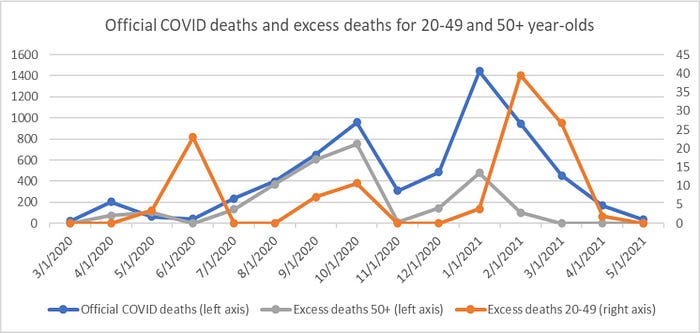
https://miro.medium.com/max/700/1*TjMGjAQtO1Ba1sVvrtdQjg.jpegThe blue line peaks around 1400 deaths in one month, while the orange line peaks at 40 deaths in one month. If the orange line used the same scale as the blue line (on the left), then the peak of the orange line would only rise up a little bit above the zero.
The orange peak covers only two months, with 40 excess deaths shown for February 2021, and around 29 excess deaths shown for March 2021, for a total of around 69 excess deaths (for the 20-49 age group) during those peak months. (The population of this age group in Israel is in the millions.)
ParticipantCDC Study Claiming Unvaccinated Have More Than Double the Risk of Re-infection is Full of Holes
https://dailysceptic.org/2021/08/12/cdc-study-claiming-unvaccinated-have-more-than-double-the-risk-of-re-infection-is-full-of-holes/If this is the basis on which the CDC is planning to encourage previously infected young people to get the jab to supposedly enhance their immunity then they should be ashamed of themselves. They should at least state the absolute risk reduction (over a range of prevalence levels) so people have a better understanding of the true level of protection the vaccines are giving them (according to the study), rather than just talking in terms of halving a risk that they fail to mention was very small to begin with.
ParticipantHeadline:
Covid rips through Mississippi leaving only six free ICU bedsMore context from the article:
“[University of Mississippi Medical Center] UMMC has had to close a unit with 15 beds, including 14 ICU beds because they didn’t have enough staff to keep it operational.“https://www.yahoo.com/entertainment/covid-rips-mississippi-leaving-only-155041497.html
ParticipantI’m looking forward to reading the TOGETHER study on ivermectin when it’s actually peer reviewed and published.
There were some questions raised earlier about potential conflicts of interest with that trial.
Conflicts of Interest
The person leading the TOGETHER trial, Edward Mills, is a McMaster associate professor as well as the clinical trial advisor for the Gates Foundation. Asked for comment on potential conflicts of interest, Mills denied that the Gates Foundation was having any “say on the conduct of the trial” even though he himself is leading the investigation and is employed by the Gates Foundation.
ParticipantPfizer and BioNTech’s Covid-19 vaccine is just 39% effective in Israel where the delta variant is the dominant strain, according to a new report from the country’s Health Ministry.
Participant“Mississippi has about 2,000 fewer nurses working than eight months ago”
According to Worldometer, the number of active Covid cases in Mississippi is currently about the same as it was eight months ago. Same number of active cases but 2,000 less nurses. ICU beds aren’t available if there aren’t enough nurses to staff them.
In Mississippi, the proportion of vaccinated cases is growing. “The breakthroughs have been more common in the last month.” During the past month, 18% of Covid deaths were breakthrough cases (fully vaccinated), compared to 36% of the state’s population that is fully vaccinated (as of today).
So the situation is a bit more nuanced than what the scary news stories are saying about Mississippi:
“Either you get vaccinated or you get COVID.” That’s the message state health officials shared on Wednesday, and it’s one echoed by local medical professionals, who are seeing resources strained as COVID-19 cases spike again.
“Right now, it’s vaccinated vs. unvaccinated, and the people in the hospital are unvaccinated,”
[some links omitted since it wouldn’t post with them]
ParticipantupstateNYer: “…perhaps examine why you are reading and commenting here?”
The putdowns and non-constructive criticism could be attempts to make them feel better about themself (by putting others down).
“Knowing yourself is the beginning of all wisdom.” – Aristotle
Know thyself.
Nothing to excess.
Surety brings ruin.(Three maxims carved into stone at the entrance to Apollo’s temple at Delphi in Greece, according to the internet.)
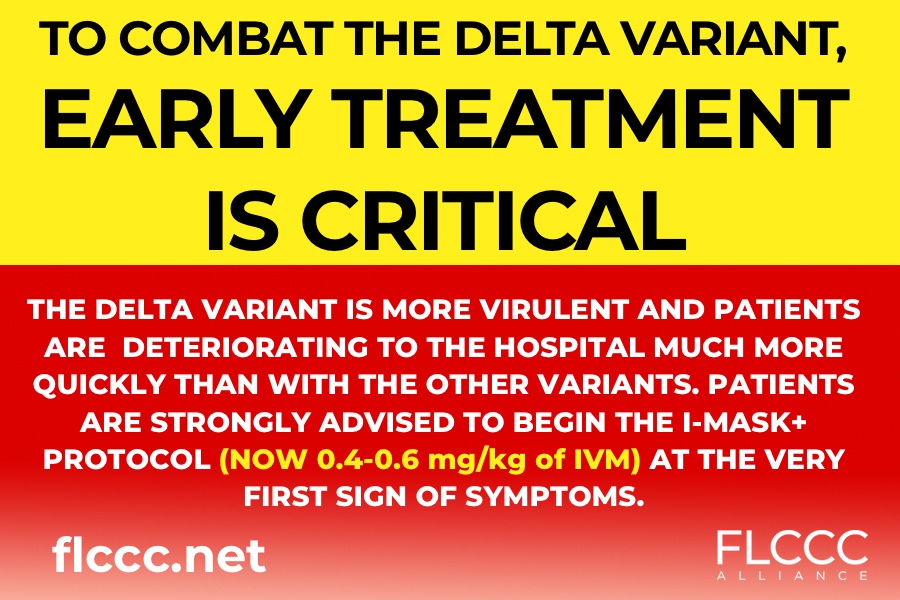
ParticipantAccording to the FLCCC, the Ivermectin dosages in the IMASK+ protocol are being increased to 0.4-0.6 mg/kg and are strongly advised “at the very first sign of symptoms.”
https://pbs.twimg.com/media/E8boVvNWEAwGszR?format=jpg&name=900×900
https://twitter.com/Covid19Critical/status/1425084297934000136Participant@ phoenixvoice
Below is my comment from two days ago about that CDC report you linked:
The CDC published a study today which is being used to push vaccinations onto those who already recovered from a Covid infection. A typical headline from the resulting news stories:
“Unvaccinated more than twice as likely to get Covid-19 reinfection.”I looked at the report to understand what the study actually shows. What it doesn’t show is what the risks of reinfection actually are for the unvaccinated or the vaccinated. (What if the risk of reinfection is low enough that it clearly doesn’t outweigh the risks of vaccination? We’re not given the data to make such an assessment.)
Instead,
the study looked at two matched groups of people testing positive for Covid during 2020. For one group (the control), this was their first and only Covid infection. For the other group (the reinfected), they had a second Covid infection during May or June 2021. In the control group, 58% of the cases were unvaccinated (vs. 34% fully vaccinated). In the reinfected group, 73% of the cases were unvaccinated (vs. 20.3% fully vaccinated). The statistical analysis somehow works out to an Odds Ratio of greater than 2.At a basic level, the study shows that in the reinfected group, a bigger proportion of the group were unvaccinated than in the control group (first infection). The reasons for this are actually not clear, though, and the report says “these findings cannot be used to infer causation.”
The CDC report mentions some limitations of the study, including the fact that some of the reinfected group might not have actually been reinfected, since “the repeat positive test could be indicative of prolonged viral shedding or failure to clear the initial viral infection.”
Another limitation was that “persons who have been vaccinated are possibly less likely to get tested. Therefore, the association of reinfection and lack of vaccination might be overestimated.”
Reduced Risk of Reinfection with SARS-CoV-2 After COVID-19 Vaccination — Kentucky, May–June 2021
https://www.cdc.gov/mmwr/volumes/70/wr/mm7032e1.htmParticipantRegarding presymptomatic/asymptomatic, Swiss Policy Research looked at multiple studies. This issue ties into the mask mandate issue.
Pre-symptomatic transmission is real. But face masks still don’t work.Because many authorities justified mask mandates with pre-symptomatic or asymptomatic coronavirus transmission, many skeptics and critics tried to argue against the existence or importance of pre-symptomatic and asymptomatic transmission. But pre- and asymptomatic transmission is real for the same reason that face masks don’t work: aerosols…
In contrast to transmission by pre-symptomatic people (i.e. a few days or hours before symptom onset), transmission by people who remain fully asymptomatic is a bit more complex to evaluate, because this group includes some people with a low viral load, which makes them less contagious. In addition, fully asymptomatic people are much more difficult to detect. However, nobody knows beforehand if they will develop symptoms or not, and as a Swedish doctor recently showed, even fully asymptomatic transmission has been documented in several carefully designed studies.
In conclusion, pre-symptomatic aerosol transmission is very real and has played an important role in driving the coronavirus pandemic. For the very same reason, face masks, ‘temperature screening’, reactive lockdowns, and even ‘contact tracing’ (beyond the very early phase) have not worked.
Postscript
“The abundance of this speech-generated aerosol, combined with its high viral load in pre- and asymptomatic individuals, strongly implicates airborne transmission of SARS-CoV-2 through speech as the primary contributor to its rapid spread.” (‘Breathing, speaking, coughing or sneezing: What drives transmission of SARS-CoV-2?’, Stadnytskyi et al, JIM, June 2021)
Postscript II
The Australian coronavirus outbreak in June 2021 confirmed the key role played by pre-symptomatic aerosol transmission: in a major Sydney cluster, a pre-symptomatic person infected an entire birthday party of 24 people; a pre-symptomatically infected flight attendant went on five domestic flights before testing positive; and an infected nurse traveled for 10 days before testing positive, having already infected several of her contacts.
Postscript III
Even in hospitals, pre-symptomatic aerosol transmission may drive outbreaks: “In this context, our cases consolidated the importance of presymptomatic transmission in the nosocomial outbreak, suggesting
that the contact tracing period should be as early as 4 to 5 days before symptom onset.” (Jung et al, ICJ, June 2021)
ParticipantCorrection to my post above:
For those age 50 and older, the case fatality rate for the unvaccinated is about 3 times higher (not 6 times) than for the vaccinated.
ParticipantTAE Summary: “UK Government Report… the overall risk of dying from the Delta variant in the UK is 2.5x higher if you are unvaccinated.”
… but if you look a little deeper at the most recent GOV.UK report, and look at the data for the younger people (<50) separately from the older people (50+), then the picture changes significantly. The number of deaths is probably not large enough to make any definitive conclusions, but here’s what the current numbers say:
For those younger than 50, the (delta variant) case fatality rate for the vaccinated is about 1.5 times higher than for the unvaccinated. The survival rate is very high for both vaccinated and unvaccinated, 99.95% and 99.97% respectively, for the <50 age group.
For those age 50 and older, the case fatality rate for the unvaccinated is about 6 times higher than for the vaccinated. The survival rate is about 98% for the vaccinated and 94% for the unvaccinated, for the 50+ age group.
————————————–
Calculations using data from Table 5Delta cases (1 Feb – 2 Aug, 2021)
<50, unvaccinated — 147,612
<50, vaccinated 2 doses — 25,536
50+, unvaccinated — 3,440
50+, vaccinated 2 doses — 21,472Deaths
<50, unvaccinated — 48
<50, vaccinated 2 doses — 13
50+, unvaccinated — 205
50+, vaccinated 2 doses — 389Case Fatality Rate
<50, unvaccinated — 48/147,612 = 0.033%
<50, vaccinated 2 doses — 13/25,536 = 0.051%
50+, unvaccinated — 205/3,440 = 5.96%
50+, vaccinated 2 doses — 389/21,472 = 1.81%Survival Rate
<50, unvaccinated — 100% – 0.033% = 99.97%
<50, vaccinated 2 doses — 100% – 0.051% = 99.95%
50+, unvaccinated — 100% – 5.96% = 94.04%
50+, vaccinated 2 doses — 100% – 1.81% = 98.19%SARS-CoV-2 variants of concern and variants under investigation in England
Technical briefing 20, 6 August 2021
https://assets.publishing.service.gov.uk/government/uploads/system/uploads/attachment_data/file/1009243/Technical_Briefing_20.pdfParticipant“Reduced Risk of Reinfection with SARS-CoV-2 After COVID-19 Vaccination — Kentucky, May–June 2021”
I misread something in the CDC report and I’m making this correction to what I wrote in my earlier comment:
…the study looked at two matched groups of people testing positive for Covid during 2020. For one group (the control), this was their first and only Covid infection. For the other group (the reinfected), they had a second Covid infection during May or June 2021.
ParticipantThe CDC published a study today which is being used to push vaccinations onto those who already recovered from a Covid infection. A typical headline from the resulting news stories:
“Unvaccinated more than twice as likely to get Covid-19 reinfection.”I looked at the report to understand what the study actually shows. What it doesn’t show is what the risks of reinfection actually are for the unvaccinated or the vaccinated. (What if the risk of reinfection is low enough that it clearly doesn’t outweigh the risks of vaccination? We’re not given the data to make such an assessment.)
Instead, the study looked at two matched groups of people testing positive for Covid during May and June. For one group (the control), this was their first Covid infection. For the other group (the reinfected), it was their second Covid infection. In the control group, 58% of the cases were unvaccinated (vs. 34% fully vaccinated). In the reinfected group, 73% of the cases were unvaccinated (vs. 20.3% fully vaccinated). The statistical analysis somehow works out to an Odds Ratio of greater than 2.
At a basic level, the study shows that in the reinfected group, a bigger proportion of the group were unvaccinated than in the control group (first infection). The reasons for this are actually not clear, though, and the report says “these findings cannot be used to infer causation.”
The CDC report mentions some limitations of the study, including the fact that some of the reinfected group might not have actually been reinfected, since “the repeat positive test could be indicative of prolonged viral shedding or failure to clear the initial viral infection.”
Another limitation was that “persons who have been vaccinated are possibly less likely to get tested. Therefore, the association of reinfection and lack of vaccination might be overestimated.”
Reduced Risk of Reinfection with SARS-CoV-2 After COVID-19 Vaccination — Kentucky, May–June 2021
https://www.cdc.gov/mmwr/volumes/70/wr/mm7032e1.htmParticipantI won’t be getting the injections because I don’t want to be vaccine-ADE-ed.
Specifically, I want to avoid the type of ADE that’s called Vaccine Associated Enhanced Disease (VAED). Here are some excerpts from an interesting article about VAED, with a good list of references, appearing at the Science Defies Politics site:
Antibody-dependent enhancement (ADE) is an immune system phenomenon, when neutralizing antibodies bind to a virus, but instead of or in addition to neutralizing it, help it to enter cells. The term is also used when these antibodies, not finding targets on the virus, damage the healthy cells (Hellerstein 2020). ADE might happen when the quantity (titer) or quality (matching epitopes presented by the virus) is low. ADE caused by vaccines is called VAED. In the respiratory diseases, it is sometimes called VAERD (vaccine associated enhancement of respiratory disease)….
The current COVID-19 vaccines, used in the US and most Western countries, are mRNA and viral vector vaccines, targeting only the spike protein of SARS-COV-2. For the purposes of this paper, “COVID-19 vaccines” only refer to these mRNA & viral vector vaccines, unless otherwise specified. For SARS-COV-2, the selection of the spike (S-protein) as the only antigen was an especially bad choice (Hellerstein 2020), because anti-spike coronavirus vaccines are known to be especially prone to cause ADE. T-cells, rather than antibodies, provide long term immunity and do not cause ADE, but only about a quarter of T-cells associated with SARS-COV-2 target its spike, compared with half to two thirds in previous coronaviruses.
Many (although not all) attempts at vaccines against other coronaviruses have failed because they caused ADE in animal models. This was the case with the experimental vaccines against SARS and MERS. The same thing happened during the attempt to develop a vaccine against FIPV, a coronavirus disease in cats (Agrawal et al. 2016), (Gao et al. 2003), (Dandekar and Perlman 2005). On a remarkable side note, Remdesivir was tried for FIPV in cats and failed. It was then tried on humans for COVID-19 and also failed (Goldstein 2020), but still received a EUA…
Children
Children 12-15 are expected to be impacted especially hard by the COVID-19 vaccines, due to higher reactivity of their immune systems. A Pfizer study has shown 1.76 higher antibody titers in this age group compared with 16–25 year-olds (FDA re-Amendment 2021) (Table 9). Some research suggests that the COVID-19 vaccines could possibly interfere with the development of immunity to common cold coronaviruses. This risk is totally unjustified. Very few persons <18 develop severe COVID-19, and 84% of them have obesity or other known chronic conditions (Preston et al. 2021).
Suspected ADE from COVID-19 vaccines, especially spike protein-based ones, was explicitly linked to the Multisystem Inflammatory Syndrome in Children (MIS-C) (Rothan and Byrareddy 2021), (Ricke 2021), (Lawrensia et al. 2020).
A recent study suggests interference of the COVID-19 vaccines with the immune reaction to common cold coronaviruses (Amanat et al. 2021). Some 12-year-olds, who have not developed natural immunity to all four common cold coronaviruses, might be unable to develop it because of the original antigenic sin with the anti-spike vaccine.
Dangers of COVID-19 Vaccine Associated Enhanced Disease
Leo Goldstein, July 6, 2021
https://defyccc.com/vaed/ParticipantI remember that anecdote from last year. As I recall it was a recombinant quadrivalent flu vaccine(?).
Another study looked at people who got a covid test, and looked for a correlation between negative tests and flu vaccination status. I’m not so sure about this method, but they found “in patient who received the influenza vaccine, there was a significant reduction in the odds of testing positive for COVID-19 compared to those who did not receive the vaccine (odds ratio 0.82, 95% CI 0.73-0.92; P < .001)”
Impact of the influenza vaccine on COVID-19 infection rates and severity
https://www.ajicjournal.org/article/S0196-6553(21)00089-4/fulltextParticipantIn this study published last year, the “results suggest a potential protective effect of the influenza vaccine on COVID-19 mortality in the elderly population.”
Influenza Vaccination and COVID19 Mortality in the USA
https://www.medrxiv.org/content/10.1101/2020.06.24.20129817v1ParticipantSpeaking of the potential interactions between flu vaccines and Covid-19 viruses…
Despite the sales pitches and press releases of the drug companies, and the assurances of the FDA and CDC, there is much that is still unknown about the workings of the immune system with regards to Covid-19, influenza, and their vaccines.
Just last week, a study was published which found some cross-reactive immune responses between influenza vaccines and Covid-19, but the responses were non-neutralizing. The researchers admit that the related mechanisms are “poorly understood.” For all they know, the dreaded ADE may still result from the vaccines.
“Whether these non-neutralizing cross-reactive antibody responses have effector functions with a protective effect or lead to antibody-dependent disease enhancement of SARS-CoV-2 infection remains to be evaluated in further studies.”
Abstract
The spike protein of the SARS-CoV-2 virus is the foremost target for the designing of vaccines and therapeutic antibodies and also acts as a crucial antigen in the assessment of COVID-19 immune responses. The enveloped viruses; such as SARS-CoV-2, Human Immunodeficiency Virus-1 (HIV-1) and influenza, often hijack host-cell glycosylation pathways and influence pathobiology and immune selection. These glycan motifs can lead to either immune evasion or viral neutralization by the production of cross-reactive antibodies that can lead to antibody-dependent enhancement (ADE) of infection. Potential cross-protection from influenza vaccine has also been reported in COVID-19 infected individuals in several epidemiological studies recently; however, the scientific basis for these observations remains elusive. Herein, we show that the anti-SARS-CoV2 antibody cross-reacts with the Hemagglutinin (HA) protein. This phenomenon is common to both the sera from convalescent SARS-CoV-2 donors and spike immunized mice, although these antibodies were unable to cross-neutralize, suggesting the presence of a non-neutralizing antibody response. Epitope mapping suggests that the cross-reactive antibodies are targeted towards glycan epitopes of the SARS-CoV-2 spike and HA. Overall, our findings address the cross-reactive responses, although non-neutralizing, elicited against RNA viruses and warrant further studies to investigate whether such non-neutralizing antibody responses can contribute to effector functions such as antibody-dependent cellular cytotoxicity (ADCC) or ADE.
Non-neutralizing SARS CoV-2 directed polyclonal antibodies demonstrate cross-reactivity with the HA glycans of influenza virus
International Immunopharmacology, 29 July 2021
https://www.sciencedirect.com/science/article/pii/S1567576921006561Participantsumac.carol linked “COVID-19 only kills people who were flu vaccinated.”
I would bet big money that there is at least one counterexample to prove that headline wrong. That being said, there could be an association between prior flu vaccination and Covid deaths.
A related study published in July:
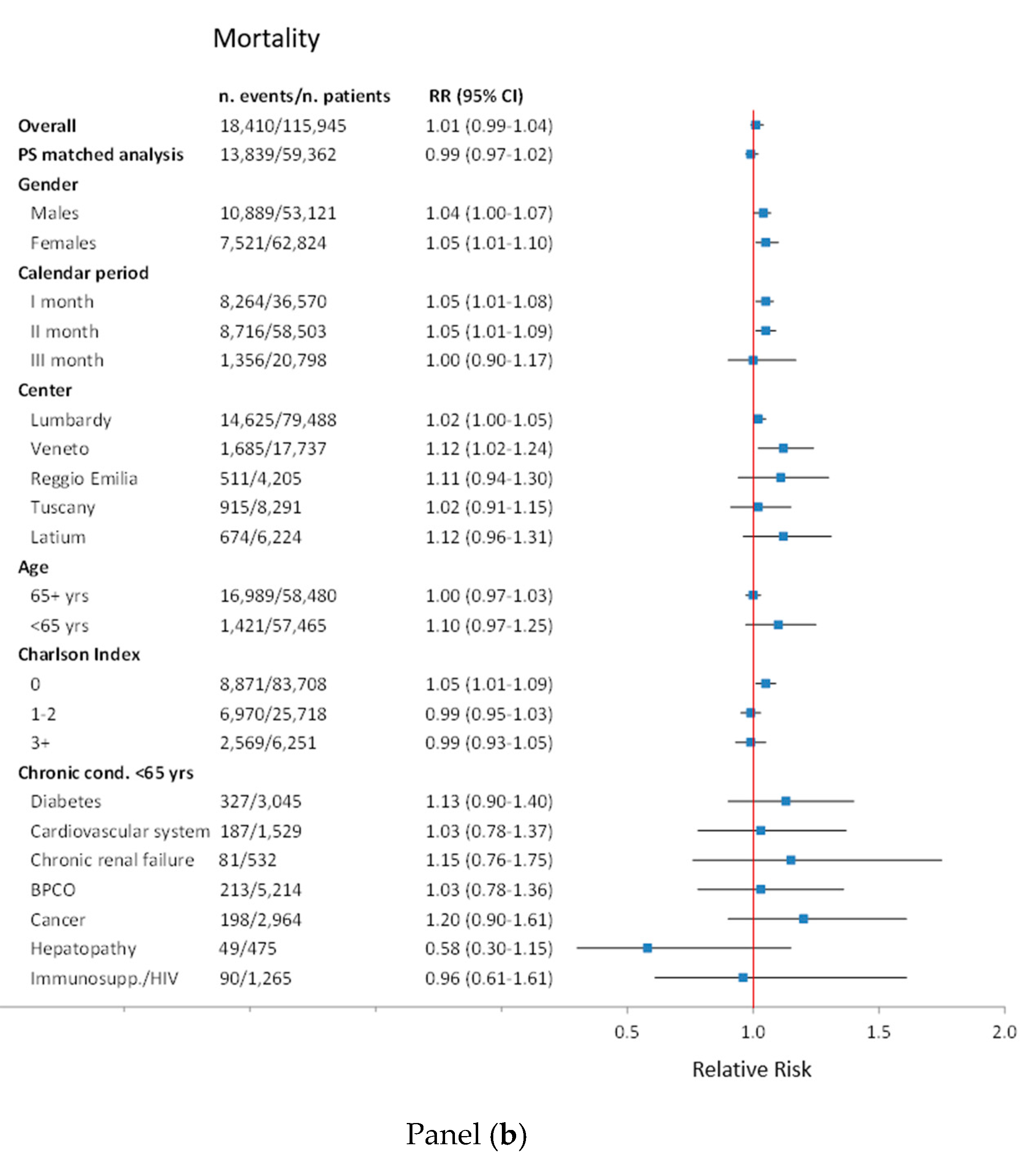
“Association of Influenza Vaccination and Prognosis in Patients Testing Positive to SARS-CoV-2 Swab Test: A Large-Scale Italian Multi-Database Cohort Study”Below is Figure 2b from that study, showing the “subgroup analyses of association between flu vaccination and COVID-19 mortality.” An interesting association was found:
For ages less than 65, the Covid mortality “relative risk” for those vaccinated against the flu was found to be 1.10 which, being greater than one, is an increase in risk, not a reduction in risk. So there was an estimated 10% increased risk of Covid mortality associated with the patients who were vaccinated for the flu. The 95% Confidence Interval ranges from .97 to 1.25 (meaning that there’s statistically a 95% confidence that the risk is somewhere in the range from a 3% reduction of risk, to a 25% increase of risk.) Because the entire Confidence Interval is not completely above 1, this 10% increase in risk is not considered to be statistically significant (a larger study might resolve it one way or another).
ParticipantSen. Lindsey Graham: “I am very glad I was vaccinated because without vaccination I am certain I would not feel as well as I do now. My symptoms would be far worse.”
The data does not support Graham’s assertion.
On any given day on social media, you can find someone who has been vaccinated saying they contracted COVID, and they just know that but for the vaccine they would have been in worse shape. These announcement get shared widely. It is wonderful that people have avoided some of the worst symptoms, but the data has not supported the observation that the vaccine offers significant downstream benefits for most people.Accompanying graph:
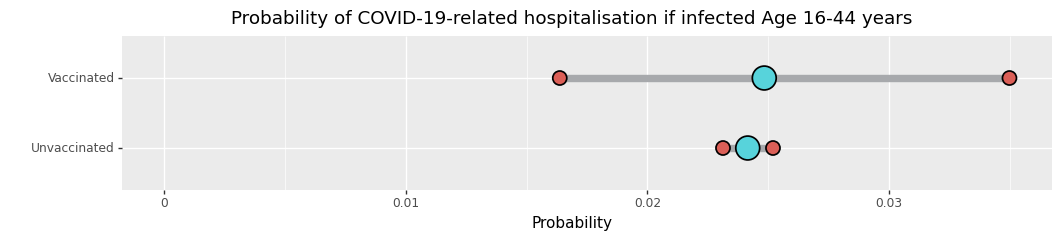
We’re being set up for disaster
…the data show that death rate among the vaccinated and infected is higher than that of the unvaccinated and infected. This is true for death and also true for hospitalization. There is no sleight of hand or trickery involved. These results are plain as day in the Israeli data if anyone had cared to look.Accompanying graphs:
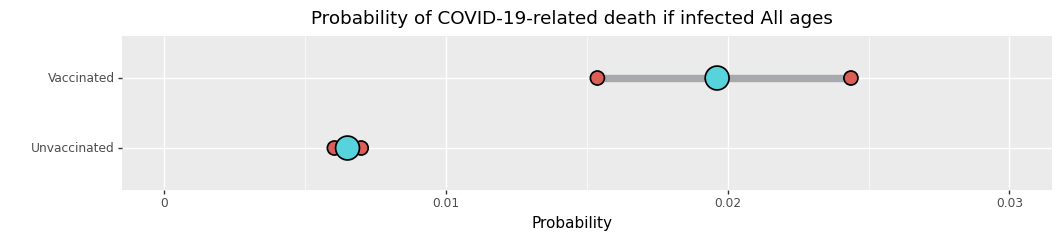
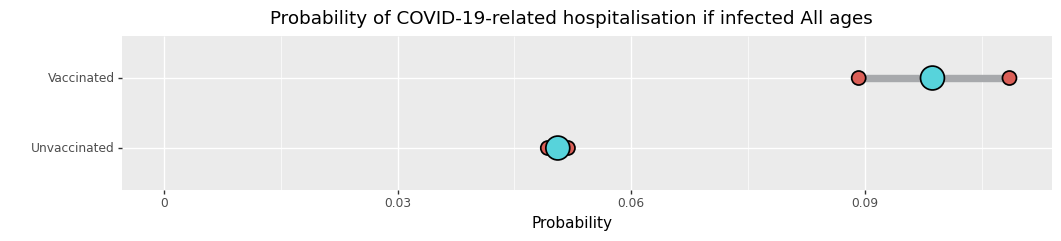
Lies, Damned Lies, and Vaccine Statistics
Hyper-vigilant vaccination advocates are pushing dangerous misinformation about vaccine efficacy
Dr RollerGator PhD
Jul 29
https://drrollergator.substack.com/p/damned-lies-and-vaccine-statisticsParticipant• Only Half Of Israelis Want A Third Covid-19 Vaccine Shot (JPost)
Half of the population is going to be sorry they allowed the vaccine passports, when “fully vaccinated” is redefined to mean having the third shot.
-
AuthorPosts