Jan 302015


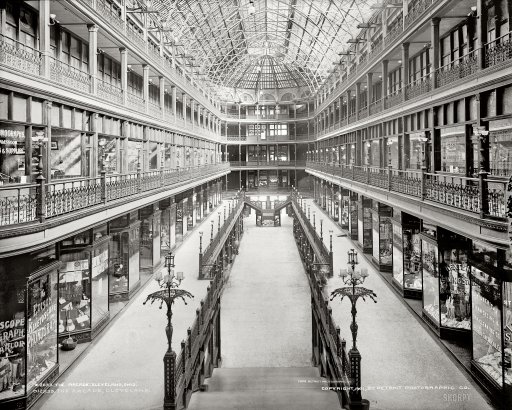
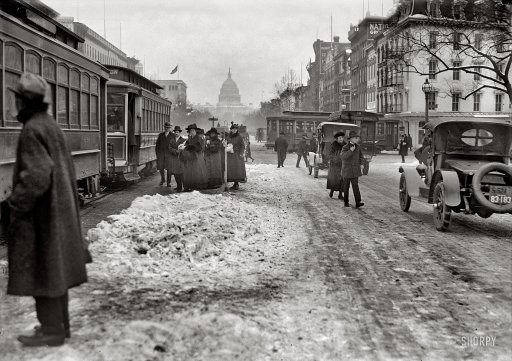
Harris&Ewing “Pennsylvania Avenue with snow, Washington, DC” 1918


• Commodity Prices Collapse To Lowest In 12 Years (Telegraph)
• Cheap Oil Burns $390 Billion Hole in Investors’ Pockets (Bloomberg)
• China Shadow Banking Trusts Fuel Stocks With 28% Jump in Investment (Bloomberg)
• Europe Stocks Head for Best January Since 1989 (Bloomberg)
• Eurozone Slides Deeper Into Deflation (CNBC)
• We Must Stop Angela Merkel’s Bullying Or Let Austerity Win (Guardian)
• Lies, Damned Lies And Greece’s Debt Default (MarketWatch)
• Greece Turns Left, Europe Goes Right (Bloomberg)
• Open Letter To German Readers: What You Were Never Told About Greece (Tsipras)
• Syriza’s Original 40 Point Manifesto (Zero Hedge)
• Greece’s New Young Radicals Sweep Away Age Of Austerity (Guardian)
• It’s Time For Greece To Leave The Eurozone And Move On (Telegraph)
• Greece’s Predicament in One Scary Chart: Capital Flight (Bloomberg)
• Russia Extends Olive Branch To Greeks (CNBC)
• Japan Braces For Falling Prices As Oil Collapses (CNBC)
• The Next Shot In The Currency War Will Be Fired By… (CNBC)
• Denmark Surprises Market With Third Rate Cut In Two Weeks (Reuters)
• Denmark, Deutschland And Deflation (BBC)
• Young Workers Hit Hardest By Wages Slump Of Post-Crash Britain (Guardian)
• Gorbachev Accuses US Of Dragging Russia Into New Cold War (RT)
• China’s Anti-Corruption Campaign Boosts Suicide Rate (FT)
• Animals In France Finally Recognized As ‘Living, Sentient Beings’ (RT)

Mother of all bubbles.

• Commodity Prices Collapse To Lowest In 12 Years (Telegraph)

The world’s leading index of commodity prices has slumped to its lowest level in more than 12 years as China slows and America hints at tightening monetary policy. The Bloomberg Commodity index, which tracks the prices of 22 different commodity prices such as gold, natural gas and oil, fell 0.3pc to 99.84 in early trading, the lowest point since August 2002. The recent bout of weakness in commodity prices came as the US Federal Reserve issued an upbeat view on the state of US economy. Minutes from the Federal Open Market Committee’s December meeting said the US economy is expanding at a solid rate with strong job gains, a signal that the central bank remains on track with plans to raise interest rates.

Commodities, like all asset classes, have benefited from America’s loose monetary policy. The upbeat view from the US economy came after another sign of a slowdown in China, with official figures showing profits from the industrial sector fell 8pc in December from a year earlier. Last year, China’s annual economic growth slowed to 7.4pc—its slowest pace in nearly a quarter of a century—as the property crisis in the country holds back the economy, and there is rising debt and slower demand for its products at home and abroad. Most economists expect Beijing to set an annual-growth target for 2015 of 7pc.

Read more …

“Demand was so high that the company more than doubled the size of the offering. The debt is now trading for less than 50 cents on the dollar..”

• Cheap Oil Burns $390 Billion Hole in Investors’ Pockets (Bloomberg)

Investors have a message for suffering U.S. oil drillers: We feel your pain. They’ve pumped more than $1.4 trillion into the oil and gas industry the past five years as oil prices averaged more than $91 a barrel. The cash infusion helped push U.S. crude production to the highest in more than 30 years, according to data compiled by Bloomberg. Now that oil prices have fallen below $45, any euphoria over cheaper energy will be tempered by losses that are starting to show up in investment funds, retirement accounts and bank balance sheets. The bear market has wiped out a total of $393 billion since June – $353 billion from the shares of 76 companies in the Bloomberg North America Exploration & Production index, and almost $40 billion from high-yield energy bonds, issued by many shale drillers.

“The only thing people are noticing now is that gas prices are dropping,” said Sean Wheeler at law firm Latham & Watkins. “People haven’t noticed yet that it’s also hitting their portfolios.” The money flowing into oil and gas companies around the world in the last five years came from a variety of sources. The industry completed $286 billion in joint ventures, investments and spinoffs, raised $353 billion in initial public offerings and follow-on share sales, and borrowed $786 billion in bonds and loans. The crash caught investors and lenders by surprise. Eight months ago, oil producer Energy XXI sold $650 million in bonds. Demand was so high that the company more than doubled the size of the offering, company records show. The debt is now trading for less than 50 cents on the dollar, and the stock has declined 88%.

Energy XXI, which has more than $3.8 billion in debt, is one of more than 80 oil and gas companies whose bonds have fallen to distressed levels, meaning their yields are more than 10percentage points above Treasury debt, as investors bet the obligations won’t be repaid, according to data compiled by Bloomberg. The stocks and bonds of Energy XXI and other struggling energy firms have been bought up by pension funds, insurance companies and savings plans that are the mainstays of Americans’ retirement accounts. Institutional investors had more than $963 billion tied up in energy stocks as of the end of September, according to Peter Laurelli at analytics firm eVestment, that gathers data on about $22 trillion of institutional strategies.

Read more …

Mother of all bubbles’ younger sister.

• China Shadow Banking Trusts Fuel Stocks With 28% Jump in Investment (Bloomberg)

China’s trusts, part of the shadow-banking industry, fueled a stock-market rally by boosting their investments in equities by a record 122 billion yuan ($19.5 billion) in the fourth quarter. The increase, reported by the China Trustee Association on Friday, was the biggest by value in data starting in 2010. The 28% gain was the largest since the third quarter of 2010. China’s capital controls and weakness in the property market have helped to channel money into stocks, driving a 35% surge in the Shanghai Composite Index over three months. Trusts’ assets under management grew at the fastest pace in six quarters, gaining almost 8% to 13.98 trillion yuan. Investment in equities totaled 552 billion yuan. So-called umbrella trusts, which allow more leverage than broker financing, have played a role in the stock boom. At the end of last year, China had 369 “risky” trust products valued at 78.1 billion yuan, the statement showed, down from 82.4 billion yuan three months earlier.

Read more …

Mother of all bubbles’ elder sister.

• Europe Stocks Head for Best January Since 1989 (Bloomberg)

European stocks were little changed, with the Stoxx Europe 600 Index heading for its best start to a year since 1989. The Stoxx 600 added less than 0.1% to 368.85 at 9:53 a.m. in London, having slipped as much as 0.3% and risen as much as 0.4%. The gauge has advanced 7.7% in January as the European Central Bank unveiled a 1.1 trillion-euro ($1.2 trillion) quantitative easing program. A report at 11 a.m. Frankfurt time is projected to show a second month of deflation in the euro area, after a German consumer-price index turned negative for the first time since 2009.

“We’ll see a pickup in growth after QE, but it will be modest,” said Henrik Drusebjerg at Carnegie Investment Bank in Copenhagen. “Most European countries still need to do more reform. We are beginning to take a look at some European companies. I’m curious how aggressive to see Greece will be on their election promises.” Greece’s ASE Index rose for a second day, paring its weekly drop to 11%. Prime Minister Alexis Tsipras promised not to spring any surprises on Greece’s troika of official creditors. The nation’s banks slid this week amid concern a coalition led by Syriza, which won Sunday’s election, will challenge austerity measures. They recovered some losses after the head of ECB’s Supervisory Board said yesterday that the nation’s lenders can survive the current market turbulence.

Read more …

Stocks higher, prices lower. Makes a lot of sense.

• Eurozone Slides Deeper Into Deflation (CNBC)

The euro zone slid further into deflation in January, underlining the case for the European Central Bank’s full-blown bond-buying program, announced earlier this month. Prices fell by 0.6% year-on-year in January, official flash estimates showed Friday, below the 0.5%-slide forecast by analysts polled by Reuters. In December, the region fell into deflation for the time since 2009, when prices fell by 0.2%. January’s further slide in prices was driven by an accelerating fall in energy costs, Eurostat said. Energy prices fell by a sharp 8.9% in January, compared with 6.3% in December. Prices in January for food, alcohol, tobacco and non-energy-related industrial goods also fell; only prices for services were seen rising. January’s figures come two weeks after after the ECB announced the launch of QE.

The program’s main purpose will be to boost inflation back towards the “just under 2%” level targeted by the central bank and sovereign bond purchases will start in March. In some much-needed good news for the euro zone, however, official figures also revealed that the region’s jobless level had fallen. Eurostat announced Friday that seasonally-adjusted unemployment in the single currency zone fell to 11.4% in December — the lowest recorded in the region since mid-2012, and down from 11.5% in November. By comparison, the unemployment rate stood at 5.6% in the U.S. in December 2014.

Read more …

“All Europe’s leaders have to offer is broken societies and broken people.”

• We Must Stop Angela Merkel’s Bullying Or Let Austerity Win (Guardian)

All Europe’s leaders have to offer is broken societies and broken people. Over half of young people in Spain and Greece are without work, leaving them scarred: as well as mental distress, they face the increased likelihood of unemployment and lower wages for the rest of their lives. Workers’ rights, public services, a welfare state: all won at such cost by tough, far-sighted people, all being stripped away. There is a certain smugness expressed in Britain: just look across the waters at how bad things could be. Certainly Britain has been free of the euro. It has employed quantitative easing on a grand scale – though for the benefit of banks rather than people, and in an unsustainable, credit-fuelled mini-boom. But in any case, British workers have suffered the biggest fall in their paypackets since the Victorian era, and one of the worst of any EU country.

Britain’s rulers, just like those everywhere else in Europe, have punished their own people for the actions of an ever-thriving elite. That’s why Greece has to be defended urgently – not just to defend a democratically elected government and the people who put it there. European elites know that if Syriza’s demands are fulfilled, then other like-minded forces will be emboldened. Spain’s Podemos, a surging anti-austerity movement, will be more likely to triumph in elections this year. Syriza has already achieved change: the European Central Bank’s limited quantitative easing is partly a response to its rise. Even that well-known radical Reza Moghadam, Morgan Stanley’s vice-chairman of global capital markets and ex-head of the IMF’s European department, confirms Syriza’s strong negotiating position.

The precedent of an exit from the eurozone would lead to the market punishing other members, and to calls for the erasing of half of Greece’s debt. A victory is possible, but it depends on popular pressure right across Europe. If Syriza extracts concessions, it will be a stunning victory for all anti-austerity forces, and will help shift the balance of power in Europe. But if Greece loses, as those governments and banks that will now try to suffocate Syriza at birth intend? Then austerity will triumph over democracy. The future of millions of Europeans – Greek, French, Spanish and British alike – will be bleak indeed. That is why a movement to defend the already ruined nation of Greece is so important. Defeated Germany benefited from debt relief in 1953, and we must demand that for Greece today.

We must champion Syriza’s call for the end of an austerity policy that has achieved nothing but social ruin, across Europe in favour of a strategy of growth. Syriza’s posters declared: “Hope is coming”. Its election must represent that everywhere, including in Britain, where YouGov polling reveals huge popularity for a stance against austerity and the power of big business. A game of high stakes indeed: one that, if lost, will mean countless more years of economic nightmare. This rerun of the 1930s can be ended – this time by the democratic left, rather than by the fascist and the genocidal right. The era of Merkel and the machine men can be ended – but it is up to all of us to act, and to act quickly.

Read more …

“Nobody forced banks to lend money to the Greek government on nearly the same terms as they lent to, say, the German or Dutch governments.”

• Lies, Damned Lies And Greece’s Debt Default (MarketWatch)

Can we stop it, please, with the Greek debt panic? Can we stop pretending that this crisis is something it isn’t, or that it involves principles it doesn’t, or that there is no alternative other than more pain on the streets of Athens? There’s been a renewed flap following Sunday’s stunning Greek election victory for the radical Syriza party, which wants to renegotiate the country’s crippling debt burdens and escape the deflation trap imposed by external bankers. It’s time for some hard, yet simple, truths. Greece’s gross debts add up to around $320 billion in nominal value, according to the International Monetary Fund. That’s big compared to the Greek economy, but tiny compared to the world outside. It’s less than 3% of the entire eurozone economy, which is about $13.5 trillion.

So even if Greece refused to pay one more nickel of its debts — an outcome no one is suggesting — the eurozone could make up the difference with about eight days’ output … or an hour’s money-printing by the ECB. And the real value of the Greek national debt is even less than this nominal sum. That’s because the markets have already adjusted themselves sensibly to the situation. According to the National Bank of Greece, shorter-term government bonds are already trading at about 85 cents on the euro, while longer-term bonds are down to between 65 and 50 cents on the euro. According to calculations by Felix Brill at investment firm Wellershoff, publicly traded Greek government bonds are trading at an average of 70 cents on the euro. So, in real terms, a big chunk of that Greek debt has already been written off. Crisis? What crisis?

Second, the idea that a partial Greek debt default would somehow represent an earthquake in the world of finance, or endanger the eurozone, or be an improvident reward for the reckless and the feckless, is nonsense. Nobody forced German and other bankers to buy Greek government bonds at absurd prices during the bubble. Nobody forced banks to lend money to the Greek government on nearly the same terms as they lent to, say, the German or Dutch governments. And nobody forced the international honchos at the IMF, ECB or EC to take over those obligations from the banks a few years ago as a “bailout.”

Read more …

“.. the worse the economy, the worse for the far right and the better for the far left.”

• Greece Turns Left, Europe Goes Right (Bloomberg)

Why has Greece chosen a far-left government at a time when discontented and frustrated voters elsewhere in Europe have turned to the far right? In northern Europe, the frustrated voters’ parties of choice are right wing and anti-immigrant. So how come frustrated Greeks made a sharp turn to the left, electing the near-communist Syriza party to lead the government? The choice of left over right is especially striking because Greece is a first port of call for so many new immigrants to Europe. If Spain’s Podemos party continues to grow, then the contrast between northern and southern Europe will be even more striking. A combination of economics, politics and history can shed light on the differences. The simplest – and most surprising – answer may be just this: the worse the economy, the worse for the far right and the better for the far left.

The southern European economies are in substantially deeper trouble than their counterparts in middle and northern Europe. This has two distinct political effects, which together explain the difference between a turn to the left and a turn to the right. First of all, Greece is facing austerity demands that come from the northern members of the European Union, especially Germany. That means the Greeks perceive the main bad guy as external, not internal, and see the neoliberalism of Angela Merkel as the immediate source of the pain. The resistance to reducing state employment, cutting budgets, and working harder for less money and shorter vacations becomes resistance to the market economy itself.

The ex-communist radical left is the natural place for such resistance: The economic program of the left simply denies that such measures will actually help, and instead holds the promise of telling Europe to get lost.In northern Europe, economies may be in the doldrums, but no external European political force is pressing for fundamental structural change. Frustrated voters who see their job benefits scaled down even moderately thus need a different target. Those who arrived recently – immigrants – are the traditional objects of blame. The social contract may seem to be breaking down as a result of neoliberalism, but because no one has forced this change on northern European societies, it’s much easier to blame immigrants for burdening the state and making the social contract too expensive. Never mind if it’s true: The point is to blame anyone other than yourself.

Read more …

Written pre-election.

• Open Letter To German Readers: What You Were Never Told About Greece (Tsipras)

Alexis Tsipras’ “open letter” to German citizens published on Jan.13 in Handelsblatt, a leading German language business newspaper

Most of you, dear readers, will have formed a preconception of what this article is about before you actually read it. I am imploring you not to succumb to such preconceptions. Prejudice was never a good guide, especially during periods when an economic crisis reinforces stereotypes and breeds biggotry, nationalism, even violence. In 2010, the Greek state ceased to be able to service its debt. Unfortunately, European officials decided to pretend that this problem could be overcome by means of the largest loan in history on condition of fiscal austerity that would, with mathematical precision, shrink the national income from which both new and old loans must be paid. An insolvency problem was thus dealt with as if it were a case of illiquidity.

In other words, Europe adopted the tactics of the least reputable bankers who refuse to acknowledge bad loans, preferring to grant new ones to the insolvent entity so as to pretend that the original loan is performing while extending the bankruptcy into the future. Nothing more than common sense was required to see that the application of the ‘extend and pretend’ tactic would lead my country to a tragic state. That instead of Greece’s stabilization, Europe was creating the circumstances for a self-reinforcing crisis that undermines the foundations of Europe itself. My party, and I personally, disagreed fiercely with the May 2010 loan agreement not because you, the citizens of Germany, did not give us enough money but because you gave us much, much more than you should have and our government accepted far, far more than it had a right to.

Money that would, in any case, neither help the people of Greece (as it was being thrown into the black hole of an unsustainable debt) nor prevent the ballooning of Greek government debt, at great expense to the Greek and German taxpayer. Indeed, even before a full year had gone by, from 2011 onwards, our predictions were confirmed. The combination of gigantic new loans and stringent government spending cuts that depressed incomes not only failed to rein the debt in but, also, punished the weakest of citizens turning people who had hitherto been living a measured, modest life into paupers and beggars, denying them above all else their dignity. The collapse of incomes pushed thousands of firms into bankruptcy boosting the oligopolistic power of surviving large firms.

Read more …

Good series.

• Syriza’s Original 40 Point Manifesto (Zero Hedge)

The daily bulletin of Italy’s Communist Refoundation Party published today the apparently official program of the Greek coalition of the left, Syriza. Here the 40 points of the Syriza program.
1) Audit of the public debt and renegotiation of interest due and suspension of payments until the economy has revived and growth and employment return.
2) Demand the European Union to change the role of the European Central Bank so that it finances States and programs of public investment.
3) Raise income tax to 75% for all incomes over 500,000 euros.
4) Change the election laws to a proportional system.
5) Increase taxes on big companies to that of the European average.
6) Adoption of a tax on financial transactions and a special tax on luxury goods.
7) Prohibition of speculative financial derivatives.
8) Abolition of financial privileges for the Church and shipbuilding industry.
9) Combat the banks’ secret [measures] and the flight of capital abroad.
10) Cut drastically military expenditures.
11) Raise minimum salary to the pre-cut level, €750 per month.
12) Use buildings of the government, banks and the Church for the homeless.
13) Open dining rooms in public schools to offer free breakfast and lunch to children.
14) Free health benefits to the unemployed, homeless and those with low salaries.
15) Subvention up to 30% of mortgage payments for poor families who cannot meet payments.
16) Increase of subsidies for the unemployed. Increase social protection for one-parent families, the aged, disabled, and families with no income.
17) Fiscal reductions for goods of primary necessity.
18) Nationalization of banks.

Read more …

“We will continue with our plan. We don’t have the right to disappoint our voters.”

• Greece’s New Young Radicals Sweep Away Age Of Austerity (Guardian)

One by one they were rolled back, blitzkrieg-style, mercilessly, ruthlessly, with rat-a-tat efficiency. First the barricades came down outside the Greek parliament. Then it was announced that privatisation schemes would be halted and pensions reinstated. And then came the news of the reintroduction of the €751 monthly minimum wage. And all before Greece’s new prime minister, the radical leftwinger Alexis Tsipras, had got his first cabinet meeting under way. After that, ministers announced more measures: the scrapping of fees for prescriptions and hospital visits, the restoration of collective work agreements, the rehiring of workers laid off in the public sector, the granting of citizenship to migrant children born and raised in Greece. On his first day in office – barely 48 hours after storming to power – Tsipras got to work. The biting austerity his Syriza party had fought so long to annul now belonged to the past, and this was the beginning not of a new chapter but a book for the country long on the frontline of the euro crisis.

“A new era has begun, a government of national salvation has arrived,” he declared as cameras rolled and the cabinet session began. “We will continue with our plan. We don’t have the right to disappoint our voters.” If Athens’s troika of creditors at the EU, ECB and IMF were in any doubt that Syriza meant business it was crushingly dispelled on Wednesday . With lightning speed, Europe’s first hard-left government moved to dismantle the punishing policies Athens has been forced to enact in return for emergency aid. Measures that had pushed Greeks on to the streets – and pushed the country into its worst slump on record – were consigned to the dustbin of history, just as the leftists had promised. But the reaction was swift and sharp. Within minutes of the new energy minister, Panagiotis Lafazanis, announcing that plans to sell the public power corporation would be put on hold, Greek bank stocks tumbled. Many lost more than a third of their value, with brokers saying they had suffered their worst day ever.

While yields on Greek bonds rose, the Athens stock market plunged. By closing time it had shed over 9%, hitting levels not seen since September 2012 and losing any gains it had clawed back since Mario Draghi, the European Central Bank chief, vowed to do “whatever it takes” to save the euro. By nightfall there was another blow as Standard & Poor’s revised its Greek sovereign rating outlook, taking the first step towards a formal downgrade. The agency warned that a bank run might also be in the offing, noting that “accelerated deposit withdrawals from Greek banks had created “a credit concern”. Perhaps prepared for the onslaught, Tsipras had also acted. On Tuesday, he met the Chinese ambassador to Athens to insist that while Syriza and its junior partner, the populist rightwing Independent Greeks party, would also be cancelling plans to privatise Piraeus port authority, the government wanted good relations with Beijing. China’s Cosco group, which already controls several docks in Piraeus, had been among four suitors bidding for the port.

Read more …

RIght wing view of a left wing government.

• It’s Time For Greece To Leave The Eurozone And Move On (Telegraph)

The single currency was always a mistake, and I was one of a number of commentators who has always opposed its creation. Single currency areas can work only under one of three scenarios, none of which has ever been on the cards in Greece and much of Europe First, and ideally, you need an economy with radical levels of flexibility, a small government, a well-educated and motivated entrepreneurial workforce, and labour markets that adjust to shocks. A hit to demand leads to a very speedy reallocation of resources; workers are willing to take nominal pay cuts to keep their jobs; and the country bounces back quickly from shocks without suffering from massive unemployment. That is the ideal economic system — but sadly it is not on the agenda. Many libertarian economists, especially in the US but also in Europe, backed the euro because they thought it would trigger free-market reforms, but while some have taken place, they have been insufficient in scale and scope. Ultimately, you can’t impose an economic system on a reluctant society.

Second, an ultra-mobile pan-European society. In such a world — which doesn’t exist in anything like the way I’m imagining — unemployed people in Greece are able to move en masse to parts of the eurozone with better jobs prospects. This still happens to some extent in the US, where states like Texas have been fuelled by mass intra-state migration, and poor areas such as Detroit have simply lost their population. Workers do also move within the UK, and within other countries, though generally not enough. There is now lots of migration within Europe, but even the numbers we see aren’t enough to allow economies to adjust properly. There is no single European demos; people speak different languages and have different cultures. This won’t change for the foreseeable future.

Third, a massive pan-European welfare state with a federal tax system and permanent redistribution from rich to poor areas. In such a world, where the one-size-fits-all monetary policy is unable to cater for a hit to parts of the eurozone, fiscal policy kicks in. Germany and other richer parts send billions to poor states. In return, the power of nations to borrow is dramatically curtailed: member states lose much of their sovereignty. In such a world, Greece would simply not be allowed to borrow and spend as it saw fit, and many more functions currently operated by national governments would be transferred to Brussels.

Read more …

Nothing sensational.

• Greece’s Predicament in One Scary Chart: Capital Flight (Bloomberg)

If the new prime minister of Greece, Alexis Tsipras, hopes to make a deal with his country’s creditors, time is of the essence. Judging from data on capital flows, Greece’s change of political course is rapidly eroding confidence that it will stay in the European currency union. Just because the 19 countries of the euro area share a currency doesn’t mean a euro in Greece is worth as much as a euro elsewhere. If, for example, Greece’s bank depositors start to worry that the country will exit the monetary union and leave them holding devalued drachma, they’ll move their money to a safer locale such as Germany, effectively trading their Greek euros for German ones. Such capital flight can be tracked (roughly) by looking at the accounts of central banks: If €1 billion moves out of Greece, the Bank of Greece records a corresponding €1 billion liability to the rest of the euro area.

Lately, the Greek central bank’s so-called intra-Eurosystem liabilities have been rising at a pace not seen since the darkest days of the European financial crisis. In December, when the previous Greek government announced the snap presidential vote that ultimately cleared the way for Tsipras and his far-left Syriza party to take power, the liabilities increased by about €7.6 billion, according to data compiled by Bloomberg. That’s more than in any month since May 2011 – and it happened even before Syriza won the Jan. 25 parliamentary election on a platform that included promises to end austerity and renegotiate the government’s onerous debts. Here’s a chart showing the estimated three-month cumulative capital flows between Greece and the euro area, as a% of Greek gross domestic product (positive numbers are inflows to Greece):
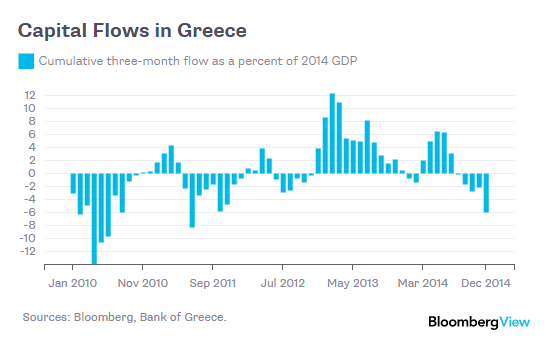
The capital flight from Greece contrasts sharply with the progress the country had been making since mid-2012, when ECB President Mario Draghi tamed markets with his promise to do “whatever it takes” to hold together the euro area. Over the two years through June 2014, the Bank of Greece’s intra-eurosystem liabilities declined by more than €75 billion as money flowed back in.

Read more …

“(The) ruble weakened and as you might see, life still goes on here and we just keep on living..”

• Russia Extends Olive Branch To Greeks (CNBC)

Russian Finance Minister Anton Siluanov told CNBC that Russia would consider giving financial help to debt-ridden Greece—just days after the new Greek government questioned further European Union sanctions against Russia. Siluanov said Greece had not yet requested Russia for assistance, but he did not rule out an agreement between the two countries if Greece came asking. “Well, we can imagine any situation, so if such [a] petition is submitted to the Russian government, we will definitely consider it, but will take into account all the factors of our bilateral relationships between Russia and Greece, so that is all I can say. If it is submitted we will consider it,” Siluanov told CNBC on Thursday. Siluanov’s comments come two days after Greece’s new left-wing-led government distanced itself from calls to increase sanctions against Russia—indicating that Greece could be looking east to Russia for support.

On Tuesday, EU leaders issued a statement calling for “further restrictive measures” to be considered against Russia with regard to its involvement in the ongoing conflict in eastern Ukraine. After the statement, a representative for Greece’s newly elected Syriza party reported that the EU’s statement was made “without our country’s consent” and expressed “dissatisfaction with the handling of this.” On Thursday, Siluanov said that while Western-imposed sanctions against Russia thus far had been harmful, the country has managed to adapt. “The sanctions that have already been imposed against Russia did have (a) negative effect on us. However, Russia companies have adjusted and the Russian balance of payments has adjusted. (The) ruble weakened and as you might see, life still goes on here and we just keep on living,” he said.

Read more …

Abenomics is an open festering wound.

• Japan Braces For Falling Prices As Oil Collapses (CNBC)

Japan’s consumer inflation eased in December for a fifth straight month and the rate of price rises could slow further or even turn negative as the economy adjusts to lower oil prices, analysts say. The consumer price index (CPI) rose 2.5% in December from the year-ago period, government data showed on Friday, compared with Reuters’ forecast for a rise of 2.6% and down from the 2.7% print in November. The core Tokyo CPI for January, considered a leading indicator, rose 2.2% on year, in line with expectations and easing from 2.3% in December. Excluding the effects of the sales tax hike, the nationwide consumer price index (CPI) rose 0.5%.

With the collapse in oil prices yet to be reflected in consumer inflation, analysts say the numbers will look worse in the coming months, dealing a further blow to the Bank of Japan’s ambitious inflation targets. “There is a six-month lag before global LNG prices are factored into electricity prices – and it’s electricity prices, rather than the price of oil at the pumps, that counts for Japanese households,” said Credit Suisse economist Takashi Shiono. “The electricity companies are still scheduled to raise their prices in February, so we’ll have to wait until April for the lower oil prices to filter through to the headline inflation numbers,” he added. Credit Suisse is forecasting the CPI to turn negative by April, assuming that current levels of oil and the dollar-yen holds.

Shino expects CPI to fall by up to 0.3% in April and down 0.1% for the full-year ending March 2016. The BOJ has been betting that its massive quantitative easing program unleashed since April 2013 will defeat inflation for good and bring CPI stripped of sales tax hike up to 2% by financial year ending March 2016. But market watchers see the goal increasingly unlikely especially in the wake of crashing oil prices. Earlier this month, the BOJ cut its CPI forecast for 2015/16 to 1% from an earlier projection of 1.7%, reflecting the state of oil markets. “Inflation is still likely to moderate further. Less than half of the plunge in the price of crude oil has been passed on to consumers in the form of lower gasoline prices,” Capital Economics’ Marcel Thieliant said in a research note.

Read more …

New Zealand?

• The Next Shot In The Currency War Will Be Fired By… (CNBC)

The currency war is getting out of control. A snapshot of the week so far in central banking: The Monetary Authorty of Singapore surprised markets Tuesday night with a policy switch to pursue a slower pace of currency appreciation, its main policy tool. Wednesday afternoon, New Zealand’s Reserve Bank kept policy unchanged, but significantly altered its language, saying it expects to see a “further significant depreciation” for the kiwi and that “the exchange rate remains unjustified in terms of current economic conditions. Hungary’s central bank struck a decidedly dovish note, hinting at easier policy ahead. The moves follow surprise policy changes from Denmark, India Canada and Switzerland earlier this month. That includes the European Central Bank. Despite a great deal of anticipation, Mario Draghi managed to surprise and impress financial markets with the ECB’s trillion-euro bond purchase program.

“The trend of central bank surprises continues, adding volatility to markets and highlighting a more uncertain global policy stance but one that is partially centered on (foreign exchange) ahead,” Camilla Sutton, chief FX strategist at Scotiabank, wrote in a note this week. “An environment of increased volatility and uncertainty is typically U.S. dollar positive.” The U.S. dollar has been the beneficiary of those moves and easy policies. In 2015 alone, the dollar has strengthened nearly 7% against the euro, more than 7% against the Canadian dollar and 6% against the New Zealand dollar. Over the past 12 months, the moves are in the double digits, with the dollar strengthening more than 20% against Sweden’s and Norway’s currencies, more than 17% against the euro and 13% against the yen.

Read more …

Can the grandstanding stop now? Denmark has real problems.

• Denmark Surprises Market With Third Rate Cut In Two Weeks (Reuters)

The Danish central bank cut its key interest rate for the third time in two weeks to another historic low after intervening in the market to keep the crown within a tight range against the euro. The central bank cut its certificate of deposit rate to -0.5% from -0.35%, making a reduction of 45 basis points since Monday last week. While analysts said last week that its actions might not be enough to weaken the crown, few expected another cut so soon, especially as Denmark’s rate went below the eurozone equivalent of -0.20%, making it less attractive than the euro. Analysts have said the central bank tends to use interest rate tools after spending 10 to 15 billion crowns in intervention.

“It has become expensive to have Danish crowns and the (upward) pressure is therefore expected to ease off, but whether the rate cuts are enough to turn off the ‘stream’ into the market is still uncertain,” Danske Bank chief economist Steen Bocian said in a note. The central bank has intervened every month since September, aside from December, as the crown has strained at the upper limit of its trading band with the euro. But crown buying accelerated after the Swiss National Bank scrapped the franc’s cap against the euro. It also cut interest rates to -0.75%. Some analysts think the Danish central bank may have more cuts up its sleeve. “The objective is to push down money market rates and make it less attractive to hold crowns,” a bank spokesman said. “We expect a reaction so we don’t need to intervene and the crown will weaken.”

Read more …

“Germany was an exception to the pattern, but provisional figures for January show that is no longer the case. Deflation in Germany suggests the eurozone will experience faster falls in prices in the months ahead.”

• Denmark, Deutschland And Deflation (BBC)

There have been two important, connected economic developments in Europe. New official figures from Germany show that prices have fallen, by 0.5%, over the previous 12 months. Meanwhile the Danish Central Bank has cut one of its main interest rates for the second time in a week. It is a rate paid to commercial banks for excess funds parked at the central bank. It was already below zero. Now it is even lower – minus 0.5%. It means banks have to pay to leave money at the central bank, above certain specified limits. Negative interest rates are another example of the strange financial world that has emerged in the aftermath of the financial crisis. What is the connection between falling prices – or deflation – in Germany and the Danish central bank? It is about Denmark’s 35-year policy of tying its currency, the krone, to the euro, and before that to the German mark.

That peg has come under increasing strain as the European Central Bank, the ECB, has taken steps to combat deflation. Falling prices arrived for the eurozone as a whole last month. Germany was an exception to the pattern, but provisional figures for January show that is no longer the case. Deflation in Germany suggests the eurozone will experience faster falls in prices in the months ahead. There is a debate to be had about whether deflation really is a problem and if so how serious, but the ECB clearly thinks it is. The steps it has taken to address low inflation, and then deflation, have made it harder for financial market investors to make money in the eurozone. The ECB cut interest rates and last week launched its quantitative easing programme, which also tends to reduce returns on financial assets. So investors piled into other currencies, including the krone, pushing it higher, though not so high that it has gone above the top of the central bank’s target band.

Read more …

But the economy is doing great!

• Young Workers Hit Hardest By Wages Slump Of Post-Crash Britain (Guardian)

British workers are taking home less in real terms than when Tony Blair won his second general election victory in 2001, with men and young people hit hardest by the wage squeeze that followed the financial crisis, according to new research. The Institute for Fiscal Studies thinktank said wages were 1% lower in the third quarter of 2014 than in the same period 13 years earlier after taking inflation into account. Jonathan Cribb, an author of the report, said: “Almost all groups have seen real wages fall since the recession.” However, the study finds that women have been relatively cushioned from the worst of the wage cuts because they are more likely to be in public sector jobs, where wages fell less rapidly during the early years of the downturn.

Aided at the start of the crisis by the relative stability of public sector wages, women’s average hourly pay fell by 2.5% in real terms between 2008 and 2014, the IFS found, while men’s pay fell by 7.3%. The IFS also singled out younger workers as among the biggest victims of the falling living standards that have become widespread in post-crash Britain. “Between 2008 and 2014, there is a clear pattern across the age spectrum, with larger falls in earnings at younger ages,” the thinktank found in a detailed study of the state of the labour market. Labour immediately seized on the figures as evidence that Britain was trapped in a “cost of living crisis”. Rachel Reeves, the shadow work and pensions secretary, said: “This report shows David Cameron has overseen falling wages and rising insecurity in the labour market. Only Labour has a plan to tackle low pay and to earn our way to rising living standards for all.”

Read more …

“Are they completely out of their minds? The US has been totally ‘lost in the jungle’ and is dragging us there as well.”

• Gorbachev Accuses US Of Dragging Russia Into New Cold War (RT)

Mikhail Gorbachev has accused the US of dragging Russia into a new Cold War. The former Soviet president fears the chill in relations could eventually spur an armed conflict. “Plainly speaking, the US has already dragged us into a new Cold War, trying to openly implement its idea of triumphalism,” Gorbachev said in an interview with Interfax. The former USSR leader, whose name is associated with the end of the Cold War between the Soviet Union and the United States, is worried about the possible consequences. “What’s next? Unfortunately, I cannot be sure that the Cold War will not bring about a ‘hot’ one. I’m afraid they might take the risk,” he said.

Gorbachev’s criticism of Washington comes as the West is pondering new sanctions against Russia, blaming it for the ongoing military conflict in eastern Ukraine, and alleging Moscow is sending troops to the restive areas. Russia has denied the allegations. “All we hear from the US and the EU now is sanctions against Russia,” Gorbachev said. “Are they completely out of their minds? The US has been totally ‘lost in the jungle’ and is dragging us there as well.” Gorbachev suggests the situation in the EU is “acute” with significant differences among politicians and different levels of prosperity among member nations. “Part of the countries are alright, others – not so well, and many, including Germany, are excessively dependent on the US.”

Read more …

“..suicide is often considered the most honorable course of action. That is because their death will bring about the end of any investigation into their alleged corruption..”

• China’s Anti-Corruption Campaign Boosts Suicide Rate (FT)

The Chinese Communist party has launched a nationwide survey to ascertain how many of its members have committed suicide since President Xi Jinping unveiled an anti-corruption campaign two years ago. The crackdown has so far led to warnings or disciplinary action for about a quarter of a million cadres but it has also been accompanied by a sharp rise in suicides among officials, according to numerous Chinese media reports. In recent days the party has sent out a questionnaire to officials across the country asking them to identify the number and details of “unnatural deaths”, including suicides, of party members since December 2012. That is when President Xi launched the graft clean-up that has become his most prominent policy since he took power in November that year.

As well as hundreds of thousands of “flies”, as party rhetoric describes low-level officials, Mr Xi’s anti-corruption drive has also netted dozens of high-ranking “tigers”, including the former head of China’s domestic security services, Zhou Yongkang, and former vice-chairman of the Chinese military, Xu Caihou. China’s state-controlled media have published several articles vilifying allegedly corrupt officials for killing themselves while under investigation but for family members and associates of these officials suicide is often considered the most honorable course of action. That is because their death will bring about the end of any investigation into their alleged corruption, protecting any accomplices or associates and allowing their families to keep their assets, ill-gotten or otherwise.

Officials found guilty of corruption are not only handed lengthy prison sentences or even the death penalty; they and their families are invariably stripped of generous state pensions and all their assets. Children of disgraced officials are also sometimes forced to leave prestigious schools or high-profile jobs. China’s main anti-corruption body, the Central Commission for Discipline and Inspection, is in effect an extralegal entity with enormous powers to detain indefinitely and “discipline” any of the country’s 87 million party members. Legal scholars, family members and rights activists in China have raised serious concerns about the prevalence of torture in CCDI investigations and several of the “suicides” reported in the past two years are believed to be cover-ups of deaths that happened during torture sessions.

Read more …

“Until the motion was passed, animals in France, including domestic pets and farm animals, had the same status as a sofa.”

• Animals In France Finally Recognized As ‘Living, Sentient Beings’ (RT)

It has taken the French parliament more than 200 years to officially recognize animals as “living, sentient beings” rather than “furniture,” finally upgrading their embarrassing status that dates back to Napoleonic times. While amendments to the Civil Code were first approved in November, the National Assembly voted on the motion Wednesday, according to AFP. The Assembly had to give its final word after debate with the Senate over several clauses, including the animals’ status. Until the motion was passed, animals in France, including domestic pets and farm animals, had the same status as a sofa. When the civil code was wrapped up by Napoleon back in 1804, animals were considered as working farm beasts and viewed as an agricultural force designated as goods or furniture.

A two-year fight led by the French animal rights organization Fondation 30 Million d’Amis (Foundation of 30 Million Friends) has resulted in the long-awaited change. The charity’s president, Reha Hutin, insisted that the new legislation was needed to stop horrendous acts of cruelty toward animals. Currently, the law on the cruel treatment of animals in France comprises the punishment of a maximum two-year prison term and a 30,000-euro fine. “France is behind the times here. In Germany, Austria and Switzerland they have changed the law so it says that animals are not just objects,” Hutin told The Local. “How can the courts in France punish the horrible acts that are carried out against animals if they are considered no more than just furniture?” she said.

Read more …

Jan 242015
 
 January 24, 2015  Posted by at 12:24 pm Finance Tagged with: , , , , , , ,  6 Responses »


Unknown Goodyear service station, San Francisco Sep 14 1932

• Ripped Off, Poor, Suicidal: The Greek Farmers Turning To Syriza (Channel4)
• Syriza’s Rise Fueled by Professors-Turned-Politicians (WSJ)
• Economist Vatikiotis: Syriza Proposals Don’t Go Far Enough for Greece (Truthout)
• Tsipras Aims For Deal With Lenders By This Summer (Kathimerini)
• German Finance Minister To Greece: We Support You (CNBC)
• Nothing Is Going to Save the US Housing Market (A. Gary Shilling)
• Central Banks Powerless To Prevent Steep Rise In Real Rates (Russell Napier)
• Will ECB’s Bazooka Be A Game Changer For Emerging Markets? (CNBC)
• Head West for Best Look at US Oil Drillers’ Pain (Bloomberg)
• Ruble Colluding With Oil Brews Russian Toxic Loan Morass (Bloomberg)
• Spain Finance Minister: We Have The ‘Good Kind’ Of Deflation (CNBC)
• Italy Central Bank: We Are Lagging Behind The World (CNBC)
• States Where the Middle Class Is Dying (24/7 Wall St)
• Labor-Force Participation May Hold Key To Fed Moves (MarketWatch)
• Billions in Lost 401(k) Savings, Abusive Brokers Under Scrutiny (Bloomberg)
• RT Equated To ISIS For ‘Daring To Advocate A Point Of View’ (RT)
• Brazil’s Most Populous Region Faces Worst Drought In 80 Years (BBC)
• Pope Francis’s US Tour Will Set Off Economic Fireworks (Paul B. Farrell)

“They keep saying if Syriza wins we’ll be like North Korea or Venezuela. The politicians who tried that line are making a laughing stock of themselves.”

• Ripped Off, Poor, Suicidal: The Greek Farmers Turning To Syriza (Channel4)

There’s pizzazz tonight at the election rally of the Greek conservatives. There is a lot of money riding on their victory. But right now it looks like the election is slipping away from Prime Minister Antonis Samaras. Two polls last night put Syriza ahead – one, by the usually authoritative Mega channel, has the far left on 32.5% against New Democracy’s 26.5%. More polls today tell the same story: a widening Syriza lead. If Greece does elect Alexis Tsipras as the first far-left prime minister in Europe since the 1930s, then the place where it’s lost and won will not be Athens. Syriza is making inroads into towns and provinces that have traditionally voted right. In the gulf of Corinth there are a whole string of mountain villages that have traditionally been known as “castles” for the two main parties – ND and the centre-left Pasok. But Pasok has collapsed, and even some conservative voters are swinging over to support the left.

In Assos, a sleepy farming village Giannis Tsogkas, a grape farmer aged 56, explains why the place has swung towards the left. “Two-thirds of the land here has been mortgaged to the banks. Now we can’t pay our debts and we’re in constant fear of repossession. These are the worst times we’ve ever seen. We’re at a point where we can’t afford anything. “We used to go to the supermarket three times a week, now we only go once every two weeks – and we count every single cent we spend. It never used be like this: we had money, we were.. We produced, we sold, we had an income.” There’ve been a string of suicides, he tells me. And not just because of austerity. Every year, he alleges, the merchants who buy their grapes refuse to pay, or go bust. The legal system is so decrepit that it cannot help them. For the farmers in Assos the problems of falling incomes and a political system they see as corrupt merge into one.

“They shoved us into austerity with the IMF. The small farmer will die, that’s it. People here keep committing suicide. So we looked for someone to protect us, and we found it in Syriza.” Ten years ago Syriza got a grand total of 121 votes in the village – just over 2%. In the June 2012 general election it came second, with 22%. Last year, in the Euro elections it topped the polls with 27% – and Mr Tsogkas believes it will win easily on Sunday. It’s anger like this that has seen poll swings to Syriza in rural areas, suburban communities, and even regions like Thessaly that were once strongly right-wing. The government, which had relied on a fear strategy to stop Syriza, seems bereft of strategy. In the local coffee shop in Assos we meet other farmers, once staunch supporters of the centrist Pasok party. “They keep saying if Syriza wins we’ll be like North Korea or Venezuela. The politicians who tried that line are making a laughing stock of themselves. I don’t care who governs us, I care about Greece,” one man says angrily.

Read more …

Greece’s best and brightest come home to save the nation.

• Syriza’s Rise Fueled by Professors-Turned-Politicians (WSJ)

Wearing suit pants and a jacket, Costas Lapavitsas stood Wednesday afternoon on the floor of a steel-fabricating shop here and addressed a few dozen workers and small-business owners who smoked while sitting in plastic chairs. “I am not a career politician,” he began. Indeed. Mr. Lapavitsas’s political career is only a few weeks old. In Greece’s elections Sunday, he is a parliamentary candidate for the leftist opposition party Syriza, which leads Prime Minister Antonis Samaras ’s conservative party in the polls and could roil politics throughout Europe if it wins. For more than 20 years, the 54-year-old Mr. Lapavitsas has taught economics at the University of London’s School of Oriental and African Studies. Now, he is part of the cadre of academics-turned-politicians forging Syriza’s economic thinking. European economic orthodoxy, led by Germany, has fought Greece’s debt crisis with painful austerity—public-spending cuts and tax hikes—and other strict reforms.

Syriza’s rise is the most potent challenge yet to that orthodoxy. If Syriza wins, it could embolden left-wing parties in other countries, especially Spain, where political tensions also are boiling. It could even result in a rift with Germany that ruptures the euro. The economic plan advanced by Mr. Lapavitsas and other professors aligned with Syriza is rooted in the core principles of debt forgiveness and higher government spending, which Germany has rejected. “We need to renegotiate the logic,” says Yanis Varoufakis, a visiting professor at the University of Texas at Austin until a few days ago. He describes himself as a “libertarian Marxist” and has been recruited by Syriza to run for a seat in Greece’s parliament. A few years ago, Syriza was a fringe coalition of leftists. It jumped into the political mainstream in 2012 because of populist fervor and the party’s charismatic young leader, Alexis Tsipras. But a muddy economic message left Syriza in second place—and out of power.

It has honed its focus since then, and Mr. Lapavitsas describes the party’s platform as “a Keynesian program with redistribution attached, with some Marxist view of the world.” He adds: “We are not ashamed of that.” In the tradition of John Maynard Keynes, Syriza advocates public spending to reignite economic growth. Greece can afford to spend more if some of its debt is forgiven by other countries. Nikolaos Chountis, a Syriza candidate in Athens, ticks off the party’s spending priorities: food and electricity subsidies for impoverished households, a pension boost for the poorest retirees, a hike in the minimum wage and tax cuts for low earners. “The legislation is ready..” Since 2010, Greece’s economic policy has largely been dictated by the “troika” of technocrats appointed by Europe and the International Monetary Fund to supervise Greece’s €240 billion ($280 billion) bailout. The troika wields a memorandum that minutely details what Greece must do in return for the rescue. Section 5.1.2.6.ii. commits Greece to reviewing customs procedures for canned peaches and four other products.

Read more …

Worth perusing.

• Economist Vatikiotis: Syriza Proposals Don’t Go Far Enough for Greece (Truthout)

Economist Leonidas Vatikiotis, previously a European Parliament candidate with Greece’s Antarsya political party, shares his take on the upcoming elections in Greece, the economic proposals put forth by main opposition party Syriza, and the need, in his view, for Greece to depart from the eurozone. Michael Nevradakis: We left off before the holidays in the midst of the election for a new president of the Hellenic Republic, and we are now in the new year and in the midst of a snap parliamentary election in Greece. There are many government politicians, pro-government analysts and Greek and international media outlets who keep talking about the irresponsible, as they characterize it, stance of the opposition in not voting in favor of the government’s candidate for the presidency of the republic and for not averting these snap elections. How do you view this issue?

Leonidas Vatikiotis: To characterize as irresponsible a position adopted by several political parties that are represented in parliament, simply because they exercised their constitutional right not to vote for the government’s candidate for the presidency, is an insult to even the most basic democratic ideals. Syriza, the Communist Party of Greece, and the Independent Greeks exercised their constitutional right, and if we want to get to the heart of the matter, what Greek society as well as the political parties in parliament learned from this is that the government did not wish to simply extend its term in office. We were told that the government wished, through the election of its candidate for the presidency of the republic, Stavros Dimas, to extend its hold on power and complete its full four-year term. However, what the government of Antonis Samaras and Evangelos Venizelos also wanted was, essentially, the acceptance by Greek society of a new, and more severe, memorandum agreement.

“The troika leaked to the press that Greece still needed to ratify over 1,000 measures which it had agreed to with the troika but which had not yet been passed legislatively through the Greek parliament.” We should note where the negotiations between the Greek government and its lenders left off, at the Eurogroup meeting on December 8. At that time, the eurozone refused to continue negotiations to complete its review of the Greek economy, pending the election of a new government in Greece. On December 8, the negotiation cycle, which began during the summer of 2014, came to a close, and this was a period during which the government and the prime minister himself, Antonis Samaras, proclaimed that Greece had emerged from the crisis, that the memorandum agreements were a thing of the past, and that better days were ahead, that troika oversight of the Greek economy, which had been in place since May of 2010, would cease.

The intentions of Greece’s lenders, however, were quite different: The troika leaked to the press that Greece still needed to ratify over 1,000 measures which it had agreed to with the troika but which had not yet been passed legislatively through the Greek parliament. This was the point where the Samaras-Venizelos government did not continue its negotiations, knowing that there was no way that it could fulfill the demands of the troika and pass these measures through parliament.

Read more …

Nice detail: “..he suggested that he would negotiate with representatives of European Union institutions, rather than troika officials.”

• Tsipras Aims For Deal With Lenders By This Summer (Kathimerini)

SYRIZA leader Alexis Tsipras will aim to conclude an agreement with Greece’s international lenders by the summer if his party is able to form a government after Sunday’s elections. In a televised news conference Friday, Tsipras sketched out his plans for government and revealed that he had no specific plans for meeting German Chancellor Angela Merkel if he becomes prime minister. The SYRIZA chief suggested that his government would enter negotiations with Greece’s eurozone partners after being elected and would aim to wrap up talks on the way forward in the relationship between the two sides by July or August, when Greece has a series of debt obligations to meet.

Tsipras said that he is aiming to achieve a “sustainable, mutually acceptable solution for Greece and for Europe.” However, he suggested that he would negotiate with representatives of European Union institutions, rather than troika officials. “Austerity is not enshrined in European treaties,” said Tsipras, adding that his government would recognize Greece’s “institutional obligations” toward the EU but not the “political commitments”» made by the outgoing government. When asked where he would make his first official trip to if elected prime minister, Tsipras said it would be Cyprus. He added that he would not seek direct talks with Merkel. “I do not recognize Mrs Merkel as being any different from the other leaders,” he said. “She is one of 28 so I will not rush to meet her.”

Read more …

The Greeks know what that is worth. Germany keeps saying: ‘Better do what we tell you to do’.

• German Finance Minister To Greece: We Support You (CNBC)

Germany’s finance minister Wolfgang Schaueble denied that the country has started preparations for a Greece exit from the euro zone, ahead of a key election in the turbulent Mediterranean country on Sunday. “We did whatever could be done to support Greece in difficult times, again and again,” Schaueble told a CNBC panel at the World Economic Forum in Davos, Switzerland. “We had to convince the IMF to make very extraordinary conditions so that we could support this,” he said of the frantic discussions between International Monetary fund and European Union authorities around the $147 billion bailout of Greece in 2010. “There were endless discussions.”

Now, talk among commentators and politicians in Germany suggests the government is more open to the idea of a Greek exit from the single currency region – even though Chancellor Angela Merkel and other senior politicians still want it to stay. “We don’t need any problems,” Schaueble said. “We will wait on the elections in Greece.” The possibility of a Greek exit from the euro zone, if left-wing Syriza, which campaigns on an anti-austerity platform, gains power next week, is only one of many potential political events which could cause turmoil in markets this year. “Most of the disturbing things today that can go wrong are political,” legendary investor George Soros warned in Davos.

Read more …

How many Americans do you think see this Shilling’s way?

• Nothing Is Going to Save the US Housing Market (A. Gary Shilling)

U.S. housing activity remains weak despite six years of federal government aid, strong interest from overseas buyers, rock-bottom interest rates and massive purchases of mortgage bonds by the Federal Reserve. Does this mean housing may never spring back to its pre-recession levels? Many signs point to yes. Don’t blame the Chinese, who are showing an abundance of interest. Their share of foreign purchases leaped to 16% in the year ending March 2014, from 5% in 2007. They paid a median price of $523,148, higher than any other nationality and more than double the $199,575 median price of all houses sold. The value of home sales to all foreigners rose 35% last year to $92 billion, up more than 50% since 2007 and accounting for 7% of all existing home sales. Foreigners view U.S. homes as safe investments and U.S. schools as good places to teach their children English.

But such robust foreign purchases can’t overcome what ails the U.S. housing market. Activity is weak even now that banks are no longer tightening mortgage-lending standards, according to a Fed survey. Banks are searching for new lines of business since the Dodd-Frank reform law and regulations are depriving them of revenue from proprietary trading, derivative origination and investing and off-balance sheet activities. The end of the mortgage refinancing surge has added to the pressure on banks. By necessity, banks remain selective about the mortgages they’ll underwrite, having paid huge penalties for originating and selling bad mortgages pre-crisis. Banks are also being careful to avoid the high cost of mortgage defaults now that they must repurchase loans with underwriting defects. The result can be seen in foreclosure data: In the third quarter, banks began foreclosure proceedings on only 0.4% of mortgages, far below the 1.4% level in the peak of the financial crisis.

Fed Chair Janet Yellen worries about the negative effects of tight credit standards on housing. While she admits that lenders should have raised their standards earlier, “any borrower without a pretty positive credit rating finds it awfully hard to get a mortgage,” she said in July. Even Ben Bernanke, her predecessor, was turned down when he tried to refinance his mortgage. With the federal funds rate at essentially zero and the Fed having ended its purchases of mortgage securities, the central bank can’t do much to help housing now. The Barack Obama Administration, however, is reversing some of the government post-crisis tightening of lending standards. Fannie Mae and Freddie Mac, which remain under government control and now guarantee about 90% of all new mortgages, have reduced the underwriting standards on packages of mortgages they guarantee, including allowing loans with as little as 3% down payments.

Read more …

“..central bankers cannot fix very much..”

• Central Banks Powerless To Prevent Steep Rise In Real Rates (Russell Napier)

The Swiss National Bank (SNB) failed to ‘fix’ the exchange rate between the Swiss Franc and the Euro. The simple lesson which investors must learn from this is – central bankers cannot fix very much. The inability of the Swiss National Bank to ‘fix’ the exchange rate will come to be seen as the end of the bull market in the omnipotence of central bankers. Think for just a moment of all the key variables which you believe are ‘fixed’ (made firm), fixed (repaired) , fixed (circumvention of the laws of supply and demand) or fixed (dosed with monetary narcotics) by central bankers. These various fixes by central bankers across the world can also fail. That process of failure began in Bern and Zurich early one morning on January 15th 2015.

As the OED entries for the word ‘fix’ make clear, the failure of the SNB to fix the exchange rate was on many levels. It failed to ‘ fix’ the exchange rate in terms of making the Swiss Franc ‘firm’ to the Euro and hence ‘deprive it of volatility or fluidity’. It failed to ‘fix’ the exchange rate as the ‘laws‘ of supply and demand were ultimately not circumvented. For many, particularly Swiss exporters, the material appreciation of the Swiss Franc on the international exchanges will not ‘fix’ the currency in terms of making it ‘ready for use’. Finally, the adjustment in the exchange rate removes, rather than administers, the dose of monetary ‘narcotic’ in the form of excess growth in Swiss Franc liquidity and cheap funding for speculators in Euro. The monetary ‘fix’, which was the by-product of fixing the exchange rate, has ceased to be and the price of equities has collapsed.

Read more …

“..the weaker euro reduces the purchasing power of the Europeans and therefore their ability to import from Asia..”

• Will ECB’s Bazooka Be A Game Changer For Emerging Markets? (CNBC)

The ECB bold bond-buying scheme is set to provide a temporary boost to Asian equities but is no game changer for the region’s markets, say analysts. After months of speculation, the ECB on Thursday pledged to buy €60 billion ($70 billion) worth of private and public bonds each month until September 2016 in a program that could amount to €1.1 trillion. This was more aggressive than the €50 billion in monthly asset purchases analysts expected. Investors applauded the move, sending European and U.S. equities higher overnight.The positive sentiment carried over into the Asian trading session on Wednesday, with South Korea’s KOSPI rising 0.8% and Indonesia’s Jakarta Composite up 1%. But, analysts expect the lift will be short-lived.”I doubt the increased liquidity will be driving a lot of fund inflows into Asia [over the medium-term],” Stephen Sheung at SHK Private told CNBC.

“A lot of that amount of money will likely be stuck in European banking system rather than flowing out,” he said.Funds that do flow out are likely to go into the U.S. or U.S. dollar assets instead of Asian stocks, Sheung said, citing deteriorating growth in the region.”We have growth problems here in Asia, U.S. economic conditions are on a much more stable footing, and there are prospects for further U.S. dollar appreciation,” he said. Nicholas Ferres, investment director at Eastspring Investments points out that the ECB’s action may have negative implications for European demand for Asian goods, due to the weakening euro. This does not bode well for Asian exporters. “[On the negative side], the weaker euro reduces the purchasing power of the Europeans and therefore their ability to import from Asia,” Ferres said.

The euro sank to a more than 11-year low against the dollar and a three-month low against the yen on Thursday following the ECB’s announcement.”On the positive side, it will likely improve risk perceptions and risk appetite and that might help cheap cyclical stocks rally,” he said.More than liquidity finding its way into Asia markets, Sheung says the ECB action is likely to drive Asian intuitional investors and large corporations to make investments in Europe.”With liquidly abundant and the euro cheaper, it makes investments more attractive,” he said.”Asian investors won’t necessarily look at equities or debt but more at direct investments in projects or infrastructure. This has been a hot topic for the past two to three quarters.”

Read more …

“Within the past four weeks, drillers idled half of their rigs in the state..”

• Head West for Best Look at U.S. Oil Drillers’ Pain (Bloomberg)

Little is going right for California’s oil industry. Turns out the state’s shale formation holds less promise than producers expected. Aging conventional wells are drying up. And a rebound in output that cost drillers as much as $3 billion annually to create has been overshadowed by shale oil gushing from wells in North Dakota and Texas. Then, of course, came the collapse in oil prices – a seven-month, 57% drop that was exacerbated by OPEC’s refusal to cut output in order to squeeze the U.S. shale drillers. No state is feeling that pressure more than California. Drillers there have idled more rigs – on a proportional basis – than those in any other part of the country.

“We spent a lot of money to go out and drill and use new technologies just to stop production from depleting in our mature fields,” Rock Zierman, chief executive officer of trade group California Independent Petroleum Association, said by phone. “It took us a lot of capital to basically run in place and now we’re looking at crude prices under $40 a barrel.” While U.S. benchmark West Texas Intermediate oil has fallen by more than half since June, California’s heavy Kern River crude has lost 65% of its value. The spot price of that oil slid to $34.87 a barrel on Jan. 22, below Gulf Coast crudes, below Bakken in North Dakota and under Alaska North Slope oil.

Falling prices haven’t been all bad for California. Governor Jerry Brown said in an interview with Bloomberg News Jan. 15 that while the decline in California’s oil drilling is “of concern,” drivers are benefiting. Gasoline is under $2.50 a gallon for the first time since 2009 in a state that’s usually home to some of the most expensive fuel in the country. Relief at the pump will save the average California household $675 this year, said Patrick DeHaan, a Chicago-based senior petroleum analyst at GasBuddy Organization Inc. “The oil price decline goes right into consumer spending,” Brown said at his Oakland office. “So there will be trade-offs.” Within the past four weeks, drillers idled half of their rigs in the state, dragging the total down to the lowest since 2009. Oil output, which had been creeping up since 2011, is now little changed and a slide will probably follow.

Read more …

Messy.

• Ruble Colluding With Oil Brews Russian Toxic Loan Morass (Bloomberg)

An increasingly toxic mixture of high interest rates, spiraling inflation and plunging oil means Russian banks will probably need a lot more than the $18 billion set aside last year to protect against bad loans. Russia is facing an “extremely widespread” banking crisis in 2015, and lenders may need to boost provisions for souring debts to $50 billion should oil stay in the mid-$40s, according to Herman Gref, the head of the nation’s biggest lender, Sberbank. That’s after banks increased reserves by 42% last year, compared with 27% in Turkey and 7.5% in Poland in the first 11 months, official figures show. Seven of Russia’s 10 worst-performing bonds this year are from banks as policy makers raised rates by the most since 1998 to shore up the ruble, whose 47% slide over the past 12 months deepened the burden of loan payments for consumers and businesses.

With the economy foundering after crude’s decline and sanctions over Ukraine, the ratio of bad debt will double from the third quarter of 2014 to as much as 13% by year-end, according to Liza Ermolenko at Capital Economics in London. “Bad loans will continue to pile up,” Yulia Safarbakova, an analyst at BCS Financial Group, said by phone. “Companies can’t refinance because of the rate increase and the ruble devaluation has hit them hard.” Lenders are on the front line of Russia’s economic crisis, bearing the brunt of oil’s slump and sanctions over President Vladimir Putin’s annexation of Crimea from Ukraine in March. The turmoil that followed forced the central bank to raise interest rates six times to shore up the ruble, choking loan growth to an almost four-year low, while retail deposits declined and bank profits tumbled 41%. The currency’s slide helped drive inflation to a five-year high of 11.4% in December, curtailing the central bank’s ability to reduce borrowing costs even as executives of the biggest Russian banks warn of the strain they are under.

Read more …

Certified idiot.

• Spain Finance Minister: We Have The ‘Good Kind’ Of Deflation (CNBC)

The specter of growth-sapping deflation may have finally arrived in the euro zone but you won’t find policymakers in Spain panicking anytime soon. The country has made some “bold reforms” in the last three years, Luis de Guindos, the country’s finance minister told CNBC on Friday, shrugging off the weak consumer price data and blaming it on the dramatic fall in the price of oil. “This is positive, this is a positive sign. In Spain, oil prices are reducing the inflation rate. And it’s not because we have deflation. It’s totally different, inflation is like cholesterol. There are two kinds of deflation. The bad one and the good one. In Spain, you know, we have the good kind,” Luis de Guindos, told CNBC at the World Economic Forum in Davos.

This is the deflation that is filling the pockets of the households, he added, and has been fueled by the reforms Spain has taken in the energy markets and the cheaper price of oil at the pump, he said. Prices in the euro zone fell 0.2% year-on-year in December, marking the first time since 2009 that prices have dipped into negative territory. But the statistics for Europe showed that energy was indeed weighing massively on prices with an annual fall of 6.3%. In Spain, annual consumer prices fell around 1% in December. As well as energy reforms, de Guindos boasted that Spain’s new policies were the perfect example of the reforms that the euro zone is looking for.. “We were on the brink three years ago…we have started to reap the rewards of those policies,” he said.

Read more …

Couldn’t possibly be even partly his fault, could it?

• Italy Central Bank: We Are Lagging Behind The World (CNBC)

The governor of the central bank of Italy has said slowness to reform and political uncertainty in Italy has left it “lagging behind” other nations, partly due to the political instability the country has faced in recent years. Speaking from the World Economic Forum in Davos, Switzerland, Bank of Italy Governor Ignazio Visco said during his time in office at the central bank, he has seen five separate finance ministers come and go, which has dented foreign investment in the country. “While (German finance minister) Mr. Schauble has been in office (in Germany) for the three years I have been governor of the Bank of Italy, I have had 5 finance ministers. This is a major problem – we need certainty for investment,” he told CNBC. “We are lagging behind a number of sectors, areas in innovation and technological change. We have had enormous change at the global levels in the last 20 years and we should really cut the distance.

This is why you need stability in a number of areas, among them price stability and this is what we are trying to deliver,” he said. Visco also dismissed concerns that the euro could slide below the U.S. dollar, adding that euro dollar exchange rate, which has seen the euro fall to 11-year lows against the greenback after European Central Bank President Mario Draghi unveiled a new stimulus package on Thursday, was not a level central bankers monitored.. “Parity is a figure of imagination really. I have been the chief economist at the OECD when the euro was introduced, we were foreseeing that from $1.19 it should go to £1.30, it went to $0.80, so it’s better not to talk about what is the target,” he said. “We do not target the euro, there is no question. This is a channel of transmission of monetary policy, we are doing monetary policy the old fashioned way, we are simply supplying money to the economy,” Visco added.

Read more …

“..a decoupling of productivity and wages..”

• States Where the Middle Class Is Dying (24/7 Wall St)

The American economy is by many measures well on the road to full recovery. The national unemployment rate was 6.2% in 2013, down from 9.3% in 2009; U.S. gross domestic product grew 5% in the third quarter of 2014; and the S&P 500 recently reached its all time high. And yet the middle class, which historically was the driver of economic growth, is falling behind. The average income among middle class families shrank by 4.3% between 2009 and 2013, while incomes among the wealthiest 20% of American households grew by 0.4%. Based on average pre-tax income earned by the third quintile, or the middle 20% of earners in each state, middle class incomes in California declined the most in the country. Incomes among middle class Californian households fell by nearly 7% between 2009 and 2013, while income among the state’s fifth quintile, or the top 20% of state earners, grew by 1.3%. [..]

According to Joe Valenti, director of asset building at the Center for American Progress, the American middle class is essential for economic growth because middle income families are spending relatively large shares of their incomes on goods and services. “An additional dollar in the hands of a middle income earner is going to drive a lot more spending than an additional dollar in the hands of someone in that top quintile,” Valenti said. While households in the top quintile are able to spend enormous sums of money, “at some point there’s only so much that an individual can spend, even on all different kinds of luxury goods.” While the middle class is the most important cohort in terms of spending and has in the past been essential for economic growth, middle income families have been the victims of wage stagnation. Valenti argued that as early as the 1970s, American companies started becoming much more productive.

However, because of “a decoupling of productivity and wages,” wages among many workers have remained stagnant, and many in the middle class “have not been able to reap the benefits of higher productivity,” Valenti explained. Instead, returns from higher productivity have gone to owners and investors and not to the workers, he said. Many of the beneficiaries of these returns are likely part of the wealthiest 20% of households, whose incomes have grown in recent years. Much of the income growth among the highest earning households is likely due to stock market gains. As Thomas Piketty argues in “Capital in the 21st Century,” income inequality results from a higher return on capital — money used to make more money in the stock market or other revenue-generating assets — than wage and GDP growth. With the rich holding a disproportionate share of money in the stock market, their incomes have recovered much faster than those of middle class workers.

Read more …

Not very strong, Barry.

• Labor-Force Participation May Hold Key To Fed Moves (MarketWatch)

Economic historian Barry Eichengreen has spent a lifetime looking at mistakes that economic policymakers have made, especially in his best known work about the Great Depression. In an interview with MarketWatch, Eichengreen, an economics professor at the University of California, Berkeley, discussed some of the challenges facing the Fed, and a recent example of a policy mistake by the Swiss National Bank. He also warns that Washington’s tepid response to the financial crisis makes another, even bigger crisis, a possibility.

MarketWatch: Do you think the Fed will be able to lift interest rates this year?

Eichengreen: I have been skeptical for a while about the market consensus that the Fed is likely to move in June. I’ve been wondering whether the labor force participation rate may begin to rise again, in which case inflationary pressures will remain subdued and the unemployment rate will not continue to fall. And that rise in the labor force participation rate could indeed happen, we simply don’t know. I think the Fed will wait and see before it moves. Now we have in addition a strong dollar that may grow even stronger. That’s going to create headwinds for economic growth in the U.S. and I think it is quite conceivable that it could lead the Fed to wait longer. Finally there is volatility. There is the Swiss National Bank, kind of reminding us that volatility happens. It’s important to recall that the SNB is a small central bank of a small country in the grand scheme of things. If [the SNB] making a surprise move can wrong foot the market so dramatically, imagine what could happen if a big central bank pulled a surprise. So it’s quite possible, in my view, there is more volatility coming, and the Fed will have to deal with that too.

MarketWatch: What are the lessons for the Fed from the Swiss National Bank decision? The Fed has to be cautious and certain before it moves?

Eichengreen: I think the silver lining here is that at the cost of a recession in Switzerland and deflation in Switzerland, the SNB having made a serious mistake, it has reminded us that financial markets are not as liquid as they have been in the past, and there can be very big market moves as a result of a central bank surprise. So people will be looking more closely at the shadow banking system then they have been in the last relatively complacent year. We can thank the SNB for that if nothing else. And secondly, I think central banks have had a reminder about the importance of good communications policy, which we did not have coming out of Switzerland last week. The Yellen Fed has been very focused on the importance of communications and they will be even more focused as a result of last week, which can only be a good thing.

Read more …

“The current regulatory environment creates perverse incentives that ultimately cost savers billions of dollars a year.”

• Billions in Lost 401(k) Savings, Abusive Brokers Under Scrutiny (Bloomberg)

One of President Barack Obama’s top economic advisers said abusive trading practices are costing workers billions of dollars in retirement savings each year and called for stricter rules on Wall Street brokers. Jason Furman, chairman of Obama’s Council of Economic Advisers, drafted a Jan. 13 memo citing research that says some broker practices, such as boosting commissions with excessive trading, cost investors $8 billion to $17 billion a year. The document was circulated to senior aides and indicates the White House may support tighter oversight of brokers who handle retirement accounts. The memo, obtained by Bloomberg News, makes the case for a Labor Department regulation that would impose a fiduciary duty on brokers handling retirement accounts, requiring them to act in their clients’ best interest.

Under current rules, brokers are held to a ‘suitability’ standard, meaning they must reasonably believe their recommendation is right for a customer. “Consumer protections for investment advice in the retail and small-plan markets are inadequate,” Furman wrote in the memo, also signed by Betsey Stevenson, another member of the economic council. “The current regulatory environment creates perverse incentives that ultimately cost savers billions of dollars a year.” Wall Street has spent more than four years lobbying against the Labor rule. Led by firms like Morgan Stanley and Bank of America, the industry has argued that costlier regulations would take away options for smaller investors, who would lose access to advice as well as investment choices.

A White House official said the document, titled “Draft Conflict of Interest Rule For Retirement Savings,” shouldn’t be seen as a new turn in the Labor Department’s rulemaking. That process, the official said, would include a comment period if the administration moves forward. The Labor Department last year indicated that its proposal could come as soon as this month. A fiduciary duty on brokers would provide “meaningful protections” to investors, according to the memo.

Read more …

Anything goes in America these days.

• RT Equated To ISIS For ‘Daring To Advocate A Point Of View’ (RT)

Following comments from the US overseas broadcasting chief listing RT as a challenge alongside the Islamic State and Boko Haram, critics said the outlet was singled out for “daring to advocate a point of view,” as well as for “competing for viewership.” On Wednesday, the new chief of the US Broadcasting Board of Governors (BBG), Andrew Lack, told the New York Times that RT posed a significant challenge – putting the broadcaster in a list alongside the Islamic State and Boko Haram terror groups. The comments have since been denounced on social networks and across the media spectrum. Speaking to RT, legal analyst and media commentator Lionel said the channel was being outrageously singled out and equated to the Islamic State for “daring to advocate a point of view.” “In the history of incoherent statements, this might be the granddaddy of them all.

In reading this, he alleges that Russia Today pushes… ‘a point of view,’” he told RT’s Ameera David. Georgetown University journalism professor Chris Chambers added that Lack’s words were “supremely silly and careless,” especially considering his media background. Lack previously worked for NBC, Bloomberg, and Sony Music. “This is a guy who has some media savvy, supposedly, even though he’s moved around a lot – maybe this is one reason he’s moved around,” Chambers told RT. “But this was a very careless and silly thing to say considering the prevalence of corporate media here in the United States, and the purpose of BBG’s constitutes like Voice of America, who are supposed to put out all kinds of views.” While Lack’s comments were roundly criticized, Steven Ellis of the International Press Institute said he was right in one way. “Mr. Lack could have phrased his comments more carefully: RT does indeed pose a challenge to US international broadcasting in terms of competing for viewership,” he said.

Read more …

“Brazil is supposed to be in the middle of its rainy season but there has been scant rainfall in the south-east and the drought shows no sign of abating.”

• Brazil’s Most Populous Region Faces Worst Drought In 80 Years (BBC)

Brazil’s Environment Minister Izabella Teixeira has said the country’s three most populous states are experiencing their worst drought since 1930. The states of Sao Paulo, Rio de Janeiro and Minas Gerais must save water, she said after an emergency meeting in the capital, Brasilia. Ms Teixeira described the water crisis as “delicate” and “worrying”. Industry and agriculture are expected to be affected, further damaging Brazil’s troubled economy. The drought is also having an impact on energy supplies, with reduced generation from hydroelectric dams. The BBC’s Julia Carneiro in Rio de Janeiro says Brazil is supposed to be in the middle of its rainy season but there has been scant rainfall in the south-east and the drought shows no sign of abating. The crisis comes at a time of high demand for energy, with soaring temperatures in the summer months.

“Since records for Brazil’s south-eastern region began 84 years ago we have never seen such a delicate and worrying situation,” said Ms Teixeira. Her comments came at the end of a meeting with five other ministers at the presidential palace in Brasilia to discuss the drought. The crisis began in Sao Paulo, where hundreds of thousands of residents have been affected by frequent cuts in water supplies, our correspondent says. Sao Paulo state suffered similar serious drought problems last year. Governor Geraldo Alckmin has taken several measures, such as raising charges for high consumption levels, offering discounts to those who reduce use, and limiting the amounts captured by industries and agriculture from rivers. But critics blame poor planning and politics for the worsening situation. The opposition says the state authorities failed to respond quickly enough to the crisis because Mr Alckmin did not want to alarm people as he was seeking re-election in October 2014, allegations he disputes.

Read more …

Should be fun.

• Pope Francis’s US Tour Will Set Off Economic Fireworks (Paul B. Farrell)

Pope Francis headlines are hard-hitting, targeted, staccato twitters, you get the whole truth in a series of blastings. First, starting with: “Pope Francis Has Declared War on Climate Deniers,” New Republic. Then, at the Week we read: “Republican Party’s war with Pope Francis has finally started,” Yes, 2015 is now a war zone: GOP conservatives at war with the Vatican. Then the Federalist, a conservative website, waves a red flag warning: “Don’t Pick Political Fights With Pope Francis.” Why? “Conservatives have everything to lose and nothing to gain from getting mad at Pope Francis for his public comments on homosexuality, global warming, free speech, and more.” Yes, conservatives warning Republicans: Don’t go to war with Pope Francis, you will lose.

He’s got an army of 1.2 billion faithful worldwide including 78 million American Catholics. Francis will win. A huge army. More important, Francis has a direct link to a heavenly power source. As the 266th descendent of the first leader of Christians, St. Peter, the pontiff will be touring America this fall. First stop, Philadelphia. Ring the Liberty Bell. Yes, Francis is actually on a campaign tour, selling his new economic mandate. And watch out. Behind that sweet smile and happy demeanor, this former boxer is attacking everything conservatives, capitalists, Big Oil, energy billionaires and Republicans love, cherish and believe as gospel. And they can’t defend their agenda nor counterpunch him directly.

From Philly, the pontiff’s campaign march heads for New York City where he’ll address the United Nations General Assembly, pushing his anticapitalist, anti-inequality, anti-the-superrich, anti-global warming, pro-climate-change, pro-the poor, pro-do-the-right-thing moral agenda. Then Francis will jet to Washington and our nation’s capitol, where a grumbling John Boehner and stoic Mitch McConnell have no choice but to invite Pope Francis to address a joint session of Congress. They may wish Pope Francis would quietly disappear. But that just isn’t going to happen, not after six million just attended his mass in the Philippines. He’s a seasoned campaigner, selling a powerful new economic agenda.

Read more …

Jan 232015
 
 January 23, 2015  Posted by at 11:45 am Finance Tagged with: , , , , , , , , ,  7 Responses »


Harris&Ewing Army Day Parade, Memories of the World War, Washington DC Apr 6 1939

• Love In A Time Of Crisis In Greece (BBC)
• Syriza To End Greece’s ‘Humiliation’ (BBC)
• Saudi King’s Death Clouds Already Tense Relationship With US (WSJ)
• Saudi Oil Policy ‘Just Took A Turn For The Worse’ (Kilduff)
• This Currency War Cannot Go Well: Art Cashin (CNBC)
• SocGen Explains Why The ECB’s QE Will Fail (Zero Hedge)
• Mario Draghi: Charlatan Of The Apparatchiks (David Stockman)
• Mario Draghi’s QE Blitz May Save Southern Europe At Risk Of Losing Germany (AEP)
• ECB Bond Plan Won’t Fix Europe’s Economy (CNBC)
• QE For The Eurozone Is A Huge Confidence Trick. It Should Fool No One (Guardian)
• Eurozone Stimulus Will ‘Reinforce Inequality’, Warns Soros (BBC)
• Why We Were Right On QE: ECB Board Member (CNBC)
• Larry Summers Warns Of Epochal Deflationary Crisis If Fed Tightens Too Soon (AEP)
• How We’re Preparing For $25 Oil: Lukoil CEO (CNBC)
• If Oil Drops Below $30 A Barrel, Brace For A Global Recession (MarketWatch)
• Oil Drillers ‘Going to Die’ in 2Q on Crude Price Swoon (Bloomberg)
• Asian Central Banks Under Pressure To Act (Reuters)
• Is Bank Of Japan Governor Kuroda Losing Credibility? (CNBC)
• Chinese Manufacturing Growth Stalls (BBC)
• Denmark Ready to Dump Kroner on Market to Tame Hedge Funds (Bloomberg)
• South Africa Rhino Poaching Record Set In 2014 (BBC)
• Clock’s Ticking: Humanity ‘2 Minutes’ Closer To Its Doomsday (RT)

It’s downright criminal what the EU and ECB have accomplished: “Relationships are complicated these days,” says Katerina. “No-one is even thinking about getting married or having children.”

• Love In A Time Of Crisis In Greece (BBC)

Amid its economic catastrophe, Athens is still a city of trendy cafes, cocktail bars and glamorous, air-kissing young people. As Greeks prepare to vote in Sunday’s general election, anti-austerity party Syriza is ahead in the polls and campaigning under the slogan, “Hope is on its way”. The average wage has fallen to €600 (£450: $690) a month; half of all young people are unemployed and the economy is barely emerging from six years of recession. But Greeks remain determined to maintain their hold on normality. “We don’t have much else,” they say, “we may as well enjoy our freddo cappuccinos.” But despite the drinking, flirting and dating, since the onset of financial disaster, a fundamental change has taken place in Greek society. Deejay Tommy, who works at the fashionable Opus bar in the south Athenian suburb of Glyfada, paints a sad picture of young Greeks waking up every day without a job.

“Things have lost a little bit of their romanticism,” he says. “The crisis has forced love to become a secondary priority. There are other things to worry about. I see many women looking for someone who will have money to take them out, who’ll take them on holidays. I see this quite a lot and it saddens me.” Down the road along the shoreline, the Bouzoukia clubs ring with live renditions of popular Greek love songs. Crowds sipping on vodka throw the singers red carnations and sing along to lyrics of heartbreak and pain. “We save up to come once every few months and we look forward to it,” says Katerina Fotopoulou, 30, at a table with her friends. “We don’t have the money to do much any more. We’re always talking about future plans, going on holiday, but no-one ever does anything.” Living at home, Katerina describes herself as an adult forced to live as a teenager, her life put on hold. Compared with other Europeans, Greeks are still fairly traditional.

For many young women, it is awkward bringing a boyfriend through the front door to meet the parents. And that poses a problem, considering the high numbers unable to afford a place of their own. “Relationships are complicated these days,” says Katerina. “No-one is even thinking about getting married or having children.” Indeed, Greece’s population is shrinking at an increasing pace according to data released by the Hellenic Statistical Authority (Elstat). Since Greece first signed its EU-IMF bailout agreement the number of births has declined rapidly. In 2010 there were 114,766 live births, and by 2013 that number had declined by almost 20,000 (94,134). Obstetrician Leonidas Papadopoulos says miscarriages at the Leto maternity hospital have doubled over the past year. “Maybe it’s down to stress,” he says. “There is no proof, but you can see it in the eyes of the people, there is stress and fear for the future.”

Read more …

“On Monday, national humiliation will be over. We will finish with orders from abroad..”

• Syriza To End Greece’s ‘Humiliation’ (BBC)

The leader of Greek left-wing party Syriza says an end to “national humiliation” is near, as opinion polls put the party ahead three days before the general election. Alexis Tsipras asked supporters for a clear mandate to enable him to end the country’s austerity policies. He repeated his promise to have half of Greece’s international debt written off when the current bailout deal ends. Greece has endured deep budget cuts tied to the massive bailout. Sunday’s election is being closely watched by financial markets which fear that a Syriza victory could lead Greece to default on its debt and exit from the euro.

“On Monday, national humiliation will be over. We will finish with orders from abroad,” Mr Tsipras told thousands of cheering supporters at the party’s final election rally in Athens. “We are asking for a first chance for Syriza. It might be the last chance for Greece.” Greece has gone through a deep recession and still has a quarter of its workforce unemployed. However, there have been warnings that a Syriza victory could lead to a dangerous confrontation with other eurozone countries. Syriza is tipped to win but without an outright majority, and analysts say the party may struggle to find a coalition partner. Mr Tsipras has said he will not govern with those who support what he has called the policies of German Chancellor Angela Merkel.

Germany is seen in Greece as taking the hardest line on its debt. Earlier this month, a spokesman for Mrs Merkel said Germany expected Greece to uphold the terms of its international bailout agreement. Under those terms, the EU, International Monetary Fund and European Central Bank – the so-called troika – supported Greece with the promise of €240bn (£188bn) in return for budget cuts and economic reforms. Latest polls show Syriza widening its lead over Prime Minister Antonis Samaras’s centre-right New Democracy party. A poll to be published on Friday by Metron Analysis put Syriza’s lead over New Democracy up to 5.3% percentage points from 4.6 points. Another poll, by Rass, had Syriza 4.8 points in the lead.

Read more …

Things may not run as smoothly as many seem to think.

• Saudi King’s Death Clouds Already Tense Relationship With US (WSJ)

U.S. officials worry that the death of Saudi King Abdullah ushers in a period of new uncertainty in a key relationship that already was tense. In the short term, the death of the king actually might ease strains in the relationship. The Saudi kingdom, as it enters a period of transition, may feel more vulnerable to external threats and eager to show the world that it still has the solid of backing of the U.S.—the country the kingdom always has seen as its ultimate protector. But in the longer term, the transition raises questions about how the new Saudi leadership will see its relations with the region and the wider world. Most likely, it will be a period of what longtime Middle East diplomat Dennis Ross calls “collective leadership.”

That in turn may reduce the Saudis’ ability to move decisively on the difficult and contentious issues—toward Iran, Iraq and the Islamic State uprising, as well as oil policy—that the U.S. and Saudi Arabia have been trying to address together. “I think you get more cautious decision-making,” said Mr. Ross. King Abdullah was seen as a reformer and relatively pro-American when he took office, though he became more repressive internally and less fond of the U.S. over time. The recent sentence of 1,000 lashes given to a writer convicted of insulting Islam sparked widespread condemnation in the West, including from the U.S. State Department. The late Saudi monarch was incensed by President Barack Obama ’s failure to follow through on his threats in 2013 to launch military strikes on the Syrian regime for its alleged use of chemical weapons.

And Riyadh didn’t believe the White House showed strong enough support for Mideast allies, particularly in Egypt, following the eruption of Arab Spring revolts in 2010. Secret talks between the U.S. and Iran—the country the Saudis most fear—over Tehran’s nuclear program also were viewed in Riyadh as a sign of a weakening American-Saudi alliance and proof that the White House was willing to work behind King Abdullah’s back, according to Saudi officials. The new king, the late ruler’s half-brother, Salman bin Abdul Aziz, is less well known and not considered a strong or healthy leader in his own right. That raises questions among U.S. officials about if or how quickly he will be able to consolidate power. As a result, American officials are likely to be guessing to some extent about who is in charge.

Read more …

“King Abdullah did push for modernization of Saudi society, allowing for more rights for women, but those efforts are now likely to be tabled.”

• Saudi Oil Policy ‘Just Took A Turn For The Worse’ (Kilduff)

In earlier time, the death of Saudi Arabia’s King Abdullah bin Abdulaziz Al Saud would have rocked the oil market. The succession plan has always pointed in a direction away from U.S. interests and a turn toward an even harder line on Middle East issues. The antipathy toward Iran will be levered up, and the various Sunni-Shia battles will likely see greater escalation. Oil prices have quickly jumped $1.00 per barrel on the news in a knee-jerk reaction to the uncertainty. What is more likely is an even greater commitment to over supplying the market, in attempt to drive out higher cost producers and hurting Iran and Russia as an additional benefit. King Abdullah did push for modernization of Saudi society, allowing for more rights for women, but those efforts are now likely to be tabled.

There is a famous picture of King Abdullah walking and-in-hand with President George W. Bush through a patch of Blue Bonnets at W’s ranch in Crawford Texas, when oil prices were surging circa 2007. While the short-term plan is likely to attempt to hurt frackers, Iran and Russia via an over-supplied market, the longer-term implications are for oil supply policies that are more hostile toward western consumers. In addition, the appetite for bringing the proxy war to Iran and other Shiite factions in the region will rise, which result in a return of the geopolitical risk premium in the years ahead. U.S.-Saudi relations and longer-term Saudi oil production policy just took a turn for the worse with the death of King Abdullah.

Read more …

“This currency war cannot go well. They never have.”

• This Currency War Cannot Go Well: Art Cashin (CNBC)

European Central Bank President Mario Draghi’s quantitative easing announcement Thursday may have been the latest salvo in a currency war, but veteran trader Art Cashin told CNBC that war is being played like a chess match. However, that will change at some point. “That laid-back cerebral attitude is going to disappear. At some point somebody is going to get their currency to a place where it’s going to cause enough pain to somebody else and then it’s going to turn into a real war,” Cashin, director of floor operations for UBS at the New York Stock Exchange, said in an interview with “Squawk on the Street.” On Thursday, the ECB announced an open-ended bond-buying program of 60 billion euros ($70 billion) a month in an effort to boost the region’s low inflation rate.

In fact, Cashin believes about the only thing the ECB achieved was a weaker euro and “not much else.” “The reliance on the LTROs [long-term refinancing operation] again is not going to increase bank lending in Europe as far as I can tell,” he noted. Cashin also expects the waves of deflation to get stronger as currencies fall. “These nations have been exporting deflation but it just hasn’t turned into a tsunami yet,” he said. “When it gets close to that then you’re going to see central banks around the world decide they better get a bit more cooperative.” “This currency war cannot go well. They never have.”

Read more …

“.. for inflation to reach close to a 2.0% threshold medium term, the potential amount of asset purchases needed is €2-3 trillion, not a mere €1 trillion.”

• SocGen Explains Why The ECB’s QE Will Fail: It’s Not Big Enough (Zero Hedge)

There are a bunch of things in the ECB post-mortem note just released by SocGen’s Michel Martinez, reproduced below, but here are the punchlines. First, on the impact of ECB QE on the economy: “we argue ECB QE could be five times less efficient than in the US. In December, press reports suggested that the ECB had run studies suggesting that a €1000bn QE programme would only boost price levels by 0.2-0.8% after two years, five to nine times less efficient than the studies for the US or the UK. The impact on GDP is not provided, but it would be reasonable to assume the same impact as on inflation on a cumulated basis.”

In other words, it will be an outright failure as it “tries” to boost inflation expectations and the European economy in its current format. That, as a reminder, is its stated purpose. So what does SocGen suggest? Simple: the same thing every Keynesian says when justifying why a piece of occult economic voodoo fails to work: it wasn’t big enough. To wit: “The potential amount of QE needed is €2-3 trillion! Hence for inflation to reach close to a 2.0% threshold medium term, the potential amount of asset purchases needed is €2-3 trillion, not a mere €1 trillion.”

And since there is nowhere near enough bond supply in Europe, the ECB will have to proceed with monetizing, drumroll, stocks. Should the ECB target such an expansion of its balance sheet, it would have to ease some conditions on its bond purchases (liquidity rule, quality…) or contemplate other asset classes- equity stocks, Real Estate Investment Trust-(REIT), Exchange-traded fund (ETF)…- as the BoJ, previously. Because what tens of millions of unemployed Europeans really need to help their lot in life, and to boost their confidence, is for the central bank to buy the stocks sold by the richest 0.001%.

Read more …

“The ECB has launched into a massive bond buying campaign for the sole purpose of redeeming Mario Draghi’s utterly foolish promise to make speculators stupendously rich..”

• Mario Draghi: Charlatan Of The Apparatchiks (David Stockman)

Well, he finally launched “whatever it takes” and that marks an inflection point. Mario Draghi has just proved that the servile apparatchiks who run the world’s major central banks will stop at nothing to appease the truculent gamblers they have unleashed in the casino. And that means there will eventually be a monumental crash landing because the bubble beneficiaries are now commanding the bubble makers. There is not one rational reason why the ECB should be purchasing $1.24 trillion of existing sovereign bonds and other debt securities during the next 18 months. Forget all the ritual incantation emanating from the central bankers about fighting deflation and stimulating growth. The ECB has launched into a massive bond buying campaign for the sole purpose of redeeming Mario Draghi’s utterly foolish promise to make speculators stupendously rich by the simple act of buying now (and on huge repo leverage, too) what he guaranteed the ECB would be buying latter.

So today’s program amounts to a giant bailout in the form of a big fat central bank “bid” designed to prop up prices in the immense parking lot of French, Italian, Spanish, Portuguese etc. debt that has been accumulated by hedge funds, prop traders and other rank speculators since mid-2012. Never before have so few – perhaps several thousand banks and funds – been pleasured with so many hundreds of billions of ill-gotten gain. Robin Hood is spinning madly in his grave. The claim that euro zone economies are sputtering owing to “low-flation” is just plain ridiculous. For the first time in decades, consumers have been blessed with approximate price stability on a year/year basis, and this fortunate outbreak of honest money is mainly due to the global collapse of oil prices—not some insidious domestic disease called “deflation”. Besides, there is not an iota of proof that real production and wealth increases faster at a 2% CPI inflation rate compared to 1% or 0%.

Read more …

“Ultimately, €1.1 trillion over 18 months versus euro area GDP is roughly a third of what the BOE or Fed did under similar circumstances..”

• Mario Draghi’s QE Blitz May Save Southern Europe At Risk Of Losing Germany (AEP)

Mario Draghi has achieved a spectacular triumph. His headline offering of €60bn a month in quantitative easing comes in the face of scorched-earth resistance from the German Bundesbank and the EMU creditor core. It is finally big enough to make an economic difference. Yet today’s shock-and-awe action by the ECB comes three years late, after the eurozone has already been allowed to drift into deflation, and very nearly into a triple-dip recession. The fact that the ECB is having to act on this scale a full six years into the world’s post-Lehman recovery is in itself an admission that policy has been horribly behind the curve. Mr Draghi told us year ago in Davos that warnings of deflation were jejune and that QE was out of the question. His hands were tied, of course, whatever he really thought at the time. He could not move too far beyond the ECB’s centre of gravity. He had to demonstrate that all else had failed, and all else did then fail.

It comes after six years of mass unemployment that has ravaged southern Europe, eroded the job skills of a rising generation, left hysteresis scars, and lowered the growth trajectory and productivity speed limit of these countries for a quarter century hence. It comes as the eurozone’s GDP is still languishing well below its pre-Lehman peak, with Italian industrial output down 24pc, back to levels first achieved in 1980. The bond purchases will not begin until March. They are cribbed about with conditions that may ultimately prove damaging and possibly fatal. Adam Posen, head of Washington’s Peterson Institute, said the QE blitz is large, but not as overwhelming as some think. “It will make some difference. It’s not going to be enough to fully offset deflationary forces, let alone restore growth, but to the degree that Draghi was able to make it sound open ended is a good thing,” he said.

“Ultimately, €1.1 trillion over 18 months versus euro area GDP is roughly a third of what the BOE or Fed did under similar circumstances, and it’s likely to take more money to get the same effect in Europe right now,” he said. The limits of delayed action are by now well known. Bond yields are already down to 14th Century lows. The ECB cannot force them much lower, though Mr Draghi did say cheerfully that it would buy debt with negative rates, prompting audible murmurs of alarm from German journalists. The decision amounts to an act of political defiance by a majority bloc in the Governing Council – unmistakably a debtors’ cartel of Latin states and like-minded states – and therefore opens an entirely new chapter of the EMU story. This Latin revolt is to violate the sacred contract of EMU: that Germany gave up the D-Mark and bequeathed the Bundesbank’s legacy to the ECB on the one condition that Germany would never be out-voted on monetary issues of critical importance.

Nor is the irritation confined to Germany. The Tweede Kamer of the Dutch parliament was up in arms today, the scene of fulminating protests from across the party spectrum. “Dutch taxpayers should not be made liable for the debts of the Italian state,” said the liberal VVD party. Mr Draghi said there was a “large majority on the need to trigger (QE) now, so large we didn’t need to vote”. That is an elegant way to describe a pitched battle. No doubt we will learn over coming days just how many hawks voiced their protest, and with what vehemence. He also said that the decision to pool 20pc of the risk through collective purchases was pushed through by “consensus”, the ECB’s euphemistic term for disagreement. This is an uncomfortable fudge.

Read more …

“Outside the U.S., the rest of the world’s economy is grappling with dropping prices and slower growth. While the recent crash in oil prices has accelerated the trend, prices of raw materials and natural resources have been falling since the Great Recession ended.”

• ECB Bond Plan Won’t Fix Europe’s Economy (CNBC)

It’s a start, but it’s not a cure for Europe’s deepening economic stagnation. Borrowing from the playbook of their U.S. and Japanese counterparts, European central bankers Thursday embarked on a highly anticipated plan to buy hundreds of billions of dollars’ worth of government bonds to try to revive growth by pumping cash into the financial system. ECB President Mario Draghi announced an open-ended pledge to buy 60 billion euros ($70 billion) worth of private and public bonds every month in a program that could amount to as much as a trillion euros. The long-awaited—and, many say, long-overdue—program will start in March and last through September 2016, Draghi told reporters. The hope is that the bond-buying spree—known as quantitative easing—will help reverse a worrisome drop in prices that has recently spread throughout the euro zone.

First tried in Japan in the early 2000s, and then deployed in 2008 by the U.S. Federal Reserve, the goal of quantitative easing is to boost growth by lowering interest rates and making cash easier and cheaper to borrow, spurring lending and spending. In the U.S., Fed officials recently decided to end a third round of QE after sucking up more than $3 trillion in bonds. Though the Fed policy was not without critics, it is generally credited with helping to get the U.S. economy and banking system back on its feet after the worst financial crisis since the Great Depression. Europe is not alone in facing the perils of falling prices and economic slowdown. Outside the U.S., the rest of the world’s economy is grappling with dropping prices and slower growth. While the recent crash in oil prices has accelerated the trend, prices of raw materials and natural resources have been falling since the Great Recession ended.

Read more …

“It was promised that it would yield new investment. It has not. It was promised that it would “pump money into the economy”. It has not.”

• QE For The Eurozone Is A Huge Confidence Trick. It Should Fool No One (Guardian)

At last the euro’s lords and masters have accepted that something must be done about their zone’s lamentable growth. They will unleash a massive bond-buying programme totalling a reported €1tn. The former BBC economic pundit Stephanie Flanders told the world it was “Santa Claus time”; the ECB has ridden to the rescue. No it has not. Europe’s great and good, partying on the slopes of Davos, are like courtiers at the Congress of Vienna. They are blinded by snow and celebrities. Santa Claus gives presents to people; the ECB gives presents to its banks. It is merely tipping large sums of money into the vaults of precisely the institutions whose crazy lending caused the crash of 2008, and which have been failing Europe’s economy ever since. There is absolutely no requirement on these banks to release this money into private or commercial bank accounts.

Given the fear of over-lending that regulators have struck into bank bosses since the collapse of Lehman Brothers, the money will simply build up reserves. That is exactly what has happened to quantitative easing in Britain since 2010: there has been no surge in bank lending, except into property investment. Quantitative easing is a gigantic confidence trick. It was promised that it would yield new investment. It has not. It was promised that it would “pump money into the economy”. It has not. It was also feared that printing money would lead to hyper-inflation. It has not, for the simple reason that no one gets to spend the money. It is a bookkeeping transaction between a central bank and a commercial bank. It means nothing as long as banks are told to build up their reserves. Money in circulation matters. The whole of Europe, including Britain, is chronically short of demand, which is why deflation is such a menace.

If no one can afford to buy anything, no one will sell anything or invest money in making anything. The chronic imbalance between northern and southern states of the eurozone, previously ameliorated by selective devaluation, has bound poor and rich countries alike in a rictus of cash starvation. Collapsing demand drives down prices and profits; there is nothing for banks to invest in. The Chinese are laughing. Greece and some other Mediterranean economies are facing poverty not seen in half a century. A return to normal growth means they must declare themselves bankrupt, restructure past debts, leave the eurozone and devalue. Don’t bury money in their banks. Bury it in their wallet. The eurozone may still look great from the top of a Swiss mountain; it looks terrible from the foot of the Acropolis.

Read more …

“There is one large untapped source of triple-A credit, and that is the European Union itself – that has practically no debt, but it has taxing power..”

• Eurozone Stimulus Will ‘Reinforce Inequality’, Warns Soros (BBC)

Billionaire investor George Soros has warned that the aggressive stimulus policy rolled-out by the ECB could “reinforce inequality” in the EU. The ECB committed to injecting at least €1.1 trillion into the ailing eurozone economy. Mr Soros added that the measures could have “serious political repercussions”. But he emphasised that he expected the ECB’s policy to drive economic growth in the European Union. Speaking at a dinner at the World Economic Forum in Davos, the 84-year-old, who was born in Hungary, voiced concerns that an “excessive reliance on monetary policy tends to enrich the owners of property and at the same time will not relieve the downward pressure on wages.” The ECB’s favoured method, known as quantitative easing, amounted to a “very powerful set of measures,” said the financier, and had “exceeded the very high expectations of the markets.”

However he twice cautioned that quantitative easing would “increase inequality between rich and poor, both in regards of the countries and people”. Asked if he worried that the newest round of quantitative easing, which essentially pumps more money into the eurozone, would lead some EU states to delay economic reforms, Mr Soros said that if there were growth, it would actually make it easier for countries like France to change their financial systems. He also said there was another powerful way of boosting the Eurozone economy. “There is one large untapped source of triple-A credit, and that is the European Union itself – that has practically no debt, but it has taxing power,” he said, urging the EU to spend more on financing infrastructure projects, such as energy pipelines, electricity networks and even roads.

Read more …

“It will work because it is big, because it’s strong, and because it’s open-ended.”

• Why We Were Right On QE: ECB Board Member (CNBC)

Even before the ECB’s decision to launch a quantitative easing program was announced on Thursday, it was controversial. However, Benoit Coeuere, one of the bank’s key decision-makers, insisted to CNBC that the trillion-euro launch had been the right move. The slightly larger-than-expected program, which will see the ECB buy 60 billion euros ($69 billion) worth of corporate and government bonds a month for at least 18 months, was welcomed in global stock markets, with US and European equity markets rising after its announcement Thursday afternoon. “It shows that the program is credible for market participants,” Benoit Coeure, the French economist who has served as part of the ECB’s executive board since 2011, told CNBC at the World Economic Forum in Davos.

“It will work because it is big, because it’s strong, and because it’s open-ended.” Spooked by the specter of looming deflation and slowing economic growth, the ECB is now planning to provide a fillip to the euro zone’s economy by buying sovereign bonds from March until at least September 2016, or until inflation shows signs of picking up pace. “Lights were blinking red across our dashboard and we had to do something. The only question was what was the right instrument?” Coeure said Coeure admitted that there had been divisions on the board over the program in recent months, with some thinking it was too early and some too late. However, this month there was an “overwhelming majority” in favor of launching it, he added.

Read more …

Ray Dalio: “Back then we could lower interest rates. If we hadn’t done so, it would have been disastrous. We can’t lower interest rates now,”

• Larry Summers Warns Of Epochal Deflationary Crisis If Fed Tightens Too Soon (AEP)

The United States risks a deflationary spiral and a depression-trap that would engulf the world if the Federal Reserve tightens monetary policy too soon, a top panel of experts has warned. “Deflation and secular stagnation are the threats of our time. The risks are enormously asymmetric,” said Larry Summers, the former US Treasury Secretary. “There is no confident basis for tightening. The Fed should not be fighting against inflation until it sees the whites of its eyes. That is a long way off,” he said, speaking at the World Economic Forum in Davos. Mr Summers said the world economy is entering treacherous waters as the US expansion enters its seventh year, reaching the typical life-expectancy of recoveries. “Nobody over the last fifty years, not the IMF, not the US Treasury, has predicted any of the recessions a year in advance, never.” When the recessions did strike, the US needed rate cuts of three or four percentage points on average to combat the downturn. This time the Fed has no such ammunition left.

“Are we anywhere near the point when we have 3pc or 4pc running room to cut rates? This is why I am worried,” he told a Bloomberg forum. Any error at this critical juncture could set off a “spiral to deflation” that would be extremely hard to reverse. The US still faces an intractable unemployment crisis after a full six years of zero rates and quantitative easing, with very high jobless rates even among males aged 25-54 – the cohort usually keenest to work – and despite America’s lean and efficient labour markets. Mr Summers warned that this may be a harbinger of deeper trouble as technological leaps leave more and more people shut out of the work-force, and should be a cautionary warning to those in Europe who imagine that structural reforms alone will solve their unemployment crisis. “If the US is in a bad place, we are short of any engine at the moment, so I hope you are wrong,” said Christine Lagarde, the head of the IMF.

Mrs Lagarde said the IMF expects the Fed to raise rates in the middle of the year, sooner than markets expect. “This is good news in and of itself, but the consequences are a different story: there will be spillovers. One thing for sure is that we are in uncharted territory,” she said. Worries about the underlying weakness of the US economy were echoed by Bridgewater’s Ray Dalio, who said the “central bank supercycle” of ever-lower interest rates and ever-more debt creation has reached its limits. Interest rate spreads are already so compressed that the transmission mechanism of monetary policy has broken down. “We are in a deflationary set of circumstances. This is going to call into question the value of holding money. People may start putting it in their mattress.”

Mr Dalio said the global economy is in a similar situation to the early Reagan-era from 1980-1985 when the dollar was surging, setting off a “short squeeze” for those lenders across the world who borrowed in dollars during the boom. There is one big difference today, and that is what makes it so ominous. “Back then we could lower interest rates. If we hadn’t done so, it would have been disastrous. We can’t lower interest rates now,” he said.

Read more …

“With oil companies staring down the barrel of low prices, they are realising that they have to prepare for ever more drastic scenarios.”

• How We’re Preparing For $25 Oil: Lukoil CEO (CNBC)

With oil companies staring down the barrel of low prices, they are realising that they have to prepare for ever more drastic scenarios. Lukoil, the Russian oil company, has stress tested its business for the oil price falling to $25 a barrel, Vagit Alekperov, the company’s chief executive, told CNBC at the World Economic Forum in Davos. Brent crude was changing hands at close to $110 a barrel just a year ago, but has plummeted in recent months as the global economy performed worse than hoped, but supply continued at previous levels. On Friday, news that Saudi King Abdullah bin Abdulaziz Al Saud passed away sent oil prices sharply higher.

“We think that the current trends in the oil market and the global economy are only pushing the world oil to lower levels. We think the crisis is only at its earliest stages and the demand situation in world market is not really conducive to oil prices going up,” Alekperov warned. Lukoil, like other Russian businesses, has been affected by sanctions imposed by Western governments. A planned joint venture with French oil giant Total was scrapped in September. Lukoil, like other Russian companies, will also find it difficult to raise money internationally, or to repay international loans as the value of the rouble has tumbled. “The sanctions obviously limit our access to locality and financing. And over the past 25 years, we’ve been heavily integrated into the international community in terms of technology and financing,” Alekperov said. “These will have a telling impact on us.”

Read more …

“..a signal that worldwide demand is contracting so quickly that oil prices must quickly decline to reflect that fact.”

• If Oil Drops Below $30 A Barrel, Brace For A Global Recession (MarketWatch)

The price of oil is about $17 a barrel away from signaling that a global recession is inevitable, according to a new survey of investment professionals. The survey from ConvergEx Group polled 306 investment professionals, asking, among other things, what oil price would show that a global recession was inevitable. “The idea behind this question was simple — at some point oil prices aren’t just a nice theoretical tailwind for global economies,” said Nicholas Colas, chief market strategist at ConvergEx, in a note. “Rather, they become a signal that worldwide demand is contracting so quickly that oil prices must quickly decline to reflect that fact.” The most common answer was $30 a barrel, from 26% of respondents, with $35 a barrel being the second most common answer (16% of respondents). All told, 62% of respondents said $30 or lower crude was a global recession’s canary in a coal mine.

More than half those surveyed represented buy-side firms such as asset managers and hedge funds, and about a quarter of them were from sell-side firms such as banks or broker dealers, according to ConvergEx. Crude oil for March delivery settled down $1.47, or 3.1%, at $46.31 a barrel on the New York Mercantile Exchange Thursday, as U.S. inventories for this time of year hit their highest level in eight decades. About 68% of the respondents said oil hasn’t reached a bottom yet, and only 20% think it already has. On Thursday, OPEC Secretary-General Abdalla el-Badri said he thinks oil prices will stay where they are now, setting up for an eventual rebound. Recently, Iran’s oil minister said his country’s oil industry is not threatened by $25 a barrel prices.

While a continued slide in oil prices may seem foreboding, not many of those surveyed think oil will actually drop to such low prices. Only 8% of those polled believe oil will end 2015 at below $40 a barrel, with the vast majority thinking it will settle above that: 43% estimated $40 to $60 a barrel, and 42% expect $60 to $80 a barrel. Those estimates, however, appear to be fluid. A ConvergEx survey conducted in December, when oil was at $63 a barrel, showed 89% of respondents forecasting an end-of-2015 price of more than $60, and 47% estimating oil at $80 a barrel or more. Most are looking for oil prices to rebound while acknowledging that current prices are benefiting the U.S. economy. About 66% said current prices are a positive to the U.S. economy, but if oil prices keep sliding from current levels, the U.S. labor market will take a hit, according to 55% of respondents. “The bottom line here is that investors say the drop in oil prices has been a net positive thus far, but their forecast is less sunny,” said Colas.

Read more …

“When I saw WTI hit $65, I thought we’re going to be really busy with restructurings,” Young said. “When it hit the $40s, I knew we were looking at outright liquidations.”

• Oil Drillers ‘Going to Die’ in 2Q on Crude Price Swoon (Bloomberg)

Oil drillers will begin collapsing under the weight of lower crude prices during the second quarter and energy explorers who employ them will shortly follow, according to Conway Mackenzie Inc., the largest U.S. restructuring firm. Companies that drill wells and manage fields on behalf of oil producers will be the first to fall after the benchmark American crude, West Texas Intermediate, lost 57% of its value in seven months, said John T. Young, whose firm led the city of Detroit through its 2013 bankruptcy. Oil companies have slashed thousands of jobs, delayed billions of dollars in projects and dropped or scaled back expansion plans in response to the prolonged rout in crude prices. For oilfield service providers that test wells and line the holes with steel and cement, the impact of price reductions forced upon them by explorers will start to pinch hard during the second quarter, Young said Thursday.

“The second quarter is going to be devastating for the service companies,” Young said in a telephone interview from Houston. “There are certainly companies that are going to die.” Oilfield-service providers are facing a “double-whammy,” he said. Even as oil companies are demanding 20% to 30% price reductions, they’re also extending wait times before paying their bills, enlarging cash-flow gaps for the drilling and equipment firms, he said. Young, who has restructured more than a dozen energy companies and advised Kirk Kerkorian’s Delta through its 2011 bankruptcy, is warning drillers to monitor whether the oil producers they work for have protected future cash flows with hedging instruments like swaps and collars.

The amount of projected 2015 oil and natural gas output a company has hedged is a strong indicator of whether they’ll be able to pay their bills, he said. Another important metric is how much is drawn on revolver loans, Young said. “I’m telling them they really have to keep an eye on this stuff and you’ve got to be the squeaky wheel,” he said. “You’ve got to start filing liens if you see a company starting to go down.” In the U.S., a lien is a legal claim against a debtor’s property to force payment of a delinquent bill. “When I saw WTI hit $65, I thought we’re going to be really busy with restructurings,” Young said. “When it hit the $40s, I knew we were looking at outright liquidations.”

Read more …

Asia has huge deflation risks.

• Asian Central Banks Under Pressure To Act (Reuters)

Chinese factories were forced to cut prices for the sixth straight month in January to sell their products, while economic growth in South Korea slowed sharply, raising the prospect of more policy easing from major central banks in Asia. The weak manufacturing reading from China added to expectations that Beijing will have to announce fresh stimulus measures soon, and came a day after the European Central Bank took the ultimate leap and launched a huge bond-buying program as it tries to stave off deflation and kick-start growth. China’s manufacturing growth stalled for the second month in a row, the HSBC/Markit Flash Manufacturing Purchasing Managers’ Index (PMI) survey showed on Friday, while the sub-index for input prices fell to the lowest since the global financial crisis, reflecting a tumble in oil prices that is spreading disinflationary pressure throughout the globe.

Chinese companies again cut output prices, but more deeply than in December, eroding their profit margins and pointing to faltering demand. Analysts at Nomura saw more downside pressure on China’s producer prices, “enhancing our concerns over deflation”. “This looks like a trend and it will affect core inflation at some stage. So the PBOC will very likely react to such deflation concerns,” said Chang Chun Hua, an economist at Nomura, adding he expected the central bank to cut commercial banks’ reserve requirement ratio (RRR) in the first quarter to free up more money to lend. News out of South Korea made for uncomfortable reading as well. Asia’s fourth-largest economy grew a seasonally adjusted 0.4% in the October-December period on-quarter, less than half of the 0.9% gain in the third quarter. A senior statistics official from the central bank pointed to the uncertainty facing the trade-reliant economy, not least from the slowdown in China, South Korea’s biggest export market.

Read more …

What credibility?

• Is Bank Of Japan Governor Kuroda Losing Credibility? (CNBC)

Bank of Japan (BOJ) Governor Haruhiko Kuroda has frustrated investors with his habit of surprising markets, and now the central bank’s latest inflation forecast has some questioning his credibility. “Now that the BOJ has admitted to failing to meet its target and put its credibility on the line, the risk is that another round of asset purchases could provoke a negative reaction,” said Hiroaki Hayashi, at Fukokushinrai Life Insurance director of investment management, who expects the BOJ to ease further in April. On Wednesday, the BOJ cut its inflation forecast for the fiscal year starting in April 2015 to 1.0%, half of the 2% target it set nearly two years ago. The central bank cited the around 50% decline in oil prices over the past six months for the updated forecast, which was lower than many analysts had expected.

Officially, the central bank expects to exceed its 2% forecast in fiscal 2016, raising its core inflation forecast to 2.2% from 2.1%. Apparently undeterred, Kuroda insisted the 2% target will be met, just a little later than expected. “Consumer inflation will slow for the time being due to oil price falls,” he said at the press conference following the BOJ’s two-day policy meeting. “On the assumption that oil prices will flatten out at current levels and rise moderately ahead… we expect consumer inflation to reach 2% in a period centered on fiscal 2015.” “Governor Kuroda is being his bullish self – he really does believe his forecasts can be achieved. The point is to raise expectations that inflation will rise,” explained Mizuho Securities market economist Kenta Ishizu. Although he conceded that “most people in the markets don’t think the 2% inflation is going to become a reality.”

Read more …

Without the government, there is no growth left: “More monetary and fiscal easing measures will be needed to support growth in the coming months.”

• Chinese Manufacturing Growth Stalls (BBC)

Activity in China’s vast manufacturing sector contracted for the second consecutive month, according to a preliminary survey on Friday. The HSBC/Markit flash purchasing managers’ index (PMI) was at 49.8 in January, up from 49.6 in December. But the index was still below the 50-point level that separates growth from contraction in the sector. Firms cut prices for six months in a row to sell products, impacting profit margins, said the private survey. Economists had expected factory activity growth to continue to stall, with a Reuter’s poll forecasting a reading of 49.6. News of the contraction comes just days after Chinese authorities said growth in the world’s second largest economy had slowed to its weakest in 24 years. China’s economy expanded 7.4% in 2014 from a year ago, missing its official growth target of 7.5% for the first time in 15 years.

The recent data has stoked fears of deflation in China where producer prices have fallen for nearly three consecutive years. On the back of that, China’s annual consumer inflation hit a near five-year low of 1.5% in December. “Today’s data suggest that the manufacturing slowdown is still ongoing amidst weak domestic demand,” Qu Hongbin, a HSBC economist told Reuters. “More monetary and fiscal easing measures will be needed to support growth in the coming months.” Calls have been growing for more easing in China and the country’s central bank did surprise markets by unexpectedly cutting interest rates in November for the first time in over two years. Meanwhile, Asian markets ignored the weak data with both the Shanghai Composite and Hang Seng index up 1.8% and 1.3% respectively.

Read more …

The Danes would be better off with a dollar peg.

• Denmark Ready to Dump Kroner on Market to Tame Hedge Funds (Bloomberg)

Denmark sent hedge funds and other speculators a clear message yesterday, daring them to test the full force of its monetary arsenal at their own peril. The central bank signaled it is ready to step up currency interventions and continue cutting rates to stamp out any lingering speculation it may be unable to defend its euro peg. “We have plenty of kroner,” Karsten Biltoft, head of communications at the central bank in Copenhagen, said in a phone interview. “We have the necessary tools in terms of interest-rate changes and interventions and we have a sufficient supply of Danish kroner.” The comments follow the central bank’s second rate cut in less than a week, with Governor Lars Rohde lowering the benchmark deposit rate to a record minus 0.35% yesterday.

That was more than expected by economists surveyed by Bloomberg and followed a 15 basis-point cut on Monday. The easing comes as the European Central Bank unveiled an historic bond-purchase program that drove the euro lower. Since Switzerland abandoned its euro peg on Jan. 15, the Danes have fought back conjecture they’ll be next after the krone rose to its strongest against the euro in 2 1/2 years. Denmark sold a record 50 billion kroner ($7.7 billion) from Jan. 15-20 to weaken the currency, Svenska Handelsbanken AB estimates. That’s equivalent to more than 10% of foreign reserves as of the end of December.

Read more …

Want your military to do something good?

• South Africa Rhino Poaching Record Set In 2014 (BBC)

A record 1,215 rhinos were poached in South Africa in 2014, a 21% increase on the previous year, officials have said. More than two-thirds were killed in the famed Kruger National Park. The last few years have all seen new records set, with poaching fuelled by the belief in countries like China and Vietnam that horns have medicinal properties. The lucrative market has attracted criminal gangs who use sophisticated technology to kill their quarry. South Africa’s environment minister Edna Molewa said more than 100 rhinos had been moved to “more secure locations” – some of them in neighbouring countries – in a bid to protect the animals. “Through this method we aim to create rhino strongholds, areas where rhino can be cost-effectively produced,” she said. Despite successes through the re-location programme, Ms Molewa said the figures killed each year remained “worryingly high”.

“The organised transnational illicit trade in rhino horn undermines our efforts,” she explained. “We therefore have to ensure that we continue to work together in stepping up all the measures that we have adopted. The environment minister described poaching as part of an “multi-billion dollar worldwide illicit trade”. Conservationists say they are facing an ever greater challenge to protect animals against poachers who are equipped with sophisticated tools such as night-vision goggles and long-range rifles. “Killing on this scale shows how rhino poaching is being increasingly undertaken by organised criminal syndicates,” said Dr Carlos Drews, WWF’s director of global species programme. “The country’s brave rangers are doing all they can to protect the rhinos but only a concerted global effort can stop this illegal trade. This includes South Africa scaling up its efforts to stop the poaching and Viet Nam taking urgent measures to reduce consumer demand.”

Read more …

Tick tick.

• Clock’s Ticking: Humanity ‘2 Minutes’ Closer To Its Doomsday (RT)

Three minutes to midnight – with midnight being the figurative end of humanity – are left before apocalypse descends upon the planet, scientists announced on Thursday, as the minute hand of the iconic ‘Doomsday Clock’ was adjusted two minutes forward. “World leaders have failed to act with the speed or on the scale required to protect citizens from potential catastrophe,” Kennette Benedict, the executive director of the Bulletin of Atomic Scientists, the organization behind the Doomsday Clock, announced on Thursday. Citing climate change and nuclear tensions, the latest decision to move the minute hand closer to midnight – thus pronouncing the world closer to its doom – was traditionally made by the Bulletin’s board of directors and the sponsors, including a number of Nobel laureates.

“Today, unchecked climate change and a nuclear arms race resulting from modernization of huge arsenals pose extraordinary and undeniable threats to the continued existence of humanity,” said Benedict, while breaking the news at an international conference in Washington. Founded in 1945 by University of Chicago scientists who had helped to develop the first atomic weapons, the Bulletin created the Clock two years later, making midnight and countdown to zero the imagery of apocalypse and nuclear explosion. It was then seven minutes to midnight. This time, the decision to push the Clock forwards was made with the reference to “accelerating climate change coupled with inadequate international action to greenhouse gas emission,” as well as nuclear programs in US, Russia and other countries, and “the stalled reduction of nuclear warheads in Russian and US arsenals.”

Read more …

Jan 212015
 
 January 21, 2015  Posted by at 11:28 am Finance Tagged with: , , , , , , , , ,  3 Responses »


DPC Cab stand at Madison Square, NY 1900

• All Empires Die By Deflation – Not Inflation (Martin Armstrong)
• Global Dollar Economy Hits ‘Deflationary Vortex’ (Zero Hedge)
• Albert Edwards: ‘Markets Will Riot’ On Deflation (Huebscher)
• QE Warfare Pushing World Financial System Out Of Control (AEP)
• Fed Officials on Track to Raise Short-Term Rates Later in the Year (WSJ)
• Central Bankers Lurch From ‘Whatever It Takes’ To ‘Whatever Next’ (Reuters)
• Storm Clouds Gather Over US Economy: Can The Miracle Last? (CNBC)
• Davos Is About More Control And Banksterism, Not Solutions: Lew Rockwell (RT)
• Brokers Reveal Details Of Damage From Swiss Chaos (Independent)
• Iran Oil Minister Sees ‘No Threat’ From $25 Oil (MarketWatch)
• BHP Billiton Cuts US Shale Oil Rigs By 40% Amid Sliding Price (AFP)
• Chinese Stocks’ Booms and Busts Getting Bigger on Margin Debt (Bloomberg)
• The Era Of 7% Growth Is Over For China (CNBC)
• Defiant Obama Pushes ‘Middle-Class Economics’ (Reuters)
• Credit Rater S&P to Be Banned for Year From Commercial-Bond Market (Bloomberg)
• If Money Speaks Louder Than Words, Is It Speech? (Reuters)
• No Clear Majority Yet In EU For TTIP Trade Deal (Reuters)
• Ukraine Crisis ‘Turning Point’ Close: Russian Deputy PM (CNBC)
• If Christine Lagarde And Her EU Pals Are Our Friends, Who Needs Enemies? (IM)
• Pope Francis: Failing to Care for Environment Is a Betrayal of God (Slate)

“This is the death-spiral of empires. They consume all wealth until none is left.”

• All Empires Die By Deflation – Not Inflation (Martin Armstrong)

A lot of people have asked what to do because property taxes keep rising and they can see they are unable to retire under such circumstances. The politicians are wiping out the elderly diminishing their savings and exploiting them in every way. There are no exceptions for taxation when you sell your home as there are in Britain. You pay no tax on the profits from a primary residence there. In the USA, you are taxed until you die. and then they want what is left. Property taxes are the worst of all taxes for they prevent you from really owning your home. Can’t pay the tax – they take it and sell it for pennies on the dollar. You have to pay taxes as if you were still working so all you can do is sell and move south and then pay taxes on your gains. New Jersey even put in an exit tax on the people it has been forcing to leave.

California has been hunting former residents who moved demanding taxes on pensions claiming they earned it when living in that state. It is a wonder why we do not yet have a sea of grey hair people with guns and pitchforks storming Washington yet. This is how empires die. Taxes in Rome kept rising. Its population peaked about 180AD and as corruption began to rise, people began to leave. The higher the taxes, the more people left town. Eventually, people could not afford the taxes and were forced to just abandon their homes. This is the death-spiral of empires. They consume all wealth until none is left. Indeed, Ben Franklin got it right – our fate is always doomed by death and taxes. By the Middle Ages, the Roman Forum, was the grazing grounds for animals. Edward Gibbon wrote the best epitaph:

“Her primeval state, such as she -might–appear in a remote age, when Evander entertained the stranger of Troy, has been delineated by the fancy of Virgil. This Tarpeian rock was then a savage and solitary thicket; in the time of the poet, it was crowned with the golden roofs of a temple, the temple is overthrown, the gold has been pillaged, the wheel of Fortune has accomplished her revolution, and the sacred ground is again disfigured with thorns and brambles. The hill of the Capitol, on which we sit, was formerly the head of the Roman Empire, the citadel of the earth, the terror of kings; illustrated by the footsteps of so many triumphs, enriched with the spoils and tributes of so many nations. This spectacle of the world, how is it fallen! how changed! how defaced!

The path of victory is obliterated by vines, and the benches of the senators are concealed by a dunghill. Cast your eyes on the Palatine hill, and seek among the shapeless and enormous fragments the marble theatre, the obelisks, the colossal statues, the porticos of Nero’s palace: survey the other hills of the city, the vacant space is interrupted only by ruins and gardens. The forum of the Roman people where they assembled to enact their laws and elect their magistrates, is now enclosed for the cultivation of pot-herbs, or thrown open for the reception of swine and buffaloes. The public and private edifices that were founded for eternity lie prostrate, naked, and broken, like the limbs of a mighty giant, and the ruin is the more visible from the stupendous relics that have survived the injuries of time and fortune.”

Read more …

“..if the trade weighted dollar is appreciating, then this exerts downward pressure on the dollar economy on a near one-to-one basis.”

• Global Dollar Economy Hits ‘Deflationary Vortex’ (Zero Hedge)

One of the macroeconomic observations that has gotten absolutely no mention in recent months is the curious fact that while global economic growth has not imploded in recent quarters, it is because GDP has been represented, as is customary, in local currency terms. Of course, this comes as a time when local currencies (at least those which are not the USD) have been plunging against the greenback on the back of the expectations that the Fed will hike rates some time in the summer or later in 2015. Which also means that in “dollar economy” terms, i.e., converted in USD, things are not nearly as good.

In fact, as the chart below shows, the global dollar economy is not only shrinking fast, but it is doing so at the fastest pace since the Lehman collapse, having shrunk by $4 trillion, or a whopping 5%, in just the last 6 months! By way of comparison the dollar economy lost $7 trillion, or a 10% contraction, during the Lehman crisis. Should the USD continue to appreciate, the global dollar economy collapse may surpass the plunge observed just as the great financial crisis struck. SocGen calls it “a deflationary vortex”; CNBC would call it a “global recovery.” Here is SocGen on this largely undiscussed topic with “The deflationary vortex of a shrinking dollar economy”:

As the ECB prepares to race faster in a bid to export deflation, the risk is that the dollar economy (world GDP measured in US dollars) will shrink further. The dollar economy is down by just over 5% since July, marking a loss of just over $4tn in nominal terms. The last sharp contraction of the dollar economy took place in 2008. Back then the economy shrank by just over $7tn, marking a loss in excess of 10%. The foreign trade mix of the US fairly closely mirrors the composition of world GDP. As such, if the trade weighted dollar is appreciating, then this exerts downward pressure on the dollar economy on a near one-to-one basis.

Any offset then comes from nominal GDP growth in local currency terms. Since July, the trade weighted dollar has gained just over 10%. Viewing the global economy from the vantage point of the dollar economy, it is hardly surprising that when the trade weighted dollar appreciates, commodity demand is eroded as economies with depreciating currencies lose purchasing power. To the extent that central banks actively seek currency depreciation, this could see further shrinkage of the dollar economy and add further downward pressure to commodity prices.

Read more …

“This is the year the markets really panic about deflation. You haven’t had that panic yet.”

• Albert Edwards: ‘Markets Will Riot’ On Deflation (Huebscher)

Albert Edwards admits that his “uber bear” reputation is well deserved, at least with respect to equities, an asset class he has dismissed for the last 10 years. His bearishness has not abated, and for the coming year, he fears that “deflation will overwhelm the west.” Markets, he said, will riot. Edwards is the chief global strategist for Societe Generale and he spoke at that firm’s annual global strategy conference in London on January 13. Global markets face three risks, according to Edwards: bearishness in the U.S. government bond market, a flawed confidence that the U.S. is in a self-sustaining recovery and undue faith in the relationship between quantitative easing (QE) and the equity markets. Deflation is the main threat, though, according to Edwards. “This is the year the markets really panic about deflation. You haven’t had that panic yet.”

Edwards said that U.S. equities are “stuck in a secular-valuation bear market” and have been inflated by QE. Though he did not predict a recession, he said stocks would react very negatively if one were to happen. “The market embraces a recession by going to a new lower low on valuations,” he said. He offset that pessimism with a bullish view on the U.S. bond market. He said the 10-year yield could go below 1% and “converge on what is happening in Japan.” “Markets move on extreme surprises,” Edwards said, “and when expectations are so firmly held and they are shown not to be the case, you get these extreme moves.”

Read more …

“QE is not going to help at all. Europe has far greater reliance than the US on small and medium-sized companies and they get their money from banks, not from the bond market..”

• QE Warfare Pushing World Financial System Out Of Control (AEP)

The economic prophet who foresaw the Lehman crisis with uncanny accuracy is even more worried about the world’s financial system going into 2015. Beggar-thy-neighbour devaluations are spreading to every region. All the major central banks are stoking asset bubbles deliberately to put off the day of reckoning. This time emerging markets have been drawn into the quagmire as well, corrupted by the leakage from quantitative easing (QE) in the West. “We are in a world that is dangerously unanchored,” said William White, the Swiss-based chairman of the OECD’s Review Committee. “We’re seeing true currency wars and everybody is doing it, and I have no idea where this is going to end.” Mr White is a former chief economist to the Bank for International Settlements – the bank of central banks – and currently an advisor to German Chancellor Angela Merkel. He said the global elastic has been stretched even further than it was in 2008 on the eve of the Great Recession.

The excesses have reached almost every corner of the globe, and combined public/private debt is 20% of GDP higher today. “We are holding a tiger by the tail,” he said. He warned that QE in Europe is doomed to failure at this late stage and may instead draw the region into deeper difficulties. “Sovereign bond yields haven’t been so low since the ‘Black Plague’: how much more bang can you get for your buck?” he told The Telegraph before the World Economic Forum in Davos. “QE is not going to help at all. Europe has far greater reliance than the US on small and medium-sized companies (SMEs) and they get their money from banks, not from the bond market,” he said. “Even after the stress tests the banks are still in ‘hunkering down mode’. They are not lending to small firms for a variety of reasons. The interest rate differential is still going up,” he said.

The warnings come just as the ECBprepares a blitz of bond purchases at a crucial meeting on Thursday. Most ECB-watchers expect QE of around €500bn now that the eurozone is already in deflation. Even the Bundesbank is struggling to come with fresh reasons to oppose it. The psychological potency of this largesse will depend on whether the ECB opts for shock-and-awe concentration or trickles out the stimulus slowly. It also depends on the exact mechanism used to conduct QE, a loose term at best. ECB president Mario Draghi hopes that bond purchases will push money out into the broader economy through a “wealth effect”, but critics fear this will be worse than useless if it leads to an asset bubble without gaining traction on the real economy. Classic moneratists say the ECB may end up spinning its wheels should it merely try to expand the money base. Mr White said QE is a disguised form of competitive devaluation. “The Japanese are now doing it as well but nobody can complain because the US started it,” he said.

Read more …

Jon Hilsenrath is the unofficial Fed bullhorn. So pay attention.

• Fed Officials on Track to Raise Short-Term Rates Later in the Year (WSJ)

Federal Reserve officials are staying on track to start raising short-term interest rates later this year, even though long-term rates are going in the other direction amid new investor worries about weak global growth, falling oil prices and slowing consumer price inflation. The Fed’s stance, as it prepares for a policy meeting later this month, is striking because European Central Bank officials are poised to take the opposite approach later this week. The ECB is nearing a decision on whether to launch a controversial stimulus program known as quantitative easing on Thursday. It is widely expected to announce it will buy hundreds of billions or more of euro-denominated government bonds in an effort to beat back Japan-style deflation.

The world hasn’t seen an economic divergence like this since the mid-1990s, when growth in the U.S., Japan and Europe went in different directions. Back then, Japan was mired in a post-real-estate bubble downturn, Europe was grappling with the consequences of the collapse of the Soviet Union and the U.S. was enjoying a burgeoning technology boom. The looming moves have important implications for markets and growth. Investors have already been driving up the value of the U.S. dollar in anticipation of the moves and driving down long-term interest rates across the globe. “I think it is important to get started and to start normalizing policy,” St. Louis Fed President James Bullard said in an interview with The Wall Street Journal on Monday. “Even once we start to normalize, interest rates would be extraordinarily low.” [..]

“The level of inflation is not so low that it can alone justify a policy rate of zero,” Mr. Bullard said in a speech Friday. He wants the Fed to start raising rates by March, earlier than most other officials. San Francisco Fed President John Williams said in a speech Friday the middle of the year may still be the best time for the U.S. central bank to increase rates. Given the health of the broader economy, “what I’m really watching for is underlying inflation—wage growth, prices [..] My forecast is once we get through this slow path in inflation it will start moving back,” he said, adding, “I’m not expecting inflation to be 2% when we raise interest rates.I don’t need to be at the goal when we raise the rates.”

Read more …

“Monetary methadone..”

• Central Bankers Lurch From ‘Whatever It Takes’ To ‘Whatever Next’ (Reuters)

The Swiss currency shock has raised an awkward question many investors have been fearful of asking – what if central banks become as unpredictable and fallible as they are powerful? The Swiss National Bank’s sudden decision to abandon its three-year-old cap on the franc – the “cornerstone” of its monetary policy just three days before – led to the biggest one-day move in major exchange rates in the post-1973 floating rates era. To some it was a warning sign of other U-turns, mishaps and possible failures by central banks still ahead, outcomes not fully appreciated by long-becalmed markets. For decades the power of currency printing presses has held markets in thrall. “Don’t fight the Fed” and all its international variations has been a devout belief among financial traders.

Even after the failure of Alan Greenspan’s Federal Reserve to spot and headoff one of the biggest credit booms and busts in history, the ability of the Fed, Bank of England, Bank of Japan, European Central Bank and others to flood their money supply to ease the fallout helped anaesthetise fractious markets. The subsequent waves of cheap credit, currency fixes and “quantitative easing” drove down borrowing rates and erased volatility. The demonstrations of central bank might culminated in ECB chief Mario Draghi’s declaration in 2012 that he would do “whatever it takes” to save the euro. In the face of the power of the money printing press, speculation became pointless. So much so that one of the biggest conundrums of recent years became the persistently low implied volatility in markets even in the face of outsized economic, political and policy risks.

Not everyone was pleased by the complacency. “Monetary methadone was the best of no choice but we have become addicted to cheap money everywhere and, somehow, that central bankers are prophetic,” Nigel Wilson, chief executive of UK insurer Legal & General told Reuters. The first cracks appeared last summer, when it became clear the Fed was turning off the printing presses even as counterparts in Europe and Japan were still cranking up theirs. The idea the world’s largest economy was about to suck dollars back out of the world just as others were pumping in euros and yen sent once-steady exchange rates lurching. The power of the central banks was as daunting as ever, but no longer such a reassuring and calming influence.

Read more …

No.

• Storm Clouds Gather Over US Economy: Can The Miracle Last? (CNBC)

The world just got a bit scarier for risk assets. On Thursday morning, the Swiss National Bank shocked the world by removing its cap on the Swiss franc against the euro, causing its currency to soar and the euro to plunge—and creating fears about more sudden central bank moves. Meanwhile, global growth concerns continue to drive industrial commodities like copper and crude oil to multi-year lows. With the U.S. serving as one of the world’s few bastions of security and growth, the dollar continues to soar and Treasury yields are plummeting in a bid for safe havens. The question now: How long can America continue to shine in an increasingly uncertain and slow-growing world? A key clue could come in the week ahead, as a slate of major companies report their fourth-quarter results and release forward guidance.

Most closely watched will be energy companies like Halliburton and Baker Hughes, consumer discretionary names like Starbucks and McDonald’s, and industrial giants like GE. The overarching questions will be whether the soaring dollar and plunging energy prices are helping or hurting—and just how much the weakening global environment is a concern for corporate managers. “What I’m going to be watching for is some clarity from the companies in terms of the decline in the price of oil, and the decline of interest rates and the rise of the dollar,” said John Conlon, chief investment officer at People’s United Bank. “I’m going to see if there’s some consensus developing in terms of the price of oil and interest rates.”

Thus far, the “blended” estimate for fourth quarter earnings growth (which combines reported earnings with analyst estimates for yet-to-be-reported earnings) stands at a meager 0.6%, according to FactSet. That’s down from 1.7% on December 31st, mostly due to misses from Citigroup, Bank of America and JPMorgan. It’s worth noting that since more companies beat than miss, actual earnings growth tends to be prettier than the estimates. But if the growth rate does stand at 0.6% after the dust has settled, that would mark the slowest earnings growth since the third quarter of 2012, when S&P 500 companies reported an earnings decline of 1%.

Read more …

“..what they actually are doing is plotting even more wars, interventions, more economic controls, more ‘banksterism’, more benefits to the power elite versus the people”

• Davos Is About More Control And Banksterism, Not Solutions: Lew Rockwell (RT)

The Davos meeting is not looking for world crisis solutions but plotting more controls, ‘banksterism’ and power elite benefits, says economic journalist Lew Rockwell. They are going to tax and rip off their own people to even greater extent, he added.

RT: The main theme of the Davos forum in the past has largely been finding solutions for world economic problems. How about today? Is it still about that?

Lew Rockwell: No, it is actually about control. I think it has always been about control for the US Empire, for the oligarchs associated with it. They may talk about wanting to solve problems, or make people’s lives better, [but] what they actually are doing is plotting even more wars, interventions, more economic controls, more ‘banksterism’, more benefits to the power elite versus the people. We don’t know what is going on there. I’d like to put chest cams on all of them so we can see what they are doing, what they are talking about. It is not good for the cause of freedom, for the cause of prosperity, not good for the cause of human rights what goes on in Davos.

RT: Let’s talk about numbers. For example, this year companies have to pay $20,000 per executive for a ticket. A simple dinner in an average restaurant was $40 last year. A night in a mid-range hotel has gone from roughly $600 to $700. Do the Forum’s participants need all these special arrangements to make an effective decision?

LR: It is a meeting of the very rich and it’s a meeting of the politicians that they own. They all live very well; they are not staying in the middle range hotels and are not eating at the regular restaurants. They are having the times of their lives; they lived the life of riley at the expense of everybody else. I don’t think we need to worry about cost to them. They are happy to spend the money. It is not theirs after all; they are taking it from the rest of us.

Read more …

“The aftermath is like a black hole that can suck massive amounts of credit from currency trading as we have known it.”

• Brokers Reveal Details Of Damage From Swiss Chaos (Independent)

The UK’s biggest spread-betting firm, IG Group, said yesterday that it would “learn lessons” from last week’s stunning reversal by the Swiss National Bank (SNB), which cost it £30m. IG is nursing £18m in client losses from the SNB’s shock scrapping of the franc’s cap against the euro, as well as £12m in market exposure. IG honoured the loss limits of clients but was unable to close its hedging positions on bets because of the extreme volatility, which saw the euro tumble 30% against the “Swissie” at one stage. The company intends to maintain the dividend at last year’s level. “Although this was because of an unprecedented and unforeseeable degree of movement in a major global currency, and only a few hundred clients were affected, we will seek to learn lessons from this incident which we can incorporate into our risk-management approach,” the company said.

The Swiss blow took the gloss off strong results from the company, which has seen 1,700 clients sign up to a new stockbroking account. IG generated its highest monthly revenue in October, when global markets sank on growth fears, helping half-year profits up 2.8% to £101.4m. Another victim of the SNB’s currency earthquake, the US broker FXCM, also revealed the punishing terms of a $300m (£198m) rescue loan from investment firm Leucadia National, owner of a wide range of companies that includes broker Jefferies. FXCM will pay an eye-watering 10% annual interest on the loan, with the rate increasing by 1.5% a quarter up to a maximum of 17%, to encourage a sale of the business within three years. Leucadia will get half the proceeds on a sale of FXCM after the loan is repaid, although it will claim an even bigger share on a sale above $500m.

Danish investment bank and broker Saxo said it would incur losses from the SNB move but that its capital position was not in peril. The firm gave its clients less leverage to bet on the currency last year, reducing its exposure. Analysts said that the full impact of the scrapping of the Swiss franc-euro ceiling by the Swiss central bank won’t be known for months. “[It is] closer to a nuclear explosion than a 1,000-kilogram conventional bomb” said Javier Paz, senior analyst in wealth management at Aite Group. “The aftermath is like a black hole that can suck massive amounts of credit from currency trading as we have known it.”

Read more …

“If the oil prices drop to $25 a barrel, there will yet again be no threat posed to Iran’s oil industry..”

• Iran Oil Minister Sees ‘No Threat’ From $25 Oil (MarketWatch)

Do I hear $25-a-barrel oil? Iran’s oil Minister Bijan Namdar Zanganeh hinted at even lower prices for crude as he declared his well positioned for plunging crude oil prices. “If the oil prices drop to $25 a barrel, there will yet again be no threat posed to Iran’s oil industry,” said Zanganeh at a conference in Tehran on Monday. That means the country should be sitting pretty as the OPEC sticks to its guns on production cuts. But Zanganeh also predicted that OPEC and non-OPEC countries will eventually “cooperate to restore balance to the oil market.” Wishful thinking perhaps in a situation where the market only reads: too much supply, not enough demand. On Sunday, his Iraq counterpart, Adel Abdul-Mehdi, said his country pumped out a record four million barrels per day of oil in December

Recently, billionaire Saudi businessman Prince Alwaleed bin Talal, said the market can kiss $100-a-barrel oil goodbye forever. “I said a year ago [that] the price of oil above $100 is artificial,” Alwaleed said. “It’s not correct.” Over at Project Syndicate last week, Anatole Kaletsky, a former Times of London columnist said $50 oil should really be the ceiling for a much lower price range, which could drop all the way down to $20 a barrel. “As it happens, estimates of shale-oil production costs are mostly around $50, while marginal conventional oilfields generally break even at around $20. Thus, the trading range in the brave new world of competitive oil should be roughly $20 to $50,” said Kaletsky, chief economist and co-chairman of Gavekal Dragonomics.

Read more …

“The announcement that BHP will reduce the number of US onshore oil rigs it operates by the end of this financial year is a pointer to the industry-wide supply response yet to come..”

• BHP Billiton Cuts US Shale Oil Rigs By 40% Amid Sliding Price (AFP)

The world’s biggest miner BHP Billiton is cutting back its operating US shale oil rigs by 40% amid slumping prices. BHP said on Wednesday it would reduce the number of rigs from 26 to 16 by the end of the June in response to weaker oil prices. However, shale volumes were still forecast to grow by approximately 50% during the period. “In petroleum, we have moved quickly in response to lower prices and will reduce the number of rigs we operate in our onshore US business by approximately 40% by the end of this financial year,” chief executive Andrew Mackenzie said. “The revised drilling programme will benefit from significant improvements in drilling and completions efficiency.” Mackenzie said while the firm’s drilling operations would focus on its Black Hawk field in Texas, “we will keep this activity under review and make further changes if we believe deferring development will create more value than near-term production”.

Oil prices slid again Tuesday after the International Monetary Fund slashed its forecast for world economic growth and revived concerns about the strength of crude demand. US benchmark West Texas Intermediate for February sank US$2.30, or 4.7%, to US$46.39 a barrel, not far from its lowest level since March 2009. “The announcement that BHP will reduce the number of US onshore oil rigs it operates by the end of this financial year is a pointer to the industry-wide supply response on lower oil prices that is yet to come,” CMC Markets’ chief market analyst Ric Spooner said in a note. BHP added that its iron ore output had risen by 16% for the three months to December compared to a year earlier, hitting 56.4m tonnes. Prices in iron ore, one of BHP’s core commodities, slumped 47% in 2014 amid a global supply glut and softening demand from China.

Read more …

“When the tide turns, it’s going to be very ugly, because you will have a forced exit from the market.”

• Chinese Stocks’ Booms and Busts Getting Bigger on Margin Debt (Bloomberg)

The one thing China’s bulls and bears can agree on is that swings in the world’s most-volatile major stock market are only going to get bigger after equity traders took on record amounts of debt. Both Bank of America strategist David Cui, who predicts Chinese shares will fall, and JPMorgans Adrian Mowat, who has an overweight rating, say the surge in margin lending to all-time highs is amplifying price fluctuations in the $4.9 trillion market. Volatility in the benchmark Shanghai Composite Index reached the highest level since 2009 this week after rising more than fourfold since July. While the flood of borrowed money into Chinese stocks added fuel to a 59% rally in the Shanghai Composite during the past 12 months through yesterday, the gauge’s 7.7% tumble on Monday illustrates how leverage can also accelerate declines.

Margin traders unloaded shares at the fastest pace in 19 months during the rout, which was sparked by regulatory efforts to cool the growth of margin debt in a market where individuals drive 80% of equity volumes. “Margin trading will add more up-and-down to the market and increase volatility,” Xie Weiyu at Shenyin & Wanguo in Shanghai, said. “If a correction starts, the magnitude will be bigger than the past few years.” In a margin trade, investors use their own money for just a portion of their stock purchase, borrowing the rest from a brokerage. The loans are backed by the investors’ equity holdings, meaning they may be forced to sell when prices fall to repay their debt.

The Shanghai Composite sank the most in six years on Monday after the China Securities Regulatory Commission suspended the nation’s two biggest brokerages from lending money to new equity-trading clients and said securities firms shouldn’t lend to investors with assets below 500,000 yuan ($80,467). Outstanding margin loans on both the Shanghai and Shenzhen exchanges surged more than tenfold in the past two years to a record 1.1 trillion yuan as of Jan. 16, or about 3.5% of the nation’s market value. On the New York Stock Exchange, margin debt amounts to about 2.1% of market cap on the NYSE Composite Index. Margin lending is a “new phenomenon in China,” said Cui, who anticipates the Shanghai Composite will fall about 5% by year-end. “When the tide turns, it’s going to be very ugly, because you will have a forced exit from the market.”

Read more …

Again: China is doing far worse than it pretends.

• The Era Of 7% Growth Is Over For China (CNBC)

Brace for growth numbers starting with “6” from China this year, economists say, after data showed the world’s second largest economy expanded at its slowest pace in over two decades in 2014. China’s GDP release on Tuesday showed the economy grew 7.3% in the fourth quarter from the year-ago period, bringing growth in the full year to 7.4% – the weakest performance since 1990. “The challenges facing China’s economy remain as large or even larger compared to a year prior,” Brian Jackson, chief economist at IHS Global Insight wrote in a note, citing the cooling property sector, industrial overcapacity and high debt levels as persistent headwinds for the economy.

IHS predicts growth will moderate to 6.5% in 2015, far short of a 7% official target the government is expected to announce in March, as the government prioritizes economic reform over stimulus While December monthly indicators, including industrial production and retail sales also released Tuesday, pointed to some upward momentum in the economy, economists say this will proved short-lived. “Brief spells of accelerating Chinese growth are taking place within a larger narrative of China’s secular slowdown, a trend which bouts of mini-stimulus and lower commodity prices cannot fully reverse,” Jackson said.

For example, the pickup in industrial output growth to 7.9% on year in December, from 7.2% in November, is a result of the re-opening of factories following a temporary shutdown during the time of the Asia-Pacific Economic Cooperation (APEC) conference, according to Nomura. Of all the headwinds facing the economy, analysts expect the property sector will be the top drag for the economy in the first half of 2015. Real estate is an important pillar of the economy, accounting for approximately 15% of GDP and directly affecting dozens of other sectors from steel to construction. “Chinese growth will continue to face downward pressure because of the slowdown in property investment,” said Tommy Xie, economist at OCBC Bank, who sees growth dipping below 7% in the first-half.

Read more …

Empty.

• Defiant Obama Pushes ‘Middle-Class Economics’ (Reuters)

President Barack Obama struck a defiant tone for his dealings with the new Republican-led Congress on Tuesday, calling on his opponents to raise taxes on the rich and threatening to veto legislation that would challenge his key decisions. Dogged by an ailing economy since the start of his presidency six years ago, Obama appeared before a joint session of Congress for his State of the Union speech in a confident mood, buoyed by an economic revival that has trimmed the jobless rate to 5.6% and eager to use this as a mandate. It is now time, he told lawmakers and millions watching on television, to “turn the page” from recession and war and work together to boost those middle-class Americans who have been left behind.

But by calling for higher taxes that Republicans are unlikely to approve and chiding those who suggest climate change is not real, Obama set a confrontational tone for his final two years in office. He vowed to veto any Republican effort to roll back his signature healthcare law and his unilateral loosening of immigration policy. Any attempt to increase sanctions on Iran while negotiations with Tehran over its nuclear program are still under way would also be rejected, he said. In sum, Obama appeared liberated: no longer having to face American voters again after his election victories in 2008 and 2012, a point that he reminded Republicans about. “I have no more campaigns to run,” Obama said. When a smattering of applause rose from Republicans at that prospect, he added with a tight smile: “I know because I won both of them.”

Read more …

Costly.

• Credit Rater S&P to Be Banned for Year From Commercial-Bond Market (Bloomberg)

Standard & Poor’s will be suspended for a year from rating bonds in one of its most lucrative businesses in a $60 million settlement with the U.S. Securities and Exchange Commission, according to a person with knowledge of the matter. The deal, which the person said may be announced as soon as tomorrow, is the agency’s toughest action yet in an industry blamed for fueling the 2008 financial crisis by assigning inflated grades to risky mortgage debt. Instead of securities created during that period, though, the SEC’s investigation has looked at whether S&P bent its criteria to win business on commercial-mortgage bonds issued in 2011.

The suspension will ban S&P from rating debt in the biggest portion of that market, those that bundle multiple loans tied to anything from shopping malls to skyscrapers, into securities that are sold to bond investors, according to the person, who asked not to be identified because the discussions are private. In addition to the SEC fine, the unit of McGraw Hill is also facing a penalty to settle probes of the same ratings by Attorneys General in New York and Massachusetts, said the person and a second with knowledge of the talks. The CMBS probe is separate from a lawsuit by the Justice Department tied to subprime home loans that S&P rated before the credit crisis. S&P is expected to settle that matter as soon as this quarter for about $1 billion in penalties, people familiar with the matter said this month.

Read more …

” One has a right, for example, to procreative liberty — yet no right to buy a baby. Money would help some people exercise these rights, too. But we don’t treat laws restricting baby selling as if they were restricting procreative liberty.”

• If Money Speaks Louder Than Words, Is It Speech? (Reuters)

Citizens United may have been just what the United States needed — a decision by the U.S. Supreme Court so dramatically wrongheaded that people across the country paid attention to it and said, “Hold on, something is wrong here.” Though the actual ruling simply extended the flawed approach to campaign-finance laws that the court had been following for decades, Citizens United shined a light on the justices’ reasoning and demonstrated its shortcomings by taking that rationale to its logical — if absurd — conclusion. The Supreme Court treats restrictions on both giving and spending money on elections as restrictions on “speech” under the First Amendment. While the case law has been dotted with victories for both advocates and opponents of campaign-finance restrictions over the past 40 years, it is vital to step back and look at the bigger picture.

In the seminal 1976 campaign-finance case, Buckley v. Valeo, the court laid out the line of reasoning relied on ever since. Buckley said that restrictions on giving and spending money in politics should be treated as if they are restrictions on speech. This approach was not obvious or uncontroversial. Campaign-finance laws do not “prohibit” speech — using the word in its ordinary way. Rather, they restrict giving and spending money used on political speech. The decision to treat campaign-finance laws as restrictions on speech was based on the argument that money facilitates speech. “[V]irtually every means of communicating ideas in today’s society requires the expenditure of money,” the court argued. Though that may be somewhat less true today — given the Internet — it is still largely correct.

What this rationale misses is that money facilitates speech not because there is any special connection between the two, but because money is useful stuff. It facilitates the exercise of many other constitutionally protected rights, as well as the fulfillment of many goals and interests. Yet, and here’s the important part, no one — and especially not this Supreme Court — is likely to conclude that restrictions on spending money in connection with the exercise of all other rights would violate these rights. One has a right, for example, to procreative liberty — yet no right to buy a baby. Money would help some people exercise these rights, too. But we don’t treat laws restricting baby selling as if they were restricting procreative liberty.

Read more …

Here’s how you spell democracy in Europe today: “The EU has said the final wording would, however, remain confidential until an agreement was reached..”

• No Clear Majority Yet In EU For TTIP Trade Deal (Reuters)

No clear majority has so far emerged among EU states for a free-trade agreement between the European Union and the United States and both sides need to explain the benefits of such a deal, the EU’s health chief said. Chancellor Angela Merkel has urged the 28-nation EU to speed up negotiations with the United States on what would be the world’s biggest trade deal. But there is public opposition in Europe based on fears of weaker food and environmental standards. “We have to take people’s concerns seriously,” Vytenis Andriukaitis, European commissioner for health and food safety, told German daily Tagesspiegel, adding that the trade agreement ultimately needed to be ratified by all national parliaments.

“At the moment, I don’t see a safe majority for this yet,” he said in an interview published on Monday, adding the EU Commission had published some negotiating papers to improve transparency. The EU has said the final wording would, however, remain confidential until an agreement was reached on the Transatlantic Trade and Investment Partnership (TTIP). Negotiations for the TTIP were launched in July 2013 and officials are seeking a deal that goes well beyond trade to remove barriers to businesses. There is concern in Europe that U.S. multinationals would use a proposed investment protection clause to bypass national laws in EU countries. In Berlin, more than 25,000 people joined a rally against the TTIP and genetically modified food over the weekend.

Read more …

Went to Diplomat School: “Russia is interested in stabilizing the situation globally and in Ukraine in particular..”

• Ukraine Crisis ‘Turning Point’ Close: Russian Deputy PM (CNBC)

The conflict over Ukraine’s borders with Russia, which has soured Moscow’s relationship with the West and stirred up new concerns about global unrest, may be close to a “turning point”, according to Arkady Dvorkovich, Russia’s deputy Prime Minister. “Russia is interested in stabilizing the situation globally and in Ukraine in particular,” Dvorkovich told CNBC at the World Economic Forum in Davos, where he is one of Russia’s most senior representatives after both President Vladimir Putin and Prime Minister Dmitry Medvedev declined to make the trip. He extended the possibility of reducing the price of gas to Ukraine, after Russia hiked it earlier in the conflict. This week, military activity in Donetsk and Luhansk, the disputed parts of eastern Ukraine where Russian-backed militants are battling the Ukrainian army, had escalated after falling back over Christmas and New Year.

Petro Poroshenko, the Ukrainian President, who came to power last year, has acknowledged this week that a military solution to the fighting, which has claimed nearly 5,000 lives so far, does not exist. Economic sanctions enacted by Western countries against Russia, following the outbreak of conflict, combined with the falling price of oil and gas, its biggest export, and a tumbling ruble, have helped send the country into economic turmoil. Nonetheless, Dvorkovich argued that thanks to the country’s currency reserves “we have the resources to keep the economy in a relatively normal stance.” “We have resources, we have an anti-crisis plan.” There has also been a lack of external investment in Russia, as Western companies are concerned that they may fall foul of current or future sanctions. But Dvorkovich dismissed this, arguing “CEOs of foreign companies are all saying that they will continue investments in Russia, with the ruble at this low level.”

Read more …

“Christine Lagarde must be smiling to herself and thinking we are thick Paddies alright.”

• If Christine Lagarde And Her EU Pals Are Our Friends, Who Needs Enemies? (IM)

There is nothing worse than a posh bird arriving into town and insulting the intelligence of the natives. That’s exactly what IMF chief Christine Lagarde did yesterday. She and her friends in Europe robbed around €10,000 a year out of the pocket of every Irish citizen to save the rich on the continent and to ensure no French or German bank would collapse for lending to the bankrupt Irish banks. And then she has the cheek to tell us we are the real heroes of the recovery. What’s even worse, our Taoiseach Enda Kenny stood there applauding her as she praised the victims of brutal austerity. If Lagarde and her cohorts from Europe can be classed as friends, who needs enemies? This country is sick to death of being the best boys and girls in the class in the EU. Let’s tell the truth Brussels couldn’t give a damn about us and never will. They will protect the euro at any cost and we as a nation paid a horrendous price. We have been landed with debt that will take generations to clear, if ever.

The whole crisis set this country back 20 years. Not one treacherous banker has gone to jail. Not one politician or civil servant has been held to account for horrendous decisions taken on the night of the bank guarantee. Europe has been a failure for the Republic of Ireland, they hung this country out to dry. So lets start having the debate about it. There is also no recovery here yet – very few people have any spare cash. The country is taxed to the hilt and the working man and woman is surviving by the skin of the teeth. That’s why the water charge was a tax too far and the people took to the streets. Our politicians are still living in a Leinster House bubble. They may mean well but the majority of them haven’t a clue what’s going on in the real world. They have no vision where Ireland is going it is all a game of retaining power. Christine Lagarde must be smiling to herself and thinking we are thick Paddies alright.

Read more …

“Respect for the environment means more than simply using cleaner products or recycling what we use.”

• Pope Francis: Failing to Care for Environment Is a Betrayal of God (Slate)

Pope Francis has been wading into environmental issues during his week-long Asian tour, but he issued the strongest words on Sunday, when he said that man was betraying God’s calling by destroying nature. Or at least that’s what he was supposed to say at a rally with young people at a university in Manila. But the pope ended up being moved by the story of an abandoned girl so he improvised a speech. Still, the Vatican has said that when the pope decides to improvise, the prepared text is official, notes Reuters. “As stewards of God’s creation, we are called to make the earth a beautiful garden for the human family,” the pope said in the prepared text. “When we destroy our forests, ravage our soil and pollute our seas, we betray that noble calling.” The pope also pointed out that youth in the Philippines should feel a special obligation to care for the environment.

“This is not only because this country, more than many others, is likely to be seriously affected by climate change,” he said in the prepared text. “You are called to care for creation not only as responsible citizens, but also as followers of Christ!” He also appeared to chastise those who think that simply by buying environmentally friendly products and recycling they are doing enough for the cause. “Respect for the environment means more than simply using cleaner products or recycling what we use. These are important aspects, but not enough,” he said. God “created the world as a beautiful garden and asked us to care for it,” Francis said. “Through sin, man has disfigured that natural beauty. Through sin, man has also destroyed the unity and beauty of our human family, creating social structures that perpetuate poverty, ignorance and corruption.”

Read more …

Jan 192015
 
 January 19, 2015  Posted by at 11:13 am Finance Tagged with: , , , , , , , ,  1 Response »


DPC The Arcade, Cleveland 1901

• 1% Own More Wealth Than The Other 99% (Guardian)
• Shanghai Rally Faces Stress Test After 7.7% Market Tumble (FT)
• Will China Be The Next Forex Peg To Break? (MarketWatch)
• China Brokers Fall as Regulator Curbs New Margin Accounts (Bloomberg)
• China Brokers Face Double-Whammy on 3-Month Margin Finance Ban (Bloomberg)
• China December New Home Prices Slip, Somber Omen For 2014 GDP (Reuters)
• Kaisa on Brink of Dollar Default Spooks World’s Money Managers (Bloomberg)
• Kaisa Stress Spreads to Loans as Nomura Sees Big Selling Push (Bloomberg)
• China Dream Ends for Handan as Steel Slump Spurs Property Losses (Bloomberg)
• ECB’s Nowotny: Deflation To Have Dangerous Political, Social Impact (Reuters)
• Bank Losses From Swiss Currency Surprise Seen Mounting (Bloomberg)
• Switzerland Could Act on Currency Again, Central Banker Says (WSJ)
• The Next Victim Of Crashing Oil Prices: US Housing (Zero Hedge)
• OPEC’s Future Reflected in Mining Slump as Oil Price Pummeled (Bloomberg)
• Oil Boss Says More Job Cuts Ahead (WSJ)
• BOJ Puts Japan Bond Yields On Road To Nowhere (CNBC)
• Banks Battle Speculation Denmark’s Euro Peg at Risk (Bloomberg)
• Greece’s Syriza Party Widens Lead Over Ruling Conservatives (Reuters)
• Kremlin Links Kiev’s ‘Massive Fire’ Order To Upcoming EU Council Meeting (RT)
• Snowden: Hackers Stole 50 Terabytes Of Joint Strike Fighter Blueprints (RT)
• Overuse of Nitrogen and Phosphorous Could Bring About Devastation of Earth (DSJ)

“We see a concentration of wealth capturing power and leaving ordinary people voiceless and their interests uncared for.”

• Half of Global Wealth Held By The 1% (Guardian)

Billionaires and politicians gathering in Switzerland this week will come under pressure to tackle rising inequality after a study found that – on current trends – by next year, 1% of the world’s population will own more wealth than the other 99%. Ahead of this week’s annual meeting of the World Economic Forum in the ski resort of Davos, the anti-poverty charity Oxfam said it would use its high-profile role at the gathering to demand urgent action to narrow the gap between rich and poor. The charity’s research, published today, shows that the share of the world’s wealth owned by the best-off 1% has increased from 44% in 2009 to 48% in 2014, while the least well-off 80% currently own just 5.5%. Oxfam added that on current trends the richest 1% would own more than 50% of the world’s wealth by 2016.

Winnie Byanyima, executive director of Oxfam International and one of the six co-chairs at this year’s WEF, said the increased concentration of wealth seen since the deep recession of 2008-09 was dangerous and needed to be reversed. In an interview with the Guardian, Byanyima said: “We want to bring a message from the people in the poorest countries in the world to the forum of the most powerful business and political leaders. “The message is that rising inequality is dangerous. It’s bad for growth and it’s bad for governance. We see a concentration of wealth capturing power and leaving ordinary people voiceless and their interests uncared for.”

Oxfam made headlines at Davos last year with a study showing that the 85 richest people on the planet have the same wealth as the poorest 50% (3.5 billion people). The charity said this year that the comparison was now even more stark, with just 80 people owning the same amount of wealth as more than 3.5 billion people, down from 388 in 2010. Byanyima said: “Do we really want to live in a world where the 1% own more than the rest of us combined? The scale of global inequality is quite simply staggering and despite the issues shooting up the global agenda, the gap between the richest and the rest is widening fast.”

Read more …

“Almost no investors believe this is the end of the party ..”

• Shanghai Rally Faces Stress Test After 7.7% Market Tumble (FT)

Fevered rallies and dramatic falls go with the territory of investing in mainland China. But even by Shanghai’s wild standards, Monday’s plunge was one to remember. By the close of trading, the Shanghai Composite had tumbled 7.7% — its biggest fall in five years — erasing all its January gains. Having been the best performing market in the world last year, China’s volatile streak has been swiftly exposed once more. The immediate trigger was a move by the China Securities Regulatory Commission (CSRC) to clamp down on margin lending at the big brokerages, which all saw their stocks down by the daily limit of 10%. Borrowing to invest in equities has been a key driver of Shanghai’s charge upwards, with margin financing almost tripling between June and December to hit Rmb767bn ($124bn) last week.

Hong Hao, strategist at Bank of Communications, described the curb on margin trading as a “nasty surprise”, and one that could send the market into a tailspin. “With less incremental liquidity flow into stocks and damped sentiment, the market will correct in the near term, and the move can be violent,” Mr Hong wrote in a note to clients. Separately on Friday, the banking regulator issued draft rules that would limit the use of intercompany loans. Loans between non-financial companies, in which a bank serves as intermediary, have exploded in recent years, with new loans hitting Rmb2.5tn in 2014. Local media reports say some of those funds have flowed into the stock market. The question now facing investors is whether the market can bounce back quickly without more credit-fuelled speculation.

Many remain bullish, seeing the new regulations as simply a stress test for the market. Jin Mi at China Merchants Securities, a top 10 brokerage by assets, said the CSRC was sending “a warning to the market against excessive optimism”. “Almost no investors believe this is the end of the party,” he wrote in a report. Many analysts believe Shanghai’s bull run is a government-induced phenomenon, designed to give Chinese savers an alternative to the wobbly housing market or risky shadow banking products . That has drawn in millions of retail punters, who have been opening new trading accounts at a record pace. “The government has been urging people to buy stocks, which gives people a sense of a put on the market,” says David Cui, strategist at Bank of America Merrill Lynch.

Read more …

Deflation is a real threat in China now. The dollar peg makes that a lot worse.

• Will China Be The Next Forex Peg To Break? (MarketWatch)

The surprise move by Switzerland to scrap its currency ceiling against the euro last week is a reminder there can be unexpected collateral damage from central banks waging currency wars. As markets digest last week’s turmoil, expect focus to turn to other fault lines on the global currency map. Here China stands out, as like the Swiss, it runs an implicit currency peg that is becoming increasingly painful to maintain. Due to its longstanding crawling peg to the U.S. dollar, the yuan has increasingly found itself pulled higher against just about every major currency. The world’s largest exporter has already had to endure two years of aggressive yen devaluation since the introduction of Abenomics and its accompanying quantitative easing. Now comes a new front, as the ECB looks ready to green-light its own QE next week. The move by Switzerland also means the Swiss National Bank ceases its purchases of euros needed to maintain its peg, again meaning the euro will all but certainly head lower.

Further currency strength is likely to be distinctly unwelcome for the Chinese economy. Later this week, gross domestic product figures for 2014 are widely expected to show growth at its slowest pace in 24 years if, as some predict, the government’s 7.5% annual growth target is missed. This comes at the same time that the economy is flirting with outright deflation and amid a new trend of foreign capital exiting China. Last week’s currency ructions present a new headwind to growth as exports will be harder to sell across Europe, China’s second biggest market after the U.S. The other danger looming for China is that a strong currency exacerbates deflationary forces. Producer prices have been falling for almost three years, and the plunge in crude-oil prices adds a further disinflationary bent. The property market looks as if it could also push prices decisively lower. Prices of new homes in big cities fell 4.3% in December from a year earlier, according to new government data released over the weekend.

The difficulty for Beijing is that these external movements in currencies are outside its control. If moves to depreciate the euro trigger another round of competitive deprecations, just how much more yuan appreciation can China withstand? While the policy actions of both the Swiss and European central banks last week appear quite different, they share a common feature: Both acted with reluctance only when the pain became too much to bear. The reason deflation is public enemy No. 1 for central banks is that debt becomes much harder to service and can stall growth and employment as consumers put off purchases and business put off investment. China certainly has debt levels that would make deflation worrisome. Total debt levels are now estimated to be in excess of 250% of GDP. Lower-than-expected bank loan growth in December also suggests demand in the economy is already weak.

Read more …

Beijing had no choice but to curb the mad influx in stocks.

• China Brokers Fall as Regulator Curbs New Margin Accounts (Bloomberg)

Chinese brokerages’ shares plunged after the securities regulator suspended three of the biggest firms from adding margin-finance and securities lending accounts for three months following rule violations. Citic Securities, the nation’s biggest broker, fell 14% as of 9:35 a.m. in Hong Kong. Haitong Securities and Guotai Junan Securities were among others whose shares tumbled. The trio were suspended after letting customers delay repaying financing for longer than they were supposed to, the China Securities Regulatory Commission said on its microblog on Jan. 16, without giving more details. Regulators may have been concerned that stock gains, partly driven by margin financing, are too rapid, according to Hao Hong, a strategist at Bocom International in Hong Kong.

The move came after the Shanghai Composite Index surged 63% in six months and brokers including Citic and Haitong announced plans to raise more money to lend to clients.“Brokerage shares are likely to get hit,” Hong said before the market opened today. “After all, margin financing is one of the reasons for people to be bullish on brokerage stocks, and these stocks have run particularly hard.” Citic and Haitong, the nation’s biggest brokers by market value, announced plans for share sales that will help fund an expansion of businesses including margin financing. Those two and Guotai Junan were the three largest by assets in a 2013 ranking by the Securities Association of China. “The regulators are doing this to cool down the stock market,” said Castor Pang, head of research at Core-Pacific Yamaichi in Hong Kong. “Stock market sentiment will definitely go down.”

Read more …

But did Beijing oversee what the effect would be? How about when the 3-month ban is over, what will happen then?

• China Brokers Face Double-Whammy on 3-Month Margin Finance Ban (Bloomberg)

China’s biggest brokerages are getting squeezed on two fronts as regulators curb loans to equity traders. Not only does the three-month ban on new margin-trading accounts at Citic Securities and Haitong Securities reduce their potential earnings from lending to clients, it also curbs one of the biggest buyers of the firms’ own shares: margin traders. The brokerages are among the top five holdings of investors using borrowed money, according to Shao Ziqin, analyst for Citic, who cited calculations as of Jan. 15. Of the top 20, six were brokers and seven were banks. They all plunged today as the Shanghai Composite Index headed for the biggest drop since 2008. “Bank and brokerage stocks will definitely be the hardest hit since leveraged funds helped to push up their share prices in the first place,” said Zhang Yanbing, an analyst at Zheshang Securities in Shanghai.

Investors borrowed 32.6 billion yuan ($5.2 billion) to buy Citic Securities shares as of Jan. 15, accounting for about 3% of outstanding margin loans, according to Shao, who cited Wind Information data. Haitong purchases had attracted 14.8 billion yuan of margin loans. The total amount of shares purchased on margin has surged more than tenfold in the past two years to a record 1.1 trillion yuan, or about 3.5% of the nation’s market capitalization. In a margin trade, investors use their own money for just a portion of their stock purchase, borrowing the rest from a broker. The loans are backed by the investors’ equity holdings, meaning that they may be forced to sell when prices fall to repay their debt. Citic Securities said in an e-mail that its operations remain unchanged, including a plan to sell shares via a private placement in Hong Kong.

While shares of both brokerages tumbled by the daily 10% limit in mainland trading today, they’re still sitting on gains of more than 100% in the past 12 months. That compares with a 56% increase in the Shanghai Composite. Brokerage shares will remain under pressure in the next few days, according to Ryan Huang at IG Ltd. Regulators are concerned the world-beating gains in the country’s equity market have been too fast, he said. Citic and Haitong let customers delay repaying financing for longer than they were supposed to, the China Securities Regulatory Commission said on its microblog Friday, without giving more details. Guotai Junan Securities was also suspended from adding margin accounts, while the regulator punished nine other securities companies for offenses including allowing unqualified investors to open margin finance and securities lending accounts.

Read more …

China real estate is in deep doodoo.

• China December New Home Prices Slip, Somber Omen For 2014 GDP (Reuters)

China’s new home prices fell significantly in December for a fourth straight month even as year-end sales volumes surged – a somber omen for fourth-quarter 2014 economic growth data due out later in the week. Sunday’s gloomy National Burea of Statistics’ data foreshadowed weak economic figures set for Tuesday, with expansion expected to slow to 7.2%, the weakest since the depths of the global financial crisis. Falling property prices are likely to keep pressure on policymakers to head off a sharper slowdown this year. The expected slowdown in growth of the world’s second-largest economy, from 7.3% in the July-September quarter, means the full-year figure would undershoot the government’s 7.5% target and mark the weakest expansion in 24 years.

If the GDP data proves worse than expected, some analysts say the People’s Bank of China could cut interest rates further or lower reserve requirement ratios (RRR) for all banks. A reserve ratio cut would give banks greater capacity to lend, but many market watchers question if they would be willing to increase their exposure as economic conditions deteriorate. With real-estate investment accounting for about 15% of China’s GDP growth, a 9% decline in new floor space under construction in the first 11 months of 2014 could take a heavy toll. “We expect China’s GDP growth to slow further in 2015 to 6.8%, as the ongoing property downturn leads to further weakness in construction and industrial production, and related investment,” Tao Wang, China economist at UBS, wrote in a note.

Read more …

“.. at risk of being the first Chinese real estate company to default on its dollar-denominated bonds.”

• Kaisa on Brink of Dollar Default Spooks World’s Money Managers (Bloomberg)

As Europe grapples with terrorism and Switzerland scrapped a currency peg, the troubles of a Chinese developer that’s never reached $3 billion in market value became something investors from New York to London couldn’t ignore. A missed $23 million interest payment by Kaisa earlier this month puts it at risk of being the first Chinese real estate company to default on its dollar-denominated bonds. That may signal deeper risks for China’s already fragile and corruption-prone property market, which according to World Bank estimates accounts for about 16% of economic growth. Chinese companies comprised 62% of all U.S. dollar bond sales in the Asia-Pacific region ex Japan last year, issuing $244.4 billion of the $392.5 billion total, Bloomberg data show.

BlackRock, the world’s biggest asset manager, owned Kaisa’s 8.875% securities due 2018 and the ones the subject of the missed coupon payment, the 10.25% 2020s, its latest filing on Jan. 14 shows. Funds managed by JPMorgan, Fidelity and ING also held some of Kaisa’s debt at the end of October, according to filings. Kaisa’s woes began late last year when the government in Shenzhen, less than 15 from Hong Kong, blocked approvals of its property sales and new projects in the city. It’s also being probed over alleged links to Jiang Zunyu, the former security chief of Shenzhen who was taken into custody as part of a graft probe, two people familiar with the matter said last week, asking not to be named because the connection hasn’t been made public.

Kaisa missed an interest payment due Jan. 8 on its $500 million of 2020 bonds. The notes were sold to investors at par, or 100 cents on the dollar, in January 2013. In December, when some of Kaisa’s projects were blocked and key executives quit, the debentures lost 40.1%. They continued to fall in January, slumping to 29.901 cents on the dollar on Jan. 7, a record low, however have since recovered to trade at about 34.6 cents. Concern is mounting that increasing financial stress among builders could spill over into a broader credit crisis in China. New-home prices fell in 65 of the 70 cities monitored in December and were unchanged in four, the National Bureau of Statistics said in a statement yesterday. Shenzhen recorded higher prices, the first city to see an increase in four months.

Read more …

“Loan investors are shunning Chinese property developers amid speculation the government will target more builders after pledging to step up anti-graft probes.”

• Kaisa Stress Spreads to Loans as Nomura Sees Big Selling Push (Bloomberg)

Loan investors are shunning Chinese property developers amid speculation the government will target more builders after pledging to step up anti-graft probes. Loans from Shimao Property, Country Garden, Evergrande Real Estate and Greentown China, maturing within four years are at levels that indicate impending stress, according to offered prices compiled by Bloomberg from two traders. President Xi Jinping last week said there’ll be no let-up in his “fierce and enduring” battle against corruption, which has already embroiled thousands of senior officials. Kaisa, a homebuilder based in the southern city of Shenzhen, roiled credit markets after founder Kwok Ying Shing quit as chairman Dec. 31, triggering a loan default.

“There’s selling pressure coming from people who want to trim their portfolios to better manage any outsized concentration in developers,” Andrew Tan at Nomura in Singapore, said by phone on Jan. 15. “I haven’t seen such a big motivation to sell in Chinese property loans for some time.” Shimao’s June 2018 loans are currently pricing at about 90 cents on the dollar, with offers at between 85 and 95 cents, compared with 92 cents in December and 96 cents in November, according to two people familiar with the matter.

Country Garden’s December 2018 loans were also offered in the 88 cents to 95 cents range, versus about 95 cents a month ago, two traders said. Offers on Evergrande’s first-lien loan and Greentown’s loan signaled a 5-cent weakening from their levels in December, they said. While China’s banking system outlook is stable, asset quality metrics will likely deteriorate in the coming 12 to 18 months, in line with slower economic growth, Moody’s Investors Service said in a report today. Problem loans from the real-estate sector may start increasing from a small base if the property market downturn continues, it said.

Read more …

Set to be a classic line all over: “It was just like a dream: I had everything but when I woke up it was all gone.”

• China Dream Ends for Handan as Steel Slump Spurs Property Losses (Bloomberg)

Five months ago, Hao Liwei was living the good life, funded by a 36% annual return on a property investment. Then her nightmare began. Interest payments ceased in August and attempts to recover her money failed. Her home town, the steel-production city of Handan, 450 kilometers (280 miles) southwest of Beijing in Hebei province, was grappling with plunging demand for steel and plummeting prices. Economic growth slumped to 5.5% in the first nine months of last year, from 10.5% in 2012. “The sky collapsed and I thought of killing myself,” said Hao, 40, now a taxi driver. “It was just like a dream: I had everything but when I woke up it was all gone.”

Hao is among the collateral damage as China reins in years of debt-fueled investment-led growth that’s evoked comparisons to the period preceding Japan’s lost decades. As policy shifts China toward greater consumption and innovation-led growth, Handan’s reliance on the steel industry for expansion has left it among cities feeling the brunt of adjustment pain. “Steel towns have been decimated many times before, in Pittsburgh, in the U.K., in France, in Belgium,” said Junheng Li, founder of researcher JL Warren Capital in New York. “Handan has a choice: cling to steel and suffer an inexorable decline or invest in the future, wherever it may be.”

Handan’s woes deepened in September, when local authorities sent work teams into 13 property developers to contain risks after a failure to repay funds raised illegally from the public sparked panic, Xinhua News Agency reported. Thirty-two homebuilders had raised a combined 9.3 billion yuan ($1.5 billion) in illegal fundraising or high-return deposits, causing police to detain 94 people, Xinhua reported. In freezing, pollution-darkened air that exceeded the World Health Organization’s safety limit by more than 14 times, Wu Ren waited last week outside a property development in downtown Handan in hope of recovering funds he invested in a developer named Century in Gold. Wu, in his mid-40s, said he invested 500,000 yuan for a return exceeding 18% a year. The developer’s boss disappeared in August, he said.

Read more …

“That would be linked to massive negative effects on the labor market.”

• ECB’s Nowotny: Deflation To Have Dangerous Political, Social Impact (Reuters)

The European Central Bank has limited options left to counter long-term stagnation in the euro zone, ECB Governing Council member Ewald Nowotny was quoted as saying in an interview published on Monday. The ECB faces a crucial test of its resolve to do “whatever it takes” to preserve the euro when it decides this week on buying government bonds to combat deflation and revive the economy. Asked to what extent the ECB’s arsenal was exhausted and what it could still do, Nowotny told Austrian newspaper Tiroler Tageszeitung: “Our possibilities are limited.” He did not elaborate. Inflation in the euro zone is well below the ECB’s mid-term target of just under 2% but Nowotny said he did not expect a protracted period of deflation.

“We had negative inflation rates in December and perhaps we will have them in the first months of this year, but I do not believe we can expect deflation for 2015 overall. But the margin of safety has become smaller,” he was quoted as saying in the interview. Asked if it would be difficult to pull out of deflation if it set in, he said yes. “We see the danger from Japan, which for two decades has low growth, low inflation and low interest rates, thus long-term stagnation. For Europe, lasting low growth is not a (desired) prospect,” he said. “That would be linked to massive negative effects on the labor market. And it would certainly have dangerous political and social impact.”

Read more …

This will continue for a while yet.

• Bank Losses From Swiss Currency Surprise Seen Mounting (Bloomberg)

The $400 million of cumulative losses that Citigroup, Deutsche Bankand Barclays are said to have suffered from the Swiss central bank’s decision to end the cap on the franc may be followed by others in coming days. “The losses will be in the billions — they are still being tallied,” said Mark T. Williams at Boston University. “They will range from large banks, brokers, hedge funds, mutual funds to currency speculators. There will be ripple effects throughout the financial system.” Citigroup, the world’s biggest currencies dealer, lost more than $150 million at its trading desks, a person with knowledge of the matter said last week. Deutsche Bank lost $150 million and Barclays less than $100 million, people familiar with the events said..

Marko Dimitrijevic, the hedge fund manager who survived at least five emerging-market debt crises, is closing his largest hedge fund, which had about $830 million in assets at the end of the year, after losing virtually all its money on the SNB’s decision… FXCM, the largest U.S. retail foreign-exchange broker, got a $300 million cash infusion from Leucadia after warning that client losses threatened its compliance with capital rules. FXCM, which handled $1.4 trillion of trades for individuals last quarter, said it was owed $225 million by customers. Shorting the franc was a popular trade and most firms would leverage their positions some 20 times or more, said Williams, who consults for hedge funds.

With such leverage a 5% move against the position wipes out all the value, yet the trades were seen as relatively low-risk by models used by financial institutions because volatility of the franc was reduced by the SNB’s cap, he said. Citigroup had reported an average total trading value-at-risk, a measure of how much the company could lose in trading in one day, of $105 million in the third quarter, of which $32 million was attributed to foreign-exchange risks. Deutsche Bank’s so-called stressed value-at-risk, which measures possible daily losses in market turmoil, averaged 109 million euros ($126 million) in the first nine months, with 27 million euros related to foreign-exchange risks.

Swiss banks, which haven’t announced any losses so far, will probably also suffer in the longer term, said Arturo Bris, a professor at IMD business school. “The negative effects for the Swiss banks come in two ways,” Bris said. “First, it will reduce the flow of assets from the outside and will encourage the exit of Swiss money to other countries. Secondly, they will be hurt by the negative impact on the Swiss economy.” Pain from wrong-way bets may not be limited to just the financial industry. “We’re just hearing about financial institutions now,” Philip Guarco at JPMorgan Private Bank, said in an interview on Bloomberg TV. “Remember what happened back in 2009, when the dollar rallied? You actually had major corporates in Mexico and Brazil, where the treasury departments were taking positions in FX. So we haven’t heard the end of it yet.”

Read more …

“Mr. Jordan said the franc remains “greatly overvalued.”

• Switzerland Could Act on Currency Again, Central Banker Says (WSJ)

The Swiss central bank is ready to intervene in the currency markets again to weaken the franc if necessary, the bank’s head said, just two days after the removal of a cap on the franc triggered a surge in the currency’s value. Swiss National Bank President Thomas Jordan said the central bank was forced to scrap its policy of keeping minimum exchange rate of 1.20 Swiss francs a euro due to divergent economic developments and mounting risk from its euro-buying operations. The bank will continue to monitor the situation and act if necessary, Mr. Jordan said in an interview with Swiss newspaper Neue Zuercher Zeitung.

“We have said goodbye to the minimum exchange rate,” Mr. Jordan said in the interview published Saturday. “But we will continue to consider the exchange-rate situation in our decisions and intervene in the foreign-exchange market if necessary.” The SNB’s surprise decision on Thursday to ax the minimum exchange rate roiled markets and caused the Swiss franc to gain around 30% at one stage before settling 15% higher against the euro to trade near one Swiss franc to the euro, from around 1.20 before the announcement. The Swiss stock market swooned and shares in companies such as food giant Nestlé and pharmaceuticals maker Novartis had billions wiped from their values as shareholders sought to cash in on the sudden appreciation of the currency.

Stocks in some Swiss companies including watchmaker Swatch slumped as analysts reduced their sales and profit forecasts as a result of the franc’s rise. The higher value of the Swiss franc reduces the value of sales made in the eurozone, which accounts for more than half of its exports. The minimum exchange rate had been in place since September 2011 and was intended to head off deflation and protect the competitiveness of Swiss companies. Mr. Jordan said the franc remains “greatly overvalued.” He said he expects negative interest rates introduced by the SNB to make the franc less attractive, but ruled out introducing capital controls to further weaken demand for the currency.

Read more …

“.. non-residential construction and specifically physical structures, which is where roughly 90% of energy capex is..”

• The Next Victim Of Crashing Oil Prices: US Housing (Zero Hedge)

While a record amount of ink has been spilled praising the benefits of plunging crude price on the US consumer, so far this has manifested merely in soaring consumer confidence, if not in an actual boost to retail sales. In fact, as the Census Bureau reported last week, December retail sales were the biggest disappointment and suffered the steepest monthly drop since the polar vortex.

It appears that instead of doing what so many economists thought, and immediately using their “savings” to boost discretionary income, households are either i) saving the lower gas price windfall (and considering the unprecedented savings rate revision gimmick used by the US Department of Commerce to boost Q3 GDP to 5.0% this is completely understandable), or ii) as we explained some time ago, instead of spending on discretionary purchases, households are forced to spend more on far less pleasant, if just as GDP-boosting staples, such as soaring health insurance premiums courtesy of Obamacare (those who benefit from Obamacare most likely don’t have any work commute-related expenditures in the first place). Less has been written about the adverse side-effects of plunging oil, even though by now even the most “undisputed” permabulls have been forced to admit that the imminent collapse in capital spending is truly “unprecedented”, a phrase Goldman uses in the chart below.

So what does plunging CapEx actually mean for the economy, aside from a substantial haircut to 2015 GDP, and what other areas of the economy will be affected by the Saudi Arabian scorched earth war on the US shale industry? First, we look at the impact of plunging crude on non-residential construction and specifically physical structures, which is where roughly 90% of energy capex is — namely outlays for exploration and wells. Spending there tracked an annualized rate of $140bn in the first three quarters of 2014, a sum that accounts for a whopping 30% of total non-residential private fixed investment in structures, or about a 1% of GDP. So what about residential construction?

Read more …

Coal, iron ore output still rises and prices dive.

• OPEC’s Future Reflected in Mining Slump as Oil Price Pummeled (Bloomberg)

Oil producers reluctant to curb output even as prices tumble to five-and-a-half year lows don’t need to guess what the future holds. They can ask a miner. In coal to iron ore markets, suppliers have raised volumes even as prices slumped, boosting global gluts and jeopardizing profits as the most dominant players seek to maintain revenue and squeeze out higher cost rivals. Prices of thermal coal, used to generate electricity, and metallurgical coal, a key ingredient in steel, have tumbled more than half since 2011 on supply additions and slowing demand in China, the biggest commodities consumer. With OPEC insistent that it won’t curb crude output, and U.S. production rising to its fastest weekly pace in more than 30 years, oil markets may be in line for similar prolonged pain.

“If OPEC every now and again looks over their shoulder at what is happening in other commodities you’d think it would be a warning,” said David Lennox at Fat Prophets. OPEC, which pumps about 40% of the world’s oil, agreed to maintain its production target at 30 million barrels a day at a Nov. 27 meeting in Vienna. The group is wagering that U.S. shale drillers will be first to curb output as prices drop, echoing a strategy played out by the largest miners. “The current prices are not sustainable,” Suhail Al Mazrouei, energy minister of OPEC member the United Arab Emirates said Jan. 14 in Abu Dhabi. “Not for us but for the others.”

Iron ore producers who predicted a swift exit by higher cost suppliers as their commodity entered a bear market last March were caught out as curbs to global output proved slower than anticipated, Nev Power, CEO of Australian iron ore producer Fortescue said in October. Coal exporters, too, have kept increasing supply as prices slid. Global output rose about 3% between 2011 and 2013 as prices declined, according to World Coal Association data. In Australia, the biggest exporter of metallurgical coal, production is forecast to rise again in the year to July, according to the nation’s government. “Oil will have more similarities to both thermal and metallurgical coal,” Morgan Stanley analyst Joel Crane said. “Those prices have been weakening for more than three years now, yet we’ve seen very little in terms of shutdowns.”

Read more …

“.. quarterly earnings for his firm that fell 82% on more than $1 billion in charges including those related to downsizing.”

• Oil Boss Says More Job Cuts Ahead (WSJ)

Energy companies aren’t finished shedding jobs due to crude oil prices that are half what they were about six months ago, the world’s biggest oil-field-services provider warned soon after disclosing 9,000 job cuts. Paal Kibsgaard, chief executive of Schlumberger, said on Friday U.S. oil producers that focus on shale fields are worse off than rivals elsewhere because of their higher costs. “The new oil prices are clearly going to test the resilience of several North American land producers going forward,” he said, citing “their ability to get financing, their ability to continue to drive efficiencies and reduce costs and their ability to maintain production at current levels.”

Some of the largest U.S. oil-and-gas producers have cut 2015 capital spending budgets by 20% or more. Investment bank Cowen said international firms would cut spending by 20% this year and by another 10% in 2016. Schlumberger, Halliburton and Baker Hughes will need to shrink further as clients demand price cuts and dial back spending on wells, Mr. Kibsgaard said while discussing quarterly earnings for his firm that fell 82% on more than $1 billion in charges including those related to downsizing. The three companies help energy producers drill and frack their wells.

Read more …

“Yields have fallen so low that analysts no longer have any historical risk models to fall back on..”

• BOJ Puts Japan Bond Yields On Road To Nowhere (CNBC)

The Bank of Japan’s (BOJ) massive asset purchase program has put government bond yields on a relentless slide into negative territory, and while some analysts insist a U.S. rate hike will reverse the trend later this year, others expect a slide into unchartered territory. “Yields have fallen so low that analysts no longer have any historical risk models to fall back on,” said Shinichi Tamura, Barclays’ Japan bank analyst, noting that rates strategists are going on blind faith that yields will stop falling. Japan’s short-term yields, of less than three years, turned negative last year, and last week the 5-year Japanese government bond (JGB) slipped close to zero several times. As of Monday morning Asian time, the yield was quoted at 0.018%, up from 0.005 basis points after market close on Thursday.

Most worrying, Tamura said, is the flattening of the yield curve with long-term government bond yields also on a relentless downward trend. On Monday morning, the 10-year was quoted at 0.242 basis points — above the historical low of 0.228% hit early last Friday -, and the 30-year is at 1.105%. “Bond investors are uncomfortable with what they see as an abnormal situation,” said Mana Nakazora, chief credit analyst at BNP Paribas. If the current levels hold, the price of new corporate bonds will be benchmarked against negative government bond yields. So, “they can’t see where they are going to secure returns after 2015 and beyond, or when the BOJ will end the current round of quantitative easing and stop buying up JGBs.”

Read more …

Let’s see when the euro reaches parity with the dollar.

• Banks Battle Speculation Denmark’s Euro Peg at Risk (Bloomberg)

Banks in Scandinavia are joining the Danish government in trying to persuade offshore investors that the Nordic country isn’t about to copy Switzerland and drop its euro peg. SEB, the Nordic region’s largest currency trader, said it’s been fielding calls from hedge funds wondering whether Denmark might be next after the Swiss National Bank shocked markets by exiting a three-year-old euro cap on Jan. 15. Economy Minister Morten Oestergaard a day later sought to silence doubts surrounding Denmark’s currency peg, which he said remains “secure.”

Carl Hammer, chief currency strategist at SEB in Stockholm, says he’s been trying to make clear to callers that it’s “highly unlikely” Denmark will alter its exchange-rate regime. Speculation Denmark will follow the SNB has forced bankers across Scandinavia to provide offshore investors with a crash course in Danish monetary policy. Hedge funds calling SEB, Danske Bank and other Nordic banks have been urged to consider that Denmark’s peg has existed for more than three decades and is backed by the European Central Bank, unlike the SNB’s former system. “Obviously, we think it’s completely unrealistic” that Denmark will abandon its peg, Jan Stoerup Nielsen, an economist at Nordea Markets in Copenhagen, said by phone. “But that doesn’t seem to be stopping the speculation.”

Read more …

Not enough yet. Be brave, my Greek friends.

• Greece’s Syriza Party Widens Lead Over Ruling Conservatives (Reuters)

Greece’s anti-bailout Syriza party is solidifying its opinion poll lead over the ruling conservatives eight days before the country’s election, a survey on Saturday. The survey by pollster Kapa Research for Sunday’s To Vima newspaper showed the radical leftists’ lead widening to 3.1%age points from 2.6 points in a previous poll earlier in the month. The national vote on Jan. 25 will be closely watched by financial markets, nervous that a Syriza victory might trigger a standoff with Greece’s European Union and IMF lenders and unleash a new financial crisis.

The survey, conducted on Jan. 13-15, showed that Syriza, which is running on a pledge to end austerity policies and renegotiate the country’s debt, would win 31.2% of the vote if the election was held now, versus 28.1% for Prime Minister Antonis Samaras’ New Democracy conservatives. The centrist party To Potami (River) ranked third with 5.4%. The leading party must generally receive between 36 and 40% of the vote to win outright, though the exact threshold depends on the share of the vote taken by parties that fail to reach a 3% threshold to enter parliament. The electoral system automatically gives the winning party an extra 50 seats to make it easier to form a government.

Read more …

“.. such attempts coupled with the apparent provocation (similar to the situation with the Malaysian Boeing and the incident with a bus in Volnovakha) come, as a rule, on the eve of the European Union and other Western states meetings”

• Kremlin Links Kiev’s ‘Massive Fire’ Order To Upcoming EU Council Meeting (RT)

Kiev resumed its military assault in eastern Ukraine on Sunday despite receiving a proposal Thursday night from the Russian president that both sides of the conflict withdraw their heavy artillery, Putin’s press secretary said. “In recent days, Russia has consistently made efforts to mediate the conflict. In particular, on Thursday night, Russian President Vladimir Putin sent a written message to Ukrainian President Poroshenko, in which both sides of the conflict were offered a concrete plan for removal of heavy artillery. The letter was received by President of Ukraine on Friday morning,” president’s press secretary, Dmitry Peskov, said as cited by RIA Novosti news agency. “The latest developments in Ukraine connected with the renewed shelling of populated areas in the Donetsk and Lugansk regions cause grave alarm and put in jeopardy the peace process based on the Minsk memorandum,” Putin’s letter reads.

Putin suggested the immediate withdrawal of artillery with a caliber more than 10mm to the distance defined by the Minsk agreements.Russia is ready to monitor the fulfillment of these moves jointly with the OSCE, the letter concludes. However, Peskov stressed, the Ukrainian leader rejected the plan without offering alternatives and “moreover started military actions all over again,” resulting in an “absolute degradation of the situation in the southeast of Ukraine.” Russia’s Foreign Ministry accused Kiev of using the ceasefire to “regroup its forces, trying to take a course for further escalation of the conflict with a purpose to ‘settle’ it in a military way.” “We are deeply concerned by the fact that the Ukrainian side continues to increase its military presence in the southeast of the country in violation of the Minsk agreements,” the ministry said in a statement. [..]

Russia has expressed readiness “to use its influence on militia” in southeast Ukraine so they voluntarily agree to withdraw heavy armament from the frontline, so that its geographic coordinates correspond to Kiev’s demands “to avoid more victims among the civilian population.” The Foreign Ministry has linked the deadly attacks in Donetsk and Kiev’s “massive fire” order with the upcoming EU Foreign Affairs Council meeting on January 19. It has noted that “such attempts coupled with the apparent provocation (similar to the situation with the Malaysian Boeing and the incident with a bus in Volnovakha) come, as a rule, on the eve of the European Union and other Western states meetings, which deal with the situation in Ukraine.”

Read more …

“The humiliating 2007 incident saved China “25 years of research and development ..” Note: Snowden neither confirms nor denies that China is behind it.

• Snowden: Hackers Stole 50 Terabytes Of Joint Strike Fighter Blueprints (RT)

The reported theft by Chinese hackers of blueprints for the US’s F-35 Joint Strike Fighter amounted to 50 terabytes of classified information, documents leaked by NSA whistleblower Edward Snowden have revealed. The hackers are believed by many US officials to be affiliated with the Chinese government. The humiliating 2007 incident saved China “25 years of research and development,” according to a US military official cited by The Washington Post in a 2013 article covering the breach. Previous media reports said “several terabytes” of data was stolen, but according to the new documents published by the German magazine Der Spiegel last week, the actual amount was far higher, at 50 terabytes –the equivalent of five Libraries of Congress.

The data – reportedly used by China to build their own advanced fighter jets – includes detailed engine schematics and radar design. F-35 blueprints are just a fraction of what Chinese hackers have allegedly stolen from the Pentagon’s data vaults over the years. The reported haul includes some two dozen advanced weapon systems, including the AEGIS Ballistic Missile Defense System, Littoral Combat Ship designs and emerging railgun technology, a classified report revealed in 2013.

Read more …

“It might be possible for human civilization to live outside Holocene conditions, but it’s never been tried before.”

• Overuse of Nitrogen and Phosphorous Could Bring About Devastation of Earth (DSJ)

The Earth is on its way to become inhabitable owing to the increased use of artificial fertilizers like phosphorus and nitrogen which are exceeding the planetary boundaries. The fact has been confirmed by the director of the Center for Limnology at the University of Wisconsin, Madison, Professor Stephen Carpenter who also stated that “We’re running up to and beyond the biophysical boundaries that enable human civilization as we know it to exist.” At the beginning of Holocene period, the Earth was a much better place to live owing to the human activities that led to refined developments in social, political and religious aspects. Carpenter commented “Everything important to civilisation took place prior to 1914.”

Some of the best things then included development of agriculture, the rise and fall of the Roman Empire and the Industrial Revolution and following that era the human activities began the destruction of Earth. Prof. Carpenter and his team carried out a research regarding the impacts of carbon-driven global warming, including biodiversity loss and sea level rise. Explaining their findings the researchers stated “We’ve (people) changed nitrogen and phosphorus cycles vastly more than any other element. (The increase) is on the order of 200 to 300%. In contrast, carbon has only been increased 10 to 20% and look at all the uproar that has caused in the climate.” They also highlighted the unnecessary use of artificial fertilizers for boosting agriculture in the US as the land is already rich in nutrients.

Excessive use of fertilizers on a land already rich in nutrients is causing negative impacts and is pushing the civilization beyond safe boundaries. Some countries have land rich in nitrogen and phosphorous while many others have soil lacking these elements and they face difficulty in growing food without artificial fertilizers. Carpenter said “We’ve got certain parts of the world that are over polluted with nitrogen and phosphorus, and others where people don’t even have enough to grow the food they need.” To avoid upsetting the ecosystem, he has advised industrial farmers to cut down the overuse of phosphorus and nitrogen. He added “It might be possible for human civilization to live outside Holocene conditions, but it’s never been tried before. We know civilization can make it in Holocene conditions, so it seems wise to try to maintain them.”

Read more …

Jan 152015
 
 January 15, 2015  Posted by at 11:30 am Finance Tagged with: , , , , , , , , , ,  3 Responses »


Unknown Marin-Dell dairy truck, San Francisco Mar 1 1945

• US Retail Sales Down Sharply, Likely Cuts to Growth Forecasts Ahead (Bloomberg)
• US Retail Sales Drop Most Since June 2012 – It’s Not Gas Prices (Zero Hedge)
• The December Retail Report: “Disappointing” Isn’t The Half Of It (Stockman)
• Swiss Franc Jumps 30% As Central Bank Abandons Ceiling Versus Euro (Reuters)
• What, Us Worry? Economists Stay Upbeat as Markets See Trouble (Bloomberg)
• Here’s Why Wall Street Is Wrong About Oil Stocks (MarketWatch)
• Increased US Output Bolsters Oil Glut Fears Sending Prices Back Down (Bloomberg)
• US Oil Output Advances To Record Even as Prices Decline (Bloomberg)
• Iraq to Double Exports of Kirkuk Crude Amid Oil Surplus (Bloomberg)
• Big Oil Cuts Back As Analysts Slash Forecasts (CNBC)
• Gravy Train Derails for Oil Patch Workers Laid Off in Downturn (Bloomberg)
• Oil Price Crash Threatens The Future Of The North Sea Oilfields (Guardian)
• Qatar, Shell Scrap $6.5 Billion Project After Oil’s Drop (Bloomberg)
• Europe’s Imperial Court Is A Threat To All Our Democracies (AEP)
• ECB Stimulus Already Priced Into Market (CNBC)
• Deflation Risk Renders Czech Koruna’s Euro Cap Irrelevant (Bloomberg)
• Germany Gets Walloped By Its Own Austerity (Bloomberg)
• Weak Capex Spending Spells Trouble For Japan (CNBC)
• Market Madness Started With End Of Fed’s QE (CNBC)
• Russia to Shift Ukraine Gas Transit to Turkey as EU Cries Foul (Bloomberg)
• Russia to Dip Into Wealth Fund as Ruble Crisis Pressures Economy (Bloomberg)
• China’s Credit Growth Surges; Shadow Banking Stages a Comeback (Bloomberg)
• Asian Central Banks Should Focus On Deflation Not Inflation (Bloomberg)
• Specter Of Fascist Past Haunts European Nationalism (Reuters)
• Rate Of Sea-Level Rise ‘Far Steeper’ (BBC)

What on earth happened to holiday sales?

• US Retail Sales Down Sharply, Likely Cuts to Growth Forecasts Ahead (Bloomberg)

The optimism surrounding the outlook for U.S. consumers was taken down a notch as retail sales slumped in December by the most in almost a year, prompting some economists to lower spending and growth forecasts. The 0.9% decline in purchases followed a 0.4% advance in November that was smaller than previously estimated, Commerce Department figures showed today in Washington. Last month’s decrease extended beyond any single group as receipts fell in nine of 13 major retail categories. While disappointing, the drop followed large-enough gains at the start of the quarter that signaled consumer spending accelerated from the previous three months as the job market strengthened and gasoline prices plunged. Continued improvement in hiring that sparks more wage growth will be needed to ensure customers at retailers such as Family Dollar Stores also thrive.

“Maybe the optimism a month ago got a little too heated,” said Guy Berger, U.S. economist at RBS. “It’s a weak number but it follows some really strong ones and I don’t think it changes my general feeling on how the economy and consumers are doing.” Treasury yields and stocks fell as a deepening commodities rout and the drop in sales spurred concern global growth is slowing. The Standard & Poor’s 500 Index retreated 0.6% to 2,011.27 at the close in New York. The 30-year Treasury bond yielded 2.47% after declining earlier to a record-low 2.39%. Electronics merchants, clothing outlets, department stores and auto dealers were among those posting sales declines in December, today’s report showed. Cheaper fuel helped push receipts at gasoline stations down by the most in six years. T

Read more …

But but but indeed.

• US Retail Sales Drop Most Since June 2012 – It’s Not Gas Prices (Zero Hedge)

But but but… US retail advanced sales dropped a stunning 0.9% MoM (massively missing expectations of a 0.1% drop). The last time we saw a bigger monthly drop was June 2012. Want to blame lower gas prices – think again… Retail Sales ex Autos and Gas also fell 0.3% (missing an exuberantly hopeful expectation of +0.5% MoM) and the all-important ‘Control Group’ saw sales fall 0.4% (missing expectations of a 0.4% surge). Boom goes the narrative. Advance Retail Sales massively missed For Dec…

Read more …

“.. no economy can thrive for long – especially one already at “peak debt” – based on consumer “spending” that is 100% dependent upon borrowed funds.”

• The December Retail Report: “Disappointing” Isn’t The Half Of It (Stockman)

Today’s 0.9% decline in December retail sales apparently came as a shock to bubblevision’s talking heads. After all, we have had this giant “oil tax cut”, and, besides, the US economy has “decoupled” from the stormy waters abroad and is finally on its way to “escape velocity”. The Wall Street touts and Keynesian economic doctors have been saying that for months now – while averring that all the Fed’s massive money printing is finally beginning to bear fruit. So today’s retail report is a real stumpe – –even if you embrace Wall Street’s sudden skepticism about government economic reports and ignore the purported “noise” in the seasonally maladjusted numbers for December. All right then. Forget the December monthly numbers. Why not look at the unadjusted numbers in the full year retail spending report for 2014 compared to the prior year.

Recall that the swoon from last winter’s polar vortex overlapped both years, and was supposed to be a temporary effect anyway – a mere shift of consumer spending to a few months down the road when spring arrived on schedule. On an all-in basis, total retail sales in 2014 rose by $210 billion or a respectable 4.0%. But 58% of that gain was attributable to two categories – auto sales and bars&restaurants – which accounted for only 28% of retail sales in 2013. And therein lies a telling tale. New and used motor vehicle sale alone jumped by $86 billion in CY2014 or nearly 9%. Then again, during the most recent 12 months auto loans outstanding soared by $89 billion. Roughly speaking, therefore, consumers borrowed every dime they spent on auto purchases and took home a few billion extra in spare change.

The point here is that no economy can thrive for long – especially one already at “peak debt” – based on consumer “spending” that is 100% dependent upon borrowed funds. Yet that has been the essence of the retail sales rebound since the Great Recession officially ended in June 2009. Auto sales, which have been heavily financed by borrowing, are up by about 70%; the balance of non-auto retail sales, where consumer credit outstanding is still below the pre-crisis peak, has gained only 22%. Stated differently, the only credit channel of monetary policy transmission which is still working is auto credit. Yet as indicated earlier this week, that actually amounts to a proverbial “accident” waiting to happen. On the margin, the boom in auto loans, which are now nearing $1 trillion in outstandings, is on its last leg. The latest surge of growth has been in “subprime” credit based on the foolish assumption that vehicle prices never come down; and that the junk car loan boom led by fly-by-night lenders is nothing to worry about since loans are “collateralized”.

Read more …

Wow!

• Swiss Franc Jumps 30% As Central Bank Abandons Ceiling Versus Euro (Reuters)

Switzerland’s franc soared by almost 30% in value against the euro on Thursday after the Swiss National Bank abandoned its three-year old cap at 1.20 francs per euro. In a chaotic few minutes on markets after the SNB’s announcement, the franc broke past parity against the euro to trade at 0.8052 francs per euro before trimming those gains to stand at 88.00 francs. It also gained 25% against the dollar to trade at 74 francs per dollar.

Read more …

Huh? ” ..looking at economic data, “we’re certainly not seeing anything that’s unnerving us.”

• What, Us Worry? Economists Stay Upbeat as Markets See Trouble (Bloomberg)

The U.S. consumer, that dynamo of the global economy, just took a step back. Relax. It’s not that bad, economists say. News Wednesday that U.S. retail sales unexpectedly declined in December reverberated through financial markets, but few economists read the report as a sign of trouble for the nation’s economy. In fact, many economists say the U.S. economy is doing just fine. So why did the markets react the way they did? The answer, in part, is that the report added to a wall of worry confronting investors. Topping the 2015 angst-list are the plunge in oil and other commodities, as well as slowdowns in China and Europe.

“It feels like a global recession when you look at the markets,” said David Hensley, director of global economics for JPMorgan. But looking at economic data, “we’re certainly not seeing anything that’s unnerving us.” For the moment, the 0.9% decline in December retail sales reported by the Commerce Department has pushed back market expectations for when the Federal Reserve will start raising interest rates. It also has bond investors betting that inflation will stay low. Forecasts change all the time. But before anyone panics over one economic number, here are four reasons to stay optimistic about the U.S. economy, which is still in the driver’s seat of global growth.

• December sales figures aside, U.S. consumers aren’t running scared. Yes, last month’s decline was the biggest in a year. But consumer spending probably rose at an annual rate of more than 4% during the fourth quarter as a whole, according to Ted Wieseman at Morgan Stanley. The first quarter of this year is looking just as good, Wieseman wrote in a note today to clients.

• The U.S. jobs market is perking up. Less than a week ago, investors were cheering news of another big rise in U.S. payrolls. In all, the economy added about 3 million jobs last year. “The U.S. is doing great relative to the rest of the developed world,” said Jim O’Sullivan at High Frequency Economics.

• The plunge in oil and other commodities is mostly good news for consumers. Cheaper oil means cheaper fuel. And most economists say that’s good for global growth. The plunge in oil, for example, largely reflects an increase in supply, from shale and the like, rather than a decrease in demand. U.S. production of crude oil rose to 9.19 million barrels a day last week, the highest in Energy Information Administration weekly estimates going back to 1983.

• Bond yields are hitting new lows, but that doesn’t necessarily mean the entire world is about to sink into a deflationary spiral in which prices, wages and output fall in tandem. In fact, many economists predict wages in the U.S. will finally start rising this year. “It’s just a matter of time before wage growth picks up,” said Mohamed El-Erian.

Read more …

“The Street’s estimates are based on a price of roughly $75 a barrel for oil ..”

• Here’s Why Wall Street Is Wrong About Oil Stocks (MarketWatch)

Most Wall Street analysts are basing their 2015 earnings estimates for oil companies on a questionable number: the price of oil itself. Exxon Mobil, which has, by far, the largest market value of any oil producer, illustrates this point perfectly. The consensus among sell-side analysts polled by FactSet is for the company to earn $5.18 a share this year, down 40% from an estimated $7.27 in 2014. The expected decline in earnings springs from the crash in oil prices amid slowing demand, increased U.S. supply and OPEC’s strategy of defending its market share by refusing to cut production. But Oppenheimer analyst Fadel Gheit, who’s based in New York, has diverged wildly from his peers, predicting a 2015 EPS estimate of only $2.65 for Exxon Mobil.

“The Street’s estimates are based on a price of roughly $75 a barrel for oil,” which is where the analysts think oil will end up after recovering from its drop. Oppenheimer’s estimates are updated every Friday, based on current oil prices, not on where the firm’s analysts think the price may eventually settle. Gheit’s estimates from Friday were based on prices of $51.68 a barrel for West Texas crude and $55.20 for Brent crude. Based on the consensus 2015 estimate and Tuesday’s closing stock price of $90, Exxon Mobil would trade for 17.4 times this year’s earnings. That’s not an outrageously high valuation. However, based on Gheit’s estimate, which in turn is based on what’s actually going on in the oil market, the stock would trade for about twice as much: 34 times earnings.

Read more …

What do they expect?

• Increased US Output Bolsters Oil Glut Fears Sending Prices Back Down (Bloomberg)

Oil resumed its decline after the biggest gain since June 2012 as U.S. crude production increased, bolstering speculation a global supply glut that spurred last year’s price collapse may persist. Futures dropped as much as 1.3% in New York. U.S. output surged to 9.19 million barrels a day last week, the fastest pace in weekly records dating back to January 1983, the Energy Information Administration reported yesterday. Crude may fall below a six-month forecast of $39 a barrel and rallies could be thwarted by the speed at which lost shale production can recover, according to Goldman Sachs. Oil slumped almost 50% last year, the most since the 2008 financial crisis, as OPEC resisted cutting output even amid the U.S. shale boom, exacerbating a surplus estimated by Kuwait at 1.8 million barrels a day.

Prices rose yesterday as a relative strength index rebounded after more than two weeks below 30, a level that typically signals the market is oversold. “You tend to arrive at points every now and then in major trends like this where you just see a little bit of short covering and profit taking,” Ric Spooner at CMC Markets in Sydney, said. “Supply is still the general theme.” Oil is leading this week’s slide in commodities after a decade-long bull market led companies to boost production and a stronger dollar diminished their allure to investors. The Bloomberg Commodity Index of 22 energy, agriculture and metal products decreased to the lowest level since November 2002 on Jan. 13, extending a 17% loss last year.

Read more …

“.. output rose in November as the number of new wells coming online fell by 73%.”

• US Oil Output Advances To Record Even as Prices Decline (Bloomberg)

Drillers that unlocked the shale oil boom in the U.S. are finding it hard to shut off the nozzle. U.S. crude production rose even as prices slumped to the lowest in more than five years and the number of rigs targeting oil decreased. In North Dakota’s prolific Bakken shale formation, output rose in November as the number of new wells coming online fell by 73%. The increases illustrate how improvements in horizontal drilling and hydraulic fracturing technology may prop up U.S. crude production even as companies cut spending, idle rigs and lay off thousands of workers with oil prices down more than 50% since June. “We have an oversupply of crude,” Michael Hiley, head of energy OTC at LPS Partners said yesterday.

“Production keeps going up. There is not a great correlation between the rig count and production because drilling has gotten more efficient over the last several years.” Output climbed to 9.19 million barrels a day last week, the most in Energy Information Administration weekly estimates going back to 1983. Strong production helped push crude inventories to a seasonal record, EIA data showed. Crude has slumped 9% in 2015 after declining 46% in 2014 as shale oil lifted U.S. supply and OPEC maintained production. Last week, U.S. oil rigs declined by the most since 1991. Producers including Continental and ConocoPhillips say they will cut spending.

Read more …

“.. in the coming few weeks,”

• Iraq to Double Exports of Kirkuk Crude Amid Oil Surplus (Bloomberg)

Iraq will double exports within weeks from its northern Kirkuk oil fields and continue boosting output further south amid a global market glut that’s pushed prices to their lowest level in more than five and a half years. Crude shipments will rise to 300,000 barrels a day from the Kirkuk oil hub, where authorities are also upgrading pipelines between fields, Fouad Hussein, at Kirkuk provincial council’s oil and gas committee, said. “There is a need to install a new pipeline network” to increase exports from the area, Hussein said. Kirkuk, which currently exports about 150,000 barrels a day, will boost shipments to 250,000 barrels a day and then to 300,000 “in the coming few weeks,” he said. Iraq, holder of the world’s fifth-largest crude reserves, is rebuilding its energy industry after decades of wars and economic sanctions.

The country exported 2.94 million barrels a day in December, the most since the 1980s, Oil Ministry spokesman Asim Jihad said Jan. 2. The exports, pumped mostly from fields in southern Iraq, included 5.579 million barrels from Kirkuk in that month, he said. [..] State-owned Missan Oil plans to boost its production to 1 million barrels a day in 2017 from an average output of 257,000 barrels a day in 2014, according to Director-General Adnan Sajet. Output exceeded 93 million barrels in 2014, up 10 million barrels from the previous year, he said yesterday. Iraq’s government also awarded a contract to an unspecified international company to more than double the capacity of the southern Basra oil refinery to 300,000 barrels a day, according to an e-mailed statement from the office of Deputy Prime Minister Rowsch Nuri Shaways. The refinery can currently process about 140,000 barrels a day.

Read more …

“U.K.-based Tullow Oil has painted a bleak outlook for the years ahead. The firm announced earnings Thursday, with write offs of $2.3 billion ..” “Premier Oil also announced an estimated $300-million impairment charge for the second half of this year ..”

• Big Oil Cuts Back As Analysts Slash Forecasts (CNBC)

The ongoing rout in oil markets is putting high-profile industry names on the back foot, with Shell announcing major changes to operations this week – and BP expected to follow suit. BP is expected to announce significant job cuts across the 20 oil fields in owns in the North Sea – just off the coast of the U.K. – on Thursday, according to media reports. It currently employs 4,000 workers in the area. Meanwhile, Anglo–Dutch multinational Royal Dutch Shell announced that it had decided to shelve the construction of a new petrochemicals complex in Qatar, was due to be a tie-up with the country’s state-owned oil firm.

In the exploration sector – the first to be hit by falling oil prices – U.K.-based Tullow Oil has painted a bleak outlook for the years ahead. The firm announced earnings Thursday, with write offs of $2.3 billion, and warned there had been “major steps taken to strengthen the business to adapt to current market conditions.” Rival exploration firm Premier Oil also announced an estimated $300-million impairment charge for the second half of this year on Wednesday, with delays and cost-cutting plans expected in the development of some of its new oil fields. Weak global demand and booming U.S. shale oil production are seen as two key reasons behind the price plunge, as well as OPEC’s reluctance to cut its output. Both WTI and Brent crude prices have crashed by around 60% since mid-June last year and oil stocks have been crushed, underperforming the wider benchmarks.

Read more …

“As of November, oil and gas companies employed 543,000 people across the U.S., a number that’s more than doubled from a decade ago ..”

• Gravy Train Derails for Oil Patch Workers Laid Off in Downturn (Bloomberg)

The first thing oilfield geophysicist Emmanuel Osakwe noticed when he arrived back at work before 8 a.m. last month after a short vacation was all the darkened offices. By that time of morning, the West Houston building of his oilfield services company was usually bustling with workers. A couple hours later, after a surprise call from Human Resources, Osakwe was adding to the emptiness: one of thousands of energy industry workers getting their pink slips as crude prices have plunged to less than $50 a barrel. “For the oil and gas industry, it’s scary,” Osakwe said in an interview after he was laid off last month from a unit of Halliburton, which he joined in September 2013. “I was blind to the ups and downs associated with the industry.”

It’s hard to blame him. The oil industry has been on a tear for most of the past decade, with just a brief timeout for the financial crisis. As of November, oil and gas companies employed 543,000 people across the U.S., a number that’s more than doubled from a decade ago, according to data kept by Rigzone, an employment company servicing the energy industry. Stunned by the sudden plunge in the price of oil, energy companies have increasingly resorted to layoffs to cut costs since Christmas, shocking a new generation of workers, like Osakwe, unfamiliar with the industry’s historic boom and bust cycles. Workers who entered the holiday season confident they had secure employment in one of the country’s safest havens now find themselves in shrinking workplaces with dimming prospects. [..]

There’s no firm number yet on how many oil industry workers are losing their jobs, or how many more cuts might be coming. Halliburton said last month it was laying off 1,000 staff in the Eastern Hemisphere alone as it adapted to a shrinking business. Suncor, a Canadian oil company, said this week it will cut 1,000 jobs in 2015, a day after Shell said it would cut 300 in the region. Other companies have announced layoffs, but many are making the cuts without public fanfare. The effects are being felt beyond the oil companies as cutbacks trickle down to suppliers and other companies that thrived along with $100 oil. The biggest drilling states – Texas, North Dakota, Louisiana, Oklahoma, Colorado – are expected to feel the most pain. The Dallas Federal Reserve estimates 140,000 jobs directly and indirectly tied to energy will be lost in Texas in 2015 because of low oil prices.

Read more …

“North Sea oilfields could be shut down if the oil price fell by just a few more dollars ..”

• Oil Price Crash Threatens The Future Of The North Sea Oilfields (Guardian)

The potential impact of the oil price slump on Scotland was underlined as a leading energy expert warned on Wednesday that North Sea oilfields could be shut down if the oil price fell by just a few more dollars. The rising sense of crisis about the plummeting price – which has fallen 60% in the last six months – prompted the Scottish government to promise an emergency taskforce to try to preserve jobs in the offshore energy sector. Meanwhile, Mark Carney, the governor of the Bank of England warned that the Scottish economy was heading for a “negative shock”. The oil industry consultancy Wood Mackenzie said that at the current price for Brent blend, of $46 a barrel, some UK production was already failing to break even, and further falls could endanger output.

Robert Plummer, a research analyst with the firm, said that at $50 a barrel oil production was costing more than its value in 17 countries, including the US and UK. Plummer told Scottish Energy News: “Once the oil price reaches these levels producers have a sometimes complex decision to continue producing, losing money on every barrel produced, or to halt production, which will reduce supply.” Concern about cutbacks was heightened Wednesday when Shell announced it was scrapping a $6.4bn (£4.2bn) energy project in the Middle East because it was no longer commercial, with oil prices falling to six-year lows. Plummer said that if oil prices fell to $40, a small but significant part of global supply would become “cash negative”, although some operators would choose to keep producing oil at a loss rather than stop production.

Read more …

So many projects will be shelved.

• Qatar, Shell Scrap $6.5 Billion Project After Oil’s Drop (Bloomberg)

Qatar Petroleum and Royal Dutch Shell called off plans to build a $6.5 billion petrochemical plant in the emirate, saying the project is no longer commercially feasible amid the upheaval in global energy markets. The companies formed a partnership for the al-Karaana project in 2011 and planned to operate it as a joint venture, with state-run QP owning 80% and Shell the remaining 20%. They decided not to proceed after evaluating quotations from bidders for engineering and construction work, the companies said yesterday in a joint statement. The expected capital cost of the petrochemical complex planned in Ras Laffan industrial city “has rendered it commercially unfeasible, particularly in the current economic climate prevailing in the energy industry,” they said.

Al-Karaana is the second petrochemical project in Qatar to be canceled in recent months due to unfavorable economics. Industries Qatar, the state-controlled petrochemical and steel producer, halted plans to build a $6 billion plant in September. Qatar, an OPEC member and the world’s biggest exporter of liquefied natural gas, is seeking like other energy producers in the Persian Gulf to diversify its economy away from oil and gas exports and building factories to make petrochemicals, aluminum and steel. “The region is beginning to reduce its capital expenditure for petrochemical and hydrocarbon expansion, and that is expected given that oil prices have plunged,” John Sfakianakis, Middle East director at Ashmore Group Plc, said in a phone interview.

Read more …

“This would be a fundamental transformation of the EU from a treaty organisation, which depends on the democratic assent of the sovereign states, into a supranational entity.”

• Europe’s Imperial Court Is A Threat To All Our Democracies (AEP)

The European Court of Justice has declared legal supremacy over the sovereign state of Germany, and therefore of Britain, France, Denmark and Poland as well. The ECJ’s advocate-general has not only brushed aside the careful findings of the German constitutional court on a matter of highest importance, he has gone so far as to claim that Germany is obliged to submit to the final decision. “We cannot possibly accept this and they know it,” said one German jurist close to the case. The matter at hand is whether the European Central Bank broke the law with its back-stop plan for Italian and Spanish debt (OMT) in 2012. The teleological ECJ – always eager to further the cause of EU integration – did come up with the politically-correct answer as expected. The ECB is in the clear.

The opinion is a green light for quantitative easing next week, legally never in doubt. The European Court did defer to the Verfassungsgericht in Karlsruhe on a few points. The ECB must not get mixed up with the EU bail-out fund (ESM) or take part in Troika rescue operations. But these details are not the deeper import of the case. The opinion is a vaulting assertion of EU primacy. If the Karlsruhe accepts this, the implication is that Germany will no longer be a fully self-governing sovereign state. The advocate-general knows he is risking a showdown but views this fight as unavoidable. “It seems to me an all but impossible task to preserve this Union, as we know it today, if it is to be made subject to an absolute reservation, ill-defined and virtually at the discretion of each of the Member States,” he said.

In this he is right. “This Union” – meaning the Union to which EU integrationists aspire – is currently blocked by the German court, the last safeguard of our nation states against encroachment. This is why the battle is historic.”His opinion is a direct affront to the German court. It asserts that the EU court has the final say in defining and creating the EU’s own powers, without any national check,” said Gunnar Beck, a German legal theorist at the University of London. “This would be a fundamental transformation of the EU from a treaty organisation, which depends on the democratic assent of the sovereign states, into a supranational entity.” Germany’s judges have never accepted the ECJ’s outlandish claims to primacy.

Their ruling on the Maastricht Treaty in 1993 warned in thunderous terms that the court reserves the right to strike down any EU law that breaches the German Grundgesetz or Basic Law. They went further in their verdict on the Lisbon Treaty in July 2009, shooting down imperial conceits. The EU is merely a treaty club. The historic states are the “masters of the Treaties” and not the other way round. They set limits to EU integration. Whole areas of policy “must forever remain German”. If the drift of EU affairs erodes German democracy – including the Bundestag’s fiscal sovereignty – the country must “refuse further participation in the European Union”.

Read more …

“In the U.S., 18% of bank assets are stuck at the Fed, dead money. So it’s not really a good move for Europe that’s going to cause stimulus.”

• ECB Stimulus Already Priced Into Market (CNBC)

The markets have already priced in the quantitative easing that the European Central Bank is expected to do next week and he doesn’t think it will be very powerful, David Malpass, president of Encima Global, told CNBC Wednesday. Therefore, he believes the markets are entering a phase of global rebalancing. “People will get tired of just being in the U.S. and will take a look at some of the emerging markets, oil, the euro and so on,” Malpass said in an interview with “Closing Bell.” David Hale, chairman of David Hale Global Economics, agrees the market has been discounting the anticipated QE for several weeks.

“Bond yields in Europe are at record low levels. Leaving aside the last few days, stock markets have been resilient. So I do think the expectation of this happening is now broadly in the market because of both comments by [ECB President Mario] Draghi and other members of the monetary policy council.” The European Central Bank meets next Thursday, and Draghi has said the bank is ready to start full-blown quantitative easing. Hale expects a “decent” amount of QE but said he doesn’t think it will work well enough to be stimulative. “The bond yields are already low, and remember the ECB is going to finance all those bond purchases with bank financing,” he said. “In the U.S., 18% of bank assets are stuck at the Fed, dead money. So it’s not really a good move for Europe that’s going to cause stimulus.”

Read more …

Sort of like Switzerland. Only, the koruna will plummet, not rise.

• Deflation Risk Renders Czech Koruna’s Euro Cap Irrelevant (Bloomberg)

Currency traders are taking aim at the Czech Republic amid speculation that policy makers will have little choice but to weaken the koruna as it seeks to avert deflation. A measure of volatility jumped this month by the most among 31 major peers as the koruna fell to a six-year low of 28.5 per euro. The exchange rate is so far away from the 27-per-euro cap imposed by the central bank more than a year ago when inflation was the bigger threat that Goldman Sachs says it’s now “odds on” that the ceiling gets adjusted to 30 per euro. “I expect the koruna to tumble much further,” Bernd Berg, director of emerging-market strategy at SocGen, said. “The economy is on the brink of deflation. This has increased the likelihood of a dovish monetary-policy reaction.”

While neighboring Poland and Hungary have room to cut interest rates to curb deflation, the Czech Republic’s options are limited because its borrowing costs are already close to zero at 0.05%. Central-bank Governor Miroslav Singer entered the debate yesterday, seeking to play down the prospect of a lower currency limit by saying it may only become necessary if there were a “long-term increase in deflation pressures.” Singer’s comments in a blog on the Czech National Bank’s website helped the koruna rally late in the trading day, though it’s still 1.5% lower against the euro this year, the biggest loss among 31 major currencies after Russia’s ruble.

Read more …

“.. their business environment is getting worse, they’re reluctant to invest, and no matter how much cheap money the European Central Bank tries to steer their way, they’re not interested in borrowing to expand.”

• Germany Gets Walloped By Its Own Austerity (Bloomberg)

The euro region is suffering from austerity fatigue, exemplified by polls showing Greece on the verge of dumping its government for one with less enthusiasm for spending cuts. Germany has been the principal architect of fiscal rectitude and the main opponent to any relaxation of deficit rules. What’s happening in the heartland of German industry, however, suggests it’s not just Germany’s neighbors who are threatened by its economic intransigence. The backbone of the German economy is formed by about 3.7 million small- and medium-sized enterprises, defined as those with annual sales no greater than 50 million euros ($60 million) and known as the Mittelstand. It turns out their business environment is getting worse, they’re reluctant to invest, and no matter how much cheap money the European Central Bank tries to steer their way, they’re not interested in borrowing to expand.

That’s the unavoidable conclusion of a report published by the German Savings Banks Association yesterday. The association polled more than 330 of the country’s 416 savings banks in October, and examined more than a quarter of a million SME balance sheets. For German companies that did invest last year, only 19.7% cited “expansion” as their motivation, down from 27.5% in 2013 and the lowest outcome since 2010. More than half of the companies instead were replacing old machinery. Investment itself remains stagnant, stuck at about 340 billion euros or 11.7% of gross domestic product. For small and medium-sized enterprises, this weakness of investment was not due to a lack of external financing or insufficient equity. The continuing economic difficulties experienced by many partner countries in the Monetary Union as well as geopolitical crises have reinforced the wait-and-see attitude of many enterprises.

Only 16% of the business managers at the banks said their customers’ businesses got better in 2014, less than half the number who said a year earlier that they were seeing improvements. Some 18% said things had gotten worse, versus just 4.6% in 2013. Companies in the west of Germany, which are typically the most dependent on exports, were worse hit than those in the eastern federal states, the association said. In response, companies are retrenching. Some 46% of the bank respondents said they provided less investment financing for their customers last year, with just 16% upping their credit allocations. By contrast, more than 64% of companies expanded their equity bases, adding to 59% in both 2012 and 2013.

Read more …

What goes for Germany goes for Japan: “Many Japanese corporations don’t want to invest because they don’t think they can make any money in Japan ..”

• Weak Capex Spending Spells Trouble For Japan (CNBC)

The majority of Japanese companies appear unwilling to spend, latest government data showed on Wednesday, adding to doubts over the economy’s ability to recover amid slowing growth across the world, particularly in China. Core machinery orders, a leading indicator of capex spending, grew 1.3% on-month in November, a reversal from October’s 6.4% decline, but well below expectations for a 5.0% rise in a Reuters poll. Year-on-year, machinery orders dropped 14.6%, below the Reuters poll estimate of a 5.8% decline. At the same time, the Cabinet Office cut its assessment of machinery orders, citing signs that the economic recovery is stalling, Reuters reported.

“Many Japanese corporations don’t want to invest because they don’t think they can make any money in Japan,” said Taro Saito, director of economic research at NLI Research Institute. “The trend to hoard cash rather than invest is not good for the wider Japanese economy.” Still, he reckons capital spending is on a modest recovery trend now that the second consumption tax hike initially scheduled for October 2015 was shelved until April 2017. The first hike from 5% to 8% in April 2014 was too brutal, he said. Japan’s economy contracted in the two quarters following April’s tax hike, tipping the country into a technical recession.

Read more …

We are just leaving the madness. “The fuel for the fire over the last several years has been stock repurchases, and that has been fueled for the most part by the zero interest rate environment.”

• Market Madness Started With End Of Fed’s QE (CNBC)

For nearly six years running, the U.S. stock market has withstood a myriad of body blows, from a stuttering economic recovery to a debt crisis in Europe to massive political instability in Washington. Underpinning each move higher was the knowledge that the Federal Reserve would keep the printing presses running, with aggressive quantitative easing programs that sent market confidence high and asset prices soaring. Now, though, comes a shock that has Wall Street reeling: The Black Swan-like collapse in oil prices that has provided a stern test of whether equity markets can survive nearly free of Fed hand-holding. So far, with volatility spiking, traditional correlations breaking down and the bad-news-is-good-news theme no longer in play, the early results are not particularly reassuring. “Stuff happens when QE ends,” said Peter Boockvar, chief market analyst at The Lindsey Group.

“It’s no coincidence that the market started going into a higher volatility mode, it’s no coincidence that the decline in commodity prices accelerated, it’s no coincidence that the yield curve started flattening when QE ended.” Indeed, the increase in volatility and its effect on prices across the capital market spectrum was closely tied to the Fed ending the third round of QE in October. That month marked a momentary collapse in bond yields on Oct. 15, a day that also saw the Dow Jones industrial average plunge some 460 points at one juncture before slicing its losses. The day, and the general tenor of markets as the Fed ended QE amid a global Ebola and economic growth scare, helped make October the most volatile month of 2014.

In second place for monthly volatility was December, according to a Tabb Group analysis, as investors pondered the meaning of “patient” in a Fed statement on when it planned to raise rates and waited for a Santa Claus rally that failed to materialize. January has proven to be an even bumpier month as investors evaluate an oil plunge that sent a gallon of gasoline below $2 in some locations but has raised question about longer-term effects on corporate bottom lines and business investment. Then came Wednesday’s disappointing retail sales numbers, all of which raised concerns about whether Wall Street is capable of negotiating its way through rough times with only zero-bound short-term interest rates as a backstop. “The assumption that low energy prices were unambiguously good was called into question with December retail sales,” said Art Hogan at Wunderlich Securities. “I think it’s all connected, but I’d be hard-pressed to tie it just to monetary policy.”

Read more …

Threat to the EU.

• Russia to Shift Ukraine Gas Transit to Turkey as EU Cries Foul (Bloomberg)

Russia plans to shift all its natural gas flows crossing Ukraine to a route via Turkey, a surprise move that the European Union’s energy chief said would hurt its reputation as a supplier. The decision makes no economic sense, Maros Sefcovic, the European Commission’s vice president for energy union, told reporters today after talks with Russian government officials and the head of gas exporter, Gazprom, in Moscow. Gazprom, the world’s biggest natural gas supplier, plans to send 63 billion cubic meters through a proposed link under the Black Sea to Turkey, fully replacing shipments via Ukraine, Chief Executive Officer Alexey Miller said during the discussions. About 40% of Russia’s gas exports to Europe and Turkey travel through Ukraine’s Soviet-era network.

Russia, which supplies about 30% of Europe’s gas, dropped a planned link through Bulgaria bypassing Ukraine amid EU opposition last year. Russia’s relations with the EU have reached a post-Cold War low over President Vladimir Putin’s support for separatists in Ukraine. Sefcovic said he was “very surprised” by Miller’s comment, adding that relying on a Turkish route, without Ukraine, won’t fit with the EU’s gas system. Gazprom plans to deliver the fuel to Turkey’s border with Greece and “it’s up to the EU to decide what to do” with it further, according to Sefcovic. “We don’t work like this,” he said. “The trading system and trading habits – how we do it today – are different.”

Sefcovic said he arrived in the Russian capital to discuss supplies to south-eastern EU countries after Putin scrapped the proposed $45 billion South Stream pipeline. The region, even if Turkey is included, doesn’t need the volumes Gazprom is planning for a new link, he said. Ukraine makes sense as a transit country given its location in Europe and the “very clear specified places of deliveries” in Gazprom’s current long-term contracts with EU customers, Sefcovic said. “I believe we can find a better solution,” Sefcovic said.

Read more …

They’ll be fine.

• Russia to Dip Into Wealth Fund as Ruble Crisis Pressures Economy (Bloomberg)

Russia will unseal its $88 billion Reserve Fund and use it to acquire rubles, the government’s latest effort to stem the country’s worst currency crisis in almost 17 years and limit its effects on the ailing economy. “Together with the central bank, we are selling a part of our foreign-currency reserves,” Finance Minister Anton Siluanov said in Moscow today. “We’ll get rubles and place them in deposits for banks, giving liquidity to the economy.” Russian officials are running out of options to stem the ruble’s plunge as oil prices below $50 a barrel and sanctions imposed over the conflict in Ukraine push the country to the brink of recession. Policy makers have already raised interest rates by the most since 1998 and introduced a 1 trillion-ruble ($15 billion) bank recapitalization plan. The risk for policy makers is that using the reserves to fight the ruble’s slide will worsen its standing with investors.

Economy Minister Alexei Ulyukayev said today there’s a “fairly high” risk that the country’s credit rating will be cut below investment grade for the the first time in a decade. “This should be viewed just as the continuation of the desire to present a united front in dealing with events in the foreign-currency market,” Ivan Tchakarov, chief economist at Citigroup in Moscow, said. Russia may convert the equivalent of as much as 500 billion rubles from one of the government’s two sovereign wealth funds to support the national currency, Siluanov said, calling the ruble “undervalued.” The Finance Ministry last month started selling foreign currency remaining on the Treasury’s accounts. The entire 500 billion rubles or part of the amount will be converted in January-February through the central bank, according to Deputy Finance Minister Alexey Moiseev. The Bank of Russia will determine the timing and method of the operation.

Read more …

“Some of the jump in shadow-banking credit might have been related to the anticipation of new restrictions on borrowing by local-government financing vehicles”

• China’s Credit Growth Surges; Shadow Banking Stages a Comeback (Bloomberg)

China’s shadow banking industry staged a comeback in December as equity investors and local governments contributed to a surge in credit, underscoring challenges for a central bank trying to revive growth without exacerbating risks. Aggregate financing was 1.69 trillion yuan ($273 billion), the People’s Bank of China said in Beijing today, topping the 1.2 trillion yuan median estimate in a Bloomberg survey. While new yuan loans missed economists’ forecasts, shadow lending rose to the highest in monthly records that began in 2012. With economic growth headed below 7%, the central bank cut interest rates for the first time in two years in November. While manufacturing and factory-gate deflation have worsened, the main stock market index surged about 30% since the rate reduction was announced on Nov. 21.

“This highlights the dilemma for the PBOC: the real economy is still weak, and loan demand is weak, but speculative activity is rampant in the stock market, and local governments need funding,” said Shen Jianguang, Hong Kong-based chief Asia economist at Mizuho Securities Asia Ltd. “I believe the PBOC will further postpone rate and RRR cuts, and instead will resort to targeted measures of injecting liquidity.” New yuan loans, which measure new lending minus loans repaid, were 697.3 billion yuan, missing the median estimate of 880 billion yuan. The M2 gauge of money supply rose 12.2% from a year earlier, compared with the median estimate of 12.5%. December’s entrusted loans increased to about 458 billion yuan, according to PBOC data compiled by Bloomberg — the most on record for the company-to-company credits that are brokered by banks.

Trust loans increased to 210 billion yuan, the most since March 2013. The contrast between new yuan loans and aggregate financing “shows that financial liquidity is not sufficient to support economic activity,” said Lu Ting, Bank of America Corp.’s head of Greater China economics in Hong Kong. “IPOs have been active, and shadow banking is reviving.” The outstanding balance of margin-trading loans on the Shanghai and Shenzhen stock exchanges rose to a then-record 1.02 trillion yuan on Dec. 30, according to data compiled by Bloomberg. That was up from 757 billion yuan on Nov. 21. Some of the jump in shadow-banking credit might have been related to the anticipation of new restrictions on borrowing by local-government financing vehicles.

Read more …

“.. Raghuram Rajan shocked India today by unexpectedly slashing the benchmark repurchase rate to 7.75% from 8%.”

• Asian Central Banks Should Focus On Deflation Not Inflation (Bloomberg)

After months of preaching monetary discipline to fend off inflation, Raghuram Rajan shocked India today by unexpectedly slashing the benchmark repurchase rate to 7.75% from 8%. Close observers shouldn’t have been surprised. India’s central banker, who famously predicted the 2008 global crisis, warned in an op-ed just yesterday that several of the world’s major economies were “flirting with deflation,” with dire implications for emerging markets like his. The threat of global “secular stagnation” – combined with lower prices in India – no doubt prompted him to act. The question is why Rajan’s peers across the region don’t appear to appreciate the danger. Just today, South Korea’s central bank courted its own deflationary funk by holding benchmark interest rates steady at 2%, even as consumer prices advance at the slowest pace since 1999.

While energy costs in Indonesia are rising due to the lifting of fuel subsidies, economist Daniel Wilson of ANZ warns that prices overall are set to slow or fall: “Disinflation synchronisation is in sight and it will be severe,” he says. From Beijing to Bangkok, Asian central banks seem too blinded by longstanding inflation fears to recognize the trends inexorably pushing prices downward. In a world of plunging commodity prices and weakening global demand, Asian economies that have traditionally depended on exports are going to have to do all they can to gin up growth. Since most of the tools available to governments – increasing spending, lowering trade barriers, loosening labor markets – can’t have an immediate impact, the burden falls on central banks to act. That’s the only sure way to ease strains in credit markets, relieve hard-pressed borrowers and boost investments.

So why aren’t they? An overly doctrinaire fear of inflation explains much of the reluctance. Take the Philippines, where consumer prices are rising just 2.7% and the economy is growing 5.3%. On Dec. 12, central bank Governor Amando Tetangco said cheaper oil gave him “some scope” to leave interest rates unchanged. Since then, Brent crude has fallen to about $48 a barrel, the World Bank has downgraded its 2015 global growth forecast to 3% from 3.4% and Europe has neared a new crisis. Last week, the Philippines government sold $2 billion of 25-year debt at a record-low yield of 3.95%. Markets aren’t always right, but it sure seems time for Tetangco to move the benchmark rate below 4%.

Read more …

“.. whether Le Pen’s stances – and those of other nationalist leaders in Europe – qualify as fascist is questionable.” Well, better be careful then?!

• Specter Of Fascist Past Haunts European Nationalism (Reuters)

When up to a dozen world leaders and roughly 1.5 million people gathered in Paris on Sunday to mourn the murder of 10 editors and cartoonists of the satirical newspaper Charlie Hebdo and seven other people by three French-born Islamic radicals, they wanted to demonstrate that Europe will always embrace liberal and tolerant values. But the more telling event may turn out to be a counter-rally that took place at a 17th-century town hall in Beaucaire, France, that was led by Marine Le Pen, the leader of the far-right National Front. In Beaucaire, the crowd ended Le Pen’s rally by singing the French national anthem and chanting, “This is our home.” Le Pen is at the forefront of a European-wide nationalist resurgence – one that wants to evict from their homelands people they view as Muslim subversives.

She and other far-right nationalists are seizing on some legitimate worries about Islamic militancy – 10,000 soldiers are now deployed in France as a safety measure – in order to label all Muslims as hostile to traditional European cultural and religious values. Le Pen herself has likened their presence to the Nazi occupation of France. Le Pen herself espouses an authoritarian program that calls for a moratorium on immigration, a restoration of the death penalty and a “French first” policy on welfare benefits and employment. Long after World War Two, fascism is a specter that still haunts the continent. But whether Le Pen’s stances – and those of other nationalist leaders in Europe – qualify as fascist is questionable. The borderline between the kind of populism they espouse and the outright fascism of the 1920s and 1930s, when Adolf Hitler and Benito Mussolini espoused doctrines of racial superiority, is a slippery one.

Scholars continue to debate whether Mussolini was even fascist – or simply an opportunistic nationalist. The real aim of today’s would-be authoritarians – politicians who appeal to the public’s desire for an iron hand – is to present themselves as legitimate leaders who are saying what the public really thinks but is afraid to say. And these far-right leaders are indeed increasingly popular. The card they are playing is populism presented as an aggrieved nationalism. They depict Europeans as victims of rapacious Muslim immigrants. Le Pen, Britain’s Nigel Farage of the U.K. Independence Party and others aim to come across as reasonable and socially acceptable, while sounding dog whistles to their followers about immigrant social parasites who are either stealing jobs from “real” Europeans or living off welfare.

Read more …

“This new acceleration is about 25% higher than previous estimates ..”

• Rate Of Sea-Level Rise ‘Far Steeper’ (BBC)

The rate at which the global oceans have risen in the past two decades is more significant than previously recognised, say US-based scientists. Their reassessment of tide gauge data from 1900-1990 found that the world’s seas went up more slowly than earlier estimates – by about 1.2mm per year. But this makes the 3mm per year tracked by satellites since 1990 a much bigger trend change as a consequence. It could mean some projections for future rises having to be revisited. “Our estimates from 1993 to 2010 agree with [the prior] estimates from modern tide gauges and satellite altimetry, within the bounds of uncertainty. But that means that the acceleration into the last two decades is far worse than previously thought,” said Dr Carling Hay from Harvard University in Cambridge, Massachusetts.

“This new acceleration is about 25% higher than previous estimates,” she told BBC News. Dr Hay and colleagues report their re-analysis in this week’s edition of the journal Nature. Tide gauges have been in operation in some places for hundreds of years, but pulling their data into a coherent narrative of worldwide sea-level change is fiendishly difficult. Historically, their deployment has been sparse, predominantly at mid-latitudes in the Northern Hemisphere, and only at coastal sites. In other words, the instrument record is extremely patchy. What is more, the data needs careful handling because it hides all kinds of “contamination”. Scientists must account for effects that mask the true signal – such as tectonic movements that might force the local land upwards – and those that exaggerate it – such as groundwater extraction, which will make the land dip.

Read more …

Jan 142015
 
 January 14, 2015  Posted by at 11:18 am Finance Tagged with: , , , , , , , ,  4 Responses »


Frances Benjamin Johnston Edgar Allan Poe’s mother’s house, Richmond, VA 1930

• Commodities Tumble to 12-Year Low as US Futures Slide (Bloomberg)
• Oil at $40, and Below, Gaining Traction on Wall Street (Bloomberg)
• Oil Fall Could Lead To US Capex Collapse: Jeff Gundlach (Reuters)
• The Stock Market Is Overvalued Any Way You Look At It (MarketWatch)
• Slide in Oil Means Tighter Budgets and Fewer Perks for Gulf Arabs (Bloomberg)
• OPEC’s Squeeze On US Oil Independence Could Succeed (Satyajit Das)
• Low Prices Spark Biggest Surge In Chinese Crude Imports Ever (Zero Hedge)
• EU Top Court Finds ECB’s Bond Buying Plan ‘May Be Legal’ (Zero Hedge)
• Court Decision Could Narrow ECB’s Quantitative Easing Options (FT)
• QE In Europe Will Be Even More Inefficient Than It Was In The US (CNBC)
• Tsipras Says ’Fiscal Waterboarding’ Holding Greece Back (BW)
• Cheap Gas Makes US Only Place Where Export Makes Sense (Bloomberg)
• Oil Collapse of 1986 Shows Rebound Could Be Years Away (Bloomberg)
• As Oil Slips Below $50, Canada Digs In for Long Haul (WSJ)
• Arctic Explorers Retreat From Hostile Waters With Oil Prices Low (Bloomberg)
• Prepare For The Largest Wealth Transfer In History (MarketWatch)
• Germany Balances Budget For First Time Since 1969 (Guardian)
• Half The World Covets The UK’s Precious Inflation (AEP)
• Plunging Oil Prices, Rising Debt Leaves Asia Staring at Deflation (Bloomberg)
• For China, Even Good Numbers Don’t Add Up (Bloomberg)
• China’s $300 Billion Errors May Mask Illicit Outflows (Bloomberg)
• Standard Chartered Loses $4.4 Billion On Commodities, Must Raise Cash (Reuters)
• Middle Eastern Governments Are on Shopping Spree for Former Congressmen (Vice)
• EU-US TTIP Trade Talks Hit Investor Protection Snag (BBC)
• EU Changes Rules On GMO Crop Cultivation (BBC)
• Melting Glaciers Imperil Kathmandu, Perched High Above Rising Seas (Bloomberg)

Getting ugly. Just getting started.

• Commodities Tumble to 12-Year Low as US Futures Slide (Bloomberg)

Commodities (BCOM) tumbled to a 12-year low, led by copper’s biggest decline in almost six years, as slowing global growth curbs demand. Stocks fell around the world, while the yen rose with Treasuries. The Bloomberg Commodities Index slid 1% by 8:24 a.m. in London as copper tumbled 6%. Nickel fell to an 11-month low as crude oil declined. The MSCI All Country World Index fell 0.4% as benchmark gauges in Europe and Asia declined and Standard & Poor’s 500 Index futures lost 0.6%. The yield on 10-year Treasuries matched a 20-month low and German and U.K. bonds rallied. The yen rose a fourth day.

Commodity prices are tumbling as a supply glut collides with waning demand, reducing earnings prospects for producers and increasing the appeal of government bonds as inflation slows. The World Bank cut its global growth outlook, citing weak expansions in Europe and China, the world’s biggest consumer of raw materials. Data today is projected to show a gain in U.S. oil inventories. “Oversupply and falling demand are dragging down commodities beyond oil,” said Ayako Sera, market strategist at Sumitomo Mitsui Trust Bank Ltd. in Tokyo, which oversees $325 billion. “There are a lot of uncertainties and it’s hard to see a reversal in sentiment for the time being. As an investor it’s hard to proactively take on risk at the moment.” [..] “The news everywhere is doom and gloom,” said David Lennox, a resource analyst at Fat Prophets in Sydney. “Prices are going to keep sinking.”

Read more …

Now they tell us 😉

• Oil at $40, and Below, Gaining Traction on Wall Street (Bloomberg)

Brace for $40-a-barrel oil. The U.S. benchmark crude price, down more than $60 since June to below $45 yesterday, is on the way to this next threshold, said Societe Generale and Bank of America. And Goldman Sachs says that West Texas Intermediate needs to remain near $40 during the first half to deter investment in new supplies that would add to the glut. “The markets are continuing to price in huge oversupply in the first half of 2015,” Mike Wittner, head of research at SocGen, said. “We’re going to go below $40.” Oil is seeking a “new equilibrium” as OPEC abandons its role of keeping supply and demand aligned, according to Goldman. Prices are poised to drop further, testing the ability of U.S. shale drillers to keep pumping.

WTI has dropped 14% this month, extending a 46% plunge last year that was the worst since the 2008 financial crisis. OPEC is trying to maintain its share of the global oil market against the rise of U.S. output. United Arab Emirates Energy Minister Suhail Al Mazrouei reiterated yesterday that shale producers will capitulate before OPEC to lower prices, the latest in more than a dozen comments from Gulf members aimed at hastening oil’s slide and lowering non-OPEC supply. The rout may continue to $35 a barrel in the “near term” because both oil supply and demand will have a delayed reaction to falling prices, Francisco Blanch at Bank of America said in a report on Jan. 6.

The U.S. is pumping oil at the fastest pace in more than three decades, helped by a drilling boom that’s unlocked supplies from shale formations including the Eagle Ford in Texas and the Bakken in North Dakota. U.S. output expanded to 9.14 million barrels a day in the week ended Dec. 12, the most since at least 1983, according to the U.S. Energy Information Administration. With Saudi Arabia and other OPEC nations no longer fine-tuning supply, reductions in investment in new production will be the instrument for removing excess output, Jeffrey Currie at Goldman said. This means the collapse will be deeper and the recovery slower than in previous slumps, he said.

Read more …

“.. there is a possibility of a “true collapse” in U.S. capital expenditures and hiring if the price of oil stays at its current level.”

• Oil Fall Could Lead To US Capex Collapse: Jeff Gundlach (Reuters)

DoubleLine Capital’s Jeffrey Gundlach said on Tuesday there is a possibility of a “true collapse” in U.S. capital expenditures and hiring if the price of oil stays at its current level. Gundlach, who correctly predicted government bond yields would plunge in 2014, said on his annual outlook webcast that 35% of Standard & Poor’s capital expenditures comes from the energy sector and if oil remains around the $45-plus level or drops further, growth in capital expenditures could likely “fall to zero.” Gundlach, the co-founder of Los Angeles-based DoubleLine, which oversees $64 billion in assets, noted that “all of the job growth in the (economic) recovery can be attributed to the shale renaissance.” He added that if low oil prices remain, the U.S. could see a wave of bankruptcies from some leveraged energy companies.

Brent has fallen as low as just above $45 a barrel, near a six-year low, having averaged $110 between 2011 and 2013. Gundlach said oil prices have to stop going down so “don’t be bottom-fishing in oil” stocks and bonds. “There is no hurry here.” Energy bonds, for example, have been beaten up and appear attractive on a risk-reward basis, but investors need to hedge them by purchasing “a lot, lot of long-term Treasuries. I’m in no hurry to do it.” High-yield junk bonds have also been under severe selling pressure. Gundlach said his firm bought some junk in November but warned that investors need to “go slow” and pointed out “we are still underweight.”

Read more …

Everything is overvalued.

• The Stock Market Is Overvalued Any Way You Look At It (MarketWatch)

No matter how you slice it, the stock market is overvalued. In fact, based on six well-known and time-tested indicators, equities are more overvalued today than they’ve been between 69% and 89% of the past century’s bull-market tops. To be sure, overvaluation doesn’t immediately doom a market. A year ago, the stock market was almost as overvalued as it is now, and it nevertheless turned in a decent year. But valuation indicators’ inability to forecast the market’s short-term direction doesn’t justify ignoring them altogether. Their longer-term forecasting record is impressive, which means that — sooner or later — the market will succumb to their gravitational force. Consider six widely used valuation indicators. To put their current readings into context, I compared them to where they stood at all bull-market tops since 1900 (using the definition employed by Ned Davis Research). Five of the six indicators show today’s market to be more overvalued than at between 82% and 89% of those previous peaks.

• The price/book ratio, which stands at an estimated 2.6 to 1. The book value dataset I was able to obtain extends only back to the 1920s rather than to the beginning of the century, but at 23 of the 28 major market tops since then, the price/book ratio was lower than it is today.
• The price/sales ratio, which stands at an estimated 1.1 to 1. I was able to put my hands on per-share sales data back to the mid 1950s; at 16 of the 18 market tops since, the price/sales ratio was lower than where it stands now.
• The dividend yield, which currently is 2.0% for the S&P 500. At 30 of the 35 bull-market peaks since 1900, the dividend yield was higher.
• The cyclically adjusted price/earnings ratio, which currently stands at 26.8. This is the ratio championed by Yale University’s Robert Shiller. It was lower than where it is today at 30 of the 35 bull-market highs since 1900.
• The so-called “q” ratio. Based on research conducted by the late James Tobin, the 1981 Nobel laureate in economics, the ratio is calculated by dividing market value by the replacement cost of assets. According to data compiled by Stephen Wright, an economics professor at the University of London, and Andrew Smithers, founder of the U.K.-based economics-consulting firm Smithers & Co., the market currently is more overvalued than it was at 31 of the 35 bull-market tops since 1900.
• The sixth valuation indicator is the one that is least bearish: The traditional price/earnings ratio. According to data on as-reported earnings compiled by Yale’s Shiller, and based on S&P estimates for the fourth quarter, this ratio currently stands at 18.7 to 1. It is higher than it was at 69% of past bull-market peaks.

Read more …

Timebombs.

• Slide in Oil Means Tighter Budgets and Fewer Perks for Gulf Arabs (Bloomberg)

Gulf Arabs are gradually losing perks from free water to cheap fuel as governments hit by the slump in crude prices seek to trim their budgets. Kuwait, Oman and Abu Dhabi reduced subsidies on diesel, natural gas and utilities this month. The plunge on oil markets has added to pressure on the region’s rulers to implement spending cuts that were under discussion before the drop. Countries in the six-member Gulf Cooperation Council have used subsidies to mollify citizens and keep unrest at bay. The subsidies will be gradually removed “as long as there is no major blowback from citizens,” said Jim Krane at Rice University’s Baker Institute for Public Policy in Houston. “Governments have genuine fiscal pressure that adds punch to their call for everyone to tighten their belts.” Spending on subsidies in the GCC surged in the past four decades to reach as much as 10% of economic output in Saudi Arabia, the world’s biggest oil exporter, according to the World Bank.

Gasoline sells at 45 cents a gallon (12 cents a liter) in the kingdom, the cheapest after Venezuela among 61 countries tracked by Bloomberg. Cheap energy has led to a surge in consumption, which risks reducing the oil available for export. State-run Saudi Arabian Oil Co. warned in May that it will have “unacceptably low levels” of oil to sell in the next two decades if domestic power use keeps rising at 8% a year. “With energy demand in the GCC doubling every seven years, these countries can no longer afford to keep subsidizing domestic consumption of their chief export,” Krane said. The Middle East and North Africa accounted for about 50% of global energy subsidies in 2011, according to the IMF, a year when Brent crude averaged $111 a barrel. It was trading at below $47 yesterday. Even if oil recovers to average $65 a barrel this year, the GCC nations will post a combined budget deficit of 6% of gross domestic product, according to Arqaam Capital, a Dubai-based investment bank.

Read more …

“OPEC, the industry cartel through which Saudi Arabia traditionally exerts its influence, is in decline. OPEC’s market share has fallen from more than 50% in 1974 to around 40% currently. ”

• OPEC’s Squeeze On US Oil Independence Could Succeed (Satyajit Das)

The price of crude oil, adjusted for inflation, is at 1979 levels, having fallen by more than 50% since June 2014. Weak demand contributes perhaps 30%-40% of the fall. In 2014, oil demand grew by around 500,000 barrels per day, below the 1.3 million barrels of growth projected earlier, reflecting slack economic activity in Europe, Japan, and emerging markets, especially China. Increased supply accounts for 60%-70% of the decline. High prices and strong demand encouraged new sources of oil to be brought on stream. The U.S. alone has added 3 million barrels a day of new supply in just the past three years, the equivalent of adding another Kuwait to the world oil market. The increased supply has been exacerbated by the refusal of OPEC, led by Saudi Arabia, to cut output for strategic and geopolitical reasons.

OPEC, the industry cartel through which Saudi Arabia traditionally exerts its influence, is in decline. OPEC’s market share has fallen from more than 50% in 1974 to around 40% currently. Compounding OPEC’s problems are efforts to diminish the role of oil as a transport fuel. The poor financial condition of some OPEC members makes it hard for them to reduce production, exacerbating the decline of the cartel’s power and its ability to dictate prices. From the Saudi perspective, the primary benefit of high oil prices has accrued to non-OPEC members. A cut in Saudi or OPEC production to support prices would only further benefit these oil producers. The Saudis are mindful of history. In the mid-1980s, Saudi Arabia cut its output by close to 75% to support weak prices. The Saudis suffered a loss of both revenues and market share.

Other OPEC members and non-OPEC producers benefitted from higher prices. In recent years, Saudi Arabia has regained market share, benefitting from the disruption to suppliers such as Iran, Iraq and Libya. The Saudis are reluctant to cut production, preferring to maintain market share rather than prices. The strategy is to allow oil prices to fall to levels below production costs of high-cost producers and non-traditional oil sources. The average breakeven cost currently is probably between $60 and $70 per barrel. Importantly, U.S. shale oil may not be economically viable below those levels. Perhaps as much as 80% of shale reserves are uneconomic at prices below $80 per barrel, at least based on current technology. In the short run, producers may continue to produce and sell at below breakeven prices. If oil prices stay low for a sustained period, then producers will cut production, with marginal- or higher-cost firms forced to close or declare bankruptcy.

Read more …

China has actually kept oil prices up.

• Low Prices Spark Biggest Surge In Chinese Crude Imports Ever (Zero Hedge)

Despite the collapse of several key industries (cough Steel & Construction cough), Chinese crude oil imports surged by almost 5 million barrels in December – the most on record. This 19.5% surge MoM (and 13.4% YoY) indicates significant efforts to fill the nation’s strategic reserve but – absent this ‘artificial’ demand – spells problems for an already over-supplied global oil market (and its near record contango). A record surge in crude imports in December…

Read more …

Back to the German courts.

• EU Top Court Finds ECB’s Bond Buying Plan ‘May Be Legal’ (Zero Hedge)

Almost a year ago, the German top court found that ECB’s OMT is “illegal”, then promptly washed its hands of the final decision, kicking the ball in the court of the European Court of Justice. Moments ago, the Advocate General Pedro Cruz Villalon of the EU Court of Justice in Luxembourg delivered the non-binding opinion on issue of Mario Draghi’s “unconditional” OMT. Here are the details from Reuters and Bloomberg:

• EU COURT ADVISER SAYS OMT PROGRAMME IN LINE WITH EU LAW SO LONG AS CERTAIN CONDITIONS MET

The conditions:

• EU COURT ADVISER SAYS OMT LEGITIMATE SO LONG AS THERE IS NO DIRECT INVOLVEMENT IN FINANCIAL ASSISTANCE PROGRAMME THAT APPLIES TO STATE IN QUESTION
• EU COURT ADVISER SAYS ECB MUST OUTLINE REASONS FOR ADOPTING UNCONVENTIONAL MEASURES SUCH AS OMT PROGRAMME

[..] Basically, the court has allowed the ECB to drive down borrowing costs using the OMT but it can’t fund bailouts. How the two will be “separated” in a world of fungible money is unclear and will likely be the basis for another court appeal. Bottom line: Draghi’s “unconditional” bazooka just became conditional, but it is still a bazooka, albeit one that will never actually be used since well over two years after it was revealed following Draghi’s famous “whatever it takes” speech, it still has no legal termsheet or basis, and no definition on its pari passu or burden-sharing status. And it never will: after all it was merely meant as a precautionary device designed to scare away the bond vigilantes, and never to be actually implemented.

Read more …

“..the burden for part of the losses could fall on national central banks. That would land quantitative easing in the same murky waters as its emergency liquidity assistance for crisis-riddled banks — a policy that lies far beyond the realms of standard monetary policy.”

• Court Decision Could Narrow ECB’s Quantitative Easing Options (FT)

Splits on the European Central Bank’s governing council had already left Mario Draghi facing tough choices on how to design a quantitative easing package for the eurozone. The European Court of Justice may impose more limits on the ECB president’s options on Wednesday. One of the ECJ’s advocates-general, Pedro Cruz Villalón, will issue an interim ruling on whether an earlier promise to save the region from economic ruin by buying government bonds in potentially unlimited quantities overstepped the ECB’s mandate. Any suggestion that elements of the Outright Monetary Transactions programme, unveiled at the height of the region’s crisis in the summer of 2012, contravene EU law may raise the risk that the ECB’s forthcoming QE package will underwhelm markets.

The chasm between the pro- and anti-QE camps, as well as resistance towards more monetary easing in Germany, are clearly weighing on Mr Draghi’s thinking. He has championed quantitative easing as a way to prevent the eurozone from falling into a damaging spell of deflation. But of the governing council’s 24 members, six last month voted against a decision to increase the ECB’s balance sheet by €1,000bn — a key step to prepare the bank for bond buying. Half the opposition came from the ECB’s internal executive board. The council’s two Germans, Bundesbank president Jens Weidmann and board member Sabine Lautenschläger, remain opposed to the policy.

For the ECB to embark on a policy as controversial as government bond buying, it could not tolerate such a high level of dissent. The issue is all the more charged because of Greece, and the growing fears that its bonds may ultimately be subjected to some form of restructuring, implying losses for whoever ends up holding them. The ECB is already considering breaking one of the most sacrosanct principles of monetary union to appease the hawks. Its chief economist, Peter Praet, has raised the prospect that the burden for part of the losses could fall on national central banks. That would land quantitative easing in the same murky waters as its emergency liquidity assistance for crisis-riddled banks — a policy that lies far beyond the realms of standard monetary policy.

Read more …

All that matters: “.. there is no demand in Europe”

• QE In Europe Will Be Even More Inefficient Than It Was In The US (CNBC)

The market is expecting confirmation of a quantitative easing (QE) plan from European Central Bank (ECB) president Mario Draghi very soon. Indeed, CNBC learned yesterday that the ECB will more than likely base its highly-anticipated sovereign bond buying on the size of contributions made by national central banks. But whatever form it takes, it will almost certainly be the most inefficient bout of QE seen by global markets since the onset of the financial crisis. We already know that yields in Europe are extraordinarily low, and that these have not yet fed through to the broader economy. Further, whether based on gross domestic product (GDP), bond market size, central bank contribution, or sovereign rating, bond buying will be focused towards the core of Germany, Italy and France.

This will likely have little incremental effect in spurring consumers and firms to borrow. We won’t know if U.S. QE worked for at least another few years. If – and I stress if – it did, it will have been because it Fed through to companies due to a well-developed bond market, and because the U.S.’s consumption-led economy has strong multiplier effects. It is unlikely that the ECB’s bond-buying program will be so lucky. Why does the average investor or business borrow money? It is either to increase capital spending to expand, or for financial engineering in order to purchase an existing cash flow (where its value is higher than the cost of debt required to own it). The former increases capital stock, the latter just transfers its ownership.

There is no doubt that U.S. QE has led to both taking place – arguably far more financial engineering than capital generation. The same will be true in Europe, but the balance will be even further towards the financial engineering side. The process by which QE (may have) worked in the U.S. saw banks sell bonds in exchange for “cash” held at the Fed paying minimal interest rates. Essentially, their net interest income (NII) was diluted in return for more profitable core lending. But which euro zone bank, most of which are already struggling for any level of meaningful profitability, is going to sacrifice NII for a negative deposit rate at the ECB when they won’t be able to lend the released capital as there is no demand in Europe?

Read more …

Great metaphor.

• Tsipras Says ’Fiscal Waterboarding’ Holding Greece Back (BW)

Anti-austerity leader Alexis Tsipras said Greece can’t repay its debt as long as its creditors enforce “fiscal waterboarding” and signaled he’ll boost government spending if his Syriza alliance wins power. In an op-ed article in Germany’s Handelsblatt newspaper today, Tsipras said the notion that Greece’s economy has stabilized is an “arbitrary distortion of the facts.” He said that while the economy grew 0.7% in the third quarter, the recession isn’t over because inflation was a negative 1.8%. “We’re facing a shameful embellishment of the statistics to justify the effectiveness of troika policies,” said Tsipras, whose alliance leads Prime Minister Antonis Samaras’s party in polls for parliamentary elections on Jan. 25. Tsipras’s comments addressed audiences in Germany, where Chancellor Angela Merkel has led Europe’s austerity-first response to the debt crisis that spread from Greece in 2010.

The German Finance Ministry declined to comment yesterday on the possibility of a Greek debt cut, one of Tsipras’s demands. “German taxpayers have nothing to fear from a Syriza government,” Tsipras said. “Our goal is not to seek confrontation with our partners, more credits or a blank check for new deficits.” Instead, Syriza would seek a “new deal within the framework of the euro zone” that allows the Greek government to finance growth and restore the nation’s debt sustainability,’’ Tsipras said. Greece’s election hinges on whether voters are willing to accept an extension of the conditions attached to the country’s international bailouts. Greek bond yields declined yesterday by the most since October as concern eased that a Syriza election victory would result in Greece leaving the euro. “The truth is that Greece’s debt cannot be repaid as long as our economy is subjected to constant fiscal waterboarding,” Tsipras said in Handelsblatt.

Read more …

Bad news for Oz.

• Cheap Gas Makes US Only Place Where Export Makes Sense (Bloomberg)

While plunging prices tied to oil have derailed natural gas export projects from Australia to Africa, U.S. plans to build new terminals are getting a boost from a pricing system that charges a set fee to liquefy and ship the gas. The U.S. model is based on how much gas is bought, not on the price of Brent, the global crude oil benchmark. Linking the price of liquefied gas, or LNG, made sense when Brent was above $100 a barrel. Now, it’s priced at less than $50 after losing more than half its value in six months. That means new LNG facilities whose output remains tied to crude prices will struggle to make money even as more capacity comes online.

U.S. suppliers, meanwhile, can be expected to deliver deliver some profits even as energy markets slump, said Chris McDougall at Westlake Securities in Austin, Texas. “Oil prices have dropped but U.S. LNG still looks good,” McDougall said in a telephone interview. “There are enough buyers that are willing to commit to paying some fee for the ability to access U.S. gas pricing.” The deals that link crude and LNG prices are widely used in Asia, at a cost of about 14% of the value of a barrel of Brent for every million British thermal units of gas. Falling oil prices mean cheaper LNG, making the fuel from the region more competitive with U.S. exports and more attractive to buyers. For sellers, sliding prices threaten profit for LNG terminals.

Projects in Australia, for example, would get less than $7 per million Btu of LNG; they need at least $14 to make a profit, according to a study from Harvard University’s Belfer Center for Science & International Affairs. Those figures put U.S.-based suppliers in a winning position, said Leonardo Maugeri at the Belfer Center. At the same time, the U.S. has lower labor and capital costs than Australia, where LNG construction has strained a limited workforce and sent salaries soaring. LNG plants in the U.S. “have the best economics,” said Mauger, a former executive at Italian oil producer Eni SpA, in a telephone interview. “Projects still on paper in Australia for sure will be postponed or will die, and that’s it.”

Read more …

Not sure such comparisons are overly useful.

• Oil Collapse of 1986 Shows Rebound Could Be Years Away (Bloomberg)

The last time excess supply caused a plunge in oil, it took almost five years for prices to recover. The CHART OF THE DAY shows how West Texas Intermediate, the U.S. oil benchmark, tumbled 69% from $31.82 a barrel in November 1985 to $9.75 in April 1986 when Saudi Arabia, tiring of cutting output to support prices, flooded the market. Prices didn’t claw back the losses until 1990. Oil has dropped 57% since June and OPEC members say they’re willing to let prices sink further. Surging prices in the 1970s led to the development of the North Sea and Alaska oil fields. OPEC members also increased capacity, leaving the Saudis to trim output when demand softened. In the 1980s, Saudi Arabia “was tired of the other members cheating and just opened the spigots,” Walter Zimmerman at United-ICAP who predicted last year’s drop, said.

After the plunge in prices “the Saudis lost their nerve and they resumed the role of swing producer. If they hadn’t lost their nerve, we wouldn’t be seeing the shale oil boom today and North Sea production would be substantially lower because investment would have been less,” he said. Investment in new production surged as futures averaged $95.77 a barrel in 2011 through 2013. The combination of horizontal drilling and hydraulic fracturing has unlocked supplies from shale formations, sending U.S. oil output to the highest level in three decades. Russian oil production rose to a post-Soviet record last month and Iraq exported the most oil since the 1980s in December. “If they had allowed prices to stay lower they would have saved themselves many problems in the long run,” Zimmerman said. “Many reserves we take for granted would have never been developed.”

Read more …

Who do they think they’re fooling?

• As Oil Slips Below $50, Canada Digs In for Long Haul (WSJ)

In the escalating war of attrition among top oil-producing nations, Canada’s biggest oil-sands mines have a message for the market: Don’t look to us to cut production. Long the unloved stepchild of so-called unconventional crude production, the oil sands have lured some of the world’s top energy producers to a remote corner of Northern Alberta where the heavy oil deposits are richest. There, they have plowed billions of dollars into building up a sprawling industrial complex amid the surrounding forests. And even as oil prices settled below $50 a barrel Monday for the first time in nearly six years, those companies are unlikely to shut off the tap anytime soon thanks to those huge upfront costs, combined with long-term break-even points and lengthy production lives.

Unlike shale oil, which requires constant drilling of new wells to maintain output levels, once an oil-sands site is developed it will produce tens or hundreds of thousands of barrels a day, steadily, for up to three decades. On Monday, major producer Canadian Natural became the latest to underscore the resilience of oil-sands growth. The company said lower oil prices will force it to trim investment on new projects and curtail its growth forecast—but it still expects overall output to grow about 7% over 2014 levels, and it vowed to keep spending on expanding output at its biggest oil-sands mine over the next two years. Oil prices tumbled to fresh lows Monday as two major banks slashed their price forecasts for crude amid a global supply glut. U.S. oil for February delivery fell 4.7% to $46.07 a barrel.

Brent, the global benchmark, dropped 5.3% to $47.43 a barrel on ICE Futures Europe. Both are at their lowest point in almost six years. Canadian Natural will continue expanding production because it expects higher volume will cut operating expenses at its mainstay Horizon mine, currently at 37.13 Canadian dollars a barrel, by at least another CAN$10 dollars a barrel. “A lot of the costs are fixed in nature,” Chief Financial Officer Corey Bieber said in an interview Monday. “You don’t necessarily increase your workforce in a corresponding ratio [with production]. If you can increase your denominator and manage your numerator effectively, you wind up with a lower cost per barrel.”

Canadian crude exports to the U.S. exceeded 3 million barrels a day in 2014, according to the U.S. Energy Information Administration, a record volume that helped displace other imports, and producers here are looking to tap European and Asian markets. Moves such as those by Canadian Natural ensure the oil sands will continue adding to the global oil glut for a long time to come, regardless of the price of crude. That has implications for spot prices, other major oil producers around the world and the future of key infrastructure plays like the Keystone XL pipeline.

Read more …

Dead in the water.

• Arctic Explorers Retreat From Hostile Waters With Oil Prices Low (Bloomberg)

When Statoil acquired the last of three licenses off Greenland’s west coast in January 2012, oil at more than $110 a barrel made exploring the iceberg-ridden waters an attractive proposition. Less than two years later, the price of oil had been cut by almost half and Norway’s Statoil, the world’s most active offshore Arctic explorer in 2014, relinquished its interest in all three licenses in December without drilling a single well, Knut Rostad, a spokesman, said. Statoil’s decision shows how the plunge in oil, with Brent crude trading at about $45 a barrel, has dealt another blow to companies and governments hoping to tap the largely unexplored Arctic. That threatens to demote the importance of a region already challenged by high costs, environmental concerns, technological obstacles and, in the case of Russia, international sanctions.

“At $50, it just doesn’t make sense,” James Henderson at the Oxford Institute for Energy Studies, said. “Arctic exploration has almost certainly been significantly undermined for the rest of this decade.” The Arctic – spanning Russia, Norway, Greenland, the U.S. and Canada – accounts for more than 20% of the world’s undiscovered oil and gas resources, including an estimated 134 billion barrels of crude and other liquids and 1,669 trillion cubic feet of natural gas, according to the U.S. Geological Survey. That’s almost as much oil as Iraq’s proved reserves at the end of 2013 and 50% more gas than Russia had booked, BP’s Statistical Review of World Energy shows. Yet, explorers seeking a piece of the Arctic prize have been tripped up for years.

After spending $6 billion searching for oil off Alaska over the past eight years, Royal Dutch Shell in October asked for an extension of licenses as setbacks including a stranded oil rig and lawsuits risk delaying drilling further. Cairn Energy spent $1 billion exploring Greenland’s west coast in 2010 and 2011 without making commercial discoveries, and Gazprom has shelved its Shtokman gas field in the Barents Sea indefinitely on cost challenges. Environmental group Greenpeace has occupied oil rigs from Norway to Russia, arguing a spill would cause irreparable damage to ecosystems that sustain animals from polar bears to birds and fish. The possibility that economically marginal fields such as Arctic deposits might be stranded as governments adopt stricter climate policies has also shaken some investors.

Read more …

“The expectation has been that every generation will do better than the last, but this may not be the case with those who bought homes during the economic boom.”

• Prepare For The Largest Wealth Transfer In History (MarketWatch)

While most of us are struggling to regain our net worth after the Great Recession, the richest Americans are preparing to transfer $6 trillion in assets over the next three decades. According to a new report by global wealth consultancy Wealth-X, $16 trillion of global wealth will be transferred over that time — mostly to family members — and 40% of that, or $6 trillion, will be transferred within the U.S. Of that $16 trillion, $6 trillion will be liquid assets and philanthropic bequests comprise $300 billion of this upcoming wealth transfer, Wealth-X found. Ultra-high net worth individuals who are 80 years old or above are on average five times wealthier than those under 40. “This will be the largest wealth transfer in history from one generation to the next,” says Wealth-X President David Friedman.

And many of those passing on their wealth are self-made individuals. Only 25% of those on the Forbes list of the 400 richest Americans were self-made billionaires in 1984, compared with 43% last year. The wealth of the Forbes 400 has soared 1,832% since 1984, from $125 billion to $2.29 trillion last year. Upper-income Americans have also fared well over the last three decades. The wealth gap between America’s upper-income and middle-income families has reached its highest level on record, according to the Pew Research Center. In 2013, the median wealth of the nation’s upper-income families ($639,400) was nearly 7 times the median wealth of middle-income families ($96,500), the widest wealth gap seen in 30 years.

Middle-class Americans won’t be so fortunate when it comes to transferring wealth, however. The expectation has been that every generation will do better than the last, but this may not be the case with those who bought homes during the economic boom. All American households since the recovery have started to reduce their ownership of key assets, such as homes, stocks and business equity, according to a recent survey by the Pew Research Center. From 2007 to 2010, the median net worth of American families decreased by 40%, from $135,700 to $82,300. Rapidly plunging house prices and a stock market crash were the immediate contributors to this shellacking. “Such a large transfer of wealth [among the ultra-wealthy] will exacerbate wealth inequality,” says Signe-Mary McKernan at the Urban Institute. “African-American and Hispanic families are about five times less likely than white families to inherit money and when they do inherit money they inherit less than white families.”

Read more …

“The underlying lack of confidence in the eurozone remained “and that really doesn’t depend very much on whether Germany digs a few more holes and fills them in afterwards again”

• Germany Balances Budget For First Time Since 1969 (Guardian)

Germany has balanced the federal budget for the first time in more than 40 years, helped by strong tax revenues and rock-bottom interest rates, but the extra leeway is unlikely to translate into spending that could boost weak eurozone growth. Berlin had been aiming to achieve a schwarze Null – a balanced budget or one in the black – this year but the finance ministry announced on Tuesday it had got there in 2014, a year ahead of schedule. It is the first time since 1969 that Germany has achieved the feat and is a domestic and European political fillip for Chancellor Angela Merkel’s government, which wrote the goal into a coalition agreement in late 2013 and has preached budget discipline to Greece and other indebted eurozone countries.

Peter Tauber, general secretary of Merkel’s Christian Democratic Union party (CDU), said the budget was a historic success and sent a clear signal to the rest of Europe that Berlin was leading by example and only spending money in its coffers. “This marks a turning point in financial policy: We’ve finally put an end to living beyond our means on credit,” he said. But while Europe’s biggest economy is under pressure from European partners to spend more, some Germans have harboured deep-seated fears of inflation since the hyperinflation of the 1920s that wiped out an entire generation’s savings and many have an aversion to debt.

Christian Schulz, economist at Berenberg Bank, said the government had staked a lot of credibility on balancing the budget and would reap a political dividend from voters “who are very keen on the German government not borrowing more”. But although more spending could boost domestic demand in Germany and imports from the rest of Europe, Schulz said it was unlikely to be at levels that could significantly affect euro zone growth. The underlying lack of confidence in the eurozone remained “and that really doesn’t depend very much on whether Germany digs a few more holes and fills them in afterwards again”, he said.

Read more …

According to Ambrose, all Brits are geniuses. I doubt that.

• Half The World Covets The UK’s Precious Inflation (AEP)

Inflation is now the most precious commodity in the developed world. The great economic powers are almost all trying to steal a little from each other by currency warfare. Perfidious Albion got there first. We are good at the game. Britain still has an emergency reserve, thanks to the good judgement of the Bank of England. The Monetary Policy Committee ignored the howling commentariat and the hard money populists when headline inflation spiked above 5pc. “The MPC should not be obsessive about bringing inflation back to target as rapidly as possible,” was how they nonchalantly put it in the minutes from January 2008. The Bank of England ploughed on with full-blown quantitative easing even through the inflation scare of 2011. That showed courage. Historians will judge this to have been a masterful decision.

The effect was to erode the real debt stock, slash the ratio of household debt to disposable income from 170pc to 147pc, and broadly stabilize the overall debt trajectory. It ensured that the recovery reached “escape velocity” despite the headwinds of fiscal tightening. The UK revived the successful reflation formula of the mid-1930s. It eschewed the failed deflationary formula of the 1920s, which merely pushed debt ratios even higher. The shock fall in CPI inflation to 0.5pc does not yet put Britain at risk. Inflation expectations remain at safe levels. They are not close to becoming “unhinged” – with all kinds of nasty self-fulfilling consequences – though the experience of Japan and now the eurozone tells us how suddenly if can happen if you let your guard down.

The beauty of having a safety buffer is that you can enjoy the benefits of an oil-price crash – a “positive supply shock” in the jargon – without sliding into a debt-deflation trap. It acts as a tax cut. Enjoy it. It is no great mystery why the world is edging from “lowflation” to deflation. It lies in the structure of globalisation over the last quarter century. Above all it lies in China. Chinese factory gate prices are falling at a rate of 3.3pc. There is massive spare capacity. The country’s fixed investment was $8 trillion last year, more than in Europe and North America combined. The country is exporting deflation worldwide. And so is Japan. As I wrote in last week’s column, there is an excess of global capital. The world’s savings rate keeps rising and has hit a record 26pc of GDP. One culprit is the $12 trillion accumulation of foreign reserves by central banks, money that is pulled out of consumption and instead floods the bond market. Large parts of Pacific Rim and central Europe have reached a demographic tipping point. Call it worldwide “secular stagnation” if you want.

Read more …

“Debt to GDP ratio in the region excluding Japan rose to 203% in 2013 from 147% in 2007, with most of the increase coming from companies ..”

• Plunging Oil Prices, Rising Debt Leaves Asia Staring at Deflation (Bloomberg)

Asia’s rapid accumulation of debt in recent years is holding back central banks from easing monetary policy to fight the risk of deflation, endangering private investment needed to boost faltering growth, according to Morgan Stanley. Debt to GDP ratio in the region excluding Japan rose to 203% in 2013 from 147% in 2007, with most of the increase coming from companies, analysts led by Chetan Ahya wrote in a report yesterday. The ratio is close to or has exceeded 200% in seven of 10 nations including China and South Korea, they said. Deflation risk is spreading from Europe to Asia as oil prices plunge, raising the specter of companies and consumers postponing spending and threatening a recovery in the global economy.

Asia could take its cue from the U.S. where a policy of keeping real rates low after the 2008-2009 global financial crisis encouraged private-sector investment and boosted productive growth, the analysts said. “When real rates are high, only the public sector or government-linked companies will take on leverage,” the Morgan Stanley economists wrote in the report. The key concern with an approach of keeping real rates at elevated levels is that the private sector will remain hesitant to take up new investment, which is critical for reviving productivity, the report said. Asia’s policy makers are balancing the need to support domestic demand and curbing debt and asset bubbles. While China cut its one-year lending rate in November, officials have held off on broader easing measures as they sought to avoid exacerbating a build-up in nonperforming loans.

Read more …

“We’ve got the biggest debt bubble that the world has ever seen and credit is continuing to grow twice as fast” as output ..”

• For China, Even Good Numbers Don’t Add Up (Bloomberg)

The improving U.S. economy has brought some welcome cheer to officials in Beijing, which reported an unexpectedly high 9.7% jump in December exports on Tuesday. If those numbers continued in months ahead, they’d also be good news for a global economy that’s running short on viable growth engines. Not all analysts are convinced they will; many predict that China will have to loosen monetary policy soon in order to ensure that GDP growth stays above last year’s target of 7.5% (it’s currently around 7.3%). That’s worrisome because of a different number entirely: 251. That, in percentage terms, is Standard Chartered’s working estimate for China’s debt-to-GDP ratio. Already worryingly high compared to where Japan was 25 years ago when its own bubble burst, the number will only rise further with additional stimulus.

The more China gins up growth in 2015, the more irresponsible lending it will have to service in the decade ahead. The math simply doesn’t work out. Even if China could somehow return to the heady days of 10%-plus GDP growth, its debt mountain would by then be nearly unmanageable. “We’ve got the biggest debt bubble that the world has ever seen and credit is continuing to grow twice as fast” as output, Charlene Chu, a former Fitch Ratings analyst, said. Those who believe China can somehow grow its way out of this problem are fooling themselves. “Mathematically, that’s impossible when something is twice as big as something else and growing twice as fast,” as Chu noted. From Japan to Argentina to Greece, recent decades offer many examples of governments thinking 1+1=3.

It took Japan more than a decade after its bubble burst in 1990 to create the Resolution and Collection Corporation, modeled after America’s Resolution Trust Corporation, to dispose of bad loans. China can’t afford to wait that long to head off a full-blown crisis. It’s one thing for a $24 billion economy like Argentina to blow up; it would be quite another if the world’s second-biggest plunged into turmoil. Yet for all the official talk about curbing borrowing and adjusting to a “new normal” of lower growth, Xi’s government still hasn’t shown the stomach necessary to bring China’s debt problems out into the open and deal with them. Even one of the first defaults on an offshore bond by a Chinese developer last week ended happily. Kaisa Group missed a $23 million interest payment, but quickly received a waiver from HSBC. Since all property companies won’t get last-minute reprieves, these kind of maneuvers just delay a reckoning.

Read more …

Much of this is Communist Party members and their families.

• China’s $300 Billion Errors May Mask Illicit Outflows (Bloomberg)

China’s balance of payments figures are suggesting a pickup in covert fund outflows, which may spur the central bank to keep the yuan stable, according to Goldman Sachs. Errors and omissions, an accounting practice used by nations to balance numbers when official records of cross-border flows don’t match, were equivalent to net outflows of more than $300 billion since 2010, Goldman Sachs economists MK Tang and Maggie Wei wrote. That included a record $63 billion in the third quarter of 2014, a year in which yuan sentiment soured and President Xi Jinping’s anti-corruption drive widened. “Such outflows probably have an illicit nature, occurring through opaque channels and falling outside of effective regulatory oversight,’” Tang and Wei wrote.

“Illicit flows are probably harder to control and hence could represent a more worrying source of risk to financial stability.” President Xi’s campaign to rein in corruption has ensnared more than 480 officials spanning all of China’s provinces and largest cities. Cash outflows may tighten funding conditions at a time when the government is attempting to lower borrowing costs to boost an economy estimated to have grown at the slowest pace since 1990 last year. One-year interest-rate swaps, the fixed payment to receive the floating seven-day repurchase rate, have risen 18 basis points to 3.32% since the People’s Bank of China cut interest rates in November for the first time since 2012. The yield on the five-year government bond has risen four basis points, or 0.04 percentage point, to 3.52%.

As falling confidence in the yuan will exacerbate any hidden outflows, the PBOC may aim to maintain a stable exchange rate, according to the Goldman Sachs economists. The U.S. lender expects the authority to weaken its daily fixing for the yuan only slightly to 6.16 a dollar in three months and to 6.20 in a year, compared with 6.1195 today. It is not in the authority’s interest to allow the yuan to decline because that could lead to capital outflows and increase financial risk, Australia & New Zealand Banking economists Liu Li-Gang and Zhou Hao said. The currency is unlikely to drop sharply in 2015, they wrote.

Read more …

Carnage awaits. Everything is overvalued thanks to QE.

• Standard Chartered Loses $4.4 Billion On Commodities, Must Raise Cash (Reuters)

Asia-focused bank Standard Chartered could need $4.4 billion of extra provisions to cover losses from commodities loans, potentially forcing it to raise billions of dollars from investors, analysts said on Monday. Credit Suisse analysts said the losses could force Standard Chartered to raise $6.9 billion to improve its core capital ratio to 11% by the end of the year. “We think the needed provisioning could be large enough to require further capital measures, such as further equity raisin, and/or dividend reductions,” analyst Carla Antunes-Silva said in a note. A jump in Standard Chartered’s bad debts in the third quarter has prompted concern that it could face heavy losses from commodities loans after the fall in the price of oil and commodities.

Credit Suisse’s estimate was based on an “adverse” scenario that would see the bank need $4.4 billion to maintain its capital ratio, based on a potential $2.6 billion of pretax provisioning for commodities loans that sour and a higher risk-weighting on the loans. It said the bank could announce a rights issue or cut the dividend at its 2014 results, due on March 4. “We believe the last two years of de-rating have been driven largely by weaker revenue and that the asset quality deterioration leg is now setting in,” said Credit Suisse, maintaining its “underperform” rating on the stock.

Analysts at JPMorgan and Jefferies also cut their target prices on the stock on Monday, saying that credit quality could deteriorate. Standard Chartered CEO Peter Sands is under pressure after a troubled two years in which profits have fallen, halting a decade of record earnings. Some investors have said that Sands should go or the bank should set out succession plans. Sands last week announced plans to close the bulk of the bank’s equities business and axe 4,000 jobs in retail banking as part of a turnaround plan to cut costs and sharpen its focus.

Read more …

Here’s your democracy, America.

• Middle Eastern Governments Are on Shopping Spree for Former Congressmen (Vice)

For ex-congressman and GOP strategist Vin Weber, Christmas came a few days early and from an unlikely source: the Qatari government. In December, three days before the holiday, the former Minnesota lawmaker and his lobbying firm, Mercury, signed a lucrative lobbying contract with the Gulf State,receiving a $465,000 advance for the first few months of work. Weber isn’t alone. Over the past year and a half, regimes throughout the Middle East, from Turkey to the United Arab Emirates, have gone on what appears to be a shopping spree for former members of Congress. Compared to the rest of the world, Middle East governments have accounted for more than 50% of the latest revolving door hires for former lawmakers during this time period, according to a review of disclosures by VICE. It’s not out of the ordinary for special interest groups to enlist retired lawmakers-turned-lobbyists to peddle influence in the U.S. Capitol.

What’s unique here is that most special interests aren’t countries home to investors accused of providing support to anti-American militants in Syria or engaged in multi-billion dollar arms deals that require American military approval, as is the case with Qatar and some of its regional neighbors. What’s also striking about the latest surge in foreign lobbying is that many of these former lawmakers maintain influence that extends well beyond the halls of Congress. Former Michigan Representative Pete Hoekstra, who used to chair the House Intelligence Committee, appears regularly in the media to demand that the US increase its arms assistance to the Kurds in northern Iraq. Writing for the conservative news outlet National Review, Hoekstra argued that, “the United States needs to immediately provide [the Peshmerga] with more than light arms and artillery to tip the scales in their favor and overcome the firepower of the Islamists.”

In that instance and in others, Hoekstra has often not disclosed that since August 12th, he has worked as a paid representative of the Kurdistan Regional Government, which relies on the beleaguered Peshmerga militia for safety against ISIS. The same goes for former US Senator Norm Coleman, a lobbyist who serves on the board of the influential Republican Jewish Coalition, and whose Super PAC, American Action Network, spent over $12.3 million to help elect Republicans last year. Since July, Coleman has been a registered lobbyist for the Kingdom of Saudi Arabia, hired in part to work on sanctions against Iran, a key priority of Saudi Arabia’s ruling family. Shortly after signing up as a lobbyist for the Saudis, Coleman, introduced only as a former Senator, gave a speech on Capitol Hill imploring his congressional allies to realize that Israel and Saudi Arabia have many shared policy priorities, and that the United States “should be hand in glove with our allies in the region.”.

Read more …

Throw it out already!

• EU-US TTIP Trade Talks Hit Investor Protection Snag (BBC)

EU-US talks aimed at clinching a comprehensive free trade deal have run up against “huge scepticism” in Europe, the European Commission says. The Commission has published the results of a public consultation on investor protection – one of the most contentious areas under discussion. There were many objections to the idea of using independent tribunals with power to overrule national policies. A lot of work is needed on future investment rules, the Commission says. The talks on a Transatlantic Trade and Investment Partnership Agreement (TTIP) are continuing, but the important area of investor protection has been suspended for now. There are widespread fears in Europe that EU standards might be weakened in some areas, in a trade-off to satisfy powerful business lobbies and revive Europe’s struggling economies.

A Commission study estimates that a TTIP deal could boost the size of the EU economy by €120bn (£94bn; $152bn) – equal to 0.5% of the 28-member bloc’s total GDP – and the US economy by €95bn (0.4% of GDP). But the Commission acknowledges public concern about court cases in which powerful companies have sued governments over public policy. Swedish energy giant Vattenfall brought a claim against the German government over its move to decommission nuclear power plants. And US tobacco giant Philip Morris sued the Australian government over the introduction of plain packaging for cigarettes. In the UK concern has focused on the National Health Service and the possible involvement of US firms in healthcare services. Of the total responses in the consultation 35% came from the UK – the largest share – and Austria was second.

Read more …

“Under the new law, the grounds for a ban on any GM variety will be expanded. National governments will in future be able to cite factors such as protection of a particular ecosystem or the high cost of GM contamination for conventional farmers.”

• EU Changes Rules On GMO Crop Cultivation (BBC)

The EU has given governments more power to decide whether to plant genetically modified (GM) crops, which are highly restricted in Europe. The European Parliament has passed a new law giving states more flexibility by a big majority. A type of maize – MON 810 – is the only GM crop grown commercially in the EU. Although Euro MPs and ministers have agreed to give states more flexibility, EU scientists will still play a key role in authorisations. GM crops are used widely in the US and Asia, but many Europeans are wary of their impact on health and wildlife. It is one of the toughest issues at the EU-US talks on a free trade deal, as farming patterns in Europe – including GM use – differ greatly from North America. The new law only applies to crops and does not cover GM used in animal feed, which can still enter the human food chain indirectly.

Last July the new EU Commission President, Jean-Claude Juncker, said the legal changes were necessary because under current rules “the Commission is legally obliged to authorise the import and processing of new GMOs [genetically modified organisms], even in cases where a clear majority of member states are opposed to their use”. Spain is by far the biggest grower of MON 810 in Europe, with 137,000 hectares (338,000 acres), the European Commission says. Yet the EU total for MON 810 is just 1.56% of the EU’s total maize-growing area. MON 810 is marketed by US biotech giant Monsanto and is modified to be resistant to the European corn borer, a damaging insect pest. The maize variety is banned in Austria, Bulgaria, France, Germany, Greece, Hungary and Luxembourg. Under the new law, the grounds for a ban on any GM variety will be expanded. National governments will in future be able to cite factors such as protection of a particular ecosystem or the high cost of GM contamination for conventional farmers.

Read more …

“Diesel vehicles that would have been phased out in Europe years ago choke its narrow lanes, making cloth face masks indispensable.”

• Melting Glaciers Imperil Kathmandu, Perched High Above Rising Seas (Bloomberg)

A month’s walk from the nearest sea, Kathmandu – elevation almost a mile – is as vulnerable to climate change as the world’s coastal megacities. The capital of the poorest Asian country after Afghanistan already is feeling the effect: Rising temperatures are crimping power and food supplies as rural migrants stream to a city of 1 million that’s among the world’s most crowded. “Kathmandu is the country’s production and consumption center,” said Mahfuzuddin Ahmed, an adviser in the Manila-based Asian Development Bank’s regional and sustainable development department. “Any climate-related hazards that spill into the national economy will be amplified there.” The mountainous Himalayan nation may have crossed a tipping point of irreversible damage. Its glaciers have lost about a third of their ice reserves since 1977.

Just like giant icebergs in the ocean, those glaciers play a critical role in the high-altitude jet streams that can delay monsoons, prolong droughts or spawn storms. “It’s affecting daily life,” says Ram Sharan Mahat, Nepal’s finance minister. He calculates the economy will grow half a percentage point slower this fiscal year because of an erratic monsoon that hit crops, the mainstay of the economy. “I’m sure that’s largely attributable to climate change.” Ahmed led a June study projecting Nepal could lose 10% of its annual gross domestic product by 2100 because of climate change. That makes it the second-most vulnerable in the region after the Maldives. There’s something a mountain city like Kathmandu – some 600 miles (966 kilometers) from the Indian Ocean – shares with an atoll threatened with extinction from rising seas: a spectacular incapacity to do much about it.

An acrid brown smog shrouds the metropolis, obscuring the snow-capped Himalayan peaks in the distance that beckon trekkers worldwide. Diesel vehicles that would have been phased out in Europe years ago choke its narrow lanes, making cloth face masks indispensable. Residents shop for vegetables and spices by candlelight amid blackouts lasting most of the day in the winter, when hydropower plants sputter as snow-fed rivers dry up. Garbage has turned the city’s sacred Bagmati River into a sewer, too filthy for fish to survive, though Hindu worshipers still bathe in its waters.Economists and environmental experts warn that climate change will hurt those who have the least because they don’t have the resources or capacity to minimize the threats.

Read more …

Jan 112015
 
 January 11, 2015  Posted by at 11:58 am Finance Tagged with: , , , , , , ,  4 Responses »


DPC Sloss City furnaces, Birmingham, Alabama 1906

• Foreign Ownership Of US Equities Hits 69-Year High (MarketWatch)
• US Retakes the Helm of the Global Economy (Bloomberg)
• Fed’s Lockhart Says Jobs Report No Reason to Raise Rates Sooner (Bloomberg)
• Legal Challenge Shows Rocky Path To ECB Money-Printing (Reuters)
• Voices Join Greek Left’s Call for a New Deal on Debt (NY Times)
• Anxiety Rises Over Eurozone’s Falling Prices (Observer)
• Spectre Of Deflation Horrifies Bankers, But Japan Has A Taste For It (Observer)
• Princes of the Yen: Central Banks and the Transformation of the Economy (YouTube)
• Here They Go Again: Subprime Delinquencies Rising In Autoland (David Stockman)
• Investors Put Their Hopes, and Money, in Modi (Reuters)
• Russia, Ukraine and Greece – Default Probabilities (Acting Man)
• Russia May Demand Early Repayment Of $3 Billion Loan To Ukraine (RT)
• Creationism Vs. Evolution: Whose God Is Making America Richer? (Paul B. Farrell)
• Paris Attacks: Don’t Blame These Atrocities On Security Failures (Cockburn)
• Curious Charlie Carnage (StealthFlation)
• German Paper Target Of Arson Attack After Printing Charlie Hebdo Cartoons (DW)
• French Unity Against Terrorism May Not Last Far Beyond Paris March (Observer)
• Charlie Hebdo Cartoonist Slams Hypocritical ‘New Friends’ Of Magazine (AFP)

Bringing the dollar home!

• Foreign Ownership Of US Equities Hits 69-Year High

The U.S. stock markets are globalizing, and the British and Canadians are leading the charge. Foreign ownership of U.S. stocks totaled 16% in 2014, the highest in 69 years since such records have been kept, according to a Goldman Sachs report. The equity markets’ global diversification trend is expected remain intact in 2015, said Goldman’s Amanda Sneider. She didn’t elaborate on specific numbers. Britons and Canadians were the biggest foreign investors in U.S. stocks, each accounting for 12%, while Japanese investors checked in at 6%. Another one-third were from tax havens such as Luxembourg, Switzerland, and the Cayman Islands.

In 2015, net foreign inflow of funds into U.S. equity is expected to hit $125 billion, up from net $103 billion in 2014. That compares to total net equity inflow of $220 billion projected for 2015 versus $178 billion last year. U.S. investors are also likely to step up investment in foreign stocks to the tune of $250 billion this year versus $231 billion in 2014. Americans favored European (excluding the U.K.) and Caribbean securities. Among domestic players, corporations will continue to dominate the market with net purchases of $450 billion, equivalent to 2% of market capitalization. Inflow from equity-linked exchange-traded fund will total $170 billion and mutual funds will account for $125 billion.

Read more …

““The economy is looking stellar ..”

• US Retakes the Helm of the Global Economy (Bloomberg)

The U.S. is back in the driver’s seat of the global economy after 15 years of watching China and emerging markets take the lead. The world’s biggest economy will expand by 3.2% or more this year, its best performance since at least 2005, as an improving job market leads to stepped-up consumer spending, according to economists at JPMorgan, Deutsche Bank and BNP Paribas. That outcome would be about what each foresees for the world economy as a whole and would be the first time since 1999 that America hasn’t lagged behind global growth, based on data from the International Monetary Fund. “The U.S. is again the engine of global growth,” said Allen Sinai, chief executive officer of Decision Economics in New York. “The economy is looking stellar and is in its best shape since the 1990s.”

In the latest sign of America’s resurgence, the Labor Department reported on Jan. 9 that payrolls rose 252,000 in December as the unemployment rate dropped to 5.6%, its lowest level since June 2008. Job growth last month was highlighted by the biggest gain in construction employment in almost a year. Factories, health-care providers and business services also kept adding to their payrolls. About 3 million more Americans found work in 2014, the most in 15 years and a sign companies are optimistic U.S. demand will persist even as overseas markets struggle. U.S. government securities rose after the report as investors focused on a surprise drop in hourly wages last month. “We are still waiting to see the kind of strengthening of wage numbers we would expect to be consistent with what we are seeing elsewhere in terms of growth and the absolute jobs numbers,” Federal Reserve Bank of Atlanta President Dennis Lockhart said in a Jan. 9 interview.

Read more …

The Fed continues to reinforce the narrative of dissent.

• Fed’s Lockhart Says Jobs Report No Reason to Raise Rates Sooner (Bloomberg)

Federal Reserve Bank of Atlanta President Dennis Lockhart said today’s strong jobs report is no reason to speed up the timing of an interest-rate increase that he sees occurring in the middle of the year or later. “I don’t see a reason yet to accelerate my assumption of when a policy move might be appropriate,” Lockhart, who votes on monetary policy this year, said in a telephone interview from Atlanta. At the same time, “clearly this added to accumulated progress with very healthy numbers.” Employment rose more than forecast in December, and the jobless rate declined to 5.6%, capping the best year for the labor market since 1999, a Labor Department report showed today.

The Fed last month said it would be “patient” in raising rates from close to zero, with Chair Janet Yellen saying an increase was unlikely before late April. “The report confirms my sense of how the economy is progressing,” said Lockhart, 67, who has been a consistent supporter of record stimulus. “If the committee is to err on the side of being a little late as viewed by history writers or maybe a little early, I prefer to take the risk of being a little bit late.” A lack of wage growth suggests slack remains in the labor market, Lockhart said. “All the wage measures remain well below historical norms, and I think I would have to say they are not consistent yet with particularly tight labor markets,” he said.

He called a monthly decline in average hourly earnings in December “potentially noise” and inconsistent with other data on compensation. Average hourly earnings for all employees dropped by 0.2% in December from the prior month, the biggest decline since comparable records began in 2006, today’s Labor Department report showed. Earnings increased 1.7% over the 12 months ended in December, the smallest gain since October 2012. “We are still waiting to see the kind of strengthening of wage numbers we would expect to be consistent with what we are seeing elsewhere in terms of growth and the absolute jobs numbers,” Lockhart said.

Read more …

Will the ECB dare pre-empt court decisions?

• Legal Challenge Shows Rocky Path To ECB Money-Printing (Reuters)

A landmark legal opinion this week will remind the European Central Bank of the limits it faces as it advances towards money printing, while a tumbling oil price saps inflation in debt-strained Europe. With expectations high that the ECB is on the verge of buying government bonds with new money to shore up the economy, an influential adviser to Europe’s top court will give his view on Jan. 14 about an earlier unused bond-buying scheme. It is the latest chapter in a long-running and increasingly bitter dispute about QE between the ECB and Germany, the largest member of the 19-country bloc, that is likely to limit the size or scope of such a program. As the debate continues, the euro zone economy is all but grinding to a halt. Germany is expected to announce modest growth on Jan. 15 for last year.

In the United States, fresh data on rising employment as well as retail sales is set to show just how much its recovery has overtaken Europe. “The global economy is at a precarious point,” said Jacob Kirkegaard of Washington think tank, the Peterson Institute. “The falling oil price is a huge shot in the arm. Nonetheless, it is clear that the ECB will have to do something. There is no growth and the debt burden is too high. The world will be flying on one engine, the U.S., for quite some time.” [..] Low price inflation, a symptom of the global slowdown, has led some to question the rule of thumb for measuring economic health, namely that there should be a steady up-tick in prices.

British inflation will be watched on Tuesday, with analysts betting it will hit a fresh 12-year low below 1%. Those looking for respite elsewhere may be disappointed. The People’s Bank of China cut the cost of borrowing in November and loosened loan restrictions to encourage lending. It is expected to take further such steps, as the country’s property market downturn continues and local governments and companies grapple with heavy debts. Bank lending data and a readout on economic output in the final three months of last year are likely to paint a glum picture. Hopeful eyes are turning to the ECB. But German opposition to money printing could put a fly in the ointment. Its Bundesbank has warned that buying bonds issued by euro zone governments – including politically brittle Greece – could leave it on the hook for losses.

Next week, an adviser to Europe’s top court will give his opinion on a challenge by a group of Germans to an earlier ECB bond-buying program. If he shares any of the concerns of Germany’s constitutional court, which referred the case to European judges, it would be significant. Alain Durre, an economist with Goldman Sachs, said this could lead to the ECB setting a fixed limit on its bond-buying plans or to take priority over other investors when it buys state bonds. Whatever the outcome, the German protest is likely to get louder. “The ECB has stepped beyond its remit. The European court should forbid the ECB from doing this,” said Dietrich Murswiek, a lawyer representing one of the plaintiffs. “You can draw parallels with quantitative easing. From my point of view, QE is also beyond its remit. This can also lead to legal action.”

Read more …

If only the PIIGS would unite.

• Voices Join Greek Left’s Call for a New Deal on Debt (NY Times)

The concern now is that Mr. Tsipras, in challenging Europe on these thorny issues, will force Greece into default and perhaps a messy exit from the euro — an event that could unleash a new wave of investor contagion. Some analysts, however, are advancing an alternate view: that a radical new Greek government would not be that radical after all. Jens Bastian, a financial analyst based in Athens, notes that Mr. Tsipras’s core argument — that Greece’s onerous debt is not sustainable and should be reduced — has also been put forward by one of Greece’s larger creditors: the IMF. “It was the I.M.F. that kick-started the idea of restructuring Greece’s debt with Europe,” Mr. Bastian said.

“Mr. Tsipras can say we are in line with the IMF — we just want to talk to our European partners about the debt.” This is hardly a radical notion, Mr. Bastian argues. Perhaps. But that also means that European taxpayers — particularly those in Germany — will have to absorb the full brunt of the haircut as the IMF, by tradition, does not allow its debts to be restructured. Greece’s official creditors in the eurozone hold 65% of the country’s debt load of €317 billion. Private sector investors, whose bonds were restructured in 2012, hold just 15%. These investors range from mutual funds like Putnam Investments and Capital Group, which own the restructured bonds, to vulture funds that did not participate in the bond swap. The I.M.F. and the European Central Bank make up the rest.

Yanis Varoufakis, an economist and adviser to Mr. Tsipras, says that a Tsipras-led government would not make a private sector haircut a priority — an outcome that many foreign investors now fear. Instead, Mr. Varoufakis proposes a grand bargain of sorts by which Europe agrees to exchange its current obligations for new Greek bonds that are linked directly to Greece’s economy. If the economy grows, as it is expected to this year, bondholders receive a nice return; if it does not, the bonds pay nothing. “We are turning Europe into a partner for growth as opposed to a partner for austerity,” Mr. Varoufakis said in a recent interview. “This fiscal waterboarding has to end.”

Read more …

“Before the crisis we probably had excessively high growth expectations. Now it is the opposite.”

• Anxiety Rises Over Eurozone’s Falling Prices (Observer)

Consumers who believe that prices are going to continue falling tend to sit on their hands, postponing spending in the belief that their money will go further in the future. This weak demand can cause businesses to cut back on investment and stint on wages and a vicious spiral sets in. This is particularly dangerous for heavily indebted countries, as deflation increases the real value of their debts. In Japan, policymakers have spent more than two decades trying to jolt the economy out of just this kind of deflationary trap: the country’s debt-to-GDP ratio has rocketed to well over 200%. HSBC’s Henry warns that some in the eurozone are already responding to the uncertain climate and the prospect of declining prices. “For companies in particular, there’s already evidence of deflationary behaviour. Why are they going to invest if they think things are going to be even cheaper tomorrow?”

Peter Praet, the ECB’s chief economist, said in an interview last month: “What we are increasingly worried about … is the high risk that after seven years of crisis and poor economic performance in the euro area, businesses and households are reducing their long-term growth expectations and adapting to weak growth and low inflation. To some extent this risk is already materialising: companies are starting to adjust to a 1% growth/1% inflation economy.” Behavioural changes like these are notoriously hard to forecast: the impact on workers’ pay of their employers’ chastened mood will depend partly on the specifics of wage-bargaining, for example.

But if the onset of deflation adds to the downbeat mood, it may take a long time to shift. As Praet put it: “Before the crisis we probably had excessively high growth expectations. Now it is the opposite. The big risk is that this growth pessimism perpetuates the current situation.” Danny Gabay of Fathom Consulting, warns that in some ways, the situation in the eurozone is worse than Japan’s at the start of what used to be known as its “lost decade” – before the 10-year stretch became 20 years and more. “Japan didn’t fall into deflation with debts of 100% of GDP, unemployment in double digits and recession,” he said. “It started from a pretty good point compared with Europe.” Average unemployment across the eurozone is 11.5%, more than twice Japan’s historical maximum.

Read more …

“Visitors from London and Sydney can barely believe how little they pay, comparatively, for a decent meal and a few drinks in Tokyo.”

• Spectre Of Deflation Horrifies Bankers, But Japan Has A Taste For It (Observer)

Europeans wondering what life might be like under sustained deflation need look no further than a bowl of gyudon – the Japanese comfort food of rice topped with beef and onions. The price of gyudon has become an unofficial bellwether for the health of the world’s third biggest economy, which has been beleaguered by more than two “lost decades” of stagnation as consumers have resolutely refused to start spending and lift their economy out of trouble. Which is why last month’s decision by Yoshinoya, Japan’s largest chain of gyudon restaurants, to raise the price of a standard-size dish by a whopping 27% is not all it seems. Far from heralding a new era of inflation, the price rise, to a still very affordable ¥380 (about £2.11), simply highlights the deflationary depths into which Japan has sunk: this, after all, was the first gyudon price hike for almost a quarter of a century. If Japan’s experience is any indication, living in a deflationary spiral can be complicated.

Conventional wisdom tells us deflation is bad for jobs and growth, and that it causes the debt burden to weigh more heavily on households, companies and governments. But for the average Japanese person, life under two decades of falling prices has had its compensations. Having seen so many false dawns, consumers have reached their own accommodation, of sorts, with the scourge that is now threatening the eurozone. First, it has shattered Tokyo’s undeserved reputation as a prohibitively expensive city. It wasn’t so long ago that McDonald’s there was selling a ¥100 hamburger (that’s about 56p), and clothing retailer Uniqlo has built a global empire on selling cheap, no-fuss garments. Expensive hostess clubs, harking back to Japan’s 1980s bubble era, still exist, but they share premises with izakayas (pubs) where a glass of beer costs a paltry ¥180 (£1). Visitors from London and Sydney can barely believe how little they pay, comparatively, for a decent meal and a few drinks in Tokyo.

Read more …

Great video.

• Princes of the Yen: Central Banks and the Transformation of the Economy

“Princes of the Yen” reveals how Japanese society was transformed to suit the agenda and desire of powerful interest groups, and how citizens were kept entirely in the dark about this. Based on a book by Professor Richard Werner, a visiting researcher at the Bank of Japan during the 90s crash, during which the stock market dropped by 80% and house prices by up to 84%. The film uncovers the real cause of this extraordinary period in recent Japanese history.

Making extensive use of archival footage and TV appearances of Richard Werner from the time, the viewer is guided to a new understanding of what makes the world tick. And discovers that what happened in Japan almost 25 years ago is again repeating itself in Europe. To understand how, why and by whom, watch this film. “Princes of the Yen” is an unprecedented challenge to today’s dominant ideological belief system, and the control levers that underpin it. Piece by piece, reality is deconstructed to reveal the world as it is, not as those in power would like us to believe that it is. “Because only power that is hidden is power that endures.”

Read more …

“Central bank interest rate repression either encourages households to supplement income based spending with incremental borrowings— or it has no direct impact on measured GDP.”

• Here They Go Again: Subprime Delinquencies Rising In Autoland (David Stockman)

Yesterday’s WSJ article on rising auto loan delinquencies had a familiar ring. It focused on sub-prime borrowers who were missing payments within a few months of the vehicle purchase. Needless to say, that’s exactly the manner in which early signs of the subprime mortgage crisis appeared in late 2006 and early 2007.

More than 8.4% of borrowers with weak credit scores who took out loans in the first quarter of 2014 had missed payments by November, according to the Moody’s analysis of Equifax credit-reporting data. That was the highest level since 2008, when early delinquencies for subprime borrowers rose above 9%.

To be sure, subprime auto will never have the sweeping impact that came from the mortgage crisis. The entire auto loan market is less than $1 trillion compared to a mortgage market of more than $10 trillion at the time of the crisis. Yet the salient point is the same.The apparent macro-economic recovery and prosperity of 2004-2008 rested on the illusion of an unsustainable debt fueled housing boom; this time its the auto sector. Indeed, delete the auto sector from the phony 5% GDP SAAR of Q3 2014 and you get an economy inching forward on its own capitalist hind legs. Q3 real GDP less motor vehicles was up just 2.3% from the prior year (LTM); and that’s the same LTM rate as recorded in Q3 2013, and slightly lower than the 2.4% growth rate posted in Q3 2012. Aside from autos, there has been no acceleration, no escape velocity.

Furthermore, the 2%+/- growth in the 94% balance of the economy after the 2008-09 plunge has nothing to do with the Fed’s maniacal money printing stimulus and the booster shot from cheap credit that is supposed to provide. The reason is straight forward. There is no such thing as Keynesian monetary magic. Central bank interest rate repression either encourages households to supplement income based spending with incremental borrowings— or it has no direct impact on measured GDP. The fact is, outside of autos and student loans, households have reached peak debt. That is after a 30-year spree of getting deeper and deeper into hock, middle class households stopped adding to leverage on their wage and salary incomes at the time of the financial crisis; and since then they have actually deleveraged slightly—albeit at levels that are still way off the historical charts.

Read more …

Overblown expectations.

• Investors Put Their Hopes, and Money, in Modi (Reuters)

Global statesmen and business titans descended on the home state of Prime Minister Narendra Modi of India on Sunday to pay homage to the man they count on to unleash big-bang economic changes. Big business cheered Mr. Modi when he won India’s strongest election mandate in 30 years in May, and he has caught its attention with eye-catching initiatives like his Make in India campaign. Now, in his home state of Gujarat, he has turned the assembly he founded as the state’s chief minister in 2003, called Vibrant Gujarat, into a pitch to put his nation firmly on the investment map. “India is marching forward with a clear vision to become a global power, even as most of the world is struggling with low growth,” the country’s richest man, Mukesh Ambani, told an audience of hundreds of chief executives and politicians.

A roll call of world leaders – including the United Nations secretary general, Ban Ki-moon; the World Bank head Jim Yong Kim; and Secretary of State John Kerry – converged on Mr. Modi’s hometown, Gandhinagar, for Vibrant Gujarat, a three-day Davos-style meeting. President Obama will also visit India this month. Eight months into Mr. Modi’s rule, the failure of India to emerge from its longest growth slowdown in a generation is raising questions about how much substance there is behind the premier’s promise of “red carpet, not red tape.” The Make in India campaign has drawn comparisons to the manufacturing miracle that turned China into the world’s second-largest economy. But skeptics argue that India’s competitive strengths are not in making things, but in areas like information technology and business process outsourcing, in which it is a world leader.

Vibrant Gujarat, held every two years, has yielded billions of dollars in investment promises, but only a fraction of the deals announced have come to fruition. In keeping with tradition, Mr. Ambani said his conglomerate, Reliance Industries, would invest 1 trillion rupees, or $16 billion, in its home state of Gujarat over the next year to 18 months. “There is an air of optimism in the air of India,” said Sam Walsh, the chief executive of the global mining giant Rio Tinto, who flagged two potential projects: a $2 billion iron ore project in Odisha State and an investment in Madhya Pradesh that could employ 30,000 diamond cutters. Mr. Modi needs investors to fulfill their monetary commitments to end the stagnation in capital investment that has held India’s growth to 5.3%.

Read more …

“Ukraine’s government will need an additional 15 billion dollars to remain afloat, but there is currently no-one who wants to provide the money.”

• Russia, Ukraine and Greece – Default Probabilities (Acting Man)

Currently there are a number of weak spots in the global financial edifice, in addition to the perennial problem children Argentina and Venezuela (we will take a closer look at these two next week in a separate post). There is on the one hand Greece, where an election victory of Syriza seems highly likely. We recentlyreported on the “Mexican standoff” between the EU and Alexis Tsipras. We want to point readers to some additional background information presented in an article assessing the political risk posed by Syriza that has recently appeared at the Brookings Institute. The article was written by Theodore Pelagidis, an observer who is close to the action in Greece. As Mr. Pelagidis notes, one should not make the mistake of underestimating the probability that Syriza will end up opting for default and a unilateral exit from the euro zone – since Mr. Tsipras may well prefer that option over political suicide.

Note by the way that the ECB has just begun to put pressure on Greek politicians by warning it will cut off funding to Greek banks unless the final bailout review in February is successfully concluded (i.e., to the troika’s satisfaction). The stakes for Greece are obviously quite high. There are two ways of looking at this: either the ECB provides an excuse for Syriza, which can now claim that it is essentially blackmailed into agreeing to the bailout conditions “for the time being”, or Mr. Tsipras and his colleagues may be enraged by what they will likely see as a blatant attempt at usurping what is left of Greek sovereignty, and by implication, their power.

We have already discussed Russia’s situation in some detail in recent weeks. As regards Ukraine, its economy is already doing what observers are merelyexpecting to happen with Russia’s economy in light of the recent decline in crude oil prices. In other words, It is no exaggeration to state that Ukraine’s economy is in total free-fall. The country’s foreign exchange reserves have declined precipitously, most of the central bank’s gold has been mysteriously “vaporized”, and what is left of it has turned out to be painted lead (no kidding, the central bank’s vault in Odessa was found to contain painted lead bars instead of gold bars – the thieves didn’t even bother with using tungsten).

Last year Ukraine’s GDP contracted by an official 7% and this year another contraction of 6% is expected. Ukraine’s government will need an additional 15 billion dollars to remain afloat, but there is currently no-one who wants to provide the money. The EU is itself short on funds, and JC Juncker let it be known that: “There is only a small margin of flexibility for additional financing next year. And if we fully use our margin for Ukraine, we will have nothing to address other needs that may arise over the next two years.” Somewhat earlier, the authorities in Kiev asked Brussels for a third program of macro-financial aid in the amount of €2 billion. European commissioner for neighborhood and enlargement policies, Johannes Hahn, said the EU was prepared to continue aid to Kiev but only in exchange for concrete results of reforms. Finland’s Prime Minister Alexander Stubb said the EU would not take any decisions on extra financial aid to Ukraine right now because the country had not implemented the essential structural reforms yet.”

Read more …

“Ukraine, indeed, has violated the terms of the loan, namely because its national debt exceeds 60% of its GDP ..”

• Russia May Demand Early Repayment Of $3 Billion Loan To Ukraine (RT)

Ukraine has violated the terms of the $3 billion Russian loan by allowing its national debt to exceed 60% of its GDP. This makes Moscow eligible to demand an early repayment of the debt, Anton Siluanov, Russia’s finance minister, said. “Ukraine, indeed, has violated the terms of the loan, namely because its national debt exceeds 60% of its GDP,” Siluanov said, commenting on earlier media reports of Kiev’s loan violation. The minister stressed that now Russia has “every reason” to demand an early repayment of the debt, but added, “at the moment, a decision to do so hasn’t been made.” “It’s also surprising that the federal budget of Ukraine doesn’t foresee the settlement of the $3 billion obligations [to Russia]. But Ukraine is fulfilling and will keep fulfilling its obligations to other borrowers, including the IMF,” Siluanov is cited as saying by TASS.

Viktor Suslov, who was Ukraine’s finance minister from 1997 to 1998, confirmed to RIA Novosti that Moscow is, in fact, eligible to demand repayment from Kiev. “Yes, in accordance with the terms of the loan, they may demand it or they may not demand it. However, in late 2014 the Russian authorities said that they won’t be pushing for an early repayment,” Suslov said. In December 2013, Vladimir Putin and then president of Ukraine, Viktor Yanukovich, agreed that Moscow would provide Kiev financial assistance of $15 billion. However, only the first tranche of $3 billion was forwarded, with Russia buying out Ukrainian Eurobonds, which had a maturing date in 2015 and a coupon rate of 5% per annum.

Read more …

“Today every member of the GOP controlling the Senate, House and their state governors are all de facto mutant capitalists ..”

• Creationism Vs. Evolution: Whose God Is Making America Richer? Paul B. Farrell

The defining war of this century is being waged by “mutant capitalists, whose obsession with perpetual growth and material wealth, is destroying the planet’s ecosystem, will end our civilization.” Jack Bogle warned us of this virus in his classic, “The Battle for the Soul of Capitalism.” Now, a decade later, mutant capitalism is mutating further, becoming a pandemic among conservative politicians. Today every member of the GOP controlling the Senate, House and their state governors are all de facto mutant capitalists, thanks to big money donations, and like robots all linked to one master machine that renders them incapable of independent thinking when it comes to their lockstep march as climate-science deniers.

Yes, they’re mindless robots at odds with over 2,500 scientists who now warn, after more than two decades of research, that they are 97% “certain humans are causing climate change, that the damage is accelerating 10 times faster than the past 65 million years and soon we will self-destruct our civilization and disappear like dinosaurs, forever.” Bill Nye “the science guy” is the new warrior challenging antiscience robotic senators like the GOP’s James Inhofe, who’ll soon be chairman of the Senate Environment and Public Works Committee. Nye says America needs a new generation of leaders savvy in science and technology. Inhofe and fellow Republicans are Luddites trapped in a 19th century Wild West time warp. Fortunately Bill Nye, “the science guy” believes that while deniers are a lost cause, too incapable of rational thinking, their kids are not.

Nye’s “biggest concern is about creationist kids” whose parents are science deniers. “They’re compelled to suppress their common sense, to suppress their critical-thinking skills at a time in human history,” Nye recently told New York Times reviewer Jeffery DelViscio about his new book, “Undeniable: Evolution and the Science of Creation.” So Nye’s just stepped into the science denialism war zone, and on a rigid ideological land mine. Maybe Nye and his 2,500 “science guy” friends on the UN Intergovernmental Panel on Climate Change are worried about the education of the next generation of creation kids. But unfortunately, the fact is that 42% of all Americans don’t agree with Bill Nye when it comes to science. So Nye, Pope Francis and all climate-science believers have an enormous fight on their hands with the parents, teachers and their state education officials of these creation kids.

Here’s a profile of the everyday world their creation kids live and learn in:
• Gallup says 42% of Americans believe in creationism
• And 76% believe climate is not a major national priority
• Half of Americans say climate change is a “sign of the Apocalypse”
• Those who do believe will pay only about $5 to stop global warming

Check the facts: According to Gallup polling, “more than four in 10 Americans continue to believe that God created humans in their present form 10,000 years ago, a view that has changed little over the past three decades. Half of Americans believe humans evolved, with the majority of these saying God guided the evolutionary process.” Moreover, another Gallup poll says only 24% of Americans think “climate change” is a problem, put it near the bottom of 15 national problems polled. So today, 76% of Americans (that’s about 235 million!), say climate change, global warming and the environment are not the nation’s top priority. What is? Social Security, jobs, immigration, crime, big government, etc. But not overheating the planet.

Read more …

“.. there are six major conflicts in Muslim countries between India and the Tunisian border that provide fertile ground for fanatical Sunni al-Qaeda type groups to take root and flourish.”

• Paris Attacks: Don’t Blame These Atrocities On Security Failures (Cockburn)

Will France make the same mistake the US did, when the Bush administration, the neo-conservatives and state security agencies exploited 9/11 to increase their power and implement their agendas? It could easily happen. Former President Nicolas Sarkozy has already spoken twice about the “war of civilisations” that sounds suspiciously like a French version of Bush’s “war on terror”, which in present circumstances is the sort of demagoguery that will be music to the ears of jihadis. There is already a potential constituency for jihadism among France’s 6 million Muslims, who have been pushed to the margins and see themselves as the victims of old-fashioned racism disguised as a confrontation between progressive secularism and medieval Islamic practices. War exposes and exacerbates such divisions in any country but France is especially vulnerable, because of the legacy of hatred stemming from the Algerian war of independence.

Some of the rhetoric immediately after the Paris massacre included melodramatic slogans such as “France is at war”. Again this echoes President Bush over a decade ago. And, of course, France is not at war, but, while the slogan is untrue as it stands, it does lead the way to an important but little appreciated truth about French security that applies equally to the rest of Europe. France may not be at war but it is suffering from the effects at a distance of the four wars now raging in the wider Middle East. Three of these – Syria, Libya and Yemen – have started since 2011, and a fourth in Iraq has massively escalated since that time. In addition, there are continuing wars in Afghanistan and Somalia, which means that there are six major conflicts in Muslim countries between India and the Tunisian border that provide fertile ground for fanatical Sunni al-Qaeda type groups to take root and flourish.

In the wake of the Paris killings there is much speculation about what links there may have been with foreign jihadis in the shape of Isis or al-Qaeda in Yemen. But this rather misses the point. Attacks on civilians require weapons, ammunition and the ability to use them, but no great level of combat training. What is really driving these attacks in Europe, and will go on doing so, is the collapse of so many Muslim states into violence and anarchy providing an ideal environment for Sunni jihadism to grow. Unsurprisingly, extreme fanatical Sunni jihadis, whom sympathisers might see as “holy warriors” and one Afghan journalist described as “holy fascists”, do well in wartime conditions. The Isis, in particular, relates to the world around it almost solely through acts of violence.

Read more …

How much choice did they have, though?

• Curious Charlie Carnage (StealthFlation)

Just a few random thoughts on Charlie. I never can quite understand why these crack S.W.A.T teams don’t strategically hold off for 24-48 hours so as to exhaust the terrorists and attempt to gas them out, or at the very least, equipped with the latest military grade night vision, aim to catch them off guard overnight. Instead, they choose to impetuously storm the building by barging and charging, which virtually assures that hostages are also killed during the ensuing mayhem. One would assume the pros know what they’re doing, but it sure as hell seems questionable. C’mon now, slowly mechanically raising a shop’s street level security gate, are you kidding me??? You can’t be serious! Whatever happened to the element of surprise, isn’t that like terrorist manhunt school 101?

Don’t get me wrong, it’s just that I would much rather see these crazed craven characters professionally tortured, effectively interrogated and only then summarily executed, so that at least we stand a fighting chance to find out who and what was really behind them………and certainly the hostages spared at all costs. I mean once they have them completely cornered with thousands of expert anti terrorist police surrounding the perimeter, what’s the big rush to go in there guns a blazing…… Seriously, these crazed undisciplined young terrorist couldn’t stay awake for days on end, yet the expert S.W.A.T teams can, as they would rotate shifts. Just seems so ill-considered and outright reckless when hostages are involved.

Read more …

It would be surprising not to see more of this.

• German Paper Target Of Arson Attack After Printing Charlie Hebdo Cartoons (DW)

A German newspaper in the northern city of Hamburg that reprinted Prophet Muhammad cartoons from French paper Charlie Hebdo has been the target of an apparent arson attack. Authorities said no one was injured. Police said “rocks and then a burning object” were thrown through rear court-yard windows into archive rooms of Hamburg’s daily newspaper, the Hamburger Morgenpost around 0200 a.m. local time (0100 UTC). Two people seen acting suspiciously in the area had been taken into custody, as authorities investigated further, police added, refusing to give more information about those detained. The investigation had been handed to Hamburg city state’s protection service.

The Hamburger Morgenpost had printed three Charlie Hebdo cartoons following last Wednesday’s massacre in Paris. The Morgenpost headline on Thursday had read, “this much freedom must be possible.” The “key question” authorities said early on Sunday was whether there was a connection between with the reprinting of the caricatures, adding that it is “too soon” to confirm such speculation. “Thick smoke is still hanging in the air, the police are looking for clues,” the Hamburger Morgenpost wrote briefly in its online edition early on Sunday. The German news agency DPA reported that contents in the newspaper’s archive rooms were destroyed in the apparent attack. No one had been injured in the incident. Two rooms on the lower floors were damaged but the fire was put out quickly,” police said.

Read more …

“While almost everyone is Charlie when it comes to defending the fundamental values of the French republic, there is less unity when it comes to dealing with threats to those values.”

• French Unity Against Terrorism May Not Last Far Beyond Paris March (Observer)

Je suis Charlie. Nous sommes Charlie. La France est Charlie. Under the banner Tous Unis! (All United), France’s Socialist government has called for a show of national unity after three days of bloodshed that were seen as a direct blow to the republican values of liberté, égalité and fraternité. On Sunday, David Cameron and Angela Merkel, as well as the Ukrainian president Petro Poroshenko, Matteo Renzi, prime minister of Italy, and the Spanish premier, Mariano Rajoy – among 30 world leaders in all – will take part in one of the most significant public occasions in the history of postwar France. Behind what is sure to be an impressive, emotional show of solidarity, however, cracks have already appeared, suggesting political unity in France is unlikely to hold out much beyond the three-kilometre march from Place de la République to Place de la Nation. While almost everyone is Charlie when it comes to defending the fundamental values of the French republic, there is less unity when it comes to dealing with threats to those values.

It was almost inevitable that the far-right Front National – which has linked immigration from France’s former north African colonies to Islamist terrorism – was the first to break ranks. The party’s leader, Marine Le Pen, complained of being banned, or at least not formally invited to Sunday’s march. And her father, Jean-Marie, the provocative former paratrooper and the FN’s honorary president, showed that, at 86, he is still spoiling for a scrap. “Keep Calm and Vote Le Pen,” he tweeted. Later he told journalists: “National unity my arse, we [FN] have been sidelined. I deplore the deaths of 12 French people, but I’m not Charlie at all. I’m Charlie Martel, if you know what I mean.” The reference to the first-century Frankish leader Charles Martel, who is credited with halting the Islamic advance into Christian western Europe at the Battle of Tours in 732, was picked up by other far-right supporters.

Read more …

“We vomit on all these people who suddenly say they are our friends.” Holtrop refused extra protection.

• Charlie Hebdo Cartoonist Slams Hypocritical ‘New Friends’ Of Magazine (AFP)

A prominent Dutch cartoonist at Charlie Hebdo heaped scorn on the French satirical weekly’s “new friends” since the massacre at its Paris offices, in particular far-right National Front leader Marine Le Pen. “We have a lot of new friends, like the pope, Queen Elizabeth and (Russian President Vladimir) Putin. It really makes me laugh,” Bernard Holtrop, whose pen name is Willem, told the Dutch center-left daily Volkskrant. “Marine Le Pen is delighted when the Islamists start shooting all over the place,” said Willem, 73, a longtime Paris resident who also draws for the French leftist daily Liberation. He added: “We vomit on all these people who suddenly say they are our friends.”

Commenting on the global outpouring of support for the weekly, Willem scoffed: “They’ve never seen Charlie Hebdo.” “A few years ago, thousands of people took to the streets in Pakistan to demonstrate against Charlie Hebdo. They didn’t know what it was. Now it’s the opposite, but if people are protesting to defend freedom of speech, naturally that’s a good thing.” Willem was on a train between northwestern Lorient and Paris when he learned of Wednesday’s attack by two Islamist gunmen as the paper was holding its weekly editorial meeting. He told Liberation: “I never come to the editorial meetings because I don’t like them. I guess that saved my life.” Willem stressed that Charlie Hebdo must continue to publish. “Otherwise, (the Islamists) have won.”

Read more …

Jan 092015
 
 January 9, 2015  Posted by at 1:01 pm Finance Tagged with: , , , , , ,  2 Responses »


DPC Union Station, Worcester, Massachusetts 1906

• No Chance Of OPEC Output Cut, Even After Oil Dips Below $50 (Reuters)
• There’s No Telling How Low Oil Prices Could Go (Bloomberg)
• Why OPEC Is Talking Oil Down Not Up (Bloomberg)
• Oil Taxes Tempt Recession-Scarred U.S. States as Prices Plummet (Bloomberg)
• ECB Said to Study Bond-Purchase Models Up to $590 Billion (Bloomberg)
• Euro Tests Low Last Seen At Its Birth In 1999 (CNBC)
• Europe Could Face 5 Years of Japan-Style Deflation (CNBC)
• Don’t Believe the Hype: Why Germany Needs Greece to Stay in Euro (Bloomberg)
• German Factory Orders Plunged in November (WSJ)
• German Industrial Production Falls Amid Plunge in Energy Output (Bloomberg)
• Scandinavian Economies Face Triple Threat (CNBC)
• Analysts Fear China Financial Crisis (Guardian)
• China Factory-Gate Deflation Deepens on Commodity Price Fall (Bloomberg)
• China’s Deflation Risks May Be Rising (MarketWatch)
• Wall Street’s Guide to Surviving Emerging-Market Despair (Bloomberg)
• BRICs Will Be Cut to ICs if Brazil and Russia Don’t Shape Up (Bloomberg)
• Greek Kingmaker-in-Waiting Says He Won’t Gamble Euro Exit (Bloomberg)
• Tesco Chief Unveils Dramatic Shakeup At Troubled Supermarket (Guardian)
• Pope Francis’s 2015 War On Climate-Denying Capitalists (Paul B. Farrell)

“Naimi made it clear: OPEC will not cut alone ..”

• No Chance Of OPEC Output Cut, Even After Oil Dips Below $50 (Reuters)

Saudi Arabia and its Gulf OPEC allies are showing no sign of considering cutting output to boost oil prices, even though they dipped below $50 a barrel this week. OPEC decided against limiting production at its last meeting on Nov 27, despite misgivings from non-Gulf members, after Saudi Oil Minister Ali al-Naimi said the group needed to defend market share against U.S. shale oil and other competing sources. Those misgivings have grown with a slide in oil prices to below half their level in June, hurting the economies of OPEC’s smaller producers. Benchmark Brent dipped to $49.66 on Wednesday, its lowest since April 2009, before rising to $51 on Thursday. OPEC has forecast an increasing surplus in 2015, citing rising supplies outside the group and lackluster growth in global demand.

But the Gulf members, who account for more than half of OPEC output, are not wavering, arguing lower prices will slow competing supplies, spur economic growth and revive demand. One delegate from a Gulf OPEC member said there was “no chance” of a rethink while another referred to the view that non-OPEC producers were to blame for the glut. “Naimi made it clear: OPEC will not cut alone,” the second delegate said. OPEC ministers and delegates have blamed non-OPEC producers such as Russia, Mexico and Kazakhstan, as well as U.S. shale and tight oil production, for the oversupply in the market. U.S. oil production has surged from around 5 million barrels per day to reach a near 30-year record of more than 9 million bpd over the past six years, propelled by the sudden emergence of shale oil output from North Dakota to Texas.

Read more …

They won’t go as far as bond yields.

• There’s No Telling How Low Oil Prices Could Go (Bloomberg)

Oil’s drop has been so rapid and so driven by sentiment that forecasters from Bank of America to UBS say there are no clear signs for when the rout will end. Brent crude slumped below $50 a barrel yesterday, 57% less than the peak of $115.71 reached in June. UBS analysts say investors should avoid oil until the “free fall” ends. Traders are ignoring supply disruptions that would normally boost prices, ABN Amro Bank NV analysts said. Oil’s slump accelerated after Saudi Arabia and other members of the Organization of Petroleum Exporting Countries decided Nov. 27 to maintain their production ceiling. The 12-member group is seeking to protect market share rather than prices, challenging U.S. shale drillers and other rivals to pare their output instead.

“It’s not clear that anyone can answer how low it will go,” Ed Morse, global head of commodities research for Citigroup, said. “It’s always hard to call a bottom. The Saudis took the shale revolution seriously and are acting accordingly. They’re testing how much production growth can be curtailed by the drop in prices.” Crude slumped by 48% last year, the most since the 2008 financial crisis, as the U.S. pumped at the fastest pace in more than three decades. U.S. output gained to 9.132 million barrels a day last week, Energy Information Administration data released yesterday showed. That’s close to the 9.137 million-barrel figure in the period to Dec. 12, the highest in weekly data that started in January 1983.

“The bottom for the oil price is a mirage,” Eugen Weinberg, head of commodities research at Commerzbank said. “It’s more important, just as it was during the crash to $30 a barrel five years ago, to recognize that the slump is irrational exuberance and prices will recover.” The market is “obsessed” with the perception of a supply glut and traders are ignoring disruptions such as those caused by fighting in Libya, Hans van Cleef, an energy economist at ABN Amro in Amsterdam, said by phone Jan. 6. A crude tanker was bombed there on Jan. 4 while storage tanks at its biggest oil port were blown up last month. Libya has Africa’s largest oil reserves. “Prices remain in a free fall,” Giovanni Staunovo, an analyst at UBS in Zurich, wrote in a report yesterday. “We think it is too early to call for a solid short-term price floor.”

Read more …

Not a lot of understanding of the situation Saudi Arabia finds itself in.

• Why OPEC Is Talking Oil Down Not Up (Bloomberg)

If there ever was doubt about the strategy of OPEC, its wealthiest members are putting that issue to rest. Representatives of Saudi Arabia, the United Arab Emirates and Kuwait stressed a dozen times in the past six weeks that the group won’t curb output to halt the biggest drop in crude since 2008. Qatar’s estimate for the global oversupply is among the biggest of any producing country. These countries actually want – and are achieving – further price declines as part of an attempt to hasten cutbacks by U.S. shale drillers, according to Barclays and Commerzbank. Crude fell 48% last year and has declined 35% since OPEC affirmed its output target on Nov. 27. That decision, while squeezing revenues for OPEC members in 2015, aims at preserving their market share for years to come.

“The faster you bring the price down, the quicker you will have a response from U.S. production – that is the expectation and the hope,” said Jamie Webster, an analyst at consultants IHS Inc. in Washington. “I cannot recall a time when several members were actively pushing the price down in both word and deed.” U.S. crude production totaled 9.13 million barrels a day last week, up about 1 million barrels from a year ago and 49,000 from the OPEC meeting in November. Horizontal drilling and hydraulic fracturing in underground shale rock have boosted output by 66% over the past five years. Exports, still limited by law, reached a record 502,000 barrels a day in November, according to the Energy Information Administration. The four Middle East OPEC members are counting on combined reserve assets estimated by the International Monetary Fund at $826.4 billion to withstand the plunge in prices. Petroleum represents 63% of their exports.

Read more …

There goes cheap gas.

• Oil Taxes Tempt Recession-Scarred U.S. States as Prices Plummet (Bloomberg)

U.S. states are renewing efforts to pass taxes on oil and gas extraction and, while falling energy prices may please consumers, drillers say it’s just the wrong time to raise their costs. At least 17 states last year considered imposing or amending so-called severance taxes, which generated more than $16 billion in 2013 in the U.S. Many are expected to introduce similar bills this year, according to the National Conference of State Legislatures in Denver. Ohio Governor John Kasich plans to seek a higher levy on drillers to offset an income-tax cut after opposition from the industry and lawmakers in his own Republican Party frustrated past attempts. Democratic Governor-elect Tom Wolf in Pennsylvania wants a severance tax to fund education and infrastructure.

Billionaire environmentalist Tom Steyer is leading a push for a California production tax to raise as much as $2 billion a year. The price of oil dropped almost 50 percent in 2014 and fell to a five-year low of less than $50 a barrel this week, which drillers say is prompting them to reduce spending and production plans. While the industry says higher taxes would worsen the situation, governors say energy companies can pay more for the natural resources they extract. “This is a total and complete rip-off to the people in this state,” Kasich said during an Oct. 28 speech in Columbus.

States are still recovering from revenue reductions and spending cuts caused by the 18-month recession that ended in 2009, and severance taxes have been a significant revenue stream for some, said Kristy Hartman, an NCSL policy specialist. Thirty-five states levy taxes or fees on oil and gas extraction, and while most considering bills will act with the expectation that prices will eventually rise, the short-term drop might prevent “aggressive action,” Hartman said. Kasich proposed increasing Ohio’s tax in 2013 and 2014, holding up a pair of dimes in speeches to signify the current 20-cent-per-barrel levy on oil. The Republican led-legislature failed to enact a measure, and Kasich has said “every day they wait, it goes higher.”

Read more …

“The final decision on QE will be complicated by a European Court of Justice opinion on a previous government-bond purchase program due on Jan. 14, and elections in Greece scheduled for Jan. 25.” And German court cases.

• ECB Said to Study Bond-Purchase Models Up to $590 Billion (Bloomberg)

European Central Bank staff presented policy makers with models for buying as much as €500 billion ($591 billion) of investment-grade assets, according to a person who attended a meeting of the Governing Council. Various quantitative-easing options were shown to governors on Jan. 7 in Frankfurt, including buying only AAA-rated debt or bonds rated at least BBB-, the euro-area central bank official said. Governors took no decision on the design or implementation of any package after the presentation, according to the person and another official who attended the meeting. The people asked not to be identified because the deliberations were private. A €500 billion purchase program would take the ECB halfway toward its goal of boosting its balance sheet to avert a deflationary spiral in the euro area.

The institution is also buying asset-backed securities and covered bonds, and government bond-buying would be part of fresh stimulus to be considered at the Governing Council’s Jan. 22 meeting. Euro-area consumer prices fell last month for the first time in more than five years and ECB President Mario Draghi has signaled the deflationary risks may demand a response. The central bank intends to expand its balance sheet toward 3 trillion euros, from 2.2 trillion euros now. Banks must repay more than 200 billion euros in outstanding loans early this year. The staff presentation focused on government-bond purchases, the people said. Program sizes below 500 billion euros were also considered, along with monthly targets, one of the officials said. Governors were asked not to give their opinions on the options, both people said.

A minority of officials including Bundesbank President Jens Weidmann oppose buying sovereign debt on the grounds that it involves unwarranted risks and undermines the incentive of governments to make economic reforms. Exceptions for government debt rated below investment grade, such as Greek bonds, didn’t feature in the presentation, though the treatment of such securities in previous programs was mentioned, one person said. The ECB currently grants Greek and Cypriot government debt a waiver in its operations as long as the countries stay in a program that ensures their reform efforts stay on track. The final decision on QE will be complicated by a European Court of Justice opinion on a previous government-bond purchase program due on Jan. 14, and elections in Greece scheduled for Jan. 25. Greek opposition party Syriza, which leads in opinion polls, has campaigned on an anti-austerity platform that includes relief on the nation’s debt.

Read more …

Parity. And then some.

• Euro Tests Low Last Seen At Its Birth In 1999 (CNBC)

The euro hit a fresh nine-year low against the U.S. dollar on Thursday, taking it close to its starting point in 1999 when the single currency was launched in 11 European countries. The single currency fell as low as $1.17625 on Thursday, its lowest since December 2005 and dangerously close to the $1.1747 level at which it traded at its launch in January 16 years ago. The decline came as more weak economic data from the euro zone piqued hopes the ECB will implement further aggressive stimulus measures after it meets this month. German factory orders data on Thursday morning showed a sharp monthly fall in November, with new orders down 2.4%. This, coupled with the consistent rise in the dollar, pushed the bloc’s currency lower.

Meanwhile, data from the euro zone on Wednesday showed the currency union’s inflation rate fell into negative territory in December for the first time since 2009, adding to pressure on the ECB to launch a U.S. Federal-Reserve-style bond-buying program. “Market participants seem to believe yesterday’s ‘flash’ estimate, that euro zone consumer prices had fallen 0.2% in the year to December, raises the chances that the ECB will resort to full-blown QE at its meeting on 22 January,” said chief economist at ADM ISI, Stephen Lewis. “In truth, the figures were probably no surprise to members of the ECB’s Policy Council, who have been talking for several weeks past about the pending impact on consumer prices of the sliding oil market.” When the euro was launched it became the currency of 11 euro zone member states, replacing old national currencies including the German Deutschmark and the French franc. It is now used by 19 countries.

Read more …

“The way for Europe to avoid a deflationary period is to clock 4 to 5% GDP growth ..”

• Europe Could Face 5 Years of Japan-Style Deflation (CNBC)

Europe could be looking at a Japan-style deflationary environment for the next five years, investor Marc Lasry told CNBC on Wednesday. Lasry’s Avenue Capital is continuing to buy credit-side debt at a discount in Europe. Over the last three or four years, the amount of debt that European banks have sold has increased by 100%, he said in a “Squawk Box” interview. “The way that the banks were able to sell this debt is, they keep on buying sovereign debt, and then through that they make their profits, and then each year they end up using those profits to offset losses on that. And that’s sort of of what happened in Japan over a 10 year period,” said Lasry, who specializes in distressed debt investments. The way for Europe to avoid a deflationary period is to clock 4 to 5% GDP growth, he said.

“You’re not having that. The reason everybody focuses on that is because GDP growth in Europe today is sort of, negative one, flat, up one. It’s really not moving that much,” he said. The chairman and CEO of Avenue Capital said his firm is playing the credit side of the European debt market because the pressure is still on the banks to deleverage. “This is sort of a five year process, so for us it’s going to be the gift that keeps on giving,” he said. Lasry is personally invested in Greek debt, but Avenue Capital does not buy sovereign bonds, he said. Europe is still in an investing phase because there is $2.5 trillion of debt, he said. “The supply side in Europe is still so great relative to the demand side in Europe,” he added.

Read more …

“A McKinsey study in 2011 estimated that of the €332 billion the single currency helped generate for the region’s economy in 2010, about half of it flowed to Germany.”

• Don’t Believe the Hype: Why Germany Needs Greece to Stay in Euro (Bloomberg)

Don’t believe the hype. A reading of the German press suggests Chancellor Angela Merkel is at peace with the idea of Greece quitting the euro. Der Spiegel says her government views that as a manageable outcome; Bild reports that officials are preparing for the prospect. Lawmaker Michael Fuchs says Greece is no longer a threat to financial stability. All that is mostly posturing for an electorate tired of the aid and angst Greece has demanded since 2010. In fact, Germany has no interest in risking the dissolution of the single currency that a Grexit could entail. That’s because the status quo is a boon for Germany economically and politically. Indeed, the biggest European economy benefits more than most of its fellow euro members from the single currency.

While a Greek departure alone may not end the euro, the risk would be of contagion through the bloc’s financial markets that forced others out. If it had to return to the deutsche mark, German exporters, which account for about half of gross domestic product, would become much less competitive and Merkel’s prized current-account surplus would shrink. Inflation would weaken further. Boris Schlossberg of BK Asset Management in New York reckons a deutsche mark would now trade around $1.50, about 25% more than the euro’s level of about $1.18. A 2013 report by the Bertelsmann Foundation estimated that without the euro, German GDP would be about 0.5 percentage point a year smaller through 2025 – equivalent to a loss of €1.2 trillion, or €14,000 per resident – and cost 200,000 jobs.

A McKinsey study in 2011 estimated that of the €332 billion the single currency helped generate for the region’s economy in 2010, about half of it flowed to Germany. Such numbers dwarf the €77 billion that the Ifo economic institute calculates Germany contributed to Greece’s bailout. On the geopolitical stage, Germany would also see its star dimmed. Former U.S. Treasury Secretary Timothy F. Geithner last year identified German Finance Minister Wolfgang Schaeuble as the go-to-guy for the U.S. during Europe’s crisis. Russian President Vladimir Putin would also welcome strains on the continent. “Europe can’t afford a Greek exit,” Joachim Poss, the Social Democrats’ deputy finance spokesman in the German parliament, said in an interview this week. Suggestions by allies of Merkel that the 19-nation currency bloc could weather Greece’s departure amount to “playing with fire,” he said.

Read more …

“The ministry said on Thursday that the share of bulk orders was “drastically” below average.”

• German Factory Orders Plunged in November (WSJ)

German manufacturing orders fell unexpectedly sharply in November in contrast with robust growth recorded the previous month, according to latest data from the country’s economy ministry. New factory orders in November were down 2.4% in adjusted terms in the eurozone’s largest economy, coming in below the 0.8% decline expected in a Dow Jones Newswires survey of economists. Domestic orders fell 4.7% on the month while foreign orders declined 0.7%. The ministry said on Thursday that the share of bulk orders was “drastically” below average.

Some experts shrugged off the weak headline figure, saying that the broader economic picture for Germany still looks good. “The data adds to the upside risk to our fourth-quarter forecast for German [economic] growth,” said Berenberg economist Christian Schulz in a research note. New orders for the two months, October and November, were up 0.9% compared with average growth of 0.2% in the third quarter from the previous three months. Orders from the eurozone rose 2.0% in the October-November period versus the third quarter.

Read more …

“The most important message is that we have to be a bit more patient ..” Great spin!

• German Industrial Production Falls Amid Plunge in Energy Output (Bloomberg)

German industrial production unexpectedly fell for the first time in three months in November as energy output slumped, signaling that the recovery in Europe’s largest economy remains vulnerable. Output, adjusted for seasonal swings, fell 0.1% from October, when it climbed a revised 0.6%, the Economy Ministry in Berlin said today. Economists in a Bloomberg News survey predicted an increase of 0.3%, according to the median of 25 estimates. Production dropped 0.5% from a year earlier. The Bundesbank has said the German economy managed only a “modest start” to the fourth quarter, after effectively stagnating in the prior six months. While surveys have shown that economic sentiment in the country is improving, the outlook is clouded by the euro area’s struggle with sluggish growth, falling prices and Greek political instability.

“The most important message is that we have to be a bit more patient,” said Andreas Rees, chief German economist at UniCredit MIB in Munich. “In terms of business sentiment, there is more and more evidence that German companies already turned the corner. However, in line with economics 101, hard data typically lag behind such leading indicators.” Energy output declined 2.4% in November from the previous month and construction fell 0.6%, today’s data show. Manufacturing rose 0.3%, driven by gains in output of investment and consumer goods. “Industrial production has passed the trough” and “should have embarked on a moderate upward trend,” the Economy Ministry said in the statement. Exports fell 2.1% in November from October, when they declined 0.5%, separate data published today by the Federal Statistics Office in Wiesbaden show. Imports rose 1.5% in November.

Read more …

Dragged down by the rest of Europe.

• Scandinavian Economies Face Triple Threat (CNBC)

Falling oil prices and deflation are weighing on the once-rock solid economies of Norway and Sweden, while Finland has been hit by the recession in Russia, Danske Bank has warned. “The Nordic countries have been looking strong in recent years, with economic and financial crisis in much of Europe… However, after years of robust growth, the shine seems to be wearing a bit off,” said economists led by Steen Bocian in a report from the Scandinavian bank out Thursday. Norway and Sweden outperformed the rest of Europe in 2013, posting economic growth of 0.7% and 1.3% respectively, versus a EU average of no growth. The two countries’ relative strength has waned in recent months, however. Norway (which is not part of the EU) posted growth of 0.5% quarter-on-quarter between July and September 2014, just above the EU average of 0.3%, which Sweden matched.

“This does not mean that there are signs of economic crisis in the two otherwise very strong economies, but growth rates are heading towards the European average and downside risks have increased,” said Bocian. As Europe’s biggest oil exporter, falling oil prices are weighing on Norway, although its reserves are bolstered by a sizeable sovereign wealth fund. The Norwegian krone, whose performance is strongly tied to oil prices, has steadily weakened against the U.S. dollar since mid-August last year, and is down around 2.5% since the start of 2015—providing a possible spur to exports. In December, Norway’s central bank cut interest rates in an attempt to deflect the hit from falling offshore investments, lower oil prices and weak growth in Europe. “Activity in the petroleum industry is softening and the sharp fall in oil prices is likely to amplify this tendency,” the bank said in a statement. “This will have spillover effects on the wider economy and unemployment may edge up ahead.”

Sweden is less susceptible to oil price movements, but growth slowed in 2014 as the country struggled with deflation—CPI inflation fell by 0.2% in November on the corresponding period the year before—and an overpriced housing market. Bocian and colleagues forecast that growth would remain a challenge for the country in 2015. “To reduce the risks linked to the increasing household debt, Sweden has introduced stricter rules for amortisation, which will increase savings and thereby reduce the strength of domestic demand – the main engine in the Swedish economy in recent years,” he said.

Read more …

China is having a much harder time than anyone seems to want to admit.

• Analysts Fear China Financial Crisis (Guardian)

A credit crunch in China is “highly probable” this year as slowing economic growth prompts a surge in bad debts, Bank of America Merrill Lynch predicts. Chinese president Xi Jinping this week trumpeted the “new normal” referring to slower growth as the government tries to rein in the credit boom – which has led to a debt pile of $26 trillion – and rebalance the economy from overly relying on exports and investment to consumer spending. Bank of America Merrill Lynch strategists David Cui, Tracy Tian and Katherine Tai argue: “Few countries that had grown debt relative to GDP as fast as China did over the past few years escaped from a financial crisis in the form of significant currency devaluation, major banking sector recap, credit crunch and/or sovereign debt default (often a combination of these).”

The analysts believe that the government has unlimited resources to bail out banks and other organisations as the debts are mostly in renminbi, and the country’s central bank can always print more money. They argue: “We suspect that the most likely scenario for China is a bad debt surge as growth slows, followed by a credit crunch in the shadow banking sector as investors become risk averse, and followed by a major financial system recap engineered by the government with the People’s Bank of China playing a central role.” The US investment bank’s research report– “To focus on the three Ds: Deflation, Devaluation and Default” – notes that China had to pump money into the banking sector to the tune of 15% of GDP in the mid 2000s after a smaller debt surge in the late 1990s.

Beijing is expected to come up with more stimulus measures to avert a sharp economic slowdown which would trigger a wave of job losses and companies defaulting on their debts, after the People’s Bank of China cut interest rates for the first time in over two years in November. However, China’s economic planning agency on Thursday ruled out a repeat of the fiscal stimulus programme started in 2008. China will publish 2014 growth figures on 20 January that are set to miss the government’s economic target for the first time since 1998. Economists forecast the country grew 7.3%, below the target of 7.5%, with growth likely to slow further this year.

Read more …

Overproduction?!

• China Factory-Gate Deflation Deepens on Commodity Price Fall (Bloomberg)

China’s factory-gate prices extended a record stretch of declines, with the sharpest drop in two years in December, suggesting room for further monetary easing. The producer-price index slumped 3.3% from a year earlier, the National Bureau of Statistics said in Beijing today, compared with the median projection for a 3.1% decline in a survey of analysts by Bloomberg News. The slide has yet to be fully reflected in consumer prices, which rose 1.5%, matching the median estimate. Tumbling oil and metal prices have extended the run of producer-price declines to a record 34 months, adding to deflationary pressures worldwide as China’s export prices drop. Economists anticipate the central bank will follow up a November interest-rate cut with further reductions, and with lower reserve requirements for lenders.

“The oil price drop is one factor, but the more important factor of the PPI decline is the weakness of the global economy – look at Europe and Japan,” said Larry Hu, head of China economics at Macquarie Securities Ltd. in Hong Kong. “With trade and other inflation transmission methods, the whole world is facing disinflation pressure.” Factory-gate prices of oil and gas slumped 19.7% from a year earlier in December, while coal tumbled 12.2% and ferrous metals 19%, according to a statement on the NBS website. “The oil price slump is way faster than expected and domestic demand is weak,” said Zhu Haibin, chief China economist at JPMorgan Chase & Co. in Hong Kong. Zhu said an expected weak start of 2015 will prompt the government to step up measures to support the economy.

Read more …

1.5% CPI, but still 7.5% growth? It’s not impossible perhaps, but it is highly unlikely.

• China’s Deflation Risks May Be Rising (MarketWatch)

China’s consumer inflation ticked up slightly in December, keeping price increases for the year well below the government ceiling, but a further slide in factory prices raised new concerns over weak demand in the world’s second-largest economy. Analysts said that latest price data gave the central bank plenty of room to ease monetary policy further – following a surprise cut in interest rates in November – and that more aggressive measures could be taken in the months ahead. “I think China’s deflation risks are rising and the central bank has room to ease monetary policy,” said Ma Xiaoping, economist at HSBC in Beijing. The consumer-price index gained 1.5% year-over-year in December compared with a 1.4% increase in November, the National bureau of Statistics said on Friday.

The uptick in prices largely reflected a slightly faster pace in food-price increases, with the consumer-price index rising 2% for all of 2014–well below the government’s 3.5% target and representing its smallest increase in five years. In December, the producer-price index, which measures prices at the factory gate, slipped 3.3% from a year ago for its 34th month in a row of declines, with the fall accelerating from the 2.7% drop in November. For 2014 as a whole, the producer-price index fell 1.9%. Excess capacity, particularly in heavy industry, has been blamed for much of the drop. China’s economy has been showing slower growth in recent years, and the expansion for 2014 could fall short of the government’s target of about 7.5%.

Economic growth in the third quarter of last year was 7.3%, the poorest showing in over five years. A weak real estate sector and disappointing growth in manufacturing have been behind the sluggish growth picture. Despite the November cut in interest rates, policy makers have generally been leaning toward more targeted measures to help the economy, preferring to free up more funds for certain sectors such as small business and agriculture. They fear that a broader policy tool, such as letting banks lend more of their deposits, would direct more credit to areas where there already is excess capacity, in turn aggravating problems with slumping prices in heavy industry. “I hope [the policy makers] won’t repeat what they did last year–injecting liquidity by targeted easing measures. It has proved to be ineffective,” said Ms. Ma.

Read more …

Make money on misery.

• Wall Street’s Guide to Surviving Emerging-Market Despair (Bloomberg)

It’s discouraging to be an emerging-markets investor right now. No matter how you slice it, 2014 was a rough year: Stocks posted their second straight 5% annual decline; currencies sank to a 12-year low against the dollar; and developing nations’ borrowing costs climbed relative to benchmark U.S. Treasuries. Don’t give up yet. Some of the world’s biggest banks – names like Goldman Sachs, Morgan Stanley and UBS – have cobbled together a handful of money-making trade ideas for the new year. A couple of them entail using the weakness in developing-nation economies to your advantage. Here’s a brief sampling of the recommendations:

• Invest in Brazilian interest-rate swaps and sell stocks. The 12.6% yield on interest-rate swaps contracts due in 2017 is too high given how weak the economy is, according to UBS. Policy makers won’t raise rates as much as that yield suggests, the bank’s analysts said Dec. 18. Their recommendation: Pile into the swaps, collect those fat yields and get out of stocks, which will continue to falter as the economy sputters.

• Sell the South African rand and Hungarian forint. In a rising dollar environment, the rand and forint look particularly vulnerable, according to Goldman Sachs. South Africa is struggling to contain an annual current-account deficit of $78 billion while Hungary is counting on a weaker forint to avoid deflation. Sell both currencies against the dollar, Goldman analysts said Jan. 5, reiterating a trade idea they had mentioned weeks earlier. It’s one of the bank’s top eight global trade recommendations for 2015. In 2014, Goldman unveiled six top investing ideas. Five of them proved profitable.

• Buy stocks in Taiwan, Turkey and India. These are three of the developing nations that benefit the most from the plunge in oil prices. Each of them imports at least 80% of the crude they consume. Stocks in the three countries haven’t risen enough to fully account for the lift that these economies will get from the lower oil prices, according to Goldman analysts. They predicted in November that the markets will post average returns of 15% this year.

• Buy Indian bonds. Prime Minister Narendra Modi is winning over analysts at Morgan Stanley less than two years after they put the country on their list of the most fragile emerging markets. Modi’s initiatives to strengthen the economy, including the implementation of more market-based energy pricing, will spark gains in local bonds after they returned 14% in dollar terms in 2014, the Morgan Stanley analysts said Dec. 1.

• Buy Indonesia’s rupiah, India’s rupee, and Brazil’s real against the euro. Borrowing money in euros and investing the proceeds in these higher-yielding emerging-market nations will provide good returns this year, according to Barclays analysts. In a Dec. 10 note, they said that with the European Central Bank set to ease monetary policy further, the euro will extend its declines against major currencies, boosting returns from this investment strategy, known as the carry trade.

Read more …

China is NOT doing very well.

• BRICs Will Be Cut to ICs if Brazil and Russia Don’t Shape Up (Bloomberg)

Brazil and Russia’s membership of the BRICs may expire by the end of this decade if they fail to revive their flagging economies, according to Jim O’Neill, the former Goldman Sachs chief economist who coined the acronym. Asked if he would still group Brazil, Russia, India and China together as emerging market powerhouses as he did in 2001, O’Neill said in an e-mail “I might be tempted to call it just ’IC’ or if the next three years are the same as the last for Brazil and Russia I might in 2019!!” The BRIC grouping will be dragged down by a 1.8% contraction in Russia and less than 1% expansion in Brazil, according to the median estimate of economists surveyed by Bloomberg News. China is seen growing 7% and India 5.5%.

The BRICs were still booming as recently as 2007 with Russia expanding 8.5% and Brazil in excess of 6% that year. The bull market in commodities that helped propel growth in those nations has since ended, while Russia has been battered by sanctions linked to the crisis in Ukraine and Brazil has grappled with an unprecedented corruption scandal involving its state-owned oil company. “It is tough for the BRIC countries to all repeat their remarkable growth rates” of the first decade of this century, said O’Neill, a Bloomberg View columnist and former chairman of Goldman Sachs Asset Management. “There was a lot of very powerful and fortuitous forces taking place, some of which have now gone.”

The growth slump this year isn’t a new normal though and O’Neill sees expansion in Brazil and Russia partially recovering, helping the BRICs average about 6% growth per annum this decade — still more than double the average for the Group of Seven nations. Their share of global gross domestic product will “rise sharply,” he said. O’Neill had previously estimated average annual growth of 6.6% for the BRICs this decade. Unlike Brazil and Russia, China is embracing economic change while India, after the election of Narendra Modi as prime minister and benefiting from low oil prices and a young labor pool, may have brighter prospects this decade than last, O’Neill said. With China and India spurring growth, the BRICs will remain the most dominant and positive force in the world economy “easily,” said O’Neill.

Read more …

Negotiations could be very hard. Better elect Tsipras directly.

• Greek Kingmaker-in-Waiting Says He Won’t Gamble Euro Exit (Bloomberg)

A Greek political party founded less than a year ago that might end up deciding the makeup of the next government won’t lend support to any coalition willing to gamble with the country’s place in the euro, its leader said. To Potami, or “the River” in Greek, is polling in third place ahead of Jan. 25 elections. It trails the governing New Democracy party and rival Syriza, which opposes austerity measures imposed as a condition of Greece’s two bailouts and aims to negotiate a writedown on some debt. “We won’t play with the euro, and we won’t allow any gamble with Greece’s membership in the euro area,” Stavros Theodorakis, 51, who previously worked as a journalist, said in an interview in Athens yesterday. “We will defend the country’s European course.”

Speculation over Greece’s future has roiled markets, pushing benchmark 10-year bond yields above 10% for the first time in 15 months this week. Prime Minister Antonis Samaras has said the Syriza victory predicted in opinion polls would lead to default and an exit from the euro. Yet most surveys suggest Syriza, an acronym for Coalition of the Radical Left, wouldn’t garner enough support to secure a parliamentary majority and form a government without a junior partner. That would leave To Potami as the potential kingmaker. The alternative scenario is if neither Syriza leader Alexis Tsipras, 40, nor Samaras, 63, win by a sufficient margin to form a coalition of their choosing. In that case, according to Theodorakis, the most obvious option would be for the two rival forces to unite. “If the gap between the winner and the second party is very small, then there will be huge pressure to form a grand coalition,” he said.

Read more …

And still went to junk status.

• Tesco Chief Unveils Dramatic Shakeup At Troubled Supermarket (Guardian)

The new chief executive of Tesco has made a decisive break with the troubled supermarket’s past, axing the retailer’s emblematic Cheshunt head office in Hertfordshire and raising the spectre of thousands of job cuts as part of a shakeup that will also see the closure or abandonment of nearly 100 stores. As the architect of the major restructuring, Dave Lewis lived up to his nickname “Drastic Dave”, which was earned on the back of a brutal drive he led at former employer Unilever. Lewis declined to put a figure on potential job losses but admitted: “This is a significant restructuring of a significant-sized business.” With 314,000 UK staff Tesco is the country’s biggest private sector employer, and with a goal to reduce head office costs by 30% – part of a plan to shave £250m from the group’s annual running costs – the number of job losses is expected to be substantial.

After the markets had closed on Thursday, credit rating agency Moody’s slashed Tesco’s investment rating to junk, saying discounters such as Aldi and Lidl posed a continuing problem, Lewis’s turnaround plan was not guaranteed to work and would take time to take effect. Some 3,000 people are employed in Cheshunt, which will close next year, while a significant number of store staff will be affected by the unprecedented shutdown of 43 loss-making stores and a plan to strip out layers of store managers. Lewis has hired a new boss for the key UK stores, Matt Davies, who has been poached from Halfords. “We are restructuring the group in a way that does not sacrifice any customer-facing roles,” said Lewis. “These stores [the 43 closing] are a drain on the finances of the business and a loss we can no longer bear.” He refused to identify the locations of the stores to be closed.

Read more …

Francis and Farrell. Nice pair.

• Pope Francis’s 2015 War On Climate-Denying Capitalists (Paul B. Farrell)

Headlines warn us. He’s throwing down the gauntlet. Forget “Prince of Peace.” It’s 2015. Pope Francis is igniting WWIII. The big one. He knows capitalism’s already at war everywhere, destroying the planet’s environment. So he’s taking command, launching a counter-offensive, demanding action, leading his army of 1.2 billion worldwide, inspiring environmental activists everywhere. Yes, folks, it’s 2015 and Pope Francis launched a full-on, major assault on capitalism, like Ike’s D-Day, a major battle, a counter-attack promising to dominate global headlines for the year, as opponents scramble, regrouping to repel his war on climate-denying capitalists. The thunder is already roaring: “Pope Francis declares war on climate deniers” reads a New Republic headline. And the Guardian headline throws jet fuel on the flames: “Pope Francis’s edict on climate change will anger deniers and U.S. churches.”

Anger? No, he’s provoking, infuriating, enraging! Because this “radical, anticapitalist revolutionary’ pope is a huge threat to everything capitalists stand for, a clear and present danger to the ideology driving Big Oil, Koch Bros, conservative billionaires, and all GOP senators and governors already on record as climate-science deniers, opposed to all taxes and regulation of their profits and toxic carbon emissions. No, folks, it doesn’t take much to imagine their reactions when Pope Francis speaks to the world leaders at his upcoming historic speech in New York at the United Nations General Assembly. Enraged, superrich capitalists everywhere will be seeing red, later worried about grassroots rebellions, like the 1789 French Revolution attacking the rich, ruling elite.

Yes, 2015 promises to be a turning point in the history of capitalism, not just climate change. Our “Warrior Pope” has ignited WWIII with a counterattack on capitalism that many historians already see as the defining issue of the 21st century — free-market capitalism versus global warming, climate change, the environment, triggering revolutions by citizens everywhere rising up against the world’s superrich for destroying the planet. “Pope Francis plans to make climate change a personal issue for the world’s 1.2 billion Catholics,” continues the New Republic’s Rebecca Leber. In early 2015 Francis “will publish an encyclical (a letter to the world’s bishops) … he will speak directly to United Nations leaders in the fall … and he will organize a summit of world religions — all aimed at pressuring countries to commit to a strong climate agreement at a Paris meeting next December,” citing John Vidal of the Guardian. Now that is WWIII.

Read more …

Jan 082015


DPC Old Absinthe House, bar, New Orleans 1906

• Most Americans Are One Paycheck Away From The Street (MarketWatch)
• Ron Paul On Paris Attack: Bad Foreign Policy ‘Invites Retaliation’ (Breitbart)
• Why Oil Will Go Even Lower (CNBC)
• The Worrying Math From US Shale Plays (Ron Patterson)
• White House Doesn’t Feel Pressure To Expand US Crude Exports (Reuters)
• Oil Investors Pour Most Money Into Funds in 4 Years (Bloomberg)
• World’s Best Forecaster Targets Euro-Dollar Parity (Bloomberg)
• Are Bond Yields Flashing A Panic Signal? (CNBC)
• Eurozone Deflation Is The Final Betrayal Of Southern Europe (AEP)
• A Tale Of Two Record Unemployments: Italy vs Germany (Zero Hedge)
• German Unemployment Falls to Record Low on Strengthening Economic Recovery (Bloomberg)
• Italy Jobless Rate Rises to Record Amid Growth Outlook Concerns (Bloomberg)
• Greek Crisis Jolts QE Juggernaut as ECB Ponders Deflation (Bloomberg)
• German Lawmakers Say Greek Debt Talks Possible After Vote (Bloomberg)
• ECB Wants New Greek Government To Quickly Reach Deal With Creditors (Reuters)
• Here’s One Road Map For A Greek Eurozone Exit (MarketWatch)
• We Are Entering An Era Of Shattered Illusions (Alt-Market)
• Fed Bullish On US Recovery (Reuters)
• Japan Household Mood Worsens To Levels Before ‘Abenomics’ (Reuters)
• China Steps In To Support Venezuela, Ecuador As Oil Prices Tumble
• Lawmakers Up Pressure On Obama To Release Secret 9/11 Documents (Fox)
• ‘France Wants To Mend Ties With Russia’ (RT)
• Fight Over Keystone Pipeline is Completely Divorced From Reality (Bloomberg)
• Most Fossil Fuels Are ‘Unburnable’ (BBC)
• The ‘Untouchable Reserves’ (BBC)
• US Antibiotics Discovery Labelled ‘Game Changer’ For Medicine (BBC)

A gutted society.

• Most Americans Are One Paycheck Away From The Street (MarketWatch)

Americans are feeling better about their job security and the economy, but most are theoretically only one paycheck away from the street. Approximately 62% of Americans have no emergency savings for things such as a $1,000 emergency room visit or a $500 car repair, according to a new survey of 1,000 adults by personal finance website Bankrate.com. Faced with an emergency, they say they would raise the money by reducing spending elsewhere (26%), borrowing from family and/or friends (16%) or using credit cards (12%). “Emergency savings are not just critical for weathering an emergency, they’re also important for successful homeownership and retirement saving,” says Signe-Mary McKernan, senior fellow and economist at the Urban Institute, a nonprofit organization that focuses on social and economic policy.

The findings are strikingly similar to a U.S. Federal Reserve survey of more than 4,000 adults released last year. “Savings are depleted for many households after the recession,” it found. Among those who had savings prior to 2008, 57% said they’d used up some or all of their savings in the Great Recession and its aftermath. What’s more, only 39% of respondents reported having a “rainy day” fund adequate to cover three months of expenses and only 48% of respondents said that they would completely cover a hypothetical emergency expense costing $400 without selling something or borrowing money. Why aren’t people saving? “A lot of people are in debt,” says Andrew Meadows, producer of “Broken Eggs,” a documentary about retirement. “Probably the most common types of debt are student loans and costs related to medical issues.”

He spent seven weeks traveling around the U.S. and interviewed over 100 people about why they haven’t saved enough money. “People are still feeling the heat from the Great Recession.” Some 44% of senior citizens have enough savings to cover unexpected expenses versus 33% of millennials, Bankrate.com found. On the upside, the Bankrate survey found that 82% of Americans keep a household budget, up from 60% in 2012. Even in the age of the smartphone, most people keep a budget the old-fashioned way, either with a pen and paper (36%) or in their heads (18%). Just 26% of those surveyed say they use a computer program or smartphone app.

Read more …

That’s exactly what I said yesterday in I Follow Charlie.

• Ron Paul On Paris Attack: Bad Foreign Policy ‘Invites Retaliation’ (Breitbart)

On Wednesday’s “The Steve Malzberg Show” on NewsMax TV, former Rep. Ron Paul (R-TX) tied the Paris shooting, along with other Western domestic terrorist attacks to the bad foreign policies of those countries. “Partially what the Secretary of State said is true,” Paul said. “This is pretty obscene, when it comes to violence, and libertarians are pretty annoyed by anybody who initiates violence. “The context of things, France has been a target for many, many years, because they’ve been involved in foreign affairs in Libya, and they really prodded us along in — recently in Libya, but they’ve been involved in Algeria, so they’ve had attacks like this, you know, not infrequently,” he added.

“So, it does involve, you know, their foreign policy as well. When people do this, you know, the rejection of the violence has to be made, and with that I agree. I put blame on bad policy that we don’t fully understand, and we don’t understand what they’re doing because the people who are objecting to the foreign policy that we pursue, they do it from a different perspective. They see us as attacking them, and killing innocent people, so yes, they, they have — this doesn’t justify, so don’t put those words in my mouth — it doesn’t justify, but it explains it.” Paul cited U.S. involvement in the Middle East that helped to inspire the rise of ISIS.

“And this is why we say if we had somebody do to us what we have done to so many countries in the Middle East, and how many people we’ve killed, and sending over drones, and bombing, being involved in all these wars, and supporting dictators one week, and taking away the support — and the stupidity of us sending all those weapons into Syria, ending up in the hands of ISIS — and right now we’re even sending more weapons. You know, because ISIS took all the American weapons. It’s that overall policy which invites retaliation, and they see us as intruders. But it’s a little bit more complex, you know, when they hit us, either here at home, and hit civilians, and what’s happening in France. But I don’t think you can divorce these instances from the overall foreign policy.”

Read more …

“The median estimate of more than 30 forecasters in a Bloomberg survey is $1.15 by the end of 2016.”

• World’s Best Forecaster Targets Euro-Dollar Parity (Bloomberg)

Being more bearish on the euro than the consensus helped ING become the world’s most accurate currency forecaster in 2014. The Dutch bank sees no reason to change its strategy now, breaking from the pack to predict a drop to parity with the dollar within two years. After watching the 19-nation currency slide as low as $1.1792 today from last year’s high of $1.3993 in May, ING sees it continuing to weaken all the way to $1, a level last seen in 2002. The median estimate of more than 30 forecasters in a Bloomberg survey is $1.15 by the end of 2016. ING expects measures by the European Central Bank to boost the euro zone’s flagging economy and avoid deflation will have direr consequences for the currency than most other firms. Few investors will want the euro as policy makers expand the money supply, especially as the Federal Reserve makes dollar assets more attractive by raising interest rates.

“We are one of the most bearish houses on euro-dollar,” Petr Krpata, a foreign-exchange strategist at ING in London, said yesterday by phone. “It looks as if the Fed will start hiking rates sooner rather than later, potentially even late in the second quarter, and this will further fuel the divergence on policy.” ING topped Bloomberg’s rankings of foreign-exchange analysts for the four quarters ended Dec. 31, rising from second place previously and supplanting German lender Landesbank Baden-Wuerttemberg in the No. 1 slot. In one of its best calls, ING predicted at the start of 2014 the euro would fall 13% to $1.20 by Dec. 31, compared with a median estimate in a Bloomberg survey of $1.28 at the time. The shared currency ended the year at $1.2098, and traded at $1.1798 as of 9:39 a.m. in London.

Read more …

Or is it a loss of sanity signal?

• Are Bond Yields Flashing A Panic Signal? (CNBC)

Government bond yields in the U.S., Europe and Japan are plumbing lows, suggesting a flight to safety, but analysts aren’t ready to hit the panic button. “This is the first time ever that rates are this low, as even during the 1930s rates were well above current levels,” Steven Englander, head of G-10 foreign-exchange strategy at Citigroup, said in a note this week, noting the average G-3 10-year government bond yield is below 1%. The 10-year U.S. Treasury yield was trading around 1.98% late Tuesday in the U.S. after starting the year around 2.17%. Germany’s 10-year bund was around 0.47%, around all-time lows, after ending 2014 around 0.54%, while the Japanese government bond (JGB) was around 0.30%, a tad up from the record low 0.265% touched earlier this week. Bond prices move inversely to yields.

“This is not happening during the panic phase of a crisis, but after the panic is over and we have had significant recoveries in asset prices globally,” he said. But rather than a panic signal, he calls it “more a sign that investors think we are going nowhere for a long time.” Others are also disregarding the idea that declines in already low bond yields may be a warning signal. “The markets seem to be suggesting that you have perhaps even a recessionary environment, not dissimilar to an emerging market crisis, an Asian crisis or even the GFC (global financial crisis),” Piyush Gupta, CEO of DBS, said at a presentation for the bank’s private banking clients. He cited the 30-year U.S. Treasury’s around 40 basis point drop in yield in the first three trading days of this year, saying it may be the biggest drop in the 30-year’s yield since records began.

Read more …

“U.S. oil production rose again—to 9.132 million barrels a day, on par with the largest output in more than three decades.”

• Why Oil Will Go Even Lower (CNBC)

New data showing a surge in U.S. gasoline and diesel fuel supplies spell more trouble for oil prices but is good news for consumers. The Energy Information Administration on Wednesday reported that U.S. gasoline stocks rose by 8.1 million barrels last week, compared with expectations for a 3.4 million barrel build. Distillate stocks, including diesel fuel and heating oil, rose by 11.2 million barrels, more than five times the amount expected. Gasoline futures for February slumped more than 2% on the Nymex to $1.32 per gallon, but West Texas Intermediate oil futures rose slightly to $48.62 per barrel even though the large supply of refined products means lower demand for oil in coming weeks.

The data showed a bigger-than-expected drop of 3.1 million barrels in crude inventories last week, but it also showed that U.S. oil production rose again—to 9.132 million barrels a day, on par with the largest output in more than three decades. Production was at 9.12 million barrels a day last week, and has been above 9 million barrels daily since early November. The surge in U.S. production, largely from shale drilling, is what set off a price war between OPEC and other producers as U.S. crude displaced that of other competitors. OPEC, at its last meeting on Thanksgiving, adopted a strategy of standing back and letting the market determine price. That has helped drive oil down further and faster than many analysts had expected.

Analysts see oil prices weakening further through the second quarter before leveling off and rising in the fourth quarter. “Despite the falling rig count, we tend to hover near 30-year highs in output,” said John Kilduff of Again Capital. He said Wednesday’s weekly data reaffirmed his negative outlook for oil prices. U.S. oil production is expected to continue to grow over the next several months, as producers pump at current levels and some even more, particularly if they are cash strapped. Analyst say it will be several months before cutbacks in capital spending start to show up in decreased oil output. “My outlook’s pretty bearish. I don’t know if it can possibly get more bearish,” Kilduff said. “I still think we’re going to punch the clock on $33 and see what happens from there.”

Read more …

Decline rates even worse than thought.

• The Worrying Math From US Shale Plays (Ron Patterson)

There has been considerable dispute over how many new wells required to keep production flat in the Bakken and Eagle Ford. One college professor posted, over on Seeking Alpha, figures that it would take 114 rigs in the Bakken and 175 in Eagle Ford to keep production flat. He bases his analysis on David Hughes’ estimate that the legacy decline rate for Bakken wells is 45% and 35% for Eagle Ford wells. And he says a rig can drill 18 wells a year, or about one well every 20.3 days. The EIA has come up with different numbers. The data for the chart below was taken from the EIA’s Drilling Productivity Report. The EIA has current legacy decline at about 6.3% per month for Bakken wells and about 7.7% per month for Eagle Ford wells. That works out to be about 54% per year for the Bakken and 62% per year for Eagle Ford. I believe the EIA’s estimate of legacy decline, in this case, is fairly accurate.

Read more …

“If you look at what’s going on in the market and actions that the Department took, I think that … there’s not a lot of pressure to do more.”

• White House Doesn’t Feel Pressure To Expand US Crude Exports (Reuters)

The White House does not feel pressure to loosen restrictions on U.S. oil exports further and views debate over the issue as resolved for now, John Podesta, a top aide to President Barack Obama, told Reuters in an interview. The drop in oil prices and the Commerce Department’s move to allow companies to ship as much as a million barrels per day of ultra-light U.S. crude to the rest of the world has taken pressure off the administration to do more. “At this stage, I think that what the Commerce Department did in December sort of resolves the debate. We felt comfortable with where they went,” Podesta said from his West Wing office in the most substantive comments yet from a White House official on the contentious issue of exporting abundant U.S. shale oil. “If you look at what’s going on in the market and actions that the Department took, I think that … there’s not a lot of pressure to do more.”

His comments may disappoint some Republicans and energy companies such as Hess Corp. which have lobbied for more relief from a ban they view as a relic of the 1970s Arab oil embargo. While few analysts expected Obama to make a serious effort to repeal the ban – a delicate political topic due to widespread fears among Americans that doing so could inflate gasoline prices – some had hoped that further modest measures to ease its impact might emerge this year. By standing pat, however, Obama may avoid clashing with his environmentalist supporters who have begun to campaign against lifting the restrictions, hoping that might keep a lid on domestic oil drilling by depressing local prices. Some refiners such as PBF Energy, which have benefited from the abundance of U.S. shale oil, also oppose easing the ban. Podesta, who plans to leave the administration in early February and help Hillary Clinton if she decides to run for president, has played a critical role on energy and climate policy during his one-year tenure with Obama.

Read more …

Well, if you need to gamble ..

• Oil Investors Pour Most Money Into Funds in 4 Years (Bloomberg)

Investors betting oil will rebound from the lowest prices in 5 1/2-years poured the most money in more than four years into funds that track crude. The four biggest oil exchange-traded products listed in the U.S. received a combined $1.23 billion in December, the most since May 2010, according to data compiled by Bloomberg. Another $109.9 million was added this month through Jan. 5. Investors are piling into oil ETFs even after West Texas Intermediate crude tumbled the most since 2008 last year amid signs of rising supply and weak demand. Shares outstanding of the four funds surged to the highest since 2009. “Commodity investors can be contrarian investors,” said Matt Hougan, president of research firm ETF.com. “There are a lot of true believers in the commodity space. A lot of people are attached to the idea that oil’s natural price should be $100, not $50.”

The U.S. Oil Fund (USO), the biggest oil ETF, attracted $629.9 million in December and $100.4 million so far this month. The fund (DBO), which follows WTI prices, added 1.8% to $18.369 yesterday on the New York Stock Exchange. The number of U.S. Oil Fund shares on loan to short sellers was 3.93 million on Jan. 5, down from as high as 9.53 million last month, data compiled by Markit and Bloomberg show. Money is pouring into oil ETFs even as commodity-linked index liquidations surged to a record $17 billion in the first 11 months of last year, Barclays said in a report yesterday. Total commodity assets under management fell to $276 billion in November, the lowest since early 2010, according to the bank.

Read more …

“There is a risk of a real economic vicious cycle: less investment, which in turn reduces potential growth, the future becomes even grimmer and investment is reduced even further ..”

• Eurozone Deflation Is The Final Betrayal Of Southern Europe (AEP)

The eurozone has let it happen. Europe’s authorities have so mismanaged monetary and fiscal strategy that the whole currency bloc has tipped into deflation. The drop in the eurozone’s headline price index to -0.2% in December scarcely captures the significance of what is happening. Deflationary forces have been gaining a grip on all the crisis states of the South for 18 months. A chorus of economists began warning two years ago that the region was sailing close to the wind by letting inflation drift ever lower, leaving itself one shock away from a loss of policy traction. That shock is now hitting in successive waves: the Russia crisis; China’s over-investment glut; and now the collapse of oil prices. Textbook theory suggests that a halving of energy costs should be cause for celebration, a tax cut for consumers. It is very different calculus when inflation is already zero, bond yields are plummeting to 14th century lows across the world, and market psychology is becoming “unhinged” – to use central banking vernacular.

“Normally, any central bank would prefer to look through a positive supply shock,” said Peter Praet, the European Central Bank’s chief economist. “But we may not have that luxury at present. Shocks can change: in certain circumstances supply shocks can morph into demand shocks via second-round effects.” Mr Praet said families and firms are already adapting pre-emptively to the new order, describing what amounts to a classic deflation trap. “There is a risk of a real economic vicious cycle: less investment, which in turn reduces potential growth, the future becomes even grimmer and investment is reduced even further,” he told Börsen-Zeitung. Mr Praet warned that an “underemployment equilibrium” is setting in, invoking the term used by Keynes in the 1930s. He exhorted “all the authorities”, including governments, to step up to their responsibilities and take “urgent action”. This is a man who knows that monetary union is in deep crisis.

His boss, Mario Draghi, has been bending every sinew for a long time to head off this awful moment. He went to Berlin as far back as November 2013 to plead for understanding from Germany’s economic elites, warning even then that radical measures were needed to secure a “safety margin against deflationary risks”. He feared that the downward slide was pushing EMU crisis countries into a deeper rut as they tried to claw back competitiveness. “Real debt burdens rise,” he said. Mr Draghi did not invoke Irving Fisher’s classic text published in 1933 – Debt-Deflation Theory of Great Depressions – but his message was the same. Falling prices are not benign in highly-leveraged economies. There comes a point when the sailing ship does not right itself by the normal swing of the cycle. It tips too far and capsizes. Try to right it then. The Japanese are still trying 15 years later.

Read more …

Zero Hedge noticed the same phenomenon I did earlier in yesterday’s I Follow Charlie. As I said: “If the European economy doesn’t magically recover, the north will – continue to – save its economies by strangling the south.”

• A Tale Of Two Record Unemployments: Italy vs Germany (Zero Hedge)

For the first time ever, Italy’s unemployment rate is more than twice that of its European Union (one region, one monetary policy) neighbor Germany. As Germany’s jobless rate fell for the 3rd month in a row to 6.5% (the lowest level in records going back more than two decades), Italian unemployment unexpectedly rose to a record high at 13.4% (well above the euro-region rate of 11.5%). Of course, while these two nations ‘economic’ state diverges by the most on record, bond yields are at record lows in both – leaving us (and everyone else) questioning, just what it is that ECB QE will do to help Europe’s economies?

Read more …

Here’s the German part:

German Unemployment Falls to Record Low on Strengthening Economic Recovery (Bloomberg)

German unemployment fell for a third month in December to a record low, signaling that growth in Europe’s largest economy will accelerate in 2015. The number of people out of work fell a seasonally adjusted 27,000 to 2.841 million in December, the Federal Labor Agency in Nuremberg said today. The adjusted jobless rate dropped to 6.5%, the lowest level in records going back more than two decades.

The rest of that article is just a whole load of nonsense, hubris and whale blubber. But then you contrast it with this:

Italy Jobless Rate Rises to Record Amid Growth Outlook Concerns (Bloomberg)

Italy’s unemployment rate increased more than forecast to a new high of 13.4% in November as companies failed to hire on concern the country’s longest recession on record isn’t about to end. The jobless rate rose from a revised 13.3% in October, the Rome-based national statistics office Istat said in a preliminary report today. The November reading is the highest since the quarterly series began in 1977.

Two more weeks of this endless discussion …

• Greek Crisis Jolts QE Juggernaut as ECB Ponders Deflation (Bloomberg)

Mario Draghi has more evidence than ever to start quantitative easing as soon as this month – if only he can find a way to deal with Greece. Two weeks before the first monetary-policy meeting of the year on Jan. 22, governors gathered yesterday and discussed the decision over dinner. Hours earlier, data showed the first annual drop in consumer prices since 2009 and stubbornly high unemployment, handing the European Central Bank president a stronger case for buying government bonds. Overshadowing their meal was the return of Greek tensions, with the prospect that elections three days after the meeting will bring a party to power that wants to restructure the nation’s debt. That threat adds a new dimension to the argument for Draghi, whose chief challenge in convincing opponents of quantitative easing is to show it won’t turn into a bailout for recalcitrant governments.

“The case for further ECB action is strong and the negative rates of inflation will provide great mood music for Draghi to push QE through the Governing Council,” said Nick Kounis, head of macro research at ABN Amro Bank NV in Amsterdam. “The Greek issue could complicate the announcement and the ECB may well hold off from providing the details until March, giving it a chance to see how the situation turns out.” Euro-area consumer prices dropped an annual 0.2% in December as oil costs plunged, and November unemployment remained near a record at 11.5%. Draghi has argued that slumping energy prices may worsen inflation expectations, a development the ECB won’t be able to ignore. A decision in favor of large-scale government-bond purchases still has hurdles to overcome.

Policy makers including Bundesbank President Jens Weidmann have spoken publicly against them, citing legal risks and the likelihood that a program would reduce the incentive for governments to reform their economies. The treatment of Greek bonds, which are rated junk by the three major credit-rating companies, demands particular attention by officials. The ECB already owns 8% of the nation’s debt, and has committed to accept it as collateral in refinancing operations as long as the country stays in a program to ensure its reform efforts stay on track. Greek opposition party Syriza, which leads in opinion polls, has campaigned on an anti-austerity platform that includes relief on the nation’s debt. That leaves the ECB facing a dilemma over whether to buy the bonds.

Read more …

Greece can get anything it wants, as long as Germany’s interests are secured. And that’s the whole problem.

• German Lawmakers Say Greek Debt Talks Possible After Vote (Bloomberg)

Germany is leaving the door open to discussing debt relief with Greece’s next government, lawmakers in Chancellor Angela Merkel’s coalition said, signaling a more flexible stance than her administration has taken publicly. While writing off Greek debt isn’t on the table, talks on easing the repayment terms on aid that Greece received from European governments are possible after the country’s parliamentary elections on Jan. 25, the lawmakers from Germany’s two biggest governing parties said. The condition is that Greece sticks to its austerity commitments, they said.

The potential opening reflects scenarios under discussion in Merkel’s coalition for how to respond if Greek voters oust Prime Minister Antonis Samaras, a Merkel ally who has enforced German-led demands for austerity, and elect anti-austerity leader Alexis Tsipras’s Syriza party. “There should be talks with any government that emerges from the election,” Ingrid Arndt-Brauer, a Social Democrat who chairs the lower house’s finance committee, said in an interview. “You can talk about extending maturities and easing the interest rate on loans with a left-wing government, too.” A senior lawmaker from Merkel’s Christian Democratic Union said Germany will talk with any elected Greek government, including about an easing of aid conditions, as long as Greece doesn’t renege on its austerity commitments.

Read more …

If the creditors are willing to forgive enough debt, this shouldn’t be a problem. 😉

• ECB Wants New Greek Government To Quickly Reach Deal With Creditors (Reuters)

The European Central Bank wants Greece’s new government to soon reach an agreement with its European partners to enable the country’s banks to continue to have access to funding, Greek newspaper Kathimerini reported on Thursday. “The ECB sent clear and stern messages to Athens yesterday through Bank of Greece Governor Yannis Stournaras asking for an agreement with European partners soon after the election so that liquidity access to banks can continue,” the paper said. ECB funding to Greek banks rose 2.3% to €44.85 billion in November. Banks have reduced their exposure but still depend on ECB funding for liquidity.

Citing the country’s central banker, the paper said the ECB will maintain its funding access to the nation’s lenders as long as Athens remains under a bailout program and continues to meet its obligations. “As regards the upcoming election, the ECB is not taking any side but wants whatever government emerges to be formed soon and complete negotiations with the (EU/IMF/ECB) troika so that there is agreement on the day after,” Kathimerini said. The paper said business and household deposits dropped by about €2.5 billion in December, according to estimates by bankers who do not see the situation as a cause for concern.

Read more …

“.. preparations must be made in secret by a small group of officials and then acted on more or less straightaway ..”

• Here’s One Road Map For A Greek Eurozone Exit (MarketWatch)

Remember Grexit? Looming elections in Greece have people again talking about the possibility of a country leaving the euro. If it were to come to that, it wouldn’t be a simple task. And some economists fear the turmoil that would surround a breakup could trigger another global financial crisis. While financial markets aren’t exactly up in arms over the prospect, it’s worth a closer look at exactly how a Greek exit might play out. One possible path was detailed by economist Roger Bootle, the founder of London-based research firm Capital Economics. In fact, the plan won the 2012 Wolfson Economics Prize, which was a contest for proposals on how to dismantle the eurozone. Here are some of the plan’s highlights:

Secret preparations, capital controls: This would be necessary because word of an exit would prompt a run on the banks. After all, who would want to leave their euros parked in a Greek bank to see them converted overnight into drachmas? “Accordingly, preparations must be made in secret by a small group of officials and then acted on more or less straightaway,” wrote Bootle and his associates. Temporary capital controls, including temporary closure of the banks, would be essential just before departure. Parity with the euro (at first): In order to maintain price transparency and boost confidence, it would be best to introduce the new currency at parity with the euro. In other words, if the price of an item was €1.35, it would now be 1.35 drachmas. They note that the drachma would, of course, be free to fall on foreign exchange markets and that it is actually crucial that it does so.

Redenominated debt, substantial default: The government should redenominate its debt in the new currency and make clear it plans to renegotiate the terms, which would likely include a “substantial default,” they wrote, while also making clear the intention to resume servicing remaining debt as soon as possible. Bootle and his team offered several other recommendations, including a call for the national central bank of an exiting country to implement inflation-targeting and stand ready to inject liquidity into its own banking system, using quantitative easing, if necessary. They must also make clear they’re ready to recapitalize banks, the plan recommends.

Read more …

“.. the idea that such things can happen despite a consensus of social and geopolitical health does not seemed to have soaked into the thick skulls of average people.”

• We Are Entering An Era Of Shattered Illusions (Alt-Market)

The structure of history is held together by two essential and distinct kinds of links, two moments in time to which no one is immune: moments of epiphany, and moments of catastrophe. Sometimes, both elements intermingle at the birth of a singular epoch. Men often awaken to understanding in the midst of great crisis; and, invariably, great crises can erupt when men awaken. These are the moments when social gravity vanishes, when the kinetic glue of normalcy melts away, and we begin to see the true foundations of our world, if a foundation exists at all. Catastrophe occurs when too many people refuse to accept that around us always are two universes at work. There is the cold, hard reality that underlies everything. And on the surface is a veil of deceit and compromise. The more humanity compromises vital truths in order to enjoy the comfort of illusions, the more mind-shattering it will be when those illusions fall away. These two worlds can coexist only for short periods of time, and they will always and eventually collide. There is no other possible outcome.

I think it could be said that the more polarized our realities become, the more explosive and disastrous the reaction will be when the separation is removed. I feel it absolutely necessary to relate this danger because today humanity is living so historically far from the bedrock of reality, political reality, social reality and economic reality that the stage has been set for a kind of full spectrum destabilization that has never been seen before. Though my analysis tends to lean toward the economic side of things, I am not only speaking of shattered illusions in the financial realm. In my next article, one last time I plan to go over nearly every mainstream economic statistic used today to misdirect the public (from national debt to unemployment to inflation to retail sales and corporate profits) and expose why they are false while giving you the real numbers. For now, I want to discuss the core problem of self-deception, the problem that makes all the rest of our problems possible.

When the initial phase of the global collapse was triggered in 2007 and 2008, there was a substantial explosion in interest and education in terms of liberty issues and alternative economic awareness. I remember back in 2006 when I had just begun writing for the movement that the ratio of people on any given Web forum or in any given public discussion was vastly opposed to alternative viewpoints and information — at least 50-1 by my observations. We were at the height of the real estate frenzy; everyone was buying houses with money they didn’t have and borrowing on their mortgages to purchase stuff they didn’t need. Life was good. The shock of the credit crisis came quickly and abruptly for most people, and there has been a considerable shift in the kinds of discussions many are willing to entertain about our future. Yet the idea that such things can happen despite a consensus of social and geopolitical health does not seemed to have soaked into the thick skulls of average people.

Read more …

Setting the stage for rate hikes.

• Fed Bullish On US Recovery (Reuters)

U.S. central bankers have looked beyond a global deflation threat, fear of energy-sector bond defaults, and a surge of oil patch layoffs to reach what appears to be a firm conclusion: the U.S. recovery is here to stay. New trade data released on Wednesday and signs of ever-stronger consumer spending confirmed the United States remains the bright spot in a global economy plagued by uncertainty. The trade deficit shrank in November to less than $40 billion, providing a boost to growth as Americans spent less on imported oil. Meanwhile, the first corporate reports from the Christmas season showed at least some of that money trickling into stores as J.C. Penney said same-store sales rose 3.7% in November and December, pushing the company’s stock up nearly 20%.

At its December policy-setting meeting, according to minutes released on Wednesday, the Federal Reserve took close stock of plunging world oil prices and turmoil in Europe and decided that those negative trends would not undo that underlying strength. “Several participants … suggested that the real economy may end up showing more momentum than anticipated, while a few others thought that the boost to domestic spending coming from lower energy prices could turn out to be quite large.” The minutes set the stage for what could be a key economic theme this year: how the global system will react as Fed policy diverges from that of other major central banks. The European Central Bank and the Bank of Japan are expected to further loosen monetary conditions in coming weeks or months, while the luster has fallen from emerging markets that had been attracting record levels of investment in recent years.

“These minutes defined the environment post-tapering,” said Robert Tipp, chief investment strategist at Prudential Fixed Income in New Jersey. “If the Fed moves aggressively it would suck up capital from emerging markets.” Global conditions have arguably weakened since the Fed’s Dec. 16-17 meeting, and the minutes note that the United States would not be immune if the world economy turns sharply down. There is already fallout. Credit analysts have honed in on the debts of companies involved in oil and gas exploration and production, with Standard & Poor’s downgrading half a dozen firms at the end of 2014 and concluding the entire sector will be under pressure if prices remain so low.

Read more …

Abecomics has been far worse than a mere failure.

• Japan Household Mood Worsens To Levels Before ‘Abenomics’ (Reuters)

Japanese households’ sentiment worsened in December to levels last seen before premier Shinzo Abe unleashed radical stimulus policies two years ago, a central bank survey showed, underscoring the challenges he faces reviving the economy. The diffusion index measuring how households felt about the current state of the economy stood at minus 32.9 in December, down 12.5 points from September, the Bank of Japan’s quarterly survey on people’s livelihood showed on Thursday. Abe’s ruling party won a landslide victory in a snap poll in December last year, giving the premier a fresh mandate to proceed with his “Abenomics” mix of massive fiscal, monetary stimulus and structural reforms dubbed “Abenomics.”

That is the lowest level since December 2012, when Abe won the previous election and launched his radical program aimed at breaking the economy free of a long deflationary phase. While the policies helped weaken the yen and boost stock prices, the effect on the economy has been disappointing as companies remain hesitant over boosting wages and capital spending. Another index gauging households’ livelihood fell 3.1 points to minus 47.2, the worst level since 2011, the survey showed. A negative reading means respondents who feel they are worse off than three months ago exceed those who fell better off.

Many of those who replied that they are worse off complained of rising costs of living and stagnant wage growth, a sign households are feeling the pinch from a sales tax hike in April 2014 and rising import costs due to the weak yen. The weak reading suggests Abe’s decision last November to delay a second sales tax hike, initially planned for October 2015, did little to brighten sentiment. It also highlights the dilemma of the BOJ, which is printing money aggressively to achieve its 2% inflation target sometime during the fiscal year beginning in April. More than 80% of respondents expect prices to rise a year from now, roughly unchanged from September. But 83.8% of households consider rising prices as undesirable, up from 78.8% in September, the survey showed.

Read more …

More than happy to.

• China Steps In To Support Venezuela, Ecuador As Oil Prices Tumble

China stepped up its courtship of Latin American countries Thursday, promising to double trade with the region by 2025 and offering fresh loans to support left-wing governments in Venezuela and Ecuador. At a meeting in Beijing with the Community of Latin American and Caribbean States, or CELAC, President Xi Jinping said that annual bilateral trade would rise to $500 billion over the next 10 years, and that China would invest some $250 billion in the region in that period. That would threaten the U.S.’s traditional pre-eminence as the region’s biggest trading partner, inevitably diluting its political clout there. However, it’s not clear quite how Xi arrived at his figures. Although trade and investment have rocketed in the last 20 years as China has sucked up natural resources from around the world to fuel its industrialization, growth slowed sharply in the first 11 months of last year, as China refocused its economy on domestic demand.

According to CELAC figures, trade volumes grew only 1.3% year-on-year in the first 11 months of 2014. Despite that, China remains the biggest buyer for Venezuelan oil, Chilean copper and Argentinian soybeans, among other things. Of more immediate impact than Xi’s promises Thursday were agreements to bankroll the governments of Venezuela and Ecuador, two of the most viscerally anti-U.S. regimes in the region and two oil exporters who are struggling with the consequences of the 60% drop in oil prices since the start of last year. Venezuelan President Nicolas Maduro was reported as saying that he had secured over $20 billion in investment from the state-owned institutions Bank of China and China Development Bank, adding to over $45 billion in the last 10 years. He didn’t give details of the loans’ terms. Ecuador, meanwhile, said it had agreed a new $5.3 billion credit line with China’s Export-Import Bank and $2.2 billion in other funding.

Read more …

Saudi involvement in the attacks.

• Lawmakers Up Pressure On Obama To Release Secret 9/11 Documents (Fox)

Congressional lawmakers on Wednesday ramped up efforts to get President Obama to release 28 top-secret pages from a 9/11 report that allegedly detail Saudi Arabia’s involvement in the terror attacks. Lawmakers and advocacy groups have pushed for the declassification for years. The effort already had bipartisan House support but now has the backing of retired Florida Democratic Sen. Bob Graham, a former Senate Intelligence Committee chairman whom supporters hope will help garner enough congressional backing to pressure Obama into releasing the confidential information. “The American people have been denied enough,” North Carolina GOP Rep. Walter Jones said on Capitol Hill. “It’s time for the truth to come out.”

Jones has led the effort with Massachusetts Democratic Rep. Stephen Lynch, among the few members of Congress who have read the 28 redacted pages of the joint House and Senate “Inquiry into Intelligence Activities Before and After the Terror Attacks,” initially classified by President George W. Bush. They introduced a new resolution on Wednesday urging Obama to declassify the pages. Jones and other lawmakers have described the documents’ contents as shocking. That 15 of the 19 hijackers were Saudi Arabian citizens is already known. But Graham and the congressmen suggested the documents point to Saudi government ties and repeatedly said Wednesday that the U.S. continues to deny the truth about who principally financed the attacks – covering up for Saudi Arabia, a wealthy Middle East ally.

Read more …

Don’t be surprised if France moves quickly on this.

• ‘France Wants To Mend Ties With Russia’ (RT)

France intends to take a lead in de-escalating the confrontation with Russia as a face-saving measure while the EU is facing big economic challenges, John Laughland, Director of studies at the Institute of Democracy and Cooperation in Paris, told RT.

RT: Francois Hollande on Monday said that sanctions against Russia “must stop now.” What does this statement from the French leader mean for the upcoming talks?

John Laughland: I think that means that France is intending to take a lead in deescalating the confrontation with Russia and in seeing an end to sanctions, in seeing the sale of the Mistral helicopter carrier ships and also in seeing a de facto – at least – recognition of the annexation of Crimea. I said this back in December when Francois Hollande, the French president visited Vladimir Putin on the way back from Kazakhstan. It was clear that he was taking the lead then, taking a lead against Germany and against Mrs. Merkel of who many people thought that she would be pro-Russian force in Europe. She’s turned out to be very opposite. And we are seeing France assuming a relatively traditional position now in foreign policy and reassuming and reasserting its traditional friendship with Russia. So I’m relatively optimistic about these latest statements.

RT: Hollande added that progress has to be made at the talks. Moscow has been actively engaged in the peace process in eastern Ukraine. The latest talks saw hundreds of prisoners returned by both Kiev and eastern militias, but the sanctions still remain. So what exactly constitutes progress?

JL: He is saying that he wants to sell the Mistral, he wants to get rid of the problem, he would like, as he said, the end of the sanctions and so on. He assured himself, extremely understanding for the Russian position. He didn’t mention Crimea. He implied that Crimean annexation would be accepted, and he showed understanding as well for Russian opposition to NATO membership for Ukraine. When he says “progress” I regard that as purely a face-saving phrase. The fact is that Ukraine is off the headlines now. We haven’t had much news from Ukraine for many weeks now in the Western media. Quite frankly it is off people’s radar screen. Providing it stays off the radar screen, providing it stays off headlines it would be a good time – if that is indeed his intention – to move on from this unfortunate episode.

Read more …

As I said: why bother?

• Fight Over Keystone Pipeline is Completely Divorced From Reality (Bloomberg)

In the six years since TransCanada Corp. first sought U.S. approval to build the pipeline, the debate over Keystone XL pipeline has, somewhat strangely, become one of the central fights in U.S. politics. It’s about to get even bigger. On Wednesday, Republicans will inaugurate the new Congress by taking up a Senate bill to approve the Keystone XL pipeline that would connect oil producers in Western Canada to U.S. refineries on the Gulf Coast. The House will vote on the measure on Friday. Several years ago, liberals looking for a cause to rally around settled on Keystone because the oil it would transport, extracted from tar sands, is especially damaging to the environment. James Hansen, then the director of NASA’s Goddard Institute for Space Studies, famously declared that if the pipeline goes forward and Canada develops its oil sands “it will be game over for the planet.”

Conservatives seized on Keystone because it offered a clear example of liberals prioritizing the environment over the jobs the pipeline’s construction would create, an effective political attack in a lousy economy. President Obama’s anguish over whether or not to approve it only added to the appeal. As a result, Keystone has attained tremendous symbolic importance for both Democrats and Republicans. But this is the opposite of how it should be — the political fight has become completely divorced from reality. The pipeline’s actual importance to oil markets, the economy and the environment has steadily diminished. Whoever wins, the “victory” will be pointless and hollow. The liberal claim that blocking Keystone would limit Canadian oil sands development, or even slow Canadian oil exports to the United States, has turned out to be wrong.

Over the last four years, Canadian exports to the Gulf Coast have risen 83%. Last year, U.S. oil imports from Canada hit a record. This year, Canadian oil producers expect shipments to double. One way producers achieved this is by building new pipelines, such as the Flanagan South pipeline, which can transport 600,000 barrels a day of heavy crude, and expanding old ones. At the same time, the Canadian government has approved two new lines as a fallback to Keystone—one running east to Quebec, the other west to the Pacific—that avoid the U.S. entirely. Collectively, these projects dwarf Keystone’s 800,000 barrel-a-day capacity. “Keystone is kind of old news,” Sandy Fielden, director of energy analytics at Austin, Texas-based RBN Energy, told Bloomberg News. “Producers have moved on and are looking for new capacity from other pipelines.”

Read more …

“Policy makers must realise that their instincts to completely use the fossil fuels within their countries are wholly incompatible with their commitments to the 2C goal.”

• Most Fossil Fuels Are ‘Unburnable’ (BBC)

Most of the world’s fossil fuel reserves will need to stay in the ground if dangerous global warming is to be avoided, modelling work suggests. Over 80% of coal, 50% of gas and 30% of oil reserves are “unburnable” under the goal to limit global warming to no more than 2C, say scientists. University College London research, published in Nature journal, rules out drilling in the Arctic. And it points to heavy restrictions on coal to limit temperature rises. “We’ve now got tangible figures of the quantities and locations of fossil fuels that should remain unused in trying to keep within the 2C temperature limit,” said lead researcher Dr Christophe McGlade, of the UCL Institute for Sustainable Resources.

“Policy makers must realise that their instincts to completely use the fossil fuels within their countries are wholly incompatible with their commitments to the 2C goal.” Past research has found that burning all of the world’s fossil fuel resources would release three times more carbon than that required to keep warming to no more than 2C. The new study uses models to estimate how much coal, oil and gas must go unburned up to 2050 and where it can be extracted to stay within the 2C target regarded as the threshold for dangerous climate change. The uneven distribution of resources raises huge dilemmas for countries seeking to exploit their natural resources amid attempts to strike a global deal on climate change:
• The Middle East would need to leave about 40% of its oil and 60% of its gas underground
• The majority of the huge coal reserves in China, Russia and the United States would have to remain unused
• Undeveloped resources of unconventional gas, such as shale gas, would be off limits in Africa and the Middle East, and very little could be exploited in India and China
• Unconventional oil, such as Canada’s tar sands, would be unviable.

The research also raises questions for fossil fuel companies about investment in future exploration, given there is more in the ground than “we can afford to burn”, say the UCL scientists. “We shouldn’t waste a lot of money trying to find fossil fuels which we think are going to be more expensive,” co-researcher Prof Paul Ekins told the BBC. “That almost certainly includes Arctic resources. It will certainly include a lot of the shale gas resources in Europe, which have not really been explored or exploited at all.”

Read more …

Different take on same story.

• The ‘Untouchable Reserves’ (BBC)

Is the “carbon bubble” wobbling in the face of a new assault? A paper in the journal Nature has lent support to the notion that combating climate change and developing more fossil fuels are mutually contradictory. Its key message is that keeping global temperature rise within 2C means leaving in the ground 80% of known coal reserves, 50% of gas and 30% of oil. The University College London authors invite investors to ponder whether $670bn, the amount they say was spent last year on seeking and developing fossil fuels, is a wise use of money if we can’t burn all the fuel we’ve already found.

The movement to divest from fossil fuel companies is being prompted by the small but increasingly influential NGO Carbon Tracker, which argues that investment has created a carbon bubble of fossil fuel assets that will be worthless if climate change is taken seriously. The managers of the Rockefeller fortune have heard its message and already divested from coal. The University of Glasgow’s investment fund will avoid fossil fuels altogether. NGO 350.org is gathering support for a similar campaign in the US, and Norway’s vast government pension fund is seeking to pressure companies to take their climate responsibilities more seriously.

Surprisingly, the Bank of England has also chipped in. It is conducting an enquiry into the risk of an economic crash if future climate change rules render coal, oil and gas assets worthless. The findings will be interesting; even if the enquiry team are alarmed by the potential extent of stranded assets, they can hardly make their case bluntly for fear of creating a stampede. To heap on the pressure, the talks leading to the prospective climate deal in Paris in December will debate whether fossil fuels can be completely phased out by 2050. Oil firms like Shell have stated their confidence in the energy status quo that has formed the economic bedrock of modern society and helped billions out of poverty. They say they see no risk to their business model (because executives privately do not believe that politicians will keep their promises on carbon limits). And they have hopes that technology to capture and store carbon will give their products a new lease of life.

Read more …

This would save a lot of lives in the future. Then again, we’d start feeing them to farm animals, and restart the whole cycle.

• US Antibiotics Discovery Labelled ‘Game Changer’ For Medicine (BBC)

The decades-long drought in antibiotic discovery could be over after a breakthrough by US scientists. Their novel method for growing bacteria has yielded 25 new antibiotics, with one deemed “very promising”. The last new class of antibiotics to make it to clinic was discovered nearly three decades ago. The study, in the journal Nature, has been described as a “game-changer” and experts believe the antibiotic haul is just the “tip of the iceberg”. The heyday of antibiotic discovery was in the 1950s and 1960s, but nothing found since 1987 has made it into doctor’s hands. Since then microbes have become incredibly resistant. Extensively drug-resistant tuberculosis ignores nearly everything medicine can throw at it. The researchers, at the Northeastern University in Boston, Massachusetts, turned to the source of nearly all antibiotics – soil. This is teeming with microbes, but only 1% can be grown in the laboratory.

The team created a “subterranean hotel” for bacteria. One bacterium was placed in each “room” and the whole device was buried in soil. It allowed the unique chemistry of soil to permeate the room, but kept the bacteria in place for study. The scientists involved believe they can grow nearly half of all soil bacteria. Chemicals produced by the microbes, dug up from one researcher’s back yard, were then tested for antimicrobial properties. The lead scientist, Prof Kim Lewis, said: “So far 25 new antibiotics have been discovered using this method and teixobactin is the latest and most promising one. “[The study shows] uncultured bacteria do harbour novel chemistry that we have not seen before. That is a promising source of new antimicrobials and will hopefully help revive the field of antibiotic discovery.”

Read more …