
Oct 262016
 
 October 26, 2016  Posted by at 9:52 am Finance Tagged with: , , , , , , , , , ,  Comments Off on Debt Rattle October 26 2016


Dorothea Lange Depression refugee family from Tulsa, Oklahoma 1936

The Euro Has Been A Disaster For Southern European Production (Gefira)
Washington: Don’t Think It’s Over When Trump Loses (Steve Keen)
213 North American Oil Industry Companies Have Now Declared Bankruptcy (FF)
China Tightens Capital Controls Amid Yuan’s Continuing Slide (Nikkei)
London House Prices Forecast to Plunge as Brexit Chokes Market (BBG)
AT&T Is Spying On Americans For Profit (DB)
The US Is Currently Bombing Seven Countries (PF)
Trump Says Clinton Policy On Syria Would Lead To World War Three (R.)
Most Americans Do Not Feel Represented By Democrats Or Republicans (G.)
The Biggest F*ck Ever Recorded In Human History (Michael Moore)
Antarctic Glaciers Are Melting at a ‘Staggering’ Rate (Gizm.)


Why it has to stop. Or rather, why it will be stopped.

The Euro Has Been A Disaster For Southern European Production (Gefira)

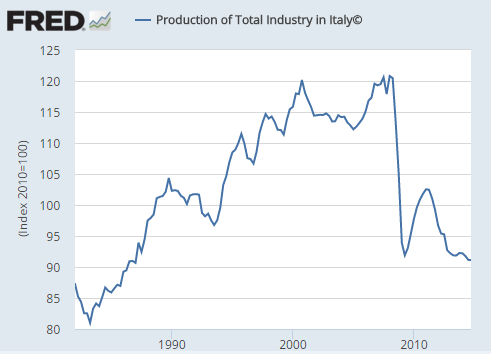
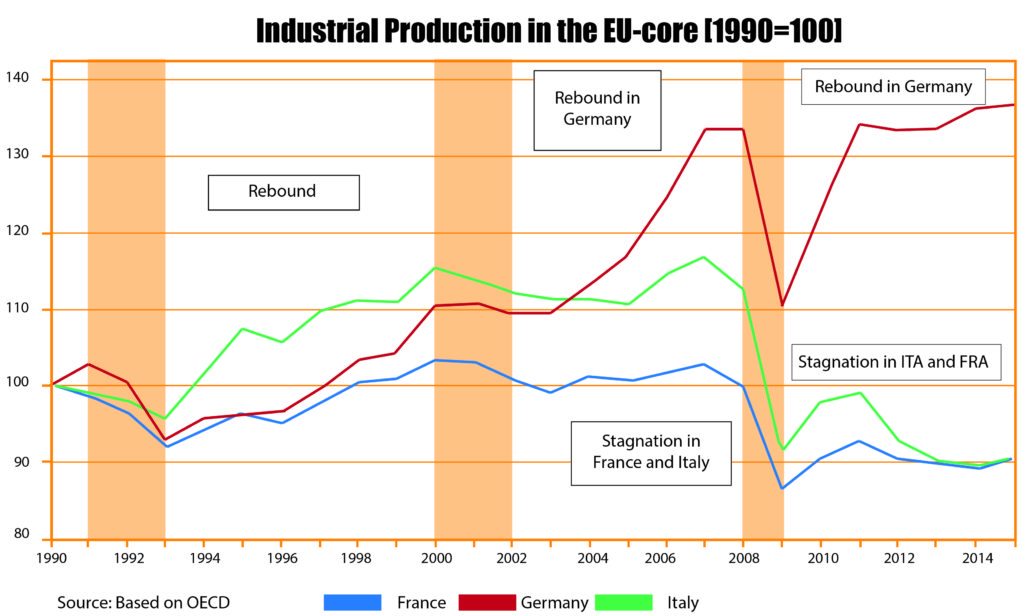
Some say that the common currency prevents less productive economies from cheating by weakening their national currencies and forces them to become more efficient and competitive. Industrial production data shows that it is not the case. Italy, France, Greece and Portugal have not only stopped producing more; they are producing now less than in 1990! The decay started immediately after the introduction of the euro in 2002! The OECD industrial production data analysis leads to the following conclusions: 1. since 1990 industrial production (manufacturing and construction included) has been growing in volume at large, even in the most developed countries; 2. the disproportion between industrial output in Germany and two other biggest euroarea economies, Italy and France, occurred already just after the 2001-2002 crisis; 3. Southern Europe’s economies have lost their ability to rebound in industrial production alongside the adoption of the euro.

1. Industrial output can increase In most of the most developed countries in the world industrial production has grown in volume since 1990, although a great deal of manufacturing capacities have been moved from the West to the emerging markets. Moreover, in countries like the USA, Israel, Switzerland, Austria and Germany the output has surpassed the 2008 pre-crisis levels. However, if we take a look at the euroarea or the Group of Seven (G7), then numbers are still lower than in 2008 but definitely higher than in 1990.

2. The euroarea has a problem A closer look at the European industrial production numbers gives a clear signal: something bad has happened after 2000. Before the introduction of euro, production trends ran more or less in the same direction. Meanwhile after the 2001-2002 crisis, French and Italian output did not rebound, while production in Germany expanded enormously and was able to reach the 2008 level quickly after the last crisis. Industry in France and Italy not only has not rebounded but also has started to curb.
3. Southern Europe will not rebound with the euro
Countries with a sovereign currency can easily build up their economies because of one simple mechanism: depreciation. A relatively strong currency (strong in comparison to the economic condition) would not have to be a problem for Italy or Greece if there still were some capacities for more debt. Then internal consumption could prop up industrial production. But Spain, Greece, Italy and Portugal have had neither a weak sovereign currency nor the possibility of incurring more debt.
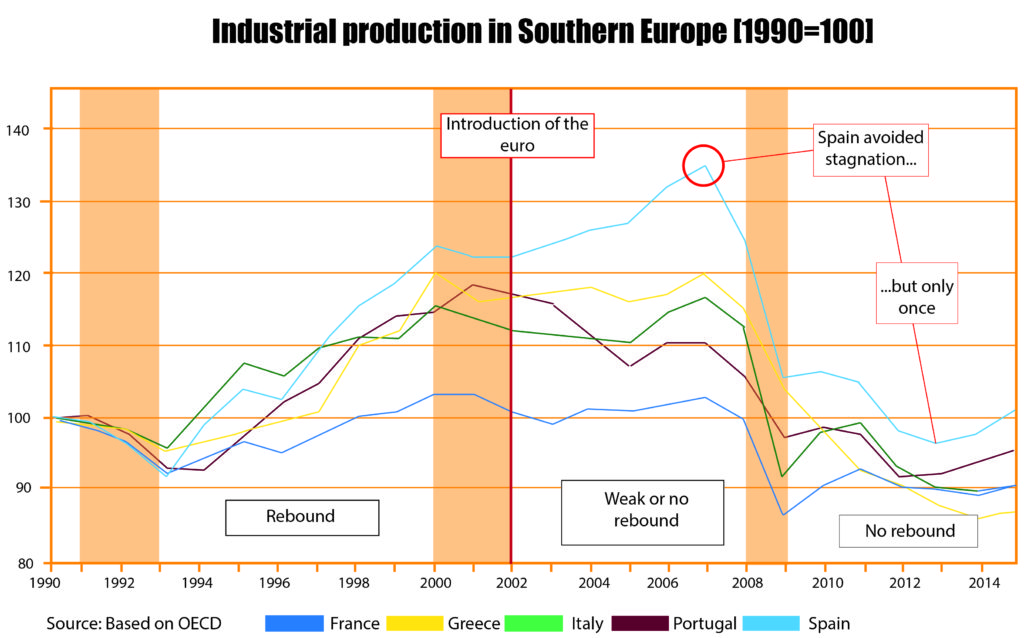
Industry is very important for the economy, as it creates jobs and innovations. The euroarea in the current form is preventing Southern Europe’s industry from developing because of a different type of economy there. “Roman” economies are not worse than than Germany’s. They just need other tools, so restricting all these various economies in the German fashion will destroy the euro as well as the European unity.

Read more …

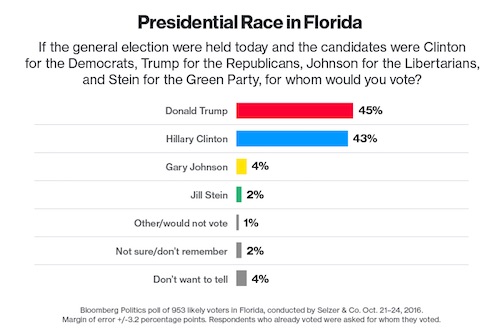
Steve Keen on which employment numbers are actually relevant. Curious to see how many people think Hillary’s got it in the bag. As an example, here’s a Bloomberg poll that just came out:
Washington: Don’t Think It’s Over When Trump Loses (Steve Keen)

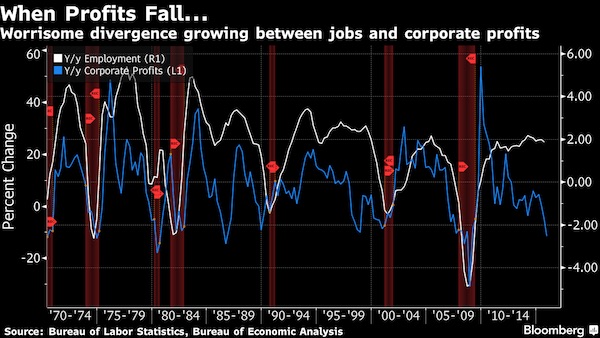
Trump’s fans certainly have their “dark fantasies”, but Washington and Krugman have a “bright fantasy” if they believe that unemployment is genuinely low. My favourite and unimpeachable proof that this is false is an easily-obtained data series: the percentage of Americans aged 25-54 who have a job. While the “Unemployment Rate” is back within half a per cent of its pre-crisis low, the percentage of Americans aged 25-54 who have a job today is 2% lower than it was before the crisis. Perhaps an even more important fact that explains the anger behind Trump (and Sanders too, before he was eliminated by the Democratic Party’s peculiar primary process) is that the employment rate actually peaked in 2000, and even after this recovery, it is still 4% lower than in 2000 (78% today versus 82% in 2000).
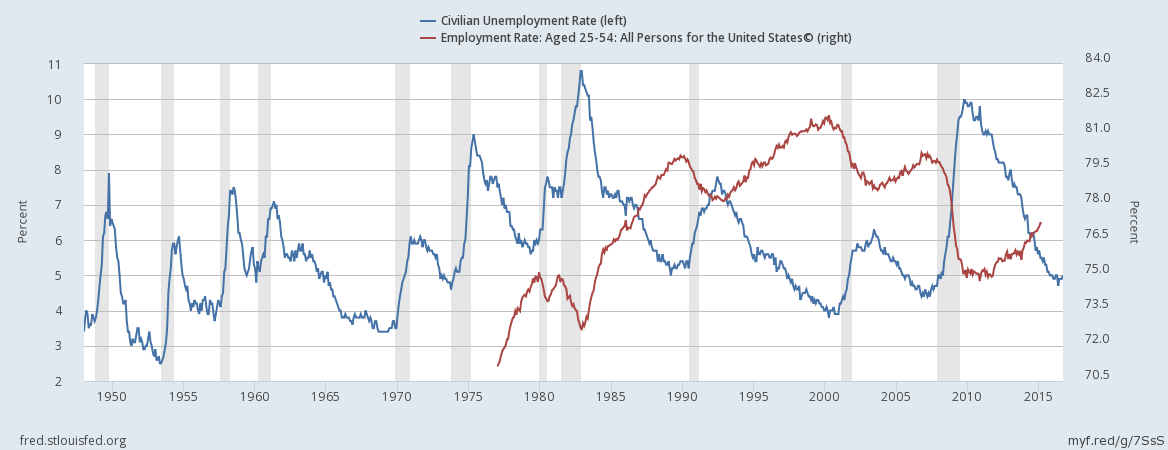
What that means in terms of people with jobs is even more telling. The number of people aged 25-54 with a job in the USA peaked at 104.7 million in December 2007. It bottomed at 100.3 million in October 2013, and as of February 2015 (the most recent data) it was 101.2 million. So when Washington is talking about achieving “full employment” again, there are still more than 3 million less people employed today than in 2007. Demographic change has caused this segment of the population to decline since December 2007—from 126 million then to 125 million in February 2015—but that still means 2 million more people are unemployed today than in 2007. So if you look at the unemployment rate, everything is wonderful. That seems to be what Washington insiders—all with well-paying jobs—are doing. But if you look at the employment rate, the economy is still in the doldrums. Which series is telling the truth about the US economy?

The employment to population ratio is telling the truth, because it’s derived by asking employers how many people they have on their payroll. The unemployment rate, on the other hand, lies about the real level of unemployment, because it is derived by asking individuals whether they fulfil a number of criteria, including whether they have looked for a job in the last 4 weeks. The employment ratio accurately tells you the number of people receiving a salary; the unemployment ratio does not accurately tell you who is not receiving one. It’s no comfort to someone not receiving a salary to be told that they are not also unemployed, according to the official definition. Their justified reaction is to tell the “official definition” what to do with itself.

Read more …

A few billion here and a few billion there in debt.

213 North American Oil Industry Companies Have Now Declared Bankruptcy (FF)

Fewer and fewer oil exploration and production companies are declaring bankruptcy. But more oilfield service companies are. So far this month, only one North American E&P firm filed for Chapter 11 protection, according to data released on Tuesday by the Dallas law firm Haynes & Boone. That’s down from two in September, three in August and four in July. But it’s been an especially tough few months for service companies. As crude prices began crashing in 2014, drillers started idling rigs. That led to fewer jobs for the companies that make their money helping producers pump oil and gas. Moreover, when producers did hire service companies, they often forced them to heavily discount their rates.

Eight service companies filed this month. Seven filed last month, and eight again the month before. Almost 50 have filed in the last six months, half of the 108 over two years. In total, 213 North American oil and gas companies have now filed for bankruptcy since the start of 2015, listing more than $85 billion in debt. The most recent exploration firm: the private oil and gas company Mountain Divide, based in Montana, filed on Oct. 14, and listed $83 million in debt. On the oilfield services side, Houston-based Key Energy Services filed on Monday, with more than $1 billion in debt. And Basic Energy Services, headquartered in Fort Worth, said Monday it had reached an agreement with debt holders to file by Tuesday.

Read more …

While at the same time letting Chinese foreign purchases escalate.

China Tightens Capital Controls Amid Yuan’s Continuing Slide (Nikkei)

China has toughened restrictions on capital flows to prevent a negative feedback loop between a weakening yuan and capital flight. The State Administration of Foreign Exchange has introduced new capital measures in areas such as Shanghai and Guangzhou since the beginning of autumn, asking foreign and regional banks to cap the amount of foreign currency they will sell to customers during 2016. These limits, though ostensibly up to banks’ discretion, are set by negotiation with authorities and so are essentially directed by the government, a financial sector source said. A gag order has been imposed surrounding the measures, the source said. Some banks apparently have set steep exchange rates to pre-emptively curb foreign currency sales, a practice that could pose issues for foreign companies in China trying to repatriate earnings, for example.

China’s trade has flagged in recent months, with exports dropping 10% in September from the year-earlier level in dollar terms. The prospect of an interest rate hike in the U.S., meanwhile, has market players expecting further declines in the yuan’s value. Stashing assets abroad, rather than keeping them in China, is increasingly seen as the safer option. This view has led to further selling of the yuan, giving rise to a downward spiral that capital controls aim to break. Both the foreign exchange regulator and the People’s Bank of China have given banks several directives this year to curb outflows and the currency’s slide. Institutions are asked to report on corporate clients’ plans for buying foreign currency. Large fund transfers that involve foreign currency purchases must be explained by the institutions ahead of time. Individuals traveling overseas are asked to make reservations when exchanging money.

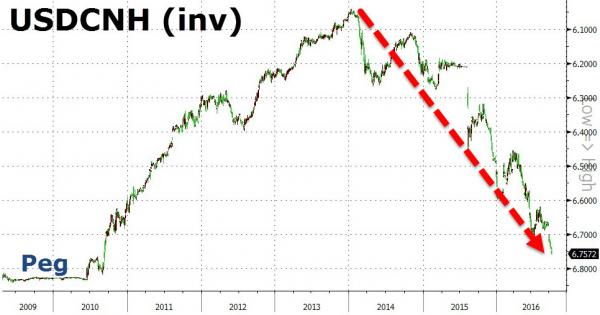
The yuan continues to depreciate despite these efforts. The central bank Tuesday set its daily guidance rate for the Chinese currency at 6.77 yuan to the dollar – just a little shy of the 6.82- to 6.83-to-the-dollar range at which the yuan was fixed for nearly two years following the September 2008 financial crisis. At the time, the goal was to prevent the currency from strengthening to stave off an economic slump. The concern now is that the yuan will become weaker and capital will flow out.

Read more …

The best thing to could happen in Britain.

London House Prices Forecast to Plunge as Brexit Chokes Market (BBG)

London property prices are set to fall next year as uncertainty about Britain’s exit from the EU damps the U.K. housing market, according to the Centre for Economics and Business Research. London, and especially the priciest areas of the capital’s housing market, will be most affected, with prices dropping 5.6% in 2017, according to the consultancy’s predictions. Across the U.K., while property value growth will accelerate to 6.9% in 2016, it’s set to slow to 2.6% next year. “Nervousness and uncertainty are starting to show,” said Kay Daniel Neufeld, an economist at Cebr. “We expect to see house-price growth across the U.K. slowing considerably in the fourth quarter of 2016, a trend that is set to continue in 2017.”

While the housing market was already facing headwinds from tax changes before June’s EU referendum, investors are becoming increasingly nervous about the possibility of a so-called hard Brexit. That could see the U.K. giving up membership of Europe’s single market for goods and services to secure greater control of immigration. Accelerating inflation, increasing unemployment and slowing business investment are all set to weigh on house prices, while curbs on migration and a retreat from the single market could slow demand from international buyers, the Cebr said.

Read more …

Wait till we find out what Google does.

AT&T Is Spying On Americans For Profit (DB)

In 2013, Hemisphere was revealed by The New York Times and described only within a Powerpoint presentation made by the Drug Enforcement Administration. The Times described it as a “partnership” between AT&T and the U.S. government; the Justice Department said it was an essential, and prudently deployed, counter-narcotics tool. However, AT&T’s own documentation—reported here by The Daily Beast for the first time—shows Hemisphere was used far beyond the war on drugs to include everything from investigations of homicide to Medicaid fraud. Hemisphere isn’t a “partnership” but rather a product AT&T developed, marketed, and sold at a cost of millions of dollars per year to taxpayers.

No warrant is required to make use of the company’s massive trove of data, according to AT&T documents, only a promise from law enforcement to not disclose Hemisphere if an investigation using it becomes public. These new revelations come as the company seeks to acquire Time Warner in the face of vocal opposition saying the deal would be bad for consumers. Donald Trump told supporters over the weekend he would kill the acquisition if he’s elected president; Hillary Clinton has urged regulators to scrutinize the deal. While telecommunications companies are legally obligated to hand over records, AT&T appears to have gone much further to make the enterprise profitable, according to ACLU technology policy analyst Christopher Soghoian.

“Companies have to give this data to law enforcement upon request, if they have it. AT&T doesn’t have to data-mine its database to help police come up with new numbers to investigate,” Soghoian said. AT&T has a unique power to extract information from its metadata because it retains so much of it. The company owns more than three-quarters of U.S. landline switches, and the second largest share of the nation’s wireless infrastructure and cellphone towers, behind Verizon. AT&T retains its cell tower data going back to July 2008, longer than other providers. Verizon holds records for a year and Sprint for 18 months, according to a 2011 retention schedule obtained by The Daily Beast.

Read more …

Just so you know.

The US Is Currently Bombing Seven Countries (PF)

For this fact check, we wondered if the U.S. is bombing seven countries. That at least has been so: In September 2014, PunditFact rated True a bombed-countries claim by Ryan Lizza of The New Yorker. Lizza referred to President George W. Bush and his successor, Barack Obama, in a tweet that said: “Countries bombed: Obama 7, Bush 4.” At the time, the U.S. on Obama’s watch had bombed Afghanistan, Iraq, Pakistan, Somalia, Yemen, Libya and Syria. When we asked Stein for her backup information, spokeswoman Meleiza Figueroa pointed out various web posts including a September 2014 CNN news story stating that Obama had ordered air strikes in seven countries through the bulk of his eight years in the office.

[..] The Bureau of Investigative Journalism, a nonprofit news service based at City University London, maintains a running list of U.S. military actions in a number of countries. The bureau annotates each incident with links to press reports. When we looked, the bureau’s accounts by country indicated the latest U.S drone strike in Pakistan occurred in May 2016; the latest strike in Somalia was in September 2016; and the latest U.S. strikes in Yemen and Afghanistan were in October 2016. Separately, we noticed, the Department of Defense said in an Oct. 11, 2016, web post that countries including the U.S. battling the Islamic State of Iraq and the Levant, or ISIL, have conducted 15,634 air strikes to date – 10,129 in Iraq, 5,505 in Syria – with the U.S. conducting 6,868 in Iraq and 5,227 in Syria. In a Sept. 30, 2016, post, the U.S. Air Force said attacks from the air have affected ISIL’s “ability to fight and conduct operations in Iraq, Syria and Afghanistan.”

Too, in August 2016, the New York Times reported the U.S. had “stepped up a new bombing campaign against the Islamic State in Libya, conducting its first armed drone flights from Jordan to strike militant targets” in Libya’s coastal city of Sirte. That news story quoted Obama saying during a news conference that the airstrikes were critical to helping Libya’s fragile United Nations-backed government to drive Islamic State militants out of Sirte, which the group has controlled since June 2015. Obama promised the air campaign would continue as long as necessary to make sure that the extremist group “does not get a stronghold in Libya,” the newspaper said.

Read more …

Trump -rightly- mirrors something I said a few days ago in Ungovernability “..her harsh criticism of Putin raised questions about “how she is going to go back and negotiate with this man who she has made to be so evil,” if she wins the presidency.”

Trump Says Clinton Policy On Syria Would Lead To World War Three (R.)

U.S. Republican presidential nominee Donald Trump said on Tuesday that Democrat Hillary Clinton’s plan for Syria would “lead to World War Three,” because of the potential for conflict with military forces from nuclear-armed Russia. In an interview focused largely on foreign policy, Trump said defeating Islamic State is a higher priority than persuading Syrian President Bashar al-Assad to step down, playing down a long-held goal of U.S. policy. Trump questioned how Clinton would negotiate with Russian President Vladimir Putin after demonizing him; blamed President Barack Obama for a downturn in U.S. relations with the Philippines under its new president, Rodrigo Duterte; bemoaned a lack of Republican unity behind his candidacy, and said he would easily win the election if the party leaders would support him.

“If we had party unity, we couldn’t lose this election to Hillary Clinton,” he said. On Syria’s civil war, Trump said Clinton could drag the United States into a world war with a more aggressive posture toward resolving the conflict. Clinton has called for the establishment of a no-fly zone and “safe zones” on the ground to protect non-combatants. Some analysts fear that protecting those zones could bring the United States into direct conflict with Russian fighter jets. “What we should do is focus on ISIS. We should not be focusing on Syria,” said Trump as he dined on fried eggs and sausage at his Trump National Doral golf resort. “You’re going to end up in World War Three over Syria if we listen to Hillary Clinton.”

[..] On Russia, Trump again knocked Clinton’s handling of U.S.-Russian relations while secretary of state and said her harsh criticism of Putin raised questions about “how she is going to go back and negotiate with this man who she has made to be so evil,” if she wins the presidency.

Read more …

“Less than half the public (43%) say they have a great deal of confidence that their vote will be counted accurately..”

Most Americans Do Not Feel Represented By Democrats Or Republicans (G.)

As they go to the polls in a historic presidential election, more than six in 10 Americans say neither major political party represents their views any longer, a survey has found. Dissatisfaction with both Democrats and Republicans has risen sharply since 1990, when less than half held that neither reflected their opinions, according to research by the Public Religion Research Institute (PRRI). The seventh annual 2016 American Values Survey was carried out throughout September among a random sample of 2,010 adults in all 50 states. Both party establishments have been rattled by the outsider challenges of Donald Trump, who was successful in winning his party’s nomination, and Bernie Sanders, who was not. In a year that seems ripe for third-party candidates, Libertarian Gary Johnson and Jill Stein of the Green party are seeking to capitalise but have fallen back in the polls in recent weeks.

61% of survey respondents say neither political party reflects their opinions today, while 38% disagree. 77% of independents and a majority (54%) of Republicans took this position, while less than half (46%) of Democrats agree. There was virtually no variation across class or race. Both Democratic presidential nominee Hillary Clinton and Republican standard bearer Trump continue to suffer historically low favourability ratings, with less than half of the public viewing each candidate positively (41% v 33%). Clinton is viewed less favourably than the Democratic party (49%), but Trump’s low rating is more consistent with the Republican party’s own favourability (36%).

The discontent with parties and candidates extends to the electoral process itself, which Trump claims is rigged against him. Less than half the public (43%) say they have a great deal of confidence that their vote will be counted accurately, while 38% have some confidence and 17% have hardly any confidence. [..] The PRRI found that pessimism about the direction of the US is significantly higher today (74%) than it was at this time during the 2012 presidential race, when 57% of the public said the country was on the wrong track.

Read more …

Slightly confused: I thought he was pro-Hillary?!

The Biggest F*ck Ever Recorded In Human History (Michael Moore)

I know a lot of people in Michigan that are planning to vote for Trump and they don’t necessarily agree with him. They’re not racist or redneck, they’re actually pretty decent people and so after talking to a number of them I wanted to write this. Donald Trump came to the Detroit Economic Club and stood there in front of Ford Motor executives and said “if you close these factories as you’re planning to do in Detroit and build them in Mexico, I’m going to put a 35% tariff on those cars when you send them back and nobody’s going to buy them.” It was an amazing thing to see. No politician, Republican or Democrat, had ever said anything like that to these executives, and it was music to the ears of people in Michigan and Ohio and Pennsylvania and Wisconsin – the “Brexit” states.

You live here in Ohio, you know what I’m talking about. Whether Trump means it or not, is kind of irrelevant because he’s saying the things to people who are hurting, and that’s why every beaten-down, nameless, forgotten working stiff who used to be part of what was called the middle class loves Trump. He is the human Molotov Cocktail that they’ve been waiting for; the human hand grande that they can legally throw into the system that stole their lives from them. And on November 8, although they lost their jobs, although they’ve been foreclose on by the bank, next came the divorce and now the wife and kids are gone, the car’s been repoed, they haven’t had a real vacation in years, they’re stuck with the shitty Obamacare bronze plan where you can’t even get a fucking percocet, they’ve essentially lost everything they had except one thing – the one thing that doesn’t cost them a cent and is guaranteed to them by the American constitution: the right to vote.

They might be penniless, they might be homeless, they might be fucked over and fucked up it doesn’t matter, because it’s equalized on that day – a millionaire has the same number of votes as the person without a job: one. And there’s more of the former middle class than there are in the millionaire class. So on November 8 the dispossessed will walk into the voting booth, be handed a ballot, close the curtain, and take that lever or felt pen or touchscreen and put a big fucking X in the box by the name of the man who has threatened to upend and overturn the very system that has ruined their lives: Donald J Trump.

They see that the elite who ruined their lives hate Trump. Corporate America hates Trump. Wall Street hates Trump. The career politicians hate Trump. The media hates Trump, after they loved him and created him, and now hate. Thank you media: the enemy of my enemy is who I’m voting for on November 8. Yes, on November 8, you Joe Blow, Steve Blow, Bob Blow, Billy Blow, all the Blows get to go and blow up the whole goddamn system because it’s your right. Trump’s election is going to be the biggest fuck ever recorded in human history and it will feel good.

Read more …

“.. like ice cubes rising as a soft drink is poured into a glass.”

Antarctic Glaciers Are Melting at a ‘Staggering’ Rate (Gizm.)

Scientists have long viewed the Amundsen sea embayment as the Achilles heel of West Antarctica, with papers in the 1970s and ‘80s describing it as “uniquely vulnerable,” “unstable,” and the “weak underbelly” of the continent. The fear, then and now, was that warm ocean waters lapping against the foot of the glaciers could cause the ice to pop up off of its rocky floor, like ice cubes rising as a soft drink is poured into a glass. When ice detaches from its so-called “grounding line,” it kickstarts a chain reaction that can trigger a lot of melting. “When water gets between ice and land, it moves quickly, bringing lots of heat in, and melting the ice above it more rapidly,” said Thomas Wagner, the director of NASA’s polar science program. “The Amundsen sea embayment is a place where we know this is happening.”

Indeed, satellite and radar data show that two of West Antarctica’s largest glaciers, Pine Island and Thwaites, have seen their grounding line retreat many miles since 2000, causing fresh water to pour off the ice and into the ocean. This process is so effective that glaciologists recently declared the total collapse of the Amundsen sea embayment—whose glaciers contain enough water to raise global sea levels by four feet—to be “unstoppable.” Here’s the rub: We still have no idea how quickly all of that ice will go, meaning we have no idea whether to prepare for a lot more sea level rise in ten years, in a generation, or at the end of the century. A new study, led by glaciologist Ala Khazendar of NASA’s Jet Propulsion Laboratory, points to ice disappearing sooner rather than later.

For years, NASA has been conducting an airborne campaign called Operation Ice Bridge, flying across sections of our planet’s north and south polar ice sheets and using ground-penetrating radar to measure changes beneath the surface. When Khazendar examined Ice Bridge’s datasets for the Amundsen sea embayment, he realized that NASA flew almost exactly the same path in 2009 that it did in 2002. “This presented an excellent opportunity to look at how ice thickness changed,” he said.

Read more …

NOTE: we know our Comments section doesn’t function properly. We’re looking into it.

Oct 212016
 
 October 21, 2016  Posted by at 9:43 am Finance Tagged with: , , , , , , , , , ,  Comments Off on Debt Rattle October 21 2016


Lewis Wickes Hine Game of craps. Cincinnati, Ohio 1908


NICOLE FOSS is the keynote speaker tonight, October 21, at the

Community Solutions Conference
McGregor Hall, Antioch College
Yellow Springs, Ohio
7.30 pm


Dollar Near 7-Month High As Euro Slides, Asia Slips (R.)
Another Thing Trump, Hillary Get Wrong In This Election: The National Debt (F.)
Trump’s Candidacy – the Good and the Bad of It (Stockman)
China Property Prices Rise At Fastest Pace On Record In September (CNBC)
Yuan Hits Record Low Against Dollar in Offshore Trading (WSJ)
China’s Property Frenzy Spurs Risky Business (WSJ)
China’s Local Governments Are Getting Into The Venture Capital Business (BBG)
The Sharing Economy is Creating a Dickensian World (Das)
‘Lions Hunting Zebras’: Ex-Wells Fargo Bankers Describe Abuses (NYT)
Washington Foreign Policy Elites Not Sorry To See Obama Go (WaPo)
Hacking Democracy (ZH)
Italy Shields Russia From EU Sanctions Threat (EUO)
Draghi Says Athens Should Focus On Reforms, And The Eurozone On Debt (Kath.)
126,956 Greeks Work In Private Sector For €100 Per Month (KTG)


“The European Central Bank removed a source of immediate risk for traders by revealing that it did not discuss tapering its QE program at this month’s meeting..”

Dollar Near 7-Month High As Euro Slides, Asia Slips (R.)

Asian stocks were mostly lower on Friday as the dollar climbed to seven-month highs against a basket of currencies and dragged down crude oil prices, cooling investor risk appetite. The greenback was boosted by a fall in the euro after the ECB shot down talk it was contemplating tapering its monetary easing – sending the common currency to its lowest since March. MSCI’s broadest index of Asia-Pacific shares outside Japan was down 0.3%. South Korea’s Kospi lost 0.4% and Australian stocks shed 0.1%, weighed down by a retreat in energy shares. Singapore fell 0.4% while Shanghai added 0.3%. Japan’s Nikkei rose 0.3% , brushing a six-month high, as the yen weakened against the dollar.

U.S. stocks ended a choppy session on Thursday slightly lower as investors digested the latest round of earnings, with a sharp drop in telecoms offset by gains in healthcare. The ECB left its ultra-loose monetary policy unchanged on Thursday but kept the door open to more stimulus in December, with ECB President Mario Draghi dousing recent market speculation that the central bank may begin tapering its €1.7 trillion asset-buying program. “The European Central Bank removed a source of immediate risk for traders by revealing that it did not discuss tapering its QE program at this month’s meeting,” wrote Ric Spooner, chief market analyst at CMC Markets. “Decisions are being deferred until December pending the outcome of research – meaning that meeting will be a key focus for markets.”

Read more …

Debt explained in the vein of Steve Keen.

Another Thing Trump, Hillary Get Wrong In This Election: The National Debt (F.)

As if there aren’t enough things to be upset about as it is, here’s another: neither candidate’s position on the debt and the deficit makes economic sense (something they each reinforced in last night’s Las Vegas debate). If they act on their campaign promises, we will most certainly be facing an economic downturn, if not an outright disaster. 1. Public sector deficits must, by definition, be private sector surpluses. If one entity spends more than it earns (the public sector) then another must earn more than it spends (you and me). This is an inescapable accounting identity. 2. Public sector debt must, by definition, be a private sector asset. If one entity adds liabilities, another adds assets–another inescapable law of accounting. 3. It is impossible for a nation to be forced to default in debt denominated in its own currency. Not unlikely, not improbable, but impossible. This is not my opinion, it’s a fact, albeit a poorly known one.

4. U.S. public debt to foreign countries like China has nothing to do with the budget deficit. It’s a result of the trade deficit. The federal government’s budget could have been in surplus for the past 100 years, but whenever we buy more from China than we sell to them, they have leftover cash which they use to buy our financial assets. These may include but are not limited to Treasury Bills. No amount of budget balancing will affect debt to China. 5. The private sector cannot consistently generate sufficient demand to create jobs for everyone who wants one. As technology and productivity have increased, so it has become more difficult. Entrepreneurs cannot be blamed for adding self-checkout lanes, they have families and stockholders. But it means the store can sell the same volume of output with fewer employees–unemployment therefore rises.

Hence, we need the public sector to spend in deficit so that a.) the private sector can net save and b.) jobs are created to supplement those generated by the market system. And it creates neither a default risk nor inflation–unless we are already at full-employment, which means we don’t need to be spending that much in the first place! It is noteworthy that when, in the midst of the Great Depression, the government decided to try to reduce the deficit, unemployment jumped from 14% (after having fallen from nearly 25%) to 19%. Once WWII hit, however, any worries about government spending went right out the window and unemployment plummeted to 1.9%. There’s no reason we can’t be there right now. Only bad policy can stand in our way.

Read more …

Dave’s new book, Trumped, is out. “God help America if she becomes president.

Trump’s Candidacy – the Good and the Bad of It (Stockman)

America is heading for a devastating financial collapse and prolonged recession that will make the last go-round look tame by comparison. The entire recovery is one giant Potemkin village of phony economics and egregious financial asset inflation. It isn’t even a mixed or debatable story. Beneath the “all is awesome” propaganda of the establishment institutions is a broken system hurtling toward ruin. For example, during the month of July 2016, when the Democrats were convening in Philadelphia to confirm a third Obama term and toast 25-years of Bubble Finance, exactly 98 million Americans in the prime working ages of 25 to 54 years had jobs, including part-time gigs and self-employment. That compares to 98.1 million during July 2000. That’s right. After 16 years of the current regime we have 5 million more prime working age Americans and not a single one of them with a job.

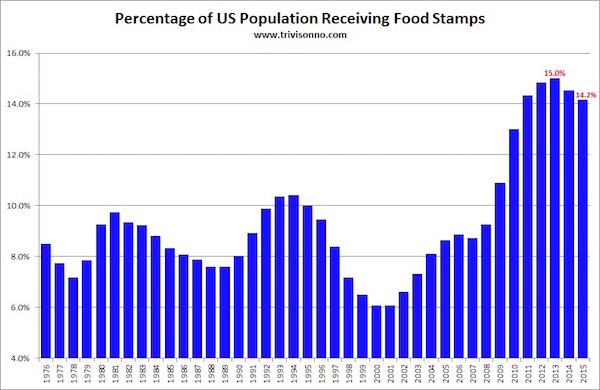
At the same time, the number of persons in households receiving means-tested benefits has risen from 50 million to 110 million. Even as the economic wagon has faltered and become loaded with dependents, however, the financial system has grown by leaps and bounds. For example, during those same 16 years public and private debt outstanding in America has risen from $28 trillion to $64 trillion. The value of publicly traded equity has increased from $25 trillion to $45 trillion. And the net worth of the Forbes 400 has nearly doubled from $1.2 trillion to $2.4 trillion. In a word, the U.S. economy is a ticking time bomb. Main Street economics and Wall Street finance have become radically and dangerously disconnected owing to the reckless falsification of financial markets by the Fed and Washington’s addiction to endless deficits and crony capitalist bailouts and boodle.

There is not a remote chance that this toxic brew can be sustained much longer. Under those circumstances the very last thing America will need in 2017–18 when it hits the fan is a lifetime political careerist and clueless acolyte of the state who knows all the right words and harbors all the wrong ideas. Indeed, during the coming crisis America will need a brash disrupter of the status quo, not a diehard defender. Yet when the Dow index drops by 7,000 points and unemployment erupts back toward double digits, Hillary Clinton’s only impulse will be to double down. That is, to fire-up the printing presses at the Fed from red hot to white heat, plunge the nation’s fiscal equation back into multi-trillion deficits and crank-out Washington’s free stuff like never before.

A combination of a Clinton White House and the devastating day of reckoning just ahead would result in Big Government on steroids. It would also tilt the Imperial City toward war in order to distract the nation’s disgruntled voters in their tens of millions. Indeed, her prospective war cabinet — including Victoria Nuland and Michéle Flournoy — is comprised of the actual architects of Washington’s unprovoked NATO siege on Russia’s own doorsteps. God help America if she becomes president.

Read more …

And Beijing keeps pretending they want to cool it down.

China Property Prices Rise At Fastest Pace On Record In September (CNBC)

China property prices rose at the fastest pace on record in September, fueling fears of a market bubble in the world’s second-largest economy. Property prices climbed 11.2% on-year in September in 70 major cities while prices were up 2.1% from August, according to Reuters calculations using data from the National Bureau of Statistics. In August, prices rose 9.2% from a year ago. Home prices in the second-tier city of Hefei recorded the largest on-year gain at 46.8%, compared with on-year gains of 40.3% in August. Top August performer Xiamen posted an on-year rise of 46.5% against an increase of 43.8% in August. Prices in Shenzhen, Shanghai and Beijing rose 34.1%, 32.7% and 27.8% on an annual basis respectively, according to Reuters.

Underpinning the strong growth was simply “debt” said independent analyst, Fraser Howie, who is also co-author of “Red Capitalism” and “Privatizing China.” “A decade ago you could make a case for strong property in China (with) genuine demand and relatively low leverage in the sector. This is certainly not the case now. You are seeing a lot of leverage in the property sector, both retail and commercial,” he told CNBC’s “Squawk Box”. The quick gains in property prices in China came after the Chinese government introduced measures aimed at boosting home sales earlier this year to reduce large inventories in an effort to limit an economic slowdown. Recent fears of overheating, however, prompted local governments in China to announce a flurry of property market cooling measures in recent weeks. Any impact from those measures was not reflected in the latest data.

Despite the property cooling measures, Howie said the broad theme of how the Chinese government was responding to the situation was recurrent. “For five to six years or so, you have on-again-off-again cooling measures in the property market, trying to make property more affordable and it’s still nowhere near affordable,” he added. The Chinese government, he said, “has no clear plan”. “It’s just a bubble, they try to pull it back; they rein it in a bit, they let it go again when it impacts the real economy.”

Read more …

It’s gettiing time for the IMF to comment on this.

Yuan Hits Record Low Against Dollar in Offshore Trading (WSJ)

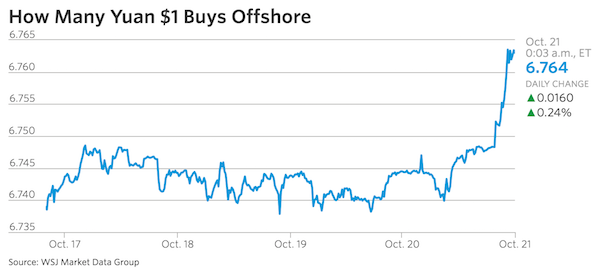
The yuan hit a record low against the U.S. dollar in offshore trading Friday after strong earnings on Wall Street and weakness in the euro boosted the strength of the greenback. The dollar reached a high of 6.75651 against the Chinese currency, which trades freely around the clock in offshore markets such as Hong Kong, its biggest trading center. It was last trading up 0.2% at 6.7582. The yuan has been traded outside China since 2010. Hong Kong’s markets are closed today as a typhoon lashes the city, with the yuan breaching its previous record around 7.41 a.m. local time, typically a time when market liquidity is thin. The People’s Bank of China later set its daily reference rate for the yuan traded in mainland China at 6.7558 against the U.S. dollar.

Onshore, the yuan is allowed to trade 2% either side of this level. The currency last traded at 6.7519 against the greenback, while its offshore counterpart weakened further after the fixing. “Overnight we saw a broadly stronger U.S. dollar,” says Qi Gao, Asia foreign exchange strategist at Scotiabank. He anticipates further strength in the greenback in the weeks running up to the U.S. Federal Reserve’s December meeting, at which the central bank may deliver its first rate increase in a year.

Read more …

“This is actually what we’re told by banks’ client managers to do to meet [regulatory] requirements.”

China’s Property Frenzy Spurs Risky Business (WSJ)

Xiong Meifang was about $30,000 short two months ago for a 30% down payment on an $895,000 apartment in the southern part of Beijing. To make up the difference, the 31-year-old graphic designer took out a line of credit from a national bank. She said the bank told her she could use the loan however she wanted. China bans borrowing for down payments. A surge in such financing offered by nonbank lenders earlier this year led to a regulatory clampdown. But as banks increasingly turn to mortgage lending, there are new signs of risky practices. In some instances, banks offer credit lines to borrowers buying apartments with few questions asked. In others, banks work with independent loan brokers or property agents to funnel money into down-payment financing.

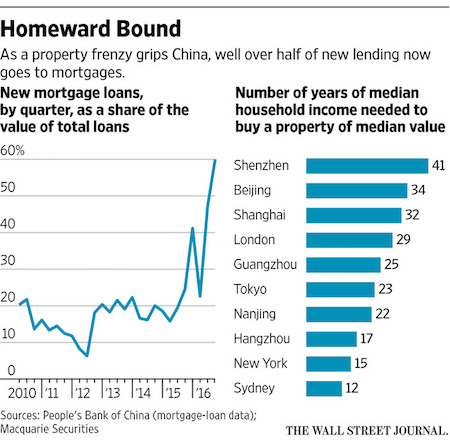
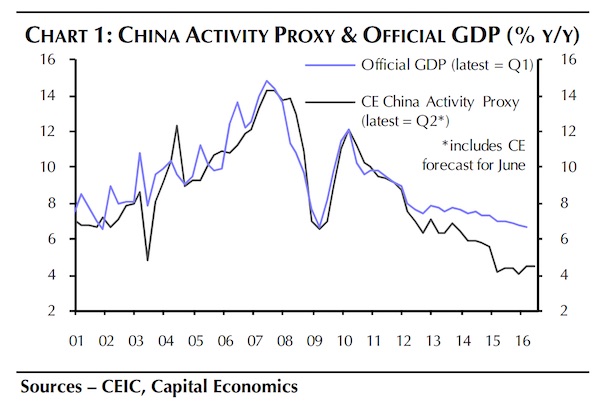
Data released Tuesday showed medium- and long-term household loans, almost all of which are mortgages, made up 60% of all new loans created in the third quarter, up from 47% in the second quarter and 23% in the first. Easy credit has fanned a property-buying craze in many Chinese cities this year, helping shore up an otherwise weak economy. Government data on Wednesday showed GDP expanded by 6.7% from a year earlier in the third quarter, matching expectations, largely on the strength of the hot property market and loose monetary policies. In the past two weeks, two dozen cities have asked banks to tighten home-lending standards. Financial regulators are seeking to rein in the relatively new practice of banks working with brokers and others, such as developers, to help home buyers come up with down payments.

[..] On paper, the purpose of the loan can’t be for the home purchase itself. But the company could help arrange a contract with, say, a decorator, to show a bank that the loan would be for home decoration, the representative said, adding that ultimately the bank can’t check how the money is used. [The broker] charges a 3% flat fee on the amount of any loans it helps arrange. “It’s all legal, of course,” said the representative. “This is actually what we’re told by banks’ client managers to do to meet [regulatory] requirements.”

Read more …

While they have huge debts with the shadow banks. What could go worng?

China’s Local Governments Are Getting Into The Venture Capital Business (BBG)

China’s next billion-dollar startup could have backing from an investor with more money than Warren Buffett and a knack for promoting spicy duck-neck delicacies. The Hubei provincial government is armed with 547 billion yuan ($81 billion) earmarked for investments that can diversify a job base dependent on steel, mining and cars. And the bureaucrats in the heartland region along the Yangtze River are letting professionals do the work – allocating the money to investment houses Sequoia Capital, TCL Capital and CBC Capital. Local governments across China are getting into the venture-capital business, deploying a combined 3 trillion yuan as the Communist Party resolves to modernize the economy and reduce debt-fueled spending on infrastructure. The money is meant to spur development of biotechnology, internet and high-end manufacturing companies that can replace the stumbling heavy industries sapping economic growth.

“Our focus is more on the sector than the return,” said Wang Hanbing, who oversees $6 billion as chairman of the Yangtze River Industry Fund, one of several using Hubei government money. “We encourage people to bring real jobs back to Hubei.” China is grappling with a profusion of economic difficulties such as declining exports, surging home prices and skyrocketing corporate debt. The State Council signaled last month it had a bigger appetite for venture capital, urging local administrations to play a leading role and promising to level the playing field for foreign VC funds. Policy makers want to curb the proliferation of borrowing by regional authorities to pay for infrastructure projects that prop up growth. Local government financing vehicles borrow on behalf of governments, which often are barred from doing so. Through September, the debt issued by more than 1,600 such vehicles soared 47% from a year ago to 1.5 trillion yuan.

Read more …

The same effect as globalization: bring down wages..

The Sharing Economy is Creating a Dickensian World (Das)

Cheerleaders frame the sharing economy in lofty utopian terms: The sharing economy isn’t business but a social movement, transforming relationships between people in a new form of internet intimacy and humanitarianism. Exchanges are economic. Buyers are primarily concerned about access to services at low costs rather than social objectives. Providers are motivated by money, using their assets and labor to get by in an unforgiving and poor economic environment.

The major financial backers of the sharing economy aren’t philanthropists. They are Wall Street and Silicon Valley’s 1%, related venture-capital firms and a few institutional investors, such as sovereign-wealth funds. The amount of capital provided is substantial. Given the normal five-to-seven-year cycle for such investments, the pressure to deliver results will increase, bringing it into conflict with the social or altruistic objectives espoused. Ultimately, the sharing economy will influence how traditional businesses operate. Traditional automobile makers could offer a car-sharing service, such as BMW’s Drive Now. Users can access a car as needed, paying only for usage. These types of changes may decrease rather than increase revenue as it substitutes hiring arrangements for outright purchases.

But perhaps the real issue is that the sharing economy reverses progress in labor markets. Whatever the gains from increased efficiency, it recreates a Dickensian world for a part of the population. Formal employment protects labor from exploitation and deprivation to varying degrees. The sharing economy transfers the risk of economic uncertainty from the employer to the employee with potentially tragic consequences. Most important, the underlying economic premise is false. Consumption constitutes 60%-70% of activity in advanced economies. In 1914, Henry Ford doubled his workers’ pay from $2.34 to $5 a day, recognizing that paying people more would enable them to afford the cars they were producing. Reduction of income levels and employment security ultimately reduces consumption and economic activity, impoverishing most within societies.

Read more …

They should take the lot of them, everyone involved, and ban them from ever working in banking or finance again.

‘Lions Hunting Zebras’: Ex-Wells Fargo Bankers Describe Abuses (NYT)

Mexican immigrants who speak little English. Older adults with memory problems. College students opening their first bank accounts. Small-business owners with several lines of credit. These were some of the customers whom bankers at Wells Fargo, trying to meet steep sales goals and avoid being fired, targeted for unauthorized or unnecessary accounts, according to legal filings and statements from former bank employees. “The analogy I use was that it was like lions hunting zebras,” said Kevin Pham, a former Wells Fargo employee in San Jose, Calif., who saw it happening at the branch where he worked. “They would look for the weakest, the ones that would put up the least resistance.”

Wells Fargo would like to close the chapter on the sham account scandal, saying it has changed its policies, replaced its chief executive and refunded $2.6 million to customers. But lawmakers and regulators say they will not let it go that quickly, and emerging evidence that some victims were among the bank’s most vulnerable customers has given them fresh ammunition. This week, three members of the Board of Supervisors in San Francisco, Wells Fargo’s hometown, introduced a resolution calling on the city to cut all financial ties with the bank. They cited both the recent scandal and past cases — particularly the $175 million that Wells Fargo paid in 2012 to settle accusations that its mortgage brokers had discriminated against black and Hispanic borrowers.

Read more …

You may not like Trump, but do you like war any better?

Washington Foreign Policy Elites Not Sorry To See Obama Go (WaPo)

There is one corner of Washington where Donald Trump’s scorched-earth presidential campaign is treated as a mere distraction and where bipartisanship reigns. In the rarefied world of the Washington foreign policy establishment, President Obama’s departure from the White House – and the possible return of a more conventional and hawkish Hillary Clinton — is being met with quiet relief. The Republicans and Democrats who make up the foreign policy elite are laying the groundwork for a more assertive American foreign policy, via a flurry of reports shaped by officials who are likely to play senior roles in a potential Clinton White House. It is not unusual for Washington’s establishment to launch major studies in the final months of an administration to correct the perceived mistakes of a president or influence his successor.

But the bipartisan nature of the recent recommendations, coming at a time when the country has never been more polarized, reflects a remarkable consensus among the foreign policy elite. This consensus is driven by a broad-based backlash against a president who has repeatedly stressed the dangers of overreach and the need for restraint, especially in the Middle East. “There’s a widespread perception that not being active enough or recognizing the limits of American power has costs,” said Philip Gordon, a senior foreign policy adviser to Obama until 2015. “So the normal swing is to be more interventionist.” In other instances, the activity reflects alarm over Trump’s calls for the United States to pull back from its traditional role as a global guarantor of security.

“The American-led international order that has been prevalent since World War II is now under threat,” said Martin Indyk, who oversees a team of top former officials from the administrations of Obama, George W. Bush and Bill Clinton assembled by the Brookings Institution. “The question is how to restore and renovate it.”

Read more …

Very clear video. But then, it was of course always a stupid thing to claim that US elections cannot be rigged.

Hacking Democracy (ZH)

“Those who cast the votes decide nothing. Those who count the votes decide everything.” – Joe Stalin.

With the mainstream media lambasting Trump for daring to suggest the election process is rigged – despite hard evidence – this is the hack that proved America’s elections can be stolen using a few lines of computer code. The ‘Hursti Hack’ in this video is an excerpt from the feature length Emmy nominated documentary ‘Hacking Democracy’. The hack of the Diebold voting system in Leon County, Florida, is real. It was verified by computer scientists at UC Berkeley.

Read more …

Brussels is as crazy as the US Democrats.

Italy Shields Russia From EU Sanctions Threat (EUO)

Italy has shielded Russia and Syria from a threat of new sanctions, amid warnings by some leaders that Russia was trying to “weaken” the EU. EU leaders said in a joint statement in Brussels on Thursday (20 October) that: “The EU is considering all available options, should the current atrocities [in Syria] continue.” They also urged “the Syrian regime and its allies, notably Russia” to “bring the atrocities to an end”, referring to Russian and Syrian airstrikes on the city of Aleppo in Syria that have caused severe civilian casualties. Germany, France, and the UK had wanted to threaten sanctions more explicitly.

“The EU is considering all options, including further restrictive measures targeting individuals and entities supporting the regime, should the current atrocities continue”, they had suggested saying. Italian prime minister Matteo Renzi led opposition, also shared by some other states, to the threat, diplomats said. He said while leaving the summit that “if we want to speak with Russia then we have to leave the door open”. He also said he did not think “that the difficult situation in Syria could be solved by additional sanctions on Russia”.

Read more …

Europe has but one purpose: to humiliate Greece. Britain better watch out.

Draghi Says Athens Should Focus On Reforms, And The Eurozone On Debt (Kath.)

European Central Bank President Mario Draghi on Thursday called on the Greek government to focus its efforts on implementing reforms agreed with the country’s creditors, noting that the ECB will examine the issues of Greece’s debt sustainability and its possible involvement in the Central Bank’s quantitative easing program when the time is right. “Discussions on the sustainability of the Greek debt continued” at an ECB meeting earlier in the day, he said. “We expressed concern, and steps should be taken.” Draghi said the ECB will conduct its own independent assessment of Greece’s debt.

“When the time comes we will examine independently the issue of the debt sustainability,” Draghi said, adding that “until then it is premature to speculate and weave scenarios,” an apparent reference to Greek calls for inclusion in the ECB’s QE program. Draghi appeared to indicate that the ECB would proceed with its assessment of Greece’s debt once there has been action from both sides: work from Athens in implementing reforms and action from Greece’s eurozone partners in lightening its debt burden. The timing of Draghi’s comments was significant. They came a day before Greek Prime Minister Alexis Tsipras is to meet with German Chancellor Angela Merkel on the sidelines of an EU leaders’ summit in Brussels for talks that are expected to touch on Greece’s debt problem and the progress of reforms.

Read more …

As supermarket prices are as high as in the rest of Europe.

126,956 Greek Workers Earn €100 Per Month, 343,760 Between €100 and €400 (KTG)

When it comes to escape the nightmare of unemployment, one may grab all possible and impossible opportunities and even accept jobs with wages that let you come home with a loaf of bread, two tomatoes and a tiny piece of cheese. The data released by the Labor Ministry are shocking: 126,956 employees in the private sector are paid a gross monthly salary of €100. 343,760 employees are paid monthly salaries between €100 and €400 gross. This category of workers have part-time or rotating work contracts. Working time: 2-3 days per week or even a few hours a week. €100 per month gross could be €55-60(?) net – enough to cover transport cost and make a living at €1 per day. PS a friend recently got a job for €300 gross – net should be around €250-230. Working hours are 4 hours per day, four days per week. She has been jobless for 4 years.

Read more …

Sep 202016
 
 September 20, 2016  Posted by at 9:13 am Finance Tagged with: , , , , , , , , , ,  Comments Off on Debt Rattle September 20 2016


DPC Main Street, Buffalo, NY 1900

The Bank of Japan May Overshadow the Fed on Super Wednesday (CNBC)
Italy PM Renzi Tells Bundesbank To Solve German Banks’ Derivatives Problem (R.)
Housing Crisis Is Driving A “Geographic Wedge” Between Generations (Ind.)
Global Regulators See Risks in European Banks (WSJ)
Shore Up The Euro Before It’s Too Late (R.)
Theresa May Outs Herself as Wall Street’s Poodle in Brexit Talks (NC)
China Creates Global Steel Champion As Doubts Deepen On Output Cuts (AEP)
China’s Property Bubble Keeps Getting Bigger (WSJ)
Chinese Say Home Prices ‘High and Hard to Accept’ but Buying Frenzy Surges (WS)
Yuan Funding Crunch Shows Risks in Reserve Currency Ranking (BBG)
New Zealand’s Sizzling Economy Sees Goldman Go Out On a Limb Over Rates (BBG)
Alabama Selling Bonds Backed by Deepwater Horizon Settlement (BBG)
Slowly, Then All at Once (Jim Kunstler)
Italy ‘Ready To Go It Alone On Migrants’ (ANSA)
Thousands Flee As Blaze Sweeps Through Moria Refugee Camp In Lesbos (G.)


Stupid circus.

The Bank of Japan May Overshadow the Fed on Super Wednesday (CNBC)

In Super Wednesday’s central bank double-header, the Federal Reserve’s show may be an afterthought to the Bank of Japan’s performance. In a case of unusual timing, both the BOJ and the Fed will announce the outcomes of their monetary policy meetings on Wednesday. [..] Analyst predictions for the BOJ’s next move varied widely, from expectations that the central bank would cut interest rates deeper into negative territory, to changing the size or make up of its quantitative easing asset purchases, to trying to steepen the yield curve or to doing nothing at all. “The BOJ has a propensity to surprise, although most of the time, the surprises are negative,” Lam said. The market certainly took a negative view of the BOJ’s late January surprise move to introduce a negative interest rate policy, when the central bank cut the rate it pays on certain deposits to negative 0.1%.

That counterintuitively sent the yen sharply higher, frustrating policymakers who had hoped a weaker currency would help the BOJ reach its long-delayed 2% inflation target by increasing the cost of imports and spurring more consumption. Indeed, the yen may become the bellwether of how the markets view the twin central bank meetings. “Dollar-yen has fallen pretty much every time we’ve had an FOMC and BOJ meeting week this year,” David Forrester at Credit Agricole told CNBC’s “Street Signs” on Monday. He expected that the BOJ would aim to steepen Japan’s bond yield curve and if that move “impressed” the Nikkei stock index, then the yen might weaken. Forrester also noted that if the Fed sounded more hawkish in its statement, that would push up the dollar, and by extension, weaken the yen.

Read more …

At least $42 trillion worth.

Italy PM Renzi Tells Bundesbank To Solve German Banks’ Derivatives Problem (R.)

Italian Prime Minister Matteo Renzi said on Monday that Germany’s central bank chief Jens Weidmann should concentrate on fixing the problems of his own country’s banks, after Weidmann had urged Italy to cut its huge public debt. Renzi told reporters in New York that Weidmann needed to solve the problem of German banks which had “hundreds and hundreds and hundreds of billions of euros of derivatives” on their books. Renzi, who has staked his career on a referendum on constitutional reform this autumn, has repeatedly criticized other European leaders in the last few days over what he sees as an inadequate European Union response to the problems of the economy and immigration. In an interview with daily La Stampa published on Monday, Weidmann said Italy needed to consolidate its budget to avoid doubts emerging about the sustainability of its public debt.

Read more …

How to kill a city, Chapter 26.

Housing Crisis Is Driving A “Geographic Wedge” Between Generations (Ind.)

The housing crisis is driving a “geographic wedge” between the generations, weakening the bond between different age groups, according to new research. The study found that the rise in “age segregation”, caused by the lack of affordable housing for younger people, is damaging our society. Across England and Wales, the number of neighbourhoods in which half the population is aged over 50 has risen rapidly since 1991, the research from the Intergenerational Foundation (IF) found. In 1991 there were just 65 such neighbourhoods. This had risen to 485 by 2014, 60% of which were rural. But within urban areas, older people, children and young adults are also living increasingly separately.

“The housing crisis is driving a geographic wedge between the generations,” the research said. “It means that older and younger generations are increasingly living apart.” Since 1991, the median average age of neighbourhoods near the centre of cities has generally fallen by between five and 10 years, the report said. The report identified Cardiff, with its large student population, as “the most age segregated city in England and Wales”. Brighton, Leeds, Nottingham, Sheffield and Southampton were also identified by the report as age segregation “hotspots”. In Cardiff and Brighton, nearly a quarter of the population would need to move home in order to eliminate age segregation.

Surging house prices and a lack of choice for buyers have meant many people in the younger generation have had to move to find affordable housing close to employment. Younger generations are more likely rent than own, but older generations also face a “last-time buying crisis” due to a general lack of supply and a lack of affordable suitable accommodation to downsize into, the report said. Living apart in this way is making it harder for younger and older generations to look after each other, putting a bigger strain on the NHS. Age segregation also reduces people’s opportunities to find work and makes it harder for people to see different generations’ perspectives, it said.

Read more …

It is really simple: “..every euro of loans or securities they own is worth less than 30 cents in risk-weighted assets..”

Global Regulators See Risks in European Banks (WSJ)

Global rule makers think some banks are too clever by half. They want to limit the capital benefits those banks get from sophisticated risk models because they worry that these create a level of accuracy and detail as seductive as it is fallible. The Basel Committee, which sets global banking rules, wants to rein in the outliers: Those banks whose models produce the lowest-risk weightings and create most benefits in reducing their capital requirements. This will disproportionately affect European banks versus U.S. peers because Europeans have long designed their businesses around a risk-based approach to capital, while U.S. banks historically were governed by simpler leverage ratios that use plain asset measures.

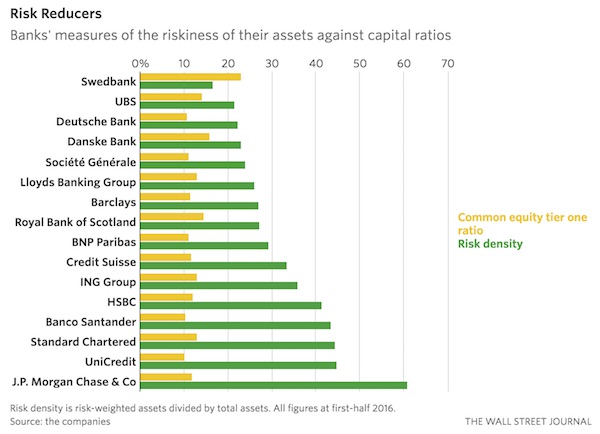
It is quite easy to see which banks in Europe face the biggest potential impact from the changes currently being designed and debated by the rule makers who should complete them by the year’s end. Deutsche Bank, Société Générale, Barclays and BNP Paribas all have a relatively low-risk density, which is a measure of how little risk a bank assigns to the assets on its books. Each has a risk density of less than 30%, which means that every euro of loans or securities they own is worth less than 30 cents in risk-weighted assets. And it is risk-weighted assets that determines a bank’s capital requirement. For comparison, J.P. Morgan has a risk density of 61%.

Read more …

The answer to all problems with the euro(-zone): more euro.

Shore Up The Euro Before It’s Too Late (R.)

Will the euro survive the next big crisis? A new report inspired by Jacques Delors, one of the architects of the single currency, says it probably won’t and urges policymakers to pursue immediate changes to Europe’s troubled monetary union to ward off the inevitable collapse. The report, entitled “Repair and Prepare – Growth and the Euro after Brexit”, comes at a time when even the most ardent defenders of the euro are cautioning against closer integration in the aftermath of Britain’s vote to leave the European Union. Pressing ahead, they worry, would deepen public resentment towards Europe after years of economic crisis that has pushed up unemployment and sent populist, eurosceptic parties surging in opinion polls.

The authors, a group of academics, think tankers and former policymakers from across Europe, acknowledge the obstacles but argue that politicians cannot afford to wait. They have put together a three-pronged plan for shoring up the euro that they believe is politically feasible despite the troubling backdrop. “Reforming the euro might not be popular. But it is essential and urgent: at some point in the future, Europe will be hit by a new economic crisis,” the report says. “We do not know whether this will be in six weeks, six months or six years. But in its current set-up the euro is unlikely to survive that coming crisis.”

[..] In a first stage to shore up the single currency, they recommend “quick fixes” that include a reinforcement of the euro zone’s rescue mechanism, the ESM, a strengthening of banking union and improved economic policy coordination that does not require changes to the EU treaty. This would be followed by a north-south quid pro quo on structural reforms and investments. In a third stage, the euro zone would move to a more federal structure, with risk and sovereignty sharing. This final stage, the most controversial, could take a decade or more to realize and is described as important but optional.

Read more …

So there!

Theresa May Outs Herself as Wall Street’s Poodle in Brexit Talks (NC)

The only elements that differentiate Theresa May’s latest move from a Monty Python skit is her lack of a pith helmet and safari jacket. The British Prime Minister, per the Financial Times, plans to visit with top executives of major Wall Street firms to “canvass” them on “how Britain should structure its departure from the EU to reassure them that Brexit will not damage their UK business.” Mind you, she is not making this kiss-the-ring trip to New York to “reassure” the financial behemoths. That would mean the UK has a plan and is making the rounds to sell it and perhaps make cosmetic changes around the margins to make them feel important. Nor is it “consult,” which is diplo-speak for, “We’ll listen to your concerns but are making no commitment as to how much if any well take under advisement.”

No, “canvass” means they are a valued constituency she intends to win over and is seeking their input for real. This “canvass” is yet more proof of how out of its depth the UK government is in handling the supposedly still on Brexit. There’s a decent likelihood that May is running to the US because her team is short on staff and ideas and those clever conniving Americans might have some useful ideas up their sleeves. After all, they don’t want to go through the bother of getting more licenses and moving some staff to the Continent or Dublin. It’s much simpler to keep everything in London, particularly since top New York execs might face a tour of duty there, and the housing, shopping and schools are much more to their liking. Mind you, most financial services would remain in London with a Brexit, but Euroclearing will require a restructuring (that will have to be done out of an EU entity).

The embarrassing part is that May is apparently having to solicit input, when the big issue is obvious and binary: will the UK keep passporting rights for banking? This is binary and not hard to understand. If not, UK and US banks will need to obtain EU licenses to do certain types of business and some customer-facing personnel will need to be domiciled in the EU, not the UK. Numerous estimates have been bandied about, and they vary widely. Note that many important operations, like foreign exchange trading, were centered in the UK long before it entered the EU, are not regulated, and are conducted by phone and electronically, so there’s no reason to think they will need to migrate.

Read more …

China wa never going to restructure steel. It’s a strategic industry.

China Creates Global Steel Champion As Doubts Deepen On Output Cuts (AEP)

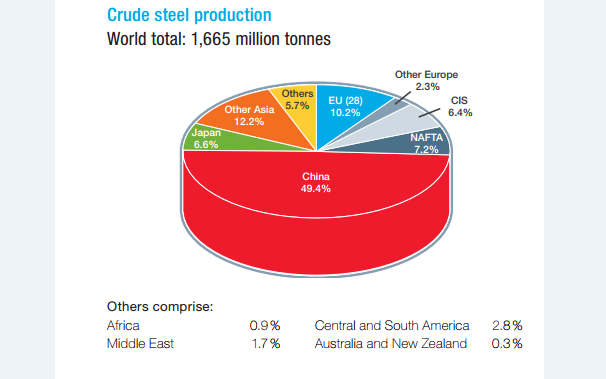
China has backed the creation of a giant national steel champion with continental reach, calling into question the country’s pledge at the G20 summit to slash over-production.Caixin Magazine said regulators have approved the merger of Baosteel and the loss-making group Wuhan Iron and Steel, calling it the birth of a strategic “behemoth” with a capacity of over 60 million tonnes a year. The move is touted as part of a restructuring plan to slash 100-150 million tonnes of excess capacity in China by 2020, with the loss of 180,000 steel jobs. But the evidence so far shows that output is still rising. An internal document from the German steel federation Stahl alleges that China has added 9m tonnes of extra capacity so far this year and there is no chance whatsoever that the country will meet its commitment to eliminate 45m tonnes of plant in 2016.

Stahl said China’s capacity has been increasing every year for the last four years, reaching 1,105m tonnes at a time when internal demand in China has slumped to 686m tonnes. Over-capacity has in effect doubled to 419m tonnes since 2012, more than twice the entire steel output of the EU. The Baosteel takeover of Wuhan is not necessarily a threat. Mergers can be part of the slow process of consolidation, and in this case the two state-owned companies have vowed to cut capacity by 13.4m tonnes between them. The nagging doubt is that steel is deemed a “strategic” industry by Beijing, a term with specific meaning in Communist Party ideology. The normal reflex of the authorities – especially regional party bosses – is to keep ailing steel mills alive by rolling over bad debts or forcing debt-equity swaps.

[..] For now the global steel crisis is in remission. The glut has been masked by China’s own policies over recent months, chiefly a fresh blast of infrastructure spending and a 20pc surge in new construction driven by easier credit. This looks like a cyclical bounce, now a routine feature of China’s stop-go economic management. The latest property boom is highly unstable. House prices rose 9.2pc in August from a year earlier, reaching 40pc in Hefei, 37pc in Shenzhen, 37pc in Nanjing, and 31pc in Shanghai. Once the new bubble deflates, a slowdown in building is likely to expose the immense scale of the steel glut once again.

Read more …

See my article yesterday.

China’s Property Bubble Keeps Getting Bigger (WSJ)

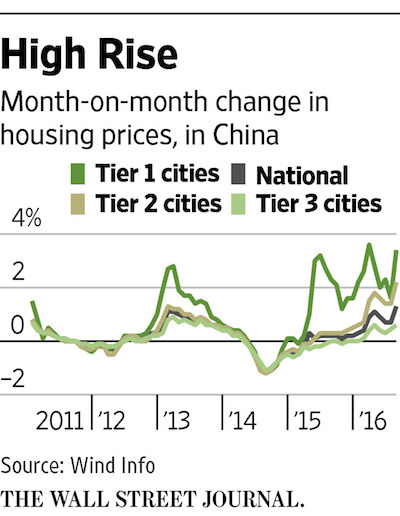
China’s attempts to contain property prices have been halfhearted. If anything, they may have made the bubble grow even bigger. Average new-home prices in August were up 1.3% from July, the government reported, the 17th straight increase and the biggest since at least January 2011. Prices declined in only four of the 70 cities surveyed. The latest leg of China’s property boom, which began last year in the biggest cities—such as Shenzhen and Shanghai—has recently spread to smaller cities, driving local governments to roll out tightening measures. Some specifically aim at capping land prices, which in some places exceed the price per square meter of already-built housing nearby. Shanghai has suspended land auctions while other cities, including Nanjing and Guangzhou, have capped land prices.

These measures, however, may have backfired by reducing supply, driving developers to acquire land in other ways. Sunac China, for example, said Sunday it would buy 42 property projects from Legend Holdings, the biggest shareholder of computer maker Lenovo, for 13.8 billion yuan ($2.1 billion). More important, tightening measures haven’t tackled the key factor of rising home prices—easy credit. As a%age of total loans, outstanding mortgage loans are at their highest since at least 2008. For developers, cheaper money available in the onshore bond market fuels aggressiveness. Sunac, for example, a company whose dollar-denominated bonds were yielding 10% just 17 months ago, raised 4 billion yuan last month with coupons of 3.44% to 4%—despite a doubling of its net debt in just the past year. With so many parties including banks and local governments all depending on real estate, it may not make sense for them to pop the bubble.

Read more …

Until another stock bubble is blown. Beijing had better understand that game is largely up after it’s in the IMF basket. Then stability becomes much more important.

Chinese Say Home Prices ‘High and Hard to Accept’ but Buying Frenzy Surges (WS)

Home prices in China are “high and hard to accept,” said 53.7% of the respondents in a survey by the People’s Bank of China, published today in the People’s Daily, the official paper of the Communist Party. Only 42.9% found them “acceptable.” And only 23.1% predicted that they would rise next quarter, while 11.9% expected them to fall. But that isn’t stopping people from wanting to participate in this frenzy: “Nevertheless, the ratio of residents who were prepared to buy a house within the next three months increased 1.3% from the third quarter to reach 16.3%.” That’s a lot of people “prepared to buy a house,” even with prices “high and hard to accept.”

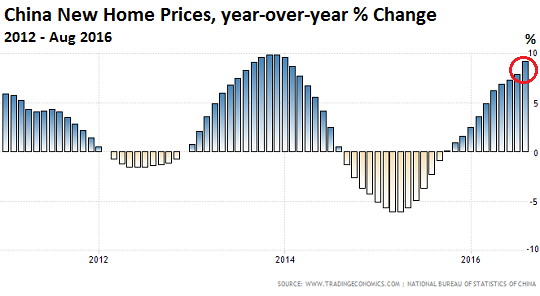
There are several remarkable things in this survey: the worried tone in terms of the soaring prices, the increased desire to buy because, or despite, of the soaring prices, and the fact that this survey came via the official party organ from the PBOC which has been publicly fretting about the housing bubble, the debt bubble that comes along with it, and what it might do when it deflates. And what a bubble it is! The average new home price in 70 Chinese cities soared 9.2% in August year-over-year, after having jumped 7.9% in July, the eleventh month in a row of year-over-year gains, according to the China Housing Index, reported by the National Bureau of Statistics. In Tier 1 cities, prices skyrocketed: in Beijing, by 23.5% and in Shanghai by 31.2%!

Prices increased in 64 of the 70 cities, up from 51 in July. They fell in only four cities and remained flat in two. This chart by tradingeconomics.com shows the year-over-year percentage change in new home prices, the boom and bust cycles, and the stage of the boom where prices are at the moment:

Read more …

Beijing will have to give up a substantial part of the control it’s used to having over the yuan. That will not be a smooth process.

Yuan Funding Crunch Shows Risks in Reserve Currency Ranking (BBG)

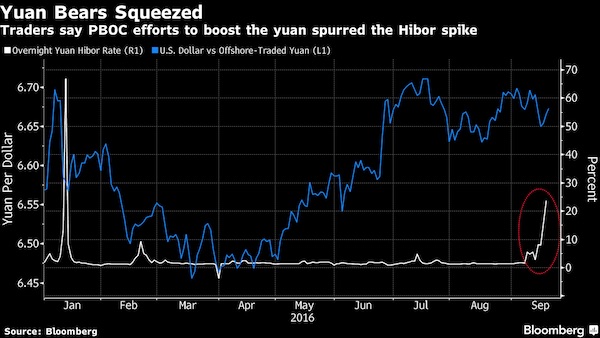
China’s desire to stabilize the yuan risks undermining its future as a global reserve currency. For the second time this year, the overnight cost to borrow the offshore currency in Hong Kong surged above 20% amid speculation the People’s Bank of China is mopping up liquidity to boost the exchange rate. The volatility comes less than two weeks before the yuan’s inclusion in the IMF’s Special Drawing Rights – an event seen as a validation of President Xi Jinping’s efforts to promote its standing on the world stage. “This is not the sort of behavior you would expect from an SDR currency,” said Sue Trinh at Royal Bank of Canada in Hong Kong. “You can’t have funding for a reserve currency blowing up or moving in such a volatile fashion; it would be a nightmare for short-term portfolio management.”

Any use of borrowing rates to shake down bears risks eroding authorities’ pledges to give markets more sway in the world’s second-largest economy and undercutting Hong Kong’s position as the biggest offshore yuan trading center. The yuan’s funding costs at home and abroad have been more volatile than the four existing currencies in the IMF’s reserve basket over the past three years, data compiled by Bloomberg show. The offshore yuan funding cost, known as Hibor, jumped 15.7 percentage points to 23.7% on Monday, the second-largest increase on record, before falling to 12.4% on Tuesday. The rate previously surged to a high of 66.8% in January as China’s policy makers battled to restore control over the currency after a series of weaker fixings.

Traders are growing used to China’s policy makers intervening before key events, said Hao Hong at Bocom International in Hong Kong. “The central bank has done this before.” Still, the move is underscoring the greater volatility in China’s money markets compared with other reserve currencies. While the overnight Shanghai Interbank Offered Rate surged to 13% during a credit crunch in 2013, similar funding costs for the dollar, yen, euro and pound all traded within a 100 basis-point range in the past three years, according to data compiled by Bloomberg.

Read more …

Those Auckland homes are turning into ATMs.

New Zealand’s Sizzling Economy Sees Goldman Go Out On a Limb Over Rates (BBG)

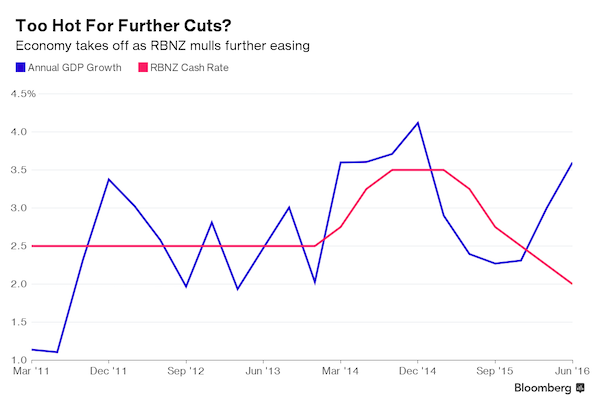
New Zealand’s sizzling economy has prompted Goldman Sachs to go out on a limb and call an end to the country’s easing cycle. Data last week showed GDP expanded 3.6% in the year through June, putting New Zealand among the fastest-growing economies in the developed world and suggesting inflation should finally start to gather pace. The Kiwi economy is “too strong to justify further rate cuts,” Tim Toohey, chief economist at Goldman Sachs Australia, wrote in a note to clients. He cancelled the two rate reductions he’d been forecasting and said the Reserve Bank of New Zealand will now hold its official cash rate at 2% through 2017. That’s a bold call after RBNZ Governor Graeme Wheeler all but committed himself to at least one more cut as he struggles to return inflation to target.

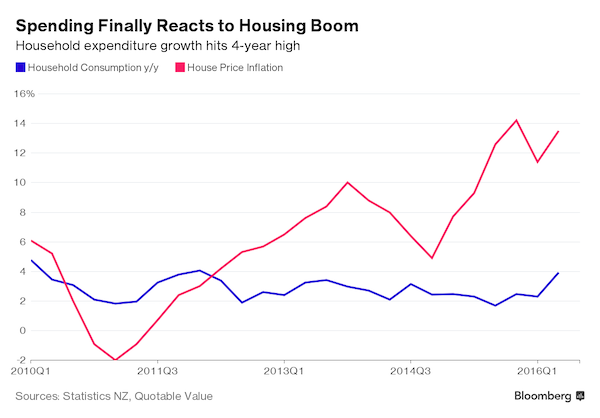
While 16 other economists surveyed by Bloomberg expect Wheeler to keep borrowing costs on hold at Thursday’s policy decision, they all predict he’ll lower them in November and some forecast another cut early next year. New Zealand’s strong dollar is damping the price of imports, meaning Wheeler has to crank up domestic price pressures to get inflation back into his 1-3% target band. He’s worried the longer the gauge stays low – it’s currently at 0.4% and forecast to slow further – the greater the risk inflation expectations will drop and create a deflationary spiral. Goldman may be on to something though. The GDP data showed a surge in household spending growth to a four-year high, suggesting inflation may be just around the corner. Spending was led by categories such as furniture, carpets and audio equipment.

Read more …

Craziness. Not a crisis goes to waste.

Alabama Selling Bonds Backed by Deepwater Horizon Settlement (BBG)

The 2010 Deepwater Horizon oil-rig disaster, featured in a major-motion picture opening next week, may soon help Alabama rebuild its reserves, pay Medicaid expenses and fund road projects. Alabama plans to use annual payments from a $1 billion settlement with U.K. oil producer BP to back bonds issued within the next two months, said Bill Newton, the state’s acting director of finance, who also sits on the Alabama Economic Settlement Authority, which was created to handle the debt issue. The state will receive the payments under the settlement for 18 years.

State lawmakers earlier this month approved the bond sale and authorized creation of the six-member authority, which had its first meeting Monday. Under the legislation about $400 million of the bond proceeds will go to repay money the state loaned itself from reserve funds in prior years to balance budgets, with the rest going to fund Medicaid expenses and road work in the southern part of the state. The amount issued will depend on interest rates when the debt is sold. “We started the process to issue the bonds within the next two months,” said Newton. “We’ll see what the market brings.”

Read more …

Wise words: “They can organize ten-acre farms instead of cell phone game app companies. They can do physical labor instead of watching television. They can build compact walkable towns instead of suburban wastelands….”

Slowly, Then All at Once (Jim Kunstler)

As is usually the case with troubled, over-ripe societies, these elites have begun to resort to magic to prop up failing living arrangements. This is why the Federal Reserve, once an obscure institution deep in the background of normal life, has come downstage front and center, holding the rest of us literally spellbound with its incantations against the intractable ravages of debt deflation. One way out of this quandary would be to substitute the word “activity” for “growth.” A society of human beings can choose different activities that would produce different effects than the techno-industrial model of behavior.

They can organize ten-acre farms instead of cell phone game app companies. They can do physical labor instead of watching television. They can build compact walkable towns instead of suburban wastelands (probably even out of the salvaged detritus of those wastelands). They can put on plays, concerts, sing-alongs, and puppet shows instead of Super Bowl halftime shows and Internet porn videos. They can make things of quality by hand instead of stamping out a million things guaranteed to fall apart next week. None of these alt-activities would be classifiable as “growth” in the current mode. In fact, they are consistent with the reality of contraction. And they could produce a workable and satisfying living arrangement.

The rackets and swindles unleashed in our futile quest to keep up appearances have disabled the financial operating system that the regime depends on. It’s all an illusion sustained by accounting fraud to conceal promises that won’t be kept. All the mighty efforts of central bank authorities to borrow “wealth” from the future in the form of “money” – to “paper over” the absence of growth – will not conceal the impossibility of paying that borrowed money back. The future’s revenge for these empty promises will be the disclosure that the supposed wealth is not really there – especially as represented in currencies, stock shares, bonds, and other ephemeral “instruments” designed to be storage vehicles for wealth. The stocks are not worth what they pretend. The bonds will never be paid off. The currencies will not store value. How did this happen? Slowly, then all at once.

Read more …

Renzi has everyhting to lose with his referendum coming before the new year.

Italy ‘Ready To Go It Alone On Migrants’ (ANSA)

Italian Premier Matteo Renzi on Monday reiterated his disappointment at Friday’s EU summit in Bratislava, which concluded with him openly coming out against Germany’s and France’s stance on migrants and economic growth for the bloc’s post-Brexit future. “If Europe continues like this, we’ll have to get organised and act autonomously on immigration,” Renzi said. “This is the only new development to come from Bratislava, where there were so many words, but we weren’t capable to saying anything clear about the issue of Africa. “That’s why, to use a euphemism, we didn’t take it well. ” Juncker says lots of wonderful things, but we don’t see actions. “This is one of Europe’s problems. Italy will go it alone. “It is capable of doing it, but this is a problem for the EU”

Read more …

The camp is basically gone. The poor just got a whole lot more desperate. Why the EU should no longer exist.

Thousands Flee As Blaze Sweeps Through Moria Refugee Camp In Lesbos (G.)

Thousands of refugees detained at one of Greece’s biggest camps, on the island of Lesbos, have fled the facility amid scenes of mayhem after some reportedly set fire to it, local police have said. Up to 4,000 panic-stricken men, women and children rushed out of the barbed-wire-fenced installation following rumours of mass deportations to Turkey. “Between 3,000 and 4000 migrants have fled the camp of Moria,” a police source said, attributing the exodus to fires that rapidly swept through the facility because of high winds. Approximately 150 unaccompanied children, controversially housed at the camp, had been evacuated to a childrens’ village, the police source added. No one was reported to have been injured in the blaze.

But damage was widespread and with tents and prefabricated housing units going up in flames, the Greek channel Skai TV, described the site as “a war zone”. The disturbances, it reported, had been fuelled by frustration over the notoriously slow pace with which asylum requests were being processed. A rumour, earlier in the day, that Greek authorities were preparing to send possibly hundreds back to Turkey – in a bid to placate mounting frustration in Germany over the long delays – was enough to spark the protests. [..] The increase in arrivals in recent months from Turkey – the launching pad for more than a million Europe-bound refugees last year – has added to the pressure on Greek authorities.

On Monday, the government announced that 60,352 refugees and migrants were registered in the country, essentially ensnared by the closure of borders along the Balkan corridor into Europe. Some 13,536 were detained on Aegean islands, including Lesbos which has borne the brunt of the influx. The detention centre at Moria has a capacity to house no more than 3,000 but is now said to be holding almost twice that number ..

Read more …

Sep 052016
 
 September 5, 2016  Posted by at 9:44 am Finance Tagged with: , , , , , , , , ,  Comments Off on Debt Rattle September 5 2016


DPC Sternwheeler Mary H. Miller in Mississippi River floating dry dock, Vicksburg 1905

China, US Commit To Refrain From Currency Wars (R.)
China’s $3.9 Trillion Wealth-Management Product Boom Seen Cooling (BBG)
China Banks Play Catch Up With Capital Raising As Bad Loans Soar (BBG)
Stiglitz: “Cost Of Keeping Euro Probably Exceeds Cost Of Breaking It Up” (LSE)
Hanjin Shipping Shares Drop 30% As It Seeks Stay Orders In 43 Countries (BBG)
Japan’s Long-Term Bonds Add To Worst Rout Since 2013 (BBG)
BOJ’s Kuroda Says Room For More Easing, Including New Ideas (R.)
EU Finds Volkswagen Broke Consumer Laws In 20 Countries (R.)
The Greater Depression (Quinn)
The Ultimate 21st Century Choice: OBOR Or War (Escobar)
EU Will Not Release More Bailout Money For Greece This Month (R.)
Hungary Police Recruit ‘Border-Hunters’ To Keep Migrants Out (BBC)
Overnight Clashes At Lesvos Refugee Center (Kath.)
9,000-Year-Old Stone Houses Found On Australian Island (G.)
World’s Largest Gorillas ‘One Step From Going Extinct’ (AFP)


Sure. We believe you.

China, US Commit To Refrain From Currency Wars (R.)

China and the United States on Sunday committed anew to refrain from competitive currency devaluations, and China said it would continue an orderly transition to a market-oriented exchange rate for the yuan. A joint “fact sheet”, issued a day after U.S. President Barack Obama and his Chinese counterpart Xi Jinping held talks, also said the two countries had committed “not to unnecessarily limit or prevent commercial sales opportunities for foreign suppliers of ICT (information and communications technology) products or services”. While China and the United States cooperate closely on a range of global issues, including North Korea’s disputed nuclear program and climate change, the two countries have deep disagreements in other areas, like cyberhacking and human rights.

Both countries said they would “refrain from competitive devaluations and not target exchange rates for competitive purposes”, the fact sheet said. Meanwhile, China would “continue an orderly transition to a market-determined exchange rate, enhancing two-way flexibility. China stresses that there is no basis for a sustained depreciation of the RMB (yuan). Both sides recognize the importance of clear policy communication.” China shocked global markets by devaluing the yuan in August 2015 and allowing it to slip sharply again early this year. Though it has stepped in to temper losses in recent weeks, the currency is still hovering near six-year lows against the dollar.

Read more …

Only when Beijing can locate another bubble to blow.

China’s $3.9 Trillion Wealth-Management Product Boom Seen Cooling (BBG)

China’s multi-trillion dollar boom in wealth-management products, under scrutiny around the world because of potential threats to financial stability, is set to cool as yields fall on tighter regulation, according to China Merchants Securities analyst Ma Kunpeng. Ma cited a “significant slowdown” in the products’ growth in the first half and said that WMPs may shrink in the future, with money flowing elsewhere. Banks have started to lower yields on WMPs in preparation for requirements for funds to be held in third-party custody, the analyst said, adding that such a change may be implemented over six months to a year. Currently, lenders can use newly invested money to pay off maturing products. The Chinese government and agencies including the IMF are focused on potential risks from WMPs that rose to a record 26.3 trillion yuan ($3.9 trillion) as of June 30.

Read more …

Have investors, who are mostly domestic, buy your banks’ bad debt. This is just shifting the rotten fish from the right pocket to the left.

China Banks Play Catch Up With Capital Raising As Bad Loans Soar (BBG)

China’s banks, which dialed down fundraising efforts this year even as bad debts swelled, are making up for lost time. Both lenders and the companies set up to acquire their delinquent assets are bolstering their finances. China Citic Bank last month announced plans to raise as much as 40 billion yuan ($6 billion), while Agricultural Bank of China, Industrial Bank and China Zheshang Bank are also boosting capital. China Cinda Asset Management and China Huarong Asset Management are poised to tap investors. “Chinese banks are preemptively raising capital while pricing remains favorable in order to tackle higher loan impairments,” said Nicholas Yap at Mitsubishi UFJ Securities in Hong Kong.

“Additionally, the mid- and small-sized lenders also need to boost their capital levels as they have been growing their asset bases rapidly, largely through their investment receivables portfolios.” Chinese banks have strained their finances with the busiest first-half lending spree on record, despite having the highest amount of bad debt in 11 years. Still, completed offerings of hybrid capital declined 38% after two consecutive years of record fundraising. A rule change in April that requires lenders to make full provisions for loan rights they have transferred is also encouraging the fundraising. BNP Paribas said Chinese lenders may be assessing the right time to approach investors.

Read more …

You have to specify who’s going to pay that cost, Joe.

Stiglitz: “Cost Of Keeping Euro Probably Exceeds Cost Of Breaking It Up” (LSE)

Can the euro be saved? In an interview with Artemis Photiadou and EUROPP’s editor Stuart Brown, Nobel Prize-winning economist and bestselling author Joseph Stiglitz discusses the structural problems at the heart of the Eurozone, why an amicable divorce may be preferable to maintaining the single currency, and how European leaders should respond to the UK’s vote to leave the EU. Your new book, The Euro: And its Threat to Europe, outlines the problems at the heart of the euro and their effects on European economies. Can the euro be saved?

The fundamental thesis of the book is that it is the structure of the Eurozone itself, not the actions of individual countries, which is at the root of the problem. All countries make mistakes, but the real problem is the structure of the Eurozone. A lot of people say there were policy mistakes – and there have been a lot of policy mistakes – but even the best economic minds in the world would have been incapable of making the euro work. It’s fundamentally a structural problem with the Eurozone. So are there reforms that could make the euro work? Yes, I think there are and in my book I talk about what these reforms would be. They are not that complicated economically, after all the United States is made up of 50 diverse states and they all use the same currency so we know that you can make a currency union work. But the question is, is there political will and is there enough solidarity to make it work?

There is an argument that even if the euro was a mistake, the costs of breaking it up may be so severe that it is worth pushing for a reformed euro rather than pursuing what you call an ‘amicable divorce’. Are the benefits of a properly functioning euro worth the costs to get there? You are right. The question of whether you should form the union is different from whether you should break it up: history matters. I think it’s pretty clear now that it was a mistake to start the euro at that time, with those institutions. There will be a cost to breaking it up, but whichever way you look at it, over the last 8 years the euro has generated enormous costs for Europe. And I think that one could manage the cost of breaking it up and that under the current course, the cost of keeping the Eurozone together probably exceeds the cost of breaking it up.

Read more …

Chapter 11.

Hanjin Shipping Shares Drop 30% As It Seeks Stay Orders In 43 Countries (BBG)

South Korea’s financial regulator said Hanjin Shipping will seek stay orders in 43 countries to protect its vessels from being seized, after its court receivership filing last week roiled companies’ supply chain before the year-end shopping season. Applications in 10 countries will be made this week and the remainder soon, the Financial Supervisory Commission said in a statement Monday. Hanjin Group, owner of the shipping line, should also take more action to account for the “chaos” caused to the shipping industry, FSC Chairman Yim Jong Yong said. Vessels of Hanjin – the world’s 7th-largest container carrier with a 2.9% market share – are getting stranded at sea and ports after the box carrier sought protection, hurting the supply of LG televisions and other consumer goods ahead of the holiday season.

Hanjin Shipping shares resumed trading Monday limit down 30% and later erased losses to rally as much as 18%. Any optimism may be misplaced, said Park Moo Hyun Hana Financial Investment in Seoul. “Retail investors are hoping for the best on false hopes,” Park said. “They think that government measures to help resolve the supply-chain disruptions could mean it’s also supporting Hanjin Shipping. They don’t seem to realize that that’s the wrong conclusion.” The commission said 79 of Hanjin’s vessels, including 61 container ships, have had their operations disrupted. Hanjin Group Chairman Cho Yang Ho and Korean Air Lines, the shipping company’s largest shareholder, should take steps to ease the disruptions, Yim said.

Read more …

Keep digging!

Japan’s Long-Term Bonds Add To Worst Rout Since 2013 (BBG)

Japanese long-term bonds fell, with 30-year debt adding to its biggest weekly loss in almost 2 1/2 years, as investors prepared to bid at an auction of the securities Tuesday. The rout is being driven by speculation the Bank of Japan will reduce its bond-buying program at its next policy meeting Sept. 20-21 now that it owns a third of the nation’s government debt. BOJ Governor Haruhiko Kuroda said Monday he doesn’t share the view there’s a limit to monetary easing. PIMCO said last month the central bank has pushed monetary policy as far as it can. “Unless Governor Kuroda directly rules out scaling back bond purchases, the market will continue to hold that as a possibility,” said Shuichi Ohsaki, the chief rates strategist at Bank of America’s Merrill Lynch unit in Tokyo. “Selling of longer-dated debt is likely ahead of tomorrow’s 30-year auction.”

Read more …

The whole notion that you’re going to try out ‘New Ideas’ kills off confidence, the one thing you know is needed.

BOJ’s Kuroda Says Room For More Easing, Including New Ideas (R.)

Bank of Japan Governor Haruhiko Kuroda signaled his readiness to ease monetary policy further using existing or new tools, shrugging off growing market concerns that the bank is reaching its limits after an already massive stimulus program. He also stressed the BOJ’s comprehensive assessment of its policies later this month won’t lead to a withdrawal of easing. But Kuroda acknowledged that the BOJ’s negative interest rate policy may impair financial intermediation and hurt public confidence in Japan’s banking system, a sign the central bank is becoming more mindful of the rising cost of its stimulus.

“Even within the current framework, there is ample room for further monetary easing … and other new ideas should not be off the table,” Kuroda told a seminar on Monday. “There may be a situation where drastic measures are warranted even though they could entail costs,” he said, adding that the BOJ should “always prepare policy options.” Under its current framework that combines negative rates with hefty buying of government bonds and some riskier assets, the BOJ has gobbled up a third of Japan’s bond market and faced criticism from banks for squeezing already thin profit margins.

Read more …

Slap that wrist!

EU Finds Volkswagen Broke Consumer Laws In 20 Countries (R.)

The European Commission has found that Volkswagen broke consumer laws in 20 European Union countries by cheating on emissions tests, German daily Die Welt reported, citing Commission sources. Among them are the Consumer Sales and Guarantees Directive – which prohibits companies from touting exaggerated environmental claims in their sales pitches – and the Unfair Commercial Practises Directive, both of which apply across the EU, the paper said. The European Commission said Industry Commissioner Elzbieta Bienkowska has repeatedly invited Volkswagen to consider compensating consumers voluntarily, without an encouraging response, and that it was for national courts to determine whether consumers were legally entitled to compensation.

To ensure consumers are treated fairly, a Commission spokeswoman said, Consumer Commissioner Vera Jourova had written to consumer associations across the EU to collect information. “She will meet relevant representatives in Brussels this week,” the spokeswoman wrote in an emailed response. Jourova has been working with consumer groups to pressure Volkswagen to compensate clients in Europe as it has in the United States over the diesel emissions scandal. Volkswagen has pledged billions of euros to compensate owners of VW diesel-powered cars, but has so far rejected calls for similar payments for the 8.5 million affected vehicles in Europe, where different legal rules weaken the chances of winning a pay out.

Read more …

Jim makes a good point: today’s food lines have turned digital.

The Greater Depression (Quinn)

It’s the black and white photographs of disheartened men and hungry children from the 1930’s that define the Great Depression for present day generations. Of course after years of government run social engineering disguised as education, most people couldn’t even define when or what constituted the Great Depression. These heart wrenching portraits of average Americans suffering and in despair capture the zeitgeist of the last Fourth Turning crisis. Apologists for the status quo contend the last eight years couldn’t possibly be classified as a depression. The narrative of economic recovery has been peddled by corporate media mouthpieces, feckless politicians, Too Big To Trust Wall Street bankers, Federal Reserve puppets, and government apparatchiks flogging manipulated data as proof of economic advancement. They point to the lack of soup lines as proof we couldn’t be experiencing a depression.

First of all, if there were soup lines, the corporate media would just ignore them. If they don’t report it, then it isn’t happening. Secondly, the soup lines are electronic, as the government downloads the “soup” onto EBT cards so JP Morgan can reap billions in fees to run the SNAP program. Just because there are no pictures of starving downtrodden Americans in shabby clothes waiting in soup lines, doesn’t mean the majority of Americans aren’t experiencing a depression. If the country has actually been experiencing an economic recovery for the last seven years, why would 14% to 15% of all Americans be dependent on food stamps to survive? When the economy is actually growing and employment is really below 5%, the%age of Americans on food stamps is below 8%.

If the government economic data was truthful, there would not be 43.5 million people living in 21.4 households (17% of all households) dependent on food stamps. More than 100 million Americans are now dependent on some form of federal welfare (not including Social Security or Medicare). If the economy came out of recession in the second half of 2009, why would 6 million more Americans need to go on welfare over the next two years?

Read more …

I don’t know, it’s an ambitious dream and all, but… Reading that $40 billion has been pledged for a $1.4 trillion project doesn’t help, I guess.

The Ultimate 21st Century Choice: OBOR Or War (Escobar)

The G20 meets in tech hub Hangzhou, China, at an extremely tense geopolitical juncture. China has invested immense political/economic capital to prepare this summit. The debates will revolve around the main theme of seeking solutions “towards an innovative, invigorated, interconnected and inclusive world economy.” G20 Trade Ministers have already agreed to lay down nine core principles for global investment. At the summit, China will keep pressing for emerging markets to have a bigger say in the Bretton Woods system. But most of all China will seek greater G20 backing for the New Silk Roads – or One Belt, One Road (OBOR), as they are officially known – as well as the new Asian Infrastructure Investment Bank (AIIB).

So at the heart of the G20 we will have the two projects which are competing head on to geopolitically shape the young 21st century. China has proposed OBOR; a pan-Eurasian connectivity spectacular designed to configure a hypermarket at least 10 times the size of the US market within the next two decades. The US hyperpower – not the Atlanticist West, because Europe is mired in fear and stagnation — “proposes” the current neocon/neoliberalcon status quo; the usual Divide and Rule tactics; and the primacy of fear, enshrined in the Pentagon array of “threats” that must be fought, from Russia and China to Iran. The geopolitical rumble in the background high-tech jungle is all about the “containment” of top G20 members Russia and China.

Shuttling between the West and Asia, one can glimpse, in myriad forms, the graphic contrast between paralysis and paranoia and an immensely ambitious $1.4 trillion project potentially touching 64 nations, no less than 4.4 billion people and around 40 per cent of the global economy which will, among other features, create new “innovative, invigorated, interconnected and inclusive” trade horizons and arguably install a post-geopolitics win-win era. An array of financial mechanisms is already in place. The AIIB (which will fund way beyond the initial commitment of $100 billion); the Silk Road Fund ($40 billion already committed); the BRICS’s New Development Bank (NDB), initially committing $100 billion; plus assorted players such as the China Development Bank and the Hong Kong-based China Merchants Holdings International.

Chinese state companies and funds are relentlessly buying up ports and tech companies in Western Europe – from Greece to the UK. Cargo trains are now plying the route from Zhejiang to Tehran in 14 days, through Kazakhstan and Turkmenistan; soon this will be all part of a trans-Eurasia high-speed rail network, including a high-speed Transiberian. The $46 billion China-Pakistan Economic Corridor (CPEC) has the potential to unblock vast swathes of South Asia, with Gwadar, operated by China Overseas Port Holdings, slated to become a key naval hub of the New Silk Roads. Deep-sea ports will be built in Kyaukphyu in Myanmar, Sonadia island in Bangladesh, Hambantota in Sri Lanka. Add to them the China-Belarus Industrial Park and 33 deals in Kazakhstan covering everything from mining and engineering to oil and gas.

Read more …

Greece gets punished for not inflicting more misery on its people fast enough.

EU Will Not Release More Bailout Money For Greece This Month (R.)

The euro zone will not release additional bailout money for Greece at a meeting in Bratislava this month, Germany’s Handelsblatt Global reported on Sunday, citing European Union diplomats. The online edition of the German business daily quoted the diplomats as saying that Athens had only implemented two of 15 political reforms that are conditions for the bailout money. Above all, they said, Greece had been slow to privatize state assets. Under a deal signed last year with the Troika, the ESM will provide financial assistance of up to €86 billion to Greece by 2018 in return for the agreed reforms.

The debt relief is due to be granted in tranches, including short-term measures to extend Greece’s debt, with a further reduction due after 2018 including interest deferrals and interest rate caps. Handelsblatt Global said the Eurogroup had approved a tranche of €10.3 billion for Greece in May from the overall package. An initial €7.5 billion of that sum had been transferred to Athens with the rest scheduled to arrive in the fall. The diplomats said the Eurogroup will only discuss a progress report on Greece at the Bratislava meeting. The comments came just days after the head of the euro zone’s bailout fund, the European Stability Mechanism (ESM) on Saturday said Greece could secure short-term debt relief measures “very soon” if it implements remaining reforms agreed under its bailout program.

Read more …

Civilized Europe.

Hungary Police Recruit ‘Border-Hunters’ To Keep Migrants Out (BBC)

The Hungarian police are advertising for 3,000 “border-hunters”, who will reinforce up to 10,000 police and soldiers patrolling a razor-wire fence built to keep migrants out. The new recruits, like existing officers, will carry pistols with live ammunition, and have pepper spray, batons, handcuffs and protective kit. The number of migrants reaching Hungary’s southern border with Serbia has stagnated, at fewer than 200 daily. The new guards will start work in May.\ The recruits will have six months’ training, they must be over 18, physically fit and must pass a psychological test, police officer Zsolt Pozsgai told Hungarian state television. Monthly pay will be 150,000 forint ($542) for the first two months, then 220,300 forint.

Hungary is in the grip of a massive publicity campaign, launched by Prime Minister Viktor Orban’s right-wing government ahead of a 2 October referendum. Voters will be asked to oppose a European Commission proposal to relocate 160,000 refugees more fairly across the 28-nation EU. Under the EU scheme, Hungary has been asked to take 1,300 refugees. The relocation programme is for refugees from Syria, Iraq and Eritrea. Currently 30 migrants are allowed into Hungary each day through official “transit zones”.

Read more …

Inevitable when far too many people are forced into far too few places, over prolonged periods of absolute uncertainty about their fate. Though children assaulting children is a new depth. Our friend Kostas says these things originate almost always in a lack of food. The solution is simple: EU countries should live up to their promises regarding refugee relocation.

Overnight Clashes At Lesvos Refugee Center (Kath.)

Authorities say clashes have broken out between rival ethnic groups of refugees and other migrants at a detention camp on the eastern Aegean Sea island of Lesvos. The trouble at the Moria hot spot started shortly after midnight in a wing of the camp where minors are held and then spread, authorities said, adding that child refugees from Syria had been assaulted by a group of Afghan children. An unspecified number of children were injured while about 40 of them escaped into nearby fields. Order was restored around 4 a.m. after intervention by riot police. Authorities were trying to locate the missing children. Nearly 5,000 migrants and refugees are currently sheltered on the islands of Lesvos. Local authorities are demanding immediate government action to decongest overcrowded migrant facilities.

Read more …

Australia’s ancient civilizations were way ahead of anyone else.

9,000-Year-Old Stone Houses Found On Australian Island (G.)

Archeologists working on the Dampier archipelago off Australia’s north-west coast have found evidence of stone houses dating back 9,000 years – to the end of the last ice age – building the case for the area to get a world heritage listing. Circular stone foundations were discovered in a cave floor on Rosemary Island, the outermost of 42 islands that make up the archipelago. The islands and the nearby Burrup peninsula are known as Murujuga – a word meaning “hip bones sticking out” – in the language of the Ngarluma people. Prof Jo Mcdonald, director of the Centre for Rock Art Research and Management at the University of Western Australia, said the excavations showed occupation was maintained throughout the ice age and the period of rapid sea level rise that followed.

“Around 8,000 years ago, it would have been on the coast,” McDonald told Guardian Australia. “This is the time that the islands were starting to be cut off and it’s a time when people were starting to rearrange themselves.” The sea level on Australia’s north-west coast rose 130 metres after the end of the ice age, at a rate of about a metre every five to 10 years. “In people’s lifetimes they would have seen loss of territory and would have had to renegotiate – a bit like Miami these days,” McDonald said. The placement of the stone structures indicated how that sudden space restriction was managed, she said. “The development of housing is really significant in terms of understanding how people actually divided up their space and lived in close proximity to each other in times of environmental stress.”

Read more …

“..we are wiping out some of our closest relatives..”

World’s Largest Gorillas ‘One Step From Going Extinct’ (AFP)

The world’s largest gorillas have been pushed to the brink of extinction by a surge of illegal hunting in the Democratic Republic of Congo, and are now critically endangered, officials said Sunday. With just 5,000 Eastern gorillas (Gorilla beringei) left on Earth, the majestic species now faces the risk of disappearing completely, officials said at the International Union for Conservation of Nature’s global conference in Honolulu. Four out of six of the Earth’s great apes are now critically endangered, “only one step away from going extinct,” including the Eastern Gorilla, Western Gorilla, Bornean Orangutan and Sumatran Orangutan, said the IUCN in an update to its Red List, the world’s most comprehensive inventory of plant and animal species. Chimpanzees and bonobos are listed as endangered.

“Today is a sad day because the IUCN Red List shows we are wiping out some of our closest relatives,” Inger Andersen, IUCN director general, told reporters. War, hunting and loss of land to refugees in the past 20 years have led to a “devastating population decline of more than 70%,” for the Eastern gorilla, said the IUCN’s update. One of the two subspecies of Eastern gorilla, known as Grauer’s gorilla (G. b. graueri), has drastically declined since 1994 when there were 16,900 individuals, to just 3,800 in 2015. Even though killing these apes is against the law, hunting is their greatest threat, experts said. The second subspecies of Eastern gorilla – the Mountain gorilla (G. b. beringei) – has seen a small rebound in its numbers, and totals around 880 individuals.

Read more …

Aug 102016
 
 August 10, 2016  Posted by at 9:35 am Finance Tagged with: , , , , , , , , , , ,  Comments Off on Debt Rattle August 10 2016


Lewis Wickes Hine Workshop of Sanitary Ice Cream Cone Co., OK City 1917

Bank Of England Suffers Stunning Failure On Second Day Of QE (ZH)
Bank of England QE and the Imaginary “Brexit Shock” (AM)
Negative-Yield Debt Is Doing The Opposite Of What It Was Supposed To Do (CNBC)
The Private Pain of China’s Economy (WSJ)
Oil Companies Face $110 Billion Debt Wall Over Next 5 Years (BBG)
The Problem With Europe Is The Euro (Stiglitz)
The EU Enters Its Endgame (Dowd)
Marc Faber: Tesla Shares Are Going To $0 (CNBC)
The US Public Pensions Ponzi (ZH)
Housing ‘Shell Shock’ Faces Danes Who Think Market Can Only Rise (BBG)
Call Blockchain Developers What They Are: Fiduciaries (Walch)
Construction Of Giant Dam In Canada Prompts Human Rights Outcry (G.)


Did Carney really not see this coming? That would be stunning indeed. Not hard at all to find out.

Bank Of England Suffers Stunning Failure On Second Day Of QE (ZH)

It started off well enough. On the first day of the Bank of England’s resumption of Gilt QE after the central bank had put its monetization of bonds on hiatus in 2012, bondholders were perfectly happy to offload to Mark Carney bonds that matured in 3 to 7 years. In fact, in the first “POMO” in four years, there were 3.63 offers for every bid of the £1.17 billion in bonds the BOE wanted to buy. However, earlier today, when the BOE tried to purchase another £1.17 billion in bonds, this time with a maturity monger than 15 years, something stunning happened: it suffered an unexpected failure which has rarely if ever happened in central bank history: only £1.118 billion worth of sellers showed up, meaning that the BOE’s second open market operation was uncovered by a ratio of 0.96.

Simply stated, the Bank of England encountered an offerless market. What makes this particular failure especially notable – and troubling – is that while technically uncovered sales of government securities happen frequently, and Germany is quite prominent in that regard as numerous Bund auctions have failed to find enough demand in the open market in recent years forcing the “retention” of the offered surplus, when it comes to a central bank’s buying of securities, there should be, at least in practice, full coverage of the operation as the central bank is willing and able to pay any price to sellers to satisfy its quota. For example, in today’s operation, the scarcity led to the BOE accepting all submissions, even as some investors offered prices above the prevailing market.

The highest accepted price for the 4% bond due in 2060, for example, was 194.00, compared with a weighted average of 192.152, which means that the happy seller obtained a yield well in excess of that implied by the market. And yet, despite having a completely price indiscriminate buyer, some £52 million worth of bond sellers simply refused to sell to the BOE at any price! The QE failure quickly raised alarm signals among the bond buying community. In a Bloomberg TV interview, Luke Hickmore at Aberdeen Asset Management said that “lots of people are bidding us for bonds – Mark Carney is now bidding me for bonds and he still can’t have them. The problem is he was trying to buy 15-year plus bonds today in the gilt market. That’s a really difficult area.”

Read more …

“One might as well try to improve one’s health by playing a few rounds of Russian roulette every morning before breakfast.”

Bank of England QE and the Imaginary “Brexit Shock” (AM)

For reasons we cannot even begin to fathom, Mark Carney is considered a “superstar” among central bankers. Presumably this was one of the reasons why the British government helped him to execute a well-timed exit from the Bank of Canada by hiring him to head the Bank of England (well-timed because he disappeared from Canada with its bubble economy seemingly still intact, leaving his successor to take the blame). The adulation he receives is really a major head-scratcher. What has he ever done aside from operating the “Ctrl. Prnt.” buttons? As far as we are aware, nothing. As we have discussed previously, his main legacy is that he has left Canada with one of the greatest and scariest real estate and consumer credit bubbles extant in the world today. Some accomplishment!

With respect to his economic analysis, it seems not the least bit different from the neo-Keynesian/ semi-monetarist mumbo jumbo we get to hear from central bankers everywhere. This is by the way no surprise: they’re an incestuous bunch and have largely received their education at the same institutions. Most of them seem genuinely convinced that central planning not only works, but is necessary to improve on the alleged drawbacks of an “unfettered market” (i.e., the mythical unhampered free market economy no-one alive today has ever experienced). If one looks closely at what they are actually doing, it soon becomes clear that it is in principle not much different from what John Law did in France in the early 18th century (the difference is one of degree only).

The much-dreaded “Brexit” has now given Mr. Carney the opportunity to do what he does best, namely open the monetary spigots wide. One might as well try to improve one’s health by playing a few rounds of Russian roulette every morning before breakfast.

Read more …

NIRP scares the sh*t out of people. And rightly so.

Negative-Yield Debt Is Doing The Opposite Of What It Was Supposed To Do (CNBC)

Paying someone to borrow your money sounds like a questionable idea on paper, and seems not to be working out so well in practice. Yet that’s exactly what people who buy negative-yielding bonds do: Instead of collecting payments in the form of yields, investors have to pay someone to take their cash. Investors ostensibly hope they can sell the debt elsewhere and make a profit, as prices go up when yields fall. It’s a strange arrangement that nonetheless has become policy in Japan and parts of Europe. The goal that sovereign debt issuers and central banks hope to achieve is a world where money is pushed toward risk and all that no-yielding debt causes inflation that leads to growth.

However, as the arrangement spreads around the world to the point where more than $11 trillion of global debt holds negative yields, questions are growing quickly about its efficacy. “It’s the definition of insanity: Keep doing the same thing over and again and expect a different result. That’s my assessment of central banks in a nutshell,” said Kim Rupert, managing director of global fixed income analysis at Action Economics. “I never thought I’d say that. I had a lot of respect for central bankers. But they’re getting way overindulgent with very little success as far as I can tell.”

Read more …

“..urged local officials to “chant bright songs about the China economy loudly” to boost confidence..”

The Private Pain of China’s Economy (WSJ)

Private investment is withering in China. Companies are shying away from risking their capital, discouraged by a cloudy global outlook and four years of slowing Chinese growth, intermittent deflation and conflicting policy messages. The development risks setting back Beijing’s aim to shift the economy from low-end manufacturing to the kind of high-tech industries and services that dynamic private companies tend to provide. Private investment on capital goods like factories and trucks grew by just 2.8% in the year’s first half following nearly 30% annual average growth over the past decade. In June, it fell for the first time since China started tracking the data in 2004. The July figure, to be released Aug. 12, is expected to show further weakness.

In a bid to reverse the trend, Beijing has stepped up efforts to slash red tape and reduce barriers for entrepreneurs and urged local officials to “chant bright songs about the China economy loudly” to boost confidence, according to one circular. Beijing also has tried to flood the economy with credit to compensate for the decline in private investment. It boosted total social financing, a broad measure of credit that includes both bank loans and nonbank lending, to a first-quarter record. But state banks, China’s main lenders, aren’t always cooperating. In the second quarter, state banks charged private companies interest rates that were 6 percentage points higher than for their public-sector counterparts, according to investment bank CICC. Officials at two state banks said they are careful when lending to smaller private borrowers given concerns over risk and lack of sufficient collateral.

Private companies also report more difficulty in raising informal loans from nonbank lenders, friends and relatives as bad loans increase and lenders grow more cautious. China’s leaders also have pressured state-owned firms to invest more. They responded with a 23% first-half jump in investment that helped prop up economic growth. But the strategy sidelines private companies that account for three-fifths of China’s economy and four-fifths of its workforce. “The government plans a lot of large-scale investments but rarely thinks about private investors getting squeezed out,” said Jon Chan Kung, founder of research group Beijing Anbound Information Co. “Companies are facing a lot of confusion and questions about China’s future.”

Read more …

It’s all about hoping prices will rise. If they don’t, and soon, these guys are toast.

Oil Companies Face $110 Billion Debt Wall Over Next 5 Years (BBG)

The worst may be yet to come for some strained oil services companies as $110 billion in debt, most of it junk rated, creeps closer to maturity. More than $21 billion of debt from oilfield services and drilling companies is estimated to be maturing in 2018, almost three times the total burden in 2017, according to a report from Moody’s Investors Service on Aug. 9. More than 70% of those high-yield bonds and term loans are rated Caa1 or lower, and more than 90% are rated below B1. Speculative-grade debt is becoming increasingly risky, as the default rate is expected to reach 5.1% in November, according to a separate Moody’s report.

The 12-month global default rate rose to 4.7% in July, up from its long-term average of 4.2%, Moody’s wrote. Of the 102 defaults this year, 49 have come from the oil and gas sector, Moody’s noted. “While some companies will be able to delay refinancing until business conditions improve, for the lowest-rated entities, onerous interest payments and required capital expenditure will consume cash balances and challenge their ability to wait it out,” Morris Borenstein, an assistant vice president at Moody’s, said in the report.

Read more …

The problem is the silly assumptions it was built on.

The Problem With Europe Is The Euro (Stiglitz)

Advocates of the euro rightly argue that it was not just an economic project that sought to improve standards of living by increasing the efficiency of resource allocations, pursuing the principles of comparative advantage, enhancing competition, taking advantage of economies of scale and strengthening economic stability. More importantly, it was a political project; it was supposed to enhance the political integration of Europe, bringing the people and countries closer together and ensuring peaceful coexistence. The euro has failed to achieve either of its two principal goals of prosperity and political integration: these goals are now more distant than they were before the creation of the eurozone. Instead of peace and harmony, European countries now view each other with distrust and anger.

Old stereotypes are being revived as northern Europe decries the south as lazy and unreliable, and memories of Germany’s behaviour in the world wars are invoked. The eurozone was flawed at birth. The structure of the eurozone – the rules, regulations and institutions that govern it – is to blame for the poor performance of the region, including its multiple crises. The diversity of Europe had been its strength. But for a single currency to work over a region with enormous economic and political diversity is not easy. A single currency entails a fixed exchange rate among the countries, and a single interest rate. Even if these are set to reflect the circumstances in the majority of member countries, given the economic diversity, there needs to be an array of institutions that can help those nations for which the policies are not well suited.

Europe failed to create these institutions. Worse still, the structure of the eurozone built in certain ideas about what was required for economic success – for instance, that the central bank should focus on inflation, as opposed to the mandate of the Federal Reserve in the US, which incorporates unemployment, growth and stability. It was not simply that the eurozone was not structured to accommodate Europe’s economic diversity; it was that the structure of the eurozone, its rules and regulations, were not designed to promote growth, employment and stability. Why would well-intentioned statesmen and women, attempting to forge a stronger, more united Europe, create something that has had the opposite effect? The founders of the euro were guided by a set of ideas and notions about how economies function that were fashionable at the time, but that were simply wrong.

Read more …

Strong by Kevin Dowd: “..what is the point of her insisting that the UK maintain completely open borders with the EU when nearly a dozen continental EU members no longer do so?”

The EU Enters Its Endgame (Dowd)

The list of countries with strong sentiment for their own Exit votes is a long one: according to a recent opinion poll, over half of the French and Italian electorates want their own exit referenda, and around 40% of the Swedish, Belgian, German, Hungarian, Polish and Spanish electorates want them. There is also strong support in Austria, Denmark, Finland, the Netherlands, Portugal, Slovakia and Sweden. Other opinion polls suggest even stronger support, but by my count, there is strong support for exit referenda in at least 16 of the 28 member countries of the EU—and then there is Greece, which has its own bone or two to pick with the EU.

Further afield, there were calls for secessionist votes in the United States and the Canadian Prime Minister was soon fending off calls for a Quexit vote. The cat is well and truly out of Pandora’s bag. The issues now are not whether there will be a similar referendum in another country but rather which country will be next and then how many will follow after that. Brexit was merely the first domino. The EU will not survive the process—and by that I do not mean that it will not survive in its current form, which is obvious—I mean that it will not survive at all. The EU “project”—the attempt to establish a federalist European superstate against the wishes of many of its subjects—has failed and the EU itself is unraveling. The only question now is how unpleasant the endgame will be.

[..] A week or so ago, I saw the German Chancellor on the news again repeat her mantra that the UK will only have access to the Single Market if it complies with her demand that it maintain free movement of peoples across what is still now the EU. I found myself scratching my head. Memo to Planet Merkel: does she not see that free movement no longer exists? Schengen has largely broken down: border controls within the EU are already a reality and the Nordics are preparing or already have plans to impose further controls to prevent their welfare states being overwhelmed by migrants. So would someone please explain to me: what is the point of her insisting that the UK maintain completely open borders with the EU when nearly a dozen continental EU members no longer do so?

Read more …

“Anybody in the world can make it eventually, at much lower cost and probably much more efficiently..”

Marc Faber: Tesla Shares Are Going To $0 (CNBC)

Marc Faber, editor of the Gloom, Boom & Doom Report, is well-known his perennially bearish take on the overall market. But there are also some specific stocks of which the investor known as “Dr. Doom” takes a particularly dim view – and right now, prime among those is Tesla. “What they produce can be produced by Mercedes, BMW, Toyota, Nissan. Anybody in the world can make it eventually, at much lower cost and probably much more efficiently,” Faber said Monday on CNBC’s “Trading Nation.”

“The market for Toyota and these large automobile companies is simply not big enough, but the moment it becomes bigger, they’ll move into the field and then Tesla will have a lot of competition.” Faber sees this increased competition causing more than a small dent in the company’s business and stock performance. “I think Tesla is a company that is likely to go to zero eventually,” Faber said.

Read more …

“Others have suggested that returns should be closer to risk-free rates which would imply an even more draconian $8.4 trillion underfunding.”

The US Public Pensions Ponzi (ZH)

Defined Benefit Pension Plans are, in many cases, a ponzi scheme. Current assets are used to pay current claims in full in spite of insufficient funding to pay future liabilities… classic Ponzi. But unlike wall street and corporate ponzi schemes no one goes to jail here because the establishment is complicit. Everyone from government officials to union bosses are incentivized to maintain the status quo…public employees get to sleep better at night thinking they have a “retirement plan,” public legislators get to be re-elected by union membership while pretending their states are solvent and union bosses get to keep their jobs while hiding the truth from employees.

We even published a note several days ago entitled “Establishment Tries To Suppress “Dissident Actuaries” Explosive Report On Public Pensions,” which pointed out that the American Academy of Actuaries and the Society of Actuaries killed a report that would have warned about the implications of lowering long-term expected returns on pension assets. Apparently the truth was just too scary. Bill Gross has been warning of the unintended consequences of low interest rates for years, and reiterated his concerns to Bloomberg recently: “Fund managers that have been counting on returns of 7% to 8% may need to adjust that to around 4%, Gross, who runs the $1.5 billion Janus Global Unconstrained Bond Fund, said. Public pensions, including the California Public Employees’ Retirement System, the largest in the U.S., are reporting gains of less than 1% for the fiscal year ended June 30.”

To our great surprise, certain pension funds are finally taking notice. Richard Ingram of Illinois’s largest pension fund recently announced that he would be taking another look at long-term return expectations noting that “anybody that doesn’t consider revisiting what their assumed rate of return is would be ignoring reality.” Ingram’s Illinois Teachers’ Retirement System is only 41.5% funded and currently assumes annual returns of 7.5%, down from 8% in 2014. We decided to take a look at what would happen if all federal, state and local pension plans decided to heed the advice of Mr. Gross. As one might suspect, the results are not pleasant.

We conservatively assume that public pensions are currently $2.0 trillion underfunded ($4.5 trillion of assets for $6.5 trillion of liabilities) even though we’ve seen estimates that suggest $3.5 trillion or more might be more appropriate. We then adjusted the return on asset assumption down from the 7.5% used by most pensions to the 4.0% suggested by Mr. Gross and found that true public pension underfunding could be closer to $5.5 trillion, or over 2.5x more than current estimates. Others have suggested that returns should be closer to risk-free rates which would imply an even more draconian $8.4 trillion underfunding.

Read more …

There’s lots of this in Europe.

Housing ‘Shell Shock’ Faces Danes Who Think Market Can Only Rise (BBG)

Denmark’s biggest mortgage bank is urging homeowners to remember that a seemingly unstoppable series of price gains can end, and even go into reverse. At Nykredit, chief analyst Mira Lie Nielsen says Danes need to start putting the possibility of housing price declines “on their radars” or risk going into “shell shock when it happens.” “Our expectation isn’t that home prices will fall in the near future, but it’s important to say, again and again, that especially apartment prices can also fall,” Nielsen said in an e-mail. After almost half a decade of negative interest rates, many homeowners in Denmark are being paid to borrow, excluding bank fees.

Most analysts estimate Danish rates won’t go positive until 2018 at the earliest, threatening to create an atmosphere of complacency as borrowers take on bigger mortgages based on assumptions that low rates are here to stay. Home prices rose an annual 4.5% across Denmark in July, according to Boligsiden.dk, a web portal that tracks the property market. Copenhagen apartment prices soared 9.4%, underpinning the “continued need to be particularly aware” of the potential risks, Nielsen said. “Prices for city dwellings are at a markedly higher level today and are in a range where few people who aren’t already benefiting from the price gains can join in,” Nielsen said.

“So the price level is playing its own damping role on the market, because incomes haven’t quite been able to keep up. This is already visible in Copenhagen.” Apartment prices in Denmark are about 5% above their 2006 peak, according to the latest data from Statistics Denmark. Back then, the country’s bubble burst and apartment prices slumped about 30% through 2009. But there’s also a flip side to record-low interest rates. Banks have suffered fewer writedowns as borrowers find it easier to repay cheaper loans. The number of homeowners unable to honor their mortgage commitments is falling, with just 0.19% failing to meet payment deadlines in the first quarter, according to industry data published on Tuesday.

Read more …

“..the romance of decentralization..”

Call Blockchain Developers What They Are: Fiduciaries (Walch)

The recent hack of the DAO (short for Decentralized Autonomous Organization) and the subsequent reversal of funds on Ethereum’s blockchain should finally put an end to a decentralization charade. People are, in fact, governing public blockchains, and we need to be able to trust them. From the beginning, the core developers (who write, evaluate and modify the software code) and the powerful miners (holders of significant chunks of computing power within the network) have been the governing bodies of these so-called decentralized systems. Yet the romance of decentralization – with the seductive idea that we don’t have to trust anyone because no human is doing anything – has allowed many to overlook this important truth.

In the techno-utopian world of blockchain technology, it has become fashionable to proclaim that software code and its operation can replace the need for human governance. Hence, the push toward “decentralized autonomous organizations,” which are essentially corporations run through code rather than by people. The first of these, the DAO, began operating in May 2016, raising $150 million from investors to operate as a venture fund for blockchain technology. The DAO is just software, coded by an ambitious group at the company Slock.It. It was embarrassingly compromised through a computer hack for $60 million within a month of its inception.

The theft’s fallout has been dramatic. Since the DAO was built on the Ethereum blockchain, everyone involved with the technology was affected: DAO investors, owners of ether (the cryptocurrency of Ethereum) and anyone building anything on Ethereum, which has sought to be a platform for so-called smart contracts. This raised serious questions like: Should folks try to get the stolen ether back? Should they leave it be, as the hack was simply an exploitation of a bug in the purportedly unstoppable code?

Read more …

“The rivers are the arteries of the Earth. When we block them up, the earth becomes unhealthy.”

Construction Of Giant Dam In Canada Prompts Human Rights Outcry (G.)

Human rights campaigners are calling on Canadian authorities to halt construction of a huge hydroelectric dam in western Canada over concerns that the mega-project tramples on the rights of indigenous peoples in the area. A global campaign launched by Amnesty International on Tuesday called on the federal government and the provincial government of British Columbia to withdraw all permits and approvals for the Site C hydroelectric dam, a C$9bn project that will see more than 5,000 hectares (12,350 acres) of land – roughly equivalent to about 5,000 rugby fields – flooded in north-east British Columbia. The land is part of the traditional territories of indigenous peoples in the region, said Craig Benjamin of Amnesty International Canada.

“It’s an area that people have used for thousands upon thousands of years. Their ancestors are buried in the land; there are hundreds of unique sites of cultural importance; there is cultural knowledge of how to live on land that is associated with this specific spot.” Many continue to rely on the land to hunt, fish, plant medicines, gather berries and conduct ceremonies. “There are really few other places where they can go to practice their culture and to exercise their rights because this is a region that has been so heavily impacted by large-scale resource development.” Amid protests by several First Nations groups, the project was approved by provincial and federal authorities in 2014, allowing preparatory work to begin last summer.

Earlier this year, as clear-cutting began in the area, part of the construction was held up by a protest camp set up by indigenous activists. “This is home,” said Helen Knott, one of the half a dozen protesters who occupied the site. “The rivers are the arteries of the Earth. When we block them up, the earth becomes unhealthy. It’s about being able to protect something to pass on to our children.” After two months in the snow and braving temperatures that dropped as low as -20C, a provincial court ordered them to dismantle the camp.

Read more …

Aug 032016
 
 August 3, 2016  Posted by at 8:23 am Finance Tagged with: , , , , , , , , ,  4 Responses »


NPC O Street Market, Washington DC 1925

Bank Shares Plunge Across Europe As Stress Tests Warn Of Contagion (G.)
Bank of England’s Stress Tests ‘Worse Than Useless’ (Ind.)
Global Bond Market Rally Unravels as Japan Shows Limit to Demand (BBG)
HSBC Reports 29% First-Half Profit Slump (G.)
Bitcoin Sinks After Hackers Steal $65 Million From Exchange (BBG)
The One-Size Euro Might Not Be So Tight After All (BBG)
China Inc. Has $1 Trillion in Cash That It’s Too Scared to Spend (BBG)
China’s Trouble With Bubbles (BBG)
Investment In Greek Economy Fell 66% Between 2007 And 2015 (Kath.)
Pay Time: The Big Squeeze On Small Business (West)
Vancouver Enacts 15% Property Tax To Stave Off Chinese Investment Surge (AFR)
Furious Sheep (Dmitry Orlov)
Why Capitalism Has Turned Us Into Narcissists (G.)
What Kind Of School Punishes A Hungry Child? (G.)
Bodies Of 120 Migrants Washed Up On Libya Shores In Past 10 Days (R.)


“Once contagion spreads from Italy to Germany and then to the UK, we will have a new banking crisis but on a much grander scale than 2007-08.”

Bank Shares Plunge Across Europe As Stress Tests Warn Of Contagion (G.)

Bank shares across Europe have slumped, as investors digested the results of health checks on major lenders and the impact of low interest rates on their long-term health. Shares in Germany’s Commerzbank hit record lows after a warning that profits would be down this year. This compounded the findings of stress tests by the European Banking Authority watchdog last week, which left the Frankfurt-based institution in the bottom half of the results from health checks on 51 major lenders. The worst performer in the stress tests, Italy’s Banca Monte dei Paschi di Siena (MPS), suffered a 16% in its shares on Tuesday and Italy’s biggest bank Unicredit fell 7% after heavy losses the day before.

The pan-European bank stock index was down 3.5% as the prospect of prolonged period of low interest rates makes it more difficult for banks to make profits. The Bank of England will conduct a bank industry assessment this year, which prompted the Adam Smith Institute – a leading thinktank – to publish a report calling for the abandonment of the “worse than useless” stress tests unless changes can be made. Kevin Dowd, professor of finance and economics at Durham University, and author of the report, said: “As the EU banking system goes into a renewed crisis, the UK banking system is in no fit state to withstand the storm. Once contagion spreads from Italy to Germany and then to the UK, we will have a new banking crisis but on a much grander scale than 2007-08.

“The Bank of England is asleep at the wheel again, and we will be back to beleaguered banksters begging for bailouts – and the taxpayer will be ripped off yet again, but bigger this time.”

Read more …

Stress tests are meant to be useless. Pure lipstick.

Bank of England’s Stress Tests ‘Worse Than Useless’ (Ind.)

The Bank of England’s annual stress tests of the UK’s banks, designed to ensure Britain’s lenders will not be at the heart of another destructive financial crisis, have been branded “worse than useless”, by a new report. Kevin Dowd, professor of finance and economics at Durham University, argues in a paper published today by the Adam Smith Institute that the Bank’s tests, which model various adverse economic scenarios each year such as a major fall in UK house prices or a Chinese property crash, have a series of “fatal flaws” and that the central bank is “asleep at the wheel”. “The purpose of the stress-testing programme should be to highlight the vulnerability of our banking system and the need to rebuild it. Instead, it has achieved the exact opposite, portraying a weak banking system as strong”.

Professor Dowd warns that the eurozone banking system is on the precipice of another crisis, which will also engulf the UK’s major lenders. “Once contagion spreads from Italy to Germany and then to the UK, we will have a new banking crisis but on a much grander scale than 2007-08” he said. “The Bank of England is asleep at the wheel again, and we will be back to beleaguered banksters begging for bailouts – and the taxpayer will be ripped off yet again, but bigger this time.” Among the flaws in the Bank’s testing exercise identified by Professor Dowd are the fact that the stress tests rely on analytical “risk weights” for banks’ assets, which have been much criticised for potentially underplaying the true riskiness of various assets such as mortgages and sovereign debt.

Read more …

A potential global earthquake.

Global Bond Market Rally Unravels as Japan Shows Limit to Demand (BBG)

The record-setting global bond market rally is coming undone. Bonds in Bank of America’s G-7 Government Index yielded 0.58% on average, the highest level in five weeks. The move is a rebound from the record low of 0.45% set in July. Japan led the selloff, and yields are rising from Australia to Germany. Global bonds surged from the end of June as the U.K.’s vote to leave the EU drove expectations the global economy would slow enough to keep the Federal Reserve from raising interest rates. Now investors and analysts are questioning whether yields dropped too far. Donald Trump said U.S. interest rates are artificially low, while Bill Gross said record-low yields aren’t worth the risk. A rally in long-term Japanese government bonds is probably over, according to PIMCO.

Read more …

BBG: “Pretax earnings fell 45% to $3.61 billion from a year earlier..”

HSBC Reports 29% First-Half Profit Slump (G.)

HSBC has admitted it is breaching a US regulator’s order to bolster its defences against financial crime as it announced a slump in first-half profits. The UK’s biggest bank also announced a $2.5bn share buyback following the sale of its Brazilian business in a move intended to demonstrate its financial strength. As the bank reported a 29% fall in first-half profits to $9.7bn, it also made a series of legal disclosures that confirmed it had received requests for information from various regulatory and law enforcement authorities around the world in relation to Mossack Fonseca, the Panama law firm linked to tax-haven companies.

Among the legal disclosures is a reference to an order agreed in October 2010 with the US Office of the Comptroller of the Currency which required the bank to “establish an effective compliance risk management programme across HSBC’s US businesses”. “HSBC Bank USA is not currently in compliance with the OCC order. Steps are being taken to address the requirements of the orders,” HSBC said, without providing details. In February the bank had revealed an official monitor it installed after a $1.9bn fine over money laundering four years ago had raised “significant concerns” about the slow pace of change to its procedures to combat crime. “Through his country-level reviews the monitor identified potential anti-money laundering and sanctions compliance issues that the [department of justice] and HSBC are reviewing further.”

Read more …

Bitcoin has turned into a Chinese bubble machine. “Chinese exchange OKCoin was the largest overall bourse for trading in the digital currency, over 90% of which is denominated in the Chinese yuan.”

Bitcoin Sinks After Hackers Steal $65 Million From Exchange (BBG)

Bitcoin plunged after one of the largest exchanges halted trading because hackers stole about $65 million of the digital currency. Bitcoin slumped 5.3% against the dollar as of 10:17 a.m. on Wednesday in Tokyo, bringing its two-day drop to 13%. Prices also sank 6.2% on Monday, although it was not clear if that initial move was related to the hack. Hong Kong-based exchange Bitfinex said on Tuesday that it halted trading, withdrawals and deposits after discovering the security breach. The exchange said it was still investigating details and cooperating with law enforcement, but acknowledged that some bitcoin have been stolen from its users.

“Yes – it is a large breach,” Fred Ehrsam, co-founder of Coinbase, a cryptocurrency wallet and trading platform, wrote in an e-mail. “Bitfinex is a large exchange, so it is a significant short term event, although Bitcoin has shown its resiliency to these sorts of events in the past.” Bitfinex confirmed in a message to Bloomberg News on Wednesday that the hackers took 119,756 bitcoin, or about $65 million at current prices. More than $1.5 billion has been wiped out from bitcoin’s market capitalization this week, according to research from CoinDesk. “We will look at various options to address customer losses later in the investigation,” Bitfinex wrote in a blog post. “We ask for the community’s patience as we unravel the causes and consequences of this breach.”

The Hong Kong exchange was the largest for U.S. dollar-denominated transactions over the past month, according to bitcoincharts.com. Chinese exchange OKCoin was the largest overall bourse for trading in the digital currency, over 90% of which is denominated in the Chinese yuan.

Read more …

Between the lines you can see just how faulty the design of the euro is. It makes the rich countries much richer, but the poor so much poorer that the system MUST collapse. Greed is blind.

The One-Size Euro Might Not Be So Tight After All (BBG)

It’s a given that the euro can’t have the right exchange rate for all of its 19 diverse members, all of the time. Yet at the helm of the ECB, Mario Draghi may be making it a closer fit for more countries, more of the time. Angel Talavera, an economist at Oxford Economics in London, has calculated for Bloomberg Benchmark what would have been the equilibrium exchange rate for 8 euro-area economies between 2011 and 2015 ” the rate that would be best suited to an economy’s domestic and external profiles. Germany’s economic strength and positive balance of payments would warrant the euro trading at around $1.40, while Greece’s woes would require it to be below parity with the dollar.

At the beginning of Draghi’s term, the euro was too strong for pretty much everyone, and has typically aligned itself more to the needs of “core” economies, Germany included. That hasn’t been helpful. “What would normally happen with a country that has its own currency is that the currency will appreciate or depreciate over time to help correct those imbalances,” Talavera said. “In the case of the Eurozone obviously you can’t have both things happening, so those imbalances are not correcting, but rather amplifying most of the time.” His calculations bear this out. At the height of the sovereign-debt crisis in 2011 the spread between the optimal rate for Germany and Greece was $0.32. By the end of last year the gap had widened to $0.42.

Given the structure of the euro, though, there may be only so much that the current set of policies can do. According to Talavera’s Oxford Economics study, the ECB’s monetary policy has always been plagued by a paradox: while it has has been “generally right for the common currency area as a whole, it has proven to be wrong for most of its individual members most of the time.”

Read more …

Really? So what are their debts at the same time?

China Inc. Has $1 Trillion in Cash That It’s Too Scared to Spend (BBG)

Never before have China’s companies had so much cash and so little to spend it on. With investment opportunities sparse amid the country’s weakest economic expansion in a quarter century, Chinese firms reported an 18% jump in cash holdings during their latest quarter, the biggest increase in six years. The $1.2 trillion stockpile – which excludes banks and brokerages – grew at a faster pace than in the U.S., Europe and Japan, according to data compiled by Bloomberg. While there are worse problems than having too much cash, China Inc.’s unprecedented hoard is frustrating both policy makers and investors. Because companies lack the confidence to spend on new projects, government attempts to boost growth by pumping money into the financial system are falling short.

Stockholders, meanwhile, would rather see bigger dividends or share buybacks than a buildup of idle cash on corporate balance sheets. “This is actually becoming a bigger and bigger issue,” said Herald van der Linde at HSBC. “Cash is becoming a point of debate.” The impulse to hoard instead of invest is relatively new for a country where corporate risk-taking has been rewarded for much of the past 25 years. But as economic growth moves deeper below 7% from double-digit levels just a few years ago, the change in mindset has been stark. Growth in China’s private spending on fixed assets, which topped 10% last year, slowed to 2.8% in the six months through June, the weakest level on record. “The drivers aren’t there” for Chinese firms to invest, said Sean Taylor at Deutsche Asset Management in Hong Kong.

Read more …

Moving into ever more and newer bubbles is the only thing that keeps China going.

China’s Trouble With Bubbles (BBG)

The collapse of China’s stock markets a year ago was eye-catching, but in the end, hardly earth-shattering. Despite the pain for millions of retail investors, the fact is that stocks remain a small part of the financial system in China. Their brief, giddy rise and spectacular collapse never really threatened the wider Chinese economy, let alone the global financial system. That doesn’t mean the rest of the world should rest easy, however. While equities remain subdued, bubbles are growing in bonds and real estate – two markets that play a much bigger role in the mainland economy. The question is whether Chinese regulators can handle a new crisis any better than the old one.

Faith that China can safely manage fast-growing, debt-fueled bubbles assumes its regulators aren’t just as good as their peers in the rest of the world, they’re better. Last year’s events should call that confidence into question. Throughout the first half of 2015, policymakers allowed leverage to grow unchecked. When the market peaked and margin calls accelerated the decline, the combined force of financial regulators, public security officials and the state press were powerless to stop the slide. The situation places a premium on policies, rather than personalities, that can prevent things from unraveling. China needs to find a way to tap the brakes on credit without sending the markets into a downward spiral. Tighter rules and larger capital requirements for wealth management products – a key source of risk – are a start.

But as long as loan growth continues to accelerate faster than GDP, it’s hard to argue that a true basis for stability has been established. For evidence the underlying problems remain unsolved, look no further than China’s other asset markets. One might’ve expected that after the trauma of the stock crash, Chinese investors would become a shade more cautious. Nothing could be further from the truth. The equity boom-and-bust was followed almost immediately by a similar cycle in the metal market, which saw steel prices surge almost 80%. Property prices in Shenzhen are up 64% in the last nine months. Leveraged bets in the fixed income market mean yields continue to creep down, even as default risks grow.

Read more …

Thank the IMF for this.

Investment In Greek Economy Fell 66% Between 2007 And 2015 (Kath.)

Investment in the Greek economy plummeted more than 60% between 2007 and 2015, according to data published in Eurobank’s weekly bulletin on Tuesday. According to the lender’s economists, fixed capital investment declined by €40 billion or 66.1% during the period in question. At the same time, Greece’s GDP fell €56.7 billion. The Eurobank document described the drop in investment since 2007 as “deep and prolonged.” The reduction in investment was mainly felt in the housing market (€23.8 billion euros), followed by machinery and equipment (€12.1 billion) and other types of construction (€2.3 billion).

Eurobank said some of the key reasons for the dramatic slide in the amount of capital being invested in the Greek economy were the increases and frequent changes in taxation, the rising cost of capital, the reduction in lending by banks, the rise of uncertainty, an inability to create an investor-friendly environment despite some progress in this area, and expectations of weak economic activity. The lender also notes that net fixed capital formation, which measures gross investment minus depreciation, has been in negative territory since the end of 2010. The most recent data show that the annual shortfall is close to €11 billion.

To underline how damaging the last few years, and the collapse in investment described earlier, have been for the Greek economy, Eurobank’s weekly report pointed out that unemployment in December 2007 was at 8.1%, meaning there were just 403,000 people out of work. By the end of 2015, the jobless rate had risen to 24.2%, with 1.1 million people without work. During this eight-year spell, 860,000 jobs disappeared.

Read more …

Time for Fonterra to collapse. It’s too big for its own good.

Pay Time: The Big Squeeze On Small Business (West)

US cereal giant Kellogg’s and New Zealand milk multinational Fonterra have put the squeeze on local suppliers by stretching their payment terms out to a crushing 120 days. Along with other multinationals such as Unilever and Nestle, Kellogg’s and Fonterra already had their suppliers on 90-day terms, a punishing delay for family businesses who have to pay staff and a slew of other costs within the month. The move to 120 days does not bode well for small business, already fed up with “being used as a bank”, as one framed it. “Small business is the engine room of the economy,” he said, declining to be named for fear of reprisals, “And we are bankrolling these multinationals. I’ve got staff, super, rent and electricity to pay: and GST and payroll tax to collect. I can’t tell my staff to wait for 120 days to be paid”.
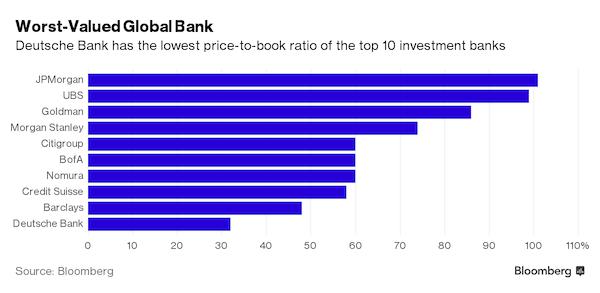

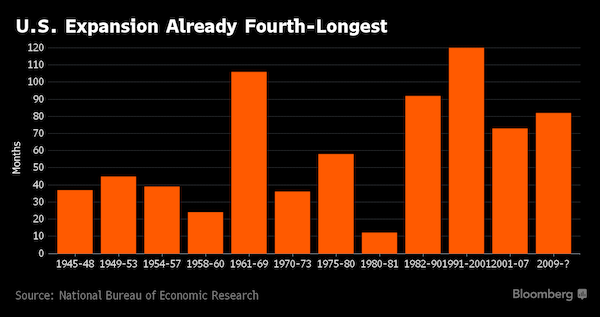
Kellogg’s was ducking for cover when rung for comment, its media team refusing to return calls. Fonterra issued this statement via a spokesperson: “In 2011, we identified that international best practice was to pay vendors supplying goods and services on a 60 day global standard payment from the end of the month in which the invoice was received. Part of our 2015 business transformation was to speed up compliance to this global standard term. We have 20,000 vendors globally and 16,000 or 80% of them have had no change to their payment terms.” According to a Fonterra document seen by this reporter, however, the new terms are “1st of the month, 3 months following invoice date”.

As for Fonterra’s claim of “international best practice”, payment terms in Europe have been moving the other way, by law. Since March 2013, the maximum delay for companies in the EU to for pay for goods and services is 30 days, unless agreed by both parties in writing, in which case it may be 60 days.

Read more …

Get ready for the NAFTA law suits.

Vancouver Enacts 15% Property Tax To Stave Off Chinese Investment Surge (AFR)

As of Tuesday, foreign buyers of property in Vancouver, which like Sydney is one of the world’s hottest real estate markets, will have to pay a 15% transaction tax. Property prices in Vancouver trail only Sydney and Hong Kong on the list of the world’s least-affordable housing markets, a Demographia survey shows. Trying to correct that, the NSW government said two months ago that it would levy a 4% stamp-duty surcharge on foreign buyers beginning next year and also charge an extra 0.75% land-tax surcharge on residential real estate, where prices are buoyed by incoming investment from mainland China. British Columbia legislators passed the new law on Friday going into a three-day holiday weekend even as local property agents called for exemptions for deals made to buy but not yet complete.

The new tax means non-Canadian residents buying a $2 million home will have to pay an additional $300,000 in tax. “While investment from outside Canada is only one factor driving price increases, it represents an additional source of pressure,” British Columbia Finance Minister Michael de Jong said in a statement. “This additional tax on foreign purchases will help manage foreign demand while new homes are built to meet local needs. A surge in purchases by Chinese property buyers has resulted in driving up the value of more than 90% of detached homes in Vancouver to more than C$1 million ($1.04 million), compared with 19% 10 years ago. Vancouver’s average home price is Canada’s highest, at $1.2 million, the Royal Bank of Canada estimates.

Read more …

“Should you be asked what does matter to you, concentrate on such issues as the candidates’ body language, fashion sense and demeanor.”

Furious Sheep (Dmitry Orlov)

you have to understand the way the electoral game is played. It is played with money—very large sums of money—with votes being quite secondary. In mathematical terms, money is the independent variable and votes are the dependent variable, but the relationship between money and votes is nonlinear and time-variant. In the opening round, the moneyed interests throw huge sums of money at both of the major parties—not because elections have to be, by their nature, ridiculously expensive, but to erect an insurmountable barrier to entry for average citizens. But the final decision is made on a relatively thin margin of victory, in order to make the electoral process appear genuine rather than staged, and to generate excitement.

After all, if the moneyed interests just threw all their money at their favorite candidate, making that candidate’s victory a foregone conclusion, that wouldn’t look sufficiently democratic. And so they use large sums to separate themselves from you the great unwashed, but much smaller sums to tip the scales. When calculating how to tip the scales, the political experts employed by the moneyed interests rely on information on party affiliation, polling data and historical voting patterns. To change the outcome from a “lose-win” to a “lose-lose,” you need to invalidate all three of these:

• The proper choice of party affiliation is “none,” which, for some bizarre reason, is commonly labeled as “independent,” (and watch out for American Independent Party, which is a minor right-wing party in California that has successfully trolled people into joining it by mistake). Be that as it may; let the Furious Sheep call themselves the “dependent” ones. In any case, the two major parties are dying, and the number of non-party members is now almost the same as the number of Democrats and Republicans put together.

• When responding to a poll, the category you should always opt for is “undecided,” up to and including the moment when you walk into the voting booth. When questioned about your stands on various issues, you need to remember that the interest in your opinion is disingenuous: your stand on issues matters not a whit (see study above) except as part of an effort to herd you, a Furious Sheep, into a particular political paddock. Therefore, when talking to pollsters, be vaguely on both sides of every issue while stressing that it plays no role in your decision-making. Should you be asked what does matter to you, concentrate on such issues as the candidates’ body language, fashion sense and demeanor.

Read more …

This reviewer misses the point entirely, as evidenced by stupid things like “A cheerful worker is as much as 12% more productive.”

Why Capitalism Has Turned Us Into Narcissists (G.)

It is no wonder that the notion of happiness has been taken into public ownership, given the remarkable spread of spiritual malaise around the globe. Around a third of American adults and close to half in Britain believe that they are sometimes depressed. Even so, more than half a century after the discovery of antidepressants, nobody really knows how they function. Work over which individuals have little control can heighten the risk of heart disease. (Co-operatives, by contrast, are apparently good for your health.) So-called austerity has made people sicker and driven some to death. Vastly unequal nations such as the UK and the US breed mental health problems far more than more egalitarian ones such as Sweden.

Illness, absenteeism and “presenteeism” (coming into work purely to be physically present) are estimated to cost the US economy as much as $550bn (£417bn) a year. There is evidence that a competitive ethos can trigger mental illness among the winners as well as the losers, not least in the case of sport stars. Despite the living disproof known as Donald Trump, the more you chase after money, status and power, the lower your sense of worth is likely to be. Given their pathologically upbeat culture, Americans tend to downplay their dejectedness, while the French, with their suspicion that happiness is unsophisticated, are more likely to under-report it. It is the kind of thing that cavorts at the end of piers wearing a striped jacket and red plastic nose.

Happiness is excellent for business. A cheerful worker is as much as 12% more productive. A science of human sentiments – what Davies calls “the surveillance, management and government of our feelings” – is thus one of the fastest growing forms of manipulative knowledge. So is market research into shopping, which now uses extensive face-scanning programmes in order to reveal customers’ emotional states. The more bright-eyed neuroscientists claim they are close to discovering a “buy button” in the brain.

Read more …

if you’re still wondering why Brexit happened after reading this, good luck and good night. Britain is a thoroughly sick nation. Not saying it’s unique in that. But…

What Kind Of School Punishes A Hungry Child? (G.)

Michaela community school in Wembley was widely criticised last week for placing children in “isolation” because their parents were late with lunch payments. The lunches are compulsory, with parents being charged £75 upfront for each six-week period. Fall even a week behind, and you may be warned that your child faces “lunch isolation”, where “they will receive a sandwich and a piece of fruit only”. That’s not counting the side order of segregation and humiliation. The child will spend the whole 60 minutes away from their friends, and “only when the entire outstanding amount is paid in full will they be allowed into ‘family lunch’ with their classmates”.

“A sandwich is fine – at least the child is being fed,” you might think. But a sandwich is not “fine”. The School Food Plan, by Leon founders Henry Dimbleby and John Vincent, states that only 1% of packed lunches, which typically comprise a sandwich and snacks, meet the nutritional requirements for school meals. It is easier to get nutrients into a hot meal. After the story broke, Michaela’s headteacher, Katharine Birbalsingh, insisted she was not punishing children for being poor: the sanction didn’t apply to pupils receiving free school meals (more than one in five of those at the school) or whose families had money problems. The problem was the small number of families who were “playing the system”, “trying to get other poor families to pay for their child’s food” and “betraying their children”.

We have heard these accusations before. Back in 2013, Lord Freud claimed that food bank users were simply abusing a free facility, thus demonstrating his lack of understanding of the obstacles between a hungry mother and a food bank parcel. A willingness to seek help, for example. Swallowed pride. A referral from a doctor or social worker. Perhaps the bus fare to the nearest centre, with children in tow.

Read more …

The.Beat.Goes.On.

Bodies Of 120 Migrants Washed Up On Libya Shores In Past 10 Days (R.)

The bodies of 120 migrants have washed up on the shores of Libya in the past 10 days, not from previously known shipwrecks in the Mediterranean, the International Organization for Migration (IOM) said on Tuesday. A total of 4,027 migrants or refugees have died worldwide so far this year, three-quarters of them in the Mediterranean while trying to reach Europe, IOM spokesman Joel Millman told a briefing. That represents a 35% increase on the global toll during the first seven months of 2015, he said.

Read more …

Jul 152016
 
 July 15, 2016  Posted by at 9:01 am Finance Tagged with: , , , , , , , , ,  1 Response »


Dorothea Lange Farm boy at main drugstore, Medford, Oregon 1939

(Nobody Believes) China’s Q2 GDP Growth Stable at 6.7% (ET)
Asian Shares Rise To Eight-Month Highs (R.)
US Exporters’ Gains From Chinese Economic Growth Shrink Further (WSJ)
Could Italy Bring Down The Euro? (Kern)
EU Finance Ministers Get Tough With Italian Bank Trying For Third Bailout (G.)
Who’s Buying It? (Roberts)
Canada New Home Prices Grow At Fastest Pace In Nearly 9 Years (R.)
UK MPs Decry ‘Failed’ Effort To Stop London Property Money Laundering (G.)
McKinsey Slams Globalization: “The Resentment Will Explode” (ZH)
Globalism vs. “Populism” (Smith)
President of Belgian Magistrates: Neoliberalism Is A Form Of Fascism (DDP)
In New Zealand, Lands and Rivers Can Be People -Legally Speaking- (NYT)
Obama Expected to Sign Industry-Backed GMO Label Bill Into Law (EW)
Biodiversity Is Below Safe Levels Across More Than Half Of World’s Land (G.)
Gleaning: Harvesting Spain’s Unwanted Crops To Feed The Hungry (G.)


I know, what does any of it mean with 100 people dying in Nice? Still, as many died in Syria.

“The speed of growth that it points to is increasingly hard to believe given the clear structural drags that the economy is facing..”

(Nobody Believes) China’s Q2 GDP Growth Stable at 6.7% (ET)

China’s GDP grew at 6.7% year on year in the second quarter of 2016, at least officially. However, most analysts don’t believe the official figures. “The official figure is still around 7%, but those data are made in the statistical kitchen,” says Willem Buiter, the chief economist of Citigroup. He thinks China is not growing at more than 4%. After reporting 6.7% growth over the year in the first quarter of 2016, analysts were looking for 6.6% growth in the second quarter compared to the second quarter of 2015, so China managed to engineer a small beat and create the illusion of stability. Quarterly growth even picked up from 1.1% in the first quarter to 1.8% in the second quarter.

“The speed of growth that it points to is increasingly hard to believe given the clear structural drags that the economy is facing,” research firm Capital Economics writes in a note. The analysts think China grew 4.5% based on a proprietary activity index, roughly the same as in the first quarter. Private investment was the biggest drag on growth, it just expanded 1% in May, down from 15% in early 2015. State companies have picked up the slack. A survey of thousands of companies by the China Beige Book (CBB) released earlier in July paints a similar picture. CBB says most indicators improved in the second quarter, although activity is roughly flat over the year. In most cases, less than 50% of survey respondents report an improvement in sales, hiring, capital expenditure, or bank lending.

Read more …

The harder they come…

Asian Shares Rise To Eight-Month Highs (R.)

Asian shares extended gains to eight-month highs on Friday, on track for a solid weekly rise, as better-than-expected economic data from China lifted risk sentiment that was already buoyant after record highs on Wall Street. China’s economy grew 6.7% in the second quarter from a year earlier, steady from the first quarter and slightly better than expected as the government stepped up efforts to stabilize growth in the world’s second-largest economy.

Industrial output and retail sales also beat forecasts, which helped alleviate fears of slowing momentum, though fixed-asset investment growth slipped and missed market expectations. “The data showed the signs of stabilisation, which is very encouraging,” said Julian Wang, economist for Greater China at HSBC. “However, public sector investment and housing market are slowing down. So the challenges still loom quite large in the second half of the year.”

Read more …

Well, that’s a surprise….

US Exporters’ Gains From Chinese Economic Growth Shrink Further (WSJ)

China’s economic roller coaster is taking a bite out of American exporters, hurting U.S. industries ranging from mining equipment to cotton producers and adding to criticism that China is getting more than it gives in trade with the U.S. The U.S. shipped just $42.4 billion to China in the first five months of the year, or 8.2% less than the year-earlier period and 13.8% below the peak export year of 2014, according to the Census Bureau. The export drop comes as China’s economy, while slowing, is still officially expanding at more than 6% a year. That growth is driven in part by the mountain of goods—worth $174 billion so far this year—the U.S. imports from China. That is quadruple the size of its exports to China during those months, and only slightly less than 2014 levels.

The slowdown in U.S. exports could exacerbate accusations in the 2016 presidential campaign that China is engaged in unfair trade practices. Donald Trump, the presumptive Republican nominee, has cited the trade gap with China in threatening to slap new tariffs on the country if he becomes president. U.S. companies have grown increasingly vocal in criticizing Beijing for allegedly dumping subsidized steel and other products on world markets and for refusing to open major parts of its economy to foreign investment—a roadblock that almost certainly hinders two-way trade.

Read more …

No doubt it could. But Brussels will first try and turn it into Greece….

Could Italy Bring Down The Euro? (Kern)

[..] M5S’s Luigi Di Maio, who, polls show, has a very good chance of succeeding Renzi as prime minister, has reiterated his party’s long-standing call for a referendum on the euro: “We want a consultative referendum on the euro. The euro as it is today does not work. We either have alternative currencies or a ‘euro 2.’ We entered the European Parliament to change many treaties. The mere fact that a country like Great Britain even held a referendum on whether to leave the EU signals the failure of the European Union.” A referendum on the euro would be “consultative” because Italian law does not allow such plebiscites to change international treaties, including those that involve Italy’s relations with the European Union.

But Grillo is seeking a legislative change to allow an “ad hoc” exception, similar to the one in June 1989, when Italy held a consultative referendum on whether to transfer certain powers to the European Parliament. The exception would presumably be approved if M5S wins the prime minister’s office. Meanwhile, analysts are warning that the turmoil in Italy could spread to the rest of the eurozone. The risk of contagion is due to the so-called “doom loop” that exists between European governments and European banks, which have more than doubled the holdings of their own governments’ debt from a low of €355 billion in September 2008 to €791 billion today. International banks have lent Italy more than €500 billion, according to Die Welt, which reports that French banks alone hold €250 billion of Italian debt.

German banks hold €84 billion of Italian bonds. The only question, according to analysts, is whether taxpayers or bondholders will be left holding the tab. Wolfgang Münchau warned of the consequences of a disorderly Italian exit from the euro: “An Italian exit from the single currency would trigger the total collapse of the eurozone within a very short period. It would probably lead to the most violent economic shock in history, dwarfing the Lehman Brothers bankruptcy in 2008 and the 1929 Wall Street crash.” As Ambrose Evans-Pritchard of the Telegraph has pointed out, however, Italy must choose between the euro and its own economic survival. Leaving the euro “may be the only way to avert a catastrophic deindustrialization of the country before it is too late.”

Read more …

…like here.

EU Finance Ministers Get Tough With Italian Bank Trying For Third Bailout (G.)

The idea of modern banking was born in Siena in 1624, when the Medici Grand Duke decided to guarantee accounts held at Monte dei Paschi, the world’s oldest bank, with the proceeds of pasture he held in the Maremma in south-western Tuscany. Nearly 400 years later, the principle established by the Tuscan ruler – that account holders and investors are protected by the state – lies at the heart of a crisis at Monte dei Paschi di Siena (MPS) that is worrying financial markets around the world. The country’s third-largest lender has already been bailed out twice in modern Italian history but is likely to need a third multibillion-euro intervention by the Italian government – a move that would need Brussels to break new rules designed to prevent such taxpayer bailouts after the 2008 global financial crisis.

So the question of who will pay for the inevitable rescue of MPS, whose share value has fallen 80% over the past year, has yet to be answered. Three weeks after the news that Britain has voted to leave the European Union shocked the markets, a debate over the fate of MPS and the economic and political repercussions of inaction is raging from Rome to Brussels and Paris to Berlin. The welfare of thousands of Italian households is at stake, as well as the political fortune of Italy’s prime minister, Matteo Renzi, who is facing the toughest political challenge of his career. It is also testing Italy’s credibility among foreign investors. “There is no way they will let the bank go and create a systemic effect,” said Wolfango Piccoli, co-president of Teneo Intelligence. “The mechanics are still unclear but there will be a third bailout of Monte dei Paschi.”

[..] Unlike the US, Spanish and Irish financial crises, the Italian banking crisis is not the result of a speculative property bubble. While other issues have exacerbated the turmoil at Monte dei Paschi’s – including a poorly judged €9bn acquisition – the primary reason the bank is in trouble is because it doled out billions of euros in loans to small businesses at a time when the scale of the recession facing Italy was gravely underestimated. From 2007 to 2013, Italy lost about a quarter of its industrial production and tens of thousands of companies collapsed. In 2013 more than 150 shops closed every day. Construction and home sales slumped and none of the sectors has recovered fast enough.

Read more …

Central banks are the only buyers left.

Who’s Buying It? (Roberts)

With the market breaking out to all-time highs, the media has started to once again reach for their party hats as headlines suggest clear sailing for investors ahead. While I certainly do not disagree the breakout is indeed bullish, and signals a continuation of the long-term bullish trend, there are more than sufficient reasons to remain somewhat cautious. Earnings are still weak, there is little evidence of economic resurgence and inflationary pressures globally remain nascent. But, for now, a rash of global Central Banks continue to support asset prices by increasing accommodative policies either through additional reductions in interest rates or direct injections of liquidity. As Matt King from Citi recently noted: “It has been a surge in net global central bank asset purchases to their highest level since 2013.”

With the ECB in full QE mode, the BOC now using $300 billion in Pension Funds to prop up prices, and the BOJ now moving towards an additional $130 billion in QE as well, the liquidity push continues. Interestingly, despite the push by Central Banks to loft asset prices higher, individual market participants as measured by the Investment Company Institute (ICI) have a different idea. As shown in the chart below, despite asset prices ringing all-time highs, net equity inflows have turned decisively negative. This was much the same case following the 2012 market rout and it wasn’t until the launch of QE3 in 2013 that investors began to once again chase the markets.

Read more …

Trudeau needs to act, and very fast, or he’ll be staring a monster in the face.

Canada New Home Prices Grow At Fastest Pace In Nearly 9 Years (R.)

Canadian new home prices in May grew at their fastest pace in almost nine years, soaring 0.7% from April on strength in the booming markets of Toronto and Vancouver, Statistics Canada said on Thursday. Analysts polled by Reuters had predicted a 0.2% advance. May’s increase was the largest since the 1.0% jump recorded in July 2007. The Liberal government is concerned about rapidly rising prices in Toronto and Vancouver and is mulling more restrictions on mortgages. The combined region of Toronto and Oshawa – which accounts for 27.92% of the entire Canadian market – posted a 1.9% gain, the highest in 27 years.

Builders cited market conditions and the price of land. Market conditions also helped drive up new home prices in Vancouver by 1.1%. Overall, housing prices increased by 2.7% from May 2015, the largest year-on-year rise since the 2.7% advance seen in September 2010. The new housing price index excludes apartments and condominiums, which the government says are a particular cause for concern and which account for one-third of new housing.

Read more …

A feature, not a bug.

UK MPs Decry ‘Failed’ Effort To Stop London Property Money Laundering (G.)

Government attempts to stop the UK property market being exploited by international money launderers are “totally inadequate” and the country has instead “laid out a welcome mat” to criminals, the House of Commons home affairs committee has said. The influential panel of MPs, chaired by the Labour backbencher Keith Vaz, said it was disgraceful that at least £100bn was being laundered through the UK every year and astonishing that just 335 out of 1.2m property transactions last year were deemed to be suspicious by law enforcement officials. That means only 0.01% of the 2.4 million buyers and sellers in the UK generated suspicious activity reports at the National Crime Agency (NCA), whose system, Vaz said, was not fit for purpose.

“The proceeds of crime legislation has failed,” Vaz said. “London is a centre for money laundering, and its standing as a global financial centre is dependent on proactively and effectively tackling money laundering. Investment in London properties is a major route which tarnishes the image of the capital. Supervision of the property market is totally inadequate.” The NCA’s system gathers suspicious activity reports from lawyers, accountants, bankers and other professionals but is overwhelmed with more than 380,000 reports per year, when it is designed to handle 20,000. [..] The MPs said it remained “far too easy for someone intent on laundering money to buy a property with their ill-gotten gains, and rent it out in a very buoyant and robust letting market and take in clean money in perpetuity”.

Read more …

As I said many times before: when growth goes, so does centralization. It seems hard to make that connection.

McKinsey Slams Globalization: “The Resentment Will Explode” (ZH)

The IMF is getting nervous, and what it appears to be most concerned about, is a collapse of the status quo. Moments ago, in a speech in Washington, IMF head Christine Lagarde said that “The greatest challenge we face today is the risk of the world turning its back on global cooperation—the cooperation which has served us all well. We know that globalization – and increased integration – over the past generation has yielded many economic benefits for many people.” The IMF is not alone: for years, consultancy giant McKinsey towed the party line as well saying in 2010 that “the core drivers of globalization are alive and well” and adding as recently as 2014 that “to be unconnected is to fall behind.”

That appears have changing, and cracks are starting to form behind the cohesive push for globalization, at least among those who benefit the most from globalization. In a stunning study released today, one which effectively refutes all its prior conclusions on the matter, McKinsey slams the establishment’s status quo thinking and admits that the economic gains of changes in the global economy have not been widely shared lately, especially in the developed world. In the report titled “Poorer Than Their Parents? Flat or Falling Incomes in Advanced Economies” it finds that prospects for income growth have deteriorated significantly since the financial crisis, and that the benefits from globalization are now over:

This overwhelmingly positive income trend has ended. A new McKinsey Global Institute report finds that between 2005 and 2014, real incomes in those same advanced economies were flat or fell for 65 to 70% of households, or more than 540 million people. And while government transfers and lower tax rates mitigated some of the impact, up to a quarter of all households still saw disposable income stall or fall in that decade.

As Bloomberg reports, Britain’s vote to exit the European Union exemplifies what happens when people feel like the system is letting them down, Richard Dobbs, the co-leader of the research, said in an interview Wednesday, ahead of the report’s release. He likened the buildup of resentment over globalization to a dangerous natural gas leak in a row of houses. “One of them will explode. I did not think that it would be the U.K. first,” said Dobbs, a senior partner of McKinsey and a member of the McKinsey Global Institute Council in London. “When we launch a new policy, let’s think about the impact on those groups” who have been left behind, Dobbs said. Sometimes the goals of fairness and efficiency can conflict, he said. “Are we prepared to damage competitiveness a bit to reduce the risk of an explosion?”

Read more …

Brandon Smith on one of my ‘hobby horses’. More good stuff in the article.

Globalism vs. “Populism” (Smith)

The globalists have used the method of false dichotomies for centuries to divide nations and peoples against each other in order to derive opportunity from chaos. That said, the above dichotomy is about as close to real as they have ever promoted. As I explained [earlier], the recent passage of the Brexit referendum in the U.K. has triggered a surge of new propaganda from establishment media outlets. The thrust of this propaganda is the notion that “populists” are behind the fight against globalization and these populists are going to foster the ruin of nations and the global economy. That is to say – globalism good, populism bad. There is a real fight between globalists and those who desire a free, decentralized and voluntary society.

They have just changed some of the labels and the language. We have yet to see how effective this strategy will be for the elites, but it is very useful for them in certain respects. The wielding of the term “populist” is about as sterilized and distant from “freedom and liberty” as you can get. It denotes not just “nationalism,” but selfish nationalism. And the association people are supposed to make in their minds is that selfish nationalism leads to destructive fascism (i.e. Nazis). Therefore, when you hear the term “populist,” the globalists hope you will think “Nazi.” Also, keep in mind that the narrative of the rise of populism coincides with grave warnings from the elites that such movements will cause global economic collapse if they continue to grow.

Of course, the elites have been fermenting an economic collapse for years. We have been experiencing many of the effects of it for some time. In a brilliant maneuver, the elites have attempted to re-label the liberty movement as “populist” (Nazis), and use liberty activists as a scapegoat for the fiscal time bomb THEY created. Will the masses buy it? I don’t know. I think that depends on how effectively we expose the strategy before the breakdown becomes too entrenched. The economic collapse itself has been handled masterfully by the elites, though. There is simply no solution that can prevent it from continuing. Even if every criminal globalist was hanging from a lamp post tomorrow and honest leadership was restored to government, the math cannot be changed and decades of struggle will be required before national economies can be made prosperous again.

Read more …

By Manuela Cadelli, President of the Magistrates’ Union of Belgium. Bit older, but interesting reasoning.

President of Belgian Magistrates: Neoliberalism Is A Form Of Fascism (DDP)

Every totalitarianism starts as distortion of language, as in the novel by George Orwell. Neoliberalism has its Newspeak and strategies of communication that enable it to deform reality. In this spirit, every budgetary cut is represented as an instance of modernization of the sectors concerned. If some of the most deprived are no longer reimbursed for medical expenses and so stop visiting the dentist, this is modernization of social security in action! Abstraction predominates in public discussion so as to occlude the implications for human beings. Thus, in relation to migrants, it is imperative that the need for hosting them does not lead to public appeals that our finances could not accommodate. Is it In the same way that other individuals qualify for assistance out of considerations of national solidarity?

Social Darwinism predominates, assigning the most stringent performance requirements to everyone and everything: to be weak is to fail. The foundations of our culture are overturned: every humanist premise is disqualified or demonetized because neoliberalism has the monopoly of rationality and realism. Margaret Thatcher said it in 1985: “There is no alternative.” Everything else is utopianism, unreason and regression. The virtue of debate and conflicting perspectives are discredited because history is ruled by necessity. This subculture harbours an existential threat of its own: shortcomings of performance condemn one to disappearance while at the same time everyone is charged with inefficiency and obliged to justify everything. Trust is broken. Evaluation reigns, and with it the bureaucracy which imposes definition and research of a plethora of targets, and indicators with which one must comply. Creativity and the critical spirit are stifled by management.

Read more …

In general, everywhere native people get an actual say, things improve.

In New Zealand, Lands and Rivers Can Be People -Legally Speaking- (NYT)

Can a stretch of land be a person in the eyes of the law? Can a body of water? In New Zealand, they can. A former national park has been granted personhood, and a river system is expected to receive the same soon. The unusual designations, something like the legal status that corporations possess, came out of agreements between New Zealand’s government and Maori groups. The two sides have argued for years over guardianship of the country’s natural features. Chris Finlayson, New Zealand’s attorney general, said the issue was resolved by taking the Maori mind-set into account. “In their worldview, ‘I am the river and the river is me,’” he said. “Their geographic region is part and parcel of who they are.”

From 1954 to 2014, Te Urewera was an 821-square-mile national park on the North Island, but when the Te Urewera Act took effect, the government gave up formal ownership, and the land became a legal entity with “all the rights, powers, duties and liabilities of a legal person,” as the statute puts it. “The settlement is a profound alternative to the human presumption of sovereignty over the natural world,” said Pita Sharples, who was the minister of Maori affairs when the law was passed. It was also “undoubtedly legally revolutionary” in New Zealand “and on a world scale,” Jacinta Ruru of the University of Otago wrote in the Maori Law Review.

Personhood means, among other things, that lawsuits to protect the land can be brought on behalf of the land itself, with no need to show harm to a particular human. Next will be the Whanganui River, New Zealand’s third longest. The local Maori tribe views it as “an indivisible and living whole, comprising the river and all tributaries from the mountains to the sea — and that’s what we are giving effect to through this settlement,” Mr. Finlayson said. It is expected to clear Parliament and become law this year.

Read more …

How crazy is this? ‘Misinformation is also information’.

Obama Expected to Sign Industry-Backed GMO Label Bill Into Law (EW)

Looks like we’re finally getting GMO labels on food products—just not the kind you can actually read. President Obama is expected to throw his weight behind a controversial bill that allows businesses to use a smartphone scannable QR code instead of clear, concise wording that informs consumers if a product contains genetically modified ingredients. The bill would also nullify state-by-state GMO labeling mandates such as Vermont’s landmark law that took effect on July 1. “While there is broad consensus that foods from genetically engineered crops are safe, we appreciate the bipartisan effort to address consumers’ interest in knowing more about their food, including whether it includes ingredients from genetically engineered crops,” White House spokeswoman Katie Hill told Bloomberg in an e-mail.

“We look forward to tracking its progress in the House and anticipate the president would sign it in its current form.” The House of Representatives is voting today on legislation from the Senate, which voted 63 to 30 in favor of the bill on July 7, less than a week after Vermont enacted its GMO label law. The bipartisan “compromise” bill was conceived after years of negotiations by Democrat Sen. Debbie Stabenow and Republican Sen. Pat Roberts and is supported by the very industry that produces and profits from such products, including the powerful Grocery Manufactures Association and world’s largest seed producer and pesticide giant Monsanto. UPDATE: The U.S. House of Representatives passed the bill by a 306-117 vote Thursday. The bill now heads to President Obama’s desk.

Read more …

Can’t stop the brilliance of the human brain.

Biodiversity Is Below Safe Levels Across More Than Half Of World’s Land (G.)

The variety of animals and plants has fallen to dangerous levels across more than half of the world’s landmass due to humanity destroying habitats to use as farmland, scientists have estimated. The unchecked loss of biodiversity is akin to playing ecological roulette and will set back efforts to bring people out of poverty in the long term, they warned. Analysing 1.8m records from 39,123 sites across Earth, the international study found that a measure of the intactness of biodiversity at sites has fallen below a safety limit across 58.1% of the world’s land. Under a proposal put forward by experts last year, a site losing more than 10% of its biodiversity is considered to have passed a precautionary threshold, beyond which the ecosystem’s ability to function could be compromised.

“It’s worrying that land use has already pushed biodiversity below the level proposed as a safe limit,” said Prof Andy Purvis, of the Natural History Museum, and one of the authors. “Until and unless we can bring biodiversity back up, we’re playing ecological roulette.” Researchers said the study, published in the journal Science on Thursday, was the most comprehensive examination yet of biodiversity loss. The decline is not just bad news for the species but in the long term could spell problems for human health and economies. “If ecosystem functions don’t continue, then yes it affects the ability of agriculture to sustain human populations and we simply don’t know at which point that will be reached,” said Dr Tim Newbold, lead author of the work and a research associate at University College London. “We are entering the zone of uncertainty.”

Read more …

There’s a man and then there’s ‘a mensch’.

Gleaning: Harvesting Spain’s Unwanted Crops To Feed The Hungry (G.)

Under a blazing Catalan sun, Abdelouahid wipes the sweat from his brow in a cabbage patch full with clouds of white butterflies. “It’s really not warm today,” he says. “It’s only hot if you stop working.” Around him, unemployed workers and environmentalists squat in green bibs, black gloves and hats, plucking cabbages that would otherwise be threshed, to distribute at food banks around Barcelona. A 39-year-old Moroccan emigré with two small children, Abdelouahid began “gleaning” – harvesting farmers’ unwanted crops – with the Espigoladors (gleaners) after losing his job in the construction industry four years ago. It is Ramadan and he is fasting but still smiling as he cuts at the green jewels.

“I don’t like to spend my days at home, sending CVs to employers, waiting for their rejection letters, or going around the restaurants trying to find food,” he says. “I prefer to do something positive. A lot of people need this food. It is better to collect it than to leave it.” Europe wastes some 88m tonnes of food each year – around 173 kg per person – with costs estimated at €143bn (£113bn). Advocates of the new gleaning movements say that its collection could reduce pressure on land use, improve diets, feed the hungry and provide work for the socially excluded.

For now, most of its recovered foods go to food banks, but the Espigoladors social enterprise has launched an “Es Imperfect” (is imperfect) brand of jams, soups and sauces made from recovered produce. The line is growing so fast that the day after the cabbage picking, the project’s founder, Mireia Barba, was called to a meeting of Cotec, King Felip VI’s national development foundation. Another fruit of the gleaning project has been an “I’m imperfect too” advertising campaign which challenges conventional ideas of food and beauty, by using photos of ordinary people holding painted fruit. The idea was to change misconceptions about browned, soft or unusually shaped fruit and veg being any less tasty.

Read more …

May 192016
 
 May 19, 2016  Posted by at 9:13 am Finance Tagged with: , , , , , , , ,  Comments Off on Debt Rattle May 19 2016


Harris&Ewing Streamlined street car passing Washington Monument 1938

Not All Death Crosses Are Created Equal (BBG)
China’s Communist Party Goes Way Of Qing Dynasty As Debt Hits Limit (AEP)
China’s Housing Bubble Is So Big, Goldman Will “Need A Bigger Chart” (ZH)
Emerging-Market Assets Under Pressure as Fed Minutes Lift Dollar (BBG)
The Case For Germany Leaving The Euro #Gexit (Bibow)
Europe’s Troubled Push For Bank Bail-Ins (FT)
Euro Area Shifts Greek Focus to Debt Relief to Win IMF Support (BBG)
All Economics Is Political (WSJ)
5 Banks Sued In US For Rigging $9 Trillion Agency Bond Market (R.)
Another Year of Anger for Deutsche Bank’s Investors (BBG)
First Look At Explosive Hillary Documentary, ‘Clinton Cash’ (NY Post)
Earth Breaks 12th Straight Monthly Heat Record (AP)
India To Start Massive Project To Divert Ganges And Brahmaputra Rivers (G.)

Difference is in 2001, 2008 there were no people as nuts as Draghi, Kuroda and Yellen. Or, if there were, they were not in charge.

Not All Death Crosses Are Created Equal (BBG)

In a note to clients, Intermarket Strategy Chief Executive and Strategist Ashraf Laidi points out that the S&P 500’s 50-week moving average is falling below its 100-week moving average. This “statistically significant” death cross has only happened twice is the past two decades, Laidi points out. The first took place in 2001 and was followed by a 37% decline in the index, while the second pattern occurred in 2008 and preceded a 48% drop. With investors already growing increasingly nervous about prospects for equities, a death cross of grave proportions could give extra reason for caution.

Read more …

“With luck, the rest of us outside China will have three or four more months to order our own affairs before the storm gathers.”

China’s Communist Party Goes Way Of Qing Dynasty As Debt Hits Limit (AEP)

[..] The latest stop-go credit cycle began in mid-2015 and has since accelerated to an epic blow-off, with the M1 money supply now growing at 22.9pc, by the fastest pace since the post-Lehman blitz. Wei Yao from Societe Generale estimates that total loans rose by $1.15 trillion in the first quarter, equivalent to 46pc of quarterly GDP. “This looks like an old-styled credit-backed investment-driven recovery, which bears an uncanny resemblance to the beginning of the ‘four trillion stimulus’ package in 2009. The consequence of that stimulus was inflation, asset bubbles and excess capacity,” she said. House sales rose 60pc in April, despite curbs to cool the bubble. New starts were up 26pc. Prices jumped 63pc in Shenzhen, 34pc in Shanghai, 20pc in Beijing, and 18pc in Hefei. Panic buying is spreading to the smaller Tier 3 and 4 cities with the greatest glut.

It all has echoes of the stockmarket boom and bust last year. “Investors are convinced that the government will guarantee that housing prices won’t fall,” said Professor Zhu Ning from the Shanghai Advanced Institute of Finance, speaking to the South China Morning Post. It also sounds like Britain. There was a slight cooling in April but less than headlines suggested. The old measure of total social financing (TSF) slipped but this was more than offset by record bond issuance of $180bn. Together they reached a 26-month high. Capital Economics says budgeted funds must be disbursed by the end of this quarter under new finance ministry rules, implying another $310bn of bonds by late June. The fiscal boost will be ‘front-loaded’. The money will pile up in accounts and flood the economy over the late summer. If the usual time-lags hold, the mini-boom will last for a few more months. Then the trouble will start. Needless to say, markets may roll over long before the economy itself.

[..] .. this year the China bears may get their revenge, if they have any money left to play with. The rot in the country’s $7.7 trillion bond markets is metastasizing. Bo Zhuang from Trusted Sources said more than 100 firms cancelled or delayed bond issues in April due to widening credit spreads. Ten companies have defaulted this year, with the shipbuilder Evergreen, Nanjing Yurun Foods, and the solar group Yingli Green Energy all in trouble this month. But what has really spooked markets is the suspension of nine bonds issued by the AA+ rated China Railways Materials, the first of the big central SOE’s to signal default. “This has greatly weakened investors’ long-standing expectation of implicit government support,” he said.

Bo Zhuang said investors have poured money into bonds in the latest frenzy. The stock of corporate bonds has jumped by 78pc to $2.3 trillion over the last year. It is the epicentre of leverage through short-term ‘repo’ transactions, and it is now coming unstuck. “The experience with the stock market shows how difficult it can be to contain a reversal in leveraged bets. In our view, a bond market crisis would be much more destructive,” he said. With luck, the rest of us outside China will have three or four more months to order our own affairs before the storm gathers. Whether it is bumpy landing, a hard landing, or a crash landing, depends on who the “authoritative person” in Beijing turn out to be.

Read more …

“..year-over-year price growth in tier-1 cities [..] 28.3%..”

China’s Housing Bubble Is So Big, Goldman Will “Need A Bigger Chart” (ZH)

One of the stated reasons for the Shanghai Composite’s 1.3% drop (and it would have been worse had the PPT not launched its infamous last minute buying blitz) was also the most amusing one: the stock market bubble is in danger of popping even more as a result of a housing bubble that is now raging at a pace not seen since the last Chinese housing bubble, and thus threatens to soak up even more cash from China’s chronic gamblers-cum-speculators.

So just how high of a housing number did the NBS report that spooked stocks so much? Well, as Goldman summarizes, housing prices in the primary market increased 1.1% month-over-month after seasonal adjustment in April, higher than the growth rate in March. Out of 70 cities monitored by China’s National Bureau of Statistics (NBS), 63 saw housing prices increase from the previous month. On a year-over-year, population-weighted basis, housing prices in the 70 cities were up 6.9% (vs. 5.5% yoy in March).  According to an alterantive set of calculations by MarketNews, aggregate home prices rose 12.4% Y/Y in April after rising 10.4% in March. Since both numbers are ridiculously high, we’ll just leave them at that.

However, it was not the overall market bubble that is troubling, but that focused on the most desired, top – or Tier 1 – cities. Here, April price growth was 2.6% month-over-month after seasonal adjustment, vs. 3.0% in March.

But the real shocker was that on a year-over-year price growth in tier-1 cities continue to rise however, reaching 28.3% vs. 26.0% yoy in March. In fact it is so bad that Goldman, which tried to show the surge in the second chart below, clearly needs a bigger chart. Incidentally, total property sales in tier-1 cities accounted for around 5% of nationwide property sales in volume terms, and around 15% in value terms (2015 data).

And the stunning charts: Home price inflation month over month

And year over year: to show the Tier 1 housing bubble, Goldman will need a bigger chart.


Read more …

Can’t keep the dollar down forever.

Emerging-Market Assets Under Pressure as Fed Minutes Lift Dollar (BBG)

Emerging-market stocks and currencies fell to two-month lows as the dollar got a boost from minutes of the Federal Reserve’s last meeting that showed officials want to raise interest rates in June. The MSCI Emerging Markets Index headed for its biggest two-day drop in two weeks after minutes of the April 26-27 meeting released Wednesday in Washington showed most officials judged it “likely would be appropriate” to hike next month provided incoming data are in line with a second-quarter pickup. China’s yuan, South Korea’s won, Malaysia’s ringgit and Taiwan’s dollar fell to the weakest levels since March, while Indonesia’s rupiah and Thailand’s baht reached February lows.

The release of the minutes and speeches by regional Fed bank presidents warning investors not to dismiss the chance of a June increase have seen the chance of such a move increasing to 32% from 4% at the beginning of the week, Fed Funds futures show. Developing-nation stocks have now wiped out all of their gains this year and there’s a risk of outflows accelerating if the dollar keeps strengthening. “Investors should avoid any additional investments in emerging markets because their currencies and stocks will be under huge pressure from the strong dollar,” said Komsorn Prakobphol at Tisco Financial in Bangkok. Energy stocks will probably be resilient as the oil price is being driven more by supply and demand dynamics, he said.

A gauge of the greenback against 10 peers was steady after jumping 0.8% overnight, the most since November. The Bloomberg Dollar Index has rallied 3.1% in May, on track for its best month since January 2015. Overseas investors have pulled $2.9 billion from Taiwanese stocks this month and close to a combined $1 billion from Indian, Indonesian and Thai bonds, exchange data show. “Asian currency weakness has been exacerbated by portfolio outflows from the region and we see little respite in the weeks and months ahead,” said Mitul Kotecha at Barclays in Singapore. The ringgit, baht, rupiah and, to an extent, the Taiwan dollar are the most vulnerable Asian currencies to a Fed rate increase, while India’s rupee and the Korean won are better placed, he said.

Read more …

“It is undeniable that the euro has turned out to be an instrument of widespread impoverishment rather than shared prosperity.”

The Case For Germany Leaving The Euro #Gexit (Bibow)

The case for or against a British exit from the EU – #Brexit – is headline news. For the moment the earlier quarrel about a possible Greek exit from the Eurozone – #Grexit – seems to have taken the back seat – with one or two exceptions such as Christian Lindner, leader of Germany’s liberal FDP. Most EU proponents are deeply concerned about these prospects and the repercussions either might have on European unity. Yet, while highly important, neither of them should distract Europe from zooming in on the real issue: the dominant and altogether destructive role of Germany in European affairs today. There can be no doubt that the German “stability-oriented” approach to European unity has failed dismally. It is high time for Europe to contemplate the option of a German exit from the Eurozone – #Gexit – since this might be the least damaging scenario for Europe to emerge from its euro trap and start afresh.

Germany’s membership of the Eurozone and its adamant refusal to play by the rules of currency union is indeed at the heart of the matter. Of course, it was never meant to be this way. And it was not inevitable for Europe to end up in today’s state of never-ending crisis that impoverishes and disunites its peoples. I have always supported the idea of a common European currency as I believed that it could potentially provide a monetary order that is far superior to the status quo ante of deutschmark hegemony: the Bundesbank – in pursuit of its German price stability mandate – pulling the monetary strings across the continent. While I have also always held that the euro – the peculiar regime of Economic and Monetary Union agreed at Maastricht – was deeply flawed, I kept up my hopes that the political authorities would reform that regime along the way to make the euro viable.

In this spirit I proposed my “Euro Treasury” plan that would, among other things, fix the Maastricht regime’s most serious flaw: the divorce between the monetary and fiscal authorities that is leaving all key players vulnerable and short of the powers required to steer a large economy like the Eurozone through anything but fair weather conditions, at best. Watching developments over in Europe from afar my hopes are dwindling by the day that the failed euro experiment will usher in reforms that could save it. Instead, the likelihood of some form of eventual euro breakup seems to be rising constantly. It is undeniable that the euro has turned out to be an instrument of widespread impoverishment rather than shared prosperity.

Read more …

“For US investors it will become very different to follow.”

Europe’s Troubled Push For Bank Bail-Ins (FT)

When Ignazio Visco, governor of the Bank of Italy, spoke in Florence this month, his focus turned to regulation. At a sensitive moment for Italian lenders, whose shares had collapsed over recent months, the governor chose to address what he called “regulatory uncertainty” in the wake of new European-wide rules for failing banks. “We must strike the right balance,” he said. “We should not rule out the possibility of temporary public support in the event of systemic bank crises, when the use of a bail-in is not sufficient”. Taxpayer support for banks, however, was precisely what the new European rules introduced at the start of this year aimed to avoid. To protect taxpayers, investors in banks bonds – mostly untouched during the bailouts of the last crisis – now face losses, or “bail-ins”.

The tension between the Italian central bank and European regulations is related to who owns this debt. In Italy, many retail investors hold exposed bank bonds, and a “bail-in” of small Italian banks in November last year was politically sensitive for this reason. But Mr Visco’s comments also reflect the challenges of implementing continent-wide rules in very different individual countries, with contrasting banking systems. So how else might this regulatory uncertainty, and the role of national governments, complicate a European vision for dealing with bank failure? Under the Bank Recovery and Resolution Directive (BRRD), European banks are now required to have a certain amount of bonds that are exposed to losses. The key issue is who suffers losses first. Whereas senior bank bonds ranked alongside depositors during the crisis, new bonds need to be subordinated to take losses.

But the actual instruments that count towards this measure are determined by national legislation. As a result, different countries have taken different approaches. Italy has raised corporate depositors above bondholders. France is currently legislating for a new class of bank debt, which will sit below depositors and existing senior bonds. In Germany, the law has been changed to subordinate outstanding senior bonds. In the UK, banks sell bonds from their holding companies, which will rank below other senior bank bonds. In the Netherlands, it is unclear how the rules will work. Robert Muller, treasurer at Rabobank, says the bank is strongly leaning towards the French approach, rather than the German. For investors, this represents a challenge. “At this point in time it’s very difficult for investors to see how this pans out,” says Mr Muller. “For US investors it will become very different to follow.”

Read more …

Why am I thinking deck chairs? Anyway, can’t see Germany agree to spend its money on buying up loans.

Euro Area Shifts Greek Focus to Debt Relief to Win IMF Support (BBG)

Euro-area officials are weighing a proposal to purchase loans that member states made to Greece in a move that would ease the nation’s debt burden, a precondition for the IMF’s involvement in a bailout program. Senior finance ministry officials held a conference call on Wednesday night to discuss ways to make Greece’s €321 billion of obligations sustainable, according to two people with knowledge of the talks. One option would be for the European Stability Mechanism, the euro-area’s financial backstop, to purchase loans individual euro nations made to Greece and reduce the interest payments, said the people, who asked not to be named because the discussions are private. About €52.9 billion of bilateral loans were made in 2010 and 2011.

Greece’s creditors are struggling to complete a review of the nation’s third bailout, which would pave the way for the disbursal of much-needed aid. The IMF has made its participation in the program contingent upon debt relief, a prospect euro-area finance ministers began discussing last week during an emergency meeting meant to resolve the impasse in unlocking the funds. Nations including Germany have said that the IMF needs to be involved in any future bailout program. The ESM is also considering purchasing the IMF’s loans as a way to give Greece a financial boost since its debt terms are more lenient than those of the Washington-based fund, according to a sustainability report prepared by the European institutions.

Buying back the IMF loans “amounts to debt relief,” European Commission Vice President Valdis Dombrovskis said in remarks in Brussels on Wednesday at a Politico conference. The officials mulled three debt-relief options during the call: have the ESM purchase bilateral loans made to Greece from individual countries; have the ESM purchase the IMF’s obligations; and extending the maturities of Greece’s debt and reducing the interest rates, one of the people said.

Read more …

Economics is politics in disguise.

All Economics Is Political (WSJ)

The models have been run and the numbers crunched: Bernie Sanders’s presidential platform, if enacted, would create 26 million jobs and 5.3% growth. An economist has done the calculating, and there’s no use arguing with mathematics. CNN’s headline reads: “Under Sanders, income and jobs would soar, economist says.” When I run that line by Russ Roberts, he replies with a joke: “How do you know macroeconomists have a sense of humor? They use decimal points.” Mr. Roberts is a fellow at the Hoover Institution, a University of Chicago Ph.D., and the gregarious host of EconTalk, a weekly podcast that celebrated its 10th anniversary in March. He is also an evangelist for humility in economics. “The world’s a complicated place,” he says. “We demand things from economics that it can’t provide, and we should be honest about that.”

What’s striking is Mr. Roberts isn’t talking only about politically contrived agitprop. Nobody believes that stuff: One of President Obama’s former economic advisers stirred ire from Sandernistas earlier this year when he said that getting Bernie’s agenda to add up requires assuming “magic flying puppies with winning Lotto tickets tied to their collars.” The deeper question is: How much better—more credible, or reliable, or falsifiable—are the economic forecasts pouring out of respectable think tanks, the White House and Congress? Mr. Roberts’s answer: not all that much. He cites the Congressional Budget Office reports calculating the effect of the stimulus package—for instance, one in late 2009 suggesting it had increased employment by between 600,000 and 1.6 million.

Leaving aside the incredible range of the estimate, how did the CBO come up with those numbers? Did it somehow measure employment in the real world? Nope: The CBO gnomes simply went back to their earlier stimulus prediction and plugged the latest figures into the model. “They had of course forecast the number of jobs that the stimulus would create based on the amount of spending,” Mr. Roberts says. “They just redid the estimate. They just redid the forecast. And you’re thinking, that can’t be what they really did.”

Read more …

Definitely the new normal.

5 Banks Sued In US For Rigging $9 Trillion Agency Bond Market (R.)

Five major banks and four traders were sued on Wednesday in a private U.S. lawsuit claiming they conspired to rig prices worldwide in a more than $9 trillion market for bonds issued by government-linked organizations and agencies. Bank of America, Credit Agricole, Credit Suisse, Deutsche Bank and Nomura were accused of secretly agreeing to widen the “bid-ask” spreads they quoted customers of supranational, sub-sovereign and agency (SSA) bonds. The lawsuit filed in Manhattan federal court by the Boston Retirement System said the collusion dates to at least 2005, was conducted through chatrooms and instant messaging, and caused investors to overpay for bonds they bought or accept low prices for bonds they sold.

“Only through collusion could a dealer quote a wider spread than market conditions otherwise dictate without losing market share and profits,” the complaint said. “Defendants reaped millions of dollar(s) in profits at the expense of plaintiff and members of the class as result of their misconduct.” The proposed class-action lawsuit seeks triple damages, and follows probes by U.S. and European Union antitrust regulators into possible SSA bond price rigging.

[..] The lawsuit is one of many in the Manhattan federal court seeking to hold banks liable for alleged price-fixing in bond, commodity, currency, derivatives, interest rate and other financial markets. One such lawsuit, concerning competition in the credit default swaps market, led last September to a $1.86 billion settlement with a dozen banks. SSA bonds are sold in various currencies by issuers such as regional development banks, infrastructure borrowers including highway and bridge authorities, and social security funds. Many carry explicit or implicit backing from governments, and thus enjoy high investment-grade ratings.

Read more …

Will Deutsche self-destruct?

Another Year of Anger for Deutsche Bank’s Investors (BBG)

Deutsche Bank investors expressed their frustration with management at the company’s annual meeting a year ago. Weeks later, co-Chief Executive Officer Anshu Jain was gone. Now it’s Chairman Paul Achleitner and Jain’s replacement, John Cryan, who are set to feel the displeasure of shareholders when they gather in Frankfurt on Thursday. With revenue plunging and the need for capital mounting, some investors worry it may be just a matter of time before they’re asked to stump up and buy new stock. “The mood’s going to be bad, maybe even worse than at last year’s meeting,” said Klaus Nieding, vice president of DSW, a German firm that advises shareholders on company proposals.

Deutsche Bank shares dropped by more than half in the past year – erasing about $22.6 billion in market value – as plans to bolster capital and slash costs failed to revive confidence and profits shriveled across the industry. For Achleitner, a supervisory board dispute in April raised questions about his commitment to rooting out misconduct at Germany’s largest bank. Jain, 53, resigned in June after he and co-CEO Juergen Fitschen received the lowest approval rating in at least a decade in a vote at last year’s annual meeting. Fitschen, 67, will stand down on Thursday, leaving Cryan as sole CEO. Cryan, a British citizen who chaired the audit committee of the supervisory board before becoming co-CEO, has been outspoken about the company’s shortcomings, criticizing excessive pay, spiraling legal costs and outdated technology.

He suspended the dividend to bolster capital and pledged to shed about 9,000 jobs, or almost 10% of the workforce, and shrink the investment bank by scaling back the debt-trading empire built by Jain. While some investors applauded the cost reductions as long overdue, others expressed concern the cutting would eat too deeply into sales, especially during a trading slump. Debt-trading revenue, Deutsche Bank’s largest source of income, fell 29% in the first quarter from a year before, while net income dropped 61%. Cryan told analysts last month that his efforts to overhaul the company and settle outstanding legal matters may lead to a second straight annual loss. “The issue that we have is that we want to get an awful lot done this year,” he said.

Read more …

Sorry for doing politics, but this is going to be a really big item. Question’s going to be: who can fill in for Hillary once she’s behind bars?

First Look At Explosive Hillary Documentary, ‘Clinton Cash’ (NY Post)

Hillary Clinton says that when she and her husband moved out of the White House 15 years ago, they were “dead broke.” Today, they’re worth more than $150 million. In the new documentary “Clinton Cash,” it becomes all too clear how the former first couple went from rags to filthy rich — with the emphasis on filthy. As the movie shows, the Clintons are political Teflon dons compared with another Beltway power couple, former Virginia Gov. Bob McDonnell and his wife, Maureen. The McDonnells were convicted of accepting more than $150,000 in gifts from a businessman while the governor was in office. Meanwhile, the Clintons raked in 700 times that amount – $105 million – under the pretext of speaking fees while Hillary was in public office.

Yet while the McDonnells face time in the Big House, the Clintons are once again aiming for the White House. The documentary is based on a book by former Hoover Institution fellow Peter Schweizer and was just screened during the Cannes Film Festival. It is set to be shown in major US cities, including Philadelphia during the Democratic National Convention there in July. Schweizer’s research has withstood a year of intense scrutiny from critics because it is fact, not fiction. And the facts are compelling. The film whisks you around the globe, retracing how the Clintons personally pocketed six-figure speaking fees and collected billions of dollars for their family foundation. How? By trading on Hillary’s position as secretary of state and possible future president.

She and her ex-president husband sold out to titans, dictators and shady characters in Nigeria, Congo, Kazakhstan and the United Arab Emirates, not to mention at Goldman Sachs and TD Bank. Along the way, the Clintons betrayed the values they profess on the campaign trail: human rights, environmentalism and democracy. That’s why Schweizer is bringing the documentary to the Democratic convention — to show the party faithful how the Clintons used and abused their liberal principles to amass a fortune. The Clintons earned the bulk of their money from speaking fees. It was simple: Bill’s fees skyrocketed when Hillary became secretary of state in 2009, suggesting that countries and companies hiring him counted on getting more than just Bill — they also expected to land what his wife had to offer.

Read more …

“The last month that wasn’t record hot was April 2015. ”

Earth Breaks 12th Straight Monthly Heat Record (AP)

Earth’s heat is stuck on high. Thanks to a combination of global warming and an El Nino, the planet shattered monthly heat records for an unprecedented 12th straight month, as April smashed the old record by half a degree, according to federal scientists. The National Oceanic and Atmospheric Administration’s monthly climate calculation said Earth’s average temperature in April was 58.7 degrees (14.8 degrees Celsius). That’s 2 degrees (1. 1 degrees Celsius) warmer than the 20th century average and well past the old record set in 2010. The Southern Hemisphere led the way, with Africa, South America and Asia all having their warmest Aprils on record, NOAA climate scientist Ahira Sanchez-Lugo said. NASA was among other organizations that said April was the hottest on record. The last month that wasn’t record hot was April 2015.

The last month Earth wasn’t hotter than the 20th-century average was December 1984, and the last time Earth set a monthly cold record was almost a hundred years ago, in December 1916, according to NOAA records. “These kinds of records may not be that interesting, but so many in a row that break the previous records by so much indicates that we’re entering uncharted climatic territory (for modern human society),” Texas A&M University climate scientist Andrew Dessler said in an email. At NOAA’s climate monitoring headquarters in Asheville, North Carolina, “we are feeling like broken records stating the same thing” each month, Sanchez-Lugo said. And more heat meant record low snow for the Northern Hemisphere in April, according to NOAA and the Rutgers Global Snow Lab.

Snow coverage in April was 890,000 square miles below the 30-year average. Sanchez-Lugo and other scientists say ever-increasing man-made global warming is pushing temperatures higher, and the weather oscillation El Nino — a warming of parts of the Pacific Ocean that changes weather worldwide — makes it even hotter. The current El Nino, which is fading, is one of the strongest on records and is about as strong as the 1997-1998 El Nino. But 2016 so far is 0.81 degrees (0.45 degrees Celsius) warmer than 1998 so “you can definitely see that climate change has an impact,” Sanchez-Lugo said. Given that each month this year has been record hot, it is not surprising that the average of the first four months of 2016 were 2.05 degrees (1.14 degrees Celsius) higher than the 20th-century average and beat last year’s record by 0.54 degrees (0.3 degrees Celsius).

Read more …

Complete and utter idiots. Everything that can go wrong, will. And then some.

India To Start Massive Project To Divert Ganges And Brahmaputra Rivers (G.)

India is set to start work on a massive, unprecedented river diversion programme, which will channel water away from the north and west of the country to drought-prone areas in the east and south. The plan could be disastrous for the local ecology, environmental activists warn. The project involves rerouting water from major rivers including the Ganges and Brahmaputra and creating canals to interlink the Ken and Batwa rivers in central India and Damanganga-Pinjal in the west. The minister of water resources, Uma Bharti, said this week that work could start in a few days. A spokesperson from her department told the Guardian that the government is still waiting for clearance from the environment ministry. The project will cost an estimated 20 lakh crore rupees (£207bn) and take 20-30 years to complete.

The government of Narendra Modi, the prime minister, is presenting the project as the solution to India’s endemic water problems. For years, parts of India have suffered from devastating spells of drought. As average temperatures in India rise, and the growing population puts increasing demands on water resources, millions of people are without a reliable water supply. This year, 330 million Indians have been affected by drought. State governments used emergency measures to deliver water by train in the western state of Maharashtra; in other areas, schools and hospitals were forced to close, and hundreds of families were forced to migrate from villages to nearby cities where water is more easily accessible.

According to the National Water Development Agency, which will oversee the rivers project, “the water availability even for drinking purposes becomes critical, particularly in the summer months … On the other hand excess rainfall occurring in some parts of the country create[s] havoc due to floods.” The scheme is a pet project of Modi, who has made several promises to end India’s long-term water problems. In the first few months of his premiership, Modi’s cabinet revived the idea of linking 30 rivers across India. The water resources ministry spokesperson said: “The idea is old, but the Modi government has done all the work on it.” Plans to interlink rivers were drawn up in the 1980s by Indira Gandhi’s government, and were gathering dust as central governments repeatedly failed to win the approval of states. Now, with a supreme court mandate, and government backing, save the rubber stamp of the environment ministry, the project could get under way in a matter of days.

Read more …

May 122016


DPC Betsy Ross house, Philadelphia. Birthplace of Old Glory 1900

The Next US President Will Face A Recession (BBG)
America’s Middle Class Meltdown (FT)
‘Fed Doesn’t Get It About Global Excess Supply’ (MW)
The New Kings Of Wall Street (Forbes)
Italy Must Choose Between The Euro And Its Own Economic Survival (AEP)
Hong Kong Property Market in Free Fall: Kyle Bass (BBG)
China Eyes $724 Billion Of Transport Investment Over Next Three Years (R.)
Defying Debt Fears, China Bets On Infrastructure, Property (R.)
Budweiser’s ‘America’ No Longer Exists (MW)
US Anti-Poverty Campaigner Is Worried About Australia (DL)
Berlin Should Be Careful What It Wishes For (FT)
EU Parliament Raises the Rhetoric Over Turkey’s Visa-Waiver Bid (BBG)
European Rights Watchdog Complains About Greek Refugee Camps Conditions (R.)

Look what the Fed bought you! “The 83-month-old expansion is already the fourth-longest in more than 150 years..”

The Next US President Will Face A Recession (BBG)

Talk about a poisoned chalice. No matter who is elected to the White House in November, the next president will probably face a recession. The 83-month-old expansion is already the fourth-longest in more than 150 years and starting to show some signs of aging as corporate profits peak and wage pressures build. It also remains vulnerable to a shock because growth has been so feeble, averaging just about 2% since the last downturn ended in June 2009. “If the next president is not going to have a recession, it will be a U.S. record,” said Gad Levanon, chief economist for North America at the Conference Board in New York. “The longest expansion we ever had was 10 years,” beginning in 1991.

The history of cyclical fluctuations suggests that the “odds are significantly better than 50-50 that we will have a recession within the next three years,” according to former Treasury Secretary Lawrence Summers. Michael Feroli, chief U.S. economist for JPMorgan Chase & Co. in New York, puts the probability of a downturn during that time frame at about two in three. The U.S. doesn’t look all that well-equipped to handle a contraction should one occur during the next president’s term, former Federal Reserve Vice Chairman Alan Blinder said. Monetary policy is stretched near its limit while fiscal policy is hamstrung by ideological battles.

This wouldn’t be the first time that a new president was forced to tackle a contraction in GDP. The nation was in the midst of its deepest slump since the Great Depression when Barack Obama took office on January 20, 2009. His predecessor, George W. Bush, started his tenure as president in 2001 with the economy about to be mired in a downturn as well, albeit a much milder one than greeted Obama. The biggest near-term threat comes from abroad. Former IMF official Desmond Lachman said a June 23 vote by the U.K. to leave the European Union, a steeper-than-anticipated Chinese slowdown and a renewed recession in Japan are among potential developments that could upend financial markets and the global economy in the coming months. “There’s a non-negligible risk that by the time the next president takes office in January you would have the world in a pretty bad place,” said Lachman, who put the odds of that happening at 30% to 40%.

Read more …

A strange combo of how great Raleigh is and how decrepit at the same time. ‘Remarkable success story’ blah blah. The FT blows up America’s economic myths, but it does so reluctantly.

America’s Middle Class Meltdown (FT)

The erosion of America’s middle class and the resulting voter frustration that has helped fuel the presidential campaigns of Republican Donald Trump and Bernie Sanders, the populist Democratic senator from Vermont, is often portrayed as a phenomenon brought about by the collapse of well-paying manufacturing jobs over the past three decades thanks to increased automation and competition from China. But a new study by the non-partisan Pew Research Center, shared with the Financial Times, points to just how widespread the damage to America’s middle has been and how divided the country’s class structures are becoming. Median incomes fell in four-fifths of the 229 metropolitan areas studied by Pew, with the share of middle-income adults decreasing in 203 areas.

At the same time the portion of lower-income adults rose in 160 metropolitan areas between 1999 and 2014 while the share of upper-income households rose in 172. Of the metropolitan areas analysed by Pew, none saw faster population growth this century than Raleigh. Together with neighbouring Durham and the Research Triangle Park, it is celebrated as an example of how cities can transform themselves into sparky science and technology-driven hubs of innovation, or key outposts for America’s new “knowledge economy”. “It is one of the most remarkable success stories of the last 20 years, or even 30 years,” says Enrico Moretti, a University of California, Berkeley, economist and author of The New Geography of Jobs.

[..] But while Raleigh’s population continues to grow, the new data from Pew shows that the robust population growth has not necessarily translated into higher incomes for its new residents. The benefits of the boom have been shared unequally. The inflation-adjusted annual median income for a household of three in Raleigh fell by more than $10,000 to $74,283 in 2014 from $85,784 in 1999, even as its population grew by two-thirds to more than 1.3m people from just under 800,000. More surprisingly, the only income group to grow as a share of the population was its poorest. In 1999 one in five residents of the metropolitan area lived in households making two-thirds or less of the median income. By 2014 that figure had grown to one in four.

Read more …

“..the Forecaster of the Month contest for April..”? Geez, that’s for real? But the point made is relevant, even if I’m not convinced the Fed ‘doesn’t get it’.

‘Fed Doesn’t Get It About Global Excess Supply’ (MW)

The Federal Reserve is blowing it because it thinks the economy could be overheating, but the real problem is excess supply and deflationary pressure, says Steven Ricchiuto, chief economist for Mizuho Securities USA and the winner of the Forecaster of the Month contest for April. “The dynamics of supply and demand have shifted,” Ricchiuto said in an interview. “I don’t think they get it yet,” he said of the Fed. The central bank is trying to manage the economy as if excess demand were still the major problem it was in the 1970s and 1980s. But today’s global economy suffers from a different imbalance, Ricchiuto says: Excess supply. When excess demand is the normal state of the economy, then inflation is the perennial problem.

But if the economy is stuck in a rut of excess supply, then slow growth and deflation will persist. “We should be immunizing the nation against deflation,” Ricchiuto said. But, instead, the Fed still seems to be living in the 1970s, worried that the unemployment rate will go too low and that the economy will overheat. That’s why the Fed “blew it in December” when it raised interest rates. The myopic focus on unemployment is misguided, in Ricchiuto’s view. Almost all of the economic data on the production side of the economy (such as industrial output, business sales and gross domestic product) show a tepid economy. But the labor market is doing great, comparatively. The Fed reacts to the strong job news, but ignores the rest of the story. If the Fed cared about the supply side of the economy, it would see that idle resources are pulling the economy toward stagnation and deflation.

Of course, excess supply is a global problem, not just in the U.S. Other economies are trying to reduce their excess supply the quickest way they can: Devaluing their currency in hopes that they can push the problem of excess capacity onto the country with the strongest currency. These beggar-thy-neighbor policies don’t really solve the problem, at least not quickly. Everybody around the world needs to figure out how to increase domestic demand to bring supply and demand back into balance, he said. Although the Fed doesn’t get it, many voters do, and so do candidates like Bernie Sanders, Ricchiuto said. “People are recognizing deep, fundamental flaws” in the economy. They are clamoring for policies such as more spending on infrastructure, measures to reduce the concentration of wealth, and tax reform.

Read more …

In a nutshell: Banks are regulated. Blackstone is not.

The New Kings Of Wall Street (Forbes)

In March 2015 Stephen Schwarzman got a telephone call from JPMorgan vice chairman Jimmy Lee, one of Wall Street’s legendary power brokers. Lee, who died three months later, was helping General Electric unload $30 billion in commercial real estate assets lingering on its books. GE boss Jeffrey Immelt was uncomfortable with the massive financial services business his predecessor, Jack Welch, had slowly built up. During the 2008 meltdown, frozen credit markets put GE Capital’s $101 billion in commercial paper funding in peril, bringing the mighty industrial conglomerate to its knees. Lee told Schwarzman that the real estate sale was the keystone to Immelt’s reinvention plan for the 123-year-old company.

The hang-up: finding a single buyer for a portfolio that included financing for everything from Mexican warehouses to Parisian office buildings to commercial mortgages in Australia. The billions in real estate and commercial mortgages were scattered across six countries, comprising all sorts of risks. Lee, Immelt and GE Capital boss Keith Sherin knew that Blackstone Group was the only firm with three key traits: the global reach to understand all the different assets, the resources to close a deal quickly and the financial firepower to swallow the entire package. The first call went to Blackstone’s global real estate chief, Jonathan Gray, who quickly darted over to GE’s 30 Rockefeller Center offices in Manhattan.

There Sherin offered Blackstone an exclusive look for three weeks–a minuscule period of time given the scope of the assets, but also a huge opportunity. Gray agreed, and before even getting off the elevator, he was marshaling an army of 100 Blackstone real estate professionals to tear through GE Capital’s portfolio. Four weeks later, on Apr. 10, Immelt announced that Blackstone would purchase $14 billion of GE’s assets, with Wells Fargo WFC -0.65% taking $9 billion of GE’s commercial real estate mortgages. For Immelt, Blackstone was a savior. GE’s languishing stock jumped 11% on the news. It was an even better transaction for Blackstone. The private equity firm had the inside track and thus more control over the deal terms and price, which was ultimately discounted.

“It was a perfect deal for us,” Schwarzman says. “No one else in the world is set up to buy both equity assets and real estate debt on a global basis.” Indeed, Blackstone’s massive 2015 purchase, executed flawlessly, announced to the world that the bankers at JPMorgan and Goldman Sachs–who had been the premier financiers for many decades–were no longer the kings of Wall Street. There was a new pecking order that put private equity firms on top–with Blackstone at the apex and its chairman and chief executive, Schwarzman, as the most powerful banker on the planet.

Read more …

All that’s missing is a spark to start the fire.

Italy Must Choose Between The Euro And Its Own Economic Survival (AEP)

Italy is running out of economic time. Seven years into an ageing global expansion, the country is still stuck in debt-deflation and still grappling with a banking crisis that it cannot combat within the paralyzing constraints of monetary union. “We have lost nine %age points of GDP since the peak of the crisis, and a quarter of our industrial production,” says Ignazio Visco, the rueful governor of the Banca d’Italia. Each year Rome hopefully pencils in a fall in the ratio of public debt to GDP, and each year the ratio rises. The reason is always the same. Deflationary conditions prevent nominal GDP rising fast enough to outgrow the debt. The putative savings from drastic fiscal austerity – cuts in public investment – were overwhelmed by the crushing arithmetic of the ‘denominator effect’. Debt was 121pc in 2011, 123pc in 2012, 129pc in 2013.

It came close to levelling out last year at 132.7pc, helped by the tailwinds of a cheap euro, cheap oil, and Mario Draghi’s fairy dust of quantitative easing. This triple stimulus is already fading before the country escapes the stagnation trap. The IMF expects growth of just 1pc this year. The global window is closing in any case. US wage growth will probably force the Federal Reserve to raise interest rates and wild speculation will certainly force China to rein in its latest credit boom. Italy will enter the next downturn – perhaps early next year – with every macro-economic indicator in worse shape than in 2008, and half the country already near political revolt. “Italy is enormously vulnerable. It has gone through a whole global recovery with no growth,” said Simon Tilford from the Centre for European Reform.

“Core inflation is at dangerously low levels. The government has almost no policy ammunition to fight recession.” Italy needs root-and-branch reform but that is by nature contractionary in the short-run. It is viable only with a blast of investment to cushion the shock, says Mr Tilford, but no such New Deal is on the horizon. Legally, the EU Fiscal Compact obliges Italy to do the exact opposite: to run budget surpluses large enough to cut its debt ratio by 3.6pc of GDP every year for twenty years. Do you laugh or cry? “There is a very real risk that Matteo Renzi will come to the conclusion that his only way to hold on to power is to go into the next election on an openly anti-euro platform. People are being very complacent about the political risks,” said Mr Tilford. Indeed. The latest Ipsos MORI survey shows that 48pc of Italians would vote to leave the EU as well as the euro if given a chance.

The rebel Five Star movement of comedian Beppe Grillo has not faded away, and Mr Grillo is still calling for debt default and a restoration of the Italian lira to break out of the German mercantilist grip (as he sees it). His party leads the national polls at 28pc, and looks poised to take Rome in municipal elections next month. The rising star on the Italian Right, the Northern League’s Matteo Salvini, told me at a forum in Pescara that the euro was “a crime against humanity” – no less – which gives you some idea of where this political debate is going. The official unemployment rate is 11.4pc. That is deceptively low. The European Commission says a further 12pc have dropped out of the data, three times the average EU for discouraged workers.


Italy’s industrial output has fallen back to the levels of the 1980s. It has been catastrophic Credit: St Louis Fed

The youth jobless rate is 65pc in Calabria, 56pc in Sicily, and 53pc in Campania, despite an exodus of 100,000 a year from the Mezzogiorno – often in the direction of London. The research institute SVIMEZ says the birth rate in these former Bourbon territories is the lowest since 1862, when the Kingdom of the Two Sicilies in Naples began collecting data. Pauperisation is roughly comparable to that in Greece. Industrial output has dropped by 35pc since 2008, and investment by 59pc. SVIMEZ warns that the downward spiral is turning a cyclical crisis into a “permanent state of underdevelopment”. In short, southern Italy is close to social collapse, and there is precious little that premier Renzi can do about it without reclaiming Italian economic sovereignty.

Read more …

“The Chinese credit system, according to Bass, is “one of the biggest macro imbalances the world has ever seen”..”

Hong Kong Property Market in Free Fall: Kyle Bass (BBG)

Kyle Bass, the hedge-fund manager who’s wagering on a slowdown in China’s economy, said Hong Kong’s property market is in “free fall” and the credit expansion in Southeast Asian emerging markets will unravel. “Hong Kong’s in a worse position than it was in prior to the ’97 crisis today,” Bass said at the SkyBridge Alternatives Conference in Las Vegas on Wednesday. He said credit in Asian emerging markets has grown “recklessly,” citing Malaysia and Thailand. Hong Kong property prices have declined and sales are hovering near a 25-year low as the city grapples with the repercussions of a slowing Chinese economy. Home prices have dropped about 13% from a peak in September, according to data compiled by Centaline Property Agency.

The last major housing crash in the former British colony saw prices tumble almost 50% in the 12 months from October 1997. They eventually bottomed in mid-2003 when the city was swept up by the severe acute respiratory syndrome epidemic and have almost quadrupled since then. Bass, famed for betting against U.S. subprime mortgages prior to the housing crash, is predicting losses for China’s banks and raising money to start a dedicated fund for bets in the nation. He said last week at a conference that investors putting money in Asia should ask themselves if they can handle 30% to 40% writedowns in Chinese investments.

“China may be able to not tell the truth about specific output levels, or GDP figures – they might be able to fudge those numbers for a while,” Bass said at a panel discussion, moderated by Bloomberg TV’s Erik Schatzker. “But their trading partners kind of tell the truth, and you’re already seeing what’s happening in their primary trading partners.” The Chinese credit system, according to Bass, is “one of the biggest macro imbalances the world has ever seen.” The fund manager said China is already experiencing a “hard landing as we speak.” He said he isn’t a “permanent bear” on China, instead describing himself as a pragmatist.

Read more …

In lieu of welfare?! BTW, where will they borrow the money?

China Eyes $724 Billion Of Transport Investment Over Next Three Years (R.)

China will invest around 4.7 trillion yuan ($724 billion) in transport infrastructure projects over the next three years, the country’s transport ministry said in an article posted on its website late on Wednesday. The 2016-2018 plan from China’s Ministry of Transport and National Development and Reform Commission (NDRC) will see the country push forward 303 key transportation projects including railways, highways, waterways, airports and urban rail, it said. The investment splurge underlines China’s reliance on high-levels of public sector spending, credited by economists as being behind recent signs of improvement in the country’s economy, but also as creating a risk as debt levels rise.

The article, posted on the Ministry of Transport’s website, said the investment plan would improve the country’s high-speed transport networks and inter-city links to meet the demands of China’s wider economic and social development. China’s first quarter investment in infrastructure surged almost 20%, as the government looks to transport-related sectors to help support wider economic growth. The official Xinhua news agency reported earlier this month that China will invest around $12 billion this year in building aviation infrastructure.

Read more …

And yes, this is where they’ll borrow, and that means shadow banks: “..Beijing has given local governments its blessings to raise funds in the bond market, much of it through local government financing vehicles (LGFVs) that skirt official spending limits..”

Defying Debt Fears, China Bets On Infrastructure, Property (R.)

Local governments across China are binging on debt again to pump-prime their slack economies. But this time round, they are not wasting money propping up zombie factories or loss-making steel plants. Investment in industries hit by chronic overcapacity is drying up quickly. Investment in mining tumbled 18% in the first quarter from a year earlier, the most since at least the second quarter of 2004, while investment in manufacturing grew just 6%, the slowest in the same period, according to the latest data from the National Bureau of Statistics. In recent years, miners and manufacturers had tapped easy-to-access bank credit and government subsidies to fire up production even as demand began to wilt.

In a landmark move, Beijing has ordered the closure of debt-ridden zombie firms as its policy priority for 2016. In contrast, first-quarter investment in infrastructure and real estate surged 19.6% and 6.2%, respectively. The numbers reflect the government’s strategy of re-allocating capital to other engines of the economy, and in turn, providing a little respite to the steel, cement, energy and related services sectors. China will invest $11.9 billion in aviation infrastructure this year alone. It has also approved a 27.4 billion yuan high-speed rail project linking Beijing’s new airport with neighboring Hebei province. In real estate, China’s March home prices rose at the fastest clip in almost two years on the back of a boom in top-tier cities amid easy bank credit.

To boost infrastructure investment, Beijing has given local governments its blessings to raise funds in the bond market, much of it through local government financing vehicles (LGFVs) that skirt official spending limits. LGFVs have raised tens of billions of dollars through bonds in the first quarter, according to brokerage estimates, even as China skeptics warn of another debt bust. The AA-rated LGFV issuances have appealed to investors increasingly unsure of the quality of corporate paper. Overall local government bond issuances in the quarter totaled 955.4 billion yuan, according to investment firm China International Capital. Investment in infrastructure and real estate is more organized and demand-based this time, and will have a better chance of success than more speculative developments in the past, some economists say. But that’s a subject for debate.

Read more …

Fun with beer. The kind of stuff to bore your guests with while serving them ‘America’.

Budweiser’s ‘America’ No Longer Exists (MW)

Oh, Budweiser is American all right — just not in the way its cans want you to think it is. Earlier this week, the folks behind Anheuser-Busch InBev’s Budweiser brand announced their intention to relabel Budweiser as “America” from late May through the November presidential election. They’re going to sub in “US” for “AB” in the logo, switch out “King of Beers” for “E Pluribus Unum” and include the entire first stanza of “The Star-Spangled Banner” on the head of the label. Now, you could write this off by saying that A-B takes some sort of patriotic measure with Budweiser cans every year, and you’d be right, but this particular rebrand says more about Budweiser’s American tale than it likely wants to admit. For starters, “Budweiser” traces its origins back to the South Bohemia region of what is now the Czech Republic.

The city of Ceske Budejovice has been brewing beer since the 1400s, and its German-speaking residents — who called it “Budweis” — began brewing Budweiser Bürgerbräu in 1795. They began shipping that beer to the U.S. in 1875, or about a year before a German immigrant named Adolphus Busch made a trip to Bohemia and decided to name his own U.S. beer Budweiser in tribute to the Bohemian brand. Though Anheuser-Busch InBev now owns that brand, another Czech brewery — state-owned Budejovicky Budvar , founded in 1895 — has laid claim to the Budweiser name, saying it is indicative of the city where it was first made. While A-B InBev can call its beer Budweiser in North America, the United Kingdom and much of the rest of the world, Budvar has the rights to the Budweiser name in much of Europe and forces Anheuser-Busch InBev to name its version “Bud.”

When challenged in court, Budvar simply reminds folks of what Adolphus Busch himself testified in a New York courthouse in 1896: “The Budweiser beer is brewed according to the Budweiser Bohemian process. The idea was simply to brew a beer similar in quality, color, flavor and taste to the beer then made at Budweis, or in Bohemia.” If the loss of its identity in Europe didn’t sever Budweiser’s ties to the Old World, the sale of Anheuser-Busch to InBev for $52 billion back in 2008 certainly did. Not only had A-B been taken over by a company with headquarters in Belgium and Brazil — enabling it to engage in the grand American tradition of tax inversion — but cost-cutting measures reduced U.S. jobs, removed German Hallertauer Mittelfrüh hops from the equation and put pressure on suppliers of everything from rice grains to the beechwood used in “beechwood-aged” Budweiser’s touted brewing process.

Read more …

“You’re gonna lift the tax-free threshold for rich people. If you lift my tax-free threshold, that changes my life. That means that I get to say to my little girls, ‘Daddy’s not broke this weekend, we can go to the pictures.’ Rich people don’t even notice their tax-free threshold lift.”

US Anti-Poverty Campaigner Is Worried About Australia (DL)

Linda Tirado is in the green room of the ABC on Monday night during the broadcast of Q&A and she is getting madder and madder; and it’s not just from hearing #IStandWithDuncan Duncan Storrar be real in the audience that evening. Tirado, a US anti-poverty campaigner (a job we should all do), is overwhelmed by what Storrar, the 45 year-old Geelong father of two and part-time truck driver had to say about the federal government’s planned tax cuts. “You’re gonna lift the tax-free threshold for rich people. Why don’t I get it? Why do they get it?” he asked assistant treasurer Kelly O’Dwyer.

“I’ve got a disability and a low education – that means I’ve spent my whole life working off a minimum wage. You’re gonna lift the tax-free threshold for rich people. If you lift my tax-free threshold, that changes my life. That means that I get to say to my little girls, ‘Daddy’s not broke this weekend, we can go to the pictures.’ Rich people don’t even notice their tax-free threshold lift.” So, Duncan Storrar is talking, Kelly O’Dwyer is responding and Tirado is sitting in the green room, furious. She’s wondering exactly what’s been happening to Australia over the last 12 months. “Obviously I cannot tell you what a hero he is and what a sacrifice he made. To say something like that in public, to say you don’t make enough to make ends meet, that is incredibly brave.”

But she fears the change she has seen in the Australian political landscape since she was last here. She’s here as part of the Anti-Poverty Network’s conference but is keen to stay a little longer and cover the Australian election from the eyes of a survivor of the US class war. [..] “In America, we have this idea of meritocracy. If you deserve it, you will have it. If you don’t have it, it is because you don’t deserve it and the fact remains 45 million Americans are living in poverty, most of those people are in work. They’re holding down multiple jobs and we call them lazy. By definition anybody who works three jobs is not lazy and if you think so I dare you to get out of your air conditioned office and try it for yourself.”

Read more …

“..a disease whose main cause is now Germany’s own current account surplus.”

Berlin Should Be Careful What It Wishes For (FT)

Greece’s parliament this week approved reforms to the country’s creaking pensions and tax system by a larger margin than had been anticipated. But significant differences remain, notably on how large a primary budget surplus should be targeted over the next few years, and above all on the question of debt relief. The disagreement between the IMF and European governments on the latter point has come into the open. On this, the IMF is right and those Europeans who oppose relief are wrong: there can be no solution to the Greek crisis without it. Germany, driven by Wolfgang Schäuble, its finance minister, remains doggedly opposed, but even within the German government, open opposition to Mr Schäuble’s hard line has come recently from Sigmar Gabriel, economics minister.

Chancellor Angela Merkel may be tempted to ignore Mr Gabriel, whose Social Democratic party is polling poorly and whose own future as its leader is in question. German public opinion sees relief as a favour the Greeks have done little or nothing to deserve, and asks whether it will stop with Greece. The issue is not a winning one for a chancellor already under siege. Nevertheless, she would be wise to recognise the stakes for Europe as a whole. Berlin’s tenacious enforcement of austerity across the eurozone mistakes a symptom — the continued difficulties of countries like Greece — for a disease whose main cause is now Germany’s own current account surplus. The Germans have been able to persist in this illusion because without the low interest rates that Germany’s affluent voters now complain about it is doubtful whether the eurozone would have weathered the last six years at all.

Mr Schäuble might believe that the eurozone is safe come what may, even if his hard line leads to Grexit, but saving the euro will count for little if the cost is massive damage to the EU itself. Is this putting it too strongly? Perhaps it was two or three years ago but things have moved on since then. The refugee crisis has mushroomed and openly authoritarian Eurosceptic parties have profited and threaten some of the EU’s core values and principles. Euclid Tsakalotos, the Greek finance minister, warned his European counterparts recently of turning the country into a “failed state”. Even though some of his frustrated partners might think it already is, he is right: things could get much worse. It is not just about the refugee crisis although that is one factor.

There is a good deal of wishful thinking right now on this in much of central and eastern Europe. The Greeks, who despite their own deep difficulties are actually doing a great deal to help the refugees, know better: the neo-Habsburg military frontier going up across south-eastern Europe to keep out refugees will not work. There is no good alternative to helping the Greeks in the massive task that confronts them. Then there is the question of the Balkans as a whole. In Bosnia the Dayton peace settlement did one thing: it stopped the fighting. But two decades on, Bosnia remains a genuinely failed state, and Kosovo and Macedonia, too, are deeply fragile polities. The EU needs Greece to serve as a force for growth right across the Balkans and not as some kind of confirmation that the EU has decided to abandon the entire region.

Read more …

Does the parliament have the guts to say no? It’s starting to look that way. EP president Schulz has refused to send the necessary documents to be appraised.

EU Parliament Raises the Rhetoric Over Turkey’s Visa-Waiver Bid (BBG)

The European Parliament added to the war of words with Turkey over its bid for visa-free travel to Europe, highlighting the risk that a hard-fought agreement with Ankara to curb the influx of Mideast refugees will collapse. Members of the European Union assembly said Turkey must narrow the scope of its terrorism legislation to qualify for EU visa-free status. That is a prize the Turkish government sought in return for signing up to the mid-March migrant accord, which has stemmed Europe’s biggest refugee wave since World War II and eased domestic political pressure on leaders including Angela Merkel. Turkish President Recep Tayyip Erdogan has signaled he won’t bow to the European demand over terrorism legislation, citing terror threats in Turkey that his critics say are being used as cover to jail political opponents.

Adding Turkey to a list of around 60 countries whose citizens benefit from hassle-free travel to Europe requires approval by EU governments and the 28-nation Parliament. “The liberalization can only be granted if all of the criteria are fulfilled,” Mariya Gabriel, a Bulgarian member of the Christian Democrats, the EU Parliament’s biggest faction, said during a debate on Wednesday in Strasbourg, France. Tanja Fajon, a Slovenian member of the No. 2 Socialists, said: “Turkey is very important to the solution to the migration crisis, but this does not mean that we should be making promises to Turkey without ensuring that all the conditions are fulfilled.” The EU-Turkey sparring is a test of geopolitical power that combines high politics, principles and pride.

The migrant flows into Europe via Turkey over the past year have handed Erdogan leverage over the EU, which has lambasted him for cracking down on domestic dissenters and kept Turkey’s longstanding bid for membership of the bloc largely on hold. Last Friday, when commenting on the EU call for Turkish terrorism-rule changes, Erdogan said “we are going our way and you go yours.” He also dared the bloc to “go make a deal with whoever you can.” In a further sign of Ankara’s renewed confidence in dealing with the EU, Burhan Kuzu, a former adviser to Erdogan, said earlier on Wednesday that Turkey would send refugees to Europe should the EU Parliament make a “wrong decision” in the deliberations over visa-free status for Turkey. “That is blackmail,” said Sophie in ’t Veld, a Dutch member of the EU Parliament’s Liberal group. She called Erdogan a “dictator.” Cecilia Wikstroem, a Swedish Liberal, said “something is rotten in this.”

Read more …

This is Europe’s epic failure. And that is what the UK Brexit vote next month is really about: do you want to be part of this?

European Rights Watchdog Complains About Greek Refugee Camps Conditions (R.)

Urgent measures are need to address overcrowding and poor living conditions in refugee and migrant camps in Greece, Europe’s top rights watchdog warned on Wednesday. The Council of Europe, which brings together 47 countries, said some facilities were “sub-standard” and able to provide no more than the most basic needs such as food, hygiene products and blankets. The report echoes warnings by other rights groups and aid agencies who say Greece has been unable to care properly for the more than 800,000 people reaching its shores in the last year, fleeing wars or poverty in the Middle East and Africa. The Council described dire living conditions in several sites visited on a March 7-11 trip, just before the EU and Turkey reached a deal that reduced arrivals but increased the number of people held in detention awaiting asylum decisions or deportation.

It said in its report that people who reached Greece were locked away in violation of international human rights standards and lacked legal access. At Greece’s Nea Kavala temporary transit camp, people were left burning trash to keep warm and sleeping in mud-soaked tents, according to the report. The Council called for the closure of a makeshift camp in Idomeni, where some 10,000 people have been stranded en route to northern Europe due to the closure of Macedonia’s border. Germany has taken in most of the 1.3 million refugees and migrants who reached Europe across the Mediterranean in the past year, triggering bitter disputes among the 28 EU member states on how to handle the influx. Europe’s deal with Turkey last month gave its leaders some breathing space but has come under pressure since Prime Minister Ahmet Davutoglu, one of the sponsors of the accord, stepped down.

The morality and legality of the deal has been challenged by human rights groups, however, and a provision to grant Turkish citizens visa-free travel to Europe in exchange for Ankara’s help remains politically contentious. In a separate report, a trio of European Parliamentarians on Tuesday described the poor conditions faced by people who have been returned to Turkey under the deal. “We have seen how the migration policies imposed by the European Union have terrible consequences on the lives of thousands of people,” said Cornelia Ernst, a German member of the European Parliament and a co-author of that report. “Turkey has been hired as a deportation agency, putting into practice the migration policies designed in Brussels.”

Read more …

Dec 052015
 
 December 5, 2015  Posted by at 10:17 am Finance Tagged with: , , , , , , , ,  Comments Off on Debt Rattle December 5 2015


DPC “Broad Street and curb market, New York” 1906

US, EU Bond Markets Lose $270 Billion In One Day (BBG)
US Corporate Debt Downgrades Reach $1 Trillion (FT)
UK Call For ‘Multicurrency’ EU Triggers ECB Alarm (FT)
Why the Euro Is A Dead Currency (Martin Armstrong)
‘There Cannot Be A Limit’ To Stimulus, Says ECB president Mario Draghi (AFP)
SEC to Crack Down on Derivatives (WSJ)
Banks Said to Face SEC Probe Into Possible Credit Swap Collusion (BBG)
Enough Of Aid – Let’s Talk Reparations (Hickel)
20 Billionaires Now Have More Wealth Than Half US Population (Collins)
OPEC Fails To Agree Production Ceiling As Iran Pledges Output Boost (Reuters)
Germany Rebukes Own Intelligence Agency for Criticizing Saudi Policy (NY Times)
Germany Sees EU Border Guards Stepping In For Crises (Reuters)
EU Considers Measures To Intervene If States’ Borders Are Not Guarded (I.ie)

” In the old days, this would have been a one-week trade. In the new world, and in the less liquid market we live in today, it takes one day for the repricing.”

US, EU Bond Markets Lose $270 Billion In One Day (BBG)

December has been a bruising month for bond traders and we’re only four days in. The value of the U.S. fixed-income market slid by $162.5 billion on Thursday while the euro area’s shrank by the equivalent of $107.5 billion as a smaller-than-expected stimulus boost by the European Central Bank and hawkish comments from Janet Yellen pushed up yields around the world. A global index of bonds compiled by Bank of America Merrill Lynch slumped the most since June 2013. The ECB led by President Mario Draghi increased its bond-buying program by at least €360 billion and cut the deposit rate by 10 basis points at a policy meeting Thursday but the package fell short of the amount many economists had predicted.

Fed Chair Yellen told Congress U.S. household spending had been “particularly solid in 2015,” and car sales were strong, backing the case for the central bank to raise interest rates this month for the first time in almost a decade.”A lot of people lost money,” said Charles Comiskey at Bank of Nova Scotia, one of the 22 primary dealers obligated to bid at U.S. debt sales. “People were caught in those trades. In the old days, this would have been a one-week trade. In the new world, and in the less liquid market we live in today, it takes one day for the repricing.” The bond rout on Thursday added weight to warnings from Franklin Templeton’s Michael Hasenstab that there is a “a lot of pain” to come as rising U.S. interest rates disrupts complacency in the debt market.

“A lot of investors have gotten very complacent and comfortable with the idea that there’s global deflation and you can go long rates forever,” Hasenstab, whose Templeton Global Bond Fund sits atop Morningstar Inc.’s 10-year performance ranking, said this week. “When that reverses, there will be a lot of pain in many of the bond markets.”

Read more …

“The credit cycle is long in the tooth..”

US Corporate Debt Downgrades Reach $1 Trillion (FT)

More than $1tn in US corporate debt has been downgraded this year as defaults climb to post-crisis highs, underlining investor fears that the credit cycle has entered its final innings. The figures, which will be lifted by downgrades on Wednesday evening that stripped four of the largest US banks of coveted A level ratings, have unnerved credit investors already skittish from a pop in volatility and sharp swings in bond prices. Analysts with Standard & Poor’s, Moody’s and Fitch expect default rates to increase over the next 12 months, an inopportune time for Federal Reserve policymakers, who are expected to begin to tighten monetary policy in the coming weeks. S&P has cut its ratings on US bonds worth $1.04tn in the first 11 months of the year, a 72% jump from the entirety of 2014.

In contrast, upgrades have fallen to less than half a billion dollars, more than a third below last year’s total. The rating agency has more than 300 US companies on review for downgrade, twice the number of groups its analysts have identified for potential upgrade. “The credit cycle is long in the tooth by any standardised measure,” Bonnie Baha at DoubleLine Capital said. “The Fed’s quantitative easing programme helped to defer a default cycle and with the Fed poised to increase rates, that may be about to change.” Much of the decline in fundamentals has been linked to the significant slide in commodity prices, with failures in the energy and metals and mining industries making up a material part of the defaults recorded thus far, Diane Vazza, an analyst with S&P, said. “Those companies have been hit hard and will continue to be hit hard,” Ms Vazza noted. “Oil and gas is a third of distressed credits, that’s going to continue to be weak.”

Some 102 companies have defaulted since the year’s start, including 63 in the US. Only three companies in the country have retained a coveted triple A rating: ExxonMobil, Johnson & Johnson and Microsoft, with the oil major on review for possible downgrade. Portfolio managers and credit desks have already begun to push back at offerings seen as too risky as they continue a flight to quality. Bankers have had to offer steep discounts on several junk bond deals to fill order books, and some were caught off guard when Vodafone, the investment grade UK telecoms group, had to pull a debt sale after investors demanded greater protections. Bond prices, in turn, have slid. The yield on the Merrill Lynch high-yield US bond index, which moves inversely to its price, has shifted back up above 8%. For the lowest rung triple-C and lower rated groups, yields have hit their highest levels in six years.

Read more …

Draghi apparently doesn’t think very highly of the euro: “Eurozone countries won’t want to give a competitive advantage to those outside and will use it as an excuse. That is what worries him.”

UK Call For ‘Multicurrency’ EU Triggers ECB Alarm (FT)

David Cameron’s push to rebrand the EU as a “multicurrency union” has triggered high-level concerns at the European Central Bank, which fears it could give countries such as Poland an excuse to stay out of the euro. The UK prime minister wants to rewrite the EU treaty to clarify that some countries will never join the single currency, in an attempt to ensure they do not face discrimination by countries inside the eurozone. Mario Draghi, president of the ECB, is worried the move could weaken the commitment of some countries to join the euro. Beata Szydlo, the new Polish premier, has previously described the euro as a “bad idea” that would make Poland “a second Greece”.

Mr Draghi shares concerns in Brussels that the EU single market could be permanently divided across two regulatory spheres, with eurozone countries facing unfair competition if there were a lighter-touch regime on the outside. The idea of rebranding the EU as a “multicurrency union” was raised during a recent meeting in London between George Osborne, the UK chancellor, and Mr Draghi. Mr Osborne said last month that Britain wanted the treaty to recognise “that the EU has more than one currency”. Under the existing treaty, the euro is the official currency of the EU and every member state is obliged to join — apart from Britain and Denmark, which have opt-outs. The common currency is used by 19 out of 28 member states.

Sluggish growth and a debt crisis have made the euro a less-attractive proposition in recent years, and Mr Draghi’s concern is that a formal recognition that the EU is a “multicurrency union” could make matters worse. “He’s worried that people would resist harmonisation by arguing that the UK and others were gaining an unfair advantage,” said a British official. The ECB said the bank had no formal position on the issue. British ministers are confident that the ECB’s concerns can be addressed, possibly with a treaty clause making clear that every EU member apart from Britain and Denmark is still expected to join the euro.

One official involved in the British EU renegotiations said that any safeguards for Britain must not “permanently divide the ins and outs” or force countries to pick camps. “Whatever we do cannot impair the euro in any way. The single currency must be able to function,” the official said. Since the launch of the single currency in 1999, the ECB has consistently argued that a single market and currency must have common governance and institutions. One European adviser familiar with Mr Draghi’s views said: “Eurozone countries won’t want to give a competitive advantage to those outside and will use it as an excuse. That is what worries him.”

Read more …

“The Troika will shake every Greek upside down until they rob every personal asset they have.”

Why the Euro Is A Dead Currency (Martin Armstrong)

I have been warning that government can do whatever it likes and declare anything to be be a criminal act. In the USA, not paying taxes is NOT a crime, failing to file your income tax is the crime. The EU has imposed the first outright total asset reporting requirement for cash, jewelry, and anything else you have of value stored away. As of January 1st, 2016, ALL GREEKS must report their personal cash holdings, whatever jewelry they possess, and the contents of their storage facilities under penalty of criminal prosecution. The dictatorship of the Troika has demanded that Greeks will be the first to have to report all personal assets.

Why the Greek government has NOT exited the Eurozone is just insanity. The Greek government has betrayed its own people to Brussels. The Troika will shake every Greek upside down until they rob every personal asset they have. Greeks are just the first test case. All Greeks must declare cash over € 15,000, jewelry worth more than 30,000 euros and the contents of their storage lockers/facilities. This is a decree of the Department of Justice and the Ministry of Finance meaning if you do not comply, it will become criminal. The Troika is out of its mind. They are destroying Europe and this is the very type of action by governments that has resulted in revolutions.

The Greek government has betrayed its own people and they are placing at risk the viability of Europe to even survive as a economic union. The Troika is UNELECTED and does NOT have to answer to the people. It has converted a democratic Europe into the Soviet Union of Europe. The Greek people are being stripped of their assets for the corruption of politicians. This is the test run. Everyone else will be treated the same. Just how much longer can the EU remain together?

Read more …

Thus putting QE on par with stupidity. Sounds about right.

‘There Cannot Be A Limit’ To Stimulus, Says ECB president Mario Draghi (AFP)

Mario Draghi has said the European Central Bank would intensify efforts to support the eurozone economy and boost inflation toward its 2pc goal if necessary. Speaking a day after the ECB’s moves to expand stimulus fell short of market expectations, the central bank president said that he was confident of returning to that level of inflation “without undue delay”. “But there is no doubt that if we had to intensify the use of our instruments to ensure that we achieve our price stability mandate, we would,” he said in a speech to the Economic Club of New York. “There cannot be any limit to how far we are willing to deploy our instruments, within our mandate, and to achieve our mandate,” he said.

On Thursday the ECB sent equity markets tumbling, and reversed the euro’s downward course, after it announced an interest rate cut that was less than investors had expected and held back from expanding the size of its bond-buying stimulus. The bank cut its key deposit rate by a modest 0.10 percentage points to -0.3pc, and only extended the length of its bond purchase program by six months to March 2017. Critics said that was not strong enough action to counter deflationary pressures on the euro area economy. Some analysts believed a desire for stronger moves, like an expansion of bond purchases, was stymied by powerful, more conservative members of the ECB governing council, including Bundesbank chief Jens Weidmann.

But Mr Draghi insisted that there was “very broad agreement” within the council for the extent of the bank’s actions. And, he added, it would do more if necessary: “There is no particular limit to how we can deploy any of our tools.” He acknowledged some market doubts that central banks are proving unable to reverse the downward trend in inflation, saying that, even if there is a lag to the impact of policies in place, they are working. “I would dispute entirely the notion that we are powerless to reach our objective,” he said. “The evidence at our disposal shows, on the contrary, that the instruments we are currently deploying are having the effect intended.” Without them, he added, “inflation would likely have been negative this year”.

Read more …

Derivatives will continue to be advertized as ‘insurance’, but what they really do is keep the casino going by keeping losses -and risks- off the books.

SEC to Crack Down on Derivatives (WSJ)

U.S. securities regulators, under pressure to demonstrate they have a handle on potential risks in the asset-management industry, are about to crack down on the use of derivatives in certain funds sold to the public, worried that some products are too precarious for retail investors. The restrictions, which the Securities and Exchange Commission is set to propose next Friday, are expected to have an outsize effect on a small but growing sector that uses the complex instruments to try to deliver double or even triple returns of the indexes they track. Some regulators say these products—known as “leveraged exchange-traded funds”—can be highly volatile, and expose investors to sudden, outsize losses.

The proposed restrictions could adversely affect in particular firms like ProShare Advisors, a midsize fund company that has carved out a niche role as a leading leveraged-ETF provider. The Bethesda, Md., firm is mounting a behind-the-scenes campaign to persuade the SEC to scale back the proposal, arguing that regulators’ concerns are overblown, according to people familiar with the firms’ thinking. Exchange-traded funds hold a basket of assets like mutual funds and trade on an exchange like a stock. At issue is the growing use by some ETFs of derivatives, contracts that permit investors to speculate on underlying assets—such as commodity prices—and to amplify the potential gains through leverage, or borrowed money. But those derivatives also raise the riskiness of those investments, and can also magnify the losses.

SEC officials have said the increasing use of derivatives by mutual funds to boost leverage warrants heightened scrutiny, saying that the agency’s existing investor protection rules haven’t kept pace with industry practices. Some of the existing guidance goes back more than 30 years, long before the advent of modern derivatives.

Read more …

CDS have developed into de facto instruments to hide one’s losses behind. It’s the only way the world of finance can keep churning along in the face of deflation.

Banks Said to Face SEC Probe Into Possible Credit Swap Collusion (BBG)

U.S. regulators are examining whether banks colluded in setting prices in the derivatives market where investors speculate on credit risk, according to a person with knowledge of the matter. The U.S. Securities and Exchange Commission is probing whether firms acted in unison to distort prices in the $6 trillion market for credit-default swaps indexes, said the person, who asked not to be identified because the investigation is private. The regulator is trying to determine if dealers have misrepresented index prices, the person said. The credit-default swaps benchmarks allow investors to make bets on the likelihood of default by companies, countries or securities backed by mortgages. The probe comes after successful cases brought against Wall Street’s illegal practices tied to interest rates and foreign currencies.

Those cases showed traders misrepresented prices and coordinated their positions to push valuations in their favor, often through chat rooms – practices that violate antitrust laws. The government has used those prosecutions as a road map to pursue similar conduct in different markets. Credit-default swaps, which gained notoriety during the financial crisis for amplifying losses and spreading risks from the U.S. housing bust across the globe, have since come under more scrutiny by regulators. Trading in swaps index contracts has increased in recent years as investors look for easy ways to speculate on, say, the health of U.S. companies, or the risk that defaults will increase as seven years of easy-money policies come to an end.

Toward the end of each trading day, benchmark prices for indexes are tabulated by third-party providers based on dealer quotes, creating a level at which traders can mark their positions. This process is similar to how other markets that don’t trade on exchanges set benchmark prices. That includes the London interbank offered rate, an interest-rate benchmark. In the Libor scandal, regulators accused banks of making submissions on borrowing rates that benefited their trading positions. A group of Wall Street’s biggest banks have traditionally dominated trading in the credit swaps, acting as market makers to hedge funds, insurance companies and other institutional investors. Those dealers send quotes to clients over e-mails or on electronic screens showing at which price they will buy or sell default insurance. Those values rise and fall as the perception of credit risk changes.

Read more …

A very interesting theme. “It was like the holocaust seven times over.”

Enough Of Aid – Let’s Talk Reparations (Hickel)

Colonialism is one of those things you’re not supposed to discuss in polite company – at least not north of the Mediterranean. Most people feel uncomfortable about it, and would rather pretend it didn’t happen. In fact, that appears to be the official position. In the mainstream narrative of international development peddled by institutions from the World Bank to the UK’s Department of International Development, the history of colonialism is routinely erased. According to the official story, developing countries are poor because of their own internal problems, while western countries are rich because they worked hard, and upheld the right values and policies. And because the west happens to be further ahead, its countries generously reach out across the chasm to give “aid” to the rest – just a little something to help them along.

If colonialism is ever acknowledged, it’s to say that it was not a crime, but rather a benefit to the colonised – a leg up the development ladder. But the historical record tells a very different story, and that opens up difficult questions about another topic that Europeans prefer to avoid: reparations. No matter how much they try, however, this topic resurfaces over and over again. Recently, after a debate at the Oxford Union, Indian MP Shashi Tharoor’s powerful case for reparations went viral, attracting more than 3 million views on YouTube. Clearly the issue is hitting a nerve. The reparations debate is threatening because it completely upends the usual narrative of development. It suggests that poverty in the global south is not a natural phenomenon, but has been actively created. And it casts western countries in the role not of benefactors, but of plunderers.

When it comes to the colonial legacy, some of the facts are almost too shocking to comprehend. When Europeans arrived in what is now Latin America in 1492, the region may have been inhabited by between 50 million and 100 million indigenous people. By the mid 1600s, their population was slashed to about 3.5 million. The vast majority succumbed to foreign disease and many were slaughtered, died of slavery or starved to death after being kicked off their land. It was like the holocaust seven times over. What were the Europeans after? Silver was a big part of it. Between 1503 and 1660, 16m kilograms of silver were shipped to Europe, amounting to three times the total European reserves of the metal. By the early 1800s, a total of 100m kg of silver had been drained from the veins of Latin America and pumped into the European economy, providing much of the capital for the industrial revolution.

To get a sense for the scale of this wealth, consider this thought experiment: if 100m kg of silver was invested in 1800 at 5% interest – the historical average – it would amount to £110trn ($165trn) today. An unimaginable sum. Europeans slaked their need for labour in the colonies – in the mines and on the plantations – not only by enslaving indigenous Americans but also by shipping slaves across the Atlantic from Africa. Up to 15 million of them. In the North American colonies alone, Europeans extracted an estimated 222,505,049 hours of forced labour from African slaves between 1619 and 1865. Valued at the US minimum wage, with a modest rate of interest, that’s worth $97trn – more than the entire global GDP.

Read more …

Any economy that has such traits must fail, by definition. And it will.

20 Billionaires Now Have More Wealth Than Half US Population (Collins)

When should we be alarmed about so much wealth in so few hands? The Great Recession and its anemic recovery only deepened the economic inequality that’s drawn so much attention in its wake. Nearly all wealth and income gains since then have flowed to the top one-tenth of America’s richest 1%. The very wealthiest 400 Americans command dizzying fortunes. Their combined net worth, as catalogued in the 2015 Forbes 400 list, is $2.34 trillion. You can’t make this list unless you’re worth a cool $1.7 billion. These 400 rich people – including Bill Gates, Donald Trump, Oprah Winfrey, and heirs to the Wal-Mart fortune – have roughly as much wealth as the bottom 61% of the population, or over 190 million people added together, according to a new report I co-authored.

That equals the wealth of the nation’s entire African-American population, plus a third of the Latino population combined. A few of those 400 individuals are generous philanthropists. But extreme inequality of this sort undermines social mobility, democracy, and economic stability. Even if you celebrate successful entrepreneurship, isn’t there a point things go too far? To me, 400 people having more money than 190 million of their compatriots is just that point. Concentrating wealth to this extent gives rich donors far too much political power, including the wherewithal to shape the rules that govern our economy. Half of all political contributions in the 2016 presidential campaign have come from just 158 families, according to research by The New York Times.

The wealth concentration doesn’t stop there. The richest 20 individuals alone own more wealth than the entire bottom half of the U.S. population. This group – which includes Gates, Warren Buffet, the Koch brothers, Mark Zuckerberg, and Google co-founders Larry Page and Sergey Brin, among others – is small enough to fit on a private jet. But together they’ve hoarded as much wealth as 152 million of their fellow Americans.

Read more …

Debt deflation is real. And it’s felt first in the world’s prime commodity. “The world is already producing up to 2 million bpd more than it consumes.”

OPEC Fails To Agree Production Ceiling As Iran Pledges Output Boost (Reuters)

OPEC members failed to agree an oil production ceiling on Friday at a meeting that ended in acrimony, after Iran said it would not consider any production curbs until it restores output scaled back for years under Western sanctions. Friday’s developments set up the fractious cartel for more price wars in an already heavily oversupplied market. Oil prices have more than halved over the past 18 months to a fraction of what most OPEC members need to balance their budgets. Brent oil futures fell by 1 percent on Friday to trade around $43, only a few dollars off a six year low. Banks such as Goldman Sachs predict they could fall further to as low as $20 per barrel as the world produces more oil than it consumes and runs out of capacity to store the excess.

A final OPEC statement was issued with no mention of a new production ceiling. The last time OPEC failed to reach a deal was in 2011 when Saudi Arabia was pushing the group to increase output to avoid a price spike amid a Libyan uprising. “We have no decision, no number,” Iranian oil minister Bijan Zangeneh told reporters after the meeting. OPEC’s secretary general Abdullah al-Badri said OPEC could not agree on any figures because it could not predict how much oil Iran would add to the market next year, as sanctions are withdrawn under a deal reached six months ago with world powers over its nuclear program. Most ministers left the meeting without making comments. Badri tried to lessen the embarrassment by saying OPEC was as strong as ever, only to hear an outburst of laughter from reporters and analysts in the conference room.

[..] Iran has made its position clear ahead of the meeting with Zangeneh saying Tehran would raise supply by at least 1 million barrels per day – or one percent of global supply – after sanctions are lifted. The world is already producing up to 2 million bpd more than it consumes.

Read more …

They will soon be forced to change their stand on Saud. Information on support for terrorist groups will become available.

Germany Rebukes Own Intelligence Agency for Criticizing Saudi Policy (NY Times)

The German government issued an unusual public rebuke to its own foreign intelligence service on Thursday over a blunt memo saying that Saudi Arabia was playing an increasingly destabilizing role in the Middle East. The intelligence agency’s memo risked playing havoc with Berlin’s efforts to show solidarity with France in its military campaign against the Islamic State and to push forward the tentative talks on how to end the Syrian civil war. The Bundestag, the lower house of the German Parliament, is due to vote on Friday on whether to send reconnaissance planes, midair fueling capacity and a frigate to the Middle East to support the French. The memo was sent to selected German journalists on Wednesday.

In it, the foreign intelligence agency, known as the BND, offered an unusually frank assessment of recent Saudi policy. “The cautious diplomatic stance of the older leading members of the royal family is being replaced by an impulsive policy of intervention,” said the memo, which was titled “Saudi Arabia — Sunni regional power torn between foreign policy paradigm change and domestic policy consolidation” and was one and a half pages long. The memo said that King Salman and his son Prince Mohammed bin Salman were trying to build reputations as leaders of the Arab world. Since taking the throne early this year, King Salman has invested great power in Prince Mohammed, making him defense minister and deputy crown prince and giving him oversight of oil and economic policy.

The sudden prominence of such a young and untested prince –he is believed to be about 30, and had little public profile before his father became king — has worried some Saudis and foreign diplomats. Prince Mohammed is seen as a driving force behind the Saudi military campaign against the Iranian-backed Houthi rebels in Yemen, which human rights groups say has caused thousands of civilian deaths. The intelligence agency’s memo was flatly repudiated by the German Foreign Ministry in Berlin, which said the German Embassy in Riyadh, Saudi Arabia, had issued a statement making clear that “the BND statement reported by media is not the position of the federal government.”

Read more …

This is too crazy.

Germany Sees EU Border Guards Stepping In For Crises (Reuters)

Germany’s interior minister expects the EU executive to propose new rules for protecting the bloc’s frontiers that would mean European border guards stepping in when a national government failed to defend them. Thomas de Maiziere spoke as he arrived on Friday for an EU meeting in Brussels where ministers will discuss how to safeguard their Schengen system of open borders inside the EU and Greece’s difficulties in controlling unprecedented flows of people arriving via Turkey and streaming north into Europe. Calling for the reinforcement of the EU’s Frontex border agency, whose help Greece called for on Thursday after coming under intense pressure from other EU states, de Maiziere said he expected an enhanced role for Frontex in proposals the European Commission is due to make on borders on Dec. 15.

“The Commission should put forward a proposal … which has the goal of when a national state is not effectively fulfilling its duty of defending the external border, then that can be taken over by Frontex,” he told reporters. EU states’ sovereign responsibility for their section of the external border of the Schengen zone is protected in the Union’s treaties. But the failure of Greece’s overburdened authorities to control migrant flows that have then triggered other states to reimpose controls on internal Schengen frontiers has driven calls for a more collective approach on the external frontier. Following diplomatic threats that it risked being shunned from the Schengen zone if it failed to accept EU help in registering and controlling migrants, Greece finally activated EU support mechanisms late on Thursday.

De Maiziere noted a Franco-German push for Frontex, whose role is largely to coordinate national border agencies, to be complemented by a more ambitious European border and coast guard system. He did not say whether new proposals would strengthen the EU’s ability to intervene with a reluctant member state. A Commission spokeswoman said the EU executive would make its proposal on Dec. 15 for a European Border and Coast Guard. German officials noted that the existing Schengen Borders Code provides for recommendations to member states that they request help from the EU “in the case of serious deficiencies relating to external border control.” Other ministers and the Commission welcomed Greece’s decision to accept more help from Frontex.

Austrian Interior Minister Johanna Mikl-Leitner said: “Greece is finally taking responsibility for guarding the external European border. I have for months been demanding that Greece must recognise this responsibility and be ready to accept European help. This is an important step in the right direction.”

Read more …

1984.

EU Considers Measures To Intervene If States’ Borders Are Not Guarded (I.ie)

The European Union is considering a measure that would give a new EU border force powers to intervene and guard a member state’s external frontier to protect the Schengen open-borders zone, EU officials and diplomats said yesterday in Brussels. Such a move would be controversial. It might be blocked by states wary of surrendering sovereign control of their territory. But the discussion reflects fears that Greece’s failure to manage a flood of migrants from Turkey has brought Schengen’s open borders to the brink of collapse. Germany’s Thomas de Maiziere, in Brussels for a meeting of EU interior ministers, said he expected proposal from the EU executive due on December 15 to include giving responsibility for controlling a frontier with a non-Schengen country to Frontex, the EU’s border agency, if a member state failed to do so.

“The Commission should put forward a proposal … which has the goal of, when a national state is not effectively fulfilling its duty of defending the external border, then that can be taken over by Frontex,” de Maiziere told reporters. He noted a Franco-German push for Frontex, whose role is largely to coordinate national border agencies, to be complemented by a permanent European Border and Coast Guard – a measure the European Commission has confirmed it will propose. Greece has come under heavy pressure from states concerned about Schengen this week to accept EU offers of help on its borders. Diplomats have warned that Athens might find itself effectively excluded from the Schengen zone if it failed to work with other Europeans to control migration.

Earlier this week, Greece finally agreed to accept help from Frontex, averting a showdown at the ministerial meeting in Brussels. EU diplomats said the proposals to bolster defence of the external Schengen frontiers would look at whether the EU must rely on an invitation from the state concerned. “One option could be not to seek the member state’s approval for deploying Frontex but activating it by a majority vote among all 28 members,” an EU official said. Under the Schengen Borders Code, the Commission can now recommend a state accept help from other EU members to control its frontiers. But it cannot force it to accept help – something that may, in any case, not be practicable. The code also gives states the right to impose controls on internal Schengen borders if external borders are neglected.

As Greece has no land border with the rest of the Schengen zone, that could mean obliging ferries and flights coming from Greece to undergo passport checks. Asked whether an EU force should require an invitation or could be imposed by the bloc, Swedish Interior Minister Anders Ygeman said: “Border control is the competence for the member states, and it’s hard to say that there is a need to impose that on member states forcefully.”On the other hand,” he said, referring to this week’s pressure on Greece, “we must safeguard the borders of Schengen, and what we have seen is that if a country is not able to protect its own border, it can leave Schengen or accept Frontex. It’s not mandatory, but in practice it’s quite mandatory.”

Read more …