
Oct 012016
 
 October 1, 2016  Posted by at 9:26 am Finance Tagged with: , , , , , , , , , , ,  Comments Off on Debt Rattle October 1 2016


Lewis Wickes Hine Drift Mouth, Sand Lick Mine, near Grafton, West Virginia 1908

• Why You Should Be Skeptical Of That $5.4 Billion Deutsche Settlement (CNBC)
• A Deutsche Bank Settlement Rumor Overshadows US Equities (R.)
• Deutsche Bank Takes a Lashing From the German Public (WSJ)
• Trump Will Win, Unless the S&P Rallies in October (BBG)
• Global Trade Crashes Back To “Very Old Normal” (ZH)
• Global Corporate Default Tally By Far Highest Since 2009 (Barron’s)
• US, Canadian IPOs Raise Lowest Annual Total Since 1990 (BBG)
• US Consumer Spending Drops, Clouds Fed Rate Hike Outlook (R.)
• China’s Yuan Joins Elite Club Of IMF Reserve Currencies (R.)
• State Spending Keeps China’s Industrial Sector Humming in September (WSJ)
• Has Vancouver Found The Solution To A Super-Heated Housing Market? (G.)
• Bundesbank President Rejects Calls for German Stimulus (WSJ)
• The “Pardon Snowden” Case Just Got Stronger (Cato)
• Brexit Is A ‘Once-in-a-Generation’ Chance To Save UK’s WIldlife (Ind.)
• Bees Added To US Endangered Species List For The First Time (G.)
• Elephants Have Learned To Avoid Poachers By Hanging Out With Rangers (Konbini)


A planted rumor. “..if the number was correct, under German capital market rules Deutsche Bank would be required to confirm the amount by now..”

• Why You Should Be Skeptical Of That $5.4 Billion Deutsche Settlement (CNBC)

Shares of Deutsche Bank were leaping in New York trade Friday on a report that it was near a settlement with the U.S. Department of Justice, but there’s reason to be skeptical about the number being cited. Shares of Deutsche Bank have extended their gains, up about 14% in afternoon trading, after an AFP report that Germany’s biggest bank is close to a $5.4-billion dollar settlement with the Justice Department over mortgage bonds. […] But if the number was correct, under German capital market rules Deutsche Bank would be required to confirm the amount by now. Its failure to do so indicates the number is not correct.

Any eventual settlement, however, would almost certainly be well below the reported $14-billion opening bid by the Department of Justice in its talks with Deutsche. Deutsche Bank is not publicly commenting on the supposed $5.4-billion figure. The capital market rules say the bank would have to react almost immediately to a report on such a settlement. That’s why two weeks ago, after The Wall Street Journal reported on the initial $14-billion figure, Deutsche Bank quickly put out a release confirming the news. “The negotiations are only just beginning,” Deutsche Bank said at the time. “The bank expects that they will lead to an outcome similar to those of peer banks which have settled at materially lower amounts.”

Read more …

Far from over: “Once they come to some resolution on the difference between what they are charged, $14 billion, and what they are going to pay, call it $5 or $6 billion, the market is going to be afraid there is a problem..”

• A Deutsche Bank Settlement Rumor Overshadows US Equities (R.)

Deutsche Bank will likely cast a pall over equity markets next week as the largest German lender navigates a possible multi-billion dollar settlement with the U.S. Department of Justice over the sale of mortgage-backed bonds. Deutsche shares traded in the United States hit a record low on Thursday, falling as much as 24% since the DOJ asked the bank to pay $14 billion to settle charges related to its sale of toxic mortgage bonds before the financial crisis. But the stock had its best day in five years Friday, on record volume, after news agency AFP reported that Deutsche was nearing a much-lower $5.4 billion settlement with the DOJ. Analysts at Morgan Stanley estimated Deutsche could pay about $6 billion to settle with the DOJ. Stocks on Wall Street broadly tracked Deutsche over the past few days and will likely continue to do so, analysts say.

“While it is in the headlines, it is an overhang,” said Art Hogan at Wunderlich Securities in New York. “Once they come to some resolution on the difference between what they are charged, $14 billion, and what they are going to pay, call it $5 or $6 billion, the market is going to be afraid there is a problem,” Hogan said. Deutsche’s market capitalization of near $18 billion makes it much smaller than its U.S. peers like Bank of America, at $155 billion, or Citi, at $133 billion. However its trading relationships with the world’s largest financial institutions make a potential breakdown at Deutsche a bigger risk to the wider financial system than any other global bank, the International Monetary Fund said in June. “Its world print and eurocentric role are unrivaled, so it is going to drive the narrative next week,” said Peter Kenny at Global Markets Advisory Group in New York.

Read more …

Merkel’s room to move is shrinking.

• Deutsche Bank Takes a Lashing From the German Public (WSJ)

Deutsche Bank is getting rough treatment in the market. It is also having a hard time with its own public. The lender, founded in 1870, has turned from an object of patriotic pride into what critics on both sides of the political spectrum openly deride as a national embarrassment. Multibillion-dollar losses last year, investigations into misconduct around the world, concerns about its capital cushion and rich pay have made Deutsche Bank a handy target for left-leaning critics that accuse it of short-term thinking and greed. Many on the far right, meanwhile, regard Deutsche Bank as German in name only. Three out of its past four chief executives have been foreigners, including current CEO John Cryan, helping detractors tar it as the embodiment of out-of-control stateless capitalism.

The sentiment isn’t confined to political circles. A TNS Emnid poll for news magazine Focus conducted on Wednesday and released on Friday showed that 69% of respondents opposed any kind of state aid for Deutsche Bank, with only 24% in favor. “People feel it’s simply unacceptable that banks should be exempted from business risks,” said Frank Decker, politics professor at Rheinische Friedrich-Wilhelms-University in Bonn. [..] the lack of support at home, along with strict bailout rules Germany has backed for banks in the European Union, could limit the government’s room for maneuver should Deutsche Bank end up in a position that it does need help.

Despite the trauma of the financial crisis, large institutions such as Deutsche Bank haven’t learned any lessons, said Manfred Güllner, head of the Forsa polling group, making any bailout a tougher sell than in 2008. “While the returns on savings keep falling in a bottomless pit—and now into negative territory—the banks, as always, keep conducting their risky speculative businesses,” the populist Alternative for Germany party said in a Facebook post Thursday. “Whenever they get in trouble, the politicians are always there to help with taxpayers’ money.”

Read more …

“When the stock market ends up for the three-month period, the Democrat wins. When it’s negative, the Republican wins.”

• Trump Will Win, Unless the S&P Rallies in October (BBG)

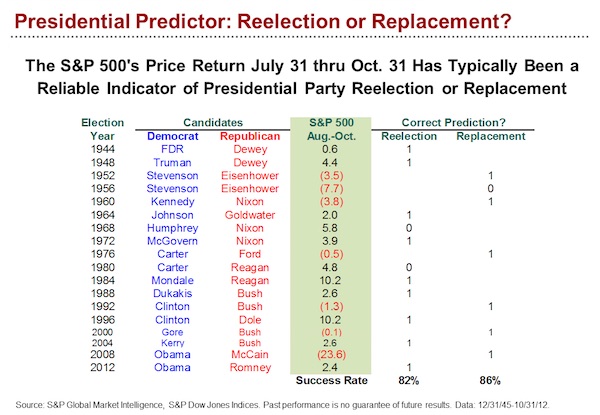
October is the bad boy of the stock market. The Panic of 1907, the Crash of 1929, Black Monday in 1987. It’s notable for another reason, too. The performance of Standard & Poor’s 500-stock index from July 31 to Oct. 31 has a curious way of predicting the winner of the presidential election. As with every prediction, take it with a giant grain of salt. But the pattern is solid, as shown in this chart by Sam Stovall, equity strategist for S&P Global Market Intelligence1. When the stock market ends up for the three-month period, the Democrat wins.

When it’s negative, the Republican wins. Since this July 31, the S&P is in slightly negative territory. Two times the pattern didn’t hold were in 1968 and 1980, when influential third-party candidates were in race, including George Wallace, who took about 14% of the popular vote in ’68. The pattern also failed in 1956, which Stovall says could be attributed to geopolitical events putting the markets on edge. That was the year of the Suez Crisis and the Hungarian Uprising, he noted.
Read more …

“What if the last 30 years of exuberant world trade growth was the ‘outlier’..”

• Global Trade Crashes Back To “Very Old Normal” (ZH)

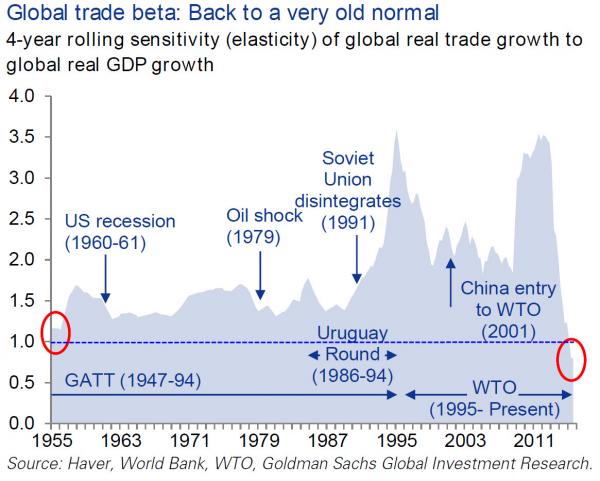
“Get used to it” is the message from Goldman Sachs when it comes to the collapse in global trade… What if the last 30 years of exuberant world trade growth was the ‘outlier’ and we are now reverting to the pre-Greenspan normal? As Goldman’s Goohoon Kwon explains, a low trade beta may be normal:

“Finally, another explanation for the trade slowdown is that it simply represents a return to normal. Historical trade data show that the global trade beta was slightly higher than 1 in the early 1950s before rising gradually due to a series of extraordinary events. In the 1960s-1980s, it rose to around 1.5, boosted by multilateral efforts for trade reforms, which reduced average tariffs from 35% in 1947 to 6.4% at the start of the of the Uruguay Round (1986-94) of global trade negotiations. Thereafter, the breakup of the Soviet Union enabled global trade to expand rapidly in the 1990s, and the WTO entry of China in 2001 helped sustain the trade beta at around 2 in the 2000s. There is therefore an argument that a series of largely one-off factors drove the trade beta to unusually high levels.”
And as Goldman warns, there is limited upside to global trade from here…

“Given these structural forces, the outlook for global trade remains weak in our view, though it might rebound somewhat in the short term. Asian trade is likely to recover moderately in coming years, helped by the eventual dissipation of capacity overhangs in China and reductions in internal imbalances in the economy. And further trade liberalization, including in services, presents upside for global trade. However, the restructuring of overcapacity sectors seems to be proceeding slowly so far in Asia, as reflected in low and still-falling capacity utilization in China and Korea. Moreover, the current political backdrops in the major economies suggest that another major push for trade liberalization might be off the table, at least for now.”

Read more …

By far the worst year since 2009.

• Global Corporate Default Tally By Far Highest Since 2009 (Barron’s)

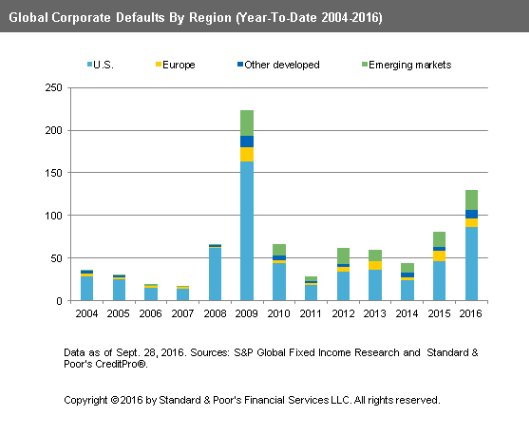
Three corporate defaults in the past week, two metals companies and one telecom firm, brought the total number of defaults around the world to 130. That’s a lot more than last year. Diane Vazza, head of S&P Global Fixed Income Research says: “The default tally is 60% higher than the count at this time in 2015 and has surpassed the total number of defaults recorded in full-year 2015, 113 defaults. The last time the global tally was higher at this point in the year was in 2009, when it reached 223 during the financial crisis.” Energy and commodity-related firms make up over half of the defaults; 70% are U.S. companies. Vazza notes: “As of Aug. 31, 2016, the global speculative-grade default rate for the energy and natural resources sector was 17.9%–more than seven times higher than the default rate of all other sectors.”
Read more …

How to make a pretty awful number sound good.

• US, Canadian IPOs Raise Lowest Annual Total Since 1990 (BBG)

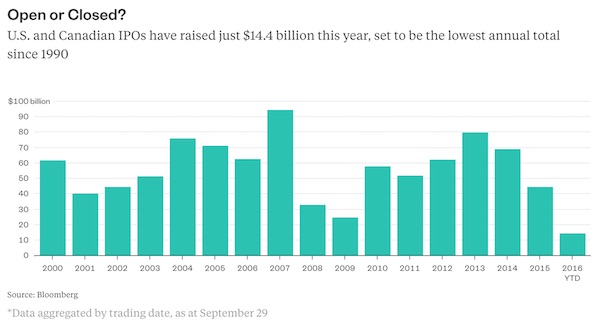
It’s been a paltry year for initial public offerings. Fewer than 135 companies have made their debuts in U.S. and Canada, putting 2016 on pace to be the slowest for IPOs since 1990, according to data compiled by Bloomberg. With $14.4 billion raised so far, we’re also on track to witness the lowest annual total on that score since 1990. For the companies that have made it to market, the dearth of activity has helped underpin demand. That’s especially true in the case of tech IPOs, where (as my colleague Shira Ovide has written) the paucity of new issues has left investors scrambling for any new listing, driving valuations to potentially unsustainable levels.

Nutanix, a tech unicorn that priced Thursday evening, will likely continue the trend, with its shares poised for a surge when they begin trading Friday. But another crop of listings – backed by private equity – has also done well out of the chute this year, and may offer the potential for more lasting gains. On average, new issues of private-equity backed companies have rallied 34.5% this year through Thursday, topping the 28.2% average return for all U.S. and Canadian IPOs during the same period, according to data compiled by Bloomberg.
Read more …

David Stockman put it like this: “They shopped till they dropped.”

• US Consumer Spending Drops, Clouds Fed Rate Hike Outlook (R.)

U.S. consumer spending fell in August for the first time in seven months while inflation showed signs of accelerating, mixed signals that could keep the Federal Reserve cautious about raising interest rates. The Commerce Department said on Friday that consumer spending, which accounts for more than two-thirds of U.S. economic activity, fell 0.1% last month after accounting for inflation. Analysts polled by Reuters had expected a 0.1% gain. “Consumers took a breather in August,” said Chris Christopher of IHS Global Insight. Fed Chair Janet Yellen said last week she expected the U.S. central bank would raise rates once later this year to keep the economy from eventually overheating.

Prices for fed funds futures suggest investors see almost no chance of a hike at the Fed’s next policy meeting in early November and roughly even odds of an increase at its mid-December meeting, according to CME Group. The dollar was little changed against a basket of currencies while U.S. stock prices were trading higher. Consumer spending, which has been robust in recent months, partially offset the drag from weak business investment and falling inventories in the second quarter when the economy expanded at a lackluster 1.4% annual rate.

Read more …

A mixed blessing.

• China’s Yuan Joins Elite Club Of IMF Reserve Currencies (R.)

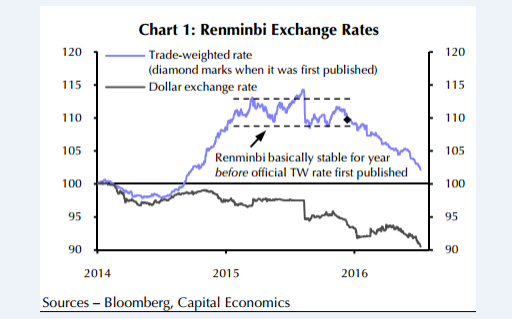
China’s yuan joins the IMF’s basket of reserve currencies on Saturday in a milestone for the government’s campaign for recognition as a global economic power. The yuan joins the U.S. dollar, the euro, the yen and British pound in the IMF’s special drawing rights (SDR) basket, which determines currencies that countries can receive as part of IMF loans. It marks the first time a new currency has been added since the euro was launched in 1999.The IMF is adding the yuan, also known as the renminbi, or “people’s money”, on the same day that the Communist Party celebrates the founding of the People’s Republic of China in 1949.

“The inclusion into the SDR is a milestone in the internationalization of the renminbi, and is an affirmation of the success of China’s economic development and results of the reform and opening up of the financial sector,” the People’s Bank of China said in a statement. China will use this opportunity to further deepen economic reforms and open up the sector to promote global growth, the central bank added. The IMF announced last year that it would add the yuan to the basket, so actual inclusion is not expected to impact financial markets. But it puts Beijing’s often opaque economic and foreign exchange policy in the international spotlight as some central banks add yuan assets to their official reserves.

Critics argue that the move is largely symbolic and the yuan does not fully meet IMF reserve currency criteria of being freely usable, or widely used to settle trade or widely traded in financial markets. U.S. Republican presidential nominee Donald Trump has said he will formally label China a currency manipulator if he wins November’s election. China stunned investors by devaluing the currency last year and the yuan has since weakened to near six-year lows, adding to worries about already feeble global growth. Some China watchers also fear that Beijing’s commitment to further market opening and financial sector reforms will fade after its diplomatic success, despite repeated reassurances from Beijing it will continue with the process.

Read more …

Now that China has entered the IMF basket, it’ll get much harder to keep this up: “It’s very clear that this sort of continued funding of industrial overcapacity sectors is unsustainable.”

• State Spending Keeps China’s Industrial Sector Humming in September (WSJ)

Activity in China’s crucial industrial sector appeared to stabilize last month, with an official index on manufacturing holding steady, buoyed by state spending on infrastructure. China’s official manufacturing purchasing managers index was unchanged at 50.4 in September compared with August, the National Bureau of Statistics reported Saturday. The gauge has remained above 50, which separates expansion from contraction, for six out of the past seven months. The September reading matched a median forecast of 50.4 by 11 economists polled by The Wall Street Journal.

Subindexes gave mixed readings. One measured new orders weakening, while another for production showed improvement; both remained above 50. The official nonmanufacturing PMI edged up to 53.7 in September from 53.5 in August. Economists said stepped-up bank lending and spending on government projects is helping to steady an economy that got off to a wobbly start to the year and has been slowing overall in recent years. “You’re seeing a bit of a credit-fueled holding pattern,” said Angus Nicholson, an analyst with IG Markets. “The question is: when does that turn around and when are they going to cut credit? It’s very clear that this sort of continued funding of industrial overcapacity sectors is unsustainable.”

Read more …

Better question: do other cities have the guts to follow suit?

• Has Vancouver Found The Solution To A Super-Heated Housing Market? (G.)

There is a city which is suffering a worse property bubble than Sydney, whose residents are more priced-out than Londoners, and where there is a greater divide between the housing haves and have-nots than even San Francisco. That city is Vancouver, and in response to these mounting challenges, the west-coast Canadian metropolis recently imposed an extraordinary new tax on foreign buyers – whose impact is now being watched closely by other cities grappling with bloated property markets. On 2 August, Vancouver introduced a tax on anyone from outside Canada wanting to buy a home in its super-heated market. In future, city authorities said, if you weren’t Canadian, you would have to pay an extra 15% on the purchase price.

The impact has, by some measures, been more startling than campaigners could have hoped for. The price of the average detached home reportedly slumped by an astonishing 16.7% in August alone to C$1.47m (£856,000), according to the Real Estate Board of Greater Vancouver. Some agents are reporting that the market has gone from red hot to stone cold in a matter of weeks. British Columbia’s premier, Christy Clark, who introduced the tax, told reporters there will be no going back on it. “The prices were going up way too fast and if we helped slow that down, that’s good,” she said. In the year before the tax, prices in the city were galloping ahead at a rate of 39% a year amid widespread concern that investors, from China in particular, were pricing out local residents.

It is a concern echoed in cities across the Pacific Rim. In June, Sydney introduced a 4% stamp duty surcharge on foreigners buying homes; the following month, Melbourne hiked stamp duty rates from 3% to 7% for foreign buyers – in both cases to deter rampant property speculation. Queensland, whose capital is Brisbane, has followed suit with an extra 3% duty surcharge that will be slapped on “foreign persons” buying residential property and land from 1 October. In Auckland, New Zealand – currently the world’s frothiest property market – property investors are, as of last month, required to put down at least 40% of the purchase price in cash.

Read more …

By ignoring Germany’s role in destroying the Greek and Italian economies, Weidmann ensures the downfall of the eurozone, and thereby of Germany itself.

• Bundesbank President Rejects Calls for German Stimulus (WSJ)

It’s absurd to ask Germany’s government to spend more to bolster eurozone growth, German Central Bank President Jens Weidmann said on Thursday, rejecting growing pressure on Berlin to loosen its purse strings. Speaking in the German capital, Mr. Weidmann said a fiscal stimulus program in Germany was unnecessary given the nation’s robust economy, and would have few positive effects for other countries anyway. Earlier this month, ECB President Mario Draghi joined the chorus of voices that have criticized Germany for reining in its spending at a time of weak economic growth. “Countries that have fiscal space should use it,” Mr. Draghi said at a news conference. “Germany has fiscal space.”

But Mr. Weidmann argued that Germany’s national debt was already high, and the country’s aging population “calls for lower rather than higher debts.” Mr. Draghi tempered his remarks on Wednesday after a meeting in Berlin with German lawmakers, who grilled him over the ECB’s easy-money policies and their impact on German savers and banks. “Germany does have fiscal space [but] we need to be nuanced,” Mr. Draghi said. “I never argued for irresponsible fiscal expansion.”

Read more …

It couldn’t be more obvious.

• The “Pardon Snowden” Case Just Got Stronger (Cato)

Yesterday, the Department of Justice Inspector General (DoJ IG) issued a long overdue Congressionally-mandated report on FBI compliance with the PATRIOT Act’s Section 215 “business records” provision between 2012 and 2014. It is the first such report issued that covers the initial period of Edward Snowden’s revelations about widespread domestic mass surveillance by the federal government. Since his indictment for leaking the information to the press, Snowden’s lawyers have argued that he should not be prosecuted under the WW I-era Espionage Act because his revelations served the public interest. The DoJ IG report provides the clearest evidence yet that Snowden’s lawyers are correct (p. 6):

“In June 2013, information about the NSA’s bulk telephony metadata program was publicly disclosed by Edward Snowden. These disclosures revealed, among other things, that the FISA Court had approved Section 215 orders authorizing the bulk collection of call detail records. The telephony metadata collected by the NSA included information from local and long-distance telephone calls, such as the originating and terminating telephone number and the date, time, and duration of each call. The disclosures prompted widespread public discussion about the bulk telephony metadata program and the proper scope of government surveillance, and ultimately led Congress to end bulk collection by the government in the USA Freedom Act.”

Public discussion of the controversy. Very public action by Congress to change the law, addressing at least one major abuse brought to light by Snowden. And there was more (p. 33):

“An [National Security Division] Deputy Unit Chief noted that the number of business records orders reached its peak in 2012 and has declined annually since then, and that the number of [Electronic Communication Transation] requests has declined more than other types of requests. The Deputy Unit Chief said that the Snowden revelations have played a role in this decline, both in terms of the stigma attached to use of Section 215 and increased resistance from providers. The Deputy Unit Chief stated, “I think that it’s possible that folks … have decided it’s not worth pursuing [business records orders], you know, obviously things haven’t been great with providers since Snowden either.” ”

Translation: Snowden’s actions forced companies like Verizon, Yahoo and others to grow a spine and start defending the Fourth Amendment rights of their customers. Earlier this month, a group of non-governmental organizations and individuals launched a campaign to get President Obama to pardon Snowden before he leaves office. We now have the department seeking Snowden’s prosecution offering unambigous evidence that his whistleblowing actions served the public interest. Obama should direct DoJ to drop the case or he should pardon Snowden. Either approach would be in the public interest, just as Snowden’s actions were.

Read more …

if there’s anyone left claiming to be surprised by Brexit, they must be blind.

• Record Numbers Left Homeless After Eviction By Private Landlords In UK (G.)

Record numbers of families are becoming homeless after being evicted by private landlords and finding themselves unable to afford a suitable alternative place to live, government figures show. The end of an assured shorthold tenancy (AST) was cited by nearly a third of the 15,170 households in England who were classed as homeless in the three months to June – a number that was up 10% on the same period last year. The problem was particularly acute in London, accounting for 41% of all homelessness acceptances in the capital during the period, according to figures from the Department for Communities and Local Government (DCLG). The end of an AST has rapidly become the single biggest cause of homelessness in recent years, triggered by spiralling rent rises and cuts to housing benefit support.

In 2010 just 11% of homeless acceptances in England were caused by the end of an AST. The government’s statistical release states: “Affordability [of housing] is an increasingly significant issue, as more households facing the end of a private tenancy are unable to find an alternative without assistance.” Bob Blackman, a Tory backbencher who has drawn up a private member’s bill seeking to require councils to do more to help households at risk of losing their homes, said: “It is a national disgrace when we have the highest number of people in employment ever, we have a low rate of unemployment, that we still have people sleeping rough. Goodness knows what will happen if there is a recession.”

Read more …

Not if and when the present political climate perseveres.

• Brexit Is A ‘Once-in-a-Generation’ Chance To Save UK’s WIldlife (Ind.)

Brexit will be a “once-in-a-generation chance” to reverse the huge decline in Britain’s wildlife, according to four of the UK’s leading environmental groups. The RSPB, WWF UK, National Trust and The Wildlife Trusts said the British countryside was “key to our identity as a nation” and farmers had the ability address the “urgent challenge of restoring nature”. They called on the Government to replace the much-criticised EU Common Agricultural Policy subsidy system with a British one that pays farmers to maintain “high environmental standards”. Earlier this month, the State of Nature 2016 report – produced by more than 50 organisations – concluded the UK was one of the “most nature-depleted countries in the world”. More than one in seven species face extinction and more than half are in decline.

However, in its response to the conservation groups’ call, the Government insisted the natural environment was “cleaner and healthier than at any time since the industrial revolution”. The National Farmers Union (NFU) said its members understood “the importance of protecting the environment” and complained that some organisations were making suggestions about agricultural policy “without speaking to those the policy most affects”. In a joint statement, called A new policy for our countryside, the four conservation groups said the UK’s departure from the EU “will be one of the most defining events for farming and our environment in living memory”. “[It] provides an unprecedented opportunity to revitalise our countryside in a way that balances the needs of everyone, for generations to come,” they said.

Read more …

We have created far too great a distance between ourselves and the world that gives us life.

• Bees Added To US Endangered Species List For The First Time (G.)

Seven types of bees once found in abundance in Hawaii have become the first bees to be added to the US federal list of endangered and threatened species. The listing decision, published on Friday in the Federal Register, classifies seven varieties of yellow-faced or masked bees as endangered, due to such factors as habitat loss, wildfires and the invasion of non-native plants and insects. The bees, so named for yellow-to-white facial markings, once crowded Hawaii and Maui but recent surveys found their populations have plunged in the same fashion as other types of wild bees – and some commercial ones – elsewhere in the United States, federal wildlife managers said.

Placing yellow-faced bees under federal safeguards comes just over a week since the US Fish and Wildlife Service proposed adding the imperilled rusty patched bumble bee, a prized but vanishing pollinator once found in the upper midwest and north-eastern United States, to the endangered and threatened species list. One of several wild bee species seen declining over the past two decades, the rusty patched bumble bee is the first in the continental United States formally proposed for protections. The listing of the Hawaii species followed years of study by the conservation group Xerces Society, state government officials and independent researchers. The Xerces Society said its goal was to protect nature’s pollinators and invertebrates, which play a vital role in the health of the overall ecosystem.

Read more …

Nice, but that’s just a few of them. I think we’re going to end up sending our armies, our children and grandchildren, to Africa and far beyond, to the oceans, to try and keep alive enough of what preceded us on this planet in order to guarantee our own species can survive. But I can’t say I have high hopes.

• Elephants Have Learned To Avoid Poachers By Hanging Out With Rangers (Konbini)

In an effort to protect diminishing elephant herds in the Democratic Republic of Congo’s Virunga National Park, a Kenyan conservation group fitted elephants with collars so they could monitor and track them in real time. Save the Elephants claim some of the herds they track have started changing their behavior to avoid dangerous areas, which the team believes is an adaptation to poaching. “Several elephant families [were seen] clustered around ranger posts, suggesting they had learned to distinguish the heavily armed rangers as harmless,” STE founder Iain Douglas-Hamilton said. In one rebel-afflicted area, elephants had even started hanging out at ranger checkpoints where huge trucks of charcoal and hardwood rumble through every few minutes.

“Yet somehow the elephants sensed that they were safe there and walked close to the voluble rangers.” Elephants that are able to distinguish rangers from poachers represent an incredible feat of animal ingenuity, but according to experts, it’s all quite understandable. According to My Green World, these mammals are similar to gorillas, in that they’re “smart, sensitive, loyal and aware.” But while this is great news for elephants (and bad news for outsmarted poachers), there’s still the matter of curbing the ongoing colossal hunting epidemic. Africa had 1.3 million elephants in the 1970s, but today there are only 500,000. So there is still quite a way to go before elephants can be taken off the endangered species list.

Read more …

Sep 192016
 
 September 19, 2016  Posted by at 1:25 pm Finance Tagged with: , , , , , , , , ,  Comments Off on China Relies On Property Bubbles To Prop Up GDP


Carl Mydans Sharecropper’s family in Mississippi County, Missouri 1936

Lots of China again today. Most of it based on warnings, coming from the BIS, about the country’s financial shenanigans. I’m getting the feeling we have gotten so used to huge and often unprecedented numbers, viewed against the backdrop of an economy that still seems to remain standing, that many don’t know what to make of this anymore.

Ambrose Evans-Pritchard ties the BIS report to Hyman Minsky’s work, which is kind of funny, because our good friend and Minsky adept Steve Keen is the economist who most emphasizes the need to differentiate between public and private debt, in particular because public debt is not a big risk whereas private debt certainly is.

And that happens to be the main topic where people seem to get confused about China. To quote Ambrose: “..Outstanding loans have reached $28 trillion, as much as the commercial banking systems of the US and Japan combined. The scale is enough to threaten a worldwide shock if China ever loses control. Corporate debt alone has reached 171pc of GDP..”

The big Kahuna question then becomes: should Chinese outstanding loans and corporate debt be seen as public debt or private debt, given that the dividing line between state and corporations is as opaque and shifting as it is? Even the BIS looks confused. I’ll address that below. First, here’s Ambrose:

BIS Flashes Red Alert For a Banking Crisis in China

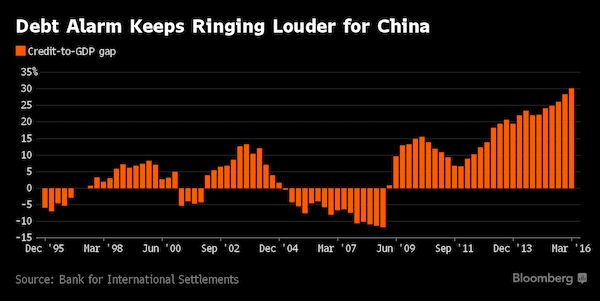
The Bank for International Settlements warned in its quarterly report that China’s “credit to GDP gap” has reached 30.1%, the highest to date and in a different league altogether from any other major country tracked by the institution. It is also significantly higher than the scores in East Asia’s speculative boom on 1997 or in the US subprime bubble before the Lehman crisis.

Studies of earlier banking crises around the world over the last sixty years suggest that any score above ten requires careful monitoring. The credit to GDP gap measures deviations from normal patterns within any one country and therefore strips out cultural differences. It is based on work the US economist Hyman Minsky and has proved to be the best single gauge of banking risk, although the final denouement can often take longer than assumed.

[..] Outstanding loans have reached $28 trillion, as much as the commercial banking systems of the US and Japan combined. The scale is enough to threaten a worldwide shock if China ever loses control. Corporate debt alone has reached 171pc of GDP, and it is this that is keeping global regulators awake at night. The BIS said there are ample reasons to worry about the health of world’s financial system. Zero interest rates and bond purchases by central banks have left markets acutely sensitive to the slightest shift in monetary policy, or even a hint of a shift.

Bloomberg commented on the same BIS report:

BIS Warning Indicator for China Banking Stress Climbs to Record

[..] the state’s control of the financial system and limited levels of overseas debt may mitigate against the risk of a banking crisis. In a financial stability report published in June, China’s central bank said lenders would be able to maintain relatively high capital levels even if hit by severe shocks.

While the BIS says that credit-to-GDP gaps exceeded 10% in the three years preceding the majority of financial crises, China has remained above that threshold for most of the period since mid-2009, with no crisis so far. In the first quarter, China’s gap exceeded the levels of 41 other nations and the euro area. In the U.S., readings exceeded 10% in the lead up to the global financial crisis.


Why am I getting the feeling that the BIS thinks perhaps just this one time ‘things will be different’? If the credit-to-GDP gap (difference with long-term trend) anywhere exceeded 10%, that was a harbinger of the majority of financial crisis. But in China to date, with a 30.1% print, ‘the state’s control of the financial system and limited levels of overseas debt may mitigate against the risk of a banking crisis’. That sounds like someone’s afraid to state the obvious out loud.

If you ask me there’s a loud and clear writing on the Great Wall. But regardless, I didn’t set out to comment on the BIS, I just used that to introduce something else. That is to say, early today, CNBC ran an article on the Chinese property market, seen through the eyes of Donna Kwok, senior China economist at UBS.

Donna sees some light in fast rising home prices (an ‘improvement’..) but also acknowledges they constitute a challenge. She mentions bubbles – she even sees ‘uneven bubbles’, a lovely term, and ‘selective pockets of bubbles’-, but she does seem to understand what’s going on, even if she doesn’t put it in the stark terminology that seems to fit the issue.

CNBC names the article “China Faces Policy Dilemma As Home Prices Jump In GDP Boost”, an ambiguous enough way of putting things. A second title that pops up but has apparently been rejected by the editor is: “Chinese Property Market Is Improving: UBS”. That would indeed have been a bit much. Because calling a bubble an improvement is like tempting the gods, or worse.

I adapted the title to better fit the contents:

China Relies on Housing Bubble to Keep GDP Numbers Elevated (CNBC)

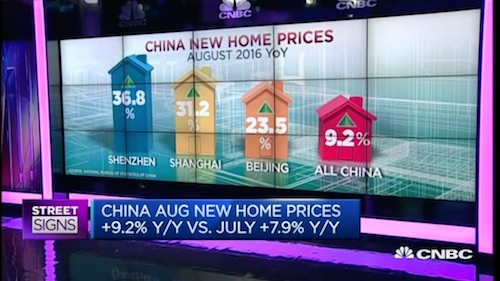
Policymakers in China were facing the dilemma of driving growth while preventing the property market from overheating, an economist said Monday as prices in the world’s second largest economy jumped in August. Average new home prices in China’s 70 major cities rose 9.2% in August from a year earlier, accelerating from a 7.9% increase in July, an official survey from the National Bureau of Statistics showed Monday. Home prices rose 1.5% from July. But according to Donna Kwok, senior China economist at UBS, the importance of the property sector to China’s overall economic health, posed a challenge.

It contributes up to one-third of GDP as its effects filter through to related businesses such as heavy industries and raw materials. “On the one hand, they need to temper the signs of froth that we are seeing in the higher-tier cities. On the other hand, they are still having to rely on the (market’s) contribution to headline GDP growth that property investment as the whole—which is still reliant on the lower-tier city recovery—generates…so that 6.5 to 7% annual growth target is still met for this year,” Kwok told CNBC’s “Street Signs.”

The data showed prices in the first-tier cities of Shanghai and Beijing prices rose 31.2% and 23.5%, respectively. Home prices in the second tier cities of Xiamen and Hefei saw the larges price gains, rising 43.8% and 40.3% respectively, from a year ago. Earlier, the Chinese government introduced measures aimed at boosting home sales to reduce large inventories in an effort to limit an economic slowdown. While the moves have boosted prices in top-tier cities with some spillover in lower-tier cities, there were still concerns of uneven bubbles in the market.

“We are seeing potential signs of selective pockets of bubbles appearing again, especially in tier 1 and tier 2 cities,” Kwok said. The Chinese government in the meantime was rolling out selective cooling measures in these cities to try to even out growth. “If it’s navigated in a such a way that the (positive) spillover to the adjacent tier 3 cities continues to spread further, then maybe that’s where you may get a first or second best outcome resulting,” she added.

To summarize: China can only achieve its 6.5 to 7% annual GDP growth target if the housing bubble(s) persist, and that’s the one thing bubbles never do.

If housing makes up -directly and indirectly, after ‘filtering through’- one third of Chinese GDP, which is officially still growing at more than 6.5%, then the effects of a housing crash in the Middle Kingdom should become obvious. That is, if the property market merely comes to not even a crash but just a standstill, GDP growth will be close to 4%. And that is before we calculate how that in turn will also ‘filter through’, a process that would undoubtedly shave off another percentage point of GDP growth.

So then we’re at 3% growth, and that’s optimistic, that would require just a limited ‘filtering through’. If the Chinese housing sector shrinks or even collapses, and given that there is a huge property bubble -intentionally- being built on top of the latest -recent- bubble, shrinkage is the least that should be expected, then China GDP growth will fall below that 3%.

And arguably down the line even in a best case scenario both GDP growth and GDP -the economy itself-, will flatline if not fall outright. Since China’s entire economic model has been built to depend on growth, negative growth will hammer its economy so hard that the Communist Party will face protests from a billion different corners as its citizens will see their assets crumble in value.

What at some point will discourage Beijing from keeping on keeping blowing more bubbles to replace the ones that deflate, as it has done for years now, is that China desperately seeks for the renminbi/yuan to be a reserve currency, it’s aiming to be included in ‘the’ IMF basket as soon as October 1 this year.

That is not a realistic prospect if and when the currency continues to be used to prop up the economy, housing, unprofitable industries etc. Neither the IMF nor the other reserve currencies in the basket can allow for the addition of the yuan if its actual value is put at risk by trying to deflect the most basic dynamics of markets, not to that extent. And not at that price either.

The Celestial Empire will be forced to choose, but it’s not clear if it either acknowledges, or is willing to make, such a choice. Still, it won’t be able to absorb all private debt and make it public, and still play in the big leagues, even if other major countries and central banks play fast and loose with the system too.

Sep 152016
 
 September 15, 2016  Posted by at 8:59 am Finance Tagged with: , , , , , , , , , ,  Comments Off on Debt Rattle September 15 2016


Jack Delano Jewish stores in Colchester, Connecticut 1940

• Bond Yields Are Surging Despite Deflation, And That Is Dangerous (AEP)
• Wall Street ‘Fear Gauge’ Suggests Stock Market Is About To Get Wild (MW)
• ‘There’s Only So Much You Can Squeeze Out Of A Debt Cycle’: Ray Dalio (CNBC)
• China Debt Default Looms As Growth Options Run Out: Nomura (VW)
• PBOC Yuan Positions Drop to Lowest Since 2011 (BBG)
• The Closing of the World Economy (Satyajit Das)
• Wall Street’s Newest Money-Making Scheme Targets Your Home (MW)
• Ford Shifting All US Small-Car Production To Mexico (DFP)
• Vancouver Tax on Empty Homes to Target Near-Zero Rental Supply (BBG)
• US Confidence In Media Hits Fresh Low (AFP)
• US Rooftop Solar Boom Is Grinding To A Halt (BBG)
• Latest Estimate Pegs US Cost of Wars at Nearly $5 Trillion (I’Cept)
• Juncker Denies Alcohol Problem In Interview, Drinks 4 Glasses Of Champagne
• Helping Homeless People Starts With Giving Them Homes (G.)


The Great Disconnect.

• Bond Yields Are Surging Despite Deflation, And That Is Dangerous (AEP)

The growth rate of nominal GDP in the US has fallen to 2.4pc, the lowest level outside recession since the Second World War. It has been sliding relentlessly for almost two years, a warning signal that underlying deflationary forces may be tightening their grip on the US economy. Given this extraordinary backdrop, the violent spike in US and global bonds yields over the last four trading days is extremely odd. It is rare for AAA-rated safe-haven debt to fall out of favour at the same time as stock markets, and few explanations on offer make sense. We can all agree that oxygen is thinning as we enter the final phase of the economic cycle after 86 months of expansion. The MSCI world index of global equities has risen to a forward price-to-earnings ratio of 17, significantly higher than on the cusp of the Lehman crisis.

“We think that too much complacency has crept in,” says Mislav Matejka, equity strategist for JP Morgan. “After seven years of having a structural overweight stance on global equities, we believe the regime has fundamentally changed. We think that one should not be buying the dips any more, but use any rallies as selling opportunities,” he said. The correlation between bonds and equities has reached unprecedented levels, and that has the coiled the spring. The slightest rise in yields now has a potent magnifying effect across the spectrum of assets. Hence the angst over what is happening to US Treasuries. Yields on 10-year Treasuries – the benchmark borrowing cost for international finance – have jumped 19 basis points to 1.72pc since the middle of last week.

The amount of global government debt trading at rates below zero has suddenly fallen from $10 trillion to $8.3 trillion, with parallel effects for corporate bonds. You would have thought that inflation was picking up in the US and that the Fed was about to slam on the brakes, but that is not the case. The markets are pricing in a mere 15pc chance of a rate rise next week, and the figure has been falling.  If anything, the US inflation scare has subsided. There were grounds for worrying earlier this year that Fed would have to act. In February, core CPI inflation was steaming ahead at a rate of 2.9pc on a three-month annualized basis. This has since dropped back to 1.8pc. Other core measures are lower.

Read more …

Probably not going to calm down before next year.

• Wall Street VIX ‘Fear Gauge’ Suggests Stock Market Is About To Get Wild (MW)

So much for the those calm markets. Wall Street’s “fear gauge” is rearing higher as U.S. equities logged a second sharp selloff in the past three sessions, as hand-wringing over central-bank monetary policy contributes to a renaissance of volatility. The CBOE Volatility Index often used as a measure of fear in the market, rose 18% on Tuesday at 17.85—its highest level since June 28 and implying that investors are starting to dial up bets that stocks could suffer further near-term swings turbulent. The VIX has hovered around 12 since mid-July. That level usually signals quiescence, while a reading of 20 or above indicates that investors are bracing for moves sharply south

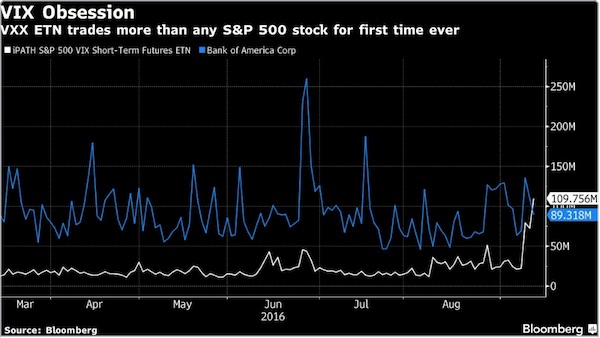
The rise in the VIX comes as the Dow Jones Industrial Average and the S&P 500 index and the Nasdaq Composite relinquished all of the sharp gains racked up 24 hours ago. Monday’s rally followed another tumble on Friday that saw the VIX jump 40%—the largest daily move since Brexit on June 23. On Tuesday, volume in an exchange-traded fund that tracks the VIX, Barclays Bank PLC iPath S&P 500 VIX Short-Term Futures exceeded that of stocks on the S&P 500 for the first time ever, as Bloomberg highlights:

On Wednesday, the VIX ticked higher as the Dow and S&P 500 lost momentum to trade lower late in the session. Three straight days of swings of at least 1% for stocks, marks the first time since 1963 that the S&P 500 followed an extended period of calm—43 days—with a trio of such choppy trading days, according to Dow Jones data. That was the two-day period before and immediately following the assassination of President John F. Kennedy in November 1963, Dow Jones data show. “The pickup in volatility is notable, and typically characterizes pullbacks,” said Katie Stockton, chief market technician at BTIG.

Read more …

“We are to various degrees close to pushing on a string..”

• ‘There’s Only So Much You Can Squeeze Out Of A Debt Cycle’: Ray Dalio (CNBC)

The debt market is in a “dangerous situation” as central banks around the world lose their ability to stimulate growth, hedge fund giant Ray Dalio said Tuesday. As the world faces more than $11 trillion in negative-yielding debt, Dalio said central banks like the Fed, the ECB and the BOJ are facing a dilemma. “There’s only so much you can squeeze out of the debt cycle, and we’re there globally,” the head of Bridgewater Associates said at the Delivering Alpha conference presented by CNBC and Institutional Investor. “You can’t lower interest rates more.” Dalio spoke as Fed officials contemplate a rate hike at some point this year. Market-implied probability indicates that the Fed won’t hike until at least December. Its September meeting is next week. While monetary policy has been used as a fuel for growth and asset price appreciation, Dalio said its effectiveness is waning. “We are to various degrees close to pushing on a string,” he said.

Read more …

“..there is essentially only one practical way to reduce the stock of outstanding debts: defaults.”

• China Debt Default Looms As Growth Options Run Out: Nomura (VW)

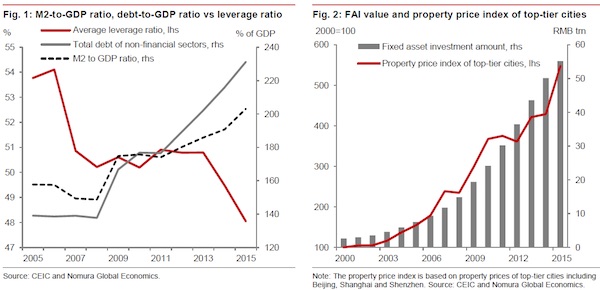
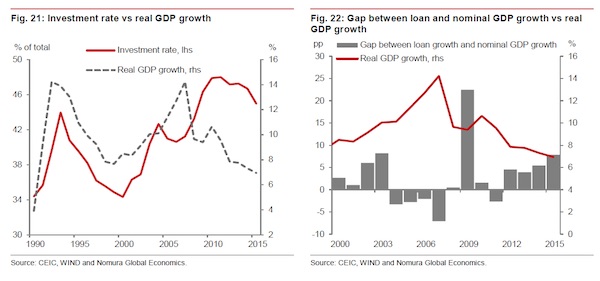
To alleviate its debt problem, China should adopt appropriate macro-economic policies encompassing currency depreciation and cutting interest rates to an ultra-low-level within two to three years, believe Nomura analysts. Yang Zhao and team said in their September 14 research piece titled “China: Solving the debt problem” that they believe RMB depreciation will continue and forecast USD/CNH at 7.1 at the end of 2017. Zhao and team highlight that debt-to-GDP ratio can be lowered either through reducing the numerator or increasing the denominator.

They believe that to contain or even reduce the debt-to-GDP ratio, the gap between debt growth and nominal GDP growth must shrink or turn negative. They believe lowering the ratio has to be premised on the acceptance of a slower rate of GDP growth: The Nomura analysts argue that default is the only practical way to trim the stock of outstanding debts. Instead of an outright default, per se, they suggest other approaches such as renegotiating terms, lowering interest rates, and tenure extension.

“Since increasing the denominator is unfeasible, policymakers must therefore look to lower the numerator. The only practical measures that can be taken to reduce the debt ratio are those aimed at reducing the growth of debt to below that of nominal GDP growth. “The outstanding stock of debt can only be reduced through either repayment or indeed default. One argument is that China’s corporate sector and/or local governments can, or should, simply repay their debts by selling the huge amount of assets that they have accumulated, but again, this is not a feasible solution.

The key reason behind the low level of corporate leverage despite the huge amount of debt is that asset prices have not collapsed. If the corporate sector or local governments repaid their debts by selling their assets – which are predominantly in real estate – their leverage will almost certainly spike higher due to the subsequent decline in the value of their remaining asset base. Hence, there is essentially only one practical way to reduce the stock of outstanding debts: defaults.”

Read more …

Selling USD to prepare for SDR basket?!

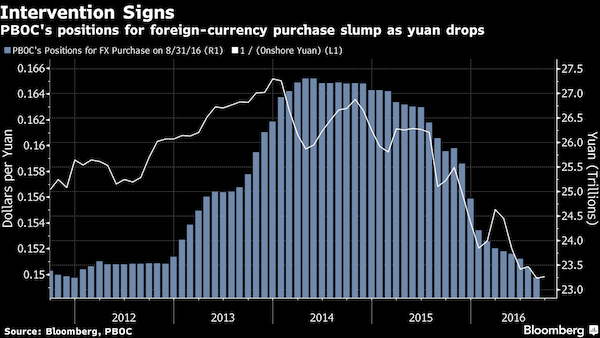
• PBOC Yuan Positions Drop to Lowest Since 2011 (BBG)

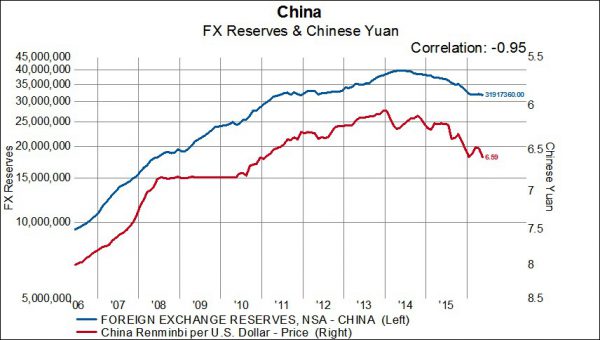
The Chinese central bank’s yuan positions – which reflect the amount of foreign currency held on its balance sheet – fell to the lowest since 2011 in August, a sign that it sold dollars to support the yuan. The People’s Bank of China has been seen intervening in the market to stem the currency’s slide, with Bank of East Asia and Natixis saying that policy makers will prevent the exchange rate from slipping past 6.7 per dollar before its admission into the IMF’s basket of reserves on Oct. 1.

Read more …

The only thing left of globalization is a vague idea.

• The Closing of the World Economy (Satyajit Das)

Pundits and policymakers everywhere are bemoaning the rise of a new, inward-looking populism. Led by the likes of Donald Trump and Nigel Farage, those who’ve felt only globalization’s ill effects, not its benefits, have mounted a fierce counterattack. Border-hopping elites fret that the whole process of opening up and knitting together the world through trade, capital flows and immigration may soon go into reverse. They’re missing the point. Support for freer trade and greater openness had in fact begun to falter well before economic nationalists like Trump and Farage took center stage. The same governments that count themselves among globalization’s greatest champions have been rolling it back steadily since the global financial crisis.

Their excuses are innocent-sounding and several: to protect national industries and iconic businesses; to secure export markets and competitive advantage; and above all, to prop up employment and incomes. Despite oft-repeated warnings about avoiding the beggar-thy-neighbor policies of the 1930s, these governments allowed global trade talks – the so-called Doha Round – to stall as early as 2008. Nations including the U.S. have instead pursued narrower bilateral and regional deals where they don’t have to satisfy so many different negotiating partners and can continue to protect key sectors. If these pacts are better than nothing, they more or less foreclose the possibility of a more ambitious multilateralism.

Meanwhile, between 2009 and 2015, three times as many discriminatory trade measures were introduced as liberalizing ones. In the first 10 months of 2015 alone, the latest Global Trade Alert database recorded 539 such initiatives adopted by governments worldwide that harmed foreign traders, investors, workers or owners of intellectual property – a record. Efforts to control trade flows have grown increasingly sophisticated. Most governments no longer impose tariffs or other crude roadblocks that would violate WTO rules. Instead countries from the U.S. – with the auto bailouts – to the U.K., China, Brazil, Canada and several EU members have funneled aid to domestic industries. State procurement rules – which in China, say, forbid buying strategic and defense technology from abroad – favor domestic suppliers, as do “buy local” campaigns like the ones launched since 2009 in the U.S., U.K. and Australia.

Read more …

Innovation!?

• Wall Street’s Newest Money-Making Scheme Targets Your Home (MW)

Do you want Wall Street to get a piece of your house? On Tuesday, the noted venture capitalist Marc Andreesen announced that he’d invested in a startup called Point. Point casts itself as a solution to an intrinsic problem with home ownership: Most Americans have most of their wealth tied up in their home. There are mechanisms for “taking out” some of the equity built up as a mortgage is paid down, such as home-equity lines of credit or home-equity loans. But they require paying interest – not to mention having good credit. They also don’t help homeowners diversify their investments. Diversification was the driver behind an earlier version of what Point offers. Allan Weiss, who helped create the S&P/Case-Shiller price indexes, created a platform he calls “indexed fractional ownership.”

His idea came in part from a conversation with a neighbor who said he was looking forward to “cashing out” of an expensive home he’d owned for a long time – just before the housing market crashed. If you own a home and offer some of the equity to an investor like Point, the idea goes, you could take that money and invest it in a different asset class, like stocks. And what does Point get? If the house appreciates before it is sold, Point benefits. If the house depreciates, according to Andreessen Horowitz’s website, “Point gets paid back after the bank, but before the homeowner, in the event of a sale.” A blog post on Point’s site notes that, in addition to an initial appraisal, Point may require a “risk adjustment” that “offsets the chance that the home will depreciate before the end of the term.”

Yet Weiss and Andreessen Horowitz both envision their products gaining the critical mass to move beyond one-off agreements between investors and individual homeowners into what the latter calls a “broad basket” of homes. “It’s rethinking the fundamentals of residential real estate ownership – making single-family residential real estate a liquid, tradeable asset class,” the venture capitalists wrote.

Read more …

By now, this is crazy.

• Ford Shifting All US Small-Car Production To Mexico (DFP)

Ford is shifting all North American small-car production from the U.S. to Mexico, CEO Mark Fields told investors today in Dearborn. “Over the next two to three years, we will have migrated all of our small-car production to Mexico and out of the United States,” Fields said. The industry has known for decades that domestic manufacturers struggle to make a profit on small cars. Shifting their assembly to Mexico can reduce costs to a point. But some of these cars are over-engineered. For example, Field said the current Ford Focus can be ordered in 300 different configurations of options and colors. Ford wants to reduce that to 30, which will make the production process simpler and less expensive.

But Americans prefer larger vehicles, especially pickups and higher-riding SUVs and crossover vehicles for their personal use. The future of smaller cars in the U.S. may depend on the ability to electrify their powertrains and introduce them to ride-sharing fleets where they can generate revenue from fares paid by multiple riders. Along those lines, Fields and other Ford executives Wednesday outlined an aggressive plan to invest $4.5 billion over the next four years. These will include new models in segments such as commercial vehicles, trucks, SUVs and performance vehicles. Ford also reiterated its commitment to developing an autonomous vehicle by 2021. The company believes that autonomous vehicles could account for up to 20% of vehicle sales by 2030.

Read more …

Smart. But it may make prices fall even faster.

• Vancouver Tax on Empty Homes to Target Near-Zero Rental Supply (BBG)

Vancouver, suffering from a near-zero supply of homes available for rent, plans to slap investors sitting on vacant properties with a new tax in an effort to make housing more accessible in Canada’s most-expensive property market. The levy, which would start in January, may be as high as 2% of the property’s assessed value, Kathleen Llewellyn-Thomas, the city’s general manager of community services, told reporters Wednesday. That would mean a minimum C$20,000 ($15,000) annual payment for the typical C$1 million-plus detached home in Vancouver based on July 2015 assessment data, the most recent available. “Vancouver is in a rental housing crisis,” said Mayor Gregor Robertson, whose announcement follows a separate measure by the province in July to impose a 15% tax on foreign buyers.

“Dangerously low vacancy rates across the city are near zero.” While the city, ranked the world’s third-most-livable, has drawn attention for its sky-high purchase prices fomented by global money flows, the rental market has been just as contentious locally. Vacancies can get scooped up within hours, while bidding wars drive up the cost of leases. Public scrutiny has focused on absentee landlords, particularly from overseas, who are accused of sitting on investment properties where windows remain dark throughout the year. Robertson estimated that more than 10,000 homes are empty and an additional 10,000 are “under-utilized.” The tax aims to get those properties into the rental supply so that the vacancy rate rises to about 3 to 5% from near zero today, he said. The city expects to raise about C$2 million from the tax in the first year.

Read more …

People do recognize propaganda to an extent.

• US Confidence In Media Hits Fresh Low (AFP)

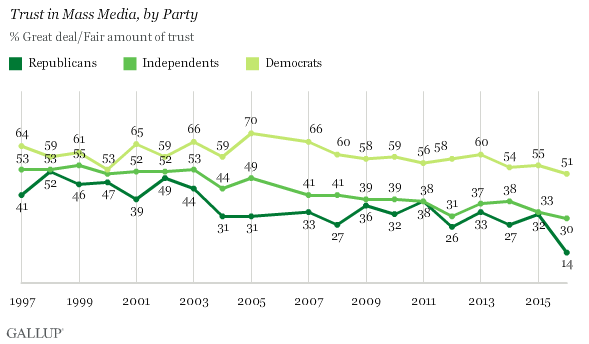
Americans’ trust in the media has sunk to a new low, and a bitter presidential race may be to blame, a Gallup survey showed Wednesday. The poll asking whether the media report the news “fully, accurately and fairly” found just 32% of Americans have a great deal or fair amount of trust, the lowest level in Gallup polling history and 8 percentage points below last year. Gallup began asking the question in 1972, and has polled Americans on a yearly basis since 1997. Trust and confidence in the media hit its highest point in 1976, at 72% following the investigative journalism coverage of the Vietnam and the Watergate scandal, according to the research group. But confidence has been below 50% since 2007.

“While it is clear Americans’ trust in the media has been eroding over time, the election campaign may be the reason that it has fallen so sharply this year,” Gallup said in its report. “With many Republican leaders and conservative pundits saying (Democratic presidential nominee) Hillary Clinton has received overly positive media attention, while (Republican nominee) Donald Trump has been receiving unfair or negative attention, this may be the prime reason their relatively low trust in the media has evaporated even more.” Gallup said Trump’s sharp criticism of the press may also have had an impact on public opinion.

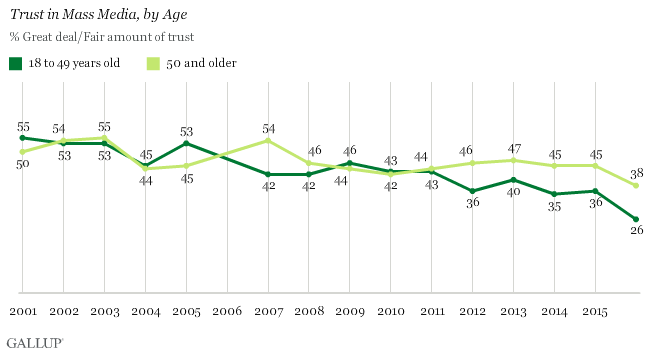
Just 14% of Republicans said they trust the media, down sharply from 32% a year ago and the lowest level of confidence among Republicans in 20 years, according to Gallup. Among Democrats, 51% expressed confidence in the media, down from 55% a year ago, while the number of independents trusting news organizations fell to 30% from 33%. Trust was also low among younger adults: just 26% of those between the ages of 18 and 49 said they felt confidence in the media compared with 38% of those 50 and older.

Read more …

Bubble.

• US Rooftop Solar Boom Is Grinding To A Halt (BBG)

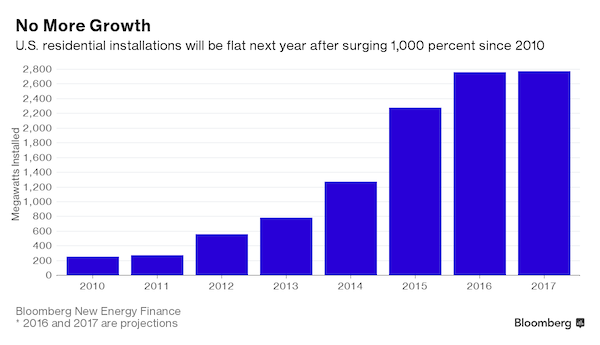
Rooftop solar, which has surged more than 1,000% since 2010, will barely grow at all next year. Residential installations are expected to increase by 21% this year, but in 2017 the figure will inch upward by about 0.3%. The change comes as utilities push back against mandates to buy the electricity and shifting tax policies curb demand. Throw in sliding electricity rates and it’s clear the economic benefits of rooftop panels are no longer so obvious to consumers. That’s forcing rooftop developers including Vivint Solar, Sunrun and Elon Musk-backed SolarCity to focus on profitability instead of growth.

“Much like PC manufacturers in the 1990s, solar installers need to realize substantial new customer sales each year just to tread water in terms of annual revenue,” Hugh Bromley at Bloomberg New Energy Finance said. Residential installations are already slowing from the 79% expansion in 2015. Developers are expected to add 2.76 gigawatts this year and that will inch upward to 2.77 gigawatts in 2017 as investment slips 6.4% to $6.8 billion, according to estimates from Bloomberg New Energy Finance. “After growing as much as it has, sustaining high double-digit growth rate forever is not realistic,” said Pavel Molchanov at Raymond James Financial.

Read more …

US can’t afford to go to war anymore.

• Latest Estimate Pegs US Cost of Wars at Nearly $5 Trillion (I’Cept)

The total US budgetary cost of war since 2001 is $4.79 trillion, according to a report released this week from Brown University’s Watson Institute. That’s the highest estimate yet. Neta Crawford of Boston University, the author of the report, included interest on borrowing, future veterans needs, and the cost of homeland security in her calculations. The amount of $4.79 trillion, “so large as to be almost incomprehensible,” she writes, adds up like this:

• The wars in Iraq, Afghanistan, Pakistan, Syria, and other overseas operations already cost $1.7 trillion between 2001 and August 2016 with $103 billion more requested for 2017 • Homeland Security terrorism prevention costs from 2001 to 2016 were $548 billion. • The estimated DOD base budget was $733 billion and veterans spending was $213 billion. • Interest incurred on borrowing for wars was $453 billion. • Estimated future costs for veterans’ medical needs until the year 2053 is $1 trillion.

Crawford carried out a similar study in June 2014 that estimated the cost of war at $4.4 trillion. Her methodology mirrors that of the 2008 book The Three Trillion Dollar War: The True Costs of the Iraq Conflict by Linda Bilmes and Joseph Stiglitz. There are even more costs of war that Crawford does not include, she writes. For instance, “I have not included here state and local government expenses related to medical care of veterans and homeland security. Nor do I calculate the macro economic costs of war for the U.S. economy.” She also notes that she does not add the cost of war for other countries, nor try to put a dollar figures on the cost in human lives.

Read more …

How did he land that job again?

• Juncker Denies Alcohol Problem In Interview, Drinks 4 Glasses Of Champagne

The controversial head of the European Commission has denied that he has a problem with alcohol during an interview in which he drank four glasses of champagne. Allegations have circulated around Brussels in recent years about Jean-Claude Juncker’s drinking and one senior diplomatic source has said he “has cognac for breakfast”. In an interview with a French newspaper he defended his record as he consumed numerous classes of champagne. In 2014 it emerged that Mr Juncker’s drinking habits had been discussed at the highest levels by European leaders who privately have concerns over his lifestyle. A week before the UK referendum vote a video emerged of an apparently-drunk Mr Juncker taken at a May 2015 EU summit welcoming Viktor Orban, the hardline Hungarian PM, as “the dictator” before giving him a playful slap on the cheek.

“The dictator is coming,” Mr Juncker is heard to say, before locking a shocked Mr Orban in a clumsy embrace while Donald Tusk, the president of the European Council looked on, visibly embarrassed. Defending himself in an interview with the Liberation, he said: “Orban, I always call dictator, I am like this. As soon as someone breaks the mould they are obviously crazy or an alcoholic. “You think I’d still be in office if I was having cognac for breakfast? It really makes me sad and it has even led my wife to question if I lie to her, as I do not drink when I’m home.” He also went on to blame his unsteady walking on problems with his leg after a serious car accident.

Read more …

Basic. Better. Cheaper.

• Helping Homeless People Starts With Giving Them Homes (G.)

Finland is the only European country where homelessness has decreased in recent years. At the end of 2015 the number of single homeless people was for the first time under 7,000 and this number includes people living temporarily with friends and relatives, who constitute 80% of all homeless people. This development is mainly due to a national programme to reduce long-term homelessness. The main explanation for this success is quite simple: when the national programme started housing first was adopted as a mainstream national homelessness policy. This common framework made it possible to establish a wide partnership of state authorities, local communities and non-governmental organisations. Cooperation and targeted measures in the implementation of the programme led to the aforementioned results, which were backed up by independent international evaluations.

Implementing housing first is not reasonable without proper housing options. It should go without saying that you can’t offer homeless people homes if the homes do not exist. It is this scarcity of homes that engenders the system in Britain, with demand outstripping supply, and people in crisis forced to jump through hoops to avoid sleeping on the street. In Finland, housing options included the use of social housing, buying flats from the private market to be used as rental apartments for homeless people, and building new housing blocks for supported housing. An important part of the programme was the extensive conversion of shelters and dormitory-type hostels into supported housing, to address the huge need for accommodation that offered help to tenants.

The last big hostel for homeless people in Helsinki with 250 bed places was run by the Salvation Army. A couple of years ago this hostel was renovated and now consists of 80 independent apartments with on-site staff. The disappearance of temporary solutions like hostels has completely changed the landscape of Finnish homelessness policy in a very positive way, for vulnerable individuals and in combatting antisocial behaviour. All this costs money, but there is ample evidence from many countries that shows it is always more cost-effective to aim to end homelessness instead of simply trying to manage it. Investment in ending homelessness always pays back, to say nothing of the human and ethical reasons.

Read more …

Aug 312016
 
 August 31, 2016  Posted by at 8:58 am Finance Tagged with: , , , , , , , , , , , ,  3 Responses »


Esther Bubley Watching parade to recruit civilian defense volunteers, Washington DC 1943

• The Central Pillar Of Global Order Is In Danger As TTIP Disintegrates (AEP)
• The New TTIP? Meet TISA, ‘Secret Privatisation Pact’ (Ind.)
• Debt, Deficits & Economic Warnings (Roberts)
• The Academic Math of This Economy and The Long Run Consequences (Snider)
• China Turmoil Looms As Traders Bet On Post-G-20 Yuan Tumble (ZH)
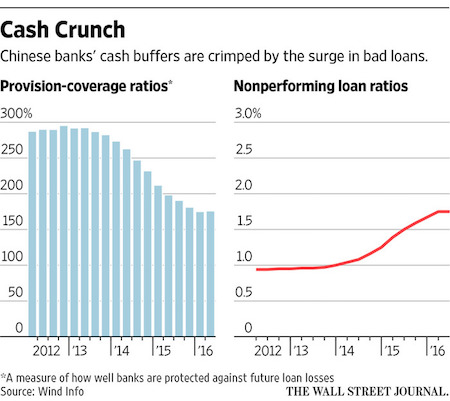
• Chinese Banks Step Up Bad-Loan Write-Offs (WSJ)
• China’s Biggest-Ever Metals Deal Snaps Up Cleveland’s Aleris (BBG)
• Case Shiller Lags and Understates the Housing Bubble (Adler)
• 25 Email Questions Hillary Clinton Must Answer Under Oath By September 29 (SBA)
• Could EU’s ‘Apple Tax’ Reboot Corporate Tax Reform In The US? (Forbes)
• Bitcoin Was Brought Down By Its Own Potential – And The Banks (Qz)
• The Dawn Of The Anthropocene (G.)
• Greek Islands Raise Alarm Over Fast Increasing Refugee Arrivals (Kath.)
• Counting The Lost And Nameless Dead Of The Mediterranean (SMH)


Another wonderful Ambrose dramatic exeggaration.

• Central Pillar Of Global Order In Danger Of Collapse As TTIP Disintegrates (AEP)

The Transatlantic pact intended to unite Europe and North America in a vast free trade zone is close to collapse after France called for a complete suspension of talks, accusing the US of blocking any workable compromise. “Political support in France for these negotiations no longer exists,” said Matthias Fekl, the French commerce secretary. Mr Fekl said his country would request a formal decision by EU ministers at a summit in Bratislava to drop the hotly-contested deal, known as the Transatlantic Trade and Investment Partnership (TTIP). “The Americans are offering nothing, or just crumbs. That is not how allies should negotiate. There must be a clear and definite halt to these talks, to restart them later on a proper basis,” he said.

The project is infinitely more than a trade deal. It is part of a strategic push to bind together the two halves of North Atlantic civilisation at a dangerous moment when the Western liberal order is under threat. The two sides are currently drifting towards divorce. “TTIP was supposed to set the rules for the global trade,” said Rem Korteweg, a trade expert at the Centre for European Reform. “It was to be a central pillar of an alliance of like-minded countries. If it all falls apart in acrimony, what kind of global governance are we going to have?” he said. Mr Fekl’s hard-line comments were echoed in slightly softer language by French president François Hollande, who said on Tuesday that there was no chance of a deal on TTIP before the next administration takes power in Washington.

“The talks have become bogged down, the positions have not been respected, and the imbalance is obvious. It is better that we face up to this candidly rather than prolong a discussion on foundations that cannot succeed,” he said.

Read more …

There’s a lot more to get rid of.

• The New TTIP? Meet TISA, ‘Secret Privatisation Pact’ (Ind.)

An international trade deal being negotiated in secret is a “turbo-charged privatisation pact” that poses a threat to democratic sovereignty and “the very concept of public services”, campaigners have warned. But this is not TTIP – the international agreement it appears campaigners in the European Union have managed to scupper over similar concerns – this is TISA, a deal backed by some of the world’s biggest corporations, such as Microsoft, Google, IBM, Walt Disney, Walmart, Citigroup and JP Morgan Chase. Few people may have heard of the Trade In Services Agreement, but campaign group Global Justice Now warns in a new report: “Defeating TTIP may amount to a pyrrhic victory if we allow TISA to pass without challenge.” Like the Transatlantic Trade and Investment Partnership, TISA is being negotiated in secret, even though it could have a major impact on countries which sign up.

While TTIP is only between the EU and US, those behind TISA have global ambitions as it involves most of the world’s major economies – with the notable exceptions of China and Russia – in a group they call the “Really Good Friends of Services”. The Department for International Trade dismissed the idea that public services were at risk from TISA, adding that the UK was committed to securing an “ambitious” deal. But according to Global Justice Now’s report, the deal could “lock in privatisation of public services”; allow “casino capitalism” by undermining financial regulations designed to prevent a recurrence of the 2008 recession; threaten online privacy; damage efforts to fight climate change; and prevent developing countries from improving public services.

Nick Dearden, director of group, said: “This deal is a threat to the very concept of public services. It is a turbo-charged privatisation pact, based on the idea that rather than serving the public interest, governments must step out of the way and allow corporations to ‘get on with it’. “Of particular concern, we fear TISA will include clauses that will prevent governments taking public control of strategic services, and inhibit regulation of the very banks that created the financial crash.” He suggested pro-Brexit voters should be concerned at the potential loss of sovereignty. “Many people were persuaded to leave the EU on the grounds they would be ‘taking back control’ of our economic policy,” Mr Dearden said. “But if we sign up to TISA, our ability to control our economy – to regulate, to protect public services, to fight climate change – is massively reduced. In effect, we would be handing large swathes of policy-making to big business. “

Read more …

Growth based on debt reduces productive investment.

• Debt, Deficits & Economic Warnings (Roberts)

By increasing taxes, to generate additional revenue for the government, you decrease the available capital that could be used for productive investments. Since the government doesn’t want factories, office buildings, or oil wells, but rather cash, this forces the liquidation of productive investments thereby reducing capacity for economic growth. The current Administration is failing once again to recognize the problems that exist with this country, at this moment, does not lie with the “rich.” Instead, the problem is a lack of ability for consumers to maintain a standard of living that is well beyond their earnings capability. While the two most recent Administrations have been heavily criticized for running burgeoning deficits – the reality is that the average American has been doing the same for the past thirty years.

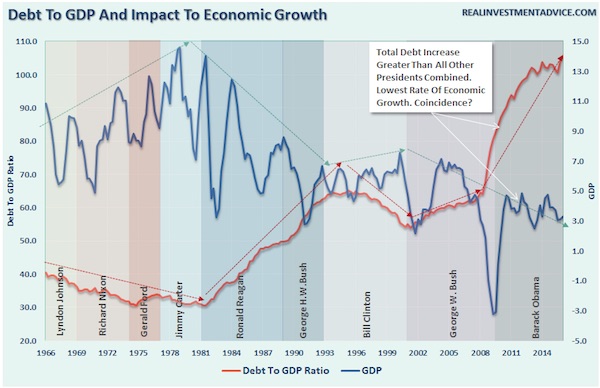
[..] as the “rich” invest in productive investments it leads to higher employment, strong consumer demand and economic growth. In turn, this leads to higher tax revenue. “However, deficits, and deficit spending, are HIGHLY destructive to economic growth as it directly impacts gross receipts and saved capital equally. Like cancer – running deficits, along with continued deficit spending, continues to destroy saved capital and damages capital formation.” Debt is, by its very nature, a cancer on economic growth. As debt levels rise it consumes more capital by diverting it from productive investments into debt service. As debt levels spread through the system it consumes greater amounts of capital until it eventually kills the host. The chart below shows the rise of federal debt and its impact on economic growth.

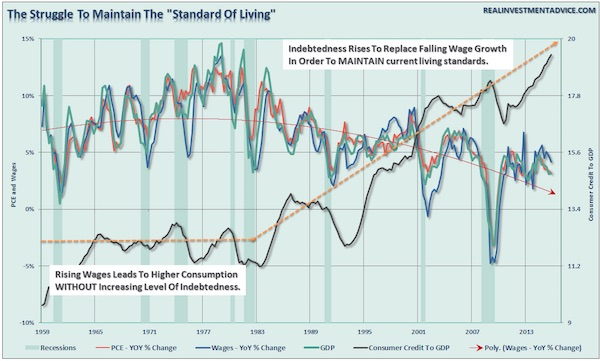
The reality is that the majority of the aggregate growth in the economy since 1980 has been financed by deficit spending, credit creation and a reduction in savings. This reduced productive investment in the economy and the output of the economy slowed. As the economy slowed, and wages fell, the consumer was forced to take on more leverage to maintain their standard of living which in turn decreased savings. As a result of the increased leverage more of their income was needed to service the debt – and with that the “debt cancer” engulfed the system.

Read more …

Excellent from Jeffrey Snider.

• The Academic Math of This Economy and The Long Run Consequences (Snider)

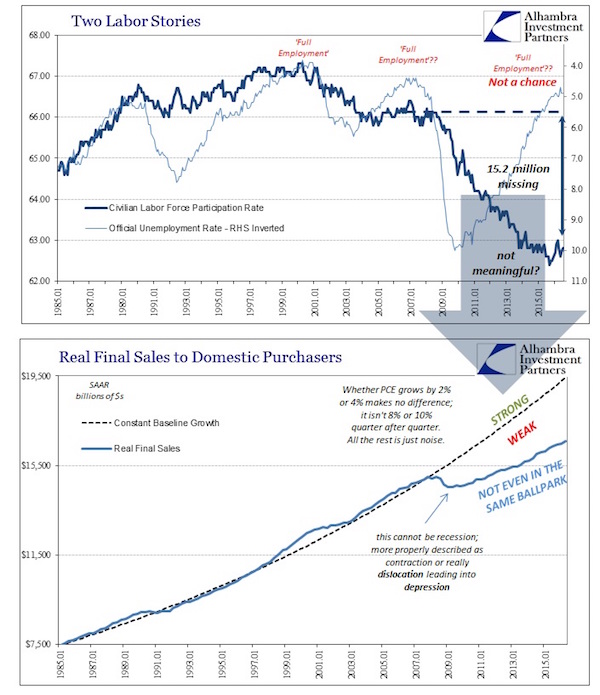
[..] the continued and “unexpected” lack of recovery after nine years of failure in monetary policy is forcing the math to recognize what is obvious in non-mathematical terms. No regressions are at all necessary to conclude that the bond market has, in fact, made sense this whole time and that it is economists who have no idea what is going on or why. By the mathematics of 2011, real GDP “should be” $19.3 trillion in Q2 2016; it was instead just $16.6 trillion after the third straight quarter near 1%. To the academics, “gloom” is irrational and thus requires translation into math to become somehow backwards explanatory for why the economy that “should be” isn’t.

In the actual economy, “gloom” is properly called reality. In this world, people know all-too-well that jobs disappeared during and after the Great Recession and never came back. No amount of asset price manipulation can possibly make up that difference. Economists try to convince everyone but really themselves that it didn’t matter when it is this very math that proves yet again it did; in fact, the true state of labor beyond the unemployment rate and Establishment Survey is all that matters.

The math of potential and even gloom is just the frustratingly late catch-up forcing economists to come to terms with the fact they have been all wrong about all of this all along. You need no PhD to so easily understand that you just cannot substitute jobs with debt; doing so is economic suicide. At some point over the long run you must come to terms with that discrepancy. This math is finally welcoming economists to that long run, a place their patron saint, Keynes, said didn’t exist. It really does as the math has been recalculated far more toward the “impossible” [..]

Read more …

Yikes graphs. A G-20 that might actually count for something.

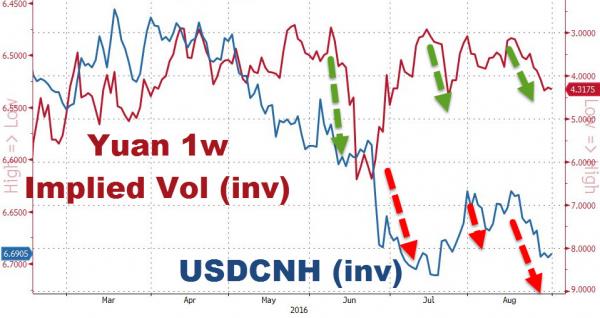
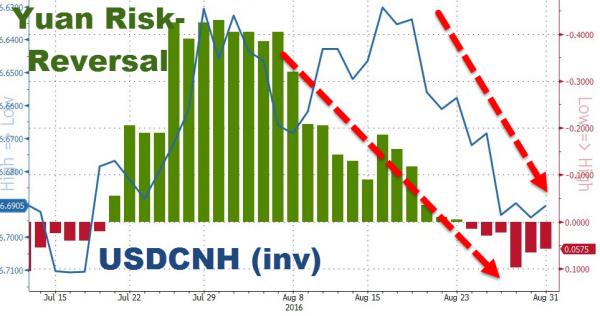
• China Turmoil Looms As Traders Bet On Post-G-20 Yuan Tumble (ZH)

Something is different this time. For the last few years, China has ‘ensured stability’ in the Yuan ahead of major geopolitical events – no matter what – only to let things slide back into turmoiling after. Ahead of this weekend’s G-20, however, and amid notably deteriorating fundamentals (and an increasingly hawkish-sounding Fed), China has let the Yuan tumble in the last week… and traders are piling into bets on post-G-20 weakness to continue. As Bloomberg notes, history shows that the Chinese currency usually strengthens ahead of major political or economic events, such as President Xi Jinping’s state visits to the U.S. and the Boao Forum.

But this time – ahead of the G-20 gathering – onshore Yuan is being allowed to weaken… back near post-Brexit lows…

Perhaps as another warning to The Fed? But as Bloomberg reports, derivative markets are pointing to renewed bets on yuan depreciation, with a measure of expected price swings poised for the biggest monthly increase since January.

Read more …

Not even the same ballpark. “The IMF estimates China’s nonperforming-loan ratio at 15%, compared with the official 1.75% figure..”

• Chinese Banks Step Up Bad-Loan Write-Offs (WSJ)

China’s largest banks are writing off huge volumes of soured loans in an effort to clean up their balance sheets, as they look to improve their future profitability despite the country’s economic slowdown. The country’s top four banks collectively wrote off 130.3 billion yuan ($19.5 billion) of bad loans in the first half of 2016, 44% more than in the same period a year earlier. The clear-out has helped banks in one sense: Overall, their nonperforming loans as a proportion of their lending book were unchanged at the close of the second quarter from the end of March, the first quarter since mid-2013 that the key metric hasn’t increased.

But the write-offs have come as a number of other challenges beset Chinese banks. New loans are shriveling—nearly all in July went to mortgages. A series of interest-rate cuts by the central bank since 2012 have squeezed banks’ earnings. And a plan by Beijing to let companies allot their equity to banks in exchange for loan forgiveness is likely to saddle lenders with more dubious assets in coming months, bankers and analysts say. The IMF estimates China’s nonperforming-loan ratio at 15%, compared with the official 1.75% figure reported by the government, because of differences in the way bad loans are recognized.

Read more …

Buying know-how.

• China’s Biggest-Ever Metals Deal Snaps Up Cleveland’s Aleris (BBG)

China’s influence in global metals markets just stepped up a gear after the owner of its top supplier of aluminum products agreed to buy Aleris of the U.S. for $2.3 billion, marking the nation’s biggest-ever overseas purchase of a metals processor.
The purchase of the Cleveland, Ohio-based company by Zhongwang USA, owned by Liu Zhongtian, founder and chairman of China Zhongwang, will open up new markets for the Chinese company among aerospace and automotive companies. Monday’s deal underscores China’s shift to higher value-added products and will give Zhongwang access to technological know-how and more demanding customers, said Paul Adkins, managing director of Beijing-based aluminum consultancy AZ China.

“Aleris supplies the Boeings and the big carmakers of this world – very advanced consumers,” Adkins said by phone on Tuesday. “Buying it has to provide some sort of opportunity for Zhongwang to bring that know-how back to China. When you’ve got more than half of the world’s primary aluminum supply in China, there is a natural momentum for China to pull other parts of the supply chain into its orbit.” China Zhongwang is Asia’s biggest producer of extruded aluminum, and already has ambitions to sell aluminum sheet to China’s emerging auto and aerospace industries. It’s due this year to start up a flat-rolled aluminum plant in Tianjin, near Beijing, which will supply products that China still has to import.

Read more …

Not an entirely new criticism, but good to point out from time to time.

• Case Shiller Lags and Understates the Housing Bubble (Adler)

Here’s how the Case Shiller Index (CSI) press release spun the data on the state of the US single family housing market today: “The S&P CoreLogic Case-Shiller U.S. National Home Price NSA Index, covering all nine U.S. census divisions, reported a 5.1% annual gain in June, unchanged from last month. The 10-City Composite posted a 4.3% annual increase, down from 4.4% the previous month.The 20-City Composite reported a year-over-year gain of 5.1%, down from 5.3% in May.” The problem is that Case Shiller’s methodology causes price suppression and severe lag. That gives the impression that the US housing market isn’t in a bubble. It’s a misimpression, considering that market prices on average are actually above the 2006 bubble peak.

If 2006 was the top of the most extreme bubble in US history, what does that make today’s higher prices? Case Shiller uses only public record data. The current release, which purports to be June data, is really data culled from government records for recorded sales. The closings were purportedly in June, but the contracts were entered at least a month before, and in most cases 2 months to 3 months prior. So the current CSI release doesn’t represent the current market. In fact, the lag is even greater than that. Case Shiller doesn’t merely use only the most recent month’s data, as you would think. It uses that month and the two prior months, so that effectively it represents average recorded closed sale prices for the 3 months of April May and June. It’s the average price as of the time midpoint of the period, in this case mid May.

Add the typical 45-60 day closing and the current data represents contracts signed in mid to late March. It is now almost September. The Case Shiller data is from 5 months ago. The housing market normally moves in very stable trends over years, if not decades, until there’s a crash. This lag factor isn’t too critical for those buying homes for their families to live in. It’s a little more critical for stock market traders and investors, because at major turning points, misleading data can lead to costly investing mistakes. For traders, using the Case Shiller data would be like making decisions based on where the 3 month moving average of the S&P 500 back in late March. Who would do that when current market prices are available?

It’s the same for the housing market. We have near current data on contract prices from both the NAR, and from the online Realtor firm, Redfin. The NAR compiles the MLS data on contract prices from the entire US and releases it within 30 days of the end of the previous month. Redfin compiles sales from 30 large US metros. So whereas Case Shiller is giving us a smoothed average price as of March, we have current actual prices as of July from both the NAR and Redfin. Apply a little technical analysis to that data, and we can see the state of the housing market as of last month, not 5 months ago. It has actually accelerated a bit this year relative to the prior 12 months. And it’s definitely at a new high versus the last bubble.

Read more …

No space for the whole list. Useful read though.
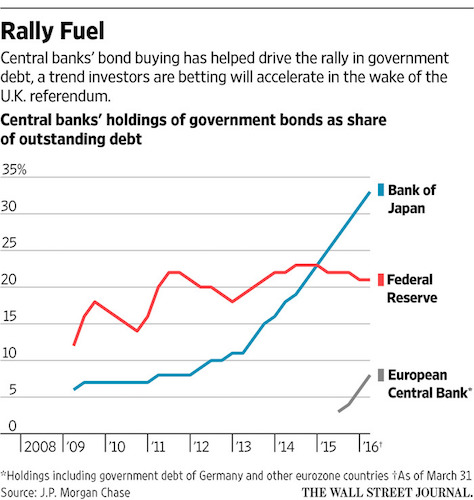
• 25 Email Questions Hillary Clinton Must Answer Under Oath By September 29 (SBA)

Judicial Watch today announced it submitted questions to former Secretary of State Hillary Clinton concerning her email practices. Clinton’s answers, under oath, are due on September 29. On August 19, U.S. District Court Judge Emmet G. Sullivan granted Judicial Watch further discovery on the Clinton email matter and ordered Clinton to answer the questions “by no later than thirty days thereafter….” Under federal court rules, Judicial Watch is limited to twenty-five questions. The questions are:

1) Describe the creation of the clintonemail.com system, including who decided to create the system, the date it was decided to create the system, why it was created, who set it up, and when it became operational.

2) Describe the creation of your clintonemail.com email account, including who decided to create it, when it was created, why it was created, and, if you did not set up the account yourself, who set it up for you.

3) When did you decide to use a clintonemail.com email account to conduct official State Department business and whom did you consult in making this decision?

4) Identify all communications in which you participated concerning or relating to your decision to use a clintonemail.com email account to conduct official State Department business and, for each communication, identify the time, date, place, manner (e.g., in person, in writing, by telephone, or by electronic or other means), persons present or participating, and content of the communication.

5) In a 60 Minutes interview aired on July 24, 2016, you stated that it was “recommended” you use a personal email account to conduct official State Department business. What recommendations were you given about using or not using a personal email account to conduct official State Department business, who made any such recommendations, and when were any such recommendations made?

Read more …

Corporations have too much political power to let that happen.

• Could EU’s ‘Apple Tax’ Reboot Corporate Tax Reform In The US? (Forbes)

For years, corporate tax reform in the U.S. has been dead in the water, in part because of deep disagreements within the American business community over what such a restructuring should look like. But the European Union’s increasingly aggressive effort to force its members to collect tax on U.S.-based multinationals has the potential to change that dynamic. The EU’s push has resulted in a series of major initiatives, none bigger than its decision to order Ireland to collect a stunning $14.5 billion in back taxes from Apple. That ruling has generated a swift backlash from the U.S. high-tech industry, U.S. policymakers across the political spectrum, and from Ireland itself. Yet, for all the howling, it might open the door for long-awaited tax reform in the United States.

To understand why, think about two kinds of U.S. corporations—those that pay lots of taxes and those that pay little or none. Some—especially companies whose business is built on intellectual property—have structured themselves in a way that sharply reduces their worldwide taxes. They shift income to related firms located in low-tax or no-tax countries while allocating interest costs and other expenses to the high-rate U.S. The result: Many pay effective tax rates in the single digits. At the same time, firms such as retailers, without the ability to shift income to low-tax countries, pay quite high effective tax rates. That split hamstrings the debate over corporate tax reform, especially the version that would eliminate tax preferences in exchange for a lower corporate rate.

If you are already paying close to the top statutory rate of 35%, you love that swap. After all, you are paying a high effective rate because those tax preferences are not helping you, so why not support legislation to ditch them in exchange for a lower rate? But for low-tax firms, the political calculation is dramatically different. If tax preferences make it possible for you to pay an effective rate of 10%, why would you give them up in return for a new U.S. statutory rate of 28%, or even 25%? How do you explain to your shareholders why more than doubling your rate is a good thing?

Read more …

Too many doubts.

• Bitcoin Was Brought Down By Its Own Potential – And The Banks (Qz)

The best that can be said about Bitcoin right now is that it still exists. Split by internal divisions while its most useful aspects are harvested by the very financial behemoths it once hoped to destroy, Bitcoin is fast becoming the tech world’s version of Waiting for Godot, wherein a hermetically sealed community squabbles and bickers over arcane points of code and law as their world slowly crumbles around them. In the last 12 months, attempts made to produce a road map for the cryptocurrency’s future have come to naught, all while core developers abandon the project and opaque Chinese mining concerns wield outlandish power. Welcome to today’s Bitcoin—a phenomenon so internally focused that its advocates have barely noticed the battle has already been lost.

Back at its inception, the conversation around the currency was driven by an almost unconscionable optimism. This wasn’t simply a mechanism for the easy transfer of capital: This was a tool by which the entire international financial system could be made anew, with corrupt central banks, inflationary currencies, and immoral stockbrokers consigned to the dustbin of history. In a world still reeling from the chaos of the global financial crisis, Bitcoin seemed less like a currency and more like a way of future-proofing the global economy from ever having to deal with something so awful again.

The Bitcoin boom of late 2013 brought greater mainstream attention to the cryptocurrency. Bitcoin’s value surged from $200 to $1,200 over the space of a few weeks, temporarily rendering it more valuable than gold. This was to be a short-lived state of affairs, however, as a string of scandals, hacks, exchange collapses, and—dare I say it—common sense brought the price of Bitcoin plummeting back to Earth. Cue three years of stagnation and false promise, as Bitcoin has struggled to prove its use for, well … anything, really. Even after all this time, Bitcoin is still an economy driven almost entirely by potential—by the dream that, one day soon, Bitcoin will become the lingua franca of the global economic order.

Read more …

“One criticism of the Anthropocene as geology is that it is very short,” said Zalasiewicz. “Our response is that many of the changes are irreversible.”

• The Dawn Of The Anthropocene (G.)

Humanity’s impact on the Earth is now so profound that a new geological epoch – the Anthropocene – needs to be declared, according to an official expert group who presented the recommendation to the International Geological Congress in Cape Town on Monday. The new epoch should begin about 1950, the experts said, and was likely to be defined by the radioactive elements dispersed across the planet by nuclear bomb tests, although an array of other signals, including plastic pollution, soot from power stations, concrete, and even the bones left by the global proliferation of the domestic chicken were now under consideration. The current epoch, the Holocene, is the 12,000 years of stable climate since the last ice age during which all human civilisation developed.

But the striking acceleration since the mid-20th century of carbon dioxide emissions and sea level rise, the global mass extinction of species, and the transformation of land by deforestation and development mark the end of that slice of geological time, the experts argue. The Earth is so profoundly changed that the Holocene must give way to the Anthropocene. “The significance of the Anthropocene is that it sets a different trajectory for the Earth system, of which we of course are part,” said Prof Jan Zalasiewicz, a geologist at the University of Leicester and chair of the Working Group on the Anthropocene (WGA), which started work in 2009. “If our recommendation is accepted, the Anthropocene will have started just a little before I was born,” he said. “We have lived most of our lives in something called the Anthropocene and are just realising the scale and permanence of the change.”

Read more …

“The number of migrants on Lesvos has reached 5,226 while existing camps are only designed to host 3,500. The situation on Chios is equally disheartening, with 3,309 migrants in accommodation for 1,100.”

• Greek Islands Raise Alarm Over Fast Increasing Refugee Arrivals (Kath.)

Local and port authorities on the islands of the eastern Aegean are demanding immediate government action to decongest overcrowded migrant camps, insisting that they cannot cope with the recent surge in arrivals from neighboring Turkey. In a letter addressed to Shipping and Island Policy Minister Theodoros Dritsas, the Lesvos Port Authority raised the alarm, saying the island simply does not have the available infrastructure to accommodate the increased flows. The number of migrants on Lesvos has reached 5,226 while existing camps are only designed to host 3,500. The situation on Chios is equally disheartening, with 3,309 migrants in accommodation for 1,100.

According to the latest data, there are 12,120 migrants on the islands. A March deal between the European Union and Turkey to stem the flow managed to limit monthly arrivals to just a few thousand. However, the figure rose to its highest in four months in August. While Interior Ministry officials have attributed the overcrowded conditions at the camps to delays in the registration process, some critics have interpreted the increased traffic as a form of pressure from Ankara, which has linked the deal’s implementation to visa-free travel for its citizens within the EU.

Read more …

“There are still an estimated 277,000 migrants in Libya, as well as 348,000 internally displaced people and 310,000 returnees..”

• Counting The Lost And Nameless Dead Of The Mediterranean (SMH)

The central Mediterranean is by far the most dangerous crossing into Europe for migrants. On Monday alone, 6908 migrants were rescued in the Channel of Sicily in 35 rescue operations, pulling them from 44 rubber dinghies, eight small wooden boats and two bigger fishing boats. The surge came after a week of windy and rough conditions had kept would-be migrants on the shores of Libya. Two people were reported to have died. There has also been a surge this week in the number of migrants arriving on Greek islands, where on average 100 people come ashore each day.

Of the 3165 people who have died or went missing this year crossing the sea (as of August 28), 2725 were attempting the passage to Italy from North Africa, according to the International Organization for Migration’s figures. More people died on this route than last year in the same period. [..] As of August 28, 272,070 migrants had crossed the Mediterranean into Europe in 2016. Just under half of the arrivals, or 106,461 (as of August 24) arrived in Italy. There, most arrivals came from Nigeria, Eritrea and Gambia. There are still an estimated 277,000 migrants in Libya, as well as 348,000 internally displaced people and 310,000 returnees – refugees returned from abroad.

Read more …

Jul 222016
 
 July 22, 2016  Posted by at 8:26 am Finance Tagged with: , , , , , , , , ,  1 Response »


Lewis Wickes Hine Night scene in Cumberland Glass Works, Bridgeton, NJ 1909

• (There’s No) Money In The Mattress (Roberts)
• Sub-Zero Government Bonds Turn the Hunt For Yield Upside Down (BBG)
• US Sides With HSBC To Block Release Of Money Laundering Report (R.)
• Are Wall Street Banks in Trouble? You’d Never Know from the Headlines (WSoP)
• Denmark Faces ‘Out of Control’ Housing Market in Negative Spiral (BBG)
• Fracklog in Biggest US Oil Field May All But Disappear (BBG)
• China Continues To Produce More Steel Than The Rest Of The World Combined (BI)
• China’s Vice FinMin: We’ve Got No Reason To Devalue The Yuan (CNBC)
• Apple’s Q2 China Revenues Could Fall 20%: Baidu (CNBC)
• Pension Funds Are Underwater – And Taking Us With Them (VW)
• Once-Expanding EU Prepares To Contract For The First Time In Its History (G.)
• Earth On Track For Hottest Year Ever As Warming Speeds Up (R.)
• Fighting the Most Dangerous Animal in the World (Spiegel)


“Every time someone says, ‘There is a lot of cash on the sidelines,’ a tiny part of my soul dies.”

Scary graph.

• (There’s No) Money In The Mattress (Roberts)

Here is a myth that just won’t seem to die: “Cash On The Sidelines.” This is the age old excuse why the current “bull market” rally is set to continue into the indefinite future. The ongoing belief is that at any moment investors are suddenly going to empty bank accounts and pour it into the markets. However, the reality is if they haven’t done it by now after 3-consecutive rounds of Q.E. in the U.S., a 200% advance in the markets, and now global Q.E., exactly what will that catalyst be? However, Clifford Asness summed up the problem with this myth the best and is worth repeating:

“Every time someone says, ‘There is a lot of cash on the sidelines,’ a tiny part of my soul dies. There are no sidelines. Those saying this seem to envision a seller of stocks moving her money to cash and awaiting a chance to return. But they always ignore that this seller sold to somebody, who presumably moved a precisely equal amount of cash off the sidelines. If you want to save those who say this, I can think of two ways. First, they really just mean that sentiment is negative but people are waiting to buy. If sentiment turns, it won’t move any cash off the sidelines because, again, that just can’t happen, but it can mean prices will rise because more people will be trying to get off the nonexistent sidelines than on.

Second, over the long term, there really are sidelines in the sense that new shares can be created or destroyed (net issuance), and that may well be a function of investor sentiment. But even though I’ve thrown people who use this phrase a lifeline, I believe that they really do think there are sidelines. There aren’t. Like any equilibrium concept (a powerful way of thinking that is amazingly underused), there can be a sideline for any subset of investors, but someone else has to be doing the opposite. Add us all up and there are no sidelines.”

Margin debt levels, negative cash balances, also suggest the same. Cash on the sidelines? Not really.

Read more …

And there are plenty plans to ‘do more’.

• Sub-Zero Government Bonds Turn the Hunt For Yield Upside Down (BBG)

The erosion of yields on government debt is generally thought to push investors into riskier assets as they seek out higher returns. That’s true, argue Credit Suisse analysts in a new note, but only in the ‘first phase’ of a negative yield world. That is, when yields on government bonds with shorter-durations dip below zero, total returns on riskier assets such as junk-rated corporate debt do trump returns on German bunds. That tendency disappeared, however, as yields on longer-dated government debt also fell into negative territory — at least in Europe.

“The defining characteristic of Phase One is a strong outperformance of high-yielding credit assets versus low-yielding credit assets and government bonds, i.e. a strong hunt for yield trend. Nothing unusual so far,” write Credit Suisse’s William Porter and Chiraag Somaia. “However, more interestingly, Phase Two, still characterized by negative yields, actually sees an outperformance of government bonds versus both low- and high-yielding credit assets, i.e. any hunt for yield over the past 2.5 years as a whole has been an unsuccessful strategy.” The trend is shown in the below chart, where total returns on German government bonds have bested high-yield and investment-grade corporate debt.

“For now, we think ever-falling yields represent an overall risk aversion and/or verdict on economic policies that is not overly friendly to yieldier assets despite the obvious incentives they carry in this environment,” conclude the analysts. “So yield-hunting behavior is not always and everywhere wrong – this summer may treat it favorably – but any outperformance has subsequently been counter-trend in the past 2.5 years.”

Read more …

Quick! Find me a carpet to sweep this under!

• US Sides With HSBC To Block Release Of Money Laundering Report (R.)

The U.S. government asked a federal appeals court on Thursday to block the release of a report detailing how HSBC is working to improve its money laundering controls after the British bank was fined $1.92 billion. In a brief filed with the 2nd U.S. Circuit Court of Appeals, the U.S. Department of Justice sought to overturn an order issued earlier this year by U.S. District Judge John Gleeson to make public a report by the bank’s outside monitor. “Public disclosure of the monitor’s report, even in redacted form, would hinder the monitor’s ability to supervise HSBC,” the government’s court filing said, adding that bank employees would be less likely to cooperate with the monitor if they knew their interactions could be released.

HSBC concurred with the court’s finding. “HSBC also argues that the Monitor’s report should remain confidential, as have the Monitor, the UK Financial Conduct Authority, the US Federal Reserve and other HSBC regulators,” HSBC said in a statement. “The effectiveness of the monitorship is dependent on confidentiality.” The filing comes a week after U.S. congressional investigators criticized senior officials at the Department of Justice for overruling internal recommendations to criminally prosecute HSBC for money-laundering violations. Instead, the government in 2012 fined HSBC and entered into a five-year deferred prosecution agreement that stipulated all charges would be dropped if the bank agreed to install an independent monitor to help improve compliance. In the 2012 settlement, HSBC admitted to violating U.S. sanctions laws and failing to stop Mexican and Colombian cartels from laundering hundreds of millions of dollars in drug proceeds through the bank.

Read more …

Martens & Martens. Strong.

• Are Wall Street Banks in Trouble? You’d Never Know from the Headlines (WSoP)

On July 14, when America’s biggest bank by assets reported its second quarter earnings, this headline ran at the New York Times: “JPMorgan Chase Has Strong Quarter as Earnings Top Estimates.” CNBC, a unit of NBCUniversal, used the same criteria in its headlines to report the earnings of Citigroup, Bank of America and Morgan Stanley — putting a positive spin in the headline because the earnings had topped what analysts were expecting – rather than the far more meaningful, and traditional, measure of whether earnings had beaten the same quarter a year earlier. CNBC’s headlines read: Citigroup earnings handily top Wall Street expectations: CNBC-July 15, 2016 Bank of America earnings top expectations: CNBC-July 18, 2016 Morgan Stanley solidly beats earnings expectations: CNBC-July 20, 2016.

This is hubris of the highest order. Publicly traded companies simply guide research analysts toward lowered expectations on their upcoming quarterly earnings so that the companies can surprise on the upside and get these kinds of misleading headlines in the all-to-willing New York media – which has a vested interest in making everything appear rosy in the Big Apple. (New York media is dependent on fat Wall Street profits to boost the price of their own publicly traded shares since ad revenue in New York is linked to the health of Wall Street.) One would never know by these headlines that big bank earnings were actually down year over year – and in some cases, down dramatically. JPMorgan Chase earned $6.2 billion in the second quarter of 2016 versus $6.29 billion in the second quarter of 2015.

The news was far worse at Citigroup, despite the rosy headline at CNBC. Citigroup’s second quarter profit fell 17.5% year over year, to $4 billion from $4.85 billion in the second quarter of 2015. Its revenues were the lowest in 14 years according to S&P Capital IQ. At Bank of America, profit fell to $4.23 billion from $5.3 billion in the second quarter of 2015, a sharp decline of 20%. Morgan Stanley reported a year over year decline of 8%, with profits in the second quarter of 2016 falling to $1.67 billion from $1.82 billion in the second quarter of 2015. Now news of jobs cuts is spilling out with the Wall Street Journal reporting that Bank of America will make “$5 billion in annual cost cuts by 2018 as part of its strategy to deal with persistently low interest rates that are eating away at lenders’ profitability.”

The New York Post is calling job cuts at Goldman Sachs the worst since the financial crisis in 2008. Fortune’s Stephen Gandel reported two days ago that Goldman had slashed a whopping “1,700 positions in the past three months.” Something else one won’t find in those smiley-face headlines is the fact that Wall Street is not only bleeding profits and jobs but it’s also bleeding equity capital – the only thing that separates the word “bank” from the word “bankruptcy.” While the Dow Jones Industrial Average and Standard and Poor’s 500 Indices may be setting new highs, the big Wall Street banks are decidedly not.

Over the past 52 weeks, Goldman is down from a share price of $214.61 to an open this morning of $162.55 – a decline of 24%. Bank of America is off 22% from its 52-week high, based on today’s open. Morgan Stanley and Citigroup are in decidedly worse shape with declines of 28% and 27%, respectively, from their 52 week highs versus their share price at the open of the New York Stock Exchange this morning. Add this all up and you’re talking about tens of billions of dollars in equity capital vaporizing.

Read more …

Denmark is in the same position as dozens of other countries: “..there’s a real risk that housing prices can see a dramatic fall, even though we’re not seeing a bubble in the classical definition of the term..”

• Denmark Faces ‘Out of Control’ Housing Market in Negative Spiral (BBG)

Denmark’s biggest mortgage bank is warning there’s a risk the housing market may get “out of control,” especially around cities, as long-term negative interest rates make borrowers complacent. “To be concrete, there is a danger that Danes go blind to the risk of rates ever rising again,” Tore Stramer, chief analyst at Nykredit in Copenhagen, said in an e-mail. “That raises the risk of a major housing price decline, when rates at some point or other start to rise again.” Denmark’s central bank has had negative interest rates for the better part of four years. Thomas F. Borgen, CEO of Danske Bank, says his managers are operating under the assumption that rates won’t go positive until “at least” 2018, with Britain’s departure from the EU adding to the risk of an even longer period below zero.

With no other country on the planet having experienced negative rates longer than Denmark, the distortions the policy is wreaking may provide a preview of what other economies face should they go down a similar path. Danes can get short-term mortgages at negative interest rates, and pay less to borrow for 30 years than the U.S. government. Apartment prices in Denmark are now about 5% above their 2006 peak. Back then, the country’s bubble burst and apartment prices slumped about 30% through 2009. “It’s worth remembering that there’s a real risk that housing prices can see a dramatic fall, even though we’re not seeing a bubble in the classical definition of the term,” Stramer said. Denmark’s negative rates are a product of the central bank’s policy of defending the krone’s peg to the euro. Its main rate was minus 0.75% for most of last year, though the bank raised it by 10 basis points in January in an effort to normalize policy.

Read more …

Reality kicks in. What’s going to happen to the lenders who made it all possible?

• Fracklog in Biggest US Oil Field May All But Disappear (BBG)

The number of dormant crude and natural gas wells in the U.S. stopped growing in the first quarter – and may all but disappear in the nation’s biggest oil field should prices hold steady. As of April 1, there were 4,230 wells left idle after being drilled, a figure little changed from January, according to an analysis by Bloomberg Intelligence. While some explorers have continued to grow their fracklog of drilled but not yet hydraulically fractured wells, others began tapping them in February as oil prices rose, the report showed.

Crude in the $40- to $50-a-barrel range may wipe out most of the fracklog in Texas’s Permian Basin and as much as 70% of the inventory in its Eagle Ford play by the end of 2017, according to Bloomberg Intelligence analyst Andrew Cosgrove. While bringing them online is the cheapest way of taking advantage of higher prices, the wave of new supply also threatens to kill the fragile recovery that oil and gas markets have seen so far this year. “We think that by the end of the third quarter, beginning of the fourth quarter, the bullish catalyst of falling U.S. production will be all but gone,” Cosgrove said in an interview Thursday. “You’ll start to see U.S. production flat lining.”

Read more …

It’s the same as oil producers. In China’s steel industry, a return to reality would mean too many jobs lost to bear.

• China Continues To Produce More Steel Than The Rest Of The World Combined (BI)

For the fourth month in a row, China produced more steel than all other nations combined in June. According to data released by the WorldSteel Association on Wednesday, a group that accounts for approximately 85% of the world’s steel production, China produced 69.5 million of crude steel in June, dwarfing production in all other nations which came in at 66.5 million tonnes. At 136 million tonnes, total global output in June was unchanged from the levels of a year earlier.

While down 1.4% on the 70.5 million tonnes produced in May, Chinese crude steel production is now 1.7% higher than the levels of June 2015, fitting with the splurge in state-backed infrastructure investment seen in recent months. Despite the recent uplift in steel production, shown in the chart below supplied by WorldSteel, global steel production came in at 794.8 million tonnes in the first half of the year, down 1.9% on the same corresponding period in 2015.

Read more …

They fix it daily, but that’s not manipulation nor devaluation…. That’s just fixing.

• China’s Vice FinMin: We’ve Got No Reason To Devalue The Yuan (CNBC)

China has no reason to devalue the yuan, as economic fundamentals remained strong, with growth at 6.7% in the first half, the country’s Vice Finance Minister Zhu Guangyao told CNBC. Zhu’s comments came shortly before Republican presidential candidate Donald Trump lambasted China again, this time for what he said was “devastating currency manipulation. [..] “The yuan has been trading around five-year lows recently, as concerns over the state of the economy fueled capital outflows. Investors have also expressed concerns over the level of debt built up in the economy. China suffered almost $700 billion worth of capital flight in 2015. The surge in outflows late in 2015 sparked market concerns that China’s foreign reserves weren’t sufficient to stabilize the currency by buying yuan over the long term.

Meanwhile, the greenback has strengthened against most major currencies as investors reacted to negative interest rates in Japan and Europe, as well as the possibility the Federal Reserve would continue on its rate-hiking path. On Friday the dollar/yuan traded at 6.6683 on-shore and 6.6754 off-shore. China fixes its currency against the dollar every day. In August, China shifted the market mechanism for setting the daily fix, saying it would set the spot rate based on the previous day’s close, theoretically allowing market forces to play a greater role in its direction. That resulted in an effective 2% devaluation in the currency, a move that sparked fears of a “currency war” to make Chinese exports more competitive.

Read more …

What’s that going to do to the share price?

• Apple’s Q2 China Revenues Could Fall 20%: Baidu (CNBC)

Apple’s revenues in China could be down 20% in China in its quarterly earnings report, according to research by Baidu, the so-called “Chinese Google.” As part of its online suite of products Baidu offers mapping software and a search platform. It has about a 70 to 80% market share in search in China and logs billions of location requests on Baidu Maps. Using this so called “big data” from the use of its map and search products, which is all anonymized, Baidu said it could predict employment and consumer trends and their impact on a company’s revenues. It used these tools on Apple’s retail sales in China, selecting a list of flagship Apple stores in mainland China and the counting the volume of map queries of all the stores.

Baidu found that in the last quarter of 2015, map query volumes were up 15.4% year-on-year, which corresponded with a 14% rise in Apple’s China revenue in that same period. But in the first quarter of 2016, map queries declined 24.5% year-on-year, which was parallel with a 26% decline in Apple’s China revenue. “The impressively strong correlation indicates that map query data provides possibilities for us to ‘nowcast’ the company’s revenues and reveal the future trends. Based on our analysis of latest data, we project that the Apple’s revenue in China of second quarter of 2016 may be down around 20% on a year-over-year basis,” Baidu concluded. The “second-quarter” that Baidu references is Apple’s fiscal third-quarter and will be announced on July 26.

Read more …

Pensions. A word your children will know only from history books.

• Pension Funds Are Underwater – And Taking Us With Them (VW)

The California Public Employees’ Retirement System (CalPERS) has announced its worst performance in seven years. Its meager rate of return for the fiscal year ending June 30 just managed to squeak by .6%, not even beating our current meager rate of inflation. After two successive years of tepid returns, long-term fund averages have sunk far below the critical 7.5% benchmark. It’s bad news for California taxpayers, because if returns don’t soon show a long-term average of 7.5%, they’ll be the ones who will have to make up the difference. Ted Eliopoulos, the fund’s chief investment officer, admits the massive pension fund’s long-term returns are well below anticipated levels, telling the Los Angeles Times, “We’re moving into a much more challenging, low-return environment.”

Yeah. Average returns are now barely over seven% for a twenty-year period, and returns over ten and fifteen years now average less than 6%. These changes are not just a blip on the investment horizon, as we assume bond yields and stock dividends will improve. According to the Milliman pension consulting firm, many public pension funds have had to adjust their expectations to accommodate lower returns overall. CalPERS needs to adjust its own expectations accordingly, even though doing so would drive up costs for state and local government agencies covered by the big pension firm. “We quite clearly have a lower return expectation than we had just two years ago,” Eliopoulos said. “That will be reflected in our next cycle. We are cognizant that this is a challenging environment for institutional investors.”

Thus, while the Times reports this dismal turn of events as a new development, it’s apparent Eliopoulos and CalPERS have been struggling for a while. What’s more, financial observers have been voicing concerns about pension fund depletion for at least as long as bond yields and stock dividends have been anemic. [..] The bad news is: If you’re a California public employee, you’re going to take a hit. But even if you’re not a public employee, but merely a California taxpayer, you’ll also take a hit. In addition, while private employee pension funds don’t pose the same financial risk to non-participants, their members run a similar risk; after all, they’re toiling in the same universe of stocks and bonds.

Read more …

The Guardian gets the headline right, but shows no understanding of what it means.

• Once-Expanding EU Prepares To Contract For The First Time In Its History (G.)

Johannes Hahn’s job title sounds a little incongruous these days: he’s the EU commissioner for European neighbourhood policy and enlargement negotiations. The job title was created in the late 1990s during a period of optimism and expansion. But now, thanks to the will of 52% of British voters, the EU looks set to contract rather than enlarge for the first time in its history. There are still six candidate countries for EU membership, in the process of making formal applications to join the bloc, as well as a number of other countries with various levels of association. But with many in the EU wary and sceptical of further expansion, the only enlargement negotiations going on at the moment are about managing the expectations of countries that want to join.

Hahn was in Kiev last week, meeting Ukrainian government officials and chairing ministerial meetings of the EU’s Eastern Partnership, a programme linking the EU with six former Soviet countries, which was launched as a response to the Russian war with Georgia in 2008 and was implicitly meant as the first step towards EU membership for the nations. “Don’t believe that the unfortunate decision of Brexit will have any influence on our relationship – quite the opposite,” he told a meeting of the group’s foreign ministers.

But in reality, the initial Eastern Partnership plans are in tatters, as both enlargement fatigue inside the EU and a stick-carrot combination from Russia has pushed a number of the countries away from wanting further integration with the EU. Two of them, Belarus and Armenia, have joined Russia’s Eurasian Economic Union, an explicit challenge to the EU, while nobody seriously speaks about Ukraine or Georgia as members any more.

Read more …

Surprise? What surprise?

• Earth On Track For Hottest Year Ever As Warming Speeds Up (R.)

The earth is on track for its hottest year on record and warming at a faster rate than expected, the World Meteorological Organization (WMO) said on Thursday. Temperatures recorded mainly in the northern hemisphere in the first six months of the year, coupled with an early and fast Arctic sea ice melt and “new highs” in heat-trapping carbon dioxide levels, point to quickening climate change, it said. June marked the 14th straight month of record heat, the United Nations agency said. It called for speedy implementation of a global pact reached in Paris last December to limit climate change by shifting from fossil fuels to green energy by 2100.

“What we’ve seen so far for the first six months of 2016 is really quite alarming,” David Carlson, director of the WMO’s Climate Research Program, told a news briefing. “This year suggests that the planet can warm up faster than we expected in a much shorter time… We don’t have as much time as we thought.” The average temperature in the first six months of 2016 was 1.3° Celsius (2.4° Fahrenheit) warmer than the pre-industrial era of the late 19th Century, according to space agency NASA. [..] “There’s almost no plausible scenario at this point that is going to get us anything other than an extraordinary year in terms of ice (melt), CO2, temperature – all the things that we track,” Carlson said. “If we got this much surprise this year, how many more surprises are ahead of us?”

Read more …

Hard to gauge what’s going to happen with this.

• Fighting the Most Dangerous Animal in the World (Spiegel)

[..] Aedes aegypti presents a threat to some 4 billion people across the globe. The world long approached the Aedes agypti plague as though it were a storm that would soon blow over, but it has now become a fixture in large cities in the tropics. If nothing is done, experts say, more and more people will die as a result. And it has also become clear that some of the tropical diseases carried by this insect are coming to Europe. Partly, that is the result of rising temperatures on the European continent. In the southwestern German city of Freiburg, for example, scientists have determined that a population of Aedes mosquitoes survived the German winter for the first time. It used to be that only those who traveled to the tropics were at risk of becoming infected with tropical illnesses.

But now, many in Europe must face the prospect of the tropics coming to them. It was images from Brazil that sent a jolt of fear around the world at the beginning of this year. Across the country, babies were suddenly being born with heads that were misshapen and too small. When indications mounted that this curious increase in cases of so-called microcephaly was connected to the Zika epidemic that had stormed across Brazil in the previous months, the WHO declared an international emergency. Brazil mobilized 220,000 soldiers for the battle, sending them through bathrooms, yards and garages to eliminate standing water where female Aedes mosquitoes lay their eggs. But the campaign did little to reduce the threat. In the first four months of this year, officials registered 100,000 additional cases thought to be Zika.

In addition, almost a million people were infected with dengue fever, more than ever before in such a short span of time. There is no vaccine against the Zika virus and there is no medicine that can prevent people from becoming infected. In March, medical researchers said that Zika can also be transmitted via sexual intercourse and, as if that weren’t enough, 151 health experts wrote an open letter in May demanding that the Olympic Games – set to kick off in Rio in two weeks – be postponed or moved. Taking the risk of holding the games as planned, they said, would be irresponsible. The city is expecting a half-million visitors. If only a tiny fraction of them become infected by the virus, these games – intended to crown Brazil’s climb to economic power status – could mark the beginnings of a catastrophe.

Read more …

Jul 182016
 
 July 18, 2016  Posted by at 8:54 am Finance Tagged with: , , , , , , , , , ,  4 Responses »


Arthur Rothstein General store and railroad crossing, Atlanta, Ohio 1938

• Ireland Hits Brexit Alarm in Biggest Foreign Crisis in 50 Years (BBG)
• Yuan Declines to 2010 Low as Property Prices Slow, Dollar Rises (BBG)
• Goodbye Lenin, Hello Bernanke (ABC.au)
• Stocks and Bonds Are on a Collision Course (DR)
• Bubbles in Bond Land (David Stockman)
• Chinese Cities’ Expansion Plans Could House 3.4 Billion People (BBG)
• Slowing China Home Price Rises Add To Doubts About Economy (R.)
• Under-35s Could Be The First Generation To Earn Less Than Their Parents (DM)
• Boom to Bust (Salt)
• Justice Department ‘Uses Aged Computer System To Frustrate FOIA Requests’ (G.)
• MH-17: Russia Convicted By Propaganda (PCR)
• Donald Trump’s Ghostwriter Tells All (New Yorker)
• Six Wealthiest Countries Host Less Than 9% Of World’s Refugees (G.)
• 20 Migrants Dead, 366 Saved From Boats In Mediterranean (NW)


Huh? Didn’t Ireland grow 26% just last week?

• Ireland Hits Brexit Alarm in Biggest Foreign Crisis in 50 Years (BBG)

The prime minister is under pressure, economists are slashing growth forecasts and companies are warning of Brexit’s dire consequences. London? No, Dublin. The intertwining of trade and finance means no other country is feeling the fallout from the U.K.’s vote to leave the European Union more than Ireland. In the year the Irish marked the centenary of their uprising against British rule, the country remains at the mercy of the unfolding drama in its closest neighbor. “It’s the most serious, difficult issue facing the country for 50 years,” said John Bruton, 69, who was Irish prime minister between 1994 and 1997 and later served as the EU’s ambassador to the U.S.

Exporters have warned the plummeting pound will erode earnings and economic growth, just as a recovery had taken hold after the 2010 international bailout that followed the banking meltdown. Irish shares have declined, not least because the U.K. is the top destination for the country’s exports after the U.S. and the biggest for its services. Meantime, Prime Minister Enda Kenny is fending off demands by Northern Irish nationalists for a reunification poll as he comes to terms with the loss of a key EU ally and plotters from his own party try to topple him. Then there’s the future of the U.K.’s only land border with the EU. “The consequences are mind-boggling,” said Eoin Fahy, chief economist at Kleinwort Benson Investors in the Irish capital.

Britain and Ireland joined the European Economic Community in 1973. Ireland was drawn in part to escape what one politician called “our gate-lodge attitude towards England.” More than four decades later, the two countries remain woven together economically as well as culturally and linguistically. Ireland uses the euro, yet does about $45 billion of trade with the U.K. About 380,000 Irish citizens living in Britain were eligible to vote in the Brexit referendum. Britain also chipped in for Ireland’s bailout six years ago, despite not being part of the euro region. When Theresa May took over as British prime minister last Wednesday, Kenny was among three leaders she spoke to, along with Germany’s Angela Merkel and Francois Hollande of France.

Read more …

Bloomberg should simply say: “The yuan fell, and we have no idea why”.

• Yuan Declines to 2010 Low as Property Prices Slow, Dollar Rises (BBG)

China’s yuan fell to the weakest level since 2010, pulled down by cooling property prices, a dollar rebounding on haven demand and a weaker central bank fixing. New home prices rose in fewer cities in June compared with a month earlier, according to official data released Monday, blunting optimism prompted by last week’s figures showing forecast-beating economic growth. The monetary authority weakened the yuan’s daily fixing to the lowest since 2010 after the dollar strengthened Friday following a coup attempt in Turkey.

The greenback was supported on Monday also as China said it would hold military exercises in the South China Sea. “The dollar strengthened as orders to buy the currency jumped, pressuring the yuan and the rest of Asian currencies lower,” said Andy Ji, a Singapore-based foreign-exchange strategist at Commonwealth Bank of Australia. “There’s news that China will hold military exercises in the South China Sea later this month,” which could spur some haven-demand for the greenback.

Read more …

Lookalike contest.

• Goodbye Lenin, Hello Bernanke (ABC.au)

Maybe it’s just me, but have you noticed the striking similarity between Vladimir Lenin and Ben Bernanke lately? Superficially, there’s the obvious physical resemblance; whippet build, glabrous pate, facial hair and a penchant for stylish, if somewhat conservative, garb. More significantly, both appear to harbour the same ideological distrust of free markets or, at the very least, a burning desire to control them as much as possible. Separated by almost a century, both men have made it a lifelong ambition to impose state control over the economy. And it has to be said, while Vladimir Ilyich Ulyanov Lenin achieved significant success in spreading the word from Russia through developing nations, he and his successors never quite got across the line when it came to the so-called free world.

Maybe it was his reputation as a firebrand, an over-reliance on bloody revolution by force and the frightening prospect – for the ruling elite at least – that wealth would be redistributed to the poor. Enter Ben Bernanke. In the space of a mere eight years, the former Federal Reserve chief has managed to achieve what Vladimir could barely conceive. He’s convinced the United States of America, the United Kingdom, Japan and Europe to embark on a revolutionary journey to completely subvert free market instincts. Unlike his Russian predecessor, Ben has opted for the calm, congenial exterior of Central Banker from Central Casting, complete with a mogadon monotone designed to lull his audience into a state of torpor.

He’s also wisely decided to modify the wealth distribution bit. As western governments have raided the kitty, plunging themselves into an ocean of debt, much of the proceeds have flowed directly into asset markets – stocks, bonds and property – which has helped maintain the flow of wealth towards the wealthy. Brilliant! Last week, Ben was in Japan. And that got twitchy fingered traders across the globe all hot under the collar. Ben, after all, is the man who pioneered the implementation of “unorthodox monetary policy”.

Read more …

“Bond markets are signaling something very nasty coming down the road at us — an all-encompassing, worldwide deflation.”

• Stocks and Bonds Are on a Collision Course (DR)

One of the following is correct: A) The stock market is lying. B) The bond market is lying. They both can’t be true. Consider: The stock market has sprung to record highs this week. Shocking, given the world was coming to an end after Brexit. But it’s true. Both the S&P and the Dow eclipsed previous records this week. What does that normally indicate? A rollicking economy in high gear, stability, investor belief in the future. Maybe some “healthy” inflation into the bargain. Now consider: Bonds are also trading at record highs. Meaning yields are at historic lows (prices and yields move in opposite directions – the higher the price, the lower the yield, and vice versa). Yields on 10-year Treasuries plunged to all-time lows this month. Same with 30-year Treasuries.

That would normally signal an economy on the brink of ruin and investors panicking into government bonds. It also means deflation of the hide-the-women-and-children variety. TheTelegraph: “Bond markets are signaling something very nasty coming down the road at us — an all-encompassing, worldwide deflation.” Two completely different narratives. One wrong, one right. Someone’s in for a nasty shock – and probably soon. Says analyst William Koldus, founder of The Contrarian: The tug of war between inflationary and deflationary assets is likely to be resolved in 2016. Either U.S. stock prices, which have been an outlier to the upside, are wrong, and a significant correction awaits stock investors, or U.S. bond prices, and global sovereign bond yields, which have priced in a significant deflationary head wind, are wrong, and safe-haven bondholders are set for losses.

Who’s the jury to believe? Generally, the bond market. As Neil Irwin of The New York Times explains, “Savvy economic analysts have always known the bond market is the place to look for a real sense of where the economy is going, or at least where the smart money thinks it is going.” Here he dumps more rain on the parade: “And right now, if the bond market is correctly predicting the economic path ahead, we should all be terrified.”

Read more …

“Surely, BOJ Governor Kuroda will go down in history as the stupidest central banker of all-time.”

• Bubbles in Bond Land (David Stockman)

Last year Japan lost another 272,000 of its population as it marches steadily toward its destiny as the world’s first bankrupt old age colony. At the same time, the return on Japan’s 40-year bond during the last six months has been an astonishing 48%. That’s right! We aren’t talking Tesla, the biotech index or the FANGs. To the contrary, like the rest of the Japanese Government Bond (JGB) yield curve, this bond has no yield and no prospect of repayment. But that doesn’t matter because it’s not really a sovereign bond, anyway. It has actually morphed into a risk free gambling chip. Leveraged front-runners are scooping up whatever odds and sots of JGBs that remain on the market and are selling them to the Bank of Japan (BOJ) at higher, and higher and higher prices.

At the same time, these punters face virtually no risk. That’s because the BOJ already owns 426 trillion yen of JGBs, which is nearly half of the bonds outstanding. And it is buying up the rest at a rate of 80 trillion yen per year under current policy, while giving every indication of sharply stepping up its purchase rate as it segues to outright helicopter money. It can therefore be well and truly said that the BOJ is the ultimate roach motel. Virtually every scrap of Japan’s gargantuan public debt will go marching into its vaults never to return, and at “whatever it takes” bond prices to meet the BOJ’s lunatic purchase quotas. Surely, BOJ Governor Kuroda will go down in history as the stupidest central banker of all-time.

But in the interim the man is contributing — along with Draghi, Yellen and the rest of the central bankers guild — to absolute mayhem in the global fixed income market. That’s because these fools have succeeded in unleashing a pincer movement among market participants that is flat-out suicidal. That is, the leveraged fast money gamblers are chasing prices ever higher as sovereign bonds become increasingly scarce. At the same time, desperate bond fund managers, who will lose their jobs for just sitting on cash, are chasing yields rapidly lower on any bond that still has a positive current return. This is the reason the 30-year U.S. treasury bond has produced a 22% return during the last six months. To say the least, that’s not shabby at all considering that its current yield is just 2.25%.

Read more …

Want to see a real housing crisis?

• Chinese Cities’ Expansion Plans Could House 3.4 Billion People (BBG)

New areas planned by China’s small cities could accommodate 3.4 billion people by 2030 – or almost half the world’s current population – a target that even Chinese state media calls problematic. A report by the National Development & Reform Commission, China’s central planning agency, found that small- and medium-sized cities were planning more than 3,500 new areas that could accommodate more than twice the country’s current population of 1.4 billion. The entire world has a population of 7.4 billion, according to U.S. Census estimates. The findings were detailed in an analysis by the official Xinhua News Agency, which criticized the planned new areas as unworkable: “Who’s going to live in them? That’s a problem,” the piece said.

The expansion comes amid urbanization calls by President Xi Jinping and Premier Li Keqiang as China prepares for another 100 million people to move from the countryside to urban metropolises by the end of the decade. People tend favor bigger markets with more opportunities and fewer than 1-in-10 migrant workers moved to small cities last year, according to an NDRC report published in April. Even without the new areas, China already has more housing than it needs and “ghost cities” have proliferated. China has been building more than 10 million new units annually for the past five years, outstripping an estimated of demand of less than 8 million, according to an analysis by Bloomberg Intelligence Economists Tom Orlik and Fielding Chen.

Read more …

Look, Reuters, there comes a point where things like “..a construction-led rebound in the economy may not be sustainable..” become meaningless. We reached that point quite a while ago.

• Slowing China Home Price Rises Add To Doubts About Economy (R.)

Home price rises in China slowed in June for a second straight month, adding to fears that a construction-led rebound in the economy may not be sustainable. The property market is a key driver of the world’s second-largest economy and a robust recovery in home prices and sales gave a stronger-than-expected boost to activity in the first half of the year. But slowing price growth in smaller cities and cooling property investment show the bounce may already be fading, raising the risk of weaker economic growth in coming months. Home prices in China’s 70 major cities rose 7.3% in June from a year earlier, an official survey showed on Monday, accelerating from a 6.9% rise in May.

To be sure, some of the biggest cities showed eye-popping gains on a yearly basis, with prices in the southern boomtown of Shenzhen up 46.7% and Shanghai up 27.7%. Gains on a monthly basis continued to slow, however, as cities tightened policies amid fears of a housing price bubble. The monthly rise slowed slightly to 0.8% in June, easing from 0.9% in May, according to a Reuters calculation based on data issued by the National Bureau of Statistics (NBS). “We continue to expect the property rebound to subside and property investment growth to fall in the second half of the year,” economists at Nomura said in a note, predicting sales would stabilize and a large glut of unsold homes would keep pressure on prices in some areas.

Read more …

Stupidest term in a long time: “generational pay progress”.

• Under-35s Could Be The First Generation To Earn Less Than Their Parents (DM)

Millennials could become the first generation to earn less than their predecessors, analysis by a think-tank has found. The Research Foundation found that under-35s have been hit hardest by the recent pay squeeze and earned £8,000 less during their 20s than a typical person in the previous generation – known as generation X. The finding comes just days after new Prime Minister Theresa May warned of a ‘growing divide between a more prosperous older generation and a struggling younger generation’. The report, which comes as the thank-tank launches its Intergenerational Commission, warns that a post-Brexit downturn could depress millennials’ wages further.

The Intergenerational Commission report states that while some of the pay squeeze is down to millennials entering the job market as the recession hit, it also found generational pay progress had actually stopped before the 2007/08 financial crash. If the future pay of millennials follows the path of generation X, that would reduce their lifetime earnings to around £825,000 – making them the first ever generation to earn less than their predecessors over the course of their working lives. The comparable figure for Generation X is around £832,000. Even if their wages followed a more optimistic path and improved rapidly like their baby boomer parents, their lifetime earnings would be around £890,000. This would be just 7% more than generation X and a third of the size of the pay progress that generation X are set to enjoy over the baby boomers.

Read more …

“Boomers got the Pill, free love, free education and easy jobs. Gen X got AIDS, HECS and the GFC.”

• Boom to Bust (Salt)

I feel sorry for Generation X, those of you born between 1965 and 1983 and who are now straddling the load-bearing years of the late 30s and 40s. There is no escaping the big responsibilities at this time in the life cycle. At this very moment, Xers are raising families and paying taxes and working flat out… and yet nary a peep from this lot does anyone hear. It’s all about the baby boomers, and if it’s not about the baby boomers and their interminable retirement woes then it’s all about their gifted Generation-Y children. Are we paying you enough, Gen Y? Is anyone being mean to you? Can I get you a pillow? You do realise that I am a Generation Xer, trapped inside a baby boomer body. The reason I feel sorry for the Xers is that they’re always in the wrong place at the wrong time.

Xers are the pissed-off generation. They are heartily sick of baby boomers and their cultural chest-beating. Yes, boomers, we know it was you who saved humanity from the Vietnam War. Yes, we know you discovered free love in the 1960s. No one had thought of sex prior to that, had they? This is what I mean about being pissed off. Baby boomers got the Pill and free love when they were coming of age. But what did older Xers get when they passed through their teens and 20s? The 1980s. Out went the concept of free love; in came the mortal threat of HIV-AIDS. Kind of puts a dampener on the sex thing, don’t you think?

Boomers got fee-free university education courtesy of Gough Whitlam. When did most Xers go to uni? Oh, that’d be after 1989, when we decided fee-free tertiary education was unsustainable and in came HECS. When did many Xers enter the workforce? Oh, that’d be in the early 1990s, when unemployment peaked at nearly 12 per cent. And then they worked for baby boomer managers, biding their time, pacing, scheming, forever waiting for the boomers to let go of the reins. And when was it that baby boomer management let go of the reins? Oh, that’d be around the time of the global financial crisis. “Here you go Xers, it’s your turn now. We’re off on a Rhine River cruise. Make sure you pay your taxes. Bye.”

Read more …

If the Department of Justice won’t obey the law, what do you get?

• Justice Department ‘Uses Aged Computer System To Frustrate FOIA Requests’ (G.)

A new lawsuit alleges that the US Department of Justice (DoJ) intentionally conducts inadequate searches of its records using a decades-old computer system when queried by citizens looking for records that should be available to the public. Freedom of Information Act (Foia) researcher Ryan Shapiro alleges “failure by design” in the DoJ’s protocols for responding to public requests. The Foia law states that agencies must “make reasonable efforts to search for the records in electronic form or format”. In an effort to demonstrate that the DoJ does not comply with this provision, Shapiro requested records of his own requests and ran up against the same roadblocks that stymied his progress in previous inquiries.

A judge ruled in January that the FBI had acted in a manner “fundamentally at odds with the statute”. Now, armed with that ruling, Shapiro hopes to change policy across the entire department. Shapiro filed his suit on the 50th anniversary of Foia’s passage this month. Foia requests to the FBI are processed by searching the Automated Case Support system (ACS), a software program that celebrates its 21st birthday this year. Not only are the records indexed by ACS allegedly inadequate, Shapiro told the Guardian, but the FBI refuses to search the full text of those records as a matter of policy. When few or no records are returned, Shapiro said, the FBI effectively responds “sorry, we tried” without making use of the much more sophisticated search tools at the disposal of internal requestors.

“The FBI’s assertion is akin to suggesting that a search of a limited and arbitrarily produced card catalogue at a vast library is as likely to locate book pages containing a specified search term as a full text search of database containing digitized versions of all the books in that library,” Shapiro said.

Read more …

Will be a big story again when Holland produces its ‘objective’ report. Which has lost all credibility way before publication.

• MH-17: Russia Convicted By Propaganda (PCR)

Today is the second anniversary of the downing of Malaysia Airlines Flight 17, and we still do not know the explanation. Washington and its European vassal politicians and media instantly politicized the event: The Russians did it. End of story. After 15 months of heavy anti-Russian propaganda had imprinted the message on peoples’ minds, the Dutch Safety Board issued its inconclusive report. By then, it was irrelevant what the report said. Everyone already knew that “the Russians did it.” I remember when pre-trial media accusations resulted in dismissed cases. Anyone declared guilty prior to presentation of evidence and conviction was considered to have been convicted in advance and unable to receive a fair trail. Such cases were dismissed by judges.

Washington’s story never made any sense. Neither Russia nor the separatists in the Donetsk region had any reason to shoot down a Malaysian airliner. In contrast Washington had enormous incentives as Washington’s propaganda machine could place the blame on Russia and use the incident to compel European governments to accept Washington’s sanctions placed on Russia. It worked for Washington. Washington successfully used the incident to wreck Europe’s political and economic relationships with Russia. Four months into the anti-Russian propaganda campaign, a website called Bellingcat, claiming to be an open source site for citizen journalists, but which could be a MI-5, MI-6, or CIA front, issued a report that the Buk missile was fired by a Russian unit, the 53rd Buk Brigade, based in the Russian city of Kursk.

This allegation exposed the propaganda for what it is. Whereas it is possible that separatists unfamiliar with the Buk weapon system could accidentally shoot down a civilian airliner, it is not possible for a Russian military unit to make such a mistake. Moreover, it is unclear why separatists or the Ukrainian government would have any reason to use Buk missiles in their conflict. The separatists have no air force. The Ukrainians attack the separatists at ground level with ground attack aircraft and helicopters, not with high altitude bombing. The Buk missile is a high altitude missile. The only way the separatists could have acquired Buk missiles is by overrunning and capturing Ukrainian positions that for unfathomed reasons had deployed Buk missiles.

It seems to me that if a Buk missile was present in the conflict area, it was moved there for a reason unrelated to the conflict. A European air traffic controller said that MH-17 and the airliner carrying Russian President Vladimir Putin were initially on the same course. Possibly Washington and its vassal in Kiev thought MH-17 was Putin’s plane and destroyed the Malaysian flight by mistake.

Read more …

Brought to you by the Clinton Foundation: “I put lipstick on a pig,” he said. “I feel a deep sense of remorse that I contributed to presenting Trump in a way that brought him wider attention and made him more appealing than he is.” He went on, “I genuinely believe that if Trump wins and gets the nuclear codes there is an excellent possibility it will lead to the end of civilization.”

• Donald Trump’s Ghostwriter Tells All (New Yorker)

Last June, as dusk fell outside Tony Schwartz’s sprawling house, on a leafy back road in Riverdale, New York, he pulled out his laptop and caught up with the day’s big news: Donald J. Trump had declared his candidacy for President. As Schwartz watched a video of the speech, he began to feel personally implicated. Trump, facing a crowd that had gathered in the lobby of Trump Tower, on Fifth Avenue, laid out his qualifications, saying, “We need a leader that wrote ‘The Art of the Deal.’ ” If that was so, Schwartz thought, then he, not Trump, should be running. Schwartz dashed off a tweet: “Many thanks Donald Trump for suggesting I run for President, based on the fact that I wrote ‘The Art of the Deal.’ ”

Schwartz had ghostwritten Trump’s 1987 breakthrough memoir, earning a joint byline on the cover, half of the book’s five-hundred-thousand-dollar advance, and half of the royalties. The book was a phenomenal success, spending forty-eight weeks on the Times best-seller list, thirteen of them at No. 1. More than a million copies have been bought, generating several million dollars in royalties. The book expanded Trump’s renown far beyond New York City, making him an emblem of the successful tycoon. Edward Kosner, the former editor and publisher of New York, where Schwartz worked as a writer at the time, says, “Tony created Trump. He’s Dr. Frankenstein.”

Starting in late 1985, Schwartz spent eighteen months with Trump—camping out in his office, joining him on his helicopter, tagging along at meetings, and spending weekends with him at his Manhattan apartment and his Florida estate. During that period, Schwartz felt, he had got to know him better than almost anyone else outside the Trump family. Until Schwartz posted the tweet, though, he had not spoken publicly about Trump for decades. It had never been his ambition to be a ghostwriter, and he had been glad to move on. But, as he watched a replay of the new candidate holding forth for forty-five minutes, he noticed something strange: over the decades, Trump appeared to have convinced himself that he had written the book. Schwartz recalls thinking, “If he could lie about that on Day One—when it was so easily refuted—he is likely to lie about anything.”

Read more …

While being responsible for 91% of them fleeing in the first place.

• Six Wealthiest Countries Host Less Than 9% Of World’s Refugees (G.)

The six wealthiest countries in the world, which between them account for almost 60% of the global economy, host less than 9% of the world’s refugees, while poorer countries shoulder most of the burden, Oxfam has said. According to a report released by the charity on Monday, the US, China, Japan, Germany, France and the UK, which together make up 56.6% of global GDP, between them host just 2.1 million refugees: 8.9% of the world’s total. Of these 2.1 million people, roughly a third are hosted by Germany (736,740), while the remaining 1.4 million are split between the other five countries. The UK hosts 168,937 refugees, a figure Oxfam GB chief executive, Mark Goldring, has called shameful.

In contrast, more than half of the world’s refugees – almost 12 million people – live in Jordan, Turkey, Palestine, Pakistan, Lebanon and South Africa, despite the fact these places make up less than 2% of the world’s economy. Oxfam is calling on governments to host more refugees and to do more to help poorer countries which provide shelter to the majority of the world’s refugees. “This is one of the greatest challenges of our time yet poorer countries, and poorer people, are left to shoulder the responsibility,” said Mark Goldring, chief executive of Oxfam GB. “It is a complex crisis that requires a coordinated, global response with the richest countries doing their fair share by welcoming more refugees and doing more to help and protect them wherever they are.

“Now more than ever, the UK needs to show that it is an open, tolerant society that is prepared to play its part in solving this crisis. It is shameful that as one of the richest economies the UK has provided shelter for less than 1% of refugees.”

Read more …

Look away.

• 20 Migrants Dead, 366 Saved From Boats In Mediterranean (NW)

Rescuers saved 366 migrants from rickety boats trying to cross the Mediterranean to Italy but at least 20 people were reported to have drowned, Italian police said on Saturday. The survivors, who were rescued in four separate operations, were crammed onto three rubber dinghies and a wooden fishing boat. They were all taken to the Sicilian port of Augusta, where they were questioned on Friday evening by the Italian police unit Interforce, which combats illegal immigration.

The Norwegian ship Siem Pilot went to the aid of one dinghy that sank in the Sicilian Channel, but many migrants were already in the sea when it arrived, Antonio Panzanaro, an Interforce official, told Reuters. One corpse was recovered but survivors said that at least 20 people had drowned before the ship arrived, he said. There were 82 women and 25 children among the 366 people rescued, he said. The survivors were mainly from Nigeria, Ethiopia, Eritrea and Bangladesh. Seven people were arrested from the four boats, including their drivers, on suspicion of people-trafficking, he said.

Read more …

Jul 082016
 
 July 8, 2016  Posted by at 8:05 am Finance Tagged with: , , , , , , , , , , ,  4 Responses »


Lewis Wickes Hine Whole family works, Browns Mills, New Jersey 1910

• Brexit Opens Up Bank Fault Line From Milan To Lisbon (R.)
• Europe Banks Close to Breaching 2011 Crisis Lows on Italy Woes (BBG)
• EU Declares Spain, Portugal In Violation Of Deficit Rules (EuA)
• UK Property Fund Turmoil Continues As Three More Firms Cut Value (G.)
• World Faces Deflation Shock As China Devalues At Accelerating Pace (AEP)
• Forget Brexit, Watch China And The Renminbi (VW)
• Central Banks Put Squeeze on Sovereign-Debt Market (WSJ)
• Bond Market Is In An ‘Epic Bubble Of Colossal Proportions,’ Says Boockvar (CNBC)
• Race And Real Estate: How Hot Chinese Money Is Making Vancouver Unlivable (G.)
• Why Australia Could Be About To Lose Its AAA Rating (VW)
• Chilcot’s Judgment Is Utterly Damning – But It’s Still Not Justice (Monbiot)
• More Obscuration From The British Establishment (Paul Craig Roberts)
• The United States and NATO Are Preparing for a Major War With Russia (Klare)
• Pressure Mounts For Varoufakis’ Secret Plan X To Be Investigated (Kath.)
• The Strange Gaps in Hillary Clinton’s Email Traffic (Pol.)
• Marine’s Defense For Handling Classified Info Will Cite Hillary Case (WaPo)
• Europe Is Full … Of Empty Houses (LifeSeekers)


Beautiful Brexit bursts bubbles.

• Brexit Opens Up Bank Fault Line From Milan To Lisbon (R.)

The ripples from Britain’s decision to leave the EU have spread across Europe to its southwestern edge, where Portugal is quietly struggling to contain a banking crisis. Since Britain’s shock vote on June 23 for a “Brexit”, attention in the banking sector has mainly focused on Italy, where non-performing loans are causing concern, bank shares have tumbled and confidence has sunk. Political tensions in Europe have also deepened, with Rome and Lisbon trying to bend EU rules on helping laggard banks but meeting resistance from economic powerhouse Germany and the executive European Commission. “It’s putting the whole banking system under stress,” said Gunnar Hokmark, a lawmaker in the European Parliament, echoing the nervousness expressed by investors who spoke to Reuters.

“It will be serious for countries in a fragile situation,” said Hokmark, who helped write rules imposing losses on bondholders and large depositors of failing banks which Portugal and Italy want loosened to allow state help. Portugal’s problems have attracted fewer headlines than Italy’s but its predicament is potentially no less painful. Data show Portuguese savings are being spent, unlike in Italy, and private debt is much higher. A euro zone official who asked not be identified said Portugal’s situation was as critical as Italy’s but it was unlikely to be treated with leniency because it was smaller and posed no “systemic” threat to Europe’s financial stability. Portugal sees it differently. “Wherever you look, there is a threat or a risk,” said Filipe Garcia, a financial expert and consultant in Portugal.

Read more …

How much did Draghi spend to reach this point?

• Europe Banks Close to Breaching 2011 Crisis Lows on Italy Woes (BBG)

European banks have fallen to levels not seen since the worst days of the region’s debt crisis as turmoil surrounding Italy’s lenders intensified. Worries about market contagion dragged the Stoxx Europe 600 Banks Index just 1.4% away from its 2011 low. Most of Europe’s banks lost at least 40% of their value in the last year – Banco Popular Espanol, Banca Monte dei Paschi di Siena, Deutsche Bank and Credit Suisse reached fresh record lows this week.

Read more …

If EU sanctions Madrid and Lisbon, it can’t leave others be.

• EU Declares Spain, Portugal In Violation Of Deficit Rules (EuA)

The European Commission on Thursday (7 July) officially declared Spain and Portugal in violation of the EU rules on government overspending, the first step towards unprecedented penalties against members of the 28-country bloc. “The Commission confirms that Spain and Portugal will not correct their excessive deficits by the recommended deadline,” the EU’s executive arm said in a statement. If endorsed by the EU’s finance ministers, the Commission is then legally obliged to propose fines against the two neighbouring countries, which were both hit hard by the financial crisis. “Lately, the two countries have veered off track in the correction of their excessive deficits and have not met their budgetary targets,” said Valdis Dombrovskis, the EU Commission’s VP in charge of the euro.

“We stand ready to work together with the Spanish and Portuguese authorities to define the best path ahead,” he said. Many EU powers led by Germany have long hoped for the Commission to finally crack down on public overspenders, but with populist fires burning after the Brexit vote, ministers meeting in Brussels on Tuesday could decide to delay their immediate endorsement. “There is uncertainty creeping in light of the UK vote result,” an EU diplomat told AFP. France and Italy will be the most willing to delay the penalty process, fearing that their own years of EU rule breaking would put them next in line for a sanction by Brussels. Ahead of the Commission announcement, Portuguese Prime Minister Antonio Costa warned that Brussels would foster a rise in Euroscepticism in Portugal if EU sanctions are applied.

Read more …

Brexit bursts bubbles. Is that a bad thing?

• UK Property Fund Turmoil Continues As Three More Firms Cut Value (G.)

Shopping centres, office blocks and warehouses worth up to £5bn could be put up for sale as the turmoil in the UK commercial property sector prompted by the Brexit vote forces fund managers to revalue their portfolios or temporarily prevent investors withdrawing their savings. With the pound under pressure on the foreign exchange markets, fund managers Legal & General, Foreign & Colonial and Dutch-owned Kames cut the value of their property funds on Thursday. L&G cut the value of its £2.3bn fund by 10% – following a 5% cut last week – while F&C and Kanes both cut by 5%. Aberdeen Fund Management announced on Wednesday it was halting trading in its property fund for 24 hours and devaluing it by 17% – thought to be the biggest adjustment ever made by a property fund.

Aberdeen has since extended the trading ban until Monday. Others have suspended dealings for longer, starting with Standard Life’s decision on Monday to halt trading in its £2.9bn commercial property fund, leading to a cascade effect with Aviva, Prudential’s M&G, Henderson, Columbia Threadneedle and Canada Life following suit – taking the total value of property funds suspended to £18bn. Mike Prew, equity analyst at Jefferies, said buildings could be sold to find the cash to repay investors in the funds: “We estimate that £3bn to £5bn of assets could be put up for sale but it’s a trading vacuum and what sells is likely to get a hefty Brexit discount. “Buildings are now being readied for sale but keys to cash can typically take three to six months.”

One of the factors weighing on sentiment is uncertainty about the role of London as a financial centre outside the EU. George Osborne, the chancellor, met the heads of major international banks including Goldman Sachs and Morgan Stanley on Thursday to discuss ways to keep the City as a major trading centre. “We are determined to work together,” they said in a joint statement.

Read more …

Ambrose lags me by a week: Deflation Is Blowing In On An Eastern Trade Wind

• World Faces Deflation Shock As China Devalues At Accelerating Pace (AEP)

China has abandoned a solemn pledge to keep its exchange rate stable and is carrying out a systematic devaluation of the yuan, sending a powerful deflationary impulse through a global economy already caught in a 1930s trap. The country’s currency basket has been sliding at an annual pace of 12pc since the start of the year. This has picked up sharply since the Brexit vote, suggesting that the People’s Bank (PBOC) may be taking advantage of the distraction to push through a sharper devaluation. “This makes a mockery of the PBOC’s suggestion that its policy is to keep the currency’s value stable,” said Mark Williams, chief China economist at Capital Economics. “Markets will not take PBOC policy statements at face value in the future.”

Mr Williams said it is unclear whether Beijing intended to deceive investors all along when it gave categorical assurances earlier this year, or whether it is feeding on events. Either way the markets have stopped believing what they are told, storing serious trouble for the authorities should there be another surge in capital flight later this year, as widely expected. “When it comes, the PBOC will find itself sorely lacking in credibility. It may have to intervene on a large scale to maintain control,” he said. Factory gate prices within China are falling at a rate of 2.9pc, further amplifying the deflationary impact. Analysts fear that Beijing is engaged is an undeclared policy of beggar-thy-neighbour mercantilism, trying to avert an industrial crisis at home by exporting its overcapacity in steel, shipbuilding, chemicals, plastics, paper, glass, and even solar panels, to the rest for the world.

“When you have a relatively closed capital account like China, it means that any currency move like this is a policy decision,” said Hans Redeker, currency chief at Morgan Stanley. “They seem to be overriding their own model and letting the remnimbi (yuan) fall to improve competitiveness. They are in the same sort of deflationary syndrome as Japan in the 1990 but on a much bigger scale. The global economy is in no position to absorb this.”

Read more …

Again, Deflation Is Blowing In On An Eastern Trade Wind.

• Forget Brexit, Watch China And The Renminbi (VW)

As the world’s attention has been fixed on Brexit and meltdown of the European financial system, China has been quietly devaluing its currency without causing too much turbulence in the financial markets as it did the last time policymakers attempted such a strategy. On Wednesday the yuan fell to a fresh five-and-a-half-year low against the dollar extending its slide to a fifth straight session, after China’s central bank sharply weakened its official guidance rate as the dollar surged. The yuan traded as low as 6.6955 against the dollar at one point, closing in on the psychologically important 6.7 level. China’s policymakers have made it clear that they are willing to let the yuan fall as low as 6.8 per dollar in 2016 to support struggling exporters, a depreciation of 4.5% for the full year matching last year’s decline.

This time around China’s central bank is trying to send a message to the markets that it has the depreciation under control. Reuters reports that traders believe state-owned banks across the country are offering dollars to soothe markets while the People’s Bank of China has been intervening in the foreign exchange market to slow down the yuan’s decline. Forex reserves fell by $27.9 billion in May to $3.19 trillion, their lowest since December 2011 although currency movements are almost entirely to blame for the decline. The renminbi depreciated by 1.8% during May. FX reserves increased by $10.3 billion during March and $7.1 billion during April.

Read more …

Not enough paper left.

• Central Banks Put Squeeze on Sovereign-Debt Market (WSJ)

Christopher Sullivan, a money manager in New York, is worried that when he needs U.S. Treasury bonds one day, he might not be able to get them. On the surface, the concern might seem unwarranted: The U.S. Treasury has $13.4 trillion in debt securities outstanding, making the U.S. bond market the largest in the world and Treasurys among the most easily traded asset classes. But Mr. Sullivan, who oversees $2.3 billion as chief investment officer at the United Nations Federal Credit Union, said he is afraid that he may soon be squeezed out of that market as central banks continue to vacuum up high-quality debt around the world and nervous overseas investors turn to Treasurys for relief.

A buying spree by central banks is reducing the availability of government debt for other buyers and intensifying the bidding wars that break out when investors get jittery, driving prices higher and yields lower. The yield on the benchmark 10-year Treasury note hit a record low Wednesday. “The scarcity factor is there but it really becomes palpable during periods of stress when yields immediately collapse,’’ he said. ”You may be shut out of the bond market just when you need it the most.’’

On Wednesday, the yield on the 20-year Japanese government bond fell below zero for the first time, joining a pool of negative-yielding bonds around the world that has expanded rapidly over the past year. In Switzerland, government bonds through the longest maturity, a bond due in nearly half a century, are now yielding below zero. In Germany, government debt with maturities out as far as January 2031 is trading with negative yields.

Read more …

Kuroda and Bernanke are meeting next week.

• Bond Market Is In An ‘Epic Bubble Of Colossal Proportions,’ Says Boockvar (CNBC)

One of the most crowded trades on Wall Street is about to implode, says one market watcher. “We’re in an epic bubble of colossal proportions,” Peter Boockvar, at The Lindsey Group, said Tuesday on CNBC’s ” Futures Now “. Global yields have been tumbling to record lows, with many dipping into negative territory. The U.S. 10-year hit its lowest level ever this week as traders continue to seek safety in the bond market. Yields move inversely to prices. However, Boockvar believes that this activity is a ticking time bomb for the global economy. He reasoned that U.S. Treasury yields are being dragged down by negative-yielding debt out of Germany, Japan and Switzerland and misplaced monetary policy, and is therefore skeptical as to how much longer the rally can continue.

“It could be central banks that end this,” said Boockvar in regard to upward momentum for bonds. In his recent coverage, he reacted to the newly released FOMC minutes and further questioned the Fed’s ability to act effectively. “They’ll call it being ‘patient.’ Their forecasts are now irrelevant, their communication is now meaningless and their tools to handle whatever might come our way are toothless,” noted Boockvar when describing the Fed’s ability to address a flattening yield curve. In Europe, concern for Italy’s economy continues to rise as that nation struggles to maintain negative interest rates while simultaneously raising capital for its banking system, which is straddled with mounting debt.

“Maybe Italian banks are telling us that central bankers and their negative interest rate policies are actually destroying the Japanese and European banking system?” asked Boockvar in the CNBC interview. He reasoned that Bank of Japan Governor Haruhiko Kuroda and ECB President Mario Draghi could take a look at what’s happening in Italy and decide that their respective monetary policies are the wrong course of action. Ultimately, Boockvar warned of the fallout that could occur if multiple nations opt to end what he referred to as a “negative deposit rate regime.” “Even if they put it back to zero, imagine the carnage, at least in the short-term bond markets,” concluded Boockvar.

Read more …

Once again: how to kill a city.

• Race And Real Estate: How Hot Chinese Money Is Making Vancouver Unlivable (G.)

Here’s one,” says Melissa Fong. She’s browsing online real estate listings in a cafe near Vancouver’s City Hall. Behind her, the mountains of the North Shore – the view that launched a thousand bidding wars – rise through mist. “Three-bedroom townhouse, 1,400 sq ft, C$1.5m (£800,000). You could start a family in a place like this. Way, way out of my price range, though.” Fong moves on, scrolling through half a dozen homes, each smaller than the last, until she arrives at a tiny, 500 sq ft condominium on the east side of the city. “Unassuming” would be a generous way to describe how it looks from the photos, which, tellingly, are all exterior shots. “You could live there if you only had one kid, right?” she says with a grim smile.
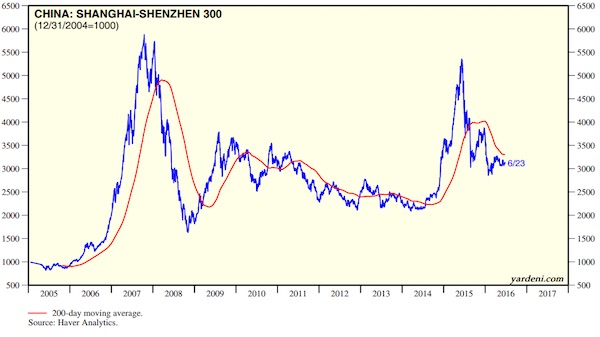
An urban planning researcher, Fong divides her time between Vancouver, where her elderly parents live, and Toronto, where she’s finishing a doctorate. She grew up in Vancouver, has deep roots in the city, and plans to settle here with her husband, a home renovator. But she has looked on with a mixture of frustration and horror as the cost of housing in Canada’s famously liveable city rise beyond the means of young professionals like her. “When you think it can’t get any worse, it does. So you keep adjusting your expectations, you know?”

Over the past year, the price of a single family house in Vancouver increased by an incredible 30%, to an average of $1.4m. It’s just the latest, most dramatic jump in an already dramatic long-term trend that has turned the beautiful but unassuming Canadian city into one of the world’s least affordable, with a housing price-to-income ratio of 10.8. That’s third after Hong Kong and Sydney, and well ahead of London, which ranks eighth at 8.5. Driving the rise is an unprecedented flood of foreign capital, mainly from China.

“What you have is a huge pool of very wealthy people who want to hedge against uncertainty back home,” says Thomas Davidoff, a real estate economist at the University of British Columbia (UBC). “Combine anxious money – a lot of it – with a beautiful gateway city that has limited space to build, low property taxes, lax regulation on capital flows, and wealth-friendly immigration programmes, and you get a market like this one,” – a market where an ordinary house with a waterfront view can sell for $15m while people earning local wages struggle to buy or rent a home.

Read more …

Lemme guess. Because it’s f**king broke?

• Why Australia Could Be About To Lose Its AAA Rating (VW)

Australia’s AAA credit rating was under pressure even before the election and is now looking decidedly shaky. Ratings agency Standard & Poors has moved Australia’s rating outlook from “stable” to “negative”, due to debt and a poor chance of budget repair. This follows warnings from the other major credit rating agencies – Moody’s and Fitch Ratings. The problem is budget repair will only become harder over the coming years, whatever the final numbers in the parliament. On the parties’ approach to budget repair, the Coalition and Labor are virtually indistinguishable as far as the credit agencies are concerned. The May budget projected a deficit (in underlying cash terms) of A$37 billion in 2016-17, gradually falling to $6 billion over the four-year forward estimates.

Labor’s plan is to reduce the deficit from $39 billion to $11 billion over that time. Both Coalition and Labor forecast a return to surplus over the subsequent years and indeed quite large surpluses ten years from now. Budget repair on this scale was utterly implausible before the election and is fiction now. The government’s so-called “zombie” budget measures were baked into its projections over the forward estimate period. These were mainly the cuts to university funding, family payments and the Pharmaceutical Benefits Scheme. None of these had any prospect of being legislated with the past Senate, never mind with a larger, more powerful set of crossbench senators.

The Parliamentary Budget Office estimates these “zombie” measures to be worth $8 billion in total over the forward estimates. This accounts for roughly half of the difference between the total projected deficits of Coalition and Labor over the same period. In short, there is little or no prospect of achieving the budget repair that is a pre-requisite for maintaining Australia’s AAA credit rating. Both sides of politics need to spell out to all Australians what this means. The effect of a credit downgrade is like an income cut to households, businesses and government.

Read more …

Blair won’t be jailed, neither will Dubya or Cheney. But we could at least try to make sure this can’t happen again. By telling them of consequences before they pull these things.

• Chilcot’s Judgment Is Utterly Damning – But It’s Still Not Justice (Monbiot)

Little is more corrosive of democracy than impunity. When politicians do terrible things and suffer no consequences, people lose trust in both politics and justice. They see them, correctly, as instruments deployed by the strong against the weak. Since the first world war, no British prime minister has done anything as terrible as Tony Blair’s invasion of Iraq. This unprovoked war caused the deaths of hundreds of thousands of people and the mutilation of hundreds of thousands more. It flung the whole region into chaos, which has been skillfully exploited by terror groups. Today, three million people in Iraq are internally displaced, and an estimated 10 million need humanitarian assistance.

Yet Blair, the co-author of these crimes, whose lethal combination of appalling judgment and tremendous powers of persuasion made the Iraq war possible, saunters the world, picking up prizes and massive fees, regally granting interviews, cloaked in a forcefield of denial and legal impunity. If this is what politics looks like, is it any wonder that so many people have given up on it? The crucial issue – the legality of the war – was, of course, beyond Sir John Chilcot’s remit. A government whose members were complicit in the matter under investigation (Gordon Brown financed and supported the Iraq war) defined his terms of reference.

This is a fundamental flaw in the way inquiries are established in this country: it’s as if a defendant in a criminal case were able to appoint his own judge, choose the charge on which he is to be tried and have the hearing conducted in his own home. But if Brown imagined Chilcot would give the authors of the war an easy ride, he could not have been more wrong. The Chilcot report, much fiercer than almost anyone anticipated, rips down almost every claim the Labour government made about the invasion and its aftermath. Two weeks before he launched his war of choice, Tony Blair told the Guardian: “Let the day-to-day judgments come and go: be prepared to be judged by history.” Well, that judgment has just been handed down, and it is utterly damning.

Read more …

PCR gets mad: Elect Hillary and die.

• More Obscuration From The British Establishment (Paul Craig Roberts)

Sir John Chilcot, a member of the British establishment and also a member of the Butler Inquiry, the responsibility of which was to determine if the so-called “intelligence” used as the excuse for the US/UK invasion of Saddam Hussein’s Iraq was “fixed” to justify the invasion, has, after seven years of delay, finally issued its report. Remember, there was a leaked memo from the head of British intelligence that the intelligence justifying the Iraqi Invasion was “fixed” or orchestrated to produce the justification for the invasion, a war crime under the Nuremberg standard established by the United States. Chilcot’s job was to make this fact go away or assume less importance and to protect the Butler Inquiry’s orchestrated verdict that, despite the word of the head of British intelligence, the intelligence was not fixed.

In other words, Sir John’s assigned task under the guise of an “impartial inquiry” was to absolve former UK PM and war criminal Tony Blair not of all responsibility but of all responsibility deserving of prosecution. Sir John’s report is akin to FBI director Comey’s report on Hillary: They did it but they didn’t do it enough to be prosecuted. In the context of democratic politics, if such existed in England, Tony Blair would be in the crosshairs of the ruling UK party, the Tories or Conservatives. Yet, as both parties represent the same private interest groups, the Conservative Prime Minister, David Cameron, who has announced his resignation effective next October, rushed to the opposition party’s defense and gave in Parliament what former British Ambassador Craig Murray calls a “dishonest, apologia for the invasion that bore no relationship to the Chilcot report.”

The UK media, for the most part, also came out in defense of Tony Blair, the war criminal and liar, providing, according to Amb. Murray, “unlimited airtime to Blair and his defender Alastair Campbell” and “almost no airtime to those who campaigned against the war.” Here is the judgement of a British Ambassador, Craig Murray: “Blair is still a creature of absolute self-serving slime.” You could make the same judgment on almost every member of the Bill Clinton, George W. Bush, and Obama regimes. And Hillary’s regime would be even worse. My prediction is that life on earth would not survive Hillary’s first term. Elect Hillary and die.

Read more …

Not Klare’s strongest effort, but the risk is there.

• The United States and NATO Are Preparing for a Major War With Russia (Klare)

For the first time in a quarter-century, the prospect of war—real war, war between the major powers—will be on the agenda of Western leaders when they meet at the NATO Summit in Warsaw, Poland, on July 8 and 9. Dominating the agenda in Warsaw (aside, of course, from the “Brexit” vote in the UK) will be discussion of plans to reinforce NATO’s “eastern flank”—the arc of former Soviet partners stretching from the Baltic states to the Black Sea that are now allied with the West but fear military assault by Moscow. Until recently, the prospect of such an attack was given little credence in strategic circles, but now many in NATO believe a major war is possible and that robust defensive measures are required.

In what is likely to be its most significant move, the Warsaw summit is expected to give formal approval to a plan to deploy four multinational battalions along the eastern flank—one each in Poland, Lithuania, Latvia, and Estonia. Although not deemed sufficient to stop a determined Russian assault, the four battalions would act as a “tripwire,” thrusting soldiers from numerous NATO countries into the line of fire and so ensuring a full-scale, alliance-wide response. This, it is claimed, will deter Russia from undertaking such a move in the first place or ensure its defeat should it be foolhardy enough to start a war.

The United States, of course, is deeply involved in these initiatives. Not only will it supply many of the troops for the four multinational battalions, but it is also taking many steps of its own to bolster NATO’s eastern flank. Spending on the Pentagon’s “European Reassurance Initiative” will quadruple, climbing from $789 million in 2016 to $3.4 billion in 2017. Much of this additional funding will go to the deployment, on a rotating basis, of an additional armored-brigade combat team in northern Europe.

As a further indication of US and NATO determination to prepare for a possible war with Russia, the alliance recently conducted the largest war games in Eastern Europe since the end of the Cold War. Known as Anakonda 2016, the exercise involved some 31,000 troops (about half of them Americans) and thousands of combat vehicles from 24 nations in simulated battle maneuvers across the breadth of Poland. A parallel naval exercise, BALTOPS 16, simulated “high-end maritime warfighting” in the Baltic Sea, including in waters near Kaliningrad, a heavily defended Russian enclave wedged between Poland and Lithuania.

Read more …

Greek politics has degenerated into Class B theater, and that’s if you want to be overly generous.

• Pressure Mounts For Varoufakis’ Secret Plan X To Be Investigated (Kath.)

Opposition parties kept up the pressure on the government Wednesday to give a clearer account of its actions over the revelations in US economist James K. Galbraith’s latest book regarding preparations in Greece last year for a possible exit from the euro. The opposition pressed home its views on the matter despite the fact that coalition officials distanced themselves from the academic, who clarified exactly what role he played in 2015 while Yanis Varoufakis was finance minister. Writing on the website belonging to the DiEM25 movement founded by Varoufakis, Galbraith said that he had been asked by the then finance minister in March 2015 to “help with a delicate task.” “This was the preparation of a preliminary plan – requested by the prime minister – for the contingency that Greece might be forced out of the euro,” he wrote.

Galbraith said that he worked on a memorandum, called Plan X, for six weeks with a small group of experts that were sworn to secrecy. The economist insisted that the final note, which touched on issues such as issuing a new currency, setting up a new central bank and ensuring law and order, was not intended as a blueprint for exiting the euro but “an outline of measures that might have to be taken and of problems that could occur.” “It was not our mission to make recommendations, and we made none; we were preparing for a scenario that everyone had hoped to avoid,” wrote Galbraith. Despite the academic’s explanation, Alternate Finance Minister Giorgos Houliarakis launched a strong attack on Galbraith during a session in Parliament Wednesday. “Who is this gentleman?” said the ministry official. “What he is saying is unbelievably frivolous.”

Read more …

“Clinton signed documents declaring she had turned over all of her work-related emails. We now know that is not true. But even more importantly, the absence of emails raises troubling questions about the nature of the correspondence that might have been deleted.”

• The Strange Gaps in Hillary Clinton’s Email Traffic (Pol.)

The past few weeks have brought a myriad of revelations about the private server Hillary Clinton used while she was secretary of state. First, there was the State Department inspector general’s devastating critique of the former secretary’s email practices. Then came sworn testimony of two key Clinton aides about how the server was set up and how the system worked (or didn’t). Just this weekend, Clinton met with the FBI to discuss her email arrangements. And on Tuesday, FBI Director James Comey announced that the agency would not recommend criminal charges over the handling of these emails, while at the same time offering a brutal assessment of how poorly Team Clinton handled classified information.

But, when it comes to Clinton’s correspondence, the most basic and troubling questions still remain unanswered: Why are there gaps in Clinton’s email history? Did she or her team delete emails that she should have made public? The State Department has released what is said to represent all of the work-related, or “official,” emails Clinton sent during her tenure as secretary—a number totaling about 30,000. According to Clinton and her campaign, when they were choosing what correspondence to turn over to State for public release, they deleted 31,830 other emails deemed “personal and private.” But a numeric analysis of the emails that have been made public, focusing on conspicuous lapses in email activity, raises troubling concerns that Clinton or her team might have deleted a number of work-related emails.

We already know that the trove of Clinton’s work-related emails is incomplete. In his comments on Tuesday, Comey declared, “The FBI … discovered several thousand work-related e-mails that were not in the group of 30,000 that were returned by Secretary Clinton to State in 2014.” We also already know that some of those work-related emails could be permanently deleted. Indeed, according to Comey, “It is also likely that there are other work-related e-mails that [Clinton and her team] did not produce to State and that we did not find elsewhere, and that are now gone because they deleted all emails they did not return to State, and the lawyers cleaned their devices in such a way as to preclude complete forensic recovery.”

Why does this matter? Because Clinton signed documents declaring she had turned over all of her work-related emails. We now know that is not true. But even more importantly, the absence of emails raises troubling questions about the nature of the correspondence that might have been deleted.

Read more …

Saw that coming from miles away.

• Marine’s Defense For Handling Classified Info Will Cite Hillary Case (WaPo)

A Marine Corps officer who has been locked in a legal battle with his service after self-reporting that he improperly disseminated classified information will use Hillary Clinton’s email case to fight his involuntary separation from the service, his lawyer said. Maj. Jason Brezler’s case has been tied up in federal court since he sued the service in December 2014. He became a cause celebre among some members of Congress, Marine generals and military veterans after he sent a classified message using an unclassified Yahoo email account to warn fellow Marines in southern Afghanistan about a potentially corrupt Afghan police chief. A servant of that police official killed three Marines and severely wounded a fourth 17 days later, on Aug. 10, 2012, opening fire with a Kalashnikov rifle in an insider attack.

An attorney for Brezler, Michael J. Bowe, said that he intends to cite the treatment of Clinton “as one of the many, and most egregious examples” of how severely Brezler was punished. FBI Director James B. Comey announced Tuesday that he would not recommend the U.S. government pursue federal charges against Clinton, but he rebuked her “extremely careless” use of a private, unclassified email server while serving as secretary of state. The FBI found that 110 of her emails contained classified information. Bowe said it is impossible to reconcile President Obama’s statement that Clinton’s intentional act of setting up a secret, unsecured email server did not detract “from her excellent ability to carry out her duties” while Brezler received a “completely opposite finding… involving infinitely less sensitive and limited information.”

Read more …

“..there are at least 15.8 million verified empty homes in Europe..”

• Europe Is Full … Of Empty Houses (LifeSeekers)

“Our country is full” is a statement you might often hear as a justification for not accepting any more migrants and refugees. According to this opinion, European countries do not have capacity to accept more newcomers, who put pressure on infrastructure – and especially housing. But when we look more closely, can it really be said that Europe is full? According to data from the censuses conducted across Europe in 2011, there are at least 15.8 million verified empty homes in Europe; in other words, there are enough empty homes in Europe to house all the asylum seekers that arrived in Europe last year, and all of Europe’s 4 million homeless people, several times over.

However, many Europeans are struggling with a housing market that makes it even more difficult for them to buy or rent a home. There are many reasons for this, including housing speculation, where investors buy houses to use simply as assets to be sold on when their value increases, as well as the economic situation and unstable employment. But what seems clear is that this market is not working for European people, and migrants and refugees are not the cause of the problem. This unfair housing market is especially serious for young people in Europe. Ever-rising rents mean that living situations for most young Europeans are unstable: it’s no surprise that over 48% of young people (aged 18-34) in the EU still live with their parents, unable to truly realise their independence. And meanwhile, there are millions of homes sitting empty.

Read more …

Jul 022016


Jack Delano “Lower Manhattan seen from the S.S. Coamo leaving New York.” 1941

Brexit is nowhere near the biggest challenge to western economies. And not just because it has devolved into a two-bit theater piece. Though we should not forget the value of that development: it lays bare the real Albion and the power hunger of its supposed leaders. From xenophobia and racism on the streets, to back-stabbing in dimly lit smoky backrooms, there’s not a states(wo)man in sight, and none will be forthcoming. Only sell-outs need apply.

The only person with an ounce of integrity left is Jeremy Corbyn, but his Labour party is dead, which is why he must fight off an entire horde of zombies. Unless Corbyn leaves labour and starts Podemos UK, he’s gone too. The current infighting on both the left and right means there is a unique window for something new, but Brits love what they think are their traditions, plus Corbyn has been Labour all his life, and he just won’t see it.

The main threat inside the EU isn’t Brexit either. It’s Italy. Whose banks sit on over 30% of all eurozone non-performing loans, while its GDP is about 10% of EU GDP. How they would defend it I don’t know, they’re probably counting on not having to, but Juncker and Tusk’s European Commission has apparently approved a scheme worth €150 billion that will allow these banks to issue quasi-sovereign bonds when they come under attack. An attack that is now even more guaranteed to occcur than before.


Still, none of Europe’s internal affairs have anything on what’s coming in from the east. Reading between the lines of Japan’s Tankan survey numbers there is only one possible conclusion: the ongoing and ever more costly utter failure of Abenomics continues unabated.
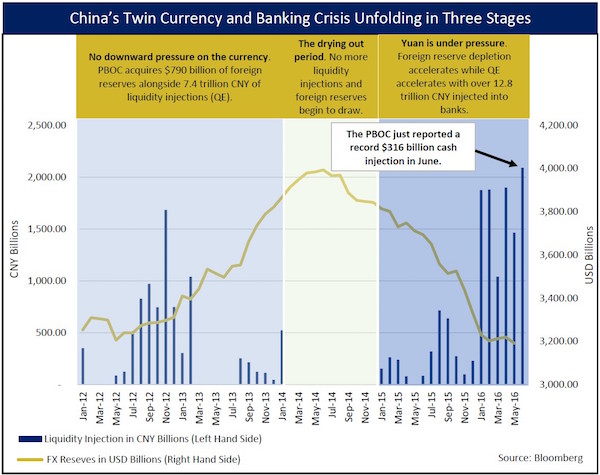
It’s developing in pretty much the exact way I said it would when Shinzo Abe first announced the policies in late 2012. Not that it was such a brilliant insight, all you had to know is that Abe and his central bank head Kuroda don’t understand what their mastodont problem, deflation, actually is, and that means they are powerless to solve it.
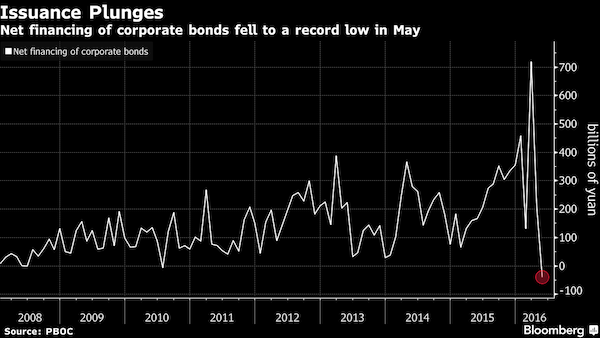
That Abe said somewhere along the way that all that was needed was his people’s confidence to make Abenomics work, says more than enough. The multiple flip-flops over a sales-tax increase say the rest. People don’t become more confident just because someone tells them to; that has the opposite effect. Deflation results from reduced spending, which in turn comes from not only decreasing confidence as well as a decrease in money people have available to spend.
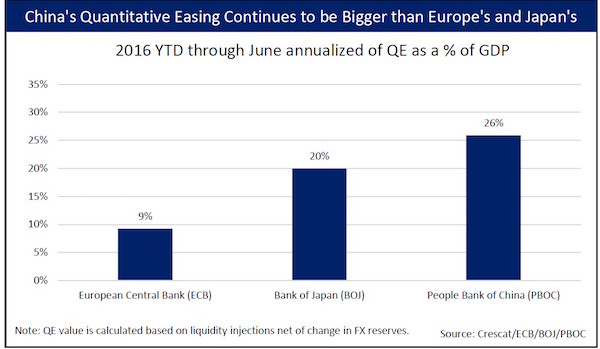
That modern economics sees everything not spent as ‘savings’ adds significantly to the failure -on the part of Abe, Kuroda and just about everyone else- to understand what happened in Japan over the past 2-3 decades. To repeat once again, inflation/deflation is the velocity of money multiplied by money- and credit supply. The latter factor has in general gone through the roof, but that means zilch if the former -velocity- tanks.

That this velocity is -still- tanking, in Japan as well as in the western world, is due to, more than anything else, an unparalleled surge in debt. At some point, that will catch up with any economy and society. Even if they are growing, which our economies are not. Growth has been replaced with credit, and credit is debt. It’s safe to say that money velocity cannot possibly ‘recover’ until large swaths of debt have been cancelled, one way or another.

For Japan we saw this week that “..household spending fell for the third straight month in May and core consumer prices suffered their biggest annual drop since 2013..” (Reuters) while “..The Topix index dropped about 9% in June, plunging on June 24 with the Brexit vote, the most since the aftermath of the 2011 earthquake. The yen strengthened about 8% against the dollar in June..“ (Bloomberg).

Japan has an upper-house election in a little over a week, and it seems like Abe can still feel comfortable about his position. A remarkable thing. The country needs to stop digging, it’s in a more than 400% debt-to-GDP hole, but Abe won’t listen. The rising yen is suffocating what is left of the economy, as are the negative interest rates, but all the talk is about ‘further easing’.


Still, Japan is outta here, and this has been obvious for a long time to the more observant observer. In the case of China, it is a more recent phenomenon, and it will even be disputed for a while to come. It’s also one that will have a much more devastating effect on the west. We’ve seen problems in various markets in Singapore, Macau and Hong Kong, but the real issues on the mainland are still to be sprung on us.

Mainland stock exchanges are as good a place as any to begin with. The combined tally for Shanghai and Shenzhen looks like this -data till June 23-; yes, that’s a loss of over 40% in the past year.

Beijing has been trying very hard to paper over these numbers, even quit supporting it all for a while through 2014, only to do a 180º when they didn’t like what they saw (foreign reserves drawdown), and now PBoC injections have gone bonkers: $316 billion in one month would mean $4 trillion on a yearly basis in what is really nothing but monopoly money.

Meanwhile, corporate bonds are, perhaps partly because of volatility, becoming an endangered species. Maybe the PBoC can do something there as well, the way Draghi does in Europe (must be high on the agenda), but there’s already so much bad debt we hardly dare watch.

China must and will try to keep boosting exports by devaluing the yuan. It’s just waiting for an opportunity to do it without being accused of currency manipulation. Perhaps it can create that opportunity?! Create a crisis and then use it?! Regardless, this Reuters headline yesterday sounded very tongue in cheek:

China To ‘Tolerate’ Weaker Yuan

China’s central bank would tolerate a fall in the yuan to as low as 6.8 per dollar in 2016 to support the economy, which would mean the currency matching last year’s record decline of 4.5%, policy sources said. The yuan is already trading at its lowest level in more than five years, so the central bank would ensure any decline is gradual for fear of triggering capital outflows and criticism from trading partners such as the United States, said government economists and advisers involved in regular policy discussions. Presumptive U.S. Republican Presidential nominee Donald Trump already has China in his sights, saying on Wednesday he would label China a currency manipulator if elected in November.

Note: remember Japan above? The yen rose 8% against the USD just in June, as the yuan fell by just 4.5% in all of 2015 (6.8% over the past 2 years). Now you go figure what’s happening to Japan-China trade. And the yuan is still hugely overvalued. But the desire to be part of the IMF basket of currencies comes with obligations. Trump doesn’t help either.

I said in the beginning of this year that a 30% devaluation was something of a minimum, and that certainly continues to stand. So yeah, creating a crisis may be the only way out. An accident in the South China Sea perhaps. Combined with a ‘tolerance’ for a 50% weaker yuan….

All of the above leads us to the title of this essay: deflation is coming in from the east. China’s economy’s already in deflation, even though it will take some time yet to be acknowledged. A very ‘nice’ report from Crescat Capital provides a bunch of clues.

China QE Dwarfs Japan and EU

In July of 2014, we wrote about the huge imbalance with respect to China’s M2 money supply and nominal GDP relative to the US. At the time, China’s M2 money supply was 71% higher than the US but its economy was 56% smaller, which we said was an indication of the overvaluation of the Chinese currency. Since that time, the yuan has fallen by only 6.8% relative to the dollar. We haven’t seen anything yet.

Today, the circumstances have significantly worsened. Money supply has continued to grow faster than GDP. With over $30 trillion of assets in its banking system and an underappreciated non-performing loan problem, we are convinced that China is headed for a twin banking and currency crisis. Money velocity has reached historically low levels which reflects China’s extreme credit imbalance and its crimping impact on its ability to generate future real GDP growth.

Just as worrying as the immense amount of credit built up, China has been reporting major downward revisions in its balance of payments (BoP) accounts. For more than a decade, China had been reporting an impossible twin surplus in its BoP accounts. When we wrote about this issue in 2014, we emphasized the likelihood of massive illicit capital outflows that not been accounted for. At that time, according to the State Administration of Foreign Exchange of China (SAFE), China had accumulated a BoP imbalance that was close to $9.4 trillion surplus since 2000 which we believed represented capital outflows that should have been recorded in the capital account.

The same accumulated BoP number today, revised by SAFE several times since, is now a deficit of about $2.8 trillion. Essentially, with its revisions, the SAFE has acknowledged even more capital outflows over the last 16 years than we had initially identified. On the capital account side, there was a downward revision of $10.1 trillion – from a $4.2 trillion surplus to a $5.9 trillion deficit. On the current account side, the revisions show that Chinese exports have not been as strong as initially reported over the last decade and a half. China’s current account surplus has been reduced by $2.1 trillion– going from $5.1 trillion to $2.9 trillion over the last 16 years. What we initially considered to be a $9.4 trillion imbalance has been more than proven by a $12.2 trillion revision.

Those are some pretty damning numbers, if you sit on them for a bit. There was another graph that came with that report that takes us head first into deflationary territory. China’s velocity of money:

That is utterly devastating. It’s what we see in the US, EU and Japan too, but ‘we’ have thus far been able to export our deflation -to an extent- to … China. No more. China has started exporting its own deflation to the west. Beijing MUST devalue its currency anywhere in the range of 30-50% or its export sector will collapse. It is not difficult.

That it will have to achieve this despite the objections of Donald Trump and the IMF is just a minor pain; Xi Jinping has more pressing matters on his mind. Like pitchforks.

The ‘normal’ response in economics would be: in order to fight deflation, increase consumer spending (aka raise money velocity)! But as we’ve seen with Japan, that’s much easier said than done. Because there are reasons people are not spending. And the only way to overcome that is to guarantee them a good income for a solid time into the future, in an economy that induces confidence.

That is not happening in Japan, or the US or EU, and it’s now gone in China too. Beijing has another additional issue that (formerly) rich countries don’t have. This is from a recent Marketwatch article on Andy Xie:

China Is Headed For A 1929-Style Depression

[..] Xie said China’s trajectory instead resembles the one that led to the Great Depression, when the expansion of credit, loose monetary policy and a widespread belief that asset prices would never fall contributed to rampant speculation that ended with a crippling market crash. China in 2016 looks much the same, according to Xie, with half of the country’s debt propping up real-estate prices and heavy leverage in the stock market – indicating that conditions are ripe for a correction. “The government is allowing speculation by providing cheap financing .. China “is riding a tiger and is terrified of a crash. So it keeps pumping cash into the economy. It is difficult to see how China can avoid a crisis.”

And then check this out:

China’s GDP grew 6.9% in 2015, its slowest pace in a quarter-century. For 2016, Beijing has set a GDP target of 6.5% to 7%; The latest spate of global uncertainties prompted Bank of America Merrill Lynch and Deutsche Bank to trim their forecasts to 6.4% and 6.6%, respectively. The export sector, long a driver of Chinese growth, is sputtering due to global saturation and household consumption is barely 30% of China’s GDP, Xie said. In the U.S., household consumption accounted for more than 68% of GDP in 2014, according to the World Bank.

Yeah, China is supposed to be going from an export driven- to a consumer driven economy. Problem with that seems to be that those consumers would need money to spend, and to earn that money they would need to work in export industries (since there is not nearly enough domestic demand). Bit of a Catch 22. And definitely not one you would want to find yourself in when the global economy is tanking.

The more monopoly money Beijing prints, the more pressure there will be on the yuan. And if they themselves don’t devalue the yuan, the markets will do it for them.

Kyle Bass says China’s $3 trillion corporate bond market is “freezing up” (see the third graph above), which threatens to undermine the $3.5 trillion market for the wealth management products Chinese mom and pops invest in. He expects a whopping $3 trillion in bank losses, an amount equal to the entire corporate bond market (!) “to trigger a bailout, with the central bank slashing reserve requirements, cutting the deposit rate to zero and expanding its balance sheet – all of which will weigh on the yuan.”

With the yuan down by as much as it would seem to be on course for, wages and prices in the west will plummet. This wave of deflation is set to hit western economies already in deflation and already drowning in private debt, and therefore equipped with severely weakened defenses.

Leonard Cohen once wrote a song called “Democracy Is Coming To The USA”. Maybe someone can do a version that says deflation is coming too. Not sure that’s good for democracy, though.

Have a great Holiday Weekend.

Jun 302016
 
 June 30, 2016  Posted by at 8:32 am Finance Tagged with: , , , , , , , ,  1 Response »


Harris&Ewing F.W. Grand store, Washington, DC 1925

• The End Of The EU Is Coming: Ron Paul (CNBC)
• ‘British Pound Signals US Stocks Are About To Fall Hard’ (CNBC)
• US Banks Beat Fed Stress Test as Deutsche Bank, Santander Fail Anew (BBG)
• Deutsche Bank Is The Riskiest Financial Institution In The World: IMF (ZH)
• Steve Keen on Brexit (Hartmann)
• Singapore Bank Suspends London Property Loans (R.)
• Was Brexit Fear A Giant Hoax Or Is This The Calm Before The Next Storm? (AEP)
• Poland Calls For Juncker To Quit As Others Fume EU Has Too Much Power (EUK)
• Japan Factory Output Hits 3-Year Low On Weak Domestic Demand, Exports (R.)
• China’s Analysts Haven’t Been This Wrong on Equities Since 2009 (BBG)
• Yuan Heads for Worst Quarter on Record as Outflows Seen Rising (BBG)
• New Zealand Businessmen Mull Buying Cruise Ship To House Homeless (G.)
• More Than 57,000 Migrants And Refugees Stranded In Greece (Kath.)


“It really is coming to an end. It doesn’t mean tomorrow or the next day, but people are going to be really unhappy…”

• The End Of The EU Is Coming: Ron Paul (CNBC)

The historic U.K. vote to leave the European Union is a sign of a major global meltdown, not just a watershed that marks the end of a unified continent, former Rep. Ron Paul says. “I think [the EU] will become nonfunctional,” Paul told CNBC’s “Futures Now” on Tuesday. “It really is coming to an end. It doesn’t mean tomorrow or the next day, but people are going to be really unhappy. The end is coming, but it isn’t coming because of the breakup,” he added. Paul attributed the fallout to “bad fiscal policies” around the globe. He said that as long as interest rates remain low, the markets will remain in bubble territory.

“I think what everyone is looking at is there was a vote, an important vote and it went differently than expected and it sent shock waves through the markets, but I think the concentration is on the wrong issue,” the former Libertarian and Republican Party presidential candidate said. Instead, he said, what has caused so much turmoil is what happened before the recent declines. “What has been preceding this situation that we have throughout the world and this country as well is artificially low interest rates. It causes people to make mistakes in buying bonds,” he said.

Read more …

Interesting correlation.

• ‘British Pound Signals US Stocks Are About To Fall Hard’ (CNBC)

The euro’s considerable rise against the British pound signals trouble to come for U.S. markets, according to Evercore ISI technical analyst Rich Ross. The euro and the pound fell against the dollar after the U.K. voters opted to leave the EU, but sterling fell further, hitting three-decade lows against the dollar. According to Ross, the relative weakness in the British currency mirrors the euro’s huge rally against the British pound from 2007 to 2009. During that period, U.S. stocks plummeted. As a result, Ross is particularly wary of the euro’s recent strength against the pound.

“This surge that we’re seeing is breaking this multiyear downtrend, breaking out through that 200-week moving average,” Ross said Tuesday on CNBC’s “Trading Nation.” “That could potentially spell problems for the S&P 500 and for risk assets [based on the past], so we want to watch that euro-pound.” Ross believes that the euro’s strength against the pound could just be getting started. “I think there could eventually be upside in the euro-pound to just around 86 cents, and that would likely correspond with further downside for risk assets like stocks, like the S&P 500,” Ross added.

Read more …

Take a pinch of salt with every stress test.

• US Banks Beat Fed Stress Test as Deutsche Bank, Santander Fail Anew (BBG)

Federal Reserve officials cleared dozens of U.S. banks to boost shareholder payouts after conducting annual stress tests that proved too rigorous, again, for subsidiaries of Deutsche Bank and Banco Santander. JPMorgan Chase, Citigroup, Bank of America and 27 other firms with major U.S. operations passed the exam Wednesday, with many unveiling plans to distribute more capital through dividends and stock buybacks. Even Morgan Stanley, which must shore up internal systems before the Fed issues a final verdict, got conditional permission to boost its dividend 33%. Deutsche Bank and Santander were alone in failing, due to “broad and substantial weaknesses across their capital planning processes,” the Fed said.

While both had adequate capital and showed improvement after failing last year, their plans still relied on assumptions and analyses that “are not reasonable or appropriate,” the regulator said. The findings show U.S. banks have largely adapted to the Fed’s stiffer oversight of capital and internal controls in the wake of 2008’s financial crisis. After years spent cleaning up their balance sheets and stumbling in past exams, Citigroup and Bank of America cleared handily this time and are now moving beyond the penny and nickel dividends they’ve been stuck paying. Deutsche Bank and Santander, meantime, both vowed anew to do better next time.

Read more …

We knew from their derivatives portfolio.

• Deutsche Bank Is The Riskiest Financial Institution In The World: IMF (ZH)

[..] not only did Deutsche Bank just flunk the Fed’s stress test for the second year in a row, but moments ago in a far more damning analysis, none other than the IMF disclosed that Deutsche Bank poses the greatest systemic risk to the global financial system, explicitly stating that the German bank “appears to be the most important net contributor to systemic risks.” Yes, the same bank whose stock price hit a record low just two days ago. Here is the key section in the report:

Domestically, the largest German banks and insurance companies are highly interconnected. The highest degree of interconnectedness can be found between Allianz, Munich Re, Hannover Re, Deutsche Bank, Commerzbank and Aareal bank, with Allianz being the largest contributor to systemic risks among the publicly-traded German financials. Both Deutsche Bank and Commerzbank are the source of outward spillovers to most other publicly-listed banks and insurers. Given the likelihood of distress spillovers between banks and life insurers, close monitoring and continued systemic risk analysis by authorities is warranted.

Among the G-SIBs, Deutsche Bank appears to be the most important net contributor to systemic risks, followed by HSBC and Credit Suisse. In turn, Commerzbank, while an important player in Germany, does not appear to be a contributor to systemic risks globally. In general, Commerzbank tends to be the recipient of inward spillover from U.S. and European G-SIBs. The relative importance of Deutsche Bank underscores the importance of risk management, intense supervision of G-SIBs and the close monitoring of their cross-border exposures, as well as rapidly completing capacity to implement the new resolution regime.

The IMF also said the German banking system poses a higher degree of possible outward contagion compared with the risks it poses internally. This means that in the global interconnected game of counterparty dominoes, if Deutsche Bank falls, everyone else will follow.

Notwithstanding moderate cross-border exposures on aggregate, the banking sector is a potential source of outward spillovers. Network analysis suggests a higher degree of outward spillovers from the German banking sector than inward spillovers. In particular, Germany, France, the U.K. and the U.S. have the highest degree of outward spillovers as measured by the average percentage of capital loss of other banking systems due to banking sector shock in the source country.

Read more …

Obviously, I’m with Steve on this.

• Steve Keen on Brexit (Hartmann)

Thom Hartmann talks to Prof. Steve Keen of Kingston University, London, about why Brexit is a response to failed neoliberal policies and why that could be good for all of us.

Read more …

One less bubble maker.

• Singapore Bank Suspends London Property Loans (R.)

United Overseas Bank, Singapore’s number 3 lender, became the first bank in the city state to suspend its loans program for London properties in the wake of uncertainties caused by Britain’s vote to leave the European Union. As Brexit spooked global markets and pushed the pound to multi-year lows, other Singaporean banks were also advising clients about risks such as currency losses even though they have not followed UOB’s move. “We will temporarily stop receiving foreign property loan applications for London properties,” a UOB spokeswoman said in an email.

“As the aftermath of the UK referendum is still unfolding and given the uncertainties, we need to ensure our customers are cautious with their London property investments.” The Singaporean dollar has gained 10% against the British pound since the referendum, eroding the value of assets held in Britain. Other risks for Singaporean banks have been exacerbated in recent months by an economic slowdown in Asia and rising bad debts in energy-related industries. Moody’s Investors Service on Thursday revised the outlook on Singapore’s banks to negative from stable. This reflected the “weaker operating conditions” against the backdrop of softer regional economic and trade growth, Moody’s said.

Read more …

Deflation is coming from the east.

• Was Brexit Fear A Giant Hoax Or Is This The Calm Before The Next Storm? (AEP)

Devaluation strikes no fear in a chronic deflationary world where almost every major country is trying to push down its currency to break out of the trap, and largely failing to do so. It would facetious to suggest that Britain has pulled off this trick. Crumbling investor confidence is never a good thing. But the UK has stolen a march of sorts, carrying out a beggar-thy-neighbour devaluation by accident. The pound needs to fall further. It is still too strong for a country with a current account deficit running consistently above 5pc of GDP. The IMF said just before Brexit that sterling was 12pc to 18pc overvalued, and may have to fall more than this to force a lasting realignment of the British economy.

This cure has hardly begun. As of today, sterling is 5pc below its trading range for the last month against the euro and the Chinese yuan. It is weaker against the US dollar but the dollar is on steroids, much to the horror of the US Treasury. The more sterling falls, the greater the net stimulus for the British economy. The reverse holds for the eurozone. It is a further deflationary shock at a time when Europe is already in deflation, when inflation expectations are in free-fall and bond yields are collapsing below zero, and when the ECB is running out of options. There are two dangers for the world economy. One is that China is exporting deflation with alarming intensity. Morgan Stanley estimates that China’s trade-weighted devaluation is running at an annual rate of 11pc, and factory gate deflation adds another 2pc.

This is a tsunami coming from the epicentre of global overcapacity. The other danger is that British and European politicians fail to understand what is coming straight at them from Asia. Britain’s Brexiteers must come up with a coherent policy on trade very fast, and the EU must come off their ideological high-horse and face the reality that they have absolutely no margin for economic error. US Secretary of State John Kerry warned in stark terms on his post-Brexit swoop into Europe that nobody should lose their head, or go off half-cocked, or “start ginning up scatter-brained or revengeful premises.” Nobody seemed to heed his words at the EU’s imperial summit in Brussels, an exercise in righteous anger but not much else. The markets may yet speak in harsher language.

Read more …

Why do I have the impression the right is sharper these days than the left?

• Poland Calls For Juncker To Quit As Others Fume EU Has Too Much Power (EUK)

After Britain’s shock vote to quit the EU, remaining countries are looking for better deals for themselves, and ordering the union to learn from its mistakes or face further calls for a total break up. Poland, Slovakia, Hungary and the Czech Republic called on Tuesday for the powers of the European Commission to be curbed with Warsaw calling for the dismissal of Mr Juncker, the executive’s head. Last week’s referendum alarmed governments in the former communist eastern region of the EU who had seen London as their main eurosceptic ally in efforts to reduce centralised control from Brussels. Poland’s Foreign Minister Witold Waszczykowski said: “We are asking if this leadership of the European Commission has a right to continue functioning, fixing Europe.

“In our opinion, it does not. New politicians, new commissioners should undertake this task, and first of all we should give new prerogatives to the European Council, because it consists of politicians who have a democratic mandate.” Warsaw has clashed with the Commission over its controversial attempt to curb the powers of the constitutional court, which led Brussels to launch an investigation into the rule of law in Poland. Tension between the Brussels executive, which drafts and enforces EU legislation, and member states, which exercise their authority collectively in the EU Council, has been a permanent feature of the bloc over six decades.

Read more …

And then throw a surging yen into the mix.

• Japan Factory Output Hits 3-Year Low On Weak Domestic Demand, Exports (R.)

Japan’s industrial output slid in May at the fastest rate in three months to its lowest level since June 2013, highlighting concerns about falling exports and weak consumer spending. May’s 2.3% fall in industrial output considerably exceeded the median estimate for a 0.1% decline forecast in a Reuters poll. “The decline in industrial output is directly related to the decline in exports,” said Hidenobu Tokuda, senior economist at Mizuho Research Institute. “Another factor is the slow recovery in domestic consumer spending. The government should consider some measures to improve domestic demand.” Japan’s government plans to announce more fiscal stimulus spending this autumn to revive Prime Minister Shinzo Abe’s economic agenda.

Strengthening domestic demand has become even more urgent as gains in the yen further threaten exports. Output fell in May due to declines in the production of chemicals, cosmetics, construction equipment and semiconductors, data from the Ministry of Economy, Trade and Industry showed. Manufacturers surveyed by the ministry expect output to rise 1.7% in June and increase 1.3% in July. Exports fell at the fastest pace in four months in May on supply chain disruptions from an earthquake and slow growth in emerging markets, data earlier this month showed. The Bank of Japan’s closely-watched tankan business sentiment survey due on Friday is forecast to show confidence fell to the lowest in three years in April-June.

Read more …

When things get serious, you lie. Shanghai’s 49% crash over the past year is serious.

• China’s Analysts Haven’t Been This Wrong on Equities Since 2009 (BBG)

China’s gap between profit forecasts and reality is turning into a chasm. Firms in the Shanghai Composite Index reported earnings per share for the past year that were 33% below what analysts had predicted 12 months ago, according to data compiled by Bloomberg. The gap, which this month widened to the most since 2009, far outstrips the difference between projections and actual earnings in the U.S., and is more than double that of Chinese companies in Hong Kong. So how did they get it so wrong? China’s industrial giants are being squeezed as the government reorients the economy around services, leaving excess capacity that translates into volatile earnings.

Those stocks dominate the Shanghai Composite and have been among its steepest decliners in 2016, helping drag the gauge down 17%. As to why analysts didn’t anticipate the scale of the shift: Foundation Asset Management says in a market where short-selling is almost impossible, there’s little demand for negative research and strategists face more pressure to present an optimistic outlook. “The transitioning of the economy from exports to consumer, that’s a painful adjustment that occurs over a number of years,” said Ben Surtees at Jupiter Asset Management in London. “Analysts aren’t capturing the changes that are occurring.”

[..] In just over a year, China’s stock forecasters have weathered a rally that took the Shanghai Composite to a 7-year high in June 2015, and then a 49% crash that prompted authorities to crack down on alleged market manipulation by discouraging short-selling and targeting brokerage executives and journalists. That backdrop is an added reason to present positive research, Ample Capital’s Alex Wong said.

Read more …

“..37 times more money [left] China than enter[ed] so far this year.”

• Yuan Heads for Worst Quarter on Record as Outflows Seen Rising (BBG)

The yuan’s worst quarterly performance on record is raising the risk of capital flight. China’s currency has slumped 2.9% since the end of March, the most since the nation unified the official and market rates at the start of 1994, to trade near its lowest level in five years. Losses deepened after the U.K.’s vote to secede from the European Union led to a jump in the dollar and dented the outlook for Chinese exports. After turmoil in its currency and stock markets in the past year shook investor confidence, China stopped granting quotas for residents to invest overseas and clamped down on illegal fund transfers to restrain capital outflows.

Policy makers are trying to guide the currency lower versus its trading partners as the economy slows while simultaneously damping expectations of faster depreciation. Goldman Sachs warned Thursday that metals investors are concerned China may sharply weaken its exchange rate. “We see a rising risk that capital outflows could pick up again causing negative headlines and adding to the fragility of current market sentiment,” said Allan von Mehren at Danske Bank. “We expect the depreciation pressure on the Chinese currency to continue over the coming years.” [..] A program allowing some domestic and Hong Kong mutual funds to be sold on either side of the border has seen about 37 times more money leave China than enter so far this year.

Read more …

Yes, housing bubbles leave people homeless in their wake.

• New Zealand Businessmen Mull Buying Cruise Ship To House Homeless (G.)

A group of New Zealand businessman have come up with an idea to help New Zealand’s homeless – place them on a cruise ship. Charity groups in Auckland estimate hundreds of people are sleeping rough in the city every night, with dozens of working families also bedding down in cars, garages and Te Puea Marae (Maori meeting houses). Christchurch businessman Garry House said: “Living on a cruise ship is not a long-term solution but things are so bad for so many families now it could help ease the pressure for two or three years while longer-term strategies are put into place.”

House has, with a number of colleagues, begun investigating purchasing a 400-bed Italian cruise liner and docking it in Auckland harbour. He estimates the cost of purchasing and transporting it to New Zealand to be at least NZ$5m. It could reach New Zealand from Europe in a month, House said. Auckland’s housing market is one of the most expensive in the world; property prices have increased 77.5% in the past five years, and the average house price is more than NZ$940,000 (£498,000), according to property data provider CoreLogic New Zealand.

Read more …

Europe’s human values.

• More Than 57,000 Migrants And Refugees Still Stranded In Greece (Kath.)

A total of 57,155 migrants and asylum-seekers are currently in Greece according to fresh data provided by the government. According to the data, 23,675 individuals are currently in northern Greece, 1,703 in central Greece, and 240 in southern Greece. An estimated 8,643 people are scattered around the Aegean islands. No arrivals were recorded in the past 24 hours, the government said. Meanwhile, up to 10,198 refugees are currently staying at official centres set up in Attica region, while the number of those camping out at makeshift facilities is 4,915.

Read more …

Jun 272016
 
 June 27, 2016  Posted by at 9:10 am Finance Tagged with: , , , , ,  9 Responses »


Harris&Ewing District National Bank, Washington, DC 1931

• I Walked From Liverpool To London. Brexit Was No Surprise (G.)
• UK Will Emerge From Brexit Just Fine, It’s Europe That’s In Trouble (CNBC)
• Britain ‘May Never’ Trigger EU Divorce (AFP)
• Post-Brexit Global Equity Loss Of Over $2 Trillion Worst Ever: S&P (R.)
• Firms Plan To Quit UK As City Braces For More Post-Brexit Losses (G.)
• Brexit: Most Commentaries Miss The Point (Kuttner)
• Raw Democracy: Why The British Said No To Europe (Pilger)
• China Devalues Yuan Most In 10 Months, Warns Of Brexit “Butterfly Effect” (ZH)
• Why Xi Refuses to Let China’s Zombies Die (Pesek)

The real world.

• I Walked From Liverpool To London. Brexit Was No Surprise (G.)

On 2 May this year, I set off to walk from Liverpool to London, a journey of 340 miles that would take me a month. I was walking in the footsteps of the People’s March for Jobs, a column of 300-odd unemployed men and women who, on the same day in 1981, exactly 35 years previously, had set off from the steps of St George’s Hall to walk to Trafalgar Square. In the two years after Margaret Thatcher had been elected, unemployment had gone from 1 to 3 million, as her policies laid waste to Britain’s manufacturing base. In 1981, we saw Rupert Murdoch buy the Times and Sunday Times. We witnessed inner-city riots, unprecedented in their scale and violence, in Liverpool and London. The formation of the SDP split the left. The Tories lost their first assault on the coal miners, capitulating over the closure of 23 pits.

My father, Pete Carter, was one of those who organised the original walk. My journey was an attempt to work out what had happened to Britain in the intervening years. What I saw and heard gave me an alarming sense of how the immense social changes wrought by Thatcherism are still having a profound effect on communities all over England. It also meant that when I awoke last Thursday to the result of the EU referendum, I wasn’t remotely surprised. I left Liverpool the week of the Hillsborough inquest verdict, flowers and scarves still adorning lampposts. The inquest had finally vindicated the families of the 96 killed at the 1989 FA Cup semi-final, exposing the lies and cover-ups of the police, the media and the political class, who had spent over a quarter of a century traducing not only those fans, mostly working class, but also the city and its people.

In fact, that demonising had found expression in 1981, too, when Geoffrey Howe suggested to Thatcher privately that, after the Toxteth riots, Liverpool should be subject to a “managed decline”. I walked through Widnes and Warrington, past huge out-of-town shopping centres and through the wastelands of industrial decay. In Salford, down streets where all the pubs were boarded up and local shops, if you could find them, had brick walls for windows and prison-like metal doors, I found an Airbnb. My host was selling her terraced house. I sat in her living room as the estate agent brought around potential buyers. They were all buy-to-let investors from the south of England, building property portfolios in the poverty, as if this was one giant fire sale.

Read more …

“..an uncanny gemütlichkeit..”

• UK Will Emerge From Brexit Just Fine, It’s Europe That’s In Trouble (CNBC)

The British never wanted to be part of a German-dominated European federal super state. The exit from the EU will allow the U.K. to reclaim parts of national authority that its political elites ceded to unelected Brussels officials free of any meaningful democratic oversight. The scare-mongering about the end of the U.K. and the unraveling EU is meaningless. My guess is that the U.K. will do better that the unwieldy “union” of 27 countries whose leaders have yet to figure out where they are going. But let’s take a look at the U.K. first. The first good sign is that the leave leaders are behaving in the tradition of the British battle cry: “Keep Calm and Carry On.”

They are watching the fury and the confusion in Berlin, Paris and Brussels. The leading voices in these capitals are screaming for an expeditious divorce as a swift and exemplary punishment (yes, to deter other would-be exit followers), because the Europe’s oldest parliamentary democracy spoke for the rest of the continent and dared to denounce the EU’s failing ways. In case you wondered, that is how low the ideal of European brotherhood and union has fallen. These muddled up and agitated minds in Paris, Berlin and Brussels will just create more chaos and alienate more people who were looking at the EU as a haven of peace and prosperity. The leave people, by contrast, are playing with an uncanny gemütlichkeit. They are saying that they are Europeans, and that they just want to build a close European relationship of a different kind.

Will that work? All we hear now is that it won’t. Well, maybe there is some prescience in there, but please take a look at these numbers. The U.K. is by far Germany’s most profitable export market. Last year, Germany’s trade surplus with the U.K. came in at €51 billion, accounting for 34% of the German surplus with the EU. That surplus was also 42% higher than the German trade surplus with France, Berlin’s largest European trade partner. With its €89.3 billion worth of exports to the U.K. last year, Britain is Germany’s third-largest export market, after the U.S. and France. Will Germany give this up by shutting the U.K. out of a free-trade agreement with the EU? Of course it won’t.

Read more …

It’ll be fun to see the hot potato being tossed around.

• Britain ‘May Never’ Trigger EU Divorce (AFP)

Britain “may never” trigger the formal divorce process with the EU despite last week’s referendum in which the country voted to leave, EU diplomats said Sunday. “My personal belief is they will never notify” the EU about their intention to leave, a senior EU diplomat said on condition of anonymity. A state leaving the EU must formally notify the European Council of all 28 EU leaders under Article 50 of the 2007 Lisbon Treaty, setting the clock ticking on a two-year period for Britain to negotiate its divorce. “We want London to trigger Article 50 now, to have clarity. I expect, as we can’t force them, for them to take their time,” the diplomat added. “And I would not exclude, it’s my personal belief, that they may never do it.”

The official did not specify if he believed Britain would avoid it by holding a new referendum, or simply dragging out the process to extract a better divorce deal, but said all such decisions were up to London. Cameron has said he will resign by October and that it is for his successor to launch the process and lead the negotiations. Despite growing pressure from EU leaders, Cameron was not expected to trigger Article 50 at an EU summit on Tuesday, another senior EU official said. Britain’s EU partners believed the notification should come by Christmas at the latest. “There cannot be any kind of negotiation with Britain before there is a notification.”

Read more …

A distorted view because of the gains prior to the referendum. Everything was getting pumped up by expectations of no Brexit, and than that ‘gain’ was lost again. it’s like a gambler who wins big only to lose it all again at the end of the night. Did he lose, or just draw?

• Post-Brexit Global Equity Loss Of Over $2 Trillion Worst Ever: S&P (R.)

The $2.08 trillion wiped off global equity markets on Friday after Britain voted to leave the European Union was the biggest daily loss ever, trumping the Lehman Brothers bankruptcy during the 2008 financial crisis and the Black Monday stock market crash of 1987, according to Standard & Poor’s Dow Jones Indices. Global markets skidded following the unexpected result from the June 23 referendum, in which Britons voted to withdraw from the EU by a 52% to 48% margin. Markets in mainland Europe were hit the worst, with Milan and Madrid each down more than 12% for their biggest losses ever. Britain’s benchmark FTSE 100 was down nearly 9% at one point on Friday, but rallied to close down 3.15%.

The route started in Asia, with the Nikkei .N225 down 7.9%, and carried over into Wall Street as the S&P 500 fell 3.6%. Mohit Bajaj, director of ETF trading solutions at WallachBeth Capital in New York, said the severity of the sell-off was partly due to investors misreading the outcome and betting the wrong way. “People positioned themselves longer because they thought the market was going to pop,” he said. “We knew that we were going to sell off pretty hard and people were kind of shocked by the market.” In dollar terms, Friday’s loss overtook the previous record from Sept. 29, 2008, the day when Congress rejected a $700 billion bailout package for Wall Street during the financial crisis. On that day, global markets lost $1.94 trillion.

Read more …

The Guardian has a hard time losing.

• Firms Plan To Quit UK As City Braces For More Post-Brexit Losses (G.)

British businesses have warned that Brexit will trigger investment cuts, hiring freezes and redundancies as the consequences of leaving the European Union threaten to destabilise markets further this week. The survey by the Institute of Directors (IoD), which found that the majority of businesses believed Brexit was bad for them, comes amid fears that investors will wipe billions more pounds off share values on Monday morning, and signs that the pound, which hit a 30-year low on Friday, was coming under further pressure from trading in Asia. Sterling was down more than 1% as the Asian markets opened late on Sunday. [..]

[..] fears are spreading that an estimated 100,000 roles could be lost in the financial sector if banks press on with contingency plans to move jobs out of the UK. The political uncertainty gripping the UK following the resignation of prime minister David Cameron and turmoil in the Labour party has put the City on alert for more volatility. With fears that the economic turmoil following the result will tip the country into recession, the snap poll of IoD members found that company bosses were considering a range of options, including hiring and investment freezes and relocating some of their operations. Simon Walker, the IoD’s director general, said the organisation would not “sugar-coat” the damaging outcome: “A majority of business leaders think the vote for Brexit is bad for them.”

“Businesses will be busy working out how they are going to adapt and succeed after the referendum result,” said Walker of the group which has 34,500 members, ranging from start-up entrepreneurs to chief executives of multinational companies. “But we can’t sugar-coat this, many of our members are feeling anxious.” In the poll, 36% of IoD members said the outcome of last Thursday’s vote would lead them to cut investment in their business whereas just 9% said the opposite was true. Just under half said it would not change their investment plans.

Read more …

“..He will be remembered as the worst British prime minister ever….”

• Brexit: Most Commentaries Miss The Point (Kuttner)

When the original institutions that later became the E.U. were created in the 1940s and 1950s, the international system was designed on the ashes of depression and war to rebuild an economy of full employment and broad based prosperity. The system worked remarkably well. In the 1980s, as a backlash against the dislocations of the 1970s, Margaret Thatcher came to power in Britain (and Ronald Reagan in the US). Their policies returned to a dog-eat-dog brand of capitalism that benefited elites and hurt ordinary people. By the 1990s, when the European Economic Community became a more tightly knit European Union, it too became an agent of neo-liberalism.

Policies of deregulation ended in the financial collapse of 2008. The austerity cure, enforced the gnomes of Brussels and Frankfurt and Berlin, is in many ways worse than the disease. Rising mass discontent has failed to dethrone the elites responsible for these policies, but it has resulted in lose of faith in institutions. The one percent won the policies but lost the people. So, yes, the Brits who voted for Brexit got a lot of facts and details wrong. And Britain will probably be worse off as a result. But they did grasp that the larger economic system is serving elites and is not serving them. The tragedy is that we are further away from a reformed EU than ever. A progressive EU, more in the spirit of 1944, is not on the menu.

The exit of Britain will give even more power to Angela Merkel’s Germany, architect and enforcer of austerity. The rest of Europe will become more like Greece economically and more like the British rightwing politically. there will be more far-right populist movements for other nations to quit the EU. This has already begun in France and the Netherlands, two of the founding nations of the European Community — and ones that also benefit, on balance, from the EU. [..] What makes this vote so tragic is the absence of enlightened leadership, either in Britain or on the continent, to propose something better. Prime Minister David Cameron, who proposed the reckless gamble of a referendum as a tactical feint to paper over an intra-party schism, may now be responsible for the dissolution of two unions — not just the EU, but the UK, as Scotland secedes. He will be remembered as the worst British prime minister ever..

Read more …

“Like the Labour Party in Britain, the leaders of the Syriza government in Athens are the products of an affluent, highly privileged, educated middle class, groomed in the fakery and political treachery of post-modernism. ”

• Raw Democracy: Why The British Said No To Europe (Pilger)

The day after the vote, the columnist Martin Kettle offered a Brechtian solution to the misuse of democracy by the masses. “Now surely we can agree referendums are bad for Britain”, said the headline over his full-page piece. The “we” was unexplained but understood – just as “these people” is understood. “The referendum has conferred less legitimacy on politics, not more,” wrote Kettle. “ … the verdict on referendums should be a ruthless one. Never again.” The kind of ruthlessness Kettle longs is found in Greece, a country now airbrushed. There, they had a referendum and the result was ignored. Like the Labour Party in Britain, the leaders of the Syriza government in Athens are the products of an affluent, highly privileged, educated middle class, groomed in the fakery and political treachery of post-modernism.

The Greek people courageously used the referendum to demand their government sought “better terms” with a venal status in Brussels that was crushing the life out of their country. They were betrayed, as the British would have been betrayed. On Friday, the Labour Party leader, Jeremy Corbyn, was asked by the BBC if he would pay tribute to the departed Cameron, his comrade in the “remain” campaign. Corbyn fulsomely praised Cameron’s “dignity” and noted his backing for gay marriage and his apology to the Irish families of the dead of Bloody Sunday. He said nothing about Cameron’s divisiveness, his brutal austerity policies, his lies about “protecting” the Health Service. Neither did he remind people of the war mongering of the Cameron government: the dispatch of British special forces to Libya and British bomb aimers to Saudi Arabia and, above all, the beckoning of WWIII.

In the week of the referendum vote, no British politician and, to my knowledge, no journalist referred to Vladimir Putin’s speech in St. Petersburg commemorating the seventy-fifth anniversary of Nazi Germany’s invasion of the Soviet Union on 22 June, 1941. The Soviet victory – at a cost of 27 million Soviet lives and the majority of all German forces – won the Second World War. Putin likened the current frenzied build up of Nato troops and war material on Russia’s western borders to the Third Reich’s Operation Barbarossa. Nato’s exercises in Poland were the biggest since the Nazi invasion; Operation Anaconda had simulated an attack on Russia, presumably with nuclear weapons.

On the eve of the referendum, the quisling Secretary-General of Nato, Jens Stoltenberg, warned Britons they would be endangering “peace and security” if they voted to leave the EU. The millions who ignored him and Cameron, Osborne, Corbyn, Obama and the man who runs the Bank of England may, just may, have struck a blow for real peace and democracy in Europe.

Read more …

Not a currency manipulator, but an innocent victim of Brexit. Well played.

• China Devalues Yuan Most In 10 Months, Warns Of Brexit “Butterfly Effect” (ZH)

In a somewhat shockingly honest admission of the frgaility of the global financial system, Chinese Premier Li warns that a disillusioned British butterfly has flapped its wings and the entire global financial system could collapse. Responding to the plunge in offshore Yuan since the Brexit vote (down 7 handles to 5-month lows over 6.65), PBOC devalued Yuan fix by 0.9% (6 handles) – the most since the August crash – to Dec 2010 lows. Finally, we note USD liquidity pressures building as EUR-USD basis swaps plunge.

While Chinese stocks remain ‘stable’ (despite Goldman suggesting more pain is due – regional cost of equity to rise 50-75bps as risk appetite shrinks after Brexit, equal to 5%-10% index decline), the less managed rest of the world is struggling and China knows it…

Premier Li Keqiang said an increase in instability in a particular country or region could trigger the “Butterfly Effect,” which could, in turn, affect the global economic recovery and financial market stability, according to comments posted on Chinese central govt’s website. All economies highly dependent on each other and no country can manage alone, Li said during meeting with WEF executive chairman Klaus Schwab in Tianjin. Li called on all nations to enhance coordination and work together to address difficulties.

The shift in the Yuan Fix (red) seemed clear from the collapse in offshore Yuan… CNH > 6.65 (7 handles weaker than pre-Brexit)

[..] Here’s why Americans might want to care about this Brexit butterfly and China crash…

Read more …

Strong by Pesek. Go through Google (News) to access the whole article.

• Why Xi Refuses to Let China’s Zombies Die (Pesek)

The staying power of AMC’s “The Walking Dead” with Chinese viewers is a wonder to behold. The most watched U.S. show in China even has mainlanders flocking to California for the July 4 opening of Universal Studios Hollywood’s newest attraction: a walk-through park that lets you act the part of post-apocalyptic survivor fleeing the flesh-eating undead. Soon enough, though, China’s 1.4 billion people may be able to get their zombie fix at home, where the government is staging the economic equivalent of their favorite TV experience. That’s because President Xi Jinping’s pledge to breathe new life into a staggering growth model faces its own untimely death (adding to the world’s grief over the U.K. exiting the EU).

The first real sign of China’s zombification was Beijing’s failure to attack overcapacity in industries ranging from shipbuilding to steel to mining to cement. In March, the Financial Times provoked anger in Beijing with its “China’s State-Owned Zombie Economy” headline, along with many others in the foreign media. The second hint came in April, when Xi’s government rolled out plans for a Japan-like debt-to-equity swap program. The International Monetary Fund pounced, warning that securitizing loans might “worsen the problem” by supporting “zombie” companies better off disappearing. Now comes indications of a stealth effort to boost stimulus to hit this year’s 6.5% growth target, even as Xi insists he’s tackling the excesses imperiling China’s future.

Officially, Beijing’s fiscal deficit including off-balance sheet items will be about 3% this year. Economists at UBS and elsewhere now say it’s higher than 10%. In other words, the invisible hand of the state is playing an increasing role in an economy Xi claims to be turning over to the private sector and market forces, deadening China’s animal spirits. These behind-the-curtain shenanigans mean the Zhu Rongji moment investors crave to rebalance growth engines isn’t afoot. China’s premier from 1998 to 2003 shook up the state sector as rarely before, shuttering lifeless enterprises and killing more than 40 million jobs. Xi needs to pull off an even bigger feat if he’s going resurrect a reform process that’s had few obvious successes.

Read more …