
Aug 182015
 
 August 18, 2015  Posted by at 9:00 am Finance Tagged with: , , , , , , , , , ,  1 Response »


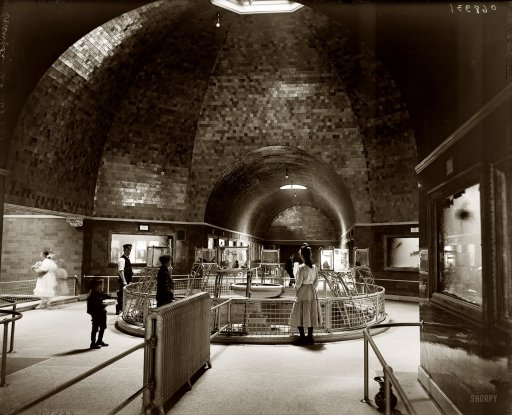
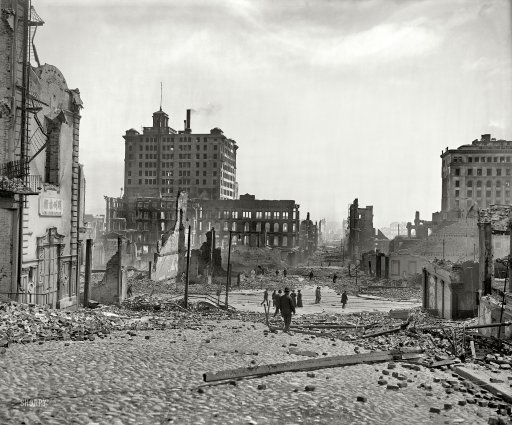
G. G. Bain 100-mile Harkness Handicap, Sheepshead Bay Motor Speedway, Brooklyn 1918


• China Shanghai Stocks Lose 6.15% Overnight On Yuan Fears (CNBC)
• World Shipping Slump Deepens As China Retreats (AEP)
• Japan Exports Its Way to Irrelevance (Pesek)
• China’s Currency Move Rattles African Economies (WSJ)
• The Great Emerging-Market Bubble (BIll Emmott)
• Bonds Signal Trouble Ahead As Equities Keep Calm (FT)
• Greek Senior Bank Bonds Fall on Dijsselbloem Bail-In Comment (Bloomberg)
• Greek Deposits Become Eligible For Bail-In On January 1, 2016 (Zero Hedge)
• Greek Government On Its ‘Last Legs’, Merkel Faces Growing Rebellion (Telegraph)
• Leftist Veteran Glezos Appeals To Syriza Leadership To ‘Come To Senses’ (Kath.)
• Thanks To The EU’s Villainy, Greece Is Now Under Financial Occupation (Zizek)
• A New Approach to Eurozone Sovereign Debt (Yanis Varoufakis)
• Yanis Varoufakis: Bailout Deal Allows Greek Oligarchs To Maintain Grip (Guardian)
• The Future of Europe (James Galbraith)
• Brutish, Nasty And Not Even Short: The Ominous Future Of The Eurozone (Streeck)
• Greece To Trouble Eurozone For Decades, Says Finland’s Soini (Reuters)
• Banks Braced For Billions In Civil Claims Over Forex Rate Rigging (FT)
• US Graft Probes May Cost Petrobras Record $1.6 Billion Or More (Reuters)
• Ron Paul: Fed May Not Hike Because ‘Everything Is Vulnerable’ (CNBC)
• Junk-Rated Offshore Drillers Headed into Bankruptcy (WolfStreet)
• How Money, Race and Religion Determine the Fate of Europe-Bound Migrants (WSJ)

Kept going down after this article was posted.

• China Shanghai Stocks Lose 6.15% Overnight On Yuan Fears (CNBC)

Chinese shares led losses in Asia on Tuesday, as nerves over China’s struggling economy and a deadly bomb explosion in Thailand sent investors scrambling for safety. A positive handover from Wall Street did little to help sentiment; the tech-heavy Nasdaq led gains with a 0.9% rise overnight, as investors scooped up battered biotech plays, while the Dow Jones Industrial Average and the S&P 500 notched up 0.4 and 0.5%, respectively, on the back of positive homebuilder data. China’s Shanghai Composite index widened losses to 5.2%, hitting a more than one-week low, as concerns over the yuan eclipsed data which showed monthly home prices up for a third straight month in July, indicating that country’s all-important property sector may be finally bottoming.

Prior to the market open, the People’s Bank of China (PBOC) set the midpoint rate at 6.3966 per dollar, firmer than the previous fix of 6.3969. However, the yuan fell against the greenback, slipping 0.2% to last change hands at 6.4086. Among the mainland’s other indexes, the blue-chip CSI300 and the smaller Shenzhen Composite plummeted 4.9 and 5.7%, respectively. Hong Kong’s Hang Seng index tracked the losses in its mainland peers to move down 0.9%. [..] utilities and industrial sectors were among the hardest-hit, with China Shipbuilding and China Shenhua Energy being two of the biggest drags on the index despite news that Beijing may be close to announcing broad plans to reform its state-owned enterprises (SOEs) this month.

Read more …

From the same Ambrose who mere days ago was quite upbeat on world trade.

• World Shipping Slump Deepens As China Retreats (AEP)

World shipping has fallen into a deep slump over the late summer, dashing hopes of a quick recovery from the global trade recession earlier this year and heightening fears that the six-year economic expansion may be on its last legs. Freight rates for container shipping from Asia to Europe fell by over 20pc in the second week of August, even though trade volumes should be picking up at this time of the year. The Shanghai Containerized Freight Index (SCFI) for routes to north European ports crashed by 23pc in five trading days. The storm in the shipping industry comes as the New York state manufacturing index for July plummeted to a recessionary low of minus 14.9, the lowest since the Great Recession and one of the steepest one-month drops ever recorded.

The new shipments component fell to -13.8, and new orders to -15.7. A similar drop occurred in 2005 and proved to be a false alarm but the latest fall comes at a delicate moment for the world economy. There is now a full-blown August storm sweeping through global markets. The Bloomberg commodity index dropped to a fresh 13-year low on Monday and the MSCI index of emerging market equities touched depths not seen since August 2009. A closely-watched gauge of emerging market currencies has fallen for the eighth week – the longest run of unbroken declines since the beginning of the century – led by the Malaysian Ringgit, the Russian rouble and the Turkish lira. China’s surprise devaluation last week continues to send after-shocks through skittish global markets, already on edge over a likely rate rise by the US Fed in September – though this is now in doubt.

The currency move was widely taken as a warning that the Chinese economy is in deeper trouble than admitted so far, a menacing prospect for exporters of raw materials and for trade competitors in Asia. It threatens to transmit a fresh deflationary impulse through the global system. The great worry is that companies in emerging markets will struggle to service $4.5 trillion of US dollar debt taken out in the boom years when quantitative easing by the Fed flooded the world with cheap money, much of it at irresistible real rates of 1pc. This is up from $1 trillion in 2002. The monetary cycle has gone into reverse since the Fed ended QE in October 2014 and cut off the flow of fresh liquidity. While the first rate rise in eight years has been well-telegraphed, nobody knows for sure what will happen once tightening starts in earnest.

This stress-test could prove even more painful if China really has abandoned its (crawling) dollar peg and is seeking to protect export margins by driving down its currency. The yuan has risen by 60pc against the Japanese yen and 105pc against the rouble since mid-2012. Yet China nevertheless has a trade surplus of 6pc of GDP. Data from the Port of Hamburg released on Monday show much damage this currency surge may be doing to Chinese companies. Axel Mattern, the port’s chief executive, said a 10.9pc drop in trade with China was the chief reason why volumes of container cargoes passing through the port fell 6.8pc in the first six months.

Read more …

Abenomics was always only a huge failure.

• Japan Exports Its Way to Irrelevance (Pesek)

There’s a difference between bad economic news and the devastating variety that Japan received Monday. Prime Minister Shinzo Abe might have been able to weather the second-quarter data showing a drop in Japanese consumption and a 1.6% decline in annualized growth. But it’s not clear his government can recover from the latest news about sputtering exports, which fell 4.4% from the previous quarter. An export boom, after all, was the main thing Abenomics, the prime minister’s much-heralded revival program, had going for it. The yen’s 35% drop since late 2012 made Japanese goods cheaper, companies more profitable and Nikkei stocks more attractive. But China is spoiling the broader strategy.

The economy of Japan’s biggest customer is slowing precipitously, which has imperiled earnings outlooks for Toyota, Sony, and trading houses like Mitsui. But Abe needs to recognize, as China already has, that this is only the latest sign of a broader reality: Asia’s old export model of economic growth no longer works. China’s devaluation last week raised fears of a return of the currency wars that devastated Asia in the late 1990s. That’s a reach, considering that exports are playing less and less of a role in China. McKinsey, for example, found that as far back as 2010, net exports were contributing only between 10% and 20% of Chinese GDP. The services sector is growing in size and influence to rebalance the economy – not fast enough, perhaps, but change is nevertheless afoot.

If any major country has been relying too much on exports it’s Japan. As yet another recession beckons, the Bank of Japan will likely respond with yet more easing to extend the yen’s declines and save giant exporters. No matter how cheap the yen gets, though, China will still be slowing. All the stimulus BOJ Governor Haruhiko Kuroda can muster won’t change the worsening trajectory of the region’s most-populous nation. That’s why Abe needs to take a page from Beijing and focus more on creating new industries at home. Tokyo seldom acknowledges it can learn anything from Beijing. Japan wrote the book on exporting your way to prosperity, one followed to great effect from South Korea to Vietnam, and eventually even China. But recent years have seen the student (China) surpass the teacher in moving past that simplistic growth strategy.

Abenomics, meanwhile, has proven to be a time machine endeavoring to return Japan to the export boom times of 1985. But even with additional BOJ stimulus, says Diana Choyleva of Lombard Street Research, exports don’t offer Japan a path to sustainable growth. Europe is still limping, the U.S. consumer isn’t the reliable growth engine it was a decade ago, and China’s relatively modest devaluation (about 3.5% in total) still means the yen’s value will rise on a trade-weighted basis.

Read more …

Better find an alternative to the term “emerging”.

• China’s Currency Move Rattles African Economies (WSJ)

The shock waves from China’s surprise yuan devaluation are ricocheting through African economies, sending currencies tumbling and stoking anxiety that the continent’s biggest trading partner might be losing its appetite for everything from oil to wine. In South Africa, the rand hit a 14-year low of 12.94 to the dollar on Monday, extending a 2% drop since Aug. 10 and a 12% slide this year. Currencies in other African countries with close ties to China, like Angola’s kwanza and Zambia’s kwacha, are also down sharply after Beijing unexpectedly cut the yuan’s value by 2% against the dollar last Tuesday. China’s demand for Angolan oil, Zambian copper and South African gold has fueled a steep increase in trade, helping fuel rapid growth but leaving economies exposed to policy shifts in Beijing.

In 2013, Africa’s trade with China was valued at $211 billion, the African Development Bank said in June, more than twice the continent’s trade with the U.S. By contrast, 15 years ago, the U.S. traded three times as much with Africa as China did. Now, a weaker yuan is stoking fears in some African treasury departments and boardrooms that China’s buying power will be eroded—and that the world’s second-biggest economy may be slowing even more than official statistics suggest. Razia Khan, chief Africa economist at Standard Chartered bank, said China’s move was happening at a difficult moment for many African economies, which have been buffeted by volatility that has sent many regional currencies lower this year as oil prices dropped and the dollar surged. “Countries…with narrow export bases will be substantially disadvantaged,” she said.

Read more …

“..although countries can ride waves of growth and exploit commodity cycles despite having dysfunctional political institutions, the real test comes when times turn less favorable..”

• The Great Emerging-Market Bubble (BIll Emmott)

Officially, Chinese growth is rock-steady at 7% per year, which happens to be the government’s declared target, but private economists’ estimates mostly range between 4% and 6%. One mantra of recent years has been that, whatever the twists and turns of global economic growth, of commodities or of financial markets, “the emerging-economy story remains intact.” By this, corporate boards and investment strategists mean that they still believe that emerging economies are destined to grow a lot faster than the developed world, importing technology and management techniques while exporting goods and services, thereby exploiting a winning combination of low wages and rising productivity.

There is, however, a problem with this mantra, beyond the simple fact that it must by definition be too general to cover such a wide range of economies in Asia, Latin America, Africa, and Eastern Europe. It is that if convergence and outperformance were merely a matter of logic and destiny, as the idea of an “emerging-economy story” implies, then that logic ought also to have applied during the decades before developing-country growth started to catch the eye. But it didn’t. The reason why it didn’t is the same reason why so many emerging economies are having trouble now. It is that the main determinants of an emerging-economy’s ability actually to emerge, sustainably, are politics, policy and all that is meant by the institutions of governance. More precisely, although countries can ride waves of growth and exploit commodity cycles despite having dysfunctional political institutions, the real test comes when times turn less favorable and a country needs to change course.

Read more …

“..if there is ever a dispute between what the bond market is saying and what the stock market is saying, the bond market is usually right..”

• Bonds Signal Trouble Ahead As Equities Keep Calm (FT)

Confidence levels in corporate bond and equity markets have diverged to an extent not seen since the financial crisis as fixed income traders signal rougher times ahead to their stock market peers. Investment-grade bond yields and equity volatility, measures of investor sentiment in their respective markets, have moved further apart than at any time since March 2008, according to Bank of America Merrill Lynch analysts. US equities tumbled for the rest of that year as the financial crisis intensified. “Somebody has to be wrong here,” said Hans Mikkelsen, credit strategist at BofA. The contrast between equities and bonds comes as many economists expect the US Federal Reserve to increase overnight borrowing costs next month, the first rate rise in almost a decade.

“If I was an equity investor I would pay close attention to what’s going on in the corporate bond market, probably more than they are currently,” said Mr Mikkelsen. The broad S&P 500 has largely traded sideways this year, and briefly turned negative last week, while implied volatility, as measured by the CBOE Vix index, remains quiescent. The Vix has eased below 13, after a brief rise above 20 in July, a threshold that in the past has signalled an escalation of investor anxiety over equities. According to the BofA corporate bond index, the gap between yields on investment-grade corporate bonds and US government bonds has moved to 164 basis points.

This takes the difference between credit spreads per point of equity volatility to 10.26bp, BofA calculates, its highest level in more than seven years. “It’s a signal, but not necessarily a timing tool,” said Jack Ablin, chief investment officer at BMO Private Bank. He agreed that equity investors should be concerned by pessimism in the bond markets. “In my experience, if there is ever a dispute between what the bond market is saying and what the stock market is saying, the bond market is usually right,” he added.

Read more …

“We call Dijsselbloem’s solution a bail-up: part bail-out, part bail-in and part cock-up.” But that’s not the whole story (see article below this one).

• Greek Senior Bank Bonds Fall on Dijsselbloem Bail-In Comment (Bloomberg)

Senior bonds of Greek banks tumbled after Euro-area finance ministers protected depositors from any losses in the nation’s €86 billion bailout. While Greece’s third bailout will spare depositors in any restructuring of the nation’s financial system, senior bank bondholders may not be so lucky, according to comments from Eurogroup President and Dutch Finance Minister Jeroen Dijsselbloem. The bondholders will be in line for losses if Greek lenders tap into any of the financial stability funds set aside in the new bailout. “Bondholders were overly optimistic because bail-in of senior bonds was not explicitly mentioned before,” said Robert Montague, a senior analyst at ECM Asset Management in London. “Today they were brought back down to earth with a bump.”

Under the bailout terms, as much as €25 billion will be made available in a fund to recapitalize the Greek banks, including €10 billion as a first installment. Greek stocks rose and government bond yields dropped on the deal, though senior unsecured bank bonds fell. “The bail-in instrument will apply for senior bondholders, whereas the bail-in of depositors is explicitly excluded,” Dijsselbloem said at a press conference in Brussels on Friday. Greece’s euro-area creditors made adoption of the EU’s Bank Resolution and Recovery Directive, or BRRD, a precondition of the bailout. The directive, which makes it easier to impose losses on senior creditors, should rank senior unsecured bondholders and depositors equally, said Olly Burrows at brokerage firm CRT Capital.

By protecting deposits, Greece is walking a different path to neighboring Cyprus, which imposed a levy on uninsured depositors as part of a rescue package in 2013. “It is not clear how they will make it possible to bail-in bonds while excluding deposits, but as we have seen in other problematic situations, where there is a will there will be a way,” Burrows said. “We call Dijsselbloem’s solution a bail-up: part bail-out, part bail-in and part cock-up.”

Read more …

No bail-in for deposits?! Here’s the real story.

• Greek Deposits Become Eligible For Bail-In On January 1, 2016 (Zero Hedge)

Europe’s eagerness to promise depositor stability is transparent: the finmins will do everything in their power to halt the bank run from banks which will likely be grappling with capital controls for months if not years. Still, absent some assurance, there is no way that the depositors would be precluded from withdrawing all the money they had access to, which in turn would assure that the €86 billion bailout of which billions are set aside for bank recapitalization, would be insufficient long before the funds are even transfered. According to an Aug. 14 Eurogroup statement an asset quality review of Greek banks will take place before the end of the year,

“We expect a comprehensive assessment of the banks – so-called Asset Quality Review and Stress Tests – by the ECB/SSM to take place first,” EC spokeswoman Annika Breidthardt tells reporters in Brussels. “And this naturally takes a few weeks.” In other words Europe is stalling for time: time to get more Greeks to deposit their cash in the bank now, when deposits are “safe” and while everyone is shocked with confusion at the nonsensical financial acrobatics Europe is engaging in. But once Jan.1, 2016 rolls around, it will be a vastly different story. This was confirmed by the very next statement: “I must also stress that, depositors will not be hit” in this year’s review, she says. In this year’s, no. But the second the limitations from verbal promises of deposit immunity expire next year, everyone who is above the European deposit insurance limit becomes fair game for bail-in.

Dijsselbloem concluded on Friday that “Depositors have been excluded from the bail-in because in the first place it’s concerning SMEs and private persons. But it is only concerning depositors with more than 100,000 euros and those are mainly SMEs. That would again lead to a blow to the Greek economy. So the ministers said we will exclude them explicitly, it would bring damage the Greek economy.” Right, exclude them… until January 1, 2016. And only then impair them because Greece will never again be allowed to escape a state of permanent “damage” fo the economy. As for Greeks and local corporations whose funds are parked in a bank and who are wondering what all this means for their deposits, here is the answer: for the next 4.5 months, your deposits are safe, which under the current capital control regime doesn’t much matter: it’s not as if the money can be withdrawn in cash and moved offshore.

However, once January 1, 2016 hits and Greece becomes subject to a bank resolution process supervised and enforced by the BRRD, all bets are off. Which likely means that as the Greek bank balance sheet is finally “rationalized”, any outsized deposits will be promptly Cyprused. For our part, we tried to warn our Greek readers about the endgame of this farcical process since January of this year: we will warn them again – capital controls or not, pull whatever money you can in the next few months because once 2016 rolls around, all the rules change, and those unsecured bank liabilities yielding precisely nothing, and which some call “deposits” will be promptly restructured to make the Greek financial balance sheet at least somewhat remotely viable.

Read more …

Sounds more dramatic than it is. In Greece, democracy works. In Germany, differences are much less pronounced.

• Greek Government On Its ‘Last Legs’, Merkel Faces Growing Rebellion (Telegraph)

Greek MPs are poised to hold a vote of confidence in the government of Alexis Tsipras after Leftist party rebels deserted the prime minister over the punishing terms of a third international bail-out agreement. Syriza’s energy minister Panos Skourletis said it was now “self evident” that parliamentarians would decide on whether or not to continue supporting the government after a “deep wound” had been inflicted on the ruling coalition. Lawmakers voted to ratify a 30-page “Memorandum of Understanding” to keep the country in the eurozone for the next three years on Friday. But the terms of the deal, which roll back a number of key pledges from the anti-austerity government, have split the ruling party. Mr Tsipras failed to get the backing of at least 120 of his own MPs, a constitutional threshold that could oblige him to trigger a vote in his leadership.

In a detailed evisceration of the austerity measures, former rebel finance minister Yanis Varoufakis denounced the agreement as encapsulating “the Greek government’s humiliating capitulation”. “Greek sovereignty is being forfeited wholesale” he said. “Not since the Soviet Union has wishful thinking, unsupported by anything tangible, posed as policymaking.” Support for the ruling coalition has becoming vanishingly thin. Greece’s two main opposition parties – which have so far voted to keep the country in the euro – vowed to pull the plug on the embattled premier should a vote be called in the coming weeks. Pasok, the much depleted socialist opposition, joined the conservative New Democracy in refusing to endorse Mr Tsipras and his junior coalition partner, led by defence minister Panos Kammenos.

[..] Chancellor Angela Merkel is facing the biggest domestic rebellion in her 10 years in office over the aid package. More than 60 of her Christian Democrat MPs rejected restarting talks over a new Greek rescue in an initial vote in July. This insurrection is set to mount when the package is put before a final parliamnetary vote on Wednesday, according to a key ally of the German premier. Michael Fuchs, deputy chairman of the CDU, said he had yet to decide whether or not he would back the bail-out as doubts over the involvement of the IMF continue to hang over Berlin. “There might be some changes by tomorrow, even,” said Mr Fuchs in an interview with Bloomberg.

Read more …

A broad summit sounds like the by far best idea available.

• Leftist Veteran Glezos Appeals To Syriza Leadership To ‘Come To Senses’ (Kath.)

Leftist veteran Manolis Glezos, a former SYRIZA MEP, called on the party leadership to “come to your senses” and hold a broad summit, saying that the country’s third bailout “binds the Greek people hand and foot and enslaves them for entire decades.” “Let’s not allow the Left to become a seven-month parenthesis,” Glezos said in a statement. Describing the government’s strategy as “fickle and faltering,” he accused the party’s leadership of “erasing and destroying hopes and dreams.” “Finally come to your senses, fellow fighters and comrades of the leadership of the United Party,” Glezos wrote. “Before it is too late and before rushed initiatives are taken, listen to the voice of the people, of SYRIZA’s organizations and call a broad summit,” Glezos wrote, adding that “despite the intense dialogue that will take place, a solution will be found.”

Read more …

“.. the Greek retreat is not the last word for the simple reason that the crisis will hit again..[..]..The task of the Syriza government is to get ready for that moment..”

• Thanks To The EU’s Villainy, Greece Is Now Under Financial Occupation (Zizek)

When my short essay on Greece after the referendum “The Courage of Hopelessness” was republished by In These Times, its title was changed into “How Alexis Tsipras and Syriza Outmaneuvered Angela Merkel and the Eurocrats”. Although I effectively think that accepting the EU terms was not a simple defeat, I am far from such an optimist view. The reversal of the NO of referendum to the YES to Brussels was a genuine devastating shock, a shattering painful catastrophe. More precisely, it was an apocalypse in both senses of the term, the usual one (catastrophe) and the original literal one (disclosure, revelation): the basic antagonism, deadlock, of the situation was clearly disclosed.

Many Leftist commentators (Habermas included) got it wrong when they read the conflict between the EU and Greece as the conflict between technocracy and politics: the EU treatment of Greece is not technocracy but politics at its purest, a politics which even runs against economic interests (as it was clearly stated by IMF, a true representative of cold economic rationality, which declared the bailout plan unworkable). If anything, it was Greece which stood for economic rationality and EU which stood for politico-ideological passion. After the Greek banks and stock exchange reopened, there was a tremendous flight of capital and fall of stocks which were not primarily a sign of the distrust of the Syriza government but of the distrust of the imposed EU measures a clear brutal message that (as we are used to put it in today s animistic terms) capital itself does not believe in the EU bailout plan.

(And, incidentally, most of the money given to Greece goes to the Western private banks, which means that Germany and other EU superpowers are spending taxpayers money to save their own banks which made the mistake of giving bad loans. Not to mention the fact that Germany profited tremendously from the escape of the Greek capital from Greece to Germany.) When Varoufakis justified his vote against the measures imposed by Bruxelles, he compared the deal to the Versailles treaty which was unjust and harboured a new war. Although his parallel is correct, I would prefer another one, with the Brest-Litovsk treaty between Soviet Russia and Germany at the beginning of 1918, in which, to the consternation of many of its partisans, the Bolshevik government ceded to Germany’s outrageous demands.

True, they retreated, but this gave them a breathing space to fortify their power and wait. And the same goes for Greece today: we are not at the end, the Greek retreat is not the last word for the simple reason that the crisis will hit again, in a couple of years if not earlier, and not only in Greece. The task of the Syriza government is to get ready for that moment, to patiently occupy positions and plan options. Keeping political power in these impossible conditions nonetheless provides a minimal space for preparing the ground for future action and for political education.

Read more …

“The ECB will service (as opposed to purchase) a portion of every maturing government bond corresponding to the percentage of the member state’s public debt that is allowed by the Maastricht rules.”

• A New Approach to Eurozone Sovereign Debt (Yanis Varoufakis)

Greece’s public debt has been put back on Europe’s agenda. Indeed, this was perhaps the Greek government’s main achievement during its agonizing five-month standoff with its creditors. After years of “extend and pretend,” today almost everyone agrees that debt restructuring is essential. Most important, this is true not just for Greece. In February, I presented to the Eurogroup (which convenes the finance ministers of eurozone member states) a menu of options, including GDP-indexed bonds, which Charles Goodhart recently endorsed in the Financial Times, perpetual bonds to settle the legacy debt on the ECB’s books, and so forth. One hopes that the ground is now better prepared for such proposals to take root, before Greece sinks further into the quicksand of insolvency.

But the more interesting question is what all of this means for the eurozone as a whole. The prescient calls from Joseph Stigltiz, Jeffrey Sachs, and many others for a different approach to sovereign debt in general need to be modified to fit the particular characteristics of the eurozone’s crisis. The eurozone is unique among currency areas: Its central bank lacks a state to support its decisions, while its member states lack a central bank to support them in difficult times. Europe’s leaders have tried to fill this institutional lacuna with complex, non-credible rules that often fail to bind, and that, despite this failure, end up suffocating member states in need.

One such rule is the Maastricht Treaty’s cap on member states’ public debt at 60% of GDP. Another is the treaty’s “no bailout” clause. Most member states, including Germany, have violated the first rule, surreptitiously or not, while for several the second rule has been overwhelmed by expensive financing packages. The problem with debt restructuring in the eurozone is that it is essential and, at the same time, inconsistent with the implicit constitution underpinning the monetary union. When economics clashes with an institution’s rules, policymakers must either find creative ways to amend the rules or watch their creation collapse.

Here, then, is an idea (part of A Modest Proposal for Resolving the Euro Crisis, co-authored by Stuart Holland, and James K. Galbraith) aimed at re-calibrating the rules, enhancing their spirit, and addressing the underlying economic problem. In brief, the ECB could announce tomorrow morning that, henceforth, it will undertake a debt-conversion program for any member state that wishes to participate. The ECB will service (as opposed to purchase) a portion of every maturing government bond corresponding to the percentage of the member state’s public debt that is allowed by the Maastricht rules. Thus, in the case of member states with debt-to-GDP ratios of, say, 120% and 90%, the ECB would service, respectively, 50% and 66.7% of every maturing government bond.

Read more …

He’s not done yet by any means.

• Yanis Varoufakis: Bailout Deal Allows Greek Oligarchs To Maintain Grip (Guardian)

Greece’s former finance minister Yanis Varoufakis has accused European leaders of allowing oligarchs to maintain their stranglehold on Greek society while punishing ordinary people in a line-by-line critique of the country’s €86bn bailout deal. Varoufakis said the Greek parliament had pushed through an agreement with international creditors that would allow oligarchs, who dominate sections of the economy, to generate huge profits and continue to avoid paying taxes. The outspoken economist published an annotated version of the deal memorandum on his website on Monday, arguing throughout the 62-page document that most of the measures imposed on Greece would make the country’s dire economic situation worse.

His first insertion makes clear his dismay at the dramatic events of last month, when the Greek prime minister, Alexis Tsipras, was forced to accept stringent terms for a new bailout amid calls from Germany for Greece’s temporary exit from the eurozone. Varoufakis, who resigned from his post in June, said: “This MoU [memorandum of understanding] was prepared to reflect the Greek government’s humiliating capitulation of 12 July, under threat of Grexit put to Tsipras by the Euro summit.” Folllowing the July summit, Athens agreed a three-year memorandum of understanding last week that will release €86bn of funds, much of it to repay debts related to two previous rescue deals. In exchange, Athens will implement wide-ranging reforms including changes to the state pension system and selling off government assets.

But Varoufakis said a reform programme overseen by the troika of lenders would only enslave ordinary workers and families by imposing tough welfare cuts while letting foreign companies grab domestic assets cheaply through privatisations. He said billionaire business owners in Greece would also escape scrutiny. In the memorandum it says: “Fiscal constraints have imposed hard choices, and it is therefore important that the burden of adjustment is borne by all parts of society and taking into account the ability to pay. Priority has been placed on actions to tackle tax evasion.” In answer, Varoufakis said: “As long as it is not committed by the oligarchs in full support of the troika through their multifarious activities.”

Read more …

Reforming the EU is a dead end street.

• The Future of Europe (James Galbraith)

On June 8th, I had the honor of accompanying then-Greek finance minister, Yanis Varoufakis, to a private meeting in Berlin with the German finance minister, Wolfgang Schäuble. The meeting began with good-humored gesture, as Herr Schäuble presented to his colleague a handful of chocolate Euros, “for your nerves.” Yanis shared these around, and two weeks later I had a second honor, which was to give my coin to a third (ex-)finance minister, Professor Giuseppe Guarino, dean of constitutional scholars and the author of a striking small book (called The Truth about Europe and the Euro: An Essay, available here) on the European treaties and the Euro. Professor Guarino’s thesis is the following:

“On 1st January 1999 a coup d’état was carried out against the EU member states, their citizens, and the European Union itself. The ‘coup’ was not exercised by force but by cunning fraud… by means of Regulation 1466/97… The role assigned to the growth objective by the Treaty (Articles 102A, 103 and 104c), to be obtained by the political activity of the member states… is eliminated and replaced by an outcome, namely budgetary balance in the medium term.” As a direct consequence: “The democratic institutions envisaged by the constitutional order of each country no longer serve any purpose. Political parties can exert no influence whatever. Strikes and lockouts have no effect. Violent demonstrations cause additional damage but leave the predetermined policy directives unscathed.”

These words were written in 2013. Can there be any doubt, today, of their accuracy and of their exact application to the Greek case? It is true that Greek governments in power before 2010 governed badly, entered into the euro under false premises and then misrepresented the country’s deficit and debt. No one disputes this. But consider that when austerity came, the IMF and the European creditors imposed on Greece a program dictated by the doctrines of budget balance and debt reduction, including (a) deep cuts in public sector jobs and wages; (b) a large reduction in pensions; (c) a reduction in the minimum wage and the elimination of basic labor rights; (d) large regressive tax increases and (e) fire-sale privatization of state assets.

Read more …

Pretty brutal assessment.

• Brutish, Nasty And Not Even Short: The Ominous Future Of The Eurozone (Streeck)

Now the dust has temporarily settled over the ruins of Greece’s economy, it is worth asking if there wasn’t a brief moment when the actors had found a way to cut the eurozone crisis’s Gordian knot. At some point in July German finance minister, Wolfgang Schäuble, appeared to have realised that his dream of a “core Europe” with a Franco-German avant-garde would vanish into thin air if Greece was allowed to remain in the economic and monetary union. Rewriting the rules of the union to accommodate the Greeks, Schäuble realised, would pull the euro southwards, and France, Italy and Spain with it – forever breaking up the European core.

His Greek equivalent Yanis Varoufakis, for his part, may have learned from his encounters of the third kind with the Eurogroup that the only role there was for Greece in the Europe of monetary union was that of an underfed and overregulated welfare recipient. Not only was this incompatible with Greek national pride; more importantly, what the governors of Europe would be willing to offer the Greeks by way of “European solidarity” would, at best, be too little to live on. The deal Schäuble offered in the last hour of July’s battle of the euro might have been worth exploring: a voluntary exit (an involuntary one not being possible under the current treaties) that gave Greece the freedom to devalue its currency and return to an independent monetary and fiscal policy, plus emergency assistance and some restructuring of the national debt, outside of the monetary union to avoid softening its rules by creating a precedent.

A generous golden handshake might have also been an idea, protecting Germany from being blamed for having plunged the Greeks into misery or driven them into the arms of Vladimir Putin. Politics can make strange bedfellows, but sometimes just for a one-night stand. In the end Varoufakis was overruled by Alexis Tsipras and Schäuble was overruled by Angela Merkel. The latter, displaying truly breathtaking political skills, managed within a day or two to redefine the resounding no of the Greek people to their creditors’ demands into a yes to “the European idea”, defined as a common currency – allowing him to sign on to even harsher conditions than had been rejected in the referendum (called, it seems, at the suggestion of Varoufakis, who was sacked on the very evening the results were in).

Afraid of the unimaginable economic disaster publicly imagined by fear-mongering euro supporters, and perhaps encouraged by informal promises by Brussels functionaries of future injections of other peoples’ money, Tsipras was ready to split his party and govern with those who had for decades let Greece rot in clientelism and corruption, offering the parties of Samaras and Papandreou an opportunity to regain legitimacy as pro-European supporters of “reform”.

Read more …

Little people from little countries get to have their say in the press. And they get off on that.

• Greece To Trouble Eurozone For Decades, Says Finland’s Soini (Reuters)


Greece will be a headache for the eurozone for decades, Finland’s eurosceptic foreign minister said, and called for the IMF to participate in the Greece’s new bailout package. “Unfortunately, this problem will be in front of us for decades, I would say, if the eurozone stays together,” foreign minister Timo Soini said in an interview with public broadcaster YLE on Monday. IMF’s participation in the new bailout is uncertain because the fund demands debt reliefs to ease the burden on Greece. “An absolute debt cut, I think, is out of question, Germany too is against it … On other issues (maturities, interest rates) we must negotiate,” Soini said.

“IMF’s participation would also strengthen the expertise in the package, so that the programs will actually be carried out by Greece.” The Finnish parliament’s grand coalition last week approved the bailout deal. Soini’s nationalist the Finns party is known for opposing eurozone bailouts but had to support the new Greek deal to be able to keep a seat in the coalition government which it joined in May for the first time. “I still think bailout policy is bad policy … But in politics, one must make unpleasant decisions,” he said.

Read more …

If governments and regulatirs won’t do it…

• Banks Braced For Billions In Civil Claims Over Forex Rate Rigging (FT)

Global banks are facing billions of pounds-worth of civil claims in London and Asia over the rigging of currency markets, following a landmark legal settlement in New York. Barclays, Goldman Sachs, HSBC and Royal Bank of Scotland were among nine banks revealed last Friday to have agreed a $2bn settlement with thousands of investors affected by rate-rigging in a New York court case. Lawyers warned the victory opens the floodgates for an even greater number of claims in London, the largest foreign exchange trading hub in the world, in a sign that the currency manipulation scandal is far from over. Banks could be hit as early as the autumn with claims in London’s High Court from corporates, fund managers and local authorities, according to lawyers working on the cases.

In addition, investors are expected to bring cases in Hong Kong and Singapore, which are also home to large foreign exchange markets. The US settlement comes just months after a record $5.6bn fine was slapped on six banks by regulators for manipulating the $5.3tn-a-day foreign exchange markets. “There will be more claims in London than in New York because it’s a bigger forex market,” said David McIlroy, a barrister at Forum Chambers. A settlement in London could amount to “tens of billions of pounds”, he said. Analysts said it would be extremely difficult to assess the financial impact on banks at this stage. “We’ve put in some element of civil fines for all the banks we cover, but it’s difficult to be specific because there aren’t that many clear precedents,” said one analyst.

“We looked at this one last week with interest, but the range of outcomes [from civil suits] is still quite wide.” Lawyers at US firm Hausfeld who worked on the class action said the recent settlement was “just the beginning”. Anthony Maton, a managing partner at Hausfeld, said: “There is no doubt that anyone who traded FX in or through the London or Asian markets — which transact trillions of dollars of business every day — will have suffered significant loss as a result of the actions of the banks. “Compensation for these losses will require concerted action in London.”

Read more …

Make that more.

• US Graft Probes May Cost Petrobras Record $1.6 Billion Or More (Reuters)

Brazil’s Petrobras may need to pay record penalties of $1.6 billion or more to settle U.S. criminal and civil probes into its role in a corruption scandal, a person recently briefed by the company’s legal advisors told Reuters. State-run Petroleo Brasileiro, as the company is formally known, expects to face the largest penalties ever levied by U.S. authorities in a corporate corruption investigation, according to the person, who has direct knowledge of the company’s thinking. The settlement process could take two-to-three years, this person said. To date, the largest settlement of corporate corruption charges with the U.S. Department of Justice and the U.S. Securities and Exchange Commission was a 2008 agreement with Siemens, the German industrial giant.

It agreed to pay the U.S. $800 million to settle charges related to its role in a bribery scheme, and paid about the same amount to German authorities. The person told Reuters the legal advisors said they believed Petrobras faced fines that could be as large as, or more than, the $1.6 billion in combined U.S. and German penalties that Siemens faced. Two other sources with direct knowledge of Petrobras’ plans also said that any settlement, while several years away, would likely be “large,” but declined to give a specific estimate. All three sources requested anonymity, and cautioned that any estimates for the size of possible fines are very preliminary. Petrobras has not yet begun settlement talks with U.S. authorities, whose investigations are believed to be in an early phase, they said.

In November, the SEC sent a subpoena to Petrobras requesting information about the widening corruption investigations that have ensnared top company executives, major private contractors and senior politicians in Brazil. According to people familiar with the matter, the DOJ, which can bring criminal charges, is also investigating the company.

Read more …

“They’re terrified of 1937..” Hmm. Don’t forget that certain people made a killing post-1937.

• Ron Paul: Fed May Not Hike Because ‘Everything Is Vulnerable’ (CNBC)

China’s move to devalue its currency roiled the markets last week, and stoked new fears about the health of the world’s third largest economy. However, according to former Rep. Ron Paul, the move may have given Federal Reserve Chair Janet Yellen the cover she needs to not raise rates later this year, as many market participants expect. “She’s going to be more hesitant to raise rates because she sees how fragile the global economy is,” Paul told CNBC’s “Futures Now” on Thursday. “She’s under the gun,” he added. “I could be wrong, but I don’t think they are going to raise interest rates.” According to the former Republican presidential candidate, a rapidly slowing Chinese economy adds just another headwind for an already struggling U.S. economy.

“I think there’s going to be enough problems existing, whether it’s the Chinese precipitating some crisis, or whether it’s our economy breaking down,” he said. Currently, markets expect the Fed will begin tightening monetary policy at its meeting in September. Gauges like closely watched fed fund futures contracts are pricing in a 45% chance of a September rate hike, while other analysts see the odds as higher. Yet institutions like the IMF have warned that a rate hike might imperil a fragile global recovery. In June, the IMF’s deputy director warned about potential risks of a Fed tightening. By Paul’s reasoning, the Fed is too scared to raise interest rates in the middle of an already weak recovery and risk sending the U.S. economy back into recession, or worse.

“They’re terrified of 1937,” said Paul, who has long called for a “day of reckoning” that will lead to the collapse of both the fixed income and equity markets. The Fed chief “does not want to be responsible for the depression that I think we’ve been in the midst of all along,” Paul added.

Read more …

The entire oil industry will try to keep smiling all the way to bankruptcy.

• Junk-Rated Offshore Drillers Headed into Bankruptcy (WolfStreet)

After fracking, offshore drilling. At the leading edge is rig-contractor Hercules Offshore. In March 2014, before the oil price collapsed, it had the temerity to sell for 100 cents on the dollar $300 million in junk bonds. Since then, its shares have collapsed to near zero. Its bonds have collapsed too. And on Thursday last week, it and a whole gaggle of related companies filed for Chapter 11 bankruptcy. It won’t be the only junk-rated offshore driller with that fate, according to Fitch Ratings. Investors are going to get their pockets cleaned. “This is the lowest level of demand we have seen since the early days of the offshore industry,” Hercules CEO John Rynd had told investors in a quarterly conference call on April 29.

Hercules had already cut its global workforce – about 1,800 employees at the end of 2014 – by nearly 40%, he said. Offshore drillers have been buffeted from two directions: the collapse of drilling activity and the collapse in the daily rates they can charge for their offshore drilling rigs. So fewer rigs, and less money for each of the fewer rigs: Hercules’ revenues in the second quarter plunged 67% from a year ago! And junk-rated companies like Hercules that need new money to stay afloat and service their debts are finding out that their burned investors have shut off the spigot. “A leading indicator of further bankruptcies among other challenged high yield (HY) offshore drillers,” is what Fitch Ratings calls Hercules.

In the prepackaged bankruptcy, Hercules swaps four senior bond issues totaling $1.2 billion for 96.9% of the company’s equity. So how do these bondholders fare? The recovery rate for senior noteholders would be 41%, the company said in its disclosure statement. According to S&P Capital IQ LCD’s highyieldbond.com, “the range of reorganized equity value implies a recovery rate of 32-47.8%.” Meanwhile, the notes are quoted in the “low” 30-cents-on-the-dollar range. So for now, nearly a 70% haircut. Stockholders get the remaining 3.1% of the equity, plus warrants. Mere crumbs. To finish construction of the Hercules Highlander rig and to stay afloat a while longer, the company will also get $450 million in new money for 4.5 years, at LIBOR +9.5% per year, with a 1% floor. No more cheap money, even after bankruptcy, though it dramatically deleveraged the balance sheet at the expense of investors.

Read more …

The poor are expendable here too.

• How Money, Race and Religion Determine the Fate of Europe-Bound Migrants (WSJ)

As Europe grapples with the biggest wave of migration since World War II, the fates of those crossing the Mediterranean are increasingly being determined by class systems based on money, ethnicity and religion. On these transnational trails, migrants tell of a fast-developing market for human cargo, where cash or creed can ensure a safer trip, more resources and better treatment. The discrimination starts at the beginning of migrants’ journeys at the hands of smugglers looking to maximize profits, and it ends with European authorities scrambling to handle the overwhelming numbers of people arriving and prioritizing them by nationality. In Greece this weekend, authorities deployed a 3,000-capacity passenger ferry to the island of Kos to host Syrian refugees arriving in record numbers.

Thousands of other asylum seekers on the island from Iraq and Afghanistan have been left without shelter, and with only sporadic access to food and a much longer wait to get their documents processed. Syrians are prioritized because the United Nations High Commissioner for Refugees has advised governments that they are so-called prima facie refugees, meaning they should be granted instant humanitarian protection because they are fleeing a war zone. EU countries recently agreed to resettle some 32,000 refugees from Greece and Italy, but said they would only do that for Syrian and Eritrean nationals, both designated as prima facie refugees by the U.N.

First reception procedures should be the same for everyone, said Barbara Molinario, a spokeswoman for the U.N. agency. Syrians are considered prima facie refugees, but “people from other countries might also have valid refugee claims, and generalizations should be avoided,” she said. On Kos, many locals view Syrians—who are almost neighbors across the Aegean Sea—as culturally similar to them. “Syrians are more civilized and they show more respect,” said Lefteris Kefalianos, a Kos resident who sells construction materials.

Read more …

Aug 162015
 
 August 16, 2015  Posted by at 9:55 am Finance Tagged with: , , , , , , , , ,  2 Responses »


DPC El Paso, Texas 1903

• China’s Yuan Positions Fall by a Record, Signaling More Outflows (Bloomberg)
• Eight Reasons Why China’s Currency Crisis Matters To Us All (Guardian)
• Bungling Beijing’s Stock Markets (Paul Krugman)
• China Mess, Yuan Devaluation Spread to the US, Carmakers (WolfStreet)
• Germany, IMF Far Apart On Greek Debt Relief (Observer)
• Europe Has Taken Charge Of Greece Like A Television Nanny (Guardian)
• The Greek Debt Deal’s Missing Piece (NY Times)
• Alexis Tsipras Is Down But Far From Out (Guardian)
• German Vote On Greek Bailout Carries Risks For Angela Merkel (Reuters)
• Guess What Happens Next (Keith Dicker)
• Approaching a Global Deflationary Crisis? (Brian Davey)
• The Crisis Is Spreading: China, Australia, Brazil, Canada, Sweden… (Keith Dicker)
• Brazil Authorities Detail US Link in Petrobras Corruption Case (WSJ)
• Brazil Sees Massive Protests Calling For President Rousseff’s Impeachment (SMH)
• EU ‘Self-Promotion’ Budget Reaches €664 Million In 2014 (RT)
• Ugly Attacks on Refugees in Europe (NY Times Ed.)
• Syrians Begin Boarding Refugee Ship On Greek Island (Reuters)
• Get Rid Of Immigrants? No, We Can’t Get Enough Of Them: German Mayor (Guardian)

Lowball spin of the day: “..an increasing willingness among individuals to hold foreign currencies..”

• China’s Yuan Positions Fall by a Record, Signaling More Outflows (Bloomberg)

Yuan positions at China’s central bank and financial institutions fell by the most on record in July, a sign capital outflows picked up and the central bank stepped up intervention to support the yuan. Yuan positions on the balance sheet of the People’s Bank of China totaled 26.4 trillion yuan ($4.13 trillion) at the end of July, according to data on the authority’s website. That’s a drop of 308 billion yuan from a month earlier, based on Bloomberg calculations. Yuan positions at Chinese financial institutions accumulated from foreign-exchange purchases fell by 249.1 billion yuan to 28.9 trillion yuan. “The drop was both due to a trend of diversifying assets and market expectations of a Federal Reserve interest-rate rise,” said Hu Yuexiao at Shanghai Securities.

“The combination of a current-account surplus and a capital-account deficit won’t change for a long time.” The 58.9 billion yuan difference in the size of the declines were due to an increasing willingness among individuals to hold foreign currencies, Hu added. The data come days after the People’s Bank of China devalued the yuan, triggering the currency’s steepest slide in two decades, and announced a shift to a more market-driven exchange-rate mechanism. The changes follow interventions to prop up the yuan that contributed to a decline of almost $300 billion in the nation’s foreign-exchange reserves over the last four quarters. The central bank has lowered banks’ reserve-ratio requirements this year in moves economists said were designed to compensate for such losses in liquidity.

Read more …

Global corporations across the board have bet on years of huge growth in China. The amount of overcapacity will be found out to be stunning, and to cause tons of bankruptcies.

• Eight Reasons Why China’s Currency Crisis Matters To Us All (Guardian)

After China unexpectedly devalued its currency last week, one City economist shrugged despairingly and said: “It’s August.” While it’s meant to be a time for heading for the beach or kicking back in the sunshine with the kids, August has often witnessed the first cracks that presaged what later became profound shifts in the tectonic plates of the global economy – from the Russian debt default in 1998, to what Northern Rock boss Adam Applegarth called “the day the world changed,” when the first ripples of the credit crunch were felt in 2007; to August 2011, when ratings agency Standard and Poor’s sent shockwaves through financial markets by stripping America of its triple-AAA credit rating.

Taking the long view, last week’s devaluation by China, which left the yuan about 3% weaker against the dollar, was relatively modest — sterling had lost 16% of its value in 1967 when Harold Wilson sought to reassure the British public about the “pound in your pocket”. But China’s decision represented the largest yuan depreciation for 20 years; and the ripples may yet be felt thousands of miles away. So what difference will it make to the rest of the world?

1. It could be serious China’s devaluation may be best seen as a distress signal from Beijing policymakers – in which case the world’s second-largest economy may be far weaker than the 7% a year growth that official figures suggests. China has been trying to engineer a shift from export-led growth to an expansion based on consumer spending – while simultaneously trying to deflate a property bubble. Last week’s move, which loosened the yuan’s link to the value of the dollar, suggested some policymakers may be losing patience with that strategy, and reaching for the familiar prop of a cheap currency. Nobel prize-winning economist Paul Krugman described the decision as “the first bite of the cherry,” suggesting more could follow, and in a reference to Chinese premier Xi Jinping, warned that such a modest move gave the impression that, “when it comes to economic policy Xi-who-must-be-obeyed has no idea what he’s doing”.

If its economy really is much weaker than Beijing has let on, it would be alarming for any company hoping to export to China — something firms in Britain have been encouraged to do in recent years, to lessen reliance on the stodgy European economies. China was the sixth-largest destination for British exports last year. China will remain a vast market; but it may not be quite such a one-way bet as some analysts have suggested. And when it comes to the challenges facing Chinese policymakers, Russell Jones, of consultancy Llewellyn Consulting says: “The potential for getting this wrong is quite high.”

Read more …

Krugman agrees with me that China’s leadership has no control where it thought it did. The result of hubris.

• Bungling Beijing’s Stock Markets (Paul Krugman)

China is ruled by a party that calls itself Communist, but its economic reality is one of rapacious crony capitalism. And everyone has been assuming that the nation’s leaders are in on the joke, that they know better than to take their occasional socialist rhetoric seriously. Yet their zigzagging policies over the past few months have been worrying. Is it possible that after all these years Beijing still doesn’t get how this “markets” thing works? The background: China’s economy is wildly unbalanced, with a very low share of gross domestic product devoted to consumption and a very high share devoted to investment. This was sustainable while the country was able to maintain extremely rapid growth; but growth is, inevitably, slowing as China runs out of surplus labor.

As a result, returns on investment are dropping fast. The solution is to invest less and consume more. But getting there will take reforms that distribute the fruits of growth more widely and provide families with greater security. And while China has taken some steps in that direction, there’s still a long way to go. Meanwhile, the problem is how to sustain spending during the transition. And that’s where things have gotten weird. At first, the Chinese government supported the economy in part through infrastructure spending, which is the standard remedy for economic weakness. But it also did so by funneling cheap credit to state-owned enterprises. The result was a run-up in these enterprises’ debt, which by last year was high enough to raise worries about financial stability.

Next, China adopted an official policy of boosting stock prices, combining a stock-buying propaganda campaign with relaxed margin requirements, making it easier to buy stocks with borrowed money. The goal may have been to help out those state-owned enterprises, which could pay down debt by selling stock. But the consequence was an obvious bubble, which began deflating earlier this year. The response of the Chinese authorities was remarkable: They pulled out all the stops to support the market — suspending trading in many stocks, banning short-selling, pushing large investors to buy, and instructing graduating economics students to chant “Revive A-shares, benefit the people.” All of this has stabilized the market for the time being. But it is at the cost of tying China’s credibility to its ability to keep stock prices from ever falling. And the Chinese economy still needs more support.

Read more …

Why there are 30% discounts on car purchases in China.

• China Mess, Yuan Devaluation Spread to the US, Carmakers (WolfStreet)

China’s auto market, which had been the single most important element in the convoluted growth story of GM and other global automakers, was getting battered even before the yuan devaluation. But now elements coagulate into a toxic mix. Sales of passenger vehicles in July dropped 6.6% from a year ago, to 1.27 million, according to the China Association of Automobile Manufacturers, a 17-month low, after they’d already fallen 3.4% in June, and after they’d relentlessly trended down since late last year. This debacle happened even though automakers had cut prices and heaped incentives on the market to stem the decline. GM and VW started it, and it has now turned into a price war. GM’s sales through its joint ventures fell 4% in July year-over-year, to 229,175 vehicles.

Despite falling sales and ballooning price cuts, GM remains, at least in its press release, optimistic about sales and profit margins in China, its second largest market, and simply blamed “model changeovers and the phasing out of older Chevrolet vehicles.” So no biggie. Ford’s sales through its Chinese joint ventures plunged 6% year-over-year, its third monthly decline in a row, to 77,100 vehicles. Unlike GM, it’s publically worried: “Longer term, we’re still very bullish on China,” Hau Thai-Tang, head of Ford’s global purchasing, told an industry conference in New York. But the company would move to lower output in China if there is a “prolonged period of recessions.” While some automakers booked gains, like Daimler whose sales surged 42%, others got clobbered, like Nissan whose sales plunged 14%.

And VW said today that its Audi sales in July had plummeted 12.5% in China, Audi’s largest market. It sells about a third of its cars there. Unlike the folks at GM, Audi sales chief Luca de Meo fretted today: “The market situation in China has remained challenging as expected, exacerbated by the stock market turmoil.” Global automakers assemble in China most of the vehicles they sell in China. In the first half of the year, imports – mostly luxury brands – dropped 24% to 531,900 as a consequence of the corruption crackdown. They made up only about 5% of the 10.1 million passenger vehicles sold in the first half. The remaining 95% were assembled in China.

Read more …

“If there is no firm commitment from the IMF to participate in the third aid package, then we have a new situation..”

• Germany, IMF Far Apart On Greek Debt Relief (Observer)

[..] Lagarde also said she will not commit the IMF to joining the latest bailout until the board has reviewed the agreement, probably in the autumn. Officials said they want to see more details about reforms, particularly to pensions, but the delay will also give European leaders time to consider their stance on debt relief. Germany holds more Greek debt than any other eurozone country and has repeatedly rejected any “haircut” on what Athens owes, but is also keen to keep the IMF involved in the bailout. German finance minister Wolfgang Schäuble reiterated his opposition to an outright writedown of the face value of Greek debt in an interview with Deutsche Welle published on Saturday.

He also said the scope for milder forms of debt relief, like extending debt maturities, was “not very big”. But the IMF has taken an equally hard line, warning last month that, without an “explicit and concrete agreement” on debt relief, the fund will not participate in a new bailout. According to analysis by the EC, ECB and the eurozone bailout fund, Greece’s debts will peak at 201% of GDP in 2016, but still be 160% in 2022. The IMF views a debt-to-GDP ratio above 120% as unsustainable. The IMF is a key part of Europe’s bailout plans because it can provide both funds that spare European countries some financial pain and a reputation for rigour that helps eurozone leaders convince financial markets and domestic parliaments that Greece will keep its commitments.

A parliamentary vote on the bailout package in Berlin on Wednesday is likely to expose fractures in Angela Merkel’s conservative ranks. A key ally described IMF involvement as a “condition” for the support of his party, Reuters reported, although Green and Social Democrat support is expected to get the deal through. “If there is no firm commitment from the IMF to participate in the third aid package, then we have a new situation,” said Wolfgang Bosbach, a high-profile rebel on Greece from Merkel’s CDU party.

Read more …

Headline is better than content.

• Europe Has Taken Charge Of Greece Like A Television Nanny (Guardian)

Many measures are not objectionable in themselves: they are couched in the language of “best practice” and will be carried out with the “technical assistance” of external institutions, including the Organisation of Economic Co-operation and Development and the World Bank. Not even the most radical Syriza hardliner would argue that Greece’s economy is not in need of reform. And there are narrative passages, whose inclusion was presumably insisted on by the Greeks, that represent the tattered remnants of eurozone solidarity: “The correction of extreme imbalances in public finances in recent years has required an unprecedented adjustment and sacrifices from Greece and its citizens,” the document acknowledges.

But once it gets down to the nitty-gritty, the abrogation of political control signalled by the memorandum is extraordinary. It is littered with milestones and targets the Athens government must meet – month by month, year by year – and pledges to subject any significant policy changes to the scrutiny of its international overseers. At one level, this is understandable: Greece’s creditors are putting their own taxpayers’ money at risk and have democratic mandates of their own to fulfil. But it sits in sharp opposition to the widespread public rejection of austerity revealed in June’s Greek referendum – and it won’t work. The shortcomings of the fiscal arithmetic underlying the new plans have been well-rehearsed. Syriza has won modest concessions on the size of the primary surpluses (that is, surpluses before debt repayments) it will have to aim at in the years ahead.

But the EU’s own institutions joined the IMF in suggesting the country’s debt still looks unsustainable without restructuring – something that is yet to be negotiated. More talks will follow in the autumn, once the Greeks have passed yet more legislation to show their determination (and perhaps after snap elections). All this will take place against the background of a eurozone economy that already appears to have been slowing, amid weak global demand, even before the fresh dose of deflation that will be heading Europe’s way after China devalued its currency last week. That will make it even harder for Greece to generate the growth it needs to rebuild public finances.

While Athens strains to reach its targets, it will be simultaneously attempting to concertina decades of social and political evolution – from stodgy backwater to new-model economy, graft-ridden client state to efficient technocracy – into just three years. Drastic economic reforms imposed by external taskmasters hardly have a glowing history, even when enthusiastically adopted (think of the World Bank’s “shock therapy” in Russia or the IMF’s record during the Asian financial crisis of the late 1990s). The parliament may have passed the package on Friday morning after one of its soul-searching all-nighters, but with the economy still being strangled by capital controls, this was democracy at economic gunpoint.

Read more …

“I see very little chance that the bailout will succeed — it’s too much like the other ones.”

• The Greek Debt Deal’s Missing Piece (NY Times)

At long last, European creditor nations and Greece have reached an agreement on a third bailout in five years. The bailout, which was approved by Greece’s Parliament on Friday, included familiar details: In return for an infusion of 86 billion euros, or $95 billion, Greece has promised to increase taxes, cut spending and enact measures to make its economy function more efficiently. But there was one glaring omission. As it stands, none of that new money flowing into Greece will come from the agency that has, until now, played a crucial role in virtually every bailout, in Greece and elsewhere around the world: the IMF. That is because the IMF says that Greece was simply incapable of repaying its staggering debt. Yet the accord reached last week makes no effort to reduce that burden.

If you agree with the IMF’s reasoning, you might have to conclude that despite all of the seemingly ironclad provisions of the agreement imposed by eurozone creditors, Greece will be no more able to honor the deal or to repay its new loans than it has been in other bailouts. “I remain firmly of the view that Greece’s debt has become unsustainable and that Greece cannot restore debt sustainability solely through actions on its own,” the IMF’s chief, Christine Lagarde, said on Friday, following the accord’s approval this week. The Greek debt drama has had its share of twists and turns. Alliances have shifted, rivalries have deepened, and the back-room maneuverings have been appropriately Byzantine. But the IMF shift from being Greece’s most persistent scold to its main advocate for a break on its debt has been among the most intriguing developments so far.

[..] The Europeans were pressuring Mr. Varoufakis to agree to an austerity-loaded debt deal that he was resisting. I have a question for Christine, he said. Can the IMF formally state in this meeting that this proposal we are being asked to sign will make the Greek debt sustainable? Back at IMF headquarters in Washington, the decision was unanimous: It would go public with its assessment that Greece’s debt situation was hopeless. The 19 countries of the euro area make up the IMF’s largest shareholder base, but as the world’s financial watchdog, the fund also represents 169 other nations. If the IMF wants to be seen as an international, as opposed to a European, monetary fund, it must prove that it can speak with an independent voice.

And if that means arguing that Europe, its senior partner in these talks, needs to take a loss on its loans — well, so be it. Many have commended the fund for going public with its views. But the release of its debt reports has not yet had any practical effect. The latest bailout is heavy on austerity measures like privatization of power companies and seaports, reduced pensions and tax increases in shipping and tourism, and says nothing about debt relief. “This is old wine in a new bottle,” said Meghan E. Greene, chief economist at Manulife in Boston. “I see very little chance that the bailout will succeed — it’s too much like the other ones.”

Would it have made a difference if the fund had officially broken with Europe in the spring, when it began to conclude that the Greek debt had become unmanageable? Probably not, says Susan Schadler, a former IMF economist and author of a widely read paper on the fund’s Greece saga. But she argues that by not forcing creditors to take a loss back in 2010, the pain has been borne almost exclusively by the Greeks themselves, and not by bond investors. “The fund should have pushed for a restructuring then,” she said. “That, after all, is its job — to assess the risks and say whether or not the debt is sustainable.”

Read more …

“Every corner and beauty of Greece is being sold..”

• Alexis Tsipras Is Down But Far From Out (Guardian)

The result of the parliamentary all-nighter that approved Greece’s latest multibillion-euro bailout on Friday morning means early elections are now a near certainty and could come as soon as next month. The prime minister, Alexis Tsipras, may have secured parliament’s backing by a comfortable margin but he did so thanks to the support of the opposition, not of his own leftist Syriza party, nearly one-third of whose 149 MPs either voted against or abstained. The rebellion by Syriza hardliners, furious at what they see as a betrayal of the party’s anti-austerity principles, left Tsipras short of the 120 votes – two-fifths of the 300-seat assembly – that Greek prime ministers need to show they command a majority and could survive a censure motion.

Government sources told Greek media Tsipras could now well choose to call a confidence vote for soon after 20 August, the day Athens is due to make a crucial €3.2bn payment to the ECB. This time, he would not be able to count on the votes of the conservative New Democracy opposition, which has already said it would not back the government in a confidence vote – although some other pro-European parties might. Win or lose, however, Tsipras is now widely expected to try to shore up his position by going to the polls this autumn. Fresh elections could be held at a month’s notice, making late September or early October likely dates. “The agreement has cost the government its majority,” Nikos Xydakis, the culture minister, told state television. “As things have turned out, the clearest solution would be elections.”

Tsipras told parliament he did not regret his “decision to compromise” with Greece’s international creditors: “We undertook the responsibility to stay alive, over choosing suicide.” However, Tsipras’s party is now almost certain to split, with the leader of its dissident Left Platform, the former energy minister Panagiotis Lafazanis, already announcing his intention to form a new anti-bailout movement and accusing the government of “annulling democracy” and caving in to the “dictatorship of the eurozone”. The depth of the rebels’ bitterness is plain. Zoe Konstantopoulou, the speaker, raised so many procedural questions and objections that the finance minister, Euclid Tsakalotos, missed the 9.30am vote, Reuters reported, as he had to catch a plane to Brussels.

“Every corner and beauty of Greece is being sold,” Konstantopoulou declared. “The government is giving the keys to the troika [of creditors], along with sovereignty and national assets … I am not going to support the prime minister any more.”

Read more …

“Berlin is keen to keep [the IMF] on board because of the institution’s reputation for rigour.” But they refuse to accept the consequences of that rigor: debt relief.

• German Vote On Greek Bailout Carries Risks For Angela Merkel (Reuters)

In a major test of her authority, Chancellor Angela Merkel will ask sceptical German lawmakers to back an €86 billion bailout for Greece on Wednesday despite uncertainty over whether the IMF will play a role in the rescue. Parliamentary approval is not in doubt because the Social Democrats (SPD) and Greens are expected to back the deal. But the vote could expose a deep divide among Merkel’s conservatives, damaging the German leader and her close ally Volker Kauder, the head of her bloc in parliament.
Kauder, who incensed fellow lawmakers last week with threats of retaliation if they rebelled and voted against a bailout, has described the involvement of the IMF as a “condition” for the support of his party.

However under the bailout approved by euro zone finance ministers at a meeting in Brussels late on Friday, it is unclear whether the IMF will end up playing a role. IMF Managing Director Christine Lagarde told the ministers by telephone that she could not commit until her board reviewed the situation in the autumn. She renewed a call for “significant” debt relief for Greece, a demand Merkel’s government has repeatedly pushed back against. German Finance Minister Wolfgang Schaeuble reiterated his opposition to an outright writedown of the face value of Greek debt in an interview with Deutsche Welle published on Saturday. He said the scope for milder forms of debt relief, like extending debt maturities, was “not very big”.

The IMF took part in the first two rescues for Greece, which totalled €240 billion, and Berlin is keen to keep it on board because of the Washington-based institution’s reputation for rigour. Last month, a record 65 lawmakers from Merkel’s conservative camp broke ranks and refused to back negotiations on the bailout. Far more could rebel in Wednesday’s vote, with top-selling German daily Bild estimating that up to 120 members of her Christian Democratic Union (CDU) and its Bavarian sister party, the Christian Social Union (CSU), may refuse to back the government.

Read more …

There is still time.

• Guess What Happens Next (Keith Dicker)

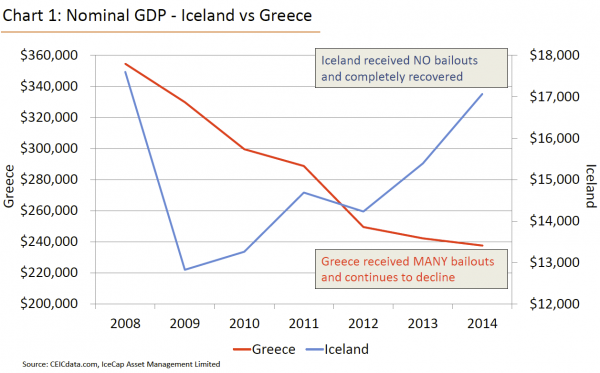
[..] considering that economic growth is a function of aggregate spending, how on earth can any sane person expect the Greek economy to recover and grow? The answer: they can’t. For further proof why it doesn’t work and it will never work, you just have to look at Iceland. Iceland was the very first country wiped out by the 2008 global debt crisis. The Icelandic government and the Icelandic banks completely mismanaged everything for which they were financially responsible. And when everything hit the fan – no one come running to save them, in fact, the complete opposite happened. Both Britain and the Netherlands threatened to completely wipe Iceland off the global financial map.

At the time, Icelandic banks offered regular banking accounts in Britain and the Netherlands that paid 6% interest. Considering other global banks offered 3% and less, and also considering that the vast majority of people in the world have no idea how a bank is structured; thousands of British and Dutch savers blindly ploughed their savings into these Icelandic bank accounts. After all, it was a bank deposit, it was guaranteed by the bank and 6% is greater than 3%. Where was the risk with this? Next, when the crisis hit Iceland – all bank accounts were frozen, and the savings of many British and Dutch investors melted away. Suddenly, the risk with 6% was crystal clear. Naturally, the British and Dutch governments both demanded their citizens be repaid for making stupid investment decisions.

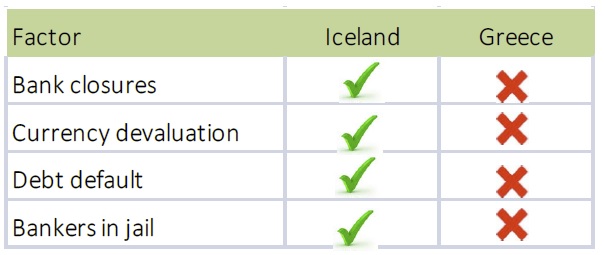
The Icelandic government meanwhile, finally woke from their frozen state and assessed the situation. Not only did the government not have enough money to repay bank depositors, it didn’t have enough money to pay themselves. And since no one would lend Iceland any money – the country was officially broke. The rivers would stop running, the glaciers would stop flowing, and the thermal baths would stop steaming – or so we were told. Instead, Iceland allowed its banks to collapse, allowed its currency to drop by over 70%, decided not to pay back all of the money it owed, and finally – it actually imprisoned certain bank executives for putting the country into such a financially toxic position. A comparison between the Icelandic approach and the European approach forced upon Greece is as follows:

And as for the outcome, the chart below clearly shows the economic recovery experienced by both countries, over the exact same time frame, and using completely opposite solutions.

Read more …

No, we’re in it.

• Approaching a Global Deflationary Crisis? (Brian Davey)

The desire to make the crisis understandable can convert into a temptation to make it seem simpler than it is. At its most banal we have the explanations that neo liberal German politicians are prone to – like the idea that the crisis is because of a lack of confidence and trust and that this can be resolved (in Europe) purely and simply by countries following the Eurozone rules. If the confidence and trust are restored then all will be well and the market will restore prosperity. A more adequate story is needed than this – and it is one that needs to focus on global trends not just in Europe but in the USA, the so-called developing world and above all in China. This story has a number of different plots and sub plots, not one. We need to understand how the sub plots interweave.

The story is one of debt, competitive imbalances and an energy crisis and all need to be told. To make the story even more complicated we need to keep in mind too that an even more important story, that of climate change, has to be held in our minds too. If and when humanity has any chance of resolving these crises it will have to resolve that one at the same time. Will this be possible? I don’t know – what I do know is that there is a theory, by archeologist Joseph Tainter, that humanities’ problem solving capacities are limited by complexity. A friend is currently trying to get me to use twitter. However I am daunted by reducing complex situations to short simple messages.

Understanding the global economy is like entering a labyrinth. As I get older I notice that some people become famous because of the clarity in the way that they write. What may not be noticed is that the apparent clarity in a political economic message is often the result of simplification. The popularity of neo-liberal economcs is like that. So lets look at the ways of describing the crisis. In summary this can be described as the interrelationship between 4 processes.

(1) Structural policy stupidity – policy governance cannot cope with the complexity of the crisis. Politicians cannot cope with communicating complex messages to their peoples nor find the mechanisms to cope with the complexity of the issues.

(2) Problems are also caused by uneven development between countries and sectors which cannot be sustained without methods for recycling purchasing power from the more competitive countries to the less competitive ones. These imbalances become most problematic when capital export from surplus to deficit countries slows which happens when growth slows in the deficit countries.

(3) The crisis is both cause and effect of a rising amount of debt – personal, corporate, state and financial sector – which has acted as a drag on growth. As growth falls all kinds of debt become more difficult to service so the monetary authorities have tried to push interest rates down. Nevertheless the finance sector has tended to become both more speculative and more predatory as there is a “hunt for yield”. Interest rates rise when risk premiums are imposed on distressed borrowers (including states), money making occurs through financing arrangements based on “passing the risk parcel” exploiting the naivety of lenders about complex financial arrangements and by the promotion of asset price bubbles. The bigger players are rescued during crises but the smaller players (including tax payers and those who lose their state benefits) are made to pay.

(4) The crisis is the result of reaching “the limits of economic growth” and, in particular, because of resource depletion in the energy sector. This is less obvious because of currently low and falling energy and commodity prices but we need to study the experience of the energy sector over last few years, not just the immediate situation. The immediate fall in commodity and energy prices is a result of the onset of the crisis – a crisis which very high and rising energy prices up until recently helped bring on. The high energy prices have been compatible with a high level of debt only because interest rates have been so low and because there has been a “hunt for yield”, something that would pay more than leaving money on deposit paying very little.

Read more …

This list could be much longer still.

• The Crisis Is Spreading: China, Australia, Brazil, Canada, Sweden… (Keith Dicker)

We’ve written before that governments all around the world have borrowed too much money and the weight of these debts are choking economic growth. And to make matters worse – these very same governments and their central banks have implemented various plans that have only made matters worse. Our view has not changed – the global debt crisis has escalated to a point where the government bond bubble has inflated itself to become the mother of all bubbles. It’s going to burst, and when it does it wont be pretty. Further evidence to support our view is as follows:

Canada – the collapse in oil and commodity markets has pushed the country into recession and the Canadian Dollar to decline to levels lower than that reached during the 2008 crisis. Oil dependent provinces Alberta and Newfoundland remain in deep denial. Since everyone in these provinces have only ever experienced a booming oil market, many naively believe things will bounce back – and quickly. Meanwhile, both Toronto and Vancouver housing markets also remain in denial as they continue to go gangbusters. Buyers today are likely buying at all-time highs.

Australia – Over the last 20 years, China has been viewed as the growth engine of the world, and justifiably so. With annual growth rates between 8% to 15%, China’s economy was literally eating every rock, stalk and barrel of practically every commodity in the world. And naturally, any country or company that produced these commodities made a tonne of money – including Australia. Today, China’s growth rate has slowed to about 3% which is a dramatic slow down compared to what it achieved in the past. This slowdown and China’s effort to even maintain these rates, will have significant repercussions around the world.

Brazil – Like Australia, Brazil has benefitted immensely from China’s growth. And now, also like Australia, it too is feeling the affects of the dramatic Chinese slowdown. The economy has now declined for 12 consecutive months making it both the longest and deepest recession in 25 years. But wait – it gets worse. Despite declining growth, inflation continues to soar higher causing interest rates to rise as well. And if that wasn’t bad, also know that the Brazilian currency has fell off the cliff at -53%.

Sweden – Unlike Australia and Brazil, Sweden relies very little on China as a buyer of last resort. Yet, the Swedish economy is also not very hot these days. In fact, instead of spectacular and dramatic declines in anything, it is doing the exact opposite – it just isn’t moving. While Sweden isn’t in the Eurozone, it is smack dab next to it and that in itself is reason enough for the lack of growth. We’ve written before how the debt crisis in the Eurozone is acting like a giant, slow moving tornado that is sucking the life out of the economy and everything near by. And unfortunately for Sweden, it is very near by.

Read more …

A story intended to hide US links, not reveal them.

• Brazil Authorities Detail US Link in Petrobras Corruption Case (WSJ)

Brazilian authorities leading an investigation into a massive corruption scandal at the state-run oil firm Petróleo Brasileiro SA have for the first time detailed suspected wrongdoing on U.S. soil. The authorities had previously shown evidence that some suspects in the case laundered money through U.S. bank accounts. But new evidence purports to show two suspects working out the details of a bribe-for-contracts deal at a Manhattan hotel, adding to the international scope of an investigation that already spans four continents. The U.S. Justice Department and the Securities and Exchange Commission opened investigations last year into Petrobras, whose shares are traded in New York.

“It is certainly significant. Having somebody in the U.S.—where there was some action that furthered the conspiracy—would be a very good jurisdictional hook” for the Justice Department, said Bill Michael, a Chicago-based lawyer with firm Mayer Brown LLP. According to Brazilian prosecutors, a Chinese shipping executive named Hsin Chi Su and a Brazilian named Hamylton Padilha, who was working on behalf of the Houston-based oil-services company Vantage Drilling Co., met at the Four Seasons Hotel in New York in November 2008. Mr. Su, also known as Nobu Su, was the chief executive of a privately held Taiwanese company called Taiwan Maritime Transportation, or TMT. His mother was a major shareholder in Vantage Drilling, prosecutors said.

TMT and Vantage co-owned a deep-water drilling ship named the Titanium Explorer, and were working together to win a lucrative contract to lease the ship to Petrobras. After Vantage had been left off a final list of companies in the running for the contract, the two men agreed at the New York meeting and a subsequent Rio de Janeiro meeting to bribe key Petrobras executives and politicians with $31 million sifted through a series of shell companies and bank accounts in Switzerland, Panama and Monaco, according to prosecutors. A few weeks later, Vantage was placed at the top of the list of potential bidders for the contract, prosecutors said. In January 2009, Petrobras’s board of directors approved the deal. At the time, Vantage said that it expected to see revenues of $1.6 billion over the course of the eight-year deal.

Read more …

What other than a revolution can cleanse Brazil?

• Brazil Sees Massive Protests Calling For President Rousseff’s Impeachment (SMH)

Hundreds of thousands of angry of citizens are expected to take to the streets of more than 114 Brazilian cities on Sunday as allegations of corruption and incompetence swamp the government, and plummeting commodity prices sap its economy, posing a key test for President Dilma Rousseff. This will be the year’s third mass protest against Ms Rousseff, who is facing growing calls for her impeachment. A strong showing could help support her ouster. The Free Brazil Movement, one of the groups organising the demonstrations, says rallies are confirmed in at least 114 cities. Congress is watching the turnout both to judge the support for impeachment proceedings and to measure the level of discontent in their home districts.

“Representatives in the lower house are paying close attention to the protests on Sunday to see if they have a national impact,” said Leonardo Picciani the leader of the Democratic Movement Party in the lower house, which remains in uneasy alliance with Ms Rousseff’s Workers’ Party. Mr Picciani’s party, known as the PMDB, has the largest representation in Congress. Speaker Eduardo Cunha declared his personal opposition to the government after he was accused of soliciting and accepting a $US 5 million bribe, which he denied. While his party has not formally broken from the Workers’ Party, some of its representatives say they’ll vote for impeachment, an aim shared by large segments of the population.

But Brazilians are divided. Women farmers marched through Brazil’s capital on Wednesday in a show of support for Ms Rousseff. The “March of the Daisies” organised by leftist groups linked to Ms Rousseff’s Workers Party, attracted about 35,000 farmers to Brasilia’s downtown area, according to official estimates. Opinion polls show seven out of 10 Brazilians want Ms Rousseff to be impeached, holding her responsible the downturn in Latin America’s largest economy and a massive corruption scandal at state-run oil company Petrobras.

Read more …

As Greeks go hungry and refugees drown: “..neutral factual information is needed of course, but it is not enough on its own..”

• EU ‘Self-Promotion’ Budget Reaches €664 Million In 2014 (RT)

The European Union spent €664 million on promoting its values among grown-ups and children last year, a report by the Business for Britain campaign said. The paper, entitled “How much does the EU spend on promoting itself?” (https://forbritain.org/propagandapaper.pdf), was put together after a line-by-line check of EU budgets for 2014. The report by the Eurosceptic campaign describes thousands of publications, videos and information campaigns produced by the Union in order to improve its image. The key PR expenditures in 2014 went to such projects as “Enhancing public awareness of the Common Agricultural Policy” (€11 million), “Fostering European Citizenship” (€24.8 million), and the “House of European History” museum (€9.6 million), which is to open in Brussels in 2016.

“Money assigned to communications in EU budgets is for much more than just ‘public information’, and instead presents a highly biased account of both the EU and its political objectives,” the reports said. The document cited the European Commission strategy, which stated that “neutral factual information is needed of course, but it is not enough on its own”. The EU materials targeted not only grownups, but also children, with over 100 publications, 1,000 videos, cartoons and coloring books issued for distribution in schools, the reports said. Among them was an animated film describing how the EU “came to the rescue” of farmers, an interactive game teaching youngsters to recycle, and a book about one of the stars on the EU flag, entitled “The little star of Europe.”

“Indoctrinating children in classrooms and funding EU-friendly NGOs is a completely inappropriate use of taxpayers’ money when budgets are being cut at home,” Matthew Elliott, Business for Britain chief executive, told the Telegraph newspaper. The EU promotional activities aren’t limited to the sum of €664 million, as they are also included in larger budgets where they aren’t specifically detailed in the documentation, the report said. “More widely, the EU committed €3.9 billion to budgets that contained provisions for EU promotional spending and ‘corporate communication of the political priorities of the Union.’ This is a substantial rise on the €2.4 billion that was available to the EU for self-promotion in 2008,” the Eurosceptics’ report said.

Read more …

I have to agree with NY Times ed. staff?!

• Ugly Attacks on Refugees in Europe (NY Times Ed.)

It is one of the tragedies of the European refugee crisis that the country with the fewest means, Greece, is the one coping with the greatest number of migrants fleeing tumult and poverty in the Middle East and Africa. It was inevitable that something would go wrong, as it did recently when about 1,000 refugees on the island of Kos, one of several Greek islands overrun this summer by the biggest flow of migrants since World War II, were temporarily packed into a sports stadium in stifling heat, without food, water or toilets. The refugees were eventually moved, but the crisis continues, with about 7,000 refugees on Kos, and more arriving daily. Meanwhile, Europe to the north has failed to agree on an equitable, humane and properly funded response.

If the disproportionate burden borne by Greece, Italy and Spain is not reason enough to inspire joint and urgent action, the human suffering and relentless movement of desperate, illegal and moneyless migrants all across the continent, coupled with an ugly increase in racist attacks, should be. Germany, which has accepted more asylum seekers than any other European country, is witnessing a spate of violent attacks. In the first half of this year, Germany reported more than 179,000 applications for asylum — and 202 attacks on the housing of asylum applicants by far-right and neo-Nazi bands. To its credit, the German government has condemned the attacks and has pledged to continue accepting asylum seekers, who are expected to exceed 450,000 this year.

In Hungary, by contrast, anti-migrant talk has been coupled with official policies intended to keep migrants out, most notably a high fence under construction along the 109-mile border with Serbia. Austria, France and Switzerland have turned back migrants from Italy, and Britain is up in arms over migrants who are clustered in squalid camps in northern France and trying to sneak into England through the Eurotunnel. The EU addressed the crisis at a summit meeting in June. But member states blocked any efforts at setting country quotas for migrants. The best it could do was a pledge to relocate 40,000 refugees over two years — less than a third of those who have already arrived in Italy and Greece this year.

There is no easy answer to the mass migration. The Syrian civil war alone has displaced millions, many of whom will continue trying to reach safe European havens, as will countless other displaced and threatened people in the Middle East and North Africa. What is clear is that no European country alone, and certainly not Greece or Italy, can cope with the flood, or block it. At the very least, the E.U. must allocate far greater resources for humanitarian and administrative work, and it must seek far better ways to share the burden.

Read more …

I’ll repeat what I said yesterday: they should sail it to a British port.

• Syrians Begin Boarding Refugee Ship On Greek Island (Reuters)

Hundreds of Syrian migrants on the Greek island of Kos on Sunday began boarding a passenger ship that is to house and process them, in a bid to ease sometimes chaotic conditions onshore. Greek officials had delayed the embarkation at the quayside in Kos for more than a day, working on plans to avoid disorder among the increasingly desperate migrants who have arrived on the island in dinghies and small boats from nearby Turkey. The boarding of the car ferry Eleftherios Venizelos, which arrived in Kos on Friday, began in the cooler night hours in an organized and orderly fashion. After some minor disagreements among the migrants over who would go first, they queued up on the quayside and boarded in groups of 20.

The ship, chartered by the Greek government, is to provide accommodation for around 2,500 Syrians in its cabins and an area for processing paperwork. As the Syrians are fleeing their country’s civil war, they are treated as refugees. This gives them greater rights under international law than those from other countries regarded as economic migrants who have also crossed the narrow sea channel separating Kos from the Turkish coast. Nearly a quarter of a million migrants have crossed the Mediterranean to Europe this year, according to the International Organisation for Migration. About half have come to the Greek islands, with numbers surging in the summer when calmer weather makes the voyage marginally less risky.

The Greek government chartered the vessel – which belongs to a company which ships tourists, cars and trucks to the Greek islands and across the Adriatic to Italy – to take some of the pressure off Kos. Several thousand migrants are staying in hotels on the island if they can afford it, but more often sleep in tents, abandoned buildings or in the open. On Saturday, about 50 migrants from Afghanistan, Pakistan and Iran fought each other outside the island’s main police station, throwing stones and exchanging blows as tempers boiled over in the intense mid-summer heat. They have little chance of getting aboard the ship as they have not established themselves as refugees like the Syrians, who have priority.

On Tuesday, local police used fire extinguishers and batons against migrants after violence broke out in a sports stadium where hundreds of people, including young children, were waiting for immigration papers. About 40 riot police were subsequently sent to the island to keep order.

Read more …

“.. it is hard to ignore a man who was elected with almost 94% of the vote in 2011, and for an eight-year term.”

• Get Rid Of Immigrants? No, We Can’t Get Enough Of Them: German Mayor (Guardian)

Goslar is a gem of a town in central Germany, nestled in the slopes of the Harz mountains. It is popular with tourists, some of whom come to enjoy its cobbled streets and half-timbered architecture, others to ski or mountain bike, or to trace the footsteps of William Wordsworth who penned the beginnings of the Prelude here while homesick during a visit in the freezing winter of 1798. Now it is becoming famous for another reason. Behind the rich culture is a town with huge problems. It is in one of the weakest economic areas of western Germany, and – like much of the country, which for years has had one of the lowest birthrates in the world – it is facing a demographic crisis. Goslar, a town of 50,000, has shrunk by 4,000 in the last decade and is currently losing as many as 1,500 to 2,000 people a year.

In some parts of the town, which once thrived on silver mining and smelting as well as a spa, whole housing blocks stand empty while others have been torn down. Its problems were only exacerbated by the end of the cold war, when it lost its status as a major garrison town close to the border with East Germany. Oliver Junk is determined to reverse the trend. The mayor of Goslar has sparked a debate that has spread across Germany by saying he wants more immigrants to settle in the town. While other parts of Europe are shunning refugees, sometimes with great brutality, Junk is delivering an alternative message: bring on the immigrants. There cannot be enough of them, he says.

At a recent gathering in Jürgenohl, a suburb of Goslar, Junk tapped his feet to a song-and-dance routine being performed for him in Russian by immigrants dressed in the colourful costumes of the former Soviet bloc countries they arrived from around two decades ago. Praising their efforts at integration and thanking them for their contribution to his city, Junk recalled how Jürgenohl only exists thanks to refugees who built it up after the war. The 39-year-old lawyer, a member of Angela Merkel’s Christian Democrats, has triggered controversy across Germany by insisting that an influx of immigrants is the best thing that could happen to his shrinking town, which took only 48 refugees last year and, so far this year, 41. “We have plenty of empty housing, and rather than see it decay we could give new homes to immigrants, helping them, and so give our town a future,” Junk said.

Some German commentators say he is a self-publicist, others that he is naive. But it is hard to ignore a man who was elected with almost 94% of the vote in 2011, and for an eight-year term. Junk says he is merely being pragmatic. This, after all, is a man who was nicknamed “Duke of Darkness” for ordering street lamps to be turned off after midnight to save money. The far right is furious and plans to descend on Goslar on 29 August, for an anti-Junk rally under the slogan “Perspectives, not mass immigration.”

Read more …

Aug 142015
 
 August 14, 2015  Posted by at 10:42 am Finance Tagged with: , , , , , , , , , ,  Comments Off on Debt Rattle August 14 2015


G. G. Bain Katherine Stinson, “the flying schoolgirl,” Sheepshead Bay Speedway, Brooklyn 1918

• Greek Parliament Approves Bailout Deal (Guardian)
• Greek Bailout On A Tightrope – Again (CNBC)
• China Halts Yuan Devaluation With Slight Official Rise Against US Dollar (AFP)
• The Economic Wizards Of Beijing Have Feet Of Clay After All (Guardian)
• China Denies Currency War As Global Steel Industry Cries Foul (AEP)
• China and the Danger Of An Open Currency War (Paul Mason)
• China’s Devaluation Becomes Japan’s Problem (Pesek)
• Why The Yuan May Deck Singapore Property Stocks (CNBC)
• Greece Creditors Raise ‘Serious Concerns’ About Spiralling Debt (Guardian)
• Greece To Get €6 Billion In Bridge Loans If No Agreement At Eurogroup (Reuters)
• Greece Crisis Proves The Need For A Currency Plan B (John Butler, Cobden)
• Greeks Taste Breadth Of Bailout In Loaf And Lotion Rules (Guardian)
• European Union Backs IMF View Over Greece – Then Ignores It (Guardian)
• Total U.S. Auto Lending Surpasses $1 Trillion for First Time (WSJ)
• Surge in Global Commercial Real-Estate Prices Stirs Bubble Worries (WSJ)
• Glencore: World Of Big Mining Agog At Huge Fall (Guardian)
• The Junk Bond Market ‘Is Having A Coronary’: David Rosenberg (CNBC)
• ‘I Will Leave Politics And Return To Comedy’: Beppe Grillo (Local.it)
• World without Water: The Dangerous Misuse of Our Most Valuable Resource (Spiegel)
• Greece Sends Cruise Ship To Ease Kos Migrant Crisis (Guardian)
• Mediterranean: Saving Lives at the World’s Most Dangerous Border (Spiegel)

Talk about a Pyrrhic victory.

• Greek Parliament Approves Bailout Deal (Guardian)

After a tumultuous, often ill-tempered and at times surreal all-night debate, Greek MPs voted early on Friday to approve a new multibillion euro bailout deal aimed at keeping their debt-stricken country afloat. With his ruling leftist Syriza party apparently heading for a formal split over the €85bn package, prime minister Alexis Tsipras needed the support of the opposition to win parliament’s backing for the bill in a 9.45am vote which the government eventually won by a comfortable margin. But controversial former finance minister Yanis Varoufakis voted against the punishing terms of the deal, along with a large number of Syriza rebels angered by what they said was a sell-out of the party’s principles and a betrayal of its promises, leaving Tsipras severely weakened.

Tsipras told MPs before the vote that the rescue package was a “necessary choice” for the nation, saying it faced a battle to avert the threat of a bridge loan – which he called a return to a “crisis without end” – that Greece may be offered instead of a full-blown bailout. The draft bailout must now be approved by other eurozone member states at a meeting of finance ministers in Brussels on Friday afternoon, and ratified by national parliaments in a number of countries – including Germany, which remains sceptical – before a first tranche can be disbursed that will allowing Greece to make a crucial €3.2bn payment to the ECB due on 20 August. The Athens parliament did not start debating the 400-page text of the draft bailout plan until nearly 4am after parliamentary speaker Zoe Konstantopoulou, a Syriza hardliner, ignored Tsipras’s request to speed up proceedings and instead raised a lengthy series of procedural questions and objections.

[..] On the left, former energy minister Panayiotis Lafazanis, who leads a rebel bloc of around a quarter of Syriza’s 149 MPs, pledged to “smash the eurozone dictatorship”, while in her concluding pre-vote remarks, Konstantopoulou announced: “I am not going to support the prime minister any more.” Earlier, the government spokeswoman, Olga Gerovasili, conceded divisions within the leftist party, which swept to victory in January’s elections on a staunch anti-austerity platform, were now so deep that a formal split was probably inevitable. Tsipras could call fresh elections as early as next month.

Read more …

Time for Dijsselbloem to screw up one last time.

• Greek Bailout On A Tightrope – Again (CNBC)

Greece’s third bailout is back in the hands of euro zone finance ministers, who are meeting Friday to discuss whether to go ahead with the deal – or delay it. The baton has been passed on to Brussels after the Greek government, which had debated the reforms that need to be introduced to secure the much needed funds through the night, secured enough votes to pass the bailout bill. However, further uncertainty was heaped on the bailout process with reports from Reuters that left-wing prime minister Alexis Tsipras seeking a vote of confidence from the parliament after August 20. The Eurogroup of finance ministers will be meeting in Brussels to debate the latest developments.

“It’s obvious we have to sign (a bailout deal) and we have to implement this agreement,” Kostas Chrysogonos, a Syriza member of the European parliament (MEP) told CNBC Friday following the Greek vote, saying that he hoped a deal would be completed at the Eurogroup meeting later today. A confidence vote was the last thing Greece needed right now, he added, so soon after Tsipras was elected in January. “I’m hopeful that many of the dissenters will resign their parliamentary seats…and the confidence vote will be enough to gain the confidence of the parliament for this government. It’s obvious that the last thing that we need right now is a general election, a country that stands at the edge of default cannot afford the luxury of having a second general election within eight months.”

Although the country and its international lenders and those overseeing the program have agreed technical details, a political agreement in the euro zone by member state governments is now necessary before any aid is release. But that is easier said than done with tensions running high both in Greece and Germany, Greece’s largest euro zone lender, over the bailout. This raises the possibility that the bailout deal could be delayed and Greece issued a bridging loan to tide it over. In Greece, members of parliament debated the third bailout package through the night after a long delay to the proceedings due to procedural objections saw the plenary session only get underway at 2am local time (midnight London time).

The vote on the bailout deal finally started at 7.30 London time with the government securing enough votes – 222 votes to 64 – to get the bailout approved. Tensions were running high in the Greek parliament, with high profile members of the ruling Syriza party, including former finance minister Yanis Varoufakis and parliamentary speaker Zoe Konstantopoulou, opposing the deal which involves more austerity, spending cuts and reforms. After the bailout was voted through the Greek parliament, Reuters, quoting a government official, said that Tsipras will seek a confidence vote in the Greek parliament after the August 20 deadline for payment to the ECB. A government spokesman told CNBC that he could not confirm the Reuters report but was expecting a statement shortly.

Read more …

Wait till Monday.

• China Halts Yuan Devaluation With Slight Official Rise Against US Dollar (AFP)

China’s central bank has raised the value of the yuan against the US dollar by 0.05%, ending three days of falls in a surprise series of devaluations. The daily reference rate was set at 6.3975 yuan to $1.0, from 6.4010 the previous day, the China Foreign Exchange Trade System said. That was also slightly stronger than Thursday’s close of 6.3982 yuan. The higher fixing for the yuan came after the People’s Bank of China (PBoC) sought to reassure financial markets by pledging to seek a stable currency after a shock devaluation of nearly 2% on Tuesday.

The cut, and two subsequent reductions, rattled global financial markets – raising questions over the health of the world’s second-largest economy and sparking fears of a possible currency war. Beijing said the move was the result of switching to a more market-oriented method of calculating the daily reference rate which sets the value of the yuan, also known as the renminbi (RMB). Previously authorities based the rate on a poll of market-makers, but will now also take into account the previous day’s close, foreign exchange supply and demand and the rates of major currencies. The yuan is still only allowed to fluctuate up or down 2% on either side of the reference rate.

“Currently there is no basis for the renminbi exchange rate to continue to depreciate,” PBoC assistant governor Zhang Xiaohui said on Thursday. “The central bank has the ability to keep the renminbi basically stable at a reasonable and balanced level,” she said. Speaking earlier this week another PBoC official said the central bank could directly intervene in the market, after reports it bought yuan on Wednesday to prop up the unit. “The central bank, if necessary, is fully capable of stabilising the exchange rate through direct intervention in the foreign exchange market,” PBoC economist Ma Jun said.

Read more …

“..the deputy governor of its central bank was forced to hold a press conference at which he insisted this was all part of a grand plan.”

• The Economic Wizards Of Beijing Have Feet Of Clay After All (Guardian)

The economic wizards of Beijing have feet of clay after all. That’s the growing sense after China’s currency fell for a third day and the deputy governor of its central bank was forced to hold a press conference at which he insisted this was all part of a grand plan. Zhang Xiaohui didn’t quite say “devaluation, what devaluation?” just as Jim Callaghan never quite said “crisis, what crisis?” during the Winter of Discontent. Both men were intent on showing that their governments were fully in control even though they were not. For UK politicians in the 1970s this was a familiar sensation; for China’s mandarins it is an entirely new experience. Over the past 30 years, the technocrats in Beijing have attained an almost mythical status.

Decade after decade of rapid growth has transformed China into the world’s second biggest economy, slashing poverty at the same time. There was much admiration – and not a little envy – in the west for the way in which communist party officials quickly lifted China out of recession following the financial crisis of 2008. The fact that policymaking was so opaque added to the mystique. But those golden days are now over. Beijing wanted to rebalance the Chinese economy, to make growth less focused on exports and more reliant on consumer spending. It wanted slower but more sustainable growth that gradually took the heat out of overvalued property and share prices.

This is proving difficult. Official figures understate the speed at which the economy is slowing. As fears of a hard landing have increased, policymakers have started to panic. Beijing botched attempts at shoring up the stock market, a move that was unnecessary given that the fall of 30% had been preceded by a rise of 150%. Now the attempts to reduce the value of the yuan are being conducted in an equally ham-fisted fashion. It won’t really wash that the events of this week are a carefully thought-out liberalisation plan that will persuade the IMF to include the yuan in its reserve assets known as special drawing rights.

Read more …

“China’s share of global steel output has rocketed from 10pc to 50pc over the last decade.” American and European steel industries can say goodbye.

• China Denies Currency War As Global Steel Industry Cries Foul (AEP)

Chinese steelmakers are preparing to flood the global market with cut-price exports as they take advantage of this week’s shock devaluation of the yuan, setting off furious protests from struggling competitors in Europe and the US. It is the first warning sign of a deflationary wave of cheap products from China after the central bank, the People’s Bank of China, abandoned its exchange rate regime, letting the currency fall in the steepest three-day drop since the country emerged as an economic powerhouse. The yuan has fallen 3.3pc against the dollar. Steel mills in the Chinese industrial hub of Hebei have already begun to trim prices of rebar mesh-wires used for building by between roughly $5 and $10 to $295, citing the devaluation as a fresh chance to offload excess stocks of steel.

Europe’s steel lobby Eurofer warned that there would be “very real competitiveness impacts” for European steel firms, already battling for their lives with wafer-thin margins. America’s United Steelworkers accused China of predatory practices.”It is time for China to live by the rules or face the consequences,” said the union’s international president, Leo Gerard. The US steel group Nucor called the devaluation the “latest attempt to support Chinese industry at the expense of producers in the rest of the world who have to earn their cost of capital to survive.” Indian tyre-makers have issued their own warnings, fearing a fresh rush of cheap imports from China. They are already grappling with a 100pc surge in shipments over the last year as the recession in China’s car industry displaces excess supply.

The anger is a foretaste of what China may face if this week’s devaluation is the start of a concerted effort to gain market share in a depressed global economy. Yet it is far from clear whether Beijing really has such an intention. The People’s Bank of China insisted on Thursday that the drop in the yuan was a one-off effect as the country shifts to a more market-friendly exchange regime, essentially a managed float. It described the sudden drop as “irrational” and said reports of a plot to drive down the yuan by 10pc were “nonsense”. China’s share of global steel output has rocketed from 10pc to 50pc over the last decade. It has installed capacity of 1.1bn tonnes a year that it cannot possibly absorb as the Chinese economy shifts away from heavy industry.

It now has 340m tonnes of excess capacity, which has driven down global steel prices by 40pc since early 2014. “This overcapacity alone is more than double the EU’s steel demand, and China is now exporting record quantities to Europe as a result,” said Eurofer.

Read more …

“..another way of looking at QE is as an undeclared currency war – which is exactly how China sees it.”

• China and the Danger Of An Open Currency War (Paul Mason)

China has stunned the world by devaluing its currency twice in two days. Or rather it has stunned that naive part of the world that believed China’s economy was okay, that its Communist Party was en route to being some kind of team player in the global economy, and that the words “currency war” were just scaremongering. Here’s what’s happened, and why it matters. China’s economy, which grew at 9% and above per year in the period of rapid industrialisation in the 2000s, has slowed to 7%. Because the entire control system of the conomy is based on one bureaucrat lying to/competing with another, nobody really knows whether the Chinese growth figures are correct – but there’s been a clear slowdown.

That, in turn, caused a stock market slump last month – after more than a year of ordinary Chinese people pouring money into shares. So the government tried to contain by ordering state owned stockbrokers to buy RMB 120bn worth of shares, setting a stock market “target level” reminiscent of the old Soviet grain targets. Now, with growth continuing to falter, the Chinese government has devalued its own currency again in a bid to boost exports. At the same time – as a concession to its trade rivals – it has promised to “take more notice of the markets” when setting interest rates in future. Since it re-entered the global economy, China has pegged its currency, the renminbi, against the dollar – refusing to let it trade freely and to find a market rate.

Under pressure from America and Japan, which say China’s currency is too cheap and gives it an unfair trade advantage, China allowed the RMB gradually to rise against other currencies. This was seen as a first step towards the RMB becoming convertible, and ultimately emerging as a rival global currency to the dollar. Now that policy has been reversed. The context is, first, the tit-for-tat stimulus measures that the world’s major economies have been taking. Europe has launched a massive programme of quantitative easing; Britain’s QE programme remains in place and Japan is reliant on more and more dollops of printed money to buy state debt and keep the economy going. When states or currency unions print money on this scale the side effect is to weaken the value of their currency and boost exports. So another way of looking at QE is as an undeclared currency war – which is exactly how China sees it.

Read more …

Abenomics can still get uglier than it already was.

• China’s Devaluation Becomes Japan’s Problem (Pesek)

Among the clearest casualties of China’s devaluation is the Bank of Japan. The chances were never high that Governor Haruhiko Kuroda was going to be able to unwind his institution’s aggressive monetary experiment anytime soon. But the odds are now lower than even skeptics would have previously believed. The real question, though, is what China’s move means more broadly for Abenomics. A sharply devalued yen, after all, is the core of Prime Minister Shinzo Abe’s gambit to end Japan’s 25-year funk. Abenomics is said to have three parts, but monetary easing has really been the only one. Fiscal-expansion was neutered by last year’s sales-tax hike, while structural reform has arrived only in a brief flurry, not the avalanche needed to enliven aging Japan and get companies to raise wages.

China’s devaluation tosses two immediate problems Japan’s way. The first is reduced exports. As Beijing guides its currency even lower, as surely it will, the yen will rise on a trade-weighted basis. And Bloomberg’s Japan economist Yuki Masujima points out that trade with China now contributes 13% more to Japanese GDP than the U.S., traditionally Tokyo’s main customer. “Given China’s rise to prominence, the yen-yuan exchange rate now has far greater influence on Japan than the yen-dollar rate,” Masujima says. The other problem is psychological. Japanese households have long lamented their rising reliance on China, a developing nation run by a government they widely view as hostile.

But the BOJ was glad to evoke China’s 7% growth – and the millions of Chinese tourists filling shopping malls across the Japanese archipelago – to convince Japanese consumers and executives that their own economy was in good shape. Now, the perception of China as a growth engine is fizzling, exacerbating the exchange-rate effect. “To the extent that the depreciation reflects weakness in China, then that weakness – rather than the depreciation per se – is a problem for Japan,” says Richard Katz, who publishes the New York-based Oriental Economist Report. It’s also a problem for Abe, whose approval ratings are now in the low 30s thanks to his unpopular efforts to “reinterpret” the pacifist constitution to deploy troops overseas. The prospect that Abe will enrage Japan’s neighbors by watering down past World War II apologies at ceremonies this weekend marking the 70th anniversary of the end of the wary is further damping support at home.

The worsening economy, which voters hoped Abe would have sorted out by now, doesn’t help. Inflation-adjusted wages dropped 2.9% in June, a sign Monday’s second-quarter gross domestic product report for the may be truly ugly. It’s an open question whether such an unpopular leader can push painful, but necessary, structural changes through parliament. “Already,” Katz says, “Abe has backpedaled on many issues to avoid further drops.” After 961 days, all Abenomics has really achieved is a sharply weaker yen, modest steps to tighten corporate governance and marketing slogans asking companies to hire more women.

Read more …

Think leverage, shadow banking, and fill in the blanks.

• Why The Yuan May Deck Singapore Property Stocks (CNBC)

Singapore’s property shares, already on the back foot from expectations of rising interest rates, have taken a beating since China devalued its currency on Tuesday and more pain may be on the cards. “Given that the majority of property stocks with China exposure do not hedge the currency exposures of their incomes and balance sheets, a weaker renminbi suggests that both asset values and earnings/dividends would be negatively affected,” analysts at JPMorgan said in a note Wednesday. “Book values and dividend per unit (DPU) would be affected.” Singapore real-estate investment trusts (S-REITs) are also likely to take a hit as the moves Tuesday and Wednesday by the People’s Bank of China to push down the Chinese currency also caused the Singapore dollar to weaken.

“The weakening Singapore dollar would result in upward pressure on interest rates,” it said, estimating that every 100 basis point rise in interest rates pushes S-REITs’ DPU down by 2.7% because of increased costs. Singapore property shares with China exposure based on earnings and assets under management include CapitaLand Retail Trust China, Global Logistic Properties, CapitaLand and City Developments, JPMorgan noted. Those shares are down 1.2-5.5% so far this week, after a bit of a recovery Thursday. Singapore may not be alone in feeling property pain from China. In Hong Kong, Wharf, Cheung Kong Property and Hang Lung all have significant China exposure, noted Patrick Wong at BNP Paribas.

Read more …

The spiralling debt is a direct consequence of the conditions those same creditors force upon Greece.

• Greece Creditors Raise ‘Serious Concerns’ About Spiralling Debt (Guardian)

Greece’s European creditors have underlined the temporary nature of the country’s surprise return to growth by warning that they have “serious concerns” about the spiralling debts of the eurozone’s weakest member. The economic news came as Greece’s parliament met in emergency session on Thursday to ratify a new bailout deal, although it was unclear whether the multibillion-euro agreement had the vital backing of Germany. The three European institutions negotiating a third bailout package with the government in Athens said that the Greek economy had plunged into a deep recession from which it would not emerge until 2017. According to an analysis completed by the EC, the ECB and the eurozone bailout fund, Greece’s debts will peak at 201% of GDP in 2016.

The study says that Greece’s debt burden can be made more bearable by waiving payments until the economy has recovered and then giving Athens longer to pay. However, it opposes the idea of a so-called “haircut” – or reducing the size of the debt. It is a course of action the International Monetary Fund, which joined the three European institutions in negotiating the latest bailout, thinks may be necessary for Greece’s debts to become sustainable.

“The high debt to GDP and the gross financing needs resulting from this analysis point to serious concerns regarding the sustainability of Greece’s public debt,” said the analysis, adding that far-reaching reforms were needed to address the worries. It forecasts that the Greek economy will contract by 2.3% this year and a further 1.3% in 2016 before returning to 2.7% growth in 2017. Greece’s debt to GDP ratio will peak next year but will still be 175% in 2020 and 160% in 2022. The IMF views a debt to GDP ratio above 120% as unsustainable.

Read more …

Greece doesn’t want a bridge loan.

• Greece To Get €6 Billion In Bridge Loans If No Agreement At Eurogroup (Reuters)

Greece could get €6.04 billion in bridge financing if euro zone finance ministers cannot agree on the planned third bailout for Athens when they meet on Friday, according to German newspaper Bild, citing a European Commission proposal for the meeting. That proposal says the bridge loans should run for a maximum of three months, Bild said in an advance copy of an article due to be published on Friday. Eurozone finance ministers are due to meet in Brussels on Friday to discuss a third financial rescue that Greece has negotiated with its creditors.

Greek Finance Minister Euclid Tsakalotos expressed his opposition on Thursday to Greece taking another temporary loan to meet its immediate debt repayments, calling on lawmakers to approve a new, three-year bailout deal. “I think whatever everyone’s stance on the euro and on whether this is a good or bad accord, there must be no one who is working towards a bridge loan,” he told a parliamentary committee. Athens must make a €3.2 billion debt payment to the ECB on Aug. 20.

Read more …

Cobden Partners was proposed to Varoufakis right after the January election as an advisor. Syriza opted for Lazard instead.

• Greece Crisis Proves The Need For A Currency Plan B (John Butler, Cobden)

The recent Greek capitulation under pressure from other euro member countries, led by Germany, demonstrates that euro members have de facto ceded sovereignty over fiscal policy to the EU. While this arrangement may be acceptable to some countries, perhaps even Greece, it will be resisted by others. However, as the Greek failure also demonstrates, any eurozone country wishing to restore fiscal sovereignty, or restructure some of their debt, or implement any policy or set of policies that runs afoul of the preferences of certain Eurogroup finance ministers will have near-zero negotiating leverage if they fail to plan, credibly and in advance, for the introduction of a viable alternative currency.

Without this critical card to play, the country in question will be held hostage by the now politicised ECB. Its domestic banking system and financial markets will be shut down, the economy will grind to a halt and the government will face either a humiliating retreat or full capitulation. Former Greek finance minister Yanis Varoufakis has now revealed much of the detail of the recent negotiations, capitulation and attempts to vilify him personally for acting insubordinately or even in a treasonous manner at the 11th hour. However, it is entirely understandable that, once Varoufakis became aware of the degree to which his country’s banks and national finances had been taken hostage by the ECB and EU institutions, he sought some flexibility in order to strengthen Greece’s negotiating position.

Alas, this was much too little, and way too late. In retrospect, it is now obvious that Varoufakis and his colleagues should have set about developing a credible alternative currency plan prior to entering into any negotiations around either debt reduction or fiscal reforms. Had they done so, when the ECB suspended further increases in the ELA, forcing the banks and financial markets to close, Greece would have been able to roll out a temporary plan which, in the event that subsequent negotiations were indeed to fail, could easily have become permanent. Moreover, the very existence of such a plan would have greatly strengthened Greece’s hand to the point where negotiations may well have succeeded.

Read more …

Summary: Foreign corporations will take over everything.

• Greeks Taste Breadth Of Bailout In Loaf And Lotion Rules (Guardian)

Vouldis, 33, whose bakery was founded 22 years ago by his parents in the southern Athens suburb of Kallithea, and is one of 15,000 local bakeries in Greece, said: “If a supermarket can call itself a bakery and present frozen loaves as fresh, that’s cheating customers . And if we sell by the kilo – which we’ve been supposed to be doing since Easter, actually, but no one does – customers will end up spending more on their bread. Bakers will have far more opportunity to play around with their prices. “Neighbourhood bakeries are the heart of a community; it’s wrong to make things harder for them than they already are. And it’s unacceptable to have international institutions saying, you’re stupid, you don’t know how to run your business, here’s how you must do it.”

Stefanidi meanwhile was concerned at the bailout powers’ insistence that anyone should be allowed to own a pharmacy: at present, Greek law limits their ownership to pharmacists. The way the OECD and the international creditors saw it, far too many laws protected Greece’s 11,000 pharmacies – a quantity, per head of the population, about double that for France or Spain, and more than 15 times Denmark’s total. Many of the rules were scrapped last year despite a European court upholding Greece’s view that it was perfectly entitled to legislate on the matter since its supreme court had ruled that pharmacies were not pure commercial enterprises but also fulfilled a vital social function.

The rule that no district can have more than one pharmacy per 1,000 people will stay. But the regulation stipulating that over-the-counter medicines may only be sold at licensed pharmacies is soon to be scrapped; and the ownership restriction could be gone next week if the bailout package is approved. “It’s crazy,” said Konstantinos Lourantos, president of the Panhellenic Pharmaceutical Association, in his pharmacy in the Athens suburb of Nea Smyrni. “Anyone will be able to open a pharmacy now. Anyone. In all Europe, only in Slovenia and Hungary is this allowed. Even in Germany, a licensed pharmacist must own at least 51% of a pharmacy.”

Read more …

There will be no real debt relief, not if Germany has its way. It’ll just be toying with margins, unacceptable for the IMF.

• European Union Backs IMF View Over Greece – Then Ignores It (Guardian)

The good news for the IMF, which has been saying for ages that Greece’s debts are unsustainable, is that European lenders now seem to agree. There are “serious concerns” about the sustainability of the country’s debts, the three European institutions negotiating the latest bailout said on Thursday. They think Greece’s debts will peak at 201% of GDP in 2016, which is roughly what the IMF said a month ago when it projected a high “close to 200% of GDP in the next two years”. So what should be done? Unfortunately, that is where unanimity seems to break down.

The IMF’s view of the options in July was blunt. First, there could be “deep upfront haircuts” – in other words, a portion of Greece’s debts to eurozone lenders would be written off, which, reading between the lines, seemed to be the IMF’s first preference. Second, there was the politically-impossible policy of eurozone partners making explicit transfers to Greece every year. Or, third, Greece could be given longer to repay, an approach likely to be more palatable to European leaders. But this option came with a heavy qualification from the IMF: “If Europe prefers to again provide debt relief through maturity extension, there would have to be a very dramatic extension with grace periods of, say, 30 years on the entire stock of European debt, including new assistance.”

Is Europe ready to be “very dramatic,” as the IMF defined it? Almost certainly not – at least not in Germany. Thursday’s European report spoke about extending repayment schedules but it seems highly unlikely that 30 years would be acceptable in Berlin. If that’s correct, the IMF’s willingness to cough up its €15bn-€20bn contribution to the latest €85bn rescue package must be in serious doubt. The fund’s guidelines say loans can only be advanced when there is a clear path back to debt sustainability, usually defined as borrowings being less than 120% of GDP. On Thursday’s European analysis, Greece would still be at 160% even in 2022.

Read more …

Subprime is all America has left.

• Total U.S. Auto Lending Surpasses $1 Trillion for First Time (WSJ)

With the recession now six years behind in the nation’s rearview mirror, lending for automobiles has sharply accelerated: Around $119 billion in auto loans were originated in the second quarter of this year, a 10-year high, according to figures from the Federal Reserve Bank of New York released Thursday. Auto lending has climbed steadily during the past four years, helping sales of U.S. autos and light trucks completely recover their losses from the recession. In May, consumers purchased vehicles at an annual pace of 17.6 million, the highest since June 2005. Americans have now racked up more than $1 trillion in both auto-loan debt and student-loan debt, which surpassed $1 trillion for the first time in 2013.

The overall indebtedness of U.S. borrowers remains lower than before the recession, owing to declines in home-loan and credit-card balances. But with low gas prices, a growing number of jobs, and an aging automotive fleet, many people have found it an opportune time to get a new vehicle. “A lot of the gain we’ve seen is from light trucks, SUVs, cross-overs, minivans and pickup trucks,” said David Berson, chief economist at Nationwide Insurance in Columbus, Ohio. “Because gasoline prices have come down, it makes it less expensive to run the vehicles that use more fuel” and frees up consumers’ budgets to put toward more cars or higher car loan payments. Auto lending and credit-card lending used to trade spaces as the second- and third-largest categories of U.S. household debt, after mortgages.

Both were surpassed by student loans in 2010. Since 2011, auto loans have rapidly outgrown credit cards. Today, household credit-card balances stand at $703 billion, about the same as four years ago. Auto lending and mortgages offered a study in contrast over the past five years. Both types of debt fell in the recession; from 2008 to 2010 the total stock of auto loans declined by more than $100 billion. Mortgage balances dropped by more than $800 billion. “There was some tightening in auto-loan standards after the financial crisis, but by many measures it’s returned basically to where it was pre-recession,” said Wilbert van der Klauw, a New York Fed economist. “That’s quite a contrast to mortgage underwriting, which remains significantly tighter than before the recession.”

Read more …

Spot the zombie.

• Surge in Global Commercial Real-Estate Prices Stirs Bubble Worries (WSJ)

Investors are pushing commercial real-estate prices to record levels in cities around the world, fueling concerns that the global property market is overheating. The valuations of office buildings sold in London, Hong Kong, Osaka and Chicago hit record highs in the second quarter of this year, on a price per square foot basis, and reached post-2009 highs in New York, Los Angeles, Berlin and Sydney, according to industry tracker Real Capital Analytics. Deal activity is soaring as well. The value of U.S. commercial real-estate transactions in the first half of 2015 jumped 36% from a year earlier to $225.1 billion, ahead of the pace set in 2006, according to Real Capital. In Europe, transaction values shot up 37% to €135 billion ($148 billion), the strongest start to a year since 2007.

Low interest rates and a flood of cash being pumped into economies by central banks have made commercial real estate look attractive compared with bonds and other assets. Big U.S. investors have bulked up their real-estate holdings, just as buyers from Asia and the Middle East have become more regular fixtures in the market. The surging demand for commercial property has drawn comparisons to the delirious boom of the mid-2000s, which ended in busts that sunk developers from Florida to Ireland. The recovery, which started in 2010, has gained considerable strength in the past year, with growth accelerating at a potentially worrisome rate, analysts said. “We’re calling it a late-cycle market now,” said Jacques Gordon at LaSalle Investment.

While it isn’t time to panic, Mr. Gordon said, “if too much capital comes into any asset class, generally not-so-good things tend to follow.” Regulators are watching the market closely. In its semiannual report to Congress last month, the Federal Reserve pointed out that “valuation pressures in commercial real estate are rising as commercial property prices continue to increase rapidly.” Historically low interest rates have buoyed the appeal of commercial real estate, especially in major cities where economies are growing strongly. A 10-year Treasury note is yielding about 2.2%. By contrast, New York commercial real estate has an average capitalization rate—a measure of yield—of 5.7%, according to Real Capital.

By keeping interest rates low, central banks around the world have nudged income-minded investors into a broad range of riskier assets, from high-yield or “junk” bonds to dividend-paying stocks and real estate. Lately money has been pouring into commercial property from all directions. U.S. pension funds, which got clobbered in the aftermath of the crash, now have 7.7% of their assets invested in property, up from 6.3% in 2011, according to alternative-assets tracker Preqin. Foreign investors also have been stepping on the gas. China’s Anbang Insurance in February paid $1.95 billion for New York’s Waldorf-Astoria, a record price for a U.S. hotel. Another Chinese insurer, Sunshine Insurance in May purchased New York’s glitzy Baccarat Hotel for more than $230 million, or a record $2 million per room.

Read more …

Big Mining is in for a Big Surprise.

• Glencore: World Of Big Mining Agog At Huge Fall (Guardian)

How do you make a £2bn fortune from commodities? Answer: start with a £6bn fortune. Ivan Glasenberg, chief executive of Glencore, won’t be laughing. Those numbers are the value of his shareholding in the mining and commodity-trading company at flotation in 2011 and now. Yes, Glencore’s share price really has fallen by two-thirds, from 530p to 180p, since it came to market with a fanfare. Among London’s big miners, only Anglo-American has done worse. This week alone the fall has been 10% as the China-inspired rout has run through commodity markets and mining stocks. Glencore is being whacked harder than the likes of BHP Billiton and Rio Tinto for a simple reason – relative to earnings, it has a lot more debt.

Analysts predict borrowings will stand at about $48bn when the company reports half-year numbers next week, which is a hell of a sum even for a business making top-line (before interest and tax) earnings of $10bn-$12bn. Bold borrowings aren’t quite what they seem, it should be said, because Glencore’s marketing division holds a stockpile of commodities as inventories that can be turned into cash. Viewed that way, net debt might be nearer $30.5bn at year-end, estimates JP Morgan Cazenove.

But here’s the rub: Glencore might have to go ahead and turn some of that stock into cash if its wants to save its BBB credit rating. “At spot commodity prices, we calculate net debt needs to fall $16bn by year-end 2016 to safeguard Glencore’s BBB credit rating,” says JP Morgan. Preservation of BBB is a financial priority, Glencore said in March, for the sound reason that a healthy rating is vital to keep funding costs low in the trading-cum-marketing division. It’s a financial challenge caused by the plunge in prices that is undermining profits on the other side of Glencore – the mining operation concentrated on the old Xstrata assets, which are skewed towards copper and coal.

Read more …

All ‘markets’ are about to have one of those.

• The Junk Bond Market ‘Is Having A Coronary’: David Rosenberg (CNBC)

The biggest trouble sign for stocks may be bonds. High-yield bonds, specifically, often are seen as an effective proxy for movements in the equity market. If that’s the case, trends in junk are pointing to a rocky road ahead. Average yields for low-rated companies have jumped to 7.3% and spreads between such debt and comparable duration Treasurys have widened dramatically, according to David Rosenberg at Gluskin Sheff. History suggests that fallout in stocks is not far behind. “If you think the equity market is heading for a spot of trouble here, the high-yield bond market is having a coronary,” Rosenberg said in his daily market analysis Thursday.

Rosenberg points out that the average yield is the highest since mid-December and has risen 120 basis points—1.2 percentage points—just since June. Spreads are at 580 basis points, a level hit only twice in the last three years. His caution on junk reflects sentiment heard from a number of other market analysts who believe the troubles in the high-yield market, which has led fixed income performance with 7% annualized returns over the past 10 years, are a bad sign. Since the most recent lows in June, spreads have widened a full percentage point. “In other words, this move in high-yield spreads is on par with what we have seen when we have previously had a 9% correction in equities or what would be about the same as the S&P 500 now correcting to 1,910,” he said.

Read more …

“I am going to withdraw from the movement because I’m very old and I have a large family.”

• ‘I Will Leave Politics And Return To Comedy’: Beppe Grillo (Local.it)

Beppe Grillo, the leader of Italy’s anti-establishment Five Star Movement (M5S), said he plans to leave politics and return to his old job as a comedian. In a TV interview with La7 on Tuesday afternoon, Grillo said: “I am going to withdraw from the movement because I’m very old and I have a large family.” Grillo has distanced himself from the party recently, with some of its members seen as rising political stars. Luigi Di Maio, who at 29 is the youngest deputy president of the lower house in Italian history, is quickly becoming the new face of the Five Star Movement. While Grillo said that he’s “here for now” and that “the movement is my life”, he hinted that the party perhaps no longer needed to use his personality as a springboard for media coverage.

“Once people understand that I am not the undisputed leader of M5S, that I am not in charge and that they are not voting for Grillo but for an idea that I have been part of – then I can return to my job, which is making people laugh and showing them things they don’t know,” he said. The Five Star Movement’s leader has not yet given any clear indications as to when he will be stepping down. His spokesperson told The Local that the leader has not resigned. The comedian is working on a new show that he hopes to launch at the end of this year, after delaying it because of political commitments. A return to TV might also be on the cards. Reports last week suggested he could return to Italy’s national broadcaster Rai, but Grillo was uncertain. “I don’t know, I’m open to anything,” he said.

Read more …

Drill baby drill 2.0.

• World without Water: The Dangerous Misuse of Our Most Valuable Resource (Spiegel)

California’s rivers and lakes are running dry, but its deep aquifers are also rapidly disappearing. The majority of the 40 million Californians are already drawing on this last reserve of water, and they are doing so with such intensity and without restriction that sometimes the ground sinks beneath their feet. The underground reservoir collapses. This in turn destabilizes bridges and damages irrigation canals and roads. This groundwater is thousands of years old, and it is not replenishing itself. Those who hope to win the race for the last water reserves are forced to drill deeper and deeper into the ground. The Earth may be a blue planet when seen from space, but only 2.5% of its water is fresh. That water is wasted, polluted and poisoned and its distribution is appallingly unfair.

The world’s population has almost tripled since 1950, but water consumption has increased six-fold. To make matters worse, mankind is changing the Earth’s climate with greenhouse gas emissions, which only exacerbates the injustices. When we talk about water becoming scarce, we are first and foremost referring to people who are suffering from thirst. Close to a billion people are forced to drink contaminated water, while another 2.3 billion suffer from a shortage of water. How will we manage to feed more and more people with less and less water? But people in developing countries are no longer the only ones affected by the problem. Droughts facilitate the massive wildfires in California, and they adversely affect farms in Spain.

Water has become the business of global corporations and it is being wasted on a gigantic scale to turn a profit and operate farms in areas where they don’t belong. “Water is the primary principle of all things,” the philosopher Thales of Miletus wrote in the 6th century BC. More than two-and-a-half thousand years later, on July 28, 2010, the United Nations felt it was necessary to define access to water as a human right. It was an act of desperation. The UN has not fallen so clearly short of any of its other millennium goals than the goal of cutting the number of people without this access in half by 2015. The question is whether water is public property and a human right. Or is it ultimately a commodity, a consumer good and a financial investment?

Read more …

They should send it to an English port.

• Greece Sends Cruise Ship To Ease Kos Migrant Crisis (Guardian)

The Greek government has chartered a cruise ship to help deal with the refugee crisis on Kos, a day after more than 2,000 mainly Syrian refugees were locked inside a stadium on the island for more than a day with limited access to water. The vessel, which can fit up to 2,500 people, will function as a floating registration centre. Officials hope its presence will speed up the processing of about 7,000 refugees who are stranded on Kos after making the short boat journey from Turkey, and to whom the authorities have been previously unable to provide paperwork or housing. The move follows a disastrous attempt to register refugees inside an old stadium on Tuesday and Wednesday, which led to up to 2,500 mainly Syrian migrants trapped in the stadium grounds.

For more than 12 hours, much of it in temperatures of about 35C, migrants were without access to water or toilets. This led some to faint at a rate of one every 15 minutes, according to Médecins Sans Frontières, an aid agency providing medical support outside the stadium. By dawn on Thursday, the last migrants were finally released in calm circumstances witnessed by the Guardian, but some were literally bruised by the experience after clashes broke out on Wednesday between confused refugees and panicking police officers. Youssef, a 29-year-old Syrian banker, criticised the undignified nature of the process after being released early on Thursday morning. “I have a bachelor’s degree in accounting and an MBA,” he said. “It’s a shame to treat us like this.”

Registered migrants like Youssef are still stuck on Kos, with up to 5,000 others yet to be processed. The situation has led the Greek government to send a cruise liner, the Eleftherios Venizelos, to mitigate the fallout – as hundreds more refugees arrive every day. Kos’s mayor, Giorgos Kyritsis, who made the decision to use the stadium, denied that the ship would simply be yet another place of limbo for refugees. Kyritis said: “It’s not going to be used as a camp. As soon as it is filled with migrants, the ship with depart and another ship will come.”

Read more …

Médecins Sans Frontières is forced to do what Europe should be doing.

• Mediterranean: Saving Lives at the World’s Most Dangerous Border (Spiegel)

The Mediterranean has become a crisis region, one where more than 2,000 people have died this year already – more than have lost their lives in attacks in Afghanistan. But of course that figure is misleading. It reflects only the number of recorded deaths. Who knows how many people have drowned without a trace? Nevertheless, no aid agencies are active in the region. They all wait on shore for the survivors to arrive. The business of saving lives is left to those who are the least prepared: navies and merchant vessels. Meanwhile, more and more refugees are embarking on the perilous journey across the Mediterranean – 188,000 so far this year. It’s hard to believe that a crisis area of this magnitude is empty of aid workers – unthinkable, Doctors Without Borders, or Médecins Sans Frontières, thought.

It is the biggest, best organized medical relief organization in the world. An army of survival. They are professionals for natural catastrophes and civil wars, and they are engaged in the fight against HIV, Ebola and measles. With a budget of €1.066 billion in 2014, MSF’s 2,769 international employees and 31,000 local helpers undertook some 8.3 million treatments. They calculate the need for help based on mortality rates – a cold, precise measurement. An emergency situation is considered acute when there is one death per day for every 10,000 people. Last year, at least 3,500 refugees died in the Mediterranean while 219,000 made it to Europe. That’s a mortality rate of around 10 per day, or one in 63. MSF, until now a land-based operation, has decided to set sail.

Never has the organization’s name been more fitting than right now, as it carries out its mission in a vast sea that has developed into the world’s deadliest border. Three boats have been in action since early summer. The Dignity 1, the Bourbon Argos and MY Phoenix, the smallest of the fleet. Together they have room for 1,400 refugees. It is the only real private rescue mission in the Mediterranean, and it is almost entirely funded by donations. Operating costs have already topped €10 million this year. Of that, Phoenix, jointly funded by MOAS, has cost €1.6 million thus far this year. MSF has rescued more than 10,000 people so far. By mid-2015, the mortality rate in the Mediterranean was one in 76. A small victory, but a victory nonetheless.

An estimated 15 to 20 boats carrying around 3,000 people set sail from Libya’s beaches every day. After a few hours, they call a contact person in Italy or they get in touch with the Maritime Rescue Coordination Centre (MRCC) in Rome directly. That’s if a navy vessel or a cargo ship doesn’t stumble across them first. Whoever is close by is obligated to come to the rescue. But what if no one is nearby to save them?

Read more …

Aug 132015
 
 August 13, 2015  Posted by at 10:49 am Finance Tagged with: , , , , , , , , ,  5 Responses »


DPC Royal Street, New Orleans 1900

• China Adds a Chainsaw to Its Juggling Act (Pesek)
• China Weakens Yuan For A Third Straight Day On Thursday (CNBC)
• Deflation Ice Age Looms After Yuan Move, Albert Edwards Says (Bloomberg)
• China’s Currency Devaluation Could Spark ‘Tidal Wave Of Deflation’ (Guardian)
• China Could Trigger The Biggest Financial Rout Since 2008 (MarketWatch)
• China Intervenes To Support Tumbling Yuan (MarketWatch)
• Yuan’s Plunge Marks End of Chinese Stability for Global Economy (Bloomberg)
• China Cannot Risk The Global Chaos Of Currency Devaluation (AEP)
• Devaluation Hints at China’s Rising Distress Over Economy (NY Times)
• Yuan Bear in Wilderness in 2014 Now Warns of China Credit Crisis (Bloomberg)
• China’s Slowdown Threatens Euro’s Core More Than Periphery (Reuters)
• Greece Is About To Be Dismantled And Fed To Profit-Hungry Corporations (Ind.)
• Greek Government Criticizes Rebel Lawmakers Before Bailout Vote (Reuters)
• Varoufakis: Greece Bailout Deal ‘Will Not Work’ (AFP)
• Varoufakis Exit Marked ‘Sea Change’ In Greek Talks, EU Sources Say (Reuters)
• Germany Criticises Greek Bailout Agreement (FT)
• There’s A New Twist In The Austrian Bad Bank Saga (Coppola)
• Lawrence Lessig Wants To Crowdfund His Way To The Presidency (Forbes)
• Canadians Piling Up ‘Good Debt,’ Report Says (Globe and Mail)
• Canadian Government Spent Millions On Secret Tar Sands Advocacy (Guardian)
• Don’t Freak Out, But Scientists Think Octopuses ‘Might Be Aliens’ (IE)

Headline Of The Day/Week/Month. Hands down.

• China Adds a Chainsaw to Its Juggling Act (Pesek)

Chinese President Xi Jinping has just added a chainsaw to what had already been a pretty daunting juggling act. All year he’s been trying to keep aloft two giant economic bubbles – one in debt, one in stocks. This week he added a much more unwieldy prop, the value of the yuan, to the show. As I’ve argued, China is entirely justified in lowering its exchange rate, so far by 2.8%. It’s a risky move, but worth taking if it stabilizes the world’s second-biggest economy and nudges it toward a market-determined financial system – assuming Xi’s team truly knows what it’s doing. The problem for China’s president is this latest challenge threatens his ability to manage the other two. As China guides its currency lower, it heightens default risks on foreign-currency debt and increases the odds of capital flight, which would slam stock prices.

It’s not that China lacks latitude to devalue its currency. Before Tuesday’s 1.9% cut in the central bank’s reference rate, the yuan had risen about 15% on a trade-weighted basis in 12 months. But there are other considerations that should constrain Chinese policy. The Group of Seven nations would throw a fit if China lowered the yuan’s value any further; China could even become a target for candidates in the 2016 U.S. presidential election. That’s why Wednesday’s devaluation by an additional 0.9% raised more questions than it answers. The whole idea of devaluing is to do it all at once: make a huge, one-time step, ride out the turbulence and move on. China, it appears, favors a drip-by-drip approach.

That could dent the market’s confidence in the country’s policy makers. Will investors, analysts, risk managers, executives and journalists feel they can still rely on Chinese pronouncements, or will they have to sit on pins and needles every morning, waiting to see how much the People’s Bank of China lops off the yuan? As Ray Dalio of Bridgewater sees it, Beijing’s “promises to defend it here will need to be kept or it will lead to a loss of credibility – like the implied promise to support the stock market at around 3,500 needs to be defended or it will lead to the appearance that the marketplace is more powerful than the government.” Failure to hold the line, Dalio says, “will add currency volatility to stock market volatility and economic volatility on the government’s list of worries.”

It’s not clear whether Xi’s team understands the trap it’s setting for itself. Beijing is already stuck on what hedge-fund manager Jim Chanos calls a “treadmill to hell” as local governments amass $4 trillion of debt and credit. The Chinese government has also ensnared itself in a dangerous cycle of stock-market interventions that imperil its global clout. Wednesday’s bloodbath in shares of major e-retailer Alibaba demonstrates the worsening state of economic fundamentals.

Read more …

One-off cubed.

• China Weakens Yuan For A Third Straight Day On Thursday (CNBC)

The People’s Bank of China (PBoC) weakened the yuan against the dollar for a third consecutive day on Thursday, following reports the central bank intervened to stem the currency’s sharp slide late on Wednesday. The PBoC set the yuan fixing at 6.4010, compared to the previous day’s close of 6.3870, sending the currency to 6.40 per dollar in morning trade. Thursday’s fix was 1.1% below Wednesday’s fix of 6.3306, a pause from the aggressive weaker fixings in recent days: On Tuesday the fix weakened 1.9% and then 1.6% on Wednesday. Traders said Thursday’s slower pace of devaluation made sense following reports by the Wall Street Journal that the central bank asked state-owned lenders to sell dollars on its behalf in the last 15 minutes of U.S trading on Wednesday, which caused the yuan to rally 1% against the greenback after falling to fresh four-year lows in intraday trade.

Earlier on Wednesday, the PBoC warned it was not pursuing steady depreciation in response to allegations that Beijing was manipulating the currency to boost exports. The central bank has yet to confirm the supportive action, but it is broadly being treated as fact by market insiders. Wednesday’s intervention signaled the central bank may have gotten cold feet about its commitment to loosen the reins on the exchange rate. Experts say the PBoC acted to prevent the renminbi from falling too rapidly, a consequence that was widely flagged when the PBoC first announced a more market-oriented yuan just 24 hours earlier.

Read more …

It will take a long time and huge effort for people to understand what this means.

• Deflation Ice Age Looms After Yuan Move, Albert Edwards Says (Bloomberg)

China’s currency devaluation took Albert Edwards a step closer to realizing his doomsday prediction: deflation spreading from Asia to the U.S. and Europe and sending economies crashing. Tumbling emerging-market currencies will now accelerate their declines, curbing import costs in developed nations and triggering a broad drop in prices that will undermine economic growth, according to Edwards, the top-ranked global strategist at Societe Generale. “Make no mistake, this is the start of something big, something ugly,” Edwards wrote in a report on Wednesday. Edwards has long maintained a view he refers to as the Ice Age, when deflation will eventually cover the earth. China’s surprise change to its currency regime this week takes investors one step closer to this outcome, Edwards said.

It will eventually result in an emergency of similar magnitude to the collapse of Lehman Brothers Holdings Inc. in 2008 and the ensuing global financial crisis, he said. “We expect the acceleration of emerging market devaluations to send waves of deflation to the west to overwhelm already struggling corporate profitability and take us back into outright recession,” he wrote. Renowned for his prescient warning in the late 1990s of an impending Asian crisis, he’s also been telling investors to reduce their holdings in equities for almost 20 years. At the end of 2012 he said the New Year would bring nothing but disappointment, just before U.S stocks proceeded to soar 30%. The world’s second-biggest economy shocked markets this week by depreciating its currency by the most in two decades, with the goal of aligning the yuan more closely to the market rate.

China’s decision to make its goods cheaper for the rest of the world to buy also makes it more difficult for wages and consumer prices to increase globally. The yuan fell on Thursday in a third day of losses since Tuesday’s devaluation as the central bank’s reference rate dropped 1.1%. Inflation expectations for the U.S. tumbled this week to the lowest since January. The gap between yields on U.S. five-year notes and similar-dated Treasury Inflation Protected Securities shrank to show traders expect annual consumer-price growth to average 1.27% through 2020. “The key thing here is that Tuesday’s devaluation is not just a one-off –- you will see persistent weakness” from here on, Edwards wrote. “This move will transform perceptions about the resilience of the U.S. economy.”

Read more …

I wrote ‘tidal wave’ 36 hours ago for an upcoming artile. Need to find a new metaphor now.

• China’s Currency Devaluation Could Spark ‘Tidal Wave Of Deflation’ (Guardian)

“Make no mistake, this is the start of something big, something ugly.” City economist Albert Edwards rarely minces his words, but his reaction to China’s devaluation, which sent shockwaves through global markets, underlined how powerfully Beijing’s move may be felt thousands of miles away. Edwards, of the bank Société Générale, argues that as well as creating a challenge for China’s Asian rivals, by making its exports more competitive, a cheaper yuan will send “a tidal wave of deflation” breaking over the world economy. Central banks in the US and the UK have primed investors for interest rate rises, with the Bank of England Mark Carney pointing to the turn of the year for a move, and Janet Yellen, at the Federal Reserve, signalling that a tightening could start as soon as September.

Edwards argues that instead of pushing up rates, central banks in the west should be preparing themselves to ward off a deflationary slump. In the period running up to the financial crisis of 2008, which became known as the “Great Moderation”, inflation in the west was kept under control by the influx of cheap commodities and consumer goods from China and other low-wage economies. Economies including the UK and the US were able to expand more rapidly than they otherwise might have done, without generating a surge in inflation. But today, with inflation already close to zero – indeed at zero in the UK – China’s decision to devalue could bring a fresh wave of price weakness to the west.

Cheap goods are great news when economic demand is relatively strong; but economists fret about falling prices because entrenched deflation can prompt businesses and consumers to postpone spending – hoping prices have farther to fall – and blunt policymakers’ standard tool of interest rate cuts. Erik Britton, of City consultancy Fathom, said: “We’re all going to feel it: we’ll feel it through commodities; we’ll feel it through manufactured goods exports, not just from China but from everywhere that has to compete with it; and we’ll feel it through wages.”

Read more …

Can’t really say China triggers it. It’s just one of many causes, a mere symptom really.

• China Could Trigger The Biggest Financial Rout Since 2008 (MarketWatch)

So much for that “one-time correction.” The People’s Bank of China let the yuan drop again overnight, fixing the currency 1.6% below Tuesday’s close, following the 1.9% devaluation heard around the world a day ago. It then had to intervene to keep things from getting out of hand. Cue continued freakout for global markets. Deutsche Bank, for one, is predicting the yuan is overvalued by around 10%, so if the yuan continues to weaken, things could yet get a lot darker for markets. And stocks aren’t dealing well with the new China reality they’ve seen so far. Jani Ziedins of the Cracked Market blog says the U.S. market’s reaction — the S&P 500 fell 1% Tuesday, and futures are pointing sharply lower on Wednesday — looks a bit overdone.

Still, he says, it’s understandable given the reasons behind it — fears of much bigger economic problems in China. Good news? “…if a crumbling Chinese economy cannot bring down this market, then nothing will and all we can do is hang on and enjoy the ride,” he says. Ziedins says watch the next two days to get some insight into the market’s psyche. Either selling is revving up to drop this market to levels not seen in years or this emotional purge will exhaust itself, and a rebound will follow, he predicts. Our chart of the day shows just how long it’s been since the S&P 500 has had a decent correction. But if death crosses and visions of rotting Apples are disturbing your sleep, you aren’t alone.

”The darkest horizon ever approaches, infused with Chinese black coal,” predicts the Fly, blogging for iBank Coin. It’s time to be cautious, he says. If you really want to shiver your timbers, then check out our call of the day. One of the biggest bears out there is riding the China devaluation to the hilt, talking boils and puss and predicting a financial crisis a la 2008. Brr…

Read more …

First devalue, then support it. Not terribly reassuring.

• China Intervenes To Support Tumbling Yuan (MarketWatch)

China intervened on Wednesday to prop up the yuan in the last minutes of trading, according to people familiar with the matter, in an apparent attempt to prevent an excessive fall in the currency as the authorities seek to give the market more say in setting the exchange rate. The yuan had dropped nearly 2% to its lowest level against the dollar during mainland trading, with one dollar buying about 6.45 yuan, as the People’s Bank of China followed through on its pledge to let market forces play a bigger role in determining the yuan’s value. To that end, the central bank set Wednesday’s reference rate for the yuan based on the currency’s closing level in the previous trading session.

In the past, it had often ignored the daily market moves, at times setting the level–also known as the midpoint, or fixing–so that the yuan was stronger against the dollar even on days after the market indicated it should have been weaker. But the move led to more selling of the yuan, and a statement by the central bank earlier in the day trying to reassuring investors that there was “no economic basis” for continued yuan depreciation largely failed to stabilize the market. The PBOC then instructed state-owned Chinese banks to sell dollars on its behalf in the last 15 minutes of Wednesday’s trading, according to the people. The result: The yuan jumped about 1% in value against the dollar in the final moments of trading, bringing it to a level where one dollar would buy 6.3870 yuan. The Chinese currency is now down 2.8% since Monday’s closing.

Read more …

Big important point. China’s the end of the line.

• Yuan’s Plunge Marks End of Chinese Stability for Global Economy (Bloomberg)

For about two decades China’s yuan was an anchor of stability for the global economy, helping it navigate Asian and global crises by holding steady even as other currencies slid. That era appears to be over. The yuan fell for a third day as the central bank’s reference rate dropped 1.1%. It recorded its steepest fall in 21 years after the People’s Bank of China said Tuesday it will allow markets a greater role setting its value. Commodities from oil to industrial metals plunged and policy makers around the region weighed responses, with Vietnam widening the trading band for its currency on Wednesday. An extended slide in the value of the yuan risks triggering a series of competitive devaluations and threatens a global deflation shock as prices of exports and commodities fall.

Morgan Stanley said Wednesday that China’s export of deflationary pressures “is not a marginal event” given its $10 trillion economy and a deepening slump in producer prices. “Until Tuesday the two biggest economies in the world – the U.S. and China – had shared the burden of stronger currencies,” said Stephen Jen at hedge fund SLJ Macro Partners. “But we have likely seen China breaking off, leaving the U.S. as the sole economy bearing the burden.” The currency realignment will lower profit margins and exports in the U.S., said Jen. It should also enable China and Asia to export some deflation to the rest of the world, he said. The yuan’s depreciation will lead to a profit and export volume transfer from China’s trading partners into China, wrote Morgan Stanley analysts.

China’s economy needs a competitive devaluation against other Asian producers and that points to weak global growth, lower commodity prices and lower inflation worldwide, according to Bill Gross. In the short term, China’s currency move will amplify challenges to global growth and add volatility to markets that have lost some of their fundamental anchoring, wrote Bloomberg View columnist Mohamed El-Erian. “The Chinese currency has been known for its predictability over the past two decades and now that has gone,” said Tao Dong at Credit Suisse in Hong Kong. “China is the second largest economy, the biggest buyer of commodities and machineries, the anchor for Asian economies.”

Read more …

Ambrose’s basic point is China is doing just fine, thank you. But… “China’s fixed investment reached $5 trillion last year, matching the whole of Europe and North America combined.” Thing is, AEP,it was all borrowed.

• China Cannot Risk The Global Chaos Of Currency Devaluation (AEP)

If China really is trying to drive down its currency in any meaningful way to gain trade advantage, the world faces an extremely dangerous moment. Such desperate behaviour would send a deflationary shock through a global economy already reeling from near recession earlier this year, and would risk a repeat of East Asia’s currency crisis in 1998 on a larger planetary scale. China’s fixed investment reached $5 trillion last year, matching the whole of Europe and North America combined. This is the root cause of chronic overcapacity worldwide, from shipping, to steel, chemicals and solar panels. A Chinese devaluation would export yet more of this excess supply to the rest of us. It is one thing to do this when global trade is expanding: it amounts to beggar-thy-neighbour currency warfare to do so in a zero-sum world with no growth at all in shipping volumes this year.

It is little wonder that the first whiff of this mercantilist threat has set off an August storm, ripping through global bourses. The Bloomberg commodity index has crashed to a 13-year low. Europe and America have failed to build up adequate safety buffers against a fresh wave of imported deflation. Core prices are rising at a rate of barely 1pc on both sides of the Atlantic, a full six years into a mature economic cycle. One dreads to think what would happen if we tip into a global downturn in these circumstances, with interest rates still at zero, quantitative easing played out, and aggregate debt levels 30 percentage points of GDP higher than in 2008. “The world economy is sailing across the ocean without any lifeboats to use in case of emergency,” said Stephen King from HSBC in a haunting report in May.

Whether or not Beijing sees matters in this light, it knows that the US Congress would react very badly to any sign of currency warfare by a country that racked up a record trade surplus of $137bn in second quarter, an annual pace above 5pc of GDP. Only deficit states can plausibly justify resorting to this game. Senators Schumer, Casey, Grassley, and Graham have all lined up to accuse Beijing of currency manipulation, a term that implies retaliatory sanctions under US trade law. Any political restraint that Congress might once have felt is being eroded fast by evidence of Chinese airstrips and artillery on disputed reefs in the South China Sea, just off the Philippines. It is too early to know for sure whether China has in fact made a conscious decision to devalue. Bo Zhuang from Trusted Sources said there is a “tug-of-war” within the Communist Party.

All the central bank (PBOC) has done so far is to switch from a dollar peg to a managed float. This is a step closer towards a free market exchange, and has been welcomed by the US Treasury and the IMF. The immediate effect was a 1.84pc fall in the yuan against the dollar on Tuesday, breathlessly described as the biggest one-day move since 1994. The PBOC said it was a merely “one-off” technical adjustment. If so, one might also assume that the PBOC would defend the new line at 6.32 to drive home the point. What is faintly alarming is that the central bank failed to do so, letting the currency slide a further 1.6pc on Wednesday before reacting. The PBOC put out a soothing statement, insisting that “currently there is no basis for persistent depreciation” of the yuan and that the economy is in any case picking up. So take your pick: conspiracy or cock-up.

Read more …

Hints?

• Devaluation Hints at China’s Rising Distress Over Economy (NY Times)

Whenever China’s economy swooned in recent downturns, its currency never buckled. It held steady, or strengthened, even as China’s neighbors or trading partners scrambled to cut the value of their own currencies to deal with the fallout. With the Chinese renminbi now taking its biggest plunge in decades, the worry is that the country’s already slowing economy is even worse off and the government is panicking. By the official measures, the economy is growing at 7%, right in line with government targets. It is a steady pace that the leadership has indicated can support decent job growth and put more money into consumers’ pockets. But a look below the surface shows a different, more worrisome picture. The data coming out of China, too, is somewhat suspect.

Economists now wonder whether, despite official figures showing growth, some provinces and regions could be dealing with outright recessions. “To be honest, no one has a clue where the economy is, and I don’t think that it’s properly measured,” said Viktor Szabo, a senior investment manager at Aberdeen Asset Management. “Definitely there is a slowdown. You can have an argument about what level it is, but it’s not 7%,” he added. The government’s aggressive action on the currency has brought the economy into sharp focus. China allowed the renminbi to weaken even further on Wednesday after a sharp devaluation the previous day. The currency’s official fixing against the dollar is down 3.5% over the last two days. On a typical day, the renminbi rises or falls just a small fraction of a percentage point.

While the government said the decision was intended to make the currency more market oriented, the devaluation was also largely a gift to exporters. In relative terms, it makes China’s shipments of clothing or electronics to consumers in the United States or Europe more affordable. “I don’t see this mini-devaluation as some kind of outrageous act,” said George Magnus, an economic adviser to the bank UBS and an associate at Oxford University’s China center. “But it is part of an array of other economic and financial stimulus measures designed to shore up the flagging growth rate.” The government has taken the usual steps by cutting interest rates and freeing up more money for banks to lend. But the leadership has also turned to more unconventional means in recent months to try to cushion the blow as the economy’s once-runaway expansion sinks back to earth.

Read more …

“The PBOC is telling people that if they want to take their money out, please do..”

• Yuan Bear in Wilderness in 2014 Now Warns of China Credit Crisis (Bloomberg)

In a March 2014 report, Daiwa Securities Co. senior economist Kevin Lai forecast a 10% drop in the yuan by the end of 2015 and warned China needed “very delicate” policy to avert a crisis. He’s still worried, and no longer so alone. The currency has devalued 3.7% since Tuesday morning, when the People’s Bank of China cut its daily reference rate by a record and said it would let the market play a greater role in the fixing. Lai, whose uber-bearish prediction is now halfway to fulfillment, estimates China has some $3 trillion of dollar-denominated debt outstanding which has suddenly become more expensive. “The PBOC is telling people that if they want to take their money out, please do,” Lai said in an interview Wednesday.

“As the selling pressure increases, this could spin into a currency and a credit crisis. They’re exporting the crisis.” The yuan’s tumble roiled Asian currencies and equities this week, even as the central bank said there’s no economic basis for a continuous fall. The cost to insure Chinese government debt against nonpayment rose to the highest in two years, advancing six basis points Tuesday to 107.5 basis points, according to data provider CMA. Chinese corporations have sold bonds and gotten bank loans offshore at a record pace in the past three years and now are the biggest component of major fixed-income indexes in the region.

These issuers will buy dollars as they seek to protect themselves from the currency move, Lai said, increasing the pressure on the yuan and making it even more difficult to pay back their foreign dues. In his March 2014 note and a subsequent report in October, Lai outlined how fake export invoicing, metals purchases and disguised foreign investment had driven $1 trillion of short-term speculative flows into China. He sees the yuan falling to 6.60 per dollar, or more, by the end of 2015, from 6.44 now.

Read more …

Core deflation?!

• China’s Slowdown Threatens Euro’s Core More Than Periphery (Reuters)

Few parts of the world will remain unscathed by the plunging stock markets and economic slowdown rocking China, but the companies of Europe’s soft underbelly may weather it best. Countries comprising the euro zone’s periphery, such as Spain, Italy and Portugal, have relatively small exposure to the world’s growth engine. Core countries like Germany, France and The Netherlands have much deeper links. Strong demand from China has fuelled the boom in Germany’s German auto industry, the success of France’s luxury and fashion empires and solid growth in the Dutch and Finnish chemicals and capital goods sectors. Investment by their companies has grown accordingly.

But that demand may be cooling. China’s factory activity shrank in July at the fastest rate in two years, the country’s stock markets have slumped 30% since mid-June and growth could soon fall below 7% for the first time since early 2009. “Germany has products China wants. But we’ve got slowing global trade, slowing global growth, and Germany has already benefited from its currency weakness advantage,” said Stewart Richardson, partner at RMG Wealth Management in London.” “Germany suffers if China suffers. So on European equities, the periphery outperforms Germany,” he said. European stocks have been the destination of choice for investors this year, with cash flowing in from emerging markets and the United States. A net $80 billion has gone into European equity funds this year, according to Bank of America Merrill Lynch.

Read more …

Now’s the time for Tsipras to be bold.

• Greece Is About To Be Dismantled And Fed To Profit-Hungry Corporations (Ind.)

Greece is heading towards its third “bailout”. This time €86 billion is on the table, which will be packaged up by international lenders with a bundle of austerity and sent off to Greece, only to return to those same lenders in the very near future. We all know the spiralling debt cannot and will not be repaid. We all know the austerity to which it is tied will make Greece’s depression worse. Yet it continues. If we look deeper, however, we find that Europe is not led by the terminally confused. By taking those leaders at their word, we’re missing what’s really going on in Europe. In a nutshell, Greece is up for sale, and its workers, farmers and small businesses will have to be cleared out of the way.

Under the eye-watering privatisation programme, Greece is expected to hand over its €50 billion of its “valuable state assets” to an independent body under the control of the European institutions, who will proceed to sell them off. Airports, seaports, energy systems, land and property – everything must go. Sell your assets, their contrived argument goes, and you’ll be able to repay your debt. But even in the narrow terms of the debate, selling off profitable or potentially profitable assets leaves a country less able to repay its debts. Unsurprisingly the most profitable assets are going under the hammer first. The country’s national lottery has already been bought up. Airports serving Greece’s holiday islands look likely to be sold on long-term lease to a German airport operator.

The port of Pireus looks likely to be sold to a Chinese shipping company. Meanwhile, 490,000 square meters of Corfu beachfront have been snapped up by a US private equity fund. It has a 99-year lease for the bargain price of €23million. According to reporters, the privatisation fund is examining another 40 uninhabited islands as well as a massive project on Rhodes which includes an obligatory golf course. Side-by-side with the privatisation is a very broad programme of deregulation which declares war on workers, farmers and small businesses. Greece’s many laws that protect small business such as pharmacies, bakeries, and bookshops from competition with supermarkets and big businesses are to be swept away. These reforms are so specific that the EU is writing laws on bread measurements and milk expiry dates. Incredibly, Greece is even being told to make its Sunday opening laws more liberal than Germany’s. Truly a free market experiment is being put into place.

Read more …

Let’s please never forget: Opposing views discussed out in the open are democracy’s lifeblood.

• Greek Government Criticizes Rebel Lawmakers Before Bailout Vote (Reuters)

The Greek government criticized rebels within its ranks intent on opposing a new bailout deal in Thursday night’s parliamentary vote, saying a government without a majority “cannot go far” and raising the possibility of early elections. With opposition support, parliament is preparing to approve the €85 billion bailout deal that Greece needs to avoid defaulting on a debt repayment next week. The agreement is expected to easily pass since opposition parties have promised to support Prime Minister Alexis Tsipras to ensure Greece does not return to financial chaos. But the vote will test the strength of a rebellion by anti-austerity lawmakers of Tsipras’s leftist Syriza party, which could raise pressure on him to call snap elections as early as September.

Government spokeswoman Olga Gerovasili said that after the parliamentary vote, the focus would shift to a meeting of euro zone finance ministers on Friday who must also back the bailout, Greece’s third in the past five years. However, she acknowledged there would be a parliamentary rebellion and signaled that the government would struggle in the coming months if Syriza remained disunited. “It is known that some Syriza lawmakers will not vote in favor of the accord,” she told Mega TV. “A government that does not have a governing majority cannot go far.” Far-left members of Syriza insist the government should stand by its promises on which it was elected in January to reverse waves of spending cuts and tax rises imposed since 2010, which have had a devastating effect on an already weak economy.

The rebels, who include some former ministers, have already voted against the government on the austerity deal, angered by Tsipras’s capitulation to the creditors’ demands as Greece edged close to an economic precipice last month. As Greece needs the deal to make a €3.2 billion debt repayment to the ECBon Aug. 20, Tsipras asked parliamentary speaker Zoe Konstantopoulou to expedite debate on the bill approving the bailout. Konstantopoulou, a Syriza hardliner who opposes the deal, responded by calling a series of parliamentary committee meetings to consider the bill on Thursday, delaying the start of the plenary debate that is likely to last well beyond midnight before the vote is held.

Gerovasili made clear the government’s displeasure. “Ms Konstantopoulou has her own ways,” she said. “There are two differing views which are creating disharmony.” Pressed on speculation that Syriza might formally split, leading to elections in the autumn, she said: “It is possible that in the future there could be procedures to seek a new mandate from the people… This will happen when there is an assessment that there must be fresh elections.”

Read more …

“The IMF… is throwing up its hands collectively despairing at a program that is simply founded on unsustainable debt…”

• Varoufakis: Greece Bailout Deal ‘Will Not Work’ (AFP)

Greece’s former finance minister Yanis Varoufakis on Wednesday warned that the latest bailout deal was doomed to fail despite Prime Minister Alexis Tsipras saying he was “confident” of ending economic uncertainty. In a implicit criticism of his former ally Tsipras, he told BBC radio: “Ask anyone who knows anything about Greece’s finances and they will tell you this deal is not going to work.” “The Greek finance minister… says more or less the same thing,” he added. The controversial politician resigned the day after Greeks voted against a proposed bailout in a July 5 referendum, accusing the country’s creditors of “terrorism.” Varoufakis told the BBC that Germany’s veteran Finance Minister Wolfgang Schaeuble had had to “go to the Bundestag and effectively confess this deal is not going to work”.

“The IMF… is throwing up its hands collectively despairing at a program that is simply founded on unsustainable debt… and yet this is a program that everybody is working towards implementing,” he said. Tsipras on Wednesday said he was confident that his debt-crippled nation would secure loan support from a third international bailout which is up for parliamentary approval this week. “I am and remain confident that we will succeed in reaching a deal and in loan support (from the European Stability Mechanism)… that will end economic uncertainty,” he said. Greece and its creditors are under pressure to finalize a deal by next Thursday when Athens must repay some €3.4 billion to the ECB. Germany on Wednesday said it needed more time to comb through the 400-page text setting out the fiscal and other policy measures Greece must take in exchange for the lifeline.

Read more …

“Much better than Varoufakis. More conciliatory, constructive – and modest.”

• Varoufakis Exit Marked ‘Sea Change’ In Greek Talks, EU Sources Say (Reuters)

Negotiations on a bailout deal between Greece and its creditors reached this week underwent a “sea change” after combative finance minister Yanis Varoufakis was removed from the talks, EU sources said on Wednesday. The deal, which will provide Greece with the new money needed to prevent financial meltdown and keep it from crashing out of the single currency, was reached after months of often bad-tempered talks with international lenders. The mood apparently changed after the appointment of Euclid Tsakolotos as finance minister in place of Varoufakis early last month. “There was a sea change in the negotiations with the Greek authorities in recent weeks,” one of the EU sources said.

“The new Greek finance minister has an absolutely different attitude in the talks than the previous one. Talks were very constructive,” the source said. Varoufakis, a charismatic motorbike-riding academic who described himself as an “erratic Marxist,” was feted as a political rock star when he took the finance portfolio after the left-wing Syriza party emerged victorious from an election in January. But as the debt talks dragged on the confrontational Varoufakis lost the confidence of his negotiating partners, irritating German Finance Minister Wolfgang Schaeuble in particular and accusing Europe of “terrorism” in its attempts to resolve the Greek crisis.

He further riled the Germans, the main contributors to a series of rescue packages for Greece, by saying an outline deal last month was like the Versailles treaty which forced crushing reparations on Germany after World War One and led to the rise of Adolf Hitler. In a development that prompted widespread shock and disbelief in Greece, Varoufakis confirmed that he had made secret preparations to hack into citizens’ tax codes to create a parallel payment system. Mild-mannered and professorial, Tsakalotos marked a clear change in style from his leather-jacketed predecessor. One official in Brussels described him last month as: “Much better than Varoufakis. More conciliatory, constructive – and modest.”

Read more …

The conquering force.

• Germany Criticises Greek Bailout Agreement (FT)

Germany criticised an outline deal between Athens and its bailout monitors as insufficient, upsetting eurozone attempts to smooth the way to a new €85bn rescue for Greece. Germany’s finance ministry outlined its objections in a paper circulated to its eurozone counterparts just hours before the Greek parliament was due to debate on Wednesday the painful austerity and reform package that had been reluctantly accepted by the radical left government of prime minister Alexis Tsipras. It also sets up a potentially difficult meeting of eurozone finance ministers on Friday who are due to decide whether to approve the deal — or grant Athens a bridging loan to give the negotiators time to rework the agreement.

Berlin did not make clear whether it would ask for such a delay on Friday. The finance ministry denied that it was rejecting the deal and said it was only raising “some open questions that need to be addressed in the euro group”. These include delays in planned reforms, debt sustainability and the role of the IMF, which has helped EU institutions finance the past two Greece packages. The German intervention revives memories of last month’s acrimonious summit, when Wolfgang Schäuble, Berlin’s hawkish finance minister, openly aired the possibility of a temporary Greek exit from the euro. It punctures the optimism that had been building in Brussels that a deal could be done in time for Athens to pay a €3.2bn debt to the ECB on August 20.

The German paper concedes that “large parts” of the reform programme laboriously agreed last month were indeed included in the outline deal, ranging from tax collection to competition in tourist property rentals. But it says some measures are delayed until October or November and some others “are not yet specified”. Berlin is particularly concerned about a proposed delay in establishing a planned €50bn privatisation fund, which is due to take control of Greek state assets. Amid arguments about how authority over this fund would be shared by the Greek government and EU institutions, the negotiators agreed on a task force to sort out the issue by December. The German report says drily: “Just to set up a task force is not sufficient.”

[..] Meanwhile, the memorandum of understanding, obtained by the FT, makes clear how challenging the plan is for Mr Tsipras’s government, not least in the face of splits in his ruling Syriza party. It highlights how extensive external control of the Greek economy will be, how quickly Athens must implement reforms in the coming weeks and months, and how demanding are the budget plans.

Read more …

Will the entire country be affected? Is a Troika loan in the offing?

• There’s A New Twist In The Austrian Bad Bank Saga (Coppola)

Austria’s province of Carinthia is in trouble again. Followers of the Hypo Alpe Adria (HAA) saga will know that under its erstwhile leader Joerg Haider (who conveniently died in a car crash in 2008) Carinthia’s government guaranteed HAA’s loans, bonds and subordinated debt to the value of about €11bn, which is more than 5 times its annual income. These are “deficiency guarantees”, which means they only kick in if the borrower actually defaults. When HAA failed in 2008, the Austrian federal government prevented the guarantees from kicking in by nationalizing it, buying it from the German Landesbank BayernLB for a nominal €1. From then until 2014 it remained frozen, rescued but not resolved.

Clearly things couldn’t stay that way for ever. Last year, the Austrian federal government passed a law called the Hyposanierunggesetz (Hypo Reorganisation Law), usually known as HaaSanG, which voided deficiency guarantees issued by Carinthia on €890m of HAA subordinated debt and on 800m euros of loans from BayernLB. HAASanG was intended to protect taxpayers by forcing losses on to subordinated debt holders and BayernLB. But the subordinated debt holders fought back. And in a landmark judgment, the Austrian Constitutional Court has found in their favor. Declaring HaaSanG “unconstitutional”, it has repealed it, reinstating not only the guarantees on subordinated debt but also the guarantees on BayernLB’s loans. Carinthia is now once again liable for losses under these guarantees.

Admittedly, this is only 1.69bn of Carinthia’s 11bn total notional liability. And the Austrian federal government is still insisting that the much larger bail-in of subordinated and unsecured creditors under Austria’s version of the European Bank Recovery & Resolution Directive (EBRRD), known as BaSAG, will proceed. The repeal of HAASanG is a setback, but not a showstopper. But there is more to come.

The Austrian newspaper Der Standard reports that the Vienna Commercial Court has petitioned for repeal of BaSAG’s special bail-in provisions for Heta at the Constitutional Court. If this is successful, then all guarantees on HAA assets currently in the HETA “bad bank” and against which bonds have been issued will be reinstated. We know Carinthia can’t possibly honor the guarantees, so if subordinated debt holders suddenly rank pari passu with senior unsecured debt holders because of their reinstated guarantees, losses will have to be shared by everyone equally – including the Austrian federal government.

Read more …

Cute, but..

• Lawrence Lessig Wants To Crowdfund His Way To The Presidency (Forbes)

Lawrence Lessig wants to make it to the Oval Office, pass just one bill and then resign. On Tuesday, the Harvard Law professor and reform activist, released a video announcing his exploratory bid for president. In the video, Lessig explained his plan to run as a “referendum president” on a platform of sweeping political reform—the core of which would be campaign finance reform—in an effort to fix America’s “rigged” political system. In keeping with his platform, Lessig launched a crowdfunding campaign to fund his potential run. If he manages to raise one million dollars by Labor Day, Lessig will officially declare his candidacy and make a run for office for 2016.

Lessig believes that money in politics has stripped America of a truly democratic political system and wants to change that. This is not the first time the professor has delved into politics. In 2014, Lessig co-founded Mayday PAC, a super PAC billed as “a crowdfunded Super PAC to end all Super PACs and the corruption of private money.” With 27 days to go, Lessig’s crowdfunding campaign raised more than $128,800 at the time of publication. Forbes spoke with Lessig about his plan to “unrig the system,” his motivations and the challenges he has yet to face. Can you explain your plan and this concept of a “referendum president”? How would your plan circumvent all these issues facing the other democratic candidates currently in the running?

It’s my view that if we had a referendum on this issue with the American public, it would overwhelmingly produce support for the reform. But we don’t have a referendum power, so this is a way to hack on into the system. So a candidate for president says, “I am going to do this one thing and when that thing is over, I will step aside.” In that process you have a candidate whose election would be a mandate for that one thing and could stand up to Congress and say, here is that one thing and if you don’t do it, you are going to have the wrath of the people who say that you have not respected their mandate. When they do it then we will have created a Congress that is actually free to lead rather than compelled to follow the money.

What motivated you to explore this option?

I had been watching the Democratic Party candidates talk about really incredibly bold and inspiring ideas about what they want to do in the next administration, but I come from Massachusetts—our senator is Elizabeth Warren—and as Warren likes to say, “the system is rigged.” What increasingly frustrated me was the failure to connect that fact to strategy for actually making it possible to achieve these bold ideas. The system is rigged, what that means is that you have to unrig the rigged system first. So what is the plan for unrigging that rigged system and where is the priority for that plan? What led me to do this was recognizing that I didn’t think that any of the candidates actually could do this. If you enter office office with a mandate that is divided among seven or eight issues, it’s hard to stand up to the most powerful interest in the United States and say to them that you are going to have to yield to this because so much else is hanging on what the administration does.

Read more …

Country in a coma.

• Canadians Piling Up ‘Good Debt,’ Report Says (Globe and Mail)

Canadians are borrowing more, but much of what they owe is “good debt,” a new report suggests. The average amount of debt Canadians now hold rose significantly to about $93,000 in June from $76,140 a year earlier, according to the report released Wednesday by Bank of Montreal. The report, which looks at major contributors to overall household debt in the country, found credit card debt and mortgage debt listed as the top two types. Of the Canadians surveyed, 80% said they are in debt. While the percentage stayed the same as last year, so-called “smart purchases” such as home purchases, home repairs/renovations and education expenses topped the list of debt sources for Canadians.

49% of Canadians said buying a home was a significant contributor to their current debt, with 34% saying it was the main factor. Home sales are up 6% in the first half of 2015 from the same period a year ago, according to BMO Economics, with hot housing markets adding fuel to debt levels. Last week, The Real Estate Board of Greater Vancouver reported sales of existing homes in the region soared 30% in July compared with a year earlier, causing benchmark prices to rise more than 11%. The Toronto Real Estate Board reported home sales rising 8% to hit a new July record, with prices jumping 9.4% for the year. “Home sales remain resilient across most of the country, led by soaring transactions in Toronto and Vancouver,” said BMO Nesbitt Burns Inc. economist Sal Guiatieri.

Read more …

“Conservative government used public money on outreach campaign to counter criticism..” I say sue ’em.

• Canadian Government Spent Millions On Secret Tar Sands Advocacy (Guardian)

Conservative government used public money on outreach campaign to counter criticism of controversial Alberta tar sands. Canada’s Conservative government spent several million dollars on a tar sands advocacy fund as its push to export the oil faltered, documents reveal. In its 2013 budget, the government invested $30 million over two years on public relations advertising and domestic and international “outreach activities” to promote Alberta’s tar sands. The outreach activities, which cost $4.5 million and were never publicly disclosed, included efforts to “advance energy literacy amongst BC First Nations communities.” The Harper government has been trying to ship tar sands to the British Columbia coast via two pipelines, Northern Gateway and Kinder Morgan, which scores of First Nations communities have pledged to block because of environmental and economic concerns.

With Canada’s federal election in full swing, Prime Minister Stephen Harper has been on the defensive over his backing of the tar sands, which have derailed the country’s emissions reduction targets and, since the crash of oil prices, destabilized its economy. According to the government documents, other outreach activities included research to support Canadian lobbying against a European environmental measure that would have hampered tar sands exports. Canada has succeeded in delaying the measure – the EU Fuel Quality Directive – several times. The government also partnered with the International Energy Agency to “advance knowledge” about unconventional fuels like fracked shale gas, which several Canadian provinces have passed moratoriums against.

Read more …

“.. as if the octopus genome had been “put into a blender and mixed“

• Don’t Freak Out, But Scientists Think Octopuses ‘Might Be Aliens’ (IE)

Not to send you into a meltdown or anything but octopuses are basically ‘aliens’ – according to scientists. Researchers have found a new map of the octopus genetic code that is so strange that it could be actually be an “alien”. The first whole cephalopod genome sequence shows a striking level of complexity with 33,000 protein-coding genes identified – more than in a human. Not only that, the octopus DNA is highly rearranged – like cards shuffled and reshuffled in a pack – containing numerous so-called “jumping genes” that can leap around the genome. “The octopus appears to be utterly different from all other animals, even other molluscs, with its eight prehensile arms, its large brain and its clever problem-solving abilities,” said US researcher Dr Clifton Ragsdale, from the University of Chicago.

“The late British zoologist Martin Wells said the octopus is an alien. In this sense, then, our paper describes the first sequenced genome from an alien.” The scientists sequenced the genome of the California two-spot octopus in a study published in the journal Nature. They discovered unique genetic traits that are likely to have played a key role in the evolution of characteristics such as the complex nervous system and adaptive camouflage. Analysis of 12 different tissues revealed hundreds of octopus-specific genes found in no other animal, many of them highly active in structures such as the brain, skin and suckers. The scientists estimate that the two-spot octopus genome contains 2.7 billion base pairs – the chemical units of DNA – with long stretches of repeated sequences.

And although the genome is slightly smaller than a human’s, it is packed with more genes. Reshuffling was a key characteristic of the creature’s genetic make-up. In most species, cohorts of certain genes tend to be close together on the double-helix DNA molecule. A gene is a region of DNA that contains the coded instructions for making a protein. In the octopus, however, there are no such groupings of genes with related functions. For instance, Hox genes – which control body plan development – cluster together in almost all animals but are scattered throughout the octopus genome. It was as if the octopus genome had been “put into a blender and mixed”, said co-author Caroline Albertin, also from the University of Chicago.

Read more …

Aug 122015
 
 August 12, 2015  Posted by at 9:15 am Finance Tagged with: , , , , , , , , ,  Comments Off on Debt Rattle August 12 2015


DPC Belle Isle Park Aquarium, Detroit 1905

• Greek Debt Deal Reached But Targets Branded ‘Utterly Unachievable’ (Telegraph)
• Dow Death Cross Is A Bearish Omen For The Stock Market (MarketWatch)
• China Stuns Financial Markets By Devaluing Yuan For Second Day Running (Guardian)
• China Roils Markets Second Day as Yuan Cut by 1.6%; Bonds Rally (Bloomberg)
• How The Dollar’s Rise Led To China’s Yuan Devaluation (MarketWatch)
• Roach Sees Currency Wars Just Getting Worse After Yuan Decision (Bloomberg)
• China’s Devaluation And The Impossible Trinity (Beckworth)
• Yuan Move Threatens to Add $10 Billion to China Inc.’s Debt Costs (Bloomberg)
• One of China’s Most Popular Trades May Be Coming to an End (Tracy Alloway)
• Goldman Says China Yuan Move Is Attempt to Get Ahead of the Fed (Bloomberg)
• The Fed Is In A Bind (Haselmann)
• An Economic Earthquake Is Rumbling (Livingston)
• The Social Cost of Capitalism (Paul Craig Roberts)
• Yanis Varoufakis Backs Wikileaks Bounty To Crack TTIP (Telegraph)
• Euromaniacs: An Addiction To Euroin (Diego Fusaro)
• PKK Leader: Turkey Is Protecting Islamic State By Attacking Kurds (BBC)
• 50,000: More Migrants Reached Greece In July Than During All Of 2014 (Quartz)
• Greece Sends Police Reinforcements To Kos In Migrant Crisis (Kathimerini)
• United Nations Failing To Represent Vulnerable People, Warn NGOs (Guardian)

Bill submitted to Greek parliament, vote due on Friday morning. Chances of a split in SYRIZA are large.

• Greek Debt Deal Reached But Targets Branded ‘Utterly Unachievable’ (Telegraph)

Greece has agreed the broad terms of a new three-year bail-out deal with its international creditors, though experts warned that severe austerity demands mean the country’s fiscal targets remained “utterly unachievable”. Technical details of the deal were finalised in the early hours of Tuesday morning, paving the way for Greece to unlock around €85bn in new loans. The measures include increases in the retirement age, opening up the energy and pharmaceutical industries and new taxes on shipping firms. More measures will follow in October. While Euclid Tsakalotos, Greece’s finance minister, said there were just “two or three” details remaining to reach an accord, Germany, the country’s biggest creditor, has called for more time to complete a deal.

Angela Merkel, the German Chancellor, is understood to have told Greek prime minister Alexis Tsipras that she would prefer to give Greece a second bridging loan rather than rush a deal through. Mr Tsipras rejected the idea, arguing that it would ride roughshod over an agreement with the eurozone that had been struck after marathon talks on July 12 and implemented by the Greek government. Under the terms of Greece’s third rescue package, the country will be required to post a primary deficit no larger than 0.25pc of GDP this year. In 2016, the country is required to post a surplus of 0.5pc of GDP rising to 1.75pc in 2017 and 3.5pc in 2018. Greece had previously proposed a primary surplus target of 1pc of GDP this year and 2pc in 2016.

Officials claimed the deal would reduce Greece’s obligations with regards to primary surpluses by 11pc of GDP over the next three years, meaning Greece would avoid austerity measures worth around €20bn over that period. The Greek parliament must now pass the reforms agreed with creditors, ahead of a meeting of eurozone finance ministers expected on Friday. However, Costas Lapavitsas, a Syriza MP and professor of economics at SOAS university in London, criticised the package, and suggested he would vote against it. “To lower the targets because the economy is in recession is one thing. To present this as lightening the recessionary burden is quite another and wrong. Nothing has been lightened because the tax rises have already been voted in,” he said.

Capital Economics described the fiscal targets as “fantasy” and “utterly unachievable”, while Raoul Ruparel, co-director at the think-tank Open Europe, said: “The new targets have not been so much negotiated as made inevitable by the recent economic destruction – claiming savings thanks to significant economic downturn has a touch of claiming success in cutting off your nose to spite your face,” he said.

Read more …

Moving averages intersect.

• Dow Death Cross Is A Bearish Omen For The Stock Market (MarketWatch)

A rare “death cross” appeared Tuesday in the chart of the Dow Jones Industrial Average, suggesting the stock market may have already begun a new long-term downtrend. Although chart watchers have seen the bearish technical pattern coming for some time, it can still send a chill down bulls’ spines when it is finally confirmed. The fact that the Dow industrials’ death cross follows the appearance of one in its sister index, the Dow Jones Transportation Average, warns that this one is more than a one-off event. A death cross is said to have occurred when the 50-day simple moving average, which many use to track the short-term trend, crosses below the 200-day moving average, which is widely used to gauge the health of the longer-term trend.

For the Dow industrials, it marked the first time the 50-day moving average, which ended Tuesday at 17,806.99, was below the 200-day moving average, at 17,813.42, since Dec. 30, 2011, according to FactSet. Therefore, many technicians see the death cross as marking the spot that a shorter-term pullback morphs into a longer-term downtrend. The Dow closed down 1.2% suffer an eighth loss in the past nine sessions. It has lost 5% since its record close of 18,312.39 on May 19. Some argue that death crosses have very little predictive value, since some previous ones have appeared right around market bottoms. For example, a death cross appeared on July 7, 2010, when the Dow closed at 10,018.28. The Dow’s closing low for the year had actually been hit two sessions earlier, at 9,686.48.

Read more …

One day after claiming it was a one-off.

• China Stuns Financial Markets By Devaluing Yuan For Second Day Running (Guardian)

China stunned the world’s financial markets on Wednesday by devaluing the yuan for the second day running, sparking fears that the world’s second largest economy is in worse shape than investors believed. The currency hit a four-year low on Wednesday after the People’s Bank of China set the yuan’s daily midpoint even weaker than in Tuesday’s devaluation. With the bank having said that Tuesday’s move was a “one-off depreciation”, the rapid drop in the value of China’s currency – around 4% in the last two days – dealt a blow to appetite for risky assets, and markets across the region plunged amid concerns that Beijing has embarked on a damaging currency war. Stocks, currencies and commodities came under heavy pressure as money managers feared it could ignite a currency war that would destabilise the global economy.

The Nikkei stock market index in Japan was down more than 1% while the Hang Seng in Hong Kong was down 1.64%. The Australian dollar, often seen as a proxy for the Chinese economy, fell again to a fresh six-year low of US$72.25c, having been sold off heavily on Tuesday. The US dollar, on the other hand, rose strongly again against all Asian currencies. Oil was hit, too, with Brent futures were down 31c at $48.87 per barrel at 0251 GMT. US crude was trading at $43.02 per barrel, down 6 cents from Tuesday when it marked its lowest settlement since March 2009. Key industrial and construction materials nickel, copper and aluminium also hit six-year lows. “China’s currency moves will hurt appetite for risky assets such as equities and commodities,” said Rajeev De Mello, head of Asian fixed income at Schroders in Singapore.

Read more …

Well, the IMF says they like it.

• China Roils Markets Second Day as Yuan Cut by 1.6%; Bonds Rally (Bloomberg)

China’s unexpected decision on Tuesday to devalue the yuan and shift to a more market-determined rate sparked concern that the world’s second-largest economy is faltering. Vietnam widened the trading band on its currency Wednesday, underscoring the risk of competitive devaluations. Traders are seeking safety in government debt as China’s move reduces inflation expectations and eases pressure on the Federal Reserve to raise interest rates. China’s government “is focused on domestic issues rather than global implications at the moment, employing all the possible means to stabilize the economy,” said Ronald Wan at Partners Capital in Hong Kong. “A weaker yuan means weaker consumption power and Chinese demand for foreign products and commodities will weaken.”

The yuan is heading for its biggest two-day drop since 1994 and has returned to levels last seen in August 2011. There’s no economic or financial “basis” for the exchange rate to fall continuously, the PBOC said in a statement Wednesday. Traders increased bets on further movement in the currency, with options volume surging to more than triple the 5-day average for the time of day, Depository Trust & Clearing Corp. data showed. China’s central bank said Tuesday that market-makers who submit prices for the reference rate will have to consider the previous day’s closing spot rate, foreign-exchange demand and supply, as well as changes in major currency rates. Previous guidelines made no mention of those criteria.

The IMF welcomed China’s move to devalue the yuan and said it doesn’t directly impact the country’s push to win reserve-currency status. The devaluation is aimed at buying China some flexibility against continued dollar appreciation as the Fed prepares to lift rates, according to Goldman Sachs.

Read more …

Beijing is way behind the ball.

• How The Dollar’s Rise Led To China’s Yuan Devaluation (MarketWatch)

The Obama administration, like many U.S. administrations before it, has long pushed China to allow the market to play a greater role in setting the exchange rate. U.S. officials have long argued that China’s currency is undervalued, giving the country’s exporters an unfair advantage over manufacturers in the U.S. and elsewhere. As recently as April, the Treasury Department praised China’s decision to allow the yuan to appreciate over recent years, but maintained the currency was still undervalued. But forex analysts note Beijing’s willingness to allow the yuan to appreciate over recent years, taking its cue from a rising U.S. currency. That’s made the yuan the second-best-performing emerging-market currency over the past 12 months, noted Jane Foley at Rabobank. China’s real effective exchange rate has been rising at the same time.

Kit Juckes, global macro strategist at Société Générale, noted that since the taper tantrum during the summer of 2013, the yuan has fallen 3% versus the dollar. But over the same time, the yen is down 23%, the euro is down 18% and other Asian currencies have dropped between 5% and 25%. Against the other so-called BRIC emerging market currencies—Brazil, Russia and India—the yuan has gained more than 50% over the last decade, Juckes said, in a note. The yuan’s valuation “has looked increasingly unsustainable as the others have seen their currencies tumble, and the 1.9% adjustment today is far too small to change that,” he said. “Via the dollar-yuan peg, China is in effective importing the Fed’s tighter policy bias at a time when its own economy is struggling,” said Rabobank’s Foley.

Much will depend on whether the devaluation is, as China says, a one-time move or if Beijing takes further action to weaken the yuan. “The renminbi will presumably come under additional downward pressure and a new gap has already opened up between the reference and market rates. But we expect the PBOC to resist this pressure—it has done over most of the past year—rather than continue to ratchet the reference rate lower,” said Julian Jessop at Capital Markets. “As well as the political sensitivities, allowing further big falls would encourage ‘one-way’ speculation and undermine the credibility of the description of today’s move as a one-time correction.” Nonetheless, China’s move is unwelcome news for its Asian neighbors, who saw their currencies knocked lower in the wake of the move. In that regard, China’s move is seen as a belated salvo in the so-called currency wars.

Read more …

No doubt.

• Roach Sees Currency Wars Just Getting Worse After Yuan Decision (Bloomberg)

China’s shock move to devalue the yuan risks opening a new front in a currency war that stretches from the euro zone to Japan as nations look to energize their economies. The People’s Bank of China slashed the yuan’s fixing by a record 1.9% on Tuesday, sparking the currency’s biggest one-day loss since the official and market exchange rates were united in 1994. It triggered the steepest selloff among Asian currencies in almost seven years, led by slides in South Korea’s won and the Taiwan and Singapore dollars. The euro and the yen tumbled 18% against the greenback in the past 12 months as monetary policies diverged in the U.S., Europe and Japan.

“In a weak global economy, it will take a lot more than a 1.9% devaluation to jump-start Chinese exports,” said Stephen Roach, a senior fellow at Yale University and former Morgan Stanley chairman in Asia. “That raises the distinct possibility of a new and increasingly destabilizing skirmish in the ever-widening global currency war. The race to the bottom just became a good deal more treacherous.” China’s devaluation shook global markets just as the currency war appeared to be losing steam in Asia, with Australia and New Zealand toning down calls for weaker rates and Japan refraining from expanding stimulus this quarter.

Even with almost all major currencies losing ground against the dollar this year amid rising expectations for increased borrowing costs in the U.S., China maintained a de facto peg since March amid a push for the yuan to win reserve status at the International Monetary Fund. “They built into the market an expectation that they were keeping the currency stable,” said Ray Farris at Credit Suisse. “Then all of a sudden they blinked. Because they blinked today, markets will continue to look for similar conditions in the future. If exports are falling off a cliff, then against the background of this development, markets will expect more” depreciation, he said.

Read more …

It’s like when you say you want a job done good, cheap and fast: pick two.

• China’s Devaluation And The Impossible Trinity (Beckworth)

So China devalued its currency peg almost 2% against the dollar. It happened just as I was wrapping up a twitter debate on this very possibility, a very surreal experience. Many more twitter discussions erupted after the announcement of this policy change and I got sucked into a few of them. My key takeaways from these discussions on the yuan devaluation are as follows. First, this devaluation was almost inevitable: the economic outlook in China had been worsening. The question is why? As I explained in my last post, the proximate cause is the Fed’s tightening of monetary conditions. China’s currency is quasi-pegged to the dollar and that means U.S. monetary policy gets imported into China.

The gradual tightening of U.S. monetary conditions since the end of QE3 has therefore meant a gradual tightening of Chinese monetary conditions. Recently, it has intensified with the Fed signalling its plans to tighten monetary policy with a rate hike. U.S. markets have priced in this anticipated rate hike and caused U.S. monetary conditions to further tighten. Through the dollar peg this tightening has also been felt in China and can explain the slowdown in economic activity. Consequently, China had to loosen the dollar choke hold on its economy via a devaluation of its currency.

There is, however, a more fundamental reason for the devaluation. China has been violating the impossible trinity. This notion says a country can only do on a sustained basis two of three potentially desired objectives: maintain a fixed exchange rate, exercise discretionary monetary policy, and allow free capital flows. If a country tries all three objectives then economic imbalances will build and eventually give way to some kind of painful adjustment. China was attempting all three objectives to varying degrees. It quasi-pegged its currency to the dollar, it manipulated domestic monetary conditions through adjustment of interest rates and banks’ require reserve ratio, and it allowed some capital flows. This arrangement could not last forever, especially given the Federal Reserve’s passive tightening of monetary policy.

Read more …

Talk about lowballing…

• Yuan Move Threatens to Add $10 Billion to China Inc.’s Debt Costs (Bloomberg)

The biggest offshore borrowers in Asia are about to understand the costs of a devaluation. Chinese companies, which have $529 billion in dollar and euro bonds and loans outstanding, could see their debt costs jump by $10 billion after the People’s Bank of China devalued the yuan by 1.9%, according to Bloomberg-compiled data. The weaker yuan increases expenses for firms that have to exchange it into those currencies to pay interest and principal on offshore borrowings. Chinese corporations have sold bonds and gotten bank loans offshore at a record pace and now are the biggest component of major fixed-income indexes in the region. A narrow trading band for their home currency meant that many did not hedge against exchange losses that Tuesday’s devaluation, the biggest in two decades, now threatens.

“Most Chinese companies don’t hedge their forex exposure,” said Ivan Chung, an analyst at Moody’s Investors Service. “The sudden devaluation in the currency will add pressure to those with offshore dollar debt, especially the property sector that relies heavily on offshore debt.” The central bank cut its daily reference rate for the currency by a record, triggering the yuan’s biggest one-day loss since China unified official and market exchange rates in January 1994. “Chinese property developers have lots of offshore debt outstanding – more than 20% of their total debt for some – and the majority of them have high leverage and weak cash flow,” said Christopher Lee at Standard & Poor’s in Hong Kong. “If the yuan depreciation sustains, they will face pressure on servicing their debt.”

Read more …

Carry me Carry.

• One of China’s Most Popular Trades May Be Coming to an End (Tracy Alloway)

Years of the Chinese yuan practically pegged to the U.S. dollar gave succor to a massive carry trade that involved mainland speculators borrowing from overseas banks at relatively low rates and then investing in higher-yielding renminbi-denominated assets. Pocketing the spread between the two netted hefty returns, but the era of “peak” China carry looks to be coming to an end following China’s move to devalue its currency. While the exact size of the carry trade is unknown, the Bank for International Settlements estimates that dollar borrowing in China jumped five-fold since 2008 to reach more than $1.1 trillion.

Global dollar borrowing is something like $6 trillion to $9 trillion, according to the BIS, thanks largely to an emerging market borrowing spree. The speed and nature of the China carry trade unwind will now depend largely on the pace of the dollar’s appreciation. It’s doubtful that Chinese authorities want to see a disorderly unwind of any sort. Still, the flipside is that China still has some pretty impressive foreign exchange reserves, which could soften the blow from an unwind of the carry trade. The devaluation may also have the added benefit of taking some of the froth out of a Chinese market that has arguably been overheated by foreign borrowing.

Read more …

Duh..

• Goldman Says China Yuan Move Is Attempt to Get Ahead of the Fed (Bloomberg)

China’s shock devaluation of its currency is designed to cushion it from rising along with the dollar after a projected interest-rate increase from the Federal Reserve, according to Goldman Sachs. “This is about Fed liftoff most obviously and further dollar strength,” Goldman Sachs chief currency strategist Robin Brooks wrote in a note to clients. “It certainly makes sense for China’s policy makers to buy some flexibility ahead of Fed liftoff, in particular since the fix had become very peg-like in its stability in recent months.” Goldman Sachs projects the dollar strengthening 20% on a trade-weighted basis by the end of 2017. The yuan fell the most Tuesday since China ended a dual-currency system in January 1994 after the central bank cut its daily reference rate by 1.9%.

China has stepped up efforts to boost old growth drivers as new ones fail to offset slowing investment and trade. Developing markets are feeling the strain as domestic growth slows while the U.S. nears its first interest-rate increase in almost a decade. Until Tuesday, China had kept the yuan steady against the dollar, effectively pushing it higher against other emerging-market currencies and hurting its exporters. While the change is reminiscent of Swiss abandonment of the franc’s ceiling versus the euro in January, which anticipated quantitative easing from the ECB, China isn’t looking to push the currency significantly lower, according to Brooks. The change is a one-time correction, a spokesman for the People’s Bank of China said Tuesday. “Our bias is that the move overnight was more about buying flexibility as opposed to the beginning of a large devaluation trend,” New York-based Brooks wrote.

Read more …

“..total credit outstanding (household, corporate, government and financial) has expanded by over $50 trillion in the past 30 years, while GDP has expanded by only $13 trillion.”

• The Fed Is In A Bind (Haselmann)

The intention of Fed policy over the past 30 years has been to self-correct business cycles into a ‘steadier state’ by easing interest rates into weakness and hiking them into strength. Unfortunately, there is political-asymmetry between easing and hiking which has resulted in the stair-stepping of official interest rates down to the zero lower bound. Interest rates that are held lower than the ‘natural or normal rate’ (discussed in a moment) may have short-term benefits, yet there are longer-term costs that aggregate and eventually need to be addressed. These costs are then typically dealt with by lowering interest rates even farther away from the normal or natural rate. Eventually the Fed ends up worsening the very business cycles they intended to smooth out.

The fact that rates today have reached zero means that the day of reckoning is quickly approaching, because monetary policy has reached the practical limits of what it can do. Thus, the multi-decade credit era is coming to an end. Credit-based consumption is unsustainable. US corporate issuance has broken a new record in four successive years. According to David Stockman, the amount of total credit outstanding (household, corporate, government and financial) has expanded by over $50 trillion in the past 30 years, while GDP has expanded by only $13 trillion. In addition, while the whole world has gotten significantly more indebted, it also has terrible demographics to contend with. The S&P over this same 30-year period has returned just over 6% adjusted for inflation, while real GDP has been just above 2%.

The market has risen 3 times faster than national output in real terms. A sizable equity market correction could happen merely because the bubble-blowing machine is losing its wind. Certainly, the magnitude of the monetary and debt-based fuel that has powered equities in the past will not be available going forward. An economy runs most efficiently in the long-run when the price of money, i.e., the official interest rate, does not veer too far from the level where savings and investment can find a clearing price (i.e., the natural rate of interest). This is called the Wicksellian Differential, i.e., the difference between the money rate and natural rate of interest. It postulates that when the natural rate is higher than the money rate, the disequilibrium will drive credit expansion.

Read more …

Debts have shifted but not disappeared.

• An Economic Earthquake Is Rumbling (Livingston)

While the people sleep, an economic earthquake rumbles underneath. The day that they begin to feel the quake draws near. History will record that in this decade more people will lose more money (forget about the trillions of dollars already lost) than at any time in our history, including during the Great Depression. At the same time, a very small group has made and will make huge sums of money. During the Y2K scare (a real hoax) many people stored food. Then, after Y2K, many people wanted to dump their cache; and some did. We advised readers at the time to store food simply because of the crisis world we live in, but to store those foods that you could rotate and consume. Stored food is a hedge against inflation. It’s a hedge against natural disaster. It’s a hedge against economic collapse.

It was our advice before, and it has been our advice since. This advice is still valid. People who don’t have some stored food don’t realize how dependent they are on the system and government. Of course, the system was designed and created to make the people dependent on government. That makes them easier to control. Many people have been in hard times since 2008, thanks to bursting housing and derivatives bubbles — both fueled by the Federal Reserve’s money printing and both predicted by meand by many other writers. For those of us who are not well-connected (those of us who are not in the 1%), there has been no relief. While the banksters got bailouts and Wall Street and the banksters benefited from the money printers, the middle class was impoverished. Savings were wiped out.

More working-age people than ever before are not working. More young workers than ever before are still living with their parents because they are either out of work or working at low-paying jobs. More people than ever before are on the government dole. Welfare pays more than most jobs. Retirement funds have been cashed out and spent on living expenses. [..] The default rate of companies with the lowest credit rating is at its highest level since 2013. The auto loan debt bubble is at $900 billion, fueled by easy credit and long-term loans (more than 60 months on even used cars) that put the car buyer upside down as he drives off the lot and keeps him there. U.S. mortgage holders are carrying the most non-mortgage debt they’ve had in more than 10 years; 81% of that is automobile debt. Student loan debt held by mortgage holders is the highest it’s ever been, with the average balance owed at nearly $35,000. Almost 5.7 million homeowners remain underwater on their mortgages.

Read more …

Externalities. Our economic systems’ highly destructive 800 pound gorilla.

• The Social Cost of Capitalism (Paul Craig Roberts)

Few, if any, corporations absorb the full cost of their operations. Corporations shove many of their costs onto the environment, the public sector, and distant third parties. For example, currently 3 million gallons of toxic waste water from a Colorado mine has escaped and is working its way down two rivers into Utah and Lake Powell. At least seven city water systems dependent on the rivers have been shut down. The waste was left by private enterprise, and the waste was accidentally released by the Environmental Protection Agency, which might be true or might be a coverup for the mine. If the Lake Powell reservoir ends up polluted, it is likely that the cost of the mine imposed on third parties exceeds the total value of the mine’s output over its entire life.

Economists call these costs “external costs” or “social costs.” The mine made its profits by creating pollutants, the cost of which is born by those who had no share in the profits. As this is the way regulated capitalism works, you can imagine how bad unregulated capitalism would be. Just think about the unregulated financial system, the consequences we are still suffering with more to come. Despite massive evidence to the contrary, libertarians hold tight to their romantic concept of capitalism, which, freed from government interference, serves the consumer with the best products at the lowest prices. If only. Progressives have their own counterpart to the libertarians’ romanticism. Progressives regard government as the white knight that protects the public from the greed of capitalists. If only.

[..] The two largest reservoirs, Lake Mead and Lake Powell, are at 39% and 52% of capacity. The massive lakes on which the Western United States is dependent are drying up. And now Lake Powell is faced with receiving 3 million gallons of waste water containing arsenic, lead, copper, aluminum and cadmium. Wells in the flood plains of the polluted rivers are also endangered. The pollutants, which turned the rivers orange, flowed down the Animas River from Silverton, Colorado through Durango into the San Juan River in Farmington, New Mexico, a river that flows into the Colorado River that feeds Lake Powell and Lake Mead. All of this damage from one capitalist mine.

Read more …

Makes a lot of sense.

• Yanis Varoufakis Backs Wikileaks Bounty To Crack TTIP (Telegraph)

Yanis Varoufakis, the former Greek finance minister, has donated to a $110,000 bounty to reward whoever leaks the text of a major EU-US trade deal. Mr Varoufakis was named yesterday as one of a number of public figures said to have donated to a fund set up by Wikileaks, the secret-sharing website, to encourage the leaks of documents surrounding Transatlantic Trade and Investment Partnership (TTIP). Others said to have donated to the fund include Vivienne Westwood, the fashion designer; Daniel Ellsberg, the Pentagon papers leaker; Slavoj Zizek, the philosopher; and Evgeny Morozov, the journalist. Julian Assange, the Wikileaks founder, was also named as a donor. So far some $24,000 dollars has been raised of the target.

Wikileaks wants the text of the proposed deal to be leaked. It is not clear whether such a single text exists. The deal will break down tariff and regulatory barriers between the EU and US, adding around £94 billion to the European economy and cutting the price of goods such as jeans and cars. David Cameron is a major advocate, seeing it as essential to save the EU s economies from decline, and has pledged to put rocket boosters under the deal. It has met stiff opposition from the left and radical right in Britain and the continent, who argue it will allow corporations to sue the Government for market access and force greater private provision in the NHS.

Some French farmers claim it will allow the spread of US “Frankenfoods”, such as chlorine-washed chicken, genetically modified crops and hormone-treated beef. Advocates say most controversial element the ability of companies to challenge governments in the courts is commonplace in global trade deals. Mr Assange said: “The secrecy of the TTIP casts a shadow on the future of European democracy. Under this cover, special interests are running wild, much as we saw with the recent financial siege against the people of Greece. The TTIP affects the life of every European and draws Europe into long term conflict with Asia. The time for its secrecy to end is now. Mr Varoufakis, an economist, had a toxic relationship with EU officials and European leaders, and he left office before a bailout deal could be signed. I shall wear the creditors loathing with pride, he said on resigning in July.

Read more …

Word of the week: Euroin.

• Euromaniacs: An Addiction To Euroin (Diego Fusaro)

Italy, and not only Italy but indeed all of the Eurozone countries should get out of the Euro as soon as possible because the Euro has proven to be a real financial coup d’état that has enabled the imposition of a neoliberal regime and the removal of all forms of social rights and the removal of any form of guaranteed healthcare and public ownership, all in favour of privatisation. The Euro has been the Trojan Horse with which neoliberalism has imposed its wishes and it’s a bit like a charging rhinoceros that is impossible to stop, to appease or for that matter to control in any way. You simply have to move out of its way before it tramples you! We simply have to get out of the Euro as soon as possible!

Generally speaking, and I use Gramsci’s words here, the Euro is a sort of Passive Revolution, in other words a revolution by which the dominant capitalist power after 1989 strengthened itself, strengthening its own structure and ridding itself of the ties and restrictions of the State and the public, of the Sovereign National Government, in order to impose the power of the unfettered economy, in other words the power of the banks and the Financial world no longer disciplined by the State and by what Hegel’s Philosophy would refer to as Ethical forces, i.e. those powers that are capable of disciplining the Economy and to place it at the service of the community. The Euromaniacs, and I am using this term that I have borrowed from my journalist friend Alessandro Montanari, are those people that are totally unable to overcome their absolute addiction to the Euro.

Just like drug addicts, these guys keeping on wanting more Euro and more Europe, even though the Euro continues to cause social and political catastrophes, including the end of public ownership, the end of social security and the downward spiral towards poverty here in Italy. They resort to using oracle-like, almost theological terminology such as: “What we need is more Europe! It’s paradoxical. No less paradoxical in fact than if someone were faced with the tragedy of a drug addict and said: “What we need are more drugs!Nowadays, anyone looking at the twin tragedies of Europe and the Euro and obsessively and compulsively repeats: “What we need is more Euro, more Europe!”is no more and no less than an addiction to Euroin.

Read more …

A huge powderkeg.

• PKK Leader: Turkey Is Protecting Islamic State By Attacking Kurds (BBC)

The man leading the Kurdistan Workers’ Party (PKK) has accused Turkey of trying to protect the Islamic State group by attacking Kurdish fighters. Cemil Bayik told the BBC he believed President Recep Tayyip Erdogan wanted IS to succeed to prevent Kurdish gains. Kurdish fighters – among them the PKK – have secured significant victories against IS militants in Syria and Iraq. But Turkey, like a number of Western countries, considers the PKK a terrorist organisation. A ceasefire in the long-running conflict with the group appeared to disintegrate in July, when Turkey began bombing PKK camps in northern Iraq, at the same time as launching air strikes on IS militants. Observers say PKK fighters have been on the receiving end of far more attacks than IS.

But Turkish officials deny that the campaign against IS group is a cover to prevent Kurdish gains. On Wednesday, Turkey said it was planning a “comprehensive battle” against IS. “The Turkish claim they are fighting Islamic State… but in fact they are fighting the PKK,” Cemil Bayik told BBC’s Jiyar Gol. “They are doing it to limit the PKK’s fight against IS. Turkey is protecting IS. “[President] Erdogan is behind IS massacres. His aim is to stop the Kurdish advance against them, thus advancing his aim of Turkishness in Turkey.”

Read more …

A 12-fold increase. And even now, where is the EU? This is sufficient reason NOT to remain a member: moral degenerancy.

• 50,000: More Migrants Reached Greece In July Than During All Of 2014 (Quartz)

It is a “crisis within a crisis.” That’s how prime minister Alexis Tsipras describes the massive influx of migrants to Greece, straining the resources of a country that is already strapped for cash. Nearly 50,000 migrants came to Greece in July—more than the whole of 2014. So far this year, more than 130,000 illegal border crossings have been made in Greece, according to Frontex, the EU’s border agency. The vast majority of migrants come from Syria and Afghanistan, seeking asylum in the EU after a treacherous journey in overcrowded, makeshift boats across the eastern Mediterranean—now the busiest route for people seeking a better life in Europe.

Even Greece’s shattered economy is better than what Afghans, Syrians, and others leave behind. But most migrants hope to travel further into Europe in search of jobs, stability, and states more receptive to asylum claims. But if they’re caught or rescued in Greece, in most cases they must be processed there. The UN recently described conditions for migrants in popular Greek landing spots as “total chaos,” with a severe lack of food, sanitation, and shelter. But an EU plan to distribute migrants more evenly across the bloc has stalled, with many countries rejecting proposed quotas. This weekend alone, the Greek coast guard pulled another 1,400 people out of the sea, according to reports. Tsipras recently called for urgent assistance from the rest of the EU: “This problem surpasses us,” he said.

Read more …

Better instruct them well.

• Greece Sends Police Reinforcements To Kos In Migrant Crisis (Kathimerini)

The Greek Police (ELAS) has sent additional officers to the eastern Aegean island of Kos to help deal with a burgeoning migrant crisis there which escalated into violent clashes Tuesday. ELAS chief Dimitris Tsaknakis has dispatched 12 officers from the force’s immigration unit to the island, including one Arab-speaking employee, to help accelerate the process of identifying some 7,000 immigrants there, most believed to be Syrian. Local authorities allocated a municipal gymnasium and an old soccer field for officers to interview the immigrants and issue them with documents allowing them to remain in the country for six months. The officers arrived on the island on Monday and had interviewed around 750 migrants by late last night, a police source told Kathimerini.

The process of identifying the arrivals was brusquely interrupted Tuesday when a fracas broke out between migrants and police officers as the former were being transferred to the old soccer stadium. Police used truncheons and even fire extinguishers to keep back the immigrants in an apparent bid to avert a stampede amid a crush to enter the stadium. Responding to the rising tensions, ELAS ordered two riot police units to be flown to the island on a C-130 military transport aircraft. Tsaknakis also ordered the transfer of some 250 additional officers to be stationed on Kos and other islands in the eastern Aegean such as Lesvos and Samos which have been besieged by large numbers of immigrants. Kos Mayor Giorgos Kyritsis said local authorities were overwhelmed and warned of “bloodshed if the situation degenerates.”

Read more …

UN equals special interests.

• United Nations Failing To Represent Vulnerable People, Warn NGOs (Guardian)

Vulnerable people are prevented from gaining representation at the United Nations by a committee dominated by countries with repressive regimes, according to concerned NGOs. Organisations have told the Guardian how they face lengthy hold-ups, bizarre questioning and intimidation as they negotiate with the UN committee on non-governmental organisations, the group which decides which organisations get official UN status, and is currently made up of countries including Cuba, China, Russia, Pakistan and Qatar. Last month, Freedom Now, which works with prisoners of conscience around the world, finally won a six year battle to get official status, in the face of fierce opposition from China.

It took an intervention from US ambassador Samantha Power, who said she was determined “to put an end to the inexcusable attempt to deny Freedom Now’s official NGO status”. But this case is far from unique, with NGO workers from around the world warning that vulnerable people are being denied representation at the UN by the dysfunctional nature of the NGO committee and its parent body the Economic and Social Council (Ecosoc), which produces policy and makes recommendations on economic, social and environmental issues at the UN. In order to work at the UN, make speeches and gain access to important officials, organisations need to submit applications for special consultative status to the NGO committee.

The UN offers no guidance or time limit on how long it takes for applications to be processed by the committee. The 19 members of the committee are elected by other states every four years. The committee must always contain a set number of countries from each region; with four from Asian states and five from African states, for example. Jessica Stern, from the International Gay and Lesbian Human Rights Commission which took three years to get special consultative status, told the Guardian that it is “almost impossible” for NGOs to operate in the UN as without this official status. She added that negotiating with the committee can be both costly and time-consuming, meaning that many organisations simply give up.

Read more …

Aug 112015
 
 August 11, 2015  Posted by at 9:23 am Finance Tagged with: , , , , , , , , ,  1 Response »


Howard Hollem Assembly and Repairs Department Naval Air Base, Corpus Christi 1942

• China Slashes Yuan Reference Rate by Record 1.9% (Bloomberg)
• How To Anger Asia And The Fed In One Go: Devalue The Yuan (CNBC)
• Emerging Stocks Head for Two-Year Low After China Devalues Yuan (Bloomberg)
• China Joins The Global Devaluation Party (Coppola)
• Chinese Spurn Unprecedented 30% Car Discounts Amid Slowdown (Bloomberg)
• U.S. Consumers Rein in Spending Growth Plans, New York Fed Says (Bloomberg)
• Greece And Lenders Reach Deal On Third Bailout (Kathimerini)
• Germans And Slovaks Stand Ready To Scupper Greek Deal (Telegraph)
• Germany Gained €100 Billion From Greece Crisis, Study Finds (AFP)
• Greek Military: Armed and Financially Dangerous (Zeit)
• Deflation Stalks the Euro Zone (Bloomberg)
• Bank of Russia Gets Putin’s Praise as Ruble Rebounds With Crude (Bloomberg)
• Impeaching Rousseff Would Set Brazil On Fire: Senate Chief (Reuters)
• UK Farming Unions Call For ‘Seismic Change’ In Way Food Is Sold (Guardian)
• New Zealand A ‘Virtual Economic Trade Prisoner Of China’ (Nz Herald)
• EU To Provide $3.6 Billion Funding For Migrant Crisis Over 6 Years (Reuters)
• French Police Say Time To ‘Bring In British Army’ To Calais (RT)
• History In Motion (Pantelis Boukalas)
• Japan Restarts Sendai Nuclear Reactor Despite Public Opposition (Fairfax)
• A Good Week For Neutrinos (Butterworth)

I haven’t seen anyone in the US whine about currency manipulators yet. Da Donald?

• China Slashes Yuan Reference Rate by Record 1.9% (Bloomberg)

China devalued the yuan by the most in two decades, ending a de facto peg to the dollar that’s been in place since March and battered exports. The People’s Bank of China cut its daily reference rate for the currency by a record 1.9%, triggering the yuan’s biggest one-day loss since China unified official and market exchange rates in January 1994. The change was a one-time adjustment, the central bank said in a statement, adding that it plans to keep the yuan stable at a “reasonable” level and will strengthen the market’s role in determining the fixing. “It looks like this is the end of the fixing as we know it,” said Khoon Goh, a Singapore-based strategist at Australia & New Zealand Banking Group. “The one-off devaluation of the fix and allowing more market-based determination takes us into a new currency regime.”

The PBOC had been supporting the yuan to deter capital outflows and encourage greater global usage as China pushes for official reserve status at the IMF. The intervention contributed to a $300 billion slide in the nation’s foreign-exchange reserves over the last four quarters and made the yuan the best performer in emerging markets, eroding the competitiveness of Chinese exports. [..] The currency’s closing levels in Shanghai were restricted to 6.2096 or 6.2097 versus the dollar for more than a week through Monday and daily moves has been a maximum 0.01% for a month. The devaluation triggered declines of at least 0.9% in the Australian dollar, South Korea’s won and the Singapore dollar, while Hong Kong’s Hang Seng Index of shares rose 0.7%.

China has to balance the need to boost exports with the risk of a cash exodus, Tom Orlik, chief Asia economist at Bloomberg Intelligence, wrote in a research note. He estimates a 1% depreciation in the real effective exchange rate boosts export growth by 1 percentage point with a lag of three months. At the same time, a 1% drop against the dollar triggers about $40 billion in capital outflows, he wrote. “The risk is that depreciation triggers capital flight, dealing a blow to the stability of China’s financial system,” Orlik wrote. The calculation from China’s leaders is that with their $3.69 trillion of currency reserves “they can manage any risks from capital flight,” he said.

Read more …

The Fed must have been expecting this.

• How To Anger Asia And The Fed In One Go: Devalue The Yuan (CNBC)

A new Asian currency war and a delayed Federal Reserve rate hike; these are the potential market-shaking implications of Beijing’s decision to devalue the yuan, strategists told CNBC. “If they are true to their word today and this is a new regime for the fixed mechanism, we might think about using the word ‘floating’ associated with the Chinese exchange rate—that’s a massive change,” noted Richard Yetsenga, head of global markets research at ANZ, referring to Tuesday’s announcement by the People’s Bank of China to allow the yuan to depreciate as much as 2% against the U.S. dollar.

The move took global traders by surprise, with many pointing to weak July trade data, the recent stock market rout’s spillover impact on consumption, and aspirations for inclusion into the IMF’s Special Drawing Rights basket as factors motivating Beijing. “It’s an interesting move which means several things: when the People’s Bank of China first started lowering interest rates and reserve requirements, that freed up bank lending, which likely went to stocks. Now this yuan re-engineering will help companies that represent the greater economy, i.e. exporters, not just companies heavily weighted in stock markets,” explained Nicholas Teo, market analyst at CMC Markets.

China may be focused on becoming more market-oriented, but Tuesday’s announcement is the latest in a series of competitive devaluations in Asia and other emerging markets, traders said. “Clearly, this is a shock to the rest of Asia. If you look at China’s top trading partners—Korea, Japan, the U.S. and Germany—this is a competitive hit to the exports of those countries. China is exporting disinflation to countries who receive Chinese exports. This is especially negative for Asia currencies,” noted Callum Henderson, global head of FX Research at Standard Chartered.

Read more …

There never was another option.

• Emerging Stocks Head for Two-Year Low After China Devalues Yuan (Bloomberg)

Emerging-market stocks headed for a two-year low and currencies sank after China devalued the yuan amid a deepening slowdown in its economy. China Southern Airlines and Air China sank at least 12% in Hong Kong on concern a weaker yuan will boost the value of their dollar-denominated debt. Indonesian stocks fell to a 17-month low. China’s currency slid the most in two decades versus the dollar. South Korea’s won fell 1.3% and Malaysia’s ringgit extended declines to a 1998 low. Russia’s ruble lost 0.6%. The MSCI Emerging Markets Index slid 0.4% to 884.02 at 3:28 p.m. in Hong Kong. China’s central bank cut its reference rate by 1.9%, triggering the yuan’s biggest one-day loss since the nation unified official and market exchange rates in 1994.

Data on Tuesday showed China’s broadest measure of new credit missed economists’ forecasts last month. “This is another effort by China to boost economic growth as a weaker currency could increase exports,” said Rafael Palma Gil, a trader at Rizal Commercial Banking Corp., which has $1.8 billion in trust assets. Investors should favor companies that earn dollars over those with large dollar-denominated debts, he said. MSCI’s developing-nation stock index has fallen 7.3% this year and trades at 11.2 times projected 12-month earnings, data compiled by Bloomberg show. The MSCI World Index has added 3.3% and is valued at a multiple of 16.4.

Eight out of 10 industry groups fell, led by industrial shares. China Southern Airlines tumbled 17% and Air China was poised for the biggest drop since April 2009. Hong Kong’s Hang Seng China Enterprises Index fell 0.6%, erasing earlier gains. The Shanghai Composite Index was little changed. Indonesia’s Jakarta Composite Index tumbled 2% on concern the yuan devaluation may weaken exports from Southeast Asia’s largest economy. Shipments to China, Indonesia’s third-largest trading partner, had already dropped 26% in the first half of 2015, according to government data.

Read more …

Beggar thy neighbor to the bottom of the barrel.

• China Joins The Global Devaluation Party (Coppola)

As Chinese economic performance has worsened in recent months there has been a growing divergence between RMB “central parity” (the unofficial official exchange rate) and the RMB’s market rate. This increased sharply when the most recent statistics were released. Maintaining a higher parity than the market wants is costly, as Russia could tell you: China has been unloading its foreign reserves at a rate of knots to support its currency. Maintaining too high a parity is costly in other ways too. China’s precious export-led growth strategy is at risk from the rising dollar. The “macroeconomic and financial data” referred to by the PBOC includes sharply falling exports, particularly to the EU and Japan. July’s export figures were dismal, and the trade surplus was well below forecast.

Add to this the massive over-leverage of the Chinese economy – overtly engineered by the government – and recent stock market volatility, and devaluation was inevitable. The only surprise is that the PBOC has not acted sooner. Indeed, why hasn’t it acted sooner? After all, the Fed has been passively tightening monetary policy for a year now, ending QE and repeatedly signalling that rate hikes are on the horizon. This is principally why the yuan REER has been rising. Furthermore, both the ECB and the Bank of Japan are doing QE, depressing the Euro and the yen and forcing smaller countries to defend their currencies. Emerging market economies are particularly badly affected, but we shouldn’t forget about Switzerland, which is still trying to prevent its currency appreciating as capital flows in from the troubled Eurozone. Capital inflows can be every bit as damaging as capital outflows. Reuters has an explanation for the PBOC’s reluctance to join the devaluation party:

Analysts say Beijing has been keeping its yuan strong to wean its economy off low-end export manufacturing. A strong yuan policy also supports domestic buying power, helps Chinese firms to borrow and invest abroad, and encourages foreign firms and governments to increase their use of the currency.

This brings us back to the liberalization of the Chinese financial economy. China needs the yuan to be widely accepted OUTSIDE China if it is to have any chance of becoming one of the IMF’s SDR basket currencies – the essential prelude to becoming a global reserve currency. Hence PBOC’s reluctance to devalue. So now, having been forced to devalue because of bad economic news, the PBOC is making a virtue out of necessity. Devaluing the yuan is presented as part of its liberalization strategy. Not that the PBOC has any intention of moving to a free float any time soon, though its statement does signal that it might widen the band.

Read more …

Might as well give them away. Next year’s models are on the way.

• Chinese Spurn Unprecedented 30% Car Discounts Amid Slowdown (Bloomberg)

Bill Shen wants to upgrade his 8-year-old Citroen to something fancier, maybe an Audi or a BMW. But the Shanghai resident is in no hurry. Cars keep getting cheaper. Facing the slowest growth in new car sales in four years, dealerships in China have chipped away at retail prices in the past several months. Now discounts of at least 30% are being offered in major cities on hundreds of models. Audi’s top-of-the-range A8L luxury sedan, originally listed for 1.97 million yuan ($317,000), is now going for 1.28 million yuan, according to Autohome, a popular car-pricing portal. “Prices are getting lower all the time, even as cars are getting better,” said Shen, 37, who works for an auto parts company. “If it’s not urgent, one can wait.”

Consumers like Shen represent the biggest threat to China’s new-vehicle market, which overtook the U.S. in 2009 to become the world’s biggest. With the Chinese economy flagging, and government curbs on car registrations and stock market volatility deterring would-be car buyers, the auto industry is pulling out unprecedented offers to drum up sales. Their success may be reflected in industry sales figures for July slated for release on Tuesday by both the Passenger Car Association and China Association of Automobile Manufacturers. “This round of price cuts is the worst in China’s auto industry history in terms of the number of models involved and the depth of the cuts,” said Su Hui, a deputy division head at the state-backed China Automobile Dealers Association and a 26-year veteran of the trade.

“Nobody saw it coming, not the government, not the automakers, not the dealers.” Besides discounting prices, carmakers and dealers are offering incentives such as subsidized insurance, zero down-payments, interest-free financing and boosting trade-in prices, according to brokerage Sanford C. Bernstein. Peugeot Citroen and Mazda. have warned of a looming price war that will damage profit margins. BMW said this month that slowing sales in China may force it to revise this year’s profitability goals.

Read more …

They’re broke just like the Chinese?!

• U.S. Consumers Rein in Spending Growth Plans, New York Fed Says (Bloomberg)

U.S. consumers last month envisioned the slowest rate of growth in their planned spending in at least two years, according to a survey by the Federal Reserve Bank of New York released on Monday. The New York Fed’s July Survey of Consumer Expectations found that households expect to increase spending by 3.5% over the next year, down from the 4.3% gain seen in June, according to the median response. It was the lowest reading since the survey started in 2013. Median expected inflation over the next year was unchanged at 3%. The monthly New York Fed survey comes ahead of the release of a Commerce Department report on Thursday that is forecast to show U.S. retail sales rose 0.6% in July after falling 0.3% in June.

The Fed is looking for signs that the labor market and inflation have returned to normal before beginning to raise its benchmark federal funds rate. Most economists expect policy makers will act at their next meeting on Sept. 16-17. The Fed has kept rates near zero since 2008 to combat the worst economic crisis since the Great Depression. Spending data are important because the consumer underpins the Fed’s optimism that economic growth will accelerate. “That’s really fundamental to our improved outlook,” Chicago Fed President Charles Evans said during a breakfast with reporters last month. “We are really counting on the consumer playing a strong role.”

Read more …

Tentatively for now.

• Greece And Lenders Reach Deal On Third Bailout (Kathimerini)

Greece and its lenders have reached an agreement on the terms of a third bailout, government sources said early on Monday. The deal appears to have been concluded shortly after 8 a.m. local time following a marathon last session of talks that began on Monday morning. Emerging from the Hilton hotel, where the negotiations were taking place, Finance Minister Euclid Tsakalotos suggested a deal is in place. “We are very close,” he told reporters. “There are a couple of very small details remaining on prior actions.”

Kathimerini understands that the agreement involves the government having to immediately implement 35 prior actions. The measures demanded include changes to tonnage tax for shipping firms, reducing the prices of generic drugs, a review of the social welfare system, strengthening of the Financial Crimes Squad (SDOE), phasing out of early retirement, scrapping tax breaks for islands by the end of 2016, implementation of the product market reforms proposed by the OECD, deregulating the energy market and proceeding with the privatization program already in place.

Should the agreement be finalized, it is likely to be voted on in Greek Parliament on Thursday. This would be followed on Friday by a Eurogroup and the process of other eurozone parliaments approving the deal. The European Stability Mechanism would then be in a position to disburse new loans to Athens before August 20, when Greece has to pay €3.2 billion to the ECB. Greece is aiming to receive €25 billion in the first tranche, allowing it to pay off international lenders, reduce government arrears and have €10 billion left for bank recapitalization.

Read more …

Good. We wouldn’t want anything to run smoothly, would we? Where’s the fun in that?

• Germans And Slovaks Stand Ready To Scupper Greek Deal (Telegraph)

Eurozone creditor governments raised fresh concerns about the viability of a new Greek rescue package on Monday despite hopes from Athens that an agreement to unlock vital rescue funds was inching ever closer. Greeca and its creditor partners reportedly agreed on fiscal targets the country will need to hit over the next two years, on Monday evening. They would amount to a baseline of 0pc in 2015, followed by a primary surplus of 0.5pc the following year, and 1pc in 2017, according to an official quoted by Reuters. The targets would represent significant easing of the initial austerity measures demanded from Athens Leftist government, and reflect the severity of the damage that has been wrought to the economy by capital controls.

Creditors projections assume Greece will contract by another 0.5 pc in 2016, before returning to a 2.3% growth in 2017, the official added. However, in a sign of continued dissent among the ranks of Europe’s creditor nations, both Germany and Slovakia stood firm on the tough conditions Athens must accept as its price to stay in the eurozone. Sloviakian prime minister Robert Fico, who represents one of the most hardened member states against further eurozone largesse to Greece, insisted his government would not stump up a “single cent” in debt write-offs on Greece’s €330bn debt mountain. Without debt relief, the IMF has said it will pull out of talks with Athens until there is an “explicit and concrete agreement”, jeopardising the entire basis of a new three-year rescue package.

But Mr Fico said Slovakia would reject any attempt to cut the value of Greece’s debt and was “nervous” about the current status of talks between the Syriza government and its creditors. “Slovakia will not adopt a single cent on Greek sovereign debt, as long as I am prime minister”, he told Austria’s Der Standard. “There are other options: You can drag redemption dates but this also has limits: We can not wait 100 years until Greece repays its debts.” The IMF has recommended a maturity extension of another 30 years on Greece’s debt mountain; the country will already be paying back its creditors in 2057. Mr Fico added that he “wholeheartedly” supported German finance minister Wolfgang Schaeuble’s proposal for a “temporary” eurozone exit for Greece during eleventh hour summit talks in July.

“There are no rules in the EU over a euro exit…But that does not mean however, that you can not create the rules. The proposal with a fixed-term euro exit has advantages. I support the agreement reached for Greece, but we will be watching very closely what is happening now. We are nervous.”

Read more …

Meanwhile, in the real world..

• Germany Gained €100 Billion From Greece Crisis, Study Finds (AFP)

Germany, which has taken a tough line on Greece, has profited from the country’s crisis to the tune of €100 billion, according to a new study Monday. The sum represents money Germany saved through lower interest payments on funds the government borrowed amid investor “flights to safety”, the study said. “These savings exceed the costs of the crisis – even if Greece were to default on its entire debt,” said the private, non-profit Leibniz Institute of Economic Research in its paper. “Germany has clearly benefited from the Greek crisis.” When investors are faced with turmoil, they typically seek a safe haven for their money, and export champion Germany “disproportionately benefited” from that during the debt crisis, it said.

“Every time financial markets faced negative news on Greece in recent years, interest rates on German government bonds fell, and every time there was good news, they rose.” Germany, the eurozones effective paymaster, has demanded fiscal discipline and tough economic reforms in Greece in return for consenting to new aid from international creditors. Finance Minister Wolfgang Schaeuble has opposed a Greek debt write-down while pointing to his own government’s balanced budget. The institute, however, argued that the balanced budget was possible in large part only because of Germany’s interest savings amid the Greek debt crisis.

The estimated €100 billion euros Germany had saved since 2010 accounted for over 3% of GDP, said the institute based in the eastern city of Halle. The bonds of other countries – including the United States, France and the Netherlands – had also benefited, but “to a much smaller extent”. Germany’s share of the international rescue packages for Greece, including a new loan being negotiated now, came to around €90 billion, said the institute. “Even if Greece doesn’t pay back a single cent, the German public purse has benefited financially from the crisis,” said the paper.

Read more …

And on top of the €100 billion German profit from Greece, there are the secret side deals with German arms industry. That the Troika will refuse for Syriza to cut.

• Greek Military: Armed and Financially Dangerous (Zeit)

The Bonn International Center for Conversion has listed Greece among the most militarized countries since 1990. It was ranked ninth in 2014, ahead of all other NATO members – despite Greece’s financial crisis. “Athens’ high arms expenditures and extensive weapons purchases over the past years have contributed to the desolate budget situation,” according to BICC. The figures show that Greece invested nearly €6 billion in its military in 2000. Eight years later, the figure was €8.6 billion. In 2009, Europe’s NATO member countries spent an average of 1.7% of their GDPs on defense – Greece was at 3.1%. The country was among the world’s five biggest arms importers between 2005 and 2009, according to the Stockholm International Peace Research Institute.

Athens’ high arms expenditures and extensive weapons purchases over the past years have contributed to the desolate budget situation. In May 2010, Greece had to be saved from financial ruin, and eventually received a loan package of hundreds of billions of euros. The government used some of this money to buy more weapons. Now, even more cash is on the table. The Greek government, led by Alexis Tsipras, has accepted a number of conditions connected to the deal. Greece must save money. The value-added tax has been increased, pension payments are to decrease, state-owned companies are to be privatized, and corruption weeded out. But only marginal consideration has been given to the country’s huge military expenditures. The army remains sacrosanct.

Politicians and others in Germany have often harshly criticized Mr. Tsipras. But the critics seem to forget that debt-ridden Greece until recently was ordering armaments worth billions of euros from Germany. Between 2001 and 2010, Greece was the most important customer for the German defense industry. During this period, Greece bought 15% of all of Germany’s exports, SIPRI estimates. Greece’s armed forces have nearly 1,000 German-developed model Leopard 1 and 2 combat tanks. Including models from other countries, Greece has 1,622 tanks. The German military has 240 Leopard tanks in service. (That number is to increase by around 90 because of the crisis in Ukraine.) While the German armed forces have been shrinking and phasing out military equipment for years, Greece has gone the other way. No other E.U. country has more combat tanks today.

Read more …

A very flawed article that presents predictions by Bloomberg Survey economists as fact.

• Deflation Stalks the Euro Zone (Bloomberg)

The euro zone is poised to record its ninth quarter of economic growth, with economists predicting that gross domestic product figures scheduled for release Friday will show the economy expanded by 0.4% in the second three months of the year. Unfortunately for the ECB, that revival isn’t dispelling the risk that disinflation will worsen into deflation. For reasons that future historians of economic policy may struggle to unravel, modern central bankers have decided that the Goldilocks rate of acceleration for consumer prices to run not too hot, not too cold, is 2%. And while forecasts compiled by Bloomberg suggest that economists expect the U.S. to achieve that state of inflationary nirvana in the first three months of next year, prices in the euro region are seen languishing at 1.5% in the first quarter of 2016 and then decelerating.

That outlook helps to explain why almost a quarter of the market for euro-zone government bonds has negative yields, meaning investors are paying for the privilege of keeping their money in $1.5 trillion of securities, according to data compiled by Bloomberg reporters Lukanyo Mnyanda and David Goodman. It has been almost a year, for example, since German two-year notes paid more than zero. The disparity in the inflation outlooks for the euro region and the U.S. is also driving a divergence in borrowing costs. As Bloomberg strategist Simon Ballard points out, investment-grade borrowers are paying more to borrow dollars than euros, and the gap has reached its widest level since at least December 2009.

Read more …

I said it before: Elvira Nabiullina is a smart cookie. Moreover, Russian debt levels are very low compared to western nations. The demise of Putin is greatly exaggerated in the western press.

• Bank of Russia Gets Putin’s Praise as Ruble Rebounds With Crude (Bloomberg)

Russian President Vladimir Putin commended the central bank for its efforts to keep the ruble stable after policy makers called for calm as the currency bounced back from a six-month low. “The central bank is doing a lot to strengthen the national currency or in any case to ensure its stability and the stability of the financial system as a whole,” Putin said at a meeting with Governor Elvira Nabiullina. “I see how persistent you are in going down that path.” The Bank of Russia said on Monday that corporate debt payments in 2015 won’t overwhelm the foreign-exchange market with “excessive demand” after redemptions last year helped spark the worst currency crisis since 1998.

Companies and lenders have to repay as much as $35 billion out of the $61 billion that falls due from September to December, the central bank said on its website. The rest may be rolled over or refinanced because some of it is owed to affiliated companies, it said. [..] Policy makers are short on instruments as they try to avert another ruble collapse after a rushed switch to a freely floating currency in November. While the central bank has faced questions about its commitment to allow the market to set the ruble’s exchange rate, the Russian leadership has been more unabashed in acknowledging a measure of control over the currency market as the economy succumbs to a recession. Putin said in June that a weaker ruble was helping Russian companies weather the economic crisis.

The central bank last month halted foreign-currency purchases, started in mid-May to boost reserves, after a renewed slide in commodity prices triggered further ruble declines. It defended the operations as compatible with its free float and has pledged to avoid interventions unless the ruble’s swings threatened financial stability. With its statement on Monday, the central bank is conducting “verbal intervention aimed at stabilizing market sentiment regarding the ruble,” Dmitry Dolgin, an economist at Alfa Bank in Moscow, said by e-mail. “There are concerns on the market that the looming repayment of external debt will exert significant pressure on the balance of currency demand and supply on the domestic market, especially under the conditions of falling oil prices.”

Read more …

Her popularity rate is at 8%.

• Impeaching Rousseff Would Set Brazil On Fire: Senate Chief (Reuters)

The president of Brazil’s Senate said on Monday that attempting to impeach President Dilma Rousseff was not a priority and warned that seeking her removal in Congress would “set the country on fire.” Renan Calheiros, who is often critical of the administration, struck a more positive tone amid a deepening political crisis after seven months into Rousseff’s second term. Many of the president’s opponents in Congress have called for her impeachment for allegedly breaking the law by doctoring fiscal accounts to allow her government to spend more in the run-up to her re-election in October. Calheiros, a leader of the country’s biggest party, the PMDB, spoke to reporters after meeting with Finance Minister Joaquim Levy to discuss the government’s fiscal austerity plan.

He promised to bring to a vote this week a bill that rolls back payroll tax breaks, which would save the government nearly 13 billion reais ($3.78 billion) a year. The rollback is the last key bill to be approved in an austerity package aimed at preserving the country’s investment-grade rating. The Brazilian real, buffeted by political uncertainty in recent weeks, added some gains after Calheiros’ comments. The lower chamber of Congress, whose speaker recently defected to the opposition, decides whether to start an impeachment process, which then goes to the Senate for a final ruling. Rousseff would be suspended as soon as the lower chamber agrees to impeach her, which requires two-thirds of the votes.

Rousseff’s support in Congress is rapidly fading as the economy heads toward a painful recession and a widening corruption scandal at state oil company Petrobras rattles the country’s political and business elite. Her popularity is at record lows and opponents plan a nationwide anti-government protest on Sunday. Congress has resisted Rousseff’s austerity efforts by watering down measures to cut expenditure and raise taxes, while passing bills that raise public spending.

Read more …

But.. but.. that’s protectionism…!

• UK Farming Unions Call For ‘Seismic Change’ In Way Food Is Sold (Guardian)

Farming is in a “state of emergency” and a “seismic change” is needed to the way food is sold in Britain, agriculture leaders have warned after a crisis summit on falling milk prices. Leading farming unions called on the government to introduce long-term contracts between farmers, distributors and supermarkets and to force retailers to clearly label whether their products are British or imported. The emergency summit in London followed days of protests from farmers over the sharp fall in the prices they are being paid for milk. Asda and Morrisons distribution centres have been blockaded, farmers have removed cartons of milk from supermarkets and cows were paraded through the aisles of an Asda store in Stafford.

Figures from AHDB Dairy, the trade body, show that the average UK farmgate price for milk – the price that farmers are paid – has fallen by 25% over the last year, to 23.66p per litre. Industry experts claim it costs farmers 30p per litre to produce milk, meaning farms have been thrown into chaos by the drop in prices. Farmers have blamed the fall in prices on a supermarket price war but retailers claim the drop reflects declining commodity prices and an oversupply of milk, partly caused by Russia’s block on western imports. Farmers For Action, the campaign group behind the milk protests, is scheduled to meet representatives from Morrisons on Tuesday to discuss the crisis.

The farming unions warned of “dire consequences for the farming industry and rural economy” if the way in which food is sold does not change in the near future. The presidents of the NFU, NFU Scotland, NFU Cymru, Ulster Farmers Union and four other unions, said: “We would urge farm ministers across the UK to meet urgently. They need to admit that something has gone fundamentally wrong in the supply chain and take remedial action. “In general, voluntary codes are not delivering their intended purpose. Government needs to take action to ensure that contracts to all farmers are longer-term and fairer in apportioning risk and reward. “Government also needs to urgently ensure that rules are put in place regarding labelling so that it is clear and obvious which products are imported and which are British.”

Read more …

Sold their soul.

• New Zealand A ‘Virtual Economic Trade Prisoner Of China’ (Nz Herald)

No one doubts the benefits of extending our trade opportunities – but many are alarmed at a dangerous naivety in what passes for our trade policy. That policy reflects our unfortunate dependence on a single commodity; our anxiety to maximise our one trading advantage by currying favour with powerful trading partners has led us into some treacherous waters. We have, for example, rapidly built up a Chinese market for our dairy produce with the result that – without any assurance that that market will remain open to us – we are now virtually economic prisoners, forced to meet almost any Chinese demand in order to retain a market that has become our life blood.

We have chosen, for example, to avert our gaze from the obvious effects of Chinese intervention in the Auckland property market for fear of offending Chinese opinion. More importantly, we have apparently not recognised that the Chinese interest goes beyond merely buying our products in a normal trading relationship, but extends to obtaining control of the productive capacity itself. Dairy farms themselves, processing plants, manufacturing capacity, expertise of various sorts are now owned by Chinese operators; their production increasingly by-passes New Zealand economic entities and suppliers and is marketed by Chinese companies directly to the Chinese consumer.

There are of course many instances of Chinese capital being deployed across the globe in pursuit of assets and capacity. This is not a cause for criticism – the Chinese are entitled like anyone else to pursue their own interests. It is simply a statement of fact. We, however, seem unaware of what is happening. It is no accident that this direct supply to the Chinese market has accompanied a fall in the proportion of New Zealand dairy production handled by Fonterra. While the proportion of our dairy production under Chinese control is still quite small, there can be little doubt that it will grow.

Low dairy prices will force the sale of a number of farms to foreign owners. As the Chinese increasingly control their own sources of supply, their reduced requirements for dairy produce on international markets will inevitably mean downward pressure on prices. Nor is it just the ownership of the physical product that has passed into foreign and often Chinese hands. The decision to allow non-farmer ownership of “units” (or, in other words, shares) in Fonterra has meant that we must now face the prospect of a significant part of the income stream from our most important industry to pass into private and often foreign hands.

Read more …

Over 6 years?! How about right now, and handle the issue properly?

• EU To Provide $3.6 Billion Funding For Migrant Crisis Over 6 Years (Reuters)

The European Commission on Monday approved €2.4 billion of aid over six years for countries including Greece and Italy that have struggled to cope with a surge in numbers of immigrants. Italy is to receive the most aid – nearly €560 million, while Greece will receive €473 million. Tensions have escalated this year as thousands of migrants from the Middle East and Africa try to gain asylum in the European Union. In Calais, a bottleneck for migrants attempting to enter Britain illegally through the Eurotunnel from France, has seen several migrant deaths this month.

Britain has already received its €27 million from the commission in emergency aid funding, which it applied for in March. France will receive its €20 million later this month. Neither country has requested additional aid for security in Calais and will not receive funds from the latest aid program. “We are now able to disburse the funding for the French national program and the UK has already received the first disbursement of its funding,” Natasha Berthaud, a European Commission spokeswoman, said. . “Both of these programs will, amongst other things, also deal with the situation in Calais.” The Commission plans to approve an additional 13 programs later this year, which will then be implemented by EU member states.

Read more …

The only answer Europe ever seems to have.

• French Police Say Time To ‘Bring In British Army’ To Calais (RT)

Police in Calais, from where thousands of illegal immigrants from Africa and the Middle East risk their lives trying to cross the English Channel to make it to the UK, have suggested bringing in the British army to curb the crisis. The head of the Alliance union for police deployed to the French port and Eurotunnel site, Bruno Noel, has warned that the situation could soon get out of control if additional help is not provided. He complained that his unit is “doing Britain’s dirty work.” “We have only 15 permanent French border police at the Eurotunnel site,” the Daily Telegraph quoted him as saying. “Can you imagine how derisory this is given the situation? “So I say, why not bring in the British Army, and let them work together with the French?” Mr Noel added.

According to different estimates, between 2,000 and 10,000 migrants in Calais are trying to cross the English Channel. Many have attempted to reach Britain by boarding trains through the tunnel or on lorries bound for UK destinations. Twelve people have died this year attempting to reach the UK. The numbers of migrants in the Calais camp, known as The Jungle, have soared over the past few months from 1,000 in April to nearly 5,000 by August. The first call to use British troops was made by Kevin Hurley (former Head of Counter Terrorism for City of London Police, an ex-Paratrooper and an expert on international security), who is currently Police and Crime Commissioner for Surrey. He said the problems stemming from the crowds of migrants trying to enter the UK from Calais through the Channel Tunnel could be dealt with efficiently by Gurkha regiments, based close by in Hythe, a small British coastal market town on the south coast of Kent.

The 700-strong 2nd Battalion of the Royal Gurkha Rifles has been based in the Shorncliffe and Risborough barracks just outside Hythe since 2000, according to Office of the Police and Crime Commissioner for Surrey. “I am increasingly frustrated by the huge numbers of illegal migrants who jump out of the backs of lorries at the first truck stop – Cobham Services in Surrey – and disappear into our countryside. There were 100 in the last month alone,” Mr Hurley said late last month. “But, while the UK and French governments decide their next prevention strategy we, the British police, have to deal with the immediate problem. The Gurkhas are a highly respected and competent force, and are just around the corner. They could help to ensure that our border is not breached,” he added.

Read more …

Mass migrations cannot be stopped.

• History In Motion (Pantelis Boukalas)

Throughout the history of mankind the walls protecting cities under siege were never able to keep a determined enemy away forever – a first wave would be followed by a second, and so on. But when that enemy conquered those cities, the waves would stop. However, the overwhelming waves of migrating people that are reaching our shores today, mobilized by the desperate need for survival as opposed to the desire to conquer, will simply keep coming. These desperate people are trying to escape Middle Eastern, Asian and African countries where poverty, war and a lack of freedom threaten their very existence. What has been set in motion now is not the persecution of certain populations, but history itself.

This process cannot be halted, no matter how many fences are erected, no matter how many high walls are put up, such as the ones under construction by Hungary at its border with Serbia, or those envisioned by controversial mogul Donald Trump, a candidate for the Republicans’ presidential ticket, at the US-Mexico border. As for the Channel Tunnel, do the British truly believe that 50,000 – instead of 5,000 – determined refugees in Calais could be prevented from crossing at the mere sight of police officers and weapons? A recent editorial in The New York Times was poignant: “Residents on the island of Lesbos – where many refugees from the Middle East land because of its proximity to Turkey – have responded generously, providing meals, blankets and dry clothing.

Their response should shame others in Europe, particularly the British government, which is panicking over the prospect that a mere 3,000 migrants in Calais, France, might make it across the English Channel.” So far, despite officials’ meetings, the positions of Central and Northern Europe with regard to the refugee issue leaves a lot to be desired. As if Italy’s southern borders and Greece’s eastern borders were not the European Union’s own borders.

Read more …

“..only two of 85 medical institutes and 15 of 159 nursing and other care facilities within a 30-kilometre radius of the Sendai plant had proper evacuation plans.”

• Japan Restarts Sendai Nuclear Reactor Despite Public Opposition (Fairfax)

Japan has restarted its first nuclear reactor since new safety rules were ordered in the wake of the 2011 Fukushima disaster, despite vocal public opposition and anxiety. After months of debate about safety, the No 1 reactor at the 30-year-old Sendai nuclear power plant, on the southwest island of Kyushu, became the first to be brought back to life on Tuesday morning. The reactor, one of 25 which have applied to restart, will begin generating power by Friday and reach full capacity next month. Prime Minister Shinzo Abe has made the restart of the country’s nuclear energy industry a priority of his administration, with the hiatus sending electricity bills soaring, providing a drag on his so-called Abenomics reforms, and serving to highlight Japan’s dependence on energy imports.

But with the scars of Fukushima yet to fade, newspaper polls have shown a majority of Japanese oppose the restart. Mr Abe’s personal approval ratings have also plumbed new depths, having also come under fire for pushing through a controversial new national security bill that will see Japanese troops fight overseas for the first time since World War II. “I would like Kyushu Electric to put safety first and take utmost precautions for the restart,” he said. Yoshihide Suga, the chief cabinet secretary, said “it is important for our energy policy to push forward restarts of reactors that are deemed safe”.

But local residents said they are worried about potential dangers from active volcanoes in the region, and there was no clarity around the evacuation plans for nearby hospitals and schools. An Asahi Shimbun newspaper survey found only two of 85 medical institutes and 15 of 159 nursing and other care facilities within a 30-kilometre radius of the Sendai plant had proper evacuation plans. About 220,000 people live within a 30-kilometre radius – the size of the Fukushima no-go zone – of the Sendai plant. “You will need to change where you evacuate to depending on the direction of the wind. The current evacuation plan is nonsense,” Shouhei Nomura, a 79-year-old former worker at a nuclear plant equipment maker, who now opposes atomic energy and is living in a protest camp near the plant told Reuters.

Read more …

A little physics fascination.

• A Good Week For Neutrinos (Butterworth)

Neutrinos are made by firing protons into a target. This produces lots of mess, including charged particles called pions (made of a quark and an antiquark), which travel a while and can be focussed into a beam. They eventually decay to neutrinos, which remain in a collimated beam and, mostly, just carry on without interacting with anything. Crucially though, a few of them will, by random luck (maybe bad luck from the neutrinos point of view) collide with normal matter, some of it (by good luck from the physicists point of view) the matter inside the NOvA far detector, which can measure what kind of neutrinos they were.

The vast majority of neutrinos produced when a pion decays are so-called “muon neutrinos”. This means when they interact they should produce muons (a heavier version of the electron). If the neutrinos did nothing odd during their 800 km journey to NOvA, about 200 of them should have been seen by now. However, only 33 turned up. Also, six electron neutrinos turned up, when only about one would be expected.

This is evidence that the neutrinos transmogrify, or “oscillate”, during their journey. That is, they change types. This behaviour is already known; it is how we know neutrinos have mass (in the original version of the Standard Model of particle physics they were massless), and it may be connected with mysterious fact that there is so much matter around and so little antimatter. Studying this kind of mystery is what Nova was built for, and this confirmation of neutrino oscillations is just the start.

Read more …

Dec 112014
 
 December 11, 2014  Posted by at 11:55 am Finance Tagged with: , , , , , , , , ,  1 Response »


DPC Pine Street below Kearney after the great San Francisco earthquake and fire 1906

• Oil Plunge Rips Through Markets as Investors Seek Bottom (Bloomberg)
• Bank Of America Sees $50 Oil As OPEC Dies (AEP)
• Name That Chart! Oil Supply Or Demand Edition (Zero Hedge)
• Dow Down Triple Digits As Oil Hits Multi-Year Lows (CNBC)
• Steen Jakobsen: The US Could Bail Out Its Own Oil Sector (CNBC)
• China’s Wild Market Swings: This Is Just The Start (CNBC)
• PBOC, Traders Tussle Over Yuan (WSJ)
• Yuan Has Real Shot at IMF Blessing on Reserve Status (Bloomberg)
• How Wal-Mart Made Its Crumbling China Business Look So Good for So Long (BBG)
• ‘Known Unknown’ Dangers Are Lurking In The Stock Market (MarketWatch)
• Britons Are Living Beyond Their Means, Says Government Watchdog (Telegraph)
• Leaked EU Summit Conclusions: Draghi Left Hanging? (FT)
• Greek Left Candidate Willing To Call European Leaders’ Bluff (AEP)
• Superbugs To Kill 10 Million People A Year, Cost $100 Trillion By 2050 (BBC)
• Generation Y Have Every Right To Be Angry At Baby Boomers’ Wealth (Guardian)
• One-Fifth Of Americans Don’t Plan To Pay Off Their Debt (CNBC)
• IMF Finds Another $15 Billion Black Hole In Ukraine’s Finances (CNBC)
• Guantanamo Six ‘Will Enjoy Complete Freedom’ In Uruguay (BBC)
• CIA Torture Report May Set Off Global Prosecutions (Bloomberg)
• President George W. Bush ‘Knew Everything’ About CIA Interrogation (BBC)

“The mantra of ‘lower oil prices are good for the economy’ can only last so long until finally there’s a break in the psychology of investors ..”

• Oil Plunge Rips Through Markets as Investors Seek Bottom (Bloomberg)

Oil’s collapse is rippling through financial markets, broadening a selloff in stocks beyond energy companies and leaving investors with few havens as assets from metals to corporate debt sink. Brent crude fell below $65 for the first time since 2009 as OPEC cut its forecast for 2015 demand, raising concern over the strength of the global economy and leaving investors contemplating when oil’s plunge will reach a bottom. “As great as it feels to pump $2 gasoline at the station, it’s not a healthy environment for financial assets,” Walter Todd, chief investment officer for Greenwood Capital, said. “It’s rare to see commodity prices fall this quickly in a non-recessionary situation. You really need to see some stabilization.” The selloff sent the MSCI All-Country World Index to its biggest drop in two months. The Standard & Poor’s 500 Index lost 1.6%, Canadian stocks plunged to the lowest since February and emerging-market shares fell to an eight-month low.

Traders are almost certain that Venezuela will teeter into default as bonds plunge to a 16-year low and the cost of default protection soars to a record. A measure of risk in the U.S. junk-bond market rose the most in two months. Copper fell 1.2% and gold slipped 0.2%. Investors sought relief in Treasuries as 30-year bond yields fell to a seven-week low, and the yen capped its biggest three-day gain versus the dollar in more than a year. While oil prices have been spiraling downward since June, entering a bear market and dragging down energy shares, the pace of today’s decline spurred selling in S&P 500 groups that helped drive the benchmark gauge to an all-time high on Dec. 5. All 10 major industries in the S&P 500 slumped at least 1% today.

“There’s nothing like human emotion to take over in the short term and fear is taking over, it looks like this really is a slowdown,” Ron Weiner at RDM Financial said. “In this case it really is an oil story, it really is a global slowdown of some sort.” [..] “The mantra of ‘lower oil prices are good for the economy’ can only last so long until finally there’s a break in the psychology of investors,” Jeff Sica at Circle Squared Alternative Investments said. “You start to realize the reason why oil prices are declining is because there’s severe economic weakness that has yet to be acknowledged. It’s bringing down all commodity prices.”

Read more …

“What is clear is that the world has become addicted to central bank stimulus. Bank of America said 56% of global GDP is currently supported by zero interest rates, and so are 83% of the free-floating equities on global bourses.”

• Bank Of America Sees $50 Oil As OPEC Dies (AEP)

The OPEC oil cartel no longer exists in any meaningful sense and crude prices will slump to $50 a barrel over the coming months as market forces shake out the weakest producers, Bank of America has warned. Revolutionary changes sweeping the world’s energy industry will drive down the price of liquefied natural gas (LNG), creating a “multi-year” glut and a much cheaper source of gas for Europe. Francisco Blanch, the bank’s commodity chief, said OPEC is “effectively dissolved” after it failed to stabilize prices at its last meeting. “The consequences are profound and long-lasting,“ he said. The free market will now set the global cost of oil, leading to a new era of wild price swings and disorderly trading that benefits only the Mid-East petro-states with deepest pockets such as Saudi Arabia. If so, the weaker peripheral members such as Venezuela and Nigeria are being thrown to the wolves.

The bank said in its year-end report that at least 15pc of US shale producers are losing money at current prices, and more than half will be under water if US crude falls below $55. The high-cost producers in the Permian basin will be the first to “feel the pain” and may soon have to cut back on production. The claims pit Bank of America against its arch-rival Citigroup, which insists that the US shale industry is far more resilent than widely supposed, with marginal costs for existing rigs nearer $40, and much of its output hedged on the futures markets. Bank of America said the current slump will choke off shale projects in Argentina and Mexico, and will force retrenchment in Canadian oil sands and some of Russia’s remote fields. The major oil companies will have to cut back on projects with a break-even cost below $80 for Brent crude.

[..] What is clear is that the world has become addicted to central bank stimulus. Bank of America said 56% of global GDP is currently supported by zero interest rates, and so are 83% of the free-floating equities on global bourses. Half of all government bonds in the world yield less that 1pc. Roughly 1.4bn people are experiencing negative rates in one form or another. These are astonishing figures, evidence of a 1930s-style depression, albeit one that is still contained. Nobody knows what will happen as the Fed tries to break out of the stimulus trap, including Fed officials themselves.

Read more …

That’s some serious charts. “.. if it quacks like a duck, cook it.”

• Name That Chart! Oil Supply Or Demand Edition (Zero Hedge)

While the question of supply vs demand in global oil markets is merely different sides of the same coin, we hope the following “name that chart” image provides some clarifying perspective on what is really dragging oil prices lower…
Nope… they are not the same… one of these is a commodity that is crashing but is believed to be “unequivocally” good for the global economy… the other is the global economy!!

DO NOT LOOK BELOW HERE UNTIL YOU GUESS… DON’T DO IT!!!!

Answer here.

and yes, we know correlation does not imply causation’ but… if it quacks like a duck, cook it.

You decide… steady supply into globally crushed demand…

Read more …

Come up for air today, dive down again tomorrow?

• Dow Down Triple Digits As Oil Hits Multi-Year Lows (CNBC)

U.S. stocks declined on Wednesday, furthering the week’s losses, as the price of crude fell to multi-year lows and the Organization of Petroleum Exporting Countries cut its demand outlook for next year. “Oil continues to be the concern. Depending on who you talk to and in what time frame on which day of the week, oil may be a leading indicator, so there may be something behind the decline other than we have a lot of oil,” said Paul Nolte, senior vice president, portfolio manager at Kingsview Asset Management. “I don’t know that for sure. I do know, historically at least, energy stocks have tended to lead the market, and that lead time is anything from three months to a year, and we’re now six months into oil under performing the overall market, so we may be in for some rough sledding,” he added.

OPEC reduced its estimate for 2015 by roughly 300,000 barrels a day, with the cartel saying the effect of the 40% drop in prices on supply and demand is uncertain. The CBOE Volatility Index, a measure of investor uncertainty known as the VIX, jumped 9.4% to 16.29. Toll Brothers edged lower after the home builder reported mixed quarterly results; Yum Brands fell after the operator of Taco Bell and other fast-food brands cut is profit outlook for the year for a second time; Costco Wholesale climbed after the warehouse-club operator posted a better-than-expected quarterly profit and GlaxoSmithKline declined after Bank of America Merrill Lynch downgraded its stock to underperform from neutral.

Read more …

See:

Can The US Bail Out Its Oil Industry?

• Steen Jakobsen: The US Could Bail Out Its Own Oil Sector (CNBC)

An economist who correctly predicted the fall in oil price this year has told CNBC that the U.S. government could look to bail out its energy sector in 2015 as the commodity’s low price starts hitting the country’s economy. “The U.S. energy sector is clearly important,” Steen Jakobsen, the chief economist at Danish investment bank Saxo Bank, told CNBC Wednesday. “They are paramount to the long-term strategic issue that the U.S. will be self-dependent on oil.” Jakobsen is part of team that puts together an annual “outrageous predictions” outlook that has been running for more than a decade. He concedes that these so-called black swan scenarios are “relatively controversial” but says that they could help investors navigate any real-life turmoil that arises. His prediction on a U.S. bailout is his own personal prediction and did not make the formal list that the Copenhagen-based company published on Wednesday morning.

A large number of economists believe the drilling frenzy and huge domestic energy boom has helped the U.S. to recover since the global financial crash of 2008, contributing an estimated 0.3-0.6 percentage points to U.S. gross domestic product. but Jakobsen believes this headwind could soon become a tailwind despite gas becoming cheaper at the pump for U.S. citizens. “It will subtract 0.5% from GDP, bare minimum,” he said. “There’s a precedent here, back in the 80s we also had an oil crisis and that led to bank recoveries.” He added that oil companies are in for a “massive correction,” similar to the downtrend seen in mining stocks, explaining that exploration was getting “hugely expensive” with energy majors having little free cash flow available. The S&P 500 index has clocked gains of around 11% so far this year but the energy sector within the benchmark is currently down nearly 12%. Oil prices are trading at five-year lows with Brent futures losing around 40% in value since June.

Read more …

What’s worrisome is that many have bought stocks with borrowed funds, and with apartments as collateral.

• China’s Wild Market Swings: This Is Just The Start (CNBC)

The rout in China stocks on Tuesday is a healthy bull-market correction, say strategists, however the wild swings reinforce that the market is not for the faint of heart. The benchmark Shanghai Composite lived up to its notoriously volatile reputation on Wednesday, swinging between gains and losses after the market tanked more than 5% a day earlier – its biggest single-day percentage fall in 5 years. Losses were triggered by the Chinese securities clearing house’s decision late Monday to restrict the use of lower-grade corporate debt as collateral for short-term loans obtained through repurchase agreements. The move follows a surge in margin buying that accompanied the recent stock surge. Strategists, however, don’t believe the latest regulatory move will derail broader momentum in the market that has rallied 35.5% year to date.

“The new regulations were more of a negative catalyst for profit-taking. We see Tuesday’s selloff as a healthy correction,” said Stephen Sheung, head of investment strategy at SHK Private. Sheung says a reduction in leverage is unlikely to have a large impact because on the stock market: “You only need a small amount of money to move from bank deposits or wealth management products into stocks to push the market higher.” Audrey Goh, equity strategist at Standard Chartered also sees the recent market plunge as a pause for breath. “Yesterday’s move was a reaction to the rapid appreciation in the market over the past month,” Goh said. “Sentiment wise, there may be a perception that regulators are tightening up policies. But I think they are going on the right track because historically collateral has not been tightly scrutinized – this is all part of the reform process and shouldn’t have a long-term impact on the market,” she added.

Read more …

“Investors have been focusing on an almost daily deluge of downbeat economic news about China.”

• PBOC, Traders Tussle Over Yuan (WSJ)

A battle in China’s currency market has emerged in recent days: Traders are pushing the yuan weaker, while the People;s Bank of China has been attempting to guide the tightly-controlled foreign-exchange rate stronger. That tension was on show Wednesday. The yuan began trading 1.1% weaker than the level at which the central bank set the morning reference rate, marking the biggest drop since June. Daily trading is limited to 2% above or below this so-called central parity rate. A slide in the currency has accelerated this month, after the central bank cut interest rates in November. The yuan is now 2% weaker than it was at the start of the year and is on track for its first annual loss since 2009. Investors have been focusing on an almost daily deluge of downbeat economic news about China.

Reports this week showed the rate of inflation slipped to a five-year low in November, while the country’s exports fell well below expectations in the same period. A broadly stronger dollar- the result of a recovering U.S. economy -has also hurt sentiment about the yuan. Volatility in the market has picked up this week, after Beijing curbed risky lending in the bond markets, sparking heavy declines in the stock and bond markets Tuesday. Monday and Tuesday, the yuan recorded its biggest-ever two-day tumble against the dollar. Wednesday, the central parity rate was set at 6.1195 yuan to the dollar, the strongest since March 3. The yuan opened at 6.1894. China’s central bank has been fighting the market, setting the yuan’s reference exchange rate, or “fix,” stronger against the dollar.

Analysts say Beijing appears eager to prevent one-way speculation on the currency and squeeze out those betting that it will decline further. “China doesn’t want to join the currency wars and that explains the fix movement,” said Ju Wang, a currency strategist at HSBC Holdings PLC in Hong Kong, referring to some countries’ efforts to push their currencies lower so that their exporters remain competitive. “But markets see it as China will eventually be dragged into the currency war or just fundamentally, growth and exports will weaken so much that will trigger the markets’ demand for the U.S. dollar.”

Read more …

Hard to deny.

• Yuan Has Real Shot at IMF Blessing on Reserve Status (Bloomberg)

For the first time, China has a real shot at getting the International Monetary Fund to endorse the yuan as a global reserve currency alongside the dollar and euro. In late 2015, the IMF will conduct its next twice-a-decade review of the basket of currencies its members can count toward their official reserves. Including the yuan in this so-called Special Drawing Rights system would allow the IMF to recognize the ascent of the world’s second-biggest economy while aiding China’s attempts to diminish the dollar’s dominance in global trade and finance. China would need to satisfy the Washington-based lender’s economic benchmarks and get the support of most of the other 187 member countries.

The Asian nation is likely to pass both tests, said Eswar Prasad, who until 2006 worked at the IMF, including spells as heads of its financial studies and China divisions. “It will certainly help China’s objective of making the renminbi a more widely-used currency,” said Prasad, a professor of trade policy at Cornell University and senior fellow at the Brookings Institution. Renminbi is China’s official name for the yuan. Reserve-currency status for the yuan would make central banks, particularly those in developing economies, more eager to hold yuan assets and “diversify at the margin away from dollars,” as well as euros, yen and Swiss francs, Prasad said.

Approval hinges partly on whether the IMF reverses its 2010 decision that the yuan wasn’t “freely usable.” There’s growing evidence that the currency may now pass this test, after already qualifying on the IMF’s other condition of being a large exporter. The proportion of China’s trade that’s settled in yuan has risen to about 20%; the market for yuan-denominated Dim Sum bonds has grown to $72.9 billion from nothing in just seven years; and the government has loosened controls on foreigners’ access to its financial markets. China has also signed agreements to trade the yuan freely in cities from Hong Kong and Singapore to Frankfurt and London.

Read more …

Shouldn’t investors look at bringing charges?

• How Wal-Mart Made Its Crumbling China Business Look So Good for So Long (BBG)

After years of heralding China as one of its best markets, Wal-Mart in August said its performance there was among the worst in its major countries. A management shake-up and job cuts have followed. Although the reversals seem abrupt, cracks in the foundation of Wal-Mart’s retail business in China have been developing for years, hidden by questionable accounting and unauthorized sales practices, according to employees and internal documents reviewed by Bloomberg. The practices – including bulk sales to other retailers and some sales allegedly booked when no merchandise left the shelves – made business appear strong even as retail transactions slowed and unsold inventory piled up, these people and documents say. Wal-Mart said in August that it was unhappy with inventory growth internationally. Stores in China continue to make bulk sales, sometimes unprofitably and without required management authorizations, according to employees who’ve left the company this past month.

Concerns about bulk sales, raised as far back as 2011 in an internal report, have been the subject of inquiries in China by Wal-Mart’s legal team as recently as May, according to an internal company e-mail and an employee interviewed by lawyers. The report and interviews with current and former employees say Chinese Wal-Mart stores, under pressure to meet earnings targets, resorted to temporary markups of inventory as an accounting move that can burnish profits without any added sales of merchandise. After employees “recognized inventory pricing discrepancies” in 2011, the company’s senior leadership in the U.S. and China ordered an extensive investigation that led to “various leadership changes and disciplinary actions,” strengthened compliance measures, training, and regular audits, Wal-Mart Stores Inc. said in a statement.

Read more …

“..stock market disasters are much more typically caused by “known unknowns” — the events that have been perking for a while, whose natures are familiar to us and yet whose exact forms and potential dangers remain unclear.”

• ‘Known Unknown’ Dangers Are Lurking In The Stock Market (MarketWatch)

As the S&P 500 Index keeps reaching new highs, investor conversations have shifted from how low it might go (October’s topic) to how high the stock market can possibly climb. When people get that excited, it’s time to think about risks. What could possibly go wrong and arrest this great bull market? Much speculation currently points to the kind of scary, exogenous, low-probability events we call black swans: an Ebola pandemic, say, or a “third world war” due to the Russia/Ukraine conflict or the ISIS threat escalating out of control. Nevertheless, while these and other black swan events may have the potential to cause catastrophic damage to the markets and society, stock market disasters are much more typically caused by “known unknowns” — the events that have been perking for a while, whose natures are familiar to us and yet whose exact forms and potential dangers remain unclear.

Take, for example, the 2008 global financial crisis: It did not happen overnight, and, looking back, there were plenty of signs and warnings, such as the subprime lending meltdown in 2007. Or, think of the dot-com bubble, which burst in 2000, several years after the first warnings of “irrational exuberance” by Federal Reserve Chairman Alan Greenspan in a speech given in 1996. So rather than reaching for sensational “unknown unknowns,” we are focusing on market risks we know and understand. We’ve listed a few here, starting with low probability and ending with high.

• Washington politics: As Republicans won the Senate in the mid-term elections and, thus, have full control of Congress, the government is now truly divided. Early signs indicate that political infighting between the two parties will become even more intense, a distasteful scenario to imagine. To make matters worse, another government funding deadline is looming Dec. 11. We believe that, whereas the political maneuvering may cause market volatility, it’s unlikely to pose a huge threat to the market.

• Rising interest rates: There is little argument that interest rates will go up, eventually, but it is also abundantly clear to many pundits that the rise will be a slow, grinding process rather than a spike. For the stock market, interest rates are, therefore, a long-term concern, and not likely to be an imminent threat. At the current near historic levels, equities are still far more attractive than fixed-income from a valuation standpoint, and rising interest rates will probably not tip the balance. Interest rates jumped in 2013, but the stock market, ironically, performed exceedingly well.

• Slowing growth: This is by far the No. 1 threat to markets and has flared up repeatedly. Just the anticipation of slowing growth can cause companies to slow production and consumers to temper spending, which is quickly reflected in falling stock prices. The most recent September-October market downturn, one of the worst during the past couple years, was caused by concerns about slowing growth.

Read more …

No, really?!

• Britons Are Living Beyond Their Means, Says Government Watchdog (Telegraph)

Britons are living beyond their means more now than at almost any point over the past two decades, according to the head of the Government’s fiscal watchdog. Robert Chote, the chairman of the Office for Budget Responsibility (OBR), said real consumer spending over the past year had accelerated ahead of inflation-adjusted pay growth at its second fastest rate since the 1990s. “If you look at the relatively robust pace of growth over recent quarters, that has been reflected particularly in terms of the contribution from the consumer, of people running down saving rather than having stronger income growth,” he told the Treasury Select Committee. Mr Chote said this pace of consumption relative to earnings growth was likely to be unsustainable. “We’ve assumed that it is not plausible [that this could continue],” he said. “If you look at the last year, real consumption growth has been running further ahead of real wage growth than in almost any other year over the last 15 or 20 or so.

Therefore, in our forecast the main reason we expect the quarterly pace of growth to slow into next year is that you see consumer spending moving more into line with income growth, and being less driven by [a] decline in saving.” The OBR believes the UK economy will grow by 3pc this year, before slowing to 2.4pc in 2015 and 2.2pc in 2016. Household consumption growth is forecast to strengthen next year to 2.8pc, fuelled by a further decrease in savings. The household saving ratio is projected to fall to 5.4pc in 2015, from 6.6pc this year. However, consumer spending is expected to slow to 2.2pc in 2016 as the saving ratio stabilises. The OBR noted that consumption had grown by 2.1pc in real terms in the first three quarters of 2014, despite limited growth in real wages. Mr Chote also said that there had been a “structural deterioration” in productivity that meant British households would not enjoy the same living standards as they would have done had the financial crisis not occured. He added that rising productivity was essential for stronger pay growth.

In a separate speech, Ian McCafferty, a Bank of England policymaker, said raising interest rates now would help to “support and sustain” Britain’s recovery while ensuring prices rise smoothly in the future. Mr McCafferty said Britain’s “remarkable” recovery over the past 18 months suggested that pay growth was at a “turning point”, and that a sustained increase in wages was within sight. Speaking at the Institute of Directors on Wednesday, Mr McCafferty outlined four reasons for raising Bank Rate from its record low of 0.5pc, and warned that even small miscalculations about the degree of “spare capacity” meant the point at which the economy could start to overheat may arrive sooner than policymakers expect. He said raising rates now would ensure increases were “gradual and limited”.

Read more …

“Draghi may have to deliver his quo without a eurozone quid. The text makes clear that leaders have no intention of delivering a new blueprint any time soon. According to the draft, a debate on how to proceed will be pushed off until February, and the report itself will come no sooner than June.”

• Leaked EU Summit Conclusions: Draghi Left Hanging? (FT)

The dance had become so routine that we at the Brussels Blog were thinking of giving it a name, the Eurozone Two-Step. Ever since the eurozone crisis first rocked international markets nearly five years ago, European Central Bank chiefs – first Jean-Claude Trichet, then Mario Draghi – sent a very clear message to the currency union’s political leaders: we can only act if you act first. The deal was never explicit, but both sides knew what was required. The ECB’s first sovereign bond purchase programme in May 2010 came only after eurozone leaders created a new €440bn bailout fund; its €1tn in cheap loans to eurozone banks in early 2012 only came after political leaders agreed to a new “fiscal compact” of tough budget rules. But with the markets watching Frankfurt closely for signs Draghi is about to launch another bold move – US-style quantitative easing, purchasing sovereign bonds to halt fears the bloc is headed into a deflationary spiral – there are new indications one of the partners is no longer dancing.

Back in October at a eurozone summit, Draghi was able to get a little-noticed statement out of the assembled leaders committing them to another “Four Presidents Report”, a reference to the blueprint delivered in 2012 that set a path towards further centralisation of eurozone economic policy. The report helped kick-start the EU’s just-completed “banking union.” Progress on that 2012 blueprint has since stalled, however, and at his last summit press conference, then-European Council president Herman Van Rompuy said the new “Four Presidents Report” would be delivered at the December EU summit, which starts next Thursday. Many in Brussels saw this as the quid for Draghi’s quo – once the leaders agreed to another blueprint for eurozone integration, Draghi would have a free hand to launch QE.

But according to a leaked draft of the communiqué for next week’s summit, Draghi may have to deliver his quo without a eurozone quid. The text makes clear that leaders have no intention of delivering a new blueprint any time soon. According to the draft, a debate on how to proceed will be pushed off until February, and the report itself will come no sooner than June.

Read more …

“There will be US-style food stamps and we will reconnect electricity to homes where it has been cut off. There will have to be debt relief because the debt is simply unpayable. We will ask Germany to renegotiate.”

• Greek Left Candidate Willing To Call European Leaders’ Bluff (AEP)

Events have rudely exposed the illusion that the Greek people will submit quietly to a decade of colonial treatment and debt servitude. As matters stand, it is more likely than not that a defiant Alexis Tsipras will be prime minister of Greece by late January. His Syriza alliance vows to overthrow the EU-IMF Troika regime, refusing to implement the key demands. A view has taken hold in EU capitals and the City of London that Mr Tsipras has resiled from these positions and will ultimately stick to the Troika Memorandum, a text of economic vandalism that pushed Greece into seven years of depression, with a 25.9pc fall in GDP, longer and deeper than Europe’s worst episodes in the 1930s. Mr Tsipras is a polished performer on the EU circuit. He can no longer be caricatured as motorbike Maoist. But the fact remains that he told Greek voters as recently as last week that his government would cease to enforce the bail-out demands “from its first day in office”.

The logical implication is that Greece will be forced out of the euro in short order, unless the EU institutions capitulate. Mr Tsipras knows this. He is gambling that EU leaders – meaning Germany’s Angela Merkel – will yield. His calculation is that they will not dare to blow up monetary union at this late stage, and over a relative pittance. Too much political capital has been invested. The EU-IMF loans have already reached €245bn (£194bn), the biggest indenture package in history. To let it fall apart would expose failure of Mrs Merkel’s EMU crisis management. Yet the reality is that Greece must repay €6.7bn to the European Central Bank in July and August. The ECB will not roll it over because that would be monetary financing of a government. The capital markets are shut. Mr Tsipras knows that he is likely to receive a call from the ECB within weeks of taking office, reminding him that Greece owes some €40bn in emergency support (ELAs) for the banking system, a threat to cut off funding as occurred in Ireland and Cyprus.

I am reliably informed that his answer to the EU authorities will be “do your worst”. “We are not going to crumble at the first hurdle,” said one of his close advisers. “A freshly elected government cannot allow itself to be intimidated by threats of Armageddon.” Markets are taking fright. The Athens bourse fell 13pc on Tuesday, the biggest one-day drop since the 1987 crash. The yield curve on three-year Greek debt has exploded by almost 300 basis points to 9.52pc in two days and is higher than 10-year yields, a violent inversion of the yield curve unseen since default scares of the EMU crisis. The Syriza roadshow in the City last month went horribly wrong. “Everybody coming out of the meeting wants to sell everything Greek,” said a leaked memo by Capital Group’s Jorg Sponer.

The reported shopping list was: a haircut for creditors; free electricity, food, shelter, and health care for all who need it; tax cuts for the all but the rich; a rise in the minimum wage and pensions to €750 a month; a moratorium on private debt payments to banks above 20pc of disposable incomes; and demand for a 62pc debt forgiveness on the grounds that this is what Germany received in 1952. “The programme is worse than communism. This will be total chaos,” said Mr Sponer. “It was a disaster,” said Prof Yanis Varoufakis from Athens University, a man tipped to play a key role in any Syriza-led government. The reality is more prosaic. “We are not going to go on a spending spree. We will aim to achieve a modest primary surplus, and we will liberalise the labour market,” he said. “Greece faces a humanitarian crisis and we will spend €1.3bn to alleviate abject poverty. There will be US-style food stamps and we will reconnect electricity to homes where it has been cut off. There will have to be debt relief because the debt is simply unpayable. We will ask Germany to renegotiate.”

Read more …

Attention long overdue.

• Superbugs To Kill 10 Million People A Year, Cost $100 Trillion By 2050 (BBC)

Drug resistant infections will kill an extra 10 million people a year worldwide – more than currently die from cancer – by 2050 unless action is taken, a study says. They are currently implicated in 700,000 deaths each year. The analysis, presented by the economist Jim O’Neill, said the costs would spiral to $100tn (£63tn). He was appointed by Prime Minister David Cameron in July to head a review of antimicrobial resistance. Mr O’Neill told the BBC: “To put that in context, the annual GDP [gross domestic product] of the UK is about $3tn, so this would be the equivalent of around 35 years without the UK contribution to the global economy.” The reduction in population and the impact on ill-health would reduce world economic output by between 2% and 3.5%. The analysis was based on scenarios modelled by researchers Rand Europe and auditors KPMG.

They found that drug resistant E. coli, malaria and tuberculosis (TB) would have the biggest impact. In Europe and the United States, antimicrobial resistance causes at least 50,000 deaths each year, they said. And left unchecked, deaths would rise more than 10-fold by 2050. Mr O’Neill is best known for his economic analysis of developing nations and their growing importance in global trade. He coined the acronyms Bric (Brazil, Russia, India and China) and more recently Mint (Mexico, Indonesia, Nigeria and Turkey). He said the impact of the would be mostly keenly felt in these countries. “In Nigeria, by 2050, more than one in four deaths would be attributable to drug resistant infections, while India would see an additional two million lives lost every year.”

The review team believes its analysis represents a significant underestimate of the potential impact of failing to tackle drug resistance, as it did not include the effects on healthcare of a world in which antibiotics no longer worked. Joint replacements, Caesarean sections, chemotherapy and transplant surgery are among many treatments that depend on antibiotics being available to prevent infections. The review team estimates that Caesarean sections currently contribute 2% to world GDP, joint replacements 0.65%, cancer drugs 0.75% and organ transplants 0.1%. This is based on the number of lives saved, and ill-health prevented in people of working age. Without effective antibiotics, these procedures would become much riskier and in many cases impossible. The review team concludes that this would cost a further $100tn by 2050.

Read more …

But what are they going to do about it?

• Generation Y Have Every Right To Be Angry At Baby Boomers’ Wealth (Guardian)

A new study by the Grattan Institute on wealth across generations shows that the older Australians benefitted the most from the strong economic times of the early 2000s, and that by virtue of being effectively shut out of the housing market, members of “Generation Y” may be the first generation to be less wealthy than that of their parents. Whenever younger generations are discussed in the media, invariably comments will be made that Generation Y are unemployable, lazy, spendthrifts who need to learn discipline if they want to get ahead. They’re essentially the same comments that were made 20 years ago about Generation X and 15 or 20 years before that about the various incarnations of the baby boomer generation. Very little changes.

But a new report by the Grattan Institute’s, “The Wealth of Generations” suggests that one aspect of Generation Y is different from previous ones – they are on track to have less wealth than the generation before them. The report makes it abundantly clear that the good economic times of the late 1990s and early 2000s were of benefit mostly to older Australians, and such people “are capturing a growing share of Australia’s wealth, while the wealth of younger Australians has stagnated”. In 2003-04, households whose main earner was under 34 accounted for 6.52% of all household wealth in Australia. By 2011-12 such households only accounted for 4.52%:

The biggest eaters of the wealth pie in that time were those over 55. They now hold 58% of all wealth, up from the 51% held by such households back in 2003-04. But it is not just in the share of the pie that the younger generations lost out, their wealth has also gone down in real terms. The Grattan Institute found that households across all age groups are wealthier now than their comparative aged households were in 2003-04. All that is except for those aged 25-34 years. The wealth of households aged 45-54 years old from 2003-04 to 2011-12 grew by $163,000 (in 2012 dollar terms) – a 23% increase. Those aged 55-64 saw their wealth in that time rise $174,000 (19%), while the wealth of 65-74 year old households rose a staggering $216,000, (27%). The households of 24 to 34-year-olds however lost $10,400 in wealth – a 4% drop:

Read more …

“Survey respondents who expect to pay off their debts anticipate doing so at an average age of 53. But in addition to the 18% who expect to owe money forever, another 25% expect to be in debt until at least age 61.”

• One-Fifth Of Americans Don’t Plan To Pay Off Their Debt (CNBC)

The golden years are going to feel a bit tarnished for almost one in five Americans. In a personal finance survey published today, 18% of the respondents said they expect to be in debt for the rest of their lives. That is double the percentage who expected that in May 2013, the last time the survey was conducted. Mortgage delinquencies dropped for the eleventh consecutive quarter, to 3.36%, in the third quarter of 2014, and credit card delinquency was at 1.34%, according to TransUnion. Credit card indebtedness has increased moderately since the 2013 CreditCards.com survey, Schulz said. In contrast, student loan debt rose from an aggregate of $390 billion at the end of 2005 to $966 billion at the end of 2012, according to data from the Federal Reserve Bank of New York.

Average student loan debt topped $30,000 in six states, according to the Project on Student Debt. “We’ve all seen the student loan debt numbers, and credit card debt is increasing, and even though the job market is improving it’s certainly not humming along, and there is data about people’s salaries not growing quite as quickly as people had hoped,” said Matt Schulz, senior analyst at CreditCards.com. “You just wonder if it has all come together to create this unease.” Survey respondents who expect to pay off their debts anticipate doing so at an average age of 53. But in addition to the 18% who expect to owe money forever, another 25% expect to be in debt until at least age 61.

Older respondents are more likely to believe their debt will be with them forever. Some 31% of those over age 65 expect to be lifelong debtors, compared to 22% of those aged 50 to 64 and just 6% of millennials aged 18 to 29. “The more years you have left, the more likely you are to have a chance to get rid of that debt,” Schulz said. “I think some of that can just be chalked up to the optimism and positivity of youth,” since after all, millennials are the ones most likely to be holding student loans. Schulz speculated that perhaps some older borrowers are assuming responsibility for children’s student loans, and that is adding to their pessimism.

Read more …

Corruption Inc.

• IMF Finds Another $15 Billion Black Hole In Ukraine’s Finances (CNBC)

A further $15 billion may be needed to bailout struggling Ukraine, which seems ever closer to economic disaster. The International Monetary Fund (IMF) has spotted a shortfall of $15 billion on top of the $17 billion bailout loan package it has worked out for the troubled country, according to reports. This black hole is especially worrisome as the world’s economies are facing slower global growth and so the appetite to help out Ukraine may dwindle – especially as the country’s economy is such trouble. Besieged by conflict in some of its most important economic areas and the collapse of exports to Russia, Ukraine’s economy is expected to shrink by 7% this year, according to its government. Its currency reserves have shrunk, raising concerns that its central bank will not be able to keep propping up the country’s currency, the hryvnia.

If Ukraine’s currency – which has been world’s the worst-performing this year – falls even further, Ukraine could enter the dangerous territory of hyperinflation, where prices rise by more than 50% in a month. Inflation already hit 22% in November. “It is not a question of throwing a few billion bucks at the problem, the program financing as is just does not add up and very significantly,” Tim Ash, head of emerging markets research at Standard Bank, wrote in a research note. He argued that at least the government and its creditors had realized this in time to ramp up the bailout. If the bailout were to collapse, it could trigger worse problems for the recently assembled, Western-backed, government led by Prime Minister Arseny Yatseniuk and President Petro Poroshenko. Ukraine has become an important symbol for both Russia and the West, as relationships between them deteriorate to their worst since the Cold War.

Read more …

This is how the world sees America, and Americans, these days.

• Guantanamo Six ‘Will Enjoy Complete Freedom’ In Uruguay (BBC)

Six prisoners released from the US detention centre in Guantanamo Bay will enjoy complete freedom in Uruguay, the country’s defence minister says. Eleuterio Huidobro told Reuters news agency that Uruguay had not imposed or accepted any conditions when it agreed to receive the former inmates. The six men arrived in Montevideo on Sunday after being freed by the US. They spent 12 years in jail for alleged ties with al-Qaeda but were never charged. The former inmates – four Syrians, a Palestinian and a Tunisian – were taken to a military hospital for health checks. The Pentagon identified them as Abu Wael Dhiab, Ali Husain Shaaban, Ahmed Adnan Ajuri, and Abdelahdi Faraj, from Syria; Palestinian Mohammed Abdullah Taha Mattan, and Adel bin Muhammad El Ouerghi, from Tunisia. Uruguayan President Jose Mujica said they had been subjected to “an atrocious kidnapping”. Mr Huidobro told Reuters: “They will not be restricted in any way. Their status is that of refugees and immigrants.”

US President Barack Obama has pledged to close the camp in Cuba, which was opened in 2002 as a place to detain enemy combatants in America’s war on terror. About half of the 136 men still in Guantanamo have been cleared for transfer but have nowhere to go because their countries are unstable or unsafe. In Latin America, El Salvador is the only other country to have given Guantanamo prisoners sanctuary, taking two in 2012. One of the former detainees, Abdelahdi Faraj, published an open letter through his lawyer in New York thanking Mr Mujica for his decision. “Were it not for Uruguay, I would still be in the black hole in Cuba today,” he said. “I have no words to express how grateful I am for the immense trust that you, the Uruguayan people, have placed in me and the other prisoners by opening the doors to your country.” Mr Mujica was himself held for over a decade in harsh prison conditions during Uruguay’s period of military rule in the 1970s and 1980s.

Read more …

“After reviewing this report, we will give consideration to reopening petitions or filing new petitions in European courts under the principles of universal jurisdiction ..”

• CIA Torture Report May Set Off Global Prosecutions (Bloomberg)

The release of the Senate Intelligence Committee’s report on the CIA’s secret prisons roiled Washington Tuesday, but its real impact could be felt in courtrooms across the globe in the months and years to come. Attorneys for human rights organizations are now poring over the 525-page declassified summary of the Senate majority report to find new material that could revive long-dormant and failed civil and criminal lawsuits on behalf of those detained by the Central Intelligence Agency. While many American and international nongovernmental organizations have mounted legal challenges on behalf of people who were detained, transferred and harshly interrogated by the CIA and allied governments, these court challenges have rarely been successful. One reason is that the Justice Department under Presidents George W. Bush and Barack Obama have asserted that almost all details about the CIA program were a state secret.

And while some government reports have been released about the black sites, the Senate committee’s majority report released Tuesday is the most comprehensive and detailed document to date. “One of the tragedies about this is the attempt to find redress,” said Andrea Prasow, the deputy director of the Washington office for Human Rights Watch. “Judges have accepted the state secrets claim. Now it will be much harder to do that when we all have access to a 500-page public report that details a lot of this.” The chances of a U.S. court re-opening civil or criminal charges against U.S. officials involved with the CIA program are slim. The agency and the Justice Department have conducted their own investigations into the CIA’s program and only low-level military officials and one CIA contractor has been prosecuted.

But European courts may be a different story. Some human-rights groups are now seeking to petition European courts to renew efforts to prosecute Bush administration officials under the principle of universal jurisdiction. That principle was established in 1998, when a Spanish court indicted Augosto Pinochet, the dictator of Chile, for his role in the murder and torture of many of his political opposition. When Pinochet was traveling through the U.K. in 1998, he was arrested by order of the Spanish court. (U.K. officials released him back to Chile two years later.) “After reviewing this report, we will give consideration to reopening petitions or filing new petitions in European courts under the principles of universal jurisdiction,” said Baher Azmy, the legal director of the Center for Constitutional Rights, a group that has represented Guantanamo detainees including Majid Khan and Abu Zubaydah, two detainees who went through the CIA’s black-site prisons.

Read more …

Did anyone doubt that?

• President George W. Bush ‘Knew Everything’ About CIA Interrogation (BBC)

Former US President George W Bush was “fully informed” about CIA interrogation techniques condemned in a Senate report, his vice-president says. Speaking to Fox News, Dick Cheney said Mr Bush “knew everything he needed to know” about the programme, and the report was “full of crap”. The CIA has defended its use of methods such as waterboarding on terror suspects after the 9/11 attacks. The Senate report said the agency misled politicians about the programme. But the former Republican vice-president dismissed this, saying: “The notion that the committee is trying to peddle that somehow the agency was operating on a rogue basis and that we weren’t being told – that the president wasn’t being told – is a flat-out lie.”

In the interview on Thursday, Mr Cheney said the report was “deeply flawed” and a “terrible piece of work”, although he admitted he had not read the whole document. President Bush “knew everything he needed to know, and wanted to know” about CIA interrogation, he said. “He knew the techniques … there was no effort on my part to keep it from him. “He was fully informed.” Mr Bush led the charge against the report ahead of its release on Tuesday, defending the CIA on US TV. “We’re fortunate to have men and women who work hard at the CIA serving on our behalf,” he told CNN on Sunday. A summary of the larger classified report says that the CIA carried out “brutal” and “ineffective” interrogations of al-Qaeda suspects in the years after the 9/11 attacks on the US and misled other officials about what it was doing.

The information the CIA collected using “enhanced interrogation techniques” failed to secure information that foiled any threats, the report said. But Mr Cheney said the interrogation programme saved lives, and that the agency deserved “credit not condemnation”. “It did in fact produce actionable intelligence that was vital in the success of keeping the country safe from further attacks,” he said. The UN and human rights groups have called for the prosecution of US officials involved in the 2001-2007 programme. “As a matter of international law, the US is legally obliged to bring those responsible to justice,” Ben Emmerson, UN Special Rapporteur on Human Rights and Counter-Terrorism, said in a statement made from Geneva. He said there had been a “clear policy orchestrated at a high level”.

Read more …

Dec 092014
 
 December 9, 2014  Posted by at 12:22 pm Finance Tagged with: , , , , , , , ,  2 Responses »


Martha McMillan Roberts Three sisters at Cherry Blossom Festival, Washington, DC” May 1941

• Global Stocks Decline; Shanghai Slides 5% (CNBC)
• China’s Stock Mania Decouples From Economic Reality (AEP)
• Yuan Headed For Biggest Single-Day Loss Since 2008 (CNBC)
• China Likely To Lower Growth Target To 7% For 2015 (MarketWatch)
• A Universe Beneath Our Feet: 1 Million People Live Underground In Beijing (NPR)
• Oil Drops as Deeper OPEC Discounts Signal Fight for Market Share (Bloomberg)
• Oil To Stay At About $65 For Six Months, Kuwait Petroleum Says (Bloomberg)
• Cheap Oil Also Means Cheap Copper, Corn And Sugar (Bloomberg)
• Here Are 5 Global Problems Cheaper Oil May Fuel (MarketWatch)
• A Global Map Of Oil Production Says A Lot About Oil’s Plunge (MarketWatch)
• Will This Country Be The Next Oil Domino? (CNBC)
• Someday, Draghi Will Thank Weidmann For Blocking QE (MarketWatch)
• EU Draws Up $1.6 Trillion Wish List To Revive Economy (Reuters)
• Strong Dollar May Have ‘Profound Impact’ On World Economy (MarketWatch)
• World in a Box (John Rubino)
• The Incredible Shrinking Incomes of Young Americans (Atlantic)
• Q3 Buybacks Surge: See The Top 20 Repurchasers Of Their Own Stock (Zero Hedge)
• Iceland Tests Hedge Funds as Showdown With Creditors Arrives (Bloomberg)
• ‘Madness Gene’ In All Of Us Wrecks The Economy, Destroys The Earth (Farrell)
• Slain MassMutual Executive Held Wall Street “Trade Secrets” (Martens)
• Sierra Leone Baffled As 3 Ebola Doctors Die In 3 Days (VoA)

“It’s not a stock market, it’s a casino.” But that’s not just true for China.

• Global Stocks Decline; Shanghai Slides 5% (CNBC)

A continued fall in the price of oil and a rout in Chinese stocks weighed on investor sentiment on Tuesday, with global equities seeing heavy losses during the session. The German DAX, French CAC 40 and U.K.’s FTSE 100 all slipped over 1% at the open, with the pan-European Euro Stoxx 600 index down 1.24% in early trading. Meanwhile, Greek stocks slid 6%, with continued political jitters in the country adding to the declines. U.S. stock futures were also pointing lower, indicating triple-digit losses for the Dow Jones at around 8:00 a.m. GMT, before trimming losses as the European session gathered pace.

China was the main focus for investors as the country’s Shanghai Composite benchmark tumbled in the final hour of trade. It finished the session down 5.3% after rallying to a three-and-half-year high of 3,091 points earlier in the day. It marked its biggest one-day fall inpercentage terms since August 2009 “It’s not a stock market, it’s a casino,” Peter Elston, a global investment strategist at Seneca Investment Managers, told CNBC about the Chinese benchmark. “It’s always been the case – it’s an incredibly volatile market… it is all going to end in tears and it looks like that is starting to happen now.”

Read more …

Did Ambrose cause that Shanghai crash with this article last night?

• China’s Stock Mania Decouples From Economic Reality (AEP)

China’s stock market boom has reached outright mania, with equities galloping higher at a parabolic rate, despite threats of a crackdown by regulators and the continued slowdown of the national economy. The Shanghai Composite Index has risen 32pc in the past six weeks, blowing through 3,000 to a three-and-a-half-year high even though corporate earnings are declining steeply. The China Securities Regulatory Commission said late last week that it would “increase market supervision, resolutely crack down and earnestly safeguard normal market order”. It warned that stock manipulators had been “raising their head” and would be dealt with. The cautionary words have been ignored by retail investors as they throng brokerage offices, lured by momentum trades. The government itself is partly responsible for letting the genie out by talking up “cheap stocks” in the official media two months ago, but now appears alarmed by what it has done.

Many families are taking out brokerage loans to buy stocks, increasing leverage and risk. Margin debt has risen to more than $130bn from nothing three years ago. This is now 1.2pc of GDP. “Turnover, leverage and account openings have all soared and there is a sense of mania taking hold,” said Mark Williams, from Capital Economics. The latest surge follows a shift by the Chinese authorities towards “targeted easing” in October, intended to stop the housing market crumbling after five months of falling prices. This was followed by a surprise cut in interest rates last month. But aspects of the equity surge are bizarre. Financial stocks have jumped most, yet the rate cut was negative for banks since it reduced their margins. Deflationary pressures are eroding wafer-thin profit margins. Chen Long, from Gavekal in Hong Kong, said the momentum on the Shanghai bourse has become unstoppable but is losing touch with economic fundamentals. “When the tide recedes, the backwash is likely to be vicious,” he said.

Read more …

China is as stimulus crazy and dependent as the rest.

• Yuan Headed For Biggest Single-Day Loss Since 2008 (CNBC)

The Chinese yuan fell sharply against the U.S. dollar on Tuesday as tight onshore liquidity conditions fueled rising expectations of further monetary easing, according to analysts. The currency, which is still tightly controlled by the Chinese central bank, declined 0.5% to 6.203, putting it on track for its biggest single-day decline since 2008. “Despite the recent interest rate cut, domestic liquidity has tightened,” Nizam Idris, head of strategy, fixed income and currencies at Macquarie told CNBC, noting that short-term interest rates in China have risen sharply in recent days. The People’s Bank of China rate cut the 12-month benchmark lending rate by 0.40 percentage points to 5.6% on November 21.

This effectively reduced the cost of funds without increasing quantity of funds available, he said. As a result, the market is pricing in further monetary easing in the form of a reserve requirement ratio (RRR) cut, which could happen sometime this week, Idris said. The catalyst for the RRR reduction could be the consumer price inflation (CPI) data due out Wednesday. “If CPI again shows there are disinflationary pressures in the economy, this could strengthen the argument for easing,” Idris said. The consumer price index (CPI) rose 1.6% in October from the year-ago period, remaining at its slowest rate in five years. Idris says the yuan has declined at a much quicker pace than he initially anticipated. He expects the downtrend to continue, noting dollar-yuan could reach 6.25 over the next three months.

Read more …

Make that 4%. But that of course cannot be said out loud.

• China Likely To Lower Growth Target To 7% For 2015 (MarketWatch)

As China’s top leadership convened Tuesday for the annual Central Economic Work Conference in Beijing, state media reported the government might cut 2015’s economic growth target to as low as 7%, down from the 2014 goal of “about 7.5%.” Lowering next year’s target is a “a high probability event,” and the most likely case is “to set a 7% target and realize a growth slightly higher than the target,” the state-run China News Service quoted Guan Qingyou, head of research at Minsheng Securities, as saying Tuesday. China’s economy is at a “gear-down” stage, and 7% growth is enough to create 10,000 new jobs, ensuring sufficient employment for the economy, the report quoted Niu Li, head of macroeconomic research at the government’s State Information Center policy think tank, as saying. Niu added that cutting the growth target can reduce the stress on local governments, allowing them to push ahead with reforms. China’s official growth target numbers usually aren’t publically announced until the national legislature convenes in the spring.

Read more …

What a world to live in.

• A Universe Beneath Our Feet: 1 Million People Live Underground In Beijing (NPR)

In Beijing, even the tiniest apartment can cost a fortune — after all, with more than 21 million residents, space is limited and demand is high. But it is possible to find more affordable housing. You’ll just have to join an estimated 1 million of the city’s residents and look underground. Below the city’s bustling streets, bomb shelters and storage basements are turned into illegal — but affordable — apartments. Annette Kim, a professor at the University of Southern California who researches urbanization, spent last year in China’s capital city studying the underground housing market. “Part of why there’s so much underground space is because it’s the official building code to continue to build bomb shelters and basements,” Kim says. “That’s a lot of new, underground space that’s increasing in supply all the time. They’re everywhere.” She says apartments go one to three stories below ground. Residents have communal bathrooms and shared kitchens. The tiny, windowless rooms have just enough space to fit a bed.

“It’s tight,” Kim says. “But I also lived in Beijing for a year, and the city, in general, is tight.” With an average rent of $70 per month, she says, this is an affordable option for city-dwellers. But living underground is illegal, Kim says, since housing laws changed in 2010. And, in addition, there’s a stigma to living in basements and bomb shelters, as Kim found when she interviewed residents above ground about their neighbors directly below. “They weren’t sure who was down there,” Kim says. “There is actually very little contact between above ground and below ground, and so there’s this fear of security.” In reality, she says, the underground residents are mostly young migrants who moved from the countryside looking for work in Beijing. “They’re all the service people in the city,” she says. “They’re your waitresses, store clerks, interior designers, tech workers, who just can’t afford a place in the city.”

Read more …

“If you want to move product, you discount it ..”

• Oil Drops as Deeper OPEC Discounts Signal Fight for Market Share (Bloomberg)

Brent and West Texas Intermediate fell to a five-year low as Iraq followed Saudi Arabia in cutting prices for crude sales to Asia, adding to signs that OPEC’s biggest members are defending market share. Futures dropped as much as 1.4% in London to the weakest intraday price since September 2009. Iraq, the second-largest producer in the Organization of Petroleum Exporting Countries, reduced its Basrah Light crude to the lowest in at least 11 years, a price list for January showed. Oil will remain at about $65 a barrel for half a year until OPEC’s output changes or demand expands, according to Kuwait Petroleum Corp. Crude is trading in a bear market as the highest U.S. production in three decades exacerbates a global glut. Saudi Arabia, which led OPEC’s decision to maintain rather than cut output at a Nov. 27 meeting, last week offered supplies to its Asian customers at the deepest discount in at least 14 years.

“If you want to move product, you discount it,” David Lennox, a resource analyst at Fat Prophets in Sydney, said by phone today. “That is going to continue. Until there are cuts to production, there could be more pain to come.” Brent for January settlement declined as much as 90 cents to $65.29 a barrel on the London-based ICE Futures Europe exchange and was at $65.74 at 4:12 p.m. Singapore time. It slid $2.88 to $66.19 yesterday, the lowest close since September 2009. The European benchmark crude traded at a premium of $2.89 to WTI. Prices are down 41% this year. WTI for January delivery decreased as much as 80 cents, or 1.3%, to $62.25 a barrel in electronic trading on the New York Mercantile Exchange. The contract lost $2.79 to $63.05 yesterday, the lowest since July 2009. Total volume was about 29% above the 100-day average.

Iraq’s Oil Marketing will sell Basrah Light to Asia at $4 a barrel below the average of Middle East benchmark Oman and Dubai grades, the steepest discount since August 2003 when Bloomberg started compiling the data. The company reduced prices to U.S. buyers by 30 cents and marked up shipments to Europe by 10 cents, the list obtained by Bloomberg News showed. Middle East producers including Iraq, Iran and Kuwait typically follow Saudi Arabia’s lead when setting crude export prices. The kingdom is the biggest member of OPEC, which supplies about 40% of the world’s crude.

Read more …

Gotta doubt that. Wishful thinking.

• Oil To Stay At About $65 For Six Months, Kuwait Petroleum Says (Bloomberg)

Oil prices will stay at about $65 a barrel for at least half a year until OPEC changes its collective production or world economic growth revives, said the head of state-run Kuwait Petroleum Corp. Oil is trading in a bear market as the U.S. pumps at the fastest rate in more than three decades and demand expands more slowly. OPEC decided on Nov. 27 to maintain its output target, prompting a drop in European benchmark Brent crude to less than $70 a barrel for the first time since May 2010. “I think oil prices will stay around the current level of $65 for six or seven months until OPEC changes its production policy, or recovery in world economic growth become more clear, or a geopolitical tension arises,” Nizar Al-Adsani, KPC’s chief executive officer, said yesterday in Kuwait City.

Crude prices have declined about 40% from a June peak amid overproduction and sluggish growth in consumption. Saudi Arabia led OPEC’s decision to maintain rather than cut output last month in Vienna, citing the threat U.S. shale presents to the group’s market share, Iranian Oil Minister Bijan Namdar Zanganeh said on Nov. 28. Brent was 4 cents higher at $66.23 a barrel at 9:25 a.m. in London. Fellow OPEC member Iraq deepened the discount for its Basrah Light crude next month to customers in Asia to the greatest in at least 11 years, following Saudi Arabia’s lead as Middle Eastern producers seek to defend market share. Iraq set the discount at $4 a barrel below the average of Middle East benchmark Oman and Dubai grades, according to a statement yesterday from the country’s Oil Marketing Co.

Read more …

Everything in the world is grossly overvalued due to QE.

• Cheap Oil Also Means Cheap Copper, Corn And Sugar (Bloomberg)

Lower fuel prices are compounding the longest commodity slump in a generation. Because energy accounts for as much as half the cost to produce food and metals, all sorts of commodities will keep dropping, according to SocGen and Citigroup. With inventories ample and slowing economies eroding demand, cheaper oil lowers the price floor for mining companies and farmers to remain profitable. Corn may drop another 3%, cotton 6.5% and gold as much as 5%, SocGen estimates. Costs are falling as surpluses emerge in copper and sugar and as the economy slows in China, the top consumer of energy, metals, pork and soybeans. The Bloomberg Commodity Index of 22 items is heading for a fourth straight annual drop, the longest slump since its inception in 1991. Brent crude, gasoline and heating oil are the biggest losers as an increase in U.S. drilling led to a price war with producers in OPEC.

“There’s been a structural change in oil, and there’s more to come,” said Michael Haigh, the head of commodities research at SocGen. “This will also ripple through other commodity markets, in some cases directly, and others indirectly.” Brent crude, the international benchmark, has tumbled 42% since the end of June to $65.51 a barrel as U.S. output jumped to a three-decade high. The price today touched $65.33, the lowest since September 2009. The Bloomberg Commodity Index fell 12% this year. The MSCI All-Country World Index of equities gained 3.1%, while the Bloomberg Dollar Spot Index climbed 9.8%. Falling oil prices will be a boon to consumers who can expect to pay less for food, Citigroup’s Aakash Doshi said in Dec. 3 report. About 45% of the operating expenses of growing and harvesting rice comes from inputs such as fuels, lubricants, electricity and fertilizer, according to a U.S. Energy Information Administration analysis of U.S. Department of Agriculture data. Energy accounts for about 54% of costs of corn and wheat.

Read more …

“Fragile governments will face a lot more stress.”

• Here Are 5 Global Problems Cheaper Oil May Fuel (MarketWatch)

The abrupt slide in oil prices being celebrated by American consumers is a two-edged sword that could complicate U.S. geopolitical relations everywhere from Baghdad to Caracas, industry analysts say. The price slide gained speed last month as OPEC, led by Saudi Arabia, decided not to cut production. Check out our global map of oil production. MarketWatch spoke with researchers and experts across the country to get a sense of how cheaper oil will play out in a variety of locations. Here are five themes that emerged:

1. Fragile governments will face a lot more stress: Large portions of Iraq and Syria are now under the control of the militant Islamic group alternately known as the Islamic State, or the Islamic State of Iraq and Syria (ISIS). Before the U.S. bombing campaign began, the group was making as much as $1 million a day smuggling oil to users in Syria and Turkey, according to Treasury Department estimates in late October. However the ability of the U.S. to cut off all the oil is limited because it won’t bomb the actual oil wells, and the refining of the oil is done in simple backyard facilities, according to Joshua Landis, Director of the Center for Middle East studies at the University of Oklahoma. [..]

Read more …

Nice map.

• A Global Map Of Oil Production Says A Lot About Oil’s Plunge (MarketWatch)

Global oil production is concentrated among a handful of giant producer countries and about a dozen more which produce more than 1 million barrels a day, according to the U.S. Energy Information Administration. For 2013, the U.S. averaged 7.45 million barrels per day of crude oil production, third behind Russia and Saudi Arabia. However, U.S. production has been surging thanks to fracking technologies that free up oil trapped in shale formations. Total U.S. crude oil production averaged 8.9 million barrels per day in October, according to the EIA and is expected to top 9 million barrels a day in December. For 2015, the EIA expects U.S. crude oil production to average 9.4 million barrels a day. That would be the highest annual average crude oil production since before the first OPEC oil embargo in 1973.

Read more …

Strange question. Who was first?

• Will This Country Be The Next Oil Domino? (CNBC)

Nigeria started 2014 as a darling of investors seeking opportunities in ever more far-flung frontiers, but now the African economy could take a body blow from the oil price decline. “In a country plagued by deep regional and religious divisions, oil revenue is literally the glue that binds the fractious elites together,” RBC Capital said in a note last week, adding that Nigeria is likely the OPEC country with the most immediate risk for civil unrest amid oil price declines. “Nigeria has experienced coups in previous low price environments due in part to drying up patronage funds.” It’s a major shift from earlier this year when many major European and U.S. multinational companies said they were putting the country at the top of their list of frontier markets where they were considering investments.

Nigeria overtook South Africa as Africa’s largest economy this year, and investors were eyeing its robust long-term growth prospects, underpinned by the combination of natural resources, an impending demographic dividend and an underpenetrated consumer market. The country’s stock market surged more than 55% from the beginning of 2013 through its July peak, but shares have fallen around 23% since then as oil prices began a precipitous multi-month slide. Since this summer, Brent has fallen from above $115 per barrel to around $66.05 in Asian trade Tuesday, with many oil analysts predicting prices will continue to slide. “Nigeria’s overreliance on oil for fiscal and foreign-exchange earnings has left the economy very vulnerable following the sharp decline in oil prices,” Barclays said in a note last week. Despite Nigeria’s economy being considered one of sub-Saharan Africa’s most diversified, oil and gas contributed around 95% of export revenue and around 70% of fiscal revenue, Barclays noted.

Read more …

That’s what I think.

• Someday, Draghi Will Thank Weidmann For Blocking QE (MarketWatch)

As Oscar Wilde might have written had he been a follower of the European Central Bank, for Mario Draghi, the ECB president, to lose one board member’s support over quantitative easing may be regarded as a misfortune; to lose two looks like carelessness; to lose three might be downright embarrassing. On the key question of whether the ECB will embark on hefty government-bond purchases, Draghi and the financial markets have been blowing smoke signals at each other for several months, playing with words, intentions, expectations, and political and economic sensitivities. If Weidmann and his allies, through a mixture of threats, blandishments, subterfuge and propaganda, can hold off the proponents of full-scale QE until next spring, the game may be over.

Without taking any decisions, Draghi has deftly achieved quite a number of his tactical objectives. He has brought down the value of the euro , lowered further the spreads between German and peripheral government bonds, and prevented a massive downturn on equity markets. The phrase ‘”thought leadership” is overused, but Draghi has given it a new meaning: achieving results just by thinking about them. Jens Weidmann, the Bundesbank president, is much denigrated, both in the conservative professorial hinterland of Germany where he is widely mocked for being too soft, and in other parts of Europe for being an obdurately retrograde hawk determined to drive Europe into the deflationary dust.

In fact he seems to be doing a good job of blocking (alongside others, including members of the ECB’s six-strong executive board) a further string of unconventional measures that would probably do little good and might well reverberate badly on the ECB and its reputation. In coming years, Draghi might have cause to thank Weidmann for protecting him from embarking on a path that would have badly dented his image as a policy maker who gets his way with cleverly spun words rather than risky actions that might backfire. Of course, Draghi has failed so far in his goal of restoring inflation to the ECB’s medium-term target of close-to-though-below 2%. And the euro area, as has long been evident, is mired in stagnation. But arguably both of these shortcomings have little to do with the direction and conduct of monetary policy.

Read more …

Absolutely. Europe needs more debt, channelled through Brussels. Great idea!

• EU Draws Up $1.6 Trillion Wish List To Revive Economy (Reuters)

The European Union has drawn up a wish list of almost 2,000 projects worth €1.3 trillion ($1.59 trillion) for possible inclusion in an investment plan to revive growth and jobs without adding to countries’ debts. Investment has been a casualty of the financial crisis in Europe, tumbling around 20% in the euro zone since 2008, according to the European Central Bank. Following a call by European Commission President Jean-Claude Juncker, EU governments have submitted projects ranging from a new airport terminal in Helsinki to flood defenses in Britain, according to a document seen by Reuters. “Almost 2,000 projects were identified with a total investment cost of 1,300 billion euros of which 500 billion are to be realized within the next three years,” said the document, to be discussed by EU finance ministers on Tuesday.

Projects on the list, which officials stress is not definitive, also include housing regeneration in the Netherlands, a new port in Ireland and a €4.5 billion fast rail connection between Estonia, Latvia, Lithuania and Poland. Other job-creating schemes involve refueling stations for hydrogen fuel cell vehicles in Germany, expanding high-speed broadband networks in Spain and making France public buildings use less energy. Almost a third of the projects are energy related, another third are focused on transport and the remainder on innovation, the environment and housing. The EU’s executive Commission aims to have the first projects chosen and ready to attract private money in June. Many on the list have been frustrated by lack of financing or political problems affecting cross-broader projects.

Read more …

Yup. It’s going to kill emerging markets, for one thing.

• Strong Dollar May Have ‘Profound Impact’ On World Economy (MarketWatch)

With the dollar marching closer to an eight-year high, the impact of a solid greenback has started to worry traders and economists. The Bank for International Settlements, referred to as the central bankers’ bank, warned in its quarterly review that the strengthening dollar could “have a profound impact on the global economy,” and particularly on emerging markets. “Should the U.S. dollar — the dominant international currency — continue its ascent, this could expose currency and funding mismatches, by raising debt burdens. The corresponding tightening of financial conditions could only worsen once interest rates in the United States normalize,” Claudio Borio, head of the monetary and economic department at BIS, said in a briefing about the quarterly review, which was published on Sunday.

The comments come at a time when investors are speculating when the Federal Reserve will introduce its first rate hike and lift the benchmark interest rates from its record low of close to 0%. A stellar U.S. jobs report on Friday furthered the expectation that the first tightening will come earlier than the mid-2015, helping the ICE Dollar Index log its largest weekly gain in five weeks. On Monday, the index continued to climb and was flirting with levels not seen since 2006. While the appreciating dollar might be attractive for Americans traveling overseas, it seriously affects other parts of the world economy, and in particular countries and companies that have taken out loans in dollars. In this regard, emerging markets could be facing a major setback, as they pay back and service the debt they’ve taken out in the U.S. currency.

BIS estimated that since the financial crisis, international banks have continued to increase their cross-border loans to emerging-market countries, amounting to $3.1 trillion. Most of this debt is in U.S. dollars. That means if the local currency continues to weaken against the dollar it “could reduce the creditworthiness of many firms, potentially inducing a tightening of financial conditions,” BIS said in the quarterly report. Outstanding loans to China alone have more than doubled to $1.1 trillion since 2012, making the country the seventh largest borrower world-wide and sensitive to large swings in foreign currencies. Additionally, Chinese individuals have borrowed more than $360 billion through international debt securities, according to BIS. “Any vulnerabilities in China could have significant effects abroad, also through purely financial channels,” Borio said in his remarks.

Read more …

“Market pricing and bullish perceptions have diverged profoundly both from underlying risk (i.e. Credit, liquidity, market pricing, policymaking, etc.) and diminishing Real Economy prospects.”

• World in a Box (John Rubino)

Of all the problems with fiat currency, the most basic is that it empowers the dark side of human nature. We’re potentially good but infinitely corruptible, and giving an unlimited monetary printing press to a government or group of banks is guaranteed to produce a dystopia of ever-greater debt and more centralized control, until the only remaining choice is between deflationary collapse or runaway inflation. The people in charge at that point are in a box with no painless exit. Prudent Bear’s Doug Noland describes the shape of today’s box in his latest Credit Bubble Bulletin:

Right here we can identify a key systemic weak link: Market pricing and bullish perceptions have diverged profoundly both from underlying risk (i.e. Credit, liquidity, market pricing, policymaking, etc.) and diminishing Real Economy prospects. And now, with a full-fledged securities market mania inflating the Financial Sphere, it has become impossible for central banks to narrow the gap between the financial Bubbles and (disinflationary) real economies. More stimulus measures only feed the Bubble and prolong parabolic (“Terminal Phase”) increases in systemic risk. In short, central bankers these days are trapped in policies that primarily inflate risk. The old reflation game no longer works.

In other words, most real economies (jobs, production of physical goods, government budgets) around the world are back in (or have never left) recession, for which the traditional response is monetary and fiscal stimulus — that is, lower interest rates and bigger government deficits. Meanwhile, the financial markets are roaring, which normally calls for tighter money and reduced deficits to keep the bubbles from becoming destabilizing. Both problems are emerging simultaneously and the traditional response to one will make the other much, much worse.

Read more …

Painful. Think about this when you hear the word ‘recovery’.

• The Incredible Shrinking Incomes of Young Americans (Atlantic)

American families are grappling with stagnant wage growth, as the costs of health care, education, and housing continue to climb. But for many of America’s younger workers, “stagnant” wages shouldn’t sound so bad. In fact, they might sound like a massive raise. Since the Great Recession struck in 2007, the median wage for people between the ages of 25 and 34, adjusted for inflation, has fallen in every major industry except for health care.

Young People’s Wages Have Fallen Across Industries Between 2007 and 2013

These numbers come from an analysis of the Census Current Population Survey by Konrad Mugglestone, an economist with Young Invincibles. In retail, wholesale, leisure, and hospitality—which together employ more than one quarter of this age group—real wages have fallen more than 10% since 2007. To be clear, this doesn’t mean that most of this cohort are seeing their pay slashed, year after year. Instead it suggests that wage growth is failing to keep up with inflation, and that, as twentysomethings pass into their thirties, they are earning less than their older peers did before the recession. The picture isn’t much better for the youngest group of workers between 18 and 24. Besides health care, the industries employing the vast majority of part-time students and recent graduates are also watching wages fall behind inflation. (40% of this group is enrolled in college.)

Why are real wages falling across so many fields for young workers? The Great Recession devastated demand for hotels, amusement parks, and many restaurants, which explains the collapse in pay across those industries. As the ranks of young unemployed and underemployed Millennials pile up, companies around the country know they can attract applicants without raising starter wages. But there’s something deeper, too. The familiar bash brothers of globalization and technology (particularly information technology) have conspired to gut middle-class jobs by sending work abroad or replacing it with automation and software. A 2013 study by David Autor, David Dorn, and Gordon Hanson found that although the computerization of certain tasks hasn’t reduced employment, it has reduced the number of decent-paying, routine-heavy jobs. Cheaper jobs have replaced them, and overall pay has declined.)

Read more …

“When the wind turns and the selling begins, we urge everyone to short these names first.”

• Q3 Buybacks Surge: See The Top 20 Repurchasers Of Their Own Stock (Zero Hedge)

Back in September, when we looked at the total amount of stock buybacks by S&P 500 companies, we observed that the “Buyback Party Is Over: Stock Repurchases Tumble In The Second Quarter” – according to CapIQ data, after soaring to a record $160 billion in Q1, the amount of repurchased stock dropped 20% to “only” $110 billion, which perhaps also explains why the market went absolutely nowhere in the spring and early summer. Our conclusion was that, if indeed this was the end of the buyback party, then “the Fed will have no choice but to step in again, and the central-planning game can restart again from square 1, until finally the Fed’s already tenuous credibility is lost, the abuse of the USD’s reserve status will no longer be a possibility, and the final repricing of assets to their true levels can begin.”

As it turns out our conclusion that it’s all over was premature (with the Fed getting some breathing room thanks to desperate corner offices eager to pump up their CEO’s equity-linked compensation), and as the just concluded Q3 earnings seasons confirms, what went down, promptly soared right back up, with stock repurchases in Q3 surging by 30% following the 30% drop in Q2, and nearly offsetting all the lost “corporate wealth creation” in the second quarter, with the total amount of stock repurchases by S&P 500 companies jumping from $112 billion to $145 billion, just shy of the Q1 record, and the second highest single quarter repurhcase tally going back to 2007, and before.

So who are the most glaring offenders of engaging in what James Montier calls the “World’s Dumbest Idea”, i.e., maximizing shareholder value almost entirely through buybacks? Here are the 20 S&P corporations who repurchased the most stock in 2014 through the end of Q3. (Incidentally these are also some of the best big name “performers” this year. When the wind turns and the selling begins, we urge everyone to short these names first.)

Read more …

And you thought Iceland’s troubles were over ..

• Iceland Tests Hedge Funds as Showdown With Creditors Arrives (Bloomberg)

Iceland will this week tell hedge funds and other creditors in its failed banks how their claims can be settled. The government has designed a model to protect the krona from any jolts that might result from a capital outflow as currency controls are relaxed to enable repayment. The next step is to find out whether the creditors will accept the deal. “Creditors that are unfairly treated internationally do not just walk away,” Timothy Coleman, senior managing director of Blackstone Group, which is advising bondholders in Kaupthing Bank hf, said in an interview. “They will use every part of every legal system available to them to ensure that they are treated appropriately and fairly.” As Iceland starts to scale back currency restrictions in place since 2008, the central bank has suggested the process may involve an exit tax.

While Coleman emphasized that creditors have no interest in a deal that undermines Iceland’s financial stability, he made clear there are some pills bondholders won’t swallow. “I don’t think they are assuming an exit tax,” he said. Creditors in Kaupthing, once Iceland’s biggest bank, say they are owed $23 billion, according to the bank’s first-half report. That’s more than three times as much as the bank has in reported assets. “The debt against Kaupthing is trading below 30 cents on the dollar, so” creditors “understand there will be some negotiated cost,” Coleman said. Bondholders have three demands, he said: “The creditors want to secure a solution that respects the people of Iceland and their capital controls. That would be number one,” he said. “Number two would be to be paid back the money that they lent to the Icelandic banks. And, number three, the creditors have an expectation that they will be treated in accordance with international banking standards.”

Read more …

How can you not love Farrell?

• ‘Madness Gene’ In All Of Us Wrecks The Economy, Destroys The Earth (Farrell)

Oklahoma GOP Sen. James Inhofe’s book, “The Greatest Hoax: How the Global Warming Conspiracy Threatens Your Future,” reveals everything you need to know about the Republican Party’s position on climate change. Bad news. Climate science is hogwash. Inhofe trusts divine guidance: “God’s still up there. The arrogance of people to think that we, human beings, would be able to change what He is doing in the climate is to me outrageous.” Inhofe’s scheduled to regain his old position as Chairman of the Senate Environment and Public Works Committee in January, So start praying to God folks. Because once ol’ Jim’s back in power, America will burn in climate hell. He’s vowed to block all regulations aimed at cutting carbon emissions. Game-on. Forget lame duck. The Wall Street Journal sure got it right, “Obama Puts Climate on the 2016 Ballot” … and it’s Obama vs. Inhofe rumbling till the presidential elections … this means war … the Democrats verus every GOP science denier kowtowing to Big Oil’s cash.

So for the next two years Inhofe’s “hoax” rhetoric is going to look a lot like a rerun of the original “Godzilla” movie. And the GOP will be looking down the barrel of Obama’s mega USA-China Climate Accord … while Inhofe makes Americans look like scientific and technological Luddites at the UN Climate Conferences in Peru. America still has a great opportunity to take the lead next year at the big one, the UN Climate Conference in Paris. But if Inhofe, the GOP, their Big Oil backers and army of science-denial Luddites keep playing their “global warming is a hoax” card … well then, the whole world will see proof why the IMF just announced that with it’s $17.6 trillion GDP, China is now the world’s new No. 1 economy, replacing the U.S. for the first time in 142 years. Yes, the GOP’s “global warming is a hoax” gambit has actually helped China overtake America. We’re our own worst enemy. Unfortunately the takeover started when we started the unnecessary Iraq War, unwittingly surrendering our credit to China.

Read more …

Weird story from Pam Martens.

• Slain MassMutual Executive Held Wall Street “Trade Secrets” (Martens)

On Thursday, November 20, 2014, the body of 54-year old Melissa Millan, a divorced mother of two school-age children, was found at approximately 8 p.m. along a jogging path running parallel to Iron Horse Boulevard in Simsbury, Connecticut. A motorist had spotted the body and called the police. According to the coroner’s report, it was determined that Millan’s death was attributable to a stab wound to the chest with an “edged weapon.” Police ruled the death a homicide, a rarity for this town where residents feel safe enough to routinely jog by themselves on the same path used by Millan. Information has now emerged that Millan had access to highly sensitive data on bank profits resulting from the collection of life insurance proceeds from her insurance company employer on the death of bank workers – data that a Federal regulator of banks has characterized as “trade secrets.”

Millan was a Senior Vice President with Massachusetts Mutual Life Insurance Company (MassMutual) headquartered in Springfield, Massachusetts and a member of its 39-member Senior Management team according to the company’s 2013 annual report. Millan had been with the company since 2001. According to Millan’s LinkedIn profile, her work involved the “General management of BOLI” and Executive Group Life, as well as disability insurance businesses and “expansion into worksite and voluntary benefits market.” BOLI is shorthand for Bank-Owned Life Insurance, a controversial practice where banks purchase bulk life insurance on the lives of their workers. The death benefit pays to the bank instead of to the family of the deceased. According to industry publications, MassMutual is considered one of the top ten sellers of BOLI in the United States. Its annual reports in recent years have indicated that growth in this area was a significant contributor to its revenue growth.

Read more …

Ebols hasn’t gone, even if the western press largely neglect it.

• Sierra Leone Baffled As 3 Ebola Doctors Die In 3 Days (VoA)

Sierra Leone’s chief medical officer has said he is baffled by the deaths of three doctors from Ebola over a three-day period. Dr. Brima Kargbo said a survey conducted jointly with the U.S. Centers for Disease Control (CDC) found that 70 percent of infections did not come from either the country’s Ebola holding centers or treatment facilities. Kargbo said Dr. Aiah Solomon Konoyeima died Saturday, becoming the 10th Sierra Leonean physician to die of the virus. He said Konoyeima was the third doctor to die from Ebola since Friday. “We have Dr. Tom Rogers and Dr. [Dauda] Koroma, who were buried yesterday, and also Dr. Konoyeima,” Dr. Kargbo said. Rogers was a surgeon at the Connaught Hospital, the main referral unit in the capital, Freetown. He was reportedly being treated at the British-run Kerry Town Ebola treatment center. He was said to be responding well to treatment when his condition deteriorated dramatically on Friday.

Koroma died at the Hastings Treatment Center, which is run entirely by local Sierra Leone medics. Kargbo said it’s difficult for him to understand where the doctors got the disease. “It interesting to note that a survey was conducted together with the CDC and it came up very clear that more 70 percent of our infections did not come from either our holding or treatment facilities,” he said. He said it is possible doctors became infected from patients they had been treating. “Most definitely because, at the end of the day, if you follow the trend of the disease, the most affected persons are the health care workers and the caregivers or those who are taking care of persons with the virus,” Kargbo said.

Read more …

Nov 072014
 
 November 7, 2014  Posted by at 12:53 pm Finance Tagged with: , , , , , , , , , ,  6 Responses »


DPC H.A. Testard Bicycles & Automobiles, New Orleans 1910

• EU Dream Unravels 25 Years After The Wall Came Down (Bloomberg)
• Not All QE Is Created Equal as U.S. Outpunches ECB And BOJ (Bloomberg)
• Asian Currencies Set For A Beating (CNBC)
• Could A Strong Dollar Derail Wall Street’s Rally? (CNBC)
• Miners Facing ‘Bloodbath’ If Gold Sinks To $1,000 (Telegraph)
• Gold Firms Plan Drastic Cuts As Bullion Sinks (Reuters)
• Abenomics Pushes Japan Corporate Earnings Toward Record (Bloomberg)
• Draghi Stokes Speculation ECB Set to Intensify Stimulus (Bloomberg)
• US Investor Sentiment At Highest Level Of 2014 (MarketWatch)
• Congress Is In No Hurry To Wind Down Fannie And Freddie (MarketWatch)
• Eurozone Governments Look for Spending Boost (Bloomberg)
• China Central Bank Pledges Policy Support As Risks To Growth Rise (Reuters)
• China Central Bank Confirms New Liquidity Tool as It Holds Off Easing (Bloomberg)
• Yuan Bears Say Record Chinese Dollar Debt to Fuel Decline (Bloomberg)
• Europe’s Shrinking Conglomerates (Bloomberg)
• Luxembourg And Juncker Under Pressure Over Tax Avoidance Deals (Guardian)
• EU Auditors Refuse To Sign Off Over £100 Billion Of Its Own Spending (Telegraph)
• Gorbachev: Putin Protects Russia’s Interests Better Than Anyone Else (DW)
• Ukraine Lurches Back Toward Open War on East Fighting (Bloomberg)

Bloomberg attempts to blame Europe’s troubles on Putin. Unbelievable. Have you no shame? How about journalistic standards?

• EU Dream Unravels 25 Years After The Wall Came Down (Bloomberg)

Europe’s post-Cold War order is fraying and there’s no consensus over how to stitch it back together. Some blame the European debt crisis for exposing the folly of the drive for economic unification. Some point to Vladimir Putin for redrawing the map by force and sending his warplanes to buzz NATO borders. For others, the vision of a peaceful, post-national Europe died off with the World War II generation. The makers of European memory will ponder those questions this weekend, marking on Sunday the anniversary of the fall of the Berlin Wall in 1989 and the ensuing euro-euphoria. The lessons of the intervening quarter-century are more sobering. “The easy assumption was that the international liberal order was prevailing,” said Nick Witney, a former head of the European Defence Agency, who is now with the European Council on Foreign Relations in London. “The fact is that those who don’t share those values are coming back. We’re not somehow riding the wheel of history any more than communism was.”

A few of the original builders of the post-Cold War European Union and euro are still at it. The European Commission’s new president, Jean-Claude Juncker of Luxembourg, traces his career back past the 1991 negotiations in Maastricht, the Netherlands that paved the way to the single currency. Juncker’s mission as the EU’s top civil servant is primarily defensive. The turn-of-the-century notion that Europe could export its economic model to places like China, India and Latin America has given way to renewed global power politics with Europe’s heft much diminished. The EU’s stuttering recovery from the debt crisis underlines that weakness. The euro economy will muster 0.8% growth in 2014 after two years of contraction, the commission said this week. It last outperformed the U.S. in 2008 at the start of the financial crisis.

[..] there’s more than enough nationalism to go around in the European heartland. Parties with grievances against immigration, the euro, the EU and a sense of lost identity have made electoral inroads in Britain, France, Greece, Denmark, the Netherlands, Finland, Austria – and even Germany, long seen as immune to bouts of populism. As a result, the map is in flux. While Scotland voted to stay part of the U.K. in a September referendum, all British citizens will have the opportunity to vote themselves out of the EU in 2017 if Prime Minister David Cameron is re-elected next year. Spain is nagged by a separatist movement in Catalonia, its largest regional economy. “This is the worst possible time for geopolitical risk to be hitting the European continent,” Ian Bremmer, head of Eurasia Group, a New York-based risk consultancy, said this week on “Bloomberg Surveillance.” “On the one hand, you have an external environment that is much worse for the Europeans than anyone else. On the other hand, you have internal populism that’s going to make the Europeans grow farther apart.”

Read more …

The limited utility of QE outside the US.

• Not All QE Is Created Equal as US Outpunches ECB And BOJ (Bloomberg)

It turns out not all quantitative easing is created equal. New stimulus measures at the Bank of Japan and European Central Bank may lack the global punch of the U.S. Federal Reserve, which last week ended its third round of quantitative easing. So investors should pay more attention to the source of the extra cash sloshing around the financial system than to the amounts. “It is unlikely that increased asset purchases by the BOJ and the ECB will be able to provide a full offset to the end of Fed purchases,” says David Woo, head of global rates and currencies at Bank of America Merrill Lynch in New York. His calculations, contained in a Nov. 3 report, show the Bank of Japan’s surprise decision last week to boost its monetary base faster than previously planned will help add another $730 billion to its balance sheet in the next year. Meantime, the ECB’s buying of asset-backed securities and covered bonds should add $410 billion to its accounts annually.

So even with the Fed no longer buying $85 billion a month of assets, the aggregate liquidity provided each month by the three major central banks will next year return to this year’s peak of a little more than $150 billion. That may help cap any climb in market interest rates in 2015, yet won’t be enough to fully soothe markets as when Fed Chair Janet Yellen and colleagues were writing the checks, according to Woo. Woo argues that the Fed’s influence lies in the benchmark role of the dollar and U.S. Treasuries. Secondly, the Bank of Japan’s latest salvo is more about domestic issues such as reforms of the Government Pension Investment Fund than a signal that it wants to make up for U.S. withdrawal. Finally, Japanese and German bond yields are already so close to zero that the effect of purchases by their central banks will be limited. The upshot is that even with the ECB and BOJ spending, investors will probably now treat bad U.S. data such as a weak jobs report more harshly than when they thought economic deterioration spelled more monetary stimulus.

Read more …

Thailand, Malaysia, Indonesia: the emerging markets eaten alive by the taper. It’s all going according to plan.

• Asian Currencies Set For A Beating (CNBC)

Currencies across Asia are set for a beating, buffeted by a combination of the G3 central banks, a stronger U.S. dollar and newly volatile Chinese yuan, HSBC said. “It will be slim pickings in terms of which Asian currencies to like next year. Even the yuan will be predisposed to bouts of higher volatility, which could further upset the region’s currencies,” HSBC said in a note Thursday. “While we had expected most Asian currencies to trade on the back foot against the U.S. dollar, some are now even starting to underperform the euro.” Many of Asia’s currencies have had a tough week since the Bank of Japan (BOJ) announced a fresh batch of stimulus, with the Singapore dollar shedding 1.5% against the U.S. dollar, the Thai baht losing 1.1%, the Malaysian ringgit dropping 2.2% and Indonesia’s rupiah slipping 0.7%.

Currencies with sound external balances, such as the yuan, Korean won, Taiwan dollar and Singapore dollar, were expected to hold up better against the Federal Reserve’s tapering of its asset purchases this year, HSBC said. But it added, “It has become steadily clearer that Asian currencies are held hostage to more than just the Fed. The ECB has become increasingly important and suddenly so too has the Bank of Japan.” ECB President Mario Draghi this week indicated the central bank may take further aggressive stimulus measures, with many analysts expecting a quantitative easing program, including bond-buying, is in the works. The ECB is already buying asset-backed securities.

Draghi’s comments followed the Bank of Japan’s surprise move last Friday to expand an already large stimulus program by increasing asset purchases. It plans to increase purchases of Japanese government bonds (JGBs) to 80 trillion yen annually from the current 50 trillion yen as well as tripling purchases of exchange-traded funds (ETFs) to 3 trillion yen and tripling Japanese real-estate investment trust (REIT) purchases to 90 billion yen. “This muddies the picture as to which Asian currencies should outperform,” HSBC said. “It only fuels a stronger U.S. dollar and even those Asian currencies with sound external balances (the Korean won, the Singapore dollar and the Taiwan dollar) cannot ride out the storm. It is all proving to be a nasty combination for many Asian currencies.”

Read more …

The rally will end anyway, independent of dollar levels.

• Could A Strong Dollar Derail Wall Street’s Rally? (CNBC)

A stronger greenback will ultimately hinder the U.S. stock market’s performance as domestic exporters receive less cash for their products abroad, according to Capital Economics. The U.S. dollar hit multi-year highs against several currencies this week, including a seven-year high against the Japanese yen, after Republicans gained control over both chambers of Congress for the first time since 2006, raising hopes of more pro-business policies. At the same time, U.S. stocks have been powering higher. The S&P 500 and Dow Jones hit record highs on Thursday, and are up 9.48% and 5.48% year to date, respectively. “Although the U.S. stock market has rebounded in recent weeks, its upside could by limited if, as we forecast, the rally in the dollar continues,” Capital Economics analysts said.

A stronger greenback means U.S. exporters will be faced with a conundrum: cut profit margins by keeping the foreign currency price of its exports unchanged or risk losing market share by hiking prices abroad. Either way, the dollar’s rise will prove a hindrance, Capital Economics said. Companies selling goods at home, that compete with imports from foreign countries, will also lose out, Capital Economics said. Foreign companies can cut the dollar price of their exports without hurting the value of profits in their home currency, putting them at an advantage and increasing their market share. “Finally, fluctuations in the dollar’s value also affect the earnings of U.S. companies’ foreign affiliates, which are very sizeable… As the dollar rises, those overseas earnings are worth less in U.S. currency,” the analysts added.

Read more …

PR to make people buy gold, fearing it will go up in price?

• Miners Facing ‘Bloodbath’ If Gold Sinks To $1,000 (Telegraph)

The boss of the largest London-listed gold miner said his industry is suffering and is facing a “bloodbath” if the price of the precious metal sinks to $1,000 an ounce. Mark Bristow, chief executive of Randgold Rresources, said: “The [gold mining] industry is clearly stuffed at $1,140 and it will be a bloodbath at $1,000.” The price of gold is testing four-year lows. It fell again today – down 0.4pc to $1,142.8 per ounce at midday. Mr Bristow, who was speaking at his company’s third quarter results presentation in London, said demand for gold is as strong as ever. However, he beleives that the industry has failed to learn the lessons from a cyclical market and is “pumping out” unprofitable gold into the market after years of expansion.

He believes that the business plans of many companies are based on the price of gold being around $1,300 per ounce. This did not look outlandish when the price hit $1,900 in 2011 but is making things difficult now. Mr Bristow said he doesn’t expect the price of gold to recover any time soon: “Gold at $1,300 is history and big players wil struggle to repay their debts at current prices.” Randgold Resources said third-quarter pre-tax profits were down to $79.6m from $126.6m in the same period last year. The company’s own cash costs for gold production were $692 per ounce during the period, one of the lowest in the industry. “Our business is designed to make profits at $1,000 per ounce, not just survive,” Mr Bristow said.

Read more …

“..three quarters of gold mining companies burn cash at spot prices just below $1,200 on an all-in cost basis.”

• Gold Firms Plan Drastic Cuts As Bullion Sinks (Reuters)

Struggling gold producers plan increasingly drastic measures such as scrapping dividends, cutting jobs, halting projects and shutting mines to survive the latest price plunge, but not all of them will make it. Gold tumbled to a more than four-year low of $1,137.40 an ounce this week, rekindling memories of last year’s 28% drop to $1,196. That fall put an abrupt end to years of over-spending on expansion projects and forced producers to cut costs. Gold prices recovered early in 2014, but the slide in the past three months to new lows will force companies to step up their efforts to cope. According to Citi analysts, about three quarters of gold mining companies burn cash at spot prices just below $1,200 on an all-in cost basis, which includes head office, interest, permitting and exploration costs. Buenaventura, Medusa and Iamgold are among the highest-cost producers with all-in costs well above $1,300, a Citi note to investors said.

“Everyone has started now to appreciate that the music has stopped and there are only so many chairs,” Mark Bristow, chief executive of gold miner Randgold, said in an interview. He said he was frustrated that not much high-cost production had been shut down so far. “It is questionable whether, without injection of liquidity, the leading companies in our industry can manage their businesses going forward. Everyone is trying to survive in hope that the gold price will go up.” Unlike prices for most other commodities, the gold price does not hinge mostly on demand and supply fundamentals. Instead, it is tied more to global economic factors such as interest rates and inflation and is more subject to investor sentiment, which make its moves more difficult to predict. And gold equities are historically even more volatile than the metal. After outperforming the bullion price for most of this year, gold mining shares have given up all gains to sink much deeper than gold itself.

Read more …

It works!

• Abenomics Pushes Japan Corporate Earnings Toward Record (Bloomberg)

Japanese companies are headed toward their highest profits ever, as the falling yen boosts exporters from Toyota to Uniqlo-operator Fast Retailing. Aggregate net income at 195 of the largest listed companies will expand 10% to a record 17.5 trillion yen ($153 billion) this fiscal year, based on analyst estimates compiled by Bloomberg. Executives are catching up to such lofty expectations, with Toyota this week raising its profit forecast to an unprecedented 2 trillion yen.

As the earnings season winds down in Japan — almost all companies will have reported results by next week — exporters are emerging as one of the biggest beneficiaries of Prime Minister Shinzo Abe’s economic policies. For investors, the weaker currency is outweighing slumps in wages and local consumption, prompting them to push up the Nikkei 225 Stock Average to levels last seen seven years ago. “Profits were pushed up somewhat surprisingly by the exchange rate recently,” said Tomohiro Okawa, a Japan equities strategist at UBS AG in Tokyo. “Still, there’s not much more that monetary policies can do, and structurally, nothing has changed for these companies.”

Read more …

Forget it.

• Draghi Stokes Speculation ECB Set to Intensify Stimulus (Bloomberg)

Mario Draghi is stoking investor bets that he’ll intensify stimulus for the euro area after indicating he has the backing of policy makers to do so. With the European Central Bank president yesterday downplaying dissent within his 24-member Governing Council, new preparations for more-expansive action and a €1 trillion ($1.2 trillion) target for boosting the institution’s balance sheet suggest momentum is shifting toward a proposal for broader bond-buying, perhaps in December. The euro fell and southern European bonds rose as Draghi said policy makers are united in trying to revive inflation and highlighted how they’re stepping up their efforts as the U.S. Federal Reserve pulls back. Corporate bonds could be the next target before more-controversial sovereign debt, economists said. “Draghi signaled that additional monetary easing was in the pipeline,” said Nick Kounis, head of macro and financial markets research at ABN Amro Bank in Amsterdam. “Further action could be announced as soon as next month’s meeting.”

The euro area’s central bankers met yesterday in Frankfurt amid claims that Draghi often acts without the backing of them all, and just days after the Bank of Japan ramped up its own stimulus campaign. The question from investors is how much more he can do to boost an economy that risks sliding into its third recession in six years and where inflation is close to becoming deflation. Having already cut interest rates to record lows and saying they can go no lower, Draghi is now focused on boosting the ECB’s balance sheet. He told reporters that he expects to increase assets back toward March 2012 levels, a clearer commitment than previously. That means a goal of €3 trillion, or about €1 trillion more than the current level. The ECB has issued long-term loans to banks and started buying covered bonds in the hope of flooding the economy with enough liquidity to ease credit constraints. Purchases of asset-backed securities are due to start this month.

Read more …

Accurate contrarian indicator.

• US Investor Sentiment At Highest Level Of 2014 (MarketWatch)

A scary selloff in U.S. stocks that gripped markets last month may seem like a gauzy memory, by now. Major U.S. stock benchmarks are hurtling to new heights. So, have the halcyon days for stocks returned? At first glance, the answer appears to be, yes. Eyeballing the most recent investor-sentiment survey from The American Association of Individual Investors indicates that optimism is at its highest level since Dec. 26, 2013, while pessimism fell to a nine-year low. More than half of people surveyed are optimistic that markets will rise over the next six months, while only 15% expect markets to fall, as the chart included shows.

It’s important to note that many market watchers use the AAII survey as a contrarian indicator. Meaning high optimism can signal that it’s not the best time to be a buyer because the markets are hopped up on a major dose of irrational exuberance. After all, if everyone is already bullish, who’s left to buy? At current levels, optimism is unusually high and pessimism is unusually low, AAII wrote, in a report accompanying its survey results, adding that “historically, such occurrences have been followed by lower-than-average levels of market gains.” The number of people feeling bullish has been rising for the past five weeks, according AAII survey. That’s despite the nasty selloff last month, which reached its nadir in the middle of October. Fueling some of this newfound euphoria has been the cessation of the Federal Reserve’s bond-purchasing program and solid corporate earnings. However, investors may be too late to the stock party, if the AAII survey is an accurate contrarian indicator.

Read more …

How to keep home prices at elevated levels.

• Congress Is In No Hurry To Wind Down Fannie And Freddie (MarketWatch)

Looking for a reason why U.S. lawmakers might not rush to push through an overhaul of the U.S. housing-finance system that would involve winding down Fannie Mae and Freddie Mac? You’re in luck: There are billions of reasons, according to the companies’ quarterly earnings reports released Thursday. By the end of 2014, the government-sponsored enterprises will have delivered $38 billion more in dividend payments to the U.S. Treasury than they received in bailout money. “The GSEs are a dedicated source of revenue for the federal government and that is unlikely to change anytime soon,” said Isaac Boltansky, an analyst at Compass Point Research & Trading, a Washington-based investment firm. Fannie and Freddie started taking federal bailout funds in 2008, and maxed out at a cumulative total of almost $190 billion several years ago. Due to a legal arrangement, the companies can’t narrow their debt to the government, but they do send periodic payments.

By the end of 2014 Fannie and Freddie will have sent the U.S. Treasury Department a cumulative total of about $225 billion in dividend payments. A strengthening housing market, large tax benefits and legal settlements in recent years have pumped up Fannie and Freddie’s earnings. Because of a controversial amendment to the government’s agreement to help the once-flailing companies, Fannie and Freddie are unable to build capital. Instead, they send their profits to the U.S. Treasury. While U.S. lawmakers may pay lip service to the idea of replacing the two mortgage-finance giants — together Fannie and Freddie back about half of new U.S. mortgages – Congress may dawdle when it comes to slaughtering the cash cows. “GSE earnings today could delay the debt ceiling deadline tomorrow,” Boltansky said.

Read more …

They all think governments can make up for the decline in cosumer spending. Fatal flaw.

• Eurozone Governments Look for Spending Boost (Bloomberg)

Euro-area governments brainstormed over how to boost the bloc’s flagging recovery as European Central Bank President Mario Draghi urged countries to do more to make their economies more competitive. “The sense of urgency has to become a lot stronger,” Dutch Finance Minister Jeroen Dijsselbloem said at a conference in Brussels today before talks among his euro-area counterparts. “Politicians also have to shape up and get some of the tougher things done to really create an investment climate in Europe which we badly need.” Finance ministers from the 18-nation euro bloc are beginning to converge over the need to fire up investment as growth in the region’s largest countries stagnates and inflation is predicted to remain at less than half the ECB goal of just under 2% this year and next. Draghi today said he’ll be ready to provide more ECB stimulus, while pressuring member states to do their part.

While accommodative monetary policy, such as the unprecedented stimulus measures that the ECB has already pushed through, can help economic activity, “implementation of product and labor-market reforms, as well as actions to improve the business environment for firms, need to gain momentum in several countries,” Draghi told reporters at his monthly press conference after the ECB Governing Council met in Frankfurt today. “Insufficient progress in structural reforms in euro-area countries constitutes a key downward risk to the economic outlook.” Italy, the third-largest euro-area economy in its third recession in six years, is already taking steps to make its economy more competitive, Finance Minister Pier Carlo Padoan, said at the Brussels conference. “In order to have more investment and therefore more growth we need more resources,” he said. This needs “bringing into the field other investors alongside banks, institutional investors, pension funds, insurance companies and so forth, but also leveraging and making the most of the instruments we already have.”

Read more …

Why not come clean?

• China Central Bank Pledges Policy Support As Risks To Growth Rise (Reuters)

China’s central bank pledged on Thursday to maintain modest policy support to help the world’s second-largest economy weather increasing headwinds in the near term but stressed that it will not flood markets with cash. Yet at the same time, the central bank also said publicly for the first time that it had pumped 769.5 billion yuan ($125.91 billion) worth of three-month loans into banks via a “medium-term lending facility” (MLF) to keep interest rates low. The disbursement of loans was slightly more than the 700 billion yuan expected by many in the market and underscored the risks faced by China’s economy, where third-quarter growth fell to a low not seen since the 2008/09 global financial crisis.

“During the process of economic adjustment, China will see rising downward pressure in its economy and increasing chances of exposure to potential risks in a certain period of time,” the People’s Bank of China said. It promised to stick to its “prudent” stance, fine-tune policy in a timely manner to support the economy, and maintain appropriate liquidity conditions to keep reasonable growth in credit and social financing. Indeed, to protect a wobbly economy from any painful rises in borrowing cost, the central bank said the 769.5 billion yuan worth of loans that were extended to banks in September and October were issued at an interest rate of 3.5%.

Read more …

$126 billion in two months.That just go ‘poof’.

• China Central Bank Confirms New Liquidity Tool as It Holds Off Easing (Bloomberg)

China’s central bank has published details on its latest tool to provide liquidity as it refrains from across-the-board cuts to benchmark interest rates. The People’s Bank of China confirmed it pumped 769.5 billion yuan ($126 billion) into the country’s lenders in the last two months through a newly-created Medium-term Lending Facility. The PBOC injected 500 billion yuan in September and another 269.5 billion yuan in October via the facility — all termed at three months with an interest rate of 3.5%. The announcement, included in the PBOC’s quarterly monetary policy statement, is the first official confirmation of earlier reports on the injections. Goldman Sachs Group Inc. said every 500 billion yuan in funds from the central bank is similar to a 50-basis-point cut in the required reserve ratio.

“It shows the central bank is very reluctant to loosen monetary policy, but it has to reduce financing costs for end borrowers,” said Guan Qingyou, chief macro-economic researcher with Minsheng Securities Co. in Beijing. “It doesn’t mean the new tools can replace traditional tools forever.” The operations “affected mid-term interest rates while providing liquidity to guide commercial banks to lower their lending rates and overall social-financing costs,” the central bank said in the report published yesterday. “As liquidity generated from capital inflows eases, MLF has played a role of covering the liquidity gap and maintaining a neutral and appropriate liquidity situation.”

Read more …

Time to lose the dollar peg?

• Yuan Bears Say Record Chinese Dollar Debt to Fuel Decline (Bloomberg)

Yuan bears have added Chinese companies’ record dollar borrowings to the list of reasons why the currency may weaken. Chinese firms raised $196 billion from loans and bonds this year, 11 times more than the $17.7 billion of 2008, data compiled by Bloomberg show. Societe General SA, Daiwa Capital Markets and Royal Bank of Canada predict the yuan, which is headed for its first annual decline in five years, will drop further in coming months as the outlook for rising U.S. interest rates and a weakening Chinese economy exposes the risk of overseas liabilities. The People’s Bank of China engineered a 2.6% decline in the yuan in the first quarter to cut one-way bets on the currency and prepare companies for the risk of exchange-rate weakness.

Daiwa Capital Markets estimates that, in addition to foreign-currency borrowing, $1 trillion of hot money has flooded into China since the Federal Reserve started quantitative easing in 2008, including through shadow-banking channels such as export financing and metals purchases. “Leverage does place China in the higher risk category in the Asian region,” Sue Trinh, a senior currency strategist at Royal Bank of Canada in Hong Kong, said by phone yesterday. “China is making continued progress in reducing reliance on credit and in particular the shadow-banking sector,” she said, adding that the effort “will likely limit the extent to which the yuan will be able to gain.”

Read more …

Remnants of times long gone.

• Europe’s Shrinking Conglomerates (Bloomberg)

Europe’s biggest conglomerates are slimming down, discarding units that either don’t make enough money or don’t fit with how they see the future. It makes sense to concentrate on fewer industries: There’s no obvious synergy between building power stations and selling hearing aids, or between engineering more fertile seeds and making polycarbonate car parts. It just might herald the start of a second European industrial revolution. It’s certainly set off a massive mergers-and-acquisitions wave. Germany’s Siemens is leading the charge. It has discarded at least five businesses this year to focus on what it calls “electrification, automation and digitalization.” And that’s after more divestments last year than any European industrial company, according to Bloomberg Intelligence. Both Germany’s Bayer and Royal Philips of the Netherlands are abandoning their century-old business roots in a burst of Schumpeterian creative destruction.

Siemens is allowing partner Robert Bosch to take over its appliance business by selling Bosch a 50% stake for €3 billion ($3.75 billion). Siemens is also selling a health data unit for $1.3 billion, a clinical microbiology division for an undisclosed sum, an alarms-and-video surveillance maker, and a hearing-aids business for €2.2 billion. On the acquisitions side, Siemens is muscling up in the markets on which it wants to focus. It paid $7.6 billion for Dresser-Rand Inc. in September to bolster the oil-field equipment division, and $1.3 billion in May for a unit making gas turbines and compressors from Rolls-Royce Holdings. It missed out on the energy assets of France’s Alstom SA, beaten by U.S. giant General Electric’s $17 billion bid. (GE is also slimming down by offloading a consumer appliance business to Sweden’s Electrolux for $3.3 billion earlier this year.)

Read more …

Time to lie, Jean-Claude.

• Luxembourg And Juncker Under Pressure Over Tax Avoidance Deals (Guardian)

French, German and Dutch finance ministers have rounded on Luxembourg for allowing multinational companies to create complicated structures to avoid billions of dollars of tax. Pressure is also mounting on Jean-Claude Juncker, the new president of the European commission and former long-serving prime minister of Luxembourg, who oversaw the introduction of laws that helped turn the tiny European country into a magnet for multinationals who are seeking to reduce their tax bills. The calls for Luxembourg to stop arranging special deals that help corporations avoid tax came after a vast cache of 28,000 leaked tax papers from the Grand Duchy revealed the country had been rubber-stamping tax avoidance on an industrial scale. Details of the documents were revealed by 80 journalists in 26 countries working with the International Consortium of Investigative Journalists (ICIJ), including the Guardian.

Wolfgang Schäuble, Germany’s finance minister, said the revelations about Luxembourg’s secret tax deals showed that the Grand Duchy had “a lot to do” to meet global standards. The French finance minister, Michel Sapin, said such deals were “no longer acceptable for any country”. He added: “I wish that in a few years we never have to talk about something like this again.” The Netherlands finance minister, Jeroen Dijsselbloem, who is also chair of the Eurogroup of all 18 finance ministers in the eurozone, said that Luxembourg was breaching international tax standards. “Many countries make agreements with companies to provide security. But these agreements need to comply with international standards. We still have some work here.” At Westminster, Margaret Hodge, chair of the Commons public accounts committee, said: “[Juncker has] just taken over the European commission, [yet] he’s presided over the biggest exploitation of European nations in his own little country for decades.”

Despite the criticism, Juncker was said to be “very serene” and “cool”. Juncker, who took over as president of the commission on Saturday after serving 19 years as premier of Luxembourg, was scheduled to take part in a public debate on Thursday in Brussels. But he pulled out on Wednesday night as news organisations prepared to publish the leaked tax documents. Many of the tax deals – secured for companies including Ikea, Pepsi, Burberry, FedEx and Procter & Gamble – were aided by laws written during Juncker’s term of office. The Danish tax minister, Benny Engelbrecht, said the revelations were “shocking”. “Tax payments are down to%ages that are so crazy that you can almost not even describe the challenges that they create for other countries,” Engelbrecht told the Danish paper Politiken.

Read more …

“… the Brussels accounts have not been given the all clear for 19 years running.” How insane would you like it?

• EU Auditors Refuse To Sign Off Over £100 Billion Of Its Own Spending (Telegraph)

The European Union is accused of “breathtaking hypocrisy” for continuing to demand that David Cameron pays a £1.7 billion bill despite its own auditors failing to give a clean bill of health to more than £100 billion of spending by Brussels According to the annual report of the European Court of Auditors, seen by The Telegraph, £5.5 billion of the EU budget last year was misspent because of controls on spending that were deemed to be only “partially effective” by experts. The audit found that £109 billion out of a total of £117 billion spent by the EU in 2013 was “affected by material error”. It means that the Brussels accounts have not been given the all clear for 19 years running. Treasury sources said that the disclosure shows why the EU needs “urgent reform”. Mr Cameron has said he will refuse to pay “anything like” the £1.7 billion on December 1, despite being threatened with fines by the EU.

The damning finding by the auditors emerged as senior figures in Brussels criticised Mr Cameron for refusing to pay the bill, which was demanded because of the success of Britain’s economy. The audit concluded that the European budget needed better management at a time of “continuing pressure on EU and national finances”. “More can and should be done to ensure money is spent according to rules,” it said. Among the examples of misspent money was funding used to buy helicopters to help Spain defend Europe’s borders against entry by illegal immigrants. “[Auditors] examined a project in Spain which consisted of the purchase of four helicopters, to be used 75% of their operating time for EU border surveillance and control. However, the ECA found the helicopters were only used 25% of the time for this purpose,” said the report. In another case, the commission handed out £1.4 million in funding for social development in Moldova “for which no underlying expenditure had been incurred”.

Read more …

Gorbachev was never a big fan of Putin’s. But he knows the US “.. have different plans, they need a different situation, one that would allow them to meddle everywhere.”

• Gorbachev: Putin Protects Russia’s Interests Better Than Anyone Else (DW)

Former Soviet leader Mikhail Gorbachev said he will defend Russia’s policy in Ukraine and President Vladimir Putin when he meets with top German officials this week, for the festivities marking the 25th anniversary of the fall of the Berlin Wall. “I am absolutely convinced that Putin protects Russia’s interests better than anyone else,” Gorbachev said. The last leader of the USSR is set to meet German Chancellor Angela Merkel and President Joachim Gauck during the ceremony, which comes at a time of bitter confrontation between Russia and the West. Gorbachev also said that the current Ukraine crisis provided an “excuse” for the United States to pick on Russia.

“Russia agreed to new relations, [and] created new cooperation structures. And everything would be great but not everyone in the United States liked it,” he said in an interview with the Interfax news agency on Thursday. “They have different plans, they need a different situation, one that would allow them to meddle everywhere. Whether it will be good or bad, they don’t care,” Gorbachev said, referring to Washington. The 83-year-old is widely praised for his decision not to use force to stop the wave of changes in Eastern Europe during the final years of the Cold War. He is also credited for the reforms of glasnost (openness) and perestroika (restructuring) after coming to power in 1985, and allowing the Wall to fall in 1989, thus effectively ending the Cold War. He has often criticized Vladimir Putin for his authoritarian style of government. A quarter century after the fall of the Iron Curtain, many former Soviet officials say they feel betrayed by the West.

Several politicians from that era have told the AFP news agency that the reunification of Germany was allowed only under the condition that NATO would not expand to the east, into an area traditionally considered a Russian sphere of influence. Former Gorbachev advisor Anatoly Chernyaev swears that he personally witnessed a pledge from Washington to the Soviet leader not to enlarge NATO. “With my own ears, I heard Secretary of State James Baker promise Gorbachev on February 9, 1990 in the Kremlin’s Catherine the Great hall that NATO would not extend ‘even an inch’ to the east if we accepted the entry of a unified Germany into the alliance,” he said. Western leaders from the same period have rejected claims that such a deal with the Kremlin ever existed.

Read more …

The west is not interested in peace.

• Ukraine Lurches Back Toward Open War on East Fighting (Bloomberg)

Ukraine’s east lurched back toward open war as the government in Kiev and pro-Russian rebels accused each other of starting major offensives in the region. The Ukrainian government said there were 26 outbreaks of fighting yesterday between its forces and separatists in the east, while the rebels said the Kiev government’s troops had gone on a large-scale military push there. The standoff is coming to a head after Ukraine and its allies accused separatists of undermining peace efforts with Nov. 2 elections in Donetsk and Luhansk. Russian President Vladimir Putin said Nov. 5 that Ukraine’s “civil war” isn’t subsiding as cities continue to come under shelling and the civilian death toll rises.

“Both Ukrainian government and separatist forces must immediately stop carrying out indiscriminate attacks in violation of the laws of war,” said John Dalhuisen, Europe and Central Asia director of Amnesty International in a report posted on the human rights group’s website yesterday. “They have killed and injured civilians, and destroyed civilian homes, and there would appear to be little impetus on both sides to end these violations.” Ukrainian troops are sticking to the cease-fire worked out two months ago and are “staying at their previous positions,” the military press office said in a statement on its Facebook page. It said three Ukrainian servicemen were killed yesterday. Russia’s RIA Novosti state news agency quoted Andrei Purgin, deputy premier of the self-proclaimed Donetsk People’s Republic, as saying that Ukraine had begun a large-scale offensive against the separatists in the east. Purgin said he sees “all-out war” and claimed Ukrainian forces had broken the Sept. 5 truce, according to RIA.

Read more …

Oct 162014
 
 October 16, 2014  Posted by at 11:14 am Finance Tagged with: , , , , , , , , , , ,  6 Responses »


Arthur Rothstein First settler on Douglas County farmsteads, Nebraska May 1936

• World Economy So Damaged It May Need Permanent QE (AEP)
• Liquidity Nightmare Blamed For Crazy Market Moves (CNBC)
• This Is Just The Beginning Of The Bear Market: Gartman (CNBC)
• World Economy Gives Investors Growth Scare as They Look to US (Bloomberg)
• Tumbling Oil Prices: Recession In Russia, Revolt In Venezuela? (Guardian)
• Citigroup Sees $1.1 Trillion Stimulus From Oil Plunge (Bloomberg)
• Oil Drop Makes US Drillers Own Worst Enemy (Bloomberg)
• Yellen Voices Confidence in U.S. Economic Expansion (Bloomberg)
• U.S. Stocks Drop as Weakening Economic Data Fuel Selloff (Bloomberg)
• Draghi Letdown Sends European Equities Down 11% (Bloomberg)
• ECB Stress Test Dead On Arrival As Deflation Hits (Telegraph)
• German States Join Ranks Pressing Merkel to Spur Spending (Bloomberg)
• Why Putin and Merkel Don’t Put Growth First (Bloomberg)
• Biggest Pain Trade Gives 37% Loss to Bond Bears Getting It Wrong (Bloomberg)
• Hedge Funds Face Their Worst Year Since 2011 (FT)
• US Warns Europe On Deflation, ECB Policies (Reuters)
• U.S. Says China Shows Some ‘Willingness’ to Let Yuan Rise (Bloomberg)
• How Both Dating And Finance Have Been Screwed By The Internet (Slate)
• US Health Official Allowed New Ebola Patient On Plane With Fever (Reuters)

But we can’t have permnent QE. Ambrose claims China and the Fed will yet see the light and start pumping again, but what have they left?

• World Economy So Damaged It May Need Permanent QE (AEP)

Combined tightening by the United States and China has done its worst. Global liquidity is evaporating. What looked liked a gentle tap on the brakes by the two monetary superpowers has proved too much for a fragile world economy, still locked in “secular stagnation”. The latest investor survey by Bank of America shows that fund managers no longer believe the European Central Bank will step into the breach with quantitative easing of its own, at least on a worthwhile scale. Markets are suddenly prey to the disturbing thought that the five-and-a-half year expansion since the Lehman crisis may already be over, before Europe has regained its prior level of output. That is the chief reason why the price of Brent crude has crashed by 25pc since June. It is why yields on 10-year US Treasuries have fallen to 1.96pc, and why German Bunds are pricing in perma-slump at historic lows of 0.81pc this week. We will find out soon whether or not this a replay of 1937 when the authorities drained stimulus too early, and set off the second leg of the Great Depression.

If this growth scare presages the end of the cycle, the consequences will be hideous for France, Italy, Spain, Holland, Portugal, Greece, Bulgaria, and others already in deflation, or close to it. The higher their debt ratios, the worse the damage. Forward-looking credit swaps already suggest that the US Federal Reserve will not be able to raise interest rates next year, or the year after, or ever, one might say. It is starting to look as if the withdrawal of $85bn of bond purchases each month is already tantamount to a normal cycle of rate rises, enough in itself to trigger a downturn. Put another way, it is possible that the world economy is so damaged that it needs permanent QE just to keep the show on the road. Traders are taking bets on capitulation by the Fed as it tries to find new excuses to delay rate rises, this time by talking down the dollar. “Talk of ‘QE4’ and renewed bond buying is doing the rounds,” said Kit Juckes from Societe Generale.

Gentle declines in the price of oil are typically benign, a shot in the arm for companies and consumers alike. The rule of thumb is that each $10 drop in the price adds 0.3pc to GDP growth over the next year. Crashes are another story. They signal global stress, doubly dangerous today because the whole industrial world is one shock away from a deflation trap, a psychological threshold where we batten down the hatches and wait for cheaper prices. That is the Ninth Circle of Hell in economics. Lasciate ogni speranza. The world is also more stretched. Morgan Stanley calculates that gross global leverage has risen from $105 trillion to $150 trillion since 2007. Debt has risen to 275pc of GDP in the rich world, and to 175pc in emerging markets. Both are up 20 percentage points since 2007, and both are historic records.

Read more …

Without excess stimulus, nothing moves anymore.

• Liquidity Nightmare Blamed For Crazy Market Moves (CNBC)

Investors are blaming an unprecedented lack of liquidity for Wednesday’s gut-wrenching stock market open, which saw the S&P 500 fall as much as 2.2% from Tuesday’s close, sent the VIX screaming to 28 and led to outsized moves in major stocks like Disney. According to Eric Hunsader of Nanex, there were 179 “mini flash crashes” during the first 15 minutes of trading, which is the most since the Knight Capital Group fiasco in August 2012. Additionally, Hunsader reports that there were 68 trades in the S&P e-mini that moved that key futures contract 3 or more ticks. And Treasury futures, too, moved sharply as a result of low liquidity. The definition that Nanex uses for a mini flash crash is that a stock sees 10 or more down ticks, for a price change exceeding 0.8%, within 1.5 seconds. “There was no liquidity at all, so it doesn’t take a whole lot of size to really move the price,” Hunsader told CNBC. But “some people come in, and they’re used to buying or selling X-amount, and they’re not paying attention. And X-amount now causes significant movements in price.”

When this lack of liquidity collided with a great number of traders willing to get out at any price, markets got ugly. “This was a pukage. People were putting in market order to sell on the open—’Just get me out’—without thinking,” said Brian Stutland of Equity Armor Investments. The issue, Hunsader said, is that high-frequency trading creates the appearance of liquidity. He gives the example of a trader who wants to buy 10,000 shares of a stock. That order might get routed to two exchanges, but instead of the order getting completed with 5,000 shares traded on each exchange, the first trade of 5,000 shares will cause the other 5,000 share offered on the other exchange to dry up. When these are market-order trades to buy or sell at the available price, the effect of this is a ricochet effect that leads to an outsized move. This explains why not all of Wednesday morning’s moves were to the downside.

Read more …

Heed Dennis.

• This Is Just The Beginning Of The Bear Market: Gartman (CNBC)

The selloff in global markets is set to continue as a bear market takes hold “for a long period of time,” according to widely followed investor Dennis Gartman, who warned investors not to go long on stocks. “This is the start of a bear market,” Gartman, the founder of the closely watched Gartman Letter, told CNBC Europe’s “Squawk Box” on Thursday. “You stay in cash and you stay in short term bonds and you don’t move out, this is a very difficult period of time and I’m afraid – and I don’t like to think about it – but this might be the very beginnings of a bear market that could last some period of time,” he warned. Gartman’s comments come amid global market turmoil, particularly in the U.S. this week on the back of weaker economic data and fears of an economic slowdown in previous growth engines China, the U.S. and Germany. [..]

Gartman warned that there was going to be “more than a mere 7% to 10% correction” in markets which had enjoyed a bull run since the U.S. Federal Reserve announced an unprecedented bond-buying program designed to stimulate growth in the world’s largest economy. “I don’t like to be that way- you have to remember that in the business of trading…in the business of trading bears don’t eat. Only bulls in the market enjoy the upside, only bulls actually get paid over time. I don’t like to be bearish but this is a time to be at least neutral and perhaps at worst bearish.” Earlier this week, Gartman told CNBC he has “north of 80% in cash and short-term bond funds.” He said Wednesday’s flight to Treasurys was “real panic buying in the bond market probably by those that have been short, because so many people have been bearish of the bond market.”

Read more …

The US will sink right along with the rest.

• World Economy Gives Investors Growth Scare as They Look to US (Bloomberg)

The global economy faces its biggest test of confidence since the European sovereign debt crisis as investors fear it’s running out of engines. Japan and the euro area are throwing up fresh signs of weakness by the day and emerging markets such as China are dragging instead of driving growth. The sense of tumult is being exacerbated by war in the Middle East, the standoff in Ukraine, street protests in Hong Kong and the spread of Ebola to Dallas. The worry is that five years since the world limped out of recession, central banks have virtually exhausted their stimulus arsenals if activity keeps fading. That leaves the hopes of financial markets riding on the U.S. to resume its historical role as a locomotive robust enough to pull up demand elsewhere. “The global economy and the markets have a history of traumatic economic events,” said Paul Mortimer-Lee, chief economist for North America at BNP Paribas SA in New York.

“Psychologically and physically they have not recovered fully and are anxious about a relapse.” The doubts were evident across financial markets yesterday as a bear market in oil deepened, the Standard & Poor’s 500 Index came close to surrendering its gains for the year and bonds from Germany to the U.S. rallied. The Chicago Board Options Exchange Volatility Index (VIX), a measure of investor nerves known as the VIX, is at its highest since June 2012. U.S. stocks pared losses after Bloomberg News reported that Fed Chair Janet Yellen voiced confidence in the durability of the American expansion at a closed-door meeting in Washington last weekend. The S&P 500 closed 0.8% lower after dropping as much as 3%.

Read more …

If it’s up to the Saudi-US combo, bring it on!

• Tumbling Oil Prices: Recession In Russia, Revolt In Venezuela? (Guardian)

The sudden slump in oil prices, which have fallen 15% in the past three months, has sent tremors through the capitals of the world’s great oil powers, many of whom could face testing budget crunches if the tendency persists. Higher output coupled with weaker demand from China and Europe has driven the price of crude down to $85 – its lowest for four years. The US also now produces 65% more oil than it did five years ago following the boom in shale production. The rise has contributed to the global glut of crude and allowed the US to import 3.1 million fewer barrels of oil a day compared with its peak in 2005. Prices are now well below the level on which many oil exporters have based their budgets.

If prices remain weak – and many forecasters suggest they will – then from Moscow to Caracas and from Lagos to Tehran governments will start to feel the impact on macroeconomic policy. Brent has averaged $103 since 2010 – trading mostly between $100 and $120 – so a continued period of $80 oil, or less, would have an impact across the world, and from multiple angles. The lower price isn’t bad news for everyone. For example, India would not suffer much – commodities account for 52% of India’s imports but only 9% of its exports (paywall), and unlike Brazil, Russia or South Africa, India would reap immediate advantages from a fall in commodity prices.

Read more …

Sure. Things do look spectacularly different when you live in just one dimension.

• Citigroup Sees $1.1 Trillion Stimulus From Oil Plunge (Bloomberg)

The lowest oil price in four years will provide stimulus of as much as $1.1 trillion to global economies by lowering the cost of fuels and other commodities, according to Citigroup Inc. Brent, the world’s most active crude contract, closed at $83.78 a barrel in London yesterday. That’s more than 20% below its average for the past three years, amounting to savings of about $1.8 billion a day based on current output, Citigroup estimates. Savings will climb to $1.1 trillion annually as the slide cuts costs of other commodities, leaving consumers and companies with extra cash to spend and bolstering growth, according to Ed Morse, the bank’s head of global commodities research in New York.

Crude prices are plunging amid signs that OPEC, supplier of 40% of the world’s oil, won’t act to eliminate a surplus as global growth slows. Combined supplies from the U.S. and Canada rose last year to the highest since at least 1965 as producers tapped stores locked in shale-rock formations and oil sands. The global economy will rebound next year, with growth quickening to 2.98%, the fastest since 2010, according to analyst forecasts compiled by Bloomberg. “A reduction in oil prices also results in a reduction in prices across commodities, starting with natural gas, but also including copper, steel, and agriculture,” Morse said yesterday in an e-mailed response to questions. “All commodities are energy intensive to one degree or another.”

Read more …

Let’s have the margin calls come in, see what’s left behind.

• Oil Drop Makes US Drillers Own Worst Enemy (Bloomberg)

U.S. oil producers that saw profits soar on the North American shale boom are feeling the downside of success: falling prices and shrinking cash are threatening to slow development. At the same time, as crude prices approach four-year lows, natural gas companies are experiencing a reversal of fortune after having been shunned by many investors when a supply glut drove the fuel to a decade-low. Gas producers are now viewed as a safer haven than oil companies. Whiting Petroleum hit an all-time high in August after striking a deal to become the biggest oil producer in North Dakota, the state with the second-largest output. It has since lost more than $4 billion in value as its shares plunged 38%. Meanwhile, Southwestern Energy, an independent producer whose output is 99% gas, has fallen just 13%. “Natural gas is becalmed through this,” Donald Coxe, who manages about $200 million at Coxe Advisorsin Chicago, said in an interview. “It is Walden Pond compared to a hurricane in Florida.”

Whiting is one of 26 companies on the S&P Oil & Gas Exploration and Production Select Industry Index that have declined more than 30% in the past month. Shale producers had shifted their focus to more profitable oil as gas prices fell. Now a growing glut of crude has deflated the price of the U.S. benchmark by 18% in the past three months, as gas futures dropped 7.2%. “We’re running into a wall,” said Scott Hanold, an Austin, Texas-based analyst for RBC Capital Markets. “We’re producing more light, sweet crude than we need.” West Texas Intermediate touched $80.01 a barrel, the lowest since June 2012, on the New York Mercantile Exchange today. Brent prices, an international benchmark, fell to the lowest price since November 2010. Exploration and production companies “just drill and produce and all at once say, ‘My God, we’ve oversupplied the market,’” T. Boone Pickens said in an Oct. 9 interview. If crude prices stay below $80 a barrel for three months, they “are going to sober up.”

Read more …

Well, well. Talking her book.

• Yellen Voices Confidence in U.S. Economic Expansion (Bloomberg)

Federal Reserve Chair Janet Yellen voiced confidence in the durability of the U.S. economic expansion in the face of slowing global growth and turbulent financial markets at a closed-door meeting in Washington last weekend, according to two people familiar with her comments. The people, who asked not to be named because the meeting was private, said Yellen told the Group of 30 that the economy looked to be on track to achieve growth of around 3%. She also saw inflation eventually rising back to the Fed’s 2% target as unemployment falls further, according to the people. The G-30 describes itself as a “nonprofit, international body composed of very senior representatives of the private and public sectors and academia.” Former European Central Bank President Jean-Claude Trichet is chairman, and former Fed Chairman Paul Volcker is chairman emeritus. G-30 Executive Director Stuart Mackintosh was unavailable for immediate comment.

Stocks pared losses after Yellen’s comments were reported, and Treasury yields rose. The S&P 500 was down 0.8% to 1,862.49 at the 4 p.m. close of trading in New York after falling as much as 3%. The yield on the two-year Treasury note was down 5 basis points, or 0.05 %age point, to 0.32% after dropping as much as 13 basis points. “She expressed some confidence” in the outlook, said Thomas Roth, senior Treasury trader in New York at Mitsubishi UFJ Securities USA Inc. Yellen’s reported remarks were roughly in line with the forecasts presented by Fed policy makers at their last meeting in September. They saw the economy growing by 2.6 to 3% next year and inflation rising to 1.7 to 2% in 2016, according to their central tendency forecasts, which excludes the three highest and three lowest projections.

Read more …

” … a cathartic, cataclysmic crescendo of capitulation”.

• U.S. Stocks Drop as Weakening Economic Data Fuel Selloff (Bloomberg)

An afternoon rebound helped the Standard & Poor’s 500 Index pare its biggest intraday plunge since 2011 amid speculation the selloff was overdone. The S&P 500 lost 0.8% to 1,862.49 at 4 p.m. in New York, trimming an earlier plunge of as much as 3%. The index pared its gain for the year to less than 0.8% and has tumbled 7.4% since a record on Sept. 18. The Dow Jones Industrial Average fell 173.45 points, or 1.1%, to 16,141.74 after dropping as much as 460 points. The Russell 2000 Index of smaller companies jumped 1%. “Investor sentiment has clearly been pummeled of late as some signs of surrender are forming,” Tobias Levkovich, Citigroup Inc.’s chief U.S. equity strategist in New York, wrote in a note today. “While no one ever rings a bell at the bottom and there is not generally a cathartic, cataclysmic crescendo of capitulation, fear is emerging which intimates that a floor may be within reach.”

The Chicago Board Options Exchange Volatility Index, the benchmark gauge of options prices known as the VIX, jumped 15% to 26.25, the highest level since 2012, amid demand for protection against losses in equities. Almost 12 billion shares changed hands in the U.S., the most since October 2011. Stocks pared losses after the S&P 500 fell to its low of the day of 1,820.66 shortly before 1:30 p.m. in New York. About an hour later, Bloomberg News reported that Federal Reserve Chair Janet Yellen voiced confidence in the durability of the U.S. economic expansion in the face of slowing global growth and turbulent financial markets at a closed-door meeting in Washington last weekend. Retail sales in the U.S. dropped more than forecast in September, decreasing 0.3% after a 0.6% gain in August that was the biggest in four months, Commerce Department figures showed. Another report today showed manufacturing in the Federal Reserve Bank of New York’s region slowed more than projected in October. The bank’s so-called Empire State index dropped to 6.2 this month from an almost five-year high of 27.5 in September. Readings greater than zero signal growth.

Read more …

It’s the bubble as much as it is Draghi. All he could do would be temporary and grossly expensive.

• Draghi Letdown Sends European Equities Down 11% (Bloomberg)

Just last month, Europe’s stocks were trading near their highest levels in six years, with optimism spreading that central-bank stimulus would ignite the economy. Much has changed. The Stoxx Europe 600 Index plunged the most in almost three years yesterday, closing down 11% from its June high to meet the definition of a correction. At one point, Greece’s ASE Index was down 10% from the previous day’s close, finishing with a loss of 6.3%. Italy’s FTSE MIB Index fell 4.4% and Portugal’s PSI 20 Index hit a two-year low. Europe is leading a rout that has wiped almost $5 trillion from the value of equities worldwide. While data on everything from industrial production in Germany to manufacturing in the U.K. has contributed to the gloom, sentiment began souring on Oct. 2, when European Central Bank President Mario Draghi stopped short of spelling out how many assets the ECB might buy to head off deflation.

“The shock to markets has been so big in the past days, I have doubt that equities will recover from this very quickly,” Francois Savary, chief investment officer of management firm Reyl & Cie., said in a phone interview from Geneva. “Draghi’s latest communication to the market was a nightmare.” Equities in the Stoxx 600 have lost more than 6% since Draghi spoke this month as investors came to grips with prospects that policy makers might lack tools to keep Europe out of its second recession in a year. It was Draghi’s promise to leave no option off the table in saving the euro that ended the region’s last crisis. “It’s the realization that there’s a real limit to his ‘whatever it takes’ promise,” said Savary. “Any signs that U.S. growth won’t do as well as expected throws markets into a panic because it’s still carrying the global economic recovery on its shoulders.”

Read more …

It’s all just politics.

• ECB Stress Test Dead On Arrival As Deflation Hits (Telegraph)

It’s the banking fix which is meant to set Europe on the path to economic recovery. Regrettably, it’s all too likely to be just another damp squib. Too little, too late, and too backward looking, it may already have become largely irrelevant for a continent that seems fast to be slipping into deflation. For much of the past year, the European Union’s 130 largest banks, together accounting for 85pc of European banking assets, have been conducting an exhaustive process of “stress testing” their balance sheets against a series of supposedly worst-case economic calamities. One bank, I’m told, has devoted 20pc of its staff to the tests, leaving everything else to go to hell in a handcart. The purpose of the exercise is to identify which banks do not have sufficient capital to meet the imagined shocks, and then require them to recapitalise accordingly, thus restoring confidence in a banking system that nobody trusts as things stands.

The results are due to be published on 26 October, triggering further capital raising which according to some City estimates could amount to €50bn or more. This is in addition to the €70bn already raised so far this year in anticipation. Once complete, then credit growth can begin anew, and economic recovery will follow seamlessly in its wake. That at least is the hope; as ever with Europe, it seems to be built largely on sand. There have been two previous attempts to stress test Europe’s banks. The first was so deficient that it famously found the Irish banking system to be perfectly solvent. Since then, a sum roughly equivalent to half a year’s national GDP has been spent on Irish bailouts. The second one wasn’t much better, so there is a lot riding on the third attempt, particularly as it marks the ECB’s official appointment as overarching supervisor for the eurozone banking system.

The birth of a “single supervisory mechanism” for Europe is, by the way, in itself proving a mind numbingly complicated process, involving multiple layers of duplication, instruction and general regulatory grief. If there is still a banking sector left at all by the time the bureaucrats have had their fill, it will be a minor miracle. There will be 69 individual “supervisors” looking after Deutsche Bank alone, with the lead regulator a French national to avoid any suspicion of national favouritism. Likewise, the lead supervisor for BNP Paribas will be Spanish. It would be amusing to think the Greek banking system will be assigned a German, but that might be thought an insensitivity too far.

Read more …

At least they still have the cash.

• German States Join Ranks Pressing Merkel to Spur Spending (Bloomberg)

Germany’s state governments stepped up calls for infrastructure spending, adding another source of pressure on Chancellor Angela Merkel to boost investment as economic growth falters. Much like Merkel’s national government, the states are caught between a deteriorating growth outlook and the balanced-budget drive that Germany started in response to the euro area’s debt crisis. It’s making the 16 regions set aside political differences to challenge the status quo, from rich Bavaria to rural Mecklenburg-Western Pomerania in the east, home to Merkel’s electoral district. A day after the German government lowered its growth outlook, proposals to spend more on projects such as highways in Europe’s biggest economy are on the table at a retreat of state premiers starting today that Merkel plans to attend.

“To unleash growth impulses, additional investment is needed in infrastructure and other future-oriented sectors,” according to a summary of the states’ negotiating position in fiscal talks with the federal government that was prepared for the meeting in Potsdam. The states want a “lasting” funding boost, saying a lack of spending is holding back economic development nationwide. The struggle in Germany parallels the international conflict pitting Merkel and Finance Minister Wolfgang Schaeuble against the International Monetary Fund and countries such as France and Italy that advocate spending to stimulate growth. Germany cut its forecast as investor confidence fell to the lowest level in two years, the latest in a series of data fueling speculation the country may be facing recession.

Merkel didn’t flinch, telling lawmakers yesterday that Germany won’t raise public spending and reaffirming her goal of balancing the budget next year, according to a party official who asked not to be named because the session was private. While Merkel said last week her government is looking at measures that don’t threaten her budget goal, such as spurring investment in digital technology and renewable energy, she and Schaeuble say fiscal leeway is tight. “We are agreed in the German federal government that we must stay the course even in difficult times,” Schaeuble said after a meeting of European Union finance ministers yesterday.

Read more …

Bloomberg uber-douche Bernidsky gets something halfway right.

• Why Putin and Merkel Don’t Put Growth First (Bloomberg)

The notion requires something of an-apples-and-oranges leap, but President Vladimir Putin of Russia and Chancellor Angela Merkel of Germany may have more in common than their experience in the former East Germany and the ability to speak each other’s language. Both defy their critics by continuing to pursue policies that are bad for economic growth. From their perspective, however, it may make sense to resist placing growth above other considerations. Conventional wisdom holds that if gross domestic product is growing, a government must be doing something right, or at least nothing too wrong. If GDP drops 0.2%, as it did in Germany in the second quarter of this year, and especially if it goes down for two consecutive quarters – the formal definition of a recession – the government is supposed to do something about it.

Merkel is under pressure to borrow and spend more to address the slowdown. For Putin, who is faced with a potential recession, the course would be comply with Western demands on Ukraine and earn the lifting of economic sanctions. The GDP, however, is a deeply flawed reflection of a nation’s welfare. Simon Kuznets, who laid the groundwork for the modern methods of GDP calculation, asked in a report to the U.S. Congress in 1934, “If the GDP is up, why is America down?” He continued: “Distinctions must be kept in mind between quantity and quality of growth, between costs and returns, and between the short and long run. Goals for more growth should specify more growth of what and for what.” Both Merkel and Putin are trying to mind those distinctions.

In Germany, the low growth and threat of recession don’t necessarily mean living standards will deteriorate. Economics Minister Sigmar Gabriel forecast that the number of working Germans would increase by 325,000 this year, and by half as many more in 2015. At the same time, he said, the number of unemployed would stay at 2.9 million, or about 4.9%. Net wages per employee will increase by 2.6% this year and by 2.7% next year. With such numbers in hand, German officials must be asking themselves what would be achieved if they gave in to the growing demands from both home and abroad to resort to deficit spending.

Read more …

Panic is as panic does.

• Biggest Pain Trade Gives 37% Loss to Bond Bears Getting It Wrong (Bloomberg)

What a dismal time for bond traders who were optimistic about growth. Investors who poured more than $1 billion this year into a $3.8 billion leveraged exchange-traded fund that bets against long-dated U.S. Treasuries are suffering a 10.7% loss this month alone, Bloomberg data show. The fund is down 36.5% this year, a small window into the magnitude of pain in a market where many traders have been wagering debt prices would fall. Treasuries have defied predictions across Wall Street for higher yields all year, and yesterday’s move is sending bond bears into a tailspin. Yields on 10-year Treasuries fell the most since March 2009, trading below 2% for the first time since June 2013 as a decline in retail sales prompted traders to reduce wagers the Federal Reserve will start raising interest rates next year. The move is in part driven by traders covering their short bets, according to Jack Flaherty, an investment manager at GAM USA in New York. “There’s been weakness, weakness, weakness and today it’s just ‘Get me out’,” Flaherty said yesterday.

Primary dealers had the biggest short position on benchmark government notes at the beginning of the month since June 2013. They had a net $20.7 billion wager against notes maturing in the seven-to-eleven year range in the week ended Oct. 1, Fed data show. It seems, though, that almost everything in the world is going against these bears right now. The global economy is slowing down, the Ebola epidemic in Western Africa is spreading, and conflicts in Iraq and Syria are escalating. All of that is translating into a surge in demand for the safety of Treasuries. “We keep thinking we’re getting capitulation trades, but clearly there’s a lot more skeletons in the closet than we thought,” Ira Jersey, an interest-rate strategist at Credit Suisse in New York, wrote in an e-mail. “We’re also seeing more flight to quality buyers out of global asset classes that are considered ‘riskier.’” Adding to the bout of general anxiety overwhelming the market was the data yesterday showing that U.S. retail sales dropped more than forecast in September on a broad pullback in spending.

Read more …

Not a lot of money there lately. They should all disband and find something useful to do with their lives. These are not stupid people, but they do make stupid choices like chasing money 24/7. Go be useful to society, I’d say.

• Hedge Funds Face Their Worst Year Since 2011 (FT)

Hedge funds are on course for their worst year since 2011, as several of their biggest and most popular trades turned sour and some managers were forced to cut their losses. Wednesday’s new and sudden fall in US Treasury yields wrongfooted numerous funds that had positioned themselves for rising interest rates and an improving macroeconomy. Hedge fund bets on tax-driven mergers and on US housing finance giants Fannie Mae and Freddie Mac have also unraveled this month. October is shaping up to be a worse month for some hedge funds even than September, when the industry lost 0.75%. Big name managers including so-called “Tiger cubs” Rob Citrone, Philippe Laffont and Chase Coleman, who used to work under veteran hedge fund manager Julian Robertson at Tiger Management, have all fallen into the red as technology stocks have been hard hit.

Claren Road, the hedge fund controlled by Carlyle Group, has suffered an 11% fall in its credit opportunities fund since the start of October. Some funds have pulled back their positions as financial market volatility has jumped in recent weeks, and more appeared to capitulate on Wednesday amid a flash crash in US Treasury yields. The unexpected drop in the price of oil has created cascading losses through popular hedge fund trades, said Mino Capossela, head of liquid alternative investments for Credit Suisse Asset Management. The price of Brent crude has fallen by almost a quarter since mid-June. As well as using oil as a bet on improving economic growth, funds have also bought energy stocks and bonds. Oil companies have been among the biggest recent issuers of high-yield bonds, meaning that credit funds have also been affected.

Read more …

And I warn the US.

• US Warns Europe On Deflation, ECB Policies (Reuters)

The United States on Wednesday renewed a warning that Europe risks falling into a downward spiral of falling wages and prices, saying recent actions by the European Central Bank may not be enough to ward off deflation. In a semiannual report to Congress, the U.S. Treasury Department said Berlin could do more to help Europe, namely by boosting the German economy. “Europe faces the risk of a prolonged period of substantially below-target inflation or outright deflation,” the Treasury said.

Read more …

Moot.

• U.S. Says China Shows Some ‘Willingness’ to Let Yuan Rise (Bloomberg)

The U.S. said China has shown “some renewed willingness” to let the yuan strengthen while reiterating the currency “remains significantly undervalued.” In a twice-yearly report to Congress on foreign exchange, the Treasury Department said changes to China’s currency policy remain incomplete and the world’s second-largest economy should allow the market to play a greater role in setting the yuan’s value. The report covering the first half of this year concluded that no country was designated a currency manipulator. The Treasury reiterated its call for more balanced global growth as the U.S. economy gathers strength, the euro area and Japan struggle, and emerging markets such as China face slowdowns. Countries including Germany, where domestic demand has been “persistently weak,” need to do more to support domestic growth and help the world economy, the report said.

“The report tries to strike a fine balance between encouraging economies that have weak growth and current-account surpluses to boost domestic demand, but to do so using fiscal policy and other responses,” said Eswar Prasad, a professor of trade policy at Cornell University in Ithaca, New York, and a senior fellow at the Washington-based Brookings Institution. China should build on “the apparent recent reduction in foreign-exchange intervention and durably curb its activities in the foreign-exchange market,” the department said in yesterday’s report. The Treasury also pushed for changes in South Korea, saying the won “should be allowed to appreciate further.” Treasury Secretary Jacob J. Lew, in a meeting with South Korea’s finance minister last month, emphasized the importance of avoiding currency intervention.

The Treasury said Japanese authorities need to “carefully calibrate the pace of overall fiscal consolidation” to help escape deflation, according to the report. “Monetary policy cannot offset excessive fiscal consolidation nor can it substitute for necessary structural reforms that raise trend growth and domestic demand.” To boost growth, Japan could raise household income through greater labor-force participation and higher earnings to “durably increase” consumers’ buying appetite, the Treasury said. The yen has depreciated 23% from October 2012 to August 2014 on a real trade-weighted basis, according to the report.

Read more …

Nice approach.

• How Both Dating And Finance Have Been Screwed By The Internet (Slate)

Your parents dated the way Warren Buffett picks a stock: a close review of the prospectus over dinner, careful analysis of long-term growth potential, detailed real asset evaluation. Sure, the old economy dating market in which they participated had the occasional speculative frenzy: Woodstock, V-E day, whatever went on at Studio 54. My parents met during spring break. In Florida. But love and its compounding interests were usually pursued with appropriate due diligence. Then came the Internet. The “innovation” that has driven the financial industry over the last two decades has also transformed the dating market, with similar effects on romance as on the economy. The traditional focus on long-term security—marriage and retirement—has been replaced by a relentless pursuit of instant gratification and immediate returns. These days, the Wolf is as much on Tinder as on Wall Street.

Just look at what online dating has done to the meet market. The speed and frequency of transactions has gone up. Volatility has spiked as relationship investment strategy has changed from building long-term value to quarterly—or nightly—profits. New investors have entered the market with greater ease, although all too often only to be taken advantage of by more sophisticated players. New avenues for fraud have opened up: Manti Te’o meet Bernie Madoff on Ashley Madison. Even inequality has risen. Some investors are rolling in it; others have just lost their shirts. How did the bedroom end up looking so much like the boardroom? In successive waves, innovation pioneered in the financial markets has been adopted to dating. Online dating’s initial trading platforms—Match created in 1995, JDate in 1997, etc.—were the relationship equivalent to the online trading sites that first allowed investors to directly manage their own portfolios. Think “Talk to Chuck,” except if he can message you first (hopefully not about the size of his portfolio).

Read more …

Unbelievable. What else is there to say? She cared for a patient who died, and who already infected one other nurse. She should have been in isolation.

• US Health Official Allowed New Ebola Patient On Plane With Fever (Reuters)

A second Texas nurse who has contracted Ebola told a U.S. health official she had a slight fever and was allowed to board a plane from Ohio to Texas, a federal source said on Wednesday, intensifying concerns about the U.S. response to the deadly virus. The nurse, Amber Vinson, 29, flew from Cleveland to Dallas on Monday, the day before she was diagnosed with Ebola, the U.S. Centers for Disease Control and Prevention (CDC) said. Vinson told the CDC her temperature was 99.5 Fahrenheit (37.5 Celsius). Since that was below the CDC’s temperature threshold of 100.4F (38C) “she was not told not to fly,” the source said. The news was first reported by CNN.

Chances that other passengers were infected were very low because Vinson did not vomit on the flight and was not bleeding, but she should not have been aboard, CDC Director Dr. Thomas Frieden told reporters. Congress will hold a hearing on Thursday on the U.S. response to Ebola, with Frieden and other officials scheduled to testify. Vinson was isolated immediately after reporting a fever on Tuesday, Texas Department of State Health Services officials said. She had treated Liberian patient Thomas Eric Duncan, who died of Ebola on Oct. 8 and was the first patient diagnosed with the virus in the United States. Vinson was transferred to Emory University Hospital in Atlanta by air ambulance and will be treated in a special isolation unit. Three other people have been treated there and two have been discharged, the hospital said in a statement.

Read more …