Jul 062016
 
 July 6, 2016  Posted by at 8:35 am Finance Tagged with: , , , , , , , ,  Comments Off on Debt Rattle July 6 2016


Arnold Genthe San Francisco, “Grant Avenue at Sacramento Street.” 1930

British Pound Sterling Plunges As Brexit Fears Continue To Swirl (CNBC)
Asia Markets Tumble As Investors Scurry Into Safe-Haven Plays (CNBC)
Third London Asset Manager Suspends Trading in Property Fund (BBG)
The Big Unravel: US Commercial Bankruptcies Skyrocket (WS)
In London, Banker Bonuses Are Set To Disappear (ZH)
Deutsche Bank: The Downfall Of An Institution (Deutsche Welle)
Inequality, Debt and Credit Stagnation (Steve Keen)
Eurosceptic 5 Star Movement Biggest Party In Italy: Survey (EP)
EU Commission: CETA Should Be Approved By National Parliaments (DW)
The Beauty Beneath Brexit’s Bedwetting (Welsh)
Spain’s Social Security Program Will Go Bust in 2018 (Mish)
In Clinton Case, Obama Administration Nullifies 6 Criminal Laws (Zuesse)
FBI Director Comey Preempts Justice Department (Intercept)
The Department Of “Just Us” (Martin Armstrong)


It’s just a bubble popping.

British Pound Sterling Plunges As Brexit Fears Continue To Swirl (CNBC)

The British pound plunged to fresh 31-year lows on Wednesday, swamped by continued fears over the U.K. leadership vacuum and the country’s potential exit from the EU. The pound tumbled as low as $1.2796 during Asia trade on Wednesday, it’s lowest since 1985, after ending Tuesday’s trade around $1.2960. The U.K. currency later recovered to trade around $1.2881 at 12:27 p.m. SIN/HK. Analysts were concerned that the continued political uncertainty will hurt capital inflows and spur companies to delay investments, potentially tipping the economy into a recession. The Bank of England (BOE) had begun taking preemptive steps to protect the British economy in the wake of June 23 U.K. referendum vote to leave the European Union (EU).

On Tuesday, BOE Governor Mark Carney sent a clear message to Britain’s cautious bankers: They needed to start lending more money. The central bank cut the amount of capital it required banks to hold in reserve, which freed up an extra 150 billion pounds ($196 billion) for lending. Carney had previously signaled more monetary easing would likely be put in place in the near term. But that wasn’t assuaging the market much, analysts said. “As Carney as put it himself, there isn’t so much he can do. Monetary policy, which the Bank of England is in charge of, cannot fix structural issues. It’s very apparent with Brexit that investors will stay away from the U.K. because of the certainty,” Axel Merk, chief investment officer at Merk Investments, told CNBC’s “Rundown” on Wednesday.

He noted that not only has the U.K. yet to invoke Article 50 of the Lisbon Treaty, which will formally start negotiations for an exit from the EU, it wasn’t clear who the country’s next leader would be. The ruling Conservative party is in the midst of finding a successor to Prime Minister David Cameron, who resigned after his “remain” camp lost the referendum. “You’re not going to make a big investment decision if you don’t have that sort of certainty,” Merk said. “The only thing the Bank of England can do obviously is provide the ability of banks to lend, but if there are no takers, it doesn’t help all that much.”

Read more …

And if one bubble pops….

Asia Markets Tumble As Investors Scurry Into Safe-Haven Plays (CNBC)

Markets in Asia were sharply lower on Wednesday, as investors scurried into safe-haven plays on global growth concerns, sending bond yields to record lows. Renewed Brexit jitters also sent the British pound tumbling to a fresh 31-year low. The British pound dropped to a fresh 31-year low early Wednesday amid Brexit concerns, trading at $1.2860 as of 11:04 a.m. HK/SIN, after dropping as low as $1.2796 earlier. The tumble began overnight as investors flocked to safe-haven assets such as U.S. Treasurys, the yen and the greenback after three U.K. real estate funds halted selling and the Bank of England relaxed regulations to encourage banks to lend out more money.

Japan’s Nikkei 225 dropped 2.96%, after earlier tumbling some 3.2% on the back of fresh yen strength. The Japanese yen, a safe-haven asset, traded at 100.71 against the dollar as of 11:04 a.m. HK/SIN, compared with levels near 103 on Friday. “There’s a high level of complacency in dollar/yen trade as the markets have no defined direction other than chasing risk sentiment,” said Stephen Innes, a senior trader at OANDA. “I expect further probes lower as the latest Brexit sell-off is simply the tip of the iceberg.” The yen strength saw Japanese exporters tumble, with shares of Honda off 5.9%, Toyota down 3.09% and Nissan down 3.82%.

Read more …

What? I can’t have Schadenfreude? First they blow a giant bubble and when it pops they all come to mama? Know what I think? “Someday a real rain will come and wash all this scum off the streets..”

“The problem these funds face is that it takes time to sell commercial property to meet withdrawals, and the cash buffers built up by the managers have been eroded by investors heading for the door.”

Third London Asset Manager Suspends Trading in Property Fund (BBG)

Three of the U.K.’s largest real estate funds have frozen almost £9.1 billion ($12 billion) of assets after Britain’s shock vote to leave the European Union sparked a flurry of redemptions. M&G Investments, Aviva Investors and Standard Life Investments halted withdrawals because they don’t have enough cash to immediately repay investors. About £24.5 billion is allocated to U.K. real estate funds, according to the Investment Association. “The dominoes are starting to fall in the U.K. commercial property market,” said Laith Khalaf, a senior analyst at Hargreaves Lansdown. “The problem these funds face is that it takes time to sell commercial property to meet withdrawals, and the cash buffers built up by the managers have been eroded by investors heading for the door.”

The pound fell to its weakest level in three decades against the dollar Tuesday, surpassing lows reached in the aftermath of the Brexit vote, as the freezing of the property funds spooked global markets. Bank of England Governor Mark Carney pledged to shore up financial stability on a day when a survey showed a plunge in U.K. business confidence. The rush by private investors to withdraw money prompted M&G, which held 7.7% in cash before the vote, to suspend its £4.4 billion Property Portfolio fund and Aviva Investors to freeze its £1.8 billion Property Trust on Tuesday. Standard Life halted trading on its£ 2.9 billion U.K. real estate fund on Monday. The cash position for Aviva and Standard Life’s funds at the end of May was 9.3% and 13.1% respectively, documents showed.

Read more …

“Total US commercial bankruptcy filings in June soared 35% from a year ago..”

The Big Unravel: US Commercial Bankruptcies Skyrocket (WS)

This year through June, there have been 91 corporate defaults globally, the highest first-half total since 2009, according to Standard and Poor’s. Of them, 60 occurred in the US. Some of them are going to end up in bankruptcy. Others are restructuring their debts outside of bankruptcy court by holding the bankruptcy gun to creditors’ heads. In the process, stockholders will often get wiped out. These are credit fiascos at larger corporations – those that pay Standard and Poor’s to rate their credit so that they can sell bonds in the credit markets. But in the vast universe of 19 million American businesses, there are only about 3,025 companies, or 0.02% of the total, with annual revenues over $1 billion; they’re big enough to pay Standard & Poor’s for a credit rating.

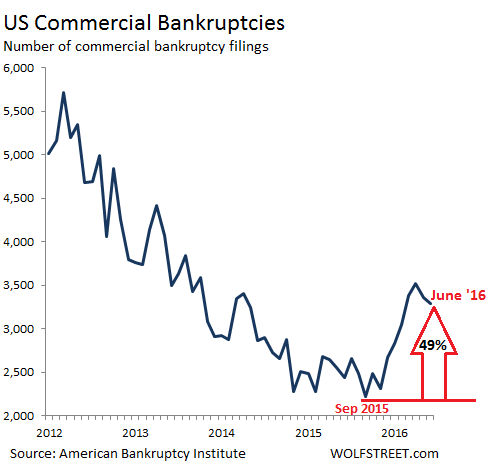
About 183,000 businesses, or less than 1% of the total, are medium-size with sales between $10 million and $1 billion. Only a fraction of them have an S&P credit rating, and only those figure into S&P’s measure of defaults. The rest, the vast majority, are flying under S&P’s radar. About 99% of all businesses in the US are small, with less than $10 million a year in revenues. None of them are S&P rated and none of them figure into S&P’s default measurements. So how are these small and medium-size businesses doing – the core of American enterprise? Total US commercial bankruptcy filings in June soared 35% from a year ago, to 3,294, the eighth month in a row of year-over-year increases, the American Bankruptcy Institute (in partnership with Epiq Systems) reported today.

During the first half, commercial bankruptcy filings soared 29% to 19,470. Among the various filing categories: Chapter 11 filings (company “restructures” its debt at the expense of stockholders and unsecured creditors by shifting ownership to creditors, but continues to operate) soared 36% to 499 in June and 25% in the first half to 3,220. Chapter 7 filings (company throws in the towel and “liquidates” by selling its assets and distributing the proceeds to creditors) jumped 28% in June to 1,909, and 25% in the first half to 11,211.

Read more …

Then so will the bankers.

In London, Banker Bonuses Are Set To Disappear (ZH)

Not only will Brexit be used as an excuse for companies to lower earnings guidance and for central banks to provide more quantitative easing, but it may also be a scapegoat for banker bonuses in London being slashed – everyone can let out their collective gasp now. As we have been covering, banker jobs have been getting cut for quite some time now, most recently with RBS announcing it will be cutting another 900 jobs. Times have been difficult for banks leading up to Brexit, but now, as Bloomberg reports, the message London’s investment banks are giving staff this year is that in the aftermath of Brexit, just be thankful to have a job, and forget a fat bonus at the end of the year.

“It’s a great opportunity to blame Brexit, giving people the message ‘you’re lucky enough to have a job'” said Stephane Rambosson, managing partner at DHR executive search firm in London, adding that bonuses could fall 30% or more in some areas. Jason Kennedy, CEO of recruitment firm Kennedy Group in London said “Reality is going to kick in, today it’s about job preservation, rather than bonuses. Things are going to change, and some people shouldn’t expect any bonuses.”

Jon Terry, a partner at PricewaterhouseCoopers in London, at least admits that things were falling apart even before Brexit: “If we hadn’t had the referendum results, this year was looking pretty tough anyway. We haven’t seen an end to various fines and compensation related to payment protection insurance and Libor. There are still billions of pounds being charged to the accounts. Ever since the financial crisis, there has been a need for reshaping the spend on compensation costs. Brexit is possibly one of the biggest catalysts for the next stage of reduction.”

Read more …

From a German source, no less. Throw that towel!

Deutsche Bank: The Downfall Of An Institution (Deutsche Welle)

It has been nearly a year since John Cryan assumed the leadership of Germany’s still-largest bank. He took the reins from Anshu Jain, who was chosen to realize his own predecessor Josef Ackermann’s dream of 25% returns. Jain did what he was expected to do. And the bank is still dealing with the consequences. 7,800 lawsuits have been carried out against the bank worldwide. Most of them are pretty manageable, some were settled for billions upon billions. But a few still carry a destructive power that would cost the bank its existence – money laundering accusations in Russia, for example, or investigations by the SEC over peculiar dealings with mortgage-backed securities.

Cryan is making a tremendous effort, portraying himself at times as the man behind the wrecking-ball, at others as the chief builder. He has almost completely replaced the bank’s leadership. With an iron broom, he has swept away many of his inherited messes, accepting record losses of over $6 billion in the process. But his efforts have yet to yield any success. Deutsche’s share price has halved itself once again this year. Employee moral is in the cellar. Even the technology is breaking down – in June, double-bookings were recorded on three million accounts, ATMs stopped giving out cash, card purchases weren’t going through. Meanwhile the bank keeps talking away about an “image problem.”

So it’s clear that things continue to get worse. Cryan stresses over and over that he doesn’t see the bank as a takeover candidate. Certainly oversight authorities would take a very close, very skeptical look at such a deal. But even if a competitor from the US or China were able to afford Deutsche Bank out of pocket, they likely wouldn’t want anything to do with it in its current condition. As of now, that’s the only real insurance against an acquisition.

Read more …

Pretty funny too.

Inequality, Debt and Credit Stagnation (Steve Keen)

This was my keynote speech at the French Association for Political Economy (AFEP) annual conference in Mulhouse, France (the other keynote was given–in French–by my good friend Marc Lavoie, who is now based at the University de Paris 13). In this presentation, I:
• Disparage the “secular stagnation” explanation that Larry Summers has regurgitated for the tepid level of economic growth today. As did Hansen in the 1930s, Summers ponders “why growth would remain anaemic in the absence of major financial concerns?“, when financial concerns are obvious if you understand credit;
• Explain why credit plays a crucial role in both aggregate demand and aggregate income, once you understand that banks originate loans rather than act as financial intermediaries; and
• Show that my 1992 complex systems model of Minsky’s “Financial Instability Hypothesis” can be derived by working from strictly true macroeconomic identities, in an alternative to Lucas’s “microfoundations” approach to building macroeconomic models.

Read more …

Beppe!

Eurosceptic 5 Star Movement Biggest Party In Italy: Survey (EP)

Beppe Grillo‘s movement would be the first Italian party, overtaking PD (Socialists) with 32% of consensus, according to a new survey by Demos. 5 Star Movement won in two of the most important Italian cities (Rome and Turin) in the last administrative election in Italy.

Demos for Repubblica:
• 5 Star Movement (EFDD): 32%
• Partito Democratico (S&D): 30%
• Lega Nord (ENF): 11,8%
• Forza Italia (EPP): 11,5%
• Fratelli d’Italia (-): 3%

With the new electoral system, the runoff would see 5 Star Movement winning against PD (54,7% vs. 45,3%)

Read more …

Down goes Jean-Claude. He ain’t no Van Damme.

EU Commission: CETA Should Be Approved By National Parliaments (DW)

European Commission chief Jean-Claude Juncker is expected to scrap plans to fast-track a trade agreement with Canada through the EU. After pressure from Germany and France, Juncker appears to be backtracking. Juncker will reportedly propose a mixed agreement – one that requires both the approval of the European parliament and national legislatures – at an European Commission meeting on Tuesday. Last week he was reported saying he “personally couldn’t care less” whether lawmakers get to vote on the deal. A report in the Financial Times noted that Germany and France wanted their national parliaments to be involved, which would inevitably lengthen the process.

The deal was scheduled to be signed at the end of October during a summit in Brussels with Canadian Prime Minister Justin Trudeau, and it was due to be implemented in 2017. Trade ministers in Germany, France, Italy, the Netherlands and UK have reportedly said they will support the Comprehensive Economic and Trade Agreement, or CETA. CETA is similar to the agreement under negotiation between the EU and US and has drawn strong criticism in EU countries. Canadian and EU leaders concluded CETA in 2014, but implementation was delayed due to last-minute objections in Europe. This was related to an investment protection system to shield companies from government intervention.

With opposition to the EU’s impending free trade deal with Canada apparently growing, German Chancellor Angela Merkel said recently that the German parliament should be consulted on the EU’s free trade deal with Canada. “It is a highly political agreement that has been widely discussed,” said Merkel, adding that the “Bundestag is allowed to be involved of course… in national decisions”. German Economy Minister Sigmar Gabriel told the Tagesspiegel daily that Juncker’s comment was “incredibly stupid” and “would stoke opposition to other free trade deals,” including with the US. German media has also described Juncker’s position as badly timed given the growing skepticism among European voters about the EU.

Read more …

“The end result is a mess, but a strangely inevitable and even curiously beautiful one.”

The Beauty Beneath Brexit’s Bedwetting (Welsh)

If democratic aliens came down from Mars and looked at the EU referendum result, they’d be compelled to take the view that the UK, hopelessly fragmented by de-industrialisation and neoliberalism, is now finished as a political entity. The debate will rage on about the extent to which leave voters gave the smug, complacent neoliberal establishment a kicking, or were duped by toytown fascists into swallowing the same policies of the past 30 years, only significantly amped up. Whatever side you come down on, the process has bolstered a toxic, chauvinistic right wing, not just in England, but also Europe and beyond. The EU referendum redesignated the United Kingdom of Great Britain and Northern Ireland as Little England.

Scottish voters, favouring the emotional and practical investment in the European ideal, decisively rejected this approach. The end result is a mess, but a strangely inevitable and even curiously beautiful one. We live in an era of great turbulence, with economic decline running in paradoxical tandem with technological advance. It is only to be expected that our antiquated institutions haven’t been able to keep up, and our nation states, political parties and supranational bodies are starting to unravel. Politicians now seem perennially in the business of chaos management, and the suspicion must be that this process has only just begun. The inevitable chorus of voices crying out for “a period of stability” sadly misses the point: we aren’t at that place in our history, and trying to impose inertia on those fluid times may only be inviting further discord.

As has been postulated, with much hand-wringing, it was obvious to many that the leave campaign didn’t believe it would win, merely wishing to register a protest, and was thus left thinking: what have we done? But let’s remember that no democrat can defend the commission-led EU, and nobody in the remain camp had a serious reforming vision of Europe, any more than those in leave offer much of clue as to what they’ll do with their increasingly hollow-looking victory. Remain’s leaders would have kept us straitjacketed into the EU’s current death-by-a-thousand-cuts version of corporate neoliberalism. At least now, shed of that distraction, we have our governmental elites much more clearly in our sights.

Read more …

The shape of things to come.

Spain’s Social Security Program Will Go Bust in 2018 (Mish)

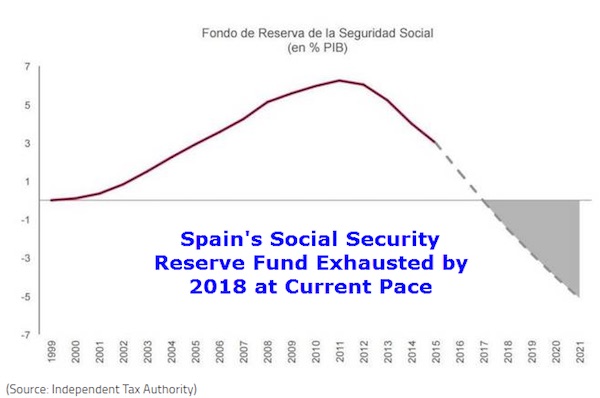
Spain’s Social Security system is expected to go broke by 2018. In the US, concerns over such matters are virtually nonexistent. But Spain cannot print Euros, and is already deep in the hole on meeting budget deficit targets. Via translation from El Confidencial, Spain’s Social Security Reserve Fund Exhausted by 2018:

The Social Security reserve fund will run out of money in 2018. The cause in bonus payments to pensioners, which consumes every six months (in December and July) over €8.5 billion. Revenue from social security contributions are not sufficient to meet the payment obligations. Starting in 2018, only an extraordinary contribution by the State would make it possible for Social Security can meet its commitments.

The financial problems of Social Security are not a temporary problem. The government itself expects that this year the public pension system will register equivalent to 1.1% of GDP deficit (about 11 billion euros ), while in 2017 planned is an imbalance equivalent to 0.9% of GDP. In 2016, revenues from social security contributions recorded an accumulated a deficit of 12.24% compared to expectations. The deviation is even higher than the already recorded in 2015.

Spain has missed watered down budget deficit targets a half-dozen times. Spain is already under pressure from Brussels to cut spending or hike taxes, by 8 billion euros. Something has to give.

Read more …

Extremely damning.

In Clinton Case, Obama Administration Nullifies 6 Criminal Laws (Zuesse)

There can be no excuse for Obama’s depriving the public, via a grand jury decision, of the right to determine whether a full court case should be pursued in order to determine in a jury trial whether Hillary Clinton’s email system constituted a crime (or several crimes) under U.S. laws. The Obama Administration’s ‘finding’ that “clearly intentional and willful mishandling of classified information” would need to have been proven, in order for her to have been prosecuted under any U.S. criminal law, is a flagrant lie: none of the above six U.S. criminal laws requires that, but the only way to determine whether even that description (“clearly intentional and willful mishandling of classified information”) also applies to Clinton would be to go through a grand jury (presenting the above-cited six laws) and then to a jury case (to try her on those plus possibly also the charge that there was “clearly intentional and willful mishandling of classified information”).

But now, those six laws are effectively gone: anyone who in the future would be charged with violating any one of those six laws could reasonably cite the precedent that Ms. Clinton was not even charged, much less prosecuted, for actions which clearly fit the description provided in each one of those U.S. criminal laws. Anyone in the future who would be charged under any one of these six laws could prove discriminatory enforcement against himself or herself. (In the particular case discussed there, discriminatory enforcement was ruled not to have existed because the enforcement of the criminal law involved was judged to have been random enforcement, but this condition would certainly not apply in Clinton’s case, it was clearly “purposeful discrimination” in her favor, and therefore enforcement of the law against anyone else, where in Clinton’s case she wasn’t even charged — much less prosecuted — for that offense, would certainly constitute discriminatory enforcement.) So: that’s the end of these six criminal laws.

The U.S. President effectively nullified those laws, which were duly passed by Congress and signed into law by prior Presidents. And that’s the end, the clear termination, of a government “of laws, not of men”.

Read more …

Yeah, that is strange. Why go public with that unless you want to influence opinion? Which is not your job…

FBI Director Comey Preempts Justice Department (Intercept)

FBI Director James Comey took the unprecedented step of publicly preempting a Justice Department prosecution when he declared at a press conference Tuesday that “no reasonable prosecutor” would bring a case against Hillary Clinton for her use of a private email server. The FBI’s job is to investigate crimes; it is Justice Department prosecutors who are supposed to decide whether or not to move forward. But in a case that had enormous political implications, Comey decided the FBI would act on its own. “Although the Department of Justice makes final decisions on matters like this, we are expressing to Justice our view that no charges are appropriate in this case,” he said. Prosecutors could technically still file criminal charges, but it would require them to publicly disagree with their own investigators.

One of Comey’s likely motivations was avoiding the appearance that Department of Justice lawyers had biased the investigation due to their desire to avoid prosecuting a major party’s presidential nominee. He repeatedly assured the audience that “no outside influence of any kind was brought to bear.” Comey’s announcement also satisfied the public’s desire for a resolution sooner rather than later. But Matthew Miller, who was a spokesman for the Department of Justice under Attorney General Eric Holder, called Comey’s press conference an “absolutely unprecedented, appalling, and a flagrant violation of Justice Department regulations.” He told The Intercept: “The thing that’s so damaging about this is that the Department of Justice is supposed to reach conclusions and put them in court filings. There’s a certain amount of due process there.”

Legal experts could not recall another time that the FBI had made its recommendation so publicly. “It’s not unusual for the FBI to take a strong positions on whether charges should be brought in a case,” said University of Texas law professor Steve Vladeck. “The unusual part is publicizing it.”

Read more …

“James Comey was the chief prosecutor in the Southern District of New York between 2003 and 2005. He had no problem keeping me in Federal Prison on contempt of court without any charges, indictment, or a civil complaint..”

The Department Of “Just Us” (Martin Armstrong)

To indict someone, the criteria is supposed to be “intent.” Comey has used that to pretend there is no evidence that Hillary “intentionally” erased anything. Comey also stated that Hillary’s lawyers erased her emails using a keyword search program and they did not “read” the emails. He added that he would not recommend charges against Hillary or her aides. “Although we did not find clear evidence that Secretary Clinton or her colleagues intended to violate laws governing the handling of classified information, there is evidence that they were extremely careless in their handling of very sensitive, highly classified information,” Comey declared.

It was Comey who indicted Frank Quattrone for claiming he instructed his people to erase emails in his technology-industry banking group at Credit Suisse Group’s Credit Suisse First Boston, based upon a single email that read “clean up those files” in December 2000. That was more than enough for his “intent” requirement to obstruct justice. This further illustrates the double standard of justice for them vs. us.

[..] James Comey was the chief prosecutor in the Southern District of New York between 2003 and 2005. He had no problem keeping me in Federal Prison on contempt of court without any charges, indictment, or a civil complaint describing any crime whatsoever that they even admitted openly in court. There were never any charges or complaint filed, and they publicly stated, “[T]here is no description of criminal liability.” Yet, Comey allowed me to be held in prison, entirely arbitrarily, with absolutely nothing whatsoever; Comey completely violated my civil rights, those of my family, and all 240 employees. So he is not someone who upholds the Constitution when it goes against government or the banks. As they say, the Department of Justice is really “Just Us” in reality. He has proven that once again.

Read more …

Jul 052016
 
 July 5, 2016  Posted by at 8:06 am Finance Tagged with: , , , , , , , , ,  1 Response »


Jack Allison “Utopia Children’s House, Harlem, New York.” 1938

Don’t Panic. Britain’s Economy Can Survive Just Fine Outside The EU (Mody)
The UK Desperately Needs A Lower Pound (Steen Jakobsen)
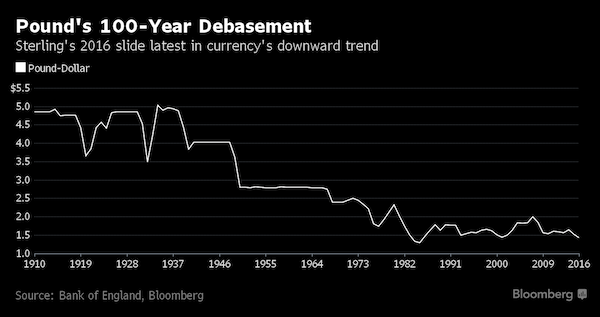
Brexit Accelerates the British Pound’s 100 Years of Debasement (BBG)
Meanwhile At The Most Systemically Dangerous Bank In The World… (ZH)
Standard Life Shuts Property Fund Amid Rush Of Brexit Withdrawals (G.)
EU Authority Fraying In Reaction To Brexit Vote (R.)
Draghi Should Have Done More To Help Italian Banks In 90’S, Says PM Renzi (R.)
Did a Fear of Slave Revolts Drive American Independence? (NY Times)
The Statue Of Liberty Was Built To Welcome Immigrants (Eggers)
The Elites Hate Momentum and The Corbynites – I’ll Tell You Why (Graeber)
In New Jersey Student Loan Program, Even Death May Not Bring a Reprieve (NYT)
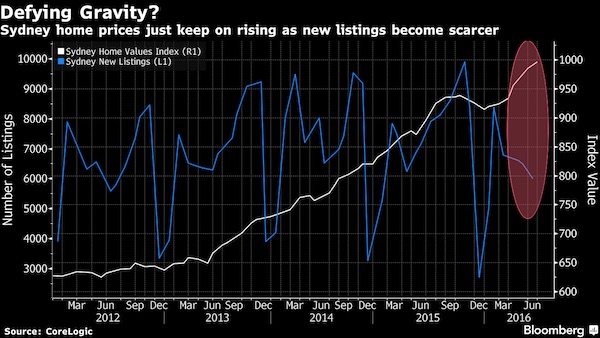
Sydney Home Prices Just Keep On Rising (BBG)
How Australia Is Sold Into Waging War In Ukraine (Helmer)
US Economist Galbraith Sheds Light On Varoufakis ‘Plan X’ (Kath.)
Wikileaks Publishes More Than 1,000 Hillary Clinton War Emails (Ind.)
Who The F**k Is Charlotte? (Jim Kunstler)


“Between 2000 and 2014, the share of British exports to Europe fell from 60 to 45%.”

Don’t Panic. Britain’s Economy Can Survive Just Fine Outside The EU (Mody

The European Union was not the principal reason why many felt economically and politically powerless, but its bureaucratic creep became a potent symbol of the overpowering force of globalization. The outgoing Prime Minister of Britain David Cameron, who likes to think of himself as modern-day Winston Churchill, had little understanding of these historical forces. Indeed, even Churchill had his historical blind spots. He petulantly called Gandhi a “half-naked fakir” and vehemently opposed Indian independence. But Cameron, seeking his petty political victories, was largely clueless about the larger stakes he ended up playing for. Tactical gains can lead to strategic advance only when guided by a larger vision. All Cameron wanted was greater hold over his party.

But once he let the genie out of the bottle, Cameron misjudged again by making an economic case for remaining in the European Union rather than attempting a serious political argument for Europe—one based on shared values. Perhaps there was no political argument to be made, but the effort to present an economic calculus for a political decision was bound to backfire. The economic numbers to make the case for Britain remaining in Europe were fanciful, however many economists and international organizations joined to endorse them.

Following Brexit, productive British trade with the European Union will survive just fine wherever it is based on long-lasting economic gains and social relationships. At the same time, the shift toward trade with the faster-growing United States and Asia will continue. Between 2000 and 2014, the share of British exports to Europe fell from 60 to 45%. Almost all new British trade is being created outside of Europe. The new tougher trade regime could even spur productivity growth. As the British economy inevitably disengages from Europe, empathy for European Union will decline further. A referendum five years from now will produce an even clearer decision to say out.

Read more …

“The UK’s problem remains their double deficit. The chronic budget and the current account deficits.”

The UK Desperately Needs A Lower Pound (Steen Jakobsen)

I am writing this chronicle from South Africa which is almost as far away from Europe and the constant and never ending Brexit talk as you can come. It’s hard even here to avoid the turbulence and never ending ‘need’ for investors and media to understand what comes next. The best analogy I can use is one from my extensive travels: When you arrive at an airport to check in, you have to pass security control when two options are at hand: The fast track or the slow version (economy class). Using the fast track gets you quicker to the gate and allows you pre-boarding, but what really should matter is that the actual flight time and route is the same for everyone in business and in economy. We arrive at EXACTLY the same time.

The point? What is now transpiring in an economic sense is that we have entered the fast track courtesy of Brexit, the selloff in GBP, the lowering of growth projections and in some places talk about reform and change which would have happened with or without the Leave vote. The UK’s problem remains their double deficit. The chronic budget and the current account deficits. The last time the UK ran a surplus on the current account was the year Italy won the World Cup in Spain and the top scorer was Paolo Rossi. you guessed it — 1982. The UK also has the lowest productivity of the G7 countries together with Japan.

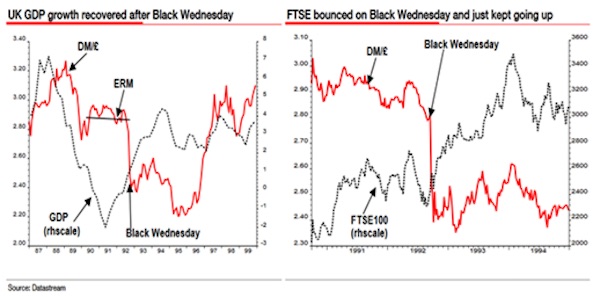
Yes, the UK needs a lower GBP and desperately so and if the ERM crisis of 1992 is any guideline, what comes next for UK is more employment and a stronger GDP as seen in this chart from the excellent research done by Societe Generale. It would be naive to anticipate only positive changes from the increased political uncertainty but do realise that the slowdown in the UK but also Europe was happening before the surprise ‘Leave’ result.

Read more …

Loss of empire.

Brexit Accelerates the British Pound’s 100 Years of Debasement (BBG)

There have been few better ways to chart Britain’s decline from empire than its currency. Historians, economists and foreign-policy specialists point to the more-than 10% plunge since the June 23 referendum as signaling another downward leg in the U.K.’s global role and influence. “The history of the pound against the dollar over the last century is essentially a downward ladder with big permanent steps,” according to Rui Pedro Esteves, an associate professor in economics at Oxford University. The world’s oldest currency — sterling is derived from the old German “ster” for strong or stable – bought almost $5 during World War I. The day of the EU referendum, it traded at $1.50. It was at $1.3330 as of 4:33 p.m. on Monday.

HSBC analysts are among those forecasting $1.20 as a likely destination. Billionaire investor George Soros suggests $1.15, the equivalent of about a euro – about 60 cents below its average since 1971. “A country’s economic size measured in other currencies – for the U.K., measured say in dollars – is an indicator of its capacity to project power and influence internationally,” said Barry Eichengreen, a professor of economics at the University of California Berkeley. While some economists, including former BOE Governor Mervyn King, see the weaker currency as leading to more export competitiveness, others see the threat of recession and lower interest rates – combined with more insular politics and withdrawal from the world’s largest trading bloc – as undermining appetite for U.K. assets.

“If you look at the U.K. now, certainly part of what is going on is a result of the exchange rate’s adjustment to growth expectations,” said Maurice Obstfeld, chief economist at the IMF. The pound has been in steady decline, spurred on by a series of financial jolts, for most of the past century – just as Britain’s prominence on the international stage has diminished.

Read more …

Correlation AND causation.

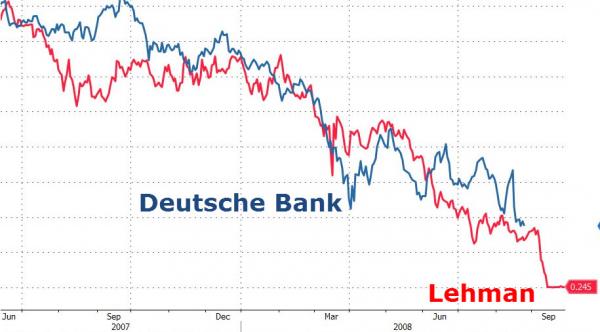
Meanwhile At The Most Systemically Dangerous Bank In The World… (ZH)

Another day, another fresh record low in Deutsche Bank’s stock price… For comparison’s sake, Deutsche Bank is analogically equivalent to where Lehman was in August 2008… when the stock soared 16% on chatter of a Korean Development Bank bailout… which then was denied, crashing the stock and ending the party…

Shares in Lehman Brothers rose substantially Friday as investors renewed hopes that the troubled investment bank was moving closer to raising capital to buffer it against a deteriorating economic environment. Capping a volatile week, the stock soared 16% on a report that the state-run Korea Development Bank was considering buying the bank, an idea that a spokesman for the South Korean firm said was “erroneous.” Lehman’s stock closed the day up 5% at $14.41.

The spokesman for Korea Development Bank told The New York Times that the bank was in the process of being privatized and was looking at various acquisitions. But he denied that buying Lehman was an option. “We have various thoughts for our future, but we don’t have any specific institutions in mind,” said the spokesman, who declined to be named, citing company policy. Lehman’s suddenly soaring stock underscores the volatility surrounding the firm as it scrambles to assess its options in the face of an abysmal third quarter. Only days ago, its shares tumbled more than 13%.

We wait for chatter of a Deutsche Bank ‘offer’ rumor any day now. We are sure it’s nothing. How can it be a problem given that US equities are so strong? right?

Read more …

Can’t be just one fund that has these problems.

Standard Life Shuts Property Fund Amid Rush Of Brexit Withdrawals (G.)

Investors in Standard Life’s property funds have been told that they cannot withdraw their money, after the firm acted to stop a rush of withdrawals following the UK’s decision to leave the EU. The firm halted trading on its Standard Life Investments UK Real Estate Fund and associated funds at midday on Monday, citing “exceptional market circumstances” for the decision. It said the suspension would remain in place until it is “practicable” to lift it, and that it would review the decision at least every 28 days. The £2.9bn fund, which invests in commercial properties including shopping centres, warehouses and offices, is thought to be the first UK property fund to suspend trading since the 2007-2009 financial crisis, when some of the biggest names in investment management stopped withdrawals because they did not have the money to repay investors.

Standard Life’s decision is the latest in a line of moves by investment firms to stem flows out of their property funds. Standard Life last week, together with rivals Henderson, Aberdeen and M&G, reduced the amount investors cashing in holdings would get back by up to 5%. In a statement, Standard Life said the decision followed an increase in redemption requests from investors. “The suspension was requested to protect the interests of all investors in the fund and to avoid compromising investment returns from the range, mix and quality of assets within the portfolio,” the company said.

Read more …

Juncker’s days are definitely numbered. But nobody seems to either know nor agree what should be next.

EU Authority Fraying In Reaction To Brexit Vote (R.)

[..] Italian Prime Minister Matteo Renzi, who has fought to bend EU budget deficit rules and now seeks to pump billions of euros into his country’s ailing banks if needed to shore them up, said on Monday the EU was run by “a technocracy with no soul”. He also opposed sanctions against fellow southern members Spain and Portugal for violating the EU’s deficit limits last year – a step the Commission is due to consider on Tuesday in a German-backed drive to uphold the much-abused budget rules. Italy’s banks are saddled with €360 billion in bad loans and their share prices plunged after last month’s Brexit vote. Rome is in talks with the EU Commission to devise a plan to recapitalize its lenders with public money limiting losses for bank investors.

Dutch and German ministers have attacked a Commission decision that the European Parliament can approve a trade pact with Canada without referring it to national parliaments. The Dutch parliament was assured it would have a chance to weigh in on the treaty. But perhaps most worryingly for the EU, senior ministers in Germany, the bloc’s reluctant hegemon, are advocating shrinking the executive Commission, trimming its powers, and bypassing common European institutions to take more decisions by intergovernmental agreement. A call from veteran German Finance Minister Wolfgang Schaeuble, long an advocate of closer integration, to shift more policy decision-making to governments for expediency’s sake was among the most striking indicators of the mood around Europe.

“If the Commission doesn’t get involved, then we should take the matter into our own hands and solve problems between governments,” Schaeuble told Welt am Sonntag newspaper, saying now was a time for pragmatism. “This intergovernmental approach proved successful during the euro zone crisis,” he added.

Read more …

Renzi, in trying to save his career, becomes a danger to Brussels.

Draghi Should Have Done More To Help Italian Banks In 90’S, Says PM Renzi (R.)

Italian Prime Minister Matteo Renzi criticized ECB Governor Mario Draghi for not having done more to resolve Italy’s banking woes when he held a key Treasury job in Rome in the 1990s. Renzi’s rare public criticism of Draghi came on the day Italy’s third-largest lender, Banca Monte dei Paschi di Siena (BMPS.MI), said that the ECB had asked it to cut its bad debts by 40% within three years, heaping more pressure on Rome to stabilize its banking system. After taking power in 2014, Renzi’s government introduced reforms aimed at strengthening the country’s cooperative banks, but several are struggling to stay afloat and a bailout fund took control of Veneto Banca last week after the ECB said it had to raise capital or close.

“If the measures concerning the cooperatives had not been taken by us but by the centre-left government that first put them forward, but was not strong enough to enact them in 1998 … then we would not have this problem,” Renzi said. The prime minister said that Draghi was director general of the Treasury at that time, with Carlo Azeglio Ciampi serving as economy minister. “And if people had the strength and intelligence to keep politics out of the banking system a bit before we did it … we would not have had cases like Monte dei Paschi di Siena,” Renzi told a meeting of his centre-left Democratic Party (PD).

Read more …

How things are seldom what they seem. Or people, for that matter.

Did a Fear of Slave Revolts Drive American Independence? (NY Times)

For more than two centuries, we have been reading the Declaration of Independence wrong. Or rather, we’ve been celebrating the Declaration as people in the 19th and 20th centuries have told us we should, but not the Declaration as Thomas Jefferson, Benjamin Franklin and John Adams wrote it. To them, separation from Britain was as much, if not more, about racial fear and exclusion as it was about inalienable rights. The Declaration’s beautiful preamble distracts us from the heart of the document, the 27 accusations against King George III over which its authors wrangled and debated, trying to get the wording just right. The very last one — the ultimate deal-breaker — was the most important for them, and it is for us:

“He has excited domestic insurrections amongst us, and has endeavored to bring on the inhabitants of our frontiers, the merciless Indian savages, whose known rule of warfare is an undistinguished destruction of all ages, sexes and conditions.” In the context of the 18th century, “domestic insurrections” refers to rebellious slaves. “Merciless Indian savages” doesn’t need much explanation. In fact, Jefferson had originally included an extended attack on the king for forcing slavery upon unwitting colonists. Had it stood, it would have been the patriots’ most powerful critique of slavery. The Continental Congress cut out all references to slavery as “piratical warfare” and an “assemblage of horrors,” and left only the sentiment that King George was “now exciting those very people to rise in arms among us.”

The Declaration could have been what we yearn for it to be, a statement of universal rights, but it wasn’t. What became the official version was one marked by division. Upon hearing the news that the Congress had just declared American independence, a group of people gathered in the tiny village of Huntington, N.Y., to observe the occasion by creating an effigy of King George. But before torching the tyrant, the Long Islanders did something odd, at least to us. According to a report in a New York City newspaper, first they blackened his face, and then, alongside his wooden crown, they stuck his head “full of feathers” like “savages,” wrapped his body in the Union Jack, lined it with gunpowder and then set it ablaze.

Read more …

Reflecting on Lady Liberty’s right foot.

The Statue Of Liberty Was Built To Welcome Immigrants (Eggers)

Though she is the most recognisable symbol of the American experiment, there is something about the Statue of Liberty that goes largely unnoticed. And that is that she is moving. The torch in her right hand, symbolising enlightenment, cannot be ignored and is never overlooked. The book in her left hand, with 4 July carved in roman numerals, is not likely to be missed. Nor are the seven spikes of her crown, matching the world’s seven continents and seven seas. And though, if pressed, we remember that she is wearing sandals, we forget, if we ever knew, that the Statue of Liberty is on the go. Take the ferry to Liberty Island. As your boat rises and falls on the rough waters of New York Harbor, you will see, with undeniable clarity, that her right foot is striding forward.

And around her feet are chains, broken, which sculptor Frédéric Auguste Bartholdi meant to symbolise the breaking of the chains of bondage and tyranny. She is caught, forever, in the moment of becoming free. The 305ft statue is a marvel of artistry and engineering, and there are many details to admire, but none is more important than her right leg, which is stepping forward, and stepping forward not casually but with great striding purpose. This right foot, though largely unheralded, might be its most important feature. For what would it mean if the symbol of liberty were standing still? That would imply that freedom is static, that once established, it’s a settled thing. But freedom is not a settled thing.

It would imply that once the first few million immigrants arrived on American shores, fleeing religious bigotry or political violence or ethnic persecution, then the United States should or could close its gates. It would imply that the welcoming of new arrivals, the poor and tired and struggling to be free, was a temporary thing, that the welcoming of the world’s oppressed was a thing of the past. But the welcoming of the world’s oppressed is not a thing of the past. We live in a moment when shrill voices tell us that not only should immigration be stifled, but that millions of current residents should be deported, returned to their country of origin, no matter the consequences for their souls or our consciences. These fearful voices put forth a direct repudiation of the origin and elemental purpose of this country, and to the meaning of the statue that we accept as our talisman.

Read more …

The coup against Corbyn is also linked to Tony Blair’s possible indictment, and the risks that brings for those in the party who are linked to him.

The Elites Hate Momentum and The Corbynites – I’ll Tell You Why (Graeber)

As the rolling catastrophe of what’s already being called the “chicken coup” against the Labour leadership winds down, pretty much all the commentary has focused on the personal qualities, real or imagined, of the principal players. Yet such an approach misses out on almost everything that’s really at stake here. The real battle is not over the personality of one man, or even a couple of hundred politicians. If the opposition to Jeremy Corbyn for the past nine months has been so fierce, and so bitter, it is because his existence as head of a major political party is an assault on the very notion that politics should be primarily about the personal qualities of politicians. It’s an attempt to change the rules of the game, and those who object most violently to the Labour leadership are precisely those who would lose the most personal power were it to be successful: sitting politicians and political commentators.

If you talk to Corbyn’s most ardent supporters, it’s not the man himself but the project of democratising the party that really sets their eyes alight. The Labour party, they emphasise, was founded not by politicians but by a social movement. Over the past century it has gradually become like all the other political parties – personality (and of course, money) based, but the Corbyn project is first and foremost to make the party a voice for social movements once again, dedicated to popular democracy (as trades unions themselves once were). This is the immediate aim. The ultimate aim is the democratisation not just of the party but of local government, workplaces, society itself.

Read more …

In a nutshell: “..One reason for the aggressive tactics is that the state depends on Wall Street investors to finance student loans..”

In New Jersey Student Loan Program, Even Death May Not Bring a Reprieve (NYT)

New Jersey’s loans, which currently total $1.9 billion, are unlike those of any other government lending program for students in the country. They come with extraordinarily stringent rules that can easily lead to financial ruin. Repayments cannot be adjusted based on income, and borrowers who are unemployed or facing other financial hardships are given few breaks. The loans also carry higher interest rates than similar federal programs. Most significant, New Jersey’s loans come with a cudgel that even the most predatory for-profit players cannot wield: the power of the state. New Jersey can garnish wages, rescind state income tax refunds, revoke professional licenses, even take away lottery winnings — all without having to get court approval.

“It’s state-sanctioned loan-sharking,” Daniel Frischberg, a bankruptcy lawyer, said. “The New Jersey program is set up so that you fail.” The authority, which boasts in brochures that its “singular focus has always been to benefit the students we serve,” has become even more aggressive in recent years. Interviews with dozens of borrowers, who were among the tens of thousands who have turned to the program, show how the loans have unraveled lives. The program’s regulations have destroyed families’ credit and forced them to forfeit their salaries. One college graduate declared bankruptcy at age 26 after struggling to repay his debt. The agency filed four simultaneous lawsuits against a 31-year-old paralegal after she fell behind on her payments.

Another borrower, Chris Gonzalez, could not keep up with his loans after he got non-Hodgkin’s lymphoma and was laid off by Goldman Sachs. While the federal government allowed him to suspend his payments because of hardship, New Jersey sued him, seeking $266,000 in payments, and seized a state tax refund he was owed. One reason for the aggressive tactics is that the state depends on Wall Street investors to finance student loans through tax-exempt bonds and needs to satisfy those investors by keeping losses to a minimum. Loan revenues also cover about half of the agency’s administrative budget.

Read more …

How to kill a city.

Sydney Home Prices Just Keep On Rising (BBG)

Sydney home prices resumed their upward march as dwindling supply outweighs tighter loan approvals by lenders. Dwelling values climbed 1.2% in June, taking gains for the second quarter to 6.8%, according to data from CoreLogic. The market is getting a leg up after a slowdown at the end of last year in Australia’s largest city, as new listings fell more than 16% from a year earlier to the lowest in five months in June, according to the data.

Read more …

How to kill a country: “..it is financed by grants from the Australian Department of Defence, the Australian Army, the Australian Federal Police, the Dutch Foreign Ministry, and the Japanese Government; plus Raytheon, Northrup Grumman, Lockheed Martin, and Boeing..

How Australia Is Sold Into Waging War In Ukraine (Helmer)

Among Turnbull’s last-minute ploys to attract votes, one was the leak last month of Australian cabinet plans for an Australian Army force to fight in eastern Ukraine, alongside Dutch and other NATO units, to destroy the Donetsk and Lugansk rebellion against the regime in Kiev. Turnbull’s leak had suggested that Tony Abbott, the prime minister Turnbull had pushed aside to take the job, dreamed up the plan of Australian war at the Russian frontier by himself. The new report by Dibb now corroborates the idea of an Australian military expedition against Russia, in exchange for improved American commitments to defend Australia from the Chinese closer to home, in the Pacific.

“How things work out in Europe,” Dibb claims, “will affect Washington’s ability to reassure allies and partners everywhere, including those in our region who must contend with increasing coercion by China.” Unless Australia does more fighting with the Americans on the Russian front, he concludes, “China will take advantage of this, and allies and partners of the US in the region -including Australia- would be subject to further uncertainty about American military commitments to Asia.” Combating “Russia’s aggressive military behaviour “is necessary because, otherwise, “both Moscow and Beijing will be seen as getting away with it.” The 40-page Dibb report is entitled “Why Russia is a threat to the international order”. Read it in full. The publisher is a think-tank headquartered in Sydney called the Australian Strategic Policy Institute (ASPI).

It says “ASPI was established, and is partially funded, by the Australian Government as an independent, non-partisan policy institute.” The institute’s financial reports reveal it is financed by grants from the Australian Department of Defence, the Australian Army, the Australian Federal Police, the Dutch Foreign Ministry, and the Japanese Government; plus Raytheon, Northrup Grumman, Lockheed Martin, and Boeing — the leading arms-exporting corporations of the US. European arms builders also funding ASPI include the European missile-maker MBDA, BAE Systems, ThyssenKrupp Marine Systems, Rheinmetall, Airbus, and Navantia, the Spanish state shipbuilder. When Australians march into the field against the Russians, these suppliers aim to provide the best kit Australian money can buy.

Read more …

Tsipras might have done well to pay some more attention.

US Economist Galbraith Sheds Light On Varoufakis ‘Plan X’ (Kath.)

The Plan B for Greece that was drafted by former Greek Finance Minister Yanis Varoufakis foresaw the declaring of a state of emergency, the immediate nationalization of the Bank of Greece, the transformation of bank deposits into a New Drachma and emergency public order measures, according to a book by American economist James Galbraith, Varoufakis’s chief coordinator for the plan. In the book, “Welcome to the Poisoned Chalice: The Destruction of Greece and the Future of Europe,” which has been translated into Greek, Galbraith describes in detail Varoufakis’s plan for moving Greece to a parallel banking system last year.

Those privy to the Plan B – or Plan X as Varoufakis is said to have called it – would meet in conditions of high secrecy involving secure communications and the depositing of cell phones in hotel refrigerators. According to Galbraith, during the transition phase, the ministries of Defense and the Interior would have been responsible for public order, fuel supplies would be controlled, while employees at important public institutions (schools, hospitals, police) would be mobilized. Even though there was a high-level meeting about the plan, Galbraith said the prime minister did not ask to be briefed, so work on the endeavor ended with the submission of an extensive memo in May.

Read more …

At some point, indictment or not, enough people will realize that Clinton is too much of a risk for the credibility of the entire American political system.

Wikileaks Publishes More Than 1,000 Hillary Clinton War Emails (Ind.)

WikiLeaks, the anti-secrecy website, has released more than 1,000 emails from Hillary Clinton’s private email server pertaining to the Iraq War. The website tweeted a link to 1,258 emails on Monday that Clinton sent during her time as secretary of state. According to the release, the emails were obtained from the US State Department after they issued a Freedom of Information Act request. However, it’s unclear if any of the information is classified. WikiLeaks founder Julian Assange previously claimed that his website obtained enough proof for the FBI to indict the presumptive Democratic nominee for president.

“We could proceed to an indictment, but if Loretta Lynch is the head of the DOJ in the United States, she’s not going to indict Hillary Clinton,” Assange told ITV. “That’s not possible that could happen.” The newly released information will likely only serve as political fodder for the presumptive Republican nominee Donald Trump, as Clinton met with FBI investigators over the weekend wrapping up the lengthy investigation. Sources close to the probe recently told CNN that the bureau will announce no charges against Clinton in the weeks to come.

Read more …

Ha! Funny! But I think Lynch’s involvement is far more insidious than this.

Who The F**k Is Charlotte? (Jim Kunstler)

The mighty Shakespeare in his direst night sweats could not have conjured up the Clinton family in all their sharp angles and dark corners, but we can try to reconstruct the scene last week on Loretta Lynch’s plane out on the Phoenix airport tarmac.

Former president Bill steps aboard:
• Loretta: What the fuck are you doing here?
• Bill: I just had to tell you what Charlotte did last week.
• Loretta: Who the fuck is Charlotte?
• Bill: Our grand-kid. She’s turning into a good little earner.
• Loretta: We can’t meet like this. We’re about to depose your wife.
• Bill: Charlotte gave a speech to the whole Citibank C-suite.
• Loretta: I don’t give a fuck. Get off my plane right now!
• Bill: Well, I don’t know if ‘speech’ is the right word. She gurgles nice.
• Loretta: I guess you didn’t hear me.
• Bill: She pulled in fifty grand for that. Of course it was 100% remitted to the foundation. Well, bye now. (Exits plane).

I have a theory about the Clinton family dynamic. Bill does not want Hillary to win because he doesn’t want to live in the White House again. For sure he does not want to live with The Flying Reptile, but he especially doesn’t want to be on display in that fishbowl where folks pretty much can see what you’re up to 24/7. For one thing, “The Energizer” can’t discreetly come and go. But he certainly doesn’t want to concern himself as “First Husband” or “First Gentleman” (title TBD) with deciding which fabric to choose in replacing the East Room draperies. So Bill decided to fix things for sure with that innocent visit to the US Attorney General’s airplane to talk about grand-kids.

It seems to be working. If there was any question that Loretta Lynch could just sit on her hands about Hillary’s email investigation through the November election, it went up in a vapor last week. It also left the FBI director on the hot seat because now he will have to either cough up a referral to Justice Department prosecutors, or he’ll have some ‘splainin to do in the heat of a presidential election campaign. If you thought Watergate was a ripe peach, this one is beginning to look like a stinking durian (Durio zibethinus).

Read more …

Jun 302016
 
 June 30, 2016  Posted by at 8:32 am Finance Tagged with: , , , , , , , ,  1 Response »


Harris&Ewing F.W. Grand store, Washington, DC 1925

The End Of The EU Is Coming: Ron Paul (CNBC)
‘British Pound Signals US Stocks Are About To Fall Hard’ (CNBC)
US Banks Beat Fed Stress Test as Deutsche Bank, Santander Fail Anew (BBG)
Deutsche Bank Is The Riskiest Financial Institution In The World: IMF (ZH)
Steve Keen on Brexit (Hartmann)
Singapore Bank Suspends London Property Loans (R.)
Was Brexit Fear A Giant Hoax Or Is This The Calm Before The Next Storm? (AEP)
Poland Calls For Juncker To Quit As Others Fume EU Has Too Much Power (EUK)
Japan Factory Output Hits 3-Year Low On Weak Domestic Demand, Exports (R.)
China’s Analysts Haven’t Been This Wrong on Equities Since 2009 (BBG)
Yuan Heads for Worst Quarter on Record as Outflows Seen Rising (BBG)
New Zealand Businessmen Mull Buying Cruise Ship To House Homeless (G.)
More Than 57,000 Migrants And Refugees Stranded In Greece (Kath.)


“It really is coming to an end. It doesn’t mean tomorrow or the next day, but people are going to be really unhappy…”

The End Of The EU Is Coming: Ron Paul (CNBC)

The historic U.K. vote to leave the European Union is a sign of a major global meltdown, not just a watershed that marks the end of a unified continent, former Rep. Ron Paul says. “I think [the EU] will become nonfunctional,” Paul told CNBC’s “Futures Now” on Tuesday. “It really is coming to an end. It doesn’t mean tomorrow or the next day, but people are going to be really unhappy. The end is coming, but it isn’t coming because of the breakup,” he added. Paul attributed the fallout to “bad fiscal policies” around the globe. He said that as long as interest rates remain low, the markets will remain in bubble territory.

“I think what everyone is looking at is there was a vote, an important vote and it went differently than expected and it sent shock waves through the markets, but I think the concentration is on the wrong issue,” the former Libertarian and Republican Party presidential candidate said. Instead, he said, what has caused so much turmoil is what happened before the recent declines. “What has been preceding this situation that we have throughout the world and this country as well is artificially low interest rates. It causes people to make mistakes in buying bonds,” he said.

Read more …

Interesting correlation.

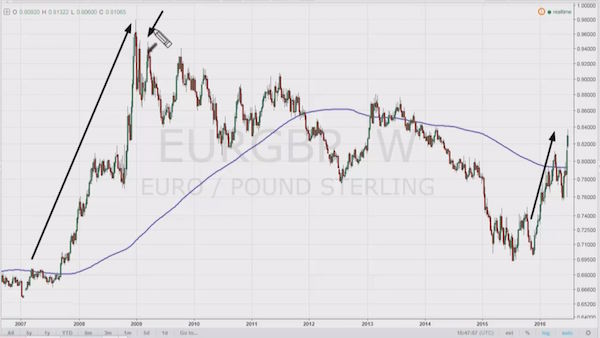
‘British Pound Signals US Stocks Are About To Fall Hard’ (CNBC)

The euro’s considerable rise against the British pound signals trouble to come for U.S. markets, according to Evercore ISI technical analyst Rich Ross. The euro and the pound fell against the dollar after the U.K. voters opted to leave the EU, but sterling fell further, hitting three-decade lows against the dollar. According to Ross, the relative weakness in the British currency mirrors the euro’s huge rally against the British pound from 2007 to 2009. During that period, U.S. stocks plummeted. As a result, Ross is particularly wary of the euro’s recent strength against the pound.

“This surge that we’re seeing is breaking this multiyear downtrend, breaking out through that 200-week moving average,” Ross said Tuesday on CNBC’s “Trading Nation.” “That could potentially spell problems for the S&P 500 and for risk assets [based on the past], so we want to watch that euro-pound.” Ross believes that the euro’s strength against the pound could just be getting started. “I think there could eventually be upside in the euro-pound to just around 86 cents, and that would likely correspond with further downside for risk assets like stocks, like the S&P 500,” Ross added.

Read more …

Take a pinch of salt with every stress test.

US Banks Beat Fed Stress Test as Deutsche Bank, Santander Fail Anew (BBG)

Federal Reserve officials cleared dozens of U.S. banks to boost shareholder payouts after conducting annual stress tests that proved too rigorous, again, for subsidiaries of Deutsche Bank and Banco Santander. JPMorgan Chase, Citigroup, Bank of America and 27 other firms with major U.S. operations passed the exam Wednesday, with many unveiling plans to distribute more capital through dividends and stock buybacks. Even Morgan Stanley, which must shore up internal systems before the Fed issues a final verdict, got conditional permission to boost its dividend 33%. Deutsche Bank and Santander were alone in failing, due to “broad and substantial weaknesses across their capital planning processes,” the Fed said.

While both had adequate capital and showed improvement after failing last year, their plans still relied on assumptions and analyses that “are not reasonable or appropriate,” the regulator said. The findings show U.S. banks have largely adapted to the Fed’s stiffer oversight of capital and internal controls in the wake of 2008’s financial crisis. After years spent cleaning up their balance sheets and stumbling in past exams, Citigroup and Bank of America cleared handily this time and are now moving beyond the penny and nickel dividends they’ve been stuck paying. Deutsche Bank and Santander, meantime, both vowed anew to do better next time.

Read more …

We knew from their derivatives portfolio.

Deutsche Bank Is The Riskiest Financial Institution In The World: IMF (ZH)

[..] not only did Deutsche Bank just flunk the Fed’s stress test for the second year in a row, but moments ago in a far more damning analysis, none other than the IMF disclosed that Deutsche Bank poses the greatest systemic risk to the global financial system, explicitly stating that the German bank “appears to be the most important net contributor to systemic risks.” Yes, the same bank whose stock price hit a record low just two days ago. Here is the key section in the report:

Domestically, the largest German banks and insurance companies are highly interconnected. The highest degree of interconnectedness can be found between Allianz, Munich Re, Hannover Re, Deutsche Bank, Commerzbank and Aareal bank, with Allianz being the largest contributor to systemic risks among the publicly-traded German financials. Both Deutsche Bank and Commerzbank are the source of outward spillovers to most other publicly-listed banks and insurers. Given the likelihood of distress spillovers between banks and life insurers, close monitoring and continued systemic risk analysis by authorities is warranted.

Among the G-SIBs, Deutsche Bank appears to be the most important net contributor to systemic risks, followed by HSBC and Credit Suisse. In turn, Commerzbank, while an important player in Germany, does not appear to be a contributor to systemic risks globally. In general, Commerzbank tends to be the recipient of inward spillover from U.S. and European G-SIBs. The relative importance of Deutsche Bank underscores the importance of risk management, intense supervision of G-SIBs and the close monitoring of their cross-border exposures, as well as rapidly completing capacity to implement the new resolution regime.

The IMF also said the German banking system poses a higher degree of possible outward contagion compared with the risks it poses internally. This means that in the global interconnected game of counterparty dominoes, if Deutsche Bank falls, everyone else will follow.

Notwithstanding moderate cross-border exposures on aggregate, the banking sector is a potential source of outward spillovers. Network analysis suggests a higher degree of outward spillovers from the German banking sector than inward spillovers. In particular, Germany, France, the U.K. and the U.S. have the highest degree of outward spillovers as measured by the average percentage of capital loss of other banking systems due to banking sector shock in the source country.

Read more …

Obviously, I’m with Steve on this.

Steve Keen on Brexit (Hartmann)

Thom Hartmann talks to Prof. Steve Keen of Kingston University, London, about why Brexit is a response to failed neoliberal policies and why that could be good for all of us.

Read more …

One less bubble maker.

Singapore Bank Suspends London Property Loans (R.)

United Overseas Bank, Singapore’s number 3 lender, became the first bank in the city state to suspend its loans program for London properties in the wake of uncertainties caused by Britain’s vote to leave the European Union. As Brexit spooked global markets and pushed the pound to multi-year lows, other Singaporean banks were also advising clients about risks such as currency losses even though they have not followed UOB’s move. “We will temporarily stop receiving foreign property loan applications for London properties,” a UOB spokeswoman said in an email.

“As the aftermath of the UK referendum is still unfolding and given the uncertainties, we need to ensure our customers are cautious with their London property investments.” The Singaporean dollar has gained 10% against the British pound since the referendum, eroding the value of assets held in Britain. Other risks for Singaporean banks have been exacerbated in recent months by an economic slowdown in Asia and rising bad debts in energy-related industries. Moody’s Investors Service on Thursday revised the outlook on Singapore’s banks to negative from stable. This reflected the “weaker operating conditions” against the backdrop of softer regional economic and trade growth, Moody’s said.

Read more …

Deflation is coming from the east.

Was Brexit Fear A Giant Hoax Or Is This The Calm Before The Next Storm? (AEP)

Devaluation strikes no fear in a chronic deflationary world where almost every major country is trying to push down its currency to break out of the trap, and largely failing to do so. It would facetious to suggest that Britain has pulled off this trick. Crumbling investor confidence is never a good thing. But the UK has stolen a march of sorts, carrying out a beggar-thy-neighbour devaluation by accident. The pound needs to fall further. It is still too strong for a country with a current account deficit running consistently above 5pc of GDP. The IMF said just before Brexit that sterling was 12pc to 18pc overvalued, and may have to fall more than this to force a lasting realignment of the British economy.

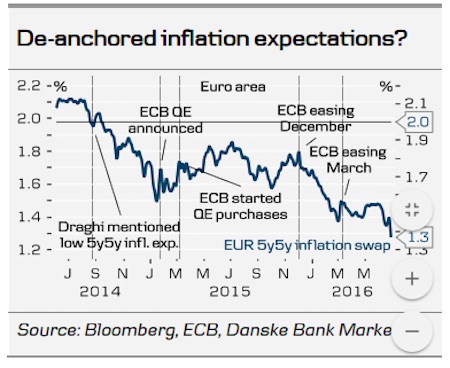
This cure has hardly begun. As of today, sterling is 5pc below its trading range for the last month against the euro and the Chinese yuan. It is weaker against the US dollar but the dollar is on steroids, much to the horror of the US Treasury. The more sterling falls, the greater the net stimulus for the British economy. The reverse holds for the eurozone. It is a further deflationary shock at a time when Europe is already in deflation, when inflation expectations are in free-fall and bond yields are collapsing below zero, and when the ECB is running out of options. There are two dangers for the world economy. One is that China is exporting deflation with alarming intensity. Morgan Stanley estimates that China’s trade-weighted devaluation is running at an annual rate of 11pc, and factory gate deflation adds another 2pc.

This is a tsunami coming from the epicentre of global overcapacity. The other danger is that British and European politicians fail to understand what is coming straight at them from Asia. Britain’s Brexiteers must come up with a coherent policy on trade very fast, and the EU must come off their ideological high-horse and face the reality that they have absolutely no margin for economic error. US Secretary of State John Kerry warned in stark terms on his post-Brexit swoop into Europe that nobody should lose their head, or go off half-cocked, or “start ginning up scatter-brained or revengeful premises.” Nobody seemed to heed his words at the EU’s imperial summit in Brussels, an exercise in righteous anger but not much else. The markets may yet speak in harsher language.

Read more …

Why do I have the impression the right is sharper these days than the left?

Poland Calls For Juncker To Quit As Others Fume EU Has Too Much Power (EUK)

After Britain’s shock vote to quit the EU, remaining countries are looking for better deals for themselves, and ordering the union to learn from its mistakes or face further calls for a total break up. Poland, Slovakia, Hungary and the Czech Republic called on Tuesday for the powers of the European Commission to be curbed with Warsaw calling for the dismissal of Mr Juncker, the executive’s head. Last week’s referendum alarmed governments in the former communist eastern region of the EU who had seen London as their main eurosceptic ally in efforts to reduce centralised control from Brussels. Poland’s Foreign Minister Witold Waszczykowski said: “We are asking if this leadership of the European Commission has a right to continue functioning, fixing Europe.

“In our opinion, it does not. New politicians, new commissioners should undertake this task, and first of all we should give new prerogatives to the European Council, because it consists of politicians who have a democratic mandate.” Warsaw has clashed with the Commission over its controversial attempt to curb the powers of the constitutional court, which led Brussels to launch an investigation into the rule of law in Poland. Tension between the Brussels executive, which drafts and enforces EU legislation, and member states, which exercise their authority collectively in the EU Council, has been a permanent feature of the bloc over six decades.

Read more …

And then throw a surging yen into the mix.

Japan Factory Output Hits 3-Year Low On Weak Domestic Demand, Exports (R.)

Japan’s industrial output slid in May at the fastest rate in three months to its lowest level since June 2013, highlighting concerns about falling exports and weak consumer spending. May’s 2.3% fall in industrial output considerably exceeded the median estimate for a 0.1% decline forecast in a Reuters poll. “The decline in industrial output is directly related to the decline in exports,” said Hidenobu Tokuda, senior economist at Mizuho Research Institute. “Another factor is the slow recovery in domestic consumer spending. The government should consider some measures to improve domestic demand.” Japan’s government plans to announce more fiscal stimulus spending this autumn to revive Prime Minister Shinzo Abe’s economic agenda.

Strengthening domestic demand has become even more urgent as gains in the yen further threaten exports. Output fell in May due to declines in the production of chemicals, cosmetics, construction equipment and semiconductors, data from the Ministry of Economy, Trade and Industry showed. Manufacturers surveyed by the ministry expect output to rise 1.7% in June and increase 1.3% in July. Exports fell at the fastest pace in four months in May on supply chain disruptions from an earthquake and slow growth in emerging markets, data earlier this month showed. The Bank of Japan’s closely-watched tankan business sentiment survey due on Friday is forecast to show confidence fell to the lowest in three years in April-June.

Read more …

When things get serious, you lie. Shanghai’s 49% crash over the past year is serious.

China’s Analysts Haven’t Been This Wrong on Equities Since 2009 (BBG)

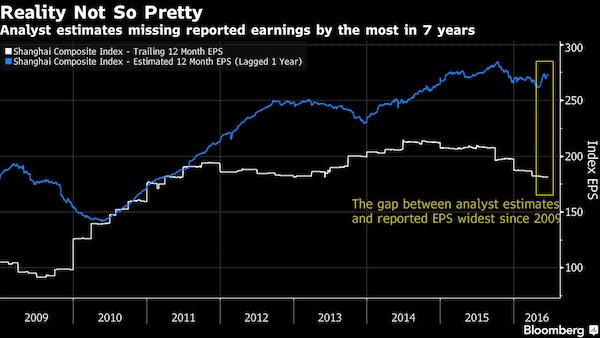
China’s gap between profit forecasts and reality is turning into a chasm. Firms in the Shanghai Composite Index reported earnings per share for the past year that were 33% below what analysts had predicted 12 months ago, according to data compiled by Bloomberg. The gap, which this month widened to the most since 2009, far outstrips the difference between projections and actual earnings in the U.S., and is more than double that of Chinese companies in Hong Kong. So how did they get it so wrong? China’s industrial giants are being squeezed as the government reorients the economy around services, leaving excess capacity that translates into volatile earnings.

Those stocks dominate the Shanghai Composite and have been among its steepest decliners in 2016, helping drag the gauge down 17%. As to why analysts didn’t anticipate the scale of the shift: Foundation Asset Management says in a market where short-selling is almost impossible, there’s little demand for negative research and strategists face more pressure to present an optimistic outlook. “The transitioning of the economy from exports to consumer, that’s a painful adjustment that occurs over a number of years,” said Ben Surtees at Jupiter Asset Management in London. “Analysts aren’t capturing the changes that are occurring.”

[..] In just over a year, China’s stock forecasters have weathered a rally that took the Shanghai Composite to a 7-year high in June 2015, and then a 49% crash that prompted authorities to crack down on alleged market manipulation by discouraging short-selling and targeting brokerage executives and journalists. That backdrop is an added reason to present positive research, Ample Capital’s Alex Wong said.

Read more …

“..37 times more money [left] China than enter[ed] so far this year.”

Yuan Heads for Worst Quarter on Record as Outflows Seen Rising (BBG)

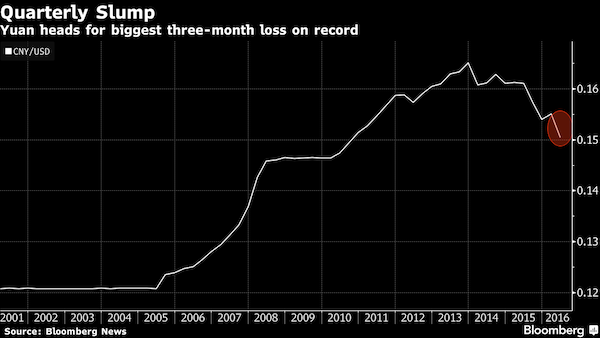
The yuan’s worst quarterly performance on record is raising the risk of capital flight. China’s currency has slumped 2.9% since the end of March, the most since the nation unified the official and market rates at the start of 1994, to trade near its lowest level in five years. Losses deepened after the U.K.’s vote to secede from the European Union led to a jump in the dollar and dented the outlook for Chinese exports. After turmoil in its currency and stock markets in the past year shook investor confidence, China stopped granting quotas for residents to invest overseas and clamped down on illegal fund transfers to restrain capital outflows.

Policy makers are trying to guide the currency lower versus its trading partners as the economy slows while simultaneously damping expectations of faster depreciation. Goldman Sachs warned Thursday that metals investors are concerned China may sharply weaken its exchange rate. “We see a rising risk that capital outflows could pick up again causing negative headlines and adding to the fragility of current market sentiment,” said Allan von Mehren at Danske Bank. “We expect the depreciation pressure on the Chinese currency to continue over the coming years.” [..] A program allowing some domestic and Hong Kong mutual funds to be sold on either side of the border has seen about 37 times more money leave China than enter so far this year.

Read more …

Yes, housing bubbles leave people homeless in their wake.

New Zealand Businessmen Mull Buying Cruise Ship To House Homeless (G.)

A group of New Zealand businessman have come up with an idea to help New Zealand’s homeless – place them on a cruise ship. Charity groups in Auckland estimate hundreds of people are sleeping rough in the city every night, with dozens of working families also bedding down in cars, garages and Te Puea Marae (Maori meeting houses). Christchurch businessman Garry House said: “Living on a cruise ship is not a long-term solution but things are so bad for so many families now it could help ease the pressure for two or three years while longer-term strategies are put into place.”

House has, with a number of colleagues, begun investigating purchasing a 400-bed Italian cruise liner and docking it in Auckland harbour. He estimates the cost of purchasing and transporting it to New Zealand to be at least NZ$5m. It could reach New Zealand from Europe in a month, House said. Auckland’s housing market is one of the most expensive in the world; property prices have increased 77.5% in the past five years, and the average house price is more than NZ$940,000 (£498,000), according to property data provider CoreLogic New Zealand.

Read more …

Europe’s human values.

More Than 57,000 Migrants And Refugees Still Stranded In Greece (Kath.)

A total of 57,155 migrants and asylum-seekers are currently in Greece according to fresh data provided by the government. According to the data, 23,675 individuals are currently in northern Greece, 1,703 in central Greece, and 240 in southern Greece. An estimated 8,643 people are scattered around the Aegean islands. No arrivals were recorded in the past 24 hours, the government said. Meanwhile, up to 10,198 refugees are currently staying at official centres set up in Attica region, while the number of those camping out at makeshift facilities is 4,915.

Read more …

Jun 252016
 
 June 25, 2016  Posted by at 8:26 am Finance Tagged with: , , , , , , , ,  3 Responses »


Harris&Ewing Underwood Typewriter Co., Washington, DC 1919

World’s 400 Richest People Lose $127 Billion on Brexit (BBG)
Global Markets Lose $2.1 Trillion In Brexit Rout (AFP)
[Friday Was] The Appetizer For Monday (ZH)
Alan Greenspan Says Brexit Is The ‘Tip Of The Iceberg’ For Europe (MW)
Bravo Brexit! (David Stockman)
The Sky Has Not Fallen After Brexit But We Face Years Of Hard Labour (AEP)
They Got It Wrong: Swarms of Global Chatterers Misread Brexit (BBG)
UK ‘Leave’ Vote Deflates Hopes For TTIP (R.)
Chinese Bankruptcies Surge More Than 50% In Q1; Worse To Come (ZH)
A Look At The Global Economic Malaise Through Deutsche Bank (MW)
Electoral Surge Of Far Left Likely To Shake Up Spanish Politics (R.)
Regling: Varoufakis’ FinMin Tenure Cost Greece €100 Billion (Kath.)
Hillary Clinton Adopts The Shorthand Of The Hyperinflation Fearmongers (Dayen)
Rural Pennsylvanians Say Fracking ‘Just Ruined Everything’ (CPI)
Italy Coastguard Rescues 7,100 In Mediterranean In Two Days (G.)

Try and feel sorry. I dare you.

World’s 400 Richest People Lose $127 Billion on Brexit (BBG)

The world’s 400 richest people lost $127.4 billion Friday as global equity markets reeled from the news that British voters elected to leave the European Union. The billionaires lost 3.2% of their total net worth, bringing the combined sum to $3.9 trillion, according to the Bloomberg Billionaires Index. The biggest decline belonged to Europe’s richest person, Amancio Ortega, who lost more than $6 billion, while nine others dropped more than $1 billion, including Bill Gates, Jeff Bezos and Gerald Cavendish Grosvenor, the wealthiest person in the U.K.

Read more …

Meaningless. If the euro loses against the dollar, what is lost exactly? Besides, it’s all virtual overkill anyway.

Global Markets Lose $2.1 Trillion In Brexit Rout (AFP)

Britain’s shock vote to pull out of the European Union wiped $2.1 trillion from global equity markets Friday as traders panicked in the face of a new threat to the global economy. Investors fled to the safety of gold, the yen and blue-chip bonds as the seismic shift in the structure of Europe left many huge questions hanging, including who will lead Britain following the resignation of Prime Minister David Cameron. The Brexit vote sparked 8% losses in the Tokyo and Paris bourses, nearly 7% in Frankfurt and more than 3% in London and New York. Central banks stepped in to bolster confidence, promising to inject liquidity where needed and appearing to mitigate some of the sharpest losses.

Still, the pound crashed 10% to a 31-year low at one point, before rebounding slightly for a 9.1% loss against the greenback in late trade. The euro also plummeted, dropping 2.6% on the dollar. Benefitting from a massive safety selloff, gold jumped nearly 5% and the yen surged 4.2% against the dollar and 7.0% on the euro. The dollar at one point fell below 100 yen for the first time since November 2013. US 10-year treasury bond yields hit their lowest since 2012 at 1.42% before edging higher, while the German 10-year bund fell into negative territory for the second time in history.

Read more …

Try Italian banks: “..Monday is where we’re going to see a truer-look at “where the bodies are buried” and a more accurate “price discovery” process than what we’re seeing today..”

[Friday Was] The Appetizer For Monday (ZH)

RBC’s Charlie McElligott: “I do feel that Monday is where we’re going to see a truer-look at “where the bodies are buried” and a more accurate “price discovery” process than what we’re seeing today (as we’re washing out all the delta one flows which are dwarfing client trading)…lots of discipline being displayed thus far, with low turnovers and folks not chasing.

FTSE (UKX, benchmark equities index) is an absolute CHAMP right, trading -8.7% within the first 10 minutes of the open before clawing-back to all but -1.9% at ‘highs.’ Wrap your head around this: week-to-date, UKX is up over 2.8%! What’s the driver of today’s massive rally? People are getting their arms around the impact of this extraordinarily weak Sterling as a backdoor stimulus for exporters (ironic the power of what a departure from the EU can do vs what x # of kagillions of QE purchases couldn’t get done) and the inevitable rate cut from the BoE.

What I have to continue keeping one eyeball on is SX7E (EU banks index); the thing cannot get off mat. And if that can’t get off the mat, peripheries (and their sovereign debt) won’t either, as we re-enter the EU-crisis-era “Doom Loop” where widening sovereign spreads drag down the banks who are stuffed to the gills with them….vicious cycle, what else is new. FWIW, as I write and we’ve had this massive bounce in equities, Italian stocks (FTSEMIB) are back at their lows. This will likely be the next “hot zone” as we begin playing EU existential dominos (Spanish elections Sunday too).

My model Equity L/S portfolio is -285bps today. That is NOT cool. Elsewhere, from a thematic or factor perspective, we see the implications we spoke about earlier of the RAGINGLY STRONGER DOLLAR smashing the reflation / cyclical beta trade (value, energy, beta all struggling, while momentum mkt neutral works with defensive longs + and fins / biotech / energy -)”

Read more …

Of his own making.

Alan Greenspan Says Brexit Is The ‘Tip Of The Iceberg’ For Europe (MW)

The global economy is suffering from even bigger woes than the decision by U.K. voters to leave the European Union, Former Federal Reserve Chairman Alan Greenspan said Friday. ”This is just the tip of the iceberg,” Greenspan said in an interview on CNBC. “The global economy is in real serious trouble.” The rejection of British voters of the status quo in Europe was fueled by a “massive slowing” in the growth rate of real incomes that is widespread across Europe, Greenspan said. This, he said, is creating serious political problems that are not easy to resolve. Behind the slowdown in income is the sharp drop in worker productivity, according to Greenspan. Governments have to cut entitlements to reflect this weakness, he said.

The biggest concern is not a recession, but stagnation, the former Fed chief said. “The euro-area…is failing,” Greenspan said. “Greece is in real serious trouble and it is not going to continue in the euro very much longer irrespective of what is going on currently,” he said. Asked what he would do if he was still Fed chief, Greenspan said: “I would worry.” “This is the worst period I recall since I’ve been in public service,” he said. “There is nothing like it,” he said, including the 23% drop in the Dow Jones Industrial Average on a single day in October 1987.

Read more …

“..there will be payback, clawback and traumatic deflation of the bubbles. Plenty of it, as far as the eye can see.”

Bravo Brexit! (David Stockman)

At long last the tyranny of the global financial elite has been slammed good and hard. You can count on them to attempt another central bank based shock and awe campaign to halt and reverse the current sell-off, but it won’t be credible, sustainable or maybe even possible. The central banks and their compatriots at the EU, IMF, White House/Treasury, OECD, G-7 and the rest of the Bubble Finance apparatus have well and truly over-played their hand. They have created a tissue of financial lies; an affront to the very laws of markets, sound money and capitalist prosperity. So there will be payback, clawback and traumatic deflation of the bubbles. Plenty of it, as far as the eye can see.

On the immediate matter of Brexit, the British people have rejected the arrogant rule of the EU superstate and the tyranny of its unelected courts, commissions and bureaucratic overlords. As Donald Trump was quick to point out, they have taken back their country. He urges that Americans do the same, and he might just persuade them. But whether Trumpism captures the White House or not, it is virtually certain that Brexit is a contagious political disease. In response to today’s history-shaking event, determined campaigns for Frexit, Spexit, NExit, Grexit, Italxit, Hungexit and more centrifugal political emissions will next follow. Smaller government – at least in geography – is being given another chance. And that’s a very good thing because more localized democracy everywhere and always is inimical to the rule of centralized financial elites.

The combustible material for more referendums and defections from the EU is certainly available in surging populist parties of both the left and the right throughout the continent. In fact, the next hammer blow to the Brussels/German dictatorship will surely happen in Spain’s general election do-over on Sunday (the December elections resulted in paralysis and no government). When the polls close, the repudiation of the corrupt, hypocritical lapdog government of Prime Minister Rajoy will surely be complete. And properly so; he was just another statist in conservative garb who reformed nothing, left the Spanish economy buried in debt and gave false witness to the notion that the Brussels bureaucrats are the saviors of Europe. So the common people of Europe may be doubly blessed this week with the exit of both David Cameron and Mariano Rajoy. Good riddance to both.

Read more …

“..It was the first episode of a pan-Europe uprising against the Caesaropapism of the EU Project and its technocrat priesthood.”

The Sky Has Not Fallen After Brexit But We Face Years Of Hard Labour (AEP)

It is time for Project Grit. We warned over the final weeks of the campaign that a vote to leave the EU would be traumatic, and that is what the country now faces as markets shudder and Westminster is thrown into turmoil. The stunning upset last night marks a point of rupture for the post-war European order. It will be a Herculean task to extract Britain from the EU after 43 years enmeshed in a far-reaching legal and constitutional structure. Scotland and Northern Ireland will now be ejected from the EU against their will, a ghastly state of affairs that could all too easily lead to the internal fragmentation of the Kingdom unless handled with extreme care. The rating agencies are already pricing in a different British destiny. Standard & Poor’s declared that Brexit “spells the end” of the UK’s AAA status.

The only question is whether the downgrade is one notch or two, and that hangs on Holyrood. Moody’s has cocked the trigger too. Just how traumatic Brexit will be depends on whether Parliament can rise to the challenge and fashion a credible trade policy – so far glaringly absent – to safeguard access to European markets and ensure the viability of the City, and it depends exactly how Brussels, Berlin, Paris, Rome, Madrid, and Warsaw react once the dust settles. Both sides are handling nitroglycerin. Angry reproaches are flying in all directions, but let us not forget that the root cause of this unhappy divorce is the conduct of the EU elites themselves. It is they who have pushed Utopian ventures, and mismanaged the consequences disastrously.

It is they who have laid siege to the historic nation states, and who fatally crossed the line of democratic legitimacy with the Lisbon Treaty. This was bound to come to a head, and now it has. The wild moves in stocks, bonds, and currencies this morning were unavoidable, given the positioning of major players in the market, and given that the Treasury, the IMF, and the Davos brotherhood have been deliberately – in some cases recklessly – stirring up a mood of generalized fear.

[..] Some in Europe accuse the British people of strategic nihilism, of setting in motion the disintegration of the EU. It is true that French, Dutch, Italian, and Swedish eurosceptics are now agitating even more loudly for their own referenda, but voters are rising up across the EU in defence of national self-government and cultural ‘terroir’ for parallel reasons. Brexit is not the cause and this is not contagion. The latest PEW survey shows that anger with Brussels is just as great in most of Northwest Europe as it is Britain, and in France it is higher at 61pc. This referendum was never a fight between Britain and Europe, as so widely depicted. It was the first episode of a pan-Europe uprising against the Caesaropapism of the EU Project and its technocrat priesthood. It will not be the last.

Read more …

No-one got it more wrong than the bookmakers. At least, what they said.

They Got It Wrong: Swarms of Global Chatterers Misread Brexit (BBG)

A global cohort said before Thursday’s Brexit vote that Britain was unlikely to pull out of the European Union, the post-World War II international project that brought an unprecedented era of prosperity and peace. Yet some were led astray by the belief that free trade’s money and material goods outweighed nationalism and the tug of nostalgia. Conservative U.K. Prime Minister David Cameron called the referendum, presumably confident he would win. He lost, and he’s now resigning. “Brits don’t quit,” Cameron said in an impassioned plea on Tuesday to voters to support remaining in the EU. “We get involved, we take a lead, we make a difference, we get things done.” The Brits quit.

Opinion polls on Brexit were all over the place; the theoretical lead had changed hands dozens of times since September, although “leave” never reached 50% support. Still, betting odds put the chance of remaining at 90% as the polls closed on Thursday. Ladbrokes was offering 4-to-1 on a leave vote, according to The Guardian. Even though most players in the market were actually backing leave, more money was bet on remain by the affluent, who were generally behind staying, Matthew Shaddick, head of political betting at Ladbrokes, wrote in a blog post. Bookies are trying to make money, not help people forecast results, so the vote worked out fine for Ladbrokes, he said.

“Is this just one of the inevitable, normal occasions where an outsider wins, or a fatal blow to the idea of betting markets as being a useful forecasting tool?” Shaddick said. “Maybe unsurprisingly, I tend to think the former, but that doesn’t mean we don’t have to reflect on all of their potential flaws and decide how we best interpret them in the future.” The London-based Political Studies Association surveyed members, journalists, academics and pollsters from May 24 to June 2. Every group got it wrong. Overall, 87% of respondents said Britain was more likely to stay in the EU, 5% said it was likely to leave, and 8% said both sides had an exactly equal chance. The predicted probability of Britain voting to leave the EU: academics, 38%; pollsters, 33%; journalists, 32%; other, 38%; mean, 38%.

Read more …

The advantages keep coming in.

UK ‘Leave’ Vote Deflates Hopes For TTIP (R.)

Britain’s looming exit from the European Union is another huge setback for negotiations on a massive U.S.-EU free trade deal that were already stalled by deeply entrenched differences and growing anti-trade sentiment on both sides of the Atlantic. The historic divorce launched by Thursday’s vote will almost certainly further delay substantial progress in the Transatlantic Trade and Investment Partnership (TTIP) talks as the remaining 27 EU states sort out their own new relationship with Britain, trade experts said on Friday. With French and German officials increasingly voicing skepticism about TTIP’s chances for success, the United Kingdom’s departure from the deal could sink hopes of a deal before President Barack Obama leaves office in January.

“This is yet another reason why TTIP will likely be postponed,” said Heather Conley, European program director at the Center for Strategic and International Studies, a think tank in Washington. “But to be honest, TTIP isn’t going anywhere, I believe, before 2018 at the earliest,” she said. U.S. Trade Representative Michael Froman said in a statement on Friday that he was evaluating the UK decision’s impact on TTIP, but would continue to engage with both European and UK counterparts. “The importance of trade and investment is indisputable in our relationships with both the European Union and the United Kingdom,” Froman said. “The economic and strategic rationale for TTIP remains strong.”

Read more …

Xi can no longer hold off the tide. Q1: what happens to the unemployed? Q2: how are the shadow banks paid off?

Chinese Bankruptcies Surge More Than 50% In Q1; Worse To Come (ZH)

Two months ago, when looking at the soaring number of bond issuance cancellations and postponements as calculated by BofA, we commented that it was only a matter of time before the long overdue tide of corporate defaults, held by for so many years by the Chinese government which would do anything to delay the inevitable, was about to be unleashed. This prediction has indeed been validated and as the FT reports overnight, Chinese bankruptcies have surged this year “as the government uses the legal system to deal with “zombie” companies and reduce industrial overcapacity as part of a broader effort to restructure the economy.”

In just the first quarter of 2016, Chinese courts have accepted 1,028 bankruptcy cases, up a whopping 52.5% from a year earlier, according to the Supreme People’s Court. Just under 20,000 cases were accepted in total between 2008 and 2015. This is surprising because while China’s legislature had approved a modern bankruptcy law in 2007 it had barely been used for years, with debt disputes often handled through backroom negotiations involving local governments. “Bankruptcy isn’t just about creditor-borrower relations. It also touches on social issues like unemployment,” said Wang Xinxin, director of the bankruptcy research centre at Renmin University law school in Beijing. “For a long time many local courts weren’t willing to accept them, or local governments didn’t let them accept.”

However, following the dramatic collapse of global commodity prices, which as we showed last October meant that more than half of local companies could not afford to even make one coupon payment with cash from operations, Beijing had no choice but to throw in the towel. And as the FT adds, “bankruptcy courts have been recruited into China’s drive for “supply-side reform”, which centres on reduction of overcapacity in sectors such as steel, coal and cement.”

Read more …

Deflation.

A Look At The Global Economic Malaise Through Deutsche Bank (MW)

I like to keep an eye on major financials, as they are the backbone of the global economy. If the banks have problems, not much else will be doing all that great from a macro perspective. I know there are serious issues with European financials, as collapsing (and in some cases negative) government-bond yields, coupled with negative short-term policy rates, have basically shrunk their net-interest margins as their loans are priced off those rates. The same is the case in Japan. In the U.S, despite a massive flattening of the Treasury yield curve, we have so far been spared from this rather unfortunate banking situation.

So I punched out the ticker “DB” on my screen two Fridays ago and looked at the TV before the chart would load. I looked back at the screen, and I thought I had made a mistake as sometimes the web browser will “remember” ticker symbols on the drop-down quote menu and occasionally the wrong chart would load. It had to be a mistake, as I was looking at the 10-year Treasury yield chart that was just shown on the TV screen seconds earlier, with some futures trader making the comment that the U.S. Treasury market was “breaking out.” I looked closer, and I was stunned. There was no mistake. To that moment, I had not realized that Deutsche Bank’s stock was tracking the 10-year Treasury note yield almost tit for tat. If the Treasury market is breaking out, that would mean Deutsche Bank stock is breaking down, I thought.

It did not take long to figure out why the stock of a major global financial firm — DB, the largest bank in Germany — would follow the 10-year U.S. Treasury yield so closely. As I have explained on numerous occasions in this column, I think we face a global deflationary problem. There are numerous implications for this, but economic growth cycles driven by too much borrowing in the developed world and in many emerging markets — the largest of which is China — are causing that mountain of debt to catch up with faltering economies. Falling long-term U.S. interest rates at a time when the Federal Reserve has not officially given up on a hopelessly-misguided rate-hiking cycle are a symptom of this global deflation.

Banks tend to perform very poorly in a deflationary environment as weak nominal corporate revenues make servicing debts problematic and lending growth tends to suffer. In a deflationary environment, the real value of debts rises as they stay nominally constant; but the assets those debts are financing tend to fall in price, causing rising non-performing loan (NPL) ratios. Combine this with the unorthodox global QE monetary policies and negative short-term interest rates, and you have collapsing net interest margins for many global banks like Deutsche Bank as many yield curves globally, including the one in Germany, have vanished.

Read more …

One more technocrat government gone on Monday?

Electoral Surge Of Far Left Likely To Shake Up Spanish Politics (R.)

The parched olive groves and tranquil towns of Spain’s southern Cordoba province are an unlikely backdrop for a political upset that could reverberate across Europe. Yet some locals like 57-year-old Lorenzo Molina, an unemployed librarian, hope they can help deliver just that in a fresh nationwide election on June 26 following an inconclusive December ballot. Gains for an anti-austerity alliance led by the young Podemos party in tightly-contested provinces like this could tip the balance in its bid to lead the next government, and this could turn Spain into the European Union’s next headache after Britain’s June 23 referendum on EU membership. A surge into second place for Unidos Podemos (“Together We Can”) ahead of Spain’s Socialists would make the far-left front a serious contender to form a coalition government, cementing the decline of Spain’s once-mighty center-left in the process.

After radical leftist Syriza’s success in crushing the social democratic Pasok in Greece, a Podemos breakthrough could also buoy euro-skeptic anti-establishment movements in the likes of Italy or France as worsening inequality fuels discontent. For Molina, a dyed-in-the-wool backer of the ex-communists now part of the leftist alliance, it’s a momentous prospect after decades on the fringes of Spanish politics, hankering after this so-called “sorpasso” (eclipse) of the Socialists. “It’s time to air things out,” Molina said on a balmy evening in the city of Cordoba, as an eclectic mix of families and people waving hammer and sickle flags arrived at a rally in a local park. “The Socialists have been in charge of our institutions for many years,” he added, as cries of “Yes we can” rang out among the crowd of several hundred.

Read more …

The cost of not doing what you’re told. Take heed, Britain and everyone else. All your base are belong to us.

Regling: Varoufakis’ FinMin Tenure Cost Greece €100 Billion (Kath.)

The cost of Yanis Varoufakis’s tenure as Greece’s Finance Minister during the January-August 2015 period was estimated at around €100 billion, Klaus Regling, head of the European Financial Stability Facility (EFSF) and first managing director of the European Stability Mechanism, told Skai TV. In the interview that aired on Wednesday, Regling noted that during the Varoufakis era, relations between Greece and its lenders were not good, that reforms were halted and that the overall situation at the time did not serve the interests of the Greek economy.

Regling also urged the current Greek government to stick to agreed reforms and noted that the next two months would see negotiations between Greece and its creditors regarding changes in the country’s labor laws, among others, before a second review of the country’s bailout program in September. Regling also argued that some members of the coalition administration did not seem committed to the bailout program, particularly with regard to privatizations and the privatization fund. On the subject of debt relief for Greece, Regling noted that the institutions had agreed on principle, but disagreed over the time frame.

Read more …

“..Alan Greenspan, former chair of the Federal Reserve, echoed Trump’s comments almost verbatim back in 2011, when the U.S. came close to reaching the debt limit. “The United States can pay any debt it has because we can always print money to do that..”

Hillary Clinton Adopts The Shorthand Of The Hyperinflation Fearmongers (Dayen)

Deficit hawks often raise the specter of hyperinflation to scare people who disagree with them. And that’s exactly what Hillary Clinton did on Tuesday. Speaking in Columbus, Clinton criticized Donald Trump for saying last month that the U.S. can never default on its debt obligations “because you print the money.” “We know what happened to countries that tried that in the past, like Germany in the ‘20s and Zimbabwe in the ‘90s,” Clinton said. “It drove inflation through the roof and crippled their economies.” But printing money — otherwise known as increasing the money supply – is a routine occurrence for governments that control their own currency.

The Federal Reserve has increased its balance sheet by over $3 trillion since the financial crisis, explicitly to support the economy. (The Fed does this by buying stocks and bonds with electronic cash that didn’t exist before.) In fact, an increasingly influential school of economics, known as Modern Monetary Theory, argues that deficit spending, including through money printing, is critical to promote full employment. Even Alan Greenspan, former chair of the Federal Reserve, echoed Trump’s comments almost verbatim back in 2011, when the U.S. came close to reaching the debt limit. “The United States can pay any debt it has because we can always print money to do that,” Greenspan told “Meet the Press.”

“If you think about it, it is precisely this power that makes U.S. Treasuries [T-Bonds] so safe in the first place,” said Stephanie Kelton, an economics professor at the University of Missouri-Kansas City and a former chief economist to Bernie Sanders on the Senate Budget Committee. Kelton is one of the leading proponents of Modern Monetary Theory. But deficit hawks – typically members of the economic elite who favor small government and correspondingly low taxes, and are terrified of the effect inflation would have on their investments and cash reserves — have repeatedly warned that these perfunctory monetary policy actions would lead to Weimar Germany-levels of chaos.

Read more …

A mess in the name of Mammon.

Rural Pennsylvanians Say Fracking ‘Just Ruined Everything’ (CPI)

Sixty years after his service in the Army, Jesse Eakin still completes his outfits with a pin that bears a lesson from the Korean War: Never Impossible. That maxim has been tested by a low-grade but persistent threat far different than the kind Eakin encountered in Korea: well water that’s too dangerous to drink. It gives off a strange odor and bears a yellow tint. It carries sand that clogs faucets in the home Eakin shares with his wife, Shirley, here in southwestern Pennsylvania. The Eakins told the state environmental agency about their bad water nearly seven years ago and hoped for a quick resolution. Like thousands of others who live in the natural gas-rich Marcellus Shale, however, they learned their hopes were misplaced.

Today, the state is still testing their water. The results of those tests will dictate whether a gas exploration and production company is held responsible for providing them with a clean supply. Meanwhile, the Eakins drink donated bottled water and in late 2014 began paying for deliveries of city water to avoid showering in contaminants such as lead and manganese. Since 2007, at least 2,800 water-related complaints have been investigated by the Pennsylvania Department of Environmental Protection’s Oil and Gas Program. Officials found ties to the drilling industry in 279. Another 500 or so cases, including the Eakins’, are open. While regulators try to catch up to natural gas exploration, some residents of the state have gone months, even years, without access to clean water at their homes.

Responding to a public-records request by the Center for Public Integrity, the Department of Environmental Protection, or DEP, provided data on 1,840 complaints lodged since 2010. More than half took longer than the agency’s target of 45 days to resolve. Almost one in 10 took more than a year. The state’s often-plodding response has left hundreds of rural Pennsylvanians in a sort of forced drought, scrambling to pay for water deliveries, seek remedies in court, take out second mortgages or even abandon their homes.

Read more …

Off the top of my head, over 150,000 landed in Italy so far this year. And Germany has a backlog of 450,000 asylum applications.

Italy Coastguard Rescues 7,100 In Mediterranean In Two Days (G.)

Ship crews have pulled more than 2,000 refugees from overcrowded boats in the Mediterranean, Italy’s coastguard has said, as people-smugglers stepped up operations during two consecutive days of good weather. More than 7,100 people have now been rescued from international waters since Thursday, many of them on the dangerous journey from Libya. Europe’s worst immigration crisis since the second world war is in its third year, and there has been little sign of any let-up in the flow of people coming from North African to Italy.

Ships belonging to Doctors without Borders, Migrant Offshore Aid Station, Italy’s navy, the EU’s border agency Frontex and the bloc’s anti-people-smuggling mission Sophia all helped take the migrants off nine boats on Friday. About 60,000 boat refugees have been brought to Italy so far this year, according to the interior ministry.

Read more …

May 242016
 
 May 24, 2016  Posted by at 9:40 am Finance Tagged with: , , , , , , , , , , ,  Comments Off on Debt Rattle May 24 2016


Lewis Hine A heavy load for an old woman. Lafayette Street below Astor Place, NYC 1912

‘Massive Bailout’ Needed in Debt-Saddled China: Charlene Chu (BBG)
SOE Debt Could Easily Overwhelm China’s Banking System (Abc.au)
China Takes Back Control Over Yuan (WSJ)
Negative Rates Prompt Japan Banks to Opt Out Via Derivatives (BBG)
Iron Ore Price Falls 27% In Past Month (BI)
Deutsche Bank Ratings Cut by Moody’s (BBG)
Greece Is Never Going To Grow Its Way Out Of Debt (Coppola)
Austerity Means Privatizing Everything We Own (G.)
US Court Opens Door Over Libor Claims (FT)
Italy Helps Rescue 2,600 Migrants From Sea In 24 Hours (R.)
Greece Starts Clearing Makeshift Refugee Camp On Border (R.)

Selling vehicles to vehicles: “The WMPs [wealth management product] used to be predominantly sold to the public, but now they’re increasingly being sold to banks and other WMPs.”

‘Massive Bailout’ Needed in Debt-Saddled China: Charlene Chu (BBG)

Charlene Chu, a banking analyst who made her name warning of the risks from China’s credit binge, said a bailout in the trillions of dollars is needed to tackle the bad-debt burden dragging down the nation’s economy. Speaking eight days after a Communist Party newspaper highlighted dangers from the build-up of debt, Chu, a partner at Autonomous Research, said she was yet to be convinced the government is serious about deleveraging and eliminating industry overcapacity. She also argued that lenders’ off-balance-sheet portfolios of wealth-management products are the biggest immediate threat to the nation’s financial system, with similarities to Western bank exposures in 2008 that helped to trigger a global meltdown.

The former Fitch Ratings analyst uses a top-down approach to calculating China’s bad-debt levels as the credit to GDP ratio worsens, requiring more credit to generate each unit of GDP. She’s on the bearish side of the debate about the outlook for China and has sounded warnings since the nation’s credit binge began in 2008. “China’s debt problems are large and severe, but in some respects a slow burn. Over the near term, we think the biggest risk is banks’ WMP [wealth management product] portfolios. The stock of Chinese banks’ off-balance-sheet WMPs grew 73% last year. There is nothing in the Chinese economy that supports a 73% growth rate of anything at the moment.

Regardless of all of the headlines and announcements about the authorities cracking down on WMPs, they have done very little, really, and issuance continues to accelerate. “We call off-balance-sheet WMPs a hidden second balance sheet because that’s really what it is – it’s a hidden pool of liabilities and assets. In this way, it’s similar to the Special Investment Vehicles and conduits that the Western banks had in 2008, which nobody paid attention to until everything fell apart and they had to be incorporated on-balance-sheet. “The mid-tier lenders is where these second balance sheets are very large. China Merchants Bank is a good example. Their second balance sheet is close to 40% of their on-balance-sheet liabilities. Enormous.”

Read more …

“Although contributing to less than one-third of economic output and employment, SOEs take up nearly half of bank lending..”

SOE Debt Could Easily Overwhelm China’s Banking System (Abc.au)

Chinese banks are looking down the barrel of a staggering RMB 8 trillion – or $1.7 trillion – worth of losses according to the French investment bank Societe Generale. Put another way, 60% of capital in China’s banks is at risk as authorities start the delicate and dangerous process of reining in the debt-bloated and unprofitable state-owned enterprise (SOE) sector. Disturbingly though, debt is not only not shrinking, it is accelerating, making the eventual reckoning far worse. China’s overall non-financial debt grew by 15.2% in 2015 to RMB 167 trillion ($35 trillion) or almost 250% of GDP. That is up from 230% of GDP the year before and the 130% it was eight years ago before the global financial crisis hit.

The problem is largely centred on China’s 150,000 or so SOEs, which suck-up an entirely disproportionate amount of the nation’s capital. “Although contributing to less than one-third of economic output and employment, SOEs take up nearly half of bank lending (RMB 37 trillion) and more than 80% of corporate bond financing (RMB 9.5 trillion),” Societe Generale found. “While the inefficiency of SOEs is gradually dragging down economic growth, recognising even a small share of SOEs’ non-performing debt would easily overwhelm the financial system.” Despite their moribund financial performance, the SOEs still enjoy a considerable advantage in access to funding through the banking system than the private sector.

“To put things into perspective, a quarter of SOEs’ loans and bonds are equivalent to the entire capital base of commercial banks plus their loan-loss reserves, equivalent to 23% of GDP,” Societe Generale’s China economist Wei Yao said. On the bank’s figures, if just 3% of loans to SOEs sour, commercial banks’ non-performing loans would double.

Read more …

Wanting to control the yuan exchange rate is a threat to reserves.

China Takes Back Control Over Yuan (WSJ)

Behind closed doors in March, some of China’s most prominent economists and bankers bluntly asked the People’s Bank of China to stop fighting the financial markets and let the value of the nation’s currency fall. They got nowhere. “The primary task is to maintain stability,” said one central-bank official, according to previously undisclosed minutes of the meeting reviewed by The Wall Street Journal. The meeting left little doubt China’s top leaders have lost interest in a major policy shift announced in a surprise move just nine months ago. In August 2015, the PBOC said it would make the yuan’s value more market-based, an important step in liberalizing the world’s second-largest economy.

In reality, though, the yuan’s daily exchange rate is now back under tight government control, according to meeting minutes that detail private deliberations and interviews with Chinese officials and advisers who spoke with The Wall Street Journal about the country’s currency policy. On Jan. 4, the central bank behind closed doors ditched the market-based mechanism, according to people close to the PBOC. The central bank hasn’t announced the reversal, but officials have essentially returned to the old way of adjusting the yuan’s daily value higher or lower based on whatever suits Beijing best. The flip-flop is a sign of policy makers’ deepening wariness about how much money is fleeing China, a problem driven by its slowing economy.

For now, at least, officials believe the benefits of freeing the yuan are outnumbered by the number of threats. Re-emphasizing the yuan’s stability would also bring a sigh of relief to trading partners who worried a weaker currency would boost Chinese exports at the expense of those produced elsewhere. Freeing the yuan, the biggest overhaul of China’s currency policy in a decade, was meant to empower consumers and help invigorate the economy. The negative reaction, from financial markets world-wide and Chinese who sped their efforts to take money out of the country, was so jarring that the top leadership, headed by President Xi Jinping, began to have second thoughts.

At a heavily guarded conclave of senior Communist Party officials in December, Mr. Xi called China’s markets and regulatory system “immature” and said “the majority” of party officials hadn’t done enough to guide the economy toward more sustainable growth, according to people who attended the meeting. To the central bank, there was only one possible interpretation: Step on the brakes.

Read more …

Turns out, it can still get worse.

Negative Rates Prompt Japan Banks to Opt Out Via Derivatives (BBG)

Japanese banks reluctant to pay for the privilege of lending are opting out by using derivatives. The options set a floor on rates used to determine interest on loans, and the holder will be paid if the rates fall below that level, according to Aozora Bank and Tokyo Star Bank. The benchmark three-month Tokyo interbank offered rate has plunged to a record low of 6 basis points since the Bank of Japan announced it would start charging fees on some lenders’ reserves in January. Options with floors at zero% or minus rates have been traded recently, according to Aozora Bank. “There’s a need to hedge against money-losing lending that could happen if the Tibor falls to negative levels,” said Tetsuji Matsuka, the head of the ALM planning treasury department at Tokyo Star Bank.

“We think demand will increase” for such products, he said. Japanese banks are getting hurt as the negative-rate policy compresses their lending margins, with the top-three firms including Mitsubishi UFJ Financial forecasting this month that net income will fall a combined 5.2% in the year started April 1. The BOJ’s radical stimulus has already dragged yields on more than 70% of Japanese government bonds to below zero, meaning that investors will have to effectively pay a fee to hold such debt to maturity. In the yen London interbank offered rate market, where some rates are already below zero, options have been traded with floors as low as minus 1%, according to Nobuyuki Takahashi, the general manager of the derivatives sales division at Aozora Bank.

The three-month yen Libor was at minus 0.02% on Friday. Companies that borrow at floating rates may also be able to use floor options to ensure that interest-rate swaps they use to hedge against rising rates don’t end up costing them due to negative rates, Takahashi said. Actual trades of such derivatives are still not that common because the contracts are expensive to buy now, he said. “It will be hard to price these options unless we get more liquidity,” said Tateo Komatsu, a deputy general manager of global markets at Sumitomo Mitsui Trust Bank Ltd. “It will take time for the market to get used to minus rates.”

Read more …

Roller coaster in a casino.

Iron Ore Price Falls 27% In Past Month (BI)

The iron ore price is imploding. Following the ugly lead provided by Chinese futures on Monday, the spot iron ore price followed suit, suffering one of the largest declines seen in years. According to Metal Bulletin, the spot price for benchmark 62% fines fell by 6.69%, or $3.67, to $51.22 a tonne, leaving it down 27.3% from the multi-year peak of $70.46 a tonne struck on April 21. The decline was the third-largest in percentage terms in the past two years, and left the price at the lowest level seen since March 3 this year. The losses in physical and futures markets followed news that Chinese iron ore port inventories swelled to over 100 million tonnes last week, leaving them at the highest level seen since March last year.

That followed the revelation that Chinese crude steel output contracted in April after hitting a record high in March, declining marginally according to figures released by the China Iron and Steel Association (CISA). Given the increasing correlated relationship between the two, it’s also clear that an unwind of speculative positioning in Chinese iron ore futures is also impacting prices in the physical iron ore market. After watching prices in many bulk commodity futures rally more than 50% in less than two months, regulators at both the Dalian Commodities Exchange and Shanghai Futures Exchange introduced measures in recent weeks to discourage excessive levels of speculation in these markets.

Read more …

Slow death?!

Deutsche Bank Ratings Cut by Moody’s (BBG)

Deutsche Bank had its credit rating cut by Moody’s Investors Service, which said the German lender faces mounting challenges in carrying out its turnaround. The bank’s senior unsecured debt rating was lowered to Baa2 from Baa1, Moody’s said Monday in a statement. That left the grade two levels above junk. The firm’s long-term deposit rating fell to A3 from A2. “Deutsche Bank’s performance over the last several quarters has been weak, and substantial operating headwinds, including continuing low interest rates and macroeconomic uncertainty, will challenge the firm,” Moody’s said in the statement. CEO John Cryan’s planned overhaul of the bank, laid out in October, ran into an industrywide slump in trading and investment banking, as well as interest rates that have gone from low to negative in parts of Europe and Asia.

Net income fell 61% in the first quarter, leaving the company at risk of a second straight annual loss this year as it tries to resolve legal cases. Results so far and the challenges ahead, including a chance of further slumps in retail and market-linked businesses, will probably force Deutsche Bank to balance restructuring costs with the need to amass capital for stiffened regulatory requirements, Moody’s wrote. “The plan they’re trying to execute is a good plan for the bondholder in the long run, but they face some pretty challenging headwinds when you look at the current operating environment,” Peter Nerby, a senior vice president at Moody’s, said in a phone interview. “They’re working on it, but it’s tougher than it was.”

Read more …

“A whole generation will have been consigned to the scrapheap.”

Greece Is Never Going To Grow Its Way Out Of Debt (Coppola)

The IMF has just released its latest Debt Sustainability Analysis (DSA) for Greece. It makes grim reading. Greece is never going to grow its way out of debt. And the 3.5% primary surplus to which the Syriza government seems hell-bent upon committing is frankly unbelievable: the IMF thinks sustaining even 1.5% would be a stretch. Banks will need another €10bn (on top of the €43bn the Greek government has already borrowed to bail them out). Asset sales are a lost cause, mainly because the banks – which were a large proportion of the assets up for sale – won’t be worth anything for the foreseeable future. Like it or not, debt relief will be necessary. If there is no debt relief, by 2060 debt service will soar to an impossible 60% of government spending. Of course, Greece would default long before that – but that would make the situation in Greece even worse.

None of this is news. The IMF has been saying for nearly a year now that Greece will need debt relief. This latest DSA is designed to shock the Europeans into giving it serious consideration. It is not surprising, therefore, that the debt sustainability projections are significantly worse than in previous DSAs. No doubt the European creditors will disagree with them, the Syriza government will side with the Europeans because the only alternative is Grexit, and the European Commission will claim there is “progress” when all that is really happening is that a very battered can is being kicked once again. But buried in the IMF’s report are some very unpleasant numbers indeed – the IMF’s projections for population and employment out to 2060. And I think the world should know about them. Here is what the IMF has to say about the outlook for Greek unemployment:

Demographic projections suggest that working age population will decline by about 10 percentage points by 2060. At the same time, Greece will continue to struggle with high unemployment rates for decades to come. Its current unemployment rate is around 25%, the highest in the OECD, and after seven years of recession, its structural component is estimated at around 20%. Consequently, it will take significant time for unemployment to come down. Staff expects it to reach 18% by 2022, 12% by 2040, and 6% only by 2060. So even if the Greek economy returns to growth and its creditors agree to debt relief, it will take 44 years to reduce Greek unemployment to something approaching normal. For Greece’s young people currently out of work, that is all of their working life. A whole generation will have been consigned to the scrapheap.

Read more …

Think Britain is bad? Try Greece.

Austerity Means Privatizing Everything We Own (G.)

Almost everyone who gives the matter serious thought agrees that George Osborne and David Cameron want to reshape Britain. The spending cuts, the upending of the NHS, even this month’s near-miss over the BBC: signs lie everywhere of how this will be a decade, maybe more, of massive change. Yet even now it is little understood just how far Britain might shift – and in which direction. Take austerity, the word that will define this government. Even its most astute critics commit two basic errors. The first is to assume that it boils down to spending cuts and tax rises. The second is to believe that all this is meant to reduce how much the country is borrowing. What such commonplaces do is reduce austerity to a technical, reversible project.

Were it really so simple all we would need to do is turn the spending taps back on and wash away all traces of Osbornomics. Austerity is far bigger than that: it is a project irreversibly to transfer wealth from the poorest to the richest. It’s doing the job very nicely: while the typical British worker is still earning less after inflation than he or she was before the banking crash, the number of UK-based billionaires has nearly quadrupled since 2009. Even while he slashes benefits, Osborne is deep into a programme to hand over much of what is still owned by the British public to the wealthiest. Privatisation is the multibillion-pound centrepiece of Osborne’s austerity – yet it rarely gets a mention from either politicians or press. The Queen mentioned it in her speech last week, but the headline writers ignored it.

And if you don’t know that this Thursday is the closing date for consultation on the sale of the Land Registry, our public record of who owns what property, that’s hardly your fault – I haven’t spotted it in the papers, either. But without getting rid of prize assets, Osborne’s austerity programme falls apart. At a time when tax revenues are more weak stream than healthy flood, those sales bring much-needed cash into the Treasury and make his sums add up. The independent Office for Budget Responsibility has ruled that the only reason the chancellor met his debts target last year was because he flogged off our public assets. And what a fire sale that was, with everything from our last remaining stake in the Royal Mail to shares in Eurostar shoved out the door in the biggest wave of privatisations of any year in British history.

Read more …

And maybe sometime in the next century something will be done. But they’re all still too big to fail.

US Court Opens Door Over Libor Claims (FT)

A US appeals court has opened the door for more claims against the big banks for rigging benchmark interest rates, by overturning a three-year-old ruling which threw out a host of private antitrust-related lawsuits. Monday’s decision by the 2nd US Circuit Court of Appeals in Manhattan could be a setback for the likes of Bank of America, JPMorgan Chase and Citigroup, which had hoped that most of the wave of post-crisis litigation was behind them. The decision reverses a lower court decision from 2013, in which US District Judge Naomi Reice Buchwald dismissed claims on the grounds that the plaintiffs had failed to plead antitrust injury.

The lawsuits had accused 16 major banks of collusion in manipulating the London interbank offered rate, or Libor, which approximates the average rate at which a select group of banks can borrow money. Beginning in 2007, the plaintiffs argued, the banks engaged in a horizontal price-fixing conspiracy, with each submitting an artificially low cost of borrowing US dollars in order to drive Libor down. At the time of her rejection, Judge Buchwald reasoned that the Libor-setting process was co-operative rather than competitive, and so any attempt to depress the rate did not cause investors to suffer anti-competitive harm. At best, she said, investors had a fraud claim based on misrepresentation.

But the appeals court on Monday disagreed and sent the case back to the lower court for further proceedings. A three-judge panel found that price-fixing was an antitrust violation in itself, and therefore needed no separate plea of harm. “The crucial allegation is that the banks circumvented the Libor-setting rules, and that joint process thus turned into collusion,” the panel said. The private suits are separate from the criminal and civil probes into Libor rigging, which have ensnared banks and traders around the world and drawn about $9bn so far in penalties.

Read more …

Do we even still notice?

Italy Helps Rescue 2,600 Migrants From Sea In 24 Hours (R.)

Italian vessels have helped rescue more than 2,600 migrants from boats trying to reach Europe from North Africa in the last 24 hours, the coastguard said on Monday, indicating that numbers are rising as the weather warms up. Some 2,000 migrants were rescued off the Libyan coast from 14 rubber dinghies and one larger boat in salvage operations by the Italian navy and coastguard, the medical charity Medecins Sans Frontieres and an Irish navy vessel, the coastguard said. Another 636 migrants were rescued from two boats in Maltese waters, in operations involving Maltese and Italian vessels, it said. It gave no information about the nationalities of those saved. More than 31,000 migrants have reached Italy by boat so far this year, slightly fewer than in the same period of 2015.

Humanitarian organizations say the sea route between Libya and Italy is now the main route for asylum seekers heading for Europe, after an EU deal on migrants with Turkey dramatically slowed the flow of people reaching Greece. Officials fear the numbers trying to make the crossing to southern Italy will increase as conditions improve in warmer weather. More than 1.2 million Arab, African and Asian migrants fleeing war and poverty have streamed into the European Union since the start of last year. Most of those trying to reach Italy leave the coast of lawless Libya on rickety fishing boats or rubber dinghies, heading for the Italian island of Lampedusa, which is close to Tunisia, or toward Sicily.

Read more …

Peaceful until now.

Greece Starts Clearing Makeshift Refugee Camp On Border (R.)

Greek police started moving migrants and refugees out of a sprawling tent camp on the sealed northern border with Macedonia on Tuesday where thousands have been stranded for months trying to get into western Europe. Reuters witnesses saw several bus loads of migrants leaving the makeshift camp of Idomeni early on Tuesday morning, with about another dozen buses lined up. It appeared to be mainly families who were on the move. Greek authorities said they planned to move individuals gradually to state-supervised facilities further south in an operation expected to last several days. “The evacuation is progressing without any problem,” said Giorgos Kyritsis, a government spokesman for the migrant crisis.

A Reuters witness on the Macedonian side of the border said there was a heavy police presence in the area but no problems were reported as people with young children packed up huge bags with their belongings. Media on the Greek side of the border were kept at a distance and a group of people dressed as clowns waved balloon hearts and animals as the buses drove past. “Those who pack their belongings will leave, because we want this issue over with. Ideally by the end of the week. We haven’t put a strict deadline on it, but more or less that is what we estimate,” Kyritsis told Reuters. At the latest tally, 8,199 people were camped at Idomeni after a cascade of border shutdowns throughout the Balkans in February barred migrants and refugees from central and northern Europe. More than 12,000 lived in the camp at one point.

Read more …

May 192016
 
 May 19, 2016  Posted by at 9:13 am Finance Tagged with: , , , , , , , ,  Comments Off on Debt Rattle May 19 2016


Harris&Ewing Streamlined street car passing Washington Monument 1938

Not All Death Crosses Are Created Equal (BBG)
China’s Communist Party Goes Way Of Qing Dynasty As Debt Hits Limit (AEP)
China’s Housing Bubble Is So Big, Goldman Will “Need A Bigger Chart” (ZH)
Emerging-Market Assets Under Pressure as Fed Minutes Lift Dollar (BBG)
The Case For Germany Leaving The Euro #Gexit (Bibow)
Europe’s Troubled Push For Bank Bail-Ins (FT)
Euro Area Shifts Greek Focus to Debt Relief to Win IMF Support (BBG)
All Economics Is Political (WSJ)
5 Banks Sued In US For Rigging $9 Trillion Agency Bond Market (R.)
Another Year of Anger for Deutsche Bank’s Investors (BBG)
First Look At Explosive Hillary Documentary, ‘Clinton Cash’ (NY Post)
Earth Breaks 12th Straight Monthly Heat Record (AP)
India To Start Massive Project To Divert Ganges And Brahmaputra Rivers (G.)

Difference is in 2001, 2008 there were no people as nuts as Draghi, Kuroda and Yellen. Or, if there were, they were not in charge.

Not All Death Crosses Are Created Equal (BBG)

In a note to clients, Intermarket Strategy Chief Executive and Strategist Ashraf Laidi points out that the S&P 500’s 50-week moving average is falling below its 100-week moving average. This “statistically significant” death cross has only happened twice is the past two decades, Laidi points out. The first took place in 2001 and was followed by a 37% decline in the index, while the second pattern occurred in 2008 and preceded a 48% drop. With investors already growing increasingly nervous about prospects for equities, a death cross of grave proportions could give extra reason for caution.

Read more …

“With luck, the rest of us outside China will have three or four more months to order our own affairs before the storm gathers.”

China’s Communist Party Goes Way Of Qing Dynasty As Debt Hits Limit (AEP)

[..] The latest stop-go credit cycle began in mid-2015 and has since accelerated to an epic blow-off, with the M1 money supply now growing at 22.9pc, by the fastest pace since the post-Lehman blitz. Wei Yao from Societe Generale estimates that total loans rose by $1.15 trillion in the first quarter, equivalent to 46pc of quarterly GDP. “This looks like an old-styled credit-backed investment-driven recovery, which bears an uncanny resemblance to the beginning of the ‘four trillion stimulus’ package in 2009. The consequence of that stimulus was inflation, asset bubbles and excess capacity,” she said. House sales rose 60pc in April, despite curbs to cool the bubble. New starts were up 26pc. Prices jumped 63pc in Shenzhen, 34pc in Shanghai, 20pc in Beijing, and 18pc in Hefei. Panic buying is spreading to the smaller Tier 3 and 4 cities with the greatest glut.

It all has echoes of the stockmarket boom and bust last year. “Investors are convinced that the government will guarantee that housing prices won’t fall,” said Professor Zhu Ning from the Shanghai Advanced Institute of Finance, speaking to the South China Morning Post. It also sounds like Britain. There was a slight cooling in April but less than headlines suggested. The old measure of total social financing (TSF) slipped but this was more than offset by record bond issuance of $180bn. Together they reached a 26-month high. Capital Economics says budgeted funds must be disbursed by the end of this quarter under new finance ministry rules, implying another $310bn of bonds by late June. The fiscal boost will be ‘front-loaded’. The money will pile up in accounts and flood the economy over the late summer. If the usual time-lags hold, the mini-boom will last for a few more months. Then the trouble will start. Needless to say, markets may roll over long before the economy itself.

[..] .. this year the China bears may get their revenge, if they have any money left to play with. The rot in the country’s $7.7 trillion bond markets is metastasizing. Bo Zhuang from Trusted Sources said more than 100 firms cancelled or delayed bond issues in April due to widening credit spreads. Ten companies have defaulted this year, with the shipbuilder Evergreen, Nanjing Yurun Foods, and the solar group Yingli Green Energy all in trouble this month. But what has really spooked markets is the suspension of nine bonds issued by the AA+ rated China Railways Materials, the first of the big central SOE’s to signal default. “This has greatly weakened investors’ long-standing expectation of implicit government support,” he said.

Bo Zhuang said investors have poured money into bonds in the latest frenzy. The stock of corporate bonds has jumped by 78pc to $2.3 trillion over the last year. It is the epicentre of leverage through short-term ‘repo’ transactions, and it is now coming unstuck. “The experience with the stock market shows how difficult it can be to contain a reversal in leveraged bets. In our view, a bond market crisis would be much more destructive,” he said. With luck, the rest of us outside China will have three or four more months to order our own affairs before the storm gathers. Whether it is bumpy landing, a hard landing, or a crash landing, depends on who the “authoritative person” in Beijing turn out to be.

Read more …

“..year-over-year price growth in tier-1 cities [..] 28.3%..”

China’s Housing Bubble Is So Big, Goldman Will “Need A Bigger Chart” (ZH)

One of the stated reasons for the Shanghai Composite’s 1.3% drop (and it would have been worse had the PPT not launched its infamous last minute buying blitz) was also the most amusing one: the stock market bubble is in danger of popping even more as a result of a housing bubble that is now raging at a pace not seen since the last Chinese housing bubble, and thus threatens to soak up even more cash from China’s chronic gamblers-cum-speculators.

So just how high of a housing number did the NBS report that spooked stocks so much? Well, as Goldman summarizes, housing prices in the primary market increased 1.1% month-over-month after seasonal adjustment in April, higher than the growth rate in March. Out of 70 cities monitored by China’s National Bureau of Statistics (NBS), 63 saw housing prices increase from the previous month. On a year-over-year, population-weighted basis, housing prices in the 70 cities were up 6.9% (vs. 5.5% yoy in March).  According to an alterantive set of calculations by MarketNews, aggregate home prices rose 12.4% Y/Y in April after rising 10.4% in March. Since both numbers are ridiculously high, we’ll just leave them at that.

However, it was not the overall market bubble that is troubling, but that focused on the most desired, top – or Tier 1 – cities. Here, April price growth was 2.6% month-over-month after seasonal adjustment, vs. 3.0% in March.

But the real shocker was that on a year-over-year price growth in tier-1 cities continue to rise however, reaching 28.3% vs. 26.0% yoy in March. In fact it is so bad that Goldman, which tried to show the surge in the second chart below, clearly needs a bigger chart. Incidentally, total property sales in tier-1 cities accounted for around 5% of nationwide property sales in volume terms, and around 15% in value terms (2015 data).

And the stunning charts: Home price inflation month over month

And year over year: to show the Tier 1 housing bubble, Goldman will need a bigger chart.


Read more …

Can’t keep the dollar down forever.

Emerging-Market Assets Under Pressure as Fed Minutes Lift Dollar (BBG)

Emerging-market stocks and currencies fell to two-month lows as the dollar got a boost from minutes of the Federal Reserve’s last meeting that showed officials want to raise interest rates in June. The MSCI Emerging Markets Index headed for its biggest two-day drop in two weeks after minutes of the April 26-27 meeting released Wednesday in Washington showed most officials judged it “likely would be appropriate” to hike next month provided incoming data are in line with a second-quarter pickup. China’s yuan, South Korea’s won, Malaysia’s ringgit and Taiwan’s dollar fell to the weakest levels since March, while Indonesia’s rupiah and Thailand’s baht reached February lows.

The release of the minutes and speeches by regional Fed bank presidents warning investors not to dismiss the chance of a June increase have seen the chance of such a move increasing to 32% from 4% at the beginning of the week, Fed Funds futures show. Developing-nation stocks have now wiped out all of their gains this year and there’s a risk of outflows accelerating if the dollar keeps strengthening. “Investors should avoid any additional investments in emerging markets because their currencies and stocks will be under huge pressure from the strong dollar,” said Komsorn Prakobphol at Tisco Financial in Bangkok. Energy stocks will probably be resilient as the oil price is being driven more by supply and demand dynamics, he said.

A gauge of the greenback against 10 peers was steady after jumping 0.8% overnight, the most since November. The Bloomberg Dollar Index has rallied 3.1% in May, on track for its best month since January 2015. Overseas investors have pulled $2.9 billion from Taiwanese stocks this month and close to a combined $1 billion from Indian, Indonesian and Thai bonds, exchange data show. “Asian currency weakness has been exacerbated by portfolio outflows from the region and we see little respite in the weeks and months ahead,” said Mitul Kotecha at Barclays in Singapore. The ringgit, baht, rupiah and, to an extent, the Taiwan dollar are the most vulnerable Asian currencies to a Fed rate increase, while India’s rupee and the Korean won are better placed, he said.

Read more …

“It is undeniable that the euro has turned out to be an instrument of widespread impoverishment rather than shared prosperity.”

The Case For Germany Leaving The Euro #Gexit (Bibow)

The case for or against a British exit from the EU – #Brexit – is headline news. For the moment the earlier quarrel about a possible Greek exit from the Eurozone – #Grexit – seems to have taken the back seat – with one or two exceptions such as Christian Lindner, leader of Germany’s liberal FDP. Most EU proponents are deeply concerned about these prospects and the repercussions either might have on European unity. Yet, while highly important, neither of them should distract Europe from zooming in on the real issue: the dominant and altogether destructive role of Germany in European affairs today. There can be no doubt that the German “stability-oriented” approach to European unity has failed dismally. It is high time for Europe to contemplate the option of a German exit from the Eurozone – #Gexit – since this might be the least damaging scenario for Europe to emerge from its euro trap and start afresh.

Germany’s membership of the Eurozone and its adamant refusal to play by the rules of currency union is indeed at the heart of the matter. Of course, it was never meant to be this way. And it was not inevitable for Europe to end up in today’s state of never-ending crisis that impoverishes and disunites its peoples. I have always supported the idea of a common European currency as I believed that it could potentially provide a monetary order that is far superior to the status quo ante of deutschmark hegemony: the Bundesbank – in pursuit of its German price stability mandate – pulling the monetary strings across the continent. While I have also always held that the euro – the peculiar regime of Economic and Monetary Union agreed at Maastricht – was deeply flawed, I kept up my hopes that the political authorities would reform that regime along the way to make the euro viable.

In this spirit I proposed my “Euro Treasury” plan that would, among other things, fix the Maastricht regime’s most serious flaw: the divorce between the monetary and fiscal authorities that is leaving all key players vulnerable and short of the powers required to steer a large economy like the Eurozone through anything but fair weather conditions, at best. Watching developments over in Europe from afar my hopes are dwindling by the day that the failed euro experiment will usher in reforms that could save it. Instead, the likelihood of some form of eventual euro breakup seems to be rising constantly. It is undeniable that the euro has turned out to be an instrument of widespread impoverishment rather than shared prosperity.

Read more …

“For US investors it will become very different to follow.”

Europe’s Troubled Push For Bank Bail-Ins (FT)

When Ignazio Visco, governor of the Bank of Italy, spoke in Florence this month, his focus turned to regulation. At a sensitive moment for Italian lenders, whose shares had collapsed over recent months, the governor chose to address what he called “regulatory uncertainty” in the wake of new European-wide rules for failing banks. “We must strike the right balance,” he said. “We should not rule out the possibility of temporary public support in the event of systemic bank crises, when the use of a bail-in is not sufficient”. Taxpayer support for banks, however, was precisely what the new European rules introduced at the start of this year aimed to avoid. To protect taxpayers, investors in banks bonds – mostly untouched during the bailouts of the last crisis – now face losses, or “bail-ins”.

The tension between the Italian central bank and European regulations is related to who owns this debt. In Italy, many retail investors hold exposed bank bonds, and a “bail-in” of small Italian banks in November last year was politically sensitive for this reason. But Mr Visco’s comments also reflect the challenges of implementing continent-wide rules in very different individual countries, with contrasting banking systems. So how else might this regulatory uncertainty, and the role of national governments, complicate a European vision for dealing with bank failure? Under the Bank Recovery and Resolution Directive (BRRD), European banks are now required to have a certain amount of bonds that are exposed to losses. The key issue is who suffers losses first. Whereas senior bank bonds ranked alongside depositors during the crisis, new bonds need to be subordinated to take losses.

But the actual instruments that count towards this measure are determined by national legislation. As a result, different countries have taken different approaches. Italy has raised corporate depositors above bondholders. France is currently legislating for a new class of bank debt, which will sit below depositors and existing senior bonds. In Germany, the law has been changed to subordinate outstanding senior bonds. In the UK, banks sell bonds from their holding companies, which will rank below other senior bank bonds. In the Netherlands, it is unclear how the rules will work. Robert Muller, treasurer at Rabobank, says the bank is strongly leaning towards the French approach, rather than the German. For investors, this represents a challenge. “At this point in time it’s very difficult for investors to see how this pans out,” says Mr Muller. “For US investors it will become very different to follow.”

Read more …

Why am I thinking deck chairs? Anyway, can’t see Germany agree to spend its money on buying up loans.

Euro Area Shifts Greek Focus to Debt Relief to Win IMF Support (BBG)

Euro-area officials are weighing a proposal to purchase loans that member states made to Greece in a move that would ease the nation’s debt burden, a precondition for the IMF’s involvement in a bailout program. Senior finance ministry officials held a conference call on Wednesday night to discuss ways to make Greece’s €321 billion of obligations sustainable, according to two people with knowledge of the talks. One option would be for the European Stability Mechanism, the euro-area’s financial backstop, to purchase loans individual euro nations made to Greece and reduce the interest payments, said the people, who asked not to be named because the discussions are private. About €52.9 billion of bilateral loans were made in 2010 and 2011.

Greece’s creditors are struggling to complete a review of the nation’s third bailout, which would pave the way for the disbursal of much-needed aid. The IMF has made its participation in the program contingent upon debt relief, a prospect euro-area finance ministers began discussing last week during an emergency meeting meant to resolve the impasse in unlocking the funds. Nations including Germany have said that the IMF needs to be involved in any future bailout program. The ESM is also considering purchasing the IMF’s loans as a way to give Greece a financial boost since its debt terms are more lenient than those of the Washington-based fund, according to a sustainability report prepared by the European institutions.

Buying back the IMF loans “amounts to debt relief,” European Commission Vice President Valdis Dombrovskis said in remarks in Brussels on Wednesday at a Politico conference. The officials mulled three debt-relief options during the call: have the ESM purchase bilateral loans made to Greece from individual countries; have the ESM purchase the IMF’s obligations; and extending the maturities of Greece’s debt and reducing the interest rates, one of the people said.

Read more …

Economics is politics in disguise.

All Economics Is Political (WSJ)

The models have been run and the numbers crunched: Bernie Sanders’s presidential platform, if enacted, would create 26 million jobs and 5.3% growth. An economist has done the calculating, and there’s no use arguing with mathematics. CNN’s headline reads: “Under Sanders, income and jobs would soar, economist says.” When I run that line by Russ Roberts, he replies with a joke: “How do you know macroeconomists have a sense of humor? They use decimal points.” Mr. Roberts is a fellow at the Hoover Institution, a University of Chicago Ph.D., and the gregarious host of EconTalk, a weekly podcast that celebrated its 10th anniversary in March. He is also an evangelist for humility in economics. “The world’s a complicated place,” he says. “We demand things from economics that it can’t provide, and we should be honest about that.”

What’s striking is Mr. Roberts isn’t talking only about politically contrived agitprop. Nobody believes that stuff: One of President Obama’s former economic advisers stirred ire from Sandernistas earlier this year when he said that getting Bernie’s agenda to add up requires assuming “magic flying puppies with winning Lotto tickets tied to their collars.” The deeper question is: How much better—more credible, or reliable, or falsifiable—are the economic forecasts pouring out of respectable think tanks, the White House and Congress? Mr. Roberts’s answer: not all that much. He cites the Congressional Budget Office reports calculating the effect of the stimulus package—for instance, one in late 2009 suggesting it had increased employment by between 600,000 and 1.6 million.

Leaving aside the incredible range of the estimate, how did the CBO come up with those numbers? Did it somehow measure employment in the real world? Nope: The CBO gnomes simply went back to their earlier stimulus prediction and plugged the latest figures into the model. “They had of course forecast the number of jobs that the stimulus would create based on the amount of spending,” Mr. Roberts says. “They just redid the estimate. They just redid the forecast. And you’re thinking, that can’t be what they really did.”

Read more …

Definitely the new normal.

5 Banks Sued In US For Rigging $9 Trillion Agency Bond Market (R.)

Five major banks and four traders were sued on Wednesday in a private U.S. lawsuit claiming they conspired to rig prices worldwide in a more than $9 trillion market for bonds issued by government-linked organizations and agencies. Bank of America, Credit Agricole, Credit Suisse, Deutsche Bank and Nomura were accused of secretly agreeing to widen the “bid-ask” spreads they quoted customers of supranational, sub-sovereign and agency (SSA) bonds. The lawsuit filed in Manhattan federal court by the Boston Retirement System said the collusion dates to at least 2005, was conducted through chatrooms and instant messaging, and caused investors to overpay for bonds they bought or accept low prices for bonds they sold.

“Only through collusion could a dealer quote a wider spread than market conditions otherwise dictate without losing market share and profits,” the complaint said. “Defendants reaped millions of dollar(s) in profits at the expense of plaintiff and members of the class as result of their misconduct.” The proposed class-action lawsuit seeks triple damages, and follows probes by U.S. and European Union antitrust regulators into possible SSA bond price rigging.

[..] The lawsuit is one of many in the Manhattan federal court seeking to hold banks liable for alleged price-fixing in bond, commodity, currency, derivatives, interest rate and other financial markets. One such lawsuit, concerning competition in the credit default swaps market, led last September to a $1.86 billion settlement with a dozen banks. SSA bonds are sold in various currencies by issuers such as regional development banks, infrastructure borrowers including highway and bridge authorities, and social security funds. Many carry explicit or implicit backing from governments, and thus enjoy high investment-grade ratings.

Read more …

Will Deutsche self-destruct?

Another Year of Anger for Deutsche Bank’s Investors (BBG)

Deutsche Bank investors expressed their frustration with management at the company’s annual meeting a year ago. Weeks later, co-Chief Executive Officer Anshu Jain was gone. Now it’s Chairman Paul Achleitner and Jain’s replacement, John Cryan, who are set to feel the displeasure of shareholders when they gather in Frankfurt on Thursday. With revenue plunging and the need for capital mounting, some investors worry it may be just a matter of time before they’re asked to stump up and buy new stock. “The mood’s going to be bad, maybe even worse than at last year’s meeting,” said Klaus Nieding, vice president of DSW, a German firm that advises shareholders on company proposals.

Deutsche Bank shares dropped by more than half in the past year – erasing about $22.6 billion in market value – as plans to bolster capital and slash costs failed to revive confidence and profits shriveled across the industry. For Achleitner, a supervisory board dispute in April raised questions about his commitment to rooting out misconduct at Germany’s largest bank. Jain, 53, resigned in June after he and co-CEO Juergen Fitschen received the lowest approval rating in at least a decade in a vote at last year’s annual meeting. Fitschen, 67, will stand down on Thursday, leaving Cryan as sole CEO. Cryan, a British citizen who chaired the audit committee of the supervisory board before becoming co-CEO, has been outspoken about the company’s shortcomings, criticizing excessive pay, spiraling legal costs and outdated technology.

He suspended the dividend to bolster capital and pledged to shed about 9,000 jobs, or almost 10% of the workforce, and shrink the investment bank by scaling back the debt-trading empire built by Jain. While some investors applauded the cost reductions as long overdue, others expressed concern the cutting would eat too deeply into sales, especially during a trading slump. Debt-trading revenue, Deutsche Bank’s largest source of income, fell 29% in the first quarter from a year before, while net income dropped 61%. Cryan told analysts last month that his efforts to overhaul the company and settle outstanding legal matters may lead to a second straight annual loss. “The issue that we have is that we want to get an awful lot done this year,” he said.

Read more …

Sorry for doing politics, but this is going to be a really big item. Question’s going to be: who can fill in for Hillary once she’s behind bars?

First Look At Explosive Hillary Documentary, ‘Clinton Cash’ (NY Post)

Hillary Clinton says that when she and her husband moved out of the White House 15 years ago, they were “dead broke.” Today, they’re worth more than $150 million. In the new documentary “Clinton Cash,” it becomes all too clear how the former first couple went from rags to filthy rich — with the emphasis on filthy. As the movie shows, the Clintons are political Teflon dons compared with another Beltway power couple, former Virginia Gov. Bob McDonnell and his wife, Maureen. The McDonnells were convicted of accepting more than $150,000 in gifts from a businessman while the governor was in office. Meanwhile, the Clintons raked in 700 times that amount – $105 million – under the pretext of speaking fees while Hillary was in public office.

Yet while the McDonnells face time in the Big House, the Clintons are once again aiming for the White House. The documentary is based on a book by former Hoover Institution fellow Peter Schweizer and was just screened during the Cannes Film Festival. It is set to be shown in major US cities, including Philadelphia during the Democratic National Convention there in July. Schweizer’s research has withstood a year of intense scrutiny from critics because it is fact, not fiction. And the facts are compelling. The film whisks you around the globe, retracing how the Clintons personally pocketed six-figure speaking fees and collected billions of dollars for their family foundation. How? By trading on Hillary’s position as secretary of state and possible future president.

She and her ex-president husband sold out to titans, dictators and shady characters in Nigeria, Congo, Kazakhstan and the United Arab Emirates, not to mention at Goldman Sachs and TD Bank. Along the way, the Clintons betrayed the values they profess on the campaign trail: human rights, environmentalism and democracy. That’s why Schweizer is bringing the documentary to the Democratic convention — to show the party faithful how the Clintons used and abused their liberal principles to amass a fortune. The Clintons earned the bulk of their money from speaking fees. It was simple: Bill’s fees skyrocketed when Hillary became secretary of state in 2009, suggesting that countries and companies hiring him counted on getting more than just Bill — they also expected to land what his wife had to offer.

Read more …

“The last month that wasn’t record hot was April 2015. ”

Earth Breaks 12th Straight Monthly Heat Record (AP)

Earth’s heat is stuck on high. Thanks to a combination of global warming and an El Nino, the planet shattered monthly heat records for an unprecedented 12th straight month, as April smashed the old record by half a degree, according to federal scientists. The National Oceanic and Atmospheric Administration’s monthly climate calculation said Earth’s average temperature in April was 58.7 degrees (14.8 degrees Celsius). That’s 2 degrees (1. 1 degrees Celsius) warmer than the 20th century average and well past the old record set in 2010. The Southern Hemisphere led the way, with Africa, South America and Asia all having their warmest Aprils on record, NOAA climate scientist Ahira Sanchez-Lugo said. NASA was among other organizations that said April was the hottest on record. The last month that wasn’t record hot was April 2015.

The last month Earth wasn’t hotter than the 20th-century average was December 1984, and the last time Earth set a monthly cold record was almost a hundred years ago, in December 1916, according to NOAA records. “These kinds of records may not be that interesting, but so many in a row that break the previous records by so much indicates that we’re entering uncharted climatic territory (for modern human society),” Texas A&M University climate scientist Andrew Dessler said in an email. At NOAA’s climate monitoring headquarters in Asheville, North Carolina, “we are feeling like broken records stating the same thing” each month, Sanchez-Lugo said. And more heat meant record low snow for the Northern Hemisphere in April, according to NOAA and the Rutgers Global Snow Lab.

Snow coverage in April was 890,000 square miles below the 30-year average. Sanchez-Lugo and other scientists say ever-increasing man-made global warming is pushing temperatures higher, and the weather oscillation El Nino — a warming of parts of the Pacific Ocean that changes weather worldwide — makes it even hotter. The current El Nino, which is fading, is one of the strongest on records and is about as strong as the 1997-1998 El Nino. But 2016 so far is 0.81 degrees (0.45 degrees Celsius) warmer than 1998 so “you can definitely see that climate change has an impact,” Sanchez-Lugo said. Given that each month this year has been record hot, it is not surprising that the average of the first four months of 2016 were 2.05 degrees (1.14 degrees Celsius) higher than the 20th-century average and beat last year’s record by 0.54 degrees (0.3 degrees Celsius).

Read more …

Complete and utter idiots. Everything that can go wrong, will. And then some.

India To Start Massive Project To Divert Ganges And Brahmaputra Rivers (G.)

India is set to start work on a massive, unprecedented river diversion programme, which will channel water away from the north and west of the country to drought-prone areas in the east and south. The plan could be disastrous for the local ecology, environmental activists warn. The project involves rerouting water from major rivers including the Ganges and Brahmaputra and creating canals to interlink the Ken and Batwa rivers in central India and Damanganga-Pinjal in the west. The minister of water resources, Uma Bharti, said this week that work could start in a few days. A spokesperson from her department told the Guardian that the government is still waiting for clearance from the environment ministry. The project will cost an estimated 20 lakh crore rupees (£207bn) and take 20-30 years to complete.

The government of Narendra Modi, the prime minister, is presenting the project as the solution to India’s endemic water problems. For years, parts of India have suffered from devastating spells of drought. As average temperatures in India rise, and the growing population puts increasing demands on water resources, millions of people are without a reliable water supply. This year, 330 million Indians have been affected by drought. State governments used emergency measures to deliver water by train in the western state of Maharashtra; in other areas, schools and hospitals were forced to close, and hundreds of families were forced to migrate from villages to nearby cities where water is more easily accessible.

According to the National Water Development Agency, which will oversee the rivers project, “the water availability even for drinking purposes becomes critical, particularly in the summer months … On the other hand excess rainfall occurring in some parts of the country create[s] havoc due to floods.” The scheme is a pet project of Modi, who has made several promises to end India’s long-term water problems. In the first few months of his premiership, Modi’s cabinet revived the idea of linking 30 rivers across India. The water resources ministry spokesperson said: “The idea is old, but the Modi government has done all the work on it.” Plans to interlink rivers were drawn up in the 1980s by Indira Gandhi’s government, and were gathering dust as central governments repeatedly failed to win the approval of states. Now, with a supreme court mandate, and government backing, save the rubber stamp of the environment ministry, the project could get under way in a matter of days.

Read more …

May 172016
 
 May 17, 2016  Posted by at 7:59 am Finance Tagged with: , , , , , , , , ,  3 Responses »


DPC Clam seller in Mulberry Bend, NYC 1904

Deutsche Bank’s Woes May Be ‘Insurmountable’ (BBG)
Wall Street Banks See A Painful Summer For Stocks Ahead (MW)
IMF Wants Eurozone Debt Relief for Greece Until 2040-2080 (WSJ)
ECB Grants Debt Relief To All Eurozone Nations Except Greece (Vox)
Canada Terrified Of Popping Foreign-Buyer Housing Bubble (CBC)
New Zealand Housing Crisis Forces Hundreds To Live In Tents And Garages (G.)
Chinese Investors Have Spent $300 Billion On US Property (R.)
China’s Economy Is Past The Point Of No Return (Chang)
Money Trail Shows China Sticking To ‘Original Sin’ (R.)
China Challenged to Keep Yuan Stable as Dollar Rises (WSJ)
The Great Foreclosure Fraud (Dayen)
Climate Change Puts 1.3 Billion People, $158 Trillion At Risk: World Bank (G.)
Will Brexit Make Ireland A Nation Once Again? Don’t Write It Off (McWilliams)
The Leftwing Case For Brexit -One Day- (Mason)
As Brexit Vote Looms, US Banks Review Their European Commitments (R.)
UN Urges Greece To Stop Detaining Migrant Children (R.)
Syrians Returned To Turkey In EU Deal ‘Have No Access To Lawyers’ (G.)

A long time coming. Key: derivatives exposure. Something’s bound to push Deutsche eerily close to the edge. What will Berlin do?

Deutsche Bank’s Woes May Be ‘Insurmountable’ (BBG)

Deutsche Bank is stuck in a vicious circle as co-CEO John Cryan seeks to overhaul an impaired business that needs more capital, which the bank would struggle to raise if it tried to tap investors, according to Berenberg. The Frankfurt-based lender’s biggest problem is excessive leverage, Berenberg’s James Chappell wrote Monday in a note that said the bank faces “insurmountable headwinds.” He cut his rating to sell from hold and reduced his target price for the stock to €9 per share, the lowest among more than 30 analysts tracked by Bloomberg and about 40% below current levels. While Cryan, 55, has scrapped dividends, earmarked businesses for sale and pledged to eliminate thousands of jobs, Deutsche Bank earnings have been undermined by €12.6 billion in costs linked to past misconduct.

Efforts to sell assets may be hampered by illiquid credit markets, while Cryan will also struggle to boost capital as the investment-banking industry is in “structural decline,” Chappell wrote “It’s hard to see how Deutsche Bank can escape this vicious circle without raising more capital,” Chappell wrote. “The CEO has eschewed this route for now, in the hope that self-help can break this loop, but with risk being re-priced again, it is hard to see Deutsche Bank succeeding.” Shares in Deutsche Bank have dropped 35% this year. The company trades at about 39% of tangible book value, the lowest ratio among the top global banks, according to Bloomberg data. That means they are worth less than investors would expect to receive if the firm liquidated assets.

Credit Suisse, which last year raised capital to help restructure its businesses, is trading at 65%. Eleven analysts recommend selling Deutsche Bank shares, while 21 have a hold rating and six suggest buying the stock, according to Bloomberg data. The lender’s average 12-month price target is about €18, with analysts at Goldman Sachs forecasting shares to reach €23.80. Cryan has already signaled that Deutsche Bank may post another loss this year, hurt by restructuring costs and charges ties to past misconduct. Chappell cut his estimate for Deutsche Bank’s earnings-per-share by about 35% for 2017 and 2018. He predicts the lender will earn about €2 per share in 2018.

Read more …

Talking their books? Sell in May?

Wall Street Banks See A Painful Summer For Stocks Ahead (MW)

If you gathered a group of stock analysts in a room, odds are each analysts would have a different view on the market. So when analysts from three big investment banks are on the same page, it might pay to listen. Bank of America Merrill Lynch, Goldman Sachs and J.P. Morgan are all urging investors to rotate out of equities because they see a painful summer ahead. “An increasing number of trends worry us as we head into summer,” said Savita Subramanian, an equity and quantitative strategist at Bank of America Merrill Lynch. The fact that corporate buybacks are near an all-time high while the number of companies projected to post losses has also risen is a huge red flag for Subramanian.

Furthermore, an interest-rate hike during an earnings recession never ends well, she said. “Since 1971, the Fed has begun tightening during a bona fide profits recession only three other times – 1976, 1983, and 1986; two out of those three instances saw stocks drop over the next twelve months. The S&P is just 1% off its Dec. 16 level when the Fed initially hiked,” said the strategist in a report. An earnings recession, like an economic contraction, is two consecutive quarters of negative year-on-year profit growth. First-quarter earnings fell 7.1% from a year earlier, marking four consecutive quarters of declines, according to FactSet. Subramanian also sees signs that capital is drying up with initial public offerings at an all-time low while commercial lending standards have tightened.

Read more …

Schäuble says NEIN!

IMF Wants Eurozone Debt Relief for Greece Until 2040 (WSJ)

The IMF is pressing the eurozone to let Greece skip paying interest or principal on bailout loans until 2040, say officials familiar with the talks. The IMF wants the loans to Greece to fall due gradually in the following decades, and as late as 2080, according to the IMF’s proposal. The IMF’s proposal, presented to eurozone governments late last week, would keep Greece’s annual debt-service needs below 15% of its gross domestic product, under the IMF’s relatively pessimistic forecast for Greece’s long-term economic trajectory. The IMF’s demands go far beyond what Greece’s eurozone creditors have said they are willing to do to help Greece regain its financial health.

Eurozone governments, led by Germany, are reluctant to make such major concessions on their loans to Greece, which currently total just over €200 billion with around another €60 billion to come under the latest Greek bailout plan. But Germany, the eurozone’s dominant economic power, also wants the IMF to rejoin the Greek bailout as a lender. The IMF hasn’t yet signed up to the Greek program agreed last summer. German Chancellor Angela Merkel has long viewed the IMF as essential to the credibility of the Greek bailout. Her government promised Germany’s parliament, the Bundestag, last year that the IMF would join the new bailout program before Europe disburses further money to Athens.

Read more …

As Germany gets more debt relief than anyone else.

ECB Grants Debt Relief To All Eurozone Nations Except Greece (Vox)

It looks like Greece may get some debt relief. There is as yet no certainty about this because some German politicians continue to conduct rear-guard battles to prevent it. What is certain, however, is that all Eurozone countries, with the exception of Greece, have been enjoying debt relief since early 2015. That may seem surprising to the outsider. Some explanation is necessary here. As part of its new policy of ‘quantitative easing’ (QE), the ECB has been buying government bonds of the Eurozone countries since March 2015. Since the start of this new policy, the ECB has bought about €645 billion in government bonds. And it has announced that it will continue to do so, at an accelerated monthly rate, until at least March 2017 (Draghi and Constâncio 2015). By then, it will have bought an estimated €1,500 billion of government bonds.

The ECB’s intention is to pump money in the economy. In so doing, it hopes to lift the Eurozone economy out of stagnation. I have no problems with this. On the contrary, I have been an advocate of such a policy. What I do have problems with is the fact that Greece is excluded from this QE programme. The ECB does not buy Greek government bonds. As a result, the ECB excludes Greece from the debt relief that it grants to the other countries of the Eurozone. How is this possible? When the ECB buys government bonds from a Eurozone country, it is as if these bonds cease to exist. Although the bonds remain on the balance sheet of the ECB (in fact, most of these are recorded on the balance sheets of the national central banks), they have no economic significance anymore.

Each national treasury will pay interest on these bonds, but the central banks will refund these interest payments at the end of the year to the same national treasuries. This means that as long as the government bonds remain on the balance sheets of the national central banks, the national governments do not pay interest anymore on the part of its debt held on the books of the central bank. All these governments enjoy debt relief. How large is the debt relief enjoyed by the governments of the Eurozone? Table 1 gives the answer. It shows the cumulative purchases of government bonds by the ECB since March 2015 until the end of April 2016.

As long as these bonds are held on the balance sheets of the ECB or the national central banks, governments do not have to pay interest on these bonds. The ECB has announced that when these bonds come to maturity, it will buy an equivalent amount of bonds in the secondary market. We observe that the total debt relief granted by the ECB until now (April 2016) to the Eurozone countries amounts to €645 billion. We also note the absence of Greece and the fact that the greatest adversary of debt relief for Greece, Germany, enjoys the largest debt relief from the ECB.

Read more …

What bubbles can do.

Canada Terrified Of Popping Foreign-Buyer Housing Bubble (CBC)

There’s a bidding war for government action on Canada’s soaring housing market, but as fingers point to foreign buyers as a reason for escalating prices, governments at all three levels are not yet motivated to cool the market down. Young Canadians complain home ownership is increasingly beyond their reach. Governments fear rules to put a lid on stratospheric prices — expected to show another strong increase in today’s real estate data for April — could have an an economic impact far beyond the first-time buyer market. The difficulty governments face is that while Canadian manufacturing and exports fall, while oil and resources crash, the property market has become the spark plug of the economy. The proverbial engine of growth is firing on a single cylinder.

Efforts to tabulate exactly how much foreign money is entering the market are unlikely to be definitive. The debate over whether it is five, 14 or 66% of sales, to quote some of the estimates in a recent Maclean’s article, will not be easily resolved. Family members can be placeholders for overseas investors. Layers of corporate ownership can do something similar [..] And that may be just the way a lot of those who benefit from the real estate market want to keep it. The fact is the foreign contribution to rising prices is only accelerating a global phenomenon that would have happened in Canada anyway. The real issue is land, hence the real estate truism: “They ain’t makin’ any more of it.” As populations grow, prime land close to where people want to live inevitably gets bid up in value.

Compared to the rest of the world, Canada has been living in a bubble. Ours is a huge country with a small population, so for decades Canadians have imagined it their God-given right to sprawl out over the best agricultural land surrounding our cities, offering everyone a suburban backyard and a picket fence. The end of that seemingly endless sprawl just happened to coincide with historically low interest rates and large parts of a global population having risen from poverty to be at least as rich as Canadians. No longer the poor and hungry, many now have a healthy down payment. The very difficult question facing municipal, provincial and federal governments is exactly how they should respond if the new data on foreign ownership shows overseas money is significantly distorting Canadian markets.

Read more …

If everything becomes speculation, then so do people.

New Zealand Housing Crisis Forces Hundreds To Live In Tents And Garages (G.)

Hundreds of families in Auckland are living in cars, garages and even a shipping container as a housing crisis fuelled by rising property prices forces low-income workers out of private rental accommodation. Charity groups have warned that, as the southern hemisphere winter approaches, most of the premises have no electricity, sewage or cooking facilities. “This is not people who haven’t been trying. They have been trying very hard and still they’re failing,” said Campbell Roberts of The Salvation Army, who has worked in South Auckland for 25 years. “A few years ago people in this situation were largely unemployed or on very low-incomes. But consistently now we are finding people coming to us who are in work, and have their life together in other ways, but housing is alluding them.”

Auckland’s housing market is one of the most expensive in the world, with property prices increasing 77.5% over the last five years (this growth has now slowed), and the average house price fetching over NZ$940,000 (£440,000), according to CoreLogic, New Zealand. Combined with low interest rates, rising migration, near full occupancy of state housing in South Auckland, and minimal wage rises, the pressure on many low to middle income earners has become too much to bear. Some families are now forced to choose between having a permanent roof over their heads, or feeding themselves and their children. Jenny Salesa, a Labour MP in the South Auckland suburb of Otara, says Maori and Pacific peoples are overwhelmingly bearing the brunt of Auckland’s housing crisis, and she has people coming to her office every day begging for help.

“People are living in garages with ten family members and paying close to NZ$400 for the privilege,” said Salesa. “People are ashamed their lives have come to this, and they try to hide. But you can tell which garages are occupied – there are curtains on the windows, small attempts to make it a home. And on the weekends, in the park, there can be up to fifty cars grouped together, with people sleeping in them.” Salesa estimates nearly 50% of people asking for her help in finding a home are in paid employment, and many families have two parents working and are still unable to make ends meet.

Read more …

$200 billion of which is in mortgage-backed securities?!

Chinese Investors Have Spent $300 Billion On US Property (R.)

Chinese investment in the U.S. real estate market has surpassed $300 billion and is growing despite China’s economic weakness and increased currency controls, the authors of a new report said on Monday. Between 2010 and 2015 Chinese buyers bought $93 billion in residential real estate, nearly $208 billion of mortgage-backed securities, and roughly $17 billion of commercial real estate, including office towers and hotels, according to the report by the Rosen Consulting Group and the Asia Society. Despite those eye-popping numbers, foreign direct investment from China still only makes up 10% of all foreign direct investment put into the United States. However, the report is significant as the first independent study to prove Chinese investors rank among the top in every real estate sector.

It also shows Chinese investors have stamina and can withstand short-term market events, said Arthur Margon, a co-author of the report and a partner at Rosen Consulting Group, which specializes in real estate. “There are strong signals that there will be continued, maybe even increasing appetite,” said Margon, during an event at New York’s Asia Society. How long the good times will last depends on both the U.S. and Chinese economies. Rosen’s team projects the United States will move out of its economic recovery and into a minor slowdown within 18 to 24 months, during which time China’s slowdown may worsen. China’s President Xi Jinping said Monday that he will push supply-side reforms and focus on increasing the middle-class, underscoring the pressure the country faces to reverse growth rates that are the lowest in 25 years.

Read more …

The narrative of the service economy falls flat.

China’s Economy Is Past The Point Of No Return (Chang)

After a near-disastrous start to the year and a one-month recovery in March, the Chinese economy looks like it’s now headed in the wrong direction again. The first indications from April show the country was unable to sustain upward momentum. Even before the first dreadful numbers for last month were released, Anne Stevenson-Yang of J Capital Research termed the uptick the “Dead Panda Bounce.” The economy is essentially moribund as there is not much that can stop the ongoing slide. A contraction is certain, and a severe adjustment downward—in common parlance, a crash—looks likely. At the moment, China appears healthy. The official National Bureau of Statistics reported that growth in the first calendar quarter of this year was 6.7%.

That is just a smidgen off 6.9%, the figure for all of last year. Moreover, the quarterly result cleared the bottom of the range of Premier Li Keqiang’s growth target for this year, 6.5%. The first-quarter 6.7% was too good to be true, however. And there are two reasons why we should be particularly alarmed. First, China’s statisticians appear to be just making the numbers up. For the first time since 2010, when it began providing quarter-on-quarter data, NBS did not release a quarter-on-quarter figure alongside the year-on-year one. And when NBS got around to releasing the quarter-on-quarter number, it did not match the year-on-year figure it had previously reported. NBS’s 1.1% quarter-on-quarter figure for Q1, when annualized, produces only 4.5% growth for the year.

That’s a long distance from the 6.7% year-on-year growth that NBS reported for the quarter. Even China’s own technocrats do not believe their own numbers. Fraser Howie, the coauthor of the acclaimed Red Capitalism, notes that the chief of a large European insurance company, who had just been in meetings with the People’s Bank of China, said that even the Chinese officials were joking and laughing in derision when they talked about official reports showing 6% growth. Second, the central government simply turned on the money taps, flooding the economy with “gobs of new debt,” as the Wall Street Journal labeled the deluge. The surge in lending was one for the record books. Credit growth in Q1 was more than twice that in the previous quarter.

China created almost $1 trillion in new credit during the quarter, the largest quarterly increase in history. [..] The Ministry of Finance also did its part to refloat the economy. Its figures show that in March, the central government’s revenue increased 7.1% while spending soared 20.1%. All that money produced good results—for one month. In April, the downturn continued. Exports, in dollar terms, fell 1.8% from the same month last year, and imports tumbled 10.9%. Both underperformed consensus estimates. A Reuters poll, for instance, predicted that exports would decline only 0.1%, while imports would fall 5%. Exports have now dropped in nine of the last ten months, and imports, considered a vital sign of domestic demand, have fallen for eighteen straight months.

Read more …

Iron ore, steel, housing…

Money Trail Shows China Sticking To ‘Original Sin’ (R.)

When it comes to reducing its dependence on debt, China’s actions matter more than its words. Last week the state-owned People’s Daily newspaper quoted an unnamed “authoritative figure” saying that the country’s high leverage was the “original sin”. Yet official data released over the weekend confirm debt is still rising while infrastructure and property investment are increasing at a rapid pace. Until the numbers show otherwise, it’s safe to assume Beijing is still focused on growth. On the surface, recent credit data suggests that China’s economy has entered debt rehab. New total social financing (TSF), a widely used barometer of investment, was 751 billion yuan ($115 billion) in April, down sharply from 2.3 trillion yuan in March. New loans fell to 564 billion yuan from 1.3 trillion yuan in the previous month.

This appeared to confirm speculation that the interview, published in People’s Daily on May 9, had signaled a high-level shift in policy. Yet a closer look at the numbers shows the story remains much as before. The TSF numbers don’t include a monthly record of one trillion yuan of new local government bonds, most of which were issued as part of a scheme to swap bank loans for longer-term securities. Add these back in and UBS calculates that overall credit in China grew 17% year on year. That’s far too high for an economy where nominal GDP is growing at about half that pace. Moreover, the new money is still pouring into the same areas that gave China years of lop-sided growth. Property prices have risen sharply in prime cities such as Shanghai and Shenzhen.

Construction starts were 21.4% higher measured by floor space in the first four months of 2016 than a year ago, China’s National Bureau of Statistics said on May 14. Even though infrastructure spending slowed slightly, it still increased by 21% year on year in April, with investment in utilities growing at an even faster pace, according to UBS. Meanwhile, private sector firms complain of a shortage of credit. To rebalance China’s economy, Beijing needs to direct capital to areas that can generate better returns. For now, the numbers show no sign of that happening. Then again, renouncing original sins was never going to be easy.

Read more …

“It can choose to keep the yuan stable either against the dollar OR the basket. ”

China Challenged to Keep Yuan Stable as Dollar Rises (WSJ)

Having had it easy for a few months, the Chinese central bank is now coming under renewed pressure to steady the yuan and prevent money from leaving China’s shores. The culprit is the dollar. The greenback’s weakness in the past two months had given the People’s Bank of China some breathing room to stabilize the yuan, reducing the Chinese appetite for foreign assets along the way. But since the end of April, the yuan has depreciated 0.6% against the dollar, eroding the 1% gain the Chinese currency made over the previous two months. The yuan’s renewed weakness puts the PBOC back in a familiar juggling act: Its mandate to support growth requires it to pump credit into the economy, which tends to weaken the yuan. But it must make sure it doesn’t weaken the currency so much that it worsens the flood of money exiting China.

Growing concern about China’s economic outlook also weighs on the yuan. Late Monday, China’s state broadcaster showed footage of President Xi Jinping emphasizing at a top-level meeting the urgency of implementing restructuring steps to put the economy on a stronger footing. Some economists and officials within China, including those at the government think tank China Academy of Social Sciences, have urged the central bank to let the market steer the yuan lower as China’s slowdown deepens. But for officials at the People’s Bank a bigger worry, at least for now, is the potential for ordinary Chinese to exchange their yuan assets for foreign currencies and take them out of the country. The central bank is also wary of causing the kind of market gyrations that have twice in the past year resulted from its exchange-rate maneuvering.

Most recently, in early January, an unexpected move by the People’s Bank to guide the yuan sharply weaker against the dollar triggered a global market selloff. The central bank “wants yuan stability in order to minimize the shocks to the weak economic momentum,” said Chi Lo, China economist at BNP Paribas Investment Partners, the asset-management arm of the Paris-based bank. To do that, it is trying to shift investors’ focus on the yuan’s movements against the dollar to its value against a broader group of currencies. When the dollar declines, the central bank can keep the yuan largely flat or even slightly stronger against the greenback, while it still weakens against the basket of 13 currencies. But when the dollar advances, the central bank needs to guide the yuan weaker against it to safeguard the economy and keep the yuan stable against the basket. The upshot: It can choose to keep the yuan stable either against the dollar or the basket.

Read more …

..an excerpt from Chain of Title: How Three Ordinary Americans Uncovered Wall Street’s Great Foreclosure Fraud, published on May 17 by The New Press.

The Great Foreclosure Fraud (Dayen)

All whistleblowers are a little bit crazy. They obsess over things most people overlook. They see grand conspiracies where others see only shadows. In this case, these whistleblowers, armed with only a few websites and a hunger for the truth, found that the mortgage industry fundamentally ruptured a centuries-old system of U.S. property law; that millions of documents generated to foreclose on people’s homes were phony; and that all those purchasing a mortgage in America were taking a gamble that they would be tossed onto the street with nothing, even if they made every payment and played by the rules. Virtually everyone to whom they presented this information reacted the same way: “That can’t be true.” Right up until the day the banks admitted it.

These three—Lisa Epstein, Michael Redman, and Lynn Szymoniak— unearthed another layer of the mystery, too. After they exposed foreclosure fraud and forced the nation’s leading mortgage companies to stop repossessing homes, they saw firsthand the unwillingness of our government to deliver any consequences. In fact, walk into any courtroom today and you will see the same false documents, the same ones Lisa, Michael, and Lynn exposed, used to foreclose on homeowners. As America searches for understanding amid the perversity of the financial crisis, they should know that there were a few determined people, far from the corridors of power, who tried to write an alternative history, one where the perpetrators of fraud get rounded up and put away.

But the same democracy that allows ordinary Americans to collaborate and organize and build a movement allows their deep-pocketed opponents to use the tools of entrenched power to counteract it. And we have to reckon with the fact that, in our current system of justice, who you are matters more than what you did. Michael Redman, one of these whistleblowers, sat next to me one night as he told me his story, and said over and over again, “I don’t believe your book. I lived through it, and I don’t believe it.” I will forgive readers their skepticism, as even a protagonist in the tale shares it. It is unbelievable. That doesn’t make it untrue.

Read more …

Think if the numbers get big enough we’ll all get smart one day?

Climate Change Puts 1.3 Billion People, $158 Trillion At Risk: World Bank (G.)

The global community is badly prepared for a rapid increase in climate change-related natural disasters that by 2050 will put 1.3 billion people at risk, according to the World Bank. Urging better planning of cities before it was too late, a report published on Monday from a Bank-run body that focuses on disaster mitigation, said assets worth $158tn – double the total annual output of the global economy – would be in jeopardy by 2050 without preventative action. The Global Facility for Disaster Reduction and Recovery said total damages from disasters had ballooned in recent decades but warned that worse could be in store as a result of a combination of global warming, an expanding population and the vulnerability of people crammed into slums in low-lying, fast-growing cities that are already overcrowded.

“With climate change and rising numbers of people in urban areas rapidly driving up future risks, there’s a real danger the world is woefully unprepared for what lies ahead,” said John Roome, the World Bank Group’s senior director for climate change. “Unless we change our approach to future planning for cities and coastal areas that takes into account potential disasters, we run the real risk of locking in decisions that will lead to drastic increases in future losses.” The facility’s report cited case studies showing that densely populated coastal cities are sinking at a time when sea levels are rising. It added that the annual cost of natural disasters in 136 coastal cities could increase from $6bn in 2010 to $1tn in 2070. The report said that the number of deaths and the monetary losses from natural disasters varied from year to year, but the upward trend was pronounced.

Total annual damage – averaged over a 10-year period – had risen tenfold from 1976–1985 to 2005–2014, from $14bn to more than $140bn. The average number of people affected each year had risen over the same period from around 60 million people to more than 170 million.

Read more …

The hope of the Irish.

Will Brexit Make Ireland A Nation Once Again? Don’t Write It Off (McWilliams)

If Britain leaves the EU, it could start a domino effect – at the end of which is a united Ireland Here’s a scenario that might not be too far-fetched. It is not, by any stretch of the imagination, one that would be welcomed here; but it could happen. What will happen if Britain votes to leave the European Union in five weeks’ time? What happens to Northern Ireland? The DUP is campaigning for Brexit, but Brexit may loosen the UK so much that the DUP could be signing its own death warrant. Here is the possible scenario that will unfold if there’s a break-up of the UK. The English lead the British out of Europe. The Scottish then go to the polls again, wanting to stay in Europe. They have to leave the UK to stay in the EU, and by a small margin they vote to stay in Europe but leave the English. Not unfeasible.

The rump UK becomes an entity involving a eurosceptic England, a modestly pro-European but compliant Wales and an ever-divided Northern Ireland. However it is a Northern Ireland shorn of its fraternal brothers, the Scots – in a union with the ambivalent English. There has never been the same cultural affinity between the English and the Northern Unionists. The cultural glue of Protestant Northern Ireland within the UK is Scotland. I have some experience of this. My grandparents were Scottish. My wife is from Belfast. My children were born in the Ulster Hospital (where the missus and me were the only couple at the pre-natal classes not in his-and-hers matching Rangers tracksuits). Unlike many Southerners, my bonds with that part of the world are strong. Ethnically, without Scotland, the union of Northern Ireland and a multicultural but nationalistic little England is not particularly coherent.

All the while, the demographic forces are on the side of nationalism. As I write, I am looking at demographics in Northern Ireland from the 2011 census. The most interesting statistic shows the proportion of Catholics and Protestants in various age groups. Of the elderly, those over-90 in the North, 64% are Protestant and 25% are Catholic. A total of 9% had no declared religion. This reflects the religious status quo when these people were born, in the 1920s, and more or less reflects the realities of the Treaty. When you look at those children and babies born since 2008, the picture changes dramatically. This corresponding figure is 31% Protestant and 44% Catholic. In one (admittedly long) lifetime, the Catholic population in the youngest cohort has nearly doubled, while the Protestant cohort has more than halved. Even given the fact that 23% of parents of infants declared themselves as having no religion, we seem to be en route to a united Ireland.

Read more …

I have the idea that making this a left vs right issue is not helpful. And while Paul Mason realizes what’s wrong in Brussels, he doesn’t seem to grasp there’ll be no second chance for a very long time. He says it himself: “..in Britain I can replace the government, whereas in the EU, I cannot.”, but still wants to stay in EU because of Boris Johnson. Where’s the logic?

The Leftwing Case For Brexit -One Day- (Mason)

The leftwing case for Brexit is strategic and clear. The EU is not – and cannot become – a democracy. Instead, it provides the most hospitable ecosystem in the developed world for rentier monopoly corporations, tax-dodging elites and organised crime. It has an executive so powerful it could crush the leftwing government of Greece; a legislature so weak that it cannot effectively determine laws or control its own civil service. A judiciary that, in the Laval and Viking judgments, subordinated workers’ right to strike to an employer’s right do business freely. Its central bank is committed, by treaty, to favour deflation and stagnation over growth. State aid to stricken industries is prohibited.

The austerity we deride in Britain as a political choice is, in fact, written into the EU treaty as a non-negotiable obligation. So are the economic principles of the Thatcher era. A Corbyn-led Labour government would have to implement its manifesto in defiance of EU law. And the situation is getting worse. Europe’s leaders still do not know whether they will let Greece go bankrupt in June; they still have no workable plan to distribute the refugees Germany accepted last summer, and having signed a morally bankrupt deal with Turkey to return the refugees, there is now the prospect of that deal’s collapse.

That means, if the reported demand by an unnamed Belgian minister to “push back or sink” migrant boats in the Aegean is activated, the hands of every citizen of the EU will be metaphorically on the tiller of the ship that does it. You may argue that Britain treats migrants just as badly. The difference is that in Britain I can replace the government, whereas in the EU, I cannot. That’s the principled leftwing case for Brexit. Now here’s the practical reason to ignore it. In two words: Boris Johnson.

Read more …

More threats?

As Brexit Vote Looms, US Banks Review Their European Commitments (R.)

If Britain votes to leave the European Union in June, some U.S. banks could give up parts of their business in the bloc altogether. The option is an extreme scenario under consideration by some Wall Street firms if the terms of an exit, currently a matter of speculation, leave financial services companies in Britain unable under their current set-ups to do business inside the EU, according to discussions Reuters had with several U.S. banks and their lawyers. The scenarios being studied by taskforces at U.S. banks underscore the extent to which the London operations of non-European banks are linked to business on the continent. In particular focus are the banks’ market operations, as trading of most European securities is regulated at the EU level but conducted by many investment banks mainly out of London.

The five largest U.S. banks employ 40,000 people in London, more than in the rest of Europe combined, taking advantage of the EU “passporting” regime that allows them to offer services across the bloc out of their British hubs. Having to reorganize business in order to set up new continental European outposts — which U.S. banks say is a worst-case scenario that they are being forced to consider — would be so costly that it would make some rethink their commitment to the bloc altogether. “The costs may lead some banking groups to reassess how important Europe is in the context of their global business and what sort of presence they wish to maintain post-Brexit,” said Edward Chan, a partner at the law firm Linklaters, which has been advising banks on contingency arrangements.

Read more …

Blame EU, not Greece.

UN Urges Greece To Stop Detaining Migrant Children (R.)

A top United Nations official urged Greece on Monday to stop detaining refugee and migrant children, some of whom are locked up in police cells for weeks, and to develop child protection services instead. The U.N. Special Rapporteur on the human rights of migrants, Francois Crepeau, said he had met unaccompanied children held in police stations for more than two weeks without access to the outdoors, and “traumatised and distressed” by the experience. Others were with their families in overcrowded detention centres, where inter-communal frictions and contradictory information created “an unacceptable level of confusion, frustration, violence and fear”, he said. “Children should not be detained – period,” said Crepeau, on a fact-finding mission in Greece from May 12 to 16.

“Detention should only be ordered when people present a risk, a danger, a threat to the public and it has to be a documented threat, it cannot simply be a hunch.” Crepeau said children and families should be offered alternatives to detention. He urged authorities to develop a “substantial and effective” guardianship system for unaccompanied minors and increase the shelter capacity for them. More than a million migrants, many fleeing the Syrian war, have arrived in Europe through Greece since last year. More than 150,000 have arrived in 2016 so far, 38% of them children, according to U.N. refugee agency data. Greece, in its sixth year of economic crisis, has struggled to cope with the numbers.

International charity Save the Children says an estimated 2,000 unaccompanied children who travelled alone to Europe or lost their families on the way are stranded in Greece and only 477 shelter spaces are available across the country. (Unaccompanied minors) are put in … protective custody and the only place there is space (for them) is the cell in police stations and that’s where we find them quite often,” Crepeau said. “Spending 16 days (in a police cell) is way too long. What is needed is specialised body of competent professionals who can take care of unaccompanied minors.”

Read more …

What a surprise.

Syrians Returned To Turkey In EU Deal ‘Have No Access To Lawyers’ (G.)

The first Syrians to be returned by plane under the EU-Turkey deal have been detained in a remote camp for the past three weeks with no access to lawyers, casting further doubts over EU claims that they are being sent back to a safe third country. With hundreds more likely to be expelled in similar fashion in the coming weeks, the returnees have warned that those following in their wake face arbitrary detention, an inscrutable asylum process, and substandard living conditions. Their claims undermine the legitimacy of the EU-Turkey migration deal, under which it is likely most Syrians landing on Greek islands will be returned to Turkey, on the assumption that they can live without restrictions once there.

Turkey has said they will be released soon. But a group of 12 Syrians returned by plane on 27 April who were contacted by telephone said they had simply been detained without clear legal recourse since they arrived in a remote detention centre in southern Turkey called Düziçi. The fate of two other Syrians deported along with hundreds of non-Syrians earlier in April is unknown.

“You can’t imagine how bad a situation we are in right now,” said one Syrian mother detained with her children, who now wants to return to Syria because she sees no alternative. “My children and I are suffering, the food is not edible. I’m forcing my children to eat because I don’t have any money to buy anything, but they refuse because there are bugs in it.” The detainees have also been denied access to lawyers and specialised medical care, she alleged. Like all the interviewed detainees, the Syrian asked to remain anonymous for fear of reprisals, but said she now wanted to return to Syria because she felt that even a war-zone would be better for her family than the refugee detention centres in Greece and Turkey.

Read more …

Feb 162016
 
 February 16, 2016  Posted by at 9:24 am Finance Tagged with: , , , , , , , ,  1 Response »


Byron On the streets after a New York blizzard 1899

Central Bankers ‘Don’t Have A Clue’ – Jim Rogers (CNN)
There Is Worse To Come As QE Loses Its Impact (FT)
Markets Putting Faith in QE4? (WSJ)
BOJ Launches Negative Rates, Already Dubbed A Failure By Markets (Reuters)
China’s Problems ‘Just Gargantuan’ (CNBC)
China Created A Record Half A Trillion Dollars Of Debt In January (ZH)
China’s Bad Loans Rise to Highest in a Decade (BBG)
Chinese Premier Faults Regulators’ Handling of Stocks, Yuan Rout (BBG)
China Favors Flexibility in Managing Yuan (WSJ)
Capital Flight Signals Investors Still Bracing For China To Devalue Yuan (MW)
A Massive Banking Crisis Is Brewing In Singapore, Says Zulauf (SBR)
Keiser: Deutsche Bank ‘Technically Insolvent’, Running A ‘Ponzi Scheme’ (RT)
The Never-Ending Story: Europe’s Banks Face a Frightening Future (BBG)
Low Oil Prices Claim New Victim, an Offshore Driller From Texas (NY Times)
Sellers Of Auckland Houses Want $100,000 More Than They Did Last Year (Stuff)
Repricing Reality (Jim Kunstler)
German Minister Asks For Half A Billion To Create Jobs For Refugees (EA)
Greek Minister: Hungary Has Sent Nothing, Not Even A Blanket (EA)
Unknown Dead Fill Lesbos Cemetery For Refugees Drowned At Sea (Reuters)

Love the CNN side link: “Related: Rogers wants to buy North Korea.” Jim Rogers is so dead on.

Central Bankers ‘Don’t Have A Clue’ – Jim Rogers (CNN)

Famed investor Jim Rogers is warning that financial Armageddon is just around the corner, and it’s being fueled by moronic central bankers. “We’re all going to pay a horrible price for the incompetence of these central bankers,” he said Monday in a TV interview with CNNMoney’s Nina dos Santos. “We got a bunch of academics and bureaucrats who don’t have a clue what they’re doing.” The Singapore-based American investor said central bankers are doing everything they can to prop up financial markets, but it’s all for naught. He predicts their unconventional monetary strategies will lead to a stock market rally in the near future, but deep trouble later this year and into 2017. “This is going to be a disaster in the end,” he said. “You should be very worried and you should be prepared.”

Central bankers around the world have been increasingly using negative interest rates to prop up inflation and support their economies, but Rogers said the moves aren’t working. He said they are simply trying to rescue stock markets and help brokers keep their Lamborghinis. “The mistake they’re making is, they’ve got to let the markets sort themselves out,” he said. “It’s been over seven years since we’ve had a decent correction in the American stock market. That’s not normal … Markets are supposed to correct. We’re supposed to have economic slowdowns. That’s the way the world has always worked. But these guys think they’re smarter than the market. They’re not.”

Rogers made his fortune several times over by investing where others feared to tread. He made a name for himself in the 1970s after co-founding a top-performing fund with George Soros. He has also penned a range of investment books and become a fixture on the international speakers’ circuit. Rogers set a Guiness world record between 1999 and 2002 by visiting more than 100 countries by car.

Read more …

“..It is an odd world where the failure of unconventional monetary policies leads to more rather than less of the same. There will be worse to come.”

There Is Worse To Come As QE Loses Its Impact (FT)

Ahead of a recent appearance in Hong Kong, one minder for Ben Bernanke suggested the former chairman of the Federal Reserve be asked not about the cost of quantitative easing, but about the impact of the policy instead. For years, central bankers have been reluctant to suggest that unconventional monetary policies even had costs. But while developed markets plunge ever deeper into uncharted financial territory as a result of central bank actions, the drawbacks and the limitations of such policies are finally becoming apparent. The negative effects will become even more obvious over time. This will come as asset price inflation — the main consequence of central bank policies — goes into reverse, robbing financial engineering of its efficacy and flattening the yield curve.

Suddenly, the success of central bankers in lifting financial asset prices through unconventional monetary policies seems to be coming to an end. Those policies did little for the real economy on the way up, as most companies engaged more in share buybacks than in investing in capacity, and economic growth in the US never broke through a range of 2% to 2.5%, falling under 1% in the fourth quarter. The impact on the real economy on the way down will be greater. The Bank of Japan’s embrace of negative rates, dovish coos from New York Fed Chairman William Dudley, and carefully worded statements from Mr Bernanke’s successor, Janet Yellen, last week spooked markets rather than soothed them. The fallout is already being felt in stock and credit markets, and in sectors from the banks to tech companies.

The extent to which quantitative easing is losing effectiveness can be seen best in the drop in the share prices of the private equity firms. In the past few years, it is possible to argue that no single group of investors has been as big a beneficiary of QE as these large alternative investment firms. They could finance their deals with cheap debt, sell down their holdings of portfolio companies in stock markets which kept rising, and mark up the value of their privately held portfolio companies on the basis of their listed peers. Now those perfect conditions are going into reverse. That’s why last week both Apollo Global Management and Carlyle announced that they were planning on some financial engineering by buying back their own shares for the first time ever. They may be too late.

“The share buyback boom has peaked,” notes Christopher Wood, strategist for the CLSA arm of Citic Securities, citing “the dramatic underperformance of the S&P 500 Share Buyback Index relative to the S&P 500 itself. The stock market has been ignoring the clear evidence of deteriorating margins and profitability, a form of deception encouraged by the share buybacks.” Meanwhile, Blackstone’s Steve Schwarzman spent much of his recent earnings call with his investors talking up the dividend yield (11% as of January 28, the day of the call) and value of his firm’s shares. “Right now you’re getting Blackstone on sale,” said the eternal salesman. We are in a world where the yield curve is flattening and there is little demand to borrow other than to engage in financial engineering. Banks’ inability to earn money in that world dominated headlines last week. But it will leave other kinds of financial institutions in even worse shape, especially insurers that sold guaranteed investment contracts. And savers will earn even less on their savings.

In an election year in the US, it seems unlikely that the Fed will return to its previous pattern of purchasing more securities, given the fact that such policies are partly responsible for deepening income inequality. It is even more risky for the Fed to adopt negative interest rates policy (NIRP) as so many other developed nations now have given that the impact on huge money market funds is unknown. “The US is not close to considering NIRP,” concluded JPMorgan economists in a report. “However, if recession risks were realised, the need for substantial additional policy support would likely push the Fed towards NIRP.” However, disconcertingly, the Fed’s latest stress test includes just that scenario, Mr Wood says. Meanwhile, JPMorgan late last week predicted that both the Bank of Japan and the ECB are likely to ease more in coming weeks. It is an odd world where the failure of unconventional monetary policies leads to more rather than less of the same. There will be worse to come.

Read more …

Worshipping idols.

Markets Putting Faith in QE4? (WSJ)

Since the medieval church clamped down on the sale of indulgences, it has been hard to put a price on religious faith. Not so with central banks. The value of trust in the world’s leading policy makers is calculated second by second, and stood at about $1,209 an ounce on Monday. The gold price is far from a perfect measure of belief—or lack of it—in policy makers. But its 14% rise supports one popular explanation for this year’s tumbling markets: Investors have lost faith that the central bankers know what they are doing. The supporting evidence seems pretty convincing. The most obvious comes from moves in currencies and from banks, which suffer when they cannot pass on negative interest rates to most of their customers.

Currencies haven’t moved as expected. Negative rates ought to weaken a currency by making it less attractive to hold, one reason that central banks in the eurozone, Japan, Switzerland, Sweden and Denmark are so keen on them. But when the Bank of Japan surprised economists by cutting to negative rates for the first time at the end of January, the yen had just one weak day before strengthening back to be worth more than it was before the cut. Against the dollar, it is now worth 4% more than before the cut. Sweden faced the same problem last week, as its central bank, the Riksbank, cut its main policy rate more than expected to minus 0.5%. By the next morning, the krona was in fact stronger than before the action.

Both cases seem to show that investors fear negative rates more than they respect their power to stimulate. Part of this is down to the effect on the banking system, particularly in Europe. Banks haven’t been able to pass on negative rates to customers, hurting their margins even as bondholders worry that corporate defaults are set to rise. If central banks were trusted to boost the economy, higher demand for loans and fewer bad debts should amply offset negative rates’ effects on bank profits. Bank shares suggest otherwise. In Japan, bank shares fell more than 40% in three months, before Monday’s nearly 9% rally. This is their third-worst three-month drop since 1983, behind only the postbubble crash in the early 1990s and the 2008 Lehman Brothers panic.

Read more …

We don’t see nearly enough on Japanese banks. “..Japanese bank shares have slumped by as much as 30%..”

BOJ Launches Negative Rates, Already Dubbed A Failure By Markets (Reuters)

The Bank of Japan’s negative interest rates came into effect on Tuesday in a radical plan already deemed a failure by financial markets, highlighting Tokyo’s lack of options to spur growth as global markets sputter. The central bank, which announced the shock decision on Jan. 29, will charge banks 0.1% for parking additional reserves with the BOJ to encourage banks to lend and prompt businesses and savers to spend and invest. While the announcement briefly drove down the yen and buoyed Japanese share prices, markets quickly went into reverse. “It’s getting clearer that Abenomics is a paper tiger,” said Seiya Nakajima, chief economist at Office Niwa, a consultancy, referring to Prime Minister Shinzo Abe’s policy mix of monetary easing, spending and reform.

“The impact of monetary easing is similar to currency intervention. The first time they do it, there’s a huge impact. But as they repeat it, the impact will wane,” said Nakajima. Though senior BOJ officials were at pains to say they had calibrated only a minor impact on Japanese banks, their stock prices plunged, contributing to a global market sell-off, particularly in financial shares. The problem was partly bad timing, as global markets were already in a tailspin over concerns about China’s slowdown, U.S. rate hikes and tumbling oil prices. But the reaction leaves BOJ Governor Haruhiko Kuroda’s assertion that his policy is having its intended effects looking increasingly threadbare. “It seems as though the BOJ’s action triggered the market moves,” said Yoshinori Shigemi, global market strategist at JPMorgan Asset Management. “But a better explanation would be that concerns elsewhere overwhelmed the BOJ action.”

In the 11 days since the BOJ board’s announcement, the benchmark Nikkei index has fallen 8.5%, despite a sharp rebound on Monday, while the yen has climbed 6.5% against the dollar. Japanese bank shares have slumped by as much as 30% as they are unlikely to pass on negative rates to savers, who already get negligible interest on their deposits but would baulk at paying to save. Negative rates could push down bank operating profits by 8-15%, Standard and Poor’s said. The 10-year Japanese government bond yield nitially fell below zero on the easing – a first among Group of Seven economies. But it has recovered from minus 0.035% last week to 0.090% above zero, with Japanese markets becoming more unstable as investors are at a loss on how to reckon fair value.

Read more …

“This is the equivalent of drinking whiskey and taking aspirin at the same time..”

China’s Problems ‘Just Gargantuan’ (CNBC)

Despite China’s yuan hitting its highest level this year against the U.S. dollar Monday, the country’s fundamental problems are “just gargantuan”, Stewart Paterson, portfolio manager at Tiburon Partners, told CNBC. “They (the Chinese) have deflation, they have a slowing economy,” said Paterson, “To say there is no downward pressure on the RMB (Renminbi) or no fundamental reason for it to weaken, I think is very disingenuous and symptomatic of the fact that the Chinese population themselves are starting to lose confidence in their own currency.” The Chinese authorities are bolstering the yuan, in part, by selling off chunks of their foreign currency reserves and dumping dollars in the market. Nonetheless, the money stock in China is growing about twice the pace of its economy, at about 14% year-on-year.

“If using your foreign exchange reserve is just a way of tightening monetary policy, as you support your own exchange rate… [then] the POBC (People’s Bank of China) are easing monetary policy by handing money out to the monetary market,” said Paterson. “This is the equivalent of drinking whiskey and taking aspirin at the same time… what you’re doing with one hand is counteracting the effects of what you’re doing with the other.” Paterson believes the yuan could devalue by a further 35%. However, economist George Magnus does not believe China will devalue the yuan in ways “that people think it will be forced or choose to.” “Instead, and if pushed by the capital flight that’s bleeding its reserves, China’s basic instinct will be to carry on tightening capital controls, and punishing those that try to breach them,” he wrote in a note on Friday.

And what is happening in China is having repercussions across the world, not least Europe, said Paterson. “If a country could just print as much money as it wanted, and at the same time, preserve the external purchasing power of its currency, clearly there would be no poverty in the world…we would have all done this,” he said. “The failure of Europe to generate nominal GDP (gross domestic product) growth is why the leverage is so damaging. The credit risk is rising in the risk-free sovereigns, which the banks are all up to their eyeballs in … and so a deflationary shock from China that makes nominal GDP growth in Europe an ever more distance prospect , of course that manifests itself in real stress in the European financial system,” he said.

Read more …

Diminishing returns. [That’s half a QE3 in one month]

China Created A Record Half A Trillion Dollars Of Debt In January (ZH)

Yes, you read that right. Amid a tumbling stock market, plunging trade data, weakening Yuan, and soaring volatility, China’s aggregate debt (so-called total social financing) rose a stunning CNY3.42 trillion (or an even more insane-sounding $520 billion) in January alone. In fact, since October, China has added over 1 trillion dollars of credit… and has nothing but margin calls, ghost-er cities, and over-supplied commodity-warehouses to show for it… oh and even-record-er debt-to-GDP ratio. This is what the unprecedented addition of half-a-trillion dollars in one month looks like – Hyman Minsky called, he wants his chart back. [That’s half a QE3 in one month]

In the process of this gargantuan debt creation, China has smashed its recently record debt/GDP of 346% pushing it to even more ridiculous levels. Why is China doing this? Because as we showed three years ago, China needs ever greater stimuli to achieve the same effect: This is what else we said back in April 2013 which by now seems painfully (and plainfully) obvious: “What should become obvious is that in order to maintain its unprecedented (if declining) growth rate, China has to inject ever greater amounts of credit into its economy, amounts which will push its total credit pile ever higher into the stratosphere, until one day it pulls a Europe and finds itself in a situation where there are no further encumberable assets (for secured loans), and where ever-deteriorating cash flows are no longer sufficient to satisfy the interest payments on unsecured debt, leading to what the Chinese government has been desperate to avoid: mass corporate defaults.”

This could be the end as the last bubble standing (in China corporate debt) has begun to burst amid the over-supply of credit. What happens next?

Read more …

A) They’re lowballing. B) It’s not much use to look at China NPL without including shadow banks.

China’s Bad Loans Rise to Highest in a Decade (BBG)

Soured loans at Chinese commercial banks rose to the highest level since June 2006 as the nation’s economic expansion slowed to the weakest pace in a quarter century. Nonperforming loans rose 7% from September to 1.27 trillion yuan ($196 billion) by December, the slowest quarterly increase in two years, data from the China Banking Regulatory Commission showed Monday. Including “special-mention” loans, where future repayment is at risk but yet to become nonperforming, the industry’s total troubled loans swelled to 4.2 trillion yuan, representing 5.46% of total advances. Concern over borrowers’ ability to service debt has weighed on Chinese lenders, with shares of the nation’s four largest banks trading at valuations at least 35% below a gauge of their emerging-nation peers. China’s economy grew last year at its slowest pace since 1990.

“The slower quarterly increase in NPLs are likely to be results of stepped-up efforts by banks to recollect loans, more aggressive write-offs, and some relaxation in their bad-loan recognition standards,” said Chen Shujin at DBS Vickers Hong Kong. “We don’t expect to see any turnaround of asset quality until the end of this year.” Separately, the People’s Bank of China reported Tuesday that new credit surged in January to a record 3.42 trillion yuan, almost double the amount in December and exceeding the median forecast of 2.2 trillion yuan in a Bloomberg survey of analysts. The increase was linked to a seasonal binge as banks front-loaded lending and Chinese borrowers refinanced foreign-denominated debt. The CBRC data comes amid speculation that soured loans could be much larger than indicated by official data.

Kyle Bass, a hedge fund manager who successfully bet against mortgages during the subprime collapse, said earlier this month that the Chinese banking system may see losses of more than four times those suffered by U.S. lenders during the 2008 credit crisis. That claim has been disputed by DBS’s Chen and analysts at China International Capital Corp and Macquarie. Should the Chinese banking system lose 10% of its assets because of nonperforming loans, the nation’s banks will see about $3.5 trillion in their equity vanish, Bass, the founder of Dallas-based Hayman Capital Management, wrote this month in a letter to investors obtained by Bloomberg. Larry Hu, a China economist at Macquarie in Hong Kong, said in a research note on Monday that Bass’s estimate could be too large as it implied a true bad-loan ratio for China banks at 28 to 30%.

Read more …

Scapegoats are easy to find in a central control system. But the system at the same time always points upward when it comes to blame.

Chinese Premier Faults Regulators’ Handling of Stocks, Yuan Rout (BBG)

Chinese Premier Li Keqiang took the nation’s financial regulators to task for the way they handled a rout in stocks and the yuan, making him the most senior official to date to fault the response to the turmoil. Regulators didn’t respond actively to declines and some even have management problems, Li said in a State Council meeting on Monday, according to a Beijing News report carried on the government’s website. Li didn’t specify the regulators at fault and defended the decision to intervene in equity and foreign-exchange markets as necessary to head off systemic risks and “defuse some bombs.” “Looking back, the major responsible departments took inadequate actions and had internal management issues,” Li said.

The China Securities Regulatory Commission has drawn criticism recently over a series of steps such as as the circuit-breaker system that had to be rescinded just four days after it was introduced in January. The CSRC’s chairman, Xiao Gang, blamed factors including incomplete trading rules and an inappropriate regulatory system, and said officials will learn from their mistakes. The benchmark Shanghai Composite Index has tumbled more than 40% since a June high even after state funds spent billions of dollars to prop up equities. The government also tightened capital controls and spent almost $300 billion of its foreign exchange reserves in the last three months to prop up the exchange rate. The yuan posted its biggest advance in more than a decade on Monday in Shanghai after central bank Governor Zhou Xiaochuan voiced his support for the currency.

Read more …

Beijing tries to impress by showing it can raise the yuan. We are not impressed.

China Favors Flexibility in Managing Yuan (WSJ)

China’s yuan had its biggest jump against the dollar in more than a decade on Monday, as Beijing keeps markets off guard with a shifting approach to managing its currency. The central bank is keeping its options open, swinging between its pledge to attach the yuan’s value to the currencies of its major trading partners and, when that works against it, repegging it to the dollar. Since mid-January, the People’s Bank of China has quietly rehitched the yuan’s value to a weakening dollar, despite vowing just a month earlier to use multiple currencies as the yuan’s reference points. For investors, China’s opportunistic approach sows confusion, which has led to volatile trading. On Monday, the central bank suddenly guided the yuan sharply higher.

Chinese officials and advisers close to the central bank said the move was aimed at shoring up dwindling confidence in the Chinese currency, also known as the renminbi, that has led businesses and individuals to rush to move capital out of the country. Analysts estimate China’s capital outflows ranged between $500 billion and $1 trillion last year. “The central bank wants to be flexible,” one of the officials said. “The goal is to reference the renminbi, instead of strictly pegging it, to the basket.” In published remarks over the weekend, China’s central-bank governor, Zhou Xiaochuan, gave a hint of Beijing’s desire to be opportunistic in remaking its exchange-rate regime. Speaking to Caixin, a prominent Chinese magazine, Mr. Zhou said China would proceed with the reform of referencing the yuan to the currency basket when there is “a window” of opportunity and will be “pragmatic and patient” when there is not.

“The direction is clear, but the path to reform won’t be a straight line,” Mr. Zhou said. Returning to what some analysts call a quasi-dollar peg has helped Beijing at a time when the dollar has weakened sharply against the yen and the euro as expectations for interest-rate increases in the U.S. fade. That has allowed the yuan to ride down with the dollar and discreetly depreciate against the currencies of China’s trading partners. “Things right now are working in the central bank’s favor,” said David Loevinger, a managing director and emerging-market sovereign analyst at TCW Group, with $180.7 billion of assets under management. “For the moment, that’s taken a lot of the pressure from the Chinese yuan. There’s less need for them to have the yuan depreciate against the dollar.” But it isn’t clear how long the favorable winds will blow for China. Monday’s currency movements gave an indication of the complexity of China’s gambit.

Read more …

We are not impressed. “The PBOC might like to flex its muscles by pegging the yuan higher but this has considerable costs if it continues to use up its reserves in the process.”

Capital Flight Signals Investors Still Bracing For China To Devalue Yuan (MW)

While China’s currency had a strong jump after the lunar new year holidays, it is moves by capital, not moves by policy makers, that investors should pay attention to. At the weekend People’s Bank of China Gov. Zhou Xiaochuan ended his silence to make his first comments in a number of months, reiterating that there was no intention to devalue the yuan, while also ruling out imposing capital controls. He added that the PBOC would be cautious when using resources to fight international speculators, while also saying he supported a more flexible yuan. A slide in the dollar last week likely contributed to this more sanguine tone, with the central bank moving to set the yuan almost 1% stronger at 6.5118 to the dollar on Monday.

But any suggestion the troubled yuan is now at a turning point still looks decidely premature. For one thing, no central banker would decisively flag in advance an intention to move off an effective currency peg as this would be an open invitation to speculators. Indeed, some have commented that this was exactly the problem with the PBOC’s surprise and poorly explained devaluation last August. Further, China is still burning through its foreign reserves at an alarming pace to support the yuan after they fell another $99.47 billion to US$3.23 trillion in January. Hedge funds that have been targeting the yuan are betting that Beijing will eventually tire of intervention if currency outflows persist as it contracts the money supply and piles more pain on the economy.

The PBOC might like to flex its muscles by pegging the yuan higher but this has considerable costs if it continues to use up its reserves in the process. In a recent report, BMI Research explained that using reserves to backstop the onshore yuan market contradicts the policy goal of supporting economic growth and easing credit conditions. The key pain point is the extremely large stock of debt, which is becoming increasingly difficult for local governments and corporates to service as economic growth slows. This underpins their view that the central bank would eventually have to relent and allow the yuan to weaken. Societe Generale is also forecasting a weaker yuan and in a recent report looks at what will happen if Beijing succumbs to a one-off devaluation or moves to a free float by the end of the year.

Read more …

Anything close to China will see fallout.

A Massive Banking Crisis Is Brewing In Singapore, Says Zulauf (SBR)

The three biggest banks are losing capital. A crisis of staggering proportions is looming in China, and tiny Singapore will be caught right in the middle of the storm once the disaster finally erupts. Speaking at the annual Barron’s roundtable, Swiss billionaire investor Felix Zulauf warned that Singapore’s largest banks are at risk of massive capital outflows if the Chinese economy experiences a hard landing, which he expects will happen this year. “We are in a down cycle that will end with crisis and calamity. China in today’s cycle is what US housing was during the financial crisis in 2008,” Zulauf warned. Zulauf warned that capital outflows in China will continue, prompting regulators to devalue the yuan by as much as 15% to 20% within the year.

When this happens, Asian economies which are heavily dependent on China—particularly Singapore—will suffer because Chinese corporates will cut their imports even more, while indebted Chinese companies will be placed at greater risk of default. “I expect the situation the deteriorate to a point where we will witness a banking crisis in Asia that will hit Singapore and Hong Kong particularly hard,” Zulauf said. “It is conceivable that Singapore, which has attracted a lot of foreign capital over the years because of its image as a strong-currency state, will be extremely exposed to the situation in China. Singapore’s banking-sector loans have grown dramatically in the past five or six years. Singapore is now losing capital, which means the banking industry is losing deposits,” Zulauf said.

He said that such a situation will cause carry trades to go awry, which will result in steep losses for heavily-leveraged traders. “I mentioned the potential for a banking crisis in Singapore. I don’t recommend shorting Singapore bank stocks, but rather the EWS, or iShares MSCI Singapore ETF. In this case, an investor will benefit from both declining local stock prices and a decline in the Singapore dollar against the U.S. dollar,” said the report.

Read more …

“You can’t just miss coupon payments. It’s called insolvency.”

Keiser: Deutsche Bank ‘Technically Insolvent’, Running A ‘Ponzi Scheme’ (RT)

Max Keiser hit out against Deutsche Bank in the latest episode of his RT program Keiser Report, saying the bank was “technically insolvent” despite assurances from German Finance Minister Wolfgang Schaeuble that he had “no concerns” over his country’s biggest bank. Deutsche Bank shares are down 40% since the beginning of the year, falling below their price at the time of the 2008 financial crisis. The bank suffered record losses of €6.8 billion in 2015. With a balance sheet now eclipsing JP Morgan’s, Keiser warned that the bank will sooner or later have to admit to insolvency and say “we need either a huge bailout or we gotta close up shop.” However, German Finance Minister Wolfgang Schaeuble dismissed concerns over Germany’s biggest lender, telling Bloomberg he was not worried about its future.

Deutsche Bank CEO John Cryan also played down the concerns in a published letter to staff on February 9, describing the bank as “absolutely rock-solid” and “strong”. “On Monday, we took advantage of this strength to reassure the market of our capacity and commitment to pay coupons to investors who hold our Additional Tier 1 capital,” Cryan wrote. “This type of instrument has been the subject of recent market concern. The market also expressed some concern about the adequacy of our legal provisions but I don’t share that concern. We will almost certainly have to add to our legal provisions this year but this is already accounted for in our financial plan.” The bank’s contingent convertible (CoCo) bonds also plunged in value this year. CoCo bonds are designed to be converted to equity when the bank gets into trouble.

They have no maturity date and come with no promise to investors that they will get their money back. Coupon payments on the bond are contingent on the bank’s ability to keep its capital above certain thresholds. If the bank does not make a coupon payment, investors cannot call for a default. Deutsche Bank said last week that they would likely be able to make its coupon payment for 2016, after telling investors last month that it couldn’t make its 2015 payments. Keiser described the move as a ponzi scheme saying, “You can’t just miss coupon payments. It’s called insolvency.”

Read more …

“..European institutions are girding yet again for another round of restructuring. [..] So much so that analysts in London call them “building sites..”

The Never-Ending Story: Europe’s Banks Face a Frightening Future (BBG)

If you had to pick the moment when European banking reached the point of no return, which would you choose? The July day in 2012 when Bob Diamond resigned as Barclays’s chief executive officer amid the Libor rigging scandal? Or the fall morning later that year when UBS announced it was pulling out of fixed income and firing 10,000 employees? How about Sept. 12, 2010, when Basel III’s raft of costly capital requirements started upending the economics of global finance? All signature events, to be sure. But try May 21, 2015. That’s when Deutsche Bank stockholders filed into the dome-shaped Festhalle arena in Frankfurt to take part in one of the most venerated and, let’s be honest, boring rituals in corporate life: casting a vote on management’s strategy and performance.

It wasn’t dull this time. Almost 40% of the bank’s investors gave co-CEOs Anshu Jain and Jürgen Fitschen a big thumbs down. While winning six out of 10 votes is a landslide in politics, it’s a crushing blow at a publicly traded company. By the end of June, Jain was out and Fitschen had agreed to leave the company by May of this year. Investors are running out of patience with European bank chieftains, and no wonder. Since the fall of Lehman Brothers in September 2008, eight of Europe’s biggest banks have announced layoffs adding up to about 100,000 employees, paid $63 billion in legal penalties, and lost $420 billion in market value. In 2015, Deutsche Bank lost a record €6.8 billion ($7.6 billion).

In mid-February the industry suffered an epic selloff as subzero interest rates, China’s slowdown, the oil crash, and looming regulatory and litigation costs triggered an outbreak of fear not seen since the fall of 2008. Just last year new CEOs took over at Barclays, Credit Suisse, Deutsche Bank, and Standard Chartered. Now they have to find a way to prosper in a marketplace that’s being reshaped simultaneously by strict new capital regulations and myriad financial technology startups that don’t have to abide by them. While American banks appear to have turned the corner since that gut-churning autumn nearly eight years ago, European institutions are girding yet again for another round of restructuring.

So much so that analysts in London call them “building sites,” Bloomberg Markets magazine reports in its forthcoming issue. Credit Suisse’s new CEO, Tidjane Thiam, is “right-sizing” the investment bank and pushing for a 61% jump in pretax income from his international wealth management unit over the next two years. At Barclays, Jes Staley wasted no time cutting 1,200 investment banking jobs and closing offices in Asia and Australia after taking charge in December. Meanwhile, John Cryan, the British executive who replaced the India-born Jain, is pursuing an unprecedented overhaul of Deutsche Bank’s entire information technology infrastructure to shore up shaky risk-management systems.

Read more …

Creatively broke.

Low Oil Prices Claim New Victim, an Offshore Driller From Texas (NY Times)

Yet another oil company has filed for bankruptcy, as the energy industry and its lenders brace for a prolonged slump. Paragon Offshore, which operates offshore drilling rigs from the Gulf of Mexico to the North Sea, filed for Chapter 11 bankruptcy protection Sunday evening, the latest filing in a painful shakeout buffeting the oil industry. Over the last 16 months, about 60 oil and gas companies have filed for bankruptcy as commodity prices slide, and that figure is expected to double in the coming months if prices remain low. All told, analysts say as much as a third of the sprawling oil and gas industry in the United States could be consolidated as a result of the downturn. Paragon, based in Houston, was one of the more fortunate companies that has contemplated bankruptcy.

The company was able to negotiate a deal with its lenders — a mix of bondholders and banks — ahead of its bankruptcy filing. The so-called prepackaged bankruptcy agreement sealed last week allowed Paragon to cut its $2.7 billion of debt by about $1.1 billion and to keep operating. For other energy companies, the swift drop in oil prices from $100 a barrel in late 2014 to just around $30 last week has drained cash reserves so quickly they have not been able to agree on an out-of-court debt restructuring, which is likely to lead to a series of drawn-out and messy bankruptcies. Unlike other recent oil restructurings, which have all but wiped out equity holders, Paragon’s existing equity investors will retain 65% of the company.

Paragon, which traces its roots to the Great Depression and now employs about 2,900 people around the world, had not run out of cash when it filed, but company executives determined that it could not hold out forever, said Lee M. Ahlstrom, Paragon’s senior vice president for investor relations, strategy and planning. Paragon’s biggest customers for its drilling services, including the Mexican oil giant Pemex and Petrobras of Brazil, have been cutting back on new projects as the global supply remains high. In the shale oil fields of the United States, there are very few wells that are profitable to drill at current prices. With large producers like Saudi Arabia showing no signs of cutting back production and the global economy slowing, oil executives and investors expect the market to remain in turmoil until 2017.

Read more …

This is going to hurt. NZD=0.66USD

Sellers Of Auckland Houses Want $100,000 More Than They Did Last Year (Stuff)

Auckland house-sellers now want more than $100,000 more for their houses than they did in January last year. Trade Me Property has released its data for the month, showing the national average asking price across the country fell to $541,900 in January, down 2% from December. But the average was still up 9% on the same time in 2015. The Auckland average asking price dropped 0.5%, to $801,400 – up more than $107,000 or 15.4% on January 2015. Head of Trade Me Property Nigel Jeffries said that over the past 18 months the average asking price of a property in Auckland had surged up in “an almost unbroken run” from $641,500 to $801,400.

“We’ve seen a staggering $160,000 added to the average asking price of a house in Auckland over the past year and half, which is an average rise of over $8,500 per month. And if we look back to January 2011, we’ve seen the average asking price up 60% or a shade below $300,000.” The Bay of Plenty continued to power ahead with average asking prices rising 12.2% over the past 12 months, edging closer to Auckland’s 15.4% increase. “While Auckland has started to take its foot off the gas, the Bay of Plenty remains solidly in overdrive. Outside these two, no other region is showing a double-digit rise. In the past 12 months the asking price in the Bay of Plenty has risen by $55,300 and pushed the five-year increase beyond 30% for the first time,” Jeffries said.

Read more …

“.. it appears for now that America is fixing to elect either a primal screamer or a road-tested grifter..”

Repricing Reality (Jim Kunstler)

It ought to be a foregone conclusion that Mr. Obama’s replacement starting January 20, 2017 will preside over conditions of disorder in everyday life and economy never seen before. For the supposedly thinking class in America, the end of reality-optional politics will come as the surprise of their lives. Where has that hypothetical thinking class been, by the way, the past eight years? Don’t look for it in what used to be called “the newspapers.” The New York Times has become so reality-averse that the editors traded in their blue pencils for Federal Reserve cheerleader pompoms after the Lehman incident of 2008. Every information-dispensing organ has followed their lede: The Recovery Continues! It’s a sturdy plank for promoting the impaired asset known as Hillary.

Don’t look for the thinking class in the universities. They’ve surrendered their traditional duties to a new hybrid persecution campaign that is equal parts Mao Zedong, the Witches of Loudon, and the Asylum at Charenton. For instance the President of Princeton, Mr. Eisgruber, was confronted with a list of demands that included 1) erasure of arch-segregationist Woodrow Wilson’s name from everything on campus, and 2) creation of a new all-black (i.e. segregated) student center. He didn’t blink. Note: nobody in the media asked him about this apparent contradiction. That’s how we roll these days. Don’t look for the thinking class in business. The C-suites are jammed with people still busy buying back stock in their own companies at outlandish prices with borrowed money. Why?

To artificially boost share price and thus their salaries and bonuses. Does it do anything for the fitness of enterprise? No, in fact it makes future failure more likely. Why is their no governance of their insane behavior? Because they’ve also bought and paid for boards of directors composed of a rotating cast of praetorian shills, with fresh recruits entering the scene weekly through the fabled “revolving door” between business and government regulators. Oh, and then there’s government. Anyone viewing the boasting-and-defamation contests that the cable TV networks call “debates” knows that these spectacles are based on the opposite of thinking. They are not only reality-optional, they’re thought-optional. Hence, it appears for now that America is fixing to elect either a primal screamer or a road-tested grifter to preside over the epochal collapse of our hobbled, exhausted, way of life.

Read more …

Bit late perhaps?

German Minister Asks For Half A Billion To Create Jobs For Refugees (EA)

Federal Minister of Labour and Social Affairs Andrea Nahles has called for €450 million to help integrate refugees into the labour market. EurActiv Germany reports. Nahles has asked for nearly half a billion euros from Minister of Finance Wolfgang Schäuble in order to provide better access to jobs, according to German media. Nahles told the Funke Mediengruppe that the current budget is not sufficient. In order to create 100,000 new jobs for new arrivals to Germany, she needs at least €450 million extra per year. “So far, people have had to sit around doing nothing for 12 months at a time,” she said. “This creates tension for everyone. We must act as quickly as possible, but I can only do this with the support of the Finance Minister.” However, Nahles warned against taking the money from the long-term unemployed, as this would “stoke the fires of fear” and create even more tension.

Negotiations with the Finance Ministry have started already. Nahles expects the number of recipients of unemployment benefits, under the so-called Hartz IV system, to rise to 270,000 this year. Of these, about 200,000 are fit for work. The arrival of over 1 million refugees last year has put a strain on nearly every aspect of German society, with the health, education and employment sectors all struggling to cope with the influx of people. Germany’s situation is paralleled In Turkey, where legislation has been passed to allow Syrians to work legally in the country. Turkish Ambassador Selim Yenel told EurActiv in an interview that this measure will have a knock-on effect for education, where Syrian teachers will now be able to work legally and help educate the significant number of Syrian children that have arrived in the country.

Read more …

How bad is this going to get for Greece?

Greek Minister: Hungary Has Sent Nothing, Not Even A Blanket (EA)

Athens blamed Hungary for not contributing to the country’s efforts to tackle the refugee crisis and for its “political decision” to help Macedonia build a fence at the Greek border. In an interview with Hungary’s Népszabadsàg, Greece’s Alternate Foreign Minister for European Affairs, Nikos Xydakis, wondered why Budapest wanted to tell others what to do with the refugee crisis. “We have never criticized the policy of the Hungarian Premier, Victor Orbán,” Xydakis said. The leaders of the ‘Visegrad Four’ (also known as V4) are meeting today in Prague for a mini-summit ahead of the 18-19 February EU Council meeting. The Visegrad leaders seek a possible “plan B” in case of a collapse of the Schengen system and in particular an exit of Greece from the group. In particular, they want to make sure that the borders between Bulgaria and Greece and Macedonia and Greece are sealed and effectively stop the migration flows.

Earlier this month, the Greek government said that the Visegrad Four were pressing Athens not to abide by the international rules, and to stop rescuing refugees at sea. Athens, also, noted that the Visegrad leaders urged the EU to shut the Greek borders. “It’s weird that from Budapest – which is attacking Athens – we have not received a single blanket or a tent within the EU Civil Protection Mechanism until the end of January,” the minister said. The Civil Protection Mechanism was established in 2001 as a means of fostering cooperation among national civil protection authorities across Europe. The Greek official stressed that other EU member states helped and had already provided equipment to take care of the refugees. “Lithuania -which is quite far from the Mediterranean zone crisis, sent two patrol ships,” Xydakis said.

Read more …

“It doesn’t matter if it’s your job. It breaks your heart.”

Unknown Dead Fill Lesbos Cemetery For Refugees Drowned At Sea (Reuters)

She drowned trying to reach Europe, but her headless body was never identified. Her tombstone will bear no name. Like others buried beside her in an olive grove on the Greek island of Lesbos, the marble plaque on her unmarked grave will proclaim the victim “Unknown”. Her epitaph an identification number, the date she washed ashore, and her presumed age: one. Sixty-four earthen graves have been dug in this land plot for refugees and migrants who drowned crossing the Aegean Sea trying to reach Europe. Just 27 of those are named. The others state plainly: “Unknown Man, Aged 35, No 221, 19/11/2015;” “Unknown Boy, Aged 7, No 40, 19/11/2015;” “Unknown Boy, Aged 12, No 171, 19/11/2015.”

[..] In 2015, the deadliest year for migrants and refugees crossing the Mediterranean, more than 3,700 people are known to have drowned or gone missing, the International Organization for Migration says. The actual number is believed to be higher. Hundreds have drowned in Greece since arrivals surged last summer. So many, in fact, that the section of one Lesbos cemetery designated for refugees and migrants has long run out of space. Locals conclude that entire families have drowned in the same shipwreck, leaving no survivors to identify the victims. They recall bodies found severely decomposed after days at sea, or dismembered from crashing against the rocks of the island’s long coastline. “It doesn’t feel right, seeing a child of unknown identity, an unknown child, a child of ‘roughly this age’,” said Alekos Karagiorgis, a caretaker who has transported hundreds of corpses from beaches across the island to the morgue since summer. “It doesn’t matter if it’s your job. It breaks your heart.”

[..] In October, following a nighttime shipwreck from which more than 200 were rescued but dozens died, the St. Panteleimon cemetery ran out of space to bury the dead and the island’s morgue had to bring in a container to keep the bodies. That prompted local authorities to set aside a plot of land in one village for burials. There Mustafa Dawa, a boyish-looking 30-year-old from Egypt in Greece since his 20s, has taken on the unofficial role of washing, shrouding and burying the dead, their heads faced towards Mecca. “I did 57 funerals in seven days. In one day I did 11,” he said, recalling spending a few minutes crouched in the grave of the headless child, weighed down by emotion. Dawa says it’s the least he can do. “I can’t stop the war there, I can’t make them cross (to Europe) legally. All I can do is bury them.”

Read more …

Feb 102016
 
 February 10, 2016  Posted by at 10:20 am Finance Tagged with: , , , , , , , , , ,  14 Responses »


Arthur Rothstein Scene along Bathgate Avenue in the Bronx 1936


Europe’s Dead Cats Bounce, Deutsche Up 10% (BBG)
Surging Credit Risk for Banks a Major Issue in European Markets (WSJ)
Banks Eye More Cost Cuts Amid Global Growth Concerns (Reuters)
Europe Banks May Face $27 Billion Energy-Loan Losses (BBG)
European Banks: Oil, Commodity Exposure As High As 160% Of Tangible Book (ZH)
Europe’s ‘Doom-Loop’ Returns As Credit Markets Seize Up (AEP)
Options Bears Circle Nasdaq (BBG)
Deutsche Bank’s Big Unknowns (BBG)
The Market Isn’t Buying That Deutsche Bank Is ‘Rock Solid’ (Coppola)
Deutsche Considers Multibillion Bond Buyback (FT)
Distillates Demand Signals US Recession Is Imminent (BI)
US Oil Drillers Must Slash Another $24 Billion This Year (BBG)
Five Reasons Behind US Bank Stocks Selloff (FT)
10-Year Japanese Government Bond Yield Falls Below Zero (FT)
EU Probes Suspected Rigging Of $1.5 Trillion Debt Market (FT)
Italy, A Ponzi Scheme Of Gargantuan Proportions (Tenebrarum)
Maersk Profit Plunges as Oil, Container Units Both Suffer (BBG)
Australia Admits Recent Stellar Job Numbers Were Cooked (ZH)
Pentagon Fires First Shot In New Arms Race (Guardian)
NATO Weighs Mission to Monitor Mediterranean Refugee Flow (BBG)
Border Fences Will Not Stop Refugees, Migrants Heading To Europe (Reuters)

Brimming with confidence. Deutsche buying back its debt at this point in the game screams EXIT.

Europe’s Dead Cats Bounce, Deutsche Up 10% (BBG)

European stocks rebounded from their lowest level since October 2013 as investors assessed valuations following seven days of declines. A measure of lenders posted the best performance of the 19 industry groups on the Stoxx Europe 600 Index, with Deutsche Bank rising 10% as a person familiar with the matter said the German bank is considering buying back some of its debt. Commerzbank climbed 6%. Greece’s Eurobank Ergasias recovered 11% after falling to its lowest since at least 1999 on Tuesday, and Italy’s UniCredit SpA gained 10%. The Stoxx 600 advanced 1.6% to 314.39 at 9:27 a.m. in London, moving out of so-called “oversold” territory.

Global equities have been battered in 2016 in volatile trading amid investor concern over oil prices, earnings, the strength of the U.S. and Chinese economies, as well as the creditworthiness of European banks. The Stoxx 600 now trades at 13.9 times estimated earnings, about 20% below its April 2015 peak. A gauge tracking stock swings has jumped 47% this year. “When it feels this bad, it’s usually a good buying opportunity,” said Kevin Lilley at Old Mutual Global Investors in London. “But we’ve just been through a huge crisis of confidence and I think a long-term rebound is still very dependent on central-bank policy and global macro data. You’re fighting negative newsflow with very low valuations at the moment, and that’s the trade off.”

Read more …

Not just in Europe either.

Surging Credit Risk for Banks a Major Issue in European Markets (WSJ)

If there’s one thing on the mind of analysts and investors in Europe right now, it’s credit risk. The recent selloff in equities has sparked questions over whether a similar bearishness on credit is justified, particularly among European banks that have been slammed in stock markets over the last month. The iTraxx Senior Financials index tracks the cost of credit default swaps, which protect the investors buying them against a company’s default, for major financial institutions in Europe. More credit risk means pricier CDS, and the cost of European bank CDS has taken off. The index is still far from the extremely elevated levels reached in 2012, during the dismal days of the euro crisis.
Some of the latest analysts to weigh in on the subject come from Bank of America Merrill Lynch. In a research note out on Monday titled “the tide has turned,” analysts Ioannis Angelakis, Barnaby Martin and Souheir Asba argue that risk is becoming more systematic. The authors go on: “Risks are not contained any more within the EM/oil related names. Global growth outlook fears and risks of quantitative failure have led to weakness into cyclical names. Add also the recent sell-off in financials and you have the perfect recipe for a market sell-off that looks and feels systemic.” Within the last week we’ve spoken to analysts and investors that disagreed, suggesting that European bank credit was quite secure. Either way, it’s clear that the worries about credit risks have become heightened. How far the threat to balance sheets now goes is one of the biggest questions in European markets right now.

Read more …

The more you try to look confident, the less you do.

Banks Eye More Cost Cuts Amid Global Growth Concerns (Reuters)

Goldman Sachs and other U.S. banks are looking at ways to slash expenses further this year as market turmoil, declining oil prices and concerns about Germany’s Deutsche Bank have sent the sector’s shares down sharply. “We can absolutely do a lot more on the cost side if we have to, especially now, when you have to deliver a return,” Goldman Chief Executive Officer Lloyd Blankfein said on Tuesday at the Credit Suisse financial services forum in Miami. “We take a particular and energetic look at continued cost cuts when revenues are stalled,” he said. ” … Necessity is the mother of invention.” U.S. Bancorp CFO Kathy Rogers echoed Blankfein’s comments at a separate panel, saying her bank would continue cutting costs this year. She cited a smaller chance that interest rates would rise, which would have indicated a stronger economy and more revenue for the bank.

As executives were speaking at the conference, Deutsche Bank shares hit a record low, following their 9.5% plunge on Monday. Although the bank has said it has sufficient reserves, investors have worried that it will not be able to repay some bonds that are coming due. The bonds, called AT1 securities, convert into equity in times of market stress. Deutsche Bank’s woes reflect broader concerns about the health and profitability of euro zone banks. Last week, for instance, Sanford Bernstein analyst Chirantan Barua said Barclays should spin off its investment bank in an effort to revive its core UK retail and commercial business. Major Wall Street banks have also had a brutal start to 2016, with the KBW Nasdaq Bank index down nearly 20% on concerns about profitability.

Since demand for U.S. bank shares began to weaken in late November, the sector’s top five stocks have lost 20% of their market capitalization, or around $120 billion. Almost 70% of the banks deemed globally significant are trading below their tangible book values, or what they would be worth if liquidated. Analysts say if this continues, banks may have to restructure more drastically to cut costs. Investors said bank executives would need to look at other ways to boost profitability now that hopes for further interest rates hikes have faded. “They’re going to have to come up with other levers to pull, whether it is investing in technology or reducing headcount,” said John Fox at Feinmore Asset Management, which invests in financials. “There will be more pressure on expenses because of the interest rate environment.”

Read more …

Bloomberg lowballing.

Europe Banks May Face $27 Billion Energy-Loan Losses (BBG)

European banks face potential loan losses from energy firms of $27 billion, or about 6% of their pretax profit over three years, according to analysts at Bank of America. “We believe European banks with large exposures to energy and commodities lending will be increasingly challenged over these positions by shareholders,” analysts Alastair Ryan and Michael Helsby wrote in a note to clients on Tuesday. “While long-term oil- and metal-price forecasts are well above current levels, we expect the equity market to continue to stress exposures to current market prices and deduct potential losses from the earnings multiple of the banks.”

The $27 billion estimate is “potentially a smaller figure than is implied in the share prices of a number of banks,” and lenders’ potential losses aren’t a threat to the capitalization of the banking system or its ability to provide credit to the economy, they wrote. European banks are getting walloped by the global market rout and plunge in global oil prices while struggling to bolster their capital buffers amid record low interest rates in the euro zone. The 46-member Stoxx Europe 600 Banks Index has lost about 27% this year, outpacing the 15% drop by the wider Stoxx 600.

Read more …

Tyler Durden doesn’t lowball.

European Banks: Oil, Commodity Exposure As High As 160% Of Tangible Book (ZH)

[..] Morgan Stanley writes, “Europeans have not typically disclosed reserve levels against energy exposure, making comparison to US banks challenging. Moreover, quality of books can vary meaningfully. For example, we note that Wells Fargo has raised reserves against its US$17 billion substantially non-investment grade book, while BNP and Cred Ag have indicated a significant skew (75% and 90%, respectively) to IG within energy books. Equally we note that US mid-cap banks typically have a greater skew to higher-risk support services (~20-25%) compared to Europeans (~5-10%) and to E&P/upstream (~65% versus Europeans ~10-20%).” Morgan Stanley then proceeds to make some assumptions about how rising reserves would impact European bank income statements as reserve builds flow through the P&L: in some cases the hit to EPS would be .

A ~2% reserve build in 2016 would impact EPS by 6-27%, we estimate:We believe noticeable differences exist between US and EU banks’ portfolios in terms of seniority and type of exposure. As such, applying the assumption of a ~2% further build in energy reserves in 2016, versus ~4% assumed for large US banks, we estimate that EPS would decline by 6-27% for European-exposed names (ex-UBS), with Standard Chartered, Barclays, Credit Agricole, Natixis and DNB most exposed. [..] But the biggest apparent threat for European banks, at least according to MS calulcations, is the following: while in the US even a modest 2% reserve on loans equates to just 10% of Tangible Book value…
… in Europe a long overdue reserve build of 3-10% for the most exposed banks, would immediately soak up anywhere between 60 and a whopping 160% of tangible book!
Which means just one thing: as oil stays “lower for longer”, and as many more European banks are forced to first reserve and then charge off their existing oil and gas exposure, expect much more diluation. Which, incidentlaly also explains why European bank stocks have been plunging since the beginning of the year as existing equity investors dump ahead of inevitable capital raises. And while that answers some of the “gross exposure to oil and commodities” question, another outstanding question is what is the net exposure to China. As a reminder, this is what Deutsche Bank’s credit analyst Dominic Konstam said in his explicit defense of what needs to be done to stop the European bloodletting:

The exposure issue has been downplayed but make no mistake banks are heavily exposed to Asia/MidEast and while 10% writedown might be worst case for China but too high for the whole, it is what investors shd and do worry about — whole wd include the contagion to banking hubs in Sing/HKong

Ironically, it is Deutsche Bank that has been hit the hardest as the full exposure answer, either at the German bank or elsewhere, remains elusive; it is also what has cost European banks billions (and counting) in market cap in just the past 6 weeks.

Read more …

“..Liquidity is totally drained and it is very difficult to exit trades. You can’t find a buyer..”

Europe’s ‘Doom-Loop’ Returns As Credit Markets Seize Up (AEP)

Credit stress in the European banking system has suddenly turned virulent and begun spreading to Italian, Spanish and Portuguese government debt, reviving fears of the sovereign “doom-loop” that ravaged the region four years ago. “People are scared. This is very close to a potentially self-fulfilling credit crisis,” said Antonio Guglielmi, head of European banking research at Italy’s Mediobanca. “We have a major dislocation in the credit markets. Liquidity is totally drained and it is very difficult to exit trades. You can’t find a buyer,” he said. The perverse result is that investors are “shorting” the equity of bank stocks in order to hedge their positions, making matters worse. Marc Ostwald, a credit expert at ADM, said the ominous new development is that bank stress has suddenly begun to drive up yields in the former crisis states of southern Europe.

“The doom-loop is rearing its ugly head again,” he said, referring to the vicious cycle in 2011 and 2012 when eurozone banks and states engulfed in each other in a destructive vortex. It comes just as sovereign wealth funds from the commodity bloc and emerging markets are forced to liquidate foreign assets on a grand scale, either to defend their currencies or to cover spending crises at home. Mr Ostwald said the Bank of Japan’s failure to gain any traction by cutting interest rates below zero last month was the trigger for the latest crisis, undermining faith in the magic of global central banks. “That was unquestionably the straw that broke the camel’s back. It has created havoc,” he said. Yield spreads on Italian and Spanish 10-year bonds have jumped to almost 150 basis points over German Bunds, up from 90 last year.

Portuguese spreads have surged to 235 as the country’s Left-wing government clashes with Brussels on austerity policies. While these levels are low by crisis standards, they are rising even though the ECB is buying the debt of these countries in large volumes under quantitative easing. The yield spike is a foretaste of what could happen if and when the ECB ever steps back. Mr Guglielmi said a key cause of the latest credit seizure is the imposition of a tough new “bail-in” regime for eurozone bank bonds without the crucial elements of an EMU banking union needed make it viable. “The markets are taking their revenge. They have been over-regulated and now are demanding a sacrificial lamb from the politicians,” he said.

Mr Guglielmi said there is a gnawing fear among global investors that these draconian “bail-ins” may be crystallised as European banks grapple with €1 trillion of non-performing loans. Declared bad debts make up 6.4pc of total loans, compared with 3pc in the US and 2.8pc in the UK.

Read more …

Pop some more.

Options Bears Circle Nasdaq (BBG)

Options traders are betting the pain is far from over in the Nasdaq 100 Index. Unconvinced a two-day decline of 5% found the bottom, they’re loading up on protection in the technology-heavy index, pushing the cost of options on a Nasdaq 100 exchange-traded fund to the highest in almost two years versus the Standard & Poor’s 500 Index, data compiled by Bloomberg show. It’s the latest exodus from risk in the U.S. equity market, with selling that started in energy shares spreading to everything from health-care to banks. Technology companies, which until recently had been spared because of their low debt burden and rising earnings, joined the rout as investors focus on elevated valuations among the industry’s biggest stocks.

“Exuberance has turned to panic pretty quickly,” said Stephen Solaka at Belmont Capital. “Technology stocks have had quite a run, and now they’re seeing momentum the other way.” The S&P 500 slipped less than 0.1% to 1,852.21 at 4 p.m. in New York, extending its three-day decline to 3.3%. The Nasdaq 100 lost 0.3%. Options are signaling more trouble ahead just as professional speculators dump bullish wagers on the group. Hedge funds and large speculators have pared back their long positions on the Nasdaq 100 for a fourth week out of five, data from the Commodity Futures Trading Commission show. Investors were dealt a blow on Friday when disappointing results from LinkedIn and Tableau sent both companies down more than 40%.

The selloff has been heaviest in a handful of momentum stocks that boosted returns in the Nasdaq 100 last year, sending the gauge’s valuation to a one-year high versus the S&P 500’s in December. Since then, the Nasdaq multiple has tumbled faster than the S&P 500’s, dropping 20% versus 13%, as stocks from Amazon to Netflix faced scrutiny from investors amid broader economic concerns. Even after a 16% plunge from a record in November, Nasdaq 100 companies still trade at 16.3 times projected profits, higher than the S&P 500’s 15.4 ratio. Scott Minerd at Guggenheim Partners said in an interview that technology stocks will tumble even further this year as investors flee to safety and buyers stay on the sidelines.

Read more …

Tick. Tock.

Deutsche Bank’s Big Unknowns (BBG)

Regulation is forcing banks to retrench from some previously lucrative businesses. Lacklustre economic growth and low interest rates are stymieing profit growth in other areas. Concerns about China’s economy and the energy industry are rippling through markets, reducing activity among bank clients.There are specific concerns about Deutsche Bank. Cryan is trying to reshape the business while facing these ominous economic and market headwinds. There’s still a slew of litigation costs to be settled. And he’s trying to offload parts of the bank that don’t fit any more, including Postbank, the domestic German retail unit. The announced full-year net loss of €6.8 billion darkened the mood.

The bank’s shares now trade at about 35% of the tangible book value of the bank’s assets, partly because equity investors can’t get a clear handle on what lies ahead. In the credit market, concerns were fueled Monday by a note from CreditSights analyst Simon Adamson that spelled out “a base case” for Deutsche Bank to pay AT1 coupons this year and next year. But there is a caveat – a bigger than expected loss this financial year, because of a major fine or other litigation cost, could wipe out the bank’s capacity to pay. In other words, what happens if a big unknown strikes? Deutsche Bank, for its part, made the case that it has more than enough capacity for the 2016 payment due in April – 1 billion euros of capacity compared with coupons of about €350 million.

The bank says it estimates it has €4.3 billion of capacity for the April 2017 payment, partly driven by the proceeds from selling its stake in a Chinese lender. That sale is still pending regulatory approval but should go through in coming months. So, Deutsche Bank ought to have enough to make its payments and will be desperate to do so. Can pay, will pay. Unless, the bank is hit with a big shock, like a major, unforeseen litigation cost. Nervous investors await further communication.
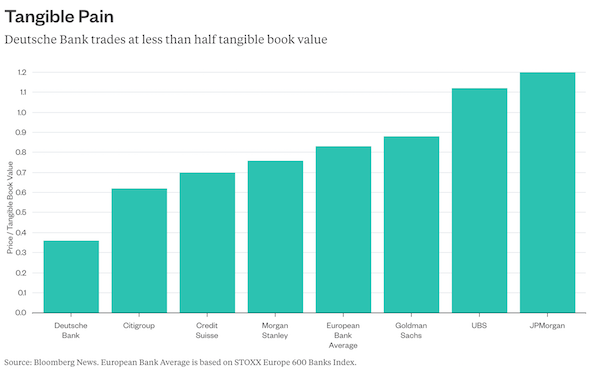
Read more …

“I have said before that Deutsche Bank should be broken up. Now is the time to do it.”

The Market Isn’t Buying That Deutsche Bank Is ‘Rock Solid’ (Coppola)

This has been a terrible day for Deutsche Bank. The stock price has collapsed, and shares are now trading lower than they were in the dark days of 2008 after the fall of Lehman. Yields on CoCos and CDS are spiking too. Despite a reassuring statement from the German Finance Minister that he had “no concerns” about Deutsche Bank, markets are clearly worried that Deutsche Bank may be in serious trouble. And when “serious trouble” means that shareholders, subordinated debt holders and even senior unsecured bondholders could lose part or all of their investment, because of the bail-in rules under the EU’s Bank Recovery and Resolution Directive (BRRD), it is hardly surprising that investors are running for the hills. Even if Deutsche Bank were not in trouble before, it is now.
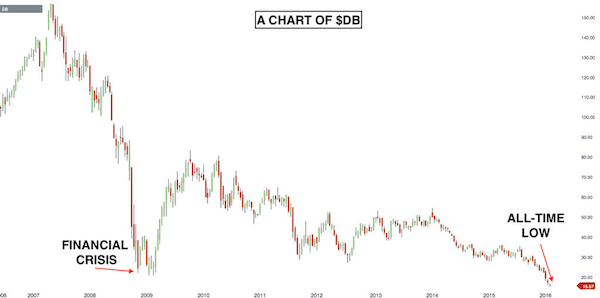
Unsurprisingly, the CEO, John Cryan, is upbeat about it. Today he issued a statement to staff advising them how to address the concerns of clients:

Volatility in the fourth quarter impacted the earnings of most major banks, especially those in Europe, and clients may ask you about how the market-wide volatility is impacting Deutsche Bank. You can tell them that Deutsche Bank remains absolutely rock-solid, given our strong capital and risk position. On Monday, we took advantage of this strength to reassure the market of our capacity and commitment to pay coupons to investors who hold our Additional Tier 1 capital. This type of instrument has been the subject of recent market concern. The market also expressed some concern about the adequacy of our legal provisions but I don’t share that concern. We will almost certainly have to add to our legal provisions this year but this is already accounted for in our financial plan.

I reviewed Deutsche Bank’s financial position as stated in their interim results last week. My findings do not support John Cryan’s statement that the bank is “rock solid”. Its capital and leverage ratios were not particularly strong by current standards, and have deteriorated since the full-year results. More worryingly, I found evidence that profits in two of the four divisions were only achieved by risking-up: the other two divisions were loss-making. Risking-up to generate profits would, if sustained over the medium-term, require substantially more capital than Deutsche Bank currently has. For two divisions of a bank that is currently delivering NEGATIVE return on equity to adopt strategies which would in due course require more capital does not appear remotely sensible.

Though I suppose actually admitting that the bank cannot generate anything like a reasonable return for shareholders without taking significantly more risk would be even worse. I also share the market’s concern about lack of legal provisions. A large part of the write-off of 5.2bn Euros due to litigation costs and fines in the interim results arose from cases already settled, particularly the record multi-jurisdictional fine for benchmark rate rigging in April 2015, though it also includes the 1.3bn Euros increase in provisions announced in October 2015 to cover charges potentially arising from the investigation of Deutsche Bank’s Russian operation for money laundering. But since these provisions seem light for what is a serious offense, and Deutsche Bank faces other potentially very expensive regulatory investigations and legal cases, I do not consider this write-off adequate.

Read more …

They’re so f**ked. Biggest bank, biggest derivatives portfolio. Run for the hills. When you even need your finance minister to do a reassurance call, you know you’re cooked.

Deutsche Considers Multibillion Bond Buyback (FT)

Deutsche Bank is considering buying back several billion euros of its debt, as Germany’s biggest bank steps up efforts to shore up the tumbling value of its securities against the backdrop of a broader rout of financial stocks. After European banks suffered a second consecutive day of sharp falls, Deutsche Bank is expected to focus its emergency buyback plan on senior bonds, of which it has about €50bn in issue, according to the bank. The move was unlikely to involve so-called contingent convertible bonds which, along with the bank’s shares, have been the butt of a brutal investor sell-off in recent days, people briefed on the plan said. The news came as Germany’s finance minister Wolfgang Schäuble and Deutsche CEO John Cryan both sought to assuage market fears.

Mr Schäuble said he had “no concerns” about the bank, while Mr Cryan insisted Deutsche’s position was “absolutely rock-solid”. The bank’s shares still fell 4%, taking the decline since the start of the year to 40%. Other European banks fared even worse on Tuesday, with Credit Suisse falling 8% and UniCredit 7%, as investor nervousness intensified over the relative weakness of European bank capital and earnings amid broader market turmoil. US banks, which have been hit hard in recent weeks, too, were only marginally weaker at lunchtime on Tuesday. Investors have also been rattled by the prospect of negative interest rates spreading across the developed world.

On Tuesday Japan became the first major economy with a sub-zero borrowing rate for 10-year debt as the total of government bonds trading with negative yields climbed to a new peak of $6tn. Concern about the solidity of bank debt — principally European bank cocos, which can suspend coupons and may convert into equity in a crisis — has prompted an investor dash to buy protection. A popular credit derivatives index that tracks the likelihood of default of investment-grade debt of European companies and banks was trading at 119 basis points on Tuesday, near its highest level since June 2013. Broader investor concerns about the health of the financial sector have coincided with more specific questions about Deutsche’s nascent restructuring programme.

Read more …

Ouch. Peddling fiction, sir?

Distillates Demand Signals US Recession Is Imminent (BI)

The US economy is flashing warning signs, particularly the industrial and manufacturing sectors. Demand for oil, and particularly so-called distillates – which are refined oil products such as jet fuels and heating oils – is crashing. Here’s the Barclays commodities team on the indicator:

January US demand for the four main refined products came in at -568k b/d (-3.9% y/y), compared with January 2015. Distillates were the weakest sector, down 18% y/y. Whether or not the data itself point to much weaker underlying growth in the US economy is still open to question, but not much. As illustrated in Figure 4, the scale of the decline in distillates demand in January has only ever been seen before during full-blown US recessions.

And here’s that chart:
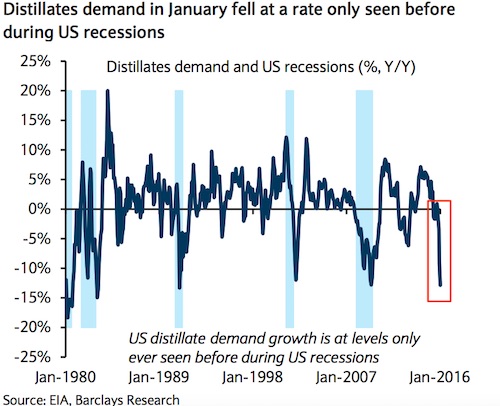
Barclays does cite some mitigating factors, such as unusually warm winter weather and the fact this is based on preliminary data that may get revised upward later on. But it doesn’t look great.

Read more …

And counting.

US Oil Drillers Must Slash Another $24 Billion This Year (BBG)

North American oil and natural gas drillers will need to cut an additional 30% from their capital budgets to balance their spending with the cash coming in their doors even if crude rises to $40 a barrel, according to an analysis by IHS Inc. A group of 44 North American exploration and production companies are planning to spend $78 billion on capital projects this year, down from $101 billion last year. Those companies need to cut another $24 billion this year to get their spending in line with a historical 130% ratio of spending to cash flow, IHS said Monday.

“These spending cuts will be particularly troublesome for the highly leveraged companies,” said Paul O’Donnell at IHS Energy. “These E&Ps are torn between slashing spending further to avoid additional weakening of their balance sheets, and the need to maintain sufficient production and cash flow to meet financial obligations.” The analysis is based on IHS’s low-case price scenario of $40-a-barrel oil and $2.50-per-million-cubic-feet natural gas prices. IHS cited Concho Resources, Whiting Petroleum, WPX Energy, and PDC Energy. as examples of companies displaying the best spending discipline.

Read more …

“..“There is not any kind of imaginary line where you can say, ‘OK this has gone down enough,’ and it’s now a recovery play or a turnround play. They just go down more, until they are done going down..”

Five Reasons Behind US Bank Stocks Selloff (FT)

US bank stocks have suffered a brutal start to 2016. Out of the 90 stocks on the S&P financials index, just eight were in positive territory for the year at mid-morning on Tuesday. Two of the biggest losers, Bank of America and Morgan Stanley, are down 27% and 28% respectively. Citigroup, also down 27%, is now trading at just 6.5 times earnings, not far off its post-crisis trough of 5.9 times, reached during the depths of the European debt crisis five years ago.

• Collapsing expectations of US interest rate rises Analysts offer a lot of different reasons for the big sell-off, but on this they agree. “Lift-off” in December was supposed to usher in an era of higher interest rates — which are always good news for the banks. In previous rate-raising cycles, assets have always re-priced faster than liabilities, earning banks a bigger spread between the yields on their loans and the cost of their funds. But worsening data since then from big economies, notably China, has investors worried that the world economy is a lot sicker than they had assumed. Expectations of another three rate rises from the Fed this year have collapsed in a matter of weeks. Talk of a rate cut, or even a move to negative rates, is entering the picture.

• Worsening credit quality In itself, a lower oil price will not do much direct damage to the big banks’ balance sheets, say analysts. Total energy exposures amount to less than 3% of gross loans at the big banks, which have mostly investment-grade assets, and which have already pumped up reserves. Perhaps more worrying are the second-round effects: if weakness in oil-dependent communities begins to spill into commercial real estate loan books, say, or if consumers find they cannot afford repayments on loans for their new gas-guzzling cars. In an environment of precious little growth — the big six US banks produced exactly the same amount of revenue last year as they did in 2014 — rising credit costs are likely to lead to lower profits.

• Deutsche Bank Every sell-off needs a point of focus and in recent days it has been Deutsche Bank. The contortions of the Frankfurt-based lender weighed on the entire banking sector on Monday, as it fought to dispel fears that it could not pay a coupon on a bond. “I think maybe counterparty risk is emerging,” says Shannon Stemm at Edward Jones in St Louis. “At the root, are some of these [European] banks as well capitalised as the US banks? Probably not. Can they continue to build capital in an environment where there is not a lot of revenue growth, and a lot of expenses have already been taken out of the business?”

• Banks are banks These are confidence stocks. When markets are doing well, banks tend to do well, as companies feel better about doing deals and raising money, investors put on a lot of trades, and asset management arms benefit from big inflows. But when confidence disappears, banks tend to bear the brunt of the sell-off. Matt O’Connor at Deutsche Bank notes that in 15 corrections going back to 1983, the US banks sector has been hit roughly twice as hard as the rest of the market — regional banks about 1.8 times worse, and capital markets-focused banks about 2.3 times worse. “At the end of the day when markets get scared, banks go down more, that is just what happens,” he says. “There is not any kind of imaginary line where you can say, ‘OK this has gone down enough,’ and it’s now a recovery play or a turnround play. They just go down more, until they are done going down or markets feel better about macro conditions.”

• Bank stocks were not cheap before the slide At the peak last July, the S&P 500 was trading about 20% above historical levels, and bank stocks were up to 25% higher than their historical averages, based on multiples of estimated earnings.* But none of these reasons is providing much comfort to investors at the moment. At Edward Jones, Ms Stemm is recommending clients ride out the turmoil by switching big global universal banks for steadier, US-focused lenders such as Wells Fargo and US Bancorp. “If there are global macro concerns, if recession concerns really are on the table, investors would rather get out than wait to see what happens,” she says.

Read more …

Japan is getting cooked. Fried. Roasted. Torched.

10-Year Japanese Government Bond Yield Falls Below Zero (FT)

The universe of government bonds trading with negative yields climbed to a new peak of $6tn on Tuesday as Japan became the first major economy with a sub-zero borrowing rate for 10-year debt. Benchmark bonds issued by the world’s third-largest economy dropped to a yield of minus 0.05%, as investors sought shelter from market convulsions triggered by sliding oil prices, concern for the health of the global economy and mounting fears over parts of the financial system. Japan’s recent decision to introduce a charge on new reserves parked with the central bank has rippled out across global government bond markets as investors expect central banks in Europe to push their overnight borrowing rates further into negative territory. That has spurred strong buying of positive yielding government debt across the eurozone, US and UK markets, while also bolstering other havens such as gold and the yen.

“The bear market in risk assets is evolving very quickly,” said Andrew Milligan at Standard Life. “A month ago the focus was China, then oil, then the prospect of US recession, now it is European financial companies.” The move comes just 11 days after the Bank of Japan’s surprise decision to follow in the footsteps of Switzerland, Denmark, Sweden and the eurozone by adopting negative interest rates, raising fresh concern about the side-effects of ultra-loose monetary policy by central banks. The growing trend of negative yields within the $23tn universe of developed world government debt tracked by JP Morgan has also sapped sentiment for financial shares and bonds, intensifying the demand for havens, as investors reassess their holdings of equities and corporate bonds. David Tan at JPMorgan said negative interest rates were being viewed as negative for bank earnings.

“The principal driver of negative JGB yields was the Bank of Japan’s deposit rate cut to -10bp, and the market now expects additional cuts during this year starting from as soon as the next Bank of Japan meeting,” he said. “This has contributed to a sell-off in banking stocks and a renewed flight to safety into government bonds.” Leading the slide among financials has been Deutsche Bank, with investors worried that it may have trouble repaying its debts. David Ader, CRT Investment Banking bond strategist, said market skittishness was understandable, if not expected. “The European banking system clearly remains a meaningful concern and memories of the credit crisis in the sector are still fresh,” he said.

For Japan’s government, the appreciating yen looms as an uncomfortable development. A weak currency is one of the major hallmarks of Prime Minister Shinzo Abe’s economic revival plan, dubbed Abenomics. Investors now suspect Japan Inc’s assumptions of an average rate of Y117.5 against the dollar during 2016 could leave companies missing profit forecasts and force the BoJ and government into fresh action — if more is possible. “If a 20 basis points cut won’t stop the yen rising, what can the Japanese authorities do? That is the question the market is asking,” said Shusuke Yamada at Bank of America. Investors, especially foreign funds that poured into the Japanese stock market during 2013, are increasingly taking the view that the magic of the “Abenomics” growth programme has worn off. Foreigners sold a net Y1.66tn of Japanese equities in January, according to official figures.

Read more …

Why not have another one of these scams?

EU Probes Suspected Rigging Of $1.5 Trillion Debt Market (FT)

European regulators have opened a preliminary cartel investigation into possible manipulation of the $1.5tn government-sponsored bond market, in the latest efforts to root out rigging involving financial traders. The European Commission’s early-stage inquiry comes amid revelations that the US Department of Justice and the UK’s Financial Conduct Authority are also investigating the market. The investigations are part of a campaign by antitrust regulators to root out collusion in financial markets following revelations that groups of traders worked together to manipulate Libor, a key rate that underpins the price of loans around the world. Further allegations followed that traders colluded to rig foreign exchange markets.

The commission’s powerful competition department has sent questionnaires to a number of market participants as part of an early-stage probe into possible manipulation of the price of supranational, subsovereign and agency debt, known as the SSA market. This market covers a diverse range of debt issuers including organisations such as the European Bank for Reconstruction and Development and regional borrowers like Germany’s Länder. A common feature is that the bonds often have a form of implicit or explicit state guarantee. Banks and interdealer brokers have so far been fined around $20bn by authorities around the world in response to the Libor and foreign exchange rate scandals which saw over a dozen leading financial institutions investigated by antitrust authorities.

The findings also led to criminal prosecutions of individual traders, and spurred investigations into other markets such as derivatives trading. The Financial Times reported last month that Crédit Agricole, Nomura and Credit Suisse are among a number of banks being investigated by the DOJ as part of its investigation into possible manipulation of SSA markets. London-based traders at these three banks, in addition to another trader at Bank of America, have been put on leave in response to the DOJ investigations, according to people familiar with the matter. It is understood that the commission’s inquiry started around the same time as the DoJ probe.

The commission’s enquiries concern a possible cartel or “concerted practice” according to the person familiar with the investigation, who did not provide further details. The questionnaires will help Margrethe Vestager, the commission’s competition chief, decide whether there are the grounds to launch a formal probe. Complex cartel cases typically take a minimum of four years to complete and are usually based on evidence from tip-offs provided by whistleblowers. The commission can fine a company involved in a cartel up to 10% of its global turnover.

Read more …

I picked one detail from the longer article on eurozone banks.

Italy, A Ponzi Scheme Of Gargantuan Proportions (Tenebrarum)

Ever since the ECB has begun to implement its assorted money printing programs in recent years – lately culminating in an outright QE program involving government bonds, agency bonds, ABS and covered bonds – bank reserves and the euro area money supply have soared. Bank reserves deposited with the central bank can be seen as equivalent to the cash assets of banks. The greater the proportion of such reserves (plus vault cash) relative to their outstanding deposit liabilities, the more of the outstanding deposit money is in fact represented by “covered” money substitutes as opposed to fiduciary media.
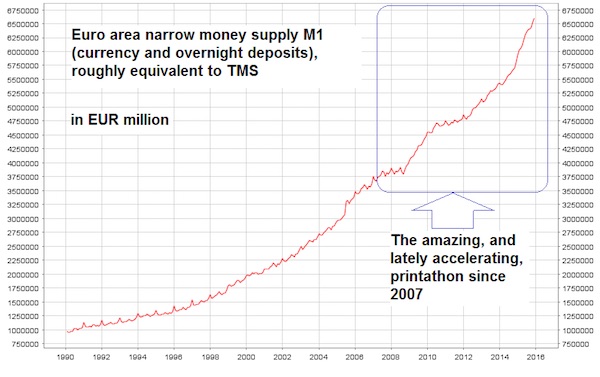

Euro area true money supply (excl. deposits held by non-residents) – the action since 2007-2008 largely reflects the ECB’s money printing efforts, as private banks have barely expanded credit on a euro area-wide basis since then.

Many funny tricks have been employed to keep euro area banks and governments afloat during the sovereign debt crisis. Essentially these consisted of a version of Worldcom propping up Enron, with the central bank’s printing press as a go-between. As an example here is how Italian banks and the Italian government are helping each other in pretending that they are more solvent than they really are: the banks buy government properties (everything from office buildings to military barracks) from the government, and pay for them with government bonds. The government then leases the buildings back from the banks, and the banks turn the properties into asset backed securities. The Italian government then slaps a “guarantee” on these securities, which makes them eligible for repo with the ECB. The banks then repo these ABS with the ECB and take the proceeds to buy more Italian government bonds – and back to step one.

Simply put, this is a Ponzi scheme of gargantuan proportions. Still, in view of these concerted efforts to reliquefy the banking system, one would expect that European banks should be at least temporarily solvent, more or less. Since they have barely expanded credit to the private sector, preferring instead to invest in government bonds, the markets should in theory have little to worry about.

Read more …

Overinvested.

Maersk Profit Plunges as Oil, Container Units Both Suffer (BBG)

A.P. Moeller-Maersk A/S reported an 84% plunge in 2015 profit after its oil unit was hit by lower energy prices and its container division got squeezed between sluggish trade growth and overcapacity. Maersk said net income was $791 million last year compared with $5.02 billion in 2014. The result includes a writedown in the value of Maersk’s oil assets by $2.6 billion, the Copenhagen-based company said. “Given our expectation that the oil price will remain at a low level for a longer period, we have impaired the value of a number of Maersk Oil’s assets,” CEO Nils Smedegaard Andersen said in the statement. “We will continue to strengthen the Group’s position through strong operational performance and growth investments.”

In October, Maersk started cost cut programs for both of its two biggest units to address what analysts have described as a perfect storm for the conglomerate, which historically has found support from positive market conditions for at least one the two divisions. Maersk said Wednesday that 2016’s underlying profit will be “significantly below” last year’s $3.1 billion. The Maersk Line unit’s profit will also be “significantly below” 2015’s level, which was $1.3 billion. Maersk Oil will report a loss this year, it said. The unit currently breaks even when oil prices are in a range of $45 to $55 a barrel, the company said.
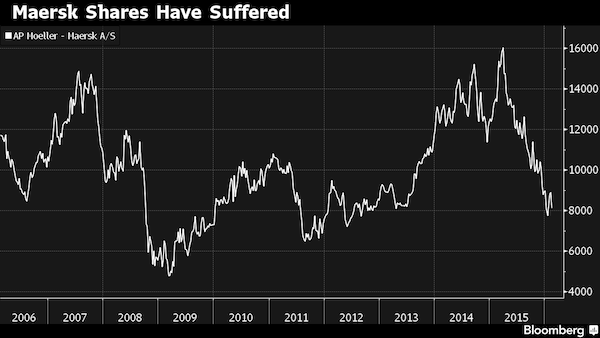
Read more …

“..with the Australian economy suddenly desperate for lower rates from the RBA, one can ignore the propaganda lies, and focus once again on the far uglier truth…”

Australia Admits Recent Stellar Job Numbers Were Cooked (ZH)

Two months ago the Australian media, which unlike its US counterpart refuses to be spoon fed ebullient economic propaganda, called bullshit on the spectacular October job numbers, when instead of adding 15,000 jobs as consensus expected, Australia’s Bureau of Statistics reported that a whopping 58,600 jobs had been added. [.] One month later, the situation got even more ridiculous, when instead of the expected 10,000 drop in November, the “statistical” bureau announced that 71,400 jobs had been added, the most in 15 years, and the equivalent of 1 million jobs added in the US. Once again the local media cried foul.

Two months later we find that the media, and all those mocking the government propaganda apparatus, were spot on, because moments ago today, Australia Treasury Secretary John Fraser, during testimony to parliamentary committee, admitted that jobs growth for the two months in question “may be overstated.” What’s the reason? The same one the propaganda bureau always uses when its lies are exposed: “technical issues”, the same explanation the Atlanta Fed used in its explanation for a strangely belated release of its GDP Now estimate one month ago. Here’s Bloomberg with more:

Australia has had some technical issues with its labor data, which “look a little bit better” than would otherwise have been the case, the secretary to the Treasury said, commenting on record employment growth in the final quarter of 2015. John Fraser, the nation’s top economic bureaucrat, told a parliamentary panel in Canberra Wednesday that he held discussions on the employment figures with the chief statistician this week. He didn’t elaborate on the meeting but said the recent strength in the jobs market is encouraging.

There were some “technical issues” in October and November that may have made the employment figures “look a little bit better than otherwise would be the case,” he said. The technical issues relate to “rolling off” of participants in the labor survey. Australia’s economy added 55,000 jobs in October and a further 74,900 in November, before shedding 1,000 in December to produce the record quarterly gain. Questions regarding the accuracy of the data have been raised following acknowledgment by the statistics agency in 2014 of measurement challenges.

Why the sudden admission it was all a lie? Simple: weakness in commodity prices “is far greater than people had been expecting,” Fraser said in earlier remarks to the panel. Australia is now “swimming against the tide” because of uncertainties in the global economy, he added. Translation: “we need more easing, and to do that, the economy has to go from strong to crap.” And with the Australian economy suddenly desperate for lower rates from the RBA, one can ignore the propaganda lies, and focus once again on the far uglier truth.

Which makes us wonder: with the Yellen Fed in desperate need of political cover for relenting on its terrible rate hike strategy, and once again lowering rates to zero or negative, a recession – something JPM hinted at yesterday – will be critical. And what better way to admit the US has been in one for nearly a year than to drastically revise all the exorbitant labor numbers over the past 12 months. You know, for “technical reasons”…

Read more …

The crazies are in charge: “Ash Carter said he would ask for spending on US military forces in Europe to be quadrupled in the light of “Russian aggression”. The allocation for combating Islamic State, in contrast, is to be increased by 50%.”

Pentagon Fires First Shot In New Arms Race (Guardian)

As the voters of New Hampshire braved the snow to play their part in the great pageant of American democracy on Tuesday, the US secretary of defence was setting out his spending requirements for 2017. And while the television cameras may have preferred the miniature dramas at the likes of Dixville Notch, the reorientation of US defence priorities under the outgoing president may turn out to exert the greater influence – and not in a good way, at least for the future of Europe. In a speech in Washington last week, previewing his announcement, Ash Carter said he would ask for spending on US military forces in Europe to be quadrupled in the light of “Russian aggression”. The allocation for combating Islamic State, in contrast, is to be increased by 50%. The message is unambiguous: as viewed from the Pentagon, the threat from Russia has become more alarming, suddenly, even than the menace that is Isis.

If this is Pentagon thinking, then it reverses a trend that has remained remarkably consistent throughout Barack Obama’s presidency. Even before he was elected there was trepidation in some European quarters that he would be the first genuinely post-cold war president – too young to remember the second world war, and more global than Atlanticist in outlook. And so it proved. From his first day in the White House, Obama seemed more interested in almost anywhere than Europe. He began his presidency with an appeal in Cairo addressed to the Muslim world, in an initiative that was frustrated by the Arab spring and its aftermath, but partly rescued by last year’s nuclear agreement with Iran. He had no choice but to address the growing competition from China, and he ended half a century of estrangement from Cuba.

But Europe, he left largely to its own devices. When France and the UK intervened in Libya, the US “led from behind”. Most of the US troops remaining in Europe, it was disclosed last year, were to be withdrawn. Nor was such an approach illogical. Europe was at peace – comparatively, at least. The European Union was chugging along, diverted only briefly (so it might have seemed from the US) by the internal crises of Greece and the euro. Even the unrest in Ukraine, at least in its early stages, was treated by Washington more as a local difficulty than a cold war-style standoff. Day to day policy was handled (fiercely, but to no great effect) by Victoria Nuland at the state department; Sanctions against Russia were agreed and coordinated with the EU. All the while – despite the urging of the Kiev government – Obama kept the conflict at arm’s length.

Congress agitated for weapons to be sent, but Obama wisely resisted. This was not, he thereby implied, America’s fight. In the last months of his presidency, this detachment is ending. The additional funds for Europe’s defence are earmarked for new bases and weapons stores in Poland and the Baltic states. There will be more training for local Nato troops, more state-of-the-art hardware and more manoeuvres. Now it is just possible that the extra spending and the capability it will buy are no more than sops to the “frontline” EU countries in the runup to the Nato summit in Warsaw in July, to be quietly forgotten afterwards. More probably, though, they are for real – and if so the timing could hardly be worse. Ditto the implications for Europe’s future.

By planning to increase spending in this way, the US is sending hostile signals to Russia at the very time when there is less reason to do so than for a long time. It is nearly two years since Russia annexed Crimea and 18 months since the downing of MH17. The fighting in eastern Ukraine has died down; there is no evidence of recent Russian material support for the anti-Kiev rebels, and there is a prospect, at least, that the Minsk-2 agreement could be honoured, with Ukraine (minus Crimea) remaining – albeit uneasily – whole.

Read more …

These people are inventing a entire parallel universe, and nobody says a thing. NATO to patrol the Med on refugee streams? NATO is an aggression force, an army way past its expiration date. It has zero links to refugees. There is no military threat there. Oh, but then we bring in Russia.. “Stoltenberg said naval patrols would fit into “reassurance measures” to shield Turkey from the war in neighboring Syria..” ‘We’ have lost our marbles. ‘We’ are on the war path.

NATO Weighs Mission to Monitor Mediterranean Refugee Flow (BBG)

NATO will weigh calls for a naval mission in the eastern Mediterranean Sea to police refugee streams as a fresh exodus from Syria adds to European leaders’ desperation. Such a mission, proposed by Germany and Turkey, would thrust the 28-nation alliance into the humanitarian trauma aggravated by the Russian-backed offensive by Syrian troops that drove thousands out of Aleppo and toward Turkey. “We will take very seriously a request from Turkey and other allies to look into what NATO can do to help them cope with and deal with the crisis,” NATO Secretary General Jens Stoltenberg told reporters in Brussels on Tuesday. NATO is confronted with Russian intervention in the Middle East – including airspace violations over Turkey, an alliance member – after reinforcing its eastern European defenses in response to the Kremlin’s annexation of Crimea and fomenting rebellion in Ukraine in 2014.

Allied warships now on a counter-terrorism mission in the Mediterranean and anti-piracy patrols off the coast of Somalia could be reassigned to monitor and potentially go after human traffickers in the Aegean Sea between Greece and Turkey. A naval mission, to be discussed Wednesday and Thursday at a meeting of defense ministers in Brussels, is controversial. It could produce unpleasant images of NATO sailors and soldiers herding refugee children behind barbed wire, handing a propaganda victory to Islamic radicals and the alliance’s detractors in the Kremlin. With her political standing in jeopardy as German public opinion turns against her open-arms approach, German Chancellor Angela Merkel went to Ankara on Monday with limited European leverage to persuade Turkey to house more refugees on its soil instead of pointing them toward western Europe.

Stoltenberg said naval patrols would fit into “reassurance measures” to shield Turkey from the war in neighboring Syria that already include Patriot air-defense missiles and air surveillance over Turkish territory and the coast. U.S. Ambassador to NATO Douglas Lute called on European Union governments to take the lead on civilian emergency management, with the alliance confined to offering backup. He said military planners will draw up options. “This is fundamentally an issue that should be addressed a couple miles from here at EU headquarters, but it doesn’t mean NATO can’t assist,” Lute told reporters.

Read more …

I could have spared them the research.

Border Fences Will Not Stop Refugees, Migrants Heading To Europe (Reuters)

Efforts by European countries to deter migrants with border fences, teargas and asset seizures will not stem the flow of people into the continent, and European leaders should make their journeys safer, a think-tank said on Wednesday. The Overseas Development Insitute (ODI) said Europe must act now to reduce migrant deaths in the Mediterranean, where nearly 4,000 people died last year trying to reach Greece and Italy, and more than 400 have died so far this year. European governments could open consular outposts in countries like Turkey and Libya which could grant humanitarian visas to people with a plausible asylum claim, the think-tank said. Allowing people to fly directly to Europe would be safer and cheaper than for them to pay people smugglers, and would help cripple the smuggling networks that feed off the migrant crisis, the London-based ODI said.

More than 1.1 million people fleeing poverty, war and repression in the Middle East, Asia and Africa reached Europe’s shores last year, prompting many European leaders to take steps to put people off traveling. But the ODI said new research showed such attempts either fail to alter people’s thinking or merely divert flows to neighboring states. Researchers interviewed 52 migrants from Syria, Eritrea and Senegal who had recently arrived in Germany, Britain and Spain. Their journeys had cost an average 2,680 pounds ($3,880) each. More than one third had been victims of extortion, and almost half the Eritreans had been kidnapped for ransom during their journey. Researchers said that, contrary to popular perception, many migrants left home without a clear destination in mind. Their experiences along the way and the people they met informed where they would go next.

Information from European governments was unlikely drastically to alter migrants’ behavior, the ODI said. “Our research suggests that while individual EU member states may be able to shift the flow of migration on to their neighbors through deterrent measures such as putting up fences, using teargas and seizing assets, it does little to change the overall number … coming to Europe,” said report co-author Jessica Hagen-Zanker. “As one of the people we interviewed put it ‘When one door shuts, another opens’.”

Read more …

Feb 082016
 
 February 8, 2016  Posted by at 9:41 am Finance Tagged with: , , , , , , , ,  3 Responses »


DPC City Hall subway station, New York 1904

Deutsche Bank Is Shaking To Its Foundations (SI)
Why A Selloff In European Banks Is So Ominous (MW)
Lending To Emerging Markets Comes To A Halt (FT)
What the Heck is Going On in the Stock Market? (WS)
Dot Com 2.0 – The Sequel Unfolds (St.Cyr)
CEOs, Venture Backers Lose Big As Linkedin, Tableau Shares Tumble (Reuters)
Record Numbers Of Longs And Shorts Are Piling Into Oil (BBG)
Prolonged Slump Sparks 2nd Wave Of Cuts To 2016 Oil Company Budgets (Reuters)
World’s Largest Energy Trader Sees a Decade of Low Oil Prices (BBG)
150 North Sea Oil Rigs Could Be Scrapped In 10 Years (Scotsman)
Iran Wants Euro Payment For New And Outstanding Oil Sales (Reuters)
Fining Bankers, Not Shareholders, for Banks’ Misconduct (Morgenson)
Volkswagen’s Emissions Lies Are Coming Back To Haunt It (BBG)
Moody’s Cuts Rating On Western Australia Iron Ore (WSJ)
British Expat Workers Flood Home As Australia Mining Boom Turns To Dust (Tel.)
Ukraine: A USA-Installed Nazi-Infested Failed State (Lendman)
Through The Past, Darkly, For Europe’s Central Bankers (Münchau)
German, French Central Bankers Call For Eurozone Finance Ministry (Reuters)

Arguably world’s biggest bank. “Deutsche Bank is now trading at less than 50% of the share price it was trading at in July last year. And no, the market isn’t wrong about this one. ..” The market will be going after Deutsche. Which is too vulnerable to save.

Deutsche Bank Is Shaking To Its Foundations (SI)

The earnings season has started, and several major banks in the Eurozone have already reported on how they performed in the fourth quarter of 2015, and the entire financial year. Most results were quite boring, but unfortunately Deutsche Bank once again had some bad news. Just one week before it wanted to release its financial results, it already issued a profit warning to the markets, and the company’s market capitalization has lost in excess of 5B EUR since the profit warning, on top of seeing an additional 18B EUR evaporate since last summer. Deutsche Bank is now trading at less than 50% of the share price it was trading at in July last year. And no, the market isn’t wrong about this one.

The shit is now really hitting the fan at Deutsche Bank after having to confess another multi-billion euro loss in 2015 on the back of some hefty litigation charges (which are expected to persist in the future). And to add to all the gloom and doom, even Deutsche Bank’s CEO said he didn’t really want to be there . Talk about being pessimistic! Right after Germany’s largest bank (and one of the banks that are deemed too big to fail in the Eurozone system) surprised the market with these huge write-downs and high losses, the CDS spread started to increase quite sharply. Back in July of last year, when Deutsche Bank’s share price reached quite a high level, the cost to insure yourself reached a level of approximately 100, but the CDS spread started to increase sharply since the beginning of this year.

It reached a level of approximately 200 in just the past three weeks, indicating the market is becoming increasingly nervous about Deutsche’s chances to weather the current storm. Let’s now take a step back and explain why the problems at Deutsche Bank could have a huge negative impact on the world economy. Deutsche has a huge exposure to the derivatives market, and it’s impossible, and then we mean LITERALLY impossible for any government to bail out Deutsche Bank should things go terribly wrong. Keep in mind the exposure of Deutsche Bank to its derivatives portfolio is a stunning 55T EUR, which is almost 20 times (yes, twenty times) the GDP of Germany and roughly 5 times the GDP of the entire Eurozone! And to put things in perspective, the TOTAL government debt of the US government is less than 1/3rd of Deutsche Bank’s exposure.

Read more …

Because it will pop the European finance bubble.

Why A Selloff In European Banks Is So Ominous (MW)

European banks have been caught in a perfect storm of market turmoil, lately. Lackluster profits and negative interest rates, have prompted investors to dump shares in the sector that was touted as one of the best investment ideas just a few months ago. The region’s banking gauge, the Stoxx Europe 600, has logged six straight weeks of declines, its longest weekly losing stretch since 2008, when banks booked 10 weeks of losses, beginning in May, according to FactSet data. “The current environment for European banks is very, very bad. Over a full business cycle, I think it’s very questionable whether banks on average are able to cover their cost of equity. And as a result that makes it an unattractive investment for long-term investors,” warned Peter Garnry at Saxo Bank. The doom-and-gloom outlook for banks comes as the stock market has had an ominous start to the year.

East or west, investors ran for the exit in a market marred by panic over tumbling oil prices and signs of sluggishness in China. But for Europe’s banking sector, the new year has started even worse, sending the bank index down 20% year-to-date, compared with 11% for the broader Stoxx Europe 600 index. So what happened? At the end of last year, banks were singled out as one of the most popular sectors for 2016 because of expected benefits from higher bond yields, rising inflation expectations and improved economic growth. That outlook, however, was before the one-two punch of plunging oil and a slowdown in China sapped investor confidence world-wide. Garnry said the slump in bank shares is “a little bit odd” given the recent growth in the European economy and aggressive easing from the ECB.

Normally, banks benefit from measures such as quantitative easing, but it’s just not doing the trick in Europe. “And its worrisome, because banks are much more important for the credit mechanism in the economy here in Europe than it is in the U.S. There, you have a capital market where it’s easier to issue corporate bonds and get funding outside the commercial banking system. We don’t have that to the same extent in Europe, and therefore [the current weakness] is a little bit scary,” he said. Some of the sector’s collective underperformance comes down to exceptionally bad performances for a number of the bigger banks. Deutsche Bank, for example, has tumbled 32% year to date, amid a painful restructuring. And Credit Suisse is down 31% for the year as it posted a massive fourth-quarter loss.

Read more …

Has long since reversed.

Lending To Emerging Markets Comes To A Halt (FT)

The surge in lending to emerging markets that helped fuel their own — and much of the world’s — growth over the past 15 years has come to a halt, and may now give way to a “vicious circle” of deleveraging, financial market turmoil and a global economic downturn, the Bank for International Settlements has warned. “In the risk-on phase [of the global economic cycle], lending sets off a virtuous circle in financial conditions in which things can look better than they really are,” said Hyun Song Shin, head of research at the BIS, known as the central bank of central banks. “But flows can quickly go into reverse and then it becomes a vicious circle, especially if there is leverage,” he told the FT. That reversal has already taken place, according to BIS data released on Friday.

The total stock of dollar-denominated credit in bonds and bank loans to emerging markets — including that to governments, companies and households but excluding that to banks — was $3.33tn at the end of September 2015, down from $3.36tn at the end of June. It marks the first decline in such lending since the first quarter of 2009, during the global financial crisis, according to the BIS. The BIS data add to a growing pile of evidence pointing to tightening credit conditions in emerging markets and a sharp reversal of international capital flows. On Thursday, The IMF’s Christine Lagarde warned of the threat to global growth of an impending crisis in emerging markets. The Institute of International Finance, an industry body, said last month that emerging markets had seen net capital outflows of an estimated $735bn during 2015, the first year of net outflows since 1988.

In November, the IIF warned of an approaching credit crunch in EMs as bank lending conditions deteriorated sharply. This month, it said a contraction over the past year in the liquidity made available to the world’s financial system by central banks, primarily those in developed markets, now presented more of a threat to global growth than the slowdown in China and falling oil prices. Jaime Caruana, general manager of the BIS, said that recent turmoil on equity markets, disappointing economic growth, large movements in exchange rates and falling commodity prices were not unconnected, exogenous shocks but indicative of maturing financial cycles, particularly in emerging economies, and of shifts in global financial conditions. He noted that, while some advanced economies had reduced leverage after the crisis, debt had continued to build up in many emerging economies.

“Recent events are manifestations of maturing financial cycles in some emerging economies,” he said. The problem was aggravated, Mr Shin added, by the deteriorating quality of the assets financed by the lending boom. He noted that the indebtedness of companies in emerging markets as a%age of GDP had overtaken that of those in developed markets in 2013, just as the profitability of EM companies had fallen below that of DM ones for the first time. Since then, leverage in emerging economies had increased further as profitability had decreased, with exchange rates playing an important role. “Stronger EM currencies fed into more debt and more risk taking. Now that the dollar is strengthening, we have turned into a deleveraging cycle in EMs. So there is a sudden surge in measurable risk; all the weaknesses are suddenly being uncovered.”

Read more …
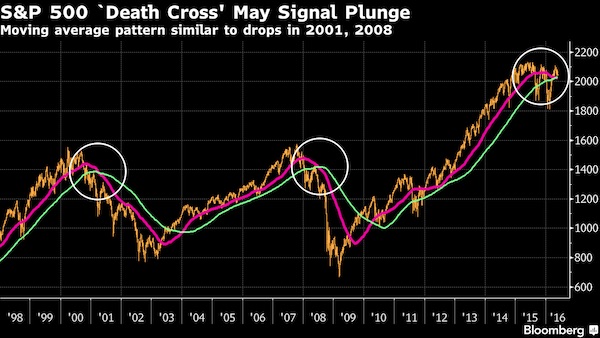
Wolf has another nice list of plunging stocks. Tech bubble.

What the Heck is Going On in the Stock Market? (WS)

Even Moody’s which is always late to the party with its warnings – but when it does warn, it’s a good idea to pay attention – finally warned: “Don’t fall into the trap of believing all is well outside of oil & gas.” What happened on Friday was the culmination of another dreary week in the stock markets, with the Dow down 1.3% for the day and 1.6% for the week, the S&P 500 down 1.8% and 3.1% respectively, and the Nasdaq down 3.2% and 5.4%. The S&P 500 is now nearly 12% off its record close in May, 2015; the Nasdaq nearly 17%. So on the surface, given that the Nasdaq likes to plunge over 70% before crying uncle, not much has happened yet. But beneath the surface, there have been some spectacular fireworks.

Not too long ago, during the bull market many folks still fondly remember and some think is still with us, a company could announce an earnings or revenue debacle but throw in a big share-buyback announcement, and its shares might not drop that much as dip buyers would jump in along with the company that was buying back its own shares, and they’d pump up the price again. Those were the good times, the times of “consensual hallucination,” as we’ve come to call it, because all players tried so hard to be deluded. It was the big strategy that worked. But not anymore. And that’s the sea change. Reality is returning, often suddenly, and in the most painful manner.

Read more …

“Don’t wait too long on that “right price.” For if the current value of Alibaba™ is any indication – “right” is becoming more inline with “any” much faster than anyone dared think just a year prior..”

Dot Com 2.0 – The Sequel Unfolds (St.Cyr)

Once high flyers such as the aforementioned Twitter and others are crashing to Earth like the proverbial canary. Companies like Square™, Box™, GoPro™, Pandora™, and now far too many others have watched their stock prices hammered ever lower. Yes, hammered, as in representing one selling round after another with almost no respite. Some have lost 90% of their once lofty high share prices. What’s further disheartening to those still clinging (or praying) to the “meme-dream” is the ever-increasing reputation of the old “Great companies on sale!” chortles from many a next in rotation fund manager on TV, radio, or print. For it seems every round of selling is being met with ever more selling – no buying. And the lower they go with an ever intensifying pressure, so too does the value of the debutantes in waiting: The yet to be IPO’d unicorns.

Valuation after unicorn valuation are getting marked down in one fell swoops such as that from Fidelity™ and others. However, there probably wasn’t a better representation on how little was left to the unicorn myth (and yes I believed/believe all these valuation metrics were myth and fairy-tales) than the very public meme shattering experienced in both the IPO, as well as the subsequent price action of Square. Here it was touted the IPO price was less than the unicorn implied valuation. This was supposedly done as to show “value” for those coming in to be next in line to pin their tails on the newest unicorn of riches. The problem? It sold, and sold, and is still selling – and not in a good way. It seems much like the other company Mr. Dorsey is CEO of (and how anyone with any business acumen argued that was a good idea is still beyond me. But I digress.) this unicorn also can’t fly. And; is in a perilous downward spiral of meeting the ground of reality.

It seems the only interest in buying these once high flyers can garner is wrapped up into any rumor (usually via a Tweet!) that they are to be sold – as in acquired by someone else who might be able to make money with them. Well, at least that would free up the ole CEO dilemma, no? And speaking of CEO dilemma and acquiring – how’s Yahoo!™ doing? Remember when the strategy for success for Yahoo as posited by the very public adoration styled magazine cover girl articles of its current CEO Marisa Mayer was an acquisition spree? This was all but unquestionable (and much digital ink spilled) in its brilliance and vision inspired forward thinking. Well, it seems all that “brilliance” has been eviscerated much like how the workforce still employed there is yet to be.

Let me be blunt: All you needed to know things were amiss both at Yahoo as well as “the Valley” itself was to look at the most recent decision of Ms. Mayer to throw a lavish multi-million dollar costumed theme party mere months ago. As unquestionably foolish as this was – the rationale given by many a Silicon Valley aficionado that it was nothing, after all, “it’s common in the Valley” was ever the more stupefying! Now it seems Yahoo is “cutting its workforce by double-digit%ages.” And: open to the possibility of selling off core assets of its business. Of course – at the right price. However, I’d just offer this advice: Don’t wait too long on that “right price.” For if the current value of Alibaba™ is any indication – “right” is becoming more inline with “any” much faster than anyone dared think just a year prior.

Read more …

DotCom 2.0 revisited.

CEOs, Venture Backers Lose Big As Linkedin, Tableau Shares Tumble (Reuters)

LinkedIn Executive Chairman Reid Hoffman lost almost half his $2.8 billion fortune on paper Friday as shares of his social media company suffered their largest drop on record. He was not alone in taking heavy losses. Other executives at LinkedIn, some at business analytics company Tableau Software, and a number of the companies’ venture capital backers also took losses running into tens of millions of dollars as both stocks tumbled on dismal financial outlooks. It was a humbling moment highlighting the personal exposure many technology leaders and venture capitalists face as Wall Street reassesses their value at an uncertain time for the sector. Silicon Valley-based LinkedIn’s shares closed down 43.6% at $108.38 on Friday, after hitting a three-year low, following a sales forecast well short of analysts’ expectations. Shares of Seattle-based Tableau Software, a business analytics tools company, fell 49.4% to $41.33 after cutting its full-year profit outlook.

As a result, LinkedIn’s Hoffman lost $1.2 billion from his value on paper on Friday, slashing his stake to $1.6 billion, based on his holdings detailed in a filing with securities regulators from March, which the company said was the most up-to-date. LinkedIn’s Chief Executive Jeff Weiner saw the value of his stake fall by $70.9 million to $91.5 million. At Tableau, the value of CEO Christian Chabot’s stake was slashed nearly in half to $268 million, based on his holdings in a filing with securities regulators in March. Besides Hoffman and Weiner, several venture capitalists who sit on LinkedIn’s board and own stakes in the company suffered substantial losses. Michael Moritz, the chairman of Sequoia Capital who owns more shares than any individual investor besides Hoffman and Weiner, lost $56 million as his stake’s value shrank to $72.8 million. David Sze at Greylock Partners saw the value of his stake slide to $5 million after losing $3.9 million on Friday.

Read more …

“Any commodity market where inventories are at the highest level in more than 85 years is going to be bearish.”

Record Numbers Of Longs And Shorts Are Piling Into Oil (BBG)

Money managers may not agree where oil prices are headed, but they are increasingly eager to place their bets. Total wagers on the price of crude climbed to the highest since the U.S. Commodity Futures Trading Commission began tracking the data in 2006. Speculators’ combined short and long positions in West Texas Intermediate crude, the U.S. benchmark, rose to 497,280 futures and options contracts in the week ended Feb. 2. WTI moved more than 1% each day in the past three weeks. U.S. crude stockpiles climbed to the highest level in more than 85 years and Venezuela called for cooperation between OPEC and other oil-exporting countries to stem the drop in prices. The slump has slashed earnings from Royal Dutch Shell to Chevron, while Exxon Mobil reduced its drilling budget to a 10-year low.

“This is a reflection of a lot of conviction on both sides,” said John Kilduff at Again Capital, a hedge fund that focuses on energy. “We’re seeing a battle royal between those who think a bottom has been put in and those who think we have lower to go.” WTI slumped 5% to $29.88 a barrel in the report week on the New York Mercantile Exchange. The March contract added 10 cents, or 0.3%, to $30.99 at 12:18 p.m. Singapore time on Monday. [..] “There’s a difference of opinion about the direction of the market,” said Tim Evans at Citi Futures Perspective in New York. “It looks like some of the high price levels offered an opening for shorts to get back into the market. The shorts were the winners on a net basis.”

In other markets, net bearish wagers on U.S. ultra low sulfur diesel increased 11% to 23,765 contracts. Diesel futures advanced 4.5% in the period. Net bullish bets on Nymex gasoline slipped 18% to 14,328 contracts as futures dropped 4.4%. The risks are weighted to the downside because of the global glut, Citi’s Evans said. U.S. crude stockpiles climbed 7.79 million barrels to 502.7 million in the week ended Jan. 29, the highest since 1930, according to Energy Information Administration. Gasoline supplies climbed 5.94 million barrels to 254.4 million, the highest in weekly records going back to 1990. “The rise in U.S. inventories is confirmation of a larger physical supply surplus,” Evans said. “Any commodity market where inventories are at the highest level in more than 85 years is going to be bearish.”

Read more …
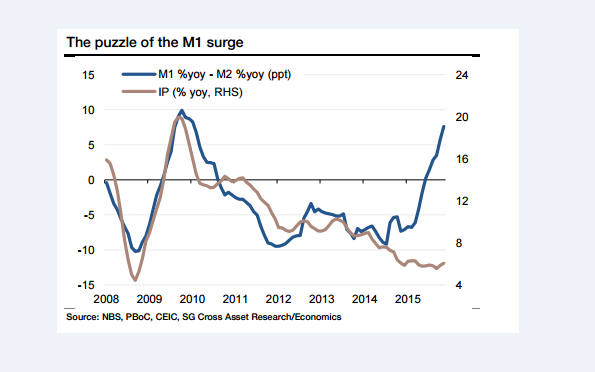
Time for the big margin calls?!

Prolonged Slump Sparks 2nd Wave Of Cuts To 2016 Oil Company Budgets (Reuters)

Less than two months into the year, the top U.S. shale oil companies have already cut their budget for 2016 a second time as the relentless drop in oil prices continues to erode their cash flow. With oil prices firmly wedged in the low $30-per-barrel range, oil producers are deferring spending on new wells and projects. “Companies’ language has shifted towards preserving balance sheets and cash, and keeping expenditure within cash-flows, which means that budgets are going to fall further,” said Topeka Capital Markets analyst Gabriele Sorbara. 18 of the top 30 U.S. oil companies by output have so far outlined their spending plans for 2016. They have reduced their budget by 40% on average, steeper than most analysts’ expectations, according to a Reuters analysis. These 30 companies had, on average, lowered their spending plans for 2016 by more than 70% last year.

Some such as Hess Corp and ConocoPhillips, who had already planned to spend less this year than in 2015, have now further cut their capital expenditure targets. Others are expected to follow suit. But, is there room for further cuts? While reduced prices for oilfield services and increased efficiencies have helped companies scale back spending, many industry experts say there may not be room for further cuts. “It’s almost like a 80/20 rule – 80% of the cost reduction has already occurred, another 20% remains,” said Rob Thummel at Tortoise Capital Advisors. Although the reduced spending has not yet impacted shale output, production is expected to start falling by the end of the year. “The capital cuts that the industry is making should result in … a supply shock to the downside,” ConocoPhillips’ chief executive, Ryan Lance, said on Thursday.

Read more …

Looking 10 years ahead? Sure.

World’s Largest Energy Trader Sees a Decade of Low Oil Prices (BBG)

Oil prices will stay low for as long as 10 years as Chinese economic growth slows and the U.S. shale industry acts as a cap on any rally, according to the world’s largest independent oil-trading house. “It’s hard to see a dramatic price increase,” Vitol CEO Ian Taylor told Bloomberg in an interview, saying prices were likely to bounce around a band with a mid-point of $50 a barrel for the next decade. “We really do imagine a band, and that band would probably naturally see a $40 to $60 type of band,” he said. “I can see that band lasting for five to ten years. I think it’s fundamentally different.” The lower boundary would imply little price recovery from where Brent crude, the global price benchmark, trades at about $35 a barrel.

The upper limit would put prices back to the level of July 2015, when the oil industry was already taking measures to weather the crisis. The forecast, made as the oil trading community’s annual IP Week gathering starts in London on Monday, would mean oil-rich countries and the energy industry would face the longest stretch of low prices since the the 1986-1999 period, when crude mostly traded between $10 and $20 a barrel. Vitol trades more than five million barrels a day of crude and refined products – enough to cover the needs of Germany, France and Spain together – and its views are closely followed in the oil industry.

Taylor, a 59-year-old trader-cum-executive who started his career at Royal Dutch Shell in the late 1970s, said he was unsure whether prices have already bottomed out, as supply continued to out-pace demand, leading to ever higher global stockpiles. However, he said that prices were likely to recover somewhat in the second half of the year, toward $45 to $50 a barrel. For the foreseeable future, Taylor doubts the oil market would ever see the triple-digit prices that fattened the sovereign wealth funds of Middle East countries and propelled the valuations of companies such as Exxon Mobil and BP. “You have to believe that there is a possibility that you will not necessarily go back above $100, you know, ever,” he said.

Read more …

How many will be capped in for good?

150 North Sea Oil Rigs Could Be Scrapped In 10 Years (Scotsman)

Almost 150 oil rigs in UK waters could be scrapped within the next 10 years, according to industry analysts Douglas Westwood, which carries out market research and consultancy work for the energy industry worldwide, said it anticipated that “146 platforms will be removed from the UK during 2019-2026”. The North Sea has been hit hard by plummeting oil prices, with the industry body Oil and Gas UK estimating 65,000 jobs have been lost in the sector since 2014. But Douglas Westwood said that decommissioning could provide an opportunity for the specialist firms involved in the work. Later this month it will publish its decommissioning market forecast for the North Sea – covering Denmark, Germany, Norway and the UK – over the period 2016 to 2040.

Ahead of that a paper on its website predicted that the “UK will dominate decommissioning expenditure”. This is down to the “high number of ageing platforms in the UK, which have an average age of over 20 years and are uneconomic at current commodity prices, as a result of high maintenance costs and the expensive production techniques required for mature fields”. Douglas Westwood said: “The oil price collapse has been bad news for nearly every company involved in the industry, but one group that could actually benefit from it are specialist decommissioning companies. “For these companies there is an opportunity to be part of removing the huge tonnage of infrastructure that exists in the North Sea. With oil prices forecast to remain low, life extension work that has kept many North Sea platforms producing long past their design life no longer makes commercial sense.”

Read more …
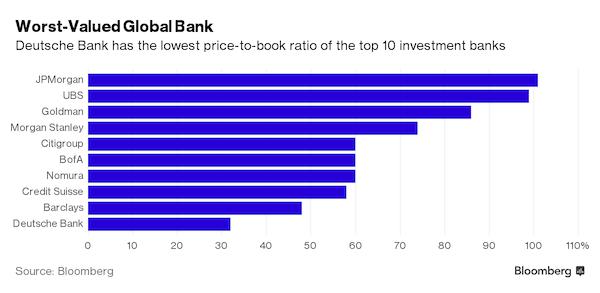
Some people will try and make a big deal out of this.

Iran Wants Euro Payment For New And Outstanding Oil Sales (Reuters)

Iran wants to recover tens of billions of dollars it is owed by India and other buyers of its oil in euros and is billing new crude sales in euros, too, looking to reduce its dependence on the U.S. dollar following last month’s sanctions relief. A source at state-owned National Iranian Oil told Reuters that Iran will charge in euros for its recently signed oil contracts with firms including French oil and gas major Total, Spanish refiner Cepsa and Litasco, the trading arm of Russia’s Lukoil. “In our invoices we mention a clause that buyers of our oil will have to pay in euros, considering the exchange rate versus the dollar around the time of delivery,” the NIOC source said. Iran has also told its trading partners who owe it billions of dollars that it wants to be paid in euros rather than U.S. dollars.

Iran was allowed to recover some of the funds frozen under U.S.-led sanctions in currencies other than dollars, such as the Omani rial and UAE dhiram. Switching oil sales to euros makes sense as Europe is now one of Iran’s biggest trading partners. “Many European companies are rushing to Iran for business opportunities, so it makes sense to have revenue in euros,” said Robin Mills, CEO of Dubai-based Qamar Energy. Iran has pushed for years to have the euro replace the dollar as the currency for international oil trade. In 2007, Tehran failed to persuade OPEC members to switch away from the dollar, which its then President Mahmoud Ahmadinejad called a “worthless piece of paper”.

Read more …

What are the odds? If not done retroactively, how would it work out?

Fining Bankers, Not Shareholders, for Banks’ Misconduct (Morgenson)

Ho-hum, another week, another multimillion-dollar settlement between regulators and a behemoth bank acting badly. The most recent version involves two such financial institutions, Barclays and Credit Suisse. They agreed last Sunday to pay $154.3 million after regulators contended that their stock trading platforms, advertised as places where investors would not be preyed on by high-frequency traders, were actually precisely the opposite. On both banks’ systems, investors trying to execute their transactions fairly were harmed. As has become all too common in these cases, not one individual was identified as being responsible for the activities. Once again, shareholders are shouldering the costs of unethical behavior they had nothing to do with.

It could not be clearer: Years of tighter rules from legislators and bank regulators have done nothing to fix the toxic, me-first cultures that afflict big financial firms. Regulators are at last awakening to this reality. On Jan. 5, for example, the Financial Industry Regulatory Authority, a top Wall Street cop, announced its regulatory priorities for 2016. Among the main issues in its sights, the regulator said, was the culture at these companies. “Nearly a decade after the financial crisis, some firms continue to experience systemic breakdowns manifested through significant violations due to poor cultures of compliance,” said Richard Ketchum, Finra’s chairman.

“Firms with a strong ethical culture and senior leaders who set the right tone, lead by example and impose consequences on anyone who violates the firm’s cultural norms are essential to restoring investor confidence and trust in the securities industry.” But changing behavior — as opposed, say, to imposing higher capital requirements — is a complex task. And regulators must do more than talk about what banks have to do to address their deficiencies. Andreas Dombret is a member of the executive board of the Deutsche Bundesbank, Germany’s central bank, and head of its department of banking and financial supervision. In an interview late last year, he said he was determined to tackle the problem of ethically challenged bankers.

“If behavior doesn’t change, banks will not be trusted and they won’t be efficient in their financing of the real economy,” he said. “A functioning banking system must be based on trust.” Mr. Dombret is a regulator who knows banking from the inside, having held executive positions at J.P. Morgan and Bank of America. Most companies have codes of ethics, Mr. Dombret said, but they often exist only on paper. Regulators could help encourage a more ethical approach by routinely monitoring how a bank cooperates with its overseers, Mr. Dombret said. “How often is the bank the whistle-blower?” he asked. “Not only to get a lesser penalty but also to show that it won’t accept that kind of behavior. We are seeing more of that.”

Read more …
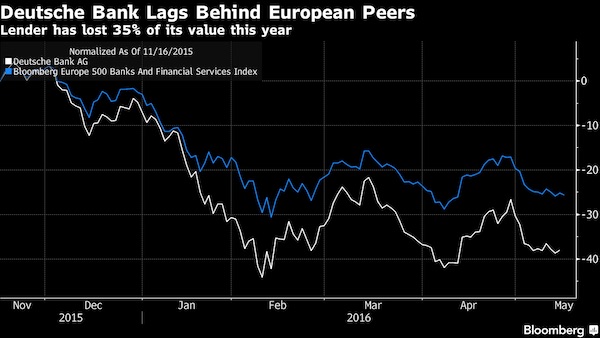
What VW didn’t get: the key player is the California Air Resources Board. You don’t want to piss them off. “Use of defeat devices is a civil violation” of the Clean Air Act, Uhlmann said. “Lying about CAA compliance is a criminal violation.”

Volkswagen’s Emissions Lies Are Coming Back To Haunt It (BBG)

No one has died from the emissions-cheating software Volkswagen has admitted it installed in some of its cars, yet the U.S. Justice Department may treat it more harshly than two automakers whose vehicles have killed people. General Motors vehicles were fitted with faulty ignition switches linked to at least 124 deaths. Toyota cars were involved in unintended acceleration responsible for at least four deaths. Neither had to plead guilty in settling criminal allegations, but Volkswagen may be forced to if it’s charged with criminal conduct and also wants to settle, according to attorneys who specialize in environmental law. The German automaker lied to the Environmental Protection Agency and California regulators for almost a year before admitting it created a device to fool emissions tests, Mary D. Nichols, chair of the California Air Resources Board, said in September.

Now the company faces a Justice Department that’s become more willing to push businesses across industries into guilty pleas tied to multibillion-dollar penalties. The U.S. attorney general also made it a priority last year to pursue criminal convictions against corporate executives. “We’ve had difficulty in controlling the automobile industry,” said Daniel Riesel at Sive, Paget & Riesel, a law firm that isn’t involved in the case. “Clearly the government regards this as a very serious environmental dereliction and is making a big deal of it.” [..] The U.S. civil complaint against Volkswagen alleges four violations of the Clean Air Act and cites potential civil fines that could be in the billions of dollars, according to Justice Department officials. If the BP case is a guide, criminal penalties could be less costly.

A criminal claim probably would be based on allegations that Volkswagen lied to government officials, said David Uhlmann, a law professor at the University of Michigan in Ann Arbor and former head of the environmental-crimes section of the Justice Department’s Environment and Natural Resources Division. When confronted about excess emissions by EPA and California regulators in meetings over several months, Volkswagen engineers cited technical issues rather than admitting the engines contained the defeat devices, according to the Justice Department. The company also initially denied in November that it installed software in larger engines to alter emissions, the department said. “Use of defeat devices is a civil violation” of the Clean Air Act, Uhlmann said. “Lying about CAA compliance is a criminal violation.”

Read more …
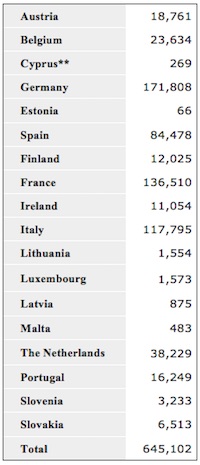
Just getting started.

Moody’s Cuts Rating On Western Australia Iron Ore (WSJ)

Moody’s Investors Service cut its rating on Western Australia, one of the world’s major iron-ore hubs, as a sharp downturn in prices for the steelmaking commodity puts increasing strain on the state’s finances. The ratings agency said on Monday it had downgraded the long-term issuer and senior unsecured debt ratings of the Western Australian Treasury, which issues debt on behalf of the state of Western Australia and state-owned corporations, to Aa2 from Aa1, citing “the ongoing deterioration in Western Australia’s financial and debt metrics and an increasing risk that the state’s debt burden will be higher than indicated.”

Ratings agencies have put many resources-focused companies and countries on watch amid a deep fall in world commodity prices. Last week, Standard & Poor’s Ratings Services said it has lowered BHP Billiton credit rating and cautioned it could cut again as early as this month. It also downgraded Glencore’s rating to just one notch above junk status. Moody’s said Western Australia’s reliance on royalty income from miners meant sharp falls in commodity prices, particularly iron-ore prices, was creating considerable pressure on its budget.

Read more …
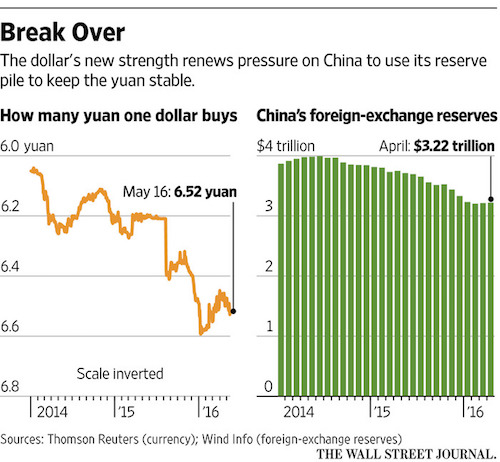
Gives ‘down under’ a new meaning. Watch Perth housing market.

British Expat Workers Flood Home As Australia Mining Boom Turns To Dust (Tel.)

Mining has been the driving force of Australia’s economic growth for longer than anyone cares to remember – helping GDP growth average 3.6pc a year for most of this century – but the global collapse in commodity prices has led to a painful readjustment Australians have heard the warnings before – but this time, it seems, the boom is truly over. The country is repointing its economy for a new reality, and renegotiating its trading partnership with China and the wider Asia-Pacific. Australia’s mining titans – the likes of BHP Billiton and Rio Tinto, whose shares have led the FTSE 100 lower in the recent market turmoil – have a huge fight on their hands. Meanwhile the migrants who answered their call for workers are considering their options. Will the mining downturn see Britons packing their bags for home?

“There is no doubt that current operating conditions in the mining sector are tough and companies are taking steps to ensure their long-term survival,” says Dr Gavin Lind, of the Minerals Council of Australia. Slowing demand in China – the world’s largest consumer of raw materials, and the buyer of 54pc of Australia’s resources exports in 2015 – has led to dizzying price falls in coal, iron ore, zinc, nickel, copper and bauxite, all minerals mined Down Under. Instead of cutting production and shoring up the price of their product, miners are taking a counter-intuitive tack, and boosting their output. Closing down mines is an expensive business and companies would rather cling on to their market share than cede ground to their rivals. Yet “the increase in volumes is unlikely to be sufficient to offset the effect of lower commodity prices”, Mark Cully, chief economist at the Department of Industry, Innovation and Science, warned in December.

He calculates that Australia’s earnings from mining and energy exports will fall by 4pc to A$166bn (£81bn) this year as lower prices bite. Giant miners such as Rio and BHP believe their low-cost models will enable them to survive while higher-cost competitors go to the wall. However, in common with their peers in the FTSE 100, they have been punished by investors, with their shares tumbling 44pc and 52pc respectively in the last year. While Rio’s balance sheet is regarded as the stronger of the two, both are under pressure to cut their dividends. Analysts expect Rio to unveil a 37pc slump in operating profits when it reports its full-year results this week. BHP, which announces its half-year results on February 23, is facing a 56pc tumble in profits for the year.

Read more …

Call a spade a spade.

Ukraine: A USA-Installed Nazi-Infested Failed State (Lendman)

In February 2014, Washington replaced Ukrainian democracy with fascism in Europe’s heartland – illegitimately installed officials waging war on their own people. Fundamental human and civil rights were abolished. Police state viciousness replaced them. Regime critics risk prosecution, sentencing, imprisonment or assassination. Two years after fascists seized power, conditions for ordinary Ukrainians are deplorable. According to Germany’s daily broadsheet Junge Welt, they’re “staggering.” “Since the end of the Yanukovych era, the average income has decreased by 50%,” it reported – on top of 2015’s 44% inflation, nearly reducing purchasing power by half, making it impossible for most Ukrainians to get by. They’re suffering hugely, deeply impoverished, denied fundamental social services, abolished or greatly reduced en route to eliminating them altogether.

Ukraine’s economy is bankrupt, teetering on collapse, sustained by US-controlled IMF loans, violating its longstanding rules, a special dispensation for Ukraine. It loaned billions of dollars to a deadbeat borrower unable to repay them, an unprecedented act, funding its war machine, turning a blind eye to a hugely corrupt regime persecuting its own people. Ukraine’s GDP is in near free-fall, contracting by 12% last year, projected to continue declining sharply this year and beyond. The average pension was cut to €80 monthly, an impossible amount to live on, forcing pensioners to try getting by any way they can, including growing some of their own food in season. US anointed illegitimate oligarch president Petro Poroshenko is widely despised. So are other key regime officials.

They blame dismal economic conditions mainly on ongoing civil war – US-orchestrated and backed naked aggression against Donbass freedom fighters, rejecting fascist rule, wanting fundamental democratic rights, deserving universal praise and support. According to Junge Welt, regime critics call Kiev claims lame excuses. “What matters is (it’s) done little or nothing to prevent corruption and insider trading,” elite interests benefitting at the expense of everyone else, stealing the country blind, grabbing all they can. Complicit regime-connected oligarchs profit hugely in Ukraine, benefitting from grand theft, super-rich Dmitry Firtash apparently not one of them, calling Kiev “politically bankrupt.”

Days earlier, Ukrainian Economy Minister Aivaras Abromavicius resigned, followed the next day by his first deputy, Yulia Kovaliv, his remaining team, two deputy ministers and Kiev’s trade representative. Parliament speaker Volodymyr Groysman warned of Ukraine “entering a serious political crisis.” Resignations followed nothing done to address vital reforms needed. In his resignation letter, Abromavicius said corrupt officials blocked them, wanting control over state enterprises for their own self-interest, including natural gas company NAK Naftogaz. “Neither I nor my team have any desire to serve as a cover-up for the covert corruption, or become puppets for” regime officials “trying to exercise control over the flow of public funds,” he explained.

Read more …
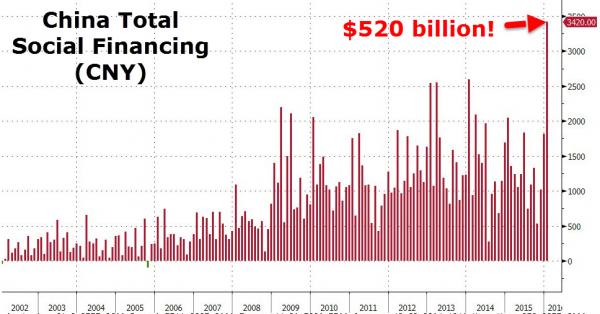
Not a bad thought experiment. But having ‘populist’ Beppe Grillo as an example shows how clueless Münchau is about reality. That sort of talk itself is populist. David Cameron in a much more valid example, for one.

Through The Past, Darkly, For Europe’s Central Bankers (Münchau)

Re-reading John Weitz’s biography of Hjalmar Schacht, Hitler’s Banker , I noted some interesting parallels between the 1930s and now that I had not considered before. It is well known that Hitler relied on Schacht, his central banker, to help fund his rearmament plans. But Weitz also pointed out — and this is potentially relevant to the situation in the eurozone today – that Schacht was only able to pursue his unorthodox policies at the Reichsbank because he had the backing of a dictator. If an extremist leader came to power in a large eurozone country – France or Italy, say – what would happen if they were to appoint a central banker with the acumen of Schacht? And what would be the chances that such a team could succeed in increasing economic growth in the short term? Let me say straightaway that I am not comparing anyone to Hitler – or indeed to Schacht.

My point concerns what an unorthodox central banker can do if he or she has the political support to break with the prevailing orthodoxy. Schacht had two stints as president of the Reichsbank — in the 1920s, when he brought an end to the hyperinflation then crippling Germany, and again from 1933 to 1939. It is hard to identify him with a single economic outlook: in the 1920s he was in favour of the gold standard but then, in the early 1930s, he opposed the consensus that promoted the policies of austerity and deflation. Schacht argued, rightly, that Germany was unable to meet the reparation payments specified in the Young Plan, which was adopted in 1929. On returning to the Reichsbank, Schacht organised a unilateral restructuring of private debt owed by German companies to foreigners.

The German economy had already benefited from withdrawal from the gold standard in 1931, and Schacht piled stimulus upon stimulus. One reason for Hitler’s initial popularity in Germany was the speedy recovery from the depression, which was no doubt helped by a loose fiscal and monetary policy mix. The current policy orthodoxy in Brussels and Frankfurt, which is shared across northern Europe, has some parallels to the deflationary mindset that prevailed in the 1930s. Today’s politicians and central bankers are fixated with fiscal targets and debt reduction. As in the early 1930s, policy orthodoxy has pathological qualities. Whenever they run out of things to say, today’s central bankers refer to “structural reforms”, although they never say what precisely such reforms would achieve.

In principle, the eurozone’s economic problems are not hard to solve: the ECB could hand each citizen a cheque for €10,000. The inflation problem would be solved within days. Or the ECB could issue its own IOUs — which is what Schacht did. Or else the EU could issue debt and the ECB would buy it up. There are lots of ways to print money. They are all magnificent — and illegal.

Read more …
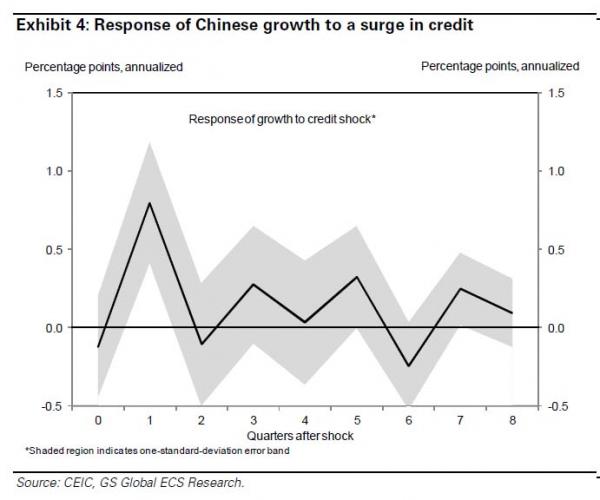
“..communal solidarity..” That says it all. More Europe! Not. Going. To. Happen.

German, French Central Bankers Call For Eurozone Finance Ministry (Reuters)

The euro zone needs to press ahead with structural reforms and closer integration, including an euro zone finance ministry, to deliver sustainable growth, the heads of the French and German central banks wrote in a German newspaper on Monday. In a guest article for the Sueddeutsche Zeitung entitled “Europe at a crossroads”, they said the European Central Bank (ECB) was not in a position to create sustainable long-term growth for the 19-country single currency bloc. The ECB has undershot its 2% inflation target for three straight years and is unlikely to return to it to for years to come given low oil prices, lackluster economic growth, weak lending and only modest wage rises in the euro zone.

“Although monetary policy has done a lot for the euro zone economy, it can’t create sustainable economic growth,” Bundesbank President Jens Weidmann and Bank of France Chief Francois Villeroy de Galhau wrote. Instead the euro zone needs a decisive program for structural reforms, an ambitious financing and investment union as well as better economic policy framework, Weidmann and Villeroy de Galhau said. The idea of such a ministry was floated in 2011 to tighten coordination of national policy after the economic crisis had forced the European Union to fund bailouts worth hundreds of billions of euros for Greece, Ireland and Portugal. “The current asymmetry between national sovereignty and communal solidarity is posing a danger for the stability of our currency union,” they wrote.

“Stronger integration appears to be the obvious way to restore trust in the euro zone, for this would favor the development of joint strategies for state finances and reforms so as to promote growth,” they said. Specifically, they called for the creation of a common finance ministry in connection with an independent fiscal council as well as the formation of a stronger political body that can take decisions.

Read more …