Dec 072018


Paul Almasy Paris 1950


The concept of the EU might have worked, but still only might have, if a neverending economic boom could have been manufactured to guide it on its way. But there was never going to be such a boom. Or perhaps if the spoils that were available in boom times and bust had been spread out among nations rich and poor and citizens rich and poor a little more equally, that concept might still have carried the days.

Then again, its demise was obvious from well before the Union was ever signed into existence, in the philosophies, deliberations and meetings that paved its way in the era after a second world war in two score years fought largely on the European continent.

In hindsight, it is hard to comprehend how it’s possible that those who met and deliberated to found the Union, in and of itself a beneficial task at least on the surface in the wake of the blood of so many millions shed, were not wiser, smarter, less greedy, less driven by sociopath design and methods. It was never the goal that missed its own target or went awry, it was the execution.

Still, no matter how much we may dream, how much some of the well-meaning ‘founding fathers’ of the Union may have dreamt, without that everlasting economic boom it never stood a chance. The Union was only ever going to be tolerated, accepted, embraced by its citizens if they could feel and see tangible benefits in their daily lives of surrendering parts of their own decision making powers, and the sovereignty of their nations.

There are 28 countries in the Union at this point, and one of them is already preparing to leave. There are 28 different cultures too, and almost as many languages. It was always going to be an uphill struggle, a hill far too steep for mere greed to master and conquer. History soaked Europe in far too much diversity through the ages for that. To unify all the thousands of years of beauty and darkness, of creativity and annihilation, of love and hatred, passed on through the generations, a lot more than a naked and bland lust for wealth, power and shiny objects was needed.

And sure, maybe it just happened on the way, in the moments when everyone was making new friends and not watching their backs for a moment. But they all still should have seen it coming, because of those same thousands of years that culminated in where they found themselves. The European Union is like a wedding and marriage without a prenup, where partners are too afraid to offend each other to do what would make them not regret the ceremony later.


Today, there are far too few of the 28 EU countries that have been lifted out of their poverty and other conditions that made them want to join the Union. And within many of the countries, there are way too many people who are, and feel, left behind. While Brussels has become a bastion of power that none of the disadvantaged feel they can properly address with their grievances.

The main fault of the EU is that the biggest party at the table always in the end, when things get serious, gets its way. The 80 million or so people of Germany de facto rule the 500 million of the Union, or you know, the three handfuls that rule Germany. No important decision can or will ever be taken that Berlin does not agree with. Angela Merkel has been the CEO of Europe Inc. since November 22 2005, gathering more power as time went by. That was never going to work unless she made everyone richer. Ask the Greeks about that one.

Merkel was the leader of both Germany and of Europe, and when things got precarious, she chose to let German interests prevail above Italian or Greek ones. That’s the fundamental flaw and failure of the Union in a nutshell. All other things, the Greek crisis, Salvini, Macron, Brexit, are mere consequences of that flaw. In absence of a forever economic boom, there is nothing left to fall back on.


Traditional right/left parties have been destroyed all across Europe in recent national elections. And it’s those traditional parties that still largely hold power in Brussels. As much as anyone except Germany and perhaps the European Commission hold any power at all. The shifts that happened in the political spectrum of many countries is not yet reflected in the European Parliament. But there are European elections in less than 6 months, May 23-26 2019.

About a quarter of the votes in the last such election, in 2014, went to euroskeptic parties. It’s not a terrible stretch of the imagination to presume that they’ll get half of the votes this time. Then we’ll have half or more of representatives speaking for people who don’t have faith in what they represent.

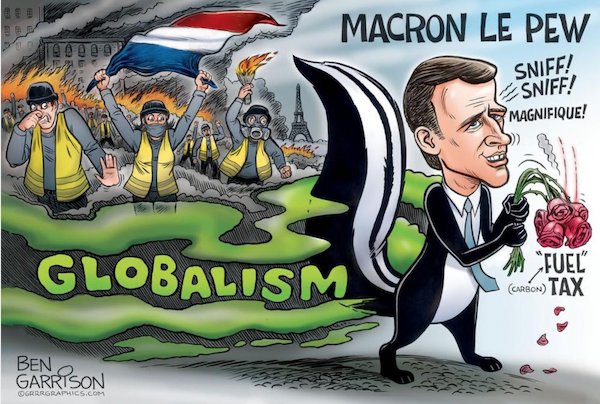
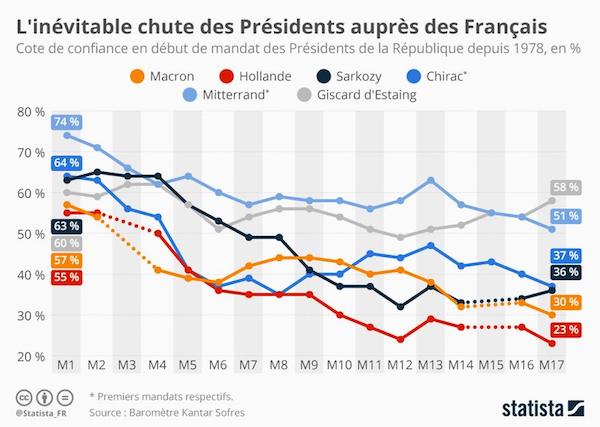
And on the other hand you have the Brussels elite, who continue to propagate the notion that Europe’s problems can best, nay only, be solved with more Europe. Of that elite Emmanuel Macron is the most recent, and arguable most enthusiastic from the get-go, high priest. Which can’t be seen apart from his domestic nose-diving approval rating, and most certainly not from the yellow vest protests and riots.

Macron won his presidency last year solely because he ran against Marine Le Pen in the second round of the elections, and a vast majority on the French will never vote for her; they’ll literally vote for anyone else instead. In the first round, when it wasn’t one on one, Macron got less than 25% of the votes. And now France wants him to leave. That is the essence of the protests. His presidency appears already over.


Among the 28 EU countries, the UK is a very clear euroskeptic example. It’s supposed to leave on March 2019, but that’s by no means a given. Then there’s Italy, where the last election put a strongly euroskeptic government in charge. There are the four Visegrad countries, Poland, Hungary, Czech Republic and Slovakia. No love lost for Brussels there. In Belgium yesterday, PM Michel’s government ally New Flemish Alliance voted against the UN Global Compact on Migration.

Spain’s Mariana Rajoy was supported by the EU against Catalonia, and subsequently voted out. The next government is left-wing and pro EU, but given the recent right wing victory in Andalusia it’s clear there’s nothing stable there. Austria has a rightwing anti-immigration PM. Germany’s CDU party today elected a successor for Merkel (in the first such vote since 1971!), but they’ve lost bigly in last year’s elections, and their CSU partner has too, pushing both towards the right wing anti-immigrant AfD.

And with Macron gone or going, France can’t be counted on to support Brussels either. So what is left, quo vadis Europa? Well, there’s the European elections. In which national parties, often as members of a ‘voting alliance’, pick their prospective candidates for the European Parliament, then become part of a larger European alliance, and finally often of an even larger alliance. You guessed right, turnout numbers for European elections are very very low.


Of course Brussels is deaf to all the issues besieging it. The largest alliances of parties, the EPP (people’s party) and the “socialists”, have chosen their crown prince ‘spitzenkandidat’ to succeed Jean-Claude Juncker as head of the European Commission, and they expect for things to continue more or less as usual. The two main contenders are Manfred Weber and Frans Timmermans, convinced eurocrats. How that will work out with 50% or more of parliamentarians being euroskeptic, you tell me. How about they form their own alliance?

The Union appears fatally wounded, and that’s even before the next financial crisis has materialized. Speaking of which, the Fed has been hiking rates and can lower them again a little if it wants, but much of Europe ‘works’ on negative rates already. That next crisis could be a doozy.

But we’re getting ahead of ourselves. First thing on the menu is Macron tomorrow, and the yellow vests in the streets of Paris and many other French cities -and rural areas. He has called for 90,000 policemen on the streets, but they’ll come face to face with their peers who are firemen, ambulance personnel, you name it, lots of folks who also work for the government. Will they open fire?

Can Macron allow for French people to be killed in the streets? Almost certainly not. There’ll be pitchforks and guillotines. The only way out for him, the only way to calm things down, may be to announce his resignation. The French don’t fool around when they protest. And who’s going to be left to drive the reform of Europe then? Not Merkel, she’s gone, even if she wants to be German Chancellor for three more years. But then who? I’m trying to think of someone, honest, but I can’t.

It’ll be quite the day Saturday in Paris.


Dec 072018


Claude Monet Camille on the Beach at Trouville 1870

 

Russia Seeks To ‘Feed The Whole Planet’ – PM (RT)
Markets Are Going Haywire, Sudden Moves Are Here To Stay (CNBC)
Did The Market Miss Powell’s Real Message? (Roberts)
Fed’s QE Unwind Reaches $374 Billion (WS)
The Fed Finally Broke Something (Muir)
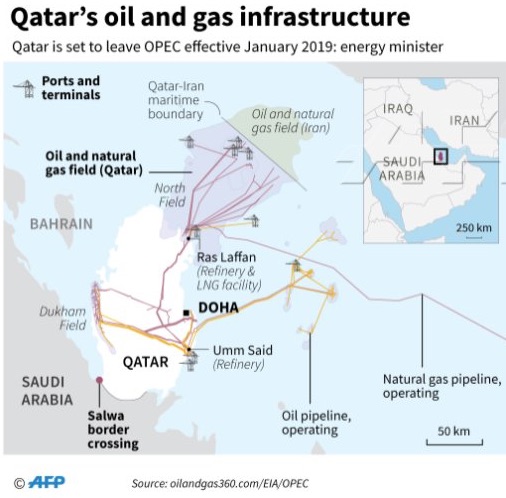
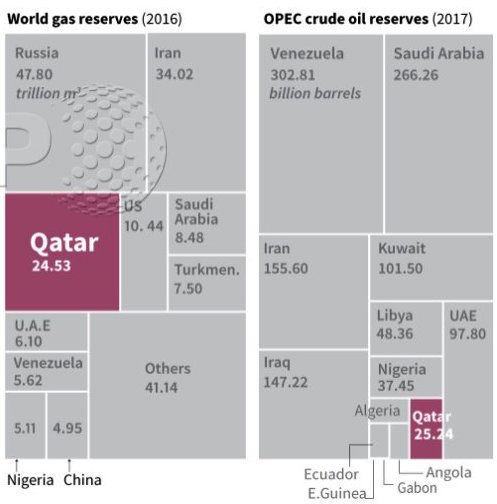
Oil Drops As OPEC Makes Supply Cut Dependent On Russia (CNBC)
Bitcoin Plunges 10% As December Rout Continues (CNBC)
France To Deploy 90,000 Police Over Weekend Riot Fears (Ind.)
Chinese Giant Huawei Faces Catastrophe (G.)
White House, Trudeau Seek To Distance Themselves From Huawei Move (R.)
Lyft Races To Leave Uber Behind In IPO Chase (R.)
Mueller To Give Details On Russia Probe With Filings On Former Trump Aides (R.)
Mueller’s Gift to Obama (Kim Strassel)
Julian Assange Rejects UK-Ecuador Deal For Him To Leave The Embassy (Tel.)


Medvedev is funny, with a serious twist. Note that this has all happened because of US sanctions. Russian grain exports have surged more than 54% this year. Funny that Ukraine fed much of Europe not that long ago (100 years?!) because of its highly fertile back earth.

Russia Seeks To ‘Feed The Whole Planet’ – PM (RT)

Russia seeks to expand its agricultural exports, ultimately seeking to feed the whole planet, Prime Minister Dmitry Medvedev said. The PM’s statement comes as the country enjoys a record surge in grain exports. “Our country is, as they say, destined by the heavens to feed the whole planet. And we’ll try and do that,” Medvedev told journalists of Russian TV channels in a major interview aired on Thursday. Apart from being the country’s “destiny,” the foods plainly make “nice export goods,” the prime minister added. Russia’s agriculture has expanded greatly over the past few years, becoming a solid and profitable industry, unlike the way it was a couple decades ago.

“Back in 1990s, the agriculture was called a ‘black hole’, where one should not invest, we were told we should not feed ourselves since we can purchase everything elsewhere,” Medvedev said. “Now, it feeds our whole country. We’ve reached the main goals regarding food security and we’re exporting grains, other goods to the world market.” This year, Russia has enjoyed vast growth of its agricultural exports, becoming the world’s top exporter of wheat. From January through September of 2018, exports of Russia’s wheat and meslin flour expanded by 54.3% compared to the previous year. The amount of food which the county imports, in its turn, continued to shrink. Imports of grains to Russia dropped by 11.1% during the same period. Imports of barley have suffered an enormous decline, dropping a whopping 94%.

Read more …

The logical consequences of central banks strangling price discovery.

Markets Are Going Haywire, Sudden Moves Are Here To Stay (CNBC)

Wherever Mark Connors looks at markets, from stocks to currencies to oil, he sees signs of the unknown. Equity investors got whipsawed this week during two rough and volatile sessions, but Connors, global head of risk advisory at Credit Suisse, had seen worrying signs long before that. A key technical measure he tracks, the correlation between the price of stocks and currencies, had broken down starting in April. That, along with sharp drops in the price of oil, point to one thing, he says: Uncertainty about the future as central banks around the world unwind programs that bought trillions of dollars of assets.

“We’re seeing two of the biggest asset classes, stocks and currencies, exhibit a degree of uncertainty in their relationship in 2018 that we’ve never seen before,” Connors said. “Crude just exhibited something very unusual in the context of the last 40 years.” The unwinding of central banks’ programs a decade after the financial crisis brought economies to the brink is known as quantitative tightening. J.P. Morgan Chase CEO Jamie Dimon said in July that one of his biggest fears is around how markets would behave as central banks removed their unprecedented stimulus. “If quantitative tightening continues, guess what’s going to happen? More of this,” Connor said, referring to unusually violent moves across markets.

Another factor in the speed of recent declines is the result of several important changes that have happened since the last financial crisis. Automated trading strategies from quant hedge funds and the massive shift to passive investing have helped to remove liquidity from the system in times of panic, according to Marko Kolanovic, J.P. Morgan’s global head of macro quantitative and derivatives research. He said in a September note that index and quant funds made up two-thirds of assets under management globally and the majority of daily trading. So when investors begin to sell, as they did on Tuesday amid concerns over the state of U.S. trade talks with China, the moves were probably amplified by computerized trading strategies.
Read more …

You’d have to have a -functioning- market for it to miss anything.

Did The Market Miss Powell’s Real Message? (Roberts)

[..] With the Fed Funds rate running at near 2%, if the Fed now believes such is close to a ‘neutral rate,’ it would suggest that expectations of economic growth will slow in the quarters ahead from nearly 6.0% in Q2 of 2018 to roughly 2.5% in 2019.” [..] the bond market has picked up on that realization as the yield has flattened considerably over the last few days as the 10-year interest rate broke back below the 3% mark. The chart below shows the difference between the 2-year and the 10-year interest rate.
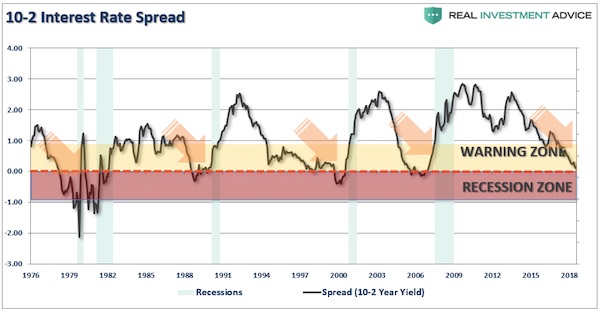
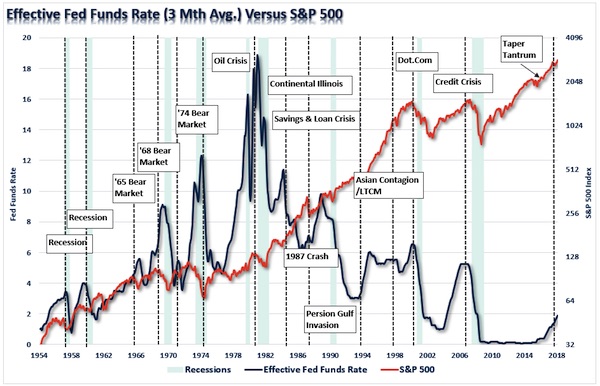
Now, there are many who continue to suggest “this time is different” and an inverted yield curve is not signaling a recession, and Jerome Powell’s recent comments are “in line” with a “Goldilocks economy.” Maybe. But historically speaking, while an inversion of the yield curve may not “immediately” coincide with a recessionary onset, given its relationship to economic activity it is likely a “foolish bet” to suggest it won’t. A quick trip though the Fed’s rate hiking history and “soft landing” scenarios give you some clue as to their success.
Read more …

Useful to remember that this is -mostly- an irreversible process.

Fed’s QE Unwind Reaches $374 Billion (WS)

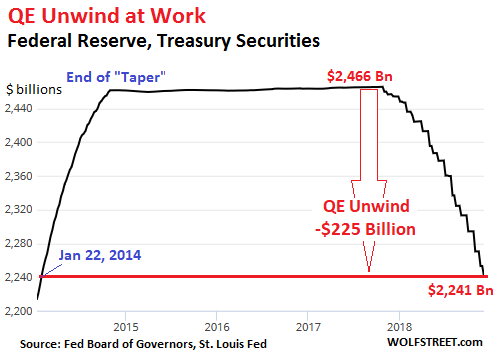
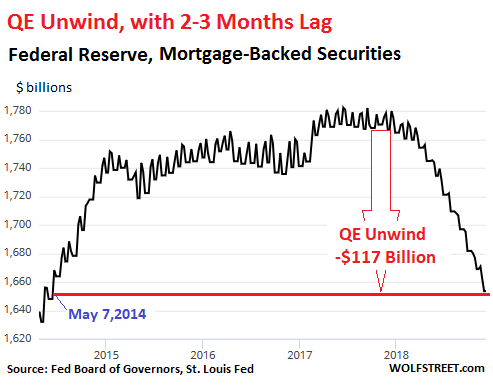
The Federal Reserve shed $54 billion in assets over the five weekly balance sheet periods that encompass the calendar month of November. This reduced the assets on its balance sheet to $4,086 billion, the lowest since January 15, 2014, according to the Fed’s balance sheet for the week ended December 5, released this afternoon. Since the beginning of the QE unwind — or “balance sheet normalization,” as the Fed calls it — in October 2017, the Fed has now shed $374 billion. The Fed holds a variety of assets, including the Treasury securities and mortgage-backed securities (MBS) that it had acquired as part of QE. Between the end of QE in late 2014 and the beginning of the QE unwind in October 2017, the Fed replaced maturing securities with new securities to keep their levels roughly the same. Starting in October 2017, the Fed has been shedding Treasury securities and MBS.
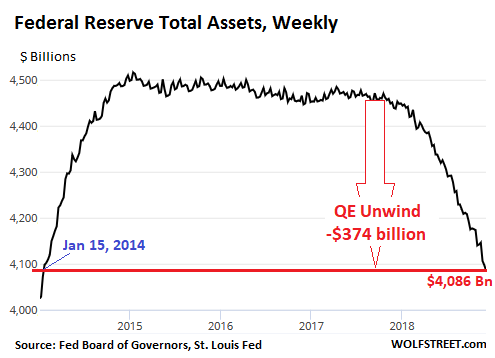
[..] Treasury Securities Until October, the QE unwind had been in ramp-up mode. In October, it reached cruising speed, according to the Fed’s plan. In the cruising-speed phase, the Fed is scheduled to shed “up to” $30 billion in Treasuries and “up to” $20 billion in MBS a month, for a total of “up to” $50 billion a month. So how did it go in November? From November 1 through December 5, the Fed’s holdings of Treasury Securities fell by $30 billion to $2,241 billion, the lowest since January 22, 2014. Since the beginning of the QE-Unwind, the Fed has shed $225 billion in Treasuries:
Mortgage-Backed Securities (MBS) Under QE, the Fed also acquired residential MBS that were issued and guaranteed by Fannie Mae, Freddie Mac, and Ginnie Mae. Holders of residential MBS receive principal payments as the underlying mortgages are paid down or are paid off. At maturity, the remaining principal is paid off. To keep the balance of MBS from declining after QE ended, the New York Fed’s Open Market Operations kept buying MBS in the market. The Fed books the trades at settlement, which lags the trade by two to three months. Due to this lag, the amount of MBS on today’s balance sheet reflects trades in August and September when the cap for shedding MBS was $16 billion a month. And this is how it panned out. From November 1 through today’s balance sheet, the balance of MBS fell by $16 billion, to $1,653 billion, the lowest since May 7, 2014.
Read more …

There’s a lot of -often contradictory- talk about yield conversion. Kevin Muir picks out a nice detail: “..we will not see the same degree of yield curve inversion that we have in past cycles. There is simply too much debt out there..

The Fed Finally Broke Something (Muir)

[..] an inversion of the yield curve has traditionally been one of the best indicators presaging a recession. There has been tons of studies and even more conclusions drawn from the data, so you probably don’t need me to rehash them all. Yet I think it’s amusing to hear all the yield-curve-apologists (a term coined by my colourful pal, Janney’s Guy LeBas in this article) once again claiming that yield curve inversions don’t matter. Whether it’s the fact that we need to wait for the 3-month / 5-year to invert, or whether it is the long lead time between the 2-10-year spread inverting and the actual recession, there are plenty of excuses being offered up about why the yield curve inversion doesn’t matter.

Yeah, let me get this straight. The largest, most liquid market in the world is sending a signal that has consistently been one of the most reliable indicators that a recession is near and somehow it makes sense to fade it? As a trader who cut his eye-teeth in the equity market, I can tell you unequivocally, bond traders are smarter. They just are. Denying it is like trying to argue that people in Malibu are no better looking than any other big U.S. suburb. So when the yield curve starts inverting, you better believe I am paying attention. However, as usual, there is a catch. Market cycles are similar, but never exactly the same.

In the post-GFC era we will not see the same degree of yield curve inversion that we have in past cycles. There is simply too much debt out there. The global economy cannot handle the same amount of tightening as in past cycles. I know the crowd who believes that “Powell is different than all the other Fed Chairs” will cry out in anguish at this proclamation, but last week’s dovish shift shows his stomach to handle any sort of market disruption is way lower than previously believed. Powell will be no different than all the other Fed Chairs. At the end of the day, he will be loose.

Read more …

How about US shale? Won’t they cut production to help MbS?

Oil Drops As OPEC Makes Supply Cut Dependent On Russia (CNBC)

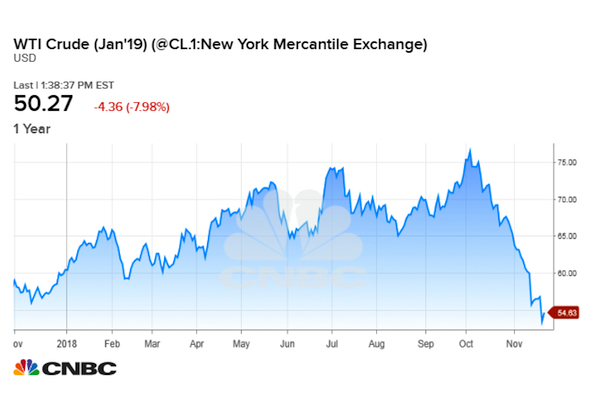
Oil prices fell on Friday, pulled down by OPEC’s decision to delay a final decision on output cuts, awaiting support from non-OPEC heavyweight Russia. International Brent crude oil futures fell below $60 per barrel early in the session, trading at $59.50 per barrel at 0144 GMT, down 56 cents, or 0.9% from their last close. U.S. West Texas Intermediate (WTI) crude futures were at $51.24 per barrel, down 25 cents, or 0.5%. The declines came after crude slumped by almost 3% the previous day, with OPEC ending a meeting at its headquarters in Vienna, Austria, on Thursday without announcing a decision to cut crude supply, instead preparing to debate the matter on Friday.

“OPEC has decided to meet Friday again…(as) Russia remains the sticking point,” said Stephen Innes, head of trading for Asia/Pacific at futures brokerage Oanda in Singapore. Analysts still expect some form of supply reduction to be decided. “We are beginning to witness the outline of the next iteration of production cuts, with OPEC conforming to cut its own production by around 1 million barrels per day, with the cartel lobbying non-OPEC members to contribute more,” Japanese bank MUFG said in a note.

Read more …

Relentless.

Bitcoin Plunges 10% As December Rout Continues (CNBC)

As of Asia’s Friday afternoon trade, bitcoin had fallen nearly 10% against the U.S. dollar in 24 hours, marking another recent plunge for the world’s largest cryptocurrency. It’s been a rough December for the digital token: Its price dropped 8% on the first day of the month. Bitcoin traded at $3,337.32 as of 12:28 p.m. HK/SIN (11:28 p.m. ET on Thursday), falling 9.88% over the last 24 hours, according to data from industry site Coindesk. Meanwhile, prices for the second and third largest cryptocurrencies by market value, XRP and Ether, also saw sharp declines in the 24 hour period. XRP fell by 10.62% and Ether dropped 15.90%, according to Coindesk.

This calendar year has generally been unkind to cryptocurrency prices, with the industry seeing its entire market cap falling almost 87.09% from its highs in January, according to data from Coinmarketcap. 24-hour trading volumes have also plunged about 61.65% since then. In recent industry related news, the U.S. Securities and Exchange Commission (SEC) posted an update on Thursday regarding the approval process for a rule change proposal for the allowance of a bitcoin exchange traded fund (ETF).

Read more …

The worst thing Macron could have done: “In a move questioned by both critics and supporters, the president has recently disappeared from public view.” And now his police are going to fire on protesters tomorrow?

France To Deploy 90,000 Police Over Weekend Riot Fears (Ind.)

French authorities are bracing for the possibility of more riots and violence at planned anti-government protests this weekend. The government is deploying tens of thousands of police and security forces across the country, while in Paris, museums, theatres and shops announced they would close on Saturday as a precaution – including the iconic Eiffel Tower. Police unions and city authorities held emergency meetings to decide how to handle the protests, which are being held despite Emmanuel Macron’s surrender to marchers demanding the scrapping of a planned fuel tax hike. Prime minister Edouard Philippe told senators on Thursday the government would deploy “exceptional” security measures for the protests in Paris and elsewhere.

Speaking on TF1 television, Mr Philippe said 89,000 police officers will be deployed on Saturday across France – up from 65,000 last weekend. In Paris alone, 8,000 police officers will be mobilised. They will be equipped with a dozen armoured vehicles – a first in a French urban area since 2005. Some “yellow vest” protesters, French union officials and prominent politicians across the political spectrum called for calm on Thursday after the worst rioting in Paris in decades last weekend. Mr Macron agreed to abandon the fuel tax hike, part of his plans to combat global warming, but protesters’ demands have now expanded to other issues hurting French workers, retirees and students. In a move questioned by both critics and supporters, the president has recently disappeared from public view.

Read more …

If this is true, US Big Tech will face the same.

Chinese Giant Huawei Faces Catastrophe (G.)

The arrest in Canada of the chief financial officer of the Chinese mobile network and handset tech firm Huawei marks a new stage in a technological cold war between western spy agencies and Beijing. This development could be catastrophic for Huawei: according to reports, the US suspects it broke sanctions by selling telecoms equipment to Iran. If that is proven, the response could exclude Huawei from many of the world’s most valuable markets. That quiet war of words had already begun to ramp up this week when first the head of the UK’s secret service, Alex Younger, said in a speech that “we need to have a conversation” about Huawei’s involvement in the UK’s telecoms network.

Then on Wednesday, BT revealed it is stripping out Huawei’s networking kit from parts of the EE mobile network. Huawei has been the world’s largest telecoms network equipment company since 2015, ahead of European rivals Ericsson and Nokia, and far above domestic competitor ZTE and South Korea’s Samsung. But the company has for years struggled against suspicions that it has bowed to pressure from the Chinese government to tap or disrupt telecoms systems in foreign countries. That has seen it banned from selling its profitable network equipment to the US, Australia and New Zealand – three of the “Five Eyes” group of intelligence-sharing countries (the other two being the UK and Canada).

But Meng Wanzhou’s arrest on a federal warrant in Canada is a dramatic escalation. As well as being the CFO and deputy chairwoman of one of the world’s largest makers of telecoms networking equipment that is essential to phone, smartphone and internet traffic, she is also the daughter of Huawei’s 74-year-old founder Ren Zhengfei. Ren attracted suspicion from western agencies because of his role working in IT for the Red Army before he set up the firm in 1987.

Read more …

Even Bolton has -belatedly- denied involvement.

White House, Trudeau Seek To Distance Themselves From Huawei Move (R.)

President Donald Trump did not know about plans to arrest a top executive at Chinese telecoms giant Huawei in Canada, two U.S. officials said on Thursday, in an apparent attempt to stop the incident from impeding crucial trade talks with Beijing. Huawei’s CFO, Meng Wanzhou, the 46-year-old daughter of the company’s founder, was detained in Canada on Dec. 1, the same day Trump and Chinese President Xi Jinping dined together at the G20 summit in Buenos Aires. A White House official told Reuters Trump did not know about a U.S. request for her extradition from Canada before he met Xi and agreed to a 90-day truce in the brewing trade war.

Meng’s arrest during a stopover in Vancouver, announced by the Canadian authorities on Wednesday, pummeled stock markets already nervous about tensions between the world’s two largest economies on fears the move could derail the planned trade talks. [..] Meng’s detention also raised concerns about potential retaliation from Beijing in Canada, where Prime Minister Justin Trudeau sought to distance himself from the arrest. “The appropriate authorities took the decisions in this case without any political involvement or interference … we were advised by them with a few days’ notice that this was in the works,” Trudeau told reporters in Montreal in televised remarks.

Read more …

Top of the Bubble to you!

Lyft Races To Leave Uber Behind In IPO Chase (R.)

Ride-hailing company Lyft Inc beat bigger rival Uber Technologies Inc in filing for an initial public offering (IPO) on Thursday, defying the recent market jitters and taking the lead on a string of billion-dollar-plus tech companies expected to join Wall Street next year. Lyft’s IPO will test investors’ appetite for the most highly valued Silicon Valley companies and for the ride-hailing business, which has become a wildly popular service but remains unprofitable and has an uncertain future with the advance of self-driving cars. San Francisco-based Lyft, last valued at about $15 billion in a private fundraising round, did not specify the number of shares it was selling or the price range in a confidential filing with the SEC.

Lyft could go public as early as the first quarter of 2019, based on how quickly the SEC reviews its filing, people familiar with the matter said. Lyft’s valuation is likely to end up between $20 billion and $30 billion, one source added. The ride service was set up in 2012 by entrepreneurs John Zimmer and Logan Green and has raised close to $5 billion from investors. While it continues to grow faster than its larger competitor, Uber, it is also losing money. Lyft would follow a string of high-profile IPOs of technology companies valued at more than $1 billion this year, such as Dropbox and Spotify.

However, market turmoil fueled by the escalating trade tensions between the United States and China could dampen enthusiasm for the debuts of other 2019 hopefuls like apartment-rental service Airbnb, analytics firm Palantir. and Stripe Inc, a digital payment company. Including Lyft, these round out four of the top-10 most highly valued, venture-backed tech companies. “Market declines mean that the offer price will be lower than otherwise. But there’s a danger of waiting to go public as well. Markets could go even lower, and the companies could raise less money if they waited longer,” said Jay Ritter, an IPO expert and professor at the University of Florida.

Read more …

Later today. But forget about collusion. Not going to happen.

Mueller To Give Details On Russia Probe With Filings On Former Trump Aides (R.)

U.S. Special Counsel Robert Mueller will provide new details on Friday on how two of President Donald Trump’s closest former aides have helped or hindered his investigation into possible collusion between Russia and Trump’s 2016 election campaign. Mueller last month accused Trump’s former campaign chairman Paul Manafort of breaching a plea bargain deal by lying to prosecutors, and he will submit information on those alleged lies in a filing to a federal court in Washington. That could include shedding new light on Manafort’s business dealings or his consulting for pro-Kremlin interests in Ukraine.

Manafort, who maintains he has been truthful with Mueller, managed Trump’s campaign for three months in 2016. Also on Friday, Mueller’s office and the Southern District of New York are to file sentencing memos on Michael Cohen, Trump’s former private lawyer. Cohen pleaded guilty to financial crimes in a New York court in August, and last week to lying to Congress in a Mueller case. Sentencing for both of those cases will be handled by one judge. Attention will focus on whether Mueller discloses new information to supplement Cohen’s admission last week that he sought help from the Kremlin for a Trump skyscraper in Moscow late into the 2016 campaign.

Read more …

Kimberley Strassel is still a lone(ly) in the US mainstream.

Mueller’s Gift to Obama (Kim Strassel)

[..] what about the potential crimes that put Mr. Flynn in Mr. Mueller’s crosshairs to begin with? On Jan. 2, 2017, the Obama White House learned about Mr. Flynn’s conversations with Mr. Kislyak. The U.S. monitors phone calls of foreign officials, but under law they are supposed to “minimize” the names of any Americans caught up in such eavesdropping. In the Flynn case, someone in the prior administration either failed to minimize or purposely “unmasked” Mr. Flynn. The latter could itself be a felony. Ten days later someone in that administration leaked to the Washington Post that Mr. Flynn had called Mr. Kislyak on Dec. 29, 2016. On Feb. 9, 2017, someone leaked to the Post and the New York Times highly detailed and classified information about the Flynn-Kislyak conversation.

House Intelligence Committee Chairman Devin Nunes has called this leak the most destructive to national security that he seen in his time in Washington. Disclosing classified information is a felony punishable by up to 10 years in federal prison. The Post has bragged that its story was sourced by nine separate officials. The Mueller team has justified its legal wanderings into money laundering (Paul Manafort) and campaign contributions (Michael Cohen) on grounds that it has an obligation to follow up on any evidence of crimes, no matter how disconnected from its Russia mandate. Mr. Flynn’s being caught up in the probe is related to a glaring potential crime of disclosing classified material, yet Mr. Mueller appears to have undertaken no investigation of that. Is this selective justice, or something worse?

Don’t forget Mr. Mueller stacked his team with Democrats, some of whom worked at the highest levels of the Obama administration, including at the time of the possible Flynn unmasking and the first leak. The Flynn sentencing document, meanwhile, contained yet another outrageous gift to Obama alumni. In laying out the “serious” nature of Mr. Flynn’s crimes, the document asserts that one of the questions about the Flynn-Kislyak discussion was whether “the defendant’s actions violated the Logan Act,” a 1799 statute that criminalizes negotiation by unauthorized persons with foreign governments that are in dispute with the U.S. Only two defendants have ever been charged under the Logan Act, the more recent one in 1852, and neither was convicted.

Read more …

We have to turn to the Telegraph of all sources, since we -obviously- can’t trust info from the Guardian, which does run a piece on this. That piece was written by Dan Collyns in Quito. Thought for all those who’ve been feeding on the Guardian smear piece for well over a week: investigate instead the link between the paper and the Ecuador government., especially how it changes and intensified around teh time Moreno became president. But don’t forget that the Guardian already had people in the country in at least 2014.

Julian Assange Rejects UK-Ecuador Deal For Him To Leave The Embassy (Tel.)

Julian Assange’s lawyer has rejected an agreement announced by Ecuador’s president to see him leave the Ecuadorean embassy in London, after six years inside. Lenin Moreno, the president of Ecuador, has made no secret of his wish to be rid of the WikiLeaks founder, who sought asylum inside the embassy in June 2012 and has not left since. On Thursday Mr Moreno announced that a deal had been reached between London and Quito to allow Mr Assange, 47, to be released. “The way has been cleared for Mr Assange to take the decision to leave in near-liberty,” said Mr Moreno. He did not specify what “near liberty” meant.

[..] Mr Moreno added that Britain had guaranteed that the Australian would not be extradited to any country where his life is in danger. But Mr Assange’s lawyer, Barry Pollack, told The Telegraph that the deal was not acceptable. The legal team have long argued that they will not accept any agreement which risks his being extradited to the United States. In November a filing error revealed that Mr Assange faced charges in the US – although it was not clear what those charges were. Many speculate they would be connected to the release of classified information, and Mr Assange fears a long prison sentence in the US for what his supporters say is publishing information in the public interest.

“The suggestion that as long as the death penalty is off the table, Mr Assange need not fear persecution is obviously wrong,” said Mr Pollack. “No one should have to face criminal charges for publishing truthful information. “Since such charges appear to have been brought against Mr Assange in the United States, Ecuador should continue to provide him asylum.”

Read more …

Dec 062018
 
 December 6, 2018  Posted by at 10:40 am Finance Tagged with: , , , , , , , , , , , ,  4 Responses »


Louis Anquetin Avenue de Clichy, Five O’Clock in the Evening 1887


Sell-Offs Caused By Machines That Control 80% Of US Stock Market (CNBC)
Arrest of Huawei CFO Shows ‘The Gloves Are Now Fully Off’ – Eurasia Group (CNBC)
China May Target Us Tech Executives After Arrest Of Huawei CFO (MW)
British Telecom Removes Huawei Equipment From Parts Of 4G Network (PA)
Macron Scraps French Fuel Tax Rise Amid Nationwide Protests And Rioting (Ind.)
France’s Yellow Vest movement Strikes A Victory For Working People Across The EU (RT)
Leave ‘Very Likely’ Won EU Referendum Due To Illegal Overspending (Ind.)
Facebook Offered Secret User Data To Netflix And Airbnb (Ind.)
World ‘On Track’ For Devastating 3ºC Warming (Ind.)
War With Russia? (Stephen Cohen)
Is This It?: A Trump-Hater’s Guide To Mueller Skepticism (Frank)


Time for the whole thing to blow up?! Because: cui bono?

Sell-Offs Caused By Machines That Control 80% Of US Stock Market (CNBC)

80 percent of the daily moves in U.S. stocks are machine-led, a fund manager told CNBC on Wednesday. The phenomenon, also called algorithm or algo trading, refers to market transactions that use advanced mathematical models to make high-speed trading decisions. Many believe that the different sell-off episodes seen throughout 2018 were caused by these machines, as they act on immediate data releases, without taking the time to digest them as humans would. “80 percent of daily volume in the U.S. is done by machines, so what you get is a lack of focus on earnings, a lack of focus on outlooks and you just get short-term movements based on very specific data that is released every day and that creates noise,” Guy De Blonay, fund manager at Jupiter Asset Management, told CNBC’s “Squawk Box Europe.”

The daily volume of algo trading can change according to volatility. But over the last few years its impact has become more visible. In 2017, J.P. Morgan said that “fundamental discretionary traders” accounted for only 10 percent of trading volume in stocks. This is when traders look at companies’ performance and outlook before deciding whether to buy or sell the shares. [..] Salman Ahmed, chief investment strategist at Lombard Odier, said: “The rise of algorithm-based trading means that there are in these algorithms some levels which trigger sell-off, i.e. sell orders. “Yes, I can argue that we needed some kind of correction, given what has happened over the last few months. But the ferociousness of the intra-day sell-off is driven by these pre-set sell orders, which come programed in these algorithms automatically.”

Read more …
Not sure about that. Certainly an odd move though.

Arrest of Huawei CFO Shows ‘The Gloves Are Now Fully Off’ – Eurasia Group (CNBC)

The arrest of Huawei’s global chief financial officer in Canada, reportedly related to a violation of U.S. sanctions, will corrode trade negotiations between Washington and Beijing, risk consultancy Eurasia Group said Thursday. “Beijing is likely to react angrily to this latest arrest of a Chinese citizen in a third country for violating U.S. law,” Eurasia analysts wrote. In fact, Global Times — a hyper-nationalistic tabloid tied to the Chinese Communist Party — responded to the arrest by posting on Twitter a statement about trade war escalation it attributed to an expert “close to the Chinese Ministry of Commerce.”

“China should be fully prepared for an escalation in the #tradewar with the US, as the US will not ease its stance on China, and the recent arrest of the senior executive of #Huawei is a vivid example,” said the statement, paired with a photo of opposing fists with Chinese and American flags superimposed upon them. Canada’s Department of Justice said on Wednesday the country arrested Meng Wanzhou in Vancouver, where she is facing extradition to the U.S. The arrest is related to violations of U.S. sanctions, a person familiar with the matter told Reuters. U.S. authorities have been probing Huawei, one of the world’s largest makers of telecommunications network equipment, since at least 2016 for allegedly shipping U.S.-origin products to Iran and other countries in violation of U.S. export and sanctions laws, sources told Reuters in April.

Read more …

“If I was an American tech executive, I wouldn’t travel to China this week…”

China May Target Us Tech Executives After Arrest Of Huawei CFO (MW)

“If I was an American tech executive, I wouldn’t travel to China this week.” That’s what James Lewis, a former Commerce Department official and current director of technology policy at the think tank Center for Strategic and International Studies, told Axios on Wednesday after Canada arrested a top executive for China’s Huawai on behalf of the U.S. government. Lewis told Axios that “Huawei is one of the Chinese government’s pet companies,” and warned “They will retaliate and China will take hostages.” Earlier Thursday, Huawei CFO Meng Wanzhou — the daughter of the telecom giant’s founder — was arrested in Vancouver and was being prepared for extradition to the U.S. to face charges of violating sanctions against Iran.

China immediately protested the arrest, and demanded Canada and the U.S. “rectify wrongdoings” and release her from custody. The incident may raise tensions between the U.S. and China, just days after it appeared progress had been made to ease the ongoing trade war. U.S. stock futures and Asian stock markets fell after reports of the arrest. The U.S. government has long worried about cybersecurity risks from Huawei equipment, and has pressed allies to stop using the company’s products. The U.S. has restricted Huawei’s business in the U.S., and earlier this year, Australia barred Huawei from its 5G mobile network, citing a security risk. In October, a Silicon Valley semiconductor startup accused Huawei of conspiring to steal its technology. Huawei is the world’s biggest maker of telecom equipment, and the No. 2 smartphone maker in the world, surpassing Apple during the second quarter of 2018.

Read more …

The Five Eyes coordinate.

British Telecom Removes Huawei Equipment From Parts Of 4G Network (PA)

BT has confirmed it is removing Huawei equipment from key areas of its 4G network as concerns are raised about the Chinese firm’s presence in critical telecoms infrastructure. Governments in the US, New Zealand and Australia have already moved to block the use of Huawei’s equipment as part of the future rollout of 5G networks. Earlier this week the head of MI6 also suggested the UK needed to decide if it was “comfortable” with Chinese ownership of the technology being used. [..] In a statement, the UK telecoms group has confirmed it is in the process of removing Huawei equipment from the key parts of its 3G and 4G networks to meet an existing internal policy not to have the Chinese firm at the centre of its infrastructure.

“In 2016, following the acquisition of EE, we began a process to remove Huawei equipment from the core of our 3G and 4G mobile networks, as part of network architecture principles in place since 2006,” BT said. “We’re applying these same principles to our current RFP (request for proposal) for 5G core infrastructure. As a result, Huawei have not been included in vendor selection for our 5G core. Huawei remains an important equipment provider outside the core network and a valued innovation partner.” The news comes in the wake of the head of MI6, Alex Younger, questioning whether Chinese firms such as Huawei should be involved in UK communications infrastructure.

He said that the UK would have to make “some decisions” about such firms after other governments had taken steps to block the firm. “We need to decide the extent to which we are going to be comfortable with Chinese ownership of these technologies and these platforms in an environment where some of our allies have taken a very definite position,” he said.

Read more …

He didn’t have the guts to go on TV himself, but let his PM do it. Who said that it was his own decision.

Macron Scraps French Fuel Tax Rise Amid Nationwide Protests And Rioting (Ind.)

Emmanuel Macron has scrapped a fuel tax rise following weeks of nationwide protests in France and the worst rioting in Paris in decades. Protesters celebrated the victory on Wednesday, but critics said Mr Macron’s surrender came too late and is unlikely to quell mounting anger at the president, whom demonstrators consider out of touch with ordinary people. Amid fears of new violence, Mr Macron decided to “get rid” of the tax planned for next year, an official in the president’s office said. Prime minister Edouard Philippe told lawmakers the tax is no longer included in the 2019 budget. But the decision has ramifications beyond France, since the fuel tax rise was part of Mr Macron’s efforts to wean France off fossil fuels in order to reduce greenhouse gases and help slow climate change.

[..] Mr Macron’s popularity has slumped to a new low since the demonstrations began. The former investment banker, who has pushed pro-business economic reforms to make France more competitive globally, is accused of being the “president of the rich” and of being estranged from the working classes. On Wednesday, France’s largest farmers union said it will launch anti-government protests next week, after trucking unions called for a rolling strike. Trade unions so far have not played a role in the yellow vest protest movement but are now trying to capitalise on growing public anger. A joint statement from the CGT and the FO trucking unions called for action on Sunday night to protest a cut in overtime rates. The FNSEA farmers union said it would fight to help French farmers earn a better income but would not officially be joining forces with the “yellow vests”..

Read more …

You really think that working class or working people are terms that still have relevance?

France’s Yellow Vest movement Strikes A Victory For Working People Across The EU (RT)

Straddling the world stage like a colossus in his own mind, but a low rent Napoleon in everyone else’s, with his talk of a European army, Macron is the epitome of the confected politician to which neoliberalism has given birth over the years. Even before the current crisis his approval rating was so low it was drilling its way through the floor; yet as with other leaders who are cut from the same expensive cloth, being impervious to the real world is deemed compatible with strong leadership. It really does beg the question of when, if ever, those who inhabit this cloistered Western neoliberal establishment will finally wake up to the consequences of their ruinous economic dictatorship?

In the UK we have the unedifying sight of Tony Blair being wheeled out as the de facto leader of the ‘reverse Brexit’ movement. That there is anyone who actually believes that the man who took petrol and matches to the Middle East, and who carries about as much weight in the country’s Brexit heartlands as a fly’s wing, is capable of directing anything except his chauffeur from one of his gilded mansions to a TV studio and back again, is remarkable. Meanwhile, on the other side of the Atlantic, the lid of Hillary Clinton’s political coffin has been prised open by an out of touch Washington liberal establishment – one that left planet earth after Trump’s election in 2016 and has been floating around somewhere in outer space since.

Read more …

Wouldn’t it be fun if this would make the whole enchilada invalid?

Leave ‘Very Likely’ Won EU Referendum Due To Illegal Overspending (Ind.)

It is “very likely” that the UK voted for Brexit because of illegal overspending by the Vote Leave campaign, according to an Oxford professor’s evidence to the High Court. An exhaustive analysis of the campaign’s digital strategy concludes it reached “tens of millions of people” in its last crucial days, after its spending limit had been breached – enough to change the outcome. The evidence will be put to the High Court on Friday, in a landmark case that is poised to rule within weeks whether the referendum result should be declared void because the law was broken. Professor Philip Howard, director of the Oxford Internet Institute, at the university, said: “My professional opinion is that it is very likely that the excessive spending by Vote Leave altered the result of the referendum.

“A swing of just 634,751 people would have been enough to secure victory for Remain. “Given the scale of the online advertising achieved with the excess spending, combined with conservative estimates on voter modelling, I estimate that Vote Leave converted the voting intentions of over 800,000 voters in the final days of the campaign as a result of the overspend.” [..] Professor Howard’s report is based on separate research which found that 20-30 per cent of people decided how to vote within a week of polling day, with half of these doing so on election day itself. If, as he has concluded, Vote Leave’s Facebook adverts reached tens of millions of people after they had should have stopped, they influenced huge numbers of voting decisions.

Read more …

Shameless.

Facebook Offered Secret User Data To Netflix And Airbnb (Ind.)

Facebook offered companies, including Netflix and Airbnb, access to data about users’ friends that it did not make available to other apps, according to documents released by parliament. The 223 pages released yesterday were internal communications from 2012 to 2015 between company leaders, including chief executive Mark Zuckerberg, shedding light on allegations that Facebook has engaged in anti-competitive behaviour. The documents show that Facebook tracked growth of competitors and denied them access to key data. Zuckerberg agreed to senior executive Justin Osofsky’s request in 2013 to stop giving friends’ list access to Vine on the day that social media rival Twitter launched the video-sharing service. “We’ve prepared reactive PR,” Mr Osofsky wrote, to which Mr Zuckerberg replied: “Yup, go for it.”

The documents also raised questions about Facebook’s transparency. An exchange from 2015 shows Facebook leaders discussing how to begin collecting call logs from Android users’ smartphones without subjecting them to “scary” permissions screens. [..] In a summary of the 250-page cache, which includes internal emails involving Facebook chief executive Mark Zuckerberg and other members of staff, Damian Collins MP, chair of the Digital, Culture, Media and Sport Committee, highlighted a number of “key issues”. He claimed the documents show Facebook chose to “whitelist” selected companies, allowing them to maintain “full access” to the data of a user’s Facebook friends even after the company announced changes in 2015 to end such access.

Mr Collins suggested the cache also showed Facebook regularly discussed the value of data on the platform, and said: “The idea of linking access to friends’ data to the financial value of the developers’ relationship with Facebook is a recurring feature of the documents.”

Read more …
COP24 is as much CON24 as COP21 was CON21. ‘World leaders’ won’t solve this.

World ‘On Track’ For Devastating 3ºC Warming (Ind.)

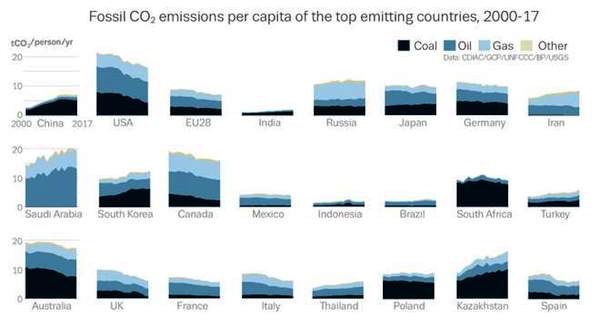
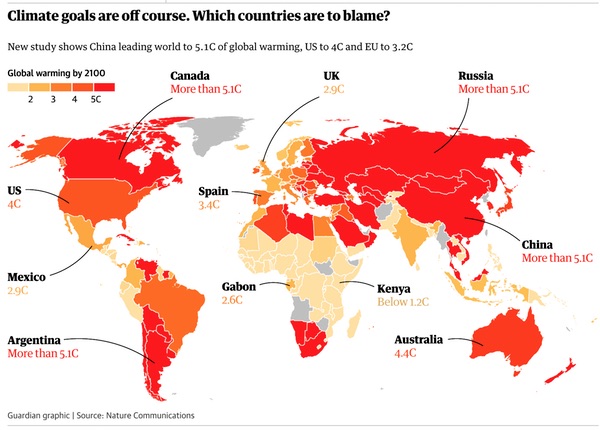
Global carbon pollution is on track to reach unprecedented levels in 2018, smashing hopes that the world had reached peak emissions. Growing energy demands combined with an unwillingness by many nations to let go of coal and oil are expected to result in a 2 per cent boost for emissions. Released at the major COP24 summit in Poland, the news marks the end of a year in which climate change has made itself felt, driving heatwaves, droughts and wildfires across the planet. It comes after a UN report warned that as emissions continue to creep upwards, nations must increase their commitments to tackling global warming by five times to avoid its worst effects.

CO2 pollution shot up in 2017 after a three-year decline that led many to speculate the world had hit peak carbon. With the data suggesting this trend has continued into 2018, experts have redoubled their desperate warnings to phase out fossil fuels as quickly as possible to avoid climate disaster. “With this year’s growth in emissions, it looks like the peak is not yet in sight,” said Professor Corinne Le Quere, from the University of East Anglia, who led the analysis. “To limit global warming to the Paris agreement goal of 1.5C, CO2 emissions would need to decline by 50 per cent by 2030 and reach net zero by around 2050. “We are a long way from this and much more needs to be done because if countries stick to the commitments they have already made, we are on track to see 3C of global warming.”

Read more …
Solid and long from America’s no. 1 Russia expert.

War With Russia? (Stephen Cohen)

Russiagate’s core allegations—US-Russian collusion, treason—all remain unproven. Yet they have become a central part of the new Cold War. If nothing else, they severely constrain President Donald Trump’s capacity to conduct crisis negotiations with Moscow while they further vilify Russian President Vladimir Putin for having, it is widely asserted, personally ordered “an attack on America” during the 2016 presidential campaign. Some Hollywood liberals had earlier omitted the question mark, declaring, “We are at war.” In October 2018, the would-be titular head of the Democratic Party, Hillary Clinton, added her voice to this reckless allegation, flatly stating that the United States was “attacked by a foreign power” and equating it with “the September 11, 2001, terrorist attacks.”

Clinton may have been prompted by another outburst of malpractice by The New York Times and The Washington Post. On September 20 and 23, respectively, those exceptionally influential papers devoted thousands of words, illustrated with sinister prosecutorial graphics, to special retellings of the Russiagate narrative they had assiduously promoted for nearly two years, along with the narrative’s serial fallacies, selective and questionable history, and factual errors. Again, for example, the now-infamous Paul Manafort, who was Trump’s campaign chairman for several months in 2016, was said to have been “pro-Kremlin” during his time as a lobbyist for Ukraine under then-President Viktor Yanukovych, when in fact he was pro–European Union.

Again, Trump’s disgraced national-security adviser, Gen. Michael Flynn, was accused of “troubling” contacts when he did nothing wrong or unprecedented in having conversations with a Kremlin representative on behalf of President-elect Trump. Again, the two papers criminalized the idea, as the Times put it, that “the United States and Russia should look for areas of mutual interest,” once the premise of détente. And again, the Times, while assuring readers that its “Special Report” is “what we now know with certainty,” buried a related acknowledgment deep in its some 10,000 words: “No public evidence has emerged showing that [Trump’s] campaign conspired with Russia.”

Read more …

Let’s keep it going for another 2 years or so. It sells papers and airtime.

Is This It?: A Trump-Hater’s Guide To Mueller Skepticism (Frank)

For many Robert Mueller watchers, the air these days is electric. People sense the big shoes are about to drop. Donald Trump has submitted his written answers to Mueller’s questions. Paul Manafort has entered a plea agreement, but then continued to lie—at least according to Mueller. Jerome Corsi, fringe-right author and personality, is vowing to go to jail for life rather than sign on to Mueller’s version of events. Roger Stone is expecting to be indicted for something. So is Donald Trump Jr. And, most significant of all to those looking for a big payoff, Michael Cohen has pleaded guilty to lying to Congress about the timeline of a deal he was trying to make to construct a 100-story Trump-branded tower in Moscow.

It turns out that the deal exploration continued past the time Trump had secured the Republican nomination, and Cohen and his associate Felix Sater, a real-estate promoter and one-time racketeer, had even discussed giving Vladimir Putin a $50 million penthouse in the building. “This is it,” people are saying. “This is the big one!” But, with all due reverence to the deity Ganesha, why? We see the familiar cycle of hype, and there’s no use fighting it, but, once heart rates have slowed, the same old question remains: so what? Some of the news, such as a Guardian story that Manafort met three times with Julian Assange, seems to be based on nothing at all. But even the solid news turns out to be generally non-earth-shattering.

As the journalist Aaron Maté has been pointing out, we already knew the timeline of Cohen’s Moscow efforts, because BuzzFeed had already detailed them in May, painting a picture of a bumbling duo getting high on their own supply. (As for the latest revelations, did Sater and Cohen really think a president of Russia would move into a free $50 million penthouse provided by a U.S. presidential candidate? You have to wonder if they were hitting each other on the head with bricks.) Those who hope that Mueller reveals a shambolic operation with a lot of rascals engaged in sleazy and embarrassing behavior will be happy with the fruits of his labors. But those who hope for an unveiling of indictments linking Putin and Trump in a grand conspiracy have no more reason to celebrate than they did a week or a month ago.

Read more …

Dec 052018
 
 December 5, 2018  Posted by at 10:38 am Finance Tagged with: , , , , , , , , , , , , ,  12 Responses »


Wassily Kandinsky Painting with Houses 1909 (click for background)


Don’t Blame Trump The Tariff Man, The Fed Crashed The Market Today (F.)
Dow Plunges Nearly 800 Points On Rising Fears Of An Economic Slowdown (CNBC)
FAANG Stocks Shed $140 Billion In Tuesday’s Market Rout (CNBC)
The Art of Defaulting (Jensen)
Anarchists, Butchers And Finance Workers In Court Over Paris Riots (AFP)
French History Has Never Seen A Protest Like The Yellow Vest Movement (Qz)
Theresa May Suffers Worst Day In Her Career … Until Next Week (Ind. )
UK Inches Closer To New Brexit Referendum As MPs Take Back Control (Ind.)
Mueller Says Michael Flynn Gave Details Of Trump Team Russia Contacts (CNBC)
Hey, Mr. Trump! Tear Down That Deep State Wall (Stockman)
The Ghost of Christmas Present (Kunstler)
Australia’s Economy Slows, Debt-Laden Consumers A Deadweight (R.)


New York Fed chief John Williams said the US economy can handle more rate hikes..

Don’t Blame Trump The Tariff Man, The Fed Crashed The Market Today (F.)

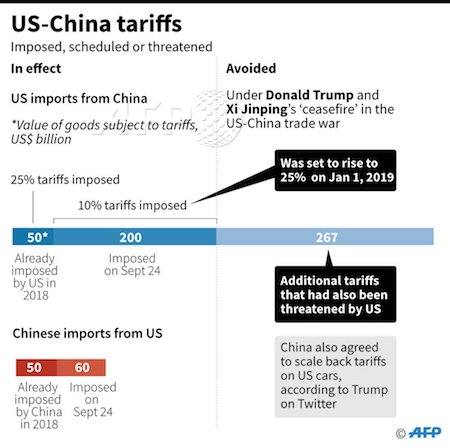
Don’t believe the hype: today’s reversal in equity markets has little, if anything, to do with this weekend’s trade war ceasefire. Tuesday’s drop in U.S. and European stock markets are largely thanks to the Federal Reserve. Treasury Secretary Steve Mnuchin came out immediately on Monday saying that details of the trade truce in terms of products China intended to import more of, and a new timeline for talks, would not be available to the public. The market new that immediately, but everyone still believed, and still believes today, that a trade truce is a market positive. Mnuchin told CNBC yesterday that China made trade commitments worth around $1.2 trillion, but stressed that the details still need to be negotiated and that he was taking Xi Jinping at his word. All positives.

The Hang Seng and every index on the Shanghai Stock Exchange settled higher again today. The Chinese yuan moved through its 50 and 100 day moving average to settle even stronger against the dollar today at 6.83. The blame for Tuesday’s slide in the U.S. can be laid upon New York Fed chief John Williams. He said today that the U.S. economy can handle more rate hikes. This comes just after Jerome Powell spoke at The Economic Club in New York last week saying the Fed funds rate was close to neutral. For once, a Powell speech sent the markets higher. No one really knows precisely what the neutral rate is, though it is perceived to be somewhere between 3% and 3.5%.

Read more …

Unhinged?!

Dow Plunges Nearly 800 Points On Rising Fears Of An Economic Slowdown (CNBC)

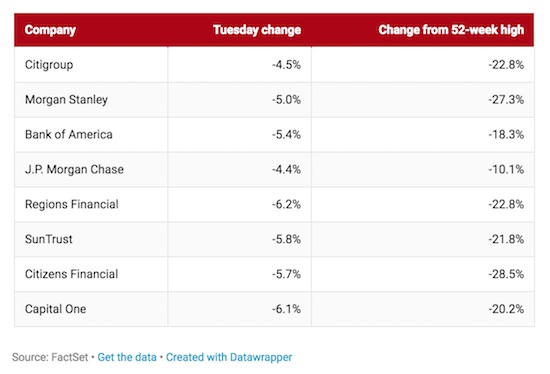
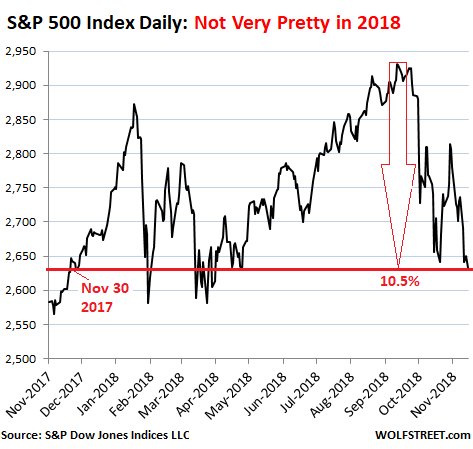
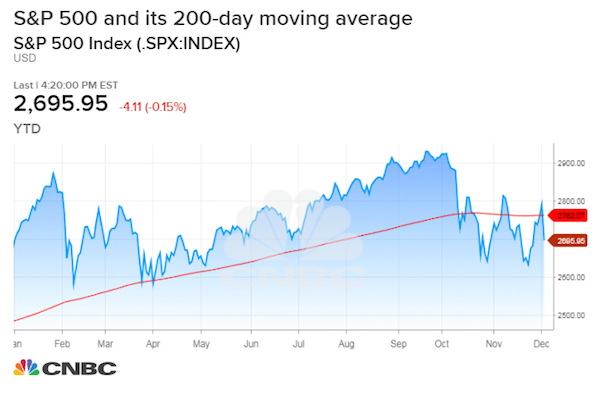
Stocks fell sharply on Tuesday in the biggest decline since the October rout as investors worried about a bond-market phenomenon signaling a possible economic slowdown. Lingering worries around U.S.-China trade also added to jitters on Wall Street. The Dow Jones Industrial Average fell 799.36 points, or 3.1%, to close at 25,027.07 and posted its worst day since Oct. 10. At its low of the day, the Dow had fallen more than 800 points. The S&P 500 declined 3.2% to close at 2,700.06. The benchmark fell below its 200-day moving average, which triggered more selling from algorithmic funds. Financials were the worst performers in the S&P 500, plunging 4.4%.

[..] The yield on the three-year Treasury note surpassed its five-year counterpart on Monday. When a so-called yield curve inversion happens — short-term yields trading above longer-term rates — a recession could follow, though it is often years away after the signal triggers. Still, many traders believe the inversion won’t be official until the 2-year yield rises above the 10-year yield, which has not happened yet. Stocks began falling to their lows of the day after Jeffrey Gundlach, CEO of Doubleline Capital, told Reuters this inversion signals that the economy “is poised to weaken.” The flattening yield curve caused investors to bail on bank stocks on concern the phenomenon may hurt their lending margins. [..] Shares of J.P. Morgan Chase, Citigroup and Bank of America all declined more than 4%. Citigroup and Morgan Stanley both reached 52-week lows ..

Read more …

Are there people left who think they will regain these losses?

FAANG Stocks Shed $140 Billion In Tuesday’s Market Rout (CNBC)

Tech stocks are back in correction territory after a painful day for public exchanges. The tech-heavy Nasdaq Composite index fell nearly 4%, with tech stocks like Apple, Amazon, Alphabet and Facebook weighing most heavily. In total, the so-called FAANG stocks — Facebook, Amazon, Apple, Netflix and Alphabet-owned Google — shed more than $140 billion in market value by the end of the trading Tuesday. The losses extend pain periods for Apple, which has seen downturn in recent weeks, and Facebook, which is suffering a down year on the heels of several scandals. Amazon and Netflix, though, are each up more than 40% year-to-date despite getting caught in the rout. With Tuesday’s losses, Alphabet is hanging onto modest year-to-date gains, up just 0.8% in 2018.

Here’s how it shook out:
• Facebook fell 2.2%, losing $7.6 billion in implied market value
• Amazon fell 5.9%, losing $50.8 billion in implied market value
• Apple fell 4.4%, losing $38.5 billion in implied market value
• Netflix fell 5.2%, losing $6.5 billion in implied market value
• Alphabet fell 4.8%, losing $37.5 billion in implied market value

Read more …

Long term makes sense. h/t Tyler.

The Art of Defaulting (Jensen)

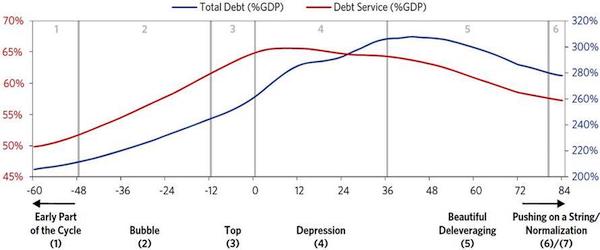
I always distinguish between short-term debt cycles and debt super-cycles. Short-term debt cycles move more or less in parallel with the underlying economic cycles and last on average 7-8 years – in line with the average length of economic cycles. Debt super-cycles are a different kettle of fish. They typically last 50-75 years and have (unbeknown to many) existed for thousands of years. According to Ray [Dalio], they even get a mention in the Old Testament, which described the need to wipe out debt every 50 years or so. It is referred to as the Year of Jubilee in the old book. Debt super-cycles always end with a big bang. The previous debt super-cycle ended with the breakout of World War II, and a new debt super-cycle commenced its life when the canons fell silent in 1945. We are now almost 75 years into the current super-cycle; i.e. it will go down in history as one of the longer ones.

What do debt crises have in common? To begin with, I should point out that the 41 major debt crises that Ray has identified since 1980 are part of an even bigger number of debt crises that he discusses in his new book, starting with the hyperinflationary debt crisis in Germany between 1918 and 1925. I should also point out that every crisis he brings up is a mid to late stage super-cycle crisis. Not one crisis is from the 1950s, 1960s or 1970s. The logic is quite simple. In the early stages of a debt super-cycle, adding debt is actually a good thing and spurs economic growth; i.e. debt crises rarely occur in the earlier stages of debt super-cycles and almost never cause a major slump in GDP. Only later in the super-cycle does more debt actually become a problem.

Back to my question – what do all these crises have in common? All debt cycles start with a period of healthy borrowings, which is good for GDP growth (stage 1 in Exhibit 1 below). It is also worth noticing that, in the early stages of a typical debt super-cycle, a dollar of added debt leads to approx. a dollar of GDP growth. The two grow more or less in line, but that changes dramatically later in the super-cycle – more on that below. Healthy borrowing eventually turns into what Ray calls the bubble stage (stage 2). At this stage, excesses are creeping in; borrowers assume that the good times will continue forever, so they continue to borrow, even if they cannot always afford it. Three conditions are typically prevalent during the bubble stage: 1. Debt grows faster than income. 2. Equity markets rally. 3. The yield curve flattens. All three conditions have been prevalent in recent years.

Read more …

They simply don’t like Macron.

Anarchists, Butchers And Finance Workers In Court Over Paris Riots (AFP)

What started out as protests against the introduction of new fuel taxes has spiralled into a broad opposition front to Macron and his pro-business economic reforms since he took power in May 2017. Stephane, a 45-year-old butcher from the Hautes Alpes area of eastern France, said it was the first time he had joined a demonstration like the one on the Champs-Elysees on Saturday. He was accused of charging head-first into a line of riot police, known as CRS. “I would have liked the CRS to come and shake us by the hand, to put themselves on the people’s side,” he told the court. Jeremy Onselaer, a 22-year-old from the Parisian suburbs, defied any stereotyping: the master’s student earns 2,500 euros a month working part-time in the finance department of the national postal service.

He was accused of building barricades in the street, attempting to harm police officers and possessing cannabis. His lawyer urged magistrates not to impose a restraining order that would have banned him from the capital, because he had studies to pursue at the Paris School of Business. The strain on police and the justice system caused by so many cases was also evident at the recently opened new Paris city court complex, designed by star Italian architect Renzo Piano. “The conditions for the defence are completely unacceptable,” one lawyer complained, adding that she had six clients and had spent only a few minutes with each of them. Many suspects opted to have their trials deferred to prepare their defence, with hearings set to resume next year.

In most cases, magistrates ordered the suspects to report to police regularly until their trials, starting on Saturday morning when another day of protests has been announced. There were also numerous cases of instant acquittals due to the flimsiness of evidence provided by police. A 50-year-old nurse from Nice walked free saying he had been randomly arrested while walking in the Bastille area of Paris. “Violence is not part of my thinking,” he said, adding that he was a regular practitioner of yoga and meditation.

Read more …

“Even its elected representatives disagree with one another about the future of the movement.”

Eh, there are not elected representatives. That’s exactly what they don’t want. There may be a small group who pick some reps, but that’s not the same thing.

French History Has Never Seen A Protest Like The Yellow Vest Movement (Qz)

France is a country that’s no stranger to protest movements—from the massive student demonstrations of 1968 to contemporary union-led strikes. But during the “yellow vest” protests that rocked the streets of Paris this weekend, protesters reached further back in their history, to the era of the French Revolution. Protesters marching along the Champs-Elysées on Saturday (Dec. 1) could be heard chanting slogans like “We are running the revolution” and “Macron to the Bastille.” The Arc de Triomphe bore a message in spray paint: “We have chopped off heads for less than this,” a reference to the death by guillotine of king Louis XVI and his wife, Marie-Antoinette.

Are the yellow vests modern Jacobins fighting contemporary tyranny—or are they something entirely different? Quartz spoke with Danielle Tartakowsky, a history professor at Paris 8 university who recently published a book about the French state, about how to contextualize the yellow vests within France’s history of protest movements. According to Tartakowsky, the current demonstrations are unlike any other, marking an important shift in France’s political landscape. Unlike in previous large-scale protest movements in France, the yellow vests began as an organic, grassroots movement, born of the frustration of a small group of individuals who organized the protests entirely on Facebook. Tartakowsky says that’s one way in which these protests are unique.

Typically, French protests on the left have been organized or supported by major labor unions, and protests on the right (such as the marches against the legalization of gay marriage in 2012) were typically organized by Catholic groups. The lack of institutional framework is one of the things that sets the yellow vests apart from previous political movements and give them independence from any particular party, politician, or political leaning. That is one of their strengths, says Tartakowsky, since it gives the movement broader appeal (link in French). But it is also a major weakness, since the movement suffers from a lack of coherent message and leadership. Even its elected representatives disagree with one another about the future of the movement.

Read more …

No Brexit or no Deal. Anything in between is crumbling.

Theresa May Suffers Worst Day In Her Career … Until Next Week (Ind. )

The door of the flat above 10 Downing Street flat clicks shut. In the kitchen, Philip May stops rotating the tin opener around the rim of the baked bean tin and turns his head toward the hallway. “Hello darling. How was your day?” An exhalation is heard, followed by the sound of breaking glass. In the living room, the cat quietly turns to stone. “Well I lost more votes than Gordon Brown managed in three years. My own government became the first in history to be found in contempt of parliament, which means that in the morning I’ve got to publish the legal advice on just how terrible my own Attorney General reckons Brexit will be. Yes, Philip, yes, the same chap who I got to introduce me at party conference.

Yes, yes I know he said Brexit was “an eagle mewing her mighty youth” and yes, now it turns out he’d rather be imprisoned in the Tower of London than admit in public to how bad he has said it will be in private. “The TV debate where I wanted to show the people just how useless Jeremy Corbyn is isn’t happening and everyone is already saying it’s because I’m too useless to do it. My oldest friends voted against me. The EU has decided Article 50 can be revoked unilaterally, which means Brexit could be stopped altogether. No, Philip, that’s not a good thing. What do you mean why? I can’t remember why. Oh, and I’ve just opened a five day debate on my Brexit deal that’s going to end with my last two years work being chucked out, and barring a miracle that isn’t going to happen, me being chucked out after.”

On a less busy day, the Prime Minister might have had time to include the fact that the Governor of the Bank of England is now at open civil war with the previous Governor of the Bank of England. And he had to tell MPs on the Treasury Select Committee who had accused him of ratcheting up Project Fear by publishing his analysis of what might happen if the UK leaves the EU without a deal, that he had only published it because they themselves had asked him to.

Read more …

Parliament should decide these things.

UK Inches Closer To New Brexit Referendum As MPs Take Back Control (Ind.)

The push for a final say referendum has taken decisive steps forward in London and Brussels just a week before parliament is expected to reject Theresa May’s Brexit plan. On Tuesday MPs made the significant move of backing a plan to give the Commons more power to dictate what happens if the prime minister’s approach is ditched. A few hours earlier in Brussels the European Court of Justice also signalled it was set to rule that the UK could unilaterally revoke Article 50 – killing off Brexit – if it wanted to. The twin developments deliver both a means for MPs to secure a new referendum and legal clarity that they could halt the Brexit process if the public then decided to remain in the EU.

The government’s weakness was once again underlined as it lost three consecutive votes – including one unprecedented defeat which resulted in Ms May’s administration being held in “contempt of parliament” for refusing to publish legal advice on the proposed Brexit deal. At the start of the week campaigners delivered petitions carrying almost 1.5 million names to Downing Street, which demanded the British public have a Final Say on Brexit through a people’s vote. While Ms May remains adamant there will be no new referendum, MPs are already looking ahead to how parliament can impose its will if her deal is rejected in the commons vote on 11 December – something which now seems inevitable. Conservative, Labour and Liberal Democrat MPs tabled and won a vote on a motion significantly increasing the ability of parliament to steer the path of government if Ms May’s plan is defeated.

Read more …

Flynn said he admitted a lie because he couldn’t afford his own defense. If he did anything truly wrong, it’s his deals with Turkey. But that’s not what this is about.

Mueller Says Michael Flynn Gave Details Of Trump Team Russia Contacts (CNBC)

Former national security advisor Michael Flynn has given special counsel Robert Mueller “first-hand” details of contacts between President Donald Trump’s transition team and Russian government officials, a bombshell court document filed Tuesday says. Mueller in a sentencing memo said Flynn’s “substantial assistance” to his probe warrants a light criminal sentence — which could include no jail time for the retired Army lieutentant general. That assistance, which includes 19 interviews with Mueller’s team and Justice Department attorneys, related to a previsouly unknown “criminal investigation,” as well as to Mueller’s long-running probe of the Trump campaign’s and transition team’s links or coordination with the Russian government.

“The defendant provided firsthand information about the content and context of interactions between the transition team and Russian government officials,” the memo says. Mueller’s memo almost completely blacks out details of what Flynn might have said. Trump’s ex-national security advisor is due to be sentenced Dec. 18 in U.S. District Court in Washington. He pleaded guilty last December to a single count of lying to federal agents about his conversations with Russia’s ambassador to the United States during the presidential transition in late 2016. Flynn has cooperated with Mueller’s ongoing probe since pleading guilty. “Given the defendant’s substantial assistance and other considerations set forth below, a sentence at the low end of the guideline range — including a sentence that does not impose a term of incarceration — is appropriate and warranted,” Mueller’s office wrote in the memo filed Tuesday.

Read more …

Stockman is no Trump fan.

Hey, Mr. Trump! Tear Down That Deep State Wall (Stockman)

When the Donald promised to “drain the swamp” during the 2016 election campaign, it did sound vaguely like an attack on Big Government, and at least a directional desire to shrink the state and let free market capitalism breathe. After 22 months in office, however, the truth is patently obvious: The only Swamp that Donald Trump wants to drain is one filled with his political enemies and policy adversaries at any given moment in time. Even then, you have to consult his tweetstorm ledger to know exactly who the swamp creatures de jure actually are. Still, the Donald’s daily Twitter assaults on the Deep State are a wondrous thing. They surely do undermine public confidence in rogue institutions like the FBI, CIA and NSA, which profoundly threaten America’s constitutional liberties and fiscal solvency.

Likewise, his frequently unhinged tweets also lather their congressional sponsors and beltway poo-bahs with well-deserved mud and opprobrium. And the Donald’s increasingly acrimonious public feuding with Deep State criminals like James Comey and John Brennan is just what the doctor ordered. The Deep State thrives and milks the public treasury so successfully in large part because the Imperial City’s corps of permanent policy apparatchiks like Comey and Brennan (and thousands more) pretend to be performing god’s work. So doing, they preen sanctimoniously to the adoration of their sycophants in the mainstream media, claiming to be above any governance or sanction from the unwashed electorate.

Attacking this rotten perversion of democracy, therefore, is the Donald’s real calling. While he lacks both the temperament and ideas to solve the nation’s metastasizing economic and social challenges and has no hope whatsoever to make MAGA, he is more than suited for his “Great Disrupter” mission. That is, the existing order needs to be discredited and brought down first, and on that score his primitive economic populism will more than do its part. As we have previously explained, Trump’s deadly combination of Fiscal Debauchery, Protectionism and Easy Money will eventually blow the nation’s debt and bubble-ridden economy sky-high.

Likewise, his crude rendition of America First is not a blueprint for rebooting America’s national security policy, but it is an existential threat to Empire First and the Deep State’s usurpation of constitutional government. And even as the Donald lurches to and fro on Russia, Korea, the Middle East, NATO, globalism and so-called allies, the main job is getting done. That is, the War Party’s self-appointed role as global policeman and the Indispensable Nation is getting thoroughly discredited.

Read more …

“For all the deformities of the EU, France still maintains a general quality-of-life so far above what is found in the US these days that we look like some left-behind evolutionary dead end here in this wilderness of strip-malls and muffler shops…”

The Ghost of Christmas Present (Kunstler)

It’s not hard to see why US life expectancy is going down, driven by the two new leading causes of death: opiate drugs and suicide — the former often in the service of the latter. The citizens of this land have exchanged just about everything that makes life worth living for the paltry rewards of “bargain shopping” and happy motoring. But the worst sacrifice is the loss of any sense of community, of face-to-face human transactions with people you know, people who have duties and obligations to one another that can be successfully enacted and fulfilled. Instead, you get to do all your business with robots, even including the robots fronting for companies that seek to ruin you. “Your call is important to us,” says the telephone robot at the hospital billing office dunning you to fork over $7,000 for the three stitches Little Skippy got when his best friend flew the drone into his forehead. “Please hold for the next available representative.” Who wouldn’t want to shoot themselves?

Interestingly, it’s the people of France who are going apeshit at this moment in history and not the much more beaten-down Americans. For all the deformities of the EU, France still maintains a general quality-of-life so far above what is found in the US these days that we look like some left-behind evolutionary dead end here in this wilderness of strip-malls and muffler shops. They live in towns and cities that are designed to bring people together in public. They support small business in spite of the diktats of Brussels. They maintain an interest in doing things well for its own sake. The French are rioting these days not simply over the cost of diesel fuel but because they’ve had enough impingements on their traditional ways of life and seek to arrest the losses.

Read more …

The first in a long series of overborrowed nations.

Australia’s Economy Slows, Debt-Laden Consumers A Deadweight (R.)

Australia’s economy slowed more than expected last quarter as consumers reacted to tepid wage growth by shutting their wallets, a disappointing outcome that sent the local dollar sliding as investors pushed out the chance of any rate hike. The news came as fears of a possible slowdown in the U.S. economy and the Sino-U.S. tariff slugged world shares and threatened future business investment. The gloomy report provides another blow to Australia’s center-right government, which is already lagging in polls ahead of a likely election in May. Wednesday’s report on GDP showed the economy expanded 0.3% in the third quarter, half of what economists had expected.

Second-quarter growth was unrevised at 0.9%. Annual GDP rose by a still-respectable 2.8% to A$1.8 trillion ($1.32 trillion), but confounded expectations in a Reuters poll for a 3.3% increase. The figures also imply growth in the year to June was 3%, rather than the originally report 3.4%. The data will not be welcomed by the Reserve Bank of Australia (RBA), which predicts growth of around 3-1/2% this year and next. “The RBA forecasts are now looking pretty optimistic,” said Tom Kennedy, senior economist at JPMorgan.

Read more …

Dec 032018
 
 December 3, 2018  Posted by at 10:30 am Finance Tagged with: , , , , , , , , , ,  7 Responses »


Jules Adler Panorama de Paris vu du Sacré Coeur 1935


How Trump’s Bashing Of The New York Times and CNN Has Benefited All (F24)
Dow Futures Surge After Trump And Xi Agree To Pause Trade War (CNBC)
China Agrees To ‘Reduce And Remove’ Tariffs On US Cars: Trump (AFP)
UK Faces Constitutional Crisis Over Brexit Legal Advice – Labour (BBC)
Qatar To Withdraw From OPEC, Focus On LNG Exports (R.)
Macron Tells PM To Hold Talks, Mulls State Of Emergency (R.)
France’s Meltdown, Macron’s Disdain (Milliere)
Deutsche Bank Takeover Speculation Intensifies (ZH)
Merkel Protege Suggests Reducing Gas Flow Through Nord Stream 2 Pipeline (R.)
EU Delays Euro Zone Budget, Deposit Insurance Plans (R.)
World Bank Promises $200 Billion In 2021-25 Climate Cash (AFP)


A topic I’ve addressed a lot. It’s just that I would say “The New York Times and CNN’ Bashing of Trump”, not the other way around., After all, who started? Read the whole thing, it shows how smart Trump is when it comes to media.

“Concluding his December 2017 interview with The New York Times, Trump said: “Another reason that I’m going to win another four years is because newspapers, television, all forms of media will tank if I’m not there because without me, their ratings are going down the tubes […] So they basically have to let me win.“

How Trump’s Bashing Of The New York Times and CNN Has Benefited All (F24)

Although Donald Trump has an antagonistic relationship with The New York Times and CNN, the ‘Trump bump’ has been a business boon to these outlets, while the US president has been keen to use them to pursue publicity and legitimacy. While Trump often rails against the US media generally – most notably as “enemies of the people” – the country’s foremost newspaper of record, The New York Times, and its oldest 24-hour news network, CNN, are frequently singled out for opprobrium as “The Failing New York Times” and “Fake News CNN”. The acrimony between Trump and CNN reached its zenith on November 8 when the White House revoked the press access of its reporter Jim Acosta after a rancorous post-midterm news conference – only for his press pass to be restored thanks to judicial review three days later.

Meanwhile the vitriolic rhetoric from the White House has provoked considerable alarm amongst the press. New York Times’ publisher A.G. Sulzberger warned on July 30 that Trump’s increasingly splenetic attacks on the news media “will lead to violence”, before its sister paper The Boston Globe led the way in launching the #EnemyofNone campaign against the president’s relentless attacks on the American press. Despite these tensions, The New York Times – like CNN – is far from failing. On the contrary, both outlets are enjoying booming subscription and viewer figures thanks to Trump’s presidency. From Trump’s election on November 8, 2016 until the end of that month, The New York Times saw an increase of 132,000 in paid subscriptions – 10 times the growth rate in November 2015.

This trajectory has continued. “NYT has well surpassed initial expectations for subscriber growth […] following the ‘Trump bump’,” JP Morgan analyst Alexia Quadrani wrote to clients in April 2018. The New York Times Company’s share price outperformed those of Apple, Amazon and Facebook between Trump’s election in 2016 and the end of June 2018, soaring by 141 percent. “When I talked to the [executive] editor of The New York Times [Dean Baquet], he told me with a smile on his face that Donald Trump has done at least one good thing – and that is that he has boosted the circulation of The New York Times,” Marvin Kalb, a senior fellow at The Brookings Institution in Washington D.C. and author of “Enemy of the People”, a book on Trump’s hostile regard towards the US media, told FRANCE 24.

“People who subscribe to and read [The New York] Times are for the most part people who oppose Trump, who do not think it is fake news,” explained Robert Shapiro, a professor of political science at Columbia University, whose area of expertise includes the relationship between mass media and US politics, in an interview with FRANCE 24. The paper has “used the facts of the Trump presidency to draw attention to the bad things that he is doing, and that’s attracted readers who want to get information to use against Trump”, Shapiro continued.

Read more …

Anything to buy and sell some more.

Dow Futures Surge After Trump And Xi Agree To Pause Trade War (CNBC)

U.S. stock market futures surged after U.S. President Donald Trump and Chinese President Xi Jinping agreed to a 90-day ceasefire in the trade war that has weighed heavily on global stock markets for most of 2018. Futures on the Dow Jones Industrial Average jumped 488 points as of 11:31 p.m. ET Sunday. The advance implied a 471.54 point gain for the Dow at Monday’s open. Meanwhile, S&P 500 futures added around 1.71 percent, while futures on the Nasdaq-100, home of many technology companies which sell to China, jumped about 2.75 percent. Futures on oil and copper jumped on hopes a possible new China-U.S. trade agreement would boost global economic growth.

The two leaders, who met for dinner on Saturday at the G-20 summit in Argentina, agreed to hold off on additional tariffs on each other’s goods at the start of the new year to allow for talks to continue. The U.S. agreed to leave tariffs on more than $200 billion worth of Chinese products at 10 percent. If after 90 days the two countries are unable to reach an agreement, that rate will be raised to 25 percent, according to the White House. Trade negotiations will address forced technology transfer and intellectual property. “The explicit delay in tariffs is on the positive end of expectations,” said Helen Qiao, China and Asia economist with Bank of America Lynch, in a note to clients. “In contrast to the fear — especially in Asia —that the hawks in US administration would make impossible demands, evidence of President Trump working towards a trade deal with China has emerged.”

Read more …

Something tells me they’ll want something in return.

China Agrees To ‘Reduce And Remove’ Tariffs On US Cars: Trump (AFP)

China has agreed to scale back tariffs on imported US cars, President Donald Trump said Sunday, one day after agreeing with Xi Jinping to a ceasefire in the trade war between the world’s top two economies. Asia stocks had rallied on the news that Washington and Beijing would not impose any new tariffs during a three-month grace period, during which the two sides are meant to finalize a more detailed agreement. “China has agreed to reduce and remove tariffs on cars coming into China from the U.S. Currently the tariff is 40 percent,” Trump said on Twitter. On Saturday, Trump and Xi agreed to put a stop to their tit-for-tat tariffs row, which had roiled world markets for months.

The Republican president called their agreement – which Washington hopes will help close a yawning trade gap with the Asian giant and help protect US intellectual property – an “incredible” deal. Trump agreed to hold off on his threat to slap 25 percent tariffs on $200 billion worth of Chinese goods from January 1, leaving them at the current 10% rate. In return, China is to purchase “very substantial” amounts of agricultural, energy, industrial and other products from the US. In July, China reduced auto import duties from 25 percent to 15 percent, a boon for international carmakers keen to grow sales in the world’s largest auto market. But as trade tensions ratcheted up with the US this summer, Beijing retaliated by slapping vehicles imported from the US with an extra 25 percent tariff, bringing the total tariff rate to 40%.

Read more …

May’s worst crisis to date. Parliament first votes on December 11.

UK Faces Constitutional Crisis Over Brexit Legal Advice – Labour (BBC)

The UK faces a “constitutional crisis” if Theresa May does not publish the full legal advice on her Brexit deal on Monday, Labour has warned. The PM says the advice is confidential. but some MPs think ministers do not want to admit it says the UK could be indefinitely tied to EU customs rules. Ex-foreign secretary Boris Johnson has joined calls for its publication, which critics say could sink the PM’s deal. Attorney General Geoffrey Cox will make a statement about it on Monday. He is set to publish a reduced version of the legal advice – despite calls from MPs from all parties to publish a full version.

His statement to the House of Commons will be followed by five days of debate on the deal. MPs say the statement from the attorney general does not respect a binding Commons vote last month, which required the government to lay before Parliament “any legal advice in full”. Labour is planning to join forces with other parties, including the DUP, who keep Mrs May in power, to initiate contempt of Parliament proceedings unless the government backs down. Shadow Brexit secretary Sir Keir Starmer told Sky News: “If they don’t produce [the advice] tomorrow (Monday) then we will start contempt proceedings. This will be a collision course between the government and Parliament.”

Read more …

Reuters manages to do an entire article on this without mentioning the Saudi-led Qatar boycott even once. Well done!

Qatar To Withdraw From OPEC, Focus On LNG Exports (R.)

Qatar said on Monday it was quitting OPEC from January 2019 but would attend the oil exporter group’s meeting this week, saying the decision meant Doha could focus on cementing its position as the world’s top liquefied natural gas (LNG) exporter. Doha, one of the smallest oil producers in OPEC, is locked in a diplomatic dispute with the group’s de facto leader Saudi Arabia but said the move to leave OPEC was not driven by politics. Minister of State for Energy Affairs Saad al-Kaabi told a news conference that Qatar, which he said been a member of OPEC for 57 years, would still attend the group’s meeting on Thursday and Friday this week, and would abide by its commitments.

“Qatar has decided to withdraw its membership from OPEC effective January 2019 and this decision was communicated to OPEC this morning,” the minister said. “For me to put efforts and resources and time in an organization that we are a very small player in and I don’t have a say in what happens … practically it does not work, so for us it’s better to focus on our big growth potential,” he said. [..] Qatar has oil output of only 600,000 barrels per day (bpd), compared with the 11 million bpd produced by Saudi Arabia, the group’s biggest oil producer and world’s biggest exporter. But Doha is an influential player in the global LNG market with annual production of 77 million tonnes per year, based on its huge reserves of the fuel in the Gulf.

Read more …

Perhaps the best indicator of where Macron finds himself are the policemen taking off their helmets to show solidarity with the gilets jaunes.

Macron Tells PM To Hold Talks, Mulls State Of Emergency (R.)

Riot police on Saturday were overwhelmed as protesters ran amok in Paris’s wealthiest neighborhoods, torching dozens of cars, looting boutiques and smashing up luxury private homes and cafes in the worst disturbances the capital has seen since 1968. The unrest began as a backlash against fuel tax hikes but has spread. It poses the most formidable challenge yet to Macron’s presidency, with the escalating violence and depth of public anger against his economic reforms catching the 40-year-old leader off-guard and battling to regain control.

After a meeting with members of his government on Sunday, the French presidency said in a statement that the president had asked his interior minister to prepare security forces for future protests and his prime minister to hold talks with political party leaders and representatives of the protesters. A French presidential source said Macron would not speak to the nation on Sunday despite calls for him to offer immediate concessions to demonstrators, and said the idea of imposing a state of emergency had not been discussed. Arriving back from the G20 summit in Argentina, Macron had earlier rushed to the Arc de Triomphe, a revered monument and epicenter of Saturday’s clashes, where protesters had scrawled “Macron resign” and “The yellow vests will triumph”.

The “yellow vest” rebellion erupted out of nowhere on Nov. 17, with protesters blocking roads across France and impeding access to some shopping malls, fuel depots and airports. Violent groups from the far right and far left as well as youths from the suburbs infiltrated Saturday’s protests, the authorities said. Government spokesman Benjamin Griveaux had indicated the Macron administration was considering imposing a state of emergency. The president was open to dialogue, he said, but would not reverse policy reforms.

Read more …

A president with a low enough approval rating and etractors that are sufficiently organized will always have a hard time.

France’s Meltdown, Macron’s Disdain (Milliere)

On November 11th, French President Emmanuel Macron commemorated the 100th anniversary of the end of World War I by inviting seventy heads of state to organize a costly, useless, grandiloquent “Forum of Peace” that did not lead to anything. He also invited US President Donald Trump, and then chose to insult him. In a pompous speech, Macron – knowing that a few days earlier, Donald Trump had defined himself as a nationalist committed to defending America – invoked “patriotism”; then defined it, strangely, as “the exact opposite of nationalism”; then called it “treason”. In addition, shortly before the meeting, Macron had not only spoken of the “urgency” of building a European army; he also placed the United States among the “enemies” of Europe.

This was not the first time Macron placed Europe above the interests of his own country. It was, however, the first time he had placed the United States on the list of enemies of Europe. President Trump apparently understood immediately that Macron’s attitude was a way to maintain his delusions of grandeur,as well as to try to derive a domestic political advantage. Trump also apparently understood that he could not just sit there and accept insults. In a series of tweets, Trump reminded the world that France had needed the help of the USA to regain freedom during World Wars, that NATO was still protecting a virtually defenseless Europe and that many European countries were still not paying the amount promised for their own defense.

Trump added that Macron had an extremely low approval rating (26%), was facing an extremely high level of unemployment, and was probably trying to divert attention from that. Trump was right. For months, the popularity of Macron has been in free fall: he is now the most unpopular French President in modern history at this stage of his mandate. The French population has turned away from him in droves. Unemployment in France is not only at an alarmingly high level (9.1%); it has been been alarmingly high for years. The number of people in poverty is also high (8.8 million people, 14.2% of the population). Economic growth is effectively non-existent (0.4% in the third quarter of 2018, up from 0.2% the previous three months). The median income (20,520 euros, or $23,000, a year,) is unsustainably low. It indicates that half the French live on less than 1710 euros ($1946) a month. Five million people are surviving on less than 855 euros ($973) a month.

Read more …

Deutsche is the archetypical too big to fail hot potato. The Fed must help, and so does Merkel. But to what end?

Deutsche Bank Takeover Speculation Intensifies (ZH)

Since taking over troubled German lender Deutsche Bank back in April, Christian Sewing has watched the recidivist lender’s troubles go from bad to worse. On Friday, the bank’s shares reached an all-time low; they’re now down 50% YTD, making Deutsche the worst performer in a poorly performing index of the world’s largest global banks. The latest selloff was inspired by the Frankfurt prosecutor’s office deciding to raid six Deutsche buildings, including the bank’s headquarters The raid, which continued for two days, doubled as the first public revelation about the latest criminal scandal involving Europe’s biggest bank by assets, which has already paid $18 billion in legal penalties since the financial crisis.

Prosecutors revealed that they were investigating at least two employees in the bank’s wealth management unit (part of the division overseen by Sewing before he took the CEO job) for allegedly helping customers set up accounts in offshore tax shelters and helping criminals launder their ill-gotten gains – allegations that prosecutors said were inspired by the infamous ‘Panama Papers’ leak. During their raid, prosecutors searched the offices of five senior Deutsche executives, including the bank’s chief compliance officer, who was rumored to be leaving the bank in a report published just days before nearly 200 police officers, tax inspectors and prosecutors showed up outside Deutsche’s international headquarters and demanded that everybody step away from their computers.

Given the abysmal week the bank just had, it’s hardly surprising that the financial media has published a barrage of negative stories featuring anonymously sourced quotes from Deutsche “investors” effectively demanding that, if Sewing can’t get his shit together in the next quarter or two, he will need to abandon the “strategic alternatives” (cost-cutting, shifting the bank’s investment strategy to emphasize growth in wealth management) that he championed as a road toward salvation (alongside cost-cutting, of course) and seriously consider a sale.

Read more …

Nordstream2 would bankrupt Ukraine. Hence the anti-Russia desperation.

Merkel Protege Suggests Reducing Gas Flow Through Nord Stream 2 Pipeline (R.)

Germany must answer urgent, growing political concerns about the planned Nord Stream 2 gas pipeline project given Russia’s seizure of three Ukrainian ships and their crew off the coast of Crimea, a senior German conservative said on Sunday. Annegret Kramp-Karrenbauer, a top candidate to replace Chancellor Angela Merkel as leader of the Christian Democrats, told public broadcaster ARD it would be “too radical” to withdraw political support for the project, but Berlin could reduce the amount of gas to flow through the pipeline. Russia is resisting international calls to release three Ukrainian ships seized last weekend in the Kerch Strait near the Crimea region that Moscow illegally annexed from Ukraine in 2014.

Moscow has accused the 24 sailors of illegally crossing the Russian border, which Ukraine denies. After meeting with Russian President Vladimir Putin, Merkel on Saturday called on Russia to release the sailors and allow free shipping access to the Sea of Azov, but stopped short of endorsing any additional sanctions against Moscow. Kramp-Karrenbauer is a close Merkel ally but has taken a firmer stance on Russia’s actions in recent days. On Friday, she told Reuters the EU and the US should consider banning from their ports Russian ships originating from the Sea of Azov in response to the incident. She told ARD on Sunday that it was time to draw a firmer line against Russian actions, including its annexation of Crimea and its support for separatists in eastern Ukraine.

[..] Her suggestion of banning Russian ships from European ports triggered criticism from some Social Democrats, including former foreign minister Sigmar Gabriel, who urged calm and accused Ukraine of trying to drag Germany into a war with Russia.

Read more …

They’re still dead set on more Europe.

EU Delays Euro Zone Budget, Deposit Insurance Plans (R.)

EU finance ministers will agree on Monday to give the euro zone bailout fund new responsibilities, but they will delay decisions on the euro zone budget and a deposit guarantee scheme after failing to reach agreement, a draft document showed. The ministers will discuss deeper economic integration of the 19 countries sharing the euro, to prepare the single currency bloc for the next potential crisis. However, after a year of negotiations, fraught with political difficulties, little of the original ambition, championed by French President Emmanuel Macron, remains.

The two flagship ideas – a separate budget for euro zone countries to help stabilize their economies and a deposit guarantee scheme to make all euro zone bank deposits safe – are too controversial and will be worked on further until June 2019, according to the draft document, seen by Reuters. In the case of the deposit guarantee scheme, mistrust among euro zone countries is so great that they could not even agree on a roadmap for beginning political negotiations on EDIS (European Deposit Insurance Scheme), as mandated by EU leaders. “Further technical work is still needed to agree on a roadmap. We will establish a High-level working group with a mandate to work on next steps. The High-level group should report back by June 2019,” said the draft report by EU finance ministers.

Read more …

Advice: don’t support anything the World Bank is involved in. They are not your friends.

World Bank Promises $200 Billion In 2021-25 Climate Cash (AFP)

The World Bank on Monday unveiled $200 billion in climate action investment for 2021-25, adding this amounts to a doubling of its current five-year funding. The World Bank said the move, coinciding with a UN climate summit meeting of some 200 nations in Poland, represented a “significantly ramped up ambition” to tackle climate change, “sending an important signal to the wider global community to do the same.” Developed countries are committed to lifting combined annual public and private spending to $100 billion in developing countries by 2020 to fight the impact of climate change — up from 48.5 billion in 2016 and 56.7 billion last year, according to latest OECD data.

Southern hemisphere countries fighting the impact of warming temperatures are nonetheless pushing northern counterparts for firmer commitments. In a statement, the World Bank said the breakdown of the $200 billion would comprise “approximately $100 billion in direct finance from the World Bank.” Around one third of the remaining funding will come from two World Bank Group agencies with the rest private capital “mobilised by the World Bank Group.” “If we don’t reduce emissions and build adaptation now, we’ll have 100 million more people living in poverty by 2030,” John Roome, World Bank senior director for climate change, warned. “And we also know that the less we address this issue proactively just in three regions – Africa, South Asia and Latin America – we’ll have 133 million climate migrants,” Roome told AFP.

Read more …

Nov 242018
 
 November 24, 2018  Posted by at 10:33 am Finance Tagged with: , , , , , , , , , , ,  12 Responses »


Joseph Mallord William Turner The Sun Rising over Water 1825-30


Britain’s Opposition Labour Party Plots Overthrow Of Capitalism (R.)
This Sell-Off is Just One Step in Methodical Unwind of Stock Prices (WS)
Oil Plunges More Than 6% Despite Potential OPEC Cut (R.)
Bitcoin Loses 25% Of Its Remaining Value During Thanksgiving Week (CNBC)
Trump Dismisses Report He Is Unhappy With Treasury’s Mnuchin (R.)
Holiday Doings and Undoings (Kunstler)
Rising Fuel Price Protests Should Serve As A Red Alert For Macron (I.ie)
Gibraltar Rocks Final Stages Of Brexit Negotiation (AFP)
Ecuador Ousts Its London Ambassador, ‘Last Diplomat Assange Knew’ (RT)
Prosecution of Julian Assange, America’s Betrayal of Its Own Ideals (CD)
Why You Should Care About the Julian Assange Case (Taibbi)
Anonymous Blows Lid Off Huge Psyop In Europe Funded By UK & US (RT)


You really think you can win an election saying this?

Britain’s Opposition Labour Party Plots Overthrow Of Capitalism (R.)

The British Labour Party’s would-be finance minister, John McDonnell, has a message for the world: he is deadly serious about overthrowing capitalism and building a socialist society. McDonnell, 67, who describes Karl Marx as one of his main influences, has been at the vanguard of a left-wing revival in Britain’s main opposition party under fellow socialist Jeremy Corbyn. He has promised sweeping nationalization, higher public spending and an overhaul of the banking system. Asked about his entry in the Who’s Who directory of influential people which lists his passion for “generally fermenting the overthrow of capitalism”, McDonnell said it was a joke about beer-making, but he agrees with the principle.

“I believe it. I am serious in my intent. I want to transform this economy,” McDonnell told Reuters in an interview. “That means evolving into a system which can achieve that equality, that democracy, that fairness, and tackles the major challenges that we are facing.” With PM Theresa May’s grip on power looking ever more vulnerable as she faces the most perilous crisis of her premiership struggling to win backing for her Brexit deal, Labour are increasingly confident that they will be the next guardians of the world’s fifth-largest economy. McDonnell’s gambit is that the social discontent in Britain which fueled the shock 2016 Brexit vote runs much deeper, and that voters who feel left behind by decades of unchecked capitalism and wounded by years of public spending cuts will rally to his call.

“(It was) like everyone’s grievance went into one vote,” McDonnell said. The polls show that is only part of the picture: voters are tired of economic austerity and unhappy with May’s Brexit negotiations, but Labour are only marginally ahead of the ruling Conservative Party. Some commentators have suggested they should be polling better against a government in disarray. Nevertheless, the combination of an unsated appetite for change and a Brexit-inspired political crisis which has trashed the centrist orthodoxy of British politics, has left Labour confident they will soon win power. McDonnell said his ambition is create the most radical government in modern British history even as the country is grappling with its exit from the EU, the most complex negotiations in Europe since the end of World War Two.

[..] McDonnell has outlined a program of nationalizing the railways, energy and water companies and the postal service, raising taxes on businesses and the wealthy. This would be combined with increased spending on education, skills training, and health care, and harnessing the financial sector to help fund a huge infrastructure investment. At his party’s annual conference two months ago, McDonnell did little to conceal the scale of his ambition. Businesses were stunned by his plan to force all large companies to hand over a tenth of their equity to their workforce.

Read more …

Possible.

This Sell-Off is Just One Step in Methodical Unwind of Stock Prices (WS)

It was an ugly Monday and Tuesday followed by a Wednesday that at first look like a real bounce but ended with the indices giving up their gains. This was followed, mercifully, by Thursday when markets were closed, which was followed unmercifully by Friday, during which the whole schmear came unglued again. The S&P 500 index dropped 0.7% on Friday to 2,632 and 3.8% for Thanksgiving week, though this week is usually – by calendar black-magic – a good week, according to the Wall Street Journal: During Thanksgiving weeks going back a decade, the S&P 500 rose on average 1.3%. This leaves the S&P 500 index 1.5% in the hole year-to-date. It’s now back where it had first been on November 30, 2017:

Clearly, when seen over the longer term, the sell-off for now still belongs to the small-fry among sell-offs, with S&P 500 down just 10.5% from its peak:

The Dow dropped 0.7% on Friday and 4.4% during Thanksgiving week, to 24,286. It’s 1.75% in the hole for the year. Technically speaking, it’s not even in a correction, being down only 9.9% from its peak. And the Nasdaq, dropped 0.5% on Friday and 4.3% during Thanksgiving week. According to the Wall Street Journal, during Thanksgiving week over the past 20 years, the Nasdaq rose on average 1.3%. So this is no good for calendar-black-magic aficionados. Where’s the free-wheeling holiday spirit? The Nasdaq is now down 14.7% from its peak at the end of August but remains up 0.5% year-to-date. The Russell 2000 small-caps index edged down today and is down 14.5% from its peak on August 31. It’s 3% in the hole year-to-date and right back where it had first been on September 27, 2017:

The seven FANGMAN stocks – Facebook, Amazon, Netflix, Google’s parent Alphabet, Microsoft, Apple, and NVIDIA – fell 1.3% on Friday in combined market cap. Over Thanksgiving week, they have now plunged 6.7%, or by $259 billion. Those are real dollars gone in four trading days with just seven stocks. Since their combined market-cap peak of $4.63 trillion at the end of August, nearly $1 trillion — $994 billion to be precise – has dissolved into ambient air, as their combined market cap has plunged 21.5% in ca. 12 weeks. But if you look at them as individual stocks, it’s even worse. The saving grace for the group as a whole was Microsoft, the second largest stock by market cap, which is threatening to become the largest stock shortly if Apple continues to fall at this pace. Three of the seven have already plunged by 38% to nearly 50%. Two more have plunged by 26% to 27%.

Read more …

What is it, 34% since the high this year?

Oil Plunges More Than 6% Despite Potential OPEC Cut (R.)

Oil prices slumped more than 6 percent on Friday, with Brent set for a 12-percent plunge this week, as fears that supply would overpower demand intensified, even as major producers considered cutting output. Oil supply, led by U.S. producers, is growing faster than demand and to prevent a build-up of unused fuel such as the one that emerged in 2015, OPEC is expected to start trimming output after a meeting on Dec. 6. But this has done little so far to prop up prices, which have dropped more than 20 percent so far in November, in a seven-week streak of losses. Deep trade disputes between the world’s two biggest economies and oil consumers, the United States and China, have weighed upon the market.

“The market is pricing in an economic slowdown – they are anticipating that the Chinese trade talks are not going to go well,” said Phil Flynn, an analyst at Price Futures Group in Chicago. “The market doesn’t believe that OPEC is going to be able to act swiftly enough to offset the coming slowdown in demand.” [..] Market fears over weak demand intensified after China reported its lowest gasoline exports in more than a year amid a glut of the fuel in Asia and globally. Stockpiles of gasoline have surged across Asia, with inventories in Singapore, the regional refining hub, rising to a three-month high while Japanese stockpiles also climbed last week. Inventories in the United States are about 7 percent higher than a year ago.

Read more …

Starting to feel serious.

Bitcoin Loses 25% Of Its Remaining Value During Thanksgiving Week (CNBC)

Bitcoin continued its move lower Friday, struggling to find footing after a week of pain for the world’s largest cryptocurrency. The digital asset hit a low of $4,119 Friday, according to data from CoinDesk, bringing its seven-day losses to more than 25 percent. In dollar terms, bitcoin’s value dropped by about $1,400 over that time frame. Other cryptocurrencies didn’t hold up this week either. Not a single one in the top 28 by market capitalization was trading in the green Friday, according to CoinMarketCap.com. XRP, the second-largest by market capitalization, fell 6 percent Friday, bringing its one-week losses to 10 percent. Ether was down 7 percent in 24 hours and lost roughly 30 percent for the week.

The total market capitalization for cryptocurrencies fell to $138.6 billion Friday, according to CoinMarketCap data, its lowest level since September 2017. Since its peak, the market has lost about $700 billion in value, according to the data. The tumble for bitcoin started abruptly last week when it fell below $6,000 and hit a new low for the year. The plunge followed what had been a surprisingly calm few months for bitcoin and a break from the rest of its volatile trading year. Since then, prices have hit new 13-month lows and struggled to move out of the $4,300 range. The price dips are a stark contrast from last Thanksgiving when the cryptocurrency was entering a hot streak thanks to a wave of new retail investors. Since that holiday week last year, prices are down by more than 55 percent.

Read more …

“They never like to ask me for a quote b/c it would kill their story..”

Trump Dismisses Report He Is Unhappy With Treasury’s Mnuchin (R.)

U.S. President Donald Trump said on Twitter on Friday that he was quite happy with Treasury Secretary Steven Mnuchin’s performance, after The Wall Street Journal reported that the president was dissatisfied with Mnuchin. “I am extremely happy and proud of the job being done by @USTreasury Secretary @stevenmnuchin1,” Trump said in a tweet. The Journal reported that Trump blames Mnuchin for the appointment of Federal Reserve Chairman Jerome Powell, who has been steadily raising U.S. interest rates. Trump is concerned that higher rates could undercut economic gains ahead of his 2020 reelection bid, the newspaper reported.

Quoting unnamed sources, the Journal said Trump has also expressed displeasure with Mnuchin over stock market turbulence and the Treasury secretary’s skepticism about the White House trade actions against China. “The FAKE NEWS likes to write stories to the contrary, quoting phony sources or jealous people, but they aren’t true. They never like to ask me for a quote b/c it would kill their story,” Trump said on Twitter. Trump has repeatedly criticized the Fed’s rate increases under Powell. In October, he called the Fed “crazy,” “ridiculous” and “my biggest threat.”

A year ago when Trump picked Powell to head the Federal Reserve, Mnuchin, a former Goldman Sachs banker, was a strong advocate of his nomination. The Wall Street Journal, citing a person familiar with the matter, said Trump, in a conversation with someone who praised Mnuchin’s performance, mentioned stock market volatility and said: “If he’s so good, why is this happening?”

Read more …

“..Somehow I doubt that this Christmas will win the Bing Crosby star of approval.”

Holiday Doings and Undoings (Kunstler)

Somehow I doubt that this Christmas will win the Bing Crosby star of approval. Rather, we see the financial markets breaking under the strain of sustained institutionalized fraud, and the social fabric tearing from persistent systemic political dishonesty. It adds up to a nation that can’t navigate through reality, a nation too dependent on sure things, safe spaces, and happy outcomes. Every few decades a message comes from the Universe that faking it is not good enough. The main message from the financials is that the global debt barge has run aground, and with it, the global economy. That mighty engine has been chugging along on promises-to-pay and now the faith that sustained those promises is dissolving.

China, Euroland, and the USA can’t possibly meet their tangled obligations, and are running out of tricks for rigging, gaming, and jacking the bond markets, where all those promises are vested. It boils down to a whole lot of people not getting paid, one way or the other — and it’s really bad for business. Our President has taken full credit for the bubblicious markets, of course, and will be Hooverized as they gurgle around the drain. Given his chimerical personality, he may try to put on an FDR mask — perhaps even sit in a wheelchair — and try a few grand-scale policy tricks to escape the vortex. But the net effect will surely be to make matters worse — for instance, if he can hector the Federal Reserve to buy every bond that isn’t nailed to some deadly derivative booby-trap.

But then he’ll only succeed in crashing the dollar. Remember, there are two main ways you can go broke: You can run out of money; or you can have plenty of worthless money.

Read more …

Urban vs rural. Just like in America.

Rising Fuel Price Protests Should Serve As A Red Alert For Macron (I.ie)

Within the space of a week, the gilets jaunes have managed to tap into wider discontent with Macron’s presidency and policies, gaining opposition support and momentum as a result. These are not the usual protests or strikes co-ordinated by political parties or unions in France. With no official organisation, no identified leader and no political affiliation, the gilets jaunes phenomenon has been almost completely co-ordinated on social media where it declares “[This] comes about only from the French people”. [..] one thing is certain: their actions have chimed with the public. This despite chaos across France last weekend with roads blocked by protesters at some 2,000 locations. Two people were killed – one when a driver panicked and accidentally accelerated their car into the crowd – in the protests and hundreds reported injured.

Nevertheless, a number of polls have shown that almost three-quarters of French voters approve of the demonstrations, one survey found that more than half of those who voted for Macron support them. The planned tax increases – the price of diesel is due to go up another 6.5 cents per litre and petrol by 2.9 cents – are to come into force in January. They follow a 23pc rise in the cost of diesel and 15pc in petrol in the past year. Internationally, Macron has made much of his commitment to battling climate change and these hikes are part of his domestic policies on that front. His ministers have also argued that the higher price of crude globally also necessitates a rise but protesters complain that fuel taxes have been increasing steadily over the past four years.

One survey this week found that 82pc believe Macron should drop the plans. It also showed that particular demographics – the self-employed and business leaders, plus pensioners and low-income households – were most supportive of the gilets jaunes. The episode also highlights the rift between France’s urban elite and those in its poor rural peripheries. Workers who rely on their cars to get to their jobs in the countryside are particularly aggrieved by the planned tax increases.

Read more …

One more topic they try to push into the limitless future.

Gibraltar Rocks Final Stages Of Brexit Negotiation (AFP)

Preparations for a summit to endorse Britain’s deal to quit the European Union risked running aground on the rock of Gibraltar Friday, as Spain defended its veto over the fate of the tiny territory. Britain’s Prime Minister Theresa May and leaders of the other 27 EU member states are to meet Sunday to approve their divorce agreement and set a course for negotiating their future post-Brexit relationship. But Spanish officials emerged from talks Friday warning that Prime Minister Pedro Sanchez might not attend unless it is guaranteed that no future accord on EU relations involving Gibraltar will be signed without Madrid’s specific assent.

Visiting Cuba, Sanchez said that if the Gibraltar row is not resolved, he might not go to Brussels on Sunday, warning: “If there’s no agreement, it’s very clear hat will happen, there very probably won’t be a European Council.” In Brussels, Luis Marco Aguiriano Nalda, Spain’s secretary of state for European affairs, said Madrid wanted London to put in writing that it shared Madrid’s interpretation of the negotiated Brexit deal regarding Gibraltar. “We have demanded that it be published by the British authorities before the European Council on Sunday,” he said. In London, however, a Downing Street source said he did not know what document Aguiriano could be referring to and added: “We have negotiated on behalf of the whole of the UK family. That includes Gibraltar and the overseas territories.”

Read more …

The torture never stops.

Ecuador Ousts Its London Ambassador, ‘Last Diplomat Assange Knew’ (RT)

Ecuador’s President Lenin Moreno has terminated the credentials of his UK ambassador, who has been at the center of negotiating the fate of WikiLeaks co-founder Julian Assange, as concerns mount over the whistleblower’s safety. The decree, with which Moreno effectively sacked Ecuador’s London ambassador Abad Ortiz, was published by WikiLeaks on Wednesday. The document does not offer any explanation as to why Ortiz, who had been his country’s ambassador to the UK since 2015, is now being permanently recalled. Nor does it name a successor for the outgoing diplomat. The decree is effective immediately.

WikiLeaks tweeted that Abad, appointed to the office under President Rafael Correa, was the last diplomat the long-term self-exiled editor knew in the embassy. “All diplomats known to Assange have now been transferred away from the embassy,” the whistleblowing site claimed. This new and sudden twist in the Assange saga has been met with concern by his supporters, with some suggesting that Moreno is doing Washington’s bidding by removing people who might have stood by Assange and opposed his potential handover to the British police – which is expected to bring about a swift extradition to the US. The dismissal has been called “a silent pro-US coup.”

Read more …

Best piece on Assange in a while, from Nozomi Hayase.

Prosecution of Julian Assange, America’s Betrayal of Its Own Ideals (CD)

Just as the Founding Fathers of the United States, by revolting against the autocratic rule of King George were regarded as traitors, by aiding ordinary people expose and defy unjust secret law, WikiLeaks too has been branded as an enemy of the state. Trump’s Secretary of State and the former CIA director, Mike Pompeo calls WikiLeaks a non-state hostile intelligence agency, claiming that the organization threatens American values and needs to be shut down. Members of the US Congress urged the Ecuadorian President to persecute Assange, calling him a “dangerous criminal” and a “threat to global security”. While all these vicious verbal attacks are thrown at him, Assange remains in confinement, over the past months, being completely shut out from the outside, being continually deprived of fresh air, access to medical care and sunlight by the UK government in violation of UN rulings.

All wars start and are fueled by lies and propaganda. Once it was the Vietnam War, where under the command of the US President Lyndon B. Johnson, the Gulf of Tonkin lies unleashed military forces into Southeast Asia. Then came the invasion of Iraq with the former Secretary of State Colin Powell’s speech at the UN, falsely claiming Iraq had ‘Weapons of Mass Destruction’. This battle against free speech is another secret war of this empire. It now has become a fog of war, where with the hype of Russia Gate that was created out of thin air, the public was prevented from seeing who the real enemies are.

Read more …

Taibbi’s piece is okay, and he says some good things, but he doesn’t appear to like Assange, and fails to hide that.

Valid point he makes: The -secret- charges vs Assange have nothing to do with Trump, they pre-date his presidency by years.

Why You Should Care About the Julian Assange Case (Taibbi)

It always seemed that Assange viewed his primary role as being a pain in the ass to this increasingly illegitimate system of secrets, a pure iconoclast who took satisfaction in sticking it to the very powerful. I didn’t always agree with its decisions, but Wikileaks was an understandable human response to an increasingly arbitrary, intractable, bureaucratic political system. That it even had to exist spoke to a fundamental flaw in modern Western democracies — i.e. that our world is now so complex and choked with secrets that even releasing hundreds of thousands of documents at a time, we can never be truly informed about the nature of our own societies. Moreover, as the Snowden episode showed, it isn’t clear that knowing unpleasant secrets is the same as being able to change them.

In any case, the institutions Wikileaks perhaps naively took on once upon a time are getting ready to hit back. Frankly it’s surprising it’s taken this long. I’m surprised Assange is still alive, to be honest. If Assange ends up on trial, he’ll be villainized by most of the press, which stopped seeing the “lulz” in his behavior for good once Donald Trump was elected. The perception that Assange worked with Vladimir Putin to achieve his ends has further hardened responses among his former media allies. As to the latter, Assange denies cooperating with the Russians, insisting his source for the DNC leak was not a “state actor.” It doesn’t matter. That PR battle has already been decided.

Courts have held reporters cannot be held liable for illegal behavior of sources. [..] It’s always been the source’s responsibility to deal with that civil or criminal risk. The press traditionally had to decide whether or not leaked material was newsworthy, and make sure it was true. The government has been searching for a way to change that equation. The Holy Grail would be a precedent that forces reporters to share risk of jail with sources. Separate from Assange, prosecutions of leakers have sharply escalated in the last decade. The government has steadily tiptoed toward describing publishers as criminal conspirators.

It’s impossible to know exactly what recent news about an indictment means until we see it (the Reporters’ Committee for the Freedom of the Press has already filed a motion to unseal the charges). If there is a case, it could be anything in the federal criminal code, perhaps even unrelated to leaks. Who knows? But the more likely eventuality is a prosecution that uses the unpopularity of Assange to shut one of the last loopholes in our expanding secrecy bureaucracy. Americans seem not to grasp what might be at stake. Wikileaks briefly opened a window into the uglier side of our society, and if publication of such leaks is criminalized, it probably won’t open again.

Read more …

Europe needs an enemy. Or rather, NATO does.

Anonymous Blows Lid Off Huge Psyop In Europe Funded By UK & US (RT)

Anonymous has published documents which it claims have unearthed a massive UK-led psyop to create a “large-scale information secret service” in Europe – all under the guise of countering “Russian propaganda.” In a document dump on November 5, the group exposed the UK-based ‘Integrity Initiative’, said to have been established by the ominously titled Institute for Statecraft in 2015. The main objective is “to provide a coordinated Western response to Russian disinformation and other elements of hybrid warfare.” The Institute for Statecraft is affiliated with the NATO HQ Public Diplomacy Division and the Home Office-funded ‘Prevent’ program, so objectivity is, of course, at the forefront of their work.

Operating on a budget of £1.9 million (US$2.4 million), the secretive Integrity Initiative consists of “clusters” of local politicians, journalists, military personnel, scientists and academics. The team is dedicated to searching for and publishing “evidence” of Russian interference in European affairs, while themselves influencing leadership behind the scenes, the documents claim. The UK establishment appears to be conducting the very activities of which it and its allies have long-accused the Kremlin, with little or no corroborating evidence. The program also aims to “change attitudes in Russia itself” as well as influencing Russian speakers in the EU and North America, one of the leaked documents states.

At present, the vast network allegedly has clusters for Spain, France, Germany, Italy, Greece, the Netherlands, Lithuania, Norway, Serbia, and Montenegro… but there’s more! According to the Anonymous leak, major plans to expand the sphere of influence throughout eastern Europe, the US, and Canada, as well as the MENA region, are allegedly underway. The clusters’ work is apparently done under absolute secrecy via concealed contacts embedded throughout British embassies, the leak claims, some of which are listed as part of the documentation.

Read more …

Nov 172018
 
 November 17, 2018  Posted by at 10:43 am Finance Tagged with: , , , , , , , , , , ,  7 Responses »


René Magritte Youth 1924


US Has Spent $6 Trillion On Wars That Killed Half A Million Since 9/11 (NW)
US ‘Might Lose’ War Against China Or Russia – Report To Congress (Ind.)
UK Austerity Has Inflicted ‘Great Misery’ On Citizens – UN (G.)
Growing Number Of Tory MPs Join Attempt To Topple Theresa May (G.)
Ministers Push To Reshape Theresa May’s Deal Ahead Of EU Summit (Ind.)
‘No Question’ Of More Negotiations If Brexit Deal Rejected – Merkel (Ind)
Protesters Plan To Bring France To A Halt (BBC)
CIA Says Saudi Crown Prince MbS Ordered The Killing Of Jamal Khashoggi (CNBC)
Turkey To Use Intercepted Saudi Comms To Demolish Khashoggi Cover-Up (MEE)
Planning Of Khashoggi’s Murder Caught On Audio, Turkish Reporter Claims (RT)
Prosecution of Julian Assange Poses Grave Threats to Press Freedom (Greenwald)
Policies of China, Russia and Canada Threaten 5ºC Climate Change (G.)


Not counting the 500,000 killed in Syria. Sidenote: all the omney and all the dea haven’t led to one single US victory.

US Has Spent $6 Trillion On Wars That Killed Half A Million Since 9/11 (NW)

The United States has spent nearly $6 trillion on wars that directly contributed to the deaths of around 500,000 people since the 9/11 attacks of 2001. Brown University’s Watson Institute for International and Public Affairs published its annual “Costs of War” report Wednesday, taking into consideration the Pentagon’s spending and its Overseas Contingency Operations account, as well as “war-related spending by the Department of State, past and obligated spending for war veterans’ care, interest on the debt incurred to pay for the wars, and the prevention of and response to terrorism by the Department of Homeland Security.”

The final count revealed, “The United States has appropriated and is obligated to spend an estimated $5.9 trillion (in current dollars) on the war on terror through Fiscal Year 2019, including direct war and war-related spending and obligations for future spending on post 9/11 war veterans.” “In sum, high costs in war and war-related spending pose a national security concern because they are unsustainable,” the report concluded. “The public would be better served by increased transparency and by the development of a comprehensive strategy to end the wars and deal with other urgent national security priorities.”

[..] Wednesday’s report found that the “US military is conducting counterterror activities in 76 countries, or about 39 percent of the world’s nations, vastly expanding [its mission] across the globe.” In addition, these operations “have been accompanied by violations of human rights and civil liberties, in the US and abroad.” Overall, researchers estimated that “between 480,000 and 507,000 people have been killed in the United States’ post-9/11 wars in Iraq, Afghanistan, and Pakistan.” This toll “does not include the more than 500,000 deaths from the war in Syria, raging since 2011”..

Read more …

The military-industrial complex asking for more money, though the US already spends ten times more than Moscow, which spends its money far more efficiently.

US ‘Might Lose’ War Against China Or Russia – Report To Congress (Ind.)

The US could lose a future war against Russia or China, a new report to Congress has suggested. America is losing its edge while rivals innovate and blend conventional, cyber and even non-military capabilities to gain the upper hand in key regions, according to a dozen national security experts tasked by politicians with scrutinising Donald Trump’s national defence strategy. The bipartisan group, led by former undersecretary of defence Eric Edelman and Gary Roughead, an ex-chief of naval operations, wrote: “The US military could suffer unacceptably high casualties and loss of major capital assets in its next conflict.

“It might struggle to win, or perhaps lose, a war against China or Russia. The United States is particularly at risk of being overwhelmed should its military be forced to fight on two or more fronts simultaneously. US military superiority is no longer assured and the implications for American interests and American security are severe.” The unquestioned dominance the US enjoyed at the end of the Cold War no longer holds, the expert commission concluded following interviews with key defence officials and reviews of secret documents, and Washington faces serious challenges to its interests in Asia, Europe and the Middle East. The experts identified Mr Trump’s tax reform bill – which greatly benefited the most wealthy – as having drained potential defence funding, alongside tax cuts by both his immediate predecessors.

The White House should look to increase taxation and slash entitlements to drastically increase funding available for the military despite the short-term “pain” the move would cause, they suggested. [..] the commission recommended that the base defence budget be increased by between 3 and 5 per cent above inflation over the next several years. According to the authors, Barack Obama’s 2011 Budget Control Act had had “pronounced detrimental effects on the size, modernisation, and readiness of the military”. Mr Trump made building up America’s armed forces a central campaign pledge and the experts said his strategy was on the right track, but did not go far enough.

Read more …

In a few years time, 40% of UK children will be living in poverty. The architect of much of this misery has been Theresa May. And she’s the PM?

UK Austerity Has Inflicted ‘Great Misery’ On Citizens – UN (G.)

The UK government has inflicted “great misery” on its people with “punitive, mean-spirited, and often callous” austerity policies driven by a political desire to undertake social re-engineering rather than economic necessity, the United Nations poverty envoy has found. Philip Alston, the UN’s rapporteur on extreme poverty and human rights, ended a two-week fact-finding mission to the UK with a stinging declaration that despite being the world’s fifth largest economy, levels of child poverty are “not just a disgrace, but a social calamity and an economic disaster”. About 14 million people, a fifth of the population, live in poverty, and 1.5 million are destitute, unable to afford basic essentials, he said, citing figures from the Institute for Fiscal Studies and the Joseph Rowntree Foundation.

He highlighted predictions that child poverty could rise by 7% between 2015 and 2022, possibly up to a rate of 40%. “It is patently unjust and contrary to British values that so many people are living in poverty,” he said, adding that compassion had been abandoned during almost a decade of austerity policies that had been so profound that key elements of the post-war social contract, devised by William Beveridge more than 70 years ago, had been swept away. In a coruscating 24-page report, which will be presented to the UN human rights council in Geneva next year, the eminent human rights lawyer said that in the UK “poverty is a political choice”.

Read more …

The chaos is just beginning.

Growing Number Of Tory MPs Join Attempt To Topple Theresa May (G.)

Theresa May is battling to halt a growing revolt from the Tory right after half a dozen more backbenchers came out in favour of a no-confidence vote and the organiser of the rebellion publicly predicted more MPs would follow next week. The prime minister held a conference call with local association chairmen on Friday afternoon as she fought to head off a coup and sell her hard-won Brexit deal to a sceptical and partially hostile party. Her efforts came after the number of backbenchers calling publicly for a no-confidence vote in May’s leadership increased to 23. Rebellious MPs said they were confident of reaching the required threshold of 48 letters to Sir Graham Brady, the chairman of the party’s 1922 Committee. Adam Holloway, one of the MPs demanding a vote, said his letter had been delivered “with regret”.

But, complaining about May’s Brexit plans, he added: “You cannot have someone leading a mission who does not believe in the mission. The country needs leadership.” Others who went public with their demand to hold a vote included the former cabinet minister John Whittingdale, Maria Caulfield, Marcus Fysh, and Chris Green. David Jones was also named as being among those who had written to Brady. The party rules allow for a no-confidence vote if 15% of the party’s MPs – currently 48 – submit letters. Brady would organise a vote within a couple of working days of the threshold being met. Whittingdale said he wanted the government “to pursue a proper free trade agreement” but he believed that May was not willing to do so. “Therefore I felt there is no alternative but to seek a vote of confidence,” he said.

Read more …

Useless. But yes, chaos ensured. Confidence vote next week, EU summit a few days later.

Ministers Push To Reshape Theresa May’s Deal Ahead Of EU Summit (Ind.)

Cabinet ministers are planning a final push to remould parts of Theresa May’s Brexit strategy in a bid to find a way through the political crisis engulfing the government. Brexit-backing members of Ms May’s team will meet within days to discuss their approach, with a drive to change the text of the UK’s withdrawal agreement not ruled out. It emerged as Ms May sought to shore up her leadership following a wave of resignations, by appointing staunch ally Amber Rudd back to the cabinet six months after she was forced to resign over the Windrush scandal. Downing Street is on high alert as rebel backbenchers submitted further letters calling on Ms May to quit, ahead of a possible vote of no confidence next week. The Independent understands that House of Commons leader Andrea Leadsom is set to convene the meeting of Brexiteer frontbenchers to decide how Ms May’s strategy might evolve ahead of a critical European summit in just over a week.

Read more …

The EU won’t start the entire process from scratch.

‘No Question’ Of More Negotiations If Brexit Deal Rejected – Merkel (Ind)

There is “no question” of further Brexit negotiations if the deal struck by Theresa May is rejected, Angela Merkel has said. Speaking in Berlin, the German chancellor welcomed the deal but warned a chaotic exit was still possible as a “worst case” scenario. “We have a document on the table that Britain and the EU 27 have agreed to, so for me there is no question at the moment whether we negotiate further,” the Chancellor said. The warning follows EU officials close to talks saying the controversial document, which has been panned on all sides in Westminster, is “the best we can do” given the prime minister’s red lines and the bloc’s own rules.

Ms May has publicly stood by the plan, but the Huffington Post reported on Thursday night that allies of the prime minister are trying to win over Brexiteer rebels in the Conservative party with the offer of further concessions from Brussels if they fall in line. Speaking at a news conference ostensibly about her government’s digital strategy, Ms Merkel told reporters: “I am very happy that after long negotiations which were not easy, a proposal has been pulled together.

Read more …

Macron has won battles vs the unions so far. But his popularity has now reached Arctic levels.

Protesters Plan To Bring France To A Halt (BBC)

Drivers plan to disrupt traffic across France on Saturday by blocking roads, bridges and toll booths in a mass protest at rising fuel prices. Dubbed the “yellow vests” after the high-visibility jackets they use as their symbol, they are expected to muster in at least 700 locations. They accuse President Emmanuel Macron of abandoning “the little people”. Mr Macron admitted this week that he had not “really managed to reconcile the French people with its leaders”. Nonetheless, he accused his political opponents of hijacking the movement in order to block his reform programme.

Officials have warned that, while they will not stop the protests, they will not allow them to bring the French road network to a standstill. The price of diesel, the most commonly used fuel in French cars, has risen by around 23% over the past 12 months to an average of €1.51 ($1.71) per litre, its highest point since the early 2000s, AFP news agency reports. World oil prices did rise before falling back again but the Macron government raised its hydrocarbon tax this year by 7.6 cents per litre on diesel and 3.9 cents on petrol, as part of a campaign for cleaner cars and fuel. The decision to impose a further increase of 6.5 cents on diesel and 2.9 cents on petrol on 1 January 2019 was seen as the final straw.

Read more …

How much longer do we have to watch this circus? it’s obvious what happened.

CIA Says Saudi Crown Prince MbS Ordered The Killing Of Jamal Khashoggi (CNBC)

The CIA has determined that Saudi Crown Prince Mohammed bin Salman ordered the assassination of journalist Jamal Khashoggi, NBC News reported Friday, citing a person briefed on the CIA’s assessment. The CIA declined NBC News’ request for comment Friday night. The Washington Post, which first reported the CIA findings, said the U.S. intelligence agency has high confidence in its findings. Khashoggi was a resident of the United States from Saudi Arabia, and he was a columnist for the Washington Post. The Saudi Embassy in Washington denied the reports. “The claims in this purported assessment are false,” the embassy said in a statement.

“We have and continue to hear various theories without seeing the primary basis for these speculations.” According to the Post’s report, the CIA looked into a phone call between the crown prince’s brother, who also serves as the Saudi ambassador to the U.S., Khalid bin Salman and Khashoggi. Sources told the Post that during that call, Khashoggi was directed to pick up documents at the consulate. While the Post said it was not clear whether Khalid bin Salman knew that Khashoggi would be killed, sources told the Post that he made the call at his brother’s request.

Read more …

Gina Haspel had a team of 35 experts with her last month in Ankara. And Turkey knows just about everything.

Turkey To Use Intercepted Saudi Comms To Demolish Khashoggi Cover-Up (MEE)

Turkey has a complete record of communications in and out of Saudi Arabia’s Istanbul consulate in the week of Jamal Khashoggi’s murder, a senior Turkish source has told Middle East Eye. The communications will be used to tear apart Riyadh’s latest version of the killing. These recordings, MEE has learned, have given Turkey a detailed picture of the various operatives, teams and missions issued from Saudi Arabia. And the contents of these communications, the source said, will turn the screw on a Saudi leadership that has sought to insulate itself from the scandal. According to the source, Turkey intends to drip feed the information gleaned from the communications to the media, as it has been doing ever since Khashoggi was brutally murdered by a team of 15 Saudis on 2 October.

The Khashoggi-related conversations that Turkish intelligence intercepted began when the Washington Post columnist first came to his country’s consulate on 28 September in an attempt to get papers required to remarry. The plan to kill Khashoggi, who was told to return to the consulate four days later, began to be hatched the moment he left the building, the source said. Key conversations, the source said, were those between Consul-General Mohammed al-Otaibi and Saudi security attache Ahmed Abdullah al-Muzaini. Muzaini has so far been spared much of the spotlight. It is unknown if he is one of at least 21 suspects detained in Saudi Arabia. But Turkish newspaper Sabah, which is close to the government, has described Muzaini as the brains behind the plot.

On the day of Khashoggi’s murder, the conversations of one man are especially important. MEE understands that Maher Abdulaziz Mutrib, the leader of the death squad sent to kill the journalist, made 19 calls to Riyadh on 2 October. [..] Puzzling to the Turkish source, however, is US intelligence’s knowledge of a phone conversation between Mutrib and Riyadh, where the team leader is apparently heard saying “tell your boss” following Khashoggi’s death. [..] When CIA chief Gina Haspel visited Turkey on 23 October for consultations over Khashoggi, she apparently arrived with a team of some 35 people. Amongst them were experts in deciphering recordings, linguists, people familiar with the Saudi accent and people who could enhance audio, the source said.

Read more …

The Turkish information drip.

Planning Of Khashoggi’s Murder Caught On Audio, Turkish Reporter Claims (RT)

A Saudi team had planned all along to kill journalist Jamal Khashoggi and never tried to talk him into anything, a Turkish daily reports, citing recordings held by police that call Riyadh’s statement on the matter into question. An audio tape, allegedly in the possession of Turkish investigators, features a 15-minute conversation, in which “the Saudi team discusses how to execute Khashoggi,” the Turkish Hurriyet Daily wrote on Friday, citing its columnist Abdulkadir Selvi. In a recording that was allegedly made even before the journalist entered the Saudi consulate, “they are reviewing their plan, which was previously prepared, and reminding themselves of the duties of each member,” he said.

The Hurriyet report contradicts the statement made by the Saudi deputy public prosecutor, Shaalan al-Shaalan, who said that the team was actually sent to Istanbul to retrieve the journalist and bring him back to Saudi Arabia. A decision to murder the reporter –and outspoken critic of Riyadh– was allegedly taken by the head of the team after its ‘persuasion’ failed. Some other audio evidence obtained by the Turkish investigators also allegedly shows that the version of Khashoggi’s killing presented by Riyadh just does not add up, Selvi reports. “Khashoggi’s desperate attempts to survive could be heard in a seven-minute audio recording. There is no hint of anyone trying to persuade him,” he says, referring to another tape, which allegedly proved that “Khashoggi was strangulated in 7-8 minutes.”

Read more …

Glenn Greenwald knows much more than most about the situation. But he doesn’t even mention the lies involved in the Assange persecution by Mueller.

Prosecution of Julian Assange Poses Grave Threats to Press Freedom (Greenwald)

Recall that the DNC itself is currently suing WikiLeaks and Assange for publishing the DNC and Podesta emails they received: emails deemed newsworthy by literally every major media outlet, which relentlessly reported on them. Until this current Trump DOJ criminal prosecution of Assange, that DNC lawsuit had been the greatest Trump-era threat to press freedoms – because it seeks to make the publication of documents, which is the core of journalism, legally punishable. The Trump DOJ’s attempts to criminalize those actions is merely the next logical step in this descent into a full-scale attack on basic press rights.

The arguments justifying the Trump administration’s prosecution of Assange are grounded in a combination of legal ignorance, factual falsehoods, and dangerous authoritarianism. The most common misconception is that unlike the New York Times and the Washington Post, WikiLeaks can be legitimately prosecuted for publishing classified information because it’s not a “legitimate news outlet.” Democrats who make this argument don’t seem to care that this is exactly the view rejected as untenable by the Obama DOJ. To begin with, the press freedom guarantee of the First Amendment isn’t confined to “legitimate news outlets” – whatever that might mean.

The First Amendment isn’t available only to a certain class of people licensed as “journalists.” It protects not a privileged group of people called “professional journalists” but rather an activity: namely, using the press (which at the time of the First Amendment’s enactment meant the literal printing press) to inform the public about what the government was doing. Everyone is entitled to that constitutional protection equally: there is no cogent way to justify why the Guardian, ex-DOJ-officials-turned-bloggers, or Marcy Wheeler are free to publish classified information but Julian Assange and WikiLeaks are not.

Read more …

The dead end: Always blame the others. The more you do that, the less you have to change yourself.

Policies of China, Russia and Canada Threaten 5ºC Climate Change (G.)

China, Russia and Canada’s current climate policies would drive the world above a catastrophic 5C of warming by the end of the century, according to a study that ranks the climate goals of different countries. The US and Australia are only slightly behind with both pushing the global temperature rise dangerously over 4C above pre-industrial levels says the paper, while even the EU, which is usually seen as a climate leader, is on course to more than double the 1.5C that scientists say is a moderately safe level of heating. The study, published on Friday in the journal Nature Communications, assesses the relationship between each nation’s ambition to cut emissions and the temperature rise that would result if the world followed their example.

The aim of the paper is to inform climate negotiators as they begin a two-year process of ratcheting up climate commitments, which currently fall far short of the 1.5-to-2C goal set in France three years ago. [..] India is leading the way with a target that is only slightly off course for 2C. [..] On the opposite side of the spectrum are the industrial powerhouse China and major energy exporters who are doing almost nothing to limit carbon dioxide emissions. These include Saudi Arabia (oil), Russia (gas) and Canada, which is drawing vast quantities of dirty oil from tar sands. Fossil fuel lobbies in these countries are so powerful that government climate pledges are very weak, setting the world on course for more than 5C of heating by the end of the century.

Read more …

Nov 122018
 
 November 12, 2018  Posted by at 8:26 pm Primers Tagged with: , , , , , , , , ,  9 Responses »


Ivan Kramskoy Christ in the desert 1920


If and when a former Rothschild banker starts telling us what the words in our respective languages actually mean, beware. Even if he has dozens of professional speech writers and spin doctors to do it for him. And even if the meaning and interpretation of words, though they may seem easily translatable, differ between English, French, German, Russian, Chinese to such an extent that Lost in Translation may appear to be an understatement.

But if you’re that Rothschild banker who became president of France through a process that nobody will ever understand, and you host the 100th commemoration of perhaps the worst war ever in history, to be ‘celebrated’ with ‘leaders’ none of whom have exhibited any memory through their actions of the ‘This must never happen again’ that the war ended with, you can expect to get away with bending both history and language.

Macron’s entire audience was ready for, and willing to absorb, a message that seemed so benevolent and sincere and loving, and that perhaps most of all was yet another jab at one of his guests, the American president. They were eating it up. As long as they can appear to stand together against Trump, they can make their people, their voters, and perhaps even each other forget how divided they themselves are.

It was nothing but one more circus, one more theater piece, albeit this one extremely carefully scripted for many months and by many of the finest directors and script writers France has to offer. The underlying theme: the EU is good, so is the UN, NATO is good etc. The list would include the IMF, World Bank and on and on. Big global institutions are good, the bigger the better, and criticism of them is not.

Macron’s spin doctors had come up with a few choice lines to express these sentiments. And since I couldn’t find anyone who had looked at those lines with anything but silent and blind admiration (undoubtedly only due to the solemn occasion) , please allow me. Here’s some of the things Macron said, the way they were translated into English, according to Anglo media:


“The old demons are rising again, ready to complete their task of chaos and of death.” “Patriotism is the exact opposite of nationalism. Nationalism is a betrayal of patriotism.

“In saying, ‘Our interests first, whatever happens to the others’, you erase the most precious thing a nation can have, that which makes it live, that which causes it to be great and that which is most important: its moral values.”


Well, yes, the old demons are rising again. Or rather, they have been for years. French arms sales to countries and their often dictatorial leaders who one could classify as ‘nationalists’ have never really abated in the past 100 years. As a country, as a society, at least on the leadership level, nothing has been learned. The only ‘excuse’ Paris could provide for this is that all the other countries who sent away their young and strong to be slaughtered never learned a thing either.

But the spin doctors’ finest hour comes after this: “Patriotism is the exact opposite of nationalism. Nationalism is a betrayal of patriotism.” I’m not a linguist, but I know enough about languages -and so do you- to know this is utter nonsense. You may attempt to find some differences between nationalism and patriotism, if you want, but they will never be each other’s opposite. Unless you either are Macron looking for a catchy line or you write his speeches for him.

Obviously, Macron said this because Trump declared himself a nationalist recently. And Macron could now claim that this means Trump is not a patriot. Which we all know is hollow talk. Because Trump said it while speaking about trade, about the US economy. Which does nothing to ‘prove’ he doesn’t love his country. But that is what Macron suggests. He claims patriots love their country, and since nationalism is the opposite of patriotism, Trump does not love America.

Also, and again referring to Trump without mentioning him (if only he had the guts), Macron alleged that nationalists don’t care one bit about what happens to anyone who’s not a citizen of their country. Whereas it is much more likely to mean -I’m treading softly here- that there are people who look out for their own people first, and others after, and they expect all countries to do the same. Macron does the same. A long way away from “whatever happens to others”.


Trump was elected because many Americans feel shortchanged, because jobs have disappeared, because they can’t make ends meet. Macron was elected for largely similar reasons: the existing political system failed to protect people. In many other countries, the exact same dynamics are playing out. Macron’s answer to this is to emphasize -make that celebrate- the importance of the exact institutions that have been instrumental in making it all happen.

Ergo: Macron is a globalist. Or maybe I should say he believes in globalism, before someone chimes in to link this to Judaism. Macron believes in global economies and global institutions, whereas Trump does not. The Donald recognizes that global banks and multinationals are responsible to a large extent for the loss of American jobs to low-wage countries. His tariffs, especially on China, address exactly that. Even if he’s clearly conflicted when it comes to US companies who profit from the exact same thing.

Still, that doesn’t mean Trump is not a patriot. But that is precisely what Macron insinuated on Sunday. According to him, one can’t be both a nationalist and a patriot. He might have done better to let the millions who died a 100 years ago, and whom he commemorated, have their own say on that. Did the unfortunate frail forms bleeding to death in the trenches see themselves as nationalists or patriots? Wouldn’t that have been the last thing on their minds? And doesn’t that question tell the entire story?

Doesn’t it put into perspective Macron’s veiled attacks on Trump while the latter was sitting right there? The wonderboy banker trying to gain some sort of moral superiority over the real estate mogul over the heads and rotten bodies and memories of the French and British AND American troops who died deaths the western world can no longer even imagine (while they actively help inflicting them on Yemen) ? And then the entire media run with how beautiful Macron’s words, nay dedications, were?

100 years after the ‘Never Again’, France, Britain, Germany, Russia and the US are still selling billions worth of arms to regimes they know will abuse them. As long as they get their cut, right? The suggestion that Trump is somehow worse than the rest is ludicrous. If anything Trump is a little better on the warmonger front. He still has to prove that, true. The rest have proven their role already though.

Last thought: Xi Jinping is going out of his way to claim China is opening up its economy. That makes him a globalist, right? And globalists can only be nationalists, according to Macron, never patriots? Can we get someone to ask Xi how he sees this? And what about Vladimir Putin? Russia’s been bounced off the global stage through sanctions and allegations, but perhaps he would still like to be a globalist. So is Putin a nationalist or a patriot? Asking for a friend.

Again, according to Macron, you can’t be both. You think about that. What are you?


Nov 122018


Vincent van Gogh Burning weeds 1883


Macron: Nationalism Is A “Betrayal Of Patriotism” (Ind.)
Putin Says Had Good Conversation With Trump In Paris (AFP)
Eastern Ukraine Elects Separatist Leaders As West Rejects Polls (AFP)
May Says Britain Open To ‘Different Relationship’ With Russia (R.)
Boris Johnson Says Britain On Verge Of ‘Total Surrender’ In Brexit Talks (R.)
May Shelves Crunch Brexit Talks With Cabinet (Ind.)
Alibaba Has Record $30.8 Billion In Sales In 24 Hours On Singles Day (CNBC)
Foreign Capital Has Propped Up China’s Currency. What If It Leaves? (CFR)
What Plunging Oil Prices Tell Us About The Stock Market And Global Economy (MW)
A Worldwide Debt Default Is A Real Possibility (Mauldin)


As Macron nears record low approval rating for a French president, he lectures the world through a game of semantics. The ‘brilliance’ is that while not many could have told you the difference between nationalism and patriotism, Macron claims to have it down. Even if it has to be translated into dozens of languages, each of which may have slightly different interpretations of the -local- meaning of the words. Macron has good speech writers, but they don’t write in all the languages involved. So it’s merely semantics. The terms mean to everyone what they want them to mean.

The take-away: according to Macron, patriotism can exist along globalism, nationalism cannot. A jibe against Trump. Which also means that because Xi Jinping touts globalism all the time, we must accept, if we follow Macron, that he is not a nationalist, but a patriot.

Macron: Nationalism Is A “Betrayal Of Patriotism” (Ind.)

Emmanuel Macron has issued a hard-hitting warning about the dangers of nationalism and of countries that put their interests before the collective good – in front of Donald Trump and Vladimir Putin. The French president denounced those who evoke nationalist sentiment to disadvantage others, calling it a “betrayal of patriotism” and moral values. The US and Russian leaders listened in silence as Mr Macron took a swipe at the rising tide of populism in the US and Europe, warning: “The old demons are rising again, ready to complete their task of chaos and of death.” During a gathering of dozens of world leaders to mark 100 years since the end of the First World War, the French president went on: “Patriotism is the exact opposite of nationalism. Nationalism is a betrayal of patriotism.

“In saying, ‘Our interests first, whatever happens to the others’, you erase the most precious thing a nation can have, that which makes it live, that which causes it to be great and that which is most important: its moral values.” [..] In a speech lasting nearly 20 minutes, Mr Macron also called on fellow leaders to fight for peace. “Ruining this hope with a fascination for withdrawal, violence or domination would be a mistake for which future generations would rightly find us responsible,” he said. The French leader also defended the European Union and the United Nations, which he said guaranteed peace and enshrined “a spirit of cooperation to defend the common property of a world whose destiny is inextricably linked”.

Read more …

Okay, is Putin a nationalist or a patriot? He seems to like globalism, but he likes Russia better. And he’s been pushed out of globalism through sanctions and tall tales.

Putin Says Had Good Conversation With Trump In Paris (AFP)

Russian President Vladimir Putin said he had a brief but good conversation with US leader Donald Trump at World War I centenary events in Paris, Russian media reported. When journalists asked Putin whether he managed to speak to Trump on Sunday, he said: “Yes,” Russian state news agency RIA Novosti reported. Asked how it went, Putin said: “Well.” He did not provide further details, but the French presidency said the pair had a wide-ranging discussion during lunch after the commemoration. Host and French President Emmanuel Macron was there and German Chancellor Angela Merkel took part in some of the exchanges, the presidency said.

Subjects discussed included the situation in the Middle East, notably Syria, Iran and Saudi Arabia, and North Korea. White House spokeswoman Sarah Sanders said Trump had sat with world leaders including Putin, Macron and Merkel at lunch and the group had held “very good and productive discussions”. “The leaders discussed a variety of issues, including the INF (nuclear treaty), Syria, trade, the situation in Saudi Arabia, sanctions, Afghanistan, China, and North Korea,” she said. Expectations have been growing for a new Trump-Putin meeting as tensions pile up over the Cold War-era Intermediate-Range Nuclear Forces Treaty (INF) and US sanctions against Moscow.

Read more …

Macron and Merkel: “These so-called elections undermine the territorial integrity and sovereignty of Ukraine..”

Wasn’t it John McCain and Vcitoria Nuland who undermined it back in 2014 on Maidan Square?

Eastern Ukraine Elects Separatist Leaders As West Rejects Polls (AFP)

People in Russian-backed areas of eastern Ukraine re-elected separatist leaders at the weekend, according to results released Monday of polls condemned as illegal by Kiev and Western countries. Elections in the Donetsk and Lugansk “People’s Republics”, controlled by separatists since breaking away from Ukraine’s pro-Western government in 2014, took place after the killing of the rebel Donetsk “president” in a bomb attack in August. Security was tight for Sunday’s vote with gun-toting, camouflage-clad guards deployed to ensure order. Denis Pushilin, the 37-year-old acting Donetsk leader, was elected with 61 percent of the vote with almost all ballots counted, the local electoral commission said. Leonid Pasechnik, the acting Lugansk leader, took 68 percent of the vote.

French President Emmanuel Macron and German Chancellor Angela Merkel branded the vote “illegal and illegitimate” following a meeting with Ukraine President Petro Poroshenko on the sidelines of World War I commemorations also attended by Russian leader Vladimir Putin on Sunday. “These so-called elections undermine the territorial integrity and sovereignty of Ukraine,” the pair said in a joint statement. Washington and Brussels had asked Russia not to allow the polls to go ahead, arguing they would further hamper efforts to end a conflict that has killed more than 10,000 people since 2014. “The people in eastern Ukraine will be better off within a unified Ukraine at peace rather than in a second-rate police state run by crooks and thugs, all subsidized by Russian taxpayers,” tweeted Kurt Volker, the US special envoy to Ukraine, on the day of the polls.

Read more …

if only they confess to the narratives Britain has spouted without evidence.

May Says Britain Open To ‘Different Relationship’ With Russia (R.)

Prime Minister Theresa May will say on Monday Britain is “open to a different relationship” with Russia if Moscow takes a new path and stops “attacks” that undermine international treaties and security. Just a year ago, May used her annual speech at the Lord Mayor’s Banquet to accuse Moscow of military aggression and of meddling in elections, some of her strongest criticism even before the poisoning of a former Russian spy in Salisbury. This year, she will tell London’s financial center that the action taken since – including the largest ever coordinated expulsion of Russian intelligence officers – has deepened her belief in a “collective response” to such threats.

“We will continue to show our willingness to act, as a community of nations, to stand up for the rules around the world,” May will say, according to excerpts of her speech. Describing evolving threats, May will say the past year, including Salisbury, has “shown that while the challenge is real, so is the collective resolve of likeminded partners to defend our values, our democracies, and our people.” “But, as I also said a year ago, this is not the relationship with Russia that we want … We remain open to a different relationship – one where Russia desists from these attacks that undermine international treaties and international security,” she will say.

Read more …

Boris still wants to be King.

Boris Johnson Says Britain On Verge Of ‘Total Surrender’ In Brexit Talks (R.)

Former British foreign minister Boris Johnson accused Prime Minister Theresa May on Sunday of forcing through a deal that would keep the country locked in the European Union’s customs union after Brexit in what he described as a “total surrender”. “I really can’t believe it but this government seems to be on the verge of total surrender,” he wrote in his weekly column in the Telegraph newspaper. “I want you to savour the full horror of this capitulation … we are on the verge of signing up for something even worse than the current constitutional position. These are the terms that might be enforced on a colony.”

Read more …

Unsolved issues.

May Shelves Crunch Brexit Talks With Cabinet (Ind.)

Theresa May has been forced to abandon plans for an emergency cabinet meeting to approve a Brexit deal, after fresh opposition at home and abroad plunged her timetable into turmoil. The prime minister shelved the meeting, pencilled in for Monday, slamming on the brakes after fierce resistance in her cabinet and in Brussels threatened to derail the path to an agreement. A government source conceded that an outline deal might not be ready by Tuesday – making it increasingly unlikely that a special EU summit to sign it off can be held in November, as hoped.

That would leave the UK having to ramp up hugely expensive no-deal preparations and in danger of being unable to pass all necessary legislation before the Brexit deadline next March. At home, Ms May faced an open challenge to her plans from Andrea Leadsom, the Commons leader, who vowed the UK “cannot be held against its will” by the backstop plan for the Irish border. Ms Leadsom became the second cabinet minister to insist on a unilateral power to escape being bound in the EU customs union – something explicitly ruled out by Brussels.

Read more …

1.35 billion packages delivered.

Alibaba Has Record $30.8 Billion In Sales In 24 Hours On Singles Day (CNBC)

Alibaba on Sunday tore through last year’s Singles Day sales record, racking up more than $30.8 billion in the 24-hour shopping event. Gross merchandise value (GMV), a figure that shows sales across the Chinese e-commerce giant’s various shopping platforms, surpassed last year’s $25.3 billion record at around 5:34 p.m. SIN/HK (4:34 a.m. ET) on Sunday, and kept marching higher through the rest of the day. In Chinese currency terms, GMV totaled 213.5 billion yuan, easily beating last year’s figure of 168.2 billion yuan and representing a nearly 27 percent year-on-year rise. That was, however, smaller than the 39 percent year-on-year growth recorded in 2017.

Alibaba’s Singles Day GMV beat last year’s figure in yuan terms earlier than it toppled the dollar record. The Chinese currency is weaker against the greenback from a year ago, which means more sales in yuan are required to get the same dollar amount. It was the 10th edition of the annual Singles Day event, which is also called the Double 11 shopping festival because it falls on Nov. 11. During the 24-hour period, Alibaba offered huge discounts across its e-commerce sites such as Tmall. Alibaba’s Singles Day sales haul easily exceeded the spending by consumers during any single U.S. shopping holiday.

Read more …

Wait! Shadows?

Foreign Capital Has Propped Up China’s Currency. What If It Leaves? (CFR)

“I think China’s manipulating their currency, absolutely,” President Trump said back in August. Yet the People’s Bank of China (PBoC) was, and has been, intervening to keep the RMB up, and not to push it down, as Trump was alleging. And we believe such interventions are about to get much larger. Here is why. Over the past two years, as our left-hand figure below shows, foreign portfolio investors have piled prodigiously into Chinese assets, helping to support the RMB. But history suggests this trend is about to reverse. While inflows have been rising, Chinese stocks have been tumbling—they are down over 20 percent from their January peak. Dreadful performance like this typically drives funds out of emerging markets. We may be seeing the beginning of such outflows in China.

Repatriation of liquid foreign capital will make it far more challenging for China to keep its currency up. Of course, China could change course and let it fall, but that risks exacerbating the foreign-debt burden of its highly leveraged corporates. It could raise interest rates, but that would further slow a slowing economy. It could, to keep capital at home, demand higher returns on its foreign lending, but that would mean sacrificing its efforts to subsidize its companies operating abroad, as well those aimed at putting dollars to the service of geostrategic objectives—like Belt and Road. n short, then, there is every reason to expect that the PBoC will boost its support for the RMB by selling dollar reserves.

This is what it did back in 2015, when a plunging stock market scared away foreign capital. So in spite of President’s Trump’s repeated charges that China is manipulating its currency for competitive advantage in trade, all evidence suggests that it will continue to do the opposite. But if China were to sell reserves at the same pace as in 2015, its reserve levels would, by mid-2020, actually fall below the safety threshold implied by the IMF’s framework for reserve adequacy—as shown in the right-hand figure above.

Read more …

Not much for now. Oil rising this morning on Saudi cuts promised.

What Plunging Oil Prices Tell Us About The Stock Market And Global Economy (MW)

What the heck happened to oil prices? But more significantly, what does it mean for the broader stock market and the global economy? That is what has some Wall Street investors scratching their noggins, as crude futures and U.S. stocks staged a tandem tumble this week, just when investors thought the worst was over following a bruising October for risk assets. Now, oil futures are unraveling, down at least 20% after putting in a 52-week high early last month. And it isn’t so much the descent into bear-market territory—as the recent slump for crude can be characterized—as it is the celerity of the selloff that has market participants unsettled.

About five weeks: That’s all it took for bulls to pivot from cavalierly pondering if $100-a-barrel oil was a genuine possibility before the end of 2018 on the back of Iranian oil export sanctions imposed by the U.S. on Nov. 4, to wondering how ugly the current implosion in black gold could get before finding a bottom. On Friday, West Texas Intermediate crude for December delivery lost 48 cents, or 0.8%, to settle at $60.19 a barrel on the New York Mercantile Exchange, for the lowest front-month contract settlement since March 8, according to FactSet data. Prices lost 4.7% for the week, tallying their fifth straight weekly drop. The 10th session decline in a row matched the longest skid since 1984.

But beyond that, the most important question is this: What does oil’s decline really mean? That is the query that Yves Lamoureux, president of macroeconomic research firm Lamoureux & Co., posed to MarketWatch via email last week as the decline in oil was gaining steam. “Very large monthly down moves in crude oil has often heralded something more ominous,” he wrote on Nov. 1. “Most market observers think there is enough damage to see a bottom in stocks. Consensus therefore looks for new record highs or a solid bounce back. We strongly disagree with this perspective.”

Read more …

No doubt there. But it’ll start somewhere.

A Worldwide Debt Default Is A Real Possibility (Mauldin)

Is debt good or bad? The answer is “Yes.” Debt is future spending pulled forward in time. It lets you buy something now for which you otherwise don’t have cash yet. Whether it’s wise or not depends on what you buy. Debt to educate yourself so you can get a better job may be a good idea. Borrowing money to finance your vacation? Probably not. The problem is that many people, businesses, and governments borrow because they can. It’s been possible in the last decade only because central banks made it so cheap. It was rational in that respect. But it is growing less so as the central banks start to tighten. Earlier this year, I wrote a series of articles predicting a debt “train wreck” and eventual liquidation. I dubbed it “The Great Reset.”

I estimated we have another year or two before the crisis becomes evident. Now I’m having second thoughts. Recent events tell me the reckoning could be closer than I thought just a few months ago. Central banks enable debt because they think it will generate economic growth. Sometimes it does. The problem is they create debt with little regard for how it will be used. That’s how we get artificial booms and subsequent busts. We are told not to worry about absolute debt levels so long as the economy is growing in line with them. That makes sense. A country with a larger GDP can carry more debt. But that is increasingly not what is happening. Let me give you two data points.

Lacy Hunt tracks data that shows debt is losing its ability to stimulate growth. In 2017, one dollar of non-financial debt generated only 40 cents of GDP in the US. It’s even less elsewhere. This is down from more than four dollars of growth for each dollar of debt 50 years ago. This has seriously worsened over the last decade. China’s debt productivity dropped 42.9% between 2007 and 2017. That was the worst among major economies, but others lost ground, too. All the developed world is pushing on the same string and hoping for results. Now, if you are used to using debt to stimulate growth, and debt loses its capacity to do so, what happens next? You guessed it: The brilliant powers-that-be add even more debt.

Read more …

Sep 212018
 
 September 21, 2018  Posted by at 9:09 am Finance Tagged with: , , , , , , , , , , ,  6 Responses »


Vincent van Gogh Green field 1888


Global Economic Growth Has Peaked, Warns OECD (G.)
Why Trump’s Stock Market Cheering Is Dangerous (Colombo)
Post Crisis Measures Have Failed To Tame Derivatives Risks (Yves Smith)
Woodward: “No Evidence Of Trump-Russia Collusion, I Looked Hard” (DV)
Brexit: It’s A Border In The Irish Sea Or The Customs Union (G.)
Emmanuel Macron Calls Brexit Campaign Leaders ‘Liars’ (Ind.)
‘Not Enough Time’ To Hold Referendum On Final Deal Before Brexit Day (G.)
Historical Monuments and Museums Moved to Greece’s Privatization Fund (KTG)
Propping Up Glaciers To Avoid Cataclysmic Sea Level Rise (AFP)
558 Million-Year-Old Fossils Identified As Oldest Known Animal (G.)
Assange’s Last Interview Before Blackout (RT)


Presented as a surprise.

Global Economic Growth Has Peaked, Warns OECD (G.)

The west’s leading economic thinktank has warned that the expansion in the global economy may have peaked after cutting its growth forecasts for an array of rich and developing countries. In its latest update on the health of the world economy, the Organisation for Economic Cooperation and Development said the outlook for both 2018 and 2019 was less good than it had predicted in May. The Paris-based OECD called for immediate action to halt the “slide towards protectionism”, noting that trade tensions were already having an impact on confidence and investment. “The expansion may now have peaked,” the OECD said in its interim economic outlook. “Global growth is projected to settle at 3.7% in 2018 and 2019, marginally below pre-crisis norms, with downside risks intensifying.”

The OECD said it was cutting its 2018 forecast by 0.1 percentage points and its 2019 forecast by 0.3 points. Britain has had its growth forecast shaved by 0.1 points in both years to 1.3% and 1.2%, respectively – with the OECD saying the squeeze on living standards was affecting consumer spending and uncertainty about Brexit leading to soft investment. [..] The US is expected to be the fastest growing of the G7 group of industrialised countries in both 2018 and 2019, and the OECD said that in contrast to the broad-based expansion in late 2017 there were widening differences in growth performance between countries.

Read more …

You break it, you own it.

Why Trump’s Stock Market Cheering Is Dangerous (Colombo)

The S&P 500 hit another all-time high today and president Donald Trump tweeted, in his usual fashion, “S&P 500 HITS ALL-TIME HIGH Congratulations USA!” Though I am a conservative myself, president Trump’s stock market cheerleading angers me because he’s fanning the flames of a dangerous asset bubble, which is extremely irresponsible. I believe that the current stock market bubble will cause severe damage to the economy and our society when it ultimately pops. Imagine if George W. Bush constantly touted how surging U.S. housing prices were making Americans rich in the mid-2000s? We all know how that ended. Well, that’s what president Trump is doing with his stock market cheerleading – history will not look kindly upon it.

To make matters worse, Donald Trump knew that we were in a dangerous stock market bubble back in 2016 before he became president – he even called it a “big, fat, ugly bubble.” Now, the S&P 500 is 35% higher (and even more overvalued), but Trump is acting as if it’s an organic, sustainable boom rather than the debt-driven bubble that it really is. This is disingenuous behavior, plain and simple. The S&P 500 has surged over 300% since March 2009 due to the Federal Reserve’s pro-asset inflation policies:

[..] According to the U.S. stock market capitalization-to-GDP ratio (also known as Warren Buffett’s “favorite indicator”), the market is more overpriced and inflated than it was during even the dot-com bubble:

Read more …

“..the crisis was a derivatives crisis, and not a housing crisis, as it is too commonly depicted.”

Post Crisis Measures Have Failed To Tame Derivatives Risks (Yves Smith)

One of the frustrating aspects of the orgy of “ten years after Lehman” stories is that writers and pundits, many of whom are old enough to have missed the credit excesses that were evident in 2006 and 2007, are now screeching “A crisis is nigh” without necessarily focusing on likely triggers. As an aside, we are already in the midst of emerging market crises. The IMF agreed to give yet another monster bailout to Argentina. Pakistan is seeking an IMF rescue (or more accurately, trying to get shored up by any one other than the IMF but keeping the agency on the front burner in case other options fail). Turkey is still on the ropes. So calling a crisis is trivial because they are on now.

However, many of these writers are presumably anticipating something more like the global financial crisis, and too often are looking in the wrong places. There is a difference between market crashes that don’t impair the financial system, like the dot-com bust, because the assets that fell in price weren’t highly leveraged. You get real economy damage but not a financial crisis. You can also have lots of loans go bad and not impair the banking system because the credit risk was either well distributed among banks and/or significantly shifted onto investors who losses aren’t leveraged back to the financial system. However, one of the sources of systemic risk being overlooked is derivatives. That is particularly worrisome since the crisis was a derivatives crisis, and not a housing crisis, as it is too commonly depicted.

Even though the US and other housing markets were certain to suffer a nasty bust, a housing crisis alone would have resulted in something like a bigger, badder saving and loan crisis, not the financial coronary of September and October 2008. Derivatives allowed speculators to create synthetic exposures to the riskiest subprime housing debt that were 4-6 times its real economy value. Those bets wound up heavily at systemically important, highly leveraged financial institutions like Citigroup, AIG, the monolines, and Eurobanks.

Read more …

“’I did not, and of course, I looked for it, looked for it hard..’

Woodward: “No Evidence Of Trump-Russia Collusion, I Looked Hard” (DV)

After two years of exhaustive research for his book, Woodward says that he has found no evidence of collusion between Putin’s government and Donald Trump’s campaign in 2016. Zilch, nada, zero. And Woodward strained very hard looking for it. This largely ignored blockbuster admission came in a radio interview with Hugh Hewitt reported by Real Clear Politics [..] “In an interview with Hugh Hewitt on Friday, Bob Woodward said that in his two years of investigating for his new book, ‘Fear,’ he found no evidence of collusion or espionage between Trump and Russia. Woodward said he looked for it ‘hard’ and yet turned up nothing.

“’Did you, Bob Woodward, hear anything in your research in your interviews that sounded like espionage or collusion?’ Hugh Hewitt asked Woodward. “’I did not, and of course, I looked for it, looked for it hard,’ Woodward answered. ‘And so you know, there we are. …..’ “’But you’ve seen no collusion?’ Hewitt asked again to confirm. “’I have not,’ Woodward affirmed. “Hewitt would once again ask Woodward about collusion at the conclusion of the interview. “’Very last question, Bob Woodward, I just want to confirm, at the end of two years of writing this book, this intensive effort, you saw no effort, you, personally, had no evidence of collusion or espionage by the president presented to you?’ Hewitt asked. “’That is correct,’ Woodward said.”

Read more …

“The most important lesson of the Brexit negotiation is that it is not a negotiation..”

“..no amount of diplomatic politesse can conceal Brexit’s reality: one part of the UK will be economically split from another.”

Brexit: It’s A Border In The Irish Sea Or The Customs Union (G.)

Donald Tusk’s clear rejection of Theresa May’s Chequers plan at the Salzburg summit yesterday should not come as a surprise. The most important lesson of the Brexit negotiation is that it is not a negotiation, and never has been. Blessed with superior size, wealth and power, the EU has been able to dictate the framework and substance of the talks, and has refused any deviation from its red lines. The second most important lesson of the Brexit negotiation is that the EU will prioritise its economic and political cohesion above all else. That cohesion rests on two key outcomes: an undivided single market and an open border on the island of Ireland. It is these principles that have led us to Salzburg. The EU will not accept the Chequers plan, which proposes a single market in goods but not in services, capital or people.

It will also not accept any possibility of border infrastructure in Ireland, which is anathema to Dublin and, according to the Police Service of Northern Ireland, presents a credible risk of sectarian violence. That has duly paved the way for the Brexit endgame, which EU negotiator Michel Barnier has now confirmed: there will be a border for goods in the Irish Sea. The EU does not, however, want to antagonise or humiliate the UK, and has scrambled to defuse the drama of this development. Barnier stresses that most checks between Britain and Northern Ireland will take place in offices and warehouses, and only live animals and food products will need to be examined at ports themselves. But no amount of diplomatic politesse can conceal Brexit’s reality: one part of the UK will be economically split from another.

Read more …

“..they left the day after so as not to have to deal with it.”

Emmanuel Macron Calls Brexit Campaign Leaders ‘Liars’ (Ind.)

Emmanuel Macron has branded the leaders of the campaign for Brexit “liars”, in an extraordinary attack at the close of the Salzburg summit. The Leave victory was “pushed by those who predicted easy solutions”, the French president said, adding: “Those people are liars. They left the next day so they didn’t have to manage it.” At the press conference, Mr Macron also made clear he would not accept a “blind deal” – which would leave the nature of the UK’s future trading relationship with the EU to be decided after departure day. The stance is another blow to Theresa May, given that the EU’s rejection of her Chequers plan has increasingly left a “blind Brexit” as the only possible agreement.

Mr Macron did not name the “liars” behind Brexit, but he targeted those who had promised that leaving the EU would “bring a lot of money home”. The Vote Leave campaign, fronted by Boris Johnson and Michael Gove, infamously pledged it would deliver an extra £350m a week for the NHS – a claim now widely discredited. “Those who explain that we can easily live without Europe, that everything is going to be alright, and that it’s going to bring a lot of money home, are liars,” Mr Macron added. “It’s even more true since they left the day after so as not to have to deal with it.” Mr Macron made clear the prime minister would need to come up with fresh proposals by the next summit in October. “We all agreed on this today, the proposals in their current state are not acceptable, especially on the economic side of it. The Chequers plan cannot be take it or leave it.”

Read more …

Someone’s going to take this to court.

‘Not Enough Time’ To Hold Referendum On Final Deal Before Brexit Day (G.)

A referendum on the Brexit deal would take at least six months to organise legally, making it very difficult to have a second vote before the UK is scheduled to exit the EU on 29 March next year, constitutional experts have said. As EU leaders including the Czech prime minister, Andrej Babis called on Theresa May to change firm government policy and put a vote to the people, academics said there was not enough time if article 50 is enacted as scheduled. There are indications that a delay to the enactment of article 50 could be acceptable to the EU, but without this agreement time stands in the way of a second referendum, experts believe.

“It is just possible to hold one within six months, but the shorter the timescale, the higher the chance of the question or other aspects of the referendum being challenged over their legitimacy,” said Prof Robert Hazell of the constitution unit at the department of political science, University College London. Fresh legislation, testing of the question by the Electoral Commission and a 10-week regulated period for a campaign are all required before a referendum can take place, he pointed out. David Cameron’s Brexit referendum took just over a year to get to the ballot box.

Read more …

Liquidation. But: “Monuments are protected by the Constitution, they cannot be transferred or be sold..”

Historical Monuments and Museums Moved to Greece’s Privatization Fund (KTG)

Archaeologists and sites Guards are up in arms after the Greek Finance Ministry issued a decision ordering the trasnfer several historical sites and buildings, museums, monuments and historical buildings to the Super Privatization Fund. “They belong de facto to the state and are off any trade,” the Greek Archaeologists Association said in a statement with the title “No to sale of the country’s monuments” issued on Wednesday. According to the archaeologists a total of 10,119 archaeological sites, museums and historical buildings have been transferred to the Privatization Fund, many of them from the area in and around Chania on the island of Crete.

“Monuments are protected by the Constitution, they cannot be transferred or be sold,” the Association said, adding that this unprecedented transfer became known when the catalogue of the monuments in and around Chania became public. Among those monuments and museums in Chania are the new Archaeological Museum, the archaeological museum located inside the St Francis Church, the National Museum Eleftherios Venizelos, the Historical Archive of Crete, several Venetian and Byzantine moats, fortifications and bastions as well as properties where important Minoan architectural remains have been discovered. “Is Acropolis next?” the Association of Guards at archaeological sites said in an equally angry statement on Thursday adding that also land plot where excavations take place have been transferred. They threaten with strikes.

“Our response will be very tough. Our cultural heritage belongs to all Greeks, no government has the right to negotiate about it or transfer ownership,” they said in their statement.

Read more …

Yeah, smart species.

Propping Up Glaciers To Avoid Cataclysmic Sea Level Rise (AFP)

As global warming outpaces efforts to tame it, scientists have proposed building massive underwater structures to prevent an Antarctic glacier the size of Britain from sliding into the sea and lifting the world’s oceans by several metres. The more modest of two engineering schemes — which is still on the scale of a Panama or Suez Canal — to shore up Thwaites Glacier would require the construction of Eiffel Tower-sized columns resting on the seabed to support the glacier’s ocean-facing edge, or ice shelf. Option Two is a 100-metre tall underwater wall, or berm, running 80-100 kilometres (55-60 miles) beneath the ice shelf to block bottom-flowing warm water that erodes the glacier’s underbelly, rendering it unstable.

The ambitious projects, detailed Thursday in the European Geophysical Union journal The Cryosphere, reflect a gathering awareness that slashing planet-warming greenhouse gas emissions — while essential — may not happen quickly enough to avoid catastrophic climate change impacts. “Thwaites could easily trigger a runaway ice sheet collapse that would ultimately raise global sea levels by about three metres,” said lead author Michael Wolovick, a researcher at Princeton University’s Geophysical Fluid Dynamics Laboratory. Nor will reducing carbon pollution be enough: any credible pathway to a world in which global warming is capped below two degrees Celsius above pre-industrial levels (3.6º Celsius) — the target enshrined in the 2015 Paris climate treaty — depends on sucking large quantities of CO2 out of the air.

Read more …

In the beginning there was nothing.

558 Million-Year-Old Fossils Identified As Oldest Known Animal (G.)

A fossilised lifeform that existed 558m years ago has been identified as the oldest known animal, according to new research. The findings confirm that animals existed at least 20m years before the so-called Cambrian explosion of animal life, which took place about 540m years ago and saw the emergence of modern-looking animals such as snails, bivalves and arthropods. The new fossils, of the genus Dickinsonia, are the remains of an oval-shaped lifeform and part of an ancient and enigmatic group of organisms called Ediacarans. These creatures are some of the earliest complex organisms on Earth, but their place within the evolutionary tree has long puzzled scientists. Suggestions as to what they were have ranged from lichens to failed evolutionary experiments to bacterial colonies.

Now, by identifying the remains of organic matter on newly discovered Ediacaran fossils as ancient cholesterol, the scientists have been able to confirm Dickinsonia was an animal, which makes it the oldest known animal. “It is the exact type and composition of that fat that was the giveaway that Dickinsonia was in fact an animal”, said Jochen Brocks of the Australian National University, one of the authors on the study. He added that the study solves “a decades-old mystery that has been the holy grail of palaeontology”. The fossils were discovered on two surfaces on a cliffside in the remote wilderness of north-west Russia by PhD student Ilya Bobrovskiy, who is lead author on the paper, published in the journal Science.


Dickinsonia fossils found in north-west Russia. Composite: Ilya Bobrovskiy/Ilya Bobrovskiy/ANU

Read more …

“This generation being born now… is the last free generation..”

Assange’s Last Interview Before Blackout (RT)

Before his links to the world was cut by his Ecuadorian hosts, WikiLeaks founder Julian Assange gave an interview on how technological advances are changing humankind. He said global surveillance will soon be totally unavoidable The interview was provided to RT by organizers of the World Ethical Data Forum in Barcelona. Assange, who is currently stranded in the Ecuadorean embassy in London with no outside communication except with his legal team, has a pretty grim outlook on where humanity is going. He says it will soon be impossible for any human being to not be included into global databases collected by governments and state-like entities.

This generation being born now… is the last free generation. You are born and either immediately or within say a year you are known globally. Your identity in one form or another –coming as a result of your idiotic parents plastering your name and photos all over Facebook or as a result of insurance applications or passport applications– is known to all major world powers. “A small child now in some sense has to negotiate its relationship with all the major world powers… It puts us in a very different position. Very few technically capable people are able to live apart, to choose to live apart, to choose to go their own way,” he added. “It smells a bit like totalitarianism – in some way.”

Read more …