
Nov 042016
 
 November 4, 2016  Posted by at 9:56 am Finance Tagged with: , , , , , , , , , ,  Comments Off on Debt Rattle November 4 2016


DPC Madison Street east from Fifth Avenue, Chicago Sep 1 1900

• Both US Parties Need to Worry About Poverty (BBG)
• The End of a Great Industrial Power: France Car Production Collapses (Gef.)
• The Sad Case Of Japan Should Serve As A Warning For China (BBG)
• China Faces Looming Bulge in Currency Pressure (WSJ)
• Egypt Central Bank Devalues Currency By 48% In Exchange For IMF Loan (AlJ.)
• ‘The FBI Is Trumpland’: Anti-Clinton Atmosphere Spurred Leaks (G.)
• US Voters Fear The Media Far More Than Russian Hackers (WE)
• Trump is Half Right and Half Wrong about Mosul (Di Lorenzo)
• Tory MPs Warn High Court Trio Of Early Election If They Don’t Back Down (DM)
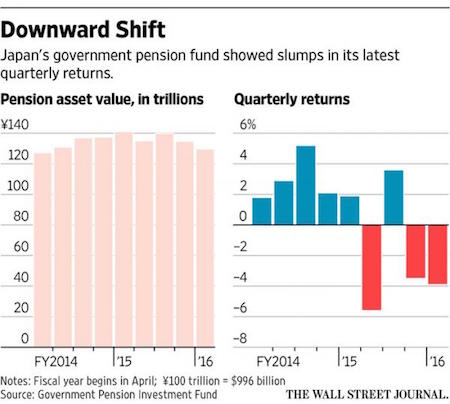
• Government Pension Plans Are Headed For Disaster (Mises Inst.)
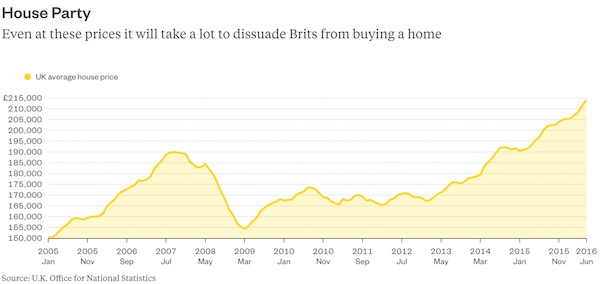
• Toronto Home Prices Surge in October, Undaunted by New Rules (BBG)
• Turkey Police Round Up Kurdish Party Leaders in Midnight Raids (BBG)
• Turkey Appears To Have Closed Most Of The Internet (Ind.)
• Historic Climate Pact Enters Into Force (AFP)
• Early Closings Of US Nuclear Plants Leave Toxic Waste With Nowhere To Go (BBG)


Poverty is a problem the US flatly denies and ignores.

• Both US Parties Need to Worry About Poverty (BBG)

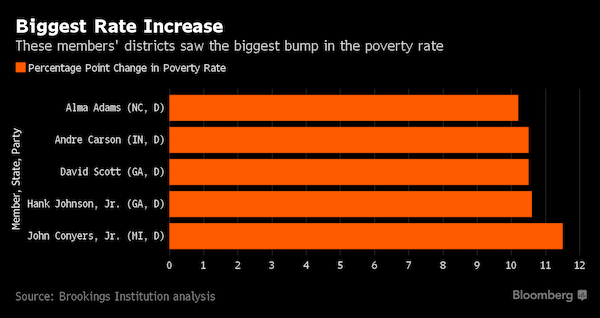
There’s a reason presidential nominee Donald Trump’s message of a declining America is inspiring support in Republican strongholds: poverty is worsening in his party’s congressional districts, a new analysis by the Brookings Institution shows. The poverty rate increased in nearly all – 96% – of the Republican-controlled districts between 2000 and the 2010-2014 period, according to a study by Elizabeth Kneebone, a fellow with the institute. She analyzed Census data and figures from the American Community Survey. The population living in poverty in all Republican districts climbed by 49%, compared with a 33% increase in Democratic areas. A big theme of this presidential election campaign that will be decided on Nov. 8 has been the battle to win low-income voters who feel left behind from the economic expansion.
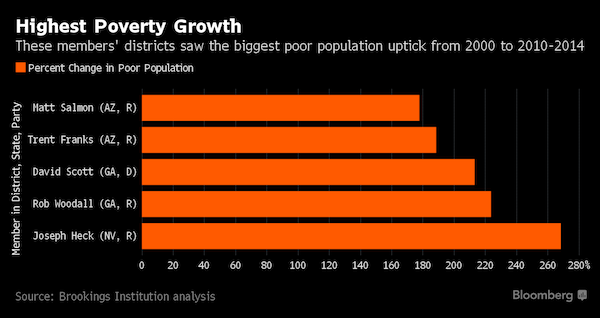
Trump’s rallies have been often packed with middle-class supporters who are receiving his message to “make America great again.” Both him and Democratic candidate Hillary Clinton have promised to raise the minimum wage and deal with the affordability of college and childcare. Neighborhoods in Democrat-leaning districts also have a high proportion of poor people. Combined, the poverty rate in districts represented by Democrats was higher at 17.1% in 2010-14 than the 14.4% in Republican areas. However, the overall number of poor residents was larger in Red districts at 25.1 million compared with 22.7 million in Blue districts, the study found. “Poverty and opportunity should be more than a top-of-the-ticket conversation,” Kneebone said. “Challenges of poverty cut across the political divide and touch all 436 congressional districts.”
Read more …

France suffers from the same disease as all Southern European contries. As long as it stays in the Eurozone, this can only get worse.

• The End of a Great Industrial Power: France Car Production Collapses (Gef.)

French industry has been contracting since the adoption of the euro. It was not able to recover after either of the 2001 or 2008 crises because the euro, a currency stronger than the French franc would be, has become a burden to France’s economy. The floating exchange rate works like an indicator of the strength of the economy and like an automatic stabilizer. A weaker currency helps to regain competitiveness during a crisis, while a stronger currency supports consumption of foreign goods. China has been accused of artificial devaluation of its currency to prop up exports, while the ECB’s policy has had an opposite effect for the economy of France and some South European countries: the euro has become too strong; whereas for Germany’s it has become too weak.

That is why the common currency has increased consumption and imports in less productive countries and strengthened German competitiveness and exports. Because of the euro France could not regain international competitiveness in the world’s market after the 2001 crisis, so its industry has been slowly dying ever since. What we are saying is not that weakening your currency is a solution to boost a never-ending growth. The floating exchange rate is a great tool for bad times, which is excellently known in Poland, where there was no recession because of, among others, a temporarily weaker national currency. France and South European countries have just given this tool over to the ECB and they were not able to have a quick recovery. Just like Germany has had with an undervalued euro in their case.
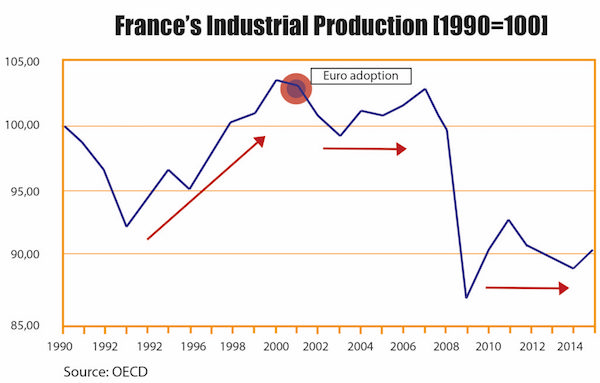
Today, according to the Eurostat, industry (except construction) makes up 14.1% of the French total gross value added, while in 1995 it was 19.2%. The EU’s average is still 19.3%, but in Germany 25.9%. Moreover, the share of industry in total employment in France is only 11.9%, also under the EU’s average (15.4%) and the German level (18.8%). One of the imprints of the dying French manufacturing under the ECB rules is automotive sector collapse. According to OICA data, the world’s car production almost doubled in the years 1997-2015 from 53 million vehicles produced yearly to 90 million. At the same time, Germany increased its car production by 20% from 5 to 6 million. What happened in France, once the proud producer of beautiful and modern vehicles?
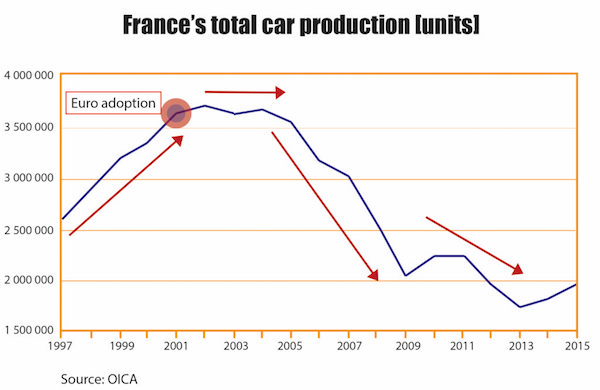
Read more …

Deflation.

• The Sad Case Of Japan Should Serve As A Warning For China (BBG)

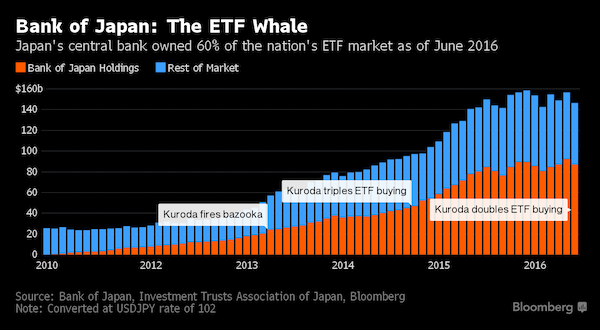
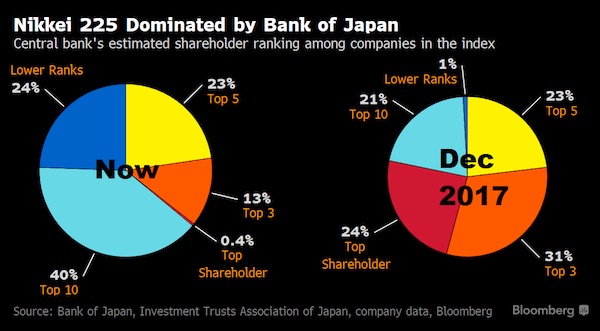
China and Japan may seem to inhabit alternative economic universes. After more than two decades of stagnation, Japan is a fading global power that can’t seem to revive its fortunes no matter what unorthodox gimmicks it tries. By contrast, China’s ascent to superpower status appears relentless as it gains wealth, technology, and ambition. Yet these Asian neighbors have a lot in common, and that doesn’t bode well for China’s economic future. The sad case of Japan should serve as a cautionary tale for China’s policymakers. Beijing pursued almost identical economic policies to Tokyo’s to generate its rapid development. Now China’s leaders are repeating the missteps the Japanese made that tanked Japan’s economy and thwarted its revival.

30 years ago, few foresaw the decline of Japan, either. Japan was the East Asian giant poised to overtake the U.S. as the world’s top economy. Driving that ascent was an economic system that many considered superior to laissez-faire American capitalism. By fostering close, cooperative ties among the state, big corporations, and banks, Japan’s policymakers encouraged investment and guided a national industrial strategy. Bureaucrats in Tokyo interfered with markets to a degree unthinkable in the U.S. by protecting nascent industries and directing financing to favored sectors and companies. Backed by such support, Japanese companies burst onto the world stage and pushed their American competitors to the wall. But even as Japan appeared destined for greatness, its economy was, in reality, starting to rot.

Those clubby ties among finance, business, and government misallocated capital and led to wasteful investments. Growth was given a boost by cheap credit in the second half of the 1980s, but that also helped inflate debt levels and stock and property prices. When this “bubble economy” burst in the early 1990s, the financial industry was flattened. Japan has yet to fully recover. [..] The methods Beijing employed to generate rapid growth—directing finance, nurturing targeted industries, and promoting exports—are replicas of Japan’s. And since the state in China’s “state capitalism” plays an even larger economic role than Japan’s officious bureaucracy does, the Chinese government interferes with markets to a greater degree.

Read more …

More record lows every day.

• China Faces Looming Bulge in Currency Pressure (WSJ)

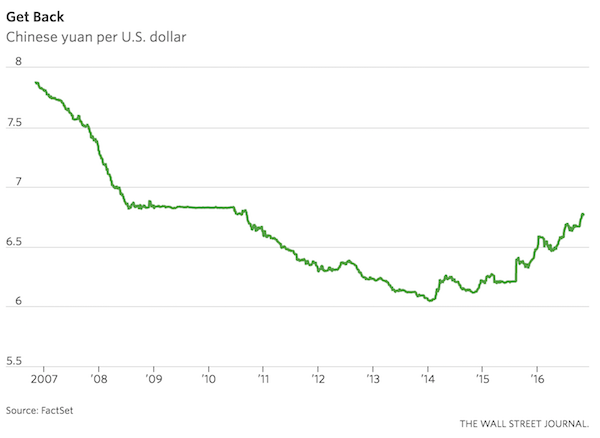
Markets have grown more accustomed to the slow-motion decline in the value of the Chinese yuan. The currency’s next milestone, however, may usher in a more challenging period. China’s currency has fallen nearly 4% against the dollar this year, with a chunk of that move taking place over the past month, though there has been a small recovery in recent days. Recent dollar strength is certainly a factor in the minds of China’s currency managers in deciding when to intervene and when to let the yuan slide. Beijing has spent more than $500 billion in reserves to manage the yuan’s slide over the past two years on a balance-of-payments basis. Still, the yuan has slipped from 6.06 a dollar to above 6.75. That is getting close to 6.82, the level around which the yuan was pegged for an extended period from 2008 until 2010.
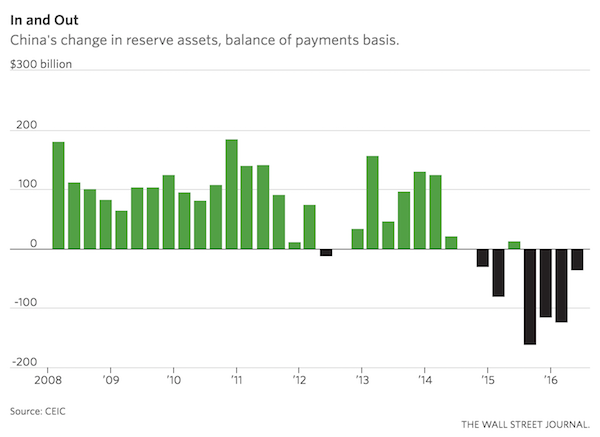
Currency traders could be accused of overplaying such historical levels having an effect on current trading. But in this case, it may have more than just a psychological impact. The two years in which the yuan was stuck around 6.82 was also the period of the largest inflows into the Chinese economy, to the tune of $764 billion, noted Kevin Lai of Daiwa Securities. Quantitative easing in the U.S. was in full effect and trillions flowed to emerging markets, especially China. Individuals and companies that borrowed in dollars or brought money in as a carry trade may have hung on until now, figuring they haven’t lost money on the exchange rate. But seeing the yuan get back to the rate when they brought it in could hasten transfers.

Unlike the period from 2008 to 2010, when interest-rate differentials vastly favored bringing money to China, and the exchange rate was pegged, the difference between dollar rates and yuan rates have narrowed substantially, plus the Chinese have to account for the possibility the yuan will weaken further. That explains why Federal Reserve rate increases have such a powerful effect on China’s capital flows. [..] It isn’t inevitable that the bulge of money that flowed in from 2008 to 2010 will necessarily leave. But outflows do continue to bubble below the surface. The ghosts of inflows past may yet haunt China’s future.
Read more …

Lagarde poking a stick into a hornest nest.

• Egypt Central Bank Devalues Currency By 48% In Exchange For IMF Loan (AlJ.)

Egypt has devalued its currency by 48%, meeting an important demand set by the IMF in exchange for a $13bn loan over three years to overhaul the country’s economy. Thursday’s much anticipated decision by the Egyptian Central Bank followed a sharp and sudden decline this week in the value of the dollar in the unofficial market, dropping from an all-time high of 18.25 pounds to around 13 to the US currency. The devaluation pegs the Egyptian pound at 13 to the dollar, up from nearly nine pounds on the official market. The IMF’s executive board has yet to ratify the $12bn loan provisionally agreed by Egypt and the IMF in August.

Egypt’s central bank increased interest rates by three percent to rebalance currency markets following weeks of turbulence. A shortage of dollars in the economy had put the currency under intense downward pressure in recent months. A rapid slide on the black market to 18 earlier this week pushed the importers to cease buying, with the rate strengthening to 13 late on Wednesday, creating a rare opportunity for the central bank to devalue. The central bank said the new exchange rate was non-binding and would serve as “soft guidance to jumpstart the market”.

Read more …

Even this can be turned into an anti-everyone-but-Hillary piece, as the Guardian proves.

• ‘The FBI Is Trumpland’: Anti-Clinton Atmosphere Spurred Leaks (G.)

Deep antipathy to Hillary Clinton exists within the FBI, multiple bureau sources have told the Guardian, spurring a rapid series of leaks damaging to her campaign just days before the election. Current and former FBI officials, none of whom were willing or cleared to speak on the record, have described a chaotic internal climate that resulted from outrage over director James Comey’s July decision not to recommend an indictment over Clinton’s maintenance of a private email server on which classified information transited. “The FBI is Trumpland,” said one current agent. This atmosphere raises major questions about how Comey and the bureau he is slated to run for the next seven years can work with Clinton should she win the White House.

The currently serving FBI agent said Clinton is “the antichrist personified to a large swath of FBI personnel,” and that “the reason why they’re leaking is they’re pro-Trump.” The agent called the bureau “Trumplandia”, with some colleagues openly discussing voting for a GOP nominee who has garnered unprecedented condemnation from the party’s national security wing and who has pledged to jail Clinton if elected. At the same time, other sources dispute the depth of support for Trump within the bureau, though they uniformly stated that Clinton is viewed highly unfavorably. “There are lots of people who don’t think Trump is qualified, but also believe Clinton is corrupt. What you hear a lot is that it’s a bad choice, between an incompetent and a corrupt politician,” said a former FBI official.

Sources who disputed the depth of Trump’s internal support agreed that the FBI is now in parlous political territory. Justice department officials – another current target of FBI dissatisfaction – have said the bureau disregarded longstanding rules against perceived or actual electoral interference when Comey wrote to Congress to say it was reviewing newly discovered emails relating to Clinton’s personal server. [..] Comey’s decision to tell the public in July that he was effectively dropping the Clinton server issue angered some within the bureau, particularly given the background of tensions with the justice department over the Clinton issue. A significant complication is the appearance of a conflict of interest regarding Loretta Lynch, the attorney general, who met with Bill Clinton this summer ahead of Comey’s announcement, which she acknowledged had “cast a shadow” over the inquiry.

Read more …

It’s only a poll of 1000, but perhaps the US voter is not completely stupid.

• US Voters Fear The Media Far More Than Russian Hackers (WE)

Voters fear the media far more than Russian hackers when it comes to tampering with election results. According to a Suffolk University/USA Today poll, 46% of likely voters believe the news media is “the primary threat that might try to change the election results.” The national political establishment was the second most-suspected group at 21%, and another 13% were undecided. Foreign interests, including “Russian hackers,” ranked fourth with 10% and “local political bosses” came in last with 9% of likely voters as the main threat to truthful election results. The poll results found 51% of likely voters were either “very concerned” or “somewhat concerned” about the possibility of violence erupting on election day or afterwards.

The poll of 1,000 likely voters was taken between Oct. 20 and Oct. 24 and followed the release of private emails by the hacking group WikiLeaks that revealed cozy relationships between some prominent media stars and the Clinton campaign. The WikiLeaks dump also discovered Donna Brazile, the interim chairwoman of the Democratic National Committee, forwarded a debate question to Clinton that was later asked at a CNN Democratic town hall. Brazile at the time was a CNN contributor. The poll found 39% of likely voters believe the media is coordinating coverage with individual political campaigns, while 48% said the media is reporting “completely of its own accord.” The Gallup Poll has found trust in the media to have sunk to an historic low. A September Gallup survey found just 32% of American adults saying they have a great deal or fair amount of trust in the media,” a number that has dropped 8 %age points from last year.

Read more …

“.. keeping Boobus Americanus fooled into believing that that guy in the black pajamas with the giant sword will be in their neighborhood next week..”

• Trump is Half Right and Half Wrong about Mosul (Di Lorenzo)

In his campaign stump speech Donald Trump ridicules Obama for publicly announcing four months in advance that “we” will be invading Mosul, Iraq to kick out ISIS there and capture its leaders. No element of surprise there. Twelve minutes after the announcement, said Trump, and the ISIS leaders were gone. Trump is right to mock this foolish talk. The element of surprise is what military commanders dream about. Stonewall Jackson’s famous flanking maneuver at the Battle of Chancellorsville (VA), where his 60,000-man army outflanked and surprised the 133,000-man Army of the Potomac with a crushing defeat is still to this day taught at military academies around the world.

But Obama is not that stupid. He’s just not interested in winning the “war on terra,” as Dub-Yuh called it. His main interest is keeping Boobus Americanus fooled into believing that that guy in the black pajamas with the giant sword will be in their neighborhood next week chopping off heads if we ever stop intervening in the Middle East. It’s all theater, in other words. That’s why the regime announces some big new military escalation every few months, lest Boobus forgets that he’s supposed to be frightened into acquiescing in the never-ending explosive growth of the military-industrial complex and the relentless growth of the state in general that it nourishes.

Read more …

The mess will only get deeper unless Brits stop blaming each other.

• Tory MPs Warn High Court Trio Of Early Election If They Don’t Back Down (DM)

Theresa May could be forced to hold an early election if judges and Remain campaigners do not back down in the war against Brexit, Tory MPs warned last night. On a frantic day at Westminster, the Prime Minister vowed to appeal yesterday’s High Court verdict which would allow Parliament to frustrate or even scupper the process of Britain leaving the EU. No 10 sent a clear message to the courts that 17.4 million voters had backed Brexit and that they should not get in the way of ‘delivering the best deal for Britain’. David Davis, the Brexit Secretary, said that – if yesterday’s verdict was upheld by the Supreme Court – a full Act of Parliament would be required to trigger Brexit.

This would allow MPs or unelected peers to table amendments that could dictate the terms of Brexit or even halt the process. But Mr Davis warned that heading down this path would be a huge mistake. And senior Tories said that, if MPs and peers did try to frustrate Brexit, a General Election was almost inevitable, suggesting Mrs May would have no option but to trigger an ‘immediate’ poll in early 2017. Last night, Mr Davis said: ‘Parliament voted by six to one to give the decision to the people, no ifs or buts, and that’s why we are appealing this to get on with delivering the best deal for Britain. ‘Parliament is sovereign and has been sovereign, but of course the people are sovereign.

‘The people are the ones who parliament represents…17.4 million of them, the biggest mandate in history, voted for us to leave the EU. ‘We’re going to deliver on that mandate in the best way possible for the British national interest. ‘The people want us to get on with it and that is what we intend to do.’ Ex-justice minister Dominic Raab said the verdict had opened ‘Pandora’s box’. He added: ‘I think the elephant in the room here is if we get to the stage where [Remainers] allow this negotiation to even begin, I think there must be an increased chance that we will need to go to the country again. ‘I think that would be a mistake and I don’t think those trying to frustrate the verdict in the referendum will be rewarded.’

Read more …

A global phenomenon. “..the political process [..] actually rewards those who underfund the present and defray costs onto future generations.”

• Government Pension Plans Are Headed For Disaster (Mises Inst.)

The combined debt held by U.S. public pension plans will top $1.7 trillion next year, according to a just-released report from Moody’s Investors Services. This “pension tsunami” has already forced towns like Stockton, California and Detroit, Michigan into bankruptcy. Perhaps no government mismanaged their pension as badly as Puerto Rico, where a $43 billion pension debt forced the commonwealth to seek protection from the federal government after having defaulted on its obligations to bondholders — a default which is expected to spread to retirees in the form of benefit cuts. While the disastrous outcome of Puerto Rico’s pension plan – which is projected to completely run out of assets by 2019 – represents the worst-case scenario, the same series of events that led to its demise can be found in most public pension plans nationwide.

There are three primary culprits that can be found in nearly every state suffering from a public pension crisis: 1) The use of accounting gimmicks that are designed to shift costs onto future generations – an approach outlawed for private pension plans and rejected by both public and private plans in Canada and Europe. 2) Lawmakers, acting in their political self-interest, who have catered to the past demands of government unions to enrich their members’ benefits while passing the costs onto future generations. 3) A broken governance structure where public pension board members are actually penalized in tangible ways for acting responsibly, and are rewarded by choosing to delay the day of reckoning. Perhaps the most concise assessment of public pensions came from the former chief actuary for the nation’s largest public pension fund – CalPERS – who noted simply that: “Politics and pensions just don’t mix.”

And it’s not just “liberal” states like California who have succumbed to the siren call of public pensions. My home state of Nevada – historically thought to be a bastion of limited government thought – is in a proportionally deeper hole than our California neighbors! [..] In theory, government is ostensibly designed to override the allegedly short-sighted, greedy nature of individual actors with policies that are long-term oriented and designed to maximize the general welfare. Yet, as the case of public pensions (not to mention infrastructure spending, the national debt, entitlements, etc.) reveals, the political process actually does the exact opposite: it actually rewards those who underfund the present and defray costs onto future generations.

Read more …

Just ask yourself: who profits?

• Toronto Home Prices Surge in October, Undaunted by New Rules (BBG)

Toronto home sales rose to a record and prices surged in October, showing little effect so far from new government rules designed to bring stability to the market. Sales in Canada’s biggest city rose 12% to 9,768 transactions from the same month a year earlier, while average prices jumped 21% to C$762,975 ($569,852), according to the Toronto Real Estate Board. The average price of a detached home was C$1,034,077, up 26% on the year. New listings rose 0.9% to 13,377 homes. “Until we experience sustained relief in the supply of listings, the potential for strong annual rates of price growth will persist, especially in the low-rise market segments,” Jason Mercer, the board’s director of market analysis, said in a statement on Thursday.

The market remained hot even as Finance Minister Bill Morneau unveiled new federal rules in October that included a stress test for home-loan borrowers and came into effect halfway through the month. The rules also stiffened requirements for low-ratio mortgage insurance and closed a tax loophole. Toronto’s march higher contrasts with Vancouver’s continued sales decline since the provincial government enacted a tax on non-Canadian home buyers. Sales in the west coast city fell 39% in October over the prior year, while prices for all residential properties climbed to an average of C$919,300, a 25% jump from a year earlier and a 0.8% decline from September.

Read more …

The west uses the Kurds when it comes to fighting ISIS, but leaves them hanging when it comes to Erdogan’s delusions.

• Turkey Police Round Up Kurdish Party Leaders in Midnight Raids (BBG)

Turkish police began rounding up Kurdish lawmakers in post-midnight raids on Friday, extending a crackdown on the opposition as President Recep Tayyip Erdogan consolidates power following a July 15 coup attempt. Selahattin Demirtas and Figen Yuksekdag, co-chairs of the Peoples’ Democratic Party, also known as the HDP, were among those detained, according to CNN-Turk. At Erdogan’s request, parliament had passed a law in May stripping the party’s lawmakers of their immunity from prosecution, which allows them to be charged with terrorism-related offenses. Last year, Demirtas looked to be a rising political star in Turkey. He led a pro-Kurdish party to win seats in parliament for the first time, passing the threshold of 10% of the national vote.

He also ran for president in 2014, and campaigned on a promise to prevent Erdogan from winning the power he seeks to transfer the seat of power in Turkey from parliament to an enhanced executive presidency. The police raids were carried out in Diyarbakir, Turkey’s largest Kurdish-majority city, and in the capital Ankara, according to Haberturk newspaper. Sirri Sureyya Onder, a member of parliament representing Istanbul, was also detained in Ankara, it said. Over the weekend, police arrested the elected mayors of Diyarbakir and later replaced them with government appointees. Demirtas had said that members of his party wouldn’t abide by orders to appear before courts, saying they’d become servants of the ruling party and were illegitimate.

Erdogan says the HDP is merely a front for the Kurdistan Workers’ Party, or PKK, a group classified by Turkey and allies – including the U.S. and EU – as a terrorist organization. The HDP is the third-largest party in Turkey’s parliament, holding 59 of the legislature’s 550 seats.

Read more …

Could still be an incident, but it would fit the pattern.

• Turkey Appears To Have Closed Most Of The Internet (Ind.)

Much of the internet appears to have gone down in Turkey. People in the country are having problems accessing much of the internet’s biggest websites and services, including Facebook, WhatsApp, YouTube, Twitter and more. The website Down Detector confirmed problems in the country, particularly in the west. Some have reported that the sites are simply slow, but that it is still possible to access them. Others say they are down entirely. It isn’t clear whether the outage has been caused by an intentional ban, a cyber attack or just an accident. Some reported that issues with Turk Telecom appeared to be the cause of the problems.

Turkey Blocks, a website that tracks issues with the internet in Turkey, claimed that web traffic including that for WhatsApp was subject to throttling, where connections are slowed down to the point they are unusable. It claimed that the internet ban was related to the arrest of some political activists the night before the outage went into effect. The issue began overnight but has been going on throughout the day, according to local reports. The internet in general seems to be having a rocky few weeks – recently, it went down for almost a full day after a strange cyber attack on the internet’s infrastructure that appeared to be executed by webcams.

Read more …

Yeah, yeah, CON21. Mankind is capable of producing huge amounts of hot air in more ways than one.

• Historic Climate Pact Enters Into Force (AFP)

A hard-fought pact to stave off worst-case-scenario global warming enters into force Friday after record-fast ratification by nations reassembling next week for a fresh round of UN climate talks. Dubbed the Paris Agreement, it is the first-ever pact binding all the world’s nations, rich and poor, to a commitment to cap average global warming by curbing planet-warming greenhouse gases from burning coal, oil and gas. “Humanity will look back on November 4, 2016, as the day that countries of the world shut the door on inevitable climate disaster,” UN climate chief Patricia Espinosa said. While cause for celebration, “it is also a moment to look ahead with sober assessment and renewed will over the task ahead,” she said.

This meant drastically cutting emissions in the short term, “certainly in the next 15 years,” Espinosa pointed out a day after a UN report said current trends were steering the world towards climate “tragedy”. By 2030, said the UN Environment Programme, annual greenhouse gas emissions will be 12 to 14 billion tonnes of carbon dioxide equivalent (CO2e) higher than the desired level of 42 billion tonnes. The 2014 level was about 52.7 billion tonnes. 2016 is on track to become the hottest year on record, and carbon dioxide levels in the atmosphere passed an ominous milestone in 2015. On Friday, the Eiffel Tower in Paris as well as government and public buildings in Marrakesh, New Delhi, Sao Paulo and Adelaide, among others, will be lit up in green to mark the entry into force of the historic pact.

Read more …

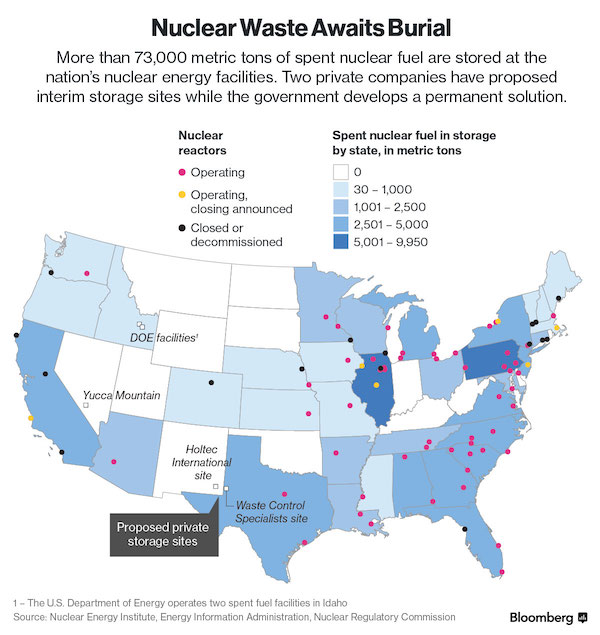
“..interim storage sites while the government develops a permanent solution..” Baloney. There is no permanent solution. Yucca Mountain was discarded after a judge ruled the government had to guarantee safe storage for 100,000 years. There is no such guarantee.

• Early Closings Of US Nuclear Plants Leave Toxic Waste With Nowhere To Go (BBG)

Under a 1982 law, the U.S. government, not the utilities, is responsible for disposing of radioactive waste that can take thousands, even hundreds of thousands, of years to degrade. But more than a half-century after nuclear energy powered the first American home, the U.S. Department of Energy still doesn’t have a permanent solution for the waste left behind. It’s a problem that will only get worse. On October 24, the Fort Calhoun Nuclear Generating Station near Blair, Nebraska, became the fifth nuclear plant to close in five years. Of 119 reactors in the U.S., 20 are now being decommissioned and a half-dozen more are expected to close prematurely, nudged out by cheap natural gas and growing use of renewables.

Beyond that, “the big wave of retirements really starts coming in around 2030,” Energy Secretary Ernest Moniz warned last month at an event in Washington. Among experts, the nuclear waste debate invariably turns on the fleeting nature of human institutions in dealing with an element that the Environmental Protection Agency has said must be isolated for 10,000 years to protect humans and the environment from toxic radiation. “The problem with federal agencies is that the management structure changes every few years,” said Allison Macfarlane, a former chairman of the Nuclear Regulatory Commission (NRC), which licenses and regulates civilian use of radioactive material. “In hundreds of years, will these institutions be there, will they care, will they pay?” That’s one issue. A second is where exactly to put the waste.

The safest thing to do is to bury it deep underground, below the water table and within a stable rock formation. Congress picked such a site in 1987: a desert ridge in Southern Nevada known as Yucca Mountain. The site abuts a nuclear weapons testing ground where 928 atomic tests were conducted between 1951 and 1992. While a few Nevada counties agreed with the selection, the state government didn’t, and the Yucca solution soon devolved into a decades-long political fight that crossed party lines and spanned presidential administrations. In 2010, President Barack Obama finally scrapped the plan altogether, declaring the site unworkable.

Read more …

Sep 162016
 
 September 16, 2016  Posted by at 8:56 am Finance Tagged with: , , , , , , , , , ,  3 Responses »


DPC Maumee River waterfront, Toledo, OH 1910

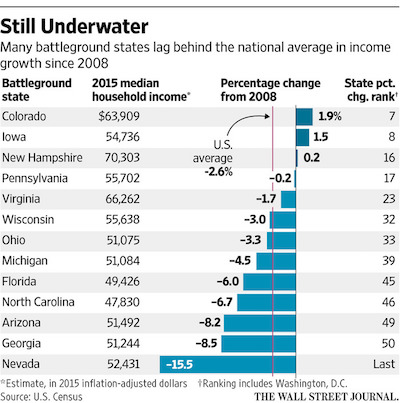
• Many Presidential Swing States Lag Behind in Income Gains (WSJ)
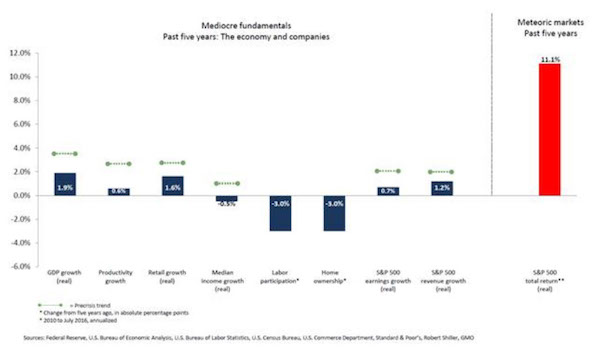
• Mediocre Fundamentals Mean Meteoric Markets Are 70% Overvalued (GMO)
• US Seeks $14 Billion From Deutsche Bank Over Mortgage Securities Fraud (AFP)
• Deutsche Bank Shares Plunge After Rebuffing $14 Billion US Fine (BBG)
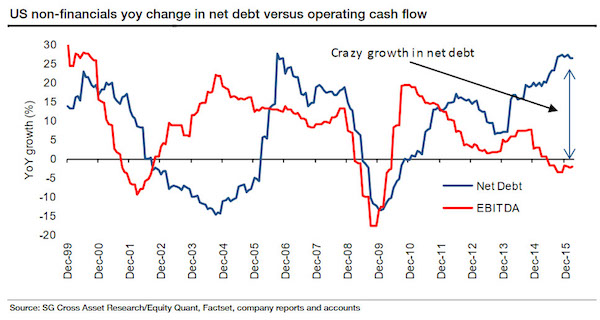
• Observations About US Corporate Debt (ZH/Kestel)
• This is How You Will Bail Out Municipal Pension Funds (WS)
• The Next Bubble: China’s Housing Gets Scarily Expensive (Balding)
• Europe, Japan Banking Sectors Threaten Revolt Over Basel Rules (BBG)
• It’s A Long Way Down In Australia’s Looming Apartment Fall (Aus.com.au)
• EU Leaders Search For Way Out Of ‘Existential Crisis’ (R.)
• Greece Raids Home Of Central Bank Head (ZH)
• Jay Z: ‘The War on Drugs Is an Epic Fail’ (NYT)
• Les Déplorables (WSJ)
• The Cold War Is Over (Hitchens)


This is it. This will decide the US elections the same way it did Brexit, and many European elections over the next 2 years and change.

• Many Presidential Swing States Lag Behind in Income Gains (WSJ)

Key swing states such as Nevada, North Carolina and Florida have seen some of the weakest income growth in the country since the last non-incumbent presidential contest in 2008, new census figures show. A Wall Street Journal analysis of state-by-state income data set for release on Thursday shows that more than half of the 13 states where the presidential race appears closely contested have seen below-average income growth since 2008. Among the eight laggards, three states saw the lowest wage growth in the U.S. during that time—Nevada, Georgia and Arizona. The new data show how America’s uneven economic recovery is adding another layer of unpredictability to an already volatile electoral map.

The traditional realm of battleground states has expanded, putting into play states such as Arizona and Georgia, which haven’t gone to a Democratic presidential candidate in at least 20 years. The Census Bureau also said income inequality across the country increased in 2015. The recovery’s income gains have been concentrated in central cities, with suburbs and rural areas largely lagging behind for years. “You actually see the bottom and the top pulling apart a little bit more in some of these keys states,” said David Damore, professor of political science at the University of Nevada Las Vegas. On a national basis, most states still haven’t seen income recover to pre-recession levels. Americans’ median household income in 2015 was 2.6% lower than in 2008, census figures show.

Read more …

“Much of the run-up over the past few years has been primarily about multiple expansions. And the scary thing about multiple expansions is that they are reliably mean-reverting—if they run too far, the market always takes it back, sometimes with a vengeance. And we are currently almost 70% too far.”

• Mediocre Fundamentals Mean Meteoric Markets Are 70% Overvalued (GMO)

While all eyes were on Federal Reserve Chair Janet Yellen in Jackson Hole, we were watching something else. In August, the Shiller P/E, a well-regarded metric for measuring the valuation of U.S. equities, breached 27. Given that its normal range is something a bit above 16, valuations are looking rather stretched. Further, the last time the Shiller P/E was above 27 was in October … 2007. And we all know how that movie ended. While nobody here at GMO is saying that a crash is imminent (and there’s no law that says stocks cannot become even more expensive), we continue to maintain our bias against U.S. stocks. We will also take this end-of-summer moment to point out the yawning disconnect between fundamentals (of the U.S. economy and even corporate America) and their stocks. It really is a tale of two cities, one of mediocre fundamentals versus a meteoric rise in markets (see the chart below).

We pulled together some meaningful metrics on the health of the economy and some top-line/bottom-line numbers on the S&P 500 Index: GDP growth, productivity, and household income, as well as a few others, including revenue and earnings for U.S. stocks, for good measure. It is a tale of mediocrity, at best. Then, we contrasted those with the actual market returns of the S&P 500 Index over the past five years. Truly meteoric. (As an aside, we at GMO have always been leery of drawing too many investment conclusions from staring at economic data—we are more valuation-oriented, after all—but even we are struck by the divergence.) Which brings us back to the Shiller P/E. Much of the run-up over the past few years has been primarily about multiple expansions. And the scary thing about multiple expansions is that they are reliably mean-reverting—if they run too far, the market always takes it back, sometimes with a vengeance. And we are currently almost 70% too far.

Read more …

“Deutsche Bank has no intent to settle these potential civil claims anywhere near the number cited..” “..the bank is aiming for an amount between $2 billion and $3 billion..”

• US Seeks $14 Billion From Deutsche Bank Over Mortgage Securities Fraud (AFP)

Authorities in the US are seeking as much as $14 billion from Deutsche Bank to resolve allegations stemming from the sale of mortgage securities in the 2008 crisis, the German financial giant confirmed Thursday. The payout would be the largest ever inflicted on a foreign bank in the United States, easily surpassing the $8.9 billion that French bank BNP Paribas paid in 2014 for sanctions violations. But in a quick reaction, Deutsche Bank rejected the $14 billion figure, which the bank said was an opening proposal in settlement talks with US prosecutors. “Deutsche Bank has no intent to settle these potential civil claims anywhere near the number cited,” the statement said. “The negotiations are only just beginning. The bank expects that they will lead to an outcome similar to those of peer banks which have settled at materially lower amounts.”

The US investment bank Goldman Sachs in April agreed to pay more than $5 billion to settle similar allegations. US authorities have accused major banks of misleading investors about the values and quality of complex mortgage-backed securities sold before the 2008 financial crisis. Much of the underlying lending was worthless or fraudulent, delivering billions of dollars in losses to holders of the mortgage bonds when the housing market collapsed, bringing down numerous banks and touching off the country’s worst recession since the 1930s. According to securities filings, Deutsche Bank as of June 30 had set aside $5.5 billion to resolve pending legal matters. In the mortgage-backed securities matter, the bank is aiming for an amount between $2 billion and $3 billion, according to knowledgeable sources.

Read more …

“They have declined about 46% this year.”

• Deutsche Bank Shares Plunge After Rebuffing $14 Billion US Fine (BBG)

Deutsche Bank shares slumped after receiving a $14 billion claim from the U.S. Justice Department to settle an investigation into the firm’s sale of residential mortgage-backed securities, a figure the German lender said it won’t pay. “Deutsche Bank has no intent to settle these potential civil claims anywhere near the number cited,” the company said in a statement early Friday in Frankfurt. “The negotiations are only just beginning. The bank expects that they will lead to an outcome similar to those of peer banks which have settled at materially lower amounts.” Bank of America paid $17 billion to reach a settlement in a similar case in 2014, the biggest such accord to date.

Goldman Sachs agreed to a $5.1 billion settlement with the U.S. earlier this year, including a $2.4 billion civil penalty and $875 million in cash payments, to resolve U.S. allegations that it failed to properly vet mortgage-backed securities before selling them to investors as high-quality debt. The settlement included an admission of wrongdoing. “Overall it’s very negative for the share price if you look at the Justice Department figure but you don’t know where it will end up,” said Andreas Plaesier at Warburg Research with a hold recommendation on the shares. “If you come down to the Goldman amount they may not need to do much in terms of reserves.” The shares dropped as much as 8.2% and were down 7.8% at 12.08 euros at 9:04 a.m. in Frankfurt. They have declined about 46% this year.

Read more …

“..we project global corporate credit demand (flow) of $62 trillion over 2016-2020, with new debt representing two-fifths and refinancing the rest.”

• Observations About US Corporate Debt (ZH/Kestel)

Extraordinary low interest rates around the world have delivered a monumental blow to many investors. Falling interest rates have translated into rising liabilities for (defined benefit) pension plans and, secondly, millions of retirees, who depend on income from savings to take them through retirement, are struggling to make a decent living. Consequently, investors take risks that they weren’t previously prepared to take. Take US corporate high yield bonds. The prevailing view seems to be that US corporates (ex. energy) are in very good shape with loads of cash on their balance sheet, and that they therefore offer a relatively attractive, and a comparatively safe, investment opportunity. I beg to disagree. Firstly, we are late in the economic cycle, and it is usually a bad idea to buy corporate high yield bonds late in an economic upturn. Secondly, let me share some facts with you that undermine the perception outlined above:

  1. The 1% most cash-rich of all US companies control over 50% of all US corporate cash.
  2. The five most cash-rich US companies (Apple, Microsoft, Google, Cisco and Oracle) control 30% of all US corporate cash.
  3. Total US corporate debt (the other side of the balance sheet) was $5.03 trillion at the end of 2015- up from $2.62 trillion at the end of 2007.
  4. Net debt (i.e. debt ex. cash) amongst US corporates was $3.39 trillion at the end of 2015 vs. $1.88 trillion at the end of 2007.
  5. US corporate debt has risen by $2.8 trillion over the last five years, while corporate cash has only risen by $600 billion.
  6. If you back out the top 1% referred to in (1) above, the cash holdings of the remaining 99% fell 6% in 2015 to stand at just $900 billion by the end of December vs. $6.6 trillion of debt.

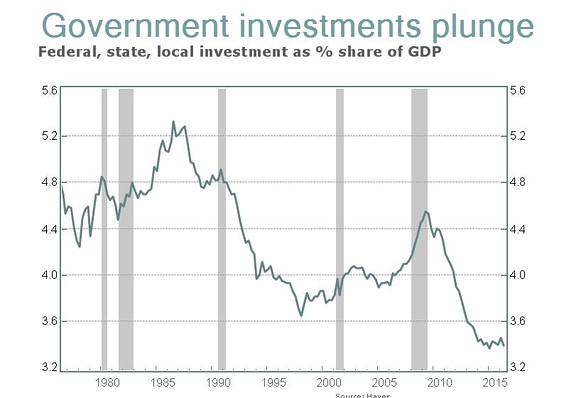
Based on those numbers, I think it is fair to say that, with the exception of a few extremely cash-rich companies, corporate America is increasingly indebted and not at all as cash-rich as widely perceived. This also explains why corporate investments in the US are at a 60-year low.

Governments globally are persisting with monetary expansion to support economic growth and prop up inflation, to the detriment of credit quality, particularly for over-indebted Chinese corporates and U.S.leveraged borrowers. In our base-case scenario, we project global corporate credit demand (flow) of $62 trillion over 2016-2020, with new debt representing two-fifths and refinancing the rest. Outstanding debt would expand by half to $75 trillion, with China’s share rising to 43% from 35%.

We estimate that two-fifths (43%) to half (47%) of nonfinancial corporates (unrated and rated) are highly leveraged-of which 2% to 5% face negative earnings or cash flows, based on a sample of about 14,400 corporates. With weakened borrower credit quality, a credit correction is inevitable. Our base case is for an orderly credit slowdown stretching over several years (‘slow burn’ scenario), but a series of major economic or political shocks, such as the recent Brexit vote in the U.K., could trigger a more system-wide credit contraction (‘Crexit’ scenario).
Read more …

I see big protests in the offing as public pensions get bailed out by taxpayers who see their private plans left to die.

• This is How You Will Bail Out Municipal Pension Funds (WS)

[..] the beneficiaries are voters and employees of the government, and politicians of all stripes bought their votes with promises of low contributions and rising benefits. They got away with it for decades because no one cares about “underfunded pensions.” Even the term makes people’s eyes glaze over. But someone is going to pay. And it’s not going to be the politicians. This is how they will pay for it in Chicago – the city whose credit rating Moody’s cut by two notches to junk in April last year, and whose interest payments, despite historically low interest rates, have continued to skyrocket as it borrows more and skids deeper into the sinkhole of its own making.

On Wednesday, the City Council approved Mayor Rahm Emanuel’s scheme to bail out its largest and worst-off pension fund, the Municipal Employees’ Annuity and Benefit fund, which would otherwise be insolvent within ten years – and a lot quicker if markets have a hissy fit. Despite seven years of rampant asset price inflation, and asset bubbles nearly everywhere, the fund’s obligations are only 20% funded. It forms part of Chicago’s $34 billion in retirement debt, accumulated over the decades by politicians making promises to buy votes and support from special interest groups. But neither the beneficiaries nor taxpayers via the city contributed enough to pay for those promises.

To save this one pension fund out of its four pension funds from insolvency, the city is jacking up water and sewer levies by 33%, phased in over a few years. Property owners in Chicago will pay, one way or the other, $3 billion into the fund by 2022, up from $1 billion under the prior scheme. Despite these billions of dollars involved, the fund covers only 77,000 workers and retirees.

Read more …

“A 100-city index compiled by SouFun surged by a worrisome 14% in the last year.”

• The Next Bubble: China’s Housing Gets Scarily Expensive (Balding)

For many years, China’s authorities took a Goldilocks approach to housing prices: They wanted a market that was neither too hot nor too cold, and took measures as needed to control prices. Although an explicit asset-price target was never announced, it was widely assumed that the government wanted home prices to grow in line with the rate of economic growth. To accomplish this, technocrats in Beijing deployed a combination of monetary stimulus and regulatory measures. When prices overheated, they put the brakes on credit growth, required higher down payments for mortgages and placed administrative restrictions on who could buy in which cities. When prices started to drop, they tried loosening credit and boosting the number of units people could own.

But in the past few years, with economic growth sluggish, the planners became much more tolerant of rising prices, even as signs of a bubble emerged. Official data shows the price-to income-ratio hitting 9.2 at the end of 2015; housing prices have continued to rise significantly since. All this has led to some widespread distortions. China’s homeowners have come to see near double-digit real-estate returns as a birthright, a bet on par with death and taxes. According to one study, more than 70% of Chinese household wealth is in housing. Investors believe there’s an implicit guarantee that the government won’t let home prices drop, even as many buildings sit empty.

Meanwhile, banks have gone on a lending spree: Total outstanding mortgage loans rose more than 30% and new mortgage growth clocked in at 111% in the past year. Since June 2012, outstanding mortgage loans have grown at an annualized rate of 30%. Predictably, that’s pushed prices higher and higher. In urban China, the average price per square foot of a home has risen to $171, compared to $132 in the U.S. In first-tier cities such as Beijing and Shenzhen, prices have increased by about 25% in the past year. A 100-city index compiled by SouFun surged by a worrisome 14% in the last year. Developers are buying up land in some prime areas that would need to sell for $15,000 per square meter just to break even.

Read more …

Break their power!

• Europe, Japan Banking Sectors Threaten Revolt Over Basel Rules (BBG)

Europeans told the world’s top banking regulator that they’ve had enough. In two heated meetings in the past week, regulators from countries including Germany and Italy told the Basel Committee on Banking Supervision that proposed changes to how banks assess credit, market and operational risks must be scaled back and slowed down, according to two people with knowledge of the matter. Some European officials went so far as to say they wouldn’t adopt the proposals on the table, according to the people, who asked not to be identified because the deliberations were private. If the EU – home to nearly half of the world’s most systemically important banks – balks at implementing the Basel Committee’s rules, it could undermine the global regulator’s authority and contribute to fragmentation of the industry.

The Basel Committee is racing to finish work on the post-crisis capital framework known as Basel III by the end of the year, and it’s under instructions not to increase capital requirements significantly in the process. The debate in Basel pits bank regulators from Tokyo to Frankfurt against a U.S.-backed push for stiffer standards, which take effect when they’re implemented by national governments. The industry says the proposed revisions to risk-assessment rules and limits on banks’ use of their own models to make these calculations would send capital requirements spiraling. Key policy makers have heeded their message. German FinMin Schaeuble last week insisted that the Basel Committee not only keep any overall increase in capital requirements to a minimum, but also ensure the rules have no “particularly negative consequences for specific regions,” such as Europe.

Shunsuke Shirakawa, vice commissioner for international affairs at Japan’s Financial Services Agency, has said the regulator needs to “make adjustments” to bring the new rules in on target. The Basel Committee’s members include Japan’s FSA, Germany’s Bundesbank and the U.S. Federal Reserve. Large European banks may be more vulnerable than their global peers to the changes under discussion. The biggest European banks had an average common equity Tier 1 capital ratio – a key measure of financial strength – higher than their global peers at end-2015, according to data from the European Banking Authority and the Basel Committee.

Read more …

“..mass failure of many Chinese buyers to settle on apartment contracts..”

• It’s A Long Way Down In Australia’s Looming Apartment Fall (Aus.com.au)

While Australia debates its interest rate policy, the mass failure of many Chinese buyers to settle on apartment contracts is looming as a much bigger catastrophe than markets are expecting. This emerged from the comments of a reader to my commentary yesterday on the Sydney and Melbourne apartment markets. One of my readers who did not allow his full name to be published but used the name “James” complained that I had grossly understated the problem. James revealed that he owned and ran a debt and equity funding business that is on the frontline of the apartment settlement problem. His business deals with the developers of the apartment complexes rather than rather than the investors. James describes what is ahead this way:

“The problem is much worse than what you have described. Our analysis of every development in the country suggests that settlement failures will be between $1 billion and $1.5bn every month for the next 12 months. This is from the Chinese alone, but when settlement prices start coming more than 10% under purchase prices, we will also start to see local buyers attempting to walk away from settling. As Julius Caesar famously said: ‘the die is cast.’” To understand the implication of what James’ analysis reveals we need to step back and see how the apartment boom was funded. Most developers of apartments in Australia collect their Chinese off-the-plan deposits and then use them to gain security for a bank loan. Those bank loans can constitute 40, 50 or even 60% of the cost of the apartment complex.

The developers obtain the rest of their funding from businesses like those operated by James. This is an area of finance which we know very little about because it is hidden from public view. The banks feel they are safe in their loans to developers because there is a big difference between their loans and the cost of the buildings. But the banks are often funding other players in the apartment development. Apart from the developer, the people at risk include unsecured suppliers and the enterprises that are providing the second mortgage funding. If the Chinese fail to settle on the scale that Harry Triguboff is warning about, then there will be a deep problem. But if James’ study is correct that deep problem will develop into an economic catastrophe.

Read more …

It’s over. Wind it down peacefully please.

• EU Leaders Search For Way Out Of ‘Existential Crisis’ (R.)

Shaken by Britain’s decision to leave the European Union, the leaders of its other 27 countries meet on Friday to try to inject new momentum into their ailing communal project amid deep-seated divisions over migration and economic policy. The Brexit vote in June ended more than half a century of EU enlargement and closer integration. Long seen as a guarantor of peace and prosperity, the bloc is now struggling to convince its citizens that it remains a force for good. Years of economic and financial crisis have pushed up unemployment in many member states, while a spate of attacks by Islamist militants and a record influx of refugees from the Middle East and Africa have unsettled voters, who are turning increasingly to populist, anti-EU parties.

“After the vote in the UK the only thing that makes sense is to have a sober and brutally honest assessment of the situation,” European Council President Donald Tusk told reporters in Bratislava on the eve of the meeting. “We must not let this crisis go to waste.” European Commission President Jean-Claude Juncker said earlier this week the EU was in an “existential crisis”. Despite the pressure to lay out a new vision, leaders have played down expectations of real breakthroughs in the Slovak capital, in part because of intractable differences on the biggest issues, notably how to handle the influx of migrants.

Instead they are expected to focus on areas where there is common ground, pledging closer defence cooperation, bolstering security at the EU’s external borders and boosting the capacity of an EU investment fund meant to generate growth and jobs. The aim is to present more concrete proposals at a summit in March of next year that coincides with the 60th anniversary of the bloc’s founding Rome Treaty. But some officials admit in private that major initiatives may not be possible until elections in the Netherlands, France and Germany are out of the way by late 2017.

Read more …

Many Greeks accuse Stournaras of exaggerating deficits in order to bring in the Troika.

• Greece Raids Home Of Central Bank Head (ZH)

While the US the media lashes out at Trump every time he dares to tell the truth that the central bank is a biased, engaged, political member of the decision-making landscape, other “developed” countries are happily willing to demonstrate just how apolitical the central bank truly is. Take Greece, for example, where today the chief prosecutor ordered a raid of the home of the governor of the Greek central bank, Yannis Stournaras and the company office of his wife, Lina. The searches were part of a probe conducted by the Financial Police in connection to the alleged mismanagement of more than €1 million in state funding by the Hellenic Center for Disease Control and Prevention, KEELPNO.

The investigation related to funds that KEELPNO allegedly received through a company owned by Nikolopoulou as well as complaints regarding the disappearance of documents tied to the case. According to the WSJ, the raid was part of a continuing investigation into business Stournaras’ wife has done with a state entity, officials said, in a probe that may heighten tension between the top bank official and the left-wing government. Lina Nikolopoulou-Stournaras, the wife of central bank Governor Yannis Stournaras and owner of an communications company specializing in the medical sector, is under investigation from Greek authorities for business she has done with the Hellenic Center for Disease Control and Prevention, or Keelpno.

Read more …

Any and all wars declared on nouns are epic fails. But follow the money.

• Jay Z: ‘The War on Drugs Is an Epic Fail’ (NYT)

This short film, narrated by Jay Z (Shawn Carter) and featuring the artwork of Molly Crabapple, is part history lesson about the war on drugs and part vision statement. As Ms. Crabapple’s haunting images flash by, the film takes us from the Nixon administration and the Rockefeller drug laws – the draconian 1973 statutes enacted in New York that exploded the state’s prison population and ushered in a period of similar sentencing schemes for other states – through the extraordinary growth in our nation’s prison population to the emerging aboveground marijuana market of today. We learn how African-Americans can make up around 13% of the United States population – yet 31% of those arrested for drug law violations, even though they use and sell drugs at the same rate as whites.

Read more …

Quite a statement for the Wall Street Journal to publish.

• Les Déplorables (WSJ)

To repeat: “racist, sexist, homophobic, xenophobic, Islamophobic.” Those are all potent words. Or once were. The racism of the Jim Crow era was ugly, physically cruel and murderous. Today, progressives output these words as reflexively as a burp. What’s more, the left enjoys calling people Islamophobic or homophobic. It’s bullying without personal risk. Donald Trump’s appeal, in part, is that he cracks back at progressive cultural condescension in utterly crude terms. Nativists exist, and the sky is still blue. But the overwhelming majority of these people aren’t phobic about a modernizing America. They’re fed up with the relentless, moral superciliousness of Hillary, the Obamas, progressive pundits and 19-year-old campus activists.

Evangelicals at last week’s Values Voter Summit said they’d look past Mr. Trump’s personal résumé. This is the reason. It’s not about him. The moral clarity that drove the original civil-rights movement or the women’s movement has degenerated into a confused moral narcissism. One wonders if even some of the people in Mrs. Clinton’s Streisandian audience didn’t feel discomfort at the ease with which the presidential candidate slapped isms and phobias on so many people. Presidential politics has become hyper-focused on individual personalities because the media rubs them in our face nonstop. It is a mistake, though, to blame Hillary alone for that derisive remark. It’s not just her.

Hillary Clinton is the logical result of the Democratic Party’s new, progressive algorithm—a set of strict social rules that drives politics and the culture to one point of view. A Clinton victory would enable and entrench the forces her comment represents. Her supporters say it’s Donald Trump’s rhetoric that is “divisive.” Just so. But it’s rich to hear them claim that their words and politics are “inclusive.” So is the town dump. They have chopped American society into so many offendable identities that only a Yale freshman can name them all. If the Democrats lose behind Hillary Clinton, it will be in part because America’s les déplorables decided enough of this is enough.

Read more …

Lovely piece.

• The Cold War Is Over (Hitchens)

Perhaps we would understand Russia’s situation better if we imagined that NATO has been dissolved and that the Confederate States and the territories conquered in the Mexican-American War have declared independence. The U.S. retains a precarious hold on the naval station at San Diego, sharing it with the Mexican Navy on an expensive lease that Mexico regularly threatens to cancel. Americans still living in San Diego are compelled to adopt Spanish names on their drivers’ licenses, and movie theaters are instructed to show films only in Spanish. Schools teach anti-American history. Quebec has seceded from Canada, and is being wooed by a Russo-Chinese economic union, with a pact including military and political clauses.

Russian politicians are in the streets of Montreal, urging on a violent anti-American mob, which eventually succeeds in overthrowing Quebec’s pro-American president and replacing him with a pro-Russian one—violating Quebec’s constitution in the process. This brings military forces aligned with Russia right up to the border with New York, Maine, New Hampshire, and Vermont. In such a case, I cannot see the U.S. sitting about doing nothing, especially if it had repeatedly warned in major diplomatic forums against this expansion of Russian power on its frontiers, and been repeatedly ignored over fifteen years or so. If a Marxist takeover in Grenada was considered good enough reason for military action, what would these circumstances provoke?

Mikhail Gorbachev’s feline spokesman, Gennadi Gerasimov, once teased suspicious Western correspondents by sneering at them in the early days of the great perestroika and glasnost experiment, “We have done the cruelest thing to you that we could possibly have done. We have deprived you of an enemy.” He was laughing at us, but he was dead right. The Cold War was a period of moral clarity when the other side really was an evil empire, and when armed resolve for once succeeded in defeating the expansion of evil in the world. It allowed my own poor country to feel more important than it really was, and it suppressed the seething impulses and rivalries of the European continent.

Read more …


Sep 102016
 
 September 10, 2016  Posted by at 9:02 am Finance Tagged with: , , , , , , , , , , ,  1 Response »


Harris&Ewing Balancing act, John “Jammie” Reynolds, Washington DC 1917

• Rate-Rise Fears Trip Up Markets (WSJ)
• Surprise Fed Speech Throws Markets For A Loop (CNBC)
• Stocks Sink With Bonds, Dollar Rallies as Complacency Broken (BBG)
• Draghi Asset Buying Deepens the Hole in Europe’s Pension Funds (BBG)
• Gundlach Puts His Finger On Bond Market Inflection Point (BBG)
• VW Engineer Pleads Guilty in US Criminal Case Over Diesel Emissions (NYT)
• Sweden Says No to NATO (BBG)
• One “Lifelong Socialist” Norwegian’s Perspective on America (Nordmann)
• Eurozone Woes Continue: German Exports Plunge, French Industry Weakens (Tel.)
• Why the Eurozone Will Destruct (Mish)
• EU’s Poor Nations Plot Next Move As North-South Divide Erupts (CNBC)
• Greece Rejects Return Of EU’s Dublin Regulation On Reverse Migration Flow (AP)


Finally, something happened. But still: there are no markets, there’s only a faint surrogate of a market left. And that has consequences, none of which are positive.

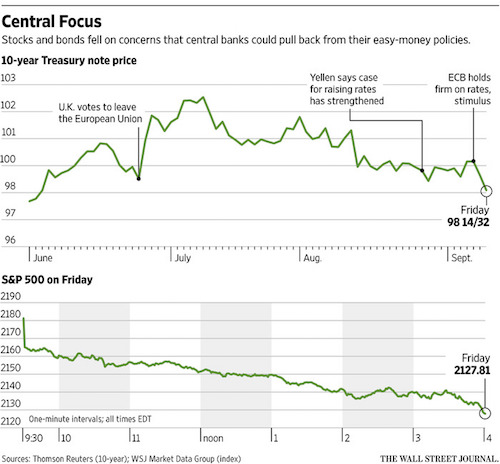
• Rate-Rise Fears Trip Up Markets (WSJ)

Major markets had one of their worst days in months, as doubts over central banks’ willingness or ability to stimulate economic growth sent stocks and bonds tumbling. The Dow Jones Industrial Average fell nearly 400 points, and sinking bond prices pushed yields on government debt to their highest levels since early summer. The yield on Germany’s 10-year bund, which had been negative almost without exception since Brexit on June 23, popped into positive territory Friday. The wave of selling shattered weeks of summer torpor and was a reminder of the extent to which long-running rallies in stocks and bonds are reliant upon continued support from central banks.

The ECB damped market sentiment on Thursday by deciding to leave its bond-buying and interest-rate policies unchanged, rather than expanding them as some investors had hoped. An official with the Federal Reserve deepened concerns by suggesting Friday that the Fed still might raise interest rates even after a week of relatively weak U.S. economic data. “A reasonable case can be made for continuing to pursue a gradual normalization of monetary policy,” Federal Reserve Bank of Boston President Eric Rosengren said in a speech. [..] Mr. Rosengren, who has tended to support keeping rates low in the past, helped push markets into a deeper rout.

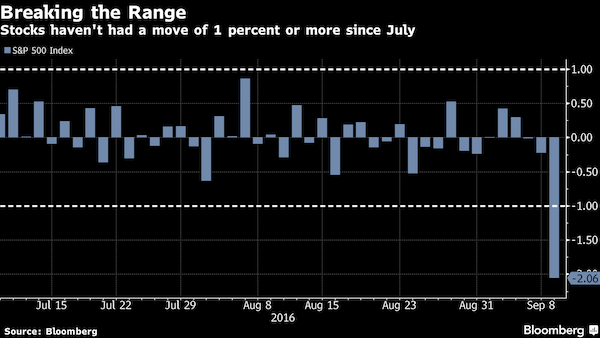
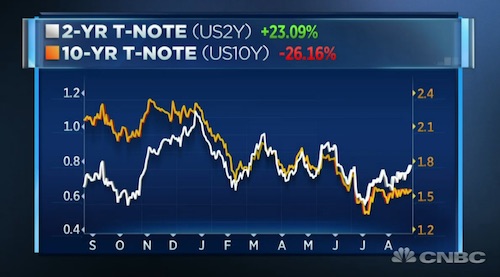
The Dow industrials plunged 394.46 points, or 2.1%, to 18085.45. The S&P 500 declined 53.49 points, or 2.5%, to 2127.81. The percentage drop was the biggest for both indexes since June 24. The Nasdaq Composite Index lost 133.57 points, or 2.5%, to 5125.91. Yields on 10-year Treasury notes jumped to 1.671%, their highest level since June 23. Bond yields rise as prices fall. “Once the snowball starts rolling down the hill, everybody jumps on board,” said Jonathan Corpina, senior managing partner at Meridian Equity Partners.

Read more …

“[Fed] Governor Lael Brainard will be delivering a previously unannounced speech Monday..”

• Surprise Fed Speech Throws Markets For A Loop (CNBC)

Those figuring that the Fed still might hike rates in September are getting one more bite at the apple. As the week drew to a close and the Fed’s “quiet period” before meetings was about to settle in, investors recoiled over news that the central bank’s most dovish official, Governor Lael Brainard, will be delivering a previously unannounced speech Monday at The Chicago Council on Global Affairs. The news sent a chill through markets Friday, with major stock market averages taking a beating and short-term government bond yields and the U.S. dollar moving higher, and it set off yet another round of speculation over whether the Fed is ready to come off its historically loose monetary policy. The S&P 500 was down more than 1% Friday afternoon, on track to close with its biggest percentage move since July 8.

“When a market is quiet, it’s susceptible to rumors, whether we’re talking about a path to freeze oil production or whether the Fed is going to raise rates in September,” said Quincy Krosby at Prudential Financial. “This may be a market that has too much time on its hands right now.” Indeed, the guessing game over whether the Fed might enact its first rate rise since December and only its second tightening in more than a decade has set off a fever pitch of horse trading. At one point Friday morning, markets put the chance of a hike later this month as high as 30% before backing off. The probability had been reduced amid a week’s worth of poor economic data, including the worst services reading in six years, a contraction in manufacturing and a weaker-than-expected nonfarm payrolls report.

Read more …

You can’t keep ‘markets’ at a completely fake level forever.

• Stocks Sink With Bonds, Dollar Rallies as Complacency Broken (BBG)

Tranquility that has enveloped global markets for more than two months was upended as central banks start to question the benefits of further monetary easing, sending government debt, stocks and emerging-market assets to the biggest declines since June. The dollar jumped. The S&P 500 Index, global equities and emerging-market assets tumbled at least 2% in the biggest rout since Brexit. The yield on the 10-year Treasury note jumped to the highest since June and the greenback almost erased a weekly slide as a Federal Reserve official warned waiting too long to raise rates threatened to overheat the economy. German 10-year yields rose above zero for the first time since July after the ECB downplayed the need for more stimulus.

Fed Bank of Boston President Eric Rosengren’s comments moved him firmly into the hawkish camp, sending the odds for a rate hike this year above 60%. He spoke a day after ECB President Mario Draghi played down the prospect of an increase in asset purchases, while DoubleLine Capital Chief Investment Officer Jeffrey Gundlach said it’s time to prepare for higher rates. “Dovish Fed members getting called up to bat for a hike is putting people on edge,” Yousef Abbasi, a global market strategist at JonesTrading, said by phone. “The more hawkish-leaning investors are grabbing onto that and it’s certainly one of those days where people are positioning for that September hike being back on the table.”

Calm had dominated financial markets in late summer with equity volatility and bond yields near historic lows and measures of cross-asset correlation at the highest levels since at least the financial crisis. The rise in the influence of different markets on each other has been attributed to the growing impact of central bank policy on prices, and rising concern that the era of easing may be nearing an end roiled assets from bonds to currencies and stocks on Friday.

Read more …

It will take years for people to realize what central banks and their incompetence have done to fixed income.

• Draghi Asset Buying Deepens the Hole in Europe’s Pension Funds (BBG)

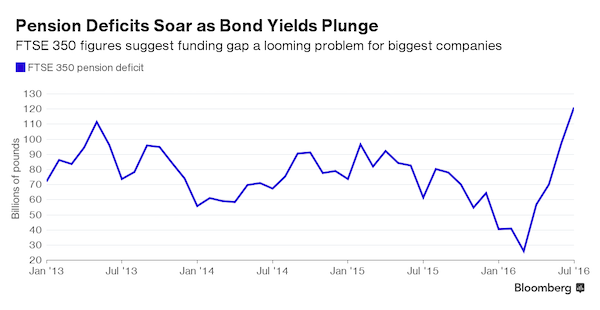
As he tries to jump start the economies of today, ECB President Mario Draghi is punching holes in the retirements of tomorrow. Draghi on Thursday said the ECB may continue asset buying beyond March 2017 until it sees inflation consistent with its targets. The purchases, along with low and negative interest rates from the ECB and the region’s national banks, are pushing more and more bond yields below zero, hurting European pension managers that are already struggling to fund retirement plans. “Pension funds can’t meet their future obligations if interest rates remain as low as they currently are,” said Olaf Stotz at the Frankfurt School of Finance and Management. “Some sponsors will have no choice but to add more capital” to their pension plans.

Funds that supply retirement income of millions of European workers face a growing gap between the money they have and what they must pay out. To make up the shortfalls, they may have to tap their sponsoring companies or institutions, reduce or delay payouts or try to boost returns by investing in riskier assets. That mirrors the dilemma faced by pension managers from the U.S. to Japan who are also being affected by central bank monetary policy. Low yields force funds to buy a greater variety of bonds or diversify their investments to generate a long-term income for their retirees. While some are profiting now by selling bonds purchased at lower prices in the past, they will struggle to get the same kind of returns from any new bonds they purchase.

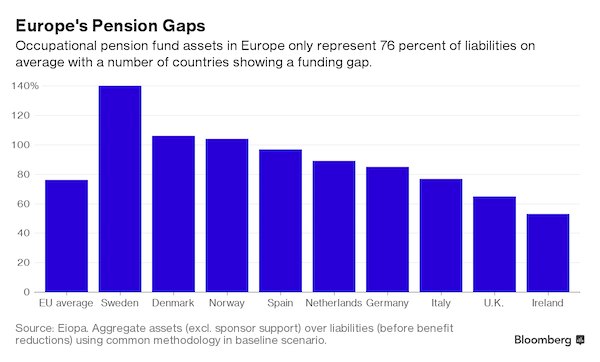
Occupational funds in Europe currently have resources to pay only about 76% of their commitments on average, according to the European insurance and pensions regulator Eiopa. “Pension funds are more liberal in their investment decisions than insurers,” said Martin Eling at the University of St. Gallen in Switzerland. “Regulators will need to closely watch them as they are driven into higher-return assets such as corporate bonds and emerging markets investments.” EU regulations on the industry “might underestimate the risks,” Eiopa said by e-mail. It recommends measures including improved public disclosure so more beneficiaries know how their funds are investing. While pension systems and controls differ from country to country in Europe, regulators typically approve a pension plan’s design and set limits for certain investments.

They also can intervene to make sure a fund can meet its obligations.] Eiopa’s first stress test of the industry in Europe, published earlier this year, showed that occupational pension fund assets were 24% short of liabilities, a deficit of €428 billion ($484 billion) even before applying a shock scenario. Central banks in Europe and Japan are relying on stimulus packages that include negative deposit rates to fuel inflation and revive the economy. That has pushed yields in countries such as Germany and Japan below zero, bringing the global pile of bonds with negative yields to about $8.9 trillion. Pension liabilities for the 30 members of the benchmark DAX Index in Germany rose by about €65 billion this year to a record €426 billion as interest rates declined, according to consulting firm Mercer.

Read more …

“Traders have started dumping government bonds, leading to the biggest rout in Japanese debt in 13 years…”

• Gundlach Puts His Finger On Bond Market Inflection Point (BBG)

DoubleLine’s Jeffrey Gundlach indicated in a webcast on Thursday that financial markets are on the brink of turmoil, saying “this is a big, big moment.” He’s right. It is. The mood has shifted suddenly. Investors are losing faith in the efficacy of monetary stimulus, and it appears that perhaps central bankers may be, too. The BOJ and ECB have refrained from committing to additional rounds of stimulus and are quickly running out of bonds to buy under their existing programs. The BOJ may run out of bonds within the next 18 months, while the ECB may run into a wall sooner than that, according to analysts cited by the WSJ and the FT.

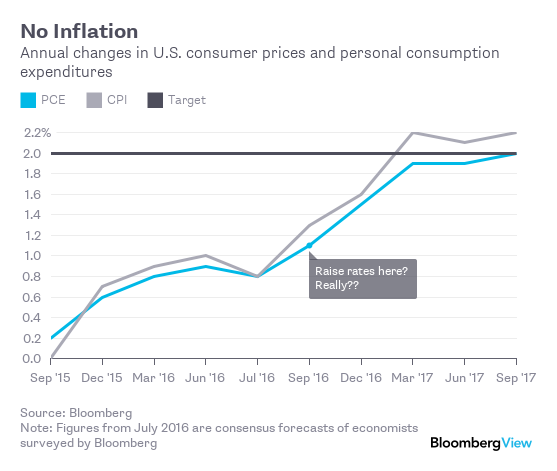
The Federal Reserve, meanwhile, is still planning to raise benchmark interest rates despite underwhelming economic data. This is in large part because policy makers are increasingly concerned about the threats to longer-term financial stability by keeping rates so low. Meanwhile, inflation expectations are rising on bets that government officials will embark on spending plans to stimulate growth. This multifaceted dynamic is a game changer, and markets have taken note. Traders have started dumping government bonds, leading to the biggest rout in Japanese debt in 13 years. [..] “Interest rates have bottomed,” Gundlach said in the webcast. “They may not rise in the near term as I’ve talked about for years. But I think it’s the beginning of something, and you’re supposed to be defensive.”

Read more …

So VW guys will be thrown in jail but bankers will not.

• VW Engineer Pleads Guilty in US Criminal Case Over Diesel Emissions (NYT)

A Volkswagen engineer pleaded guilty on Friday to conspiring to defraud regulators and car owners, in the first criminal charges stemming from the American investigation into the German carmaker’s emissions deception. The plea by the engineer, James Robert Liang, a Volkswagen veteran, suggests that the Justice Department is trying to build a larger criminal case and pursue charges against other higher-level executives at the carmaker. Mr. Liang was central in the development of software that Volkswagen used to cheat pollution tests in the United States, which the company admitted last year to installing in more than 11 million diesels vehicles worldwide. He was also part of the cover-up, lying to regulators when they started asking questions about discrepancies in emissions.

Mr. Liang’s admissions, made in the United States District Court for the Eastern District of Michigan, portray a broader conspiracy by executives, making Mr. Liang a potentially valuable resource for the developing criminal investigation. The Justice Department said Mr. Liang, who faces a maximum sentence of five years in prison, would cooperate. The Volkswagen case comes at a time when the government is trying to get tough on white-collar crime and hold more individuals responsible. After being criticized for going soft on executives, the Justice Department introduced new policies last year that emphasized the prosecution of individual employees. And the Volkswagen case provides one of the first real tests of the government’s commitment.
The Volkswagen case has escalated quickly. In June, the Justice Department and other agencies secured a record $15 billion settlement in a civil suit with the company. At the time, officials were quick to note that the settlement was just a first step, saying they would aggressively pursue a criminal case against the company and individuals. “There’s considerable pressure on the Department of Justice to see how far up the chain of management the knowledge goes,” said Daniel Riesel, a principal at the New York-based environmental law firm Sive, Paget & Riesel. One way for investigators to do that was “to indict and cut deals with lower-level people,” he added. Mr. Liang is “a high enough official who is culpable on his own right, and maybe in a position to start unraveling this chain of responsibility.”

Read more …

Good on them! Still, while they do this, they still persist in terrorizing Assange for the US.

• Sweden Says No to NATO (BBG)

Sweden’s government affirmed its military neutrality even as a government-commissioned report broadly sided with those in favor of joining the North Atlantic Treaty Organization amid rising tensions with Russia. “Our non-alignment policy serves us well,” Foreign Minister Margot Wallstroem said in Stockholm Friday after receiving the report. Joining NATO “would expose Sweden to risks, both political and otherwise, and we don’t think that’s the right direction.” The country has been forging closer ties with the military alliance, taking part in joint military exercises that have angered authorities in Moscow.

A stable, geographically strategic democracy such as Sweden would be a welcome addition for NATO as it struggles to contain a more assertive Russia on its eastern flank. The review released on Friday in Stockholm refrained from making a formal recommendation. While NATO membership would “increase common conflict-deterrent capabilities,” it would also spark a political crisis with Russia and possibly lead to a regional arms race, the review concluded. And although Russian attacks on Sweden or its Baltic neighbors are considered “unlikely,” being a part of NATO would help “remove uncertainty in case of conflict.”

Read more …

Zero Hedge has an interesting ‘alternative’ view from Norway. Tyler calls it a view of Trump, but it’s definitely wider than that.

• One “Lifelong Socialist” Norwegian’s Perspective on America (Nordmann)

I find it interesting that the very wealthy are suddenly vocal, vigorously opposing Donald J Trump’s presidency. Mark Cuban, Warren Buffet, Bill Gates and George Soros have all made statements against “The Donald.” Buffet, Gates, and Soros are avid supporters of Hillary Clinton. Goldman Sachs top management are not allowed to donate to Trump’s campaign. As an average seventy-something Norwegian farmer, looking at American from the outside, I find the vigorous billionaire opposition “interesting.” Moreover, this is amplified by CNN (which we get here in Norway as part of our standard cable package). CNN used to be fact based news only. Now they morphed into the Clinton News Network, attempting to shape public opinion, garnering support for globalism.

Perhaps the billionaire’s enterprises benefit from bloated government spending (this is speculation and worthy of investigation)? These Billionaires are so rich that the interest earned on their idle cash and investments amounts to tens of thousands of dollars per day. What do they have to lose either way? Why is this so important to them? Maybe it’s to their advantage that the ladder (better known as the American Dream), where people can ascend through the rungs, achieving different levels of success through hard work, is broken? Don’t Americans find it strange, despite technological advancements and increased productivity, that medical care, education, and housing costs are rising. I thought technology was supposed to make things cheaper, easier and more abundant.

Remember when people went from horse and buggy to the Ford Model T – what happened? (A middle mobile middle class was born). Based on what I read about American life, it seems like now, when there is a new technology or innovation to make life easier, things get worse. Jobs become less stable than decades earlier. People are working longer hours for less. The housing standard is now a cramped condo instead of a house with a yard. It appears a lot of people are on edge. American’s need to ask themselves, reflecting back one generation (20 years), how billionaires have made their lives better? Billionaires have substantially increased their wealth in the past 20 years, have you? American’s have a history of being rebellious, unpredictable, self-reliant and wild, rooting for the underdog. In this case, the underdog is Trump.

Read more …

Europe’s core will take this out on the periphery.

• Eurozone Woes Continue: German Exports Plunge, French Industry Weakens (Tel.)

German exports fell at the fastest pace in more than a year in July as French industrial production shrank for a third straight month, fuelling fears of a wider eurozone slowdown. Exports in Germany fell 2.6pc in July compared with June, according to Destatis. This was the biggest fall since August 2015, and compares with expectations for a 0.4pc rise. The decline was driven by a drop in sales outside the EU, including China and the US, while demand from the UK also fell. June’s month-on-month rise of 0.3pc was also revised down to 0.2pc. Separate data showed French industrial production declined by 0.6pc in July on a monthly basis. Analysts had expected French production to bounce back following declines in May and June when activity was hit by strike action.

Chantana Sam, an economist at HSBC, said: “This is a bad sign for the prospects of a rebound in business investment. Recent manufacturing surveys also point to a deteriorating outlook and persistent weak demand. “All in all, this bad start to the third quarter of industrial production and puts some downside risks on our expectations for a rebound in GDP growth in the third quarter, after flat growth in the second quarter.” Wolfgang Schaeuble, the German finance minister, said Europe’s largest economy had no intention of reining in export growth. Critics, including ECB chief Mario Draghi, say the country’s current account surplus, which includes trade, has contributed to imbalances and hindered growth in the 19 nation bloc. “Even before the ECB decided its policies of unusual monetary policy, which also led to the euro exchange rate falling significantly, I said that we will increase German export surplus,” Mr Schaueble told reporters.

Read more …

Love mish, but I’ll write an article on where he goes off the rails on the issue.

• Why the Eurozone Will Destruct (Mish)

No discussion of eurozone problems would be complete without a discussion of Target2, an abomination created by the eurozone founders and one of the fundamental flaws of the euro. Target2 stands for Trans-European Automated Real-time Gross Settlement System. It is a reflection of capital flight from the “Club-Med” countries in Southern Europe (Greece, Spain, and Italy) to banks in Northern Europe. Pater Tenebrarum at the Acting Man blog provides this easy to understand example: “Spain imports German goods, but no Spanish goods or capital have been acquired by any private party in Germany in return. The only thing that has been ‘acquired’ is an IOU issued by the Spanish commercial bank to the Bank of Spain in return for funding the payment.”

Monetary policy can help external balances but it cannot fix internal target2 balances. Germany will pay one way or another for the massive imbalances between the creditor and debtor Eurozone countries. Eventually Spain, Greece, or Italy will realize it is impossible for them to pay back what is owed. Once that realization sets in, some country will default on their euro-denominated liabilities. Beppe Grillo’s Five Star Movement in Italy is on board with that idea already. There are only three possible paths at this point: 1) Germany and the creditor nations forgive enough debt for Europe to grow; 2) Permanently high unemployment and slow growth in Spain, Greece, Italy, with stagnation elsewhere in Europe; 3) Breakup of the eurozone.

Germany will not allow #1. It is unreasonable to expect #2 to last forever. The only door left open is door #3. The best move would be for Germany to leave the eurozone. Germany is in the best shape to suffer the consequences. Unfortunately, the most likely outcome is still a destructive breakup of the eurozone, starting in Italy or Greece.

Read more …

Any ‘subversive’ moves from the south will be crushed by the north.

• EU’s Poor Nations Plot Next Move As North-South Divide Erupts (CNBC)

In order to tame the euro zone sovereign debt crisis over the last seven years, the richer countries of Northern Europe have called for austerity measures and budget cuts, coupled with stronger EU sanctions for countries that do not adhere to this policy. In practice, this economic recipe, led by Germany, proved economically and politically disastrous, as it fueled the recession and nourished populism. In some cases it has become increasingly difficult for political parties to pursue an economic agenda that deviates from these fiscal norms without questioning EU membership. Tspiras and his colleagues believe the current situation in southern Europe makes this a good time to address austerity issues and its effect on long-term growth throughout the region.

The stars may be aligning, considering in Italy a referendum on constitutional reform will take place between Nov. 15 and Dec. 5 and the first round of the presidential election in France next April. This may help the Greek prime minister’s cause, which is to convince its lenders that the targeted 3.5 percent primary surplus for 2018 is too high and would negatively affect crisis-stricken Greeks. Terms of the Greek bailout program assumed that tax revenues would exceed program spending, ex-interest on outstanding debt. But within the southern EU bloc, many believe this is an unrealistic target for an aching economy that for seven years has been in a recession and austerity mode. Tsipras does not want to give the impression that he does not respect the agreements with Greece’s creditors.

In an informal government meeting held on September 6, Tsipras asked his ministers to progress rapidly with the fiscal and structural measures that Greece’s lenders set as a prerequisite last June. This effort comes ahead of a mandated second review of its current international bailout, which the Greek government is expected to start in October and which includes controversial reforms. In turn, lenders have promised that the European Stability Mechanism, the EU’s bailout fund, will outline how it will offer Greece debt-relief measures. The austerity measures in southern European nations create the conditions for dividing the EU further, as the Germans and their northern allies insist on tight budgets, despite the persistent deflation in the region and weak growth.

Read more …

This is the craziest European idea yet. Merkel suspended Dublin, and now she wants to flood already severely overburdened Greece with the people she invited to Germany last year? Note: Greece is overburdened because Europe refuses to help out.

• Greece Rejects Return Of EU’s Dublin Regulation On Reverse Migration Flow (AP)

The Greek government is adamantly opposing the revival of a European Union rule that would allow the forcible return to its territory of asylum-seekers who entered the bloc via Greece – a path followed by more than a million people in the past two years. Immigration is high on the agenda of a meeting Friday in Athens of southern European leaders. The group includes Italian Prime Minister Matteo Renzi, whose country, with Greece, is Europe’s main immigration gateway. Ahead of the talks, a government spokesman on immigration said Athens rejects reactivation of the so-called Dublin Regulation, which would allow other EU members to send asylum-seekers back to Greece.

“A country such as Greece which receives a large number of refugees from Turkey, and also hosts a large number of refugees – practically without any outside help – cannot be asked to receive refugees from other European countries,” Giorgos Kyritsis told The Associated Press. “That would be outrageous.” The Dublin Regulation that governs the Schengen passport-free area stipulates that people wishing to apply for asylum must do so in the first member country they arrive in. In most cases that was Greece, whose eastern islands were overwhelmed last year by migrants packed into smugglers boats from Turkey. But even before last year’s migration crisis, many of its EU partners had stopped enforcing the rule because Greece’s asylum and migrant reception systems were below standard.

Now, however, both Germany and the EU executive are pressing for the rule to be restored, with EU officials saying that Greece must meet the Dublin standards by the end of this year.

Read more …

Sep 012016
 
 September 1, 2016  Posted by at 9:31 am Finance Tagged with: , , , , , , , , , ,  1 Response »


F.A. Loumis, Independence (Bastille?!) Day 1906

• Collapse of Hanjin, World’s 7th-Biggest Shipping Line, Upsets Global Trade (R.)
• Investors Miss Out On $500 Billion As Global Bond Yields Plunge (CNBC)
• In Case Of Recession, The Fed Might ‘Need’ To Cut Rates To Minus 2% (CNBC)
• Eurozone Core Inflation Fall Raises Prospect Of ECB Stimulus Measures (G.)
• Bank of Japan Has an $84 Billion Yen Gap in Balance Sheet (BBG)
• Admitting Ignorance Is Better Than Groupthink For Central Bankers (BBG)
• An 809% Debt Ratio And Investors Are Serene? It Must Be China (BBG)
• Austria Says Will Start ‘Conflict’ In EU About Canada Trade Deal (R.)
• Apple Travesty Is A Reminder Why Britain Must Leave The Lawless EU (AEP)
• UK Defined Benefit Pension Fund Deficit Grows By £100 Billion In A Month (G.)
• London’s Elite ‘Pushed Out Of Exclusive Postcodes By Super Rich’ (G.)
• A Third Of Africa’s Elephants Were Wiped Out In Just 7 Years (CNN)


Excellent. We’re far too independent on the idiocy of 10,000 mile shipping lines. They’re heavily polluting (in more ways than one) and entirely unnecessary.

• Collapse of Hanjin, World’s 7th-Biggest Shipping Line, Upsets Global Trade (R.)

The collapse of South Korea’s Hanjin Shipping sent ripples though global trade on Thursday, as the country’s largest port turned away its ships and as some manufacturers scrambled for freight alternatives. Hanjin on Wednesday filed for court receivership after its banks decided to end financial support, and ports from China to Spain, the United States and Canada have refused entry to Hanjin vessels in what is traditionally the industry’s busiest season ahead of the year-end holidays. An official with Hanjin Shipping in Busan confirmed that its vessels were not entering the southern city’s port as container lashing providers deny service on concerns that they will not be paid. The company was also worried that the ships may be seized by creditors.

LG Electronics, the world’s No.2 maker of TVs, told Reuters it was cancelling orders with Hanjin and was seeking alternatives to ship its freight. An executive at the Korea International Freight Forwarders Association said on Wednesday he had been inundated with calls from cargo owners worried about the fate of their shipments in transit to the United States and Europe. While mobile phones and semiconductors are carried by air, other electronics like home appliances are shipped by sea. “This will have an impact on the entire industry,” the official said.

South Korea’s maritime ministry said on Wednesday that Hanjin’s woes would affect cargo exports for two or three months, with about 540,000 TEU of cargo already loaded on Hanjin vessels and facing delays. It would be difficult to find alternative ships given high seasonal demand from August to October. The ministry said it would ask local rival Hyundai Merchant Marine to supply vessels to cover some of Hanjin’s routes to the United States and Europe, while also seeking help from overseas carriers.

Read more …

How central bankers kill pensions.

• Investors Miss Out On $500 Billion As Global Bond Yields Plunge (CNBC)

Investors have seen their interest income squeezed as global bond yields plunge. On the flipside, governments aren’t complaining. Relative to yields in 2011, global investors are foregoing more than $500 billion in annual income on roughly $38 trillion in sovereign debt that is outstanding, Fitch Ratings said in a report on Wednesday. “Cash flow benefits have effectively been transferred from global investors to sovereign issuers, as sovereign borrowing costs have dropped in response to central bank monetary stimulus,” Fitch said in the report. “This has posed new challenges for income-reliant investors, such as insurers and pension funds, while enabling governments to borrow at increasingly attractive rates.”

Borrowers would realize benefits only slowly, however, as bonds with higher coupon rates matured and newer bonds with lower interest rates were issued, the rating agency said. According to Fitch, investors who tended to buy assets and hold them onto maturity would have to invest new cash in bonds that paid lower interest rates, blunting the money they earned from coupon payments. Government bond yields, which move inversely to prices, have plummeted around the world as central banks in many developed economies scooped up bonds in order to provide stimulus to their economies. These purchases have sparked a scramble for government debt, enabling many countries to flog bonds while cutting the interest rates they have to pay to lure investors.

Read more …

In itself a reasonable argumant re the history of spreads, but that does not make the conclusion alright, or logical.

• In Case Of Recession, The Fed Might ‘Need’ To Cut Rates To Minus 2% (CNBC)

The U.S. Federal Reserve might need to cut interest rates to as low as negative 2%, far lower than levels other global central banks have tested, a former Fed economist said. That’s what would likely be needed to engineer a recovery if the U.S. economy were to fall into a recession in the next couple of years, Marvin Goodfriend, who was an economist and policy advisor at the Federal Reserve’s Bank of Richmond from 1993-2005, told CNBC’s “Squawk Box” on Thursday. Goodfriend, who is currently a professor of economics at Carnegie Mellon University, pointed to data on the eight recessions in the U.S. since 1960.

“In eight of those recessions, the Fed had to push the short rate 2.5 percentage points below the long term rate. Today, the 10-year rate in the U.S. is 1.5%,” he noted, saying that would indicate that during the next recession, the Fed would need to cut rates as low as minus 1% at a minimum. “In five of those recessions, the Fed had to push the federal funds rate 3.5 percentage points below the 10-year bond rate,” he said. “So if that happens this time around, we would have to push the federal funds rate to minus 2%.” That’s well below where any other central banks have ventured so far. Sweden’s central bank, an early adopter of negative rates, has set its benchmark at negative 0.5%.

The Bank of Japan’s rate was set at minus 0.1% earlier this year, while the ECB, which first moved its rates into negative territory in 2014, currently has a deposit rate of negative 0.4%. The Fed funds rate has remained in positive territory, with the U.S. central bank last increasing interest rates in December of 2015, its first hike since 2006. That raised the Fed’s target rate to a range of 0.25 to 0.5%. To be sure, Goodfriend didn’t expect the Fed would be headed there anytime soon, noting that he believed the central bank should actually raise rates before the end of the year.

Read more …

More more more.

• Eurozone Core Inflation Fall Raises Prospect Of ECB Stimulus Measures (G.)

Speculation is growing that the European Central Bank could take action to stimulate the eurozone economy after official figures showed an easing in underlying inflation last month. Pressure on the ECB increased when the European commission’s statistical agency, Eurostat, published figures that showed core inflation in July was lower than in same month last year, despite aggressive action by the Frankfurt-based bank over the past 18 months. With concerns that the eurozone recovery was losing momentum, Eurostat said the headline rate of inflation remained unchanged at 0.2% in August. Core, or underlying inflation, which excludes energy, goods, alcohol and tobacco, fell from 0.9% in July to 0.8%.

Separate Eurostat data showed that eurozone unemployment was unchanged at 10.1% in July, the latest month for which figures are available for all 19 countries that use the euro. The jobless rate in the eurozone has fallen from 10.8% over the past year, but financial markets had been expecting the reduction to continue to 10% last month. The ECB has been using negative interest rates and quantitative easing in an attempt to increase activity and push inflation back towards its target of just below 2%. Analysts said the inflation and unemployment figures would be discussed when the ECB meets to discuss policy options next week.

Stephen Brown of consultancy Capital Economics said: “The unchanged headline inflation rate in August highlights the fact that price pressures in the eurozone remain weak and boosts the case for more monetary easing from the ECB. “With [the] survey data also pointing to a marked slowdown in growth ahead, there is a strong case for the ECB to announce further policy easing. This could come as soon as the bank’s meeting next week.”

Read more …

Abe and Kuroda won’t even take it serious.

• Bank of Japan Has an $84 Billion Yen Gap in Balance Sheet (BBG)

There’s an 8.7 trillion yen ($84 billion) gap between the value of government bond holdings on the Bank of Japan’s balance sheet and their face value. While not an immediate problem because the BOJ’s income can cover the losses, the widening gap raises questions about the sustainability of the central bank’s bond purchases, which Governor Haruhiko Kuroda has said could be expanded. The costs of the central bank’s record stimulus are mounting, while its chief goal – spurring inflation to 2% – appears as far away as it was when Kuroda took the helm in 2013. The BOJ is in the midst of reviewing its policy before a board meeting later this month, but the governor has said there will be no scaling back of his monetary program.

“These numbers show the distortions of the BOJ’s current policies,” said Sayuri Kawamura, a senior economist at the Japan Research Institute in Tokyo. “The annual amortization losses are going to increase and consume the BOJ’s profits, and the risk is increasing that the bank’s financial stability will be shaken.” The bonds the BOJ owns are worth almost 326.7 trillion yen when taken at face value, but were marked at almost 335.4 trillion yen on the balance sheet in August. That gap is 42% bigger than before the introduction of negative rates in January, according to an analysis of the balance sheet and list of the bonds the central bank owns. Tadaaki Kumagai, a spokesman for the central bank, said “the BOJ releases half-yearly and yearly accounts,” while declining to comment further.

The gap exists because, unlike the Federal Reserve, the BOJ counts its bond holdings at the purchase price, minus amortization costs. This number is diverging more from the face value because the central bank’s purchases and negative rate policy are pushing up prices. The face value is what the BOJ will receive when the bonds mature. At the end of the 2015 fiscal year on March 31, the gap between the two valuations was 6.4 trillion yen and the BOJ wrote down 874 billion yen, according to documents seen by Bloomberg. That was covered by the 1.29 trillion yen in coupon income the bank received that year, a situation that may not continue indefinitely.

Read more …

Groupthink is all they have.

• Admitting Ignorance Is Better Than Groupthink For Central Bankers (BBG)

If the Fed’s objective last week was to put its September meeting back into play as the potential venue for a rate increase, it can claim a partial success. Prices in the futures market show traders now see about a 34% chance of a hike on Sept. 21, up from 22% two weeks ago. But you still have to go out to December before the likelihood rises above 50%. There’s a very good reason for that market skepticism. Raising rates at a time when inflation is dormant and miles away from the central bank’s 2% target seems somewhat perverse, especially when the forecast is for prices to remain subdued for many months to come:

The Jackson Hole Symposium (and let us note in passing what a great word symposium is, adding gravitas to what would otherwise be a mere conference) was an opportunity, as the event title said, to consider “Designing Resilient Monetary Policy Frameworks for the Future.” Instead, Fischer’s comment suggests it’s business as usual at the Federal Open Market Committee, with no room at present for such innovations as changing the inflation goal or targeting nominal GDP. That’s a shame. There’s a consensus that monetary policy is becoming impotent, and that governments need to step in with fiscal stimulus. But until central banks admit that their firepower is waning, politicians can continue to evade responsibility. “You can’t expect us to do the whole job,”

Christopher Sims, a Nobel Prize-winning economist from Princeton University, said at Jackson Hole last week. “Fiscal expansion can replace ineffective monetary policy at the zero lower bound. So long as the legislature has no clue of its role in these problems, nothing is going to get done. Of course, convincing them that they have a role and there is something they should be doing, especially in the U.S., may be a major task.” Finance – particularly in an era of fractional reserve banking – is essentially a confidence trick. Depositors have to be confident their money will be there when they try to withdraw it. Businesses have to be confident that the economy is on a sound footing otherwise they won’t invest and hire. Central bankers aren’t just economists and policy makers; they’re also salespeople, selling a story.

Read more …

China is a giant debt bubble.
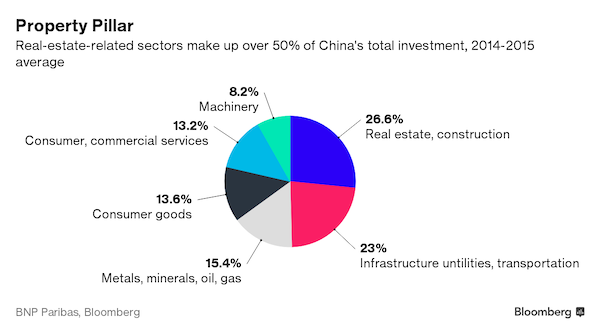
• An 809% Debt Ratio And Investors Are Serene? It Must Be China (BBG)

Prudence dictates that a compulsive shopper who runs up a hazardous amount of debt should think about cutting the credit card in half and staying home for a while. Try telling that to China’s acquisition-hungry companies.Two prime examples were on show this week when China Evergrande Group, one of the nation’s biggest developers, and Fosun International, an expanding Shanghai-based conglomerate, reported first-half earnings. The results show just how hard it is to kick the buying habit in an environment where compliant lenders stand ready to advance seemingly unlimited sums. Total borrowings at junk-rated Evergrande jumped by 28% from the end of December to 381 billion yuan ($57 billion).
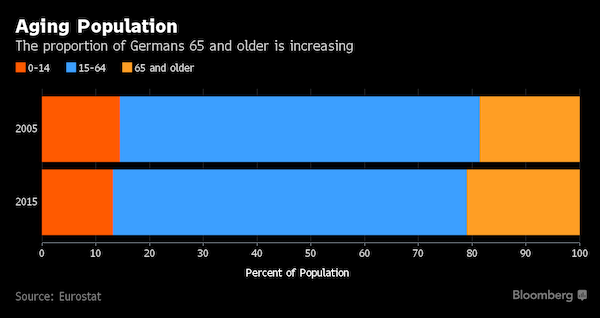
That pushed the Guangzhou-based company’s ratio of net debt to shareholders’ equity to 142%, above the average 108% for China’s overleveraged property developers, according to data compiled by Bloomberg. Count Evergrande’s perpetual bonds as debt rather than equity and even that ratio starts to look benign. The total debt to common equity ratio rose to 809% at the end of June, from 582% six months earlier. The developer added about 40 billion yuan more perpetual notes during the period. So, time to rein things in somewhat?

Not a bit of it. Evergrande wants to acquire brokerage and trust companies as well as smaller rivals, Chief Executive Officer Xia Haijun told reporters in Hong Kong Tuesday. That would be on top of more than $5 billion of purchases so far this year, including building a stake in larger developer China Vanke and acquiring a chunk of Shenyang-based Shengjing Bank. First-half profit, meanwhile, fell 23% excluding property revaluations and foreign-exchange losses.The debt buildup wouldn’t be so striking if Evergrande were acquiring cash-generating assets that can help pay down borrowings. If anything, things seem to be moving in the opposite direction.

Read more …

Good. Kill that too.

• Austria Says Will Start ‘Conflict’ In EU About Canada Trade Deal (R.)

Austria is ready to confront other European Union members states over its opposition to a free trade deal with Canada, Chancellor Christian Kern said, because it sees it containing many of the same problems as one being negotiated with the United States. “This will be difficult, this will be the next conflict in the EU that Austria will trigger… We must focus on making sure… we don’t shift the power balance in favor of global enterprises,” Kern told broadcaster ORF late on Wednesday. Austria opposes a proposed free trade deal with the United States, and Kern said the deal with Canada, called the Comprehensive Economic and Trade Agreement (CETA), bore many of the same problems.

Ministers from Germany and France have also called for a halt in negotitations on the EU-U.S. deal, the Transatlantic Trade and Investment Partnership (TTIP). “We will have to see where the weaknesses of (CETA) are. Many are the same as with TTIP,” Kern, a social-democrat, said, without elaborating. Kern is expected to address issues surrounding TTIP at a news conference on Friday. There are widespread concerns in Austria that the TTIP could compromise food safety standards. Kern also opposes the idea that the agreement could allow companies to challenge government policies if they feel regulations put them at a disadvantage.

Read more …

There are multiple truths in this case. In the end, though, this is about Brussels seeking to supersede member states’ sovereign law. For that, the constitutions of 27 nations should be held to the light. I would venture that what Brussels does here, and in many other fields, violates a fair number of these constitutions. And that is not legal no matter what their respective governments say or do. That’s an issue for their judicial systems. There’s a reason why the political and judicial systems have been made separate entities.

• Apple Travesty Is A Reminder Why Britain Must Leave The Lawless EU (AEP)

Europe’s Competition Directorate commands the shock troops of the EU power structure. Ensconced in its fortress at Place Madou, it can dispatch swat teams on corporate dawn raids across Europe without a search warrant. It operates outside the normal judicial control that we take for granted in a developed democracy. The US Justice Department could never dream of acting in such a fashion. Known as ‘DG Comp’, it acts as judge, jury, and executioner, and can in effect impose fines large enough to constitute criminal sanctions, but without the due process protection of criminal law. It misused evidence so badly in pursuit of the US chipmaker Intel that the company alleged a violation of human rights. Apple is just the latest of the great US digital companies to face this Star Chamber.

It has vowed to appeal the monster €13bn fine handed down from Brussels this week for violation of EU state aid rules, but the only recourse is the European Court of Justice. This is usually a forlorn ritual. The ECJ is a political body, the enforcer of the EU’s teleological doctrines. It ratifies executive power. We can mostly agree that Apple, Google, Starbucks, and others have gamed the international system, finding legal loopholes to whittle down their tax liabilities and enrich shareholders at the expense of society. It is such moral conduct that has driven wealth inequality to alarming levels, and provoked a potent backlash against globalisation. But the ‘Double Irish’ or the ‘Dutch Sandwich’ and other such tax avoidance schemes are being phased out systematically by the G20 and by a series of tightening rules from the OECD.

The global machinery of “profit shifting” will face a new regime by 2018. We can agree too that Apple’s cosy EU arrangements should never have been permitted. It paid the standard 12.5pc corporate tax on its Irish earnings – and is the country biggest taxpayers – but the Commission alleges that its effective rate of tax on broader earnings in 2014 was 0.005pc, achieved by shuffling profits into a special ‘stateless company’ with its headquarters in Ireland. “The profits did not have any factual or economic justification. The “head office” had no employees, no premises and no real activities,” said Margrethe Vestager, the EU competition chief.

Read more …

Someone will find a way to blame this on Brexit.

• UK Defined Benefit Pension Fund Deficit Grows By £100 Billion In A Month (G.)

The combined deficit of the UK’s 6,000 defined benefit pension funds has grown by £100bn in the last month, bringing the total deficit to £710bn, according to a new report. The research, by the accountants PricewaterhouseCooper, found that the pension schemes have total assets of £1,450bn but are liable to pay out about £2,160bn in contractual promises to existing and former workers. Pension deficits have worsened since the EU referendum because companies use the interest rate on gilts, otherwise known as the yield, as the main tool in estimating how much they will have to pay out in pensions in the future. The lower the gilt yield, the more that companies have to set aside to meet their future costs.

The scale of the problems facing companies offering final salary pension schemes was underlined on Wednesday by the Yorkshire-based manufacturer Carclo, which issued a statement to the stock exchange to say that the recent increase in its pension deficit meant that a dividend payout to shareholders announced in June and due to be paid in October could not now go ahead. Carclo, which is based near Leeds and employs about 1,300 people making plastics and LED products, said in its statement: “If the corporate bond yield remains at its current low level then this will result in a significant increase in the group’s pension deficit.” It said this would have the effect of “extinguishing the company’s available distributable reserves”. The announcement immediately wiped almost 15% off the company’s share price.

Read more …

How to kill a city, Chapter 826.

• London’s Elite ‘Pushed Out Of Exclusive Postcodes By Super Rich’ (G.)

London’s traditional elite, such as lawyers, architects and academics, are being pushed out of their enclaves in Mayfair, Chelsea and Hampstead by an influx of global super rich investors, causing a chain reaction of gentrification across the capital, according to research by the London School of Economics. An influx of extremely wealthy overseas buyers is leading the old elite to sell up and move from London’s most exclusive postcodes and buy in areas they previously considered undesirable, said Dr Luna Glucksberg, of the LSE’s International Inequalities Institute. This displacement of old money and affluent middle class professionals is in turn pricing neighbourhoods in south and east London out of the reach of average Londoners and threatening to push those on low incomes to the margins of the city and beyond, she added.

“The changes happening at the top end of the market are real, and although they do not affect large numbers of people directly, the ripple effects they generate do resonate across London,” Glucksberg said. “In terms of the impact on London as a whole, this represents a very different kind of ‘trickle down’ effect from what politicians across the spectrum have long argued would be the benefit of the ‘super rich moving into our city’,” said Glucksberg. “Affordability for average Londoners in the rest of the city is likely to become an even more difficult issue to solve.” The trend was contributing to dramatic house price rises in areas ranging from Battersea and Clapham to Acton, as the old elite bought property there with the significant profits – usually in the millions – made from selling up to the global uber wealthy, the researcher found.

“The study shows that the wealthy individuals and families that live in London’s most exclusive areas no longer feel able to compete at the top end of the capital’s property market,” said the researcher. “Instead they feel like they are being pushed out of elite neighbourhoods. For the first time, this elite group are buying flats for their children in areas they never would have previously considered.”

Read more …

We need the death penalty for poachers and buyers, the entire chain, not just in Africa but everywhere, also in China and Japan. If they don’t comply, no more trade and full isolation.

• A Third Of Africa’s Elephants Were Wiped Out In Just 7 Years (CNN)

Scanning Botswana’s remote Linyanti swamp from the low flying chopper, elephant ecologist Mike Chase can’t hide the anxiety and dread as he sees what he has seen too many times before. “I don’t think anybody in the world has seen the number of dead elephants that I’ve seen over the last two years,” he says. From above, we spot an elephant lying on its side in the cracked river mud. From a distance it could be mistaken for a resting animal. But the acrid stench of death hits us before we even land. Up close, it is a horror. He was a magnificent bull right in his prime, 45 to 50 years old. To get at his prized ivory tusks, poachers hacked off his face. Slaughtered for their ivory, the elephants are left to rot, their carcasses dotting the dry riverbed; in just two days, we counted the remains of more than 20 elephants in a small area.

Visitors and managers at the tourist camps here are frequently alarmed by the sound of gunshots nearby. And Chase worries that if Botswana can’t protect its elephants, there’s little hope for the species as a whole. Chase, the founder of Elephants Without Borders (EWB), is the lead scientist of the Great Elephant Census, (GEC) an ambitious project to count all of Africa’s savannah elephants – from the air. Before the GEC, total elephant numbers were largely guesswork. But over the past two years, 90 scientists and 286 crew have taken to the air above 18 African countries, flying the equivalent of the distance to the moon – and a quarter of the way back – in almost 10,000 hours.

Prior to European colonization, scientists believe that Africa may have held as many as 20 million elephants; by 1979 only 1.3 million remained – and the census reveals that things have gotten far worse. According to the GEC, released Thursday in the open-access journal PeerJ, Africa’s savannah elephant population has been devastated, with just 352,271 animals in the countries surveyed – far lower than previous estimates. Three countries with significant elephant populations were not included in the study. Namibia did not release figures to the GEC, and surveys in South Sudan and the Central African Republic were postponed due to armed conflict. In seven years between 2007 and 2014, numbers plummeted by at least 30%, or 144,000 elephants.

Read more …

Aug 272016
 
 August 27, 2016  Posted by at 9:22 am Finance Tagged with: , , , , , , , ,  10 Responses »


Jack Delano Mother of three, wiper at the roundhouse. Chicago & North Western R.R.” 1943

• America’s Biggest Economic Problem: Nobody Is Investing For Tomorrow. (MW)
• The Stimulus Our Economy Needs (Da Costa)
• Grim Employment Prospects For Young People Around The World (Economist)
• Fed’s Jackson Hole Circus
• Bill Gross Says Yellen’s Economy ‘May Never Walk Normally Again’ (BBG)
• Losses Piling Up for S&P 500 as Weekly Drop Is Worst Since June (BBG)
• World’s Biggest Pension Fund Loses $52 Billion in Q2 Stock Rout (BBG)
• Why No One Trusts China’s Markets (Balding)
• Theresa May Will Trigger Brexit Negotiations Without Commons Vote (Tel.)
• BleachBit Brags It “Stifled FBI Investigation” Of Hillary Clinton (ZH)
• Majority Of Greek Properties Valued Under €50,000 (Kath.)
• We Don’t Know What We Are Talking About When We Talk About Religion (Taleb)


“America’s Investment In Its Own Future Is In A Depression”. As epitomized by share buybacks. Which in turn are simply an expression of ‘the thing that shall not be mentioned’: a lack of confidence in growth, and in the economy as a whole. Why invest when there will be no return?

• America’s Biggest Economic Problem: Nobody Is Investing For Tomorrow. (MW)

The U.S. economy, by some measures, has recovered from the Great Recession: The unemployment rate is only half what it was at the worst, real gross domestic product is about 10% larger than the previous peak, and personal wealth has risen by more than $20 trillion as the stock market and the housing market have bounced back. But everyone knows the recovery has been uneven. Total employment may have grown by 6 million since the recession began in 2008, but employment in manufacturing is down nearly 1.5 million. Real disposable incomes may be up by 16%, but because most of the increase has been captured by the richest sliver of society, the median family’s annual inflation-adjusted income is still down more than $3,000.

Most troubling, there’s still very little investment in the buildings, equipment and intellectual property that we ought to be putting into place today as the foundation of our prosperity tomorrow. Who’s preparing the United States for the 21st century? Nobody, really. Not the 22 million private businesses, not the 118 million households, and not the 90,000 state, local or federal government agencies. Since the recession, investments have fallen sharply, and they haven’t gotten back up again. It seems that everyone is still scarred by the Great Recession, and by the collapse of asset bubbles in 2000 and 2006. Gross domestic investment totaled about $3.6 trillion in the second quarter of 2016, about 20% of gross domestic product. That may seem a large sum, but it’s the lowest share of GDP, except during recessions, since 1947.

And, unfortunately, even that weak number grossly exaggerates the actual contribution of this investment in creating new productive capacity for the economy. Why is the figure exaggerated? Because these data are reported on a gross basis, without subtracting the depreciation of capital assets such as equipment, buildings, software and the like. After you subtract the capital that’s used up, net investment totaled only about $750 billion in the second quarter, or 4% of GDP, about half of the average over the post-war period. In fact, net investment has been running at the lowest rates since the Great Depression of the 1930s, suggesting that U.S. investment itself is in a depression.

Read more …

Makes some sense, but relies too much on the assumption that policy makers know what they do. They don’t.

• The Stimulus Our Economy Needs (Da Costa)

All told, nearly 9 million jobs were lost during the 2007-2009 slump, not counting the new jobs that were needed to keep up with population growth. The unemployment rate more than doubled to a peak of 10.2% in October 2009 and took seven years to get back to around 5%, seen as normal. Even the current 4.9% rate is seen as a poor depiction of the U.S. labor market’s actual ongoing weakness. So what would a constructive pro-jobs policy of employment insurance look like? It could take many forms, and, despite any central bank role in funding the stimulus, the decision on how to spend the money would remain fully accountable to the democratic process — in the hands of elected lawmakers.

One approach might see Congress adopt a mandate similar to the one it assigned the Fed itself — to maintain low and stable prices while striving for maximum sustainable employment. Such a goal would offer clearer guidelines for when a program of budget spending aided by central bank intervention might be needed, like determining what thresholds of economic pain might trigger its launch. Rather than relying on a spotty, limited system of jobless benefits that can leave the unemployed in or close to poverty, wouldn’t it be better to directly create government jobs in areas where the private sector appears to be falling short?

Employer-of-last-resort-type policies, as proposed by the economist Hyman Minsky, where the government generates employment in socially useful sectors that are underserved by the private sector alone — including infrastructure, education, health care, child and elderly care, and the arts — could be optimal. After all, most people would agree instinctively with Article 23 of the Universal Declaration of Human Rights, adopted by the U.N. in 1948, which states, “Everyone has the right to work, to free choice of employment, to just and favourable conditions of work and to protection against unemployment.”

Read more …

Same difference: no investments in the future.

• Grim Employment Prospects For Young People Around The World (Economist)

A new report from the International Labour Organisation has provided a snapshot of job prospects for young people around the world. Things have worsened this year following a period of slight improvement. Unemployment among 15-24-year-olds has risen to 13.1% in 2016 and is close to its historic peak of 2013. The rate is highest in Arab countries, at 30.6%, and lowest in East Asia, at 10.7%. The report also finds that even where jobs are available to young people, they often fail to provide secure incomes.

Youth unemployment is typically lower in poorer countries than in rich ones. This is because workers in less-developed countries have to take work just to make ends meet and, with few choices, end up in low-paid jobs with no security. Even in richer countries, the young often end up in less-secure employment than the older generation. In 2015, 25% of young workers in OECD countries were in temporary jobs and 26% were employed part-time, often on an involuntary basis. Those rates are more than twice as high as for workers aged 25 to 54.

In fact, young people with jobs are now at greater risk of living in poverty than the elderly in some rich countries. This is especially true in places where there has been a sharp economic shock, such as Greece, Romania and Spain. The need to work to supplement household income in the short-term creates a vicious cycle in which the young forgo training in the skills required for better long-term job prospects. Given the bleak future faced by many, it is little surprise that 40% of 15-29-year-olds in Africa, eastern Europe and Latin America would countenance a permanent move abroad.

Read more …

“Friday, almost six years to the day, marked the anniversary of former Fed Chairman Ben Bernanke’s address to the Jackson Hole confab, at which he outlined the second phase of quantitative easing [..] Since then, Wilshire Associates estimates the value of U.S. equities has increased by over 100%, some $13.3 trillion..”

• Fed’s Jackson Hole Circus

The Fed has fueled the populism that has thrown this year’s U.S. elections into an unprecedented tizzy, the Journal wrote in more considered terms in a page-one feature on Friday. While the central bank dealt forcefully with the 2007-08 financial crisis, it failed to anticipate it and subsequently failed to bring about a recovery worthy of the name. What it has accomplished is a massive inflation, not of consumer prices—as officially measured, at least—but of asset prices. Friday, almost six years to the day, marked the anniversary of former Fed Chairman Ben Bernanke’s address to the Jackson Hole confab, at which he outlined the second phase of quantitative easing (central bank–speak for securities purchases to pump money into the financial system), which was popularly dubbed QE2.

Since then, Wilshire Associates estimates the value of U.S. equities has increased by over 100%, some $13.3 trillion. Since Bernanke outlined QE3 in September 2012, U.S. equities are up about 50%, or $8.6 trillion, by Wilshire’s reckoning. In the process, interest rates have hovered at or near record-low levels, tonic for asset values but poison for savers. The uneven impact of the Fed’s policies among the haves and have-nots has further stoked resentment against the monetary authorities. Low yields and inflated asset prices mean modest future returns for all. But though it is equally illegal for the beggar and the king to sleep under the bridge, low returns are less of a burden for those who have already accumulated wealth than for those who have not.

None of this sociology and politics should influence the Fed, but it is an inescapable backdrop to policy decisions. Based on the data on which the central bank professes to depend, the “case for an increase in the federal-funds rate has strengthened in recent months,” Yellen said in her much-anticipated address to the Jackson Hole gathering.

Read more …

“Credit-enhanced cycles come to worse ends than the normal kind.”

• Bill Gross Says Yellen’s Economy ‘May Never Walk Normally Again’ (BBG)

Bill Gross, the billionaire Janus Capital Group Inc. money manager, criticized Fed Chair Janet Yellen’s suggestion that she could consider further asset purchases as the equivalent of “providing a walker or a wheelchair for an ailing economy.” Yellen, speaking Friday at a conference of central bankers and economists in Jackson Hole, Wyoming, said while the U.S. economy has strengthened to the point that interest rate hikes are possible, further asset purchases must remain part of the Fed’s toolkit. Gross, who runs the $1.5 billion Janus Global Unconstrained Bond Fund, has long criticized central bankers in the U.S., Europe and Japan for keeping interest rates ultra-low and artificially inflating asset prices without adding sustainable economic growth.

“She is opening the door to creating even greater asset bubbles as have the BOJ and ECB and SNB by purchasing corporate bonds and stocks,” Gross wrote Friday in an e-mail response to questions. “This is not capitalism. This is providing a walker or a wheelchair for an ailing economy. It may never walk normally again if monetary policy continues in this direction.” Gross said Yellen’s comments didn’t take a September rate hike off the table, especially if job growth is healthy. The Labor Department reports August employment data on Sept. 2. The probability of a hike at the Sept. 21 Fed meeting has risen to 38% from 15% two weeks ago, according to data compiled by Bloomberg.

“To the extent that next month we see a decent job growth number, then I think for sure or close to for sure, you know, in September we’re going to see a Fed hike of 25 basis points,” Gross said in an interview on CNBC. “The market hadn’t expected that.” Tad Rivelle, chief investment officer of fixed income at TCW Group, warned that central bank intervention to keep rates low and prop up asset prices may worsen the impact of an inevitable end to the current credit cycle. “Every cycle in human history has ultimately come to an end,” Rivelle, who helps oversee $195 billion for TCW, said in a Bloomberg Television interview Friday. “Credit-enhanced cycles come to worse ends than the normal kind.”

Read more …

“Not since the presidential administration of Lyndon B. Johnson have stocks done so little for so long.”

• Losses Piling Up for S&P 500 as Weekly Drop Is Worst Since June (BBG)

What had been just a sleepy August is turning into an increasingly painful one for U.S. equity market bulls. Notwithstanding an hour-long burst of optimism that followed Federal Reserve Chair Janet Yellen’s policy speech Friday, the buoyancy that lifted stocks for the first half of the summer has now been missing for the better part of a month. The S&P 500 Index fell 0.7% to 2,169.04 this week, the biggest drop since June, to erase its August gains. Not since the presidential administration of Lyndon B. Johnson have stocks done so little for so long. Unable to break out of a 1.5% band for more than 30 days, the market is locked in its tightest trading range since the end of 1965 amid confusion about Federal Reserve policy and the outlook for earnings.

While losses remain tiny day to day, they’re starting to pile up, with the S&P 500 declining in five of the last six sessions. The Dow Jones Industrial Average slipped 157.17 points in the week to 18,395.4, while the Nasdaq Composite Index retreated 0.4% to 5,218.92. At about 5.8 billion shares, daily volume in U.S. exchanges was lower this week than in any non-holiday period since June 2015. “Once we dug into the report from Yellen, it was kind of a non-event, and we’re ending in the same range we started the week,” Chris Gaffney, president of world markets at St. Louis-based EverBank, said by phone. “The data we got this week was mixed. There’s no clear direction and that’s why we’re sitting in these ranges.”

Read more …

Guess the Japanese simply don’t understand what Abe does to their pensions.

• World’s Biggest Pension Fund Loses $52 Billion in Q2 Stock Rout (BBG)

The world’s biggest pension fund posted a $52 billion loss last quarter as stocks tumbled and the yen surged, wiping out all investment gains since it overhauled its strategy by boosting shares and cutting bonds. Japan’s Government Pension Investment Fund lost 3.9%, or 5.2 trillion yen ($52 billion), in the three months ended June 30, reducing assets to 129.7 trillion yen, it said in Tokyo on Friday. That erases a 4.1 trillion yen investing return for the previous six quarters starting October 2014, the month it decided to put half its assets into equities. The quarterly decline follows a 5.3 trillion yen loss in the fiscal year through March, the worst annual performance since the global financial crisis.

After benefiting from a surge in Japanese equities and a weaker yen earlier in Prime Minister Shinzo Abe’s term, GPIF has posted losses as domestic stocks tumble and gains in the currency reduce the value of overseas assets. Still, for Sumitomo Mitsui Trust Bank Ltd., that’s no reason to veer from the current approach. “Since its investments are tied to market moves, it’s natural that this would happen and there’s no point looking at it with a short-term view,” said Ayako Sera, a Tokyo-based market strategist at the bank. “GPIF is so big that its losses look huge even though the fluctuations in its investments just mirror the market.”

Read more …

“Regulators assess a company’s balance sheet and history, mandate an offering price, and then let the market figure out who might be lying or hiding things.”

• Why No One Trusts China’s Markets (Balding)

When China’s top securities regulator said recently that it plans to delist Dandong Xintai Electric for falsifying initial public offering documents, it didn’t grab many headlines. But it suggested some far-reaching changes may be afoot. Xintai is the first company to be expelled from Shenzhen’s ChiNext board for such an offense, and one of only a handful that have ever been delisted in China. Its expulsion suggests that regulators are facing up to some unfortunate truths about China’s capital markets. Those markets are, in important ways, only superficially market-like. In the stock market, the government has intervened on a huge scale to prop up prices. Investment in the bond market is overwhelmingly directed to state-owned enterprises. There’s no derivatives market to speak of.

Financial disclosures are often implausible, suspicions of insider trading are rife and doubts about corporate governance are widespread. All these are symptoms of a common ailment: a regulatory system focused not on disclosure and market mechanics but on setting asset prices and allocating returns. In most countries, when companies are considering an IPO, regulators require them to accurately disclose information, then let markets dictate prices. In China, the reverse holds true: Regulators assess a company’s balance sheet and history, mandate an offering price, and then let the market figure out who might be lying or hiding things. The result is that investors, both domestic and foreign, have lost confidence in China’s markets.

Foreign portfolio investment into China is down 60%, year over year, through July. MSCI has repeatedly declined to include China’s domestic equities in its benchmark indexes. Even the much-celebrated Chinese retail investor is staying on the sidelines: Individual investment accounts holding less than 500,000 yuan declined to 46.8 million last month, from 47.4 million in July 2015. This credibility deficit affects all areas of the markets. Major Chinese commercial banks have been trading at a price-to-equity ratio of about five – compared to an average of about 12 for commercial banks elsewhere – because investors think their loan portfolios are much worse off than they’re letting on.

Read more …

Somone will try to stop her.

• Theresa May Will Trigger Brexit Negotiations Without Commons Vote (Tel.)

Theresa May will not hold a parliamentary vote on Brexit before opening negotiations to formally trigger Britain’s withdrawal from the European Union, The Telegraph has learned. Opponents of Brexit claim that because the EU referendum result is advisory it must be approved by a vote in the Commons before Article 50 – the formal mechanism to leave the EU – is triggered. However, in a move which will cheer Eurosceptics, The Telegraph has learned that Mrs May will invoke Article 50 without a vote in Parliament It had been suggested – by Tony Blair, the former Labour Prime Minister, and Owen Smith, the Labour leadership candidate, among others – that Remain-supporting MPs could use a Parliamentary vote to stop Brexit.

But sources say that because Mrs May believes that “Brexit means Brexit” she will not offer opponents the opportunity to stall Britain’s withdrawal from the EU. A Downing Street source said: “The Prime Minister has been absolutely clear that the British public have voted and now she will get on with delivering Brexit.” Mrs May has consulted Government lawyers who have told the Prime Minister she has the executive power to invoke Article 50 and begin the formal process of exiting the European Union without a vote in Parliament. Her decision will come as a blow to Remain campaigners, who had been hoping to use Parliament to delay or halt Brexit entirely.

Read more …

And it will yet get crazier.

• BleachBit Brags It “Stifled FBI Investigation” Of Hillary Clinton (ZH)

Yesterday we noted that South Carolina Representative Trey Gowdy revealed that Hillary had used a software called “BleachBit” to wipe her servers clean. Gowdy, appearing on Fox News, suggested that using a software like “BleachBit” undermines her claims that she only deleted innocuous “personal” emails from her private server. Specifically, Gowdy told Fox News:

“If she considered them to be personal, then she and her lawyers had those emails deleted. They didn’t just push the delete button, they had them deleted where even God can’t read them. “They were using something called BleachBit. You don’t use BleachBit for yoga emails.” “When you’re using BleachBit, it is something you really do not want the world to see.”

Now, the BleachBit team is using the whole controversy as a marketing tool with a note on their website entitled “BleachBit stifles investigation of Hillary Clinton.” The site even incorporates the now-famous Clinton gaffe where she asked reporters if they wanted to know whether she had wiped her servers clean “like with a cloth or something” pointing out that “it turns out now that BleachBit was that cloth.”

Last year when Clinton was asked about wiping her email server, she joked, “Like with a cloth or something?” It turns out now that BleachBit was that cloth.

The BleachBit team also points out that they have not been served with any warrants or subpoenas at this time even though it doesn’t really matter because the “cleaning process is not reversible.”

As of the time of writing BleachBit has not been served a warrant or subpoena in relation to the investigation. BleachBit is free of charge to use in any environment whether it is personal, commercial, educational, or governmental, and the cleaning process is not reversible.

Finally, BleachBit points out they’re receiving overwhelming interest from folks looking to permanently erase yoga and bridesmaid emails and/or other similar incriminating information.

Read more …

Compare that to other EU nations.

• Majority Of Greek Properties Valued Under €50,000 (Kath.)

74% of real estate owners in Greece have property whose taxable value does not exceed 100,000 euros, according to data published on Friday by the Finance Ministry. More precisely, one in two own property that is valued by tax authorities at 50,000 euros or less, while just 8% of real estate owners have property worth between 100,000 and 200,000 euros. The total taxable value of the properties owned by the two groups has been calculated by the ministry, respectively, at 63.6 billion euros and 132 billion euros.

Read more …

Taleb targets Salafism.

• We Don’t Know What We Are Talking About When We Talk About Religion (Taleb)

People rarely mean the same thing when they say “religion”, nor do they realize that they don’t mean the same thing. For early Jews and Muslims, religion was law. Din means law in Hebrew and religion in Arabic. For early Jews, religion was also tribal; for early Muslims, it was universal[i]. For the Romans, religion was social events, rituals, and festivals –the word religio was a counter to superstitio, and while present in the Roman zeitgeist had no equivalent concept in the Greek-Byzantine East[ii]. Law was procedurally and mechanically its own thing, and early Christianity, thanks to Saint Augustine, stayed relatively away from the law, and, later, remembering its foundations, had an uneasy relation with it. For instance, even during the Inquisition, a lay court handled the sentencing.

The difference is marked in that Christian Aramaic uses a different word: din for religion and nomous (from the Greek) for law. Jesus, with his imperative “give to Caesar what belongs to Caesar”, separated the holy and the profane: Christianity was for another domain, “the kingdom to come”, only merged with this one in the eschaton. Neither Islam nor Judaism have a marked separation between holy and profane. And of course Christianity moved away from the solely-spiritual domain to embrace the ceremonial and ritualistic, integrating much of the pagan rites of the Levant and Asia Minor.

For Jews today, religion became ethnocultural, without the law – and for many, a nation. Same for Syriacs, Chaldeans, Armenians, Copts, and Maronites. For Orthodox and Catholic Christians religion is aesthetics, pomp and rituals, plus or minus some beliefs, often decorative. For most Protestants, religion is belief with neither aesthetics, pomp nor law.

Further East, for Buddhists, Shintoists and Hindus, religion is practical and spiritual philosophy, with a code of ethics (and for some, cosmogony). So when Hindu talk about the Hindu “religion” they don’t mean the same thing to a Pakistani as it would to a Hindu, and certainly something different for a Persian. When the nation-state idea came about, things got much, much more complicated. When an Arab now says “Jew” he largely means something about a creed; to Arabs, a converted Jew is no longer a Jew. But for a Jew, a Jew is someone whose mother is a Jew. (This has not always been the case: Jews were quite proselytic during the early Roman empire). But Judaism, thanks to modernism, somewhat merged into nation-state, and now can also mean a nation.

Read more …

Aug 242016
 
 August 24, 2016  Posted by at 9:17 am Finance Tagged with: , , , , , , ,  5 Responses »


G. G. Bain Asbury Park, Jersey Shore 1914

• British House-Buyers Dance With the Devil (BBG)
• How America Accidentally Nationalised Its Mortgage Market (Economist)
• Fed Going Out To Jackson Hole To Get Divorce From Markets (MW)
• The Real Casualty Of Brexit: Reputations Of Economists Who Predicted Doom (MW)
• Companies Must Sort Pension Black Holes Before Paying Out Dividends (Tel.)
• Illinois Governor’s Office Warns Of Crippling Pension Payment Hike (R.)
• Many Donors To Clinton Foundation Met With Her At State Department (AP)
• ECB Secretly Hands Cash to Select Corporations (DQ)
• Troika Prompts Greece To Tighten Debt Repayments (Kath.)
• Investors Controlling $13 Trillion Want G20 Leaders To Ratify Paris Deal (G.)
• A Thousand Balls of Flame (Dmitry Orlov)


“..people are still very keen to buy and the lenders are keen to lend..”

• British House-Buyers Dance With the Devil (BBG)

What will it take to halt the U.K. housing market? Maybe not the Brexit vote. British builder Persimmon became the latest to challenge the “Brexit is bearish for building” thesis on Tuesday when it said home reservation rates are 17% higher since July 1 compared to the same period a year ago. Customer site visits are buoyant too. To outsiders, this property obsession seems a kind of collective madness. Yes, British house prices are expected to fall 1% next year, according to economists at Countrywide, but they believe they’ll restart the upward march in 2018. Brits’ appetite for houses at inflated prices (see chart below) brings to mind former Citigroup boss Chuck Prince’s infamous 2007 assertion that “as long as the music is playing [in terms of liquidity], you’ve got to get up and dance”.

Wavering prospective home-buyers are enticed by ultra-cheap mortgages, bolstered by the Bank of England cutting rates after the Brexit vote. So buying is still often cheaper than renting. And while falling interest rates raise big questions about company pension promises, buying a home at least gives you somewhere to live in retirement. Persimmon CEO Jeff Fairburn told Bloomberg that “people are still very keen to buy and the lenders are keen to lend”.Brits aren’t mad, they’re just trapped: prisoners of a system that conspires to keep prices high and houses in short supply. They know their government will do almost anything to prevent house prices collapsing. Buyers can already obtain loans from the government to help get on the housing ladder, a policy that will further inflate prices for those lucky enough to own property already.

Read more …

Desperately trying to keep the bubble afloat.

• How America Accidentally Nationalised Its Mortgage Market (Economist)

The most dramatic moment of the global financial crisis of the late 2000s was the collapse of Lehman Brothers on September 15th 2008. The point at which the drama became inevitable, though—the crossroads on the way to Thebes—came two years earlier, in the summer of 2006. That August house prices in America, which had been rising almost without interruption for as long as anyone could remember, began to fall—a fall that went on for 31 months. In early 2007 mortgage defaults spiked and a mounting panic gripped Wall Street. The money markets dried up as banks became too scared to lend to each other. The lenders with the largest losses and smallest capital buffers began to topple. Thebes fell to the plague.

Ten years on, and America’s banks have been remade to withstand such disasters. When Jamie Dimon, the boss of JPMorgan Chase, talks of its “fortress” balance-sheet, he has a point. The banking industry’s core capital is now $1.2 trillion, more than double its pre-crisis level. In order to grind out enough profits to satisfy their shareholders, banks have slashed costs and increased prices; their return on equity has edged back towards 10%. America’s lenders are still widely despised, but they are now in reasonable shape: highly capitalised, fairly profitable, in private hands and subject to market discipline. The trouble is that, in America, the banks are only part of the picture.

There is a huge, parallel structure that exists outside the banks and which creates almost as much credit as they do: the mortgage system. In stark contrast to the banks it is very badly capitalised (see chart 2). It is also barely profitable, largely nationalised and subject to administrative control. That matters. At $26 trillion America’s housing stock is the largest asset class in the world, worth a little more than the country’s stockmarket. America’s mortgage-finance system, with $11 trillion of debt, is probably the biggest concentration of financial risk to be found anywhere. It is still closely linked to the global financial system, with $1 trillion of mortgage debt owned abroad. It has not gone unreformed in the ten years since it set off the most severe recession of modern times. But it remains fundamentally flawed.

The strange path the mortgage machine has taken has implications for ordinary people, as well as for financiers. The supply of mortgages in America has an air of distinctly socialist command-and-control about it. Some 65-80% of all new home loans are repackaged by organs of the state. The structure of these loans, their volume and the risks they entail are controlled not by markets but by administrative fiat. No one is keen to make transparent the subsidies and dangers involved, the risks of which are in effect borne by taxpayers. But an analysis by The Economist suggests that the subsidy for housing debt is running at about $150 billion a year, or roughly 1% of GDP. A crisis as bad as last time would cost taxpayers 2-4% of GDP, not far off the bail-out of the banks in 2008-12.

Read more …

My bet is they’re too scared.

• Fed Going Out To Jackson Hole To Get Divorce From Markets (MW)

Like celebrities who went to Las Vegas in the 1950s to get quick divorces, the Federal Reserve could be going to Jackson Hole this week to prepare to divorce policy from financial markets. In a way, the Fed’s relationship with the markets can be boiled down to a simple rule: the U.S. central bank is happy to surprise markets when it is easing policy but has never surprised the market with a rate hike. But the Fed may be preparing to end this relationship, especially given the recent behavior of financial markets with interest rates so low. Despite some fairly clear warnings that September is a “live” meeting. the market continues to see only a 24% probability of a rate hike in September, according to the CME’s Fed Watch tool.

New York Fed President William Dudley, San Francisco Fed President John Williams, and Atlanta Fed President Dennis Lockhart have pointed to a possible September move. Even Fed Vice Chairman Stanley Fischer chimed in with some broadly hawkish comments. In the wake of these developments, Carl Tannenbaum, chief economist at Northern Trust in Chicago, said he did not understand why rate hike probabilities remain so low. “I am mystified at what the short-term futures market is looking at,” he said. One thing the financial markets are clearly not looking at is a mirror. If they did they might see that their behavior is a big reason the Fed wants to hike rates in the first place.

Read more …

Funny how that goes.

• The Real Casualty Of Brexit: Reputations Of Economists Who Predicted Doom (MW)

Did you hear the one about the economist who drove into a swimming pool and broke his neck? He forgot to seasonally adjust. Have you seen the version of Trivial Pursuit designed by an economist? It has 3,000 questions and 10,000 answers. There has always been a thriving, if niche, market in jokes about the dismal science, and its equally gloomy practitioners. And no doubt, there will soon be plenty to add to the list about Brexit. What‘s the difference between an economist predicting a Brexit-triggered recession and a confused and senile old man? The economist is the one with a calculator. And so on.

Over the spring, there were a lot of predictions about who would suffer the most damage if the British decided to vote to leave the European Union. The U.K. economy would be plunged into recession, we were told. The banking system would go down. The eurozone would take a terrible hit. And yet the real casualty turns out to be something quite different: The reputation of professional economists. With a very few exceptions, they forecast the U.K. would go straight into recession as a result of Brexit. As it turns out, however, Britain is doing just fine, and so is the rest of Europe. That is surely a calamity for which the profession deserves a beating – and at the very least should start asking itself some serious questions.

If you rewind a few weeks, and listened seriously to some of the predictions made about the likely consequences of Brexit, you would imagine that the U.K., and indeed the rest of the world, would be sliding into recession by now. In the immediate aftermath of the vote, number-crunchers from all the main investment banks, and from the policy and regulatory authorities, were unanimous in forecasting that the slowdown in economic activity would be sharp and sudden.

Read more …

Dividends are why people hold stocks. Yeah, that’s short-termism.

• Companies Must Sort Pension Black Holes Before Paying Out Dividends (Tel.)

British companies are slashing their dividends, which, if you own their shares, either directly or through your pension scheme, is bad news. With companies like Wm Morrison, Anglo American and Standard Chartered cutting their payouts, underlying UK dividends fell 3.3pc year-on-year in the second quarter – the worst performance among the world’s seven richest economies. But here is another, possibly more staggering, statistic: UK companies threw five times as much cash at their shareholders as they did at their pension deficits last year. I would wager that the first stat (which comes courtesy of Henderson Global Investors) will be more worrisome to most investors, especially at a time of evaporating yield in the fixed income market and question marks hovering over property.

But I would argue that the second (from the actuarial consultants Lane Clark & Peacock) should give them greater pause for thought. Because, although the search for yield (and the lack thereof) has become one of the defining issues in the investment landscape, the pensions crisis is posing an almost existential question for corporate Britain. Many of the big corporate stories over the summer – BHS, Tata Steel, BT and Openreach – have been united by a single theme: pensions. And, with negative yields on many government (and some corporate) bonds blowing blackholes in schemes, expect the pain to get worse before it gets better. And yet many companies are still hosing their shareholders down with dividends.

Read more …

Even if you know damn well you can’t make anywhere near 7.5%, please keep pretending.

• Illinois Governor’s Office Warns Of Crippling Pension Payment Hike (R.)

Potential action this week by Illinois’ biggest public pension fund could put a big dent in the state’s already fragile finances, Governor Bruce Rauner’s administration warned. A Monday memo from a top Rauner aide said the Teachers’ Retirement System (TRS) board could decide at its meeting this week to lower the assumed investment return rate, a move that would automatically boost Illinois’ annual pension payment. “If the (TRS) board were to approve a lower assumed rate of return taxpayers will be automatically and immediately on the hook for potentially hundreds of millions of dollars in higher taxes or reduced services,” Michael Mahoney, Rauner’s senior advisor for revenue and pensions, wrote to the governor’s chief of staff, Richard Goldberg.

When TRS lowered the investment return rate to 7.5% from 8% in 2014 the state’s pension payment increased by more than $200 million, according to the memo. Illinois’ fiscal 2017 pension payment to its five retirement systems was estimated at $7.9 billion, up from $7.617 billion in fiscal 2016 and $6.9 billion in fiscal 2015, according to a March report by a bipartisan legislative commission. The country’s fifth-largest state’s unfunded pension liability stood at $111 billion at the end of fiscal 2015, with TRS accounting for more than 55% of that gap. The funded ratio was a weak 41.9%.

Read more …

85 donors contributed $156 million. Plus 16 foreign governments donated another $170 million.

• Many Donors To Clinton Foundation Met With Her At State Department (AP)

More than half the people outside the government who met with Hillary Clinton while she was secretary of state gave money — either personally or through companies or groups — to the Clinton Foundation. It’s an extraordinary proportion indicating her possible ethics challenges if elected president. At least 85 of 154 people from private interests who met or had phone conversations scheduled with Clinton while she led the State Department donated to her family charity or pledged commitments to its international programs, according to a review of State Department calendars released so far to The Associated Press. Combined, the 85 donors contributed as much as $156 million. At least 40 donated more than $100,000 each, and 20 gave more than $1 million.

Donors who were granted time with Clinton included an internationally known economist who asked for her help as the Bangladesh government pressured him to resign from a nonprofit bank he ran; a Wall Street executive who sought Clinton’s help with a visa problem; and Estee Lauder executives who were listed as meeting with Clinton while her department worked with the firm’s corporate charity to counter gender-based violence in South Africa. The meetings between the Democratic presidential nominee and foundation donors do not appear to violate legal agreements Clinton and former president Bill Clinton signed before she joined the State Department in 2009.

But the frequency of the overlaps shows the intermingling of access and donations, and fuels perceptions that giving the foundation money was a price of admission for face time with Clinton. Her calendars and emails released as recently as this week describe scores of contacts she and her top aides had with foundation donors. The AP’s findings represent the first systematic effort to calculate the scope of the intersecting interests of Clinton Foundation donors and people who met personally with Clinton or spoke to her by phone about their needs. The 154 did not include U.S. federal employees or foreign government representatives. Clinton met with representatives of at least 16 foreign governments that donated as much as $170 million to the Clinton charity, but they were not included in AP’s calculations because such meetings would presumably have been part of her diplomatic duties.

Read more …

Don’t act surprised!

• ECB Secretly Hands Cash to Select Corporations (DQ)

In June, the ECB began buying the bonds of some of the most powerful companies in Europe as well as the European subsidiaries of foreign multinationals. This pushed the average yield on euro investment-grade corporate debt to 0.65%. Large quantities of highly rated corporate debt with shorter maturities are trading at negative yields, where brainwashed investors engage in the absurdity of paying for the privilege of lending money to corporations. By August 12, the ECB had handed out over €16 billion in freshly printed money in exchange for corporate bonds. Throughout, the public was given to understand that the ECB was buying already-issued bonds trading in secondary markets. But the public has been fooled.

Now it has been revealed by The Wall Street Journal that the ECB has also secretly been buying bonds directly from companies, thus handing them directly its freshly printed money. It has been doing so via “private placements.” These debt sales are not open to the broader market. There’s no need for a prospectus. Only a small number of institutional investors participate. It allows companies to raise cash quickly, without jumping through the normal hoops. Private placements are not unusual. What’s new is that the ECB used them to buy bonds. There have been two of these secretive private placements. And Morgan Stanley arranged them. The Wall Street Journal determined this by analyzing data from Dealogic and national central banks.

The two companies involved were the Spanish energy giants Repsol and Iberdrola. The Bank of Spain, now no more than a local branch of the ECB, was among the select buyers of a €500 million bond issued by Repsol. It is also the owner of part of a €200 million bond issued by Iberdrola. Among the advantages of issuing debt in a private placement is that it allows companies to raise cash quickly. According to Apostolos Gkoutzinis, head of European capital markets at law firm Shearman & Sterling, cited by The Wall Street Journal: because there is no prospectus or the other formalities required in a normal bond offering, “there won’t be any transparency, there won’t be a press release. It’s all done discreetly.”

Read more …

Stone. Squeeze. “Plans [..] that will see foreclosures and auctions for 55% of debtors are already in progress.”

• Troika Prompts Greece To Tighten Debt Repayments (Kath.)

The Greek government’s plans for allowing taxpayers to make debt repayments to the state in 100 installments has been halted by the country’s lenders, who are refusing to consent to the scheme on the grounds that it will inflate debts to the state coffers. Alternate Finance Minister Tryfon Alexiadis told Skai there will be no new regulation for the reypayments, and called on debtors either to service their debts or make use of the existing framework of 12 or 24 installments. Greece’s lenders had been increasing the pressure recently to make the debt repayment process for those who owe money to the state more rigorous.

As of July 1, the legal framework was tightened for those with debts to the state. As a result, those who were already in the 100-installment scheme learned they would have to pay any debts incurred after that date no later than 15 days after the deadline. If they have not paid after 15 days, they are thrown out of the 100-installment scheme and will face the same penalties as anyone else. From January 1, 2018, the precondition for the continuation of the arrangement will be that they have repaid any new debts by the date they were due. According to figures from the Ministry of Finance, debts to the state are growing at a rate of €1 billion per month. In the first half of the year, the amount of new taxpayer debt to the state came to €6.8 billion.

In order to reduce the growth rate of the debt and increase state revenues, the government, in agreement with its creditors, has moved to coercive measures against state debtors. Plans by the General Secretariat of Public Revenue that will see foreclosures and auctions for 55% of debtors are already in progress.

Read more …

What if complying is prohibitively expensive?

• Investors Controlling $13 Trillion Want G20 Leaders To Ratify Paris Deal (G.)

A group of 130 institutions that control US$13tn of investments have called on G20 nations to ratify the Paris agreement this year and accelerate investment in clean energy and forced disclosure of climate-related financial risk. Countries that ratified the Paris agreement early would benefit from better policy certainty and would attract investment in low-carbon technology, the signatories said in a letter before the G20 heads of government meeting in September. They called for strong carbon pricing to be implemented, as well as regulations that encouraged energy efficiency and renewable energy. Plans for how to phase out fossil fuels also needed to be developed, they said.

Financial regulators needed to force companies to disclose how climate change, and climate-related policies, would impact their bottom line, the group said. “So investors are asking companies: tell us what the implementation of the Paris agreement means for your business so that we can price that risk and invest accordingly,” said Emma Herd, the chief executive of the Investor Group on Climate Change (IGCC) – one of the six organisations that represent the 130 investors on the letter. Herd said that required not only mandatory reporting but also for that reporting to be standardised so that investors can compare between companies and between industries.

The signatories of the letter wrote: “The Paris agreement on climate change provides a clear signal to investors that the transition to the low-carbon, clean energy economy is inevitable and already under way. “Governments have a responsibility to work with the private sector to ensure that this transition happens fast enough to catalyse the significant investment required to achieve the Paris agreement’s goals.”

Read more …

“..the US has squandered a fantastic sum of money fattening up its notoriously corrupt defense establishment ..”

• A Thousand Balls of Flame (Dmitry Orlov)

“Russia is ready to respond to any provocation, but the last thing the Russians want is another war. And that, if you like good news, is the best news you are going to hear.”

[..] There is exactly one nation in the world that nukes other countries, and that would be the United States. It gratuitously nuked Japan, which was ready to surrender anyway, just because it could. It prepared to nuke Russia at the start of the Cold War, but was prevented from doing so by a lack of a sufficiently large number of nuclear bombs at the time. And it attempted to render Russia defenseless against nuclear attack, abandoning the Anti-Ballistic Missile Treaty in 2002, but has been prevented from doing so by Russia’s new weapons. These include, among others, long-range supersonic cruise missiles (Kalibr), and suborbital intercontinental missiles carrying multiple nuclear payloads capable of evasive maneuvers as they approach their targets (Sarmat).

All of these new weapons are impossible to intercept using any conceivable defensive technology. At the same time, Russia has also developed its own defensive capabilities, and its latest S-500 system will effectively seal off Russia’s airspace, being able to intercept targets both close to the ground and in low Earth orbit.mIn the meantime, the US has squandered a fantastic sum of money fattening up its notoriously corrupt defense establishment with various versions of “Star Wars,” but none of that money has been particularly well spent. The two installations in Europe of Aegis Ashore (completed in Romania, planned in Poland) won’t help against Kalibr missiles launched from submarines or small ships in the Pacific or the Atlantic, close to US shores, or against intercontinental missiles that can fly around them. The THAAD installation currently going into South Korea (which the locals are currently protesting by shaving their heads) won’t change the picture either.

Read more …

Aug 172016
 
 August 17, 2016  Posted by at 9:15 am Finance Tagged with: , , , , , , , , , ,  1 Response »


Harris&Ewing Buying Army surplus food sold at fish market 1919

• Global Central Banks Dump US Debt At Record Pace (CNN)
• The $6 Trillion US Public Pension Sinkhole (MW)
• UK Dividends at Risk as Pension Holes Deepen (BBG)
• Japan Official Threatens Action If Yen Rises Too Sharply (WSJ)
• Bank Of Japan Buying Sends Nikkei 225 To Highest In 18 Years (ZH)
• The “Housing Crisis” in San Francisco Strangles Demand (WS)
• Chinese Investors Are Largest International Buyers Of US Real Estate (Forbes)
• Australia Central Bank Governor In Complete Bubble Denial (BI)
• “Racketeering Is Ruining Us” (Kunstler)
• Iceland Prepares To End Currency Controls (Tel.)
• ‘I Want You Back,’ Cries East Europe as Emigrant Tide Erodes GDP (BBG)
• Tsipras Revives Greek Bid To Seek Wartime Reparations From Berlin (Kath.)
• Turkey To Free 38,000 From Prisons To Make Space For Alleged Coup Plotters (AP)
• German Officials Say Erdogan Supports Militants (DW)


Concerted effort to relieve the USD?

• Global Central Banks Dump US Debt At Record Pace (CNN)

Global central banks are unloading America’s debt. In the first six months of this year, foreign central banks sold a net $192 billion of U.S. Treasury bonds, more than double the pace in the same period last year, when they sold $83 billion. China, Japan, France, Brazil and Colombia led the pack of countries dumping U.S. debt. It’s the largest selloff of U.S. debt since at least 1978, according to Treasury Department data. “Net selling of U.S. notes and bonds year to date thru June is historic,” says Peter Boockvar, chief market analyst at the Lindsey Group, an investing firm in Virginia. U.S. Treasurys are considered one of the safest assets in the world. A lot of countries keep their cash holdings in U.S. government bonds.

Many countries have been selling their holdings of U.S. Treasuries so they can get cash to help prop up their currencies if they’re losing value. The selloff is a sign of pockets of weakness in the global economy. Low oil prices, China’s economic slowdown and currencies losing value are all weighing down global growth, which the IMF described as “fragile” earlier in the year. Despite all the selling by these countries, private demand for the bonds has sky rocketed. Demand is so high that the U.S. can afford to pay historically low interest rates. The 10-year U.S. Treasury hit a record low of 1.34% earlier this year, before bouncing back to about 1.58%, currently.

Read more …

Nice try, but I’m not so sure a different way of accounting would make the hole itself any smaller.

• The $6 Trillion US Public Pension Sinkhole (MW)

U.S. state and local employee pension plans are in trouble — and much of it is because of flaws in the actuarial science used to manage their finances. Making it worse, standard actuarial practice masks the true extent of the problem by ignoring the best financial science — which shows the plans are even more underfunded than taxpayers and plan beneficiaries have been told. The bad news is we are facing a gap of $6 trillion in benefits already earned and not yet paid for, several times more than the official tally. Pension actuaries estimate the cost, accumulating liabilities and required funding for pension plans based on longevity and numerous other factors that will affect benefit payments owed decades into the future.

But today’s actuarial model for calculating what a pension plan owes its current and future pensioners is ignoring the long-term market risk of investments (such as stocks, junk bonds, hedge funds and private equity). Rather, it counts “expected” (hoped for) returns on risky assets before they are earned and before their risk has been borne. Since market risk has a price — one that investors must pay to avoid and are paid to accept — failure to include it means official public pension liabilities and costs are understated. The current approach calculates liabilities by discounting pension funds cash flows using expected returns on risky plan assets. But Finance 101 says that liability discounting should be based on the riskiness of the liabilities, not on the riskiness of the assets.

With pension promises intended to be paid in full, the science calls for discounting at default-free rates, such as those offered by Treasurys. Here’s the problem: 10-year and 30-year Treasurys now yield 1.5% and 2.25%, respectively. Pension funds on average assume a 7.5% return on their investments – and that’s not just for stocks. To do that, they have to take on a lot more risk – and risk falling short. Much debate focuses on whether 7.5% is too optimistic and should be replaced by a lower estimate of returns on risky assets, such as 6%. This amounts to arguing about how accurate is the measuring stick. But financial economists widely agree that the riskiness of most public pension plans liabilities requires a different measuring stick, and that is default-free rates.

Read more …

“It’s happening to pension schemes but will feel like it’s happening to the whole company.”

If these companies cut dividends, investors will sell their shares. But they also will if and when true pensions deficits become public. Can’t win.

• UK Dividends at Risk as Pension Holes Deepen (BBG)

Workers have long fretted about funding gaps in U.K. companies’ retirement plans. Now investors are starting to join them. Since the U.K.’s June 23 vote to leave the European Union, pension deficits have swelled as record-low U.K. government bond yields have reduced returns on fund investments. That has added to pressure on companies facing gaps in their retirement funding, including telecommunications provider BT, grocer Tesco and military contractor BAE. With little prospect of higher returns after the Bank of England cut interest rates this month, companies may have to reduce dividend payments to raise pension contributions and close funding gaps. That means investors, who have been insulated from the U.K.’s pension crisis, could feel the effects.

“There is no doubt that shareholders of companies with major pension deficits will be concerned,” said Raj Mody, who heads PricewaterhouseCoopers’ pension consulting group. “It’s happening to pension schemes but will feel like it’s happening to the whole company.” Companies in the FTSE 100 paid around five times as much in dividends as they provided in contributions to defined-benefit pension plans last year, a report published Tuesday by consultant Lane Clark & Peacock showed. Through July 31 the FTSE 100 companies’ combined pension deficits – the amount by which liabilities outstrip assets – increased to £46 billion ($59.7 billion) from £25 billion a year earlier, Lane Clark said. Total pension liabilities of the 350 largest U.K. companies as a percentage of market capitalization rose to 40% in June, the highest level in the last 10 years except during the global financial crisis, according to Citigroup.

Read more …

Like what? QE?

• Japan Official Threatens Action If Yen Rises Too Sharply (WSJ)

Japan’s top currency bureaucrat issued a fresh warning Wednesday over the soaring yen, saying the government would have to act should it rise too sharply. “If there are excessively sharp movements, we will have to take action,” Vice Finance Minister for International Affairs Masatsugu Asakawa told reporters at the ministry’s headquarters. The comment was likely a veiled threat of direct intervention in the currency market to force lower the yen — a step increasingly seen as undesirable manipulation among wealthy economies. The remark followed the yen’s surge Tuesday beyond the 100 mark against the dollar. A higher yen reduces Japanese manufacturers’ repatriated profits and undermines a positive growth cycle sought by Prime Minister Shinzo Abe. The dollar rose against the yen following Asakawa’s remark. Japan last intervened to undercut the yen in 2011.

Read more …

Abe and Kuroda are a success story.

• Bank Of Japan Buying Sends Nikkei 225 To Highest In 18 Years (ZH)

Having noted the farcical share ownership of The Bank of Japan (biggest shareholder in 55 companies) as Kuroda's ETF-buying goes to '11', we thought it interesting that the distortion caused by these "pick a winner" purchases has sent Japan's Nikkei 225 to its richest relative to Japan's Topix index in 17 years. As Bloomberg notes, Japan’s two major equity benchmarks have moved mostly together over the years. That changed this month following the latest meeting by the Bank of Japan, which boosted its purchases of exchange-traded funds as part of its easing program.

The BOJ’s heavier allocation to ETFs tracking the Nikkei 225 has helped push the gauge to its highest level versus the Topix index in 18 years.


Which – as we noted previously – leaves one big question… just how will the BOJ ever unwind its unprecedented holdings of not only bonds, which are now roughly 100% of Japan's GDP, but also of stocks, without crashing both the bond and the stock market. And then we remember, that the BOJ will simply never unwind any of its "emergency" opertions just because nobody actually thought that far, plus the whole point of the exercise is hyperinflation or bust, as the sheer lunacy of Japan's authorities is exposed for the entire world to see, leading to the terminal collapse of faith in the local currency. With every passing day, we get that much closer to said terminal moment.

Read more …

Time for a hole new approach to housing. It should be a basic right, not some financial bet.

• The “Housing Crisis” in San Francisco Strangles Demand (WS)

Here’s the other side of central-bank engineered asset price inflation, or “healing the housing market,” as it’s called in a more politically correct manner: San Francisco Unified school district, which employs about 3,300 teachers, has been hobbled by a teacher shortage. Despite intense efforts this year – including a signing bonus – to bring in 619 new teachers to fill the gaps left behind by those who’d retired or resigned, the district is short 38 teachers as of Monday, when the school year started. Others school districts in the Bay Area have similar problems. For teachers, the math doesn’t work out. Average teacher pay for the 2014-15 school year was $65,000. And less after taxes. But the median annual rent was $42,000 for something close to a one-bedroom apartment.

After taxes and utilities, there’s hardly any money left for anything else. A teacher who has lived in the same rent-controlled apartment for umpteen years may still be OK. But teachers who need to find a place, such as new teachers or those who’ve been subject of a no-fault eviction, are having trouble finding anything they can afford in the city. So they pack up and leave in the middle of the school year, leaving classes without teachers. It has gotten so bad that the Board of Supervisors decided in April to ban no-fault evictions of teachers during the school year. Yet renting, as expensive as it is in San Francisco, is the cheaper option. Teachers trying to buy a home in San Francisco are in even more trouble at current prices. And it’s not just teachers!

This aspect of Ben Bernanke’s and now Janet Yellen’s asset price inflation – and consumer price inflation for those who have to pay for housing – is what everyone here calls “The Housing Crisis.” As if to drive home the point, so to speak, the California Association of Realtors just released its Housing Affordability Index (HAI) for the second quarter. It is based on the median house price (only houses, not condos), prevailing mortgage interest rate, household income, and a 20% down payment. In San Francisco, the median house price – half sell for more, half sell for less – is $1.37 million. According to Paragon Real Estate, if condos were included, the median price would drop to $1.2 million.

Read more …

Wonder what Trump thinks about this.

• Chinese Investors Are Largest International Buyers Of US Real Estate (Forbes)

Over the past five years, Chinese buyers spent about $17 billion on U.S. commercial real estate while spending roughly $93 billion on homes in the U.S. over the same period. Last year they paid about $832,000 per U.S. home in high profile cities like New York, Chicago, Miami, Los Angeles, Las Vegas and San Francisco. The Society indicated that Chinese purchase of residential property is primarily motivated by a desire for second homes; primary residences for those moving to the U.S. on EB-5 investor visas or as rental or resale investments. Concerns about the stability of the renminbi exchange rate have accelerated the pace of Chinese commercial investment abroad since the middle of 2015.

Motivations aside, China’s interest in investing in the U.S. has legs that carry implications for our enterprises and communities alike. When coupled with the 100 million mainland Chinese travelers expected to visit the U.S. annually by 2020 it’s clear the U.S. travel and hospitality industry and business community at large need to prepare for a changing landscape. For the travel and hospitality industry, it won’t be long before we see mainland Chinese hoteliers exporting their national lodging brands to the U.S. and other countries to complement the high-profile global brands in which they’ve invested. As their countrymen increasingly travel the world, just like generations of Americans and Europeans before them, they will want to stay in hotels with which they’re familiar back home.

Soon, it will be commonplace to find hotel brands developed by hoteliers like Jinling Hotels & Resorts or Jin Jiang International Holdings sitting side by side U.S. brands like Hilton, Sheraton, Hyatt or Marriott in cities throughout the U.S. Across the country, already more than 100,000 Americans get their weekly paychecks from a company based in China. That number will grow exponentially in coming years. As mainland Chinese investors continue to buy U.S. companies and brands and establish their own enterprises here, they will be eager to become members and leaders of the local chamber of commerce, to join the neighborhood PTA, represent their companies on area social and charitable boards and so on—just as our nationals who work and live abroad do in the countries in which they reside.

Read more …

And so is the author of this piece. Stunning. The heading is mine.

• Australia Central Bank Governor In Complete Bubble Denial (BI)

The surge in property prices, especially in Sydney and Melbourne has made home owners extremely wealthy but cruelled the prospect of home ownership for many who aren’t already in the market. That’s especially true for younger Australians. That is causing some intergenerational issues in housing, which is a bigger question than “is there a housing bubble or not” according to RBA governor Glenn Stevens in the full transcript of his interview with the Australian and Wall Street Journal. Stevens acknowledged “it’s always been hard to be that cohort that’s trying to enter the market. There’s always been a hurdle. It may be getting worse, though part of this is – I mean, there’s a lot of things happening here”.

One of things that’s happening, Stevens believes, is that a chunk of the wealth home owners think they are sitting on in their house will prove ephemeral. That’s because if they want their children to own a home then they are going to have to give them some of that cash to do so. Here’s Stevens: “I think that a lot of people of my generation are actually going to find themselves, if they haven’t already, helping their children into the housing market because that may be almost the only way that their children can enter the Sydney market, anyway, and be not too far from mum and dad. And I suspect that will happen a lot, and that, of course, means that for people of my age, that the wealth we think we have in our house, actually, we don’t have quite as much as we thought because we’re going to have to give some of it to the next generation.”

He acknowledged that for renters locked out of the property market this could mean the issue perpetuates into the next generation. But his point about the shared wealth of families is also an important one for the future. It suggests for many children of those with property, who feel locked out of the market, the problem of home ownership can be self-curing. That’s because, as Stevens notes, older Australians can share their wealth now. [..] With the nuclear family shrinking, and the number of children and grandchildren on average reduced from a generation or two ago, there is likely to be a large number of younger Australians coming into some serious wealth when their parents or grandparents pass on. It could take a decade or two, but ultimately younger Australians could end up the longest living and richest generation in the nation’s history.

Read more …

“..oil priced at over $75 a barrel in today’s dollars tends to crush economies, and oil priced under $75 a barrel in today’s dollars tends to crush oil companies.”

• “Racketeering Is Ruining Us” (Kunstler)

The disorders in politics that we’re seeing now are really expressions of the larger disorders in our economic life and our financial life. That just happens to be the avenue that the expression is coming out of. Another point I’d like to make is that the reason that people are against Hillary or dumping on Hillary or don’t like her, is because she’s a poster child for racketeering. I encourage people who are talking about our circumstances and people who are interested in the news and election, to use the word racketeering to describe what’s going on in this country. You really need the right vocabulary to understand exactly what’s going on.

Racketeering is just pervasive in all of our activities. Not just in politics but in things even like medicine and education. Obviously the college loan scheme is an example of racketeering. Anybody who has to go to an emergency room with a child whose broken their finger or something, is going to end up with a bill for $20,000. You know why? Because of medical racketeering. And so, these are really efforts to money-grub by any means necessary, often in ways that are unethical and probably illegal. Let’s use that word racketeering to describe our national situation. And let’s remember by the way, the activities of the central banks is just another form of racketeering. Using debt issuance and attempting to control interest rates in order to conceal our inability to generate the kind of real wealth that we need to continue as a techno-industrial society.

Societies have a really hard time understanding what they’re doing, articulating the problems that they face and coming up with a coherent consensus about what’s happening, and coming up with a coherent consensus about what to do about it. Combine that with another quandary, the relationships between energy and the dead racket for concealing real capital formation. I like to reduce it to one particular formula that is pretty easy for people to understand. It’s a classic quandary: that oil priced at over $75 a barrel in today’s dollars tends to crush economies, and oil priced under $75 a barrel in today’s dollars tends to crush oil companies. There is no real sweet spot between those two places. We’re ratcheting between them and each one of them entails a lot of destruction. That’s a terrible quandary that we’re in and it’s being expressed in banking and finance…and the people in charge of those things don’t really know what else to do except continue the deformation of institutions and instruments.

Read more …

Strong.

• Iceland Prepares To End Currency Controls (Tel.)

Iceland plans to significantly ease capital controls for individuals and companies, marking the end of a regime that was described as the crutch for the Icelandic economy following the 2008 crisis. The Finance Ministry plans to put forward legislation on Wednesday to pave the way for the removal of capital controls for Icelanders who have been living with the restriction for eight years. The recommendations will mean that outward foreign direct investment will be unrestricted, but still subject to confirmation by the central bank.

Investment in foreign currency financial instruments will also be allowed and individuals will be authorised to buy one piece of property abroad each calendar year, irrespective of purchase price. Requirements, under penalty of law, to repatriate any foreign currency obtained abroad will also be eased and individual households will be given authorisation to buy foreign currency for travel. Iceland’s finance ministry said that next January the current ceiling on foreign investments will be raised. It is estimated that the changes in the bill will lead to a reduction of about 50-65pc in the number of requests for exemptions from the Foreign Exchange Act, which will speed up the processing time.

Read more …

The flipside of Soros.

• ‘I Want You Back,’ Cries East Europe as Emigrant Tide Erodes GDP (BBG)

Eastern Europe is borrowing a line from the Jackson 5 as it bids to turn a tide of emigration that’s eroding its economic prospects and compounding an already-gloomy demographic outlook. “I want you back” is the slogan Latvia has chosen to lure home citizens who’ve upped sticks to Europe’s west in search of more job opportunities and higher salaries. Poland’s Return program offers tips on jobs, housing and health care, while Romania is teaming up with private business, offering scholarships and hosting employment fairs to tempt back talented citizens. The campaigns have gained fresh impetus after the Brexit vote threw into doubt the future status of foreign workers in the U.K.

“The diaspora living abroad represent a huge untapped potential for their countries of origin,” said Rokas Grajauskas, an economist at Danske Bank who’s based in the Lithuanian capital of Vilnius. Stints abroad can be beneficial, instilling new skills and ways of thinking, he said. The hunt for greener pastures isn’t new. The Soviet collapse prompted an unprecedented outflow of eastern Europeans to the wealthier west, with EU membership and the 2008 financial crisis triggering further waves. The Baltic region suffered most over the past decade, the latest Eurostat data show. Making matters worse, much of the continent is grappling with low birth rates and aging populations.

Losing workers to other countries has already cost 21 central and eastern Europe nations an average of about 7 percentage points of GDP, according to the IMF, which predicts a hit of as much as 9 percentage points over the next 14 years should current trends continue. It recommends the EU maintain funding to ease migration pressures, and that countries improve labor-market conditions and engage with their diaspora abroad. As governments belatedly heed that last piece of advice, they may well recall other lines from the Jackson 5’s 1969 hit song. “I was blind to let you go,” the group sang. “I need one more chance.”

Read more …

Report due in 3 weeks.

• Tsipras Revives Greek Bid To Seek Wartime Reparations From Berlin (Kath.)

Greece’s leftwing Prime Minister Alexis Tsipras on Tuesday revived the country’s bid to seek war reparations over Nazi atrocities in Greece. “We will go all the way, first diplomatically and then legally, if necessary,” Tsipras said during events marking the World War II massacre in the village of Kommeno, in Arta, northwestern Greece. More than 300 people were executed on August 16, 1943 at the village which was then torched by German forces. The findings of an intra-party committee which was set up to look into Greek claims for German war reparations are expected to be submitted to Parliament in early September. The committee wrapped up its probe on July 27.

Read more …

I bet you there are coup plotters among those 38,000.

• Turkey To Free 38,000 From Prisons To Make Space For Alleged Coup Plotters (AP)

Turkey has issued a decree paving the way for the conditional release of 38,000 prisoners in an apparent move to make jail space for thousands of people who have been arrested after last month’s failed coup. The decree allows the release of inmates who have two years or less to serve of their prison terms and makes convicts who have served half of their term eligible for parole. Some prisoners are excluded: people convicted of murder, domestic violence, sexual abuse or terrorism and other crimes against the state. The measures would not apply for crimes committed after 1 July.

The justice minister, Bekir Bozdag, said the move would lead to the release of 38,000 people, adding it was not a pardon or an amnesty but a conditional release of prisoners. The government says the coup attempt on 15 July, which led to at least 270 deaths, was carried out by followers of the movement led by the US-based Muslim cleric Fethullah Gülen who have infiltrated the military and other state institutions. Gülen has denied any prior knowledge or involvement in the coup but Turkey is demanding that the US extradite him.

Read more …

Greece lives in fear. Because Merkel can’t give Turkey visa-free travel amid reports like this.

• German Officials Say Erdogan Supports Militants (DW)

Citing a classified document from the Interior Ministry to representatives of the Left party on Tuesday the German public broadcaster ARD reported, that members of the government consider Turkey’s regime a supporter of militant groups in the Middle East. German officials appear to have publicly acknowledged, if in a classified document, President Recep Tayyip Erdogan’s weapons support for militants fighting the regime of Bashar al-Assad in Syria, which Turkish journalists have reported in the past. “Especially since the year 2011 as a result of its incrementally Islamized internal and foreign policy, Turkey has become a central platform for action for Islamist groups in the Middle East,” the German officials said, according to ARD.

German security officials also said Erdogan had an “ideological affinity” with Egypt’s Muslim Brotherhood, ARD reported. Suppressed under Hosni Mubarak’s dictatorship, the movement went on to produce Egypt’s first democratically elected president, Mohammed Morsi. Despite the “affinity,” Erdogan has been publicly at odds with the Muslim Brotherhood in the past though he has since also criticized current Egyptian President Abdel-Fattah el-Sissi, who overthrew Morsi in a 2013 coup. Neither the United States nor the EU considers the Muslim Brotherhood a terror organization. The German officials also said Erdogan supported Hamas, the democratically elected governing party in the Gaza Strip.

Turkey’s president has said as much in the past, having told the US news host Charlie Rose, that “I don’t see Hamas as a terror organization.” Though the United States and EU do list Hamas as a prohibited group, nations such as Norway, Switzerland and Brazil do not. “It is a resistance movement trying to protect its country under occupation,” Erdogan added in the 2011 interview, referring to the Israeli state, with which Turkey also enjoys diplomatic ties.

Read more …

Aug 162016
 
 August 16, 2016  Posted by at 9:14 am Finance Tagged with: , , , , , , , , ,  1 Response »


Harris&Ewing Army surplus 1919

• Mining Giant BHP Slumps To Record Loss (BBC)
• Chinese Traders Are Falling Out Of Love With Commodities (BBG)
• China’s Fading Animal Spirits (BBG)
• Germany Amassing Huge Surpluses – And Huge Risks (MW)
• Bundesbank Floats Higher Retirement Age -69- in German Pension Debate (BBG)
• Top UK Firms Paid Five Times More In Dividends Than Into Pensions (G.)
• Pension Funds Are Driving The Biggest Bond Bubble In History (ZH)
• Hedge Funds Bet Dollar Will Lose More Ground Versus Yen (BBG)
• Krugman’s Arrow Theory Misses Target by Light Years (Mish)
• A Government of Scoundrels, Spies, Thieves, And Killers (JW)
• Jimmy Carter: The US Is an ‘Oligarchy With Unlimited Political Bribery’ (IC)
• Burning Down the House (Jim Kunstler)
• Sleeping Bear Of Debt Set To Wake (Herald Sun)
• One-Third Of New Zealand Children Live Below The Poverty Line (G.)


No matter what anybody does, the overbuilding, overcapacity and overconsumption in China can no longer be extended. Infrastructure investment in other countries won’t be enough to pick up the slack.

• Mining Giant BHP Slumps To Record Loss (BBC)

Mining giant BHP Billiton has reported a record loss for the past year following a mining disaster in Brazil and a slump in commodity prices. The Anglo-Australian commodities firm reported an annual net loss of $6.4bn (£5bn) for the year to 30 June. The global mining sector has seen years of weak demand attributed largely to slowing growth in China. BHP results were also hit by costs after the Samarco mining disaster in Brazil, which killed 19 people. The record losses come after the company had reported a $1.9bn net profit. “While commodity prices are expected to remain low and volatile in the short to medium term, we are confident in the long-term outlook for our commodities, particularly oil and copper,” chief executive Andrew Mackenzie said in a statement.

Underlying earnings for the past year, which strip out one-off costs, came in at $1.22bn. The financial fallout from the Samarco mining tragedy is still not clear though warns James Butterfill, head of research & investment strategy at ETF Securities. “There’s a huge uncertainty overhang,” he told the BBC. “The report hasn’t been published with regard to the Samarco dam collapse and there’s currently a $48bn lawsuit. It’s unrealistic to be that amount, but this is really BHP’s Macondo well incident theoretically that BP endured.”

Read more …

As consumption and investment falls, so will prices. Commodity producers worldwide are sitting on huge overcapacity. They must shrink their operations, but the first reaction is always to produce more to make up for falling revenue.

• Chinese Traders Are Falling Out Of Love With Commodities (BBG)

Chinese traders are falling out of love with commodities. Aggregate volumes across the nation’s three biggest exchanges have shrunk to the lowest level in six months, a shadow of the fevered trading in March and April when retail investors charged into markets for everything from iron ore to cotton, driving up prices and stoking fears of a bubble. Chinese authorities brought an end to the frenzy by introducing curbs on excessive speculation and trading has failed to recover since. Flush with record credit and hunting for returns, investors piled into commodities in the first half of the year, spurred by bets that China’s economic stimulus and industrial reforms would lead to shortages of raw materials. Now, there’s just not much for traders to get excited about, according to Wei Lai, an analyst with Cofco Futures.

Industrial production and fixed-asset investment slowed in July and a measure of new credit expanded the least in two years, spurring concern over growth in the world’s second-largest economy. “Investors are reluctant as there isn’t much information to play around with in the market,”’ Shanghai-based Wei said in an e-mail. High prices for some commodities may also be deterring traders, Wei said. Combined aggregate volume across the Shanghai Futures Exchange, Dalian Commodity Exchange and Zhengzhou Commodity Exchange slid to 23 million contracts as of Aug. 12, the lowest since February and compared with a peak of more than 80 million on April 22 when a total of $261 billion changed hands. Chinese exchanges double count trading volume and turnover.

Read more …

China will become known for the biggest misallocation of investment in history.

• China’s Fading Animal Spirits (BBG)

The July wobble in China’s economy – like its multi-year slowdown – has much to do with the waning “animal spirits” of Chinese businesses caused by an historic shift in housing. That’s according to Chi Lo, greater China senior economist at BNP Paribas Investment Partners in Hong Kong. A property-led pick up in the first half lost momentum in July, suggesting the market is struggling to digest an overhang in supply of apartments. “In the past, the economic players expanded supply first and created jobs so as to create demand, but that is gone now,” Lo said in a telephone interview after Friday’s disappointing data. “It has to clean out the excess capacity, which means the supply-expansion model has to change.”

Another way of putting it: China’s build-it-and-they-will-come strategy needs to shift to one where demand, not supply, is in the drivers’ seat. It’s a change companies are struggling to come to terms with, leaving private investment in the doldrums. “Little attention has been paid to the underlying structural factor that is hurting private investment incentive,” Lo wrote in a research note ahead of the data last week. “This is the weakening of the final demand for output produced by the investment or capital-intensive sector in China. The key to understand this puzzle is China’s housing market.” That’s because it accounts for about half of all investment in China once spillovers into industries like metals and machinery are thrown in.

With such pervasive impact on everything from cement to cars, China’s property market was dubbed the most important sector in the universe back in 2011 by a UBS economist. BNP’s Lo says it’s unlikely to ever recapture the glory days of old. “China’s housing demand has likely passed its high-growth phase, with housing construction growth expected to go into a secular decline soon,” according to Lo. “This means that the capital-intensive sector, which has focused on producing all this housing units through the decades, is facing a structural decline in demand for its output.”

Read more …

One might be forgiven for thinking Berlin is blowing up the eurozone on purpose. What is needed are transfer payments to southern Europe, but there is too much resistance to those.

• Germany Amassing Huge Surpluses – And Huge Risks (MW)

As one of the world’s largest exporters, Germany saw an important part of the political and economic rationale of entering European economic and monetary union in 1999 as lowering risks on its international commercial interactions. Nearly two decades later, Germany, more than ever, is an export champion. It is likely to register the world’s largest trade surplus this year, according to the OECD, at $324 billion (against China’s $314 billion), and will amass a record current-account surplus of 9.2% of gross domestic product. Yet, as a result of the large imbalances within EMU that these surpluses symbolize, Germany is a long way from insulating itself against foreign-currency risks.

The Bundesbank provides the strongest indicator of this change. The quintessentially hard-money central bank provided a role model for the ECB at the heart of the euro bloc. Yet the Bundesbank now confronts on its balance sheet a range of potential hazards that the euro’s founding fathers in the 1980s and 1990s would have regarded as inimical to economic stability and, for that reason, impossible to countenance. The Bundesbank’s balance sheet rose to €1.2 trillion in July from €222 billion when monetary union started in January 1999. Underlining the Bundesbank’s pivotal role in eurozone monetary operations, the German central bank’s balance sheet has expanded faster than that of the Eurosystem (the ECB and the constituent national central banks) as a whole.

The Bundesbank’s balance sheet now encompasses around 37% of Eurosystem assets of €3.3 trillion (computed on a net basis that strips out individual central banks’ claims and liabilities against each other under the Target-2 payments system), against 32% at the inception of EMU. The acceleration stands in marked contrast to the central bank’s stated desire, when monetary union started, to slim down its balance sheet and especially to economize on foreign-exchange reserves, held mostly in dollars. These have traditionally (together with gold) made up the lion’s share of the Bundesbank’s foreign assets, but have been cut from €45 billion to €50 billion when the euro was launched to only €30 billion to €35 billion in recent years.

Read more …

You’re not going to solve the problems by tweaking the age; that merely shifts the issue into the future. Can, road.

• Bundesbank Floats Higher Retirement Age -69- in German Pension Debate (BBG)

Germany’s Bundesbank said raising the legal retirement age to 69 by 2060 could ease some of the pressure on the country’s state pension system as the population ages. Recent reforms won’t protect citizens from a drop in the level of pension payments from 2050, the central bank said in its monthly report published on Monday. Citizens who don’t opt for state-supported private insurance may face shortfalls a lot sooner. Low average interest rates could further reduce available provisions. While higher premiums could theoretically keep payouts stable, they would “raise the strain on those paying the contributions, and an increasing, high burden of payments overall has negative consequences on economic development,” the Bundesbank wrote. To avoid that, “the legal retirement age ultimately needs to be adjusted.”

The Bundesbank said the government’s current plans that include raising the retirement age to 67 by 2030 and increasing contributions don’t account for the fact that the ratio of retirees to contributors is set to widen further. Increasing life expectancy means retirees will draw from pension funds for a longer period of time, and a generation of baby boomers that retires post-2030 means there will be more pensioners to take care of per working adult, while birth rates remain low, according to the report. “Amid demographic change, the parameters of a contribution-based pension system can’t all be kept stable,” the Bundesbank said. “Confidence in pension insurance could be strengthened and uncertainty about financial stability at old age could be decreased if it were made clear how the parameters of retirement age, provision levels, and contribution rates can be adjusted in the long term.”

Read more …

Short termism perfected.

• Top UK Firms Paid Five Times More In Dividends Than Into Pensions (G.)

Britain’s biggest companies paid five times more in dividends than they did pension contributions last year, according to a new report that highlights the pressure on retirement schemes. FTSE 100 companies paid £13.3bn towards their defined benefit pension schemes, compared with £71.8bn in payments to shareholders, according to the consultancy firm LCP’s annual study of pensions. The report has been published after Sir Philip Green was heavily criticised by a parliamentary investigation into the collapse of BHS for leaving the retailer with a £571m pension deficit, despite his family and other investors banking more than £400m in dividends. BHS’s 164 stores are all scheduled to close by 28 August, a week later than administrators planned last month as the retailer continues to sell its remaining stock.

Green remains locked in talks with the Pensions Regulator about a rescue deal for the BHS pension scheme. He has pledged to sort out the problems facing it, but the regulator has launched an investigation into whether the billionaire tycoon should be forced to make a financial contribution to fill the black hole. Other companies with large pension deficits could face action from the regulator if they are paying dividends, LCP says in its report. The 56 FTSE 100 companies that disclosed a pension deficit at the end of their 2015 financial year had a combined deficit of £42.3bn, but the same companies paid out dividends worth £53bn, 25% more than their pension contributions.

Read more …

“..a $1BN pension that is fully funded at prevailing interest rates would be nearly $700mm underfunded if interest rates declined 300bps and all of their assets were invested in 30-year treasury bonds.”

• Pension Funds Are Driving The Biggest Bond Bubble In History (ZH)

We’ve frequently discussed the many problems faced by pension funds. Public and private pension funds around the globe are massively underfunded yet they continue to pay out current claims in full despite insufficient funding to cover future liabilities…also referred to as a ponzi scheme. In fact, we recently noted that the Central States Pension Fund pays out $3.46 in pension funds for every $1 it receives from employers. The pension problem is often attributed to low returns on assets. As Bill Gross frequently points out, low interest rates are the enemy of savers and pension funds have some of the biggest savings accounts around. That said, the impact of declining interest rates on the asset side of a pension’s net funded status is dwarfed by the much more devastating impact of declining discount rates used to value future benefit obligations.

The problem is one of duration. By definition, pension liabilities represent the present value of future benefit payments owed to retirees which is a virtually perpetual cash flow stream. Obviously, the longer the duration of a cash flow stream the larger the impact of interest rate swings on the present value of that stream. We created the chart below as a simplistic illustration of the pension “duration dilemma.” The chart graphs how a pension liability grows in a declining interest rate environment versus the value of 5-year and 30-year treasury bonds. As you can see, a $1BN pension that is fully funded at prevailing interest rates would be nearly $700mm underfunded if interest rates declined 300bps and all of their assets were invested in 30-year treasury bonds. The result is obviously even worse if the fund’s assets are invested in shorter duration 5-year treasuries.

Pension Duration

Read more …

How Abenomics gets strangled.

• Hedge Funds Bet Dollar Will Lose More Ground Versus Yen (BBG)

Hedge funds and other large speculators increased net bets the dollar will weaken against the yen to the highest level in a month, according to Commodity Futures Trading Commission data as of Aug. 9. Traders will focus on the meetings of the Federal Reserve and the Bank of Japan next month for direction, after disappointing stimulus announced last month by the BOJ failed to halt yen strength.

Read more …

“Krugman would do himself a favor if he threw away what he thinks he knows about economics and went back for a nice 5th grade education.”

But the saddest part of course is that belugas are kept in an aquarium and learn tricks to amuse Japanese. Who are we?

• Krugman’s Arrow Theory Misses Target by Light Years (Mish)

With full employment, roads paved and repaved to nowhere, and bubble blowing beluga whales, just what the hell is Japan supposed to waste money on? Curiously, Krugman says it doesn’t matter. He once proposed a fake aliens from outer space scare as the solution to stimulate the economy. But roads and bridges and bubble blowing blowing beluga whales are surely better than fabricating space aliens or paying people to dig ditches and others to fill them up again. The problem is, it’s hard arguing with economic illiterates like Krugman. He can (and will) say “spending wasn’t enough”.

One can never prove him wrong. The implosion of Japan would not do it. His built-in excuse would be Japan did too little, too late. Just once I would like Krugman to address in his model what happens when the stimulus stops. He cannot and he won’t because he has no answer. The average 5th grader understands it’s absurd to pay money for something guaranteed to be useless, but the average Keynesian economist doesn’t. Krugman would do himself a favor if he threw away what he thinks he knows about economics and went back for a nice 5th grade education.

Read more …

John Whitehead does not mince words.

• A Government of Scoundrels, Spies, Thieves, And Killers (JW)

“There is nothing more dangerous than a government of the many controlled by the few.”—Lawrence Lessig, Harvard law professor

The U.S. government remains the greatest threat to our freedoms. The systemic violence being perpetrated by agents of the government has done more collective harm to the American people and our liberties than any single act of terror. More than terrorism, more than domestic extremism, more than gun violence and organized crime, the U.S. government has become a greater menace to the life, liberty and property of its citizens than any of the so-called dangers from which the government claims to protect us. This is how tyranny rises and freedom falls.

As I explain in my book Battlefield America: The War on the American People, when the government views itself as superior to the citizenry, when it no longer operates for the benefit of the people, when the people are no longer able to peacefully reform their government, when government officials cease to act like public servants, when elected officials no longer represent the will of the people, when the government routinely violates the rights of the people and perpetrates more violence against the citizenry than the criminal class, when government spending is unaccountable and unaccounted for, when the judiciary act as courts of order rather than justice, and when the government is no longer bound by the laws of the Constitution, then you no longer have a government “of the people, by the people and for the people.”

What we have is a government of wolves. Worse than that, we are now being ruled by a government of scoundrels, spies, thugs, thieves, gangsters, ruffians, rapists, extortionists, bounty hunters, battle-ready warriors and cold-blooded killers who communicate using a language of force and oppression. Does the government pose a danger to you and your loved ones? The facts speak for themselves. We’re being held at gunpoint by a government of soldiers—a standing army. While Americans are being made to jump through an increasing number of hoops in order to exercise their Second Amendment right to own a gun, the government is arming its own civilian employees to the hilt with guns, ammunition and military-style equipment, authorizing them to make arrests, and training them in military tactics.

Among the agencies being supplied with night-vision equipment, body armor, hollow-point bullets, shotguns, drones, assault rifles and LP gas cannons are the Smithsonian, U.S. Mint, Health and Human Services, IRS, FDA, Small Business Administration, Social Security Administration, National Oceanic and Atmospheric Administration, Education Department, Energy Department, Bureau of Engraving and Printing and an assortment of public universities. There are now reportedly more bureaucratic (non-military) government civilians armed with high-tech, deadly weapons than U.S. Marines. That doesn’t even begin to touch on the government’s arsenal, the transformation of local police into extensions of the military, and the speed with which the nation could be locked down under martial law depending on the circumstances. Clearly, the government is preparing for war—and a civil war, at that—but who is the enemy?

Read more …

2 weeks old, but highly relevant.

• Jimmy Carter: The US Is an ‘Oligarchy With Unlimited Political Bribery’ (IC)

Former president Jimmy Carter said on the nationally syndicated radio show the Thom Hartmann Program that the United States is now an “oligarchy” in which “unlimited political bribery” has created “a complete subversion of our political system as a payoff to major contributors.” Both Democrats and Republicans, Carter said, “look upon this unlimited money as a great benefit to themselves.” Carter was responding to a question from Hartmann about recent Supreme Court decisions on campaign financing like Citizens United. Transcript: HARTMANN: Our Supreme Court has now said, “unlimited money in politics.” It seems like a violation of principles of democracy. … Your thoughts on that?

CARTER: It violates the essence of what made America a great country in its political system. Now it’s just an oligarchy, with unlimited political bribery being the essence of getting the nominations for president or to elect the president. And the same thing applies to governors and U.S. senators and congress members. So now we’ve just seen a complete subversion of our political system as a payoff to major contributors, who want and expect and sometimes get favors for themselves after the election’s over. … The incumbents, Democrats and Republicans, look upon this unlimited money as a great benefit to themselves. Somebody’s who’s already in Congress has a lot more to sell to an avid contributor than somebody who’s just a challenger.

Read more …

“..generate Money-Out-Of-Thin-Air (QE) for the purpose of allowing “liquidity” flows to end up in US equity and bond markets in order to paint a false picture of “recovery” so as to insure the election of Hillary Clinton.”

• Burning Down the House (Jim Kunstler)

There’s a new feature to the Anything-Goes-and-Nothing-Matters economy: Nothing-Adds-Up. The magicians who pretend to measure the growth of GDP (Gross Domestic Product — the monetary value of all the finished goods and services) came up with a second quarter “adjusted” figure of 1.2 percent. That would have to be construed by anyone acquainted with basic econ stats as perfectly dismal. And yet the Bureau of Labor Statistics put out a sparkly Nonfarm Payroll Report of 255,000 for July, way above the forecast 180,000. There were so many ways to game the jobs number — between people forced to work more than one shit job and the notorious “birth/death model” used to just make up any old number for political purposes — that no one can take this information seriously.

Anyway, the GDP number was instantly forgotten and the jobs number launched the stock markets to previously uncharted record altitude. It’s that time of the year for the hedge fund boys, with their testosterone flowing, to start burning down their house rentals in the Hamptons. And it’s also the time of year for an ever more stressed financial system to go down in flames. And, of course, it’s a presidential election season. Even for one allergic to conspiracy theories, it’s not farfetched to imagine a coordinated effort by central banks — under government direction — to generate Money-Out-Of-Thin-Air (QE) for the purpose of allowing “liquidity” flows to end up in US equity and bond markets in order to paint a false picture of “recovery” so as to insure the election of Hillary Clinton.

I think that is exactly behind the recent money-printing activities by the Japanese and European Central Banks, and the Bank of England. Why would it end up in US markets? For bonds, because the Euro and Japanese bond sovereign yields are in sub-zero territory and the BOE just cut its prime rate lower than the US Federal Reserve’s prime rate; and for stocks, because the value of the other three currencies is sliding down and the dollar has been rising — so, dump your falling currency for the rising dollar and jam it into rising US stocks. It’ll work until it doesn’t.

Why do this for Hillary? Because she represents the continuity of all the current rackets being used to prop up belief in the foundering business model of western civilization. If she doesn’t get into the White House there may be no backstopping of the insolvent banks and bankrupt governments and a TILT message will appear in the sky.

Read more …

Australia is a private debt disaster. Public debt is much less important.

• Sleeping Bear Of Debt Set To Wake (Herald Sun)

The great sleeping bear of Australia’s economic future – of your economic future – is the current account deficit and our foreign debt. They have completely disappeared from the front page – indeed, even from the business pages. Nobody seems to mention them. But they most certainly haven’t disappeared in reality. And in reality, they’ve never been bigger. The deficit, the CAD, in the latest March quarter was more than $20 billion. It will top $80 billion for the full 2015-16 year. The net foreign debt sits at a tad more than $1 trillion. To give you a sense of the scale, that’s more than half the size of the Australian economy; more than double the total of all federal tax revenues in a year.

The CAD is the difference between what we earn from exports and from our international investments each year and what we pay for imports and to foreign investors in Australia. That last bit includes the interest we pay on our existing foreign debt. And the deficit each year is mostly covered by borrowing more from foreigners. In recent years, the biggest borrowers have been our banks. So we have this merry-go-round. The bigger the foreign debt, the bigger the deficit tends to be because of the interest paid on the debt. Then, the bigger the deficit, the bigger the foreign debt gets. Sound familiar? Because it’s exactly the same as the merry-go-round with the Budget deficit and the national debt. The deficit increases the national debt; and the interest on the debt increases the next year’s deficit; and that deficit further increases the debt.

Read more …

“..as a society, are we really prepared to let our children grow up this way?”

• One-Third Of New Zealand Children Live Below The Poverty Line (G.)

One-third of New Zealand children, or 300,000, now live below the poverty line – 45,000 more than a year ago. Unicef’s definition of child poverty in New Zealand is children living in households who earn less than 60% of the median national income – NZ$28,000 a year, or NZ$550 a week. The fact that twice as many children now live below the poverty line than did in 1984 has become New Zealand’s most shameful statistic. “We have normalised child poverty as a society – that a certain level of need in a certain part of the population is somehow OK,” said Vivien Maidaborn, executive director of Unicef New Zealand. “The empathy Kiwis are famous for has hardened. Over the last 20 years we have increasingly blamed the people needing help for the problem.

“If you can’t afford your children to have breakfast, you’re a bad budgeter. If you aren’t working you’re lazy. But our subconscious beliefs about some people ‘deserving’ poverty because of poor life choices no longer apply in today’s environment. We have to ask ourselves as a society, are we really prepared to let our children grow up this way?” For a third of New Zealand children the Kiwi dream of home ownership, stable employment and education is just that – a dream. For poor children in the developed South Pacific nation of 4.5 million illnesses associated with chronic poverty are common, including third world rates of rheumatic fever (virtually unknown by doctors in comparable countries like Canada and the UK), and respiratory illnesses.

Read more …

Aug 152016
 
 August 15, 2016  Posted by at 8:45 am Finance Tagged with: , , , , , , , , , ,  2 Responses »


NPC R.P. Andrews fire, 628 D Street N.W, Washington, DC 1912

• Younger Generation In UK Face Overwhelming Pensions Bill (G.)
• British Millennials Are ‘Collateral Damage’ as Pension Gap Grows (BBG)
• A Simple Test to Dispel the Illusion Behind Stock Buybacks (NYT)
• The Bank of Japan’s Unstoppable Rise to Shareholder No. 1 (BBG)
• Japan’s Economy Stalls In April-June, Casts Doubts On Abe’s Policies (R.)
• China Is Hoarding Cash At The Fastest Pace Since Lehman (ZH)
• China Signals Growth, Not Political Disputes, Should Dominate G20 (R.)
• Cheap Money Fuels Boom In Germany, But Fails To Lift France And Italy (CNBC)
• Enough Austerity. More Fiscal Stimulus, Please (BBG Ed.)
• London Set To Bear Brunt Of Post-Brexit Downturn (G.)
• Give Us EU Visa Freedom In October Or Abandon Migrant Deal, Turkey Says (R.)
• Britain’s Vast National Gamble On Wind Power May Yet Pay Off (AEP)


“.. it leaves young people paying twice, saving for their own pensions while also paying for the pensions of older generations through taxation.”

“Since 2007, the real disposal income of pensioners has risen by almost 10%. Those over the age of 65 have harvested fully two-thirds of that £2.7tn increase in national wealth. By contrast, since 2007, working-age households with children have achieved income gains of only about 3%, while the incomes of those without children have fallen by 3%,” he said.

This can only go horribly wrong, there is no other possible outcome, but it’s a topic politicians either don’t understand or don’t want to touch. Which is why I wrote Basic Income in The Time of Crisis a month ago. There is not much time left.

• Younger Generation In UK Face Overwhelming Pensions Bill (G.)

Older people have saddled the younger generation with an excessive bill for state pensions while grabbing an ever-greater share of NHS spending, according to a report that calls for intergenerational rebalancing. The report from the Intergenerational Foundation (IF) said spending promises on state and public sector pensions are “overwhelming young people’s prospects”. The thinktank is calling on the prime minister, Theresa May, to abandon triple lock protection, which promises that the state pension will rise each year by whatever is highest out of inflation measured by the consumer price index, average earnings growth or 2.5%. The former pensions minister Ros Altmann has called for the triple lock to be scrapped. The Department for Work and Pensions has declined to rule out a review of the “totemic” policy in the coming months.

The report estimates that workers are paying £2,846 a year each to cover the cost of paying state pensions. Public sector pension liabilities, for schemes such as retired civil servants, have risen by 12% to nearly £44,000 per worker, with total liabilities at £1.4tn, it added. Angus Hanton, the co-founder of IF, said: “Public sector pensions represent one of the largest unfunded burdens for younger taxpayers, who will not retire at the same age, or on the same terms, while having to contribute more to their own pensions. “Increasing retirement ages and moving to career average pensions will not be enough to stall the pension burden avalanche that is bearing down on the young.

Auto-enrolment is an apparent success, except that it leaves young people paying twice, saving for their own pensions while also paying for the pensions of older generations through taxation.” But charity Age UK said the vast majority of pensioners have contributed throughout their life to the state pension, which remains lower than the amount paid in many other western countries. Caroline Abrahams, the charity director at Age UK, pointed out that 1.6 million older people live in poverty in the UK. “A strong pensions system that provides a decent quality of life in retirement is central to a civilised society and in the best interests of us all,” she said.

Read more …

“Postal-service operator Royal Mail said last week it may not be able to keep its program running beyond 2018. That’s because its annual contributions could more than double to over £900 million.”

• British Millennials Are ‘Collateral Damage’ as Pension Gap Grows (BBG)

Britain’s millennials, already suffering for the economic mistakes of the past, now face the prospect of having to pay for the country’s future. Pension-fund liabilities in the U.K. increased to a record £1 trillion ($1.3 trillion) after the Bank of England’s interest-rate cut this month, hurt by quantitative easing and razor-thin yields. It’s Britain’s version of what Duquesne Chairman Stanley Druckenmiller calls “Generational Theft” in the U.S. Plunging bond yields have caused pension liabilities to balloon and it could get even worse because the BOE will probably reduce interest rates further this year. Deficits for defined-benefit-pension funds already rose by more than 40% in the two months through July, following the vote to leave the EU and the central bank’s subsequent decision to increase quantitative easing, according to consulting firm Mercer.

“The Bank of England clearly believes that the effect on our pension system is acceptable long-term collateral damage” to prevent a short-term recession, said David Blake, professor of pension economics at London’s Cass Business School. Younger workers will “have to save more – which they appear reluctant to do – or be prepared to work much longer.” The increased bond-purchase program has had a relatively limited impact on pension deficits, according to the minutes of the BOE’s Monetary Policy Committee meeting on Aug. 3. While the fund managers have to move into riskier assets, that helps to support the economy, Governor Mark Carney said Aug. 4. “That makes it less likely that we will have a very long period of high unemployment, low output, and very low interest rates,” Carney said.

Money managers, however, appear to be unwilling to offload their higher-yielding gilts because they’re worried about generating enough returns to pay their members. The BOE last week failed to find enough investors who were prepared to sell their longer-maturity gilts, a slice of the credit market dominated by pensions and insurers. Companies that run defined-benefit pension funds are also starting to worry. Postal-service operator Royal Mail said last week it may not be able to keep its program running beyond 2018. That’s because its annual contributions could more than double to over £900 million.

Read more …

“..who really wants to own a company in the process of liquidating itself?”

• A Simple Test to Dispel the Illusion Behind Stock Buybacks (NYT)

Stock investors have had one sweet summer so far watching the markets edge higher. With the Standard & Poor’s 500-stock index at record highs and nearing 2,200, what’s not to like? Here’s something. As shares climb, so too do the prices companies are paying to repurchase their stock. And the companies doing so are legion. Through July of this year, United States corporations authorized $391 billion in repurchases, according to an analysis by Birinyi Associates. Although 29% below the dollar amount of such programs last year, that’s still a big number. The buyback beat goes on even as complaints about these deals intensify. Some critics say that top managers who preside over big stock repurchases are failing at one of their most basic tasks: allocating capital so their businesses grow.

Even worse, buybacks can be a way for executives to make a company’s earnings per share look better because the purchases reduce the amount of stock it has outstanding. And when per-share earnings are a sizable component of executive pay, the motivation to do buybacks only increases. Of course, companies that conduct major buybacks often contend that the purchases are an optimal use of corporate cash. But William Lazonick, professor of economics at the University of Massachusetts Lowell, and co-director of its Center for Industrial Competitiveness, disagrees. “Executives who get into that mode of thinking no longer have the ability to even think about how to invest in their companies for the long term,” Mr. Lazonick said in an interview. “Companies that grow to be big and productive can be more productive, but they have to be reinvesting.”

[..] The net profit test, said Gary Lutin, a former investment banker who heads the forum, “cuts through to the essential logic of comparing a process that grows a bigger pie – reinvestment – to a process that divides a shrunken pie among fewer people: share buybacks. “It’s pretty obvious,” he continued, “that even mediocre returns from reinvesting in the production of goods and services will beat what’s effectively a liquidation plan.” Investors may be dazzled by the earnings-per-share gains that buybacks can achieve, but who really wants to own a company in the process of liquidating itself? Maybe it’s time to ask harder questions of corporate executives about why their companies aren’t deploying their precious resources more effectively elsewhere.

Read more …

And if companies don’t buy stocks, central banks will. It’s the only way left to delay a giant crash.

• The Bank of Japan’s Unstoppable Rise to Shareholder No. 1 (BBG)

The Bank of Japan’s controversial march to the top of shareholder rankings in the world’s third-largest equity market is picking up pace. Already a top-five owner of 81 companies in Japan’s Nikkei 225 Stock Average, the BOJ is on course to become the No. 1 shareholder in 55 of those firms by the end of next year, according to estimates compiled by Bloomberg from the central bank’s exchange-traded fund holdings. BOJ Governor Haruhiko Kuroda almost doubled his annual ETF buying target last month, adding to an unprecedented campaign to revitalize Japan’s stagnant economy. While bulls have cheered the tailwind from BOJ purchases, opponents say the central bank is artificially inflating equity valuations and undercutting efforts to make public companies more efficient.

Traders worry that the monetary authority’s outsized presence will make some shares harder to buy and sell, a phenomenon that led to convulsions in Japan’s government bond market this year. “Only in Japan does the central bank show its face in the stock market this much,” said Masahiro Ichikawa at Sumitomo Mitsui Asset Management. “Investors are asking whether this is really right.” While the BOJ doesn’t acquire individual shares directly, it’s the ultimate buyer of stakes purchased through ETFs. Estimates of the central bank’s underlying holdings can be gleaned from the BOJ’s public records, regulatory filings by companies and ETF managers, and statistics from the Investment Trusts Association of Japan. Forecasts of the BOJ’s future shareholder rankings assume that other major investors keep their positions stable and that policy makers maintain the historical composition of their purchases.

[..] Japan’s government bond market offers a guide to the risks of further intervention in stocks, said Akihiro Murakami, the chief quantitative strategist for Japan at Nomura in Tokyo. JGB volatility soared to the highest level since 1999 in April, while trading volume has slumped as the central bank’s holdings swelled to about a third of the market. It’s still buying at an annual rate of 80 trillion yen. “If the BOJ does not sell stocks, then liquidity will disappear,” Murakami said. “As liquidity falls, the number of shares you can buy starts to decline – the same thing that’s happening in the JGB market.” The central bank owned about 60% of Japan’s domestic ETFs at the end of June, according to Investment Trusts Association figures, BOJ disclosures and data compiled by Bloomberg. Based on a report released on Friday by the Investment Trusts Association, that figure rose to about 62% in July.

Read more …

Abenomics is way beyond doubts.

• Japan’s Economy Stalls In April-June, Casts Doubts On Abe’s Policies (R.)

Japan’s economic growth ground to a halt in April-June after a stellar expansion in the previous quarter on weak exports and capital expenditure, putting even more pressure on premier Shinzo Abe to come up with policies that produce more sustainable growth. The world’s third-largest economy expanded by an annualized 0.2% in the second quarter, less than a median market forecast for a 0.7% increase and a marked slowdown from a revised 2.0% increase in January-March, Cabinet Office data showed on Monday. The weak reading underscores the challenges policymakers face in putting a sustained end to two decades of deflation with the initial boost from Abe’s stimulus programs, dubbed “Abenomics,” fading. “Overall it looks like the economy is stagnating. Consumer spending is weak, and the reason is low wage gains.

There is a lot of uncertainty about overseas economies, and this is holding back capital expenditure,” said Norio Miyagawa, senior economist at Mizuho Securities. “The government has already announced a big stimulus package, so the next question is how the Bank of Japan will respond after its comprehensive policy review, which is sure to lead to a delay in its price target.” On a quarter-on-quarter basis, GDP marked flat growth in April-June, weaker than a median market forecast for a 0.2% rise. Private consumption, which accounts for roughly 60% of GDP, rose 0.2% in April-June, matching a median market forecast but slowing from a 0.7% increase in the previous quarter. Capital expenditure declined 0.4% in April-June after a 0.7% drop in the first quarter, the data showed, suggesting that uncertainty over the global economic outlook and weak domestic markets are keeping firms from boosting spending.

Read more …

One word: FEAR.

• China Is Hoarding Cash At The Fastest Pace Since Lehman (ZH)

The last few months have seen trillions of dollars of fresh credit puked into existence in China to enable goal-seeked growth numbers to creep lower (as opposed to utterly collapse). The problem is… the Chinese are hoarding that cash at the fastest pace since Lehman as liquidity concerns flood through the nation. China’s M2, a broad gauge of money supply including savings deposits, rose at the slowest pace in 15 months and trailed the government’s full-year target of +11% in July. But, as Bloomberg details, by contrast, M1, the total of cash, checks and demand deposits, rose at the quickest pace in six years…

That shows companies “are holding all this cash, but investment returns are low and there are few options for projects,” said Liu Dongliang, a senior analyst at China Merchants Bank Co. in Shenzhen.

In fact, no matter what has been done since the Chinese stock market crashed, the Chinese have been hoarding cash…

In fact, the hoarding of cash in China corresponded with the top in 1999/2000, and the top in 2007…

Read more …

“..If people don’t feel like they are beneficiaries of economic development, if they don’t think their lot in life is improving, that’s when they start getting all kinds of ideas.” We wouldn’t want that, would we?

• China Signals Growth, Not Political Disputes, Should Dominate G20 (R.)

China expects next month’s summit of the G20 which it is hosting will focus on boosting economic growth and other financial issues rather than disputes like the South China Sea, senior officials said on Monday. The summit of the world’s 20 biggest economies in the eastern city of Hangzhou will be the highlight of President Xi Jinping’s diplomatic agenda this year, and the government is keen to ensure it proceeds smoothly. The Sept 4-5 leaders’ meeting comes as clouds continue to hover over global growth prospects and worries about China’s own slowing economy. Last month’s meeting of G20 policymakers was dominated by the impact of Britain’s exit from Europe and fears of rising protectionism.

Yi Gang, a vice governor of the People’s Bank of China, said the summit will focus on how to stimulate sluggish global economic growth through open, inclusive trade and the development of robust financial markets. “We need to instil market confidence and ensure there are no competitive devaluations but rather let the market determine exchange rates,” Yi told a news briefing, adding this would be the first G20 to discuss foreign exchange markets in such detail. The G20 will also discuss how to better monitor and respond to risks presented by global capital flows, he said. Despite increasingly protectionist rhetoric around the world, the G20 is strongly opposed to anti-trade and anti-investment sentiment, Vice Finance Minister Zhu Guangyao said.

“We really do need to make sure that the people, the public, benefit from economic development and growth. If people don’t feel like they are beneficiaries of economic development, if they don’t think their lot in life is improving, that’s when they start getting all kinds of ideas.”

Read more …

Why the euro is hammering the EU. And will be the end of it.

• Cheap Money Fuels Boom In Germany, But Fails To Lift France And Italy (CNBC)

Germany, for example, does not want zero interest rates and those trillions of euros created through ECB’s massive asset purchases. Germany is a fully-employed economy with balanced public finances and an exploding current account surplus of 9% of GDP. With a 1.8% annual growth in the first half of this year, the economy is running almost an entire percentage point above its potential and noninflationary growth. [..] Now, for a sharp contrast, take a look at Italy. On a quarterly basis, there has been virtually no growth in the first half of this year. In fact, the economy has been declining and stagnating over the last four years, and is currently experiencing a price deflation. Italy’s 3 million of unemployed in June (10.6% of the labor force) are only slightly below that level in the same month of last year. A shocking 36.5% of the country’s youth is out of work.

[..] Germany, close to one-third of the euro area’s products and services, does not need, and does not want, the ECB’s extraordinarily loose monetary policy. But the hard-pressed economies of France, Italy, Spain, Portugal and Greece – another 50% of the euro area output – need that oxygen to survive. Easy money is all they got. Their budget deficits of 2-5% of GDP, and their rising public debt of 120-185% of GDP, leave no room for fiscal policy to support demand, output and employment. The EU authorities, whoever they are, have relented from imposing penalties on Spain and Portugal – and have looked the other way in the case of France – for transgressing the euro area budget deficit commitments. But they continue to insist on labor market deregulations and on other socially and politically sensitive measures that act as short-term growth and employment killers.

Read more …

Bloomberg editorials blow wherever the wind does.

• Enough Austerity. More Fiscal Stimulus, Please (BBG Ed.)

Budget deficits may be coming out of retirement. With economies all over the world growing too slowly and little scope left for new monetary stimulus, governments are turning their attention back to fiscal policy. This shift in thinking is overdue. In many countries, though not all, fiscal expansion is not just possible but also necessary. A resumption of budget activism, if it happens, won’t be riskless, so caution will be needed. A stubborn commitment to fiscal austerity, though, would be riskier still. The immediate response to the 2008 crash included fiscal easing – sometimes deliberate and sometimes the automatic consequence (higher public spending, lower tax revenues) of slumping activity. In most cases, expansionary budgets lessened the impact of collapsing demand, but they also pushed up public debt.

Before long, governments started tightening their budgets to get debt back under control. With demand still lacking, the hope was that monetary expansion would be enough to support recovery. It wasn’t. Governments have found that monetary policy is losing its potency. Interest rates are close to zero in many countries, and in some even negative. Huge bond-buying programs – QE – have delivered an additional monetary punch, but again with diminishing effects, and with a growing risk of financial instability as well. So fiscal policy, despite the recent growth of public debt, is back on the agenda. Central banks have been leading the call. In June, Fed Chair Janet Yellen told the Senate Banking Committee that U.S. fiscal policy had “not played a supportive role.”

In July, the ECB’s chief economist, Peter Praet, said “monetary policy cannot be the only remedy to our current economic challenges.” Governments are responding. Following the U.K.’s decision to quit the EU, the new Chancellor of the Exchequer, Philip Hammond, has promised a break with his predecessor’s approach and says he will “reset” fiscal policy. Added investment in infrastructure is under consideration as part of a new industrial strategy.

Read more …

Blame it on the bubble, not the Brexit. That would be shooting the messenger.

• London Set To Bear Brunt Of Post-Brexit Downturn (G.)

London could bear the brunt of a post-Brexit vote downturn, according to economic indicators in the weeks since the EU referendum pointing to job cuts, falling house prices and a decline in business activity in the capital. London’s economy was relatively unaffected by the previous downturn, compared with other UK regions, but early signs from the latest bout of turmoil suggest that it might not get off so lightly again, economists have said. This could have consequences for the government’s tax receipts and overall growth, given the city’s contribution to the UK economy. One key concern about the impact on London of the vote to leave the EU stems from the capital’s dependence on financial services.

London could lose its status as Europe’s financial capital if the UK leaves the single market and City banks are stripped of their lucrative EU “passports” that allow them to sell services to the rest of the bloc. Samuel Tombs, the chief UK economist at consultancy Pantheon Macroeconomics, said: “London was unscathed by the last recession, but its dependence on finance now is its achilles heel.” He highlighted a potential change of fortunes for London in a note to clients after surveys showed that companies in the capital had taken a hit from the referendum result. London has been the UK’s growth star for the past two decades, outperforming the rest of the country, Tombs said. “Surveys since the referendum, however, indicate that the capital is at the sharp end of the post-referendum downturn.” added.

London was the worst performer out of 12 regions on one measure of business activity for the weeks following 23 June, the day of the referendum. Companies in the capital cut jobs and suffered the sharpest fall in output since early 2009, when the UK was mired in recession, according to the Lloyds Bank regional purchasing managers’ index. Clients appeared reluctant to commit to new contracts, London businesses said, leading to a slump in order books. “The capital was hit harder than any other UK region,” said Paul Evans, the regional director for London at Lloyds commercial banking.

Read more …

How deep a whole will Merkel dig this time around?

• Give Us EU Visa Freedom In October Or Abandon Migrant Deal, Turkey Says (R.)

The EU should grant Turks visa-free travel in October or the migrant deal that involves Turkey stemming the flow of illegal migrants to the bloc should put be put aside, Foreign Minister Mevlut Cavusoglu told a German newspaper. Asked whether hundreds of thousands of refugees in Turkey would head to Europe if the EU did not grant Turks visa freedom from October, he told Bild newspaper’s Monday edition: “I don’t want to talk about the worst case scenario – talks with the EU are continuing but it’s clear that we either apply all treaties at the same time or we put them all aside.” Visa-free access to the EU – the main reward for Ankara’s collaboration in choking off an influx of migrants into Europe – has been subject to delays due to a dispute over Turkish anti-terrorism legislation and Ankara’s crackdown after a failed coup.

Read more …

When Ambrose starts talking about energy -or anything other than finance, for that matter- I brace myself. He tends to go into cheerleading mode. In this piece, the only problem he sees is intermittency, and even that mostly as not a real issue. Advancements in technology, don’t you know…

• Britain’s Vast National Gamble On Wind Power May Yet Pay Off (AEP)

Wind power has few friends on the political Right. No other industry elicits such protest from the conservative press, Tory backbenchers, and free market economists. The vehemence is odd since wind generates home-made energy and could be considered a ‘patriotic choice’. It dates back to the 1990s and early 2000s when the national wind venture seemed a bottomless pit for taxpayer subsidies. Pre-modern turbines captured trivial amounts of energy. The electrical control systems and gearboxes broke down. Repair costs were prohibitive. Yet as so often with infant industries, early mishaps tell us little. Costs are coming down faster than almost anybody thought possible. As the technology comes of age – akin to gains in US shale fracking – the calculus is starting to vindicate Britain’s vast investment in wind power.

The UK is already world leader in offshore wind. The strategic choice now is whether to go for broke, tripling offshore capacity to 15 gigawatts (GW) by 2030. The decision is doubly-hard because there is no point dabbling in offshore wind. Scale is the crucial factor in slashing costs, so either we do it with conviction or we do not do it all. My own view is that the gamble is worth taking. Shallow British waters to offer optimal sites of 40m depth. The oil and gas industry knows how to operate offshore. Atkins has switched its North Sea skills seamlessly to building substations for wind. JDR in Hartlepool sells submarine cables across the world. Wind power is a natural fit.

Read more …

Aug 132016
 
 August 13, 2016  Posted by at 8:26 am Finance Tagged with: , , , , , , , , , ,  Comments Off on Debt Rattle August 13 2016


Harris&Ewing Red Cross Motor Corps, Washington, DC 1917

• The Central Bank Bubble And The Suspension Of Reality (CNBC)
• US Farmland Bubble Bursts As Ag Credit Conditions Crumble (ZH)
• China Property Oversupply Dampens Growth Outlook (R.)
• IMF Says China’s Credit Growth Is Unsustainable (R.)
• Negative Rates Reduce Japan Big Banks’ Profits By $2.96 Billion (R.)
• Airing The IMF’s Dirty European Laundry (Eichengreen)
• UK Treasury To Guarantee Post-Brexit Funding For EU-Backed Projects (G.)
• The Scandalous Changes To Company Pension Schemes (G.)
• Is Deutsche Bank Kaputt? (Dowd)
• Polls Suggest Iceland’s Pirate Party May Form Next Government (G.)
• An Incredibly Simple Idea To Help The Homeless (WaPo)


There are no markets and there are no investors.

• The Central Bank Bubble And The Suspension Of Reality (CNBC)

In the middle of a prolonged period of negative real interest rates and loose monetary policy aimed at managing inflation and helping economies, fears are rising that asset bubbles are being created. “We’ve lost our way so we look to central banks, who give us massively loose monetary policy and that’s the little bubble we’re living in,” David Bloom, head of currency strategy at HSBC, told CNBC. New records are constantly being set in the markets, with Thursday’s close of the S&P, up 0.47 percent at 2,185.79, yet another new top. This is happening despite low productivity and growth in the U.S. economy. Analysts at UBS see “scope for the markets to run further still over the near-term” because of central banks’ policies in the developed world.

And it’s not just their own economies which are being helped by these actions. Emerging markets are benefitting too, as investors search for better returns on their money than in the low-growth developed economies and safe havens like U.K. bonds (gilts) and U.S. bonds (Treasurys). “All markets are running – that’s what happens when you have ultra-loose monetary policy and the central banks are handing over money,” Bloom said. “QE distorts markets completely.” Asset classes which are usually closely correlated have lost their usual connections. Examples include cash and equities, both at record highs despite one usually being strong while the other is weak, and oil and gold, which usually move together as they are both pegged to the U.S. dollar, but have diverged as investors pile in to gold.

Read more …

Falling land ‘value’ is one thing, falling income is another.

• US Farmland Bubble Bursts As Ag Credit Conditions Crumble (ZH)

Aside from a brief pause during the “great recession” of 2009, Midwest farmland prices have been bubbling up for over a decade with annual price increases of 15%-30% in many years. Private Equity and low interest rates no doubt played a role in creating the farmland bubble as “excess cash on the sidelines” sought out investments in hard assets. No matter the cause, data continues to indicate that the farmland bubble is bursting. 2Q 2016 agricultural updates from the Federal Reserve Banks of Chicago, Kansas City and St. Louis indicate continued income, credit and farmland price deterioration for Midwest farmers. Lender surveys also suggest that as many as 30% of Midwest farmers are having problems paying loan balances.

Declining asset values and incomes have also caused banks to tighten lending standards which has only served to accelerate the decline. In Kansas’ 10th District (which includes MO, OK, KS, NE), values of non-irrigated and irrigated cropland declined 3% and 5%, respectively, in 2Q 2016. In fact, 2Q 2016 marks the 6th consecutive quarter of YoY declines for irrigated cropland values. Between 2002 to 2014, the value of both irrigated and non-irrigated cropland declined in only one other time in 3Q 2009. Farmland prices in Chicago’s 7th District (IL, IN, IA, MI, WI) paint a similar picture. Before price declines in 2014 and 2015, farmland prices in the 7th District had only declined YoY in 4 other years since 1965.

Respondents to the Tenth District Survey of Agricultural Credit Conditions indicated farm income in the quarter continued to tighten. Nearly 75% of surveyed bankers reported farm income was less than a year ago, although the% of bankers that reported weaker farm income declined slightly from the first quarter (Chart 1). Respondents also noted that agricultural producers continued to reduce capital and household spending as profit margins generally remained weak. Bankers also indicated they expect farm income to remain weak in the third quarter. Similar to last year, a significant number of bankers in each District state expect farm income in the third quarter to be less than a year earlier.

Read more …

Whack-a-mole Beijing-style.

• China Property Oversupply Dampens Growth Outlook (R.)

Growth in China’s property investment slowed over January to July, even as the government scrambled to balance an increasingly stratified sector, clouding the outlook for China’s economic expansion in the second half of the year. Property investment in January-July rose 5.3% from a year earlier, data from the National Bureau of Statistics (NBS) showed on Friday, slowing from an increase of 6.1% in January-June, while property sales by floor area grew 26.4%, down from 27.9%. Some analysts believe an oversupply problem still remains largely unresolved, especially in China’s smaller cities. “Today’s data shows that a nation-wide oversupply problem still exists, which will continue putting downward pressure on future growth,” Wendy Chen, macroeconomist at Nomura told Reuters.

China’s property sector had a hot start to the year after slowing in 2015, as monetary easing and stimulus measures took effect. However, the upward trend in investment and sales is proving to be unsustainable, as more first and second tier cities adopt stiffer measures to dampen fast-rising prices, while smaller Chinese cities struggle to clear overhanging housing inventory. Home price gains also have started to slow, as cities start to tighten policies amid signs of overheating in the largest cities. With property investment growth losing momentum and private investment growth remaining stubbornly sluggish, China’s economic growth outlook for the second half looks increasingly gloomy. “China’s property sector is extremely unbalanced, which leads to more control in overheated first and second tier cities while less developed third and fourth tier cities are struggling to clear inventory,” said Liao Qun, chief economist at CITIC Bank International.

Read more …

“..non-financial state-owned enterprises accounted for half of bank credit but only a fifth of industrial output..”

• IMF Says China’s Credit Growth Is Unsustainable (R.)

The IMF on Friday said China needed to slow its unsustainable credit growth and stop financing weak firms. China’s corporate debt is still manageable, but at approximately 145% of GDP, it is high by any measure,” said James Daniel, IMF Mission Chief for China, in the fund’s annual review of the country. The IMF has urged China to tackle the root causes of its credit growth risk by easing back on unsustainably high growth targets and lax budget constraints, particularly on local governments and state-owned enterprises. “This in turn requires a comprehensive strategy and decisive measures to address the corporate debt problem,” the IMF’s Daniel said.

China’s non-financial state-owned enterprises accounted for half of bank credit but only a fifth of industrial output, the report said, suggesting non-viable SOEs be liquidated and viable ones restructured. Defaults and downgrades have increased and around 14% of debt was held by firms with profit levels below their interest payments, the report said, with credit growth growing twice as fast as nominal GDP. The report reflected views provided by Chinese policymakers who agreed with the IMF that corporate debt had increased “excessively”. However, they argued China’s large pool of domestic savings, banking system buffers, and continued equity market development would ensure a smooth adjustment, the report said.

Read more …

Stuffed.

• Negative Rates Reduce Japan Big Banks’ Profits By $2.96 Billion (R.)

Japan’s financial watchdog estimates that negative interest rates under the Bank of Japan’s monetary easing policy will reduce profits for the country’s three big banks by at least 300 billion yen ($2.96 billion) for the year through March 2017, the Nikkei business daily reported on Saturday. The Financial Services Agency (FSA) expressed concern to the BOJ regarding the situation as it sees reduced profits weakening the banks’ ability to extend loans, the Nikkei said. If the BOJ was to take interest rates deeper into negative terrain, the agency reckoned that the banks would suffer substantial further drops in profit as their interest rate income would suffer.

Read more …

Discussing IMF ‘mistakes’ without paying attention to the victims is dishonest.

• Airing The IMF’s Dirty European Laundry (Eichengreen)

[..] the report goes on to criticise the IMF for acquiescing to European resistance to debt restructuring by Greece in 2010; and for setting ambitious targets for fiscal consolidation – necessary if debt restructuring was to be avoided – but underestimating austerity’s damaging economic effects. More interestingly, the report then asks how the IMF should coordinate its operations with regional bodies such as the European commission and the ECB, the other members of the so-called troika of Greece’s official creditors. The report rejects claims that the IMF was effectively a junior member of the troika, insisting that all decisions were made by consensus.

That is difficult to square with everything we know about the fateful decision not to restructure Greece’s debt. IMF staff favoured restructuring, but the European commission and the ECB, which put up two-thirds of the money, ultimately had their way. He who has the largest wallet speaks with the loudest voice. In other words, there are different roads to “consensus”. The Fund encountered the same problem in 2008, when it insisted on currency devaluation as part of an IMF-EU program for Latvia. In the end, it felt compelled to defer to the EU’s opposition to devaluation, because it contributed only 20% of the funds.

The implication is that the IMF should not participate in a programme to which it contributes only a minority share of the finance, but expecting it to provide majority funding implies the need to expand its financial resources. This is something that the IEO report evidently regarded as beyond its mandate – or too sensitive – to discuss. Was the ECB even on the right side of the table in the European debt discussions? When negotiating with a country, the IMF ordinarily demands conditions of its government and central bank. In its programmes for Greece, Ireland and Portugal, however, it and the central bank demanded conditions of the government. This struck more than a few people as bizarre.

Read more …

What you can do when you have your own currency.

• UK Treasury To Guarantee Post-Brexit Funding For EU-Backed Projects (G.)

Philip Hammond is to guarantee billions of pounds of UK government investment after Brexit for projects currently funded by the EU, including science grants and agricultural subsidies. The chancellor’s funding commitment is designed to give a boost to the economy in what he expects to be a difficult period after the surprise result of the EU referendum in June. The Treasury is expected to continue its funding beyond the UK’s departure from the EU for all structural and investment fund projects, as long as they are agreed before the autumn statement. If a project obtains EU funding after that, an assessment process by the Treasury will determine whether funding should be guaranteed by the UK government post-Brexit.

Current levels of agriculture funding will also be guaranteed until 2020, when the Treasury says there will be a “transition to new domestic arrangements”. Universities and researchers will have funds guaranteed for research bids made directly to the European commission, including bids to the EU’s Horizon 2020 programme, an €80bn (£69bn) pot for science and innovation. The Treasury says it will underwrite the funding awards, even when projects continue post-Brexit. Hammond said the government recognised the need to assuage fears in industry and in the science and research sectors that funding would be dramatically reduced post-Brexit.

“We recognise that many organisations across the UK which are in receipt of EU funding, or expect to start receiving funding, want reassurance about the flow of funding they will receive,” he said. “The government will also match the current level of agricultural funding until 2020, providing certainty to our agricultural community, who play a vital role in our country.” The chancellor added: “We are determined to ensure that people have stability and certainty in the period leading up to our departure from the EU and that we use the opportunities that departure presents to determine our own priorities.”

Read more …

You cannot taper a Ponzi scheme.

• The Scandalous Changes To Company Pension Schemes (G.)

A man in his 40s receives a pension projection that tells him his retirement income is going to collapse from the £38,000 he was expecting to £18,000. His company is having to find a sum equal to 45% of his salary to keep the pension scheme going, a crucifying amount for any employer, and the costs will keep on spiralling. It says it has no choice but to slash the scheme to ribbons. This is the sort of dilemma facing the workers, and bosses, of Royal Mail and the Post Office. Strike action is looming – and quite rightly too, because the cuts are equivalent to someone losing £200,000 or even £300,000 over the course of their retirement.

We are about to enter a new era of trench warfare over pensions. The early battles were easy victories for the employers. They decided to close their final-salary schemes to new entrants, but existing workers were protected and were able to carry on chalking up their entitlement to, let’s face it, rather generous retirement payouts. Nobody seemed to care too much about the millennials who were missing out on what their parents took for granted. Next came the more thorny shift from paying out pensions based on final salaries at age 60 or 65 to cheaper ones based on a “career average” salary. Again the employers won, but it was more bruising.

But now we’re moving into far more dangerous territory. The employers have begun to target existing workers, many in their 40s and 50s, who are in these career average schemes, saying: “You can keep what you’ve built up so far, but nothing beyond that.” In pensions terminology it’s called stopping “future accruals”; Royal Mail, the Post Office and Marks & Spencer are all considering it. To these companies it’s a foregone conclusion. They can’t possibly afford 45% of salary as a pension contribution, or in M&S’s case 34%. The snarky retort is that they’ll always find the money to pay silly sums into their chief executive’s pension, but not for the workers.

Read more …

This is just the last paragraph of another long and detailed piece by Kevin Dowd on Deutsche.

• Is Deutsche Bank Kaputt? (Dowd)

So what’s next for the world’s most systemically dangerous bank? At the risk of having to eat my words, I can’t see Deutsche continuing to operate for much longer without some intervention: chronic has become acute. Besides its balance sheet problems, there is a cost of funding that exceeds its return on assets, its poor risk management, its antiquated IT legacy infrastructure, its inability to manage its own complexity and its collapsing profits — and thepeak pain is still to hit. Deutsche reminds me of nothing more than a boxer on the ropes: one more blow could knock him out. If am I correct, there are only three policy possibilities. #1 Deutsche will be allowed to fail, #2 it will be bailed-in and #3 it will be bailed-out.

We can rule out #1: the German/ECB authorities allowing Deutsche to go into bankruptcy. They would be worried that that would trigger a collapse of the European financial system and they can’t afford to take the risk. Deutsche is too-big-to-fail. Their preferred option would be #2, a bail-in, the only resolution procedure allowed under EU rules, but this won’t work. Authorities would be afraid to upset bail-in-able investors and there isn’t enough bail-in-able capital anyway. Which consideration leads to the policy option of last resort — a good-old bad-old taxpayer-financed bail-out. Never mind that EU rules don’t allow it and never mind that we were promised never again. Never mind, whatever it takes.

Read more …

“.. it also aims to boost the youth vote by persuading the company developing Pokémon Go in Iceland to turn polling stations into Pokéstops.”

• Polls Suggest Iceland’s Pirate Party May Form Next Government (G.)

One of Europe’s most radical political parties is expected to gain its first taste of power after Iceland’s ruling coalition and opposition agreed to hold early elections caused by the Panama Papers scandal in October. The Pirate party, whose platform includes direct democracy, greater government transparency, a new national constitution and asylum for US whistleblower Edward Snowden, will field candidates in every constituency and has been at or near the top of every opinion poll for over a year. As befits a movement dedicated to reinventing democracy through new technology, it also aims to boost the youth vote by persuading the company developing Pokémon Go in Iceland to turn polling stations into Pokéstops.

“It’s gradually dawning on us, what’s happening,” Birgitta Jonsdottir, leader of the Pirates’ parliamentary group, told the Guardian. “It’s strange and very exciting. But we are well prepared now. This is about change driven not by fear but by courage and hope. We are popular, not populist.” The election, likely to be held on 29 October, follows the resignation of Iceland’s former prime minister, Sigmundur David Gunnlaugsson, who became the first major victim of the Panama Papers in April after the leaked legal documents revealed he had millions of pounds of family money offshore. In the face of some of the largest protests the small North Atlantic island had ever seen, the ruling Progressive and Independence parties replaced Gunnlaugsson with the agriculture and fisheries minister, Sigurdur Johansson, and promised elections before the end of the year.

Founded four years ago by a group of activists and hackers as part of an international anti-copyright movement, Iceland’s Pirates captured five per cent of the vote in 2013 elections, winning three seats in the country’s 63-member parliament, the Althingi. “Then, they were clearly a protest vote against the establishment,” said Eva Heida Önnudóttir, a political scientist at the University of Iceland who compares the party’s appeal to Icelandic voters to that of Spain’s Podemos, or Syriza in Greece. “Three years later, they’ve distinguished themselves more clearly; it’s not just about protest. Even if they don’t have clear policies in many areas, people are genuinely drawn to their principles of transforming democracy and improving transparency.”

Propelled by public outrage at what is widely perceived as endemic cronyism in Icelandic politics and the seeming impunity of the country’s wealthy few, support for the party – which hangs a skull-and-crossbones flag in its parliamentary office – has rocketed. A poll of polls for the online news outlet Kjarninn in late June had the Pirates comfortably the country’s largest party on 28.3%, four points clear of their closest rival, Gunnlaugsson’s conservative Independence party. That lead has since narrowed slightly but most analysts are confident the Pirates will return between 18 and 20 MPs to the Althingi in October, putting them in a strong position to form Iceland’s next government.

Read more …

“One man told him no one had said a kind word to him in 25 years.”

• An Incredibly Simple Idea To Help The Homeless (WaPo)

Republican Mayor Richard Berry was driving around Albuquerque last year when he saw a man on a street corner holding a sign that read: “Want a Job. Anything Helps.” Throughout his administration, as part of a push to connect the homeless population to services, Berry had taken to driving through the city to talk to panhandlers about their lives. His city’s poorest residents told him they didn’t want to be on the streets begging for money, but they didn’t know where else to go. Seeing that sign gave Berry an idea. Instead of asking them, many of whom feel dispirited, to go out looking for work, the city could bring the work to them.

Next month will be the first anniversary of Albuquerque’s There’s a Better Way program, which hires panhandlers for day jobs beautifying the city. In partnership with a local nonprofit that serves the homeless population, a van is dispatched around the city to pick up panhandlers who are interested in working. The job pays $9 an hour, which is above minimum wage, and provides a lunch. At the end of the shift, the participants are offered overnight shelter as needed. In less than a year since its start, the program has given out 932 jobs clearing 69,601 pounds of litter and weeds from 196 city blocks. And more than 100 people have been connected to permanent employment. “You can just see the spiral they’ve been on to end up on the corner. Sometimes it takes a little catalyst in their lives to stop the downward spiral, to let them catch their breath, and it’s remarkable,” Berry said in an interview.

”They’ve had the dignity of work for a day; someone believed in them today.” Berry’s effort is a shift from the movement across the country to criminalize panhandling. A recent National Law Center on Homelessness & Poverty report found a noticeable increase, with 24% of cities banning it altogether and 76% banning it in particular areas. There is a persisting stigma that people begging for money are either drug addicts or too lazy to work and are looking for an easy handout. But that’s not necessarily the reality. Panhandling is not especially lucrative and it’s demoralizing, but for some people it can seem as if it’s the only option. When panhandlers have been approached in Albuquerque with the offer of work, most have been eager for the opportunity to earn money, Berry said. They just needed a lift. One man told him no one had said a kind word to him in 25 years.

Read more …