Aug 042017
 
 August 4, 2017  Posted by at 1:26 pm Finance Tagged with: , , , , , ,  7 Responses »


William Blake Europe Supported by Africa and America 1796


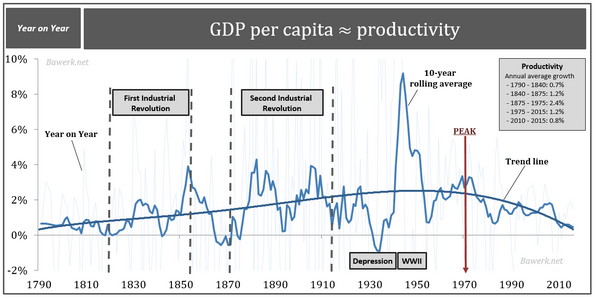
Earlier this week I was struck by the similarities and differences between two graphs I saw float by. And the thought occurred that they are as scary as they are interesting. The graphs show eerily similar trends. And complement each other. The first graph, which Tyler Durden posted, shows productivity, defined as more or less the same as GDP per capita. It goes all the way back to 1790 and contends that 2017 productivity is about back to the level it was at in 1790. In the article, Tyler suggests a link with the amount of time people spend on Instagram et al, but perhaps there is something more going on.

That is, America and Western Europe exported almost their entire manufacturing capacity to China etc. And how can you be productive if you don’t manufacture anything? Yeah, I know, ‘knowledge economy’ and ‘service economy’ and all that, but does anyone still really believe those terms? Sure, that may have worked for a while as others were still actually making stuff (and nobody really understood the idea anyway), but it’s a sliding scale. As productivity plunged, so did GDP per capita. We can all wrap our heads around that.

America’s Productivity Plunge Explained

For the first time since the financial crisis, US multifactor productivity growth turned negative last year, mystifying economists who have struggled to find something to blame for the fact that worker productivity is declining despite a technology boom that should make them more efficient – at least in theory. To be sure, economists have struggled to find explanations for the exasperating trend, with some arguing that the US hasn’t figured out how to properly measure productivity growth correctly now that service-sector jobs proliferate while manufacturing shrinks. But what if there’s a more straightforward explanation? What if the decline in US productivity measured since the 1970s isn’t happening in spite of technology, but because of it?

To wit, Facebook has just released user-engagement data for its popular Instagram photo-sharing app. Unsurprisingly, the data show that the average user below the age of 25 now spends more than 32 minutes a day on the app, while the average user aged 25 and older. The last time Facebook released this data, in October 2014, its users averaged 21 minutes a day on the app. According to Bloomberg, “time spent is an important metric for advertisers, which like to hear that users are browsing an app beyond quick checks for updates, making them more likely to run into some marketing.” Maybe they should matter more to economists, too.


When asking the question “What if the decline in US productivity measured since the 1970s isn’t happening in spite of technology, but because of it?”, a next question should be: what is the technology used for? And if the answer to that is not “for making things”, then what do you think could its effect on productivity could possibly be?

Tyler took that graph from an article posted August 22, 2015, also on Zero Hedge, by Eugen Bohm-Bawerk, who at the time had some interesting things to say about it:

Productivity In America Now On Par With Agrarian Slave Economy

[..] it is time to take a closer look at productivity measured in terms of GDP per capita. While this is not an entirely correct way to measure productivity, it does adhere to new classical growth model theories which posit that in a developed economy, reached steady state, the only way to increase GDP per capita is through increased total factor productivity. In plain English, growth in GDP per capita equals productivity growth. The reason we use this concept instead of more advanced productivity measures is to get a long enough time series to properly understand the underlying fundamental forces driving society forward.

In our main chart we have tried to see through all the underlying noise in the annual data by looking at a 10-year rolling average and a polynomial trend line. In the period prior to the War of 1812 US productivity growth was lacklustre as the economy was mainly driven by agriculture and slaves (slaves have no incentive to work hard or innovate, only to work just hard enough to avoid being beaten). From 1790 to 1840 annual growth averaged only 0.7%. As the first industrial revolution started to take hold in the north-east, productivity growth rose rapidly, and even more during the second industrial revolution which propelled the US economy to become the world largest and eventually the global hegemon [..]

Adjusting for the WWII anomaly (which tells us that GDP is not a good measure of a country’s prosperity) US productivity growth peaked in 1972 – incidentally the year after Nixon took the US off gold. The productivity decline witnessed ever since is unprecedented. Despite the short lived boom of the 1990s US productivity growth only average 1.2% from 1975 up to today. If we isolate the last 15 years US productivity growth is on par with what an agrarian slave economy was able to achieve 200 years ago.

[..] With hindsight we know that finance did more harm than good so we can conservatively deduct finance from the GDP calculations and by doing so we essentially end up with no growth per capita at all over a timespan of more than 15 years! US real GDP per capita less contribution from finance increased by an annual average of 0.3% from 2000 to 2015. From 2008 the annual average has been negative 0.5%!

In other words, we have seen a progressive (pun intended) weakening of the US economy from the 1970s and the reason is simple enough when we know that monetary policy broken down to its most basic is a transaction of nothing (fiat money) for something (real production of goods and services). Modern monetary policy thereby violates the most sacred principle in a market based economy; namely that production creates its own demand. Only through previous production, either your own or borrowed, can one express true purchasing power on the market place.

The central bank does not need to worry about such trivial things. They can manufacture the medium of exchange at zero cost and express purchasing power on the same level as the producer. However, consumption of real goods and services paid for with zero cost money must by definition be pure capital consumption. Do this on a grand scale, over a long period of time, even a capital rich economy as the US will eventually be depleted. Capital per worker falls relative to competitors abroad, cost goes up and competitiveness falls (think rust-belt). Productive structures cannot be properly funded and the economy must regress to align funding with its level of specialization.

Eugen gets close to what I said earlier about productivity. That is, you have to make stuff, to manufacture things, in order to have, let alone grow, productivity (aka GDP per capita). An economy based -too heavily- on services and finance is not going to do it for you. Because “the most sacred principle in a market based economy” is that “production creates its own demand.”

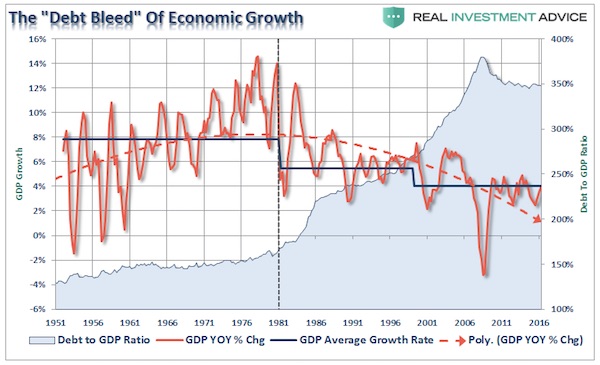
Now, combine that graph with the next one, from Lance Roberts, which unmistakably depicts the same trendline, though on a different -shorter- time scale. Lance’s graph shows more or less the same as Tyler’s, if you allow me that freedom, namely: GDP per capita growth equals productivity equals GDP growth, but it adds a crucial component (unless you ask someone like Paul Krugman): debt.

Together, the graphs show how we have ‘solved’ the issue of falling growth and productivity: with debt. It doesn’t get simpler than that. We exported our productive capacity to China, and now we can only afford to buy their products -which are mostly inferior in quality to what our ancestors once made- by getting into -more- debt. Big simplification, granted, but we’re doing broad strokes here.


All this is simple enough for a 6-year old to grasp. It’s actually likely easier for them than for most trained economists. Problem is, the 6-year olds are probably busy on Instagram. Tyler’s right on that one. But then, at least they’re not stuck in outdated modelling.

Ergo: we have a precipitous decline in productivity, which also translates into a decline in GDP. Even if we come up with all sorts of accounting tricks to hide this fact. And what do we do, or rather, what have we done? Enter central banks, stage right. That second graph inevitably raises the question: Without all the debt, where would the growth rate stand today? And I know what you want to say, because just like you, I am afraid to ask.

We’ve used all those trillions in new debt to, as far as productivity is concerned, run to not even stand still: productivity (GDP per capita) continues to decline despite all the debt. Why is that? Well, Bohm-Bawerk answers that question earlier: “.. consumption of real goods and services paid for with zero cost money must by definition be pure capital consumption.” In other words, as I said before, if you don’t use it to actually make things, you’re basically just burning it. Plus, in the process, as we see ever clearer in the effects of QE, you can grossly distort an economy, by blowing bubbles, propping up zombies etc.

Things would look different if we used the “zero cost money” for production instead of consumption. But that’s not what the central bank money is used for at all. The net effect of all that debt, be it QE or new mortgage debt, is less than zero. Quite a bit less, actually. How do we solve that problem? The answer is deadly simple, though not easy to put into practice: start making stuff again! Or put it this way: debt must be used to raise production, not consumption.


Jun 282017


James Dean in a photobooth 1949


All Companies Hit By Ransomware Attack Used Bootleg Or Unpatched Software (WS)
Yellen: Banks Very Much Stronger; No Financial Crisis In Our Lifetime (CNBC)
There Is No Excuse For Janet Yellen’s Complacency (Steve Keen)
Yellen: “I Don’t Believe We Will See Another Crisis In Our Lifetime” (ZH)
Trio of Fed Speakers Warn on Valuations With Eyes on Tightening (BBG)
Car Loans, Credit Card Debt Push UK Back Towards Another Credit Crisis (Tel.)
UK Banks Ordered To Hold More Capital As Consumer Debt Surges (G.)
ECB VP: Slack In European Economy Looks Worse Than We Thought (CNBC)
Chinese Satellite Data Hint At Ominous Manufacturing Slowdown (ZH)
UK Government Refuses To Pay For Fireproof Cladding (Ind.)
Democrats The Only Thing Standing In The Way Of Single-Payer In California (CP)
The Human Tragedy Of Drug Abuse And Car Crashes (BBG)
Search Results Show Why Europe Is Mad at Google (BBG)
‘Google, Facebook Are Super Monopolies On The Scale Of Standard Oil’ (CNBC)
Greeks Work 203 Days Out Of The Year To Pay Taxes (K.)
Greek Garbage Collectors Reject Compromise As Trash Piles Up (AP)
At Least 24 Migrants Die Off Libya in 48 Hours, More Than 8,000 Rescued (R.)


Wolf Richter explains what happened yesterday. They’re all either thieves or extremely stupid/negligent.

Merck, Rosneft, Ukraine government, Ukraine International Airport, Maersk, WPP (world’s largest advertising agency), Mondelez etc. They’ve all been found to either use bootleg software or not having patched their systems with a readily available Microsoft patch.

All Companies Hit By Ransomware Attack Used Bootleg Or Unpatched Software (WS)

The Petya ransomware attack infected over 2,000 computer systems across the world as of midday today, according to Kaspersky Lab, cited by Reuters. Russia and Ukraine were most affected. Other victims were in Britain, France, Germany, Italy, Poland, and the US. When China starts up its computers, it will suffer the consequences for not staying in bed. The malware includes code known as “Eternal Blue,” which was also used in the WannaCry attack in May. Experts believe the code was purloined from NSA. The ransomware encrypts hard drives of infected machines and then demands $300 in bitcoin in order for the user to regain access. Petya takes advantage of the same vulnerability in Windows as WannaCry. But Microsoft released a patch to fix this vulnerability on March 14.

Patched computers were not affected by WannaCry, and are not affected today. The Windows Malicious Software Removal Tool detects and removes the malware automatically during the updating process. But that update isn’t available for bootleg copies of Windows – hence China’s disproportionate problems with the attack in May. And computers that are running legitimate versions of Windows but hadn’t been updated for whatever reason are vulnerable. Amazingly, when WannaCry hit, plenty of companies were mauled because some dude hadn’t updated their machines. Corporate and government networks were hit. You’d think after the hue and cry in May, all legit corporate systems would be updated, and bootleg copies of Windows would be replaced either by a legit copy of Windows or another operating system. But no. Rinse and repeat.

[..] These are big sophisticated companies, many of them with global operations, and therefore with global IT networks, not mom-and-pop operations. And yet the Windows machines in their networks hadn’t been updated and had remained vulnerable, or were using bootleg copies of Windows that couldn’t be updated, even after all the hoopla in May about this vulnerability. Just sitting here and shaking my head.

Read more …

Grandma goes nuts.

Yellen: Banks Very Much Stronger; No Financial Crisis In Our Lifetime (CNBC)

Fed Chair Janet Yellen said Tuesday that banks are “very much stronger” and another financial crisis is unlikely anytime soon. Speaking during an exchange in London with British Academy President Lord Nicholas Stern, the central bank chief said the Fed has learned lessons from the financial crisis and has brought stability to the banking system. Banks last week passed the first round of the Fed’s stress tests to see how they would perform under adverse conditions like a 10% unemployment rate and turbulence in commercial real estate and corporate debt. “I think the public can see the capital positions of the major banks are very much stronger this year,” Yellen said. “All of the firms passed the quantitative parts of the stress tests.”

She also made a bold prediction: that another financial crisis the likes of the one that exploded in 2008 was not likely “in our lifetime.” The crisis, which erupted in September 2008 with the implosion of Lehman Brothers but had been stewing for years, would have been “worse than the Great Depression” without the Fed’s intervention, Yellen said. Yellen added that the Fed learned lessons from the financial crisis and is being more vigilant to find risks to the system. “I think the system is much safer and much sounder,” she said. “We are doing a lot more to try to look for financial stability risks that may not be immediately apparent but to look in corners of the financial system that are not subject to regulation, outside those areas in order to try to detect threats to financial stability that may be emerging.”

Read more …

Steve explains that Yellen knows Minsky, but prefers to ignore him.

There Is No Excuse For Janet Yellen’s Complacency (Steve Keen)

Janet Yellen has been reported by Reuters as saying in London yesterday that “she does not believe that there will be a run on the banking system at least as long as she lives”: “Would I say there will never, ever be another financial crisis? You know probably that would be going too far but I do think we’re much safer and I hope that it will not be in our lifetimes and I don’t believe it will be,” Yellen said at an event in London. The only word I can use to describe this belief is “delusional”. The only way in which her belief could be justified would be in financial crises were truly random events, caused by something outside the economy—or just by a very bad throw of the economic dice. This is indeed the perspective of mainstream “Neoclassical” economic theory, in which Yellen was trained, and because of which she was deemed eligible—and indeed eminently suitable—to Chair the Federal Reserve.

This is the theory that led the OECD to proclaim, two months before the crisis began in August 2007, that “the current economic situation is in many ways better than what we have experienced in years”, and that they expected that “sustained growth in OECD economies would be underpinned by strong job creation and falling unemployment.”. It is the theory that led her colleague David Stockton, then the Director of the Division of Research and Statistics at the Fed, to dismiss the possibility of a recession after the crisis had begun, in December 2007—the very month that the recession is now regarded as having commenced: “Overall, our forecast could admittedly be read as still painting a pretty benign picture: despite all the financial turmoil, the economy avoids recession and, even with steeply higher prices for food and energy and a lower exchange value of the dollar, we achieve some modest edging-off of inflation.” (FOMC, Dec 2007)

So what we are getting from her is not merely her own personal complacency, but the complacency of an approach to economics which has always been grounded in the beliefs that (a) capitalism is inherently stable, (b) that the financial sector can be ignored—yes that’s right, ignored—when doing macroeconomics, and (c) that the Great Depression was an anomaly that can also be ignored, because it can only have been caused either by an exogenous shock or bad government policy, both of which cannot be predicted in advance.

Read more …

It’s a really crazy thing to say. Does she expect to be fired soon?

Yellen: “I Don’t Believe We Will See Another Crisis In Our Lifetime” (ZH)

If there was any confusion why the Fed intends to keep hiking rates, even in the face of negative economic data and disappearing inflation, it was put to rest over the past 2 days when not one, not two , not three, but four Fed speakers, including the three most important ones, made it clear that the Fed’s only intention at this point is to burst the asset bubble. First there was SF Fed president John Williams who said that “there seems to be a priced-to-perfection attitude out there” and that the stock market rally “still seems to be running very much on fumes.” Speaking to Australian TV, Williams added that “we are seeing some reach for yield, and some, maybe, excess risk-taking in the financial system with very low rates. As we move interest rates back to more-normal, I think that that will, people will pull back on that,

Then it was Fed vice chairman Stan Fischer’s turn, who while somewhat more diplomatic, delivered the same message: “the increase in prices of risky assets in most asset markets over the past six months points to a notable uptick in risk appetites…. Measures of earnings strength, such as the return on assets, continue to approach pre-crisis levels at most banks, although with interest rates being so low, the return on assets might be expected to have declined relative to their pre-crisis levels–and that fact is also a cause for concern.” Fischer then also said that the corporate sector is “notably leveraged”, that it would be foolish to think that all risks have been eliminated, and called for “close monitoring” of rising risk appetites.

All this followed the statement by Bill Dudley, who many perceive as the Fed’s shadow chairman, who yesterday warned that rates will keep rising as long as financial conditions remain loose: “when financial conditions tighten sharply, this may mean that monetary policy may need to be tightened by less or even loosened. On the other hand, when financial conditions ease—as has been the case recently—this can provide additional impetus for the decision to continue to remove monetary policy accommodation.” And finally, it was Yellen herself, who speaking in London acknowledged that some asset prices had become “somewhat rich” although like Fischer, she hedged that prices are fine… if only assumes record low rates in perpetuity:

“Asset valuations are somewhat rich if you use some traditional metrics like price earnings ratios, but I wouldn’t try to comment on appropriate valuations, and those ratios ought to depend on long-term interest rates,” she said. It was not all doom and gloom. Responding to a question on financial system stability, Yellen said post-crisis regulations (and $2.5 trillion in excess reserves which just happen to be fungible and give the banks the impression that they are safe) had made financial institutions much “safer and sounder.” “Will I say there will never, ever be another financial crisis? No, probably that would be going too far. But I do think we’re much safer and I hope that it will not be in our lifetimes and I don’t believe it will.”

Read more …

There were smokescreeens a-plenty too.

Trio of Fed Speakers Warn on Valuations With Eyes on Tightening (BBG)

When a trio of Federal Reserve officials delivered remarks on Tuesday, the state of U.S. financial markets came in for a little bit of criticism. When all was said and done, U.S. equities sank the most in six weeks, yields on 10-year Treasuries rose and the dollar weakened to the lowest level versus the euro in 10 months. Fed Chair Janet Yellen said that asset valuations, by some measures “look high, but there’s no certainty about that.” Earlier, San Francisco Fed President John Williams said the stock market “seems to be running very much on fumes” and that he was “somewhat concerned about the complacency in the market.” Fed Vice-Chair Stanley Fischer suggested that there had been a “notable uptick” in risk appetite that propelled valuation ratios to very elevated levels.

The Fed officials’ comments came amid a torrent of events that buffeted financial markets Tuesday, from an IMF cut to its U.S. growth forecast, Google suffering the biggest ever EU antitrust fine, a fresh blow to the Republican agenda in Washington and a global cyberattack. Still, selling in U.S shares accelerated around 1:30 p.m. as Yellen delivered her assessment of the market since the central bank raised interest rates June 14. “Asset valuations are somewhat rich if you use some traditional metrics like price earnings ratios, but I wouldn’t try to comment on appropriate valuations, and those ratios ought to depend on long-term interest rates,” Yellen said during a speech in London.

Investors are on guard for signs of a change in its economic outlook that could delay rate increases or when it will begin shrinking its $4.5 trillion balance sheet. Yellen said the Fed’s plans for the balance sheet were “well understood” by financial markets. Officials have said they intend to begin allowing the portfolio to roll off this year. In the end, Yellen made it pretty apparent that that her plans for continued monetary policy tightening haven’t shifted. “We’ve made very clear that we think it will be appropriate to the attainment of our goals to raise interest rates very gradually,” Yellen said.

Read more …

All the credit was the only thing that kept the country going.

Car Loans, Credit Card Debt Push UK Back Towards Another Credit Crisis (Tel.)

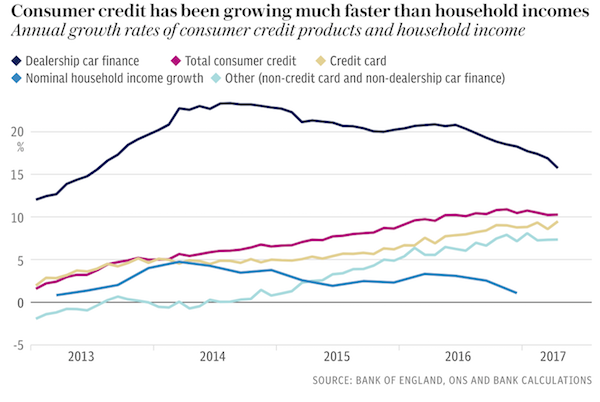
Banks are “forgetting the lessons” of the financial crisis, increasing the risk of reckless lending which could land them — and the wider economy — in trouble later, Mark Carney has warned. Credit card lending is booming and the Bank of England fears that banks are becoming complacent, assuming the relatively good economic times will continue indefinitely. As a result lenders are cutting down the amount of capital they put aside to keep them safe if those loans turn bad — something that could leave them in financial trouble if there is a recession and customers cannot pay back their debts. “I think it is forgetting some of the lessons of the past, or not fully learning the lessons of the past,” said Mr Carney, the Bank of England’s Governor. He said that the economy overall is performing well and total lending is not getting out of hand, but consumer credit is growing by more than 10pc per year, with credit cards and car loans growing particularly fast.

“Most financial stability indicators are neither particularly elevated nor subdued. Nevertheless, there are pockets of risk that warrant extra vigilance,” he said at the publication of the latest Financial Stability Report. “Consumer credit has increased rapidly. Lending conditions in the mortgage market are becoming easier. And lenders may be placing undue weight on the recent performance of loans in benign conditions.” As well as holding more capital against credit card debt and consumer loans, banks have also been warned that next month the Financial Conduct Authority and the Prudential Regulation Authority will also publish new affordability rules to make sure customers are likely to be able to repay their debts.

The situation is deemed relatively urgent — one part of an annual assessment of the losses which banks could make in a hypothetical recession has been brought forwards this year. Instead of publishing the results in November, the consumer credit part of the so-called stress tests will be revealed in September. That decision reflects the short-term nature of consumer loans. Short-term loans can also pose a threat to financial stability because households take them less seriously than mortgages. Consumer debts only amount to one-seventh of the total of mortgage debt, but they account for 10-times the amount of bad loans which banks write off.

That also has implications for the wider economy — a household in financial trouble will cut spending deeply to make sure it can still pay the mortgage, but is less worried about credit cards. Mortgage lending standards are also under the spotlight. The Financial Policy Committee told banks in 2014 that they should assess whether borrowers could still afford their mortgages if the Bank of England’s base rate went up by three%age points. Most banks calculated this by adding 3%age points to their standard variable rates, but some lenders said that in this scenario they might not pass the full cost onto customers. Officials reject this interpretation and have ordered banks to add the full 3 points to their rates when judging the affordability.

Read more …

First you lower rates, then you take measures against the fully predictable consequences.

UK Banks Ordered To Hold More Capital As Consumer Debt Surges (G.)

The Bank of England is to force banks to strengthen their financial position in the face of a rapid growth in borrowing on credit cards, car finance and personal loans. The intervention by Threadneedle Street means banks will need to set aside as much as £11.4bn of extra capital in the next 18 months and is intended to protect the financial system from the 10% rise in consumer lending over the year. The Bank is also bringing forward the part of the annual stress tests on banks that scrutinises their exposure to consumer credit by two months to September. The Bank’s Prudential Regulation Authority and the City regulator, the Financial Conduct Authority, will also publish next month how they expect lenders to treat borrowers in the consumer credit market.

The Bank’s half-yearly assessment of risk to financial markets also set out measures to rein in the riskiest mortgage lending, highlighted the risks associated with the UK’s exit from the EU and said commercial property prices were “at the top end of sustainable valuations”. While the Bank found risks to financial stability were neither “particularly elevated nor subdued” it warned that there “pockets of risk that warrant vigilance”. “Consumer credit has increased rapidly. Lending conditions in the mortgage market are becoming easier. And lenders may be placing undue weight on the recent performance of loans in benign conditions,” said Mark Carney, governor of the Bank of England.

Carney said the decision to call on banks to hold more capital – which is largely a rejig of their current resources rather than raising new funds – was taken after domestic risks returned to “standard” levels. A year ago, after the Brexit vote, the Bank had relaxed regulatory requirements on banks – using new tools it was given after the financial crisis – and is now reversing that decision.

Read more …

“..if we adopt, as in the U.S., a broader concept of unemployment (which in the U.S. they call U6) then unemployment in the euro area is at 18% whereas it is at 9% in the case of the U.S..”

ECB VP: Slack In European Economy Looks Worse Than We Thought (CNBC)

The difference between current and potential levels of output in the euro area economy could be greater than the ECB originally thought, its vice president, Vitor Constancio, warned on Tuesday. “What we see, what we observe is that domestic factors of inflation starting with wage and cost developments and then also price decisions are not responding the way we would expect in view of our more common estimates of this slack. So we have to ask ourselves – are these measures of the slack of the economy correct?,” explained Constancio, speaking to CNBC from the ECB Forum on central banking in Sintra. The board had therefore begun to ask themselves whether other variables should instead be considered to establish a more accurate view of the current economic situation.

“The unemployment rate now is 9.3% according to the normal international standard of measuring employment …. But if we adopt, as in the U.S., a broader concept of unemployment (which in the U.S. they call U6) then unemployment in the euro area is at 18% whereas it is at 9% in the case of the U.S. which would imply that the slack is then bigger than we could judge some time ago,” he noted. “That being the case it justifies fully what the president (Mario Draghi) said at the end of his speech (on Tuesday) that we need persistence. If we want to bring inflation to our target of below but close to 2% then we have to persist in the type of monetary policy that we been adopting,” he added.

Read more …

Earlier, we saw Yellen vs Minsky. Here’s China’s Minsky moment.

Chinese Satellite Data Hint At Ominous Manufacturing Slowdown (ZH)

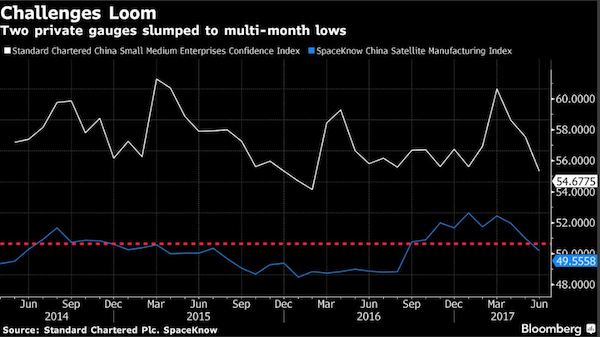
A reading published by San Francisco-based SpaceKnow Inc. which uses commercial satellite imagery to monitor activity across thousands of industrial sites signaled deterioration in the country’s manufacturing sector for the first time since August. The gauge, known as the China Satellite Manufacturing Index, fell to 49.6, below the 50 break-even level. The index incorporates satellite data from thousands of industrial sites across China. Satellite imagery has often proved eerily presceint in the recent past: In the US, satellite data analyzing activity in retailers’ parking lots pointed to significant activity weakness at core US retail locations, even as sentiment indicators were suggesting an uptick in sales following the election. Meanwhile, small- and medium-sized enterprises showed the lowest level of confidence in 16 months, and conditions in the steel business remained lackluster, according to Bloomberg.

Some other indicators have been slightly more sanguine: sales-manager sentiment stayed positive, and outlook of financial experts recovered. Still, data suggest that output in China’s economy slowed during the second quarter after a strong start to the year, with investment slowing, some credit becoming tighter and signs that curbs on the country’s property market are starting to have an impact. Should growth continue to slow, China’s leaders would find themselves in an awkward position, with the country’s twice-a-decade leadership transition expected to occur this fall when the 19th Party Congress convenes to appoint its new senior leadership. It’s widely believed that China’s President Xi Jinping will begin serving his second five-year term.

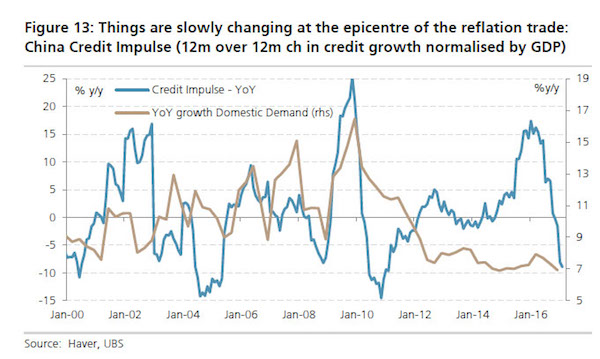
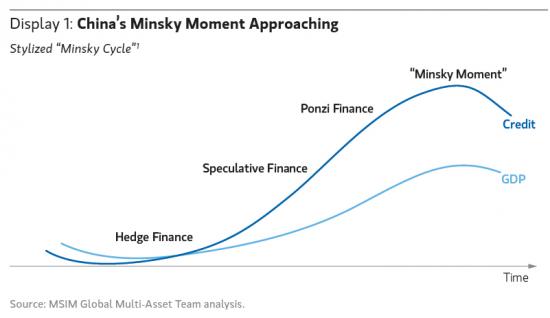
[..] [That] could be the spark that ignites China’s “Minsky moment” – the financial cataclysm that Kyle Bass and other perma-china-bears have been waiting for when China’s overleveraged market crumbles to dust – might finally be in the offing. Indeed, though China’s markets have been relatively calm recently, the PBOC’s attempts to tighten liquidity have sparked some instability in recent months. Back in March, the central bank had to engage in mini bailouts when a jump in interbank rates caused some small regional lenders to default on their interbank loans after money market rates shot higher. Meanwhile, China’s weakening credit impulse should give any China bulls pause.

Read more …

Completely nuts. Feels like they’re looking to get tossed out.

UK Government Refuses To Pay For Fireproof Cladding (Ind.)

Councils face bills running to hundreds of millions of pounds to make tower blocks safe after the Government said it would not guarantee extra money to pay for vital work to prevent a repeat of the Grenfell disaster. Ninety-five high-rise buildings in 32 local authority areas have failed safety tests, the Department for Communities and Local Government (DCLG) said yesterday, with hundreds more blocks still to be tested. The findings prompted Theresa May to announce a “major national investigation” into the use of cladding on high-rise blocks, with every sample so far tested in the wake of the Grenfell found to be unsafe. But despite emergency fire safety checks being carried out nationwide under central government direction, councils will not be reimbursed for refurbishment work carried out.

A DCLG spokesperson said there was “no guarantee” of central government funding and that it would be “up to local authorities and housing associations to pay” for the work needed to ensure residents’ safety. The spokesperson said financial support would be considered on a “case by case” basis for those that could not afford to carry out the necessary work, but did not clarify what the criteria for that consideration would be. The announcement was met with severe criticism from some of the councils affected, with local authorities already having their budgets severely squeezed after years of austerity measures. Julie Dore, leader of Sheffield City Council, which is among the authorities to have discovered unsafe cladding, said “starved” councils would be forced to make cuts to other areas, including schooling, if central government did not help with costs.

“Local authorities have been starved of money over the past seven years. Our spending power has decreased,” she said. “There is no way we can afford to reclad our tower blocks. If we have to find that money, it will come from other projects, from investing in the fabric of our schools, capital investment in our infrastructure, the money has to come out of that. And it can’t really be done. “I say absolutely, categorically that the Government should pay. If they can find £1bn to send to Northern Ireland, that gets more spending per capita than anywhere else, to buy 10 votes, then these people, living in high-rise towers, deserve better.”

Read more …

There is no serious press left in the US to get to the bottom of this.

Democrats The Only Thing Standing In The Way Of Single-Payer In California (CP)

Nothing better illustrates the political bankruptcy of the Democratic Party—for all progressive intents and purposes—than California State Assembly Speaker Anthony Rendon’s announcement on Friday afternoon that he was going to put a “hold” on the single-payer health care bill (SB 562) for the state, effectively killing its passage for at least the year. The Democratic Party finds itself in a bind in California. They hold the governorship and a supermajority in both houses of the legislature, so they can pass any bill they want. SB 562 had passed the Senate 23-14. There was enormous enthusiasm among California progressive activists, who [..] were working tirelessly, and hopeful of success. After all, Bernie’s people were taking over the California party from the bottom since the election.

I recall a night of drinking last year with an old friend who has been spearheading that effort, as he rebuffed my skepticism, and insisted that this time there would be a really progressive takeover of the California party, and single-payer would prove it. After all, once enough progressive pressure was been put on the legislators, the bill would be going to super-progressive Democratic Governor, Jerry Brown, who had made advocacy of single-payer a centerpiece of his run for President in 1992, saying: “We treat health care not as a commodity to be played with for profit but rather the right of every American citizen when they’re born.” Bernie foretold. Unfortunately, today that Governor is, according to Paul Song, co-chair of the CHC, “doing everything he can to make sure this never gets on his desk.”

And it won’t. Unfortunately, all the Democrats like Rendon, who “claims to be a personal supporter of single-payer,” will make sure that their most progressive governor is not put in the embarrassing position of having to reject what he’s been ostensibly arguing for for twenty-five years, of demonstrating so blatantly what a fraud his, and his party’s, progressive pretensions are. Thus unfolds the typical Democratic strategy: Make all kinds of progressive noises and cast all kinds of progressive votes, while carefully managing the process so that the legislation the putatively progressives putatively support never gets enacted. Usually, they blame Republican obstructionism, and there certainly is enough of that, and where there is, it provides a convenient way for Democrat legislator to “support” legislation they know will be blocked and wouldn’t really enact themselves if they could.

Read more …

Phones are as addictive as opioids.

The Human Tragedy Of Drug Abuse And Car Crashes (BBG)

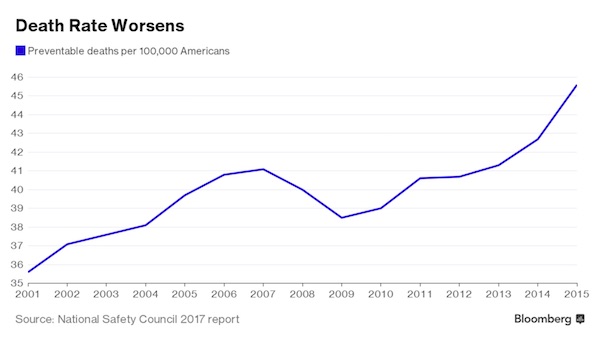
More than 130,000 Americans are killed annually by preventable causes, and the number has been climbing at a faster rate recently because of opioid abuse and car crashes involving drivers distracted by mobile devices. The death count jumped more than 7% in 2015 to about 146,600, according to a report by the National Safety Council Tuesday. The council said lawmakers often overlook simple solutions that could avoid deaths on the roads or in people’s homes, while public attention is focused on events that are relatively rare in the U.S., like terrorist attacks or plane crashes. Vehicle mishaps and poisonings, driven by opioid abuse, killed more than 80,000 people combined in 2015. Preventable accidents cost society about $850 billion a year, according to the group.

“Culturally, we’re numb to these things,” NSC President Deborah Hersman said in a phone interview. “Why are these deaths any less tragic or important? We should be talking about these things every day because they affect our families.” The toll from opioids is worsening, partly because so many patients become dependent on painkillers, often turning to street drugs like heroin. Almost one in four people on Medicaid, the U.S. health program for the poor, received powerful and addictive opioid pain medicines in 2015, Express Scripts Holding Co. said this month. The council said lawmakers should tighten oversight of the distribution of prescription medications and improve access to drugs that can reverse overdoses and treat addiction.

[..] “We need to make distracted driving socially unacceptable,” Tom Goeltz, whose daughter Megan was killed in a car crash last year, said at a news conference held by the NSC Tuesday. “This tragedy could have easily been prevented.” Goeltz, a Minnesotan who works to help industrial companies avoid accidents, said his daughter was pregnant when her car was struck by a distracted driver. “As a safety consultant with over 30 years of experience, I was powerless to save my daughter,” he said. “We all know people that have been killed on our roads. We all know somebody. How is this acceptable to us? We need to do more. You don’t want to be a part of this club.”

Read more …

“..Google has 90 days to come up with its own solution [..]. If it doesn’t do that, the EU will fine it up to 5% of the entire company’s daily global revenue.”

Search Results Show Why Europe Is Mad at Google (BBG)

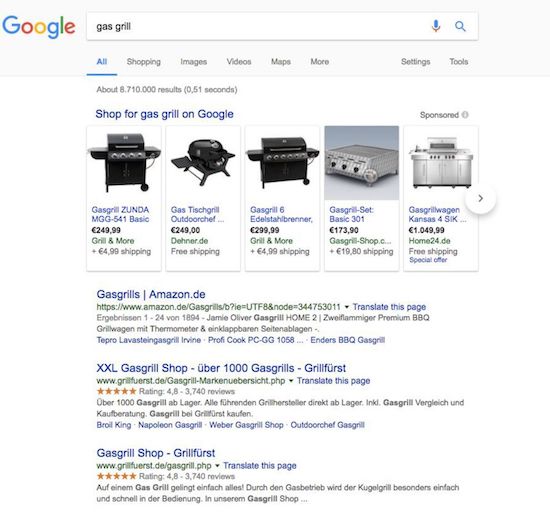
Europe hit Alphabet’ Google with a $2.7 billion fine on Tuesday, saying it broke antitrust laws by favoring one of its search services over rival websites. The case centers around Google Shopping ads, which place color pictures, prices and links to products that consumers have typed into its search engine. The EU’s Competition Chief Margrethe Vestager said Google’s search algorithms should treat its own Shopping service the same way as other price-comparison sites. What exactly does this look like in practice? Here’s a walk-through of what the EU is so upset about. This is for desktop computer searches. On phones, there’s less digital real estate, leaving even less space for competitors. Before we start, it’s important to note that Google argues customers aren’t that interested in clicking through to other price comparison sites and want to go directly to retailers’ sites from Google. It denies any wrongdoing and is considering an appeal.

Google Shopping Today: The screenshot below shows results for a search in Germany for “gas grill.” Five Google Shopping ads take up the most valuable part of the page at the top. No other comparison shopping websites show up in the first couple of links. Scrolling down, you see the first result for a competing price comparison service – Idealo – come in at number six. There’s another at number 11, Moebel24. But that link is listed as an ad, meaning Moebel24 had to pay for that placement, even though it’s near the bottom of the page. The EU says this is bad because consumers click far more often on results appearing higher up in Google’s search results. Even on a desktop computer, the top ten results on page 1 generally get about 95% of all clicks on generic search results (with the top result receiving about 35% of all clicks), the European Commission said on Tuesday.

2014 Proposal: The EU’s Google investigation has been going for years. Vestager’s predecessor tentatively struck a deal with Google in 2014 for a hybrid model that set aside space in those top Shopping search boxes for other price comparison websites. But the agreement fell apart when competitors realized they had to pay for that placement. [..] What could Google do to satisfy Europe’s demands this time? Vestager said Google has 90 days to come up with its own solution, as long as it gives equal treatment to competing price comparison sites. If it doesn’t do that, the EU will fine it up to 5% of the entire company’s daily global revenue. [..] Google would have to sacrifice space currently occupied by its own Shopping ads to make the latter idea work, cutting into a highly profitably and growing revenue stream.

Read more …

US anti-trust laws are strong enough to counter this. But you need politicians to apply them.

‘Google, Facebook Are Super Monopolies On The Scale Of Standard Oil’ (CNBC)

Google shareholders won’t be phased by the EU’s $2.7 billion fine against the company for competition abuses related to its shopping business, Elevation Partners co-founder Roger McNamee told CNBC on Tuesday. “As a shareholder of Google you’re looking at this and saying: ‘We won again,'” McNamee said. The venture capitalist spoke hours after EU regulators fined Google a record €2.4 billion ($2.7 billion), ruling that the search-engine giant violated antitrust rules for its online shopping practices. Google said it will consider appealing the decision to the highest court in Europe. “Google, Facebook, Amazon are increasingly just super-monopolies, especially Google and Facebook. The share of the markets they operate in is literally on the same scale that Standard Oil had … more than 100 years ago – with the big differences that their reach is now global, not just within a single country,” he said on “Squawk Alley.”

The fine is not large enough to change Google’s behavior, he added. “The only thing that will change it is regulations that actually say you can or can’t do something.” McNamee said Google’s business model isn’t structured in a way that allows for competition. “The way that Google’s product works makes its anti-competitive behavior much more obvious — but do not underestimate how powerful Facebook’s monopoly has been to boosting Instagram and WhatsApp,” he said. The competition issue with the big tech companies extends beyond the EU into the U.S., he said. “They do stifle innovation. They stifle entrepreneurship. … You can see this even in Silicon Valley it’s very hard for any of the unicorn generation of companies to actually reach successful critical mass because, you know, one of their competitors gets acquired by Google and Facebook and then the category is over,” said McNamee. “I think it’s a big policy question the world is going to have to deal with over the next few years,” he said.

Read more …

The problem is not even the duration, France and Belgium are worse. The problem is what Greeks are left with after taxes are paid, which is much less than the others.

Greeks Work 203 Days Out Of The Year To Pay Taxes (K.)

Greeks will work an average of 203 days this year to pay taxes to the state and social insurance contributions, according to research conducted by the Dragoumis Center for Liberal Studies (KEFIM) to raise awareness about tax freedom day – the first day of the year in which a country has theoretically earned enough income to pay its taxes. In the case of Greece, this day will be on July 23, which means that Greeks will have worked 15 days more than last year, when tax freedom day arrived on July 7. The only two European Union countries in which tax freedom day will arrive after that in Greece are France and Belgium. Cyprus celebrated its tax freedom day on March 29, while Malta and Ireland did the same on April 18 and 30 respectively. Bulgaria was next on May 18 before Finland on June 22.

KEFIM, which conducted research into the topic for a third straight year, said citizens are working an increasing number of days each year to meet their tax obligations and, compared to 2006, Greeks now work two months more to this end. Referring to the results of the research, financial analyst and member of KEFIM’s scientific council Miranda Xafa said the “government managed to achieve a primary surplus by tax hikes and not through spending cuts.” Xafa also said that for every 100 euros a self-employed professional makes, 82 go toward tax and and other contributions. New Democracy vice president Adonis Georgiadis said that Greece had “lost another month because of overtaxation.” “Our aim when we become the government is to reverse the trend,” he said.

Read more …

Today is day 12 of the garbage strike. Weekend weather forecast up to 44ºC (111ºF). Some judge needs to declare a public health emergency, if Tsipras is too scared to do it.

Greek Garbage Collectors Reject Compromise As Trash Piles Up (AP)

Greece’s municipal garbage collectors on Tuesday rejected a government compromise offer and decided to continue an 11-day protest that has left mounds of festering refuse piled up across Athens amid high temperatures during the key summer tourism season. Municipal workers union head Nikos Trikas said the protest will go on as planned until Thursday at least, after an inconclusive meeting with Prime Minister Alexis Tsipras. The union is pressing the left-led government to honor a pledge to provide permanent jobs for long-term contract workers, and rejected Tsipras’ proposals as a “slight” but unsatisfactory improvement on past offers. Greek authorities have warned that the uncollected trash poses a public health risk ahead of a heat wave forecast for later this week.

Tourism Minister Elena Kountoura urged the union to reconsider, arguing that the protest “endangers public health, and is bad for tourism as well as the country’s international image.” The Athens Trade Association has also called on the two sides to reach a compromise, warning that piles of garbage would discourage tourists from traveling to the Greek capital. Tourism is a vital source of revenue for Greeces battered economy. Although not technically on strike most of the time, municipal workers have been blockading garages where municipal trash collection trucks operate from, as well as landfill sites across the country. Trikas said that unions will review their position Thursday, when they have called a 24-hour strike. He also pledged to increase emergency crews that the union has on duty to ensure that the garbage mounds do not mushroom out of all control.

Read more …

Where are Merkel and Macron? Why are their voters not demanding they tackle the issue?

At Least 24 Migrants Die Off Libya in 48 Hours, More Than 8,000 Rescued (R.)

Red Crescent volunteers recovered the bodies of 24 migrants on Tuesday that were washed up in an eastern suburb of the Libyan capital, Tripoli, as large-scale rescues were made in the Mediterranean. Residents in Tajoura district said the bodies had begun washing up at the end of last week. Several had been partially devoured by stray dogs, according to a local coast guard official. The toll was expected to increase as the flimsy boats used to carry migrants as far as international waters normally carry more than 100 people. Three migrants died in the Mediterranean on Monday night, a German aid group said, during Italian-led rescue operations in which thousands more were pulled to safety.

About 5,000 migrants were picked up off the Libyan coast by emergency services, Italy’s navy, aid groups and private boats on Monday, and rescues were continuing on Tuesday, according to an Italian coastguard spokesman. “Despite all efforts, three people died from a sinking rubber boat” and rescue boats in the area are struggling to cope, German humanitarian group Jugend Rettet said on Facebook. Jugend Rettet (Rescuing Youth) is one of about nine aid groups patrolling seas into which people traffickers have sent more than half a million refugees and migrants on highly dangerous voyages towards Europe over the past four years. “We reached the capacity limit of our ship, while our crew is seeing more boats on the horizon. Currently, all vessels are overloaded,” Jugend Rettet added.

About 72,000 migrants arrived in Italy on the perilous route from Libya between Jan. 1 and June 21, roughly 20% more than in 2016, and more than 2,000 died on the way, according to the International Organization for Migration.

Read more …

Jun 232017
 
 June 23, 2017  Posted by at 9:55 am Finance Tagged with: , , , , , , , , ,  3 Responses »


Fred Lyon Embarcadero lunch San Francisco 1948


Americans Are Dying With An Average Of $61,500 In Debt (ZH)
34 Biggest Banks in US Clear First Hurdle In Fed’s Annual Stress Tests (R.)
Credit-Card Debt Slaves Move to Top of Fed’s Bank Worries (WS)
Citizens Will Soon Turn Their Rage Towards Central Bankers (Albert Edwards)
UK Homelessness Surges 34% Under Tories Since 2010 (Ind.)
UK High Court Judges Tory Policy Causes ‘Real Misery For No Purpose’ (Ind.) /span>
Buy-to-Let Uk Property Sales Fall By Almost 50% In A Year (G.)
Canada’s Private Sector Debt Growing Faster Than Any Advanced Economy (PA)
Warren Buffett Becomes Lender Of Last Resort For Canada’s Home Capital (BBG)
EU Political Class Rides Roughshod over Citizens’ Concerns & Frustrations (DQ)
Dear Oliver: About Those Putin Interviews (RM)
Arab States Send Qatar 13 Demands To End Crisis (R.)
In Yemen’s Secret Prisons, UAE Tortures and US Interrogates


Double or nothing?!

Americans Are Dying With An Average Of $61,500 In Debt (ZH)

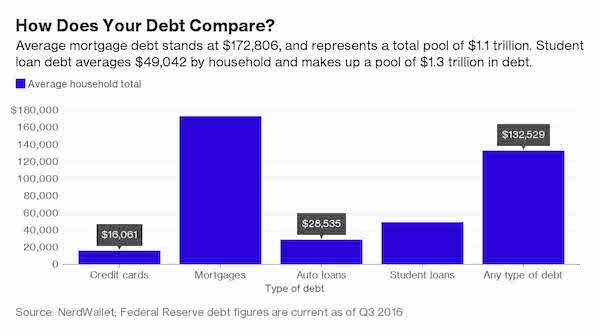
According to a recent study, the average total household debt in America is just over $132,500, broken down as per the chart below… and thanks to the Fed’s recent and ongoing rate increases, the repayment of said debt will become increasingly more difficult. So difficult, in fact, that most Americans will be saddled with a sizable chunk of it at the time of their death. Actually, most already are. According to December 2016 data from credit bureau Experian provided to credit.com, 73% of American consumers had outstanding debt when they were reported as dead. Those consumers carried an average total balance of $61,554, including mortgage debt. Without home loans, the average balance was $12,875. As credit.com reports, the data is based on Experian’s FileOne database, which includes 220 million consumers.

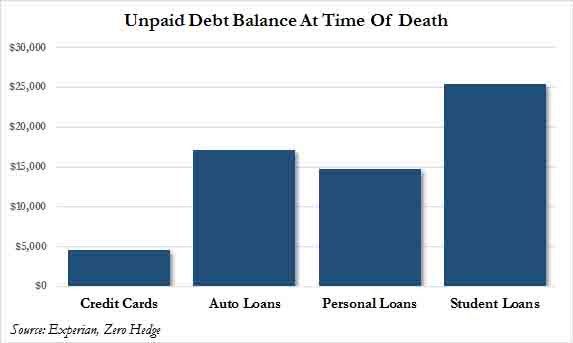
To determine the average debt people have when they die, Experian looked at consumers who, as of October 2016, were not deceased, but then showed as deceased as of December 2016. Among the 73% of consumers who had debt when they died, about 68% had credit card balances. The next most common kind of debt was mortgage debt (37%), followed by auto loans (25%), personal loans (12%) and student loans (6%). The breakdown of unpaid balances was as follows: credit cards, $4,531; auto loans, $17,111; personal loans, $14,793; and student loans, $25,391. And, as a reminder, debt doesn’t just disappear when someone dies.

What happens to that debt when you die, aside from it continuing to accrue interest until someone remembers to inform the creditors? “Debt belongs to the deceased person or that person’s estate,” said Darra L. Rayndon, an estate planning attorney with Clark Hill in Scottsdale, Arizona. If someone has enough assets to cover their debts, the creditors get paid, and beneficiaries receive whatever remains. But if there aren’t enough assets to satisfy debts, creditors lose out (they may get some, but not all, of what they’re owed). Family members do not then become responsible for the debt, as some people worry they might. That’s the general idea, but things are not always that straightforward. The type of debt you have, where you live and the value of your estate significantly affects the complexity of the situation. For example, federal student loan debt is eligible for cancellation upon a borrower’s death, but private student loan companies tend not to offer the same benefit. They can go after the borrower’s estate for payment.

Read more …

Let’s do a stress test that assumes the Fed is no longer around, see what happens.

34 Biggest Banks in US Clear First Hurdle In Fed’s Annual Stress Tests (R.)

The 34 largest U.S. banks have all cleared the first stage of an annual stress test, showing they would be able to maintain enough capital in an extreme recession to meet regulatory requirements, the Federal Reserve said on Thursday. Although the banks, including household names like JPMorgan Chase and Bank of America, would suffer $383 billion in loan losses in the Fed’s most severe scenario, their level of high-quality capital would be substantially higher than the threshold that regulators demand, and an improvement over last year’s level. “This year’s results show that, even during a severe recession, our large banks would remain well capitalized,” said Fed Governor Jerome Powell, who leads banking regulation for the central bank. “This would allow them to lend throughout the economic cycle, and support households and businesses when times are tough.”

The Fed introduced the stress tests in the wake of the financial crisis to ensure the health of the banking industry, whose ability to lend is considered crucial to the health of the economy. Since the first test was conducted in 2009, big banks have seen losses abate, loan portfolios improve and profits grow. The banks that now undergo the exam have also strengthened their balance sheets by adding more than $750 billion in top-notch capital, the Fed said. Banks and their investors have been hoping the improvements would prompt the Fed to allow them to use more capital for stock buybacks and dividends, especially as the Trump administration is seeking to relax financial regulations. Wall Street analysts and trade groups quickly cheered the results on Thursday, saying regulators should feel comfortable easing tough rules put in place since the financial crisis. “We see today’s…stress test results as a positive for Trump administration efforts to deregulate the banks,” said Jaret Seiberg, a policy analyst with Cowen & Co.

Read more …

The biggest debts are still in mortgages. Falling home prices will hurt most.

Credit-Card Debt Slaves Move to Top of Fed’s Bank Worries (WS)

The comforting news in the results from the Federal Reserve’s annual stress test is that the largest 34 bank holding companies would all survive a recession. Based on this glorious accomplishment, the clamoring has already started for regulators to allow these banks to pay bigger dividends and to blow more money on share buybacks, and for these regulators to slash regulation on these banks and make their life easier and riskier in general. We don’t want these banks to survive a recession in too good a condition apparently. And it would likely be better for Wall Street anyway if banks could lever up with risks so that a few of them would get bailed out during the next recession. Let’s remember, for the Fed’s no-holds-barred bailout-year 2009, Wall Street executives and employees were doused with record bonuses.

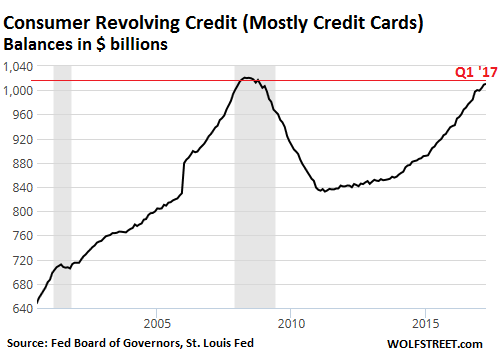
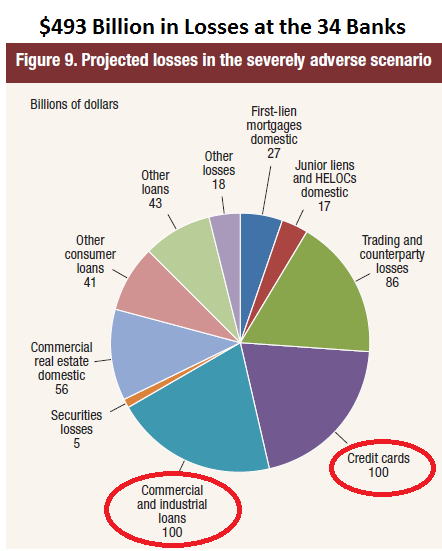
The Fed’s bailouts were good for them. And it has been good for them ever since. The less comforting news in the stress test is that credit card debt – generally the most expensive and risky debt for consumers – has now moved to the top of the Fed’s worry list in the “severely adverse scenario” of the stress test. The projected losses for the 34 largest banks – not counting the losses at the 4,997 smaller banks – are expected to hit $100 billion, up nearly 9% from the stress test a year ago. The projected losses rose for several reasons, including that credit card balances have grown by 5.6% from a year ago to over $1 trillion. The delinquency rate has risen to 2.4%. The Fed is also blaming looser lending standards. Sharing the top spot on the Fed’s worry list in the “severely adverse scenario” are Commercial & Industrial loans, whose balances are over twice as large, at $2.1 trillion, but whose projected losses are also pegged at $100 billion. In total, the “severely adverse scenario” sees $493 billion in losses for these 34 banks:

Read more …

“..investors, drunk with the liquor of loose money..”

Citizens Will Soon Turn Their Rage Towards Central Bankers (Albert Edwards)

Albert Edwards pwrites “Theft redux: the citizens will soon turn their rage towards Central Bankers.” The core of his argument is familiar: “While politics in the West reels from a decade of economic crisis and stagnation, asset prices continue to surge on the back of continued rapid growth in G3 QE. In an age of “radical uncertainty” how long will it be before angry citizens tire of blaming an impotent political system for their ills and turn on the main culprits for their poverty – unelected and virtually unaccountable central bankers? I expect central bank independence will be (and should be) the next casualty of the current political turmoil.” That’s just the beginning from Edwards, who appears to be getting increasingly angrier and more frustrated with a market that makes increasingly less sense: his fiery sermon continue with the following preview of the “inevitable catastrophe that lies ahead.”

“Evidence of the impact of monetary madness on assets prices is all around if we care to look. I read that a parking spot in Hong Kong was just sold for record HK$5.18 million ($664,200). What about the 3.5x oversubscribed 100 year Argentine government bond? Sure, everything has a market clearing price, even one of the most regular defaulters in history. But what concerned me most about the story was it was demand from investors (“reverse enquires”) that prompted the issue. Is it just me or can I hear echoes of the mechanics of the CDO crisis? But no one cares when the party is still raging and investors, drunk with the liquor of loose money, are blind to the inevitable catastrophe that lies ahead. There is a lot of anger out on the streets, as demonstrated most visibly in recent elections.

Even in France where investors feel comforted that a “moderate” has gained (absolute?) power, it is salutary to remember that the two establishment parties have just been decimated by a man who had never before stood for public office! This is perhaps even more radical than Trump’s anti-establishment victory under the Republican umbrella. The global political situation is incredibly fluid and unpredictable. While a furious electorate has turned its pent up anger on the establishment political parties, the target for their rage is misguided. I am not completely alone in thinking it is the unelected and virtually unaccountable central bankers who are primarily responsible for the poverty of working people and who will be ultimately held to account in the next crisis.

Read more …

In other news: ” Government-funded new social housing has fallen 97% since 2010″.

UK Homelessness Surges 34% Under Tories Since 2010 (Ind.)

The number of families being declared homeless has rocketed by more a third since the Conservatives took power in 2010, analysis of new official statistics by The Independent has revealed. Between April 2016 and March 2017, 59,100 families were declared homeless by local authorities in England – a rise of 34% on the same period in 2010-11. The statistics paint a bleak picture of the UK housing crisis and the impact a lack of decent, affordable homes is having on thousands of families. There has been a 60% increase in the number of families being housed in insecure temporary accommodation. In particular, bed and breakfast-type hotels are increasingly being used to house families for long periods of time as local councils struggle to find them proper homes to live in.

There are now 77,240 families in England currently living in temporary accommodation – up from 48,240 just six years ago. Of these, almost fourth-fifths (78%) are families with children, meaning there are currently 120,500 children living in insecure, temporary homes. Of those being housed temporarily, 6,590 households are living in B&Bs, including 3,010 families with children. Almost half have been living in this type of accommodation, which often sees families crammed into one room and forced to share limited bathroom and cooking facilities with strangers, for more than six weeks. This is illegal under the Homelessness (Suitability of Accommodation) Order 2003, which banned local authorities from housing families with children in B&Bs for more than a six-week period.

Read more …

The Tories are done. Someone should tell them.

UK High Court Judges Tory Policy Causes ‘Real Misery For No Purpose’ (Ind.)

Today, the High Court ruled that the benefits cap, one of the Tories’ flagship welfare policies, is unlawful, because it amounts to illegal discrimination against single parents with small children. It’s likely that the Government will be forced to alter or completely scrap their benefits cap, a policy that limits the total amount a household can receive in benefits to £23,000 in London and £20,000 elsewhere in the UK. High Court judge Justice Collins described the benefit cap as causing “real damage” to single parent families and said “real misery is being caused to no good purpose”. This is the fundamental truth at the heart of Tory welfare policy – misery without progress or reason.

Welfare reform as part of the coalition government’s austerity measures has driven thousands more people into poverty and in many tragic cases, some deaths occurred after individuals were declared fit to work. Austerity was not inevitable. It was an ideologically-motivated programme designed to force the poorest and most vulnerable in our society to shoulder the burden of a financial crisis that they had less than nothing to do with creating. Four claimants brought this case to court. Two of them had been made homeless as a result of domestic violence, and were trying to work as many hours as possible while taking care of children under the age of two. Imagine fleeing an abusive partner, seeking support from a domestic violence service that’s had its funding brutally slashed by the Tory government, trying to work and look after a small child, then having your benefits cut, again by the Tory government.

The claimants are not alone. The benefits cap has inflicted a massive amount of suffering, with 200,000 children from the very lowest income families affected, as their parents’ income has fallen drastically. In real terms, this means that these children’s lives have become even more difficult, and they weren’t easy to begin with. This means a colder house, less food to eat, more shame at school due to unwashed clothes, uniforms that are too small, worn-through shoes. It means stressed, unhappy and increasingly desperate parents, and in family, children can’t fail to pick up on this mood of misery. [..] In this wealthy, highly developed country, poverty is the single biggest threat to the wellbeing of children and families. Poverty affects a quarter of all children in Britain, a massive, disgraceful, inexcusable proportion. one in five parents are struggling to feed their children, and 50% of all parents living in food poverty have gone without meals in order to give their children more to eat.

Read more …

There goes the bubble. Look out below.

Buy-to-Let Uk Property Sales Fall By Almost 50% In A Year (G.)

The number of properties bought by landlords has almost halved in a year after a tax and regulatory clampdown, prompting a leading banking body to downgrade its forecasts for buy-to-let lending in 2017 and 2018. The Council of Mortgage Lenders said buy to let had had a weak start to 2017, with lending falling faster than expected as landlords withdrew from the market in response to major tax changes and tighter lending rules. The data follows a series of recent surveys and indices suggesting the housing market is running out of steam. However, the crackdown on buy to let may have helped young people trying to get a foot on the property ladder. CML said house purchase activity was being driven predominantly by first-time buyers, with their numbers up 8% in the 12 months to April.

Buy-to-let homebuying activity was “nearly half what it was a year ago” and had averaged around 6,000 purchases a month over the last 12 months, said the body, which represents banks and building societies. The number of landlord purchases involving a mortgage was 5,300 in April this year. This compared with 10,300 in February 2016 and 11,800 in July 2015. As a result, the CML has cut its forecast for buy-to-let lending from £38bn being lent in both 2017 and 2018 to £35bn in 2017 and £33bn in 2018. The organisation warned against hitting landlords with any further changes to taxation and lending rules, saying the figures “re-emphasise the case for avoiding further changes to the tax and regulatory framework until the effect of these already in train have been properly assessed”.

Read more …

Download report here: Addicted to Debt – Tracking Canada’s rapid accumulation of private sector debt .

Canada’s Private Sector Debt Growing Faster Than Any Advanced Economy (PA)

For the first time ever, Canada’s private sector is racking up debt faster than any other of the world’s 22 advanced economies, putting the country at risk of serious economic consequences, according to new research by the Canadian Centre for Policy Alternatives. A new report authored by CCPA Senior Economist David Macdonald reveals that Canada added $1 trillion in private sector debt over the past five years ($2016), with the corporate sector responsible for the majority of it. Economies can become dependent on debt in order to fuel economic and asset price growth. With both rapid private debt accumulation and a high private debt-to-GDP ratio, even a small change in debt growth rates, brought on by changes in interest rates for instance, could have a devastating impact on the larger economy.

“Private sector debt growth is one of the best predictors of economic crisis, and Canada is now the only advanced economy squarely in the debt ‘danger zone’ of having high private sector debt that continues to rise rapidly,” Macdonald says. The report identifies several areas of concern:
• Canada has never before led the advanced economies in private debt growth;
• The last time Canada was close to leading the world in private debt growth was the early 1990s, just as housing prices plummeted and then stagnated for a decade;
• The country’s private debt-to-GDP ratio has risen by a fifth since 2011, from 182% to 218%. The US ratio currently stands at 152%;
• The $315 billion increase in household debt since 2011 ($2016) is almost entirely attributable to the rise in mortgage debt related to rapid home prices increases;
• Corporate debt is less well studied, and rose $671 billion since 2011 ($2016), accounting for two thirds of private debt accumulation over that time;
• Corporate debt was largely spent on mergers and acquisitions as well as real estate purchases, neither of which make the country more productive.

“Canada’s economy has become addicted to binging on ever more private sector debt, and weaning us off it should be our primary public policy concern,” adds Macdonald, who recommends further study of corporate debt and consideration of a housing speculators’ tax to further reign in mortgage debt increases.

Read more …

Well, it can’t be because Buffett see a bright future in Canada’s housing market. So draw your own conclusion.

Warren Buffett Becomes Lender Of Last Resort For Canada’s Home Capital (BBG)

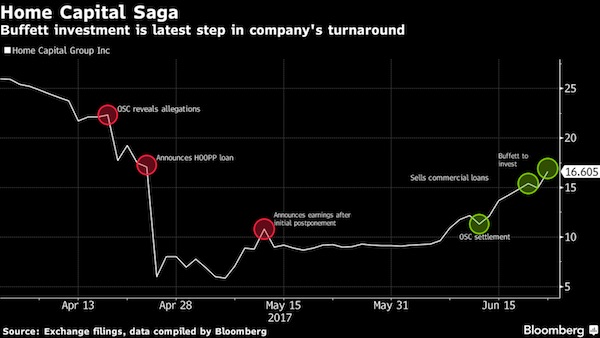
Warren Buffett has become the lender of last resort for Home Capital. The billionaire investor agreed to buy shares at a deep discount and provide a fresh credit line for the Canadian mortgage company, tapping a formula he used to prop up lenders from Goldman Sachs to Bank of America. Buffett’s Berkshire Hathaway Inc. will buy a 38% stake for about C$400 million ($300 million) and provide a C$2 billion credit line with an interest rate of 9% to backstop the embattled Toronto-based lender, Home Capital said late Wednesday in a statement. The interest on the one-year loan would net Berkshire at least C$180 million if it’s fully tapped.

“While the terms of the new credit line with Berkshire Hathaway remain harsh, we believe the purpose of this loan is to motivate Home Capital’s management to bolster their own funding sources,” said Hugo Chan at Kingsferry Capital in Shanghai, which owns shares in Home Capital. “This again shows Mr. Buffett’s masterful capital allocation skills,” said Chan, citing his investment motto: “be greedy when others are fearful.” The financial backing from Buffett sent the stock higher Thursday, though it comes at a cost, in keeping with his past bailouts of financial firms. Buffett has buoyed some of the biggest U.S. corporations in times of trouble, including a combined $8 billion injection to prop up Goldman Sachs and General Electric when credit markets froze during the 2008 financial crisis.

In the Home Capital deal, Buffett’s firm agreed to pay an average price of C$10 a share, a 33% discount to Wednesday’s closing price of C$14.94. Berkshire would become the largest shareholder in Home Capital, which has a market value of about C$1 billion. Home Capital surged 27% to C$19 in Toronto on Thursday. That gives Buffett a 90% return on paper for the equity investment, assuming the deal goes through.

Read more …

They always have, it’s an MO.

EU Political Class Rides Roughshod over Citizens’ Concerns & Frustrations (DQ)

Merkel has expressed a willingness to go along with two central French demands — the appointment of a Eurozone finance minister and the creation of a common budget — as long as certain conditions are met. “We can of course think about a Eurozone budget as long as it’s clear that this is really strengthening structures and achieving sensible results,” she said. [..] Back on the table is a proposal to upgrade the grossly unaccountable Luxembourg-based European Stability Mechanism (ESM) into a full-fledged European Monetary Fund. As we’ve noted before, creating a European Monetary Fund (EMF) would be an important statement of intent. If Europe’s core countries are truly set on taking the EU project to a whole new level, such as by pursuing the creation of an EU army, an EU border force (with full powers), fiscal union, and ultimately political union, some form of burden sharing will ultimately be necessary.

The establishment of a fully operational EMF could be an important move in that direction. The EMF would essentially act as a fiscal backdrop to the banking system, something the Eurozone has desperately needed ever since its creation. As Bruegel proposes, it would serve as a fiscal counterpart of the ECB to guarantee the financial stability of the euro area in the event of a sovereign or banking crisis, or a threat thereof — of which there are plenty these days, in particular emanating from Italy’s broken banking system. Naturally, the creation of an EMF would deal a further blow to the fading remnants of national sovereignty in Europe. But that’s a price that many (but certainly not all) of Europe’s elite is more than happy to pay; some would say that destroying national sovereignty was the ultimate goal of the EU all along.

In a survey of more than 10,000 EU citizens and 1,800 EU elites carried out by Chatham House, of the elites, 37% believe the EU should get more powers, 28% want to keep the status quo and 31% would prefer to return more powers to individual member countries. This enthusiasm for a more centralized, more powerful EU is not shared with equal enthusiasm by European citizens: 48% want powers returned to the individual member countries. Citizens, overall, do not feel they have benefited from European integration in the same way Europe’s elite does. Whereas 71% of elites report feeling they have gained something from the EU, the figure among the public is only 34%. Even more worrisome for national leaders, a clear majority of the public — 54% — feel that their country was a better place to live 20 years ago, before the euro existed.

Read more …

I’ve seen a few parts. Liked them quite a bit.

Dear Oliver: About Those Putin Interviews (RM)

Dear Mr. Stone: I have just finished watching all four episodes of The Putin Interviews. May I give you my critique? Overall, I felt that the series is Very Good but felt just short of Great. I will explain below what I feel could have made it Great. First, I want to tell you what I really loved about it. 1. You have an easy style. I felt as if Mr. Putin was at ease with you, and you with him. You have a warm command of the English language and can transmit your ideas into language in a very personable way — an art that is missing among so many American media people these days. I felt that you drew out a candid side of Putin, well, that is, as far as a man of his intellectual prowess and disciplined self-control will allow. 2. Best moment of the show: Sitting next to Vlad and watching Dr. Strangelove! Oh my goodness, most people would not even dream of adding such a thing to their bucket list.

3. I loved the walking tour of the President’s offices and the general background of the Kremlin architecture and decor. I pay attention to the daily, tweeted photos from the Kremlin’s official account. I have seen those desks and tables a million times in the photos. But now I have them all within a mental frame, thanks to your film. Question: I was burning to know why Vlad had a pair of scissors and multi-colored construction paper in the middle of his desk, did you happen to ask him, off-camera?

Where It Fell Short Mr. Stone, I hated that so much time was wasted talking about the contrived “Russia hacked the election” meme. Hillary might not know why she lost the election, but the rest of the nation does. When my father would get on a roll with his bad jokes, Mom would tell us kids: “Don’t encourage him.” Well, you too need to stop encouraging the MSM to keep breathing life into a dead meme.

You also wasted time re-hashing Crimea. “Read My Lips,” Vlad said, “the Crimeans ASKED, BEGGED, AND VOTED to rejoin Russia.” Good grief, when McCain’s and Nuland’s beloved neo-Nazi Svoboda party took illegal control of Ukraine, their first move was to try and make it illegal to speak Russian. Geez, half the people in Ukraine ARE Russian! Mr. Putin has exercised considerable restraint towards Ukraine.

Mr. Stone, I have been following the development of BRICS, the “Silk Road Project,” and the EEU (European Economic Union) for a half-decade now. I can’t have a conversation with my neighbors and friends about all of that here in America because not one of them has heard anything about it! You had a great opportunity to ask Mr. Putin to school us on the Sino-Russian version of a multi-polar world without war, but you totally blew it. I don’t think you ever asked Vlad about China, did you?


Read more …

Saudi Arabia accuses Qatar of supporting terrorism. Rich.

Arab States Send Qatar 13 Demands To End Crisis (R.)

Four Arab states boycotting Qatar over alleged support for terrorism have sent Doha a list of 13 demands including closing Al Jazeera television and reducing ties to their regional adversary Iran, an official of one of the four countries said. The demands aimed at ending the worst Gulf Arab crisis in years appear designed to quash a two decade-old foreign policy in which Qatar has punched well above its weight, striding the stage as a peace broker, often in conflicts in Muslim lands. Doha’s independent-minded approach, including a dovish line on Iran and support for Islamist groups, in particular the Muslim Brotherhood, has incensed some of its neighbors who see political Islamism as a threat to their dynastic rule.

The list, compiled by Saudi Arabia, the United Arab Emirates (UAE), Egypt and Bahrain, which cut economic, diplomatic and travel ties to Doha on June 5, also demands the closing of a Turkish military base in Qatar, the official told Reuters. Qatar must also announce it is severing ties with terrorist, ideological and sectarian organizations including the Muslim Brotherhood, Islamic State, al Qaeda, Hezbollah, and Jabhat Fateh al Sham, formerly al Qaeda’s branch in Syria, he said, and surrender all designated terrorists on its territory, The four Arab countries accuse Qatar of funding terrorism, fomenting regional instability and cozying up to revolutionary theocracy Iran. Qatar has denied the accusations.

[..] on Monday, Foreign Minister Sheikh Mohammed bin Abdulrahman al-Thani said Qatar would not negotiate with the four states unless they lifted their measures against Doha. The countries give Doha 10 days to comply, failing which the list becomes “void”, the official said without elaborating, suggesting the offer to end the dispute in return for the 13 steps would no longer be on the table.

Read more …

Bunch of sicko’s.

Edward Snowden on Twitter: “Biggest @AP scoop in a long time: US government behind UAE torture in Yemen, with some reportedly grilled alive.

In Yemen’s Secret Prisons, UAE Tortures and US Interrogates

Hundreds of men swept up in the hunt for al-Qaida militants have disappeared into a secret network of prisons in southern Yemen where abuse is routine and torture extreme — including the “grill,” in which the victim is tied to a spit like a roast and spun in a circle of fire, an Associated Press investigation has found. Senior American defense officials acknowledged Wednesday that U.S. forces have been involved in interrogations of detainees in Yemen but denied any participation in or knowledge of human rights abuses. Interrogating detainees who have been abused could violate international law, which prohibits complicity in torture. The AP documented at least 18 clandestine lockups across southern Yemen run by the United Arab Emirates or by Yemeni forces created and trained by the Gulf nation, drawing on accounts from former detainees, families of prisoners, civil rights lawyers and Yemeni military officials.

All are either hidden or off limits to Yemen’s government, which has been getting Emirati help in its civil war with rebels over the last two years. The secret prisons are inside military bases, ports, an airport, private villas and even a nightclub. Some detainees have been flown to an Emirati base across the Red Sea in Eritrea, according to Yemen Interior Minister Hussein Arab and others. Several U.S. defense officials, speaking on condition of anonymity to discuss the topic, told AP that American forces do participate in interrogations of detainees at locations in Yemen, provide questions for others to ask, and receive transcripts of interrogations from Emirati allies. They said U.S. senior military leaders were aware of allegations of torture at the prisons in Yemen, looked into them, but were satisfied that there had not been any abuse when U.S. forces were present.

“We always adhere to the highest standards of personal and professional conduct,” said chief Defense Department spokeswoman Dana White when presented with AP’s findings. “We would not turn a blind eye, because we are obligated to report any violations of human rights.” In a statement to the AP, the UAE’s government denied the allegations. “There are no secret detention centers and no torture of prisoners is done during interrogations.” Inside war-torn Yemen, however, lawyers and families say nearly 2,000 men have disappeared into the clandestine prisons, a number so high that it has triggered near-weekly protests among families seeking information about missing sons, brothers and fathers.

None of the dozens of people interviewed by AP contended that American interrogators were involved in the actual abuses. Nevertheless, obtaining intelligence that may have been extracted by torture inflicted by another party would violate the International Convention Against Torture and could qualify as war crimes, said Ryan Goodman, a law professor at New York University who served as special counsel to the Defense Department until last year

Read more …

Jun 172017
 
 June 17, 2017  Posted by at 9:51 am Finance Tagged with: , , , , , , , , , ,  3 Responses »


Fred Lyon Broadway and Kearny Street, North Beach, San Francisco 1952


All Hell Is Going To Break Loose In The Bond Market (SBA)
The Fog of Markets (720G)
10 Years After Global Financial Crisis, World Still Suffers Debt Overhang (SMH)
Amazon, the Death of Brick & Mortar, Buys into Brick & Mortar (WS)
Special Prosecutor Mueller Is a Political Hack (Washington)
Fear of Contagion Feeds the Italian Banking Crisis (DQ)
China’s Smaller Banks Endure Record Borrowing Costs amid Squeeze (BBG)
Most Of Central London Hospital To Be Sold Off, Plans Reveal (G.)
Five Talks on Power, Populism, Politics & Europe (Varoufakis)
Spain Says Eurogroup May Block Greek Loan If Officials Not Granted Immunity (R.)
Swedish Commuters Can Use Hand Implant Chip Instead Of Train Tickets (Ind.)


“..the Federal Reserve has not allowed the market to do its one and only job, and that is to determine fair value.”

All Hell Is Going To Break Loose In The Bond Market (SBA)

This past Wednesday we heard from the Federal Reserve with regard to monetary policy, and as I predicted they did raise the federal funds rate 25 basis points however, instead of yields rising, they are dropping. More than a year and a half ago I had said publicly that the Federal Reserve’s attempt at trying to normalize bond yields would backfire-and this is exactly what is happening. It is clear to me that the Federal Reserve has absolutely lost control of what is occurring in the bond market. Remember, this is uncharted territory, we have never been here before in the history of the financial world-so the Federal Reserve actually has no idea of how the market will react in the current environment with regard to their attempt at normalizing interest rates. The yield curve as seen in the picture above continues to flatten out, and this trend will continue until the curve inverts.

The last time the yield curve inverted, the 2008 economic meltdown occurred, and the time before that we suffered the.com bubble meltdown. The fact is we are existing in a multiple bubble economy at this time, worse, and unlike anything which has ever been seen before. The reason why these bubbles exist is simple: the Federal Reserve has not allowed the market to do its one and only job, and that is to determine fair value. The Federal Reserve’s interest rate suppression cycle has not only allowed, but has been the driving force behind mass malinvestments across the entire spectrum of asset classes and as such, bubbles have been created. The Federal Reserve has created distortions across the spectrum of asset classes which is frankly beyond belief, worse than has ever been witnessed in the history of finance. What this means is when the yield curve inverts this time, we will experience a meltdown magnitudes greater then the 2008 crash.

Read more …

“..till injuries were wrought to the structure of human society which a century will not efface, and which may conceivably prove fatal to the present civilization.”

The Fog of Markets (720G)

“The year 1915 was fated to be disastrous to the cause of the Allies and to the whole world. By the mistakes of this year the opportunity was lost of confining the conflagration within limits which though enormous were not uncontrolled. Thereafter the fire roared on till it burnt itself out. Thereafter events passed very largely outside the scope of conscious choice. Governments and individuals conformed to the rhythm of the tragedy, and swayed and staggered forward in helpless violence, slaughtering and squandering on ever-increasing scales, till injuries were wrought to the structure of human society which a century will not efface, and which may conceivably prove fatal to the present civilization.” – Winston S. Churchill – The World Crisis: 1915

After reading that quote several times, it remains shocking that the politicians and individuals of that era unconsciously “conformed to the rhythm of the tragedy.” The paragraph above from Winston Churchill, describes the mass mindset of World War I when it was still in its infancy. War-time narratives, nationalism, destruction and the tremendous loss of life led most people to quickly accept and acclimate to an event that was beyond atrocious. Amazingly, less than a year before the period Churchill discusses, the same people likely would have thought that acceptance of such a calamity would be beyond comprehension. Wars and markets are obviously on two different planes, and we want to make it clear the purpose of this article is not to compare the evils of war to financial markets. That said, we must recognize that quick acceptance of abnormal circumstances, as Churchill describes, is a trait that we all possess.

The seemingly unabated march upwards in stock prices occurring over the last eight years has had a mind-numbing effect on investors. The relentless grind higher is backed by weak fundamentals providing little to no justification for elevated prices. Indeed, if there was no justification for such valuations during the economically superior timeframe of the late 1990’s, how does coherent logic rationalize current circumstances? For example, feeble economic growth, stagnating corporate earnings, unstable levels of debt, income and wage inequality and a host of other economic ills typically do not command a steep premium and so little regard for risk. This time, however, is different, and investors have turned a blind eye to such inconvenient facts and instead bank on a rosy future. Thus far, they have been rewarded. But as is so often the case with superficial gratification, the rewards are very likely to prove fleeting and what’s left behind will be deep regret.

Despite our education and experience which teach the many aspects of the discipline of prudent investing, investors are still prone to become victims of the philosophy and psychology of the world around them. These lapses, where popular opinion-based investment decisions crowd out the sound logic and rationale for prudence and discipline, eventually carry a destructively high price. Investors, actually the entire population, have become mesmerized by the system as altered and put forth by the central bankers. We have somehow become accustomed to believe that debt-enabling low interest rates make even more debt acceptable. Ever higher valuations of assets are justifiable on the false premise of a manufactured and artificial economic construct.

Read more …

Long from Australia, with lots of sources. Bit confusing even.

10 Years After Global Financial Crisis, World Still Suffers Debt Overhang (SMH)

Let’s start with the question of debt. Lord Adair Turner, who chaired the UK Financial Services Authority between 2008 and 2013 and helped redesign global banking, says the world since has not addressed this root cause of the crisis and that means it’s at risk of another one. Lord Turner, now chairman of New York-based Institute for New Economic Thinking, says the world is suffering from “irrational exuberance” and “debt overhang”. The latter term refers to countries trapped in a vicious cycle of debt, and when nations ultimately default on that debt – he predicts that the next crisis will come courtesy of China and that’s just a number of years away – it ends in their economic destruction.

The Institute of International Finance (IIF) says global levels of debt held by households, governments, and non-financial corporates jumped by over $US70 trillion in the past decade to a record high of $US215 trillion, equating to 325 per cent of global GDP. “There’s been no deleveraging,” Lord Turner says. “Once you’ve got too much debt in the economy … it’s incredibly difficult to get rid of it. “If you say, ‘I’m going to write it off’, your banks go bankrupt … if you try get rid of it by people paying down that debt … the attempt to pay it back is what drives the economy into recession.” To avoid that, interest rates then fall, and that simply encourages more borrowing, he says.

[..] Steve Keen, Professor of Economics at Kingston University in London, a long-time doomsayer on Australia’s mortgage binge, says simply: “It’s dangerous”. He says the Reserve Bank and Australian politicians ignore the dangers of private household debt today just as former US Federal Reserve chairman Ben Bernanke did before the GFC. Keen says the risk of recession is even higher now that APRA has slightly tightened lending standards. “It’s inevitable,” he says, sticking to his bold prediction that it will happen before year’s end.

Read more …

Grow your own food.

Amazon, the Death of Brick & Mortar, Buys into Brick & Mortar (WS)

Amazon, which is getting blamed profusely for the meltdown of brick-and-mortar stores and malls across the US, and which has been dabbling with its own initiatives into brick-and-mortar operations – including bookstores, after nearly wiping bookstores off the face of the US – said it would buy brick-and-mortar Whole Foods Market for $13.7 billion. Amazon will get Whole Foods’s $15.7 billion in annual sales and more importantly, its brand, semi-loyal customers, and about 450 brick-and-mortar stores across 42 states. Whole Food shares jumped 27%. But in early trading, the shares of the largest brick-and-mortar grocery sellers in the US are getting crushed: Wal-Mart Stores -6.5%; Kroger, largest supermarket chain in the US, -14%; Costco -7%; Target -10%.

Amazon already sells groceries online via AmazonFresh, and a few months ago announced it would create a grocery store pickup service, another foray into brick-and-mortar. Selling groceries online has been tough in the US, though everyone has been trying, from innumerable startups to Safeway and Google Express (in cooperation with Costco et al.). Consumers are used to buying at the store by running through the aisles with their carts and choosing what they see or what’s on their list, or both, and they want to touch and check their produce before buying it, and they don’t want the dented apples or squished grapes or wilted lettuce. And they need it now on the way home from work so they can fix dinner.

With this acquisition, Amazon’s efforts to muscle its way into the grocery business and even more into the every-day lives of Americans have thus taken a quantum leap forward. But what industry is Amazon muscling into? Over the past six years, sales at grocery stores are up a total of 14%, not adjusted for inflation, according to the retail trade report by the Commerce Department. Over the same period, the Consumer Price Index for food rose 14%, according to the Bureau of Labor Statistics. Hence, on an inflation-adjusted basis, “real” sales have been flat for six years.

Read more …

Did anyone doubt this? Safe to predict the investigation will be dragged out forever.

Special Prosecutor Mueller Is a Political Hack (Washington)

Torture FBI special agent Colleen Rowley points out: Mueller was even okay with the CIA conducting torture programs after his own agents warned against participation. Agents were simply instructed not to document such torture, and any “war crimes files” were made to disappear. Not only did “collect it all” surveillance and torture programs continue, but Mueller’s (and then Comey’s) FBI later worked to prosecute NSA and CIA whistleblowers who revealed these illegalities.

Iraq War Rowley notes: When you had the lead-up to the Iraq War … Mueller and, of course, the CIA and all the other directors, saluted smartly and went along with what Bush wanted, which was to gin up the intelligence to make a pretext for the Iraq War. For instance, in the case of the FBI, they actually had a receipt, and other documentary proof, that one of the hijackers, Mohamed Atta, had not been in Prague, as Dick Cheney was alleging. And yet those directors more or less kept quiet. That included … CIA, FBI, Mueller, and it included also the deputy attorney general at the time, James Comey.

Post 9/11 Round-Up FBI special agent Rowley also notes: Beyond ignoring politicized intelligence, Mueller bent to other political pressures. In the aftermath of the 9/11 attacks, Mueller directed the “post 9/11 round-up” of about 1,000 immigrants who mostly happened to be in the wrong place (the New York City area) at the wrong time. FBI Headquarters encouraged more and more detentions for what seemed to be essentially P.R. purposes. Field offices were required to report daily the number of detentions in order to supply grist for FBI press releases about FBI “progress” in fighting terrorism. Consequently, some of the detainees were brutalized and jailed for up to a year despite the fact that none turned out to be terrorists.

9/11 Cover Up Rowley points out: The FBI and all the other officials claimed that there were no clues, that they had no warning [about 9/11] etc., and that was not the case. There had been all kinds of memos and intelligence coming in. I actually had a chance to meet Director Mueller personally the night before I testified to the Senate Judiciary Committee … [he was] trying to get us on his side, on the FBI side, so that we wouldn’t say anything terribly embarrassing. …

Read more …

EU’s post-Cyprus resolutions are being dumped whenever that’s easier.

Fear of Contagion Feeds the Italian Banking Crisis (DQ)

Spain’s Banco Popular had the dubious honor of being the first financial institution to be resolved under the EU’s Bank Recovery and Resolution Directive, passed in January 2016. As a result, shareholders and subordinate bondholders were “bailed in” before the bank was sold to Santander for the princely sum of one euro. At first the operation was proclaimed a roaring success. As European banking crises go, this was an orderly one, reported The Economist. Taxpayers were not left on the hook, as long as you ignore the €5 billion of deferred tax credits Santander obtained from the operation. Depositors and senior bondholders were spared any of the fallout. But it may not last for long, for the chances of a similar approach being adopted to Italy’s banking crisis appear to be razor slim.

The ECB has already awarded Italy’s Monte dei Paschi di Siena (MPS) a last-minute reprieve, on the grounds that while it did not pass certain parts of the ECB’s last stress test, the bank is perfectly solvent, albeit with serious liquidity problems. By contrast, Popular was also liquidity challenged but, unlike MPS, it passed all parts of the ECB’s 2016 stress test, which shows you how ineffectual these tests are — and how subjective the resolution process of a European bank can be. In a speech to the Italian Banking Association on Thursday, the Vice President of the ECB, Vítor Constâncio, suggested that under certain circumstances, it might be wiser to save a bank than to resolve it. What’s more, taxpayers should be called upon not only to save banks like MPS but also to make whole all holders of the bank’s subordinate debt, under the pretext that they were misled into purchasing them (as indeed some retail customers, but certainly not all, were).

A taxpayer-funded bailout of bondholders is also on the cards for the two mid-sized Veneto-based banks, Banca Popolare di Vicenza and Veneto Banca, which have already received billions of euros in taxpayer assistance. Italy’s Minister of Economy Pier Carlo Padoan continues to insist the two banks will not be wound down. This is the same man who insisted last year that a) there would be no need of any future bail outs; and b) Italy did not even have a banking problem on its hands. Padoan has no choice but to deny all rumors of a bail-in; otherwise there would be a massive rush for the exits. In the weeks and even days leading up to Popular’s collapse, Spain’s Economy Minister Luis de Guindos repeatedly reassured investors that the bank was perfectly safe and solvent.

All the while government agencies, including Spain’s social security fund, and regional government authorities were emptying the deposits they held with the bank as fast as they could. The total is unknown but it certain ran into billions of euros. To avoid a similar fate, Banca Popolare di Vicenza and Veneto Banca were instructed by the European Commission last week to find an additional €1.25 billion in private capital. That money still hasn’t arrived, and now Italy’s government is trying to persuade the European Commission and the ECB to water down the requirement to €600-800 million, while also urging Italian banks to chip in to the bank rescue fund. If they don’t and the two Veneto-based banks end up being wound down, they will have to cough up as much as €11 billion to refund the banks’ depositors.

Read more …

Deleveraging my donkey.

China’s Smaller Banks Endure Record Borrowing Costs amid Squeeze (BBG)

China’s smaller banks, caught between a seasonal cash squeeze and an official deleveraging drive, are stomaching record high borrowing costs to raise funds. Issuance of negotiable certificates of deposit jumped to 758 billion yuan ($111.5 billion) this week, the most since the securities were introduced in 2013 as a lifeline for smaller banks. The yield on one-month AAA rated NCDs has surged nearly one percentage point this month to an all-time high of 5.05%, while that on AA+ contracts reached 5.30%, according to data compiled by Bloomberg. The increase in NCD costs comes at a tough time for Chinese lenders, which face an unprecedented 4.5 trillion yuan of maturities this quarter. The pressure has been aggravated by the deleveraging drive, with the one-month Shanghai Interbank Offered Rate climbing for 22 days in a row to a two-year high.

The certificates are used mainly by smaller lenders – banks outside of China’s top 10 by market value accounted for 76% of total sales this year. “The smaller banks have no choice but to take the blow,” said Shan Kun, Shanghai-based head of China markets strategy at BNP Paribas. “They need to sell NCDs to get financing as they cut leverage gradually and as they have to cope with tighter liquidity this month. The rates will likely continue to climb, or at least stay elevated in the near term.” When cash supply tightens, small- and medium-sized lenders are usually among the hardest-hit because they lack the retail deposit arsenal of larger banks, said Yulia Wan, a Shanghai-based banking analyst at Moody’s Investors Service. They also may not have enough bonds to use as collateral to borrow money in the repo market. The banks need the money to finance longer-term and less liquid assets, such as debt and investment in loans and receivables, she added.

Read more …

Grand plans going back to Osborne and Cameron.

Most Of Central London Hospital To Be Sold Off, Plans Reveal (G.)

Almost all of a central London hospital is to be sold and its services diverted to already stretched facilities around the capital under plans for NHS modernisation seen by the Guardian. Charing Cross hospital, a flagship NHS facility in the heart of London, is to be cut to just 13% of its current size under proposals contained in sustainability and transformation plans published last year in 44 areas across England. Many of the officially published plans lacked precise detail about how local services would change, but internal supporting documents seen by the Guardian reveal the scale of the closures at the London site. The proposals claim much of the care currently offered at Charing Cross can be transferred to “community settings” such as local GP services, but health campaigners and clinicians say the transformation could endanger patients.

The documents include a map detailing how 13% of the current hospital site will remain, with the rest of its prime real estate in central London sold off. The plan is to introduce the changes after 2021. NHS chiefs have stated as recently as March that “there have never been any plans to close Charing Cross hospital”, and in March 2015 the then prime minister, David Cameron, said it was “scaremongering” to suggest that the Charing Cross A&E departmentwas earmarked for closure. The health secretary, Jeremy Hunt, echoed the claims. However, in the internal NHS documents the apparent downgrading of Charing Cross is outlined in great detail. The plan is to axe 10 major services at Charing Cross – 24/7 A&E, emergency surgery, intensive care and a range of complex emergency and non-emergency medical and surgical treatments. The remaining services would be a series of outpatient and GP clinics, X-ray and CT scans, a pharmacy and an urgent care centre for “minor injuries and illnesses”. Around 300 acute beds will be lost.

Read more …

Yanis.

Five Talks on Power, Populism, Politics & Europe (Varoufakis)

1 Yanis Varoufakis on power, populism and the future of the EU
2 Can Europe Make It? – Yanis Varoufakis speaks to openDemocracy
3 Yanis Varoufakis blows the lid on Europe’s hidden agenda
4 Yanis Varoufakis and his plan to take on Europe – again
5 Greece, Austerity, Brexit and Europe’s other darlings at GFMF2016

Read more …

In the EU, there’s immunity for officials committing crimes.

Spain Says Eurogroup May Block Greek Loan If Officials Not Granted Immunity (R.)

The Eurogroup of finance ministers may block an 8.5-billion-euro (7.44 billion pounds) loan to Greece if it does not grant immunity to privatisation agency officials from Spain, Italy and Slovakia, Spanish Economy Minister Luis de Guindos said on Friday. In 2015, a Greek prosecutor charged three officials at the country’s privatisation agency with embezzlement for withholding interest payments and breach of duty in relation to a sale and lease-back deal of 28 state-owned buildings. The case is still pending. “If there’s not a definitive solution for the situation of these three experts, the Eurogroup will block the payment,” de Guindos said in Luxemburg.

Greece would do “whatever necessary” to immediately settle the legal case, a Greek government official said. European Economic and Monetary Affairs Commissioner Pierre Moscovici said he was confident the problem would be resolved and that he would continue to discuss the issue with Spain during his visit to Madrid next week. “The problem has to be solved. We should not over dramatise it. The disbursement will happen and at the same time will find a solution to this problem,” Moscovici said on his arrival at a meeting of EU finance ministers in Luxemburg on Friday.

Read more …

Next up: a chip that makes your kids smarter. Try and resist that.

Swedish Commuters Can Use Hand Implant Chip Instead Of Train Tickets (Ind.)

Gone are the days when an e-ticket was seen as cutting edge – one Swedish rail company is offering passengers the option of using a biometric chip implanted into their hand in lieu of a paper train ticket. SJ is the first travel company in the world to let people use this innovative method that seems straight out of a sci-fi film. The tiny chip has the same technology as Oyster cards and contactless bank cards – NFC (Near Field Communication) – to enable conductors to scan passengers’ hands. Before you pack your bags for Sweden, the scheme is only applicable to those who already have the biometric implant – SJ is not offering to chip people. Around 2,000 Swedes have had the surgical implant to date, most of them employed in the tech industry.

State-owned operator SJ has said it expects about 200 people to take up the microchip method, but users must be signed up as a loyalty programme member to access the service. Customers buy tickets in the normal way by logging onto the website or mobile app, and their membership number, which is the reference code for the ticket, is linked to their chip. There are still kinks to be ironed out with the scheme, which began in earnest last week. Some passengers’ LinkedIn profiles were appearing instead of their train tickets when conductors scanned their biometric chip, while a number of train crew haven’t got the new SJ app which facilitates the scanning of biometric chips yet. “It’s just a matter of days before everyone has it,” says a spokesperson for SJ.

Read more …

Jun 072017


Olivier Drot Morning in Downtown Athens June 7 2017


Spring Rally in Stocks, Bonds, Gold and Bitcoin Unnerves Investors (WSJ)
Trump’s America Is Facing a $13 Trillion Consumer Debt Hangover (BBG)
Bars Open Early Tomorrow So People Can Drink While Watching Comey Testify (BI)
Other Times Unemployment Has Been This Low, It Didn’t End Well (WSJ)
UK’s May Says She’d Rip Up Human Rights Law to Beat Terrorists (BBG)
Corbyn: UK Foreign Policy Increases Terrorism Risk. Most Britons Agree (Ind.)
Australia’s Economy Marks Record 26 Years Without Recession (AFP)
Australians Curb Spending As Household Debt Balloons (R.)
Is There A Magic Money Tree? Yes Children, But That’s The Wrong Question (G.)
Santander Buys Struggling Spanish Banco Popular For €1 (BBG)
Don’t Count on China as Next Climate Crusader (WSJ)
Gimme Shelter (Jim Kunstler)
98% Of Greeks Downbeat About Their Current Economic Situation (K.)


The inevitable result of no price discovery for years on end. Do note that no price discovery also means there are no investors.

Spring Rally in Stocks, Bonds, Gold and Bitcoin Unnerves Investors (WSJ)

Stocks, bonds, gold and bitcoin—assets that rarely move in unison—have all been surging this spring, an everything rally that leaves investors confounded about how to play the plodding U.S. expansion and vulnerable to sharp reversals in fortune. Major U.S. stock indexes have soared to records this month, reflecting some investors’ confidence in the continued U.S. economic recovery along with expectations that large technology firms will accrue further market-share gains. At the same time prices of bonds, which often decline when stocks are rising, have risen lately, as U.S. inflation readings cooled off alongside a slowdown in some key industries. Gold has gained following terror attacks in the U.K., and turmoil in U.S. politics centering on the administration’s legislative prospects and a key congressional hearing this week featuring former FBI director James Comey.

The simultaneous gains have begun to concern some investors. Many point to a wave of money that is driving up asset prices, tied in part to lower bond yields and a lower dollar—a confluence of events they say feels good while it lasts but can’t go on forever. “We do think there are distortions” in the markets, said Iman Brivanlou, who oversees high-income equities at asset manager TCW. The Dow Industrials this month have posted two record closes, their first since March, and the 30-stock index remains just 0.33% below its all-time high despite a decline Tuesday of 47.81 points to 21136.23. The Nasdaq Composite Index has hit more than three dozen new highs this year, reflecting the surge of red-hot tech stocks such as Alphabet and Amazon.com , both of which this month have surpassed $1,000 a share. Bitcoin has tripled this year, hitting a record high Tuesday.

At the same time, U.S. bond yields on Tuesday sank to their 2017 low at 2.147% and the price of gold, long viewed as a barometer of market concern about potential risks ahead, settled at $1,294.40, its highest in seven months. A Goldman Sachs Group index of financial conditions that takes into account credit spreads, equity prices and other market gauges, this month suggested the easiest conditions since early 2015, before the Federal Reserve began lifting rates. Another measure of stress in U.S. money markets fell to near its lowest in seven years, while measures of expected stock-market swings have been at the lowest in a decade.

Read more …

A global issue.

Trump’s America Is Facing a $13 Trillion Consumer Debt Hangover (BBG)

After bingeing on credit for a half decade, U.S. consumers may finally be feeling the hangover. Americans faced with lackluster income growth have been financing more of their spending with debt instead. There are early signs that loan burdens are growing unsustainably large for borrowers with lower incomes. Household borrowings have surged to a record $12.73 trillion, and the%age of debt that is overdue has risen for two consecutive quarters. And with economic optimism having lifted borrowing rates since the election and the Federal Reserve expected to hike further, it’s getting more expensive for borrowers to refinance. Some companies are growing worried about their customers. Public Storage said in April that more of its self-storage customers now seem to be under stress.

Credit card lenders including Synchrony Financial and Capital One Financial are setting aside more money to cover bad loans. Consumer product makers including Nestle posted slower sales growth last quarter, particularly in the U.S. Companies may have reason to be concerned. Consumer spending notched its weakest gain in the first quarter since the end of 2009, a problem in an economy where consumers account for 70% of spending, though analysts expect the dip to be transitory. And debt delinquencies are rising even as the job market shows signs of strength. “There are pockets of consumers that are going to be sorely tested,” said Christopher Low, chief economist at FTN Financial. “We’ve conditioned American consumers to use debt to close the gap between their wages and their spending. When the Fed hikes, riskier borrowers are going to get pinched first.”

Since the 2008 financial crisis, the Fed has kept rates low to encourage companies and consumers to borrow more and spur economic growth. Much of the gains in household debt since 2012 have come from student loans, auto debt and credit cards. Over that time, wage growth has averaged around 2.2% a year, and the pace has been slowing for much of this year. Even if economists forecast that income growth will accelerate, those pickups have remained elusive. Donald Trump won the U.S. presidential election in part by convincing voters that he understood their economic pain. Keeping up with household debt payments is still broadly manageable for consumers. As of the end of last year, the ratio of principal and interest payments to disposable income for Americans was just shy of 10%, less than the average going back to 1980 of 11.33%.

And it’s too soon to say whether growing signs of pain among borrowers are just a return to more normal levels of delinquencies or evidence of a more serious credit downturn. Loan delinquencies are creeping higher after plunging from 2010 until the middle of 2016, but are still below historical averages.

Read more …

This can only disappoint. The echo chamber is overcrowded.

Bars Open Early Tomorrow So People Can Drink While Watching Comey Testify (BI)

If you want to have a drink while watching former FBI director James Comey testify before the Senate Intelligence Committee on Thursday, you’re in luck. Bars in Washington, DC, San Francisco, and Houston, Texas, are opening early on Thursday to screen Comey’s testimony, which is scheduled to begin at 10 a.m. EST. “Come on… you know you want to watch the drama unfold this Thursday,” Shaw’s Tavern, which will be serving $5 Stoli vodka and “FBI” sandwiches, wrote on Facebook. “Grab your friends, grab a drink and let’s COVFEFE!”

Read more …

Oh boy, you can’t win, can you?

Other Times Unemployment Has Been This Low, It Didn’t End Well (WSJ)

There have been only three fleeting periods in the past half-century when the U.S. unemployment rate was as low as it is today. This would be cause for celebration but for one disturbing fact: in hindsight, each period was associated with boiling excesses that led to serious economic trouble. Low unemployment of the late 1960s preceded an inflation spiral in the 1970s. The late 1990s bred the Dot-com bubble and bust. The mid-2000s saw the buildup and collapse of U.S. housing. While there is reason to believe today’s economy isn’t boiling over as in the past, those episodes call for caution. “It’s not a matter of superstition, it’s a matter of being mindful of the history of what such a low unemployment rate usually is followed by,” said Michael Feroli, chief U.S. economist of J.P. Morgan Chase.

While initially a welcome development, low unemployment in the 1960s laid the groundwork for a buildup of wage and price pressures, spurred on by low interest rates and aggressive government spending programs. The unemployment rate dropped to 4.3% in September 1965 and then below 4%. Today’s unemployment rate, also at 4.3%, could drop below 4% in the next year if it maintains its present trajectory. Unemployment returned again to 4.3% in January 1999. This time the inflation rate remained below 2% and it seemed that, unlike the late 1960s, the economy wasn’t overheating. But asset prices—the stock market in particular—soared after what had already been a long climb. The DJIA shot above 10000 for the first time in March 1998. Highflying tech companies commanded billion-dollar valuations with no profits to report. In hindsight, an internet bubble grew out of control.

Read more …

Hoping to get the nazi vote?

UK’s May Says She’d Rip Up Human Rights Law to Beat Terrorists (BBG)

Prime Minister Theresa May said she’d be willing to tear up human rights legislation in the battle against terrorists, as security continued to dominate the final days of the U.K. election campaign. Speaking to supporters at a campaign event in Slough, west of London, the premier said she wanted to make it easier for the authorities to deport foreign terror suspects and to limit the freedoms of individuals who pose a threat but who can’t be prosecuted in court. “If our human rights laws stop us from doing it, we will change the laws so we can do it,” May said. “If I am elected as prime minister on Thursday, that work begins on Friday.” May is facing criticism over her record overseeing U.K. homeland security in the wake of two terrorist attacks in two weeks ahead of Thursday’s national vote.

Read more …

Those arms sales will be under heavy pressure no matter who wins.

Corbyn: UK Foreign Policy Increases Terrorism Risk. Most Britons Agree (Ind.)

An overwhelming majority of people agree with Jeremy Corbyn that British involvement in foreign wars has put the public at greater risk of terrorism, according to a new poll. The exclusive ORB survey for The Independent found 75% of people believe interventions in Iraq, Afghanistan and Libya have made atrocities on UK soil more likely. The poll – conducted before Saturday night’s devastating attack – comes after Mr Corbyn was lambasted for suggesting foreign policy decisions were linked to terrorism in the UK and that the “war on terror” had failed. The deadly strike at London Bridge and Borough Market, the third attack in Britain in as many months, has seen security dominate the final days of the election campaign, with cabinet ministers squabbling over whether it could have been stopped.

Theresa May’s record as Home Secretary has been questioned and she has faced a call to resign over the matter from Mr Corbyn, not to mention a former aide to ex-Prime Minister David Cameron. In the wake of the Manchester attack, which killed 22 people last month, the Labour leader highlighted the potential role foreign military interventions play in increasing the likelihood of atrocities in the UK. Despite experts like Baroness Eliza Manningham-Bullerformer, a former MI5 chief, and Baroness Pauline Neville-Jones, ex-chair of the Joint Intelligence Committee, expressing similar views, he was accused by Conservatives of making excuses for terrorism.

But the ORB survey for The Independent found three-quarters of people – taking in all age groups, political persuasions and social classes – agreed Britain’s military involvement in Iraq, Afghanistan and Libya had increased the risk of terrorist acts. Within that, some 68% of Tory voters agreed foreign wars have enhanced the risks of terrorism at home. So did 80% of Labour supporters and 79% of people that voted for the Liberal Democrats in 2015.

Read more …

This is hilarious in combination with the next article.

Australia’s Economy Marks Record 26 Years Without Recession (AFP)

Australia marked a world-record 26 years without a recession Wednesday, as the economy grew 0.3% in the first-quarter, official data showed. The Australian Bureau of Statistics put the annual rate of growth at 1.7%, down from 2.4% in the previous three months. The soft quarterly reading was widely expected by analysts amid the impact of category four Cyclone Debbie on eastern Australia in late March, weaker trade figures and tepid wages growth. “The results today demonstrate the continued resilience of the Australian economy,” Treasurer Scott Morrison told reporters. The Australian dollar rallied by a quarter of a US cent to 75.27 cents just after the data was released, as some analysts had predicted a negative first-quarter reading.

Australia last recorded two negative quarters of economic growth in March and June 1991, before enjoying 103 quarters without a recession to equal the record set by the Netherlands. Economists said the resources-rich nation’s long stretch of expansion was supported by economic reforms in the 1980s and 1990s, such as the floating of the local currency, a flexible labour market, financial sector and capital markets deregulation and lower tariffs. Australia has also benefited from China’s economic growth and hunger for natural resources, which led to an unprecedented mining investment boom and record commodity prices. But economists have warned that economic growth in the next few years may not be as rosy. “In the context of the past few years, it is still a fairly weak outcome,” JP Morgan economist Tom Kennedy told AFP of the latest figures.

Read more …

A record run without a recession entirly paid for with leveraged private debt: “They are all on a budget. Everyone’s got all their money in houses, that’s how it is.”

Australians Curb Spending As Household Debt Balloons (R.)

Australia’s economy may have achieved a remarkable winning streak, avoiding a recession for 25 years, but there are now clear signs that the consumers who have driven much of the growth are running out of puff. With cash interest rates at a record low and house prices near record highs, the nation’s household debt-to-income ratio has climbed to an all-time peak of 189%, according to the Reserve Bank of Australia (RBA). That means there are an increasing number of people who have little cash for discretionary spending – on everything from cars to electrical appliances and new clothes – as their pay packets get consumed by large mortgages and high rental payments in the country’s red-hot property market.

And it’s not as if a sudden plunge in home prices would help – it might well expose and exacerbate the problem, at least in the short run, squeezing many who have bought into the frothy market with high mortgage repayments and little equity in their homes. “We are seeing a considerable spike in stress even in more affluent households. Large mortgages, big commitments but no income growth,” said Digital Finance Analytics (DFA) Principal Martin North. “Stressed households are less likely to spend at the shops, which acts as a drag anchor on future growth.” North estimates a record 52,000 households risk default in the next 12 months and that 23.4% of Australian families are under mortgage stress, meaning their income does not cover ongoing costs. That compares with about 19% a year ago.

“People are up to their ears in mortgages,” said Brad Smith, a car sales consultant at MotorPoint Sydney which has seen a stark slowdown in sales in the past six months. “They are all on a budget. Everyone’s got all their money in houses, that’s how it is.” Australians are also facing a cash crunch because price inflation in essential items such as food, electricity and insurance is accelerating at a 3.4% annual rate at a time when Australian wages are rising at their slowest pace on record, just 1.9% in the year to March. Meanwhile, growth in retail sales, personal loans and luxury car sales are all at multi-year lows, suggesting the household sector – nearly 60% of Australia’s A$1.7 trillion ($1.3 trillion) economy – is under severe strain.

Read more …

Steve Keen’s efforts are having an effect.

Is There A Magic Money Tree? Yes Children, But That’s The Wrong Question (G.)

Does anyone who has witnessed the pomp and circumstance of the Queen’s Jubilee, the funnelling of public money into Syrian airstrikes, or the systematic cutting of taxes for the rich really think we’re not paying nurses properly because we simply don’t have the money? Absolutely not: we don’t pay nurses properly because the government makes a choice not to. This fact calls to mind the words of the Texan minister Robert Fulghum: “It will be a great day when our schools have all the money they need, and our air force has to have a bake-sale to buy a bomber”. But the magic money tree is not a just daft expression in terms of how governments spend public money, it’s also misleading in terms of how the economy works as a whole.

Since 2008, we’ve been encouraged to see the economy like a household budget: if households spend too much money, they need to cut down on living costs so they don’t get into too much debt. To that end, the magic money tree says that if we spend too much money, we can’t just simply grow more. But actually, a country’s whole economy can grow more money if it needs to. Since 2009 the Bank of England has created £453bn of new electronic money to buy debt from the private sector using a mechanism called quantitative easing. Yes, you read that right: the Bank of England has created £453,000,000,000 of new money in the last eight years. Turns out the magic money tree is pretty big. Growing money is possible because an economy is nothing like a household budget. In a household, money comes in via people’s wages and goes out via living costs.

But in an economy, we all pay each other’s wages. Money doesn’t just travel in one direction in the economy, it circulates around. It’s the difference between one car driving in one end of a tunnel and out of the other, and lots of cars zigzagging around Spaghetti Junction. The issue isn’t whether we can grow money or not (we can – that’s just a fact), it’s where the money goes once it’s been grown. And the problem is that it doesn’t go to nurses, teachers or the public services they work for. It goes to institutions such as banks. The nurse in the BBC debate was highlighting a problem that exists across the whole economy: real wages haven’t increased for more than a decade, and this has meant more people have been relying on credit cards, with personal debt now higher than it was before the 2008 crash.

In other words, the fact that the nurse hasn’t had a pay rise is not just bad for her, it’s bad for all of us – because if that nurse is not earning enough, she won’t be spending money. And if she does spend money, she’ll do it by getting into unsustainable debt – which is itself outrageous considering the important, skilled work nurses do.

Read more …

Raise €7 billion to buy a bank for €1.

Santander Buys Struggling Spanish Banco Popular For €1 (BBG)

Banco Popular Espanol has been taken over by Santander after European regulators deemed that the bank was likely to fail. Popular will continue to operate under “normal business conditions” after all the bank’s shares and capital instruments were transferred to Santander, said the EU’s Single Resolution Board. The purchase price was €1, according to a statement. Santander plans to raise about €7bn (£6.1bn) of capital as part of the transaction. Popular had been looking for a buyer or a possible share sale after its balance sheet was battered by soured real estate loans that eroded its capital.

Its shares have dropped 53pc since the beginning of last week. In a statement, the ECB, which oversees the largest banks in the eurozone, said: “The significant deterioration of the liquidity situation of the bank in recent days led to a determination that the entity would have, in the near future, been unable to pay its debts or other liabilities as they fell due. “Consequently, the ECB determined that the bank was failing or likely to fail and duly informed the Single Resolution Board (SRB), which adopted a resolution scheme entailing the sale of Banco Popular Espanol to Banco Santander.”

Read more …

That Paris accord is a hoax.

Don’t Count on China as Next Climate Crusader (WSJ)

For years, a wide spectrum of groups in the U.S. lectured, cajoled and entreated China to go green. Multinationals and nonprofits teamed up with Chinese environmental groups to promote eco-friendly causes; Coca-Cola restored forests in the upper Yangtze. U.S. labs offered scientific support. Academics collaborated on research. The former Treasury secretary, Hank Paulson, championed China’s disappearing wetlands, a haven for migratory birds. The well-funded effort amplified voices within China demanding the government take action. It was, says Orville Schell, a longtime China watcher and environmentalist, “the most effective missionary work in the past couple hundred years.” So it’s an irony of historic proportions how the roles have reversed: China, the world’s worst polluter by far, is now a convert on climate change while the White House under Donald Trump has turned apostate.

In pulling out of the 2015 Paris climate-change agreement, Mr. Trump has repudiated a signal accomplishment of the Obama presidency: persuading Beijing to become a partner in the effort to prevent the planet from heating up to the point of no return. Without China’s support, the Paris deal might have fallen apart. Mr. Paulson issued a statement saying he was dismayed and disappointed. “We have left a void for others to fill,” he said. When it comes to the environment, China is still torn by conflicting priorities. It has installed more solar and wind capacity than any other nation—and plans to invest another $360 billion in renewable energy between now and 2020. The economy is rebalancing away from heavy industry and manufacturing toward much cleaner services and consumption.

Coal consumption has declined for three straight years. On current trends, many scientists expect that China will reach peak carbon emissions well before its target date of 2030 under the Paris accord. Yet Beijing remains committed to rapid growth. And coal is still king. Just ask the residents of Beijing. Whenever economic policy makers set out to boost growth, spending flows to new real-estate and infrastructure projects, the steel mills around the capital fire up their coal furnaces—and commuters reach for their face masks. This winter was particularly hard on the lungs. A spending splurge meant that Beijing’s average pollution levels last year were double the national standard set by the State Council.

Read more …

“How could they fail to come up with a video of the Donald and Vladimir swatting each other playfully with birch switches in a Moscow banya?”

Gimme Shelter (Jim Kunstler)

“Have you all lost your mind?” Vladimir Putin replied to one of Megyn Kelly’s thrusts about alleged Russian perfidy toward the US in the gala interview that debuted her new Sunday Night star-chamber on NBC. Old Vlad put his finger on something there. His view of the late goings-on in America is like that of the proverbial detached Martian observer of strange Earthly doings, rattling his antennae and clicking his mouth-parts in mirth. To which retort, by the way, one would have to answer, ”Yes, absolutely.” The toils of slow economic collapse, accompanied by the ceaseless effort by various arms of the Deep State to spin “the narrative” around the voting public’s collective head, has driven the polity insane. And this, of course, is on view in the bedlam that US politics has become, Trump and all.

I’m waiting for The New York Times to run the three-column headline that says Russia Racist, Misogynist, and Islamophobic to finally bring together the programmed paranoia of NeoCon / DemProg alliance with the esprit de corp of the new collegiate Red Guard. Mr. Putin does not have to lift a finger to detonate the groaning garbage barge of US domestic affairs. It’s already ignited and is faring toward a very peculiar species of civil war. You can be sure that the NeoCon/DemProg axis is determined to get rid of Trump at all costs. Impeachment requires some sort of high crime or misdeamenor. So far, going on a year, they haven’t come up with any evidence that the Golden Golem of Greatness acted as a Russian agent in some fashion, and that itself has got to be a little suspicious, considering the thousands of clerks in the spinning mills of those legendary seventeen Intel outfits the government runs.

How could they fail to come up with a video of the Donald and Vladimir swatting each other playfully with birch switches in a Moscow banya? Five TV sitcom writers could surely come up with an angle — as long as it was a plausible entertainment. In the meantime, Trump prevails, the mad bull elephant of the Republican herd, majestically swinging his trunk against everything breakable in the political china shop while trumpeting “Covfefe! Covfefe!” Last week it was the Paris Climate Accords. The op-ed writers in the usual places bounced off the walls of their virtual rubber room in response. Paul Krugman had to be dragged down to hydrotherapy at the NYT after he set his hair on fire. And Rachel Maddow practically popped a carotid artery in her muscular neck from all that shrieking.

I’m a bit more sanguine about the US withdrawal. To me, the Paris Accords were just another feel-good PR stunt enabling politicians to pretend that they could control forces that are already way out-of-hand, an international vanity project of ass-covering. The coming economic collapse will depress global industrial activity whether anybody likes it or not, and despite anyone’s pretense of good intentions — and then we will have a range of much more practical problems of everyday life to contend with.

Read more …

It’s getting time to rise up.

98% Of Greeks Downbeat About Their Current Economic Situation (K.)

Greeks are among the most pessimistic people in the world, according to the findings of a survey by the Pew Research Center which found that many Europeans as well as Japanese and Americans feel better about their national economies now than before the global financial crisis nearly a decade ago. Questioned about their national economy, only 2% of Greeks were upbeat, the lowest rate among the 32 countries polled. The Dutch, Germans, Swedes and Indians see their national economies in the most positive light, with more than 80% expressing optimism. The Pew survey also detected widespread concern about the future. A median of just 41% said they believed that a child in their country today would grow up to be better off financially than their parents. The most pessimistic about prospects for the next generation are the French (9%), the Japanese (19%) and the Greeks (21%).

Read more …

May 192017


Jean-Michel Basquiat Untitled 1982


Swedish Prosecutors Drop Julian Assange Rape Investigation (AP/R.)
Australia Economy Among ‘Walking Dead Of Household Debt’ – Steve Keen (NCA)
US Household Debt Hit Record in First Quarter (WSJ)
Why Government Surpluses Is A Terrible Idea – Steve Keen (Renegade)
How Can The Greeks Save More Money? A Monetary Parable. (Steve Keen)
Greek Parliament Approves More Austerity Measures Amid Protests (DW)
Trump Aims to Balance Budget With Deep Cuts, Bullish Growth Projections (WSJ)
Get Ready for Quantitative Tightening (Rickards)
ECB Tapering to Cause “Disorderly Restructuring” of Italian Debt, Return to Lira (DQ)
Russia-US Relations Have Become ‘Extremely Paranoid’ – Sberbank CEO (CNBC)
Western Democracy – As Represented By The US – Is Crumbling (Global Times)
Secret Plans To ‘Protect’ France In The Event Of Le Pen Victory Emerge (G.)
What Jeremy Corbyn Whispered In My Ear (Ind.)
Study Of Healthcare Quality In 195 Countries Names The Best And Worst (AFP)
50 Years Since Indigenous Australians First ‘Counted’, Little Has Changed (G.)


Time for legal action against Sweden and the prosecutors.

Swedish Prosecutors Drop Julian Assange Rape Investigation (AP/R.)

Swedish prosecutors said on Friday they would drop a preliminary investigation into an allegation of rape against WikiLeaks founder Julian Assange, bringing to an end a seven-year legal standoff. “Chief Prosecutor Marianne Ny has today decided to discontinue the preliminary investigation regarding suspected rape concerning Julian Assange,” the prosecutors office said in a statement. Assange, 45, has lived in the Ecuadorian Embassy in London since 2012, after taking refuge there to avoid extradition to Sweden over the allegation of rape, which he denies. He has refused to travel to Stockholm, saying he fears further extradition to the US over WikiLeaks’ release of 500,000 secret military files on the wars in Afghanistan and Iraq. In 2015 lawyers for Julian Assange have claimed victory after a Swedish prosecutor bowed to pressure from the courts and agreed to break the deadlock in the WikiLeaks founder’s case by interviewing him in London.

Read more …

“Stop making housing into an asset.” “Make housing a place for people to actually live.”

Australia Economy Among ‘Walking Dead Of Household Debt’ – Steve Keen (NCA)

Australia has become the “walking dead of debt” due for a financial reckoning that could shock the housing market “bubble” within months. That’s according to “anti-economist” Professor Steve Keen who defines Australia as a “zombie to be” given soaring personal debt that has created a government-induced property bubble ripe to burst. “Australia has simply delayed its day of reckoning,” he told news.com.au in reference to the global financial crisis that shocked many countries around the world from 2008 but left the lucky country relatively unscathed after a series of government interventions. The Kingston University Professor claims first homeowners grants rolled out by successive governments have artificially kept prices high creating a form of “instant prosperity” that politicians are loath to stop.

“The housing bubble makes the politicians look good because A, people are feeling wealthier, and B … people are borrowing money to spend,” he said. “Then the government runs a balanced budget and looks like it really knows what it’s doing” “It hasn’t got a f***ing clue frankly, because what’s actually happening is the reason it’s making that money is credit is expanding,” he said. “It’s the old classic story, you’re criticising a party because someone’s laced the punchbowl. You try to take the punchbowl away from the party you’re a very unpopular person but you need to because what’s actually happening is people are getting intoxicated with credit”. His latest book, Can We Avoid Another Financial Crisis? argues Australia, along with Belgium, China, Canada and South Korea, is a “zombie” economy sleepwalking into a crunch that could come between 2017 and 2020.

“Both [Australia and Canada] will suffer a serious economic slowdown in the next few years since the only way they can sustain their current growth rates is for debt to continue growing faster than GDP,” he writes. [..] For Prof Keen, the solution for governments to an overheated housing market is obvious: “Stop making housing into an asset.” “Make housing a place for people to actually live. So you go back to saying ‘what’s desirable is affordable houses’ and affordable means it doesn’t cost a first homebuyer more than three or four years’ income to get a property,” he said. As for those struggling to get on the ladder in the meantime? “The only thing you can do in the middle is say I’m just not going to join in, and if it happens on a collective level …. it’s game over for the bubble because the bubble only works if more people keep taking out more leverage.”

Read more …

Wait till house prices start falling.

US Household Debt Hit Record in First Quarter (WSJ)

The total debt held by American households reached a record in early 2017, exceeding its 2008 peak after years of retrenchment against a backdrop of financial crisis, recession and modest economic growth. Much has changed over the past 8.5 years. The economy is larger, lending standards are tighter and less debt is delinquent. Mortgages remain the largest form of household borrowing but have become a smaller share of total debt as consumers take on more automotive and student loans. “The debt and its borrowers look quite different today,” New York Fed economist Donghoon Lee said. He added: “This record debt level is neither a reason to celebrate nor a cause for alarm.” The total-debt milestone, announced Wednesday by the Federal Reserve Bank of New York, was a long time coming.

Americans reduced their debts during and after the 2007-09 recession to an unusual extent: a 12% decline from the peak in the third quarter of 2008 to the trough in the second quarter of 2013. New York Fed researchers, looking at data back to the end of World War II, described the drop as “an aberration from what had been a 63-year upward trend reflecting the depth, duration and aftermath of the Great Recession.” In the first quarter, total debt was up about 14% from that low point as steady job gains, falling unemployment and continued economic growth boosted households’ income and willingness to borrow. The New York Fed report said total household debt rose by $149 billion in the first three months of 2017 compared with the prior quarter to a total of $12.725 trillion.

The pace of new lending slowed from the strong fourth quarter. Mortgage balances rose from the final three months of 2016, while home-equity lines of credit were down. Automotive loans rose, as did student loans, but credit-card debt fell along with other types of debt. The data weren’t adjusted for inflation, and household debt remains below past levels in relation to the size of the overall U.S. economy. In the first quarter, total debt was about 67% of nominal gross domestic product versus roughly 85% of GDP in the third quarter of 2008. Balance sheets look different now, with less housing-related debt and more student and auto loans. As of the first quarter, about 68% of total household debt was in the form of mortgages; in the third quarter of 2008, mortgages were roughly 73% of total debt. Student loans rose from about 5% to around 11% of total indebtedness, and auto loans went from roughly 6% to about 9%.

Read more …

Can we finally try to understand this, all of us?

Why Government Surpluses Is A Terrible Idea – Steve Keen (Renegade)

In this Renegade Short, Professor Steve Keen explains why the government isn’t supposed to balance its accounts like a household.

Read more …

TomDickHaria.

How Can The Greeks Save More Money? A Monetary Parable. (Steve Keen)

The EU’s “Stability and Growth Pact” has as one of its primary rules that “The Member States undertake to abide by the medium-term budgetary objective of positions close to balance or in surplus…” I explore what this objective implies in the context of a model of the economy of “TomDickHaria”: what happens to its collective GDP where one member tries to achieve the surplus goal set out in the “Stability and Growth Pact?

Read more …

The Troika makes sure Greece will keep drowning.

Greek Parliament Approves More Austerity Measures Amid Protests (DW)

All 153 lawmakers in Prime Minister Alexis Tsipras’ governing coalition backed the legislation that includes new pension cuts and lower tax breaks, which are expected to save Greece €4.9 billion ($5.4 billion) until 2021. All opposition lawmakers present in the 300-seat chamber rejected the package required by international lenders before the release of more aid. Athens needs the bailout funds to repay €7.5 billion of debt maturing in July this year. Relief measures will only kick in if Greece meets fiscal targets stipulated by its creditors. “Our country is being turned into an austerity colony,” leading opposition conservative Kyriakos Mitsotakis said during debate on the bill, describing added cuts as a “nightmare” for low-earners.

Tsipras countered that its passage would enable Greece from summer next year to stand on its own feet, without the intervention of creditors such as the IMF. He accused the opposition of constantly warning of a catastrophe that “hasn’t come.” Government spokesman Dimitris Tzanakopoulos told Skai TV that Greek creditors the IMF and Germany were “in the final stretch of very tough negotiations” over a compromise that should allow Greece to return to bond markets in 2018. Thursday’s austerity package lowers the income tax exception from €8,600 down to about €5,700 but increases benefits for low-income tenants, parents with children and subsidies for child care. Public stakes are to be reduced through sales of holdings in Greece’s PPC electricity utility, railways, Athens’ international airport and the Thessaloniki port.

Read more …

Same as it ever was. Fantasy numbers have ruled the day for many years.

Trump Aims to Balance Budget With Deep Cuts, Bullish Growth Projections (WSJ)

President Donald Trump next week will propose the U.S. can balance the federal budget over 10 years with substantial cuts to safety-net programs such as food stamps and other anti-poverty efforts, combined with a tax and regulatory overhaul that speeds up the nation’s economic growth rate, a senior White House budget official said. The president’s budget, due for release Tuesday, will spare the two largest drivers of future spending—Medicare and Social Security—leaving trillions in cuts from other programs. That includes discretionary spending cuts to education, housing, environment programs and foreign aid already laid out by the administration, in addition to new proposed reductions to nondiscretionary spending like food stamps, Medicaid and federal employee-benefit programs.

The budget release, which will be unveiled while Mr. Trump is visiting Europe and the Middle East, shows how his economic policy team is trying to forge ahead on his agenda even as distracting political controversies, such as the recent firing of FBI director James Comey, swirl around Washington. On Thursday, Treasury Secretary Steven Mnuchin testified on Capitol Hill, his first such appearance since his February confirmation, where he expressed confidence Congress could advance a revamp of the tax code this year. House Republicans held their first hearing on the proposed tax overhaul, following a series of meetings between lawmakers and top administration officials Wednesday.

The White House’s budget proposal next week builds upon an earlier outline in March that called for a nearly 10% boost in defense funding next year, offset by around $54 billion in cuts for nondefense programs. [..] Among the more controversial elements of the budget will be the administration’s growth forecasts. The White House projects the nation’s economic growth rate will rise to 3% by 2021, compared with the 1.9% forecast under current policy by the Congressional Budget Office. It’s unusual to see the White House’s growth forecasts differ from the CBO and other blue-chip projections by such a large margin over such a long stretch of the 10-year budget window.

Read more …

Another crazy experiment by the Fed bookworms.

Get Ready for Quantitative Tightening (Rickards)

Despite yesterday’s market sell-off, the Fed is still on track to raise interest rates in June. Wednesday’s action is no more than a speed bump for the Fed. It will not stop the Fed from moving forward with another 0.25% rate increase. The Fed is embarking on a new path, a path that started several years with QE (quantitative easing). QE is the name for the method the Fed uses to ease monetary conditions when interest rates are already zero. Conventional monetary policy calls for interest rate cuts to stimulate growth and inflate asset prices when the economy is in a recession. What does a central bank do when interest rates are already at zero and you can’t cut them anymore? One solution is negative interest rates, although the evidence from Japan and Europe indicates that negative rates do not have the same effect as rate cuts from positive levels. The second solution is to print money! The Fed does this by buying bonds from the big banks.

The banks deliver the bonds to the Fed, and the Fed pays for them with money from thin air. The popular name for this is quantitative easing, or QE, although the Fed’s technical name is long-term asset purchases. The Fed did QE in three rounds from 2008 to 2013. They gradually tapered new purchases down to zero by 2014. Since then, the Fed has been stuck with $4.5 trillion of bonds that it bought with the printed money. When the bonds mature, the Fed buys new ones to maintain the size of its balance sheet. But now the Fed wants to “normalize” its balance sheet and get back down to about $2 trillion. They could just sell the bonds, but that would destroy the bond market. Instead, the Fed will let the old bonds mature, and not buy new ones. That way the money just disappears and the balance sheet shrinks. The new name for this is “quantitative tightening,” or QT. You’ll be hearing a lot about QT in the months ahead.

Read more …

Tapering, QT, it’s all just more ‘uncharted territory’.

ECB Tapering to Cause “Disorderly Restructuring” of Italian Debt, Return to Lira (DQ)

Here’s the staggering scale of the Italian government’s dependence on the ECB’s bond purchases, according to a new report by Astellon Capital: Since 2008, 88% of government debt net issuance has been acquired by the ECB and Italian Banks. At current government debt net issuance rates and announced QE levels, the ECB will have been responsible for financing 100% of Italy’s deficits from 2014 to 2019. But now there’s a snag. Last month, the size of the balance sheet of the ECB surpassed that of any other central bank: At €4.17 trillion, the ECB’s assets have soared to 38.8% of Eurozone GDP. The ECB has already reduced the rate of purchases to €60 billion a month. And it plans to further withdraw from the super-expansionary monetary policy. To do this, according to Der Spiegel, it wants to spread more optimistic messages about the economic situation and gradually reduce borrowing.

[..] By the halfway point of 2018 the ECB would have completed tapering and it would then use the second half of the year to move away from negative interest rates. So far, most current ECB members have shown scant enthusiasm for withdrawing the punch bowl. The reason most frequently cited for not tapering more just yet is their lingering concern about the long-term sustainability of the Eurozone’s recent economic turnaround. The ECB’s binge-buying of sovereign and corporate bonds has spawned a mass culture of financial dependence across Europe, while merely serving to paper over the cracks that began forming — or at least became visible — in some Eurozone economies during the sovereign debt crisis. In many places the cracks are even bigger than they were back then. This is the elephant in the ECB’s room, and by now it’s too big to ignore.

In one country alone, the cracks are so large that they could end up fracturing the entire single currency project. That country is Italy. Astellon Capital’s report on Italy’s dependence on ECB bond purchases poses the question: If the ECB tapers its purchase of Italian bonds further, who would pick up the slack? The Italian banks, which are themselves deep in crisis mode and whose balance sheets are already filled to the gills with Italian bonds? Hardly. When QE ends, the banks are more likely to become net sellers, rather than net buyers, of Italian debt. The only way for the game to continue is if over the next six years non-banks increase their purchase activity up to seven times that of the past nine years. In other words, the very same investors who have used QE as the perfect opportunity to offload the immense risk of holding Italian liabilities onto the Bank of Italy’s, and then onto the Eurosystem’s, would need to step back into the market in a massive way, just at a time that the country in question is on the verge of a full-blown banking crisis.

Read more …

No kidding.

Russia-US Relations Have Become ‘Extremely Paranoid’ – Sberbank CEO (CNBC)

Diplomatic relations between America and Russia have deteriorated to such an extent that contacts between the two countries have become extremely paranoid of one another, the chief executive of Russia’s largest bank has told CNBC. “From what we see here in Russia and from the programs we see from the U.S., the unfolding situation is fairly complex. And there are certain signs of a certain… paranoid attitude to Russia and to every single contact with Russia real or imagined,” Herman Gref, Sberbank CEO, said via a translator. [..] When asked whether Gref harbored any concerns about the consequences of having met with Trump in the past, he replied, “I think the situation has become extremely paranoid for one to suspect that these sort of contacts could lead to political consequences.”

Speaking in January at the World Economic Forum in Davos, Sberbank’s CEO had predicted the Trump administration could re-establish close ties with the Kremlin and expressed his hope the newly-elected U.S. president could mark a “new beginning” for the two countries. On Friday, Gref suggested it was still too early to judge the success of Trump’s presidency however conceded that, for the time-being at least, relations between American and Russia were unlikely to change for the better. Moscow is currently enduring the sharp end of tough international sanctions from Washington[..] . “Well, I have to say that this has had an effect on us in the last two years… The inability to access international markets is painful for us,” Gref said. “You know, sanctions were put in place for political reasons and most likely their removal will also be motivated by politics…

Read more …

China’s official government paper.

Western Democracy – As Represented By The US – Is Crumbling (Global Times)

The American elite still refuse to accept Trump after his 100 days in the Oval Office. He is at odds with the mainstream media; insiders have constantly leaked information to the media. Now some commentators have compared the exposure of the Comey memo to the Watergate scandal. As Congress is under Republican control, few believe there will be a move to impeach the president, but these latest revelations will certainly further erode Trump’s presidential authority. At the beginning of the corruption scandal, few believed that South Korean president Park Geun-hye would be impeached either. Could this be a reference for Trump’s case? But evidence of Park’s illegal activities was solid, while it will be more complicated to make determinations over whether Trump obstructed justice and leaked classified intelligence.

To impeach Trump will need more evidence from further investigation. To completely discredit Trump among voters, the present scandal is not enough as it does not add to the negative image of Trump. Many just think Trump often speaks off the cuff, which ends up in silly blunders. If there is a major substantive scandal over and above him speaking out of turn then that will be another thing. But this is not the case at the moment. Every country has its own troubles. The US model represents Western democracy, but it is crumbling, and the resulting social division has become more and more serious. The US Deputy Attorney General Rod J. Rosenstein appointed a special counsel to oversee the investigation into link between Russia and the 2016 US presidential election and related matters on Wednesday.

More juicy details will continue to appear and the rifts may become wider. Trump will become one of the most frequently accused Americans. The US won’t be engulfed by chaos if its president is caught in a lawsuit. Someone has pointed out that no matter how chaotic the White House and Capitol Hill are, the overall operation of the US will not be a major problem as long as the enterprises and social organizations in the country are stable. This is seen as an advantage of the American system. Although American society is relatively stable, the political tumult can’t be taken as an advantage of the US system. The fact is that US politics is in trouble, and the benefits brought by its system are being squandered.

Read more …

Democracy as a threat to the state.

Secret Plans To ‘Protect’ France In The Event Of Le Pen Victory Emerge (G.)

It was never written down and never given a name, but France had a detailed plan to “protect the Republic” if far right leader Marine Le Pen was elected president, French media have reported. “It was like a multi-stage rocket,” an unnamed senior official told l’Obs magazine. “The philosophy, and the absolute imperative, was to keep the peace, while also respecting our constitutional rules.” [..] L’Obs cited three anonymous sources with knowledge of the emergency plan that would have been put into effect had Le Pen reached the Elysée palace, saying it was devised by a small group of ministers, chiefs of staff and top civil servants. The magazine said the plan was aimed mainly at preventing serious civil unrest and “freezing” the political situation by convening parliament in emergency session and maintaining the outgoing prime minister in office.

Police and intelligence services were particularly concerned by the threat of “extreme violence” from mainly far left protesters in the event of a Le Pen victory as the country would have found itself “on the brink of chaos”. Even before the first round of voting on 23 April, a confidential note drawn up by the intelligence services announced that “without exception, every local public safety directorate has expressed its concern”, Le Parisien reported. Regional police chiefs were asked on 21 April to detail their crowd control and deployment plans, l’Obs said. Under France’s ongoing state of emergency, more than 50,000 police and gendarmes and 7,000 soldiers were already on duty. On 5 May, two days before the second round that Macron won by 66% to Le Pen’s 34%, the national public safety directorate warned in another note that protesters were ready to use “fireworks, mortars and incendiary bombs”.

Read more …

“If you do what you believe in, you’re strong. It’s when you don’t do what you believe in that you’re weak. And we are strong.”

What Jeremy Corbyn Whispered In My Ear (Ind.)

When I shook his hand, I told him that I work for a charity and freelance as a journalist, writing on politics and social justice issues. I expressed my disappointment that Labour (and particularly Corbyn himself) doesn’t get a fair hearing from many news outlets. He spoke in my ear: “If you do what you believe in, you’re strong. It’s when you don’t do what you believe in that you’re weak. And we are strong.” The unveiling of Labour’s manifesto today was a display of strength. Labour is promising a Britain that works for everyone, where whole swathes of society aren’t left behind. The transformative manifesto will take the financial burden from the shoulders of those who can least afford to carry it, and place it upon the top 5% of earners and arrogantly tax-dodging corporations.

The Britain we currently live in is untenable for young people, university students, teachers, NHS workers, policemen, the disabled, people with long-term illnesses, people who can’t find work, first-time buyers, and those living in rented accommodation. Britain is working for a wealthy few, and Labour’s manifesto highlights the fact, often forgotten, that this is not inevitable. At Bradford University, a huge cheer went up when Corbyn promised to scrap tuition fees and end hospital parking charges. The scandal of zero hours contracts would be a thing of the past under Labour, as will NHS cuts and rises in VAT and income tax for 95% of earners. The manifesto is a document filled with long-overdue, common sense policies.

It addresses the important questions that accompany the Brexit process, including concerns about the protection of jobs and hard-won workers’ rights. It puts children and young people first, promising to invest in them through a National Education Service rather than rely on the failed academies experiment or a ridiculous and divisive reintroduction of grammar schools. In-work poverty is unacceptable. My partner and I both work two jobs and we struggle to make ends meet. We don’t indulge in avocado toast but finding enough for a deposit on a mortgage is sadly out of reach. The pledge to build one million new homes and introduce a £10 living wage by 2020 is crucial for young couples and for anyone working in poorly paid or part-time jobs, notably in care work and service industry roles. If Labour’s manifesto and the promise of more public ownership will transport us to the 1970s, where do we currently live? 1870, perhaps?

Read more …

Single payer rules. Supreme.

Study Of Healthcare Quality In 195 Countries Names The Best And Worst (AFP)

Neither Canada nor Japan cracked the top 10, and the United States finished a dismal 35th, according to a much anticipated ranking of healthcare quality in 195 countries, released Friday. Among nations with more than a million souls, top honours for 2015 went to Switzerland, followed by Sweden and Norway, though the healthcare gold standard remains tiny Andorra, a postage stamp of a country nestled between Spain (No. 8) and France (No. 15). Iceland (No. 2), Australia (No. 6), Finland (No. 7), the Netherlands (No. 9) and financial and banking centre Luxembourg rounded out the first 10 finishers, according to a comprehensive study published in the medical journal The Lancet.

Of the 20 countries heading up the list, all but Australia and Japan (No. 11) are in western Europe, where virtually every nation boasts some form of universal health coverage. The United States – where a Republican Congress wants to peel back reforms that gave millions of people access to health insurance for the first time – ranked below Britain, which placed 30th. The Healthcare Access and Quality Index, based on death rates for 32 diseases that can be avoided or effectively treated with proper medical care, also tracked progress in each nation compared to the benchmark year of 1990.

Virtually all countries improved over that period, but many – especially in Africa and Oceania – fell further behind others in providing basic care for their citizens. With the exceptions of Afghanistan, Haiti and Yemen, the 30 countries at the bottom of the ranking were all in sub-Saharan Africa, with the Central African Republic suffering the worst standards of all. “Despite improvements in healthcare quality and access over 25 years, inequality between the best and worst performing countries has grown,” said Christopher Murray, director of the Institute for Health Metrics and Evaluation at the University of Washington, and leader of a consortium of hundreds of contributing experts.

Read more …

“Dogs and cats and pigs and sheep were counted in Australia before Aboriginal people”

50 Years Since Indigenous Australians First ‘Counted’, Little Has Changed (G.)

Sol Bellear, a former rugby league player for South Sydney Rabbitohs and Aboriginal rights activist, sits in the soft autumn sunshine at a cafe intersecting Redfern Park and the oval that remains the spiritual home of his beloved club. He sips a Red Bull “heart starter” and English breakfast tea. And he shakes his head while contemplating the anniversaries of what ought to have been transformative moments for Aboriginal and Torres Strait Islander people – starting with the 1967 “citizenship” referendum that first made their existence in Australia “official”. “Things should be so much better for Aboriginal people. I think the country saw 1967 as the end of the fight,” Bellear says.

“Before 1967, we weren’t counted in the census or anything as people. Dogs and cats and pigs and sheep were counted in Australia before Aboriginal people.” Indigenous people had never previously been officially included among the Australian citizenry, nor counted in the Commonwealth census – so the federal government could not legislate for them. But on 27 May 1967, more than 90% of the Australian electorate voted at the “citizenship” referendum to effectively bring Indigenous people into the Commonwealth. “After the referendum, though, it was like the work was done for the rest of the country and governments – when it was actually just the bloody beginning,” Bellear says. “Every little thing we’ve won since, we’ve had to fight for.”

2017 is also the 25th anniversary of two more critical moments in the story: the Mabo decision – a High Court ruling that led to native title land rights, and former prime minister Paul Keating’s landmark “Redfern speech” (“We committed the murders – we took the children from their mothers”). It was Bellear who introduced Keating at Redfern Park. This was the first time an Australian prime minister had frankly, without qualification, acknowledged the violence, sickness, dispossession and ongoing oppression that colonialism had imposed on Indigenous people. Yet a quarter of a century on, Bellear says his country remains deaf to all the non-government reports into Indigenous lives – and to the savage critiques of Commonwealth policies that purported to make them better.

[..] Aboriginal and Torres Strait Islanders constitute some 3% of the country’s overall population – yet in 1991, they comprised 14% of Australia’s prisoners. A quarter of a century later, that figure was up to 27% – while more than 150 Indigenous people had died in custody in the intervening 25 years. In some parts of Australia, many more young Indigenous men complete prison terms than high school. The Indigenous rate of imprisonment is 15 times the age-standardised non-Indigenous rate. As Thalia Anthony pointed out in her 2015 book Indigenous People, Crime and Punishment, rates of Indigenous incarceration in Australia today match those of black imprisonment in apartheid South Africa.

Read more …

May 182017


Pablo Picasso Bull plates I-XI 1945


Nicole Foss has completed a huge tour de force with her update of the Automatic Earth Primer Guide. The first update since 2013 is now more like a Primer Library, with close to 160 articles and videos published over the past -almost- 10 years, and Nicole’s words to guide you through it. Here’s Nicole:


The Automatic Earth (TAE) has existed for almost ten years now. That is nearly ten years of exploring and describing the biggest possible big picture of our present predicament. The intention of this post is to gather all of our most fundamental articles in one place, so that readers can access our worldview in its most comprehensive form. For new readers, this is the place to start. The articles are roughly organised into topics, although there is often considerable overlap.

We are reaching limits to growth in so many ways at the same time, but it is not enough to understand which are the limiting factors, but also what time frame each particular subset of reality operates over, and therefore which is the key driver at what time. We can think of the next century as a race of hurdles we need to clear. We need to know how to prepare for each as it approaches, as we need to clear each one in order to be able to stay in the race.

TAE is known primarily as a finance site because finance has the shortest time frame of all. So much of finance exists in a virtual world in which changes can unfold very quickly. There are those who assume that changes in a virtual system can happen without major impact, but this assumption is dangerously misguided. Finance is the global operating system – the interface between ourselves, our institutions and our resource base. When the operating system crashes, nothing much will work until the system is rebooted. The next few years will see that crash and reboot. As financial contraction is set to occur first, finance will be the primary driver to the downside for the next several years. After that, we will be dealing with energy crisis, other resource limits, limitations of carrying capacity and increasing geopolitical ramifications.

The global financial system is rapidly approaching a Minsky Moment:

“A Minsky moment is a sudden major collapse of asset values which is part of the credit cycle or business cycle. Such moments occur because long periods of prosperity and increasing value of investments lead to increasing speculation using borrowed money. The spiraling debt incurred in financing speculative investments leads to cash flow problems for investors. The cash generated by their assets is no longer sufficient to pay off the debt they took on to acquire them.

Losses on such speculative assets prompt lenders to call in their loans. This is likely to lead to a collapse of asset values. Meanwhile, the over-indebted investors are forced to sell even their less-speculative positions to make good on their loans. However, at this point no counterparty can be found to bid at the high asking prices previously quoted. This starts a major sell-off, leading to a sudden and precipitous collapse in market-clearing asset prices, a sharp drop in market liquidity, and a severe demand for cash.”

This is the inevitable result of decades of ponzi finance, as our credit bubble expanded relentlessly, leaving us today with a giant pile of intertwined human promises which cannot be kept. Bubbles create, and rely on, building stacks of IOUs ever more removed from any basis in underlying real wealth. When the bubble finally implodes, the value of those promises disappears as it becomes obvious they will not be kept. Bust follows boom, as it has done throughout human history. The ensuing Great Collateral Grab will reveal just how historically under-collateralized our supposed prosperity has become. Very few of the myriad claims to underlying real wealth can actually be met, leaving the excess claims to be exposed as empty promises. These are destined to be rapidly and messily extinguished in a deflationary implosion.

While we cannot tell you exactly when the bust will unfold in specific locations, we can see that it is already well underway in some parts of the world, notably the European periphery. Given that preparation takes time, and that one cannot be late, now is the time to prepare, whether one thinks the Great Collateral Grab will manifest close to home next month or next year. Those who are not prepared risk losing everything, very much including their freedom of action to address subsequent challenges as they arise. It would be a tragedy to fall at the first hurdle, and then be at the mercy of whatever fate has to throw at you thereafter. The Automatic Earth has been covering finance, market psychology and the consequences of excess credit and debt since our inception, providing readers with the tools to navigate a major financial accident.


Ponzi Finance

Nicole: From the Top of the Great Pyramid
Nicole: The Infinite Elasticity of Credit
Nicole: Look Back, Look Forward, Look Down. Way Down
Nicole: Ragnarok – Iceland and the Doom of the Gods
Ilargi: Iceland To Take Back The Power To Create Money
Ilargi: The Only Thing That Grows Is Debt
Ilargi: Central Banks Are Crack Dealers and Faith Healers
Nicole: Promises, Promises … Detroit, Pensions, Bondholders And Super-Priority Derivatives
Nicole: Where the Rubber Meets the Road in America
Ilargi: How Our Aversion To Change Leads Us Into Danger
Ilargi: Debt In The Time Of Wall Street
Ilargi: The Contractionary Vortex Of The Lumpen Proletariat
Ilargi: Hornswoggled Absquatulation


Fred Stein Evening, Paris 1934


The Velocity of Money and Deflation

Nicole: The Resurgence of Risk
Nicole: Inflation Deflated
Nicole: The Unbearable Mightiness of Deflation
Nicole: Debunking Gonzalo Lira and Hyperinflation
Nicole: Dollar-Denominated Debt Deflation
Nicole: Deflation Revisited: The Studio Version
Nicole: Stoneleigh Takes on John Williams: Deflation It Is
Ilargi: US Hyperinflation is a Myth
Ilargi: Everything’s Deflating And Nobody Seems To Notice
Ilargi: The Velocity of the American Consumer
Ilargi: Deflation, Debt and Gravity
Ilargi: Debt, Propaganda And Now Deflation
Ilargi: The Revenge Of A Government On Its People


Markets and Psychology

Nicole: Markets and the Lemming Factor
Ilargi: You Are Not an Investor
Nicole: Over the Edge Lies Fear
Nicole: Capital Flight, Capital Controls and Capital Fear
Nicole: The Future Belongs to the Adaptable
Nicole: A Future Discounted
Ashvin Pandurangi: A Glimpse Into the Stubborn Psychology of 'Fish'
Ashvin Pandurangi: A Glimpse Into the Self-Destructive Psychology of 'Sharks'
Ilargi: Institutional Fish
Ilargi: Optimism Bias: What Keeps Us Alive Today Will Kill Us Tomorrow
Nicole: Volatility and Sleep-Walking Markets


Real Estate

Ilargi: Our Economies Run On Housing Bubbles
Nicole: Welcome to the Gingerbread Hotel
Nicole: Bubble Case Studies: Ireland and Canada
Ilargi: Don’t Buy A Home: You’ll Get Burned


Berenice Abbott Murray Hill Hotel, New York 1937


Metals, Currencies, Interest Rates, and the War on Cash

Nicole: Gold – Follow the Yellow Brick Road?
Nicole: A Golden Double-Edged Sword
Ilargi: Square Holes and Currency Pegs
Nicole: The Special Relativity of Currencies
Nicole: Negative Interest Rates and the War on Cash
Ilargi: This Is Why The Euro Is Finished
Ilargi: The Broken Model Of The Eurozone
Ilargi: Central Banks Upside Down
Ilargi: The Only Man In Europe Who Makes Any Sense


China’s Epic Bubble

Nicole: China And The New World Disorder
Ilargi: Meet China’s New Leader: Pon Zi
Ilargi: China Relies On Property Bubbles To Prop Up GDP
Ilargi: Deflation Is Blowing In On An Eastern Trade Wind
Ilargi: China: A 5-Year Plan And 50 Million Jobs Lost
Ilargi: The Great Fall Of China Started At Least 4 Years Ago
Ilargi: Time To Get Real About China
Ilargi: Where Is China On The Map Exactly?


Commodities, Trade and Geopolitics

Nicole: Et tu, Commodities?
Nicole: Commodities and Deflation: A Response to Chris Martenson
Nicole: Then and Now: Sunshine and Eclipse
Nicole: The Rise and Fall of Trade
Nicole: The Death of Democracy in a Byzantine Labyrinth
Nicole: The Imperial Eurozone (With all That Implies)
Ilargi: The Troika And The Five Families
Ilargi: Globalization Is Dead, But The Idea Is Not
Nicole: Entropy and Empire
Ilargi: There’s Trouble Brewing In Middle Earth


Giotto Legend of St Francis, Exorcism of the Demons at Arezzo c.1297-1299


The second limiting factor is likely to be energy, although this may vary with location, given that energy sources are not evenly distributed. Changes in supply and demand for energy are grounded in the real world, albeit in a highly financialized way, hence they unfold over a longer time frame than virtual finance. Over-financializing a sector of the real economy leaves it subject to the swings of boom and bust, or bubbles and their aftermath, but the changes in physical systems typically play out over months to years rather than days to weeks. 

Financial crisis can be expected to deprive people of purchasing power, quickly and comprehensively, thereby depressing demand substantially (given that demand is not what one wants, but what one can pay for). Commodity prices fall under such circumstances, and they can be expected to fall more quickly than the cost of production, leaving margins squeezed and both physical and financial risk rising sharply. This would deter investment for a substantial period of time. As a financial reboot begins to deliver economic recovery some years down the line, the economy can expect to hit a hard energy supply ceiling as a result. Financial crisis initially buys us time in the coming world of hard energy limits, but at the expense of worsening the energy crisis in the longer term.

Energy is the master resource – the capacity to do work. Our modern society is the result of the enormous energy subsidy we have enjoyed in the form of fossil fuels, specifically fossil fuels with a very high energy profit ratio (EROEI). Energy surplus drove expansion, intensification, and the development of socioeconomic complexity, but now we stand on the edge of the net energy cliff. The surplus energy, beyond that which has to be reinvested in future energy production, is rapidly diminishing. We would have to greatly increase gross production to make up for reduced energy profit ratio, but production is flat to falling so this is no longer an option. As both gross production and the energy profit ratio fall, the net energy available for all society’s other purposes will fall even more quickly than gross production declines would suggest. Every society rests on a minimum energy profit ratio. The implication of falling below that minimum for industrial society, as we are now poised to do, is that society will be forced to simplify.

A plethora of energy fantasies is making the rounds at the moment. Whether based on unconventional oil and gas or renewables (that are not actually renewable), these are stories we tell ourselves in order to deny that we are facing any kind of future energy scarcity, or that supply could be in any way a concern. They are an attempt to maintain the fiction that our society can continue in its current form, or even increase in complexity. This is a vain attempt to deny the existence of non-negotiable limits to growth. The touted alternatives are not energy sources for our current society, because low EROEI energy sources cannot sustain a society complex enough to produce them.

We are poised to throw away what remains of our conventional energy inheritance chasing an impossible dream of perpetual energy riches, because doing so will be profitable for the few in the short term, and virtually no one is taking a genuine long term view. We will make the transition to a lower energy society much more difficult than it need have been. At The Automatic Earth we have covered these issues extensively, pointing particularly to the importance of net energy, or energy profit ratios, for alternative supplies. We have also addressed the intersections of energy and finance.


Energy, EROEI, Finance and ‘Above Ground Factors’

Nicole: Energy, Finance and Hegemonic Power
Ilargi: Cheap Oil A Boon For The Economy? Think Again
Ilargi: We’re Not In Kansas Anymore
Ilargi: Not Nearly Enough Growth To Keep Growing
Ilargi: Why The Global Economy Will Disintegrate Rapidly
Ilargi: The Price Of Oil Exposes The True State Of The Economy
Ilargi: More Than A Quantum Of Fragility
Ilargi: (Re-)Covering Oil and War
Nicole: Oil, Credit and the Velocity of Money Revisited
Nicole: Jeff Rubin and Oil Prices Revisited
Charlie Hall: Peak Wealth and Peak Energy
Ken Latta: When Was America’s Peak Wealth?
Ken Latta: Go Long Chain Makers
Euan Mearns: The Peak Oil Paradox – Revisited
Ilargi: At Last The ‘Experts’ Wake Up To Oil
Ilargi: Oil, Power and Psychopaths
Nicole: A Mackenzie Valley Pipe-Dream?


Unconventional Oil and Gas

Nicole: Get Ready for the North American Gas Shock
Nicole: Shale Gas Reality Begins to Dawn
Nicole: Unconventional Oil is NOT a Game Changer
Nicole: Peak Oil: A (Short) Dialogue With George Monbiot
Nicole: Fracking Our Future
Nicole: The Second UK Dash for Gas: A Faustian Bargain
Ilargi: Jobs, Shale, Debt and Minsky
Nicole (video): Sucking Beer Out Of The Carpet: Nicole Foss At The Great Debate in Melbourne
Ilargi: Shale Is A Pipedream Sold To Greater Fools
Ilargi: The Darker Shades Of Shale
Ilargi: Debt and Energy, Shale and the Arctic
Ilargi: London Is Fracking, And I Live By The River
Ilargi: And On The Seventh Day God Shorted His People
Ilargi: The Oil Market Actually Works, And That Hurts
Ilargi: Drilling Our Way Into Oblivion
Ilargi: Who’s Ready For $30 Oil?
Ilargi: US Shale And The Slippery Slopes Of The Law


Electricity and Renewables

Nicole: Renewable Energy: The Vision and a Dose of Reality
Nicole: India Power Outage: The Shape of Things to Come
Nicole: Smart Metering and Smarter Metering
Nicole: Renewable Power? Not in Your Lifetime
Nicole: A Green Energy Revolution?
Nicole: The Receding Horizons of Renewable Energy
Euan Mearns: Broken Energy Markets and the Downside of Hubbert’s Peak


Underwood&Underwood Chicago framed by Gothic stonework high in the Tribune Tower 1952


In the aftermath of the Fukushima disaster, TAE provided coverage of the developing catastrophe, drawing on an earlier academic background in nuclear safety. It will be many years before the true impact of Fukushima is known, both because health impacts take time to be demonstrable and because the radiation releases are not over. The destroyed reactors continue to leak radiation into the environment, and are likely to do so for the foreseeable future. The vulnerability of the site to additional seismic activity is substantial, and the potential for further radiation releases as a result is similarly large. The disaster is therefore far worse than it first appeared to be. The number of people in harms way, for whom no evacuation is realistic despite the risk, is huge, and the health impacts will prove to be tragic, particularly for the young.


Fukushima and Nuclear Safety

Nicole: How Black is the Japanese Nuclear Swan?
Nicole: The Fukushima Fallout Files
Nicole: Fukushima: Review of an INES class 7 Accident
Nicole: Fukushima: Fallacies, Fallout, Fundamentals and Fear
Nicole: Welcome to the Atomic Village


The Automatic Earth takes a broad view of the context in which finance, energy and resources operate, looking at issues of how society functions at a macro level. Context is vital to understanding the bigger picture, particularly human context as it relates to the critical factor of scale and the emergent properties that flow from it. We have continually emphasised the importance of the trust horizon; in determining what functions at what time, and what kind of social milieu we can expect as matters evolve.

Expansions are built upon the optimistic side of human nature and tend to lead to greater inclusiveness and recognition of common humanity over time. Higher levels of political aggregation, and more complex webs of trading relationships, come into being and achieve popular support thanks to the benefits they confer. In contrast, contractions tend to reveal, and be driven by, the darker and more pessimistic side of human collective psychology. They are social and are political as well as economic. In both directions, collective attitudes can create their own self-fulfilling prophecies at the societal level.

Trust determines effective organisational scale, extending political legitimacy to higher levels of political organisation during expansions and withdrawing it during periods of contraction, leaving political entities beyond the trust horizon. Where popular legitimacy is withdrawn, organisational effectiveness is substantially undermined, and much additional effort may go into maintaining control at that scale through surveillance and coercion.

The effort is destined to fail over the longer term, and smaller scale forms of organisation, still within the trust horizon, may come to hold much greater significance. The key to effective action is to know at what scale to operate at any given time. As we have said before, while one cannot control the large scale waves of expansion and contraction that unfold over decades or centuries, understanding where a given society finds itself within that wave structure can allow people and their communities to surf those waves.


Scale and Society

Nicole: Scale Matters
Nicole: Economics and the Nature of Political Crisis
Nicole: Fractal Adaptive Cycles in Natural and Human Systems
Nicole: Entropy and Empire
Nicole: The Storm Surge of Decentralization
Ilargi: When Centralization Scales Beyond Our Control
Ilargi: London Bridge is (Broken) Down
Ilargi: The Great Divide
Ilargi: Quote of the Year. And The Next
Nicole: Corruption, Culpability and Short-Termism
Ilargi: The Value of Wealth
Ilargi: The Most Destructive Generation Ever
Ilargi: Ain’t Nobody Like To Be Alone


Trust and the Psychology of Contraction

Nicole: Beyond the Trust Horizon
Nicole: Bubbles and the Titanic Betrayal of Public Trust
Ilargi: Why There Is Trump
Ilargi: Who’s Really The Fascist?
Ilargi: Ungovernability
Ilargi: Comey and the End of Conversation
Ilargi: Eurodystopia: A Future Divided
Nicole: War in the Labour Markets
Nicole: An Unstable Tower of Breaking Promises
Ilargi: Libor was a criminal conspiracy from the start


Affluence, Poverty and Debt and Insurance

Nicole: Trickles, Floods and the Escalating Consequences of Debt
Nicole: Crashing the Operating System: Liquidity Crunch in Practice
Ilargi: The Impossible and the Inevitable
Nicole: The View From the Bottom of the Pyramid
Ilargi: The Lord of More
Ilargi: The Last of the Affluent, the Carefree and the Innocent
Ilargi: The Worth of the Earth
Nicole: Risk Management And (The Illusion Of) Insurance


Fred Stein Streetcorner, Paris 1930s


Finally, TAE has provided some initial guidance as to how to position one’s self, family, friends and community so as to reduce vulnerability to system shocks and increase resilience. The idea is to reduce the range of dependencies on the large scale, centralised life-support systems that characterise modernity, and also to reduce dependency on the solvency of middle men. The centralised systems we take so much for granted are very likely to be much less reliable in the future. For a long time we have uploaded responsibility to larger scale organisational entities, but this has led to a dangerous level of complacency.

It is now time to reclaim responsibility for our own future by seeking to understand our predicament and take local control of efforts to mitigate its effects. While we cannot prevent a bubble from bursting once it has been blown, we can make a substantial difference to how widely and deeply the impact is felt. The goal is to provide a sufficient cushion of basic essentials to allow as many people as possible to preserve the luxury of the longer term view, rather than be pitched into a state of short term crisis management. In doing so we can hope to minimise the scale of the human over-reaction to events beyond our control. In the longer term, we need to position ourselves to reboot the system into something simpler, more functional and less extractive of the natural capital upon which we and subsequent generations depend.


Solution Space, Preparation and Food Security

Nicole: The Boundaries and Future of Solution Space
Nicole: Facing the Future – Mitigating a Liquidity Crunch
Nicole: 40 Ways to Lose Your Future
Nicole: How to Build a Lifeboat
Nelson Lebo: Resilience is The New Black
Nelson Lebo: What Resilience Is Not
Nicole: Sandy: Lessons From the Wake of the Storm
Nicole: Crash on Demand? – A Response to David Holmgren
Nicole: Finance and Food Insecurity
Nicole: Physical Limits to Food Security – Water and Climate
Ilargi: Basic Income in The Time of Crisis
Nelson Lebo: (Really) Alternative Banking Systems
Nicole (video): Interview Nicole Foss for ‘A Simpler Way: Crisis as Opportunity’
Happen Films: A Simpler Way: Crisis as Opportunity (full video)


May 092017
 
 May 9, 2017  Posted by at 8:13 am Finance Tagged with: , , , , , , , , , , ,  4 Responses »


Pablo Picasso Self portrait 1938

 

Macron Is Not The Solution To Europe’s Top Existential Threat (CNBC)
“Europe’s Not Out Of The Woods With Macron Win” (ZH)
Commodities Send Ominous Signal On Global Economy (BBG)
Traders Are Fleeing the Options Market (WSJ)
The Debt-Bubble Landmine Obama Left For Trump (NYP)
Canadians Buy Record Number of New Cars With Record Amount of Financing (BD)
Majority of Consumers Now See Canadian Home Prices Rising (BBG)
Over 50% of Canadians $200 or Less Away From Not Being Able To Pay Bills (Gl.)
Quebec’s Finance Minister: Don’t Dawdle on NAFTA Overhaul (BBG)
Chinese Stocks Head For Longest Losing Streak In 3 Years (BBG)
How China Keeps Its Financial System From Collapsing (ZH)
Parts of Asia Will Grow Old Before Getting Rich, IMF Warns (BBG)
Italy Adds Bum Note To Macron’s Ode To Euro Zone Joy (R.)
The Rock-Star Appeal of Modern Monetary Theory (Nation)
To Bury Nuclear Waste, Dig Deeper Than Yucca Mountain (BBG)
Dangerous Times in the Aegean and Cyprus (K.)
New Refugee Center Planned On Chios As Tensions Simmer (K.)
Nearly 200 Missing, 11 Dead As Migrant Boats Sink Off Libya (AFP)
Hundreds Of Migrants Feared Dead In Mediterranean Over Weekend (R.)


Macron wants Eurobonds, anathema to Germany et al because they would allegedly “sharply reduce each euro zone government’s motivation to pursue sensible fiscal policies..”.

Many in Brussels want a banking union, anathema to quite a few countries. There is no democratic way that leads to such a union. It’s like handing the EU the keys to your country.

Macron Is Not The Solution To Europe’s Top Existential Threat (CNBC)

The future of the euro zone is dependent on a common commitment to solid government finances, says Commerzbank’s chief economist, and France’s new president-elect does not bring the bloc any closer to achieving this reality. The pro-EU and centrist candidate, Emmanuel Macron, stormed to victory against his far-right political rival, Marine Le Pen, on Sunday and is now poised to become France’s youngest ever premier. However, the former economy minister is in favor of joint bond issuance which, according to Jörg Krämer, would sharply reduce each euro zone government’s motivation to pursue sensible fiscal policies. “The EU can’t keep feeling its way from one election to the next. At some point an election might go the wrong way – and if that happens in a large country, the survival of the monetary union would be in jeopardy,” Krämer said in a note.

Commerzbank’s chief economist also warned the repeated near misses of anti-EU political leaders in several European elections in recent years would not last forever and suggested the monetary union’s survival now rests on the bloc’s ability to create a genuine banking union. “To lay these existential risks to rest, the euro zone at long last needs a common commitment to solid government finances. The monetary union’s long-term survival depends on it. But new French President Macron won’t bring this any closer to reality,” he added. Meanwhile, just one day after the pro-business and market-friendly candidate Macron secured his country’s presidential election, EC President Juncker publically lambasted high state spending in the euro zone’s second largest economy. “With France, we have a particular problem … The French spend too much money and they spend too much in the wrong places. This will not work over time,” Reuters reported him as saying in Berlin on Monday.

Read more …

Le Pen would have lost against anyone. But tons of Europeans still don’t like what the EU has become. All it takes is a candidate somewhere who’s not Le Pen or Wilders.

“Europe’s Not Out Of The Woods With Macron Win” (ZH)

It appears the chairmen of UBS have plenty to say on Europe.Following former UBS chairman Peter Kurer’s comments that “to the elites, the EU is a means to get rich quickly and export their problems,” UBS current chairman Axel Weber has warned bankers that Europe is not “out of the woods” from its political risks even after Emmanuel Macron’s reassuring victory in the French presidential election. Peter Kurer recently remarked on the end of the Euro…

“Following an unfortunate combination of wrong decisions at the top and the uncontrolled flourishing of a self-serving bureaucracy, the union has moved in a direction where it has become a prisoner of its own constructed reality. The EU was a great idea but it has been ridden to death. Back in 1992, almost half of Swiss voted to join the European Economic Area, including the traveller. If there was a vote today on joining the union, the latest polls say just 15% would vote yes. The EU had its chances. It squandered them, and maybe it will come to an end in the foreseeable future under the weight of its burdens: La messa e finita, andate in pace.”

And over the weekend speaking in Tokyo, as the FT reports, UBS Chairman Axel Weber said that political risk in Europe remained “actually quite high” even though “we’ve seen the centre hold in France” with Macron’s victory over far-right candidate Marine Le Pen, and even though all the signs were that the centre will also hold in the upcoming German location elections.

“That doesn’t mean Europe is out of the woods,” he told the International Institute of Finance’s spring meeting. “There is still Italy where it is very unclear that the centre will hold. And there is still Greece.” He continued: “Where you find some bright side….there are (also) some downside risks that are not really priced into the market but could derail (Europe).” “Brexit is a time bomb… and the countdown is on. It will be two years from now,” Mr Weber said. He added that “if the British really do leave the customs union and single market there could be a lot of volatility which could impact on the global economy”.

Read more …

How long can bubbles hold?

Commodities Send Ominous Signal On Global Economy (BBG)

By almost any measure last week was a bad one for commodities, as practically every part of the market lost value. West Texas Intermediate crude oil fell under $44 per barrel, Brent crude broke below $50 per barrel and copper tested $5,500 per metric ton. In China, coal and iron ore tumbled. Gold, the supposed ultimate haven, dropped to almost $1,225 per ounce. Last week’s purge capped a steady decline in prices since mid-April and, more broadly, since February based on the Bloomberg Commodities Index. Although much of the blame is being tied to rather high and growing inventory levels, a lack of real demand shouldn’t be discounted. The market is experiencing something greater than a technical correction or speculative positioning. It is signaling something ominous about the state of the global economy.
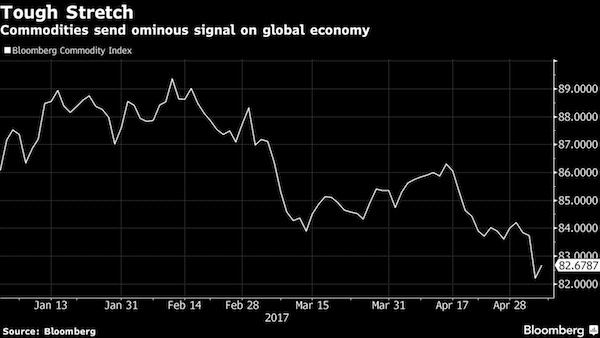
So while Friday saw a small recovery, it appears to be merely a “dead cat bounce” rather than a sign of any market bottom. Traders have reason to question global economic strength. They are concerned about fresh signs of an over-extended Chinese economy and an ongoing slowdown in developed markets faced with aging demographics. In the U.S., they question President Donald Trump’s infrastructure promises along with his administration’s relaxed standards in the mining and drilling sectors, whose commodities we already have too much of. OPEC’s output cuts have failed to do enough to stymie the global oil glut as U.S. drillers add to their rig counts. Such negative sentiment has carried through in the equity markets, particularly among commodity-producing nations such as Australia, Canada and Brazil.

Read more …

A liquidity problem. And a confidence one.

Traders Are Fleeing the Options Market (WSJ)

Falling volumes and spiraling costs are pushing trading firms out of U.S. options, raising concerns about fragility in a market that investors rely on to protect portfolios. Trading has dwindled in most areas of the market, and investors and traders are grappling with increasing fragmentation. Liquidity, the crucial ability to do trades without significantly moving prices, has deteriorated, according to interviews with market participants and data reviewed by The Wall Street Journal. Options on key indexes, exchange-traded funds and high-volume stocks dominate trading. Meanwhile, there is less activity in the rest of the listed U.S. options world. The stresses prompted at least six prominent options market makers to exit from the business since 2012. Market makers are firms willing to both buy and sell using automated programs.

Thomas Peterffy, a pioneer of electronic options trading, said in March that his firm, Interactive Brokers, would pull the plug on options market making. KCG Holdings announced its exit from retail options market making last year, while UBS and Credit Suisse have also left automated options market making. JP Morgan and Bank of America made similar decisions in 2014, according to people familiar with the matter. “Most market makers congregate in the highly traded products,” Mr. Peterffy said in an interview. “It’s difficult for a market maker to maintain hundreds of thousands of bids and offers all the time.” It is hard to pinpoint what triggered the trader exodus, but industry experts say as firms leave, liquidity gets further drained, which spurs more market makers to retrench.
The dangerous feedback loop could sap appetite for options, key derivative securities that investors use to manage risk in their portfolios. “We could ill afford to lose any more market makers at this junction,” said Alan Grigoletto, who previously worked at the Boston Options Exchange, and now runs Grigoletto Consulting while trading options in his retirement account. Data show the liquidity bifurcation. Index and ETF options volume rose in April by 28% and 4%, respectively, data from the Options Clearing Corporation show. Meanwhile, total equity options volume shrank by 10% from the prior year.

Read more …

The car loans issue keeps growing.

The Debt-Bubble Landmine Obama Left For Trump (NYP)

President Trump came in for much jeering when he told reporters he had “inherited a mess” from President Barack Obama. On the economy, though, Obama did indeed leave behind a hidden mess: a seemingly healthy jobs market dependent on cheap debt. When this debt bubble bursts, just as the last one did, the manufacturing jobs Trump wants to save will be in even greater peril. [..] who is borrowing for used cars – and at much higher interest rates – is a huge concern. People with not-great credit scores have always made up about a fifth of the auto-loan market. But the percentage of people borrowing even though they have really bad credit scores has surged, reports Bloomberg. It’s now a third of the subprime auto-bond market, up from just 5% seven years ago. A Standard & Poor’s analysis of just one big subprime auto bond tells the story.

Last week, a company called DriveTime, which sells used cars in 26 states to people with bad credit, was in the market to issue $442 million worth of bonds backed by auto loans. The average credit score of borrowers was 538 — indicating a history of serious default. And, as S&P notes, “today’s subprime customer appears to be . . . weaker . . . than that of several years ago,” because people who defaulted right after the housing crash at least had the excuse that they were caught up in a global bubble. These loans are for people who have no choice but to borrow to buy a car, and no bargaining power on the interest rate they pay: close to 20%. Even though the borrowers pay through the nose, they depend on cheap global credit. With interest rates still near record lows, lenders have to take ever more risk in a low-interest-rate environment to make a little money.

As for that risk: Delinquency rates are rising, with 4.32% of subprime borrowers in general at least 60 days late last year, up from 3.52 two years earlier, says S&P. The bigger risk here isn’t the risk to investors, though. The auto-loan market is still much smaller than the housing market, and the investment world hasn’t created trillions of dollars of derivative securities based on this market (at least not that we know of). And unlike with houses, no one ever expects the value of a car to increase with use. No, this bubble presents a much more direct risk to the economy — and manufacturing jobs. If people with terrible credit can’t borrow an average of nearly $18,000 to buy a used car (what the DriveTime customer pays), the market for used cars collapses. That, in turn, affects the market for new cars. Indeed, the US auto industry has seen sales decline this year, after clocking half a decade of record highs.

Read more …

Canadians do the subprime car thing too.

Canadians Buy Record Number of New Cars With Record Amount of Financing (BD)

Canadians aren’t just buying real estate, they’re also treating themselves to new cars. According to a new release from Statistics Canada, sales of new cars reached a record high for February. Great for automobile manufacturers, but not so great for the economy. Debt-fuelled financing makes this more of a warning sign than a boom-time trend. Sales of new motor vehicles across Canada rose to an all-time record for February. The month saw 125,284 sales – a 2.74% increase from the same time last year. The largest segment of sales were seen in Ontario, where 41% of them occurred. This is up slightly from 2016, where Ontario accounted for 39% of sales. Booming real estate prices, and massive numbers for car sales… Ontario better be facing the greatest economy its ever experienced, or it’s in trouble.
Consumers are purchasing more expensive vehicles too. Over $5 billion was spent on new vehicles for the month, bringing the average to $40,100 – up 3.4% from the same time last year. Ontario was below the average for the country, where the average price was $39,400. While prices are lower in Ontario, they’re not exactly budget vehicles either. The uptick in average sale price is due to longer financing terms for buyers. According to the Financial Consumer Agency of Canada (FCAC), Canadians are “increasingly purchasing more car than they can afford,” due to longer financing becoming fashionable. The agency notes that average leases have crept up 2 months, every year since 2010. According to the Bank of Canada (BoC), the average loan was 74 months as of 2015.
Read more …

The Canadian debt issue is turning into a total craze.

Majority of Consumers Now See Canadian Home Prices Rising (BBG)

Expectations for Canada’s housing market are heating up, with more than half of respondents in a weekly telephone survey predicting home prices will rise, the first time the measure has topped 50% in records dating back to 2008. The bullishness comes even as a run on deposits at Toronto-based mortgage lender Home Capital leads to heightened scrutiny of a market which policy makers have said is divorced from economic fundamentals. The broad Bloomberg Nanos Canadian Confidence Index fell to 59 in the week ended March 5. Some 50.1% of respondents said they expect local home prices to rise. The figure has climbed for six straight weeks and is higher than the average for the series of 37.1%. Thepercentage of people surveyed in the week ending May 5 who said local home prices will decline in the next six months slid to 10% from 10.7%.

“Consumer sentiment on real estate has gone from hot to hotter,” said Nanos Research Group Chairman Nik Nanos. Housing has led the world’s 10th largest economy over most of this decade as exporters have struggled. The latest burst of housing momentum has led policy makers to question whether it’s being led by supply and demand or by speculation. The Ontario Securities Commission opened hearings into whether Home Capital failed to properly disclose an internal probe into fraudulent mortgage applications, a shakeup in a nation lauded for having the world’s safest banks. The latest Toronto figures also showed prices up 25% in April from a year earlier, still close to the 30% March pace that Ontario Finance Minister Charles Sousa called unsustainable on April 20 when he imposed a foreign buyers tax. Those events haven’t led to more bets on a price decline either, and housing optimists now outnumber pessimists by a factor of five to one.

Read more …

So much in debt they can’t pay their bills. Maybe someone should take a look at Canadian inequality, too.

Over 50% of Canadians $200 or Less Away From Not Being Able To Pay Bills (Gl.)

More than half of Canadians are living within $200 per month of not being able to pay all their bills or meet their debt obligations, according to a recent Ipsos survey conducted on behalf of accounting firm MNP. “With such a small amount of wiggle room, any kind of unanticipated hardship, such as a job loss or even a car repair, could send an already struggling family into financial despair,” said Grant Bazian, president of MNP’s personal insolvency practice, which is one of the largest in Canada. For 10% of Canadians, the margin of error when it comes to household finances is even thinner, at $100 or less. But those with anything at all left at the end of the month were in better shape than many: A whopping 31% of respondents said they already don’t make enough to meet all their financial obligations.

Debt is causing Canadians a fair bit of stress, the polling suggests, but few appear to be on track to buff up their monthly financial cushion. Two-thirds of survey takers said they are “less than very confident” about their ability to create an emergency fund. Another hair-raising finding from the survey: Roughly 60% said they don’t have a firm grasp of how interest rates affect debt repayments. The statistic helps explain why many indebted Canadians end up taking on more debt and high-cost loans, said Bazian. “That’s how so many end up in an endless cycle of debt,” he noted. But the data also raises the question of whether Canadians understand the implications of an interest rate hike by the Bank of Canada (BoC). A decision by the BoC to start lifting its key policy rate from historic lows would raise the cost of carrying debt across the country.

The Bank uses interest rates, among other tools, to influence inflation and economic activity. Many economists believe it could start to raise rates in the first half of 2018, as economic growth picks up pace. Although the BoC will probably lift rates gradually and over time, the impact on Canadian wallets will be substantial. For example, as Global News has reported before, a onepercentage point rise in the BoC’s key interest rate would likely push up variable mortgage rates by a similar amount. A variable mortgage rate that’s currently set at 3%, for example, would go up to 4%, which represents a 33% increase in interest payments for the mortgage holder. That’s an extra $83 a month for every $100,000 in outstanding mortgage debt.

Read more …

Quebec has strong US trade ties.

Quebec’s Finance Minister: Don’t Dawdle on NAFTA Overhaul (BBG)

Quebec Finance Minister Carlos Leitao has a message for government officials considering a renegotiation of NAFTA: Time is of the essence. “If we are going to renegotiate Nafta, then let’s do it,” Leitao said in an interview Friday at Bloomberg headquarters in New York. “The worst case scenario would be if we spend years talking about renegotiating, but don’t actually do it and it just keeps hanging around and doesn’t get addressed. The longer it drags on, the bigger the real impact on investment.” Canadian Prime Minister Justin Trudeau is facing a lengthy trade battle with the U.S., which also includes calls for a new softwood lumber pact and Donald Trump’s complaints about Canada’s system of protectionist dairy quotas.

It’s all set to drag on as the president has yet to trigger a 90-day notice period to Congress to renegotiate Nafta. The last softwood lumber dispute lasted five years. “The problem with the uncertainty is we don’t know what kind of process we will have,” Leitao said. “Is this going to be along the same lines as the last Nafta negotiations? That was very systematic. There were panels on various issues. It’s that kind of certainty that we would like. The actual nuts and bolts will take time.” Leitao has good reason to be wary of protracted trade battles, with his most recent budget already predicting Quebec’s economic growth will lag behind the Canadian average. Output in Quebec will grow 1.7% this year before slowing to 1.6% in 2018, budget forecasts show. That’s less than the 2.2% and 2.3% forecast for all of Canada over the same period.

Read more …

Deleveraging.

Chinese Stocks Head For Longest Losing Streak In 3 Years (BBG)

Chinese stocks pared declines, with technical indicators signaling that a five-day slide may have been overdone. The Shanghai Composite Index was little changed at 3,077.78 as of 1:07 p.m. local time, after declining as much as 0.7% earlier in the day. Consumer shares were the worst performers on the CSI 300 gauge, while telecom companies led gains. The Hang Seng Index climbed 0.4%. An intensifying campaign to reduce leverage in the financial system pushed the Shanghai benchmark to a 2.4% loss in the five days through Monday. This drove the gauge’s relative strength index to below 30, a level that suggests to some traders that an asset is oversold.
The nation’s banking regulator said Monday that lenders should carry out collateral pressure tests at least once a year, while the Securities Times reported that some rural banks had suspended interbank businesses temporarily while officials conduct spot checks. “Some stocks appeared to be very cheap at current levels, and this triggered some bargain hunting,” said Banny Lam, head of research at CEB in Hong Kong. State-owned enterprises that dominate old growth industries, such as banks and commodity producers, have been among the hardest-hit by the deleveraging drive, while new-economy shares remain in favor among overseas investors. That’s led to a wide gap between the nation’s two main offshore gauges: the Hang Seng China Enterprises Index and the MSCI China Index.
Read more …

Much collateral doesn’t actually exist. Wealth management products, shadow banks, it’s all not much more than a mirage. It takes faith.

How China Keeps Its Financial System From Collapsing (ZH)

With “risk” in most of the developed world seemingly a long forgotten four-letter word, as seen by today’s plunge in the VIX to a level not seen in 34 years, traders hoping for some “risk event” have been confined to the recent turmoil in China, where overnight not only did trade data disappoint, with both imports and exports missing, but bond yields jumped to the highest level since 2015, dragging stocks lower even as the local commodity crash slammed iron ore and copper to new YTD lows.
While largely a “controlled” tightening, meant to contain China’s out-of-control shadow banking system, the recent gyrations in Chinese capital markets are starting to have a profound impact on local funding, resulting in a collapse in new bond issuance, and according to FT calculations, in April the number of aborted issues rose to 154, up from 94 in March, 32 in February and 31 in January.
As DB added, “local bond markets are practically shut for corporates. In fact, YTD issuance is down 40%+ yoy and net issuance has been negative in three out of the first four months this year. A number of issuers are being forced to cancel bond issuances (over RMB100 billion YTD) and there were reports (Bloomberg) of even CDB halting issuance (though subsequently denied). Some AA corporates are now issuing at north of 7%.” These signs of mounting stress in China’s $9.3 trillion bond market come less than a month after the country’s banking regulator, Guo Shuqing, was quoted as supporting a campaign to sort out chaotic practices, and threatening to resign if the banking system became “a complete mess”.
[..] whether or not China keels over and has a hard (or worse) landing, will depend on the PBOC; when (not if) the central bank gets involved, will depend on how soon China’s banks and various CD-funded financial institutions run out of collateral (whether it exists or not) to sell, such as iron ore, copper, precious metals, bonds and even stocks. This will hardly come as a surprise. As we showed last month, the only reason the Chinese banking system hasn’t imploded, is due to nearly CNY 10 trillion in central bank liquidity support for the local banks, just under 100% of China’s GDP.

Read more …

Europe too.

Parts of Asia Will Grow Old Before Getting Rich, IMF Warns (BBG)

Asia’s rapidly aging population means the region is shifting from being the biggest contributor to the global workforce to subtracting hundreds of millions of people from it, according to the International Monetary Fund. The reversal of the so-called “demographic dividend” will drag on global growth and also that in Asia, the world’s fastest growing region, the IMF warned in its annual outlook for the area. The population growth rate will fall to zero for Asia by 2050 – it’s already negative in Japan – and the share of the population who are working-age has already hit its peak, the IMF estimates. That means the ratio of the population aged 65 and older will be almost two and a half times the current level by 2050, and even higher in East Asia.
“The speed of aging is especially remarkable compared to the historical experience in Europe and the United States,” the IMF said. Per capita income in Asia relative to the U.S. remains at much lower levels than those achieved by mature advanced economies in the past. “Countries in Asia will have less time to adapt policies to a more aged society than many advanced economies had,” the fund wrote. “As such, parts of Asia risk becoming old before becoming rich.” For economic growth, the aging process could erode up to one percentage point from annual output over the next three decades in Japan, and between 0.5-0.75 percentage point in China, Hong Kong, South Korea and Thailand.
While some bright spots remain, such as India and Indonesia, demographics could subtract 0.1 of a percentage point from annual global growth over the next three decades, the IMF estimates. It also means Asia is at risk of falling into secular stagnation if an older population leads to excessive savings and low investment renders monetary policy ineffective. The demographic shift will also likely keep downward pressure on real interest rates and asset returns for most major countries in Asia, the IMF said. “Adapting to aging could be especially challenging for Asia, as populations living at relatively low per capita income levels in many parts of the region are rapidly becoming old,” the IMF said.

Read more …

It’s time to come clean on how bad Italy is really doing.

Italy Adds Bum Note To Macron’s Ode To Euro Zone Joy (R.)

Italy is adding a bum note to Emmanuel Macron’s ode to joy. While it’s encouraging that a Europhile will take the French presidency after Sunday’s vote, attention can now turn to Europe’s other crisis-in-waiting. Elections are coming in Italy, and there are more of the ingredients for a populist shock than in France. The economy has fared much worse since the creation of the euro zone, with growth averaging zero since 2001, according to the IMF. GDP per capita has fallen in that time. The IMF expects the unemployment rate to reach 11.7% this year, 2 percentage points higher than in France. Anti-EU forces are also spread widely across Italy’s messy political landscape. Stagnation has fuelled support for the 5-Star Movement, which could lead Italy out of the euro zone and currently polls just below 30%.

Mainstream parties are shaky. The left fragmented after former prime minister Matteo Renzi lost his referendum on constitutional reform in December. The right is an awkward alliance between ageing former premier Silvio Berlusconi and more radical anti-EU parties, like the Lega Nord. The risk is that 5-Star forms a coalition with the Lega after elections that must take place by May next year. The economy is picking up, but tighter monetary policy, as the European Central Bank reins in bond buying, could strangle the recovery, as could an overly stern fiscal policy. Italy needs to cut spending or increase taxes by 2percentage points to meet European targets through 2019. Job losses from the restructuring of banks and bankrupt national airline Alitalia could become a lightning rod for anti-EU sentiment.

Europe can help. Italy is likely to miss its fiscal targets anyway, but loosening bloc-wide budget rules to encourage investment and spread out cuts over a long period would cement the recovery. A strong France, aided by Macron’s victory, might persuade Germany to spend more, and give other countries freer rein. However, even if a political shock is avoided, the next election may produce a weak government with no mandate for taking tough decisions to boost growth. Italy could be bringing discord to the region for years.

Read more …

MMT must go mainstream.

The Rock-Star Appeal of Modern Monetary Theory (Nation)

To a layperson, MMT can seem dizzyingly complex, but at its core is the belief that most of us have the economy backward. Conventional wisdom holds that the government taxes individuals and companies in order to fund its own spending. But the government—which is ultimately the source of all dollars, taxed or untaxed—pays or spends first and taxes later. When it funds programs, it literally spends money into existence, injecting cash into the economy. Taxes exist in order to control inflation by reducing the money supply, and to ensure that dollars, as the only currency accepted for tax payments, remain in demand.

It follows that currency-issuing governments could (and, depending on how you lean politically, should) spend as much as they need to in order to guarantee full employment and other social goods. MMT’s adherents like to point out that the federal government never “runs out” of money to fund the military, but routinely invokes budget constraints to justify defunding social programs. Money, in other words, isn’t a scarce commodity like silver or gold. “To people who’ve worked in financial markets, who work at the Fed, this isn’t controversial at all,” says Galbraith, who, while not an adherent, can certainly be described as “MMT-friendly.”

The decisions about how to issue, lend, and spend money come down to politics, values, and convention, whether the goal is reducing inequality or boosting entrepreneurship. Inflation, MMT’s proponents contend, can be controlled through taxation, and only becomes a problem at full employment—and we’re a long way off from that, particularly if we include people who have given up looking for jobs or aren’t working as much as they’d like to among the officially “unemployed.” The point is that, once you shake off notions of artificial scarcity, MMT’s possibilities are endless. The state can guarantee a job to anyone who wants one, lowering unemployment and competing with the private sector for workers, raising standards and wages across the board.

Read more …

No matter how deep you dig, you can’t guarantee safety for a million years. That’s what’s halted Yucca Mountain. The Bloomberg editors don’t understand the issue either.

To Bury Nuclear Waste, Dig Deeper Than Yucca Mountain (BBG)

Energy Secretary Rick Perry is right to say the U.S. needs a long-term solution to its massive nuclear waste problem. It also makes sense for Perry and some members of Congress to see Yucca Mountain as part of that solution – though many Nevadans promise to make sure it won’t be. But even if Yucca can survive the political fight, it can’t be the only option for disposing of America’s spent nuclear fuel. More than 75,000 metric tons of the stuff are cooling in pools and casks at dozens of power-plant sites around the country. That’s already too much to fit in Yucca Mountain, and the total grows by more than 2,000 tons a year. Other strategies are needed, ideally ones that are less politically radioactive. Consider, for instance, the idea of sinking the waste into boreholes that reach three miles below ground – 15 times as deep as the proposed chambers inside Yucca. Such shafts could be drilled in states that, unlike Nevada, benefit from the use of clean, reliable nuclear power.

Boring into the Earth’s deep rock layers could provide the kind of bury-it-and-forget-it underground disposal necessary for material that will remain dangerous for hundreds of millennia. Local opposition can still be expected; in North and South Dakota, residents have shouted down some plans to dig test holes. That’s why a so-called consent-based strategy, identifying locations with both the appropriate geology and an agreeable population, is necessary. If hosting a waste site means more funding for local public works and services, more communities might be willing to accept one. (This proved to be the case in Carlsbad, New Mexico, home to a storage place for low-level waste from nuclear weapons.) A familiarity with nuclear power may also encourage acceptance, perhaps because there is a nuclear plant in the area employing people and providing power.

The same approach could also be used to locate six or seven centers where waste from several nuclear plants could be stored while it awaits burial. Such containment facilities could also include research centers – mini national laboratories where scientists could work out new ways of reprocessing fuel and perhaps conduct demonstration projects for reactors designed to use safer fuels. The one thing the U.S. should not do is continue to neglect the growing quantities of nuclear waste. Over the past few decades, electricity ratepayers have contributed more than $34 billion to a national fund to pay for a geologic disposal site. And because none yet exists, taxpayers are forking over billions more to enable nuclear-plant operators to manage interim storage. The political barriers to solving this problem may be high, but further delay – and an undue fixation on Yucca Mountain – won’t make them any easier to overcome.

Read more …

Turkey will provoke Greece at some point, and US and Europe had better prevent that from happening.

Dangerous Times in the Aegean and Cyprus (K.)

The concept of gray zones (the claim that the sovereignty of a number of islands and islets in the Aegean is undetermined) was a novel idea that Turkey came up with 20 years ago. At some point, Ankara reached the point of including the Greek island of Gavdos in its gray zones list. Whenever Athens made an official request regarding the islands or rocky outcrops that Turkey had on its list, the answer was always very vague: “Anything that is not clearly included the bilateral agreements that set out Greece’s borders with other countries.” At first, many people thought this was a bargaining chip that Ankara would trade as part of a grand bargain. They were wrong. The failure to settle differences between Greece and Turkey gave Ankara the opportunity to add more issues to the agenda.

Over time, these have become permanent and ever-expanding. Currently, Turkey considers significant parts of the Aegean to be gray zones. This includes islands that have been inhabited for decades. It is questioning Greek sovereignty through its actions, not just its words, by the frequent presence of naval vessels in Greek waters and overflights by fighter jets. Over the last few months, it has being doing this more systematically and openly. Greece’s approach has also changed. The doctrine that existed in the wake of the Imia crisis in 1996, when the two countries almost went to war, was based around not building up tension following various incidents and maintaining a low profile.

[..] A dangerous situation is also playing out in Cyprus. The Turks are trying to impose the concept of gray zones there as well. July (when a new round of drilling for hydrocarbons is due to begin off Cyprus) promises to be a difficult month. Ankara will attempt before then to intimidate the companies that plan to start drilling or try to obstruct them if they are not scared off by threats.

Read more …

Prison camps are no solution.

New Refugee Center Planned On Chios As Tensions Simmer (K.)

The exact site for the creation of a new so-called pre-departure camp for migrants and refugees on the island of Chios will be determined by May 20, authorities said on Monday. The new camp will come as tensions at overcrowded reception centers on the eastern Aegean island continue to simmer, with almost daily clashes between stranded migrants of different ethnicities. “The experience of Lesvos and Kos where such centers have been created is positive,” said Lieutenant General Zacharoula Tsirigoti of the Greek Police in a press briefing Monday on Chios. Pre-departure centers are deemed essential as they house refugees and migrants returning to Turkey. Tsirigoti added that building a new center on the island is a “one-way street” as locals – many of whom have campaigned for the immediate removal of all migrants and refugees from Chios – say the situation has reached breaking point and that the large police force on the island has been unable to cope.

Read more …

The season is just starting: “..the trend points to around 250,000 people arriving over the course of 2017”. There is no place for these people in Italy and Greece.

Nearly 200 Missing, 11 Dead As Migrant Boats Sink Off Libya (AFP)

Eleven migrants have died and nearly 200 are missing after two boats sank off the coast of Libya, UN agencies said Monday citing survivors, in the latest such tragedy. The first involved an inflatable craft which left Libya early Friday with 132 people on board, only to start deflating a few hours later, before overturning. Some 50 survivors were picked up by a Danish container ship, the Alexander Maersk, which was alerted to divert by Italian coastguards and dropped them off on Sunday in Pozzallo, southern Sicily. Representatives of the UN High Commissioner for Refugees (UNHCR) and the International Organization for Migration (IOM) were able to meet them on Monday to hear their accounts. Survivors told them that women and children were among those missing.

At the same time, the bodies of 10 women and one child were found Monday on a beach in Zawiya, 50 kilometres (31 miles) west of Tripoli, according to an official for the Libyan Red Crescent. Then on Sunday seven migrants – a woman and six men – were rescued by Libyan fishermen and coastguards off the coast of the Libyan capital. An IOM spokesman who met them said they had set out on a boat with at least 120 people on board, including about 30 women and nine children. In all more than 6,000 migrants were rescued Friday and Saturday in international waters off the coast of Libya and brought to Italy, while several hundred were rescued in Libyan waters and taken back to Libya.

The number of people leaving Libya in the hope of starting a new life in Europe is up nearly 50% this year compared with the opening months of 2016. With most departures coming in the warm summer months, the trend points to around 250,000 people arriving over the course of 2017. Some 500,000 migrants were registered in Italy in the three years spanning 2014-16.

Read more …

Europe’s reputation is tarnished for decades. But everyone thinks they can deflect responsibility. Time for skin in the game.

Hundreds Of Migrants Feared Dead In Mediterranean Over Weekend (R.)

More than 200 migrants are feared to have died in the Mediterranean over the weekend, according to testimony from survivors, and several bodies, including that of an infant, have washed up on a Libyan beach. About 7,500 people have been rescued off the coast of Libya since Thursday, the Italian and Libyan coastguards said. Two groups of survivors told the organizations that hundreds drowned when their rubber boats began to deflate before rescuers arrived. More than 60 are feared dead and three bodies were recovered on Saturday, survivors brought to Sicily on Sunday told Italian coastguards. The boat left Libya carrying about 120, they said. There was some discrepancy in the numbers. Based on its interviews with some of the survivors in Pozzallo, Italy, the U.N. refugee agency estimated the number of dead at more than 80.

Separately, Libya’s coastguard picked up seven survivors over the weekend who said they had been on a boat packed with 170 migrants. Aid agency International Medical Corps, which gave medical care to the survivors, also confirmed their account. “We rescued on Sunday seven illegal migrants – six men and a woman,” said Omar Koko, a coastguard commander in the western city of Zawiya. “According to these survivors, there were 170 on board the boat, which sank because of overloading.” Among those missing were more than 30 women and nine children, Koko said. Eleven bodies washed up on the shore west of Zawiya, said Mohanad Krima, a spokesman for the Red Crescent in Zawiya. “All the bodies are of female victims and there is a girl of less than one year old,” he said.

Read more …

May 062017
 
 May 6, 2017  Posted by at 9:24 am Finance Tagged with: , , , , , , , , , ,  3 Responses »


Edouard Boubat Paris 1950


Think Like a Surfer in the Largest Stock Market Bubble Since 1983 (Dent)
US Student, Auto Loans Hit New All Time High Of $2.6 Trillion (ZH)
China’s War on Debt: Stocks Drop, Bond Yields Shoot Up and Defaults Rise (WSJ)
This Is Not a Bill (Jim Kunstler)
Review of Steve Keen’s Can We Avoid Another Financial Crisis? (R.)
France and Greece Heavily Disadvantaged by Euro as Germany Benefits (WE)
How the Eurozone Damaged French Politics – And The Election (Nation)
Macron Team Blasts ‘Massive Hacking Attack’ (R.)
Macron Personifies The Very Europe Whose Failure Feeds Le Pen (Zizek)
The English Language Is Losing Importance In Europe – Juncker (G.)
Germany Says No Debt Relief Being Prepared For Greece (R.)
The Forgotten History of Cinco de Mayo (IC)
Rescuers Pick Up 560 Migrants Off Libyan Coast On Thursday (R.)


Disasters as opportunities.

Think Like a Surfer in the Largest Stock Market Bubble Since 1983 (Dent)

I took up surfing in my early 30s. It didn’t last long. But I learned a tremendous amount from the experience (least of which is that I suck at surfing). Well, it’s time to think like a surfer. Your sole focus is to catch the wave. The best surfers can see the waves building, just like we can in the markets, but they only care about where the biggest, best waves will crash. That’s where you get the ride. And if you catch the biggest wave in the right place, you get the ride of a lifetime. Look at this fourth and largest wave building in the stock market. It’s the wave of a lifetime for investors, and it’s rolling onto our shores right about now… Remember, all the action comes when the wave crashes, not as it’s building. As the swell grows around you, you can go with the flow and harness the energy of the wave with little effort.

That’s when you become one with the universe, sitting there on your board, surrounded by dark water, rolling up and down as the power builds beneath you. That’s why surfers get addicted. Then, at the perfect moment, all the wave’s pent up energy releases in a roaring spray of water and power. That’s where we want YOU to be when the greatest market wave of your lifetime comes crashing to shore! That’s when the greatest profits come. That’s when the greatest innovations spring up. The smartest people (I include surfers in this group) and the greatest innovators understand this. They don’t look at a good economy as the best opportunity for success. Seeds of radical innovation only grow in the most challenging conditions.

Read more …

Private debt is far more dangerous than public debt.

US Student, Auto Loans Hit New All Time High Of $2.6 Trillion (ZH)

One month after we, and every other financial media, reported that US credit card debt had risen back over $1 trillion for the first time since January 2017, the Fed demonstrated just how meaningless such reports are when in its latest consumer credit report it revised the total stock of revolving debt back under $1 trillion for the month of March, while boosting December’s amount to $1,000.1 billion, meaning that all those “$1 trillion in credit card” debt headlines were about 4 months late. Fed screwing around with the financial reporters aside, the latest monthly report showed that total consumer credit rose by $16.4 billion, more than the $14 billion expected, an increase which was offset by a downward revision to the February consumer credit number from $15.2 billion to $13.8 billion. Revolving credit accounted for $2 billion of the increase with the rest, or $14.4 billion, in the form of auto and student loans.

And speaking of student and auto loans, the Fed also released its latest quarterly estimate for the two series as of March 31, and as one would expect, the numbers rose to new all time highs, and as of the end of the first quarter, US consumers owed $1.44 trillion in student loans, an increase of $32 billion for the quarter and $80 billion for the year, as well as $1.12 trillion in auto loans, an increase of $8 billion Q/Q and $73 billion Q/Q. This means that as of March 31, Americans owed two and a half times as much on their auto and student loans, as on their credit cards, a new all time high.

Read more …

“..since these products aren’t logged as loans or other assets on their balance sheets, banks have to set aside little or nothing for potential losses associated with them..”

China’s War on Debt: Stocks Drop, Bond Yields Shoot Up and Defaults Rise (WSJ)

A wave of regulations aimed at cutting risk in China’s financial system is rippling through the country’s markets and sending banks and companies scrambling for funds. During the past month, Chinese shares have fallen nearly 5%, draining almost half a trillion dollars out of the country’s markets. Bond yields have shot up to their highest levels in two years, and bond defaults hover at record levels. The uncertainty has also weighed on metals and commodity prices, already hurt by doubts around China’s growth momentum. The price of iron ore plunged 8% on Thursday, the daily trading limit. Investors blame the volatility on a host of measures Chinese authorities have rolled out to curb runaway debt levels, from raising the cost of short-term funds to measures that are prompting banks to unwind hidden loans and securities.

A particular target is high-risk, high-yielding investment products that banks have used to boost returns, but that regulators say may conceal dangerous amounts of risky lending. Regulators are responding to prodding from Chinese President Xi Jinping, who issued a call for financial stability ahead of a major power reshuffle later this year, and just last week warned finance officials not to miss “a single risk” or “hidden danger.” The market turbulence will test Beijing’s resolve in tackling China’s snowballing debt, especially if it looks like regulators’ crackdown is jeopardizing short-term growth. If they can withstand the short-term squeeze and continue to push it through, the effort will help put China’s economy on a sounder footing longer-term. Banks—especially small and midsize lenders—sell the risky investment products to Chinese savers, then lend the funds to outside asset managers who invest them in bonds, stocks and loans.

The lenders make money from the difference between what they pay their investment clients and what they get from the outside managers. But since these products aren’t logged as loans or other assets on their balance sheets, banks have to set aside little or nothing for potential losses associated with them. That leaves banks more exposed to risk and shows their financial position as stronger than it really is. The maneuvering also encourages leveraged purchases of securities by asset managers and enables banks to continue funding troubled customers, such as property developers with excess inventory and bloated steelmakers. Such grey-area investments reached nearly 20 trillion yuan ($2.8 trillion) at the end of last year, says Fitch Ratings, or about 26% of China’s GDP in 2016, up from less than 10% three years earlier. They now represent an average of 19% of small and midsize banks’ total assets, compared with about 1% for big state banks, according to Fitch.

Read more …

America’s unsolvable problem has been solved in dozens of countries.

This Is Not a Bill (Jim Kunstler)

The way it works now, the so-called “providers” (doctors, hospitals) refuse to post the cost of any service, and then charge whatever they feel they can extract, subject to an abstruse and dishonest ceremonial “negotiation” with the insurance company. The result: hospital and insurance executives get paid multi-million dollar salaries, doctors get to drive fine German cars, and the patient gets financially ass-raped, kicked to the curb, and eventually stuffed into the bankruptcy courts. ObamaCare did nothing to fix this. It just added more victims to the rolls and upped the price of admission for a personal financial ass-raping, so that an insured individual could go to the hospital for an emergency appendectomy and end up getting dunned for thousands of dollars — or even more if one of the hosptial’s favorite cute scams is applied, such as calling in an out-of-network anesthesiologist to knock you unconscious (in which state you are unlikely to inquire whether he/she/zhe is in-network or out).

Under the current system, a hospital can bill you $5,999 to stitch up a cut finger, mitigate a bee-sting, or wind an Ace bandage around a sprained ankle, and you’re sure not to learn the cost-of-treatment until the postman drops off the incomprehensible “explanation of benefits” from the insurance company that states in bold print on top “This Is Not a Bill,” but actually is a report of your own incipient financial ass-raping. But judging from the news reports this day, none of these issues is actually on the table in the congressional debate. I don’t believe the editors of The New York Times are necessarily “in bed” with the overpaid hospital CEOs and the insurance company fraudsters. They are simply putting up a defense of their previous psychological investment in Democratic Party ideology — in the shibboleth that ObamaCare was unquestionably a great thing because it was created under the magically empowered 44th president.

I can believe that both Democratic and Republican law-makers are not only in bed with the medical fraudsters of all categories, but are performing a particularly odious form of sadomasochistic bondage-and-discipline sex in exchange for payoffs. Note, too, that none of the aforementioned major media have reported what the medical and insurance lobbyists have paid to their rent-boys and doxies in the US capitol. Wouldn’t you like to know?

Read more …

“Money is seen as a “veil” placed over the activities of the real economy, a mere contrivance to get around the inconveniences of barter.”

Review of Steve Keen’s Can We Avoid Another Financial Crisis? (R.)

The preference for high theory and abstruse mathematical modeling meant that mainstream economics had come to rest on a number of gloriously improbable assumptions. In their models, millions of households were reduced to a single “representative agent,” a God-like being, omniscient and immortal. This unreal creature inhabited a world where peace – or equilibrium – ruled. Crises were impossible in such an Eden, unless a mischievous serpent entered from abroad. But such an outcome was naturally impossible to predict. Both Romer and Keen agree that the most serious error of modern macroeconomics is that it ignores finance. Money is seen as a “veil” placed over the activities of the real economy, a mere contrivance to get around the inconveniences of barter.

Minsky, by contrast, saw capitalism as a financial system in which millions of balance sheets and cash flows were intertwined in a highly complex fashion. Money and credit are the essence of capitalism: economic transactions can only take place after financing. The trouble is that credit is inherently unstable, prone to expand excessively and to inflate asset price bubbles, which in time collapse, causing a cascade of defaults throughout the economy. In Minsky’s world, the tail of finance wags the real economy dog. Anyone who paid serious attention to credit, as Keen did prior to 2008, could hardly have failed to notice that something was amiss. After all, credit was growing very rapidly in the United States, in Australia and across much of Europe. Keen’s own contribution at the time was to point out that it wouldn’t take a collapse of credit to cause a serious economic downturn – a mere slowdown in the rate of lending would do the job.

This prediction was vindicated in 2008, when credit growth slowed sharply but remained positive, sending the U.S. economy into a tailspin. Keen is now calling for the dominant macroeconomic models to be jettisoned and replaced by ones that take account of credit. In his book, he develops a simple credit-based macro model. The economists at the Bank for International Settlements have constructed a “financial cycle” model along similar lines. In the end, the money-free macro models appear doomed. Yet progress has been painfully slow to date. As Max Planck said, science advances one funeral at a time – failing death, retirement would do the trick.

So what of the next crisis? With his eye on credit growth, Keen sees China as a terminal case. The People’s Republic has expanded credit at an annualized rate of around 25 per cent for years on end. Private-sector debt exceeds 200 per cent of GDP, making China resemble the over-indebted economies of Ireland and Spain prior to 2008, but obviously far more significant to the global economy. “This bubble has to burst,” writes Keen unequivocally.

Read more …

Untenable, but zero movement towards addressing the issue.

France and Greece Heavily Disadvantaged by Euro as Germany Benefits (WE)

It is now incontestable that Germany benefits greatly from the Euro. The weaker members of the Euro drag down the external value of the Euro compared with the US Dollar making German exports far more competitive than they would otherwise be. Despite the relative value of the Euro being lower than would be the case if the Euro was the currency of Germany alone, the Euro’s value relative to the Dollar is still significantly higher than would be the case were the Euro the currency of an independent Greece or France.

In Purchasing Power Parity (PPP) terms the Euro in Germany is some 32% undervalued compared with the Greek Euro, greatly benefiting German exporters, but imposing a burden on Greek exporters that they must find impossible to cope with. Conversely the overvaluation facing French companies is now a clear 20% compared with German companies.


Brazil and Argentina suffer from overvalued currencies against the US Dollar, suggesting one reason for the serious recession suffered by South America’s biggest economies over the past year. In contrast Canada, Russia, China, Mexico, Turkey and India all have currencies between 15% and 44% undervalued against the US Dollar, suggesting that at least some of Mr Trump’s rhetoric is justified. Over time these fundamental disparities have not shrunk, they have in fact widened. The charts to the upper right show the trend of German undervaluation against the French and Greek Euro’s in Purchasing power terms.

Read more …

“Although the major Western media portrays the EU authorities’ policies as the only sensible course, in economic terms, it is anything but.”

How the Eurozone Damaged French Politics – And The Election (Nation)

[..] there is a structural problem in the eurozone, and in the EU. The ECB, the European Commission, and the IMF (which is not an independent entity but generally answers to its European directors for decisions affecting Europe), are the European authorities that have increasingly constrained the economic decision-making of European governments. We can also include the eurogroup of finance ministers, which has tormented poor Greece and helped prolong that country’s interminable economic crisis. These people have shown that they are committed to creating a different kind of Europe. This can be seen in a paper trail of thousands of pages of documents, called Article IV consultations, where the IMF and EU government finance ministries hammer out their views on economic policies. These documents represent an elite consensus which can differ greatly from public opinion within the countries.

A review of 67 of these agreements for the four years 2008 through 2011, for 27 EU countries, showed a clear pattern of policy choices: cutting government spending, including on health care and pensions; increasing labor supply; reducing public sector employment; and changes in labor law that would reduce the scope of collective bargaining. This is the economic program that any politician or political party who does not want to be labeled as “anti-Europe” must adhere to, and it can be seen in the most recent (July 2016) IMF Article IV consultation for France, as well as the Stability Program that France has agreed to with the EU. These documents see France as freezing real spending, and committing to reducing its budget deficit to zero by 2021. These commitments imply that the French government can do nothing to reduce mass unemployment, which has averaged about 10% over the past year.

Although the major Western media portrays the EU authorities’ policies as the only sensible course, in economic terms, it is anything but. With France’s real borrowing costs near zero and inflation well below target, it makes sense for France to implement an economic stimulus, for example by increasing public investment. Fears of increasing the French public debt are unfounded; annual interest payments on that debt are currently at about 1.7% of GDP, a modest burden by any historical or international comparison.

[..] Since the 2008–09 world financial crisis and recession, the project of the eurozone, and to some extent of the EU, has created a destructive feedback loop that leads directly to the kind of dysfunctional politics now unfolding in France. It is one thing to give up some national sovereignty for a common project that can raise common living standards; it is quite another to surrender a country’s most important macroeconomic decision-making (monetary, exchange rate, and increasingly fiscal policy) to unaccountable authorities who have demonstrated their commitment to a regressive agenda. The Center Left’s collaboration with this program, e.g., President Hollande’s in France, has given the Far Right opportunities not seen since the 1930s.

Read more …

Good thing everybody already knows it’s Putin again. No reasoning needed.

Macron Team Blasts ‘Massive Hacking Attack’ (R.)

French presidential candidate Emmanuel Macron’s campaign team says it has been the victim of a massive and coordinated hacking operation. A large trove of emails from the campaign of French presidential candidate Emmanuel Macron was posted online late on Friday, 1-1/2 days before voters go to the polls to choose the country’s next president in a run-off against far-right rival Marine Le Pen. Some nine gigabytes of data were posted by a user called EMLEAKS to Pastebin, a document-sharing site that allows anonymous posting. It was not immediately clear who was responsible for posting the data or whether the emails were genuine. In a statement, Macron’s political movement En Marche! (Onwards!) confirmed that it had been hacked.

“The En Marche! Movement has been the victim of a massive and co-ordinated hack this evening which has given rise to the diffusion on social media of various internal information,” the statement said. An interior ministry official declined to comment, citing French rules which forbid any commentary liable to influence an election, and which took effect at midnight French time on Friday (2200 GMT). Comments about the email dump began to appear on Friday evening just hours before the official ban on campaigning began. The ban is due to stay in place until the last polling stations close on Sunday at 8 p.m. (1800 GMT).

Read more …

Perhaps the failure of the EU is not clear enough yet everywhere.

Macron Personifies The Very Europe Whose Failure Feeds Le Pen (Zizek)

The title of a comment piece which appeared in The Guardian, the UK voice of the anti-Assange-pro-Hillary liberal left, says it all: “Le Pen is a far-right Holocaust revisionist. Macron isn’t. Hard choice?” Predictably, the text proper begins with: “Is being an investment banker analogous with being a Holocaust revisionist? Is neoliberalism on a par with neofascism?” and mockingly dismisses even the conditional leftist support for the second-round Macron vote, the stance of: “I’d now vote Macron – VERY reluctantly.” This is liberal blackmail at its worst: one should support Macron unconditionally; it doesn’t matter that he is a neoliberal centrist, just that he is against Le Pen. It’s the old story of Hillary versus Trump: in the face of the fascist threat, we should all gather around her banner (and conveniently forget how her side brutally outmanoeuvred Sanders and thus contributed to losing the election).

Are we not allowed at least to raise the question: yes, Macron is pro-European – but what kind of Europe does he personify? The very Europe whose failure feeds Le Pen populism, the anonymous Europe in the service of neoliberalism. This is the crux of the affair: yes, Le Pen is a threat, but if we throw all our support behind Macron, do we not get caught into a kind of circle and fight the effect by way of supporting its cause? This brings to mind a chocolate laxative available in the US. It is publicised with the paradoxical injunction: “Do you have constipation? Eat more of this chocolate!” – in other words, eat the very thing that causes constipation in order to be cured of it. In this sense, Macron is the chocolate-laxative candidate, offering us as a cure for the very thing that caused the illness.

[..] In the hopeless situation we are in, facing a false choice, we should gather the courage and simply abstain from voting. Abstain, and begin to think. The commonplace “enough talking, let’s act” is deeply deceiving – now, we should say precisely the opposite: enough of the pressure to do something, let’s begin to talk seriously, ie, to think! And by this I mean we should also leave behind the radical leftist self-complacency of endlessly repeating how the choices we are offered in the political space are false, and how only a renewed radical left can save us – yes, in a way, but why, then, does this left not emerge? What vision has the left to offer that would be strong enough to mobilise people? We should never forget that the ultimate cause of the act that we are caught into – the vicious cycle of Le Pen and Macron – is the disappearance of the viable leftist alternative.

Read more …

Sharp thinking. Make literally everyone incapable of understanding anything that’s said.

The English Language Is Losing Importance In Europe – Juncker (G.)

The English language is losing importance in Europe, the president of the European commission has said amid simmering tensions over the Brexit negotiations. Speaking to an audience of European diplomats and experts in Florence, Jean-Claude Juncker also described the UK’s decision to leave the EU as a tragedy. “Slowly but surely English is losing importance in Europe,” Juncker said, to applause from his audience. “The French will have elections on Sunday and I would like them to understand what I am saying.” After these opening remarks in English, he switched to French for the rest of the speech. Making a stout defence of the EU, Juncker said the UK had voted to leave the project despite historic successes and a recent uptick in economic growth. “Our British friends decided to leave the EU, which is a tragedy,” he said.

[..] It is not the first time the English language has been caught in the crossfire of the Brexit negotiations. At a recent EU summit May slapped down reports that Brexit negotiations would be conducted in French, and after the June referendum EU officials made it known they planned to downgrade the use of English in the corridors of Brussels. In reality, the Brexit talks are most likely to be conducted in French and English with simultaneous interpretation. Barnier, a former French EU commissioner who clashed with the City of London, speaks English but wants the right to negotiate in his native tongue. English is also highly unlikely to disappear as a dominant language in the EU any time soon. Not only is it an official language for the Irish and Maltese governments, but many diplomats prefer to use English as a common second language rather than French.”

Read more …

2018 at the earliest. Then again, debt relief would make Greece less of a slave, so maybe much longer or not at all.

Germany Says No Debt Relief Being Prepared For Greece (R.)

No debt relief measures are being readied for Greece, Germany’s Finance Ministry said on Thursday after the Handelsblatt business daily reported measures were under consideration. The implementation of reforms that Greece agreed to in return for aid would help ensure the sustainability of the country’s debt, the ministry said in a statement e-mailed to Reuters. “No debt relief is being prepared,” it added. Regarding possible debt measures, a clear agreement was reached in a statement by the Eurogroup of eurozone finance ministers last May. “According to that, after the full implementation of the adjustment program, there will be an assessment of whether debt measures are necessary. That still applies,” it said. Earlier, Handelsblatt reported that Greece’s international lenders were preparing possible debt relief for Athens for discussion by the finance ministers.

The European Commission, the ESM eurozone rescue fund, the ECB and the IMF had prepared various debt measures in a document to be sent to the Eurogroup for further discussion, it said, citing people familiar with the document. One option was for the ESM to take over loans paid out by the IMF. The advantage would be lower interest rates charged by the ESM. Others included extending debt maturities and having the ECB and national central banks send profits made on Greek bonds to Athens through national governments, Handelsblatt reported. An EU source told Reuters the document was originally a paper by the ESM, not all four institutions, and had been modified on the way to the version Handelsblatt saw.

“It lays down several options for the restructuring of Greek debt and specifies possibilities which were given by the Eurogroup last May. One of the options still is that ESM would take debt from IMF,” the source said. “It is not clear yet if the IMF would agree on that.” Separately, German Finance Minister Wolfgang Schaeuble said in Durban, South Africa that the EU needed to “exert pressure on national governments to implement … much-needed reforms.” “Those countries which received help under European assistance programmes, and therefore had to actually implement unpleasant reforms, and those countries which have kept to the agreed rules are among the most successful countries in the EU today,” he said. “The problem is therefore not with the rules, but with the lack of implementation of them.

Read more …

Warfare, financial or otherwise.

The Forgotten History of Cinco de Mayo (IC)

Cinco de Mayo celebrates the victory of Mexican troops over the invading French army at the Battle of Puebla southeast of Mexico City on May 5, 1862. Because the Mexican soldiers were badly outnumbered and outgunned, the unexpected triumph was a watershed in forging the country’s national identity. (Militarily it wasn’t that significant — the next year France captured the Mexican capital and installed a member of the Austrian nobility as Maximillian I, “Emperor of Mexico.”) But here’s important part for everyone else to remember today: France was invading Mexico essentially because Mexico owed France money. Mexico had borrowed enormous amounts from Europe during the Mexican-American War from 1846-8 and in a civil war from 1858-61.

By 1862 it was impossible for the government to make timely payments on the loans without starving the country, and Mexican president Benito Juárez declared that all payments on foreign debt would be suspended for two years. Getting into unsustainable debt is not something unique to Mexico; countries have done so over and over throughout history, particularly during wars. The U.S. borrowed more than we could ever repay from France and the Netherlands during the Revolutionary War, and the U.K. borrowed far beyond its means from the U.S. during World War I. When this happens, it’s far better for both the debtors and creditors to organize some kind of default rather than forcing the debtors to pay all the money back on the original terms. The advantage for debtors is obvious.

More intelligent creditors understand it’s also good for them, because they generally don’t have a choice between getting all or just some of their money back. Instead, it’s a choice between getting some of it back or much less. To understand why, imagine loaning too much money to a software engineer. If you demand that the engineer sell all their computers to make interest payments, you’re unlikely to get much more money after that. And indeed both the U.S. and U.K. defaulted to varying degrees after their wars. Likewise, in 1862 the U.K. and Spain agreed to accept less than they were formally owed by Mexico. France, however, invaded Mexico in an attempt to get all its money back, which is why French troops were there for the Battle of Puebla on May 5.

In a sense, the invasion was admirably honest. International relations are often like organized crime on a gigantic scale, but people pretend otherwise. Here there was no pretense: The loanshark’s enforcers beat the crap out of an entire country. By contrast, creditors today have institutions like the IMF, which has often functioned as a creditors’ cartel — squeezing countries until they pay back their debts. This often involves lots of people dying … but in quiet ways, without armies involved.

Read more …
The EU isn’t only giving us Le Pen, it’s presenting us with this too.

Rescuers Pick Up 560 Migrants Off Libyan Coast On Thursday (R.)

Rescuers picked up 560 migrants from unsafe boats off the coast of Libya on Thursday, Italy’s Coast Guard said, including the body of a young man who the migrants said had been shot by smugglers on the beach for his baseball cap. Italian Navy and Coast Guard boats participated in the rescues together with two humanitarian vessels, a spokesman said. The migrants were traveling on board two large rubber boats and five small wooden ones, he added. The Phoenix, a rescue ship operated by the Migrant Offshore Aid Station (MOAS), took 422 on board, plus the body of the allegedly murdered young Gambian. “According to eyewitnesses, the deceased teenager was killed by human traffickers because they wanted his baseball hat. What cruelty,” MOAS co-founder Chris Catrambone said.

“The medical team onboard the Phoenix have confirmed that the deceased teenager died from gunshot wound,” he added. MOAS doctors are also caring for another teenage boy who has a gunshot wound to the stomach, but is stable. German NGO Jugend Rettet also helped with the rescues. Separately, Doctors Without Borders said its rescue ship Prudence would arrive in the Sicilian port of Catania early on Friday with the corpses of six migrants, including five women, who it had picked up in the Mediterranean in recent days. There had been a pause of boat departures from Libya, where smugglers operate with impunity, since Easter, because of bad weather and sea conditions. But boat migrant arrivals in Italy are still up 30 percent so far this year from 2016, when a record 181,000 arrived.

Humanitarian rescue ships have come in for criticism in Italy in recent months, with Catania chief prosecutor Carmelo Zuccaro opening a fact-finding investigation into possible ties between NGOs and people-smugglers. The NGOs have strongly denied the accusations, including representatives from MOAS who testified in Italy’s parliament earlier on Thursday. They say their only mission is to save lives. Zuccaro has yet to present any evidence of illicit activities and has not opened a criminal investigation.

Read more …

Apr 172017
 
 April 17, 2017  Posted by at 9:00 am Finance Tagged with: , , , , , , , ,  1 Response »


Rembrandt The Descent from the Cross 1634


Mother of All Debt : Trump Reflation Fantasy Ends on Day 100 (Stockman)
Trump Gives Generals More Freedom In ISIS Fight (WSJ)
Who Are the Debt Slaves in this Rich Nation? (WS)
Time Has Come For Banks To Prepare For Interest Rate Rises – Bundesbank (CNBC)
World’s Biggest Aluminum Producer Faces Default (ZH)
China Home Sales Surge 18% In March Ahead Of Stepped-Up Curbs (BBG)
Tesla: Is There More To Elon Musk Than Cars? (WSJ)
Uber Confirms Horrendous Loss in 2016 (WS)
India ATMs Run Out Of Cash (ToI)
Erdogan Follows Slim Referendum Win by Warning Opponents (BBG)


April 28. There won’t be one big halt, it’ll come in incremental steps.

Mother of All Debt : Trump Reflation Fantasy Ends on Day 100 (Stockman)

In honor of the Donald’s “Mother of All Bomb” (MOAB) attack on the Hindu Kush mountains Thursday, let me introduce MOAD. I’m referring to the “Mother of All Debt” crises, of course. The opening round is coming when Washington goes into shutdown mode on April 28, which happens to be Day 100 of the Donald’s reign. In theory, this should be just a routine extension of the fiscal year (FY) 2017 continuing resolution (CR) by which Congress is funding the $1.1 trillion compartment of government which is appropriated annually. The remaining $3 trillion per year of entitlements and debt service is on automatic pilot, but the truth is Washington can’t agree on what to do about either component — except to keeping on borrowing to pay the bills. There is a problem with this long-running game of fiscal kick-the-can, however.

Namely, a 100 year-old statute requires Congress to raise the ceiling for treasury borrowing periodically, but the Imperial City has now reached the point in which there is absolutely no way forward to accomplish this. Moreover, that critical fact is ill-understood by Wall Street because it does not remotely recognize that all the debt ceiling increases since the public debt exploded after the 2008-09 crisis were an accident of the Obama presidency. That is, surrounded by Keynesian economic advisers and big spending Democratic politicians, he had no fear of the national debt at all and obviously even believed the more debt the better. And Obama was also able to bamboozle the establishment GOP leadership led by former Speaker Boehner into steering enough GOP votes to the “responsible” course of action.

Needless to say, Obama is gone, Boehner is gone and the 17-month debt ceiling “holiday” that they confected in October 2015 to ride Washington through the election is gone, too. What’s arrived is vicious partisan warfare, a new President who is clueless about the urgency of the debt crisis and a bloc of 50 or so Freedom Caucus Republicans who now rule Washington. And good for them! They genuinely fear and loathe the banana republic financial profligacy that prevails in the Imperial City, and would rip the flesh from Speaker Ryan’s face were he to go the Boehner route and try to assemble a “bipartisan” consensus for a condition-free increase in the debt ceiling.

What that means is a completely new ball game in the Imperial City that will absolutely dominate the agenda as far as the eye can see. That’s because the Freedom Caucus will insist that sweeping entitlement reforms and spending cuts accompany any debt ceiling increase. Even “moderate” Senator Rob Portman (Ohio) has legislation requiring that dollar for dollar deficit cuts accompany any increase in the debt ceiling. But if you think the GOP fractures and fissures generated by Obamacare replace and repeal were difficult, you haven’t seen nothin’ yet. There is absolutely no basis for GOP consensus on meaningful deficit cuts, meaning that MOAD will bring endless starts, stops, showdowns and shutdowns, as the U.S. Treasury recurringly exhausts its cash and short-term extensions of its borrowing authority.

In the meanwhile, everything else — health care reform, tax cuts, infrastructure — will become backed-up in an endless queue of legislative impossibilities. Accordingly, there will be no big tax cut in 2017 or even next year. For all practical purposes Uncle Sam is broke and his elected managers are paralyzed. The Treasury will be out of cash and up against a hard stop debt limit of $19.8 trillion in a matter of months. But long before that there will be a taste of the Shutdown Syndrome on April 28 owing to the accumulating number of “poison pill” “riders” to the CR.

Read more …
This is not good: “A senior administration official said Mr. Trump didn’t know about the weapon’s use until it had been dropped.”

Trump Gives Generals More Freedom In ISIS Fight (WSJ)

U.S. military commanders are stepping up their fight against Islamist extremism as President Donald Trump’s administration urges them to make more battlefield decisions on their own. As the White House works on a broad strategy, America’s top military commanders are implementing the vision articulated by Defense Secretary Jim Mattis: Decimate Islamic State’s Middle East strongholds and ensure that the militants don’t establish new beachheads in places such as Afghanistan. “There’s nothing formal, but it is beginning to take shape,” a senior U.S. defense official said Friday. “There is a sense among these commanders that they are able to do a bit more—and so they are.” While military commanders complained about White House micromanagement under former President Barack Obama, they are now being told they have more freedom to make decisions without consulting Mr. Trump.

Military commanders around the world are being encouraged to stretch the limits of their existing authorities when needed, but to think seriously about the consequences of their decisions. The more muscular military approach is expanding as the Trump administration debates a comprehensive new strategy to defeat Islamic State. Mr. Mattis has sketched out such a global plan, but the administration has yet to agree on it. While the political debate continues, the military is being encouraged to take more aggressive steps against Islamic extremists around the world. The firmer military stance has fueled growing concerns among State Department officials working on Middle East policy that the Trump administration is giving short shrift to the diplomatic tools the Obama administration favored.

Removing the carrot from the traditional carrot-and-stick approach, some State Department officials warn, could hamper the pursuit of long-term strategies needed to prevent volatile conflicts from reigniting once the shooting stops. The new approach was on display this week in Afghanistan, where Gen. John Nicholson, head of the U.S.-led coalition there, decided to use one of the military’s biggest nonnuclear bombs—a Massive Ordnance Air Blast bomb, or MOAB—to hit a remote Islamic State underground network of tunnels and caves. A senior administration official said Mr. Trump didn’t know about the weapon’s use until it had been dropped. Mr. Mattis “is telling them, ‘It’s not the same as it was, you don’t have to ask us before you drop a MOAB,’” the senior defense official said. “Technically there’s no piece of paper that says you have to ask the president to drop a MOAB. But last year this time, the way [things were] meant, ‘I’m going to drop a MOAB, better let the White House know.’”

Read more …
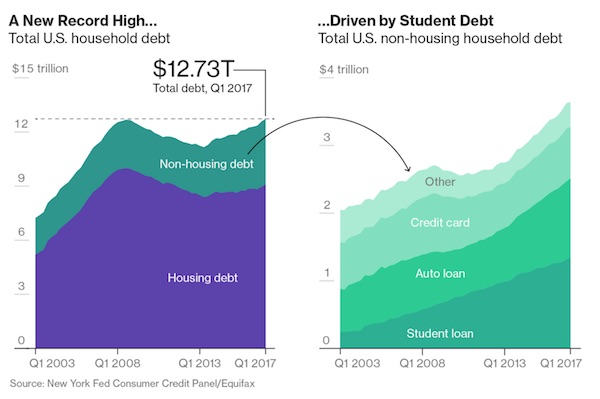
We are all of us in the gutter (but some of us are looking at the stars).

Who Are the Debt Slaves in this Rich Nation? (WS)

We constantly hear the factoids about “American households” that paint a picture of immense wealth – and therefore a lack of risk for consumer lenders during the next downturn. We hear: “This – the thing that happened in 2008 and 2009 – won’t happen again.” For example, total net worth (assets minus debt) of US households and non-profit organization (they’re lumped together) rose to an astronomical $92.8 trillion at the end of 2016, according to the Federal Reserve. This is up by nearly 70% in early 2009 when the Fed started its QE and zero-interest-rate programs. Inflating household wealth was one of the big priorities of the Fed during the Financial Crisis. It would crank up the economy. In an editorial in 2010, Fed Chair Ben Bernanke himself called this the “wealth effect.”

So with this colossal wealth of US households, what could go wrong during the next downturn? Here’s what could go wrong: About half of Americans do not have enough savings to pay for even a minor emergency expense. The Federal Reserve found that 46% of adults could not cover an emergency expense of $400, such as a broken windshield. They would either have to borrow the money or try to sell the couch or something. So nearly half of the adults in the US live from paycheck to paycheck. About 15% of American households have either zero or negative net wealth, according to the New York Fed. Negative net worth means they have more debt than in assets. And nearly 47 million Americans, or nearly 15% of the population, live below the poverty line, according to the Census Bureau.

So who benefited from the “wealth effect”? Those who had the most assets. At the very tippy-top: Warren Buffet. At the other end of the spectrum, in 2016, only 52% of households owned stocks directly or indirectly. The phenomenal stock market boom left 48% – usually those below the poverty line, those who cannot cover emergency expenses, those with zero or negative net worth, etc. etc. – in the dust.

Read more …
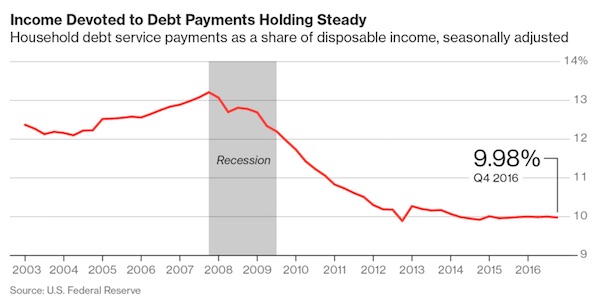
Germany is one of the precious few who might benefit from higher rates. But Germany seems to forget it is not an island.

Time Has Come For Banks To Prepare For Interest Rate Rises – Bundesbank (CNBC)

The time has come for financial institutions to prepare for an environment with rising interest rates, a Bundesbank board member told CNBC on Thursday. Many risk managers have focused on credit and liquidity risks, but they need to insert interest rate risks into the equation too, Andreas Dombret, an executive board member of the German Bundesbank, said. “Let’s face it, there are quite a number of risk managers who have never seen interest rates rise and who have never seen the interest rate risk and even thought about (it) and have concentrated on credit risk and have concentrated on liquidity risk, so it’s about time to prepare for a potential change,” Dombret said.

The former vice-chairman of Bank of America’s European global investment unit explained that the German central bank is taking interest rate rises “very seriously” and is “actively” working with German banks to ensure that changes to monetary policy will not disrupt them in any way. “Should there be sharp rises in interest rates that of course would be a challenge for any bank,” Dombret said. Members of the German central bank have been critical of the low interest rate environment in the euro zone, arguing this is hurting banks’ balance sheets. Earlier this month, Bundesbank President Jens Weidmann, called on the ECB to start tightening its monetary policy.

Read more …
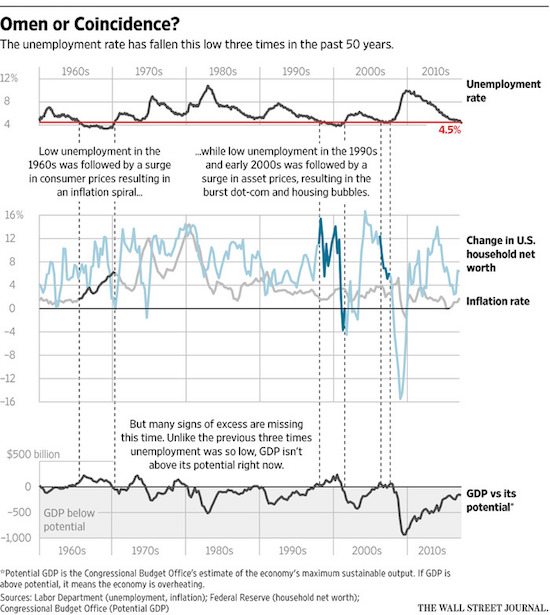
Simple fraud.

World’s Biggest Aluminum Producer Faces Default (ZH)

While China Hongqiao Group may be best known for being the world’s largest aluminum producer, it has in recent months featured just as prominently among short-seller reports who have accused the company of being a fraud. As the WSJ’s Scott Patterson writes, questions about China Hongqiao’s finances first emerged in November, when an anonymous short seller wrote on a website called Hongqiao Exposed that the company’s profits are “too good to be true.” China Hongqiao in the March 31 statement called the report “untrue and unfounded.” A subsequent 46-page report on Feb. 28 by Emerson Analytics, a trading firm focused on Chinese stock-market fraud, disclosed more allegations of fraud involving the Chinese commodity giant.

Emerson accused China Hongqiao of “abnormally high” profits generated by underreporting production costs and disclosing electricity expenses—one of the biggest costs for aluminum producers—as much as 40% below their true cost. Emerson said it investigated Chinese electricity costs, spoke to former China Hongqiao employees and compared the company’s costs and profits with other comparable companies.

Additionally, China Hongqiao has been more profitable than some Chinese competitors. For instance, China Hongqiao earned an average operating profit margin of 27% in the past five years, compared with minus-1.7% for state-owned Aluminum Corp. of China , known as Chalco, and 5.9% for Alcoa, according to FactSet. “People were always skeptical about how they managed to be more profitable than their peers,” said Sandra Chow, a credit analyst at CreditSights. And while China Hongqiao denied the Emerson report’s allegations and said it hired an investigative agency to look into the firm and people behind the claims, things are starting to unravel rapidly for the Chinese megacap.

As Patterson reports, China Hongqiao – the world’s biggest aluminum producer – is in trouble, locked in a feud with its accountant over fraud allegations that have forced it to suspend trading of its shares and seek help from the central government in Beijing. Just like in the case of its cow dairy peer, the problems emerged to the surface following the bearish 3rd party reports. Just days after the Emerson Analytics note, on March 4 China Hongqiao sought assistance from a trade group, the Chinese Non-Ferrous Metals Industry Association, or CNIA, saying the short sellers’ claims of inflated profits were forcing the company’s accountant, Ernst & Young, “to adopt an extremely conservative and careful attitude.” One wonders just whose books E&Y had been reviewing until that point if it took an outside party to bring attention to potential fraud at one of its biggest Chinese clients.

Read more …
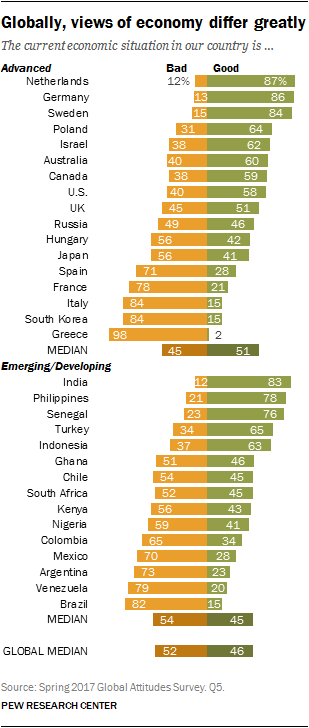
It’s really not that long ago when Chinese were reluctant to go into debt. But look now.

China Home Sales Surge 18% In March Ahead Of Stepped-Up Curbs (BBG)

The value of China’s home sales remained buoyant in March, though volume figures indicated that curbs in a number of cities may be slowing the recent buying frenzy. New home sales by value rose 18% to 1 trillion yuan ($145 billion) last month from a year earlier, according to Bloomberg calculations based on data released Monday by the National Bureau of Statistics. The increase compares with a 23% surge in the first two months of the year. But the value of sales partly reflected surging home prices. By volume, home sales grew only 11% in March to 130 million square meters, according to Bloomberg calculations, below the 24% growth in the first two months of 2017. “The curbs are showing their effects,” said Liu Feifan at Guotai Junan Securities in Shenzhen, who predicted that sales growth will continue to slow.

Policy makers are seeking to clear a glut of unsold homes in smaller urban centers, while pledging to enforce strict curbs in most first- and second-tier cities to prevent a housing bubble. In a month when at least 64 cities announced new or stricter property-buying restrictions, some of the growth in home sales reflected buyers flocking into the market fearing they’d be ruled ineligible for future purchases. Investment in real estate development gained 9.4% in March from a year earlier, up from 8.9% in the first two months, according to Bloomberg calculations. Strong property investment helped China’s fixed-asset investment excluding rural areas expand 9.2% in the first quarter, accelerating from 8.1% growth last year.

Some of the growth represented a “delayed effect” from an earlier property boom, and the rate is likely to decelerate soon, Zhou Hao at Commerzbank wrote in a note after the data release. Liu at Guotai Junan said the increasingly high leverage that Chinese households have taken on for home purchase is “not sustainable.” New medium and long-term loans to households, made up mostly of mortgages, picked up again last month to 450.3 billion yuan, according to official data last Friday.

Read more …

Tesla, Uber, same bubble. Giant losses with no future profits in sight. “Uber customers knew they were in a driverless car, by the way, because it had two drivers instead of one.”

Tesla: Is There More To Elon Musk Than Cars? (WSJ)

You probably have figured it out by now, but let me state it anyway. Ten years from now, if you’re reading this paper in a driverless car, it will be on a limited-access highway or a closed-off, experimental city circuit. You will not be thumbing through your text messages in a driverless car capable of carrying you anywhere, at all hours, in all weather conditions, over all kinds of roads. And even so, you will be expected to take over driving at a moment s notice. Ditto electric cars. If you own an electric car, you will be a member of a still-small minority. Electric-car owners will be people who own multiple cars or otherwise are willing to settle for a car with limited utility, suited for a daily commute but not a family trip or a long weekend. Even so, a new phenomenon will become apparent. After unexpected tie-ups on the interstate, tow trucks will routinely have to come and remove three or four Teslas that risked a long-distance trip and ran out of juice.

All this we offer as a discordant note amid the hype for electric cars and autonomous driving. Last week the market value of Tesla surpassed that of Ford and General Motors. Tesla is now the most valuable homegrown American car company, worth almost $US52 billion.Yet in the same week a reputable consultancy, Navigant Research, showed that Ford and GM lead all others, including Tesla and Google, in the autonomous car race. Shocking? Not really. These companies are making and selling cars, while the Silicon Valleyites have been mostly engaged in brand-building exercises based on public fascination with jazzy, futuristic auto technology. Google, the pioneer of self-driving hype, recently admitted it won’t build and sell a car after all. Google, though, still finds it pays to trundle its handful of robot cars on the exquisitely mapped streets of a few locales in perfect weather as obstacles to other motorists.

Apple reaped untold millions in free publicity based mainly on rumours and job postings for automotive engineers. Uber briefly suspended its own self-driving taxi experiment in three cities after an accident last month. Uber customers knew they were in a driverless car, by the way, because it had two drivers instead of one. The Wall Street Journal reported this week that Tesla’s triumph in the market-cap sweepstakes underscores the profound change occurring in the global automotive industry as Silicon Valley pursues a vision for transportation … that could up-end century-old competitors. Except that the stock prices of traditional car makers haven’t exactly been tanking. GM’s remains within yelling distance of its postbankruptcy high. Look at BMW, whose market cap Tesla nearly equals. Even if Tesla succeeds in its high-risk plan to ramp up annual production to 500,000 from 80,000 in a scant two years, it will sell a quarter as many luxury cars as BMW does, and has yet to show it can do so profitably.

Read more …
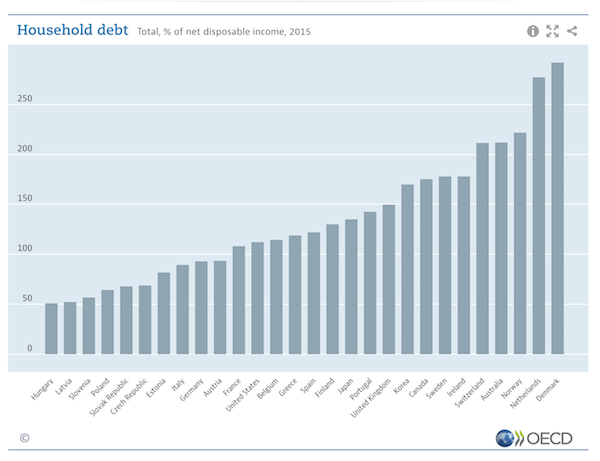
Case in point.

Uber Confirms Horrendous Loss in 2016 (WS)

On Good Friday, when markets were closed and when the entire financial world was tuned out, and when certainly no one was supposed to pay attention, Uber, the most highly valued – at $62.5 billion – and the most scandal plagued tech startup in the world, took the until now unprecedented step of disclosing its audited revenues and losses for the fourth quarter and for the full year of 2016. Rumors of ballooning losses for 2016 had been swirling since last summer. Bloomberg reported in August that Uber had lost “at least $1.2 billion” in the first half. In December, Uber’s loss in Q3 was said to “exceed $800 million,” according to Bloomberg, and its annual loss “may hit $3 billion.”

Others chimed in as some of Uber’s dozens of investors who’re getting its financial statements share them in dribs and drabs with the media. But on Friday, Uber itself disclosed that it lost $2.8 billion before interest, tax, depreciation, and employee stock options – the latter likely being a big chunk, as the earnings of publicly traded companies that award stock-based compensation, such as Twitter, regularly show. Translated into a net loss, including the expense for stock-based compensation? Dizzying. But Uber wisely didn’t disclose it. The Financial Times, which reported this disclosure, mused that Uber is “cementing its place as the most heavily-lossmaking private company in the history of Silicon Valley.”

In Q4 alone, it lost $991 million before interest, tax, depreciation, and stock-based compensation, up 5% from the losses in Q3 and nearly double its loss in Q1. However, as Uber has expanded at break-neck speed into more than 70 countries, stirring up numerous hornets’ nests of local and national laws and regulations, revenue soared over 200% from Q1 to reach $2.9 billion in Q4. For the whole year, revenue reached $6.5 billion. This is the image of its skyrocketing 2016 quarterly revenues and ballooning losses before interest, tax, depreciation, and stock-based compensation:

Read more …
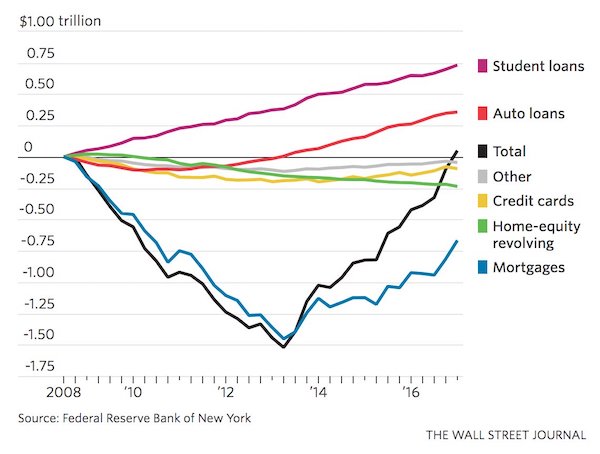
In a country of over 1 billion people, failures look big.

India ATMs Run Out Of Cash (ToI)

Five months have passed since the demonetisation drive, but the people of Srikakulam, Vizianagaram and Visakhapatnam continue to face shortage of cash in banks and ATMs. Sources said more than 90% of the ATMs in the region do not have cash while in the plains and Agency areas running dry. “The last date for paying my daughter’s tuition fees at Visakha Valley School was April 10, but I could not pay due to unavailability of cash. Moreover, the school does not have any online payment system,” said a worried P Srinivasa Rao. Speaking to TOI, State Bank of India (SBI) deputy general manager Ajoy Kumar Pandit said the customers are losing confidence in them due to the crisis.

“Nearly 70% of our 648 ATMs in the three districts are out of cash. The rest will also become dry in the next few days as we do not have cash to refill the machines. We are helpless from our side,” he said. A banking source said the RBI has diverted most of the cash to north India due to the recent elections. This has affected the southern parts of the country. “The government’s intention is to encourage smart payment systems, but the infrastructure is not up to the mark,” the source said. Many ATMs have not been upgraded with the new software required for handling the new Rs 500 and Rs 2,000 denominations, the source added.

Read more …
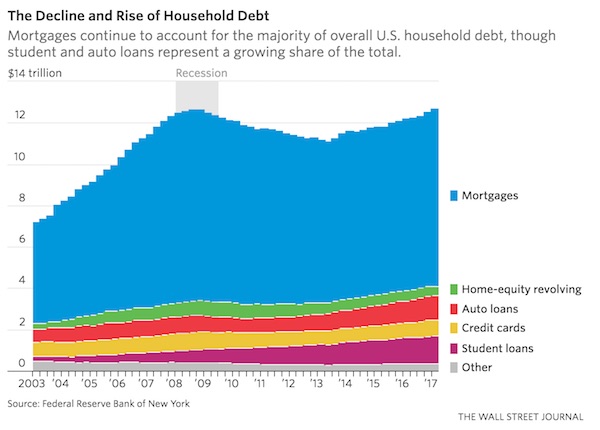
The referendum has revealed the opposite of what Erdogan claims it has; namely, a dramatically divided Turkey. A powder keg. Recounts first? Is the judicial system still strong enough to order them? Changing a constitution with a 50% + 1 majority is questionable enough, since a constitution is supposed to be the result of many years of deliberation; in most places it would require 67% or even 75%. On top of that, this referendum was executed with many opposition politicians and many journalists behind bars. And even then only a very slim margin?!

Erdogan Follows Slim Referendum Win by Warning Opponents (BBG)

An emboldened Recep Tayyip Erdogan followed his win in a referendum that ratified the supremacy of his rule by taking aim at political opponents at home and abroad. At his victory speech late on Sunday, supporters chanted that he should bring back the death penalty – a move that would finish off Turkey’s bid to join the EU – and Erdogan warned opponents not to bother challenging the legitimacy of his win. He told them to prepare for the biggest overhaul of Turkey’s system of governance ever, one that will result in him having even fewer checks on his already considerable power. “Today, Turkey has made a historic decision,” he said. “We will change gears and continue along our course more quickly.” The lira surged as much as 2.5% against the dollar in early trading on Monday in Istanbul before gains moderated.

The success of a package of 18 changes to the constitution was narrow, with about 51.4% of Turks approving it. It came at the end of a divisive two-month campaign during which Erdogan accused opponents of the vote of supporting “terrorists” and denounced as Nazi-like the decision of some EU countries to bar his ministers from lobbying the diaspora. “The referendum campaign was dominated by strongly anti-Western rhetoric and repeated promises to bring back the death penalty,” said Inan Demir at Nomura in London. “One hopes that this rhetoric will be tempered now that the vote is over,” but recent steps by the Turkish government do “not bode well for the hoped-for moderation in international relations.”

“It looks like the best outcome for financial markets because it gives the mandate, but not a strong mandate,” said Ozgur Altug, the chief economist at BGC Partners in Istanbul, who predicts stocks in Istanbul will rally about 7%. While markets looked favorably on the result as a sign political turmoil in the majority Muslim nation of 80 million people may settle down and help jumpstart the economy, Turkey’s biggest political party alleged fraud, demanding a recount after election officials accepted ballots without official stamps.

The EU’s rapporteur on Turkey, Kati Piri, said given the “unfair election environment,” EU accession talks will be suspended if the constitution is passed in its current form. The European Commission, in a statement, said the constitutional amendments, and their implementation “will be assessed in light of Turkey’s obligations” as an accession candidate and as a member of the Council of Europe. “You saw how the West attacked. But despite this, the nation stood tall, didn’t get divided,” Erdogan told his supporters, while calling on Turks who opposed him to “stop tiring themselves out” and accept the course the country is headed on.

Read more …